#botchannel
1 messages · Page 36 of 1

 lean flickerBOT
 sullen badge
>inspireme
sullen badge
>inspireme
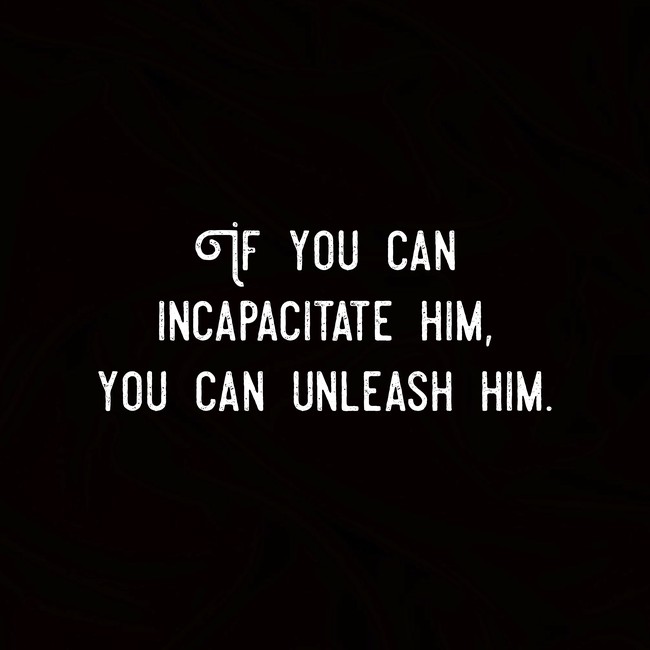
https://inspirobot.me/
sullen badge
lean flicker
@tender trellis 
 tender trellis
👀
 bleak ivy
faq beginner
lean flickerBOT
How to get started - Part 2
Please make sure to read Part 1 before starting Part 2!
Part 2 – Beyond a Simple Sentence
1: Conjunctions (coordinating and subordinating)
2: Subordinate clause word order
3: Dative case
4: Dative verbs
5: Verbs with two objects (e.g. geben)
6: Prepositions (accusative, dative, and two-way)
7: Spoken past tense (Perfekt)
8: Written past tense (Präteritum)
9: Genitive case
10: Relative clauses
11: Adjective declension
Tips
- Make sure to practice writing and reading simple texts
- Some of these concepts are confusing to start with, so it’s a good idea to ask for help in #questions when you’re unsure
- You should use a declension chart to help with declension to start with, because you won’t be able to memorize it straight away
- After you feel confident with creating sentences, you can start learning the adjective declension properly by using the command >faq adjective declension and reading the guide provided
Page 2/2
 nova crag
faq cases
lean flickerBOT
Cases
Cases
German has four grammatical cases (der Fall or der Kasus in German): nominative, accusative, dative, and genitive. A case alters a noun, pronoun, adjective, etc., in some way to mark its grammatical function in a phrase, clause, or sentence. For example, the main function of the nominative (der Nominativ) case is to mark the subject in a sentence:
Ich liebe die deutsche Sprache!
In this sentence, the pronoun ich represents the first person subject and is in the nominative case. Every noun, pronoun, adjective, etc. has form in every case and it is very important to learn all of them. For example, the accusative form of ich is mich:
Die deutsche Sprache liebt mich!
See >explain adjective declension to get started on that. Don't get discouraged by how much there is, it takes some time master.
To see an explanation of the usages of every case, see their individual articles:
>explain nominative
>explain accusative
>explain dative
>explain genitive
nova crag
explain dative
lean flickerBOT
Dative
The dative case (der Dativ) is one of the four cases of the German language. A case affects how a noun or noun phrase is inflected, and indicates the role of the noun or noun phrase in a clause.
How do I decline in the dative case?
Nouns, pronouns, and adjective declension is completely different compared to the nominative case. See >explain adjective declension for a full explanation.
Page 1/2
tender trellis
faq
lean flickerBOT
:x: The required argument name is missing.
tender trellis
faq cases
lean flickerBOT
Cases
Cases
German has four grammatical cases (der Fall or der Kasus in German): nominative, accusative, dative, and genitive. A case alters a noun, pronoun, adjective, etc., in some way to mark its grammatical function in a phrase, clause, or sentence. For example, the main function of the nominative (der Nominativ) case is to mark the subject in a sentence:
Ich liebe die deutsche Sprache!
In this sentence, the pronoun ich represents the first person subject and is in the nominative case. Every noun, pronoun, adjective, etc. has form in every case and it is very important to learn all of them. For example, the accusative form of ich is mich:
Die deutsche Sprache liebt mich!
See >explain adjective declension to get started on that. Don't get discouraged by how much there is, it takes some time master.
To see an explanation of the usages of every case, see their individual articles:
>explain nominative
>explain accusative
>explain dative
>explain genitive
tender trellis
explain dative
lean flickerBOT
When do I use the dative case?
The dative case has a great number of usages, many of which are idiomatic, but is mainly used:
- to mark the indirect object of many transitive verbs (the indirect objectis that which receives the result of an action)
Ich habe dir ein Bier gekauft.
Sie gibt dem Mann das Buch.
Er zeigte ihm seinen Führerschein.
- to mark the object of some transitive verbs:
Dir fehlen die richtigen Materialien.
Es fällt mir bestimmt gleich wieder ein.
Das gefällt ihr gar nicht.
- after some prepositions:
Ich komme aus den USA.
Komm mit mir.
Ich lerne seit vielen Jahren Deutsch.
The following prepositions are always followed by the dative case:
aus, außer, bei, gegenüber, mit, nach, seit, von, zu
- after two-way prepositions when they do not indicate movement:
Das Bild hängt jetzt an der Wand.
Er joggt im Wald. (he is jogging in the woods)
Sie steht vor mir.
- to show possession, mainly of clothing or body parts:
Ich habe mir in die Finger geschnitten.
Er hat ihr die Nase gebrochen.
Die Mütze fiel mir vom Kopf.
- with many adjectives:
Ich war mir nicht sicher.
Ist dir kalt? (See >ex impersonal verbs for why there is no subject here.)
Er ist seinem Bruder sehr ähnlich.
Page 2/2
 zealous nest
faq beginner
lean flickerBOT
How to get started
The simplest way to learn German is to find topics you don’t understand yet and search for explanations of them. This list provides you with a guide for which topics to learn if you are completely new to German. Type the topic into Google (or YouTube) and start learning!
Introduction
1: Alphabet (especially ä, ü, ö and ß)
2: Basic greetings (hello, goodbye, etc.)
Part 1 - Simple Sentence
1: Noun gender & plurals
2: Nominative case (What are cases?)
3: Nominative pronouns (I, you, he, she, etc.)
4: Verbs in present tense
5: Definite/indefinite articles
6: Accusative case (for nouns)
7: Accusative pronouns
8: Word order of simple sentences
9: How to ask questions
See Part 2 on the next page.
Tips
- Always learn the gender of a noun when you learn a new noun
- Learn to use a translation dictionary (e.g. dict.cc, leo.org)
- Use
>faq resourcesto see our list of German learning resources - For listening and pronunciation practice, try watching movies or videos (incl. YouTube)
- You can listen to pronunciation for words on websites like dict.cc, forvo.com, and others
- Practice writing sentences every day (and asking people to correct them)
- Ask as many questions as possible
- Don’t be scared to make mistakes!!!! If you don’t let yourself make mistakes, you will never be able to learn German
Page 1/2
zealous nest
faq intermediate
lean flickerBOT
FAQ not found. Try >explain all.
zealous nest
explain all
lean flickerBOT
See a listed FAQ with >faq [name]
:small_blue_diamond: Absentive
Aliases: Absentiv
:small_blue_diamond: Accusative
Aliases: Akkusativ
:small_blue_diamond: accusative vs dative
Aliases: "akk dat", akk dat
:small_blue_diamond: Adjective Declension
Aliases: Adjektivdeklination, Adjective endings
:small_blue_diamond: AI in language learning
Aliases: ai, chatgpt
:small_blue_diamond: Anki
Aliases: Flashcards
:small_blue_diamond: Beide vs. Beides
Aliases: Beides vs. Beide, Beides, Beide
:small_blue_diamond: Best way to learn German
Aliases: Fastest way to learn, Learn fast, Most efficient way to learn, Learn efficiently, Best way to learn, Learn German fast
:small_blue_diamond: Can anyone teach me German
Aliases: Private tutors, Teach me, Teach me German, Teach German, Private lessons, Private teachers, "private teacher", teacher
:small_blue_diamond: Cases
Aliases: Grammatical case, Case
:small_blue_diamond: CEFR levels
Aliases: CEFR, CERF
:small_blue_diamond: Conjugation
Aliases: Konjugation, Praesens, Verbs, Verb conjugation, Present tense, Präsens
:small_blue_diamond: Contractions
Aliases: Verschmelzung, Schmelzwort, Vom
:small_blue_diamond: DACH
:small_blue_diamond: Dative
Aliases: Dativ
Page 1/5 (69 entries)
tender trellis
explain CEFR levels
lean flickerBOT
CEFR levels
If you see something like A1, B2 or C1, these represent the proficiency of a speaker in a language they're not native in, and are called CEFR levels. They are valid for any language, not only German!
Roughly speaking, A levels are beginners and C levels are experts. Remember that CEFR level are self-assessed and indicative!
You can see more specific names and descriptions on the Wikipedia page:
https://en.wikipedia.org/wiki/Common_European_Framework_of_Reference_for_Languages
🗨 How do I know what level I am?
If the table on Wikipedia is too generic for you, you can try using this one here:
https://rm.coe.int/168045bb52
Just check each column one at a time: if you can do all it describes, move to the next column. Your level is the highest where you can do the most things.
Alternatively, you can use this questionnaire to estimate your level more accurately:
https://rm.coe.int/self-assessment-checklists-from-the-swiss-version-of-the-european-lang/1680492f8e
 knotty spindle
 real kettle
faq begginer
lean flickerBOT
How to get started
The simplest way to learn German is to find topics you don’t understand yet and search for explanations of them. This list provides you with a guide for which topics to learn if you are completely new to German. Type the topic into Google (or YouTube) and start learning!
Introduction
1: Alphabet (especially ä, ü, ö and ß)
2: Basic greetings (hello, goodbye, etc.)
Part 1 - Simple Sentence
1: Noun gender & plurals
2: Nominative case (What are cases?)
3: Nominative pronouns (I, you, he, she, etc.)
4: Verbs in present tense
5: Definite/indefinite articles
6: Accusative case (for nouns)
7: Accusative pronouns
8: Word order of simple sentences
9: How to ask questions
See Part 2 on the next page.
Tips
- Always learn the gender of a noun when you learn a new noun
- Learn to use a translation dictionary (e.g. dict.cc, leo.org)
- Use
>faq resourcesto see our list of German learning resources - For listening and pronunciation practice, try watching movies or videos (incl. YouTube)
- You can listen to pronunciation for words on websites like dict.cc, forvo.com, and others
- Practice writing sentences every day (and asking people to correct them)
- Ask as many questions as possible
- Don’t be scared to make mistakes!!!! If you don’t let yourself make mistakes, you will never be able to learn German
Page 1/2
tender trellis
explain genitive
lean flickerBOT
When do I use the genitive case?
The genitive case is mainly used:
- to link nouns, especially when showing possession
Dies ist der größte Bahnhof der Welt.
Die Hälfte des Kuchens gehört mir.
Es gibt noch einen Strahl der Hoffnung.
For proper names, the order is reversed and an 's' is attached to the proper name as long as it does not end with an 's' sound.
Deutschlands längster Fluss ist der Rhein.
- to mark the object of very few transitive verbs
Empfindliche Haut bedarf besonderer Pflege.
Heute gedenkt die Nation des Jahrestages der Verfassung.
Wir harren einer Antwort.
- after some prepositions
The following prepositions are commonly followed by the genitive case in written German, but usually with the dative case in spoken German:
(an)statt, trotz, während, wegen
Prepositions denoting position are usually followed by the genitive case:
außerhalb, innerhalb, oberhalb, unterhalb, jenseits
A great number of prepositions that are only used in formal German, such as:
angesichts, bezüglich, einschließlich, fernab, infolge, namens, seitens, zugunsten
- by adverbials of indefinite time
Eines Tages werde ich Deutsch beherrschen.
Sonntags sind wir meist unterwegs.
Eines Nachts hörte ihr Vater sie weinen.
Note the declension in the last sentence. Although it is die Nacht, it assumes a similar form as the rest.
Page 2/2
 sinful fjord
faq beginner
lean flickerBOT
How to get started
The simplest way to learn German is to find topics you don’t understand yet and search for explanations of them. This list provides you with a guide for which topics to learn if you are completely new to German. Type the topic into Google (or YouTube) and start learning!
Introduction
1: Alphabet (especially ä, ü, ö and ß)
2: Basic greetings (hello, goodbye, etc.)
Part 1 - Simple Sentence
1: Noun gender & plurals
2: Nominative case (What are cases?)
3: Nominative pronouns (I, you, he, she, etc.)
4: Verbs in present tense
5: Definite/indefinite articles
6: Accusative case (for nouns)
7: Accusative pronouns
8: Word order of simple sentences
9: How to ask questions
See Part 2 on the next page.
Tips
- Always learn the gender of a noun when you learn a new noun
- Learn to use a translation dictionary (e.g. dict.cc, leo.org)
- Use
>faq resourcesto see our list of German learning resources - For listening and pronunciation practice, try watching movies or videos (incl. YouTube)
- You can listen to pronunciation for words on websites like dict.cc, forvo.com, and others
- Practice writing sentences every day (and asking people to correct them)
- Ask as many questions as possible
- Don’t be scared to make mistakes!!!! If you don’t let yourself make mistakes, you will never be able to learn German
Page 1/2
tender trellis
inspireme
lean flickerBOT
tender trellis
>inspireme

https://inspirobot.me/
 serene beacon
dog
lean flickerBOT

 vestal rover
So
How can I join voice channel?
lean flickerBOT
@vestal rover, please read the Roles section in #getting-started for info on how to join VC and more.
 hearty sundial
purpose casual
lean flickerBOT
:x: 'casual' is not a channel or a role.
lean flickerBOT
Cases
Cases
German has four grammatical cases (der Fall or der Kasus in German): nominative, accusative, dative, and genitive. A case alters a noun, pronoun, adjective, etc., in some way to mark its grammatical function in a phrase, clause, or sentence. For example, the main function of the nominative (der Nominativ) case is to mark the subject in a sentence:
Ich liebe die deutsche Sprache!
In this sentence, the pronoun ich represents the first person subject and is in the nominative case. Every noun, pronoun, adjective, etc. has form in every case and it is very important to learn all of them. For example, the accusative form of ich is mich:
Die deutsche Sprache liebt mich!
See >explain adjective declension to get started on that. Don't get discouraged by how much there is, it takes some time master.
To see an explanation of the usages of every case, see their individual articles:
>explain nominative
>explain accusative
>explain dative
>explain genitive
tender trellis
explain accusative
lean flickerBOT
Accusative
The accusative case (der Akkusativ) is one of the four cases of the German language. A case affects how a noun or noun phrase is inflected, and indicates the role of the noun or noun phrase in a clause.
How do I decline in the accusative case?
Feminine and neuter nouns and adjectives are the same as nominative. Masculine determiners, adjectives, and weak nouns gain an -en ending::
Ich esse den/einen/keinen kleinen Apfel.
Personal pronouns differ for:
ich --> mich
du --> dich
er --> ihn
wir --> uns
ihr --> euch
For a full explanation see >explain adjective declension
Page 1/2
lean flickerBOT
:x: 'vc' is not a channel or a role.
FAQ not found. I found the following similar entry: Beginner (1)
Select one of the values in the brackets to directly open the suggested FAQ.
lean flickerBOT
sullen badge
>inspireme

https://inspirobot.me/
 limber veldt
what’s up?
tender trellis
do you know where i could star to learn?
i read the information, but, i dont know the rest
limber veldt
can i DM you?
tender trellis
ok
serene beacon
tender trellis
do you know where i could star to learn?
#getting-started has solid, tried-and-tested advice. If you find it a bit too abstract at the moment, Nicos Weg (found here: https://learngerman.dw.com/en/overview/) is also a decent starting point, it's basically just a TV show made for learning German with lessons attached to it.
 little gale
faq beginner
lean flickerBOT
How to get started - Part 2
Please make sure to read Part 1 before starting Part 2!
Part 2 – Beyond a Simple Sentence
1: Conjunctions (coordinating and subordinating)
2: Subordinate clause word order
3: Dative case
4: Dative verbs
5: Verbs with two objects (e.g. geben)
6: Prepositions (accusative, dative, and two-way)
7: Spoken past tense (Perfekt)
8: Written past tense (Präteritum)
9: Genitive case
10: Relative clauses
11: Adjective declension
Tips
- Make sure to practice writing and reading simple texts
- Some of these concepts are confusing to start with, so it’s a good idea to ask for help in #questions when you’re unsure
- You should use a declension chart to help with declension to start with, because you won’t be able to memorize it straight away
- After you feel confident with creating sentences, you can start learning the adjective declension properly by using the command >faq adjective declension and reading the guide provided
Page 2/2
 visual arrow
faq him
lean flickerBOT
FAQ not found. Try >explain all.
visual arrow
faq hin
lean flickerBOT
FAQ not found. Try >explain all.
tender trellis
faq beginner
lean flickerBOT
How to get started - Part 2
Please make sure to read Part 1 before starting Part 2!
Part 2 – Beyond a Simple Sentence
1: Conjunctions (coordinating and subordinating)
2: Subordinate clause word order
3: Dative case
4: Dative verbs
5: Verbs with two objects (e.g. geben)
6: Prepositions (accusative, dative, and two-way)
7: Spoken past tense (Perfekt)
8: Written past tense (Präteritum)
9: Genitive case
10: Relative clauses
11: Adjective declension
Tips
- Make sure to practice writing and reading simple texts
- Some of these concepts are confusing to start with, so it’s a good idea to ask for help in #questions when you’re unsure
- You should use a declension chart to help with declension to start with, because you won’t be able to memorize it straight away
- After you feel confident with creating sentences, you can start learning the adjective declension properly by using the command >faq adjective declension and reading the guide provided
Page 2/2
tender trellis
faq cefr
lean flickerBOT
CEFR levels
If you see something like A1, B2 or C1, these represent the proficiency of a speaker in a language they're not native in, and are called CEFR levels. They are valid for any language, not only German!
Roughly speaking, A levels are beginners and C levels are experts. Remember that CEFR level are self-assessed and indicative!
You can see more specific names and descriptions on the Wikipedia page:
https://en.wikipedia.org/wiki/Common_European_Framework_of_Reference_for_Languages
🗨 How do I know what level I am?
If the table on Wikipedia is too generic for you, you can try using this one here:
https://rm.coe.int/168045bb52
Just check each column one at a time: if you can do all it describes, move to the next column. Your level is the highest where you can do the most things.
Alternatively, you can use this questionnaire to estimate your level more accurately:
https://rm.coe.int/self-assessment-checklists-from-the-swiss-version-of-the-european-lang/1680492f8e
tender trellis
inspireme
lean flickerBOT
tender trellis
>inspireme

https://inspirobot.me/
tender trellis

tender trellis
lean flicker
Omge, such pretty glitter.
tender trellis
lean flicker
Damn, seems like my weekend plans have been ruined. 
sullen badge
tender trellis
Damn, seems like my weekend plans have been ruined. <:sadge:937490536833613914>
Damn it
isbanned @serene beacon
lean flickerBOT
Apollo has not been banned on this server.
tender trellis
faq
lean flickerBOT
:x: The required argument name is missing.
tender trellis
faq beginner
lean flickerBOT
How to get started - Part 2
Please make sure to read Part 1 before starting Part 2!
Part 2 – Beyond a Simple Sentence
1: Conjunctions (coordinating and subordinating)
2: Subordinate clause word order
3: Dative case
4: Dative verbs
5: Verbs with two objects (e.g. geben)
6: Prepositions (accusative, dative, and two-way)
7: Spoken past tense (Perfekt)
8: Written past tense (Präteritum)
9: Genitive case
10: Relative clauses
11: Adjective declension
Tips
- Make sure to practice writing and reading simple texts
- Some of these concepts are confusing to start with, so it’s a good idea to ask for help in #questions when you’re unsure
- You should use a declension chart to help with declension to start with, because you won’t be able to memorize it straight away
- After you feel confident with creating sentences, you can start learning the adjective declension properly by using the command >faq adjective declension and reading the guide provided
Page 2/2
 sharp bear
lean flickerBOT
sharp bear
lean flickerBOT
How to get started - Part 2
Please make sure to read Part 1 before starting Part 2!
Part 2 – Beyond a Simple Sentence
1: Conjunctions (coordinating and subordinating)
2: Subordinate clause word order
3: Dative case
4: Dative verbs
5: Verbs with two objects (e.g. geben)
6: Prepositions (accusative, dative, and two-way)
7: Spoken past tense (Perfekt)
8: Written past tense (Präteritum)
9: Genitive case
10: Relative clauses
11: Adjective declension
Tips
- Make sure to practice writing and reading simple texts
- Some of these concepts are confusing to start with, so it’s a good idea to ask for help in #questions when you’re unsure
- You should use a declension chart to help with declension to start with, because you won’t be able to memorize it straight away
- After you feel confident with creating sentences, you can start learning the adjective declension properly by using the command >faq adjective declension and reading the guide provided
Page 2/2
tender trellis
faq beginner
lean flickerBOT
How to get started
The simplest way to learn German is to find topics you don’t understand yet and search for explanations of them. This list provides you with a guide for which topics to learn if you are completely new to German. Type the topic into Google (or YouTube) and start learning!
Introduction
1: Alphabet (especially ä, ü, ö and ß)
2: Basic greetings (hello, goodbye, etc.)
Part 1 - Simple Sentence
1: Noun gender & plurals
2: Nominative case (What are cases?)
3: Nominative pronouns (I, you, he, she, etc.)
4: Verbs in present tense
5: Definite/indefinite articles
6: Accusative case (for nouns)
7: Accusative pronouns
8: Word order of simple sentences
9: How to ask questions
See Part 2 on the next page.
Tips
- Always learn the gender of a noun when you learn a new noun
- Learn to use a translation dictionary (e.g. dict.cc, leo.org)
- Use
>faq resourcesto see our list of German learning resources - For listening and pronunciation practice, try watching movies or videos (incl. YouTube)
- You can listen to pronunciation for words on websites like dict.cc, forvo.com, and others
- Practice writing sentences every day (and asking people to correct them)
- Ask as many questions as possible
- Don’t be scared to make mistakes!!!! If you don’t let yourself make mistakes, you will never be able to learn German
Page 1/2
 spark aurora
inspireme
lean flickerBOT
spark aurora
>inspireme

https://inspirobot.me/
 zenith oasis
faq beginner
lean flickerBOT
How to get started
The simplest way to learn German is to find topics you don’t understand yet and search for explanations of them. This list provides you with a guide for which topics to learn if you are completely new to German. Type the topic into Google (or YouTube) and start learning!
Introduction
1: Alphabet (especially ä, ü, ö and ß)
2: Basic greetings (hello, goodbye, etc.)
Part 1 - Simple Sentence
1: Noun gender & plurals
2: Nominative case (What are cases?)
3: Nominative pronouns (I, you, he, she, etc.)
4: Verbs in present tense
5: Definite/indefinite articles
6: Accusative case (for nouns)
7: Accusative pronouns
8: Word order of simple sentences
9: How to ask questions
See Part 2 on the next page.
Tips
- Always learn the gender of a noun when you learn a new noun
- Learn to use a translation dictionary (e.g. dict.cc, leo.org)
- Use
>faq resourcesto see our list of German learning resources - For listening and pronunciation practice, try watching movies or videos (incl. YouTube)
- You can listen to pronunciation for words on websites like dict.cc, forvo.com, and others
- Practice writing sentences every day (and asking people to correct them)
- Ask as many questions as possible
- Don’t be scared to make mistakes!!!! If you don’t let yourself make mistakes, you will never be able to learn German
Page 1/2
 vale badger
inspireme
lean flickerBOT
vale badger
>inspireme

https://inspirobot.me/
lean flickerBOT
Help commands
:small_blue_diamond: **help** [term]
Displays help information for modules and individual commands. The optional argument term is the search term to use. If no value is provided, the bot will display a list of all available modules. Otherwise, it will attempt to find information about the given term.
Page 1/18 (18 entries)
lean flickerBOT
FAQ not found. Try >explain all.
tender trellis
explain all
lean flickerBOT
See a listed FAQ with >faq [name]
:small_blue_diamond: Prepositions of Place Part 1
Aliases: Nach-In-Auf-Zu
:small_blue_diamond: Resources
Aliases: Resource list
:small_blue_diamond: Roles
:small_blue_diamond: Seeing verbs
Aliases: Sehen, Schauen
:small_blue_diamond: So and also
:small_blue_diamond: Stative Passive
Aliases: Zustandspassiv, Statal passive
:small_blue_diamond: Structure of Konjunktiv II
Aliases: KII 2
:small_blue_diamond: Study Vocabulary
Aliases: Unterrichten, Studieren, Lernen, Beibringen
:small_blue_diamond: Swiss German
Aliases: gsw
:small_blue_diamond: Switzerland
Aliases: Schweiz, CH
:small_blue_diamond: Two-way prepositions
Aliases: Two way prepositions, Dual prepositions
:small_blue_diamond: Umlauts
Aliases: Umlaute, Umlaut, ä, ö, ü
:small_blue_diamond: Usage of Freund and Freundin
Aliases: Freundin, Friend, Friend vs. Boyfriend, Friend vs. Girlfriend, Boyfriend, Girlfriend, Freund
:small_blue_diamond: Usage of Konjunktiv II
Aliases: KII 1
:small_blue_diamond: Usage of zu
Aliases: Um zu
Page 4/5 (69 entries)
tender trellis
faq dual prepositions
lean flickerBOT
Two-way prepositions
Two-way prepositions (or dual prepositions) are prepositions that govern the accusative or dative case. Ten prepositions have this property, namely:
an     auf      entlang    hinter    in
neben  über     unter      vor       zwischen
Generally, these prepositions are used with the accusative if they express a direction or change of position. They are used with the dative if they express location.
For example, the verb etw. an etw. hängen can be used to express both meanings depending on the intention:
Ich hänge das Bild an die Wand. (I am hanging the picture on the wall.)
Das Bild hängt an der Wand. (The picture is hanging on the wall.)
Expressing direction vs. location
It is important to note that the accusative should only be used if something has moved from one position to another. If movement has been indicated, but the location has not changed, then the dative should be used. For example,
Der Hund läuft in den Park. (The dog ran (from somewhere) into the park.)
Der Hund läuft im Park (herum). (The dog is running in the park.)
The dative is usually used with verbs of arriving, appearing and disappearing
Even though these verbs indicate direction, they are still used with dative rather than accusative.
Sie kamen am Bahnhof an.
Sie landeten auf dem Mond.
Das Pferd verschwand hinter dem Berg.
tender trellis
faq Konjuktiv II
lean flickerBOT
Usage of Konjunktiv II
Konjunktiv II: Usage
Konjunktiv II is a grammatical mood that expresses irreality - it describes something that isn't guaranteed to happen.
(1) Wenn ich Millionen Dollar hätte, würde ich alle Speisen der ganzen Welt probieren. = “If I had million dollars, I would try all dishes around the world.”
(2) Wäre ich Mod, würde ich alle bannen. = “If I were a Mod, I would ban everybody.”
Konjunktiv II is also used as a form of politeness.
(3) Könnten Sie mir bitte helfen? = “Could you help me, please?”
And it also replaces Konjunktiv I (see >explain Konjunktiv I) when the conjugation of Konjunktiv I is ambiguous. For example, when it matches Präsens:
(4) Sie sagte, ich brauche sie. ➡️ Sie sagte, ich würde sie brauchen.
Now that we have explained the usage of Konjunktiv II, let’s see how it’s built!
Type >explain Structure of Konjunktiv II to read the second part.
tender trellis
explain Structure of Konjuktiv II
lean flickerBOT
Structure of Konjunktiv II
Structure of Konjunktiv II
In the first part, we explained the usage of Konjunktiv II. (see >explain Usage of Konjunktiv II)
Now let’s see how it’s built!
We can create KII through Präteritum - slap an Umlaut on the verb and add the suffixes of Konjunktiv I (or basically suffixes of Präteritum without the -t-).
(5) Ich äße gern mehr, aber ich bin schon satt. = “I would love to eat more but I’m already full.”
(6) Wäre ich nicht arm, ginge ich ab und zu außer Haus essen = “If I wasn’t poor, I would eat out now and then.”
(7) Ich probierte diese Speisen gern, wenn sie nicht ein Vermögen kosten. = “I’d love to try these dishes if they didn’t cost a fortune.”
⁉️ Wait, what?! Isn’t the verb in example (7) in Präteritum?!
Well, yeah, building KII through Präteritum works well with strong verbs, but it doesn’t show in weak verbs because the forms are the same in both Konjunktiv II and Präteritum.
So how do we distinguish between these two?
For weak verb, the würden-structure is used. Würden (= werden in KII) acts as an auxiliary verb with infinitive. The meaning doesn’t change, it’s just clearer what we want to say.
So if we rewrite (7):
(8) Ich würde diese Speisen gern probieren, wenn sie nicht ein Vermögen kosten.
As you can see, würden stays at the second position and the infinitive goes to the end of a clause.
tender trellis
inspireme
lean flickerBOT
tender trellis
>inspireme

https://inspirobot.me/
tender trellis

lean flickerBOT

https://inspirobot.me/
 woeful cedar
channel your inner bot
tender trellis

 fossil lagoon
inspireme
lean flickerBOT
fossil lagoon
>inspireme

https://inspirobot.me/
 rose canyon
help
lean flickerBOT
Latex commands
:small_blue_diamond: **latex** <content>
Renders the given LaTeX content and posts the result. The provided code is automatically wrapped in a math environment.
:small_blue_diamond: **latexalign** <content>
Renders the given LaTeX content and posts the result. The provided code is automatically wrapped in a math and an align* environment.
:small_blue_diamond: **latextext** <content>
Renders the given LaTeX content and posts the result. If you want the code to be automatically wrapped in a math environment use >latex instead.
Page 2/18 (18 entries)
fossil lagoon
lean flicker
Real sis
 wet tusk
faq beginner
lean flickerBOT
How to get started
The simplest way to learn German is to find topics you don’t understand yet and search for explanations of them. This list provides you with a guide for which topics to learn if you are completely new to German. Type the topic into Google (or YouTube) and start learning!
Introduction
1: Alphabet (especially ä, ü, ö and ß)
2: Basic greetings (hello, goodbye, etc.)
Part 1 - Simple Sentence
1: Noun gender & plurals
2: Nominative case (What are cases?)
3: Nominative pronouns (I, you, he, she, etc.)
4: Verbs in present tense
5: Definite/indefinite articles
6: Accusative case (for nouns)
7: Accusative pronouns
8: Word order of simple sentences
9: How to ask questions
See Part 2 on the next page.
Tips
- Always learn the gender of a noun when you learn a new noun
- Learn to use a translation dictionary (e.g. dict.cc, leo.org)
- Use
>faq resourcesto see our list of German learning resources - For listening and pronunciation practice, try watching movies or videos (incl. YouTube)
- You can listen to pronunciation for words on websites like dict.cc, forvo.com, and others
- Practice writing sentences every day (and asking people to correct them)
- Ask as many questions as possible
- Don’t be scared to make mistakes!!!! If you don’t let yourself make mistakes, you will never be able to learn German
Page 1/2
 fast moon
faq beginner
lean flickerBOT
How to get started - Part 2
Please make sure to read Part 1 before starting Part 2!
Part 2 – Beyond a Simple Sentence
1: Conjunctions (coordinating and subordinating)
2: Subordinate clause word order
3: Dative case
4: Dative verbs
5: Verbs with two objects (e.g. geben)
6: Prepositions (accusative, dative, and two-way)
7: Spoken past tense (Perfekt)
8: Written past tense (Präteritum)
9: Genitive case
10: Relative clauses
11: Adjective declension
Tips
- Make sure to practice writing and reading simple texts
- Some of these concepts are confusing to start with, so it’s a good idea to ask for help in #questions when you’re unsure
- You should use a declension chart to help with declension to start with, because you won’t be able to memorize it straight away
- After you feel confident with creating sentences, you can start learning the adjective declension properly by using the command >faq adjective declension and reading the guide provided
Page 2/2
tender trellis
sessions
lean flickerBOT
Upcoming Sessions
:calendar: Want to add our sessions schedule to your Google calendar?
:small_blue_diamond: (Your time: <t:1719297000:F>) held by 🌈Rinbow🌈
[ID: 283] (Reading)
Children's book reading A2
Recommended level(s):

Type >session info [ID#] e.g. >session info 3 for more detail about a specific session.
tender trellis
faq resources
lean flickerBOT
Resources
Here's a link to our curated list of resources: https://bit.ly/gladresources. Check out #resources if you want to submit some yourself!
fossil lagoon
remind 8h apply for uni
lean flickerBOT
Okay @fossil lagoon. You will be reminded in 8 hours.
 mental otter
faq beginner
lean flickerBOT
How to get started
The simplest way to learn German is to find topics you don’t understand yet and search for explanations of them. This list provides you with a guide for which topics to learn if you are completely new to German. Type the topic into Google (or YouTube) and start learning!
Introduction
1: Alphabet (especially ä, ü, ö and ß)
2: Basic greetings (hello, goodbye, etc.)
Part 1 - Simple Sentence
1: Noun gender & plurals
2: Nominative case (What are cases?)
3: Nominative pronouns (I, you, he, she, etc.)
4: Verbs in present tense
5: Definite/indefinite articles
6: Accusative case (for nouns)
7: Accusative pronouns
8: Word order of simple sentences
9: How to ask questions
See Part 2 on the next page.
Tips
- Always learn the gender of a noun when you learn a new noun
- Learn to use a translation dictionary (e.g. dict.cc, leo.org)
- Use
>faq resourcesto see our list of German learning resources - For listening and pronunciation practice, try watching movies or videos (incl. YouTube)
- You can listen to pronunciation for words on websites like dict.cc, forvo.com, and others
- Practice writing sentences every day (and asking people to correct them)
- Ask as many questions as possible
- Don’t be scared to make mistakes!!!! If you don’t let yourself make mistakes, you will never be able to learn German
Page 1/2
lean flickerBOT
Resources
Here's a link to our curated list of resources: https://bit.ly/gladresources. Check out #resources if you want to submit some yourself!
 grave trail
help
lean flickerBOT
Reminders commands
:small_blue_diamond: **📒 remind** <time> <message>
Has the bot remind you about things. You can specify a time in a short time format (e.g., 1y, 7w, 2mo, 1h30m) or a long format (e.g, 2020-12-31 23:59 CET) and a message for your reminder text.
Page 3/18 (18 entries)
lean flickerBOT
No command or module called sprechen üben found.
 west flame
faq beginner
 honest charm
`>faq beginner
lean flickerBOT
No command or module called cefr found.
tender trellis
help cerf
lean flickerBOT
No command or module called cerf found.
tender trellis
faq cefr
lean flickerBOT
CEFR levels
If you see something like A1, B2 or C1, these represent the proficiency of a speaker in a language they're not native in, and are called CEFR levels. They are valid for any language, not only German!
Roughly speaking, A levels are beginners and C levels are experts. Remember that CEFR level are self-assessed and indicative!
You can see more specific names and descriptions on the Wikipedia page:
https://en.wikipedia.org/wiki/Common_European_Framework_of_Reference_for_Languages
🗨 How do I know what level I am?
If the table on Wikipedia is too generic for you, you can try using this one here:
https://rm.coe.int/168045bb52
Just check each column one at a time: if you can do all it describes, move to the next column. Your level is the highest where you can do the most things.
Alternatively, you can use this questionnaire to estimate your level more accurately:
https://rm.coe.int/self-assessment-checklists-from-the-swiss-version-of-the-european-lang/1680492f8e
@fossil lagoon, 7 hours, 59 minutes and 59 seconds ago
You asked to be reminded about "apply for uni"
[Jump to message](#botchannel message)
Reminder created
·
 deft snow
faq beginner
lean flickerBOT
How to get started - Part 2
Please make sure to read Part 1 before starting Part 2!
Part 2 – Beyond a Simple Sentence
1: Conjunctions (coordinating and subordinating)
2: Subordinate clause word order
3: Dative case
4: Dative verbs
5: Verbs with two objects (e.g. geben)
6: Prepositions (accusative, dative, and two-way)
7: Spoken past tense (Perfekt)
8: Written past tense (Präteritum)
9: Genitive case
10: Relative clauses
11: Adjective declension
Tips
- Make sure to practice writing and reading simple texts
- Some of these concepts are confusing to start with, so it’s a good idea to ask for help in #questions when you’re unsure
- You should use a declension chart to help with declension to start with, because you won’t be able to memorize it straight away
- After you feel confident with creating sentences, you can start learning the adjective declension properly by using the command >faq adjective declension and reading the guide provided
Page 2/2
deft snow
faq cefr
lean flickerBOT
CEFR levels
If you see something like A1, B2 or C1, these represent the proficiency of a speaker in a language they're not native in, and are called CEFR levels. They are valid for any language, not only German!
Roughly speaking, A levels are beginners and C levels are experts. Remember that CEFR level are self-assessed and indicative!
You can see more specific names and descriptions on the Wikipedia page:
https://en.wikipedia.org/wiki/Common_European_Framework_of_Reference_for_Languages
🗨 How do I know what level I am?
If the table on Wikipedia is too generic for you, you can try using this one here:
https://rm.coe.int/168045bb52
Just check each column one at a time: if you can do all it describes, move to the next column. Your level is the highest where you can do the most things.
Alternatively, you can use this questionnaire to estimate your level more accurately:
https://rm.coe.int/self-assessment-checklists-from-the-swiss-version-of-the-european-lang/1680492f8e
 wet grove
faq teach
lean flickerBOT
FAQ not found. I found the following similar entries: teacher (1), Teach German (2), Teach me (3)
Select one of the values in the brackets to directly open the suggested FAQ.
:x: User 'teach me' not found.
wet grove
faq teach me
lean flickerBOT
Can anyone teach me German
There are no private lessons or 1-on-1 tutoring offered here as everyone is a volunteer offering their help for free.
The purpose of this server is to help you put the skills you learn elsewhere into practice, for example by allowing you to chat in German, or by allowing you to receive help and feedback on your questions and work. As such, it's just one of many tools that can help you learn the language.
Are there still some kind of lessons here?
Yes! Our lovely volunteer hosts organise lessons and fun sessions from time to time. These are different from classroom lessons and are not meant to replace them. To find out more, check out #lesson-info!
How else can I use this server to learn German?
For more information about how the server works and how it can help you learn German, check out #info and #getting-started!
 fallen vapor
faq resources
lean flickerBOT
Resources
Here's a link to our curated list of resources: https://bit.ly/gladresources. Check out #resources if you want to submit some yourself!
 fossil marten
faq beginner
lean flickerBOT
How to get started
The simplest way to learn German is to find topics you don’t understand yet and search for explanations of them. This list provides you with a guide for which topics to learn if you are completely new to German. Type the topic into Google (or YouTube) and start learning!
Introduction
1: Alphabet (especially ä, ü, ö and ß)
2: Basic greetings (hello, goodbye, etc.)
Part 1 - Simple Sentence
1: Noun gender & plurals
2: Nominative case (What are cases?)
3: Nominative pronouns (I, you, he, she, etc.)
4: Verbs in present tense
5: Definite/indefinite articles
6: Accusative case (for nouns)
7: Accusative pronouns
8: Word order of simple sentences
9: How to ask questions
See Part 2 on the next page.
Tips
- Always learn the gender of a noun when you learn a new noun
- Learn to use a translation dictionary (e.g. dict.cc, leo.org)
- Use
>faq resourcesto see our list of German learning resources - For listening and pronunciation practice, try watching movies or videos (incl. YouTube)
- You can listen to pronunciation for words on websites like dict.cc, forvo.com, and others
- Practice writing sentences every day (and asking people to correct them)
- Ask as many questions as possible
- Don’t be scared to make mistakes!!!! If you don’t let yourself make mistakes, you will never be able to learn German
Page 1/2
fossil lagoon
remind 44h pay uni
lean flickerBOT
Okay @fossil lagoon. You will be reminded in 1 day and 20 hours.
 quick lion
faq beginner
lean flickerBOT
How to get started - Part 2
Please make sure to read Part 1 before starting Part 2!
Part 2 – Beyond a Simple Sentence
1: Conjunctions (coordinating and subordinating)
2: Subordinate clause word order
3: Dative case
4: Dative verbs
5: Verbs with two objects (e.g. geben)
6: Prepositions (accusative, dative, and two-way)
7: Spoken past tense (Perfekt)
8: Written past tense (Präteritum)
9: Genitive case
10: Relative clauses
11: Adjective declension
Tips
- Make sure to practice writing and reading simple texts
- Some of these concepts are confusing to start with, so it’s a good idea to ask for help in #questions when you’re unsure
- You should use a declension chart to help with declension to start with, because you won’t be able to memorize it straight away
- After you feel confident with creating sentences, you can start learning the adjective declension properly by using the command >faq adjective declension and reading the guide provided
Page 2/2
:x: '[Practice Room]' is not a channel or a role.
tender trellis
faq
lean flickerBOT
:x: The required argument name is missing.
lean flickerBOT
How to get started
The simplest way to learn German is to find topics you don’t understand yet and search for explanations of them. This list provides you with a guide for which topics to learn if you are completely new to German. Type the topic into Google (or YouTube) and start learning!
Introduction
1: Alphabet (especially ä, ü, ö and ß)
2: Basic greetings (hello, goodbye, etc.)
Part 1 - Simple Sentence
1: Noun gender & plurals
2: Nominative case (What are cases?)
3: Nominative pronouns (I, you, he, she, etc.)
4: Verbs in present tense
5: Definite/indefinite articles
6: Accusative case (for nouns)
7: Accusative pronouns
8: Word order of simple sentences
9: How to ask questions
See Part 2 on the next page.
Tips
- Always learn the gender of a noun when you learn a new noun
- Learn to use a translation dictionary (e.g. dict.cc, leo.org)
- Use
>faq resourcesto see our list of German learning resources - For listening and pronunciation practice, try watching movies or videos (incl. YouTube)
- You can listen to pronunciation for words on websites like dict.cc, forvo.com, and others
- Practice writing sentences every day (and asking people to correct them)
- Ask as many questions as possible
- Don’t be scared to make mistakes!!!! If you don’t let yourself make mistakes, you will never be able to learn German
Page 1/2
tender trellis
faq beginner
lean flickerBOT
How to get started
The simplest way to learn German is to find topics you don’t understand yet and search for explanations of them. This list provides you with a guide for which topics to learn if you are completely new to German. Type the topic into Google (or YouTube) and start learning!
Introduction
1: Alphabet (especially ä, ü, ö and ß)
2: Basic greetings (hello, goodbye, etc.)
Part 1 - Simple Sentence
1: Noun gender & plurals
2: Nominative case (What are cases?)
3: Nominative pronouns (I, you, he, she, etc.)
4: Verbs in present tense
5: Definite/indefinite articles
6: Accusative case (for nouns)
7: Accusative pronouns
8: Word order of simple sentences
9: How to ask questions
See Part 2 on the next page.
Tips
- Always learn the gender of a noun when you learn a new noun
- Learn to use a translation dictionary (e.g. dict.cc, leo.org)
- Use
>faq resourcesto see our list of German learning resources - For listening and pronunciation practice, try watching movies or videos (incl. YouTube)
- You can listen to pronunciation for words on websites like dict.cc, forvo.com, and others
- Practice writing sentences every day (and asking people to correct them)
- Ask as many questions as possible
- Don’t be scared to make mistakes!!!! If you don’t let yourself make mistakes, you will never be able to learn German
Page 1/2
sullen badge
emojistats user hlvk
lean flickerBOT
User Emoji Stats for hlvk#0000
Total Amount Of Emoji Uses
8737
Total Amount Of Emoji Reaction Uses
4671
Top Emojis
 (1303 uses, 15%, 1.44 use/day)
 (974 uses, 11%, 0.87 uses/day)
 (912 uses, 10%, 2.58 uses/day)
 (527 uses, 6%, 0.47 uses/day)
 (449 uses, 5%, 0.4 uses/day)
 (430 uses, 5%, 0.38 uses/day)
- (394 uses, 5%, 0.45 uses/day)
 (326 uses, 4%, 0.59 uses/day)
 (325 uses, 4%, 5.7 uses/day)
- (279 uses, 3%, 0.33 uses/day)
Top Reaction Emojis
- (1246 uses, 27% 1.38 use/day)
- (1050 uses, 22% 2.97 uses/day)
- (506 uses, 11% 0.45 uses/day)
- (348 uses, 7% 0.31 uses/day)
- (147 uses, 3% 0.13 uses/day)
 (118 uses, 3% 0.29 uses/day)
- (106 uses, 2% 0.13 uses/day)
 (101 uses, 2% 0.13 uses/day)
- (81 uses, 2% 0.07 uses/day)
- (72 uses, 2% 1.26 use/day)
 charred violet
faq gerade
lean flickerBOT
FAQ not found. Try >explain all.
charred violet
explain all
lean flickerBOT
See a listed FAQ with >faq [name]
:small_blue_diamond: Verbs with prepositions
Aliases: Verb prepositions, Pferd's verb list, "verb list", "Pferd verb list"
:small_blue_diamond: Vorgangspassiv
:small_blue_diamond: Weak Nouns
Aliases: N-Declension, N-Deklination, Weak noun, n declension
:small_blue_diamond: Weil, denn, da
:small_blue_diamond: What does GLaD mean
Aliases: GLaD
:small_blue_diamond: What does this word mean
Aliases: Duden, Meaning, Dict, Dictionary, Definition
:small_blue_diamond: Wissen and kennen
Aliases: Kennen vs. wissen, Wissen vs. kennen
:small_blue_diamond: Word Order for Nouns & Pronouns
:small_blue_diamond: Word Order for Verbs
Aliases: Word order verbs, Word order of verbs
Page 5/5 (69 entries)
charred violet
faq Wissen and Kennen
lean flickerBOT
Wissen and kennen
The verbs wissen and kennen both translate to know. However, in most cases they cannot be used interchangeably.
You should use wissen with information or facts, for example:
(1) Ich weiß, dass er Peter heißt. (I know his name is Peter.)
(2) Ich weiß nicht, wie alt er ist. (I don't know how old he is.)
(3) Ich weiß, wo er wohnt. (I know where he lives.)
(4) Ich weiß es. (I know it.)
🌟Note that wissen almost always requires a subordinate clause which starts with either dass, wie, wann, wo, wer, or warum.
The verb kennen is used to express that you are familiar with a person, place or simply a thing, for example:
(5) Ich kenne Maria. (I know Maria.)
(6) Ich kenne diesen Fluss. (I know that river.)
(7) Ich kenne das Buch. (I know the book.)
(8) Ich kenne ihn. (I know him.)
🌟 Note that kennen almost always refers to a noun or pronoun.
‼ As with every rule, there are certain exceptions, in which you can use either, for example:
(9) Ich weiß/kenne den Weg. (I know the way.)
(10) Ich weiß/kenne deinen Namen (I know your name.)
Although they are often used interchangeably in this context, the general rules explained above still apply to them.
The wissen sentence is purely about knowing the way/name, while the kennen sentence also means that you already went that way a few times or have heard that name somewhere before.
 tropic ridge
tes
 summer helm
help
lean flickerBOT
Help commands
:small_blue_diamond: **help** [term]
Displays help information for modules and individual commands. The optional argument term is the search term to use. If no value is provided, the bot will display a list of all available modules. Otherwise, it will attempt to find information about the given term.
Page 1/18 (18 entries)
summer helm
faq Noun gender & plurals
lean flickerBOT
FAQ not found. Try >explain all.
summer helm
🥲
 warped furnace
lean flickerBOT
warped furnace
lean flickerBOT
How to get started - Part 2
Please make sure to read Part 1 before starting Part 2!
Part 2 – Beyond a Simple Sentence
1: Conjunctions (coordinating and subordinating)
2: Subordinate clause word order
3: Dative case
4: Dative verbs
5: Verbs with two objects (e.g. geben)
6: Prepositions (accusative, dative, and two-way)
7: Spoken past tense (Perfekt)
8: Written past tense (Präteritum)
9: Genitive case
10: Relative clauses
11: Adjective declension
Tips
- Make sure to practice writing and reading simple texts
- Some of these concepts are confusing to start with, so it’s a good idea to ask for help in #questions when you’re unsure
- You should use a declension chart to help with declension to start with, because you won’t be able to memorize it straight away
- After you feel confident with creating sentences, you can start learning the adjective declension properly by using the command >faq adjective declension and reading the guide provided
Page 2/2
tender trellis
faq beginner
lean flickerBOT
How to get started
The simplest way to learn German is to find topics you don’t understand yet and search for explanations of them. This list provides you with a guide for which topics to learn if you are completely new to German. Type the topic into Google (or YouTube) and start learning!
Introduction
1: Alphabet (especially ä, ü, ö and ß)
2: Basic greetings (hello, goodbye, etc.)
Part 1 - Simple Sentence
1: Noun gender & plurals
2: Nominative case (What are cases?)
3: Nominative pronouns (I, you, he, she, etc.)
4: Verbs in present tense
5: Definite/indefinite articles
6: Accusative case (for nouns)
7: Accusative pronouns
8: Word order of simple sentences
9: How to ask questions
See Part 2 on the next page.
Tips
- Always learn the gender of a noun when you learn a new noun
- Learn to use a translation dictionary (e.g. dict.cc, leo.org)
- Use
>faq resourcesto see our list of German learning resources - For listening and pronunciation practice, try watching movies or videos (incl. YouTube)
- You can listen to pronunciation for words on websites like dict.cc, forvo.com, and others
- Practice writing sentences every day (and asking people to correct them)
- Ask as many questions as possible
- Don’t be scared to make mistakes!!!! If you don’t let yourself make mistakes, you will never be able to learn German
Page 1/2
tender trellis
faq resources
lean flickerBOT
Resources
Here's a link to our curated list of resources: https://bit.ly/gladresources. Check out #resources if you want to submit some yourself!
tender trellis
faq beginner
lean flickerBOT
How to get started
The simplest way to learn German is to find topics you don’t understand yet and search for explanations of them. This list provides you with a guide for which topics to learn if you are completely new to German. Type the topic into Google (or YouTube) and start learning!
Introduction
1: Alphabet (especially ä, ü, ö and ß)
2: Basic greetings (hello, goodbye, etc.)
Part 1 - Simple Sentence
1: Noun gender & plurals
2: Nominative case (What are cases?)
3: Nominative pronouns (I, you, he, she, etc.)
4: Verbs in present tense
5: Definite/indefinite articles
6: Accusative case (for nouns)
7: Accusative pronouns
8: Word order of simple sentences
9: How to ask questions
See Part 2 on the next page.
Tips
- Always learn the gender of a noun when you learn a new noun
- Learn to use a translation dictionary (e.g. dict.cc, leo.org)
- Use
>faq resourcesto see our list of German learning resources - For listening and pronunciation practice, try watching movies or videos (incl. YouTube)
- You can listen to pronunciation for words on websites like dict.cc, forvo.com, and others
- Practice writing sentences every day (and asking people to correct them)
- Ask as many questions as possible
- Don’t be scared to make mistakes!!!! If you don’t let yourself make mistakes, you will never be able to learn German
Page 1/2
 rare sky
faq keyboard
lean flickerBOT
More alternatives
🔸 Alternatively, you can memorise the altcodes for German characters. Learning them is easier than you might think! Simply hold Alt and type the numbers on your numpad:
ä = 132; Ä = 142
ö = 148; Ö = 153
ü = 129; Ü = 154
ß = 225
🔸 If all else fails, you can use ASCII conventions for the characters: add an e to other vowels, and write ss or sz for ß. For example:
ae = ä
oe = ö
ue = ü
ss = ß
But this is discouraged since it's harder to read and... looks ugly. It is only done in situations where alternatives are impossible (fonts with no unicode etc).
Page 2/2
rare sky
faq a2
lean flickerBOT
FAQ not found. Try >explain all.
 raw pecan
faq Keyboard
lean flickerBOT
More alternatives
🔸 Alternatively, you can memorise the altcodes for German characters. Learning them is easier than you might think! Simply hold Alt and type the numbers on your numpad:
ä = 132; Ä = 142
ö = 148; Ö = 153
ü = 129; Ü = 154
ß = 225
🔸 If all else fails, you can use ASCII conventions for the characters: add an e to other vowels, and write ss or sz for ß. For example:
ae = ä
oe = ö
ue = ü
ss = ß
But this is discouraged since it's harder to read and... looks ugly. It is only done in situations where alternatives are impossible (fonts with no unicode etc).
Page 2/2
 fathom echo
faq beginner
lean flickerBOT
How to get started
The simplest way to learn German is to find topics you don’t understand yet and search for explanations of them. This list provides you with a guide for which topics to learn if you are completely new to German. Type the topic into Google (or YouTube) and start learning!
Introduction
1: Alphabet (especially ä, ü, ö and ß)
2: Basic greetings (hello, goodbye, etc.)
Part 1 - Simple Sentence
1: Noun gender & plurals
2: Nominative case (What are cases?)
3: Nominative pronouns (I, you, he, she, etc.)
4: Verbs in present tense
5: Definite/indefinite articles
6: Accusative case (for nouns)
7: Accusative pronouns
8: Word order of simple sentences
9: How to ask questions
See Part 2 on the next page.
Tips
- Always learn the gender of a noun when you learn a new noun
- Learn to use a translation dictionary (e.g. dict.cc, leo.org)
- Use
>faq resourcesto see our list of German learning resources - For listening and pronunciation practice, try watching movies or videos (incl. YouTube)
- You can listen to pronunciation for words on websites like dict.cc, forvo.com, and others
- Practice writing sentences every day (and asking people to correct them)
- Ask as many questions as possible
- Don’t be scared to make mistakes!!!! If you don’t let yourself make mistakes, you will never be able to learn German
Page 1/2
 echo fox
faq resources
lean flickerBOT
Resources
Here's a link to our curated list of resources: https://bit.ly/gladresources. Check out #resources if you want to submit some yourself!
tender trellis
faq beginner
lean flickerBOT
How to get started - Part 2
Please make sure to read Part 1 before starting Part 2!
Part 2 – Beyond a Simple Sentence
1: Conjunctions (coordinating and subordinating)
2: Subordinate clause word order
3: Dative case
4: Dative verbs
5: Verbs with two objects (e.g. geben)
6: Prepositions (accusative, dative, and two-way)
7: Spoken past tense (Perfekt)
8: Written past tense (Präteritum)
9: Genitive case
10: Relative clauses
11: Adjective declension
Tips
- Make sure to practice writing and reading simple texts
- Some of these concepts are confusing to start with, so it’s a good idea to ask for help in #questions when you’re unsure
- You should use a declension chart to help with declension to start with, because you won’t be able to memorize it straight away
- After you feel confident with creating sentences, you can start learning the adjective declension properly by using the command >faq adjective declension and reading the guide provided
Page 2/2
 elder spoke
faq beginner
lean flickerBOT
How to get started
The simplest way to learn German is to find topics you don’t understand yet and search for explanations of them. This list provides you with a guide for which topics to learn if you are completely new to German. Type the topic into Google (or YouTube) and start learning!
Introduction
1: Alphabet (especially ä, ü, ö and ß)
2: Basic greetings (hello, goodbye, etc.)
Part 1 - Simple Sentence
1: Noun gender & plurals
2: Nominative case (What are cases?)
3: Nominative pronouns (I, you, he, she, etc.)
4: Verbs in present tense
5: Definite/indefinite articles
6: Accusative case (for nouns)
7: Accusative pronouns
8: Word order of simple sentences
9: How to ask questions
See Part 2 on the next page.
Tips
- Always learn the gender of a noun when you learn a new noun
- Learn to use a translation dictionary (e.g. dict.cc, leo.org)
- Use
>faq resourcesto see our list of German learning resources - For listening and pronunciation practice, try watching movies or videos (incl. YouTube)
- You can listen to pronunciation for words on websites like dict.cc, forvo.com, and others
- Practice writing sentences every day (and asking people to correct them)
- Ask as many questions as possible
- Don’t be scared to make mistakes!!!! If you don’t let yourself make mistakes, you will never be able to learn German
Page 1/2
tender trellis
faq intermediate
lean flickerBOT
FAQ not found. Try >explain all.
tender trellis
explain all
 vale walrus
faq swiss dialect
lean flickerBOT
FAQ not found. Try >explain all.
vale walrus
faq switzerland
lean flickerBOT
Switzerland
Languages of Switzerland
Officially, Switzerland has four languages: German, French, Italian and Romansh. These languages are however not all spoken in the same region and most Swiss people are not properly multilingual (with the exception of English, which is of course widely spoken throughout Western Europe as a second language). On top of these, there are more minority languages like Lombard and Franco-Provençal, which most people have not even heard of. Here’s a map of the official languages: https://i.imgur.com/MtCDzXZ.png>
German in Switzerland
In Switzerland, most German speakers natively speak a dialect called Swiss German. This dialect is generally spoken in everyday conversation, regardless of the level of formality, and there is no stigma associated with it. Meanwhile, school is held in Standard German from year one onwards, so German speaking Swiss are generally proficient in speaking Standard German. However, many feel that they cannot express themselves as well and try to avoid it if possible. Outside of school, Standard German is used in Switzerland primarily for writing and more generally in media. However, even there Swiss German is commonly encountered. For more information on Swiss German, check out >faq Swiss German
fallen vapor
faq resources
lean flickerBOT
Resources
Here's a link to our curated list of resources: https://bit.ly/gladresources. Check out #resources if you want to submit some yourself!
@fossil lagoon, 1 day, 20 hours and 1 second ago
You asked to be reminded about "pay uni"
[Jump to message](#botchannel message)
Reminder created
·
rare sky
faq keyboard
lean flickerBOT
German letters
Being able to type German letters is quite important!
- Schon = already. Schön = beautiful.
- Mutter = mother. Mütter = mothers.
How to? There are several options.
🔸 Use a program like AutoHotkey. Download the program from https://www.autohotkey.com/ and read the pinned message in #resources for instructions on how to set it up. It can be used with any keyboard layout and the hotkeys can be customised.
🔸 US International layout: this is basically just a US keyboard layout with extra characters, so if you're using a US-style keyboard or something similar, the transition is very easy! Everything stays as you know it, except that some of the symbol keys can be used to create the special characters. For example " + a = ä. You can also do RightAlt + s = ß.
To use US International on Windows, look for the Region & Language options and switch your selected keyboard layout to US International.
🔸 If you are on Mac, there are two simple possibilities:
- The accent menu - Pressing and holding a letter key will display multiple variants of the letter, including umlauts, which can then be selected using the number keys.
- Dead keys - Pressing
Option + u, then pressinga,u, oro, respectively, will display the umlaut variant of that letter. You can also pressOption + sto enterß.
See this support article for more information:
https://support.apple.com/guide/mac-help/enter-characters-with-accent-marks-on-mac-mh27474/mac
See the next page for more alternatives.
Page 1/2
 prisma crow
faq beginning
lean flickerBOT
FAQ not found. I found the following similar entry: Beginner (1)
Select one of the values in the brackets to directly open the suggested FAQ.
prisma crow
faq Beginner
lean flickerBOT
How to get started
The simplest way to learn German is to find topics you don’t understand yet and search for explanations of them. This list provides you with a guide for which topics to learn if you are completely new to German. Type the topic into Google (or YouTube) and start learning!
Introduction
1: Alphabet (especially ä, ü, ö and ß)
2: Basic greetings (hello, goodbye, etc.)
Part 1 - Simple Sentence
1: Noun gender & plurals
2: Nominative case (What are cases?)
3: Nominative pronouns (I, you, he, she, etc.)
4: Verbs in present tense
5: Definite/indefinite articles
6: Accusative case (for nouns)
7: Accusative pronouns
8: Word order of simple sentences
9: How to ask questions
See Part 2 on the next page.
Tips
- Always learn the gender of a noun when you learn a new noun
- Learn to use a translation dictionary (e.g. dict.cc, leo.org)
- Use
>faq resourcesto see our list of German learning resources - For listening and pronunciation practice, try watching movies or videos (incl. YouTube)
- You can listen to pronunciation for words on websites like dict.cc, forvo.com, and others
- Practice writing sentences every day (and asking people to correct them)
- Ask as many questions as possible
- Don’t be scared to make mistakes!!!! If you don’t let yourself make mistakes, you will never be able to learn German
Page 1/2
tender trellis
faq beginner
lean flickerBOT
How to get started
The simplest way to learn German is to find topics you don’t understand yet and search for explanations of them. This list provides you with a guide for which topics to learn if you are completely new to German. Type the topic into Google (or YouTube) and start learning!
Introduction
1: Alphabet (especially ä, ü, ö and ß)
2: Basic greetings (hello, goodbye, etc.)
Part 1 - Simple Sentence
1: Noun gender & plurals
2: Nominative case (What are cases?)
3: Nominative pronouns (I, you, he, she, etc.)
4: Verbs in present tense
5: Definite/indefinite articles
6: Accusative case (for nouns)
7: Accusative pronouns
8: Word order of simple sentences
9: How to ask questions
See Part 2 on the next page.
Tips
- Always learn the gender of a noun when you learn a new noun
- Learn to use a translation dictionary (e.g. dict.cc, leo.org)
- Use
>faq resourcesto see our list of German learning resources - For listening and pronunciation practice, try watching movies or videos (incl. YouTube)
- You can listen to pronunciation for words on websites like dict.cc, forvo.com, and others
- Practice writing sentences every day (and asking people to correct them)
- Ask as many questions as possible
- Don’t be scared to make mistakes!!!! If you don’t let yourself make mistakes, you will never be able to learn German
Page 1/2
 modern hollow
faq beginner
lean flickerBOT
How to get started - Part 2
Please make sure to read Part 1 before starting Part 2!
Part 2 – Beyond a Simple Sentence
1: Conjunctions (coordinating and subordinating)
2: Subordinate clause word order
3: Dative case
4: Dative verbs
5: Verbs with two objects (e.g. geben)
6: Prepositions (accusative, dative, and two-way)
7: Spoken past tense (Perfekt)
8: Written past tense (Präteritum)
9: Genitive case
10: Relative clauses
11: Adjective declension
Tips
- Make sure to practice writing and reading simple texts
- Some of these concepts are confusing to start with, so it’s a good idea to ask for help in #questions when you’re unsure
- You should use a declension chart to help with declension to start with, because you won’t be able to memorize it straight away
- After you feel confident with creating sentences, you can start learning the adjective declension properly by using the command >faq adjective declension and reading the guide provided
Page 2/2
 wispy vigil
faq beginner
lean flickerBOT
How to get started
The simplest way to learn German is to find topics you don’t understand yet and search for explanations of them. This list provides you with a guide for which topics to learn if you are completely new to German. Type the topic into Google (or YouTube) and start learning!
Introduction
1: Alphabet (especially ä, ü, ö and ß)
2: Basic greetings (hello, goodbye, etc.)
Part 1 - Simple Sentence
1: Noun gender & plurals
2: Nominative case (What are cases?)
3: Nominative pronouns (I, you, he, she, etc.)
4: Verbs in present tense
5: Definite/indefinite articles
6: Accusative case (for nouns)
7: Accusative pronouns
8: Word order of simple sentences
9: How to ask questions
See Part 2 on the next page.
Tips
- Always learn the gender of a noun when you learn a new noun
- Learn to use a translation dictionary (e.g. dict.cc, leo.org)
- Use
>faq resourcesto see our list of German learning resources - For listening and pronunciation practice, try watching movies or videos (incl. YouTube)
- You can listen to pronunciation for words on websites like dict.cc, forvo.com, and others
- Practice writing sentences every day (and asking people to correct them)
- Ask as many questions as possible
- Don’t be scared to make mistakes!!!! If you don’t let yourself make mistakes, you will never be able to learn German
Page 1/2
wispy vigil
faq resources
lean flickerBOT
Resources
Here's a link to our curated list of resources: https://bit.ly/gladresources. Check out #resources if you want to submit some yourself!
 dusky portal
faq beginner
lean flickerBOT
How to get started
The simplest way to learn German is to find topics you don’t understand yet and search for explanations of them. This list provides you with a guide for which topics to learn if you are completely new to German. Type the topic into Google (or YouTube) and start learning!
Introduction
1: Alphabet (especially ä, ü, ö and ß)
2: Basic greetings (hello, goodbye, etc.)
Part 1 - Simple Sentence
1: Noun gender & plurals
2: Nominative case (What are cases?)
3: Nominative pronouns (I, you, he, she, etc.)
4: Verbs in present tense
5: Definite/indefinite articles
6: Accusative case (for nouns)
7: Accusative pronouns
8: Word order of simple sentences
9: How to ask questions
See Part 2 on the next page.
Tips
- Always learn the gender of a noun when you learn a new noun
- Learn to use a translation dictionary (e.g. dict.cc, leo.org)
- Use
>faq resourcesto see our list of German learning resources - For listening and pronunciation practice, try watching movies or videos (incl. YouTube)
- You can listen to pronunciation for words on websites like dict.cc, forvo.com, and others
- Practice writing sentences every day (and asking people to correct them)
- Ask as many questions as possible
- Don’t be scared to make mistakes!!!! If you don’t let yourself make mistakes, you will never be able to learn German
Page 1/2
dusky portal
faq cefr
lean flickerBOT
CEFR levels
If you see something like A1, B2 or C1, these represent the proficiency of a speaker in a language they're not native in, and are called CEFR levels. They are valid for any language, not only German!
Roughly speaking, A levels are beginners and C levels are experts. Remember that CEFR level are self-assessed and indicative!
You can see more specific names and descriptions on the Wikipedia page:
https://en.wikipedia.org/wiki/Common_European_Framework_of_Reference_for_Languages
🗨 How do I know what level I am?
If the table on Wikipedia is too generic for you, you can try using this one here:
https://rm.coe.int/168045bb52
Just check each column one at a time: if you can do all it describes, move to the next column. Your level is the highest where you can do the most things.
Alternatively, you can use this questionnaire to estimate your level more accurately:
https://rm.coe.int/self-assessment-checklists-from-the-swiss-version-of-the-european-lang/1680492f8e
 viral raft
faq cases
lean flickerBOT
Cases
Cases
German has four grammatical cases (der Fall or der Kasus in German): nominative, accusative, dative, and genitive. A case alters a noun, pronoun, adjective, etc., in some way to mark its grammatical function in a phrase, clause, or sentence. For example, the main function of the nominative (der Nominativ) case is to mark the subject in a sentence:
Ich liebe die deutsche Sprache!
In this sentence, the pronoun ich represents the first person subject and is in the nominative case. Every noun, pronoun, adjective, etc. has form in every case and it is very important to learn all of them. For example, the accusative form of ich is mich:
Die deutsche Sprache liebt mich!
See >explain adjective declension to get started on that. Don't get discouraged by how much there is, it takes some time master.
To see an explanation of the usages of every case, see their individual articles:
>explain nominative
>explain accusative
>explain dative
>explain genitive
 young pike
faq beginner
lean flickerBOT
How to get started
The simplest way to learn German is to find topics you don’t understand yet and search for explanations of them. This list provides you with a guide for which topics to learn if you are completely new to German. Type the topic into Google (or YouTube) and start learning!
Introduction
1: Alphabet (especially ä, ü, ö and ß)
2: Basic greetings (hello, goodbye, etc.)
Part 1 - Simple Sentence
1: Noun gender & plurals
2: Nominative case (What are cases?)
3: Nominative pronouns (I, you, he, she, etc.)
4: Verbs in present tense
5: Definite/indefinite articles
6: Accusative case (for nouns)
7: Accusative pronouns
8: Word order of simple sentences
9: How to ask questions
See Part 2 on the next page.
Tips
- Always learn the gender of a noun when you learn a new noun
- Learn to use a translation dictionary (e.g. dict.cc, leo.org)
- Use
>faq resourcesto see our list of German learning resources - For listening and pronunciation practice, try watching movies or videos (incl. YouTube)
- You can listen to pronunciation for words on websites like dict.cc, forvo.com, and others
- Practice writing sentences every day (and asking people to correct them)
- Ask as many questions as possible
- Don’t be scared to make mistakes!!!! If you don’t let yourself make mistakes, you will never be able to learn German
Page 1/2
 winged sedge
faq Keyboard
lean flickerBOT
German letters
Being able to type German letters is quite important!
- Schon = already. Schön = beautiful.
- Mutter = mother. Mütter = mothers.
How to? There are several options.
🔸 Use a program like AutoHotkey. Download the program from https://www.autohotkey.com/ and read the pinned message in #resources for instructions on how to set it up. It can be used with any keyboard layout and the hotkeys can be customised.
🔸 US International layout: this is basically just a US keyboard layout with extra characters, so if you're using a US-style keyboard or something similar, the transition is very easy! Everything stays as you know it, except that some of the symbol keys can be used to create the special characters. For example " + a = ä. You can also do RightAlt + s = ß.
To use US International on Windows, look for the Region & Language options and switch your selected keyboard layout to US International.
🔸 If you are on Mac, there are two simple possibilities:
- The accent menu - Pressing and holding a letter key will display multiple variants of the letter, including umlauts, which can then be selected using the number keys.
- Dead keys - Pressing
Option + u, then pressinga,u, oro, respectively, will display the umlaut variant of that letter. You can also pressOption + sto enterß.
See this support article for more information:
https://support.apple.com/guide/mac-help/enter-characters-with-accent-marks-on-mac-mh27474/mac
See the next page for more alternatives.
Page 1/2
 torn pebble
faq Keyboard
lean flickerBOT
German letters
Being able to type German letters is quite important!
- Schon = already. Schön = beautiful.
- Mutter = mother. Mütter = mothers.
How to? There are several options.
🔸 Use a program like AutoHotkey. Download the program from https://www.autohotkey.com/ and read the pinned message in #resources for instructions on how to set it up. It can be used with any keyboard layout and the hotkeys can be customised.
🔸 US International layout: this is basically just a US keyboard layout with extra characters, so if you're using a US-style keyboard or something similar, the transition is very easy! Everything stays as you know it, except that some of the symbol keys can be used to create the special characters. For example " + a = ä. You can also do RightAlt + s = ß.
To use US International on Windows, look for the Region & Language options and switch your selected keyboard layout to US International.
🔸 If you are on Mac, there are two simple possibilities:
- The accent menu - Pressing and holding a letter key will display multiple variants of the letter, including umlauts, which can then be selected using the number keys.
- Dead keys - Pressing
Option + u, then pressinga,u, oro, respectively, will display the umlaut variant of that letter. You can also pressOption + sto enterß.
See this support article for more information:
https://support.apple.com/guide/mac-help/enter-characters-with-accent-marks-on-mac-mh27474/mac
See the next page for more alternatives.
Page 1/2
torn pebble
s
tender trellis
faq lichestein
lean flickerBOT
FAQ not found. Try >explain all.
sullen badge
av szew
lean flickerBOT
:x: This command can only be used by a staff member.
tender trellis
faq Liechtenstein
lean flickerBOT
FAQ not found. Try >explain all.
sullen badge
oh naw
tender trellis
😭
tender trellis
sullen badge
there aren't FAQs about countries here
oh 😭 damn
tender trellis
sullen badge
there aren't FAQs about countries here
im acoustic
 opal plover
faq
lean flickerBOT
:x: The required argument name is missing.
 crystal ocean
faq cefr
lean flickerBOT
CEFR levels
If you see something like A1, B2 or C1, these represent the proficiency of a speaker in a language they're not native in, and are called CEFR levels. They are valid for any language, not only German!
Roughly speaking, A levels are beginners and C levels are experts. Remember that CEFR level are self-assessed and indicative!
You can see more specific names and descriptions on the Wikipedia page:
https://en.wikipedia.org/wiki/Common_European_Framework_of_Reference_for_Languages
🗨 How do I know what level I am?
If the table on Wikipedia is too generic for you, you can try using this one here:
https://rm.coe.int/168045bb52
Just check each column one at a time: if you can do all it describes, move to the next column. Your level is the highest where you can do the most things.
Alternatively, you can use this questionnaire to estimate your level more accurately:
https://rm.coe.int/self-assessment-checklists-from-the-swiss-version-of-the-european-lang/1680492f8e
 elfin creek
faq cefr
 rustic sable
faq Swiss German
lean flickerBOT
Swiss German
What is Swiss German?
Swiss German is the common name for the group of dialects native to Switzerland. It is closely related to the dialects of south-western Germany (e.g. Swabian), and to a lesser extent to the dialects of Austria and Bavaria.
What do you mean, group of dialects?
Because Swiss German is not standardized in any way, there is a lot of variety in how people speak. The differences aren’t large enough to impede understanding, but they are definitely noticable and range from vocabulary over different sounds being used to even differences in grammar!
If I speak German to a Swiss person, will I be understood?
Yes.
All Swiss German speakers have gone through several years of schooling held in Standard German and will definitely understand you without any problems. However, not all Swiss German speakers are very comfortable speaking it themselves, so keep that in mind.
If I want to move to Switzerland, do I have to learn Swiss German?
First of all, make sure to actually learn Standard German. You’ll need it more urgently. But if that’s out of the way, I would advise you to at least learn to understand it. Swiss people really appreciate it when they don’t have to speak Standard German. You don’t have to learn to speak it yourself to integrate. But feel free to try!
Where can I learn Swiss German?
Good question. There’s a collection of resources here: https://www.reddit.com/r/German/comments/abswl2/i_made_a_collection_of_resources_for_learning/
If you find something, let us know. If you have questions, you can always ask in #dialects.
What does it sound like?
It’s been variously described as everything from melodious to throat cancer. Best you just listen yourself:
https://youtu.be/h5-If3WKqfg (Dialect of Graubünden)
https://youtu.be/Gz2S9iggdzM (Slightly over the top comparison)
https://youtu.be/PkGatIgXERI (Classic Bern German song)
See also: >faq Switzerland, >faq Dialects
 lean flickerBOT
spark aurora
>inspireme
lean flickerBOT
spark aurora
>inspireme

https://inspirobot.me/
 merry burrow
 ebon stirrup
purpose
lean flickerBOT
:x: The required argument input is missing.
ebon stirrup
purpose german-only
lean flickerBOT
Information about german-only
german-only
🇩🇪 :flag_at: :flag_ch: :flag_be: :flag_lu: :flag_li: Please only talk in German here. :)
tender trellis
faq resources
lean flickerBOT
Resources
Here's a link to our curated list of resources: https://bit.ly/gladresources. Check out #resources if you want to submit some yourself!
 raw bay
faq cefr
lean flickerBOT
CEFR levels
If you see something like A1, B2 or C1, these represent the proficiency of a speaker in a language they're not native in, and are called CEFR levels. They are valid for any language, not only German!
Roughly speaking, A levels are beginners and C levels are experts. Remember that CEFR level are self-assessed and indicative!
You can see more specific names and descriptions on the Wikipedia page:
https://en.wikipedia.org/wiki/Common_European_Framework_of_Reference_for_Languages
🗨 How do I know what level I am?
If the table on Wikipedia is too generic for you, you can try using this one here:
https://rm.coe.int/168045bb52
Just check each column one at a time: if you can do all it describes, move to the next column. Your level is the highest where you can do the most things.
Alternatively, you can use this questionnaire to estimate your level more accurately:
https://rm.coe.int/self-assessment-checklists-from-the-swiss-version-of-the-european-lang/1680492f8e
 kindred raven
faq begineer
wispy vigil
faq resources
lean flickerBOT
Resources
Here's a link to our curated list of resources: https://bit.ly/gladresources. Check out #resources if you want to submit some yourself!
fossil lagoon
remind 12h pay uni
lean flickerBOT
Okay @fossil lagoon. You will be reminded in 12 hours.
fossil lagoon
inspireme
lean flickerBOT
fossil lagoon
>inspireme

https://inspirobot.me/
fossil lagoon
Ok sorry
 vocal socket
faq cefr
lean flickerBOT
CEFR levels
If you see something like A1, B2 or C1, these represent the proficiency of a speaker in a language they're not native in, and are called CEFR levels. They are valid for any language, not only German!
Roughly speaking, A levels are beginners and C levels are experts. Remember that CEFR level are self-assessed and indicative!
You can see more specific names and descriptions on the Wikipedia page:
https://en.wikipedia.org/wiki/Common_European_Framework_of_Reference_for_Languages
🗨 How do I know what level I am?
If the table on Wikipedia is too generic for you, you can try using this one here:
https://rm.coe.int/168045bb52
Just check each column one at a time: if you can do all it describes, move to the next column. Your level is the highest where you can do the most things.
Alternatively, you can use this questionnaire to estimate your level more accurately:
https://rm.coe.int/self-assessment-checklists-from-the-swiss-version-of-the-european-lang/1680492f8e
vocal socket
faq cefr@Level B
lean flickerBOT
FAQ not found. I found the following similar entry: CEFR levels (1)
Select one of the values in the brackets to directly open the suggested FAQ.
vocal socket
faq cefr @Level B
lean flickerBOT
CEFR levels
If you see something like A1, B2 or C1, these represent the proficiency of a speaker in a language they're not native in, and are called CEFR levels. They are valid for any language, not only German!
Roughly speaking, A levels are beginners and C levels are experts. Remember that CEFR level are self-assessed and indicative!
You can see more specific names and descriptions on the Wikipedia page:
https://en.wikipedia.org/wiki/Common_European_Framework_of_Reference_for_Languages
🗨 How do I know what level I am?
If the table on Wikipedia is too generic for you, you can try using this one here:
https://rm.coe.int/168045bb52
Just check each column one at a time: if you can do all it describes, move to the next column. Your level is the highest where you can do the most things.
Alternatively, you can use this questionnaire to estimate your level more accurately:
https://rm.coe.int/self-assessment-checklists-from-the-swiss-version-of-the-european-lang/1680492f8e
 tepid condor
faq cefr
lean flickerBOT
@fossil lagoon, 12 hours ago
You asked to be reminded about "pay uni"
[Jump to message](#botchannel message)
Reminder created
·
 rare sentinel
faq nominative
lean flickerBOT
Nominative
The nominative case (der Nominativ) is one of the four cases of the German language. A case affects how a noun or noun phrase is inflected, and indicates the role of the noun or noun phrase in a clause.
How do I decline in the nominative case?
Definite articles: der, die, das
Indefinite articles: ein, eine, ein
Personal pronouns:
ich - I
du - you
er - he
es - it
sie - she/they
wir - we
ihr - you guys
Sie - (formal) you/you guys
For a full explanation, including adjectives, see >explain adjective declension
Page 1/2
fossil lagoon
remind 2h pay uni
lean flickerBOT
Okay @fossil lagoon. You will be reminded in 2 hours.
 merry tapir
faq beginner
lean flickerBOT
How to get started - Part 2
Please make sure to read Part 1 before starting Part 2!
Part 2 – Beyond a Simple Sentence
1: Conjunctions (coordinating and subordinating)
2: Subordinate clause word order
3: Dative case
4: Dative verbs
5: Verbs with two objects (e.g. geben)
6: Prepositions (accusative, dative, and two-way)
7: Spoken past tense (Perfekt)
8: Written past tense (Präteritum)
9: Genitive case
10: Relative clauses
11: Adjective declension
Tips
- Make sure to practice writing and reading simple texts
- Some of these concepts are confusing to start with, so it’s a good idea to ask for help in #questions when you’re unsure
- You should use a declension chart to help with declension to start with, because you won’t be able to memorize it straight away
- After you feel confident with creating sentences, you can start learning the adjective declension properly by using the command >faq adjective declension and reading the guide provided
Page 2/2
merry tapir
faq resources
lean flickerBOT
Resources
Here's a link to our curated list of resources: https://bit.ly/gladresources. Check out #resources if you want to submit some yourself!
merry tapir
faq cefr
lean flickerBOT
CEFR levels
If you see something like A1, B2 or C1, these represent the proficiency of a speaker in a language they're not native in, and are called CEFR levels. They are valid for any language, not only German!
Roughly speaking, A levels are beginners and C levels are experts. Remember that CEFR level are self-assessed and indicative!
You can see more specific names and descriptions on the Wikipedia page:
https://en.wikipedia.org/wiki/Common_European_Framework_of_Reference_for_Languages
🗨 How do I know what level I am?
If the table on Wikipedia is too generic for you, you can try using this one here:
https://rm.coe.int/168045bb52
Just check each column one at a time: if you can do all it describes, move to the next column. Your level is the highest where you can do the most things.
Alternatively, you can use this questionnaire to estimate your level more accurately:
https://rm.coe.int/self-assessment-checklists-from-the-swiss-version-of-the-european-lang/1680492f8e
lean flickerBOT
@fossil lagoon, 2 hours ago
You asked to be reminded about "pay uni"
[Jump to message](#botchannel message)
Reminder created
·
fossil lagoon
remind 1h uni
lean flickerBOT
Okay @fossil lagoon. You will be reminded in 1 hour.
lean flickerBOT
@fossil lagoon, 1 hour ago
You asked to be reminded about "uni"
[Jump to message](#botchannel message)
Reminder created
·
fossil lagoon
remind 20h biometry
lean flickerBOT
Okay @fossil lagoon. You will be reminded in 20 hours.
 rich mural
faq help
lean flickerBOT
Help
If you were trying to find out more about the >faq command then you probably meant >help faq. You can also run >faq all to see a list of all FAQ articles or >faq faq to find out more about the FAQs themselves.
rich mural
faq all
lean flickerBOT
See a listed FAQ with >faq [name]
:small_blue_diamond: Verbs with prepositions
Aliases: Verb prepositions, Pferd's verb list, "verb list", "Pferd verb list"
:small_blue_diamond: Vorgangspassiv
:small_blue_diamond: Weak Nouns
Aliases: N-Declension, N-Deklination, Weak noun, n declension
:small_blue_diamond: Weil, denn, da
:small_blue_diamond: What does GLaD mean
Aliases: GLaD
:small_blue_diamond: What does this word mean
Aliases: Duden, Meaning, Dict, Dictionary, Definition
:small_blue_diamond: Wissen and kennen
Aliases: Kennen vs. wissen, Wissen vs. kennen
:small_blue_diamond: Word Order for Nouns & Pronouns
:small_blue_diamond: Word Order for Verbs
Aliases: Word order verbs, Word order of verbs
Page 5/5 (69 entries)
rich mural
faq meaning
lean flickerBOT
What does this word mean?
The best way to understand the meaning of a word is to use a dictionary. Monolingual dictionaries such as dwds.de, de.wiktionary.org and duden.de will often provide the most accurate definitions and examples for a word. If you are not yet comfortable with using a monolingual dictionary, bilingual dictionaries are also an option (dict.cc, dict.leo.org, pons.com).
The key here is to empower yourself to find the answer on your own. Using the many examples provided in dictionaries like DWDS, Wiki and Duden can help you confidently understand the word, and how to use it. If you still have trouble; don't worry! You can use #questions, #questions-2 or the #942470380692590632 to ask someone for further clarification.
fossil lagoon
remind 7h send anatomy thing
lean flickerBOT
Okay @fossil lagoon. You will be reminded in 7 hours.
 harsh smelt
faq adjectives
lean flickerBOT
FAQ not found. I found the following similar entry: Adjective endings (1)
Select one of the values in the brackets to directly open the suggested FAQ.
 sleek quartz
purpose german-only
lean flickerBOT
Information about german-only
german-only
🇩🇪 :flag_at: :flag_ch: :flag_be: :flag_lu: :flag_li: Please only talk in German here. :)
 prime pollen
level a
 eternal lotus
faq wissen and kennen
lean flickerBOT
Wissen and kennen
The verbs wissen and kennen both translate to know. However, in most cases they cannot be used interchangeably.
You should use wissen with information or facts, for example:
(1) Ich weiß, dass er Peter heißt. (I know his name is Peter.)
(2) Ich weiß nicht, wie alt er ist. (I don't know how old he is.)
(3) Ich weiß, wo er wohnt. (I know where he lives.)
(4) Ich weiß es. (I know it.)
🌟Note that wissen almost always requires a subordinate clause which starts with either dass, wie, wann, wo, wer, or warum.
The verb kennen is used to express that you are familiar with a person, place or simply a thing, for example:
(5) Ich kenne Maria. (I know Maria.)
(6) Ich kenne diesen Fluss. (I know that river.)
(7) Ich kenne das Buch. (I know the book.)
(8) Ich kenne ihn. (I know him.)
🌟 Note that kennen almost always refers to a noun or pronoun.
‼ As with every rule, there are certain exceptions, in which you can use either, for example:
(9) Ich weiß/kenne den Weg. (I know the way.)
(10) Ich weiß/kenne deinen Namen (I know your name.)
Although they are often used interchangeably in this context, the general rules explained above still apply to them.
The wissen sentence is purely about knowing the way/name, while the kennen sentence also means that you already went that way a few times or have heard that name somewhere before.
lean flickerBOT
@fossil lagoon, 7 hours ago
You asked to be reminded about "send anatomy thing"
[Jump to message](#botchannel message)
Reminder created
·
 ruby gale
faq vorgangspassiv
lean flickerBOT
Vorgangspassiv
Vorgangspassiv
The Vorgangspassiv is formed with werden as the finite/conjugated verb and the past participle of the main verb (or action verb) in the active voice sentence.
For example, when we translate The man eats the apple., we get:
Der Mann isst den Apfel.
When this sentence is converted into its passive voice equivalent, several things happen:
- The finite verb becomes the equivalent conjugation for werden.
isst-->wird - The main verb is then converted into its past participle and placed at the end of the clause, when possible.
isst-->gegessen - The accusative object becomes the (nominative) subject.
den Apfel-->Der Apfel - The subject is indicated with the preposition
vonor simply left out altogether.Der Mann-->(vom Mann)
Putting this together, we create the passive voice sentence:
Der Apfel wird (vom Mann) gegessen.
‼ Only the accusative object of a verb can become the subject in a passive sentence. This means verbs that govern a dative, genitive, or prepositional object can never become the subject. Instead, the object remains as it was.
For example, the verb helfen governs a dative object. An example with it in an active sentence would be:
Der Mann hat dem Kollegen geholfen.
When converted to the passive voice, dem Kollegen does not change case:
Dem Kollegen wurde (vom Mann) geholfen.
This applies equally to verbs that govern genitive and prepositonal objects:
Der Toten wurde gedacht.
Über das Thema wird kaum gesprochen.
Tenses & Moods
Present: Der Apfel wird gegessen.
Simple Past: Der Apfel wurde gegessen.
Future: Der Apfel wird gegessen werden.
Present Perfect: Der Apfel ist gegessen worden.
Past Perfect: Der Apfel war gegessen worden.
Future Perfect: Der Apfel wird gegessen worden sein.
See Also:
https://bit.ly/2Quvo8q (Pferd's blog)
 swift zinc
faq beginner
lean flickerBOT
How to get started
The simplest way to learn German is to find topics you don’t understand yet and search for explanations of them. This list provides you with a guide for which topics to learn if you are completely new to German. Type the topic into Google (or YouTube) and start learning!
Introduction
1: Alphabet (especially ä, ü, ö and ß)
2: Basic greetings (hello, goodbye, etc.)
Part 1 - Simple Sentence
1: Noun gender & plurals
2: Nominative case (What are cases?)
3: Nominative pronouns (I, you, he, she, etc.)
4: Verbs in present tense
5: Definite/indefinite articles
6: Accusative case (for nouns)
7: Accusative pronouns
8: Word order of simple sentences
9: How to ask questions
See Part 2 on the next page.
Tips
- Always learn the gender of a noun when you learn a new noun
- Learn to use a translation dictionary (e.g. dict.cc, leo.org)
- Use
>faq resourcesto see our list of German learning resources - For listening and pronunciation practice, try watching movies or videos (incl. YouTube)
- You can listen to pronunciation for words on websites like dict.cc, forvo.com, and others
- Practice writing sentences every day (and asking people to correct them)
- Ask as many questions as possible
- Don’t be scared to make mistakes!!!! If you don’t let yourself make mistakes, you will never be able to learn German
Page 1/2
ruby gale
remind 1w #questions message
lean flickerBOT
Okay @ruby gale. You will be reminded in 1 week.
lean flickerBOT
@fossil lagoon, 20 hours ago
You asked to be reminded about "biometry"
[Jump to message](#botchannel message)
Reminder created
·
fossil lagoon
remind 1h biometry
lean flickerBOT
Okay @fossil lagoon. You will be reminded in 1 hour.
lean flickerBOT
@fossil lagoon, 59 minutes and 59 seconds ago
You asked to be reminded about "biometry"
[Jump to message](#botchannel message)
Reminder created
·
lean flickerBOT
Okay @fossil lagoon. You will be reminded in 1 hour.
 dim palm
faq beginner
lean flickerBOT
How to get started
The simplest way to learn German is to find topics you don’t understand yet and search for explanations of them. This list provides you with a guide for which topics to learn if you are completely new to German. Type the topic into Google (or YouTube) and start learning!
Introduction
1: Alphabet (especially ä, ü, ö and ß)
2: Basic greetings (hello, goodbye, etc.)
Part 1 - Simple Sentence
1: Noun gender & plurals
2: Nominative case (What are cases?)
3: Nominative pronouns (I, you, he, she, etc.)
4: Verbs in present tense
5: Definite/indefinite articles
6: Accusative case (for nouns)
7: Accusative pronouns
8: Word order of simple sentences
9: How to ask questions
See Part 2 on the next page.
Tips
- Always learn the gender of a noun when you learn a new noun
- Learn to use a translation dictionary (e.g. dict.cc, leo.org)
- Use
>faq resourcesto see our list of German learning resources - For listening and pronunciation practice, try watching movies or videos (incl. YouTube)
- You can listen to pronunciation for words on websites like dict.cc, forvo.com, and others
- Practice writing sentences every day (and asking people to correct them)
- Ask as many questions as possible
- Don’t be scared to make mistakes!!!! If you don’t let yourself make mistakes, you will never be able to learn German
Page 1/2
@fossil lagoon, 1 hour ago
You asked to be reminded about "biometry"
[Jump to message](#botchannel message)
Reminder created
·
fossil lagoon
remind 1h biometry💀
lean flickerBOT
Okay @fossil lagoon. You will be reminded in 1 hour.
 trail sedge
faq VC
lean flickerBOT
How to join Voice Chat
Please read the [Roles section](#getting-started message) in #getting-started for info on how to join VC and more!
trail sedge
VC
lean flickerBOT
@fossil lagoon, 1 hour ago
You asked to be reminded about "biometry💀"
[Jump to message](#botchannel message)
Reminder created
·
lean flickerBOT
CEFR levels
If you see something like A1, B2 or C1, these represent the proficiency of a speaker in a language they're not native in, and are called CEFR levels. They are valid for any language, not only German!
Roughly speaking, A levels are beginners and C levels are experts. Remember that CEFR level are self-assessed and indicative!
You can see more specific names and descriptions on the Wikipedia page:
https://en.wikipedia.org/wiki/Common_European_Framework_of_Reference_for_Languages
🗨 How do I know what level I am?
If the table on Wikipedia is too generic for you, you can try using this one here:
https://rm.coe.int/168045bb52
Just check each column one at a time: if you can do all it describes, move to the next column. Your level is the highest where you can do the most things.
Alternatively, you can use this questionnaire to estimate your level more accurately:
https://rm.coe.int/self-assessment-checklists-from-the-swiss-version-of-the-european-lang/1680492f8e
 dark totem
faq vc
lean flickerBOT
How to join Voice Chat
Please read the [Roles section](#getting-started message) in #getting-started for info on how to join VC and more!
tender trellis
faq beginner
lean flickerBOT
How to get started - Part 2
Please make sure to read Part 1 before starting Part 2!
Part 2 – Beyond a Simple Sentence
1: Conjunctions (coordinating and subordinating)
2: Subordinate clause word order
3: Dative case
4: Dative verbs
5: Verbs with two objects (e.g. geben)
6: Prepositions (accusative, dative, and two-way)
7: Spoken past tense (Perfekt)
8: Written past tense (Präteritum)
9: Genitive case
10: Relative clauses
11: Adjective declension
Tips
- Make sure to practice writing and reading simple texts
- Some of these concepts are confusing to start with, so it’s a good idea to ask for help in #questions when you’re unsure
- You should use a declension chart to help with declension to start with, because you won’t be able to memorize it straight away
- After you feel confident with creating sentences, you can start learning the adjective declension properly by using the command >faq adjective declension and reading the guide provided
Page 2/2
 golden copper
faq keyboard
lean flickerBOT
German letters
Being able to type German letters is quite important!
- Schon = already. Schön = beautiful.
- Mutter = mother. Mütter = mothers.
How to? There are several options.
🔸 Use a program like AutoHotkey. Download the program from https://www.autohotkey.com/ and read the pinned message in #resources for instructions on how to set it up. It can be used with any keyboard layout and the hotkeys can be customised.
🔸 US International layout: this is basically just a US keyboard layout with extra characters, so if you're using a US-style keyboard or something similar, the transition is very easy! Everything stays as you know it, except that some of the symbol keys can be used to create the special characters. For example " + a = ä. You can also do RightAlt + s = ß.
To use US International on Windows, look for the Region & Language options and switch your selected keyboard layout to US International.
🔸 If you are on Mac, there are two simple possibilities:
- The accent menu - Pressing and holding a letter key will display multiple variants of the letter, including umlauts, which can then be selected using the number keys.
- Dead keys - Pressing
Option + u, then pressinga,u, oro, respectively, will display the umlaut variant of that letter. You can also pressOption + sto enterß.
See this support article for more information:
https://support.apple.com/guide/mac-help/enter-characters-with-accent-marks-on-mac-mh27474/mac
See the next page for more alternatives.
Page 1/2
rustic sable
faq all
lean flickerBOT
See a listed FAQ with >faq [name]
:small_blue_diamond: Verbs with prepositions
Aliases: Verb prepositions, Pferd's verb list, "verb list", "Pferd verb list"
:small_blue_diamond: Vorgangspassiv
:small_blue_diamond: Weak Nouns
Aliases: N-Declension, N-Deklination, Weak noun, n declension
:small_blue_diamond: Weil, denn, da
:small_blue_diamond: What does GLaD mean
Aliases: GLaD
:small_blue_diamond: What does this word mean
Aliases: Duden, Meaning, Dict, Dictionary, Definition
:small_blue_diamond: Wissen and kennen
Aliases: Kennen vs. wissen, Wissen vs. kennen
:small_blue_diamond: Word Order for Nouns & Pronouns
:small_blue_diamond: Word Order for Verbs
Aliases: Word order verbs, Word order of verbs
Page 5/5 (69 entries)
 silver warren
faq beginner
lean flickerBOT
How to get started
The simplest way to learn German is to find topics you don’t understand yet and search for explanations of them. This list provides you with a guide for which topics to learn if you are completely new to German. Type the topic into Google (or YouTube) and start learning!
Introduction
1: Alphabet (especially ä, ü, ö and ß)
2: Basic greetings (hello, goodbye, etc.)
Part 1 - Simple Sentence
1: Noun gender & plurals
2: Nominative case (What are cases?)
3: Nominative pronouns (I, you, he, she, etc.)
4: Verbs in present tense
5: Definite/indefinite articles
6: Accusative case (for nouns)
7: Accusative pronouns
8: Word order of simple sentences
9: How to ask questions
See Part 2 on the next page.
Tips
- Always learn the gender of a noun when you learn a new noun
- Learn to use a translation dictionary (e.g. dict.cc, leo.org)
- Use
>faq resourcesto see our list of German learning resources - For listening and pronunciation practice, try watching movies or videos (incl. YouTube)
- You can listen to pronunciation for words on websites like dict.cc, forvo.com, and others
- Practice writing sentences every day (and asking people to correct them)
- Ask as many questions as possible
- Don’t be scared to make mistakes!!!! If you don’t let yourself make mistakes, you will never be able to learn German
Page 1/2
 hollow tulip
faq beginner
lean flickerBOT
How to get started - Part 2
Please make sure to read Part 1 before starting Part 2!
Part 2 – Beyond a Simple Sentence
1: Conjunctions (coordinating and subordinating)
2: Subordinate clause word order
3: Dative case
4: Dative verbs
5: Verbs with two objects (e.g. geben)
6: Prepositions (accusative, dative, and two-way)
7: Spoken past tense (Perfekt)
8: Written past tense (Präteritum)
9: Genitive case
10: Relative clauses
11: Adjective declension
Tips
- Make sure to practice writing and reading simple texts
- Some of these concepts are confusing to start with, so it’s a good idea to ask for help in #questions when you’re unsure
- You should use a declension chart to help with declension to start with, because you won’t be able to memorize it straight away
- After you feel confident with creating sentences, you can start learning the adjective declension properly by using the command >faq adjective declension and reading the guide provided
Page 2/2
hollow tulip
faq resources
lean flickerBOT
Resources
Here's a link to our curated list of resources: https://bit.ly/gladresources. Check out #resources if you want to submit some yourself!
hollow tulip
faq adjective declension
lean flickerBOT
Adjective Declension
A Brief Guide to Memorizing German Noun and Adjective Declension by Basementality
https://docs.google.com/document/d/1jWl5-kkqF3FQLDzrz8XLBJj7hvPFQK7MT5SYEDGK65E/edit
 frigid flower
faq beginner
lean flickerBOT
How to get started - Part 2
Please make sure to read Part 1 before starting Part 2!
Part 2 – Beyond a Simple Sentence
1: Conjunctions (coordinating and subordinating)
2: Subordinate clause word order
3: Dative case
4: Dative verbs
5: Verbs with two objects (e.g. geben)
6: Prepositions (accusative, dative, and two-way)
7: Spoken past tense (Perfekt)
8: Written past tense (Präteritum)
9: Genitive case
10: Relative clauses
11: Adjective declension
Tips
- Make sure to practice writing and reading simple texts
- Some of these concepts are confusing to start with, so it’s a good idea to ask for help in #questions when you’re unsure
- You should use a declension chart to help with declension to start with, because you won’t be able to memorize it straight away
- After you feel confident with creating sentences, you can start learning the adjective declension properly by using the command >faq adjective declension and reading the guide provided
Page 2/2
sullen badge
faq nicos
lean flickerBOT
Nicos
Nicos Weg is a free online program aimed at helping people learn German. It includes video, audio, text, grammar explanations, notes, vocabulary, and exercises. It also includes very useful cultural and bureaucratic information, such as how to open a bank account, while teaching you the relevant grammar and vocabulary.
It’s fairly popular and well-recommended, but keep in mind that you can’t learn a language with only one resource, even if it’s a good one!
You can find the courses here: https://learngerman.dw.com/en/overview/
You can also see various other courses for learners by dw.com here: https://www.dw.com/en/learn-german/s-2469/
 slate cliff
help
 nimble vale
faq beginner
lean flickerBOT
How to get started
The simplest way to learn German is to find topics you don’t understand yet and search for explanations of them. This list provides you with a guide for which topics to learn if you are completely new to German. Type the topic into Google (or YouTube) and start learning!
Introduction
1: Alphabet (especially ä, ü, ö and ß)
2: Basic greetings (hello, goodbye, etc.)
Part 1 - Simple Sentence
1: Noun gender & plurals
2: Nominative case (What are cases?)
3: Nominative pronouns (I, you, he, she, etc.)
4: Verbs in present tense
5: Definite/indefinite articles
6: Accusative case (for nouns)
7: Accusative pronouns
8: Word order of simple sentences
9: How to ask questions
See Part 2 on the next page.
Tips
- Always learn the gender of a noun when you learn a new noun
- Learn to use a translation dictionary (e.g. dict.cc, leo.org)
- Use
>faq resourcesto see our list of German learning resources - For listening and pronunciation practice, try watching movies or videos (incl. YouTube)
- You can listen to pronunciation for words on websites like dict.cc, forvo.com, and others
- Practice writing sentences every day (and asking people to correct them)
- Ask as many questions as possible
- Don’t be scared to make mistakes!!!! If you don’t let yourself make mistakes, you will never be able to learn German
Page 1/2
 versed obsidian
Hello,
I need help to book a slot in Goethe India fir B2 seat in Chennai.... Anyone can help me then please message me.
faq beginner
lean flickerBOT
How to get started - Part 2
Please make sure to read Part 1 before starting Part 2!
Part 2 – Beyond a Simple Sentence
1: Conjunctions (coordinating and subordinating)
2: Subordinate clause word order
3: Dative case
4: Dative verbs
5: Verbs with two objects (e.g. geben)
6: Prepositions (accusative, dative, and two-way)
7: Spoken past tense (Perfekt)
8: Written past tense (Präteritum)
9: Genitive case
10: Relative clauses
11: Adjective declension
Tips
- Make sure to practice writing and reading simple texts
- Some of these concepts are confusing to start with, so it’s a good idea to ask for help in #questions when you’re unsure
- You should use a declension chart to help with declension to start with, because you won’t be able to memorize it straight away
- After you feel confident with creating sentences, you can start learning the adjective declension properly by using the command >faq adjective declension and reading the guide provided
Page 2/2
 wheat gyro
faq best way to learn
lean flickerBOT
Factors that influence learning a language
The following factors (and many others) can influence how easily or quickly you learn German. Remember that everyone is different and these factors will influence different people in different ways.
Native language
As an example, if your native language is English, you may need more time than someone who speaks Dutch.
Previous language learning
Some learners find it easier to learn German if they have already learned a foreign language, or if they have a natural ability to learn languages.
Methods
Some are able to identify what type of learner they are, and leverage that to their benefit.
Discipline and Motivation
Learning a language is fun and exciting at first, but it can be easy to lose motivation and become less disciplined very quickly.
Consistency
Learning a little bit each day every week is generally considered better than studying for several hours, one day per week.
Grammar
The time needed to acquire grammar passively is quite large, so German learners who actively study grammar typically make less grammar mistakes as they progress.
Exposure and immersion
Interacting with native speakers and consuming native content such as the news, magazines, books, movies, podcasts, etc. can help tremendously with achieving an idiomatic usage of the language.
Training each ability equally
Listening, reading, speaking, writing, translating and interpreting are all various abilities associated with language learning. Training these abilities equally is important to ensure that a person can not only pass a language test, but also have the ability to use the language in various contexts while demonstrating great control over grammar.
Page 3/3
wheat gyro
faq beginner
lean flickerBOT
How to get started - Part 2
Please make sure to read Part 1 before starting Part 2!
Part 2 – Beyond a Simple Sentence
1: Conjunctions (coordinating and subordinating)
2: Subordinate clause word order
3: Dative case
4: Dative verbs
5: Verbs with two objects (e.g. geben)
6: Prepositions (accusative, dative, and two-way)
7: Spoken past tense (Perfekt)
8: Written past tense (Präteritum)
9: Genitive case
10: Relative clauses
11: Adjective declension
Tips
- Make sure to practice writing and reading simple texts
- Some of these concepts are confusing to start with, so it’s a good idea to ask for help in #questions when you’re unsure
- You should use a declension chart to help with declension to start with, because you won’t be able to memorize it straight away
- After you feel confident with creating sentences, you can start learning the adjective declension properly by using the command >faq adjective declension and reading the guide provided
Page 2/2
wheat gyro
faq nicos weg
lean flickerBOT
Nicos
Nicos Weg is a free online program aimed at helping people learn German. It includes video, audio, text, grammar explanations, notes, vocabulary, and exercises. It also includes very useful cultural and bureaucratic information, such as how to open a bank account, while teaching you the relevant grammar and vocabulary.
It’s fairly popular and well-recommended, but keep in mind that you can’t learn a language with only one resource, even if it’s a good one!
You can find the courses here: https://learngerman.dw.com/en/overview/
You can also see various other courses for learners by dw.com here: https://www.dw.com/en/learn-german/s-2469/
tender trellis
inspireme
lean flickerBOT
tender trellis
>inspireme

https://inspirobot.me/
tender trellis

tender trellis
lean flicker

tender trellis
lean flicker
This sums up it beautifully.
wheat gyro
faq anki
lean flickerBOT
Anki
What is Anki?
Anki is a free and very versatile flashcard program that is often used for learning new vocabulary. You can import spreadsheets to quickly create your own flashcards, and you can add your own images and audio for highly custom flashcard decks. You can also access and use a wide range of community created and shared flashcard decks all for free*.
Note: Anki uses a method of learning called spaced repetition. Flashcards and spaced repetition are one of many techniques used for language learning. However, we all learn differently and while these methods work for many people, they may not necessarily work for you. Give it a try, but don’t be disheartened if these methods aren’t right for you. Even if flashcards and spaced repetition work for you, don’t forget to incorporate other forms of practice. E.g. try using your new vocabulary to write your own practice sentences.
Where To Get It
It is available here on PC, Mac, Linux, iPhone, and Android. You can also find the browser AnkiWeb version here.
Manually adding basic cards is quite simple, but making custom templates is a bit more complex. Basementality has put together this handy guide for making custom card types and decks. You can also find Anki’s documentation / instruction guide here.
*The iPhone app AnkiMobile costs $24.99 USD on the iTunes store. The Android app and all other platforms are completely free. The mobile browser version of AnkiWeb is still available for free on iPhones.
See the next page for some helpful tips on creating your flashcards.
Page 1/2
fossil lagoon
remind 2h cry
lean flickerBOT
Okay @fossil lagoon. You will be reminded in 2 hours.
serene beacon
remind 11m >petcat Chris
lean flickerBOT
Okay @serene beacon. You will be reminded in 11 minutes.
 spare fossil
faq nicos weg
lean flickerBOT
Nicos
Nicos Weg is a free online program aimed at helping people learn German. It includes video, audio, text, grammar explanations, notes, vocabulary, and exercises. It also includes very useful cultural and bureaucratic information, such as how to open a bank account, while teaching you the relevant grammar and vocabulary.
It’s fairly popular and well-recommended, but keep in mind that you can’t learn a language with only one resource, even if it’s a good one!
You can find the courses here: https://learngerman.dw.com/en/overview/
You can also see various other courses for learners by dw.com here: https://www.dw.com/en/learn-german/s-2469/
spare fossil
@glass flint ☝️
 glass flint
spare fossil
<@444167565774684161> ☝️
glass flint
spare fossil
<@444167565774684161> ☝️
Ja except him some spotify one or yt music. Kind of like podcast? Which is not 'learning' german. But something cool and fun but still not too hard?
Like A1
spare fossil
Ah
The Easy German podcast is good and it's on Spotify
It's by the same people who run the Easy German YouTube channel
lean flickerBOT
@fossil lagoon, 2 hours ago
You asked to be reminded about "cry"
[Jump to message](#botchannel message)
Reminder created
·
@serene beacon, 10 minutes and 59 seconds ago
You asked to be reminded about ">petcat Chris"
[Jump to message](#botchannel message)
Reminder created
·
serene beacon
patcat 466260519935016980
lean flickerBOT
serene beacon
>patcat 466260519935016980
You have administered 167 pats to @fossil lagoon's feline companion.
 loud parcel
help
lean flickerBOT
Reminders commands
:small_blue_diamond: **📒 remind** <time> <message>
Has the bot remind you about things. You can specify a time in a short time format (e.g., 1y, 7w, 2mo, 1h30m) or a long format (e.g, 2020-12-31 23:59 CET) and a message for your reminder text.
Page 3/18 (18 entries)
 stray juniper
faq beginner
lean flickerBOT
How to get started
The simplest way to learn German is to find topics you don’t understand yet and search for explanations of them. This list provides you with a guide for which topics to learn if you are completely new to German. Type the topic into Google (or YouTube) and start learning!
Introduction
1: Alphabet (especially ä, ü, ö and ß)
2: Basic greetings (hello, goodbye, etc.)
Part 1 - Simple Sentence
1: Noun gender & plurals
2: Nominative case (What are cases?)
3: Nominative pronouns (I, you, he, she, etc.)
4: Verbs in present tense
5: Definite/indefinite articles
6: Accusative case (for nouns)
7: Accusative pronouns
8: Word order of simple sentences
9: How to ask questions
See Part 2 on the next page.
Tips
- Always learn the gender of a noun when you learn a new noun
- Learn to use a translation dictionary (e.g. dict.cc, leo.org)
- Use
>faq resourcesto see our list of German learning resources - For listening and pronunciation practice, try watching movies or videos (incl. YouTube)
- You can listen to pronunciation for words on websites like dict.cc, forvo.com, and others
- Practice writing sentences every day (and asking people to correct them)
- Ask as many questions as possible
- Don’t be scared to make mistakes!!!! If you don’t let yourself make mistakes, you will never be able to learn German
Page 1/2
stray juniper
faq beginner
lean flickerBOT
How to get started - Part 2
Please make sure to read Part 1 before starting Part 2!
Part 2 – Beyond a Simple Sentence
1: Conjunctions (coordinating and subordinating)
2: Subordinate clause word order
3: Dative case
4: Dative verbs
5: Verbs with two objects (e.g. geben)
6: Prepositions (accusative, dative, and two-way)
7: Spoken past tense (Perfekt)
8: Written past tense (Präteritum)
9: Genitive case
10: Relative clauses
11: Adjective declension
Tips
- Make sure to practice writing and reading simple texts
- Some of these concepts are confusing to start with, so it’s a good idea to ask for help in #questions when you’re unsure
- You should use a declension chart to help with declension to start with, because you won’t be able to memorize it straight away
- After you feel confident with creating sentences, you can start learning the adjective declension properly by using the command >faq adjective declension and reading the guide provided
Page 2/2
sullen badge
emojistats user hlvk
lean flickerBOT
User Emoji Stats for hlvk#0000
Total Amount Of Emoji Uses
9094
Total Amount Of Emoji Reaction Uses
4814
Top Emojis
- (1377 uses, 15%, 1.51 use/day)
- (1050 uses, 12%, 0.93 uses/day)
- (963 uses, 11%, 2.67 uses/day)
- (555 uses, 6%, 0.49 uses/day)
- (460 uses, 5%, 0.41 uses/day)
- (439 uses, 5%, 0.39 uses/day)
- (396 uses, 4%, 0.45 uses/day)
- (336 uses, 4%, 0.6 uses/day)
- (331 uses, 4%, 5.18 uses/day)
- (298 uses, 3%, 0.35 uses/day)
Top Reaction Emojis
- (1276 uses, 27% 1.4 use/day)
- (1093 uses, 23% 3.03 uses/day)
- (518 uses, 11% 0.46 uses/day)
- (366 uses, 8% 0.32 uses/day)
- (159 uses, 3% 0.14 uses/day)
- (118 uses, 2% 0.29 uses/day)
- (110 uses, 2% 0.13 uses/day)
- (102 uses, 2% 0.13 uses/day)
- (82 uses, 2% 0.07 uses/day)
- (73 uses, 2% 1.14 use/day)
 balmy relic
faq begginer
 cosmic palm
mr-aqua-49
 tired thicket
faq beginner
lean flickerBOT
How to get started
The simplest way to learn German is to find topics you don’t understand yet and search for explanations of them. This list provides you with a guide for which topics to learn if you are completely new to German. Type the topic into Google (or YouTube) and start learning!
Introduction
1: Alphabet (especially ä, ü, ö and ß)
2: Basic greetings (hello, goodbye, etc.)
Part 1 - Simple Sentence
1: Noun gender & plurals
2: Nominative case (What are cases?)
3: Nominative pronouns (I, you, he, she, etc.)
4: Verbs in present tense
5: Definite/indefinite articles
6: Accusative case (for nouns)
7: Accusative pronouns
8: Word order of simple sentences
9: How to ask questions
See Part 2 on the next page.
Tips
- Always learn the gender of a noun when you learn a new noun
- Learn to use a translation dictionary (e.g. dict.cc, leo.org)
- Use
>faq resourcesto see our list of German learning resources - For listening and pronunciation practice, try watching movies or videos (incl. YouTube)
- You can listen to pronunciation for words on websites like dict.cc, forvo.com, and others
- Practice writing sentences every day (and asking people to correct them)
- Ask as many questions as possible
- Don’t be scared to make mistakes!!!! If you don’t let yourself make mistakes, you will never be able to learn German
Page 1/2
wheat gyro
faq beginner
lean flickerBOT
How to get started
The simplest way to learn German is to find topics you don’t understand yet and search for explanations of them. This list provides you with a guide for which topics to learn if you are completely new to German. Type the topic into Google (or YouTube) and start learning!
Introduction
1: Alphabet (especially ä, ü, ö and ß)
2: Basic greetings (hello, goodbye, etc.)
Part 1 - Simple Sentence
1: Noun gender & plurals
2: Nominative case (What are cases?)
3: Nominative pronouns (I, you, he, she, etc.)
4: Verbs in present tense
5: Definite/indefinite articles
6: Accusative case (for nouns)
7: Accusative pronouns
8: Word order of simple sentences
9: How to ask questions
See Part 2 on the next page.
Tips
- Always learn the gender of a noun when you learn a new noun
- Learn to use a translation dictionary (e.g. dict.cc, leo.org)
- Use
>faq resourcesto see our list of German learning resources - For listening and pronunciation practice, try watching movies or videos (incl. YouTube)
- You can listen to pronunciation for words on websites like dict.cc, forvo.com, and others
- Practice writing sentences every day (and asking people to correct them)
- Ask as many questions as possible
- Don’t be scared to make mistakes!!!! If you don’t let yourself make mistakes, you will never be able to learn German
Page 1/2
 river wind
faq nicos
lean flickerBOT
Nicos
Nicos Weg is a free online program aimed at helping people learn German. It includes video, audio, text, grammar explanations, notes, vocabulary, and exercises. It also includes very useful cultural and bureaucratic information, such as how to open a bank account, while teaching you the relevant grammar and vocabulary.
It’s fairly popular and well-recommended, but keep in mind that you can’t learn a language with only one resource, even if it’s a good one!
You can find the courses here: https://learngerman.dw.com/en/overview/
You can also see various other courses for learners by dw.com here: https://www.dw.com/en/learn-german/s-2469/
river wind
faq all
lean flickerBOT
See a listed FAQ with >faq [name]
:small_blue_diamond: Absentive
Aliases: Absentiv
:small_blue_diamond: Accusative
Aliases: Akkusativ
:small_blue_diamond: accusative vs dative
Aliases: "akk dat", akk dat
:small_blue_diamond: Adjective Declension
Aliases: Adjektivdeklination, Adjective endings
:small_blue_diamond: AI in language learning
Aliases: ai, chatgpt
:small_blue_diamond: Anki
Aliases: Flashcards
:small_blue_diamond: Beide vs. Beides
Aliases: Beides vs. Beide, Beides, Beide
:small_blue_diamond: Best way to learn German
Aliases: Fastest way to learn, Learn fast, Most efficient way to learn, Learn efficiently, Best way to learn, Learn German fast
:small_blue_diamond: Can anyone teach me German
Aliases: Private tutors, Teach me, Teach me German, Teach German, Private lessons, Private teachers, "private teacher", teacher
:small_blue_diamond: Cases
Aliases: Grammatical case, Case
:small_blue_diamond: CEFR levels
Aliases: CEFR, CERF
:small_blue_diamond: Conjugation
Aliases: Konjugation, Praesens, Verbs, Verb conjugation, Present tense, Präsens
:small_blue_diamond: Contractions
Aliases: Verschmelzung, Schmelzwort, Vom
:small_blue_diamond: DACH
:small_blue_diamond: Dative
Aliases: Dativ
Page 1/5 (69 entries)
river wind
faq best way to learn German
lean flickerBOT
Best way to learn German
Should I study all these skills every day?
If you want to study them all every day, you can, but some people may find it easier to focus on particular skills on particular days. For example, on Monday you might choose to do a lot of writing practice, and then on Tuesday you might plan some conversation practice with some speaking partners.
If you try to cover too many different things in one day, then you might be jumping around all over the place and not able to focus on each individual task. It’s also a really good idea to have a different schedule or set of tasks each day to keep things from getting boring. So setting a special schedule or set of tasks for each day of the week - like the Monday writing day, or every Friday you do some grammar exercises followed by watching TV shows, or any other combination you like – is a really good way to go.
How much time should I dedicate to studying?
Everyone has a different schedule and everyone learns at a different pace. It is recommended to study every day, preferably for 30 minutes or more, but taking 1-2 days off is okay. More important is how many hours you study in a week.
A casual pace will be roughly around 5-8 hours a week, a steady pace would be around 10-14 hours a week, and a fast pace (around the same pace as a university subject) will be 15-20 hours a week.
Anything less than 5 hours and you may find it hard to keep improving steadily (but feel free to try it and see how it works for you), while studying one subject for over 25 hours a week may quickly lead to burnout.
How you choose to spread those hours out over the week is not that important; for example, if you have a lot of time on the weekend but not during the week, it’s fine to do short study sessions on weekdays and then dedicate a bunch of time on Saturday and Sunday.
On the next page
• Factors that influence learning a language.
Page 2/3
river wind
faq Duolingo
lean flickerBOT
Duolingo
Duolingo is a decent resource to start with if you're a complete beginner, but it's neither efficient nor comprehensive!
What Duolingo will teach you about grammar is very limited, and none of the systems they use will help you practise much of it.
You can learn some vocabulary with it, but their method (based on the concept of spaced repetition) doesn't work for everybody, and the way Duolingo teaches is not very effective compared to the amount of time it requires from you.
So, if you find it useful, by all means keep using it, but remember not to fall for its gamification of language learning, and move past it when it stops being beneficial. Ignore the streaks.
In any case, keep in mind that Duolingo is not enough to learn a language, ever.
If you're looking for guidance or alternatives, check out >faq beginner in our #botchannel .
 hollow condor
faq beginner
lean flickerBOT
How to get started
The simplest way to learn German is to find topics you don’t understand yet and search for explanations of them. This list provides you with a guide for which topics to learn if you are completely new to German. Type the topic into Google (or YouTube) and start learning!
Introduction
1: Alphabet (especially ä, ü, ö and ß)
2: Basic greetings (hello, goodbye, etc.)
Part 1 - Simple Sentence
1: Noun gender & plurals
2: Nominative case (What are cases?)
3: Nominative pronouns (I, you, he, she, etc.)
4: Verbs in present tense
5: Definite/indefinite articles
6: Accusative case (for nouns)
7: Accusative pronouns
8: Word order of simple sentences
9: How to ask questions
See Part 2 on the next page.
Tips
- Always learn the gender of a noun when you learn a new noun
- Learn to use a translation dictionary (e.g. dict.cc, leo.org)
- Use
>faq resourcesto see our list of German learning resources - For listening and pronunciation practice, try watching movies or videos (incl. YouTube)
- You can listen to pronunciation for words on websites like dict.cc, forvo.com, and others
- Practice writing sentences every day (and asking people to correct them)
- Ask as many questions as possible
- Don’t be scared to make mistakes!!!! If you don’t let yourself make mistakes, you will never be able to learn German
Page 1/2
fossil lagoon
remind 32h biometrie and querschnitt and tierzucht
lean flickerBOT
Okay @fossil lagoon. You will be reminded in 1 day and 8 hours.
 celest seal
faq beginner
lean flickerBOT
How to get started
The simplest way to learn German is to find topics you don’t understand yet and search for explanations of them. This list provides you with a guide for which topics to learn if you are completely new to German. Type the topic into Google (or YouTube) and start learning!
Introduction
1: Alphabet (especially ä, ü, ö and ß)
2: Basic greetings (hello, goodbye, etc.)
Part 1 - Simple Sentence
1: Noun gender & plurals
2: Nominative case (What are cases?)
3: Nominative pronouns (I, you, he, she, etc.)
4: Verbs in present tense
5: Definite/indefinite articles
6: Accusative case (for nouns)
7: Accusative pronouns
8: Word order of simple sentences
9: How to ask questions
See Part 2 on the next page.
Tips
- Always learn the gender of a noun when you learn a new noun
- Learn to use a translation dictionary (e.g. dict.cc, leo.org)
- Use
>faq resourcesto see our list of German learning resources - For listening and pronunciation practice, try watching movies or videos (incl. YouTube)
- You can listen to pronunciation for words on websites like dict.cc, forvo.com, and others
- Practice writing sentences every day (and asking people to correct them)
- Ask as many questions as possible
- Don’t be scared to make mistakes!!!! If you don’t let yourself make mistakes, you will never be able to learn German
Page 1/2
 long widget
faq cefr
lean flickerBOT
CEFR levels
If you see something like A1, B2 or C1, these represent the proficiency of a speaker in a language they're not native in, and are called CEFR levels. They are valid for any language, not only German!
Roughly speaking, A levels are beginners and C levels are experts. Remember that CEFR level are self-assessed and indicative!
You can see more specific names and descriptions on the Wikipedia page:
https://en.wikipedia.org/wiki/Common_European_Framework_of_Reference_for_Languages
🗨 How do I know what level I am?
If the table on Wikipedia is too generic for you, you can try using this one here:
https://rm.coe.int/168045bb52
Just check each column one at a time: if you can do all it describes, move to the next column. Your level is the highest where you can do the most things.
Alternatively, you can use this questionnaire to estimate your level more accurately:
https://rm.coe.int/self-assessment-checklists-from-the-swiss-version-of-the-european-lang/1680492f8e
hollow condor
faq case
lean flickerBOT
Cases
Cases
German has four grammatical cases (der Fall or der Kasus in German): nominative, accusative, dative, and genitive. A case alters a noun, pronoun, adjective, etc., in some way to mark its grammatical function in a phrase, clause, or sentence. For example, the main function of the nominative (der Nominativ) case is to mark the subject in a sentence:
Ich liebe die deutsche Sprache!
In this sentence, the pronoun ich represents the first person subject and is in the nominative case. Every noun, pronoun, adjective, etc. has form in every case and it is very important to learn all of them. For example, the accusative form of ich is mich:
Die deutsche Sprache liebt mich!
See >explain adjective declension to get started on that. Don't get discouraged by how much there is, it takes some time master.
To see an explanation of the usages of every case, see their individual articles:
>explain nominative
>explain accusative
>explain dative
>explain genitive
spark aurora
explain all
lean flickerBOT
See a listed FAQ with >faq [name]
:small_blue_diamond: Verbs with prepositions
Aliases: Verb prepositions, Pferd's verb list, "verb list", "Pferd verb list"
:small_blue_diamond: Vorgangspassiv
:small_blue_diamond: Weak Nouns
Aliases: N-Declension, N-Deklination, Weak noun, n declension
:small_blue_diamond: Weil, denn, da
:small_blue_diamond: What does GLaD mean
Aliases: GLaD
:small_blue_diamond: What does this word mean
Aliases: Duden, Meaning, Dict, Dictionary, Definition
:small_blue_diamond: Wissen and kennen
Aliases: Kennen vs. wissen, Wissen vs. kennen
:small_blue_diamond: Word Order for Nouns & Pronouns
:small_blue_diamond: Word Order for Verbs
Aliases: Word order verbs, Word order of verbs
Page 5/5 (69 entries)
 normal leaf
faq Buusu
lean flickerBOT
FAQ not found. Try >explain all.
 drifting marten
Wie kann ich auf die Chatrooms zugreifen?
normal leaf
welche Chatroom?
 lost finch
faq beginner
lean flickerBOT
How to get started - Part 2
Please make sure to read Part 1 before starting Part 2!
Part 2 – Beyond a Simple Sentence
1: Conjunctions (coordinating and subordinating)
2: Subordinate clause word order
3: Dative case
4: Dative verbs
5: Verbs with two objects (e.g. geben)
6: Prepositions (accusative, dative, and two-way)
7: Spoken past tense (Perfekt)
8: Written past tense (Präteritum)
9: Genitive case
10: Relative clauses
11: Adjective declension
Tips
- Make sure to practice writing and reading simple texts
- Some of these concepts are confusing to start with, so it’s a good idea to ask for help in #questions when you’re unsure
- You should use a declension chart to help with declension to start with, because you won’t be able to memorize it straight away
- After you feel confident with creating sentences, you can start learning the adjective declension properly by using the command >faq adjective declension and reading the guide provided
Page 2/2
lost finch
faq resources
lean flickerBOT
Resources
Here's a link to our curated list of resources: https://bit.ly/gladresources. Check out #resources if you want to submit some yourself!
 azure latch
faq beginner
lean flickerBOT
How to get started
The simplest way to learn German is to find topics you don’t understand yet and search for explanations of them. This list provides you with a guide for which topics to learn if you are completely new to German. Type the topic into Google (or YouTube) and start learning!
Introduction
1: Alphabet (especially ä, ü, ö and ß)
2: Basic greetings (hello, goodbye, etc.)
Part 1 - Simple Sentence
1: Noun gender & plurals
2: Nominative case (What are cases?)
3: Nominative pronouns (I, you, he, she, etc.)
4: Verbs in present tense
5: Definite/indefinite articles
6: Accusative case (for nouns)
7: Accusative pronouns
8: Word order of simple sentences
9: How to ask questions
See Part 2 on the next page.
Tips
- Always learn the gender of a noun when you learn a new noun
- Learn to use a translation dictionary (e.g. dict.cc, leo.org)
- Use
>faq resourcesto see our list of German learning resources - For listening and pronunciation practice, try watching movies or videos (incl. YouTube)
- You can listen to pronunciation for words on websites like dict.cc, forvo.com, and others
- Practice writing sentences every day (and asking people to correct them)
- Ask as many questions as possible
- Don’t be scared to make mistakes!!!! If you don’t let yourself make mistakes, you will never be able to learn German
Page 1/2
balmy relic
help
lean flickerBOT
Semantle commands
:small_blue_diamond: **📒 semantle**
No description provided.
Page 10/18 (18 entries)
 cold garden
faq beginner
lean flickerBOT
How to get started - Part 2
Please make sure to read Part 1 before starting Part 2!
Part 2 – Beyond a Simple Sentence
1: Conjunctions (coordinating and subordinating)
2: Subordinate clause word order
3: Dative case
4: Dative verbs
5: Verbs with two objects (e.g. geben)
6: Prepositions (accusative, dative, and two-way)
7: Spoken past tense (Perfekt)
8: Written past tense (Präteritum)
9: Genitive case
10: Relative clauses
11: Adjective declension
Tips
- Make sure to practice writing and reading simple texts
- Some of these concepts are confusing to start with, so it’s a good idea to ask for help in #questions when you’re unsure
- You should use a declension chart to help with declension to start with, because you won’t be able to memorize it straight away
- After you feel confident with creating sentences, you can start learning the adjective declension properly by using the command >faq adjective declension and reading the guide provided
Page 2/2
balmy relic
faq beginner
lean flickerBOT
How to get started - Part 2
Please make sure to read Part 1 before starting Part 2!
Part 2 – Beyond a Simple Sentence
1: Conjunctions (coordinating and subordinating)
2: Subordinate clause word order
3: Dative case
4: Dative verbs
5: Verbs with two objects (e.g. geben)
6: Prepositions (accusative, dative, and two-way)
7: Spoken past tense (Perfekt)
8: Written past tense (Präteritum)
9: Genitive case
10: Relative clauses
11: Adjective declension
Tips
- Make sure to practice writing and reading simple texts
- Some of these concepts are confusing to start with, so it’s a good idea to ask for help in #questions when you’re unsure
- You should use a declension chart to help with declension to start with, because you won’t be able to memorize it straight away
- After you feel confident with creating sentences, you can start learning the adjective declension properly by using the command >faq adjective declension and reading the guide provided
Page 2/2
balmy relic
help
lean flickerBOT
Eval commands
:small_blue_diamond: **eval** <code>
Evaluate the given code using an external compilation service. Any attempt to abuse this command will lead to a permanent blacklist.
Supported languages are: csharp (cs), java, python (py), c, c++ (cpp), haskell (hs), perl, nasm, javascript (js), lisp, kotlin (kt), brainfuck (bf) and rust (rs).
To use the command, specify a code block with your language of choice and provide any desired input in the same message, after the code block.
Example invocation with input:
```py
print('Hello,', input())
```
Barnabus Sandlers```
*Note: write out the command yourself, the example won't work if you copy it, due to Discord's formatting.*
:small_blue_diamond: Language specific notes:
- C# - the namespace and class must be called `Rextester` and `Program` respectively.
- Java - the class must be called `Rextester`
Page 4/18 (18 entries)
balmy relic
eval
#include<iostream>
using namespace std;

int main()
{
    int n,nrDiv=0;
    cin>>n;

    for(int i=1; i<=n; i++){
        if(n%i==0)
            nrDiv++;
    }

    if(nrDiv==2){cout<<"Prim";}
    else{cout<<"Neprim";}

    return 0;
}
:x: Evaluation timed out. Please note that abusing this command will get you blocked from the bot.
balmy relic
Wat?
 torpid veldt
balmy relic
Wat?
torpid veldt
balmy relic
Wat?
Well, you tried to get input, but I don't think this bot is trying to input anything. (I just joined this server, I might be wrong)
eval
#include<iostream>
using namespace std;

int main()
{
    int n,nrDiv=0;
    cin>>n;

    for(int i=1; i<=n; i++){
        if(n%i==0)
            nrDiv++;
    }

    if(nrDiv==2){cout<<"Prim";}
    else{cout<<"Neprim";}

    return 0;
}
1
lean flickerBOT
:x: The code block did not contain a language to compile.
torpid veldt
eval
#include<iostream>
using namespace std;

int main()
{
    int n,nrDiv=0;
    cin>>n;

    for(int i=1; i<=n; i++){
        if(n%i==0)
            nrDiv++;
    }

    if(nrDiv==2){cout<<"Prim";}
    else{cout<<"Neprim";}

    return 0;
}
1
lean flickerBOT
 nox.tupa
Evaluated code
Neprim
Compilation time: 0.32 sec, absolute running time: 0.15 sec, cpu time: 0.01 sec, memory peak: 5 Mb, absolute service time: 0,63 sec
torpid veldt
you provide the input at the end of your message
 whole moon
lean flickerBOT
whole moon
lean flickerBOT
How to get started - Part 2
Please make sure to read Part 1 before starting Part 2!
Part 2 – Beyond a Simple Sentence
1: Conjunctions (coordinating and subordinating)
2: Subordinate clause word order
3: Dative case
4: Dative verbs
5: Verbs with two objects (e.g. geben)
6: Prepositions (accusative, dative, and two-way)
7: Spoken past tense (Perfekt)
8: Written past tense (Präteritum)
9: Genitive case
10: Relative clauses
11: Adjective declension
Tips
- Make sure to practice writing and reading simple texts
- Some of these concepts are confusing to start with, so it’s a good idea to ask for help in #questions when you’re unsure
- You should use a declension chart to help with declension to start with, because you won’t be able to memorize it straight away
- After you feel confident with creating sentences, you can start learning the adjective declension properly by using the command >faq adjective declension and reading the guide provided
Page 2/2
 wraith ravine
help
lean flickerBOT
Eval commands
:small_blue_diamond: **eval** <code>
Evaluate the given code using an external compilation service. Any attempt to abuse this command will lead to a permanent blacklist.
Supported languages are: csharp (cs), java, python (py), c, c++ (cpp), haskell (hs), perl, nasm, javascript (js), lisp, kotlin (kt), brainfuck (bf) and rust (rs).
To use the command, specify a code block with your language of choice and provide any desired input in the same message, after the code block.
Example invocation with input:
```py
print('Hello,', input())
```
Barnabus Sandlers```
*Note: write out the command yourself, the example won't work if you copy it, due to Discord's formatting.*
:small_blue_diamond: Language specific notes:
- C# - the namespace and class must be called `Rextester` and `Program` respectively.
- Java - the class must be called `Rextester`
Page 4/18 (18 entries)
 knotty cobalt
faq beginner
lean flickerBOT
How to get started
The simplest way to learn German is to find topics you don’t understand yet and search for explanations of them. This list provides you with a guide for which topics to learn if you are completely new to German. Type the topic into Google (or YouTube) and start learning!
Introduction
1: Alphabet (especially ä, ü, ö and ß)
2: Basic greetings (hello, goodbye, etc.)
Part 1 - Simple Sentence
1: Noun gender & plurals
2: Nominative case (What are cases?)
3: Nominative pronouns (I, you, he, she, etc.)
4: Verbs in present tense
5: Definite/indefinite articles
6: Accusative case (for nouns)
7: Accusative pronouns
8: Word order of simple sentences
9: How to ask questions
See Part 2 on the next page.
Tips
- Always learn the gender of a noun when you learn a new noun
- Learn to use a translation dictionary (e.g. dict.cc, leo.org)
- Use
>faq resourcesto see our list of German learning resources - For listening and pronunciation practice, try watching movies or videos (incl. YouTube)
- You can listen to pronunciation for words on websites like dict.cc, forvo.com, and others
- Practice writing sentences every day (and asking people to correct them)
- Ask as many questions as possible
- Don’t be scared to make mistakes!!!! If you don’t let yourself make mistakes, you will never be able to learn German
Page 1/2
lean flickerBOT
accusative vs dative
Both accusative case and dative case are used for objects in a sentence. This FAQ explains when to use each case. It’s recommended to learn and practice each of the following subtopics separately.
Verbs with 1 Object
For the majority of verbs, they have one object and the object is accusative. However, sometimes the object is dative. For example, "helfen": “Ich helfe dir.” You can find a list of these dative verbs here. Rarely, verbs also have genitive objects, but this is so uncommon that you don’t need to actively learn them.
Verbs with 2 Objects
For verbs with 2 objects, the following rule typically applies: the direct object is accusative and the indirect object is dative. For example: Ich gebe dem Mann das Buch. A very small number of verbs have 2 accusative objects. The only common example of that is “lehren”.
Prepositions with 1 Case
For most prepositions, you can just memorise which case the prepositions uses. For example, “mit” always has a dative object while “ohne” always has an accusative object.
Two-Way Prepositions
Some prepositions can have either an accusative or dative object, depending on the exact meaning. The basic explanation is that dative objects are for describing the location of something, while accusative is used to describe a change of location. Specifically, in the accusative version, the person/object starts in one place and ends in a different place.
Dative (location): Ich bin im Haus. (I am in the house.)
Accusative (change of location): Ich gehe in das Haus. (I walk into the house.)
Please note that the accusative version does not mean “movement”. Movement that happens all in one location will still be dative.
Dative (location): Ich gehe im Park. (I am walking inside the park.)
Accusative (change of location): Ich gehe in den Park. (I go to the park./I walk into the park.)
Other Resources
Visual diagram of these rules: [Link to post](#questions message)
Diagram of common prepositions: [Link to post](#questions message)
 light canopy
faq adjective endungen
lean flickerBOT
FAQ not found. I found the following similar entry: Adjective endings (1)
Select one of the values in the brackets to directly open the suggested FAQ.
light canopy
faq adjective endings
lean flickerBOT
Adjective Declension
A Brief Guide to Memorizing German Noun and Adjective Declension by Basementality
https://docs.google.com/document/d/1jWl5-kkqF3FQLDzrz8XLBJj7hvPFQK7MT5SYEDGK65E/edit
@fossil lagoon, 1 day and 8 hours ago
You asked to be reminded about "biometrie and querschnitt and tierzucht"
[Jump to message](#botchannel message)
Reminder created
·
light canopy
faq wie and ob
lean flickerBOT
FAQ not found. Try >explain all.
light canopy
explain all
lean flickerBOT
See a listed FAQ with >faq [name]
:small_blue_diamond: Verbs with prepositions
Aliases: Verb prepositions, Pferd's verb list, "verb list", "Pferd verb list"
:small_blue_diamond: Vorgangspassiv
:small_blue_diamond: Weak Nouns
Aliases: N-Declension, N-Deklination, Weak noun, n declension
:small_blue_diamond: Weil, denn, da
:small_blue_diamond: What does GLaD mean
Aliases: GLaD
:small_blue_diamond: What does this word mean
Aliases: Duden, Meaning, Dict, Dictionary, Definition
:small_blue_diamond: Wissen and kennen
Aliases: Kennen vs. wissen, Wissen vs. kennen
:small_blue_diamond: Word Order for Nouns & Pronouns
:small_blue_diamond: Word Order for Verbs
Aliases: Word order verbs, Word order of verbs
Page 5/5 (69 entries)
light canopy
faq ob
lean flickerBOT
FAQ not found. Try >explain all.
light canopy
help
lean flickerBOT
Stargazing commands
:small_blue_diamond: **📒 star**
Provides stargazing functionality for the server. The stargazing system highlights memorable moments from the server. The starboard can be configured dynamically, temporarily locked and posts from it can be displayed.
Page 6/18 (18 entries)
fossil lagoon
remind 2h biometrie and querschnitt and tierzucht
lean flickerBOT
Okay @fossil lagoon. You will be reminded in 2 hours.
 proud bronze
purpose german-only
lean flickerBOT
Information about german-only
german-only
🇩🇪 :flag_at: :flag_ch: :flag_be: :flag_lu: :flag_li: Please only talk in German here. :)
 proud crest
explain all
lean flickerBOT
See a listed FAQ with >faq [name]
:small_blue_diamond: Absentive
Aliases: Absentiv
:small_blue_diamond: Accusative
Aliases: Akkusativ
:small_blue_diamond: accusative vs dative
Aliases: "akk dat", akk dat
:small_blue_diamond: Adjective Declension
Aliases: Adjektivdeklination, Adjective endings
:small_blue_diamond: AI in language learning
Aliases: ai, chatgpt
:small_blue_diamond: Anki
Aliases: Flashcards
:small_blue_diamond: Beide vs. Beides
Aliases: Beides vs. Beide, Beides, Beide
:small_blue_diamond: Best way to learn German
Aliases: Fastest way to learn, Learn fast, Most efficient way to learn, Learn efficiently, Best way to learn, Learn German fast
:small_blue_diamond: Can anyone teach me German
Aliases: Private tutors, Teach me, Teach me German, Teach German, Private lessons, Private teachers, "private teacher", teacher
:small_blue_diamond: Cases
Aliases: Grammatical case, Case
:small_blue_diamond: CEFR levels
Aliases: CEFR, CERF
:small_blue_diamond: Conjugation
Aliases: Konjugation, Praesens, Verbs, Verb conjugation, Present tense, Präsens
:small_blue_diamond: Contractions
Aliases: Verschmelzung, Schmelzwort, Vom
:small_blue_diamond: DACH
:small_blue_diamond: Dative
Aliases: Dativ
Page 1/5 (69 entries)
 shell pivot
faq beginner
lean flickerBOT
How to get started
Welcome to the interactive paginator!
This interactively allows you to see pages of text by navigating with reactions. They are as follows:
:track_previous: Goes to the first page.
:arrow_backward: Goes to the previous page.
:arrow_forward: Goes to the next page.
:track_next: Goes to the last page.
:stop_button: Stops the interactive pagination session.
:information_source: Shows this message.
React with ℹ again to hide this message.
lean flickerBOT
@fossil lagoon, 2 hours ago
You asked to be reminded about "biometrie and querschnitt and tierzucht"
[Jump to message](#botchannel message)
Reminder created
·
shell pivot
explain all
lean flickerBOT
See a listed FAQ with >faq [name]
:small_blue_diamond: Prepositions of Place Part 1
Aliases: Nach-In-Auf-Zu
:small_blue_diamond: Resources
Aliases: Resource list
:small_blue_diamond: Roles
:small_blue_diamond: Seeing verbs
Aliases: Sehen, Schauen
:small_blue_diamond: So and also
:small_blue_diamond: Stative Passive
Aliases: Zustandspassiv, Statal passive
:small_blue_diamond: Structure of Konjunktiv II
Aliases: KII 2
:small_blue_diamond: Study Vocabulary
Aliases: Unterrichten, Studieren, Lernen, Beibringen
:small_blue_diamond: Swiss German
Aliases: gsw
:small_blue_diamond: Switzerland
Aliases: Schweiz, CH
:small_blue_diamond: Two-way prepositions
Aliases: Two way prepositions, Dual prepositions
:small_blue_diamond: Umlauts
Aliases: Umlaute, Umlaut, ä, ö, ü
:small_blue_diamond: Usage of Freund and Freundin
Aliases: Freundin, Friend, Friend vs. Boyfriend, Friend vs. Girlfriend, Boyfriend, Girlfriend, Freund
:small_blue_diamond: Usage of Konjunktiv II
Aliases: KII 1
:small_blue_diamond: Usage of zu
Aliases: Um zu
Page 4/5 (69 entries)
shell pivot
faq resource list
 hazy berry
faq beginner
lean flickerBOT
How to get started
The simplest way to learn German is to find topics you don’t understand yet and search for explanations of them. This list provides you with a guide for which topics to learn if you are completely new to German. Type the topic into Google (or YouTube) and start learning!
Introduction
1: Alphabet (especially ä, ü, ö and ß)
2: Basic greetings (hello, goodbye, etc.)
Part 1 - Simple Sentence
1: Noun gender & plurals
2: Nominative case (What are cases?)
3: Nominative pronouns (I, you, he, she, etc.)
4: Verbs in present tense
5: Definite/indefinite articles
6: Accusative case (for nouns)
7: Accusative pronouns
8: Word order of simple sentences
9: How to ask questions
See Part 2 on the next page.
Tips
- Always learn the gender of a noun when you learn a new noun
- Learn to use a translation dictionary (e.g. dict.cc, leo.org)
- Use
>faq resourcesto see our list of German learning resources - For listening and pronunciation practice, try watching movies or videos (incl. YouTube)
- You can listen to pronunciation for words on websites like dict.cc, forvo.com, and others
- Practice writing sentences every day (and asking people to correct them)
- Ask as many questions as possible
- Don’t be scared to make mistakes!!!! If you don’t let yourself make mistakes, you will never be able to learn German
Page 1/2
 true lily
faq keyboard
lean flickerBOT
German letters
Being able to type German letters is quite important!
- Schon = already. Schön = beautiful.
- Mutter = mother. Mütter = mothers.
How to? There are several options.
🔸 Use a program like AutoHotkey. Download the program from https://www.autohotkey.com/ and read the pinned message in #resources for instructions on how to set it up. It can be used with any keyboard layout and the hotkeys can be customised.
🔸 US International layout: this is basically just a US keyboard layout with extra characters, so if you're using a US-style keyboard or something similar, the transition is very easy! Everything stays as you know it, except that some of the symbol keys can be used to create the special characters. For example " + a = ä. You can also do RightAlt + s = ß.
To use US International on Windows, look for the Region & Language options and switch your selected keyboard layout to US International.
🔸 If you are on Mac, there are two simple possibilities:
- The accent menu - Pressing and holding a letter key will display multiple variants of the letter, including umlauts, which can then be selected using the number keys.
- Dead keys - Pressing
Option + u, then pressinga,u, oro, respectively, will display the umlaut variant of that letter. You can also pressOption + sto enterß.
See this support article for more information:
https://support.apple.com/guide/mac-help/enter-characters-with-accent-marks-on-mac-mh27474/mac
See the next page for more alternatives.
Page 1/2
 warm vapor
faq beginner
lean flickerBOT
How to get started
The simplest way to learn German is to find topics you don’t understand yet and search for explanations of them. This list provides you with a guide for which topics to learn if you are completely new to German. Type the topic into Google (or YouTube) and start learning!
Introduction
1: Alphabet (especially ä, ü, ö and ß)
2: Basic greetings (hello, goodbye, etc.)
Part 1 - Simple Sentence
1: Noun gender & plurals
2: Nominative case (What are cases?)
3: Nominative pronouns (I, you, he, she, etc.)
4: Verbs in present tense
5: Definite/indefinite articles
6: Accusative case (for nouns)
7: Accusative pronouns
8: Word order of simple sentences
9: How to ask questions
See Part 2 on the next page.
Tips
- Always learn the gender of a noun when you learn a new noun
- Learn to use a translation dictionary (e.g. dict.cc, leo.org)
- Use
>faq resourcesto see our list of German learning resources - For listening and pronunciation practice, try watching movies or videos (incl. YouTube)
- You can listen to pronunciation for words on websites like dict.cc, forvo.com, and others
- Practice writing sentences every day (and asking people to correct them)
- Ask as many questions as possible
- Don’t be scared to make mistakes!!!! If you don’t let yourself make mistakes, you will never be able to learn German
Page 1/2
 nocturne cypress
faq keyboard
lean flickerBOT
More alternatives
🔸 Alternatively, you can memorise the altcodes for German characters. Learning them is easier than you might think! Simply hold Alt and type the numbers on your numpad:
ä = 132; Ä = 142
ö = 148; Ö = 153
ü = 129; Ü = 154
ß = 225
🔸 If all else fails, you can use ASCII conventions for the characters: add an e to other vowels, and write ss or sz for ß. For example:
ae = ä
oe = ö
ue = ü
ss = ß
But this is discouraged since it's harder to read and... looks ugly. It is only done in situations where alternatives are impossible (fonts with no unicode etc).
Page 2/2
nocturne cypress
faq resources
lean flickerBOT
Resources
Here's a link to our curated list of resources: https://bit.ly/gladresources. Check out #resources if you want to submit some yourself!
glass flint
faq beginner
lean flickerBOT
How to get started - Part 2
Please make sure to read Part 1 before starting Part 2!
Part 2 – Beyond a Simple Sentence
1: Conjunctions (coordinating and subordinating)
2: Subordinate clause word order
3: Dative case
4: Dative verbs
5: Verbs with two objects (e.g. geben)
6: Prepositions (accusative, dative, and two-way)
7: Spoken past tense (Perfekt)
8: Written past tense (Präteritum)
9: Genitive case
10: Relative clauses
11: Adjective declension
Tips
- Make sure to practice writing and reading simple texts
- Some of these concepts are confusing to start with, so it’s a good idea to ask for help in #questions when you’re unsure
- You should use a declension chart to help with declension to start with, because you won’t be able to memorize it straight away
- After you feel confident with creating sentences, you can start learning the adjective declension properly by using the command >faq adjective declension and reading the guide provided
Page 2/2
 lime kernel
faq beginner
lean flickerBOT
How to get started - Part 2
Please make sure to read Part 1 before starting Part 2!
Part 2 – Beyond a Simple Sentence
1: Conjunctions (coordinating and subordinating)
2: Subordinate clause word order
3: Dative case
4: Dative verbs
5: Verbs with two objects (e.g. geben)
6: Prepositions (accusative, dative, and two-way)
7: Spoken past tense (Perfekt)
8: Written past tense (Präteritum)
9: Genitive case
10: Relative clauses
11: Adjective declension
Tips
- Make sure to practice writing and reading simple texts
- Some of these concepts are confusing to start with, so it’s a good idea to ask for help in #questions when you’re unsure
- You should use a declension chart to help with declension to start with, because you won’t be able to memorize it straight away
- After you feel confident with creating sentences, you can start learning the adjective declension properly by using the command >faq adjective declension and reading the guide provided
Page 2/2
 ivory stream
faq beginner
lean flickerBOT
How to get started - Part 2
Please make sure to read Part 1 before starting Part 2!
Part 2 – Beyond a Simple Sentence
1: Conjunctions (coordinating and subordinating)
2: Subordinate clause word order
3: Dative case
4: Dative verbs
5: Verbs with two objects (e.g. geben)
6: Prepositions (accusative, dative, and two-way)
7: Spoken past tense (Perfekt)
8: Written past tense (Präteritum)
9: Genitive case
10: Relative clauses
11: Adjective declension
Tips
- Make sure to practice writing and reading simple texts
- Some of these concepts are confusing to start with, so it’s a good idea to ask for help in #questions when you’re unsure
- You should use a declension chart to help with declension to start with, because you won’t be able to memorize it straight away
- After you feel confident with creating sentences, you can start learning the adjective declension properly by using the command >faq adjective declension and reading the guide provided
Page 2/2
 pseudo otter
faq beginner
lean flickerBOT
How to get started
The simplest way to learn German is to find topics you don’t understand yet and search for explanations of them. This list provides you with a guide for which topics to learn if you are completely new to German. Type the topic into Google (or YouTube) and start learning!
Introduction
1: Alphabet (especially ä, ü, ö and ß)
2: Basic greetings (hello, goodbye, etc.)
Part 1 - Simple Sentence
1: Noun gender & plurals
2: Nominative case (What are cases?)
3: Nominative pronouns (I, you, he, she, etc.)
4: Verbs in present tense
5: Definite/indefinite articles
6: Accusative case (for nouns)
7: Accusative pronouns
8: Word order of simple sentences
9: How to ask questions
See Part 2 on the next page.
Tips
- Always learn the gender of a noun when you learn a new noun
- Learn to use a translation dictionary (e.g. dict.cc, leo.org)
- Use
>faq resourcesto see our list of German learning resources - For listening and pronunciation practice, try watching movies or videos (incl. YouTube)
- You can listen to pronunciation for words on websites like dict.cc, forvo.com, and others
- Practice writing sentences every day (and asking people to correct them)
- Ask as many questions as possible
- Don’t be scared to make mistakes!!!! If you don’t let yourself make mistakes, you will never be able to learn German
Page 1/2
 cursive notch
faq beginner
lean flickerBOT
How to get started
The simplest way to learn German is to find topics you don’t understand yet and search for explanations of them. This list provides you with a guide for which topics to learn if you are completely new to German. Type the topic into Google (or YouTube) and start learning!
Introduction
1: Alphabet (especially ä, ü, ö and ß)
2: Basic greetings (hello, goodbye, etc.)
Part 1 - Simple Sentence
1: Noun gender & plurals
2: Nominative case (What are cases?)
3: Nominative pronouns (I, you, he, she, etc.)
4: Verbs in present tense
5: Definite/indefinite articles
6: Accusative case (for nouns)
7: Accusative pronouns
8: Word order of simple sentences
9: How to ask questions
See Part 2 on the next page.
Tips
- Always learn the gender of a noun when you learn a new noun
- Learn to use a translation dictionary (e.g. dict.cc, leo.org)
- Use
>faq resourcesto see our list of German learning resources - For listening and pronunciation practice, try watching movies or videos (incl. YouTube)
- You can listen to pronunciation for words on websites like dict.cc, forvo.com, and others
- Practice writing sentences every day (and asking people to correct them)
- Ask as many questions as possible
- Don’t be scared to make mistakes!!!! If you don’t let yourself make mistakes, you will never be able to learn German
Page 1/2
tender trellis
faq beginner
lean flickerBOT
How to get started
The simplest way to learn German is to find topics you don’t understand yet and search for explanations of them. This list provides you with a guide for which topics to learn if you are completely new to German. Type the topic into Google (or YouTube) and start learning!
Introduction
1: Alphabet (especially ä, ü, ö and ß)
2: Basic greetings (hello, goodbye, etc.)
Part 1 - Simple Sentence
1: Noun gender & plurals
2: Nominative case (What are cases?)
3: Nominative pronouns (I, you, he, she, etc.)
4: Verbs in present tense
5: Definite/indefinite articles
6: Accusative case (for nouns)
7: Accusative pronouns
8: Word order of simple sentences
9: How to ask questions
See Part 2 on the next page.
Tips
- Always learn the gender of a noun when you learn a new noun
- Learn to use a translation dictionary (e.g. dict.cc, leo.org)
- Use
>faq resourcesto see our list of German learning resources - For listening and pronunciation practice, try watching movies or videos (incl. YouTube)
- You can listen to pronunciation for words on websites like dict.cc, forvo.com, and others
- Practice writing sentences every day (and asking people to correct them)
- Ask as many questions as possible
- Don’t be scared to make mistakes!!!! If you don’t let yourself make mistakes, you will never be able to learn German
Page 1/2
 subtle flint
faq cefr
lean flickerBOT
CEFR levels
If you see something like A1, B2 or C1, these represent the proficiency of a speaker in a language they're not native in, and are called CEFR levels. They are valid for any language, not only German!
Roughly speaking, A levels are beginners and C levels are experts. Remember that CEFR level are self-assessed and indicative!
You can see more specific names and descriptions on the Wikipedia page:
https://en.wikipedia.org/wiki/Common_European_Framework_of_Reference_for_Languages
🗨 How do I know what level I am?
If the table on Wikipedia is too generic for you, you can try using this one here:
https://rm.coe.int/168045bb52
Just check each column one at a time: if you can do all it describes, move to the next column. Your level is the highest where you can do the most things.
Alternatively, you can use this questionnaire to estimate your level more accurately:
https://rm.coe.int/self-assessment-checklists-from-the-swiss-version-of-the-european-lang/1680492f8e
 ruby lark
faq beginner
lean flickerBOT
How to get started
The simplest way to learn German is to find topics you don’t understand yet and search for explanations of them. This list provides you with a guide for which topics to learn if you are completely new to German. Type the topic into Google (or YouTube) and start learning!
Introduction
1: Alphabet (especially ä, ü, ö and ß)
2: Basic greetings (hello, goodbye, etc.)
Part 1 - Simple Sentence
1: Noun gender & plurals
2: Nominative case (What are cases?)
3: Nominative pronouns (I, you, he, she, etc.)
4: Verbs in present tense
5: Definite/indefinite articles
6: Accusative case (for nouns)
7: Accusative pronouns
8: Word order of simple sentences
9: How to ask questions
See Part 2 on the next page.
Tips
- Always learn the gender of a noun when you learn a new noun
- Learn to use a translation dictionary (e.g. dict.cc, leo.org)
- Use
>faq resourcesto see our list of German learning resources - For listening and pronunciation practice, try watching movies or videos (incl. YouTube)
- You can listen to pronunciation for words on websites like dict.cc, forvo.com, and others
- Practice writing sentences every day (and asking people to correct them)
- Ask as many questions as possible
- Don’t be scared to make mistakes!!!! If you don’t let yourself make mistakes, you will never be able to learn German
Page 1/2
ruby lark
faq resources
lean flickerBOT
Resources
Here's a link to our curated list of resources: https://bit.ly/gladresources. Check out #resources if you want to submit some yourself!
tender trellis
faq resources
lean flickerBOT
Resources
Here's a link to our curated list of resources: https://bit.ly/gladresources. Check out #resources if you want to submit some yourself!
 silver wave
babble
 real hollow
explain all
lean flickerBOT
See a listed FAQ with >faq [name]
:small_blue_diamond: Absentive
Aliases: Absentiv
:small_blue_diamond: Accusative
Aliases: Akkusativ
:small_blue_diamond: accusative vs dative
Aliases: "akk dat", akk dat
:small_blue_diamond: Adjective Declension
Aliases: Adjektivdeklination, Adjective endings
:small_blue_diamond: AI in language learning
Aliases: ai, chatgpt
:small_blue_diamond: Anki
Aliases: Flashcards
:small_blue_diamond: Beide vs. Beides
Aliases: Beides vs. Beide, Beides, Beide
:small_blue_diamond: Best way to learn German
Aliases: Fastest way to learn, Learn fast, Most efficient way to learn, Learn efficiently, Best way to learn, Learn German fast
:small_blue_diamond: Can anyone teach me German
Aliases: Private tutors, Teach me, Teach me German, Teach German, Private lessons, Private teachers, "private teacher", teacher
:small_blue_diamond: Cases
Aliases: Grammatical case, Case
:small_blue_diamond: CEFR levels
Aliases: CEFR, CERF
:small_blue_diamond: Conjugation
Aliases: Konjugation, Praesens, Verbs, Verb conjugation, Present tense, Präsens
:small_blue_diamond: Contractions
Aliases: Verschmelzung, Schmelzwort, Vom
:small_blue_diamond: DACH
:small_blue_diamond: Dative
Aliases: Dativ
Page 1/5 (69 entries)
sullen badge
emojistats user hlvk
lean flickerBOT
User Emoji Stats for hlvk#0000
Total Amount Of Emoji Uses
9328
Total Amount Of Emoji Reaction Uses
4917
Top Emojis
- (1417 uses, 15%, 1.55 use/day)
- (1092 uses, 12%, 0.96 uses/day)
- (996 uses, 11%, 2.73 uses/day)
- (582 uses, 6%, 0.51 uses/day)
- (475 uses, 5%, 0.42 uses/day)
- (440 uses, 5%, 0.39 uses/day)
- (399 uses, 4%, 0.45 uses/day)
- (347 uses, 4%, 0.62 uses/day)
- (335 uses, 4%, 4.93 uses/day)
- (315 uses, 3%, 0.37 uses/day)
Top Reaction Emojis
- (1297 uses, 26% 1.42 use/day)
- (1117 uses, 23% 3.06 uses/day)
- (520 uses, 11% 0.46 uses/day)
- (385 uses, 8% 0.34 uses/day)
- (178 uses, 4% 0.16 uses/day)
- (118 uses, 2% 0.28 uses/day)
- (113 uses, 2% 0.13 uses/day)
- (103 uses, 2% 0.14 uses/day)
- (82 uses, 2% 0.07 uses/day)
- (75 uses, 2% 1.1 use/day)
 wispy knot
faq beginner
lean flickerBOT
How to get started
The simplest way to learn German is to find topics you don’t understand yet and search for explanations of them. This list provides you with a guide for which topics to learn if you are completely new to German. Type the topic into Google (or YouTube) and start learning!
Introduction
1: Alphabet (especially ä, ü, ö and ß)
2: Basic greetings (hello, goodbye, etc.)
Part 1 - Simple Sentence
1: Noun gender & plurals
2: Nominative case (What are cases?)
3: Nominative pronouns (I, you, he, she, etc.)
4: Verbs in present tense
5: Definite/indefinite articles
6: Accusative case (for nouns)
7: Accusative pronouns
8: Word order of simple sentences
9: How to ask questions
See Part 2 on the next page.
Tips
- Always learn the gender of a noun when you learn a new noun
- Learn to use a translation dictionary (e.g. dict.cc, leo.org)
- Use
>faq resourcesto see our list of German learning resources - For listening and pronunciation practice, try watching movies or videos (incl. YouTube)
- You can listen to pronunciation for words on websites like dict.cc, forvo.com, and others
- Practice writing sentences every day (and asking people to correct them)
- Ask as many questions as possible
- Don’t be scared to make mistakes!!!! If you don’t let yourself make mistakes, you will never be able to learn German
Page 1/2
 craggy shore
help
lean flickerBOT
Reminders commands
:small_blue_diamond: **📒 remind** <time> <message>
Has the bot remind you about things. You can specify a time in a short time format (e.g., 1y, 7w, 2mo, 1h30m) or a long format (e.g, 2020-12-31 23:59 CET) and a message for your reminder text.
Page 3/18 (18 entries)
lean flickerBOT
@ruby gale, 1 week ago
You asked to be reminded about "#questions message"
[Jump to message](#botchannel message)
Reminder created
·
ruby gale
@spark aurora Es ist an der Zeit, die Frage zu stellen.
spark aurora
ruby gale
<@366602364888809473> Es ist an der Zeit, die Frage zu stellen.
Hab ich schon 
 neon mirage
faq cefr
shell pivot
faq resources
lean flickerBOT
Resources
Here's a link to our curated list of resources: https://bit.ly/gladresources. Check out #resources if you want to submit some yourself!
 cold spire
purpose study-group-1
lean flickerBOT
:x: 'study-group-1' is not a channel or a role.
cold spire
purpose german-only
lean flickerBOT
Information about german-only
german-only
🇩🇪 :flag_at: :flag_ch: :flag_be: :flag_lu: :flag_li: Please only talk in German here. :)
lean flickerBOT
Semantle commands
:small_blue_diamond: **📒 semantle**
No description provided.
Page 10/18 (18 entries)
sullen badge
 hollow prairie
>beginner
hollow prairie
>beginner
faq beginner
lean flickerBOT
How to get started
The simplest way to learn German is to find topics you don’t understand yet and search for explanations of them. This list provides you with a guide for which topics to learn if you are completely new to German. Type the topic into Google (or YouTube) and start learning!
Introduction
1: Alphabet (especially ä, ü, ö and ß)
2: Basic greetings (hello, goodbye, etc.)
Part 1 - Simple Sentence
1: Noun gender & plurals
2: Nominative case (What are cases?)
3: Nominative pronouns (I, you, he, she, etc.)
4: Verbs in present tense
5: Definite/indefinite articles
6: Accusative case (for nouns)
7: Accusative pronouns
8: Word order of simple sentences
9: How to ask questions
See Part 2 on the next page.
Tips
- Always learn the gender of a noun when you learn a new noun
- Learn to use a translation dictionary (e.g. dict.cc, leo.org)
- Use
>faq resourcesto see our list of German learning resources - For listening and pronunciation practice, try watching movies or videos (incl. YouTube)
- You can listen to pronunciation for words on websites like dict.cc, forvo.com, and others
- Practice writing sentences every day (and asking people to correct them)
- Ask as many questions as possible
- Don’t be scared to make mistakes!!!! If you don’t let yourself make mistakes, you will never be able to learn German
Page 1/2
fossil lagoon
remind 4h biometry and tierzucht
lean flickerBOT
Okay @fossil lagoon. You will be reminded in 4 hours.
 plush hawk
Hello
 storm idol
faq beginner
lean flickerBOT
How to get started
The simplest way to learn German is to find topics you don’t understand yet and search for explanations of them. This list provides you with a guide for which topics to learn if you are completely new to German. Type the topic into Google (or YouTube) and start learning!
Introduction
1: Alphabet (especially ä, ü, ö and ß)
2: Basic greetings (hello, goodbye, etc.)
Part 1 - Simple Sentence
1: Noun gender & plurals
2: Nominative case (What are cases?)
3: Nominative pronouns (I, you, he, she, etc.)
4: Verbs in present tense
5: Definite/indefinite articles
6: Accusative case (for nouns)
7: Accusative pronouns
8: Word order of simple sentences
9: How to ask questions
See Part 2 on the next page.
Tips
- Always learn the gender of a noun when you learn a new noun
- Learn to use a translation dictionary (e.g. dict.cc, leo.org)
- Use
>faq resourcesto see our list of German learning resources - For listening and pronunciation practice, try watching movies or videos (incl. YouTube)
- You can listen to pronunciation for words on websites like dict.cc, forvo.com, and others
- Practice writing sentences every day (and asking people to correct them)
- Ask as many questions as possible
- Don’t be scared to make mistakes!!!! If you don’t let yourself make mistakes, you will never be able to learn German
Page 1/2
@fossil lagoon, 4 hours ago
You asked to be reminded about "biometry and tierzucht"
[Jump to message](#botchannel message)
Reminder created
·
 real talon
faq beginner
lean flickerBOT
How to get started
The simplest way to learn German is to find topics you don’t understand yet and search for explanations of them. This list provides you with a guide for which topics to learn if you are completely new to German. Type the topic into Google (or YouTube) and start learning!
Introduction
1: Alphabet (especially ä, ü, ö and ß)
2: Basic greetings (hello, goodbye, etc.)
Part 1 - Simple Sentence
1: Noun gender & plurals
2: Nominative case (What are cases?)
3: Nominative pronouns (I, you, he, she, etc.)
4: Verbs in present tense
5: Definite/indefinite articles
6: Accusative case (for nouns)
7: Accusative pronouns
8: Word order of simple sentences
9: How to ask questions
See Part 2 on the next page.
Tips
- Always learn the gender of a noun when you learn a new noun
- Learn to use a translation dictionary (e.g. dict.cc, leo.org)
- Use
>faq resourcesto see our list of German learning resources - For listening and pronunciation practice, try watching movies or videos (incl. YouTube)
- You can listen to pronunciation for words on websites like dict.cc, forvo.com, and others
- Practice writing sentences every day (and asking people to correct them)
- Ask as many questions as possible
- Don’t be scared to make mistakes!!!! If you don’t let yourself make mistakes, you will never be able to learn German
Page 1/2
 ivory crest
faq resources
lean flickerBOT
Resources
Here's a link to our curated list of resources: https://bit.ly/gladresources. Check out #resources if you want to submit some yourself!
lean flickerBOT
:x: 'sports' is not a channel or a role.
:x: 'media' is not a channel or a role.
 scenic latch
faq beginner
lean flickerBOT
How to get started - Part 2
Please make sure to read Part 1 before starting Part 2!
Part 2 – Beyond a Simple Sentence
1: Conjunctions (coordinating and subordinating)
2: Subordinate clause word order
3: Dative case
4: Dative verbs
5: Verbs with two objects (e.g. geben)
6: Prepositions (accusative, dative, and two-way)
7: Spoken past tense (Perfekt)
8: Written past tense (Präteritum)
9: Genitive case
10: Relative clauses
11: Adjective declension
Tips
- Make sure to practice writing and reading simple texts
- Some of these concepts are confusing to start with, so it’s a good idea to ask for help in #questions when you’re unsure
- You should use a declension chart to help with declension to start with, because you won’t be able to memorize it straight away
- After you feel confident with creating sentences, you can start learning the adjective declension properly by using the command >faq adjective declension and reading the guide provided
Page 2/2
scenic latch
faq resources
lean flickerBOT
Resources
Here's a link to our curated list of resources: https://bit.ly/gladresources. Check out #resources if you want to submit some yourself!
fossil lagoon
remind 10h moodle HU
lean flickerBOT
Okay @fossil lagoon. You will be reminded in 10 hours.
sullen badge
petdog @ivory heart
lean flickerBOT
sullen badge
>petdog <@455325352558854144>
You spent 382 hours petting @ivory heart's pretty pupper.
sullen badge
faq noun gender
lean flickerBOT
Grammatical gender
German nouns are sorted in three different genders: masculine, neuter and feminine. These have nothing to do with sex or social gender.
The first thing genders will influence are articles like der, das, die. Each word has its own and you better get it right: some words that look identical can have different meanings depending on the gender they're used with. For example:
die Band = the (musical) band,
der Band = the (book) volume,
das Band = the tape.
Some words, mainly trademarks and loanwords, have multiple acceptable genders while having no change in meaning:
der Jogurt = das Jogurt
das Virus = der Virus
These may vary by region or colloquiality.
💢 But WHY, German, WHY ⁉
Gender is actually quite useful! Since sentence structure is less rigid than in English, grammatical case helps you tell the various elements apart (with some practice), and that works through genders: each gender has its own forms, which makes everything a little less ambiguous. Besides, as you've seen with Band above, it allows us to make up words with different meanings that look the same but are not ambiguous, and if that's not magic, I don't know what is. ✨
🙀 But how am I supposed to tell them apart? 🙀
Check out >explain gender patterns. 😉
 twin sinew
faq beginner
lean flickerBOT
How to get started
The simplest way to learn German is to find topics you don’t understand yet and search for explanations of them. This list provides you with a guide for which topics to learn if you are completely new to German. Type the topic into Google (or YouTube) and start learning!
Introduction
1: Alphabet (especially ä, ü, ö and ß)
2: Basic greetings (hello, goodbye, etc.)
Part 1 - Simple Sentence
1: Noun gender & plurals
2: Nominative case (What are cases?)
3: Nominative pronouns (I, you, he, she, etc.)
4: Verbs in present tense
5: Definite/indefinite articles
6: Accusative case (for nouns)
7: Accusative pronouns
8: Word order of simple sentences
9: How to ask questions
See Part 2 on the next page.
Tips
- Always learn the gender of a noun when you learn a new noun
- Learn to use a translation dictionary (e.g. dict.cc, leo.org)
- Use
>faq resourcesto see our list of German learning resources - For listening and pronunciation practice, try watching movies or videos (incl. YouTube)
- You can listen to pronunciation for words on websites like dict.cc, forvo.com, and others
- Practice writing sentences every day (and asking people to correct them)
- Ask as many questions as possible
- Don’t be scared to make mistakes!!!! If you don’t let yourself make mistakes, you will never be able to learn German
Page 1/2
 warm pondBOT
wet grove
warm pondBOT
wet grove
faq homework
lean flickerBOT
How to ask a question
If you want something corrected, you can put it in a Google Doc and share a link with permission level »can suggest« in #writing .
Don't ask us to translate something for you outright: that takes professional time and effort and we're not here for that. You can try your luck with deepl.com.
For single words, use dict.cc or another dictionary, it'll be quicker.
If you want to know if/how a word can be used, provide some context to help us understand the situation.
Don't ask us to do your homework or exams for you! Show us your best attempt at something and try to pinpoint what exactly you don't understand.
lean flickerBOT
@fossil lagoon, 10 hours ago
You asked to be reminded about "moodle HU"
[Jump to message](#botchannel message)
Reminder created
·
lean flickerBOT
Okay @fossil lagoon. You will be reminded in 2 hours.
lean flickerBOT
@fossil lagoon, 2 hours ago
You asked to be reminded about "moodle"
[Jump to message](#botchannel message)
Reminder created
·
warm vapor
faq beginner
lean flickerBOT
How to get started - Part 2
Please make sure to read Part 1 before starting Part 2!
Part 2 – Beyond a Simple Sentence
1: Conjunctions (coordinating and subordinating)
2: Subordinate clause word order
3: Dative case
4: Dative verbs
5: Verbs with two objects (e.g. geben)
6: Prepositions (accusative, dative, and two-way)
7: Spoken past tense (Perfekt)
8: Written past tense (Präteritum)
9: Genitive case
10: Relative clauses
11: Adjective declension
Tips
- Make sure to practice writing and reading simple texts
- Some of these concepts are confusing to start with, so it’s a good idea to ask for help in #questions when you’re unsure
- You should use a declension chart to help with declension to start with, because you won’t be able to memorize it straight away
- After you feel confident with creating sentences, you can start learning the adjective declension properly by using the command >faq adjective declension and reading the guide provided
Page 2/2
 balmy wraith
faq cefr
lean flickerBOT
CEFR levels
If you see something like A1, B2 or C1, these represent the proficiency of a speaker in a language they're not native in, and are called CEFR levels. They are valid for any language, not only German!
Roughly speaking, A levels are beginners and C levels are experts. Remember that CEFR level are self-assessed and indicative!
You can see more specific names and descriptions on the Wikipedia page:
https://en.wikipedia.org/wiki/Common_European_Framework_of_Reference_for_Languages
🗨 How do I know what level I am?
If the table on Wikipedia is too generic for you, you can try using this one here:
https://rm.coe.int/168045bb52
Just check each column one at a time: if you can do all it describes, move to the next column. Your level is the highest where you can do the most things.
Alternatively, you can use this questionnaire to estimate your level more accurately:
https://rm.coe.int/self-assessment-checklists-from-the-swiss-version-of-the-european-lang/1680492f8e
 frigid violet
sessions
lean flickerBOT
Upcoming Sessions
:calendar: Want to add our sessions schedule to your Google calendar?
:small_blue_diamond: (Your time: <t:1720551600:F>) held by 🌈Rin🌈
[ID: 284] (Activities)
Listening and Understanding/Doctor's appointment
Type >session info [ID#] e.g. >session info 3 for more detail about a specific session.
frigid violet
session info 284
lean flickerBOT
In 2 days, 1 hour and 5 seconds - (Activities) held by 🌈Rin🌈
Session Description
Listening and Understanding/Doctor's appointment
Posted <t:1720291725>
You will listen to a short conversation in German and answer questions about it.
The lesson will take around 45min.
Type `>session list` to see a list of all sessions.
vale walrus
faq beginner
lean flickerBOT
How to get started
The simplest way to learn German is to find topics you don’t understand yet and search for explanations of them. This list provides you with a guide for which topics to learn if you are completely new to German. Type the topic into Google (or YouTube) and start learning!
Introduction
1: Alphabet (especially ä, ü, ö and ß)
2: Basic greetings (hello, goodbye, etc.)
Part 1 - Simple Sentence
1: Noun gender & plurals
2: Nominative case (What are cases?)
3: Nominative pronouns (I, you, he, she, etc.)
4: Verbs in present tense
5: Definite/indefinite articles
6: Accusative case (for nouns)
7: Accusative pronouns
8: Word order of simple sentences
9: How to ask questions
See Part 2 on the next page.
Tips
- Always learn the gender of a noun when you learn a new noun
- Learn to use a translation dictionary (e.g. dict.cc, leo.org)
- Use
>faq resourcesto see our list of German learning resources - For listening and pronunciation practice, try watching movies or videos (incl. YouTube)
- You can listen to pronunciation for words on websites like dict.cc, forvo.com, and others
- Practice writing sentences every day (and asking people to correct them)
- Ask as many questions as possible
- Don’t be scared to make mistakes!!!! If you don’t let yourself make mistakes, you will never be able to learn German
Page 1/2
lean flickerBOT
Information about german-only
german-only
🇩🇪 :flag_at: :flag_ch: :flag_be: :flag_lu: :flag_li: Please only talk in German here. :)
 spice bear
purpose german-only
lean flickerBOT
Information about german-only
german-only
🇩🇪 :flag_at: :flag_ch: :flag_be: :flag_lu: :flag_li: Please only talk in German here. :)
 silver granite
faq beginner
lean flickerBOT
How to get started
The simplest way to learn German is to find topics you don’t understand yet and search for explanations of them. This list provides you with a guide for which topics to learn if you are completely new to German. Type the topic into Google (or YouTube) and start learning!
Introduction
1: Alphabet (especially ä, ü, ö and ß)
2: Basic greetings (hello, goodbye, etc.)
Part 1 - Simple Sentence
1: Noun gender & plurals
2: Nominative case (What are cases?)
3: Nominative pronouns (I, you, he, she, etc.)
4: Verbs in present tense
5: Definite/indefinite articles
6: Accusative case (for nouns)
7: Accusative pronouns
8: Word order of simple sentences
9: How to ask questions
See Part 2 on the next page.
Tips
- Always learn the gender of a noun when you learn a new noun
- Learn to use a translation dictionary (e.g. dict.cc, leo.org)
- Use
>faq resourcesto see our list of German learning resources - For listening and pronunciation practice, try watching movies or videos (incl. YouTube)
- You can listen to pronunciation for words on websites like dict.cc, forvo.com, and others
- Practice writing sentences every day (and asking people to correct them)
- Ask as many questions as possible
- Don’t be scared to make mistakes!!!! If you don’t let yourself make mistakes, you will never be able to learn German
Page 1/2
lean flickerBOT
:x: The required argument input is missing.
:x: 'begginer' is not a channel or a role.
Information about german-only
german-only
🇩🇪 :flag_at: :flag_ch: :flag_be: :flag_lu: :flag_li: Please only talk in German here. :)
How to get started - Part 2
Please make sure to read Part 1 before starting Part 2!
Part 2 – Beyond a Simple Sentence
1: Conjunctions (coordinating and subordinating)
2: Subordinate clause word order
3: Dative case
4: Dative verbs
5: Verbs with two objects (e.g. geben)
6: Prepositions (accusative, dative, and two-way)
7: Spoken past tense (Perfekt)
8: Written past tense (Präteritum)
9: Genitive case
10: Relative clauses
11: Adjective declension
Tips
- Make sure to practice writing and reading simple texts
- Some of these concepts are confusing to start with, so it’s a good idea to ask for help in #questions when you’re unsure
- You should use a declension chart to help with declension to start with, because you won’t be able to memorize it straight away
- After you feel confident with creating sentences, you can start learning the adjective declension properly by using the command >faq adjective declension and reading the guide provided
Page 2/2
:x: 'casual' is not a channel or a role.
Information about german-only
german-only
🇩🇪 :flag_at: :flag_ch: :flag_be: :flag_lu: :flag_li: Please only talk in German here. :)
:x: 'study' is not a channel or a role.
:x: 'German Only' is not a channel or a role.
lean flickerBOT
FAQ not found. Try >explain all.
 sage halo
faq cefr
lean flickerBOT
CEFR levels
If you see something like A1, B2 or C1, these represent the proficiency of a speaker in a language they're not native in, and are called CEFR levels. They are valid for any language, not only German!
Roughly speaking, A levels are beginners and C levels are experts. Remember that CEFR level are self-assessed and indicative!
You can see more specific names and descriptions on the Wikipedia page:
https://en.wikipedia.org/wiki/Common_European_Framework_of_Reference_for_Languages
🗨 How do I know what level I am?
If the table on Wikipedia is too generic for you, you can try using this one here:
https://rm.coe.int/168045bb52
Just check each column one at a time: if you can do all it describes, move to the next column. Your level is the highest where you can do the most things.
Alternatively, you can use this questionnaire to estimate your level more accurately:
https://rm.coe.int/self-assessment-checklists-from-the-swiss-version-of-the-european-lang/1680492f8e
 fierce crag
faq beginner
lean flickerBOT
How to get started
The simplest way to learn German is to find topics you don’t understand yet and search for explanations of them. This list provides you with a guide for which topics to learn if you are completely new to German. Type the topic into Google (or YouTube) and start learning!
Introduction
1: Alphabet (especially ä, ü, ö and ß)
2: Basic greetings (hello, goodbye, etc.)
Part 1 - Simple Sentence
1: Noun gender & plurals
2: Nominative case (What are cases?)
3: Nominative pronouns (I, you, he, she, etc.)
4: Verbs in present tense
5: Definite/indefinite articles
6: Accusative case (for nouns)
7: Accusative pronouns
8: Word order of simple sentences
9: How to ask questions
See Part 2 on the next page.
Tips
- Always learn the gender of a noun when you learn a new noun
- Learn to use a translation dictionary (e.g. dict.cc, leo.org)
- Use
>faq resourcesto see our list of German learning resources - For listening and pronunciation practice, try watching movies or videos (incl. YouTube)
- You can listen to pronunciation for words on websites like dict.cc, forvo.com, and others
- Practice writing sentences every day (and asking people to correct them)
- Ask as many questions as possible
- Don’t be scared to make mistakes!!!! If you don’t let yourself make mistakes, you will never be able to learn German
Page 1/2
 vale olive
faq resources
lean flickerBOT
Resources
Here's a link to our curated list of resources: https://bit.ly/gladresources. Check out #resources if you want to submit some yourself!
 kind frost
faq beginner
lean flickerBOT
How to get started
The simplest way to learn German is to find topics you don’t understand yet and search for explanations of them. This list provides you with a guide for which topics to learn if you are completely new to German. Type the topic into Google (or YouTube) and start learning!
Introduction
1: Alphabet (especially ä, ü, ö and ß)
2: Basic greetings (hello, goodbye, etc.)
Part 1 - Simple Sentence
1: Noun gender & plurals
2: Nominative case (What are cases?)
3: Nominative pronouns (I, you, he, she, etc.)
4: Verbs in present tense
5: Definite/indefinite articles
6: Accusative case (for nouns)
7: Accusative pronouns
8: Word order of simple sentences
9: How to ask questions
See Part 2 on the next page.
Tips
- Always learn the gender of a noun when you learn a new noun
- Learn to use a translation dictionary (e.g. dict.cc, leo.org)
- Use
>faq resourcesto see our list of German learning resources - For listening and pronunciation practice, try watching movies or videos (incl. YouTube)
- You can listen to pronunciation for words on websites like dict.cc, forvo.com, and others
- Practice writing sentences every day (and asking people to correct them)
- Ask as many questions as possible
- Don’t be scared to make mistakes!!!! If you don’t let yourself make mistakes, you will never be able to learn German
Page 1/2
 zealous ridge
faq beginner
lean flickerBOT
How to get started - Part 2
Please make sure to read Part 1 before starting Part 2!
Part 2 – Beyond a Simple Sentence
1: Conjunctions (coordinating and subordinating)
2: Subordinate clause word order
3: Dative case
4: Dative verbs
5: Verbs with two objects (e.g. geben)
6: Prepositions (accusative, dative, and two-way)
7: Spoken past tense (Perfekt)
8: Written past tense (Präteritum)
9: Genitive case
10: Relative clauses
11: Adjective declension
Tips
- Make sure to practice writing and reading simple texts
- Some of these concepts are confusing to start with, so it’s a good idea to ask for help in #questions when you’re unsure
- You should use a declension chart to help with declension to start with, because you won’t be able to memorize it straight away
- After you feel confident with creating sentences, you can start learning the adjective declension properly by using the command >faq adjective declension and reading the guide provided
Page 2/2
craggy shore
faq cefr
lean flickerBOT
CEFR levels
If you see something like A1, B2 or C1, these represent the proficiency of a speaker in a language they're not native in, and are called CEFR levels. They are valid for any language, not only German!
Roughly speaking, A levels are beginners and C levels are experts. Remember that CEFR level are self-assessed and indicative!
You can see more specific names and descriptions on the Wikipedia page:
https://en.wikipedia.org/wiki/Common_European_Framework_of_Reference_for_Languages
🗨 How do I know what level I am?
If the table on Wikipedia is too generic for you, you can try using this one here:
https://rm.coe.int/168045bb52
Just check each column one at a time: if you can do all it describes, move to the next column. Your level is the highest where you can do the most things.
Alternatively, you can use this questionnaire to estimate your level more accurately:
https://rm.coe.int/self-assessment-checklists-from-the-swiss-version-of-the-european-lang/1680492f8e
sullen badge
faq resources
lean flickerBOT
Resources
Here's a link to our curated list of resources: https://bit.ly/gladresources. Check out #resources if you want to submit some yourself!
 plain hollow
faq cefr
lean flickerBOT
CEFR levels
If you see something like A1, B2 or C1, these represent the proficiency of a speaker in a language they're not native in, and are called CEFR levels. They are valid for any language, not only German!
Roughly speaking, A levels are beginners and C levels are experts. Remember that CEFR level are self-assessed and indicative!
You can see more specific names and descriptions on the Wikipedia page:
https://en.wikipedia.org/wiki/Common_European_Framework_of_Reference_for_Languages
🗨 How do I know what level I am?
If the table on Wikipedia is too generic for you, you can try using this one here:
https://rm.coe.int/168045bb52
Just check each column one at a time: if you can do all it describes, move to the next column. Your level is the highest where you can do the most things.
Alternatively, you can use this questionnaire to estimate your level more accurately:
https://rm.coe.int/self-assessment-checklists-from-the-swiss-version-of-the-european-lang/1680492f8e
 livid carbon
faq nicos weg
lean flickerBOT
Nicos
Nicos Weg is a free online program aimed at helping people learn German. It includes video, audio, text, grammar explanations, notes, vocabulary, and exercises. It also includes very useful cultural and bureaucratic information, such as how to open a bank account, while teaching you the relevant grammar and vocabulary.
It’s fairly popular and well-recommended, but keep in mind that you can’t learn a language with only one resource, even if it’s a good one!
You can find the courses here: https://learngerman.dw.com/en/overview/
You can also see various other courses for learners by dw.com here: https://www.dw.com/en/learn-german/s-2469/
 visual holly
faq cefr
vale walrus
faq trennbar
lean flickerBOT
FAQ not found. Try >explain all.
vale walrus
faq all
 umbral sonnet
faq genetiv
lean flickerBOT
Genitive
The genitive case (der Genitiv) is one of the four cases of the German language. A case affects how a noun or noun phrase is inflected, and indicates the role of the noun or noun phrase in a clause.
How do I decline in the genitive case?
Nouns and adjective declension is completely different compared to the nominative case. Pronoun declension does exist but it is virtually never used. See >explain adjective declension for a full explanation.
Page 1/2
umbral sonnet
faq Nominativ
lean flickerBOT
Nominative
The nominative case (der Nominativ) is one of the four cases of the German language. A case affects how a noun or noun phrase is inflected, and indicates the role of the noun or noun phrase in a clause.
How do I decline in the nominative case?
Definite articles: der, die, das
Indefinite articles: ein, eine, ein
Personal pronouns:
ich - I
du - you
er - he
es - it
sie - she/they
wir - we
ihr - you guys
Sie - (formal) you/you guys
For a full explanation, including adjectives, see >explain adjective declension
Page 1/2
 jade tree
help
lean flickerBOT
Help commands
:small_blue_diamond: **help** [term]
Displays help information for modules and individual commands. The optional argument term is the search term to use. If no value is provided, the bot will display a list of all available modules. Otherwise, it will attempt to find information about the given term.
Page 1/18 (18 entries)
jade tree
faq beginner
lean flickerBOT
How to get started - Part 2
Please make sure to read Part 1 before starting Part 2!
Part 2 – Beyond a Simple Sentence
1: Conjunctions (coordinating and subordinating)
2: Subordinate clause word order
3: Dative case
4: Dative verbs
5: Verbs with two objects (e.g. geben)
6: Prepositions (accusative, dative, and two-way)
7: Spoken past tense (Perfekt)
8: Written past tense (Präteritum)
9: Genitive case
10: Relative clauses
11: Adjective declension
Tips
- Make sure to practice writing and reading simple texts
- Some of these concepts are confusing to start with, so it’s a good idea to ask for help in #questions when you’re unsure
- You should use a declension chart to help with declension to start with, because you won’t be able to memorize it straight away
- After you feel confident with creating sentences, you can start learning the adjective declension properly by using the command >faq adjective declension and reading the guide provided
Page 2/2
jade tree
faq adjective declension
lean flickerBOT
Adjective Declension
A Brief Guide to Memorizing German Noun and Adjective Declension by Basementality
https://docs.google.com/document/d/1jWl5-kkqF3FQLDzrz8XLBJj7hvPFQK7MT5SYEDGK65E/edit
lean flickerBOT
Okay @serene beacon. You will be reminded in 10 hours.
fossil lagoon
remind 30h tierzucht
lean flickerBOT
Okay @fossil lagoon. You will be reminded in 1 day and 6 hours.
 cosmic rivet
faq beginner
lean flickerBOT
How to get started
The simplest way to learn German is to find topics you don’t understand yet and search for explanations of them. This list provides you with a guide for which topics to learn if you are completely new to German. Type the topic into Google (or YouTube) and start learning!
Introduction
1: Alphabet (especially ä, ü, ö and ß)
2: Basic greetings (hello, goodbye, etc.)
Part 1 - Simple Sentence
1: Noun gender & plurals
2: Nominative case (What are cases?)
3: Nominative pronouns (I, you, he, she, etc.)
4: Verbs in present tense
5: Definite/indefinite articles
6: Accusative case (for nouns)
7: Accusative pronouns
8: Word order of simple sentences
9: How to ask questions
See Part 2 on the next page.
Tips
- Always learn the gender of a noun when you learn a new noun
- Learn to use a translation dictionary (e.g. dict.cc, leo.org)
- Use
>faq resourcesto see our list of German learning resources - For listening and pronunciation practice, try watching movies or videos (incl. YouTube)
- You can listen to pronunciation for words on websites like dict.cc, forvo.com, and others
- Practice writing sentences every day (and asking people to correct them)
- Ask as many questions as possible
- Don’t be scared to make mistakes!!!! If you don’t let yourself make mistakes, you will never be able to learn German
Page 1/2
lean flickerBOT
@serene beacon, 10 hours ago
You asked to be reminded about "Lesson."
[Jump to message](#botchannel message)
Reminder created
·
 urban mist
faq cefr B
lean flickerBOT
FAQ not found. I found the following similar entry: CEFR (1)
Select one of the values in the brackets to directly open the suggested FAQ.
lean flickerBOT
FAQ not found. I found the following similar entries: Kennen vs. wissen (1), Wissen and kennen (2), Wissen vs. kennen (3)
Select one of the values in the brackets to directly open the suggested FAQ.
Wissen and kennen
The verbs wissen and kennen both translate to know. However, in most cases they cannot be used interchangeably.
You should use wissen with information or facts, for example:
(1) Ich weiß, dass er Peter heißt. (I know his name is Peter.)
(2) Ich weiß nicht, wie alt er ist. (I don't know how old he is.)
(3) Ich weiß, wo er wohnt. (I know where he lives.)
(4) Ich weiß es. (I know it.)
🌟Note that wissen almost always requires a subordinate clause which starts with either dass, wie, wann, wo, wer, or warum.
The verb kennen is used to express that you are familiar with a person, place or simply a thing, for example:
(5) Ich kenne Maria. (I know Maria.)
(6) Ich kenne diesen Fluss. (I know that river.)
(7) Ich kenne das Buch. (I know the book.)
(8) Ich kenne ihn. (I know him.)
🌟 Note that kennen almost always refers to a noun or pronoun.
‼ As with every rule, there are certain exceptions, in which you can use either, for example:
(9) Ich weiß/kenne den Weg. (I know the way.)
(10) Ich weiß/kenne deinen Namen (I know your name.)
Although they are often used interchangeably in this context, the general rules explained above still apply to them.
The wissen sentence is purely about knowing the way/name, while the kennen sentence also means that you already went that way a few times or have heard that name somewhere before.
 analog furnace
faq help
lean flickerBOT
Help
If you were trying to find out more about the >faq command then you probably meant >help faq. You can also run >faq all to see a list of all FAQ articles or >faq faq to find out more about the FAQs themselves.
analog furnace
faq beginner
lean flickerBOT
How to get started
The simplest way to learn German is to find topics you don’t understand yet and search for explanations of them. This list provides you with a guide for which topics to learn if you are completely new to German. Type the topic into Google (or YouTube) and start learning!
Introduction
1: Alphabet (especially ä, ü, ö and ß)
2: Basic greetings (hello, goodbye, etc.)
Part 1 - Simple Sentence
1: Noun gender & plurals
2: Nominative case (What are cases?)
3: Nominative pronouns (I, you, he, she, etc.)
4: Verbs in present tense
5: Definite/indefinite articles
6: Accusative case (for nouns)
7: Accusative pronouns
8: Word order of simple sentences
9: How to ask questions
See Part 2 on the next page.
Tips
- Always learn the gender of a noun when you learn a new noun
- Learn to use a translation dictionary (e.g. dict.cc, leo.org)
- Use
>faq resourcesto see our list of German learning resources - For listening and pronunciation practice, try watching movies or videos (incl. YouTube)
- You can listen to pronunciation for words on websites like dict.cc, forvo.com, and others
- Practice writing sentences every day (and asking people to correct them)
- Ask as many questions as possible
- Don’t be scared to make mistakes!!!! If you don’t let yourself make mistakes, you will never be able to learn German
Page 1/2
analog furnace
faq resources
lean flickerBOT
Resources
Here's a link to our curated list of resources: https://bit.ly/gladresources. Check out #resources if you want to submit some yourself!
tender trellis
faq beginner
lean flickerBOT
How to get started - Part 2
Please make sure to read Part 1 before starting Part 2!
Part 2 – Beyond a Simple Sentence
1: Conjunctions (coordinating and subordinating)
2: Subordinate clause word order
3: Dative case
4: Dative verbs
5: Verbs with two objects (e.g. geben)
6: Prepositions (accusative, dative, and two-way)
7: Spoken past tense (Perfekt)
8: Written past tense (Präteritum)
9: Genitive case
10: Relative clauses
11: Adjective declension
Tips
- Make sure to practice writing and reading simple texts
- Some of these concepts are confusing to start with, so it’s a good idea to ask for help in #questions when you’re unsure
- You should use a declension chart to help with declension to start with, because you won’t be able to memorize it straight away
- After you feel confident with creating sentences, you can start learning the adjective declension properly by using the command >faq adjective declension and reading the guide provided
Page 2/2
 storm meadow
faq cefr
lean flickerBOT
CEFR levels
If you see something like A1, B2 or C1, these represent the proficiency of a speaker in a language they're not native in, and are called CEFR levels. They are valid for any language, not only German!
Roughly speaking, A levels are beginners and C levels are experts. Remember that CEFR level are self-assessed and indicative!
You can see more specific names and descriptions on the Wikipedia page:
https://en.wikipedia.org/wiki/Common_European_Framework_of_Reference_for_Languages
🗨 How do I know what level I am?
If the table on Wikipedia is too generic for you, you can try using this one here:
https://rm.coe.int/168045bb52
Just check each column one at a time: if you can do all it describes, move to the next column. Your level is the highest where you can do the most things.
Alternatively, you can use this questionnaire to estimate your level more accurately:
https://rm.coe.int/self-assessment-checklists-from-the-swiss-version-of-the-european-lang/1680492f8e
 molten dagger
faq Bedeutung moin
lean flickerBOT
FAQ not found. Try >explain all.
molten dagger
faq moin
lean flickerBOT
FAQ not found. Try >explain all.
molten dagger
explain all
lean flickerBOT
See a listed FAQ with >faq [name]
:small_blue_diamond: Verbs with prepositions
Aliases: Verb prepositions, Pferd's verb list, "verb list", "Pferd verb list"
:small_blue_diamond: Vorgangspassiv
:small_blue_diamond: Weak Nouns
Aliases: N-Declension, N-Deklination, Weak noun, n declension
:small_blue_diamond: Weil, denn, da
:small_blue_diamond: What does GLaD mean
Aliases: GLaD
:small_blue_diamond: What does this word mean
Aliases: Duden, Meaning, Dict, Dictionary, Definition
:small_blue_diamond: Wissen and kennen
Aliases: Kennen vs. wissen, Wissen vs. kennen
:small_blue_diamond: Word Order for Nouns & Pronouns
:small_blue_diamond: Word Order for Verbs
Aliases: Word order verbs, Word order of verbs
Page 5/5 (69 entries)
molten dagger
serene beacon
There's not one for moin I don't think.
Sad
tender trellis
faq cefr
lean flickerBOT
CEFR levels
If you see something like A1, B2 or C1, these represent the proficiency of a speaker in a language they're not native in, and are called CEFR levels. They are valid for any language, not only German!
Roughly speaking, A levels are beginners and C levels are experts. Remember that CEFR level are self-assessed and indicative!
You can see more specific names and descriptions on the Wikipedia page:
https://en.wikipedia.org/wiki/Common_European_Framework_of_Reference_for_Languages
🗨 How do I know what level I am?
If the table on Wikipedia is too generic for you, you can try using this one here:
https://rm.coe.int/168045bb52
Just check each column one at a time: if you can do all it describes, move to the next column. Your level is the highest where you can do the most things.
Alternatively, you can use this questionnaire to estimate your level more accurately:
https://rm.coe.int/self-assessment-checklists-from-the-swiss-version-of-the-european-lang/1680492f8e
 sour sinew
faq babbel
lean flickerBOT
FAQ not found. Try >explain all.
sour sinew
explain all
lean flickerBOT
See a listed FAQ with >faq [name]
:small_blue_diamond: Absentive
Aliases: Absentiv
:small_blue_diamond: Accusative
Aliases: Akkusativ
:small_blue_diamond: accusative vs dative
Aliases: "akk dat", akk dat
:small_blue_diamond: Adjective Declension
Aliases: Adjektivdeklination, Adjective endings
:small_blue_diamond: AI in language learning
Aliases: ai, chatgpt
:small_blue_diamond: Anki
Aliases: Flashcards
:small_blue_diamond: Beide vs. Beides
Aliases: Beides vs. Beide, Beides, Beide
:small_blue_diamond: Best way to learn German
Aliases: Fastest way to learn, Learn fast, Most efficient way to learn, Learn efficiently, Best way to learn, Learn German fast
:small_blue_diamond: Can anyone teach me German
Aliases: Private tutors, Teach me, Teach me German, Teach German, Private lessons, Private teachers, "private teacher", teacher
:small_blue_diamond: Cases
Aliases: Grammatical case, Case
:small_blue_diamond: CEFR levels
Aliases: CEFR, CERF
:small_blue_diamond: Conjugation
Aliases: Konjugation, Praesens, Verbs, Verb conjugation, Present tense, Präsens
:small_blue_diamond: Contractions
Aliases: Verschmelzung, Schmelzwort, Vom
:small_blue_diamond: DACH
:small_blue_diamond: Dative
Aliases: Dativ
Page 1/5 (69 entries)
lean flickerBOT
FAQ not found. Try >explain all.
lean flickerBOT
FAQ not found. Try >explain all.
 pearl vapor
faq beginner
lean flickerBOT
How to get started
The simplest way to learn German is to find topics you don’t understand yet and search for explanations of them. This list provides you with a guide for which topics to learn if you are completely new to German. Type the topic into Google (or YouTube) and start learning!
Introduction
1: Alphabet (especially ä, ü, ö and ß)
2: Basic greetings (hello, goodbye, etc.)
Part 1 - Simple Sentence
1: Noun gender & plurals
2: Nominative case (What are cases?)
3: Nominative pronouns (I, you, he, she, etc.)
4: Verbs in present tense
5: Definite/indefinite articles
6: Accusative case (for nouns)
7: Accusative pronouns
8: Word order of simple sentences
9: How to ask questions
See Part 2 on the next page.
Tips
- Always learn the gender of a noun when you learn a new noun
- Learn to use a translation dictionary (e.g. dict.cc, leo.org)
- Use
>faq resourcesto see our list of German learning resources - For listening and pronunciation practice, try watching movies or videos (incl. YouTube)
- You can listen to pronunciation for words on websites like dict.cc, forvo.com, and others
- Practice writing sentences every day (and asking people to correct them)
- Ask as many questions as possible
- Don’t be scared to make mistakes!!!! If you don’t let yourself make mistakes, you will never be able to learn German
Page 1/2
pearl vapor
faq resources
lean flickerBOT
Resources
Here's a link to our curated list of resources: https://bit.ly/gladresources. Check out #resources if you want to submit some yourself!
 verbal silo
ex prepositions of place
lean flickerBOT
FAQ not found. I found the following similar entries: Prepositions of Place Part 1, Dual prepositions, Two-way prepositions, Verb prepositions, Two way prepositions, Verbs with prepositions.
fossil lagoon
reminder 13h buy the forest
lean flickerBOT
Okay @fossil lagoon. You will be reminded in 13 hours.
serene beacon
fossil lagoon
>reminder 13h buy the forest
What forest are you buying? 
fossil lagoon
serene beacon
What forest are you buying? <:huh:1154024105411104859>
The game Apollo... the game
serene beacon
fossil lagoon
The game Apollo... the game<:peeposus:891719707755937842>
Oh.
fossil lagoon
serene beacon
Oh. <:sadge:937490536833613914>
I can buy you a forest if u want one tho👉🏻👈🏻✨️
3 trees and some grass
serene beacon
fossil lagoon
*3 trees and some grass*

 hard flare
faq beginner
lean flickerBOT
How to get started
The simplest way to learn German is to find topics you don’t understand yet and search for explanations of them. This list provides you with a guide for which topics to learn if you are completely new to German. Type the topic into Google (or YouTube) and start learning!
Introduction
1: Alphabet (especially ä, ü, ö and ß)
2: Basic greetings (hello, goodbye, etc.)
Part 1 - Simple Sentence
1: Noun gender & plurals
2: Nominative case (What are cases?)
3: Nominative pronouns (I, you, he, she, etc.)
4: Verbs in present tense
5: Definite/indefinite articles
6: Accusative case (for nouns)
7: Accusative pronouns
8: Word order of simple sentences
9: How to ask questions
See Part 2 on the next page.
Tips
- Always learn the gender of a noun when you learn a new noun
- Learn to use a translation dictionary (e.g. dict.cc, leo.org)
- Use
>faq resourcesto see our list of German learning resources - For listening and pronunciation practice, try watching movies or videos (incl. YouTube)
- You can listen to pronunciation for words on websites like dict.cc, forvo.com, and others
- Practice writing sentences every day (and asking people to correct them)
- Ask as many questions as possible
- Don’t be scared to make mistakes!!!! If you don’t let yourself make mistakes, you will never be able to learn German
Page 1/2
 spark sierra
 real hollow
ex cefr
lean flickerBOT
CEFR levels
If you see something like A1, B2 or C1, these represent the proficiency of a speaker in a language they're not native in, and are called CEFR levels. They are valid for any language, not only German!
Roughly speaking, A levels are beginners and C levels are experts. Remember that CEFR level are self-assessed and indicative!
You can see more specific names and descriptions on the Wikipedia page:
https://en.wikipedia.org/wiki/Common_European_Framework_of_Reference_for_Languages
🗨 How do I know what level I am?
If the table on Wikipedia is too generic for you, you can try using this one here:
https://rm.coe.int/168045bb52
Just check each column one at a time: if you can do all it describes, move to the next column. Your level is the highest where you can do the most things.
Alternatively, you can use this questionnaire to estimate your level more accurately:
https://rm.coe.int/self-assessment-checklists-from-the-swiss-version-of-the-european-lang/1680492f8e
sullen badge
emojistats user hlvk
lean flickerBOT
User Emoji Stats for hlvk#0000
Total Amount Of Emoji Uses
9764
Total Amount Of Emoji Reaction Uses
5108
Top Emojis
- (1493 uses, 15%, 1.62 use/day)
- (1170 uses, 12%, 1.03 use/day)
- (1058 uses, 11%, 2.86 uses/day)
- (629 uses, 6%, 0.55 uses/day)
- (499 uses, 5%, 0.44 uses/day)
- (446 uses, 5%, 0.39 uses/day)
- (404 uses, 4%, 0.45 uses/day)
- (360 uses, 4%, 0.63 uses/day)
- (347 uses, 4%, 0.41 uses/day)
- (338 uses, 3%, 4.63 uses/day)
Top Reaction Emojis
- (1336 uses, 26% 1.45 use/day)
- (1164 uses, 23% 3.15 uses/day)
- (522 uses, 10% 0.46 uses/day)
- (433 uses, 8% 0.38 uses/day)
- (201 uses, 4% 0.18 uses/day)
- (119 uses, 2% 0.28 uses/day)
- (115 uses, 2% 0.14 uses/day)
- (103 uses, 2% 0.13 uses/day)
- (82 uses, 2% 0.07 uses/day)
- (77 uses, 2% 1.05 use/day)
sullen badge
emojistats user estrallena
lean flickerBOT
User Emoji Stats for estrallena#0000
Total Amount Of Emoji Uses
3
Total Amount Of Emoji Reaction Uses
2
Top Emojis
 (1 use, 33%, 0.0 uses/day)
 (1 use, 33%, 0.0 uses/day)
 (1 use, 33%, 0.0 uses/day)
Top Reaction Emojis
 (1 use, 50% 0.0 uses/day)
 (1 use, 50% 0.0 uses/day)
sullen badge
lean flicker
@loud jetty gosh what
i just realized you don't use glad emojis lmfao
emojistats user rin_spiration
lean flickerBOT
User Emoji Stats for rin_spiration#0000
Total Amount Of Emoji Uses
13798
Total Amount Of Emoji Reaction Uses
1762
Top Emojis
- (1691 uses, 12%, 4.0 uses/day)
- (1305 uses, 9%, 1.42 use/day)
- (1199 uses, 9%, 1.63 use/day)
- (967 uses, 7%, 0.85 uses/day)
- (840 uses, 6%, 2.27 uses/day)
- (556 uses, 4%, 0.98 uses/day)
 (531 uses, 4%, 0.65 uses/day)
- (499 uses, 4%, 6.83 uses/day)
 (442 uses, 3%, 0.39 uses/day)
 (339 uses, 2%, 0.3 uses/day)
Top Reaction Emojis
- (403 uses, 23% 1.09 use/day)
- (192 uses, 11% 0.21 uses/day)
- (145 uses, 8% 0.2 uses/day)
- (93 uses, 5% 0.22 uses/day)
 (83 uses, 5% 0.63 uses/day)
- (80 uses, 5% 0.07 uses/day)
 (51 uses, 3% 0.06 uses/day)
- (49 uses, 3% 0.06 uses/day)
- (48 uses, 3% 0.04 uses/day)
- (40 uses, 2% 0.55 uses/day)
lean flickerBOT
Server Emoji Stats
Total Amount Of Emoji Uses
856544
Total Amount Of Emoji Reaction Uses
247574
Top Emojis
- (63384 uses, 7%, 55.72 uses/day)
- (61495 uses, 7%, 66.87 uses/day)
- (54939 uses, 6%, 48.3 uses/day)
 (51250 uses, 6%, 59.35 uses/day)
- (48397 uses, 6%, 42.55 uses/day)
 (37839 uses, 4%, 33.26 uses/day)
- (36173 uses, 4%, 31.8 uses/day)
- (31190 uses, 4%, 36.71 uses/day)
- (20926 uses, 2%, 18.4 uses/day)
- (18855 uses, 2%, 16.58 uses/day)
Top Reaction Emojis
- (20671 uses, 8% 18.17 uses/day)
- (19274 uses, 8% 22.32 uses/day)
- (15975 uses, 6% 17.37 uses/day)
- (13274 uses, 5% 15.62 uses/day)
 (9732 uses, 4% 8.56 uses/day)
- (8800 uses, 4% 7.74 uses/day)
- (8768 uses, 4% 7.71 uses/day)
- (8441 uses, 3% 22.84 uses/day)
 (7009 uses, 3% 6.16 uses/day)
- (6771 uses, 3% 5.95 uses/day)
lean flickerBOT
@fossil lagoon, 1 day, 5 hours and 59 minutes ago
You asked to be reminded about "tierzucht"
[Jump to message](#botchannel message)
Reminder created
·
 quick token
faq beginner
lean flickerBOT
How to get started
The simplest way to learn German is to find topics you don’t understand yet and search for explanations of them. This list provides you with a guide for which topics to learn if you are completely new to German. Type the topic into Google (or YouTube) and start learning!
Introduction
1: Alphabet (especially ä, ü, ö and ß)
2: Basic greetings (hello, goodbye, etc.)
Part 1 - Simple Sentence
1: Noun gender & plurals
2: Nominative case (What are cases?)
3: Nominative pronouns (I, you, he, she, etc.)
4: Verbs in present tense
5: Definite/indefinite articles
6: Accusative case (for nouns)
7: Accusative pronouns
8: Word order of simple sentences
9: How to ask questions
See Part 2 on the next page.
Tips
- Always learn the gender of a noun when you learn a new noun
- Learn to use a translation dictionary (e.g. dict.cc, leo.org)
- Use
>faq resourcesto see our list of German learning resources - For listening and pronunciation practice, try watching movies or videos (incl. YouTube)
- You can listen to pronunciation for words on websites like dict.cc, forvo.com, and others
- Practice writing sentences every day (and asking people to correct them)
- Ask as many questions as possible
- Don’t be scared to make mistakes!!!! If you don’t let yourself make mistakes, you will never be able to learn German
Page 1/2
 hallow lintel
faq beginner
lean flickerBOT
How to get started
The simplest way to learn German is to find topics you don’t understand yet and search for explanations of them. This list provides you with a guide for which topics to learn if you are completely new to German. Type the topic into Google (or YouTube) and start learning!
Introduction
1: Alphabet (especially ä, ü, ö and ß)
2: Basic greetings (hello, goodbye, etc.)
Part 1 - Simple Sentence
1: Noun gender & plurals
2: Nominative case (What are cases?)
3: Nominative pronouns (I, you, he, she, etc.)
4: Verbs in present tense
5: Definite/indefinite articles
6: Accusative case (for nouns)
7: Accusative pronouns
8: Word order of simple sentences
9: How to ask questions
See Part 2 on the next page.
Tips
- Always learn the gender of a noun when you learn a new noun
- Learn to use a translation dictionary (e.g. dict.cc, leo.org)
- Use
>faq resourcesto see our list of German learning resources - For listening and pronunciation practice, try watching movies or videos (incl. YouTube)
- You can listen to pronunciation for words on websites like dict.cc, forvo.com, and others
- Practice writing sentences every day (and asking people to correct them)
- Ask as many questions as possible
- Don’t be scared to make mistakes!!!! If you don’t let yourself make mistakes, you will never be able to learn German
Page 1/2
 soft blade
faq beginner
lean flickerBOT
How to get started - Part 2
Please make sure to read Part 1 before starting Part 2!
Part 2 – Beyond a Simple Sentence
1: Conjunctions (coordinating and subordinating)
2: Subordinate clause word order
3: Dative case
4: Dative verbs
5: Verbs with two objects (e.g. geben)
6: Prepositions (accusative, dative, and two-way)
7: Spoken past tense (Perfekt)
8: Written past tense (Präteritum)
9: Genitive case
10: Relative clauses
11: Adjective declension
Tips
- Make sure to practice writing and reading simple texts
- Some of these concepts are confusing to start with, so it’s a good idea to ask for help in #questions when you’re unsure
- You should use a declension chart to help with declension to start with, because you won’t be able to memorize it straight away
- After you feel confident with creating sentences, you can start learning the adjective declension properly by using the command >faq adjective declension and reading the guide provided
Page 2/2
soft blade
help
lean flickerBOT
German commands
:small_blue_diamond: **lookup** <target> <phrase>
Translates the given phrase into the specified target language using dict.cc. Specify either en or de as targets.
:small_blue_diamond: **noun** <noun>
Provides a link to the declension of the given noun.
:small_blue_diamond: **verb** <infinitive>
Provides a link to the conjugation of the given infinitive.
:small_blue_diamond: **words**
A command that helps you train vocabulary using dict.cc.
Page 13/18 (18 entries)
soft blade
explain all
lean flickerBOT
See a listed FAQ with >faq [name]
:small_blue_diamond: Absentive
Aliases: Absentiv
:small_blue_diamond: Accusative
Aliases: Akkusativ
:small_blue_diamond: accusative vs dative
Aliases: "akk dat", akk dat
:small_blue_diamond: Adjective Declension
Aliases: Adjektivdeklination, Adjective endings
:small_blue_diamond: AI in language learning
Aliases: ai, chatgpt
:small_blue_diamond: Anki
Aliases: Flashcards
:small_blue_diamond: Beide vs. Beides
Aliases: Beides vs. Beide, Beides, Beide
:small_blue_diamond: Best way to learn German
Aliases: Fastest way to learn, Learn fast, Most efficient way to learn, Learn efficiently, Best way to learn, Learn German fast
:small_blue_diamond: Can anyone teach me German
Aliases: Private tutors, Teach me, Teach me German, Teach German, Private lessons, Private teachers, "private teacher", teacher
:small_blue_diamond: Cases
Aliases: Grammatical case, Case
:small_blue_diamond: CEFR levels
Aliases: CEFR, CERF
:small_blue_diamond: Conjugation
Aliases: Konjugation, Praesens, Verbs, Verb conjugation, Present tense, Präsens
:small_blue_diamond: Contractions
Aliases: Verschmelzung, Schmelzwort, Vom
:small_blue_diamond: DACH
:small_blue_diamond: Dative
Aliases: Dativ
Page 1/5 (69 entries)
soft blade
faq ai
lean flickerBOT
**AI-generated text**
This FAQ explains rules and advice for using text AI tools such as ChatGPT.
🔹 **Server rules regarding this topic:**
- Do not answer any questions by using AI-generated text.
- Do not ask for AI-generated text to be corrected.
🔹 **Problems with using AI for answers and corrections**
-
No fact-checking: Tools like ChatGPT are very good at writing texts and often provide answers that sound good, but they are not capable of fact-checking their own answers.
-
Fake information: It’s very common for these programs to make up fake or incomplete information, which is explained convincingly but is mostly wrong.
-
Non-deterministic: The information is also partially randomly generated, meaning that if you ask the same question multiple times, you will usually end up with different answers.
-
No language knowledge: It shouldn't be used for grammar or vocabulary questions, as it doesn't understand linguistics, nuance, or how a native speaker might actually use a given word or grammar point.
-
Missing context: When correcting texts it needs to understand what the writer was trying to express. As such it may miss mistakes or correct things that don't need to be corrected.
🔹 **Reasons NOT to use generative AI for learning**
-
It delays the development of important skills in language learning.
Relying too much on AI generated texts or solutions may get in the way of learning the necessary skills of language acquisition, such as how to look up words or phrases in a dictionary, using critical thinking, or actually applying learned concepts. -
AI is not designed to guide learners.
If you ask an AI a question, it will provide you with information, whereas if you ask a human, they will ideally ask you to show your understanding and offer advice on how to find the answer. -
AI output requires scrutiny
AI output must be verified, but beginners to German or to language learning often lack the knowledge or experience to do so.
🔹 **Good uses of AI-generated text**
- Ask ChatGPT to come up with some story ideas that you can write about.
soft blade
faq Learn fast
lean flickerBOT
Best way to learn German
There isn’t only one “best” way to learn German, especially since different methods work better for different people. However, this FAQ will outline the main aspects of learning efficiently, which you can cater to your needs.
If you’re a beginner, type >faq beginner in #botchannel to see our beginner guide.
Cover all skills
There are many combinations of activities you can use to study and practice a language. How do you know which combinations are suitable? The key is to make sure you cover each of the main skills with at least one activity. Some activities only train one skills, while some train multiple – either is fine, as long as all the 6 skills are covered somewhere in your studies.
The skills
• Reading
• Writing
• Listening
• Speaking
• Grammar
• Vocabulary
Which resources should I use?
It doesn’t really matter which resources you use, as long as you can follow along, and the information is correct and reliable. If you have any doubts about whether a resource is correct, feel free to ask. You do not need to find just one resource and stick to it – in fact, to learn best, it’s recommended that you use a large variety of resources and switch between them when needed.
Type >faq resources in #botchannel to see our list of resources.
On the next page
• Should I study all these skills every day?
• How much time should I dedicate to studying?
Page 1/3
soft blade
faq resources
lean flickerBOT
Resources
Here's a link to our curated list of resources: https://bit.ly/gladresources. Check out #resources if you want to submit some yourself!
 loud jetty
sullen badge
<@203995949943488513> gosh what
loud jetty
sullen badge
<@203995949943488513> gosh what
i'm interested in what drove you to look this up lol
lean flickerBOT
@fossil lagoon, 13 hours ago
You asked to be reminded about "buy the forest"
[Jump to message](#botchannel message)
Reminder created
·
rare sky
faq Präteritum
lean flickerBOT
Past Tense
German has two basic past tenses: Perfekt and Präteritum.
What’s the difference? Which one should I use?
To put it simply: Perfekt is used for spoken and casual German, and Präteritum is used for formal writing such as novels. For anything in between or if you’re unsure, it’s best to simply ask a native speaker. But most of the time, you will be using Perfekt, so it’s recommended that you learn that first!
However, even when you are using the Perfekt tense, a few verbs are often still used in Präteritum. This varies by region! Some native speakers use 100% Perfekt tense when they speak, but most people use at least a few words with Präteritum in their speech.
The main verbs commonly used in Präteritum form even when using Perfekt are:
• haben (e.g. ich hatte instead of ich habe gehabt)
• sein (e.g. ich war instead of ich bin gewesen)
• modal verbs
• wissen, denken (e.g. ich wusste, ich dachte)
The following are sometimes also used in Präteritum form but not as pervasively:
• bleiben, brauchen, finden, geben, gehen, laufen, liegen, rufen, sehen, sitzen, stehen, tun
Page 1/2
 drowsy rampart
faq beginner
lean flickerBOT
How to get started
The simplest way to learn German is to find topics you don’t understand yet and search for explanations of them. This list provides you with a guide for which topics to learn if you are completely new to German. Type the topic into Google (or YouTube) and start learning!
Introduction
1: Alphabet (especially ä, ü, ö and ß)
2: Basic greetings (hello, goodbye, etc.)
Part 1 - Simple Sentence
1: Noun gender & plurals
2: Nominative case (What are cases?)
3: Nominative pronouns (I, you, he, she, etc.)
4: Verbs in present tense
5: Definite/indefinite articles
6: Accusative case (for nouns)
7: Accusative pronouns
8: Word order of simple sentences
9: How to ask questions
See Part 2 on the next page.
Tips
- Always learn the gender of a noun when you learn a new noun
- Learn to use a translation dictionary (e.g. dict.cc, leo.org)
- Use
>faq resourcesto see our list of German learning resources - For listening and pronunciation practice, try watching movies or videos (incl. YouTube)
- You can listen to pronunciation for words on websites like dict.cc, forvo.com, and others
- Practice writing sentences every day (and asking people to correct them)
- Ask as many questions as possible
- Don’t be scared to make mistakes!!!! If you don’t let yourself make mistakes, you will never be able to learn German
Page 1/2
drowsy rampart
faq resources
lean flickerBOT
Resources
Here's a link to our curated list of resources: https://bit.ly/gladresources. Check out #resources if you want to submit some yourself!
lean flickerBOT
How to get started
The simplest way to learn German is to find topics you don’t understand yet and search for explanations of them. This list provides you with a guide for which topics to learn if you are completely new to German. Type the topic into Google (or YouTube) and start learning!
Introduction
1: Alphabet (especially ä, ü, ö and ß)
2: Basic greetings (hello, goodbye, etc.)
Part 1 - Simple Sentence
1: Noun gender & plurals
2: Nominative case (What are cases?)
3: Nominative pronouns (I, you, he, she, etc.)
4: Verbs in present tense
5: Definite/indefinite articles
6: Accusative case (for nouns)
7: Accusative pronouns
8: Word order of simple sentences
9: How to ask questions
See Part 2 on the next page.
Tips
- Always learn the gender of a noun when you learn a new noun
- Learn to use a translation dictionary (e.g. dict.cc, leo.org)
- Use
>faq resourcesto see our list of German learning resources - For listening and pronunciation practice, try watching movies or videos (incl. YouTube)
- You can listen to pronunciation for words on websites like dict.cc, forvo.com, and others
- Practice writing sentences every day (and asking people to correct them)
- Ask as many questions as possible
- Don’t be scared to make mistakes!!!! If you don’t let yourself make mistakes, you will never be able to learn German
Page 1/2
sullen badge
loud jetty
i'm interested in what drove you to look this up lol
to compare how many emojis i sent and you (in 7 years) xd
 granite sand
faq beginner
lean flickerBOT
How to get started - Part 2
Please make sure to read Part 1 before starting Part 2!
Part 2 – Beyond a Simple Sentence
1: Conjunctions (coordinating and subordinating)
2: Subordinate clause word order
3: Dative case
4: Dative verbs
5: Verbs with two objects (e.g. geben)
6: Prepositions (accusative, dative, and two-way)
7: Spoken past tense (Perfekt)
8: Written past tense (Präteritum)
9: Genitive case
10: Relative clauses
11: Adjective declension
Tips
- Make sure to practice writing and reading simple texts
- Some of these concepts are confusing to start with, so it’s a good idea to ask for help in #questions when you’re unsure
- You should use a declension chart to help with declension to start with, because you won’t be able to memorize it straight away
- After you feel confident with creating sentences, you can start learning the adjective declension properly by using the command >faq adjective declension and reading the guide provided
Page 2/2
 coarse copper
faq vocabulary
lean flickerBOT
Study Vocabulary
Welcome to the interactive paginator!
This interactively allows you to see pages of text by navigating with reactions. They are as follows:
:track_previous: Goes to the first page.
:arrow_backward: Goes to the previous page.
:arrow_forward: Goes to the next page.
:track_next: Goes to the last page.
:stop_button: Stops the interactive pagination session.
:information_source: Shows this message.
React with ℹ again to hide this message.
drowsy rampart
faq resources
lean flickerBOT
Resources
Here's a link to our curated list of resources: https://bit.ly/gladresources. Check out #resources if you want to submit some yourself!
 rocky mica
faq VC
 solid obsidian
faq duolingo
lean flickerBOT
Duolingo
Duolingo is a decent resource to start with if you're a complete beginner, but it's neither efficient nor comprehensive!
What Duolingo will teach you about grammar is very limited, and none of the systems they use will help you practise much of it.
You can learn some vocabulary with it, but their method (based on the concept of spaced repetition) doesn't work for everybody, and the way Duolingo teaches is not very effective compared to the amount of time it requires from you.
So, if you find it useful, by all means keep using it, but remember not to fall for its gamification of language learning, and move past it when it stops being beneficial. Ignore the streaks.
In any case, keep in mind that Duolingo is not enough to learn a language, ever.
If you're looking for guidance or alternatives, check out >faq beginner in our #botchannel .
solid obsidian
faq beginner
lean flickerBOT
How to get started
The simplest way to learn German is to find topics you don’t understand yet and search for explanations of them. This list provides you with a guide for which topics to learn if you are completely new to German. Type the topic into Google (or YouTube) and start learning!
Introduction
1: Alphabet (especially ä, ü, ö and ß)
2: Basic greetings (hello, goodbye, etc.)
Part 1 - Simple Sentence
1: Noun gender & plurals
2: Nominative case (What are cases?)
3: Nominative pronouns (I, you, he, she, etc.)
4: Verbs in present tense
5: Definite/indefinite articles
6: Accusative case (for nouns)
7: Accusative pronouns
8: Word order of simple sentences
9: How to ask questions
See Part 2 on the next page.
Tips
- Always learn the gender of a noun when you learn a new noun
- Learn to use a translation dictionary (e.g. dict.cc, leo.org)
- Use
>faq resourcesto see our list of German learning resources - For listening and pronunciation practice, try watching movies or videos (incl. YouTube)
- You can listen to pronunciation for words on websites like dict.cc, forvo.com, and others
- Practice writing sentences every day (and asking people to correct them)
- Ask as many questions as possible
- Don’t be scared to make mistakes!!!! If you don’t let yourself make mistakes, you will never be able to learn German
Page 1/2
 timber fable
emojistats user 1017399870014890054
lean flickerBOT
User Emoji Stats for pinakoala._.#0000
Total Amount Of Emoji Uses
2794
Total Amount Of Emoji Reaction Uses
502
Top Emojis
- (317 uses, 11%, 0.34 uses/day)
- (296 uses, 11%, 0.52 uses/day)
- (263 uses, 9%, 0.71 uses/day)
- (190 uses, 7%, 0.33 uses/day)
- (170 uses, 6%, 0.21 uses/day)
- (144 uses, 5%, 0.13 uses/day)
- (133 uses, 5%, 0.12 uses/day)
- (125 uses, 4%, 0.11 uses/day)
- (121 uses, 4%, 0.14 uses/day)
 (74 uses, 3%, 0.06 uses/day)
Top Reaction Emojis
- (129 uses, 26% 0.35 uses/day)
- (61 uses, 12% 0.07 uses/day)
- (41 uses, 8% 0.07 uses/day)
 (32 uses, 6% 0.03 uses/day)
 (21 uses, 4% 0.04 uses/day)
 (17 uses, 3% 0.02 uses/day)
- (16 uses, 3% 0.03 uses/day)
- (15 uses, 3% 0.02 uses/day)
- (14 uses, 3% 0.02 uses/day)
 (14 uses, 3% 0.01 uses/day)
 open gull
faq cefr
lean flickerBOT
CEFR levels
If you see something like A1, B2 or C1, these represent the proficiency of a speaker in a language they're not native in, and are called CEFR levels. They are valid for any language, not only German!
Roughly speaking, A levels are beginners and C levels are experts. Remember that CEFR level are self-assessed and indicative!
You can see more specific names and descriptions on the Wikipedia page:
https://en.wikipedia.org/wiki/Common_European_Framework_of_Reference_for_Languages
🗨 How do I know what level I am?
If the table on Wikipedia is too generic for you, you can try using this one here:
https://rm.coe.int/168045bb52
Just check each column one at a time: if you can do all it describes, move to the next column. Your level is the highest where you can do the most things.
Alternatively, you can use this questionnaire to estimate your level more accurately:
https://rm.coe.int/self-assessment-checklists-from-the-swiss-version-of-the-european-lang/1680492f8e
open gull
faq cefr c1
lean flickerBOT
CEFR levels
If you see something like A1, B2 or C1, these represent the proficiency of a speaker in a language they're not native in, and are called CEFR levels. They are valid for any language, not only German!
Roughly speaking, A levels are beginners and C levels are experts. Remember that CEFR level are self-assessed and indicative!
You can see more specific names and descriptions on the Wikipedia page:
https://en.wikipedia.org/wiki/Common_European_Framework_of_Reference_for_Languages
🗨 How do I know what level I am?
If the table on Wikipedia is too generic for you, you can try using this one here:
https://rm.coe.int/168045bb52
Just check each column one at a time: if you can do all it describes, move to the next column. Your level is the highest where you can do the most things.
Alternatively, you can use this questionnaire to estimate your level more accurately:
https://rm.coe.int/self-assessment-checklists-from-the-swiss-version-of-the-european-lang/1680492f8e
open gull
faq cefr @Level C
lean flickerBOT
CEFR levels
If you see something like A1, B2 or C1, these represent the proficiency of a speaker in a language they're not native in, and are called CEFR levels. They are valid for any language, not only German!
Roughly speaking, A levels are beginners and C levels are experts. Remember that CEFR level are self-assessed and indicative!
You can see more specific names and descriptions on the Wikipedia page:
https://en.wikipedia.org/wiki/Common_European_Framework_of_Reference_for_Languages
🗨 How do I know what level I am?
If the table on Wikipedia is too generic for you, you can try using this one here:
https://rm.coe.int/168045bb52
Just check each column one at a time: if you can do all it describes, move to the next column. Your level is the highest where you can do the most things.
Alternatively, you can use this questionnaire to estimate your level more accurately:
https://rm.coe.int/self-assessment-checklists-from-the-swiss-version-of-the-european-lang/1680492f8e
open gull
@Level C1
 wide trench
faq beginner
lean flickerBOT
How to get started
The simplest way to learn German is to find topics you don’t understand yet and search for explanations of them. This list provides you with a guide for which topics to learn if you are completely new to German. Type the topic into Google (or YouTube) and start learning!
Introduction
1: Alphabet (especially ä, ü, ö and ß)
2: Basic greetings (hello, goodbye, etc.)
Part 1 - Simple Sentence
1: Noun gender & plurals
2: Nominative case (What are cases?)
3: Nominative pronouns (I, you, he, she, etc.)
4: Verbs in present tense
5: Definite/indefinite articles
6: Accusative case (for nouns)
7: Accusative pronouns
8: Word order of simple sentences
9: How to ask questions
See Part 2 on the next page.
Tips
- Always learn the gender of a noun when you learn a new noun
- Learn to use a translation dictionary (e.g. dict.cc, leo.org)
- Use
>faq resourcesto see our list of German learning resources - For listening and pronunciation practice, try watching movies or videos (incl. YouTube)
- You can listen to pronunciation for words on websites like dict.cc, forvo.com, and others
- Practice writing sentences every day (and asking people to correct them)
- Ask as many questions as possible
- Don’t be scared to make mistakes!!!! If you don’t let yourself make mistakes, you will never be able to learn German
Page 1/2
 river atlas
faq beginner
lean flickerBOT
How to get started - Part 2
Please make sure to read Part 1 before starting Part 2!
Part 2 – Beyond a Simple Sentence
1: Conjunctions (coordinating and subordinating)
2: Subordinate clause word order
3: Dative case
4: Dative verbs
5: Verbs with two objects (e.g. geben)
6: Prepositions (accusative, dative, and two-way)
7: Spoken past tense (Perfekt)
8: Written past tense (Präteritum)
9: Genitive case
10: Relative clauses
11: Adjective declension
Tips
- Make sure to practice writing and reading simple texts
- Some of these concepts are confusing to start with, so it’s a good idea to ask for help in #questions when you’re unsure
- You should use a declension chart to help with declension to start with, because you won’t be able to memorize it straight away
- After you feel confident with creating sentences, you can start learning the adjective declension properly by using the command >faq adjective declension and reading the guide provided
Page 2/2
 bright cradle
verify
 stoic pollen
faq beginner
lean flickerBOT
How to get started - Part 2
Please make sure to read Part 1 before starting Part 2!
Part 2 – Beyond a Simple Sentence
1: Conjunctions (coordinating and subordinating)
2: Subordinate clause word order
3: Dative case
4: Dative verbs
5: Verbs with two objects (e.g. geben)
6: Prepositions (accusative, dative, and two-way)
7: Spoken past tense (Perfekt)
8: Written past tense (Präteritum)
9: Genitive case
10: Relative clauses
11: Adjective declension
Tips
- Make sure to practice writing and reading simple texts
- Some of these concepts are confusing to start with, so it’s a good idea to ask for help in #questions when you’re unsure
- You should use a declension chart to help with declension to start with, because you won’t be able to memorize it straight away
- After you feel confident with creating sentences, you can start learning the adjective declension properly by using the command >faq adjective declension and reading the guide provided
Page 2/2
 gloomy kindle
p
 hazy canyon
sessions
lean flickerBOT
Upcoming Sessions
:calendar: Want to add our sessions schedule to your Google calendar?
:small_blue_diamond: (Your time: <t:1721109600:F>) held by Rin
[ID: 285] (Reading)
Children's book reading/animals
Recommended level(s):
Type >session info [ID#] e.g. >session info 3 for more detail about a specific session.
hazy canyon
faq cefr
lean flickerBOT
CEFR levels
Welcome to the interactive paginator!
This interactively allows you to see pages of text by navigating with reactions. They are as follows:
:track_previous: Goes to the first page.
:arrow_backward: Goes to the previous page.
:arrow_forward: Goes to the next page.
:track_next: Goes to the last page.
:stop_button: Stops the interactive pagination session.
:information_source: Shows this message.
React with ℹ again to hide this message.
hazy canyon
faq cefr
lean flickerBOT
CEFR levels
If you see something like A1, B2 or C1, these represent the proficiency of a speaker in a language they're not native in, and are called CEFR levels. They are valid for any language, not only German!
Roughly speaking, A levels are beginners and C levels are experts. Remember that CEFR level are self-assessed and indicative!
You can see more specific names and descriptions on the Wikipedia page:
https://en.wikipedia.org/wiki/Common_European_Framework_of_Reference_for_Languages
🗨 How do I know what level I am?
If the table on Wikipedia is too generic for you, you can try using this one here:
https://rm.coe.int/168045bb52
Just check each column one at a time: if you can do all it describes, move to the next column. Your level is the highest where you can do the most things.
Alternatively, you can use this questionnaire to estimate your level more accurately:
https://rm.coe.int/self-assessment-checklists-from-the-swiss-version-of-the-european-lang/1680492f8e
 violet dagger
faq resources
lean flickerBOT
Resources
Here's a link to our curated list of resources: https://bit.ly/gladresources. Check out #resources if you want to submit some yourself!
 harsh knot
faq beginner
lean flickerBOT
How to get started
The simplest way to learn German is to find topics you don’t understand yet and search for explanations of them. This list provides you with a guide for which topics to learn if you are completely new to German. Type the topic into Google (or YouTube) and start learning!
Introduction
1: Alphabet (especially ä, ü, ö and ß)
2: Basic greetings (hello, goodbye, etc.)
Part 1 - Simple Sentence
1: Noun gender & plurals
2: Nominative case (What are cases?)
3: Nominative pronouns (I, you, he, she, etc.)
4: Verbs in present tense
5: Definite/indefinite articles
6: Accusative case (for nouns)
7: Accusative pronouns
8: Word order of simple sentences
9: How to ask questions
See Part 2 on the next page.
Tips
- Always learn the gender of a noun when you learn a new noun
- Learn to use a translation dictionary (e.g. dict.cc, leo.org)
- Use
>faq resourcesto see our list of German learning resources - For listening and pronunciation practice, try watching movies or videos (incl. YouTube)
- You can listen to pronunciation for words on websites like dict.cc, forvo.com, and others
- Practice writing sentences every day (and asking people to correct them)
- Ask as many questions as possible
- Don’t be scared to make mistakes!!!! If you don’t let yourself make mistakes, you will never be able to learn German
Page 1/2
serene beacon
vale badger
Uhhh ich hab schon vergessen wzf
>petdog BUT >patcow and >patcat, all you really need.
twin sinew
ex beginner
lean flickerBOT
How to get started - Part 2
Please make sure to read Part 1 before starting Part 2!
Part 2 – Beyond a Simple Sentence
1: Conjunctions (coordinating and subordinating)
2: Subordinate clause word order
3: Dative case
4: Dative verbs
5: Verbs with two objects (e.g. geben)
6: Prepositions (accusative, dative, and two-way)
7: Spoken past tense (Perfekt)
8: Written past tense (Präteritum)
9: Genitive case
10: Relative clauses
11: Adjective declension
Tips
- Make sure to practice writing and reading simple texts
- Some of these concepts are confusing to start with, so it’s a good idea to ask for help in #questions when you’re unsure
- You should use a declension chart to help with declension to start with, because you won’t be able to memorize it straight away
- After you feel confident with creating sentences, you can start learning the adjective declension properly by using the command >faq adjective declension and reading the guide provided
Page 2/2
lean flickerBOT
Flashcard Tips
When creating flashcards it is not enough to just have a single german word on one side, and a single word translation on the other side of the card. You want to provide details that match your learning style and help you better understand what the word means.
For nouns
At the very least, include the gender and the plural form. E.g. Der Mann | Die Männer or Der Mann -:er Whichever form helps you recognise the plural ending and any vowel changes. You may also want to add a note for weak masculine nouns. (See >explain N-Declension.)
For verbs
Include the infinitive, the preterite (simple past) and the past participle (perfect form). E.g. rennen | rannte | gerannt or for a separable verb anrufen | rief an | angerufen. For irregular verbs, you may want to list all present tense conjugations. You may also want to include if the verb uses haben or sein as its auxiliary.
For all words
Adding an example sentence is important for helping you understand the usage and context of a word (dwds.de and linguee.com are good sources of example sentences). You may also want to add multiple translations for words that have multiple meanings. E.g. Die Auflage can mean both a requirement, and the edition of a book. You may also want to try picture cues or audio recordings (possible sources for voice recordings include dict.cc, linguee.com, duden.de, and wiktionary.de).
Close Passages
Flashcards based on close passages can be a very effective way to learn new vocabulary. E.g. put Ich kaufe Lebensmittel im [blank] ein. on one side of the flashcard, and Ich kaufe Lebensmittel im *Markt* ein; der Markt, die Märkte - market. This places vocabulary in context to help you understand its meaning and usages, and also provides you with whole phrases that help jolt your memory when trying to remember an individual word.
Recall vs. Reproduction
Flashcards are most effective when they train your ability to reproduce knowledge. I.e. Seeing the word Baum and recognising it as tree is a lot less effective than being able to look at a picture of a tree and know it means der Baum. Taking that a step further you want to be able to also know that that while die Struktur also means 'tree', it doesn't actually mean the plant. When creating flashcards, try to design them with these concepts in mind. E.g. Using minimal or no flashcards that show you a german word and ask you to recall what it means in english, and instead focus on the other way around: giving you an english word and asking you to recall what it means in german.
Page 2/2
 unkempt crown
faq
lean flickerBOT
:x: The required argument name is missing.
unkempt crown
faq beginner
lean flickerBOT
How to get started
The simplest way to learn German is to find topics you don’t understand yet and search for explanations of them. This list provides you with a guide for which topics to learn if you are completely new to German. Type the topic into Google (or YouTube) and start learning!
Introduction
1: Alphabet (especially ä, ü, ö and ß)
2: Basic greetings (hello, goodbye, etc.)
Part 1 - Simple Sentence
1: Noun gender & plurals
2: Nominative case (What are cases?)
3: Nominative pronouns (I, you, he, she, etc.)
4: Verbs in present tense
5: Definite/indefinite articles
6: Accusative case (for nouns)
7: Accusative pronouns
8: Word order of simple sentences
9: How to ask questions
See Part 2 on the next page.
Tips
- Always learn the gender of a noun when you learn a new noun
- Learn to use a translation dictionary (e.g. dict.cc, leo.org)
- Use
>faq resourcesto see our list of German learning resources - For listening and pronunciation practice, try watching movies or videos (incl. YouTube)
- You can listen to pronunciation for words on websites like dict.cc, forvo.com, and others
- Practice writing sentences every day (and asking people to correct them)
- Ask as many questions as possible
- Don’t be scared to make mistakes!!!! If you don’t let yourself make mistakes, you will never be able to learn German
Page 1/2
unkempt crown
faq resources
lean flickerBOT
Resources
Here's a link to our curated list of resources: https://bit.ly/gladresources. Check out #resources if you want to submit some yourself!
 indigo solstice
lean flickerBOT
indigo solstice
lean flickerBOT
Meme 1/2 commands
:small_blue_diamond: **bonk** <member>
Bonks the given member.
:small_blue_diamond: **cat**
Display a random cat image.
:small_blue_diamond: **dog**
Display a random dog image.
:small_blue_diamond: **inspireme**
Displays an AI-generated inspirational quote.
:small_blue_diamond: **patcat** <member>
Pats the given member's cat.
Page 7/18 (18 entries)
 prisma matrix
vc
 next zealot
serene beacon
next zealot
serene beacon
emojistats user 994707559858585685
lean flickerBOT
User Emoji Stats for scientia_sit_potentia#0000
Total Amount Of Emoji Uses
19261
Total Amount Of Emoji Reaction Uses
5845
Top Emojis
- (1942 uses, 10%, 2.17 uses/day)
- (1749 uses, 9%, 4.68 uses/day)
- (1020 uses, 5%, 0.89 uses/day)
- (940 uses, 5%, 1.02 use/day)
- (918 uses, 5%, 0.8 uses/day)
- (891 uses, 5%, 0.78 uses/day)
- (765 uses, 4%, 1.34 use/day)
 (701 uses, 4%, 2.62 uses/day)
- (677 uses, 4%, 0.81 uses/day)
 (624 uses, 3%, 0.55 uses/day)
Top Reaction Emojis
- (915 uses, 16% 2.45 uses/day)
- (587 uses, 10% 0.64 uses/day)
- (535 uses, 9% 0.47 uses/day)
- (505 uses, 9% 0.44 uses/day)
- (362 uses, 6% 0.32 uses/day)
- (339 uses, 6% 0.4 uses/day)
- (237 uses, 4% 0.21 uses/day)
- (209 uses, 4% 0.7 uses/day)
- (196 uses, 3% 0.36 uses/day)
- (172 uses, 3% 0.2 uses/day)
 pallid sand
emojistats user 356262076332900353
lean flickerBOT
User Emoji Stats for le_steph#0000
Total Amount Of Emoji Uses
124
Total Amount Of Emoji Reaction Uses
47
Top Emojis
- (36 uses, 29%, 0.03 uses/day)
- (22 uses, 18%, 0.02 uses/day)
- (14 uses, 11%, 0.02 uses/day)
- (13 uses, 10%, 0.01 uses/day)
 (6 uses, 5%, 0.01 uses/day)
- (5 uses, 4%, 0.02 uses/day)
- (4 uses, 3%, 0.0 uses/day)
- (4 uses, 3%, 0.0 uses/day)
- (4 uses, 3%, 0.0 uses/day)
 (2 uses, 2%, 0.0 uses/day)
Top Reaction Emojis
- (14 uses, 30% 0.01 uses/day)
- (12 uses, 26% 0.01 uses/day)
- (4 uses, 9% 0.0 uses/day)
- (3 uses, 6% 0.0 uses/day)
- (3 uses, 6% 0.0 uses/day)
- (2 uses, 4% 0.0 uses/day)
- (1 use, 2% 0.0 uses/day)
- (1 use, 2% 0.01 uses/day)
- (1 use, 2% 0.0 uses/day)
- (1 use, 2% 0.01 uses/day)
pallid sand
faq help
lean flickerBOT
Help
If you were trying to find out more about the >faq command then you probably meant >help faq. You can also run >faq all to see a list of all FAQ articles or >faq faq to find out more about the FAQs themselves.
pallid sand
help faq
lean flickerBOT
faq
**Aliases: **ex, explain
Provides commands for looking up explanations about popular learning-related topics. Use >faq <name> to see the entry with the given name.
:small_blue_diamond: **faq all**
**Aliases: **faq show, faq list
Displays all FAQ entries that are currently available.
:small_blue_diamond: **faq** <name>
**Aliases: **ex, explain
Provides commands for looking up explanations about popular learning-related topics. Use >faq <name> to see the entry with the given name.
:small_blue_diamond: **faq info** <name>
Displays meta information about the FAQ entry with the given name.
:small_blue_diamond: **faq search** <name>
Retrieves all FAQ entries whose names or aliases roughly match the given name.
Module: FAQ
 hushed oak
help
lean flickerBOT
German commands
:small_blue_diamond: **lookup** <target> <phrase>
Translates the given phrase into the specified target language using dict.cc. Specify either en or de as targets.
:small_blue_diamond: **noun** <noun>
Provides a link to the declension of the given noun.
:small_blue_diamond: **verb** <infinitive>
Provides a link to the conjugation of the given infinitive.
:small_blue_diamond: **words**
A command that helps you train vocabulary using dict.cc.
Page 13/18 (18 entries)
hushed oak
lookup haus
lean flickerBOT
:x: The required argument phrase is missing.
hushed oak
lookup de haus
lean flickerBOT
Translations for haus:
**:small_blue_diamond:** Haus vom Niklaus *[Kinderspiel]*
["Haus vom Nikolaus" is the name of German children's version of the crossed house puzzle]
hushed oak
words
lean flickerBOT
**Correct!** What does *to fly off* mean?
:regional_indicator_a: jdn./etw. beseelen
:regional_indicator_b: davonfliegen
:regional_indicator_c: verstauben
:regional_indicator_d: (jdn./etw.) explorieren
 stark cedar
faq beginner
lean flickerBOT
How to get started
The simplest way to learn German is to find topics you don’t understand yet and search for explanations of them. This list provides you with a guide for which topics to learn if you are completely new to German. Type the topic into Google (or YouTube) and start learning!
Introduction
1: Alphabet (especially ä, ü, ö and ß)
2: Basic greetings (hello, goodbye, etc.)
Part 1 - Simple Sentence
1: Noun gender & plurals
2: Nominative case (What are cases?)
3: Nominative pronouns (I, you, he, she, etc.)
4: Verbs in present tense
5: Definite/indefinite articles
6: Accusative case (for nouns)
7: Accusative pronouns
8: Word order of simple sentences
9: How to ask questions
See Part 2 on the next page.
Tips
- Always learn the gender of a noun when you learn a new noun
- Learn to use a translation dictionary (e.g. dict.cc, leo.org)
- Use
>faq resourcesto see our list of German learning resources - For listening and pronunciation practice, try watching movies or videos (incl. YouTube)
- You can listen to pronunciation for words on websites like dict.cc, forvo.com, and others
- Practice writing sentences every day (and asking people to correct them)
- Ask as many questions as possible
- Don’t be scared to make mistakes!!!! If you don’t let yourself make mistakes, you will never be able to learn German
Page 1/2
lean flickerBOT
How to get started - Part 2
Please make sure to read Part 1 before starting Part 2!
Part 2 – Beyond a Simple Sentence
1: Conjunctions (coordinating and subordinating)
2: Subordinate clause word order
3: Dative case
4: Dative verbs
5: Verbs with two objects (e.g. geben)
6: Prepositions (accusative, dative, and two-way)
7: Spoken past tense (Perfekt)
8: Written past tense (Präteritum)
9: Genitive case
10: Relative clauses
11: Adjective declension
Tips
- Make sure to practice writing and reading simple texts
- Some of these concepts are confusing to start with, so it’s a good idea to ask for help in #questions when you’re unsure
- You should use a declension chart to help with declension to start with, because you won’t be able to memorize it straight away
- After you feel confident with creating sentences, you can start learning the adjective declension properly by using the command >faq adjective declension and reading the guide provided
Page 2/2
tender trellis
faq Cefer
lean flickerBOT
FAQ not found. Try >explain all.
tender trellis
faq Cefr
lean flickerBOT
CEFR levels
If you see something like A1, B2 or C1, these represent the proficiency of a speaker in a language they're not native in, and are called CEFR levels. They are valid for any language, not only German!
Roughly speaking, A levels are beginners and C levels are experts. Remember that CEFR level are self-assessed and indicative!
You can see more specific names and descriptions on the Wikipedia page:
https://en.wikipedia.org/wiki/Common_European_Framework_of_Reference_for_Languages
🗨 How do I know what level I am?
If the table on Wikipedia is too generic for you, you can try using this one here:
https://rm.coe.int/168045bb52
Just check each column one at a time: if you can do all it describes, move to the next column. Your level is the highest where you can do the most things.
Alternatively, you can use this questionnaire to estimate your level more accurately:
https://rm.coe.int/self-assessment-checklists-from-the-swiss-version-of-the-european-lang/1680492f8e
hushed oak
about
lean flickerBOT

German Learning and Discussion <a:partner:736180501668298783>
Created
2016-09-03 19:12 (7 years, 10 months and 1 week ago)
Channels
 Text: 112 (73 locked)
 Voice: 18 (4 locked)
Members
 148084
Boosts
 Level 3 (22 boosts)
hushed oak
help bot
lean flickerBOT
No command or module called bot found.
hushed oak
faq
lean flickerBOT
:x: The required argument name is missing.
hushed oak
faq bot
lean flickerBOT
FAQ not found. Try >explain all.
hushed oak
explain all
lean flickerBOT
See a listed FAQ with >faq [name]
:small_blue_diamond: Absentive
Aliases: Absentiv
:small_blue_diamond: Accusative
Aliases: Akkusativ
:small_blue_diamond: accusative vs dative
Aliases: "akk dat", akk dat
:small_blue_diamond: Adjective Declension
Aliases: Adjektivdeklination, Adjective endings
:small_blue_diamond: AI in language learning
Aliases: ai, chatgpt
:small_blue_diamond: Anki
Aliases: Flashcards
:small_blue_diamond: Beide vs. Beides
Aliases: Beides vs. Beide, Beides, Beide
:small_blue_diamond: Best way to learn German
Aliases: Fastest way to learn, Learn fast, Most efficient way to learn, Learn efficiently, Best way to learn, Learn German fast
:small_blue_diamond: Can anyone teach me German
Aliases: Private tutors, Teach me, Teach me German, Teach German, Private lessons, Private teachers, "private teacher", teacher
:small_blue_diamond: Cases
Aliases: Grammatical case, Case
:small_blue_diamond: CEFR levels
Aliases: CEFR, CERF
:small_blue_diamond: Conjugation
Aliases: Konjugation, Praesens, Verbs, Verb conjugation, Present tense, Präsens
:small_blue_diamond: Contractions
Aliases: Verschmelzung, Schmelzwort, Vom
:small_blue_diamond: DACH
:small_blue_diamond: Dative
Aliases: Dativ
Page 1/5 (69 entries)
 storm orchid
faq beginner
lean flickerBOT
How to get started - Part 2
Please make sure to read Part 1 before starting Part 2!
Part 2 – Beyond a Simple Sentence
1: Conjunctions (coordinating and subordinating)
2: Subordinate clause word order
3: Dative case
4: Dative verbs
5: Verbs with two objects (e.g. geben)
6: Prepositions (accusative, dative, and two-way)
7: Spoken past tense (Perfekt)
8: Written past tense (Präteritum)
9: Genitive case
10: Relative clauses
11: Adjective declension
Tips
- Make sure to practice writing and reading simple texts
- Some of these concepts are confusing to start with, so it’s a good idea to ask for help in #questions when you’re unsure
- You should use a declension chart to help with declension to start with, because you won’t be able to memorize it straight away
- After you feel confident with creating sentences, you can start learning the adjective declension properly by using the command >faq adjective declension and reading the guide provided
Page 2/2
 candid coral
help
 small sun
purpose
lean flickerBOT
:x: The required argument input is missing.
 turbid sphinx
faq cefr
lean flickerBOT
CEFR levels
If you see something like A1, B2 or C1, these represent the proficiency of a speaker in a language they're not native in, and are called CEFR levels. They are valid for any language, not only German!
Roughly speaking, A levels are beginners and C levels are experts. Remember that CEFR level are self-assessed and indicative!
You can see more specific names and descriptions on the Wikipedia page:
https://en.wikipedia.org/wiki/Common_European_Framework_of_Reference_for_Languages
🗨 How do I know what level I am?
If the table on Wikipedia is too generic for you, you can try using this one here:
https://rm.coe.int/168045bb52
Just check each column one at a time: if you can do all it describes, move to the next column. Your level is the highest where you can do the most things.
Alternatively, you can use this questionnaire to estimate your level more accurately:
https://rm.coe.int/self-assessment-checklists-from-the-swiss-version-of-the-european-lang/1680492f8e
 junior perch
faq beginner
lean flickerBOT
How to get started
The simplest way to learn German is to find topics you don’t understand yet and search for explanations of them. This list provides you with a guide for which topics to learn if you are completely new to German. Type the topic into Google (or YouTube) and start learning!
Introduction
1: Alphabet (especially ä, ü, ö and ß)
2: Basic greetings (hello, goodbye, etc.)
Part 1 - Simple Sentence
1: Noun gender & plurals
2: Nominative case (What are cases?)
3: Nominative pronouns (I, you, he, she, etc.)
4: Verbs in present tense
5: Definite/indefinite articles
6: Accusative case (for nouns)
7: Accusative pronouns
8: Word order of simple sentences
9: How to ask questions
See Part 2 on the next page.
Tips
- Always learn the gender of a noun when you learn a new noun
- Learn to use a translation dictionary (e.g. dict.cc, leo.org)
- Use
>faq resourcesto see our list of German learning resources - For listening and pronunciation practice, try watching movies or videos (incl. YouTube)
- You can listen to pronunciation for words on websites like dict.cc, forvo.com, and others
- Practice writing sentences every day (and asking people to correct them)
- Ask as many questions as possible
- Don’t be scared to make mistakes!!!! If you don’t let yourself make mistakes, you will never be able to learn German
Page 1/2
junior perch
faq resources
lean flickerBOT
Resources
Here's a link to our curated list of resources: https://bit.ly/gladresources. Check out #resources if you want to submit some yourself!
 warped parrot
faq beginner
lean flickerBOT
How to get started - Part 2
Please make sure to read Part 1 before starting Part 2!
Part 2 – Beyond a Simple Sentence
1: Conjunctions (coordinating and subordinating)
2: Subordinate clause word order
3: Dative case
4: Dative verbs
5: Verbs with two objects (e.g. geben)
6: Prepositions (accusative, dative, and two-way)
7: Spoken past tense (Perfekt)
8: Written past tense (Präteritum)
9: Genitive case
10: Relative clauses
11: Adjective declension
Tips
- Make sure to practice writing and reading simple texts
- Some of these concepts are confusing to start with, so it’s a good idea to ask for help in #questions when you’re unsure
- You should use a declension chart to help with declension to start with, because you won’t be able to memorize it straight away
- After you feel confident with creating sentences, you can start learning the adjective declension properly by using the command >faq adjective declension and reading the guide provided
Page 2/2
vale badger
faq all
lean flickerBOT
See a listed FAQ with >faq [name]
:small_blue_diamond: How to join Voice Chat
Aliases: VC-pending, VC pending, Limited Permissions, VC, how to join vc, join vc
:small_blue_diamond: How to use writing
:small_blue_diamond: Imperative
Aliases: imperativ
:small_blue_diamond: Impersonal Verbs
Aliases: Unpersönliche Verben, Impersonal es
:small_blue_diamond: IPA
Aliases: Pronunciation, Sound transcription, International Phonetic Alphabet
:small_blue_diamond: Languages in <#221708975698083841>
:small_blue_diamond: Lessons
Aliases: Sessions, Activities
:small_blue_diamond: Looking for information
Aliases: correct channel, information, right place to ask, right channel
:small_blue_diamond: Negation
Aliases: Nicht, Kein
:small_blue_diamond: Nicos
Aliases: Nicos Weg
:small_blue_diamond: Nominative
Aliases: Nominativ
:small_blue_diamond: Omission of movement verbs
:small_blue_diamond: Other languages
Aliases: languages
:small_blue_diamond: Passive
Aliases: Passiv
:small_blue_diamond: Past Tense
Aliases: perfekt, präteritum, praeteritum, present perfect, simple past
Page 3/5 (69 entries)
vale badger
faq omissipn of movement verbs
lean flickerBOT
FAQ not found. I found the following similar entry: Omission of movement verbs (1)
Select one of the values in the brackets to directly open the suggested FAQ.
vale badger
faq omission of movement verbs
lean flickerBOT
Omission of movement verbs
When it's obvious that a verb of movement is meant, it is implied:
- ich muss zur Toilette
- ich will nach Deutschland
This happens when there's
- a preposition of movement, and
- a modal verb.
Without any of these two, the sentence is too generic and you can't infer what's happening.
It comes in handy since movement verbs in german are rather specific (you either go on foot, fly, or go with a vehicle, you can't just generically gosomewhere).
So if the target is a country, like nach Deutschland, this helps you get away with not mentioning whether you're going to fly there, drive or go by train, or cross the border on foot: you just say ich muss nach Deutschland, I have [to go] to Germany.
vale badger
faq passive
lean flickerBOT
Passive Voice
In English and German, a verb can have one of two voices which describe the relationship between the verb and the subject. These voices are the active voice and passive voice.
Typically, we use the active voice, where the subject is the doer or agent of the action. For example:
The man eats the apple.
In this sentence, the agent (the man) is acting upon (by eating) the object (the apple).
In the passive voice, the subject is the receiver or patient of the action. This typically places the emphasis on the patient or action, and the agent can be left out altogether if it is unknown or irrelevant. For example, the above sentence converted into the passive voice becomes:
The apple is being eaten.
In this example, the patient (the apple) is being acted upon (by being eaten) by an unknown agent.
Vorgangspassiv and Zustandspassiv
German offers two passive forms: the Vorgangspassiv and the Zustandspassiv. The Vorgangspassiv refers to the process of an action, while the Zustandspassiv refers to the state of an action. The Vorgangspassiv is more often used and relates closely to the active voice. See >explain Vorgangspassiv for an explanation of the Vorgangspassiv, and see >explain Stative Passive for an explanation of Zustandspassiv.
See Also
https://bit.ly/2Nqu84t (dartmouth university)
https://bit.ly/3sSXs9A (leo.org)
https://bit.ly/2RyEodX (Passive Voice on Pferd's blog)
vale badger
explain Vorgangspassiv
lean flickerBOT
Vorgangspassiv
The Vorgangspassiv is formed with werden as the finite/conjugated verb and the past participle of the main verb (or action verb) in the active voice sentence.
For example, when we translate "The man eats the apple.", we get:
Der Mann isst den Apfel.
When this sentence is converted into its passive voice equivalent, several things happen:
- The finite verb becomes the equivalent conjugation for werden.
isst-->wird - The main verb is then converted into its past participle and placed at the end of the clause, when possible.
isst-->gegessen - The accusative object becomes the (nominative) subject.
den Apfel-->Der Apfel - The subject is indicated with the preposition
vonor simply left out altogether.Der Mann-->(vom Mann)
Putting this together, we create the passive voice sentence:
Der Apfel wird (vom Mann) gegessen.
Subject and Object
Only the accusative object of a verb can become the subject in a passive sentence. This means verbs that govern a dative, genitive, or prepositional object can never become the subject. Instead, the object remains as it was.
For example, the verb helfen governs a dative object. An example with it in an active sentence would be:
Der Mann hat dem Kollegen geholfen.
When converted to the passive voice, dem Kollegen does not change case:
Dem Kollegen wurde (vom Mann) geholfen.
This applies equally to verbs that govern genitive and prepositonal objects:
Der Toten wurde gedacht.
Über das Thema wird kaum gesprochen.
Tenses & Moods
Present: Der Apfel wird gegessen.
Simple Past: Der Apfel wurde gegessen.
Future: Der Apfel wird gegessen werden.
Present Perfect: Der Apfel ist gegessen worden.
Past Perfect: Der Apfel war gegessen worden.
Future Perfect: Der Apfel wird gegessen worden sein.
See Also: https://bit.ly/2Quvo8q (Pferd's blog)
vale badger
explain Stative
lean flickerBOT
Stative Passive
Stative Passive (Zustandspassiv)
The passive voice with werden (Vorgangspassiv) refers to the process of an action; it indicates that an action is taking place. The resulting state of this action can be indicated with a different version of the passive voice called the Stative Passive (Zustandspassiv). This form uses sein instead of werden as its auxiliary verb. For example:
Das Fenster ist zerbrochen. (The window is broken)
Transitive verbs that are valid in the Vorgangspassiv can typically be used in the Zustandspassiv and vice versa. The Zustandspassiv, however, tends to prefer verbs that have a clear end state, such as: zerstören, öffnen, schließen.
Vorgangspassiv vs Zustandspassiv
The difference between the two passive voice forms is best illustrated with an example:
Der Tresor war verschlossen, aber wir haben nicht gesehen, wie er verschlossen wurde.
The safe was locked but we did not see how it was locked.
In the first clause, the state of the safe is being discussed. The process of locking the safe was completed and the safe reached a condition of being locked. The last clause concentrates on the process of locking the safe, namely how it was done. The safe has somehow reached a state of being locked, but this process was not observed.
As the Vorgangspassiv discusses a process, it often relates to the English progressive aspect, but this is never true for the Zustandspassiv. For example, the English sentence:
The product is being packed.
Can be translated as:
Die Ware wird verpackt.
But cannot be translated as:
Die Ware ist verpackt.
This loses the implication of a process, which the English progressive aspect and Vorgangspassiv possess. Instead, this sentence indicates that this process is complete and the product is now packed. Thus, it would be an acceptable translation for:
The product has been packed.
 sick moth
faq beginner
lean flickerBOT
How to get started
The simplest way to learn German is to find topics you don’t understand yet and search for explanations of them. This list provides you with a guide for which topics to learn if you are completely new to German. Type the topic into Google (or YouTube) and start learning!
Introduction
1: Alphabet (especially ä, ü, ö and ß)
2: Basic greetings (hello, goodbye, etc.)
Part 1 - Simple Sentence
1: Noun gender & plurals
2: Nominative case (What are cases?)
3: Nominative pronouns (I, you, he, she, etc.)
4: Verbs in present tense
5: Definite/indefinite articles
6: Accusative case (for nouns)
7: Accusative pronouns
8: Word order of simple sentences
9: How to ask questions
See Part 2 on the next page.
Tips
- Always learn the gender of a noun when you learn a new noun
- Learn to use a translation dictionary (e.g. dict.cc, leo.org)
- Use
>faq resourcesto see our list of German learning resources - For listening and pronunciation practice, try watching movies or videos (incl. YouTube)
- You can listen to pronunciation for words on websites like dict.cc, forvo.com, and others
- Practice writing sentences every day (and asking people to correct them)
- Ask as many questions as possible
- Don’t be scared to make mistakes!!!! If you don’t let yourself make mistakes, you will never be able to learn German
Page 1/2
sick moth
faq resources
lean flickerBOT
Resources
Here's a link to our curated list of resources: https://bit.ly/gladresources. Check out #resources if you want to submit some yourself!
 latent summit
faq beginner
lean flickerBOT
How to get started
The simplest way to learn German is to find topics you don’t understand yet and search for explanations of them. This list provides you with a guide for which topics to learn if you are completely new to German. Type the topic into Google (or YouTube) and start learning!
Introduction
1: Alphabet (especially ä, ü, ö and ß)
2: Basic greetings (hello, goodbye, etc.)
Part 1 - Simple Sentence
1: Noun gender & plurals
2: Nominative case (What are cases?)
3: Nominative pronouns (I, you, he, she, etc.)
4: Verbs in present tense
5: Definite/indefinite articles
6: Accusative case (for nouns)
7: Accusative pronouns
8: Word order of simple sentences
9: How to ask questions
See Part 2 on the next page.
Tips
- Always learn the gender of a noun when you learn a new noun
- Learn to use a translation dictionary (e.g. dict.cc, leo.org)
- Use
>faq resourcesto see our list of German learning resources - For listening and pronunciation practice, try watching movies or videos (incl. YouTube)
- You can listen to pronunciation for words on websites like dict.cc, forvo.com, and others
- Practice writing sentences every day (and asking people to correct them)
- Ask as many questions as possible
- Don’t be scared to make mistakes!!!! If you don’t let yourself make mistakes, you will never be able to learn German
Page 1/2
latent summit
faq resources
lean flickerBOT
Resources
Here's a link to our curated list of resources: https://bit.ly/gladresources. Check out #resources if you want to submit some yourself!
hushed oak
faq
lean flickerBOT
:x: The required argument name is missing.
hushed oak
faq all
lean flickerBOT
See a listed FAQ with >faq [name]
:small_blue_diamond: Absentive
Aliases: Absentiv
:small_blue_diamond: Accusative
Aliases: Akkusativ
:small_blue_diamond: accusative vs dative
Aliases: "akk dat", akk dat
:small_blue_diamond: Adjective Declension
Aliases: Adjektivdeklination, Adjective endings
:small_blue_diamond: AI in language learning
Aliases: ai, chatgpt
:small_blue_diamond: Anki
Aliases: Flashcards
:small_blue_diamond: Beide vs. Beides
Aliases: Beides vs. Beide, Beides, Beide
:small_blue_diamond: Best way to learn German
Aliases: Fastest way to learn, Learn fast, Most efficient way to learn, Learn efficiently, Best way to learn, Learn German fast
:small_blue_diamond: Can anyone teach me German
Aliases: Private tutors, Teach me, Teach me German, Teach German, Private lessons, Private teachers, "private teacher", teacher
:small_blue_diamond: Cases
Aliases: Grammatical case, Case
:small_blue_diamond: CEFR levels
Aliases: CEFR, CERF
:small_blue_diamond: Conjugation
Aliases: Konjugation, Praesens, Verbs, Verb conjugation, Present tense, Präsens
:small_blue_diamond: Contractions
Aliases: Verschmelzung, Schmelzwort, Vom
:small_blue_diamond: DACH
:small_blue_diamond: Dative
Aliases: Dativ
Page 1/5 (69 entries)
tender trellis
faq beginner
lean flickerBOT
How to get started
The simplest way to learn German is to find topics you don’t understand yet and search for explanations of them. This list provides you with a guide for which topics to learn if you are completely new to German. Type the topic into Google (or YouTube) and start learning!
Introduction
1: Alphabet (especially ä, ü, ö and ß)
2: Basic greetings (hello, goodbye, etc.)
Part 1 - Simple Sentence
1: Noun gender & plurals
2: Nominative case (What are cases?)
3: Nominative pronouns (I, you, he, she, etc.)
4: Verbs in present tense
5: Definite/indefinite articles
6: Accusative case (for nouns)
7: Accusative pronouns
8: Word order of simple sentences
9: How to ask questions
See Part 2 on the next page.
Tips
- Always learn the gender of a noun when you learn a new noun
- Learn to use a translation dictionary (e.g. dict.cc, leo.org)
- Use
>faq resourcesto see our list of German learning resources - For listening and pronunciation practice, try watching movies or videos (incl. YouTube)
- You can listen to pronunciation for words on websites like dict.cc, forvo.com, and others
- Practice writing sentences every day (and asking people to correct them)
- Ask as many questions as possible
- Don’t be scared to make mistakes!!!! If you don’t let yourself make mistakes, you will never be able to learn German
Page 1/2
 tardy fable
Kon
 stiff cape
faq moin
lean flickerBOT
FAQ not found. Try >explain all.
 hasty quartz
faq beginner
lean flickerBOT
How to get started
The simplest way to learn German is to find topics you don’t understand yet and search for explanations of them. This list provides you with a guide for which topics to learn if you are completely new to German. Type the topic into Google (or YouTube) and start learning!
Introduction
1: Alphabet (especially ä, ü, ö and ß)
2: Basic greetings (hello, goodbye, etc.)
Part 1 - Simple Sentence
1: Noun gender & plurals
2: Nominative case (What are cases?)
3: Nominative pronouns (I, you, he, she, etc.)
4: Verbs in present tense
5: Definite/indefinite articles
6: Accusative case (for nouns)
7: Accusative pronouns
8: Word order of simple sentences
9: How to ask questions
See Part 2 on the next page.
Tips
- Always learn the gender of a noun when you learn a new noun
- Learn to use a translation dictionary (e.g. dict.cc, leo.org)
- Use
>faq resourcesto see our list of German learning resources - For listening and pronunciation practice, try watching movies or videos (incl. YouTube)
- You can listen to pronunciation for words on websites like dict.cc, forvo.com, and others
- Practice writing sentences every day (and asking people to correct them)
- Ask as many questions as possible
- Don’t be scared to make mistakes!!!! If you don’t let yourself make mistakes, you will never be able to learn German
Page 1/2
hasty quartz
faq resources
lean flickerBOT
Resources
Here's a link to our curated list of resources: https://bit.ly/gladresources. Check out #resources if you want to submit some yourself!
craggy shore
faq N-Declension
lean flickerBOT
Weak Nouns
Weak nouns are called this way because they receive the same endings as adjectives inflected with weak endings. They take an additional ending -n in every case except nominative singular. This is also known as N-Declension and affects almost exclusively masculine nouns.
Nominativ: der Junge, die Junge__n__
Genitiv: des Junge__n__, der Junge__n__
Dativ: dem Junge__n__, den Junge__n__
Akkusativ: den Junge__n__, die Junge__n__
Some nouns end with a suffix -en to make the pronunciation easier:
der Mensch, den Mensch__en__
‼ Das Herz is the only non-masculine (neuter) noun with N-Declension❣
So how do we recognize these nouns? We can divide them into 3 big groups:
- nouns of Greek and Latin origin,
- nouns ending with
-e(most of these refer to people or animals), - other random German nouns (Mensch, Herr, Student, Nachbar, Prinz etc.)
Another way to divide the groups could be:
- nouns denoting male beings in general (der Bauer, der Knabe, der Herr, der Junge, der Kunde etc.)
- nouns indicating nationality or religious affiliation (der Chinese, der Russe, der Türke, der Jude, der Katholik, der Protestant)
- nouns designating male beings and ending in the foreign suffixes (
-ant,-arch,-ast,-ege,-ent,-ist,-oge,-om,-oph,-ot: der Kollege, der Student, der Psychologe, der Polizist, der Philosoph)
‼ der Käse and words ending with -ee aren’t weak nouns.
Genitive of Weak Nouns
You might have noticed from the examples above that weak nouns don’t have the additional -s in genitive like other masculine nouns.
Some exceptions are das Herz and nouns of group 3 that don’t refer to people nor animals (Name, Wille, Glaube, Buchstabe etc.), which take both the -n and -s endings.
Example: der Name, des Name__ns__.
hushed oak
help
lean flickerBOT
German commands
:small_blue_diamond: **lookup** <target> <phrase>
Translates the given phrase into the specified target language using dict.cc. Specify either en or de as targets.
:small_blue_diamond: **noun** <noun>
Provides a link to the declension of the given noun.
:small_blue_diamond: **verb** <infinitive>
Provides a link to the conjugation of the given infinitive.
:small_blue_diamond: **words**
A command that helps you train vocabulary using dict.cc.
Page 13/18 (18 entries)
hushed oak
words
lean flickerBOT
**Wrong.** What does *Bürgerrecht* mean?
:regional_indicator_a: wonders
:regional_indicator_b: defect of the machinery
:regional_indicator_c: citizenship
:regional_indicator_d: overdimensioning
 plucky fog
faq beginner
lean flickerBOT
How to get started - Part 2
Please make sure to read Part 1 before starting Part 2!
Part 2 – Beyond a Simple Sentence
1: Conjunctions (coordinating and subordinating)
2: Subordinate clause word order
3: Dative case
4: Dative verbs
5: Verbs with two objects (e.g. geben)
6: Prepositions (accusative, dative, and two-way)
7: Spoken past tense (Perfekt)
8: Written past tense (Präteritum)
9: Genitive case
10: Relative clauses
11: Adjective declension
Tips
- Make sure to practice writing and reading simple texts
- Some of these concepts are confusing to start with, so it’s a good idea to ask for help in #questions when you’re unsure
- You should use a declension chart to help with declension to start with, because you won’t be able to memorize it straight away
- After you feel confident with creating sentences, you can start learning the adjective declension properly by using the command >faq adjective declension and reading the guide provided
Page 2/2
 true marsh
faq resources
lean flickerBOT
Resources
Here's a link to our curated list of resources: https://bit.ly/gladresources. Check out #resources if you want to submit some yourself!
 trail scarab
lean flickerBOT
trail scarab
lean flickerBOT
How to get started
The simplest way to learn German is to find topics you don’t understand yet and search for explanations of them. This list provides you with a guide for which topics to learn if you are completely new to German. Type the topic into Google (or YouTube) and start learning!
Introduction
1: Alphabet (especially ä, ü, ö and ß)
2: Basic greetings (hello, goodbye, etc.)
Part 1 - Simple Sentence
1: Noun gender & plurals
2: Nominative case (What are cases?)
3: Nominative pronouns (I, you, he, she, etc.)
4: Verbs in present tense
5: Definite/indefinite articles
6: Accusative case (for nouns)
7: Accusative pronouns
8: Word order of simple sentences
9: How to ask questions
See Part 2 on the next page.
Tips
- Always learn the gender of a noun when you learn a new noun
- Learn to use a translation dictionary (e.g. dict.cc, leo.org)
- Use
>faq resourcesto see our list of German learning resources - For listening and pronunciation practice, try watching movies or videos (incl. YouTube)
- You can listen to pronunciation for words on websites like dict.cc, forvo.com, and others
- Practice writing sentences every day (and asking people to correct them)
- Ask as many questions as possible
- Don’t be scared to make mistakes!!!! If you don’t let yourself make mistakes, you will never be able to learn German
Page 1/2
 polar venture
faq beginner
lean flickerBOT
How to get started - Part 2
Please make sure to read Part 1 before starting Part 2!
Part 2 – Beyond a Simple Sentence
1: Conjunctions (coordinating and subordinating)
2: Subordinate clause word order
3: Dative case
4: Dative verbs
5: Verbs with two objects (e.g. geben)
6: Prepositions (accusative, dative, and two-way)
7: Spoken past tense (Perfekt)
8: Written past tense (Präteritum)
9: Genitive case
10: Relative clauses
11: Adjective declension
Tips
- Make sure to practice writing and reading simple texts
- Some of these concepts are confusing to start with, so it’s a good idea to ask for help in #questions when you’re unsure
- You should use a declension chart to help with declension to start with, because you won’t be able to memorize it straight away
- After you feel confident with creating sentences, you can start learning the adjective declension properly by using the command >faq adjective declension and reading the guide provided
Page 2/2
 gaunt stag
faq beginner
lean flickerBOT
How to get started
The simplest way to learn German is to find topics you don’t understand yet and search for explanations of them. This list provides you with a guide for which topics to learn if you are completely new to German. Type the topic into Google (or YouTube) and start learning!
Introduction
1: Alphabet (especially ä, ü, ö and ß)
2: Basic greetings (hello, goodbye, etc.)
Part 1 - Simple Sentence
1: Noun gender & plurals
2: Nominative case (What are cases?)
3: Nominative pronouns (I, you, he, she, etc.)
4: Verbs in present tense
5: Definite/indefinite articles
6: Accusative case (for nouns)
7: Accusative pronouns
8: Word order of simple sentences
9: How to ask questions
See Part 2 on the next page.
Tips
- Always learn the gender of a noun when you learn a new noun
- Learn to use a translation dictionary (e.g. dict.cc, leo.org)
- Use
>faq resourcesto see our list of German learning resources - For listening and pronunciation practice, try watching movies or videos (incl. YouTube)
- You can listen to pronunciation for words on websites like dict.cc, forvo.com, and others
- Practice writing sentences every day (and asking people to correct them)
- Ask as many questions as possible
- Don’t be scared to make mistakes!!!! If you don’t let yourself make mistakes, you will never be able to learn German
Page 1/2
 daring wharf
lean flickerBOT
daring wharf
lean flickerBOT
How to get started - Part 2
Please make sure to read Part 1 before starting Part 2!
Part 2 – Beyond a Simple Sentence
1: Conjunctions (coordinating and subordinating)
2: Subordinate clause word order
3: Dative case
4: Dative verbs
5: Verbs with two objects (e.g. geben)
6: Prepositions (accusative, dative, and two-way)
7: Spoken past tense (Perfekt)
8: Written past tense (Präteritum)
9: Genitive case
10: Relative clauses
11: Adjective declension
Tips
- Make sure to practice writing and reading simple texts
- Some of these concepts are confusing to start with, so it’s a good idea to ask for help in #questions when you’re unsure
- You should use a declension chart to help with declension to start with, because you won’t be able to memorize it straight away
- After you feel confident with creating sentences, you can start learning the adjective declension properly by using the command >faq adjective declension and reading the guide provided
Page 2/2
serene beacon
faq cefr
lean flickerBOT
CEFR levels
If you see something like A1, B2 or C1, these represent the proficiency of a speaker in a language they're not native in, and are called CEFR levels. They are valid for any language, not only German!
Roughly speaking, A levels are beginners and C levels are experts. Remember that CEFR level are self-assessed and indicative!
You can see more specific names and descriptions on the Wikipedia page:
https://en.wikipedia.org/wiki/Common_European_Framework_of_Reference_for_Languages
🗨 How do I know what level I am?
If the table on Wikipedia is too generic for you, you can try using this one here:
https://rm.coe.int/168045bb52
Just check each column one at a time: if you can do all it describes, move to the next column. Your level is the highest where you can do the most things.
Alternatively, you can use this questionnaire to estimate your level more accurately:
https://rm.coe.int/self-assessment-checklists-from-the-swiss-version-of-the-european-lang/1680492f8e
 wooden karma
faq beginner
lean flickerBOT
How to get started
The simplest way to learn German is to find topics you don’t understand yet and search for explanations of them. This list provides you with a guide for which topics to learn if you are completely new to German. Type the topic into Google (or YouTube) and start learning!
Introduction
1: Alphabet (especially ä, ü, ö and ß)
2: Basic greetings (hello, goodbye, etc.)
Part 1 - Simple Sentence
1: Noun gender & plurals
2: Nominative case (What are cases?)
3: Nominative pronouns (I, you, he, she, etc.)
4: Verbs in present tense
5: Definite/indefinite articles
6: Accusative case (for nouns)
7: Accusative pronouns
8: Word order of simple sentences
9: How to ask questions
See Part 2 on the next page.
Tips
- Always learn the gender of a noun when you learn a new noun
- Learn to use a translation dictionary (e.g. dict.cc, leo.org)
- Use
>faq resourcesto see our list of German learning resources - For listening and pronunciation practice, try watching movies or videos (incl. YouTube)
- You can listen to pronunciation for words on websites like dict.cc, forvo.com, and others
- Practice writing sentences every day (and asking people to correct them)
- Ask as many questions as possible
- Don’t be scared to make mistakes!!!! If you don’t let yourself make mistakes, you will never be able to learn German
Page 1/2
wooden karma
faq resources
lean flickerBOT
Resources
Here's a link to our curated list of resources: https://bit.ly/gladresources. Check out #resources if you want to submit some yourself!
 robust crow
faq beginner
lean flickerBOT
How to get started
The simplest way to learn German is to find topics you don’t understand yet and search for explanations of them. This list provides you with a guide for which topics to learn if you are completely new to German. Type the topic into Google (or YouTube) and start learning!
Introduction
1: Alphabet (especially ä, ü, ö and ß)
2: Basic greetings (hello, goodbye, etc.)
Part 1 - Simple Sentence
1: Noun gender & plurals
2: Nominative case (What are cases?)
3: Nominative pronouns (I, you, he, she, etc.)
4: Verbs in present tense
5: Definite/indefinite articles
6: Accusative case (for nouns)
7: Accusative pronouns
8: Word order of simple sentences
9: How to ask questions
See Part 2 on the next page.
Tips
- Always learn the gender of a noun when you learn a new noun
- Learn to use a translation dictionary (e.g. dict.cc, leo.org)
- Use
>faq resourcesto see our list of German learning resources - For listening and pronunciation practice, try watching movies or videos (incl. YouTube)
- You can listen to pronunciation for words on websites like dict.cc, forvo.com, and others
- Practice writing sentences every day (and asking people to correct them)
- Ask as many questions as possible
- Don’t be scared to make mistakes!!!! If you don’t let yourself make mistakes, you will never be able to learn German
Page 1/2
 heavy hatch
help
lean flickerBOT
Help commands
:small_blue_diamond: **help** [term]
Displays help information for modules and individual commands. The optional argument term is the search term to use. If no value is provided, the bot will display a list of all available modules. Otherwise, it will attempt to find information about the given term.
Page 1/18 (18 entries)
heavy hatch
help explain
lean flickerBOT
faq
**Aliases: **ex, explain
Provides commands for looking up explanations about popular learning-related topics. Use >faq <name> to see the entry with the given name.
:small_blue_diamond: **faq all**
**Aliases: **faq show, faq list
Displays all FAQ entries that are currently available.
:small_blue_diamond: **faq** <name>
**Aliases: **ex, explain
Provides commands for looking up explanations about popular learning-related topics. Use >faq <name> to see the entry with the given name.
:small_blue_diamond: **faq info** <name>
Displays meta information about the FAQ entry with the given name.
:small_blue_diamond: **faq search** <name>
Retrieves all FAQ entries whose names or aliases roughly match the given name.
Module: FAQ
heavy hatch
faq all
lean flickerBOT
See a listed FAQ with >faq [name]
:small_blue_diamond: Absentive
Aliases: Absentiv
:small_blue_diamond: Accusative
Aliases: Akkusativ
:small_blue_diamond: accusative vs dative
Aliases: "akk dat", akk dat
:small_blue_diamond: Adjective Declension
Aliases: Adjektivdeklination, Adjective endings
:small_blue_diamond: AI in language learning
Aliases: ai, chatgpt
:small_blue_diamond: Anki
Aliases: Flashcards
:small_blue_diamond: Beide vs. Beides
Aliases: Beides vs. Beide, Beides, Beide
:small_blue_diamond: Best way to learn German
Aliases: Fastest way to learn, Learn fast, Most efficient way to learn, Learn efficiently, Best way to learn, Learn German fast
:small_blue_diamond: Can anyone teach me German
Aliases: Private tutors, Teach me, Teach me German, Teach German, Private lessons, Private teachers, "private teacher", teacher
:small_blue_diamond: Cases
Aliases: Grammatical case, Case
:small_blue_diamond: CEFR levels
Aliases: CEFR, CERF
:small_blue_diamond: Conjugation
Aliases: Konjugation, Praesens, Verbs, Verb conjugation, Present tense, Präsens
:small_blue_diamond: Contractions
Aliases: Verschmelzung, Schmelzwort, Vom
:small_blue_diamond: DACH
:small_blue_diamond: Dative
Aliases: Dativ
Page 1/5 (69 entries)
heavy hatch
faq all day
lean flickerBOT
See a listed FAQ with >faq [name]
:small_blue_diamond: Absentive
Aliases: Absentiv
:small_blue_diamond: Accusative
Aliases: Akkusativ
:small_blue_diamond: accusative vs dative
Aliases: "akk dat", akk dat
:small_blue_diamond: Adjective Declension
Aliases: Adjektivdeklination, Adjective endings
:small_blue_diamond: AI in language learning
Aliases: ai, chatgpt
:small_blue_diamond: Anki
Aliases: Flashcards
:small_blue_diamond: Beide vs. Beides
Aliases: Beides vs. Beide, Beides, Beide
:small_blue_diamond: Best way to learn German
Aliases: Fastest way to learn, Learn fast, Most efficient way to learn, Learn efficiently, Best way to learn, Learn German fast
:small_blue_diamond: Can anyone teach me German
Aliases: Private tutors, Teach me, Teach me German, Teach German, Private lessons, Private teachers, "private teacher", teacher
:small_blue_diamond: Cases
Aliases: Grammatical case, Case
:small_blue_diamond: CEFR levels
Aliases: CEFR, CERF
:small_blue_diamond: Conjugation
Aliases: Konjugation, Praesens, Verbs, Verb conjugation, Present tense, Präsens
:small_blue_diamond: Contractions
Aliases: Verschmelzung, Schmelzwort, Vom
:small_blue_diamond: DACH
:small_blue_diamond: Dative
Aliases: Dativ
Page 1/5 (69 entries)
heavy hatch
faq akk dat
lean flickerBOT
accusative vs dative
Both accusative case and dative case are used for objects in a sentence. This FAQ explains when to use each case. It’s recommended to learn and practice each of the following subtopics separately.
Verbs with 1 Object
For the majority of verbs, they have one object and the object is accusative. However, sometimes the object is dative. For example, "helfen": “Ich helfe dir.” You can find a list of these dative verbs here. Rarely, verbs also have genitive objects, but this is so uncommon that you don’t need to actively learn them.
Verbs with 2 Objects
For verbs with 2 objects, the following rule typically applies: the direct object is accusative and the indirect object is dative. For example: Ich gebe dem Mann das Buch. A very small number of verbs have 2 accusative objects. The only common example of that is “lehren”.
Prepositions with 1 Case
For most prepositions, you can just memorise which case the prepositions uses. For example, “mit” always has a dative object while “ohne” always has an accusative object.
Two-Way Prepositions
Some prepositions can have either an accusative or dative object, depending on the exact meaning. The basic explanation is that dative objects are for describing the location of something, while accusative is used to describe a change of location. Specifically, in the accusative version, the person/object starts in one place and ends in a different place.
Dative (location): Ich bin im Haus. (I am in the house.)
Accusative (change of location): Ich gehe in das Haus. (I walk into the house.)
Please note that the accusative version does not mean “movement”. Movement that happens all in one location will still be dative.
Dative (location): Ich gehe im Park. (I am walking inside the park.)
Accusative (change of location): Ich gehe in den Park. (I go to the park./I walk into the park.)
Other Resources
Visual diagram of these rules: [Link to post](#questions message)
Diagram of common prepositions: [Link to post](#questions message)
heavy hatch
faq Learn German fast
lean flickerBOT
Best way to learn German
There isn’t only one “best” way to learn German, especially since different methods work better for different people. However, this FAQ will outline the main aspects of learning efficiently, which you can cater to your needs.
If you’re a beginner, type >faq beginner in #botchannel to see our beginner guide.
Cover all skills
There are many combinations of activities you can use to study and practice a language. How do you know which combinations are suitable? The key is to make sure you cover each of the main skills with at least one activity. Some activities only train one skills, while some train multiple – either is fine, as long as all the 6 skills are covered somewhere in your studies.
The skills
• Reading
• Writing
• Listening
• Speaking
• Grammar
• Vocabulary
Which resources should I use?
It doesn’t really matter which resources you use, as long as you can follow along, and the information is correct and reliable. If you have any doubts about whether a resource is correct, feel free to ask. You do not need to find just one resource and stick to it – in fact, to learn best, it’s recommended that you use a large variety of resources and switch between them when needed.
Type >faq resources in #botchannel to see our list of resources.
On the next page
• Should I study all these skills every day?
• How much time should I dedicate to studying?
Page 1/3
lean flickerBOT
How to get started - Part 2
Please make sure to read Part 1 before starting Part 2!
Part 2 – Beyond a Simple Sentence
1: Conjunctions (coordinating and subordinating)
2: Subordinate clause word order
3: Dative case
4: Dative verbs
5: Verbs with two objects (e.g. geben)
6: Prepositions (accusative, dative, and two-way)
7: Spoken past tense (Perfekt)
8: Written past tense (Präteritum)
9: Genitive case
10: Relative clauses
11: Adjective declension
Tips
- Make sure to practice writing and reading simple texts
- Some of these concepts are confusing to start with, so it’s a good idea to ask for help in #questions when you’re unsure
- You should use a declension chart to help with declension to start with, because you won’t be able to memorize it straight away
- After you feel confident with creating sentences, you can start learning the adjective declension properly by using the command >faq adjective declension and reading the guide provided
Page 2/2
 near tiger
faq beginner
lean flickerBOT
How to get started
The simplest way to learn German is to find topics you don’t understand yet and search for explanations of them. This list provides you with a guide for which topics to learn if you are completely new to German. Type the topic into Google (or YouTube) and start learning!
Introduction
1: Alphabet (especially ä, ü, ö and ß)
2: Basic greetings (hello, goodbye, etc.)
Part 1 - Simple Sentence
1: Noun gender & plurals
2: Nominative case (What are cases?)
3: Nominative pronouns (I, you, he, she, etc.)
4: Verbs in present tense
5: Definite/indefinite articles
6: Accusative case (for nouns)
7: Accusative pronouns
8: Word order of simple sentences
9: How to ask questions
See Part 2 on the next page.
Tips
- Always learn the gender of a noun when you learn a new noun
- Learn to use a translation dictionary (e.g. dict.cc, leo.org)
- Use
>faq resourcesto see our list of German learning resources - For listening and pronunciation practice, try watching movies or videos (incl. YouTube)
- You can listen to pronunciation for words on websites like dict.cc, forvo.com, and others
- Practice writing sentences every day (and asking people to correct them)
- Ask as many questions as possible
- Don’t be scared to make mistakes!!!! If you don’t let yourself make mistakes, you will never be able to learn German
Page 1/2
 opal juniper
faq beginner
lean flickerBOT
How to get started
The simplest way to learn German is to find topics you don’t understand yet and search for explanations of them. This list provides you with a guide for which topics to learn if you are completely new to German. Type the topic into Google (or YouTube) and start learning!
Introduction
1: Alphabet (especially ä, ü, ö and ß)
2: Basic greetings (hello, goodbye, etc.)
Part 1 - Simple Sentence
1: Noun gender & plurals
2: Nominative case (What are cases?)
3: Nominative pronouns (I, you, he, she, etc.)
4: Verbs in present tense
5: Definite/indefinite articles
6: Accusative case (for nouns)
7: Accusative pronouns
8: Word order of simple sentences
9: How to ask questions
See Part 2 on the next page.
Tips
- Always learn the gender of a noun when you learn a new noun
- Learn to use a translation dictionary (e.g. dict.cc, leo.org)
- Use
>faq resourcesto see our list of German learning resources - For listening and pronunciation practice, try watching movies or videos (incl. YouTube)
- You can listen to pronunciation for words on websites like dict.cc, forvo.com, and others
- Practice writing sentences every day (and asking people to correct them)
- Ask as many questions as possible
- Don’t be scared to make mistakes!!!! If you don’t let yourself make mistakes, you will never be able to learn German
Page 1/2
 kind horizon
faq beginner
lean flickerBOT
How to get started - Part 2
Please make sure to read Part 1 before starting Part 2!
Part 2 – Beyond a Simple Sentence
1: Conjunctions (coordinating and subordinating)
2: Subordinate clause word order
3: Dative case
4: Dative verbs
5: Verbs with two objects (e.g. geben)
6: Prepositions (accusative, dative, and two-way)
7: Spoken past tense (Perfekt)
8: Written past tense (Präteritum)
9: Genitive case
10: Relative clauses
11: Adjective declension
Tips
- Make sure to practice writing and reading simple texts
- Some of these concepts are confusing to start with, so it’s a good idea to ask for help in #questions when you’re unsure
- You should use a declension chart to help with declension to start with, because you won’t be able to memorize it straight away
- After you feel confident with creating sentences, you can start learning the adjective declension properly by using the command >faq adjective declension and reading the guide provided
Page 2/2
kind horizon
3
 pine cobalt
faq cefr
lean flickerBOT
Information about german-only
german-only
🇩🇪 :flag_at: :flag_ch: :flag_be: :flag_lu: :flag_li: Please only talk in German here. :)
 queen peak
faq vc
lean flickerBOT
How to join Voice Chat
Please read the [Roles section](#getting-started message) in #getting-started for info on how to join VC and more!
lean flickerBOT
How to join Voice Chat
Please read the [Roles section](#getting-started message) in #getting-started for info on how to join VC and more!
queen peak
faq vc
lean flickerBOT
How to join Voice Chat
Please read the [Roles section](#getting-started message) in #getting-started for info on how to join VC and more!
queen peak
faq cefer
lean flickerBOT
FAQ not found. Try >explain all.
queen peak
faq cefr
 maiden aurora
faq cefr
lean flickerBOT
CEFR levels
If you see something like A1, B2 or C1, these represent the proficiency of a speaker in a language they're not native in, and are called CEFR levels. They are valid for any language, not only German!
Roughly speaking, A levels are beginners and C levels are experts. Remember that CEFR level are self-assessed and indicative!
You can see more specific names and descriptions on the Wikipedia page:
https://en.wikipedia.org/wiki/Common_European_Framework_of_Reference_for_Languages
🗨 How do I know what level I am?
If the table on Wikipedia is too generic for you, you can try using this one here:
https://rm.coe.int/168045bb52
Just check each column one at a time: if you can do all it describes, move to the next column. Your level is the highest where you can do the most things.
Alternatively, you can use this questionnaire to estimate your level more accurately:
https://rm.coe.int/self-assessment-checklists-from-the-swiss-version-of-the-european-lang/1680492f8e
sullen badge
bonk @sullen badge
lean flickerBOT
sullen badge
>bonk <@1189809805834067989>
You have prescribed 448 bonks to @sullen badge. 
 boreal coral
faq beginner
lean flickerBOT
How to get started
The simplest way to learn German is to find topics you don’t understand yet and search for explanations of them. This list provides you with a guide for which topics to learn if you are completely new to German. Type the topic into Google (or YouTube) and start learning!
Introduction
1: Alphabet (especially ä, ü, ö and ß)
2: Basic greetings (hello, goodbye, etc.)
Part 1 - Simple Sentence
1: Noun gender & plurals
2: Nominative case (What are cases?)
3: Nominative pronouns (I, you, he, she, etc.)
4: Verbs in present tense
5: Definite/indefinite articles
6: Accusative case (for nouns)
7: Accusative pronouns
8: Word order of simple sentences
9: How to ask questions
See Part 2 on the next page.
Tips
- Always learn the gender of a noun when you learn a new noun
- Learn to use a translation dictionary (e.g. dict.cc, leo.org)
- Use
>faq resourcesto see our list of German learning resources - For listening and pronunciation practice, try watching movies or videos (incl. YouTube)
- You can listen to pronunciation for words on websites like dict.cc, forvo.com, and others
- Practice writing sentences every day (and asking people to correct them)
- Ask as many questions as possible
- Don’t be scared to make mistakes!!!! If you don’t let yourself make mistakes, you will never be able to learn German
Page 1/2
boreal coral
faq duo
lean flickerBOT
Duolingo
Duolingo is a decent resource to start with if you're a complete beginner, but it's neither efficient nor comprehensive!
What Duolingo will teach you about grammar is very limited, and none of the systems they use will help you practise much of it.
You can learn some vocabulary with it, but their method (based on the concept of spaced repetition) doesn't work for everybody, and the way Duolingo teaches is not very effective compared to the amount of time it requires from you.
So, if you find it useful, by all means keep using it, but remember not to fall for its gamification of language learning, and move past it when it stops being beneficial. Ignore the streaks.
In any case, keep in mind that Duolingo is not enough to learn a language, ever.
If you're looking for guidance or alternatives, check out >faq beginner in our #botchannel .
boreal coral
faq school
lean flickerBOT
FAQ not found. Try >explain all.
boreal coral
explain all
lean flickerBOT
See a listed FAQ with >faq [name]
:small_blue_diamond: Absentive
Aliases: Absentiv
:small_blue_diamond: Accusative
Aliases: Akkusativ
:small_blue_diamond: accusative vs dative
Aliases: "akk dat", akk dat
:small_blue_diamond: Adjective Declension
Aliases: Adjektivdeklination, Adjective endings
:small_blue_diamond: AI in language learning
Aliases: ai, chatgpt
:small_blue_diamond: Anki
Aliases: Flashcards
:small_blue_diamond: Beide vs. Beides
Aliases: Beides vs. Beide, Beides, Beide
:small_blue_diamond: Best way to learn German
Aliases: Fastest way to learn, Learn fast, Most efficient way to learn, Learn efficiently, Best way to learn, Learn German fast
:small_blue_diamond: Can anyone teach me German
Aliases: Private tutors, Teach me, Teach me German, Teach German, Private lessons, Private teachers, "private teacher", teacher
:small_blue_diamond: Cases
Aliases: Grammatical case, Case
:small_blue_diamond: CEFR levels
Aliases: CEFR, CERF
:small_blue_diamond: Conjugation
Aliases: Konjugation, Praesens, Verbs, Verb conjugation, Present tense, Präsens
:small_blue_diamond: Contractions
Aliases: Verschmelzung, Schmelzwort, Vom
:small_blue_diamond: DACH
:small_blue_diamond: Dative
Aliases: Dativ
Page 1/5 (69 entries)
boreal coral
faq Dativ
lean flickerBOT
When do I use the dative case?
The dative case has a great number of usages, many of which are idiomatic, but is mainly used:
- to mark the indirect object of many transitive verbs (the indirect objectis that which receives the result of an action)
Ich habe dir ein Bier gekauft.
Sie gibt dem Mann das Buch.
Er zeigte ihm seinen Führerschein.
- to mark the object of some transitive verbs:
Dir fehlen die richtigen Materialien.
Es fällt mir bestimmt gleich wieder ein.
Das gefällt ihr gar nicht.
- after some prepositions:
Ich komme aus den USA.
Komm mit mir.
Ich lerne seit vielen Jahren Deutsch.
The following prepositions are always followed by the dative case:
aus, außer, bei, gegenüber, mit, nach, seit, von, zu
- after two-way prepositions when they do not indicate movement:
Das Bild hängt jetzt an der Wand.
Er joggt im Wald. (he is jogging in the woods)
Sie steht vor mir.
- to show possession, mainly of clothing or body parts:
Ich habe mir in die Finger geschnitten.
Er hat ihr die Nase gebrochen.
Die Mütze fiel mir vom Kopf.
- with many adjectives:
Ich war mir nicht sicher.
Ist dir kalt? (See >ex impersonal verbs for why there is no subject here.)
Er ist seinem Bruder sehr ähnlich.
Page 2/2
serene beacon
remind 4d Do chores earlier.

 lean flickerBOT
Okay @serene beacon. You will be reminded in 4 days.
tender trellis
faq beginner
lean flickerBOT
How to get started - Part 2
Please make sure to read Part 1 before starting Part 2!
Part 2 – Beyond a Simple Sentence
1: Conjunctions (coordinating and subordinating)
2: Subordinate clause word order
3: Dative case
4: Dative verbs
5: Verbs with two objects (e.g. geben)
6: Prepositions (accusative, dative, and two-way)
7: Spoken past tense (Perfekt)
8: Written past tense (Präteritum)
9: Genitive case
10: Relative clauses
11: Adjective declension
Tips
- Make sure to practice writing and reading simple texts
- Some of these concepts are confusing to start with, so it’s a good idea to ask for help in #questions when you’re unsure
- You should use a declension chart to help with declension to start with, because you won’t be able to memorize it straight away
- After you feel confident with creating sentences, you can start learning the adjective declension properly by using the command >faq adjective declension and reading the guide provided
Page 2/2
tender trellis
lessons
lean flickerBOT
There are no sessions currently scheduled.
tender trellis
sessions
lean flickerBOT
There are no sessions currently scheduled.
stiff cape
faq nico
lean flickerBOT
FAQ not found. I found the following similar entry: Nicos (1)
Select one of the values in the brackets to directly open the suggested FAQ.
stiff cape
faq nicos
lean flickerBOT
Nicos
Nicos Weg is a free online program aimed at helping people learn German. It includes video, audio, text, grammar explanations, notes, vocabulary, and exercises. It also includes very useful cultural and bureaucratic information, such as how to open a bank account, while teaching you the relevant grammar and vocabulary.
It’s fairly popular and well-recommended, but keep in mind that you can’t learn a language with only one resource, even if it’s a good one!
You can find the courses here: https://learngerman.dw.com/en/overview/
You can also see various other courses for learners by dw.com here: https://www.dw.com/en/learn-german/s-2469/
 noble meteor
faq beginner
lean flickerBOT
How to get started
The simplest way to learn German is to find topics you don’t understand yet and search for explanations of them. This list provides you with a guide for which topics to learn if you are completely new to German. Type the topic into Google (or YouTube) and start learning!
Introduction
1: Alphabet (especially ä, ü, ö and ß)
2: Basic greetings (hello, goodbye, etc.)
Part 1 - Simple Sentence
1: Noun gender & plurals
2: Nominative case (What are cases?)
3: Nominative pronouns (I, you, he, she, etc.)
4: Verbs in present tense
5: Definite/indefinite articles
6: Accusative case (for nouns)
7: Accusative pronouns
8: Word order of simple sentences
9: How to ask questions
See Part 2 on the next page.
Tips
- Always learn the gender of a noun when you learn a new noun
- Learn to use a translation dictionary (e.g. dict.cc, leo.org)
- Use
>faq resourcesto see our list of German learning resources - For listening and pronunciation practice, try watching movies or videos (incl. YouTube)
- You can listen to pronunciation for words on websites like dict.cc, forvo.com, and others
- Practice writing sentences every day (and asking people to correct them)
- Ask as many questions as possible
- Don’t be scared to make mistakes!!!! If you don’t let yourself make mistakes, you will never be able to learn German
Page 1/2
 wild plaza
faq beginner
lean flickerBOT
How to get started - Part 2
Please make sure to read Part 1 before starting Part 2!
Part 2 – Beyond a Simple Sentence
1: Conjunctions (coordinating and subordinating)
2: Subordinate clause word order
3: Dative case
4: Dative verbs
5: Verbs with two objects (e.g. geben)
6: Prepositions (accusative, dative, and two-way)
7: Spoken past tense (Perfekt)
8: Written past tense (Präteritum)
9: Genitive case
10: Relative clauses
11: Adjective declension
Tips
- Make sure to practice writing and reading simple texts
- Some of these concepts are confusing to start with, so it’s a good idea to ask for help in #questions when you’re unsure
- You should use a declension chart to help with declension to start with, because you won’t be able to memorize it straight away
- After you feel confident with creating sentences, you can start learning the adjective declension properly by using the command >faq adjective declension and reading the guide provided
Page 2/2
 cloud current
help
lean flickerBOT
Generic commands
:small_blue_diamond: **info** [user]
Displays information about the given user. If no user is specified, information about you will be displayed.
:small_blue_diamond: **quote** <message>
Quotes a message in the channel you are in.
As input specify the mention or name of the channel that the message was originally posted in and provide the message id of the message (accessible if you turn on developer mode in your Discord settings).
Instead of channel and message id you may also specify a message link.
:small_blue_diamond: **roles**
Lists all roles on the server.
:small_blue_diamond: **serverinfo**
Shows information about the current guild.
:small_blue_diamond: **showcolor** <hex code>
Shows an image of the given color hex code.
Page 9/18 (18 entries)
 balmy hound
faq beginner
lean flickerBOT
How to get started
The simplest way to learn German is to find topics you don’t understand yet and search for explanations of them. This list provides you with a guide for which topics to learn if you are completely new to German. Type the topic into Google (or YouTube) and start learning!
Introduction
1: Alphabet (especially ä, ü, ö and ß)
2: Basic greetings (hello, goodbye, etc.)
Part 1 - Simple Sentence
1: Noun gender & plurals
2: Nominative case (What are cases?)
3: Nominative pronouns (I, you, he, she, etc.)
4: Verbs in present tense
5: Definite/indefinite articles
6: Accusative case (for nouns)
7: Accusative pronouns
8: Word order of simple sentences
9: How to ask questions
See Part 2 on the next page.
Tips
- Always learn the gender of a noun when you learn a new noun
- Learn to use a translation dictionary (e.g. dict.cc, leo.org)
- Use
>faq resourcesto see our list of German learning resources - For listening and pronunciation practice, try watching movies or videos (incl. YouTube)
- You can listen to pronunciation for words on websites like dict.cc, forvo.com, and others
- Practice writing sentences every day (and asking people to correct them)
- Ask as many questions as possible
- Don’t be scared to make mistakes!!!! If you don’t let yourself make mistakes, you will never be able to learn German
Page 1/2
lean flickerBOT
How to get started
The simplest way to learn German is to find topics you don’t understand yet and search for explanations of them. This list provides you with a guide for which topics to learn if you are completely new to German. Type the topic into Google (or YouTube) and start learning!
Introduction
1: Alphabet (especially ä, ü, ö and ß)
2: Basic greetings (hello, goodbye, etc.)
Part 1 - Simple Sentence
1: Noun gender & plurals
2: Nominative case (What are cases?)
3: Nominative pronouns (I, you, he, she, etc.)
4: Verbs in present tense
5: Definite/indefinite articles
6: Accusative case (for nouns)
7: Accusative pronouns
8: Word order of simple sentences
9: How to ask questions
See Part 2 on the next page.
Tips
- Always learn the gender of a noun when you learn a new noun
- Learn to use a translation dictionary (e.g. dict.cc, leo.org)
- Use
>faq resourcesto see our list of German learning resources - For listening and pronunciation practice, try watching movies or videos (incl. YouTube)
- You can listen to pronunciation for words on websites like dict.cc, forvo.com, and others
- Practice writing sentences every day (and asking people to correct them)
- Ask as many questions as possible
- Don’t be scared to make mistakes!!!! If you don’t let yourself make mistakes, you will never be able to learn German
Page 1/2
 young zinc
help
lean flickerBOT
Semantle commands
:small_blue_diamond: **📒 semantle**
No description provided.
Page 10/18 (18 entries)