#questions-2
1 messages · Page 61 of 1
 willow socket
 ebon stirrup
ah ok so its conjugated?
willow socket
yes
ebon stirrup
vielen Dank^^
 normal dawn
Hallo, wie man den Satz "open doors to sth" auf Deutsch sagen kann?
Ich weiß ein Satz "ein Fenster zu etw öffnen" aber ich weiß nicht, ob das richtig genutzt werden kann ?
normal dawn
Does it have the same meaning, please i want to know
 left rose
i am also in the same boat help
 dense obsidian
 mortal prawn
is there anybody can help me to work in German?
mortal prawn
is there anybody can help me to work in German?
 heady sonnet
In “der Grund dafür sind”, why is it sind and not ist if it’s a singular reason?
 charred harbor
heady sonnet
In “der Grund dafür sind”, why is it sind and not ist if it’s a singular reason?
charred harbor
heady sonnet
In “der Grund dafür sind”, why is it sind and not ist if it’s a singular reason?
Please don’t post the same question in multiple channels
 mighty pebble
heady sonnet
In “der Grund dafür sind”, why is it sind and not ist if it’s a singular reason?
mighty pebble
heady sonnet
In “der Grund dafür sind”, why is it sind and not ist if it’s a singular reason?
You’re right. „Der Grund“ is a singular thus „sind“ also should be a singular instead. The sentence therefore should look as follows: „Der Grund dafür ist …“
charred harbor
mighty pebble
You’re right. „Der Grund“ is a singular thus „sind“ also should be a singular in...
“Der Grund dafür sind die in letzter Zeit populär gewordenen Alcopops” war der ganze Satz
Nur zur Info xD
heady sonnet
mighty pebble
You’re right. „Der Grund“ is a singular thus „sind“ also should be a singular in...
I didn’t give enough context so it was right
 signal cipher
Der brief ist geschreiben gewesen.
Is this a thing? Zustandpassive perfect
 jade hawk
geschrieben, nicht geschreiben. Aber ja. Andere Beispiele:

 signal cipher
This sounds a bit weird. War geschrieben sounds better
It sounds like it was was written
 acoustic tendon
geschrieben worden
 teal cliff
jade hawk
geschrieben, nicht geschreiben. Aber ja. Andere Beispiele:
teal cliff
jade hawk
geschrieben, nicht geschreiben. Aber ja. Andere Beispiele:
irre ich mich oder wäre futur 2 nicht „das buch wird gelesen worden sein“ – kenn mich mit deutscher grammatik leider nicht sooo gut aus, aber das klingt iwi ein bisschen... normaler? lol
acoustic tendon
das ist Zustandpassiv
jade hawk
Was du geschrieben hast, ist Vorgangspassiv
acoustic tendon
Vorgangspassiv > Zustandspassiv
jade hawk
Ich muss zustimmen.
 plush pelican
signal cipher
Der brief ist geschreiben gewesen.
Is this a thing? Zustandpassive perfect
plush pelican
signal cipher
Der brief ist geschreiben gewesen.
Is this a thing? Zustandpassive perfect
This kind of compound tense happens more often when you have to use Konjunktiv 1 and thus can't use Präteritum for "sein"
For example:
Ich war die ganze Nacht zu Hause.
Er hat gesagt, er sei die ganze Nacht zu Hause gewesen.
So for your example, a guy could say: Der Brief war schon geschrieben, bevor ich losfuhr.
And then someone else says, "Er hat gesagt, der Brief sei schon geschrieben gewesen, bevor er losgefahren sei.
signal cipher
plush pelican
This kind of compound tense happens more often when you have to use Konjunktiv 1...
Good explanation. Thank you.
signal cipher
plush pelican
This kind of compound tense happens more often when you have to use Konjunktiv 1...
But this is not passive
Oh other is
I forgot the thing which I have read a minute ago

 hushed dawn
okayy

 broken geode
question: what's the difference in the use of weil and denn? i know there's some differences in the word order, but other than that does it matter which one i use? is one more common than the other? is it a regional thing? or is it literally just "use whichever one, as long as the word order is gramatically correct"
willow socket
broken geode
question: what's the difference in the use of weil and denn? i know there's some...
use whichever one, as long as the word order is gramatically correct
denn is used less often to start a sentence
broken geode
got it, vielen dank
 hollow estuary
Can anybody do a piece of my hundred page german homework it is about verbs that start with ab, an, ein etc. anybody please? 😭 (only one exercise)
 plain umbra
@timber yacht Please make sure to ping mod role in future and not individual mods.
plain umbra
hollow estuary
Can anybody do a piece of my hundred page german homework it is about verbs that...
Asking for people to do your homework is against the rules.
 fervent kernel
hollow estuary
Can anybody do a piece of my hundred page german homework it is about verbs that...
fervent kernel
hollow estuary
Can anybody do a piece of my hundred page german homework it is about verbs that...
hundred pages?
 final sand
In English we sometimes say "anyway..." when returning to a topic after digressing (mainly in informal speech). Is there a German equivalent?
 left salmon
final sand
In English we sometimes say "anyway..." when returning to a topic after digressi...
left salmon
final sand
In English we sometimes say "anyway..." when returning to a topic after digressi...
"anyway" is kinda popular in youth and informal speech, so you can most likely stick to the english word
dense obsidian
final sand
In English we sometimes say "anyway..." when returning to a topic after digressi...
wie dem auch sei
 warped oriole
final sand
In English we sometimes say "anyway..." when returning to a topic after digressi...
warped oriole
final sand
In English we sometimes say "anyway..." when returning to a topic after digressi...
Wie auch immer.
warped oriole
warped oriole
Wie auch immer.
Aber na ja.
 icy flax
Was hört ihr, dass der Typ hier sagt? https://youtu.be/nphc1CeB4NU?t=103
Im Untertitel steht "erfreuen", aber ich höre
Ein Punkt, den ich unbedingt positiv verfreuen möchte, ist die absolute geniale Dokumentation.
 eager agate
I know I'm asking a stupid question but I just do not know the answer 😅
Why is it
"Statement des Bundespräsidenten"
and not
"Statement des Bundespräsident"?

 sharp inlet
I've got a huge test tomorrow in german. I am having really trouble learning. I had spanish for three years and I never understood it, not a single sentence or word. I speak English/Norwegian. I would really appriciate it if anyone can just shoot me a message and help me build basic sentences and how the sentence building works. Best regards 17 year old guy. (apologise if this is the wrong channel, new around here)
jade hawk
eager agate
I know I'm asking a stupid question but I just do not know the answer 😅
Why is...
Not a stupid question. Präsident is one of the weak nouns (N-Deklination), which get a different ending in cases other than nominative
https://www.deutschmm.com/n-deklination-complete-list/
https://www.deutschmm.com/n-deklination-complete-guide/
 delicate tiger
icy flax
Was hört ihr, dass der Typ hier sagt? <https://youtu.be/nphc1CeB4NU?t=103>
Im Un...
delicate tiger
icy flax
Was hört ihr, dass der Typ hier sagt? <https://youtu.be/nphc1CeB4NU?t=103>
Im Un...
"erwähnen" wär das richtige Wort, keine Ahnung was der da verhaspelt hat.
eager agate
jade hawk
Not a stupid question. Präsident is one of the weak nouns (N-Deklination), which...
wow... thanks ._. that's gonna take a long time for me to learn 😅
jade hawk
btw, masculine and neuter nouns which aren't a part of N-Deklination also get a different ending in Genitiv. -es or -s. Statement des Liedermachers = Singer-songwriter's statement
sharp inlet
Can someone in private message explain how to build sentences?
eager agate
jade hawk
btw, masculine and neuter nouns which aren't a part of N-Deklination also get a ...
ahh danke! I still struggle with Genitiv 😅
eager agate
sharp inlet
Can someone in private message explain how to build sentences?
Ich kann dir keine Nachrichten schicken... wenn du noch die Grundlagen lernst, kann ich dich vielleicht helfen?
willow socket
eager agate
Ich kann dir keine Nachrichten schicken... wenn du noch die Grundlagen lernst, k...
dir helfen
eager agate
willow socket
dir helfen
danke, und deshalb wird vielleicht jemand anders besser 😅
willow socket
sharp inlet
Can someone in private message explain how to build sentences?
"how to build sentences" is an extraordinarily broad and arbitrarily complex topic. Is there something specific you'd like to know? Have you had a look in #resources or pinned messages?
icy flax
delicate tiger
"erwähnen" wär das richtige Wort, keine Ahnung was der da verhaspelt hat.
Danke, directing, sehr komisch das was er sagt
willow socket
eager agate
danke, und deshalb wird vielleicht jemand anders besser 😅
wäre statt wird
sharp inlet
willow socket
"how to build sentences" is an extraordinarily broad and arbitrarily complex top...
How to bend? verbs and how the "The" and the "a,an" works
How the ich,du,er,sie,es etc. goes along with that
signal cipher
First I should say you can study however you want. But I suggest to study from a source and ask the details you didn’t understand or the things you want to know extra. Explaining complete topics by chat is very hard. I don’t think anyone here would/could do that.
willow socket
sharp inlet
How to bend? verbs and how the "The" and the "a,an" works
conjugation: https://germanwithlaura.com/verb-conjugations/
definite and indefinite articles: https://germanwithlaura.com/definite-indefinite-articles/
cases: https://germanwithlaura.com/noun-cases/
german pronouns: https://germanwithlaura.com/personal-pronouns/
and no, this isn't an ad for german with Laura, she just apparently has a ton of introductory German articles.
also, as before: #resources
these topics and a few more constitute a fair portion of the whole A1 level
sharp inlet
Thank you alot. I really appriciate it
willow socket
you might consider a course, a YouTube series, a book, etc
sharp inlet
Any reccomendations
delicate tiger
faq nicos
 stoic mauveBOT
Nicos
Nicos Weg is a free online program aimed at helping people learn German. It includes video, audio, text, grammar explanations, notes, vocabulary, and exercises. It also includes very useful cultural and bureaucratic information, such as how to open a bank account, while teaching you the relevant grammar and vocabulary.
It’s fairly popular and well-recommended, but keep in mind that you can’t learn a language with only one resource, even if it’s a good one!
You can find the courses here: https://learngerman.dw.com/en/overview/
You can also see various other courses for learners by dw.com here: https://www.dw.com/en/learn-german/s-2469/
delicate tiger
this is often recommended
 languid garnet
I recommend Nicos weg + anki at the same time as you go through it. search dw weg on the shared anki flashcards and download them
 shadow sky
Difference between macht and ist?
ex: Ein hund macht viel arbeit
Why would it not be ist?
 crisp hull
Macht is to do, ist is to be.
shadow sky
is macht in relation to arbeit then?
charred harbor
Yes
 steel patrol
Could someone please explain how to use „hierfür“ correctly? I’ve already encountered it and looked it up but I don’t think I understand
plush pelican
steel patrol
Could someone please explain how to use „hierfür“ correctly? I’ve already encoun...
Based on what I can see from googling:
https://de.hinative.com/questions/637461
https://de.wiktionary.org/wiki/hierfür
"hierfür" is like "dafür", except that it's like "for this here" instead of "for that there", so a "here" versus "there" distinction.
"Hierfür" würde man benutzen, wenn sich diese Sache direkt bei dem Sprecher befindet. "Dafür", wenn die Sache weit weg ist. Beispielsweise:
"Ich habe hierfür sehr viel gelernt." -> Das könnte ein Schüler sagen, der gerade einen Test schreibt, oder kur davor/danach.
"Ich habe dafür sehr viel gelernt." -> Das könnte ein Schüler sagen, wenn er sich an einen Test erinnert, den er geschrieben hat.Eigentlich kann man "dafür" immer benutzen, "hierfür" allerdings nur, wenn diese Sache nicht lange her ist, odef in der Nähe ist.
You can always replace "hierfür" with "dafür", it seems
but you can't always replace "dafür" with "hierfür"
because "hierfür" requires that the thing you're talking about be close to the speaker, close in terms of time or close in terms of geographical distance, etc.
steel patrol
Ok, so it can’t be used in the figurative sense at all/when the thing in question isn’t a physical object?
Somehow it sounds quite formal to me
That word
plush pelican
steel patrol
Somehow it sounds quite formal to me
well, in English you still sometimes use "therefore", but you almost never hear "herefore", you might be making a connection there.
plush pelican
steel patrol
Ok, so it can’t be used in the figurative sense at all/when the thing in questio...
I didn't say that, and I don't think that's true
The example the native speaker gave was, "Ich habe hierfür sehr viel gelernt", when talking about a test that they had just taken.
steel patrol
I see
plush pelican
This website has more example sentences: https://de.wiktionary.org/wiki/hierfür
steel patrol
I think once mostly heard it im übertragenen Sinne? I think that’s what I’m more confused about, how to do that
plush pelican
[1] Meine Schwester möchte abnehmen. Hierfür hat sie einen Diät-Plan erstellt.
[1] „Dessen Mitglieder sollten sich in erster Linie um ein Ende der Straffreiheit in der DRK bemühen. Die Unterstützung eines kongolesischen nationalen Dialogs über den Bericht wäre hierfür ein erster Schritt.“[1]
[1] „Vielmehr sei der Deutschunterricht in diesem Bereich im Wesentlichen von Lehrern erteilt worden, die sich im Rahmen einer sogenannten Sprachkundigenprüfung hierfür qualifiziert und ein Sprachniveau auf den Leveln B2 oder C1 besessen hätten.“[2]
[2] Welches Honorar hast du hierfür bekommen?
[3] „"Wir müssen offen zugeben, dass wir hierfür noch keine schlüssige Erklärung haben", sagte Reinders.“[3]
[3] „Ein Beispiel hierfür ist die medizinische Behandlung des Parkinson-Syndroms.“[4]
steel patrol
One second
Right, so I think I’m still not 100% with it, but it‘s making more sense now for sure
Thank you once more @plush pelican 🤍
plush pelican
My sister wants to lose weight. To this end, she's made a diet plan.
Whose members should first of all strive for an end of the immunity from prosecution in the Democratic Republic of the Congo. The support of a Congolese national dialogue about the report would be a first step for this purpose/to this end.
(skip sentence, that's complicated 😅 )
What fee did you receive for this?
We often have to admit that we still don't have a conclusive explanation for this.
An example for this/of this is the medical handling of Parkinson Syndrome.
final sand
left salmon
"anyway" is kinda popular in youth and informal speech, so you can most likely s...
When German borrows an English word like this, would people say it with an English accent or a German one? I notice "anyway" has an English w sound that doesn't exist in German
 elder oak
We say it like an English person would do
Although, some people might put a little harsh pronunciation on the w
plush pelican
final sand
When German borrows an English word like this, would people say it with an Engli...
I think it just varies. Germans will say "sorry" with a German pronunciation, for example.
steel patrol
final sand
When German borrows an English word like this, would people say it with an Engli...
Afaik English words in German are always pronounced with a German accent (something that sounds a bit more American than British for sure, but not quite). It’s quite cute though and imo saying them with an actual British or American accent sounds more weird than anything lol
 whole portal
Changing intonation and everything mid sentence for one word often sounds weird or straight up pretentious unless you're a native speaker of that language
Yes I know you were in italy once please stop conducting an orchestra any time we talk about food
willow socket
On the one hand I see how it can come off as pretentious, on the other, if I have to pronounce a German word while speaking English I'm pronouncing it with a German accent. English pronunciation of German words just sounds too cringe for me to live with myself.
left salmon
final sand
When German borrows an English word like this, would people say it with an Engli...
Depends on how much and for how long that word has been used in german
Words that have just been introduced to the youth language will typically sound more english i think
But it also depends on the speaker tbh
steel patrol
Guess it’s a matter of taste 🤷♀️
 spiral loom
How would we say "They're members of the LGBTQ?" "Die sind Mitglieder der/des? LGBTQ"?
whole portal
Bist du queer
whole portal
Das war die Antwort lol
Du kannst natürlich auch irgendwie sagen "Gehörst du zu ..." oder "Identifizierst du dich als ..." aber "bist du queer" ist halt kürzer
spiral loom
Es tut mir leid, ich meinte, welche Artikel soll in Genitiv sein der oder des? Ich war nicht deutlich mit meiner Frage.
whole portal
von
 timber yacht
spiral loom
How would we say "They're members of the LGBTQ?" "Die sind Mitglieder der/des? L...
timber yacht
spiral loom
How would we say "They're members of the LGBTQ?" "Die sind Mitglieder der/des? L...
"Sind sie Mitglieder der LGBTQ-Gemeinschaft?"
"Gehören sie der LGBTQ-Community an?"
I'm thinking of "LGBTQ-Gemeinde" as a commonly used expression (not in a religious sense of course) but couldn't find much when googling the term. So it's probably better to stick to the examples above. 🙂
plain umbra
whole portal
Bist du queer
Does that term have any kind of negative connotation in German? Or is it exclusively for referring to LGBT people?
I mean negative like in English, where "queer" in the past meant something like "strange". But maybe in German it only took on the LGBT meaning.
timber yacht
plain umbra
I mean negative like in English, where "queer" in the past meant something like ...
It's only ever used referring to the topic of LGBTQ.
Only people with negative views of the LBGTQ movement will perceive it as something "negative", I suppose. The word "queer" is used mostly (and freely) among queer people themselves, I find.
whole portal
plain umbra
Does that term have any kind of negative connotation in German? Or is it exclusi...
Well it's an English term that only came in use recently and exclusively for that meaning in German so that's it
plain umbra
whole portal
Well it's an English term that only came in use recently and exclusively for tha...
That's what I assumed but I wanted to make sure.
 nova sparrow
plain umbra
That's what I assumed but I wanted to make sure.
nova sparrow
plain umbra
That's what I assumed but I wanted to make sure.
and as I have recently learned: young adults use the word gay instead of the german translations because of their negative connotation
plush pelican
nova sparrow
and as I have recently learned: young adults use the word gay instead of the ger...
How come you've only learned about this recently?
Are you not young, or had you just never really used terms related to LGBT before?
nova sparrow
plush pelican
How come you've only learned about this recently?
Are you not young, or had you...
not really young 😉
fervent kernel
plush pelican
How come you've only learned about this recently?
Are you not young, or had you...
why is this surprising
lgbtq really only is a thing since 3 years or so
plush pelican
fervent kernel
lgbtq really only is a thing since 3 years or so
lol
fervent kernel
I'm not joking
 willow socket
What does it look like for lgbt?
fervent kernel
not much different but the slope is a bit more linear/higher since 2016
 glad quiver
Hello
plush pelican
fervent kernel
I'm not joking
My dude, this is an artifact
The preferred term has changed over time
LGBT, to LGBTQ, to LGBTQIA+, etc etc
LGBT stuff has been in the national discussion for decades
not just in the US, but in many western countries
If you go back far enough, it also didn't always used to be called "LGBT", but instead "homosexuality"
or "gays and lesbians", where "gay" actually referred exclusively to gay men, much like the German term "schwul"
fervent kernel
In the US, the term has higher trend rates much earlier than in Germany (2010-2016). In Germany the all encompassing LGBT-term is still relatively recent (at least in mainstream discussion), before then it was mainly "gays, lesbians, homosexuals" and I think trans as well
plush pelican
Oh, I see, I misunderstood your point
 smoky raven
In the sentence --And, as he saw the hell on earth he was in, he started spitting out rivers of sadness--, what would be the translation for the word --as--??
timber yacht
smoky raven
In the sentence --And, *as* he saw the hell on earth he was in, he started spitt...
als
smoky raven
ty
hushed dawn
Lassen Sie uns sagen, dass Kaffee, scharfe Gewürze verschlechtern "GERD". Das heißt der Rückfluss von Mageninhalt und galligem Inhalt.
Dann kann man den Kaffee und scharfe Gewürze als "Noxen" bezeichnen ?
in diesem Fall ?
oder Sagt man Noxen bloß für Zigaretten und Drogen ?
Und noch eine Frage bitte.
Das Sodbrennen bezieht sich auf den Schmerz, ja ? Während saures Aufstoßen eher auf den Rückfluss von Mageninhalt ?
delicate tiger
"Noxe(n)" ist ein Fachbegriff, den die allermeisten NIcht-Mediziner nicht verstehen werden
hushed dawn
delicate tiger
"Noxe(n)" ist ein Fachbegriff, den die allermeisten NIcht-Mediziner nicht verste...
Ach , Okayy. Ich wusste das nicht.
Danke
und was ist mit Sodbrennen und saures Aufstoßen ? sind die auch Fachbegriffe ?
delicate tiger
"Sodbrennen" nein, "saures Aufstoßen" eher ja
 old fossil
kann man "anreißen" verwenden, als Bedeutung "ein thema erwähnen" oder "auf ein thema eingehen"
timber yacht
old fossil
kann man "anreißen" verwenden, als Bedeutung "ein thema erwähnen" oder "auf ein ...
 granite spade
Ich bin kein Lehrer, sondern Doktorand ***or ***sondern ein Doktorand ?
plush pelican
Ich meine, normalerweise benutzt man keinen bestimmten Artikel mit dem Beruf/Titel als Studierender, oder?
granite spade
ignore that query, someone i was speaking to replied to me ein doktorand! and made me question my non-use of the article, which is right, but they've since clarified that they didn't mean to suggest it was wrong
timber yacht
granite spade
Ich bin kein Lehrer, sondern Doktorand ***or ***sondern ein Doktorand ?
Beide funktionieren.
"Ich bin kein Lehrer, sondern ein Doktorand."
"Ich bin nicht Lehrer, sondern Doktorand."
Dies wären, denke ich, die "saubersten" Konstruktionen.
plush pelican
timber yacht
Beide funktionieren.
"Ich bin **kein** Lehrer, sondern **ein** Doktorand."
"Ich ...
If you just say "Ich bin (ein) Doktorand" on its own, is there normally an indefinite article?
timber yacht
plush pelican
If you just say "Ich bin (ein) Doktorand" on its own, is there normally an indef...
If you just state your profession, then no.
Ich bin Doktorand.
plush pelican
So what you're saying is, the indefinite article is getting added in there in order to "balance out" the "kein" in the first clause?
What a deeply annoying mini-rule, 
How far does this "balancing out" go?
Ich habe kein Geld, sondern eine Milch?
Presumably that doesn't work
timber yacht
Die Alternativen sind nicht falsch, und im Alltag würde das wohl im Sprachfluss untergehen.
plush pelican
Ich meine, vieles, was im Alltag untergehen würde, ist nicht korrekt, 😅
timber yacht
On many levels^^
Ich überlege, inwieweit das "balancing out" als Regel auch anderswo zur Anwendung kommt.
plush pelican
Gilt das nur für "nicht X, sondern Y", oder auch für andere zweiteilige Konnektoren?
Ich bin zwar kein Lehrer, aber ich bin (ein) Student
Ich bin entweder kein Lehrer oder kein Student, nicht beides.
Einerseits bin ich kein Lehrer. Andererseits bin ich (ein) Student.
Sie ist sowohl eine gute Köchin als auch eine gute Studentin.
wenn es andere Adjektive gibt, ändert das was?
timber yacht
Nach bisherigem Nachdenken würde ich sagen, die Symmetrie führt klar zum besseren Stil.
Ich bin sowohl Köchin als auch Studentin.
Ich bin sowohl eine Köchin als auch eine Studentin.
Weder bin ich Lehrer noch Schüler.
Mal schauen, ob mir noch Gebiete einfallen, auf denen das zu gelten scheint, die nichts mit Berufen zu tun haben.
 uneven leaf
plush pelican
How far does this "balancing out" go?
Ich habe kein Geld, sondern eine Milch?
uneven leaf
plush pelican
How far does this "balancing out" go?
Ich habe kein Geld, sondern eine Milch?
dazu eine Anmerkung, dass das eigentlich selbst im Hauptsatz vom Beispiel hier einfach anders ist, wie die anderen Beispiele, nämlich weil weder "Geld" noch "Milch" zählbar sind
plush pelican
uneven leaf
dazu eine Anmerkung, dass das eigentlich selbst im Hauptsatz vom Beispiel hier e...
Darf man "kein Geld" sagen?
uneven leaf
ist schon in Ordnung, aber man muss sich halt überlegen: ein Geld gibt es nicht
plush pelican
Es lauert da drin irgendwo ein Witz, 😅
uneven leaf
genau
plush pelican
that's colloquial and slightly wrong
charred harbor
I ain't got no dough my bro
plush pelican
in the way that a lot of colloquial things are, 😅
uneven leaf
it's still used commonly and illustrates a similar grammar structure to the german version
uneven leaf
ich würde sagen: wenn beide Nomen zählbar sind, dann sollte man das so wie gesagt anwenden
plush pelican
Berufe sind also zählbar?
obwohl sie normalerweise keinen unbestimmten Artikel tragen?
uneven leaf
die Berufe an sich nicht sondern die Menschen, die das machen
plush pelican
Ich meine
plush pelican
zählbar, aber normalerweise ohne unbestimmten Artikel 🤔
uneven leaf
uneven leaf
man kann ja zwei Lehrer zählen
zwei Geld oder zwei Milch eher nicht
plush pelican
plush pelican
How far does this "balancing out" go?
Ich habe kein Geld, sondern eine Milch?
Da?
plain umbra
plush pelican
that's colloquial and slightly wrong
What is?
uneven leaf
plush pelican
zählbar, aber normalerweise ohne unbestimmten Artikel 🤔
man kann ja entweder Lehrer sein, ein Lehrer sein, oder der Lehrer sein xD
plush pelican
plain umbra
What is?
"I have no money"
"I don't have any money" is the entirely correct way of saying it
plain umbra
plush pelican
"I have no money"
What's wrong about it?
plush pelican
Now we're getting into English grammar terms,
As I understand it, negating uncountable nouns in English means you can't use "no"
you use "don't...any"
But you can say, "There is no milk" 🤔

On this page, we will look at 5 more rules for using countable and uncountable nouns. We will look at using some, no, any, many, and much.
😵💫
plain umbra
plush pelican
As I understand it, negating uncountable nouns in English means you can't use "n...
Hmm, are you sure? Maybe you're confusing it with a different rule.
plush pelican
I am...not sure
To me, "don't have any" sounds more correct
but I've not studied English grammar like I have German
I could be wrong
charred harbor
I’d probably agree that “I do not have money” sounds more formally correct, for what it’s worth
plush pelican
charred harbor
I’d probably agree that “I do not have money” sounds more formally correct, for ...
wait, you left out the "any"
charred harbor
plush pelican
wait, you left out the "any"
I don’t think it matters for what you’re discussing, no?
plain umbra
plush pelican
I am...not sure
I had a search and everything I found says that it's correct to use it. However, I saw some comments on a thread saying that it can sound unnatural in some contexts due to being less commonly used, especially because the "I have no money" structure is used more often for emphasis. Basically, both are just two ways to correctly say the same thing, but one or the other may sound better depending on the exact context.
uneven leaf
"I do not have money" sounds like you're making fun of english lol
also fwiw I personally think "I have no money" is fine
plush pelican
One issue is that "do not" without a contraction is emphasized, right? So that's another change that can also throw off our interpretations of how "natural" something sounds
Btw, this is a great time for a Taken quote

The 'particular set of skills' phone speech from the movie Taken (2008).
"I don't have money"
uneven leaf
yeah maybe it's the contraction but I think it still sounds better with "any" in there
plush pelican
I do, too
uneven leaf
even "I don't have money" sounds... idk how to put it... maybe overly formal?
plush pelican
This could also be a regional difference, though
plain umbra
Again, what sounds better is going to depend on context.
uneven leaf
uneven leaf
even "I don't have money" sounds... idk how to put it... maybe overly formal?
like too formal for everyday use
plain umbra
The question was just about if it's correct or not to use "no" with uncountable nouns, which I would say we confirmed is correct.
uneven leaf
I think so yeah
also yes argus, teachers are countable
and in german too
teachers don't become fluid just because of the language you're speaking xD
plush pelican
uneven leaf
also yes argus, teachers are countable
It's just weird that German has 3 categories:
countable
uncountable
countable (but also we ignore the singular, unless we're negating them)
uneven leaf
I think the third category is just the first category honestly
uneven leaf
unless you can come up with an example where you can't use the singular at all
which neither of those are
yes, you can use Lehrer without the article, but you can use the article too
Ich bin ein Lehrer
uneven leaf
depends on context
e.g. "der Mann kommt" and "der Lehrer kommt" both have to use the article
"Lehrer kommt" makes no sense
plush pelican
Btw, a quick look of rules of English with countable and uncountable nouns shows me that I may be sitting in a glass house throwing stones on this issue, 😅
uneven leaf
uneven leaf
"Lehrer kommt" makes no sense
(although it can be fine in everyday speech cause you can just drop stuff sometimes, it's strictly speaking incorrect)
plush pelican
uneven leaf
e.g. "der Mann kommt" and "der Lehrer kommt" both have to use the article
You're distinguishing countable versus uncountable nouns based on whether they use a definite article?
die Milch ist sauer.
charred harbor
uneven leaf
"Lehrer kommt" makes no sense
Unless there was someone with the name Lehrer
uneven leaf
try substituting the indefinite article in the examples though
it still works
"ein Mann kommt" and "ein Lehrer kommt" are both correct
uneven leaf
charred harbor
Unless there was someone with the name Lehrer
I guess lol
plush pelican
uneven leaf
"ein Mann kommt" and "ein Lehrer kommt" are both correct
That just makes the mystery of why Germans don't use the indefinite article for job titles weirder
 uneven leaf
it's all vibes all the way down
plush pelican
Every time you say, "vibes", I'm just going to interpret that as, "You should go out and read some more German sentences and absorb the language intuitively, and that will help."
charred harbor
uneven leaf
it's all vibes all the way down
Not the smoothest pick up line
uneven leaf
lol
uneven leaf
uneven leaf
see you're starting to get me
if only I could apply my own advice and stop being frustrated with my own language learning progress though 😭
plush pelican
uneven leaf
if only I could apply my own advice and stop being frustrated with my own langua...
What do you have left to learn?
uneven leaf
not german lol, japanese
charred harbor
I just see it as part of the construction
Like why “als” doesn’t like indefinite articles I have no idea either
plush pelican
@uneven leaf Wenn man vom Teufel spricht: #1305300422159892550 message
plush pelican
charred harbor
I just see it as part of the construction
Like why “als” doesn’t like indefinite...
wait, what?
uneven leaf
plush pelican
<@395110747350368268> Wenn man vom Teufel spricht: https://discord.com/channels/...
geht beides glaub ich
idk how to explain it though 😅
charred harbor
plush pelican
wait, what?
“Ich sehe dich nur als Freund”
Even though we’d say “as a friend” there in English
My point was I just learn it as part of the individual construction and don’t question it
plush pelican
uneven leaf
geht beides glaub ich
Is "Mitarbeiter" like a Beruf where you avoid the indefinite article sometimes?
That might explain going for "nicht" rather than "keine"
uneven leaf
in this case you could almost consider "Haustier" a Beruf
plush pelican
Ich bin Mitarbeiter or Ich bin ein Mitarbeiter?
uneven leaf
"Ich bin Mitarbeiter*in"
but you could also say stuf like "er ist ein Mitarbeiter bei meiner Firma" with or without the article
both sound fine
and "er ist ein Mitarbeiter von mir" sounds better with the article imo
plush pelican
Okay, now tell the person in that post 😛
uneven leaf
you can link them to here if you want but honestly I don't think I can simplify it to "a person at A level german could understand" level
plush pelican
lol, okay
uneven leaf
so I'll just end up confusing them
plush pelican
To be clear, though
Basementality said it's because of zweiteiliger Konnekter "nicht X, sondern Y"
But you can also do "kein X, sondern Y", right?
Ich bin kein Lehrer, sondern ein Student der Natur 🌳 ☮️ ❤️
Ich bin kein Mann, sondern eine Frau
uneven leaf
ahhhhhhh, it's so context dependent
uneven leaf
plush pelican
Ich bin kein Mann, sondern eine Frau
you need the article for this
uneven leaf
plush pelican
Ich bin kein Lehrer, sondern ein Student der Natur 🌳 ☮️ ❤️
I think this is fine without
plush pelican
uneven leaf
I think this is fine without
you mean that is fine without "ein", but the "kein" is still there, right?
uneven leaf
yes the kein is still there
plush pelican
My question was just, "you can do kein X, sondern Y" as a zweiteiliger Konnektor, it doesn't have to be "nicht X, sondern Y"
plush pelican
cause it sounded like Basementality was saying it has to be "nicht X, sondern Y"
plush pelican
charred harbor
“Ich sehe dich nur als Freund”
Well, now I have a whole other thing to worry about that I didn't know I had to worry about before,
on top of being friendzoned 🤣
icy flax
Bei einem TV-Show spricht der Moderator von ehemaligen führenden Mitglieder einer gewissen Gemeinschaft Deutschlands. Er bezieht sich dann auf diese Leute, die jetzt Rentner bzw nicht mehr so aktiv sind, und dabei nennt er sie "diese faltigen Freaks". Warum dieses Wortwahl? Ich glaub, es ist wohl daher, dass Menschen je älter eine fältigere Haut haben, aber bin mir nicht sicher. Ich benutzte dieses Wort nie und musste tatsächlich nach seiner Bedeutung suchen. Findet ihr dasselbe wie ich?
plush pelican
Es ist auch stabreimend, alliterative, "faltigen Freaks"
plush pelican
icy flax
Bei einem TV-Show spricht der Moderator von ehemaligen führenden Mitglieder eine...
ja, "wrinkly", man ist "wrinkly", wenn man Rentner ist
eager agate
I suck with declension...
Why did the author write "Der 20. Deutsche Bundestag" in the paragraph, but "20. Deutscher Bundestag" for the title?
Both of these are nominative, right? And since Der Bundestag is masculine... in my mind both should end with -er
My hunch (if you could even call it that) is that this has something to do with strong/weak adjectives, which I do not get yet at all
 plush pelican
eager agate
I *suck* with declension...
Why did the author write "Der 20. Deutsch**e** Bund...
plush pelican
eager agate
I *suck* with declension...
Why did the author write "Der 20. Deutsch**e** Bund...
adjectives change their endings depending on what comes in front of them
Adjective declension is one of the most complicated things in German. Sometimes they are declined (there are three types of declensions) and other times not. But don’t worry; we will explain it so that you can understand easily
eager agate
Thanks I will give that a read! 👍
plush pelican

 eager agate
plush pelican
eager agate
plush pelican
Okay one follow up question... why, under Dativ, do both Mann and Kind have (e) following them?
I suppose the same with plural as well, but with "n"
plush pelican
eager agate
Okay one follow up question... why, under Dativ, do both Mann and Kind have (e) ...
In older German, you used to add an -e ending to (Dative, Singular)
This is something that has died out in the past 50-100 years
But you will still see it in fixed expressions
such as "im Laufe der Zeit"
eager agate
Ah okay, interesting
plush pelican
or "nach Hause"
eager agate
Ohhh okay, I never even thought about why it was said that way lol
plush pelican
eager agate
I suppose the same with plural as well, but with "n"
On the other hand, the (Dative, Plural) rule is still verb much active
You very much still do "mit den Männern"
 wanton halo
Hallo
 sly bluff
wanton halo
Hallo
sly bluff
wanton halo
Hallo
Gute frage
wanton halo
Lol I asked nothing
plush pelican
wanton halo
Lol I asked nothing
This channel is for questions, they mean
the fact that you asked nothing, is precisely what they're pointing out
wanton halo
Oh I see
plush pelican
@signal cipher Something I didn't realize: apparently, genitive objects (including with a definite article) count as verbal complements, Verbgefährte, and go to the right of location adverbs: https://www.reddit.com/r/German/comments/1gobq57/comment/lwjmuzd/
You so rarely encounter genitive objects that I just hadn't thought about it
signal cipher
plush pelican
You so rarely encounter genitive objects that I just hadn't thought about it
Danke schön
left salmon
plush pelican
That might explain going for "nicht" rather than "keine"
i would think though its a weird construction of the sentence
keine sounds more preferable or at least i would always say kein rather than nicht in this context
 regal wave
left salmon
i would think though its a weird construction of the sentence
keine sounds more ...
regal wave
left salmon
i would think though its a weird construction of the sentence
keine sounds more ...
Me too. Although the "nicht" is grammatically not wrong, it feels like it floats in some kind of contextual limbo. "keine" makes more sense once we speak about real entities in the real world, if this makes any sense. Its difficult to explain, since this is a purely feeling (and hermeneutics)-based impression.
left salmon
regal wave
Me too. Although the "nicht" is grammatically not wrong, it feels like it floats...
yeah exactly
its just a native speaker kind of feel haha
regal wave
left salmon
yeah exactly
its just a native speaker kind of feel haha
its a bit like, replace "Mitarbeiter" (or "Haustiere") with "Autos" and nicht or not-nicht is fine (except that it makes no sense lol), but...
Basically, "nicht Haustiere" in that sentence (about Papageien) makes sense if we speak about Haustiere (=concept A) as an empty signifier (a container that can mean anything we want).
because now it becomes "not abstract entity A" (and now "nicht" makes perfect sense)
Das ist etwa mein Problem 🙂
Sobald ich dem Satz allen Sinn nehme, ist das einfach egal.
regal wave
...I went for a walk and thought about this, and I cannot think of a concrete case where "nicht" feels more natural than "keine". Does anyone have one?
 delicate crag
regal wave
...I went for a walk and thought about this, and I cannot think of a concrete ca...
delicate crag
regal wave
...I went for a walk and thought about this, and I cannot think of a concrete ca...
Das ist nicht schwer?
regal wave
delicate crag
Das ist nicht schwer?
In the context of the example sentence this entire conversation is building on?
regal wave
It is "Die Papageien sind nicht Haustiere, sondern Mitarbeiter."
delicate crag
go easy on me I'm only a level 2 Deutscher
regal wave
yeah, and I'm Native and I can't explain to you why "keine" would be more appropriate here (because its grammatically not wrong but no German would ever say this sentence), so this is interesting.
delicate crag
regal wave
...I went for a walk and thought about this, and I cannot think of a concrete ca...
Or are you talking about sentences where either one can be used?
regal wave
They can but 0% of Germans would use the ex. sentence. (but its not wrong)
But I can't tell you why no one would use the ex. sentence.
So I wait for someone who maybe could tell me why 😄
delicate crag
I find it interesting that in some sentences the where either word can be used interchangeably, but in doing so force-changes the structure of the sentence and differs the meaning completely.
„Das ist nicht mein Problem“
„Das ist kein Problem für mich“

though, looking at my original thought, I jus had a brain fart
🧠💨
 crisp marlin
regal wave
yeah, and I'm Native and I can't *explain* to you *why* "keine" would be more ap...
crisp marlin
regal wave
yeah, and I'm Native and I can't *explain* to you *why* "keine" would be more ap...
it lowkey might be due to countability? i'm guessing here tbh but there's something similar in french iirc
like. "Haustiere" is a countable object, so you use "kein(e)"
whereas in something like "ich mag malen nicht", "malen" (verb) isn't countable. the inverse is also true: ich mag keine Malen force-changes malen into a noun and changes the meaning
ich mag malen nicht --> i don't like to paint
ich mag keine Malen --> i don't like (any) paintings
plush pelican
crisp marlin
it lowkey might be due to countability? i'm guessing here tbh but there's someth...
We had a discussion earlier about all of this with a different example sentence, where countability was interesting
"Ich bin kein Lehrer, sondern ein Doktorand."
"Ich bin nicht Lehrer, sondern Doktorand."
crisp marlin
oh that is interesting....
i hadn't even thought of that, yeah, but i would absolutely use/not use ein depending on kein vs nicht
the meaning is also ever-so-slightly different
huh
idk if it's just me, but imo "ich bin kein Lehrer" sounds much more vehement/stern
regal wave
plush pelican
We had a discussion earlier about all of this with a different example sentence,...
But in contemporary German, the former ver. modified to "Ich bin kein Lehrer, sondern Doktorand." is just...normal.
Although after having typed this, I, indeed, do prefer "nicht Lehrer" for this sentence.
But it kinda depends on the context.
regal wave
crisp marlin
idk if it's just me, but imo "ich bin kein Lehrer" sounds much more vehement/ste...
That goes back to my initial intuition of "abstract concept" vs. "concrete real referent" 🤔
its like "Ich bin nicht Lehrer" is a nice statement, but in a real situation - which means someone would assume I, indeed, *am * a teacher, saying "Ich bin nicht Lehrer, sondern..." becomes wrong
because the conversation would be about "I am not X but Y"
I can't find a rule 😦
left salmon
regal wave
Although after having typed this, I, indeed, do prefer "nicht Lehrer" for this s...
I cant decide which one I like better tbh
I think Id say both although without the ein in the first sentence
timber yacht
Our feeling for what sounds more natural might also be influenced by resembling constructions like
"Ich bin nicht dies, sondern das."
"Ich bin nicht klein, sondern groß."
where you obviously can't replace nicht with kein.
✅ "Ich bin nicht klein, sondern groß."
✅ "Ich bin kein Kleiner, sondern ein Großer."
It's interesting how (again) the indefinite article seems to be required with kein. Nobody would say
❌ "Ich bin kein Kleiner, sondern Großer."
❌ "Ich bin nicht Kleiner, sondern Großer." (works if your name or profession is Großer)
❌ "Ich bin nicht ein Kleiner, sondern ein Großer."
eager agate

I'm hoping someone can help me interpret this title: "Alle(s) fürs Klima
I think it's a pun...
"Alle fürs Klima": Everyone for the climate
"Alles fürs Klima": Everything for the climate (i.e. it'll take everything we've got to protect the climate)
Am I on the right path? Or is "Alle(s)" just written like that due to a grammatical technicality? 😅
timber yacht
I think you're right. It's both.
eager agate
Cool! Thanks!
normal dawn
Small question. Is there a big difference between Selbstständigkeit and Eigenständigkeit ?
timber yacht
normal dawn
Small question. Is there a big difference between Selbstständigkeit and Eigenstä...
In everyday speech, selbstständig and eigenständig are used almost synonymously.
Technically,
eigenständig = on one's own responsibility
selbstständig = without outside help.
Selbstständigkeit can also be written as Selbständigkeit.
Selbstständigkeit can also mean somebody is self-employed, you cannot use Eigenständigkeit for that.
normal dawn
timber yacht
In everyday speech, selbstständig and eigenständig are used almost synonymously....
Ok i got it, thanks!
timber yacht
normal dawn
Ok i got it, thanks!
Sorry, had to edit the last two lines, st was missing once, now it makes sense 🙂
left salmon
timber yacht
Our feeling for what sounds more natural might also be influenced by resembling ...
wow
yes exactly
normal dawn
I've been digging at these 2 verbs but cant seem to find a big difference. Can anyone please explain verspüren and spüren
willow socket

German Language Stack Exchange
I’ve already looked over a few different examples that explained the preferred usage of one of these verbs in context. And to be honest, I already have somewhat of a clue as to when to use which. H...
 flint nimbus
anyone has some good drills for u/ü/y pronounciation practice?
also for the different sch-like sounds, would be lovely
 sour idol
I have a question. So mein is masculine (and neutral?) and meine is feminine (and plural?)... So would I use them like this?:
Mein bruder
Meine schwester
Those are referring to a man and a women, so is that the correct use? Also, Meine is plural, so would this also be correct?:
Meine bruder und schwester.
Though if mein is also neutral, couldn't I just say "Mein Schwester."? I knew the whole gender thing as an English speaker would confuse me lol.
willow socket
sour idol
I have a question. So mein is masculine (and neutral?) and meine is feminine (an...
The gender of a 'real noun' (i.e. not a nominalised adjective or something) depends on the noun itself, not the gender of the person it's describing.
der Bruder is masculine, die Schwester is feminine. Hence Mein Bruder and meine Schwester. Note that the word 'Weib' which means 'woman' is neutral: das Weib. Just to show the gender is 'arbitrary'.
German plurals have their own form that you have to memorise. Plural of der Bruder is die Brüder --> meine Brüder. Plural of die Schwester is Schwestern --> meine Schwestern.
Mein is also used for neutral words in nominative. Not with feminine words. Mein Schwester is always wrong. However you could say 'mein Hemd' (my shirt) or 'mein Haus' (my house).
sour idol
willow socket
The gender of a 'real noun' (i.e. not a nominalised adjective or something) dep...
Hmm, ok thank you. Would you recommend a place I can study the genders and plurals/neutrals?
I knew I was going to be confused by this part of the language, and I was just doing Duolingo to start off with, and ran into the two different words.
fervent kernel
sour idol
Hmm, ok thank you. Would you recommend a place I can study the genders and plura...
Every normal dictionary should inform you about the gender and plural forms
I like Wiktionary but there might be ones which are more appropriate for beginners, or just book vocab
or are you more seeking information about the grammar surrounding these topics?
 gilded pecan
hello, im 16 years old and from belgium. im looking for friendly people who would like to talk some german with me. im learning 3h german in a week and i actually just love the country and the language. you can send me private message.
sour idol
fervent kernel
or are you more seeking information about the grammar surrounding these topics?
Oh, mostly the grammar. Duolingo seems ok for memorizing words, but doesn't explain the structure very well.
willow socket
gilded pecan
hello, im 16 years old and from belgium. im looking for friendly people who woul...
fervent kernel
sour idol
Oh, mostly the grammar. Duolingo seems ok for memorizing words, but doesn't expl...
I think there's a lot in #resources, one source I know is Lingolia
charred harbor
sour idol
I have a question. So mein is masculine (and neutral?) and meine is feminine (an...
It is worth bearing in mind that that’s just for nominative case so what Lolo just said wouldn’t apply in lots of contexts
icy flax
- "frau" wird hier statt "man" benutzt, weil es dabei meistens um weibliche Personnen geht. Darf es gesagt werden, es ist trotzdem noch Hochdeutsch?
- Warum "hatte" statt "hätte"? Wegen der Wortsordnung weiß ich da wird "wenn frau (...) hatte" gemeint wird, aber immer wenn ich ein "wenn" durch ein Verb ersetzt sehe, ist das Verb in dem Gegenwart oder Konjuntiv. Geht es also auch für Präteritum / Perfekt?
Hatte frau Glück und einen Ganztagskitaplatz, der diesen Namen verdiente, dann hat sie mit der Grundschule möglicherweise Pech und eine Schule erwischr, in der an manchen Tagen nur drei bis vier Stunden Unterricht stattfinden und öfter Stunden ausfallen
- Was bedeutet dieses "Föderalismus hin und her", etwa wie "be it w federalism or not"?
Föderalismus hin un der, es kann nicht sein, dass die Teilhabechancen vor allem von Müttern am Arbeitsmarkt davon abhängen, in welchem Bundesland ihr Kind eine Schule besucht (...) [das] muss auf die Bundesebene festgelegt werden.
delicate tiger
"frau" wird hier statt "man" benutzt, weil es dabei meistens um weibliche Personen geht. Darf es gesagt werden, es ist trotzdem noch Hochdeutsch?
Nein, du liest einen Text von Linksextremen, die außerhalb ihrer kleinen Bubble bestenfalls belächelt werden
willow socket
- Wow lol. Auch wenn es stimmt, dass das nicht als Hochdeutsch gilt, will ich das aus Prinzip nicht bei der Meinung stehen lassen, dass alles außerhalb des konservativ geprägten Status-Quo als Linksextrem abzutun ist. Absurd.
- bin mir nicht sicher
- ich glaube, du hast das richtig verstanden. 'Föderalismus hin und her' -- 'auch wenn das System föderalistisch ist/sein soll, kann es nicht sein...' (federalism be damned)
 glacial grove
Kann man hier eigentlich auch Zeichensetzung lernen oder nur die Sprache?
uneven leaf
icy flax
1. "frau" wird hier statt "man" benutzt, weil es dabei meistens um weibliche Per...
- Ist nicht hochdeutsch und ergibt auch nicht so viel Sinn. Ich verstehe zwar was damit gemeint ist, aber grammatikalisch funktionierts nicht so gut
- ich schätze, das stammt von einer umgangssprachlichen Tendenz den Konjunktiv 2 mit der imperfekten Vergangenheitsform zu ersetzen. An sich ist das einfach nicht Hochdeutsch
- genau wie lolo auch gesagt hat xD
charred harbor
uneven leaf
1. Ist nicht hochdeutsch und ergibt auch nicht so viel Sinn. Ich verstehe zwar w...
mit der imperfekten Vergangenheitsform*
uneven leaf
ich sollte eigentlich öfter prüfen, ob ich die richtigen Artikel gewählt habe 😅
ich schreibe so oft sachen um und schaue nicht mehr nach, ob die Artikel noch passen
icy flax
uneven leaf
1. Ist nicht hochdeutsch und ergibt auch nicht so viel Sinn. Ich verstehe zwar w...
Arelia, beim 2 hast du auch ja mehrmals solche Sätze gelesen, nicht wahr?
Gegenwart: ist es nicht bewusst, findet man einen anderen Weg
Konjuntiv II: gäbe es andere Alternativen, hätten wir sie umgesetzt
icy flax
delicate tiger
> "frau" wird hier statt "man" benutzt, weil es dabei meistens um weibliche Pers...
Sie scheint wirklich zu wissen, wovon sie spricht. Ihr Punkt an dieser Stelle ist die Föderung von Betreuungsplätze statt Betreuungsgeld. Sie argumentiert, dass dass arme Frauen durch bezahlbare und gute Kitas/Grundschule mehr Stunden am Tag arbeiten können und dadurch das Armutsrisiko sinkt. Sie begründet dies mit Studien (die ich nicht gelesen habe, aber im Prinzip scheint ihr Buch solide zu sein)
 tight haven
Tetris
Mein Lieblingsspiel ist Tetris.
Ich spiele es auf meinem Handy, aber es ist besser auf dem Computer, weil der Bildschirm größer ist.
Es ist ein Spiel für eine Person, deshalb spiele ich es alleine.
Ich spiele meistens 30 Minuten pro Tag.
Es gibt bunte Blöcke, die nach unten fallen.
Das Ziel des Spiels ist es, jede Zeile mit Blöcke zu füllen, damit sie verschwindet.
Dieses Spiel ist für alle, aber Kinder spielen es meistens.
Tetris hilft mit logischem Denken.
Es ist ein Klassiker und macht immer noch Spaß.
Konnen Sie bitte dieses Text korrigieren?
icy flax
Danke Euch, @delicate tiger, @willow socket und @uneven leaf. Ihre Antworten waren hilfreich (:
uneven leaf
icy flax
Arelia, beim 2 hast du auch ja mehrmals solche Sätze gelesen, nicht wahr?
> Gege...
man liest das zwar nicht so oft, aber umgangssprachlich gibt es schon einige Leute die das so sagen
das wird ja eher beim sprechen als beim schreiben verwendet
icy flax
tight haven
Tetris
Mein Lieblingsspiel ist Tetris.
Ich spiele es auf meinem Handy, aber es...
Sende es in #writing
uneven leaf
btw @icy flax willst du auch Korrektur zu deiner Fragen, bzw. alles was du in diesem Kanal schreibst?
uneven leaf
icy flax
Sie scheint wirklich zu wissen, wovon sie spricht. Ihr Punkt an dieser Stelle is...
mir fallen nämlich ein paar Sachen ein diesbezüglich ^
 pulsar sand
flint nimbus
anyone has some good drills for u/ü/y pronounciation practice?
pulsar sand
flint nimbus
anyone has some good drills for u/ü/y pronounciation practice?
join voicechat? 🙂
flint nimbus
pulsar sand
join voicechat? 🙂
hehe, thanks for the offer! Not rn, but where would i go? Do people just join a random study group VC or have they set meetings?
pulsar sand
flint nimbus
hehe, thanks for the offer! Not rn, but where would i go? Do people just join a ...
either or. you can join ask a native to help you pronounce the letters or words. you could also look for a study partner or post to find one here > #942470380692590632
icy flax
uneven leaf
btw <@471476935289995264> willst du auch Korrektur zu deiner Fragen, bzw. alles ...
Jaaa
Ich hab 3 Male umgeschrieben, bitte
Ich musste deepl writer benutzen
icy flax
uneven leaf
mir fallen nämlich ein paar Sachen ein diesbezüglich ^
Besser jetzt?
uneven leaf
icy flax
Besser jetzt?
moment ich schreibe noch
icy flax
uneven leaf
moment ich schreibe noch
Nimm dir Zeit
uneven leaf
*Sie scheint, wirklich Ahnung davon zu haben
*...an dieser Stelle ist, dass Betreuungsplätze gefördert werden sollten, anstatt Betreuungsgeld
*Sie argumentiert, dass arme Frauen durch bezahlbare und gute Grundschulen mehr Stunden am Tag arbeiten können, und dass das Armutsrisiko dadurch reduziert wird.
du hast sonst einige Sätze entfernt die ich dann halt deswegen nicht mehr so gut korrigieren kann
nämlich hab ich noch in Erinnerung, dass "zu (verb)" da falsch verwendet wurde
icy flax
Kein Problem, das Wort "Ahnung" ist sehr sehr passend. Viel besser!
icy flax
uneven leaf
nämlich hab ich noch in Erinnerung, dass "zu (verb)" da falsch verwendet wurde
Typisch ich. Es gibt eine gewisse Struktur, die auf Deutsch nicht funktioniert, aber häufig in Portugiesisch vorkommt. Diese muss ich lernen besser aufzupassen. 😢
Was ich gelernt habe, ist dass die auf Deutsch ein "man" braucht.
uneven leaf
*Diese muss ich lernen besser zu vermeiden
oder
*Ich muss lernen diesbezüglich besser aufzupassen
 woven vine
uneven leaf
*Sie scheint, wirklich Ahnung davon zu haben
*...an dieser Stelle ist, dass Betr...
woven vine
uneven leaf
*Sie scheint, wirklich Ahnung davon zu haben
*...an dieser Stelle ist, dass Betr...
"...an dieser Stelle ist, dass" doesnt really sound right, something like "...An dieser Stelle sollte betont werden, dass..." would be better id say
uneven leaf
have a read of the context xD
uneven leaf
icy flax
Sie scheint wirklich zu wissen, wovon sie spricht. Ihr Punkt an dieser Stelle is...
^
"Ihr Punkt an dieser Stelle sollte betont werden, dass..." is definitely wrong
uneven leaf
don't worry it's fine xD
teal cliff
flint nimbus
anyone has some good drills for u/ü/y pronounciation practice?
#pronunciation U can send ur tries there ;3
plush pelican
What is happening with this sentence? Why is the verb seemingly in position 1?
I assume the subject is "der Chef eines der wichtigsten Social-Media-Unternehmen", but then how is this word order okay?
 whole portal
The condensed form is basically "Tat A doch B.", right?
plush pelican
I know there are some limited situations with so-called V1 Stellung:
plush pelican
whole portal
The condensed form is basically "Tat A doch B.", right?
Is it this?
 whole portal
I guess so
plush pelican
So it's done for effect, mainly in spoken speech?
whole portal
If you put those in Präsens it's the same, no?
Perfekt I mean
No I didn't mean Perfekt
Präteritum
There we are
I should go to sleep
plush pelican
For reference: the prior paragraph in the article is talking about how social media companies were accused of suppressing right wing opinions
whole portal
plush pelican
So it's done for effect, mainly in spoken speech?
Yes it's definitely an effect thing
plush pelican
But no conclusive evidence was ever demonstrated
whole portal
The structure doesn't carry some intricate meaning that you couldn't get with "obwohl" or something it's just for a stronger contrasting effect
plush pelican
- how informal is this structure? Is it unusual to see in a newspaper article?
- how often does it occur?
- this is a newspaper article, right?
whole portal
I would say it's rather formal/would occur more in stuff like articles or speeches
- that's hard to quantify out of the blue I would say it's on the more common side of the rarer constructions? ^^"
plush pelican
First, you learn the language. Then you learn the language hidden within the language 
whole portal
- der Standard is like the biggest Austrian newspaper yes
plush pelican
Is rough, because it's again like one of those hard rules you learn early on, v2 Wortstellung.
Only to later find out, "well, except for when we decide not to do that, and that's okay for some reason?"
So with this word order, das Vorgeld ist einfach nicht besetzt, und es muss da nichts geben? Der Satz fängt einfach mit der linken Satzklammer an?
whole portal
I think they just wanna put the verb in focus it's not that deep :p
plush pelican
Mit „Verb-Erst-Stellung“ ist eigentlich gemeint, dass (in den Begriffen des Feldermodells) die finite Verbform in der vorgezogenen Position der „linken Satzklammer“ steht, während zugleich das „Vorfeld“ leer bleibt.
plush pelican
whole portal
I think they just wanna put the verb in focus it's not that deep :p
But there is already a way to put the verb in focus:
Put it in the Vorfeld, the position 1, and put "tun" in the linke Satzklammer
Helfen tue ich nicht. Ich bin faul.
whole portal
That lacks the contrasting effect used in the article ;p
plush pelican
So the contrasting effect is contrasting with the prior paragraph, yeah?
whole portal
Yes
plush pelican
(in contrast to accusations of social Media suppressing right wing opinion) Elon Musk as head of a big social media company was openly positioning himself on the side of Trump.
What does the equivalent with "obwohl" look like?
whole portal
I misread the prior sentence earlier, I don't think obwohl is the best choice here but yould just change the order a little to something more normal like "Denn nun stellte sich ..." or "Anstatt dass rechte Meinungen unterdrückt wurden stellte sich nun ..."
The "Stellte sich dabei doch ..." construction expresses this feeling of irony the best tho I feel, the author used it very well
plush pelican
Thanks for the explanation 🙏
plush pelican
plush pelican
What is happening with this sentence? Why is the verb seemingly in position 1?
...
@signal cipher You might find this little tidbit to be interesting grammar: A time when the Vorfeld is empty, so the sentence looks like it's conjugated verb first.
signal cipher
Is it putting verb in the beginning or omitted er?
plush pelican
signal cipher
Is it putting verb in the beginning or omitted er?
the conjugated verb is said to still be in the linke Satzklammer (position 2)
It's just that the Vorfeld is empty
signal cipher
Or maybe just because the subject is long they put that later
Can I do that with a short subject? Would it sound wrong?
plush pelican
I mean, normally you can't do this at all
But apparently it's allowed, mostly in formal written stuff, in order to "achieve a narrative effect". Here, Yoshi said it contrasts to the previous paragraph.
I don't fully understand how and when to use it, considering I've only just now read about it
signal cipher
I have heard in daily talk people often omit I and You as subject
Heard this first time
plush pelican
signal cipher
I have heard in daily talk people often omit I and You as subject
Yeah, that's something slightly different
It talks about that in the Wiki article
plush pelican
 signal cipher
They couldn’t believe their eyes.
plush pelican
signal cipher
What achieving narrative effect means?
I...don't fully understand it myself. Ask Yoshi if they can explain it better
plush pelican
plush pelican
It says here, the sentences where "ich" or "du" or "das" are omitted, don't really count as this kind of sentence, but rather those are still v2 word order sentences, where the first word has simply been left out and it is assumed you can understand what it was supposed to be.
Whereas this is something different
the Vorfeld, position 1, is empty
not just that it was omitted, but there is a subject still in it
signal cipher
“Diese Art von Verb-Erst-Wortfolge kann besser als ein Verb-Zweit-Satz aufgefasst werden, bei dem ein Pronomen, das im Vorfeld steht, nicht ausgesprochen wurde.”
This seems like omitted er and n that example
plush pelican
that's what I just said, my dude
signal cipher
I was preparing what I wrote. Read your post later 😞
plush pelican
The first half of the picture talks about this kind of sentence (with the Vorfeld empty)
The second half of the picture talks about the sentences with "ich" or "du" or "das" omitted
and it says in the middle that the two should be distinguished from each other
signal cipher
I will study this. I still couldn’t understand its effect yet.
Seems like a different version of tun+infinitive
Different emphasize which I swill couldn’t understand
plush pelican
signal cipher
Seems like a different version of tun+infinitive
Read what I wrote way up above, I brought that up, Yoshi said it was different
plush pelican
you have read it, or you are currently reading through it?
signal cipher
I think this emphasizing is a bit more general
Read in past
Asking approval, theatrical effect, surprise etc.
I understand things like that from examples
plush pelican
searching "v1-stellung" would probably get more information on this grammar concept
the wikipedia article is short
signal cipher
There were no D level. He has to be satisfied with this C level 😞
 boreal stratus
 glass gust
:o argus hat aufgestiegen
glass gust
:o argus hat aufgestiegen
argus *ist aufgestiegen
 radiant igloo
signal cipher
There were no D level. He has to be satisfied with this C level 😞
radiant igloo
signal cipher
There were no D level. He has to be satisfied with this C level 😞
This level should be his real level from long time ago. Herr Argus is the best german Teacher on Disscord🙏
 plush frigate
is it right?----- Ich gehe nach apotheke?
I know it should be =In der-----but still
willow socket
it shouldn't be in der
and Ich gehe nach Apotheke is also wrong
Ich gehe in die Apotheke.
dense obsidian
plush frigate
is it right?----- Ich gehe nach apotheke?
What are you trying to say? Are you on your way to the Apotheke or are you going inside the Apotheke?
plush frigate
dense obsidian
What are you trying to say? Are you on your way to the Apotheke or are you going...
ahhh so, both of them are different meaning?
soo both of the mare right?
 robust glade
plush frigate
soo both of the mare right?
robust glade
plush frigate
soo both of the mare right?
"Ich gehe nach Apotheke" is wrong
plush frigate
so in movement it will be-in die aphotheke-as akusative right?
dense obsidian
plush frigate
ahhh so, both of them are different meaning?
If you are on your way, you'd use "zu", if you go inside, you'd use "in".
plush frigate
dense obsidian
If you are on your way, you'd use "zu", if you go inside, you'd use "in".
ah okay, thanks.
okay also how do you memorise those articles
?
on A2 need some advice
dense obsidian
always memorise article and word together
dont just memorise "Apotheke", memorise "die Apotheke".
 lofty vale
plush frigate
is it right?----- Ich gehe nach apotheke?
lofty vale
plush frigate
is it right?----- Ich gehe nach apotheke?
are you a slavic speaker?
plush frigate
lofty vale
are you a slavic speaker?
just studying german, well from east europe
lofty vale
plush frigate
just studying german, well from east europe
slavic speaker?
because that structure in german looks a bit slavic
you say ich gehe zur apotheke, or ich gehe in die apotheke
plush frigate
lofty vale
you say ich gehe zur apotheke, or ich gehe in die apotheke
ya ya. oh, haha it sound like that. haha, ya, I should not translate dirrectly :dd
 limpid trout
how does gehen work with other verbs in the contexts of "spazieren gehen" and "angeln gehen"?
i mean, i understand that it's essentially the same in english-- i.e. going walking, going fishing--
but is there a consistent way to tell what verbs are able to pair with gehen like this? (i can't even identify a pattern for what verbs do it with to go in english...)
 night dagger
limpid trout
how does gehen work with other verbs in the contexts of "spazieren gehen" and "a...
night dagger
limpid trout
how does gehen work with other verbs in the contexts of "spazieren gehen" and "a...
There are just fixed idiomatic combinations, also it’s often with verbs that don’t use an object or are activities — walking, jogging, swimming, etc
signal cipher
limpid trout
how does gehen work with other verbs in the contexts of "spazieren gehen" and "a...
It’s infinitive without zu. Some verbs (mostly called semi-auxiliary verbs, semi-modal verbs , Modalverbähnliche Verben) can be used like that.
Think it like:
ich gehe, zu spazieren.
Instead of that you write zu spazieren without zu and in mittelfeld (a grammatical sentence position).
Some of these kind of verbs can be used with zu or without zu. Some can’t be used with zu. There are a lot of details.
Some used with zu but instead of separated zu phrase, you write zu phrase in mittelfeld.
sehen, lassen, kommen, gehen, heißen, helfen, hören, fahren, schiken, bleiben, lehren,, lernen, laufen, finden, fühlen, spüren etc.
It’s not about the verbs which are used with gehen, it’s about gehen
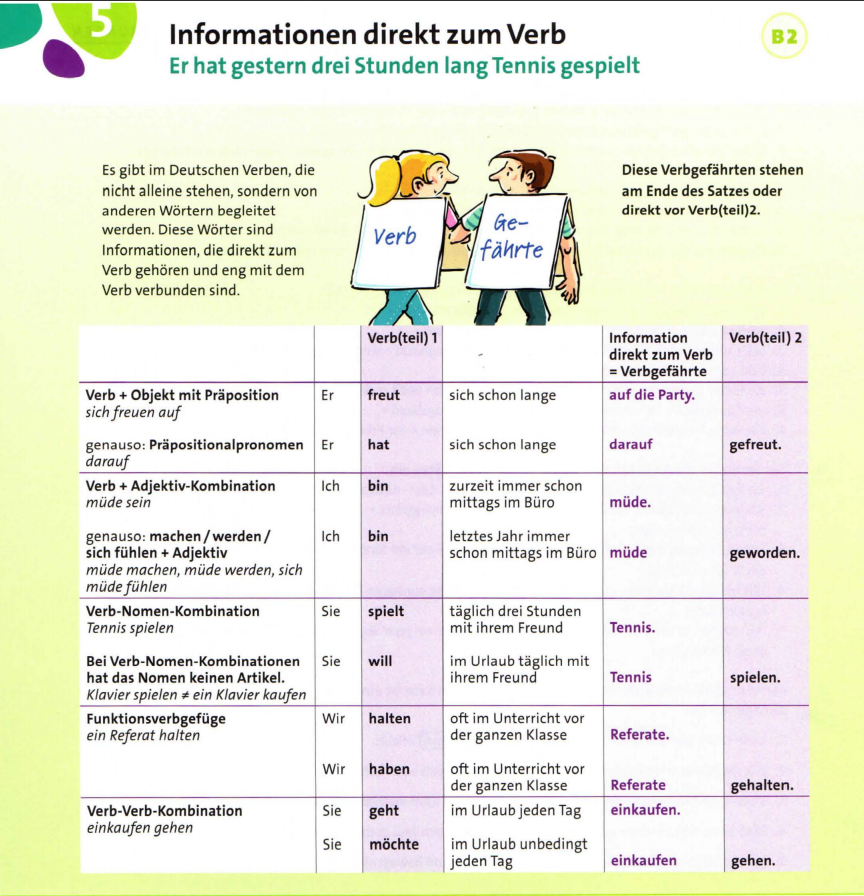
If you like grammar, you can also search verbgefährte. In the phrase spazieren gehen, spazieren works as verbgefährte. It modifies the main verb and creates a different meaning (slightly or completely). Adjectives, nouns etc. also can be verbgefärte. You can think it like “having breakfast”. Having has different meaning, having breakfast has different meaning. “Having breakfast” acts like another verb than having.
But these topics are not necessary for level A, I guess.
charred harbor
limpid trout
how does gehen work with other verbs in the contexts of "spazieren gehen" and "a...
What immediately comes to mind for me personally: spazieren gehen, laufen gehen, joggen gehen, schwimmen gehen, schlafen/pennen gehen, wandern gehen, campen gehen
This is by no means an exhaustive list, not even close, these are just the first common constructions that come to mind for me
signal cipher
There is something similar in English. You add verbs to some verbs in to-infinitive, some verbs in gerund. Some can have both.
 slow loom
Hi everyone. I'm new to the channel
 next jasper
slow loom
Hi everyone. I'm new to the channel
next jasper
slow loom
Hi everyone. I'm new to the channel
hi
 light rain
signal cipher
If you like grammar, you can also search verbgefährte. In the phrase spazieren g...
light rain
signal cipher
If you like grammar, you can also search verbgefährte. In the phrase spazieren g...
I think the correct term is "Funktionsverbgefüge" (based on what I have noticed), but your explanation is on point.
plush pelican
light rain
I think the correct term is "Funktionsverbgefüge" (based on what I have noticed)...
I've seen multiple names for it, including "zusammengesetzte Verben" and "Verbgefährte"
 fallen nimbus
Hallo, ich wollte über das Passiv from von nennen fragen.
Welche ist die richige Form?
Beim von Vester "abenteuerlich unwirtschaftlich" genannte Autofahren gehen .....
oder
Beim von Vester "abenteuerlich unwirtschaftlich" genannten Autofahren gehen ........
plush pelican
Vester?
plush pelican
fallen nimbus
Hallo, ich wollte über das Passiv from von nennen fragen.
Welche ist die richi...
Das hängt nicht vom Passiv ab. "genannt" funktioniert hier als Adjektiv. Die Endung ist also die Endung für ein Adjektiv vor einem Nomen.
Man kann da auch andere Adjektive haben, und die Endung wäre dasselbe.
Beim großen Auto
Beim = bei + dem
bei dem großen Auto
beim kalten Wetter
bei der kleinen Bank
beim gebrochenen Rad
bei der frisch gewaschenen Decke
"bei" als Präposition erfordert den Dativ.

es gibt einen bestimmten Artikel vor dem Adjektiv (beim = bei + dem), also ist es schwache Deklination, die erste Tabelle auf der Webseite.
In dieser Situation brauchst du die Endung -en, egal, ob das Nomen männlich, weiblich, neutrum, oder Plural ist.
fallen nimbus
plush pelican
Vester?
Vester ist die Name von einen Mensch
fallen nimbus
plush pelican
https://www.germanveryeasy.com/adjective-declension
ach so, danke dir!
charred harbor
fallen nimbus
Vester ist die Name von einen Mensch
der Name von einem Menschen/der Name eines Menschen*
 charred harbor
Why are you surprised? :o
plush pelican
not surprised, I just begrudge weak nouns their existence
They make my life unnecessarily complicated, and I don't need that kind of toxicity 😛
plush pelican
Es ergibt mehr Sinn, wenn man weiß, dass einst alle Nomen dekliniert wurden. Schwache Nomen sind also alte Rentner, die sich dem neuen System nicht angepasst haben 😛
 spare warren
plush pelican
Das hängt nicht vom Passiv ab. "genannt" funktioniert hier als Adjektiv. Die End...
spare warren
plush pelican
Das hängt nicht vom Passiv ab. "genannt" funktioniert hier als Adjektiv. Die End...
Bloß weil es mir beim durchlesen gerade aufgefallen ist, statt "genannt funktioniert hier als Adjektiv" würde man wahrscheinlich eher "fungieren" benutzen
plush pelican
spare warren
Bloß weil es mir beim durchlesen gerade aufgefallen ist, statt "genannt funktion...
Ist "funktionieren" falsch, oder weniger schön?
plush pelican
spare warren
Ob es ganz falsch ist weiß ich nicht, aber fungieren ist auf jeden Fall schöner
Jetzt stellt sich die Frage, ob andere Deutschlerner das Wort "fungieren" verstehen werden, 😅
spare warren
plush pelican
Jetzt stellt sich die Frage, ob andere Deutschlerner das Wort "fungieren" verste...
Das stimmt natürlich hahaha
plush pelican
Einige Menschen stellen Fragen auf Deutsch, aber wenn man auf Deutsch antwortet, können sie die Antwort manchmal nicht oder nur teilweise verstehen
Ich glaube, das stammt aus einem Irrglauben, dass sie hier auf Deutsch reden müssen, auch in #questions / #questions-2
 flint shoal
ANy suggestions for somewhere i could practice using cases/grammar?
ping me if you respond
 woven valve
yo what does Laufende Produkte mean in english
delicate tiger
woven valve
yo what does Laufende Produkte mean in english
please ask only in one channel at a time
flint shoal
woven valve
yo what does Laufende Produkte mean in english
google translate
 silent ore
charred harbor
Latin/Proto-Germanic vibes are always cool idk wym
silent ore
charred harbor
Latin/Proto-Germanic vibes are always cool idk wym
katrielle layton!! :0
 spare jay
Glad to see so many Layton fans on here :D
charred harbor
silent ore
katrielle layton!! :0
Luke!?!
 dire fog
Hallo, eine Frage. Wenn ich habe ein Trennbare Verb and I have to use um + zu, liegt zu zwischen dem Präfix und dem Verb?
Like, "Ich gehe nach Haus, um Freundin anzurufen." Ist das richtig?
 rich prism
dire fog
Hallo, eine Frage. Wenn ich habe ein Trennbare Verb and I have to use um + zu, l...
rich prism
dire fog
Hallo, eine Frage. Wenn ich habe ein Trennbare Verb and I have to use um + zu, l...
ye
Ich gehe nach Hause, um eine/meine/deine/etc Freundin anzurufen
charred harbor
dire fog
Hallo, eine Frage. Wenn ich habe ein Trennbare Verb and I have to use um + zu, l...
Wenn ich ein trennbares Verb habe*
dire fog
Ohhh achso danke danke
silent ore
charred harbor
Luke!?!
but in different universe 😔
spare jay
I strongly advise you to try Layton in German :D Laytons voice is phenomenal
charred harbor
It is
fervent kernel
spare jay
I strongly advise you to try Layton in German \:D Laytons voice is phenomenal
Was ist das denn?
delicate tiger
charred harbor
Outdated article
Professor Layton ist der Name einer Adventure-Spieleserie für den Nintendo DS und den Nintendo 3DS.
Should be "für den Nintendo DS, den Nintendo 3DS und die Nintendo Switch"

next jasper
charred harbor
```Professor Layton ist der Name einer Adventure-Spieleserie für den Nintendo DS...
Seit wann gibt es das für die Switch?
 wide crater
Seit 2017, denke ich?
charred harbor
next jasper
Seit wann gibt es das für die Switch?
Die Verschwörung der Millionäre war für die Switch erhältlich und das neueste Spiel (Neue Welt des Dampfes) ist nur für die Switch also der Artikel ist jetzt veraltet
wide crater
 next jasper
Krass wusste ich nicht
wide crater
doch erst 2018
next jasper
wide crater
doch erst 2018
Unmöglich solche Fake News hier zu verbreiten
wide crater

next jasper
Ich bin empört 
wide crater
Kennt ihr Katamari Damacy?
delicate tiger
#german-only
spare jay
charred harbor
```Professor Layton ist der Name einer Adventure-Spieleserie für den Nintendo DS...
And for Mobile Device actually!
And movies, and animes xD
 brave flint
Was ist der Unterschied zwischen:
a) Tim hat 4 Stunden die Wohnung aufgeräumt.
b) Tim hat für 4 Stunden die Wohnung aufgeräumt.
next jasper
brave flint
Was ist der Unterschied zwischen:
a) Tim hat 4 Stunden die Wohnung aufgeräumt.
...
Nichts
Sinnlich
plush pelican
next jasper
Nichts
Ich dachte, "für 4 Stunden" ist ein Anglizismus?
Aber ich bin mir nicht sicher
icy flax
Er hat mir die Ohren vollgeredet/-jammert/-quatscht
Wenn einer halt so sehr viel redet, dass es mir lebensmüde geht, kann ich sowas umgangsprachlich sagen. Gibt es einen förmlichen Ausdruck und auch einen alltäglichen? Generell würde man einfach sagen, dass der Typ total nervig ist, oder?
brave flint
next jasper
Nichts
Im folgenden Satz:
"Ich suche für ein Jahr einen Job."
Was dauert ein Jahr? Die Suche oder der Job?
next jasper
plush pelican
Ich dachte, "für 4 Stunden" ist ein Anglizismus?
Ah wusste ich nicht
plush pelican
next jasper
Ah wusste ich nicht
Ich kann auch falsch liegen
icy flax
plush pelican
Ich kann auch falsch liegen
Susana hat das hunderte Male gesagt. Es kann nur richtig sein
Sowie das "ähnlich zu etw"
plush pelican
icy flax
Sowie das "ähnlich zu etw"
😬
Diesen Fehler mache ich immer noch, glaube ich 😅
willow socket
Is it?
willow socket

Deutsche Grammatik 2.0
Der Kasus von für Die Präposition für wird immer mit dem Akkusativ verwendet. [für + Akkusativ] Beispiele: für + Akkusativ der Vater: für meinen V
plush pelican
Ich dachte, du sprichst von "ähnlich zu", 😅
willow socket
Hier sind die temporalen Bedeutungen aufgelistet ohne Anmerkung
plush pelican
In der temporalen Bedeutung beschreibt für eine Zeitdauer (=wie lange?). Sie entspricht der Postposition lang oder dem temporalen Akkusativ.
Beispiel 1: für (temporal)
Er arbeitete für einige Jahre im Ausland.
=Er arbeitet einige Jahre lang im Ausland.
=Er arbeitete einige Jahre im Ausland.Beispiel 2: für (temporal)
Wie lange bleibt ihr in Berlin? – Nur für zwei Tage.
=Nur zwei Tage lang.
=Nur zwei Tage.
willow socket
Ja genau
plush pelican
Dann ist es wohl kein Anglizismus. Ich habe mich geirrt @next jasper
brave flint
für 4 Stunden ist also nicht falsch?
brave flint
brave flint
Im folgenden Satz:
"Ich suche für ein Jahr einen Job."
Was dauert ein Jahr? Die ...
Ist dieser Satz richtig?
plush pelican
brave flint
für 4 Stunden ist also nicht falsch?
I guess so 🤷♂️
plush pelican
brave flint
Ist dieser Satz richtig?
Da dachte ich, es sollte eher wie "Ich suche seit einem Jahr einen Job" aussehen
Aber vielleicht irre ich mich auch hier.
brave flint
Eigentlich habe ich im Kurs gelernt, dass der hier gesuchte Job nur ein Jahr dauert. Aber irgendwie finde ich das komisch.
Würde gern mal wissen, ob das wirklich natürlich klingt.
plush pelican
brave flint
Eigentlich habe ich im Kurs gelernt, dass der hier gesuchte Job nur ein Jahr dau...
Ach so. Das ist aber eine andere Bedeutung. Da hätte ich vermutet
"Ich suche einen ein Jahr dauernden Job." oder so
Etwas mit einem Partizipsatz als Adjektiv
Ich suche einen (ein Jahr dauernden) Job.
Aber vielleicht überlassen wir es den Muttersprachlern, 😅
brave flint
plush pelican
Aber vielleicht überlassen wir es den Muttersprachlern, 😅
Genau 😂
brave flint
plush pelican
Ach so. Das ist aber eine andere Bedeutung. Da hätte ich vermutet
"Ich suche ei...
So würde ich das eigentlich auch sagen, oder vielleicht würde ich einen Relativsatz verwenden
timber yacht
"Ich suche einen Job (nur) für ein Jahr."
Ich suche gerade einen Job, in dem ich ein Jahr lang arbeiten möchte.
"Ich suche für ein Jahr einen Job."
Was genau gemeint ist, bleibt hier fraglich. Man würde schauen, was sich dazu aus dem Zusammenhang ergibt, in dem der Satz auftaucht.
"Ich werde ein Jahr lang nach einem Job suchen (- und wenn ich bis dahin keinen gefunden habe, werde ich wegziehen)."
"Ich werde ein Jahr lang versuchen, einen Job zu finden."
Hier ist eindeutig, was gemeint ist.
"Ich suche einen ein Jahr dauernden Job." ist natürlich nicht falsch, man würde ihn so formuliert aber wohl nicht hören.
timber yacht
plush pelican
> In der temporalen Bedeutung beschreibt für eine Zeitdauer (=wie lange?). **Sie...
Diese Varianten hätte ich auch zusammengetragen. 👍
 violet field
Du wirst als erstes erschossen.
Does this sentence make sence?
How can it be translated into English?
violet field
willow socket
Where do you have the sentence from?
Somebody posted it on my discord server as a joke but I'm wondering if it is correct or not
icy flax
willow socket
https://deutschegrammatik20.de/praepositionen/die-bedeutung-der-prapositionen-ub...
Vielleicht ist ein Buch namens "Grammatik 2.0" keine geeignete Quelle um dafür zu belegen, ob "für" wirklich kein Anglizismus sei. Auf DWDS gibt es auch Beispiele von dem temporalen "für" für Zeitdauer. Es ist wohl nur Gesmacksache, aber ein überflüssiges "für" einzuschieben, ist komisch
icy flax
brave flint
Im folgenden Satz:
"Ich suche für ein Jahr einen Job."
Was dauert ein Jahr? Die ...
Die Suche dauert ein Jahr. Wenn man die Zeitdauer an Job verankert wollte, dann "einen Job für ein Jahr". Wenn dieses "für ein Jahr" gleich nach dem Verb sagt, dann wirkt es sehr als ein temporales Adverb für das Verb "suchen"
icy flax
violet field
Du wirst als erstes erschossen.
Does this sentence make sence?
How can it be tra...
Yeah, it does. You would write "als Erstes".
https://www.deepl.com/de/translator#de/en-us/Du wirst als Erstes erschossen.
willow socket
icy flax
Vielleicht ist ein Buch namens "Grammatik 2.0" keine geeignete Quelle um dafür z...
Warum wäre dies keine geeignete Quelle? Ich verwende die Webseite ziemlich oft und sehe keinen Grund anzunehmen, dass die Infos fehlerhaft sind, die da geteilt werden. Natürlich kann man anhand der Quelle nicht ausschließen dass es sich um einen Anglizismus handelt, aber es spricht dafür dass es mindestens so häufig ist, dass es zur normalen Grammatik gehört. Ich finde “für” in diesem Fall auch nicht besonders komisch.
Während ich hier bin: ich glaube das ist falsch. Seit einem Jahr würde sich auf das Suchen beziehen. Hier ist es zwar nicht ganz eindeutig, aber ich würde den Satz so verstehen, dass der Job 1 Jahr dauert (teilweise vom Kontext abhängig).
timber yacht
Etwas für eine bestimmte Dauer zu tun, ist kein Anglizismus, diese Formulierung gibt es schon sehr lange.
signal cipher
Which one would be better:
…, und, John, ich möchte Schokolade.
…, John, und ich möchte Schokolade.
I wonder whether position null is before or after left außerfeld
 wispy yarrow
Kontext?
signal cipher
There is no. I made up the example.
plush pelican
signal cipher
There is no. I made up the example.
Which one is "better" depends on the context
signal cipher
So both are possible? Position null can be before and after linkes aßenfeld
plush pelican
Both are possible, but I don't know that it proves anything about "position null", because you can always insert stuff at various points in a sentence.
especially small little asides
plush pelican
one sec
Hammer's German Grammar 19.2.1(c)

You can have the name of the person addressed as a little aside, which can be inserted before the entire clause
signal cipher
grammis ist ein Informationssystem zur deutschen Grammatik und präsentiert aktuelle Forschung zu Syntax, Morphologie und Semantik sowie Wörterbücher, Bibliografien und linguistische Datenbanken.
plush pelican
I see
so Hammer's just doesn't label this as the "linkes Außenfeld"
I still believe you can have the name after "und", in which case "Peter" is an insertion, separate from the main clause
like when you have something in parentheses in English
signal cipher
Danke schön


 signal cipher
I try to understand difference and relation between position null and left aussrmfeld, Nachfeld and right aussenfeld
I think I understood. If a thing is mentioned in main clause, extra phrase which describes it more is in right aussenfeld. If it’s mentioned firstly, it’s in Nachfeld. I am not sure
brave flint
timber yacht
Etwas *für* eine bestimmte Dauer zu tun, ist kein Anglizismus, diese Formulierun...
Danke schön! 😊👍
signal cipher
What does it mean here?
Sir @plush pelican
 plush pelican
My dude you didn't even include the full sentence
signal cipher
 plush pelican
I believe that that's talking about times when multiple things all fit into position 1, which can happen for a limited set of adverbs
signal cipher
I couldn’t understand the difference between this two options
plush pelican
They are joined with the other thing in position 1 such that both only count as "1 thing" for the purposes of counting positions
signal cipher
Aaaa is it nacherstfeld?
fervent kernel
signal cipher
I couldn’t understand the difference between this two options
Freilich ist agreeing, allerdings you can say before adding something
signal cipher
fervent kernel
Freilich ist agreeing, allerdings you can say before adding something
I mean these two
 plush pelican
fervent kernel
Freilich ist agreeing, allerdings you can say before adding something
plush pelican
fervent kernel
Freilich ist agreeing, allerdings you can say before adding something
He's talking about the positioning, having "zugleich" and "freilich" both before the conjugated verb, even though as we all know the conjugated verb is in position 2.
Meaning "zugleich" and "freilich" are both in position 1.
fervent kernel
Ah ok
signal cipher
I think I understood. We can write before vorfeld or in nacherstposition of vorfeld
plush pelican
Sounds right
signal cipher
And there is no position null 😞
plush pelican
Position null = linkes Außenfeld?
plush pelican
I mean, position 1 = Vorfeld
signal cipher
Und ich möchte Schokolade.
I mean the position of und here
 severe flame
what is the difference between Muffensausen and Angst ? 😦
fervent kernel
severe flame
what is the difference between Muffensausen and Angst ? 😦
Basicly means the same
severe flame
fervent kernel
Basicly means the same
oh thank you
fervent kernel
severe flame
oh thank you
No Problem
fervent kernel
severe flame
oh thank you
Es gibt im Darm einen Muskel, die Muffe. Wenn man Angst kriegt kann er erschlaffen und man muss pupsen. Davon kommt Muffensausen.
severe flame
fervent kernel
Es gibt im Darm einen Muskel, die Muffe. Wenn man Angst kriegt kann er erschlaff...
ohh okay 🥺 thank you.. diese Erklärung gefällt mir
fervent kernel
severe flame
ohh okay 🥺 thank you.. diese Erklärung gefällt mir
Kein Problem gerne Ja die Erklärung ist ganz cool.
icy flax
willow socket
Warum wäre dies keine geeignete Quelle? Ich verwende die Webseite ziemlich oft u...
Hey, @willow socket! Hab nicht geschafft, dir früher zu antworten.
In der Linguistik gibt es zwei Ansätze: deskriptiv und präskriptiv. Grammatik 2.0 ist eine Quelle für die neue Grammatik und daher wahrscheinlich ein deskriptives Werk. Unabhängig davon, ob das "Dauer-für" zwar ein Anglizismus ist oder nicht, wird es natürlich als Teil einer "Grammatik 2.0" angesehen, wenn es schon von vielen häufig verwendet wird -- so häufig sogar, dass es beispielsweise laut @timber yacht eine alte Formulierung ist.
Erinnere ich mich nun falsch daran, dass ein Mitglied uns mehrfach empfohlen hat, dieses "für" wegzulassen, weil es ein Anglizismus und auch überflüssig sei? Ja, das kann sehr gut sein. Ich habe nie gesagt, dass die Infos von Grammatik 2.0 fehlerhaft seien.
Geschmacksache: ||Ich persönlich verzichte lieber auf dieses "für". Die Jahren sind noch vor mir, aber ich will wegen einigen Geschichten von Ausländern in Deutschland das sauberste und korrekteste Deutsch sprechen, das ich kann, sodass die Sprache selbst nie einen gültiger Grund für Vorurteil einmal kommt||
plush pelican
icy flax
Hey, <@543105999398240297>! Hab nicht geschafft, dir früher zu antworten.
In de...
"die neue Grammatik"?
Was ist das?
icy flax
plush pelican
Was ist das?
eine berühmte Webseite: https://deutschegrammatik20.de
nicht selten findet man es in der beliebten Suchmaschine
plush pelican
Die Webseite ist mir schon bekannt, aber du hast gesagt, dass die Webseite "eine Quelle für die neue Grammatik" ist.
What is "die neue Grammatik"?
Nimmst du einfach an, dass es eine neue Grammatik gibt, weil die Webseite "Grammatik 2.0" heißt?
icy flax
No, I was trying to explain that the website is called what it is called probably because it aims to bring a new modern look to what german is nowadays
I was trying to tell Lolo what I meant
plush pelican
But you think that this usage of "für" is not really grammatical, just an Anglicism that is weit verbreitet?
icy flax
not sure about it, but it might be, not that I really care much. I recall someone telling me this, but I could not find when it happened, it was either a teacher or someone that knows german at a pretty higher level
what we were discussing was a specific case of using "für" where u dont really need the "für"
I decided just to "verzichten" (not use ?) on using that "für"
Lolo asked why did I not find that site good to proof whether it was a anglicism or not
and that's what I wrote earlier on
plush pelican
icy flax
I decided just to "verzichten" (not use ?) on using that "für"
go without using that "für"
stop using that "für"
fervent kernel
Könntest du mich näher an ihn heranbringen? Ist das her nötig?
Auch von Angesicht zu Angesicht? Könnte ich von Gesicht zu Gesicht sagen?
Please ping when answering
whole portal
fervent kernel
Könntest du mich näher an ihn **her**anbringen? Ist das her nötig?
Was möchtest du stattdessen sagen?
Anbringen?

Das würde nicht funktionieren, du könntest es höchstens zu ranbringen abkürzen
whole portal
whole portal
Anbringen?
He's taping him to the other person if that wasn't clear
fervent kernel
whole portal
Was möchtest du stattdessen sagen?
Anbringen ohne das her
fervent kernel
whole portal
Das würde nicht funktionieren, du könntest es höchstens zu ranbringen abkürzen
Ah ok danke
fervent kernel
fervent kernel
Auch von Angesicht zu Angesicht? Könnte ich von Gesicht zu Gesicht sagen?
@whole portal wie wärs mit dieser frage?
whole portal
Na ja sagen kannst du es aber es klingt halt komisch
Funktioniert mMn. nicht wirklich als Alternative
fervent kernel
whole portal
Funktioniert mMn. nicht wirklich als Alternative
Was ist mMn.?
fervent kernel
👍
timber yacht
icy flax
Es gibt also keine Frage mehr zum Thema hehe
Ich weiß, das Thema ist durch 🙂 Allerdings habe ich eben beim Frühstücken noch ein bisschen recherchiert und im Goethe-Wörterbuch etwas gefunden. Dieses Wörterbuch stammt nicht etwa von Goethe selbst, sondern wurde in mehreren Stufen über lange Zeit ab der Mitte des 20. Jhd. zusammengetragen und aufgebaut. Die untersuchten und angegebenen Quellen sind allerdings meistens deutlich älter.
 plush pelican
timber yacht
Ich weiß, das Thema ist durch 🙂 Allerdings habe ich eben beim Frühstücken noch ...
plush pelican
timber yacht
Ich weiß, das Thema ist durch 🙂 Allerdings habe ich eben beim Frühstücken noch ...
Das kann ich überhaupt nicht entschlüsseln
Was ist "uö"?
Was ist "b"?
Ich nehme an, "f." = für?
"So war für einige Geschlechter der Geist nicht ewig"? Was? Was hat das mit "für x Stunden" oder solchen Formulierungen zu tun?
timber yacht
"f." = für
Schaue zum Beispiel auf den zweiten rot gefärbten Textteil:
f. lange’, ‘f. lange, kurze Zeit’ ua; ‘f. immer, ewig’
[ihn] auch nur f. einige Zeit zu beherbergen,
Das sind in meinen Augen gute Beispiele für genau die temporale Nutzung, die wir besprochen haben.
plush pelican
Da gibt's aber keine Zahlen an sich 🤔
timber yacht
Is doch Wurst. Wenn ich sagen kann "für den Nachmittag" oder "für kurze/lange Zeit", dann kann ich selbstverständlich auch sagen "für wenige Tage" oder "für 3 Wochen".
willow socket
Ah die gute alte Grammatik 😌
plush pelican
Guck mal, deren taucht auf!
Der Groll zwischen Exodanern und Solanern war zwar (größtenteils) längst begraben, doch Rosemarys privilegierte Abstammung war eine Sache, deren sie sich mittlerweile schämte. Das erinnerte sie allzu sehr daran, weshalb sie von zu Hause weggegangen war.
"for which" passt da ziemlich gut, oder?
Nur wusste ich nicht, dass "sich schämen" auch ein Genitivobjekt akzeptieren konnte.
signal cipher
What is that allein? Adjective, adverb?
Der Täter allein ist dafür verantwortlich.
plush pelican
Adverb, it must be
An adjective can only be either in front of a noun, or after "sein"
It can't be in the Vorfeld at the same time with something else
It's adverbs that do that, I linked the Hammer's page the other day
Hmm, maybe I didn't
Hammer's German Grammar 19.2.1(c)(iii)
 signal cipher
If allein is counted in that phrase, both can be there I think. I don’t know.
Der täter allein is one phrase or not I don’t know.
plush pelican
It's the situation with 2 things in the Vorfeld
Which is only allowed for very specific words
It's viewed as "one thing" because the "allein" is like more information about "der Täter"
You talked about it the other day, what was the name?
Nacherstposition?
signal cipher
Yes
But what it is exactly I don’t know that
There is same thing in English. Maybe I can find something from there.
Maybe it’s predicative adjective
plush pelican
It can't be
If it were, it would have to be by itself in the Vorfeld
Müde bin ich.
As far as I know, only adverbs and particles can share the Vorfeld with something else
So here it must be an adverb

Hmm, but that sounds like they're connectors, like conjunctions almost
🤔
Doch!
grammis ist ein Informationssystem zur deutschen Grammatik und präsentiert aktuelle Forschung zu Syntax, Morphologie und Semantik sowie Wörterbücher, Bibliografien und linguistische Datenbanken.
"allein" counts as an "Adverbkonnektor" and can be in the Nacherstposition
In a list of possible positions for it:
 signal cipher
plush pelican
As far as I know, only adverbs and particles can share the Vorfeld with somethin...
signal cipher
plush pelican
As far as I know, only adverbs and particles can share the Vorfeld with somethin...
What you mean by particle
signal cipher
plush pelican
"allein" counts as an "Adverbkonnektor" and can be in the Nacherstposition
Connect nothing?
It just says “only täter”
icy flax
timber yacht
Ich weiß, das Thema ist durch 🙂 Allerdings habe ich eben beim Frühstücken noch ...
"ihn auch nur für einige Zeit zu berherbergen" ist das einzige Beispiel mit dem überflüssigen "für". Nah... Vielen Dank für die Recherche, Halbhorst. Du darfst nun wieder Pizza backen und Teig hin un her in der Küche werfen.
icy flax
plush pelican
Was ist "uö"?
Was ist "b"?
Ich nehme an, "f." = für?
"So war für einige Gesch...
uö - und öfter
b = zweiter Eintrag zu "für"
Ja, meines Erachtens hat es auch nichts damit zu tun
icy flax
willow socket
Ah die gute alte Grammatik 😌
Es hat etwas von "Der Herr der Ringe" in sich, oder?
Ich hole dich ab, dann äsen wir zusammen, schieden für den Nachmittag, um Abends wieder da zu seyn.
Ist dieses schieden etwa im Präteritum?
Sagt man das noch? "Wir scheiden uns jetzt, ich muss nach Hause"?
timber yacht
Die ganze Unterhaltung hatte mehrere Stufen. Eine davon war die Frage, ob es sich bei der temporalen Verwendung von "für" wie in #questions-2 message um einen Anglizismus handelt. Dass es diesen von mir geposteten Eintrag in einem Jahrzehnte alten Nachschlagewerk gibt, spricht dagegen. Das war alles, was ich damit verdeutlichen wollte. 🙂
timber yacht
icy flax
Es hat etwas von "Der Herr der Ringe" in sich, oder?
> Ich hole dich ab, dann äs...
So spricht, glaube ich, niemand mehr.
signal cipher
John lächelnd hat den Champagner gegessen
Can I write lächelnd in this position?
Or
Lächelnd John hat den Champagner gegessen.
willow socket
okay whatever you prefer.
John hat den Champagner lächelnd getrunken.
Lächelnd hat John den Champagner getrunken.
^valid positions for 'lächelnd'
signal cipher
Which position do you think natural for lähelnd?
John hat lähelnd den Champagner gegessen
Lächelnd hat John den Champagner gegessen
John hat den Champagner lächend gegessen
robust glade
signal cipher
Which position do you think natural for lähelnd?
John hat lähelnd den Champagne...
The 2 one, but you don't eat the Champagner, you drink it, so you should write "getrunken"
signal cipher
robust glade
The 2 one, but you don't eat the Champagner, you drink it, so you should write "...
Danke schön
willow socket
signal cipher
Which position do you think natural for lähelnd?
John hat lähelnd den Champagne...
das hatte ich dir schon gesagt, aber nochmal zur Wiederholung: 2 und 3 (lächelnd), gegessen getrunken
signal cipher
willow socket
das hatte ich dir schon gesagt, aber nochmal zur Wiederholung: 2 und 3 (läche**l...
There were examples like 1 in a video.
Because of that I couldn’t be sure which version is most natural
willow socket
1 is still possible, just slightly less natural 🙂
word order is very flexible in the end
signal cipher
Yes. But I wanted to learn which order is natural and in which it’s emphasized.
icy flax
ich war kurz davor alles über Bohr zu schmeißen
Ist das eine Redensart, die die Frau in Rosa um 10:10 sagt?
https://www.ardmediathek.de/video/panorama-die-reporter/die-abnehmspritze-so-gefaehrlich-ist-der-hype-um-ozempic/ndr/Y3JpZDovL25kci5kZS8zNDkzNDUwZS01MTdkLTRkYjMtYTRjOC1mOGJlNWFmNWRlMmY
plush pelican
icy flax
> ich war kurz davor alles über Bohr zu schmeißen
Ist das eine Redensart, die di...
über Bord
to throw something overboard = to throw something away
icy flax
wie auf einem Schiff
plush pelican
genau
icy flax
es wäre so gut, wenn sie Untertitel hätten. Mein Gehirn ist so schlecht mit dem Parsen von neuen Wörtern
plush pelican
Das ist aber gute Übung
fervent kernel
icy flax
es wäre so gut, wenn sie Untertitel hätten. Mein Gehirn ist so schlecht mit dem ...
@icy flax come here man
Please man, stop this, I just wanted to learn German
icy flax
fervent kernel
<@471476935289995264> come here man
Was ist deien Frage?
fervent kernel
You 3 are nice people so no need for this please
fervent kernel
icy flax
Was ist deien Frage?
i dont speak german, speak english please
icy flax
What is your question? (sorry)
fervent kernel
nothing forget
fervent kernel
icy flax
What is your question? (sorry)
in fact, when are you forced to use capital letters in German?
plush pelican
fervent kernel
in fact, when are you forced to use capital letters in German?
all full nouns must use capital letters
pronouns don't need to
...unless you're talking about the formal you, "Sie"
German also capitalizes the first word of every sentence, like English.
plush pelican
In diesem Video für sehr fortgeschrittene Deutschlerner (Niveau C1) schauen wir uns die Relativpronomen im Genitiv genauer an.
0:00 Intro
0:18 Wiederholung Relativpronomen Nominativ, Akkusativ, Dativ
2:07 Relativpronomen Genitiv
5:38 deren und derer
✨ FÜR MITGLIEDER ✨
▸ Aufgaben, das Skript als PDF und meine Videos als Podcast: https://deutsc...
Video on dessen, deren, and derer
Question: How do you translate these sentences from the video into English? DeepL seems to somewhat ignore the genitive pronouns
Meine Entscheidung wird Folgen haben, derer ich mir sehr bewusst bin.
Das sind Beispieltsätze, angesichts derer ich zu dem Schluss komme, dass die deutsche Sprache merkwürdig ist.
Es gab technische Störungen, infolge derer die Website für mehrere Stunden nicht erreichbar war.
Die Frauen, derer wir heute gedenken, waren wichtige Politikerinnen.
 gritty niche
plush pelican
Question: How do you translate these sentences from the video into English? Deep...
gritty niche
plush pelican
Question: How do you translate these sentences from the video into English? Deep...
Here's what I got
- My decision will have consequences, of which I am very aware.
- These are example sentences, because of which I have come to the conclusion, that the German language is strange.
- There were technical problems, because of which the website was unavailable for several hours.
- The women, whom we remember today, were important politicians.
plush pelican
gritty niche
Here's what I got
1. My decision will have consequences, of which I am very awar...
I appreciate the effort, but for example, "These are example sentences which make me conclude..."
That's not really translating the genitive pronoun, right? nor the "angesichts" preposition
Because you could translate your sentence back into German as simply, "Das sind Beispielsätze, die mich zum Schluss bringen, dass die deutsche Sprache merkwürdig ist."
right?
gritty niche
Not everything really translates between languages
plush pelican
Some stuff does, though
gritty niche
I guess you could do, "because of which I have come to the conclusion that..."
plush pelican
Are you a German speaker? Why are you marked as A1/A2?
gritty niche
Nah, I'm Puerto Rican, I just have a German speaking fiancée
plush pelican
interesting
plush pelican
plush pelican
Question: How do you translate these sentences from the video into English? Deep...
What about, "Those are example sentences, in light of which I come to the conclusion that the German language is strange." ?
gritty niche
That would work
plush pelican
I find that having a slightly too-literal-translation helps a lot when first learning a new grammar concept
gritty niche
Yeah I getcha
plush pelican
so I guess that's what I'm looking for here
gritty niche
I do that with Chinese and Latin sometimes
plush pelican
gritty niche
Here's what I got
1. My decision will have consequences, of which I am very awar...
With #4, does "whom" in English often translate to genitive in German?
I thought it was usually accusative/dative?
gritty niche
Gedenken just comes with the genitive, and I can't think of a way to translate the genitive into English
plush pelican
well, you see my problem, 😅
I know that it can sometime be like "whose", sometimes be like "of which", sometimes be like "those"
no idea how you (perhaps overly literally) translate it there, though
Der Frauen, deren Hund ich liebe, ist sehr nett.
The women whose dog I love is very nice.
gritty niche
whose or of whom would be the most literal
plush pelican
Die Erinnerungen derer, die wir verloren haben, werden nicht vergessern werden.
The memories of those, whom we have lost, will not be forgotten.
Is this right?
gritty niche
yeah
willow socket
plush pelican
Der Frauen, deren Hund ich liebe, ist sehr nett.
The women **whose** dog I love ...
Die Frau, deren Hund ich liebe, ist sehr nett.
(hopefully didn't miss any context)
gritty niche
Looks right
left salmon
gritty niche
Not everything really translates between languages
Lol hello
Didn’t expect to see you here
gritty niche
lol
gritty niche
left salmon
Lol hello
Didn’t expect to see you here
I have an ok understanding of grammar, even if I can't always apply it at full speed
My vocab is just garbo
left salmon
gritty niche
I have an ok understanding of grammar, even if I can't always apply it at full s...
Oh no I meant I didn’t even know you had any connection to german haha
left salmon
Maybe I missed something yeah
Im not in ordo 24/7😂
left salmon
gritty niche
Well, broken Denglish
Based haha
left salmon
True
It gets to you real fast
left salmon
plush pelican
I appreciate the effort, but for example, "These are example sentences **which m...
So you want like angesichts dessen as “in view of which”? Or something like that?
I mean the “genitive” stays the same
In English obviously
 true condor
What is the difference between genitive case and a possesive pronoun?
charred harbor
plush pelican
Die Erinnerungen **derer**, die wir verloren haben, werden nicht vergessern werd...
Not quite because you made a spelling mistake
vergessern -> vergessen*
 fallow ledge
Hmmm not sure how to best distinguish it
In terms of translating its often translated to „of the“
And thinking of examples, i think you have to use genetive when saying one noun possesses another thing
The the city‘s orchids - die Orchideen der Stadt
An exception i can think of is like mum and dad though, where it sounds fine with the s
my mums orchid
You can say die Orchidee meiner Mamma oder meine Mammas Orchidee
A possessive pronoun is something like mein, sein, dein, ihr
charred harbor
fallow ledge
Hmmm not sure how to best distinguish it
In terms of translating its often tran...
The usual spelling is Mama not Mamma
Also Orchidee is the singular so “the city’s orchids” wouldn’t be Orchidee
fallow ledge
Opps i absolutely meant to put an n there
The other one was absolutely an error tho
plush pelican
true condor
What is the difference between genitive case and a possesive pronoun?
The easiest way to explain it, is to not explain it at all and simply say the English equivalents, 😅
posessive articles like "mein/dein/sein/ihr" are equal to the English "my/your/his/her" etc
genitive case is often equivalent to the apostrophe s in English (plus an article):
der Hund des Mannes =
The man's dog.
Another way of thinking of it is, "the dog of the man"
charred harbor
fallow ledge
Hmmm not sure how to best distinguish it
In terms of translating its often tran...
I don’t think “meine Mamas Orchidee” would work at all tbh.
plush pelican
charred harbor
The usual spelling is Mama not Mamma
Depends on where you're from. I've seen "Mamma" before
plush pelican
charred harbor
I don’t think “meine Mamas Orchidee” would work at all tbh.
Yeah, in order to do that version of Genitive with the posessor at the front and a simple "S" after it, it has to be a proper name
 dawn oxide
Never seen Mamma before
plush pelican
Nicos Weg talks about it
fallow ledge
plush pelican
Yeah, in order to do that version of Genitive with the posessor at the front and...
Yeah, im familiar with that, those examples sounded alright to my ear tho
Happy to take critique
charred harbor
dawn oxide
Never seen Mamma before
To me it looks like an Anglicism
plush pelican
oh, are y'all talking about German? 😅 my bad
I thought you meant "Mamma" in English
Should've read more carefully
willow socket
Mamas Orchidee(n) geht
charred harbor
I did capitalise it for a reason… 😅
plush pelican
willow socket
Mamas Orchidee(n) geht
TIL it can also include names for parents

I thought it had to be an actual name name
plush pelican
charred harbor
I just see it as “works for vocative”
 charred harbor
I can explain if you like
plush pelican
sure
charred harbor
Some languages including Latin have a separate vocative case that’s used when directly addressing a person or thing, like when calling someone’s name
That’s the difference between “Vaters Auto” and “mein Vaters Auto”
The former is using Vater vocatively whereas the latter is treating it like a typical noun
plush pelican
charred harbor
That’s the difference between “Vaters Auto” and “mein Vaters Auto”
The former is...
Can you explain that a bit more?
charred harbor
“Vater! Vater!”
Same thing. For all intents and purposes Vater is a name there, or a nickname
So in effect it’s no different to “Peters Auto”
plush pelican
But how do I recognize that the Vater in "Vaters Auto" is "directly addressing" it versus "mein Vaters Auto" isn't?
What makes it direct?
Also: Does German use any other case to cover the Vocative, or is it just a part of Genitiv case?
fallow ledge
German doesnt mark this case, probably doesnt have it
Its an idea to explain why these specific nouns can function with the grammar only used with names
I guess mama and papa, oma, opa etc count as names as well
charred harbor
plush pelican
But how do I recognize that the Vater in "Vaters Auto" is "directly addressing" ...
We have a distinction in English as well through capitalisation. You’d say “my father’s car” (where “father” is like a normal noun) but “Father’s car” with a capital F if there wasn’t a “my”.
plush pelican
charred harbor
We have a distinction in English as well through capitalisation. You’d say “my f...
Father with a capital F?
charred harbor
plush pelican
Father with a capital F?
Yeah.
plush pelican
Das kommt mir nicht bekannt vor.
fallow ledge
Im thinking of Malfoy in this example, its fun
plush pelican
I assume you're not just capitalizing the F because it's the beginning of a sentence, but rather it's something about "Father" being a name/direct address?
charred harbor
See for yourself
 plush pelican
charred harbor
See for yourself
plush pelican
charred harbor
See for yourself
I've literally never done this
charred harbor
plush pelican
I've literally never done this
Then I’m sorry to tell you you’ve never done it correctly :p
plush pelican
charred harbor
Then I’m sorry to tell you you’ve never done it correctly :p
how about the earlier question? How do you (overly literally) translate stuff with like derer/deren/dessen?
plush pelican
plush pelican
Question: How do you translate these sentences from the video into English? Deep...
.
yuhu also had another example earlier that I think he made:
Das Geld von dem Arbeitgeber ist nicht wert, die Arbeit zu machen.
Das Geld dessen ist nicht wert, die Arbeit zu machen.
plush pelican
What I have so far:
- With dessen/deren as Relativpronomen inside the Relativsatz, with a noun directly after it, it translates to "whose"
Die Frau, deren Hund ich mag, ist hilfsbereit.
The woman whose dog I like is helpful.
- With the same situation, but a preposition before the genitive Relativpronomen, in (modern) English you usually put the preposition at the end of the relative clause:
Die Frau, mit deren Hund ich immer spiele, ist hilfsbereit.
The woman, whose dog I always play with, is helpful.
- With derer immediately before a Relativsatz, it translates to "of those"
Die Erfahrungen derer, die im Ausland studiert haben
The experiences of those who have studied abroad.
-
With dessen/deren unconnected to a Relativsatz, it's equivalent to a possessive article that exclusively refers to a non-subject noun, so like "sein/ihr/etc" so "his/her/their/its/etc"
Peter traf seine Schwester und deren Freunde.
Peter traf seine Schwester und ihre Freunde.
Peter met his sister and her friends. -
And then in the prior sentences, it seems like it can also sometimes translate to "of which", but I'm not entirely clear on when that happens.
Maybe it's when it's the object of a genitive preposition in a Relativsatz, und zwar a Demonstrativpronomen, so it's standing by itself (no other noun with it)?
fallow ledge
Ooooh this is a really fun question
most of these i would think of as feste Redewendungen rather than translating,
like with the two with the prepositions, angesichts and infolge those have genetive that follow them, when i translate them i think of them using of
for infolge dessen, i usually think of as a result of which
There were technical difficulties, as a result of which the website was not reachable for several hours
angesichts dessen i usually equate to in light of which, in the face of which key word of, makes me instantly think of genetive
those are example sentences, in light of which i have come to the conclusion that the German languge is strange.
that first one i would translate with of which, or just which
my decions have consqunces, of which i am very aware
and that last one hmmm tricky. When i learnt gedenken, i memorised that it pairs with dessen and didnt think much of it. It sounds particularly strange to translate with of in English. Maybe this one just doesnt translate so literally
The women, who we commemorate today were significant politicians
(i had to write this so many times, sorry youre getting the thrice written version)
plush pelican
fallow ledge
Ooooh this is a really fun question
most of these i would think of as feste Re...
Meine Entscheidung wird Folgen haben, derer ich mir sehr bewusst bin.
With this one, what does "derer" count as? Demonstrativpronomen im Genitiv? It's not a Relativpronomen im Genitiv, right?
Die Frauen, derer wir heute gedenken, waren wichtige Politikerinnen.
Yeah, with this one I wonder if there might be an older English formulation that we simply don't use today, something like all that "henceforth" and "whereupon" or something
plush pelican
plush pelican
What I have so far:
* With dessen/deren as Relativpronomen *inside* the Relativ...
Anything to add to this?
willow socket
plush pelican
> Meine Entscheidung wird Folgen haben, derer ich mir sehr bewusst bin.
With th...
why is it not a relativpronomen (it is, imo)?
fallow ledge
plush pelican
> Meine Entscheidung wird Folgen haben, derer ich mir sehr bewusst bin.
With th...
ummmmm hmmmmmmm sorry im rusty on the difference
its comming across as like a more written, highbrow version of a relativpronoumen
like language youd use formally
plush pelican
willow socket
why is it not a relativpronomen (it is, imo)?
🤔 Maybe it is and I didn't realize that was a Relativsatz. The verb is at the end, that certainly hints at a Relativsatz.
willow socket
derer relates to 'die Folgen'
same as in the second sentence: derer relates to die Frauen
 plush pelican
fallow ledge
oh maybe its bewusst thats triggering the case, that would make sense
plush pelican
fallow ledge
oh maybe its bewusst thats triggering the case, that would make sense
yeah, it's one of them fancy "adjectives that govern a noun in genitive case" situations
which, like, no one fucking explains that to you
willow socket
oh just occurred to me: why have you written 'derer' instead of 'deren'? Did you think these up yourself or get them from somewhere? Deren sounds 'better' to me
plush pelican
willow socket
oh just occurred to me: why have you written 'derer' instead of 'deren'? Did you...
The YouTuber herself wrote "derer"
I just copied her sentence
willow socket
Maybe both are exchangeable, idk. I would have used deren.
plush pelican
So she mentions earlier in the video another spot where she said "technically, you can use derer or deren here, but to me, deren here sounds wrong. But there might be regional differences with this."