#botchannel
1 messages · Page 205 of 1
 tender trellis
 lean flickerBOT
CEFR levels
If you see something like A1, B2 or C1, these represent the proficiency of a speaker in a language they're not native in, and are called CEFR levels. They are valid for any language, not only German!
Roughly speaking, A levels are beginners and C levels are experts. Remember that CEFR level are self-assessed and indicative!
You can see more specific names and descriptions on the Wikipedia page:
https://en.wikipedia.org/wiki/Common_European_Framework_of_Reference_for_Languages
🗨 How do I know what level I am?
If the table on Wikipedia is too generic for you, you can try using this one here:
https://rm.coe.int/168045bb52
Just check each column one at a time: if you can do all it describes, move to the next column. Your level is the highest where you can do the most things.
Alternatively, you can use this questionnaire to estimate your level more accurately:
https://www.laits.utexas.edu/fi/sites/laits.utexas.edu.fi/files/Self Assessment Checklist European.pdf
 devout topaz
faq cefr
lean flickerBOT
CEFR levels
If you see something like A1, B2 or C1, these represent the proficiency of a speaker in a language they're not native in, and are called CEFR levels. They are valid for any language, not only German!
Roughly speaking, A levels are beginners and C levels are experts. Remember that CEFR level are self-assessed and indicative!
You can see more specific names and descriptions on the Wikipedia page:
https://en.wikipedia.org/wiki/Common_European_Framework_of_Reference_for_Languages
🗨 How do I know what level I am?
If the table on Wikipedia is too generic for you, you can try using this one here:
https://rm.coe.int/168045bb52
Just check each column one at a time: if you can do all it describes, move to the next column. Your level is the highest where you can do the most things.
Alternatively, you can use this questionnaire to estimate your level more accurately:
https://www.laits.utexas.edu/fi/sites/laits.utexas.edu.fi/files/Self Assessment Checklist European.pdf
devout topaz
a
tender trellis
ex gender
lean flickerBOT
Grammatical gender
German nouns are sorted in three different genders: masculine, neuter and feminine. These have nothing to do with sex or social gender.
The first thing genders will influence are articles like der, das, die. Each word has its own and you better get it right: some words that look identical can have different meanings depending on the gender they're used with. For example:
die Band = the (musical) band,
der Band = the (book) volume,
das Band = the tape.
Some words, mainly trademarks and loanwords, have multiple acceptable genders while having no change in meaning:
der Jogurt = das Jogurt
das Virus = der Virus
These may vary by region or colloquiality.
💢 But WHY, German, WHY ⁉
Gender is actually quite useful! Since sentence structure is less rigid than in English, grammatical case helps you tell the various elements apart (with some practice), and that works through genders: each gender has its own forms, which makes everything a little less ambiguous. Besides, as you've seen with Band above, it allows us to make up words with different meanings that look the same but are not ambiguous, and if that's not magic, I don't know what is. ✨
🙀 But how am I supposed to tell them apart? 🙀
Check out >explain gender patterns. 😉
tender trellis
ex gender patterns
lean flickerBOT
**Neuter words (das)**
- nominalised verbs (das Leben, das Lesen)
- metals (das Gold, das Kupfer)
- babies and cubs (das Baby, das Lamm)
- diminutives in
-chen/-lein(das Hündchen) - words ending in:
---mentdas Experiment, das Sakrament
---ma(usually of Greek origin) das Komma, das Thema
Page 3/4
tender trellis
ex grammatical gender
lean flickerBOT
Grammatical gender
German nouns are sorted in three different genders: masculine, neuter and feminine. These have nothing to do with sex or social gender.
The first thing genders will influence are articles like der, das, die. Each word has its own and you better get it right: some words that look identical can have different meanings depending on the gender they're used with. For example:
die Band = the (musical) band,
der Band = the (book) volume,
das Band = the tape.
Some words, mainly trademarks and loanwords, have multiple acceptable genders while having no change in meaning:
der Jogurt = das Jogurt
das Virus = der Virus
These may vary by region or colloquiality.
💢 But WHY, German, WHY ⁉
Gender is actually quite useful! Since sentence structure is less rigid than in English, grammatical case helps you tell the various elements apart (with some practice), and that works through genders: each gender has its own forms, which makes everything a little less ambiguous. Besides, as you've seen with Band above, it allows us to make up words with different meanings that look the same but are not ambiguous, and if that's not magic, I don't know what is. ✨
🙀 But how am I supposed to tell them apart? 🙀
Check out >explain gender patterns. 😉
 visual arrow
faq
lean flickerBOT
:x: The required argument name is missing.
visual arrow
faq help
lean flickerBOT
FAQ not found. Try >explain all.
visual arrow
explain all
lean flickerBOT
See a listed FAQ with >faq [name]
:small_blue_diamond: absentive
Aliases: absentiv
:small_blue_diamond: Accusative
Aliases: Akkusativ
:small_blue_diamond: Adjective Declension
Aliases: adjective endings, Adjektivdeklination
:small_blue_diamond: Anki
Aliases: flashcards
:small_blue_diamond: beginner 2
:small_blue_diamond: Beide vs. Beides
Aliases: Beides vs. Beide, Beides, Beide
:small_blue_diamond: Best way to learn German
Aliases: learn fast, learn German fast, learn efficiently, best way to learn, fastest way to learn, most efficient way to learn
:small_blue_diamond: birthdays
:small_blue_diamond: Cases
Aliases: case, grammatical case
:small_blue_diamond: CEFR levels
Aliases: lvl, CEFR, cerf
:small_blue_diamond: conjugation
Aliases: praesens, präsens, present tense, verbs, verb conjugation, Konjugation
:small_blue_diamond: Contractions
Aliases: Verschmelzung, vom, Schmelzwort
:small_blue_diamond: DACH
:small_blue_diamond: Dative
Aliases: Dativ
:small_blue_diamond: doch
Page 1/4 (59 entries)
visual arrow
ex grammatical case
lean flickerBOT
Cases
Cases
German has four grammatical cases (der Fall or der Kasus in German): nominative, accusative, dative, and genitive. A case alters a noun, pronoun, adjective, etc., in some way to mark its grammatical function in a phrase, clause, or sentence. For example, the main function of the nominative (der Nominativ) case is to mark the subject in a sentence:
Ich liebe die deutsche Sprache!
In this sentence, the pronoun ich represents the first person subject and is in the nominative case. Every noun, pronoun, adjective, etc. has form in every case and it is very important to learn all of them. For example, the accusative form of ich is mich:
Die deutsche Sprache liebt mich!
See >explain adjective declension to get started on that. Don't get discouraged by how much there is, it takes some time master.
To see an explanation of the usages of every case, see their individual articles:
>explain nominative
>explain accusative
>explain dative
>explain genitive
visual arrow
explain all
lean flickerBOT
See a listed FAQ with >faq [name]
:small_blue_diamond: Swiss German
Aliases: gsw
:small_blue_diamond: Switzerland
Aliases: Schweiz, CH
:small_blue_diamond: Two-way prepositions
Aliases: two way prepositions, dual prepositions
:small_blue_diamond: Umlauts
Aliases: Umlaute, Umlaut, ä, ö, ü
:small_blue_diamond: Usage of Konjunktiv II
Aliases: KII 1
:small_blue_diamond: Usage of zu
Aliases: um zu
:small_blue_diamond: Verbs with prepositions
Aliases: verb prepositions, pferd's verb list
:small_blue_diamond: Vorgangspassiv
:small_blue_diamond: Weak Nouns
Aliases: N-Declension, N-Deklination, weak noun
:small_blue_diamond: weil, denn, da
:small_blue_diamond: What does GLaD mean?
Aliases: GLaD
:small_blue_diamond: wissen und kennen
Aliases: wissen vs. kennen, kennen vs. wissen
:small_blue_diamond: Word Order for Nouns & Pronouns
:small_blue_diamond: Word Order for Verbs
Aliases: word order verbs, word order of verbs
Page 4/4 (59 entries)
visual arrow
lean flicker
@tender trellis now that you know how geneders work, you can read about grammatical cases
tender trellis
Oujjj
It feels a lot hehe i can understand only a few worda/sentences but I'll try
explain nominative
lean flickerBOT
When do I use the nominative case?
The nominative case is mainly used:
- to mark the subject of the finite verb
Ich lese einen Roman.
Der Mann hat die schöne Frau ermordet.
Sie besitzen kein Auto.
- for the predicate complement of copular verbs (a verb that links the subject to the object)
Eine Maus ist ein kleines Tier.
Wir wurden gute Freunde.
Du bleibst immer mein Freund.
- for nouns or pronouns used in isolation, such as in exclamations or when addressing people
Ein schöner Tag heute, nicht?
So geht es nicht, du Idiot.
Ach meine Güte!
Page 2/2
tender trellis
Is the capitalisation of a letter can change the meaning of the words/sentence?
visual arrow
tender trellis
Is the capitalisation of a letter can change the meaning of the words/sentence?
it can in some cases
All nouns are capitalised. Some nouns are the same as verbs, fe schwimmen - to swim, das Schwimmen - swimming
So like, maybe it doesn't really change the meaning but is important to look out for.
tender trellis
I see i swe
visual arrow
explain all
lean flickerBOT
See a listed FAQ with >faq [name]
:small_blue_diamond: Swiss German
Aliases: gsw
:small_blue_diamond: Switzerland
Aliases: Schweiz, CH
:small_blue_diamond: Two-way prepositions
Aliases: two way prepositions, dual prepositions
:small_blue_diamond: Umlauts
Aliases: Umlaute, Umlaut, ä, ö, ü
:small_blue_diamond: Usage of Konjunktiv II
Aliases: KII 1
:small_blue_diamond: Usage of zu
Aliases: um zu
:small_blue_diamond: Verbs with prepositions
Aliases: verb prepositions, pferd's verb list
:small_blue_diamond: Vorgangspassiv
:small_blue_diamond: Weak Nouns
Aliases: N-Declension, N-Deklination, weak noun
:small_blue_diamond: weil, denn, da
:small_blue_diamond: What does GLaD mean?
Aliases: GLaD
:small_blue_diamond: wissen und kennen
Aliases: wissen vs. kennen, kennen vs. wissen
:small_blue_diamond: Word Order for Nouns & Pronouns
:small_blue_diamond: Word Order for Verbs
Aliases: word order verbs, word order of verbs
Page 4/4 (59 entries)
visual arrow
@desert mural Am I blind or there is no entry for separable verbs?
 desert mural
faq separable verbs
lean flickerBOT
FAQ not found. Try >explain all.
visual arrow
This is a crime
desert mural
visual arrow
<@!217080185252478987> Am I blind or there is no entry for separable verbs?
Probably not but feel free to write one if you want. Or post in #community-discussion asking if someone can.
People kinda just randomly write them when they feel like it, lol.
 tender trellis
faq trennbare verben
lean flickerBOT
FAQ not found. Try >explain all.
lean flickerBOT
See a listed FAQ with >faq [name]
:small_blue_diamond: absentive
Aliases: absentiv
:small_blue_diamond: Accusative
Aliases: Akkusativ
:small_blue_diamond: Adjective Declension
Aliases: adjective endings, Adjektivdeklination
:small_blue_diamond: Anki
Aliases: flashcards
:small_blue_diamond: beginner 2
:small_blue_diamond: Beide vs. Beides
Aliases: Beides vs. Beide, Beides, Beide
:small_blue_diamond: Best way to learn German
Aliases: learn fast, learn German fast, learn efficiently, best way to learn, fastest way to learn, most efficient way to learn
:small_blue_diamond: birthdays
:small_blue_diamond: Cases
Aliases: case, grammatical case
:small_blue_diamond: CEFR levels
Aliases: lvl, CEFR, cerf
:small_blue_diamond: conjugation
Aliases: praesens, präsens, present tense, verbs, verb conjugation, Konjugation
:small_blue_diamond: Contractions
Aliases: Verschmelzung, vom, Schmelzwort
:small_blue_diamond: DACH
:small_blue_diamond: Dative
Aliases: Dativ
:small_blue_diamond: doch
Page 1/4 (59 entries)
tender trellis
faq
lean flickerBOT
:x: The required argument name is missing.
tender trellis
faq all
lean flickerBOT
See a listed FAQ with >faq [name]
:small_blue_diamond: Swiss German
Aliases: gsw
:small_blue_diamond: Switzerland
Aliases: Schweiz, CH
:small_blue_diamond: Two-way prepositions
Aliases: two way prepositions, dual prepositions
:small_blue_diamond: Umlauts
Aliases: Umlaute, Umlaut, ä, ö, ü
:small_blue_diamond: Usage of Konjunktiv II
Aliases: KII 1
:small_blue_diamond: Usage of zu
Aliases: um zu
:small_blue_diamond: Verbs with prepositions
Aliases: verb prepositions, pferd's verb list
:small_blue_diamond: Vorgangspassiv
:small_blue_diamond: Weak Nouns
Aliases: N-Declension, N-Deklination, weak noun
:small_blue_diamond: weil, denn, da
:small_blue_diamond: What does GLaD mean?
Aliases: GLaD
:small_blue_diamond: wissen und kennen
Aliases: wissen vs. kennen, kennen vs. wissen
:small_blue_diamond: Word Order for Nouns & Pronouns
:small_blue_diamond: Word Order for Verbs
Aliases: word order verbs, word order of verbs
Page 4/4 (59 entries)
tender trellis
faq verbs with preposition
lean flickerBOT
FAQ not found. I found the following similar entries: verb prepositions, Verbs with prepositions.
visual arrow
I'll write it someday if noone does it before me xd
 rustic folio
faq cefr
lean flickerBOT
CEFR levels
If you see something like A1, B2 or C1, these represent the proficiency of a speaker in a language they're not native in, and are called CEFR levels. They are valid for any language, not only German!
Roughly speaking, A levels are beginners and C levels are experts. Remember that CEFR level are self-assessed and indicative!
You can see more specific names and descriptions on the Wikipedia page:
https://en.wikipedia.org/wiki/Common_European_Framework_of_Reference_for_Languages
🗨 How do I know what level I am?
If the table on Wikipedia is too generic for you, you can try using this one here:
https://rm.coe.int/168045bb52
Just check each column one at a time: if you can do all it describes, move to the next column. Your level is the highest where you can do the most things.
Alternatively, you can use this questionnaire to estimate your level more accurately:
https://www.laits.utexas.edu/fi/sites/laits.utexas.edu.fi/files/Self Assessment Checklist European.pdf
 livid vector
faq dativ
lean flickerBOT
When do I use the dative case?
The dative case has a great number of usages, many of which are idiomatic, but is mainly used:
- to mark the indirect object of many transitive verbs (the indirect objectis that which receives the result of an action)
Ich habe dir ein Bier gekauft.
Sie gibt dem Mann das Buch.
Er zeigte ihm seinen Führerschein.
- to mark the object of some transitive verbs:
Dir fehlen die richtigen Materialien.
Es fällt mir bestimmt gleich wieder ein.
Das gefällt ihr gar nicht.
- after some prepositions:
Ich komme aus den USA.
Komm mit mir.
Ich lerne seit vielen Jahren Deutsch.
The following prepositions are always followed by the dative case:
aus, außer, bei, gegenüber, mit, nach, seit, von, zu
- after two-way prepositions when they do not indicate movement:
Das Bild hängt jetzt an der Wand.
Er joggt im Wald. (he is jogging in the woods)
Sie steht vor mir.
- to show possession, mainly of clothing or body parts:
Ich habe mir in die Finger geschnitten.
Er hat ihr die Nase gebrochen.
Die Mütze fiel mir vom Kopf.
- with many adjectives:
Ich war mir nicht sicher.
Ist dir kalt? (See >ex impersonal verbs for why there is no subject here.)
Er ist seinem Bruder sehr ähnlich.
Page 2/2
lean flickerBOT
When do I use the accusative case?
The accusative case is mainly used:
- to mark the direct object of many transitive verbs
Ich lese einen Roman.
Er hat die schöne Frau ermordet.
Sie besitzen kein Auto.
- after some prepositions
Danke für deine Hilfe!
Ohne dich kann ich nicht leben.
Sie hatten keine Einwände gegen den Plan.
The following prepositions are always followed by the accusative case:
bis, durch, für, gegen, ohne, um
- to indicate movement in a particular direction in two-way prepositions
Er steigt auf den Gipfel.
Sie hängt das Bild an die Wand.
Ich gehe gleich ins Bett. (ins = in das)
- by adverbials of time and measurement
A definite length or point in time:
Ich habe den ganzen Tag geschlafen.
Sie kommt nächste Woche zurück.
A measurement:
Das Kind ist vier Jahre alt.
Das Tier ist einen Meter groß.
Expressing distance with verbs of motion:
Ich ging die Treppe hinauf.
Ich lief den ganzen Weg zu Fuß.
- in common greetings and wishes
Guten Morgen/Tag/Abend!
Gute Besserung!
Herzlichen Glückwunsch!
Here there is an implicit verb such as 'wünschen', where the greeting/wish is the direct object.
Page 2/2
 quaint sluice
faq keyboard
lean flickerBOT
German letters
Being able to type German letters is quite important!
- Schon = already. Schön = beautiful.
- Mutter = mother. Mütter = mothers.
How to? There are several options.
🔸 US International layout: if you're using a US keyboard or a keyboard based on it, the transition is very easy! Everything stays as you know it, except for some symbol keys like ~, ` or , which can be pressed to add accents. For example `` + a = ä. You can also do RightAlt + s = ß.
To use US International on Windows, look for the Region & Language options and switch your selected keyboard layout to US International.
🔸 If you're on Mac, on most systems you can press and hold a letter to show several variants including umlauts. You can type ß by pressing Option + B.
🔸 Use a program like AutoHotkey to automatically type the symbols you need when you type certain shortcuts: https://www.autohotkey.com/
See the next page for more alternatives.
Page 1/2
 quaint locust
info
lean flickerBOT

Information about sorokada#0666
Name
@quaint locust
ID
690281983296929832
Joined
<t:1647119767> (2 weeks, 2 days and 13 hours ago)
Account created
<t:1584646449> (2 years, 1 week and 2 days ago)
 viral gale
faq beginner
lean flickerBOT
How to get started
The simplest way to learn German is to find topics you don’t understand yet and search for explanations of them. This list provides you with a guide for which topics to learn if you are completely new to German. Type the topic into Google (or YouTube) and start learning!
Introduction
1: Alphabet (especially ä, ü, ö and ß)
2: Basic greetings (hello, goodbye, etc.)
Part 1 - Simple Sentence
1: Noun gender & plurals
2: Nominative case (What are cases?)
3: Nominative pronouns (I, you, he, she, etc.)
4: Verbs in present tense
5: Definite/indefinite articles
6: Accusative case (for nouns)
7: Accusative pronouns
8: Word order of simple sentences
9: How to ask questions
See Part 2 on the next page.
Tips
- Always learn the gender of a noun when you learn a new noun
- Learn to use a translation dictionary (e.g. dict.cc, leo.org)
- Use
>faq resourcesto see our list of German learning resources - For listening and pronunciation practice, try watching movies or videos (incl. YouTube)
- You can listen to pronunciation for words on websites like dict.cc, forvo.com, and others
- Practice writing sentences every day (and asking people to correct them)
- Ask as many questions as possible
- Don’t be scared to make mistakes!!!! If you don’t let yourself make mistakes, you will never be able to learn German
Page 1/2
quaint sluice
faq keyboard
lean flickerBOT
German letters
Being able to type German letters is quite important!
- Schon = already. Schön = beautiful.
- Mutter = mother. Mütter = mothers.
How to? There are several options.
🔸 US International layout: if you're using a US keyboard or a keyboard based on it, the transition is very easy! Everything stays as you know it, except for some symbol keys like ~, ` or , which can be pressed to add accents. For example `` + a = ä. You can also do RightAlt + s = ß.
To use US International on Windows, look for the Region & Language options and switch your selected keyboard layout to US International.
🔸 If you're on Mac, on most systems you can press and hold a letter to show several variants including umlauts. You can type ß by pressing Option + B.
🔸 Use a program like AutoHotkey to automatically type the symbols you need when you type certain shortcuts: https://www.autohotkey.com/
See the next page for more alternatives.
Page 1/2
lean flickerBOT
CEFR levels
If you see something like A1, B2 or C1, these represent the proficiency of a speaker in a language they're not native in, and are called CEFR levels. They are valid for any language, not only German!
Roughly speaking, A levels are beginners and C levels are experts. Remember that CEFR level are self-assessed and indicative!
You can see more specific names and descriptions on the Wikipedia page:
https://en.wikipedia.org/wiki/Common_European_Framework_of_Reference_for_Languages
🗨 How do I know what level I am?
If the table on Wikipedia is too generic for you, you can try using this one here:
https://rm.coe.int/168045bb52
Just check each column one at a time: if you can do all it describes, move to the next column. Your level is the highest where you can do the most things.
Alternatively, you can use this questionnaire to estimate your level more accurately:
https://www.laits.utexas.edu/fi/sites/laits.utexas.edu.fi/files/Self Assessment Checklist European.pdf
 pastel kelp
sessions
lean flickerBOT
Upcoming Sessions
:calendar: Want to add our sessions schedule to your Google calendar?
:small_blue_diamond: 2022-04-01 at 18:30 UTC (Your time: <t:1648837800>) held by Roxys Lieblingskätzchen
[ID: 176] (AdvancedReading)
Leserunde auf Deutsch: Tribute von Panem Band 1 Tödliche Spiele
Recommended level(s):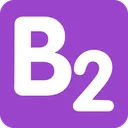


Type `>session info [ID#]` e.g. `>session info 3` for more detail about a specific session.
 opaque lava
faq past tense
lean flickerBOT
Perfekt
How to form the Perfekt tense
The Perfekt tense is formed by combining an auxiliary verb (haben or sein) with the past participle form of the main verb.
For example, if I want to write the past tense of “essen”/“to eat”, such as in the English sentence “I ate”, I first need to know the auxiliary verb that goes with essen (which happens to be haben), and the past participle form of essen (which is gegessen).
I can then combine them with the usual verb conjugation and word order rules, as such:
Ich habe gegessen. -> I ate. / I have eaten.
Ich habe das Brot gegessen. -> I ate the bread. / I have eaten the bread.
How to determine the past participle?
Just look it up in the dictionary! There are a few general patterns you can also learn about, but a dictionary will pretty much always list the past participle somewhere near the verb itself.
When to use haben and when to use sein as the auxiliary verb?
The basic rules are:
• Transitive verbs (verbs which take an accusative object) use haben
• Intransitive verbs which describe a change of location or change of state use sein
• Other intransitive verbs use haben
This may not be a 100% reliable set of rules, so if in doubt, you can always use a dictionary to verify the correct auxiliary. Also note that there are a few regional variations.
Page 2/2
opaque lava
help
lean flickerBOT
German commands
:small_blue_diamond: **lookup** <target> <phrase>
Translates the given phrase into the specified target language using dict.cc. Specify either en or de as targets.
:small_blue_diamond: **noun** <noun>
Provides a link to the declension of the given noun.
:small_blue_diamond: **verb** <infinitive>
Provides a link to the conjugation of the given infinitive.
:small_blue_diamond: **words**
A command that helps you train vocabulary using dict.cc.
Page 19/19 (19 entries)
 candid coral
>ex all
lean flickerBOT
See a listed FAQ with >faq [name]
:small_blue_diamond: absentive
Aliases: absentiv
:small_blue_diamond: Accusative
Aliases: Akkusativ
:small_blue_diamond: Adjective Declension
Aliases: adjective endings, Adjektivdeklination
:small_blue_diamond: Anki
Aliases: flashcards
:small_blue_diamond: beginner 2
:small_blue_diamond: Beide vs. Beides
Aliases: Beides vs. Beide, Beides, Beide
:small_blue_diamond: Best way to learn German
Aliases: learn fast, learn German fast, learn efficiently, best way to learn, fastest way to learn, most efficient way to learn
:small_blue_diamond: birthdays
:small_blue_diamond: Cases
Aliases: case, grammatical case
:small_blue_diamond: CEFR levels
Aliases: lvl, CEFR, cerf
:small_blue_diamond: conjugation
Aliases: praesens, präsens, present tense, verbs, verb conjugation, Konjugation
:small_blue_diamond: Contractions
Aliases: Verschmelzung, vom, Schmelzwort
:small_blue_diamond: DACH
:small_blue_diamond: Dative
Aliases: Dativ
:small_blue_diamond: doch
Page 1/4 (59 entries)
pastel kelp
faq dativ
lean flickerBOT
When do I use the dative case?
The dative case has a great number of usages, many of which are idiomatic, but is mainly used:
- to mark the indirect object of many transitive verbs (the indirect objectis that which receives the result of an action)
Ich habe dir ein Bier gekauft.
Sie gibt dem Mann das Buch.
Er zeigte ihm seinen Führerschein.
- to mark the object of some transitive verbs:
Dir fehlen die richtigen Materialien.
Es fällt mir bestimmt gleich wieder ein.
Das gefällt ihr gar nicht.
- after some prepositions:
Ich komme aus den USA.
Komm mit mir.
Ich lerne seit vielen Jahren Deutsch.
The following prepositions are always followed by the dative case:
aus, außer, bei, gegenüber, mit, nach, seit, von, zu
- after two-way prepositions when they do not indicate movement:
Das Bild hängt jetzt an der Wand.
Er joggt im Wald. (he is jogging in the woods)
Sie steht vor mir.
- to show possession, mainly of clothing or body parts:
Ich habe mir in die Finger geschnitten.
Er hat ihr die Nase gebrochen.
Die Mütze fiel mir vom Kopf.
- with many adjectives:
Ich war mir nicht sicher.
Ist dir kalt? (See >ex impersonal verbs for why there is no subject here.)
Er ist seinem Bruder sehr ähnlich.
Page 2/2
opaque lava
faq Adjective Declension
lean flickerBOT
Adjective Declension
A Brief Guide to Memorizing German Noun and Adjective Declension by Basementality
https://docs.google.com/document/d/1jWl5-kkqF3FQLDzrz8XLBJj7hvPFQK7MT5SYEDGK65E/edit
 finite grotto
help
lean flickerBOT
Stargazing commands
:small_blue_diamond: **📒 star**
Provides stargazing functionality for the server. The stargazing system highlights memorable moments from the server. The starboard can be configured dynamically, temporarily locked and posts from it can be displayed.
Page 1/19 (19 entries)
 zenith rose
faq cefr
lean flickerBOT
CEFR levels
If you see something like A1, B2 or C1, these represent the proficiency of a speaker in a language they're not native in, and are called CEFR levels. They are valid for any language, not only German!
Roughly speaking, A levels are beginners and C levels are experts. Remember that CEFR level are self-assessed and indicative!
You can see more specific names and descriptions on the Wikipedia page:
https://en.wikipedia.org/wiki/Common_European_Framework_of_Reference_for_Languages
🗨 How do I know what level I am?
If the table on Wikipedia is too generic for you, you can try using this one here:
https://rm.coe.int/168045bb52
Just check each column one at a time: if you can do all it describes, move to the next column. Your level is the highest where you can do the most things.
Alternatively, you can use this questionnaire to estimate your level more accurately:
https://www.laits.utexas.edu/fi/sites/laits.utexas.edu.fi/files/Self Assessment Checklist European.pdf
candid coral
ex all
lean flickerBOT
See a listed FAQ with >faq [name]
:small_blue_diamond: Duolingo
Aliases: duo
:small_blue_diamond: Eszett
Aliases: Scharfes S, ẞ, ß
:small_blue_diamond: FAQ
:small_blue_diamond: Formal and informal speech
Aliases: duzen vs. siezen, Sie, Du vs. Sie, siezen, du, informal, formal, du vs sie
:small_blue_diamond: Gender patterns
:small_blue_diamond: Genitive
Aliases: Genitiv
:small_blue_diamond: German letters
Aliases: german keyboard, keyboard
:small_blue_diamond: Grammar terms
Aliases: Glossary, Grammatical terms
:small_blue_diamond: Grammatical gender
Aliases: genders, der-die-das, gender
:small_blue_diamond: How to ask a question
Aliases: Translation, Homework
:small_blue_diamond: How to get started
Aliases: Starting out, beginner
:small_blue_diamond: How to use writing
:small_blue_diamond: Impersonal Verbs
Aliases: unpersönliche Verben, impersonal es
:small_blue_diamond: IPA
Aliases: Pronunciation, Sound transcription, International Phonetic Alphabet
:small_blue_diamond: lessons
Aliases: sessions, activities
Page 2/4 (59 entries)
 latent talon
faq beide
lean flickerBOT
Beide vs. Beides
Both Beide and Beides mean both, then how to differentiate them?
🔸 Use beide if the items are of the same kind.
🔸 If the items are different, use beides.
- Ich will beide Äpfel!
- Möchten Sie Ketchup oder Mayo?
- Beides, danke.
🔸 With people you always use beide.
🔸 Article or no article?
An article is used when the people described are doing something together.
- Die beiden sind verlobt. (they are engaged to one another)
- Beide sind verlobt. (they are both engaged, each to their own significant other)
Note: other forms of beid* like beidem or beiden depend on grammatical case, see >explain case.
 storm delta
faq cefr
lean flickerBOT
CEFR levels
If you see something like A1, B2 or C1, these represent the proficiency of a speaker in a language they're not native in, and are called CEFR levels. They are valid for any language, not only German!
Roughly speaking, A levels are beginners and C levels are experts. Remember that CEFR level are self-assessed and indicative!
You can see more specific names and descriptions on the Wikipedia page:
https://en.wikipedia.org/wiki/Common_European_Framework_of_Reference_for_Languages
🗨 How do I know what level I am?
If the table on Wikipedia is too generic for you, you can try using this one here:
https://rm.coe.int/168045bb52
Just check each column one at a time: if you can do all it describes, move to the next column. Your level is the highest where you can do the most things.
Alternatively, you can use this questionnaire to estimate your level more accurately:
https://www.laits.utexas.edu/fi/sites/laits.utexas.edu.fi/files/Self Assessment Checklist European.pdf
visual arrow
ex all
lean flickerBOT
See a listed FAQ with >faq [name]
:small_blue_diamond: absentive
Aliases: absentiv
:small_blue_diamond: Accusative
Aliases: Akkusativ
:small_blue_diamond: Adjective Declension
Aliases: adjective endings, Adjektivdeklination
:small_blue_diamond: Anki
Aliases: flashcards
:small_blue_diamond: beginner 2
:small_blue_diamond: Beide vs. Beides
Aliases: Beides vs. Beide, Beides, Beide
:small_blue_diamond: Best way to learn German
Aliases: learn fast, learn German fast, learn efficiently, best way to learn, fastest way to learn, most efficient way to learn
:small_blue_diamond: birthdays
:small_blue_diamond: Cases
Aliases: case, grammatical case
:small_blue_diamond: CEFR levels
Aliases: lvl, CEFR, cerf
:small_blue_diamond: conjugation
Aliases: praesens, präsens, present tense, verbs, verb conjugation, Konjugation
:small_blue_diamond: Contractions
Aliases: Verschmelzung, vom, Schmelzwort
:small_blue_diamond: DACH
:small_blue_diamond: Dative
Aliases: Dativ
:small_blue_diamond: doch
Page 1/4 (59 entries)
visual arrow
faq Adjective Declension
lean flickerBOT
Adjective Declension
A Brief Guide to Memorizing German Noun and Adjective Declension by Basementality
https://docs.google.com/document/d/1jWl5-kkqF3FQLDzrz8XLBJj7hvPFQK7MT5SYEDGK65E/edit
visual arrow
faq conjugation
lean flickerBOT
conjugation
Präsens (Present Tense)
When you use a verb in a sentence (or clause), you have to conjugate it (change the form) to match the subject of the sentence (or clause).
For example, in English, we write I eat but he/she eats. The verb has a different ending! The concept is the same in German, except German has more endings.
The first thing you need to know in order to conjugate verbs is: which ending fits which subject? Here is a simple verb “trinken” (to drink) as an example:
trinken
ich trinke
du trinkst
er/sie/es trinkt
wir trinken
ihr trinkt
sie trinken / Sie trinken
(Note: the conjugation for sie (they) and Sie (formal you) is always the same)
Vowel/Stem Changes
There are a few variations and exceptions, but the most important is vowel changes (also called stem changes). Some verbs get a vowel change, which only affects the du and er/sie/es forms of the verb. (However, modal verbs and wissen have their own special pattern, which also has a vowel change in the ich form.)
Example: ich schlafe, du schläfst
Other Changes
There are various other differences but I can’t describe them all here, so please read these websites or use Google to find more information: https://www.vistawide.com/german/grammar/german_verbs_present_tense.htm
https://www.thoughtco.com/german-present-tense-verbs-4074838
http://www.dartmouth.edu/~deutsch/Grammatik/PresentTense/Present.html
visual arrow
faq cases
lean flickerBOT
Cases
Cases
German has four grammatical cases (der Fall or der Kasus in German): nominative, accusative, dative, and genitive. A case alters a noun, pronoun, adjective, etc., in some way to mark its grammatical function in a phrase, clause, or sentence. For example, the main function of the nominative (der Nominativ) case is to mark the subject in a sentence:
Ich liebe die deutsche Sprache!
In this sentence, the pronoun ich represents the first person subject and is in the nominative case. Every noun, pronoun, adjective, etc. has form in every case and it is very important to learn all of them. For example, the accusative form of ich is mich:
Die deutsche Sprache liebt mich!
See >explain adjective declension to get started on that. Don't get discouraged by how much there is, it takes some time master.
To see an explanation of the usages of every case, see their individual articles:
>explain nominative
>explain accusative
>explain dative
>explain genitive
 chilly pebble
faq beginner
lean flickerBOT
How to get started
The simplest way to learn German is to find topics you don’t understand yet and search for explanations of them. This list provides you with a guide for which topics to learn if you are completely new to German. Type the topic into Google (or YouTube) and start learning!
Introduction
1: Alphabet (especially ä, ü, ö and ß)
2: Basic greetings (hello, goodbye, etc.)
Part 1 - Simple Sentence
1: Noun gender & plurals
2: Nominative case (What are cases?)
3: Nominative pronouns (I, you, he, she, etc.)
4: Verbs in present tense
5: Definite/indefinite articles
6: Accusative case (for nouns)
7: Accusative pronouns
8: Word order of simple sentences
9: How to ask questions
See Part 2 on the next page.
Tips
- Always learn the gender of a noun when you learn a new noun
- Learn to use a translation dictionary (e.g. dict.cc, leo.org)
- Use
>faq resourcesto see our list of German learning resources - For listening and pronunciation practice, try watching movies or videos (incl. YouTube)
- You can listen to pronunciation for words on websites like dict.cc, forvo.com, and others
- Practice writing sentences every day (and asking people to correct them)
- Ask as many questions as possible
- Don’t be scared to make mistakes!!!! If you don’t let yourself make mistakes, you will never be able to learn German
Page 1/2
chilly pebble
faq duolingo
lean flickerBOT
Duolingo
Duolingo is a decent resource to start with if you're a complete beginner, but it's neither efficient nor comprehensive!
What Duolingo will teach you about grammar is very limited, and none of the systems they use will help you practise much of it.
You can learn some vocabulary with it, but their method (based on the concept of spaced repetition) doesn't work for everybody, and the way Duolingo teaches is not very effective compared to the amount of time it requires from you.
So, if you find it useful, by all means keep using it, but remember not to fall for its gamification of language learning, and move past it when it stops being beneficial. Ignore the streaks.
In any case, keep in mind that Duolingo is not enough to learn a language, ever.
If you're looking for guidance or alternatives, check out >faq beginner in our #botchannel .
chilly pebble
faq nicos
lean flickerBOT
nicos
Nicos Weg is a free online program aimed at helping people learn German. It includes video, audio, text, grammar explanations, notes, vocabulary, and exercises. It also includes very useful cultural and bureaucratic information, such as how to open a bank account, while teaching you the relevant grammar and vocabulary.
It’s fairly popular and well-recommended, but keep in mind that you can’t learn a language with only one resource, even if it’s a good one!
You can find the courses here: https://learngerman.dw.com/en/overview/
You can also see various other courses for learners by dw.com here: https://www.dw.com/en/learn-german/s-2469/
 surreal drift
faq beginner
lean flickerBOT
How to get started - Part 2
Please make sure to read Part 1 before starting Part 2!
Part 2 – Beyond a Simple Sentence
1: Conjunctions (coordinating and subordinating)
2: Subordinate clause word order
3: Dative case
4: Dative verbs
5: Verbs with two objects (e.g. geben)
6: Prepositions (accusative, dative, and two-way)
7: Spoken past tense (Perfekt)
8: Written past tense (Präteritum)
9: Genitive case
10: Relative clauses
11: Adjective declension
Tips
- Make sure to practice writing and reading simple texts
- Some of these concepts are confusing to start with, so it’s a good idea to ask for help in #questions when you’re unsure
- You should use a declension chart to help with declension to start with, because you won’t be able to memorize it straight away
- After you feel confident with creating sentences, you can start learning the adjective declension properly by using the command >faq adjective declension and reading the guide provided
Page 2/2
 scarlet robin
sessions
lean flickerBOT
Upcoming Sessions
:calendar: Want to add our sessions schedule to your Google calendar?
:small_blue_diamond: 2022-04-01 at 18:30 UTC (Your time: <t:1648837800>) held by Roxys Lieblingskätzchen
[ID: 176] (AdvancedReading)
Leserunde auf Deutsch: Tribute von Panem Band 1 Tödliche Spiele
Recommended level(s):
Type `>session info [ID#]` e.g. `>session info 3` for more detail about a specific session.
scarlet robin
sessions info [176]
lean flickerBOT
Upcoming Sessions
:calendar: Want to add our sessions schedule to your Google calendar?
:small_blue_diamond: 2022-04-01 at 18:30 UTC (Your time: <t:1648837800>) held by Roxys Lieblingskätzchen
[ID: 176] (AdvancedReading)
Leserunde auf Deutsch: Tribute von Panem Band 1 Tödliche Spiele
Recommended level(s):
Type `>session info [ID#]` e.g. `>session info 3` for more detail about a specific session.
scarlet robin
sessions info 176
lean flickerBOT
Upcoming Sessions
:calendar: Want to add our sessions schedule to your Google calendar?
:small_blue_diamond: 2022-04-01 at 18:30 UTC (Your time: <t:1648837800>) held by Roxys Lieblingskätzchen
[ID: 176] (AdvancedReading)
Leserunde auf Deutsch: Tribute von Panem Band 1 Tödliche Spiele
Recommended level(s):
Type `>session info [ID#]` e.g. `>session info 3` for more detail about a specific session.
tender trellis
faq beginner
lean flickerBOT
How to get started - Part 2
Please make sure to read Part 1 before starting Part 2!
Part 2 – Beyond a Simple Sentence
1: Conjunctions (coordinating and subordinating)
2: Subordinate clause word order
3: Dative case
4: Dative verbs
5: Verbs with two objects (e.g. geben)
6: Prepositions (accusative, dative, and two-way)
7: Spoken past tense (Perfekt)
8: Written past tense (Präteritum)
9: Genitive case
10: Relative clauses
11: Adjective declension
Tips
- Make sure to practice writing and reading simple texts
- Some of these concepts are confusing to start with, so it’s a good idea to ask for help in #questions when you’re unsure
- You should use a declension chart to help with declension to start with, because you won’t be able to memorize it straight away
- After you feel confident with creating sentences, you can start learning the adjective declension properly by using the command >faq adjective declension and reading the guide provided
Page 2/2
tender trellis
faq best way to learn
lean flickerBOT
Best way to learn German
Should I study all these skills every day?
If you want to study them all every day, you can, but some people may find it easier to focus on particular skills on particular days. For example, on Monday you might choose to do a lot of writing practice, and then on Tuesday you might plan some conversation practice with some speaking partners.
If you try to cover too many different things in one day, then you might be jumping around all over the place and not able to focus on each individual task. It’s also a really good idea to have a different schedule or set of tasks each day to keep things from getting boring. So setting a special schedule or set of tasks for each day of the week - like the Monday writing day, or every Friday you do some grammar exercises followed by watching TV shows, or any other combination you like – is a really good way to go.
How much time should I dedicate to studying?
Everyone has a different schedule and everyone learns at a different pace. It is recommended to study every day, preferably for 30 minutes or more, but taking 1-2 days off is okay. More important is how many hours you study in a week.
A casual pace will be roughly around 5-8 hours a week, a steady pace would be around 10-14 hours a week, and a fast pace (around the same pace as a university subject) will be 15-20 hours a week.
Anything less than 5 hours and you may find it hard to keep improving steadily (but feel free to try it and see how it works for you), while studying one subject for over 25 hours a week may quickly lead to burnout.
How you choose to spread those hours out over the week is not that important; for example, if you have a lot of time on the weekend but not during the week, it’s fine to do short study sessions on weekdays and then dedicate a bunch of time on Saturday and Sunday.
Page 2/2
 somber seal
faq lessons
lean flickerBOT
lessons
Lessons
The lessons held on the server don’t have a consistent schedule, because we allow lesson hosts to choose their own times and days. Lessons are held in the Lessons voice channel along with the #lessons text channel. Everyone is welcome to listen to the lessons even if they don’t wish to participate.
You can subscribe to a specific group to get pings whenever a session is announced. The current lesson groups are:
- Reading: Read and translate German texts together.
- AdvancedReading: Like Reading but aimed at B2+ speakers.
- Grammar: Lesson about a specific grammar topic.
- Activities: Speaking practice, learning games, or things that don’t fit in the other categories.
Subscribe by typing >sub Reading (for example) in #botchannel.
Lesson Hosting
Lesson hosting is a voluntary role and we welcome any members who are interested to host their own sessions. If you’re interested in running a session, feel free to DM one of the moderators to discuss the process.
Even if you feel inexperienced or have no idea what to run a session about, we’re always happy to provide guidance and teach people how they can hold learning sessions.
opaque lava
faq Duolingo
lean flickerBOT
Duolingo
Duolingo is a decent resource to start with if you're a complete beginner, but it's neither efficient nor comprehensive!
What Duolingo will teach you about grammar is very limited, and none of the systems they use will help you practise much of it.
You can learn some vocabulary with it, but their method (based on the concept of spaced repetition) doesn't work for everybody, and the way Duolingo teaches is not very effective compared to the amount of time it requires from you.
So, if you find it useful, by all means keep using it, but remember not to fall for its gamification of language learning, and move past it when it stops being beneficial. Ignore the streaks.
In any case, keep in mind that Duolingo is not enough to learn a language, ever.
If you're looking for guidance or alternatives, check out >faq beginner in our #botchannel .
 tulip maple
sessions
lean flickerBOT
Upcoming Sessions
:calendar: Want to add our sessions schedule to your Google calendar?
:small_blue_diamond: 2022-04-01 at 18:30 UTC (Your time: <t:1648837800>) held by Roxys Lieblingskätzchen
[ID: 176] (AdvancedReading)
Leserunde auf Deutsch: Tribute von Panem Band 1 Tödliche Spiele
Recommended level(s):
Type `>session info [ID#]` e.g. `>session info 3` for more detail about a specific session.
 still juniper
faq best way to learn
lean flickerBOT
Best way to learn German
There isn’t only one “best” way to learn German, especially since different methods work better for different people. However, this FAQ will outline the main aspects of learning efficiently, which you can cater to your needs.
If you’re a beginner, type >faq beginner in #botchannel to see our beginner guide.
Cover all skills
There are many combinations of activities you can use to study and practice a language. How do you know which combinations are suitable? The key is to make sure you cover each of the main skills with at least one activity. Some activities only train one skills, while some train multiple – either is fine, as long as all the 6 skills are covered somewhere in your studies.
The skills
• Reading
• Writing
• Listening
• Speaking
• Grammar
• Vocabulary
Which resources should I use?
It doesn’t really matter which resources you use, as long as you can follow along, and the information is correct and reliable. If you have any doubts about whether a resource is correct, feel free to ask. You do not need to find just one resource and stick to it – in fact, to learn best, it’s recommended that you use a large variety of resources and switch between them when needed.
Type >faq resources in #botchannel to see our list of resources.
On the next page
• Should I study all these skills every day?
• How much time should I dedicate to studying?
Page 1/2
still juniper
faq beginner
lean flickerBOT
How to get started - Part 2
Please make sure to read Part 1 before starting Part 2!
Part 2 – Beyond a Simple Sentence
1: Conjunctions (coordinating and subordinating)
2: Subordinate clause word order
3: Dative case
4: Dative verbs
5: Verbs with two objects (e.g. geben)
6: Prepositions (accusative, dative, and two-way)
7: Spoken past tense (Perfekt)
8: Written past tense (Präteritum)
9: Genitive case
10: Relative clauses
11: Adjective declension
Tips
- Make sure to practice writing and reading simple texts
- Some of these concepts are confusing to start with, so it’s a good idea to ask for help in #questions when you’re unsure
- You should use a declension chart to help with declension to start with, because you won’t be able to memorize it straight away
- After you feel confident with creating sentences, you can start learning the adjective declension properly by using the command >faq adjective declension and reading the guide provided
Page 2/2
 mild spruce
faq beginner
lean flickerBOT
How to get started
The simplest way to learn German is to find topics you don’t understand yet and search for explanations of them. This list provides you with a guide for which topics to learn if you are completely new to German. Type the topic into Google (or YouTube) and start learning!
Introduction
1: Alphabet (especially ä, ü, ö and ß)
2: Basic greetings (hello, goodbye, etc.)
Part 1 - Simple Sentence
1: Noun gender & plurals
2: Nominative case (What are cases?)
3: Nominative pronouns (I, you, he, she, etc.)
4: Verbs in present tense
5: Definite/indefinite articles
6: Accusative case (for nouns)
7: Accusative pronouns
8: Word order of simple sentences
9: How to ask questions
See Part 2 on the next page.
Tips
- Always learn the gender of a noun when you learn a new noun
- Learn to use a translation dictionary (e.g. dict.cc, leo.org)
- Use
>faq resourcesto see our list of German learning resources - For listening and pronunciation practice, try watching movies or videos (incl. YouTube)
- You can listen to pronunciation for words on websites like dict.cc, forvo.com, and others
- Practice writing sentences every day (and asking people to correct them)
- Ask as many questions as possible
- Don’t be scared to make mistakes!!!! If you don’t let yourself make mistakes, you will never be able to learn German
Page 1/2
 rare scarab
play xd
lean flickerBOT
:x: You must be connected to a voice channel to use the play command.
lean flickerBOT
session 1/2
**Alias: **lesson
Commands for the bot's session scheduling system.
Group moderators can edit and delete existing sessions for their group.
:small_blue_diamond: **session cancel** <id>
**Aliases: **session delete, session remove
Cancels the session with the given id. Use >session list to get the IDs of all sessions.
:small_blue_diamond: **session create** <group name> <time> <description>
**Alias: **session new
Create a new session for the group with the specified group name. Specify a group name, a time in a short time format (e.g., 1y, 7w 2mo, 1h30m) or a long format (e.g, 2020-12-31 23:59), and a brief description of your session.
:small_blue_diamond: **session edit** <id> <description>
**Alias: **session description
Replaces the description of the session with the given id.
:small_blue_diamond: **session editlevel** <id>
**Aliases: **session editcefr, session addlevel, session addcefr
Changes the recommendedLevel of the session.
:small_blue_diamond: **session info** <id>
Shows all posts for the session with the given id.
Module: Session Schedule
rare scarab
session create xd
lean flickerBOT
:x: The required argument time is missing.
rare scarab
session create xd 2m
lean flickerBOT
:x: The required argument description is missing.
rare scarab
session create xd 2m asd
rare scarab
session create xd 2m asd @&123
lean flickerBOT
:x: Group xd not found.
Try >groups to see a list of all available groups.
rare scarab
session create xd 2m @&123
lean flickerBOT
Template @&123 not found.
rare scarab
session create xd 2m <@&793874125222576128>
lean flickerBOT
Template <@&793874125222576128> not found.
 sharp remnant
faq cefr
lean flickerBOT
CEFR levels
If you see something like A1, B2 or C1, these represent the proficiency of a speaker in a language they're not native in, and are called CEFR levels. They are valid for any language, not only German!
Roughly speaking, A levels are beginners and C levels are experts. Remember that CEFR level are self-assessed and indicative!
You can see more specific names and descriptions on the Wikipedia page:
https://en.wikipedia.org/wiki/Common_European_Framework_of_Reference_for_Languages
🗨 How do I know what level I am?
If the table on Wikipedia is too generic for you, you can try using this one here:
https://rm.coe.int/168045bb52
Just check each column one at a time: if you can do all it describes, move to the next column. Your level is the highest where you can do the most things.
Alternatively, you can use this questionnaire to estimate your level more accurately:
https://www.laits.utexas.edu/fi/sites/laits.utexas.edu.fi/files/Self Assessment Checklist European.pdf
 wide granite
ex negation
lean flickerBOT
Negation
Negations or negative sentences in German are formed with either kein or nicht.
You use kein if you want to negate nouns with an indefinite article or without an article, for example:
(1) Ich besitze kein Auto. (I don't own a car.)
(2) Ich habe keinen Hunger. (I'm not hungry.)
‼ kein is always placed right before the noun you want to negate. Also note that you need to decline kein.
If you want to negate anything else you use nicht, for example:
(3) Ich schlafe nicht. (I don't sleep.) [verb]
(4) Ich habe gestern nicht geduscht. (I didn't shower yesterday.) [verb]
(5) Ich gehe nicht gerne schwimmen. (I don't like to go swimming.) [adverb]
(6) Es ist nicht heiß. (It's not hot.) [adjective]
(7) Ich habe nicht dich, sondern ihn gerufen. (I didn't call you, but him.) [pronoun]
(8) Das ist nicht Peters Fahrrad, sondern meins. (This isn't Peters bicycle, but mine.) [proper noun]
(9) Der Zug kommt nicht um 18 Uhr an. (The train doesn't arrive at 6pm.) [preposition]
(10) Ich habe nicht das Essen bezahlt, sondern die Getränke. (I didn't pay for the food, but for the drinks.) [definite article]
‼ Note that nicht almost always comes before the word it negates, unless you want to negate a verb.
If that's the case, it depends on the tense of the verb and on whether there is an auxiliary verb or not. nicht is placed right after the verb if the verb is in present or past tense. For compound tenses or when the sentence has an auxiliary it is placed before the verb.
🌟 Confused by the terminology? See >ex Grammar terms
lean flickerBOT
CEFR levels
If you see something like A1, B2 or C1, these represent the proficiency of a speaker in a language they're not native in, and are called CEFR levels. They are valid for any language, not only German!
Roughly speaking, A levels are beginners and C levels are experts. Remember that CEFR level are self-assessed and indicative!
You can see more specific names and descriptions on the Wikipedia page:
https://en.wikipedia.org/wiki/Common_European_Framework_of_Reference_for_Languages
🗨 How do I know what level I am?
If the table on Wikipedia is too generic for you, you can try using this one here:
https://rm.coe.int/168045bb52
Just check each column one at a time: if you can do all it describes, move to the next column. Your level is the highest where you can do the most things.
Alternatively, you can use this questionnaire to estimate your level more accurately:
https://www.laits.utexas.edu/fi/sites/laits.utexas.edu.fi/files/Self Assessment Checklist European.pdf
sharp remnant
you can see your level here
 twin zenith
faq cefr
lean flickerBOT
CEFR levels
If you see something like A1, B2 or C1, these represent the proficiency of a speaker in a language they're not native in, and are called CEFR levels. They are valid for any language, not only German!
Roughly speaking, A levels are beginners and C levels are experts. Remember that CEFR level are self-assessed and indicative!
You can see more specific names and descriptions on the Wikipedia page:
https://en.wikipedia.org/wiki/Common_European_Framework_of_Reference_for_Languages
🗨 How do I know what level I am?
If the table on Wikipedia is too generic for you, you can try using this one here:
https://rm.coe.int/168045bb52
Just check each column one at a time: if you can do all it describes, move to the next column. Your level is the highest where you can do the most things.
Alternatively, you can use this questionnaire to estimate your level more accurately:
https://www.laits.utexas.edu/fi/sites/laits.utexas.edu.fi/files/Self Assessment Checklist European.pdf
visual arrow
ex word order
lean flickerBOT
FAQ not found. I found the following similar entries: word order verbs, Word Order for Verbs, Word Order for Nouns & Pronouns, word order of verbs.
visual arrow
ex word order verbs
lean flickerBOT
Word Order for Verbs
Word Order - Verbs
The placement of the finite verb (or conjugated verb) is very important to the structure of a German sentence. While most other elements in a sentence can be moved, the position of the finite verb is fixed.
🔸 Main clause
A main clause is an independent clause that makes sense by itself. Here the finite verb is always the second element.
Der Mann gibt der Frau das Buch.
An auxiliary/modal verb (e.g. müssen) replaces the original verb (called the main verb) as the finite verb and results in the main verb being placed at the end of the clause. Additionally, the main verb is returned to its infinitive or past participle form, depending on the tense.
Der Mann muss der Frau das Buch geben.
🔸 Questions & Statements
The finite verb is always the first element.
Siehst du den Ausgang?
Interrogative words (or w-words) are considered to be in the zeroth position.
Worauf wartet ihr?
Auxiliary/modal verbs have the same effect as before:
Kannst du den Ausgang sehen?
Worauf habt ihr gewartet?
🔸 Subordinate clause
A subordinate clause depends on a main clause to make sense. It is often introduced by a conjunction as the first element and the finite verb is usually the last element.
Ich bin nicht zur Arbeit gefahren, weil ich krank war.
Du könntest ihm helfen, statt dich nur zu beschweren!
When a single auxiliary modal verb is introduced, it becomes the finite verb and the main verb is placed before it::
Er ist sich immer noch nicht sicher, ob er ihr alles erzählen soll.
If a double infintive is present, it is placed at the end and the finite verb comes before it.
Das ist das Haus, das ich hätte verkaufen sollen.
tender trellis
faq beginner
lean flickerBOT
How to get started - Part 2
Please make sure to read Part 1 before starting Part 2!
Part 2 – Beyond a Simple Sentence
1: Conjunctions (coordinating and subordinating)
2: Subordinate clause word order
3: Dative case
4: Dative verbs
5: Verbs with two objects (e.g. geben)
6: Prepositions (accusative, dative, and two-way)
7: Spoken past tense (Perfekt)
8: Written past tense (Präteritum)
9: Genitive case
10: Relative clauses
11: Adjective declension
Tips
- Make sure to practice writing and reading simple texts
- Some of these concepts are confusing to start with, so it’s a good idea to ask for help in #questions when you’re unsure
- You should use a declension chart to help with declension to start with, because you won’t be able to memorize it straight away
- After you feel confident with creating sentences, you can start learning the adjective declension properly by using the command >faq adjective declension and reading the guide provided
Page 2/2
 viral tendon
faq beginner
lean flickerBOT
How to get started
The simplest way to learn German is to find topics you don’t understand yet and search for explanations of them. This list provides you with a guide for which topics to learn if you are completely new to German. Type the topic into Google (or YouTube) and start learning!
Introduction
1: Alphabet (especially ä, ü, ö and ß)
2: Basic greetings (hello, goodbye, etc.)
Part 1 - Simple Sentence
1: Noun gender & plurals
2: Nominative case (What are cases?)
3: Nominative pronouns (I, you, he, she, etc.)
4: Verbs in present tense
5: Definite/indefinite articles
6: Accusative case (for nouns)
7: Accusative pronouns
8: Word order of simple sentences
9: How to ask questions
See Part 2 on the next page.
Tips
- Always learn the gender of a noun when you learn a new noun
- Learn to use a translation dictionary (e.g. dict.cc, leo.org)
- Use
>faq resourcesto see our list of German learning resources - For listening and pronunciation practice, try watching movies or videos (incl. YouTube)
- You can listen to pronunciation for words on websites like dict.cc, forvo.com, and others
- Practice writing sentences every day (and asking people to correct them)
- Ask as many questions as possible
- Don’t be scared to make mistakes!!!! If you don’t let yourself make mistakes, you will never be able to learn German
Page 1/2
 soft raven
faq beginner
lean flickerBOT
How to get started
The simplest way to learn German is to find topics you don’t understand yet and search for explanations of them. This list provides you with a guide for which topics to learn if you are completely new to German. Type the topic into Google (or YouTube) and start learning!
Introduction
1: Alphabet (especially ä, ü, ö and ß)
2: Basic greetings (hello, goodbye, etc.)
Part 1 - Simple Sentence
1: Noun gender & plurals
2: Nominative case (What are cases?)
3: Nominative pronouns (I, you, he, she, etc.)
4: Verbs in present tense
5: Definite/indefinite articles
6: Accusative case (for nouns)
7: Accusative pronouns
8: Word order of simple sentences
9: How to ask questions
See Part 2 on the next page.
Tips
- Always learn the gender of a noun when you learn a new noun
- Learn to use a translation dictionary (e.g. dict.cc, leo.org)
- Use
>faq resourcesto see our list of German learning resources - For listening and pronunciation practice, try watching movies or videos (incl. YouTube)
- You can listen to pronunciation for words on websites like dict.cc, forvo.com, and others
- Practice writing sentences every day (and asking people to correct them)
- Ask as many questions as possible
- Don’t be scared to make mistakes!!!! If you don’t let yourself make mistakes, you will never be able to learn German
Page 1/2
 proper ibex
remind 6mo sommerzeit monitoring
lean flickerBOT
Okay @proper ibex. You will be reminded in 6 months.
quaint locust
faq best way to learn
lean flickerBOT
Best way to learn German
Should I study all these skills every day?
If you want to study them all every day, you can, but some people may find it easier to focus on particular skills on particular days. For example, on Monday you might choose to do a lot of writing practice, and then on Tuesday you might plan some conversation practice with some speaking partners.
If you try to cover too many different things in one day, then you might be jumping around all over the place and not able to focus on each individual task. It’s also a really good idea to have a different schedule or set of tasks each day to keep things from getting boring. So setting a special schedule or set of tasks for each day of the week - like the Monday writing day, or every Friday you do some grammar exercises followed by watching TV shows, or any other combination you like – is a really good way to go.
How much time should I dedicate to studying?
Everyone has a different schedule and everyone learns at a different pace. It is recommended to study every day, preferably for 30 minutes or more, but taking 1-2 days off is okay. More important is how many hours you study in a week.
A casual pace will be roughly around 5-8 hours a week, a steady pace would be around 10-14 hours a week, and a fast pace (around the same pace as a university subject) will be 15-20 hours a week.
Anything less than 5 hours and you may find it hard to keep improving steadily (but feel free to try it and see how it works for you), while studying one subject for over 25 hours a week may quickly lead to burnout.
How you choose to spread those hours out over the week is not that important; for example, if you have a lot of time on the weekend but not during the week, it’s fine to do short study sessions on weekdays and then dedicate a bunch of time on Saturday and Sunday.
Page 2/2
tender trellis
faq
lean flickerBOT
:x: The required argument name is missing.
tender trellis
faq all
lean flickerBOT
See a listed FAQ with >faq [name]
:small_blue_diamond: Swiss German
Aliases: gsw
:small_blue_diamond: Switzerland
Aliases: Schweiz, CH
:small_blue_diamond: Two-way prepositions
Aliases: two way prepositions, dual prepositions
:small_blue_diamond: Umlauts
Aliases: Umlaute, Umlaut, ä, ö, ü
:small_blue_diamond: Usage of Konjunktiv II
Aliases: KII 1
:small_blue_diamond: Usage of zu
Aliases: um zu
:small_blue_diamond: Verbs with prepositions
Aliases: verb prepositions, pferd's verb list
:small_blue_diamond: Vorgangspassiv
:small_blue_diamond: Weak Nouns
Aliases: N-Declension, N-Deklination, weak noun
:small_blue_diamond: weil, denn, da
:small_blue_diamond: What does GLaD mean?
Aliases: GLaD
:small_blue_diamond: wissen und kennen
Aliases: wissen vs. kennen, kennen vs. wissen
:small_blue_diamond: Word Order for Nouns & Pronouns
:small_blue_diamond: Word Order for Verbs
Aliases: word order verbs, word order of verbs
Page 4/4 (59 entries)
tender trellis
faq absentiv
lean flickerBOT
Absentiv
What on earth is absentiv?
Theo ist einkaufen
Absentiv (or absentive in english) is a grammatical aspect (like how konjunktiv ii is also an aspect) in German. It is used quite commonly in spoken / colloquial standard german, and almost never in formal / written german. As the name 'absentive' might suggest, it is used to express someone's absence in combination with an activity that is the reason for their absence. Key parts of this include the implication that the person will eventually return from their absence, and that the action they're partaking is is something that they do regularly. E.g. hobbies, occupations, etc.
The absentiv is not a progressive tense
Unlike the 'am-progress' Theo ist am einkaufen, the absentiv makes no comment on the state of progress or completion of the activity the subject is doing. It only states that they are not in the current location due to the mentioned activity: for all we know Theo might have already finished shopping and currently be on his way home, or he might only just have arrived at the store.
Page 1/2
tender trellis
faq ch
lean flickerBOT
Switzerland
Languages of Switzerland
Officially, Switzerland has four languages: German, French, Italian and Romansh. These languages are however not all spoken in the same region and most Swiss people are not properly multilingual (with the exception of English, which is of course widely spoken throughout Western Europe as a second language). On top of these, there are more minority languages like Lombard and Franco-Provençal, which most people have not even heard of. Here’s a map of the official languages: https://i.imgur.com/MtCDzXZ.png>
German in Switzerland
In Switzerland, most German speakers natively speak a dialect called Swiss German. This dialect is generally spoken in everyday conversation, regardless of the level of formality, and there is no stigma associated with it. Meanwhile, school is held in Standard German from year one onwards, so German speaking Swiss are generally proficient in speaking Standard German. However, many feel that they cannot express themselves as well and try to avoid it if possible. Outside of school, Standard German is used in Switzerland primarily for writing and more generally in media. However, even there Swiss German is commonly encountered. For more information on Swiss German, check out >faq Swiss German
 tepid gate
faq
lean flickerBOT
:x: The required argument name is missing.
tepid gate
faq cefr
lean flickerBOT
CEFR levels
If you see something like A1, B2 or C1, these represent the proficiency of a speaker in a language they're not native in, and are called CEFR levels. They are valid for any language, not only German!
Roughly speaking, A levels are beginners and C levels are experts. Remember that CEFR level are self-assessed and indicative!
You can see more specific names and descriptions on the Wikipedia page:
https://en.wikipedia.org/wiki/Common_European_Framework_of_Reference_for_Languages
🗨 How do I know what level I am?
If the table on Wikipedia is too generic for you, you can try using this one here:
https://rm.coe.int/168045bb52
Just check each column one at a time: if you can do all it describes, move to the next column. Your level is the highest where you can do the most things.
Alternatively, you can use this questionnaire to estimate your level more accurately:
https://www.laits.utexas.edu/fi/sites/laits.utexas.edu.fi/files/Self Assessment Checklist European.pdf
lean flickerBOT
Resources
 indigo crane
sessions
lean flickerBOT
Upcoming Sessions
:calendar: Want to add our sessions schedule to your Google calendar?
:small_blue_diamond: 2022-04-01 at 18:30 UTC (Your time: <t:1648837800>) held by Roxys Lieblingskätzchen
[ID: 176] (AdvancedReading)
Leserunde auf Deutsch: Tribute von Panem Band 1 Tödliche Spiele
Recommended level(s):
Type `>session info [ID#]` e.g. `>session info 3` for more detail about a specific session.
 humble walrus
info 899237620809347072
lean flickerBOT

Information about ADEN#4540
Name
@jaunty halo
ID
899237620809347072
Joined
<t:1639392289> (3 months, 2 weeks and 3 days ago)
Account created
<t:1634465355> (5 months, 1 week and 6 days ago)
mild spruce
faq Nicos Weg
lean flickerBOT
nicos
Nicos Weg is a free online program aimed at helping people learn German. It includes video, audio, text, grammar explanations, notes, vocabulary, and exercises. It also includes very useful cultural and bureaucratic information, such as how to open a bank account, while teaching you the relevant grammar and vocabulary.
It’s fairly popular and well-recommended, but keep in mind that you can’t learn a language with only one resource, even if it’s a good one!
You can find the courses here: https://learngerman.dw.com/en/overview/
You can also see various other courses for learners by dw.com here: https://www.dw.com/en/learn-german/s-2469/
mild spruce
faq begginer
lean flickerBOT
FAQ not found. I found the following similar entries: beginner, beginner 2.
mild spruce
faq beginner
lean flickerBOT
How to get started
The simplest way to learn German is to find topics you don’t understand yet and search for explanations of them. This list provides you with a guide for which topics to learn if you are completely new to German. Type the topic into Google (or YouTube) and start learning!
Introduction
1: Alphabet (especially ä, ü, ö and ß)
2: Basic greetings (hello, goodbye, etc.)
Part 1 - Simple Sentence
1: Noun gender & plurals
2: Nominative case (What are cases?)
3: Nominative pronouns (I, you, he, she, etc.)
4: Verbs in present tense
5: Definite/indefinite articles
6: Accusative case (for nouns)
7: Accusative pronouns
8: Word order of simple sentences
9: How to ask questions
See Part 2 on the next page.
Tips
- Always learn the gender of a noun when you learn a new noun
- Learn to use a translation dictionary (e.g. dict.cc, leo.org)
- Use
>faq resourcesto see our list of German learning resources - For listening and pronunciation practice, try watching movies or videos (incl. YouTube)
- You can listen to pronunciation for words on websites like dict.cc, forvo.com, and others
- Practice writing sentences every day (and asking people to correct them)
- Ask as many questions as possible
- Don’t be scared to make mistakes!!!! If you don’t let yourself make mistakes, you will never be able to learn German
Page 1/2
 normal thunder
sessions
lean flickerBOT
Upcoming Sessions
:calendar: Want to add our sessions schedule to your Google calendar?
:small_blue_diamond: 2022-04-01 at 18:30 UTC (Your time: <t:1648837800>) held by Roxys Lieblingskätzchen
[ID: 176] (AdvancedReading)
Leserunde auf Deutsch: Tribute von Panem Band 1 Tödliche Spiele
Recommended level(s):
Type `>session info [ID#]` e.g. `>session info 3` for more detail about a specific session.
 edgy dagger
Hallo
 somber kraken
faq cefr
lean flickerBOT
CEFR levels
If you see something like A1, B2 or C1, these represent the proficiency of a speaker in a language they're not native in, and are called CEFR levels. They are valid for any language, not only German!
Roughly speaking, A levels are beginners and C levels are experts. Remember that CEFR level are self-assessed and indicative!
You can see more specific names and descriptions on the Wikipedia page:
https://en.wikipedia.org/wiki/Common_European_Framework_of_Reference_for_Languages
🗨 How do I know what level I am?
If the table on Wikipedia is too generic for you, you can try using this one here:
https://rm.coe.int/168045bb52
Just check each column one at a time: if you can do all it describes, move to the next column. Your level is the highest where you can do the most things.
Alternatively, you can use this questionnaire to estimate your level more accurately:
https://www.laits.utexas.edu/fi/sites/laits.utexas.edu.fi/files/Self Assessment Checklist European.pdf
humble walrus
info 634722444191465472
lean flickerBOT

Information about Juglomka#4873
Name
@low raft
ID
634722444191465472
Joined
<t:1641409610> (2 months, 3 weeks and 4 days ago)
Account created
<t:1571400023> (2 years, 5 months and 1 week ago)
 pulsar wyvern
faq cefr
lean flickerBOT
CEFR levels
If you see something like A1, B2 or C1, these represent the proficiency of a speaker in a language they're not native in, and are called CEFR levels. They are valid for any language, not only German!
Roughly speaking, A levels are beginners and C levels are experts. Remember that CEFR level are self-assessed and indicative!
You can see more specific names and descriptions on the Wikipedia page:
https://en.wikipedia.org/wiki/Common_European_Framework_of_Reference_for_Languages
🗨 How do I know what level I am?
If the table on Wikipedia is too generic for you, you can try using this one here:
https://rm.coe.int/168045bb52
Just check each column one at a time: if you can do all it describes, move to the next column. Your level is the highest where you can do the most things.
Alternatively, you can use this questionnaire to estimate your level more accurately:
https://www.laits.utexas.edu/fi/sites/laits.utexas.edu.fi/files/Self Assessment Checklist European.pdf
 wispy thistle
faq beginner
lean flickerBOT
How to get started
The simplest way to learn German is to find topics you don’t understand yet and search for explanations of them. This list provides you with a guide for which topics to learn if you are completely new to German. Type the topic into Google (or YouTube) and start learning!
Introduction
1: Alphabet (especially ä, ü, ö and ß)
2: Basic greetings (hello, goodbye, etc.)
Part 1 - Simple Sentence
1: Noun gender & plurals
2: Nominative case (What are cases?)
3: Nominative pronouns (I, you, he, she, etc.)
4: Verbs in present tense
5: Definite/indefinite articles
6: Accusative case (for nouns)
7: Accusative pronouns
8: Word order of simple sentences
9: How to ask questions
See Part 2 on the next page.
Tips
- Always learn the gender of a noun when you learn a new noun
- Learn to use a translation dictionary (e.g. dict.cc, leo.org)
- Use
>faq resourcesto see our list of German learning resources - For listening and pronunciation practice, try watching movies or videos (incl. YouTube)
- You can listen to pronunciation for words on websites like dict.cc, forvo.com, and others
- Practice writing sentences every day (and asking people to correct them)
- Ask as many questions as possible
- Don’t be scared to make mistakes!!!! If you don’t let yourself make mistakes, you will never be able to learn German
Page 1/2
mild spruce
faq beginner
lean flickerBOT
How to get started
The simplest way to learn German is to find topics you don’t understand yet and search for explanations of them. This list provides you with a guide for which topics to learn if you are completely new to German. Type the topic into Google (or YouTube) and start learning!
Introduction
1: Alphabet (especially ä, ü, ö and ß)
2: Basic greetings (hello, goodbye, etc.)
Part 1 - Simple Sentence
1: Noun gender & plurals
2: Nominative case (What are cases?)
3: Nominative pronouns (I, you, he, she, etc.)
4: Verbs in present tense
5: Definite/indefinite articles
6: Accusative case (for nouns)
7: Accusative pronouns
8: Word order of simple sentences
9: How to ask questions
See Part 2 on the next page.
Tips
- Always learn the gender of a noun when you learn a new noun
- Learn to use a translation dictionary (e.g. dict.cc, leo.org)
- Use
>faq resourcesto see our list of German learning resources - For listening and pronunciation practice, try watching movies or videos (incl. YouTube)
- You can listen to pronunciation for words on websites like dict.cc, forvo.com, and others
- Practice writing sentences every day (and asking people to correct them)
- Ask as many questions as possible
- Don’t be scared to make mistakes!!!! If you don’t let yourself make mistakes, you will never be able to learn German
Page 1/2
desert mural
It didn't work. Can you copy and post it into #resources ?
 sterile peak
okay sure
 oak bane
faq prepositions
lean flickerBOT
FAQ not found. I found the following similar entries: Prepositions of Place Part 1, verb prepositions, dual prepositions, Verbs with prepositions, two way prepositions, Two-way prepositions.
oak bane
faq verbs with prepositions
lean flickerBOT
Verbs with prepositions
Linked is a table of verbs with prepositional objects, and nouns and adjectives that are paired with certain prepositions. Examples sentences are given for (almost) every word.
https://docs.google.com/spreadsheets/d/14sOz9dpsht9aw7_z2hVhjCj-5tMc0MxshWbnerdcRPs/edit#gid=0
This table is curated by @ruby gale. Feel free to ping him directly if you have words or examples of your own or have noticed a mistake.
 odd horizon
faq accusative
lean flickerBOT
When do I use the accusative case?
The accusative case is mainly used:
- to mark the direct object of many transitive verbs
Ich lese einen Roman.
Er hat die schöne Frau ermordet.
Sie besitzen kein Auto.
- after some prepositions
Danke für deine Hilfe!
Ohne dich kann ich nicht leben.
Sie hatten keine Einwände gegen den Plan.
The following prepositions are always followed by the accusative case:
bis, durch, für, gegen, ohne, um
- to indicate movement in a particular direction in two-way prepositions
Er steigt auf den Gipfel.
Sie hängt das Bild an die Wand.
Ich gehe gleich ins Bett. (ins = in das)
- by adverbials of time and measurement
A definite length or point in time:
Ich habe den ganzen Tag geschlafen.
Sie kommt nächste Woche zurück.
A measurement:
Das Kind ist vier Jahre alt.
Das Tier ist einen Meter groß.
Expressing distance with verbs of motion:
Ich ging die Treppe hinauf.
Ich lief den ganzen Weg zu Fuß.
- in common greetings and wishes
Guten Morgen/Tag/Abend!
Gute Besserung!
Herzlichen Glückwunsch!
Here there is an implicit verb such as 'wünschen', where the greeting/wish is the direct object.
Page 2/2
wispy thistle
faq Nicos Weg
lean flickerBOT
nicos
Nicos Weg is a free online program aimed at helping people learn German. It includes video, audio, text, grammar explanations, notes, vocabulary, and exercises. It also includes very useful cultural and bureaucratic information, such as how to open a bank account, while teaching you the relevant grammar and vocabulary.
It’s fairly popular and well-recommended, but keep in mind that you can’t learn a language with only one resource, even if it’s a good one!
You can find the courses here: https://learngerman.dw.com/en/overview/
You can also see various other courses for learners by dw.com here: https://www.dw.com/en/learn-german/s-2469/
 crimson raven
faq beginner
lean flickerBOT
How to get started - Part 2
Please make sure to read Part 1 before starting Part 2!
Part 2 – Beyond a Simple Sentence
1: Conjunctions (coordinating and subordinating)
2: Subordinate clause word order
3: Dative case
4: Dative verbs
5: Verbs with two objects (e.g. geben)
6: Prepositions (accusative, dative, and two-way)
7: Spoken past tense (Perfekt)
8: Written past tense (Präteritum)
9: Genitive case
10: Relative clauses
11: Adjective declension
Tips
- Make sure to practice writing and reading simple texts
- Some of these concepts are confusing to start with, so it’s a good idea to ask for help in #questions when you’re unsure
- You should use a declension chart to help with declension to start with, because you won’t be able to memorize it straight away
- After you feel confident with creating sentences, you can start learning the adjective declension properly by using the command >faq adjective declension and reading the guide provided
Page 2/2
crimson raven
faq adjective
lean flickerBOT
FAQ not found. I found the following similar entries: Adjective Declension, adjective endings.
crimson raven
faq adjective declension
lean flickerBOT
Adjective Declension
A Brief Guide to Memorizing German Noun and Adjective Declension by Basementality
https://docs.google.com/document/d/1jWl5-kkqF3FQLDzrz8XLBJj7hvPFQK7MT5SYEDGK65E/edit
 proper girder
faq Nicos Weg
lean flickerBOT
nicos
Nicos Weg is a free online program aimed at helping people learn German. It includes video, audio, text, grammar explanations, notes, vocabulary, and exercises. It also includes very useful cultural and bureaucratic information, such as how to open a bank account, while teaching you the relevant grammar and vocabulary.
It’s fairly popular and well-recommended, but keep in mind that you can’t learn a language with only one resource, even if it’s a good one!
You can find the courses here: https://learngerman.dw.com/en/overview/
You can also see various other courses for learners by dw.com here: https://www.dw.com/en/learn-german/s-2469/
 topaz mulch
faq beginner
 woven depot
e
livid vector
faq dativ
lean flickerBOT
When do I use the dative case?
The dative case has a great number of usages, many of which are idiomatic, but is mainly used:
- to mark the indirect object of many transitive verbs (the indirect objectis that which receives the result of an action)
Ich habe dir ein Bier gekauft.
Sie gibt dem Mann das Buch.
Er zeigte ihm seinen Führerschein.
- to mark the object of some transitive verbs:
Dir fehlen die richtigen Materialien.
Es fällt mir bestimmt gleich wieder ein.
Das gefällt ihr gar nicht.
- after some prepositions:
Ich komme aus den USA.
Komm mit mir.
Ich lerne seit vielen Jahren Deutsch.
The following prepositions are always followed by the dative case:
aus, außer, bei, gegenüber, mit, nach, seit, von, zu
- after two-way prepositions when they do not indicate movement:
Das Bild hängt jetzt an der Wand.
Er joggt im Wald. (he is jogging in the woods)
Sie steht vor mir.
- to show possession, mainly of clothing or body parts:
Ich habe mir in die Finger geschnitten.
Er hat ihr die Nase gebrochen.
Die Mütze fiel mir vom Kopf.
- with many adjectives:
Ich war mir nicht sicher.
Ist dir kalt? (See >ex impersonal verbs for why there is no subject here.)
Er ist seinem Bruder sehr ähnlich.
Page 2/2
livid vector
faq akkusativ
lean flickerBOT
When do I use the accusative case?
The accusative case is mainly used:
- to mark the direct object of many transitive verbs
Ich lese einen Roman.
Er hat die schöne Frau ermordet.
Sie besitzen kein Auto.
- after some prepositions
Danke für deine Hilfe!
Ohne dich kann ich nicht leben.
Sie hatten keine Einwände gegen den Plan.
The following prepositions are always followed by the accusative case:
bis, durch, für, gegen, ohne, um
- to indicate movement in a particular direction in two-way prepositions
Er steigt auf den Gipfel.
Sie hängt das Bild an die Wand.
Ich gehe gleich ins Bett. (ins = in das)
- by adverbials of time and measurement
A definite length or point in time:
Ich habe den ganzen Tag geschlafen.
Sie kommt nächste Woche zurück.
A measurement:
Das Kind ist vier Jahre alt.
Das Tier ist einen Meter groß.
Expressing distance with verbs of motion:
Ich ging die Treppe hinauf.
Ich lief den ganzen Weg zu Fuß.
- in common greetings and wishes
Guten Morgen/Tag/Abend!
Gute Besserung!
Herzlichen Glückwunsch!
Here there is an implicit verb such as 'wünschen', where the greeting/wish is the direct object.
Page 2/2
lean flickerBOT
FAQ not found. Try >explain all.
livid vector
explain all
lean flickerBOT
See a listed FAQ with >faq [name]
:small_blue_diamond: Limited Permissions
Aliases: vc pending, vc-pending
:small_blue_diamond: Negation
Aliases: kein, nicht
:small_blue_diamond: nicos
Aliases: nicos weg
:small_blue_diamond: Nominative
Aliases: Nominativ
:small_blue_diamond: Omission of movement verbs
:small_blue_diamond: Passive
Aliases: Passiv
:small_blue_diamond: Past Tense
:small_blue_diamond: Prepositions of Place Part 1
Aliases: Nach-In-Auf-Zu
:small_blue_diamond: Resources
Aliases: resource list
:small_blue_diamond: roles
:small_blue_diamond: seeing verbs
Aliases: schauen, sehen
:small_blue_diamond: so und also
:small_blue_diamond: Stative Passive
Aliases: Zustandspassiv, statal passive
:small_blue_diamond: Structure of Konjunktiv II
Aliases: KII 2
:small_blue_diamond: Study Vocabulary
Aliases: unterrichten, lernen, beibringen, studieren
Page 3/4 (59 entries)
lean flickerBOT
FAQ not found. Try >explain all.
livid vector
faq beginner
lean flickerBOT
How to get started - Part 2
Please make sure to read Part 1 before starting Part 2!
Part 2 – Beyond a Simple Sentence
1: Conjunctions (coordinating and subordinating)
2: Subordinate clause word order
3: Dative case
4: Dative verbs
5: Verbs with two objects (e.g. geben)
6: Prepositions (accusative, dative, and two-way)
7: Spoken past tense (Perfekt)
8: Written past tense (Präteritum)
9: Genitive case
10: Relative clauses
11: Adjective declension
Tips
- Make sure to practice writing and reading simple texts
- Some of these concepts are confusing to start with, so it’s a good idea to ask for help in #questions when you’re unsure
- You should use a declension chart to help with declension to start with, because you won’t be able to memorize it straight away
- After you feel confident with creating sentences, you can start learning the adjective declension properly by using the command >faq adjective declension and reading the guide provided
Page 2/2
lean flickerBOT
Stargazing commands
:small_blue_diamond: **📒 star**
Provides stargazing functionality for the server. The stargazing system highlights memorable moments from the server. The starboard can be configured dynamically, temporarily locked and posts from it can be displayed.
Page 1/19 (19 entries)
Diesesliedistspass [00:02:15] added to the queue.
 rocky verge
help voice
lean flickerBOT
Voice commands
:small_blue_diamond: **nowplaying**
Displays the currently playing song and its remaining duration.
:small_blue_diamond: **play** <prompt>
Queues a song to be played by the music bot. This command will only work if you are connected to a voice channel that has at least two members.
The given prompt can be either a YouTube link or a query that will be used to search YouTube and fetch the first result.
Please note that playing any sort of nationalistic, war-related songs, songs that violate our rules or abusing the feature in any way will get you blacklisted.
:small_blue_diamond: **queue**
Displays the songs that are in the song queue.
:small_blue_diamond: **skip**
Votes to skip the currently playing song.
For a skip vote to pass, more than a half of the members in the currently playing voice chat (rounded up) must vote for the skip.
:small_blue_diamond: **upcoming**
Displays the upcoming song and its remaining duration.
 obtuse fog
faq beginner
lean flickerBOT
How to get started
The simplest way to learn German is to find topics you don’t understand yet and search for explanations of them. This list provides you with a guide for which topics to learn if you are completely new to German. Type the topic into Google (or YouTube) and start learning!
Introduction
1: Alphabet (especially ä, ü, ö and ß)
2: Basic greetings (hello, goodbye, etc.)
Part 1 - Simple Sentence
1: Noun gender & plurals
2: Nominative case (What are cases?)
3: Nominative pronouns (I, you, he, she, etc.)
4: Verbs in present tense
5: Definite/indefinite articles
6: Accusative case (for nouns)
7: Accusative pronouns
8: Word order of simple sentences
9: How to ask questions
See Part 2 on the next page.
Tips
- Always learn the gender of a noun when you learn a new noun
- Learn to use a translation dictionary (e.g. dict.cc, leo.org)
- Use
>faq resourcesto see our list of German learning resources - For listening and pronunciation practice, try watching movies or videos (incl. YouTube)
- You can listen to pronunciation for words on websites like dict.cc, forvo.com, and others
- Practice writing sentences every day (and asking people to correct them)
- Ask as many questions as possible
- Don’t be scared to make mistakes!!!! If you don’t let yourself make mistakes, you will never be able to learn German
Page 1/2
 vapid shoal
faq nicos weg
lean flickerBOT
nicos
Nicos Weg is a free online program aimed at helping people learn German. It includes video, audio, text, grammar explanations, notes, vocabulary, and exercises. It also includes very useful cultural and bureaucratic information, such as how to open a bank account, while teaching you the relevant grammar and vocabulary.
It’s fairly popular and well-recommended, but keep in mind that you can’t learn a language with only one resource, even if it’s a good one!
You can find the courses here: https://learngerman.dw.com/en/overview/
You can also see various other courses for learners by dw.com here: https://www.dw.com/en/learn-german/s-2469/
 vast osprey
faq
lean flickerBOT
:x: The required argument name is missing.
lean flickerBOT
FAQ not found. Try >explain all.
vast osprey
faq beginner
lean flickerBOT
How to get started
The simplest way to learn German is to find topics you don’t understand yet and search for explanations of them. This list provides you with a guide for which topics to learn if you are completely new to German. Type the topic into Google (or YouTube) and start learning!
Introduction
1: Alphabet (especially ä, ü, ö and ß)
2: Basic greetings (hello, goodbye, etc.)
Part 1 - Simple Sentence
1: Noun gender & plurals
2: Nominative case (What are cases?)
3: Nominative pronouns (I, you, he, she, etc.)
4: Verbs in present tense
5: Definite/indefinite articles
6: Accusative case (for nouns)
7: Accusative pronouns
8: Word order of simple sentences
9: How to ask questions
See Part 2 on the next page.
Tips
- Always learn the gender of a noun when you learn a new noun
- Learn to use a translation dictionary (e.g. dict.cc, leo.org)
- Use
>faq resourcesto see our list of German learning resources - For listening and pronunciation practice, try watching movies or videos (incl. YouTube)
- You can listen to pronunciation for words on websites like dict.cc, forvo.com, and others
- Practice writing sentences every day (and asking people to correct them)
- Ask as many questions as possible
- Don’t be scared to make mistakes!!!! If you don’t let yourself make mistakes, you will never be able to learn German
Page 1/2
 manic copper
lean flickerBOT
manic copper
lean flickerBOT
How to get started - Part 2
Please make sure to read Part 1 before starting Part 2!
Part 2 – Beyond a Simple Sentence
1: Conjunctions (coordinating and subordinating)
2: Subordinate clause word order
3: Dative case
4: Dative verbs
5: Verbs with two objects (e.g. geben)
6: Prepositions (accusative, dative, and two-way)
7: Spoken past tense (Perfekt)
8: Written past tense (Präteritum)
9: Genitive case
10: Relative clauses
11: Adjective declension
Tips
- Make sure to practice writing and reading simple texts
- Some of these concepts are confusing to start with, so it’s a good idea to ask for help in #questions when you’re unsure
- You should use a declension chart to help with declension to start with, because you won’t be able to memorize it straight away
- After you feel confident with creating sentences, you can start learning the adjective declension properly by using the command >faq adjective declension and reading the guide provided
Page 2/2
latent talon
sessions
lean flickerBOT
Upcoming Sessions
:calendar: Want to add our sessions schedule to your Google calendar?
:small_blue_diamond: 2022-04-01 at 18:30 UTC (Your time: <t:1648837800>) held by Roxys Lieblingskätzchen
[ID: 176] (AdvancedReading)
Leserunde auf Deutsch: Tribute von Panem Band 1 Tödliche Spiele
Recommended level(s):
:small_blue_diamond: 2022-04-02 at 17:30 UTC (Your time: <t:1648920600>) held by Dose
[ID: 177] (Activities)
LETZTE Gedichtsstunde (Wiederholung)
Recommended level(s):
Type `>session info [ID#]` e.g. `>session info 3` for more detail about a specific session.
 calm nest
faq cefr
lean flickerBOT
CEFR levels
If you see something like A1, B2 or C1, these represent the proficiency of a speaker in a language they're not native in, and are called CEFR levels. They are valid for any language, not only German!
Roughly speaking, A levels are beginners and C levels are experts. Remember that CEFR level are self-assessed and indicative!
You can see more specific names and descriptions on the Wikipedia page:
https://en.wikipedia.org/wiki/Common_European_Framework_of_Reference_for_Languages
🗨 How do I know what level I am?
If the table on Wikipedia is too generic for you, you can try using this one here:
https://rm.coe.int/168045bb52
Just check each column one at a time: if you can do all it describes, move to the next column. Your level is the highest where you can do the most things.
Alternatively, you can use this questionnaire to estimate your level more accurately:
https://www.laits.utexas.edu/fi/sites/laits.utexas.edu.fi/files/Self Assessment Checklist European.pdf
 upbeat compass
.
 quiet geode
faq umlaut
lean flickerBOT
Umlauts
Umlauts - ä, ö, ü
Along with the 26 letters of its alphabet, German also possesses the umlaut, a diacritic in the form of two dots placed over the letters a, o, u to form ä, ö, and ü. Umlautmeans something akin to altered soundand this is reflected in the fact that the pronunciation of the umlauted vowels are quite different from the non-umlauted vowels.
🗨️ How do I type ä, ö, ü?
See >faq keyboard on how to type umlauts.
If you cannot type the umlauts, you can add an e to the non-diacritic vowel to represent an umlaut. For example, you can represent öffnenas oeffnen.
Umlauts can never be replaced with their non-diacritic versions. In other words, you cannot replace ö with o when spelling words like öffnen. Some words only differ by the vowel sound, for example schwul(gay) and schwül(humid, sultry).
🗨️ How do I pronunce ä, ö, ü?
See the next few pages for more info on pronunciation.
Page 1/4
 zinc sable
play kalender
lean flickerBOT
Klasse 2 - Der Kalender [00:08:29] added to the queue.
lean flickerBOT
:x: The requested track is longer than 1h30m and cannot be played.
zinc sable
play stöhn geräausche one hour
lean flickerBOT
1-hour of real moaning with orgasms (ASMR)! [01:01:18] added to the queue.
zinc sable
next
lean flickerBOT
:notes: Coming next: 1-hour of real moaning with orgasms (ASMR)!, 01:01:18 remaining, by @zinc sable.
zinc sable
skip
 prime fjord
@zinc sable Please avoid NSFW content on the server
wispy thistle
ex negation
lean flickerBOT
Negation
Negations or negative sentences in German are formed with either kein or nicht.
You use kein if you want to negate nouns with an indefinite article or without an article, for example:
(1) Ich besitze kein Auto. (I don't own a car.)
(2) Ich habe keinen Hunger. (I'm not hungry.)
‼ kein is always placed right before the noun you want to negate. Also note that you need to decline kein.
If you want to negate anything else you use nicht, for example:
(3) Ich schlafe nicht. (I don't sleep.) [verb]
(4) Ich habe gestern nicht geduscht. (I didn't shower yesterday.) [verb]
(5) Ich gehe nicht gerne schwimmen. (I don't like to go swimming.) [adverb]
(6) Es ist nicht heiß. (It's not hot.) [adjective]
(7) Ich habe nicht dich, sondern ihn gerufen. (I didn't call you, but him.) [pronoun]
(8) Das ist nicht Peters Fahrrad, sondern meins. (This isn't Peters bicycle, but mine.) [proper noun]
(9) Der Zug kommt nicht um 18 Uhr an. (The train doesn't arrive at 6pm.) [preposition]
(10) Ich habe nicht das Essen bezahlt, sondern die Getränke. (I didn't pay for the food, but for the drinks.) [definite article]
‼ Note that nicht almost always comes before the word it negates, unless you want to negate a verb.
If that's the case, it depends on the tense of the verb and on whether there is an auxiliary verb or not. nicht is placed right after the verb if the verb is in present or past tense. For compound tenses or when the sentence has an auxiliary it is placed before the verb.
🌟 Confused by the terminology? See >ex Grammar terms
 nimble frost
\🙏
normal thunder
sessions
lean flickerBOT
Upcoming Sessions
:calendar: Want to add our sessions schedule to your Google calendar?
:small_blue_diamond: 2022-04-01 at 18:30 UTC (Your time: <t:1648837800>) held by Roxys Lieblingskätzchen
[ID: 176] (AdvancedReading)
Leserunde auf Deutsch: Tribute von Panem Band 1 Tödliche Spiele
Recommended level(s):
:small_blue_diamond: 2022-04-02 at 17:30 UTC (Your time: <t:1648920600>) held by Dose
[ID: 177] (Activities)
LETZTE Gedichtsstunde (Wiederholung)
Recommended level(s):
Type `>session info [ID#]` e.g. `>session info 3` for more detail about a specific session.
humble walrus
remind list
lean flickerBOT
Your long-term reminders:
In 12 hours, 29 minutes and 56 seconds
[ID: 116773] #general message
 drowsy oriole
faq beginner
lean flickerBOT
How to get started
The simplest way to learn German is to find topics you don’t understand yet and search for explanations of them. This list provides you with a guide for which topics to learn if you are completely new to German. Type the topic into Google (or YouTube) and start learning!
Introduction
1: Alphabet (especially ä, ü, ö and ß)
2: Basic greetings (hello, goodbye, etc.)
Part 1 - Simple Sentence
1: Noun gender & plurals
2: Nominative case (What are cases?)
3: Nominative pronouns (I, you, he, she, etc.)
4: Verbs in present tense
5: Definite/indefinite articles
6: Accusative case (for nouns)
7: Accusative pronouns
8: Word order of simple sentences
9: How to ask questions
See Part 2 on the next page.
Tips
- Always learn the gender of a noun when you learn a new noun
- Learn to use a translation dictionary (e.g. dict.cc, leo.org)
- Use
>faq resourcesto see our list of German learning resources - For listening and pronunciation practice, try watching movies or videos (incl. YouTube)
- You can listen to pronunciation for words on websites like dict.cc, forvo.com, and others
- Practice writing sentences every day (and asking people to correct them)
- Ask as many questions as possible
- Don’t be scared to make mistakes!!!! If you don’t let yourself make mistakes, you will never be able to learn German
Page 1/2
 vast radish
clown
 ornate lion
faqbeginner
 icy egret
LMFAO BRO
lean flickerBOT
CEFR levels
If you see something like A1, B2 or C1, these represent the proficiency of a speaker in a language they're not native in, and are called CEFR levels. They are valid for any language, not only German!
Roughly speaking, A levels are beginners and C levels are experts. Remember that CEFR level are self-assessed and indicative!
You can see more specific names and descriptions on the Wikipedia page:
https://en.wikipedia.org/wiki/Common_European_Framework_of_Reference_for_Languages
🗨 How do I know what level I am?
If the table on Wikipedia is too generic for you, you can try using this one here:
https://rm.coe.int/168045bb52
Just check each column one at a time: if you can do all it describes, move to the next column. Your level is the highest where you can do the most things.
Alternatively, you can use this questionnaire to estimate your level more accurately:
https://www.laits.utexas.edu/fi/sites/laits.utexas.edu.fi/files/Self Assessment Checklist European.pdf
tender trellis
faq cefr
lean flickerBOT
CEFR levels
If you see something like A1, B2 or C1, these represent the proficiency of a speaker in a language they're not native in, and are called CEFR levels. They are valid for any language, not only German!
Roughly speaking, A levels are beginners and C levels are experts. Remember that CEFR level are self-assessed and indicative!
You can see more specific names and descriptions on the Wikipedia page:
https://en.wikipedia.org/wiki/Common_European_Framework_of_Reference_for_Languages
🗨 How do I know what level I am?
If the table on Wikipedia is too generic for you, you can try using this one here:
https://rm.coe.int/168045bb52
Just check each column one at a time: if you can do all it describes, move to the next column. Your level is the highest where you can do the most things.
Alternatively, you can use this questionnaire to estimate your level more accurately:
https://www.laits.utexas.edu/fi/sites/laits.utexas.edu.fi/files/Self Assessment Checklist European.pdf
 paper knoll
faq keyboard
lean flickerBOT
German letters
Being able to type German letters is quite important!
- Schon = already. Schön = beautiful.
- Mutter = mother. Mütter = mothers.
How to? There are several options.
🔸 US International layout: if you're using a US keyboard or a keyboard based on it, the transition is very easy! Everything stays as you know it, except for some symbol keys like ~, ` or , which can be pressed to add accents. For example `` + a = ä. You can also do RightAlt + s = ß.
To use US International on Windows, look for the Region & Language options and switch your selected keyboard layout to US International.
🔸 If you're on Mac, on most systems you can press and hold a letter to show several variants including umlauts. You can type ß by pressing Option + B.
🔸 Use a program like AutoHotkey to automatically type the symbols you need when you type certain shortcuts: https://www.autohotkey.com/
See the next page for more alternatives.
Page 1/2
paper knoll
`a
 lapis seal
gr 959018582530994176
lean flickerBOT
:x: Input is ambiguous. Possible roles are: Level A, Level B, Level C.
 vague wave
faq beginner
lean flickerBOT
How to get started
Welcome to the interactive paginator!
This interactively allows you to see pages of text by navigating with reactions. They are as follows:
:track_previous: Goes to the first page.
:arrow_backward: Goes to the previous page.
:arrow_forward: Goes to the next page.
:track_next: Goes to the last page.
:stop_button: Stops the interactive pagination session.
:information_source: Shows this message.
React with ℹ again to hide this message.
vague wave
faq resources
lean flickerBOT
Resources
 novel socket
help
lean flickerBOT
Stargazing commands
:small_blue_diamond: **📒 star**
Provides stargazing functionality for the server. The stargazing system highlights memorable moments from the server. The starboard can be configured dynamically, temporarily locked and posts from it can be displayed.
Page 1/19 (19 entries)
 elder widget
sessions
lean flickerBOT
Upcoming Sessions
:calendar: Want to add our sessions schedule to your Google calendar?
:small_blue_diamond: 2022-04-01 at 18:30 UTC (Your time: <t:1648837800>) held by Roxys Lieblingskätzchen
[ID: 176] (AdvancedReading)
Leserunde auf Deutsch: Tribute von Panem Band 1 Tödliche Spiele
Recommended level(s):
:small_blue_diamond: 2022-04-02 at 17:30 UTC (Your time: <t:1648920600>) held by Dose
[ID: 177] (Activities)
LETZTE Gedichtsstunde (Wiederholung)
Recommended level(s):
Type `>session info [ID#]` e.g. `>session info 3` for more detail about a specific session.
 nova gust
remind 1m multi
line
test
lean flickerBOT
Okay @nova gust. You will be reminded in 1 minute.
@nova gust, 1 minute ago
Reminder created
·
 inland mortar
@lean flicker egg
 lyric sun
cefr A
lean flickerBOT
:white_check_mark: Your current CEFR role has been replaced with Level A.
 devout coral
lean flickerBOT
devout coral
lean flickerBOT
How to get started
The simplest way to learn German is to find topics you don’t understand yet and search for explanations of them. This list provides you with a guide for which topics to learn if you are completely new to German. Type the topic into Google (or YouTube) and start learning!
Introduction
1: Alphabet (especially ä, ü, ö and ß)
2: Basic greetings (hello, goodbye, etc.)
Part 1 - Simple Sentence
1: Noun gender & plurals
2: Nominative case (What are cases?)
3: Nominative pronouns (I, you, he, she, etc.)
4: Verbs in present tense
5: Definite/indefinite articles
6: Accusative case (for nouns)
7: Accusative pronouns
8: Word order of simple sentences
9: How to ask questions
See Part 2 on the next page.
Tips
- Always learn the gender of a noun when you learn a new noun
- Learn to use a translation dictionary (e.g. dict.cc, leo.org)
- Use
>faq resourcesto see our list of German learning resources - For listening and pronunciation practice, try watching movies or videos (incl. YouTube)
- You can listen to pronunciation for words on websites like dict.cc, forvo.com, and others
- Practice writing sentences every day (and asking people to correct them)
- Ask as many questions as possible
- Don’t be scared to make mistakes!!!! If you don’t let yourself make mistakes, you will never be able to learn German
Page 1/2
 proud dock
faq beginner
lean flickerBOT
How to get started
The simplest way to learn German is to find topics you don’t understand yet and search for explanations of them. This list provides you with a guide for which topics to learn if you are completely new to German. Type the topic into Google (or YouTube) and start learning!
Introduction
1: Alphabet (especially ä, ü, ö and ß)
2: Basic greetings (hello, goodbye, etc.)
Part 1 - Simple Sentence
1: Noun gender & plurals
2: Nominative case (What are cases?)
3: Nominative pronouns (I, you, he, she, etc.)
4: Verbs in present tense
5: Definite/indefinite articles
6: Accusative case (for nouns)
7: Accusative pronouns
8: Word order of simple sentences
9: How to ask questions
See Part 2 on the next page.
Tips
- Always learn the gender of a noun when you learn a new noun
- Learn to use a translation dictionary (e.g. dict.cc, leo.org)
- Use
>faq resourcesto see our list of German learning resources - For listening and pronunciation practice, try watching movies or videos (incl. YouTube)
- You can listen to pronunciation for words on websites like dict.cc, forvo.com, and others
- Practice writing sentences every day (and asking people to correct them)
- Ask as many questions as possible
- Don’t be scared to make mistakes!!!! If you don’t let yourself make mistakes, you will never be able to learn German
Page 1/2
tulip maple
sessions
lean flickerBOT
Upcoming Sessions
:calendar: Want to add our sessions schedule to your Google calendar?
:small_blue_diamond: 2022-04-01 at 18:30 UTC (Your time: <t:1648837800>) held by Roxys Lieblingskätzchen
[ID: 176] (AdvancedReading)
Leserunde auf Deutsch: Tribute von Panem Band 1 Tödliche Spiele
Recommended level(s):
:small_blue_diamond: 2022-04-02 at 17:30 UTC (Your time: <t:1648920600>) held by Dose
[ID: 177] (Activities)
LETZTE Gedichtsstunde (Wiederholung)
Recommended level(s):
Type `>session info [ID#]` e.g. `>session info 3` for more detail about a specific session.
lean flickerBOT
@humble walrus, 3 months, 2 days and 14 hours ago
You asked to be reminded about "#general message"
[Jump to message](#botchannel message)
Reminder created
·
humble walrus

 nimble idol
faq beginner
lean flickerBOT
How to get started
The simplest way to learn German is to find topics you don’t understand yet and search for explanations of them. This list provides you with a guide for which topics to learn if you are completely new to German. Type the topic into Google (or YouTube) and start learning!
Introduction
1: Alphabet (especially ä, ü, ö and ß)
2: Basic greetings (hello, goodbye, etc.)
Part 1 - Simple Sentence
1: Noun gender & plurals
2: Nominative case (What are cases?)
3: Nominative pronouns (I, you, he, she, etc.)
4: Verbs in present tense
5: Definite/indefinite articles
6: Accusative case (for nouns)
7: Accusative pronouns
8: Word order of simple sentences
9: How to ask questions
See Part 2 on the next page.
Tips
- Always learn the gender of a noun when you learn a new noun
- Learn to use a translation dictionary (e.g. dict.cc, leo.org)
- Use
>faq resourcesto see our list of German learning resources - For listening and pronunciation practice, try watching movies or videos (incl. YouTube)
- You can listen to pronunciation for words on websites like dict.cc, forvo.com, and others
- Practice writing sentences every day (and asking people to correct them)
- Ask as many questions as possible
- Don’t be scared to make mistakes!!!! If you don’t let yourself make mistakes, you will never be able to learn German
Page 1/2
 compact burrow
help
lean flickerBOT
FAQ commands
:small_blue_diamond: **📒 faq** <name>
Provides commands for looking up explanations about popular learning-related topics. Use >faq <name> to see the entry with the given name.
Page 16/19 (19 entries)
compact burrow
faq
lean flickerBOT
:x: The required argument name is missing.
compact burrow
faq list
lean flickerBOT
See a listed FAQ with >faq [name]
:small_blue_diamond: absentive
Aliases: absentiv
:small_blue_diamond: Accusative
Aliases: Akkusativ
:small_blue_diamond: Adjective Declension
Aliases: adjective endings, Adjektivdeklination
:small_blue_diamond: Anki
Aliases: flashcards
:small_blue_diamond: beginner 2
:small_blue_diamond: Beide vs. Beides
Aliases: Beides vs. Beide, Beides, Beide
:small_blue_diamond: Best way to learn German
Aliases: learn fast, learn German fast, learn efficiently, best way to learn, fastest way to learn, most efficient way to learn
:small_blue_diamond: birthdays
:small_blue_diamond: Cases
Aliases: case, grammatical case
:small_blue_diamond: CEFR levels
Aliases: lvl, CEFR, cerf
:small_blue_diamond: conjugation
Aliases: praesens, präsens, present tense, verbs, verb conjugation, Konjugation
:small_blue_diamond: Contractions
Aliases: Verschmelzung, vom, Schmelzwort
:small_blue_diamond: DACH
:small_blue_diamond: Dative
Aliases: Dativ
:small_blue_diamond: doch
Page 1/4 (59 entries)
compact burrow
faq cefr
lean flickerBOT
CEFR levels
If you see something like A1, B2 or C1, these represent the proficiency of a speaker in a language they're not native in, and are called CEFR levels. They are valid for any language, not only German!
Roughly speaking, A levels are beginners and C levels are experts. Remember that CEFR level are self-assessed and indicative!
You can see more specific names and descriptions on the Wikipedia page:
https://en.wikipedia.org/wiki/Common_European_Framework_of_Reference_for_Languages
🗨 How do I know what level I am?
If the table on Wikipedia is too generic for you, you can try using this one here:
https://rm.coe.int/168045bb52
Just check each column one at a time: if you can do all it describes, move to the next column. Your level is the highest where you can do the most things.
Alternatively, you can use this questionnaire to estimate your level more accurately:
https://www.laits.utexas.edu/fi/sites/laits.utexas.edu.fi/files/Self Assessment Checklist European.pdf
 stark sail
help
lean flickerBOT
Stargazing commands
:small_blue_diamond: **📒 star**
Provides stargazing functionality for the server. The stargazing system highlights memorable moments from the server. The starboard can be configured dynamically, temporarily locked and posts from it can be displayed.
Page 1/19 (19 entries)
humble walrus
av
lean flickerBOT
Primax#6455's avatar

Click on the image to display it in true size.
humble walrus
av 399244889109561364
lean flickerBOT
Broseidon#2448's avatar

Click on the image to display it in true size.
 cold forum
faq beginner
lean flickerBOT
How to get started
The simplest way to learn German is to find topics you don’t understand yet and search for explanations of them. This list provides you with a guide for which topics to learn if you are completely new to German. Type the topic into Google (or YouTube) and start learning!
Introduction
1: Alphabet (especially ä, ü, ö and ß)
2: Basic greetings (hello, goodbye, etc.)
Part 1 - Simple Sentence
1: Noun gender & plurals
2: Nominative case (What are cases?)
3: Nominative pronouns (I, you, he, she, etc.)
4: Verbs in present tense
5: Definite/indefinite articles
6: Accusative case (for nouns)
7: Accusative pronouns
8: Word order of simple sentences
9: How to ask questions
See Part 2 on the next page.
Tips
- Always learn the gender of a noun when you learn a new noun
- Learn to use a translation dictionary (e.g. dict.cc, leo.org)
- Use
>faq resourcesto see our list of German learning resources - For listening and pronunciation practice, try watching movies or videos (incl. YouTube)
- You can listen to pronunciation for words on websites like dict.cc, forvo.com, and others
- Practice writing sentences every day (and asking people to correct them)
- Ask as many questions as possible
- Don’t be scared to make mistakes!!!! If you don’t let yourself make mistakes, you will never be able to learn German
Page 1/2
lean flickerBOT
When do I use the nominative case?
The nominative case is mainly used:
- to mark the subject of the finite verb
Ich lese einen Roman.
Der Mann hat die schöne Frau ermordet.
Sie besitzen kein Auto.
- for the predicate complement of copular verbs (a verb that links the subject to the object)
Eine Maus ist ein kleines Tier.
Wir wurden gute Freunde.
Du bleibst immer mein Freund.
- for nouns or pronouns used in isolation, such as in exclamations or when addressing people
Ein schöner Tag heute, nicht?
So geht es nicht, du Idiot.
Ach meine Güte!
Page 2/2
vapid shoal
M 5s zaze
remind 1d Droit général + allemand géoéco + anglais géoéco + anglais grammaire + réviser allemand
lean flickerBOT
Okay @vapid shoal. You will be reminded in 1 day.
vapid shoal
remind 2d anglais traduction
lean flickerBOT
Okay @vapid shoal. You will be reminded in 2 days.
 novel goblet
faq beginner
lean flickerBOT
How to get started
The simplest way to learn German is to find topics you don’t understand yet and search for explanations of them. This list provides you with a guide for which topics to learn if you are completely new to German. Type the topic into Google (or YouTube) and start learning!
Introduction
1: Alphabet (especially ä, ü, ö and ß)
2: Basic greetings (hello, goodbye, etc.)
Part 1 - Simple Sentence
1: Noun gender & plurals
2: Nominative case (What are cases?)
3: Nominative pronouns (I, you, he, she, etc.)
4: Verbs in present tense
5: Definite/indefinite articles
6: Accusative case (for nouns)
7: Accusative pronouns
8: Word order of simple sentences
9: How to ask questions
See Part 2 on the next page.
Tips
- Always learn the gender of a noun when you learn a new noun
- Learn to use a translation dictionary (e.g. dict.cc, leo.org)
- Use
>faq resourcesto see our list of German learning resources - For listening and pronunciation practice, try watching movies or videos (incl. YouTube)
- You can listen to pronunciation for words on websites like dict.cc, forvo.com, and others
- Practice writing sentences every day (and asking people to correct them)
- Ask as many questions as possible
- Don’t be scared to make mistakes!!!! If you don’t let yourself make mistakes, you will never be able to learn German
Page 1/2
tender trellis
faq beginner
lean flickerBOT
How to get started - Part 2
Please make sure to read Part 1 before starting Part 2!
Part 2 – Beyond a Simple Sentence
1: Conjunctions (coordinating and subordinating)
2: Subordinate clause word order
3: Dative case
4: Dative verbs
5: Verbs with two objects (e.g. geben)
6: Prepositions (accusative, dative, and two-way)
7: Spoken past tense (Perfekt)
8: Written past tense (Präteritum)
9: Genitive case
10: Relative clauses
11: Adjective declension
Tips
- Make sure to practice writing and reading simple texts
- Some of these concepts are confusing to start with, so it’s a good idea to ask for help in #questions when you’re unsure
- You should use a declension chart to help with declension to start with, because you won’t be able to memorize it straight away
- After you feel confident with creating sentences, you can start learning the adjective declension properly by using the command >faq adjective declension and reading the guide provided
Page 2/2
vapid shoal
remind 2h coiffeuse
lean flickerBOT
Okay @vapid shoal. You will be reminded in 2 hours.
 graceful osprey
faq begginer
lean flickerBOT
FAQ not found. I found the following similar entries: beginner, beginner 2.
lean flickerBOT
How to get started
The simplest way to learn German is to find topics you don’t understand yet and search for explanations of them. This list provides you with a guide for which topics to learn if you are completely new to German. Type the topic into Google (or YouTube) and start learning!
Introduction
1: Alphabet (especially ä, ü, ö and ß)
2: Basic greetings (hello, goodbye, etc.)
Part 1 - Simple Sentence
1: Noun gender & plurals
2: Nominative case (What are cases?)
3: Nominative pronouns (I, you, he, she, etc.)
4: Verbs in present tense
5: Definite/indefinite articles
6: Accusative case (for nouns)
7: Accusative pronouns
8: Word order of simple sentences
9: How to ask questions
See Part 2 on the next page.
Tips
- Always learn the gender of a noun when you learn a new noun
- Learn to use a translation dictionary (e.g. dict.cc, leo.org)
- Use
>faq resourcesto see our list of German learning resources - For listening and pronunciation practice, try watching movies or videos (incl. YouTube)
- You can listen to pronunciation for words on websites like dict.cc, forvo.com, and others
- Practice writing sentences every day (and asking people to correct them)
- Ask as many questions as possible
- Don’t be scared to make mistakes!!!! If you don’t let yourself make mistakes, you will never be able to learn German
Page 1/2
quaint locust
faq seperable verbs
lean flickerBOT
FAQ not found. Try >explain all.
quaint locust
explain all
lean flickerBOT
See a listed FAQ with >faq [name]
:small_blue_diamond: Swiss German
Aliases: gsw
:small_blue_diamond: Switzerland
Aliases: Schweiz, CH
:small_blue_diamond: Two-way prepositions
Aliases: two way prepositions, dual prepositions
:small_blue_diamond: Umlauts
Aliases: Umlaute, Umlaut, ä, ö, ü
:small_blue_diamond: Usage of Konjunktiv II
Aliases: KII 1
:small_blue_diamond: Usage of zu
Aliases: um zu
:small_blue_diamond: Verbs with prepositions
Aliases: verb prepositions, pferd's verb list
:small_blue_diamond: Vorgangspassiv
:small_blue_diamond: Weak Nouns
Aliases: N-Declension, N-Deklination, weak noun
:small_blue_diamond: weil, denn, da
:small_blue_diamond: What does GLaD mean?
Aliases: GLaD
:small_blue_diamond: wissen und kennen
Aliases: wissen vs. kennen, kennen vs. wissen
:small_blue_diamond: Word Order for Nouns & Pronouns
:small_blue_diamond: Word Order for Verbs
Aliases: word order verbs, word order of verbs
Page 4/4 (59 entries)
candid coral
ex all
lean flickerBOT
See a listed FAQ with >faq [name]
:small_blue_diamond: Limited Permissions
Aliases: vc pending, vc-pending
:small_blue_diamond: Negation
Aliases: kein, nicht
:small_blue_diamond: nicos
Aliases: nicos weg
:small_blue_diamond: Nominative
Aliases: Nominativ
:small_blue_diamond: Omission of movement verbs
:small_blue_diamond: Passive
Aliases: Passiv
:small_blue_diamond: Past Tense
:small_blue_diamond: Prepositions of Place Part 1
Aliases: Nach-In-Auf-Zu
:small_blue_diamond: Resources
Aliases: resource list
:small_blue_diamond: roles
:small_blue_diamond: seeing verbs
Aliases: schauen, sehen
:small_blue_diamond: so und also
:small_blue_diamond: Stative Passive
Aliases: Zustandspassiv, statal passive
:small_blue_diamond: Structure of Konjunktiv II
Aliases: KII 2
:small_blue_diamond: Study Vocabulary
Aliases: unterrichten, lernen, beibringen, studieren
Page 3/4 (59 entries)
latent talon
sessions
lean flickerBOT
Upcoming Sessions
:calendar: Want to add our sessions schedule to your Google calendar?
:small_blue_diamond: 2022-04-01 at 18:30 UTC (Your time: <t:1648837800>) held by Roxys Lieblingskätzchen
[ID: 176] (AdvancedReading)
Leserunde auf Deutsch: Tribute von Panem Band 1 Tödliche Spiele
Recommended level(s):
:small_blue_diamond: 2022-04-02 at 17:30 UTC (Your time: <t:1648920600>) held by Dose
[ID: 177] (Activities)
LETZTE Gedichtsstunde (Wiederholung)
Recommended level(s):
Type `>session info [ID#]` e.g. `>session info 3` for more detail about a specific session.
 modern scaffold
faq GLaD
lean flickerBOT
What does GLaD mean?
German Learning and Discussion
 kindred wyvern
ban bulli
lean flickerBOT
:x: This command can only be used by a moderator.
lean flickerBOT
@vapid shoal, 2 hours ago
You asked to be reminded about "coiffeuse"
[Jump to message](#botchannel message)
Reminder created
·
latent talon
sessions
lean flickerBOT
Upcoming Sessions
:calendar: Want to add our sessions schedule to your Google calendar?
:small_blue_diamond: 2022-04-01 at 18:30 UTC (Your time: <t:1648837800>) held by Roxys Lieblingskätzchen
[ID: 176] (AdvancedReading)
Leserunde auf Deutsch: Tribute von Panem Band 1 Tödliche Spiele
Recommended level(s):
:small_blue_diamond: 2022-04-02 at 17:30 UTC (Your time: <t:1648920600>) held by Dose
[ID: 177] (Activities)
LETZTE Gedichtsstunde (Wiederholung)
Recommended level(s):
:small_blue_diamond: 2022-04-09 at 15:00 UTC (Your time: <t:1649516400>) held by Smitty Werbenjägermanjensen
[ID: 178] (Grammar)
German Tense and Aspect
Recommended level(s):

Type `>session info [ID#]` e.g. `>session info 3` for more detail about a specific session.
tender trellis
sessions
lean flickerBOT
Upcoming Sessions
:calendar: Want to add our sessions schedule to your Google calendar?
:small_blue_diamond: 2022-04-01 at 18:30 UTC (Your time: <t:1648837800>) held by Roxys Lieblingskätzchen
[ID: 176] (AdvancedReading)
Leserunde auf Deutsch: Tribute von Panem Band 1 Tödliche Spiele
Recommended level(s):
:small_blue_diamond: 2022-04-02 at 17:30 UTC (Your time: <t:1648920600>) held by Dose
[ID: 177] (Activities)
LETZTE Gedichtsstunde (Wiederholung)
Recommended level(s):
:small_blue_diamond: 2022-04-09 at 15:00 UTC (Your time: <t:1649516400>) held by Smitty Werbenjägermanjensen
[ID: 178] (Grammar)
German Tense and Aspect
Recommended level(s):
Type `>session info [ID#]` e.g. `>session info 3` for more detail about a specific session.
visual arrow
explain all
lean flickerBOT
See a listed FAQ with >faq [name]
:small_blue_diamond: absentive
Aliases: absentiv
:small_blue_diamond: Accusative
Aliases: Akkusativ
:small_blue_diamond: Adjective Declension
Aliases: adjective endings, Adjektivdeklination
:small_blue_diamond: Anki
Aliases: flashcards
:small_blue_diamond: beginner 2
:small_blue_diamond: Beide vs. Beides
Aliases: Beides vs. Beide, Beides, Beide
:small_blue_diamond: Best way to learn German
Aliases: learn fast, learn German fast, learn efficiently, best way to learn, fastest way to learn, most efficient way to learn
:small_blue_diamond: birthdays
:small_blue_diamond: Cases
Aliases: case, grammatical case
:small_blue_diamond: CEFR levels
Aliases: lvl, CEFR, cerf
:small_blue_diamond: conjugation
Aliases: praesens, präsens, present tense, verbs, verb conjugation, Konjugation
:small_blue_diamond: Contractions
Aliases: Verschmelzung, vom, Schmelzwort
:small_blue_diamond: DACH
:small_blue_diamond: Dative
Aliases: Dativ
:small_blue_diamond: doch
Page 1/4 (59 entries)
 nocturne talon
sessions
lean flickerBOT
Upcoming Sessions
:calendar: Want to add our sessions schedule to your Google calendar?
:small_blue_diamond: 2022-04-01 at 18:30 UTC (Your time: <t:1648837800>) held by Roxys Lieblingskätzchen
[ID: 176] (AdvancedReading)
Leserunde auf Deutsch: Tribute von Panem Band 1 Tödliche Spiele
Recommended level(s):
:small_blue_diamond: 2022-04-02 at 17:30 UTC (Your time: <t:1648920600>) held by Dose
[ID: 177] (Activities)
LETZTE Gedichtsstunde (Wiederholung)
Recommended level(s):
:small_blue_diamond: 2022-04-09 at 15:00 UTC (Your time: <t:1649516400>) held by Smitty Werbenjägermanjensen
[ID: 178] (Grammar)
German Tense and Aspect
Recommended level(s):
Type `>session info [ID#]` e.g. `>session info 3` for more detail about a specific session.
tender trellis
faq Cedric
lean flickerBOT
FAQ not found. Try >explain all.
tender trellis
faq cefr
lean flickerBOT
CEFR levels
If you see something like A1, B2 or C1, these represent the proficiency of a speaker in a language they're not native in, and are called CEFR levels. They are valid for any language, not only German!
Roughly speaking, A levels are beginners and C levels are experts. Remember that CEFR level are self-assessed and indicative!
You can see more specific names and descriptions on the Wikipedia page:
https://en.wikipedia.org/wiki/Common_European_Framework_of_Reference_for_Languages
🗨 How do I know what level I am?
If the table on Wikipedia is too generic for you, you can try using this one here:
https://rm.coe.int/168045bb52
Just check each column one at a time: if you can do all it describes, move to the next column. Your level is the highest where you can do the most things.
Alternatively, you can use this questionnaire to estimate your level more accurately:
https://www.laits.utexas.edu/fi/sites/laits.utexas.edu.fi/files/Self Assessment Checklist European.pdf
lean flickerBOT
TWENTY4TIM - BLING BLING (Official Video) [00:04:42] added to the queue.
1-hour of real moaning with orgasms (ASMR)! [01:01:18] added to the queue.
tender trellis
play twenty4tim - bling bling
lean flickerBOT
TWENTY4TIM - BLING BLING (Official Video) [00:04:42] added to the queue.
tender trellis
faq cefr
lean flickerBOT
CEFR levels
If you see something like A1, B2 or C1, these represent the proficiency of a speaker in a language they're not native in, and are called CEFR levels. They are valid for any language, not only German!
Roughly speaking, A levels are beginners and C levels are experts. Remember that CEFR level are self-assessed and indicative!
You can see more specific names and descriptions on the Wikipedia page:
https://en.wikipedia.org/wiki/Common_European_Framework_of_Reference_for_Languages
🗨 How do I know what level I am?
If the table on Wikipedia is too generic for you, you can try using this one here:
https://rm.coe.int/168045bb52
Just check each column one at a time: if you can do all it describes, move to the next column. Your level is the highest where you can do the most things.
Alternatively, you can use this questionnaire to estimate your level more accurately:
https://www.laits.utexas.edu/fi/sites/laits.utexas.edu.fi/files/Self Assessment Checklist European.pdf
quaint locust
info
lean flickerBOT
Information about sorokada#0666
Name
@quaint locust
ID
690281983296929832
Joined
<t:1647119767> (2 weeks, 6 days and 23 minutes ago)
Account created
<t:1584646449> (2 years, 1 week and 6 days ago)
mild spruce
faq resources
lean flickerBOT
Resources
 last olive
faq cefr
lean flickerBOT
CEFR levels
If you see something like A1, B2 or C1, these represent the proficiency of a speaker in a language they're not native in, and are called CEFR levels. They are valid for any language, not only German!
Roughly speaking, A levels are beginners and C levels are experts. Remember that CEFR level are self-assessed and indicative!
You can see more specific names and descriptions on the Wikipedia page:
https://en.wikipedia.org/wiki/Common_European_Framework_of_Reference_for_Languages
🗨 How do I know what level I am?
If the table on Wikipedia is too generic for you, you can try using this one here:
https://rm.coe.int/168045bb52
Just check each column one at a time: if you can do all it describes, move to the next column. Your level is the highest where you can do the most things.
Alternatively, you can use this questionnaire to estimate your level more accurately:
https://www.laits.utexas.edu/fi/sites/laits.utexas.edu.fi/files/Self Assessment Checklist European.pdf
 clear mural
faq beginner
lean flickerBOT
How to get started
The simplest way to learn German is to find topics you don’t understand yet and search for explanations of them. This list provides you with a guide for which topics to learn if you are completely new to German. Type the topic into Google (or YouTube) and start learning!
Introduction
1: Alphabet (especially ä, ü, ö and ß)
2: Basic greetings (hello, goodbye, etc.)
Part 1 - Simple Sentence
1: Noun gender & plurals
2: Nominative case (What are cases?)
3: Nominative pronouns (I, you, he, she, etc.)
4: Verbs in present tense
5: Definite/indefinite articles
6: Accusative case (for nouns)
7: Accusative pronouns
8: Word order of simple sentences
9: How to ask questions
See Part 2 on the next page.
Tips
- Always learn the gender of a noun when you learn a new noun
- Learn to use a translation dictionary (e.g. dict.cc, leo.org)
- Use
>faq resourcesto see our list of German learning resources - For listening and pronunciation practice, try watching movies or videos (incl. YouTube)
- You can listen to pronunciation for words on websites like dict.cc, forvo.com, and others
- Practice writing sentences every day (and asking people to correct them)
- Ask as many questions as possible
- Don’t be scared to make mistakes!!!! If you don’t let yourself make mistakes, you will never be able to learn German
Page 1/2
 small wraith
help
lean flickerBOT
Generic 1/2 commands
:small_blue_diamond: **getrole** <role name>
Assigns you a role with the given name, removing any previous assignable roles.
Note: Use >sub to subscribe to groups and ping a moderator for the native speaker role.
:small_blue_diamond: **info** [user]
Displays information about the given user. If no user is specified, information about you will be displayed.
:small_blue_diamond: **quote** <channel> <message id>
Quotes a message in the channel you are in. Specify the channel that the message was originally posted in and the message id of the message (accessible if you turn on developer mode in your Discord settings).
:small_blue_diamond: **removerole** <role name>
Removes the CEFR role with the given name from you.
Note: Use >unsub for group roles.
:small_blue_diamond: **roles**
Lists all roles on the server.
Page 8/19 (19 entries)
small wraith
info
lean flickerBOT

Information about Kirito♔#0636
Name
@small wraith
ID
758778534050791457
Joined
<t:1623014332> (9 months, 3 weeks and 5 days ago)
Account created
<t:1600977299> (1 year, 6 months and 1 week ago)
small wraith
explain um zu
lean flickerBOT
Usage of zu
Usage of ZU
Zu is a word that has a lot of uses.
As a preposition it means “to/towards”. (see >ex Dative and >ex Prepositions of Place Part 1)
But it can also be used to indicate an infinitive/gerund in a sentence, for example:
(1) Es ist schwierig, Deutsch zu lernen. = “Learning German is hard.” or ”It’s hard to learn German.”
As you can see, the zu is placed before the infinitive verb that has no prefix or a non-separable prefix. For verbs with a separable prefix, the zu goes between the prefix and the verb with no space in between:
(2) Ich habe heute bloß vor, Essen einzukaufen. = I only plan to buy food today.
You can also see it in the um...zu structure, where it means ”in order to”.
The um goes to the beginning of the phrase and zu works the same way as explained above.
(3) Wir sind zum Supermarkt gegangen, um etwas Brot zu kaufen. = We went to the shop (in order) to buy some bread.
(4) Ich lerne Deutsch, um mit Deutschen reden zu können. = I am learning German (in order) to be able to speak to Germans.
‼you can use um...zu only if the people doing both actions are the same. So in the examples above:
• in (3) we go and we buy bread
• in (4) I learn and I speak
❌ *ich gebe ihm ein Geschenk, um er glücklich zu sein - This and other weird stuffs are WRONG!
🌟 Bonus: When you want to say in order to, but the subjects are different, you use the subordinate conjunction damit.
tender trellis
faq keyboard
lean flickerBOT
German letters
Being able to type German letters is quite important!
- Schon = already. Schön = beautiful.
- Mutter = mother. Mütter = mothers.
How to? There are several options.
🔸 US International layout: if you're using a US keyboard or a keyboard based on it, the transition is very easy! Everything stays as you know it, except for some symbol keys like ~, ` or , which can be pressed to add accents. For example `` + a = ä. You can also do RightAlt + s = ß.
To use US International on Windows, look for the Region & Language options and switch your selected keyboard layout to US International.
🔸 If you're on Mac, on most systems you can press and hold a letter to show several variants including umlauts. You can type ß by pressing Option + B.
🔸 Use a program like AutoHotkey to automatically type the symbols you need when you type certain shortcuts: https://www.autohotkey.com/
See the next page for more alternatives.
Page 1/2
somber kraken
faq Nicos Weg
lean flickerBOT
nicos
Nicos Weg is a free online program aimed at helping people learn German. It includes video, audio, text, grammar explanations, notes, vocabulary, and exercises. It also includes very useful cultural and bureaucratic information, such as how to open a bank account, while teaching you the relevant grammar and vocabulary.
It’s fairly popular and well-recommended, but keep in mind that you can’t learn a language with only one resource, even if it’s a good one!
You can find the courses here: https://learngerman.dw.com/en/overview/
You can also see various other courses for learners by dw.com here: https://www.dw.com/en/learn-german/s-2469/
tender trellis
faq cefr
lean flickerBOT
CEFR levels
If you see something like A1, B2 or C1, these represent the proficiency of a speaker in a language they're not native in, and are called CEFR levels. They are valid for any language, not only German!
Roughly speaking, A levels are beginners and C levels are experts. Remember that CEFR level are self-assessed and indicative!
You can see more specific names and descriptions on the Wikipedia page:
https://en.wikipedia.org/wiki/Common_European_Framework_of_Reference_for_Languages
🗨 How do I know what level I am?
If the table on Wikipedia is too generic for you, you can try using this one here:
https://rm.coe.int/168045bb52
Just check each column one at a time: if you can do all it describes, move to the next column. Your level is the highest where you can do the most things.
Alternatively, you can use this questionnaire to estimate your level more accurately:
https://www.laits.utexas.edu/fi/sites/laits.utexas.edu.fi/files/Self Assessment Checklist European.pdf
lean flickerBOT
@crimson swallow, please read the Roles section in #getting-started for info on how to join VC and more.
lean flickerBOT
@crimson swallow, please read the Roles section in #getting-started for info on how to join VC and more.
lean flickerBOT
@crimson swallow, please read the Roles section in #getting-started for info on how to join VC and more.
 crimson swallow
o
 main swan
faq beginner
lean flickerBOT
How to get started - Part 2
Please make sure to read Part 1 before starting Part 2!
Part 2 – Beyond a Simple Sentence
1: Conjunctions (coordinating and subordinating)
2: Subordinate clause word order
3: Dative case
4: Dative verbs
5: Verbs with two objects (e.g. geben)
6: Prepositions (accusative, dative, and two-way)
7: Spoken past tense (Perfekt)
8: Written past tense (Präteritum)
9: Genitive case
10: Relative clauses
11: Adjective declension
Tips
- Make sure to practice writing and reading simple texts
- Some of these concepts are confusing to start with, so it’s a good idea to ask for help in #questions when you’re unsure
- You should use a declension chart to help with declension to start with, because you won’t be able to memorize it straight away
- After you feel confident with creating sentences, you can start learning the adjective declension properly by using the command >faq adjective declension and reading the guide provided
Page 2/2
 lapis sequoia
faq beginner
lean flickerBOT
How to get started
The simplest way to learn German is to find topics you don’t understand yet and search for explanations of them. This list provides you with a guide for which topics to learn if you are completely new to German. Type the topic into Google (or YouTube) and start learning!
Introduction
1: Alphabet (especially ä, ü, ö and ß)
2: Basic greetings (hello, goodbye, etc.)
Part 1 - Simple Sentence
1: Noun gender & plurals
2: Nominative case (What are cases?)
3: Nominative pronouns (I, you, he, she, etc.)
4: Verbs in present tense
5: Definite/indefinite articles
6: Accusative case (for nouns)
7: Accusative pronouns
8: Word order of simple sentences
9: How to ask questions
See Part 2 on the next page.
Tips
- Always learn the gender of a noun when you learn a new noun
- Learn to use a translation dictionary (e.g. dict.cc, leo.org)
- Use
>faq resourcesto see our list of German learning resources - For listening and pronunciation practice, try watching movies or videos (incl. YouTube)
- You can listen to pronunciation for words on websites like dict.cc, forvo.com, and others
- Practice writing sentences every day (and asking people to correct them)
- Ask as many questions as possible
- Don’t be scared to make mistakes!!!! If you don’t let yourself make mistakes, you will never be able to learn German
Page 1/2
 loud mauve
faq Perfekt
lean flickerBOT
FAQ not found. Try >explain all.
 prisma barn
faq cefr
lean flickerBOT
CEFR levels
If you see something like A1, B2 or C1, these represent the proficiency of a speaker in a language they're not native in, and are called CEFR levels. They are valid for any language, not only German!
Roughly speaking, A levels are beginners and C levels are experts. Remember that CEFR level are self-assessed and indicative!
You can see more specific names and descriptions on the Wikipedia page:
https://en.wikipedia.org/wiki/Common_European_Framework_of_Reference_for_Languages
🗨 How do I know what level I am?
If the table on Wikipedia is too generic for you, you can try using this one here:
https://rm.coe.int/168045bb52
Just check each column one at a time: if you can do all it describes, move to the next column. Your level is the highest where you can do the most things.
Alternatively, you can use this questionnaire to estimate your level more accurately:
https://www.laits.utexas.edu/fi/sites/laits.utexas.edu.fi/files/Self Assessment Checklist European.pdf
lean flickerBOT
@vapid shoal, 1 day ago
You asked to be reminded about "Droit général + allemand géoéco + anglais géoéco + anglais grammaire + réviser allemand"
[Jump to message](#botchannel message)
Reminder created
·
still juniper
explain all
lean flickerBOT
See a listed FAQ with >faq [name]
:small_blue_diamond: Limited Permissions
Aliases: vc pending, vc-pending
:small_blue_diamond: Negation
Aliases: kein, nicht
:small_blue_diamond: nicos
Aliases: nicos weg
:small_blue_diamond: Nominative
Aliases: Nominativ
:small_blue_diamond: Omission of movement verbs
:small_blue_diamond: Passive
Aliases: Passiv
:small_blue_diamond: Past Tense
:small_blue_diamond: Prepositions of Place Part 1
Aliases: Nach-In-Auf-Zu
:small_blue_diamond: Resources
Aliases: resource list
:small_blue_diamond: roles
:small_blue_diamond: seeing verbs
Aliases: schauen, sehen
:small_blue_diamond: so und also
:small_blue_diamond: Stative Passive
Aliases: Zustandspassiv, statal passive
:small_blue_diamond: Structure of Konjunktiv II
Aliases: KII 2
:small_blue_diamond: Study Vocabulary
Aliases: unterrichten, lernen, beibringen, studieren
Page 3/4 (59 entries)
still juniper
faq so und also
lean flickerBOT
so und also
The German “also”
This word means “so, therefore”. It is used in the beginning of a sentence to show that what you’re about to say follows from what you said before:
(1) Er war müde, also ging er schlafen. (He was tired, so he went to sleep.)
You can put it in the middle of a sentence too, then it shows that you’re going back a topic or are reminding of it:
(2) Ich habe also mit ihm geredet… (and so/as I said, I spoke to him…)
A very similar use is also to start a sentence with a dragged out aaalso (=aaanyway).
⚠ You cannot use so in these sentences!
The German “so”
So has a few uses. Most of them correspond pretty directly to English “like this/that”. Perhaps the most normal use of it is to answer a “how” (wie) question:
(3) Wie geht das? — So! (How does one do that? — Like this!)
You can of course also use it this way if no one asked you a question:
(4) Er lief so herum. (He walked around like that. [could indicate e.g. walking style or clothing, depends on context])
Together with an indefinite noun it indicates that you care about the properties of that noun, and not the noun itself:
(5) Ich will so ein Haus. (I want a house like that [but not necessarily this particular one].)
Note that here, the proper question is not wie but was für ein:
(6) Was für ein Spiel willst du spielen? — So eins. (What kind of game do you want to play? — One like that)
Another very common way to use it is for emphasizing a size or amount. Just like in English, you may drag out the so for a bit to emphasize it even more:
(7) Das ist so schön! (This is so beautiful!)
The English “also”
English “also/too” straigtforwardly translates to German auch. There is no relation to German so/also here:
(8) Ich habe ihn auch gesehen. (I also saw him. / I saw him too.)
quiet geode
faq masculine noun
lean flickerBOT
FAQ not found. Try >explain all.
quiet geode
explain all
lean flickerBOT
See a listed FAQ with >faq [name]
:small_blue_diamond: Swiss German
Aliases: gsw
:small_blue_diamond: Switzerland
Aliases: Schweiz, CH
:small_blue_diamond: Two-way prepositions
Aliases: two way prepositions, dual prepositions
:small_blue_diamond: Umlauts
Aliases: Umlaute, Umlaut, ä, ö, ü
:small_blue_diamond: Usage of Konjunktiv II
Aliases: KII 1
:small_blue_diamond: Usage of zu
Aliases: um zu
:small_blue_diamond: Verbs with prepositions
Aliases: verb prepositions, pferd's verb list
:small_blue_diamond: Vorgangspassiv
:small_blue_diamond: Weak Nouns
Aliases: N-Declension, N-Deklination, weak noun
:small_blue_diamond: weil, denn, da
:small_blue_diamond: What does GLaD mean?
Aliases: GLaD
:small_blue_diamond: wissen und kennen
Aliases: wissen vs. kennen, kennen vs. wissen
:small_blue_diamond: Word Order for Nouns & Pronouns
:small_blue_diamond: Word Order for Verbs
Aliases: word order verbs, word order of verbs
Page 4/4 (59 entries)
still juniper
explain all
lean flickerBOT
See a listed FAQ with >faq [name]
:small_blue_diamond: Duolingo
Aliases: duo
:small_blue_diamond: Eszett
Aliases: Scharfes S, ẞ, ß
:small_blue_diamond: FAQ
:small_blue_diamond: Formal and informal speech
Aliases: duzen vs. siezen, Sie, Du vs. Sie, siezen, du, informal, formal, du vs sie
:small_blue_diamond: Gender patterns
:small_blue_diamond: Genitive
Aliases: Genitiv
:small_blue_diamond: German letters
Aliases: german keyboard, keyboard
:small_blue_diamond: Grammar terms
Aliases: Glossary, Grammatical terms
:small_blue_diamond: Grammatical gender
Aliases: genders, der-die-das, gender
:small_blue_diamond: How to ask a question
Aliases: Translation, Homework
:small_blue_diamond: How to get started
Aliases: Starting out, beginner
:small_blue_diamond: How to use writing
:small_blue_diamond: Impersonal Verbs
Aliases: unpersönliche Verben, impersonal es
:small_blue_diamond: IPA
Aliases: Pronunciation, Sound transcription, International Phonetic Alphabet
:small_blue_diamond: lessons
Aliases: sessions, activities
Page 2/4 (59 entries)
still juniper
faq How to use writing
lean flickerBOT
How to use writing
How to use writing
#writing is intended for texts that need to be corrected. They should be placed inside a Google document to facilitate easy access to the document and in-line corrections of mistakes. Discussion of texts should be done in #corrections.
How to post a text
- Create a Google document and place your text inside it.
- In the top-right hand corner, click on "Share". A small pop-up should appear.
- In the "Get link" window, click on "Change".
- Change "Viewer" to "Editor" and "Commenter".
- Click "Copy link".
- Paste the link in #writing. You must paste this link (and not from the address bar in the browser) otherwise it will not work.
- If Discord does not produce a preview of the link, then you may have not done it correctly. Check the steps again. Alternatively, check if you have the "preview links" option in Discord disabled.
You're done! A nice member of the community will take a look at your text. Please be patient as this can take some time.
For a more detailed explanation, see here.
 versed tangle
faq cefr
lean flickerBOT
CEFR levels
If you see something like A1, B2 or C1, these represent the proficiency of a speaker in a language they're not native in, and are called CEFR levels. They are valid for any language, not only German!
Roughly speaking, A levels are beginners and C levels are experts. Remember that CEFR level are self-assessed and indicative!
You can see more specific names and descriptions on the Wikipedia page:
https://en.wikipedia.org/wiki/Common_European_Framework_of_Reference_for_Languages
🗨 How do I know what level I am?
If the table on Wikipedia is too generic for you, you can try using this one here:
https://rm.coe.int/168045bb52
Just check each column one at a time: if you can do all it describes, move to the next column. Your level is the highest where you can do the most things.
Alternatively, you can use this questionnaire to estimate your level more accurately:
https://www.laits.utexas.edu/fi/sites/laits.utexas.edu.fi/files/Self Assessment Checklist European.pdf
 magic thicket
lessons
lean flickerBOT
Upcoming Sessions
:calendar: Want to add our sessions schedule to your Google calendar?
:small_blue_diamond: 2022-04-09 at 15:00 UTC (Your time: <t:1649516400>) held by Smitty Werbenjägermanjensen
[ID: 178] (Grammar)
German Tense and Aspect
Recommended level(s):
Type `>session info [ID#]` e.g. `>session info 3` for more detail about a specific session.
 burnt lodge
faq beginner
lean flickerBOT
How to get started
The simplest way to learn German is to find topics you don’t understand yet and search for explanations of them. This list provides you with a guide for which topics to learn if you are completely new to German. Type the topic into Google (or YouTube) and start learning!
Introduction
1: Alphabet (especially ä, ü, ö and ß)
2: Basic greetings (hello, goodbye, etc.)
Part 1 - Simple Sentence
1: Noun gender & plurals
2: Nominative case (What are cases?)
3: Nominative pronouns (I, you, he, she, etc.)
4: Verbs in present tense
5: Definite/indefinite articles
6: Accusative case (for nouns)
7: Accusative pronouns
8: Word order of simple sentences
9: How to ask questions
See Part 2 on the next page.
Tips
- Always learn the gender of a noun when you learn a new noun
- Learn to use a translation dictionary (e.g. dict.cc, leo.org)
- Use
>faq resourcesto see our list of German learning resources - For listening and pronunciation practice, try watching movies or videos (incl. YouTube)
- You can listen to pronunciation for words on websites like dict.cc, forvo.com, and others
- Practice writing sentences every day (and asking people to correct them)
- Ask as many questions as possible
- Don’t be scared to make mistakes!!!! If you don’t let yourself make mistakes, you will never be able to learn German
Page 1/2
 tardy scaffold
ex keyboard
lean flickerBOT
German letters
Being able to type German letters is quite important!
- Schon = already. Schön = beautiful.
- Mutter = mother. Mütter = mothers.
How to? There are several options.
🔸 US International layout: if you're using a US keyboard or a keyboard based on it, the transition is very easy! Everything stays as you know it, except for some symbol keys like ~, ` or , which can be pressed to add accents. For example `` + a = ä. You can also do RightAlt + s = ß.
To use US International on Windows, look for the Region & Language options and switch your selected keyboard layout to US International.
🔸 If you're on Mac, on most systems you can press and hold a letter to show several variants including umlauts. You can type ß by pressing Option + B.
🔸 Use a program like AutoHotkey to automatically type the symbols you need when you type certain shortcuts: https://www.autohotkey.com/
See the next page for more alternatives.
Page 1/2
tender trellis
damit
 tight gorge
faq beginner
lean flickerBOT
How to get started - Part 2
Please make sure to read Part 1 before starting Part 2!
Part 2 – Beyond a Simple Sentence
1: Conjunctions (coordinating and subordinating)
2: Subordinate clause word order
3: Dative case
4: Dative verbs
5: Verbs with two objects (e.g. geben)
6: Prepositions (accusative, dative, and two-way)
7: Spoken past tense (Perfekt)
8: Written past tense (Präteritum)
9: Genitive case
10: Relative clauses
11: Adjective declension
Tips
- Make sure to practice writing and reading simple texts
- Some of these concepts are confusing to start with, so it’s a good idea to ask for help in #questions when you’re unsure
- You should use a declension chart to help with declension to start with, because you won’t be able to memorize it straight away
- After you feel confident with creating sentences, you can start learning the adjective declension properly by using the command >faq adjective declension and reading the guide provided
Page 2/2
 spring crypt
faq beginner
lean flickerBOT
How to get started
The simplest way to learn German is to find topics you don’t understand yet and search for explanations of them. This list provides you with a guide for which topics to learn if you are completely new to German. Type the topic into Google (or YouTube) and start learning!
Introduction
1: Alphabet (especially ä, ü, ö and ß)
2: Basic greetings (hello, goodbye, etc.)
Part 1 - Simple Sentence
1: Noun gender & plurals
2: Nominative case (What are cases?)
3: Nominative pronouns (I, you, he, she, etc.)
4: Verbs in present tense
5: Definite/indefinite articles
6: Accusative case (for nouns)
7: Accusative pronouns
8: Word order of simple sentences
9: How to ask questions
See Part 2 on the next page.
Tips
- Always learn the gender of a noun when you learn a new noun
- Learn to use a translation dictionary (e.g. dict.cc, leo.org)
- Use
>faq resourcesto see our list of German learning resources - For listening and pronunciation practice, try watching movies or videos (incl. YouTube)
- You can listen to pronunciation for words on websites like dict.cc, forvo.com, and others
- Practice writing sentences every day (and asking people to correct them)
- Ask as many questions as possible
- Don’t be scared to make mistakes!!!! If you don’t let yourself make mistakes, you will never be able to learn German
Page 1/2
 final oak
fac vc-pending
 plush summit
faq beginner
lean flickerBOT
How to get started
The simplest way to learn German is to find topics you don’t understand yet and search for explanations of them. This list provides you with a guide for which topics to learn if you are completely new to German. Type the topic into Google (or YouTube) and start learning!
Introduction
1: Alphabet (especially ä, ü, ö and ß)
2: Basic greetings (hello, goodbye, etc.)
Part 1 - Simple Sentence
1: Noun gender & plurals
2: Nominative case (What are cases?)
3: Nominative pronouns (I, you, he, she, etc.)
4: Verbs in present tense
5: Definite/indefinite articles
6: Accusative case (for nouns)
7: Accusative pronouns
8: Word order of simple sentences
9: How to ask questions
See Part 2 on the next page.
Tips
- Always learn the gender of a noun when you learn a new noun
- Learn to use a translation dictionary (e.g. dict.cc, leo.org)
- Use
>faq resourcesto see our list of German learning resources - For listening and pronunciation practice, try watching movies or videos (incl. YouTube)
- You can listen to pronunciation for words on websites like dict.cc, forvo.com, and others
- Practice writing sentences every day (and asking people to correct them)
- Ask as many questions as possible
- Don’t be scared to make mistakes!!!! If you don’t let yourself make mistakes, you will never be able to learn German
Page 1/2
latent talon
sessions
lean flickerBOT
Upcoming Sessions
:calendar: Want to add our sessions schedule to your Google calendar?
:small_blue_diamond: 2022-04-09 at 15:00 UTC (Your time: <t:1649516400>) held by Smitty Werbenjägermanjensen
[ID: 178] (Grammar)
German Tense and Aspect
Recommended level(s):
Type `>session info [ID#]` e.g. `>session info 3` for more detail about a specific session.
 sick wing
faq begginer
lean flickerBOT
FAQ not found. I found the following similar entries: beginner, beginner 2.
sick wing
faq beginner
lean flickerBOT
How to get started
The simplest way to learn German is to find topics you don’t understand yet and search for explanations of them. This list provides you with a guide for which topics to learn if you are completely new to German. Type the topic into Google (or YouTube) and start learning!
Introduction
1: Alphabet (especially ä, ü, ö and ß)
2: Basic greetings (hello, goodbye, etc.)
Part 1 - Simple Sentence
1: Noun gender & plurals
2: Nominative case (What are cases?)
3: Nominative pronouns (I, you, he, she, etc.)
4: Verbs in present tense
5: Definite/indefinite articles
6: Accusative case (for nouns)
7: Accusative pronouns
8: Word order of simple sentences
9: How to ask questions
See Part 2 on the next page.
Tips
- Always learn the gender of a noun when you learn a new noun
- Learn to use a translation dictionary (e.g. dict.cc, leo.org)
- Use
>faq resourcesto see our list of German learning resources - For listening and pronunciation practice, try watching movies or videos (incl. YouTube)
- You can listen to pronunciation for words on websites like dict.cc, forvo.com, and others
- Practice writing sentences every day (and asking people to correct them)
- Ask as many questions as possible
- Don’t be scared to make mistakes!!!! If you don’t let yourself make mistakes, you will never be able to learn German
Page 1/2
tender trellis
faq beginner
lean flickerBOT
How to get started - Part 2
Please make sure to read Part 1 before starting Part 2!
Part 2 – Beyond a Simple Sentence
1: Conjunctions (coordinating and subordinating)
2: Subordinate clause word order
3: Dative case
4: Dative verbs
5: Verbs with two objects (e.g. geben)
6: Prepositions (accusative, dative, and two-way)
7: Spoken past tense (Perfekt)
8: Written past tense (Präteritum)
9: Genitive case
10: Relative clauses
11: Adjective declension
Tips
- Make sure to practice writing and reading simple texts
- Some of these concepts are confusing to start with, so it’s a good idea to ask for help in #questions when you’re unsure
- You should use a declension chart to help with declension to start with, because you won’t be able to memorize it straight away
- After you feel confident with creating sentences, you can start learning the adjective declension properly by using the command >faq adjective declension and reading the guide provided
Page 2/2
 shadow jay
faq n-declination
lean flickerBOT
FAQ not found. I found the following similar entries: N-Declension, N-Deklination.
shadow jay
faq n-declension
lean flickerBOT
Weak Nouns
Weak nouns are called this way because they receive the same endings as adjectives inflected with weak endings. They take an additional ending -n in every case except nominative singular. This is also known as N-Declension and affects almost exclusively masculine nouns.
Nominativ: der Junge, die Junge__n__
Genitiv: des Junge__n__, der Junge__n__
Dativ: dem Junge__n__, den Junge__n__
Akkusativ: den Junge__n__, die Junge__n__
Some nouns end with a suffix -en to make the pronunciation easier:
der Mensch, den Mensch__en__
‼ Das Herz is the only non-masculine (neuter) noun with N-Declension❣
So how do we recognize these nouns? We can divide them into 3 big groups:
- nouns of Greek and Latin origin,
- nouns ending with
-e(most of these refer to people or animals), - other random German nouns (Mensch, Herr, Student, Nachbar, Prinz etc.)
Another way to divide the groups could be:
- nouns denoting male beings in general (der Bauer, der Knabe, der Herr, der Junge, der Kunde etc.)
- nouns indicating nationality or religious affiliation (der Chinese, der Russe, der Türke, der Jude, der Katholik, der Protestant)
- nouns designating male beings and ending in the foreign suffixes (
-ant,-arch,-ast,-ege,-ent,-ist,-oge,-om,-oph,-ot: der Kollege, der Student, der Psychologe, der Polizist, der Philosoph)
‼ der Käse and words ending with -ee aren’t weak nouns.
Genitive of Weak Nouns
You might have noticed from the examples above that weak nouns don’t have the additional -s in genitive like other masculine nouns.
Some exceptions are das Herz and nouns of group 3 that don’t refer to people nor animals (Name, Wille, Glaube, Buchstabe etc.), which take both the -n and -s endings.
Example: der Name, des Name__ns__.
 tight bone
pls rob @latent talon
lean flickerBOT
:x: The argument time (4-10-2022) is malformed.
humble walrus
help remind
lean flickerBOT
remind
**Alias: **reminder
Has the bot remind you about things. Specify a time in a short time format (e.g., 1y, 7w 2mo, 1h30m) and a message for your reminder text.
:small_blue_diamond: **remind cancel** <id>
**Aliases: **remind delete, remind remove
Cancels the reminder with the given id. Use >remind all to get the IDs of your reminders.
:small_blue_diamond: **remind list** [user]
**Aliases: **remind all, remind show, remind mine
Shows a list of all your long-term reminders and their IDs.
Moderators may specify an additional user argument.
:small_blue_diamond: **remind** <time> <message>
**Alias: **reminder
Has the bot remind you about things. Specify a time in a short time format (e.g., 1y, 7w 2mo, 1h30m) and a message for your reminder text.
Module: Reminders
Okay @humble walrus. You will be reminded in 1 week.
lean flickerBOT
@vapid shoal, 2 days ago
You asked to be reminded about "anglais traduction"
[Jump to message](#botchannel message)
Reminder created
·
 digital bobcat
faq beginner
lean flickerBOT
How to get started
The simplest way to learn German is to find topics you don’t understand yet and search for explanations of them. This list provides you with a guide for which topics to learn if you are completely new to German. Type the topic into Google (or YouTube) and start learning!
Introduction
1: Alphabet (especially ä, ü, ö and ß)
2: Basic greetings (hello, goodbye, etc.)
Part 1 - Simple Sentence
1: Noun gender & plurals
2: Nominative case (What are cases?)
3: Nominative pronouns (I, you, he, she, etc.)
4: Verbs in present tense
5: Definite/indefinite articles
6: Accusative case (for nouns)
7: Accusative pronouns
8: Word order of simple sentences
9: How to ask questions
See Part 2 on the next page.
Tips
- Always learn the gender of a noun when you learn a new noun
- Learn to use a translation dictionary (e.g. dict.cc, leo.org)
- Use
>faq resourcesto see our list of German learning resources - For listening and pronunciation practice, try watching movies or videos (incl. YouTube)
- You can listen to pronunciation for words on websites like dict.cc, forvo.com, and others
- Practice writing sentences every day (and asking people to correct them)
- Ask as many questions as possible
- Don’t be scared to make mistakes!!!! If you don’t let yourself make mistakes, you will never be able to learn German
Page 1/2
digital bobcat
faq resources
lean flickerBOT
Resources
 ruby bough
faq beginner
lean flickerBOT
How to get started
The simplest way to learn German is to find topics you don’t understand yet and search for explanations of them. This list provides you with a guide for which topics to learn if you are completely new to German. Type the topic into Google (or YouTube) and start learning!
Introduction
1: Alphabet (especially ä, ü, ö and ß)
2: Basic greetings (hello, goodbye, etc.)
Part 1 - Simple Sentence
1: Noun gender & plurals
2: Nominative case (What are cases?)
3: Nominative pronouns (I, you, he, she, etc.)
4: Verbs in present tense
5: Definite/indefinite articles
6: Accusative case (for nouns)
7: Accusative pronouns
8: Word order of simple sentences
9: How to ask questions
See Part 2 on the next page.
Tips
- Always learn the gender of a noun when you learn a new noun
- Learn to use a translation dictionary (e.g. dict.cc, leo.org)
- Use
>faq resourcesto see our list of German learning resources - For listening and pronunciation practice, try watching movies or videos (incl. YouTube)
- You can listen to pronunciation for words on websites like dict.cc, forvo.com, and others
- Practice writing sentences every day (and asking people to correct them)
- Ask as many questions as possible
- Don’t be scared to make mistakes!!!! If you don’t let yourself make mistakes, you will never be able to learn German
Page 1/2
latent talon
tight bone
pls rob <@!946155050600915005>
hä?
tight bone
lol
 cedar talon
remind 2d do anki
lean flickerBOT
Okay @cedar talon. You will be reminded in 2 days.
cedar talon
remind 3d do anki
lean flickerBOT
Okay @cedar talon. You will be reminded in 3 days.
cedar talon
remind 4d do anki
lean flickerBOT
Okay @cedar talon. You will be reminded in 4 days.
cedar talon
remind 5d do anki
lean flickerBOT
Okay @cedar talon. You will be reminded in 5 days.
cedar talon
remind 6d do anki
lean flickerBOT
Okay @cedar talon. You will be reminded in 6 days.
cedar talon
remind 7d do anki
lean flickerBOT
Okay @cedar talon. You will be reminded in 1 week.
latent talon
sessions
lean flickerBOT
Upcoming Sessions
:calendar: Want to add our sessions schedule to your Google calendar?
:small_blue_diamond: 2022-04-09 at 15:00 UTC (Your time: <t:1649516400>) held by Smitty Werbenjägermanjensen
[ID: 178] (Grammar)
German Tense and Aspect
Recommended level(s):
Type `>session info [ID#]` e.g. `>session info 3` for more detail about a specific session.
 silver hedge
purpose native speaker
lean flickerBOT
Information about Native Speaker
Native Speaker
Indicates members whose native language is German.
You cannot assign yourself this role. You must request it by clicking the appropriate button here.
 waxen steppe
sub grammar
 oblique creek
faq keyboard
lean flickerBOT
More alternatives
🔸 Alternatively, you can memorise the altcodes for German characters. Learning them is easier than you might think! Simply hold Alt and type the numbers on your numpad:
ä = 132; Ä = 142
ö = 148; Ö = 153
ü = 129; Ü = 154
ß = 225
🔸 If all else fails, you can use ASCII conventions for the characters: add an e to other vowels, and write ss or sz for ß. For example:
ae = ä
oe = ö
ue = ü
ss = ß
But this is discouraged since it's harder to read and... looks ugly. It is only done in situations where alternatives are impossible (fonts with no unicode etc).
Page 2/2
 novel cloud
faq translation
lean flickerBOT
How to ask a question
If you want something corrected, you can put it in a Google Doc and share a link with permission level »can suggest« in #writing .
Don't ask us to translate something for you outright: that takes professional time and effort and we're not here for that. You can try your luck with deepl.com.
For single words, use dict.cc or another dictionary, it'll be quicker.
If you want to know if/how a word can be used, provide some context to help us understand the situation.
Don't ask us to do your homework or exams for you! Show us your best attempt at something and try to pinpoint what exactly you don't understand.
 rotund oak
help
lean flickerBOT
Stargazing commands
:small_blue_diamond: **📒 star**
Provides stargazing functionality for the server. The stargazing system highlights memorable moments from the server. The starboard can be configured dynamically, temporarily locked and posts from it can be displayed.
Page 1/19 (19 entries)
rotund oak
help
lean flickerBOT
Stargazing commands
:small_blue_diamond: **📒 star**
Provides stargazing functionality for the server. The stargazing system highlights memorable moments from the server. The starboard can be configured dynamically, temporarily locked and posts from it can be displayed.
Page 1/19 (19 entries)
rotund oak
purpose
lean flickerBOT
:x: The required argument input is missing.
rotund oak
purpose helper
lean flickerBOT
Information about Helper
Helper
A helper aids moderators in ensuring that the server stays a welcoming and helpful place. They have a few extra permissions to enable this, such as the ability to mute people.
 drowsy sky
faq resources
lean flickerBOT
Resources
 west spear
faq resources
lean flickerBOT
Resources
 rocky quarry
explain all
lean flickerBOT
See a listed FAQ with >faq [name]
Welcome to the interactive paginator!
This interactively allows you to see pages of text by navigating with reactions. They are as follows:
:track_previous: Goes to the first page.
:arrow_backward: Goes to the previous page.
:arrow_forward: Goes to the next page.
:track_next: Goes to the last page.
:stop_button: Stops the interactive pagination session.
:information_source: Shows this message.
React with ℹ again to hide this message.
 serene pond
faq beginner
lean flickerBOT
How to get started - Part 2
Please make sure to read Part 1 before starting Part 2!
Part 2 – Beyond a Simple Sentence
1: Conjunctions (coordinating and subordinating)
2: Subordinate clause word order
3: Dative case
4: Dative verbs
5: Verbs with two objects (e.g. geben)
6: Prepositions (accusative, dative, and two-way)
7: Spoken past tense (Perfekt)
8: Written past tense (Präteritum)
9: Genitive case
10: Relative clauses
11: Adjective declension
Tips
- Make sure to practice writing and reading simple texts
- Some of these concepts are confusing to start with, so it’s a good idea to ask for help in #questions when you’re unsure
- You should use a declension chart to help with declension to start with, because you won’t be able to memorize it straight away
- After you feel confident with creating sentences, you can start learning the adjective declension properly by using the command >faq adjective declension and reading the guide provided
Page 2/2
rocky quarry
help tea
lean flickerBOT
No entries are currently available.
tight bone
drei
rocky quarry
Dangerous, backward, stay Zwei. 😆
~Requiem for the Phantom animation.
 lethal pawn
faq cefr
lean flickerBOT
CEFR levels
If you see something like A1, B2 or C1, these represent the proficiency of a speaker in a language they're not native in, and are called CEFR levels. They are valid for any language, not only German!
Roughly speaking, A levels are beginners and C levels are experts. Remember that CEFR level are self-assessed and indicative!
You can see more specific names and descriptions on the Wikipedia page:
https://en.wikipedia.org/wiki/Common_European_Framework_of_Reference_for_Languages
🗨 How do I know what level I am?
If the table on Wikipedia is too generic for you, you can try using this one here:
https://rm.coe.int/168045bb52
Just check each column one at a time: if you can do all it describes, move to the next column. Your level is the highest where you can do the most things.
Alternatively, you can use this questionnaire to estimate your level more accurately:
https://www.laits.utexas.edu/fi/sites/laits.utexas.edu.fi/files/Self Assessment Checklist European.pdf
 viscid bear
r
lean flickerBOT
:x: The required argument input is missing.
 solar knoll
faq beginner
lean flickerBOT
How to get started - Part 2
Please make sure to read Part 1 before starting Part 2!
Part 2 – Beyond a Simple Sentence
1: Conjunctions (coordinating and subordinating)
2: Subordinate clause word order
3: Dative case
4: Dative verbs
5: Verbs with two objects (e.g. geben)
6: Prepositions (accusative, dative, and two-way)
7: Spoken past tense (Perfekt)
8: Written past tense (Präteritum)
9: Genitive case
10: Relative clauses
11: Adjective declension
Tips
- Make sure to practice writing and reading simple texts
- Some of these concepts are confusing to start with, so it’s a good idea to ask for help in #questions when you’re unsure
- You should use a declension chart to help with declension to start with, because you won’t be able to memorize it straight away
- After you feel confident with creating sentences, you can start learning the adjective declension properly by using the command >faq adjective declension and reading the guide provided
Page 2/2
lapis seal

Stray Kids(스트레이 키즈) "MANIAC" M/V
Stray Kids "ODDINARY"
iTunes & Apple Music: https://apple.co/3IqqKml
Spotify: https://spoti.fi/3ijBk40
✅ Listen to <ODDINARY> now!
http://Stray-Kids.lnk.to/ODDINARY
Stray Kids Official YouTube: https://www.youtube.com/c/StrayKids
Stray Kids Official Facebook: https://www.facebook.com/JYPEStrayKids/
Stray Kids ...
lean flickerBOT
Stray Kids "MANIAC" M/V [00:03:23] added to the queue.
lapis seal

2011.02.02発売ニューシングル WHAT'S MY NAME? music video
lean flickerBOT
MIYAVI - WHAT'S MY NAME? [00:03:28] added to the queue.
lapis seal
@stuck ermine
 warm root
 lean flickerBOT
Red Hot Chili Peppers - True Men Don t Kill Coyotes HD [ Official video ] [00:04:11] added to the queue.
latent talon
sessions
lean flickerBOT
Upcoming Sessions
:calendar: Want to add our sessions schedule to your Google calendar?
:small_blue_diamond: 2022-04-09 at 15:00 UTC (Your time: <t:1649516400>) held by Smitty Werbenjägermanjensen
[ID: 178] (Grammar)
German Tense and Aspect
Recommended level(s):
Type `>session info [ID#]` e.g. `>session info 3` for more detail about a specific session.
lean flickerBOT
Everybody knows - Leonard Cohen [00:05:30] added to the queue.
lapis seal

Provided to YouTube by TuneCore
The Shape of Things to Come · Bear McCreary
Battlestar Galactica: Season 1 (Original Soundtrack) (Remastered)
℗ 2021 Sparks & Shadows
Released on: 2021-06-04
Auto-generated by YouTube.
lean flickerBOT
The Shape of Things to Come [00:02:55] added to the queue.
lapis seal

Spirited Away Full Ost:
- One Summer's Day (あの夏へ - Ano Natsu e)
- Nighttime Coming (夜来る - Yoru Kitaru)
『03. The Dragon Boy (竜の少年 - Ryuu no Shounen)』
04.. Sootballs (ボイラー虫 - Boiler Mushi) - Procession of the Spirits (神さま達 - Kamisama-tachi)
- Yubaba (湯婆婆 - Yubaba)
- Bathhouse Morning (湯屋の朝 - Yuya no Asa)
- Day of the River (あの日の川 - An...
lean flickerBOT
The Dragon Boy (Ryuu no Shounen) - Spirited Away Ost「03」 [00:02:11] added to the queue.
warm root
play apparat goodbye
lean flickerBOT
Apparat - Goodbye - Dark (Netflix) Theme Song [00:04:17] added to the queue.
lapis seal

Victoria OST - from the PBS Series Victoria
-Video Upload powered by https://www.TunesToTube.com
lean flickerBOT
Victoria - The Suite [00:03:27] added to the queue.
 young elbow
faq beginner
lean flickerBOT
How to get started - Part 2
Please make sure to read Part 1 before starting Part 2!
Part 2 – Beyond a Simple Sentence
1: Conjunctions (coordinating and subordinating)
2: Subordinate clause word order
3: Dative case
4: Dative verbs
5: Verbs with two objects (e.g. geben)
6: Prepositions (accusative, dative, and two-way)
7: Spoken past tense (Perfekt)
8: Written past tense (Präteritum)
9: Genitive case
10: Relative clauses
11: Adjective declension
Tips
- Make sure to practice writing and reading simple texts
- Some of these concepts are confusing to start with, so it’s a good idea to ask for help in #questions when you’re unsure
- You should use a declension chart to help with declension to start with, because you won’t be able to memorize it straight away
- After you feel confident with creating sentences, you can start learning the adjective declension properly by using the command >faq adjective declension and reading the guide provided
Page 2/2
 lapis eagle
help
lean flickerBOT
Meme 1/2 commands
:small_blue_diamond: **bonk** <member>
Bonks the given member.
:small_blue_diamond: **cat**
Display a random cat image.
:small_blue_diamond: **dog**
Display a random dog image.
:small_blue_diamond: **inspireme**
Displays an AI-generated inspirational quote.
:small_blue_diamond: **patcat** <member>
Pats the given member's cat.
Page 2/19 (19 entries)
lapis eagle
cat
warm root
play Deadly Valentine
lean flickerBOT

Charlotte Gainsbourg - Deadly Valentine (Official Music Video) [00:06:04] added to the queue.
warm root
play fashion reznor
lean flickerBOT
Trent & Mariqueen Reznor, Atticus Ross w/ The Alumni Band - “Fashion” (Bowie Cover) [Official Video] [00:04:15] added to the queue.
warm root
play eternal life buckley
lean flickerBOT
Eternal Life - Jeff Buckley [00:04:53] added to the queue.
lapis seal

Corrin Evans and Jenny O'Connor play On The Beach, from The Queen of the Damned movie soundtrack. Recorded in a beach house in Venice CA. Come to TheHotViolinist.com for sheet music and free video lessons.
lean flickerBOT
The Hot Violinist Duet: On The Beach from Queen of The Damned [00:02:16] added to the queue.
 trail apex
faq cefr
lean flickerBOT
CEFR levels
If you see something like A1, B2 or C1, these represent the proficiency of a speaker in a language they're not native in, and are called CEFR levels. They are valid for any language, not only German!
Roughly speaking, A levels are beginners and C levels are experts. Remember that CEFR level are self-assessed and indicative!
You can see more specific names and descriptions on the Wikipedia page:
https://en.wikipedia.org/wiki/Common_European_Framework_of_Reference_for_Languages
🗨 How do I know what level I am?
If the table on Wikipedia is too generic for you, you can try using this one here:
https://rm.coe.int/168045bb52
Just check each column one at a time: if you can do all it describes, move to the next column. Your level is the highest where you can do the most things.
Alternatively, you can use this questionnaire to estimate your level more accurately:
https://www.laits.utexas.edu/fi/sites/laits.utexas.edu.fi/files/Self Assessment Checklist European.pdf
warm root

This is the intro to Sherlock Holmes with Jeremy Brett i know a lot of people have been looking for this so here it is
PS i own nothing in this video not Sherlock Holmes Or the music or Jeremy Brett
lean flickerBOT
Sherlock Holmes Intro [00:02:37] added to the queue.
lapis seal

Performed by Clara Rockmore (1911-1998), the first performer to bring complete musical artistry to the theremin.
This song from suit "The Carnival of the Animals"
サン・サーンス「白鳥」
テルミン演奏:クララ・ロックモア
lean flickerBOT
Theremin - Clara Rockmore play "The Swan" (Saint-Saëns) [00:02:53] added to the queue.
latent talon
help
lean flickerBOT
Latex commands
:small_blue_diamond: **latex** <content>
Renders the given LaTeX content and posts the result. The provided code is automatically wrapped in a math environment.
:small_blue_diamond: **latextext** <content>
Renders the given LaTeX content and posts the result. If you want the code to be automatically wrapped in a math environment use >latex instead.
Page 10/19 (19 entries)
warm root

Provided to YouTube by Zebralution GmbH
Die Rose · Corvus Corax & Maxi Kerber
Skál
℗ 2018 Behßmokum Records
Released on: 2018-07-27
Music Publisher: Copyright Control
Composer: Karsten Liehm, Norbert Drescher
Lyricist: Karsten Liehm, Norbert Drescher
Auto-generated by YouTube.
lean flickerBOT
Die Rose [00:05:37] added to the queue.
Božo Vrećo feat Marko Louis - Pašana [00:05:38] added to the queue.
warm root

Pašanu sam napisao inspirisan djevojkom koja se u Hadži Fatiminom hammamu u Foči 1871 godine otrovala zbog oženjenog muškarca
Selmana,koji je ostao u Dubrovniku i prestao joj dolaziti...
Pašana, u majke jedina,
godina za godinom, preduga,
kako ga ruke njene ne grle,
kako ga usne njene ne ljube.
Pašana, od Boga molila,
Bože daj,da mi se dragi...
lean flickerBOT
Božo Vrećo feat Marko Louis - Pašana [00:05:38] added to the queue.
warm root

Im Nin'Alu (If The Doors Are Locked) - Ofra Haza.
Im nin'alu daltei nedivim
Daltei marom lo nin'alu
Im nin'alu
Im nin'alu
El chai
El chai
Im nin'alu
Im nin'alu
El chai
You know I love you like no other
Like no other in my prayer
Chayot shehem ratzu vashavim
Miyom bri'ah nichlelu
Im nin'alu
Im nin'alu
El chai
Im nin'alu
Take me away I nee...
lean flickerBOT
Im Nin'Alu - Ofra Haza [00:03:29] added to the queue.
warm root
help
lean flickerBOT
Voice commands
:small_blue_diamond: **nowplaying**
Displays the currently playing song and its remaining duration.
:small_blue_diamond: **play** <prompt>
Queues a song to be played by the music bot. This command will only work if you are connected to a voice channel that has at least two members.
The given prompt can be either a YouTube link or a query that will be used to search YouTube and fetch the first result.
Please note that playing any sort of nationalistic, war-related songs, songs that violate our rules or abusing the feature in any way will get you blacklisted.
:small_blue_diamond: **queue**
Displays the songs that are in the song queue.
:small_blue_diamond: **skip**
Votes to skip the currently playing song.
For a skip vote to pass, more than a half of the members in the currently playing voice chat (rounded up) must vote for the skip.
:small_blue_diamond: **upcoming**
Displays the upcoming song and its remaining duration.
Page 15/19 (19 entries)
lapis seal
skip
lean flickerBOT
Skip vote added. 1/3 votes required to skip.
warm root
skip
lapis seal
queue
lean flickerBOT
No songs are in the queue.
warm root
queue
lean flickerBOT
No songs are in the queue.
lapis seal

Powered by http://www.eurovision.tv
Enjoy the video of Harel Skaat. (Israel)
lean flickerBOT
Video Harel Skaat - Milim (Israel) [00:03:06] added to the queue.
tender trellis
faq beginner
lapis seal

Taken from the album "Hormonally Yours" released February 17th 1992
Listen to “Stay” ⇨ https://ShakespearsSister.lnk.to/Stay
Follow Shakespears Sister
Facebook https://ShakespearsSister.lnk.to/Facebook
Instagram https://ShakespearsSister.lnk.to/Instagram
Twitter https://ShakespearsSister.lnk.to/Twitter
Store https://ShakespearsSister.lnk.to/S...
lean flickerBOT
Shakespears Sister - Stay (Official Video) [00:03:57] added to the queue.
warm root
play voices carry
lean flickerBOT
Voices Carry [00:04:24] added to the queue.
warm root
play siouxsie peekaboo
lean flickerBOT
Siouxsie And The Banshees - Peek-A-Boo [00:03:15] added to the queue.
lapis seal

New Remastered Audio (2019).
Enjoy Friends :-).
Lyrics in the description.
Captured effortlessly
That's the way it was
Happened so naturally
I did not know it was love
The next thing I felt was you
Holding me close
What was I gonna do?
I let myself go
And now we're flyin' through the stars
I hope this night will last forever
I've been waitin'...
lean flickerBOT
Rufus & Chaka Khan - Ain't Nobody (Official Video) Remastered Audio HQ [00:04:40] added to the queue.
warm root
 lean flickerBOT
Stephanie Mills - Bit By Bit (Theme From "Fletch") 1985 [00:03:27] added to the queue.
lapis seal

Soundtrack from the 1985 John Hughes film "The Breakfast Club" with Emilio Estevez, Molly Ringwald, Judd Nelson, Anthony Michael Hall, Ally Sheedy & Paul Gleason. .
This channel makes zero money from YouTube, as obviously none of these film tributes are monetized by us. Any and all ad revenue goes directly to Google as well as to the various co...
lean flickerBOT
The Breakfast Club • Don't You (Forget About Me) • Simple Minds [00:04:24] added to the queue.
warm root
play sanctify yourself simple minds
lean flickerBOT
Simple Minds - Sanctify Yourself [00:03:49] added to the queue.
warm root
play sowing the seeds of love
lean flickerBOT
Tears For Fears - Sowing The Seeds Of Love (Official Music Video) [00:05:32] added to the queue.
lapis seal
skip
lean flickerBOT
The bot is not playing any songs.
lapis seal
play sowing the seeds of love
lean flickerBOT
Tears For Fears - Sowing The Seeds Of Love (Official Music Video) [00:05:32] added to the queue.
warm root
play major tom schilling deutsch
lean flickerBOT
Peter Schilling - Major Tom (Völlig losgelöst...) | 1st German Video Version 1982 [00:04:51] added to the queue.
warm root
play The Sisters of Mercy - Lucretia My Reflection
lean flickerBOT
The Sisters of Mercy - Lucretia My Reflection [00:04:14] added to the queue.
warm root
play billy idol white wedding
lean flickerBOT
Billy Idol - White Wedding Pt 1 (Official Music Video) [00:03:31] added to the queue.
lapis seal

New York state of mind ; Billy Joel
Greatest Hits I and II
lean flickerBOT
Billy Joel New York state of mind [00:06:03] added to the queue.
 pseudo flare
play https://www.youtube.com/watch?v=bBaCPJkUGEU&list=OLAK5uy_lkPh_5hoPAWjUpeDNW3MVJTwfsNBZ4nnE&index=3

Provided to YouTube by The state51 Conspiracy
Simulacrum I (FRKTL Remix) · Aho Ssan
Simulacrum Remixed
℗ 2021 Multiverse LTD
Released on: 2021-10-15
Mixer: Aho Ssan
Producer: Aho Ssan
Remixer: FRKTL
Composer: Désiré Niamké
Music Publisher: Multiverse Ltd
Auto-generated by YouTube.
lean flickerBOT
Intro (MBODJ Remix) [00:04:09] added to the queue.
lapis seal
play nine seconds away
lean flickerBOT
Dido / Youssou N'Dour - 7 Seconds (Live 8 2005) [00:06:26] added to the queue.
lapis seal
play to the moon and back
lean flickerBOT
Savage Garden - To The Moon & Back (Extended Version) [00:04:47] added to the queue.
warm root
play savage garden i want you
lean flickerBOT
Savage Garden - I Want You [00:03:52] added to the queue.
 solid saffron
faq beginner
lean flickerBOT
How to get started
The simplest way to learn German is to find topics you don’t understand yet and search for explanations of them. This list provides you with a guide for which topics to learn if you are completely new to German. Type the topic into Google (or YouTube) and start learning!
Introduction
1: Alphabet (especially ä, ü, ö and ß)
2: Basic greetings (hello, goodbye, etc.)
Part 1 - Simple Sentence
1: Noun gender & plurals
2: Nominative case (What are cases?)
3: Nominative pronouns (I, you, he, she, etc.)
4: Verbs in present tense
5: Definite/indefinite articles
6: Accusative case (for nouns)
7: Accusative pronouns
8: Word order of simple sentences
9: How to ask questions
See Part 2 on the next page.
Tips
- Always learn the gender of a noun when you learn a new noun
- Learn to use a translation dictionary (e.g. dict.cc, leo.org)
- Use
>faq resourcesto see our list of German learning resources - For listening and pronunciation practice, try watching movies or videos (incl. YouTube)
- You can listen to pronunciation for words on websites like dict.cc, forvo.com, and others
- Practice writing sentences every day (and asking people to correct them)
- Ask as many questions as possible
- Don’t be scared to make mistakes!!!! If you don’t let yourself make mistakes, you will never be able to learn German
Page 1/2
lapis seal

https://band.link/Dimash_Qudaibergen
On January 16, the TIXR streaming platform hosted an online concert DIMASH DIGITAL SHOW, where the artist performed 'SOS D'un Terrien En Détresse'. Dimash Qudaibergen performed the song "SOS" in the 1st round of the Chinese contest" I am a Singer " in 2017. The next day, more than 600 million viewers learned...
lean flickerBOT
Dimash - SOS | 2021 [00:04:16] added to the queue.
lapis seal
queue
lean flickerBOT
:notes: 1 song currently in the queue.
:small_blue_diamond: **1.** `Dimash - SOS | 2021`
Duration: 00:04:16, requested by: @lapis seal
Total duration: 00:04:16
lapis seal
play weekend starboy
lean flickerBOT
The Weeknd - Starboy ft. Daft Punk (Official Video) [00:04:34] added to the queue.
lapis seal
Snarky Puppy - Shofukan
From the live DVD "We Like It Here"
Streaming: http://orcd.co/welikeithere
Digital/Physical: https://store.groundupmusic.net/collections/snarky-puppy
Recorded and filmed live (free of overdubs) from October 7-10 at Kytopia Studios in Utrecht, the Netherlands, for GroundUP Music. For more information and upcoming tour d...
lean flickerBOT
Snarky Puppy - Shofukan (We Like It Here) [00:06:52] added to the queue.
lapis seal

"Something" (2014 Grammy Winner for Best R & B Performance)
from Snarky Puppy's live DVD/CD - "Family Dinner - Volume One"
Buy it here:
Physical: https://store.groundupmusic.net/collections/snarky-puppy
Digital: http://radi.al/SnarkyFamilyVol1Apple
http://www.snarkypuppy.com / http://www.facebook.com/snarkypuppy
written by David Foster & Bren...
lean flickerBOT
Snarky Puppy feat. Lalah Hathaway - Something (Family Dinner - Volume One) [00:07:44] added to the queue.
warm root
play peter gabriel in your eyes
lean flickerBOT
Peter Gabriel - In Your Eyes [00:05:32] added to the queue.
lapis seal
play aint no body jazz
lean flickerBOT
Ain't Nobody (Chaka Khan Smooth Jazz Tribute) [00:03:17] added to the queue.
opaque lava
sessions
lean flickerBOT
Upcoming Sessions
:calendar: Want to add our sessions schedule to your Google calendar?
:small_blue_diamond: 2022-04-09 at 15:00 UTC (Your time: <t:1649516400>) held by Smitty Werbenjägermanjensen
[ID: 178] (Grammar)
German Tense and Aspect
Recommended level(s):
Type `>session info [ID#]` e.g. `>session info 3` for more detail about a specific session.
warm root
play everything she wants george michael video
lean flickerBOT
Wham! - Everything She Wants (Official Video) [00:06:37] added to the queue.
lapis seal
play father figure george michael
lean flickerBOT
George Michael - Father Figure (Official Video) [00:05:37] added to the queue.
warm root
play rush lakeside park
lean flickerBOT
Rush Lakeside Park [00:04:11] added to the queue.
warm root
play blue bell knoll
lean flickerBOT
Cocteau Twins -- Blue Bell Knoll [00:03:18] added to the queue.
warm root
play i still believe cappello
lean flickerBOT
The Lost Boys - Tim Cappello - I Still Believe - Music Video [00:04:53] added to the queue.
warm root
play Lost In The Shadows By Lou Gramm
lean flickerBOT
The Lost Boys - Soundtrack - Lost In The Shadows (The Lost Boys) - By Lou Gramm [00:06:37] added to the queue.
tender trellis
faq cefr
lean flickerBOT
CEFR levels
If you see something like A1, B2 or C1, these represent the proficiency of a speaker in a language they're not native in, and are called CEFR levels. They are valid for any language, not only German!
Roughly speaking, A levels are beginners and C levels are experts. Remember that CEFR level are self-assessed and indicative!
You can see more specific names and descriptions on the Wikipedia page:
https://en.wikipedia.org/wiki/Common_European_Framework_of_Reference_for_Languages
🗨 How do I know what level I am?
If the table on Wikipedia is too generic for you, you can try using this one here:
https://rm.coe.int/168045bb52
Just check each column one at a time: if you can do all it describes, move to the next column. Your level is the highest where you can do the most things.
Alternatively, you can use this questionnaire to estimate your level more accurately:
https://www.laits.utexas.edu/fi/sites/laits.utexas.edu.fi/files/Self Assessment Checklist European.pdf
tender trellis
faq beginner
lean flickerBOT
How to get started - Part 2
Please make sure to read Part 1 before starting Part 2!
Part 2 – Beyond a Simple Sentence
1: Conjunctions (coordinating and subordinating)
2: Subordinate clause word order
3: Dative case
4: Dative verbs
5: Verbs with two objects (e.g. geben)
6: Prepositions (accusative, dative, and two-way)
7: Spoken past tense (Perfekt)
8: Written past tense (Präteritum)
9: Genitive case
10: Relative clauses
11: Adjective declension
Tips
- Make sure to practice writing and reading simple texts
- Some of these concepts are confusing to start with, so it’s a good idea to ask for help in #questions when you’re unsure
- You should use a declension chart to help with declension to start with, because you won’t be able to memorize it straight away
- After you feel confident with creating sentences, you can start learning the adjective declension properly by using the command >faq adjective declension and reading the guide provided
Page 2/2
latent talon
faq vc
lean flickerBOT
FAQ not found. Try >explain all.
warm root
play mr. roboto
lean flickerBOT
Styx - Mr. Roboto (Official Video) [00:05:35] added to the queue.
 chilly crescent
play sheena easton morning train
lean flickerBOT
Sheena Easton - 9 to 5 (Morning Train) - Official Music Video [00:03:20] added to the queue.
warm root
play have a cigar primus
lean flickerBOT
Have A Cigar [00:05:28] added to the queue.
mild spruce
faq all
lean flickerBOT
See a listed FAQ with >faq [name]
:small_blue_diamond: absentive
Aliases: absentiv
:small_blue_diamond: Accusative
Aliases: Akkusativ
:small_blue_diamond: Adjective Declension
Aliases: adjective endings, Adjektivdeklination
:small_blue_diamond: Anki
Aliases: flashcards
:small_blue_diamond: beginner 2
:small_blue_diamond: Beide vs. Beides
Aliases: Beides vs. Beide, Beides, Beide
:small_blue_diamond: Best way to learn German
Aliases: learn fast, learn German fast, learn efficiently, best way to learn, fastest way to learn, most efficient way to learn
:small_blue_diamond: birthdays
:small_blue_diamond: Cases
Aliases: case, grammatical case
:small_blue_diamond: CEFR levels
Aliases: lvl, CEFR, cerf
:small_blue_diamond: conjugation
Aliases: praesens, präsens, present tense, verbs, verb conjugation, Konjugation
:small_blue_diamond: Contractions
Aliases: Verschmelzung, vom, Schmelzwort
:small_blue_diamond: DACH
:small_blue_diamond: Dative
Aliases: Dativ
:small_blue_diamond: doch
Page 1/4 (59 entries)
mild spruce
faq absentive
lean flickerBOT
Absentiv
What on earth is absentiv?
Theo ist einkaufen
Absentiv (or absentive in english) is a grammatical aspect (like how konjunktiv ii is also an aspect) in German. It is used quite commonly in spoken / colloquial standard german, and almost never in formal / written german. As the name 'absentive' might suggest, it is used to express someone's absence in combination with an activity that is the reason for their absence. Key parts of this include the implication that the person will eventually return from their absence, and that the action they're partaking is is something that they do regularly. E.g. hobbies, occupations, etc.
The absentiv is not a progressive tense
Unlike the 'am-progress' Theo ist am einkaufen, the absentiv makes no comment on the state of progress or completion of the activity the subject is doing. It only states that they are not in the current location due to the mentioned activity: for all we know Theo might have already finished shopping and currently be on his way home, or he might only just have arrived at the store.
Page 1/2
mild spruce
faq Accusative
lean flickerBOT
Accusative
The accusative case (der Akkusativ) is one of the four cases of the German language. A case affects how a noun or noun phrase is inflected, and indicates the role of the noun or noun phrase in a clause.
How do I decline in the accusative case?
Feminine and neuter nouns and adjectives are the same as nominative. Masculine determiners, adjectives, and weak nouns gain an -en ending::
Ich esse den/einen/keinen kleinen Apfel.
Personal pronouns differ for:
ich --> mich
du --> dich
er --> ihn
wir --> uns
ihr --> euch
For a full explanation see >explain adjective declension
Page 1/2
lapis seal
play george michael freedom
lean flickerBOT
George Michael - Freedom! ’90 (Official Video) [00:06:36] added to the queue.
oak bane
faq reading
lean flickerBOT
FAQ not found. Try >explain all.
oak bane
explain all
lean flickerBOT
See a listed FAQ with >faq [name]
:small_blue_diamond: Swiss German
Aliases: gsw
:small_blue_diamond: Switzerland
Aliases: Schweiz, CH
:small_blue_diamond: Two-way prepositions
Aliases: two way prepositions, dual prepositions
:small_blue_diamond: Umlauts
Aliases: Umlaute, Umlaut, ä, ö, ü
:small_blue_diamond: Usage of Konjunktiv II
Aliases: KII 1
:small_blue_diamond: Usage of zu
Aliases: um zu
:small_blue_diamond: Verbs with prepositions
Aliases: verb prepositions, pferd's verb list
:small_blue_diamond: Vorgangspassiv
:small_blue_diamond: Weak Nouns
Aliases: N-Declension, N-Deklination, weak noun
:small_blue_diamond: weil, denn, da
:small_blue_diamond: What does GLaD mean?
Aliases: GLaD
:small_blue_diamond: wissen und kennen
Aliases: wissen vs. kennen, kennen vs. wissen
:small_blue_diamond: Word Order for Nouns & Pronouns
:small_blue_diamond: Word Order for Verbs
Aliases: word order verbs, word order of verbs
Page 4/4 (59 entries)
lapis seal
George Michael - As (Official Video)
Follow on Spotify - http://smarturl.it/Greatest_Hits
Listen on Apple Music - http://smarturl.it/GeorgeEssentials
Listen on Amazon - http://smarturl.it/GeorgeLWP_Amazon
WATCH CARELESS WHISPER MUSIC VIDEO IN HD ► https://smarturl.it/GM_CarelessWhisperHD
WATCH FAITH MUSIC VIDEO ► https://smarturl.it/YT_Faith_of...
lean flickerBOT
George Michael, Mary J. Blige - As (Official Video) [00:04:31] added to the queue.
lapis seal

Official Video for ”I'm Every Woman” by Whitney Houston
Listen to Whitney Houston: https://WhitneyHouston.lnk.to/listenYD
Watch more Whitney Houston videos: https://WhitneyHouston.lnk.to/listenYC/youtube
Subscribe to the official Whitney Houston YouTube channel: https://WhitneyHouston.lnk.to/subscribeYD
Follow Whitney Houston:
Facebook: https:...
lean flickerBOT
Whitney Houston - I'm Every Woman (Official Video) [00:04:45] added to the queue.
lapis seal

●ストリーミングはコチラ♪
https://umj.lnk.to/Superfly_music
●CD購入はコチラ💿
https://umj.lnk.to/Superfly_CD
Twitter
https://twitter.com/Superfly_staff
Instagram
https://www.instagram.com/superfly_sh...
YouTube
https://www.youtube.com/Superfly/
================================================================
フジテレビ系水10ドラマ「無痛〜診える眼〜」主題歌「黒い雫」収録!!
Superfly 20thシングル...
lean flickerBOT
Superfly『黒い雫』Music Video〜フジテレビ系水10ドラマ「無痛〜診える眼〜」主題歌〜 [00:03:44] added to the queue.
lapis seal

【欢迎订阅湖南卫视官方频道: http://goo.gl/tl9QpW 】
《歌手2018》YouTube更新时间:北京时间 每周五 21:00抢先版 23:00完整版
《歌手2018》第5期竞演名单:
张天 《不在乎》
Jessie J《Ain't Nobody》
李泉 《秋意浓》
汪峰 《Mr.Man》
张韶涵 《来过我生命的你》
华晨宇 《孩子》
苏诗丁 《舍离断》
踢馆歌手KZ·谭定安 《Rolling in the Deep》
《歌手2018》是湖南卫视推出的音乐竞技节目,由湖南卫视节目中心制作。首发歌手为汪峰、Jessie J、李圣杰、张韶涵、张天、李晓东;
补位歌手为李泉、华晨宇;踢馆歌手为苏诗丁、KZ Tandingan。
节目每期邀请专业歌手之间进行歌...
lean flickerBOT
Jessie J《Ain't Nobody》- 单曲纯享《歌手2018》第5期 Singer2018【歌手官方频道】 [00:05:17] added to the queue.
lapis seal

【 欢迎订阅歌手官方频道: https://goo.gl/ii2a3S 】
竞演名单:
华晨宇 《我管你》
张韶涵 《追梦人》
Jessie J 《Never too much》
KZ·谭定安《Say Something》
李泉 《一生所爱》
汪峰 《的青春》
腾格尔《天堂》
返场表演:苏诗丁 《身后》
【 欢迎订阅歌手官方频道: https://goo.gl/zWxtx8 】
《歌手2018》YouTube更新时间:北京时间 每周五 21:00抢先版 23:00完整版
《歌手2018》是湖南卫视推出的音乐竞技节目,由湖南卫视节目中心制作。首发歌手为汪峰、Jessie J、李圣杰、张韶涵、张天、李晓东;
补位歌手为李泉、华晨宇;腾格尔 踢馆歌手为苏诗丁、KZ Tandi...
lean flickerBOT
Jessie J《Never Too Much》-单曲纯享《歌手2018》第7期 Singer 2018 【歌手官方频道】 [00:05:43] added to the queue.
lapis seal

【欢迎订阅湖南卫视官方频道: http://goo.gl/tl9QpW 】
《歌手2018》YouTube更新时间:北京时间 每周五 21:00抢先版 23:00完整版
《歌手2018》第5期竞演名单:
张天 《不在乎》
Jessie J《Ain't Nobody》
李泉 《秋意浓》
汪峰 《Mr.Man》
张韶涵 《来过我生命的你》
华晨宇 《孩子》
苏诗丁 《舍离断》
踢馆歌手KZ·谭定安 《Rolling in the Deep》
《歌手2018》是湖南卫视推出的音乐竞技节目,由湖南卫视节目中心制作。首发歌手为汪峰、Jessie J、李圣杰、张韶涵、张天、李晓东;
补位歌手为李泉、华晨宇;踢馆歌手为苏诗丁、KZ Tandingan。
节目每期邀请专业歌手之间进行歌...
lean flickerBOT
KZ谭定安 《Rolling in the Deep》-单曲纯享《歌手2018》第5期 Singer2018【歌手官方频道】 [00:05:34] added to the queue.
lapis seal

【欢迎订阅歌手官方频道: https://goo.gl/zWxtx8 】
竞演名单:
华晨宇 《山海》
腾格尔 《绒花》
KZ·谭定安 《Royals》
张韶涵 《追梦赤子心》
汪峰 《等待》
霍尊 《小草》
李泉 《想爱你》
Jessie J 《My heart will go on》
《歌手2018》YouTube更新时间:北京时间 每周五 21:00抢先版 23:00完整版
《歌手2018》是湖南卫视推出的音乐竞技节目,由湖南卫视节目中心制作。首发歌手为汪峰、Jessie J、李圣杰、张韶涵、张天、李晓东;
补位歌手为李泉、华晨宇;腾格尔 踢馆歌手为苏诗丁、KZ Tandingan、霍尊
节目每期邀请专业歌手之间进行歌唱竞赛,并提供平等竞技舞台。
《歌手2018...
lean flickerBOT
KZ·谭定安《Royals》 - 单曲纯享《歌手2018》第9期 Singer 2018【歌手官方频道】 [00:05:13] added to the queue.
lapis seal

Queen (Acoustic)
Song Available Here: https://jessiej.lnk.to/queenacousticYD
Best of Jessie J: https://goo.gl/mGgpVe
Subscribe here: https://goo.gl/e1nShX
Connect with Jessie J
https://twitter.com/JessieJ
https://www.instagram.com/jessiej
https://www.facebook.com/jessiej
http://www.jessiejofficial.com
Directed and Edited by: Allie Snow...
lean flickerBOT
Jessie J - Queen (Acoustic) [00:05:18] added to the queue.
lapis seal

The official “I Want Love” music video by Jessie J. Listen & download here: https://JessieJ.lnk.to/IWantLove
►Follow Jessie J:
https://www.facebook.com/jessiej
https://www.instagram.com/jessiej/
https://twitter.com/jessiej
https://www.tiktok.com/@jessiej
http://www.jessiejofficial.com/
►Subscribe to Jessie J: https://JessieJ.lnk.to/Subscr...
lean flickerBOT
Jessie J - I Want Love (Official Music Video) [00:03:37] added to the queue.
lapis seal

Arlo Parks - Caroline (Official Video)
Arlo's debut album Collapsed In Sunbeams - Out Now. https://arloparks.ffm.to/collapsedinsunbeams
Follow Arlo Parks:
https://www.instagram.com/arlo.parks/
https://twitter.com/arloparks
https://www.facebook.com/arloparks/
https://www.arloparksofficial.com/
Sign up to Arlo's mailing list: https://arloparks....
lean flickerBOT
Arlo Parks - Caroline (Official Video) [00:04:24] added to the queue.
lapis seal
vol 50
lean flickerBOT
:speaker: Music player volume set to 50.
 frosty elbow
skip
lean flickerBOT
Skip vote added. 1/4 votes required to skip.
Voice commands
:small_blue_diamond: **nowplaying**
Displays the currently playing song and its remaining duration.
:small_blue_diamond: **play** <prompt>
Queues a song to be played by the music bot. This command will only work if you are connected to a voice channel that has at least two members.
The given prompt can be either a YouTube link or a query that will be used to search YouTube and fetch the first result.
Please note that playing any sort of nationalistic, war-related songs, songs that violate our rules or abusing the feature in any way will get you blacklisted.
:small_blue_diamond: **queue**
Displays the songs that are in the song queue.
:small_blue_diamond: **skip**
Votes to skip the currently playing song.
For a skip vote to pass, more than a half of the members in the currently playing voice chat (rounded up) must vote for the skip.
:small_blue_diamond: **upcoming**
Displays the upcoming song and its remaining duration.
Page 15/19 (19 entries)
Metal Gear Rising: Revengeance OST It Has To Be This Way Extended [00:05:03] added to the queue.
frosty elbow
play toss a coin to your witcher metal cover
lean flickerBOT
"Toss A Coin To Your Witcher" METAL COVER [00:03:53] added to the queue.
Metal Gear Rising: Revengeance - The Only Thing I Know For Real (Samuel Boss Battle) Extended [00:05:16] added to the queue.
frosty elbow
play my mother told me assassin's creed
lean flickerBOT
My Mother Told Me // AC Valhalla Edit [4K Video] [00:03:27] added to the queue.
German Soldier's Song - "Erika" (with English Subtitles) [00:02:59] added to the queue.
lapis seal
stop
lean flickerBOT
:x: This command can only be used by a moderator.
lean flickerBOT
Skip vote added. 1/3 votes required to skip.
warm root
skip
lean flickerBOT
Skip vote added. 2/3 votes required to skip.
 strange sigil
skip
lean flickerBOT
Skip vote passed with 3 votes.
frosty elbow
I'm sorry I like that song too
strange sigil
play technicolor space cadet
lean flickerBOT
The Technicolors - Space Cadet [00:04:49] added to the queue.
frosty elbow
play oh du schöner westerwald
lean flickerBOT
Oh, Du schöner Westerwald [00:03:13] added to the queue.
Skip vote added. 1/4 votes required to skip.
Skip vote added. 1/4 votes required to skip.
Skip vote added. 1/4 votes required to skip.
Skip vote added. 2/4 votes required to skip.
frosty elbow
play Augen auf sido
lean flickerBOT
SIDO - AUGEN AUF (OFFICIAL HD VERSION AGGROTV) [00:04:36] added to the queue.
strange sigil
queue
lean flickerBOT
The bot is not playing any songs.
strange sigil
play roddy djo
lean flickerBOT
Djo – Roddy [Official Audio] [00:04:13] added to the queue.
frosty elbow
play hör auf sleipnir
lean flickerBOT
Sleipnir Die Gedanken sind frei [00:04:14] added to the queue.
strange sigil
play dreams via memories
lean flickerBOT
Ceramic Animal - Dreams Via Memories :: "The Cart" (Official Music Video) [00:04:39] added to the queue.
frosty elbow
play böse onkelz nichts für die Ewigkeit
lean flickerBOT
Böhse Onkelz - Nichts ist für die Ewigkeit + Song Text [00:05:27] added to the queue.
strange sigil
play I wanna be your mantra
lean flickerBOT
I Wanna Be Your Mantra [00:04:04] added to the queue.
strange sigil
play nunca es suficiente natalia lafourcade
lean flickerBOT
Los Ángeles Azules - Nunca Es Suficiente ft. Natalia Lafourcade (Live) [00:04:47] added to the queue.
Sarina Paris - Just About Enough actual video [00:04:11] added to the queue.
frosty elbow
play smoke rings ink spots
lean flickerBOT
Smoke rings - The Mills Brothers [00:02:56] added to the queue.
lean flickerBOT
Ella Fitzgerald - Manhattan [00:02:52] added to the queue.
strange sigil
play la chanson de maxence
lean flickerBOT
La chanson de Maxence // Michel Legrand // POMPLAMOOSE [00:04:19] added to the queue.
strange sigil
play la chanson de maxence Les demoiselles de rochefort
lean flickerBOT
Les Demoiselles de Rochefort (1967) - La Chanson de Maxence [00:03:18] added to the queue.
strange sigil
skip
 hidden tinsel
faq begginer
lean flickerBOT
FAQ not found. I found the following similar entries: beginner, beginner 2.
hidden tinsel
faq beginner
lean flickerBOT
How to get started - Part 2
Please make sure to read Part 1 before starting Part 2!
Part 2 – Beyond a Simple Sentence
1: Conjunctions (coordinating and subordinating)
2: Subordinate clause word order
3: Dative case
4: Dative verbs
5: Verbs with two objects (e.g. geben)
6: Prepositions (accusative, dative, and two-way)
7: Spoken past tense (Perfekt)
8: Written past tense (Präteritum)
9: Genitive case
10: Relative clauses
11: Adjective declension
Tips
- Make sure to practice writing and reading simple texts
- Some of these concepts are confusing to start with, so it’s a good idea to ask for help in #questions when you’re unsure
- You should use a declension chart to help with declension to start with, because you won’t be able to memorize it straight away
- After you feel confident with creating sentences, you can start learning the adjective declension properly by using the command >faq adjective declension and reading the guide provided
Page 2/2
 dense dagger
faq beginner
lean flickerBOT
How to get started
The simplest way to learn German is to find topics you don’t understand yet and search for explanations of them. This list provides you with a guide for which topics to learn if you are completely new to German. Type the topic into Google (or YouTube) and start learning!
Introduction
1: Alphabet (especially ä, ü, ö and ß)
2: Basic greetings (hello, goodbye, etc.)
Part 1 - Simple Sentence
1: Noun gender & plurals
2: Nominative case (What are cases?)
3: Nominative pronouns (I, you, he, she, etc.)
4: Verbs in present tense
5: Definite/indefinite articles
6: Accusative case (for nouns)
7: Accusative pronouns
8: Word order of simple sentences
9: How to ask questions
See Part 2 on the next page.
Tips
- Always learn the gender of a noun when you learn a new noun
- Learn to use a translation dictionary (e.g. dict.cc, leo.org)
- Use
>faq resourcesto see our list of German learning resources - For listening and pronunciation practice, try watching movies or videos (incl. YouTube)
- You can listen to pronunciation for words on websites like dict.cc, forvo.com, and others
- Practice writing sentences every day (and asking people to correct them)
- Ask as many questions as possible
- Don’t be scared to make mistakes!!!! If you don’t let yourself make mistakes, you will never be able to learn German
Page 1/2
 fading dawn
faq beginner
lean flickerBOT
How to get started
The simplest way to learn German is to find topics you don’t understand yet and search for explanations of them. This list provides you with a guide for which topics to learn if you are completely new to German. Type the topic into Google (or YouTube) and start learning!
Introduction
1: Alphabet (especially ä, ü, ö and ß)
2: Basic greetings (hello, goodbye, etc.)
Part 1 - Simple Sentence
1: Noun gender & plurals
2: Nominative case (What are cases?)
3: Nominative pronouns (I, you, he, she, etc.)
4: Verbs in present tense
5: Definite/indefinite articles
6: Accusative case (for nouns)
7: Accusative pronouns
8: Word order of simple sentences
9: How to ask questions
See Part 2 on the next page.
Tips
- Always learn the gender of a noun when you learn a new noun
- Learn to use a translation dictionary (e.g. dict.cc, leo.org)
- Use
>faq resourcesto see our list of German learning resources - For listening and pronunciation practice, try watching movies or videos (incl. YouTube)
- You can listen to pronunciation for words on websites like dict.cc, forvo.com, and others
- Practice writing sentences every day (and asking people to correct them)
- Ask as many questions as possible
- Don’t be scared to make mistakes!!!! If you don’t let yourself make mistakes, you will never be able to learn German
Page 1/2
fading dawn
faq resources
lean flickerBOT
Resources
candid coral
ex all
lean flickerBOT
See a listed FAQ with >faq [name]
:small_blue_diamond: Duolingo
Aliases: duo
:small_blue_diamond: Eszett
Aliases: Scharfes S, ẞ, ß
:small_blue_diamond: FAQ
:small_blue_diamond: Formal and informal speech
Aliases: duzen vs. siezen, Sie, Du vs. Sie, siezen, du, informal, formal, du vs sie
:small_blue_diamond: Gender patterns
:small_blue_diamond: Genitive
Aliases: Genitiv
:small_blue_diamond: German letters
Aliases: german keyboard, keyboard
:small_blue_diamond: Grammar terms
Aliases: Glossary, Grammatical terms
:small_blue_diamond: Grammatical gender
Aliases: genders, der-die-das, gender
:small_blue_diamond: How to ask a question
Aliases: Translation, Homework
:small_blue_diamond: How to get started
Aliases: Starting out, beginner
:small_blue_diamond: How to use writing
:small_blue_diamond: Impersonal Verbs
Aliases: unpersönliche Verben, impersonal es
:small_blue_diamond: IPA
Aliases: Pronunciation, Sound transcription, International Phonetic Alphabet
:small_blue_diamond: lessons
Aliases: sessions, activities
Page 2/4 (59 entries)
 rustic vortex
ex all
lean flickerBOT
See a listed FAQ with >faq [name]
:small_blue_diamond: Swiss German
Aliases: gsw
:small_blue_diamond: Switzerland
Aliases: Schweiz, CH
:small_blue_diamond: Two-way prepositions
Aliases: two way prepositions, dual prepositions
:small_blue_diamond: Umlauts
Aliases: Umlaute, Umlaut, ä, ö, ü
:small_blue_diamond: Usage of Konjunktiv II
Aliases: KII 1
:small_blue_diamond: Usage of zu
Aliases: um zu
:small_blue_diamond: Verbs with prepositions
Aliases: verb prepositions, pferd's verb list
:small_blue_diamond: Vorgangspassiv
:small_blue_diamond: Weak Nouns
Aliases: N-Declension, N-Deklination, weak noun
:small_blue_diamond: weil, denn, da
:small_blue_diamond: What does GLaD mean?
Aliases: GLaD
:small_blue_diamond: wissen und kennen
Aliases: wissen vs. kennen, kennen vs. wissen
:small_blue_diamond: Word Order for Nouns & Pronouns
:small_blue_diamond: Word Order for Verbs
Aliases: word order verbs, word order of verbs
Page 4/4 (59 entries)
 restive crystal
help
lean flickerBOT
Generic 1/2 commands
:small_blue_diamond: **getrole** <role name>
Assigns you a role with the given name, removing any previous assignable roles.
Note: Use >sub to subscribe to groups and ping a moderator for the native speaker role.
:small_blue_diamond: **info** [user]
Displays information about the given user. If no user is specified, information about you will be displayed.
:small_blue_diamond: **quote** <channel> <message id>
Quotes a message in the channel you are in. Specify the channel that the message was originally posted in and the message id of the message (accessible if you turn on developer mode in your Discord settings).
:small_blue_diamond: **removerole** <role name>
Removes the CEFR role with the given name from you.
Note: Use >unsub for group roles.
:small_blue_diamond: **roles**
Lists all roles on the server.
Page 8/19 (19 entries)
restive crystal
getrole science
lean flickerBOT
:x: You cannot assign CEFR roles if you're a native.
restive crystal
roles
lean flickerBOT
Available roles
:small_blue_diamond: Level B
:small_blue_diamond: Level C
:small_blue_diamond: Limited Permissions
:small_blue_diamond: Locked Out
:small_blue_diamond: Moderator
:small_blue_diamond: Muted
:small_blue_diamond: Native Speaker
:small_blue_diamond: News
:small_blue_diamond: No Crown
:small_blue_diamond: Ouija
:small_blue_diamond: Pronunciation
:small_blue_diamond: Reading
:small_blue_diamond: Science
:small_blue_diamond: Sensitive-Topics
:small_blue_diamond: Server Bot
:small_blue_diamond: Session Holder
:small_blue_diamond: Streaming
:small_blue_diamond: TeaWordGame
:small_blue_diamond: Tester
:small_blue_diamond: Translation
Type `>purpose <role>` e.g. `>purpose Level A` for more detail about a role.
restive crystal
sub science
proper ibex
restive crystal
>getrole science
the bot response is a bit silly  use
use >sub science or #850404908946423828
ah nvm
restive crystal
Thanks lad
 bronze silo
purpose Level A
lean flickerBOT
Information about Level A
Level A
Members with this role indicate that they have a level of proficiency in German up to and including A2, which generally means that they are starting out with German or have some understanding of the basics.
Use >gr A to get this role.
Enter >faq cefr in #botchannel to learn more about what these levels mean.
bronze silo
gr A
 tropic thistle
faq cefr
lean flickerBOT
CEFR levels
If you see something like A1, B2 or C1, these represent the proficiency of a speaker in a language they're not native in, and are called CEFR levels. They are valid for any language, not only German!
Roughly speaking, A levels are beginners and C levels are experts. Remember that CEFR level are self-assessed and indicative!
You can see more specific names and descriptions on the Wikipedia page:
https://en.wikipedia.org/wiki/Common_European_Framework_of_Reference_for_Languages
🗨 How do I know what level I am?
If the table on Wikipedia is too generic for you, you can try using this one here:
https://rm.coe.int/168045bb52
Just check each column one at a time: if you can do all it describes, move to the next column. Your level is the highest where you can do the most things.
Alternatively, you can use this questionnaire to estimate your level more accurately:
https://www.laits.utexas.edu/fi/sites/laits.utexas.edu.fi/files/Self Assessment Checklist European.pdf
tropic thistle
purpose Reading
lean flickerBOT
Information about Reading
Reading
This role is for members of the Reading group. Members of this group will be pinged with updates regarding reading sessions. This involves reading a text in German and (usually) translating it into English. This activity is aimed at all levels.
Enter >sub reading in #botchannel to get pings about sessions.
 cosmic kindle
faq beginner
lean flickerBOT
How to get started
The simplest way to learn German is to find topics you don’t understand yet and search for explanations of them. This list provides you with a guide for which topics to learn if you are completely new to German. Type the topic into Google (or YouTube) and start learning!
Introduction
1: Alphabet (especially ä, ü, ö and ß)
2: Basic greetings (hello, goodbye, etc.)
Part 1 - Simple Sentence
1: Noun gender & plurals
2: Nominative case (What are cases?)
3: Nominative pronouns (I, you, he, she, etc.)
4: Verbs in present tense
5: Definite/indefinite articles
6: Accusative case (for nouns)
7: Accusative pronouns
8: Word order of simple sentences
9: How to ask questions
See Part 2 on the next page.
Tips
- Always learn the gender of a noun when you learn a new noun
- Learn to use a translation dictionary (e.g. dict.cc, leo.org)
- Use
>faq resourcesto see our list of German learning resources - For listening and pronunciation practice, try watching movies or videos (incl. YouTube)
- You can listen to pronunciation for words on websites like dict.cc, forvo.com, and others
- Practice writing sentences every day (and asking people to correct them)
- Ask as many questions as possible
- Don’t be scared to make mistakes!!!! If you don’t let yourself make mistakes, you will never be able to learn German
Page 1/2
 rancid pumice
faq cefr
lean flickerBOT
CEFR levels
If you see something like A1, B2 or C1, these represent the proficiency of a speaker in a language they're not native in, and are called CEFR levels. They are valid for any language, not only German!
Roughly speaking, A levels are beginners and C levels are experts. Remember that CEFR level are self-assessed and indicative!
You can see more specific names and descriptions on the Wikipedia page:
https://en.wikipedia.org/wiki/Common_European_Framework_of_Reference_for_Languages
🗨 How do I know what level I am?
If the table on Wikipedia is too generic for you, you can try using this one here:
https://rm.coe.int/168045bb52
Just check each column one at a time: if you can do all it describes, move to the next column. Your level is the highest where you can do the most things.
Alternatively, you can use this questionnaire to estimate your level more accurately:
https://www.laits.utexas.edu/fi/sites/laits.utexas.edu.fi/files/Self Assessment Checklist European.pdf
 tacit steppe
faq Pretäritum
lean flickerBOT
FAQ not found. Try >explain all.
tacit steppe
faq Präteritum
lean flickerBOT
FAQ not found. Try >explain all.
tacit steppe
faq Präteritum
lean flickerBOT
FAQ not found. Try >explain all.
tacit steppe
faq Perfekt
lean flickerBOT
FAQ not found. Try >explain all.
tacit steppe
faq
lean flickerBOT
:x: The required argument name is missing.
tacit steppe
explain all
lean flickerBOT
See a listed FAQ with >faq [name]
:small_blue_diamond: Limited Permissions
Aliases: vc pending, vc-pending
:small_blue_diamond: Negation
Aliases: kein, nicht
:small_blue_diamond: nicos
Aliases: nicos weg
:small_blue_diamond: Nominative
Aliases: Nominativ
:small_blue_diamond: Omission of movement verbs
:small_blue_diamond: Passive
Aliases: Passiv
:small_blue_diamond: Past Tense
:small_blue_diamond: Prepositions of Place Part 1
Aliases: Nach-In-Auf-Zu
:small_blue_diamond: Resources
Aliases: resource list
:small_blue_diamond: roles
:small_blue_diamond: seeing verbs
Aliases: schauen, sehen
:small_blue_diamond: so und also
:small_blue_diamond: Stative Passive
Aliases: Zustandspassiv, statal passive
:small_blue_diamond: Structure of Konjunktiv II
Aliases: KII 2
:small_blue_diamond: Study Vocabulary
Aliases: unterrichten, lernen, beibringen, studieren
Page 3/4 (59 entries)
tacit steppe
explain all
lean flickerBOT
See a listed FAQ with >faq [name]
:small_blue_diamond: Swiss German
Aliases: gsw
:small_blue_diamond: Switzerland
Aliases: Schweiz, CH
:small_blue_diamond: Two-way prepositions
Aliases: two way prepositions, dual prepositions
:small_blue_diamond: Umlauts
Aliases: Umlaute, Umlaut, ä, ö, ü
:small_blue_diamond: Usage of Konjunktiv II
Aliases: KII 1
:small_blue_diamond: Usage of zu
Aliases: um zu
:small_blue_diamond: Verbs with prepositions
Aliases: verb prepositions, pferd's verb list
:small_blue_diamond: Vorgangspassiv
:small_blue_diamond: Weak Nouns
Aliases: N-Declension, N-Deklination, weak noun
:small_blue_diamond: weil, denn, da
:small_blue_diamond: What does GLaD mean?
Aliases: GLaD
:small_blue_diamond: wissen und kennen
Aliases: wissen vs. kennen, kennen vs. wissen
:small_blue_diamond: Word Order for Nouns & Pronouns
:small_blue_diamond: Word Order for Verbs
Aliases: word order verbs, word order of verbs
Page 4/4 (59 entries)
lean flickerBOT
@cedar talon, 2 days ago
You asked to be reminded about "do anki"
[Jump to message](#botchannel message)
Reminder created
·
cedar talon
lean flicker
<@!334868375777837056>, 2 days ago
NOO
tender trellis
faq accusative
lean flickerBOT
When do I use the accusative case?
The accusative case is mainly used:
- to mark the direct object of many transitive verbs
Ich lese einen Roman.
Er hat die schöne Frau ermordet.
Sie besitzen kein Auto.
- after some prepositions
Danke für deine Hilfe!
Ohne dich kann ich nicht leben.
Sie hatten keine Einwände gegen den Plan.
The following prepositions are always followed by the accusative case:
bis, durch, für, gegen, ohne, um
- to indicate movement in a particular direction in two-way prepositions
Er steigt auf den Gipfel.
Sie hängt das Bild an die Wand.
Ich gehe gleich ins Bett. (ins = in das)
- by adverbials of time and measurement
A definite length or point in time:
Ich habe den ganzen Tag geschlafen.
Sie kommt nächste Woche zurück.
A measurement:
Das Kind ist vier Jahre alt.
Das Tier ist einen Meter groß.
Expressing distance with verbs of motion:
Ich ging die Treppe hinauf.
Ich lief den ganzen Weg zu Fuß.
- in common greetings and wishes
Guten Morgen/Tag/Abend!
Gute Besserung!
Herzlichen Glückwunsch!
Here there is an implicit verb such as 'wünschen', where the greeting/wish is the direct object.
Page 2/2
quaint locust
purpose Level C
lean flickerBOT
Information about Level C
Level C
Members with this role indicate that they have C1 to C2 level proficiency in German, which generally means that they are conversationally fluent.
Use >gr C to get this role.
Enter >faq cefr in #botchannel to learn more about what these levels mean.
 tender vortex
faq cefr
lean flickerBOT
CEFR levels
If you see something like A1, B2 or C1, these represent the proficiency of a speaker in a language they're not native in, and are called CEFR levels. They are valid for any language, not only German!
Roughly speaking, A levels are beginners and C levels are experts. Remember that CEFR level are self-assessed and indicative!
You can see more specific names and descriptions on the Wikipedia page:
https://en.wikipedia.org/wiki/Common_European_Framework_of_Reference_for_Languages
🗨 How do I know what level I am?
If the table on Wikipedia is too generic for you, you can try using this one here:
https://rm.coe.int/168045bb52
Just check each column one at a time: if you can do all it describes, move to the next column. Your level is the highest where you can do the most things.
Alternatively, you can use this questionnaire to estimate your level more accurately:
https://www.laits.utexas.edu/fi/sites/laits.utexas.edu.fi/files/Self Assessment Checklist European.pdf
 noble haven
faq keyboard
lean flickerBOT
More alternatives
🔸 Alternatively, you can memorise the altcodes for German characters. Learning them is easier than you might think! Simply hold Alt and type the numbers on your numpad:
ä = 132; Ä = 142
ö = 148; Ö = 153
ü = 129; Ü = 154
ß = 225
🔸 If all else fails, you can use ASCII conventions for the characters: add an e to other vowels, and write ss or sz for ß. For example:
ae = ä
oe = ö
ue = ü
ss = ß
But this is discouraged since it's harder to read and... looks ugly. It is only done in situations where alternatives are impossible (fonts with no unicode etc).
Page 2/2
lapis seal
play abba man after midnight
lean flickerBOT
ABBA - Gimme! Gimme! Gimme! (A Man After Midnight) [00:03:30] added to the queue.
lapis seal
queue
lean flickerBOT
The bot is not playing any songs.
lapis seal
play gimme gimme gimme
lean flickerBOT
ABBA - Gimme! Gimme! Gimme! (A Man After Midnight) [00:03:30] added to the queue.
lapis seal

REMASTERED IN HD! UP TO 4K!!
Listen to the new album: https://abba.lnk.to/VoyageAlbum
Listen to more music by ABBA: https://abba.lnk.to/musicID
Follow ABBA:
Facebook: https://www.facebook.com/ABBA/
Instagram: https://www.instagram.com/abba/
Twitter: https://twitter.com/abba
TikTok: https://www.tiktok.com/@abba
Read More About ABBA: http://ww...
lean flickerBOT
:x: There was an error loading your song: Loading information for a YouTube track failed. Perhaps try again.
lapis seal

ABBA Gimme! Gimme! Gimme! ( A Man After Midnight )
lean flickerBOT
:x: There was an error loading your song: Loading information for a YouTube track failed. Perhaps try again.
lean flickerBOT
Kevin MacLeod: Lightless Dawn [1 HOUR] [01:07:23] added to the queue.
The bot is not playing any songs.
The Only Thing They Fear Is You ( DOOM Eternal OST High Quality 2021 MICK GORDON) [00:06:53] added to the queue.
The bot is not playing any songs.
The Only Thing They Fear Is You ( DOOM Eternal OST High Quality 2021 MICK GORDON) [00:06:53] added to the queue.
Voice commands
:small_blue_diamond: **nowplaying**
Displays the currently playing song and its remaining duration.
:small_blue_diamond: **play** <prompt>
Queues a song to be played by the music bot. This command will only work if you are connected to a voice channel that has at least two members.
The given prompt can be either a YouTube link or a query that will be used to search YouTube and fetch the first result.
Please note that playing any sort of nationalistic, war-related songs, songs that violate our rules or abusing the feature in any way will get you blacklisted.
:small_blue_diamond: **queue**
Displays the songs that are in the song queue.
:small_blue_diamond: **skip**
Votes to skip the currently playing song.
For a skip vote to pass, more than a half of the members in the currently playing voice chat (rounded up) must vote for the skip.
:small_blue_diamond: **upcoming**
Displays the upcoming song and its remaining duration.
Page 15/19 (19 entries)
 south gyro
faq beginner
lean flickerBOT
How to get started
The simplest way to learn German is to find topics you don’t understand yet and search for explanations of them. This list provides you with a guide for which topics to learn if you are completely new to German. Type the topic into Google (or YouTube) and start learning!
Introduction
1: Alphabet (especially ä, ü, ö and ß)
2: Basic greetings (hello, goodbye, etc.)
Part 1 - Simple Sentence
1: Noun gender & plurals
2: Nominative case (What are cases?)
3: Nominative pronouns (I, you, he, she, etc.)
4: Verbs in present tense
5: Definite/indefinite articles
6: Accusative case (for nouns)
7: Accusative pronouns
8: Word order of simple sentences
9: How to ask questions
See Part 2 on the next page.
Tips
- Always learn the gender of a noun when you learn a new noun
- Learn to use a translation dictionary (e.g. dict.cc, leo.org)
- Use
>faq resourcesto see our list of German learning resources - For listening and pronunciation practice, try watching movies or videos (incl. YouTube)
- You can listen to pronunciation for words on websites like dict.cc, forvo.com, and others
- Practice writing sentences every day (and asking people to correct them)
- Ask as many questions as possible
- Don’t be scared to make mistakes!!!! If you don’t let yourself make mistakes, you will never be able to learn German
Page 1/2
Metal Gear Rising: Revengeance - The Only Thing I Know For Real (Samuel Boss Battle) Extended [00:05:16] added to the queue.
 marsh sorrel
faq beginner 2
lean flickerBOT
beginner 2
Make sure to check Part 1 if you’re a beginner - >faq beginner
The simplest way to learn German is to find topics you don’t understand yet and search for explanations of them. This list provides you with a guide for which topics to learn if you are completely new to German. Type the topic into Google (or YouTube) and start learning!
Part 2 – Beyond a Simple Sentence
1: Conjunctions (coordinating and subordinating)
2: Subordinate clause word order
3: Dative case
4: Dative verbs
5: Verbs with two objects (e.g. geben)
6: Prepositions (accusative, dative, and two-way)
7: Spoken past tense (Perfekt)
8: Written past tense (Präteritum)
9: Genitive case
10: Relative clauses
11: Adjective declension
Tips
- Make sure to practice writing and reading simple texts
- Some of these concepts are confusing to start with, so it’s a good idea to ask for help in #questions when you’re unsure
- You should use a declension chart to help with declension to start with, because you won’t be able to memorize it straight away
- After you feel confident with creating sentences, you can start learning the adjective declension properly by using the command
>faq adjective declensionand reading the guide provided
 obtuse mist
inspireme
lean flickerBOT

https://inspirobot.me/
lean flickerBOT
Past Tense
German has two basic past tenses: Perfekt and Präteritum.
What’s the difference? Which one should I use?
To put it simply: Perfekt is used for spoken and casual German, and Präteritum is used for formal writing such as novels. For anything in between or if you’re unsure, it’s best to simply ask a native speaker. But most of the time, you will be using Perfekt, so it’s recommended that you learn that first!
However, even when you are using the Perfekt tense, a few verbs are often still used in Präteritum. This varies by region! Some native speakers use 100% Perfekt tense when they speak, but most people use at least a few words with Präteritum in their speech.
The main verbs commonly used in Präteritum form even when using Perfekt are:
• haben (e.g. ich hatte instead of ich habe gehabt)
• sein (e.g. ich war instead of ich bin gewesen)
• modal verbs
• wissen, denken (e.g. ich wusste, ich dachte)
The following are sometimes also used in Präteritum form but not as pervasively:
• bleiben, brauchen, finden, geben, gehen, laufen, liegen, rufen, sehen, sitzen, stehen, tun
Page 1/2
candid coral
faq dative
lean flickerBOT
When do I use the dative case?
The dative case has a great number of usages, many of which are idiomatic, but is mainly used:
- to mark the indirect object of many transitive verbs (the indirect objectis that which receives the result of an action)
Ich habe dir ein Bier gekauft.
Sie gibt dem Mann das Buch.
Er zeigte ihm seinen Führerschein.
- to mark the object of some transitive verbs:
Dir fehlen die richtigen Materialien.
Es fällt mir bestimmt gleich wieder ein.
Das gefällt ihr gar nicht.
- after some prepositions:
Ich komme aus den USA.
Komm mit mir.
Ich lerne seit vielen Jahren Deutsch.
The following prepositions are always followed by the dative case:
aus, außer, bei, gegenüber, mit, nach, seit, von, zu
- after two-way prepositions when they do not indicate movement:
Das Bild hängt jetzt an der Wand.
Er joggt im Wald. (he is jogging in the woods)
Sie steht vor mir.
- to show possession, mainly of clothing or body parts:
Ich habe mir in die Finger geschnitten.
Er hat ihr die Nase gebrochen.
Die Mütze fiel mir vom Kopf.
- with many adjectives:
Ich war mir nicht sicher.
Ist dir kalt? (See >ex impersonal verbs for why there is no subject here.)
Er ist seinem Bruder sehr ähnlich.
Page 2/2
 faint blaze
faq beginner
lean flickerBOT
How to get started
The simplest way to learn German is to find topics you don’t understand yet and search for explanations of them. This list provides you with a guide for which topics to learn if you are completely new to German. Type the topic into Google (or YouTube) and start learning!
Introduction
1: Alphabet (especially ä, ü, ö and ß)
2: Basic greetings (hello, goodbye, etc.)
Part 1 - Simple Sentence
1: Noun gender & plurals
2: Nominative case (What are cases?)
3: Nominative pronouns (I, you, he, she, etc.)
4: Verbs in present tense
5: Definite/indefinite articles
6: Accusative case (for nouns)
7: Accusative pronouns
8: Word order of simple sentences
9: How to ask questions
See Part 2 on the next page.
Tips
- Always learn the gender of a noun when you learn a new noun
- Learn to use a translation dictionary (e.g. dict.cc, leo.org)
- Use
>faq resourcesto see our list of German learning resources - For listening and pronunciation practice, try watching movies or videos (incl. YouTube)
- You can listen to pronunciation for words on websites like dict.cc, forvo.com, and others
- Practice writing sentences every day (and asking people to correct them)
- Ask as many questions as possible
- Don’t be scared to make mistakes!!!! If you don’t let yourself make mistakes, you will never be able to learn German
Page 1/2
humble walrus
info 961017012459540501
lean flickerBOT

Information about broiscoolnotgonnalie2019#0044
Name
@mild pivot
ID
961017012459540501
Joined
<t:1649250697> (1 minute and 29 seconds ago)
Account created
<t:1649194710> (15 hours, 34 minutes and 36 seconds ago)
How to get started
The simplest way to learn German is to find topics you don’t understand yet and search for explanations of them. This list provides you with a guide for which topics to learn if you are completely new to German. Type the topic into Google (or YouTube) and start learning!
Introduction
1: Alphabet (especially ä, ü, ö and ß)
2: Basic greetings (hello, goodbye, etc.)
Part 1 - Simple Sentence
1: Noun gender & plurals
2: Nominative case (What are cases?)
3: Nominative pronouns (I, you, he, she, etc.)
4: Verbs in present tense
5: Definite/indefinite articles
6: Accusative case (for nouns)
7: Accusative pronouns
8: Word order of simple sentences
9: How to ask questions
See Part 2 on the next page.
Tips
- Always learn the gender of a noun when you learn a new noun
- Learn to use a translation dictionary (e.g. dict.cc, leo.org)
- Use
>faq resourcesto see our list of German learning resources - For listening and pronunciation practice, try watching movies or videos (incl. YouTube)
- You can listen to pronunciation for words on websites like dict.cc, forvo.com, and others
- Practice writing sentences every day (and asking people to correct them)
- Ask as many questions as possible
- Don’t be scared to make mistakes!!!! If you don’t let yourself make mistakes, you will never be able to learn German
Page 1/2
 hollow gyro
faq beginner
lean flickerBOT
How to get started - Part 2
Please make sure to read Part 1 before starting Part 2!
Part 2 – Beyond a Simple Sentence
1: Conjunctions (coordinating and subordinating)
2: Subordinate clause word order
3: Dative case
4: Dative verbs
5: Verbs with two objects (e.g. geben)
6: Prepositions (accusative, dative, and two-way)
7: Spoken past tense (Perfekt)
8: Written past tense (Präteritum)
9: Genitive case
10: Relative clauses
11: Adjective declension
Tips
- Make sure to practice writing and reading simple texts
- Some of these concepts are confusing to start with, so it’s a good idea to ask for help in #questions when you’re unsure
- You should use a declension chart to help with declension to start with, because you won’t be able to memorize it straight away
- After you feel confident with creating sentences, you can start learning the adjective declension properly by using the command >faq adjective declension and reading the guide provided
Page 2/2
hollow gyro
How to get started - Part 2
Please make sure to read Part 1 before starting Part 2!
Part 2 – Beyond a Simple Sentence
1: Conjunctions (coordinating and subordinating)
2: Subordinate clause word order
3: Dative case
4: Dative verbs
5: Verbs with two objects (e.g. geben)
6: Prepositions (accusative, dative, and two-way)
7: Spoken past tense (Perfekt)
8: Written past tense (Präteritum)
9: Genitive case
10: Relative clauses
11: Adjective declension
Tips
- Make sure to practice writing and reading simple texts
- Some of these concepts are confusing to start with, so it’s a good idea to ask for help in questions when you’re unsure
- You should use a declension chart to help with declension to start with, because you won’t be able to memorize it straight away
- After you feel confident with creating sentences, you can start learning the adjective declension properly by using the command >faq adjective declension and reading the guide provided
tender trellis
faq
lean flickerBOT
:x: The required argument name is missing.
tender trellis
help
lean flickerBOT
Generic 2/2 commands
:small_blue_diamond: **serverinfo**
Shows information about the current guild.
:small_blue_diamond: **showcolor** <hex code>
Shows an image of the given color hex code.
Page 9/19 (19 entries)
tender trellis
faq help
lean flickerBOT
FAQ not found. Try >explain all.
tender trellis
explain all
lean flickerBOT
See a listed FAQ with >faq [name]
:small_blue_diamond: absentive
Aliases: absentiv
:small_blue_diamond: Accusative
Aliases: Akkusativ
:small_blue_diamond: Adjective Declension
Aliases: adjective endings, Adjektivdeklination
:small_blue_diamond: Anki
Aliases: flashcards
:small_blue_diamond: beginner 2
:small_blue_diamond: Beide vs. Beides
Aliases: Beides vs. Beide, Beides, Beide
:small_blue_diamond: Best way to learn German
Aliases: learn fast, learn German fast, learn efficiently, best way to learn, fastest way to learn, most efficient way to learn
:small_blue_diamond: birthdays
:small_blue_diamond: Cases
Aliases: case, grammatical case
:small_blue_diamond: CEFR levels
Aliases: lvl, CEFR, cerf
:small_blue_diamond: conjugation
Aliases: praesens, präsens, present tense, verbs, verb conjugation, Konjugation
:small_blue_diamond: Contractions
Aliases: Verschmelzung, vom, Schmelzwort
:small_blue_diamond: DACH
:small_blue_diamond: Dative
Aliases: Dativ
:small_blue_diamond: doch
Page 1/4 (59 entries)
tender trellis
faq Best way to learn german
lean flickerBOT
Best way to learn German
There isn’t only one “best” way to learn German, especially since different methods work better for different people. However, this FAQ will outline the main aspects of learning efficiently, which you can cater to your needs.
If you’re a beginner, type >faq beginner in #botchannel to see our beginner guide.
Cover all skills
There are many combinations of activities you can use to study and practice a language. How do you know which combinations are suitable? The key is to make sure you cover each of the main skills with at least one activity. Some activities only train one skills, while some train multiple – either is fine, as long as all the 6 skills are covered somewhere in your studies.
The skills
• Reading
• Writing
• Listening
• Speaking
• Grammar
• Vocabulary
Which resources should I use?
It doesn’t really matter which resources you use, as long as you can follow along, and the information is correct and reliable. If you have any doubts about whether a resource is correct, feel free to ask. You do not need to find just one resource and stick to it – in fact, to learn best, it’s recommended that you use a large variety of resources and switch between them when needed.
Type >faq resources in #botchannel to see our list of resources.
On the next page
• Should I study all these skills every day?
• How much time should I dedicate to studying?
Page 1/2
tender trellis
faq beginner
lean flickerBOT
How to get started
The simplest way to learn German is to find topics you don’t understand yet and search for explanations of them. This list provides you with a guide for which topics to learn if you are completely new to German. Type the topic into Google (or YouTube) and start learning!
Introduction
1: Alphabet (especially ä, ü, ö and ß)
2: Basic greetings (hello, goodbye, etc.)
Part 1 - Simple Sentence
1: Noun gender & plurals
2: Nominative case (What are cases?)
3: Nominative pronouns (I, you, he, she, etc.)
4: Verbs in present tense
5: Definite/indefinite articles
6: Accusative case (for nouns)
7: Accusative pronouns
8: Word order of simple sentences
9: How to ask questions
See Part 2 on the next page.
Tips
- Always learn the gender of a noun when you learn a new noun
- Learn to use a translation dictionary (e.g. dict.cc, leo.org)
- Use
>faq resourcesto see our list of German learning resources - For listening and pronunciation practice, try watching movies or videos (incl. YouTube)
- You can listen to pronunciation for words on websites like dict.cc, forvo.com, and others
- Practice writing sentences every day (and asking people to correct them)
- Ask as many questions as possible
- Don’t be scared to make mistakes!!!! If you don’t let yourself make mistakes, you will never be able to learn German
Page 1/2
tender trellis
faq beginner
lean flickerBOT
How to get started - Part 2
Please make sure to read Part 1 before starting Part 2!
Part 2 – Beyond a Simple Sentence
1: Conjunctions (coordinating and subordinating)
2: Subordinate clause word order
3: Dative case
4: Dative verbs
5: Verbs with two objects (e.g. geben)
6: Prepositions (accusative, dative, and two-way)
7: Spoken past tense (Perfekt)
8: Written past tense (Präteritum)
9: Genitive case
10: Relative clauses
11: Adjective declension
Tips
- Make sure to practice writing and reading simple texts
- Some of these concepts are confusing to start with, so it’s a good idea to ask for help in #questions when you’re unsure
- You should use a declension chart to help with declension to start with, because you won’t be able to memorize it straight away
- After you feel confident with creating sentences, you can start learning the adjective declension properly by using the command >faq adjective declension and reading the guide provided
Page 2/2
tender trellis
faq resources
lean flickerBOT
Resources
tender trellis
faq cefr
lean flickerBOT
CEFR levels
If you see something like A1, B2 or C1, these represent the proficiency of a speaker in a language they're not native in, and are called CEFR levels. They are valid for any language, not only German!
Roughly speaking, A levels are beginners and C levels are experts. Remember that CEFR level are self-assessed and indicative!
You can see more specific names and descriptions on the Wikipedia page:
https://en.wikipedia.org/wiki/Common_European_Framework_of_Reference_for_Languages
🗨 How do I know what level I am?
If the table on Wikipedia is too generic for you, you can try using this one here:
https://rm.coe.int/168045bb52
Just check each column one at a time: if you can do all it describes, move to the next column. Your level is the highest where you can do the most things.
Alternatively, you can use this questionnaire to estimate your level more accurately:
https://www.laits.utexas.edu/fi/sites/laits.utexas.edu.fi/files/Self Assessment Checklist European.pdf
tender trellis
faq beginner
tender trellis
play inna sun is up
lean flickerBOT
:x: There must be at least two users in a voice channel before the bot can start playing songs.
 timid gulch
faq beginner
lean flickerBOT
How to get started
The simplest way to learn German is to find topics you don’t understand yet and search for explanations of them. This list provides you with a guide for which topics to learn if you are completely new to German. Type the topic into Google (or YouTube) and start learning!
Introduction
1: Alphabet (especially ä, ü, ö and ß)
2: Basic greetings (hello, goodbye, etc.)
Part 1 - Simple Sentence
1: Noun gender & plurals
2: Nominative case (What are cases?)
3: Nominative pronouns (I, you, he, she, etc.)
4: Verbs in present tense
5: Definite/indefinite articles
6: Accusative case (for nouns)
7: Accusative pronouns
8: Word order of simple sentences
9: How to ask questions
See Part 2 on the next page.
Tips
- Always learn the gender of a noun when you learn a new noun
- Learn to use a translation dictionary (e.g. dict.cc, leo.org)
- Use
>faq resourcesto see our list of German learning resources - For listening and pronunciation practice, try watching movies or videos (incl. YouTube)
- You can listen to pronunciation for words on websites like dict.cc, forvo.com, and others
- Practice writing sentences every day (and asking people to correct them)
- Ask as many questions as possible
- Don’t be scared to make mistakes!!!! If you don’t let yourself make mistakes, you will never be able to learn German
Page 1/2
 midnight crow
faq beginner
lean flickerBOT
How to get started - Part 2
Please make sure to read Part 1 before starting Part 2!
Part 2 – Beyond a Simple Sentence
1: Conjunctions (coordinating and subordinating)
2: Subordinate clause word order
3: Dative case
4: Dative verbs
5: Verbs with two objects (e.g. geben)
6: Prepositions (accusative, dative, and two-way)
7: Spoken past tense (Perfekt)
8: Written past tense (Präteritum)
9: Genitive case
10: Relative clauses
11: Adjective declension
Tips
- Make sure to practice writing and reading simple texts
- Some of these concepts are confusing to start with, so it’s a good idea to ask for help in #questions when you’re unsure
- You should use a declension chart to help with declension to start with, because you won’t be able to memorize it straight away
- After you feel confident with creating sentences, you can start learning the adjective declension properly by using the command >faq adjective declension and reading the guide provided
Page 2/2
lean flickerBOT
:x: There was an error loading your song: Loading information for a YouTube track failed. Perhaps try again.
Gerichtsrapskit [00:01:30] added to the queue.
 subtle comet
faq beginner
lean flickerBOT
How to get started
The simplest way to learn German is to find topics you don’t understand yet and search for explanations of them. This list provides you with a guide for which topics to learn if you are completely new to German. Type the topic into Google (or YouTube) and start learning!
Introduction
1: Alphabet (especially ä, ü, ö and ß)
2: Basic greetings (hello, goodbye, etc.)
Part 1 - Simple Sentence
1: Noun gender & plurals
2: Nominative case (What are cases?)
3: Nominative pronouns (I, you, he, she, etc.)
4: Verbs in present tense
5: Definite/indefinite articles
6: Accusative case (for nouns)
7: Accusative pronouns
8: Word order of simple sentences
9: How to ask questions
See Part 2 on the next page.
Tips
- Always learn the gender of a noun when you learn a new noun
- Learn to use a translation dictionary (e.g. dict.cc, leo.org)
- Use
>faq resourcesto see our list of German learning resources - For listening and pronunciation practice, try watching movies or videos (incl. YouTube)
- You can listen to pronunciation for words on websites like dict.cc, forvo.com, and others
- Practice writing sentences every day (and asking people to correct them)
- Ask as many questions as possible
- Don’t be scared to make mistakes!!!! If you don’t let yourself make mistakes, you will never be able to learn German
Page 1/2
 lofty frigate
play dorfuchs
lean flickerBOT
Binomische Formeln (Mathe-Song) [00:02:23] added to the queue.
lean flickerBOT
@cedar talon, 3 days ago
You asked to be reminded about "do anki"
[Jump to message](#botchannel message)
Reminder created
·
lofty frigate
play dorfuchs
lean flickerBOT
Binomische Formeln (Mathe-Song) [00:02:23] added to the queue.
 steep flax
faq beginner
lean flickerBOT
How to get started
The simplest way to learn German is to find topics you don’t understand yet and search for explanations of them. This list provides you with a guide for which topics to learn if you are completely new to German. Type the topic into Google (or YouTube) and start learning!
Introduction
1: Alphabet (especially ä, ü, ö and ß)
2: Basic greetings (hello, goodbye, etc.)
Part 1 - Simple Sentence
1: Noun gender & plurals
2: Nominative case (What are cases?)
3: Nominative pronouns (I, you, he, she, etc.)
4: Verbs in present tense
5: Definite/indefinite articles
6: Accusative case (for nouns)
7: Accusative pronouns
8: Word order of simple sentences
9: How to ask questions
See Part 2 on the next page.
Tips
- Always learn the gender of a noun when you learn a new noun
- Learn to use a translation dictionary (e.g. dict.cc, leo.org)
- Use
>faq resourcesto see our list of German learning resources - For listening and pronunciation practice, try watching movies or videos (incl. YouTube)
- You can listen to pronunciation for words on websites like dict.cc, forvo.com, and others
- Practice writing sentences every day (and asking people to correct them)
- Ask as many questions as possible
- Don’t be scared to make mistakes!!!! If you don’t let yourself make mistakes, you will never be able to learn German
Page 1/2
tender trellis
faq beginner
lean flickerBOT
FAQ not found. Try >explain all.
tender trellis
faq beginner
lean flickerBOT
How to get started
The simplest way to learn German is to find topics you don’t understand yet and search for explanations of them. This list provides you with a guide for which topics to learn if you are completely new to German. Type the topic into Google (or YouTube) and start learning!
Introduction
1: Alphabet (especially ä, ü, ö and ß)
2: Basic greetings (hello, goodbye, etc.)
Part 1 - Simple Sentence
1: Noun gender & plurals
2: Nominative case (What are cases?)
3: Nominative pronouns (I, you, he, she, etc.)
4: Verbs in present tense
5: Definite/indefinite articles
6: Accusative case (for nouns)
7: Accusative pronouns
8: Word order of simple sentences
9: How to ask questions
See Part 2 on the next page.
Tips
- Always learn the gender of a noun when you learn a new noun
- Learn to use a translation dictionary (e.g. dict.cc, leo.org)
- Use
>faq resourcesto see our list of German learning resources - For listening and pronunciation practice, try watching movies or videos (incl. YouTube)
- You can listen to pronunciation for words on websites like dict.cc, forvo.com, and others
- Practice writing sentences every day (and asking people to correct them)
- Ask as many questions as possible
- Don’t be scared to make mistakes!!!! If you don’t let yourself make mistakes, you will never be able to learn German
Page 1/2
 vagrant crater
faq beginner
lean flickerBOT
How to get started - Part 2
Please make sure to read Part 1 before starting Part 2!
Part 2 – Beyond a Simple Sentence
1: Conjunctions (coordinating and subordinating)
2: Subordinate clause word order
3: Dative case
4: Dative verbs
5: Verbs with two objects (e.g. geben)
6: Prepositions (accusative, dative, and two-way)
7: Spoken past tense (Perfekt)
8: Written past tense (Präteritum)
9: Genitive case
10: Relative clauses
11: Adjective declension
Tips
- Make sure to practice writing and reading simple texts
- Some of these concepts are confusing to start with, so it’s a good idea to ask for help in #questions when you’re unsure
- You should use a declension chart to help with declension to start with, because you won’t be able to memorize it straight away
- After you feel confident with creating sentences, you can start learning the adjective declension properly by using the command >faq adjective declension and reading the guide provided
Page 2/2
 old tusk
faq resources
lean flickerBOT
Resources
 knotty terrace
faq Busuu
lean flickerBOT
FAQ not found. Try >explain all.
candid coral
 blazing moon
>faq beginner
blazing moon
>faq beginner
faq beginner
lean flickerBOT
How to get started
The simplest way to learn German is to find topics you don’t understand yet and search for explanations of them. This list provides you with a guide for which topics to learn if you are completely new to German. Type the topic into Google (or YouTube) and start learning!
Introduction
1: Alphabet (especially ä, ü, ö and ß)
2: Basic greetings (hello, goodbye, etc.)
Part 1 - Simple Sentence
1: Noun gender & plurals
2: Nominative case (What are cases?)
3: Nominative pronouns (I, you, he, she, etc.)
4: Verbs in present tense
5: Definite/indefinite articles
6: Accusative case (for nouns)
7: Accusative pronouns
8: Word order of simple sentences
9: How to ask questions
See Part 2 on the next page.
Tips
- Always learn the gender of a noun when you learn a new noun
- Learn to use a translation dictionary (e.g. dict.cc, leo.org)
- Use
>faq resourcesto see our list of German learning resources - For listening and pronunciation practice, try watching movies or videos (incl. YouTube)
- You can listen to pronunciation for words on websites like dict.cc, forvo.com, and others
- Practice writing sentences every day (and asking people to correct them)
- Ask as many questions as possible
- Don’t be scared to make mistakes!!!! If you don’t let yourself make mistakes, you will never be able to learn German
Page 1/2
 halcyon sail
info @halcyon sail
lean flickerBOT

Information about Caram.el#8894
Name
@halcyon sail
ID
899227931904213032
Joined
<t:1634464204> (5 months, 2 weeks and 6 days ago)
Account created
<t:1634463045> (5 months, 2 weeks and 6 days ago)
nimble frost
explain all
lean flickerBOT
See a listed FAQ with >faq [name]
:small_blue_diamond: Swiss German
Aliases: gsw
:small_blue_diamond: Switzerland
Aliases: Schweiz, CH
:small_blue_diamond: Two-way prepositions
Aliases: two way prepositions, dual prepositions
:small_blue_diamond: Umlauts
Aliases: Umlaute, Umlaut, ä, ö, ü
:small_blue_diamond: Usage of Konjunktiv II
Aliases: KII 1
:small_blue_diamond: Usage of zu
Aliases: um zu
:small_blue_diamond: Verbs with prepositions
Aliases: verb prepositions, pferd's verb list
:small_blue_diamond: Vorgangspassiv
:small_blue_diamond: Weak Nouns
Aliases: N-Declension, N-Deklination, weak noun
:small_blue_diamond: weil, denn, da
:small_blue_diamond: What does GLaD mean?
Aliases: GLaD
:small_blue_diamond: wissen und kennen
Aliases: wissen vs. kennen, kennen vs. wissen
:small_blue_diamond: Word Order for Nouns & Pronouns
:small_blue_diamond: Word Order for Verbs
Aliases: word order verbs, word order of verbs
Page 4/4 (59 entries)
nimble frost
faq genitiv
lean flickerBOT
When do I use the genitive case?
The genitive case is mainly used:
- to link nouns, especially when showing possession
Dies ist der größte Bahnhof der Welt.
Die Hälfte des Kuchens gehört mir.
Es gibt noch einen Strahl der Hoffnung.
For proper names, the order is reversed and an 's' is attached to the proper name as long as it does not end with an 's' sound.
Deutschlands längster Fluss ist der Rhein.
- to mark the object of very few transitive verbs
Empfindliche Haut bedarf besonderer Pflege.
Heute gedenkt die Nation des Jahrestages der Verfassung.
Wir harren einer Antwort.
- after some prepositions
The following prepositions are commonly followed by the genitive case in written German, but usually with the dative case in spoken German:
(an)statt, trotz, während, wegen
Prepositions denoting position are usually followed by the genitive case:
außerhalb, innerhalb, oberhalb, unterhalb, jenseits
A great number of prepositions that are only used in formal German, such as:
angesichts, bezüglich, einschließlich, fernab, infolge, namens, seitens, zugunsten
- by adverbials of indefinite time
Eines Tages werde ich Deutsch beherrschen.
Sonntags sind wir meist unterwegs.
Eines Nachts hörte ihr Vater sie weinen.
Note the declension in the last sentence. Although it is die Nacht, it assumes a similar form as the rest.
Page 2/2
 sharp jewel
faq beginner'
lean flickerBOT
FAQ not found. I found the following similar entries: beginner, beginner 2.
sharp jewel
faq beginner
lean flickerBOT
How to get started - Part 2
Please make sure to read Part 1 before starting Part 2!
Part 2 – Beyond a Simple Sentence
1: Conjunctions (coordinating and subordinating)
2: Subordinate clause word order
3: Dative case
4: Dative verbs
5: Verbs with two objects (e.g. geben)
6: Prepositions (accusative, dative, and two-way)
7: Spoken past tense (Perfekt)
8: Written past tense (Präteritum)
9: Genitive case
10: Relative clauses
11: Adjective declension
Tips
- Make sure to practice writing and reading simple texts
- Some of these concepts are confusing to start with, so it’s a good idea to ask for help in #questions when you’re unsure
- You should use a declension chart to help with declension to start with, because you won’t be able to memorize it straight away
- After you feel confident with creating sentences, you can start learning the adjective declension properly by using the command >faq adjective declension and reading the guide provided
Page 2/2
sharp jewel
faq beginner 2
lean flickerBOT
beginner 2
Make sure to check Part 1 if you’re a beginner - >faq beginner
The simplest way to learn German is to find topics you don’t understand yet and search for explanations of them. This list provides you with a guide for which topics to learn if you are completely new to German. Type the topic into Google (or YouTube) and start learning!
Part 2 – Beyond a Simple Sentence
1: Conjunctions (coordinating and subordinating)
2: Subordinate clause word order
3: Dative case
4: Dative verbs
5: Verbs with two objects (e.g. geben)
6: Prepositions (accusative, dative, and two-way)
7: Spoken past tense (Perfekt)
8: Written past tense (Präteritum)
9: Genitive case
10: Relative clauses
11: Adjective declension
Tips
- Make sure to practice writing and reading simple texts
- Some of these concepts are confusing to start with, so it’s a good idea to ask for help in #questions when you’re unsure
- You should use a declension chart to help with declension to start with, because you won’t be able to memorize it straight away
- After you feel confident with creating sentences, you can start learning the adjective declension properly by using the command
>faq adjective declensionand reading the guide provided
quaint locust
info
lean flickerBOT

Information about sorokada#0666
Name
@quaint locust
ID
690281983296929832
Joined
<t:1647119767> (3 weeks, 4 days and 16 hours ago)
Account created
<t:1584646449> (2 years, 2 weeks and 4 days ago)
 foggy dock
info
lean flickerBOT

Information about sachinkum0009#1217
Name
@foggy dock
ID
570952040860221441
Joined
<t:1628089905> (8 months, 3 days and 1 hour ago)
Account created
<t:1556195974> (2 years, 11 months and 1 week ago)
foggy dock
faq beginner
lean flickerBOT
:x: The required argument name is missing.
foggy dock
faq beginner
lean flickerBOT
How to get started
The simplest way to learn German is to find topics you don’t understand yet and search for explanations of them. This list provides you with a guide for which topics to learn if you are completely new to German. Type the topic into Google (or YouTube) and start learning!
Introduction
1: Alphabet (especially ä, ü, ö and ß)
2: Basic greetings (hello, goodbye, etc.)
Part 1 - Simple Sentence
1: Noun gender & plurals
2: Nominative case (What are cases?)
3: Nominative pronouns (I, you, he, she, etc.)
4: Verbs in present tense
5: Definite/indefinite articles
6: Accusative case (for nouns)
7: Accusative pronouns
8: Word order of simple sentences
9: How to ask questions
See Part 2 on the next page.
Tips
- Always learn the gender of a noun when you learn a new noun
- Learn to use a translation dictionary (e.g. dict.cc, leo.org)
- Use
>faq resourcesto see our list of German learning resources - For listening and pronunciation practice, try watching movies or videos (incl. YouTube)
- You can listen to pronunciation for words on websites like dict.cc, forvo.com, and others
- Practice writing sentences every day (and asking people to correct them)
- Ask as many questions as possible
- Don’t be scared to make mistakes!!!! If you don’t let yourself make mistakes, you will never be able to learn German
Page 1/2
foggy dock
faq resources
lean flickerBOT
Resources
 stable forge
info
lean flickerBOT

Information about JojoLP#8570
Name
@stable forge
ID
538021715750682637
Joined
<t:1649340058> (3 hours, 26 minutes and 15 seconds ago)
Account created
<t:1548344772> (3 years, 2 months and 2 weeks ago)
 formal wadi
faq resources
lean flickerBOT
Resources
 peak cradle
 lean flickerBOT
How to get started
The simplest way to learn German is to find topics you don’t understand yet and search for explanations of them. This list provides you with a guide for which topics to learn if you are completely new to German. Type the topic into Google (or YouTube) and start learning!
Introduction
1: Alphabet (especially ä, ü, ö and ß)
2: Basic greetings (hello, goodbye, etc.)
Part 1 - Simple Sentence
1: Noun gender & plurals
2: Nominative case (What are cases?)
3: Nominative pronouns (I, you, he, she, etc.)
4: Verbs in present tense
5: Definite/indefinite articles
6: Accusative case (for nouns)
7: Accusative pronouns
8: Word order of simple sentences
9: How to ask questions
See Part 2 on the next page.
Tips
- Always learn the gender of a noun when you learn a new noun
- Learn to use a translation dictionary (e.g. dict.cc, leo.org)
- Use
>faq resourcesto see our list of German learning resources - For listening and pronunciation practice, try watching movies or videos (incl. YouTube)
- You can listen to pronunciation for words on websites like dict.cc, forvo.com, and others
- Practice writing sentences every day (and asking people to correct them)
- Ask as many questions as possible
- Don’t be scared to make mistakes!!!! If you don’t let yourself make mistakes, you will never be able to learn German
Page 1/2
 marble pine
faq beginner
lean flickerBOT
How to get started
Welcome to the interactive paginator!
This interactively allows you to see pages of text by navigating with reactions. They are as follows:
:track_previous: Goes to the first page.
:arrow_backward: Goes to the previous page.
:arrow_forward: Goes to the next page.
:track_next: Goes to the last page.
:stop_button: Stops the interactive pagination session.
:information_source: Shows this message.
React with ℹ again to hide this message.
 winged sedge
faq keyboard
lean flickerBOT
German letters
Being able to type German letters is quite important!
- Schon = already. Schön = beautiful.
- Mutter = mother. Mütter = mothers.
How to? There are several options.
🔸 US International layout: if you're using a US keyboard or a keyboard based on it, the transition is very easy! Everything stays as you know it, except for some symbol keys like ~, ` or , which can be pressed to add accents. For example `` + a = ä. You can also do RightAlt + s = ß.
To use US International on Windows, look for the Region & Language options and switch your selected keyboard layout to US International.
🔸 If you're on Mac, on most systems you can press and hold a letter to show several variants including umlauts. You can type ß by pressing Option + B.
🔸 Use a program like AutoHotkey to automatically type the symbols you need when you type certain shortcuts: https://www.autohotkey.com/
See the next page for more alternatives.
Page 1/2
 indigo wagon
ex nicos
lean flickerBOT
nicos
Nicos Weg is a free online program aimed at helping people learn German. It includes video, audio, text, grammar explanations, notes, vocabulary, and exercises. It also includes very useful cultural and bureaucratic information, such as how to open a bank account, while teaching you the relevant grammar and vocabulary.
It’s fairly popular and well-recommended, but keep in mind that you can’t learn a language with only one resource, even if it’s a good one!
You can find the courses here: https://learngerman.dw.com/en/overview/
You can also see various other courses for learners by dw.com here: https://www.dw.com/en/learn-german/s-2469/
humble walrus
info 398881135637168129
lean flickerBOT

Information about Abu Sucuq#5102
Name
@frail parrot
ID
398881135637168129
Joined
<t:1625797839> (8 months, 4 weeks and 1 day ago)
Account created
<t:1515171073> (4 years, 3 months and 2 days ago)
:x: The required argument input is missing.
latent talon
sessions
lean flickerBOT
Upcoming Sessions
:calendar: Want to add our sessions schedule to your Google calendar?
:small_blue_diamond: 2022-04-09 at 15:00 UTC (Your time: <t:1649516400>) held by Smitty Werbenjägermanjensen
[ID: 178] (Grammar)
German Tense and Aspect
Recommended level(s):
Type `>session info [ID#]` e.g. `>session info 3` for more detail about a specific session.
@cedar talon, 4 days ago
You asked to be reminded about "do anki"
[Jump to message](#botchannel message)
Reminder created
·
latent talon
good bot
 silver totem
.
 lament trellis
purpose Admin
lean flickerBOT
Information about Admin
Admin
Admins are essentially the same as Moderators, but have access to extra permissions, for example for bot management.
lament trellis
purpose Moderator
lean flickerBOT
Information about Moderator
Moderator
A moderator aims to foster a positive and welcoming learning experience on the server, and ensures that the rules outlined in #rules are upheld.
If you wish to contact a moderator, ping the role (preferred) or DM one of them.
tender trellis
faq Duolingo
lean flickerBOT
Duolingo
Duolingo is a decent resource to start with if you're a complete beginner, but it's neither efficient nor comprehensive!
What Duolingo will teach you about grammar is very limited, and none of the systems they use will help you practise much of it.
You can learn some vocabulary with it, but their method (based on the concept of spaced repetition) doesn't work for everybody, and the way Duolingo teaches is not very effective compared to the amount of time it requires from you.
So, if you find it useful, by all means keep using it, but remember not to fall for its gamification of language learning, and move past it when it stops being beneficial. Ignore the streaks.
In any case, keep in mind that Duolingo is not enough to learn a language, ever.
If you're looking for guidance or alternatives, check out >faq beginner in our #botchannel .
tender trellis
faq Lingodeer
lean flickerBOT
FAQ not found. Try >explain all.
 obsidian linden
faq beginner
lean flickerBOT
How to get started
The simplest way to learn German is to find topics you don’t understand yet and search for explanations of them. This list provides you with a guide for which topics to learn if you are completely new to German. Type the topic into Google (or YouTube) and start learning!
Introduction
1: Alphabet (especially ä, ü, ö and ß)
2: Basic greetings (hello, goodbye, etc.)
Part 1 - Simple Sentence
1: Noun gender & plurals
2: Nominative case (What are cases?)
3: Nominative pronouns (I, you, he, she, etc.)
4: Verbs in present tense
5: Definite/indefinite articles
6: Accusative case (for nouns)
7: Accusative pronouns
8: Word order of simple sentences
9: How to ask questions
See Part 2 on the next page.
Tips
- Always learn the gender of a noun when you learn a new noun
- Learn to use a translation dictionary (e.g. dict.cc, leo.org)
- Use
>faq resourcesto see our list of German learning resources - For listening and pronunciation practice, try watching movies or videos (incl. YouTube)
- You can listen to pronunciation for words on websites like dict.cc, forvo.com, and others
- Practice writing sentences every day (and asking people to correct them)
- Ask as many questions as possible
- Don’t be scared to make mistakes!!!! If you don’t let yourself make mistakes, you will never be able to learn German
Page 1/2
obsidian linden
faq intermediate
lean flickerBOT
FAQ not found. Try >explain all.
tender trellis
faq cefr
lean flickerBOT
CEFR levels
If you see something like A1, B2 or C1, these represent the proficiency of a speaker in a language they're not native in, and are called CEFR levels. They are valid for any language, not only German!
Roughly speaking, A levels are beginners and C levels are experts. Remember that CEFR level are self-assessed and indicative!
You can see more specific names and descriptions on the Wikipedia page:
https://en.wikipedia.org/wiki/Common_European_Framework_of_Reference_for_Languages
🗨 How do I know what level I am?
If the table on Wikipedia is too generic for you, you can try using this one here:
https://rm.coe.int/168045bb52
Just check each column one at a time: if you can do all it describes, move to the next column. Your level is the highest where you can do the most things.
Alternatively, you can use this questionnaire to estimate your level more accurately:
https://www.laits.utexas.edu/fi/sites/laits.utexas.edu.fi/files/Self Assessment Checklist European.pdf
lean flickerBOT
How to get started - Part 2
Please make sure to read Part 1 before starting Part 2!
Part 2 – Beyond a Simple Sentence
1: Conjunctions (coordinating and subordinating)
2: Subordinate clause word order
3: Dative case
4: Dative verbs
5: Verbs with two objects (e.g. geben)
6: Prepositions (accusative, dative, and two-way)
7: Spoken past tense (Perfekt)
8: Written past tense (Präteritum)
9: Genitive case
10: Relative clauses
11: Adjective declension
Tips
- Make sure to practice writing and reading simple texts
- Some of these concepts are confusing to start with, so it’s a good idea to ask for help in #questions when you’re unsure
- You should use a declension chart to help with declension to start with, because you won’t be able to memorize it straight away
- After you feel confident with creating sentences, you can start learning the adjective declension properly by using the command >faq adjective declension and reading the guide provided
Page 2/2
Resources
tulip maple
sessions
lean flickerBOT
Upcoming Sessions
:calendar: Want to add our sessions schedule to your Google calendar?
:small_blue_diamond: 2022-04-09 at 15:00 UTC (Your time: <t:1649516400>) held by Smitty Werbenjägermanjensen
[ID: 178] (Grammar)
German Tense and Aspect
Recommended level(s):
Type `>session info [ID#]` e.g. `>session info 3` for more detail about a specific session.
oak bane
faq kennen
lean flickerBOT
FAQ not found. I found the following similar entries: kennen vs. wissen, wissen vs. kennen, wissen und kennen.
oak bane
faq kennen vs. wissen
lean flickerBOT
FAQ not found. I found the following similar entries: kennen vs. wissen, wissen vs. kennen, wissen und kennen.
oak bane
faq kennen vs. wissen
lean flickerBOT
wissen und kennen
The verbs wissen and kennen both translate to know. However, in most cases they are not interchangeably.
You should use wissen with information or facts, for example:
(1) Ich weiß, dass er Peter heißt. (I know his name is Peter.)
(2) Ich weiß nicht, wie alt er ist. (I don't know how old he is.)
(3) Ich weiß, wo er wohnt. (I know where he lives.)
(4) Ich weiß es. (I know it.)
🌟Note that wissen almost always requires a subordinate clause which starts with either dass, wie, wann, wo, wer, or warum.
The verb kennen is used to express that you are familiar with a person, place or simply a thing, for example:
(5) Ich kenne Maria. (I know Maria.)
(6) Ich kenne diesen Fluss. (I know that river.)
(7) Ich kenne das Buch. (I know the book.)
(8) Ich kenne ihn. (I know him.)
🌟 Note that kennen almost always refers to a noun or pronoun.
‼ As with every rule, there are certain exceptions, in which you can use either, for example:
(9) Ich weiß/kenne den Weg. (I know the way.)
(10) Ich weiß/kenne deinen Namen (I know your name.)
Although they are often used interchangeably in this context, the general rules explained above still apply to them.
The wissen sentence is purely about knowing the way/name, while the kennen sentence also means that you already went that way a few times or have heard that name somewhere before.