#botchannel
1 messages · Page 200 of 1
 lean flickerBOT
 tender trellis
explain dative
lean flickerBOT
When do I use the dative case?
The dative case has a great number of usages, many of which are idiomatic, but is mainly used:
- to mark the indirect object of many transitive verbs (the indirect objectis that which receives the result of an action)
Ich habe dir ein Bier gekauft.
Sie gibt dem Mann das Buch.
Er zeigte ihm seinen Führerschein.
- to mark the object of some transitive verbs:
Dir fehlen die richtigen Materialien.
Es fällt mir bestimmt gleich wieder ein.
Das gefällt ihr gar nicht.
- after some prepositions:
Ich komme aus den USA.
Komm mit mir.
Ich lerne seit vielen Jahren Deutsch.
The following prepositions are always followed by the dative case:
aus, außer, bei, gegenüber, mit, nach, seit, von, zu
- after two-way prepositions when they do not indicate movement:
Das Bild hängt jetzt an der Wand.
Er joggt im Wald. (he is jogging in the woods)
Sie steht vor mir.
- to show possession, mainly of clothing or body parts:
Ich habe mir in die Finger geschnitten.
Er hat ihr die Nase gebrochen.
Die Mütze fiel mir vom Kopf.
- with many adjectives:
Ich war mir nicht sicher.
Ist dir kalt? (See >ex impersonal verbs for why there is no subject here.)
Er ist seinem Bruder sehr ähnlich.
Page 2/2
tender trellis
info
lean flickerBOT

Information about ja'#2107
Name
@torpid arch
ID
332448482122006529
Joined
<t:1642270297> (1 week, 2 days and 23 hours ago)
Account created
<t:1499332294> (4 years, 6 months and 2 weeks ago)
 humble walrus
serverinfo
lean flickerBOT

German Learning and Discussion <a:partner:736180501668298783>
Created
2016-09-03 19:12 (5 years, 4 months and 3 weeks ago)
Channels
 Text: 60 (24 locked)
 Voice: 17 (3 locked)
Members
 62243
62243
Boosts
 Level 3 (24 boosts)
 proud obsidian
info 332448482122006529
lean flickerBOT
Information about ja'#2107
Name
@torpid arch
ID
332448482122006529
Joined
<t:1642270297> (1 week, 3 days and 14 seconds ago)
Account created
<t:1499332294> (4 years, 6 months and 2 weeks ago)
 dawn ginkgo

George Michael - Careless Whisper (Official Video)
Follow on Spotify - http://smarturl.it/Greatest_Hits
Listen on Apple Music - http://smarturl.it/GeorgeEssentials
Listen on Amazon - http://smarturl.it/GeorgeLWP_Amazon
Subscribe to the George Michael YouTube channel: https://smarturl.it/GM_SUBSCRIBE
WATCH LAST CHRISTMAS MUSIC VIDEO IN 4K ► htt...
lean flickerBOT
George Michael - Careless Whisper (Official Video) [00:05:01] added to the queue.
dawn ginkgo
skip
tender trellis
hi
humble walrus
help
lean flickerBOT
Stargazing commands
:small_blue_diamond: **📒 star**
Provides stargazing functionality for the server. The stargazing system highlights memorable moments from the server. The starboard can be configured dynamically, temporarily locked and posts from it can be displayed.
Page 1/20 (20 entries)
 iron cargo
faq beginner
lean flickerBOT
How to get started
The simplest way to learn German is to find topics you don’t understand yet and search for explanations of them. This list provides you with a guide for which topics to learn if you are completely new to German. Type the topic into Google (or YouTube) and start learning!
Introduction
1: Alphabet (especially ä, ü, ö and ß)
2: Basic greetings (hello, goodbye, etc.)
Part 1 - Simple Sentence
1: Noun gender & plurals
2: Nominative case (What are cases?)
3: Nominative pronouns (I, you, he, she, etc.)
4: Verbs in present tense
5: Definite/indefinite articles
6: Accusative case (for nouns)
7: Accusative pronouns
8: Word order of simple sentences
9: How to ask questions
See Part 2 on the next page.
Tips
- Always learn the gender of a noun when you learn a new noun
- Learn to use a translation dictionary (e.g. dict.cc, leo.org)
- Use
>faq resourcesto see our list of German learning resources - For listening and pronunciation practice, try watching movies or videos (incl. YouTube)
- You can listen to pronunciation for words on websites like dict.cc, forvo.com, and others
- Practice writing sentences every day (and asking people to correct them)
- Ask as many questions as possible
- Don’t be scared to make mistakes!!!! If you don’t let yourself make mistakes, you will never be able to learn German
Page 1/2
iron cargo
faq resources
lean flickerBOT
Resources
 delicate talon
faq resources
lean flickerBOT
Resources
 gritty dawn
sessions
lean flickerBOT
Upcoming Sessions
:calendar: Want to add our sessions schedule to your Google calendar?
:small_blue_diamond: 2022-01-29 at 16:00 UTC (Your time: <t:1643472000>) held by Pferd
[ID: 145] (Grammar)
Grammar lesson on tenses in the passive voice.
Recommended level(s):


:small_blue_diamond: 2022-01-29 at 21:00 UTC (Your time: <t:1643490000>) held by Blüwüleinchen🦜
[ID: 142] (AdvancedReading)
nur Deutsch Leserunde: die Unendliche Geschichte
Recommended level(s):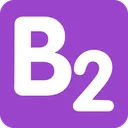

:small_blue_diamond: 2022-01-30 at 16:00 UTC (Your time: <t:1643558400>) held by Pferd
[ID: 146] (Grammar)
Grammar lesson on the usage of the passive voice and alternative constructions.
Recommended level(s):
Type `>session info [ID#]` e.g. `>session info 3` for more detail about a specific session.
dawn ginkgo

Provided to YouTube by Revelator Ltd.
Leute Sind Seltsam · Dziuks Küche
Vom Tisch
℗ 2019 NODOPROD INC.
Released on: 2014-06-05
Music Publisher: Kingston Songs Edition
Music Publisher: Kingston Songs Edition
Lyricist: Dziuks Küche
Composer & Arranger (?): Hammer Musik under exclusive license to NODOPROD INC.
Auto-generated by YouTube.
lean flickerBOT
Leute Sind Seltsam [00:04:05] added to the queue.
dawn ginkgo
skip
 candid coral
remind 01h00m
lean flickerBOT
Okay @candid coral. You will be reminded in 1 hour.
lean flickerBOT
@candid coral, 1 hour ago
You asked to be reminded about " "
"
[Jump to message](#botchannel message)
Reminder created
·
candid coral
remind 01h00m
lean flickerBOT
Okay @candid coral. You will be reminded in 1 hour.
lean flickerBOT
@candid coral, 59 minutes and 59 seconds ago
You asked to be reminded about ""
[Jump to message](#botchannel message)
Reminder created
·
 zinc patrol
faq beginner
lean flickerBOT
How to get started
The simplest way to learn German is to find topics you don’t understand yet and search for explanations of them. This list provides you with a guide for which topics to learn if you are completely new to German. Type the topic into Google (or YouTube) and start learning!
Introduction
1: Alphabet (especially ä, ü, ö and ß)
2: Basic greetings (hello, goodbye, etc.)
Part 1 - Simple Sentence
1: Noun gender & plurals
2: Nominative case (What are cases?)
3: Nominative pronouns (I, you, he, she, etc.)
4: Verbs in present tense
5: Definite/indefinite articles
6: Accusative case (for nouns)
7: Accusative pronouns
8: Word order of simple sentences
9: How to ask questions
See Part 2 on the next page.
Tips
- Always learn the gender of a noun when you learn a new noun
- Learn to use a translation dictionary (e.g. dict.cc, leo.org)
- Use
>faq resourcesto see our list of German learning resources - For listening and pronunciation practice, try watching movies or videos (incl. YouTube)
- You can listen to pronunciation for words on websites like dict.cc, forvo.com, and others
- Practice writing sentences every day (and asking people to correct them)
- Ask as many questions as possible
- Don’t be scared to make mistakes!!!! If you don’t let yourself make mistakes, you will never be able to learn German
Page 1/2
candid coral
remind 01h00m
lean flickerBOT
:x: The required argument message is missing.
candid coral
remind 01h00m
lean flickerBOT
Okay @candid coral. You will be reminded in 1 hour.
lean flickerBOT
@candid coral, 1 hour ago
You asked to be reminded about ""
[Jump to message](#botchannel message)
Reminder created
·
candid coral
remind 01h00m
 lean flickerBOT
Okay @candid coral. You will be reminded in 1 hour.
lean flickerBOT
@candid coral, 1 hour ago
You asked to be reminded about ":peepoCozy:"
[Jump to message](#botchannel message)
Reminder created
·
candid coral
remind 01h00m
lean flickerBOT
Okay @candid coral. You will be reminded in 1 hour.
lean flickerBOT
@candid coral, 1 hour ago
You asked to be reminded about ""
[Jump to message](#botchannel message)
Reminder created
·
 austere dagger
faq omitting verb after modal
lean flickerBOT
FAQ not found. Try >explain all.
austere dagger
faq main verb omitted after modal
lean flickerBOT
FAQ not found. Try >explain all.
austere dagger
explain all
lean flickerBOT
See a listed FAQ with >faq [name]
:small_blue_diamond: Limited Permissions
Aliases: vc pending, vc-pending
:small_blue_diamond: Negation
Aliases: kein, nicht
:small_blue_diamond: nicos
Aliases: nicos weg
:small_blue_diamond: Nominative
Aliases: Nominativ
:small_blue_diamond: Omission of movement verbs
:small_blue_diamond: Passive
Aliases: Passiv
:small_blue_diamond: Past Tense
:small_blue_diamond: Prepositions of Place Part 1
Aliases: Nach-In-Auf-Zu
:small_blue_diamond: Resources
Aliases: resource list
:small_blue_diamond: roles
:small_blue_diamond: seeing verbs
Aliases: schauen, sehen
:small_blue_diamond: so und also
:small_blue_diamond: Stative Passive
Aliases: Zustandspassiv, statal passive
:small_blue_diamond: Structure of Konjunktiv II
Aliases: KII 2
:small_blue_diamond: Study Vocabulary
Aliases: unterrichten, lernen, beibringen, studieren
Page 3/4 (59 entries)
austere dagger
Ah! It's called Omission of movement verbs
 terse apex
faq so und also
lean flickerBOT
so und also
The German “also”
This word means “so, therefore”. It is used in the beginning of a sentence to show that what you’re about to say follows from what you said before:
(1) Er war müde, also ging er schlafen. (He was tired, so he went to sleep.)
You can put it in the middle of a sentence too, then it shows that you’re going back a topic or are reminding of it:
(2) Ich habe also mit ihm geredet… (and so/as I said, I spoke to him…)
A very similar use is also to start a sentence with a dragged out aaalso (=aaanyway).
⚠ You cannot use so in these sentences!
The German “so”
So has a few uses. Most of them correspond pretty directly to English “like this/that”. Perhaps the most normal use of it is to answer a “how” (wie) question:
(3) Wie geht das? — So! (How does one do that? — Like this!)
You can of course also use it this way if no one asked you a question:
(4) Er lief so herum. (He walked around like that. [could indicate e.g. walking style or clothing, depends on context])
Together with an indefinite noun it indicates that you care about the properties of that noun, and not the noun itself:
(5) Ich will so ein Haus. (I want a house like that [but not necessarily this particular one].)
Note that here, the proper question is not wie but was für ein:
(6) Was für ein Spiel willst du spielen? — So eins. (What kind of game do you want to play? — One like that)
Another very common way to use it is for emphasizing a size or amount. Just like in English, you may drag out the so for a bit to emphasize it even more:
(7) Das ist so schön! (This is so beautiful!)
The English “also”
English “also/too” straigtforwardly translates to German auch. There is no relation to German so/also here:
(8) Ich habe ihn auch gesehen. (I also saw him. / I saw him too.)
terse apex
faq Omission of movement verbs
lean flickerBOT
Omission of movement verbs
When it's obvious that a verb of movement is meant, it is implied:
- ich muss zur Toilette
- ich will nach Deutschland
This happens when there's
- a preposition of movement, and
- a modal verb.
Without any of these two, the sentence is too generic and you can't infer what's happening.
It comes in handy since movement verbs in german are rather specific (you either go on foot, fly, or go with a vehicle, you can't just generically gosomewhere).
So if the target is a country, like nach Deutschland, this helps you get away with not mentioning whether you're going to fly there, drive or go by train, or cross the border on foot: you just say ich muss nach Deutschland, I have [to go] to Germany.
terse apex
faq nicos
lean flickerBOT
nicos
Nicos Weg is a free online program aimed at helping people learn German. It includes video, audio, text, grammar explanations, notes, vocabulary, and exercises. It also includes very useful cultural and bureaucratic information, such as how to open a bank account, while teaching you the relevant grammar and vocabulary.
It’s fairly popular and well-recommended, but keep in mind that you can’t learn a language with only one resource, even if it’s a good one!
You can find the courses here: https://learngerman.dw.com/en/overview/
You can also see various other courses for learners by dw.com here: https://www.dw.com/en/learn-german/s-2469/
candid coral
remind 01h00m
lean flickerBOT
Okay @candid coral. You will be reminded in 1 hour.
 slate river
faq beginner
lean flickerBOT
How to get started
The simplest way to learn German is to find topics you don’t understand yet and search for explanations of them. This list provides you with a guide for which topics to learn if you are completely new to German. Type the topic into Google (or YouTube) and start learning!
Introduction
1: Alphabet (especially ä, ü, ö and ß)
2: Basic greetings (hello, goodbye, etc.)
Part 1 - Simple Sentence
1: Noun gender & plurals
2: Nominative case (What are cases?)
3: Nominative pronouns (I, you, he, she, etc.)
4: Verbs in present tense
5: Definite/indefinite articles
6: Accusative case (for nouns)
7: Accusative pronouns
8: Word order of simple sentences
9: How to ask questions
See Part 2 on the next page.
Tips
- Always learn the gender of a noun when you learn a new noun
- Learn to use a translation dictionary (e.g. dict.cc, leo.org)
- Use
>faq resourcesto see our list of German learning resources - For listening and pronunciation practice, try watching movies or videos (incl. YouTube)
- You can listen to pronunciation for words on websites like dict.cc, forvo.com, and others
- Practice writing sentences every day (and asking people to correct them)
- Ask as many questions as possible
- Don’t be scared to make mistakes!!!! If you don’t let yourself make mistakes, you will never be able to learn German
Page 1/2
tender trellis
faq resources
lean flickerBOT
Resources
lean flickerBOT
Upcoming Sessions
:calendar: Want to add our sessions schedule to your Google calendar?
:small_blue_diamond: 2022-01-29 at 16:00 UTC (Your time: <t:1643472000>) held by Pferd
[ID: 145] (Grammar)
Grammar lesson on tenses in the passive voice.
Recommended level(s):
:small_blue_diamond: 2022-01-29 at 21:00 UTC (Your time: <t:1643490000>) held by Blüwüleinchen🦜
[ID: 142] (AdvancedReading)
nur Deutsch Leserunde: die Unendliche Geschichte
Recommended level(s):
:small_blue_diamond: 2022-01-30 at 16:00 UTC (Your time: <t:1643558400>) held by Pferd
[ID: 146] (Grammar)
Grammar lesson on the usage of the passive voice and alternative constructions.
Recommended level(s):
Type `>session info [ID#]` e.g. `>session info 3` for more detail about a specific session.
@candid coral, 1 hour ago
You asked to be reminded about ":peepoCozy:"
[Jump to message](#botchannel message)
Reminder created
·
 rocky hearth
play o telefone tocou tocou novamente
lean flickerBOT
Jorge Ben Jor - O Telefone Tocou Novamente l (1970) [00:03:50] added to the queue.
candid coral
remind 01h00m
lean flickerBOT
Okay @candid coral. You will be reminded in 1 hour.
lean flickerBOT
@candid coral, 1 hour ago
You asked to be reminded about ""
[Jump to message](#botchannel message)
Reminder created
·
 last hawk
faq all
lean flickerBOT
See a listed FAQ with >faq [name]
:small_blue_diamond: absentive
Aliases: absentiv
:small_blue_diamond: Accusative
Aliases: Akkusativ
:small_blue_diamond: Adjective Declension
Aliases: adjective endings, Adjektivdeklination
:small_blue_diamond: Anki
Aliases: flashcards
:small_blue_diamond: beginner 2
:small_blue_diamond: Beide vs. Beides
Aliases: Beides vs. Beide, Beides, Beide
:small_blue_diamond: Best way to learn German
Aliases: learn fast, learn German fast, learn efficiently, best way to learn, fastest way to learn, most efficient way to learn
:small_blue_diamond: birthdays
:small_blue_diamond: Cases
Aliases: case, grammatical case
:small_blue_diamond: CEFR levels
Aliases: lvl, CEFR, cerf
:small_blue_diamond: conjugation
Aliases: praesens, präsens, present tense, verbs, verb conjugation, Konjugation
:small_blue_diamond: Contractions
Aliases: Verschmelzung, vom, Schmelzwort
:small_blue_diamond: DACH
:small_blue_diamond: Dative
Aliases: Dativ
:small_blue_diamond: doch
Page 1/4 (59 entries)
last hawk
faq CEFR levels
lean flickerBOT
CEFR levels
If you see something like A1, B2 or C1, these represent the proficiency of a speaker in a language they're not native in, and are called CEFR levels. They are valid for any language, not only German!
Roughly speaking, A levels are beginners and C levels are experts. Remember that CEFR level are self-assessed and indicative!
You can see more specific names and descriptions on the Wikipedia page:
https://en.wikipedia.org/wiki/Common_European_Framework_of_Reference_for_Languages
🗨 How do I know what level I am?
If the table on Wikipedia is too generic for you, you can try using this one here:
https://rm.coe.int/168045bb52
Just check each column one at a time: if you can do all it describes, move to the next column. Your level is the highest where you can do the most things.
Alternatively, you can use this questionnaire to estimate your level more accurately:
https://www.laits.utexas.edu/fi/sites/laits.utexas.edu.fi/files/Self Assessment Checklist European.pdf
last hawk
faq absentive
lean flickerBOT
The grammar of the absentiv
The abesentive takes the form: [subject] + [conjugated sein] + [infinitive of action verb] (e.g. Theo ist einkaufen).
The action verb is typically an intransitive verb, but can also be a transitive verb. It is additionally important to note that the absentiv should not have any local adverbs, or other syntactic indications of absence. I.e. weg and (weg)gegangen are not found in sentences that use the absentive. Additionally, the absentiv cannot be formed in combination with progressive forms such as am Einkaufen, beim Einkaufen, etc. Finally, the absentiv is typically built in the preterite (präteritum) and present tense.
E.g.
Er war arbeiten - He was away at work.
Ich bin pinkeln - I am away peeing.
More information
Unfortunately the amount of information available on the absentiv is fairly limited as it's both only typically used in spoken language, and is a fairly recent development within german language research. Thus explanations in grammar books are scarce, and the absentiv is typically not taught in Deutsch als Fremdsprache classes. However, you can read a bit about the absentiv here in Alle sind Deutschland … außer Fritz Eckenga – der ist einkaufen!, König 2009.
Page 2/2
last hawk
faq conjugation
lean flickerBOT
conjugation
Präsens (Present Tense)
When you use a verb in a sentence (or clause), you have to conjugate it (change the form) to match the subject of the sentence (or clause).
For example, in English, we write I eat but he/she eats. The verb has a different ending! The concept is the same in German, except German has more endings.
The first thing you need to know in order to conjugate verbs is: which ending fits which subject? Here is a simple verb “trinken” (to drink) as an example:
trinken
ich trinke
du trinkst
er/sie/es trinkt
wir trinken
ihr trinkt
sie trinken / Sie trinken
(Note: the conjugation for sie (they) and Sie (formal you) is always the same)
Vowel/Stem Changes
There are a few variations and exceptions, but the most important is vowel changes (also called stem changes). Some verbs get a vowel change, which only affects the du and er/sie/es forms of the verb. (However, modal verbs and wissen have their own special pattern, which also has a vowel change in the ich form.)
Example: ich schlafe, du schläfst
Other Changes
There are various other differences but I can’t describe them all here, so please read these websites or use Google to find more information: https://www.vistawide.com/german/grammar/german_verbs_present_tense.htm
https://www.thoughtco.com/german-present-tense-verbs-4074838
http://www.dartmouth.edu/~deutsch/Grammatik/PresentTense/Present.html
last hawk
faq all
lean flickerBOT
See a listed FAQ with >faq [name]
:small_blue_diamond: absentive
Aliases: absentiv
:small_blue_diamond: Accusative
Aliases: Akkusativ
:small_blue_diamond: Adjective Declension
Aliases: adjective endings, Adjektivdeklination
:small_blue_diamond: Anki
Aliases: flashcards
:small_blue_diamond: beginner 2
:small_blue_diamond: Beide vs. Beides
Aliases: Beides vs. Beide, Beides, Beide
:small_blue_diamond: Best way to learn German
Aliases: learn fast, learn German fast, learn efficiently, best way to learn, fastest way to learn, most efficient way to learn
:small_blue_diamond: birthdays
:small_blue_diamond: Cases
Aliases: case, grammatical case
:small_blue_diamond: CEFR levels
Aliases: lvl, CEFR, cerf
:small_blue_diamond: conjugation
Aliases: praesens, präsens, present tense, verbs, verb conjugation, Konjugation
:small_blue_diamond: Contractions
Aliases: Verschmelzung, vom, Schmelzwort
:small_blue_diamond: DACH
:small_blue_diamond: Dative
Aliases: Dativ
:small_blue_diamond: doch
Page 1/4 (59 entries)
last hawk
faq Best way to learn German
lean flickerBOT
FAQ not found. I found the following similar entries: best way to learn, Best way to learn German, fastest way to learn.
last hawk
faq Best way to learn German
lean flickerBOT
Best way to learn German
Should I study all these skills every day?
If you want to study them all every day, you can, but some people may find it easier to focus on particular skills on particular days. For example, on Monday you might choose to do a lot of writing practice, and then on Tuesday you might plan some conversation practice with some speaking partners.
If you try to cover too many different things in one day, then you might be jumping around all over the place and not able to focus on each individual task. It’s also a really good idea to have a different schedule or set of tasks each day to keep things from getting boring. So setting a special schedule or set of tasks for each day of the week - like the Monday writing day, or every Friday you do some grammar exercises followed by watching TV shows, or any other combination you like – is a really good way to go.
How much time should I dedicate to studying?
Everyone has a different schedule and everyone learns at a different pace. It is recommended to study every day, preferably for 30 minutes or more, but taking 1-2 days off is okay. More important is how many hours you study in a week.
A casual pace will be roughly around 5-8 hours a week, a steady pace would be around 10-14 hours a week, and a fast pace (around the same pace as a university subject) will be 15-20 hours a week.
Anything less than 5 hours and you may find it hard to keep improving steadily (but feel free to try it and see how it works for you), while studying one subject for over 25 hours a week may quickly lead to burnout.
How you choose to spread those hours out over the week is not that important; for example, if you have a lot of time on the weekend but not during the week, it’s fine to do short study sessions on weekdays and then dedicate a bunch of time on Saturday and Sunday.
Page 2/2
last hawk
faq all
lean flickerBOT
See a listed FAQ with >faq [name]
:small_blue_diamond: Duolingo
Aliases: duo
:small_blue_diamond: Eszett
Aliases: Scharfes S, ẞ, ß
:small_blue_diamond: FAQ
:small_blue_diamond: Formal and informal speech
Aliases: duzen vs. siezen, Sie, Du vs. Sie, siezen, du, informal, formal, du vs sie
:small_blue_diamond: Gender patterns
:small_blue_diamond: Genitive
Aliases: Genitiv
:small_blue_diamond: German letters
Aliases: german keyboard, keyboard
:small_blue_diamond: Grammar terms
Aliases: Glossary, Grammatical terms
:small_blue_diamond: Grammatical gender
Aliases: genders, der-die-das, gender
:small_blue_diamond: How to ask a question
Aliases: Translation, Homework
:small_blue_diamond: How to get started
Aliases: Starting out, beginner
:small_blue_diamond: How to use writing
:small_blue_diamond: Impersonal Verbs
Aliases: unpersönliche Verben, impersonal es
:small_blue_diamond: IPA
Aliases: Pronunciation, Sound transcription, International Phonetic Alphabet
:small_blue_diamond: lessons
Aliases: sessions, activities
Page 2/4 (59 entries)
last hawk
faq Genitive
lean flickerBOT
When do I use the genitive case?
The genitive case is mainly used:
- to link nouns, especially when showing possession
Dies ist der größte Bahnhof der Welt.
Die Hälfte des Kuchens gehört mir.
Es gibt noch einen Strahl der Hoffnung.
For proper names, the order is reversed and an 's' is attached to the proper name as long as it does not end with an 's' sound.
Deutschlands längster Fluss ist der Rhein.
- to mark the object of very few transitive verbs
Empfindliche Haut bedarf besonderer Pflege.
Heute gedenkt die Nation des Jahrestages der Verfassung.
Wir harren einer Antwort.
- after some prepositions
The following prepositions are commonly followed by the genitive case in written German, but usually with the dative case in spoken German:
(an)statt, trotz, während, wegen
Prepositions denoting position are usually followed by the genitive case:
außerhalb, innerhalb, oberhalb, unterhalb, jenseits
A great number of prepositions that are only used in formal German, such as:
angesichts, bezüglich, einschließlich, fernab, infolge, namens, seitens, zugunsten
- by adverbials of indefinite time
Eines Tages werde ich Deutsch beherrschen.
Sonntags sind wir meist unterwegs.
Eines Nachts hörte ihr Vater sie weinen.
Note the declension in the last sentence. Although it is die Nacht, it assumes a similar form as the rest.
Page 2/2
last hawk
faq grammar terms
lean flickerBOT
Grammar terms
When learning languages, it's useful to know some grammatical terms.
Note that these are very simplified definitions aimed at giving you a general idea: do your own research if you need details.
- Adjective: a word that describes a name: the dog is old or the smart kid.
- Adverb: something that aids the verb or other part of the sentence, or words that don't fall into other categories: yes, I've done it swiftly or he's very good.
- Affix: a small word piece attached to another word to change its meaning. If it comes before the word it's a prefix: __in__credible, after it it's a suffix: time__ly__.
- Article: a word that tells you if a name is specific or generic: the apple, an apple.
- Case: the form of a word depending on its role: he and him refer to the same person, but he gives an apple to him.
- Clause: each unit that has one conjugated verb. Those before and after the comma are each a clause: Berzi said something, but I didn't understand.
- Conjugation: the form a verb takes depending on when it happens and who does it: I go, he goes, he went are all conjugations of the same verb.
- Conjunction: a word that connects two clauses together: he went there but I didn't.
- Declension: the form a word takes depending on its case: der Mann is a subject, den Mann is an object.
- Noun: the name of a thing, such as table or dog.
- Object: the one at the receiving end of the verb, or being affected by it directly: he touched me, she gave her an apple.
- Pronoun: a word that stands in for a name: he gave me a ring. I like it.
- Subject: the one that enacts the verb in first person: I saw a dog or a dog saw me.
- Tense: the form of a verb depending on when it happens: I see: present, I will see: future.
- Verb: a word describing an action: I go running every day.
dawn ginkgo

Provided to YouTube by Genie Music Corporation
Pink Soldiers · 23
Squid Game (Original Soundtrack from The Netflix Series)
℗ 2021 Netflix
Released on: 2021-09-17
Auto-generated by YouTube.
lean flickerBOT
Pink Soldiers [00:00:38] added to the queue.
dawn ginkgo
Ohrwurm ^^
 lapis seal
play julie london fly me to the moon
lean flickerBOT
Julie London - Fly Me To The Moon - Best of Smooth Jazz [00:02:35] added to the queue.
dawn ginkgo
@lapis seal ❤️ ❤️ gefällt mir!
 misty geyser
 lean flickerBOT
Patrick on a seahorse listening to fly me to the moon [00:04:26] added to the queue.
misty geyser
skip

Fly Me To The Moon [Climax Mix]
Lyrics:
Fly me to the moon
and let me play among the stars
Let me see what spring is like
on jupiter and mars
In other words
hold my hand
In other words
Darling kiss me
Fill my heart with song
and let me sing for ever more
You are all I long for
All I worship and adore
In other words
please be true
In other w...
lean flickerBOT
Bayonetta - OST - Fly Me To The Moon [Climax Mix] [00:05:19] added to the queue.
lapis seal
play jo stepford moonlight in vermont
lean flickerBOT
Jo Stafford - Moonlight in Vermont [00:03:08] added to the queue.
misty geyser
skip

SLANDER - Love Is Gone (ft. Dylan Matthew)
Love Is Gone (Audio): https://smarturl.it/loveisgone1
Love Is Gone (Acoustic) just reached 100,000,000 streams! To celebrate we’re giving away $1000 cash, a VIP merch bundle, and a FaceTime hangout with us & @Dylan Matthew . Enter to win here: https://ffm.to/ligcontest.oyd
Watch the Love Is Gone (A...
lean flickerBOT
SLANDER - Love Is Gone (ft. Dylan Matthew) [Official Music Video] [00:05:14] added to the queue.
lapis seal
play lemonade ntc127
lean flickerBOT
NCT 127 엔시티 127 'Lemonade' Track Video #4 [00:02:02] added to the queue.
lean flickerBOT
:x: The bot is already active in a different channel.
 cloud light
play Wallah Krise
lean flickerBOT
:x: The bot is already active in a different channel.
See a listed FAQ with >faq [name]
:small_blue_diamond: absentive
Aliases: absentiv
:small_blue_diamond: Accusative
Aliases: Akkusativ
:small_blue_diamond: Adjective Declension
Aliases: adjective endings, Adjektivdeklination
:small_blue_diamond: Anki
Aliases: flashcards
:small_blue_diamond: beginner 2
:small_blue_diamond: Beide vs. Beides
Aliases: Beides vs. Beide, Beides, Beide
:small_blue_diamond: Best way to learn German
Aliases: learn fast, learn German fast, learn efficiently, best way to learn, fastest way to learn, most efficient way to learn
:small_blue_diamond: birthdays
:small_blue_diamond: Cases
Aliases: case, grammatical case
:small_blue_diamond: CEFR levels
Aliases: lvl, CEFR, cerf
:small_blue_diamond: conjugation
Aliases: praesens, präsens, present tense, verbs, verb conjugation, Konjugation
:small_blue_diamond: Contractions
Aliases: Verschmelzung, vom, Schmelzwort
:small_blue_diamond: DACH
:small_blue_diamond: Dative
Aliases: Dativ
:small_blue_diamond: doch
Page 1/4 (59 entries)
 heady wolf
humble walrus
heady wolf
humble walrus
play 10 minutes of silence
lean flickerBOT
10 minutes of silence [00:10:01] added to the queue.
lean flickerBOT
:x: This command can only be used by a moderator.
 tribal kite
sessions
lean flickerBOT
Upcoming Sessions
:calendar: Want to add our sessions schedule to your Google calendar?
:small_blue_diamond: 2022-01-29 at 16:00 UTC (Your time: <t:1643472000>) held by Pferd
[ID: 145] (Grammar)
Grammar lesson on tenses in the passive voice.
Recommended level(s):
:small_blue_diamond: 2022-01-29 at 21:00 UTC (Your time: <t:1643490000>) held by Blüwüleinchen🦜
[ID: 142] (AdvancedReading)
nur Deutsch Leserunde: die Unendliche Geschichte
Recommended level(s):
:small_blue_diamond: 2022-01-30 at 16:00 UTC (Your time: <t:1643558400>) held by Pferd
[ID: 146] (Grammar)
Grammar lesson on the usage of the passive voice and alternative constructions.
Recommended level(s):
Type `>session info [ID#]` e.g. `>session info 3` for more detail about a specific session.
lean flickerBOT
Generic 1/2 commands
:small_blue_diamond: **getrole** <role name>
Assigns you a role with the given name, removing any previous assignable roles.
Note: Use >sub to subscribe to groups and ping a moderator for the native speaker role.
:small_blue_diamond: **info** [user]
Displays information about the given user. If no user is specified, information about you will be displayed.
:small_blue_diamond: **quote** <channel> <message id>
Quotes a message in the channel you are in. Specify the channel that the message was originally posted in and the message id of the message (accessible if you turn on developer mode in your Discord settings).
:small_blue_diamond: **removerole** <role name>
Removes the CEFR role with the given name from you.
Note: Use >unsub for group roles.
:small_blue_diamond: **roles**
Lists all roles on the server.
Page 8/20 (20 entries)
 weak isle
getrole level b
tender trellis
faq beginner
lean flickerBOT
How to get started
The simplest way to learn German is to find topics you don’t understand yet and search for explanations of them. This list provides you with a guide for which topics to learn if you are completely new to German. Type the topic into Google (or YouTube) and start learning!
Introduction
1: Alphabet (especially ä, ü, ö and ß)
2: Basic greetings (hello, goodbye, etc.)
Part 1 - Simple Sentence
1: Noun gender & plurals
2: Nominative case (What are cases?)
3: Nominative pronouns (I, you, he, she, etc.)
4: Verbs in present tense
5: Definite/indefinite articles
6: Accusative case (for nouns)
7: Accusative pronouns
8: Word order of simple sentences
9: How to ask questions
See Part 2 on the next page.
Tips
- Always learn the gender of a noun when you learn a new noun
- Learn to use a translation dictionary (e.g. dict.cc, leo.org)
- Use
>faq resourcesto see our list of German learning resources - For listening and pronunciation practice, try watching movies or videos (incl. YouTube)
- You can listen to pronunciation for words on websites like dict.cc, forvo.com, and others
- Practice writing sentences every day (and asking people to correct them)
- Ask as many questions as possible
- Don’t be scared to make mistakes!!!! If you don’t let yourself make mistakes, you will never be able to learn German
Page 1/2
lean flickerBOT
Resources
 small quail
info 122777548391186432
lean flickerBOT

Information about Bulli#4671
Name
@upbeat compass
ID
122777548391186432
Joined
<t:1595877784> (1 year, 5 months and 4 weeks ago)
Account created
<t:1449342848> (6 years, 1 month and 3 weeks ago)
 thorny verge
faq geninnir
lean flickerBOT
FAQ not found. Try >explain all.
thorny verge
explain all
lean flickerBOT
See a listed FAQ with >faq [name]
:small_blue_diamond: absentive
Aliases: absentiv
:small_blue_diamond: Accusative
Aliases: Akkusativ
:small_blue_diamond: Adjective Declension
Aliases: adjective endings, Adjektivdeklination
:small_blue_diamond: Anki
Aliases: flashcards
:small_blue_diamond: beginner 2
:small_blue_diamond: Beide vs. Beides
Aliases: Beides vs. Beide, Beides, Beide
:small_blue_diamond: Best way to learn German
Aliases: learn fast, learn German fast, learn efficiently, best way to learn, fastest way to learn, most efficient way to learn
:small_blue_diamond: birthdays
:small_blue_diamond: Cases
Aliases: case, grammatical case
:small_blue_diamond: CEFR levels
Aliases: lvl, CEFR, cerf
:small_blue_diamond: conjugation
Aliases: praesens, präsens, present tense, verbs, verb conjugation, Konjugation
:small_blue_diamond: Contractions
Aliases: Verschmelzung, vom, Schmelzwort
:small_blue_diamond: DACH
:small_blue_diamond: Dative
Aliases: Dativ
:small_blue_diamond: doch
Page 1/4 (59 entries)
thorny verge
faq beginner
lean flickerBOT
How to get started
The simplest way to learn German is to find topics you don’t understand yet and search for explanations of them. This list provides you with a guide for which topics to learn if you are completely new to German. Type the topic into Google (or YouTube) and start learning!
Introduction
1: Alphabet (especially ä, ü, ö and ß)
2: Basic greetings (hello, goodbye, etc.)
Part 1 - Simple Sentence
1: Noun gender & plurals
2: Nominative case (What are cases?)
3: Nominative pronouns (I, you, he, she, etc.)
4: Verbs in present tense
5: Definite/indefinite articles
6: Accusative case (for nouns)
7: Accusative pronouns
8: Word order of simple sentences
9: How to ask questions
See Part 2 on the next page.
Tips
- Always learn the gender of a noun when you learn a new noun
- Learn to use a translation dictionary (e.g. dict.cc, leo.org)
- Use
>faq resourcesto see our list of German learning resources - For listening and pronunciation practice, try watching movies or videos (incl. YouTube)
- You can listen to pronunciation for words on websites like dict.cc, forvo.com, and others
- Practice writing sentences every day (and asking people to correct them)
- Ask as many questions as possible
- Don’t be scared to make mistakes!!!! If you don’t let yourself make mistakes, you will never be able to learn German
Page 1/2
thorny verge
faq resources
lean flickerBOT
Resources
 rugged adder
faq contractions
lean flickerBOT
Contractions
A contraction (Verschmelzung or Schmelzwort) is a shortened form of a word or group of words created by omitting letters and sounds. Common examples of contractions in English are:
I'm = I am
won't = will not
let's = let us
-'re = are (e.g. we're walking home)
Contractions are often used in German, especially with prepositions and definite articles that take the accusative or dative (never the genitive). For example, zu dem is often shortened to zum, as seen here:
Pferd geht zum Zahnarzt.
Some contractions with prepositions are so common (see below) that they are effectively manadatory in normal speech. Writing the full form has the effect of emphasising the definite article, indicating that you are referring to a specific object. For example:
Pferd geht zu dem Zahnarzt, der ihm gestern empfohlen wurde.
Common contractions in German
These contractions are used very often and are acceptable in formal German.
ans = an das
am = an dem
beim = bei dem
im = in dem
ins = in das
vom = von dem
zum = zu dem
zur = zu der
Additionally, the pronoun es is often contracted when it comes directly after the verb in certain set phrases. For example, the greeting Wie geht es dir? is often contracted to Wie geht's dir?
Contractions in informal German
Contracting the article das to -s in prepositions is very commonly used in informal, spoken German, and sometimes appears in formal German in set phrases.
aufs = auf das
durchs = durch das
fürs = für das
übers = über das
ums = um das
unters = unter das
Contracting the article dem to -m is relatively common in spoken German with almost all prepositions. For example:
hinterm = hinter dem
überm = über dem
unterm = unter dem
Contracting the other articles can also occur, but this is relatively rare.
austere dagger
faq contractions
lean flickerBOT
Contractions
A contraction (Verschmelzung or Schmelzwort) is a shortened form of a word or group of words created by omitting letters and sounds. Common examples of contractions in English are:
I'm = I am
won't = will not
let's = let us
-'re = are (e.g. we're walking home)
Contractions are often used in German, especially with prepositions and definite articles that take the accusative or dative (never the genitive). For example, zu dem is often shortened to zum, as seen here:
Pferd geht zum Zahnarzt.
Some contractions with prepositions are so common (see below) that they are effectively manadatory in normal speech. Writing the full form has the effect of emphasising the definite article, indicating that you are referring to a specific object. For example:
Pferd geht zu dem Zahnarzt, der ihm gestern empfohlen wurde.
Common contractions in German
These contractions are used very often and are acceptable in formal German.
ans = an das
am = an dem
beim = bei dem
im = in dem
ins = in das
vom = von dem
zum = zu dem
zur = zu der
Additionally, the pronoun es is often contracted when it comes directly after the verb in certain set phrases. For example, the greeting Wie geht es dir? is often contracted to Wie geht's dir?
Contractions in informal German
Contracting the article das to -s in prepositions is very commonly used in informal, spoken German, and sometimes appears in formal German in set phrases.
aufs = auf das
durchs = durch das
fürs = für das
übers = über das
ums = um das
unters = unter das
Contracting the article dem to -m is relatively common in spoken German with almost all prepositions. For example:
hinterm = hinter dem
überm = über dem
unterm = unter dem
Contracting the other articles can also occur, but this is relatively rare.
 agile marlin
faq
lean flickerBOT
:x: The required argument name is missing.
agile marlin
explain all 2
lean flickerBOT
See a listed FAQ with >faq [name]
:small_blue_diamond: Limited Permissions
Aliases: vc pending, vc-pending
:small_blue_diamond: Negation
Aliases: kein, nicht
:small_blue_diamond: nicos
Aliases: nicos weg
:small_blue_diamond: Nominative
Aliases: Nominativ
:small_blue_diamond: Omission of movement verbs
:small_blue_diamond: Passive
Aliases: Passiv
:small_blue_diamond: Past Tense
:small_blue_diamond: Prepositions of Place Part 1
Aliases: Nach-In-Auf-Zu
:small_blue_diamond: Resources
Aliases: resource list
:small_blue_diamond: roles
:small_blue_diamond: seeing verbs
Aliases: schauen, sehen
:small_blue_diamond: so und also
:small_blue_diamond: Stative Passive
Aliases: Zustandspassiv, statal passive
:small_blue_diamond: Structure of Konjunktiv II
Aliases: KII 2
:small_blue_diamond: Study Vocabulary
Aliases: unterrichten, lernen, beibringen, studieren
Page 3/4 (59 entries)
 warm wharf
faq beginner
lean flickerBOT
How to get started
The simplest way to learn German is to find topics you don’t understand yet and search for explanations of them. This list provides you with a guide for which topics to learn if you are completely new to German. Type the topic into Google (or YouTube) and start learning!
Introduction
1: Alphabet (especially ä, ü, ö and ß)
2: Basic greetings (hello, goodbye, etc.)
Part 1 - Simple Sentence
1: Noun gender & plurals
2: Nominative case (What are cases?)
3: Nominative pronouns (I, you, he, she, etc.)
4: Verbs in present tense
5: Definite/indefinite articles
6: Accusative case (for nouns)
7: Accusative pronouns
8: Word order of simple sentences
9: How to ask questions
See Part 2 on the next page.
Tips
- Always learn the gender of a noun when you learn a new noun
- Learn to use a translation dictionary (e.g. dict.cc, leo.org)
- Use
>faq resourcesto see our list of German learning resources - For listening and pronunciation practice, try watching movies or videos (incl. YouTube)
- You can listen to pronunciation for words on websites like dict.cc, forvo.com, and others
- Practice writing sentences every day (and asking people to correct them)
- Ask as many questions as possible
- Don’t be scared to make mistakes!!!! If you don’t let yourself make mistakes, you will never be able to learn German
Page 1/2
 obtuse mist
sessions
lean flickerBOT
Upcoming Sessions
:calendar: Want to add our sessions schedule to your Google calendar?
:small_blue_diamond: 2022-01-29 at 16:00 UTC (Your time: <t:1643472000>) held by Pferd
[ID: 145] (Grammar)
Grammar lesson on tenses in the passive voice.
Recommended level(s):
:small_blue_diamond: 2022-01-29 at 21:00 UTC (Your time: <t:1643490000>) held by Blüwüleinchen🦜
[ID: 142] (AdvancedReading)
nur Deutsch Leserunde: die Unendliche Geschichte
Recommended level(s):
:small_blue_diamond: 2022-01-30 at 16:00 UTC (Your time: <t:1643558400>) held by Pferd
[ID: 146] (Grammar)
Grammar lesson on the usage of the passive voice and alternative constructions.
Recommended level(s):
Type `>session info [ID#]` e.g. `>session info 3` for more detail about a specific session.
warm wharf
faq resources
lean flickerBOT
Resources
obtuse mist
session create Advancedreading 2022-02-06 08:00 AEST nur Deutsch Leserunde: die Unendliche Geschichte
lean flickerBOT
Okay @obtuse mist. Your session has been scheduled for in 1 week, 2 days and 8 hours. The session ID is: 147
obtuse mist
sessions
lean flickerBOT
Upcoming Sessions
:calendar: Want to add our sessions schedule to your Google calendar?
:small_blue_diamond: 2022-01-29 at 16:00 UTC (Your time: <t:1643472000>) held by Pferd
[ID: 145] (Grammar)
Grammar lesson on tenses in the passive voice.
Recommended level(s):
:small_blue_diamond: 2022-01-29 at 21:00 UTC (Your time: <t:1643490000>) held by Blüwüleinchen🦜
[ID: 142] (AdvancedReading)
nur Deutsch Leserunde: die Unendliche Geschichte
Recommended level(s):
:small_blue_diamond: 2022-01-30 at 16:00 UTC (Your time: <t:1643558400>) held by Pferd
[ID: 146] (Grammar)
Grammar lesson on the usage of the passive voice and alternative constructions.
Recommended level(s):
:small_blue_diamond: 2022-02-05 at 21:00 UTC (Your time: <t:1644094800>) held by Blüwüleinchen🦜
[ID: 147] (AdvancedReading)
nur Deutsch Leserunde: die Unendliche Geschichte
Recommended level(s):
Type `>session info [ID#]` e.g. `>session info 3` for more detail about a specific session.
obtuse mist
session create Advancedreading 2022-02-13 08:00 AEST nur Deutsch Leserunde: die Unendliche Geschichte
lean flickerBOT
Okay @obtuse mist. Your session has been scheduled for in 2 weeks, 2 days and 8 hours. The session ID is: 148
obtuse mist
session create Advancedreading 2022-02-20 08:00 AEST nur Deutsch Leserunde: die Unendliche Geschichte
lean flickerBOT
Okay @obtuse mist. Your session has been scheduled for in 3 weeks, 2 days and 8 hours. The session ID is: 149
obtuse mist
session create Advancedreading 2022-02-27 08:00 AEST nur Deutsch Leserunde: die Unendliche Geschichte
lean flickerBOT
Okay @obtuse mist. Your session has been scheduled for in 4 weeks, 2 days and 8 hours. The session ID is: 150
obtuse mist
session create Advancedreading 2022-03-06 08:00 AEST nur Deutsch Leserunde: die Unendliche Geschichte
lean flickerBOT
Okay @obtuse mist. Your session has been scheduled for in 1 month, 1 week and 2 days. The session ID is: 151
obtuse mist
session create Advancedreading 2022-03-13 08:00 AEST nur Deutsch Leserunde: die Unendliche Geschichte
lean flickerBOT
Okay @obtuse mist. Your session has been scheduled for in 1 month, 2 weeks and 2 days. The session ID is: 152
obtuse mist
session create Advancedreading 2022-03-20 08:00 AEST nur Deutsch Leserunde: die Unendliche Geschichte
lean flickerBOT
Okay @obtuse mist. Your session has been scheduled for in 1 month, 3 weeks and 2 days. The session ID is: 153
obtuse mist
session create Advancedreading 2022-03-27 08:00 AEST nur Deutsch Leserunde: die Unendliche Geschichte
sessions
lean flickerBOT
Upcoming Sessions
:calendar: Want to add our sessions schedule to your Google calendar?
:small_blue_diamond: 2022-01-29 at 16:00 UTC (Your time: <t:1643472000>) held by Pferd
[ID: 145] (Grammar)
Grammar lesson on tenses in the passive voice.
Recommended level(s):
:small_blue_diamond: 2022-01-29 at 21:00 UTC (Your time: <t:1643490000>) held by Blüwüleinchen🦜
[ID: 142] (AdvancedReading)
nur Deutsch Leserunde: die Unendliche Geschichte
Recommended level(s):
:small_blue_diamond: 2022-01-30 at 16:00 UTC (Your time: <t:1643558400>) held by Pferd
[ID: 146] (Grammar)
Grammar lesson on the usage of the passive voice and alternative constructions.
Recommended level(s):
:small_blue_diamond: 2022-02-05 at 21:00 UTC (Your time: <t:1644094800>) held by Blüwüleinchen🦜
[ID: 147] (AdvancedReading)
nur Deutsch Leserunde: die Unendliche Geschichte
Recommended level(s):
Type `>session info [ID#]` e.g. `>session info 3` for more detail about a specific session.
Okay @obtuse mist. Your session has been scheduled for in 1 month, 4 weeks and 2 days. The session ID is: 154
lean flickerBOT
5 days, 15 hours and 25 minutes ago - (AdvancedReading) held by Blüwüleinchen🦜
Recommended Level(s)
Recommended level(s): 
Session Description
nur Deutsch Leserunde: die Unendliche Geschichte
Posted 1 week, 3 hours and 48 minutes ago
Hallo ihr fleißigen Leseratten
Dieses Wochenende lesen wir nochmal! 🦁 📖🏜️
Aber dieses Mal an einem Unterschiedlichen Tag, nämlich Freitag der 21. um 21 Uhr UTC
Oben in dieser Benachrichtigung findet ihr eure Ortszeit.
Wir werden aus dem Buch "Die Unendliche Geschichte" vorlesen und die Handlung in eigenen Worten zusammenfassen. Dabei können wir auch neue Wörter besprechen.
Wir treffen uns zur angegebenen Zeit im Lessons VC, wir werden auch den lessons-Kanal benutzen um Bilder und Definitionen usw auszutauschen.
Ihr findet eine Kopie des Buchs in den angepinnten Nachrichten in diesem Kanal
Beim letzten Mal haben wir auf Seite 199 aufgehört, etwa in der Mitte des Kapitels "Goab, die Wüste der Farben".
Wie immer:
Wenn ihr Vorlesen wollt, könnt ihr bitte mal ein V vor eure Namen hinschreiben.
Und wenn ihr nur zuhören wollt, dann bitte ein Z schreiben.
Ich freue mich darauf, euch zu hören!!
Posted 5 days, 15 hours and 45 minutes ago
Hallo zusamen!
Die Leserunde fängt in etwa 30 Minuten an.
Lest mal die Session-infos durch, wenn ihr mehr Informationen dazu benötigt. Die könnt ihr aufrufen, indem ihr den Bot-Befehl „>session info 141“ in #botchannel eintippt
Posted 5 days, 15 hours and 21 minutes ago
Los gehts!
Type `>session list` to see a list of all sessions.
 rustic viper
lessons
lean flickerBOT
Upcoming Sessions
:small_blue_diamond: 2022-03-19 at 21:00 UTC (Your time: <t:1647723600>) held by Blüwüleinchen🦜
[ID: 153] (AdvancedReading)
nur Deutsch Leserunde: die Unendliche Geschichte
Recommended level(s):
:small_blue_diamond: 2022-03-26 at 21:00 UTC (Your time: <t:1648328400>) held by Blüwüleinchen🦜
[ID: 154] (AdvancedReading)
nur Deutsch Leserunde: die Unendliche Geschichte
Recommended level(s):
Type `>session info [ID#]` e.g. `>session info 3` for more detail about a specific session.
 obsidian wadi
sessions
lean flickerBOT
Upcoming Sessions
:calendar: Want to add our sessions schedule to your Google calendar?
:small_blue_diamond: 2022-01-29 at 16:00 UTC (Your time: <t:1643472000>) held by Pferd
[ID: 145] (Grammar)
Grammar lesson on tenses in the passive voice.
Recommended level(s):
:small_blue_diamond: 2022-01-29 at 21:00 UTC (Your time: <t:1643490000>) held by Blüwüleinchen🦜
[ID: 142] (AdvancedReading)
nur Deutsch Leserunde: die Unendliche Geschichte
Recommended level(s):
:small_blue_diamond: 2022-01-30 at 16:00 UTC (Your time: <t:1643558400>) held by Pferd
[ID: 146] (Grammar)
Grammar lesson on the usage of the passive voice and alternative constructions.
Recommended level(s):
:small_blue_diamond: 2022-02-05 at 21:00 UTC (Your time: <t:1644094800>) held by Blüwüleinchen🦜
[ID: 147] (AdvancedReading)
nur Deutsch Leserunde: die Unendliche Geschichte
Recommended level(s):
Type `>session info [ID#]` e.g. `>session info 3` for more detail about a specific session.
 worn yarrow
purpose science
lean flickerBOT
Information about Science
Science
This role gives you access to the #science channel so you can discuss science in all of its wonderful forms. This is an off-topic channel and not directly related to learning German.
Enter >sub science in #botchannel to get access to this channel.
worn yarrow
purpose science
lean flickerBOT
Information about science
science
Feel free to talk about any nerd stuff here. :heart: :robot:
worn yarrow
purpose science
lean flickerBOT
Information about Science
Science
This role gives you access to the #science channel so you can discuss science in all of its wonderful forms. This is an off-topic channel and not directly related to learning German.
Enter >sub science in #botchannel to get access to this channel.
worn yarrow
sub science
 rare star
faq beginner
lean flickerBOT
How to get started
The simplest way to learn German is to find topics you don’t understand yet and search for explanations of them. This list provides you with a guide for which topics to learn if you are completely new to German. Type the topic into Google (or YouTube) and start learning!
Introduction
1: Alphabet (especially ä, ü, ö and ß)
2: Basic greetings (hello, goodbye, etc.)
Part 1 - Simple Sentence
1: Noun gender & plurals
2: Nominative case (What are cases?)
3: Nominative pronouns (I, you, he, she, etc.)
4: Verbs in present tense
5: Definite/indefinite articles
6: Accusative case (for nouns)
7: Accusative pronouns
8: Word order of simple sentences
9: How to ask questions
See Part 2 on the next page.
Tips
- Always learn the gender of a noun when you learn a new noun
- Learn to use a translation dictionary (e.g. dict.cc, leo.org)
- Use
>faq resourcesto see our list of German learning resources - For listening and pronunciation practice, try watching movies or videos (incl. YouTube)
- You can listen to pronunciation for words on websites like dict.cc, forvo.com, and others
- Practice writing sentences every day (and asking people to correct them)
- Ask as many questions as possible
- Don’t be scared to make mistakes!!!! If you don’t let yourself make mistakes, you will never be able to learn German
Page 1/2
 wanton frost
faq cefr
lean flickerBOT
CEFR levels
If you see something like A1, B2 or C1, these represent the proficiency of a speaker in a language they're not native in, and are called CEFR levels. They are valid for any language, not only German!
Roughly speaking, A levels are beginners and C levels are experts. Remember that CEFR level are self-assessed and indicative!
You can see more specific names and descriptions on the Wikipedia page:
https://en.wikipedia.org/wiki/Common_European_Framework_of_Reference_for_Languages
🗨 How do I know what level I am?
If the table on Wikipedia is too generic for you, you can try using this one here:
https://rm.coe.int/168045bb52
Just check each column one at a time: if you can do all it describes, move to the next column. Your level is the highest where you can do the most things.
Alternatively, you can use this questionnaire to estimate your level more accurately:
https://www.laits.utexas.edu/fi/sites/laits.utexas.edu.fi/files/Self Assessment Checklist European.pdf
tender trellis
faq cefr
lean flickerBOT
CEFR levels
If you see something like A1, B2 or C1, these represent the proficiency of a speaker in a language they're not native in, and are called CEFR levels. They are valid for any language, not only German!
Roughly speaking, A levels are beginners and C levels are experts. Remember that CEFR level are self-assessed and indicative!
You can see more specific names and descriptions on the Wikipedia page:
https://en.wikipedia.org/wiki/Common_European_Framework_of_Reference_for_Languages
🗨 How do I know what level I am?
If the table on Wikipedia is too generic for you, you can try using this one here:
https://rm.coe.int/168045bb52
Just check each column one at a time: if you can do all it describes, move to the next column. Your level is the highest where you can do the most things.
Alternatively, you can use this questionnaire to estimate your level more accurately:
https://www.laits.utexas.edu/fi/sites/laits.utexas.edu.fi/files/Self Assessment Checklist European.pdf
 viral trench
faq beginner
lean flickerBOT
How to get started - Part 2
Please make sure to read Part 1 before starting Part 2!
Part 2 – Beyond a Simple Sentence
1: Conjunctions (coordinating and subordinating)
2: Subordinate clause word order
3: Dative case
4: Dative verbs
5: Verbs with two objects (e.g. geben)
6: Prepositions (accusative, dative, and two-way)
7: Spoken past tense (Perfekt)
8: Written past tense (Präteritum)
9: Genitive case
10: Relative clauses
11: Adjective declension
Tips
- Make sure to practice writing and reading simple texts
- Some of these concepts are confusing to start with, so it’s a good idea to ask for help in #questions when you’re unsure
- You should use a declension chart to help with declension to start with, because you won’t be able to memorize it straight away
- After you feel confident with creating sentences, you can start learning the adjective declension properly by using the command >faq adjective declension and reading the guide provided
Page 2/2
viral trench
faq resources
lean flickerBOT
Resources
 ruby gale
info 630758737702944798
lean flickerBOT

Information about alde#4444
Name
@prime fjord
ID
630758737702944798
Joined
<t:1585760285> (1 year, 9 months and 3 weeks ago)
Account created
<t:1570455001> (2 years, 3 months and 2 weeks ago)
 keen tinsel
faq beginner
lean flickerBOT
How to get started
The simplest way to learn German is to find topics you don’t understand yet and search for explanations of them. This list provides you with a guide for which topics to learn if you are completely new to German. Type the topic into Google (or YouTube) and start learning!
Introduction
1: Alphabet (especially ä, ü, ö and ß)
2: Basic greetings (hello, goodbye, etc.)
Part 1 - Simple Sentence
1: Noun gender & plurals
2: Nominative case (What are cases?)
3: Nominative pronouns (I, you, he, she, etc.)
4: Verbs in present tense
5: Definite/indefinite articles
6: Accusative case (for nouns)
7: Accusative pronouns
8: Word order of simple sentences
9: How to ask questions
See Part 2 on the next page.
Tips
- Always learn the gender of a noun when you learn a new noun
- Learn to use a translation dictionary (e.g. dict.cc, leo.org)
- Use
>faq resourcesto see our list of German learning resources - For listening and pronunciation practice, try watching movies or videos (incl. YouTube)
- You can listen to pronunciation for words on websites like dict.cc, forvo.com, and others
- Practice writing sentences every day (and asking people to correct them)
- Ask as many questions as possible
- Don’t be scared to make mistakes!!!! If you don’t let yourself make mistakes, you will never be able to learn German
Page 1/2
 quick cape
sessions
lean flickerBOT
Upcoming Sessions
:calendar: Want to add our sessions schedule to your Google calendar?
:small_blue_diamond: 2022-01-29 at 16:00 UTC (Your time: <t:1643472000>) held by Pferd
[ID: 145] (Grammar)
Grammar lesson on tenses in the passive voice.
Recommended level(s):
:small_blue_diamond: 2022-01-29 at 21:00 UTC (Your time: <t:1643490000>) held by Blüwüleinchen🦜
[ID: 142] (AdvancedReading)
nur Deutsch Leserunde: die Unendliche Geschichte
Recommended level(s):
:small_blue_diamond: 2022-01-30 at 16:00 UTC (Your time: <t:1643558400>) held by Pferd
[ID: 146] (Grammar)
Grammar lesson on the usage of the passive voice and alternative constructions.
Recommended level(s):
:small_blue_diamond: 2022-02-05 at 21:00 UTC (Your time: <t:1644094800>) held by Blüwüleinchen🦜
[ID: 147] (AdvancedReading)
nur Deutsch Leserunde: die Unendliche Geschichte
Recommended level(s):
Type `>session info [ID#]` e.g. `>session info 3` for more detail about a specific session.
 stoic juniper
faq beginner
lean flickerBOT
How to get started
The simplest way to learn German is to find topics you don’t understand yet and search for explanations of them. This list provides you with a guide for which topics to learn if you are completely new to German. Type the topic into Google (or YouTube) and start learning!
Introduction
1: Alphabet (especially ä, ü, ö and ß)
2: Basic greetings (hello, goodbye, etc.)
Part 1 - Simple Sentence
1: Noun gender & plurals
2: Nominative case (What are cases?)
3: Nominative pronouns (I, you, he, she, etc.)
4: Verbs in present tense
5: Definite/indefinite articles
6: Accusative case (for nouns)
7: Accusative pronouns
8: Word order of simple sentences
9: How to ask questions
See Part 2 on the next page.
Tips
- Always learn the gender of a noun when you learn a new noun
- Learn to use a translation dictionary (e.g. dict.cc, leo.org)
- Use
>faq resourcesto see our list of German learning resources - For listening and pronunciation practice, try watching movies or videos (incl. YouTube)
- You can listen to pronunciation for words on websites like dict.cc, forvo.com, and others
- Practice writing sentences every day (and asking people to correct them)
- Ask as many questions as possible
- Don’t be scared to make mistakes!!!! If you don’t let yourself make mistakes, you will never be able to learn German
Page 1/2
stoic juniper
faq resources
lean flickerBOT
Resources
 brisk glade
explain all
lean flickerBOT
See a listed FAQ with >faq [name]
:small_blue_diamond: absentive
Aliases: absentiv
:small_blue_diamond: Accusative
Aliases: Akkusativ
:small_blue_diamond: Adjective Declension
Aliases: adjective endings, Adjektivdeklination
:small_blue_diamond: Anki
Aliases: flashcards
:small_blue_diamond: beginner 2
:small_blue_diamond: Beide vs. Beides
Aliases: Beides vs. Beide, Beides, Beide
:small_blue_diamond: Best way to learn German
Aliases: learn fast, learn German fast, learn efficiently, best way to learn, fastest way to learn, most efficient way to learn
:small_blue_diamond: birthdays
:small_blue_diamond: Cases
Aliases: case, grammatical case
:small_blue_diamond: CEFR levels
Aliases: lvl, CEFR, cerf
:small_blue_diamond: conjugation
Aliases: praesens, präsens, present tense, verbs, verb conjugation, Konjugation
:small_blue_diamond: Contractions
Aliases: Verschmelzung, vom, Schmelzwort
:small_blue_diamond: DACH
:small_blue_diamond: Dative
Aliases: Dativ
:small_blue_diamond: doch
Page 1/4 (59 entries)
 twilit summit
faq part 2
lean flickerBOT
FAQ not found. Try >explain all.
twilit summit
explain all
lean flickerBOT
See a listed FAQ with >faq [name]
:small_blue_diamond: Limited Permissions
Aliases: vc pending, vc-pending
:small_blue_diamond: Negation
Aliases: kein, nicht
:small_blue_diamond: nicos
Aliases: nicos weg
:small_blue_diamond: Nominative
Aliases: Nominativ
:small_blue_diamond: Omission of movement verbs
:small_blue_diamond: Passive
Aliases: Passiv
:small_blue_diamond: Past Tense
:small_blue_diamond: Prepositions of Place Part 1
Aliases: Nach-In-Auf-Zu
:small_blue_diamond: Resources
Aliases: resource list
:small_blue_diamond: roles
:small_blue_diamond: seeing verbs
Aliases: schauen, sehen
:small_blue_diamond: so und also
:small_blue_diamond: Stative Passive
Aliases: Zustandspassiv, statal passive
:small_blue_diamond: Structure of Konjunktiv II
Aliases: KII 2
:small_blue_diamond: Study Vocabulary
Aliases: unterrichten, lernen, beibringen, studieren
Page 3/4 (59 entries)
 cursive garden
faq beginner
lean flickerBOT
How to get started
The simplest way to learn German is to find topics you don’t understand yet and search for explanations of them. This list provides you with a guide for which topics to learn if you are completely new to German. Type the topic into Google (or YouTube) and start learning!
Introduction
1: Alphabet (especially ä, ü, ö and ß)
2: Basic greetings (hello, goodbye, etc.)
Part 1 - Simple Sentence
1: Noun gender & plurals
2: Nominative case (What are cases?)
3: Nominative pronouns (I, you, he, she, etc.)
4: Verbs in present tense
5: Definite/indefinite articles
6: Accusative case (for nouns)
7: Accusative pronouns
8: Word order of simple sentences
9: How to ask questions
See Part 2 on the next page.
Tips
- Always learn the gender of a noun when you learn a new noun
- Learn to use a translation dictionary (e.g. dict.cc, leo.org)
- Use
>faq resourcesto see our list of German learning resources - For listening and pronunciation practice, try watching movies or videos (incl. YouTube)
- You can listen to pronunciation for words on websites like dict.cc, forvo.com, and others
- Practice writing sentences every day (and asking people to correct them)
- Ask as many questions as possible
- Don’t be scared to make mistakes!!!! If you don’t let yourself make mistakes, you will never be able to learn German
Page 1/2
austere dagger
faq kennen wissen
lean flickerBOT
FAQ not found. I found the following similar entries: kennen vs. wissen, wissen vs. kennen, wissen und kennen.
austere dagger
faq kennen vs. wissen
lean flickerBOT
wissen und kennen
The verbs wissen and kennen both translate to know. However, in most cases they are not interchangeably.
You should use wissen with information or facts, for example:
(1) Ich weiß, dass er Peter heißt. (I know his name is Peter.)
(2) Ich weiß nicht, wie alt er ist. (I don't know how old he is.)
(3) Ich weiß, wo er wohnt. (I know where he lives.)
(4) Ich weiß es. (I know it.)
🌟Note that wissen almost always requires a subordinate clause which starts with either dass, wie, wann, wo, wer, or warum.
The verb kennen is used to express that you are familiar with a person, place or simply a thing, for example:
(5) Ich kenne Maria. (I know Maria.)
(6) Ich kenne diesen Fluss. (I know that river.)
(7) Ich kenne das Buch. (I know the book.)
(8) Ich kenne ihn. (I know him.)
🌟 Note that kennen almost always refers to a noun or pronoun.
‼ As with every rule, there are certain exceptions, in which you can use either, for example:
(9) Ich weiß/kenne den Weg. (I know the way.)
(10) Ich weiß/kenne deinen Namen (I know your name.)
Although they are often used interchangeably in this context, the general rules explained above still apply to them.
The wissen sentence is purely about knowing the way/name, while the kennen sentence also means that you already went that way a few times or have heard that name somewhere before.
tender trellis
faq cefr
lean flickerBOT
CEFR levels
If you see something like A1, B2 or C1, these represent the proficiency of a speaker in a language they're not native in, and are called CEFR levels. They are valid for any language, not only German!
Roughly speaking, A levels are beginners and C levels are experts. Remember that CEFR level are self-assessed and indicative!
You can see more specific names and descriptions on the Wikipedia page:
https://en.wikipedia.org/wiki/Common_European_Framework_of_Reference_for_Languages
🗨 How do I know what level I am?
If the table on Wikipedia is too generic for you, you can try using this one here:
https://rm.coe.int/168045bb52
Just check each column one at a time: if you can do all it describes, move to the next column. Your level is the highest where you can do the most things.
Alternatively, you can use this questionnaire to estimate your level more accurately:
https://www.laits.utexas.edu/fi/sites/laits.utexas.edu.fi/files/Self Assessment Checklist European.pdf
 haughty coral
faq beginner
lean flickerBOT
How to get started
The simplest way to learn German is to find topics you don’t understand yet and search for explanations of them. This list provides you with a guide for which topics to learn if you are completely new to German. Type the topic into Google (or YouTube) and start learning!
Introduction
1: Alphabet (especially ä, ü, ö and ß)
2: Basic greetings (hello, goodbye, etc.)
Part 1 - Simple Sentence
1: Noun gender & plurals
2: Nominative case (What are cases?)
3: Nominative pronouns (I, you, he, she, etc.)
4: Verbs in present tense
5: Definite/indefinite articles
6: Accusative case (for nouns)
7: Accusative pronouns
8: Word order of simple sentences
9: How to ask questions
See Part 2 on the next page.
Tips
- Always learn the gender of a noun when you learn a new noun
- Learn to use a translation dictionary (e.g. dict.cc, leo.org)
- Use
>faq resourcesto see our list of German learning resources - For listening and pronunciation practice, try watching movies or videos (incl. YouTube)
- You can listen to pronunciation for words on websites like dict.cc, forvo.com, and others
- Practice writing sentences every day (and asking people to correct them)
- Ask as many questions as possible
- Don’t be scared to make mistakes!!!! If you don’t let yourself make mistakes, you will never be able to learn German
Page 1/2
 chilly hornet
faq cefr
lean flickerBOT
CEFR levels
If you see something like A1, B2 or C1, these represent the proficiency of a speaker in a language they're not native in, and are called CEFR levels. They are valid for any language, not only German!
Roughly speaking, A levels are beginners and C levels are experts. Remember that CEFR level are self-assessed and indicative!
You can see more specific names and descriptions on the Wikipedia page:
https://en.wikipedia.org/wiki/Common_European_Framework_of_Reference_for_Languages
🗨 How do I know what level I am?
If the table on Wikipedia is too generic for you, you can try using this one here:
https://rm.coe.int/168045bb52
Just check each column one at a time: if you can do all it describes, move to the next column. Your level is the highest where you can do the most things.
Alternatively, you can use this questionnaire to estimate your level more accurately:
https://www.laits.utexas.edu/fi/sites/laits.utexas.edu.fi/files/Self Assessment Checklist European.pdf
 bold wigeon
faq beginner
lean flickerBOT
How to get started - Part 2
Please make sure to read Part 1 before starting Part 2!
Part 2 – Beyond a Simple Sentence
1: Conjunctions (coordinating and subordinating)
2: Subordinate clause word order
3: Dative case
4: Dative verbs
5: Verbs with two objects (e.g. geben)
6: Prepositions (accusative, dative, and two-way)
7: Spoken past tense (Perfekt)
8: Written past tense (Präteritum)
9: Genitive case
10: Relative clauses
11: Adjective declension
Tips
- Make sure to practice writing and reading simple texts
- Some of these concepts are confusing to start with, so it’s a good idea to ask for help in #questions when you’re unsure
- You should use a declension chart to help with declension to start with, because you won’t be able to memorize it straight away
- After you feel confident with creating sentences, you can start learning the adjective declension properly by using the command >faq adjective declension and reading the guide provided
Page 2/2
 warm ruin
faq beginner
lean flickerBOT
How to get started
The simplest way to learn German is to find topics you don’t understand yet and search for explanations of them. This list provides you with a guide for which topics to learn if you are completely new to German. Type the topic into Google (or YouTube) and start learning!
Introduction
1: Alphabet (especially ä, ü, ö and ß)
2: Basic greetings (hello, goodbye, etc.)
Part 1 - Simple Sentence
1: Noun gender & plurals
2: Nominative case (What are cases?)
3: Nominative pronouns (I, you, he, she, etc.)
4: Verbs in present tense
5: Definite/indefinite articles
6: Accusative case (for nouns)
7: Accusative pronouns
8: Word order of simple sentences
9: How to ask questions
See Part 2 on the next page.
Tips
- Always learn the gender of a noun when you learn a new noun
- Learn to use a translation dictionary (e.g. dict.cc, leo.org)
- Use
>faq resourcesto see our list of German learning resources - For listening and pronunciation practice, try watching movies or videos (incl. YouTube)
- You can listen to pronunciation for words on websites like dict.cc, forvo.com, and others
- Practice writing sentences every day (and asking people to correct them)
- Ask as many questions as possible
- Don’t be scared to make mistakes!!!! If you don’t let yourself make mistakes, you will never be able to learn German
Page 1/2
lapis seal
play lemonade ntc
lean flickerBOT
NCT 127 엔시티 127 'Lemonade' Track Video #4 [00:02:02] added to the queue.
lapis seal
play shinee lucifer
lean flickerBOT
SHINee 샤이니 'Lucifer' MV [00:03:59] added to the queue.
lapis seal
play shinee lucifer
lean flickerBOT
SHINee 샤이니 'Lucifer' MV [00:03:59] added to the queue.
lean flickerBOT
Dua Lipa - Swan Song (From Alita: Battle Angel) [Official Music Video] [00:03:23] added to the queue.
 mystic cargo
faq cefr
lean flickerBOT
CEFR levels
If you see something like A1, B2 or C1, these represent the proficiency of a speaker in a language they're not native in, and are called CEFR levels. They are valid for any language, not only German!
Roughly speaking, A levels are beginners and C levels are experts. Remember that CEFR level are self-assessed and indicative!
You can see more specific names and descriptions on the Wikipedia page:
https://en.wikipedia.org/wiki/Common_European_Framework_of_Reference_for_Languages
🗨 How do I know what level I am?
If the table on Wikipedia is too generic for you, you can try using this one here:
https://rm.coe.int/168045bb52
Just check each column one at a time: if you can do all it describes, move to the next column. Your level is the highest where you can do the most things.
Alternatively, you can use this questionnaire to estimate your level more accurately:
https://www.laits.utexas.edu/fi/sites/laits.utexas.edu.fi/files/Self Assessment Checklist European.pdf
dawn ginkgo

Provided to YouTube by Believe SAS
Mia glangt daß i woaß daß i kannt · Martina Schwarzmann · Martina Schwarzmann · Martina Schwarzmann
So schee kons Leben sei
℗ südpolrecords
Released on: 2008-05-30
Auto-generated by YouTube.
lean flickerBOT
Mia glangt daß i woaß daß i kannt [00:02:30] added to the queue.
dawn ginkgo
@elder widget i ko fei koa boarisch ^^ wos vazapfste grod fian Schmarrn oida 😄
 dense berry

Unser Album »GHETTO MI NIX O« auf Vinyl und CD:
► CD-Digipack: http://bit.ly/ghettocd
► DO-LP: http://bit.ly/ghettovinyl
► iTunes: http://bit.ly/ghettotunes
► Amazon: http://bit.ly/ghettoamazon
Merchandise:
► shop.dichtundergreifend.com
Streaming:
► Applemusic: http://bit.ly/dichtspotify
► Spotify: http://bit.ly/dichtspotify
► Amazon: http:...
lean flickerBOT
dicht & ergreifend - Zipfeschwinga [00:04:35] added to the queue.
 elder widget

Frank Schindel - Leb deinen Traum
lean flickerBOT
Digimon Adventure - Leb deinen Traum [00:01:37] added to the queue.
elder widget
dawn ginkgo
<@!471476935289995264> i ko fei koa boarisch ^^ wos vazapfste grod fian Schmarrn...
nichts verstanden
play
lean flickerBOT
:x: The required argument prompt is missing.
dense berry

Anime Folge: das sind die openige von One Piece
One Piece - Die Legende (1. Opening)
Reichtum, Macht und Ruhm. Der Mann der sich dies alles erkämpft hat war Gold Roger der König der Piraten. Als er hingerichtet wurde waren seine letzten Worte: "Ihr wollt meinen Schatz? Den könnt ihr haben! Sucht ihn doch, irgendwo habe ich den größt...
lean flickerBOT
One Piece Opening 1~Die Legende~(Deutsch-German) [00:01:52] added to the queue.
dense berry

Die Single STAY IN TOUCH jetzt überall:
https://alligatoah.lnk.to/StayinTouch
Dieses Lied ist Teil des "Rotz & Wasser"-Albums. Wer die Arbeit wertschätzen und unterstützen möchte, kann sich das Sammler-Bundle mit Vinyl, T-Shirt und Autogramm bestellen:
https://alligatoah.lnk.to/rotzundwasser
🎥 Eine Sache von Lukas Strobel
Konzept, Regie & Schn...
lean flickerBOT
Alligatoah - Stay In Touch [00:03:40] added to the queue.
dense berry

Die Single NACHBEBEN jetzt überall:
https://alligatoah.lnk.to/Nachbeben
Dieses Lied ist Teil des "Rotz & Wasser"-Albums. Wer die Arbeit wertschätzen und unterstützen möchte, kann sich das Sammler-Bundle mit Vinyl, T-Shirt und Autogramm bestellen:
https://alligatoah.lnk.to/rotzundwasser
🎥 Eine Sache von Lukas Strobel
Konzept, Regie, Schnitt: ...
lean flickerBOT
Alligatoah - Nachbeben [00:04:20] added to the queue.
elder widget

Composer: Hideki Tobeta
Vocals: Yui Asaka and Mika Sato
Playlist: http://www.youtube.com/playlist?list=PLhHcMbVmbwCeYqZmiJDnlqsA-Ek739IYu
I do not own the rights to this soundtrack, nor am I affiliated with the composer or the company. I'm simply here to give the fans what they want: easy access to their favorite video game music.
lean flickerBOT
Katamari Damacy OST - Katamaritaino (Roll Me In) [00:05:54] added to the queue.
elder widget
help
lean flickerBOT
Voice commands
:small_blue_diamond: **nowplaying**
Displays the currently playing song and its remaining duration.
:small_blue_diamond: **play** <prompt>
Queues a song to be played by the music bot. This command will only work if you are connected to a voice channel that has at least two members.
The given prompt can be either a YouTube link or a query that will be used to search YouTube and fetch the first result.
Please note that playing any sort of nationalistic, war-related songs, songs that violate our rules or abusing the feature in any way will get you blacklisted.
:small_blue_diamond: **queue**
Displays the songs that are in the song queue.
:small_blue_diamond: **skip**
Votes to skip the currently playing song.
For a skip vote to pass, more than a half of the members in the currently playing voice chat (rounded up) must vote for the skip.
:small_blue_diamond: **upcoming**
Displays the upcoming song and its remaining duration.
Page 15/20 (20 entries)
elder widget
nowplaying
lean flickerBOT
:notes: Currently playing Alligatoah - Nachbeben, 00:02:51 remaining, by Vinny.
 winged sedge
faq beginner
lean flickerBOT
How to get started
The simplest way to learn German is to find topics you don’t understand yet and search for explanations of them. This list provides you with a guide for which topics to learn if you are completely new to German. Type the topic into Google (or YouTube) and start learning!
Introduction
1: Alphabet (especially ä, ü, ö and ß)
2: Basic greetings (hello, goodbye, etc.)
Part 1 - Simple Sentence
1: Noun gender & plurals
2: Nominative case (What are cases?)
3: Nominative pronouns (I, you, he, she, etc.)
4: Verbs in present tense
5: Definite/indefinite articles
6: Accusative case (for nouns)
7: Accusative pronouns
8: Word order of simple sentences
9: How to ask questions
See Part 2 on the next page.
Tips
- Always learn the gender of a noun when you learn a new noun
- Learn to use a translation dictionary (e.g. dict.cc, leo.org)
- Use
>faq resourcesto see our list of German learning resources - For listening and pronunciation practice, try watching movies or videos (incl. YouTube)
- You can listen to pronunciation for words on websites like dict.cc, forvo.com, and others
- Practice writing sentences every day (and asking people to correct them)
- Ask as many questions as possible
- Don’t be scared to make mistakes!!!! If you don’t let yourself make mistakes, you will never be able to learn German
Page 1/2
 worldly mortar
Thanks
 sour swift
faq beginner
lean flickerBOT
How to get started
The simplest way to learn German is to find topics you don’t understand yet and search for explanations of them. This list provides you with a guide for which topics to learn if you are completely new to German. Type the topic into Google (or YouTube) and start learning!
Introduction
1: Alphabet (especially ä, ü, ö and ß)
2: Basic greetings (hello, goodbye, etc.)
Part 1 - Simple Sentence
1: Noun gender & plurals
2: Nominative case (What are cases?)
3: Nominative pronouns (I, you, he, she, etc.)
4: Verbs in present tense
5: Definite/indefinite articles
6: Accusative case (for nouns)
7: Accusative pronouns
8: Word order of simple sentences
9: How to ask questions
See Part 2 on the next page.
Tips
- Always learn the gender of a noun when you learn a new noun
- Learn to use a translation dictionary (e.g. dict.cc, leo.org)
- Use
>faq resourcesto see our list of German learning resources - For listening and pronunciation practice, try watching movies or videos (incl. YouTube)
- You can listen to pronunciation for words on websites like dict.cc, forvo.com, and others
- Practice writing sentences every day (and asking people to correct them)
- Ask as many questions as possible
- Don’t be scared to make mistakes!!!! If you don’t let yourself make mistakes, you will never be able to learn German
Page 1/2
sour swift
faq resources
lean flickerBOT
Resources
tender trellis
sessions
lean flickerBOT
Upcoming Sessions
:calendar: Want to add our sessions schedule to your Google calendar?
:small_blue_diamond: 2022-01-29 at 16:00 UTC (Your time: <t:1643472000>) held by Pferd
[ID: 145] (Grammar)
Grammar lesson on tenses in the passive voice.
Recommended level(s):
:small_blue_diamond: 2022-01-29 at 21:00 UTC (Your time: <t:1643490000>) held by Blüwüleinchen🦜
[ID: 142] (AdvancedReading)
nur Deutsch Leserunde: die Unendliche Geschichte
Recommended level(s):
:small_blue_diamond: 2022-01-30 at 16:00 UTC (Your time: <t:1643558400>) held by Pferd
[ID: 146] (Grammar)
Grammar lesson on the usage of the passive voice and alternative constructions.
Recommended level(s):
:small_blue_diamond: 2022-02-05 at 21:00 UTC (Your time: <t:1644094800>) held by Blüwüleinchen🦜
[ID: 147] (AdvancedReading)
nur Deutsch Leserunde: die Unendliche Geschichte
Recommended level(s):
Type `>session info [ID#]` e.g. `>session info 3` for more detail about a specific session.
 tardy orbit
sessions
lean flickerBOT
Upcoming Sessions
:calendar: Want to add our sessions schedule to your Google calendar?
:small_blue_diamond: 2022-01-29 at 16:00 UTC (Your time: <t:1643472000>) held by Pferd
[ID: 145] (Grammar)
Grammar lesson on tenses in the passive voice.
Recommended level(s):
:small_blue_diamond: 2022-01-29 at 21:00 UTC (Your time: <t:1643490000>) held by Blüwüleinchen🦜
[ID: 142] (AdvancedReading)
nur Deutsch Leserunde: die Unendliche Geschichte
Recommended level(s):
:small_blue_diamond: 2022-01-30 at 16:00 UTC (Your time: <t:1643558400>) held by Pferd
[ID: 146] (Grammar)
Grammar lesson on the usage of the passive voice and alternative constructions.
Recommended level(s):
:small_blue_diamond: 2022-02-05 at 21:00 UTC (Your time: <t:1644094800>) held by Blüwüleinchen🦜
[ID: 147] (AdvancedReading)
nur Deutsch Leserunde: die Unendliche Geschichte
Recommended level(s):
Type `>session info [ID#]` e.g. `>session info 3` for more detail about a specific session.
 glad sorrel
purpose
lean flickerBOT
:x: The required argument input is missing.
tender trellis
faq beginner
lean flickerBOT
How to get started - Part 2
Please make sure to read Part 1 before starting Part 2!
Part 2 – Beyond a Simple Sentence
1: Conjunctions (coordinating and subordinating)
2: Subordinate clause word order
3: Dative case
4: Dative verbs
5: Verbs with two objects (e.g. geben)
6: Prepositions (accusative, dative, and two-way)
7: Spoken past tense (Perfekt)
8: Written past tense (Präteritum)
9: Genitive case
10: Relative clauses
11: Adjective declension
Tips
- Make sure to practice writing and reading simple texts
- Some of these concepts are confusing to start with, so it’s a good idea to ask for help in #questions when you’re unsure
- You should use a declension chart to help with declension to start with, because you won’t be able to memorize it straight away
- After you feel confident with creating sentences, you can start learning the adjective declension properly by using the command >faq adjective declension and reading the guide provided
Page 2/2
tender trellis
sessions
lean flickerBOT
Upcoming Sessions
:calendar: Want to add our sessions schedule to your Google calendar?
:small_blue_diamond: 2022-01-29 at 16:00 UTC (Your time: <t:1643472000>) held by Pferd
[ID: 145] (Grammar)
Grammar lesson on tenses in the passive voice.
Recommended level(s):
:small_blue_diamond: 2022-01-29 at 21:00 UTC (Your time: <t:1643490000>) held by Blüwüleinchen🦜
[ID: 142] (AdvancedReading)
nur Deutsch Leserunde: die Unendliche Geschichte
Recommended level(s):
:small_blue_diamond: 2022-01-30 at 16:00 UTC (Your time: <t:1643558400>) held by Pferd
[ID: 146] (Grammar)
Grammar lesson on the usage of the passive voice and alternative constructions.
Recommended level(s):
:small_blue_diamond: 2022-02-05 at 21:00 UTC (Your time: <t:1644094800>) held by Blüwüleinchen🦜
[ID: 147] (AdvancedReading)
nur Deutsch Leserunde: die Unendliche Geschichte
Recommended level(s):
Type `>session info [ID#]` e.g. `>session info 3` for more detail about a specific session.
 hidden rose
play among us music
lean flickerBOT
AMONG US Theme Song (Moondai EDM Remix) [00:02:10] added to the queue.
lean flickerBOT
Among Us Song | #NerdOut ft Loserfruit, JT Music, TheOrionSound & More [Among Us Animation] [00:03:55] added to the queue.
lean flickerBOT
cursed and bass boosted imposter sound [00:00:06] added to the queue.
hidden rose
play role reveal sound effect among us
lean flickerBOT
Among Us (Role Reveal) - Sound Effect (HD) [00:00:05] added to the queue.
hidden rose
play role reveal sound effect among us
lean flickerBOT
Among Us (Role Reveal) - Sound Effect (HD) [00:00:05] added to the queue.
 lunar plaza
sessions
lean flickerBOT
Upcoming Sessions
:calendar: Want to add our sessions schedule to your Google calendar?
:small_blue_diamond: 2022-01-29 at 21:00 UTC (Your time: <t:1643490000>) held by Blüwüleinchen🦜
[ID: 142] (AdvancedReading)
nur Deutsch Leserunde: die Unendliche Geschichte
Recommended level(s):
:small_blue_diamond: 2022-01-30 at 16:00 UTC (Your time: <t:1643558400>) held by Pferd
[ID: 146] (Grammar)
Grammar lesson on the usage of the passive voice and alternative constructions.
Recommended level(s):
:small_blue_diamond: 2022-02-05 at 21:00 UTC (Your time: <t:1644094800>) held by Blüwüleinchen🦜
[ID: 147] (AdvancedReading)
nur Deutsch Leserunde: die Unendliche Geschichte
Recommended level(s):
:small_blue_diamond: 2022-02-12 at 21:00 UTC (Your time: <t:1644699600>) held by Blüwüleinchen🦜
[ID: 148] (AdvancedReading)
nur Deutsch Leserunde: die Unendliche Geschichte
Recommended level(s):
Type `>session info [ID#]` e.g. `>session info 3` for more detail about a specific session.
hidden rose
play mundian to bach ke
lean flickerBOT
Panjabi MC - Mundian To Bach Ke (The Dictator Soundtrack) [00:03:59] added to the queue.
lean flickerBOT
Excuses (Official Video) | AP Dhillon | Gurinder Gill | Intense [00:02:57] added to the queue.
hidden rose
skip
 neon granite
play Freeklane - Bent Soltane Remix
lean flickerBOT
- Freeklane Remix Bent El Soltane New version " ambiance fête " [00:04:15] added to the queue.
hidden rose
help
lean flickerBOT
Stargazing commands
:small_blue_diamond: **📒 star**
Provides stargazing functionality for the server. The stargazing system highlights memorable moments from the server. The starboard can be configured dynamically, temporarily locked and posts from it can be displayed.
Page 1/20 (20 entries)
neon granite
skip
hidden rose
play fares karam el tanoura
lean flickerBOT
Fares Karam El Tannoura فارس كرم - التنورة [00:04:10] added to the queue.
lean flickerBOT
Upcoming Sessions
:calendar: Want to add our sessions schedule to your Google calendar?
:small_blue_diamond: 2022-01-29 at 21:00 UTC (Your time: <t:1643490000>) held by Blüwüleinchen🦜
[ID: 142] (AdvancedReading)
nur Deutsch Leserunde: die Unendliche Geschichte
Recommended level(s):
:small_blue_diamond: 2022-01-30 at 16:00 UTC (Your time: <t:1643558400>) held by Pferd
[ID: 146] (Grammar)
Grammar lesson on the usage of the passive voice and alternative constructions.
Recommended level(s):
:small_blue_diamond: 2022-02-05 at 21:00 UTC (Your time: <t:1644094800>) held by Blüwüleinchen🦜
[ID: 147] (AdvancedReading)
nur Deutsch Leserunde: die Unendliche Geschichte
Recommended level(s):
:small_blue_diamond: 2022-02-12 at 21:00 UTC (Your time: <t:1644699600>) held by Blüwüleinchen🦜
[ID: 148] (AdvancedReading)
nur Deutsch Leserunde: die Unendliche Geschichte
Recommended level(s):
Type `>session info [ID#]` e.g. `>session info 3` for more detail about a specific session.
lean flickerBOT
Moustafa Hagag - Ya Mna3n3 (Official Video) | مصطفى حجاج - يا منعنع (فيديو كليب) [00:05:06] added to the queue.
hidden rose
skip
hidden rose

Provided to YouTube by The Orchard Enterprises
Сколько выпила ты · Тайпан · Sharai
Сколько выпила ты
℗ 2021 Taipan Music
Released on: 2021-12-12
Music Publisher: Taipan music
Auto-generated by YouTube.
lean flickerBOT
Сколько выпила ты [00:02:37] added to the queue.
hidden rose
next
lean flickerBOT
The bot is not playing any songs.
hidden rose
skip
lean flickerBOT
The bot is not playing any songs.
hidden rose
Provided to YouTube by The Orchard Enterprises
Сколько выпила ты · Тайпан · Sharai
Сколько выпила ты
℗ 2021 Taipan Music
Released on: 2021-12-12
Music Publisher: Taipan music
Auto-generated by YouTube.
play Taipian-Topic
lean flickerBOT
Дождись [00:03:37] added to the queue.
hidden rose
skip
lean flickerBOT
The bot is not playing any songs.
 hoary vector
Provided to YouTube by The Orchard Enterprises
Сколько выпила ты · Тайпан · Sharai
Сколько выпила ты
℗ 2021 Taipan Music
Released on: 2021-12-12
Music Publisher: Taipan music
Auto-generated by YouTube.
lean flickerBOT
Сколько выпила ты [00:02:37] added to the queue.
hoary vector

Слушать Альбом 8К на всех площадках - https://klvr.link/vosemk
Премьера клипа на песню: NLO - Толер, второй клип на трек из нашего нового альбома!
Вокруг меня туса
Чтоб не было грустно
Из турбины валит дым
Салон наполнен никотином
Я родился один и умру один
НЛО:
VK https://vk.com/nlomusic
Instagram https://www.instagram.com/nlo_stepa/
You...
Слушать Альбом 8К на всех площадках - https://klvr.link/vosemk
Премьера клипа на песню: NLO - Толер, второй клип на трек из нашего нового альбома!
Вокруг меня туса
Чтоб не было грустно
Из турбины валит дым
Салон наполнен никотином
Я родился один и умру один
НЛО:
VK https://vk.com/nlomusic
Instagram https://www.instagram.com/nlo_stepa/
You...
lean flickerBOT
NLO - Толер [00:02:02] added to the queue.
hidden rose
play peppa pig opening theme
lean flickerBOT
:x: The requested track is longer than 1h30m and cannot be played.
hidden rose
play peppa pig
lean flickerBOT
Peppa Pig And Her Family Explore The Outdoors! 🐷🌿 @Peppa Pig - Official Channel [01:21:00] added to the queue.
hidden rose
skip
hoary vector

#soyuzmusic #Mitchel #водвореходитслух #soahx
MITCHEL feat. Soahx - #ВоДвореХодитСлух
Премьера трека - 12 декабря, 2019
Mitchel ( Еник & Йович )
VK: https://vk.com/mitchel_official
Instagram: https://www.instagram.com/mitchel_music_official/
YouTube: https://www.youtube.com/channel/UCXX4tuTi7WGasGDdGsViYLg/featured
Shazam: https...
lean flickerBOT
MITCHEL feat. Soahx - #ВоДвореХодитСлух (официальная премьера трека) [00:02:40] added to the queue.
cloud light
play wie ein phantom
lean flickerBOT
Namika - Phantom (Official Video) [00:03:10] added to the queue.
lean flickerBOT
Namika - Phantom (Official Video) [00:03:10] added to the queue.
hidden rose
skip
lean flickerBOT
Skip vote added. 1/5 votes required to skip.
tender trellis
ex contractions
lean flickerBOT
Contractions
A contraction (Verschmelzung or Schmelzwort) is a shortened form of a word or group of words created by omitting letters and sounds. Common examples of contractions in English are:
I'm = I am
won't = will not
let's = let us
-'re = are (e.g. we're walking home)
Contractions are often used in German, especially with prepositions and definite articles that take the accusative or dative (never the genitive). For example, zu dem is often shortened to zum, as seen here:
Pferd geht zum Zahnarzt.
Some contractions with prepositions are so common (see below) that they are effectively manadatory in normal speech. Writing the full form has the effect of emphasising the definite article, indicating that you are referring to a specific object. For example:
Pferd geht zu dem Zahnarzt, der ihm gestern empfohlen wurde.
Common contractions in German
These contractions are used very often and are acceptable in formal German.
ans = an das
am = an dem
beim = bei dem
im = in dem
ins = in das
vom = von dem
zum = zu dem
zur = zu der
Additionally, the pronoun es is often contracted when it comes directly after the verb in certain set phrases. For example, the greeting Wie geht es dir? is often contracted to Wie geht's dir?
Contractions in informal German
Contracting the article das to -s in prepositions is very commonly used in informal, spoken German, and sometimes appears in formal German in set phrases.
aufs = auf das
durchs = durch das
fürs = für das
übers = über das
ums = um das
unters = unter das
Contracting the article dem to -m is relatively common in spoken German with almost all prepositions. For example:
hinterm = hinter dem
überm = über dem
unterm = unter dem
Contracting the other articles can also occur, but this is relatively rare.
obtuse mist
sessions
lean flickerBOT
Upcoming Sessions
:calendar: Want to add our sessions schedule to your Google calendar?
:small_blue_diamond: 2022-01-29 at 21:00 UTC (Your time: <t:1643490000>) held by Blüwüleinchen🦜
[ID: 142] (AdvancedReading)
nur Deutsch Leserunde: die Unendliche Geschichte
Recommended level(s):
:small_blue_diamond: 2022-01-30 at 16:00 UTC (Your time: <t:1643558400>) held by Pferd
[ID: 146] (Grammar)
Grammar lesson on the usage of the passive voice and alternative constructions.
Recommended level(s):
:small_blue_diamond: 2022-02-05 at 21:00 UTC (Your time: <t:1644094800>) held by Blüwüleinchen🦜
[ID: 147] (AdvancedReading)
nur Deutsch Leserunde: die Unendliche Geschichte
Recommended level(s):
:small_blue_diamond: 2022-02-12 at 21:00 UTC (Your time: <t:1644699600>) held by Blüwüleinchen🦜
[ID: 148] (AdvancedReading)
nur Deutsch Leserunde: die Unendliche Geschichte
Recommended level(s):
Type `>session info [ID#]` e.g. `>session info 3` for more detail about a specific session.
obtuse mist
session info 141
lean flickerBOT
1 week, 23 hours and 30 minutes ago - (AdvancedReading) held by Blüwüleinchen🦜
Recommended Level(s)
Recommended level(s):
Session Description
nur Deutsch Leserunde: die Unendliche Geschichte
Posted 1 week, 2 days and 11 hours ago
Hallo ihr fleißigen Leseratten
Dieses Wochenende lesen wir nochmal! 🦁 📖🏜️
Aber dieses Mal an einem Unterschiedlichen Tag, nämlich Freitag der 21. um 21 Uhr UTC
Oben in dieser Benachrichtigung findet ihr eure Ortszeit.
Wir werden aus dem Buch "Die Unendliche Geschichte" vorlesen und die Handlung in eigenen Worten zusammenfassen. Dabei können wir auch neue Wörter besprechen.
Wir treffen uns zur angegebenen Zeit im Lessons VC, wir werden auch den lessons-Kanal benutzen um Bilder und Definitionen usw auszutauschen.
Ihr findet eine Kopie des Buchs in den angepinnten Nachrichten in diesem Kanal
Beim letzten Mal haben wir auf Seite 199 aufgehört, etwa in der Mitte des Kapitels "Goab, die Wüste der Farben".
Wie immer:
Wenn ihr Vorlesen wollt, könnt ihr bitte mal ein V vor eure Namen hinschreiben.
Und wenn ihr nur zuhören wollt, dann bitte ein Z schreiben.
Ich freue mich darauf, euch zu hören!!
Posted 1 week, 23 hours and 51 minutes ago
Hallo zusamen!
Die Leserunde fängt in etwa 30 Minuten an.
Lest mal die Session-infos durch, wenn ihr mehr Informationen dazu benötigt. Die könnt ihr aufrufen, indem ihr den Bot-Befehl „>session info 141“ in #botchannel eintippt
Posted 1 week, 23 hours and 26 minutes ago
Los gehts!
Type `>session list` to see a list of all sessions.
CEFR levels
If you see something like A1, B2 or C1, these represent the proficiency of a speaker in a language they're not native in, and are called CEFR levels. They are valid for any language, not only German!
Roughly speaking, A levels are beginners and C levels are experts. Remember that CEFR level are self-assessed and indicative!
You can see more specific names and descriptions on the Wikipedia page:
https://en.wikipedia.org/wiki/Common_European_Framework_of_Reference_for_Languages
🗨 How do I know what level I am?
If the table on Wikipedia is too generic for you, you can try using this one here:
https://rm.coe.int/168045bb52
Just check each column one at a time: if you can do all it describes, move to the next column. Your level is the highest where you can do the most things.
Alternatively, you can use this questionnaire to estimate your level more accurately:
https://www.laits.utexas.edu/fi/sites/laits.utexas.edu.fi/files/Self Assessment Checklist European.pdf
obtuse mist
session start
lean flickerBOT
Lessons VC has been unlocked.
humble walrus
sessions
lean flickerBOT
Upcoming Sessions
:calendar: Want to add our sessions schedule to your Google calendar?
:small_blue_diamond: 2022-01-29 at 21:00 UTC (Your time: <t:1643490000>) held by Blüwüleinchen🦜
[ID: 142] (AdvancedReading)
nur Deutsch Leserunde: die Unendliche Geschichte
Recommended level(s):
:small_blue_diamond: 2022-01-30 at 16:00 UTC (Your time: <t:1643558400>) held by Pferd
[ID: 146] (Grammar)
Grammar lesson on the usage of the passive voice and alternative constructions.
Recommended level(s):
:small_blue_diamond: 2022-02-05 at 21:00 UTC (Your time: <t:1644094800>) held by Blüwüleinchen🦜
[ID: 147] (AdvancedReading)
nur Deutsch Leserunde: die Unendliche Geschichte
Recommended level(s):
:small_blue_diamond: 2022-02-12 at 21:00 UTC (Your time: <t:1644699600>) held by Blüwüleinchen🦜
[ID: 148] (AdvancedReading)
nur Deutsch Leserunde: die Unendliche Geschichte
Recommended level(s):
Type `>session info [ID#]` e.g. `>session info 3` for more detail about a specific session.
elder widget
sessions
lean flickerBOT
Upcoming Sessions
:calendar: Want to add our sessions schedule to your Google calendar?
:small_blue_diamond: 2022-01-30 at 16:00 UTC (Your time: <t:1643558400>) held by Pferd
[ID: 146] (Grammar)
Grammar lesson on the usage of the passive voice and alternative constructions.
Recommended level(s):
:small_blue_diamond: 2022-02-05 at 21:00 UTC (Your time: <t:1644094800>) held by Blüwüleinchen🦜
[ID: 147] (AdvancedReading)
nur Deutsch Leserunde: die Unendliche Geschichte
Recommended level(s):
:small_blue_diamond: 2022-02-12 at 21:00 UTC (Your time: <t:1644699600>) held by Blüwüleinchen🦜
[ID: 148] (AdvancedReading)
nur Deutsch Leserunde: die Unendliche Geschichte
Recommended level(s):
:small_blue_diamond: 2022-02-19 at 21:00 UTC (Your time: <t:1645304400>) held by Blüwüleinchen🦜
[ID: 149] (AdvancedReading)
nur Deutsch Leserunde: die Unendliche Geschichte
Recommended level(s):
Type `>session info [ID#]` e.g. `>session info 3` for more detail about a specific session.
elder widget
@marsh summit yes, I typed here ">sessions" for you. Look above, you welcome (: ❤️
 marsh summit
elder widget
<@!419634443498553347> yes, I typed here ">sessions" for you. Look above, you we...
marsh summit
elder widget
<@!419634443498553347> yes, I typed here ">sessions" for you. Look above, you we...
Thank you!!
dawn ginkgo

Imagevideo für die katholische Kirche! Kebekus! Featuring Lana del Reue, Sister Mary Minaj, DJ Mess-Dee-Naa und MC Rene als holy holy Hostienmaster! Get down!
lean flickerBOT
Dunk den Herrn! Kebekus! Feat. Mc Rene, Sister Mary Minaj, DJ Mess-Dee-Naa [00:03:38] added to the queue.
 elder widget
marsh summit
Thank you!!
elder widget
marsh summit
Thank you!!
😄 ❤️
dawn ginkgo

Listen to L'enfer here: https://Stromae.lnk.to/lenferYT
Pre-order my new album « Multitude » here: https://stromae.lnk.to/multitude
Music video by Stromae performing Alors On Danse. 2009 © & ℗ Mosaert
lean flickerBOT
Stromae - Alors On Danse [00:03:55] added to the queue.
dawn ginkgo
skip
obtuse mist
session end
lean flickerBOT
Lessons VC has been locked.
 golden wing
faq cefr
lean flickerBOT
CEFR levels
If you see something like A1, B2 or C1, these represent the proficiency of a speaker in a language they're not native in, and are called CEFR levels. They are valid for any language, not only German!
Roughly speaking, A levels are beginners and C levels are experts. Remember that CEFR level are self-assessed and indicative!
You can see more specific names and descriptions on the Wikipedia page:
https://en.wikipedia.org/wiki/Common_European_Framework_of_Reference_for_Languages
🗨 How do I know what level I am?
If the table on Wikipedia is too generic for you, you can try using this one here:
https://rm.coe.int/168045bb52
Just check each column one at a time: if you can do all it describes, move to the next column. Your level is the highest where you can do the most things.
Alternatively, you can use this questionnaire to estimate your level more accurately:
https://www.laits.utexas.edu/fi/sites/laits.utexas.edu.fi/files/Self Assessment Checklist European.pdf
 cursive abyss
faq beginner
lean flickerBOT
How to get started
The simplest way to learn German is to find topics you don’t understand yet and search for explanations of them. This list provides you with a guide for which topics to learn if you are completely new to German. Type the topic into Google (or YouTube) and start learning!
Introduction
1: Alphabet (especially ä, ü, ö and ß)
2: Basic greetings (hello, goodbye, etc.)
Part 1 - Simple Sentence
1: Noun gender & plurals
2: Nominative case (What are cases?)
3: Nominative pronouns (I, you, he, she, etc.)
4: Verbs in present tense
5: Definite/indefinite articles
6: Accusative case (for nouns)
7: Accusative pronouns
8: Word order of simple sentences
9: How to ask questions
See Part 2 on the next page.
Tips
- Always learn the gender of a noun when you learn a new noun
- Learn to use a translation dictionary (e.g. dict.cc, leo.org)
- Use
>faq resourcesto see our list of German learning resources - For listening and pronunciation practice, try watching movies or videos (incl. YouTube)
- You can listen to pronunciation for words on websites like dict.cc, forvo.com, and others
- Practice writing sentences every day (and asking people to correct them)
- Ask as many questions as possible
- Don’t be scared to make mistakes!!!! If you don’t let yourself make mistakes, you will never be able to learn German
Page 1/2
lean flickerBOT
Bread Guitar Man [00:03:41] added to the queue.
10cc - I'm Not In Love [00:03:46] added to the queue.
Al Green - Tired of Being Alone [00:02:44] added to the queue.
Lake Shore Drive - Aliotta Haynes Jeremiah [00:05:01] added to the queue.
Bread - Make it with you (1970) [00:03:16] added to the queue.
Crosby Stills Nash - Carry On / Questions [00:04:28] added to the queue.
Ohio [00:03:04] added to the queue.
David Bowie- 03 Moonage Daydream [00:04:39] added to the queue.
Fleetwood Mac - Rhiannon [with lyrics] [00:03:46] added to the queue.
Ain't No Mountain High Enough (extra HQ) - Marvin Gaye & Tammi Terrell [00:02:44] added to the queue.
Rolling Stones - Wild Horses [00:05:12] added to the queue.
The Rubberband Man [00:07:25] added to the queue.
 proud trout
faq beginner
lean flickerBOT
How to get started
The simplest way to learn German is to find topics you don’t understand yet and search for explanations of them. This list provides you with a guide for which topics to learn if you are completely new to German. Type the topic into Google (or YouTube) and start learning!
Introduction
1: Alphabet (especially ä, ü, ö and ß)
2: Basic greetings (hello, goodbye, etc.)
Part 1 - Simple Sentence
1: Noun gender & plurals
2: Nominative case (What are cases?)
3: Nominative pronouns (I, you, he, she, etc.)
4: Verbs in present tense
5: Definite/indefinite articles
6: Accusative case (for nouns)
7: Accusative pronouns
8: Word order of simple sentences
9: How to ask questions
See Part 2 on the next page.
Tips
- Always learn the gender of a noun when you learn a new noun
- Learn to use a translation dictionary (e.g. dict.cc, leo.org)
- Use
>faq resourcesto see our list of German learning resources - For listening and pronunciation practice, try watching movies or videos (incl. YouTube)
- You can listen to pronunciation for words on websites like dict.cc, forvo.com, and others
- Practice writing sentences every day (and asking people to correct them)
- Ask as many questions as possible
- Don’t be scared to make mistakes!!!! If you don’t let yourself make mistakes, you will never be able to learn German
Page 1/2
proud trout
faq cefr
lean flickerBOT
CEFR levels
If you see something like A1, B2 or C1, these represent the proficiency of a speaker in a language they're not native in, and are called CEFR levels. They are valid for any language, not only German!
Roughly speaking, A levels are beginners and C levels are experts. Remember that CEFR level are self-assessed and indicative!
You can see more specific names and descriptions on the Wikipedia page:
https://en.wikipedia.org/wiki/Common_European_Framework_of_Reference_for_Languages
🗨 How do I know what level I am?
If the table on Wikipedia is too generic for you, you can try using this one here:
https://rm.coe.int/168045bb52
Just check each column one at a time: if you can do all it describes, move to the next column. Your level is the highest where you can do the most things.
Alternatively, you can use this questionnaire to estimate your level more accurately:
https://www.laits.utexas.edu/fi/sites/laits.utexas.edu.fi/files/Self Assessment Checklist European.pdf
 quiet bane
explain gender patterns
lean flickerBOT
**Masculine words (der)**
- profession/role names (der Verkäufer, der Lehrer)
- many elements of time (der Tag, der Monat, der Winter)
- cardinal directions (der Norden, der Süden)
- words ending in:
---igder König, der Teig
---lingder Neuling, der Schwächling
---antder Praktikant, der Elefant
---ismusder Faschismus, der Sozialismus
Page 2/4
elder widget
nowplaying
lean flickerBOT
:notes: Currently playing The Rubberband Man, 00:04:36 remaining, by Alex.
elder widget
play fox on the run
lean flickerBOT
Sweet - Fox On The Run - Promo Clip (OFFICIAL) [00:03:20] added to the queue.
lunar plaza
explain daran
lean flickerBOT
FAQ not found. Try >explain all.
lunar plaza
explain all
lean flickerBOT
See a listed FAQ with >faq [name]
:small_blue_diamond: absentive
Aliases: absentiv
:small_blue_diamond: Accusative
Aliases: Akkusativ
:small_blue_diamond: Adjective Declension
Aliases: adjective endings, Adjektivdeklination
:small_blue_diamond: Anki
Aliases: flashcards
:small_blue_diamond: beginner 2
:small_blue_diamond: Beide vs. Beides
Aliases: Beides vs. Beide, Beides, Beide
:small_blue_diamond: Best way to learn German
Aliases: learn fast, learn German fast, learn efficiently, best way to learn, fastest way to learn, most efficient way to learn
:small_blue_diamond: birthdays
:small_blue_diamond: Cases
Aliases: case, grammatical case
:small_blue_diamond: CEFR levels
Aliases: lvl, CEFR, cerf
:small_blue_diamond: conjugation
Aliases: praesens, präsens, present tense, verbs, verb conjugation, Konjugation
:small_blue_diamond: Contractions
Aliases: Verschmelzung, vom, Schmelzwort
:small_blue_diamond: DACH
:small_blue_diamond: Dative
Aliases: Dativ
:small_blue_diamond: doch
Page 1/4 (59 entries)
lunar plaza
explain all
lean flickerBOT
See a listed FAQ with >faq [name]
:small_blue_diamond: absentive
Aliases: absentiv
:small_blue_diamond: Accusative
Aliases: Akkusativ
:small_blue_diamond: Adjective Declension
Aliases: adjective endings, Adjektivdeklination
:small_blue_diamond: Anki
Aliases: flashcards
:small_blue_diamond: beginner 2
:small_blue_diamond: Beide vs. Beides
Aliases: Beides vs. Beide, Beides, Beide
:small_blue_diamond: Best way to learn German
Aliases: learn fast, learn German fast, learn efficiently, best way to learn, fastest way to learn, most efficient way to learn
:small_blue_diamond: birthdays
:small_blue_diamond: Cases
Aliases: case, grammatical case
:small_blue_diamond: CEFR levels
Aliases: lvl, CEFR, cerf
:small_blue_diamond: conjugation
Aliases: praesens, präsens, present tense, verbs, verb conjugation, Konjugation
:small_blue_diamond: Contractions
Aliases: Verschmelzung, vom, Schmelzwort
:small_blue_diamond: DACH
:small_blue_diamond: Dative
Aliases: Dativ
:small_blue_diamond: doch
Page 1/4 (59 entries)
lunar plaza
explain duo
lean flickerBOT
Duolingo
Duolingo is a decent resource to start with if you're a complete beginner, but it's neither efficient nor comprehensive!
What Duolingo will teach you about grammar is very limited, and none of the systems they use will help you practise much of it.
You can learn some vocabulary with it, but their method (based on the concept of spaced repetition) doesn't work for everybody, and the way Duolingo teaches is not very effective compared to the amount of time it requires from you.
So, if you find it useful, by all means keep using it, but remember not to fall for its gamification of language learning, and move past it when it stops being beneficial. Ignore the streaks.
In any case, keep in mind that Duolingo is not enough to learn a language, ever.
If you're looking for guidance or alternatives, check out >faq beginner in our #botchannel .
lunar plaza
explain word order
lean flickerBOT
FAQ not found. I found the following similar entries: word order verbs, Word Order for Verbs, Word Order for Nouns & Pronouns, word order of verbs.
lunar plaza
explain Word Order for Nouns & Pronouns
lean flickerBOT
Word Order for Nouns & Pronouns
Word Order - Nouns & Pronouns
The placement of nouns and pronouns in a German sentence is dependent on their case and is flexible, but still tends to come in a particular order. When placed outside this neutral word order, the noun/pronoun is often emphasised.
🔸 Nouns Only
Sentence with only nouns: Nominativ -> Dativ -> Akkusativ
Der Mann gibt der Frau das Buch.
Heute muss der Mann der Frau das Buch geben.
🔸 Pronouns Only
Sentence with only personal pronouns: Nominativ -> Akkusativ -> Dativ
Er gibt es ihr.
Heute gibt er es ihr.
🔸 Nouns & Pronouns
Pronouns tend to go before nouns. If a noun is the topic (the focus of the sentence), then it's always the first element in a main clause and the pronoun does not go before it.
Er gibt der Frau das Buch.
Der Mann gibt ihr das Buch.
Der Mann gibt es der Frau.
If something else is the topic, then pronouns tend to precede nouns:
Heute gibt er der Frau das Buch.
Heute gibt ihr der Mann das Buch.
Heute gibt es der Mann der Frau.
‼ However, a pronoun object (i.e. Akkusativ/Dativ) can also go after the noun subject (and only the noun subject) when confusion is possible. Compare these two sentences:
Heute ruft die Journalistin sie an.
Heute ruft sie die Journalistin an.
They will not be interpreted to mean the same thing, so you need to be careful.
🔸 Other Pronouns
Demonstrantive pronouns (das, der, dies, etc.) always go after personal pronouns, irrespective of case.
Heute gibt er mir das.
Reflexive pronouns follow the same order as personal pronouns (Akk -> Dat) and tend to also precede nouns. Sometimes it can be very important to stick to this rule, as seen here:
Gestern hat er sich mir vorgestellt. (He introduced himself to me yesterday.)
Gestern hat er es sich vorgestellt. (He imagined it yesterday.)
 nimble frost
faq beide
lean flickerBOT
Beide vs. Beides
Both Beide and Beides mean both, then how to differentiate them?
🔸 Use beide if the items are of the same kind.
🔸 If the items are different, use beides.
- Ich will beide Äpfel!
- Möchten Sie Ketchup oder Mayo?
- Beides, danke.
🔸 With people you always use beide.
🔸 Article or no article?
An article is used when the people described are doing something together.
- Die beiden sind verlobt. (they are engaged to one another)
- Beide sind verlobt. (they are both engaged, each to their own significant other)
Note: other forms of beid* like beidem or beiden depend on grammatical case, see >explain case.
 buoyant vault
faq duolingo
lean flickerBOT
Duolingo
Duolingo is a decent resource to start with if you're a complete beginner, but it's neither efficient nor comprehensive!
What Duolingo will teach you about grammar is very limited, and none of the systems they use will help you practise much of it.
You can learn some vocabulary with it, but their method (based on the concept of spaced repetition) doesn't work for everybody, and the way Duolingo teaches is not very effective compared to the amount of time it requires from you.
So, if you find it useful, by all means keep using it, but remember not to fall for its gamification of language learning, and move past it when it stops being beneficial. Ignore the streaks.
In any case, keep in mind that Duolingo is not enough to learn a language, ever.
If you're looking for guidance or alternatives, check out >faq beginner in our #botchannel .
 rose shale
faq weak nouns
lean flickerBOT
Weak Nouns
Weak nouns are called this way because they receive the same endings as adjectives inflected with weak endings. They take an additional ending -n in every case except nominative singular. This is also known as N-Declension and affects almost exclusively masculine nouns.
Nominativ: der Junge, die Junge__n__
Genitiv: des Junge__n__, der Junge__n__
Dativ: dem Junge__n__, den Junge__n__
Akkusativ: den Junge__n__, die Junge__n__
Some nouns end with a suffix -en to make the pronunciation easier:
der Mensch, den Mensch__en__
‼ Das Herz is the only non-masculine (neuter) noun with N-Declension❣
So how do we recognize these nouns? We can divide them into 3 big groups:
- nouns of Greek and Latin origin,
- nouns ending with
-e(most of these refer to people or animals), - other random German nouns (Mensch, Herr, Student, Nachbar, Prinz etc.)
Another way to divide the groups could be:
- nouns denoting male beings in general (der Bauer, der Knabe, der Herr, der Junge, der Kunde etc.)
- nouns indicating nationality or religious affiliation (der Chinese, der Russe, der Türke, der Jude, der Katholik, der Protestant)
- nouns designating male beings and ending in the foreign suffixes (
-ant,-arch,-ast,-ege,-ent,-ist,-oge,-om,-oph,-ot: der Kollege, der Student, der Psychologe, der Polizist, der Philosoph)
‼ der Käse and words ending with -ee aren’t weak nouns.
Genitive of Weak Nouns
You might have noticed from the examples above that weak nouns don’t have the additional -s in genitive like other masculine nouns.
Some exceptions are das Herz and nouns of group 3 that don’t refer to people nor animals (Name, Wille, Glaube, Buchstabe etc.), which take both the -n and -s endings.
Example: der Name, des Name__ns__.
 crimson swallow
explain all
lean flickerBOT
See a listed FAQ with >faq [name]
:small_blue_diamond: Duolingo
Aliases: duo
:small_blue_diamond: Eszett
Aliases: Scharfes S, ẞ, ß
:small_blue_diamond: FAQ
:small_blue_diamond: Formal and informal speech
Aliases: duzen vs. siezen, Sie, Du vs. Sie, siezen, du, informal, formal, du vs sie
:small_blue_diamond: Gender patterns
:small_blue_diamond: Genitive
Aliases: Genitiv
:small_blue_diamond: German letters
Aliases: german keyboard, keyboard
:small_blue_diamond: Grammar terms
Aliases: Glossary, Grammatical terms
:small_blue_diamond: Grammatical gender
Aliases: genders, der-die-das, gender
:small_blue_diamond: How to ask a question
Aliases: Translation, Homework
:small_blue_diamond: How to get started
Aliases: Starting out, beginner
:small_blue_diamond: How to use writing
:small_blue_diamond: Impersonal Verbs
Aliases: unpersönliche Verben, impersonal es
:small_blue_diamond: IPA
Aliases: Pronunciation, Sound transcription, International Phonetic Alphabet
:small_blue_diamond: lessons
Aliases: sessions, activities
Page 2/4 (59 entries)
lean flickerBOT
When do I use the genitive case?
The genitive case is mainly used:
- to link nouns, especially when showing possession
Dies ist der größte Bahnhof der Welt.
Die Hälfte des Kuchens gehört mir.
Es gibt noch einen Strahl der Hoffnung.
For proper names, the order is reversed and an 's' is attached to the proper name as long as it does not end with an 's' sound.
Deutschlands längster Fluss ist der Rhein.
- to mark the object of very few transitive verbs
Empfindliche Haut bedarf besonderer Pflege.
Heute gedenkt die Nation des Jahrestages der Verfassung.
Wir harren einer Antwort.
- after some prepositions
The following prepositions are commonly followed by the genitive case in written German, but usually with the dative case in spoken German:
(an)statt, trotz, während, wegen
Prepositions denoting position are usually followed by the genitive case:
außerhalb, innerhalb, oberhalb, unterhalb, jenseits
A great number of prepositions that are only used in formal German, such as:
angesichts, bezüglich, einschließlich, fernab, infolge, namens, seitens, zugunsten
- by adverbials of indefinite time
Eines Tages werde ich Deutsch beherrschen.
Sonntags sind wir meist unterwegs.
Eines Nachts hörte ihr Vater sie weinen.
Note the declension in the last sentence. Although it is die Nacht, it assumes a similar form as the rest.
Page 2/2
 rotund radish
Yk, not knowing most of those words in english being used to explain doesn't help too much
I'll just wait ig
 rugged turtle
sessions
lean flickerBOT
Upcoming Sessions
:calendar: Want to add our sessions schedule to your Google calendar?
:small_blue_diamond: 2022-01-30 at 16:00 UTC (Your time: <t:1643558400>) held by Pferd
[ID: 146] (Grammar)
Grammar lesson on the usage of the passive voice and alternative constructions.
Recommended level(s):
:small_blue_diamond: 2022-02-05 at 21:00 UTC (Your time: <t:1644094800>) held by Blüwüleinchen🦜
[ID: 147] (AdvancedReading)
nur Deutsch Leserunde: die Unendliche Geschichte
Recommended level(s):
:small_blue_diamond: 2022-02-12 at 21:00 UTC (Your time: <t:1644699600>) held by Blüwüleinchen🦜
[ID: 148] (AdvancedReading)
nur Deutsch Leserunde: die Unendliche Geschichte
Recommended level(s):
:small_blue_diamond: 2022-02-19 at 21:00 UTC (Your time: <t:1645304400>) held by Blüwüleinchen🦜
[ID: 149] (AdvancedReading)
nur Deutsch Leserunde: die Unendliche Geschichte
Recommended level(s):
Type `>session info [ID#]` e.g. `>session info 3` for more detail about a specific session.
elder widget
help
lean flickerBOT
Stats commands
:small_blue_diamond: **📒 stats**
Shows statistics about the command usage of the server.
This includes the total amount of invoked commands, the top 5 users who invoked the most commands, the top 5 channels with the most command invocations and the rate of successful invocations.
Page 14/20 (20 entries)
elder widget
removerole coding
lean flickerBOT
:x: No such role exists. Possible roles are: Level A, Level B, Level C.
tender trellis
help
lean flickerBOT
Stargazing commands
:small_blue_diamond: **📒 star**
Provides stargazing functionality for the server. The stargazing system highlights memorable moments from the server. The starboard can be configured dynamically, temporarily locked and posts from it can be displayed.
Page 1/20 (20 entries)
lean flickerBOT
Dative
The dative case (der Dativ) is one of the four cases of the German language. A case affects how a noun or noun phrase is inflected, and indicates the role of the noun or noun phrase in a clause.
How do I decline in the dative case?
Nouns, pronouns, and adjective declension is completely different compared to the nominative case. See >explain adjective declension for a full explanation.
Page 1/2
elder widget
help
lean flickerBOT
Voice commands
:small_blue_diamond: **nowplaying**
Displays the currently playing song and its remaining duration.
:small_blue_diamond: **play** <prompt>
Queues a song to be played by the music bot. This command will only work if you are connected to a voice channel that has at least two members.
The given prompt can be either a YouTube link or a query that will be used to search YouTube and fetch the first result.
Please note that playing any sort of nationalistic, war-related songs, songs that violate our rules or abusing the feature in any way will get you blacklisted.
:small_blue_diamond: **queue**
Displays the songs that are in the song queue.
:small_blue_diamond: **skip**
Votes to skip the currently playing song.
For a skip vote to pass, more than a half of the members in the currently playing voice chat (rounded up) must vote for the skip.
:small_blue_diamond: **upcoming**
Displays the upcoming song and its remaining duration.
Page 15/20 (20 entries)
elder widget
inspireme
lean flickerBOT

https://inspirobot.me/
 vestal matrix
faq beginner
lean flickerBOT
How to get started - Part 2
Please make sure to read Part 1 before starting Part 2!
Part 2 – Beyond a Simple Sentence
1: Conjunctions (coordinating and subordinating)
2: Subordinate clause word order
3: Dative case
4: Dative verbs
5: Verbs with two objects (e.g. geben)
6: Prepositions (accusative, dative, and two-way)
7: Spoken past tense (Perfekt)
8: Written past tense (Präteritum)
9: Genitive case
10: Relative clauses
11: Adjective declension
Tips
- Make sure to practice writing and reading simple texts
- Some of these concepts are confusing to start with, so it’s a good idea to ask for help in #questions when you’re unsure
- You should use a declension chart to help with declension to start with, because you won’t be able to memorize it straight away
- After you feel confident with creating sentences, you can start learning the adjective declension properly by using the command >faq adjective declension and reading the guide provided
Page 2/2
 mortal monolith
faq
lean flickerBOT
:x: The required argument name is missing.
mortal monolith
faq begginer
lean flickerBOT
FAQ not found. I found the following similar entries: beginner, beginner 2.
lean flickerBOT
FAQ not found. I found the following similar entries: beginner, beginner 2.
lean flickerBOT
How to get started
The simplest way to learn German is to find topics you don’t understand yet and search for explanations of them. This list provides you with a guide for which topics to learn if you are completely new to German. Type the topic into Google (or YouTube) and start learning!
Introduction
1: Alphabet (especially ä, ü, ö and ß)
2: Basic greetings (hello, goodbye, etc.)
Part 1 - Simple Sentence
1: Noun gender & plurals
2: Nominative case (What are cases?)
3: Nominative pronouns (I, you, he, she, etc.)
4: Verbs in present tense
5: Definite/indefinite articles
6: Accusative case (for nouns)
7: Accusative pronouns
8: Word order of simple sentences
9: How to ask questions
See Part 2 on the next page.
Tips
- Always learn the gender of a noun when you learn a new noun
- Learn to use a translation dictionary (e.g. dict.cc, leo.org)
- Use
>faq resourcesto see our list of German learning resources - For listening and pronunciation practice, try watching movies or videos (incl. YouTube)
- You can listen to pronunciation for words on websites like dict.cc, forvo.com, and others
- Practice writing sentences every day (and asking people to correct them)
- Ask as many questions as possible
- Don’t be scared to make mistakes!!!! If you don’t let yourself make mistakes, you will never be able to learn German
Page 1/2
 crystal gorge
faq akkusativ
lean flickerBOT
Accusative
The accusative case (der Akkusativ) is one of the four cases of the German language. A case affects how a noun or noun phrase is inflected, and indicates the role of the noun or noun phrase in a clause.
How do I decline in the accusative case?
Feminine and neuter nouns and adjectives are the same as nominative. Masculine determiners, adjectives, and weak nouns gain an -en ending::
Ich esse den/einen/keinen kleinen Apfel.
Personal pronouns differ for:
ich --> mich
du --> dich
er --> ihn
wir --> uns
ihr --> euch
For a full explanation see >explain adjective declension
Page 1/2
crystal gorge
faq akkusativ
lean flickerBOT
When do I use the accusative case?
The accusative case is mainly used:
- to mark the direct object of many transitive verbs
Ich lese einen Roman.
Er hat die schöne Frau ermordet.
Sie besitzen kein Auto.
- after some prepositions
Danke für deine Hilfe!
Ohne dich kann ich nicht leben.
Sie hatten keine Einwände gegen den Plan.
The following prepositions are always followed by the accusative case:
bis, durch, für, gegen, ohne, um
- to indicate movement in a particular direction in two-way prepositions
Er steigt auf den Gipfel.
Sie hängt das Bild an die Wand.
Ich gehe gleich ins Bett. (ins = in das)
- by adverbials of time and measurement
A definite length or point in time:
Ich habe den ganzen Tag geschlafen.
Sie kommt nächste Woche zurück.
A measurement:
Das Kind ist vier Jahre alt.
Das Tier ist einen Meter groß.
Expressing distance with verbs of motion:
Ich ging die Treppe hinauf.
Ich lief den ganzen Weg zu Fuß.
- in common greetings and wishes
Guten Morgen/Tag/Abend!
Gute Besserung!
Herzlichen Glückwunsch!
Here there is an implicit verb such as 'wünschen', where the greeting/wish is the direct object.
Page 2/2
crystal gorge
faq dativ
lean flickerBOT
When do I use the dative case?
The dative case has a great number of usages, many of which are idiomatic, but is mainly used:
- to mark the indirect object of many transitive verbs (the indirect objectis that which receives the result of an action)
Ich habe dir ein Bier gekauft.
Sie gibt dem Mann das Buch.
Er zeigte ihm seinen Führerschein.
- to mark the object of some transitive verbs:
Dir fehlen die richtigen Materialien.
Es fällt mir bestimmt gleich wieder ein.
Das gefällt ihr gar nicht.
- after some prepositions:
Ich komme aus den USA.
Komm mit mir.
Ich lerne seit vielen Jahren Deutsch.
The following prepositions are always followed by the dative case:
aus, außer, bei, gegenüber, mit, nach, seit, von, zu
- after two-way prepositions when they do not indicate movement:
Das Bild hängt jetzt an der Wand.
Er joggt im Wald. (he is jogging in the woods)
Sie steht vor mir.
- to show possession, mainly of clothing or body parts:
Ich habe mir in die Finger geschnitten.
Er hat ihr die Nase gebrochen.
Die Mütze fiel mir vom Kopf.
- with many adjectives:
Ich war mir nicht sicher.
Ist dir kalt? (See >ex impersonal verbs for why there is no subject here.)
Er ist seinem Bruder sehr ähnlich.
Page 2/2
crystal gorge
faq nominative
lean flickerBOT
When do I use the nominative case?
The nominative case is mainly used:
- to mark the subject of the finite verb
Ich lese einen Roman.
Der Mann hat die schöne Frau ermordet.
Sie besitzen kein Auto.
- for the predicate complement of copular verbs (a verb that links the subject to the object)
Eine Maus ist ein kleines Tier.
Wir wurden gute Freunde.
Du bleibst immer mein Freund.
- for nouns or pronouns used in isolation, such as in exclamations or when addressing people
Ein schöner Tag heute, nicht?
So geht es nicht, du Idiot.
Ach meine Güte!
Page 2/2
crystal gorge
faq possesivartikel
lean flickerBOT
FAQ not found. Try >explain all.
 cunning latch
faq cefr
lean flickerBOT
CEFR levels
If you see something like A1, B2 or C1, these represent the proficiency of a speaker in a language they're not native in, and are called CEFR levels. They are valid for any language, not only German!
Roughly speaking, A levels are beginners and C levels are experts. Remember that CEFR level are self-assessed and indicative!
You can see more specific names and descriptions on the Wikipedia page:
https://en.wikipedia.org/wiki/Common_European_Framework_of_Reference_for_Languages
🗨 How do I know what level I am?
If the table on Wikipedia is too generic for you, you can try using this one here:
https://rm.coe.int/168045bb52
Just check each column one at a time: if you can do all it describes, move to the next column. Your level is the highest where you can do the most things.
Alternatively, you can use this questionnaire to estimate your level more accurately:
https://www.laits.utexas.edu/fi/sites/laits.utexas.edu.fi/files/Self Assessment Checklist European.pdf
humble walrus
emojistats user 399244889109561364
lean flickerBOT
User Emoji Stats for Broseidon#2448
Total Amount Of Emoji Uses
3621
Total Amount Of Emoji Reaction Uses
16
Top Emojis
 (1457 uses, 40%, 5.93 uses/day)
 (511 uses, 14%, 2.08 uses/day)
 (361 uses, 10%, 1.47 use/day)
 (328 uses, 9%, 1.33 use/day)
 (300 uses, 8%, 1.22 use/day)
 (213 uses, 6%, 0.87 uses/day)
 (210 uses, 6%, 1.67 use/day)
 (44 uses, 1%, 0.45 uses/day)
- (27 uses, 1%, 0.97 uses/day)
 (26 uses, 1%, 0.11 uses/day)
Top Reaction Emojis
- (4 uses, 25% 0.02 uses/day)
- (3 uses, 19% 0.01 uses/day)
- (2 uses, 13% 0.02 uses/day)
- (1 use, 6% 0.0 uses/day)
- (1 use, 6% 0.0 uses/day)
 (1 use, 6% 0.0 uses/day)
 (1 use, 6% 0.0 uses/day)
 (1 use, 6% 0.0 uses/day)
- (1 use, 6% 0.0 uses/day)
 (1 use, 6% 0.0 uses/day)
humble walrus
help emojistats
lean flickerBOT
emojistats
Shows statistics about the emoji usage of the server.
This includes the total amount of the top 10 emoji and emoji reaction uses.
By setting the order parameter to desc you can also view the 10 least used emoji and emoji reactions.
:small_blue_diamond: **emojistats emoji** <emoji>
Shows statistics about the emoji usage of the server for the given emoji.
This includes the total amount of the top 10 emoji and emoji reaction uses for the specified emoji.
:small_blue_diamond: **emojistats** [order]
Shows statistics about the emoji usage of the server.
This includes the total amount of the top 10 emoji and emoji reaction uses.
By setting the order parameter to desc you can also view the 10 least used emoji and emoji reactions.
:small_blue_diamond: **emojistats user** <user> [order]
Shows statistics about the emoji usage for the given user.
This includes the total amount of the top 10 emoji and emoji reaction uses.
By setting the order parameter to desc you can also view the 10 least used emoji and emoji reactions.
Module: Emoji Stats
humble walrus
emojistats emoji angry
lean flickerBOT
:x: Emote 'angry' not found.
 barren idol
help
lean flickerBOT
Stargazing commands
:small_blue_diamond: **📒 star**
Provides stargazing functionality for the server. The stargazing system highlights memorable moments from the server. The starboard can be configured dynamically, temporarily locked and posts from it can be displayed.
Page 1/20 (20 entries)
elder widget
help
lean flickerBOT
Stargazing commands
:small_blue_diamond: **📒 star**
Provides stargazing functionality for the server. The stargazing system highlights memorable moments from the server. The starboard can be configured dynamically, temporarily locked and posts from it can be displayed.
Page 1/20 (20 entries)
elder widget
star
lean flickerBOT
See a listed FAQ with >faq [name]
:small_blue_diamond: Duolingo
Aliases: duo
:small_blue_diamond: Eszett
Aliases: Scharfes S, ẞ, ß
:small_blue_diamond: FAQ
:small_blue_diamond: Formal and informal speech
Aliases: duzen vs. siezen, Sie, Du vs. Sie, siezen, du, informal, formal, du vs sie
:small_blue_diamond: Gender patterns
:small_blue_diamond: Genitive
Aliases: Genitiv
:small_blue_diamond: German letters
Aliases: german keyboard, keyboard
:small_blue_diamond: Grammar terms
Aliases: Glossary, Grammatical terms
:small_blue_diamond: Grammatical gender
Aliases: genders, der-die-das, gender
:small_blue_diamond: How to ask a question
Aliases: Translation, Homework
:small_blue_diamond: How to get started
Aliases: Starting out, beginner
:small_blue_diamond: How to use writing
:small_blue_diamond: Impersonal Verbs
Aliases: unpersönliche Verben, impersonal es
:small_blue_diamond: IPA
Aliases: Pronunciation, Sound transcription, International Phonetic Alphabet
:small_blue_diamond: lessons
Aliases: sessions, activities
Page 2/4 (59 entries)
 karmic fog
faq German letters
lean flickerBOT
German letters
Being able to type German letters is quite important!
- Schon = already. Schön = beautiful.
- Mutter = mother. Mütter = mothers.
How to? There are several options.
🔸 US International layout: if you're using a US keyboard or a keyboard based on it, the transition is very easy! Everything stays as you know it, except for some symbol keys like ~, ` or , which can be pressed to add accents. For example `` + a = ä. You can also do RightAlt + s = ß.
To use US International on Windows, look for the Region & Language options and switch your selected keyboard layout to US International.
🔸 If you're on Mac, on most systems you can press and hold a letter to show several variants including umlauts. You can type ß by pressing Option + B.
🔸 Use a program like AutoHotkey to automatically type the symbols you need when you type certain shortcuts: https://www.autohotkey.com/
See the next page for more alternatives.
Page 1/2
 sweet thistle
faq keyboard
lean flickerBOT
German letters
Being able to type German letters is quite important!
- Schon = already. Schön = beautiful.
- Mutter = mother. Mütter = mothers.
How to? There are several options.
🔸 US International layout: if you're using a US keyboard or a keyboard based on it, the transition is very easy! Everything stays as you know it, except for some symbol keys like ~, ` or , which can be pressed to add accents. For example `` + a = ä. You can also do RightAlt + s = ß.
To use US International on Windows, look for the Region & Language options and switch your selected keyboard layout to US International.
🔸 If you're on Mac, on most systems you can press and hold a letter to show several variants including umlauts. You can type ß by pressing Option + B.
🔸 Use a program like AutoHotkey to automatically type the symbols you need when you type certain shortcuts: https://www.autohotkey.com/
See the next page for more alternatives.
Page 1/2
tender trellis
faq beginner
lean flickerBOT
How to get started
The simplest way to learn German is to find topics you don’t understand yet and search for explanations of them. This list provides you with a guide for which topics to learn if you are completely new to German. Type the topic into Google (or YouTube) and start learning!
Introduction
1: Alphabet (especially ä, ü, ö and ß)
2: Basic greetings (hello, goodbye, etc.)
Part 1 - Simple Sentence
1: Noun gender & plurals
2: Nominative case (What are cases?)
3: Nominative pronouns (I, you, he, she, etc.)
4: Verbs in present tense
5: Definite/indefinite articles
6: Accusative case (for nouns)
7: Accusative pronouns
8: Word order of simple sentences
9: How to ask questions
See Part 2 on the next page.
Tips
- Always learn the gender of a noun when you learn a new noun
- Learn to use a translation dictionary (e.g. dict.cc, leo.org)
- Use
>faq resourcesto see our list of German learning resources - For listening and pronunciation practice, try watching movies or videos (incl. YouTube)
- You can listen to pronunciation for words on websites like dict.cc, forvo.com, and others
- Practice writing sentences every day (and asking people to correct them)
- Ask as many questions as possible
- Don’t be scared to make mistakes!!!! If you don’t let yourself make mistakes, you will never be able to learn German
Page 1/2
karmic fog
sweet thistle
>faq keyboard
Why couldn't I do it on my Windows keyboard?
sweet thistle
karmic fog
Why couldn't I do it on my Windows keyboard?
i'm not a windows person, i might not be the right person to ask :)
you probably don't have US International set up.
tender trellis
faq cefr
lean flickerBOT
CEFR levels
If you see something like A1, B2 or C1, these represent the proficiency of a speaker in a language they're not native in, and are called CEFR levels. They are valid for any language, not only German!
Roughly speaking, A levels are beginners and C levels are experts. Remember that CEFR level are self-assessed and indicative!
You can see more specific names and descriptions on the Wikipedia page:
https://en.wikipedia.org/wiki/Common_European_Framework_of_Reference_for_Languages
🗨 How do I know what level I am?
If the table on Wikipedia is too generic for you, you can try using this one here:
https://rm.coe.int/168045bb52
Just check each column one at a time: if you can do all it describes, move to the next column. Your level is the highest where you can do the most things.
Alternatively, you can use this questionnaire to estimate your level more accurately:
https://www.laits.utexas.edu/fi/sites/laits.utexas.edu.fi/files/Self Assessment Checklist European.pdf
karmic fog
faq keyboard
lean flickerBOT
More alternatives
🔸 Alternatively, you can memorise the altcodes for German characters. Learning them is easier than you might think! Simply hold Alt and type the numbers on your numpad:
ä = 132; Ä = 142
ö = 148; Ö = 153
ü = 129; Ü = 154
ß = 225
🔸 If all else fails, you can use ASCII conventions for the characters: add an e to other vowels, and write ss or sz for ß. For example:
ae = ä
oe = ö
ue = ü
ss = ß
But this is discouraged since it's harder to read and... looks ugly. It is only done in situations where alternatives are impossible (fonts with no unicode etc).
Page 2/2
 deft shard
faq cefr
lean flickerBOT
CEFR levels
If you see something like A1, B2 or C1, these represent the proficiency of a speaker in a language they're not native in, and are called CEFR levels. They are valid for any language, not only German!
Roughly speaking, A levels are beginners and C levels are experts. Remember that CEFR level are self-assessed and indicative!
You can see more specific names and descriptions on the Wikipedia page:
https://en.wikipedia.org/wiki/Common_European_Framework_of_Reference_for_Languages
🗨 How do I know what level I am?
If the table on Wikipedia is too generic for you, you can try using this one here:
https://rm.coe.int/168045bb52
Just check each column one at a time: if you can do all it describes, move to the next column. Your level is the highest where you can do the most things.
Alternatively, you can use this questionnaire to estimate your level more accurately:
https://www.laits.utexas.edu/fi/sites/laits.utexas.edu.fi/files/Self Assessment Checklist European.pdf
 still juniper
- Fragen Sie: Wie kommen Sie zu Hannas Wohnung? -
help
still juniper
sessions
lean flickerBOT
Upcoming Sessions
:calendar: Want to add our sessions schedule to your Google calendar?
:small_blue_diamond: 2022-02-05 at 21:00 UTC (Your time: <t:1644094800>) held by Blüwüleinchen🦜
[ID: 147] (AdvancedReading)
nur Deutsch Leserunde: die Unendliche Geschichte
Recommended level(s):
:small_blue_diamond: 2022-02-12 at 21:00 UTC (Your time: <t:1644699600>) held by Blüwüleinchen🦜
[ID: 148] (AdvancedReading)
nur Deutsch Leserunde: die Unendliche Geschichte
Recommended level(s):
:small_blue_diamond: 2022-02-19 at 21:00 UTC (Your time: <t:1645304400>) held by Blüwüleinchen🦜
[ID: 149] (AdvancedReading)
nur Deutsch Leserunde: die Unendliche Geschichte
Recommended level(s):
:small_blue_diamond: 2022-02-26 at 21:00 UTC (Your time: <t:1645909200>) held by Blüwüleinchen🦜
[ID: 150] (AdvancedReading)
nur Deutsch Leserunde: die Unendliche Geschichte
Recommended level(s):
Type `>session info [ID#]` e.g. `>session info 3` for more detail about a specific session.
still juniper
explain all
lean flickerBOT
See a listed FAQ with >faq [name]
:small_blue_diamond: absentive
Aliases: absentiv
:small_blue_diamond: Accusative
Aliases: Akkusativ
:small_blue_diamond: Adjective Declension
Aliases: adjective endings, Adjektivdeklination
:small_blue_diamond: Anki
Aliases: flashcards
:small_blue_diamond: beginner 2
:small_blue_diamond: Beide vs. Beides
Aliases: Beides vs. Beide, Beides, Beide
:small_blue_diamond: Best way to learn German
Aliases: learn fast, learn German fast, learn efficiently, best way to learn, fastest way to learn, most efficient way to learn
:small_blue_diamond: birthdays
:small_blue_diamond: Cases
Aliases: case, grammatical case
:small_blue_diamond: CEFR levels
Aliases: lvl, CEFR, cerf
:small_blue_diamond: conjugation
Aliases: praesens, präsens, present tense, verbs, verb conjugation, Konjugation
:small_blue_diamond: Contractions
Aliases: Verschmelzung, vom, Schmelzwort
:small_blue_diamond: DACH
:small_blue_diamond: Dative
Aliases: Dativ
:small_blue_diamond: doch
Page 1/4 (59 entries)
 austere tapir
faq cefr
lean flickerBOT
CEFR levels
If you see something like A1, B2 or C1, these represent the proficiency of a speaker in a language they're not native in, and are called CEFR levels. They are valid for any language, not only German!
Roughly speaking, A levels are beginners and C levels are experts. Remember that CEFR level are self-assessed and indicative!
You can see more specific names and descriptions on the Wikipedia page:
https://en.wikipedia.org/wiki/Common_European_Framework_of_Reference_for_Languages
🗨 How do I know what level I am?
If the table on Wikipedia is too generic for you, you can try using this one here:
https://rm.coe.int/168045bb52
Just check each column one at a time: if you can do all it describes, move to the next column. Your level is the highest where you can do the most things.
Alternatively, you can use this questionnaire to estimate your level more accurately:
https://www.laits.utexas.edu/fi/sites/laits.utexas.edu.fi/files/Self Assessment Checklist European.pdf
lean flickerBOT
Upcoming Sessions
:calendar: Want to add our sessions schedule to your Google calendar?
:small_blue_diamond: 2022-02-05 at 21:00 UTC (Your time: <t:1644094800>) held by Blüwüleinchen🦜
[ID: 147] (AdvancedReading)
nur Deutsch Leserunde: die Unendliche Geschichte
Recommended level(s):
:small_blue_diamond: 2022-02-12 at 21:00 UTC (Your time: <t:1644699600>) held by Blüwüleinchen🦜
[ID: 148] (AdvancedReading)
nur Deutsch Leserunde: die Unendliche Geschichte
Recommended level(s):
:small_blue_diamond: 2022-02-19 at 21:00 UTC (Your time: <t:1645304400>) held by Blüwüleinchen🦜
[ID: 149] (AdvancedReading)
nur Deutsch Leserunde: die Unendliche Geschichte
Recommended level(s):
:small_blue_diamond: 2022-02-26 at 21:00 UTC (Your time: <t:1645909200>) held by Blüwüleinchen🦜
[ID: 150] (AdvancedReading)
nur Deutsch Leserunde: die Unendliche Geschichte
Recommended level(s):
Type `>session info [ID#]` e.g. `>session info 3` for more detail about a specific session.
 zenith tartan
faq
lean flickerBOT
:x: The required argument name is missing.
zenith tartan
faq beginner
lean flickerBOT
How to get started - Part 2
Please make sure to read Part 1 before starting Part 2!
Part 2 – Beyond a Simple Sentence
1: Conjunctions (coordinating and subordinating)
2: Subordinate clause word order
3: Dative case
4: Dative verbs
5: Verbs with two objects (e.g. geben)
6: Prepositions (accusative, dative, and two-way)
7: Spoken past tense (Perfekt)
8: Written past tense (Präteritum)
9: Genitive case
10: Relative clauses
11: Adjective declension
Tips
- Make sure to practice writing and reading simple texts
- Some of these concepts are confusing to start with, so it’s a good idea to ask for help in #questions when you’re unsure
- You should use a declension chart to help with declension to start with, because you won’t be able to memorize it straight away
- After you feel confident with creating sentences, you can start learning the adjective declension properly by using the command >faq adjective declension and reading the guide provided
Page 2/2
cunning latch
sessions
lean flickerBOT
Upcoming Sessions
:calendar: Want to add our sessions schedule to your Google calendar?
:small_blue_diamond: 2022-02-05 at 21:00 UTC (Your time: <t:1644094800>) held by Blüwüleinchen🦜
[ID: 147] (AdvancedReading)
nur Deutsch Leserunde: die Unendliche Geschichte
Recommended level(s):
:small_blue_diamond: 2022-02-12 at 21:00 UTC (Your time: <t:1644699600>) held by Blüwüleinchen🦜
[ID: 148] (AdvancedReading)
nur Deutsch Leserunde: die Unendliche Geschichte
Recommended level(s):
:small_blue_diamond: 2022-02-19 at 21:00 UTC (Your time: <t:1645304400>) held by Blüwüleinchen🦜
[ID: 149] (AdvancedReading)
nur Deutsch Leserunde: die Unendliche Geschichte
Recommended level(s):
:small_blue_diamond: 2022-02-26 at 21:00 UTC (Your time: <t:1645909200>) held by Blüwüleinchen🦜
[ID: 150] (AdvancedReading)
nur Deutsch Leserunde: die Unendliche Geschichte
Recommended level(s):
Type `>session info [ID#]` e.g. `>session info 3` for more detail about a specific session.
austere tapir
faq beginner
lean flickerBOT
How to get started
The simplest way to learn German is to find topics you don’t understand yet and search for explanations of them. This list provides you with a guide for which topics to learn if you are completely new to German. Type the topic into Google (or YouTube) and start learning!
Introduction
1: Alphabet (especially ä, ü, ö and ß)
2: Basic greetings (hello, goodbye, etc.)
Part 1 - Simple Sentence
1: Noun gender & plurals
2: Nominative case (What are cases?)
3: Nominative pronouns (I, you, he, she, etc.)
4: Verbs in present tense
5: Definite/indefinite articles
6: Accusative case (for nouns)
7: Accusative pronouns
8: Word order of simple sentences
9: How to ask questions
See Part 2 on the next page.
Tips
- Always learn the gender of a noun when you learn a new noun
- Learn to use a translation dictionary (e.g. dict.cc, leo.org)
- Use
>faq resourcesto see our list of German learning resources - For listening and pronunciation practice, try watching movies or videos (incl. YouTube)
- You can listen to pronunciation for words on websites like dict.cc, forvo.com, and others
- Practice writing sentences every day (and asking people to correct them)
- Ask as many questions as possible
- Don’t be scared to make mistakes!!!! If you don’t let yourself make mistakes, you will never be able to learn German
Page 1/2
 hazy hedge
faq alphabet
lean flickerBOT
FAQ not found. Try >explain all.
austere tapir
faq beginner 2
lean flickerBOT
FAQ not found. I found the following similar entries: beginner, beginner 2.
austere tapir
faq beginner 2
lean flickerBOT
beginner 2
Make sure to check Part 1 if you’re a beginner - >faq beginner
The simplest way to learn German is to find topics you don’t understand yet and search for explanations of them. This list provides you with a guide for which topics to learn if you are completely new to German. Type the topic into Google (or YouTube) and start learning!
Part 2 – Beyond a Simple Sentence
1: Conjunctions (coordinating and subordinating)
2: Subordinate clause word order
3: Dative case
4: Dative verbs
5: Verbs with two objects (e.g. geben)
6: Prepositions (accusative, dative, and two-way)
7: Spoken past tense (Perfekt)
8: Written past tense (Präteritum)
9: Genitive case
10: Relative clauses
11: Adjective declension
Tips
- Make sure to practice writing and reading simple texts
- Some of these concepts are confusing to start with, so it’s a good idea to ask for help in #questions when you’re unsure
- You should use a declension chart to help with declension to start with, because you won’t be able to memorize it straight away
- After you feel confident with creating sentences, you can start learning the adjective declension properly by using the command
>faq adjective declensionand reading the guide provided
austere tapir
faq adjective declension
lean flickerBOT
Adjective Declension
A Brief Guide to Memorizing German Noun and Adjective Declension by Basementality
https://docs.google.com/document/d/1jWl5-kkqF3FQLDzrz8XLBJj7hvPFQK7MT5SYEDGK65E/edit
austere tapir
help
lean flickerBOT
German commands
:small_blue_diamond: **lookup** <target> <phrase>
Translates the given phrase into the specified target language using dict.cc. Specify either en or de as targets.
:small_blue_diamond: **noun** <noun>
Provides a link to the declension of the given noun.
:small_blue_diamond: **verb** <infinitive>
Provides a link to the conjugation of the given infinitive.
:small_blue_diamond: **words**
A command that helps you train vocabulary using dict.cc.
Page 20/20 (20 entries)
 proven crescent
sessions
 unique thicket
faq cefr level b
lean flickerBOT
FAQ not found. I found the following similar entries: CEFR, CEFR levels.
unique thicket
faq cefr levels
lean flickerBOT
FAQ not found. I found the following similar entry: CEFR levels.
unique thicket
faq cefr levels
lean flickerBOT
CEFR levels
If you see something like A1, B2 or C1, these represent the proficiency of a speaker in a language they're not native in, and are called CEFR levels. They are valid for any language, not only German!
Roughly speaking, A levels are beginners and C levels are experts. Remember that CEFR level are self-assessed and indicative!
You can see more specific names and descriptions on the Wikipedia page:
https://en.wikipedia.org/wiki/Common_European_Framework_of_Reference_for_Languages
🗨 How do I know what level I am?
If the table on Wikipedia is too generic for you, you can try using this one here:
https://rm.coe.int/168045bb52
Just check each column one at a time: if you can do all it describes, move to the next column. Your level is the highest where you can do the most things.
Alternatively, you can use this questionnaire to estimate your level more accurately:
https://www.laits.utexas.edu/fi/sites/laits.utexas.edu.fi/files/Self Assessment Checklist European.pdf
 modest hull
faq plural
lean flickerBOT
FAQ not found. Try >explain all.
modest hull
explain all
lean flickerBOT
See a listed FAQ with >faq [name]
:small_blue_diamond: absentive
Aliases: absentiv
:small_blue_diamond: Accusative
Aliases: Akkusativ
:small_blue_diamond: Adjective Declension
Aliases: adjective endings, Adjektivdeklination
:small_blue_diamond: Anki
Aliases: flashcards
:small_blue_diamond: beginner 2
:small_blue_diamond: Beide vs. Beides
Aliases: Beides vs. Beide, Beides, Beide
:small_blue_diamond: Best way to learn German
Aliases: learn fast, learn German fast, learn efficiently, best way to learn, fastest way to learn, most efficient way to learn
:small_blue_diamond: birthdays
:small_blue_diamond: Cases
Aliases: case, grammatical case
:small_blue_diamond: CEFR levels
Aliases: lvl, CEFR, cerf
:small_blue_diamond: conjugation
Aliases: praesens, präsens, present tense, verbs, verb conjugation, Konjugation
:small_blue_diamond: Contractions
Aliases: Verschmelzung, vom, Schmelzwort
:small_blue_diamond: DACH
:small_blue_diamond: Dative
Aliases: Dativ
:small_blue_diamond: doch
Page 1/4 (59 entries)
modest hull
faq cases
lean flickerBOT
Cases
Cases
German has four grammatical cases (der Fall or der Kasus in German): nominative, accusative, dative, and genitive. A case alters a noun, pronoun, adjective, etc., in some way to mark its grammatical function in a phrase, clause, or sentence. For example, the main function of the nominative (der Nominativ) case is to mark the subject in a sentence:
Ich liebe die deutsche Sprache!
In this sentence, the pronoun ich represents the first person subject and is in the nominative case. Every noun, pronoun, adjective, etc. has form in every case and it is very important to learn all of them. For example, the accusative form of ich is mich:
Die deutsche Sprache liebt mich!
See >explain adjective declension to get started on that. Don't get discouraged by how much there is, it takes some time master.
To see an explanation of the usages of every case, see their individual articles:
>explain nominative
>explain accusative
>explain dative
>explain genitive
modest hull
explain wirklich
lean flickerBOT
FAQ not found. Try >explain all.
 inner heart
sessions
lean flickerBOT
Upcoming Sessions
:calendar: Want to add our sessions schedule to your Google calendar?
:small_blue_diamond: 2022-02-05 at 21:00 UTC (Your time: <t:1644094800>) held by Blüwüleinchen🦜
[ID: 147] (AdvancedReading)
nur Deutsch Leserunde: die Unendliche Geschichte
Recommended level(s):
:small_blue_diamond: 2022-02-12 at 21:00 UTC (Your time: <t:1644699600>) held by Blüwüleinchen🦜
[ID: 148] (AdvancedReading)
nur Deutsch Leserunde: die Unendliche Geschichte
Recommended level(s):
:small_blue_diamond: 2022-02-19 at 21:00 UTC (Your time: <t:1645304400>) held by Blüwüleinchen🦜
[ID: 149] (AdvancedReading)
nur Deutsch Leserunde: die Unendliche Geschichte
Recommended level(s):
:small_blue_diamond: 2022-02-26 at 21:00 UTC (Your time: <t:1645909200>) held by Blüwüleinchen🦜
[ID: 150] (AdvancedReading)
nur Deutsch Leserunde: die Unendliche Geschichte
Recommended level(s):
Type `>session info [ID#]` e.g. `>session info 3` for more detail about a specific session.
 neat oracle
sessions
lean flickerBOT
Upcoming Sessions
:calendar: Want to add our sessions schedule to your Google calendar?
:small_blue_diamond: 2022-02-05 at 21:00 UTC (Your time: <t:1644094800>) held by Blüwüleinchen🦜
[ID: 147] (AdvancedReading)
nur Deutsch Leserunde: die Unendliche Geschichte
Recommended level(s):
:small_blue_diamond: 2022-02-12 at 21:00 UTC (Your time: <t:1644699600>) held by Blüwüleinchen🦜
[ID: 148] (AdvancedReading)
nur Deutsch Leserunde: die Unendliche Geschichte
Recommended level(s):
:small_blue_diamond: 2022-02-19 at 21:00 UTC (Your time: <t:1645304400>) held by Blüwüleinchen🦜
[ID: 149] (AdvancedReading)
nur Deutsch Leserunde: die Unendliche Geschichte
Recommended level(s):
:small_blue_diamond: 2022-02-26 at 21:00 UTC (Your time: <t:1645909200>) held by Blüwüleinchen🦜
[ID: 150] (AdvancedReading)
nur Deutsch Leserunde: die Unendliche Geschichte
Recommended level(s):
Type `>session info [ID#]` e.g. `>session info 3` for more detail about a specific session.
 craggy pagoda
faq duolingo
lean flickerBOT
Duolingo
Duolingo is a decent resource to start with if you're a complete beginner, but it's neither efficient nor comprehensive!
What Duolingo will teach you about grammar is very limited, and none of the systems they use will help you practise much of it.
You can learn some vocabulary with it, but their method (based on the concept of spaced repetition) doesn't work for everybody, and the way Duolingo teaches is not very effective compared to the amount of time it requires from you.
So, if you find it useful, by all means keep using it, but remember not to fall for its gamification of language learning, and move past it when it stops being beneficial. Ignore the streaks.
In any case, keep in mind that Duolingo is not enough to learn a language, ever.
If you're looking for guidance or alternatives, check out >faq beginner in our #botchannel .
craggy pagoda
faq beginner
lean flickerBOT
How to get started - Part 2
Please make sure to read Part 1 before starting Part 2!
Part 2 – Beyond a Simple Sentence
1: Conjunctions (coordinating and subordinating)
2: Subordinate clause word order
3: Dative case
4: Dative verbs
5: Verbs with two objects (e.g. geben)
6: Prepositions (accusative, dative, and two-way)
7: Spoken past tense (Perfekt)
8: Written past tense (Präteritum)
9: Genitive case
10: Relative clauses
11: Adjective declension
Tips
- Make sure to practice writing and reading simple texts
- Some of these concepts are confusing to start with, so it’s a good idea to ask for help in #questions when you’re unsure
- You should use a declension chart to help with declension to start with, because you won’t be able to memorize it straight away
- After you feel confident with creating sentences, you can start learning the adjective declension properly by using the command >faq adjective declension and reading the guide provided
Page 2/2
 lethal umbra
 hollow geode
help
lean flickerBOT
German commands
:small_blue_diamond: **lookup** <target> <phrase>
Translates the given phrase into the specified target language using dict.cc. Specify either en or de as targets.
:small_blue_diamond: **noun** <noun>
Provides a link to the declension of the given noun.
:small_blue_diamond: **verb** <infinitive>
Provides a link to the conjugation of the given infinitive.
:small_blue_diamond: **words**
A command that helps you train vocabulary using dict.cc.
Page 20/20 (20 entries)
 eternal wigeon
sessions
lean flickerBOT
Upcoming Sessions
:calendar: Want to add our sessions schedule to your Google calendar?
:small_blue_diamond: 2022-02-05 at 21:00 UTC (Your time: <t:1644094800>) held by Blüwüleinchen🦜
[ID: 147] (AdvancedReading)
nur Deutsch Leserunde: die Unendliche Geschichte
Recommended level(s):
:small_blue_diamond: 2022-02-12 at 21:00 UTC (Your time: <t:1644699600>) held by Blüwüleinchen🦜
[ID: 148] (AdvancedReading)
nur Deutsch Leserunde: die Unendliche Geschichte
Recommended level(s):
:small_blue_diamond: 2022-02-19 at 21:00 UTC (Your time: <t:1645304400>) held by Blüwüleinchen🦜
[ID: 149] (AdvancedReading)
nur Deutsch Leserunde: die Unendliche Geschichte
Recommended level(s):
:small_blue_diamond: 2022-02-26 at 21:00 UTC (Your time: <t:1645909200>) held by Blüwüleinchen🦜
[ID: 150] (AdvancedReading)
nur Deutsch Leserunde: die Unendliche Geschichte
Recommended level(s):
Type `>session info [ID#]` e.g. `>session info 3` for more detail about a specific session.
eternal wigeon
help
lean flickerBOT
German commands
:small_blue_diamond: **lookup** <target> <phrase>
Translates the given phrase into the specified target language using dict.cc. Specify either en or de as targets.
:small_blue_diamond: **noun** <noun>
Provides a link to the declension of the given noun.
:small_blue_diamond: **verb** <infinitive>
Provides a link to the conjugation of the given infinitive.
:small_blue_diamond: **words**
A command that helps you train vocabulary using dict.cc.
Page 20/20 (20 entries)
 thorn willow
sessions
lean flickerBOT
Upcoming Sessions
:small_blue_diamond: 2022-03-05 at 21:00 UTC (Your time: <t:1646514000>) held by Blüwüleinchen🦜
[ID: 151] (AdvancedReading)
nur Deutsch Leserunde: die Unendliche Geschichte
Recommended level(s):
:small_blue_diamond: 2022-03-12 at 21:00 UTC (Your time: <t:1647118800>) held by Blüwüleinchen🦜
[ID: 152] (AdvancedReading)
nur Deutsch Leserunde: die Unendliche Geschichte
Recommended level(s):
:small_blue_diamond: 2022-03-19 at 21:00 UTC (Your time: <t:1647723600>) held by Blüwüleinchen🦜
[ID: 153] (AdvancedReading)
nur Deutsch Leserunde: die Unendliche Geschichte
Recommended level(s):
:small_blue_diamond: 2022-03-26 at 21:00 UTC (Your time: <t:1648328400>) held by Blüwüleinchen🦜
[ID: 154] (AdvancedReading)
nur Deutsch Leserunde: die Unendliche Geschichte
Recommended level(s):
Type `>session info [ID#]` e.g. `>session info 3` for more detail about a specific session.
thorn willow
sessions A1
lean flickerBOT
Upcoming Sessions
:calendar: Want to add our sessions schedule to your Google calendar?
:small_blue_diamond: 2022-02-05 at 21:00 UTC (Your time: <t:1644094800>) held by Blüwüleinchen🦜
[ID: 147] (AdvancedReading)
nur Deutsch Leserunde: die Unendliche Geschichte
Recommended level(s):
:small_blue_diamond: 2022-02-12 at 21:00 UTC (Your time: <t:1644699600>) held by Blüwüleinchen🦜
[ID: 148] (AdvancedReading)
nur Deutsch Leserunde: die Unendliche Geschichte
Recommended level(s):
:small_blue_diamond: 2022-02-19 at 21:00 UTC (Your time: <t:1645304400>) held by Blüwüleinchen🦜
[ID: 149] (AdvancedReading)
nur Deutsch Leserunde: die Unendliche Geschichte
Recommended level(s):
:small_blue_diamond: 2022-02-26 at 21:00 UTC (Your time: <t:1645909200>) held by Blüwüleinchen🦜
[ID: 150] (AdvancedReading)
nur Deutsch Leserunde: die Unendliche Geschichte
Recommended level(s):
Type `>session info [ID#]` e.g. `>session info 3` for more detail about a specific session.
lean flickerBOT
Grammatical gender
German nouns are sorted in three different genders: masculine, neuter and feminine. These have nothing to do with sex or social gender.
The first thing genders will influence are articles like der, das, die. Each word has its own and you better get it right: some words that look identical can have different meanings depending on the gender they're used with. For example:
die Band = the (musical) band,
der Band = the (book) volume,
das Band = the tape.
Some words, mainly trademarks and loanwords, have multiple acceptable genders while having no change in meaning:
der Jogurt = das Jogurt
das Virus = der Virus
These may vary by region or colloquiality.
💢 But WHY, German, WHY ⁉
Gender is actually quite useful! Since sentence structure is less rigid than in English, grammatical case helps you tell the various elements apart (with some practice), and that works through genders: each gender has its own forms, which makes everything a little less ambiguous. Besides, as you've seen with Band above, it allows us to make up words with different meanings that look the same but are not ambiguous, and if that's not magic, I don't know what is. ✨
🙀 But how am I supposed to tell them apart? 🙀
Check out >explain gender patterns. 😉
tender trellis
explain gender patterns
lean flickerBOT
Gender patterns
Unfortunately, many German words don't have immediately clear clues that reveal it, but thankfully, many common words do follow patterns that reveal their gender.
In general, you are advised to learn the article together with the word (and its plural!).
Plural forms always use die and follow plural declension rules, which are the same for all genders (yay 🎉).
For compound words, remember that only the last word matters.
Type >explain grammatical gender for an explanation on grammatical gender.
Here's a list of patterns to recognise word gender.
Note that exceptions may apply.
Page 1/4
lean flickerBOT
Upcoming Sessions
:small_blue_diamond: 2022-03-05 at 21:00 UTC (Your time: <t:1646514000>) held by Blüwüleinchen🦜
[ID: 151] (AdvancedReading)
nur Deutsch Leserunde: die Unendliche Geschichte
Recommended level(s):
:small_blue_diamond: 2022-03-12 at 21:00 UTC (Your time: <t:1647118800>) held by Blüwüleinchen🦜
[ID: 152] (AdvancedReading)
nur Deutsch Leserunde: die Unendliche Geschichte
Recommended level(s):
:small_blue_diamond: 2022-03-19 at 21:00 UTC (Your time: <t:1647723600>) held by Blüwüleinchen🦜
[ID: 153] (AdvancedReading)
nur Deutsch Leserunde: die Unendliche Geschichte
Recommended level(s):
:small_blue_diamond: 2022-03-26 at 21:00 UTC (Your time: <t:1648328400>) held by Blüwüleinchen🦜
[ID: 154] (AdvancedReading)
nur Deutsch Leserunde: die Unendliche Geschichte
Recommended level(s):
Type `>session info [ID#]` e.g. `>session info 3` for more detail about a specific session.
 thin spear
purpose
lean flickerBOT
:x: The required argument input is missing.
lean flickerBOT
:x: 'Casual' is not a channel or a role.
thin spear
purpose Casual🔵
lean flickerBOT
:x: 'Casual🔵' is not a channel or a role.
 past sparrow
lesson
 buoyant jackal
faq best way to learn
lean flickerBOT
Best way to learn German
Should I study all these skills every day?
If you want to study them all every day, you can, but some people may find it easier to focus on particular skills on particular days. For example, on Monday you might choose to do a lot of writing practice, and then on Tuesday you might plan some conversation practice with some speaking partners.
If you try to cover too many different things in one day, then you might be jumping around all over the place and not able to focus on each individual task. It’s also a really good idea to have a different schedule or set of tasks each day to keep things from getting boring. So setting a special schedule or set of tasks for each day of the week - like the Monday writing day, or every Friday you do some grammar exercises followed by watching TV shows, or any other combination you like – is a really good way to go.
How much time should I dedicate to studying?
Everyone has a different schedule and everyone learns at a different pace. It is recommended to study every day, preferably for 30 minutes or more, but taking 1-2 days off is okay. More important is how many hours you study in a week.
A casual pace will be roughly around 5-8 hours a week, a steady pace would be around 10-14 hours a week, and a fast pace (around the same pace as a university subject) will be 15-20 hours a week.
Anything less than 5 hours and you may find it hard to keep improving steadily (but feel free to try it and see how it works for you), while studying one subject for over 25 hours a week may quickly lead to burnout.
How you choose to spread those hours out over the week is not that important; for example, if you have a lot of time on the weekend but not during the week, it’s fine to do short study sessions on weekdays and then dedicate a bunch of time on Saturday and Sunday.
Page 2/2
buoyant jackal
faq beginner
lean flickerBOT
How to get started - Part 2
Please make sure to read Part 1 before starting Part 2!
Part 2 – Beyond a Simple Sentence
1: Conjunctions (coordinating and subordinating)
2: Subordinate clause word order
3: Dative case
4: Dative verbs
5: Verbs with two objects (e.g. geben)
6: Prepositions (accusative, dative, and two-way)
7: Spoken past tense (Perfekt)
8: Written past tense (Präteritum)
9: Genitive case
10: Relative clauses
11: Adjective declension
Tips
- Make sure to practice writing and reading simple texts
- Some of these concepts are confusing to start with, so it’s a good idea to ask for help in #questions when you’re unsure
- You should use a declension chart to help with declension to start with, because you won’t be able to memorize it straight away
- After you feel confident with creating sentences, you can start learning the adjective declension properly by using the command >faq adjective declension and reading the guide provided
Page 2/2
buoyant jackal
faq resources
lean flickerBOT
Resources
 lofty ore
faq duolingo
lean flickerBOT
Duolingo
Duolingo is a decent resource to start with if you're a complete beginner, but it's neither efficient nor comprehensive!
What Duolingo will teach you about grammar is very limited, and none of the systems they use will help you practise much of it.
You can learn some vocabulary with it, but their method (based on the concept of spaced repetition) doesn't work for everybody, and the way Duolingo teaches is not very effective compared to the amount of time it requires from you.
So, if you find it useful, by all means keep using it, but remember not to fall for its gamification of language learning, and move past it when it stops being beneficial. Ignore the streaks.
In any case, keep in mind that Duolingo is not enough to learn a language, ever.
If you're looking for guidance or alternatives, check out >faq beginner in our #botchannel .
lofty ore
faq beginner
lean flickerBOT
How to get started - Part 2
Please make sure to read Part 1 before starting Part 2!
Part 2 – Beyond a Simple Sentence
1: Conjunctions (coordinating and subordinating)
2: Subordinate clause word order
3: Dative case
4: Dative verbs
5: Verbs with two objects (e.g. geben)
6: Prepositions (accusative, dative, and two-way)
7: Spoken past tense (Perfekt)
8: Written past tense (Präteritum)
9: Genitive case
10: Relative clauses
11: Adjective declension
Tips
- Make sure to practice writing and reading simple texts
- Some of these concepts are confusing to start with, so it’s a good idea to ask for help in #questions when you’re unsure
- You should use a declension chart to help with declension to start with, because you won’t be able to memorize it straight away
- After you feel confident with creating sentences, you can start learning the adjective declension properly by using the command >faq adjective declension and reading the guide provided
Page 2/2
lofty ore
faq
lean flickerBOT
:x: The required argument name is missing.
lean flickerBOT
Stargazing commands
:small_blue_diamond: **📒 star**
Provides stargazing functionality for the server. The stargazing system highlights memorable moments from the server. The starboard can be configured dynamically, temporarily locked and posts from it can be displayed.
Page 1/20 (20 entries)
lofty ore
help
lean flickerBOT
German commands
:small_blue_diamond: **lookup** <target> <phrase>
Translates the given phrase into the specified target language using dict.cc. Specify either en or de as targets.
:small_blue_diamond: **noun** <noun>
Provides a link to the declension of the given noun.
:small_blue_diamond: **verb** <infinitive>
Provides a link to the conjugation of the given infinitive.
:small_blue_diamond: **words**
A command that helps you train vocabulary using dict.cc.
Page 20/20 (20 entries)
 atomic mason
faq beginner
lean flickerBOT
How to get started
The simplest way to learn German is to find topics you don’t understand yet and search for explanations of them. This list provides you with a guide for which topics to learn if you are completely new to German. Type the topic into Google (or YouTube) and start learning!
Introduction
1: Alphabet (especially ä, ü, ö and ß)
2: Basic greetings (hello, goodbye, etc.)
Part 1 - Simple Sentence
1: Noun gender & plurals
2: Nominative case (What are cases?)
3: Nominative pronouns (I, you, he, she, etc.)
4: Verbs in present tense
5: Definite/indefinite articles
6: Accusative case (for nouns)
7: Accusative pronouns
8: Word order of simple sentences
9: How to ask questions
See Part 2 on the next page.
Tips
- Always learn the gender of a noun when you learn a new noun
- Learn to use a translation dictionary (e.g. dict.cc, leo.org)
- Use
>faq resourcesto see our list of German learning resources - For listening and pronunciation practice, try watching movies or videos (incl. YouTube)
- You can listen to pronunciation for words on websites like dict.cc, forvo.com, and others
- Practice writing sentences every day (and asking people to correct them)
- Ask as many questions as possible
- Don’t be scared to make mistakes!!!! If you don’t let yourself make mistakes, you will never be able to learn German
Page 1/2
 honest pewter
faq beginner
lean flickerBOT
How to get started
The simplest way to learn German is to find topics you don’t understand yet and search for explanations of them. This list provides you with a guide for which topics to learn if you are completely new to German. Type the topic into Google (or YouTube) and start learning!
Introduction
1: Alphabet (especially ä, ü, ö and ß)
2: Basic greetings (hello, goodbye, etc.)
Part 1 - Simple Sentence
1: Noun gender & plurals
2: Nominative case (What are cases?)
3: Nominative pronouns (I, you, he, she, etc.)
4: Verbs in present tense
5: Definite/indefinite articles
6: Accusative case (for nouns)
7: Accusative pronouns
8: Word order of simple sentences
9: How to ask questions
See Part 2 on the next page.
Tips
- Always learn the gender of a noun when you learn a new noun
- Learn to use a translation dictionary (e.g. dict.cc, leo.org)
- Use
>faq resourcesto see our list of German learning resources - For listening and pronunciation practice, try watching movies or videos (incl. YouTube)
- You can listen to pronunciation for words on websites like dict.cc, forvo.com, and others
- Practice writing sentences every day (and asking people to correct them)
- Ask as many questions as possible
- Don’t be scared to make mistakes!!!! If you don’t let yourself make mistakes, you will never be able to learn German
Page 1/2
 vapid blade
help star
lean flickerBOT
star
Provides stargazing functionality for the server. The stargazing system highlights memorable moments from the server. The starboard can be configured dynamically, temporarily locked and posts from it can be displayed.
:small_blue_diamond: **star random** [user]
Displays a random public star entry. If the user is specified, only starred entries from that user will be displayed.
:small_blue_diamond: **star recent**
Shows the most recent stars on the server. If the command is invoked in a public channel, it will display stars from all public channels. If it is executed in a group channel, it will display only the stars from that channel.
:small_blue_diamond: **star recentlist**
Shows the most recent stars on the server in a list form. If the command is invoked in a public channel, it will display stars from all public channels. If it is executed in a group channel, it will display only the stars from that channel.
:small_blue_diamond: **star show** <message id>
**Aliases: **star display, star view
Shows the starred post with the given message ID.
Module: Stargazing
 storm topaz
help
lean flickerBOT
Meme 1/2 commands
:small_blue_diamond: **bonk** <member>
Bonks the given member.
:small_blue_diamond: **cat**
Display a random cat image.
:small_blue_diamond: **dog**
Display a random dog image.
:small_blue_diamond: **inspireme**
Displays an AI-generated inspirational quote.
:small_blue_diamond: **patcat** <member>
Pats the given member's cat.
Page 2/20 (20 entries)
storm topaz
inspireme
lean flickerBOT

https://inspirobot.me/
storm topaz
help
lean flickerBOT
Generic 1/2 commands
:small_blue_diamond: **getrole** <role name>
Assigns you a role with the given name, removing any previous assignable roles.
Note: Use >sub to subscribe to groups and ping a moderator for the native speaker role.
:small_blue_diamond: **info** [user]
Displays information about the given user. If no user is specified, information about you will be displayed.
:small_blue_diamond: **quote** <channel> <message id>
Quotes a message in the channel you are in. Specify the channel that the message was originally posted in and the message id of the message (accessible if you turn on developer mode in your Discord settings).
:small_blue_diamond: **removerole** <role name>
Removes the CEFR role with the given name from you.
Note: Use >unsub for group roles.
:small_blue_diamond: **roles**
Lists all roles on the server.
Page 8/20 (20 entries)
storm topaz
help
lean flickerBOT
Stargazing commands
:small_blue_diamond: **📒 star**
Provides stargazing functionality for the server. The stargazing system highlights memorable moments from the server. The starboard can be configured dynamically, temporarily locked and posts from it can be displayed.
Page 1/20 (20 entries)
 kindred hare
faq beginner
lean flickerBOT
How to get started
The simplest way to learn German is to find topics you don’t understand yet and search for explanations of them. This list provides you with a guide for which topics to learn if you are completely new to German. Type the topic into Google (or YouTube) and start learning!
Introduction
1: Alphabet (especially ä, ü, ö and ß)
2: Basic greetings (hello, goodbye, etc.)
Part 1 - Simple Sentence
1: Noun gender & plurals
2: Nominative case (What are cases?)
3: Nominative pronouns (I, you, he, she, etc.)
4: Verbs in present tense
5: Definite/indefinite articles
6: Accusative case (for nouns)
7: Accusative pronouns
8: Word order of simple sentences
9: How to ask questions
See Part 2 on the next page.
Tips
- Always learn the gender of a noun when you learn a new noun
- Learn to use a translation dictionary (e.g. dict.cc, leo.org)
- Use
>faq resourcesto see our list of German learning resources - For listening and pronunciation practice, try watching movies or videos (incl. YouTube)
- You can listen to pronunciation for words on websites like dict.cc, forvo.com, and others
- Practice writing sentences every day (and asking people to correct them)
- Ask as many questions as possible
- Don’t be scared to make mistakes!!!! If you don’t let yourself make mistakes, you will never be able to learn German
Page 1/2
 opal swallow
faq cefr
lean flickerBOT
CEFR levels
If you see something like A1, B2 or C1, these represent the proficiency of a speaker in a language they're not native in, and are called CEFR levels. They are valid for any language, not only German!
Roughly speaking, A levels are beginners and C levels are experts. Remember that CEFR level are self-assessed and indicative!
You can see more specific names and descriptions on the Wikipedia page:
https://en.wikipedia.org/wiki/Common_European_Framework_of_Reference_for_Languages
🗨 How do I know what level I am?
If the table on Wikipedia is too generic for you, you can try using this one here:
https://rm.coe.int/168045bb52
Just check each column one at a time: if you can do all it describes, move to the next column. Your level is the highest where you can do the most things.
Alternatively, you can use this questionnaire to estimate your level more accurately:
https://www.laits.utexas.edu/fi/sites/laits.utexas.edu.fi/files/Self Assessment Checklist European.pdf
opal swallow
faq beginner
lean flickerBOT
How to get started
The simplest way to learn German is to find topics you don’t understand yet and search for explanations of them. This list provides you with a guide for which topics to learn if you are completely new to German. Type the topic into Google (or YouTube) and start learning!
Introduction
1: Alphabet (especially ä, ü, ö and ß)
2: Basic greetings (hello, goodbye, etc.)
Part 1 - Simple Sentence
1: Noun gender & plurals
2: Nominative case (What are cases?)
3: Nominative pronouns (I, you, he, she, etc.)
4: Verbs in present tense
5: Definite/indefinite articles
6: Accusative case (for nouns)
7: Accusative pronouns
8: Word order of simple sentences
9: How to ask questions
See Part 2 on the next page.
Tips
- Always learn the gender of a noun when you learn a new noun
- Learn to use a translation dictionary (e.g. dict.cc, leo.org)
- Use
>faq resourcesto see our list of German learning resources - For listening and pronunciation practice, try watching movies or videos (incl. YouTube)
- You can listen to pronunciation for words on websites like dict.cc, forvo.com, and others
- Practice writing sentences every day (and asking people to correct them)
- Ask as many questions as possible
- Don’t be scared to make mistakes!!!! If you don’t let yourself make mistakes, you will never be able to learn German
Page 1/2
FAQ not found. I found the following similar entry: roles.
 torpid field
sessions
lean flickerBOT
Upcoming Sessions
:calendar: Want to add our sessions schedule to your Google calendar?
:small_blue_diamond: 2022-02-05 at 21:00 UTC (Your time: <t:1644094800>) held by Blüwüleinchen🦜
[ID: 147] (AdvancedReading)
nur Deutsch Leserunde: die Unendliche Geschichte
Recommended level(s):
:small_blue_diamond: 2022-02-12 at 21:00 UTC (Your time: <t:1644699600>) held by Blüwüleinchen🦜
[ID: 148] (AdvancedReading)
nur Deutsch Leserunde: die Unendliche Geschichte
Recommended level(s):
:small_blue_diamond: 2022-02-19 at 21:00 UTC (Your time: <t:1645304400>) held by Blüwüleinchen🦜
[ID: 149] (AdvancedReading)
nur Deutsch Leserunde: die Unendliche Geschichte
Recommended level(s):
:small_blue_diamond: 2022-02-26 at 21:00 UTC (Your time: <t:1645909200>) held by Blüwüleinchen🦜
[ID: 150] (AdvancedReading)
nur Deutsch Leserunde: die Unendliche Geschichte
Recommended level(s):
Type `>session info [ID#]` e.g. `>session info 3` for more detail about a specific session.
torpid field
lessons
lean flickerBOT
Upcoming Sessions
:calendar: Want to add our sessions schedule to your Google calendar?
:small_blue_diamond: 2022-02-05 at 21:00 UTC (Your time: <t:1644094800>) held by Blüwüleinchen🦜
[ID: 147] (AdvancedReading)
nur Deutsch Leserunde: die Unendliche Geschichte
Recommended level(s):
:small_blue_diamond: 2022-02-12 at 21:00 UTC (Your time: <t:1644699600>) held by Blüwüleinchen🦜
[ID: 148] (AdvancedReading)
nur Deutsch Leserunde: die Unendliche Geschichte
Recommended level(s):
:small_blue_diamond: 2022-02-19 at 21:00 UTC (Your time: <t:1645304400>) held by Blüwüleinchen🦜
[ID: 149] (AdvancedReading)
nur Deutsch Leserunde: die Unendliche Geschichte
Recommended level(s):
:small_blue_diamond: 2022-02-26 at 21:00 UTC (Your time: <t:1645909200>) held by Blüwüleinchen🦜
[ID: 150] (AdvancedReading)
nur Deutsch Leserunde: die Unendliche Geschichte
Recommended level(s):
Type `>session info [ID#]` e.g. `>session info 3` for more detail about a specific session.
 worn kite
austere tapir
worn kite
austere tapir
faq best way to learn
lean flickerBOT
Best way to learn German
Should I study all these skills every day?
If you want to study them all every day, you can, but some people may find it easier to focus on particular skills on particular days. For example, on Monday you might choose to do a lot of writing practice, and then on Tuesday you might plan some conversation practice with some speaking partners.
If you try to cover too many different things in one day, then you might be jumping around all over the place and not able to focus on each individual task. It’s also a really good idea to have a different schedule or set of tasks each day to keep things from getting boring. So setting a special schedule or set of tasks for each day of the week - like the Monday writing day, or every Friday you do some grammar exercises followed by watching TV shows, or any other combination you like – is a really good way to go.
How much time should I dedicate to studying?
Everyone has a different schedule and everyone learns at a different pace. It is recommended to study every day, preferably for 30 minutes or more, but taking 1-2 days off is okay. More important is how many hours you study in a week.
A casual pace will be roughly around 5-8 hours a week, a steady pace would be around 10-14 hours a week, and a fast pace (around the same pace as a university subject) will be 15-20 hours a week.
Anything less than 5 hours and you may find it hard to keep improving steadily (but feel free to try it and see how it works for you), while studying one subject for over 25 hours a week may quickly lead to burnout.
How you choose to spread those hours out over the week is not that important; for example, if you have a lot of time on the weekend but not during the week, it’s fine to do short study sessions on weekdays and then dedicate a bunch of time on Saturday and Sunday.
Page 2/2
lean flickerBOT
How to get started
The simplest way to learn German is to find topics you don’t understand yet and search for explanations of them. This list provides you with a guide for which topics to learn if you are completely new to German. Type the topic into Google (or YouTube) and start learning!
Introduction
1: Alphabet (especially ä, ü, ö and ß)
2: Basic greetings (hello, goodbye, etc.)
Part 1 - Simple Sentence
1: Noun gender & plurals
2: Nominative case (What are cases?)
3: Nominative pronouns (I, you, he, she, etc.)
4: Verbs in present tense
5: Definite/indefinite articles
6: Accusative case (for nouns)
7: Accusative pronouns
8: Word order of simple sentences
9: How to ask questions
See Part 2 on the next page.
Tips
- Always learn the gender of a noun when you learn a new noun
- Learn to use a translation dictionary (e.g. dict.cc, leo.org)
- Use
>faq resourcesto see our list of German learning resources - For listening and pronunciation practice, try watching movies or videos (incl. YouTube)
- You can listen to pronunciation for words on websites like dict.cc, forvo.com, and others
- Practice writing sentences every day (and asking people to correct them)
- Ask as many questions as possible
- Don’t be scared to make mistakes!!!! If you don’t let yourself make mistakes, you will never be able to learn German
Page 1/2
 chilly swift
faq resources
lean flickerBOT
Resources
tender trellis
sessions
lean flickerBOT
Upcoming Sessions
:calendar: Want to add our sessions schedule to your Google calendar?
:small_blue_diamond: 2022-02-04 at 19:30 UTC (Your time: <t:1644003000>) held by Elvi's persönlicher Hapi <3
[ID: 155] (AdvancedReading)
Leserunde auf Deutsch: Tribute von Panem
Recommended level(s):
:small_blue_diamond: 2022-02-05 at 21:00 UTC (Your time: <t:1644094800>) held by Blüwüleinchen🦜
[ID: 147] (AdvancedReading)
nur Deutsch Leserunde: die Unendliche Geschichte
Recommended level(s):
:small_blue_diamond: 2022-02-12 at 21:00 UTC (Your time: <t:1644699600>) held by Blüwüleinchen🦜
[ID: 148] (AdvancedReading)
nur Deutsch Leserunde: die Unendliche Geschichte
Recommended level(s):
:small_blue_diamond: 2022-02-19 at 21:00 UTC (Your time: <t:1645304400>) held by Blüwüleinchen🦜
[ID: 149] (AdvancedReading)
nur Deutsch Leserunde: die Unendliche Geschichte
Recommended level(s):
Type `>session info [ID#]` e.g. `>session info 3` for more detail about a specific session.
sweet thistle
faq gender
lean flickerBOT
Grammatical gender
German nouns are sorted in three different genders: masculine, neuter and feminine. These have nothing to do with sex or social gender.
The first thing genders will influence are articles like der, das, die. Each word has its own and you better get it right: some words that look identical can have different meanings depending on the gender they're used with. For example:
die Band = the (musical) band,
der Band = the (book) volume,
das Band = the tape.
Some words, mainly trademarks and loanwords, have multiple acceptable genders while having no change in meaning:
der Jogurt = das Jogurt
das Virus = der Virus
These may vary by region or colloquiality.
💢 But WHY, German, WHY ⁉
Gender is actually quite useful! Since sentence structure is less rigid than in English, grammatical case helps you tell the various elements apart (with some practice), and that works through genders: each gender has its own forms, which makes everything a little less ambiguous. Besides, as you've seen with Band above, it allows us to make up words with different meanings that look the same but are not ambiguous, and if that's not magic, I don't know what is. ✨
🙀 But how am I supposed to tell them apart? 🙀
Check out >explain gender patterns. 😉
 dark anvil
faq beginner
lean flickerBOT
How to get started
The simplest way to learn German is to find topics you don’t understand yet and search for explanations of them. This list provides you with a guide for which topics to learn if you are completely new to German. Type the topic into Google (or YouTube) and start learning!
Introduction
1: Alphabet (especially ä, ü, ö and ß)
2: Basic greetings (hello, goodbye, etc.)
Part 1 - Simple Sentence
1: Noun gender & plurals
2: Nominative case (What are cases?)
3: Nominative pronouns (I, you, he, she, etc.)
4: Verbs in present tense
5: Definite/indefinite articles
6: Accusative case (for nouns)
7: Accusative pronouns
8: Word order of simple sentences
9: How to ask questions
See Part 2 on the next page.
Tips
- Always learn the gender of a noun when you learn a new noun
- Learn to use a translation dictionary (e.g. dict.cc, leo.org)
- Use
>faq resourcesto see our list of German learning resources - For listening and pronunciation practice, try watching movies or videos (incl. YouTube)
- You can listen to pronunciation for words on websites like dict.cc, forvo.com, and others
- Practice writing sentences every day (and asking people to correct them)
- Ask as many questions as possible
- Don’t be scared to make mistakes!!!! If you don’t let yourself make mistakes, you will never be able to learn German
Page 1/2
lean flickerBOT
Adjective Declension
A Brief Guide to Memorizing German Noun and Adjective Declension by Basementality
https://docs.google.com/document/d/1jWl5-kkqF3FQLDzrz8XLBJj7hvPFQK7MT5SYEDGK65E/edit
winged sedge
sessions
lean flickerBOT
Upcoming Sessions
:small_blue_diamond: 2022-02-26 at 21:00 UTC (Your time: <t:1645909200>) held by Blüwüleinchen🦜
[ID: 150] (AdvancedReading)
nur Deutsch Leserunde: die Unendliche Geschichte
Recommended level(s):
:small_blue_diamond: 2022-03-05 at 21:00 UTC (Your time: <t:1646514000>) held by Blüwüleinchen🦜
[ID: 151] (AdvancedReading)
nur Deutsch Leserunde: die Unendliche Geschichte
Recommended level(s):
:small_blue_diamond: 2022-03-12 at 21:00 UTC (Your time: <t:1647118800>) held by Blüwüleinchen🦜
[ID: 152] (AdvancedReading)
nur Deutsch Leserunde: die Unendliche Geschichte
Recommended level(s):
:small_blue_diamond: 2022-03-19 at 21:00 UTC (Your time: <t:1647723600>) held by Blüwüleinchen🦜
[ID: 153] (AdvancedReading)
nur Deutsch Leserunde: die Unendliche Geschichte
Recommended level(s):
:small_blue_diamond: 2022-03-26 at 21:00 UTC (Your time: <t:1648328400>) held by Blüwüleinchen🦜
[ID: 154] (AdvancedReading)
nur Deutsch Leserunde: die Unendliche Geschichte
Recommended level(s):
Type `>session info [ID#]` e.g. `>session info 3` for more detail about a specific session.
 solid cliff
faq german
lean flickerBOT
FAQ not found. I found the following similar entries: Swiss German, german keyboard, German letters.
solid cliff
faq beginner
lean flickerBOT
How to get started
The simplest way to learn German is to find topics you don’t understand yet and search for explanations of them. This list provides you with a guide for which topics to learn if you are completely new to German. Type the topic into Google (or YouTube) and start learning!
Introduction
1: Alphabet (especially ä, ü, ö and ß)
2: Basic greetings (hello, goodbye, etc.)
Part 1 - Simple Sentence
1: Noun gender & plurals
2: Nominative case (What are cases?)
3: Nominative pronouns (I, you, he, she, etc.)
4: Verbs in present tense
5: Definite/indefinite articles
6: Accusative case (for nouns)
7: Accusative pronouns
8: Word order of simple sentences
9: How to ask questions
See Part 2 on the next page.
Tips
- Always learn the gender of a noun when you learn a new noun
- Learn to use a translation dictionary (e.g. dict.cc, leo.org)
- Use
>faq resourcesto see our list of German learning resources - For listening and pronunciation practice, try watching movies or videos (incl. YouTube)
- You can listen to pronunciation for words on websites like dict.cc, forvo.com, and others
- Practice writing sentences every day (and asking people to correct them)
- Ask as many questions as possible
- Don’t be scared to make mistakes!!!! If you don’t let yourself make mistakes, you will never be able to learn German
Page 1/2
 idle charm
sessions
lean flickerBOT
Upcoming Sessions
:small_blue_diamond: 2022-02-26 at 21:00 UTC (Your time: <t:1645909200>) held by Blüwüleinchen🦜
[ID: 150] (AdvancedReading)
nur Deutsch Leserunde: die Unendliche Geschichte
Recommended level(s):
:small_blue_diamond: 2022-03-05 at 21:00 UTC (Your time: <t:1646514000>) held by Blüwüleinchen🦜
[ID: 151] (AdvancedReading)
nur Deutsch Leserunde: die Unendliche Geschichte
Recommended level(s):
:small_blue_diamond: 2022-03-12 at 21:00 UTC (Your time: <t:1647118800>) held by Blüwüleinchen🦜
[ID: 152] (AdvancedReading)
nur Deutsch Leserunde: die Unendliche Geschichte
Recommended level(s):
:small_blue_diamond: 2022-03-19 at 21:00 UTC (Your time: <t:1647723600>) held by Blüwüleinchen🦜
[ID: 153] (AdvancedReading)
nur Deutsch Leserunde: die Unendliche Geschichte
Recommended level(s):
:small_blue_diamond: 2022-03-26 at 21:00 UTC (Your time: <t:1648328400>) held by Blüwüleinchen🦜
[ID: 154] (AdvancedReading)
nur Deutsch Leserunde: die Unendliche Geschichte
Recommended level(s):
Type `>session info [ID#]` e.g. `>session info 3` for more detail about a specific session.
storm topaz
help
lean flickerBOT
Stargazing commands
:small_blue_diamond: **📒 star**
Provides stargazing functionality for the server. The stargazing system highlights memorable moments from the server. The starboard can be configured dynamically, temporarily locked and posts from it can be displayed.
Page 1/20 (20 entries)
storm topaz
help
lean flickerBOT
Meme 1/2 commands
:small_blue_diamond: **bonk** <member>
Bonks the given member.
:small_blue_diamond: **cat**
Display a random cat image.
:small_blue_diamond: **dog**
Display a random dog image.
:small_blue_diamond: **inspireme**
Displays an AI-generated inspirational quote.
:small_blue_diamond: **patcat** <member>
Pats the given member's cat.
Page 2/20 (20 entries)
storm topaz
help
lean flickerBOT
Help
Welcome to the interactive paginator!
This interactively allows you to see pages of text by navigating with reactions. They are as follows:
:track_previous: Goes to the first page.
:arrow_backward: Goes to the previous page.
:arrow_forward: Goes to the next page.
:track_next: Goes to the last page.
:stop_button: Stops the interactive pagination session.
:information_source: Shows this message.
React with ℹ again to hide this message.
tender trellis
inspireme
lean flickerBOT

https://inspirobot.me/
tender trellis
inspireme
lean flickerBOT

https://inspirobot.me/
tender trellis
....
lean flickerBOT
FAQ not found. Try >explain all.
 lyric sun
info @round heath
lean flickerBOT

Information about VRSh#0937
Name
@round heath
ID
804775221273165824
Joined
<t:1639622359> (1 month, 2 weeks and 2 days ago)
Account created
<t:1611943764> (1 year, 2 days and 13 hours ago)
lean flickerBOT
https://inspirobot.me/



 proper ibex
@tender trellis there's a 🔄 reaction to reload the image, no need to spam the command 
tender trellis
inspireme
lean flickerBOT

https://inspirobot.me/
tender trellis
faq beginner
lean flickerBOT
How to get started
The simplest way to learn German is to find topics you don’t understand yet and search for explanations of them. This list provides you with a guide for which topics to learn if you are completely new to German. Type the topic into Google (or YouTube) and start learning!
Introduction
1: Alphabet (especially ä, ü, ö and ß)
2: Basic greetings (hello, goodbye, etc.)
Part 1 - Simple Sentence
1: Noun gender & plurals
2: Nominative case (What are cases?)
3: Nominative pronouns (I, you, he, she, etc.)
4: Verbs in present tense
5: Definite/indefinite articles
6: Accusative case (for nouns)
7: Accusative pronouns
8: Word order of simple sentences
9: How to ask questions
See Part 2 on the next page.
Tips
- Always learn the gender of a noun when you learn a new noun
- Learn to use a translation dictionary (e.g. dict.cc, leo.org)
- Use
>faq resourcesto see our list of German learning resources - For listening and pronunciation practice, try watching movies or videos (incl. YouTube)
- You can listen to pronunciation for words on websites like dict.cc, forvo.com, and others
- Practice writing sentences every day (and asking people to correct them)
- Ask as many questions as possible
- Don’t be scared to make mistakes!!!! If you don’t let yourself make mistakes, you will never be able to learn German
Page 1/2
tender trellis
faq resources
lean flickerBOT
Resources
 thin fox
faq gender
lean flickerBOT
Grammatical gender
German nouns are sorted in three different genders: masculine, neuter and feminine. These have nothing to do with sex or social gender.
The first thing genders will influence are articles like der, das, die. Each word has its own and you better get it right: some words that look identical can have different meanings depending on the gender they're used with. For example:
die Band = the (musical) band,
der Band = the (book) volume,
das Band = the tape.
Some words, mainly trademarks and loanwords, have multiple acceptable genders while having no change in meaning:
der Jogurt = das Jogurt
das Virus = der Virus
These may vary by region or colloquiality.
💢 But WHY, German, WHY ⁉
Gender is actually quite useful! Since sentence structure is less rigid than in English, grammatical case helps you tell the various elements apart (with some practice), and that works through genders: each gender has its own forms, which makes everything a little less ambiguous. Besides, as you've seen with Band above, it allows us to make up words with different meanings that look the same but are not ambiguous, and if that's not magic, I don't know what is. ✨
🙀 But how am I supposed to tell them apart? 🙀
Check out >explain gender patterns. 😉
thin fox
explain gender patteRns
lean flickerBOT
Gender patterns
Unfortunately, many German words don't have immediately clear clues that reveal it, but thankfully, many common words do follow patterns that reveal their gender.
In general, you are advised to learn the article together with the word (and its plural!).
Plural forms always use die and follow plural declension rules, which are the same for all genders (yay 🎉).
For compound words, remember that only the last word matters.
Type >explain grammatical gender for an explanation on grammatical gender.
Here's a list of patterns to recognise word gender.
Note that exceptions may apply.
Page 1/4
tender trellis
inspireme
lean flickerBOT

https://inspirobot.me/
thin fox
ex swiss german
lean flickerBOT
Swiss German
What is Swiss German?
Swiss German is the common name for the group of dialects native to Switzerland. It is closely related to the dialects of south-western Germany (e.g. Swabian), and to a lesser extent to the dialects of Austria and Bavaria.
What do you mean, group of dialects?
Because Swiss German is not standardized in any way, there is a lot of variety in how people speak. The differences aren’t large enough to impede understanding, but they are definitely noticable and range from vocabulary over different sounds being used to even differences in grammar!
If I speak German to a Swiss person, will I be understood?
Yes.
All Swiss German speakers have gone through several years of schooling held in Standard German and will definitely understand you without any problems. However, not all Swiss German speakers are very comfortable speaking it themselves, so keep that in mind.
If I want to move to Switzerland, do I have to learn Swiss German?
First of all, make sure to actually learn Standard German. You’ll need it more urgently. But if that’s out of the way, I would advise you to at least learn to understand it. Swiss people really appreciate it when they don’t have to speak Standard German. You don’t have to learn to speak it yourself to integrate. But feel free to try!
Where can I learn Swiss German?
Good question. There’s a collection of resources here: https://www.reddit.com/r/German/comments/abswl2/i_made_a_collection_of_resources_for_learning/
If you find something, let us know. If you have questions, you can always ask in #dialects.
What does it sound like?
It’s been variously described as everything from melodious to throat cancer. Best you just listen yourself:
https://youtu.be/h5-If3WKqfg (Dialect of Graubünden)
https://youtu.be/Gz2S9iggdzM (Slightly over the top comparison)
https://youtu.be/PkGatIgXERI (Classic Bern German song)
See also: >faq Switzerland, >faq Dialects
tender trellis
inspireme
lean flickerBOT

https://inspirobot.me/
FAQ not found. I found the following similar entries: beginner, beginner 2.
How to get started
The simplest way to learn German is to find topics you don’t understand yet and search for explanations of them. This list provides you with a guide for which topics to learn if you are completely new to German. Type the topic into Google (or YouTube) and start learning!
Introduction
1: Alphabet (especially ä, ü, ö and ß)
2: Basic greetings (hello, goodbye, etc.)
Part 1 - Simple Sentence
1: Noun gender & plurals
2: Nominative case (What are cases?)
3: Nominative pronouns (I, you, he, she, etc.)
4: Verbs in present tense
5: Definite/indefinite articles
6: Accusative case (for nouns)
7: Accusative pronouns
8: Word order of simple sentences
9: How to ask questions
See Part 2 on the next page.
Tips
- Always learn the gender of a noun when you learn a new noun
- Learn to use a translation dictionary (e.g. dict.cc, leo.org)
- Use
>faq resourcesto see our list of German learning resources - For listening and pronunciation practice, try watching movies or videos (incl. YouTube)
- You can listen to pronunciation for words on websites like dict.cc, forvo.com, and others
- Practice writing sentences every day (and asking people to correct them)
- Ask as many questions as possible
- Don’t be scared to make mistakes!!!! If you don’t let yourself make mistakes, you will never be able to learn German
Page 1/2
 visual arrow
sessions
lean flickerBOT
Upcoming Sessions
:calendar: Want to add our sessions schedule to your Google calendar?
:small_blue_diamond: 2022-02-04 at 19:30 UTC (Your time: <t:1644003000>) held by Elvi's persönlicher Hapi <3
[ID: 155] (AdvancedReading)
Leserunde auf Deutsch: Tribute von Panem
Recommended level(s):
:small_blue_diamond: 2022-02-05 at 21:00 UTC (Your time: <t:1644094800>) held by Blüwüleinchen🦜
[ID: 147] (AdvancedReading)
nur Deutsch Leserunde: die Unendliche Geschichte
Recommended level(s):
:small_blue_diamond: 2022-02-12 at 21:00 UTC (Your time: <t:1644699600>) held by Blüwüleinchen🦜
[ID: 148] (AdvancedReading)
nur Deutsch Leserunde: die Unendliche Geschichte
Recommended level(s):
:small_blue_diamond: 2022-02-19 at 21:00 UTC (Your time: <t:1645304400>) held by Blüwüleinchen🦜
[ID: 149] (AdvancedReading)
nur Deutsch Leserunde: die Unendliche Geschichte
Recommended level(s):
Type `>session info [ID#]` e.g. `>session info 3` for more detail about a specific session.
viral trench
help
lean flickerBOT
Eval commands
:small_blue_diamond: **eval** <code>
Evaluate the given code using an external compilation service. Any attempt to abuse this command will lead to a permanent blacklist.
Supported languages are: csharp (cs), java, python (py), c, c++ (cpp), haskell (hs), perl, nasm, javascript (js), lisp, kotlin (kt), brainfuck (bf) and rust (rs).
To use the command, specify a code block with your language of choice and provide any desired input in the same message, after the code block.
Example invocation with input:
```py
print('Hello,', input())
```
Barnabus Sandlers```
*Note: write out the command yourself, the example won't work if you copy it, due to Discord's formatting.*
:small_blue_diamond: Language specific notes:
- C# - the namespace and class must be called `Rextester` and `Program` respectively.
- Java - the class must be called `Rextester`
Page 13/20 (20 entries)
viral trench
help
lean flickerBOT
German commands
:small_blue_diamond: **lookup** <target> <phrase>
Translates the given phrase into the specified target language using dict.cc. Specify either en or de as targets.
:small_blue_diamond: **noun** <noun>
Provides a link to the declension of the given noun.
:small_blue_diamond: **verb** <infinitive>
Provides a link to the conjugation of the given infinitive.
:small_blue_diamond: **words**
A command that helps you train vocabulary using dict.cc.
Page 20/20 (20 entries)
viral trench
help faq
lean flickerBOT
faq
**Aliases: **ex, explain
Provides commands for looking up explanations about popular learning-related topics. Use >faq <name> to see the entry with the given name.
:small_blue_diamond: **faq all**
**Aliases: **faq show, faq list
Displays all FAQ entries that are currently available.
:small_blue_diamond: **faq** <name>
**Aliases: **ex, explain
Provides commands for looking up explanations about popular learning-related topics. Use >faq <name> to see the entry with the given name.
:small_blue_diamond: **faq info** <name>
Displays meta information about the FAQ entry with the given name.
:small_blue_diamond: **faq search** <name>
Retrieves all FAQ entries whose names or aliases roughly match the given name.
Module: FAQ
viral trench
faq all
lean flickerBOT
See a listed FAQ with >faq [name]
:small_blue_diamond: Swiss German
Aliases: gsw
:small_blue_diamond: Switzerland
Aliases: Schweiz, CH
:small_blue_diamond: Two-way prepositions
Aliases: two way prepositions, dual prepositions
:small_blue_diamond: Umlauts
Aliases: Umlaute, Umlaut, ä, ö, ü
:small_blue_diamond: Usage of Konjunktiv II
Aliases: KII 1
:small_blue_diamond: Usage of zu
Aliases: um zu
:small_blue_diamond: Verbs with prepositions
Aliases: verb prepositions, pferd's verb list
:small_blue_diamond: Vorgangspassiv
:small_blue_diamond: Weak Nouns
Aliases: N-Declension, N-Deklination, weak noun
:small_blue_diamond: weil, denn, da
:small_blue_diamond: What does GLaD mean?
Aliases: GLaD
:small_blue_diamond: wissen und kennen
Aliases: wissen vs. kennen, kennen vs. wissen
:small_blue_diamond: Word Order for Nouns & Pronouns
:small_blue_diamond: Word Order for Verbs
Aliases: word order verbs, word order of verbs
Page 4/4 (59 entries)
viral trench
faq wissen und kennen
lean flickerBOT
wissen und kennen
The verbs wissen and kennen both translate to know. However, in most cases they are not interchangeably.
You should use wissen with information or facts, for example:
(1) Ich weiß, dass er Peter heißt. (I know his name is Peter.)
(2) Ich weiß nicht, wie alt er ist. (I don't know how old he is.)
(3) Ich weiß, wo er wohnt. (I know where he lives.)
(4) Ich weiß es. (I know it.)
🌟Note that wissen almost always requires a subordinate clause which starts with either dass, wie, wann, wo, wer, or warum.
The verb kennen is used to express that you are familiar with a person, place or simply a thing, for example:
(5) Ich kenne Maria. (I know Maria.)
(6) Ich kenne diesen Fluss. (I know that river.)
(7) Ich kenne das Buch. (I know the book.)
(8) Ich kenne ihn. (I know him.)
🌟 Note that kennen almost always refers to a noun or pronoun.
‼ As with every rule, there are certain exceptions, in which you can use either, for example:
(9) Ich weiß/kenne den Weg. (I know the way.)
(10) Ich weiß/kenne deinen Namen (I know your name.)
Although they are often used interchangeably in this context, the general rules explained above still apply to them.
The wissen sentence is purely about knowing the way/name, while the kennen sentence also means that you already went that way a few times or have heard that name somewhere before.
viral trench
faq help
lean flickerBOT
FAQ not found. Try >explain all.
viral trench
faq all
lean flickerBOT
See a listed FAQ with >faq [name]
:small_blue_diamond: Swiss German
Aliases: gsw
:small_blue_diamond: Switzerland
Aliases: Schweiz, CH
:small_blue_diamond: Two-way prepositions
Aliases: two way prepositions, dual prepositions
:small_blue_diamond: Umlauts
Aliases: Umlaute, Umlaut, ä, ö, ü
:small_blue_diamond: Usage of Konjunktiv II
Aliases: KII 1
:small_blue_diamond: Usage of zu
Aliases: um zu
:small_blue_diamond: Verbs with prepositions
Aliases: verb prepositions, pferd's verb list
:small_blue_diamond: Vorgangspassiv
:small_blue_diamond: Weak Nouns
Aliases: N-Declension, N-Deklination, weak noun
:small_blue_diamond: weil, denn, da
:small_blue_diamond: What does GLaD mean?
Aliases: GLaD
:small_blue_diamond: wissen und kennen
Aliases: wissen vs. kennen, kennen vs. wissen
:small_blue_diamond: Word Order for Nouns & Pronouns
:small_blue_diamond: Word Order for Verbs
Aliases: word order verbs, word order of verbs
Page 4/4 (59 entries)
viral trench
faq beginner
lean flickerBOT
How to get started - Part 2
Please make sure to read Part 1 before starting Part 2!
Part 2 – Beyond a Simple Sentence
1: Conjunctions (coordinating and subordinating)
2: Subordinate clause word order
3: Dative case
4: Dative verbs
5: Verbs with two objects (e.g. geben)
6: Prepositions (accusative, dative, and two-way)
7: Spoken past tense (Perfekt)
8: Written past tense (Präteritum)
9: Genitive case
10: Relative clauses
11: Adjective declension
Tips
- Make sure to practice writing and reading simple texts
- Some of these concepts are confusing to start with, so it’s a good idea to ask for help in #questions when you’re unsure
- You should use a declension chart to help with declension to start with, because you won’t be able to memorize it straight away
- After you feel confident with creating sentences, you can start learning the adjective declension properly by using the command >faq adjective declension and reading the guide provided
Page 2/2
tender trellis
inspireme
lean flickerBOT

https://inspirobot.me/
lean flickerBOT

https://inspirobot.me/
 graceful talon
faq negation
lean flickerBOT
Negation
Negations or negative sentences in German are formed with either kein or nicht.
You use kein if you want to negate nouns with an indefinite article or without an article, for example:
(1) Ich besitze kein Auto. (I don't own a car.)
(2) Ich habe keinen Hunger. (I'm not hungry.)
‼ kein is always placed right before the noun you want to negate. Also note that you need to decline kein.
If you want to negate anything else you use nicht, for example:
(3) Ich schlafe nicht. (I don't sleep.) [verb]
(4) Ich habe gestern nicht geduscht. (I didn't shower yesterday.) [verb]
(5) Ich gehe nicht gerne schwimmen. (I don't like to go swimming.) [adverb]
(6) Es ist nicht heiß. (It's not hot.) [adjective]
(7) Ich habe nicht dich, sondern ihn gerufen. (I didn't call you, but him.) [pronoun]
(8) Das ist nicht Peters Fahrrad, sondern meins. (This isn't Peters bicycle, but mine.) [proper noun]
(9) Der Zug kommt nicht um 18 Uhr an. (The train doesn't arrive at 6pm.) [preposition]
(10) Ich habe nicht das Essen bezahlt, sondern die Getränke. (I didn't pay for the food, but for the drinks.) [definite article]
‼ Note that nicht almost always comes before the word it negates, unless you want to negate a verb.
If that's the case, it depends on the tense of the verb and on whether there is an auxiliary verb or not. nicht is placed right after the verb if the verb is in present or past tense. For compound tenses or when the sentence has an auxiliary it is placed before the verb.
🌟 Confused by the terminology? See >ex Grammar terms
 short flume
faq
lean flickerBOT
:x: The required argument name is missing.
tender trellis
inspireme
lean flickerBOT

https://inspirobot.me/
tender trellis
sessions
lean flickerBOT
Upcoming Sessions
:calendar: Want to add our sessions schedule to your Google calendar?
:small_blue_diamond: 2022-02-04 at 19:30 UTC (Your time: <t:1644003000>) held by Elvi's persönlicher Hapi <3
[ID: 155] (AdvancedReading)
Leserunde auf Deutsch: Tribute von Panem
Recommended level(s):
:small_blue_diamond: 2022-02-05 at 21:00 UTC (Your time: <t:1644094800>) held by Blüwüleinchen🦜
[ID: 147] (AdvancedReading)
nur Deutsch Leserunde: die Unendliche Geschichte
Recommended level(s):
:small_blue_diamond: 2022-02-12 at 21:00 UTC (Your time: <t:1644699600>) held by Blüwüleinchen🦜
[ID: 148] (AdvancedReading)
nur Deutsch Leserunde: die Unendliche Geschichte
Recommended level(s):
:small_blue_diamond: 2022-02-19 at 21:00 UTC (Your time: <t:1645304400>) held by Blüwüleinchen🦜
[ID: 149] (AdvancedReading)
nur Deutsch Leserunde: die Unendliche Geschichte
Recommended level(s):
Type `>session info [ID#]` e.g. `>session info 3` for more detail about a specific session.
mortal monolith
faq cases
lean flickerBOT
Cases
Cases
German has four grammatical cases (der Fall or der Kasus in German): nominative, accusative, dative, and genitive. A case alters a noun, pronoun, adjective, etc., in some way to mark its grammatical function in a phrase, clause, or sentence. For example, the main function of the nominative (der Nominativ) case is to mark the subject in a sentence:
Ich liebe die deutsche Sprache!
In this sentence, the pronoun ich represents the first person subject and is in the nominative case. Every noun, pronoun, adjective, etc. has form in every case and it is very important to learn all of them. For example, the accusative form of ich is mich:
Die deutsche Sprache liebt mich!
See >explain adjective declension to get started on that. Don't get discouraged by how much there is, it takes some time master.
To see an explanation of the usages of every case, see their individual articles:
>explain nominative
>explain accusative
>explain dative
>explain genitive
storm topaz
a (╯°□°)╯︵ ┻━┻
tender trellis
faq keyboard
lean flickerBOT
German letters
Being able to type German letters is quite important!
- Schon = already. Schön = beautiful.
- Mutter = mother. Mütter = mothers.
How to? There are several options.
🔸 US International layout: if you're using a US keyboard or a keyboard based on it, the transition is very easy! Everything stays as you know it, except for some symbol keys like ~, ` or , which can be pressed to add accents. For example `` + a = ä. You can also do RightAlt + s = ß.
To use US International on Windows, look for the Region & Language options and switch your selected keyboard layout to US International.
🔸 If you're on Mac, on most systems you can press and hold a letter to show several variants including umlauts. You can type ß by pressing Option + B.
🔸 Use a program like AutoHotkey to automatically type the symbols you need when you type certain shortcuts: https://www.autohotkey.com/
See the next page for more alternatives.
Page 1/2
mortal monolith
explain nominative
lean flickerBOT
Nominative
The nominative case (der Nominativ) is one of the four cases of the German language. A case affects how a noun or noun phrase is inflected, and indicates the role of the noun or noun phrase in a clause.
How do I decline in the nominative case?
Definite articles: der, die, das
Indefinite articles: ein, eine, ein
Personal pronouns:
ich - I
du - you
er - he
es - it
sie - she/they
wir - we
ihr - you guys
Sie - (formal) you/you guys
For a full explanation, including adjectives, see >explain adjective declension
Page 1/2
viral trench
faq dativ
lean flickerBOT
When do I use the dative case?
The dative case has a great number of usages, many of which are idiomatic, but is mainly used:
- to mark the indirect object of many transitive verbs (the indirect objectis that which receives the result of an action)
Ich habe dir ein Bier gekauft.
Sie gibt dem Mann das Buch.
Er zeigte ihm seinen Führerschein.
- to mark the object of some transitive verbs:
Dir fehlen die richtigen Materialien.
Es fällt mir bestimmt gleich wieder ein.
Das gefällt ihr gar nicht.
- after some prepositions:
Ich komme aus den USA.
Komm mit mir.
Ich lerne seit vielen Jahren Deutsch.
The following prepositions are always followed by the dative case:
aus, außer, bei, gegenüber, mit, nach, seit, von, zu
- after two-way prepositions when they do not indicate movement:
Das Bild hängt jetzt an der Wand.
Er joggt im Wald. (he is jogging in the woods)
Sie steht vor mir.
- to show possession, mainly of clothing or body parts:
Ich habe mir in die Finger geschnitten.
Er hat ihr die Nase gebrochen.
Die Mütze fiel mir vom Kopf.
- with many adjectives:
Ich war mir nicht sicher.
Ist dir kalt? (See >ex impersonal verbs for why there is no subject here.)
Er ist seinem Bruder sehr ähnlich.
Page 2/2
 unkempt tide
faq cefr
lean flickerBOT
CEFR levels
If you see something like A1, B2 or C1, these represent the proficiency of a speaker in a language they're not native in, and are called CEFR levels. They are valid for any language, not only German!
Roughly speaking, A levels are beginners and C levels are experts. Remember that CEFR level are self-assessed and indicative!
You can see more specific names and descriptions on the Wikipedia page:
https://en.wikipedia.org/wiki/Common_European_Framework_of_Reference_for_Languages
🗨 How do I know what level I am?
If the table on Wikipedia is too generic for you, you can try using this one here:
https://rm.coe.int/168045bb52
Just check each column one at a time: if you can do all it describes, move to the next column. Your level is the highest where you can do the most things.
Alternatively, you can use this questionnaire to estimate your level more accurately:
https://www.laits.utexas.edu/fi/sites/laits.utexas.edu.fi/files/Self Assessment Checklist European.pdf
 long torrent
faq cefr
lean flickerBOT
CEFR levels
If you see something like A1, B2 or C1, these represent the proficiency of a speaker in a language they're not native in, and are called CEFR levels. They are valid for any language, not only German!
Roughly speaking, A levels are beginners and C levels are experts. Remember that CEFR level are self-assessed and indicative!
You can see more specific names and descriptions on the Wikipedia page:
https://en.wikipedia.org/wiki/Common_European_Framework_of_Reference_for_Languages
🗨 How do I know what level I am?
If the table on Wikipedia is too generic for you, you can try using this one here:
https://rm.coe.int/168045bb52
Just check each column one at a time: if you can do all it describes, move to the next column. Your level is the highest where you can do the most things.
Alternatively, you can use this questionnaire to estimate your level more accurately:
https://www.laits.utexas.edu/fi/sites/laits.utexas.edu.fi/files/Self Assessment Checklist European.pdf
 vale sun
faq beginner
lean flickerBOT
How to get started
The simplest way to learn German is to find topics you don’t understand yet and search for explanations of them. This list provides you with a guide for which topics to learn if you are completely new to German. Type the topic into Google (or YouTube) and start learning!
Introduction
1: Alphabet (especially ä, ü, ö and ß)
2: Basic greetings (hello, goodbye, etc.)
Part 1 - Simple Sentence
1: Noun gender & plurals
2: Nominative case (What are cases?)
3: Nominative pronouns (I, you, he, she, etc.)
4: Verbs in present tense
5: Definite/indefinite articles
6: Accusative case (for nouns)
7: Accusative pronouns
8: Word order of simple sentences
9: How to ask questions
See Part 2 on the next page.
Tips
- Always learn the gender of a noun when you learn a new noun
- Learn to use a translation dictionary (e.g. dict.cc, leo.org)
- Use
>faq resourcesto see our list of German learning resources - For listening and pronunciation practice, try watching movies or videos (incl. YouTube)
- You can listen to pronunciation for words on websites like dict.cc, forvo.com, and others
- Practice writing sentences every day (and asking people to correct them)
- Ask as many questions as possible
- Don’t be scared to make mistakes!!!! If you don’t let yourself make mistakes, you will never be able to learn German
Page 1/2
 candid quail
faq duolingo
lean flickerBOT
Duolingo
Duolingo is a decent resource to start with if you're a complete beginner, but it's neither efficient nor comprehensive!
What Duolingo will teach you about grammar is very limited, and none of the systems they use will help you practise much of it.
You can learn some vocabulary with it, but their method (based on the concept of spaced repetition) doesn't work for everybody, and the way Duolingo teaches is not very effective compared to the amount of time it requires from you.
So, if you find it useful, by all means keep using it, but remember not to fall for its gamification of language learning, and move past it when it stops being beneficial. Ignore the streaks.
In any case, keep in mind that Duolingo is not enough to learn a language, ever.
If you're looking for guidance or alternatives, check out >faq beginner in our #botchannel .
 marble lake
faq beginner
lean flickerBOT
How to get started
The simplest way to learn German is to find topics you don’t understand yet and search for explanations of them. This list provides you with a guide for which topics to learn if you are completely new to German. Type the topic into Google (or YouTube) and start learning!
Introduction
1: Alphabet (especially ä, ü, ö and ß)
2: Basic greetings (hello, goodbye, etc.)
Part 1 - Simple Sentence
1: Noun gender & plurals
2: Nominative case (What are cases?)
3: Nominative pronouns (I, you, he, she, etc.)
4: Verbs in present tense
5: Definite/indefinite articles
6: Accusative case (for nouns)
7: Accusative pronouns
8: Word order of simple sentences
9: How to ask questions
See Part 2 on the next page.
Tips
- Always learn the gender of a noun when you learn a new noun
- Learn to use a translation dictionary (e.g. dict.cc, leo.org)
- Use
>faq resourcesto see our list of German learning resources - For listening and pronunciation practice, try watching movies or videos (incl. YouTube)
- You can listen to pronunciation for words on websites like dict.cc, forvo.com, and others
- Practice writing sentences every day (and asking people to correct them)
- Ask as many questions as possible
- Don’t be scared to make mistakes!!!! If you don’t let yourself make mistakes, you will never be able to learn German
Page 1/2
marble lake
faq resources
lean flickerBOT
Resources
stoic juniper
faq resources
lean flickerBOT
Resources
stoic juniper
faq sessions
lean flickerBOT
lessons
Lessons
The lessons held on the server don’t have a consistent schedule, because we allow lesson hosts to choose their own times and days. Lessons are held in the Lessons voice channel along with the #lessons text channel. Everyone is welcome to listen to the lessons even if they don’t wish to participate.
You can subscribe to a specific group to get pings whenever a session is announced. The current lesson groups are:
- Reading: Read and translate German texts together.
- AdvancedReading: Like Reading but aimed at B2+ speakers.
- Grammar: Lesson about a specific grammar topic.
- Activities: Speaking practice, learning games, or things that don’t fit in the other categories.
Subscribe by typing >sub Reading (for example) in #botchannel.
Lesson Hosting
Lesson hosting is a voluntary role and we welcome any members who are interested to host their own sessions. If you’re interested in running a session, feel free to DM one of the moderators to discuss the process.
Even if you feel inexperienced or have no idea what to run a session about, we’re always happy to provide guidance and teach people how they can hold learning sessions.
stoic juniper
faq lessons
lean flickerBOT
lessons
Lessons
The lessons held on the server don’t have a consistent schedule, because we allow lesson hosts to choose their own times and days. Lessons are held in the Lessons voice channel along with the #lessons text channel. Everyone is welcome to listen to the lessons even if they don’t wish to participate.
You can subscribe to a specific group to get pings whenever a session is announced. The current lesson groups are:
- Reading: Read and translate German texts together.
- AdvancedReading: Like Reading but aimed at B2+ speakers.
- Grammar: Lesson about a specific grammar topic.
- Activities: Speaking practice, learning games, or things that don’t fit in the other categories.
Subscribe by typing >sub Reading (for example) in #botchannel.
Lesson Hosting
Lesson hosting is a voluntary role and we welcome any members who are interested to host their own sessions. If you’re interested in running a session, feel free to DM one of the moderators to discuss the process.
Even if you feel inexperienced or have no idea what to run a session about, we’re always happy to provide guidance and teach people how they can hold learning sessions.
 vernal wolf
lean flickerBOT
vernal wolf
lean flickerBOT
Upcoming Sessions
:calendar: Want to add our sessions schedule to your Google calendar?
:small_blue_diamond: 2022-02-04 at 19:30 UTC (Your time: <t:1644003000>) held by Elvi's persönlicher Hapi <3
[ID: 155] (AdvancedReading)
Leserunde auf Deutsch: Tribute von Panem
Recommended level(s):
:small_blue_diamond: 2022-02-05 at 21:00 UTC (Your time: <t:1644094800>) held by Blüwüleinchen🦜
[ID: 147] (AdvancedReading)
nur Deutsch Leserunde: die Unendliche Geschichte
Recommended level(s):
:small_blue_diamond: 2022-02-12 at 21:00 UTC (Your time: <t:1644699600>) held by Blüwüleinchen🦜
[ID: 148] (AdvancedReading)
nur Deutsch Leserunde: die Unendliche Geschichte
Recommended level(s):
:small_blue_diamond: 2022-02-19 at 21:00 UTC (Your time: <t:1645304400>) held by Blüwüleinchen🦜
[ID: 149] (AdvancedReading)
nur Deutsch Leserunde: die Unendliche Geschichte
Recommended level(s):
Type `>session info [ID#]` e.g. `>session info 3` for more detail about a specific session.
heady wolf
faq keyboard
lean flickerBOT
More alternatives
🔸 Alternatively, you can memorise the altcodes for German characters. Learning them is easier than you might think! Simply hold Alt and type the numbers on your numpad:
ä = 132; Ä = 142
ö = 148; Ö = 153
ü = 129; Ü = 154
ß = 225
🔸 If all else fails, you can use ASCII conventions for the characters: add an e to other vowels, and write ss or sz for ß. For example:
ae = ä
oe = ö
ue = ü
ss = ß
But this is discouraged since it's harder to read and... looks ugly. It is only done in situations where alternatives are impossible (fonts with no unicode etc).
Page 2/2
 woeful spindle
lean flickerBOT
woeful spindle
lean flickerBOT
Upcoming Sessions
:small_blue_diamond: 2022-02-26 at 21:00 UTC (Your time: <t:1645909200>) held by Blüwüleinchen🦜
[ID: 150] (AdvancedReading)
nur Deutsch Leserunde: die Unendliche Geschichte
Recommended level(s):
:small_blue_diamond: 2022-03-05 at 21:00 UTC (Your time: <t:1646514000>) held by Blüwüleinchen🦜
[ID: 151] (AdvancedReading)
nur Deutsch Leserunde: die Unendliche Geschichte
Recommended level(s):
:small_blue_diamond: 2022-03-12 at 21:00 UTC (Your time: <t:1647118800>) held by Blüwüleinchen🦜
[ID: 152] (AdvancedReading)
nur Deutsch Leserunde: die Unendliche Geschichte
Recommended level(s):
:small_blue_diamond: 2022-03-19 at 21:00 UTC (Your time: <t:1647723600>) held by Blüwüleinchen🦜
[ID: 153] (AdvancedReading)
nur Deutsch Leserunde: die Unendliche Geschichte
Recommended level(s):
:small_blue_diamond: 2022-03-26 at 21:00 UTC (Your time: <t:1648328400>) held by Blüwüleinchen🦜
[ID: 154] (AdvancedReading)
nur Deutsch Leserunde: die Unendliche Geschichte
Recommended level(s):
Type `>session info [ID#]` e.g. `>session info 3` for more detail about a specific session.
tender trellis
inspireme
lean flickerBOT

https://inspirobot.me/
 ripe depot
faq cefr
lean flickerBOT
CEFR levels
If you see something like A1, B2 or C1, these represent the proficiency of a speaker in a language they're not native in, and are called CEFR levels. They are valid for any language, not only German!
Roughly speaking, A levels are beginners and C levels are experts. Remember that CEFR level are self-assessed and indicative!
You can see more specific names and descriptions on the Wikipedia page:
https://en.wikipedia.org/wiki/Common_European_Framework_of_Reference_for_Languages
🗨 How do I know what level I am?
If the table on Wikipedia is too generic for you, you can try using this one here:
https://rm.coe.int/168045bb52
Just check each column one at a time: if you can do all it describes, move to the next column. Your level is the highest where you can do the most things.
Alternatively, you can use this questionnaire to estimate your level more accurately:
https://www.laits.utexas.edu/fi/sites/laits.utexas.edu.fi/files/Self Assessment Checklist European.pdf
 molten sparrow
faq cefr
lean flickerBOT
CEFR levels
If you see something like A1, B2 or C1, these represent the proficiency of a speaker in a language they're not native in, and are called CEFR levels. They are valid for any language, not only German!
Roughly speaking, A levels are beginners and C levels are experts. Remember that CEFR level are self-assessed and indicative!
You can see more specific names and descriptions on the Wikipedia page:
https://en.wikipedia.org/wiki/Common_European_Framework_of_Reference_for_Languages
🗨 How do I know what level I am?
If the table on Wikipedia is too generic for you, you can try using this one here:
https://rm.coe.int/168045bb52
Just check each column one at a time: if you can do all it describes, move to the next column. Your level is the highest where you can do the most things.
Alternatively, you can use this questionnaire to estimate your level more accurately:
https://www.laits.utexas.edu/fi/sites/laits.utexas.edu.fi/files/Self Assessment Checklist European.pdf
humble walrus
help
 fickle ember
faq beginner
lean flickerBOT
How to get started
The simplest way to learn German is to find topics you don’t understand yet and search for explanations of them. This list provides you with a guide for which topics to learn if you are completely new to German. Type the topic into Google (or YouTube) and start learning!
Introduction
1: Alphabet (especially ä, ü, ö and ß)
2: Basic greetings (hello, goodbye, etc.)
Part 1 - Simple Sentence
1: Noun gender & plurals
2: Nominative case (What are cases?)
3: Nominative pronouns (I, you, he, she, etc.)
4: Verbs in present tense
5: Definite/indefinite articles
6: Accusative case (for nouns)
7: Accusative pronouns
8: Word order of simple sentences
9: How to ask questions
See Part 2 on the next page.
Tips
- Always learn the gender of a noun when you learn a new noun
- Learn to use a translation dictionary (e.g. dict.cc, leo.org)
- Use
>faq resourcesto see our list of German learning resources - For listening and pronunciation practice, try watching movies or videos (incl. YouTube)
- You can listen to pronunciation for words on websites like dict.cc, forvo.com, and others
- Practice writing sentences every day (and asking people to correct them)
- Ask as many questions as possible
- Don’t be scared to make mistakes!!!! If you don’t let yourself make mistakes, you will never be able to learn German
Page 1/2
fickle ember
faq resources
lean flickerBOT
Resources
 plush vortex
faq beginner
lean flickerBOT
How to get started
The simplest way to learn German is to find topics you don’t understand yet and search for explanations of them. This list provides you with a guide for which topics to learn if you are completely new to German. Type the topic into Google (or YouTube) and start learning!
Introduction
1: Alphabet (especially ä, ü, ö and ß)
2: Basic greetings (hello, goodbye, etc.)
Part 1 - Simple Sentence
1: Noun gender & plurals
2: Nominative case (What are cases?)
3: Nominative pronouns (I, you, he, she, etc.)
4: Verbs in present tense
5: Definite/indefinite articles
6: Accusative case (for nouns)
7: Accusative pronouns
8: Word order of simple sentences
9: How to ask questions
See Part 2 on the next page.
Tips
- Always learn the gender of a noun when you learn a new noun
- Learn to use a translation dictionary (e.g. dict.cc, leo.org)
- Use
>faq resourcesto see our list of German learning resources - For listening and pronunciation practice, try watching movies or videos (incl. YouTube)
- You can listen to pronunciation for words on websites like dict.cc, forvo.com, and others
- Practice writing sentences every day (and asking people to correct them)
- Ask as many questions as possible
- Don’t be scared to make mistakes!!!! If you don’t let yourself make mistakes, you will never be able to learn German
Page 1/2
plush vortex
faq resources
lean flickerBOT
Resources
 undone bramble
lean flickerBOT
undone bramble
lean flickerBOT
CEFR levels
If you see something like A1, B2 or C1, these represent the proficiency of a speaker in a language they're not native in, and are called CEFR levels. They are valid for any language, not only German!
Roughly speaking, A levels are beginners and C levels are experts. Remember that CEFR level are self-assessed and indicative!
You can see more specific names and descriptions on the Wikipedia page:
https://en.wikipedia.org/wiki/Common_European_Framework_of_Reference_for_Languages
🗨 How do I know what level I am?
If the table on Wikipedia is too generic for you, you can try using this one here:
https://rm.coe.int/168045bb52
Just check each column one at a time: if you can do all it describes, move to the next column. Your level is the highest where you can do the most things.
Alternatively, you can use this questionnaire to estimate your level more accurately:
https://www.laits.utexas.edu/fi/sites/laits.utexas.edu.fi/files/Self Assessment Checklist European.pdf
 vague smelt
faq beginner
lean flickerBOT
How to get started
The simplest way to learn German is to find topics you don’t understand yet and search for explanations of them. This list provides you with a guide for which topics to learn if you are completely new to German. Type the topic into Google (or YouTube) and start learning!
Introduction
1: Alphabet (especially ä, ü, ö and ß)
2: Basic greetings (hello, goodbye, etc.)
Part 1 - Simple Sentence
1: Noun gender & plurals
2: Nominative case (What are cases?)
3: Nominative pronouns (I, you, he, she, etc.)
4: Verbs in present tense
5: Definite/indefinite articles
6: Accusative case (for nouns)
7: Accusative pronouns
8: Word order of simple sentences
9: How to ask questions
See Part 2 on the next page.
Tips
- Always learn the gender of a noun when you learn a new noun
- Learn to use a translation dictionary (e.g. dict.cc, leo.org)
- Use
>faq resourcesto see our list of German learning resources - For listening and pronunciation practice, try watching movies or videos (incl. YouTube)
- You can listen to pronunciation for words on websites like dict.cc, forvo.com, and others
- Practice writing sentences every day (and asking people to correct them)
- Ask as many questions as possible
- Don’t be scared to make mistakes!!!! If you don’t let yourself make mistakes, you will never be able to learn German
Page 1/2
 stark garnet
purpose sensitive-topics
lean flickerBOT
Information about Sensitive-Topics
Sensitive-Topics
No information is currently available.
 spare yew
purpose level 1
lean flickerBOT
:x: 'level 1' is not a channel or a role.
spare yew
purpose @Level A
lean flickerBOT
:x: '@Level A' is not a channel or a role.
spare yew
....
humble walrus
faq cefr
lean flickerBOT
CEFR levels
If you see something like A1, B2 or C1, these represent the proficiency of a speaker in a language they're not native in, and are called CEFR levels. They are valid for any language, not only German!
Roughly speaking, A levels are beginners and C levels are experts. Remember that CEFR level are self-assessed and indicative!
You can see more specific names and descriptions on the Wikipedia page:
https://en.wikipedia.org/wiki/Common_European_Framework_of_Reference_for_Languages
🗨 How do I know what level I am?
If the table on Wikipedia is too generic for you, you can try using this one here:
https://rm.coe.int/168045bb52
Just check each column one at a time: if you can do all it describes, move to the next column. Your level is the highest where you can do the most things.
Alternatively, you can use this questionnaire to estimate your level more accurately:
https://www.laits.utexas.edu/fi/sites/laits.utexas.edu.fi/files/Self Assessment Checklist European.pdf
humble walrus
@spare yew
humble walrus
You can easily subscribe to the role in #850404908946423828
spare yew
danke mate!
humble walrus
Just click on the button
spare yew
got it!
humble walrus
isbanned 883814393463341096
lean flickerBOT
[10526] [⭐]Gansi#1966 was banned by skirt goblin.
 limpid raft
faq beginner
lean flickerBOT
How to get started
The simplest way to learn German is to find topics you don’t understand yet and search for explanations of them. This list provides you with a guide for which topics to learn if you are completely new to German. Type the topic into Google (or YouTube) and start learning!
Introduction
1: Alphabet (especially ä, ü, ö and ß)
2: Basic greetings (hello, goodbye, etc.)
Part 1 - Simple Sentence
1: Noun gender & plurals
2: Nominative case (What are cases?)
3: Nominative pronouns (I, you, he, she, etc.)
4: Verbs in present tense
5: Definite/indefinite articles
6: Accusative case (for nouns)
7: Accusative pronouns
8: Word order of simple sentences
9: How to ask questions
See Part 2 on the next page.
Tips
- Always learn the gender of a noun when you learn a new noun
- Learn to use a translation dictionary (e.g. dict.cc, leo.org)
- Use
>faq resourcesto see our list of German learning resources - For listening and pronunciation practice, try watching movies or videos (incl. YouTube)
- You can listen to pronunciation for words on websites like dict.cc, forvo.com, and others
- Practice writing sentences every day (and asking people to correct them)
- Ask as many questions as possible
- Don’t be scared to make mistakes!!!! If you don’t let yourself make mistakes, you will never be able to learn German
Page 1/2
elder widget
play Tommi
lean flickerBOT
Tommi (Live) - AnnenMayKantereit (official Video) [00:06:39] added to the queue.
elder widget

Peter Wackel verkauft uns seinen Körper und bietet uns dazu noch seinen brandneuen Sommerhit. Eure Anmachsprüche könnt Ihr dann direkt auch noch austauschen, denn jetzt heißt es: „Ich verkaufe meinen Körper, ganz ganz billig!“.
"Ich verkaufe meinen Körper" ist ab sofort in allen Downloadstores und als Stream bei Spotify & Co. erhältlich.
http:...
lean flickerBOT
Ich verkaufe meinen Körper - Peter Wackel (offizielles Lyric Video) [00:03:49] added to the queue.
elder widget
play willst tu
lean flickerBOT
Tu was du willst (Official Video) [00:03:20] added to the queue.
lean flickerBOT
Robin Schulz & Alligatoah - Willst Du (Official Video) [00:04:13] added to the queue.
elder widget
play atemlos durch die nacht
lean flickerBOT
Helene Fischer - Atemlos durch die Nacht [00:03:39] added to the queue.
rocky hearth
play caramelldansen
lean flickerBOT
Caramella Girls - Caramelldansen HD Version (Swedish Original) [00:02:57] added to the queue.
rocky hearth
skip
lean flickerBOT
Skip vote added. 1/4 votes required to skip.
elder widget
skip
rocky hearth
play caramelldansen japanese version
lean flickerBOT
Caramella Girls - Caramelldansen (Japanese Version) [00:02:56] added to the queue.
elder widget

"Mathemann, du musst das Mathemann-Lied singen!!!"
Die Auflösung des grandiosen Zweiteilers!
lean flickerBOT
Mathemann und Schnittflächen [00:02:08] added to the queue.
candid coral
play Polynomdivision
lean flickerBOT
Polynomdivision als Lösungsverfahren, Nullstellen bestimmen | Mathe by Daniel Jung [00:05:26] added to the queue.
candid coral

Ein Lied, in dem man in 3 Minuten die Polynomdivision lernt.
DorFuchs T-Shirts: http://www.DorFuchs.de/t-shirts/
DorFuchs auf Facebook: http://www.facebook.com/DorFuchs
DorFuchs auf YouTube: http://www.youtube.com/DorFuchs
DorFuchs auf Twitter: http://www.twitter.com/DorFuchs
Website: http://www.DorFuchs.de/
weitere Mathe-Songs:
http://www.you...
lean flickerBOT
Polynomdivision (Mathe-Song) [00:03:12] added to the queue.
candid coral
skip

Die Partialbruchzerlegung in weniger als 5 Minuten erklärt in einem Song!
Der Song ist auch auf Spotify: http://bit.ly/DorFuchsSpotify iTunes: http://bit.ly/DorFuchsiTunes sowie Amazon und Google Play. ;)
DorFuchs T-Shirts: http://www.DorFuchs.de/t-shirts/ (auch mit dem Motiv aus dem Video)
DorFuchs auf Facebook: http://www.facebook.com/DorFuc...
lean flickerBOT
Partialbruchzerlegung (Mathe-Song) [00:04:45] added to the queue.
candid coral
skip
rocky hearth
play pq formel song
lean flickerBOT
p-q-Formel (Die Lösungsformel) (Mathe-Song) [00:02:31] added to the queue.
rocky hearth
skip
lean flickerBOT
Skip vote added. 1/2 votes required to skip.
candid coral
skip
elder widget
play jenny jenny
lean flickerBOT
Jenny Jenny - AnnenMayKantereit [00:03:18] added to the queue.
 jolly nymph
faq gender
lean flickerBOT
Grammatical gender
German nouns are sorted in three different genders: masculine, neuter and feminine. These have nothing to do with sex or social gender.
The first thing genders will influence are articles like der, das, die. Each word has its own and you better get it right: some words that look identical can have different meanings depending on the gender they're used with. For example:
die Band = the (musical) band,
der Band = the (book) volume,
das Band = the tape.
Some words, mainly trademarks and loanwords, have multiple acceptable genders while having no change in meaning:
der Jogurt = das Jogurt
das Virus = der Virus
These may vary by region or colloquiality.
💢 But WHY, German, WHY ⁉
Gender is actually quite useful! Since sentence structure is less rigid than in English, grammatical case helps you tell the various elements apart (with some practice), and that works through genders: each gender has its own forms, which makes everything a little less ambiguous. Besides, as you've seen with Band above, it allows us to make up words with different meanings that look the same but are not ambiguous, and if that's not magic, I don't know what is. ✨
🙀 But how am I supposed to tell them apart? 🙀
Check out >explain gender patterns. 😉
jolly nymph
explain gender
lean flickerBOT
Grammatical gender
German nouns are sorted in three different genders: masculine, neuter and feminine. These have nothing to do with sex or social gender.
The first thing genders will influence are articles like der, das, die. Each word has its own and you better get it right: some words that look identical can have different meanings depending on the gender they're used with. For example:
die Band = the (musical) band,
der Band = the (book) volume,
das Band = the tape.
Some words, mainly trademarks and loanwords, have multiple acceptable genders while having no change in meaning:
der Jogurt = das Jogurt
das Virus = der Virus
These may vary by region or colloquiality.
💢 But WHY, German, WHY ⁉
Gender is actually quite useful! Since sentence structure is less rigid than in English, grammatical case helps you tell the various elements apart (with some practice), and that works through genders: each gender has its own forms, which makes everything a little less ambiguous. Besides, as you've seen with Band above, it allows us to make up words with different meanings that look the same but are not ambiguous, and if that's not magic, I don't know what is. ✨
🙀 But how am I supposed to tell them apart? 🙀
Check out >explain gender patterns. 😉
jolly nymph
explain gender patterns
lean flickerBOT
Gender patterns
Welcome to the interactive paginator!
This interactively allows you to see pages of text by navigating with reactions. They are as follows:
:track_previous: Goes to the first page.
:arrow_backward: Goes to the previous page.
:arrow_forward: Goes to the next page.
:track_next: Goes to the last page.
:stop_button: Stops the interactive pagination session.
:information_source: Shows this message.
React with ℹ again to hide this message.
jolly nymph
explain grammatical gender
lean flickerBOT
Grammatical gender
German nouns are sorted in three different genders: masculine, neuter and feminine. These have nothing to do with sex or social gender.
The first thing genders will influence are articles like der, das, die. Each word has its own and you better get it right: some words that look identical can have different meanings depending on the gender they're used with. For example:
die Band = the (musical) band,
der Band = the (book) volume,
das Band = the tape.
Some words, mainly trademarks and loanwords, have multiple acceptable genders while having no change in meaning:
der Jogurt = das Jogurt
das Virus = der Virus
These may vary by region or colloquiality.
💢 But WHY, German, WHY ⁉
Gender is actually quite useful! Since sentence structure is less rigid than in English, grammatical case helps you tell the various elements apart (with some practice), and that works through genders: each gender has its own forms, which makes everything a little less ambiguous. Besides, as you've seen with Band above, it allows us to make up words with different meanings that look the same but are not ambiguous, and if that's not magic, I don't know what is. ✨
🙀 But how am I supposed to tell them apart? 🙀
Check out >explain gender patterns. 😉
CAPITAL BRA & SAMRA - TILIDIN PROD. BY BEATZARRE & DJORKAEFF [00:03:06] added to the queue.
 severe robin
skip
 coral maple
lean flickerBOT
coral maple
lean flickerBOT
How to get started
The simplest way to learn German is to find topics you don’t understand yet and search for explanations of them. This list provides you with a guide for which topics to learn if you are completely new to German. Type the topic into Google (or YouTube) and start learning!
Introduction
1: Alphabet (especially ä, ü, ö and ß)
2: Basic greetings (hello, goodbye, etc.)
Part 1 - Simple Sentence
1: Noun gender & plurals
2: Nominative case (What are cases?)
3: Nominative pronouns (I, you, he, she, etc.)
4: Verbs in present tense
5: Definite/indefinite articles
6: Accusative case (for nouns)
7: Accusative pronouns
8: Word order of simple sentences
9: How to ask questions
See Part 2 on the next page.
Tips
- Always learn the gender of a noun when you learn a new noun
- Learn to use a translation dictionary (e.g. dict.cc, leo.org)
- Use
>faq resourcesto see our list of German learning resources - For listening and pronunciation practice, try watching movies or videos (incl. YouTube)
- You can listen to pronunciation for words on websites like dict.cc, forvo.com, and others
- Practice writing sentences every day (and asking people to correct them)
- Ask as many questions as possible
- Don’t be scared to make mistakes!!!! If you don’t let yourself make mistakes, you will never be able to learn German
Page 1/2
Ufo361 - "SCHEIß AUF EURE PARTY" (prod. von Broke Boys) [Official Video] [00:03:40] added to the queue.
LIL LANO - OCB (Official Video) [00:02:44] added to the queue.
tender trellis
faq beginner
lean flickerBOT
How to get started
The simplest way to learn German is to find topics you don’t understand yet and search for explanations of them. This list provides you with a guide for which topics to learn if you are completely new to German. Type the topic into Google (or YouTube) and start learning!
Introduction
1: Alphabet (especially ä, ü, ö and ß)
2: Basic greetings (hello, goodbye, etc.)
Part 1 - Simple Sentence
1: Noun gender & plurals
2: Nominative case (What are cases?)
3: Nominative pronouns (I, you, he, she, etc.)
4: Verbs in present tense
5: Definite/indefinite articles
6: Accusative case (for nouns)
7: Accusative pronouns
8: Word order of simple sentences
9: How to ask questions
See Part 2 on the next page.
Tips
- Always learn the gender of a noun when you learn a new noun
- Learn to use a translation dictionary (e.g. dict.cc, leo.org)
- Use
>faq resourcesto see our list of German learning resources - For listening and pronunciation practice, try watching movies or videos (incl. YouTube)
- You can listen to pronunciation for words on websites like dict.cc, forvo.com, and others
- Practice writing sentences every day (and asking people to correct them)
- Ask as many questions as possible
- Don’t be scared to make mistakes!!!! If you don’t let yourself make mistakes, you will never be able to learn German
Page 1/2
 granite idol
faq beginner
lean flickerBOT
How to get started
The simplest way to learn German is to find topics you don’t understand yet and search for explanations of them. This list provides you with a guide for which topics to learn if you are completely new to German. Type the topic into Google (or YouTube) and start learning!
Introduction
1: Alphabet (especially ä, ü, ö and ß)
2: Basic greetings (hello, goodbye, etc.)
Part 1 - Simple Sentence
1: Noun gender & plurals
2: Nominative case (What are cases?)
3: Nominative pronouns (I, you, he, she, etc.)
4: Verbs in present tense
5: Definite/indefinite articles
6: Accusative case (for nouns)
7: Accusative pronouns
8: Word order of simple sentences
9: How to ask questions
See Part 2 on the next page.
Tips
- Always learn the gender of a noun when you learn a new noun
- Learn to use a translation dictionary (e.g. dict.cc, leo.org)
- Use
>faq resourcesto see our list of German learning resources - For listening and pronunciation practice, try watching movies or videos (incl. YouTube)
- You can listen to pronunciation for words on websites like dict.cc, forvo.com, and others
- Practice writing sentences every day (and asking people to correct them)
- Ask as many questions as possible
- Don’t be scared to make mistakes!!!! If you don’t let yourself make mistakes, you will never be able to learn German
Page 1/2
tender trellis
info beginner
lean flickerBOT

Information about marcelina#2549
Name
@finite pollen
ID
690643123826720798
Joined
<t:1603980846> (1 year, 3 months and 4 days ago)
Account created
<t:1584732552> (1 year, 10 months and 1 week ago)
tender trellis
faq Duolingo
lean flickerBOT
Duolingo
Duolingo is a decent resource to start with if you're a complete beginner, but it's neither efficient nor comprehensive!
What Duolingo will teach you about grammar is very limited, and none of the systems they use will help you practise much of it.
You can learn some vocabulary with it, but their method (based on the concept of spaced repetition) doesn't work for everybody, and the way Duolingo teaches is not very effective compared to the amount of time it requires from you.
So, if you find it useful, by all means keep using it, but remember not to fall for its gamification of language learning, and move past it when it stops being beneficial. Ignore the streaks.
In any case, keep in mind that Duolingo is not enough to learn a language, ever.
If you're looking for guidance or alternatives, check out >faq beginner in our #botchannel .
tender trellis
faq beginner
lean flickerBOT
How to get started
The simplest way to learn German is to find topics you don’t understand yet and search for explanations of them. This list provides you with a guide for which topics to learn if you are completely new to German. Type the topic into Google (or YouTube) and start learning!
Introduction
1: Alphabet (especially ä, ü, ö and ß)
2: Basic greetings (hello, goodbye, etc.)
Part 1 - Simple Sentence
1: Noun gender & plurals
2: Nominative case (What are cases?)
3: Nominative pronouns (I, you, he, she, etc.)
4: Verbs in present tense
5: Definite/indefinite articles
6: Accusative case (for nouns)
7: Accusative pronouns
8: Word order of simple sentences
9: How to ask questions
See Part 2 on the next page.
Tips
- Always learn the gender of a noun when you learn a new noun
- Learn to use a translation dictionary (e.g. dict.cc, leo.org)
- Use
>faq resourcesto see our list of German learning resources - For listening and pronunciation practice, try watching movies or videos (incl. YouTube)
- You can listen to pronunciation for words on websites like dict.cc, forvo.com, and others
- Practice writing sentences every day (and asking people to correct them)
- Ask as many questions as possible
- Don’t be scared to make mistakes!!!! If you don’t let yourself make mistakes, you will never be able to learn German
Page 1/2
tender trellis
inspireme
lean flickerBOT

https://inspirobot.me/
 somber nacelle
faq beginner
lean flickerBOT
How to get started
The simplest way to learn German is to find topics you don’t understand yet and search for explanations of them. This list provides you with a guide for which topics to learn if you are completely new to German. Type the topic into Google (or YouTube) and start learning!
Introduction
1: Alphabet (especially ä, ü, ö and ß)
2: Basic greetings (hello, goodbye, etc.)
Part 1 - Simple Sentence
1: Noun gender & plurals
2: Nominative case (What are cases?)
3: Nominative pronouns (I, you, he, she, etc.)
4: Verbs in present tense
5: Definite/indefinite articles
6: Accusative case (for nouns)
7: Accusative pronouns
8: Word order of simple sentences
9: How to ask questions
See Part 2 on the next page.
Tips
- Always learn the gender of a noun when you learn a new noun
- Learn to use a translation dictionary (e.g. dict.cc, leo.org)
- Use
>faq resourcesto see our list of German learning resources - For listening and pronunciation practice, try watching movies or videos (incl. YouTube)
- You can listen to pronunciation for words on websites like dict.cc, forvo.com, and others
- Practice writing sentences every day (and asking people to correct them)
- Ask as many questions as possible
- Don’t be scared to make mistakes!!!! If you don’t let yourself make mistakes, you will never be able to learn German
Page 1/2
 crude egret
faq cefr
lean flickerBOT
CEFR levels
If you see something like A1, B2 or C1, these represent the proficiency of a speaker in a language they're not native in, and are called CEFR levels. They are valid for any language, not only German!
Roughly speaking, A levels are beginners and C levels are experts. Remember that CEFR level are self-assessed and indicative!
You can see more specific names and descriptions on the Wikipedia page:
https://en.wikipedia.org/wiki/Common_European_Framework_of_Reference_for_Languages
🗨 How do I know what level I am?
If the table on Wikipedia is too generic for you, you can try using this one here:
https://rm.coe.int/168045bb52
Just check each column one at a time: if you can do all it describes, move to the next column. Your level is the highest where you can do the most things.
Alternatively, you can use this questionnaire to estimate your level more accurately:
https://www.laits.utexas.edu/fi/sites/laits.utexas.edu.fi/files/Self Assessment Checklist European.pdf
crude egret
faq beginner
lean flickerBOT
How to get started
The simplest way to learn German is to find topics you don’t understand yet and search for explanations of them. This list provides you with a guide for which topics to learn if you are completely new to German. Type the topic into Google (or YouTube) and start learning!
Introduction
1: Alphabet (especially ä, ü, ö and ß)
2: Basic greetings (hello, goodbye, etc.)
Part 1 - Simple Sentence
1: Noun gender & plurals
2: Nominative case (What are cases?)
3: Nominative pronouns (I, you, he, she, etc.)
4: Verbs in present tense
5: Definite/indefinite articles
6: Accusative case (for nouns)
7: Accusative pronouns
8: Word order of simple sentences
9: How to ask questions
See Part 2 on the next page.
Tips
- Always learn the gender of a noun when you learn a new noun
- Learn to use a translation dictionary (e.g. dict.cc, leo.org)
- Use
>faq resourcesto see our list of German learning resources - For listening and pronunciation practice, try watching movies or videos (incl. YouTube)
- You can listen to pronunciation for words on websites like dict.cc, forvo.com, and others
- Practice writing sentences every day (and asking people to correct them)
- Ask as many questions as possible
- Don’t be scared to make mistakes!!!! If you don’t let yourself make mistakes, you will never be able to learn German
Page 1/2
 teal quiver
faq cefr
lean flickerBOT
CEFR levels
If you see something like A1, B2 or C1, these represent the proficiency of a speaker in a language they're not native in, and are called CEFR levels. They are valid for any language, not only German!
Roughly speaking, A levels are beginners and C levels are experts. Remember that CEFR level are self-assessed and indicative!
You can see more specific names and descriptions on the Wikipedia page:
https://en.wikipedia.org/wiki/Common_European_Framework_of_Reference_for_Languages
🗨 How do I know what level I am?
If the table on Wikipedia is too generic for you, you can try using this one here:
https://rm.coe.int/168045bb52
Just check each column one at a time: if you can do all it describes, move to the next column. Your level is the highest where you can do the most things.
Alternatively, you can use this questionnaire to estimate your level more accurately:
https://www.laits.utexas.edu/fi/sites/laits.utexas.edu.fi/files/Self Assessment Checklist European.pdf
lean flickerBOT
FAQ not found. I found the following similar entry: sessions.
lean flickerBOT
Information about marcelina#2549
Name
@finite pollen
ID
690643123826720798
Joined
<t:1603980846> (1 year, 3 months and 4 days ago)
Account created
<t:1584732552> (1 year, 10 months and 1 week ago)
stoic juniper
info sessions
lean flickerBOT
:x: User 'sessions' not found.
 worthy bluff
lessons
lean flickerBOT
Upcoming Sessions
:calendar: Want to add our sessions schedule to your Google calendar?
:small_blue_diamond: 2022-02-04 at 19:30 UTC (Your time: <t:1644003000>) held by Elvi's persönlicher Hapi <3
[ID: 155] (AdvancedReading)
Leserunde auf Deutsch: Tribute von Panem
Recommended level(s):
:small_blue_diamond: 2022-02-05 at 21:00 UTC (Your time: <t:1644094800>) held by Blüwüleinchen🦜
[ID: 147] (AdvancedReading)
nur Deutsch Leserunde: die Unendliche Geschichte
Recommended level(s):
:small_blue_diamond: 2022-02-12 at 21:00 UTC (Your time: <t:1644699600>) held by Blüwüleinchen🦜
[ID: 148] (AdvancedReading)
nur Deutsch Leserunde: die Unendliche Geschichte
Recommended level(s):
:small_blue_diamond: 2022-02-19 at 21:00 UTC (Your time: <t:1645304400>) held by Blüwüleinchen🦜
[ID: 149] (AdvancedReading)
nur Deutsch Leserunde: die Unendliche Geschichte
Recommended level(s):
Type `>session info [ID#]` e.g. `>session info 3` for more detail about a specific session.
 upbeat condor
faq cefr
lean flickerBOT
CEFR levels
If you see something like A1, B2 or C1, these represent the proficiency of a speaker in a language they're not native in, and are called CEFR levels. They are valid for any language, not only German!
Roughly speaking, A levels are beginners and C levels are experts. Remember that CEFR level are self-assessed and indicative!
You can see more specific names and descriptions on the Wikipedia page:
https://en.wikipedia.org/wiki/Common_European_Framework_of_Reference_for_Languages
🗨 How do I know what level I am?
If the table on Wikipedia is too generic for you, you can try using this one here:
https://rm.coe.int/168045bb52
Just check each column one at a time: if you can do all it describes, move to the next column. Your level is the highest where you can do the most things.
Alternatively, you can use this questionnaire to estimate your level more accurately:
https://www.laits.utexas.edu/fi/sites/laits.utexas.edu.fi/files/Self Assessment Checklist European.pdf
 lofty kernel
lessons
lean flickerBOT
Upcoming Sessions
:small_blue_diamond: 2022-02-26 at 21:00 UTC (Your time: <t:1645909200>) held by Blüwüleinchen🦜
[ID: 150] (AdvancedReading)
nur Deutsch Leserunde: die Unendliche Geschichte
Recommended level(s):
:small_blue_diamond: 2022-03-05 at 21:00 UTC (Your time: <t:1646514000>) held by Blüwüleinchen🦜
[ID: 151] (AdvancedReading)
nur Deutsch Leserunde: die Unendliche Geschichte
Recommended level(s):
:small_blue_diamond: 2022-03-12 at 21:00 UTC (Your time: <t:1647118800>) held by Blüwüleinchen🦜
[ID: 152] (AdvancedReading)
nur Deutsch Leserunde: die Unendliche Geschichte
Recommended level(s):
:small_blue_diamond: 2022-03-19 at 21:00 UTC (Your time: <t:1647723600>) held by Blüwüleinchen🦜
[ID: 153] (AdvancedReading)
nur Deutsch Leserunde: die Unendliche Geschichte
Recommended level(s):
:small_blue_diamond: 2022-03-26 at 21:00 UTC (Your time: <t:1648328400>) held by Blüwüleinchen🦜
[ID: 154] (AdvancedReading)
nur Deutsch Leserunde: die Unendliche Geschichte
Recommended level(s):
Type `>session info [ID#]` e.g. `>session info 3` for more detail about a specific session.
elder widget
sessions
lean flickerBOT
Upcoming Sessions
:calendar: Want to add our sessions schedule to your Google calendar?
:small_blue_diamond: 2022-02-04 at 19:30 UTC (Your time: <t:1644003000>) held by Elvi's persönlicher Hapi <3
[ID: 155] (AdvancedReading)
Leserunde auf Deutsch: Tribute von Panem
Recommended level(s):
:small_blue_diamond: 2022-02-05 at 21:00 UTC (Your time: <t:1644094800>) held by Blüwüleinchen🦜
[ID: 147] (AdvancedReading)
nur Deutsch Leserunde: die Unendliche Geschichte
Recommended level(s):
:small_blue_diamond: 2022-02-12 at 21:00 UTC (Your time: <t:1644699600>) held by Blüwüleinchen🦜
[ID: 148] (AdvancedReading)
nur Deutsch Leserunde: die Unendliche Geschichte
Recommended level(s):
:small_blue_diamond: 2022-02-19 at 21:00 UTC (Your time: <t:1645304400>) held by Blüwüleinchen🦜
[ID: 149] (AdvancedReading)
nur Deutsch Leserunde: die Unendliche Geschichte
Recommended level(s):
Type `>session info [ID#]` e.g. `>session info 3` for more detail about a specific session.
 blazing moat
sessions
lean flickerBOT
Upcoming Sessions
:calendar: Want to add our sessions schedule to your Google calendar?
:small_blue_diamond: 2022-02-04 at 19:30 UTC (Your time: <t:1644003000>) held by Elvi's persönlicher Hapi <3
[ID: 155] (AdvancedReading)
Leserunde auf Deutsch: Tribute von Panem
Recommended level(s):
:small_blue_diamond: 2022-02-05 at 21:00 UTC (Your time: <t:1644094800>) held by Blüwüleinchen🦜
[ID: 147] (AdvancedReading)
nur Deutsch Leserunde: die Unendliche Geschichte
Recommended level(s):
:small_blue_diamond: 2022-02-12 at 21:00 UTC (Your time: <t:1644699600>) held by Blüwüleinchen🦜
[ID: 148] (AdvancedReading)
nur Deutsch Leserunde: die Unendliche Geschichte
Recommended level(s):
:small_blue_diamond: 2022-02-19 at 21:00 UTC (Your time: <t:1645304400>) held by Blüwüleinchen🦜
[ID: 149] (AdvancedReading)
nur Deutsch Leserunde: die Unendliche Geschichte
Recommended level(s):
Type `>session info [ID#]` e.g. `>session info 3` for more detail about a specific session.
 jaunty sun
faq cases
lean flickerBOT
Cases
Cases
German has four grammatical cases (der Fall or der Kasus in German): nominative, accusative, dative, and genitive. A case alters a noun, pronoun, adjective, etc., in some way to mark its grammatical function in a phrase, clause, or sentence. For example, the main function of the nominative (der Nominativ) case is to mark the subject in a sentence:
Ich liebe die deutsche Sprache!
In this sentence, the pronoun ich represents the first person subject and is in the nominative case. Every noun, pronoun, adjective, etc. has form in every case and it is very important to learn all of them. For example, the accusative form of ich is mich:
Die deutsche Sprache liebt mich!
See >explain adjective declension to get started on that. Don't get discouraged by how much there is, it takes some time master.
To see an explanation of the usages of every case, see their individual articles:
>explain nominative
>explain accusative
>explain dative
>explain genitive
 shadow jay
explain genitive
lean flickerBOT
Genitive
The genitive case (der Genitiv) is one of the four cases of the German language. A case affects how a noun or noun phrase is inflected, and indicates the role of the noun or noun phrase in a clause.
How do I decline in the genitive case?
Nouns and adjective declension is completely different compared to the nominative case. Pronoun declension does exist but it is virtually never used. See >explain adjective declension for a full explanation.
Page 1/2
shadow jay
sehr cool
 craggy cairn
faq beginner
lean flickerBOT
How to get started - Part 2
Please make sure to read Part 1 before starting Part 2!
Part 2 – Beyond a Simple Sentence
1: Conjunctions (coordinating and subordinating)
2: Subordinate clause word order
3: Dative case
4: Dative verbs
5: Verbs with two objects (e.g. geben)
6: Prepositions (accusative, dative, and two-way)
7: Spoken past tense (Perfekt)
8: Written past tense (Präteritum)
9: Genitive case
10: Relative clauses
11: Adjective declension
Tips
- Make sure to practice writing and reading simple texts
- Some of these concepts are confusing to start with, so it’s a good idea to ask for help in #questions when you’re unsure
- You should use a declension chart to help with declension to start with, because you won’t be able to memorize it straight away
- After you feel confident with creating sentences, you can start learning the adjective declension properly by using the command >faq adjective declension and reading the guide provided
Page 2/2
 random oxide
faq cefr
lean flickerBOT
CEFR levels
If you see something like A1, B2 or C1, these represent the proficiency of a speaker in a language they're not native in, and are called CEFR levels. They are valid for any language, not only German!
Roughly speaking, A levels are beginners and C levels are experts. Remember that CEFR level are self-assessed and indicative!
You can see more specific names and descriptions on the Wikipedia page:
https://en.wikipedia.org/wiki/Common_European_Framework_of_Reference_for_Languages
🗨 How do I know what level I am?
If the table on Wikipedia is too generic for you, you can try using this one here:
https://rm.coe.int/168045bb52
Just check each column one at a time: if you can do all it describes, move to the next column. Your level is the highest where you can do the most things.
Alternatively, you can use this questionnaire to estimate your level more accurately:
https://www.laits.utexas.edu/fi/sites/laits.utexas.edu.fi/files/Self Assessment Checklist European.pdf
 icy hazel
faq begginer
lean flickerBOT
FAQ not found. I found the following similar entries: beginner, beginner 2.
icy hazel
faq beginner
lean flickerBOT
How to get started
The simplest way to learn German is to find topics you don’t understand yet and search for explanations of them. This list provides you with a guide for which topics to learn if you are completely new to German. Type the topic into Google (or YouTube) and start learning!
Introduction
1: Alphabet (especially ä, ü, ö and ß)
2: Basic greetings (hello, goodbye, etc.)
Part 1 - Simple Sentence
1: Noun gender & plurals
2: Nominative case (What are cases?)
3: Nominative pronouns (I, you, he, she, etc.)
4: Verbs in present tense
5: Definite/indefinite articles
6: Accusative case (for nouns)
7: Accusative pronouns
8: Word order of simple sentences
9: How to ask questions
See Part 2 on the next page.
Tips
- Always learn the gender of a noun when you learn a new noun
- Learn to use a translation dictionary (e.g. dict.cc, leo.org)
- Use
>faq resourcesto see our list of German learning resources - For listening and pronunciation practice, try watching movies or videos (incl. YouTube)
- You can listen to pronunciation for words on websites like dict.cc, forvo.com, and others
- Practice writing sentences every day (and asking people to correct them)
- Ask as many questions as possible
- Don’t be scared to make mistakes!!!! If you don’t let yourself make mistakes, you will never be able to learn German
Page 1/2
tender trellis
faq beginner
 severe lintel
faq beginner
lean flickerBOT
How to get started
The simplest way to learn German is to find topics you don’t understand yet and search for explanations of them. This list provides you with a guide for which topics to learn if you are completely new to German. Type the topic into Google (or YouTube) and start learning!
Introduction
1: Alphabet (especially ä, ü, ö and ß)
2: Basic greetings (hello, goodbye, etc.)
Part 1 - Simple Sentence
1: Noun gender & plurals
2: Nominative case (What are cases?)
3: Nominative pronouns (I, you, he, she, etc.)
4: Verbs in present tense
5: Definite/indefinite articles
6: Accusative case (for nouns)
7: Accusative pronouns
8: Word order of simple sentences
9: How to ask questions
See Part 2 on the next page.
Tips
- Always learn the gender of a noun when you learn a new noun
- Learn to use a translation dictionary (e.g. dict.cc, leo.org)
- Use
>faq resourcesto see our list of German learning resources - For listening and pronunciation practice, try watching movies or videos (incl. YouTube)
- You can listen to pronunciation for words on websites like dict.cc, forvo.com, and others
- Practice writing sentences every day (and asking people to correct them)
- Ask as many questions as possible
- Don’t be scared to make mistakes!!!! If you don’t let yourself make mistakes, you will never be able to learn German
Page 1/2
 frozen timber
purpose locked out
lean flickerBOT
Information about Locked Out
Locked Out
This role means that a member has been restricted from all channels except for #282831147942281216 and #rules. They cannot read or write in the channels which are restricted.
 silent veldt
play POR LA PTM - Dj Zan
lean flickerBOT
POR LA PTM - Dj Zan [00:01:54] added to the queue.
silent veldt
play Sudno
lean flickerBOT
Молчат Дома (Molchat Doma) - Судно (Sudno) [00:02:25] added to the queue.
 unkempt stratus
faq beginner
lean flickerBOT
How to get started
The simplest way to learn German is to find topics you don’t understand yet and search for explanations of them. This list provides you with a guide for which topics to learn if you are completely new to German. Type the topic into Google (or YouTube) and start learning!
Introduction
1: Alphabet (especially ä, ü, ö and ß)
2: Basic greetings (hello, goodbye, etc.)
Part 1 - Simple Sentence
1: Noun gender & plurals
2: Nominative case (What are cases?)
3: Nominative pronouns (I, you, he, she, etc.)
4: Verbs in present tense
5: Definite/indefinite articles
6: Accusative case (for nouns)
7: Accusative pronouns
8: Word order of simple sentences
9: How to ask questions
See Part 2 on the next page.
Tips
- Always learn the gender of a noun when you learn a new noun
- Learn to use a translation dictionary (e.g. dict.cc, leo.org)
- Use
>faq resourcesto see our list of German learning resources - For listening and pronunciation practice, try watching movies or videos (incl. YouTube)
- You can listen to pronunciation for words on websites like dict.cc, forvo.com, and others
- Practice writing sentences every day (and asking people to correct them)
- Ask as many questions as possible
- Don’t be scared to make mistakes!!!! If you don’t let yourself make mistakes, you will never be able to learn German
Page 1/2
 river harbor
faq beginner
lean flickerBOT
How to get started
The simplest way to learn German is to find topics you don’t understand yet and search for explanations of them. This list provides you with a guide for which topics to learn if you are completely new to German. Type the topic into Google (or YouTube) and start learning!
Introduction
1: Alphabet (especially ä, ü, ö and ß)
2: Basic greetings (hello, goodbye, etc.)
Part 1 - Simple Sentence
1: Noun gender & plurals
2: Nominative case (What are cases?)
3: Nominative pronouns (I, you, he, she, etc.)
4: Verbs in present tense
5: Definite/indefinite articles
6: Accusative case (for nouns)
7: Accusative pronouns
8: Word order of simple sentences
9: How to ask questions
See Part 2 on the next page.
Tips
- Always learn the gender of a noun when you learn a new noun
- Learn to use a translation dictionary (e.g. dict.cc, leo.org)
- Use
>faq resourcesto see our list of German learning resources - For listening and pronunciation practice, try watching movies or videos (incl. YouTube)
- You can listen to pronunciation for words on websites like dict.cc, forvo.com, and others
- Practice writing sentences every day (and asking people to correct them)
- Ask as many questions as possible
- Don’t be scared to make mistakes!!!! If you don’t let yourself make mistakes, you will never be able to learn German
Page 1/2
fickle ember
faq inspireme
lean flickerBOT
FAQ not found. Try >explain all.
fickle ember
inspireme
lean flickerBOT

https://inspirobot.me/
 faint totem
help
lean flickerBOT
Eval commands
:small_blue_diamond: **eval** <code>
Evaluate the given code using an external compilation service. Any attempt to abuse this command will lead to a permanent blacklist.
Supported languages are: csharp (cs), java, python (py), c, c++ (cpp), haskell (hs), perl, nasm, javascript (js), lisp, kotlin (kt), brainfuck (bf) and rust (rs).
To use the command, specify a code block with your language of choice and provide any desired input in the same message, after the code block.
Example invocation with input:
```py
print('Hello,', input())
```
Barnabus Sandlers```
*Note: write out the command yourself, the example won't work if you copy it, due to Discord's formatting.*
:small_blue_diamond: Language specific notes:
- C# - the namespace and class must be called `Rextester` and `Program` respectively.
- Java - the class must be called `Rextester`
Page 13/20 (20 entries)
 snow tiger
sessions
lean flickerBOT
Upcoming Sessions
:calendar: Want to add our sessions schedule to your Google calendar?
:small_blue_diamond: 2022-02-04 at 19:30 UTC (Your time: <t:1644003000>) held by Elvi's persönlicher Hapi <3
[ID: 155] (AdvancedReading)
Leserunde auf Deutsch: Tribute von Panem
Recommended level(s):
:small_blue_diamond: 2022-02-05 at 21:00 UTC (Your time: <t:1644094800>) held by Blüwüleinchen🦜
[ID: 147] (AdvancedReading)
nur Deutsch Leserunde: die Unendliche Geschichte
Recommended level(s):
:small_blue_diamond: 2022-02-12 at 21:00 UTC (Your time: <t:1644699600>) held by Blüwüleinchen🦜
[ID: 148] (AdvancedReading)
nur Deutsch Leserunde: die Unendliche Geschichte
Recommended level(s):
:small_blue_diamond: 2022-02-19 at 21:00 UTC (Your time: <t:1645304400>) held by Blüwüleinchen🦜
[ID: 149] (AdvancedReading)
nur Deutsch Leserunde: die Unendliche Geschichte
Recommended level(s):
Type `>session info [ID#]` e.g. `>session info 3` for more detail about a specific session.
snow tiger
lessons
lean flickerBOT
Upcoming Sessions
:calendar: Want to add our sessions schedule to your Google calendar?
:small_blue_diamond: 2022-02-04 at 19:30 UTC (Your time: <t:1644003000>) held by Elvi's persönlicher Hapi <3
[ID: 155] (AdvancedReading)
Leserunde auf Deutsch: Tribute von Panem
Recommended level(s):
:small_blue_diamond: 2022-02-05 at 21:00 UTC (Your time: <t:1644094800>) held by Blüwüleinchen🦜
[ID: 147] (AdvancedReading)
nur Deutsch Leserunde: die Unendliche Geschichte
Recommended level(s):
:small_blue_diamond: 2022-02-12 at 21:00 UTC (Your time: <t:1644699600>) held by Blüwüleinchen🦜
[ID: 148] (AdvancedReading)
nur Deutsch Leserunde: die Unendliche Geschichte
Recommended level(s):
:small_blue_diamond: 2022-02-19 at 21:00 UTC (Your time: <t:1645304400>) held by Blüwüleinchen🦜
[ID: 149] (AdvancedReading)
nur Deutsch Leserunde: die Unendliche Geschichte
Recommended level(s):
Type `>session info [ID#]` e.g. `>session info 3` for more detail about a specific session.
tender trellis
inspireme
lean flickerBOT
https://inspirobot.me/
 hollow gyro
addrole test
 austere torrent
explain all
lean flickerBOT
See a listed FAQ with >faq [name]
:small_blue_diamond: Duolingo
Aliases: duo
:small_blue_diamond: Eszett
Aliases: Scharfes S, ẞ, ß
:small_blue_diamond: FAQ
:small_blue_diamond: Formal and informal speech
Aliases: duzen vs. siezen, Sie, Du vs. Sie, siezen, du, informal, formal, du vs sie
:small_blue_diamond: Gender patterns
:small_blue_diamond: Genitive
Aliases: Genitiv
:small_blue_diamond: German letters
Aliases: german keyboard, keyboard
:small_blue_diamond: Grammar terms
Aliases: Glossary, Grammatical terms
:small_blue_diamond: Grammatical gender
Aliases: genders, der-die-das, gender
:small_blue_diamond: How to ask a question
Aliases: Translation, Homework
:small_blue_diamond: How to get started
Aliases: Starting out, beginner
:small_blue_diamond: How to use writing
:small_blue_diamond: Impersonal Verbs
Aliases: unpersönliche Verben, impersonal es
:small_blue_diamond: IPA
Aliases: Pronunciation, Sound transcription, International Phonetic Alphabet
:small_blue_diamond: lessons
Aliases: sessions, activities
Page 2/4 (59 entries)
lean flickerBOT
How to get started
The simplest way to learn German is to find topics you don’t understand yet and search for explanations of them. This list provides you with a guide for which topics to learn if you are completely new to German. Type the topic into Google (or YouTube) and start learning!
Introduction
1: Alphabet (especially ä, ü, ö and ß)
2: Basic greetings (hello, goodbye, etc.)
Part 1 - Simple Sentence
1: Noun gender & plurals
2: Nominative case (What are cases?)
3: Nominative pronouns (I, you, he, she, etc.)
4: Verbs in present tense
5: Definite/indefinite articles
6: Accusative case (for nouns)
7: Accusative pronouns
8: Word order of simple sentences
9: How to ask questions
See Part 2 on the next page.
Tips
- Always learn the gender of a noun when you learn a new noun
- Learn to use a translation dictionary (e.g. dict.cc, leo.org)
- Use
>faq resourcesto see our list of German learning resources - For listening and pronunciation practice, try watching movies or videos (incl. YouTube)
- You can listen to pronunciation for words on websites like dict.cc, forvo.com, and others
- Practice writing sentences every day (and asking people to correct them)
- Ask as many questions as possible
- Don’t be scared to make mistakes!!!! If you don’t let yourself make mistakes, you will never be able to learn German
Page 1/2
tender trellis
faq how to get started
lean flickerBOT
How to get started - Part 2
Please make sure to read Part 1 before starting Part 2!
Part 2 – Beyond a Simple Sentence
1: Conjunctions (coordinating and subordinating)
2: Subordinate clause word order
3: Dative case
4: Dative verbs
5: Verbs with two objects (e.g. geben)
6: Prepositions (accusative, dative, and two-way)
7: Spoken past tense (Perfekt)
8: Written past tense (Präteritum)
9: Genitive case
10: Relative clauses
11: Adjective declension
Tips
- Make sure to practice writing and reading simple texts
- Some of these concepts are confusing to start with, so it’s a good idea to ask for help in #questions when you’re unsure
- You should use a declension chart to help with declension to start with, because you won’t be able to memorize it straight away
- After you feel confident with creating sentences, you can start learning the adjective declension properly by using the command >faq adjective declension and reading the guide provided
Page 2/2
 full junco
faq
lean flickerBOT
:x: The required argument name is missing.
 unique hornet
faq resources
lean flickerBOT
Resources
unique hornet
faq
lean flickerBOT
:x: The required argument name is missing.
 icy wind
purpose
lean flickerBOT
:x: The required argument input is missing.
elder widget
sessions
lean flickerBOT
Upcoming Sessions
:calendar: Want to add our sessions schedule to your Google calendar?
:small_blue_diamond: 2022-02-04 at 19:30 UTC (Your time: <t:1644003000>) held by Elvi's persönlicher Hapi <3
[ID: 155] (AdvancedReading)
Leserunde auf Deutsch: Tribute von Panem
Recommended level(s):
:small_blue_diamond: 2022-02-05 at 21:00 UTC (Your time: <t:1644094800>) held by Blüwüleinchen🦜
[ID: 147] (AdvancedReading)
nur Deutsch Leserunde: die Unendliche Geschichte
Recommended level(s):
:small_blue_diamond: 2022-02-12 at 21:00 UTC (Your time: <t:1644699600>) held by Blüwüleinchen🦜
[ID: 148] (AdvancedReading)
nur Deutsch Leserunde: die Unendliche Geschichte
Recommended level(s):
:small_blue_diamond: 2022-02-19 at 21:00 UTC (Your time: <t:1645304400>) held by Blüwüleinchen🦜
[ID: 149] (AdvancedReading)
nur Deutsch Leserunde: die Unendliche Geschichte
Recommended level(s):
Type `>session info [ID#]` e.g. `>session info 3` for more detail about a specific session.
 pliant bobcat
purpose nativespeaker
lean flickerBOT
:x: 'nativespeaker' is not a channel or a role.
pliant bobcat
purpose native speaker
lean flickerBOT
Information about Native Speaker
Native Speaker
Indicates members whose native language is German.
You cannot assign yourself this role. You must request it by clicking the appropriate button here.
 hushed jasper
purpose native speaker
lean flickerBOT
Information about Native Speaker
Native Speaker
Indicates members whose native language is German.
You cannot assign yourself this role. You must request it by clicking the appropriate button here.
humble walrus
isbanned 122777548391186432
lean flickerBOT
[2951] Bulli#4671 was banned by Sled Slurp Syro.
 rotund spruce
faq beginner
lean flickerBOT
How to get started - Part 2
Please make sure to read Part 1 before starting Part 2!
Part 2 – Beyond a Simple Sentence
1: Conjunctions (coordinating and subordinating)
2: Subordinate clause word order
3: Dative case
4: Dative verbs
5: Verbs with two objects (e.g. geben)
6: Prepositions (accusative, dative, and two-way)
7: Spoken past tense (Perfekt)
8: Written past tense (Präteritum)
9: Genitive case
10: Relative clauses
11: Adjective declension
Tips
- Make sure to practice writing and reading simple texts
- Some of these concepts are confusing to start with, so it’s a good idea to ask for help in #questions when you’re unsure
- You should use a declension chart to help with declension to start with, because you won’t be able to memorize it straight away
- After you feel confident with creating sentences, you can start learning the adjective declension properly by using the command >faq adjective declension and reading the guide provided
Page 2/2
tender trellis
help
lean flickerBOT
Meme 1/2 commands
:small_blue_diamond: **bonk** <member>
Bonks the given member.
:small_blue_diamond: **cat**
Display a random cat image.
:small_blue_diamond: **dog**
Display a random dog image.
:small_blue_diamond: **inspireme**
Displays an AI-generated inspirational quote.
:small_blue_diamond: **patcat** <member>
Pats the given member's cat.
Page 2/20 (20 entries)
tender trellis
inspireme
lean flickerBOT

https://inspirobot.me/
tender trellis
help
lean flickerBOT
Generic 1/2 commands
:small_blue_diamond: **getrole** <role name>
Assigns you a role with the given name, removing any previous assignable roles.
Note: Use >sub to subscribe to groups and ping a moderator for the native speaker role.
:small_blue_diamond: **info** [user]
Displays information about the given user. If no user is specified, information about you will be displayed.
:small_blue_diamond: **quote** <channel> <message id>
Quotes a message in the channel you are in. Specify the channel that the message was originally posted in and the message id of the message (accessible if you turn on developer mode in your Discord settings).
:small_blue_diamond: **removerole** <role name>
Removes the CEFR role with the given name from you.
Note: Use >unsub for group roles.
:small_blue_diamond: **roles**
Lists all roles on the server.
Page 8/20 (20 entries)
tender trellis
roles
lean flickerBOT
Available roles
:small_blue_diamond: Activities
:small_blue_diamond: Admin
:small_blue_diamond: AdvancedGrammar
:small_blue_diamond: AdvancedReading
:small_blue_diamond: Art
:small_blue_diamond: Booster
:small_blue_diamond: Bot
:small_blue_diamond: Coding
:small_blue_diamond: Curator
:small_blue_diamond: Dialects
:small_blue_diamond: Food
:small_blue_diamond: GLaD Member
:small_blue_diamond: Gaming
:small_blue_diamond: Grammar
:small_blue_diamond: Helper
:small_blue_diamond: Heritage Speaker
:small_blue_diamond: Hidden Group
:small_blue_diamond: Lesson Host
:small_blue_diamond: Level A
:small_blue_diamond: Level B
Type `>purpose <role>` e.g. `>purpose Level A` for more detail about a role.
 muted ruin
Hey
 left rock
roles
lean flickerBOT
Available roles
:small_blue_diamond: Activities
:small_blue_diamond: Admin
:small_blue_diamond: AdvancedGrammar
:small_blue_diamond: AdvancedReading
:small_blue_diamond: Art
:small_blue_diamond: Booster
:small_blue_diamond: Bot
:small_blue_diamond: Coding
:small_blue_diamond: Curator
:small_blue_diamond: Dialects
:small_blue_diamond: Food
:small_blue_diamond: GLaD Member
:small_blue_diamond: Gaming
:small_blue_diamond: Grammar
:small_blue_diamond: Helper
:small_blue_diamond: Heritage Speaker
:small_blue_diamond: Hidden Group
:small_blue_diamond: Lesson Host
:small_blue_diamond: Level A
:small_blue_diamond: Level B
Type `>purpose <role>` e.g. `>purpose Level A` for more detail about a role.
left rock
purpose Streaming
lean flickerBOT
Information about Streaming
Streaming
Allows members to stream in the Streaming VCs, the Study Groups and the Gaming VC.
left rock
getrole
lean flickerBOT
:x: The required argument roleName is missing.
left rock
purpose glad member
lean flickerBOT
Information about GLaD Member
GLaD Member
The default role given to all members. GLaD stands for German Learning and Discussion, the name of the server.
left rock
roles
lean flickerBOT
Available roles
:small_blue_diamond: Level C
:small_blue_diamond: Limited Permissions
:small_blue_diamond: Locked Out
:small_blue_diamond: Moderator
:small_blue_diamond: Muted
:small_blue_diamond: Native Speaker
:small_blue_diamond: News
:small_blue_diamond: No Crown
:small_blue_diamond: Ouija
:small_blue_diamond: Pronunciation
:small_blue_diamond: Reading
:small_blue_diamond: Science
:small_blue_diamond: Sensitive-Topics
:small_blue_diamond: Server Bot
:small_blue_diamond: Session Holder
:small_blue_diamond: Streaming
:small_blue_diamond: TeaWordGame
:small_blue_diamond: Translation
:small_blue_diamond: Writing
Type `>purpose <role>` e.g. `>purpose Level A` for more detail about a role.
left rock
purpose Translation
lean flickerBOT
Information about Translation
Translation
This role is for members of the Translation group. Members of this group will be pinged when a new translation exercise is posted in #study-tasks. These exercises include several sentences ranked by level which should be translated from English to German. Every month has a theme (e.g. weather).
Enter >sub translation in #botchannel to get pings about sessions.
tender trellis
help
lean flickerBOT
Generic 2/2 commands
:small_blue_diamond: **serverinfo**
Shows information about the current guild.
:small_blue_diamond: **showcolor** <hex code>
Shows an image of the given color hex code.
Page 9/20 (20 entries)
tender trellis
serverinfo
lean flickerBOT
German Learning and Discussion <a:partner:736180501668298783>
Created
2016-09-03 19:12 (5 years, 5 months and 1 day ago)
Channels
Text: 67 (31 locked)
Voice: 18 (3 locked)
Members
63538
Boosts
Level 3 (27 boosts)
:x: The required argument name is missing.
tender trellis
faq get start
lean flickerBOT
FAQ not found. I found the following similar entry: How to get started.
lean flickerBOT
How to get started
The simplest way to learn German is to find topics you don’t understand yet and search for explanations of them. This list provides you with a guide for which topics to learn if you are completely new to German. Type the topic into Google (or YouTube) and start learning!
Introduction
1: Alphabet (especially ä, ü, ö and ß)
2: Basic greetings (hello, goodbye, etc.)
Part 1 - Simple Sentence
1: Noun gender & plurals
2: Nominative case (What are cases?)
3: Nominative pronouns (I, you, he, she, etc.)
4: Verbs in present tense
5: Definite/indefinite articles
6: Accusative case (for nouns)
7: Accusative pronouns
8: Word order of simple sentences
9: How to ask questions
See Part 2 on the next page.
Tips
- Always learn the gender of a noun when you learn a new noun
- Learn to use a translation dictionary (e.g. dict.cc, leo.org)
- Use
>faq resourcesto see our list of German learning resources - For listening and pronunciation practice, try watching movies or videos (incl. YouTube)
- You can listen to pronunciation for words on websites like dict.cc, forvo.com, and others
- Practice writing sentences every day (and asking people to correct them)
- Ask as many questions as possible
- Don’t be scared to make mistakes!!!! If you don’t let yourself make mistakes, you will never be able to learn German
Page 1/2
tender trellis
faq resources
lean flickerBOT
Resources
humble walrus
sessions
lean flickerBOT
Upcoming Sessions
:calendar: Want to add our sessions schedule to your Google calendar?
:small_blue_diamond: 2022-02-05 at 21:00 UTC (Your time: <t:1644094800>) held by Blüwüleinchen🦜
[ID: 147] (AdvancedReading)
nur Deutsch Leserunde: die Unendliche Geschichte
Recommended level(s):
:small_blue_diamond: 2022-02-06 at 19:30 UTC (Your time: <t:1644175800>) held by Primax
[ID: 157] (Reading)
Der kleine Prinz
Recommended level(s):
:small_blue_diamond: 2022-02-11 at 19:30 UTC (Your time: <t:1644607800>) held by Roxy's persönliches meow <3
[ID: 156] (AdvancedReading)
Leserunde auf Deutsch: Tribute von Panem Band 1 Tödliche Spiele
Recommended level(s):
:small_blue_diamond: 2022-02-12 at 21:00 UTC (Your time: <t:1644699600>) held by Blüwüleinchen🦜
[ID: 148] (AdvancedReading)
nur Deutsch Leserunde: die Unendliche Geschichte
Recommended level(s):
Type `>session info [ID#]` e.g. `>session info 3` for more detail about a specific session.
humble walrus
sessions
lean flickerBOT
Upcoming Sessions
:calendar: Want to add our sessions schedule to your Google calendar?
:small_blue_diamond: 2022-02-05 at 21:00 UTC (Your time: <t:1644094800>) held by Blüwüleinchen🦜
[ID: 147] (AdvancedReading)
nur Deutsch Leserunde: die Unendliche Geschichte
Recommended level(s):
:small_blue_diamond: 2022-02-06 at 19:30 UTC (Your time: <t:1644175800>) held by Primax
[ID: 157] (Reading)
Der kleine Prinz
Recommended level(s):
:small_blue_diamond: 2022-02-11 at 19:30 UTC (Your time: <t:1644607800>) held by Roxy's persönliches meow <3
[ID: 156] (AdvancedReading)
Leserunde auf Deutsch: Tribute von Panem Band 1 Tödliche Spiele
Recommended level(s):
:small_blue_diamond: 2022-02-12 at 21:00 UTC (Your time: <t:1644699600>) held by Blüwüleinchen🦜
[ID: 148] (AdvancedReading)
nur Deutsch Leserunde: die Unendliche Geschichte
Recommended level(s):
Type `>session info [ID#]` e.g. `>session info 3` for more detail about a specific session.
humble walrus
session info 157
lean flickerBOT
In 1 day, 22 hours and 41 minutes - (Reading) held by Primax
Recommended Level(s)
Recommended level(s):
Session Description
Der kleine Prinz
Posted 23 seconds ago
We will read a German story called "Der kleine Prinz". Recommened CEFR levels are B1-B2.
Type `>session list` to see a list of all sessions.
 hearty grove
lean flickerBOT
hearty grove
lean flickerBOT
FAQ commands
:small_blue_diamond: **📒 faq** <name>
Provides commands for looking up explanations about popular learning-related topics. Use >faq <name> to see the entry with the given name.
Page 17/20 (20 entries)
 limpid hinge
faq cefr
 prime fjord
lean flickerBOT
prime fjord
lean flickerBOT
Duolingo
Duolingo is a decent resource to start with if you're a complete beginner, but it's neither efficient nor comprehensive!
What Duolingo will teach you about grammar is very limited, and none of the systems they use will help you practise much of it.
You can learn some vocabulary with it, but their method (based on the concept of spaced repetition) doesn't work for everybody, and the way Duolingo teaches is not very effective compared to the amount of time it requires from you.
So, if you find it useful, by all means keep using it, but remember not to fall for its gamification of language learning, and move past it when it stops being beneficial. Ignore the streaks.
In any case, keep in mind that Duolingo is not enough to learn a language, ever.
If you're looking for guidance or alternatives, check out >faq beginner in our #botchannel .
obtuse mist
sessions