#archived-code-general
1 messages · Page 415 of 1
 rigid island
iirc you have to do that through IDE
been ages since I touched VS though its somewhere there. No clue how its done in VSC
 polar marten
you shouldn't change timescale
rigid island
where is the code question ?
 latent latch
https://i.imgur.com/mSEdpa8.png
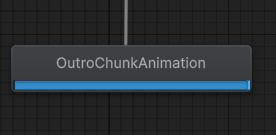
So I'm trying to do some sequential logic with the animator and I'm wondering how I'd go about checking that this clip here has ended in my script. Usually I just estimate the clip time, but I feel like I can just poll the value in the animator but I'm not sure what methods I should be calling.
 rigid island
latent latch
https://i.imgur.com/mSEdpa8.png
So I'm trying to do some sequential logic with t...
rigid island
latent latch
https://i.imgur.com/mSEdpa8.png
So I'm trying to do some sequential logic with t...
I usually use inside update the AnimationStateInfo .IsName
polar marten
latent latch
https://i.imgur.com/mSEdpa8.png
So I'm trying to do some sequential logic with t...
your best bet is to use animation events, because they are guaranteed to fire
rigid island
not true
latent latch
I dont want to do callbacks
rigid island
animation event can get skipped if the transition is too early
latent latch
also yeah not always true if it gets interupted
polar marten
i think unfortunately this is the way it works
rigid island
your best bet tbh is probably the AnimationExit state on the animator
polar marten
latent latch
also yeah not always true if it gets interupted
for this sort of thing you'd set the event in the beginning
rigid island
latent latch
events could work here and it's probably fine, but I rather poll it instead of wait for a callback
polar marten
i believe it might have default end and start events anyway? i don't think it's supposed to be this cantankerous
well you can definitely poll the animation state
this only really breaks if you are in the rare circumstance where more than one animation state update occurs before an Update, such as with physics catch up.
does that evern happen? i don't think so
but in theory it can
the events are always correct
latent latch
https://docs.unity3d.com/6000.0/Documentation/ScriptReference/AnimatorStateInfo-normalizedTime.html
Probably this with IsName is the idea
 polar marten
hmm i can't emoji react to nav's thing but OnStateExit is indeed the built in event
latent latch
I have trust issues with the animator stuff. I don't trust any of the logic executing gracefully and always worry about soft-locking by doing anything sequential
rigid island
yeah its a weird component. At the end of the day is just a FSM
 lament lotus
I’m trying to make an object act one way when it touches on object, and then acts a different way when it touches a different object
I’m making a flappy bird-like game, and no matter what object the bird touches, it dies
latent latch
rigid island
yeah its a weird component. At the end of the day is just a FSM
FSM where you can be in multiple states at once which complicates things
 split junco
What to do when your script doesn't "update" in Unity. Like I made some changes in the script and there are no errors. But when I "run" it, Unity still prints out Debug.logs that I removed.
latent latch
lament lotus
I’m making a flappy bird-like game, and no matter what object the bird touches, ...
Take a look into your current damage script and see how it's affecting the unit that's touching it. You'll need to somehow differentiate between what does damage and what does something else, so preferably make another script with similar logic, but alter the previous damage functionality
latent latch
split junco
What to do when your script doesn't "update" in Unity. Like I made some changes ...
You probably have compile errors and still using the previous compiled version
split junco
latent latch
You probably have compile errors and still using the previous compiled version
I don't.


See line 24 has a different Debug.log
rigid island
latent latch
FSM where you can be in multiple states at once which complicates things
only through layers though right ?
 somber nacelle
split junco
somber nacelle
split junco
make sure that you've actually saved the code and that you haven't done something silly like turn off the automatic asset import
rigid island
split junco
See line 24 has a different Debug.log
is this the same script ?
latent latch
Hmm, couldn't say but perhaps this script isn't the current linked script unity is using
split junco
rigid island
is this the same script ?
Yes. See the Pic. It points to the same script.
rigid island
split junco
Yes. See the Pic. It points to the same script.
I cant see the script name in the image of Rider
split junco
Here's the bigger picture of the same script
 somber nacelle
split junco
Yes. See the Pic. It points to the same script.
somber nacelle
split junco
Yes. See the Pic. It points to the same script.
there is no evidence in the screenshots that suggest it is the same file
split junco
Uploaded a different pic.
 vestal arch
make sure you've saved and recompiled
 wintry crescent
why oh why can I not declare things like that? It says that member with the same signature is already declared
 vestal arch
wintry crescent
why oh why can I not declare things like that? It says that member with the same...
vestal arch
wintry crescent
why oh why can I not declare things like that? It says that member with the same...
what if T implements both interfaces?
somber nacelle
because they have the same signature, the parameter name doesn't really matter with regards to the signature
vestal arch
those signatures aren't exclusive
vestal arch
somber nacelle
because they have the same signature, the parameter name doesn't really matter w...
(they have different generic constraints)
wintry crescent
vestal arch
what if `T` implements both interfaces?
why does this work, then?
 somber nacelle
because the paramter types are different
and therefore they have a different signature
rigid island
ones IEvent and one is ICommand
somber nacelle
no because the paramter types are literally different
vestal arch
 so which one is called if passed a type that implements both interfaces?
latent latch
So the constraints here dont matter? Still the same signature?
wintry crescent
rigid island
ones IEvent and one is ICommand
oh yea it was meant to be T lmao
aaand now it doesn't work as well
goddamnit
 hollow ridge
why is there no way to get the velocity of a rigidbody2D before a collision?
like I know theres collision.relativeVelocity but I don't want the relative velocity i want the actual velocity!
honestly a little maddening how restrictive unity can be with its physics system
somber nacelle
latent latch
So the constraints here dont matter? Still the same signature?
correct, the generic constraints aren't really considered part of the method's signature
split junco
rigid island
make another change and save again
Here's the video.
rigid island
split junco
Here's the video.
I see domain reloaded on play but I dont see anything compiled after you saved?
split junco
Really dumb question: Usually Unity autocompiles but how do I compile by myself?
rigid island
its on by default
does Rider not show the Green lines like VS when something is saved vs Yellow unsaved ?
split junco
It has that asterisk on the file name. That shows it's saved or unsaved.
latent latch
you can turn on auto compile on play, but I would suggest to keep it on anyway because you want the editor to also update between changes
rigid island
anyway I would check if somehow your autocompile is off
split junco
latent latch
you can turn on auto compile on play, but I would suggest to keep it on anyway b...
Is this in the player settings? Where do I find this?
split junco
rigid island
anyway I would check if somehow your autocompile is off
Where would I check this?
somber nacelle
vestal arch
<:thonk:638524515797827633> so which one is called if passed a type that impleme...
it's a compile error about an ambiguous call, so it will basically force you to cast to the type so it calls the specific method you want
https://dotnetfiddle.net/NQXQP1
vestal arch
@wintry crescent generics in methods are meant to link parameters together, or parameters with the return type
you're only using T once there, so it's not super useful
just use Action<IEvent>/Action<IProcedure> directly
vestal arch
somber nacelle
it's a compile error about an ambiguous call, so it will basically force you to ...
yeah i just tested lol 🫠
but thx for confirming
rigid island
split junco
Where would I check this?
Edit | Preferences | Asset Pipeline | Auto Refresh)
split junco
rigid island
Edit | Preferences | Asset Pipeline | Auto Refresh)
Thank you. But this was enabled by default.

Sigh.
latent latch
oh it's in asset pipeline now wtf
rigid island
split junco
Sigh.
maybe check its not disabled in Rider?
Languages & Frameworks | Unity Engine
 naive swallow
I have a custom Flags enum and I find myself using this pattern a lot to set or unset a flag based off of a boolean, is there a better way to do this? This feels kinda... smellly.
bool isInSlice = HorizontalSliceView.instance.ContainedInSlice(rendVis.rend);
if (isInSlice) rendVis.hideReasons &= ~RenderVisibility.HideReason.OUT_OF_SLICE;
else rendVis.hideReasons |= RenderVisibility.HideReason.OUT_OF_SLICE;
This feels like I should be able to do some sort of ternary but I can't really figure out how without making it worse
split junco
rigid island
maybe check its not disabled in Rider?
Languages & Frameworks | Unity Engine
Appreciate your help here but no luck. It's enabled over there too.
 vestal arch
naive swallow
I have a custom `Flags` enum and I find myself using this pattern a lot to set o...
vestal arch
naive swallow
I have a custom `Flags` enum and I find myself using this pattern a lot to set o...
if you're using the pattern a lot, why not extract it to a method?
naive swallow
vestal arch
if you're using the pattern a lot, why not extract it to a method?
I could, but I still feel like it could be done better
vestal arch
the conditional changes the operator, i don't think you can cleanly make that a ternary, you'd have to repeat the operands
 unique delta
I have a foreach loop, which I want to be paused until smh happens. If i use an if statment with a bool, after the bool is true the loop starts over. I want the loop to continue from where it s been paused.
unique delta
naive swallow
Coroutine
I tried setting a infinite timer and when I change the int from the wait until into an smaller amount it just breaks.
naive swallow
unique delta
I tried setting a infinite timer and when I change the int from the wait until i...
I have no idea what you mean by this, but it sounds like you did something entirely different than what I suggested
vestal arch
can you show what exactly you did there? "it just breaks" doesn't give us any info to work with
unique delta
vestal arch
can you show what exactly you did there? "it just breaks" doesn't give us any in...
it stops
 dawn void
I've always wondered what the best practice for handling time limited actions in games are.
Like if I'm making a cooldown for my dash ability, it would probably e better to just store the Time.time
when you dash and then next time you click the dash button it compares that time to the current. as opposed
to making a timer that adds Time.deltaTime and so on.
But are there any scenario where making a timer is more effective? :3
naive swallow
unique delta
I tried setting a infinite timer and when I change the int from the wait until i...
I didn't have potatoes
So I substituted rice.
I didn't have paprika
So I used another spice.I didn't have tomato sauce;
I used tomato paste,
A whole can, not a half can;
I don't believe in waste.A friend gave me the recipe.
She said you couldn't beat it.
There must be something wrong with her.
I couldn't even eat it.
unique delta
naive swallow
> I didn't have potatoes
> So I substituted rice.
> I didn't have paprika
> So I...
what should this prove
naive swallow
unique delta
what should this prove
I suggested a coroutine with a WaitUntil, you said something about infinite timers?
That's not what I suggested at all
unique delta
naive swallow
I suggested a coroutine with a `WaitUntil`, you said something about infinite ti...
i meant setting the int to very high integer
naive swallow
I have no idea what "int" you are even talking about
Nothing in my suggestion involves any sort of ints
split junco
unique delta
i meant setting the int to very high integer
Paste the code?
somber nacelle
naive swallow
I have a custom `Flags` enum and I find myself using this pattern a lot to set o...
best I can come up with is extension methods that add/remove that flag. or if you're using all flags but swapping those you could just use a flag that includes all and one that includes all but that specific one. either option should work with a ternary (the extension method would obviously require you to return the modified enum)
split junco
naive swallow
I suggested a coroutine with a `WaitUntil`, you said something about infinite ti...
Curious about this. How often does the compiler check if the condition is satisfied in WaitUntil?
vestal arch
somber nacelle
best I can come up with is extension methods that add/remove that flag. or if yo...
if you had a non-extension method, could you use a ref param for the enum?
vestal arch
split junco
Curious about this. How often does the compiler check if the condition is satisf...
every frame
naive swallow
split junco
Curious about this. How often does the compiler check if the condition is satisf...
Every frame, like every other yield instruction
split junco
Wow. Isn't that expensive?
vestal arch
no, computers are really fast
naive swallow
split junco
Wow. Isn't that expensive?
If you had four billion coroutines running, you would see an extra second of load time
vestal arch
WaitWhile and WaitUntil are shorthand for while (cond) yield return null; and while (!cond) yield return null;
somber nacelle
vestal arch
if you had a non-extension method, could you use a `ref` param for the enum?
probably, but then you likely wouldn't be returning the modified value because what would be the point if you are referring directly to the variable so it wouldn't work with a ternary which would mean the full if/else
vestal arch
couldn't you have something like SetFlag(ref T bitfield, T flag, bool condition) for some T appropriate for the enum
and then the logic would be inside the method, no need for a ternary at the call site
naive swallow
At this point, it looks like any way to simplify this is rapidly making it worse
somber nacelle
sure, you can accomplish the same thing with an extension method too
vestal arch
you can modify this there?
somber nacelle
well you would return it, but yes
vestal arch
could you possibly not reference the bitfield twice with an extension method?
somber nacelle
what do you mean? 🤔
public static class EnumExtension
{
  public static T SetFlag(this T toModify, T flag, bool condition) where T : Enum { /* logic */ }
}
it's basically the same as your idea, but instead of ref it just returns the modified enum
vestal arch
with that you'd have to do bitfield = bitfield.SetFlag(flag, cond);, no?
somber nacelle
yes. which is a common thing to do with value types. but ref works too, it really just depends on what you would prefer
vestal arch
yeah just asking out of curiosity
somber nacelle
although ref does not work for properties, so the extension method would be useful in more cases
polar marten
haha
...(this ref T flags, T flag, ...) where T : struct, Enum {
...
   flags = (T)(object)((int)(object)flags | (int)(object)flag);
something like that
 split junco
rigid island
maybe check its not disabled in Rider?
Languages & Frameworks | Unity Engine
split junco
rigid island
maybe check its not disabled in Rider?
Languages & Frameworks | Unity Engine
Figured out that it was basically a bug with Jetbrains. Restarted it and it's fixed now.
 magic tusk
I want to notify the user when they don't have connection, I have two methods in mind
- I have everything go through some kind of internet related abstraction and notify the user in case of a failure
- I just run like a 5 second timer that runs some kind of ping
(picture related to first method)

I understand that in a perfect world the first option would happen, but what are arguments for and against either method?
and if there are better ones that would be better!
 leaden ice
magic tusk
I want to notify the user when they don't have connection, I have two methods in...
leaden ice
magic tusk
I want to notify the user when they don't have connection, I have two methods in...
Something like:
- every 5 seconds make a simple test request to the server
- After 3 failures, enter "BAD" state and notify the user something is wrong
- After 1 success, return to "OK" state.
vestal arch
magic tusk
I want to notify the user when they don't have connection, I have two methods in...
number 2 is called a heartbeat
magic tusk
leaden ice
Something like:
- every 5 seconds make a simple test request to the server
- Aft...
I see, this is similar to my second option
however, what if I had something like cloud saves and there was a drop in connection? My concern is that the user could silently not update cloud save
vestal arch
if your game inherently uses the internet, you should still probably check for a connection even if nothing's actively using it
(hence the heartbeat; it's a check for an active connection)
leaden ice
magic tusk
I see, this is similar to my second option
however, what if I had something like...
Whether that's silent or not depends on whether you tell the user or not that the cloud save update failed.
That's kinda separate from the "heartbeat" thing
magic tusk
right, thanks
 pulsar plinth
so I'm learning how to create Unity menus and I've made a serializable class called RectCollisionMask, which inherits from CollisionMask
RectCollisionMask has its own properties which, inside an OnGui() function inside a PropertyDrawer class, can be accessed through the SerializedProperty.FindPropertyRelative() function, however its derived properties such as Position can't be found through it.
HOLD UP, I just put the incorrect names
 fallen hatch
I'm having a real issue in my script, so may a kind and gentle unity netcode user help me?
somber nacelle
fallen hatch
I'm having a real issue in my script, so may a kind and gentle unity netcode use...
#archived-networking
but also !ask 👇
 tawny elkBOT
:thinking: Asking Questions
:mag: Search the internet for your question!
:book: Use the API Scripting Reference and User Manual and this troubleshooting site for commonly posted issues.
:wrench: Attempt to debug your issue.
:thought_balloon: Find an appropriate channel by reading the name and description in #🔎┃find-a-channel
:grey_question: And don't ask to ask, ask a full question illustrating with screenshots if needed.
-# For more posting guidelines, go to #854851968446365696
fallen hatch
so I have a first script assisgned to a game object synchronized via network object, it rreferences the variables for the names displayed on a leaderboard

everyone is getting a tag when spawning so this works very well (the owner of the server which is the first one to spawn will always get the tag 1, and the cients 2, 3 and 4 in order)

So the owner (with tag 1) is able to change the network variables

as he is the owner of the server
leaden ice
This is really a #archived-networking question as Box mentioned...
 hexed pecan
vestal arch
if you're using the pattern a lot, why not extract it to a method?
hexed pecan
vestal arch
if you're using the pattern a lot, why not extract it to a method?
If you mean a generic method for enums, annoyingly generic support for enums is pretty badcs where T : System.Enum
This constraint doesn't really give you anything useful
Oops necropost
latent latch
speaking of enums, I've been in situations wanting to extend enums, but can't really do with that c#. Best case is remaking the enum and point the previous values at it, but that's not workable with the editor serialization
ten buck says odin fixes that issue
 still jungle
some source code generation Enum would be expandable but it would be up to you to implement it and show in inspector
 stray quiver
Excuse me, guys, I want to ask if anyone has experienced rendering a texture with post processing enabled but it's not transparent in Unity URP? If you know the solution, how can I make it transparent?
I'm currently using Unity 6
somber nacelle
this is a code channel
polar marten
latent latch
speaking of enums, I've been in situations wanting to extend enums, but can't re...
imo, just don't use them
they are a code smell
 modern creek
I have an animator controller that has .. a bunch of ways to call "move" and "idle" via SetTrigger("Idle") or SetTrigger("Move"). Move loops until it gets an idle call.
Somehow I have a situation where there's a move but it fails to loop, and I'm having some trouble debugging it. Is there a way to see what triggers are currently set on an animator controller..?
vestal arch
just open the animator pane
triggers only last for 1 frame though. they're bools that automatically turn off
so you'll only see it active for that 1 frame
polar marten
i mean precisely for the reason mao has described. the way they interact with unity is also kind of radioactive
vestal arch
(or until it's consumed? not sure)
polar marten
they are serialized by value, which is implied when it's only declare by field order without values, and that's never what you want or meant
they can't be added to easily for other reasons
modern creek
hm.. I cannot figure out why this one particular trigger isn't looping in this very specific situation..
polar marten
you are almost always using them as sealed interfaces
vestal arch
check the animator pane to debug in general, see where it's stuck/looping
polar marten
aka states. they kind of make sense for options, but you might as well just use a bool.
modern creek
vestal arch
check the animator pane to debug in general, see where it's stuck/looping
Not sure what you're meaning - my animator pane just shows the state machine I've set up.. but doesn't (at least I don't think?) show the state at runtime:

bit more zoomed in:

and the code I'm moving the toon around with
        public virtual IEnumerator MoveCoroutine(List<HexPoint> path, Action moveDoneCallback)
        {
            EntityAnimator.SetTrigger("Move");
            Sequence _moveSequence = DOTween.Sequence();
            _autoCompleteSequences.Add(_moveSequence);
            float timeStamp = 0f;
            foreach (HexPoint p in path)
            {
                Vector3 moveTo = p.WorldPosition;
                _moveSequence.Insert(timeStamp, EntityMesh.transform.DOLookAt(moveTo, UnitRotationTime).SetEase(Ease.InOutCirc));
                _moveSequence.Insert(timeStamp, transform.DOMove(moveTo, MovementTime).SetEase(Ease.Linear));
                timeStamp += MovementTime;
            }

            _moveSequence.AppendCallback(() => EntityAnimator.SetTrigger("Idle"));
            _moveSequence.AppendInterval(UnitDelayAfterMovementTime);
            _moveSequence.OnComplete(() => CompleteSequence(_moveSequence, moveDoneCallback));
            _moveSequence.Play();
            yield return _moveSequence.WaitForCompletion();
        }
(I snipped out some logging, but at runtime it's properly calling the triggers for move and idle)
vestal arch
modern creek
have you selected the object the relevant animator is on? rather than the animator controller asset
modern creek
lemme double check - i may have selected the prefab
ah, i had - ok, this might be helpful but .. maybe not, I just see a blue bar rotating under the state I care about (ie, I can see it's going from move -> idle, but I can't really tell why)
oh interesting.... if I click on "move" in the animator it just zips back to idle after one iteration
vestal arch
modern creek
ah, i had - ok, this might be helpful but .. maybe not, I just see a blue bar ro...
well, that at least means you've selected a gameobject, you should be able to see the triggers now
though they'll just flash up as mentioned before
modern creek
hmm.. the weird thing is I'm not mucking with the transitions at runtime or anything like that
vestal arch
modern creek
oh interesting.... if I click on "move" in the animator it just zips back to idl...
well, check your conditions
 vestal arch
yes
modern creek
hm.. i might be at my expertise limit - someone else did this controller - but it looks like the other meshes in my game.. in fact it looks like none of these should work since they all go from move -> move out -> idle
 eager fulcrum
Hey, so I have a simple animator controller, with one 2D blend tree with animations for my 3d human.
I want to "task" animations (like sawing, throwing, fishing) etc to that, and I want to either play them by name or by id or something else. How can this be done? After the task is finished I want to go back to original blend tree
vestal arch
eager fulcrum
Hey, so I have a simple animator controller, with one 2D blend tree with animati...
probably want to ask #🏃┃animation about this
latent latch
By using the blend tree
vestal arch
modern creek
hm.. i might be at my expertise limit - someone else did this controller - but i...
at this point i think #🏃┃animation would be more appropriate for this issue as well; if it's a code issue, it'll be related to the animation system anyways
modern creek
Aight, this is still a good lead, thanks.
I suspect that I might be setting some of these triggers wrong. In any case.. more detective-ery
Oh, maybe one more question - sometimes I set the trigger ("Idle") and it stays, other times it disappears. Is this normal functionality?
vestal arch
it's reset automatically when consumed by a transition
modern creek
but not when looping on itself already, right? that's it
If I'm in "Idle" and I set the trigger - then trigger "move", the idle trigger doesn't get consumed until looping once on move.. so that's what's causing it to get "late set"
 somber tapir
Will this work in a ScriptableObject or will it cause trouble in a build?
 somber nacelle
provided you aren't trying to access that anywhere in a build it would be just fine. and the only reason it wouldn't be fine to access it in a build is because that field simply won't exist in a build
 calm echo
!code
tawny elkBOT

Posting code
📃 Large Code Blocks
Use links to services like:
https://paste.mod.gg/, https://hastebin.skyra.pw/, https://paste.ofcode.org/, https://paste.myst.rs/, https://scriptbin.xyz/
📃 Inline Code
Surround code with three backquotes. Not quotation marks.
To format as C#, add cs to the first line:
```cs
// Your code here
```
Add a comment with a line number if there is an error message.
 hushed pawn
So I'm adding new things to a Scroll View's Content child object, they do show up in the Hierarchy. Content has a Vertical Layout Group and a Content Size Fitter component so it should be updating its size based on its children but that doesn't seem to happen unless I manually go into the Hierarchy and duplicate one of those existing objects. So in other words, the Content's Content Size Fitter doesn't update when I add things from code. I've tried Canvas.ForceUpdateCanvases(); and LayoutBuilder.ForceRebuildLayoutImmediate(grandparent), and disabling/enabling the VerticalLayoutGroup component on Content. Any ideas for what to try?
 cold parrot
hushed pawn
So I'm adding new things to a Scroll View's Content child object, they do show u...
cold parrot
hushed pawn
So I'm adding new things to a Scroll View's Content child object, they do show u...
Disable/enable triggers the rebuild, same as using LayoutRebuilder. But likely your layout group is interfering with the fitter. You only have to manually trigger re-layout if you have layout groups that interfere with each other on the same axis.
hushed pawn
That makes some sense as there are Scroll Views nested inside another Scroll View. And the top level Scroll View has a Vertical Layout Group also
But, problem is, that doesn't work. Rebuilding the layout doesn't resize the Content objects.
I can provide a video in the form of a gif if that's helpful.
 lapis spade
can i show off what ive learnt here over the course of a month? or would that count as a showcase or something?
either way, unitys been really fun so far!
vestal arch
lapis spade
can i show off what ive learnt here over the course of a month? or would that co...
might want to use #1180170818983051344 for that
hushed pawn
hushed pawn
I can provide a video in the form of a gif if that's helpful.
Said gif. Showing that there's nested ScrollViews with Content Size Fitters and Vertical Layout Groups on the Content of each scroll view. When I move an object between inventories, they are created in the Hierarchy, but are unable to be displayed due to the Content not resizing correctly. Just unsure of how to resolve this, everything I've tried hasn't worked.

 hexed pivot
hello! not sure if this is the right channel, but im trying to query lobbies using their service web api, but when i make the request i get an error asking me for a service-id header? don't see anywhere that mentions it in the docs, ive tried my service account key and secret key but then just get an internal server error when i try anything, anyone got any ideas?
hushed pawn
hushed pawn
Said gif. Showing that there's nested ScrollViews with Content Size Fitters and ...
I fixed it by removing the ContentSizeFitter and just manually set the Content's size.
leaden ice
hexed pivot
hello! not sure if this is the right channel, but im trying to query lobbies usi...
query lobbies using what service web api?
Provide some context please about which APi you're talkin gabout and the details of how you're doing it
hexed pivot
leaden ice
Provide some context please about which APi you're talkin gabout and the details...
Sure, I’m using Unity’s Service Web API, specifically the Lobby v1 endpoint. For the request the docs says I need a Bearer auth token to make the request, so im getting it with a service account through the Authentication Token Exchange API, which seems to be working fine. When I make the query request with the bearer token I get an error back saying I’m missing the service-id header, which I don’t see anywhere on the docs that mention that
Here’s the link to the docs: https://services.docs.unity.com/lobby/
leaden ice
hexed pivot
Sure, I’m using Unity’s Service Web API, specifically the Lobby v1 endpoint. For...
Are they talking about this?
https://services.docs.unity.com/docs/service-account-auth/index.html#authenticate-an-api-using-service-account-credentials
Admin APIs allow you to access and configure Unity Services as an administrator. To authenticate admin APIs, you must create and use service accounts.
hexed pivot
leaden ice
Are they talking about this?
https://services.docs.unity.com/docs/service-accoun...
what part of it? I already give the stateless token i get from the token exchange in the header for the query request, i know its working because i removed that header and it had given me a different error, the service-id header seems to be a different one entirely
leaden ice
hexed pivot
what part of it? I already give the stateless token i get from the token exchang...
the service account credentials part
not sure if the link went to it
hexed pivot
ah i see what part your talkin about, that should be what the token is for but i guess i haven't tried the Base64 encoding for my key and secret key yet in the service-id header, ill give it shot tommorow morning
 fallen pasture
https://play.google.com/store/apps/details?id=com.agrebennicov.swapnsort Hi everyone, is there a tutorial on how to make a game like this? Because I have trouble stacking tiles when making this game.

Slide, swap, and match your way through vibrant puzzles!. Play now!
latent latch
Is this like tetris
Looks like you'll need a grid regardless
Time to learn 2D arrays
calm echo
hushed pawn
I fixed it by removing the ContentSizeFitter and just manually set the Content's...
Something in your setup was incorrect. Likely you needed to have the parent control child w/h on
If you show your setup I can point out the issue
I made this using that concept.
It utilizes content size fitters and layouts
 upper pilot
How do I make multiple sprites clickable as 1 sprite?
Ideally if it worked with world space canvas/UI, but I can try other things.
Basically I have a map which has a name tag(world space canvas UI) + some sprites(regular 2d sprites) for specific area of the map.
I want a player to click on the area(like trees/rock/building) to interact with it, right now I made it work with name tag since it's a canvas so I can detect mouse clicks easily.
But those areas consist of multiple smaller sprites and attaching "onclick" even of any sort to all sub sprites seems like a lot of unnecessary work.
 kind willow
I don't get the exact issue but you can mark any image as non raycast target and you can add transparent sprites of any shape to be clickable
upper pilot
kind willow
I don't get the exact issue but you can mark any image as non raycast target and...
But that would require me to draw a sprite in a shape that matches what I need right?
Is there a way to take current sprites and create some sort of a collider that matches all sprites combined?
somber nacelle
upper pilot
Or another way:
Can I detect a sprite with a mouse?
If yes, can I detect multiple sprites with a mouse as if they were 1 sprite?
My current solution is to simply place a collider/UI on top of my sprites
Thanks, earlier I thought that this is meant for something else, but this seems exactly like what I need based on the description 😄
 warm badger
I have script with IPointerDownHandler. I wanted to avoid the touch or pointer to work when the touch is over another UI, i found i needed to use EventSystem.current.IsPointerOverGameObject...but fortunately i found that if I put any UI element under the gameobject the script is attached to(in hierarchy order), the UI will work as a blockage....i was happy...but my main project is in unity 2021.3...in this 2021.3, this doesn't work..meaning if i touch over that UI which i put below the script's gameobject, the script still works(i.e. the pointer is being recognized)....qhy it is different in 2021.3.? is there no way other than using EventSystem.current.IsPointerOverGameObject?
 trim schooner
If you don't need to interact with the UI, disbale the raycasting on either each individual element, or all of it
warm badger
trim schooner
If you don't need to interact with the UI, disbale the raycasting on either each...
maybe i couldn't make it clear...actually i have a button on the screen...i dont want the IPointerDownHandler script to work when i am touching on that button...i just want that to work when i touch where there is no UI on the screen...In unity 6, when i put a UI element(panel is my case) under the script's gameobject(hierarchy order), touching on anything wwhich is under the panel...the touch doesn't work...I want this, i dont want it to work when i touch over any UI...but in unity 2021.3, even if i do the same, the script still works touching on any UI element
hushed pawn
calm echo
I made this using that concept.
It utilizes content size fitters and layouts
Its fine now, I fixed it another way. Thanks for the offer to help anyway.
 still ermine
trim schooner
If you don't need to interact with the UI, disbale the raycasting on either each...
still ermine
trim schooner
If you don't need to interact with the UI, disbale the raycasting on either each...
a lot of people are saying this
warm badger
warm badger
maybe i couldn't make it clear...actually i have a button on the screen...i dont...
any help on this?
 covert dust
Okay, this is probably gonna be real stupid.
I have a TextMeshPro object and on it a Content Size Fitter component so that the UI element resizes to take up exactly the amount of space the text element wants. What's the least pain in the ass way to have an UI image object resize itself to act as background for the dynamic text?
I tried parenting the image to the text and making it stretch to fit, but unfortunately that forces the image to render in front of text. Kinda wacky that I don't get to manually set render order in this simple scenario.
hushed pawn
covert dust
Okay, this is probably gonna be real stupid.
I have a TextMeshPro object and on...
Other way around? Make the image the parent of the text?
covert dust
And then what?
how do I make the image follow the dimensions of the text element without having to hack that in? Or do I have to?
hushed pawn
Set the text to expand, the size fitter should make the image expand which will make the text also expand.
But you want the actual text to decide the size of the element. Hmm. Probably gonna have to make your own thing then.
covert dust
Sheesh
I'd imagine a dynamic size label isn't a rare use case
weird to see it being completely unaccounted for
 wicked scroll
covert dust
wicked scroll
covert dust
let's try
covert dust
wicked scroll
does this help?
https://docs.unity3d.com/Packages/com.unity.ugui@1.0/manual/HOWT...
yes, thanks
hexed pivot
leaden ice
the service account credentials part
I tried using the encoding for the service account's key and secret key in the service-id header same error "Internal Server Error"
calm echo
covert dust
Okay, this is probably gonna be real stupid.
I have a TextMeshPro object and on...
Make the image a sibling of the text with a layout element that has ignore layout, and then set the anchors to fill the space
 thick sinew
Anyone happen to know if its possible to use vscode with unity and have workspaces not break the relationship between the applications?
leaden ice
hexed pivot
I tried using the encoding for the service account's key and secret key in the s...
That sounds like a different error
 prime lintel
Im a little puzzled as to how I can have a stack overflow when setting a bool member of an object in my dictionary.

What have I done wrong to cause this?
leaden ice
prime lintel
Im a little puzzled as to how I can have a stack overflow when setting a bool me...
Show the full stack trace
That's a red herring

 leaden ice
prime lintel
leaden ice
prime lintel
looks like UpdateMobTracking is calling itself recursively
You have an infinite recursion
probably on line 139 there?
 violet nymph
Anybody know any good methods on making a grid snap system for objects of all sizes (1x1x1, 1x2x1, 2x2x2, 1x2x2, so on, just any sizes that are "stable", no halfs or anything?
Additional information on what I would like: A placement system where you can place objects on any sides of an object, it will snap to the closest 1x1x1 grid (as that's the smallest block I will have), for objects like 2x2x2, you could fit 8 1x1x1 in the same space, you won't be able to place objects inside each other (I know how to do this part, just not the snapping and such), this will be in VR, so it will need to be optimized as well (Which is why I mention below the method I said wouldn't be performant, as it requires being performant for VR on standalone quest 2 and up), if you need additional information, just ask any questions, and i'll answer them, as this is the best I can do to explain it.
The only method I can think of is using cubes as snapping points, but, it wouldn't be performant, and not very dynamic/easy to add onto with new blocks and such that players can use to build, it would work I'd assume, but, I would like a better method of doing this, possibly more dynamic than something like snap points would be.
 tepid crane
Hey, im reworking my enemy AI from a jumbled mess of if checks to a state machine. I dont have a lot of experience working with them though and im jumping between tutorials, documentation and forums to figure it out. Currently i have one set up that correctly changes between states when a bool is set to true but i'm confused as how i am to port the existing code to them. If anyone is willing to help i can provide more info with screenshots and some more explanation.
here are some for now:


Im just not sure where its best to put the behaviour and references for NavMeshAgent, the animator and such
right now im thinking a GetComponentInParent in each state but im not sure if thats the correct way to do it
 burnt briar
tepid crane
Hey, im reworking my enemy AI from a jumbled mess of if checks to a state machin...
burnt briar
tepid crane
Hey, im reworking my enemy AI from a jumbled mess of if checks to a state machin...
Use Enums for the states. Will help you clean up and also make logic better. So lets say, you want the AI to patrol, chase, escape, attack. Instead of bools, the enum will clearly define what the AI has to do so and you will no longer have to worry about multiple bools etc.
tepid crane
oh, well i have even less experience with enums tbh so im guessing its going to be a long night
leaden ice
enums are super simple
burnt briar
enums are easy. They are like named ints but you can easily understand them as they will be in english instead of remembering what a number means.
tepid crane
could you provide a simple example so that i have a place to start understanding how i would implement it?
burnt briar
Unity Learn
Enumerations allow you to create a collection of related constants. In this video you will learn how to declare and use enumerations in your code. This tutorial is included in the Beginner Scripting project. Previous: Invoke Next: Switch Statements
1 min work at most
tepid crane
alright going to check that out, ill be back if i have trouble
alright i think i understand the basis now but how would they help in this problem?
burnt briar
Instead of checking multiple booleans, you will only need to take care of a boolean. It will remove logical errors as your state will be clearly defined. Nobody likes 10+ bools to handled and checked so that you reach a particular state.
Improves readability of the state machine in code and in inspector as it will be a single item on inspector instead of X number of bools.
polar marten
tepid crane
Hey, im reworking my enemy AI from a jumbled mess of if checks to a state machin...
you might prefer to use a "behavior tree" asset to help with this stuff
polar marten
violet nymph
Anybody know any good methods on making a grid snap system for objects of all si...
what kind of game are you making? most of the work isn't in aligning items to a grid, a chatbot can do that for you, it's the subjective decisions about how you are supposed to interact with it
violet nymph
polar marten
what kind of game are you making? most of the work isn't in aligning items to a ...
Well the part of the game I want help with, is the building, players will be able to place blocks on top of each other, on the sides of them, etc, build maps and so on, it's vr, so you just grab blocks and place them down somewhere and it will snap to the nearest block on the faces dependent on the size of the object so you can place 4 1x1x1 on a side of a 2x2x2 block, so on for other blocks
tepid crane
burnt briar
Instead of checking multiple booleans, you will only need to take care of a bool...
alright i think i get it now, i will also look into that behaviour tree asset to see if it helps, thanks a lot people!
violet nymph
polar marten
what kind of game are you making? most of the work isn't in aligning items to a ...
I got a "base" done, but, it goes to the corners of the object, rather than on a 1x1x1 grid on the object faces
I'm not sure how to go any further, it basically subdivides it based on a 0.25 (the scale of a 1x1x1), so a 2x2x2 is a size of 1, which 1/0.25 is 4, so 4 new faces you can place on the centres of
polar marten
violet nymph
Well the part of the game I want help with, is the building, players will be abl...
"just grab blocks"
violet nymph
polar marten
"just grab blocks"
Essentially, and place them down
It's just building
polar marten
you are describing something that takes weeks of work to develop
so i am eager to help lol
tepid crane
burnt briar
Instead of checking multiple booleans, you will only need to take care of a bool...
one small thing, while all that helps with cleaning up the states and such, i still dont know how to implement the logic and behaviour of each state, along with the references to the other components
violet nymph
polar marten
you are describing something that takes weeks of work to develop
Well, yes, I want to make something good, to improve my skills along with making a fun game out of it
polar marten
violet nymph
Well, yes, I want to make something good, to improve my skills along with making...
i think start small and try to get something that works with 1x1x1 blocks, all of the same size, at whatever scale.
don't get hung up on the multiple sizes of blocks. try to get the interaction right
you have to make decisions like rendering a ghost object, when to snap versus when to magnetize to the user's hand, etc.
violet nymph
polar marten
i think start small and try to get something that works with 1x1x1 blocks, all o...
So first try to make building on top of 1x1x1, then, after that, work on making it function for bigger sized blocks?
violet nymph
I'd say I can orientate based on their controller orientation
polar marten
violet nymph
I'd say I can orientate based on their controller orientation
well
there are like 5 generations of AR/XR featuresets in Unity
so you have to make a decision about which one to adopt
you have to decide how to use input system, whether or not to use tracked pose drivers, etc.
all the interaction stuff is much harder and much more subjective
violet nymph
I'm just using Oculus for the vr side, and xr interaction manager for interactions
I already understand interactions
I have a good understanding on how to grab blocks and so on, but, not placing them
polar marten
okay well, should i hold a controller button in order to hold a cube? how close should my hand be to a cube to move it? can i move it after it has been placed? how do i highlight that, when there could be a "deep" number of objects? etc. etc.
polar marten
violet nymph
I have a good understanding on how to grab blocks and so on, but, not placing th...
well. i am trying to say that placing them is straightforward. it's Mathf.Floor on the transform.position dimensions.
the hard part is having an opinion ahead of time about how all the interactions should work. because they are all going to be very tightly coupled together
interactions in the sense of, like where do the blocks come from? what if you want to use two hands at the same time to build? can you do that? does the orientation of the controller allow you to set the orientation of the block? is that going to appear in the ghost that is pinned to a grid position? etc. etc.
there's so many questions
violet nymph
I would just do them based on controller binds, such as grip to pick them up, you can pick them up after placing, your hand needs to be in a small distance from the closest point to bounds, then you grip, and it will pick it up, go smaller in your hand, then you can throw it again to place it somewhere and it will snap
polar marten
throw it?
violet nymph
Blocks would be purchased from an inventory sort of thing
Yeah, you could either place it normally, or just throw it, wherever it lands, it will calculate the snapping point
polar marten
it's going to take you like 3 days of solid, nonstop work to implement that
polar marten
because all the interactions are very tightly coupled
violet nymph
It doesn't bother me
polar marten
so you need to write all this stuff up ahead of time
violet nymph
Alright, i'll start planning things so it will all be solid and probably put it in some notes or something on how it will all work
polar marten
i mean it feels like they are decoupled. but if you get rid of the grid system entirely, you see that it's an immense amount of work left over right?
burnt briar
tepid crane
one small thing, while all that helps with cleaning up the states and such, i st...
Have methods/functions. When you enter a state, make a method in which you do whatever you want to do.
So you are in attack state. have a method for attack.
To far to attack player? Go to Chase method where the AI will move itself closer.
polar marten
violet nymph
Yeah, you could either place it normally, or just throw it, wherever it lands, i...
the grid is going to be tightly coupled to the interactions. because this for example - how do you decide when things behave naturalistically versus when they behave in minecraft grid snapping physics?
if you use the word "just" this is going to be hard
you have used the word just like 10 times
violet nymph
polar marten
the grid is going to be tightly coupled to the interactions. because this for ex...
All blocks will be minecraft grid snapping physics, items that aren't blocks will not snap
tepid crane
ok so i have the references i need set in each script state?
polar marten
violet nymph
Alright, i'll start planning things so it will all be solid and probably put it ...
don't worry about optimization
violet nymph
Some blocks will be locked to the base map
violet nymph
polar marten
don't worry about optimization
Yeah, for now, I won't
polar marten
write the simplest possible way you can think of to keep track of blocks. data structures and stuff like that can be revisited later
your interactions for a 3x3x3 building space will not scale up to a 10x10x10, BUT. there IS NO GAME for building 10x10x10 spaces, if that makes sense.
there's a reason there is only 1 minecraft
violet nymph
All blocks will be even sizes, so, you'll be able to place them without any overlapping, I'm not sure what you exactly mean about the spaces and such though
Is it possible to make Mathf.Floor to not go to ints, instead, go to increments of 0.25
Or another method will have to be used
vestal arch
violet nymph
Is it possible to make Mathf.Floor to not go to ints, instead, go to increments ...
Round(x * 4) / 4
violet nymph
vestal arch
`Round(x * 4) / 4`
Alright, thank you
vestal arch
or Floor there would also work
violet nymph
vestal arch
`Round(x * 4) / 4`
Worked perfectly for my use case
I was definitely overthinking everything
burnt briar
tepid crane
ok so i have the references i need set in each script state?
Kinda if i am understanding you correctly. Can you give a example of what your saying so i know more if your saying something correct or wrong?
 vestal arch
violet nymph
I was definitely overthinking everything
vestal arch
violet nymph
I was definitely overthinking everything
a general formula for an increment of inc for an op (round/floor/ceil/trunc) would be op(x / inc) * inc
so you could also write this as Floor/Round(x / 0.25f) * 0.25f
(works for increments both greater and less than 1)
violet nymph
vestal arch
a general formula for an increment of `inc` for an `op` (round/floor/ceil/trunc)...
Yeah, I don't do much math so don't really know those formulas, but, that one works for my case
vestal arch
it's not really a specific formula
just kinda something you can pick up with experience
not really math heavy
the logic being; floor/ceil/trunc/round work on increments of 1, so if you want a different increment, you have to scale that increment to make it 1, then scale it back
violet nymph
Yeah, I'll have to actually look into methods for math, as, I haven't done so yet
polar marten
tepid crane
what is your goal?
polar marten
tepid crane
i think you should use a behavior tree.
this script isn't really a ChaseState. it's part of an Enemy script, which you have spread out onto files that end with *State.cs
which is okay this stuff is kind of hard lol
@tepid crane you should decide what it is you are trying to decouple from what
i mean, what is it that you want to reuse exactly?
or change later?
tepid crane
im trying to phase out the enemy script
polar marten
hmm why though
tepid crane
and replace it with the state machine
for ease of future expansion
so yeah I'm just splitting it into states
polar marten
you're really spreading it out onto files you are calling states
but this is just the same file split up
which is okay
it's okay.
tepid crane
yeah but with a lot less if checks and the ability to change states later
like if i want to have a ranged enemy the idea is i turn up the attack range stat and replace the attack state
polar marten
what kind of game is this?
tepid crane
an fps taking inspiration from cruelty squad
polar marten
are you using an asset or the really nice unity ECS example to set up the fps elements of your game?
polar marten
cool. well i think you have your work cut out for you
fps games follow a lot of tradition.
the enemies are almost all scripted by authoring a bespoke script for each one. i think this is because everything is so tightly coupled
for example a ranged versus melee enemy will move around the world with respect to the player very differently
so they basically do not share anything in common in terms of behavior
burnt briar
tepid crane
Have a manager. When a state is done with its work. It will only inform that it is done. Not what is next.
The manager will decide which state is next and tell that state to start working.
A state should not be informing what is the next state.
This will allow you to have more states and you will not need to go and change code again and again for every new state.
https://gameprogrammingpatterns.com/state.html
This will help you
polar marten
state machines are truthfully kind of a code smell
this is why you basically never see them in any real APIs
and whenever they do appear, they are sort of worthless.
at least in my experience, it has always been, "the name that the programmer assigned to this collection of behaviors isn't any less useless just because it has the string State prefixed to it"
for example, i know you know nothing about grpc connections.
Connecting, Idle, Ready, Transient Failure, Shutdown
what do these states mean? i have bad news for you. the names are terrible. and this was designed by google.
tepid crane
i mean i see it being better than my earlier solution but i don't know how good it is compared to even better ones
polar marten
so you are kind of trying to shove a problem that even a bunch of full time google engineers couldn't get right into your "develop a whole fps game" problem
burnt briar
polar marten
and whenever they do appear, they are sort of worthless.
State machines are used in everything. I don't know where you learned that they are useless.
polar marten
and yeah. i mean, you're here. you're showing a State class that you are calling a State but is really your Enemy script chopped up
tepid crane
chopped up in different states though
polar marten
tepid crane
chopped up in different states though
lol
yes but it hasn't helped you, it has only actually made things harder
this is a subjective opinion
tepid crane
will it not be better later on though?
i truly don't know any better sorry if i sound stupid
polar marten
tepid crane
will it not be better later on though?
i think the attractive part of state machines is when you download a behavior tree asset and you have a little visual interface and stuff
no no you're not stupid at all
it was the right instinct to ask about this
it's smart to have posted an actual bonafide snippet of what you're doing
burnt briar
https://discussions.unity.com/t/is-the-state-machine-pattern-suitable-for-every-game-genre/596054|
https://www.reddit.com/r/gamedev/comments/45nn5i/article_tame_your_game_code_with_state_machines/
Reddit
Explore this post and more from the gamedev community
polar marten
it can help with modeling enemies in platformers
burnt briar
Doc, i think you saying something very wrong in my opinion.
polar marten
it really depends on the game and the goals
burnt briar
It never depends on the game. State machine can be used for almost everything.
A game after all has states. A start, a middle and a end.
polar marten
i'm really saying that almost every way it is implemented does not help people. of course, having an intellectual model of states is useful, but if i were only to talk about the aesthetic/psychic experience of what helps you program, you know, provigil is going to help you more than state machines
i'm just kidding
there can be an objective assessment - most implementations of state machines, including the one that is right in front of us - do not help the people implementing them as an alternative to whatever code they wrote first
the subjective assessment - don't use them at all - yeah. i mean, you shouldn't follow the kind of brain dead tutorials that talk about making csharp state classes or whatever
does csharp even have sealed interfaces? i don't think it does
tepid crane
i dont know half these words tbh
polar marten
lol
it's okay. all i'm saying is that you should probably try a behavior tree asset. especially one that is already focused on FPS games
there's little in common between a melee and ranged enemy in an FPS. you should think very deeply about your expectations for what you will reuse anyway
burnt briar
tepid crane
i dont know half these words tbh
ignore him, he is trying to discourage you at this point. Go ask people in the advance scripting channel and any development forum and they will tell you that state machines are good.
polar marten
i'm really not trying to discourage you, it's the opposite. i think you have a great instinct, you were writing something about States, and your code didn't feel right, and you posted it, and indeed, it looked like you were spreading out your enemy script
polar marten
tepid crane
this snippet in particular. it's very illuminating of the problems that the state abstraction introduces
burnt briar
polar marten
i'm really not trying to discourage you, it's the opposite. i think you have a g...
You can instead of stopping him, tell him how to fix it instead...
tepid crane
welp i have to go either way, thanks for helping, if you can point me in a better direction i will check chat logs a little later 😄
polar marten
personally i think you should author your enemy behaviors, as much as you can, as something that is occurring in a coroutine. this is a totally different approach, but looks al ot more like what your original enemy script probably was
if you want a name for something reusable, you know, it's just a method. just call it. i woudln't overthink it
coroutine = IEnumerator or something declared async
 thorny lagoon
rigid island
thorny lagoon
thorny lagoon
rigid island
thorny lagoon
dont crosspost
stick to one channel
also at very least make some attempts / tell us what debugging steps did you take..
thorny lagoon
rigid island
also at very least make some attempts / tell us what debugging steps did you tak...
i turned collision into eachother off
rigid island
thorny lagoon
i turned collision into eachother off
that doesn't really help especially an outsider who knows / havent seen anything about your project / scene
thorny lagoon
rigid island
that doesn't really help especially an outsider who knows / havent seen anything...
in this photo im walking backwards and shooting

and it shoots backwards
when i walk forward and sides it works
rigid island
send the code with a proper site !code
tawny elkBOT
Posting code
📃 Large Code Blocks
Use links to services like:
https://paste.mod.gg/, https://hastebin.skyra.pw/, https://paste.ofcode.org/, https://paste.myst.rs/, https://scriptbin.xyz/
📃 Inline Code
Surround code with three backquotes. Not quotation marks.
To format as C#, add cs to the first line:
```cs
// Your code here
```
Add a comment with a line number if there is an error message.
rigid island
dont use PasteBin , like ever
thorny lagoon
rigid island
dont use PasteBin , like ever
a powerful website for storing and sharing text and code snippets. completely free and open source.
rigid island
jesus is the language that diffcult for you to select
wait nvm
Draw your direction and see whats happening
Debug.DrawRay(bulletSpawn.position, shootingDirection * 100)
 devout field
TL;DR: I need to rotate a Vector3 by an angle and for some reason it's getting rotated wrong.
I need to delete voxels around small area where I click. They're represented by an array, so to use that position where I clicked for array, I need to find it relative to the position of the object. But that is not enough, since the object can also be rotated, I need to kinda unrotate it back. You can see the method RotateVector() in the first image I added, which I tried to use to rotate it back and THAT where I have the problem. I added a video to show how it looks like, I am literally clicking everywhere and only a small chunk on the corner got deleted. Maybe the problem is in my RotateVector() or that I need to rotate it by something else instead of -transform.eulerAngles to unrotate it? Or I am doing it wrong way at all? In addition, sometimes that works and sometimes it doesn't. And it makes me even more confused.

 heady iris
you should use Debug.DrawRay to figure out what rays are actually being casted
devout field
heady iris
you should use Debug.DrawRay to figure out what rays are actually being casted
For the point where I clicked?
polar marten
devout field
TL;DR: I need to rotate a Vector3 by an angle and for some reason it's getting r...
you have to use a layer mask
the rotation isn't what you think it is
polar marten
devout field
TL;DR: I need to rotate a Vector3 by an angle and for some reason it's getting r...
what are you trying to do?
what is your goal i mean
devout field
polar marten
what are you trying to do?
Position for my array. If it's a [3,8,8] array and it got hit on the upper left corner it should be something like (0,8,8) position.
polar marten
devout field
Position for my array. If it's a [3,8,8] array and it got hit on the upper left ...
your big picture goal
what are you trying to do?
devout field
polar marten
what are you trying to do?
But what it has to do with it?
polar marten
well this is the road to be less confused about what is going on
devout field
polar marten
well this is the road to be less confused about what is going on
Like I am trying to create a voxel game with some kinda realistic destruction. Not as realistic and insanely developed as teardown ofc, but when I get the basic physics I can move on from that and will think in what type of gameplay it should go.
polar marten
devout field
Like I am trying to create a voxel game with some kinda realistic destruction. N...
it's tricky. do you have any web development experience?
devout field
polar marten
it's tricky. do you have any web development experience?
very little
hexed pecan
devout field
TL;DR: I need to rotate a Vector3 by an angle and for some reason it's getting r...
So basically you are trying to get the local impact direction here, relative to the hit object?
polar marten
devout field
very little
hmm. well i ask because there's a lot of ways to model "clicking on stuff and stuff happens."
devout field
hexed pecan
So basically you are trying to get the local impact direction here, relative to ...
yes, position
devout field
hexed pecan
You can use transform.InverseTransformPoint
doctorpangloss and fen pointed out about the rays I use for getting my click position, maybe collider of the player makes them bugged, so I will try to like blacklist it and if it still won't work I will come back here
polar marten
devout field
doctorpangloss and fen pointed out about the rays I use for getting my click pos...
take a look at this https://chatgpt.com/share/67993b67-3194-8004-aaf8-846195ceb9c8

do you remember from web development how there is something like onclick = function() { ... } ?
that exists in unity too
it's much simpler
it's called event system and it will make your life a lot easier
devout field
So you want me to add OnPointerClick() for the object's script for this?
polar marten
i mean you have to do literally everything in the little tutorial it wrote up for things to work
hexed pecan
devout field
doctorpangloss and fen pointed out about the rays I use for getting my click pos...
Okay, well just wanted to point out that your current thing with euler angles looks over complicated and probably faulty in some situations
polar marten
i asked it to start from zero on purpose
if you want ot make a game where you shoot terrain and it blows up
you should probably start with an asset, especially one that is part of a bigger FPS package
because that's probably what you want right?
devout field
polar marten
you have to use a layer mask
I set player's Layer to "Ignore Raycast". Does this supposed to work? Because for me it didn't. Or I have to do it some other way?
devout field
polar marten
because that's probably what you want right?
not really
polar marten
hmm... okay well teardown is an fps no?
polar marten
devout field
I set player's Layer to "Ignore Raycast". Does this supposed to work? Because fo...
what was wrong with chatgpt's little tutorial?
devout field
polar marten
what was wrong with chatgpt's little tutorial?
I didn't use it yet
polar marten
i think the raycast is working
i think there's a lot going on
and you need a robust way to express what you want
it's simpler to have scripts with OnPointerClick methods.
devout field
ok
hexed pecan
Do we even know that the ray is the issue? Draw the ray and see, like Fen suggested
polar marten
i don't think the ray is the issue
there's stuff about a rotation in there that doesn't really make sense
it's fine
i would approach things in a more literal way. the trick is to know how to click on game objects
hexed pecan
They are already clicking on an object
Just need to use InverseTransformPoint to get the correct local pos
polar marten
the user is reinventing eventsystem
hexed pecan
I haven't seen what ApplyImpact does with the value, though
devout field
polar marten
it's simpler to have scripts with `OnPointerClick` methods.
Ok, I did this and got same problem

 wheat cargo
This is a theoretical question. Are instance id's reused after an object is destroyed. The reason I ask, is if they are not reused could you theoretically run into a situation where you can run out of instance ids if you generate tons of objects throughout the lifetime of the application?
leaden ice
wheat cargo
This is a theoretical question. Are instance id's reused after an object is dest...
Unclear. According to the docs:
https://docs.unity3d.com/6000.0/Documentation/ScriptReference/Object.GetInstanceID.html
The instance ID of an object acts like a handle to the in-memory instance. It is always unique, and never has the value 0
It's not documented whether they are reused or not
wheat cargo
leaden ice
Unclear. According to the docs:
https://docs.unity3d.com/6000.0/Documentation/Sc...
Yeah that's basically what I'm wondering
leaden ice
It's almost certainly not something you need to worry about
If you're creating that many objects you're sure to run out of memory before something like this is a problem
polar marten
devout field
Ok, I did this and got same problem
hmm. well i think you will figure things out.
polar marten
wheat cargo
This is a theoretical question. Are instance id's reused after an object is dest...
more of a question for unity devs
i wouldn't use it as an actual identifier
wheat cargo
leaden ice
It's almost certainly not something you need to worry about
I'm just curious more than anything and you would only run out of memory if you never destroy the objects.

So I guess the answer is no they are not reused
unless it overflows
Interesting that they mentioned it is different on 32-bit vs 64-bit, because the managed side always returns a 4 byte integer
polar marten
i don't think the unity staff member answered the question correctly lol
so it's really hard to say
wheat cargo
Lol you are probably right
polar marten
you'd need a $5k source license
 steady bobcat
probably due to the use of say long in cpp where its often not 64 bit but 32... (why typedefs such as int64_t exist to avoid this)
and ofc unity can do whatever they want to a value sent from native to managed code
leaden ice
wheat cargo
So I guess the answer is no they are not reused
Based on that answer sounds like it actually does get reused
he said "unless you run it long enough that it overflows"
sounds like there's nothing stopping it from overflowing
cold parrot
wheat cargo
unless it overflows
Overflow is effectively reuse
hexed pecan
devout field
Ok, I did this and got same problem
Why do you insist on using euler angles here
devout field
hexed pecan
Why do you insist on using euler angles here
idk, it came first to my mind
hexed pecan
Just ImpactPos = transform.InverseTransformPoint(ImpactPos);
wheat cargo
cold parrot
Overflow is effectively reuse
Right, but I wonder if they are doing checks when that occurs, curious if they check the ids of all existing objects at that point to make sure an id isn't in use.
cold parrot
wheat cargo
Right, but I wonder if they are doing checks when that occurs, curious if they c...
Probably not. As far as we are concerned, those IDs are unique in all situations we can realistically encounter but not unique or predictable in any reliable way
devout field
hexed pecan
Just ``ImpactPos = transform.InverseTransformPoint(ImpactPos);``
So transform.InverseTransformPoint(ImpactPos); instead of RotateVector(ImpactPos, -transform.eulerAngles);
hexed pecan
Yeah
 hexed pecan
@devout field If there's still an issue after that, show the ApplyImpact method
devout field
hexed pecan
<@835019719303495691> If there's still an issue after that, show the ``ApplyImp...
Yeah there is still an issue.
 rigid island
thorny lagoon
rigid island
thorny lagoon
did you enable gizmos ? I can't tell whats happening here..
thorny lagoon
rigid island
did you enable gizmos ? I can't tell whats happening here..
red is a bullet white is Debug.DrawRay(bulletSpawn.position, shootingDirection * 100)
im walking backwards and shooting
i have to go rn
rigid island
thorny lagoon
red is a bullet white is Debug.DrawRay(bulletSpawn.position, shootingDirection *...
so your shootingDirection is wrong according to the gizmos, and the bullet ig
hexed pecan
devout field
Yeah there is still an issue.
Pretty sure that you should convert from local coordinates to voxel coordinates here.
Unless your local coords match up perfectly to the voxel coords: zero is at center and voxels are 1x1x1 units in size
devout field
hexed pecan
Pretty sure that you should convert from local coordinates to voxel coordinates ...
Yes, it's 1x1x1 in size and [1,1,1] is (0,0,0). But here is no problem, since when object is not rotated everything is fine. But when it gets rotated unrotating it is bugged.
wheat cargo
cold parrot
Probably not. As far as we are concerned, those IDs are unique in all situations...
Yeah realistically encounter is a good way of putting it. It would take roughly 41.5 days to run out of ids if you were to create 10 objects every frame at 60 fps (which you would never do).
hexed pecan
devout field
So `transform.InverseTransformPoint(ImpactPos);` instead of `RotateVector(Impact...
Oh wait this was supposed to replace the first line too
So just:cs public void OnPointerClick(...) { Vector3 ImpactPos = transform.InverseTransformPoint(eventData.pointerCurrentRaycast.worldPosition); ApplyImpact(ImpactPos); }
devout field
hexed pecan
Oh wait this was supposed to replace the first line too
So just:```cs
public voi...
Man, you nailed it! I tested the objects at random positions and it works as intetended so far. Thank you.
thorny lagoon
rigid island
so your shootingDirection is wrong according to the gizmos, and the bullet ig
No, it shoots correctly if I walk forward but incorrectly if I walk backward
rigid island
thorny lagoon
No, it shoots correctly if I walk forward but incorrectly if I walk backward
is blue the fire point ?

cant tell which way you're supposed to be looking
just make the shootDirection come from camera.forward
the point of DrawRay is to visualize better , you know for a fact no physics is a affecting your rigibody dir and wat you're seeing is actually the direction its trying to shoot towards
thorny lagoon
rigid island
is blue the fire point ?
Yes blue is pointed forward and it shoots forward if I'm standing, moving forward and sides but it shoots like that If I move backwards
rigid island
thorny lagoon
Yes blue is pointed forward and it shoots forward if I'm standing, moving forwar...
yes debugging is how you find out whats wrong, start simple uncomment and comment parts of code you think affect aim. Start with recoil etc
maybe replace Vector3 shootingDirection = CalculateDirectionAndSpread().normalized;
with shootingDirection = cameraObj.transform.forward
see what happens
find the point of unexpected values
 fervent coyote
Creating a starving mechanic for my game, in game it correctly adds but also removes the effect afterwards... why?
{
Player_StatusEffectAdd("Effect_StarvingRisk");
}
else if ((Player_Calories > 650 && Player_Calories < 250) && Player_HasStatusEffect("Effect_StarvingRisk"))
{
Player_StatusEffectRemove("Effect_StarvingRisk");
}``` soft shard
fervent coyote
Creating a starving mechanic for my game, in game it correctly adds but also rem...
soft shard
fervent coyote
Creating a starving mechanic for my game, in game it correctly adds but also rem...
You could try adding debug logs before and in your statements, to make sure your "calories" is expected values, its possible theres a frame where your else-if becomes true, although if im reading your code right, it doesnt look like your else-if CAN ever become true, since the variable could be above 650, but if it is, then its impossible to also be below 250, and vice versa, if the value is below 250, its impossible to also be above 650 - which suggests to me your else-if may not be running, and possibly the issue is somewhere else in your code? (logs or breakpoints should help in debugging that)
fervent coyote
It's running, in the game it constantly let's me know that 'Starving' was added, and it never appears in the status effect window I made
 cosmic rain
fervent coyote
It's running, in the game it constantly let's me know that 'Starving' was added,...
cosmic rain
fervent coyote
It's running, in the game it constantly let's me know that 'Starving' was added,...
Look at your else if condition. Can a number be both < 250 and > 600 at the same time? Think.
fervent coyote
if ((Player_Calories <= 650 && Player_Calories >= 250) && !Player_HasStatusEffect("Effect_StarvingRisk"))
{
    Debug.Log($"Adding Starving Risk @{Time.timeAsDouble}");
    Player_StatusEffectAdd("Effect_StarvingRisk");
}
else if ((Player_Calories > 650 || Player_Calories < 250) && Player_HasStatusEffect("Effect_StarvingRisk"))
{
    Debug.Log($"Removing Starving Risk @{Time.timeAsDouble}");
    Player_StatusEffectRemove("Effect_StarvingRisk");
}```
Here's how it is now, it still doesn't work

But I have noticed it never 'removes' it in the debug, but it also constantly adds it for some reason (but it also never shows???)OK
I feel stupid
Because I figured it out and was a completely unrelated issue
soft shard
Happens, least you found the source of the problem
fervent coyote
What happened is it removes effects if the duration is 0 (Because I'm using the same system as bleeding effects, poison, etc)
I put a sloppy fix for this: Player_StatusEffects.RemoveAll(x => x.duration <= 0);, but because the durations of these effects are set to 0 (Because they're not supposed to go away), it removes them anyway
 queen kayak
So started the day cussing unity for not having a double precision coordinate system in 2025. Ive had to work around this before but making a game at solar system level scales, and not being able to just rely on origin shifting due to having to calculate orbits accurately for all bodies even at large distances.... tried a few options, first tried just eating the precision loss of distant objects and keep as much action closer to the origin as possible... Did'nt work well as orbits would degrade due to the poor precision. Tried a tile based system and simulate every body in a local space... was to expensive.... Finally decided to keep a double precision state of position for every body, act my physics logic out on that, and every frame cast that value to a local single precision float with origin shifting..... Somehow this is faster than when i just used single precision.... How is it faster to calculate in double precision, then cast to single precision to update transform every frame?? So Confused.

 safe dock
im working on multiplayer, and the character controls the other players movement, not their own. ive been struggling on this for an hour so i just decided to come here
rigid island
safe dock
im working on multiplayer, and the character controls the other players movement...
 woven pendant
hi, i wanna make the button "E" click this button on this world space canvas instead of having to use left click, how would i do that?

also, is it possible to be able to click the button with a pointer locked mouse?
cause right now i have to do this
sorry for the insanely laggy footage
woven pendant
is it not possible?
woven pendant
webfiorfnbhgeyihcjd
 edgy ether
ok maybe im overthinking this, but im doing an foreach in an update, but you know there's the usual "dont change items in a list while you're using that same list" error/warning screaming.
i want to use a new temporary list for my list so like foreach (var player in Players.ToList())
but im using this in a fixed update so my concern is that if this creates a buncha new lists somewhere i can't see. how do i know if they get removed/cleared? im worried that this could scream memory leak
 lean sail
edgy ether
ok maybe im overthinking this, but im doing an foreach in an update, but you kno...
lean sail
edgy ether
ok maybe im overthinking this, but im doing an foreach in an update, but you kno...
objects will be cleaned up by the garbage collector when nothing references it anymore. if you arent storing them all, then dont worry about it. You could use the profiler to see if theres truly an issue, but there really isnt gonna be
vestal arch
the gc collections might be an issue; can't say for sure without profiling though
could you elaborate on what exactly the foreach is for?
lean sail
woven pendant
hi, i wanna make the button "E" click this button on this world space canvas ins...
you would just run the same logic when the user presses E. You must've coded or set it up to be the left click somewhere, change that. There isnt much here to say otherwise.
edgy ether
lean sail
objects will be cleaned up by the garbage collector when nothing references it a...
ah oki thank you. that sets my worries at ease
woven pendant
lean sail
you would just run the same logic when the user presses E. You must've coded or ...
no, its just a TMP ui button in a world space canvas
vestal arch
vestal arch
could you elaborate on what exactly the foreach is for?
(@edgy ether asking in case there might be an alternate solution that wouldn't involve copying the list, so you wouldn't need the extra allocation)
lean sail
woven pendant
no, its just a TMP ui button in a world space canvas
id really just reconsider your logic then, so the user isnt trying to interact with the button specifically with a locked cursor. Do something like press E to interact with the device. Unlock the cursor and maybe show some UI. Let them press it normally then
edgy ether
vestal arch
could you elaborate on what exactly the foreach is for?
oh was making a level mechanic. players would grab onto an object and it moves them for a specific amount of time as if they were winding up then it launches them. but since the variables are all within the mechanic itself i was making dictionaries to keep track of multiple players 's progress that's using that one component
after the player completes the whole mechanic, they are removed from the list/dictionary
other than that if there's nothing in the list it's not going to iterate through the list.
vestal arch
so is it a list or a dictionary..?
edgy ether
vestal arch
so is it a list or a dictionary..?
it's a dictionary
edgy ether
i ended up using both because it was a bit easier to iterate through a list. but i can't just simply do remove all because not everyone finishes at the same time
vestal arch
RemoveAll isn't Clear
edgy ether
i mean it works and all, i was mostly just worried about garbage piling up
vestal arch
it removes stuff that matches the given predicate
edgy ether
but i was more worried about a whole bunch of empty lists being made and them not being removed
but if .ToList() create a temporary list to iterate one time then throws it away, that gives me relief
vestal arch
i mean it technically doesn't throw it away; it's still there, and then when after a while the gc removes a bunch of them at once
they do pile up a bit, but not infinitely as a memory leak
edgy ether
oh ok well that's fine
scens get reloaded alot so i guess i wont worry too much about it
but perhaps i should make something that keeps tracks of all the created lists just in case lol
a list of lists if you will lol
vestal arch
edgy ether
but perhaps i should make something that keeps tracks of all the created lists j...
no, just let gc handle it
keeping that list just makes them not get freed
edgy ether
vestal arch
keeping that list just makes them not get freed
aaaah, thank you
 white dew
i'm following git-amend's command pattern tutorial, and I can not for the life of me figure out what's going wrong. I have these two classes that implement the ICommand interface which only has one method public abstract Task Execute()
Here are the classes
using UnityEngine;
using static System.Activator;
public abstract class ActorCommand : ICommand
{
protected readonly Actor actor;
protected ActorCommand(Actor actor)
{
this.actor = actor;
}
public abstract Task Execute();
public static T Create<T>(Actor actor) where T : ActorCommand
{
return (T) CreateInstance(typeof(T), actor);
}
}
public class PoisonCommand : ActorCommand
{
public PoisonCommand(Actor actor) : base(actor) { }
public override async Task Execute()
{
var damage = Mathf.RoundToInt(actor.MaxHealth * -.1f);
actor.ChangeHealth(damage);
await Awaitable.WaitForSecondsAsync(1f);
}
}```
when I try to call `ActorCommand.Create<PoisonCommand>(this)` it throws me this error
```MissingMethodException: Default constructor not found for type PoisonCommand```
any thoughts? thin aurora
white dew
i'm following git-amend's command pattern tutorial, and I can not for the life o...
thin aurora
white dew
i'm following git-amend's command pattern tutorial, and I can not for the life o...
MissingMethodException usually related to the fact that you attempt to call a method from an outdated DLL or a DLL that is not found
I'd try doing a full recompile and then try again
white dew
alright ill try that out
thin aurora
It's surprising this is even possible in Unity, if that's the problem.
Alternatively try wrapping the parameter of CreateInstance in object[]
return (T) CreateInstance(typeof(T), new object[] { actor });
Another thing is explicitly specifying the constructor to use. 1 sec
Not sure why it's so hard to find this attribute
You can try marking your constructor with this
white dew
thin aurora
Alternatively try wrapping the parameter of `CreateInstance` in `object[]`
```cs...
this worked
ill read over that link too
thank you for you help!
thin aurora
You're welcome 👍
somber nacelle
thin aurora
https://learn.microsoft.com/en-us/dotnet/api/microsoft.extensions.dependencyinje...
this requires the dependency injection package from microsoft
thin aurora
I am aware of that
somber nacelle
okay so then surely you know it isn't included in unity so they wouldn't be able to mark the ctor with the attribute
thin aurora
Because it's not possible to add the package even though it's supported by Unity? I'm confused what the problem is
It was one of the possible solutions. It ended up not being required
And thankfully, because this seems to be specific to ActivatorUtilities and not Activator, which despite the weird wording is actually quite a bit more complex of a system. I didn't realize it wasn't for Activator until after posting
 languid hound
Just curious is there any actual benefit to using the new FindObject(s)OfType? Like a performance benefit or something?
I'm gonna use the new version anyways because warnings irritate me but it feels like it was a pretty unnecessary change lmao. FindObject(s)OfType was so much nice to type
somber nacelle
https://docs.unity3d.com/6000.0/Documentation/ScriptReference/Object.FindObjectsByType.html
sortMode Whether and how to sort the returned array. Not sorting the array makes this function run significantly faster.
languid hound
Ohh I see thank you!!
Still relatively new to Unity 6 so I didn't realise it had a sort mode
thorny lagoon
rigid island
maybe replace `Vector3 shootingDirection = CalculateDirectionAndSpread()...
i dont think im supposed to do that
it gives me 5 error
thorny lagoon
rigid island
yes debugging is how you find out whats wrong, start simple uncomment and commen...
this also doesnt work
 vestal arch
you gotta define cameraObj
nav wrote that as a placeholder to make it obvious what it's supposed to represent
thorny lagoon
vestal arch
you gotta define `cameraObj`
i have this
 vestal arch
then use that
thorny lagoon
vestal arch
then use that
its even worse
 steady bobcat
Not your problem but do Invoke(nameof(ResetShot), 1f) if you must use it to call something after a delay
or use a coroutine/async method only and stop using Invoke()
thin aurora
Or use Time.time and use timestamps the proper way (see example code in the documentation)
steady bobcat
some logic it would be better for so you can simply deny an action if enough time has not passed
thin aurora
I mean the main issue is that delay logic is now tied to firing logic and hardcoded behaviour
A timestamp just means that you can set various timestamps for a delayed action like when a cooldown ends or when to fire again
Then it's a matter of checking these in an Update and behaving accordingly. For example, if your burst fire weapon has to fire its next shot at some point you can just check if the timestamp passed from Update and fire it again. You can block all other actions that can't happen during this period simply by checking if the timestamp is set
steady bobcat
Personally id have an async function do the whole process and delay within it.
thin aurora
public class Example : MonoBehaviour
{
    private float? _nextBurstFireTick = null;
    private float _burstFireInterval = 0.1f;
    private bool IsBurstFiring => _nextBurstFireTick != null;

    void Awake()
    {
    }

    void Update()
    {
        // Fire the next shot
        if (IsBurstFiring && Time.time > _nextBurstFireTick)
        {
            Fire();
            _nextBurstFireTick = Time.time + _burstFireInterval;

            // Additionally you'd increment some counter here to ensure we stop firing at some point.
            if (HasShotThreeTimes())
            {
                _nextBurstFireTick = null;
            }
            return;
        }

        // Start burst firing
        if (PressedFire())
        {
            Fire();
            _nextBurstFireTick = Time.time + _burstFireInterval;
        }
    }
}
Semi pseudo code, gets you an idea of how Time.time can very easily be included with a system so you can separate the burst firing logic
Additionally, it's very easy to include additional steps such as being able to configure shot count and all that through variables. Not necessarily tied to the feature, but you get the idea
The convenient thing about this is also that you're not hard tied to an interval. If for some reason you want some sort of cooldown, you could just decrement the value of _nextBurstFireTick instead of extra steps to get it working
And also, if you had to tie a visual indication of the time left, you can just get the difference _nextBurstFireTick - Time.time and use the result in some progress bar for example
And lastly, if it matters to you, this is very multiplayer friendly since you just need to inform users of the next timestamp in most cases.
@thorny lagoon
 azure frost
So, continuing on this project... I'm getting close. The swim controls are EXACTLY what I want, but now the animation is bork'd.
 thorny lagoon
thin aurora
<@931855713683247104>
thorny lagoon
thin aurora
<@931855713683247104>
What
thin aurora
thorny lagoon
What
Read the messages above
Regarding your use of Invoke and possibly improving on the whole system that waits for shooting/burstfiring
thorny lagoon
thin aurora
Regarding your use of Invoke and possibly improving on the whole system that wai...
How does that improve
thin aurora
Apart from all the points explained in the messages? 🤔
Note this was more a follow up comment on the use of a Coroutine/async method and not necessarily to your problem. You're free to use whatever you want
Invoke is whack though, I would consider something else. I explained thoroughly why timestampt benefit your flow a lot better
 valid coyote
How can i append a FixedString inide a Job with "some word"? If I do .Append("some word") it breaks the Job because it treats "some word" as string. Is there a work around?
leaden ice
valid coyote
How can i append a FixedString inide a Job with "some word"? If I do .Append("so...
But can you establish the literal as a fixed string before the job starts and pass it into the job struct?
valid coyote
leaden ice
<#1062393052863414313>
But can you establish the literal as a fixed string bef...
i can but that is depressing
leaden ice
valid coyote
i can but that is depressing
Ask in the dots channel they will know better
 molten musk
I really need help i need to work out what the max speed a gameobject on a 2d plane can go so as not to overshoot its target
maxSpeed = Mathf.Clamp(rb2D.velocity.magnitude * (CalculateDistance(transform.position,desiredPosition) / slowdownDistance), 0, maxSpeed);
this was as close as i got but it doesnt work
leaden ice
molten musk
I really need help i need to work out what the max speed a gameobject on a 2d pl...
You don't have enough information here...
An object in motion will generally move forever in that direction until some force stops it. So any speed will always overshoot the target
Maybe you have drag enabled?
And you want to calculate how far it will go with drag?
Also we have no idea what CalculateDistance or slowDownDistance does
molten musk
the object will try and match the maxspeed using its deccelaration variable
there is no drag
float slowdownDistance = (rb2D.velocity.magnitude * rb2D.velocity.magnitude) / (2 * decceleration);
calculate distance simply finds the distance between two points
I just need a method of making sure it deccelerates to stop at the position im trying to get it to
leaden ice
molten musk
I just need a method of making sure it deccelerates to stop at the position im t...
There's still not enough information here.
Is there a maximum force we can apply or something?
molten musk
no?
molten musk
decceleration is constant
molten musk
this is the script
this is more of a maths/physics question then unity specific
i need to know at what distance to slow down so i dont pass the target
given a speed and decceleration
leaden ice
molten musk
i need to know at what distance to slow down so i dont pass the target
Isn't that pretty much exactly the same calculation as the "how high will I jump" calculation?
You have:
- Some starting velocity (the initial jump speed)
- Some constant acceleration (gravity or your constant deceleration factor)
molten musk
float slowdownDistance = (rb2D.velocity.magnitude * rb2D.velocity.magnitude) / (2 * decceleration);
i believe this is correctt
leaden ice
Heightpeak = ½ * (vtakeoff² / deceleration)
molten musk
but then i need to dynamically set the max speed so as to not overshoot
leaden ice
molten musk
float slowdownDistance = (rb2D.velocity.magnitude * rb2D.velocity.magnitude) / (...
yes this looks right
leaden ice
molten musk
but then i need to dynamically set the max speed so as to not overshoot
Why?
Isn't it more about deciding when to start decelerating?
i.e. at what distance to start decelerating?
molten musk
i can try just using that
ok now its not setting the target position correctly
it gets it here
leaden ice
!code
tawny elkBOT
Posting code
📃 Large Code Blocks
Use links to services like:
https://paste.mod.gg/, https://hastebin.skyra.pw/, https://paste.ofcode.org/, https://paste.myst.rs/, https://scriptbin.xyz/
📃 Inline Code
Surround code with three backquotes. Not quotation marks.
To format as C#, add cs to the first line:
```cs
// Your code here
```
Add a comment with a line number if there is an error message.
molten musk
// Your code here
void Update()
    {
        if (!player.gameObject.GetComponent<NetworkObject>().IsLocalPlayer){
            return;
        }//DO NOT RUN IF NOT LOCAL

        if (player.selected.Count == 0){return;}
            if (player.selected[0].GetComponent<Ship>() == null){
                return;
            }

        if (Input.GetMouseButtonDown(1)){
            player.selected[0].GetComponent<Ship>().moveShadow.SetActive(true);
            startMousePosition = Camera.main.ScreenToWorldPoint(Input.mousePosition);
            player.selected[0].GetComponent<Ship>().desiredFinalPosition = startMousePosition;
        }
        if (Input.GetMouseButton(1)){
            player.selected[0].GetComponent<Ship>().desiredFinalRotation = GetRotationToTarget();
        }
        if (Input.GetMouseButtonUp(1)){
            player.selected[0].GetComponent<Ship>().desiredFinalRotation = GetRotationToTarget();

            Vector3 position = startMousePosition;
            Vector3 direction = GetDirection(player.selected[0].transform.position, position);
            Quaternion rotation = GetRotationToTarget();

            Ship.Order newOrder = new Ship.Order(position,direction,rotation);

            player.selected[0].GetComponent<Ship>().NewOrder(newOrder);
        }
    }
gets it here
(thnx btw)
leaden ice
I don't really know what I'm supposed to do with this
molten musk
// Your code here
    public void NewOrder(Order newOrder){
        orderList.Add(newOrder);

        if (orderGiven){
            return;
        }
        orderGiven = true;
        foreach (Order order in orderList){
            Debug.Log("Pos: "+order.position);
            //debug.Log(order.direction);
            //debug.Log(order.rotation);
        }
        NextOrder();
    }
why is the given position wrong?
its like .53 instead of -6.9
leaden ice
presumably you passed in the wrong position
molten musk
i suppose but i cant work out where
the move shadow has the correct position but it isnt being passed into the ship correctly
player.selected[0].GetComponent<Ship>().desiredFinalPosition = startMousePosition;
Vector3 position = startMousePosition;
these two are identical though
it should be the same value but its not
wait
found it
new Ship.Order(position,direction,rotation);
public struct Order
{
public Vector3 direction;
public Vector3 position;
public Quaternion rotation;
    public Order(Vector3 v1, Vector3 v2, Quaternion q)
    {
        direction = v1;
        position = v2;
        rotation = q;
    }
}
position and direction are swapped
leaden ice
molten musk
position and direction are swapped
Why not just give the parameters actual names so it's not confusing
v1 and v2 are so useless
or just skip the constructor for thie struct and use an object initializer
molten musk
ive been doing this for 6 houtrs i code bad when im frustrated
almost got it i think
rigid island
thorny lagoon
it works but now spread is broken
then that means your Spread calculation is wrong
narrowing down the issue was part of the fix
molten musk
nope still stuck lol
hexed pecan
molten musk
new Ship.Order(position,direction,rotation);
public struct Order
{
...
Most IDEs let you auto generate a constructor for a class/struct btw
For some reason though, it's broken for structs in VSCode...
heady iris
molten musk
ive been doing this for 6 houtrs i code bad when im frustrated
that'll just get you more frustrated
infinite pain loop!
my favorite
molten musk
yeah
i really need help with this one i think im so clost but i cant get this last bit to work
A tool for sharing your source code with the world!
vestal arch
hexed pecan
For some reason though, it's broken for structs in VSCode...
would you need them for a struct though? couldn't you just do new Struct() { x = whatever; };
hexed pecan
Well, I don't see people doing new Vector3() { x = 1, y = 2, z = 3} 😄
Just unnecessarily verbose
vestal arch
yeah, because Vector3 actually provides that constructor, so why use the assignment form
hexed pecan
That's my point?
They made a constructor for it
I'd like to do the same for my struct
It used to be present in VSCode but now it's just gone 🤔
vestal arch
where's the option? never used autogen before
hexed pecan

Rider and VS give a proper UI for it though, where you can select what members to include with checkboxes
Wait that just makes an empty constructor now... huh
vestal arch
i swear i tried that. now it shows up lmao
code actions on the field works

seems to only work for single fields though
oh if you select multiple fields, it'll gen for the selected fields
wait nvm i don't know how this behaves 😭
for int x, y;, cursor behind x -> C(int x), cursor behind y -> C(int y), cursor after the semicolon -> C(int x, int y)
hexed pecan
Okay so if i want a (x, y) constructor here, I need to first generate a constructor for x
 vestal arch
for `int x, y;`, cursor behind x -> `C(int x)`, cursor behind y -> `C(int y)`, c...
vestal arch
vestal arch
for `int x, y;`, cursor behind x -> `C(int x)`, cursor behind y -> `C(int y)`, c...
for separate decs, you can select the fields to put in the constructor
hexed pecan
And then add y to it from here
 vestal arch
for separate decs, you can select the fields to put in the constructor
vestal arch
vestal arch
for separate decs, you can select the fields to put in the constructor
but not with separate selections 😢
hexed pecan
Tada
 vestal arch
for separate decs, you can select the fields to put in the constructor
vestal arch
vestal arch
for separate decs, you can select the fields to put in the constructor
seems like what i described here also applies to structs

 hexed pecan
Thanks for pointing that out, didn't even realize that fields have constructor quick actions too
Bit of a hack since you have to add each one separately but it's better than nothing
Structs usually don't have many members anyway
vestal arch
hexed pecan
Bit of a hack since you have to add each one separately but it's better than not...
you don't have to, see above
hexed pecan
I see, yeah that works if the fields are on the same line
vestal arch
or if you select multiple fields
hexed pecan
vestal arch
or if you select multiple fields
Do you mean with multi cursor or what?
I like how rider does it
 vestal arch
hexed pecan
Do you mean with multi cursor or what?
vestal arch
hexed pecan
Do you mean with multi cursor or what?
doesn't seem to work with multicursor, no
but you can just select contiguous fields
as in the second screenshot
hexed pecan
I see now, yeah that's closest to what I was looking for, ty
polar marten
molten musk
this is the script
chatgpt o1 correctly found a lot of problems. i think it's hard for people to go over your code with a fine toothed comb
https://chatgpt.com/share/679a59c7-c0a0-8004-bb2c-3824f8f86a42
there are two big typos - if (transform.position == desiredPosition) and if (IsOwner & !isOwnedLocally)
vestal arch
@polar marten see #1180178376028327936 message please
 late lion
vestal arch
<@247793168056057857> see https://discord.com/channels/489222168727519232/118017...
late lion
vestal arch
<@247793168056057857> see https://discord.com/channels/489222168727519232/118017...
They verified the answer before sharing it. The rule only disallows unverified AI generated answers.
 sleek bough
polar marten
chatgpt o1 correctly found a lot of problems. i think it's hard for people to go...
sleek bough
polar marten
chatgpt o1 correctly found a lot of problems. i think it's hard for people to go...
That should be something that they do themselves, to actually learn.
vestal arch
late lion
They verified the answer before sharing it. The rule only disallows unverified A...
and guiding someone to the solution with words you curated yourself.
sleek bough
This is a code channel #✨┃vfx-and-particles
 unkempt swallow
idk where to put this so here it goes, im working with an asset, it comes with a Climbable.cs, it inherits(?) from the class Grabbable.
So when i put it on a gameobject i should see all the options that Grabbable has (public) in the inspector right? if no, whatever.
What i dont understand why i have the same script on two gameobjects but one shows me everything and the other one doesnt  any advice?

 vestal arch
unkempt swallow
idk where to put this so here it goes, im working with an asset, it comes with a...
vestal arch
unkempt swallow
idk where to put this so here it goes, im working with an asset, it comes with a...
all those missing options seem like they'd do with grabbing, which you've set to Inherit. it's inheriting those options, so you can't modify them.
try changing Inherit to something else.
unkempt swallow
no change sadly
 vestal arch
what about Custom Hand Pose?
unkempt swallow
none of the options change anything
late lion
unkempt swallow
idk where to put this so here it goes, im working with an asset, it comes with a...
The second has a custom editor, so what it shows doesn't have to correlate with the public/serialized fields in the script.
If these are actually the same script, they should both have the custom inspector active, so these are either duplicate but different scripts, or the custom editor is for some reason choosing to not customize anything for the first instance.
unkempt swallow
they are the same exact script, thats why im losing my mind over it
oh wait
i found something, it has a custom Editor script, ClimbableEditor
i did not even know something like this is possible , but thats the cause of my problem
heady iris
Yeah -- you can write a custom editor for any type
 viscid plaza
TransientArtifactProvider::IsTransientArtifact call is not allowed when transient artifacts are getting updated
I get this printed 6 times to the console. No clue what it means.
hexed pecan
Try reimporting your assets/nuking your library
 stone atlas
SO i have 2 problems with this virtual gallery that I am making which is annoying me a bit.
- For some reason, I am unable to jump in this art gallery, I have tested it on another scene and my jumping mechanics works perfectly. And i've tried changing some settings and making sure the layer I am on in correct. but it doesnt work.
Any new knowledge would be great since I started learning unity a couple days ago.
Fixed the wall problem

 wheat cargo
stone atlas
SO i have 2 problems with this virtual gallery that I am making which is annoyin...
wheat cargo
stone atlas
SO i have 2 problems with this virtual gallery that I am making which is annoyin...
You shouldn't get input inside FixedUpdate, it is unreliable
Get it in update and cache it for FixedUpdate
Ohh nevermind you are doing that, my bad
stone atlas
no worries, thnks for the future knowledge
wheat cargo
stone atlas
no worries, thnks for the future knowledge
Try putting Debug.Log inside your Jump method and see if it is printing
Also might want to move the Jump to FixedUpdate, but it might be fine since it is an Impulse force
hexed pecan
stone atlas
SO i have 2 problems with this virtual gallery that I am making which is annoyin...
Use a paste site please !code
tawny elkBOT
Posting code
📃 Large Code Blocks
Use links to services like:
https://paste.mod.gg/, https://hastebin.skyra.pw/, https://paste.ofcode.org/, https://paste.myst.rs/, https://scriptbin.xyz/
📃 Inline Code
Surround code with three backquotes. Not quotation marks.
To format as C#, add cs to the first line:
```cs
// Your code here
```
Add a comment with a line number if there is an error message.
stone atlas
Oh alright, im sorry ill do that now. and ill try the debug thing
hexed pecan
Also, using GetKey in FixedUpdate is fine. GetKeyDown is not
wheat cargo
hexed pecan
Also, using GetKey in FixedUpdate is fine. GetKeyDown is not
I wasn't aware of that, but if I were to use the legacy input system I would just get all input in update for consistency
Thoughts on this method to get root canvas?
private Canvas GetRootCanvas()
{
    return transform.root.GetComponentInChildren<Canvas>();
}
the best thing would be directly drag and drop the reference. for something like a canvas, i really wonder how often you would even need this code.
wheat cargo
stone atlas
Oh alright, im sorry ill do that now. and ill try the debug thing
My other guess, is that your layers for ground in your scene are not setup correctly so it never thinks you are grounded
wheat cargo
lean sail
the best thing would be directly drag and drop the reference. for something like...
Not ideal in my case, it's a custom UGUI component where would be quite tedious to drag the canvas in everytime
stone atlas
wheat cargo
My other guess, is that your layers for ground in your scene are not setup corre...
ill try and put the "whatIsGround" layer on everything and see. Just to be clear, you see the Debug logs in console right?
wheat cargo
stone atlas
ill try and put the "whatIsGround" layer on everything and see. Just to be clear...
Yes
hexed pecan
wheat cargo
Thoughts on this method to get root canvas?
```cs
private Canvas GetRootCanvas(...
The canvas that this returns isn't necessarily even a parent of this object, in case the root has mutiple child canvas
stone atlas
YEa im pressing space and nothing is coming up in the console. So maybe its jut that it doesnt thhink im grounded
my debug log in question
 lean sail
wheat cargo
Not ideal in my case, it's a custom UGUI component where would be quite tedious ...
lean sail
wheat cargo
Not ideal in my case, it's a custom UGUI component where would be quite tedious ...
🤷♂️ you could make editor code for it, or have a different way where you tell this component what the canvas is rather than every single object having to run this code. Im really suspicious of the fact that you have many components that would actually need a reference to its canvas
wheat cargo
hexed pecan
The canvas that this returns isn't necessarily even a parent of this object, in ...
How so, it gets the root transform the finds the first canvas on itself or children. So not direct parent but still ancestor
stone atlas
Alright, its not the layer thats the problem. my whole asset has the layer "whatIsGround" and I still cant jump for some reason.
hexed pecan
wheat cargo
How so, it gets the root transform the finds the first canvas on itself or child...
I mean this scenario
Root
---> Canvas A
---> Canvas B
--------> This
It could return Canvas A
wheat cargo
lean sail
🤷♂️ you could make editor code for it, or have a different way where you tell ...
I'm experimenting trying to host a UI Toolkit control inside a UGUI RectTransform, I need the root canvas to get the display it's outputting to
wheat cargo
hexed pecan
I mean this scenario
Root
---> Canvas A
---> Canvas B
--------> This
It could r...
Okay yeah that's fair
I'll change the code to traverse up the heirarchy instead
wheat cargo
hexed pecan
Where are you calling this code?
Awake of a monobehaviour
lean sail
wheat cargo
I'm experimenting trying to host a UI Toolkit control inside a UGUI RectTransfo...
Not too familiar with UI stuff myself so idk if there are alternatives. It'd probably be better to do the reverse, if you aren't dynamically adding objects to the canvas all the time. Some component on the canvas searches through children and then you can provide it the reference to the canvas
https://docs.unity3d.com/6000.0/Documentation/ScriptReference/Component.GetComponentsInChildren.html
wheat cargo
I mean this is in the Show method of TMP_Dropdown, so it's definitely done in other UGUI components.
// Get root Canvas.
var list = TMP_ListPool<Canvas>.Get();
gameObject.GetComponentsInParent(false, list);
if (list.Count == 0)
    return;

Canvas rootCanvas = list[list.Count - 1];
for (int i = 0; i < list.Count; i++)
{
    if (list[i].isRootCanvas)
    {
        rootCanvas = list[i];
        break;
    }
}

TMP_ListPool<Canvas>.Release(list);
What do you mean by whole asset? Is your ground object on the whatIsGround layer and does it have a collider on it?
stone atlas
Yes my ground object is on the that layer and has a collider
 naive swallow
stone atlas
Yes my ground object is on the that layer and has a collider
naive swallow
stone atlas
Yes my ground object is on the that layer and has a collider
Show the layer mask you're using
wheat cargo
They did in screenshot above a bit
naive swallow
Ah, I had to scroll a bit before the code, I stopped scrolling when I saw the code
stone atlas
naive swallow
Show the layer mask you're using
im using "whatIsGround"
lean sail
wheat cargo
I mean this is in the `Show` method of `TMP_Dropdown`, so it's definitely done i...
not too sure what logic they need it for, but premade assets will typically have to write stuff differently. Part of this relates to my message "if you aren't dynamically adding objects to the canvas". TMP will need to write their logic in a way so it works if you add it at runtime
Same thing with how unity uses reflection
wheat cargo
lean sail
not too sure what logic they need it for, but premade assets will typically have...
What I'm doing is experimental, but yeah the idea is it will eventually be "library" code, so theoretically could be added dynamically.
lean sail
i could see that being reasonable then
 waxen oak
Anyone that could help me get into c# coding?
naive swallow
waxen oak
Anyone that could help me get into c# coding?
!learn
tawny elkBOT
:teacher: Unity Learn ↗
Over 750 hours of free live and on-demand learning content for all levels of experience!
wheat cargo
waxen oak
Anyone that could help me get into c# coding?
If you like video tutorials, I find this series to be straightforward and decent
https://www.youtube.com/watch?v=2pquQMSYk6c&list=PL4LFuHwItvKbneXxSutjeyz6i1w32K6di
It goes over the history of .NET and C# a bit as well
naive swallow
stone atlas
im using "whatIsGround"
So, the issue is your log in Jump isn't getting called, right? Try putting a log before the condition Jump is called in, log every part of that statement
stone atlas
naive swallow
So, the issue is your log in `Jump` isn't getting called, right? Try putting a l...
the issue is that im just not jumping when pressing space when I should be. I tested this script in another scene and it was working.
thorny lagoon
rigid island
then that means your Spread calculation is wrong
how do i add spread now?
waxen oak
wheat cargo
If you like video tutorials, I find this series to be straightforward and decent...
I learn mostly from doing but I’m not able to do it alone
wheat cargo
waxen oak
I learn mostly from doing but I’m not able to do it alone
Do you know any other language or is this your first? It's going to be hard by "doing" if you don't know basic language syntax and concepts
stone atlas
its telling me that im ready to jump but i just cant
 waxen oak
wheat cargo
Do you know any other language or is this your first? It's going to be hard by "...
waxen oak
wheat cargo
Do you know any other language or is this your first? It's going to be hard by "...
It’s my first one but I can’t figure it out I have watched a 4 hour video but can’t figure it out
wheat cargo
stone atlas
its telling me that im ready to jump but i just cant
You have three conditions that are required to jump. Log all of them before this line.
if(Input.GetKey(jumpKey) && readyToJump && grounded)
I would also change it to Input.GetKeyDown for jump
stone atlas
wheat cargo
You have three conditions that are required to jump. Log all of them before this...
thats what I was doing and now I can see that the game doesnt think im grounded for some reason

so maybe its my ground check not working properly?
wheat cargo
waxen oak
It’s my first one but I can’t figure it out I have watched a 4 hour video but ca...
4 hours is not going to be enough. I suggest watching a good tutorial and type along with it. Also avoid copy and paste, it will not help you learn
wheat cargo
stone atlas
so maybe its my ground check not working properly?
Yeah something is not working properly with your grounded check
wheat cargo
waxen oak
It’s my first one but I can’t figure it out I have watched a 4 hour video but ca...
AI models can help understand basic syntax and concepts but needs to be taken with a grain of salt because it can get things wrong. For basic stuff it should mostly be correct though
stone atlas
i was so confusedl ol
wheat cargo
my bad, I'm dumb
naive swallow
stone atlas
its telling me that im ready to jump but i just cant
Your condition is also checking grounded. Is that set?
waxen oak
wheat cargo
4 hours is not going to be enough. I suggest watching a good tutorial and type a...
Yeah I just can’t figure out a video to write a game code to. I want to get into it so bad and I’m gonna go to a school which are learning out c#
wheat cargo
waxen oak
Yeah I just can’t figure out a video to write a game code to. I want to get into...
In my opinion, it might be too difficult to learn Unity and C# at the same time. Not impossible, but you are essentially trying to learn two very complex things at once
waxen oak
wheat cargo
In my opinion, it might be too difficult to learn Unity and C# at the same time....
Isn’t unity c# based?
wheat cargo
waxen oak
Isn’t unity c# based?
Yes, but it has its own complexity. You need to understand basic C# first to code in Unity
naive swallow
If it has a rigidbody, rigidbody.angularVelocity = Random.insideUnitSphere * forceMultiplier
It'll get it started spinning in a random direction with some amount of force
 past elk
naive swallow
If it has a rigidbody, `rigidbody.angularVelocity = Random.insideUnitSphere * fo...
past elk
naive swallow
If it has a rigidbody, `rigidbody.angularVelocity = Random.insideUnitSphere * fo...
it doesnt
naive swallow
Then you can do Transform.Rotate instead, but you'll need to put it in update and run it every frame
waxen oak
wheat cargo
Yes, but it has its own complexity. You need to understand basic C# first to cod...
I’m not going to be able to create a game in 3 years😭
wheat cargo
past elk
how i can rotate a gameobject around itself randomly
Are you actually "dropping" it, or just rotating it and always want it to pick a random side
past elk
no, i dont drop it
it is floating
transform.Rotate(Vector3.left * rotationSpeed * Time.deltaTime + Vector3.up * rotationSpeed * Time.deltaTime + Vector3.forward * rotationSpeed * Time.deltaTime, Space.Self);
i have this, but it is think it is to complex
naive swallow
past elk
`transform.Rotate(Vector3.left * rotationSpeed * Time.deltaTime + Vector3.up * r...
That's going to be rotating it on all three axes by the same amount, so always the same direction
past elk
yeah
naive swallow
If you want it to be random, you're going to need randomness
past elk
how i can do it
naive swallow
wheat cargo
past elk
how i can do it
I would just fake it, add a rigidbody, turn gravity off, freeze position, add torque in a random direction, then after some time lerp rotation to a random face side
 runic island
Weapon handler: https://pastebin.com/n6sqE2zX
script attached to projectile prefab: https://pastebin.com/ETr8dur8
I have a prefab for the projectile that has the above script, is rotated 90 on the X axis. It's a capsule so it's facing the long sides along the Z axis which is what I want. The collider is set to trigger and it does have a rigidbody.
The firePoint empty gameObject has a (0,0,0) rotation and is a child of the player, so it should have the same rotation as the player.
For some reason when I instantiate this it's just putting the capsule facing up and down. (Like a default capsule) Rotating it in any way in the prefab makes no difference. What am I doing wrong here? I swear I had it working yesterday and now it's just messed up again. Any help is greatly appreciated!
wheat cargo
runic island
Weapon handler: https://pastebin.com/n6sqE2zX
script attached to projectile pref...
You are instantiating it with a specific rotation, debug that rotation.
Instantiate(projectilePrefab, firePoint.position, firePoint.rotation);
Idk what it is about having someone point things out, but it always seems to make things click.
That line was doing exactly what I wanted (and told it to).
Like I said I rotated my projectile, I needed to transform it instead so it's on (0,0,0). I just resized the capsule to (.25, .17, 1.4). Putting this here incase anyone else needs it. Thanks again.
 crude creek
Hi! anyone knows what the problem here is?
 lean sail
crude creek
Hi! anyone knows what the problem here is?
lean sail
crude creek
Hi! anyone knows what the problem here is?
this is how you define jagged arrays
https://learn.microsoft.com/en-us/dotnet/csharp/language-reference/builtin-types/arrays#jagged-arrays
also that font is horrible, i highly suggest changing it
wheat cargo
Also I don't think Unity can serialize multidimensional arrays, not sure if you are expecting to see it in the inspector
lean sail
crude creek
isn't a jagged array a matrix?
its an array of arrays, where the arrays are allowed to be different sizes. Hence why it also doesnt allow u to input the size in the 2nd brackets
scroll up slightly in the link i sent. Maybe you want the multidimensional array
naive swallow
crude creek
isn't a jagged array a matrix?
No, a Matrix has every row the same length. A jagged array doesn't have that limitation
There are matrices in C#, but the notation is different:
https://www.w3schools.com/cs/cs_arrays_multi.php

W3Schools offers free online tutorials, references and exercises in all the major languages of the web. Covering popular subjects like HTML, CSS, JavaScript, Python, SQL, Java, and many, many more.
crude creek
wheat cargo
Also I don't think Unity can serialize multidimensional arrays, not sure if you ...
tried it, found out the bad way
crude creek
lean sail
its an array of arrays, where the arrays are allowed to be different sizes. Henc...
yes, i wanted a 2d array
but with different values for hight and width
I think I found how to do it
lean sail
id hope so, considering i told you exactly where to look on that page i linked and digi linked one too. Its just a multidimensional array
lean sail
crude creek
tried it, found out the bad way
iirc it should work if you have a class containing an array of gameobjects, then have an array of this new class instead. Though it really wont look pretty in inspector
crude creek
I think this might be it, thanks!

 midnight hazel
I'm having an issue using alpha in TMP text, the following code does not work to fade the text, what should I be using?
private void ShowMessage(string message)
{
    Debug.Log("showing message : " + message);
    messageText.alpha = 255f;
    messageText.text = message;
}
IEnumerator FadeOutMessage()
{
    yield return new WaitForSeconds(3f);
    float currentTime = 0;
    float alpha = messageText.alpha;
    while (currentTime < messageFadeSpeed)
    {
        currentTime += Time.deltaTime;
        messageText.alpha = Mathf.Lerp(alpha, 0f, currentTime / messageFadeSpeed);
        yield return null;

    }
    messageText.alpha = 0f;
    yield break;
}```how did you verify that Coroutine is running at all
midnight hazel
I was thinking it was running when it wasn't being called, that fixed it thanks
past elk
i can use a animator for a image?
wheat cargo
past elk
i can use a animator for a image?
Yes, but it might be overkill. How are you trying to animate it?
wheat cargo
past elk
something like this
Yes you can create an animation that modifies it's scale over time, but I personally would just write a script that does this
past elk
with a coroutine maybe?
wheat cargo
past elk
with a coroutine maybe?
Yeah you could use a Coroutine, UniTask, Awaiter, or some flags and Update()
Nothing wrong with animator, but I personally prefer a code approach
hexed pecan
You can still sample an AnimationCurve if you want
wheat cargo
These are also useful easing functions:
It drives me slightly insane that there is multiple ListPool implementations in different namespaces.
 earnest gazelle
Hey, I want an event function before all OnDisable and OnDestroy
I would like to call some stuff when a scene is unloaded before all OnDisable and OnDestroy or even before all OnDestroy
past elk
you mean before the scene be charged?
heady iris
wheat cargo
It drives me slightly insane that there is multiple `ListPool` implementations i...
what other implementations are you seeing?
i know VRChat has their own
earnest gazelle
past elk
you mean before the scene be charged?
yes, because the order of ondisable and ondestroy is not deterministic and I want to call some stuff before any gameobject has been destroyed
I know I can check null but it is awful, I need to do it for every gameobject
late lion
earnest gazelle
Hey, I want an event function before all OnDisable and OnDestroy
I would like to...
You can use [DefaultExecutionOrder(-999999)] on your script to receive the first OnDisable and OnDestroy.
earnest gazelle
late lion
You can use `[DefaultExecutionOrder(-999999)]` on your script to receive the fir...
Yes but there is no way other than it?
[DefaultExecutionOrder(-999999)] It is like adding a script in the script execution order section of project setting?
 molten sapphire
Just curious but is there a way to get Unity's JSON serializer to serialize an enum as it's name instead of as it's ordinal? I can't find any forum post detailing how to do this.
(For context, I'm trying to export level data from a custom made level builder)
late lion
earnest gazelle
`[DefaultExecutionOrder(-999999)]` It is like adding a script in the script exec...
Yes
wicked scroll
molten sapphire
Just curious but is there a way to get Unity's JSON serializer to serialize an e...
if you want string values, you should set the enum value as a string instead of the integer
oh jk, you can't do that in C#
wheat cargo
heady iris
what other implementations are you seeing?
There is one in UnityEngine.Pool, Unity.VisualScripting, and UnityEngine.Rendering
 plucky inlet
molten sapphire
Just curious but is there a way to get Unity's JSON serializer to serialize an e...
plucky inlet
molten sapphire
Just curious but is there a way to get Unity's JSON serializer to serialize an e...
You might wanna look into another serializer like newtonsoft
molten sapphire
wicked scroll
oh jk, you can't do that in C#
Yeah, I just realized that too
wicked scroll
do you just want the string for readability?
plucky inlet
[JsonConverter(typeof(StringEnumConverter))]
molten sapphire
plucky inlet
You might wanna look into another serializer like newtonsoft
Is it ok to use another serializer? I just figured the Unity serializer would be more ideal for runtime performance.
wicked scroll
unity's is faster but as you're finding, it's also limited
I would wager that most real projects end up using something else, whether custom or newtonsoft or EasySave
wheat cargo
earnest gazelle
Yes but there is no way other than it?
I mean, don't you control when a scene is changed? Create and invoke your event before you call scene change
earnest gazelle
wheat cargo
I mean, don't you control when a scene is changed? Create and invoke your event ...
Perfect solution, thanks
wheat cargo
Like create your own LoadScene method that invokes your custom event
earnest gazelle
OK, I implement a custom scene management and before calling load a scene, raise an event SceneChanging something like it and listen to it
molten sapphire
wicked scroll
do you just want the string for readability?
No, more so for reliability. If for some reason I changed the indices of the enums, the values in the level data would no longer correspond correctly. And the ordinals are completely arbitrary it would be VERY difficult to fix/remap the values.
wicked scroll
molten sapphire
No, more so for reliability. If for some reason I changed the indices of the enu...
oh, you should 100% be manually defining the enum values to avoid this ever being an issue
late lion
Or don't remove or reorder the enum ever. Consider it a breaking change. Mark unused values as deprecated.
heady iris
enums are kind of scary for that reason
wicked scroll
late lion
Or don't remove or reorder the enum ever. Consider it a breaking change. Mark un...
this seems like wishful thinking to me
molten sapphire
late lion
Or don't remove or reorder the enum ever. Consider it a breaking change. Mark un...
I agree, but accidents happen
heady iris
they're great until you store an enum value
wicked scroll
they aren't scary if you give them values 
wheat cargo
molten sapphire
No, more so for reliability. If for some reason I changed the indices of the enu...
Seems like the wrong implementation if you are changing the enum as things need to be added / removed. You could use scriptable objects as enums and it has the benefit of being able to hold data
heady iris
I use SO assets in many places you might otherwise use an enum
my old settings system had a bunch of enums for different settings
now it does not
molten sapphire
wheat cargo
Seems like the wrong implementation if you are changing the enum as things need ...
But how much additional data is this gonna pack into my JSON files.
wicked scroll
you have to do the same thing with the SO if you want to persist a reference to it though...give it a value (ID)
molten sapphire
The goal is to make it very lightweight
wicked scroll
well none, really
heady iris
molten sapphire
But how much additional data is this gonna pack into my JSON files.
guess how much putting a string name in adds? :p
earnest gazelle
In Exit method of thees tools, I handle it but I do some other stuff like set active some gameobjects,etc.
I call Exit of the current tool in OnDisable of ToolController but it is clear it can throw missing reference exception for those gos
I can add a new method for example Dispose and implement it in tools and just unsubscribe those input events but it is messy
latent latch
Problem with using types for identity purposes over enums is they can bloat up your project
wicked scroll
if you want canonical string names, you should do what Fen is talking about
heady iris
heady iris
now it does not
instead, I store a GUID that identifies an asset
I should probably store base64-encoded text instead of hex
wicked scroll
if you don't mind them being integers and don't need to associate extra data with them (or value the slight compression gains you get there), enums will get you there too (just make sure you define their values)
heady iris
or just go to a binary format
molten sapphire
heady iris
I should probably store base64-encoded text instead of hex
I don't like this option, not unless I have full control over the GUID assignment to the asset.
heady iris
molten sapphire
I don't like this option, not unless I have full control over the GUID assignmen...
I copy the GUID from the asset database
latent latch
if you do want to change ordering of enums, define larger values instead of incrementing by 1
heady iris
It's very convenient: the asset's identity is defined by the asset database GUID
I have other places where I just generate a random GUID (e.g. inside of individual components)
molten sapphire
heady iris
I copy the GUID from the asset database
What if I create a variant of the original to prototype a new feature, then delete the old one? The level data will no longer map correctly.
heady iris
molten sapphire
What if I create a variant of the original to prototype a new feature, then dele...
well, yes, you destroyed the original asset
molten sapphire
Which makes that approach very fragile
wicked scroll
molten sapphire
What if I create a variant of the original to prototype a new feature, then dele...
yeah, you can just use a string that you define
you just have to make sure that you don't define overlapping ones
heady iris
It's fragile because you're throwing assets out..
You can always manually assign a GUID, of course
You need to figure out what uniquely identifies a "thing"
molten sapphire
heady iris
You can always manually assign a GUID, of course
Sounds tedious, I'd rather just go with a named enum approach
heady iris
that could be the name of the thing, or a sequential ID (much like default enum values), or a GUID that's generated randomly upon creation
wicked scroll
heady iris
You need to figure out what uniquely identifies a "thing"
(often the answer is 'it's a level which I named 'tutorial_01' and that is a perfectly valid approach)