#archived-code-general
1 messages · Page 287 of 1
 quartz folio
 sturdy cove
oooh ty
 soft shard
The 2 common ways AI is done for games is FSM (Finite State Machines) and BT (Behavior Trees) - FSM is running a single state at a time, for simple AI (like companions, vehicles, Mario-like enemies, etc) this works fine, but when AI need to manage multiple states and complex transitions a BT is more flexible (and also more complicated to implement), in addition to those, AI can also have many "layers" such as pathfinding, obstacle avoidance, flocking logic, "assistance"/aggro (for example: player attacks 1 AI, and 3 nearby AI also respond), goal-oriented/look-ahead, score based (which is how Sims AI decide what to do), weighted decision making (such as Dark Souls), and many other forms ontop of the FMS/BT, there are even Hivemind AI (often used in RTS where you have a lot of AI controlled by 1 system performing their CPU-intensive logic), and threaded simulations (such as how GTA can have activities go on in scenes that arent loaded), proximity and stats can also affect the logic (such as how close to "see" a player, how loud to "hear" a sound, how "accurate" to shoot a gun, etc)
It certainly is a massive topic and there are some GDC talks about specific games taking specific AI approaches such as Sims, Watch Dogs, Assasins Creed, GTA and others, "Game Makers Tool Kit" on YouTube also have lots of video essays about AI design - it just depends how complex of an AI you want to build, and how relevant AI is to your gameplay, I think starting with FSM is certainly the most "simplest" form of AI though, but I donno the scale of your game
 vocal cypress

Can I chat with you in DMS to share more
Behavior trees sound good
But AI can also have many "layers" such as pathfinding, obstacle avoidance, flocking logic, "assistance"/aggro (for example: player attacks 1 AI, and 3 nearby AI also respond), is what Im aiming for
Ready Or Not style AI
And I have 8 days for the deadline
publisher request

soft shard
vocal cypress
Can I chat with you in DMS to share more
You can start a thread, maybe others can chime in, im not the best with AI, as most of my projects have never been large enough to need anything more complicated than a FSM with a few "layers" ontop, theres just so much complexity AI can take its a pretty big topic, im not really sure if a complicated system can be built, tested, iterated and scaled within 8 days, though if you have a lot of experience, you could maybe setup a BT in a day or 2, ive seen a UIToolkit tutorial on making a editor for a BT, though havnt attempted it in a practical/commercial project myself
vocal cypress
Ah, it was just it was a actual game on Steam and I didnt want to sound self promoting 
I know the goal of the AI cant be completed in 8 days obv, but Im trying to research (currently watching Game Makers Toolkit ;3) the most obvious parts AI development to make them the best I can
 heady iris
I've been poking around in the depths of the AI Mines for a while
soft shard
Ah, so you have an already-released game with a 8-day deadline to update it with a BT-like AI system? (I dont think thatd be self promoting to talk about it in that way)
vocal cypress
Its not released yet, and I didnt mean to sound like it was my project, I work just for the studio as a developer
It currently has a AI system but its not the games style
heady iris
the simplest thing you can do here is to add more randomness
heady iris
if you're concerned about making them feel smarter, then a whizz-bang-fancy AI system may still feel very flat
you mostly just need to make the player think the enemy is smart (:
vocal cypress
Thats what Im learning from the channel Ive been recommended
heady iris
F.E.A.R.'s enemies are constantly yammering
vocal cypress
These are the notes im taking lmao
- AI should hold their ground more, instead letting the player come to them```its only been 2 minutes
soft shard
heady iris
F.E.A.R.'s enemies are **constantly** yammering
"yammering" reminds me of how the Batman style and Hitman AI work based on your progress and positioning, like if you recently been spotted or attacked someone how they "permanently" change how they move, act and talk
heady iris
I'm developing a survival horror-y game right now
vocal cypress
Thats what I want lol, the AI to be more "dumb" when they know nothing
vocal cypress
heady iris
I'm developing a survival horror-y game right now
same bro
heady iris
I've implemented GOAP and a complex perception system, but I still need to convey to the player that there's complicated stuff going on :p
it's an interesting problem
a lot of this is more for my own curiosity's sake
this has absolutely not been the most efficient way to implement a game
 magic briar
Hello. i have real camera, which provide SDK (.NET), how can i add it to Unity? if it is possible?
 tardy crypt
Much delayed, but FWIW, moving to a separate folder outside of assets and using "Add as Link..." worked, so I'll probably just do tests like that rather than use the UnityEngine unit tests framework, at least for things that are completely independent of the game.
 rigid island
magic briar
Hello. i have real camera, which provide SDK (.NET), how can i add it to Unity? ...
rigid island
magic briar
Hello. i have real camera, which provide SDK (.NET), how can i add it to Unity? ...
 royal wigeon
I'm trying to read the documentation here about using InterestGroups, but when I type out VoiceConnection.Client.OpChangeGroups, there is no such thing even though I put all the 'usings' at the top.

 limpid siren
Hey guys, can anyone see if they know something about this that i have asked?
 delicate flax

 cosmic rain
You can create it at runtime, but it's gonna be a huge waste of resources if you do that every frame.
 calm talon
I could still use some help with this ^
 crimson vault
Hi guys, i Have a problem the OnDrop() func, im trying to make a little tower defense in 2D for learn Unity, but impossible to catch this func on my plots where i want to build a turret.
I made a post in the forum : https://forum.unity.com/threads/problem-with-ondrop-for-a-tower-defense-2d.1557701/
 leaden ice
crimson vault
Hi guys, i Have a problem the OnDrop() func, im trying to make a little tower de...
leaden ice
crimson vault
Hi guys, i Have a problem the OnDrop() func, im trying to make a little tower de...
you failed to implement the IDropHandler interface
crimson vault
leaden ice
you failed to implement the `IDropHandler` interface
Ty for your reply, yeah i changed that after my post, but that had not fixed the problem 😦
leaden ice
crimson vault
Ty for your reply, yeah i changed that after my post, but that had not fixed the...
you will also need:
- A PhysicsRaycaster2D on the camera
- An Event System in the scene
and of course - to have already started a drag operation from elsewhere
crimson vault
Oh, i don't have a PhysicsRaycaster2D on my cam. The drag works very well with mu turret component, just the plot doesn't detect the onDrop(). thanks 🙂
The PhysicsRaycaster2D on the camera fixed the problem, thank you so much 😭
limpid siren
cosmic rain
You can create it at runtime, but it's gonna be a huge waste of resources if you...
is there anyway i can just take a print of the camera and display on rawimage?
cosmic rain
limpid siren
is there anyway i can just take a print of the camera and display on rawimage?
That's what the render texture is for. You basically render the camera view to a render texture and can use it however you like.
cosmic rain
limpid siren
here
Can you take a screenshot of the photo cam preview?
limpid siren
sure the character spawns there in real time btw 1 min
delicate flax
did you try to add the line: renderTexture.Create(); that I linked?
limpid siren

is working xD i just did shit with the positions ahah
thanks dlich ahah too many hours awake
cosmic rain
limpid siren
thanks dlich ahah too many hours awake
Ok, that's good. For future reference, I meant the preview of the camera. If you select it, there should be a small window showing what the camera sees.
cosmic rain
delicate flax
did you try to add the line: `renderTexture.Create();` that I linked?
From reading the docs, this doesn't seem to be necessary if you're rendering to it from a camera, as assigning it to a camera does the same thing.
 fleet gorge
    IEnumerator Upload()
    {
        commandField.text = " ";
        text.text = "COOKING UP A RESPONSE...";
        using (UnityWebRequest www = UnityWebRequest.Post("http://xxxx/help/" + commandField.text, new WWWForm()))
        {
            yield return www.SendWebRequest();
            Debug.Log("Complete!");
            if (www.result != UnityWebRequest.Result.Success)
            {
                Debug.LogError(www.error);
                text.text = "ERROR: " + www.error;
            }
            else
            {
                text.text = www.downloadHandler.text;
            }
        }
    }
I wanted to send a post request using the unitywebrequest, I've tested my API on postman and it works fine but when bringing it into unity it only gives the error "HTTP:/1.1 404 not found"
The post request queries a backend server, a valid query would look something like "http://xxxx/help/how+would+I+undo+an+action+in+the+editor"
I enabled allow downloads over http but it still gives this error

oh
 autumn field
fleet gorge
```
IEnumerator Upload()
{
commandField.text = " ";
text...
autumn field
fleet gorge
```
IEnumerator Upload()
{
commandField.text = " ";
text...
You're setting commandField.text to " "?
fleet gorge
oh i found out why
fleet gorge
autumn field
You're setting commandField.text to `" "`?
yep I just realised
it is solved 🎊
fleet gorge
I have this discrepency between the built version and editor.
I was making a grid for my game using a quad and material; In the editor the grid is the correct size but in the built version the grid is much bigger and becomes misaligned

 cosmic rain
fleet gorge
I have this discrepency between the built version and editor.
I was making a gri...
cosmic rain
fleet gorge
I have this discrepency between the built version and editor.
I was making a gri...
How are you rendering it?
fleet gorge
The grid is a physical object in the world

oh wait nvm
i attached it to canvas 😨
no wonder the transform kept adjusting
 jagged snow
{
};```
I would like to know if it would be possible to unassign this specific event, or would I need to create an action in order to do so? lean sail
jagged snow
``` _holder.OnDealDamage += (CharacterResourceHandler target, int damageC...
lean sail
jagged snow
``` _holder.OnDealDamage += (CharacterResourceHandler target, int damageC...
write the logic in a method or store it in a delegate then you can unsubscribe it
jagged snow
lean sail
write the logic in a method or store it in a delegate then you can unsubscribe i...
ah makes sense thank you
 faint nimbus
how do I prevent people from flying using objects that we can carry like in zelda?

object is also solid, and can reset isgrounded from player when on top(for gravity reset and jumping)
lean sail
faint nimbus
how do I prevent people from flying using objects that we can carry like in zeld...
 because objects do not make you fly by default, it is likely a result of constant depenetration, or by using built in physics and standing on an object with velocity
faint nimbus
it is like, i can hold something and take it with me, but if i stand on the item while i am holding it, and I jump, I take it with me, but i am still on the item, and i fly indefinitely because I am still holding the item which prevents it from falling
was wondering what are ways to prevent it, I think it is a common bug/feature in a lot of games
 lusty cargo
Smol Unity Rant:
You know what really grinds my gears? The fact that Monobehaviour implements "OnDrawGizmos", which is a method that is only used for the Editor. Therefore any builds that have "OnDrawGizmos" will crash unless you manually ignore that method for all Monobehaviours
anyway around this ?
 spare quartz
lusty cargo
Smol Unity Rant:
You know what really grinds my gears? The fact that Monobehavi...
spare quartz
lusty cargo
Smol Unity Rant:
You know what really grinds my gears? The fact that Monobehavi...
use the #if unity editor stuff no?
spare quartz
lusty cargo
Smol Unity Rant:
You know what really grinds my gears? The fact that Monobehavi...

this kind of thing not work?
lean sail
faint nimbus
it is like, i can hold something and take it with me, but if i stand on the item...
well yes i understood that part, but what i said still applies. flying on objects is due to something that i wrote above, so you must figure out what the cause is. The solution could be something as simple as checking how you are moving these flying objects and to not move them into other objects. Cast and check what is in the way
faint nimbus
lean sail
well yes i understood that part, but what i said still applies. flying on object...
ah okok 
cosmic rain
lusty cargo
Smol Unity Rant:
You know what really grinds my gears? The fact that Monobehavi...
Wdym crash? I don't think anything would crash. The method is just ignored in the build.
quartz folio
lusty cargo
Smol Unity Rant:
You know what really grinds my gears? The fact that Monobehavi...
DrawGizmoAttribute
lusty cargo
quartz folio
DrawGizmoAttribute
toasted cheese sandwich
lusty cargo
cosmic rain
Wdym crash? I don't think anything would crash. The method is just ignored in th...
OnDrawGizmos isn't ignored in the build, maybe with that attribute, but to have to implement that attribute is just silly as the gizmos are only ever for the editor
cosmic rain
lusty cargo
OnDrawGizmos isn't ignored in the build, maybe with that attribute, but to have ...
No. I don't think you need the attribute.
And the method is ignored as in isn't called in the build
quartz folio
I doubt it is ever called in builds. The attribute solves your problem completely, just look at the docs instead of being a prick, and you can easily exclude the code with preprocessor ifs
lusty cargo
quartz folio
I doubt it is ever called in builds. The attribute solves your problem completel...
damn im a prick now sheesh mr mod , cool thanks will look into this more
cosmic rain
lusty cargo
OnDrawGizmos isn't ignored in the build, maybe with that attribute, but to have ...
What makes you think it's called in the build? Did you actually test it?
lusty cargo
cosmic rain
What makes you think it's called in the build? Did you actually test it?
yup but think i may of just found a work around
cosmic rain
lusty cargo
yup but think i may of just found a work around
How did you test?
Can you provide any proofs? Because it sounds unreasonable.
 rare oar
does anyone know how to store 2d grid position into a variable and and see what type of grid position such as (0 = floor & 1 = wall & 2 = win)?
lusty cargo
i can share proofs just don't know if ill be breaching contracts , thanks for all the feedback guys i have a different method @quartz folio apologies if i came across as a prickle , all love from myside .🤘
cosmic rain
rare oar
does anyone know how to store 2d grid position into a variable and and see what ...
A 2d array of tiles ot something..?
rare oar
cosmic rain
A 2d array of tiles ot something..?
yes 2d array tiles
i've making a ai rat maze, i've already set up the movement, no collisions are used, i used to check what's grid is Infront and other sides of the rat. the problem i have right now is that i will keep going to area's that has been explored and not going towards unexplored area's such as intersections where rat has to go front or right, position which i want to make sure i has a memory array's of which grid it had already explored and what grid hasn't.
 fervent furnace
your algorithm is incorrect not the grid setup
rare oar
fervent furnace
your algorithm is incorrect not the grid setup
why is it not correct?
fervent furnace
you mean your mouse will stuck in explored area not going to new area, i guess some checking in your visited[] is incorrect
or you want this
https://en.wikipedia.org/wiki/Hamiltonian_path
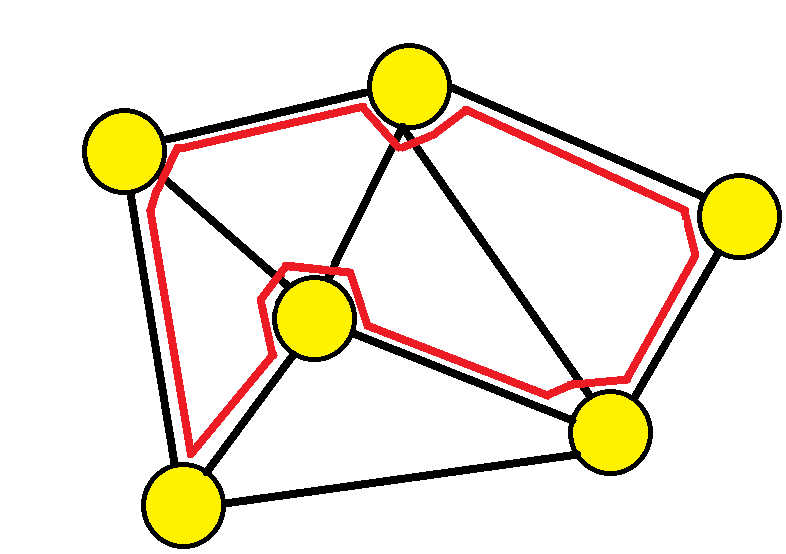
In the mathematical field of graph theory, a Hamiltonian path (or traceable path) is a path in an undirected or directed graph that visits each vertex exactly once. A Hamiltonian cycle (or Hamiltonian circuit) is a cycle that visits each vertex exactly once. A Hamiltonian path that starts and ends at adjacent vertices can be completed by adding ...
rare oar
fervent furnace
you mean your mouse will stuck in explored area not going to new area, i guess s...
oh yes, I will add in a validation that if there is an only explored areas, then it can go to that until it finds an intersection that it can randomly choose if it wants to go what ever way until it finds an unexplored area where it will need.
also i will have a look at this link, thank you.
 deep path
what do you think about this
 fringe knot
How do you guys usually performs your checks on your game's performance and stability?
 hard viper
rare oar
oh yes, I will add in a validation that if there is an only explored areas, then...
hard viper
rare oar
oh yes, I will add in a validation that if there is an only explored areas, then...
i believe there are several algorithms known to find hamiltonian paths.
i don’t remember if it is NP or what. It’s been too many years
But it is a common problem
hard viper
fringe knot
How do you guys usually performs your checks on your game's performance and stab...
spam a ton of crap in your game, then playtest your map which has a ton of things going on
profiler helps find specific methods that might be particularly bad.
in my case, i had very fancy RuleTiles which made RefreshTiles() consume 2/3 of the time of my level loading
solution: optimize usage of RefreshTiles
during play, all the time cost in my game is pretty evenly distributed across different responsibilities. => no clear thing that really needs optimizing
profiler also lets you look at lag spikes, which are spots where you want to pay attention because usually that is caused by one specific thing
 indigo verge
I can think of several ways to do this, ranging from simply iterating over the list and moving around the entries, or having a second list that is used as a resorting buffer, but what is the best practice, if I want to take a List, and insert a value into the middle of it, and also displace all other entries, such that they move up in the index?
Example:
List:
0 Sword
1 Shield
2 Bow
I then attempt to insert an arrow into the list, at index 1, and displace everything after it, like so;
0 Sword
1 Arrow
2 Shield
3 Bow
I'm working on my inventory system, and I want a drag and drop functionality that can allow me to drag an item into the list, displacing all the other items to make room for it.
On that same note, what is the best practice for removing an item from a list, then "collapsing" the unneeded index?
I take this list:
0 Sword
1 Arrow
2 Shield
3 Bow
and then I try to remove the item in index 2, the other items "sliding back" in the order
Like so:
0 Sword
1 Arrow
2 Bow
 knotty sun
That is standard functionality of the List class
indigo verge
I thought List.Insert overwrote the index?
All the documentation I found says it does.
And google says I need to make an entirely new list every time I do that
indigo verge
So Insert will indeed displace everything else in the list, rather than just overwriting what's in a particular index? and List.RemoveAt doesn't leave an empty index slot behind afterwards?
knotty sun
correct
indigo verge
Thank you very much. I know it's a silly question, but when I teach myself entirely using google... Well, sometimes that doesn't work.
knotty sun
if in doubt about C# the MS docs are where you should be looking not random shit on Google
leaden ice
indigo verge
So Insert will indeed displace everything else in the list, rather than just ove...
Yeah all of this is explained in the MS docs
knotty sun
I think he may have confused List with Array looking at his questions
 cyan granite
code
 neon plank
Why Object.GetInstanceID() is not thread-safe? It's just an integer read...
knotty sun
neon plank
Why `Object.GetInstanceID()` is not thread-safe? It's just an integer read...
if it was 'just' an integer read it would be a property not a method
heady iris
    [SecuritySafeCritical]
    public int GetInstanceID()
    {
        EnsureRunningOnMainThread();
        return m_InstanceID;
    }
 heady iris
it is indeed just spitting out a field
Of course, it's possible that another thread could be trying to modify that field at the same time
neon plank
The field is initialized during construction and never touched AFAIK
Documentation says it doesn't change
 harsh root
Hey I got a question about perling noise. I want to create a map where its split up in x areas wide and y areas height.
For areas I mean stuff like ocean, Land stuff like that.
I cant figure out how to make this happen. When I play with noise values it either becoems super high or super low. No more natural flow
Does anyone know how to make that work with perlin noise
leaden ice
harsh root
Hey I got a question about perling noise. I want to create a map where its split...
can you elaborate on what you mean by "super high" and "super low"?
harsh root
leaden ice
can you elaborate on what you mean by "super high" and "super low"?
yes one second.
This is how it normally looks like

This is the result with multiple diffrent tries

Like adding a depth offset, clamping the values between ranges
harsh root
delicate flax
you need to combine several layers of noise
A layer of noise is not the same as a octave right?
delicate flax
harsh root
A layer of noise is not the same as a octave right?
no, an octave is a noise layer, but a noise layer is not always an octave. (when talking about procedural generation)
harsh root
aah okay
delicate flax
but looking at the images I'm not 100% what it is you are trying to do
harsh root
so what I probally want is a general noise layer. Then a noise layer dependant on what I want to achieve in that area
delicate flax
harsh root
so what I probally want is a general noise layer. Then a noise layer dependant o...
yes
leaden ice
It;'s possible you're sampling at integer gridpoints in the noise function and getting the same value everywhere, which is a known property of perlin noise
harsh root
delicate flax
but looking at the images I'm not 100% what it is you are trying to do
uhhh basicly trying to procedurally create a world. Where I can add requirements. Like 35% land and 65% water. And so that there will always be a big enough island generated
The gren squares are basicly the land areas
But thanks I'll try and take a look at that
harsh root
leaden ice
It;'s possible you're sampling at integer gridpoints in the noise function and g...
Yeah I am still pretty new to it and while I did watch some videos and read some tutorials its still a little mystery to me haha
 rare bough
hello does any one knows where and who toask how to make an ui menu for phones i needed some help cause i'm new at making a game also new on the server
 wise kindle
I've got several points in space. They are variable in position and amount. How could I draw the area between them on Gizmos?
For example, I can make an object that's a child of this script's, and it would add that object's position to a list
I want to be able to draw the area between all of them
heady iris
is this going to be a 2D polygon or a 3D polyhedron?
wise kindle
2d polygon
heady iris
Deciding what area is "inside" a set of points isn't trivial. It'll be easier if you only need a convex hull, though
I'm not sure what you'd use to actually fill in the area, though
wise kindle
All I want to do is in a sense connect the points, on Gizmos, and I think that would be enough. I'll try handling the area later. For now that is what I need
Cause if I do that, I think a gizmos line could work as a trigger of sort, right?
And for a non teleporting object, I wouldn't need to use math
 remote dirge
Hey, quick question, is there a way to make the script automatically swap out the scriptable object attached to it?
I'm about to make another scriptable object for the script in question and I'd like to know if there's a function I can do that will swap them automatically.
leaden ice
remote dirge
Hey, quick question, is there a way to make the script automatically swap out th...
wdym by "swap them out"
 dusk apex
remote dirge
Hey, quick question, is there a way to make the script automatically swap out th...
dusk apex
remote dirge
Hey, quick question, is there a way to make the script automatically swap out th...
Depends. When should this occur?
remote dirge
dusk apex
Depends. When should this occur?
I am using scriptable objects for my boss data, and I'd like them to swap the attached object to another one when the current boss is defeated.
dusk apex
Why not just have an array and reference the next index?
leaden ice
remote dirge
I am using scriptable objects for my boss data, and I'd like them to swap the at...
When you say "attached" I guess you mean "referenced"?
yes you can use = to reassign your reference to another object
 stoic mural
I persevered and finally got it working. The solution from the uni was correct for me and it doesn't seem to miss at any point.
 private void RotateToShootPlayer()
    {
        // Rotate tank in direction of player
        var direction = transform.position - player.transform.position;
        var angle = Mathf.Atan2(direction.x, -direction.y) * Mathf.Rad2Deg;
        barrel.rotation = Quaternion.Euler(Vector3.forward * angle);

        // Offset rotation to intersection point
        var o = Vector3.Dot(player.velocity, barrel.right);
        if (Mathf.Abs(o) < bullet.force)
        {
            angle = Mathf.Asin(o / bullet.force) * Mathf.Rad2Deg;
        }
        barrel.Rotate(Vector3.back, angle);
    }
This is the solution. This script rotates the tank barrel and when I instantiate the bullet it is spawned with the barrels rotation and shoots forward.
 mental rover
stoic mural
I persevered and finally got it working. The solution from the uni was correct f...
mental rover
stoic mural
I persevered and finally got it working. The solution from the uni was correct f...
nice that you got it working sufficiently - though I still think you'll see it's not quite right if you slow the bullet down a bit and compare the difference between, say, the player running away at a 50 degree angle and running towards the cannon with a 50 degree angle
remote dirge
leaden ice
yes you can use `=` to reassign your reference to another object
I assume this would require a new function in my script?
leaden ice
stoic mural
I persevered and finally got it working. The solution from the uni was correct f...
Isn't your Atan2 incorrect/backwards? Usually it's (y, x). Maybe that's why you have to negate the y?
leaden ice
remote dirge
I assume this would require a new function in my script?
No using the = operator doesn't require a new function necessarily
This is all kind of vague/abstract without seeing your code
remote dirge
leaden ice
No using the = operator doesn't require a new function necessarily
Okay, here is my code so far: https://hatebin.com/yjeeqzfbzg
leaden ice
you would just do bossData = whateverNewBossDataYouWant; wherever and henever you want/need to change it
remote dirge
Okay, sounds good.
stoic mural
leaden ice
Isn't your Atan2 incorrect/backwards? Usually it's (y, x). Maybe that's why you ...
No it doesn’t work if I do it the other way around. Even when I don’t negate the y
stoic mural
mental rover
nice that you got it working sufficiently - though I still think you'll see it's...
I mean it hasn’t missed a single shot yet and I’ve been messing with the speeds of both the player and bullet
leaden ice
stoic mural
No it doesn’t work if I do it the other way around. Even when I don’t negate the...
sounds like your code or your objects are oriented strangely in the editor or something
Or your mental model of things
stoic mural
leaden ice
sounds like your code or your objects are oriented strangely in the editor or so...
I chose to use the Y axis as the axis at which the bullet fires from
So the y axis is always pointing towards the player
leaden ice
stoic mural
I persevered and finally got it working. The solution from the uni was correct f...
Pretty sure I see your problem. Your direction is calculated backwards too
that's why you have a weird/backwards atan
I would expect e.g.:
        var direction = player.transform.position - transform.position;
barrel.up = direction;```(you don't actually need to do the trig at all)
but your current direction is backwards - it's FROM the player TO the object this script is on
The direction vector from A to B is calculated as B - A
 unique delta
How can i keep track of what scene i m in?
For example if the scene 2 is loaded something happens.
leaden ice
unique delta
For example if the scene 2 is loaded something happens.
The simplest way is to put an object in scene 2 with a script on it that does something in Start
unique delta
a ok thanks
remote dirge
So, I have a problem. I've got the attacking stuff figured out, but when I go into the battle screen, the player suddenly always starts at 0 HP. Here is my script currently: https://hatebin.com/onqsiceisa
The last thing I remember adding before this started was the playerHeal thing in Update.
I tried removing playerHeal from update and the same thing happens. Does anyone have any idea what's going on?
leaden ice
remote dirge
I tried removing playerHeal from update and the same thing happens. Does anyone ...
Start debugging your code
unique delta
leaden ice
The simplest way is to put an object in scene 2 with a script on it that does so...
i tried that and i didn t worked quiet well in my situation. Do you know another way?
 static kite
I learnt roblox coding during lockdown for 2 years, and I have grown up and roblox is out my interest however coding still is, I learnt coding with the Roblox LUA Documentation however I cant find a documentation for unity step by step from start to finish
remote dirge
leaden ice
Start debugging your code
Found a way to fix it.
 somber nacelle
static kite
I learnt roblox coding during lockdown for 2 years, and I have grown up and robl...
somber nacelle
static kite
I learnt roblox coding during lockdown for 2 years, and I have grown up and robl...
there are beginner c# courses pinned in #💻┃code-beginner and the pathways on the unity !learn site are a good next step to learn the engine
 tawny elkBOT
:teacher: Unity Learn ↗
Over 750 hours of free live and on-demand learning content for all levels of experience!
leaden ice
unique delta
i tried that and i didn t worked quiet well in my situation. Do you know another...
what's wrong with what you tried?
unique delta
So I made a save and load system. When I went into another scene, the x,z, and y loads from the first scene and I m falling infinitely. So I was thinking of checking whic scene is loaded and making a load file for every scene. I know it sounds stupid but I can t think of something else.
leaden ice
You'd have to explain what you're trying to do
"A save load system" is very vague
what exactly are you trying to save and load
and why would you need a separate file for each scene
unique delta
so if i save the x,y,z from the first scene. When i enter the second scene the game loads with x,z,y from the first scene
leaden ice
What does "x,y,z from the first scene" mean?
unique delta
and the x,z,y aren t the good ones
leaden ice
XYZ of WHAT
unique delta
of the player
unique delta
yes
leaden ice
All you need to do is capture the actual data you want to save in an object in an understandable way
 naive swallow
Is the player a DDOL?
 terse turtle
I need help understanding how a game mechanic works, however it seems difficult to describe. Is it fine to send a Itch io game with the mechanic or is that against the rules?
unique delta
naive swallow
Is the player a DDOL?
i mean actually it is
leaden ice
For example:
public class PlayerData {
  public int currentLevel;
  public Vector3 position;
}

public class SaveGameData {
  public PlayerData playerData;
}```

If the current level is not the level the player was on, you'd not use the position from the save data here, you'd just use the level's default spawn position @unique deltaIt's not against the rules but also you probably won't find anyone who's willing to go play a different game to answer a question
naive swallow
unique delta
i mean actually it is
So then you're storing the player's position manually and loading it between scenes? Why save bad data?
unique delta
yes
naive swallow
If you don't want to save the player's position, why are you saving the player's position
leaden ice
terse turtle
I need help understanding how a game mechanic works, however it seems difficult ...
Maybe try your best to explain it with words first, and/or find a video showing it
terse turtle
The Player is able to hold space, depending on how long you hold space the jump is less or greater. Finally while holding space, you can hold another key for left or right, and when you let go of space it will launch you with the jumpForce accumalated and then left or right depending if you were trying to go those directions.

Here the player is holding right, so he will be launched diagonally right up
leaden ice
terse turtle
The Player is able to hold space, depending on how long you hold space the jump ...
Ok so - when the space button is pressed set a bool to true and a timer to 0
Every frame add Time.deltaTime to the timer while that is true
Also while it's true, save a Vector2 indicating the held direction keys
When the button is released, take the accumulated time of the timer and the direction and add an impulse force to the player
You'll want to map the time held to a range of actual force values of course
that could be done with an AnimationCurve or just hardcoded with a Remap function
terse turtle
leaden ice
Ok so - when the space button is pressed set a bool to true and a timer to 0
Eve...
This helps, thank you!
crimson vault
Hi guys, I have a question about best practice.
I have a player and a liana who attack when the player collide with it. I have animation for Liana idle and when liana is attacking.
I have think about detecting the beginning of the attack animation for deal dmg, that's legit ?
soft shard
crimson vault
Hi guys, I have a question about best practice.
I have a player and a liana who...
Sounds like you may be describing animation events? Which allow you to execute logic on certain frames of an animation, such as your example: https://docs.unity3d.com/Manual/script-AnimationWindowEvent.html
terse turtle
void Update() {
        spacePressed = Input.GetKey(KeyCode.Space);
        spaceLetGo = Input.GetKeyUp(KeyCode.Space);

        float moveInput = Input.GetAxisRaw("Horizontal");

        if (spacePressed) {
            timer = timer + Time.deltaTime;
        }
        if (spaceLetGo) {
            rb.velocity = new Vector2(moveInput * timer, jumpForce * timer);
            TimerZero();
        }
}``` This code works, but how can I make the X axis be more strong? Currently the Player jumps in the direction of the Direction I want, but it is light. I want it to be a sort of straight diagonal jump that(The Way I am Holding(-1, or +1)) and to be more straight.Oh yes sounds great, i'll check that, thanks 🙂
 sudden stump
terse turtle
```cs
void Update() {
spacePressed = Input.GetKey(KeyCode.Space);
...
sudden stump
terse turtle
```cs
void Update() {
spacePressed = Input.GetKey(KeyCode.Space);
...
Multiply by value
terse turtle
If this is clearer, I want the player to go either straight up(0 Degrees up), or 45 degrees left or right up.
sudden stump
Oh, you didn't mean make it stronger
Well, you'd want to make if statements to check the X axis. If it's -1, angle is -45. 0, angle is 0. +1, +45
Angle should probably be a field
terse turtle
I found the issue*
It was the gravity. I just need it to be less when the player is launched. Thanks for the help!
sudden stump
🚬
 molten isle
!code
tawny elkBOT

Posting code
📃 Large Code Blocks
Use links to services like:
https://gdl.space/, https://paste.ofcode.org/, https://hatebin.com/, https://paste.myst.rs/, https://hastebin.com/
📃 Inline Code
Surround code with three backquotes. Not quotation marks.
To format as C#, add cs to the first line:
```cs
// Your code here
```
Add a comment with a line number if there is an error message.
molten isle
I have stumbled on a problem I can't seem to find a solution to. I have a player movement script that has wallrunning, dashing etc, but it doesn't work on moving platforms, the character just falls off. I tried parenting the moving platform or playing with the forces on the rigidbody but I couldn’t quite figure it out and I failed. Is there an easy solution to the problem? Here is the player movement code: https://gdl.space/vebuwufime.cs
cyan granite
ng
molten isle
cyan granite
ng
what?
sudden stump
molten isle
I have stumbled on a problem I can't seem to find a solution to. I have a player...
Make the platform add its current velocity to the player's movement speed
OnCollisionStay, player speed += platform speed
Or just do it with any rigidbody so nothing would fall, not just the player
This is all theoretical though
molten isle
sudden stump
OnCollisionStay, player speed += platform speed
I will try this
cyan granite
molten isle
what?
what?
 humble kraken
I am making a projectile system for my moba game, similar to LoL. I use it for dashes, jumps, kb and skill shots. I have a a missile manager that on update moves all projectiles based on the data stored. Each projectile has point A (launch point) and point B (end point). Projectiles can fly in curves, arc and various forms. Upon building the system, I realised that I use rigibod body and collider to fire an event upon projectile hitting something. This is probably not very efficient. What is a good way to optimise it? (Later in the game, i will have walls that block projectiles or teleport projectiles or projectile hitting another projectile).
 vital oracle
For something like a dungeon crawler with turn based combat. Would you have one state machine that includes all states or one for the gameplay outside of battle and one just for the battle?
leaden ice
vital oracle
For something like a dungeon crawler with turn based combat. Would you have one ...
I would probably have two separate state machines (at least)
leaden ice
humble kraken
I am making a projectile system for my moba game, similar to LoL. I use it for d...
Rigidbodies and the PhysX collision detection system are extremely efficient and likely more efficient than anything you would or could write by hand
humble kraken
leaden ice
Rigidbodies and the PhysX collision detection system are extremely efficient and...
hmm, okay, i read about some solutions with raycasting
but, it seems that it will be hard to implement with my feature requirment
leaden ice
humble kraken
hmm, okay, i read about some solutions with raycasting
you know raycasting is part of the physics engine too
why reimplement the wheel
humble kraken
leaden ice
you know raycasting is part of the physics engine too
well, it depends. need to do testing with 100-150 projectiles
leaden ice
Test it - I'm sure PhysX is going to be faster than your scripts
 elfin tree
I use the following code to drag and drop rigidbodies, only thing is it breaks when I rotate the camera, it's in update so I'm not quite sure what I'm missing, thoughts?
private void Update() {
        if (!_targetCamera)
            return;

        if (Input.GetMouseButtonDown(0)) {
            // Check if we are hovering over Rigidbody, if so, select it
            _selectedRigidbody = GetRigidbodyFromMouseClick();
        }

        if (Input.GetMouseButtonUp(0) && _selectedRigidbody) {
            // Release selected Rigidbody if there any
            _selectedRigidbody = null;
        }
}

private void FixedUpdate() {
  if (_selectedRigidbody) {
    Vector3 mousePositionOffset =
       _targetCamera.ScreenToWorldPoint(new Vector3(Input.mousePosition.x, Input.mousePosition.y,
          _selectionDistance)) - _originalScreenTargetPosition;

    _selectedRigidbody.velocity = (_originalRigidbodyPos - _selectedRigidbody.transform.position + new Vector3(
                mousePositionOffset.x,
                mousePositionOffset.z + RAISE_AMOUNT,
                mousePositionOffset.y
            )) * forceAmount * Time.deltaTime;
        }
}

Rigidbody GetRigidbodyFromMouseClick() {
        Debug.Log("handling");
        var ray = _targetCamera.ScreenPointToRay(Input.mousePosition);
        var hit = Physics.Raycast(ray, out var hitInfo, RAYCAST_MAX_DISTANCE, layerMask, RAYCAST_QUERY_TRIGGER_INTERACTION);
        if (hit) {
            if (hitInfo.collider.gameObject.GetComponent<Rigidbody>()) {
                _selectionDistance = Vector3.Distance(ray.origin, hitInfo.point);
                _originalScreenTargetPosition = _targetCamera.ScreenToWorldPoint(new Vector3(Input.mousePosition.x,
                    Input.mousePosition.y, _selectionDistance));
                _originalRigidbodyPos = hitInfo.collider.transform.position;
                return hitInfo.collider.gameObject.GetComponent<Rigidbody>();
            }
        }
        return null;
}```in what way does it "break"?
elfin tree
It just drags in the wrong axis
So lets say I don't rotate the camera it works perfectly
But then it seems like it still moves in the same axises(?) even tho the camera is rotated
I think it's cause GetRigidbodyFromMouseClick, only happens once? (possibly)
heady iris
Yeah, since you're remembering its original screen position. Moving the camera changes the object's screen position
oh, that's actually a world position
you should name that variable something more descriptive :p
My first guess for this problem would be to compare the current screen position of the object to the current screen position of the mouse
and to compute a velocity vector based on that
elfin tree
Yeah, maybe I need to rework the whole thing
It's some old code from another project I prolly found somewhere I assume
elfin tree
heady iris
My first guess for this problem would be to compare the current screen position ...
I mean it's kinda what happens in FixedUpdate I think
Have to go though, will keep at it a bit later
heady iris
btw, if you want to drag something around on a constant Y-level, consider using Plane and Plane.Raycast
you can create a plane that goes through the object's position and with a normal that points up
then raycast onto that plane to get a world position based on a screen position
indigo verge
Is a null value in a function the same as not passing a value to that function, for the purpose of Overrides?
I.E
public void AddItem(ItemObject _item)
{
//Blah Blah Blah
}

public void AddItem(ItemObject _item, int _slot)
{
//Blah Blah Blah
}
Let's say this function, and it's override, are called by dragging something into your inventory.
If it is dragged onto a slot, it sets the slot variable. But if it isn't hovering over a specific slot in the inventory, the slot would be null.
In that situation, is
AddItem(Item, Null)
the same as
AddItem(Item)
?
heady iris
in this case, null is incompatible with the int type, so that'd be a compile error
more generally, no, they are not the same
indigo verge
So basically, in the drag and drop system itself, I have to add null handling to choose between the two functions.
And only pass a value if one exists.
Thank you very much, I don't know if this was a dumb question or not, but I wasn't able to find an answer in the documentation
heady iris
C# tries to resolve the method group by looking at the number of arguments you passed, as well as their types.
    public void Test()
    {
        Foo(3, null);
    }

    void Foo(int x)
    {

    }

    void Foo(int x, int y)
    {

    }

    void Foo(int x, GameObject y)
    {

    }

    void Foo(int x, Transform y)
    {

    }
This is a compile error because it can't decide if you wanted the third or fourth method
Getting rid of the last method makes it work, and it winds up calling the GameObject-taking method
indigo verge
That makes a lot of sense. Thank you for explaining. What is best practice for sanitizing this? I'm assuming it's simply to make sure to check for null, before deciding whether or not to run the normal version or the override.
heady iris
I'd think that the drag-and-drop code should always call the method that takes a slot index
unless you can drop an item somewhere to just put it in the first available slot
in that case, you'd still have two different code paths
one for dropping an item on a slot, and one for when you don't
indigo verge
heady iris
unless you can drop an item somewhere to just put it in the first available slot
My plan is, if you drag an item into the inventory window, but not onto a specific slot, it runs the generic AddItem version instead.
 hidden flicker
How do I fix this problem?
My code reads the normal of the surface below it to determine the move direction. This works fine on flat surfaces or very shallow slopes, but if the player is at a certain point on the slope, it reads the normal of the ground and uses that to determine move direction, instead of the desired result, which is reading the normal of the slope as soon as it touches it. This problem has plagued me for weeks and it haunts me to this day

Here's a diagram of the issue
indigo verge
hidden flicker
How do I fix this problem?
My code reads the normal of the surface below it to d...
I had to use spherecast to fix this in my game.
Warning, however, spherecast is... weird.
I don't remember the details, but Spherecast has a bunch of weird bugs associated with it.
hidden flicker
It's ok I just want it fixed 💀
indigo verge
I just remember it took me longer to work around the spherecast bugs than it did to make the entire movement system.
Actually, I might have straight up switched it for a dedicated hitbox.
Let me check and I'll get back to you, aight?
hidden flicker
indigo verge
Let me check and I'll get back to you, aight?
Absolutely, tysm
hidden flicker
indigo verge
Actually, I might have straight up switched it for a dedicated hitbox.
I mean, I opened Unity Explorer and looked into a game I like, and it used a dedicated hitbox as well, so...
indigo verge
The gist of it is, you'll never fix the weird jank with using raycasts to detect the ground, there will always be SOME kindnd of weirdness going on, so you have to use something eelse.
OH
I remember what it was.
indigo verge
hidden flicker
I mean, I opened Unity Explorer and looked into a game I like, and it used a ded...
Warning, if you do use Spherecast, if Spherecast spawns inside of something, it ignores it.
so if you spawn the spherecast imagine there's a sphere that has to spawn, and if that spawn point's radius intersects anything, it ignores it during the cast.
I got around it like this:
    private void GroundCalcs()
    {
        belowMe = new Vector3(transform.position.x, transform.position.y - groundDetectRange, transform.position.z);

        aboveMe = new Vector3(transform.position.x, transform.position.y + 1f, transform.position.z);

        groundBelow = Physics.SphereCast(aboveMe, controller.radius, Vector3.down, out hit, groundDetectRange);

        //check if the player is on the ground.
        if (!groundBelow)
        {
            //if there isn't ground under the player, check if they were touching the ground last frame.  If they just now left the ground, set the gravity to zero, otherwise, increase their falling speed.
            if (!ground)
            {
                fallingSpeed = Mathf.MoveTowards(fallingSpeed, terminalVelocity, fallingAccel * Time.deltaTime);
            }
            else
            {
                fallingSpeed = 0f;
            }

            ground = false;

        }
        else
        {
            fallingSpeed = gravity;

            ground = true;
        }

        //add falling to the player's movement.
        direction.y -= fallingSpeed;
    }
Notice how I call the Spherecast ABOVE the player's root, THEN aim it down. this is to make sure when they're standing on the ground, the spherecast can never spawn intersecting it.
lean sail
indigo verge
Warning, if you do use Spherecast, if Spherecast spawns inside of something, it ...
that is just how physics casts work in 3d. You simply can just start a capsule cast in the exact position of your player then cast it downwards and not have this issue. Unless your player is in a wall, which would mean you have a bug unrelated to this
indigo verge
lean sail
that is just how physics casts work in 3d. You simply can just start a capsule c...
I was using spherecasts in the exact position and size of the bottom of the player's capsule, IIRC, and it was behaving inconsistently. I don't recall what all I tested, but it was very finicky and took a lot of mothering, even with exact values.
heady iris
The problem with SphereCast is that it will ignore any colliders it starts inside of.
You can use OverlapSphere to check for any colliders that you're already overlapping
Although that's not going to give you a normal vector.
indigo verge
Yeah, and in my experience, that makes it finicky, even if you're using precise values. I know I'm biased, but you can't fathom how long it took me to finally get it working 100% consistently.
heady iris
But you could ask for the closest point on that collider and then use the vector from that to yourself as the normal vector, I suppose
My solution has to simply been to never have any slopes
I...should update my humanoid locomotion system
indigo verge
heady iris
My solution has to simply been to never have any slopes
Gigabrain
heady iris
I only recently added gravity. entities were bumping into each other and slowly floating into the air
eventually they detached from the navmesh and got confused
hidden flicker
indigo verge
I got around it like this:
```
private void GroundCalcs()
{
belo...
But that... doesn't fix my problem. The problem isn't that it doesn't think I'm grounded, the problem is that it thinks I'm standing on the flat ground instead of the slope.
Also, I'd like to just use the normal built in gravity.
indigo verge
IIRC, Spherecast can return the normal of the first surface it hit, let me look up the documentation
hidden flicker
Found it
indigo verge

Yeah, you should be able to use Spherecast to return the normal of what it hit.
Which would let you handle that nicely, I think!
heady iris
Yes. All of the various casts produce a RaycastHit.
lean sail
hidden flicker
Also, I'd like to just use the normal built in gravity.
when talking about player movement and slopes, "built in gravity" doesnt work. you wouldnt want your player sliding down every slope. Think about the case of running up and off the edge of a slope, players should just fall down immediately. Built in gravity will make it continue in its path while slowly falling down, like if you rolled a ball off a slope.
hidden flicker
lean sail
when talking about player movement and slopes, "built in gravity" doesnt work. y...
You can just turn gravity off if they're on a slope. Also, I'm planning on the player keeping their momentum after they go off a slope. Unity gravity will work fine for me
lean sail
keeping vertical momentum sounds weird if these are supposed to be humanoid characters. Im not a major fan of toggling gravity on/off. Just keep it off and store what it currently should be
lean sail
hidden flicker
You can just turn gravity off if they're on a slope. Also, I'm planning on the p...
example: lets say that u are running up a slope. velocity is (whatever, 5, whatever), x and z dont matter here.
When you run off the slope, aka you are not grounded and nothing is below you, you are going to keep going up because velocity.y will take time to go from 5 to 0 to negative. Its fine to keep horizontal momentum here, that can be reasonable.
hidden flicker
lean sail
example: lets say that u are running up a slope. velocity is (whatever, 5, whate...
Cool, I can just check if you move off the slope and then cap your y velocity. Doesn't seem like a gravity issue
lean sail
Ok so you arent using built in gravity then if you are modifying it yourself
hidden flicker
It's... literally just modifying player velocity
lean sail
ive experimented around a lot and i found keeping track of gravity yourself is the most desireable. but 🤷♂️ do what you want i guess
no need to find work arounds and edge cases when you control what it is entirely.
 rugged sail
how do I remove a sprite from a sprite sheet?
 spring creek
rugged sail
how do I remove a sprite from a sprite sheet?
spring creek
rugged sail
how do I remove a sprite from a sprite sheet?
Not really a code question, but I'm pretty sure you can just click the sprite (in the spritesheet, not the asset), and hit delete on your keyboard
rugged sail
i tried that
spring creek
But ask in #🖼️┃2d-tools if that isn't it
rugged sail
o ok thx
 chrome trail
There's a way to make the bool value in one script correspond to the bool value of another script using reference values, right? Because I have this function and it's not working
    {
        hitBuffer = inHitBuffer;
    }```

Tried doing the inverse and it's still not cooperatingYou aren't setting the ref variable
You are using it
Which means inHitBuffer is untouched
chrome trail
spring creek
You aren't setting the ref variable
How would I go about assigning it correctly then?
spring creek
chrome trail
How would I go about assigning it correctly then?
inHitBuffer = something
chrome trail
spring creek
inHitBuffer = something
Yeah, I tried that. It's still not working
spring creek
chrome trail
Yeah, I tried that. It's still not working
What are you expecting to happen?
And this seems weird
Why do this at all?
chrome trail
spring creek
What are you expecting to happen?
I'm trying to make it so that the value of two bools in two different scripts are always exactly the same
spring creek
chrome trail
I'm trying to make it so that the value of two bools in two different scripts ar...
But WHY? That points to an architectural issue. You should not need or want to do that
cosmic rain
chrome trail
I'm trying to make it so that the value of two bools in two different scripts ar...
You can't really do that in C# in legal ways.
spring creek
If you MUST, then have an event in the setter of a property
But I can't see a reason that you must
cosmic rain
You could have a reference type wrapper for your bool and change the bool in it, but I feel like you're trying to do something unreasonable.
 sweet egret
Hey! I'm looking for some help with an error I'm getting when I followed the Samyam tutorial on making an online leaderboard. I followed all the steps thuroughly and it keeps giving me this error: Could anyone help with this? If they need any more information, please let me know!
 cosmic rain
sweet egret
Hey! I'm looking for some help with an error I'm getting when I followed the Sam...
cosmic rain
sweet egret
Hey! I'm looking for some help with an error I'm getting when I followed the Sam...
The error is pretty self explanatory. Did you check the line that throws it and confirm what string you're using there?
sweet egret
I believe so. VS wasn't telling me anything was wrong.
cosmic rain
It wouldn't tell that something is wrong, because it's a runtime error, not a compile error
You need to debug the value that you handle there at runtime.
sweet egret
oh ok. I should revise the code in the video. If i'm getting the same error, I'll check back and try that
Would there be something wrong with the parsing?

If it's an error with the string, the parse converts the int to string so I feel like that could be where it's coming from
cosmic rain
sweet egret
Would there be something wrong with the parsing?
There could be, depending on the text value. This kind of input is usually supposed to be handled with a try catch or validated before parsing.
cosmic rain
sweet egret
If it's an error with the string, the parse converts the int to string so I feel...
It's the other way around. you convert the string to an int there.
sweet egret
Oh. didn't catch that
cosmic rain
That's what the error is saying too.
sweet egret
true. the video did cut to when she was using the parse so i don't think it's entirely required
I was wrong
cosmic rain
sweet egret
true. the video did cut to when she was using the parse so i don't think it's en...
What's not required?
sweet egret
parsing. I'm very new to this kind of thing
cosmic rain
You are doing it though
So obviously it's required by the tutorial
Int.Parse is parsing a string I to an int.
chrome trail
spring creek
If you MUST, then have an event in the setter of a property
But I can't see a re...
It's giving me a stack overflow when I do this
sweet egret
Agreed. there's not much going on in this script so in my eyes, there's not too much to work with in terms of finding the error
spring creek
chrome trail
It's giving me a stack overflow when I do this
You really have to provide more info when you say these things. Show what you did
cosmic rain
sweet egret
Agreed. there's not much going on in this script so in my eyes, there's not too ...
I really don't understand what you're saying. There's clearly an error. And it's clearly caused by Int.Parse
You should either add validation or make sure only valid string goes into it.
chrome trail
spring creek
You really have to provide more info when you say these things. Show what you di...
public delegate void SetBool(bool b);
SetBool setBool;
bool hitBuffer { get { return hitBuffer; } set {  hitBuffer = value; setBool(hitBuffer); } }

public void AssignHitBuffer(SetBool inSetBool)
    {
        setBool += inSetBool;
    }
ok. I will try that. thank you
cosmic rain
sweet egret
Agreed. there's not much going on in this script so in my eyes, there's not too ...
If you're asking in this channel, you should be able to debug that error.
If you don't know how to debug, I suggest moving to #💻┃code-beginner
sweet egret
thank you
spring creek
chrome trail
```
public delegate void SetBool(bool b);
SetBool setBool;
bool hitBuffer { get ...
What is going on with that method? What is the logic behind it. Looks like it would cause recursive calls maybe?(which would explain the stack overflow) It's kinda confusing me.
You still haven't explained why you would ever want to be syncing these two bools. Seems like a really bad way to do things to me, and it should be abandoned for better architecture
chrome trail
fervent furnace
Your getter/ setter is calling itself
Oh I see what you mean now
 rain minnow
chrome trail
```
public delegate void SetBool(bool b);
SetBool setBool;
bool hitBuffer { get ...
rain minnow
chrome trail
```
public delegate void SetBool(bool b);
SetBool setBool;
bool hitBuffer { get ...
You assign hitBuffer but your property is called hitBuffer, therefore causing a stack overflow . . .
Use proper naming convention for the property to avoid that issue . . .
 dense crow
i dont get any error but my i dont see the package in project tab
 thin aurora
A coding channel is not any better. Please use the right channel, or just post it in #💻┃unity-talk
 harsh sable
npm ERR! code ENDENT
Terminal (Ctrl+)
npm ERR! syscall open
DIE JG CONSOLE
npm ERR! path C:\Users\maqui\Downloads\JooBot-main\package.json
npm ERRI errno -4058
npm ERR! encent Could not read package.json: Error: ENDENT: no such file or directory, open 'C:\Users\maqul\Downloads\Joobot-main\package.json" npm ERR! encent This is related to nom not being able to find a file.
npm ERR! encent
npm ERR! A complete log of this run can be found in: C:\Users\maqui\AppData\Local\npm-cache\logs\2024-03-14T09_06_07_3032-debug-0.log PS C:\Users\maqui\Downloads\Joobot-main> npm
It says the package.json is nowhere to be seen
But its there
I see it myself
thin aurora
harsh sable
npm ERR! code ENDENT
Terminal (Ctrl+)
npm ERR! syscall open
DIE JG CONSOLE
n...
Please use the right channel #🔎┃find-a-channel
This channel is for general coding questions regarding Unity
 opaque forge
Guys I have a question, I'm using a script to define the behaviour of my object (let's say object A) then I assign it to a gameobject in the editor, but now I would like to create a a new script that let's me create object A. Object A implements monobehaviour class, and has a start and update function, and I assign public variable some values to it in the editor. My question is now if I want to create a script that initiates object A, how should I proceed ?
I read that I would need to change it to a scriptable object and then could use a constructor, is that the best way to do it?
 latent latch
Ah, sounds like composition approach so yeah SO is a good idea.
public class BaseObject : Monobehaviour
{
  //fields

  public Assign(BaseObject_ScriptableObject SO)
  {
    //assign fields
  }

  //could also do a copy constructor, or instantiate and do the assignment all in one here
}

public class SpawnObject : Monobehaviour //could make this a singleton
{
  BaseObject baseObjectPrefab;

  public BaseObject InstantiateObject(BaseObject_ScriptableObject SO)
  {
    BaseObject newBaseobject = Instantiate(baseobjectPrefab);
    newBaseobject.Assign(SO);
    return newBaseobject;
  }
}```Something like that?
 thick terrace
opaque forge
Guys I have a question, I'm using a script to define the behaviour of my object ...
thick terrace
opaque forge
Guys I have a question, I'm using a script to define the behaviour of my object ...
you can't use the constructor of scriptable objects directly either fwiw, either way you have to let Unity instantiate it, so making a prefab is probably the way to go
 lavish frigate
for good practice, would you guys recommend managing stuff like players stats (health, maxhealth, speed etc..) on the player itself, or make a managing singleton?
latent latch
i'd keep it on the player if the project is large enough, but you can always have references to the player via singleton
PartyManager.Instance.members[0] = first player of the party, ect
lavish frigate
latent latch
PartyManager.Instance.members[0] = first player of the party, ect
Oh, to clarify, i will have a single player.
Reason im asking is stuff like healthbars also need to know about player HP, so is a reference to healthmanager or playermanager better practice for example
latent latch
Depends how you're accessing it on the scene, but if you're doing colliders, you can just grab the stats directly from the mono
lavish frigate
Its colliders yeah
i guess ill just put a singleton playermanager mono on my player?
latent latch
Doesn't need to be part of the player's object, it can sit out anywhere in the scene as long as you bind the reference to the player's gameobject on it.
lavish frigate
Right, script will be the same for both ways tho so ill fuck around a bit and see
thanks
latent latch
ye, either way works really, I don't usually keep stats on the singleton personally, but I do keep references to the gameobject + stuff like input and camera
upgrades and stuff I could see being cached on a singleton manager
lavish frigate
latent latch
ye, either way works really, I don't usually keep stats on the singleton persona...
Yeah, all difficult stuff. My project is getting big big and it feels like at this point everything needs to know about everything. :/
 abstract quartz
lavish frigate
abstract quartz
lavish frigate
yep
 placid crypt
wondering what the most up to date multiplayer networking system is, should i be using photon or NGO or something else?
 vague radish
is there any issue with entities package with IL2CPP and unsafe code? bcs when i try use IL2CPP and unsafe code, unity reload and stop at updating scene for 1h and nothing happens
 short gate
Guys idk anyting abt unity and i wanna do programming Where do i start
leaden ice
short gate
Guys idk anyting abt unity and i wanna do programming Where do i start
!learn
tawny elkBOT
:teacher: Unity Learn ↗
Over 750 hours of free live and on-demand learning content for all levels of experience!
lavish frigate
Is there an easy way to figure out where one of these guys is coming from? cant double click
 somber nacelle
that's an editor error, not likely related to your code at all. pretty common when the animator is open, but could be caused by any window that uses the graph view like shader graph
 fossil shadow
Does anybody know if the crash logs stack trace has the deepest call on top or on bottom? On windows
As in, actual crash stack traces, not exceptions
elfin tree
How can I modify this ray code to ignore a layer, so that it does not block the raycast?
while (Input.GetMouseButton(0)) {
                var ray = mainCamera.ScreenPointToRay(Input.mousePosition);
                m_SpringJoint.transform.position = ray.GetPoint(distance);
                yield return null;
}```I'm used to doing it with Physics.Raycast but that's pretty much it
fossil shadow
elfin tree
How can I modify this ray code to ignore a layer, so that it does not block the ...
All ray.GetPoint does is ray.origin + ray.direction * distance. It doesn't have anything to do with layers or raycasts at all
leaden ice
elfin tree
How can I modify this ray code to ignore a layer, so that it does not block the ...
use a layermask. But this code doesn't even do a raycast at all
heady iris
I have a class (call it BaseClass<T>) with a generic type parameter. The parameter is used to give the class a field that holds its configuration data. So, FooClass<FooData> can have a FooData and BarClass<BarData> can have a BarData. In FooClass<FooData>, I can access data.someFooField.
BaseClass<T> is also responsible for setting up the configuration data.
This generic type parameter is "invisible" outside of the class. You cannot get a FooData out of a FooClass, and the type shows up on none of its public methods.
I want to be able to reference any BaseClass<T>, but since it's generic, that's impossible.
So far, my solution has been this mildly ugly hack: BaseClassImpl<T> derives BaseClass and defines the config data field. FooClass<FooData> and BarClass<BarData> thus derive from BaseClassImpl<T>.
I'm basically "covering up" the generic type with an intermediate class.
This works, but it's now causing problems.
I want to define a new class, SpecificClass, that has some extra functionality. However...
- If I derive from
BaseClass, I'm going to have to define aSpecificClassImpl<T>again, including the logic used to set up the config data. - If I derive from
BaseClassImpl<T>, I'm back where I started:SpecificClasshas a generic type parameter on it!
The alternative is to not have a generic type at all, and to just make FooClass and BarClass declare a field to hold their config data. They also have to set their config data up (fortunately, I can extract that into a static generic method that looks up the default data for them).
I'm not a huge fan of that because it requires duplicate code in every single class.
Any thoughts on this? I asked about this a few months ago, and I wound up going with this "covering up" strategy.
thick terrace
heady iris
I have a class (call it `BaseClass<T>`) with a generic type parameter. The param...
it's hard to judge without seeing any actual code but does the base class have to be generic? if it's only used privately then surely the different data objects have some common interface or base class you can refer to it by
heady iris
thick terrace
it's hard to judge without seeing any actual code but does the base class _have_...
the key point is that FooClass and BarClass need a field that holds a FooData and a BarData, respectively
thick terrace
why?
latent latch
if you can go with the field idea I'd go with that honestly
heady iris
thick terrace
why?
public class HearingConfig : Config
{
    public FloatConfigItem noiseFloor;
}

public class HearingConfigData : ConfigDataImpl<HearingConfig>
{
    public float NoiseFloor => GetFloat(config.noiseFloor);
}
the Hearing class has a HearingConfigData field, so it can access data.NoiseFloor.
GetFloat looks up a float value from a Dictionary<FloatConfigItem, float> to decide the current value (that's part of ConfigData)
The same "generic hiding" thing is going on here, since I want to be able to handle arbitrary ConfigData instances elsewhere
it's a conflict between:
- I want specific classes to have easy access to their specific configuration data
- I want to be able to make a big list of
ConfigDataso that I can serialize everything
HearingConfig is a scriptable object asset that everyone shares
HearingConfigData is a plain-old C# class that each instance of my Hearing class has (and which is populated with saved data)
FloatConfigItem stores things like the name and description of the configuration item, plus the default value, the increment for sliders, ...
thick terrace
what does ConfigDataImpl do with config?
heady iris
thick terrace
what does `ConfigDataImpl` do with `config`?
public class ConfigDataImpl<T> : ConfigData where T : Config
{
    protected T config;

    public void Setup(T config)
    {
        this.config = config;

        foreach (var item in config.items)
        {
            Init(item);
        }
    }

    public override Config Config => config;
}
It needs the Config object so that it can iterate over every ConfigItem and set itself up with default values.
heady iris
heady iris
```cs
public class HearingConfig : Config
{
public FloatConfigItem noiseFloo...
Then it holds onto the T so that I can access members from it here
The alternative would be to directly give the Hearing class that FloatConfigItem, and to have it directly call GetFloat on its ConfigData.
Then there'd be no need for generics at all here.
I'd just do float noiseFloor = myData.GetFloat(noiseFloorConfigItem);
thick terrace
i think if you can avoid it, that would make things a lot simpler
heady iris
heady iris
The alternative would be to directly give the `Hearing` class that `FloatConfigI...
This would require assigning a FloatConfigItem asset to each individual instance of Hearing, and that's completely redundant.
thick terrace
i was thinking if you get rid of the config field in the base class it'd make things simpler too, you could still have Config as an abstract property if you need it
heady iris
that's true (and I've done something similar in several places)
thick terrace
but all the generic param is doing really is changing the type of field it's stored in, so making each subclass declare the field itself is basically the same thing
heady iris
I could give HearingConfigData a HearingConfig config field and then override that abstract property.
And that's basically identical to the original problem I was describing here. #archived-code-general message
thick terrace
yeah, exactly
heady iris
It's the same problem in two different places.
I don't like the code duplication, but the generic class is creating a lot of ugly code too
plus the cognitive load of having Foo and FooImpl and generic type parameters flying everywhere
private HearingConfigData data;

public override void Init()
{
    ConfigDataMaker.Get<HearingConfigData, HearingConfig>(out data);
}
god i wish it could infer that generic type parameter for me
heady iris
heady iris
```cs
private HearingConfigData data;
public override void Init()
{
ConfigD...
this replaces this lovely code
public abstract class ConfigurableModule<TConfigData,TConfig> : Module where TConfigData : ConfigDataImpl<TConfig>, new() where TConfig : Config
{
    protected TConfigData data;
    [SerializeField] SerializedConfigData defaultConfig;

    public override void Init()
    {
        data = new();
        data.Setup(OwnConfig);
        data.Read(defaultConfig);
    }
oh no
 wicked scroll
maybe what you really want is dynamic 
heady iris

Thanks for the help! I need to go stare at this some more, but I'm a lot less married to this funny "covered up generics" idea now
thick terrace
it's basically down to where you want to draw the line in your hierarchy where you declare the concrete type, and everything above that needs to be various levels of generics
latent latch
ive set my own personal constraints to only ever using a single generic parameter (utility scripts are a different story though)
heady iris
heady iris
```cs
public class ConfigDataImpl<T> : ConfigData where T : Config
{
protect...
in both cases, I don't actually need to get data back out of the generic-typed class, other than that one protected field
So it'd make more sense to have each derived class declare its own field and provide access to it through a property
no more generic parent type
 chilly surge
What about an IBaseClass? Since none of your public API surface cares about the generic which is an implementation detail.
heady iris
heady iris
```cs
public abstract class ConfigurableModule<TConfigData,TConfig> : Module whe...
I originally needed the generic type here because Setup needs TConfig, not just any old Config object
But Setup only needs that because it's writing it to a TConfig field.
So when that field goes away, Setup can accept any Config
and now ConfigurableModule only needs the generic type parameters for its own data field
and when that goes away, nobody needs generics anymore at all

a few extra lines of code per module class is worth not having...this mess
chrome trail
Is there a reason this collision might not register even when both colliders are most definitely active and the collision between the two layers they're on is also supposed to be active?
 leaden ice
chrome trail
Is there a reason this collision might not register even when both colliders are...
leaden ice
chrome trail
Is there a reason this collision might not register even when both colliders are...
What does "not register" mean? What are you expecting to happen exactly?
 next salmon
Do they have rbs?
chrome trail
next salmon
Do they have rbs?
They both have rigidbodies, yes
Well, the weapon doesn't have a rigidbody. I mean both capsules do have one
 sterile reef
chrome trail
Is there a reason this collision might not register even when both colliders are...
sterile reef
chrome trail
Is there a reason this collision might not register even when both colliders are...
Is one of them a trigger?
 magic wolf
Hey guys quick question. Please @ me when you answer. When you have a physics2d.raycast if you filter by layer and will it bypass through other lays searching for that layer or does it stop at the first thing it hits then return false if not of the proper layer.
leaden ice
magic wolf
Hey guys quick question. Please @ me when you answer. When you have a physics2d....
it completely ignores anything that's not in the layermask
as if it's not there at all
it will only hit things in the layer mask
magic wolf
Ok thank you
hard viper
also, anything outside the layer mask doesn’t affect performance
if you raycast into 1000 colliders, that might take 1000 units of time. But if you filter by a layer mask that only includes 10 of them, it would take 10 units of time.
roughly speaking
leaden ice
hard viper
also, anything outside the layer mask doesn’t affect performance
Are you sure that's true? I don't know how they do the layer filtering in the native code but it's entirely possible they have to filter through them.
hard viper
i did testing with Physics2D. All the queries I checked behaved like that
idk if that also applies to 3D
leaden ice
They are different engines
it's not necessarily the same
Box2D vs PhysX
I wouldn't be surprised if it's true, just not a guarantee
hard viper
in this case it was raycast2D
leaden ice
oh true
hard viper
i can make no guarantees about 3D
the 3D engine does a lot of things differently. Just with a slightly similar sort of API
because it’s all unity (which deals with components).
magic wolf
leaden ice
it completely ignores anything that's not in the layermask
For some reason my ray isn't detecting ground properly. I'm afk right now. When I get back I'll send code and sc.
 vapid bluff
Hello
I added a menu scene, with 3 buttons (play, options and exit)
I made the script for the buttons, but they don't work
I even specify wich scene should load when I press play
harsh root
delicate flax
yes
@delicate flax @leaden ice Thank you so much i managed to make it work!!!
rigid island
vapid bluff
I even specify wich scene should load when I press play
first verify the buttons are clicked in the first place
vapid bluff
rigid island
first verify the buttons are clicked in the first place
they are
rigid island
vapid bluff
they are
show current code then
magic wolf
@leaden ice here is everything


if there is anything I am missing let me know
like anything you needs SC of
rigid island
embeds aren't working rn
leaden ice
the images aren't working yeah 😦
magic wolf
oh dang...
leaden ice
maybe find a hosting site and link them?
magic wolf
Can I DM them?
leaden ice
yes
leaden ice
Things look ok at first glance but it's hard to say exactly where the raycast is
turn gizmos on!
magic wolf
gizmos??
chrome trail
sterile reef
Is one of them a trigger?
Yes. One of them is indeed a trigger
magic wolf
Im semi new to unity whats gizmos?
leaden ice
magic wolf
gizmos??
Top right button Game Window
Then you can see your Debug.DrawRay
Your DrawRay isn't correct though
Debug.DrawRay(new Vector2(transform.position.x, transform.position.y - (playerCollider.size.y * transform.localScale.y / 3)), -transform.up, Color.red, 0.05f);```
It should be this:
```cs
Debug.DrawRay(new Vector2(transform.position.x, transform.position.y - (playerCollider.size.y * transform.localScale.y / 3)), -transform.up * 0.05, Color.red);```oh color is after?
leaden ice
the last param is time
it displays for that long
the distance and direction are combined in the second param
magic wolf
I turned gizmos on. the. the ray is spot on.. now I am more confused..
pic is in same link
leaden ice
try again after the change I suggested to the DrawRay
I don't think the ray is long enough
 ocean blade
I'm making a gun right now, coding the recoil system. I want the rotation of the gun to kind of "overshoot" when lerping to the desired rotation.
Like, it goes over the target rotation, if it started from 0 to 90, it goes a bit over that. I've tried and got... something. It's just a mess and I'd be embarrassed to show it, but if I must, I'd gladly do it then.
rigid island
ocean blade
I'm making a gun right now, coding the recoil system. I want the rotation of the...
without code what exactly can we help with lol
ocean blade
rigid island
without code what exactly can we help with lol
sorry my bad
 mossy wind
For collision detections, do I need to have both Rigidbody 2D and Collider 2D on the gameobject?
leaden ice
mossy wind
For collision detections, do I need to have both Rigidbody 2D and Collider 2D on...
depends what kind of collision detection you're talking about and which object you want to put your script on
chrome trail
mossy wind
For collision detections, do I need to have both Rigidbody 2D and Collider 2D on...
The rigidbody needs to be on at least one of them usually
ocean blade
rigid island
without code what exactly can we help with lol
Hastebin is a free web-based pastebin service for storing and sharing text and code snippets with anyone. Get started now.
mossy wind
leaden ice
depends what kind of collision detection you're talking about and which object y...
Basically I have a Bullet prefab that I'm sending towards an Enemy prefab. Bullet has Rigidbody 2D and Collider 2D while Enemy only has Collider 2D for now, no "Is Trigger" is checked, in the Bullet's script I am using OnCollisionEnter2D to detect collisions, but it's not being called
chrome trail
mossy wind
Basically I have a Bullet prefab that I'm sending towards an Enemy prefab. Bulle...
It's entirely possible the bullet is too fast and is just passing through the target in between physics updates
Is the rigidbody on the bullet's collision detection property something other than "discrete"?
rigid island
ocean blade
https://hastebin.com/share/isicoqahis.csharp
btw this would only yield -1 and 0
curve.Evaluate(time) * Random.Range(-1, 1),
integers are max exclusive
ocean blade
rigid island
btw this would only yield -1 and 0
`curve.Evaluate(time) * R...
oh yeah right thats true
mossy wind
chrome trail
Is the rigidbody on the bullet's collision detection property something other th...
No, it's discrete
mossy wind
chrome trail
It's entirely possible the bullet is too fast and is just passing through the ta...
Idk what's considered too fast honestly, but I don't think that is the case, it's only 10 * normalized direction vector
chrome trail
mossy wind
No, it's discrete
Try changing it to continuous and see if that changes anything
mossy wind
On both objects?
chrome trail
mossy wind
On both objects?
No, just the bullet
mossy wind
Nope, that didn't fix it
rigid island
mossy wind
Basically I have a Bullet prefab that I'm sending towards an Enemy prefab. Bulle...
how you are moving the bullet also matters
Translation for example will not give you accurate result
mossy wind
Upon instantiation, I assign a constant velocity to the bullet's Rigidbody component
leaden ice
mossy wind
Basically I have a Bullet prefab that I'm sending towards an Enemy prefab. Bulle...
why doesn't the enemy have a Rigidbody? It doesn't move?
Anyway is the bullet visibly colliding with the enemy?
If it is, it's not a tunneling problem
mossy wind
leaden ice
why doesn't the enemy have a Rigidbody? It doesn't move?
I have not implemented that yet so I didn't add the component
leaden ice
Just try adding it, you can make it kinematic
 night storm
i think even if u use the correct rigidbody moving method and have it set to continous then very fast moving small objects can still pass through walls and stuff for some reason... idk why and idk how to fix that
rigid island
night storm
i think even if u use the correct rigidbody moving method and have it set to con...
never had issues with Continuous tbh
unless we're talking speeds over 1000 units
 grave tundra
I am making scenes at Runtime. When I do SceneManager.CreateScene - it only does it additive. Anyone know why? Anyone know how to fix that? I still only want the new scene active.
mossy wind
leaden ice
Anyway is the bullet visibly colliding with the enemy?
Yeah? It is moving towards the enemy, disappearing, and then reappearing on the other side
I did not understand the tunneling thing, but I checked both z coordinates and it's 0
leaden ice
mossy wind
Yeah? It is moving towards the enemy, disappearing, and then reappearing on the ...
that doesn't sound like it's colliding
sounds like it's going right through
can you show screenshots of your setup?
mossy wind
Oh you mean colliding as in hitting and changing direction, velocity, etc.?
leaden ice
yes
mossy wind
Yeah that's not happening
leaden ice
then it's not colliding at all
show screenshots of your setup
Especially showing the components on each object
mossy wind
Bullet (I tried both Discrete and Continuous for collision detection):

Enemy:

If, for whatever reason, the shape of the bullet may influence this, this is what it looks like:
 vapid bluff
rigid island
show current code then
vapid bluff
rigid island
show current code then
public class mainMenu : MonoBehaviour
{
    public void playGame ()
    {
        SceneManager.LoadSceneAsync("Level 1");
    }

    public void quit()
    {
        Debug.Log("Quit!!!");
        Application.Quit();
    }
}
I tried with index, with (1) as the next index and nothing
rigid island
vapid bluff
```
public class mainMenu : MonoBehaviour
{
public void playGame ()
{
...
and you verified the buttons were working how ?
rigid island
vapid bluff
yes
how isn't a yes/no question
vapid bluff
what?
rigid island
vapid bluff
what?
I asked how did you verify the buttons themselves were working
You said the buttons work but the script don't work
 simple egret
Tbf the original question is very weirdly formatted
With the "how" as the last word
rigid island
simple egret
Tbf the original question is very weirdly formatted
yeah kind strange I was following up from them saying this
 vapid bluff
rigid island
I asked how did you verify the buttons themselves were working
vapid bluff
rigid island
I asked how did you verify the buttons themselves were working
I have different colors on them
rigid island
vapid bluff
I have different colors on them
ok so the buttons hovers are indeed working?
vapid bluff
yes
rigid island
did you try the actual LoadScene method
simple egret
rigid island
yeah kind strange I was following up from them saying this
Too easy to read fast and interpret the follow-up question as
and you verified the buttons were working ?
Human brains are not perfect, you sometimes miss stuff
vapid bluff
dw
rigid island
vapid bluff
yes
LoadSceneAsync is async so its running in the background, maybe its loading and you're not noticing and you keep pressing ?
simple egret
Nah they're very far from basic lol, I've seen wayyy worse here
rigid island
gotta practice more 😅 been in US 10 year
simple egret
Also, The Obvious™️, have you added your scene to the Build Settings list?
vapid bluff
simple egret
Also, The Obvious™️, have you added your scene to the Build Settings list?
yes
 simple egret
Try specifying the index instead of a string if you haven't done so yet. Strings are much more error-prone, like you can add a space at the end by mistake and not notice it, but I guess you'd get an error about the nonexistent scene at this point
vapid bluff
nevermind
rigid island
fixed?
vapid bluff
I put the script in the Onclick function and it didn't saved
vapid bluff
rigid island
fixed?
yeah
rigid island

vapid bluff
I just hate when I put things and they don't save even if I press the save buton
rigid island
the scene should save, but its not saved if you have *
mossy wind
@leaden ice @rigid island It seems like Kinematic and Kinematic collision doesn't work for some reason, when I changed it to a trigger and modified the method it worked. Just thought I'd let you know 👍🏼
leaden ice
mossy wind
Bullet (I tried both Discrete and Continuous for collision detection):
your bullet is kinematic
it's not going to collide with stuff
rigid island
how are you setting velocity on kinematic 🤔
leaden ice
rigid island
how are you setting velocity on kinematic 🤔
it works in 2D actually
rigid island
Ahh 2D
leaden ice
mossy wind
<@179367739574583296> <@968604165150507078> It seems like Kinematic and Kinemati...
OnCollisionEnter(2D) is for dynamic rigidbody collisions only
mossy wind
leaden ice
your bullet is kinematic
Ah, I just set it to kinematic so I don't have gravity
Should I set to dynamic and set gravity scale to zero?
leaden ice
mossy wind
Ah, I just set it to kinematic so I don't have gravity
yeah that's not what kinematic is for
kinematic turns it into an unstoppable object that's not affected by anything else
 merry stream
what are the pros and cons of utilizing a multi scene workflow with ui, gameplay, etc on seperate scenes vs just having everything in one scene?
im failing to see the purpose of complicating everything by having to use a service locator or something like that to easily talk between scenes
rigid island
merry stream
what are the pros and cons of utilizing a multi scene workflow with ui, gameplay...
merry stream
elaborate please
rigid island
some projects it makes more sense to have multiple scenes, especially when the map is big and you need to work with multiple people
multi-scene setup allows everyone to work on their section of the map without creating Merge conflicts on Version Control for example
merry stream
im not talking about having seperate scenes for each map
rigid island
Loading entire map is more costly then splitting to Multiscenes loading (look at firewatch does this well)
leaden ice
merry stream
im failing to see the purpose of complicating everything by having to use a serv...
I don't think necessarily "ui" and "gameplay" are generally the boundaries used for multi scene workflows
merry stream
im talking about having each element in its own scene, like having a bootstrapper scene which holds your save system etc, then having a ui scene, then having the actual "map" scene
leaden ice
but I guess an advantage in general is that the more scenes you use, the less VCS conflicts you have to deal with
merry stream
leaden ice
I don't think necessarily "ui" and "gameplay" are generally the boundaries used ...
yes, i was just giving an example
rigid island
merry stream
im talking about having each element in its own scene, like having a bootstrappe...
all those systems are scenes?
leaden ice
merry stream
im talking about having each element in its own scene, like having a bootstrappe...
when you say "UI scene" do you mean like a main menu scene?
 rigid island
why not just prefabs with DDOL
merry stream
i know, thats why im questioning if it's worth it to setup something like this
heady iris
I've tried a separate menu scene before. It's a lot of extra hassle to handle the loading and unloading.
I did not see a very obvious benefit
merry stream
this is the video im questioning https://www.youtube.com/watch?v=JFP-cCFID7o
Learn how to load multiple scenes asynchronously and additively, at the same time in Unity, with plenty of customization and a load screen. Load and Unload multiple scenes at the same time with less overhead and continuous progress reports!
Want to support me? 😀
Buy me a coffee! https://ko-fi.com/adammyhre
🔔 Subscribe for more Unity Tutorials...
rigid island
yeah to me just seems more work than its worth
 swift falcon
someone please show me a script code for 2d movements
rigid island
merry stream
like what do you typically do
me personally? I personally try to make everything in one scene when possible, only keeping the important bits in DDOL like singletons
like the PlayerUI for me is a prefab canvas that spawns with the player so I can put player anywhere it always has UI
heady iris
the current game I'm working on leans towards a single scene (individual levels)
so my menu UI just lives in DontDestroyOnLoad
lean sail
Single scenes is definitely a lot easier
rigid island
but other projects I have like for pre-made levels , I cannot have one scene for that multi-level single scenes make sense
but not not singletons or any logic
merry stream
agreed, i don't see the purpose of complicating things like shown in the video
theres a weird gap in unity tutorials where most are terrible and way too basic then the rest are way overcomplicated
merry stream
the youtuber i posted has a lot of very interesting videos but I feel like you can accomplish the same thing with way less overcomplication, but maybe im being naive
grave tundra
Can I somehow set or get/modify LIghtingSettings at runtime?
heady iris
heady iris
I've tried a separate menu scene before. It's a lot of extra hassle to handle th...
This was in an open-world game (well, it had like three places to go, but...)
so I had lots of additive scene loading already
rigid island
grave tundra
Can I somehow set or get/modify LIghtingSettings at runtime?
depends what
mostly yes
rigid island
swift falcon
someone please show me a script code for 2d movements
com on man just google it..
there are hundreds of scripts
grave tundra
I mean, at a bare minimum how can I load A LightingSettings asset and assign it to the scene? Docs imply its only in UnityEditor
swift falcon
rigid island
there are hundreds of scripts
hope I find something that really works
💀
i need basics
rigid island
grave tundra
I mean, at a bare minimum how can I load A LightingSettings asset and assign it ...
cant you just switch out the quality prefabs or SO whatever they are?
heady iris
swift falcon
i need basics
!learn
tawny elkBOT
:teacher: Unity Learn ↗
Over 750 hours of free live and on-demand learning content for all levels of experience!
rigid island
swift falcon
i need basics
then you should learn basics first so you kinda understand what you're copying
swift falcon
yea
rigid island
otherwise you're just blindly copying, if something breaks you're screwed
grave tundra
Maybe hop on over to #💻┃code-beginner, but honestly, there are THOUSANDS of blogs, videos, classes on Unity basics, including 2d character animation, movement, and collision.
rigid island
yes #💻┃code-beginner has good resources pinned
grave tundra
rigid island
cant you just switch out the quality prefabs or SO whatever they are?
I'm doing a lot of procedural generation, so I was attempting to build scenes 100% from code and no editor interaction or prefabs 😄
Sometimes Unity just isn't built for that 😄
rigid island
hmm you mean like bake lighting you prob need realtime lights etc
grave tundra
I'm not doing any baked lighting
rigid island
idk thats more challenging to optimize generated scenes. I dont know much about runtime gen
 arctic plume
Does anyone know what's wrong with this code?
    public void playAnimation(Animator animator, float animation, string parameter)
    {
        animator.SetTrigger("look");
        StartCoroutine(Animating(animator));
    }

    private IEnumerator Animating(Animator animator)
    {
        while (animator.GetCurrentAnimatorStateInfo(0).IsName("look"))
        {
            Debug.Log("Waiting");
            yield return null;
        }
        speaking = false;
        Debug.Log(animator + " is done doing a non-speaking animation.");
        currentSpeaker = null;
    }
My code never goes into the while loop but it plays the animation state fine in the scene
rigid island
eg the whole static batching
heady iris
grave tundra
I mean, at a bare minimum how can I load A LightingSettings asset and assign it ...
you don't need an asset; the asset just holds a LightingSettings object
grave tundra
Yes, but I can't assign a LightingSettings object to a scene.
rigid island
arctic plume
Does anyone know what's wrong with this code?
```
public void playAnimation(...
you verified the bool is true ?
grave tundra
arctic plume
Does anyone know what's wrong with this code?
```
public void playAnimation(...
Wanna tell us what behavior you're expecting vs what you want
Exunchtly 😄
rigid island
I would store the bool inside update instead then check in while loop @arctic plume
Update()
...
isLookAnimation = animator.GetCurrentAnimatorStateInfo(0).IsName("look");
...
IEnumerator Method()
...
while(isLookAnimation )
//etc
...```this contains the Environment settings
as opposed to the settings used when baking lightmaps
I forget how you actually access the current RenderSettings, though..
grave tundra
Most is static I think
heady iris
oh, duh
I guess it just gives you the settings for the active scene?
Note that render settings are per-scene.
grave tundra
RenderSettings.skybox = material; works for my skybox builder
Right, I assume its all the active scene that you're setting (which is odd AF... )
heady iris
well, the Environment settings are global, so I guess you can only use one scene's settings at a time anyway
arctic plume
grave tundra
Wanna tell us what behavior you're expecting vs what you want
basically after the look animation, the character says something
And I use the Coroutine to wait for them to finish looking
But for some reason they start saying their line while looking
rigid island
did you try what I sent?
its possible by the time the coroutine while loop hits the IsName is false
grave tundra
heady iris
well, the Environment settings are global, so I guess you can only use one scene...
Sure, but what are you supposed to do, have a script that init's a scene with all of its render settings? Id on't even see where to update this. Unity can really make you feel dumb sometimes
heady iris
grave tundra
Sure, but what are you supposed to do, have a script that init's a scene with al...
What are you trying to accomplish here?
arctic plume
rigid island
did you try what I sent?
its possible by the time the coroutine while loop hits ...
I'll try that now
rigid island
arctic plume
I'll try that now
also since you will store it inside a variable you can look in the inspector like [SerializeField] private
grave tundra
I'm doing a lot of procedural generation, so I was attempting to build scenes 100% from code and no editor interaction or prefabs
 midnight hemlock
hi
does anyone knows why vector3 doesnt show up in inspector ?
`[SerializeField]`
public Vector3 pos;
leaden ice
midnight hemlock
hi
does anyone knows why vector3 doesnt show up in inspector ?
`[Serialize...
You probably have a compile error somewhere
You only need public OR SerializeField not both. Your error is elsewhere
grave tundra
Can you have that show in inspector? I thought you need a custom editor gui for v3
heady iris
Vector3? no
heady iris
grave tundra
Sure, but what are you supposed to do, have a script that init's a scene with al...
hm, yeah, so the RenderSettings are serialized as part of the Scene asset. Once you're in the built game, I don't even know where that asset winds up
midnight hemlock
leaden ice
You only need public OR SerializeField not both. Your error is elsewhere
i tried both and I also have other public variables like bools , strings ...etc
yet only vector 3 gets ignored, no errors, no warnings .. no nothing
heady iris
grave tundra
Sure, but what are you supposed to do, have a script that init's a scene with al...
The alternative is definitely going to be setting the render settings yourself after the scene loads
heady iris
midnight hemlock
i tried both and I also have other public variables like bools , strings ...etc...
oh, wrong Vector3
you're using System.Numerics
leaden ice
midnight hemlock
i tried both and I also have other public variables like bools , strings ...etc...
You're probably using the wrong Vector3
heady iris
get rid of that using directive and replace it with using UnityEngine;
grave tundra
Yeah that makes sense, but it seems absolutely absurd that its a static... why does unity make these weird mistakes? What if I have two scenes loaded?
heady iris
grave tundra
Yeah that makes sense, but it seems absolutely absurd that its a static... why d...
only the active scene's render settings matter.
grave tundra
Even with stacked scenes? Only the active's apply?
midnight hemlock
heady iris
you're using `System.Numerics`
nope , its UnityEngine.Vector3
tawny elkBOT
Posting code
📃 Large Code Blocks
Use links to services like:
https://gdl.space/, https://paste.ofcode.org/, https://hatebin.com/, https://paste.myst.rs/, https://hastebin.com/
📃 Inline Code
Surround code with three backquotes. Not quotation marks.
To format as C#, add cs to the first line:
```cs
// Your code here
```
Add a comment with a line number if there is an error message.
heady iris
grave tundra
Even with stacked scenes? Only the active's apply?
Yes.
The HDRP moves a lot of stuff out of RenderSettings and into the Volume framework
but I believe the built in RP and the URP both keep a lot of stuff in RenderSettings
grave tundra
Yeah I'm using URP
 compact linden
Hi, I'm trying to setup couch coop with different playerinput components for different players and having a problem when it comes to rebinding. When I try to rebind using the RebindingUIPrefab asset the new input system comes with, only the first User gets it's action rebound. This is even weirder when you consider the fact that the first User isn't even using the correct control scheme the binding im trying to rebind has. How should I go about fixing this issue?
Image 1: Shows that the wrong user is getting rebinds. (Controls get disabled while rebinding.)
Image 2: How I set up the PlayerInputs. Each object there has their own PlayerInput Component.
Image 3: Shows how the control im trying to rebind doesn't exist on the Keyboard2 control scheme even though it is getting rebound in the PlayerInput component that's setup to be in Keyboard2 control scheme.


 arctic plume
rigid island
I would store the bool inside update instead then check in while loop <@22454133...
arctic plume
rigid island
I would store the bool inside update instead then check in while loop <@22454133...
That didn't seem to help either :/
I don't get why it never is true, if I clearly see it happening in the scene
rigid island
arctic plume
I don't get why it never is true, if I clearly see it happening in the scene
can you ss the animator for this object
arctic plume
You want a picture of the animator sheet?
rigid island
arctic plume
You want a picture of the animator sheet?
yeah preferably with the look clip selected
midnight hemlock
@leaden ice Thank you for your help , as it turned out, I had a custom editor for this script and completely forgotten about it lol
arctic plume
rigid island
yeah preferably with the look clip selected
Sorry if it's messy, animation isn't my strong suit haha
 rigid island
arctic plume
Sorry if it's messy, animation isn't my strong suit haha
rigid island
arctic plume
Sorry if it's messy, animation isn't my strong suit haha
all good. Hmm is the bool never get checked on / is never true? you looked at it in inspector yes?
an easier way would probably be to just use an Animation event
arctic plume
What's an animation event?
rigid island
arctic plume
What's an animation event?
 spice briar
hey everyone, im trying to make a gizmo line that follows multiple vector3 points
essentally every update, im putting the position of the bullet into a list and i want to display those points as a line
ive tried using Gizmos.DrawListLine(), but it doesnt work
it says "Each pair of points from the points span represents the start and end of each line, so Unity draws the first line from points[0] to points[1], the next from points[2] to points[3], and so on." So essentially, i have an odd number of points in my array
but i dont want it to go [0] to [1] then [2] to [3], i want it to go [0] to [1] to [2] etc.
grave tundra
then add each vertex twice?
spice briar
then it would go from 0 to 0 then from 1 to 1
i guess i could re-add every odd index
spice briar
wait, just looked on the unity docs and Gizmos.DrawLineStrip is exactly what i need
yepp lol
lean sail
spice briar
wait, just looked on the unity docs and `Gizmos.DrawLineStrip` is exactly what i...
Are you doing this for editor or for gameplay?
spice briar
just editor, i have line renderer tracers for gameplay
indigo verge
What are the downsides of using ObservableList vs using just List? ObservableLists almost sound too good to be true, for when you need to react to changes in a list.
hard viper
indigo verge
What are the downsides of using ObservableList vs using just List? ObservableLi...
you try to invoke methods whenever you alter the list.
if you don’t need to invoke anything, it is strictly inferior to a list
stoic mural
leaden ice
Pretty sure I see your problem. Your direction is calculated backwards too
I made the changes but I have to take away 90 degrees from the angle or it points 90 degrees to the left of the player.

But it works still
indigo verge
I can't find any documentation explaining how exactly to use an ObservableList to trigger a method.
Does anyone here know where to point me in the right direction?
So far, the ONLY thing I've been able to find is not Unity's inbuilt ObservableList, but what seem to be people's custom implementations of it?
leaden ice
stoic mural
I made the changes but I have to take away 90 degrees from the angle or it point...
Should really just do barrel.up = direction;
Skip the whole angle calculation entirely
leaden ice
indigo verge
I can't find any documentation explaining how exactly to use an ObservableList t...
The docs have the events in them
itemAdded and itemRemoved events
indigo verge
leaden ice
The docs have the events in them
YEah, what I'm struggling with is figuring out how to USE them, I've tried making it like I did my otheer event handler, but ssomething is differnt about the syntax or something, and I can't find any information on what I'm doing wrong.
I'm trying to add listeners for the event, but no matter what I try or look up, it just throws syntax errors.
lean sail
indigo verge
YEah, what I'm struggling with is figuring out how to USE them, I've tried makin...
If you click on the link for either one inside, it shows you how the delegate is defined. It uses an eventargs which isnt too common I guess to see in unity. You can easily make your own event for a list and use that.
You should be able to get your IDE to autocomplete a method for it tbh
indigo verge
lean sail
You should be able to get your IDE to autocomplete a method for it tbh
It is fighting me every step of the way, and none of the other events I've made seem to be anything like this. I'm struggling hard.
I'm trying to figure out how delegates work now, but the syntax and formatting for the documentation on those is ALSO different and isn't helping me figure out what to do.
public delegate void ListChangedEventHandler<T>(ObservableList<InventorySlot> sender, ListChangedEventArgs<InventorySlot> e);
I have this, but I have literally no clue what it does, or how it works, and what I've been looking up to try and explain it to me is talking about stuff utterly unlike this.
stoic mural
leaden ice
Should really just do `barrel.up = direction;`
It’s a uni assignment. One of the requirements is outputting the angle in degrees
indigo verge
I absolutely cannot get my IDE to tell me what the heck it wants.
lean sail
indigo verge
```
public delegate void ListChangedEventHandler<T>(ObservableList<Inventory...
im not sure where InventorySlot came from, that should be T in their definiton of the delegate. but this is just telling you it is using an ObservableList and ListChangedEventArgs as the parameters. The type of both is generic
indigo verge
lean sail
im not sure where InventorySlot came from, that should be T in their definiton o...
I just want to make a script run some code when my ObservableList changes, I've been plugging everything I can think of into these damn things, but I can't get it to listen for the event, or even figure out how to access it on the object it's meant to be listening to.
Reading the documentation hasn't helped me figure out what needs to happen for that. Googling hasn't found anything on it
lean sail
indigo verge
I just want to make a script run some code when my ObservableList changes, I've ...
are you using VS? you 100% should be getting an autocomplete for this
indigo verge
I am using Microsoft Visual Studeo
I don't know what it WANTS from me to make it work though!
lean sail
do you not see anything when you try to subscribe to the delegate?

which inserts
    void Awake()
    {
        oList.ItemAdded += OList_ItemAdded;
    }

    private void OList_ItemAdded(ObservableList<int> sender, ListChangedEventArgs<int> e)
    {
        throw new System.NotImplementedException();
    }
my test list was using ints so thats why its <int>
indigo verge
So wait, what is the difference between that and AddListener? Because I've only seen this thing done with AddListener.
lean sail
that is for unity events, this is a c# event
indigo verge
Christ. Alright. Thank you very much for the help. I'll try that.
lean sail
+= is a bit of syntatic sugar for what its really doing, but this is how you subscribe to a delegate
 ruby nacelle
Hey I'm just wondering how I can avoid instances resetting themselves on level reload, the logic is proper, but for whatever reason if I start with an instance, load a new level and then return to the first level, the instance is null and wipes any data contained
    private static PlayerWallet _instance;
    public int amountToPutInWallet; // Used to accumulate daily earnings
    public int walletAmount;
    public delegate void WalletAmountChanged();
    public event WalletAmountChanged OnWalletAmountChanged;

    public static PlayerWallet Instance
    {
        get { return _instance; }
    }

private void Awake()
{
    Debug.Log($"[PlayerWallet] Awake called. Current instance: {_instance}, Current amount: {walletAmount}", this);

    if (_instance != null && _instance != this)
    {
        Debug.Log("[PlayerWallet] Duplicate instance detected, destroying this one.", this);
        Destroy(gameObject);
    }
    else
    {
        _instance = this;
        DontDestroyOnLoad(gameObject);
        Debug.Log("[PlayerWallet] Instance assigned and set to DontDestroyOnLoad.", this);
    }
}```your DDOL singleton shouldnt be destroyed like this, are you sure it is getting destroyed at all? you likely have the singleton inside the scene, loading the scene causes it to exist once again, and it gets destroyed.
dusk apex
ruby nacelle
Hey I'm just wondering how I can avoid instances resetting themselves on level r...
Did you destroy the instance anywhere?
ruby nacelle
Here's an example of it in engine

On reload of the level it's detecting the instance as null
How should I re-write the logic of the DDOL, I've also tested it with other scenes, it transitions makes a new instance and then properly tracks
It's specifically only occuring if I bounce back to scene 1 instead of going to a scene 3
dusk apex
Are you destroying the instance prior to changing the scene or anywhere?
A ddol object won't be destroyed unless explicitly
ruby nacelle
I don't believe so, should I destroy the instance when it goes to change days?
dusk apex
If you are getting null, you've destroyed and created the instance again.
ruby nacelle
It's so weird, because I never explicitly destroy it when moving between scenes
dusk apex
I suggest looking at your code where you are returning to scene one instead of three.
ruby nacelle
    public void NewDay()
    {
        //Increase the day counter
        SO_Data_dayCycle.currentDay++;
        currentDay = SO_Data_dayCycle.currentDay;

        //Update Grass Tiles
        SO_Data_dayCycle.grassTilesList = new bool[grassTiles.Length];

        RandomizeGrassRegrowth();

        PlayerWallet.Instance.PutValueInWallet(PlayerWallet.Instance.amountToPutInWallet, "End of Day");

        //Saving cut data into the scriptable object
        for (int i = 0; i < SO_Data_dayCycle.grassTilesList.Length; i++)
        {
            SO_Data_dayCycle.grassTilesList[i] = grassTiles[i].m_IsCut;
        }


        SceneManager.LoadScene("EndOfDayScene");
    }```

Is instance one, I debugged it, the value doesn't change
End of day literally just loads the scene
```cs

    IEnumerator ResultsAnimation()
    {
        //lop through vertical layout group children and set animation to middle of screen

        foreach(GameObject panel in rewardPanels)
        {
            LeanTween.moveX(panel, verticalLayoutGroupGO.transform.position.x, 1).setEaseOutBack();
            yield return new WaitForSeconds(0.5f);
        }

        yield return new WaitForSeconds(1);

        SceneManager.LoadScene(sceneToTransitionTo);
}```Nothing seems wrong with your Singleton Awake method. You've likely explicitly destroyed the Singleton instance elsewhere.
ruby nacelle
Should I just remove the singleton from the heriarchy and instantiate a copy of it on first load? do you think that would help?
dusk apex
Not sure how that would make any difference. Awake would occur and if there were or weren't any instances, the effects would resolve
spice briar
ruby nacelle
```cs
private static PlayerWallet _instance;
public int amountToPutInWal...
well, when youre calling Awake (i.e. when the scene loads), it checks if the singleton is null. obviously it isnt null as it already exists, but it destroys the old singleton and sets the new one as the current instance
If the Scene is loaded again, Unity loads the script instance again and calls Awake again.
you may need to add DontDestroyOnLoad(gameObject);
dusk apex
Pretty sure that was in the else
spice briar
oh
dusk apex
Relative to this #archived-code-general message
spice briar
void Awake()
{
if (instance == null)
instance = this;
else
Destroy(gameObject);
DontDestroyOnLoad(gameObject);
}```
heres how i do singletons usually wintry crescent
Is there any preformance penality when firing a UnityEvent with a lot of calls on it? Assuming said calls aren't very expensive on their own, I'm talking specifically the UnityEvent part
say, there's a couple of hundred of objects, all registered to a single unityevent, that can fire like once/twice a second at most
dusk apex
If the instance isn't null and it isn't this (it'll never be unless you've assigned it prior to this line), destroy this object. Else assigned the instance to this and flag it to not be destroyed implicitly.
dusk apex
spice briar
```cs
void Awake()
{
if (instance == null)
instance ...
The difference in the one shown would be the != whereas yours is ==. They've accounted for ddol.
spice briar
yeah
dusk apex
It's likely getting explicitly destroyed somewhere when going from scene 2 to 1 where going from scene 2 to 3 is fine.
 mossy snow
it's being destroyed because it's not DDOL. He's turned off warnings in the console, so he's not seeing the warning where it says DDOL is only valid for root GOs which his wallet manager is not
spice briar
im just wondering because if the instance exists, and is not this, then it destroys the gameObject
dusk apex
mossy snow
it's being destroyed because it's not DDOL. He's turned off warnings in the cons...
I figured it was his audio manager object but that would make sense - there were only two objects in the hierarchy under ddol. Good cache.
dusk apex
ruby nacelle
Should I just remove the singleton from the heriarchy and instantiate a copy of ...
You need to enable warnings and have the Singleton as a root object. The warnings would have told you why it wasn't being placed in the ddol scene.
 lament cove
this is my work, dungen and terrain grid system
ruby nacelle
dusk apex
You need to enable warnings and have the Singleton as a root object. The warning...
I am so stupid, I didn't realize that instances won't work if parented to an empty game object
We were using empty game objects to organize the heirarchy
lmao
 past barn
lament cove
this is my work, dungen and terrain grid system
past barn
lament cove
this is my work, dungen and terrain grid system
Lookin awesome. Utilizing A* or Dijkstra's for the pathing?
lament cove
past barn
Lookin awesome. Utilizing A* or Dijkstra's for the pathing?
the path is made with the internal functions of Terrain Grid System, choose the route from point A to point B and avoid obstacles
indigo verge
That tears it. I just found out that ObservableLists cannot be displayed in editor. I'm switching back to normal lists and just making my own events for it.
past barn
indigo verge
That tears it. I just found out that ObservableLists cannot be displayed in edi...
If you use Odin, you may be able to utilize something like this:
https://odininspector.com/attributes/on-collection-changed-attribute
Odin Inspector
OnCollectionChanged can be put on collections, and provides an event callback when the collection is about to be changed through the inspector, and when the collection has been changed through the inspector. Additionally, it provides a CollectionChangeInfo struct containing information about the exact changes made to the collection. This attribu...
indigo verge
So, a dictionary can create pairs, but what happens when one part of the pair is removed?
Dictionary<myList, GameObject>
For example, if I were to remove myList[1], what would happen to the dictionary entry which contains that?
I'm wanting to remove dictionary entries when their associated list is gone, but I'm unsure what happens to dictionary entries who have had one of their pairs removed.
dusk apex
indigo verge
So, a dictionary can create pairs, but what happens when one part of the pair is...
Are you removing the pair and inserting a (null, GameObject) key/value pair?
How are you implementing the removing of they key without removing the value?
indigo verge
I'm doing myList.Remove(index), I'm wondering what happens to the dictionary when that happens.
dusk apex
indigo verge
I'm doing myList.Remove(index), I'm wondering what happens to the dictionary whe...
The key in the above dictionary shown isn't an element of the list but the entire list.
indigo verge
Ahh, that's... Hmm.
dusk apex
Modifying the elements of the list shouldn't effect the key/value pair
indigo verge
so basically, the key isn't the contents of myList[i], but that specific index?
So if i removed an entry from the list, the new entries that occupy its former index would become the new pair to the former pair's gameobject???
dusk apex
indigo verge
so basically, the key isn't the contents of myList[i], but that specific index?
As you've got it shown above ( #archived-code-general message ), I'm assuming you're mapping lists to game objects.
heady iris
indigo verge
I'm doing myList.Remove(index), I'm wondering what happens to the dictionary whe...
As long as an object is used as a key in the Dictionary<TKey,TValue>, it must not change in any way that affects its hash value. Every key in a Dictionary<TKey,TValue> must be unique according to the dictionary's equality comparer
I'm pretty sure that GetHashCode() for a list is just the default (which produces a value based on its address in memory)
modifying the list would therefore not mess up the dictionary
indigo verge
So if you remove one, it removes the other, functionally?
heady iris
Remove one what?
If you have a Dictionary<List<int>, GameObject>, then removing an item from one of the lists that's being used as a key will do nothing.
The dictionary cares about which list is which, not about the exact contents of the lists.
 quaint rock
list would be by indentity
what is the purpose of the list key, is there a fixed set of items in it?
Lists as keys feels really weird too me, like its not he best thing for a key, and sounds like you might jsut want a list of structs or tuples
fervent furnace
If you didnt override the gethashcode then your dictionary is useless (you must have the same instance to retrieve the value)
If you override it and it returns value based on the element, then your dictionary wont work after you modify the key
Ofc you can store all the keys in some collections
But in this case then you will need another “key” to access specific list so you can just create a dictionary<another key,gameobject>
 stone ginkgo
soo i need to access a variable from another script but the variable is also in another class within that script, and the class name is not the same as the script name, so how would i write that?
spring creek
I'm a bit confused. You want to add Status_Burn to a list. And is there an error?
 prime flax
There is no error its just when i add it to the list it just adds a None status effect i can send a ss
spring creek
Or is it that you want to access stuff from the child when you iterate the list? That won't work
prime flax
What could i do instead then
spring creek
prime flax
There is no error its just when i add it to the list it just adds a None status ...
Ah, that might be good
prime flax
[SerializeField] public List<StatusEffect> statusEffects;
that is the list i made and ive got it serialized so i can show you a ss of the inspector aswell
spring creek
prime flax
What could i do instead then
You could put some method on the parent that the child OVERRIDES. Then the child would just change the behaviour, but you don't need access to anything other than the parent.
Yeah, send the ss
 cosmic rain
!code
tawny elkBOT
Posting code
📃 Large Code Blocks
Use links to services like:
https://gdl.space/, https://paste.ofcode.org/, https://hatebin.com/, https://paste.myst.rs/, https://hastebin.com/
📃 Inline Code
Surround code with three backquotes. Not quotation marks.
To format as C#, add cs to the first line:
```cs
// Your code here
```
Add a comment with a line number if there is an error message.
prime flax
public class StatusEffectManager : MonoBehaviour
{

    public delegate void StatusEffectEventHandler();
    public event StatusEffectEventHandler StatusEffectEvent;

    private void Start()
    {
        InvokeRepeating("InvokeStatusEffectEvent", 0f, .5f);
    }

    public void InvokeStatusEffectEvent()
    {
        StatusEffectEvent?.Invoke();
    }
}
dont mind comments i used to have a different way i handled status effects but i didnt like it
it worked but it wasnt efficent and the way i liked it
so basically i just wanted to have a list of status effects under a entity that i can add to and remove from. then i would have a invokerepeating to trigger it every half a second to apply its effect
I have another system in my game just like it but it isnt a list on a script its monobehaviours put on the entity itself so its quite different
spring creek
I had to hop on my computer to look at the code. But just on a quick look, I don't see where you initialize the list
spring creek
prime flax
its in entity stats
I see this
[SerializeField] public List<StatusEffect> statusEffects;
But that is not an initialization
Maybe I'm missing something?
prime flax
oh my fault i read it wrong lemme show u rq
public class Card_FireAffinity : MonoBehaviour
{
    EntityStats playerStats;

    private void Awake()
    {
        gameObject.GetComponent<EntityStats>().OnHitProjectileEvent += this.OnHitProjectile;
    }
    private void OnHitProjectile(ref AttackInfo attackInfo)
    {
        FireAffinity(ref attackInfo);
    }
    void FireAffinity(ref AttackInfo attackInfo)
    {
        if (Random.Range(1, 101) < 99)
            attackInfo.Victim.GetComponent<EntityStats>().AddStatusEffect(new Status_Burn(attackInfo.Victim, 5, 1));
    }
}
fireaffinity method
i thought u meant declaration originally
spring creek
There is no initialization here either
something like statusEffects = new List<StatusEffect>()
lean sail
Unity initializes it since its public
spring creek
lean sail
Unity initializes it since its public
Oh what? Ok, good to know
I've never NOT done it
rigid island
works with SerializeField too
lean sail
Do these scripts need to be monobehaviour? Could be a lot simpler if they were like SO or something
rigid island
basically any time unity serializes it
prime flax
I can make them monobehaiours and put them on the object but im already doing something like that and I dont really wanna have a million different scripts under 1 object
i dont know how that would effect performance but it just felt wrong to do
spring creek
prime flax
I can make them monobehaiours and put them on the object but im already doing so...
They are MonoBehaviours right now
public class Card_FireAffinity : MonoBehaviour
are they NOT on objects?
spring creek
Yeah
spring creek
I don't think so, someone should confirm that though
rigid island
you can
prime flax
spring creek
why not just remove the MonoBehaviour part
i should
rigid island
but yeah SOs would make more sense
prime flax
ig but other than that any reason its not working
spring creek
rigid island
you can
What would be in the list then, since there is no instance of the class
prime flax
like im willing to change the way im willing to do this but im really curious why i cant have it the way it is rn
rigid island
spring creek
What would be in the list then, since there is no instance of the class
You can use them to AddComponent
say you want a random ability placed on enemy etc.
spring creek
rigid island
You can use them to AddComponent
Ah hmm. Ok, I get that
That could be cool too
rigid island
but yeah at that point you mind as well SOs which basically do that, but the benefit is MB has more Unity Events methods built in