#archived-code-general
1 messages · Page 274 of 1
 cosmic rain
 daring hull
no that was the problem
youre right
that was the default size for the collider i didnt notice that
i fixed it and now it works
somethings wrong with the actual rules but i can figure that out myself probably
i was stuck on that for like half an hour
 outer otter
this is a pretty general question but what is the next most important thing to work on for a game after movement? im thinking an inventory system, or a health system, but im running in circles like does the chicken come before the egg
ive gone a bit into the inventory side, im able to pickup items, and display it in my inventory, with the corresponding data saved with it. but i dont understand it fully.
 west sparrow
outer otter
this is a pretty general question but what is the next most important thing to w...
west sparrow
outer otter
this is a pretty general question but what is the next most important thing to w...
That depends a lot on the game
Probably health and lives
I like to get stats out if the way early on, and the UI.
outer otter
im taking it super slow, i made a few games so far all the way through with simple mechanics, but now im making a more robust fps with health and food. kind of like how Green Hell does there system
west sparrow
First step is the paper prototype though. Get the blibs working and make sure it's fun first
outer otter
yea i got a fps movement system I can use for the rest of my projects now, its really nice
west sparrow
I'm not sure what that is. But I'm definitely a check off the core first kind of person
 frosty siren
west sparrow
I'm not sure what that is. But I'm definitely a check off the core first kind o...
frosty siren
west sparrow
I'm not sure what that is. But I'm definitely a check off the core first kind o...
fps = first person shooter in this case
west sparrow
No, green hell
frosty siren
west sparrow
No, green hell
it's a survival game where you play in the jungle so it has well fleshed out survival mechanics such as health and food
outer otter
yea super fun game you need to play
im afraid of going through with this tutorial bc if i implement it and something breaks halfway thru id be too confused to fix it
frosty siren
outer otter
im afraid of going through with this tutorial bc if i implement it and something...
that's why this server exists ^~^
outer otter
yea i guess loll
how can i make a player only jump once when the spacebar is held?
i should push this to beginner
 lean sail
outer otter
im afraid of going through with this tutorial bc if i implement it and something...
lean sail
outer otter
im afraid of going through with this tutorial bc if i implement it and something...
A lot of tutorials are pretty specific and cant really be extended on much. So its better if you can plan out what you wanna do before following it, so you know which parts need to change
outer otter
its hard to know what you need, i overthink it
cosmic rain
Don't you have some main idea behind the game, a pivotal mechanic or something?
 orchid abyss
why

 mossy snow
you have 3 bugs in there, two of which are helpfully underlined for you to mouse over
orchid abyss

 fervent furnace
not code general
orchid abyss
 mossy snow
3 bugs down, 1 new bug added
frosty siren
local variable pain
orchid abyss
now
 mossy snow
nice. Now only code smells remain
 mild coyote
mossy snow
3 bugs down, 1 new bug added
mild coyote
mossy snow
3 bugs down, 1 new bug added
reading it with 5 little monkey jumping by the bed song in mind
 hexed pecan
I dont think the cast (ParticleSystem) is necessary
orchid abyss
mossy snow
nice. Now only code smells remain
huh
hexed pecan
Hmm you are instantiating the blood itself?
Better use a prefab reference instead, I think
mossy snow
orchid abyss
huh
weird design choices
- the casting as mentioned; it looks like it's already a ParticleSystem, but if it's not you should change the field to ParticleSystem
- reusing your serialized field as a runtime field is smelly. I'd have your prefab be separate (bloodPrefab) while _blood is a runtime value
- you might want to use a pool because currently if you spawnblood and there's already blood playing, the first one will disappear
mild coyote
while it might be smelly, I dont think reusing prefab variable will do anyharm
I sometime do that when I just to lazy to write new variable
mossy snow
it doesn't technically do any harm which is why it isn't a bug, but it takes 3 seconds to do it right. If you're lazy about something like that, you're probably being lazy on other design decisions too and you'll be punished eventually
mild coyote
on a second thought, it wont do any harm only if he properly initiate the instantiated prefab.
also if the particle is set to destroy on stop, it will have null reference error
mossy snow
hence, very smelly code 
lean sail
Just in general it's not a good idea to reuse the variable. Itll be a pain to debug if you ever instantiate a prefab (or so you thought) but it's a game object which has changed in some way
mild coyote
mossy snow
it doesn't technically do any harm which is why it isn't a bug, but it takes 3 s...
If you're lazy about something like that, you're probably being lazy on other design decisions too and you'll be punished eventually
Well, my motto is : "If it works, it works"
I dont really care on how it's written or what design pattern it use XD
if it has no ||game breaking|| bugs, and it runs butter smooth, then it's good enough for me 😅
mossy snow
that works in the short term, but as technical debt accumulates it gets harder and harder to add new features. On some future day, you'll solve some esoteric bug due to badly written code by some moron engineer, and when you git blame you'll find out that moron was you 6 months in the past
mild coyote
well, let's hope that the game is shipped before 6 months then
 frigid glen
How do I convert viewport position of a portion of my screen to a viewport position of my whole screen without actually changing the position of that point on the whole screen?
mild coyote
frigid glen
How do I convert viewport position of a portion of my screen to a viewport posit...
something like remap function?
https://rosettacode.org/wiki/Map_range
frigid glen
mild coyote
something like remap function?
https://rosettacode.org/wiki/Map_range
think so
hexed pecan
frigid glen
How do I convert viewport position of a portion of my screen to a viewport posit...
So your camera's viewport rect does not cover the whole screen?
frigid glen
Its a camera rendering to a render texture, and that render texture doesn't cover the entire screen. So yes
hexed pecan
I feel like camera.pixelRect or camera.rect can help when remapping it
Though not sure if it is relevant if you use a rendertexture. Do you display it with a RawImage?
frigid glen
displaying it on a UI toolkit visual element.
I ahve the position I want, just want to be able to display it on my cursor
context is:
I have snapping functionality that I get a world space position on based on the mouse position through the render texture
now I want to convert that world space position to the position of the entire screen so I can display an icon on my cursor and then have it be able to snap onto my that position I want on my render texture. I've gotten as far as to getting the position on that visual element, but of course it isn't the entire screen.
 modest brook
can anyone help me animate my UI, i have animations but it wont recognize it my code is this:
`using System.Collections;
using System.Collections.Generic;
using UnityEngine;
using UnityEngine.EventSystems;
public class HoverOver : MonoBehaviour , IPointerEnterHandler,IPointerExitHandler
{
public GameObject HoverPanel;
public Animator animator;


void Update ()
{

}

public void OnPointerEnter(PointerEventData eventData)
{

  animator = GetComponent<Animator>();
    animator.SetTrigger("ScaleWhenHover");

}

public void OnPointerExit(PointerEventData eventData)
{

}
}`
frigid glen
animator is cancer for UI
just change the postions through code
its called tweening
modest brook
how can i do it?
frigid glen
get rect transform of UI
modest brook
because i managed to the other day but the transition wasn't clean
frigid glen
change anchored position
define clean?
like it doesn't ease?
make an easing function
modest brook
frigid glen
like it doesn't ease?
yeah
frigid glen
idk use lerp or something
modest brook
frigid glen
idk use lerp or something
i'll look at tutorials cuz i have no idea what that is and so many people keep telling me to
hexed pecan
frigid glen
now I want to convert that world space position to the position of the entire sc...
Do you have a camera rendering to the whole screen?
frigid glen
hexed pecan
Do you have a camera rendering to the whole screen?
yup
modest brook
holy shit just looked at a tutorail its solvinmg all of my problems
hexed pecan
frigid glen
yup
If you already have a world space coordinate, you can just use camera.WorldToScreenPoint/WorldToViewportPoint on that main camera
frigid glen
hexed pecan
If you already have a world space coordinate, you can just use camera.WorldToScr...
been there, done that. When doing that, and set position of the circle, it ends up on the middle of my screen. Even though its supposed to be in the middle of the render texture
 mild coyote
maybe you can do something like this using the remap function from above
cursor.x = remap(vpTopLeft.x, vpBottomRight.x, 0, 1);
cursor.y = remap(vpTopLeft.y, vpBottomRight.y, 0, 1);
guys really quick is there a way to mention scale in coding?
like instead of transform.position
transform.scale instead?
mild coyote
transform.localscale?
if you've set up intellisense properly, a suggestion should popup when you tipe 'transform.scale'
modest brook
i think ik what u mean by intellisense but it doesn't work for me
how do i set it up?
i see it in other tutorails
wait ok
guys can someone help really quick

`using System.Collections;
using System.Collections.Generic;
using UnityEngine;
public class LerpScaling : MonoBehaviour
{
private Vector3 endScale = new Vector3(0.9437993, 0.9437993, 0.9437993);
private Vector3 startScale;
private float desiredDuration = 2f;
private float elapsedTime;


// Start is called before the first frame update
void Start()
{
    startScale = transform.localscale;
}

// Update is called once per frame
void Update()
{
    elapsedTime += Time.deltaTime;
    float percentageComplete = elapsedTIme / desiredDuration;

    transform.localscale = Vector3.Lerp(startScale, endScale, percentageComplete);
}
}
`
this is the coad
code
 mellow sigil
First configure the !ide 👇
 tawny elkBOT

💡 IDE Configuration
If your IDE is not autocompleting code
or underlining errors, please configure it.
Select one:
• Visual Studio (Installed via Unity Hub)
• Visual Studio (Installed manually)
• VS Code
• JetBrains Rider
• Other/None
modest brook
modest brook
code
can u help with this as well or?
mellow sigil
Yes, after you've configured the IDE
orchid abyss
orchid abyss
<:UnityChanOkay:885169594942242836> now
how to add offset so the blood spawns at the center of the prefab enemy?
frigid glen
mild coyote
maybe you can do something like this using the remap function from above
```
cur...
how would I go about getting the corners of a visual element? nvm I think I got it
modest brook
mellow sigil
Yes, after you've configured the IDE
i did it i think but i have to go now if i DM u can i message u later?
 thin aurora
orchid abyss
how to add offset so the blood spawns at the center of the prefab enemy?
thin aurora
orchid abyss
how to add offset so the blood spawns at the center of the prefab enemy?
Get the component of whatever renders your actor, get the bounds, half that and use the height for the offset

Can also use the collider bounds
mellow sigil
modest brook
i did it i think but i have to go now if i DM u can i message u later?
No, post again here and whoever is available can help
modest brook
mellow sigil
No, post again here and whoever is available can help
fair enough
mellow sigil
modest brook
i did it i think but i have to go now if i DM u can i message u later?
actually post to #💻┃code-beginner instead
modest brook
mellow sigil
actually post to <#497874004401586176> instead
okok
frigid glen
mild coyote
maybe you can do something like this using the remap function from above
```
cur...
Ok so I tried it and it aint working, probably implemented remapping wrong. I asked chatgpt to do some viewport remapping and it always yeilds what happens
frigid glen
frigid glen
been there, done that. When doing that, and set position of the circle, it ends ...
here ^
Like I'm tryna stop this
Vector2 snapPos = Collider2DHelper.FindClosestPointOnBody(_currentRay.Value.rigidbody, _mousePosition);
Vector2 snapScreenPos = _creationCamera.WorldToScreenPoint(snapPos);
_displayTexture.rectTransform.anchoredPosition = snapScreenPos;
🤔 if you want to remap from fullscreen position to viewport position, try reversing the remap
cursor.y = remap(0, 1, vpTopLeft.y, vpBottomRight.y);```also, if you are using screen position instead of viewport, change from 0 and 1 to 0 and screen.width(or height for y)
here's a remap function I got from google
well, it's actually mgear's XD
https://forum.unity.com/threads/re-map-a-number-from-one-range-to-another.119437/
 nimble cairn
Will OnTriggerEnter still run physics checks even if there is not a trigger component on the gameobject?
 tawdry jasper
I have an axe item that can lodge into targets. There are colliders and a rigidbody. The item also has a trigger collider that's used to determine if you're close enough to pick it up. I had the item go crazy if the target was also a simulated rb (like a hanging target on some joints), what solves this was rb.detectCollisions = false as soon as the axe is lodged in a target. BUT this stops the ontriggerenter working and the axe can't be picked back up.
cosmic rain
nimble cairn
Will ``OnTriggerEnter`` still run physics checks even if there is not a trigger ...
It won't be called.
nimble cairn
Thanks, I was worried that it was hogging up resources.
tawdry jasper
I'm trying to have the item have a disablable collisions on it's rb and still keep my triggers for the item pickup, and found advice to make the pickup trigger a child of the item. but now I'm getting this error: MissingReferenceException: The object of type 'Transform' has been destroyed but you are still trying to access it. Your script should either check if it is null or you should not destroy the object. no objects are getting destroyed. only re-parented. Is it possible unity recreates the Transform's when the hierarchy is modified?
cosmic rain
tawdry jasper
I'm trying to have the item have a disablable collisions on it's rb and still ke...
Are you accessing the parent perhaps?
tawdry jasper
cosmic rain
Are you accessing the parent perhaps?
yes, whenever the player enters the pickup trigger I'm adding the triggers transform.parent.parent to a list of potentially picked up items (and removing on trigger exit). then when the player hits the pick up button an item is grabbed from that list
lean sail
tawdry jasper
yes, whenever the player enters the pickup trigger I'm adding the triggers trans...
This seems... fragile. You should ideally only be interacting with the thing you interacted with via physics and that is usually a parent object. Excluding cases of having a GO acting as a wrapper object.
Regardless you need to show code for help with the errors specifically. Or just follow what the error says about it being null
tawdry jasper
I think I was mistaken and having the trigger as a child has the same issue, as soon as I disable collisions on the item rigidbody, the trigger colliders stop working.
(I read somewhere that the trigger colliders are unrelated to the physics collisions and this approach should work )
lean sail
Well ya if you disable a collider, you arent gonna get a physics message for it..
tawdry jasper
not disabling the collider. calling rigidBody.detectCollissions = false
This seems to affect any trigger colliders under that rigidbody in the hierarchy.
 old nymph
Hi guys, have a nice day.
I'd like to ask how to maintain UI position after changing its parent. Known that the UI is heavily nested in the first parent game object and the second parent is more simple.
I have tried using belows but no use.
SetParent(parent, true/false);
---
var pos = transform.position;
SetParent();
transform.position = pos;
---
transform.TransformPoint();
---
OnTransformParentChanged()...
The drag in the inspector works just fine but I have no idea how its code work.
 deft timber
old nymph
Hi guys, have a nice day.
I'd like to ask how to maintain UI position after cha...
deft timber
old nymph
Hi guys, have a nice day.
I'd like to ask how to maintain UI position after cha...
UI works on anchoredPosition
old nymph
deft timber
UI works on `anchoredPosition`
What do you mean?
deft timber
rect transforms, works on anchoredPosition
and you should modify that instead
- anchoredPosition

- position
 old nymph
The UI I mentioned is heavily nested. AnchoredPosition looks like a local position for UI element to me and yes, I have tried that solution too but no use.
old nymph
RectTransform is just a derived class from Transform and It does have world position and local position, I believe. But I'm looking for the code/mechanic of the drag to change the parent of a gameobject in the inspector.
tawdry jasper
old nymph
RectTransform is just a derived class from Transform and It does have world posi...
have you seen this? https://docs.unity3d.com/ScriptReference/RectTransformUtility.ScreenPointToLocalPointInRectangle.html
you could try grabbing your current transform.location, use Camera.main.WorldToScreenPoint(worldPosition) to get screen coords, and then try the above to calculate your local position with respect to your new parent's rect?
 narrow summit
anybody has a handy json convertor which works for AnimationCurves?
 latent latch
that actually sounds like quite a bit of data to serialize with json (guess it depends how much you are evaluating throughout the curve)
what's wrong with grabbing the animations keys and storing those
 late lion
narrow summit
anybody has a handy json convertor which works for AnimationCurves?
late lion
narrow summit
anybody has a handy json convertor which works for AnimationCurves?
If it's serializable in Unity, it should be serializable with JsonUtility.
latent latch
Ah, right they should be serializable. I'm thinking animation clips themselves, but AnimationCurves are very much just a collections of keys.
thin aurora
late lion
If it's serializable in Unity, it should be serializable with JsonUtility.
Yuck, please don't use JsonUtility
Even if it works
thin aurora
narrow summit
anybody has a handy json convertor which works for AnimationCurves?
Serializing it is actually pretty easy. https://docs.unity3d.com/ScriptReference/AnimationCurve.html
Just take the keys and the wrap mode and you can use these to recreate it
Serializers like Newtonsoft allow for custom serialization based on type so you can make this an automated system on serialization, to avoid mistakes
 violet cipher
where can i ask for help with some code
violet cipher
oh so here
thin aurora
violet cipher
Im practicing some GUI editing. im trying some property drawing but for some reason the properties get drawn outside of the box instead of inside?
i dont think its handy to copy paste all my code in this chat so if anyone can help look at it in dms, would be appreciated
thin aurora
Yes, that would definitely help. However, in your particular question #↕️┃editor-extensions might be better.
violet cipher
yeah i know that unity has an new UI toolkit. but i need to understand all this stuff for a project im joining
weird thing is i had it working a second ago. but i tested some changes and now i cant get it back anymore lol
looked through all the changes i made
cosmic rain
violet cipher
i dont think its handy to copy paste all my code in this chat so if anyone can h...
Create a thread and use the code sharing guidelines for long code:
!code
tawny elkBOT
Posting code
📃 Large Code Blocks
Use links to services like:
https://gdl.space/, https://paste.ofcode.org/, https://hatebin.com/, https://paste.myst.rs/, https://hastebin.com/
📃 Inline Code
Surround code with three backquotes. Not quotation marks.
To format as C#, add cs to the first line:
```cs
// Your code here
```
Add a comment with a line number if there is an error message.
narrow summit
Yeha I ended up doing that @thin aurora @late lion . I had a custom JsonConvertor which worked, but wasn't handling null objects so it was breaking
danke
 near oyster
is there a channel, where I can ask for an error message?
violet cipher
cosmic rain
Create a thread and use the code sharing guidelines for long code:
!code
am i allowed to create a thread in this chat?
or somwhere else?
 rigid island
near oyster
is there a channel, where I can ask for an error message?
rigid island
near oyster
is there a channel, where I can ask for an error message?
"an error message" ?
near oyster
rigid island
"an error message" ?
I got an error, and dont know how to fix it
rigid island
near oyster
I got an error, and dont know how to fix it
an error where , in code?
cosmic rain
violet cipher
am i allowed to create a thread in this chat?
You're allowed to create a thread in this channel.
near oyster
rigid island
an error where , in code?
yes, in a unity project
cosmic rain
I give you my permission
rigid island
near oyster
yes, in a unity project
if its code related then post it in code channel, anything else should be in #💻┃unity-talk
violet cipher
Properties not drawn in right place
near oyster
ok, ty
 mellow forge
hey guys
public class PlayerHealthSystem : MonoBehaviour
{
    // Start is called before the first frame update

    private Rigidbody2D rb;
    private Animator animator;
    public bool pauseotheranims = false;
    public bool hurt_play = true;

    public float max_health = 100;
    public float present_health;
    Scene currentscene;

    public Text health;
    void Start()
    {

        rb = GetComponent<Rigidbody2D>();
        animator = GetComponent<Animator>();
        present_health = max_health;
    }

    // Update is called once per frame
    void Update()
    {
        if (present_health == 0)
        {
            Debug.Log("0");
        }
        health.text =present_health.ToString();

       currentscene= SceneManager.GetActiveScene();
        if (gameObject.transform.position.y <= -8.17f)
        {
            SceneManager.LoadScene(currentscene.name);
        }
    }
    private void OnTriggerEnter2D(Collider2D collision)
    {
        if (collision.gameObject.CompareTag("Traps"))
        {
            hurt();
            deathAnim_PLay();
        }
    }

    public void Die()
    {
        SceneManager.LoadScene(currentscene.name);

        rb.bodyType = RigidbodyType2D.Dynamic;

        pauseotheranims = false;
    }


    public void hurt()
    {
        if(present_health >0&&hurt_play)
        {
            animator.SetTrigger("Hurt");
            present_health -= 10;
        }
    }

    public void deathAnim_PLay()
    {
        if (present_health <=0)
        {
            hurt_play = false;

            rb.bodyType = RigidbodyType2D.Static;

            animator.SetTrigger("Die");

            pauseotheranims = true;
        }
    }

   public void FreezePlayer()
    {
        rb.bodyType = RigidbodyType2D.Static;
    }

    public void UnfreezePlayer()
    {
        rb.bodyType = RigidbodyType2D.Dynamic;


    }
}
the player lives even when the health is 0 if enemy hits player once more when health is 0 then it dies.
how do i make the player die when it hits 0
 vapid condor
mellow forge
how do i make the player die when it hits 0
vapid condor
mellow forge
how do i make the player die when it hits 0
if (playerHealth <= 0)
  Die();
i used the die function as an event in the death animation so after it finishes the death animation with deathanimplay it calls die through event
the player dosent die when health is 0 if the player gets hit once more then it dies

so to die the player has to get attacked once more even if its 0
vapid condor
you should do it the other way around, call the die function in script, and play the death animation in the die function and use the animation events to reset or something
mellow forge
i see ok
vapid condor
wait so you want for the player to die only when health reaches less then 0? not equal to 0
mellow forge
vapid condor
wait so you want for the player to die only when health reaches less then 0? not...
i want player to die when health reaches 0
 sudden relic
I wonder if it has to do with your state transitions.
mellow forge
sudden relic
I wonder if it has to do with your state transitions.
its not that the animation dosent play player can do all the stuff even when health is 0 like attacking killing collecting jumping
 grand compass
How would you guys go about visualizing a box cast?
I have a Pyhsics.BoxCast, but the result I'm getting is not what I pictured in my mind, and I would like to visualize the exact box cast to see if I messed up in the rotation.
mellow forge
grand compass
How would you guys go about visualizing a box cast?
I have a Pyhsics.BoxCast, b...
draw a gizmos?
im not sure i never tried
vapid condor
grand compass
How would you guys go about visualizing a box cast?
I have a Pyhsics.BoxCast, b...
sudden relic
Are you able to confirm whether or not the code is getting into the if statement within deathAnim_PLay?
mellow forge
sudden relic
Are you able to confirm whether or not the code is getting into the if statement...
yes i can log a message
lemme try
sudden relic
That would help us understand where we should look further
mellow forge
the end result is that it dosent output"Player Died" when its 0 but if i get hit once more when 0 then everything runs fine
grand compass
vapid condor
https://docs.unity3d.com/ScriptReference/Gizmos.DrawCube.html
I know, but I'm having issues rotating it.
mellow forge
i tried something else i changed the death deadline to 10 and it worked
but when its 0 you have to be hit twice
 swift falcon
How can I make it write to the console as long as I hold down the button? Normally, when we use a button, it gets triggered when we release it instead of holding it down. However, I don't know how we can determine what happens while the button is being held down.
 prime sinew
swift falcon
How can I make it write to the console as long as I hold down the button? Normal...
prime sinew
swift falcon
How can I make it write to the console as long as I hold down the button? Normal...
what's the code you're using at the moment?
swift falcon
prime sinew
what's the code you're using at the moment?
I want the gun to fire as long as the button is pressed in the mobile game. I wrote the ignition code, but I couldn't do it because it didn't trigger as the button was kept pressed.
prime sinew
okay, can you please show the current code?
swift falcon
wait
fervent furnace

Stack Overflow
I have a UI button. I want to show a text when the user is pressing the button and hide the text when the user releases the button.
How can I do this?
swift falcon
prime sinew
so button as in UI button?
ui
AttackButton.onClick.AddListener(Attack);
 soft shard
grand compass
How would you guys go about visualizing a box cast?
I have a Pyhsics.BoxCast, b...
soft shard
grand compass
How would you guys go about visualizing a box cast?
I have a Pyhsics.BoxCast, b...
I find this project very nice for visualizing the casts: https://github.com/vertxxyz/Vertx.Debugging
Theres a little bit of setup, but you basically add OpenUPM, then you can install the git project from Package Manager and use it just like Physics.XCast (same params) just replace it with the namespace this package uses, it will also show when there is a detection
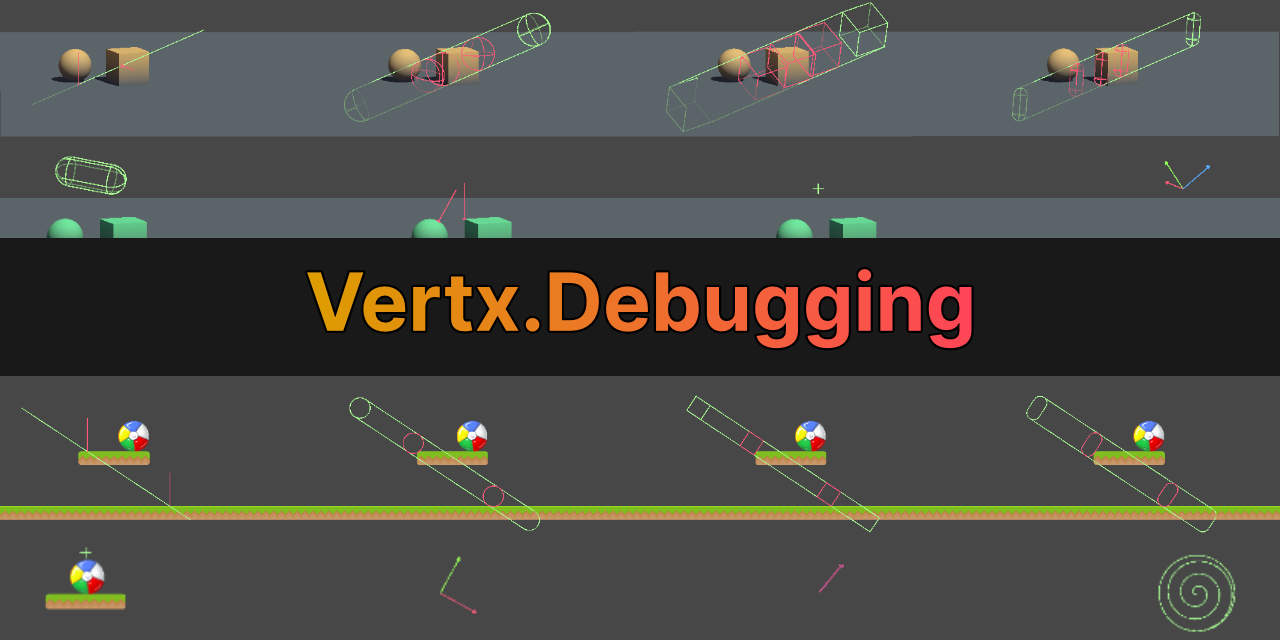
GitHub
Debugging Utilities for Unity. Contribute to vertxxyz/Vertx.Debugging development by creating an account on GitHub.
prime sinew
swift falcon
ui
see the thread that was shared to you. mainly the point about using EventTrigger
swift falcon
prime sinew
see the thread that was shared to you. mainly the point about using EventTrigger
I don't understand
swift falcon
fervent furnace
https://stackoverflow.com/questions/55448551/unity3d-how-to-detect-when-a-button...
thx
swift falcon
prime sinew
see the thread that was shared to you. mainly the point about using EventTrigger
I see it now thank you
grand compass
soft shard
I find this project very nice for visualizing the casts: https://github.com/vert...
Thank you, I'll check it out!
 jagged snow
I'm trying to get the total types of values of an enum and the answer i found on google doesnt seem to work. Does anyone know how to get it?
System.Enum.GetValues(LootType).Length - 1
 naive swallow
modest brook
i have been trying to get him but its not free
naive swallow
modest brook
i have been trying to get him but its not free
The only one on that list that costs money is Rider. Use Visual Studio
!ide
tawny elkBOT
💡 IDE Configuration
If your IDE is not autocompleting code
or underlining errors, please configure it.
Select one:
• Visual Studio (Installed via Unity Hub)
• Visual Studio (Installed manually)
• VS Code
• JetBrains Rider
• Other/None
mellow sigil
jagged snow
I'm trying to get the total types of values of an enum and the answer i found on...
typeof(LootType)
not sure why you'd subtract 1 from it unless it has some kind of "none" item
jagged snow
mellow sigil
not sure why you'd subtract 1 from it unless it has some kind of "none" item
ah your right thats out of habit thanks
trying it now
it works thank you!
 bright maple
Is now a good time for me to put in stuff about my problem?\
Don't want to cover up other peoples' inqueries
Good enough of time as any other I guess:
I've been trying to set up some movement code to get myself back into the swing of things in Unity. The issue is that 1 in every 10 or so jumps is unusually higher than the others. It also seems to differ in the build? The big jumps seem to be default in the editor, but the neutered jumps seem to be the default in the build.
https://paste.ofcode.org/VRLrXyamAXvA6Rew6VpukK
I think the offender might have something to do with the implemented dynamic jump features.
I read online that it has something to do with putting that stuff in Update() but that doesnt seem to apply here. So, idk whats going on.
https://cdn.discordapp.com/attachments/714663066075136031/1208867269506240584/Untitled_video_-_Made_with_Clipchamp.gif?ex=65e4d860&is=65d26360&hm=804360462fcf9d5375c110565a331bb229eaae1593413a5c001197579461b064&
 modest brook
naive swallow
The only one on that list that costs money is Rider. Use Visual Studio
!ide
modest brook
naive swallow
The only one on that list that costs money is Rider. Use Visual Studio
!ide
my visual studio isnt autocompleting code
naive swallow
modest brook
my visual studio isnt autocompleting code
Then configure it using the links provided
modest brook
it didnt work
naive swallow
modest brook
it didnt work
Then you have missed a step somewhere
 static matrix
bright maple
Good enough of time as any other I guess:
I've been trying to set up some movem...
static matrix
bright maple
Good enough of time as any other I guess:
I've been trying to set up some movem...
eh there is a thing with some jump codes where if you hit the button twice quickly you can trigger a jump again
but idk if that is your problem
bright maple
There's a jump cooldown to help deal with that. Also the jump force is set, not added. So, I'm not sure that could cause it.
static matrix
well even if it is set it resets the amount it had slowed down
could also be you are triggering the jump at the right time to do it before you are fully on the ground
try shrinking your jump detect box, see if it fixes it
bright maple
The size of the groundCheck is considerably smaller than the jump size difference. I've tried it though, it doesn't work. Also, it just causes other problems with movement.
 jade latch
i have a board game where the board is randomly generated and then copied, mirrored and flipped to so both sides are equal but now when im adding pieces and coding where they are able to go i run into an issue since im using a 2d array to keep track of the placed its able to move to but the cordinate values doesnt go from 10x10 to 0x0 but instead from 10x5 to 0x-5 and giving the array a negative value ofc gives an error. any ideas how i could bypass that? ive tried to offset it but it just moves the issue.
 static matrix
not totally sure what you are asking but I did write some (albiet java) code for mirroring an image
let me grab that for conceptuality
java is basically c# but slightly different so shouldn't be too hard to translate
public static void Mirror(String S){
    Picture pict = new Picture(S);
    var Pixels = pict.getPixels2D();
    var len = pict.getWidth();
    var Y = 0;

    for (Pixel[] pixels2 : Pixels) {
      var Iter = 0;
      var HoppedIter = 0;

      for (Pixel pixel : pixels2) {


        if(Iter > len/2){

          pixel.setColor(pict.getPixel(len-Iter, Y).getColor());

        }

        Iter += 1;
      }
      Y += 1;
    }
    pict.show();

  }
this was that put it should be relatively translatable
bright maple
bright maple
Good enough of time as any other I guess:
I've been trying to set up some movem...
I should make note that this problem only seems to be an issue in the builds. The big jumps are consistent in the editor. Which makes me think its an Update()/FixedUpdate() problem.
jade latch
im asking how i can work around the fact that arrays only go in positive values and one of my values can be negative
if thats a respond to me
static matrix
it is
tbh the solution is to not use negative values in a place like this
or something with mathf.abs
 leaden ice
jade latch
im asking how i can work around the fact that arrays only go in positive values ...
leaden ice
jade latch
im asking how i can work around the fact that arrays only go in positive values ...
You can't have negative indices in arrays. Just provide some kind of offset so you can do:
int myCoord = -5;
int offset = myArray.Length / 2;
myArray[myCoord + offset];```yeah or that
bright maple
leaden ice
You can't have negative indices in arrays. Just provide some kind of offset so y...
I was just thinking this. Offset the indices by half of the size of the array
leaden ice
bright maple
I was just thinking this. Offset the indices by half of the size of the array
basically let's say the array has 10 elements. You want to consider [-4, 5] instead of [0-9], To achieve that you have to add 4 to the index before using it.
so yes, adding half the size of the array.
jade latch
i tried that but it pushed the issue just further down but i can implement it and work from there
leaden ice
I mean it's an entirely tractable problem, you just have to give it a little thought
bright maple
It's a workaround I guess
Also, hi Praetor. Glad to see you're still dishing out helpful coding advice to people
leaden ice
The other option is to use a Dictionary instead of an Array
especially if this is a 2D grid, very easy to make a Dictionary<Vector2Int, Piece> or whatever
jade latch
im quite new to c# so not too sure what that is
leaden ice
You should go look it up. It's extremely useful and common
jade latch
i will thanks
leaden ice
every programming language has an associative array of some kind. They're called Dictionaries in C#, Maps in Java, HashTables in a lot of places.
jade latch
ahh maps im slightly familiar with from js
leaden ice
it's the same thing
in fact every JS object is essentially a Dictionary<string, object>
jade latch
but still very little clue on how they work tbh
frosty siren
leaden ice
every programming language has an associative array of some kind. They're called...
meanwhile, html:
jade latch
leaden ice
especially if this is a 2D grid, very easy to make a `Dictionary<Vector2Int, Pie...
so in that example just have the coordinates as the first values then true/false as the last one for example
leaden ice
jade latch
so in that example just have the coordinates as the first values then true/false...
not sure what you mean by first and last values
I don't really know how your game works. Let me use chess an example. In Chess you might have a Dictionary<Vector2Int, Piece>. The Vector2Int is the coordinates. The Piece can be any chess piece, e.g. Knight, Rook, Bishop and its color for example
static matrix
or null in the chess case
leaden ice
I mean you could have it be null or you could just not have that coordinate in the dictionary, which would be cleaner
naive swallow
frosty siren
~~meanwhile, html:~~
HTML isn't a programming language
frosty siren
touche
jade latch
fair enough, what i want with that code is to display every place that piece can go to (any spot within a range)
static matrix
leaden ice
I mean you could have it be null or you could just not have that coordinate in t...
well I presume that spaces that don't have a piece on them would just have the piece be null instead of removed from the dict
leaden ice
It would be cleaner to just remove it.
that would be weird to use null
because then you'd have some entires that are null and some that don't exist
and both of those things would mean no piece is there
jade latch
its not to track where each piece is but rather where they can go
leaden ice
and if you are going to go throught the trouble of populating all the spaces with null you might as well just use a 2D array
static matrix
oh yeah I guess heh
leaden ice
jade latch
fair enough, what i want with that code is to display every place that piece can...
If you just want a set of legal places for the piece to go just use a HashSet<Vector2Int>
if the space is in the set, it's legal, otherwise it's not legal
latent latch
infinite grids usually are dictionaries, but if you got like a chess size board I'd just make the 2D array
jade latch
i got a 10x10 grid but since its a copy paste the board cordinates goes from 10x5 to 0x-5 instead of 10x10 to 0x0
leaden ice
well yes chess is typically an array but chess was an example for illustration, they're not making chess
 mystic pollen
is this the place i can get help with code
jade latch
its an very advanced version of chess tbf
leaden ice
jade latch
i got a 10x10 grid but since its a copy paste the board cordinates goes from 10x...
Just do something like this:
public struct Coordinate {
  public const int boardSize = 10;
  public const int halfSize = boardSize / 2;

  public int x;
  public int y;

  public Vector2Int ArrayCoords => new Vector2Int(x - halfSize, y - halfSize);
}```then you can use your Coordinate struct however you want in your code, and when you want to access the array you use the ArrayCoords property.
latent latch
chess 2.0
jade latch
leaden ice
Just do something like this:
```cs
public struct Coordinate {
public const int...
thanks ill see if i can figgure it out
jade latch
jade latch
its an very advanced version of chess tbf
machine strike from horizon forbidden west to be exact
leaden ice
jade latch
machine strike from horizon forbidden west to be exact
tbh I don't really see why you need the negative coordinates.
In all your code you should deal with positive coords
if you want to display them on the map as negative, that's just a display thing
jade latch
i wish so too
leaden ice
that happens at the very end when displaying to the user
it shouldn't be part of your code logic
it's like in chess the coordinates are a1, b7, etc..
internally in any chess engine it's just two numbers, both zero indexed
the letters and the 1-indexed number are a last second display translation for the User's benefit
in fact in many chess engines it's just a single number 0-63 to indicate the board space. The internal representation doesn't have to match what the player sees.
jade latch
ill have to look at the code i made to define the cordinates to see if i can adjust that
 spring creek
mystic pollen
is this the place i can get help with code
spring creek
mystic pollen
is this the place i can get help with code
Yes
Oh, I see you asked about networking in the other server though. So #archived-networking would be better if it's the same question
jade latch
that worked, why did i not think of that before
 royal wigeon
I'm trying to get some realistic camera bobbing, but I don't just want some sine waves going up and down, I can't figure out how I would do this since I'm not that good at math, and there are no videos of realistic camera bobbing online, anyone willing to help?
latent latch
use an animation curve
royal wigeon
I have no idea what that is yet, I haven't dived much into animations.
 main coral
Hello I have a problem on my TMP_Dropdown! When I have my dropdown menu 8 has the value of 0 and zero the value of 8! whats the problem here ?


 simple egret
Well it's clear here that the option "number 8" is at the first position in the options list, so it has index 0 in said list
And the last one, the "number 1" is at index 7
main coral
Where is my mistake ? In the dropdown component ?
simple egret
No, probably in the code that handles it
main coral
if I use OPTION = 8 i want that it has the value of 8 in the code
public TMP_Dropdown MyPlayerCountDropDown
{
get { return m_PlayerCountDropDown; }
}
m_uILobbies.MyPlayerCountDropDown.value
simple egret
Yeah the On Value Changed event will pass the index, not the option text to your function
main coral
but when I change the dropdown menu in the inspector when I pick 6 it has the value of 2 (look on the pictures above)
simple egret
Yes that's normal!
Because the option with the text "6" is third in the list, so at index 2
main coral
ok i got it
what is the best to get the int from the dropdown ?
I use it to create a lobby and I want use it for 1-8 players
Lobby lobby = await Lobbies.Instance.CreateLobbyAsync("My Lobby", m_uILobbies.MyPlayerCountDropDown.value, lobbyOptions);
simple egret
That would be the text of the selected option, and you will get it as a string.
main coral
how do I get the text of the selected field ?
main coral
is there a way to get it as int ?
simple egret
Not directly, you need to convert it, like with int.Parse()
main coral
thanks a lot
 vagrant blade
@zealous crane don't crosspost
 zealous crane
vagrant blade
<@1041710371792244817> don't crosspost
zealous crane
vagrant blade
<@1041710371792244817> don't crosspost
okey
main coral
this did work for me:
int selectedValue = int.Parse(m_uILobbies.MyPlayerCountDropDown.options[m_uILobbies.MyPlayerCountDropDown.value].text);
bright maple
Fixing Jump Inconsistency
 sullen crown
[Package Manager Window] Error adding package: https://github.com/srcnalt/OpenAI-Unity.git.
Unable to add package [https://github.com/srcnalt/OpenAI-Unity.git]:
No 'git' executable was found. Please install Git on your system then restart Unity and Unity Hub
UnityEditor.EditorApplication:Internal_CallUpdateFunctions ()
keep getting this error while use giturl in UPM.
i have several repos that i access using source tree dont know what is leading to this error any idea?
simple egret
sullen crown
[Package Manager Window] Error adding package: https://github.com/srcnalt/OpenAI...
No 'git' executable was found. Please install Git on your system then restart Unity and Unity Hub
Is Git installed on your system?
Try inputting git in a command line terminal, and make sure the command is recognized.
sullen crown
wee, it doesnt exist 
simple egret
Install it and try again. You'll need to restart your computer (or log out -> log in) so the changes are applied
simple egret
I think these have the library bundled into them, so they're fast and easy to install and set up
sullen crown
simple egret
I think these have the library bundled into them, so they're fast and easy to in...
worked!
swift falcon
i have a question for c++ interperatation
cus im working on a game that wants to utilize c++ code
and c# as well
 knotty sun
swift falcon
i have a question for c++ interperatation
knotty sun
swift falcon
i have a question for c++ interperatation
then ask in a C++ server
swift falcon
ok, but i need help with also adding game objects to a scene while using c++
idk if they could provide that
knotty sun
sounds like modding which is not allowed here
swift falcon
ok
 lavish frigate
Im trying to make an enemy that travels around terrain. Like the little bugs from hollow knight. Any way i can simply make an enemy crawl around a collider?

currently doing this, which makes it freak out at a turn because rotating it does not imply correct position after turning. So the collision checks fail when rotated once
swift falcon
I got a navmesh surface and agents and they chase the player but it doesn't jump at all and if it cant reach the player it just stops. How can I fix this?

 charred ruin
lavish frigate
Im trying to make an enemy that travels around terrain. Like the little bugs fro...
charred ruin
lavish frigate
Im trying to make an enemy that travels around terrain. Like the little bugs fro...
I'd recommend using Unity's pathfinding. Coding that on your own will require a lot of work and a lot of code.
https://learn.unity.com/project/beginner-ai-pathfinding

Unity Learn
The Project will feature the following elements: An AI character Scene geometry that features: Doors Stairs / Ramps Multiple NavMesh Areas (for off link use)
lavish frigate
charred ruin
I'd recommend using Unity's pathfinding. Coding that on your own will require a ...
its a 2d platformer game so i dont think thats what i should go for right?
charred ruin
I haven't worked much with 2D but I heard this is good pathfinding tool: https://learn.unity.com/project/a-36369ng

Unity Learn
In this tutorial you will learn about the fundamental concepts used in the creation of Behaviour Trees. You will also take this knowledge and apply it in Unity by building a simple simulation scenario where a behaviour tree is used to define action sequences of a thief stealing a diamond from a gallery.
 finite otter
For my VR Game it says that it cannot find Photon3Unity3D.dll even though i have it does anyone know the solution
charred ruin
Does anyone know why my character is clipping into the wall? The video shows what is occurring and what the properties are for the player and the wall.
private void FixedUpdate()
    {
        if(movementInput != null)
            playerRigidBody.MovePosition(transform.position + (Vector3.right * movementInput.x * Time.fixedDeltaTime * movementSpeed));
    }
 marble mauve
anyone know why I am using a singleton and I am settings a TMP Text in a property called text. Then in a funcion called changeText I am changed the text of the TMP text I set in the inspector but it turns me this error Idk why.


 somber nacelle
what is line 40 or PersistentManager.cs
marble mauve
this.Text.text = "test"
then you are likely calling that method before the Text variable has been assigned or on an instance where it has not been assigned
marble mauve
somber nacelle
then you are likely calling that method before the Text variable has been assign...
Mmm there is a delay of 2 seconds before calling the function which change the text
One possible reason could be that all the container where the text resides is disabled but I active it before changing the text
somber nacelle
marble mauve
Mmm there is a delay of 2 seconds before calling the function which change the t...
that does not mean that either of the things i said is not true. in fact, one of the two things i suggested has to be true
you've shown a single line of code so i can only guess at what it is. consider showing more code
marble mauve
somber nacelle
then you are likely calling that method before the Text variable has been assign...
Mmm know I can't show more as I send the error and disconnect I have been coding for hours. How I can see if the variable has been assigned?
It could be that the persistent manager is created before the text component was created?
somber nacelle
mossy snow
marble mauve
It could be that the persistent manager is created before the text component was...
Does your singleton implementation have the ability to create itself if it doesn't exist? I have a feeling you're about to find out why singletons are a controversial design anti-pattern
 frosty sequoia
hey uhm, why can i see the red gameobject in the scene but not when i look in the game viewer


oh wait, nvm i realized why. it was behind the camera lmao
 tight ice
https://i.imgur.com/c7qBYwS.gif
why might this code, which spawns a raycast from a gray cube and shoots downward, be failing to instantiate the red cube prefabs on the box below it?
instead, the raycast does not detect the box below it-- only the floor-- so the red cube prefabs get spawned on the floor instead of the box
The box has collider active. (Pic attached of box inspector properties)


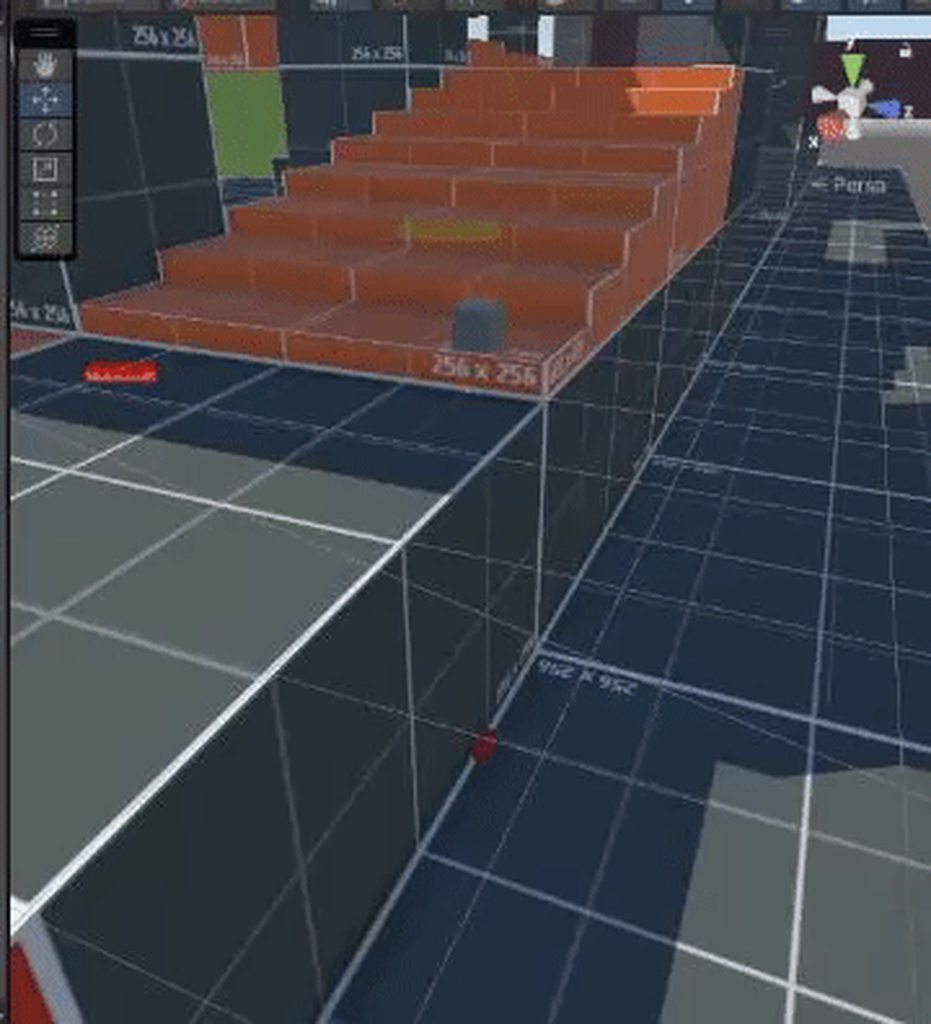
 quartz folio
It just looks like it's probably not over the edge enough
tight ice
quartz folio
It just looks like it's probably not over the edge enough
that.. may actually be it, it looks like if i move Z by 0.01 then it works, okay that revealed another problem lol that i can finally fix thanks!
 deep oyster
Anyone know how to test different system languages in unity without actually changing my system language?
I even changed my windows display language but apparently that's not enough lol
rigid island
deep oyster
Anyone know how to test different system languages in unity without actually cha...
Localization package ?
 hard viper
is there an already made string-like class for strings that are multi-language? wouldn’t be too hard to code, but I am wondering if someone already made one
rigid island
2 localization questions back to back , nice
hard viper
his question reminded me that it was a thing I’ve been meaning to ask for a while
i was thinking something like class InternationalString with public enum Language {…}, public static Language currentLanguage, and public override string ToString() => strings[(int)currentLanguage]; or something
or something like that. but i feel like i’d be reinventing the wheel, when there is definitely a tool out there for this
quartz folio
There's an entire localization package
 chilly surge
I have my own i18n done with code gen for compile time type safety, but I imagine that's not a common requirement for most games.
hard viper
yeah… I’m trying to avoid reinventing the wheel as much as possible.
hard viper
quartz folio
There's an entire localization package
how would you rate the unity localization package, between [not worth using] and [very worth learning]
quartz folio
I have barely touched it
hard viper
deep oyster
rigid island
Localization package ?
I've downloaded the unity localization package but I'm having trouble getting it to actually use a different language from English.

 rigid island
deep oyster
I've downloaded the unity localization package but I'm having trouble getting it...
rigid island
deep oyster
I've downloaded the unity localization package but I'm having trouble getting it...
I have not gotten around to learning / using it yet.
Wish could be more help on this, Sorry.
 cold parrot
hard viper
how would you rate the unity localization package, between [not worth using] and...
cold parrot
hard viper
how would you rate the unity localization package, between [not worth using] and...
its serviceable
certainly beats rolling your own. It feels a bit overengineered at first glance, but it actually just gives you all the tools right from the start that you'd need eventually anyway, but just don't know yet. In some simple cases you'd ofc be done quicker with a DIY solution; Those would be ones without a team or any need for mixing editor & code based workflows.
 crisp bronze
Hi, why does using using this code make my Wirecube disappear in the Scene view?
Gizmos.matrix = transform.localToWorldMatrix;
Gizmos.color = Color.blue;
Gizmos.DrawWireCube(transform.position + Vector3.up, new Vector3(1f,2f,1f));
I'm just trying to make the Wirecube gizmo rotate along with te rotation of the Transform
quartz folio
crisp bronze
Hi, why does using using this code make my Wirecube disappear in the Scene view?...
Presumably because you're drawing it at its position but locally to itself, so you've translated it doubly
localToWorldMatrix already includes the position, don't additionally use transform.position to offset it
crisp bronze
quartz folio
localToWorldMatrix already includes the position, don't additionally use transfo...
Ahh, thank you
hard viper
also make sure this is in OnGizmosDraw…Selected etc
old nymph
tawdry jasper
you could try grabbing your current transform.location, use Camera.main.WorldToS...
Thank you for the suggestion!
 faint hornet
hey everyone, i am having an issue with a struct that i created and it has an initializing function attatched to it but it is not working.
I have an array of struct that i loop through in the awake function and calling init on every one of them but it is not populating.
here is the struct:
[System.Serializable]
struct RectInstruction
{
  public bool isHorizontal;
  public RectTransform[] upOrRight, downOrLeft;
  public float[] upOrRightDefaults, DownOrLeftDefaults;

  public void Init()
  {
    this.upOrRightDefaults = new float[upOrRight.Length];
    this.DownOrLeftDefaults = new float[downOrLeft.Length];

    for (int i = 0; i < upOrRight.Length; i++)
    {
      upOrRightDefaults[i] = isHorizontal ? upOrRight[i].anchoredPosition.x : upOrRight[i].anchoredPosition.y;
    }
    for (int j = 0; j < downOrLeft.Length; j++)
    {
      DownOrLeftDefaults[j] = isHorizontal ? downOrLeft[j].anchoredPosition.x : downOrLeft[j].anchoredPosition.y;
    }
  }
  public void ChangeAll(float addedValue)
  {
    for (int i = 0; i < upOrRight.Length; i++)
    {
      ChangeRect(upOrRight[i], upOrRightDefaults[i], addedValue, true);
    }
    for (int i = 0; i < downOrLeft.Length; i++)
    {
      ChangeRect(downOrLeft[i], DownOrLeftDefaults[i], addedValue, false);
    }
  }
  private void ChangeRect(RectTransform rect, float defaultValue, float addedValue, bool isDefault)
  {
    Vector2 sizeDelta = rect.sizeDelta;
    float newValue = defaultValue + addedValue * (isDefault ? 1 : -1);

    if (isHorizontal)
    {
      sizeDelta.x = newValue;
    }
    else
    {
      sizeDelta.y = newValue;
    }
    rect.sizeDelta = sizeDelta;
  }

}
The other functions work but not "Init()".
some things to keep in mind;
The rectTransform[]'s are populated in the inspector before runtime with a length on 1 for each.
The float[]'s are not populated in the inspector, I want to automate it using the init function.
faint hornet
Ive tried awake and start;
private void Start()
  {
    foreach (var item in instruct)
    {
      item.Init();
    }
  }
do i need an OG forLoop?
fervent furnace
What is instruct, array or list
fervent furnace
Then use forloop and use indexer call directly
cosmic rain
I think you'll be accessing a copy in any case. You'll need to copy the initialized struct back into the array.
faint hornet
like
intruct[i].init();
??
cosmic rain
I think that's gonna be a copy too.
faint hornet
hmm. this is weird i don't understand why
fervent furnace
Array indexer not indexer, it actually dereferencing the address
Not returning the copy
faint hornet
would a list be different? should i use that?
fervent furnace
Indexer of list is returning the copy
cosmic rain
faint hornet
hmm. this is weird i don't understand why
Because structs are value types, but Tina is probably correct.
faint hornet
fervent furnace
Indexer of list is returning the copy
so yes? a list does work?
cosmic rain
If you want to avoid all that headache, just use a class. I'm sure struct isn't even a justified use case in your situation.
faint hornet
cosmic rain
If you want to avoid all that headache, just use a class. I'm sure struct isn't ...
will do!
faint hornet
cosmic rain
If you want to avoid all that headache, just use a class. I'm sure struct isn't ...
wait but can i make an array or classes and have them serializable in in the einspector?
cosmic rain
Yes
faint hornet
ok ❤️
fervent furnace
public class HelloWorld{
    public struct A{
        public int a;
        public void set_a(int num){
            a=num;
        }
    }
    public static void Main(string[] args){
        A[] a0=new A[1];
        a0[0].set_a(10);
        Console.WriteLine(a0[0].a);//10
        List<A> a1=new();
        a1.Add(new A());
        a1[0].set_a(100);
      Console.WriteLine(a1[0].a);//0
    }
}
sometimes in my scene, I have to enable and disable a chunk of objects....this results in a lag...to be more clear, in my phone when i enable those objects, for a very small amount of time, the screen freezes...although it isn't much noticeable at first, it becomes clearly noticeable when I am doing it repeatedly...any solution to this??
lean sail
swift falcon
sometimes in my scene, I have to enable and disable a chunk of objects....this r...
What's the use case?
swift falcon
@lean sail i turned a huge terrain with trees and other stuffs into a gameobject and then cut into pieces...i have to enable and disable those according to the player's position...
latent latch
You can just do the trees yourself and disable them independently, but disabling a whole terrain may have some overhead.
swift falcon
latent latch
You can just do the trees yourself and disable them independently, but disabling...
i have tried it...i have almost 4000+ objects in that chunk including only the trees and the crates and other stuffs...when i enable and disable those, the screen freezes for a bit...
lean sail
Yea not really much to do there if you really need to disable all those objects at once. Maybe split it up even smaller and try to do the work over a few frames instead
swift falcon
lean sail
Yea not really much to do there if you really need to disable all those objects ...
how do i do that over a few frames?
is there anything like enabling objects asynchronously?
fervent furnace
Coroutine
lean sail
swift falcon
how do i do that over a few frames?
With a coroutine but try splitting this up into smaller chunks first. I think that would be better
latent latch
The terrain itself chunks sections and is overall pretty optimized for not being touched in over a decade. Perhaps just disabling the collider could be a solution and profiling that.
swift falcon
lean sail
With a coroutine but try splitting this up into smaller chunks first. I think th...
how should i do it? using the waitforframes?
swift falcon
latent latch
The terrain itself chunks sections and is overall pretty optimized for not being...
that terrain is now a gameobject...i am just enabling and disabling those splitted gameobjects having all the trees and other stuffs as its child object
lean sail
swift falcon
how should i do it? using the waitforframes?
I dont recall that being a thing specifically, yield return null will basically wait a frame though
orchid abyss
why isn't it working?
 swift falcon
lean sail
I dont recall that being a thing specifically, yield return null will basically ...
swift falcon
lean sail
I dont recall that being a thing specifically, yield return null will basically ...
thanks, i'll try this out
swift falcon
orchid abyss
why isn't it working?
have you called the function anwhere?
vagrant blade
orchid abyss
why isn't it working?
Haven't you posted enough here to know that you need to give some context of what isn't working?
orchid abyss
when i instantiate the blood it rotates properly but otherwise it doesn't
vagrant blade
Baffling how anyone was supposed to gather that was the issue lol 🤔
 swift falcon
orchid abyss
when i instantiate the blood it rotates properly but otherwise it doesn't
swift falcon
orchid abyss
when i instantiate the blood it rotates properly but otherwise it doesn't
a screenshot would be great to understand your issue
orchid abyss
ill post a vid wait
mossy snow
orchid abyss
why isn't it working?
bug 1) player.transform.rotation.y is a quaternion component, not an angle. You probably want to use eulerAngles instead
bug 2) capsulecollidercenter is probably not what you want; it's a world-space position, so if your transform ever moves it's going to be in the wrong place
orchid abyss
orchid abyss
mossy snow
bug 1) `player.transform.rotation.y` is a quaternion component, not an angle. Yo...
doesn't work either
mossy snow
I'm going to guess this is a logic error and that while your code says "rotate the blood around +y axis", what you want is "make the blood fly in the direction the player is facing" right? If it's "working on instantiate" why don't you just reuse that same rotation? Otherwise you probably want something like Quaternion.LookDirection(player.transform.forward); as your rotation
orchid abyss
this one worked but i swear i wrote it like this last time and it gave me an error 😅

something abount rotation not being a variable
maybe cause i added euler last time
 upper burrow
I am struggling HARD with this code. No matter how much I add or change trying to get my snap grid to work, it refuses to let my pieces snap to the grid.
https://pastebin.com/RSRLvxwN
https://pastebin.com/4eWSFftD
https://pastebin.com/e6viKT4M
Pastebin
Pastebin.com is the number one paste tool since 2002. Pastebin is a website where you can store text online for a set period of time.
Pastebin
Pastebin.com is the number one paste tool since 2002. Pastebin is a website where you can store text online for a set period of time.
Pastebin
Pastebin.com is the number one paste tool since 2002. Pastebin is a website where you can store text online for a set period of time.
cosmic rain
upper burrow
I am struggling HARD with this code. No matter how much I add or change trying t...
Should probably start from clarifying/demonstrating the issue. A video could be useful for that.
upper burrow
cosmic rain
Should probably start from clarifying/demonstrating the issue. A video could be ...
True
swift falcon
lean sail
I dont recall that being a thing specifically, yield return null will basically ...
i tried it...but lemme explain...i have two gameobjects...each gameobject has 4000+ gameobjects under it...when i am waiting for the frame after one chunk of gameobject is enabled, the whole process is taking only two frames...which is still creating heavy operation on those two frames resulting in screen freeze...and when i am waiting for a frame after each child objects is being active...it is taking way longer....what can i do now?
fervent furnace
Dont know terrain, but the how many objs you have not affect your strategy (split them up and disable partial of them each frame)
marble mauve
mossy snow
Does your singleton implementation have the ability to create itself if it doesn...
Yes it has
I want to quit from singletons but I have a ws connection so I think that I'll need one of them for the connection
I don't know if I can create a non-singleton in a class and call a function from that class without being a singleton as I don't have any instance of it. Only the behavior
mossy snow
if your singleton can be created on-demand, then you have two potential issues:
- if it has any serialized fields, the one created on-demand won't have them set. And then when the one you set up is created, it kills itself
- if it has any serialized fields, they have to have the same life cycle (i.e., if your singleton survives scene loads via DontDestroyOnLoad, anything it references has to as well or they'll be lost on next scene load because they're dead
lean sail
swift falcon
i tried it...but lemme explain...i have two gameobjects...each gameobject has 40...
🤷♂️ splitting it across 2 frames is likely gonna have no real difference. you might need to do this across a lot of frames. This is basically gonna be the same as making those 2 objects into way smaller chunks. The problem is just flawed from the start, you arent gonna get good performance toggling 4000 objects on mobile
swift falcon
lean sail
🤷♂️ splitting it across 2 frames is likely gonna have no real difference. you ...
i guess i have to sort those objects and split it more efficiently...anyway thanks for the help
marble mauve
mossy snow
if your singleton can be created on-demand, then you have two potential issues:
...
In my case my singleton (I don't know why I have created it as a singleton) is only in one scene because I don't know if in unity you can call a function from a mono behavior if you haven't set it to any game object
mossy snow
you might need to provide more context about what you're trying to achieve because I don't know how the second part is relevant
spring creek
marble mauve
In my case my singleton (I don't know why I have created it as a singleton) is o...
If there is no instance of the class (whether it inherits from MonoBehaviour or not) then no, you cannot call a function from it
Just to clarify for the second part
marble mauve
mossy snow
you might need to provide more context about what you're trying to achieve becau...
I am trying to set a tmp text when I receive a specific message from my websocket. But as the text is disabled I don't know how I can get it. I could make it to be enabled when the message is received but when I set it to active and I try to change the text it turns me the error. I am executing a function from the ws singleton to another singleton that is invoking an event to make it active.
marble mauve
spring creek
If there is no instance of the class (whether it inherits from MonoBehaviour or ...
Oh thanks.
faint hornet
Hey everyone, quick question.. my game is little by little slowing down exponetially and i think it may be this code..
void RenderSprites()
  {

    RenderTexture targetTexture = cam.targetTexture;

    Texture2D tex = new Texture2D(targetTexture.width, targetTexture.height, TextureFormat.RGB24, false);

    RenderTexture.active = targetTexture;
    tex.ReadPixels(new Rect(0, 0, targetTexture.width, targetTexture.height), 0, 0);
    tex.Apply();

    Sprite convertedSprite = Sprite.Create(tex, new Rect(0, 0, tex.width, tex.height), new Vector2(0, 0));

    if (spriteRenderer != null)
    {

      spriteRenderer.sprite = convertedSprite;
    }
    gridManager.SetSprites(SliceSprite(convertedSprite, gridManager.gridResolution.x, gridManager.gridResolution.y));
  }
  private Sprite[,] SliceSprite(Sprite sprite, int rows, int columns)
  {
    Sprite[,] sprites = new Sprite[rows, columns];

    float sliceWidth = sprite.rect.width / columns;
    float sliceHeight = sprite.rect.height / rows;

    for (int y = 0; y < rows; y++)
    {
      for (int x = 0; x < columns; x++)
      {
        float xPos = sprite.rect.x + x * sliceWidth;
        float yPos = sprite.rect.y + y * sliceHeight;

        Sprite slice = Sprite.Create(sprite.texture, new Rect(xPos, yPos, sliceWidth, sliceHeight), new Vector2(0f, 0f));
        slice.name = string.Format("[{0},{1}]", x, y);
        sprites[x, y] = slice;
      }
    }

    return sprites;
  }
every frame in update is running this code, and i have reason to beleive that when i create a sprite i must delete it afterwards? i think this is a memory leak possibly? lmk what you think
 glacial pasture
soloution
cosmic rain
Don't cross post...
glacial pasture
cosmic rain
Don't cross post...
is this your server?
cosmic rain
glacial pasture
is this your server?
It's in the server rules.
glacial pasture
cosmic rain
It's in the server rules.
ohk sry
hexed pecan
faint hornet
Hey everyone, quick question.. my game is little by little slowing down exponeti...
You are creating a new Texture2D every time you call RenderSprites.
Texture2D, like other objects inheriting from UnityEngine.Object, need to be destroyed manually or you get a memory leak, which explains the slowing down over time
faint hornet
hexed pecan
You are creating a new Texture2D every time you call RenderSprites.
Texture2D, l...
so where and how should i delete it?
hexed pecan
You use Destroy to destroy a UnityEngine.Object
Destroy it when you no longer need it, or create just one texture and reuse it
Not sure how you are using it, but from what I see, you probably should just reuse one texture
Oh, and I think the same goes with the Sprite that you are creating. That's also a Unity object
faint hornet
hexed pecan
You use ``Destroy`` to destroy a UnityEngine.Object
can i use this ? or does this not destroy it?
tex.hideFlags = HideFlags.HideAndDontSave;
hexed pecan
hexed pecan
Oh, and I think the same goes with the Sprite that you are creating. That's also...
Sprites too ^
hexed pecan
faint hornet
just save a reference to it and then rewrite it?
To be clear, don't replace the object reference. Use the same object
 dawn nebula
orchid abyss
dawn nebula
orchid abyss
Finally, Silksong.
faint hornet
hexed pecan
To be clear, don't replace the object reference. Use the same object
so would this work?
private Texture2D tex;
^^^ global


if (tex == null)
    {
      Texture2D tex = new Texture2D(targetTexture.width, targetTexture.height, TextureFormat.RGB24, false);
    }
no that is not working...
hexed pecan
Instead of Texture2D tex = ... you should do tex = ...
Otherwise you are creating a separate local variable with the same name, tex
Also ofc that if-statement needs to be inside a method
 mystic gull
I have maps (type of Tilemap). When OnBecameInvisible I want to signal a MapManager that map is outside a screen.
When the map is instantiated by the MapManager should I:
- Make a reference to the MapManager and call a method from it;
- Make an event on a map and subscribe MapManager's method to the event. Notice I have 200 maps instantiated at the start so that is 200 subscriptions.
- Other options or patterns I should use in this situation. Performance has more priority.
faint hornet
hexed pecan
Instead of ``Texture2D tex = ...`` you should do ``tex = ...``
so doing,
tex = new Texture2D(targetTexture.width, targetTexture.height, TextureFormat.RGB24, false);
with a global reference will delete overwrite the current texture if it already exist, and will create one if it is null?
hexed pecan
Nothing here is 'global'
You probably mean member/class variable
If you do that and the texture already exists, the old texture will still remain in memory and you get a memory leak
Which is why you should only create a new one if it is null
hexed pecan
faint hornet
so would this work?
```
private Texture2D tex;
^^^ global
if (tex == null)
...
Just do this but remove the Texture2D as I instructed
faint hornet
@hexed pecan
ok so does this make sence for the array or sprites im creating?
old way
Sprite[] sprites = new Sprite[rows, columns];

Sprite slice = Sprite.Create(sprite.texture, new Rect(xPos, yPos, sliceWidth, sliceHeight), new Vector2(0f, 0f));
slice.name = string.Format("[{0},{1}]", x, y);
// Store the reference to the slice in the array
sprites[x, y] = slice;
new way
if (sprites == null)
{
  sprites = new Sprite[rows, columns];
}

if (sprites[x, y] == null)
{
  Sprite slice = Sprite.Create(sprite.texture, new Rect(xPos, yPos, sliceWidth, sliceHeight), new Vector2(0f, 0f));
  slice.name = string.Format("[{0},{1}]", x, y);
  // Store the reference to the slice in the array
  sprites[x, y] = slice;
}
else
{
  sprites[x, y] = Sprite.Create(sprite.texture, new Rect(xPos, yPos, sliceWidth, sliceHeight), new Vector2(0f, 0f));
}
In the else you are still creating a new Sprite, which will, again, cause a memory leak
I don't really work with sprites but if you can change the existing sprite's rect and texture, do that.
If not, Destroy the old sprite before creating a new one
faint hornet
hexed pecan
If not, Destroy the old sprite before creating a new one
i do not know how to destroy a sprite. only gameobjects. i dont understand how to
hexed pecan
Destroy takes a UnityEngine.Object as an argument
GameObject, Sprite, Texture2D all inherit from UnityEngine.Object
faint hornet
hexed pecan
``Destroy`` takes a UnityEngine.Object as an argument
so like this will work?
else
  {
    Destroy(sprites[x, y]);
    sprites[x, y] = Sprite.Create(sprite.texture, new Rect(xPos, yPos, sliceWidth, sliceHeight), new Vector2(0f, 0f));
  }
Looks ok
What are you making though? There might be a more optimized way of doing it
Instead of creating and destroying objects every frame
 round violet
what is the bool operation name that returns true if both statements are false
this
if (!statement1 && !statement){
}
Yes, that
round violet
im asking about the name
like "or", "and", "nand", "xor"...
if it exists for that
thin aurora
Oh
&& is conditional and
|| is conditional or

C# logical operators perform logical negation (!), conjunction (AND - &, &&), and inclusive and exclusive disjunction (OR - |, ||, ^) operations with Boolean operands.
round violet
sounds like there is no "name" for what i am looking for
mellow sigil
There's no special name for that. It's an AND operation of two negations.
mild coyote
round violet
sounds like there is no "name" for what i am looking for
what about NOR? 😆
if(!(statement1 || statement2))
cosmic rain
round violet
this
```cs
if (!statement1 && !statement){
}
```
Pretty sure it's called NAND in electronics and stuff.
You don't see the term in software engineering much.
mellow sigil
NAND would be !(statement1 && statement2)
cosmic rain
Ah, right
round violet
mild coyote
what about NOR? 😆
```if(!(statement1 || statement2))```
oh ty, i swear i looked at it before asking
mellow sigil
(!statement1 && !statement2) has the same result as NOR but nobody would ever describe that code saying that it's NOR
faint hornet
hexed pecan
What are you making though? There might be a more optimized way of doing it
I am making a jigsaw like puzzle game, where the "completed jigsaw image" is animated using the camera to project UI component animations into the jigsaw pieces using sprites (so rentertex to tex2d to sprite multimode). the game basically relies on motion within the jiggies to solve, otherwise would be kinda impossible.
 warm kraken
hey guys. i have 2 scripts. 1 is PlayerController and 2 is MouseLook. i use rigidbody to controll the player (move) so it causes slight jitter while also moving mouse/looking around (environment objects jitter). this of course doesnt happen when i switch to transform based movement on my PlayerController. any ideas how i can have rigidbody movement based PlayerController and MouseLook but fix the jitter? thanks.
cosmic rain
warm kraken
hey guys. i have 2 scripts. 1 is PlayerController and 2 is MouseLook. i use rigi...
Enable interpolation on the rb.
warm kraken
didn't fix it
mild coyote
is mouselook using lateupdate?
deft timber
what mouselook?
warm kraken
mild coyote
is mouselook using lateupdate?
Doesn't matter update type, still jittery
 trim schooner
How are you moving the camera? It might be camera jitter, not player
Make sure the RB movement is in FixedUpdate too
delete from here, this is a code channel and ask in #✨┃vfx-and-particles
 craggy veldt
 vestal crest
is there a callback for when IAP initiate purchase is completed, i need to a loading screen when i clicked the item in UI, then i will disable it when purchase screen is loaded
trim schooner
Yes there is
vestal crest
would you tell me what is it name or link me the docs?
warm kraken
trim schooner
Make sure the RB movement is in FixedUpdate too
My camera script works in update and playercontroller in fixedupdate because it uses rigidbody
I think thats the reason because i use fixedupdate for my rigidbody. But there's no other choice
trim schooner
change the camera update to be FixedUpdate or LateUpdate
vestal crest
vestal crest
is there a callback for when IAP initiate purchase is completed, i need to a loa...
I've been looking up for almost half an hour and yet not found anything
rigid island
vestal crest
I've been looking up for almost half an hour and yet not found anything
 vestal crest
i dont use iap button and what i want is not when the purhcase is completed or failed
i need a loading screen that lives until purchasing screen is live
thin aurora
No crossposting
 tired niche
thin aurora
No crossposting
tired niche
thin aurora
No crossposting
where can i ask for help?
thin aurora
You just did in #💻┃code-beginner
tired niche
thin aurora
You just did in <#497874004401586176>
but they say it s not a coding problem
mellow sigil
Then why tf did you post to another coding channel
tired niche
mellow sigil
Then why tf did you post to another coding channel
i posted on both at the same time
i just want some help
thin aurora
You've had help
tired niche
thin aurora
You've had help
what help? u said it s a git folder pointing to nothing. how can i repair that?
thin aurora
Arguing is pointless, you've been pointed to a different channel because this is not code related, and I suggested you check for any git folders your project might have #🔎┃find-a-channel
tired niche
thin aurora
Arguing is pointless, you've been pointed to a different channel because this is...
i m not arguing 😦 i m just trying to find a solution to my problem
thx anyway
 placid compass
Hello, I have a question. I have a prototype I want to test on my phone so I started android build. I have a pretty powerful pc but I have never had build take this long. The project is fairly small so It makes no sense to me why it is taking so long. It is the first build of this project but still. Any ideas? Unity is 2021.3.0
 latent latch
what's your alternative
right, that's called object pooling and that's a concept you'd probably want to get familiar with
somewhere along the line you need to instantiate your objects into the scene, but it's not just the overhead of instantiation that's the problem but if you're actively destroying objects and re-instantiating then you may run into issues of performance hiccups at runtime
for a few objects it's probably not that big of a deal, but for example you've got a gun that's instantiating hundreds of physical bullets a minute, then that's something to consider pooling
if you're going to be reusing the object a lot, then you'd probably be best off just disabling it than outright destroying.
yep, sounds fine
I wouldn't worry too much until you do run into performance problem
placid compass
When you pick items up, they dissapear from the floor and appear in the hand?
if yes, then just move them there
set their parent as the hand and position at the correct position on the hand
no need for spawning or enabling/disabling the objects
placid compass
placid compass
set their parent as the hand and position at the correct position on the hand
you can make a positioner object in the hand and set parent to it with position and rotations to Vector3.zero
Not sure for mp, but I dont see the reason it wouldnt work. If the object can be interacted with by every player, it shouldnt be a problem, but maybe ask in the networking channel
 midnight void
What are some good resources for a turn base jrpg combat system?
latent latch
keeping stuff instantiated on the client is fine and hiding it
rigid island
midnight void
What are some good resources for a turn base jrpg combat system?
the internet
orchid abyss
how to refer to child object of instantiated prefab?
round violet
Is Destroy called at the end of the frame or directly ?
rigid island
round violet
Is Destroy called at the end of the frame or directly ?
end of frame iirc
knotty sun
round violet
Is Destroy called at the end of the frame or directly ?
neither, after Update
knotty sun
 round violet
i missread with OnDestroy mb
rigid island
so after the frame end?
basically
Actual object destruction is always delayed until after the current Update loop, but will always be done before rendering.
hmm
warm kraken
trim schooner
change the camera update to be FixedUpdate or LateUpdate
when i do that lateUpdate gives same result as Update. and fixedUpdate gives a little different result. it jitters as i move and also when i stand and look around, it feels laggy.
orchid abyss
my object falls through ground then i add force to it even tho it has a box colider and rigidbody
thin aurora
Good for you
orchid abyss
idk why the geo falls through the ground
deft timber
ok
 placid summit
anyone write xml comments for doxygen etc? The xml 3 line minimum seems a bit space-taking! I realised you can do a single line 3 slash /// comment instead, I think can not be // but //! or ///
trim schooner
orchid abyss
idk why the geo falls through the ground
this is a code channel and that's not a code issue
 quaint rock
placid summit
anyone write xml comments for doxygen etc? The xml 3 line minimum seems a bit sp...
quaint rock
placid summit
anyone write xml comments for doxygen etc? The xml 3 line minimum seems a bit sp...
my editor just auto builds out the string when i hit /// including the ones for params, but it does both open and closing tags inline for those with just summary on 3 lines
dont really think the spaces it takes is a huge deal, since am really only putting it on public and sometimes protected methods anyways
placid summit
quaint rock
my editor just auto builds out the string when i hit `///` including the ones fo...
yeah mine too, though can toggle. But the text gets really spread out for say an interface if you add 3 line comments imho
still if its standard...
lavish frigate
When using unity ruletile, is the right approach to seperate my grass (walkground) from my ground (walls and roofs) for example?
or can i just throw it all together, even if my tilemap is big
orchid abyss
i switched from ontriggerenter to oncollisionenter and now it dont work


 placid compass
orchid abyss
i switched from ontriggerenter to oncollisionenter and now it dont work
placid compass
orchid abyss
i switched from ontriggerenter to oncollisionenter and now it dont work
write
``` above the if statement. To see if the collision is detected at all. If there is no collision, objects are not set up correcltyoh i bet its caused by the skin width of the character controller again
-_-
placid compass
for collisions both objects need a collider and one of them needs rigidbody
deft timber
non-kinematic rb
orchid abyss
orchid abyss
oh i bet its caused by the skin width of the character controller again
how to get around that
its already non kinematic tho
lavish frigate
is there a way to make ruletiles only interact with themselves? so if i place another tile above it which is not a ruletile it should not change
 mossy minnow
hey, can someone help me clamp my fps camera to -90 and 90?
        Vector3 newCameraRotation = camHolder.localRotation.eulerAngles;

        newCameraRotation += (Vector3.right * -inputView.y);
        newCameraRotation.x = Mathf.Clamp(newCameraRotation.x, 0, 90);
        newCameraRotation.x = Mathf.Clamp(newCameraRotation.x,0, 270);
        camHolder.localEulerAngles = newCameraRotation;
transform.Rotate(Vector3.up, inputView.x);```problem im having is that looking straight up is 270 on the X euler
and looking straight down is -90
so its kinda hard to get a clamp that does both if that makes sense
deft timber
      newCameraRotation.x = Mathf.Clamp(newCameraRotation.x, 0, 90);
      newCameraRotation.x = Mathf.Clamp(newCameraRotation.x,0, 270);
you know that the 1st line
does completely nothing
as you are overriding it in the nexxt line
mossy minnow
yes
deft timber
ok
mossy minnow
i know it doesnt work
late lion
mossy minnow
hey, can someone help me clamp my fps camera to -90 and 90?
```
Vector3 ...
Instead of relying on the Transform to store the current rotation, it's best to store the two angles yourself and then create the rotation from scratch with those angles and overwrite the transform's rotation with the newly created rotation. That way, your angles can be negative and you can clamp them before you create the rotation.
For example:
private Vector2 cameraAngles;

private void Update()
{
    cameraAngles += inputView; // assuming inputView is where you get your camera look input.

    // Clamp the y (vertical) angle
    cameraAngles.y = Mathf.Clamp(cameraAngles.y, -90, 90);

    Quaternion rotation = Quaternion.Euler(cameraAngles.y, cameraAngles.x, 0);

    camHolder.localRotation = rotation;
}
makes sense, thanks. since my Y rotation is being done on the whole player and the X is on just the camera, how would i go about just changing one rotation axis of each object? is localEulerAngles.Set() alright for doing that?
or would i have to turn it into 2 vector3s and just do it like that
or i guess i can turn them into quaternions
late lion
mossy minnow
makes sense, thanks. since my Y rotation is being done on the whole player and t...
Then you only need to worry about the X angle. The example becomes:
private float cameraAngle;

private void Update()
{
    cameraAngle += inputView.y; // assuming inputView is where you get your camera look input.

    // Clamp the angle
    cameraAngle = Mathf.Clamp(cameraAngle, -90, 90);

    Quaternion rotation = Quaternion.AngleAxis(cameraAngle, Vector3.right);

    camHolder.localRotation = rotation;
}
I opted to use Quaternion.AngleAxis instead of Quaternion.Euler to create the rotation here. Both would give you the same rotation, AngleAxis is just a simpler method that works here because we only care about one axis.
bright maple
https://discord.com/channels/489222168727519232/1209221022767652994
I'd like to bump this thread, since it has been a bit.
For some reason whenever I test jumps in the build of my game, it seems like only 1 in every 10 jumps is the proper height. The others seems much shorter than the jumps in the editor.
I put the most recent version of the player's movement code in there
 icy comet
hey y'all, who's familiar with Behaviour Tree, Behaviour designer in unity, i need help
 stone hare
i need a lil help
my health bar fills with a delay any1 has any idea why
like im setting the bar to max on an input but it doesnt fill it until i sprint again
 vital granite
In need of help in fixing a movement issue
Idk why but for some reason I'm locked to moving left and right and when I try moving backwards it suddenly starts going extremly high up and when I try going forward it causes me to start going down
I think it's due to MovePlayer() but I'm not sure what exactly is the issue with it
using System.Collections;
using System.Collections.Generic;
using UnityEngine;

public class PlayerMove : MonoBehaviour
{
    public Transform camera;


    [Tooltip("Speed")]
    [SerializeField]
    private float speed = 5;
    float hInput;
    float vInput;
    Vector3 moveDirection;
    private Rigidbody rb;
    void Start()
    {
        rb = GetComponent<Rigidbody>();
    }

    void Update()
    {
        hInput = 0;
        vInput = 0;

        if (Input.GetKey(KeyCode.W))
        {
            PlayerInput();
        }
        else if (Input.GetKey(KeyCode.S))
        {
            PlayerInput();
        }

        if (Input.GetKey(KeyCode.D))
        {
            PlayerInput();
        }
        else if (Input.GetKey(KeyCode.A))
        {
            PlayerInput();
        }

    }

    private void FixedUpdate()
    {
        MovePlayer();
    }

    private void PlayerInput()
    {
        hInput = Input.GetAxisRaw("Horizontal");
        vInput = Input.GetAxisRaw("Vertical");
    }

    private void MovePlayer()
    {
        moveDirection = camera.forward * vInput + camera.right * hInput;
        rb.AddForce(moveDirection.normalized * speed, ForceMode.Force);
    }
}
 modern creek
vital granite
In need of help in fixing a movement issue
Idk why but for some reason I'm locke...
modern creek
vital granite
In need of help in fixing a movement issue
Idk why but for some reason I'm locke...
FixedUpdate can happen more than one time per frame. You're also setting hinput/vinput to 0 every update - you should just set them whenver input changes (or every update loop is fine)
also, use !code please
tawny elkBOT
Posting code
📃 Large Code Blocks
Use links to services like:
https://gdl.space/, https://paste.ofcode.org/, https://hatebin.com/, https://paste.myst.rs/, https://hastebin.com/
📃 Inline Code
Surround code with three backquotes. Not quotation marks.
To format as C#, add cs to the first line:
```cs
// Your code here
```
Add a comment with a line number if there is an error message.
 terse quarry
My user can spawn objects into a simulation and save the current scenario as a preset that can be loaded later. When they go to the load preset menu, I want the list of presets to have an image beside each one showing what it looks like. This would involve screenshotting the simulation when it is saved, but I don’t really know how to implement this, nor how to use that screenshot after it is taken during runtime.
modern creek
you can use ScreenCapture.CaptureScreenshot() to get an actual screenshot, but that's gonna get everything, and it's hard to know when you want to take the shot. You could also grab it from a camera in the scene.
Once you've got it, you'll have to make it available to the app - not sure of the best way to do this but I'd (personally) write it out to a file and load it into a texture in the preset menu. This might not be the best approach, I'm not aware of what unity has out of the box for stuff like this
terse quarry
Oh the camera to screenshot a section is a good idea
Does it have the option to screenshot from the camera instead of the whole screen
Rather, how
modern creek
no - that's just generally for "entire-screen" captures
you wanna dig into "render textures from cameras"
depending on the size and nature of your presets you could have a .. box? with the stuff in them, and a camera pointed at the stuff in the box, and be rendering the camera's output directly to a texture that you show in the preset menu
ie - the textures would be "animated" and showing movement and stuff
that might be overkill but .. it's possible
terse quarry
if the list had 2 presets with 2 different scenarios but the camera would only be able to look at 1 simulation at a time
modern creek
you'd have a camera for each
terse quarry
So I’d have to run multiple simulations?
modern creek
yeah
terse quarry
Unless Unity has superposition
modern creek
i dunno what these are, but... imagine they're levels? or something, like I'm thinking mario maker - you'd spawn the level somewhere off screen, including a camera and a bot to "play" the level, and then on the preset menu, show a UI that's showing a render texture from that camera
and you'd do that for all of your simulations
modern creek
hm, probably complex cpu-wise
so in any case, when you're in level design, you'll have some camera in the scene, snap a render texture and write it out to a file, then use that texture later in your preset menu
bright maple
bright maple
https://discord.com/channels/489222168727519232/1209221022767652994
I'd like to ...
btw dont hesitate to ask me questions, youd probably not want to read through a big thread to understand the code situation
modern creek
i think the key methods/apis you want to dig into are render textures, LoadImage(byte[]), and finding a place to stuff this byte[] data - I typically just throw stuff in the player folder and use File.WriteAllBytes() and File.ReadAllBytes() but your usecase might be different
stone hare
if (Input.GetKeyDown(KeyCode.R)) { stamina = maxStamina;}
im using this in update function and it seems to update it after i sprint again yall know how to fix it?
naive swallow
stone hare
if (Input.GetKeyDown(KeyCode.R)) { stamina = maxStamina;}
im using this in upda...
If that is in update, then every frame that you press R you will set Stamina to max stamina
stone hare
i am getting this issue
naive swallow
stone hare
i am getting this issue
When do you update the bar
stone hare
on pressing R
naive swallow
stone hare
on pressing R
That updates the stamina variable. What updates the bar
stone hare
staminaBar.fillAmount = stamina / maxStamina;
if (run == true)
{
stamina -= dValue*Time.deltaTime;
if(stamina < 0) stamina = 0;
staminaBar.fillAmount = stamina / maxStamina;
}
naive swallow
stone hare
if (run == true)
{
stamina -= dValue*Time.deltaTime;
if(stamina < 0) sta...
How about just show the full !code
tawny elkBOT
Posting code
📃 Large Code Blocks
Use links to services like:
https://gdl.space/, https://paste.ofcode.org/, https://hatebin.com/, https://paste.myst.rs/, https://hastebin.com/
📃 Inline Code
Surround code with three backquotes. Not quotation marks.
To format as C#, add cs to the first line:
```cs
// Your code here
```
Add a comment with a line number if there is an error message.
stone hare
 shrewd hornet
HEY GUIS SHOULD PHYSICS CODES GO IN UPDATEZ OR FIXEDUPDATEZ
 wide raft
Using Microsoft Speech SDK, when i stop playing i get an error: "Cannot dispose a recognizer while async recognition is running. Await async recognitions to avoid unexpected disposals." Problem is that the natural place to do this disposal is in OnDestroy ? making my Dispose function async won`t be ideal if in OnDestroy?, so kinda lost on this one.
naive swallow
stone hare
https://hatebin.com/hyepnpgekt
So, the bar only updates while you're running. If you press R while you are not running, your stamina is refilled but you never tell the bar to update
You should update the bar if you refill it as well
Also your Recharge coroutine does nothing but you also aren't using it anywhere so I'm guessing it's just unfinished
stone hare
naive swallow
Also your `Recharge` coroutine does nothing but you also aren't using it anywher...
yes the recharge is not finished tks alot
hard viper
shrewd hornet
HEY GUIS SHOULD PHYSICS CODES GO IN UPDATEZ OR FIXEDUPDATEZ
Do not bring beef from a thread to instigate drama on this server.
You know what you did. Stop it.
spring creek
Also don't use all caps
shrewd hornet
no
bright maple
Idk what his deal is
shrewd hornet
no need to get so emotional ladies
hard viper
We all make choices in life. If you choose to act like a child, then I will choose to grab the moderators.
warm kraken
we can do this the easy way, or we can do this the hard way. the choice is yours.
naive swallow
shrewd hornet
HEY GUIS SHOULD PHYSICS CODES GO IN UPDATEZ OR FIXEDUPDATEZ
AddForce should probably go in FixedUpdate, if it's using a time-dependent ForceMode. Velocity changes are probably fine to do in Update, since those are usually fairly constant
shrewd hornet
naive swallow
AddForce should probably go in FixedUpdate, if it's using a time-dependent Force...
i know, it was sarcasm -- i was pointing out the obvious
vagrant blade
@shrewd hornet Can you stop being annoying, thanks.
shrewd hornet
vagrant blade
<@288205328510877697> Can you stop being annoying, thanks.
certainly
naive swallow
shrewd hornet
i know, it was sarcasm -- i was pointing out the obvious
I know it was sarcasm I was using your tantrum to provide actual useful information in case anyone was reading this
shrewd hornet
naive swallow
I know it was sarcasm I was using your tantrum to provide actual useful informat...
very proactive of you - also 'tantrum' is a bit strong
bright maple
pretty apt considering the circumstances
spring creek
I guess you CAN'T stop being annoying...
bright maple
anyways ima stop chatting here, this is a help channel
hard viper
bright maple
pretty apt considering the circumstances
stop feeding the troll. block him and move on with your life
knotty sun
you are all wrong, considering UPDATEZ and FIXEDUPDATEZ don't exist. The correct answer is neither
vital granite
vital granite
In need of help in fixing a movement issue
Idk why but for some reason I'm locke...
Omfg I think I just realized what the issue with my code is
The reason why the forward and backward wasn't working was it's wasn't moving on the x and z axis but the x and y axis which was why it kept going up and down so high
Now I just need to figure out how to make that change to it
https://gdl.space/upidaxucoz.cs
warm kraken
my camera is following my rigidbody character. camera view was jittery due to rigidbody movement script using fixedUpdate and camera script using Update. after i lowered fixed timestep value it fixed the jitter. i was wondering how this will affect my project. is this a valid fix?

 carmine cloud
I have a blend tree with 8 directions referring to 8 different animations, but it's triggering the Event call in those animations 8 different times is this intended and I only need the event call in one of the animations? or is this a bug?
bright maple
warm kraken
my camera is following my rigidbody character. camera view was jittery due to ri...
Before just switching to cinemachine to save a bit of time, I used to use Lerp on my camera to smoothen it out
but I still had FixedUpdate() jitter problems I think
shrewd hornet
carmine cloud
I have a blend tree with 8 directions referring to 8 different animations, but i...
you could use a statemachinebehaviour to trigger it instead of animation events (assuming that is what/how you're doing it, in the first place)
carmine cloud
shrewd hornet
you could use a statemachinebehaviour to trigger it instead of animation events ...

I didn't set up the character, I'm just the one working on fixing bugs with it now that the guy who did is no longer here, so... if there is a more standard way of doing it then I'm all ears, this seems very much like un-intended behavior
shrewd hornet
carmine cloud
yeye, that shows one event trigger out of 8, set on that individual graph node..
..but you could have a state machine behaviour, at the 'higher level' that sits on the actual graph itself and looks at overall progress and then fires an event.
i believe, but then, i'll be honest ive never tried to mix and match animation triggers like that, and i have found that weird things happens when you start blending things with triggers and triggers contained within 'transition periods' of the animations
carmine cloud
I've had issues with transition periods too, that was a thing I checked already, there isn't any transition period on this one at least so I ruled that out
vital granite
vital granite
Omfg I think I just realized what the issue with my code is
The reason why the f...
Okay I was able to fix the flying issue now I'm just stuck with the issue where the player is stuck to moving only on the x axis
How do I fix this code to allow it to move on both the x and z axis?
https://gdl.space/pirufubedo.cs
spring creek
carmine cloud
I've had issues with transition periods too, that was a thing I checked already,...
This should be in #🏃┃animation
There are folks in there that will be able to help more
 agile rock
Hello, in my project I use Cinemachine camera. I Discovered something weird. I have kinda jittering effect when moving the camera. There is stable 60fps in build. Players complains about motion sickness with this. This effect I can see even just rotating around the camera without players movement.
I tried many things from google like:
-changing cinemachine to works on lateupdate/fixedupdate
-rigidbody's has interpolate/extrapolate
-updating cinemachine, unity
-vsync on/off
-disable any post proces effect like blur
-forcing cinemachine to follow a separate gameobject with rigidbody, and that gameobject force to follow the players eye
nothing of this change anything. This problem happens in editor and build
Is anyone here have other solutions?
Unity: 2022.3.16f1 with HDRP
warm kraken
show video
trim schooner
CM brain needs to use the same Update method that your movement is using
vital granite
vital granite
Okay I was able to fix the flying issue now I'm just stuck with the issue where ...
Update turns I was just an idiot who didn't realize that at somepoint I locked my z position
no wonder I was only able to move on one axis
 dense estuary
How can I make a bool that becomes true for a little while after IsGrounded() = false?
vagrant blade
When it becomes IsGrounded = false, start a timer.
marble mauve
mossy snow
you might need to provide more context about what you're trying to achieve becau...
Now I tried to set an string property to a singleton and then adding an script to the tmp text that updates the text every frame with the text in the singleton but the same error is thrown when trying to set the string variable inside the singleton
dense estuary
vagrant blade
When it becomes IsGrounded = false, start a timer.
Using a coroutine?
vagrant blade
I wouldn't, I would just track it in Update so it can be interrupted easily.
dense estuary
vagrant blade
I wouldn't, I would just track it in Update so it can be interrupted easily.
how long should the timer be?
vagrant blade
dense estuary
how long should the timer be?
How long do you want it to be 🤔
dense estuary
vagrant blade
How long do you want it to be 🤔
idk, I just need a way to set a variable true for a short amount of time, when another variable becomes false. So, idk, 0.5 seconds?
dense estuary
My current issue is the way I'm thinking of doing it, the timer would restart every frame that IsGrounded() = false how can I know when IsGrounded() just became false?
hard viper
i do not have timers. I log timestamps.
vagrant blade
You will need to cache the previous state of IsGrounded such that when it becomes false, you can check the previous one for if it was true. If so, you can handle what to do.
hard viper
The timestamp method is really good for this in player movement. Specifically timestamps for: when jump button pressed, when jump button last released, and when last was grounded
Then check if you still count as grounded/jumping etc by comparing timestamp of when that event just occurred to Time.time, with some buffer window
private const float JUMP_BUFFER_TIME = 0.1f;
private bool JumpInputActive => timeLastJumpInput + JUMP_BUFFER_TIME < Time.time;```like this
this makes it extremely easy to implement buffered jump input, coyote time, and controlled jumps (aka jump cut aka short hop)
and because you aren’t juggling bools turning them on/off, it is a lot easier to keep track of your player state. I can’t recommend this method enough
hard viper
hard viper
```private float timeLastJumpInput = -1f;
private const float JUMP_BUFFER_TIME =...
repeat for time last grounded, and again for time you last let go of the jump button
trim schooner
And you're just using the current system time for that?
dense estuary
Currently when the player goes onto a downward slope they get pushed up about 1 unit off of it? Here is my script: https://hastebin.com/share/oholojahaw.csharp. Here is a video: https://streamable.com/eb8f7d
Hastebin is a free web-based pastebin service for storing and sharing text and code snippets with anyone. Get started now.
 trim schooner
@dense estuary this may be of interest: https://catlikecoding.com/unity/tutorials/movement/surface-contact/
dense estuary
trim schooner
<@501227028821966848> this may be of interest: <https://catlikecoding.com/unity/...
It isnt flying upwards do to physics, I'm using CharacterController, it is floating exactly 1 meter off the ground.
and it also isnt sticking to the ground
faint hornet
dense estuary
Currently when the player goes onto a downward slope they get pushed up about 1 ...
Does it matter if you move the gravity function above the snap to ground in update? have you tried that?
maybe i'm wrong but my intuition is that you should do all movement first then do snaping. the cam function can be placed anywhere but if it follows the player it should come after
hexed pecan
dense estuary
It isnt flying upwards do to physics, I'm using CharacterController, it is float...
The page Carwash linked is not specific to rigidbody, if thats what you mean. Pretty sure you can apply it to CC movement too
dense estuary
faint hornet
Does it matter if you move the gravity function above the snap to ground in upda...
The gravity function just sets the variable for gravity, currently it isnt being applied.
dense estuary
hexed pecan
The page Carwash linked is not specific to rigidbody, if thats what you mean. Pr...
I'm looking into it rn
faint hornet
dense estuary
The gravity function just sets the variable for gravity, currently it isnt being...
hmm ok, also i think this script is much too complicated for what you are trying to acheive.. anyone have thoughts on that? (it's not complicated, just could be alot simpler)
dense estuary
faint hornet
hmm ok, also i think this script is much too complicated for what you are trying...
Yeah, it kinda hurts to look at, all I'm trying to do is make a character that can walk on or off slopes and jump. But everything I try I get a bunch of issues.
faint hornet
dense estuary
Yeah, it kinda hurts to look at, all I'm trying to do is make a character that c...
yes, if thats all you are trying to do, this is wayy over complicated.. let me think of approches to simplify
hard viper
trim schooner
And you're just using the current system time for that?
ingame time
 brazen tartan
Good tutorial in yt for Unitys particle system to learn basics?
marble mauve
it' there any way to create a ws connection which perdure between scenes without doing a singleton?
faint hornet
@dense estuary why arnt you using a rigidbody to handle this stuff?
swift falcon
I am trying to make an object shrink in size when ever this specific script is called, how do I do so?

thats what I have done but it doesnt seem to work, please help me
knotty sun
maybe because localScale is a Vector3 and you are subtracting an int
swift falcon
oh so what should I do instead?
rigid island
https://docs.unity3d.com/ScriptReference/Transform-localScale.html have you bothered rtfm?
knotty sun
well, what do you think would make a Vector3 value smaller?
swift falcon
rigid island
https://docs.unity3d.com/ScriptReference/Transform-localScale.html have you both...
well that is for the 3d version...
this is unity 2d
knotty sun
the same
dense estuary
faint hornet
<@501227028821966848> why arnt you using a rigidbody to handle this stuff?
Because when I used a rigidbody the movement was super buggy and I could never figure out why. Also, I want to be able to stick to platforms going down.
rigid island
swift falcon
well that is for the 3d version...
Unity is a 3D engine, anything that applies to 2D applies to 3D
the only thing that changes is the Physics engine in the backend
swift falcon
why doesnt this work tho? @knotty sun @rigid island

 little meadow
because structs and properties
swift falcon
so how would i fix this?
rigid island
swift falcon
why doesnt this work tho? <@556797857584381953> <@968604165150507078>
what does error say
rigid island
little meadow
because structs and properties
that aint it
little meadow
also, because you need a vector3
rigid island
thats the one
little meadow
it's both, no?
leaden ice
swift falcon
why doesnt this work tho? <@556797857584381953> <@968604165150507078>
you need to read your error messages
rigid island
little meadow
it's both, no?
nah the -= is valid since its subs from another v3
they're using v2 but the original prop is v3
little meadow
right, right, me being slow-brained today 😅
swift falcon
wait, if i want my script to change the sprite of the object to a different sprite from a spritesheet?
leaden ice
swift falcon
wait, if i want my script to change the sprite of the object to a different spri...
What's the question here?
how to change a sprite?
mySpriteRenderer.sprite = whateverSprite;
swift falcon
okay so basically i have this spritesheet and i want it to circle through the different dice in the sheet
 leaden ice
for which of course you need references to the sprite and to the renderer
rigid island
swift falcon
okay so basically i have this spritesheet and i want it to circle through the di...
put them in array
rigid island
just do [] and now you have array
swift falcon
well ik that far
rigid island
eg public Sprite[]
rigid island
swift falcon
well ik that far
so pick one from the array when you need it, its easy that dice face 1 will be at position 0 and so on
 lunar kestrel
I have a script which creates shadow casters from a tilemap collider,
I want to modify the shadow casters to look something like this, how could I even aproach this, any ideas?

 hard viper
swift falcon
okay so basically i have this spritesheet and i want it to circle through the di...
hard viper
swift falcon
okay so basically i have this spritesheet and i want it to circle through the di...
option 1: Make an animation with the sprites, which allows it to be handled via animator on a gameobject.
option 2: Turn them into an animated tile, which can be managed on a tilemap.
option 3: Individually reference each value separately by serializing an array in a monobehaviour or scriptableobject, and assigning each sprite into that array.
You probably want option 3, so you can more cleanly reference specific values.
simple egret
From docs:
If nonzero, this number will be compared to the checksum of the downloaded asset bundle data. If the CRCs do not match, an error will be logged and the asset bundle will not be loaded. If set to zero, CRC checking will be skipped.
It's like a hash, for data integrity checking. At a low level, networking packets use some kind of CRC so the receiver can see if it got altered during transport, to request a resend
Checking if the asset on disk is up to date with what's online is done with the hash argument, not the CRC. The latter is purely for download integrity checking
marble mauve
Hi. I have one singleton (WebSocketManager) which calls the function SpawnQuestion of another singleton which contains in its properties a TMP_Text field. I set the field before runtime in the start method it's logged with a log but when I call the function spawn question and I set the text it turns me an error: Microsoft.CSharp.RuntimeBinder.RuntimeBinderException: Cannot perform runtime binding on a null reference
I don't know why. It has been occurring to me since yesterday. I tried to quit from singletones but I can't as I switch between scenes and I want to mantain ws connection open.
I need help.
Pastebin
Pastebin.com is the number one paste tool since 2002. Pastebin is a website where you can store text online for a set period of time.
simple egret
marble mauve
Hi. I have one singleton (WebSocketManager) which calls the function `SpawnQuest...
The usage of dynamic is probably the cause. Have you modified your JSON structure since the last time it worked fine? Dynamic resolves and binds the values you access at run-time (which makes it extremely slow), so it might just be a NullReferenceException in disguise. Maybe on line 145 data.metadata is null, and trying to access .type on it throws that exception?
Honestly I'd drop the dynamic stuff altogether, it removes one of the core features of the language: type safety
And rethink how the data is transmitted
leaden ice
marble mauve
Hi. I have one singleton (WebSocketManager) which calls the function `SpawnQuest...
you won't be able to use dynamic in IL2CPP btw
marble mauve
I am sending in the proper way but I'll double check it. I am using dynamics as I am not used to working with such complex types I need for my protect. I think the typing between typescript and c# id different so I don't know how to make generic types as in ts.
leaden ice
marble mauve
I am sending in the proper way but I'll double check it. I am using dynamics as ...
Json.NET has alternative approaches that don't use dynamic. Switch to those
faint hornet
what unity library uses StartCoroutine(); ?
simple egret
The base message could be something like this:
class Message
{
    public MessageType Type { get; }
    public string Payload { get; }
}
And you do your if statement on the Type, and the Payload contains a JSON string you'll deserialize to another class. No need to make it complicated
marble mauve
For example I want to make the JSON having the metadata object the same in all the messages but having different payloads
So ```cs
class Message {
public metadata //metadata obj
public payload
}```
dfferent payload values are possible. Having made the clases for the different payloads how to set them as a type
faint hornet
@leaden ice Oh is only MonoBehaviour?
leaden ice
faint hornet
<@179367739574583296> Oh is only MonoBehaviour?
Yes StartCoroutine is a method on MonoBehaviour
simple egret
marble mauve
For example I want to make the JSON having the metadata object the same in all t...
if (message.Type == MessageType.Whatever)
  value = JsonConvert.DeserializeObject<WhateverThing>(message.Payload);

if (message.Type == MessageType.SomethingElse)
  value = JsonConvert.DeserializeObject<SomethingElseThing>(message.Payload);
Something like that?
You basicallyhave two deserializations. One for the whole message, and one for each specific message type
leaden ice
 vale bridge
are coroutines kind of like context switching?
or like waiting for a child process before continuing
simple egret
Neither
They're iterators, functions that return different values when you call them multiple times. Unity hijacks that feature to get the return value, and delay the next call to the iterator
It does not run in parallel, nor in a different thread
vale bridge
Well context switching isn't parallel nor a different thread either but I get your point
simple egret
I thought it was storing the state of the program so it's recalled whenever another task has completed
Looks like Wikipedia has that definition too
vale bridge
oh sorry I kept forgetting that there's two types of parallelism, I was thinking of the hardware one that's mb
simple egret
You could say it stores state though, as the iterator is compiled into a full class so it knows where the execution is, and what to execute at the next call
vale bridge
Mhmm
I was reading the example provided on the official documentation and had a few questions
If I have a for loop that yield return new WaitForFixedUpdate() every loop, do I have to explicitly stopCoroutine() or something like that
vale bridge
simple egret
They're iterators, functions that return different values when you call them mul...
Also by this description, it seems to me that Unity hijacks the execution process where you write the yield... and waits for the condition to fulfill itself before it continues execution, is that right? Like an interrupt that continues only after you handle it
simple egret
It's like the foreach loop, it generates a MoveNext() function and a Current property to advance through the iterator. Unity uses that at some point to know whether the coroutine has ended, and what (and how long) to wait for, respectively
 wicked scroll
vale bridge
Also by this description, it seems to me that Unity hijacks the execution proces...
wicked scroll
vale bridge
Also by this description, it seems to me that Unity hijacks the execution proces...
maybe this very old post helps https://jahej.com/alt/2011_07_07_unity3d-coroutines-in-detail.html
simple egret
Yeah the internals of coroutine handling might be done on the C++ backend, so most likely closed-source
vale bridge
thanks regardless, very informing!
simple egret
vale bridge
If I have a for loop that ```yield return new WaitForFixedUpdate()``` every loop...
If said loop is infinite, and you want to stop it at some point, then yes. Otherwise it'll keep running for as long as the Game Object the coroutine has been started on is alive and enabled
 mental rover
an important part of understanding Coroutines is the Unity message loop: https://docs.unity3d.com/Manual/ExecutionOrder.html
it's easy to think it's black magic how Unity "comes back" to the Coroutine, but it's all running on the internal message loop in a very similar way to Update() - this is where calling Next on the iterator happens
 stone loom
Wondering If anyone can give me some feedback, had a call/meeting today and towards the end i feel like I humiliated/embaressed myself,
But I was asked if i understood how to use the Profiler, and i said I'd "Never actually used it on a build, and don't have an in-depth understanding of it, but I do use it on a basic level to check texture memory, CPU spikes," that kind of thing.
And I was asked I think "How would I go about debugging a 100% reproducible 'Out Of Memory' " bug on a device, or even in the Editor,
My answer was to "check any logs that got generated," and then take a look at "what was happening in the scene" when the crash happens, and narow it down from there.
Shortly after everyone had to leave the call, and maybe it was just bad timing but it felt like maybe I'd missed some super beginner answer that I just shouldv'e known, depsite mentioning I don't have too much profiler experience,
Anyways, was wondering if anything stands out to any of you as an obvious response.
I also think I said "If there's a specific way to go about that, I don't think I'm familiar with it." This feels like something I shouldnt have said/was the dealbreaker
mental rover
stone loom
Wondering If anyone can give me some feedback, had a call/meeting today and towa...
maybe more suited to a different channel, but Unity has a memoryprofiler package specifically for analysing a snapshot of memory where the profiler is more useful for performance profiling (though at a glance shows allocations & a rough idea of memory use)
cosmic rain
stone loom
Wondering If anyone can give me some feedback, had a call/meeting today and towa...
They probably expected you to answer that you'd use the profiler to see what consumes most of the memory.
You can analyze the memory with the "classic" profiler btw, it's just more convenient with the new one(memory profiler package), since features like comparing snapshots are added, and overall it's a bit more precise and reliable.
stone loom
@cosmic rain I guess I assumed it'd go without saying that I'd troubleshoot it with the profiler open as well, but coming in knowing "this person doesn't have too much experience with the profiler," would not knowing about using Snapshots be something just too amateur?
cosmic rain
stone loom
<@209684227720085505> I guess I assumed it'd go without saying that I'd troubles...
Typically, whatever engine you're using would have tools for debugging and profiling common issues, like performance, memory leaks, etc... I guess they expected you to know that.
simple egret
That's how I'd do it: filter the graph to only show memory usage, notice that it's going up over time, select the time frame where there's the buildup (so it filters the hierarchy below), search the list for what takes/allocates the most, and drill down until you pinpoint the exact method that's allocating too much memory
cosmic rain
You saying stuff about checking the logs and looking at the scene did sound like you don't k ow how to solve such issues,which was probably important to them.🤷♂️
stone loom
@simple egret so thats exactly what i do now- thats kinda i guess what I'm asking, thats the process i gave them,
and im wondering if they were expecting a specific answer
but if thats what stands out, then maybe I'm just overthinking it
cosmic rain
stone loom
<@356398888036335617> so thats exactly what i do now- thats kinda i guess what ...
Just to clarify, SPR is talking about the workflow with the profiler. Not the hierarchy in the scene.
simple egret
If they didn't give you a specific project, or at least a profiling session file you could replay (if that's even possible), then no you cannot be more specific than this
stone loom
@cosmic rain inm not talking about the hierarchy in the scene. im talking about the profiler
@simple egret okay thanks. I just basically said "I'd check any error logs, then go back and check what was going on in the scene (within the profiler) at the time of the crash"
simple egret
The issue is that doesn't mention using the profiler at all
Out of memory will likely hard crash the game, producing very little to no logs
wicked scroll
stone loom
but if thats what stands out, then maybe I'm just overthinking it
We can't know what they expected but that doesn't sound like the sort of thing worth ending an interview over, so you're probably overthinking it and/or there were places you weren't a good fit. If I were asking that question, I'd want an answer like "Well what's our hunch about what's causing the leak? Did I work on the project and so have an idea, or is there someone I should ask who worked on that part and would know?" If it's 100% reproducible, presumably we know most of what's causing it already and the important part is getting that context, not 'use the profiler to profile' (which seems too obvious to be worth asking about to me).
stone loom
Well to be honest I can't really remember what I said, if I reiterated that I would be checking in the profiler whats eating the memory, CPU etc,
But I guess I thought It went without saying, If I'm familiar with the profiler and how it measures CPU usage and memory, that I would be using that as I went back to "check whats goin on in the scene."
But I don't know. Could be overthinking it.
thanks tho everyone for the help
And the call was more about my larger skills as a whole, just a brief touch on the profiler at the end
vale bridge
mental rover
an important part of understanding Coroutines is the Unity message loop: <https:...
I'll look into it thanks
 narrow yoke
.net 4.0 seems not support BitShift function in BitArray Class. Is there any alternative to do bit shift for BitArray?
somber nacelle
what are you trying to accomplish with bitshifting on a BitArray
narrow yoke
A memoryBitStream system to read and write pack from the packect. I take the reference from the code in a C++ project. Actually it's a C++ server and C++ client. I want to move some client basic part to C# and dev game with unity. Do I have to move the bitstream system? Or there's some built-in function? Idk...
@somber nacelle
fervent furnace
You need to work in bit level in cpp?
narrow yoke
Yup.But the tutorial project say it's necessary but didn't tell me why… maybe for security I guess? I wonder which case should write some several bits instead of a byte(8bits) ?
fervent furnace
You must add a byte since it is smallest unit cpu can deal with, afaik the only use case in writing (attach/remove bit from bit vector) in bit level is big integer
narrow yoke
Do u mean the case like the interger is greater than the max largest range of int could represents?
I didn't understand add a byte?where do I add? Do u mean bit shift to byte instead of bits?
fervent furnace
You can copy the source code online if you need it
 kindred wagon
SystemInfo.graphicsMemorySize shows me 3072MB of VRAM on a Windows desktop system with an 4070Ti 16GB. I was expecting to see 16GB, not 3GB. SystemInfo.graphicsDeviceName correctly shows me "NVIDIA GeForce RTX 4070 Ti SUPER".
SystemInfo.systemMemorySize shows me what I expect.
Any idea what's going on or what I'm missing?
leaden ice
kindred wagon
`SystemInfo.graphicsMemorySize` shows me 3072MB of VRAM on a Windows desktop sys...
The former is maybe reading your integrated CPU GPU?
kindred wagon
leaden ice
The former is maybe reading your integrated CPU GPU?
Oh dear, that would be concerning if it wasn't reading the graphics size from the same GPU?
The machine has a Ryzen7800X3D, I wasn't able to easily find if 3GB is the right VRAM for that iGPU to see if that confirms it
marble mauve
simple egret
```cs
if (message.Type == MessageType.Whatever)
value = JsonConvert.Deserializ...
But. Howw I can access message type without deserialize
I receive the type inside metadata.type
So what I thought it would work but I don't know if I can do it in c# is to set a type that could be all the payloads. And set it on the payload property
As the metadata property is always the same over messages
As I said I'm used to typescript and so in typescript I would only do Payload | Payload1 | Payload2 but I don't know how to do it in c#
leaden ice
marble mauve
I receive the type inside metadata.type
you would write a custom JsonConverter for this in json.NET
 candid kiln
is there a way to serialize not auto-implemented properties?
leaden ice
candid kiln
is there a way to serialize not auto-implemented properties?
There are tons of ways to serialize properties
are you asking about some specific serializer though?
candid kiln
like, exposing it to the inspector
leaden ice
I.e. JsonUtility?
leaden ice
candid kiln
like, exposing it to the inspector
With Unity's built in serializer, you cannot serialize properties at all
only fields
candid kiln
:((
candid kiln
even with propertydrawers?
leaden ice
if you want to expose properties to the inspector
leaden ice
candid kiln
even with propertydrawers?
PropertyDrawer customizes how a serialized field is drawn
it cannot make non-serialized properties get drawn
candid kiln
thanks
marble mauve
leaden ice
you would write a custom JsonConverter for this in json.NET
And how I can do it I am not used to do such complex thing in c#.
Wait, but in c# there is nothing to set a multi type property?
 quaint reef
marble mauve
Wait, but in c# there is nothing to set a multi type property?
quaint reef
marble mauve
Wait, but in c# there is nothing to set a multi type property?
You can use generics
leaden ice
marble mauve
Wait, but in c# there is nothing to set a multi type property?
interfaces, abstract types, etc, yes.
There are no Unions though
quaint reef
marble mauve
And how I can do it <:notlikethis:1068134558123442236> I am not used to do such ...
You need to study it yourself, or see in Unity Asset store if you can find the thing you’re searching
marble mauve
quaint reef
You can use generics
But I want to set the returning type on NewtonsSoft deserialize as a message which contains all the payload types on its payload property and not a fixed payload.
marble mauve
leaden ice
interfaces, abstract types, etc, yes.
There are no Unions though
So how I can make something which might work as an union
leaden ice
marble mauve
So how I can make something which might work as an union
you can't
C# doesn't support unions
I don't see why you need one
use an interface or parent class
marble mauve
Because for each different message type a different payloads is sent
leaden ice
you either use an interface or parent class, or use multiple fields
marble mauve
So instead of setting a payload field I set all the field spread through the object and set them as no required (I don't know if I can in c#)
leaden ice
Not what I said
marble mauve
Or set the different payloads on different properties and set them as non required so I will have all the payloads
marble mauve
leaden ice
Not what I said
But what I said would fit in?
cosmic rain
marble mauve
So instead of setting a payload field I set all the field spread through the obj...
That's gonna be a waste and simply a bade design decision. Just define several classes for each message type.
C++ unions are basically a lazy way of doing just that(excluding some complex cases that require memory alignment and stuff)
mild coyote
marble mauve
Because for each different message type a different payloads is sent
just make the payload as json string then you can parse the payload however you like 😆
not a best practice though
fervent furnace
You can create union by struct layout
 terse surge
Is implementing a singleton pattern necessary to create an effecient way to calculate score? I feel like id be able to do it without
But then id need a reference to the score script indtance in every single projectile (since score is based on projectiles dodged in my game)
Im still unsure how this works exactly even after a few tutorials
How would singleton pattern exactly help me in this situation?
cosmic rain
terse surge
Is implementing a singleton pattern necessary to create an effecient way to calc...
No. Singleton is never a necessity and rarely recommended at all.
candid kiln
cosmic rain
No. Singleton is never a necessity and rarely recommended at all.
why is it rarely recommended?
cosmic rain
Because it's sort of an anti pattern.
leaden ice
I recommend singletons all the time...
they make things quite simple for simple projects
cosmic rain
It promotes undesirable coupling, makes testing and refactoring more difficult. In multithreaded context can create all sorts of issues due to accessing from several threads.
leaden ice
All of which are non issues in most simple projects
cosmic rain
I do agree that there is a place for them. I just say that it's generally not the preferred way if there is an alternative
terse surge
cosmic rain
It promotes undesirable coupling, makes testing and refactoring more difficult. ...
there is a solution for multithreaded situations
idk how it was but it wasnt a lot of code
candid kiln
what's the alternative? scriptableobjects?
cosmic rain
terse surge
there is a solution for multithreaded situations
There is a solution for any situation. The question is viability.
cosmic rain
candid kiln
what's the alternative? scriptableobjects?
Pass your dependencies on construction, initialization.
terse surge
i dont remember the code, it was all new stuff to me but it didnt seem to be too diffuclt
you would use something called Lock? idk
cosmic rain
SOs can be fine. It's basically unity injecting the dependency for you.
cosmic rain
terse surge
you would use something called Lock? idk
Yes, you'd use some sort of lock or mutex. That brings other potential issues though.
terse surge
oh i see
candid kiln
cosmic rain
Pass your dependencies on construction, initialization.
for every component? what if there is a soundmanager which we have to access from lots of places?
terse surge
how do you guys suggest i approach my score system?
I am planning to, OnDestroy, check if a projectile has interacted with the player, if it hasnt, the player gets more score, which then the total score would be displayed at the top. Currently i have an empty object called Game Manager that holds the score script. For my solution to work, every projectile would need a reference to the Game Manager to then increment the score in it. But i will be only having one instance of the class score, so maybe there is a better way to approach this?
cosmic rain
candid kiln
for every component? what if there is a soundmanager which we have to access fro...
Don't access it from lots of places.🤷♂️
Raise an event in something that is not directly related to sound and handle it somewhere on higher level.
candid kiln
terse surge
how do you guys suggest i approach my score system?
I am planning to, OnDestroy...
you could maybe be using events to get rid of the reference
candid kiln
cosmic rain
Raise an event in something that is not directly related to sound and handle it ...
maybe
cosmic rain
There might be situations, when a singleton would be viable. Depending on the context, Sound manager might be such a case. But there are some people who wouldn't use it in this case either.
cosmic rain
terse surge
how do you guys suggest i approach my score system?
I am planning to, OnDestroy...
Maybe use events?
Raise an event OnDestroyed or something and subscribe from wherever you spawn it.
candid kiln
hi, i'm developing an online game and users can freely change their profile picture & account data. everything in account menu displays information from account data (account data is a static class that has a class called accountinfo inside, which json deserializes into). i'm currently updating the information by using a simple notifier for my profile picture but users may change lots of things (their nickname, etc.) in the future or there might be a modal that needs to display live information for a short time and i don't want to fill my account class with notifier methods. here comes the my question:
what do people do in this situation? should i use unirx for this or is it an overkill?
(moved from #💻┃unity-talk)
terse surge
cosmic rain
Maybe use events?
currenly looking into it 👍
but i do have a question, how would a static method work in this situation? and if it wouldnt work, why not?
cuz an event seems to be just like an if statement with a static method inside
cosmic rain
It's fine if all the logic is static, but otherwise, you'd need an access to an instance somewhere.
Hard to say without seeing the code that you have in mind.


 wide dock
hover over it and see the error message
 inner mist
wide dock
hover over it and see the error message
inner mist
wide dock
hover over it and see the error message
I found out 👍
I forgot an ;
this is my second time using C#
wide dock
Good, then get used to reading all error messages
Also, in the future use !code and don't trim parts of it (such as here where you trimmed everything above line 8)
tawny elkBOT
Posting code
📃 Large Code Blocks
Use links to services like:
https://gdl.space/, https://paste.ofcode.org/, https://hatebin.com/, https://paste.myst.rs/, https://hastebin.com/
📃 Inline Code
Surround code with three backquotes. Not quotation marks.
To format as C#, add cs to the first line:
```cs
// Your code here
```
Add a comment with a line number if there is an error message.
inner mist
wide dock
Also, in the future use !code and don't trim parts of it (such as here where you...
Oh ye. I cut out the problem from the picture
 idle flax
Hey everyone, currently trying to code an attribute system for my items, but I'm having trouble doing so in a flexible and neat way. This is my code so far:
using System.Collections;
using System.Collections.Generic;
using NaughtyAttributes;
using UnityEngine;

[System.Serializable]
public class ItemAttribute
{
    public ItemAttributeType type;
    public ItemAttributeValueType valueType;

    [EnableIf("valueType", ItemAttributeValueType.Float)] [AllowNesting] public float floatValue;
    [EnableIf("valueType", ItemAttributeValueType.String)] [AllowNesting] public string stringValue;
    [EnableIf("valueType", ItemAttributeValueType.Color)] [AllowNesting] public Color colorValue;
    [EnableIf("valueType", ItemAttributeValueType.Vector2)] [AllowNesting] public Vector2 vector2Value;
    [EnableIf("valueType", ItemAttributeValueType.Vector3)] [AllowNesting] public Vector3 vector3Value;
    public bool display;
}

public enum ItemAttributeType
{
    durability,
    containerSize,
    gun_firemode,
    gun_magmode,
    gun_damagepershot,
    gun_bulletspershot,
    gun_ammo
}

public enum ItemAttributeValueType
{
    Float,
    String,
    Color,
    Vector2,
    Vector3
}
There are a couple of problems I'd like to solve, but don't know how.
- The value of the ItemAttribute class should ideally only be one variable, instead of 5 different ones that I have to choose between.
- The ItemAttributeType should have a key and a value, sort of like in a dictionary. For example "gun_magmode" should be key: gun, value: magmode.
I'm also open to suggestions on how to improve this in ways I haven't described here.
Thanks in advance for any help!
knotty sun
you do kow that C# has an object type, yes?
marble mauve
cosmic rain
That's gonna be a waste and simply a bade design decision. Just define several c...
I know but how I can deserialize the JSON because it could be any type of message. Despite I design all the classes then I have to put one type only in the generic of the deserialize function
marble mauve
mild coyote
just make the payload as json string then you can parse the payload however you ...
But how I can identify which payload is it I make it as JSON string but I can't know the type of message before I deserialize as I can't access metadata
Example:
{
"metadata" :{
"type": "any type"
},
"payload" : any payload
}
I can't identify the type if I don't deserialize it
I can check it with the string but it wouldn't be a nice way to do it
knotty sun
ah, the joys of JSON, solution: don't use json