#archived-code-general
1 messages · Page 189 of 1
 leaden ice
 pliant gorge
yes, that worked nicely, thanks!
 hard viper
is there a simple way to set up moving between selected buttons via dpad/arrowkeys without using a script?
i’ve been coding everything by hand, but now that I get into more hard-coded menus, I’m wondering if there is a better way
 heady iris
well, by default, you get automatic navigation
which tries to figure out where to go based on screen position
did you run into problems with that? I know I did.
hard viper
i have not tried
my arrow keys normally move a cursor on the screen
maybe i need to decouple it to gain that feature?
 leaden solstice
hard viper
is there a simple way to set up moving between selected buttons via dpad/arrowke...
leaden solstice
hard viper
is there a simple way to set up moving between selected buttons via dpad/arrowke...
StandaloneInputModule should handle it
New Input system also has ui input module
 sudden meadow
is it fine to use the new keyword to create a new instance of a class that inherits from ScriptableObject, using a normal class constructor, or do SO's have some issues with new like MonoBehaviors do?
 jaunty needle
Is this valid?
public event System.Func<IEnumerator> ShotBall;
This is the script that listens for the event but when I invoke it it seems to not be activated:
using System.Collections;
using System.Collections.Generic;
using UnityEngine;

public class DistanceDisplayer : MonoBehaviour
{
    [SerializeField] private float collisionDelay = 0.1f;

    ProjectileLauncher projectileLauncher;

    private void Awake()
    {
        projectileLauncher = FindObjectOfType<ProjectileLauncher>();
    }

    private void OnEnable()
    {
        projectileLauncher.ShotBall += DelayCollision;
    }

    private void OnDisable()
    {
        projectileLauncher.ShotBall -= DelayCollision;
    }

    private void OnTriggerEnter2D(Collider2D collision)
    {
        Transform passedBall = collision.gameObject.transform;
        print(passedBall.position.x);

    }

    IEnumerator DelayCollision()
    {
        print("Off");
        GetComponent<BoxCollider2D>().enabled = false;
        yield return new WaitForSeconds(collisionDelay);
        print("On");
        GetComponent<BoxCollider2D>().enabled = true;

    }

}
 rigid island
sudden meadow
is it fine to use the new keyword to create a new instance of a class that inher...
rigid island
sudden meadow
is it fine to use the new keyword to create a new instance of a class that inher...
dont think so
sudden meadow
as in it's not fine or it doesn't have the same issues as monobehavior? 😄
rigid island
sudden meadow
as in it's not fine or it doesn't have the same issues as monobehavior? 😄
its still an Object from unity, so it works similiar to MB iirc
jaunty needle
jaunty needle
This is the script that listens for the event but when I invoke it it seems to n...
This works with a normal void function but I'm wondering if I can make it work with events
rigid island
sudden meadow
as in it's not fine or it doesn't have the same issues as monobehavior? 😄
if you want to create one at runtime use thishttps://docs.unity3d.com/ScriptReference/ScriptableObject.CreateInstance.html
also they do run Awake()
so thats kinda like your constructor for it ig (ofc is not a real constructor)
sudden meadow
hmm ok. this is fine, just wasn't sure. thanks.
 fervent furnace
i havent use event (i use system.action) and i think this is weird if your event have return value
int i=ManyFuncReturnInt.Invoke();
how can you determine i value?
update: both invoke and () returns void
hard viper
sudden meadow
is it fine to use the new keyword to create a new instance of a class that inher...
afaik, garbage collector won’t destroy it automatically
the whole point of an SO is to not be destroyed
if you are creating an SO at runtime, your usecase is probably wrong
if you need persistent data saved between playsessions, you should save to a proper file like a JSON. Or use playerprefs.
if you need to just store data that can be created and deleted during runtime, a POCO might be better.
sudden meadow
yea I was simply creating a "bleed" status effect that was inheriting from "StatusEffect", and simply doing new Bleed() and send in the variables on creation was an easy way to generate new bleeds with variable values. However I also wanted other status effects that would work better as SO's so I was trying to see if it worked so just do new on an SO.
It does complain but it also works, so I guess it would be fine if I manage it myself, but I can also just instantiate the bleeds as SO's and then change the values on the clone so it's all fine I think.
sudden meadow
Hmm never heard of this before
sudden meadow
hmm
hard viper
ie don’t inherit from Monobehaviour, nor scriptable object
 thin aurora
hard viper
the whole point of an SO is to not be destroyed
thin aurora
hard viper
the whole point of an SO is to not be destroyed
Not really, the point is that you have a single reference containing your data. The only reason why it does not collect it automatically is that as long as you use it, it is not destroyed or collected by the GC.
An SO is great because it reduces memory usage since all your reusable data is in a single reference rather than multiple primitive/complex fields
 quick elbow
Anyone have any suggestions on how to store timestamped data for quick access? Essentially my gamestate is driven by IRL timestamped events. This is sort of a DSA question. I don't think a hashmap/dictionary would work well because the timestamp would have to match exactly when trying to key in on the time.
hard viper
if you use an SO, then you have to manually destroy it later to clear it
because you are creating it, and you are now responsible for destroying it
quick elbow
Users need to be able to navigate back and forth between the timestamped data, and ideally they should be able to change the time scale as well to essentially move through the data at say 0.5x or 2x
 knotty sun
quick elbow
Users need to be able to navigate back and forth between the timestamped data, a...
knotty sun
quick elbow
Users need to be able to navigate back and forth between the timestamped data, a...
Linked List and Binary Search
thin aurora
sudden meadow
is it fine to use the new keyword to create a new instance of a class that inher...
It is not normal to use an SO and to use new() or anything like that. You are supposed to make an SO in your editor, and then reference that inside your components. Making multiple instances of the same SO beats the purpose of a SO.
sudden meadow
hmm maybe. it's just that i have some use cases where i'd like to have a custom status effect that I can then do a comparison to, where just popping in a scriptable object to compare to would be nice.
i'll consider POCOs so thanks for the suggestion
hard viper
and if you fuck up the creation/destruction process, your project will have a bunch of SO files lying around
fervent furnace
skip list/sorted set
hard viper
you should basically never make a new SO during runtime, and only in editor
quick elbow
fervent furnace
skip list/sorted set
I'm not familiar with a skip list, I'll check it out. Thanks!
sudden meadow
i make clones of them sometimes but that's it. i guess i need to handle destroying those too.
thin aurora
But why make clones? They store data
quick elbow
knotty sun
Linked List and Binary Search
That's definitely possible. Lookup would be O(logn) though as opposed to O(1), but there may not be a way around that since I don't think I can use a hashmap as mentioned
thin aurora
If the data changes, make a new SO in the editor
knotty sun
quick elbow
That's definitely possible. Lookup would be O(logn) though as opposed to O(1), ...
but you cannot get o(1) unless you know the exact Timestamp
quick elbow
knotty sun
but you cannot get o(1) unless you know the exact Timestamp
Yes, that's a good point
hard viper
so, I have an EntityDataOriginal class. This tells exactly all the vulnerabilities and deets of an enemy. It is basically an immutable SO. During runtime, I make a POCO duplicate of it, which is mutable. This way I can make multiple entities which can have their vulnerabilities change during runtime, separate from each other, without altering the original.
and the GC automatically clears the mutable copies whenever enemies are destroyed
this is an example for robin
fervent furnace
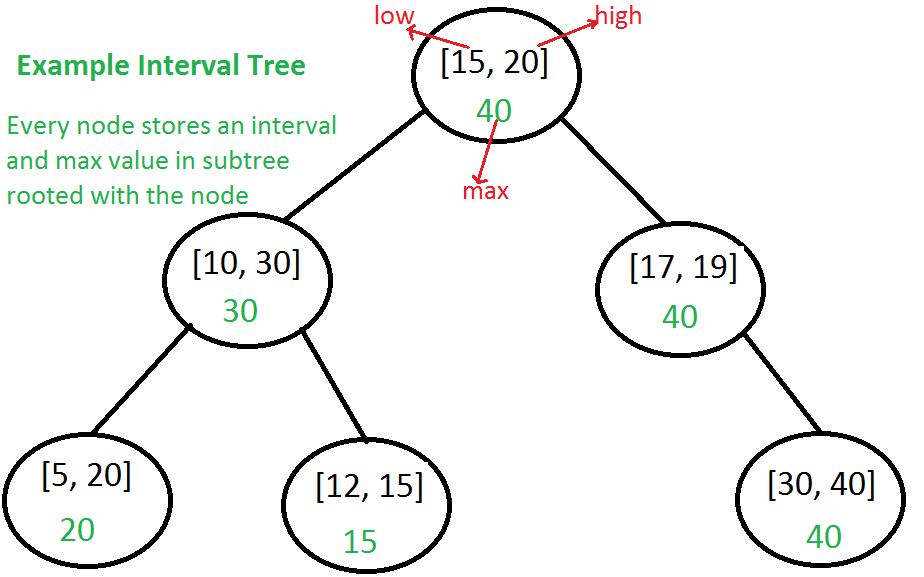
this maybe better but i havent implement a interval tree before
https://www.geeksforgeeks.org/interval-tree/
GeeksforGeeks
A Computer Science portal for geeks. It contains well written, well thought and well explained computer science and programming articles, quizzes and practice/competitive programming/company interview Questions.
sudden meadow
@hard viper thanks
 orchid bane
How do I know if a point is to the right or to the left of my character if the character might be on a tilted plane, tho not too much so?
hard viper
are you in 2D or 3D
and what do you mean by “right”
transform.right points to the right, after adjusting for rotation, but not for scale
so… what is “right”?
orchid bane
Let me draw

 eager yacht
Well you could use the dot product here, against the player's right direction and the direction to the enemy. If dot is greater than 0, it's on the right, if less than 0, it's on the left.
orchid bane
hard viper
does “right” depend on camera?
Depends on the character's rotation
hard viper
so you mean the character’s right
orchid bane
Yep
hard viper
can the character’s scale be negative?
orchid bane
hard viper
can the character’s scale be negative?
No, never heard of anything like that
hard viper
negative scale mirrors you
orchid bane
Also it's important to consider that the player is always standing perpendicular to the plane it's standing on
hard viper
in this case. transform.right is a vector that goes to the object’s right
given any applied rotation
orchid bane
I need to know not the character's rotation but whether a coordinate point is to the right or to the left of the character
hard viper
if your character is straight on the plane, then transform.right is along the plane. If the character is always straight up (world up), then transform.right just points to the right given rotation
hard viper
orchid bane
I need to know not the character's rotation but whether a coordinate point is to...
this is important to establish because if you are mirroring your character, transform.right is pointing to the non-mirrored right
orchid bane
Okay
hard viper
so now you have a vector pointing from character to his right, yeah?
orchid bane
Yeah
hard viper
so (pointOfInterest - transform.position) is a vector that goes from your character to the point of interest
which could be an enemy’s position or whatver
then we have transform.right dot product with (pointOfInterest - transform.position).
if this dot product is positive, then the vectors share enough component to be in the same direction
if it is negative, they are opposite
if zero, then it’s straight perpendicular
do you understand so far?
orchid bane
Everything besides the dot product
hard viper
do you not know what a dot product does, or how to do it, or what?
orchid bane
School was so long ago I've forgotten it
hard viper
you should learn again. vector math is important for this sort of thing
vector v dot u = v.x * u.x + v.y * u.y + v.z * u.z ….
orchid bane
I also saw cross product being used for these things. Which is better?
hard viper
cross product and dot product are two totally different things
dot product takes in 2 vectors (can have any number of dimensions), and outputs a number
cross product takes in 2 vectors (usually must be 3D), and outputs another vector (also in 3D) which is perpendicular to both
totally completely different
dot product is bigger if two vectors are in the same direction
when working in spatial coordinates, dot product of zero means perpendicular. more positive means they are more oriented together. more negative means more oriented opposite
vector2.up dot vector2.up = 1.
vector2.left dot vector2.up = 0
vector2.down dot vector2.up = -1
make sense?
orchid bane
Does, does, tho I think I need to give it more thought to understand how it works with vectors which don't have a 0 parameter
orchid bane
Okay, thanks. Evidently I need to know at least this much
hard viper
yeah. it’s basically mandatory to work with vectors
i will say dot product shows up a lot more than cross product.
cross product gets you a vector that is perpendicular to 2 other vectors. dot product generally tells you how aligned 2 vectors are.
but i work in 2D, so I never need cross product
orchid bane
I wonder if you didn't consider some cases which won't work in 3D with dot product
hard viper
dot product is dot product
you can have 69-dimensional vectors, and its interpretation does not change
orchid bane
If we want to know how aligned are your vectors in 1 dimension still
hard viper
same thing
orchid bane
Not complaining, just stating
hard viper
linear algebra is rarely taught with a specific number of dimensions in mind
only bad teachers will force learning in specifically 2-3 dimensions
orchid bane
Okay, thanks, gonna code it fast and go learn right after that
hard viper
gl
 mystic ferry
sounds like one of the gameobjects is destroyed when you switch scenes. It needs to be marked with DontDestroyOnLoad(this)
#💻┃code-beginner if your manager needs references to an object that's destroyed when you switch scenes, you need to find a way to make sure either that that object isn't destroyed or that you generate a new one
orchid bane
I have separate animations for when my character is going slightly to the left or slightly to the right, it's controlled by a boolean animator parameter called TurnRight. The character is moved by root motion. So when it moves to the left or to the right, it almost always gets a bit off and needs to slightly turn to the other side. It results in a twitching animation. What do I do with considering that I would like my character to go as straight as possible?
hard viper
it depends on how you are moving
you need to expess your turn in a variable that does not change instantly like that
orchid bane
Will make a blend tree I guess
Atm I'm trying to make a sub-state machine in my animation controller, but I can't find a way to exit from any state in the sub-state machine. I can make transitions neither to Up (Base Layer) nor to Exit. What do I do?
 urban lintel
    public IEnumerator SpeedUp(float speedMultiplier, float duration)
    {
        float timeRemaining = duration;
        while (timeRemaining > 0f)
        {
            movementSpeed = Mathf.Lerp(baseMovementSpeed * speedMultiplier, baseMovementSpeed, 1 - (timeRemaining / duration));
            timeRemaining -= Time.deltaTime;
            yield return null;
        }
        movementSpeed = baseMovementSpeed;
    }
I have this decaying speedup function in my player script that basically enables on certain conditions (e.g. colliding with a speed boost causes the speed boost to call this function), however this has unintended behaviour once i pick up multiple speedups. How do i go about ending the previous coroutine? Can i store a reference of it on the player script?
changed my public method to be this instead:
public void SpeedUp(float speedMultiplier, float duration, string name)
    {
        if (coroutine != null)
        {
            StopCoroutine(coroutine);
        }
        coroutine = StartCoroutine(SpeedUpCoroutine(speedMultiplier, duration, name));
    }
I guess in the future i could hold a list of coroutines instead and iterate or key/value them if i have buffs that are multiplicative
 wanton wasp
urban lintel
changed my public method to be this instead:
```cs
public void SpeedUp(float spe...
wanton wasp
urban lintel
changed my public method to be this instead:
```cs
public void SpeedUp(float spe...
I would store a reference to the Coroutine.
private Coroutine _boostCoroutine;

void SpeedUp(...)
{
    if(_boostCoroutine != null) return;
    _boostCoroutine = StartCoroutine(SpeedUpCoroutine);
}
yep, ended up doing that! The coroutine there is the reference, i just made it stop and reapply a new one since in my case i wanted it to refresh
 dusk apex
urban lintel
yep, ended up doing that! The ``coroutine`` there is the reference, i just made ...
dusk apex
urban lintel
yep, ended up doing that! The ``coroutine`` there is the reference, i just made ...
You could just not restart the routine but instead reset the time remaining (implies it's a class member) ?
urban lintel
True, that could also work if i stored the timeremaining outside the scope of the function
wanton wasp
dusk apex
You could just not restart the routine but instead reset the time remaining (imp...
The coroutine will stop as soon as the code has been executed.
So, he will have to have a while loop in a coroutine.
I don't think that it's an optimal solution.
dusk apex
He's already got a while loop and it's preferred over restarting coroutines, iirc
wanton wasp
dusk apex
He's already got a while loop and it's preferred over restarting coroutines, iir...
I don't know if it even matter performance wise.
Coroutine is designed to do some stuff and exit.
Even it's name implies that it's a co-routine.
urban lintel
if there's a better way to handle that than a while loop i wouldn't mind changing that too. I just needed a decaying effect and am not too familiar with the tools unity/c# offers out of the box
wanton wasp
wanton wasp
I don't know if it even matter performance wise.
Coroutine is designed to do som...
Maybe garbage allocation can be an issue though...
dusk apex
Generally you'd let the routine run as long as possible - often times with infinite loops (not preferable in your case though). The condition to continue is something you can easily manage as a member of the class.
wanton wasp
dusk apex
Generally you'd let the routine run as long as possible - often times with infin...
I don't think that it's the best approach, since coroutine runs on the main thread.
 spring creek
wanton wasp
I don't think that it's the best approach, since coroutine runs on the main thre...
spring creek
wanton wasp
I don't think that it's the best approach, since coroutine runs on the main thre...
A big reason to use coroutines is that they can yield the main thread for other code to run, and RESUME later.
 toxic helm
Hey
So
sorry to interub yall
but
I tried to code something and it kinda buggs out
spring creek
toxic helm
but
Please type a paragraph instead of one word messages
toxic helm
I have a preety problem with that
I made a script that breaks a capsule in 2 when you press B, but that makes the capsule dissapear
spring creek
toxic helm
I made a script that breaks a capsule in 2 when you press B, but that makes the ...
You can show the !code like the bot below will say. We can take a look
 tawny elkBOT

Posting code
📃 Large Code Blocks
Large code blocks should be posted as links to services like:
https://gdl.space/, https://paste.ofcode.org/, https://hatebin.com/
https://paste.myst.rs/, https://hastebin.com/
📃 Inline Code
Surround code with three backquotes. Not quotation marks.
To get C# formatting the first line should only contain cs or csharp.
Add a comment with a line number if there is an error message.
```cs
// Your code here
```
Do not share screenshots of code unless requested.
Posting code
📃 Large Code Blocks
Large code blocks should be posted as links to services like:
https://gdl.space/, https://paste.ofcode.org/, https://hatebin.com/
https://paste.myst.rs/, https://hastebin.com/
📃 Inline Code
Surround code with three backquotes. Not quotation marks.
To get C# formatting the first line should only contain cs or csharp.
Add a comment with a line number if there is an error message.
```cs
// Your code here
```
Do not share screenshots of code unless requested.
wanton wasp
spring creek
A big reason to use coroutines is that they can yield the main thread for other ...
I just don't get why to use a coroutine not for a something task-like, if you need to run something 'forever' as Daphlat wrote, just use an update method.
It won't allocate anything.
spring creek
wanton wasp
I just don't get why to use a coroutine not for a something task-like, if you ne...
For me, makes delays easier. I prefer a waitforseconds that I allocate once in awake over accruing deltaTime
But yeah, it's a choice
spring creek
toxic helm
https://gdl.space/azuwavisot.cpp
Hmm, and that destroy call is destroying the miniCapsules?
Weird. They aren't being parented or anything
jaunty needle
Why do these have different positions when they're in the same place?


Talking about the x component here
wanton wasp
toxic helm
I suck at coding
Do you have any other scripts attached to the capsule?
dusk apex
wanton wasp
I just don't get why to use a coroutine not for a something task-like, if you ne...
Definitely so and very applicable in his case however if you've got a lot of statements that require yielding at different intervals, it could be annoying to manage those states and the states of the delayed intervals.
toxic helm
No.
spring creek
toxic helm
I don't know :((
Well, it was a question. Are the two minicapsules dissappearing?
toxic helm
They are dissapearing
 primal wind
Do they perhaps have the same script on them?
dusk apex
It would be similar to using delegates with events versus calling functions directly.
spring creek
toxic helm
They are dissapearing
Can you show the inspector for the minicapsule prefab?
toxic helm
Sure
spring creek
primal wind
Do they perhaps have the same script on them?
They SAID no scripts attached. But that's part of why I asked for the inspector
toxic helm
 spring creek
There is nothing in the code that should make them dissappear, and obviously no other scripts on them...
Can you make a short video showing it happen?
toxic helm
yes
wanton wasp
Can it be, that they spawn, but because of the prefab offset, they do it in the wrong place?
wanton wasp
They definitely spawn, try resetting offset of the prefab transform.
Also try freezing rigidbody position.
toxic helm
How would I do that?
knotty sun
toxic helm
man, look ar your heirarchy, they have not disappeared
spring creek
Order of ops SHOULD make the offset transform.position + (2,0,0) or (-2,0,0).
They are getting chucked, or are below the plane?
wanton wasp
toxic helm
Here, right click transform and then click reset
spring creek
The capsules tip, so the offsets are weird too, more up and down than left and right
Pause after you press b, select one of the minicapsules in the hierarchy and press f
toxic helm
Now what?
 ashen yoke
where is it
spring creek
Well where did it take you
toxic helm
in the air
toxic helm
hmmm
spring creek
Lower force a lot maybe?
knotty sun
debug.log your spawn position and force
spring creek
Also freeze the og capsules rotation
spring creek
You have no mesh renderer
#archived-code-general message
knotty sun
they do not have a renderer
spring creek
You may wanna recreate the prefab
Did you make an empty gameobject and add the collider and rigidbody?
Create a capsule instead
ashen yoke
well do you see it now?
spring creek
toxic helm
I added a renderer
You ADDED a renderer? It should come with one...
toxic helm
Mesh renderer
ashen yoke
@toxic helm create a separate capsule
compare your capsule to the unity one
figure out the difference
apply the changes
toxic helm
spring creek
You ADDED a renderer? It should come with one...
on a empty smth smth
 urban orbit
Guys, can someone get the exact world position of a screen touch with a perspective camera?
ashen yoke
on the way you can also read what different components do by clicking the help button to the right of the component title
spring creek
toxic helm
on a empty smth smth
Don't use empty.. go to 3d, select capsule
toxic helm
spring creek
Don't use empty.. go to 3d, select capsule
After this what?
ashen yoke
urban orbit
Guys, can someone get the exact world position of a screen touch with a perspect...
there is no exact position for a perspective projection, you get only 2 axis x,y from the screen space, Z is arbitrary, you chose it
spring creek
toxic helm
After this what?
Do whatever, that's it. In your case you wanted a rigidbody, right?
ashen yoke
describe your task and ill help with best method to find valid Z
urban orbit
ashen yoke
there is no exact position for a perspective projection, you get only 2 axis x,y...
I'm trying to do a top down game, can you get the position for only the z and x axis as if it was x and y for a 2D game?
ashen yoke
the height will remain constant?
doesnt matter really, this is a clear case of Plane struct
when you click, you create a Plane that points up, then you create a camera ray and do plane.Raycast
urban orbit
ashen yoke
the height will remain constant?
well, not really. But I basically don't want to get the y axis at all.
ashen yoke
this will give you the point on said plane
to modify height you just change the supplied position when you create the Plane
 urban orbit
is it possible to just ignore it and get the touch in the x and z coordinates?
ashen yoke
alternative to this is a cumbersome method of calculating distance from the camera
you need to provide a Z when you compute screen to world
since camera can be anywhere like -21.4f z
and your ground plane can be 1
the resulting Z of the point before convertion will be 20.4
you can do all that or just use the plane

 simple egret
It's probably not because of your code. Reboot, make sure your GPU drivers are up to date, install another version. That bright red Windows Update icon might have to do with it lol
 maiden junco
just updated rtx drivers, imma try to update windows as well
ps. I changed ssd by cloning all of my data
ashen yoke
is that a laptop
maiden junco
nop
maiden junco
idk
ashen yoke
did layout reset?
maiden junco
at first only hiearchy was rendered well, but when resetting layout everything turned to black
I also posted on #archived-hdrp for something similar
related also to the editor
wanton wasp
maiden junco
idk
If nothing helps you can try DDU (Display Driver Uninstaller)
Download it from guru3d
Load in safe mode
Open it, select your gpu and click delete and reboot
Exit from safe mode
Install drivers again
maiden junco
wanton wasp
If nothing helps you can try DDU (Display Driver Uninstaller)
Download it from g...
im updating windows
and then if nothing helps ill try what you told me
ashen yoke
and dont install geforce experience
maiden junco
right
heady iris
GeForce: Experience Pain
ashen yoke
installed it once with the driver back when it released, uninstalled and never reinstalled it since
wanton wasp
heady iris
GeForce: Experience Pain
So true
primal wind
Am i just so lucky to never have a bad experience with "dreaded" sofware?
maiden junco
ohhh
heady iris
always worth doing that
maiden junco
ashen yoke
before that did you delete Library/Temp folders?
nop
heady iris
you can get some wild gremlins in there
maiden junco
ashen yoke
is that a new project?
nope
maiden junco
ok imma try
ps. the project was with HDRP
should i create it completely blank? (i assume so)
maiden junco
okk
heady iris
I could see a rendering error in the scene view causing the rest of the editor to explode
ashen yoke
true
may crash the driver even
test blank, if ok, test empty hdrp if ok, its Library/Temp or something specific to the project
maiden junco
right
Its kinda better but I still see weird behaviors that i've never seen, like wrong icons on wrong buttons that if i hover they look what they should look like

and still weird things
ashen yoke
tried reinstalling the editor itself?
maiden junco
I tried to reinstall it three times
even different versions
nothing helped
everything happened after I changed SSD nvme
which I cloned
from my old 256gb ssd nvme with a tool
never had these problems before
maiden junco
wanton wasp
If nothing helps you can try DDU (Display Driver Uninstaller)
Download it from g...
Just did what you said
wanton wasp
maiden junco
Just did what you said
Did it help?
maiden junco
wanton wasp
Did it help?
Im just going to install drivers
urban orbit
Can someone please explain to me why having a perspective camera affects things like converting screenToWorld position or ViewportToWorldPos when you put the z-axis to 0 even though you don't want to use it?
I just want to achieve the same result as by using an orthographic camera
rigid island
urban orbit
Can someone please explain to me why having a perspective camera affects things ...
urban orbit
rigid island
https://unity.huh.how/programming/specifics/screentoworldpoint
is there a drawback of using a number I got from trial and error? I tested using distance of 10 and it now works and clamps devices with different screen sizes.
 opal bison
The first one is a range variable, whats the second? I wanna look up a tutorial but no idea what to even search
 rigid island
urban orbit
is there a drawback of using a number I got from trial and error? I tested using...
rigid island
urban orbit
is there a drawback of using a number I got from trial and error? I tested using...
not sure about that one sry
rigid island
opal bison
The first one is a range variable, whats the second? I wanna look up a tutorial ...
 loud wharf
Sounds neat.
 valid blaze
how to connect to planetscale, and get data? I am currently stuck on:
Assets\Database.cs(5,7): error CS0246: The type or namespace name 'MySql' could not be found (are you missing a using directive or an assembly reference?)
but I can't
dotnet add package MySql.Data --version 8.1.0 to unity
from terminal in project folder, ./Assets, or parent
 valid minnow
if i had a function in a script that i wanna ignore if i check a box in unity editor, how would i write that? basically when i turn on the checkbox it turns on the function to appear in the editor like the variables in the function
spring creek
valid minnow
if i had a function in a script that i wanna ignore if i check a box in unity ed...
if (boolVariable) return;
^ this is an early return. Put it at the top of the function
That's the best I can say
The method will still be CALLED. It just won't do anything
valid minnow
spring creek
if (boolVariable) return;
well i know that but what i want, is if its check to true, the variables of the function being checked show in the edtior, and if its checked to false, the variables dont appear
spring creek
valid minnow
well i know that but what i want, is if its check to true, the variables of the ...
Is this an editor script? What do you mean "variables of the function"? Like local variables?
Are you using "function" to mean script? Maybe that's why I'm confused
valid minnow
spring creek
Is this an editor script? What do you mean "variables of the function"? Like loc...
yes, like when i check the box to say i wanna use that function, THEN everything having to do with that function appear in the editor
valid minnow
spring creek
Are you using "function" to mean script? Maybe that's why I'm confused
no
spring creek
valid minnow
yes, like when i check the box to say i wanna use that function, THEN everything...
I have no idea what this means. Sorry. Maybe someone else does?
valid minnow
spring creek
I have no idea what this means. Sorry. Maybe someone else does?
think about it, when i check a bool in the inspector, saying for example, "i wanna use jumping" then the variables in the script for jumping appear in the inspector, but only when the "i wanna use jumping" box is ticked to true
spring creek
valid minnow
think about it, when i check a bool in the inspector, saying for example, "i wan...
Those aren't local variables like I asked before. Those are just variables in the script. I think the confusing part is that you're talking about a function, but really that is kinda irrelevant to what you want.
But no, I have no idea how you'd do that that without a custom drawer
Maybe something like naughty attributes or odin could get you that functionality
valid minnow
spring creek
Those aren't local variables like I asked before. Those are just variables in th...
yeah i explained it weird myb
 scarlet kindle
is there any easy way to change all the fonts of every TMPro textfield in the editor? only other option I'm seeing is to make a script TextManager that deals with it on runtime... but that seems crappy
valid minnow
spring creek
Maybe something like naughty attributes or odin could get you that functionality
ehh well i dont really need it to do that but i was just thinking it help organize my scripts easier
spring creek
What you want is to toggle serialization
And I don't know how
Sounds interesting though
valid minnow
scarlet kindle
is there any easy way to change all the fonts of every TMPro textfield in the ed...
just use "find objects of type" then make a array and put each one in the array, then make a for loop saying to change each or font
valid minnow
spring creek
Sounds interesting though
yeah idk i just thought there was a simple function or something to do it but maybe not
spring creek
valid minnow
yeah idk i just thought there was a simple function or something to do it but ma...

Stack Overflow
how do i hide variables depending on other variables values in the unity inspector. Basically imagine this: if i had a bool called "CanSprint" and a float "SprintSpeed" so i want to make it so that...
Seems like what you wanted
Like I thought though, it's a custom editor script
I didn't find any attribute for that unfortunately
scarlet kindle
valid minnow
just use "find objects of type" then make a array and put each one in the array,...
so that works for my scene objects, sadly it doesn't for procedurally generated objects, since they are initialized after Start() I would need to somehow put a timer in update and only run once there instead?
like wait 0.2 seconds in update with a Coroutine, then check all the GameObjects?
damn i dont like this solution 😦
valid minnow
scarlet kindle
so that works for my scene objects, sadly it doesn't for procedurally generated ...
dang uhh well for the editor idk about that
valid minnow
scarlet kindle
so that works for my scene objects, sadly it doesn't for procedurally generated ...
you could just get the objects every time you instantaite them tho, but that would be resource heavy maybe
valid minnow
spring creek
Like I thought though, it's a custom editor script
hmm intresting, thanks for looking 🙂
scarlet kindle
maybe there's a way I can just override the default loader for TMPro
to force a font whenever anything loads it
so that way it's before runtime
ya know?
well, sorta at runtime
sorta before
valid minnow
yeah look at the TMPro documentation maybe
spring creek
scarlet kindle
maybe there's a way I can just override the default loader for TMPro
Do find at the beginner, and keep that in a list. And like ghostguy said, keep a reference when you instantiate them and add that to a list? Then just iterate the list
Might be a better way but I dunno
Maybe the Localization package could help?
Nothing I've ever done
scarlet kindle
spring creek
Do find at the beginner, and keep that in a list. And like ghostguy said, keep a...
yea but when do i iterate that list? cuz its after Start(), it could make some wonky looking behavior in the game
as in all the fonts will visibly change on the screen
spring creek
scarlet kindle
yea but *when* do i iterate that list? cuz its after Start(), it could make some...
Whenever you wanted to change the font.
Are you saying you want to just change them NOW, outside runtime? Must have misunderstood, sorry
scarlet kindle
yea i just want a way to load one font into all my TMPros
before the game starts
i used a font i dont like, and i want to change it. but i dont want to have to change every tmpro in my editor
and also, if i want to change again later, its even more work
im investigating an override solution for some of the TMPro classes
spring creek
Uhhh, this looks really hacky.... but
https://gamedev.stackexchange.com/a/202702

Game Development Stack Exchange
I have a large project in Unity and I would like to change the font for every TextMeshPro Object in every scene.
I've tried changing the "Default Font Asset" in Edit > TextMesh Pro >
scarlet kindle
LOL! i was thinking of doing a nameswap thing too, but so janky
so keep same name, but replace the reference in that file. it would work
there's gotta be a better way
maybe I just change the default font, and then remove the font from all the tmpros in my editor?
so then it just falls back to the default

ill try that out and see
nah doesnt work, it just changes them at the time you set it to None in the editor
do the default
short of just attaching a script to each tmpro and then hooking that up to a textmanager
yeah I mean that works, its annoying to attach a script to every TMPro GO, but it's only the ones that are prefabs
so not too bad
 tardy basin
Is it the correct behaviour for the Editor to crash on stackoverflow? Isnt there a way I could somehow keep it alive (if, for example, I catch the exception in debugger).
 cosmic rain
tardy basin
Is it the correct behaviour for the Editor to crash on stackoverflow? Isnt there...
cosmic rain
tardy basin
Is it the correct behaviour for the Editor to crash on stackoverflow? Isnt there...
You can catch the exception in your code.
I'm not sure if a debugger attached to unity editor can break in error automatically. Might want to check the relevant settings in the debugger.
And yes, depending on where it is thrown, stack overflow might crash the editor.
 night harness
    [SerializeField, HideInInspector] private GameSettings gameSettings = new GameSettings();
    [ShowInInspector, ShowIf("@gameSettings.hasLoaded == true")]
    public GameSettings GameSettings
    {
        get
        {
            if (gameSettings != null)
                return (gameSettings);
            else
                return (null);
        }
    }
GameSettings is a POCO class with [Seralizable], Would my GameSettings property be getting a reference to gameSettings here or making a new instance/copy of it
 fading trail
any advice for getting like the framework of 3D dungeon generator
like placing rooms, etc.
would i need to have a room prefab, or could i just generate using the floor tiles, wall tiles, etc. of a room
cosmic rain
night harness
```cs
[SerializeField, HideInInspector] private GameSettings gameSettings = ...
Classes are passed by reference, so yes.
Also that null check is redundant. As well as the parenthesis around gameSettings and null.
cosmic rain
fading trail
would i need to have a room prefab, or could i just generate using the floor til...
Either one is possible. It's all up to your system design.🤷♂️
ashen yoke
night harness
```cs
[SerializeField, HideInInspector] private GameSettings gameSettings = ...
will never be null
urban orbit
guys, how can I create a plane to get the worldpos like in this article? https://unity.huh.how/programming/specifics/screentoworldpoint#interactive-diagram
urban orbit
What I don't understand is the warning
 night harness
ashen yoke
will never be null
night harness
ashen yoke
will never be null
Yeah was just figuring that out haha, swapped it out for a better check 👍
ashen yoke
urban orbit
What I don't understand is the warning
some gibberish
ashen yoke
night harness
Yeah was just figuring that out haha, swapped it out for a better check 👍
what i mean is that SerializeField will create an instance
unity doesnt allow nulls on objects
night harness
yee
ashen yoke
and if it were null at any point
@gameSettings.hasLoaded == true would throw
whats up with the ( ) btw?
night harness
i just like ()'s around my returns...
urban orbit
ashen yoke
some gibberish
My camera is set to perspective and I'm trying to clamp my player's movement with this code and it worked. Just that I solved it with trial and error until I ended up with the number 10 for the z-axis (for some reason).

Do you know a better way to do it? Or should I just leave it like this?
ashen yoke
i explained this already in detail to you
the 10 comes from distance of the camera to ground
reread our previous conversation its all there
what are you clamping?
player position?
urban orbit
ashen yoke
player position?
yes
ashen yoke
make a trigger collider, use its .bounds to get min max
modify it in the scene to setup the playable zone
bounds are axis aligned so dont rotate it
urban orbit
okay
 worn oasis
Hey guys, I'm receiving this error when trying to open a script to see its content in the inspector. Any ideas as to why this might be happening?
 worn oasis
public class DischargedSpellcast : NetworkBehaviour
cosmic rain
Share the whole script.
!code
tawny elkBOT
Posting code
📃 Large Code Blocks
Large code blocks should be posted as links to services like:
https://gdl.space/, https://paste.ofcode.org/, https://hatebin.com/
https://paste.myst.rs/, https://hastebin.com/
📃 Inline Code
Surround code with three backquotes. Not quotation marks.
To get C# formatting the first line should only contain cs or csharp.
Add a comment with a line number if there is an error message.
```cs
// Your code here
```
Do not share screenshots of code unless requested.
cosmic rain
Sharing the details of the error/info messages would be helpful as well
worn oasis
Unity.Netcode.Editor.NetworkBehaviourEditor.RenderNetworkContainerValueTypeIEquatable[T] (System.Int32 index) (at Library/PackageCache/com.unity.netcode.gameobjects@1.6.0/Editor/NetworkBehaviourEditor.cs:146)
System.Reflection.RuntimeMethodInfo.Invoke (System.Object obj, System.Reflection.BindingFlags invokeAttr, System.Reflection.Binder binder, System.Object[] parameters, System.Globalization.CultureInfo culture) (at <1c8569827291471e9db0dcd976e97952>:0)
Rethrow as TargetInvocationException: Exception has been thrown by the target of an invocation.
System.Reflection.RuntimeMethodInfo.Invoke (System.Object obj, System.Reflection.BindingFlags invokeAttr, System.Reflection.Binder binder, System.Object[] parameters, System.Globalization.CultureInfo culture) (at <1c8569827291471e9db0dcd976e97952>:0)
System.Reflection.MethodBase.Invoke (System.Object obj, System.Object[] parameters) (at <1c8569827291471e9db0dcd976e97952>:0)
Unity.Netcode.Editor.NetworkBehaviourEditor.RenderNetworkVariable (System.Int32 index) (at Library/PackageCache/com.unity.netcode.gameobjects@1.6.0/Editor/NetworkBehaviourEditor.cs:102)
Unity.Netcode.Editor.NetworkBehaviourEditor.OnInspectorGUI () (at Library/PackageCache/com.unity.netcode.gameobjects@1.6.0/Editor/NetworkBehaviourEditor.cs:268)
UnityEditor.UIElements.InspectorElement+<>c__DisplayClass59_0.<CreateIMGUIInspectorFromEditor>b__0 () (at <a47f8e4b37a644dfaac5a6945ff77d47>:0)
UnityEngine.GUIUtility:ProcessEvent(Int32, IntPtr, Boolean&)```Something with a network variable I guess.
worn oasis
cosmic rain
Something with a network variable I guess.
beast
it was a declared network variable that was never used
I'm surprised it would throw such an error
what gave it away?
cosmic rain
There's RenderNetworkVariable method in the stack trace.
worn oasis
Awesome, thanks again
valid blaze
ERROR:
Unable to resolve reference 'Google.Protobuf'. Is the assembly missing or incompatible with the current platform?
Reference validation can be disabled in the Plugin Inspector.
Unable to resolve reference 'K4os.Compression.LZ4.Streams'. Is the assembly missing or incompatible with the current platform?
Reference validation can be disabled in the Plugin Inspector.
Unable to resolve reference 'BouncyCastle.Crypto'. Is the assembly missing or incompatible with the current platform?
Reference validation can be disabled in the Plugin Inspector```

CONTEXT:
can't find any of these in C:\Program Files (x86)\Microsoft SDKs\NuGetPackages even though it seems they are installed in nuget in VS. also in VS there are issues, but in unity I get the above err and
I have tried to solve the missing MySQL.Data.dll in 2 ways. Through nuget, which wasn't recognized in namespace in Database.cs file, and by installing MySQLConnector and OBDC and copying a MySQL.Data.dll to Assets/Plugins which was recognized by both unity and VS..

ADDITIONAL ERRORS:
```Assembly 'Library/ScriptAssemblies/Assembly-CSharp-Editor.dll' will not be loaded due to errors:
Reference has errors 'Assembly-CSharp'.
and
Assembly 'Library/ScriptAssemblies/Assembly-CSharp.dll' will not be loaded due to errors:
Reference has errors 'MySql.Data'.```or should I just try to connect to DB through python script? what an annoyingly difficult task this is.
cosmic rain
Your message is really hard to read. It starts with an error and it's not even clear where the error ends and where the explanation of the issue is... Some proper explanation of what is going on is required: what happens, when happens, what causes ?
spring creek
You can format errors with this
```
```
So it looks like this
Mah big error stuff
Is bad
Don't like
 quartz folio
they are installed in nuget in VS
Unity doesn't use Nuget
valid blaze
it seems as though it does? I was able to target the unity project in VS by selecting a file in scope, then Project->Manage Nuget packages
quartz folio
It doesn't
Unity generates its own csproj files
Either use a package that makes it support it via an editor window https://github.com/GlitchEnzo/NuGetForUnity or install all the dependencies manually.
valid blaze
so, I manually satisfy the missing Google.Protobuf','K4os.Compression.LZ4.Streams','BouncyCastle.Crypto' and also put them in Assets/Plugins?
ooh, ill try
😖
I.. I think I got it. I had to install Nuget for Unity. Then I updated 'Google.Protobuf','K4os.Compression.LZ4.Streams','BouncyCastle.Crypto.dll'
And I changed the .Net target to .NET framework from Standard 2.1
and was getting another error for System.Text.Encoding.CodePages and updated that through NuGet.
Kinda silly to have old broken dependencies on a fresh install of newest LTS, and had to third party plugin manager
Is there anything else I should know as a Unity noob? (aside from Scriptable Objects, I got that one)
quartz folio
Kinda silly to have old broken dependencies on a fresh install of LTS
It's not a fresh install, you added a random DLL to the project without the dependencies
valid blaze
DB connectivity is not stock? Or is it just Azure
cosmic rain
valid blaze
DB connectivity is not stock? Or is it just Azure
Most games don't use databases. You'd usually use a database for backend server, not necessarily based on unity engine.
 edgy ether
so im not sure if this is the best place to ask this, but how do i change the "simple name" of an assembly file?
apparently i imported an assembly with the same name and im trying to keep both, so im opting to try to rename one and keep the other. but simply renaming the file doesn't change the fact that it's "simple name" is still the same.
quartz folio
edgy ether
so im not sure if this is the best place to ask this, but how do i change the "s...
Afaik, you don't. Why do you have two with the same name?
edgy ether
quartz folio
Afaik, you don't. Why do you have two with the same name?
ah, 2 different unity packages uses the same name, but they're different versions so i wanted to keep them both and designate one as old
quartz folio
Is there not a way to just use the latest? What packages import the same assembly but different versions? Usually it'll just use the latest
 prime widget
I need a list<T> that only keeps the 10 latest items added to it. Does a collection like this exist for c# already?
something that works like this?
        var list = new SomeTypeOfList<int>(3);

        list.Add(33);
        list.Add(71);
        list.Add(22);

        //after the following is called remove the oldest added value(in this case 33) from list and add 12 to the list
        list.Add(12);
queue
 prime sinew
prime widget
I need a list<T> that only keeps the 10 latest items added to it. Does a collect...
prime sinew
prime widget
I need a list<T> that only keeps the 10 latest items added to it. Does a collect...
Unity Discussions
The simplest way to do this may be by dequeueing the object at the front after a specified size is reached. This will maintain a queue of any size. int counter = 0; int size = 10;//size of queue if(counter < size){ //Enqueue counter += 1 } else{ //Enqueue //Dequeue }
prime widget
fervent furnace
queue
that just constantly resizes past the size selected in instructor
prime widget
prime sinew
https://discussions.unity.com/t/how-to-build-fixed-size-queue-with-c/127447/2
Awesome. Funnily enough the last post is the best answer.
public class FixedQueue<T> : Queue<T>
{
    private int threshold;

    public void FixedEnqueue(T value)
    {
        if (Count >= threshold)
            Dequeue();

        Enqueue(value);
    }
}
``` this is what i came up with and it appears to be workingTo avoid using the wrong method by accident, you can completely replace it with your new method.
public class FixedQueue<T> : Queue<T>
{
    private int threshold;

    public new void Enqueue(T value)
    {
        if (Count >= threshold)
            Dequeue();

        base.Enqueue(value);
    }
}
Also, I suppose you want to make a constructor that accepts a threshold parameter?
 somber nacelle
you'd probably want to make that Enqueue(value) to be base.Enqueue(value) or else it end up with infinite recursion
loud wharf
Totally.
thin aurora
Ah right, my mistake.
 swift aspen
How do I assert for a Debug.LogError in a [Test]?
 mellow sigil
 ocean osprey
So im making a game but every possible collision detectiong tutorial i find dosent work i have rigid bodies, colliders and everything but nothing works, anyone know a way i cat get collision to work?
mellow sigil
You'll have to show what you have for anyone to tell what you're doing wrong
post the code and screenshots of the inspectors of both objects
ocean osprey
ok
    void OnCollisionEnter(Collision col)
    {
        if (col.gameObject.name == "Player")
        {
            Debug.Log("It Worked");
        }
}```oh now ive seen what i've done
thankyou
prime sinew
what was it?
ocean osprey
i had it on enter instead of stay
 junior falcon
Does anyone know if there is a setting to hide/show these:
I have various projects that don't show them, and some that do. Others working in the project have them, but I don't

Maybe that's more of an editor question but I don't know where to ask or what terms to search for.
I like to double click these to open the script, or single click to locate in project. Impossible to do the latter now without typing a search
 halcyon radish
junior falcon
Does anyone know if there is a setting to hide/show these:
I have various projec...
halcyon radish
junior falcon
Does anyone know if there is a setting to hide/show these:
I have various projec...
They could be using a custom inspector for the script on their system. Is it the same scripts that you're referring to that is not visible on there system?
junior falcon
There's no custom inspectors involved, for me it's every script in the entire project, for them, they're all there
halcyon radish
And the panel isn't set to Debug mode i'm guessing.
junior falcon
I can see it the equivalent in debug mode, but not normal

If it's not Unity it may be a plugin, like Odin, but I've spent too long looking, and I don't know what it would be called
halcyon radish
Is that how it looks on your side right?
Can you show a small snippet of how it looks?
Have you tried creating an empty project to make sure that everything is working fine in your version of unity?
junior falcon
Yeah this is all my side, the screenshots are from a personal project, I'll show one where it's not, 1 sec..
 halcyon radish
Hmm, that's a strange one. I'm not sure now, just thinking about it.
So every script you make for that projects, even an empty one, will look like that?
junior falcon
Yeah 💯
halcyon radish
Does it happen in a new empty project?
Which would suggest there is something in the project that is causing this override.
junior falcon
halcyon radish
Does it happen in a new empty project?
Just checking
junior falcon
halcyon radish
Which would suggest there is something in the project that is causing this overr...
True, though we have ~24 projects that we're all in, I have the issue in all that I've recently opened
junior falcon
halcyon radish
Does it happen in a new empty project?
No 🤔
 halcyon radish
You mentioned Odin, are they using this package in the project? There could be some conflict somewhere. I'm assuming you are not the original creator right?
 potent helm
Could someone pls help me? Im trying to make player movement for an endless runner but i don't really know why my code doesn't work.
 junior falcon
Yes Odin is in all of them, I'm not the original creator.
I thought the same there could be a clash. The ones blurred are part of our SDK, Odin is in one of those, it's the only editor plugin we use 🤔 I don't see anything else that would be causing it
 halcyon radish
I haven't used Odin personally. But does it affect new script that you create? if its not an Odin script? (Sorry i'm not sure on the setup of it).
junior falcon
Cracked it! It's odin. There's a setting in preferences. (Literally the very first one) However something is borked with my installation because that page of the preferences is blank


@halcyon radish ^ Thanks for your help!
huuh - @ tag fixed
 jagged rampart
i have a question and im not sure what i need to show to get help, i have a animation for run jump fall and idle, run and idle work just fine, i have a SetBool for IsJumping and i have code for it to be true on jump. issue is when i jump no animation but the weird thing is if i jump again before i hit the ground the animation will then play, so the jumping animation only works if i press jump two times
loud wharf
Very, very late reply but if you want to have the same functionality, you can use this. 
Used like this [Restrict(Restriction = typeof(IMyInterface))] public Monobehaviour _iMyInterface;.
Can't do IMyInterface as a field type, it won't show in the inspector, so ya have to cast it.
public IMyInterface I_MyInterface => (IMyInterface)_iMyInterface;
halcyon radish
junior falcon
Cracked it! It's odin. There's a setting in preferences. (Literally the very fir...
Awesome. Glad i could help.
junior falcon
loud wharf
Very, very late reply but if you want to have the same functionality, you can us...
What package is the [Restrict()] attribute from?
 vague tundra
Oh that's really cool, thanks @loud wharf !
loud wharf
junior falcon
What package is the ```[Restrict()]``` attribute from?
Literally on the attached cs file. 
junior falcon
Clicks expand and facepalms, sorry looked past it. Nifty!
loud wharf
I actually just copied this code off a yt tutorial, then added Exclusion and Attributes.
Idk, might be handy. Maybe not.
junior falcon
I've needed similar in the past and it was a custom attribute solution then, would be a nifty one to be a unity native
heady iris
loud wharf
Very, very late reply but if you want to have the same functionality, you can us...
I ~really~ wish you could just make a field of type IWhatever that gets serialized as a UnityEngine.Object
loud wharf
heady iris
I ~really~ wish you could just make a field of type `IWhatever` that gets serial...
Yeah i tried it whilst having that attribute, unity won't serialise it. 
heady iris
just trust me, editor 😦
loud wharf
heady iris
i swear i'll put the right thing in it
but yeah, that's not a half bad idea
the property smooths over the wrong type
loud wharf
Unity could just do interface fields as implicitly scriptable-objects/monobehaviour only but explicitly accepts any scripts that implements said interface.
Or maybe an attribute.
🤷♀️
heady iris
yeah
 celest iron
How do I change a tile based on it's neighbors?
Not talking about changing the sprite (this I know how to do), but changing this tile to another tile if all of the neighbors aren't this tile.
For example, if water tile is surrounded by 8 ground tiles, change this water tile to a ground tile
The solutions I find online only changes the sprite, which isn't what I want.
I didn't know where to ask this tho, I assume here because talking about scriptable tiles
 runic granite
hi, i want to make a curtain that simulated real life, and i am bit struggling where i could fold the curtain in realtime, anyone have a solution for that?
 steady moat
runic granite
hi, i want to make a curtain that simulated real life, and i am bit struggling w...
steady moat
runic granite
hi, i want to make a curtain that simulated real life, and i am bit struggling w...
You could try unity cloth system. Or use an animation software to create an animation
runic granite
i tried using cloth system but can i attached it to other game obj?, i only know that it could be interacted by assignt collider on what obj that can be interacted with
oh,and this will be used in VR
steady moat
runic granite
oh,and this will be used in VR
Cloth in VR is not a good idea.
Make an animation
runic granite
i see, thanks for the suggestion
 regal flame
genuine question, why would cloth in vr be a bad idea?
im guess GPU is already pushing limits being vr and all, never worked with cloth stuff before. is it that bad?
runic granite
regal flame
genuine question, why would cloth in vr be a bad idea?
if im not wrong cloths mainly use CPU to calculate physics
and VR basically just glorified android phone
for quest 2 at least
regal flame
ah makes sense.
 delicate zinc
bit of a question regarding marking a game object as static
If i where to instantiate the gameObject that's marked as Static at runtime, would that still conserve the usefulness of static game objects?
asking because i've been working on a dungeoncrawler and the time to make the dungeon generation has come, i've been thinking about multiple ways to approach this and i think the best one would be having rooms as Prefabs and instantiating said rooms at start to build an explorable dungeon
however, i dont know exactly if this still allows said prefabs to leverage the ability of being static, considering i'm spawning the rooms on dungeon creation
if i do this prefab aproach i would ideally use or create some assets like this one on the asset store, but i'd still like to have some sort of feedback/ideas on how to tackle this issue in the best way possible
https://assetstore.unity.com/packages/3d/environments/dungeons/ultimate-low-poly-dungeon-143535
at least i know that i'd have to use bounding boxes to detemrine the sizes of rooms, thankfully i've already solved that issue by using the bounds.encapsulate method, pretty handy
 green breach
From the unity docs: https://docs.unity3d.com/Manual/StaticObjects.html
if a GameObject
does not move at runtime, it is known as a static GameObject. if a GameObject moves at runtime, it is known as a dynamic GameObject.
Many systems in Unity can precompute information about static GameObjects in the Editor. Because the GameObjects do not move, the results of these calculations are still valid at runtime. This means that Unity can save on runtime calculations, and potentially improve performance.
 swift falcon
i have a json file
which has some data in it,and i want to upload it into my c# script and put it inside a dictionary
what is the most straightforward method to do this
simple egret
swift falcon
i have a json file
which has some data in it,and i want to upload it into my c# ...
How does the JSON looks like? You might be able to do it in one line of code
swift falcon
{"Data":[{"Name":"name1","Job":"Job1"},{"Name":"name2","Job":"Job2"}]}
simple egret
That would map to a class containing a List<T> more than a Dictionary, but that's still doable
swift falcon
and how would i really approach it
simple egret
You need a class to contain individual { string Name, string Job } objects, and another class that stores a list of it (the outer object { List<TheClass> Data }
swift falcon
do i have to add [System.Serializable] over the classes ?
simple egret
No
swift falcon
public class EmployeeInfo
{
public string Name;
public string Job;
}
public class EmployeeList
{
public EmployeeInfo[] Data;
}
swift falcon
simple egret
No
something like this right ?
simple egret
Yes
swift falcon
and use json.fileutility ?
simple egret
JsonUtility.FromJson<EmployeeList>(str)
swift falcon
public TextAsset fileData;
public EmployeeList eL=new EmployeeList();
public class EmployeeInfo
{
public string Name;
public string Job;
}
public class EmployeeList
{
public EmployeeInfo[] Data;
}
private void Start()
{
eL = JsonUtility.FromJson<EmployeeList>(fileData.text);
}
good ?
simple egret
Yes, but you don't need to do new EmployeeList() in the field initializer, as you'll be replacing it anyway when Start runs
swift falcon
got it
simple egret
FromJson takes care of creating a new instance and filling it out for you
swift falcon
public TextAsset fileData;
public EmployeeList eL;
public class EmployeeInfo
{
public string Name;
public string Job;
}
public class EmployeeList
{
public EmployeeInfo[] Data;
}
private void Start()
{
eL = JsonUtility.FromJson<EmployeeList>(fileData.text);
Debug.Log(eL.Data.Length);
}
 simple egret
Error on line 21, you tried to access something on a null reference
simple egret
Either el was null (deserialization failed totally) or .Data was null (failed partially)
swift falcon
this works if I use [System.Serializable]
simple egret
I guess JsonUtility needs it to be serializable
swift falcon
 simple egret
I use the Far Superior™️ Newtonsoft.json
swift falcon
swift falcon
how to work with that
how to solve this error
 simple egret
More information in the stack trace, as always
delicate zinc
green breach
From the unity docs: https://docs.unity3d.com/Manual/StaticObjects.html
> if a G...
i mean, yes, i did read the documentation, but i'mm still curious as to wether spawning the prefab and keeping it there constantly would mean its static or not
simple egret
Select the log to see more information in a box below the console
 floral kiln
Anyone know how I can structure a class to be the deserialized version of this json object?
{
  "totalPages": 1,
  "data": [
    {
      "lastUpdate": 1694187564809,
      "targetName": "Black Box VR Global Feed",
      "actors": [
        {
          "name": "qatest"
        },
        {
          "name": "city_m"
        },
        {
          "name": "deejed"
        }
      ],
      "actorsCount": 58,
      "description": "qatest, city_m, deejed and 56 others posted in Black Box VR Global Feed"
    }
  ]
}
dont cross post
{}=object
[]=array
so [{},{},{}...] array of some objects
and "key": value of this key, (the data type is implicitly stated here eg string is quoted, bounded by ")
eg the first field of this json will be
public int totalPages;//the value is 1 means it is an integer
Sorry about that guys, but selfishly so, I got help here and not there, so I'll delete it there.
This is what I had so far:
public class AmityNotificationPage
{
    public class Data
    {
        public long lastUpdate;
        public string targetType;
        public string verb;
        public string v_tarid_uid;
        public bool hasRead;
        public string imageUrl;
        public string avatarCustomUrl;
        public string targetName;
        public Dictionary<string, string> actors;
        public int actorsCount;
        public string parentTargetId;
        public string lastActionId;
        public string lastActionSegmentNo;
        public string targetId;
        public string description;
    }

    public int totalPages;
    public Data data;
}
so since [] = array, data should be an array?
But it has key and value pairs?
Ah so it's an array of <string, string> pairs
simple egret
actors is not in form of a Dictionary<T, T> in the JSON yeah
It would be more of a class containing a single name field of type string
floral kiln
I'll simplify the original json I sent here cause once I know how to do 1 of them, I can do the rest
heady iris
data would be a list of Data
notice how the json you posted above looks like this
data: [
  {

  }
]
The hard part is just how to structure data and then actors
floral kiln
heady iris
`data` would be a **list** of `Data`
True, since they both have the same [{}, {}, ...] form
List of type string?
heady iris
No. List<Data>
simple egret
List of string would be serialized as [ "a", "b", "c" ] so no
heady iris
your Data class is mostly correct, except that actors is wrong
because actors should be a List<Actor>
Every time you see a [ ], that means you need a List of whatever you see inside the square brackets.
floral kiln
hmmm why can data have its own class, but actors doesnt need to.
is it cause actors has the same key for each entry ("name")?
floral kiln
heady iris
No. `List<Data>`
Doesn't this imply there can be more than 1 data in this single object?
but you're right... that's exactly it, true
heady iris
Indeed.
floral kiln
it just so happens we only have 1 here
heady iris
One way to do this is to work from the inside out
start at the innermost object or array you can find
if it's an object, make up a new class for it
if it's an array, then remember you need a List<T> (where T is whatever's in the brackets)
floral kiln
public class AmityNotificationPage
{
    public class Actor
    {
        public string name;
    }

    public class Data
    {
        public long lastUpdate;
        public string targetType;
        public string verb;
        public string v_tarid_uid;
        public bool hasRead;
        public string imageUrl;
        public string avatarCustomUrl;
        public string targetName;
        public List<Actor> actors;
        public int actorsCount;
        public string parentTargetId;
        public string lastActionId;
        public string lastActionSegmentNo;
        public string targetId;
        public string description;
    }

    public int totalPages;
    public List<Data> data;
}
This look better?
heady iris
so I might take these steps
{
  "totalPages": 1,
  "data": [
    {
      "lastUpdate": 1694187564809,
      "targetName": "Black Box VR Global Feed",
      "actors": [
        Actor,
        Actor,
        Actor
      ],
      "actorsCount": 58,
      "description": "qatest, city_m, deejed and 56 others posted in Black Box VR Global Feed"
    }
  ]
}
{
  "totalPages": 1,
  "data": [
     Data
  ]
}
AmityNotificationPage
and then we're done
heady iris
floral kiln
```
public class AmityNotificationPage
{
public class Actor
{
pu...
That's looking good.
floral kiln
heady iris
so I might take these steps
oh I seeee. Makes it simpler to break it down
Thank you @heady iris and @simple egret
heady iris
np!
swift falcon
using System.Collections;
using System.Collections.Generic;
using UnityEngine;
using UnityEngine.SceneManagement;
using System.IO;
public class EmployeeB : MonoBehaviour
{
    public TextAsset fileData;
    public EmployeeList eL;
    [System.Serializable]
    public class EmployeeInfo
    {
        public string Name;
        public int Wage;
        public int Number;
    }
    [System.Serializable]
    public class EmployeeList
    {
        public EmployeeInfo[] Data;
    }
    private void Awake()
    {

    }
    void LoadDataFromJson()
    {
        eL = JsonUtility.FromJson<EmployeeList>(fileData.text);

    }
    void SaveDataToJson()
    {
        string j=JsonUtility.ToJson(eL);
        File.WriteAllText(j,fileData.text);
    }
    public void BackButton()
    {
        LoadDataFromJson();
        eL.Data[0].Number += 1;
        SaveDataToJson();
    }
    private void Start()
    {

    }
}
here is my code
i can't seem to get the hang of writing the data into json file
please suggest me a better way to handle the json
 gray mural
swift falcon
```
using System.Collections;
using System.Collections.Generic;
using UnityEngin...
gray mural
swift falcon
```
using System.Collections;
using System.Collections.Generic;
using UnityEngin...
Hello! First of all, you have to understand what parameters File.WriteAllText takes.
It takes path as its first and contents as second parameter. Both are strings.
so in your code I don't see where you are supposed to get a path to your file
you should probabaly create a method for this ?
public string GetPath() => $@"{Application.dataPath}/Your/Desired/Json/Location/fileName.json";
so you get a string from a class and write is using a path
swift falcon
This smol registercallback invokes a StackOverFlow Exception. Any idea "why"?


Oh let me send you updateRotationCallback too
gray mural
swift falcon
Oh let me send you updateRotationCallback too
!code, please
tawny elkBOT
Posting code
📃 Large Code Blocks
Large code blocks should be posted as links to services like:
https://gdl.space/, https://paste.ofcode.org/, https://hatebin.com/
https://paste.myst.rs/, https://hastebin.com/
📃 Inline Code
Surround code with three backquotes. Not quotation marks.
To get C# formatting the first line should only contain cs or csharp.
Add a comment with a line number if there is an error message.
```cs
// Your code here
```
Do not share screenshots of code unless requested.
swift falcon
gray mural
!code, please
Sure
public override VisualElement CreatePropertyGUI(SerializedProperty property)
    {
        // Create a new VisualElement to be the root of our inspector UI
        VisualElement container = new();

        // Load and clone a visual tree from UXML for next values
        VisualTreeAsset visualTree = AssetDatabase.LoadAssetAtPath<VisualTreeAsset>("Assets/Scripts/Addressables/Editor/InstantiationParametersSerializableUXML.uxml");
        visualTree.CloneTree(container);

        // Get Properties
        SerializedProperty rotProp = property.FindPropertyRelative("m_Rotation");
        SerializedProperty rotHintProp = property.FindPropertyRelative("m_RotationHint");

        // Bind Vector3 m_RotationHint property to Quaternion m_Rotation property with a callback
        var rotationHintElement = container.Q("RotationHint");

        // This is the callback causing the StackOverFlow
        Action<Vector3> updateRotationCallback =
        (value) =>
            {
                rotProp.quaternionValue = Quaternion.Euler(value);

                property.serializedObject.ApplyModifiedProperties();
            }
        ;

        // Initialize Rotation for first time only
        updateRotationCallback(rotHintProp.vector3Value);

        // Update current Rotation based on m_RotationHint's VisualElement value on change
        rotationHintElement.RegisterCallback<ChangeEvent<Vector3>>(
            (evt) =>
            {
                updateRotationCallback(evt.newValue);
            }
        );

        // Return the finished inspector UI
        return container;
    }
This works when you create the object of property drawer normally. But when you create an array of that object, it gets broken somehow.
gray mural
swift falcon
```cs
public override VisualElement CreatePropertyGUI(SerializedProperty propert...
I haven't ever worked with VisualElements, hope you don't mind if I try to help you
you trigger the same callback when you call updateRotationCallback and modify serialized property
so it leads to infinite while loop
swift falcon
What i first try is, putting property.serializedObject.Update(); which is aborts the unsaved properties and i got this error:
UnityEditor.RetainedMode:UpdateSchedulers ()```
Okey i am going to remove it
Gave me the same error 
gray mural
swift falcon
Gave me the same error <:notlikethis:1068134558123442236>
I don't know if it's gonna work, but you can try to check if you're not modifying it right now
using mere bools
bool isUpdatingRot = false;

Action<Vector3> updateRotationCallback =
(value) =>
{
    if (!isUpdatingRot)
    {
        isUpdatingRot = true;

        rotProp.quaternionValue = Quaternion.Euler(value);
        property.serializedObject.ApplyModifiedProperties();

        isUpdatingRot = false;
    }
};
perhaps you should try it
gray mural
swift falcon
No not works. Now i will try to edit the UXML
what if you check if they are not the same?
Action<Vector3> updateRotationCallback =
(value) =>
{
    Quaternion newRot = Quaternion.Euler(value);

    // Check if the new value is different from the existing one
    // They may be the same and this can cause an infinite while loop
    if (rotProp.quaternionValue != newRot)
    {
        rotProp.quaternionValue = newRot;
        property.serializedObject.ApplyModifiedProperties();
    }
};
Hm it does downgrade the exception to
UnityEditor.RetainedMode:UpdateSchedulers ()```oh..
it probably existed before, but was not send due to stack overflow
google doesn't have this error
swift falcon
Yep people usually face this issue with unity's packages lmao
I think i need to recreate this one
To solve
gray mural
I guess you have to make sure that all properties are set correctly
 shell scarab
#↕️┃editor-extensions will probably be more helpful
gray mural
@swift falcon also make sure that the path is correct
swift falcon
shell scarab
<#533353544846147585> will probably be more helpful
Ive been here for months but never saw this channel lmao
shell scarab
lol
can someone help me name my class? It just holds a few cancellation token sources and cancells them when needed. right now it's called AsyncApplicationCancellationManager but that's a bit unwieldy.
gray mural
shell scarab
can someone help me name my class? It just holds a few cancellation token source...
CancellationManager, TokenManager
ashen yoke
AsyncHandles
shell scarab
I like that one
gray mural
what is the best way to make a grid with 1x1 squares?
ashen yoke
what sort of grid
gray mural
to spawn my items
so I will drag them on that grid
I actually can do that via code
but it should be done with grid better?
ashen yoke
what are you asking, how to create the ui, visuals, underlying structure?
gray mural
is there are nice way to create a non-ui grid for GameObjects?
ashen yoke
its just a 2d array + positions snapping
shell scarab
nested for loop probably:
for(float a = startPoint.x; a <= endPoint.x; a += spacing) {
  for(float b = startPoint.y; b <= endPoint.y; b += spacing) {
    // grid stuff
    GameObject a = new();
    a.transform.position = new Vector2(a, b);
  }
}
for a vector3 just add another for loop.
gray mural
shell scarab
nested for loop probably:
```cs
for(float a = startPoint.x; a <= endPoint.x; a ...
oh, it's spawning gameobjects
shell scarab
oh, you're asking how to snap to a grid?
gray mural
I instantiate different items on an empty area, those items are not saved in any list now, they are then saved in the json file (from Transform _environment)
gray mural
shell scarab
oh, you're asking how to snap to a grid?
yeah, probably ?
if that's possibly
shell scarab
point *= Mathf.Pow(PointDistance, -1);
point.x = Mathf.Round(point.x);
point.y = Mathf.Round(point.y);
point /= Mathf.Pow(PointDistance, -1);
this is what I use currently.
where PointDistance is your grid size
ashen yoke
class Slot
{
    public GameObject value;
    public Vector3 position;
}

Slot[,] grid;

bool TryPlace(GameObject obj, Vector3 at)
{
    Slot slot = grid[(int)at.x, (int)at.z];
    if(slot.value != null)
        return false;
    slot.value = obj;
    obj.transform.position = slot.position;
    return true;
}
I do the inverse power to get the denominator of the fraction that the decimal represents (essentially. Not actually what's happening but easier to understand). So if I make my grid size 0.25, it would correctly snap to 4 positions along a 1 unit line. If I did not do the inverse pow like i'm doing I would have to make my grid size 4 to snap to 4 positions per unit, which is a bit conter intuitive imo.
gray mural
I see, so there is no smth like build-in way to build a custom grid
gray mural
shell scarab
```cs
point *= Mathf.Pow(PointDistance, -1);
point.x = Mathf.Round(point.x);
poi...
but why do you have to pow it..?
shell scarab
no but that's easy enough, it snaps a position to a point.
shell scarab
shell scarab
I do the inverse power to get the denominator of the fraction that the decimal r...
I explain here @gray mural
you could drop the pow, but then when you set your grid size it's a bit counter-intuitive. A grid size of 4 would not be 4 unity units per grid unit, it would be 4 grid units per unity unit. (if I don't pow it) If I do pow it, a grid size of 4 would be 4 unity units per grid unit.
 robust dome
grid snapping exists in the editor but it is for non runtime
shell scarab
I hope that makes sense, it's a bit confusing to explain.
gray mural
it's quite confusing for me as well
shell scarab
let me draw something rq lmao
gray mural
I actually don't want to make a fixed size for it
I just want to to drag my items in grid
shell scarab
no there is no fixed size for my method. It just rounds the object's position to a point in space.
gray mural
so it's probably just manipulations with an item using mouse position
gray mural
shell scarab
no there is no fixed size for my method. It just rounds the object's position to...
I see, and will the object be in the middle of the mouse this way?
ashen yoke
if you use mouse position, it will be the position from which you derive object position
mouse moves freely, object snaps
gray mural
oh, yeah, that makes sense
ashen yoke
should be some offset
gray mural
I will just have to make it snap just when the mouse is inside the 1x1
ashen yoke
initial click to object position, which is then added to current mouse position, from which you get the snapped position
i think we already had this discussion before
you can also lerp the object pos for juice 🙂
shell scarab
Each black square is a unity square unit. The left is with the gid's size powed to -1. The right is if it's not.
So if I put a grid size of 0.5 without powing it, the right is what I'd get. With powing it, the left is what I'd get.
If I put a grid size of 2 without powing it, the left is what I'd get. With powing it, the right is what I'd get.

I think. May be wrong on the right side one, but the left side one is correct. I hope this gets the point across.
ashen yoke
i think i use this for snapping/
        [MethodImpl(MethodImplOptions.AggressiveInlining)]
        public static float RoundTo(float value, float to)
        {
            return Mathf.Round(value / to) * to;
}```i think it works, so far
shell scarab
that's what I do too, but for me it's easier to think that for example 0.5 grid size is a point every 0.5 units instead of a point every like 2 units or whatever it would be. So instead of passing in 2 as to, I would pass in 0.5 as to and then pow it with -1 (which gives 2)
gray mural
shell scarab
Each black square is a unity square unit. The left is with the gid's size powed ...
so I may be wrong, but using that formula, if I have (5, 5) vector, it will give me (6, 6)
ashen yoke
yeah it works
    public static Vector3 RoundTo(Vector3 value, float to)
    {
        return new Vector3(
            RoundTo(value.x, to),
            RoundTo(value.y, to),
            RoundTo(value.z, to));
    }
oh, hold on, the size isn't 2 this way..
shell scarab
it depends on what your grid size/spacing is. If your grid size is 6 with my formula, then yes (I'm pretty sure at least. Not good at quick maths.).
gray mural
but why do we have to use grid size if it fully depends on it?
we can just round it actually?
gray mural
I think we can just round it without using grid size?
shell scarab
no
swift falcon
ashen yoke
```cs
[MethodImpl(MethodImplOptions.AggressiveInlining)]
public ...
What [MethodImpl(MethodImplOptions.AggressiveInlining)] does there?
shell scarab
gray mural
I think we can just round it without using grid size?
you cannot pass a float to round towards in the round function.
ashen yoke
swift falcon
What [MethodImpl(MethodImplOptions.AggressiveInlining)] does there?
instructs compiler to attempt to inline this AGRESSIVELY 😡
shell scarab
@ashen yoke ik what it does but I was gonna ask why you thought it was needed?
ashen yoke
because those things tend to be hotpaths
im happily trading exe size over performance on hotpaths
gray mural
shell scarab
you cannot pass a float to round towards in the round function.
just round all floats like .cache did?
ashen yoke
most of my utils have this flag
gray mural
maybe I don't understand something
shell scarab
gray mural
just round all floats like .cache did?
he posted his own code for the RoundTo function
shell scarab
ashen yoke
most of my utils have this flag
according to the docs "Unnecessary use of this attribute can reduce performance. The attribute might cause implementation limits to be encountered that will result in slower generated code."
gray mural
shell scarab
he posted his own code for the RoundTo function
yes.
ashen yoke
shell scarab
according to the docs "Unnecessary use of this attribute can reduce performance....
yes, may, can
gray mural
shell scarab
according to the docs "Unnecessary use of this attribute can reduce performance....
but it looks cool ?
ashen yoke
but tests i did shown massive gains, generally
shell scarab
gray mural
yes.
as I said. It's easier for me to imagine a grid as spacing. So if my grid spacing is 0.25, I want my objects to be placed every 0.25 units, not ever 4 units.
gray mural
shell scarab
as I said. It's easier for me to imagine a grid as spacing. So if my grid spacin...
oh.. that's what you mean...
shell scarab
because the whole round(number / to) * to moves towards smaller rounding increments the larger to is.
gray mural
but it's very strange ?
if you have 100x100 grid
you want to make small blocks .01x.01 ?
or by grid spacing you mean space between objects?
shell scarab
gray mural
or by grid spacing you mean space between objects?
I guess I explained it badly, my apologies. yes.
gray mural
not the size of objects?
gray mural
shell scarab
I guess I explained it badly, my apologies. yes.
I guess I am just too dumb to understand it
shell scarab
shell scarab
because the whole `round(number / to) * to` moves towards smaller rounding incre...
because here, as to gets larger, it rounds to smaller increments.
anyways @ashen yoke why not AggressiveOptimization then? or did you test it?
gray mural
I see, it probably will be possible to do with spaces, but it's not needed, because I don't want any spacings
ashen yoke
shell scarab
anyways <@413798191746514945> why not `AggressiveOptimization` then? or did you ...
did you use it?
shell scarab
no. I just trust the compiler to be smart enough.
ashen yoke
did you use AgressiveInlining?
shell scarab
no
gray mural
so I will try to round my mouse position and add a little offset if needed tomorrow, thank you both for your help ;D appreciate that
ashen yoke
its just that AggressiveOptimization is not available on 4.8
shell scarab
oh really?
well all it does is skip T0 compilation and does not do regular JIT on it.
ashen yoke
ill check it out when we move to unity version supporting new features
shell scarab
I wonder how many references/calls a method needs before [MethodImpl(MethodImplOptions.AggressiveInlining)] improves performance. I have 5 references but one is in a loop. I tried it but it did not change anything.
ashen yoke
how are you testing it?
shell scarab
I'm logging the time and subtracting the time for my existing code already. I just added that to two methods and it didn't change the time it took.
ashen yoke
about the JIT and trusting it, you know of the intrinsics initiative? core clr and so on, when it went open source and the amount of optimizations skyrocketed?
shell scarab
no i don't know of that
ashen yoke
well the jit is open source, people improve it all the time for years
problem for us is that this started after 4.8
when unity will finally introduce updated new .net i will have to relearn everything
ashen yoke
shell scarab
I'm logging the time and subtracting the time for my existing code already. I ju...
i mean, is that in vs standalone project, which .net, if its unity, release mode or not
build or editor
shell scarab
ashen yoke
i mean, is that in vs standalone project, which .net, if its unity, release mode...
i would think it would effect the timing even a little even not in release mode?
shell scarab
Why?
ashen yoke
thats how .net apps work afaik, a flag is set for compiler optimizations to be enabled or not
in debug mode they are not enabled
shell scarab
does unity run it in debug mode? I don't have debug mode enabled.
ashen yoke
yes its by default in debug build mode
editor itself
same as a new project in vs
defaults to debug build with pdb and disabled optimizations
shell scarab
what is the debug mode for unity then
ashen yoke
its .net terminology, unity uses it
 shell scarab
and by default it's off so the optimization should affect it, no?
ashen yoke
open properties, see the build modes, see that release has optimizations enabled, debug doesnt
shell scarab
anyways, I tested it in a build. It's like .2 ms faster so i guess I'll keep it.
ashen yoke
yes, editor by default runs with disabled optimizations, builds have them enabled
release mode will compile assemblies as if it was a build, with all optimizations enabled
its still not indicative of build performance, but its closer
shell scarab
I thought I've been in release mode cus it's the bug crossed out.
ashen yoke
yes you were, didnt notice
shell scarab
I usually just stay in release mode unless I have errors leading me to the wrong lines, which can sometimes happen in release mode...
especially with the damn burst compiler lol
ashen yoke
just thought more about it, im basing my intuition about inline on the struct based ecs i did shortly after unity announced its own, and there inline in some cases improved performance x10 and more, mostly with granular small methods on hotpaths
i observed actual massive gains, and since barely anything changed since then in unity's .net im still relying on those observations
oh and unity seems to agree
shell scarab
?
ashen yoke
        [MethodImpl(MethodImplOptions.AggressiveInlining)]
        public uint3x4(uint3 c0, uint3 c1, uint3 c2, uint3 c3)
        {
            this.c0 = c0;
            this.c1 = c1;
            this.c2 = c2;
            this.c3 = c3;
        }
ah lol
ashen yoke
all of Unity.Mathematics is covered by it
shell scarab
yea, hotpaths make sense for aggressive inlining.
I also have a question about assemblies. Is it just an organizational choice to split your project up?
ashen yoke
depends
if you have setup the asmb hierarchy properly you can save up on compile time, generally assemblies are treated as the main player in .net, everything is designed around it having a public and internal sides
swift falcon
does json files not work in android build ?
shell scarab
ashen yoke
if you have setup the asmb hierarchy properly you can save up on compile time, g...
hows it speed it up?
ashen yoke
unity takes away direct work with assemblies, linking them, chaining projects, with closest thing being asdefs
ashen yoke
shell scarab
hows it speed it up?
shell scarab
ah so the correct way to do it is to chain it one-way?
ashen yoke
thats the only way to do it, afaik from out of unity experience
shell scarab
does it give you an error if you try to reference an essembly that is referenced by the assembly you're trying to reference?
ashen yoke
yep
shell scarab
ah
also reminds me of a project I want to try. I want to make a c++ DLL with some stuff in it and call it in unity. Wonder if it'd make my pathfinding faster... I'd have to manage the threads myself tho...
 rancid frost
I want to enable and disable those UI object(red line right side), on a certain animation keyframe. How do I do that?
 shell scarab
this button I believe. It can let you trigger script execution on certain frames. So you can disable it without it being a child.
 rancid frost
ahh I see
shell scarab
shell scarab
this button I believe. It can let you trigger script execution on certain frames...
if you make a script disable it you can use this method
ashen yoke
you can do it without event if you make a script that relays state on Enable/Disable
rancid frost
Got it it works now!
ashen yoke
sounds dirty, but events are dirty to me themselves, how they are implemented
ashen yoke
unity anim events in particular
shell scarab
lol
ashen yoke
i mean..

lets find why animations broke, simple maintenance task - go through all animations and compare the strings in events to the method name
ashen yoke
i use animancer and custom events
rancid frost
is that a custom animator?
shell scarab
ashen yoke
i mean..
never seen this before
mine just has a dropdown of methods to select once I add it to an object.
shell scarab
better than whatever that is

 rancid frost
You guys ever feel guilty playing video games ever since u started making video games?
Now i get guilty knowing I oculd be making a game instead of playing it
rancid frost
shell scarab
<@920122847840583680>
ive seen that too sec
Ahh, so its when u click on an animation object vs when you dont
simple egret
You get the dropdown version when you select the animation event while focused on an object in the scene (or prefab) that has your Animator attached
Else you get the generic "enter anything" version
rancid frost
if u click on the object(right) directly, u get that
 rancid frost
simple egret
You get the dropdown version when you select the animation event while focused o...
rancid frost
simple egret
You get the dropdown version when you select the animation event while focused o...
this
ashen yoke
shell scarab
<@920122847840583680>
that i never seen before, thanks
still, profoundly flawed approach in large projects
maintenance hell
shell scarab
idk, never had it break on me and I've been in a few large projects.
just don't ever rename the method haha
 zealous dawn
I posted this the other day in #🏃┃animation but I have a feeling this problem is going to require a more… custom solution
I'm trying to record a specific texture and audio while in the production game, not in the editor, but I can't find a great tool for the job. Unity Recorder only works in the editor and is a non-option, sadly.
Right now I'm using Spout2 with OBS for the texture along with a window recorder also in OBS for the audio, but it has quality and desync issues that I'm trying to avoid, plus it's just an overall complex way of doing things.
Does anyone have any recommendations or ideas on how I could record all of this?
 drowsy holly
quick question: I have a simple script that I attach to lamps from a prefab pack to change their material (from non-emissive to emissive). Is there a way to have defaults through the editor for every prefab that uses the script? (to avoid manually setting the on/off material on numerous lamp prefabs)
 leaden ice
drowsy holly
quick question: I have a simple script that I attach to lamps from a prefab pack...
leaden ice
drowsy holly
quick question: I have a simple script that I attach to lamps from a prefab pack...
Yep select the script from the project window and set the script defaults
drowsy holly
leaden ice
Yep select the script from the project window and set the script defaults
I tried that but I get this, and after assining the materials here the prefabs still don't have it by default 😦
 leaden ice
drowsy holly
I tried that but I get this, and after assining the materials here the prefabs s...
leaden ice
drowsy holly
I tried that but I get this, and after assining the materials here the prefabs s...
You get what?
drowsy holly
 leaden ice
Yes
That's expected
Isn't that what you are doing
Adding this script to objects in edit mode?
drowsy holly
hmm, is the expected behavior that prefabs that have this script will have those materials by default?
leaden ice
The expected behavior is that if you attach the script to an object in the editor after setting the defaults, the references will be set
If you attached it before setting the defaults, nothing will happen
leaden ice
No
 green radish
would it be more performant to iterate through more small tilemaps, or less big tilemaps?
trying to decide how big each chunk of tiles should be for my sandbox game
steady moat
green radish
would it be more performant to iterate through more small tilemaps, or less big ...
It depends on the game.
Usually, you want to have as few as "unused" tile activated.
With the least amount of chunk
green radish
so as few active tilemaps as possible in the project?
steady moat
So, if you have a game that use large amount of tile, larger chunks make more sense.
steady moat
green radish
so as few active tilemaps as possible in the project?
Both. Tile maps and tile
The ideal scenario, is 1 tilemap that contains all the used tile and no non used tiles.
green radish
is it mainly just as few active tiles as possible or do tilemaps themselves have a considerable computational cost by existing?
steady moat
Without even knowing the cost of tilemaps, the only fact that you have more than necessary should be enough to you to know that you want to reduce them.
However, that being said, it is if you strives to have the best performance.
In most case, you can just profile and see for yourself.
Sometimes, inefficient method are not enough inefficient to matter.
green radish
I ask because the idea I had was for each chunk to be its own tilemap, then a 2D list/array storing the tiledata for that chunk
steady moat
Yeah, and you want the least amount of tilemap with the least amount of useless tiles.
It is a multiconstraint problem that varies on the type of game you are doing and the actual cost of having useless tile vs having more tilemaps
ashen yoke
green radish
would it be more performant to iterate through more small tilemaps, or less big ...
what does iteration imply
green radish
ashen yoke
what does iteration imply
accessing the type of each tile to see what, if anything, should be done with it
steady moat
Dont you want to have the tile to actual make that decision instead of iterating on every tiles to ask them ?
green radish
tiles in a tilemap cant store unique data though
shell scarab
Perhaps have each chunk saved as a hashset?
steady moat
green radish
tiles in a tilemap cant store unique data though
What do you mean, you definitly can instantiate a gameobject or C# object that represent each tile.
green radish
steady moat
What do you mean, you definitly can instantiate a gameobject or C# object that r...
arent tilemaps storing gameobjects more computationally expensive on account of the gameobjects running individual code?
steady moat
Instead of operating on the tilemap, use it only as a renderer
steady moat
green radish
arent tilemaps storing gameobjects more computationally expensive on account of ...
Yes and no, if most of your tile does nothing, then you lose less time than iterating on all tiles and only updating a few.
shell scarab
Why do you need to loop them anyway? I read through everything, maybe i missed something
steady moat
shell scarab
Why do you need to loop them anyway? I read through everything, maybe i missed s...
accessing the type of each tile to see what, if anything, should be done with it
green radish
for instance a sand tile shouldnt hover midair, it should start falling
so when checking a sand tile it should then check surrounding tiles to see if they are air, if so, spawn a fallingsand gameobject
steady moat
Yeah, and it makes more sense for the sand tile to do that than somebody else.
green radish
I plan to have upwards of roughly 6400 tiles on screen
steady moat
Personally, I think you are way better off using a C# representation of your game and only using the tilemap as renderer and initializer.
shell scarab
if you want to do that then maybe store it as a hashset and iterate through that as a 2D array and that would probably be quickest. You dont need to constantly loop, you can just signal whenever something happens to update that chunk.
green radish
steady moat
Personally, I think you are way better off using a C# representation of your gam...
the tilemap basically is doing that as it stands, like I said I plan to store the tiles data on the tilemap gameobject inside of a list/array
shell scarab
like each chunk would just simply store the min x/y and max x/y, and a hashset for the state of all the tiles. Then you would just update the tilemap visually
steady moat
green radish
the tilemap basically is doing that as it stands, like I said I plan to store th...
Yeah, then, do not iterate the tiles, but the array.
(And only those that needs to be updated)
green radish
so only reference the tile when it comes to creation or deletion
ashen yoke
green radish
accessing the type of each tile to see what, if anything, should be done with it
example usecase?
im sorry im half afk
reading
green radish
sand tile
shell scarab
green radish
for instance a sand tile shouldnt hover midair, it should start falling
@ashen yoke
ashen yoke
that does not imply full iteration
to become mid air the tile state has to change
a change in state is an event
green radish
or it started midair for some reason
shell scarab
if you want it to constantly be updating your best bet imo is to multithread it, otherwise you should use events
green radish
if a sand tile has adjacent tiles it would just be skipped, same applies to the logic of any dynamic tile
shell scarab
Usually sandbox games to my knowledge use different threads in some capacity to update the world
steady moat
shell scarab
Usually sandbox games to my knowledge use different threads in some capacity to ...
It is Unity, you going to be highly limited.
Also, this can be done further down the line if needed.
shell scarab
steady moat
It is Unity, you going to be highly limited.
I disagree
ashen yoke
80*80?
green radish
Unity can multithread but when you do that the syntax of practically everything changes and you are forced to use the DOTS system to some level
steady moat
shell scarab
I disagree
You cannot do any call to any Unity API. (except a few)
shell scarab
Then don’t call unity API
steady moat
Unfortunatly, when you are doing a Unity game, you kinda need to call Unity function.
green radish
ashen yoke
top down 2d rimworld like?
it's side view, like Terraria
ashen yoke
pixel art?
shell scarab
constantly check if the chunk needs to be updated. If it does, notify the main thread and it would update it. That way you offload the checking loop to a different thread and the main loop can focus on rendering and other game logic.
ashen yoke
hard alpha?
green radish
ashen yoke
pixel art?
yes
shell scarab
shell scarab
constantly check if the chunk needs to be updated. If it does, notify the main t...
Doesn’t require and unity API calls to do this @steady moat
ashen yoke
draw tiles on the shader
one atlas per layer
256 tiles per atlas
to control you update pixel in the control tex
steady moat
shell scarab
Doesn’t require and unity API calls to do this <@208422197348401152>
Sure. I'm not saying it is impossible, I'm saying that you have a lot of restriction which means that your gain are limited.
ashen yoke
this will provide the best control/performance
for changes in the chunk you dont need to iterate everything, you need to collect modified tiles, and the batch process them
one modified tile = 9 tiles added to processing queue
if tile was added, ignore it, very fast
shell scarab
steady moat
Sure. I'm not saying it is impossible, I'm saying that you have a lot of restric...
Simply not true. Not constantly looping through active chunks would be a significant help. Additionally it could control what chunks are active based on the player position if the player constantly copies its position to a readonly public value.
ashen yoke
whole thing screams Job system
shell scarab
I only dont use job system bc it wont let you use managed objects
and i like my queues and stacks
there is no NativeStack either.
spring creek
shell scarab
there is no NativeStack either.
Pretty sure Tertle's repo (bovine labs or whatever) has that, you can ask them in the dots channel if you want
green radish
the reason using the DOTS system is a problem for me is because last time I tried to use it I ran into the issue that it's an unfinished feature, and thus not fully functional
cant do everything gameobjects do
shell scarab
spring creek
Pretty sure Tertle's repo (bovine labs or whatever) has that, you can ask them i...
I could make my own implementation tbh i just dont think the job system would give me much more performance over my current system, which I use for pathfinding.
shell scarab
green radish
the reason using the DOTS system is a problem for me is because last time I trie...
Don’t use DOTS (which is “released”), use jobs
quartz folio
green radish
cant do everything gameobjects do
That's by design
shell scarab
DOTS is a whole set of packages
quartz folio
Jobs, collections, and burst all function as they are designed, with limitations to get maximum speed
shell scarab
also dots is just… complicated (imo) for how you’re suppose to code things
using only the job system on the other hand, much more doable. And you can burst it too since it already wont let you use managed objects.
quartz folio
the job system is a part of DOTS. Do you mean Entities/ECS when you say complicated coding?
quartz folio
Either way, you can multithread however you want, most of Unity's API can't be used in it, Jobs+Native Collections+Burst is really really fast if you're up for getting your data prepared correctly
Yes, it's Jobs/Burst/Collections/Entities/Entities packages in one big pile
shell scarab
Yea
i mean burst can get a bit complicated to program for me since I’m not used to or experienced with pointers, but ecs is just weird to me bc it’s data oriented not object oriented, with a separation of systems components and entities. At least in. Jobs/burst i can still pretend there’s objects.
quartz folio
You don't generally need to do anything with Burst apart from putting the [BurstCompile] attribute on a job that doesn't use anything managed
Anything pointers is just additional and irrelevant to getting most things done
shell scarab
quartz folio
You don't generally need to do anything with Burst apart from putting the [Burst...
There’s some more stuff that’s needed, for example you must use native arrays or references to read stuff from a job, wont let you just read a float from the job.
quartz folio
Yes, and you don't have to deal with pointers directly, you just allocate a native collection type, pass it in, write to it in the job, read from it when it's done, and dispose of it.
shell scarab
quartz folio
Anything pointers is just additional and irrelevant to getting most things done
How? It always wants you to use a native array/reference or a pointer to pass things around or for primitives pass by ref. I wouldnt say irrelevant
shell scarab
quartz folio
Yes, and you don't have to deal with pointers directly, you just allocate a nati...
Ah yes, but it’s still a pointer under the hood and it helps to think of it as one, at least for me.
quartz folio
I don't; it's just a struct with a reference to the backing array in it. Sure it uses pointers but you don't have to even know that