#offtopic-discussion
1 messages · Page 145 of 1
 main siren
 full patrol
that's funny cause I get like 40fps in minecraft and 144fps(capped) in the isle 
 cedar crescent
Does anyone know German pretty well here? 
 distant nymph
cedar crescent
Does anyone know German pretty well here? <:patrick_stare:1135092618200612864>
distant nymph
cedar crescent
Does anyone know German pretty well here? <:patrick_stare:1135092618200612864>
Sure o:
cedar crescent
distant nymph
Sure o:
How do you say "How are you" In German? I keep thinking it's "Wie bist du" but that doesn't seem right
distant nymph
cedar crescent
How do you say "How are you" In German? I keep thinking it's "Wie bist du" but t...
hmm, I'd say
"Wie geht es dir?"
cedar crescent
Is there anything wrong with the phrase I was thinking of? Is it just grammatically incorrect?
distant nymph
Yeah >.<
It's a bit confusing
I see how it can be confusing to write though
"Are you tired?"
"Bist du müde?"
"How did you get here?"
"Wie bist du hierher gekommen?"
Some examples with "bist" 
cedar crescent

distant nymph
I'm not good at explaining D:
cedar crescent
It's fine, I kinda understand :) I'm just trying to make myself feel better before talking to a native speaker tomorrow about cars and driving on the highway and stuff for my German class
And that was just one of the things I was confused about that I knew was wrong but I wasn't exactly sure how else to ask how someone is doing
distant nymph
cedar crescent
It's fine, I kinda understand :) I'm just trying to make myself feel better befo...
Oh that's neat! o:
I'm sure you'll do great 😊
cedar crescent
Hopefully, I'm pretty okay at writing and reading German but hearing and understanding it is really rough
distant nymph
Yeah, I get that ):
full patrol
My German teacher (10 years ago) was teaching us like 1980's version of German 💀
cedar crescent
Im learning via an online German class and it feels awful 
I feel like I'm not learning anything
Which I mean, I don't really need German for what I'm going to college for so it's not that bad
 smoky mauve
full patrol
that's funny cause I get like 40fps in minecraft and 144fps(capped) in the isle ...
smoky mauve
full patrol
that's funny cause I get like 40fps in minecraft and 144fps(capped) in the isle ...
Minecraft unironically has some of the worst optimization of any big studio game ever. Its embarrassing that their block game runs as bad as it does
And they get away with it too
full patrol
cedar crescent
Im learning via an online German class and it feels awful <:Miserable:1237575985...
Honestly, it's not too hard to learn gramatically, but the words are insane x)
smoky mauve
Unless you use mods that are specifically made to increase performance minecraft runs like youre trying to play it on a toaster. And dont even think about using custom shaders if you dont have those installed
full patrol
Ya I have 165 mods and complimentary shaders unbound
Had to uninstall sodium and oculus because they were causing an error in their recent versions
distant nymph
full patrol
Honestly, it's not too hard to learn gramatically, but the words are insane x)
That's silly! They're not That bad
Now please, could you hand me the Eierschalensollbruchstellenverursacher ?
 limber grove
gesundheit
cedar crescent
full patrol
Honestly, it's not too hard to learn gramatically, but the words are insane x)
I get confused on the grammar sometimes but my biggest issue is just knowing what words to use or like prepositions and stuff but I'm still only like less than halfway through my intermediate class so I'm sure I'll learn a bit more later
distant nymph
cedar crescent
I get confused on the grammar sometimes but my biggest issue is just knowing wha...
You can always throw me a ping in here if you want o:
Though I might be slow to repsond if busy >.<
And I'm not the best at explaining like you saw xD
cedar crescent
distant nymph
You can always throw me a ping in here if you want o:
Though I might be slow to ...
Nice to know, I keep forgetting you're German 
distant nymph
Aw xD yeah!
I haven't been around much to be fair >.<
lately, I mean
Since ST stop ):
 silent cargo
are fish real
 modest isle

The gang are back together to go on their next SPOOKY adventure. Kinger gets a shotgun! Zooble goes to therapy! Pomni goes to hell! So much fun awaits!!!!!
ALSO, a whole new line of Digital circus merch items just dropped; https://digitalcircus.store/ Consider getting something to help support the production of more episodes. No pressure though...
 silent cargo
modest isle
https://youtu.be/bKjfw77cxeQ?si=gQGdF9xlSIU_UR0S
silent cargo
modest isle
https://youtu.be/bKjfw77cxeQ?si=gQGdF9xlSIU_UR0S
lessons in meme culture video incoming
 heavy temple
modest isle
https://youtu.be/bKjfw77cxeQ?si=gQGdF9xlSIU_UR0S
heavy temple
modest isle
https://youtu.be/bKjfw77cxeQ?si=gQGdF9xlSIU_UR0S
That one got surprisingly deep
 hazy gate
https://www.youtube.com/watch?v=7FRUetEc7WA https://www.youtube.com/watch?v=yIAsrNc76-Y https://www.youtube.com/watch?v=lags8E4hvow

Provided to YouTube by IIP-DDS
Kiss Me More (Japanese Version) · Rainych
Kiss Me More
℗ Rainych
Released on: 2021-06-02
Lyricist, Composer: Amala Dlamini
Lyricist, Composer: Solana Rowe
Lyricist, Composer: David Sprecher
Lyricist, Composer: Lukasz Gottwald
Lyricist, Composer: Roget Chahayed
Lyricist, Composer: Carter Lang
Lyricist, Composer...

Provided to YouTube by IIP-DDS
Say So (Japanese Version) · Rainych
Say So
℗ Rainych
Released on: 2020-03-31
Composer Lyricist: Amala Zandile Dlamini
Composer Lyricist: Yeti Beats
Composer Lyricist: Lydia Asrat
Composer Lyricist: Lukasz Gottwald
Auto-generated by YouTube.

#staywithme
#mikimatsubara
#mayonakanodoor
#ponycanyon
#citypop
"Mayonaka no Door -stay with me" was released on November 5, 1979.
This video was shot in 1979 when Miki was 19 years old.
Vocal & Performed by : Miki Matsubara
Directed & Edited by : TELL SATO(TELL DIRECTOR'S FAMILY)
Lyrics by : Yoshiko Miura
Composition and Arrangement by :...
Some really good Japanese songs, 2 of them being american pop to Japanese language, a great genre
 sterile sapphire
full patrol
that's funny cause I get like 40fps in minecraft and 144fps(capped) in the isle ...
sterile sapphire
full patrol
that's funny cause I get like 40fps in minecraft and 144fps(capped) in the isle ...
thats crazy xd
but i hope i just got the wrong settings
cedar crescent
hazy gate
https://www.youtube.com/watch?v=7FRUetEc7WA https://www.youtube.com/watch?v=yIAs...

 strong marten
50 pushups accomplished
 lone star
Sorry I lost count, time to do it again
full patrol
I have a herniated disk so I have to do stair push-ups and can only do like 10 or I'll hurt myself 💀
Stay young forever they weren't kidding about your body being done once you hit your mid 20's
distant nymph
Random moment where this comes into my mind
https://www.youtube.com/watch?v=vNfDIHWC6CA

Nostalgic Original Soundtrack from The Land Before Time | Enjoy!
wait a second, where did my boost go
Pinkness aquired 
 keen cargo
@turbid flame in steam does it have this

 turbid flame
keen cargo
<@540206701635436544> in steam does it have this
turbid flame
keen cargo
<@540206701635436544> in steam does it have this
Yea i got it to work now
I also had to install the anti cheat which i was confused on till i was like oh lol
keen cargo
turbid flame
I also had to install the anti cheat which i was confused on till i was like oh ...
Glad its working now 
turbid flame
keen cargo
Glad its working now <a:TI_MinmiBongo:776637979220901889>
Hell yea lol the que for West is wild 😭
keen cargo
turbid flame
Hell yea lol the que for West is wild 😭
yeah welcome to hell I went and watched a movie waiting for the queue to go down haha
turbid flame
keen cargo
yeah welcome to hell I went and watched a movie waiting for the queue to go down...
LMFAO
heavy temple
full patrol
I have a herniated disk so I have to do stair push-ups and can only do like 10 o...
 smoky mauve
Guys hurricane milton is going to go directly over me im so excited ive never been in the eye before
 fresh path
does anyone know who that gta frog youtuber guy is
hazy gate
 distant nymph
smoky mauve
Guys hurricane milton is going to go directly over me im so excited ive never be...
distant nymph
smoky mauve
Guys hurricane milton is going to go directly over me im so excited ive never be...
That sounds really cool o:
Stay safe though D:
 digital sleet
@pulsar crown thoughts on forever winter
 pulsar crown
the huh
digital sleet
pulsar crown
the huh
you play as a hobo scavenging battlefields while in immediate danger of being obliterated by two different factions
https://store.steampowered.com/app/2828860/The_Forever_Winter/

You’re A Small Fish In A Big Apocalypse.Scavenge and fight for your next day alive under the shadow of gargantuan war machines. Enemies in the game can literally tower over the battlefield. To put it another way:War. War Always Changes. The battlefield is unpredictable thanks to The Forever Winter’s Dynamic Encounter system: enemies have their o...
Price
$26.99
Recommendations
10205
melbourne simulator
your goal is to roleplay as a rat, pinch various shinies, and get the hell out of dodge before anyone notices
 tired hinge
digital sleet
you play as a hobo scavenging battlefields while in immediate danger of being ob...
tired hinge
digital sleet
you play as a hobo scavenging battlefields while in immediate danger of being ob...
if the game didnt need so much space I'd be playing it soooo much rn, the vibes and everything are just so insanely dope
 honest cape
??
 modest isle
honest cape
??
modest isle
honest cape
??
What is happening here ?? 💀
 void zinc
Instance gating messing up. Or hole in graphics card.
distant nymph

 slow hazel
im insane
 tepid jay
experiencing muscle spams
tepid jay
modest isle
IRL ? Or Ingame ?
both
modest isle

 full patrol
tepid jay
<:REEEEEEEEEEEEEEEEEEEEEEEEEE:1287149052965687419>
full patrol
tepid jay
<:REEEEEEEEEEEEEEEEEEEEEEEEEE:1287149052965687419>
Check how you're sitting, if you lean to one side more often, cross your legs, curl your feet under your chair, etc. It can make your legs cramp up if you don't have good sitting posture
tepid jay

 nimble grail
 strong marten
full patrol
I have a herniated disk so I have to do stair push-ups and can only do like 10 o...
strong marten
full patrol
I have a herniated disk so I have to do stair push-ups and can only do like 10 o...
David goggins did 4000 pull ups when he was 38 so this isn't true 
smoky mauve
strong marten
David goggins did 4000 pull ups when he was 38 so this isn't true <:TI_Smug:5066...
david goggins wishes he was criniti
strong marten
That dude is an insane human
Went from being fat, to ripped, to an insane runner, to still staying fit at 50 years old
 halcyon island
Thoughts on playing this game on a curved monitor opposed to flat?
 wintry matrix
So a man walks into a bar with a horse, and the bartender goes, "Horses arent allowed in here sir."
And the Horse says "yes i am"
And then the bartender remembered that he was a horse at a horse bar
 crimson marlin
 modest isle
wintry matrix
So a man walks into a bar with a horse, and the bartender goes, "Horses arent al...
modest isle
wintry matrix
So a man walks into a bar with a horse, and the bartender goes, "Horses arent al...
 slow hazel
crimson marlin
https://tenor.com/view/its-in-your-mind-big-think-david-goggins-you-have-to-thin...
slow hazel
crimson marlin
https://tenor.com/view/its-in-your-mind-big-think-david-goggins-you-have-to-thin...

 sullen merlin
First Animal species of the day (418) :
European stag beetle / (Lucanus cervus)

Lucanus cervus, known as the European stag beetle, or the greater stag beetle, is one of the best-known species of stag beetle (family Lucanidae) in Western Europe, and is the eponymous example of the genus. L. cervus is listed as Near Threatened by the IUCN Red List.[1]
Lucanus cervus is situated in the genus Lucanus within the family Lucanidae. In the genus there are two subgenera: Lucanus Scopoli, 1763 and Pseudolucanus Hope and Westwood, 1845.[3] The species L. cervus contains four subspecies. The nominate subspecies L. cervus cervus (Linnaeus, 1758) was established via the original description of the species in 1758. The three latterly added subspecies are L. cervus judaicus Planet, 1900, L. cervus laticornis Deyrolle, 1864, and L. cervus turcicus Sturm, 1843.[2]
Description
Sexual dimorphism – male and female
The European stag beetle is the largest beetle in Europe.[4] Their colour is usually black with reddish elytra (and red mandibles in males). Sexually dimorphic, the males have enlarged mandibles and are larger than the females. Although the male's mandibles seem threatening, they are too weak to be harmful. Nevertheless, females can inflict a painful bite. The resemblance of the male's mandibles to the antlers of a stag, and their use in combat between males, much like with deer, gives the species its scientific and common names.
Adult size varies between different areas of its distribution, for example beetles from Spain, Germany, and the Netherlands are larger than those from Belgium or the UK.[5] Males grow up to 7.5 cm (2.9 inches) in length, and females grow between 3 and 5 cm (1.1 and 1.9 inches).[6]
In Britain, female Lucanus cervus are often confused with both sexes of the lesser stag beetle (Dorcus parallelipipedus).[7][8][9] They can be distinguished as lesser stag beetles are smaller, with a completely black exoskeleton, and a larger, squarer head. Another difference is that Lucanus cervus larvae feed on wood below ground, and Dorcus parallelipipedus larvae eat wood above ground.[10]
Distribution and habitat
Lucanus cervus is widespread across Europe,[5] though it is absent from Ireland.[1] In Germany it is widespread, mainly in the south. In Hungary this species is widespread in the hilly and mountainous areas. In Romania it is widespread, especially in the hilly areas with sun exposed slopes. It also occurs in the European part of Turkey.[1] In Italy it is mainly distributed in northern and central regions.[11] In Spain and Portugal it is present only in the northern half of each country.[12][13] In Britain it is largely confined to the south-east of England, where it is widespread.[14] This species is now extinct in Latvia;[15] it also disappeared from Denmark around 1970, but was reintroduced in 2013.[16] It is also found in Caucasus, Asia Minor, Syria and west Kazakhstan.[1] Its range is currently only increasing in Croatia and Slovakia.[5]

Life cycle
Adults appear during late May to the beginning of August, being most active in the evenings. Females lay about 30 eggs in a piece of decaying wood deep in the soil. Stag beetle larvae, which are blind and shaped like a letter "C", feed on rotting wood in a variety of places, tree stumps, old trees and shrubs, rotting fence posts, compost heaps, and leaf mould. The larvae have a cream-coloured, soft, transparent body with six orange legs, and an orange head which is very distinct from the very sharp brown pincers. They have combs in their legs which they use for communication (stridulation) with other larvae. The larvae go through several instars (stages),[19] taking several years to become pupae. Males use their large mandibles to fight with each other in competition for females, intending to throw their opponent off the log or branch they are on.[20]
Mature larva
The work of entomologist Charlie Morgan during the late 1970s discovered that the pupae of the stag beetle live in the soil for about 3 months, then emerge in summer to awkwardly fly off to mate.[citation needed] Adults suck up the liquids of nectar, fallen fruit, and tree sap. Their slow, lumbering flight, usually at dusk, makes a distinctive low-pitched buzzing sound. The males fly more readily than the females.
Lifespan
Stag beetles spend most of their life as larvae and can take from 3 to 7 years for them to pupate,[21] but the lifespan of the adults is only a few weeks.[22]

^larva


@rustic badger
@cedar crescent
@distant nymph
@spice gyro
@wintry marlin
 rustic badger

sullen merlin
@modest isle
@lone star
@hallow parrot
@limber grove
rustic badger
STAG BEETLES YEAAAAAAAAAAAAAAAAHHHHHHHHHHHHHHHHHHH
sullen merlin
@full patrol
@lilac dagger
@drowsy egret
@azure oar
@silent cargo
@crimson marlin
@restive charm
@neat basalt
rustic badger
There was this bug game I used to play alot
 azure oar
THEY LIVE IN GERMANY??????????????????????????????????
rustic badger
where ants and bees collected honey which you used to summon stronger bugs to fight for you
was pretty fun
sullen merlin
azure oar
THEY LIVE IN GERMANY??????????????????????????????????
They live throughout the whole of europe but they are kinda rare ig, i have never seen them myself either
U need a forest with a lot of dead trees nearby
azure oar
oh, makes sense
sullen merlin
Myabe uve seen a female without realising it was a stag beetle, the females dont have the "antlers"
Females look like this
 sullen merlin
Never heard of that game i think
 modest isle
sullen merlin
First Animal species of the day (418) :
European stag beetle / (Lucanus cervus)
modest isle
sullen merlin
First Animal species of the day (418) :
European stag beetle / (Lucanus cervus)
 crimson marlin
Think I've seen that once in my life..if not 2..rare
rustic badger
 heavy temple
rustic badger
heavy temple
rustic badger

rustic badger
oh its you
but yeah, i didn't know it was Published by Sega
makes more sense though with Sega reviving alot of older IPs that haven't gotten a game in a while
 hoary bloom
Does anyone know which one takes you to Legacy?
 limber grove
hoary bloom
Does anyone know which one takes you to Legacy?
limber grove
hoary bloom
Does anyone know which one takes you to Legacy?
"none"
hoary bloom
Ohhh thank you! I'm dumb! XD
sullen merlin
rustic badger
i aint readin allat
 pine tangle
Hello everyone, my server list doesn't open, who knows why, I've been waiting for a long time
 full patrol
pine tangle
Hello everyone, my server list doesn't open, who knows why, I've been waiting fo...
full patrol
pine tangle
Hello everyone, my server list doesn't open, who knows why, I've been waiting fo...
Try restarting steam just incase your game needs an update
pine tangle
full patrol
Try restarting steam just incase your game needs an update
unfortunately it didn't help ((
full patrol
Weird
cedar crescent
pine tangle
Hello everyone, my server list doesn't open, who knows why, I've been waiting fo...
Are you on Hordetesting or Spiro branch?
pine tangle
I switched to this version, and here the list of servers shows, but it does not work on Hordetesting
 cedar crescent
pine tangle
I switched to this version, and here the list of servers shows, but it does not ...
cedar crescent
pine tangle
I switched to this version, and here the list of servers shows, but it does not ...
Make sure you're on the Evrima Public Branch version and not on Hordetesting as Hordetesting isn't active atm, I'm not sure what else it could be tho
pine tangle
cedar crescent
Make sure you're on the Evrima Public Branch version and not on Hordetesting as ...
thank you, now I understand, I switched to the Evrima version
modest isle
What if Apple started making Cars 🚗 :
Apple i Way :

Apple iForce

Apple iTerrain Pro

 candid solar
modest isle
What if Apple started making Cars 🚗 :
Apple i Way :
candid solar
modest isle
What if Apple started making Cars 🚗 :
Apple i Way :
The peak level of materializm
Love it
smoky mauve
Bro hurricane milton is at 180 mph sustained winds right now this thing is about to wipe sarasota and tampa off the map
 elder veldt
yessss let the people fend for themselves in a disaster and send billions to the wars overseas

 hazy gate
smoky mauve
Bro hurricane milton is at 180 mph sustained winds right now this thing is about...
hazy gate
smoky mauve
Bro hurricane milton is at 180 mph sustained winds right now this thing is about...

New Info on #Milton from @NOAA_HurrHunter 1st Monday Evening Pass:
- Pressure: 888.6mb
- Eye Diameter: 4.6 miles
@WKRG #Milton https://t.co/aAJskleIAH
Floridians needa stay safe and get prepared

Zoom Earth
Live tracking map, satellite images and forecasts of Major Hurricane Milton 2024 north of the Yucatán Peninsula. Current wind speed 180mph. Max 185mph.
 mortal echo
heavy temple
mortal echo
heavy temple
Just finished a level 10 operation helldive in a duo with my boi, feeling pretty good about it (we only survived to extraction once)
 idle goblet
mortal echo
idle goblet
mortal echo
Why is everything made of lego
 neat basalt
@barren bear most of these are dragon eggs, valyria colonization is so busted

 barren bear
neat basalt
<@734274653878747169> most of these are dragon eggs, valyria colonization is so ...
barren bear
neat basalt
<@734274653878747169> most of these are dragon eggs, valyria colonization is so ...
Lol
neat basalt
barren bear
Lol
at this point i could genuinely sell like 10 of them and become THE richest house in all of planetos
but unfortunately selling dragon eggs makes your family hate you
 hearty aspen
 hazy gate
The Japanese air force official mascot

The chinese pilot fighting the japanese f-15 that has that mascot on it
hazy gate

Last year, sensors all over the world pick up a seismic hum that lasted for 9 days. Scientists now think they have an answer to what caused it...
#tsunami #discovery #breakthrough #shorts
🚀 JOIN US for members-only content: https://www.patreon.com/DrBenMiles
🤘👨🔬 ROCKSTAR SCIENTIST Merch: https://www.drbenmiles.com/merch
📸 INSTAGRAM https:...
7 meter wave back and forth for 9 days
wow
heavy temple
hazy gate
The Japanese air force official mascot
I’m not sure how valid this is, but if it is true, it’s the third time I’ve seen a country commission anthropomorphic animal art
hazy gate
its real
 thin sluice
 spice gyro
Plant of the Week (2):
Big leaf magnolia

Magnolia macrophylla, the bigleaf magnolia, is a deciduous magnolia native to the southeastern United States and eastern Mexico. This species boasts the largest simple leaf and single flower of any native plant in North America.
The bigleaf magnolia is a medium-sized understory tree 50–65 feet tall. This species is distinguished from other magnolias by the large leaf size, 10–32 inch long and 4–35 inch broad. The largest leaf to be reported by a credible source is 3 ft 8 in (110 centimeters) in length.[3][4] in addition to a six inch (15 centimeter) petiole. The leaf's width can be up to eighteen inches (45 centimeters).[5][6] The tree's branches often bend under the weight of this heavy foliage. The flowers are typically six or nine-petaled (two or three whorls of three petals each, the larger ones with a dime-sized purple blotch at the base). The flower has as many as 580 stamens[7] and is typically about sixteen inches (41 centimeters) wide, although there have been specimens as large as 21.5 inches (55 centimeters) in width.[8][9][10][11] It is the largest temperate (non-tropical) flower in the world. This, like all Magnolias, is beetle pollinated. The fruit is a cone-like cluster of achenes. The mature seeds, each covered with an orange aril, hang down from the cone on silk-like threads. making themselves readily available to passing birds.

Bigleaf magnolia is found in rich mesic woods; any disturbance that lets more light reach the ground is beneficial to the establishment of bigleaf magnolia, but despite its relatively fast growth-rate when stimulated by more light, other understory and canopy trees/seedlings are usually able to outgrow and out-compete it. This suits the plant just fine as it is tolerant of low light levels; it does not need full sun to survive once established (however, it does not tolerate full shade). Natural regeneration is quite limited due to the scarcity of mature, seed-bearing plants and the fact that this tree's population mostly consists of widely scattered individuals. In addition, this species is plagued by poor seed set (most likely from limiting factors mentioned above) and low seed viability, a trait shared by its cousin and frequent associate in the wild in Appalachia, the Fraser magnolia.
The Ashe magnolia is a rare shrub, exceptionally a small tree, that is found only along the bluffs and ravines adjacent to the Apalachicola River in Florida, along with several other rare plants unique to the area, such as Florida Yew and Florida torreya. It resembles the typical subsp. macrophylla, but has shorter, broader leaves, smaller flowers, and longer fruits. The 6-to-8-inch-diameter (150 to 200 mm) flowers bloom in late spring, and are white with rose-purple blotches on the inner tepals. The fruit is eaten by wildlife, but because of the plant's scarceness, it does not form a significant portion of any creature's diet.
In the southeastern United States, especially Alabama and surrounding areas, Magnolia macrophylla is sometimes called the "cowcumber magnolia," in contrast with the much smaller-leaved cucumber-tree magnolia, M. acuminata.

I want these in isle
They look so cool
modest isle
spice gyro
Bigleaf magnolia is found in rich mesic woods; any disturbance that lets more li...
Forbidden beans 🫘
spice gyro
Yes 
modest isle
But why is it called big leaf mongolia but them its native to USA ans Mexico 💀
sullen merlin
First Animal species of the day (419) :
Zebra isopod / (Armadillidium maculatum)

Armadillidium maculatum, also known as the zebra isopod or zebra pillbug is an Armadillidium species of woodlouse, named for its black and white patterns. It is native to southern France.[1] It is quite popular as pets or vivarium cleaners, due to their ability to break down various waste.[2]
Description and Life Cycle
Armadillidium maculatum is average sized for its genus and can grow up to 1.8 centimeters or 11/16 inches.[3] Like other members of its family, it can conglobate or roll into a ball when disturbed or to conserve moisture.[2]
Its striped appearance is thought to be an example of Batesian mimicry, mimicking the pill millipede Glomeris marginata which secretes noxious chemicals and is native to the same range.[4] Armadillidium maculatum, like all other woodlice, have 7 pairs of legs and 7 main body segments (pleon)
Being an arthropod, A. maculatum has an exoskeleton which it must shed (molt) as it grows. Unlike most other arthropods, A. maculatum sheds its exoskeleton in two halves, one at a time (biphasic molting). It is theorized that isopods do this to maintain partial mobility while they are molting and vulnerable.[5]
After mating, a female individual will keep fertilized eggs in an egg-pouch on the underside of her body called the marsupium. After a few weeks, the eggs will emerge from the marsupium as mancae in amounts as many as a hundred babies at a time, though estimates vary.[6]
Ecology
Like other woodlice, it is a detritivore which feeds off decaying organic material. It feeds mainly on fallen hardwood leaves and decaying hardwood.[7][2] Like other members of its genus, it also enjoys fresh plant matter, lichens, tree bark, and algae. Like all other isopods, it breathes through modified gill-like organs, and requires some moisture to breathe, although it will drown if submerged in liquid for extended periods of time.[8][9] The gills can be identified as white patches behind the 7th and final pair of legs.[8][10] Like other members of its genus, it can withstand a drier environment than many other isopods.
As pets
Armadillidium maculatum has become a very popular pet among isopod hobbyists. Commonly called the zebra isopod due to its bold appearance, it is inexpensive and easy to keep. Armadillidium maculatum has no venomous or harmful bite or sting.[11] Armadillidium maculatum is most often kept as a display isopod in a terrarium. More rarely, Armadillidium maculatum is kept as a cleaner in bioactive setups. Along with other isopods, Armadillidium maculatum can be help to turn otherwise useless organic matter like fallen leaves into essential nutrients.[11][2] They can also eat leftover reptile food, and eat shed skin of insects and reptiles. Isopod breeders have managed to develop several different morphs of this species including “Yellow Zebra” with yellow stripes instead of white ones; “Spotted Zebras” with white spots instead of stripes; and “High White” where the white stripes are considerably larger and make up a majority of the exoskeleton's coloration. Along with other members of its family and some others, it is not used as a feeder because of their tougher exoskeleton, and their ability to roll into a ball.
Distribution
Armadillidium maculatum is native to a small range in southeastern France.[12][1] Unlike many of its cousins, such as Armadillidium vulgare, it has not been introduced into other regions of the world.[1] It has a far greater spread as pets and vivarium cleaners. Like other woodlice, it can be found underneath stones, leaf litter, rotting logs, and anywhere that could retain moisture to prevent desiccation, as they need moisture to breathe.


@rustic badger
@cedar crescent
@distant nymph
@spice gyro
@wintry marlin
 wintry marlin
Bug
sullen merlin
@modest isle
@lone star
@hallow parrot
@limber grove
 hallow parrot
Right as I log into discord
sullen merlin
@full patrol
@lilac dagger
@drowsy egret
@azure oar
hallow parrot
yay, isopod
sullen merlin
@silent cargo
@crimson marlin
@restive charm
@neat basalt
azure oar
I like isopod
wintry marlin
Round
sullen merlin
hallow parrot
Right as I log into discord
 hallow parrot
these are some real isopod hours
wintry marlin
 sullen merlin
Rubber ducky isopod goated
modest isle
sullen merlin

Armadillidium maculatum, the zebra isopod or zebra pillbug, is one of the best pet isopods! This video is amcare guide for Armadillidium maculatum, the zebra isopod. We’ll introduce this isopod species, talk about housing, care, breeding, and then its suitability in Bioactive vivariums, as well as how it does as a pet or display isopod.
Links t...
sullen merlin
wintry marlin
https://tenor.com/view/shrimple-isopod-goggobites-shrubble-shrimp-gif-27377928
If only they werent so expensive 
wintry marlin
Would be cool to have a terrarium with em
sullen merlin
Sometimes its like 100 bucks for 1
wintry marlin
💀
 wintry marlin
Yay
distant nymph
sullen merlin
First Animal species of the day (419) :
Zebra isopod / (Armadillidium maculatum)
rustic badger
crimson marlin
Neat
spice gyro
Gonna be collecting some random isopods from outdoors for a bioactive vivarium soonish


 uneven wraith
@lofty blade angry goose

 lofty blade

 narrow spoke
my first message on this server was not indeed a "hello" in a discussion channel, anyways hello guys
:loved:
ag
cant use other server emojis
😭
smoky mauve
Its a cat 5 again, eyewall replacement did nothing to slow this down 💀
 modest isle
narrow spoke
my first message on this server was not indeed a "hello" in a discussion channel...
modest isle
narrow spoke
my first message on this server was not indeed a "hello" in a discussion channel...
Hello 
Welcome to this wholesome server  👍🏼
👍🏼
narrow spoke
:D
 narrow spoke
Ty
modest isle
Np 👍🏼
narrow spoke
modest isle
https://tenor.com/view/trollge-troll-the-day-of-reckoning-gif-19655212
I sure wonder what this gif is trying to tell me 😃
modest isle
narrow spoke
I sure wonder what this gif is trying to tell me 😃
Yeah 💀”wholesome” server
modest isle
narrow spoke
We'll see🫡
I have been this server for 3 years now its such a wild ride 💀😭
smoky mauve
modest isle
I have been this server for 3 years now its such a wild ride 💀😭
wdym? we never do anything but be wholesome around here, nothing wild goes on in this server
modest isle
smoky mauve
wdym? we never do anything but be wholesome around here, nothing wild goes on in...
modest isle
Good night
narrow spoke
Gn
spice gyro
smoky mauve
Its a cat 5 again, eyewall replacement did *nothing* to slow this down 💀
Gators are gonna retake Florida after this
smoky mauve
spice gyro
Gators are gonna retake Florida after this <:TI_Trollge:811957711397978112>
you say this as if they dont already own florida
spice gyro
lol
 still hornet
its time for me to fight sans wish me luck
hallow parrot
I said you dont need it!
mortal echo
still hornet
is this a valid playtime 💀 i got bored
 idle goblet
still hornet
is this a valid playtime 💀 i got bored
idle goblet
still hornet
is this a valid playtime 💀 i got bored
Yeah it does be like that sometimes
still hornet
idle goblet
Yeah it does be like that sometimes
lemme show u my least played games lmao
idle goblet
Jump around from games like a child on sugar jumps off of walls
idle goblet
Yeah
still hornet
ill show u the ones i actually tried lmao
still hornet
idle goblet
At 1 minute
u didn even try
idle goblet
If a game can get me to play it for more than 10 hours it has my respect
 idle goblet
still hornet
idle goblet
still hornet
Most of these games I'd reccomend playing more
still hornet
idle goblet
Most of these games I'd reccomend playing more
lol
idle goblet
Especially Nioh, Pumpkin Jack, BTD6 and Elden Ring
Ark makes sense I have a love hate relationship with it
still hornet
i forgot i had road 96
idle goblet
I hate the devs
idle goblet
still hornet
i forgot i had road 96
That one is really good I've heard
still hornet
lol
i keep looking at youtube videos and going "huh i should play that" but i alr have it lolo
then these ones are ok, some i completed
 idle goblet
still hornet
then these ones are ok, some i completed
idle goblet
still hornet
then these ones are ok, some i completed
Maneater is great
idle goblet
Nice
still hornet
i should probably play more of empires of the undergrowth but i stopped cuz it got hard lmao
neat basalt
idle goblet
Maneater is great
i got to the third "level" and ended up getting bored
i miss jaws unleashed
mortal echo
still hornet
mortal echo
https://cdn.discordapp.com/attachments/741011697980014676/1293413640468303872/I_...
stop posting knock off isle in official isle 😠
heavy temple
still hornet
stop posting knock off isle in official isle 😠
It’s offtopic, it’s fine to post here
heavy temple
Then play nice
still hornet
heavy temple
Then play nice
😦
rustic badger
Squirrel
 narrow spoke
heavy temple
Then play nice
narrow spoke
heavy temple
Then play nice
It was a joke
 hazy gate
smoky mauve
Its a cat 5 again, eyewall replacement did *nothing* to slow this down 💀
hazy gate
smoky mauve
Its a cat 5 again, eyewall replacement did *nothing* to slow this down 💀
patches of deep warm water and minimal wind sheer are keeping it thriving


 unreal pier
What?!
 hazy gate
Not me, but its bouta bother floridians very soon
unreal pier
hazy gate
Not me, but its bouta bother floridians very soon
hmm i see
 modest siren
Does anyone have any thoughts on the new nesting mechanic in PoT?
https://www.youtube.com/watch?v=Lc8sxZoTkxE

Nesting Season has come to Path of Titans! This update is full of exciting new content, including two TLCs for some old favorites, dynamically spawning Critters, and a brand new game mechanic, Nesting!
Check out our full blog for our latest news here!: https://pathoftitans.com/blog/nesting-released/
Raise your dinosaur family!
Reach the Subadu...
tepid jay
personally i think they should have focused on their quest overhaul first
 placid osprey
I want to change my pfp but my current one is too iconic
 steel pond
@heavy temple you see how yeetthatmolotov tagged the specific post they were commenting about from the fanart channel? How does one do that?
modest isle
Copy message link 🔗
heavy temple
You either hold on the post if you're on mobile, or rmb if you're on a PC, click "Copy message link" then paste that link where you like it
modest isle
Like this
#isle-discussion message
heavy temple
modest isle
Like this
https://discord.com/channels/401464048610312193/855527844670865438/12...
Heresy
modest isle
steel pond
Ohhh okay, thank you! I'm not really new to discord but I'm new to using such a large server
nimble grail
I am too hello fellow isle players
cedar crescent

placid osprey
heavy temple
Heresy
rumple I was joking don't smite me pls
heavy temple
placid osprey
rumple I was joking don't smite me pls
 placid osprey
I LOVE NCS ARTIST!
placid osprey
heavy temple
https://tenor.com/view/i-smite-you-gif-26518458
can I have an invite to the lore discord again please?
heavy temple
placid osprey
can I have an invite to the lore discord again please?
Sure
placid osprey
🔥
 nimble zinc
massive tone shift from the isle, but anyone else here played paleo pines?
tired hinge
nimble zinc
massive tone shift from the isle, but anyone else here played paleo pines?
not yet but it looks absolutely adorable
smoky mauve
Holy, this was how many tornado warnings had been issued so far today. This was also posted an hour ago
 lofty blade
Tornadoes are scary, man.
I love learning about them and think they're awesome
But then a watch hits and you see how dark it is outside and you just "nope"
 tight plover
modest siren
Does anyone have any thoughts on the new nesting mechanic in PoT?
https://www.yo...
tight plover
modest siren
Does anyone have any thoughts on the new nesting mechanic in PoT?
https://www.yo...


i was really excited until i read this
hopefully the unofficial servers can salvage it
and some of this stuff is bugs
other parts are not
tight plover
smoky mauve
Holy, this was how many tornado warnings had been issued so far today. This was ...
are you in florida, Piggy?
for anyone down there, please be safe for the love of god
this is a Katrina level storm
modest isle
smoky mauve
Holy, this was how many tornado warnings had been issued so far today. This was ...
Be safe or might as well leave Florida until the hurricane is gone
Then come back when its gone
smoky mauve
modest isle
Be safe or might as well leave Florida until the hurricane is gone
Then come ba...
way too late for that, its already here and roads are completely gridlocked
modest isle
Good luck
smoky mauve
regardless, you dont need to evacuate unless you are in one of the evac zones on the coast, the winds can cause damage but the storm surge will kill you
extra people trying to get out is what is causing the people who need to evacuate to not be able to
lofty blade
Be safe, Piggy <:C
smoky mauve
thx, we should be ok unless some it decides to spawn some freak tornado lol ~~not that it hasnt already done that elsewhere ~~
lofty blade

rustic badger
Pigi, put up a "No Tornados Allowed" Sign outside yer house
 coral gale
lets pray for our americans in florida and in the south United States.
full patrol
 lofty blade
It can get wack down there!
tired hinge
why not fly around the hurricane in opposite direction to nullify it 
or put up big fan to blow away wind 
spice gyro
This is what windmills are for right
smoky mauve
We need to find a way at the very least to generate energy from the storm. Huge missed opportunity these things carry so much energy in them
tired hinge
smoky mauve
We need to find a way at the very least to generate energy from the storm. Huge ...
yeah up to the energy of more than 1000 nuclear bombs, nature is scary
spice gyro
Time to make better nuclear bombs to close that gap 💪
placid osprey
spice gyro
Time to make better nuclear bombs to close that gap 💪
the solution to every problem is make more weapons of war!
spice gyro
So true
 slow fulcrum
yall know if there are still any legacy servers?
full patrol
smoky mauve
We need to find a way at the very least to generate energy from the storm. Huge ...
Absorb the storm and redirect it to the power grid ez
 edgy willow
smoky mauve
Holy, this was how many tornado warnings had been issued so far today. This was ...
edgy willow
smoky mauve
Holy, this was how many tornado warnings had been issued so far today. This was ...
it's become second to the super tornado outbreak of 2011, insane

stay safe
fresh path
does anyone here play path of titans

what did they do to the ai why is it just digging and standing there
 grizzled crescent
fresh path
what did they do to the ai why is it just digging and standing there
grizzled crescent
fresh path
what did they do to the ai why is it just digging and standing there
wrong game man
 shell rapids
 wintry marlin
 full patrol
So this is a thing now

 smoky mauve
full patrol
So this is a thing now
smoky mauve
full patrol
So this is a thing now
as stupid as this looks this makes complete sense, its as close to a fully armored vehicle as the police force is going to get
 next flume
full patrol
So this is a thing now
next flume
full patrol
So this is a thing now
one sec my graphics aren't loading, car looks scuffed.
tight plover
full patrol
So this is a thing now
i know a Decepticon when i see one
smoky mauve
The cartels were going to use them, might as well have some aswell
keen cargo
brother eugh
next flume
smoky mauve
as stupid as this looks this makes complete sense, its as close to a fully armor...
until it internally falls apart like a week later
full patrol
smoky mauve
as stupid as this looks this makes complete sense, its as close to a fully armor...
Is it though is it though???
keen cargo
smoky mauve
as stupid as this looks this makes complete sense, its as close to a fully armor...
fully armoured bro bullets literally go through it its not bullet proof 😭😭😭
 next flume
like theres only a couple thousand on the road, and I have already heard of hundreds that have had catastrophic failures due to poor design.
smoky mauve
next flume
until it internally falls apart like a week later
just buy a new one, its not like the police lack funding
 smoky mauve
keen cargo
fully armoured bro bullets literally go through it its not bullet proof 😭😭😭
smoky mauve
keen cargo
fully armoured bro bullets literally go through it its not bullet proof 😭😭😭
I said as close as theyll ever get
 supple temple
Dude I knew Elon Musk was alligned with Megatron
keen cargo
supple temple
https://tenor.com/view/barricade-transformers-rise-of-the-beasts-gif-23394261
DONT DISS MY BOY BARRICADE LIKE THAT

rustic badger
Cyber-Barricade
 restive bridge
Anyone know a Minecraft modding discord?


 tight niche
when you take a break from the isle to do .. other thingshttps://www.youtube.com/watch?v=U3N1cON4pDg

Uploading this bc it's too big to just share on discord
fresh path
grizzled crescent
wrong game man
well duh
modest isle
grizzled crescent
wrong game man
Aerm actually its #offtopic-discussion 🤓
modest isle
fresh path
what did they do to the ai why is it just digging and standing there
I haven’t played in months i might play it again in my free time
azure oar
wintry marlin
https://tenor.com/view/your-fate-is-sealed-seal-shrimple-gif-1458855668446730980...
SEAL YEAAAAAAAAAAA
 tired hinge
full patrol
Is it though *is it though???*
tired hinge
full patrol
Is it though *is it though???*
I saw a video of a white picket fence killing a cybertruck lol
modest isle
shell rapids
https://tenor.com/view/signalis-meme-reaction-brain-rot-brainrot-gif-52481996338...
Welcome back iris do you want to be pinged again in the AOTD ?? since its Halloween 🎃 we are doing insects 🐜 this month we might do Weevils
@sullen merlin
barren bear
shell rapids
https://tenor.com/view/signalis-meme-reaction-brain-rot-brainrot-gif-52481996338...
hi iris
 tulip condor

idk about yall but this has been a much needed break for me. Sparking Zero is literally perfect
smoky mauve
Chat i survived
full patrol
Woo!
sullen merlin
modest isle
Welcome back iris do you want to be pinged again in the AOTD ?? since its Hallow...
Ill wait for their response to ping them or not
modest isle
sullen merlin
Ill wait for their response to ping them or not
Yep 👍🏼
sullen merlin
I was too tires yesterday but today ill do probably a centipede or millipede or something
uneven wraith
@heavy temple
https://youtu.be/navva7LA-0g?si=-poLRCuewV81O7Et

David explains what the daily life of the gnomes is like. He tells about his job as a doctor and the time he saved a goat who had swallowed a wire and a badger that had a splinter in his eye. David also tells that the gnomes have enemies, the trolls.
Note: The episode title card misspells the word medicine as "medecine". It's presented in its o...
heavy temple
I have never seen this
uneven wraith
heavy temple
I have never seen this
it's quite old now, it was kind of old when I was a little kid
based on scandinavian stories I think?
heavy temple
Interesting
uneven wraith
it's a charming little show, and a nice break from the advertising in other kids shows in the 80's
 rough hollow
I've been sneezing for like, 15 minutes

 modest isle
Go to the doctor IMMEDIATELY!!!!!
 tame python
@spice gyro
new addition today!
 tame python
not generally keen on variegated but since frydek is my fave and seem to do well in my care figured I'd give it a shot
spice gyro
Yeah same, I generally prefer more naturalistic looking plants
tame python
need to take a better pic of her tucked in with the big plants after I organize a bit
spice gyro
Looking forward to it
shell rapids
Iris job update for those that care
Restaurant I been got a new food & beverage director and he axed, most of my shifts
still hornet
 modest isle
still hornet
https://tenor.com/view/minecraft-steve-minecraft-movie-jack-black-gif-1297428834...
modest isle
still hornet
https://tenor.com/view/minecraft-steve-minecraft-movie-jack-black-gif-1297428834...
Jack Black will never replace the real STEVE !!! 🗣️
 still hornet
modest isle
Jack Black will never replace the real STEVE !!! 🗣️
still hornet
modest isle
Jack Black will never replace the real STEVE !!! 🗣️
 modest isle

still hornet
modest isle
<:TI_Scream:487710504270168074> <:TI_Scream:487710504270168074> <:TI_Scream:4877...
 modest isle
still hornet
https://tenor.com/view/gear-5-gear-5-luffy-gear-5-luffy-wallpaper-gear-5-luffy-p...
modest isle
still hornet
https://tenor.com/view/gear-5-gear-5-luffy-gear-5-luffy-wallpaper-gear-5-luffy-p...

 idle sinew

 wintry marlin
 sullen merlin
First Animal species of the day (420) :
Indo-Pacific horseshoe crab / (Tachypleus gigas)

Tachypleus gigas, commonly known as the Indo-Pacific horseshoe crab,[3] Indonesian horseshoe crab,[4] Indian horseshoe crab,[5] or southern horseshoe crab,[6] is one of the four extant (living) species of horseshoe crab. It is found in coastal water in South and Southeast Asia at depths to 40 m (130 ft).[2]
Description
Illustrations of male from above and below. Notice that the illustration from below incorrectly shows all walking legs as scissor-like, as in females (in males, the two frontal pairs of walking legs have hooks)
It grows up to about 50 cm (20 in) long, including the tail, and is covered by a sturdy carapace that is up to about 26.5 cm (10.4 in) wide.[7]
Tachypleus gigas has a sage-green chitinous exoskeleton.[8] Like other horseshoe crabs, the carapace of T. gigas consists of a larger frontal one (the prosoma) and a smaller, spine-edged rear one (the opisthosoma).[9][10] There are six pairs of prosomal appendages/legs, consisting of a small frontal pair in front of the mouth and five larger walking/pushing legs on either side of the mouth.[9] The book gills are located on the underside of the opisthosoma.[9][11] They have a long spiny tail known as the telson. The tail bears a crest dorsally and is concave ventrally,[2] giving it an essentially triangular cross section.[9]
Despite the scientific name T. gigas, the close relative Tachypleus tridentatus reaches a larger size. Both are considerably larger than Carcinoscorpius rotundicauda.[12] The carapace which shields the prosoma also bears two pairs of eyes – a pair of simple eyes at the front, and a pair of compound eyes positioned laterally. In common with other horseshoe crabs, T. gigas also has ventral eyes near the mouthparts, and photoreceptors in the caudal spine.[13]
Sexual difference
Like the other species, females of T. gigas grow larger than males. On average in Sarawak, Malaysia, females are about 42 cm (17 in) long, including a tail that is about 20 cm (7.9 in), and their carapace (prosoma) is about 22 cm (8.7 in) wide. In comparison, the average for males is about 34 cm (13 in) long, including a tail that is about 17.5 cm (6.9 in), and their carapace is about 17.5 cm (6.9 in) wide.[7] There are some geographic variations in the average size, but most are similar to, or somewhat smaller, than the ones from Sarawak. An outlier are individuals from West Bengal in India where the average carapace width only is about 17 cm (6.7 in) and 14 cm (5.5 in) in females and males respectively.[9] The largest females of the species reach a total length of more than 50 cm (20 in) and can weigh more than 1.8 kg (4.0 lb).[7]
In addition to their smaller size, males have a paler and rougher carapace, act as hosts to a greater number of epibionts,[8] have six (instead of three) long spines on either side of the rear carapace, and their two front pairs of walking legs, prosomal appendages two and three, have hooks (they are scissor-like in females).[6] Juveniles (both sexes) also have six long spines on either side of the rear carapace, similar to adult males.[6]

Distribution and habitat
Male found dead in Bako National Park, Malaysia
Individual found dead on Indonesian shore
Tachypleus gigas is one of three living species of horseshoe crabs in Asia, the others being Tachypleus tridentatus and Carcinoscorpius rotundicauda. The fourth living species, Limulus polyphemus, is found in the Americas.[12] T. gigas is found in tropical South and Southeast Asia, ranging from the Bay of Bengal to the South China Sea, with records from India, Malaysia, Singapore, Indonesia, Thailand, Vietnam and the Philippines.[1][14][15][16] Although records are lacking, it likely also occurs in Myanmar.[15]
Tachypleus gigas inhabits seagrass meadows,[16] sandy and muddy shores[10] at depths to 40 m (130 ft);[2] it is the only horseshoe crab to have been observed swimming at the surface of the ocean.[17] It occurs in both marine and brackish waters in salinities down to 15 PSU, but their eggs only hatch above 20 PSU.[15]
Breeding
The lifecycle of T. gigas is relatively long and involves a large number of instars. The eggs are about 3.7 mm (0.15 in) in diameter.[18] The freshly hatched larvae, known as trilobite larvae, have no tail, and are 8 mm (0.31 in) long.[19] Males are thought to pass through 12 moults before reaching sexual maturity, while females pass through 13 moults.[20]
Ecology
The diet of T. gigas is chiefly composed of molluscs, detritus, and polychaetes, which it seeks on the ocean floor.[21] House crows have been observed to turn T. gigas over and eat the soft underside, while gulls only attack individuals that are already stranded upside-down.[3]
Since horseshoe crabs do not moult after they have reached sexual maturity, they are often colonised by epibionts.[8] The dominant diatoms are species of the genera Navicula, Nitzschia, and Skeletonema.[8] Among the larger organisms, the sea anemone Metridium, the bryozoan Membranipora, the barnacle Balanus amphitrite, and the bivalves Anomia and Crassostrea are the most frequent colonists of T. gigas.[8] Rarer epibionts include green algae, flatworms, tunicates, isopods, amphipods, gastropods, mussels, pelecypods, annelids, and polychaetes.[8]


@rustic badger
@cedar crescent
@distant nymph
@spice gyro
@wintry marlin
@modest isle
@lone star
@hallow parrot
@limber grove
@full patrol
@lilac dagger
@drowsy egret
@azure oar
@silent cargo
@crimson marlin
@restive charm
@neat basalt
azure oar
The ancient Beast
modest isle
Very early in the morning
sullen merlin
modest isle
Very early in the morning <:TI_PteraHype:784809517195722762>
I will do 3 animals today since i missed 2 days, to keep some time between animals i started a bit earlier (its almost noon for me tho)
modest isle
All horseshe species we done so far :
- Atlantic Horseshoe crab ✅
- Indo pacific Horseshoe crab ✅
modest isle

Minecraft Devs needs to add Scorpion mob that spawns in desert instead of spiders 🌵
similar to how Husk spawns in there while Zombies dont
sullen merlin
They'll never do it
hallow parrot
sullen merlin
Gonna take one this december and harvest its blood :>
Didn't know you could find them around the Indo Pacific regions
sullen merlin
for the same reason as sharks
modest isle
sullen merlin
Unless they make it like how spiders are now
But then scorpion model only for deserts
sullen merlin
hallow parrot
Gonna take one this december and harvest its blood :>
Didn't know you could find...
 modest isle
Or Mummies that spawns in Desert Temples

 sullen merlin
Ye thatd be cool
modest isle
sullen merlin
Im just glad the mob votes are over
modest isle
Yeah mob votes were terrible it divided the community 💀
sullen merlin
They should honesly just start adding the things that didnt make it after past mob voies.
I want my meerkats and copper golem
modest isle
Yeah so many things like :
 modest isle
And the biomes that lost the vote i didn’t receive an upgrade :
Savanna
Desert
Badlands
hallow parrot
modest isle
Yeah so many things like :
Two O's in Loser is really annoying me
sullen merlin
Also i hate how ppl kept voting for stuff from already filled biomes, like the desert and savanah has nothing in them and ppl didnt vote for those
modest isle
sullen merlin
wouldve been such a cool mob
Yep a wizard tower that you can stumble upon in the mountains 
sullen merlin
Never mind the fact that copper golem actually had a use and ppl voted for a flying smurf that doesnt do anything at all
modest isle
Yep we were supposed to get the Baobab trees = new wood 🪵 along with ostriches in the savanna update
 sullen merlin
And termite mounds
modest isle
Oh yeah that too
I hope they make termites they are the same size as other insects in Minecraft like bees and spiders
For consistency reasons 
narrow spoke
modest isle
Yep we were supposed to get the Baobab trees = new wood 🪵 along with ostriches ...
I like those fatasses
Giant above-ground carrots
hallow parrot
It recently came to my knowledge that baobabs aren't large wells of water
They're still hollow but I was disappointed to know its not like a swimming pool inside the trunk
Still cool trees though
sullen merlin
Second Animal species of the day (421) :
Spinybacked orbweaver / (Gasteracantha cancriformis)

Gasteracantha cancriformis[2] (spinybacked orbweaver) is a species of orb-weaver spider (family Araneidae). It is widely distributed in the New World.[1]
The genus name Gasteracantha derives from the Greek words γαστήρ (gaster, "belly") and ἄκανθα (acantha, "thorn"), while the specific epithet cancriformis derives from the Latin words cancer ("crab") and forma ("shape, form, appearance").
Description
Females are 5–9 mm (0.20–0.35 in) long and 10–13 mm (0.39–0.51 in) wide. The six abdominal spine-like projections on the abdomen are characteristic. The carapace, legs, and underside are black with white spots under the abdomen. Variations occur in the colour of the upperside of the abdomen - a white or yellow colour with both featuring black spots. A white upper side can have either red or black spines while a yellow upperside can only have black ones. Like with many other spiders, males are much smaller (2 to 3 mm long) and longer than wide. All morphs have six abdominal spines.[3][4] They are similar to the females in colour, but have a gray abdomen with white spots and the spines are reduced to four or five stubby projections.
This species of spider does not live very long. In fact, the lifespan lasts only until reproduction, which usually takes place in the spring following the winter when they hatched. Females die after producing an egg mass, and males die six days after a complete cycle of sperm induction to the female.
Distribution and habitat
G. cancriformis is native to North America, Central America, the Caribbean and South America.[1] It has been introduced elsewhere, including Hawaii. It prefers living around the edge of woodland and shrubby gardens. Many studies about G. cancriformis are performed in citrus groves in Florida.[1][5]
G. cancriformis is seen to coexist within and on the edges of the colonies of other colonial orb-weaver spiders, mainly Metepeira incrassata. M. incrassata is known to form large colonies ranging from few hundreds to few thousands of spiders, and their colonies often accommodate other species of orb-weavers including G. cancriformis.[6]


@rustic badger
@cedar crescent
@distant nymph
@spice gyro
@wintry marlin
@modest isle
@lone star
@hallow parrot
@limber grove
 wintry marlin
Spider
sullen merlin
@full patrol
@lilac dagger
@drowsy egret
@azure oar
@silent cargo
@crimson marlin
@restive charm
@neat basalt
rustic badger
crimson marlin
Spider crab
modest isle
sullen merlin
Second Animal species of the day (421) :
Spinybacked orbweaver / (Gasteracantha ...
Strangest spider ever
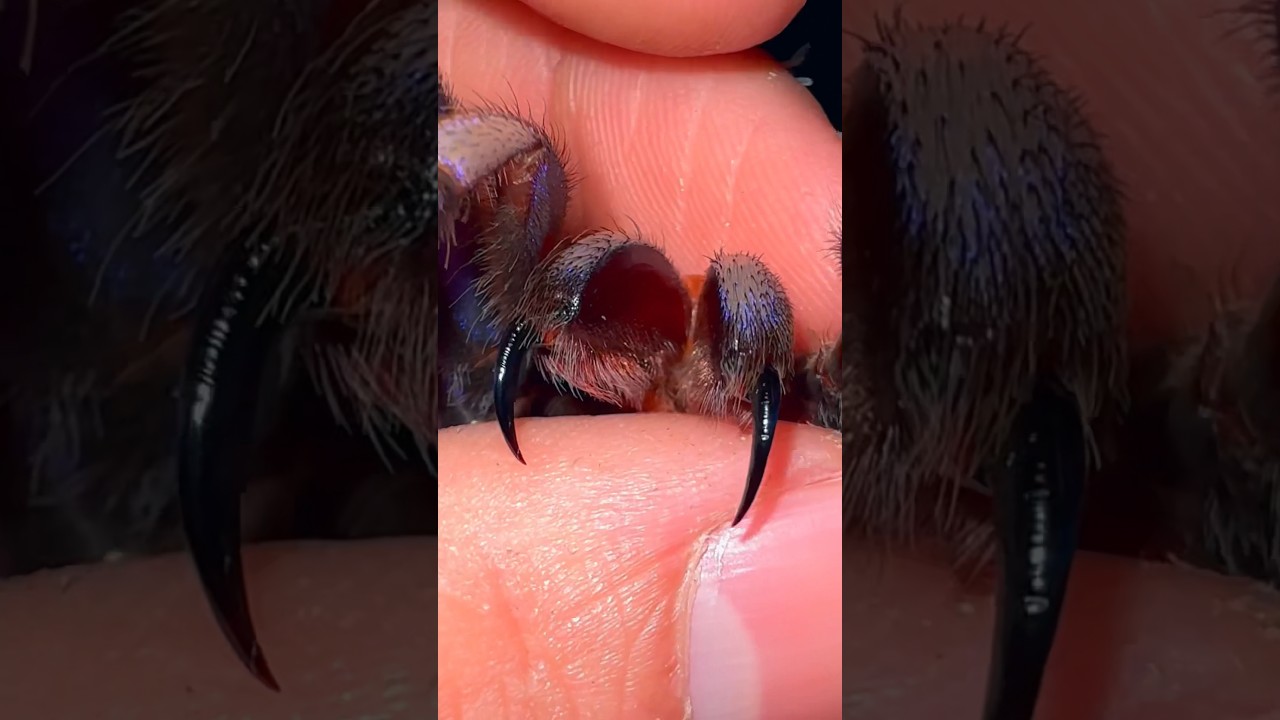
In this educational video I show off my electric blue tarantula Gloria!!! Being an old work tarantula a bite from Gloria would be catastrophic! However my tarantula doesn’t end up biting me… instead I show off how a tarantula molts
👆🏼Look at her molt its like an exact replica of her body
@sullen merlin
placid osprey
modest isle
Yeah so many things like :
copper golem should've won based on the fact he's just a silly little guy
modest isle
placid osprey
copper golem should've won based on the fact he's just a silly little guy
Yep silly little guy indeed
Also You changed your iconic pfp 💀
lofty blade
It's still so strange to me to come up with concepts, designs, and how they could work
and then just
"lmao nah we're not gonna add them later on because yeah"
Even though there's nothing stopping them aside from.....laziness I guess?
placid osprey
modest isle
Yep silly little guy indeed
Also You changed your iconic pfp 💀
yeah but I like the idea of changing it to the different holiday zombies from PvZ throughout the year, since PvZ has special zombies for every holiday
sullen merlin
lofty blade
It's still so strange to me to come up with concepts, designs, and how they coul...
They always said they were gonna add them in the future but like whens that lmao some things were from like 5+ years ago or soemthing
 modest isle
sullen merlin
They always said they were gonna add them in the future but like whens that lmao...
modest isle
sullen merlin
They always said they were gonna add them in the future but like whens that lmao...
Classic Minecraft devs moment


sullen merlin
modest isle
Classic Minecraft devs moment
<:TI_NotCringe:979152717626892338> <:TI_gun:64...
And then ppl complain about the isle devs lmao.
modest isle
sullen merlin
They always said they were gonna add them in the future but like whens that lmao...
its around 7 years ago 
sullen merlin
Third Animal species of the day (422) :
Black fat-tailed scorpion / (Androctonus bicolor)

Androctonus bicolor, the black fat-tailed scorpion, is a scorpion species of the family Buthidae. It is black in color and can grow up to 8 cm.[1] Black fat-tailed scorpions come from the family Buthidae, which is the largest of the scorpion family.[2] They can be identified by their hefty physique.[3] They tend to move very fast, and are of an aggressive nature.[3] Black fat–tailed scorpions can live for up to 5 years.[3] Adults can reach up to 40-60 millimeters, 80 millimeters being the maximum.[4] These scorpions typically possess black and brown coloration.[5] These scorpions enjoy making scrapes with wood and rocks,[3] and are nocturnal, thus they hide in crevices or certain objects during the day.[4] They stay in shade to retain moisture (that they obtain from prey) in their bodies, as they are susceptible to losing moisture due to their environmental preference.[6]
Taxonomy
The black fat-tailed scorpion belongs to the genus Androctonus, which can be translated into "man-killer".[7] The species name is bicolor which is translated into having two-colors,[8] which could be referring to their brown-black coloration.[5] Scorpions are under the class Arachnida, because they are arachnids that have eight legs.[6]

Location
Androctonus is widespread in North and West Africa, the Middle East, but the wider family tolerates a wider range of habitats.[2] This relates to the fact that black fat-tailed scorpions are rather efficient when temperatures range from 29 °C-35 °C, as this temperature allows for productive growth.[3] Black fat–tailed scorpions are normally found in arid or semi-arid areas as well as margins of desert areas, typically areas with sandy soil.[4] They generally prefer warm and dry areas.[6]
Eating habits
Scorpions can eat many kinds of insects, spiders, lizards, small mammals such as mice, or even other scorpions.[9] Scorpions are able to go months without consuming food.[9] Prey is captured and crushed by its pincers, while their stingers are used to inject venom into their prey.[9] This paralyzes the prey, causing immobility and allowing the scorpion to consume it with ease.[9] Scorpions use their chelicerae (small claw-like structures attached to their mouths) to pull small parts off their prey, this is simple for them as chelicerae are quite sharp.[9] Scorpions are only able to ingest liquids, thus their chelicerae help them dispose of solid parts that cannot be consumed.[9]
Venom
Black fat–tailed scorpions use neurotoxic venom, which is fast acting and can be absorbed very quickly, because of the small molecular weight of the proteins that make up the venom.[10] These neurotoxins act on the central nervous system, causing paralysis in the nerves that are responsible for respiration, which ultimately causes death by respiratory failure.[10] The neurotoxins may also cause widespread neuronal excitation, symptoms of which can include pain, sweating, salivation, and tearing.[11] Severe envenomation is likely, as the rate of envenoming is 10-20%, making it potentially lethal.[5] Victims are likely to feel progressively weaker after envenoming.[10] Envenoming can result in death, which can occur between 5 and 15 hours, but it is also possible for death to occur within one hour.[10] Examples of common symptoms that occur after a sting are: drowsiness, drooping eyelids, paralysis of neck muscles, loss of muscle coordination, and abdominal pain.[10] A monovalent antivenom (an antivenom that heals stings of specific species [12]) called Anti-scorpionique is available to treat stings from a black fat-tailed scorpion.[5]


@rustic badger
@cedar crescent
@distant nymph
@spice gyro
@wintry marlin
rustic badger
sullen merlin
@modest isle
@lone star
@hallow parrot
@limber grove
@full patrol
@lilac dagger
@drowsy egret
@azure oar
azure oar
lifeform
sullen merlin
@silent cargo
@crimson marlin
@restive charm
@neat basalt
wintry marlin
Didn’t load for a sec for me
azure oar
that is indeed a fat tailed one
modest isle
sullen merlin
Third Animal species of the day (422) :
Black fat-tailed scorpion / (Androctonus...
Black Fat Tailed scorpion
Least racial animal name 💀
azure oar
It‘s accurate
modest isle
Good point
rustic badger
Having a Colour in its name really doesn't make stuff racial
modest isle
That fat part
rustic badger
Its just a lil guy with a fat tail that's black
You guys better do teh camel Spider this month
those guys are fun, they chase people to get in their shadows
modest isle
At least call it the
“Black Robust tailed scorpion”
rustic badger
Black CHONKY tailed Scorpion
modest isle
sullen merlin
Im not sure if the map is about the species or the family
azure oar
modest isle
At least call it the
“Black Robust tailed scorpion”
Black slightly abnormally sized tailed scorpion
 modest isle
crimson marlin
https://tenor.com/view/themummy-the-mummy-the-scorpion-king-gif-13469335
modest isle
crimson marlin
https://tenor.com/view/themummy-the-mummy-the-scorpion-king-gif-13469335
Dwayne Johnson the rock CGI scorpion 🦂
crimson marlin
modest isle
Dwayne Johnson the rock CGI scorpion 🦂
Its scary how bad made it is lmao
placid osprey
guys I just created a website by writing the code myself for one of my classes, I'm proud that I was able to do that so I wanted to tell you all
@limber grove I can send a picture if you want
(hopefully the ping wasn't bothersome)
limber grove
If you're ok with sharing it! Web coding is wizardry to me
placid osprey
It's not personal so yeah!
placid osprey
limber grove
If you're ok with sharing it! Web coding is wizardry to me

(just a picture of it since idk how to send the document)
and here's what I had to write:
 limber grove
Nice!!
placid osprey
very basic but I was proud that I could accomplish it
placid osprey
limber grove
Nice!!
thanks a bunch, means a lot
next assignment: program ultron!
 mortal echo
modest isle
Yeah so many things like :
mortal echo
modest isle
Yeah so many things like :
Remind me why people voted a bioluminescent squid over iceologer again?
modest isle
mortal echo
Remind me why people voted a bioluminescent squid over iceologer again?
Dream told his fans to vote for the glowy squid 💀
 modest isle
placid osprey
https://media.discordapp.net/attachments/1145482370703708233/1179056804735483984...
modest isle
placid osprey
https://media.discordapp.net/attachments/1145482370703708233/1179056804735483984...
 rustic badger
placid osprey
and here's what I had to write:
rustic badger
placid osprey
and here's what I had to write:
Noice, looks great
slow hazel
Im dead inside
placid osprey
rustic badger
Noice, looks great
thanks
void zinc
slow hazel
Im dead inside
Liar.
slow hazel
void zinc
Liar.
Say hi to moo deng
 void zinc
Hell yeah. Love that art.
shell rapids
I hate corporate, hate losing money cuz "I'm NoT nEeDeD" but then turn around and give me more work for thr same if not less pay cuz I actually put in effort
neat basalt
@sudden plover
 barren bear
thanks...
neat basalt
barren bear
thanks...
hmmm not for u
 willow knot
placid osprey
and here's what I had to write:
willow knot
willow knot
placid osprey
and here's what I had to write:
Aaahh, I love html
full patrol
placid osprey
and here's what I had to write:
Woo! HTML 
You learning CSS too?
I had a class for HTML CSS and this amazingly designed website was my final
 spice gyro
Reptiles
rustic badger
full patrol
Woo! HTML <:PogBlue:830253205693661224>
You learning CSS too?
I had a class for...
Noice, honestly I'm pretty bad at css since I've used bootstrap too much
neat basalt
 sudden plover
I am going on a road trip
sudden plover
I am going on a road trip
they eagerly await your arrival
 visual hound
I have found the reason why HOI4 gets really laggy, its because of AFRICA and the MIDDLE EAST, they have divisions moving all the time, they are 70% of events, so if you remove them with a mod the game actually runs smoothly
placid osprey
full patrol
Woo! HTML <:PogBlue:830253205693661224>
You learning CSS too?
I had a class for...
Yes I think I'm learning CSS in the course as well, since we are adding on to the website. I like your website!
distant nymph
placid osprey
Yes I think I'm learning CSS in the course as well, since we are adding on to th...
How about Javascript ? o:
sullen merlin
First Animal species of the day (423) :
Gold-dust weevil / (Hypomeces pulviger)

Hypomeces pulviger, also known as the gold-dust weevil or green weevil, is a species of beetle in the true weevil family.[1][2] The adult weevil can reach a length of about 14 mm (0.6 in) and is covered with iridescent green or yellowish-green dust-like scales all over the body. This species can be found in India, tropical Southeast Asia, and the Philippines. Both the larvae and adults are crop pests. The larvae live in and pupate in the soil, feeding on living plant roots. The adult weevils are long-lived, doing damage to foliage, and sometimes defoliating young bushes and nursery trees.[2]
Description
The adult beetle is about 14 mm (0.6 in) long. The head has a broad, long snout, clubbed antennae, large black eyes and chewing mouthparts. The thorax and elytra (wing cases) are grey, dusted with golden or greenish iridescent flattened setae. The larvae are legless grubs living in the soil.[2][3]
Distribution and habitat
Hypomeces pulviger is native to southeastern Asia, its range extending from Pakistan and India to Japan, Taiwan, the Philippines and Indonesia. The insects are found in forests and in more open areas including agricultural cropland.[1]
Damage
The larvae of Hypomeces pulviger live underground, feeding on the roots of a wide range of plants.[1] In cotton and maize, they feed close to the surface and may cause the plants to lodge.[1]
The adult Hypomeces pulviger feeds by chewing leaves. The growing tip and young leaves are preferentially chosen and eaten from the edge inwards. When older, more mature leaves are consumed, the softer parts between the veins are eaten and the veins are left. Host plants include Citrus, Gossypium (cotton), Helianthus annuus (sunflower), Ipomoea batatas (sweet potato), Nicotiana tabacum (tobacco), Oryza sativa (rice), Persea americana (avocado), Saccharum officinarum (sugarcane) and Zea mays (maize).[1] It is a pest of tea plants in China,[4] of red river gum (Eucalyptus camaldulensis)[1] and pigeon pea (Cajanus cajan) in Thailand,[5] of rubber (Hevea brasiliensis), cocoa (Theobroma cacao), cassia (Cassia fistula), cowpeas (Vigna unguiculata), jackfruit (Artocarpus heterophyllus), kapok (Bombax ceiba), breadfruit (Artocarpus altilis), Flindersia brayleyana, mangoes (Mangifera indica), mulberries (Morus alba), Philippine mahogany (Pterocarpus indicus), rambutan (Nephelium lappaceum), sapodilla (Manilkara zapota), teak (Tectona grandis) and tung (Vernicia fordii).[6] The weevils can also do considerable damage to young trees in forest nurseries.[1]


@rustic badger
@cedar crescent
@distant nymph
@spice gyro
@wintry marlin
@modest isle
@lone star
@hallow parrot
@limber grove
distant nymph
0: Weevil time!
rustic badger
sullen merlin
@full patrol
@lilac dagger
@drowsy egret
@azure oar
hallow parrot
Weevil !!!!
azure oar
Those look really cool!
sullen merlin
@silent cargo
@crimson marlin
@restive charm
@neat basalt
full patrol
Yo I saw one of those last month
distant nymph
 limber grove
WEEVIL TIME
rustic badger
when Megood?
limber grove
@shell rapids
sullen merlin
Weevle
modest isle
sullen merlin
First Animal species of the day (423) :
Gold-dust weevil / (Hypomeces pulviger)
✨🪲✨
sullen merlin
Bro has mold on his carapace
neat basalt
can i eat him
modest isle
Dont
sullen merlin
Yes but u will inhale spores and get mold in ur lungs
azure oar
neat basalt
can i eat him
You can eat it, but if you will survive it I can‘t say
distant nymph

modest isle
sullen merlin
Yes but u will inhale spores and get mold in ur lungs
Im gonna prepare a PDF file as the 500 species anniversary
Me and you have achieved 423 species as of now
shell rapids
distant nymph
modest isle
Im gonna prepare a PDF file as the 500 species anniversary
Me and you have ach...
rustic badger
You can consume him, but don't kill him and just swallow into your stomach. Then establish a Symbiotic relationship by striking a deal with the Weevil
shell rapids
Eat a weevil and she will enter ur spinal column and assume direct control
modest isle
shell rapids
https://tenor.com/view/weevil-weevil-intentions-evil-bug-gif-1093974577830608625...
While you were away i let cave goblino become the main poster of the AOTD around the 399th species
Since i needed to take a break
rustic badger
Mecha Pilot Weevil...
wintry marlin
sullen merlin
<@872830054982365195>
<@585846202705248276>
<@478213198458257409>
<@102410911...
bug
modest isle

The Duck Song 5 by Bryant Oden, the conclusion to the series. Video by Forrest Whaley. Song available on all music platforms.
Grab a plush before they're gone ► https://www.makeship.com/products/the-duck-plushie-1
Check out the official lyric video on Bryant's Songdrops channel:
https://www.youtube.com/watch?v=LrNoBBs__yI
Get the merch...
http...
We got The happy ending after 15 years
 chilly osprey
She's a 10 but she disappears every time i take my pills
 sly zephyr
@digital sleet https://youtu.be/I7JVD-wo3cI?si=gn7kH6gTqGgKdv7f
 digital sleet
i have no idea this video existed
sly zephyr
Lol
This is such a popular meme, so your message about stego made me laugh very loudly
narrow spoke
Nou nou nou mister fish mem
LOL
You will go in this yobaniy tazik blyat
What does the channel name even say
Stand offer?
Sutandoofā
sullen merlin
First Animal species of the day (424) :
Buff-tailed bumblebee / (Bombus terrestris)

Bombus terrestris, the buff-tailed bumblebee or large earth bumblebee, is one of the most numerous bumblebee species in Europe. It is one of the main species used in greenhouse pollination, and so can be found in many countries and areas where it is not native, such as Tasmania.[2] Moreover, it is a eusocial insect with an overlap of generations, a division of labour, and cooperative brood care. The queen is monogamous which means she mates with only one male. B. terrestris workers learn flower colours and forage efficiently.
Description and identification
Ventral view of B. terrestris
B. terrestris are pollen-storing bees that generally feed and forage on nectar and pollen.[4] The queen is between 20 and 22 mm long, males range from 14 to 16 mm, and workers from 11 to 17 mm. Workers have white-ended abdomens, and look just like workers of the white-tailed bumblebee, B. lucorum, a close relative, apart from the yellowish bands of B. terrestris being darker in direct comparison. The queens of B. terrestris have the namesake buff-white abdomen tip ("tail"); this area is white as in the workers in B. lucorum.[5] B. terrestris is unique compared to other bees in that their caste of workers exhibit a wide variation in worker size, with thorax sizes ranging from 2.3 to 6.9 mm in length and masses ranging from 68 to 754 mg.[4]
Distribution and habitat
B. terrestris is most commonly found throughout Europe and generally occupies temperate climates. Because it can survive in a wide variety of habitats, there are populations in the Near East, the Mediterranean Islands, and Northern Africa as well.[6] Additionally, it has escaped captivity after being introduced as a greenhouse pollinator in countries where it is not native, so this bee is now considered an invasive species in many of these places, including Japan, Chile, Argentina, and Tasmania.[2][7][8] Nests are usually found underground, such as in abandoned rodent dens.[7][9] Colonies form comb-like nest structures with egg cells each containing several eggs. The queen will lay egg cells on top of one another. Colonies produce between 300 and 400 bees on average, with a large variation in the number of workers.[10]

Reproductive behavior
Mating system
B. terrestris is a singly mating species. Mating with multiple males might provide benefits of genetic variability among the brood, but it does not happen in this or any but the most highly derived social bees.[14] The lack of multiple matings by B. terrestris queens may be partly due to male interference. B. terrestris males plug the female's sexual tract with a sticky secretion during mating, which appears to reduce the female's ability to successfully mate with other males for several days.[15] However honeybee males also plug the female's reproductive tract to no avail; honeybees mate tens of times on one mating flight. While there may be genetic fitness benefits in colony heterogeneity from a polyandrous mating system, bumblebees are also likely to be monandrous due to social constraints, risks associated with multiple matings, and phylogenetic inertia since the ancestral bees are singly mated. Finding multiple mates might be energetically costly and expose the queen to higher predation risks. Additionally, while queens may prefer multiple matings to ensure more genetic variability and viable offspring, workers are more closely related to full sisters than to paternal half sisters.[14] This is due to haplodiploidy in Hymenopteran social insects in which males (drones) are haploid and females (workers and queens) are diploid. This confers greater genetic similarity between sister workers (relatedness of 0.75) than between mother and offspring (relatedness of 0.5), making the relatedness component of kin selection higher between sisters.
Worker egg laying
In addition to the queen, the workers can lay eggs. Since workers do not mate, all of their eggs are haploid and will develop into drones. There are multiple factors that determine whether a worker bee will become reproductively active. Workers born early in the first brood are more likely to become egg layers due to their increased size and age, which allows more time for ovarian development. Workers usually have to be at least 30 days old to become an egg layer. Individuals that spend less time foraging and more time near the queen are also more likely to become reproductive. Lastly, due to intense competition for the opportunity to reproduce, older workers often harass the queen by attacking her and buzzing loudly. Once this point is reached the colony is usually abandoned.[16]
Sex ratios
Due to the variability in the switch point to male production from worker production of B. terrestris colonies, there are varying levels of sex ratios among nests. Early-switching colonies have a much smaller number of future queens compared to males (1:17.4), which may give them a competitive advantage in mating with later emerging queens. Late-switching colonies have fewer males and a more even sex ratio of 1:1:3, thus indicating the queen's control over her colony (she prefers a 1:1 ratio, since she is equally related to both sons and daughters). On the other hand, workers prefer a 3:1 ratio, as they are more related to each other than to their mother. Although early and late switching colonies are usually balanced equally in numbers in the population, the overall demographic in one study was found to be male biased, resulting in an overall sex ratio of 1:4 (female to males).[10] However, most studies show that this balance of bimodal sex determination between early and late-switching colonies creates the queen's preferred 1:1 sex ratio in B. terrestris populations.[17] This is unusual for monogamous social insects, which usually have a 3:1 sex ratio indicative of worker colony control. B. terrestris often does not conform to standard predictions of sex ratios based on evolutionary theory and haplodiploid theory.
Reproductive suppression
Queen suppression
Queen bees can control oogenesis in worker bees by suppressing juvenile hormone (JH) in the workers, which regulates egg development. Among queenless B. terrestris workers, the corpora allata, which secrete JH, was noticeably enlarged compared to queenright workers. JH concentrations were also higher in the hemolymph of queenless workers. This suggests that the presence of a queen is enough to prevent workers from laying eggs, which helps her maintain genetic control over her colony's brood. The mechanism through which the queen induces this behavior is likely through pheromones.[18]
Worker suppression
While the queen controls much of the egg laying and larval development in the colony, it is likely that workers play a much bigger role in controlling egg laying than previously thought. Dominant workers will often inhibit younger workers from laying eggs.[16][19] Workers have low levels of JH and ovarian development during the early stages of the colony cycle and also after the competition point. Workers introduced into queenright and queenless colonies experience similar levels of inhibition from fellow workers during the competition point, indicating the key role of worker policing of fellow nest mates later in the colony cycle. This suggests that worker reproductive development will be highest between early development and the competition point in the colony.[19]


@rustic badger
@cedar crescent
@distant nymph
@spice gyro
@wintry marlin
rustic badger
sullen merlin
@modest isle
@lone star
@hallow parrot
@limber grove
@full patrol
@lilac dagger
@drowsy egret
@azure oar
@silent cargo
@crimson marlin
@restive charm
@neat basalt
modest isle
sullen merlin
First Animal species of the day (424) :
Buff-tailed bumblebee / (Bombus terrestr...

@sullen merlin All true bee species we have done so far excluding ❌ their cousins Ants, Wasps, Hornets:
- Western Honey bee #77
- buff tailed bumblebee #424

 crimson marlin
Bumblebee....
hallow parrot
I JUST FOUND OUT SOMETHING REVOLUTIONARY
Certain minty gum turns beef jerky into tasting like pizza
full patrol
Now go drink some orange juice
hallow parrot
full patrol
Now go drink some orange juice <:TI_Troll:472576085482143745> <:TI_Troll:4725760...
 azure oar
sullen merlin
<@238005729519206400>
<@272951380371570700>
<@908223851949867008>
<@923986024...
azure oar
sullen merlin
<@238005729519206400>
<@272951380371570700>
<@908223851949867008>
<@923986024...
I missed my favourite Insect 
 lyric pollen
I just woke up and learned more about bees than I ever wanted
sullen merlin
lyric pollen
I just woke up and learned more about bees than I ever wanted
This wasnt even half the wiki page btqw
sullen merlin
@modest isle
modest isle
sullen merlin
<@810796428002721822>
Tomorrows species might a cave fish
 uneven wraith
 placid osprey
distant nymph
How about Javascript ? o:
placid osprey
distant nymph
How about Javascript ? o:
I'm not sure
placid osprey
 finite fog
silly little guy
rustic badger
placid osprey
I'm not sure
You'll need to learn it sooner or later, its basically necessary if you really wanna get into web dev
rustic badger
uneven wraith

Arkveld is easily my new favorite mainline flagship, design really goes insanely hard like holy moly Its like a Wampa mixed with a Brute from halo mixed with gore magala bits while simultaneously having the whips and thunderous ferocity of Berukyurosu from MHFZ its just so SO peak. I LOVE THIS THING!!!!! I WANNA GET A FIGURINE LIKE MY GOD ITS SO...
Rey Dau looks so good, Ark veld too
uneven wraith
rustic badger
https://youtu.be/QoFMejWFJxw?si=DS-983YsLTlk0tgP
this is great
rustic badger
Love all the apexes so far
finite fog
placid osprey
silly little guy
Also cute, look at him :3
 regal quarry
So not sure if this should be a thing or how the Devs/Mods of the isle will feel about this. But, this roblox game def copied legacy and ripped eveything off essentially. Claim to not make profit but there is def robux purchases in game. Hopefully Mods/Devs see this? I just wanted them to be aware after seeing it myself on there. Roblox children have a bad habit of 'copying' and 'stealing' content.
https://www.roblox.com/games/15247020573/Survive-The-Isle-Legacy-Restored
full patrol
regal quarry
So not sure if this should be a thing or how the Devs/Mods of the isle will feel...
It's been forwarded thanks
regal quarry
full patrol
It's been forwarded thanks
Thank you!
rough hollow
when i go to join a server
why is every server in chines?
limber grove
rough hollow
when i go to join a server
why is every server in chines?
Right click the game in your steam library, click properties, click betas, select the drop-down bar and select evrima
rough hollow
limber grove
Right click the game in your steam library, click properties, click betas, selec...
thanks
rough hollow
limber grove
Right click the game in your steam library, click properties, click betas, selec...
i got it updated to evrima and it said this
DirectX 12 is not supported on your system. Try running without the -dx12 or -d3d12 command line argument.
how do i do that
limber grove
rough hollow
i got it updated to evrima and it said this
DirectX 12 is not supported on your...
What GPU do you have?
rough hollow
limber grove
What GPU do you have?
Device name DESKTOP-624LM47
Processor 12th Gen Intel(R) Core(TM) i5-1235U 1.30 GHz
Installed RAM 16.0 GB (15.7 GB usable)
System type 64-bit operating system, x64-based processor
Pen and touch Pen and touch support with 10 touch points
limber grove
rough hollow
Device name DESKTOP-624LM47
Processor 12th Gen Intel(R) Core(TM) i5-1235U ...
Open Task Manager, then click Performance, then click GPU. Its name will be in the top right
rough hollow
limber grove
Open Task Manager, then click Performance, then click GPU. Its name will be in t...
 limber grove
rough hollow
limber grove
rough hollow
Is that the only one listed?
rough hollow
i think so
limber grove
That means your pc doesn't have a dedicated GPU, you won't be able to run evrima, I'm sorry
rough hollow
limber grove
That means your pc doesn't have a dedicated GPU, you won't be able to run evrima...
oh okay
limber grove
If you still want to try legacy, I'd check the pinned messages in #🔧-legacy-troubleshooting-🔧 and ask for advice in #legacy-servers
rough hollow
limber grove
If you still want to try legacy, I'd check the pinned messages in <#401485101046...
thanks
nimble grail
I don’t know if this has been shared here before BUT
neat basalt
he block
 neat basalt
@pulsar crown time to see what you BROKE!!!!
 pulsar crown
neat basalt
<@275775820201721857> time to see what you BROKE!!!!
pulsar crown
neat basalt
<@275775820201721857> time to see what you BROKE!!!!
did they update that game
neat basalt
pulsar crown
did they update that game
i have no clue
i was waiting on the human models but got bored
i think theres halloween stuff?
modest isle
modest isle
Tomorrows species might a cave fish
So is cave fish today ? 💀
modest isle
modest isle
So is cave fish today ? 💀
Idk we need discuss that with @modest isle
modest isle
modest isle
Idk we need discuss that with <@810796428002721822>
How did you ping yourself 
You meant to ping
@sullen merlin
modest isle
modest isle
You meant to ping
<@784728629917384704>
It will be funny to see they will realize its me instead of cave goblino doing the AOTD 🐟
modest isle
modest isle
It will be funny to see they will realize its me instead of cave goblino doing t...
I agree with you (me)
modest isle
modest isle
I agree with you (me)
I think you are too bored that you started talking to yourself
 sullen merlin
What is happening
sullen merlin
modest isle
You meant to ping
<@784728629917384704>
Why are u talking to yourself man
 modest isle
sullen merlin
https://tenor.com/view/ok-schizo-ok-schizo-schizophrenia-gibbon-gif-23667455
modest isle
sullen merlin
https://tenor.com/view/ok-schizo-ok-schizo-schizophrenia-gibbon-gif-23667455
Fr 💀
 hollow topaz
Is anybody experienced with pcs? Like knows all about them
heavy temple
Checked Youtube just in tine to catch the Europa Clipper launch
hallow parrot
modest isle
https://tenor.com/view/cat-insane-gif-21702784
 modest isle
First Animal species of the day (425) :
Mexican tetra / (Astyanax mexicanus)

The Mexican tetra (Astyanax mexicanus), also known as the blind cave fish, blind cave characin or the blind cave tetra, is a freshwater fish in the Characidae family (tetras and relatives) of the order Characiformes.[4][5] The type species of its genus, it is native to the Nearctic realm, originating in the lower Rio Grande, and the Neueces and Pecos Rivers in Texas, into the Central Plateau and eastern states of Mexico

Maturing at a total length of about 12 cm (4.7 in), the Mexican tetra is of typical characin form, albeit with silvery, unremarkable scalation, likely an adaptation to its natural environment.[4] By comparison, the species' blind "cave" form has scales which evolved a pale, pinkish-white color, somewhat resembling an albino,[8] as it inhabits pitch-black caverns and subterranean streams and has no need for a colorful appearance (i.e. for attracting mates)

This species has 2 morphs :
Normal morph
Vs
Cave Morph
Likewise, the blind cave tetra has fully "devolved" (lost) the use of its eyes by living in an environment completely devoid of natural light, with only empty sockets in their place. The blind tetra instead has sensory organs along its body, as well as a heightened nervous system (and senses of smell and touch), and can immediately detect where objects or other animals are located by slight changes in the surrounding water pressure, a process vaguely similar to echolocation—another adaptation known from cave-dwelling, as well as aquatic, species, such as the bats and cetaceans.

The Mexican tetra's blind variant has experienced a steady surge in popularity among modern aquarists
A. mexicanus is a peaceful, sociable schooling species, like most tetras, that spends most of its time in midlevel waters above the rocky and sandy bottoms of pools, and backwaters of creeks and streams. Coming from an environment somewhere between subtropical climate, it prefers water with 6.5–8 pH, a hardness of up to 30 dGH, and a temperature range of 20 to 25 °C (68 to 77 °F). In the winter, some populations migrate to warmer waters.

A. mexicanus is famous for its blind cave form, which is known by such names as blind cave tetra, blind tetra (leading to easy confusion with the Brazilian Stygichthys typhlops), blind cave characin and blind cavefish. Depending on the exact population, cave forms can have degenerated sight or have total loss of sight and even their eyes, due to down-regulation of the protein αA-crystallin and consequent lens cell death.[15] Despite losing their eyes, cavefish cells respond to light responsive and show an endogenous circadian rhythm.[16] The fish in the Pachón caves have lost their eyes completely whilst the fish from the Micos cave only have limited sight.[17] Cave fish and surface fish are able to produce fertile offspring.

The eyed and eyeless forms of A. mexicanus, being members of the same species, are closely related and can interbreed[26] making this species an excellent model organism for examining convergent and parallel evolution, regressive evolution in cave animals, and the genetic basis of regressive traits.[27] This, combined with the ease of maintaining the species in captivity, has made it the most studied cavefish and likely also the most studied cave organism overall


@rustic badger
@cedar crescent
@distant nymph
@spice gyro
@wintry marlin
@modest isle
@lone star
@hallow parrot
@limber grove
@full patrol
@lilac dagger
@drowsy egret
@azure oar
@silent cargo
@crimson marlin
@restive charm
@neat basalt
wintry marlin
Fish
spice gyro
Fish
modest isle
@sullen merlin
azure oar
Fibsh
rustic badger
sullen merlin
Damn why'd i get single'd out like that 
modest isle
Blind and somtimes not blind fish
rustic badger
sullen merlin
Damn why'd i get single'd out like that <:TI_monkaS:461274233209749514>
You were the Special
sullen merlin
rustic badger
You were the Special
 modest isle
sullen merlin
Damn why'd i get single'd out like that <:TI_monkaS:461274233209749514>
modest isle
sullen merlin
Damn why'd i get single'd out like that <:TI_monkaS:461274233209749514>
Sorry since you removed your name from the older pings i copied them
Then put your name
modest isle
wintry marlin
Fish
You guys haven’t noticed something about who posted it
wintry marlin
You
rustic badger
modest isle
Sorry since you removed your name from the older pings i copied them
Then put y...
This is a Lie, in reality Sleepy just forgot about Cave-Goblino
spice gyro
I realized
modest isle
Cave goblino is busy today
wintry marlin
I figured
Well back to Minecraft and my sniffer island
modest isle
 distant nymph
modest isle
First Animal species of the day (425) :
Mexican tetra / (Astyanax mexicanus)
distant nymph
modest isle
First Animal species of the day (425) :
Mexican tetra / (Astyanax mexicanus)
oh weird o:
modest isle
distant nymph
oh weird o:
Yep both the blind ones without eyes
And the ones with eyes all belong to the same species
rustic badger
Khezu Fish
modest isle
Lol
distant nymph
rustic badger
Khezu Fish
That made me dislike them now 
 distant nymph
I jsut like Gigginox more ):
 rustic badger
Oh yeah He's one too, hope we see it in Wilds
Would be cool with the new pack hunting mechanics
and the Gigi Babies
modest isle
wintry marlin
https://tenor.com/view/jack-black-funny-i-am-steve-minecraft-movie-minecraft-gif...
Jack Black will never replace the real STEVE !!! 🗣️
 wintry marlin
Wilds is 4 months away.. it’s already the game of next year


 coarse heron
yo what do yall suggest if ur stuck somewhere as a cera and cant jump out
bc that kinda happened to me
rustic badger
/unstuck
neat basalt
coarse heron
also how long is the groth time for nosuto
a what
modest isle
neat basalt
a what
He meant how long is Growth time for Nasutoceratops


Maybe he mistook Avaceratops for Nasutoceratops since the isle has ava
And both Ava and Nasuto are closely related
rustic badger
They were asking about Diablo
modest isle
But Diabloceratops looks nothing like a Nasutoceratops 💀
rustic badger
They just didn't know its name
 lime copper
If you aren't super well studied in dinos, they do kinda look similar at a glance and then if no visual right in front of you
modest isle
Fair point
modest isle
coarse heron
also how long is the groth time for nosuto
Check the name of the dinosaur your playing right now
Since Nasutoceratops is not in the isle
To give you the answer
rough hollow
modest isle
Jack Black will never replace the real STEVE !!! 🗣️
Mod?
modest isle
rough hollow
Mod?
a Custom made skin i think
rough hollow
Ah
 quiet smelt
i surpassed 100 friends let’s go
 lyric pollen
I do not want to go to work today.
sullen merlin
First Animal species of the day (426) :
Amazonian giant centipede / (Scolopendra gigantea)

Scolopendra gigantea, also known as the Peruvian giant yellow-leg centipede or Amazonian giant centipede, is a centipede in the genus Scolopendra. It is the largest centipede species in the world, with a length exceeding 30 centimetres (12 in).[2] Specimens may have 21 or 23 segments.[3] It is found in various places throughout South America and the extreme south Caribbean, where it preys on a wide variety of animals, including other sizable arthropods, amphibians, mammals and reptiles.[4]
Distribution and habitat
It is naturally found in northern South America. Countries from which verified museum specimens have been collected include Aruba, Brazil, Curaçao, Colombia, Venezuela (including Margarita Island) and Trinidad.[2] Records from Saint Thomas, U.S. Virgin Islands, Hispaniola (both Haiti and the Dominican Republic), Mexico, Puerto Rico and Honduras are assumed to be accidental introductions or labelling errors.[2]
Scolopendra gigantea can be found in tropical or sub-tropical rainforest and tropical dry forest, in dark, moist places such as in leaf litter or under rocks.[3]

Behavior and diet
It is a carnivore that feeds on any other animal it can overpower and kill. It is capable of overpowering not only other invertebrates such as large insects, worms, snails, spiders, millipedes, scorpions, and even tarantulas, but also small vertebrates including small lizards, frogs (up to 95 millimetres (3+3⁄4 in) long), snakes (up to 25 centimetres (10 in) long), sparrow-sized birds, mice, and bats.[4][5] Large individuals of S. gigantea have been known to employ unique strategies to catch bats with muscular strength. They climb cave ceilings and hold or manipulate their heavier prey with only a few legs attached to the ceiling.[4] Natural predators to the giant centipedes include large birds, spiders, and arthropod-hunting mammals, including coati, kinkajou, and opossum
Venom
At least one human death has been attributed to the venom of S. gigantea. In 2014, a four-year-old child in Venezuela died after being bitten by a giant centipede which was hidden inside an open soda can. Researchers at Universidad de Oriente later confirmed the specimen to be S. gigantea.[6]


@rustic badger
@cedar crescent
@distant nymph
@spice gyro
@wintry marlin
rustic badger
wintry marlin
Bug
sullen merlin
@modest isle
@lone star
@hallow parrot
@limber grove
@full patrol
@lilac dagger
@drowsy egret
@azure oar
@silent cargo
@crimson marlin
@restive charm
@neat basalt
azure oar
pretty cool, 8/10
sullen merlin
To everyone having spaces, emojis or #'s in ur name, frick u (pinging sucks)
jk
but not really
wintry marlin
 modest isle
sullen merlin
First Animal species of the day (426) :
Amazonian giant centipede / (Scolopendra...
modest isle
sullen merlin
First Animal species of the day (426) :
Amazonian giant centipede / (Scolopendra...

The GIF shows the exact same species
rustic badger
It walks like its listening to Music on Headphones
placid osprey
rustic badger
You'll need to learn it sooner or later, its basically necessary if you really w...
I just chose Digital Design/Media as one of my courses I'm not sure if I'll actually pursue it
distant nymph
modest isle
https://tenor.com/view/1000pat-centipede-pet-insect-gif-16611214
I wonder how that feels o:
Also, since I haven't seen it in here yet, and the second Episode released earlier today!

By the end of the Devonian Period, the land had exploded with plant life and ancient invertebrates. There was also Tiktaalik - one of the first known vertebrates able and willing to move from the water to land. Our distant relative figured out how to survive in this dramatically different environment, can you?
PBS Member Stations rely on...
Really fun podcast 😊
 glass tulip
distant nymph
https://www.youtube.com/watch?v=JPbS2qnmev0
glass tulip
distant nymph
https://www.youtube.com/watch?v=JPbS2qnmev0
amphibians my beloved
cooler than dinosaurs
mortal echo
modest isle
Primordial tyrant’s Carnotaurus received a TLC


 barren bear
tlc...
 crystal copper
Hey <@&401466542140817419>! My friend abcd_possu has been trying to join this server however it says he's been banned even though he hasn't joined yet. He said he read something about a bot who auto bans if you try joining before having a profile. Is there anything you guys can do about that? Thank you!
(sorry if this isn't the right channel to ask this!)
heavy temple
crystal copper
Hey <@&401466542140817419>! My friend abcd_possu has been trying to join this se...
You could give them this and contact a senior admin about that https://dyno.gg/form/8ceec187
If you'd like to appeal a mute/ban from The Isle Official Discord then please fill out this form accordingly.
NOTE: If your appeal is rejected you'll be eligible to submit another appeal after 60 days.
crystal copper
Great, thanks!
sullen merlin
First Animal species of the day (427) :
Spiny leaf insect / (Extatosoma tiaratum)

Extatosoma tiaratum, commonly known as the spiny leaf insect, the giant prickly stick insect,[2] Macleay's spectre,[3] or the Australian walking stick, is a large species of Australian stick insect.[4][5] The species has the Phasmid Study Group number PSG9.[6]
Range
E. tiaratum is endemic to rainforests in Australia, with most of its range in eastern New South Wales and eastern Queensland, but it is also found in eastern Victoria (one old record) and South Australia (possibly introduced).[1][7] The closely related and similar E. popa is from New Guinea.[8]
Description
Male E. tiaratum in fifth instar
A male Extatosoma tiaratum resting on a piece of drift wood with bramble leafs in the background. The insect is light brown with dark brown specks, with a long body and wings resembling a stick.
Male E. tiaratum
Female adult E. tiaratum are covered with thorn-like spikes for defense and camouflage. Their long, rounded bodies grow to about 20 cm (8 in) long.[4][5] The females are further described as "heavy-bodied, brachypterous and having numerous spines and integumental expansions on the face and legs, including a tuft of spines on the conical occiput of the hypognathous head".[9] As mentioned, the wings of the female are too small for flying, especially when she is gravid.[2]
Exhibiting the sexual dimorphism of many similar insects (particularly other phasmids as well as mantises), males are small and thinner, growing only about 11 cm (4.5 in) in length and have three ocelli. Males lack the thorny growths except for spikes around their faces. They have long wings and are good flyers who readily take to the air if disturbed or in search of females.[4][10]

Anti-predator adaptations
Threat behaviour
Both sexes, when threatened, adopt a threat pose, standing on the front and middle legs, pointing their abdomen up or to the side in a sort of "scorpion" pose. They fold back their legs to defend themselves if anything comes in contact with their abdomen; the pincer movement with the sharp spines on the rear legs can puncture human skin. Adults make clicking sounds and can release a defensive odor reminiscent of toffee. Males may attempt to startle predators by flashing their wings open.[4][11]
Camouflage
E. tiaratum makes use of both passive and active camouflage. It adopts a curved pose when it hangs inverted amongst foliage with "its highly procryptic abdomen curled over its back."[3] Individual E. tiaratum vary in color and appear brown, mottled brown, green, reddish, cream, yellowish, or entirely white.[3][9]
Like many stick insects, E. tiaratum actively sways back and forth or side to side when disturbed or when there is a gust of wind, with a frequency distribution like foliage rustling in the wind. The swaying behaviour may be motion crypsis, preventing detection by predators, or motion masquerade, promoting misclassification (as something other than prey), or a combination of the two.[2][12]
Mimicry
Newly hatched E. tiaratum nymphs are ant mimics and resemble the insects in whose nest they are born. Their aposematic pattern—orange head, white collar, the rest black—mimics the ant genus Leptomyrmex and makes them appear toxic. Although most adult stick insects are notoriously slow, these nymphs are speedy, active, and quickly make their way to the trees. Their locomotion slows when they moult into their second and subsequent instars. Females acquire their distinctive spiky appearance through additional moults.[2][4][9]

 lean vault
sullen merlin
sullen merlin
lean vault
sullen merlin
sullen merlin
^ shedding skin
Reproduction
E. tiaratum nymph in its first instar
E. tiaratum at the Frankfurt Zoological Garden
E. tiaratum typically reproduce through sexual reproduction and produce eggs that hatch four months later. When no males are present in the population, this stick insect exhibits parthenogenesis instead. Eggs laid without fertilization take up to nine months to hatch and produce only females. In either cases, the female "flicks" her eggs, swinging her tail, up to several feet to land on the forest floor. These eggs must be kept relatively cool - under 25 °C - or they are unlikely to hatch.[3][4]
Fertilized eggs produced by sexual reproduction in E. tiaratum can lead to sons and daughters, whereas unfertilized eggs produced by parthenogenesis can lead only to female offspring.[13] Parthenogenesis in E. tiaratum appears to occur by automixis with terminal fusion of haploid nuclei from the same individual meiosis resulting in loss of heterozygosity in the offspring.[13]
The outside material of E. tiaratum eggs consists of lipids and other organic compounds that ants identify as food. They carry these eggs to their colony, consume the edible outer portion, and dump the intact eggs into their waste piles. Luckily for captive breeding, the ants eating the edible outer layer is not crucial to development, so they will hatch just as healthy without the need for any removal of the outer layer, which is not easily visible.[4][9]
Diet
E. tiaratum are herbivores and although they thrive on Eucalyptus which is their native food, breeders abroad recommend feeding them bayberry, bramble, hawthorn, hazel, oak, photinia, raspberry, rose, and salmon berry (red or yellow) and guava.[3][15]
[4] Although they survive well on non-eucalypt leaves, they don't always grow as large or retain the same natural colour.[14]
Defense
Some predators (such as mantids) have good vision, and can see the most camouflaged animals. When threatened, spiny leaf insects assume an aggressive posture such as rearing up. Females have a tough, spiky exoskeleton while males are winged and can fly away from danger. All adults have glands under that spray a colorless toffee-like odor which is pleasant to humans, but deters most predators.[16][17]


@rustic badger
@cedar crescent
@distant nymph
@spice gyro
@wintry marlin
rustic badger
sullen merlin
@modest isle
@lone star
@hallow parrot
@limber grove
@full patrol
@lilac dagger
@drowsy egret
@azure oar
@silent cargo
@crimson marlin
@restive charm
@neat basalt
modest isle
sullen merlin
First Animal species of the day (427) :
Spiny leaf insect / (Extatosoma tiaratum...
 azure oar
cool bug
sullen merlin
Leaf insect
modest isle
sullen merlin
For a second i thought it was a species of praying mantis
 rustic badger
A cow killer and a cow...
What a weird but cool duo:]
#Taurovenator #Carnotaurus

 Twitter
·
modest isle
Twitter
·
modest isle
methuselah star (HD 140283) :
oldest Star ⭐️ in the Universe around 12 Billion years old
“12,000,000,000”

Swift J1818.0-1607 :
youngest Star ⭐️ in the Universe around 240 years old “ONLY 240 ????”

Before googling it i would have assumed that youngest star in the universe would at least 5 Million years old 5,000,000
But this star is ONLY 240 ?????
modest isle
modest isle
Swift J1818.0-1607 :
youngest Star ⭐️ in the Universe around 240 years old “ONLY...
Meaning there are literally animals out there that are older than the youngest star in the universe
Like the greenland shark that can live 500 years 💀
 lofty blade
Happiness is when your mouth has been hurt and so eating certain foods can be irritating and painful
and then it heals and you realize "OMG I CAN ENJOY FOOD AGAIN"
:3
spice gyro
lofty blade
Happiness is when your mouth has been hurt and so eating certain foods can be ir...
Wisdom teeth
lofty blade

spice gyro
Finally being being able to eat large bites of food again was nice after that one
rustic badger
spice gyro
Finally being being able to eat large bites of food again was nice after that on...
But you are no longer Wise
spice gyro
only my mouth got less wise
lofty blade
Eat grass and cry
 cedar crescent
lofty blade
Eat grass and cry
cedar crescent
lofty blade
Eat grass and cry
Do college work and cry
shell rapids
gough, bob added carch as an acro variant, heck yea
nimble grail
modest isle
Swift J1818.0-1607 :
youngest Star ⭐️ in the Universe around 240 years old “ONLY...
in the universe????
that’s really cool though
 kindred trout
any turkish people here? ive got a serious question, feel free to dm me
 safe knoll
Chaos theory season two is so good
 slender spade
smoky mauve
slender spade
smoky mauve
SUBNAUTICA 2 TEASER??
hazy gate
if so they can shut up and take my money
smoky mauve

Subnautica 2 is coming to Early Access in 2025! Wishlist today: https://store.steampowered.com/app/1962700/Subnautica_2/
Immerse yourself in a new adventure with Subnautica 2, an open-water survival game from the creators of the Subnautica series. Play alone or with friends as you explore alluring biomes and discover fascinating creatures.
✨ W...
sullen merlin
smoky mauve
https://youtu.be/WS0vTRl_2PQ?si=8g8BF-_1QA3ch_F4

First Animal species of the day (428) :
Fire ant / (Solenopsis invicta)

Solenopsis invicta, the fire ant, or red imported fire ant (RIFA), is a species of ant native to South America. A member of the genus Solenopsis in the subfamily Myrmicinae, it was described by Swiss entomologist Felix Santschi as a variant of S. saevissima in 1916. Its current specific name invicta was given to the ant in 1972 as a separate species. However, the variant and species were the same ant, and the name was preserved due to its wide use. Though South American in origin, the red imported fire ant has been accidentally introduced in Australia, New Zealand, several Asian and Caribbean countries, Europe and the United States. The red imported fire ant is polymorphic, as workers appear in different shapes and sizes. The ant's colours are red and somewhat yellowish with a brown or black gaster, but males are completely black. Red imported fire ants are dominant in altered areas and live in a wide variety of habitats. They can be found in rainforests, disturbed areas, deserts, grasslands, alongside roads and buildings, and in electrical equipment. Colonies form large mounds constructed from soil with no visible entrances because foraging tunnels are built and workers emerge far away from the nest.
These ants exhibit a wide variety of behaviours, such as building rafts when they sense that water levels are rising. They also show necrophoric behaviour, where nestmates discard scraps or dead ants on refuse piles outside the nest. Foraging takes place on warm or hot days, although they may remain outside at night. Workers communicate by a series of semiochemicals and pheromones, which are used for recruitment, foraging, and defence. They are omnivores and eat dead mammals, arthropods, insects, seeds, and sweet substances such as honeydew from hemipteran insects with which they have developed relationships. Predators include arachnids, birds, and many insects including other ants, dragonflies, earwigs, and beetles. The ant is a host to parasites and to a number of pathogens, nematodes, and viruses, which have been viewed as potential biological control agents. Nuptial flight occurs during the warm seasons, and the alates may mate for as long as 30 minutes. Colony founding can be done by a single queen or a group of queens, which later contest for dominance once the first workers emerge. Workers can live for several months, while queens can live for years; colony numbers can vary from 100,000 to 250,000 individuals. Two forms of society in the red imported fire ant exist: polygynous colonies (nests with multiple queens) and monogynous colonies (nests with one queen).
Venom plays an important role in the ant's life, as it is used to capture prey or for defence.[2] About 95% of the venom consists of water-insoluble piperidine alkaloids known as solenopsins, with the rest comprising a mixture of toxic proteins that can be particularly potent in sensitive humans; the name fire ant is derived from the burning sensation caused by their sting.[3] More than 14 million people are stung by them in the United States annually, where many are expected to develop allergies to the venom. Most victims experience intense burning and swelling, followed by the formation of sterile pustules, which may remain for several days. However, 0.6% to 6.0% of people may suffer from anaphylaxis, which can be fatal if left untreated. Common symptoms include dizziness, chest pain, nausea, severe sweating, low blood pressure, loss of breath, and slurred speech. More than 80 deaths have been recorded from red imported fire ant attacks. Treatment depends on the symptoms; those who only experience pain and pustule formation require no medical attention, but those who suffer from anaphylaxis are given adrenaline. Whole body extract immunotherapy is used to treat victims and is regarded as highly effective.[4]
The ant is viewed as a notorious pest, causing billions of dollars in damage annually and impacting wildlife. The ants thrive in urban areas, so their presence may deter outdoor activities. Nests can be built under structures such as pavements and foundations, which may cause structural problems, or cause them to collapse. Not only can they damage or destroy structures, but red imported fire ants also can damage equipment and infrastructure and impact business, land, and property values. In agriculture, they can damage crops and machinery, and threaten pastures. They are known to invade a wide variety of crops, and mounds built on farmland may prevent harvesting. They also pose a threat to animals and livestock, capable of inflicting serious injury or killing them, especially young, weak, or sick animals. Despite this, they may be beneficial because they consume common pest insects on crops. Common methods of controlling these ants include baiting and fumigation; other methods may be ineffective or dangerous. Due to its notoriety and importance, the ant has become one of the most studied insects on the planet, even rivalling the western honey bee (Apis mellifera).[5][6]

Distribution and habitat
The native range of S. invicta
Red imported fire ants are native to the tropical areas of central South America, where they have an expansive geographical range that extends from southeastern Peru to central Argentina, and to the south of Brazil.[76][77][78][79] In contrast to its geographical range in North America, its range in South America is significantly different. It has an extremely long north–south range, but a very narrow east–west distribution. The northernmost record of the red imported fire ant is Porto Velho in Brazil, and its southernmost record is Resistencia in Argentina; this is a distance of about 3,000 km (1,900 mi). In comparison, the width of its narrow range is about 350 km (220 mi), and this is most likely narrower into southern Argentina and Paraguay and into the northern areas of the Amazon River basin.[80] Most known records of the red imported fire ant are around the Pantanal region of Brazil. However, the interior of this area has not been examined thoroughly, but it is certain that the species occurs in favourable locations around it. The Pantanal region is thought to be the original homeland of the red imported fire ant; hydrochore dispersal via floating ant rafts could easily account for the far south populations around the Paraguay and Guaporé Rivers. The western extent of its range is not known exactly, but its abundance there may be limited. It may be extensive in easternmost Bolivia, owing to the presence of the Pantanal region.[80]
These ants are native to Argentina, and the red imported fire ant most likely came from here when they first invaded the United States; in particular, populations of these ants have been found in the provinces of Chaco, Corrientes, Formosa, Santiago del Estero, Santa Fe, and Tucumán.[25][80][81] The northeastern regions of Argentina are the most credible guess where the invading ants originate.[78] In Brazil, they are found in northern Mato Grosso and in Rondônia and in São Paulo state. The red imported fire ant and S. saevissima are parapatric in Brazil, with contact zones known in Mato Grosso do Sul, Paraná state and São Paulo.[77][82] In Paraguay they are found throughout the country, and have been recorded in Boquerón, Caaguazú, Canindeyú, Central, Guairá, Ñeembucú, Paraguarí, and Presidente Hayes departments; Trager claims that the ant is distributed in all regions of the country.[83][84][85] They are also found in a large portion of northeastern Bolivia and, to a lesser extent, in northwestern Uruguay.[80][86]
The red imported fire ant is able to dominate altered areas and live in a variety of habitats. It can survive the extreme weather of the South American rain forest, and in disturbed areas, nests are seen frequently alongside roads and buildings.[87][88] The ant has been observed frequently around the floodplains of the Paraguay River.[89] In areas where water is present, they are commonly found around: irrigation channels, lakes, ponds, reservoirs, rivers, streams, riverbanks, and mangrove swamps.[83][87] Nests are found in agricultural areas, coastlands, wetlands, coastal dune remnants, deserts, forests, grasslands, natural forests, oak woodland, mesic forest, leaf-litter, beach margins, shrublands, alongside rail and roads, and in urban areas.[90] In particular, they are found in cultivated land, managed forests and plantations, disturbed areas, intensive livestock production systems, and greenhouses.[87][91] Red imported fire ants have been found to invade buildings, including medical facilities.[92] In urban areas, colonies dwell in open areas, especially if the area is sunny.[92] This includes: urban gardens, picnic areas, lawns, playgrounds, schoolyards, parks, and golf courses.[83][92] In some areas, there are on average 200 mounds per acre.[93] During winter, colonies move under pavements or into buildings, and newly mated queens move into pastures.[87][92] Red imported fire ants are mostly found at altitudes between 5 and 145 m (16 and 476 ft) above sea level.[83]
Mounds range from small to large, measuring 10 to 60 cm (3.9 to 23.6 in) in height and 46 cm (18 in) in diameter with no visible entrances.[87][94] Workers are only able to access their nests through a series of tunnels that protrude from the central region. Such protrusions can span up to 25 feet away from the central mound, either straight down in to the ground or, more commonly, sideways from the original mound.[95] Constructed from soil, mounds are oriented so that the long portions of the mound face toward the sun during the early morning and before sunset.[87][94] Mounds are usually oval-shaped with the long axis of the nest orientating itself in a north–south direction.[96] These ants also spend large amounts of energy in nest construction and transporting brood, which is related with thermoregulation. The brood is transported to areas where temperatures are high; workers track temperature patterns of the mound and do not rely on behavioural habits.[97] Inside nests, mounds contain a series of narrow horizontal tunnels, with subterranean shafts and nodes reaching grass roots 10 to 20 cm (3.9 to 7.9 in) below the surface; these shafts and nodes connect the mound tunnels to the subterranean chambers. These chambers are about 5 cm2 (0.77 inch2) and reach depths of 10 to 80 cm (3.9 to 31.5 in). The mean number of ants in a single subterranean chamber is around 200.[98][99][100]

Behaviour and ecology
A floating "raft" of red imported fire ants (RIFA) in North Carolina is seen over land that normally forms the bank of a pond. The land had become submerged due to excessive rain and resultant flooding which inundated the nest. The raft is anchored to some blades of grass extending above the water's surface.
A floating "raft" of red imported fire ants (RIFA) in North Carolina is seen over land that normally forms the bank of a pond. The land had become submerged due to excessive rain and resultant flooding which inundated the nest. The raft is anchored to some blades of grass extending above the water's surface.
Red imported fire ants are extremely resilient and have adapted to contend with both flooding and drought conditions. If the ants sense increased water levels in their nests, they link together and form a ball or raft that floats, with the workers on the outside and the queen inside.[151][152][153] The brood is transported to the highest surface.[154] They are also used as the founding structure of the raft, except for the eggs and smaller larvae. Before submerging, the ants will tip themselves into the water and sever connections with the dry land. In some cases, workers may deliberately remove all males from the raft, resulting in the males drowning. The longevity of a raft can be as long as 12 days. Ants that are trapped underwater escape by lifting themselves to the surface using bubbles which are collected from submerged substrate.[154] Owing to their greater vulnerability to predators, red imported fire ants are significantly more aggressive when rafting. Workers tend to deliver higher doses of venom, which reduces the threat of other animals attacking. Due to this, and because a higher workforce of ants is available, rafts are potentially dangerous to those that encounter them.[155]
Necrophoric behaviour occurs in the red imported fire ant. Workers discard uneaten food and other such wastes away from the nest. The active component was not identified, but the fatty acids accumulating as a result of decomposition were implicated and bits of paper coated with synthetic oleic acid typically elicited a necrophoric response. The process behind this behaviour in imported red fire ants was confirmed by Blum (1970): unsaturated fats, such as oleic acid, elicit corpse-removal behaviour.[156] Workers also show differentiated responses towards dead workers and pupae. Dead workers are usually taken away from the nest, whereas the pupae may take a day for a necrophoric response to occur. Pupae infected by Metarhizium anisopliae are usually discarded by workers at a higher rate: while 47.5% of unaffected corpses are discarded within a day, for affected corpses this figure is 73.8%.[157]
Red imported fire ants have negative impacts on seed germination. The extent of the damage, however, depends on how long seeds are vulnerable for (dry and germinating) and by the abundance of the ants.[158] One study showed that while these ants are attracted to and remove seeds which have adapted for ant dispersal, red imported fire ants damage these seeds or move them in unfavourable locations for germination. In seeds given to colonies, 80% of Sanguinaria canadensis seeds were scarified and 86% of Viola rotundifolia seeds were destroyed.[159] Small percentages of longleaf pine (Pinus palustris) seeds deposited by workers successfully germinate, thus providing evidence that red imported fire ants help the movement of seeds in the longleaf pine ecosystem. Elaiosome-bearing seeds are collected at a higher rate in contrast to nonelaiosome-bearing seeds and do not store them in their nests, but rather in surface trash piles in the mound vicinity.[160]
Diet
Hatching alligators are especially vulnerable to attacks by red imported fire ants.
Red imported fire ants are omnivores, and foragers are considered to be scavengers rather than predators.[179] The ants' diet consists of dead mammals, arthropods,[180] insects, earthworms, vertebrates, and solid food matter such as seeds. However, this species prefers liquid over solid food. The liquid food the ants collect is sweet substances from plants or honeydew-producing hemipterans.[94][179][181][182] Arthropod prey may include dipteran adults, larvae and pupae, and termites. The consumption of sugar amino acid is known to affect recruitment of workers to plant nectars. Mimic plants with sugar rarely have workers to feed on them, whereas those with sugar and amino acids have considerable numbers.[183][184] The habitats where they live may determine the food they collect the most; for example, forage success rates for solid foods are highest in lakeshore sites, while high levels of liquid sources were collected from pasture sites.[185] Specific diets can also alter the growth of a colony, with laboratory colonies showing high growth if fed honey-water. Colonies that feed on insects and sugar-water can grow exceptionally large in a short period of time, whereas those that do not feed on sugar-water grow substantially slower. Colonies that do not feed on insects cease brood production entirely.[182] Altogether, the volume of food digested by nestmates is regulated within colonies.[186] Larvae are able to display independent appetites for sources such as solid proteins, amino acid solutions, and sucrose solutions, and they also prefer these sources over dilute solutions. Such behaviour is due to their capability to communicate hunger to workers. The rate of consumption depends on the type, concentration, and state of the food on which they feed. Workers tend to recruit more nestmates to food sources filled with high levels of sucrose than to protein.[186]
Food distribution plays an important role in a colony. This behaviour varies in colonies, with small workers receiving more food than larger workers if a small colony is seriously deprived of food. In larger colonies, however, the larger workers receive more food. Workers can donate sugar water efficiently to other nestmates, with some acting as donors. These "donors" distribute their food sources to recipients, which may also act as donors. Workers may also share a greater portion of their food with other nestmates.[187] In colonies that are not going through starvation, food is still distributed among the workers and larvae. One study shows that honey and soybean oil were fed to the larvae after 12 to 24 hours of being retained by the workers. The ratio distribution of these food sources was 40% towards the larvae and 60% towards the worker for honey, and for soybean oil this figure was around 30 and 70%, respectively.[188] Red imported fire ants also stockpile specific food sources such as insect pieces rather than consuming them immediately. These pieces are usually transported below the mound surface and in the driest and warmest locations.[189]
This species engages in trophallaxis with the larvae.[190] Regardless of the attributes and conditions of each larva, they are fed roughly the same amount of liquid food. The rate of trophallaxis may increase with larval food deprivation, but such increase depends on the size of each larva. Larvae that are fed regularly tend to be given small amounts. To reach satiation, all larvae regardless of their size generally require the equivalent of eight hours of feeding.[191]
Predators


@rustic badger
@cedar crescent
@distant nymph
@spice gyro
@wintry marlin
wintry marlin
ant
sullen merlin
@modest isle
@lone star
@hallow parrot
@limber grove
rustic badger
sullen merlin
@full patrol
@lilac dagger
@drowsy egret
@azure oar
hallow parrot
yummy ants
sullen merlin
@silent cargo
@crimson marlin
@restive charm
@neat basalt
azure oar
ant
modest isle
sullen merlin
 sullen merlin
I have never in my life seen such a long wiki lmao
hallow parrot
oh how pleasant
modest isle
modest isle
https://tenor.com/view/ant-sting-ant-backshots-gif-6300724939999307018
She is stabbing that poor human 💀
sullen merlin
modest isle
She is stabbing that poor human 💀
Btw i had excursion today, went on a boat to the sea and saw some harboutr porpoises 
 modest isle
You didn’t dive then
sullen merlin
but still
No
Wasnt really logistically possible with the amount of ppl we had
I doubt u would even be able to see anything in the North sea
modest isle
sullen merlin
Wasnt really logistically possible with the amount of ppl we had
I see makes sense it would be hard to watch the safety of that many people someone might drown without anyone noticing
Also update 2024 :
remember when we did the Vaquita as part of the AOTD it had around 12-10 individuals
Now there are only 6 individuals left
 sullen merlin
modest isle
sullen merlin
<:TI_Succ:447626423365271562>
I think this species is beyond saving at that point since we are not sure the sex ratio Male/Female of these 6 individuals
Even if they mated the species would likely become be a very inbred species 🧬
sullen merlin
Genetically its already messed up so
Also cuz they dont really have a large range anyways there isnt much hope i guess
modest isle
Cheetahs 🐆 had similar situation but atleast cheetahs are not that inbred also they are becoming less and less inbred over the generations
sullen merlin
Ehh i mean


 elfin zephyr
sullen merlin
First Animal species of the day (428) :
Fire ant / (Solenopsis invicta)
elfin zephyr
sullen merlin
First Animal species of the day (428) :
Fire ant / (Solenopsis invicta)
I used to raise those
hazy gate
barren bear


 wheat birch
Decorating for Halloween!!! I'm soooo happy!
 wheat birch


 pastel vigil
wheat birch
pastel vigil
wheat birch
kitty
rough hollow
wheat birch
Decorating for Halloween!!! I'm soooo happy!
Noice
 hollow owl
hey i host the server on my Windows server but i cant find it on the list
full patrol
hollow owl
hey i host the server on my Windows server but i cant find it on the list
You might find more advice in #server-hosting where people talk about server hosting
smoky mauve
full patrol
You might find more advice in <#401466217744957460> where people talk about serv...
People talking out server hosting in #server-hosting ? I never would have guessed
sullen merlin
First Animal species of the day (429) :
Italian cave salamander / (Speleomantes italicus)

The Italian cave salamander (Speleomantes italicus) is a species of salamander in the family Plethodontidae. Endemic to Italy, its natural habitats are temperate forests, rocky areas, caves, and subterranean habitats (other than caves). It is threatened by habitat loss.
Description
The Italian cave salamander is a slender species with short limbs and grows to a length of about 12.5 cm (5 in) including a short tail. The head is broad with prominent eyes and there is a distinct groove between the nostrils and the edge of the lips. The feet are partially webbed. It is dark in colour with mottled reddish or yellowish markings and a dark belly. In the north of its range it is more variable in colour and sometimes hybridises with Ambrosi's cave salamander (Speleomantes ambrosii).[2]

Distribution and habitat
The Italian cave salamander is native to northern Italy where it is found in the northern and central Apennine Mountains. Its range extends from the Province of Lucca and Province of Reggio Emilia southwards to the Province of Pescara. It is found in wooded valleys, on rocky outcrops and in caves and underground waters, often in limestone areas, at altitudes of up to 1,600 metres (5,200 ft) above sea level.[1]
An introduced population of this salamander exists in an abandoned quarry in a beech forest near Holzminden, Germany. It is hypothesized that the salamanders have been there for as long as a century, as there was a family in the area that owned both an animal import business and several nearby quarries back in the early 20th century.[3][4][5]
Behaviour
The Italian cave salamander is usually found in areas of limestone rock, but sometimes in sandstone or ophiolitic areas. It is agile, climbing on cave walls and rocky outcrops. The female lays a small clutch of eggs in a crevice and these hatch by direct development into miniature salamanders.[2] It seems to be an opportunistic hunter with a wide range of invertebrate prey.[6]
Status
The International Union for Conservation of Nature has assessed the Italian cave salamander as being endangered. This is on the basis that, although it is common over much of its range, its total extent of occurrence is less than 20,000 square kilometres (7,700 sq mi) and suitable habitat may be declining locally.[1]


@rustic badger
@cedar crescent
@distant nymph
@spice gyro
@wintry marlin
@modest isle
@lone star
@hallow parrot
@limber grove
wintry marlin
Salamander
hallow parrot
italian!
sullen merlin
@full patrol
@lilac dagger
@drowsy egret
@azure oar
hallow parrot
perfect for a pizza topping
sullen merlin
@silent cargo
@crimson marlin
@restive charm
@neat basalt
hallow parrot
wonder if it will shrivel like cooked peppers
sullen merlin
hallow parrot
wonder if it will shrivel like cooked peppers
 neat basalt
sullen merlin
<@364884412938059778>
<@1143554716492628089>
<@447769198593048607>
<@25178159...
neat basalt
sullen merlin
<@364884412938059778>
<@1143554716492628089>
<@447769198593048607>
<@25178159...
i thought it was insects only for october
sullen merlin
neat basalt
i thought it was insects only for october
Ye sleepy for some reason intends to enforce the stigma of insecs/arthropods being scary by exlusively posting them during the spooky season
rustic badger
neat basalt
sullen merlin
Ye sleepy for some reason intends to enforce the stigma of insecs/arthropods bei...
nono, i want that back
distant nymph
sullen merlin
First Animal species of the day (429) :
Italian cave salamander / (Speleomantes ...
Salamander!
sullen merlin
But he said cave dwelling species are also OK, he postedd cave fish a few days ago
distant nymph
neat basalt
NO!!!!!
wintry marlin
Sleepy is a insect hater
rustic badger
sullen merlin
Ye sleepy for some reason intends to enforce the stigma of insecs/arthropods bei...
Sleepy promoting Harmful Stereotypes? CANCEL HIM
sullen merlin
neat basalt
NO!!!!!
This will probably be the last vertabrate
distant nymph

neat basalt
sullen merlin
This will probably be the last vertabrate
yeah...... thats what i THOUGHT.....
sullen merlin
Except on the day of halloween I will post 3-4 animals, vampire bat being one of them
neat basalt
dont make me call the manger...
wintry marlin
Cool
sullen merlin
neat basalt
dont make me call the manger...
 wintry marlin
 sullen merlin
rustic badger
Sleepy promoting Harmful Stereotypes? CANCEL HIM
sullen merlin
rustic badger
Sleepy promoting Harmful Stereotypes? CANCEL HIM
Indeed right

 rustic badger
Solution : Fill his hands with insects
wintry marlin
Yes
rustic badger
The ones with more legs the better
wintry marlin
Fireants maybe
sullen merlin
I like vertabrates more on average but i try to get a lot of variation on a normal month by covering most major animal phyla
rustic badger
One ant from every species
rustic badger
They all put their differences aside and stop their wars to teach Sleepy about Love
sullen merlin
Make him a bullet ant glove like those tribes in the rainforest do
neat basalt
@modest isle awaken, you are being called on to answer for your sins
modest isle
neat basalt
<@810796428002721822> awaken, you are being called on to answer for your sins
wintry marlin
rustic badger
modest isle
<:TI_monkaS:461274233209749514>
Also new Spino
rustic badger
and your problamatic Behaviour
modest isle
What is happening
rustic badger
 modest isle
wintry marlin
1 ant of every species in your hands at once


 wintry marlin
 modest isle
wintry marlin
https://cdn.discordapp.com/attachments/447509391504048132/1250050834922995793/ca...
modest isle
wintry marlin
https://cdn.discordapp.com/attachments/447509391504048132/1250050834922995793/ca...
Sorry what is your name ???
wintry marlin
I’m actually outside your house right now
modest isle

 reef coral
Anyone here plays ultrakill
wintry marlin
shell rapids
https://tenor.com/view/signalis-gif-9263181820575083345
Signalis, peak


