#point-set-topology
1 messages · Page 226 of 1
 obtuse meteor

 lost estuary
Hello, I have a question for you my friends
Is the projection onto the unit sphere infinitely differentiable ?
the $p(x) = \underset{a \in S^{n-1}}{\text{argmin}}|x - a|$ projection
 gentle ospreyBOT
Jean-Jérôme
 lost estuary
if you omit the origin of course
obtuse meteor
definitely
oh wait one sec
what's argmin ?
not familiar with this type of projection
familiar more often with x |-> x/||x||
 feral bay
argument for which the function is minimal would make sense?
obtuse meteor
yeah the normalization projection is smooth simply because besides a square root it's a rational function with nonzero denominator
and sqrt is smooth when you're > 0 so
lost estuary
oh god you are right
but now my more serious question
if now I have a $\beta$ smooth manifold, is the projection mentioned above still at least $\beta$ smooth
gentle ospreyBOT
Jean-Jérôme
 lost estuary
ok by $\beta$ smooth I mean $\beta$ times differentiable
gentle ospreyBOT
Jean-Jérôme
 lost estuary
sorry I am pretty unfamiliar with differential geometry
 gritty widget
what does the projection you wrote even mean on an arbitrary manifold
do you have a notion of distance in mind?
are you projecting to some submanifold?
(give context)
lost estuary
ok
lost estuary
I have a function $f \colon [-1, 1]^d \mapsto R$ that is $\beta$ times differentiable, say $\max_{[-1, 1]} f(x) =1$, that this maximum is attained at $x=0$ and suppose that $f$ vanished on the border of the hypercube. Now I'd like to take a function $\lambda_\alpha(x) = min_{R_+} {\lambda, f(\lambda x) = \alpha} $ and now I would like to consider the manifold defined by $M = {x\lambda_\alpha(x), x \in [-1, 1]}$ for some $\alpha \in (0, 1)$ and I would like to use the projection defined above for some stuff, but I would like it to be $\beta$ differentiable
gentle ospreyBOT
Jean-Jérôme
 gentle ospreyBOT
Jean-Jérôme
 lost estuary
Ok I rewrite it here because something was wrong before
I have a function $f \colon [-1, 1]^d \mapsto R$ that is $\beta$ times differentiable, say $\max{[-1, 1]} f(x) =1$, that this maximum is attained at $x=0$ and suppose that $f$ vanished on the border of the hypercube. Now I'd like to take a function $\lambda\alpha(x) = min_{R+} {\lambda, f(\lambda x) = \alpha} $ and now I would like to consider the manifold defined by $M = {x\lambda_\alpha(x), x \in [-1, 1]^d}$ for some $\alpha \in (0, 1)$ and I would like to use the projection defined above for some stuff, but I would like it to be $\beta$ differentiable
gentle ospreyBOT
Jean-Jérôme

 quartz edge
lost estuary
I have a function $f \colon [-1, 1]^d \mapsto R$ that is $\beta$ times different...
quartz edge
lost estuary
I have a function $f \colon [-1, 1]^d \mapsto R$ that is $\beta$ times different...
it's at least beta differentiable
gentle ospreyBOT
Buncho Grist
 quartz edge
like say you're projecting f(x) = |x|+1 (i.e. (x, |x|+1)) onto the unit circle
f'(0) doesn't exist but dp(f(x))/dx does
and in fact p(x) is C^infty on f
 rugged swan
Hi, I'm actually reading the divisor section of Harthshorne's book and I'm confused, why does the local ring O_eta,X - of a prime divisor Y where eta is its generic point - is a discrete valuation ring ?
 tough imp
You should be using the thing that like a umm, dim 1 integrally closed domain local Noetherian ring is a DVR
Or something like that
Just look up the equivalent conditions for a DVR and IIRC it satisfies one of them pretty obviously, it definitely uses the integrally closed domain thing I think
@rugged swan
Oh, also you need to use the following fact I think, if eta is the generic point of a codim n irreducible closed set, then dim O_X,eta = n
This tells you that O_X,eta is dimension 1, which then is integrally closed
tough imp
tough imp
Oh, also you need to use the following fact I think, if eta is the generic point...
For this fact, I remember proving this for some exercise in the past, it was probably like II.3.20??
lost estuary
quartz edge
it's *at least* beta differentiable
Thanks, is there a way to prove it without doing any calculations ? like is there some results that I could combine together ?
lost estuary
quartz edge
and in fact p(x) is C^infty on f
yes thanks 🙂
rugged swan
ah it's bc it's dim 1 and notherian hence it's principal
tough imp
Yeah
rugged swan
wait
tough imp
Anyway, I think I have a proof of the thing about the codim and the dimension of the local ring
rugged swan
you're saying that dim O_X,eta = n and then 1 wtf xD
tough imp
Sorry, n was for the general result
If {eta}-closure is codim n
The local ring is dim n
But you’re looking at codim 1 stuff for divisors
So in this case n = 1
Also I have a proof for that fact if you want one
rugged swan
btw I still don't understand how you did all the exercices of the Hartshorne lmao, its explanation are dark af and without a good understanding of things I can't do any of the exercises
rugged swan
I've just figured out myself why a divisor was named a divisor but wtf, why it's not written anywhere that it generalize the valuations on Z
tough imp
Yeah, idk lol
I think it briefly mentions this a bit later sort of?
Like it talks about how the class group is the same as the one in NT
If you have a UFD or whatever the fuck, I don’t remember haha
tough imp
Anyway, to prove the thing about codim and dimension of local ring:
The dimension of a space is the supremum of dimensions of its open sets in an open cover
So this lets you WLOG to Z being an irreducible closed set in an affine by intersecting with an affine cover
Then it just looks like V(p) for a prime ideal p, and codim V(p) is the same as ht p = dim A_p
And A_p will be the local ring at p
(p is the same thing as eta, it just looks like a prime ideal now cuz you’re in an affine)
Oh fuck, wait hnggggggg
We’re dealing with codim, and codim and dim aren’t related nicely unless you’re in a variety
rugged swan
yeah but here we are in a notherian separated scheme
tough imp
I think it’s true that codim(Z,X) is the same as inf{U\cap Z, U) for you U in an open cover
tough imp
rugged swan
yeah but here we are in a notherian separated scheme
This isn’t enough 😟
You need to be ft integral over a field to get it
rugged swan
yes ok
tough imp
For example Spec R[x] for a DVR R won’t have codim(Z,X( + dim Z equal to dim X for all Z
rugged swan
in hartshorne it's defined as the supremum of lenght of such chains Z<=Z1<=...<=Zn-1<=X
somth like that
tough imp
Yup
Anyway, I think what I typed about the inf is true
I think on some affine open, you need to have the right codim
And then you know the result on an affine by the argument I gave
rugged swan
tough imp
For example Spec R[x] for a DVR R won’t have codim(Z,X( + dim Z equal to dim X f...
cursed af
yeah I think I will manage to do it myself thx, you gave me the essential argument
tough imp
rugged swan
yeah I think I will manage to do it myself thx, you gave me the essential argume...
Okay, I think I have it. Actually the codimension is preserved upon intersecting
This is because there’s an order preserving bijection between irreducible closed sets of U < X, and irreducible closed sets of X which touch U
So if Z\cap U is nonempty, then given a chain like Z < Z_1 <... < Z_n < X maximal (this says Z is codim n) we know that all Z_i intersect U, so we get this strictly increasing chain
Z\cap U < Z_1 \cap U <... < Z_n\cap U
So codim(Z\cap U, U) >= codim(Z,X) but conversely a chain inside of U gives rise to the same length chain in X
By taking closures
So codim(Z,X) >= codim(Z\cap U, U)
lost estuary
Hum sorry to interrupt was my question in the wrong topic ? if yes I apologize for that 🙂
tough imp
At first it looks like analysis maybe, but I think it was about smooth manifolds? If it was about manifolds then this is the right place.
This channel houses topology, differential geometry, differential topology, algebraic topology, and algebraic geometry
lost estuary
yeah I kinda hesitated on this one, I think it's about smooth manifolds
tough imp
So sometimes things look wildly different
If it’s at that cusp I think people don’t really mind. If it was about a smooth manifold then turns into just real analysis I think ppl don’t care
lost estuary
Thanks for clarifying that, I'm a probability/statistics guy
tough imp
It’s just if someone says “how can I show this is C^infinity” or something ppl say you should maybe switch channels
I find myself asking the same questions sometimes since AG is sometimes practically pure algebra :)
lost estuary
Oh okok but so if I have a function mapping onto a manifold it's kinda ok to ask whether it is C^k
I guess
tough imp
I think as soon as a manifold gets introduced it’s fair game for this channel
lost estuary
haha ok
 hard wind

Not sure what part c) means lol, if someone could clarify I would appreciate it
Mostly the word "carried"
 sharp yoke

why are these 2 covering spaces for S^1 v S^1 distinct
is the map sending the outer a loops to the outer b loops and the inner b loop to the inner a loop not an isomorphism
yea actually i guess that wouldn't be continuous
actually yes it would ?
idk any help lol
oh it would be continuous but you wouldn't have p_1=p_2f so its not an isomorphism
i think i got it
sharp yoke
I'm trying to do question 5 on page 86 of hatcher
Construct a connected graph X and maps $f,g: X \rightarrow X$ such that $fg=id$ but f and g do not induce isomorphisms on $\pi_1$
gentle ospreyBOT
『Urahairywizard』
 obtuse meteor
A good way to think about this problem @sharp yoke
is with covering space theory
namely consider S^1 v S^1
this has free group F_2 for pi_1
you can factor F_2 -> F_3 -> F_2 where the composition is an iso
and you can embed F_3 in F_2
and I claim there's a way to induce these by continuous maps
sharp yoke
what would be the continuous map between S^1 v S^1 and itself that induces the homomorphism from F_2 -> F_3
obtuse meteor
that one's easy
wrap the first loop around the first loop then the second loop then back through the first loop in the opposite order
wrap the second loop to the first loop twice then the second loop then back through the first loop twice
sharp yoke
so ur sending the loop a to aba^-1
and the loop b to a^2ba^-2
this might be a stupid question but if ur trying to map F_2 into F_3 should you also have something mapping to the third generator of F_3?
 limpid leaf
hi topologists what does this double arrow mean

for the projection map
thanks ultra
why does this person find it necessary to write that
this is the proof of tychonoffs btw
gritty widget
i've seen it to mean "fiber bundle" as well 
limpid leaf
i hope it doesnt mean vector bundle
limpid leaf
this proof is already spooky enough
oh
I thought hookarrow had something to do with exact sequences
not that I know what an exact sequence is
 pseudo crane
mathematicians use a hook arrow when they r feeling extra stylish
 shut moat
I thought it was just for inclusions
sharp yoke
obtuse meteor
that one's easy
is it even possible to come up with another function that composes with this function to become the identity?
it seems to me that to "reverse" what you did for the function you defined you'd have to send points in X to at least 2 different other points in the image
sharp yoke
The hint i got from the TA said to try to emulate the behavior of g(n)=n+1 with an appropriately chosen infinite graph so i don't think considering S^1 v S^1 was the right approach
rugged swan
hi, does anyone have a good book on how to do the parallel between sheaves reasoning and bundle ?
obtuse meteor
sharp yoke
The hint i got from the TA said to try to emulate the behavior of g(n)=n+1 with ...
ah sorry, the problem you stated was very similar to a problem I had, where we were required to have f_* g_* = Id
I think for what you said, it would be good to consider the infinite wedge of circles
gritty widget
Can a 2D manifold embedded in R^4 disconnect it?
gritty widget
Is my question not clear?
 flint cove
no I find it interesting. I would think no, but have no idea how to prove it.
gritty widget
Well, can you prove that a simple curve can't disconnect R^3?
flint cove
Not rigorously.
My reasoning would be something like if we look at the embedded curve C locally, we get a diffeomorphism of U sub ℝ³ to ℝ× ℝ² where C\cap U lands in the first component, giving us that the complement U×ℝ²\{0} is at least on this region path-connected
So it's not able to „split up the space locally“
But that might be the completely wrong approach here.
 strong heron
obtuse meteor
I think for what you said, it would be good to consider the infinite wedge of ci...
strong heron
obtuse meteor
I think for what you said, it would be good to consider the infinite wedge of ci...
And what maps are you suggesting?
strong heron
sharp yoke
The hint i got from the TA said to try to emulate the behavior of g(n)=n+1 with ...
Do you mean a translation? Can you explain the hint a bit more?
gentle ospreyBOT
ayylmao

 fading vale
this probably belongs in #geometry-and-trigonometry or maybe #multivariable-calculus since you probably have to take an integral to get 2
 you are welcome!
obtuse meteor
strong heron
And what maps are you suggesting?
@sharp yoke You can take the maps to be like. Label your circles a_1, a_2, .... Map a_n homeomorphically to a_{n + 1} for the first map, and map a_{n + 1} to a_n as well as a_1 to a_1 for the second map
gritty widget
In mathematics, K-theory is, roughly speaking, the study of a ring generated by vector bundles over a topological space or scheme. In algebraic topology, it is a cohomology theory known as topological K-theory. In algebra and algebraic geometry, it is referred to as algebraic K-theory. It is also a fundamental tool in the field of operator algebras. It can be seen as the study of certain kinds of invariants of large matrices.[1]
 thin jewel
👀
Ok but why do we want to use it?
Bonus points if anyone can relate the answer to linear Algebraic Groups
gritty widget
thin jewel
Ok but why do we want to use it?
In high energy physics, K-theory and in particular twisted K-theory have appeared in Type II string theory where it has been conjectured that they classify D-branes, Ramond–Ramond field strengths and also certain spinors on generalized complex manifolds. In condensed matter physics K-theory has been used to classify topological insulators, superconductors and stable Fermi surfaces. For more details, see K-theory (physics).
 tight agate
thin jewel
ELI5 what is k-theory?
tight agate
thin jewel
ELI5 what is k-theory?
if you know anything about vector bundles, you should be able to read hatcher's book on it
or if you know some algebra (modules) you could learn it in theory
but it may not make too much sense
limpid leaf
Why is "The topology on X is generated by sets of the form V = ..." true?

(this is Tychnoff's Theorem)
I think I'm being really silly here
yep nevermind I figured it out thanks everyone
 honest terrace
that was fast
limpid leaf
the projection map inverse giving a topology for X confused me for some reason 
honest terrace
that's like literally the definition of the product topology, right ? 
sharp yoke
obtuse meteor
I think for what you said, it would be good to consider the infinite wedge of ci...
yea i was thinking about this as well
thin jewel
At the store
thin jewel
tight agate
if you know anything about vector bundles, you should be able to read hatcher's ...
Ok thanks - my advisor has a paper that makes heavy use of it and was wondering what I'd need to get through to make sense of it
Lol
tough imp
bdobba
thin jewel
Yeah?
tough imp
bdobba
tight agate
thin jewel
Ok thanks - my advisor has a paper that makes heavy use of it and was wondering ...
depends on the kind of K-theory
tight agate
ultra they could have meant equivariant top k theory
oh ok


some of my homework from last quarter makes more sense now
coflasque tori should be related to coflasque lattices right 
yes
thin jewel
Yeah i hate it
tight agate

bdobba was ultra right
was this the equivariant k-theory that you were looking for?
thin jewel
Yeah I think so
thin jewel
Well the notes are making more sense than I thought they would so that's good
tight agate
noice
honest terrace
I mean we call squares "balls", can you do dumber than that ?
slim agrees with himself 

 marble socket
It's weird if you don't. :p
thin jewel
Clopen is a pretty stupid word as well though
honest terrace
Well epistemic logic is weird
tight agate
honest terrace
tight agate
tight agate
is there an atiyah-segal completion theorem for the algebraic case <:zoomEyes:58...
lmao there is one
is there an atiyah-hirzebruch ss
that's the real question
krothendieck
honest terrace
obvsly stands for KKaspersky-antivirus
tight agate
hurwitz thm
atiyah singer index thm
that should be a big enough application
also, rep theory
the AHSS specializes to a spectral sequence that lets you compute the rep ring from group cohomology
wanwan
do the top k theory class
thin jewel
I feel like I missed out on really understanding homology by not doing Algebraic Topology
There is a class offered but I don't really think it's going to help with my project
Yeah I've been working through Weibel and found it ok
😥
Algebra is basically all I study
Well plus some Algebraic Geometry and combinatorics
gritty widget
Oh, why is that?
tight agate
thin jewel
Well plus some Algebraic Geometry and combinatorics
what kind of AG
gritty widget
(I haven't studied really any alg top)
thin jewel
Linear Algebraic Groups
There's some funky interaction between Linear Algebraic Groups and combinatorics
Which is what my project will be on
gritty widget
I thought homological algebra is just about arrows
tight agate
homalg is a miracle
thin jewel
Homological Algebra lets you study hard things like modules without going insane
tight agate
gritty widget
I thought homological algebra is just about arrows
homalg = "SES gives you LES"
thin jewel
Liebeck
tight agate
isnt fulton and harris standard?
gritty widget
There should be a book like homology for analytic minded people, I would maybe read that
tight agate
gritty widget
There should be a book like homology for analytic minded people, I would maybe r...
miranda
thin jewel
Yeah F&H is the gold standard
tight agate
huybrechts
thin jewel
But it's hard
tight agate
any complex geometry book
thin jewel
Probably Lie Algebras if you're into analytic things
tight agate
(im talking to 8da btw)
thin jewel
But finite dim rep theory is fairly chill
gritty widget
tight agate
miranda
"miranda homology" didn't give any hits on google
thin jewel
Whereas rep theory of lie algebras is much harder imo
tight agate
miranda algebraic curves and riemann surfaces
thin jewel
Great book
gritty widget
Ah
thin jewel
That's what got me into AG
thin jewel
Or just learn Hopf Algebras to get big brained
tight agate
you can probably blaze through basic stuff on reps of finite groups in a week
there isnt too much
definition
maschke
characters
that's about it
thin jewel
You've seen Hopf Algebras basically everywhere if you've been doing mathematics
tight agate
maybe some stuff on splitting would be cool
thin jewel
Lol
tight agate
bdobba are you an undergrad or a grad student?
thin jewel
grad student
tight agate
cool
thin jewel
you?
thin jewel
well you know a ton of stuff for an undergrad lol
I feel like I didn't make the most of my undergrad time and should have learnt a bunch more
suffering for it now
tight agate
lots of examples
thin jewel
Yeah it really is great through
honest terrace
tight agate
voldemort 
thin jewel
yeah you're probably right
tight agate
enough?
honest terrace
thin jewel
I bet he knows loads of category theory but can't do a double integral
that's exactly what being a great mathematician means
the things he's telling you about
tight agate
all of rep theory ?
honest terrace
the same sense
thin jewel
yeah "same" is a loaded term in mathematics
thin jewel
k[G]?
thin jewel
yeah, and multiplication given by foil expansion
thin jewel
TIL you can have a norm in a group algebra
thin jewel
I'm guessing this doesn't work for finite fields (having a norm)
this is a better algebra discussion than the algebra channel
lol
are you a grad student Ultra?
cool, what year?
me too
tight agate
this is easy, just read about cool shit
thin jewel
Try to prove the theorems yourself
After you've seen them
@limpid vault Do you know what you're going to specialise in yet for your project?
 viral atlas

tight agate
.pin
 lucid geyserBOT
thin jewel
lucid geyserBOT
thin jewel
Doxing is not cool
thin jewel
Agreed
tight agate
are kangaroos actually good at boxing
tight agate
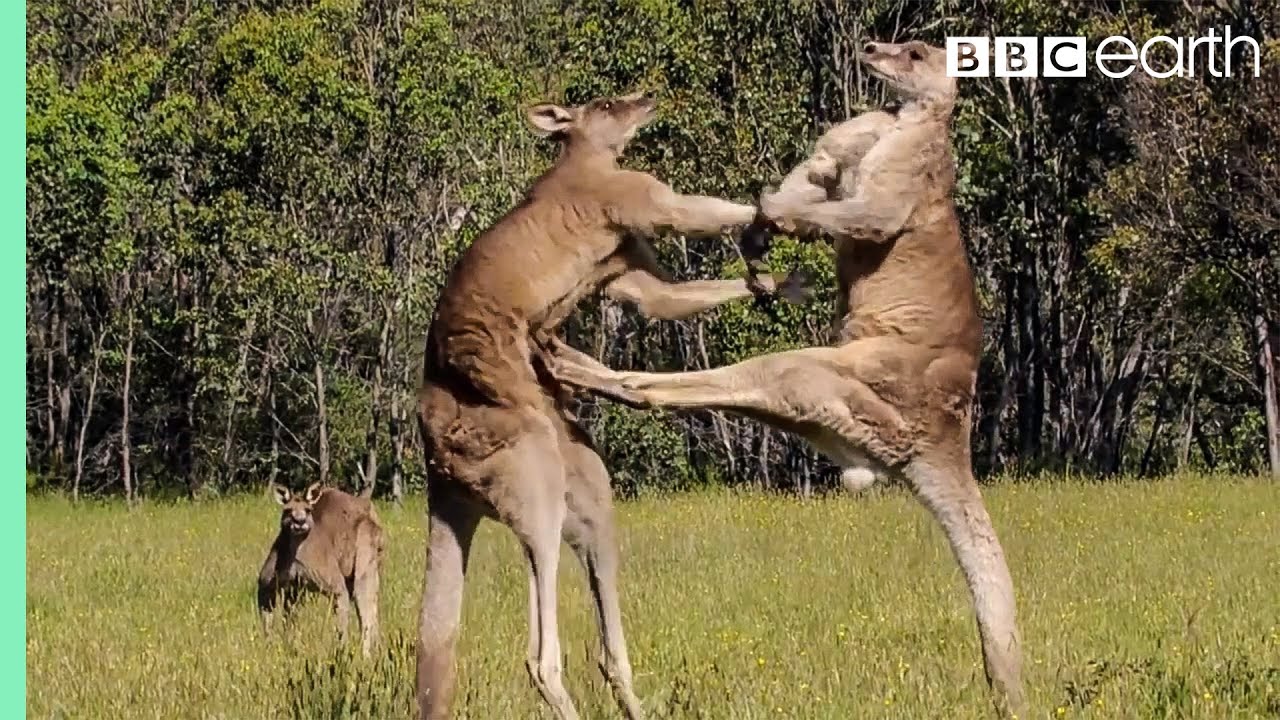
For male Kangaroos the greatest threat comes from within their own society and there is only one keen lesson to learn, he must become a fighter. Watch this struggle for battle play out as two males face up to one another. Taken from Life Story. Subscribe: http://bit.ly/BBCEarthSub
WATCH MORE:
New on Earth: https://bit.ly/2M3La96
Oceanscapes:...
lmao
muay thai-d the crap out of the other one
 thin jewel
I'm also old
viral atlas
tight agate
all of them are slim 
viral atlas
Ultra didn't say the hexagonal numbers have to be unique
So 6+6+6+6+1+1=26 still works
gritty widget
hermitian sex operator
tight agate
they watched that kangaroo thing
gritty widget
 gritty widget
i wonder if this author is polish
gritty widget
This means that the pinal gland remains closed for such bindings and the belly glows. An alike Polish marriage
is one where λ ∼ µ which opens the pinal gland of both when the respective
partners consume it. Such marriages give peace as the third eye sees everything
but they evoque disgust or jealousy with others. So such a Polish marriage is
energetically the least favourable one an really puts an extremely strong binding
energy between both partners. In case both partners are extremely white, they
have a very strong cosy home but outside they need to individualize where the
woman becomes mostly much more black to evoque the impression of neutrality. Another possiblity would be to engage in quantum contracts at that point
which makes them look at other partners. For Poles who value beauty, social
interactions with other couples are a difficult exercise. However, such couples
are individually extremely energetic whereas the opposite Polish marriage are
a strain. Indeed, the opening of the eye and its associated energetic cost is far
outnumbered by the energetic gain due to white-white interactions. The Belgian
couples do have a poor understanding of one and another, this could improve
by looking for a suitable mixture of both the belly and astral gland operator C2.

tight agate
lmao
gritty widget
Woman, in the same vein, correspond to imaginary
momenta in the male psychic Fourier transformation which reflects itself all the
time into human behaviour.
They are extremists which go with full
force whereas the white male is much more modest. Indeed, white woman destroy everything which stands in their way whereas white men are much better
negotiators
"Indeed, white woman destroy everything which stands in their way "
For this very reason, black men often use white females against
white dominant (but not complete white) males, by concquering their minds for
another goal with money and hereby causing for a spiritual discrepancy breaking the heart. The pure white male cannot be destroyed in this way and literally
slices a white female’s throat if she were to oppose him because that testifies
of evil behaviour.
this is
wow
it just keep delivering
tight agate
mods?
gritty widget
slim how did u find this
tight agate
slim is the author
gritty widget
yeah bend over
tight agate
equivariant pinal gland theory
someone just disproved RH on vixra


on the same day too lmao
tough imp
I forget which DVD, but I remember watching some DVD and at the start before the movie or w/e there was an ad for kangaroo Jack
I saw it many times
Speaking of which, why the fuck are there ads on the DVD of a movie I bought?????
thin jewel
capitalism
tough imp
bdobba
tight agate
bdobba
 bleak helm
bdobba
tough imp
I’m just doing a play on me saying “Chmonkey”
And bdobba is fun to say, so I like typing it haha
 uncut surge
what the fuck
gritty widget
🙌 🙌 🙌 🙌 🙌 🙌 🙌 #chill message
🙌 🙌 🙌 🙌 🙌 🙌 👏 👏 👏 👏 👏
#point-set-topology IS OFFICIALLY A WEEB CHANNEL @boreal osprey @distant phoenix @strong sandal @nimble pebble @modern osprey 🥂 🥂 🥂 🥂
it's official! 👏
bleak helm
mutes channel
bleak helm
Homophobia happened
uncut surge
on the one hand maybe it should bother me that the channel for my favourite math stuff is just memes
on the other hand, i love memes
not a fan of the term "homo posting" but i will gladly indulge in some homo posting regardless
bleak helm
I don't have a problem with the term, but I will cancel Yohan for it anyway if you'd like
bleak helm
I don't think anyone was confused about that, but thanks for explaining anyway
gritty widget
Is anyone going to the pcmi summer school this year?
gritty widget
Reposting an unanswered question: can a 2D manifold embedded in R^4 disconnect it?
gritty widget
Do you mean R^4-M is not connected
gritty widget
Yes, I mean exactly that, @gritty widget
Like a circle disconnects R2 but not R3. Does something similar happen in higher dimensions?
I thought it was a well-known thing... Hmm...
 long coyote
Let $[\alpha], [\beta]\in\pi_1(X,x_0,x_1)$. Show that the composition $\Phi([\alpha])^{−1}\comp\Phi([\beta])$ corresponds to a conjugation in $\pi_1(X,x_0) $ and conclude that $\Phi([\beta]) = \Phi([\alpha])\comp c[\gamma]$ for some $[\gamma]\in\pi_1(X,x_0)$. $\Phi :\pi_1(X,x_0,x_1)\to I(x_0,x_1)$. Here $I(x0,x1)$ stands for the collection of groupisomorphisms from $\pi_1(X,x0)$ onto $\pi_1(X,x1)$
gentle ospreyBOT
亜城木 夢叶
Compile Error! Click the  reaction for more information.
(You may edit your message to recompile.)
 long coyote
how do you present $\Phi([\alpha])$, is that a curve
gentle ospreyBOT
亜城木 夢叶
 uncut surge
@gritty widget Apparently there's a standard result in Differential Topology, called the transversality theorem, from which you can deduce things like that, see Theorem 1.1.3 and Theorem 1.1.4 in these lecture notes: https://ivv5hpp.uni-muenster.de/u/jeber_02/skripten/bordism-skript.pdf
At least if you're familiar with homotopy groups, this will answer your question (note that in the inequalities at the end, there should be an i rather than a j)

Cus then, choose M = R^4, N = some two-dimensional manifold, and g the embedding of N in M. Then, if i < 4 - 2 - 1 = 1, the map of homotopy groups are isomorphic by the theorem
So, when i = 0 this tells you that M \ N is just as connected as M
This also neatly shows that this generalizes: This holds for any m-manifold in which you embed an m-2 manifold
(i'm being a bit more detailled than necessary because i've not learnt about this statement before so i think this is really cool)

 fading vale
@uncut surge
uncut surge
oh nooo i forgot how homotopy groups work if they depend on a basepoint
but wait, isn't \pi_0(M,x) basically just the space of path components, pretty much independently of x
since it's the set of homotopy classes of maps S^0 to M, mapping one of the points of S^0 to x; so basically one homotopy class for every path component, depending on which path component the second point maps to, so I think the reasoning above holds
@fading vale uwu owo
uncut surge
not immediately but i'll google around
gritty widget
A bullshit attempt at the same problem: write Rn=MUAUB, A and B are the connected components of Rn minus M. A and B are probably open. Then A is an n dimensional manifold, and boundary of A is probably equal to M, and it is probably n-1 dimensional
fading vale
catthink
 empty grove
$\pi_0(X,x)$ is the set of path components of $X$ with the component of $x$ as the base point, so $\pi_0$ becomes a functor from Top* to Set*
gentle ospreyBOT
Moldilocks
 empty grove
The functor from Top to Set which gives you path components without base points also carries the same name, but if there is a base point in the topological space then there will be a base point in the set of components too
thin jewel


 gritty widget
Does anyone know of any good upcoming algebraic topology summer schools/workshops/conferences
gentle ospreyBOT
bdobba
 thin jewel
I've got to say I'm struggling more with Linear Algebraic Groups than anything I've studied in a while
I think not having a background in Lie Algebras is one factor
yeah
Like I want something that just deals with them using maps between their (Hopf) Algebras the same way you do in Algebraic Geometry with maps between coordinate algebras but that doesn't seem to be what people do
 worthy canopy
how do i find the average distance from the origin to the points on a disk centered at (a,b) and radius r
 wanton marsh
looks like a painful integration
worthy canopy
thats just the average coordinate. distance is absolute and always positive. so you cant make 2 points cancel each other's influence
tough imp
Yeah but like
Okay you can WLOG (a,b) = (0,1)
Or (1,0) for example
By just scaling and rotating
Does that make it easier?
worthy canopy
just take a,b = 0,0. the answer becomes 2r/3
tough imp
Oof
True
Well
Rip in pepperoni
Wait doesn’t the answer become
Just r?
Like every point is r away in that case
But it still definitely drives home the point that my gut was wrong
😭😭
gritty widget

having a smooth brain moment
why is tau(alpha)=alpha
ah damn
everytime, i get stuck for so long, the minute i go to ask someone its obvious
rugged swan
yes lmao
gritty widget
i think i need a cat
gritty widget
@ gomez
oh wait i don't understand it
sigma_a(a)=a because sigma_a is reflection in the plane but then sigma only leaves phi invariant it doesn't have to be the identity
tight agate
what is sigma_a ?
 distant phoenix
gritty widget
sigma_a(a)=a because sigma_a is reflection in the plane but then sigma only leav...
distant phoenix
gritty widget
sigma_a(a)=a because sigma_a is reflection in the plane but then sigma only leav...
-a
gritty widget
rugged swan
get some sleep
i should see this advice
@tight agate may I ask I saw in the previous messages you mentioned pcmi?
are you going to that this year?
tight agate
did not apply
im doing an reu
are you going?
oh wait also which one?
@gritty widget
gritty widget
The motiovic week
tight agate
nice!
gritty widget
gg on the reu though
tight agate
should be fun
gritty widget
europe is not great for reu style stuff
do you know what kind of stuff you are doing?
tight agate
in the reu?
gritty widget
yes
tight agate
dunno yet
I do want to learn something in the bloch-kato direction
so it might be on motivic stuff
but yeah idk how much freedom you get on topic choice
gritty widget
what is bloch-kato stuff?\
tight agate
In mathematics, the norm residue isomorphism theorem is a long-sought result relating Milnor K-theory and Galois cohomology. The result has a relatively elementary formulation and at the same time represents the key juncture in the proofs of many seemingly unrelated theorems from abstract algebra, theory of quadratic forms, algebraic K-theory a...
gritty widget
swanky
tight agate
there's that
another idea was to read through thomason-trobaugh
or deligne hodge
or perverse sheaves
there's too much shit to do 
gritty widget
chew coffee beans
saves time on drinking coffee
good buzz none the less
actually
be carefull if you chew coffee beans
they can be very yummy
but you get wayy more caffeine from eating the whole beans than drinking coffee (which in hindsight is obvious)
but i thought you would get less since when you are brewing tea you need heat to extra the caffeine
tight agate
gritty widget
so i was throwing these back like a bag of pocporn
tight agate
gritty widget
and i'd never really find myself getting a buzz off coffee, just drink it for the taste
but by golly
my heart was pumping
tight agate
I wonder if there's a way to sneak in
gritty widget
yeah this looks a good summer school to apply to that actually accepts non americans
i will try take good notes and share them with you
gritty widget
in europe so im in a masters
tight agate
ah
gritty widget
you
tight agate
undergrad
tight agate
do you intend on getting into motivic homotopy stuff?
gritty widget
I really like algebraic topology
I enjoyed algebraic geometry
but was not a big fan of the tools
tight agate
algebra?
gritty widget
I don't know how to describe it
the stuff you get to look at is cool
but i prefered the "flavour" of algebraic topology
i did really enjoy commutative algebra
gritty widget
but the motivic homotopy stuff does seem sick
do some nice alg top
get to see some of the mad spaces from alg geom
gritty widget
this is funny
to do this exercise i need that and automorphism of a finite set is idempotent
which is not too hard to see but I don't think ive ever noticed that before
 charred tartan
Can someone help me understand the theoretical motivation for sidh
 pine ingot
gritty widget
Does anyone know of any good upcoming algebraic topology summer schools/workshop...
pine ingot
gritty widget
Does anyone know of any good upcoming algebraic topology summer schools/workshop...
Georgia Tech Summer School, Summer Trisectors Meeting, but those are definitely more geometric topology in flavor.
honest terrace
charred tartan
Can someone help me understand the theoretical motivation for sidh
what's sidh ?
charred tartan
Supersingular isogeny diffie helman
thin jewel
Do you know about elliptic curves?
It looks like it's one of those crypto alpgorithms that uses the group law but idk much about cryptography
I think Silverman has a nice book for undergrads on EC
 wanton timber
charred tartan
Supersingular isogeny diffie helman
wanton timber
charred tartan
Supersingular isogeny diffie helman
Do you have a specific question in mind? Depending on your background, there might be a lot to learn to feel like you really understand what is going on.
 wise cedar
are we talking about animu now?
gritty widget
pine ingot
Georgia Tech Summer School, Summer Trisectors Meeting, but those are definitely ...
Thanks
strong heron

I want to calculate the homology of the torus using Mayer-Vietoris on the above decomposition.
What would be the map from $H_1(A \cap B) \to H_1(A) \oplus H_1(B)$?
gentle ospreyBOT
whysee
 empty grove
You know the map $C_1(A \cap B) \to C_1(A) \oplus C_1(B)$ right?
gentle ospreyBOT
Moldilocks
 empty grove
You just look at the map this induces on the equivalence classes
strong heron
empty grove
You know the map $C_1(A \cap B) \to C_1(A) \oplus C_1(B)$ right?
Actually I think my confusion lies here only. What are singular simplices in A \cap B? Like, the image should be connected, but A \cap B is not connected.
empty grove
strong heron
Actually I think my confusion lies here only. What are singular simplices in A \...
which image should be connected?
strong heron
I mean, my simplex should lie in one of the components of A \cap B
strong heron
I think I see something now
So, a cycle in each of the path components lies in A and B as generating cycles of A and B respectively
So, the map Z+Z \to Z+Z is something like (m,n) --> (m+n,m+n)?
empty grove
The exact isomorphism would depend on the isomorphism you have to Z+Z for each homology
like it could be (m,n) --> (m+n, -m-n)
thin jewel
How are the Dehn–Sommerville equations related to Poincaré duality? I feel like they should have a close relationship but I can't quite figure it out
Like the symmetry of the h-vector looks just like the dimensions of a homology group
But maybe that's just a coincidence - I'm not a topologist
strong heron
Thanks, Moldilocks!
 fading vale
I super don't know anything about this stuff haha http://math.mit.edu/~rstan/pubs/pubfiles/69.pdf but this is the paper being referred to i believe
worthy canopy
how do i find the average distance from the origin to the points on a disk centered at (a,b) and radius r
thin jewel
Didn't you ask this the other day?
tough imp
Didn’t get an answer I think
gritty widget
What do you get when you try to calculate the integral?
fading vale


i dont understand the part about showing that subset (i called it K) is open
it says to use coordinates to make X look locally like R^n-1 in R^n but i dont see how that helps
empty grove
fading vale
it says to use coordinates to make X look locally like R^n-1 in R^n but i dont s...
Say x is in K, you need to show a nbhd of x is in K. Take a neighborhood U of x such that U intersection X in U looks like R^(n-1) in R^n. As x is in K, there is some t in U - X st z connects to t in X complement. Then z will then connect to every point in the component of t in R^n - R^(n-1). Then U intersection X is in K because for every point in this, and a neighborhood of the point, its intersection with U would be non empty so will contain a point connecting to z
fading vale
empty grove
Say x is in K, you need to show a nbhd of x is in K. Take a neighborhood U of x ...
hmm im not totally sure the last bit follows. even if U intersects the nbhd we dont necessarily have that the y in U which connects to z is contained in the nbhd right?
we just have that U contains a point connecting to z, not that every point of U connects
unless im misunderstanding ur proof :c
empty grove
fading vale
hmm im not totally sure the last bit follows. even if U intersects the nbhd we d...
That's where you use the fact that there's no single y, rather everything in the component of y will connect to z
So in the given picture, the half of U which is outside X can all be connected to z
empty grove
Not R^n - X
fading vale
U - X?
empty grove
R^n - R^(n-1)
empty grove
fading vale
U - X?
Yes
fading vale
ah okay i see
empty grove
But identified via homeomorphism
fading vale
we need to add on the restriction that U is connected at first then right
or i guess just let it be like a very small ball about x
empty grove
We choose U such that such an identification is possible
We don't need any other conditions on U
fading vale
are you identifying U with R^n itself?
empty grove
Yep
fading vale
and U cap X with R^n-1?
empty grove
Like I'm using a single homeomorphism from U to R^n, which restricts to a homeomorphism between U cap X and R^(n-1)
R^(n-1) viewed as subspace of R^n in natural way
empty grove
fading vale
it says to use coordinates to make X look locally like R^n-1 in R^n but i dont s...
Isn't this what that hint means?
fading vale
are u saying u dont know how to show that X can be locally identified w/ R^{n-1}
empty grove
Not exactly that
empty grove
empty grove
Like I'm using a single homeomorphism from U to R^n, which restricts to a homeom...
We need to show that there is a neighborhood of x in R^n, U such that there exists a homeomorphism such that...
fading vale
oh i see
empty grove
How are you interpreting that hint?
fading vale
as that haha, i just wasnt sure what u meant when u said u didnt know how to prove the hint
well
i was thinking of it as U being a neighborhood of 0 in R^n but like
same thing functionally
 fathom cave
ugh im not sure what an open subspace is.
 feral bay
it's open with respect to the topology on Y
 inner fiber
Hint: Any open subset of X is also open if viewed as a subset of Y in the respective topology.
That follows more or less directly from the definition of the subspace topology on X
fathom cave
X is an open set of Y with topology induced by T_1 right @feral bay
feral bay
τ₁ is the topology on Y, and (X, τ) is an open subspace if X is an open set of Y with τ₁ (aka X ∈ τ₁)
it will always be open wrt to the subspace topology induced by τ₁, since X is open in X
fathom cave
i meant X \in T_1 and T is topology induced on X by T_1
 cursive glade
if the interior product exists, why dont we have a de rham homology?
wait i think i misread
empty grove
Inner product 
cursive glade
nah, i thought it acted like the reverse differential but its just contracts an n form
empty grove
cursive glade

gritty widget
well, it's square is still zero, so you can look at ker/im
obtuse meteor
Hmmm
Interior product you need a fixed tangent vector no?
I am not like
Fully clear on this part of my manifolds class lol
obtuse meteor
Hmm
Gives me like
Sheaf cohomology vibes
Where you take coefficients parameterized by a sheaf
Hmmm
Is there an easy example calculation of this
With a nice like vector field
Someone calculate vector homology of a 3-sphere with a non vanishing vector field go
Oh I think it’s just stupid
Nvm only stupid in the degrees it should be stupid
Which is a good sign
👍
Hmm
Maybe this is a bad property though
For a nonvanishing vector field
It has the property that
H_n = 0
Bc take your n-form omega and your vector field X
Extend X to a basis X, Y_1, …, Y_{n -1} locally
Omega(that stuff) is zero if and only if omega is zero
So your homology is always zero in your dimension
But perhaps it’s less stupid in low degree (obviously it’s also trivial in high degree)
Bc like in low degree you’d have to be zero in all the combinations to be zero, and some of those might not involve X
@gritty widget am I speaking sense?
obtuse meteor
Take a tangent vector field on a manifold M
 cedar pebble
mhm
obtuse meteor
This defines a chain complex
On the forms
Via contraction with the vector field
What does homology of that complex look like
cedar pebble
ahh okay I see what you're asking
if the vector field never vanishes then the homology of this complex is trivial
obtuse meteor
:o
cedar pebble
if the vector field does vanish then uhhh
obtuse meteor
I got zero in degree n and up if it never vanished
cedar pebble
you can have some nonvanishing homology groups but they are typically infinite dimensional
so in this sense the theory is kind of a pain
obtuse meteor
Dunno how to get nonzero anywhere
obtuse meteor
cedar pebble
you can have some nonvanishing homology groups but they are typically infinite d...
Holy fuck
That’s

Got a reference text?
cedar pebble
Not off the top of my head
obtuse meteor
Oof
cedar pebble
let me search around hold on

MathOverflow
First, we make the following observation: let $X: M \rightarrow TM $ be a vector
field on a smooth manifold. Taking the contraction with respect to $X$ twice gives zero, i.e.
$$ i_X \circ i_{X} =...
there's some good answers here
oh hey the last answer is really nice
if a compact Kähler manifold admits a holomorphic vector field 𝑣 with nonempty zero locus 𝑍(𝑣), then the Hodge numbers vanish for |𝑝−𝑞|>dim𝑍(𝑣). The key idea is to analyze the complex of sheaves …Ω^𝑝→Ω^𝑝−1→… which is really a Koszul complex.
huh I didn't think about the connection with Koszul complexes this is cool
gentle ospreyBOT
bdobba
 obtuse meteor
cedar pebble
https://mathoverflow.net/questions/184699/take-contraction-wrt-a-vector-field-tw...
obtuse meteor
cedar pebble
https://mathoverflow.net/questions/184699/take-contraction-wrt-a-vector-field-tw...
Oh this is cool
 agile shadow
 cold vine
Hmmm, any idea on showing that pi_4(U(3)) is finite? I'm quite stuck
gritty widget
@cold vine did you get that question out?
cold vine
gritty widget
<@!140112579384049664> did you get that question out?
still stuck on it
gritty widget
okay I don't know the answer, and it seems like there could be a slicker answer
but
can you get pi_4(SU(3)) instead?
cold vine
I haven't done anything with SU(n) so I think it should at least be doable without it. But if it's easier that way 🤔
gritty widget
what things do you know homotopy groups of
i'm really not sure how do do this question
I just know that pi_4(SU(3)) is 0
and impretty sure U(n) and SU(n) have the same higher homotopy groups
and for calculatin gthe homotopy groups of SU(N) i think you should have a nice fibration in terms of S^(2n-1) and SU(n-1)
maybe this helps?
i was more so interested in seeing the answer myself
if you get it out please @ or dm me
cold vine
Yeah. I know the groups pi_i(U_(n)) when i=1,2,3, n>=2. Yeah I'm trying something with the fibrations of U(n)
I'll message you if I get something ^^ proll continuing tomorrow and letting it rest now
But I'll check the SU fibrations out if I get nothing to work. Thanks!
gritty widget
no worries
 frigid river
Could someone tell me how that bases stuff works? If U were an element of the Basis of X, then A would be open by definition, right? But how do I know that U is an element of the Basis of X? Is it because U is open?
 empty grove
Use the openness of U to get a possibly smaller basis element containing x
U itself may not be basic
frigid river
 red garden
A is just {x,y,z,....}
red garden
A is just {x,y,z,....}
Ohh, thanks. So I can just say A must be open, since it can be written as the union of open subsets, right?
Does the stuff I learnt about openness with metric spaces also apply to topological spaces?
empty grove
The union of open sets is open in topological spaces, it's one of the axioms of a topology
Not everything about openness in metric spaces generalizes, like metric spaces are Hausdorff but topological spaces may not be
frigid river
empty grove
The union of open sets is open in topological spaces, it's one of the axioms of ...
I think it follows from this, right?
 frigid river
Great. Thank you.
cold vine
I have A0->A1->A2->A3->... cofibrations of closed subspaces of X and for A= union An, where C in A is closed iff C \cap An is closed in An for all n. Now I'm trying to show that A0->A is cofibration
I can extend the homotopy of a restriction to A0 of f:A->Y to any degree since I have that An is closed in An+1 and each inclusion is cofibration but I'm having trouble on figuring out how to show that it can be extended to the union A
cold vine
So I guess now I have HEP for any n and the inclusion An to A. Maybe I'm missing some thrm which helps with extending to A=union of An, I don't think I can do it naturally. Or maybe it somehow follows from the given restriction that C closed in A if and only if A\cap An closed in An for all n but I don't see that helping
 light plinth
hello guys, im going to try to give a good explanation of my question !
I have a theory on a possible solution to my master thesis that is about genetic algorithms (no need to understand what that is to understand my question, but geometry and topology is one of the main advanced components that are deeply rooted into this topic)...
in order to achieve and test my hypothesis I need to be able to, in any n-dimensional sphere, calculate the cartesian coordinates of each point in the line that unites the center of that sphere with its boundary with a certain angle... my objective is create a spherical scan (assuming im not doing only this line im exemplifying but all possible lines in the 360 degrees possible) that possesses every point in that line
light plinth
think of it like you're finding all the points that are inside that red line... if I want to check all the space that is in that line I need to get all of the points of that line (assume r = 100, I have to get the cartesian coordinates of every unit "1,2,3...till 100" --> assuming the smaller distance is one unit)
then I will change the angle (assume the smaller unit is 1degree) and if I do that for all the 45 lines i will get each and every point on that quadrant cartesian coordinates)

this is easy to imagine in 2d... but harder to imagine in n-d, because an angle is just a relation between 2 axis and for example in 32d I will have 32 axis
and I will get a lot of data points but that's not a problem at all, i just need to be able to calculate them in a sequenced way
if someone is interested in helping me you can DM me and i would be ok with discussing this even if it was not in depth
cold vine
Isn't it correct that SO(n) and O(n) have the same homotopy groups since O(n) is just two disjoint copies of SO(n), i.e. it has path component of identity matrices and path component of the inverses? Also I have that O(n)/O(n-1) = S^n-1 and I think it follows by the above logic that SO(n)/SO(n-1)=S^n-1
cold vine
So can I not just say straight up that since SO(3)=RP3 we have also pi_1(O(3))=pi_1(SO(3))=pi_1(RP3)=Z/2Z
flint cove
cold vine
Isn't it correct that SO(n) and O(n) have the same homotopy groups since O(n) is...
I may be missing some basics here, but since when does it make sense to talk about the fundamental group of a non-path-connected space without choosing a basepoint?
Or do we just implicitly take *=id for lie groups
cold vine
flint cove
I may be missing some basics here, but since when does it make sense to talk abo...
From what I understand the path components are homeomorphic since is is of det 1 and the other det -1
flint cove
I mean yes, but that doesn't apply to all spaces obv
cold vine
yeah
flint cove
otherwise I'd say that rescaling the matrices of positive determinant to det=1 gives a deformation retract to SO(n), right?
(wrt the obvious inclusion SO→O+)
cold vine
Yeah that would make sense to me
 honest narwhal
Yeah for Lie groups usually you implicitly say connected component of the identity
flint cove
But the argumentation seems correct, assuming that SO(3) ≅ ℝP³
honest narwhal
Yeah taking the appropriate basepoint this is correct
flint cove
(ah yes, of course it is the projective space, just got the right mental image)
honest narwhal
@flint cove if you haven't seen this proof before it's a cute exercise
Lol sniped
cold vine
nice!
I just know it has something to do with Sp(1) acting on H but I don't know the details 😄
honest narwhal
There's an easy proof
flint cove
honest narwhal
<@!294056976315318272> if you haven't seen this proof before it's a cute exercis...
I mean I know the construction SO(3) ≅ (3-ball with antipodals identified) by using „rotation around $foo-axis around angle 2π $blah“, but I jusf forgot how the right hand side was just ℝP³
cold vine
Hmm I'm trying to calculate pi3(O(4)) so I got the LES -> Z/2Z -> Z-> pi3(SO(4)->Z->0 but this doesn't seem to lead to anything
from the fibration SO(n)->SO(n+1)->S^n
ah nevermind that just leads to 0 -> Z -> pi3(SO(4)) -> Z -> 0 which splits and implies pi4(O(4) = Z^2
had it incorrectly first
cold vine
Hmmm how do I show that this is injective
 empty grove
cold vine
Hmmm how do I show that this is injective
empty grove
cold vine
Hmmm how do I show that this is injective
If 2 maps from the n-cell to X were homotopic in the wedge sum via H, you could change that into a homotopy entirely in X by mapping everything in H^(-1)(Y) to the base point
Idk what the second map is
or that last space for that matter
gritty widget
any symplectic kings able to help me out
I want to show that for a presymplectic manifold (M,\omega), TM^\omega is an involutive distribution
what's TM^\omega?
is a sub bundle of TM
and it is
at every point p defined to be, since T_pM is symplectic vector space, the "orthogonal" compliment of T_pM
won't that just be {0}
ohh maybe i have that wrong
oh oops i missed the "pre" part of presymplectic. that means not necessarily non degenerate, right?
no i yes
yes*
oh i think i have it, this is clever
$d\omega(X,Y,Z)=d(\omega(X,Y))(Z) + ... + \omega([X,Y],Z) +...
i think is true for a genral form
the since its presymplectic its closed so the left is zero
and if we take X,Y in TM^omega then all the other stuff vanises exept
\oemga([X,Y],Z)
i think i see
the formula for d\omega is a little unwieldy but that sounds like it works
i was thinking you could use i_[X, Y] = [L_X, i_Y] along with cartan's formula, but it's probably the same proof
ya, your proof works, nice
gentle ospreyBOT
狼人
 obtuse meteor
Symplectic kings
gritty widget
@gritty widget shamrock left (more accurately, asked to be banned) because they were spending too much time here
tough imp
They’re gonna be back soon
I think just a couple days
IIRC he said he’d rejoin once he moves back to WA which is in a few days

 little dew
anyone know why a manifold is called a manifold?
gritty widget
"manifold" means "many and various" (google definition) and a manifold is built up from many and various coordinate charts 
little dew
ic that makes some sense, tyty
tough imp
Gaussw
Gauss used the word manifolden or some shit
sorry
I mean Riemann
I think it was around when he was developing the ideas of Riemann surfaces
gritty widget
so if (M, \omega) is presymplectic then lime_soup shows that the distribution TM^\omega is involutive. so it determines a foliation of M. what could be said about this foliation?
reminds me of the foliation theorem for poisson manifolds
empty grove
Manifolds are called that because whenever you think of them you think of sheet of paper with many folds 
gritty widget
like, what could be said about e.g. restricting the presymplectic form to each leaf
hm
if only shamrock were here to confirm my suspicions
in certain situations the space of leaves of this foliation is a symplectic manifold
👀
neat

tfw missed the lecture on this so it's all new
cedar pebble
@gritty widget someone said you're good at complex geometry
gritty widget
im not
gritty widget
who said that
cedar pebble
brofibration

 cedar pebble
anyways here's a fun challenge: let X be a smooth connected variety over C (or say the complement of a simple normal crossings divisor in a compact Kahler manifold), let E be a unipotent C-vector bundle with flat connection on X. Show that E admits a canonical real analytic trivialization.
I can do this very very indirectly
but I'm trying to do it directly and it's like

it also sounds totally false when you first look at it!!
cold vine
So inclusions X-> X V Y and Y -> X V Y should induce this to be a isomorphism, when X p-connected and Y q-connected for n< p+q. So I guess this is Blakers-Massey thrm but I don't know how to show this. Any hints?
 red garden

problem 1?
no
i can try proving this
well ig i see a map right away
sending x --> F_x
where F_x = f(x)
f is in N*
is this right?
but why does this not work for inf
i still dont see why
inf dim --> somethings just dont work
okay so
suppose X is finite
C(X) is finite ?
i really dk lmao
yea lmao
soo umm
yes
oohhhh
X is finite here means
finite as a vec space
?
okay okay
so if X is finite
let [e_i] be some basis
i meant for C(X)
so those are just continuous functions iirc
so umm
C(X)** would be functions defined on C(X)*
C(X)* would be functions defined on C(X) umm
okay
so
suppose X is finite
suppse C(X) is inf dim
B its basis
thats not easy is it
and compact
lmao i didnt see that
its stated in the problem
hahaa okay
yea
soo
if X is finite hausdorff
 little hemlock
Am I being dumb? The set of functions X to R is a finite dim space when X is finite. So C(X) is a sub space
red garden
yea
if X is finite
and hausdorff
then the space can be like
thought of just discrete elements
little hemlock
Of The set of functions X to R
red garden
so
if like X = {a1,a2,....,an}
C(X) is R^n by f_x --> x ( i hope )?
so C(X) has dim n
where n is card X
an element in C(X)
some element in X
X is discrete
 nimble jolt
what are you asking/trying to prove mo2men
red garden
can i say
the basis for C(X) are the maps coming from tietzse
as X is hausdorff and compact its normal
little hemlock
I think ur overthinking this mo
red garden
yea im confused
little hemlock
Start with the set of functions X to R. This is a vector space. Do u see why?
red garden
yes
little hemlock
X is finite, so I claim u can find a finite basis
red garden
how
little hemlock
Well, maybe not for C(X) w/o some effort, but the larger space is easier
little hemlock
Yea, I don’t think you even need the hausdorff condition in principle
red garden
delta?
those delta shitty functions
in lin algebra
yea
omg that was so hard for me
tysm
sending x --> F_x
[2:26 AM]
where F_x = f(x)
[2:27 AM]
f is in N*?
red garden
using basis
that its finite dim
im jusst gonna like
linear ocmbinate any element
and then take the function
right?
empty grove
Yeah the S(a,b) form a basis
They didn't say that those are the only sets that are open so not not true
gentle ospreyBOT
slimevesus
 red garden
rank nullity
gentle ospreyBOT
مرزا
