#elementary-number-theory
1 messages · Page 15 of 1
 iron surge
 whole bronze
Just for the part glossed over
iron surge
the minimality of r part
ahh so we're agreeing after all lollll
yes it's glossed over
yes it needs way more elaboration
100% agree
whole bronze
I wouldn't call it a proof if it has a part like that
It may not even be able to be filled
iron surge
it makes sense to me why it's true, but yea it's not good if it's not convincing to others
whole bronze
Or you'll have to restructure the rest of the argument to actually make it work
whole bronze
iron surge
it makes sense to me why it's true, but yea it's not good if it's not convincing...
Well not really that it's not convincing more that it's not deductive
It doesn't follow from simpler assumptions and pure logic
Which is what proofs are
iron surge
all I need to elaborate on is why such an r is desirable.. that's literally all that's missing
everything else is fine
whole bronze
Something being convincing or making sense isn't a proof which a sequence of logical deductions from a base set of assumptions and axioms
iron surge
assumptions good, construction of S good, well-ordering principle good, r good, conclusion pretty jumpy
iron surge
 normal heart
it's fine apart from a small elaboration
normal heart
it's fine apart from a small elaboration
thank u
yes
@whole bronze I was tryna help u see this problem in another light lol not debate about the semantics of logic......
whole bronze
iron surge
all I need to elaborate on is why such an r is desirable.. that's literally all ...
If there exists a subproof then yes - if there is not then the argument would need to be restructured
iron surge
the argument is fine lol, even someone else agreed, just needs added details so readers can understand it better.....
I'll think about this problem some more
and why such an r is fine
i do agree extra details would be good for sure
iron surge
whole bronze
If there exists a subproof then yes - if there is not then the argument would ne...
I got something
wait nvm
whole bronze
normal heart
it's a standard argument anyway
What's the standard argument?
Add them all together to get sum of xi then subtract consecutive rows probably
 spiral coyote
Hi! I want to study elementary number theory because of a contest, but I cannot find questions to start with. Does anyone has a resource which contains many questions related to elementary number theory? Thanks in advance!
 sullen mist
Hi, is this proof correct, if m does not divide a, and m does not divide b show that m does not divide ab

 still flare
The statement is false so without looking at your proof I can tell you it's wrong.
sullen mist
is it possible to look at it and tell me where I went wrong?
still flare
Yes, r_1r_2 is indeed nonzero but you need in fact to prove that r_1r_2 is not divisible by m, not that it is nonzero.
sullen mist
just started learning number theory and proof math
ah I see
so m might divide ab or it might not depending on a, b and m, hence nothing to prove?
still flare
What do you mean, nothing to prove? You haven't yet proven it's false.
To do so you must find a counterexample
sullen mist
got it e.g. a = 2 b = 3 and m = 6
still flare
Good job, that's the one I had in mind too.
sullen mist

went that route because I was trying to show that gcd(n, p^k) = 1 when p is prime, k > 0 and p does not divide n
the book says this is obvious, but not obvious to me
still flare
This is obvious by the definition of the gcd: it is a common divisor of both n and p^k. The only divisors of p^k are powers of p, and there are no powers of p which divide n.
sullen mist
I think it's not obvious to me that the only divisors of p^k are powers of p
but maybe it's a direct consequence of prime factorization
oh I think I get it
fundamental theory of arithmetic says the prime factorization is unique
p^k = p.p.p.p... k times
since unique we can't have any other factorization, hence only divisors are powers of p like you said
and since you can't find p in n you can't find any multiple of p in n without remainder
thanks @still flare
 wooden glen
sullen mist
Hi, is this proof correct, if m does not divide a, and m does not divide b show...
wooden glen
sullen mist
Hi, is this proof correct, if m does not divide a, and m does not divide b show...
Note that this would become true if you added an assumption that m is prime. (Namely, then the claim would just be the contrapositive form of Euclid's lemma). And that may well be all you actually needed for the purpose you stated later.
 sterile pumiceBOT
gian

 dusty dragon
showing that the statement works for one value of a, b, c is not a proof
the statement is true when a is prime, so consider what happens when a is not prime
iron surge
sterile pumice
**gian**
yea you only showed it's true for your example. This problem says if a is a factor of bc, then a is a factor of b or a is a factor of c. think about a case where bc yields a product that could equal a, but b=c are half of a.
 sacred junco
I did not write this proof. The point of the problem was to point out why it’s incorrect
iron surge
so you didn't write "Proof: Let a=5...?"
iron surge
ok
sacred junco
It was basically like a proofreading assignment
iron surge
ok lol. Well proof by examples aren't considered proofs unless there are only finitely many cases and if all cases have been covered
that's the problem with the proof
sacred junco
Ohhh okay I did not know that
iron surge
and also for showing the theorem is false....it is fine to show one counter-example
that is all u need to show the statement is false
iron surge
the "theorem" states: You give me any integers a,b, and c, and if a|bc, then a|b or a|c
sterile pumiceBOT
gian
 sacred junco
Hopefully that makes sense
iron surge
sterile pumice
**gian**
this is very wrong
sacred junco
lOL
iron surge
if a|(b+c), does that really mean a|b or a|c?
I don't think so
take
2|4=1+3
2 doesn't divide 1 and 2 doesn't divide 3
so the statement you stated in ur proof isn't true
iron surge
sterile pumice
**gian**
also if even if it was a true statement, u assumed the very thing ur trying to prove! You went and assumed a|b and a|c on the second line of the proof!
sacred junco
Eesh I got a lot of learning to do
iron surge
sterile pumice
**gian**
you also didn't even prove the statement. You proved the converse of the statement...which is actually true
iron surge
sterile pumice
**gian**
also your counterexample for theorem 1 isn't a counterexample at all
you stated let a=4 and b=3 and c=10....10 doesn't divide a or b. But that doesn't even matter because 10 doesn't divide their product in the first place!
10 doesn't divide 12
and when you're writing a counterexample to theorem1, use the letters they used in the order they used them
ur "counterexample" was for "if" c|ab (which wasn't the case) when theorem 1 was a|bc...make it easier on the reader.
sacred junco
ok ill see what i can muster up and hopefully it makes more sense
@iron surge

How is this any different from what I wrote
iron surge
sacred junco
How is this any different from what I wrote
look at what you stated as your "theorem" just above ur proof
sacred junco
oh
iron surge
sterile pumice
**gian**
here^
sacred junco
mines backwards
iron surge
sacred junco
<@856623557685674005>
this proof^ here is good
sacred junco
i found that online
iron surge
of course ❌
have you found a counterexample to theorem1 yet?
the one you originally asked about
sacred junco
uhhh no let me try again
i think the counterexample to theorem1 fails if a=6, b=3, and c=10
iron surge
sacred junco
i think the counterexample to theorem1 fails if a=6, b=3, and c=10
show it fails
sacred junco
one sec let me type it up
let $a=6$, $b=3$, and $c=10$. Then $a|bc = 6|30$ \
\
$\implies 30=6s$ which is true for s=5 \
\
$a|b = 6|3 \implies 3 = 6t$ which is not true for $t \in \mathbb{Z}$\
\
$a|c = 6|10 \implies 10 = 6v$ which is not true for $v \in \mathbb{Z}$
sterile pumiceBOT
gian
 sacred junco
how does that look
iron surge
I like the a|bc part. 6|30 because 6(5)=30, that's fine
but
technically u should say and u sorta did but
say
$6\nmid 3$ and $6\nmid 10$
sterile pumiceBOT
logician
 iron surge
sterile pumice
**logician**
iron surge
sterile pumice
**logician**
just say this instead^
sacred junco
i get what you're saying
it was useless to add that
i kinda did the same thing for a|bc = 6|30
iron surge
I would say: Set $a=4$ and $b=c=2$. Then $a=4|4=(2)(2)=bc$, however, $4\nmid 2$. Thus $a\nmid b$ and $a\nmid c$.
sterile pumiceBOT
logician
 iron surge
sacred junco
i kinda did the same thing for a|bc = 6|30
iron surge
sacred junco
i kinda did the same thing for a|bc = 6|30
that part was fine for a|bc
sacred junco
iron surge
it's just awkward because you wrote a|b=6|3, which isn't true
OH i see what you're saying
iron surge
also my counterexample is a bit simpler, though ur values for a,b,c work just as well
iron surge
no problem. I'm gonna get some sleep now
 undone elm
Hello everyone, just a really short question.
The set ${0,1}^\mathbb{N}$ how should I interpret this.
Can I interpret this as all infinite strings consisting of 0 and 1's, or is it just any string consiting of 0 and 1's (so also including finite ones)
sterile pumiceBOT
yesyesufcurs

 eternal shoal
That would be all infinite strings if you want to think of it that way. But this isn't elem NT
undone elm
Sorry I must be blind that I posted it here 😅 But thanks for the answer!
 loud maple
eternal shoal
That would be all infinite strings if you want to think of it that way. But this...
loud maple
eternal shoal
That would be all infinite strings if you want to think of it that way. But this...
Shouldn't it be the set of all countably infinite strings of 0s and 1s?
 open mist
loud maple
Shouldn't it be the set of all countably infinite strings of 0s and 1s?
open mist
loud maple
Shouldn't it be the set of all countably infinite strings of 0s and 1s?
It's the set of sequences whose value is 0 or 1
loud maple
open mist
It's the set of sequences whose value is 0 or 1
Set of sequences with domain ℕ whose value is 0 or 1
eternal shoal
(by definition a sequence has domain N)
loud maple
eternal shoal
(by definition a sequence has domain N)
No
A sequence is any function whose domain is an ordinal
At least that's the definition we used in my set theory course
eternal shoal
I would say from what I've seen, a sequence is a function with domain N unless specified otherwise. I've seen non-N indexed sequences specified as, say, transfinite or λ-sequences for an ordinal λ, but admittedly I have not taken a set theory course.
But anyways, their question had that the domain was N implied by the notation {0,1}^N. So replace that with N/ω-sequences as you wish.
 frozen patio
hey guys, can someone here proofread my notes on euclid's algorithm/bezout lemma?


i'm mostly interested in flaws and ugly points in my proof
 charred roost
frozen patio
hey guys, can someone here proofread my notes on euclid's algorithm/bezout lemma...
charred roost
frozen patio
hey guys, can someone here proofread my notes on euclid's algorithm/bezout lemma...
It looks correct to me. I like to write the remainders a - d_1 * b = r_1, because it makes it obvious to me that since the left side is divisible by the GCD, the remainder also must be
charred roost
frozen patio
hey guys, can someone here proofread my notes on euclid's algorithm/bezout lemma...
If you're interested, I wrote a blogpost about this: https://blog.sheddow.xyz/gcd-euclid-and-bezout/ You probably know most of it already, but check out the animations 🙂
sheddow's blog
This blogpost is written to give some intuition to a few elementary concepts in number theory, which you might encounter in your first discrete mathematics course in university. Prerequisites: familiarity with numbers and some familiarity with thinking. Familiarity with Python is useful, but not required.
We will start with a
whole bronze
given an odd prime p, listing the values of a^((p-1)/2) for different values of a nonzero mod p will always have half the values of a give 1 and the other half give -1
if you replace p with the number x = 8 though, you see that in the group of elements relatively prime to eight a^(phi(x)/2)=1 for every a
1^2 = 1 mod 8
3^2= 1 mod 8
5^2 = 1 mod 8
7^2 = 1 mod 8
why is this?
 brittle root
whole bronze
given an odd prime p, listing the values of a^((p-1)/2) for different values of ...
brittle root
whole bronze
given an odd prime p, listing the values of a^((p-1)/2) for different values of ...
those elements are all of order 2 lol
U(8) is isomorphic to Z_2 x Z_2
whole bronze
brittle root
those elements are all of order 2 lol
I was asking more about why half of them weren't -1 mainly because degree two polynomials should have two roots
I realize I am dumb now because that is not a field
brittle root
er
whole bronze
Also found carmichael's function
brittle root
degree n polynomials over a field have at MOST n roots
doesn't mean they have n roots yeah
whole bronze
Right at most
whole bronze
whole bronze
Also found carmichael's function
But carmichael's function/when things have primitive roots is probably something I'll have to read on my own to understand
frozen patio
charred roost
If you're interested, I wrote a blogpost about this: https://blog.sheddow.xyz/gc...
thanks!
I know about that stuff but I am revisiting the fundamentals trying to prove the more important results, so thanks for the link too!
in retrospect it seems obvious that all those riddles with the containers of different volumes had to do with the gcd
 steep cobalt
Hi. Speaking of gcd. I’m trying to find the gcd of 213,34 and I got two. But when I check online it said one. I understand why it’s obviously one and I got to the bottom, but I’m not sure why in terms of showing my work
 loud maple
steep cobalt
Hi. Speaking of gcd. I’m trying to find the gcd of 213,34 and I got two. But whe...
loud maple
steep cobalt
Hi. Speaking of gcd. I’m trying to find the gcd of 213,34 and I got two. But whe...
gcd(2,1)=1
loud maple
steep cobalt
Hi. Speaking of gcd. I’m trying to find the gcd of 213,34 and I got two. But whe...
Also don't use the '=' sign between every consecutive calculation step
steep cobalt
So on my paper, is the gcd the number in the parenthesis and the zero?

Just for reference if I do this again but with a different number
loud maple
Going by the convention you used in previous steps, your last step should have 2 = 1(2)+0
 little heron
How do I prove the division algorithm, how do I show the least element of a set equals something (new to proofs)
iron surge
little heron
How do I prove the division algorithm, how do I show the least element of a set ...
by constructing a set wisely upon which you will apply the Well-Ordering Principle to.
 white lion
iron surge
by constructing a set wisely upon which you will apply the Well-Ordering Princip...
white lion
iron surge
by constructing a set wisely upon which you will apply the Well-Ordering Princip...
why are you giving him the impression that he even has a chance to prove the division algo on his own without even a lot of math experience
iron surge
white lion
why are you giving him the impression that he even has a chance to prove the div...
Why are you assuming it's out his reach? Never underestimate how smart someone may be. I'm simply giving him somewhat of a hint without actually spelling out every detail of what he needs to do. This is because 1.) He hasn't posted anything that shows he's even attempted the problem. and 2.) Some people just want really small hints and don't want to be spoon-fed the whole proof! He will feel much better getting the proof down with little help than with a lot of help.
@little heron Ping me if you want more hints
white lion
iron surge
Why are you assuming it's out his reach? Never underestimate how smart someone m...
Well he said he was new to proofs and you are giving him the impression he could solve it might waste a lot of his time
Reading and understanding the proof is would be much more beneficial at this time for unknown
I know you’re trying to help but
iron surge
I'm simply giving him the impression that he can do this with some help and that help can be very little help! Stop putting this past him and besides...let's leave "what impression" I'm giving him up to him to interpret. You weren't even the one asking the question he was asking, so there's no good reason for you to get involved. You aren't even helping anyways. I don't see you posting anything that replies to his question. You're just complaining about me, the one, person who's replied to him in the 3+ hours after he posted his question.
little heron
iron surge
by constructing a set wisely upon which you will apply the Well-Ordering Princip...
if I have a specific set like {1,2,3,4} 1 would be the least element in this particular set right? If that's true, how do I relate that with r the remainder in the division algorithm
iron surge
little heron
if I have a specific set like {1,2,3,4} 1 would be the least element in this par...
yes. Notice that we need r to be nonnegative and the WOP works perfectly for nonnegative integer sets.
white lion
Btw Proving the division algo requires using cases and creating such a set that everything works properly, not that difficult if you have some experience in elementary number theory but waste of time for a beginner
white lion
yeah
iron surge
pls stop, he's asking me questions
little heron
white lion
Btw Proving the division algo requires using cases and creating such a set that...
I still wanna learn how to prove A is a proper subset of B too I know A has to be a subset of B and A≠B but that's about it
white lion
go ahead 🙄
iron surge
little heron
I still wanna learn how to prove A is a proper subset of B too I know A has to b...
You show A is a subset of B by showing "If x lies in A, then it lies in B." You show proper subset by showing there is something in B not in A
Recall, for the division algorithm, you must show that given an integer a and an integer b, there are unique integers q and r, such that a=qb+r and 0<=r<|b|
so construct a set like this:
little heron
if I had like A={2,3} and B={2,3,9} then would A be a subset of B in this case just trying to make sure
iron surge
yes because everything in A is in B
it's a proper subset because also 9 is not in A
but is in B
little heron
But the reverse isn't true B isn't a subset of A right
iron surge
iron surge
so construct a set like this:
$S={a-xb: x\in\mathbb Z,\ a-xb\geq0}$
sterile pumiceBOT
logician
 little heron
I also know that the empty set is the subset of any set and a set is a subset of itself but that's the extent I've learned on my own
white lion
little heron
But the reverse isn't true B isn't a subset of A right
Unknown who’s asking you to prove the division algorithm? Just curious
little heron
No one
iron surge
oh god jayz
white lion
Is it an excercise?
iron surge
he's just tryna learn proofs man
white lion
I’m just curious!
little heron
The one that gets confusing is the " summation like" notation for intersections and unions
little heron
sterile pumice
**logician**
In this part I wouldve put x>0 but why put the entire expression
iron surge
x>0 doesn't guarantee x is an integer
so I need that x is an integer
and that a-xb>=0
so then a-xb is a nonnegative integer
which is what we require of r
little heron
Is that from following the inequality of the statement
iron surge
yes a-xb>=0 means a-xb is nonnegative
iron surge
iron surge
Recall, for the division algorithm, you must show that given an integer a and an...
look at r here^
it must be nonnegative as well
little heron
I know that r is between 0 and b
iron surge
yes
iron surge
iron surge
Recall, for the division algorithm, you must show that given an integer a and an...
rearranging a=qb+r from here gives a-qb=r
which is how I essentially constructed my set
little heron
I understand that part
iron surge
sterile pumice
**logician**
so now if this set is nonempty, then it must be a set of nonnegative integers. So we can apply the well-ordering principle if we show the set is nonempty
little heron
Would a-xb be considered an element of the set
little heron
So if a set is non empty it's the opposite of the empty set (no elements)
iron surge
opposite in the fact that it's nonempty and the empty set isn't. We typically say a set is nonempty instead of saying it's opposite the empty set
or we may say a set is nonempty by saying it has at least one element in it
little heron
Makes sense
The person in the YouTube video used random numbers for a and b and show there's a least element but could you do this without doing all that
iron surge
Now note that there are different versions of the division algorithm. Some with a and b as integers and some with a and b being both strictly positive integers with a>=b. For the sake of learning a proof, I recommend we do the strictly positive integer case
little heron
For now I just want to show a=bq+r and not the inequality
iron surge
little heron
The person in the YouTube video used random numbers for a and b and show there's...
random numbers works if a and b are given values that we know of like a=4 and b=2, but we want to prove this for all positive integers a and b so we must keep them arbitrary
iron surge
little heron
For now I just want to show a=bq+r and not the inequality
there are two parts to this proof: existence and uniqueness. The equality comes very soon as follows
So recall I'm doing for the case where a and b are positive integers with a>=b.
Then $a-(1)b\in S={a-xb: x\in\mathbb Z,\ a-xb\geq0}$ since $1\in\mathbb Z$ and $a\geq b$.
iron surge
yes
sterile pumiceBOT
logician
 little heron
Why did you say a-1 where b is in S
iron surge
I wrote a-(1)b to get it in the form a-xb
I know a-(1)b=a-b
and that a-b is nonnegative since a>=b
so a-(1)b must be in S
little heron
What about a-x
iron surge
elements of S only look like a-x when |b|=1
look at how I constructed S. a and b are arbitrary but fixed, so I need to show that there is some integer k for which a-kb is nonnegative and therefore is in S
little heron
For the first sentence, are you saying (a-b) is in S
little heron
iron surge
look at how I constructed S. a and b are arbitrary but fixed, so I need to show ...
kind of unrelated but if a divides b then b=ka where k is an integer something along those lines reminded me of this
iron surge
little heron
kind of unrelated but if a divides b then b=ka where k is an integer something a...
yes and in that case. If a divides b, then a=kb+0 for some integer k. 0 is the remainder in that case
this is why we allow r to be nonnegative and not strictly positive
little heron
Is non negative the ≥
iron surge
yes a-b>=0 means a-b is nonnegative. And notice a-b>=0 is the same as saying a>=b
little heron
To be honest this is a little advanced for me I think I need more practice with sets and set builder notation
iron surge
alright sounds good.
little heron
I did learn this one though
odd number={2k+1 | where k is an integr}
iron surge
I appreciate the curiousity in this topic!
iron surge
little heron
I did learn this one though
odd number={2k+1 | where k is an integr}
yup and the set of even numbers is {2x:x is an integer}
the set of even integers is often denoted by $2\mathbb Z$
sterile pumiceBOT
logician
 little heron
iron surge
I appreciate the curiousity in this topic!
little heron
iron surge
I appreciate the curiousity in this topic!
Might sound greedy here, but could you quiz me on basics of the basics of sets if you have time
iron surge
sure! could I possibly quiz you tomorrow. I need some time to come up with a fairly comprehensive quiz than just a couple problems I can come up with off the top of my head
little heron
It doesn't have to be really comprehensive I am a beginner afterall
iron surge
it would also be good practice for you to be quizzed by other people in the discrete math channel since there is more than one way to define the same set and being exposed to the different notation can be quite useful
K give me about 10mins
little heron
I also know the upside down A is for all and weird looking E is there exists its a really unique symbol
iron surge
ah are u familiar with those symbols and how they are used?
I would be much better at quizzing you on that than set theory since I'm way more versed in logic than set theory!
little heron
Not too familiar but I know a little bit
I did memorize some of this one
"all epsilon greater than 0, there exists a delta greater than 0 such that..."I forgot the other stuff in detail
For limits
iron surge
gotcha gotcha.
little heron
Also I watch a lot of Michael penn so kind of learned some stuff from him
iron surge
So if I say, for all integers k, there exists an integer n such that n>k. determine if that's true and see if you can prove it is!
 little heron
if n, k are integers and n>k then n-k>0 but id get stuck there
An Idea I have is either n is odd and k is even
2k+1 definitely seems bigger than 2k
iron surge
So my statement says that you give me any integer k and I can find another integer n greater than k
iron surge
little heron
if n, k are integers and n>k then n-k>0 but id get stuck there
the problem here^
iron surge
little heron
An Idea I have is either n is odd and k is even
and here^ is that really we don't need to be concerned with when n is odd or even
if anything, it would be for when k is odd or even
but I'd argue we don't even need to know if k is odd or even
I'm going to prove the statement so you can see how a proof for this statement works
\begin{proof}Given an integer $k$, choose $n=k+1\in\mathbb Z$. Then $n=k+1>k$.\end{proof}
sterile pumiceBOT
logician
 iron surge
this is the proof for the statement: For any integer k, there exists an integer n, such that n>k
little heron
You could also n=k+2 too
iron surge
that is also the same as saying: For any integer k, n>k for some integer n.
little heron
And so on
little heron
That was a tricky one
iron surge
Alright now let's see here. I'm going to give you a nested quantified statement (so using more than one quantifier as before) and I want you to write it into formal logic.

Translate Definition 2.1 here into formal logic using predicate logic
little heron
I can't use words right
iron surge
right. Just translate the part from "for every..." up to "...< e"
little heron
I tried my best
 iron surge
good except $\forall x\in\mathbb N$ should be $\forall \epsilon>0$
sterile pumiceBOT
logician
 iron surge
positive number in this context means positive real number...not necessarily positive integers.
little heron
I see that mistake
iron surge
of course if this is true for every positive real number, it is true for every positive integer
but yea technically the definition is talking about epsilon being a positive real number
nice job
sometimes this definition is also stated like this:
For any $\epsilon>0$, there is a natural number $N$ such that $|a_n-a|<\epsilon$ for all $n\geq N$.
sterile pumiceBOT
logician
 iron surge
just like how "For any integer k, there is an integer n such that n>k." is the same as "For any integer k, n>k for some integer n."
little heron
I like the first version better for some reason it's more chronological in my eyes
little heron
I remembered this one as well
 iron surge
yes that is the cartesian product of RxR
little heron
If I have a function x^2 is that in R^2 since it's 2d ish
iron surge
Yes if, for example, you define f as follows:
Define the function $f:\mathbb R\rightarrow\mathbb R$ by the rule $f(x)=x^2$ for all $x\in\mathbb R$.
sterile pumiceBOT
logician
 iron surge
now technically x^2 is not in R^2
since x^2 is a single point in R
and not an ordered pair
however (x,x^2) is in R^2
little heron
Makes sense
iron surge
iron surge
however (x,x^2) is in R^2
when graphing this function, we use this^
little heron
Does this look correct I made up the example
 iron surge
yup looks good. don't for get the squigly brackets on the right side too to close the Power set of A
little heron
i also learned 2^(cardinality of A) = cardinality of power set
iron surge
And you know that's all the subsets of A because there are 2^3 distinct subsets of A and you listed 8 subsets of A that were all distinct. So there's no subsets that you're missing.
iron surge
little heron
i also learned 2^(cardinality of A) = cardinality of power set
yup was just typing that when you said it
little heron
I think I'd rather be quizzed on basics sets problems like these than proofs for now
Im not at that level yet
iron surge
okay
Let $A={a,b,c,d}$ and $B={b,d,f}$. Determine if $A\subseteq B$, $B \subseteq A$, and determine $A\setminus B$, $B-A$, $A\cup B$, and $A\cap B$.
sterile pumiceBOT
logician
 little heron
Didn't have enough space
 iron surge
looks good so far
little heron
 iron surge
sterile pumice
**logician**
iron surge
sterile pumice
**logician**
For these same sets $A$ and $B$, if $C={a,b,c,d,e,f}$, determine $\overline A$ and $B^c$.
sterile pumiceBOT
logician
 iron surge
little heron
iron surge
little heron
perfect!
little heron
To be honest don't know up until that point
iron surge
sterile pumice
**logician**
this is asking what A complement and B complement are
A complement is the things not in A (but in C)
B complement is the things not in B (but in C)
little heron
For the first one would it be {e, f}
iron surge
C is the universal set in this case, otherwise A complement would be a whole slew of infinitely many random things
little heron
B complement={a, c, e}
sterile pumiceBOT
logician
 sterile pumiceBOT
logician
 iron surge
and so of course $\overline B=B^c$
sterile pumiceBOT
logician
 iron surge
different texts use different notation
little heron
I saw a video once and the univeral set is denoted as U , would the problem have to tell you if C is a universal set
iron surge
technically yes, it should
iron surge
sterile pumice
**logician**
so here^ technically I should've stated C is the universal set for this problem. Obviously A and B are subsets of C, but saying C is the universal set is the way you know the universe isn't any larger than C.
good catch
little heron
Based off what I did do I know some of the basics atleast for sets
iron surge
I'm gonna head off to bed, great work on these problems. BTW the division algorithm question was posted in the correct channel (here in the elementary number theory channel). Set theory questions, should go to the discrete math channel.
iron surge
little heron
Based off what I did do I know some of the basics atleast for sets
I would say so yes. We didn't cover partitions in my quiz yet, but so far looks good!
iron surge
Usually around 6pm PST onwards. But sometimes other things like hw and hanging out with friends changes that, but yea usually those are the times.
You can always ask someone in the discrete math channel too. There's lots of great people here some of whom are graduates and even PhD students!
nice working with ya Imma sleep now
little heron
Alright, good night, thank you for answering my questions means alot
iron surge
no problem thanks for the interests in the division algorithm! Even though the proof is not quite in your reach right now, I wouldn't say it's too far out of ur reach! Always good to have some sort of motivational problem you're working towards.
charred roost
little heron
I think I'd rather be quizzed on basics sets problems like these than proofs for...
Here's a pretty good quiz on sets: http://scherk.pbworks.com/w/page/14864241/Quiz%3A Sets
steep cobalt
Hi. So the class this is in is discrete math but i feel like this question fits here. Any help will be appreciated.

i can give a snipit of the textbook for more context. I tried to go to the textbook first but im still not too sure how to solve this
white lion
steep cobalt
Hi. So the class this is in is discrete math but i feel like this question fits ...
Ok so what would be the last term of the sum?
steep cobalt
white lion
Ok so what would be the last term of the sum?
I'm not too sure. If i was working with one variable I think i would be able to figure it out
charred roost
steep cobalt
I'm not too sure. If i was working with one variable I think i would be able to ...
Try to write the sigma notation as a normal sum with ellipsis like: a1 + a2 + ... + am
little heron
iron surge
Usually around 6pm PST onwards. But sometimes other things like hw and hanging o...
I don't know if it's 6pm PST but if you could reply to this when you are online that'd be great
white lion
steep cobalt
I'm not too sure. If i was working with one variable I think i would be able to ...
It is one variable, m is an arbitrary constant.
steep cobalt
I got it. Thank u guys
white lion
little heron
I don't know if it's 6pm PST but if you could reply to this when you are online ...
You can ask your question anyways there might be someone here that would help you
little heron
It's not a question, it's just I wanna be mini quizzed on basics of sets
Like yesterday
white lion
little heron
It's not a question, it's just I wanna be mini quizzed on basics of sets
I’m not saying you’re not welcomed to ask here, but I think what might be a good path is to just pick up a book read and do the excercises
Elementary set theory shows up in almost all subjects in Math basically and many books have them in the introduction
Especially analysis topics like probability theory, real and complex e.t.c
And if you have issues trying to solve a question post it here
Well not here but #discrete-math
loud maple
little heron
It's not a question, it's just I wanna be mini quizzed on basics of sets
Check out 'The Foundations of Mathematics' by Kenneth Kunen.
little heron
loud maple
Check out 'The Foundations of Mathematics' by Kenneth Kunen.
It looks too advanced
Im just learning this as a hobby
Because it's mildly interesting
loud maple
Ah ok
little heron
sterile pumice
**logician**
Like here I was being quizzed yesterday
I was genuinely learning
 scenic edge
little heron
Like here I was being quizzed yesterday
scenic edge
little heron
Like here I was being quizzed yesterday
Imho solving exercise-sheets is kinda like the book author quizzing you. You just need to find the right book for yourself.
Are you particularly interested in set theory or there's other stuff?
https://www.amazon.in/What-Name-This-Book-Recreational/dp/0486481980
'cause if it's not just set theory and you wanna like, just have fun and solve puzzles, this is one fun book

"The most original, most profound, and most humorous collection of recreational logic and math problems ever written." — Martin Gardner, Scientific American"The value of the book lies in the wealth of ingenious puzzles. They afford amusement, vigorous exercise, and instruction." — Willard Van Orm...
 prisma folio
Perhaps what I asked in #proofs-and-logic might also fit here?
 civic pecan
is there someone have any suggestion about learning number theory?like how to start or suggested books,such things
 fiery zenith
#book-recommendations for books 😵💫
no idea if khan academy might have some elementary things. and if good
civic pecan
thanks
 foggy linden
civic pecan
is there someone have any suggestion about learning number theory?like how to st...
foggy linden
civic pecan
is there someone have any suggestion about learning number theory?like how to st...
I think that "Elementary number theory" by David M. Burton might be a good start. I like the way he includes lore of famous mathematicians and how they arrived at their famous results. Moreover, it's aptly explicit and challenging for a beginner.
Anyway, can someone look at this proof that i'm doing? It doesn't seem sturdy. Also, i might be missing some simpler approach.
If a has order hk modulo n, then a^h has order k modulo n.
PROOF:
Let's say that order of a^h is r.
now, r|k.
that gives, k = qr
We already have,
a^{hr} = 1(1 mod n)
a^{hk/q} = 1(mod n)
Now, i argue that hk/q < hk for q > 1, which violates the definition of order. Thus, q has to be 1, which gives k = r.
Is this fine?
Consider "=" sign to be sign of congruence in the appropraite places, please.
 buoyant mason
foggy linden
Anyway, can someone look at this proof that i'm doing? It doesn't seem sturdy. A...
buoyant mason
foggy linden
Anyway, can someone look at this proof that i'm doing? It doesn't seem sturdy. A...
how about this for simpler approach?
a^(hk) = (a^h)^k = 1 mod n, so the order of a^h is <= k. if the order was say m with m < k then (a^h)^m = a^(hm) = 1 mod n, violating a has order hk
foggy linden
buoyant mason
how about this for simpler approach?
a^(hk) = (a^h)^k = 1 mod n, so the order of...
Ah. Yes, that indeed is simpler. I knew i was missing sth obvious.
Thank you.
buoyant mason
yep ^_^
 fervent grove
the equation x^2 - 34y^2 = -1 has no integer solutions, but it does have solution modulo any integer
the only proofs of the fact that there are no integer solutions use some nontrivial theory (either of Pell equations or of continued fractions); is there a more direct proof?
 torn escarp
fervent grove
the equation `x^2 - 34y^2 = -1` has no integer solutions, but it does have solut...
torn escarp
fervent grove
the equation `x^2 - 34y^2 = -1` has no integer solutions, but it does have solut...
I tried an approach where I broke it into 3 cases and only managed to prove 2 cases. I rephrase the problem as, suppose we have an integer solution x^2+z^2=34y^2. Then the aim is to show that if p|z then p|x and p|y.
case 1: p=2 or 17, then x=0 mod p, and since x, z are squared, a single p|34 means p|y.
The next two cases p != 2 or 17.
case 2: suppose 34 is not a quadratic residue: then x^2=34y^2 mod p has only the solution x=y=0 mod p.
case 3: suppose 34 is a QR: 🥲
I'll sleep on it and hope this gap can be filled in
tangentially related, I knew this calculator had a 'show steps' button but it ends up using continued fractions in it too https://www.alpertron.com.ar/QUAD.HTM
whoops, that case 3 is impossible to prove cause it's false, that'd prove there is an integer solution to the original equation lmao.
fervent grove
torn escarp
tangentially related, I knew this calculator had a 'show steps' button but it en...
yeah I do think continued fractions is the right way to approach these sorts of Pell equations
but I was talking to a prof about perhaps including this example in class, and I suspect that he doesn't have the time to do continued fractions in class
 cerulean rivet

 barren garden
god i’m so bad at number theory
eternal shoal
cerulean rivet
Is there a question that goes with this?
barren garden
barren garden
god i’m so bad at number theory
i can’t even the very simplest of it 
if a,b are natural numbers, and d is the least natural number on the form ax+by where x,y are integers… i can’t even show d divides a
 radiant sundial
cerulean rivet
radiant sundial
cerulean rivet
I guess it is but a trivial case
radiant sundial
eternal shoal
Is there a question that goes with this?
He was asking why b cant be 0
normal heart
barren garden
if a,b are natural numbers, and d is the least natural number on the form ax+by ...
If d doesn't divide a, then write a=qd-r where 0<r<d
multiply q to both sides of ax+by=d
barren garden
whaat
eternal shoal
 perhaps it just did not load for me. But yeah you can't divide things by 0, so it makes no sense to ask about when b = 0.
radiant sundial
eternal shoal
<:hmmCat:831508801646755850> perhaps it just did not load for me. But yeah you c...
I told him that
but he told me "There is no division by 0. Like x|z is literally defined with the meaning "z is a product of x and some integer"
0 is indeed a product of 0 and any integer"
radiant sundial
normal heart
If d doesn't divide a, then write a=qd-r where 0<r<d
also + r not - r
eternal shoal
Doesn't matter
You can just change q by +-1 and you'll get another r with 0 < r < d.
normal heart
I'm just too lazy to say multiply both x and y by -1 in the last step 
eternal shoal
barren garden
whaat
The point is that you'll want to make the substitution || qd = r + a ||.
 prisma nymph
¯_(ツ)_/¯
cerulean rivet
eternal shoal
Is there a question that goes with this?
Not really, I had to post the image here since I can't post images in #discussion :DDDD
cerulean rivet
eternal shoal
Doesn't matter
Again though, the text makes no reference to a division algoritm. It specifically says "If a=bc, then b and c are divisors of a and we write b|a"
0=0c works for any c so this fits the given definition of a divisor
I am not arguing for division by zero, I was asking about the convention choice that was made
but I've come to my own conclusion about why it was specified that b must be nonzero so I don't need help
barren garden
eternal shoal
The point is that you'll want to make the substitution || qd = r + a ||.
oh ok thank you
i am still horribly bad at spotting when i should try contradiction

radiant sundial
barren garden
i am still horribly bad at spotting when i should try contradiction
it should be used judiciously, especially in cases where a direct proof is feasible and more straightforward.
barren garden
barren garden
if a,b are natural numbers, and d is the least natural number on the form ax+by ...
anyone know if there is a direct proof that d divides a?
still flare
barren garden
if a,b are natural numbers, and d is the least natural number on the form ax+by ...
If you know that d is gcd(a,b) then it's immediate.
As for some proof that doesn't use that, I don't immediately see a way.
barren garden
:S
still flare
Actually, I worked it out on paper and it's not hard.
Would you like a hint or should I just show you the method?
In any case I'll write a hint.
barren garden
i'd love a hint
still flare
Suppose the minimum is some d = ax + by, and suppose d does not divide a, so it has some nonzero remainder which is less than d. Write out what that gives you, and rearrange :)
Fixed a typo.
barren garden
oh yeah i did exactly that after a hint from ryx, but that's not a direct proof, which is what i was wondering if there were :S
still flare
So you don't want a proof by contradiction
Yeah good luck
I forget that people use 'direct proof' in a weird way. I consider this proof to be very direct.
barren garden

still flare
If you like, you can argue this by strong induction: I am showing that no bound greater than 0 on the remainder of a modulo d exists
But this is a needless rephrasing of the problem
barren garden

radiant sundial
still flare
If you like, you can argue this by strong induction: I am showing that no bound ...
I think he or she can proof directly
right?
still flare
Be my guest
radiant sundial
We want to show that d divides a, which means there exists a natural number k such that a=dk. Since d = ax_1 + by_1 where x and y are integers a = (ax + by)k, so a = ax_1k + by_1k (since all a,b,x_1,y_1 are all integers) we can say a is a multiple of d, therefore d divides a
does this proof work?
barren garden
i think you're assuming what you want to show when writing a = (ax+by)k
which is not a proof
radiant sundial
barren garden
i think you're assuming what you want to show when writing a = (ax+by)k
I forgot to add subscripts under x and y
it should be x_1 and y_1 (where x_1 and y_1 are integers)
radiant sundial
barren garden
which is not a proof
reread it again
check if it is now a valid proof
radiant sundial
Ok then another way to proof
we use a=qd+r where 0<=r<d
this time I hope it actually proves
without assumptions
normal heart
I will never understand why one would persist in using direct proofs instead of contradiction
barren garden
i just find it interesting when both are possible
radiant sundial
barren garden
i just find it interesting when both are possible
Let a = qd + r, where q is a quotient and r is the remainder. when a is divided by d. 0=< r < d
d = ax_1 + by_1 for some integer x_1 and y_1.
r = a - qd
r = a - q(ax_1 + by_1)
r = a (1- qx_1) - b(qy_1)
r is linear combination of a and b, which means r is a multiple of d
since 0=<r<d the only possibilty is r = 0. so d divides a without leaving a remainder
Please tell me this works 😭
barren garden
first line should be qd not qx, otherwise looks good
radiant sundial
barren garden
first line should be qd not qx, otherwise looks good
Ez win 😎
 patent acorn
r is linear combination of a and b, which means r is multiple of d
...what? why?
barren garden
linear combination in a and b
oh
the claim is true i'm fairly certain, but should probably be elaborated on
i conclude rather from the linear combination that d <= r
but since r < d we get a contradiction
charred roost
I'm trying to show $p^{q-1} + q^{p-1} \equiv 1 \pmod{pq}$ for primes p and q. From Fermat's theorem I have $p^{q-1} \equiv 1 \pmod{q}$ and $q^{p-1} \equiv 1 \pmod{p}$, but I'm a bit stuck on how to combine them
sterile pumiceBOT
sheddow
 charred roost
I assume I need to use Bezout's identity (px + qy = 1) somehow, since the conclusion requires distinct primes p and q
I tried to write $p^{q-1} = 1 + tq$ and $q^{p-1} = 1 + sp$, giving $p^{q-1} + q^{p-1} = 2 + tq + sp$. Is this the right approach?
sterile pumiceBOT
sheddow
 normal heart
Consider chinese remainder theorem
radiant sundial
charred roost
I'm trying to show $p^{q-1} + q^{p-1} \equiv 1 \pmod{pq}$ for primes p and q. Fr...
Do q^p-1 in mod q
barren garden
i’m asked to calculate 2^(2^20) (mod 2^20 - 1), but i’ve no idea how to simplify this >.< it looks fermat’s little theorem but i don’t know whether 2^20 -1 is prime or not (indeed they ask about this later)
my guess is i’m just supposed to calculate the rest and conclude (from the contrapos of fermat’s little) that the number is not prime
fiery zenith
i think i can see a factorisation.
white lion
charred roost
I'm trying to show $p^{q-1} + q^{p-1} \equiv 1 \pmod{pq}$ for primes p and q. Fr...
Note q^p-1 = 0 (mod q) likewise p^q-1 = 0 (mod p)
cerulean rivet
What is an aggregate lol
 barren garden
oh wait say no more
barren garden
barren garden
oh wait say no more
ok nvm i’m still getting nowhere
god i’m so bad at number theory
i’ve only found that i can write $2^{2^{20}}$ as $2\prod_{k=0}^{19} 2^{2^k}$, which doesn’t seem to help…
sterile pumiceBOT
Jens
 barren garden
i suppose it’s simplified it a little
if i can just find $2^{2^k+1}$ mod $2^{20}+1$ for each $k=0,1,\ldots,19$ i would be in a good place
sterile pumiceBOT
Jens
 barren garden
@fiery zenith any hints?
fiery zenith
i was referring to the thing u asked is prime or not
barren garden
right, thanks
whole bronze

U_{2^k} is the group of units modulo 2^k
I'm so lost on how to prove this
(2^2+1)^(2^(k-2)) and then try to reduce modult 2^k?
fiery zenith
i think so
whole bronze
expanding by the binomial theorem only gives you one term you can eliminate
fiery zenith
but wheres the group theory tbh
whole bronze
I don't see how to do it even without group theory
fiery zenith
well what group theory does it expect
 whole bronze
fiery zenith
but wheres the group theory tbh
whole bronze
fiery zenith
but wheres the group theory tbh
ok doing induction on k works, but that's not group theory lol
whole bronze
thanks!
barren garden
sterile pumice
**Jens**
looking at it further… it seems they actually want us to calculate each 2^(2^k) and the product… evil
it helps at least that each factor is the square of the previous
ok i’m skipping this, lol
whole bronze
barren garden
i’m asked to calculate 2^(2^20) (mod 2^20 - 1), but i’ve no idea how to simplify...
Maybe put this in wolfram alpha replacing 20 with k and looking at the answers for 1<=k<=20
Maybe there will be a pattern you can prove with induction
I haven't had time to actually test this though

 whole bronze
Ok that looks horrible
 barren garden
it gets locked into a cycle from k=5, phew
barren garden
barren garden
it gets locked into a cycle from k=5, phew
i had tried to calculate by hand the value for k=4 but gave up haha, calculating k=5 (which apparently gives a value over 2^20) i wouldn't stand a chance... guess i'll just list the first 9 values in my solution and say i found them using a computer
whole bronze
barren garden
i had tried to calculate by hand the value for k=4 but gave up haha, calculating...
Actually k=5 isn't too bad
2^32 = 2^20 × 2^12 = (2^20-1) × 2^12 + 2^12
barren garden
ooh
whole bronze
Then reduce mod 2^20-1
barren garden
something similar should work for k > 5 as well
whole bronze
And you can prove it repeats since it's just repeated squaring
wooden glen
barren garden
i’m asked to calculate 2^(2^20) (mod 2^20 - 1), but i’ve no idea how to simplify...
Working modulo 2^k-1 is the same as declaring that 2^k=1, so we'll also have 2^n = 2^(n mod k).
barren garden

whole bronze
Ooh that's nice
wooden glen
For whether 2^20-1 is prime, note that it is the same as (2^10)^2 - 1^2.
barren garden
...which is equal to (2^10 + 1)(2^10 - 1), lovely
wooden glen
And it is fairly easy to see in general that 2^k-1 cannot be prime if k is composite.
barren garden
i have been planning (since last christmas) that my next vacation (which is for christmas) i will spend in entirety trying to get some grasp on elementary number theory
i have tried to get into it a number of a couple years now, but i always struggle so right from the get-go, it's weird
i will bring both silvermann's friendly introduction and andrews number theory to venice

actually i might have to rethink that combination into a more complementary pair hmm, but certainly silverman i will bring
barren garden
wooden glen
Working modulo 2^k-1 is the same as declaring that 2^k=1, so we'll also have 2^n...
oop i just realized i've misread and the question asks for mod 2^20 + 1 not 2^20 - 1... does a similar thing work somehow?
something like
[ 2^k \equiv (-1)^{\lceil k/n \rceil} 2^{k\bmod n}\ ?]
sterile pumiceBOT
Jens
 barren garden
perhaps
wooden glen
In that case we've declared that 2^20 = -1, so 2^40 = 1, so 2^n = 2^(n mod 40) instead.
wooden glen
barren garden
\[ 2^k \equiv (-1)^{\lceil k/n \rceil} 2^{k\bmod n}\ ?\]
That works too, I think.
barren garden
negative numbers are a bit of a pain in congruence classes though, i think i prefer 2^n = 2^(n mod 40)
barren garden
sterile pumice
**Jens**
or hmm i only actually need $\lceil k/n \rceil {\pmod 2}$ which might simplify but i don't see any straightforward way to do so
sterile pumiceBOT
Jens
 sacred junco
Where would I even begin with this? My original thought was to get the square root on both sides, but that would just be 1 either way, so X3 should be 1 right?
 patent acorn
well you're right that 1 is one solution, but there is another number that squares to 1
barren garden
finally got a somewhat satisfactory answer, thanku very much for the hints @whole bronze @wooden glen

 sacred junco
patent acorn
well you're right that 1 is one solution, but there is another number that squar...
sacred junco
patent acorn
well you're right that 1 is one solution, but there is another number that squar...
I know it can't be -1, it only allows answers >= 0
Maybe I'm missing something lol
eternal shoal
What is equivalent to -1 mod 13, between 0 and 12?
patent acorn
who said that -1 isn't >= 0?
eternal shoal
nevermind the fact that we shouldn't be ordering stuff modulo n
sacred junco
patent acorn
who said that -1 isn't >= 0?
Hm, still at a loss here. I know 1 is absolutely one of the answers, but isn't -1 objectively < 0?
1^2 is congruent to 1 (mod 13), and I know that -1 would be as well
eternal shoal
eternal shoal
What is equivalent to -1 mod 13, between 0 and 12?
-1 should have some equivalent number (mod 13) between 0 and 12. This might help.
At least, last time I checked it did
wooden glen
barren garden
finally got a somewhat satisfactory answer, thanku very much for the hints <@689...
Uh, if n = 2^20 + 1, then 2^(n-1) = 2^(2^20), not 2^(2^20 - 1).
So you don't need to write your target as that indexed product of 2^(2^k)s.
sacred junco
patent acorn
(serious answer: yes it is 12, 12 = -1 mod 13)
I do think I need a bit of an explanation though. 1 % 13 is 1, but 12 % 13 is 12. How could 12 be equivalent to -1 (mod 13)?
Unless I'm overthinking it on the first half with the ^2
patent acorn
13 = 0
subtract 1 from both sides
12 = -1
sacred junco
oh lol
patent acorn
alternatively: what's -1 % 13?
sacred junco
Ahh I see
barren garden
wooden glen
Uh, if n = 2^20 + 1, then 2^(n-1) = 2^(2^20), not 2^(2^20 - 1).
So you don't nee...
oops yes thanks i alraedy cleared up parts of that mistake elsewhere but forgot to fix it there
and as you can tell by my spelling i am very sleepy
wooden glen
sacred junco
I do think I need a bit of an explanation though. 1 % 13 is 1, but 12 % 13 is 12...
The definition of "equivalent mod 13" means that 12 - (-1) should be a multiple of 13 -- and since it is indeed 13 itself ...
white lion
sacred junco
Where would I even begin with this? My original thought was to get the square ro...
Fun excercises for you prove that if a^2 = 1 (mod p) then a = -/+ 1 (mod p)
 hot brook
too pluhs too ehs foh, meyenus wun das tree quick mafs
barren garden
did i mess up the contrapos or something here, this feels too simple
 barren garden
i suppose i should give special attention to the case n=2
charred roost
barren garden
did i mess up the contrapos or something here, this feels too simple
Nice proof 👍 I much prefer yours to the one in my textbook:
 barren garden
 west glade
your proof doesn't work for n=p^2, p prime
west glade
your proof doesn't work for n=p^2, p prime
oh? i don’t see how
west glade
well the only way to choose a,b would be a=b=p. but then p only appears once in the factorial
barren garden
ooh right
i implicity assume a and b are distinct, which is not necessarily the case
hmm
and i don’t see an easy fix for the case a = b
.<
west glade
write out 8!. why is it a multiple of 9
barren garden
oh right because of 6
west glade
yes
fiery zenith
barren garden
3 has no multiplicative inverse mod 9 ?
3.333333333 
 tired pagoda
hello all I may have an important discovery to share relevant to elementary number theory and possibly even the riemann hypothesis. its a relation between the intersection of perpendicular sinusoids, pi and, prime numbers.
while there have been relations discovered between sinusoids and prime numbers such as using them to calculate all possible primes(given enough time) this exact relation has yet to be discovered. additionally as far as I can tell this relation is also capable of confirming if two numbers are the factor of a prime.
sacred junco
if two numbers are the factor of a prime
Step 1. Check that one of them is 1 and the other is a prime number
normal heart
tired pagoda

Desmos
as you can see from the preview there is an intersection of the sinusoids wherein the intersection is two points of slope zero. the only time at which this occurs is when d is a prime.
sacred junco
Could you highlight these intersections?
tired pagoda
yes one second
open mist
you mean this ?


 open mist
you mean this ?
open mist
open mist
you mean this ?
@tired pagoda this image is for d=15
Not a prime
tired pagoda
open mist
<@586407252580237334> this image is for d=15
Not a prime
frick your right im stupid. however it interesting that primes as far as it seems will always result in such an intersection although it does seem other numbers will work.
open mist
as far as my testing goes, it detects odd numbers
tired pagoda
plug in any prime number and look at the highlighted point and that intersection will occur. I will have to do a bit of exploring to determine what causes other numbers to such as 15 to result in such an intersection. thinking about it now im guessing the reason is that d= (15*pi)/2 will result in a value for t that also can be achieve through a prime.
sacred junco
open mist
as far as my testing goes, it detects odd numbers
@tired pagoda Seriously, it's just an odd number detector
tired pagoda
sacred junco
<@586407252580237334> Seriously, it's just an odd number detector
then plug in d=2 and j=4. why do you need to change j to =4 well because (2*pi)/2 is just pi.
sacred junco
tired pagoda
then plug in d=2 and j=4. why do you need to change j to =4 well because (2*pi)/...
sin(x)*dpi/j=dpi/j is the equation that gives you the intersections here
Sorry no, small detail
open mist
tired pagoda
then plug in d=2 and j=4. why do you need to change j to =4 well because (2*pi)/...
j=4 now let's you detect all numbers that are 2 mod 4 it seems
sacred junco
Actually nevermind this is correct
wait
frick
asdjlaisdj
Okay okay my brain just did a reboot
open mist
sacred junco
sin(x)\*dpi/j=dpi/j is the equation that gives you the intersections here
Idk I didn't look at the math yet
sacred junco
sacred junco
sin(x)\*dpi/j=dpi/j is the equation that gives you the intersections here
It's actually sin(x)*dpi/j=x I don't know why I had such a stroke
...I think I'm missing some absolute values
I don't think the stroke went away give me 2 seconds
tired pagoda
k
open mist
sacred junco
It's actually sin(x)*dpi/j=x I don't know why I had such a stroke
claim:
It detects all values that are congruent to j/2 mod j (works for odd j too)
still didn't look at the math, I trust you with that
sacred junco
open mist
claim:
It detects all values that are congruent to j/2 mod j (works for odd j to...
Incorrect, there are no integer intersections for j=3
sacred junco
open mist
still didn't look at the math, I trust you with that
don't
open mist
sacred junco
Incorrect, there are no integer intersections for j=3
how surprising, since j/2 isn't an integer in that case
sacred junco
hmm
open mist
still aligns with my claim
 open mist
claim:
It detects all values that are congruent to j/2 mod j (works for odd j to...
open mist
open mist
claim:
It detects all values that are congruent to j/2 mod j (works for odd j to...
me have made claim
sacred junco
1.5 sound like integer to me
open mist
you have not disproved claim
normal heart
1.5=0 mod 3
sacred junco
oh wait I'm in France
sacred junco
The 911 equivalent is 112
open mist
shhh
sacred junco
or at least that's what we're told
 open mist
it's the joker card when you don't know who to call
that's why it's EU
notice it's the sum of the descriptions of 15, 17 and 18
sacred junco
open mist
claim:
It detects all values that are congruent to j/2 mod j (works for odd j to...
You're missing a pi/j factor but yeah
tired pagoda
I have no clue what mod means im only 16 and am just beginning to understand calculus. I just posted in elementary number theory bc it related to the primes. it does indeed seem I just made an odd number detector. I think I might be able to modify the equation for t to detect primes and then see if the same pattern emerges. if it does I might be on to something if not well I just got excited thinking I found a pattern to prime numbers.
wait mod is short for modular arithmetic never used it but I have a surface idea of what it is.
open mist
sacred junco
You're missing a pi/j factor but yeah
I'm looking at the value of d
sacred junco
sacred junco
It's actually sin(x)*dpi/j=x I don't know why I had such a stroke
Okay yeah I am missing an absolute value
|sin((kj+j/2)pi/j)|*dpi/j=|sin((k+1/2)pi)|*dpi/j=dpi/j
This must be equal to j(k+1/2) it to be an intersection
open mist
tired pagoda
I have no clue what mod means im only 16 and am just beginning to understand cal...
it's not
yes
you won't
you're not
stay curious
But don't just throw RH in there for good measure when you didn't even notice d=9 failed, and you made an odd number detector
sacred junco
open mist
I'm looking at the value of d
oops
open mist
sacred junco
You're missing a pi/j factor but yeah
not to brag, but I've yet to have said something wrong here
open mist
sacred junco
You're missing a pi/j factor but yeah
randomly says my claim is wrong on the 4th generalization, in a way that would make it fail on the 1st claim
sacred junco
sacred junco
This must be equal to j(k+1/2) it to be an intersection
This must be equal to (kj+j/2)pi/j=(k+1/2)pi*
open mist
does look like j/2 mod j to me
tired pagoda
open mist
it's not
yes
you won't
you're not
stay curious
But don't just throw RH in there ...
wait wait no d=9 when j=2 for t=(d*pi)/2 will result in an intersection of points slope zero. here lemme screenshot it real quick.
sacred junco
open mist
does look like j/2 mod j to me
That's because I picked a j/2 mod j value from the beginning
open mist
find a detection for any other value of d I dare you
sacred junco
no
tired pagoda
open mist
but 9 is not prime
right nvm
imma try to work on t only accepting prime values and see if I get anywhere.
open mist
open mist
it's not
yes
you won't
you're not
stay curious
But don't just throw RH in there ...
that one was the 3rd line
open mist
tired pagoda
imma try to work on t only accepting prime values and see if I get anywhere.
https://www.youtube.com/watch?v=j5s0h42GfvM&ab_channel=EricRowland
That's the best known formula for generating prime numbers using trig afaik

Formulas for the nth prime number actually exist! One was cleverly engineered in 1964 by C. P. Willans. But is it useful?
References:
Herbert Wilf, What is an answer?, The American Mathematical Monthly 89 (1982) 289–292.
https://doi.org/10.1080/00029890.1982.11995435
C. P. Willans, On formulae for the nth prime number, The M...
sacred junco
sacred junco
|sin((kj+j/2)pi/j)|\*dpi/j=|sin((k+1/2)pi)|\*dpi/j=dpi/j
why did I write d even though I set d=kj+j/2 asjdikasldjs
Anyways, j/2 mod j does work
That's not just for j being an integer
It's for any j
open mist
already said that
tired pagoda
I dont really need to generate primes I need to check if a number is prime and if not get t=0 or perhaps an even number ensuring that no intersection at points of zero slope occurs.
sacred junco
tired pagoda
I dont really need to generate primes I need to check if a number is prime and i...
That's not gonna happen by just doing random stuff with sine functions
open mist
open mist
https://www.youtube.com/watch?v=j5s0h42GfvM&ab_channel=EricRowland
That's the be...
indeed
sacred junco
open mist
https://www.youtube.com/watch?v=j5s0h42GfvM&ab_channel=EricRowland
That's the be...
By the way, as far as I remember, inside of this formula is something that checks whether a number is prime
open mist
you don't just bring arithmetic into smt by accident
open mist
sacred junco
By the way, as far as I remember, inside of this formula is something that check...
it's engineered all the way down
sacred junco
You know, technically they're not wrong
tired pagoda
sacred junco
That's not gonna happen by just doing random stuff with sine functions
bet/j im wrong but imma try anyway. its not to infrequent that the solutions to long unsolved problems are relatively simple.
sacred junco
It does detect prime numbers
tired pagoda
im probably just wasting my time tbh
patent acorn
tired pagoda
bet/j im wrong but imma try anyway. its not to infrequent that the solutions to ...
...is it?
when has that ever happened before
i can think of a lot of cases when it didn't but not any when it did
sacred junco
tired pagoda
bet/j im wrong but imma try anyway. its not to infrequent that the solutions to ...
Yeah but typically those solutions are found through ingenious insight, not random play
sacred junco
patent acorn
i can think of a lot of cases when it *didn't* but not any when it did
Wasn't Fermat's last theorem proven using p-adic numbers? I never saw the whole proof but the idea seemed relatively simple
tired pagoda
sacred junco
Yeah but typically those solutions are found through ingenious insight, not rand...
true true im basically the math equivalent to a script kiddy.
sacred junco
A script kiddy doesn't play around with lines of code at random when they have a specific goal in mind
tired pagoda
sacred junco
A script kiddy doesn't play around with lines of code at random when they have a...
true as well
you know perhaps there isnt a pattern to the primes and if there isnt perhaps a more interesting avenue of exploration is why there isnt a pattern to the primes if there isnt. maybe if we look for reasons why there arent we will find a reason why there are and from there a pattern or maybe we wont maybe we will just find that there isnt and why not. where to start in that regard however I have not the foggiest of intuitions.
patent acorn
well there are a lot of patterns in the prime numbers
...most noticeably there's the fact that prime numbers never seem to have any divisors other than 1 and themselves
which also implies they're always equal to either 1 or 5 modulo 6, if you exclude 2 and 3
open mist
tired pagoda
you know perhaps there isnt a pattern to the primes and if there isnt perhaps a ...
there are many theorems on the distribution of primes
The ones that are deterministic say there's no pattern
The ones that say they're randomly distributed but end up in certain patterns are beautiful
an example of the first one would be that besides not possibly being polynomial, they're also not given by any recursive linear sequence
an example of the latter would be Dirichlet's theorem
and the equirepartition part of it
open mist
patent acorn
which also implies they're always equal to either 1 or 5 modulo 6, if you exclud...
which would state that there's about as many primes that are 1 mod 6 and 5 mod 6, for example
but as soon as we try to have something constructive, it gets real hard if not impossible
tired pagoda
yeh desmos doesn't really like Willans' Formula. can someone link some graphing software that supports more than implicit equations of x and y?
open mist
use an actual calculator
And a powerful one, not your school calculator
tired pagoda
open mist
use an actual calculator
And a powerful one, not your school calculator
so not a ti84+
open mist
open mist
https://www.youtube.com/watch?v=j5s0h42GfvM&ab_channel=EricRowland
That's the be...
it takes just about 5000 terms, and therefore about maybe 1 million elementary operations, to find the 10th prime
that's why it's a joke: it's absolutely unusable
open mist
sacred junco
By the way, as far as I remember, inside of this formula is something that check...
clearly, by looking at the formula again, it revolves around detecting when Wilson's theorem applies
As simple as that
open mist
open mist
it takes just about 5000 terms, and therefore about maybe 1 million elementary o...
nvm there's a j!
Without optimizing it's much worse than that
open mist
open mist
clearly, by looking at the formula again, it revolves around detecting when Wils...
this formula is basically just running an awful (but purely computational) primality test and doing some shenanigans to turn it into a counting/generating function
tired pagoda
open mist
it takes just about 5000 terms, and therefore about maybe 1 million elementary o...
hmm maybe I can just use the detection section instead of trying to use it to generate shit. on a separate topic if you take my original set of functions and add z after y and x after the = in a 3d graphing software you end up with some very interesting patterns.
try hiding all but one of the functions in this case it doesnt really matter if your chosen value is odd or even.
open mist
tired pagoda
hmm maybe I can just use the detection section instead of trying to use it to ge...
just because something looks cool doesn't mean it has to do with primes
tired pagoda
open mist
just because something looks cool doesn't mean it has to do with primes
yeah I know Im just saying it causes some interesting fractal wave patterns. I wasnt relating it to the primes because it looked cool in the slightest im smarter than that.
open mist
tired pagoda
hmm maybe I can just use the detection section instead of trying to use it to ge...
the detection section relies on :
Wilson's theorem:
if p is prime, then (p-1)! = -1 mod p (and in fact, this product is 0 mod p if p isn't prime)
Hence floor(cos²(((p-1)!+1)/p)) is 1 iff p is prime, and 0 otherwise
Or just compute the cos and test whether it's equal to 1 or -1 (though you may deal with floating point errors rather quickly, making it rather unreliable in practice, even for very small primes)
tired pagoda
open mist
the detection section relies on :
Wilson's theorem:
if p is prime, then (p-1)! =...
thanks I will use that if possible. heres the aforementioned patterns I was talking about(zoom out a bit)https://www.desmos.com/3d/6feb94848a

Desmos
also excuse the title that was its name a while ago and I have since rejected that theory
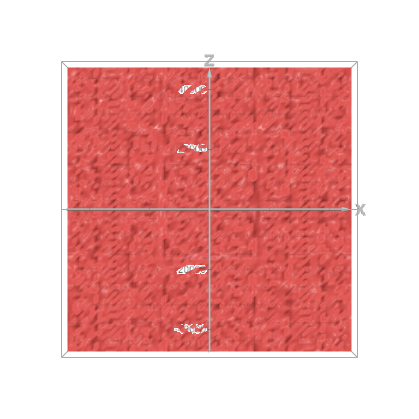
Desmos
this is already zoomed out your actually going to want to zoom in on this one.
anyway this is kinda off topic from the channel at this point so imma shut up and keep on a tinkering.
sacred junco
How many 5 digit numbers have the propriety that dont contain 2 consecutive prime digits?
whole bronze

I tried considering the fact that x^d = 1 iff ord(x)|d and by Lagrange's polynomial theorem stating that nontrivial polynomials of degree d have at most d incongruent roots, we conclude that the numbers of elements of order dividing d is at most d.
Weakening this, we get that the number of elements of order exactly d is still at most d, but we want phi(d) as a bound instead.
I don't see how to get phi(d) as a bound

do we need to use this?
I don't see how I would....
open mist
whole bronze
(Z/pZ)* is cyclic, so it's isomorphic to U(p-1)
from which, we know that an element of order d is a d-th root of unity and no lower than that,
i.e. it's a primitive d-th root of unity. We know there's phi(d) of them since Ud is isomorphic to Z/dZ (the generators of which are well known)
open mist
whole bronze
that tells you these upper bounds are actually maximal, since that's the only way for every element to have an order
whole bronze
open mist
(Z/pZ)* is cyclic, so it's isomorphic to U(p-1)
from which, we know that an elem...
The screenshot was a step in proving that Z/pZ is cyclic, so that wouldn't be allowed to be used
open mist
whole bronze
I tried considering the fact that x^d = 1 iff ord(x)|d and by Lagrange's polynom...
(looking at these polynomials, this is the same reason that the cyclotomic polynomials multiply to X^d-1 and the d-th one is of degree phi(d), you just need to rephrase it in terms of groups (since you probably can't tell cyclotomic polynomials for granted))
Every element whose dth power is 1 is a root of X^d - 1, and we know there are at most d of those.
Consider then, an element of order d. That means it generates a group of elements whose d-th power is always 1, and this group has exactly d elements. This group, by definition, is cyclic, and clearly, the set of roots of X^d - 1.
So the roots of X^d - 1 make a cyclic group of order d. Taking one of those generators to be mapped to 1 gives us an isomorphism with Z/dZ, for which we know there are phi(d) generators.
Note: this means if there's an element of order d, there's exactly phi(d) of them. One can prove there must be one, like before, using sum (phi(d)) = n, to argue that if one d had no element of that order, there wouldn't be enough elements to make a group of n elements
barren garden
whole bronze
whaaat, does this hold for any natural n?
whole bronze
barren garden
whaaat, does this hold for any natural n?
Yes, list the fractions i/n for i in {1,2,...,n}. There are n of them. Reduce to lowest terms and count and get the lhs.
barren garden
amazing
fiery zenith
barren garden
whaaat, does this hold for any natural n?
0
wooden glen
1+1+2+2+4+2+6+4+6+... = 0
 restive ruin
help any1
idk if this is under no. theory or algebra
 open mist
restive ruin
help any1
idk if this is under no. theory or algebra
open mist
restive ruin
help any1
idk if this is under no. theory or algebra
algebra, because the proof uses no number theory
You want to prove one of the discriminants is negative. That's guaranteed if the sum of the discriminants is negative.
Find that sum by using the fact the 2 equations can be rewritten to give you the sum of the ak and the sum of the ak², and therefore the sum of the discriminants
restive ruin
open mist
algebra, because the proof uses no number theory
You want to prove one of the d...
ohh
thanks
 weary palm
do yall recommend any books to study NT?
still flare
 pine cave
hello
there is a conjecture i have (without too much evidence, but it doesn't really matter because i don't need it to be true or anything) about the final digits of arbitrarily high hyperoperations in different bases
and when trying to investigate it, i quickly ran into the limits of the techniques i know how to use (which are the very trivial modular arithmetic ones) and i know of the existence of some slightly more advanced techniques involving totients that i don't know how to use and i was hoping someone could teach me some of those techniques (and perhaps provide further guidance on the problem, but first things first)
so first of all, the conjecture and its shaky basis: i learned, or maybe independently discovered, don't remember which, about the aforementioned very basic techniques for calculating the final digits of quite high powers and this inspired me to do some investigation of them
i discovered something that took me by surprise; it appeared to me that (in base 10), tetrations greater than 2 are capable of ending with every digit but 8
i did not, in fact, actually prove this, merely convinced myself it was true by examination and some limited computation
and by the same process of examination and limited computation in other bases, gave me a suspicion that prime bases, and perhaps only prime bases, exhaust the digit possibilities
this was quite a while ago, and since then i have really wanted to properly prove the facts involved to be able to state anything definitive about the matter at all
but when sitting down to actually do it it became obvious to me that i do not know enough to prove it; i got stuck on basically step two of the investigation, which is to prove that tetrations by >2 of 3 always end in 7
wooden glen
Suppose you want to know, say, the last 5 decimal digits of a power tower 3^3^3^3^3^...
Then thanks to Euler's theorem, 3^3^3^... == 3^(3^3^... mod totient(10^5)) (mod 10^5)
But that again is the same as 3^(3^(3^3^... mod totient(totient(10^5))) mod totient(10^5)) and so forth.
And when you iterate the totient function starting from 10^5, you'll fairly quickly reach 1, and from that point onwards the rest of the power tower cannot matter because you're taking it modulo 1.
In particular it doesn't matter how tall the tower is, as long as it's not very short -- so all of the higher hyperoperations except the first few will give five last digits that depend only on the base value.
But we don't even need to be that sophisticated to exclude 8:
The last digit of any power of x depends only on the last digit of x, and on the exponent.
In order for any power of x to end with an 8, x needs to end with an even digit (otherwise all its powers are odd and don't end with 8).
Powers of 2 end with 8 iff the exponent is 3 modulo 4 -- but that's not the case for any exponent that's itself a power of 2.
Powers of 4 end alternately with 4 and 6.
Powers of 6 always end with 6.
Powers of 8 end with 8 iff the exponent is 1 modulo 4 -- but again, that cannot be the case for exponents that are themselves powers of 8.
So it's impossible for any number of the form x^(x^y)) to end with an 8, no matter what y is.
pine cave
yeah that's basically what i came across but i didn't write down all the steps of my argument so i wasn't entirely sure it was valid haha
wooden glen
pine cave
but when sitting down to actually do it it became obvious to me that i do not kn...
Concretely: Since totient(10)=4, the last digit of 3^(3^(3^z))) only depends on 3^(3^z) mod 4.
In turn, totient(4) is 2, so 3^(3^z)) mod 4 only depends on 3^z mod 2. But 3^z is clearly always odd, so 3^(3^z)) mod 4 is always 3.
And therefore 3^(3^(3^z))) is always 7 modulo 10.
pine cave
ooh, right, okay
yeah i was trying to figure out how to utilize that totient property but it wasn't entirely clear to me how to repeatedly apply it like that
wooden glen
pine cave
and by the same process of examination and limited computation in other bases, g...
It is true that prime bases do give us all the possible last digits for high tetrations. Namely for base p, if we want tetrations ending with d, use the Chinese remainder theorem to choose x such that x==d (mod p) and x==1 (mod p-1). Then x^(x^n)) == d (mod p) for all n.
But we can do this for every base that is coprime to its totient, and such a base doesn't need to be prime. For example, it also works for base 15.
pine cave
oooh
white lion
weary palm
do yall recommend any books to study NT?
Elementary introduction to Number Theory by Long (3rd edition)
white lion
I’m trying to understand why when we have a given linear congruence say ax = b (mod m), with d = (a,b), finding x in mod m/d gives us our solution.
My understanding of it is, that if there indeed does exist a solution, then we know that all the other solutions must differ from it by a multiple of m/d. So we suppose x is a solution and if we solve for it in mod m/d. Then we found another solution, and from this numerical solution we can use it to find the rest, is this understanding correct?
 vapid falcon
can someone generate the sequence {2,16,54,128,250,432,686}
torn escarp
why
dusty dragon
let f : {1, ..., 7} -> Z such that f(1) = 2, f(2) = 16, f(3) = 54, f(4) = 128, f(5) = 250, f(6) = 432, f(7) = 686
vapid falcon
dusty dragon
let f : {1, ..., 7} -> Z such that f(1) = 2, f(2) = 16, f(3) = 54, f(4) = 128, f...
i guess that's correct
try {2,16,54,128,250,432,686...}
dusty dragon
it'll be much clearer when you ||divide by 2|| :-)
vapid falcon
thanks
weary palm
is there a way to take the dirichlet character of a fourier series?
torn escarp
i dont see any police around
 wheat tinsel
vapid falcon
can someone generate the sequence {2,16,54,128,250,432,686}
wheat tinsel
vapid falcon
can someone generate the sequence {2,16,54,128,250,432,686}
,w interpolate (1,2), (2,16), (3,54), (4,128), (5,250), (6,432), (7,686)
sterile pumiceBOT


 Requested by Croqueta#3385
wheat tinsel
Requested by Croqueta#3385
wheat tinsel
xD
 wraith topaz
this might be a silly counting thing which I'm struggling with, but I had this question which asks how many positive divisors 2^r 3^s 5^t has, and I wasn't sure how to prove it should be (r+1)(s+1)(t+1)
ig it has to at least be r + s + t bc that's the number of prime factors but I wasn't sure how to incorporate multiplying out prime factors, or if there's a better way of enumerating the positive divisors which doesn't involve counting at all (I've seen some stuff about multiplicative functions from cursory glances online but we've only really discussed divisibility in class so I've been discounting it if there's a different way)
loud maple
wraith topaz
this might be a silly counting thing which I'm struggling with, but I had this q...
The idea is to think about how the prime factorisation of an arbitrary factor of this number looks
wraith topaz
I mean an arbitrary factor would have the prime factorization 2^a 3^b 5^c, ig those can be 0 <= a <= r, etc, can we just say an arbitrary factor has (r+1) possible options for 2, (s+1) for 3, (t+1) for 5
whole bronze
Testing out Legrange's polynomial interpolation where the points being interpolated are all points on the integer lattice, I notice the polynomial always outputs integer values even for inputs that were not in the set of points being interpolated. Does anyone know a reason for this?
actually this is not true at all
we at least need the restriction that the x-coordinates of two of the points being used for the interpolation be adjacent
or all of the inputs to be adjacent
for example, if the points are (0,5), (1, 3), (2,6), (3, 8) and P is the interpolating polynomial, then P(Z)\subseteq Z
wooden glen
You definitely need all the sample points to be consecutive integers; just one pair of neighbors is not enough. E.g. consider f(0)=0, f(1)=0, f(3)=1.
In the consecutive case it's enough to show that the property is true when one of the sample function values is 1 and all the rest are 0. (All other interpolations will be integer combinations of those).
Without loss of generality, suppose we want f(0)=0, f(1)=0, ..., f(a-1)=0, f(a)=1, f(a+1)=0, ..., f(a+k)=0.
The interpolating polynomial is then x(x-1)···(x-(a-1))(a+1-x)···(a+k-x)/a!k! -- but that is the product of the interpolating polynomials for the points 0 through a and a through a+k, respectively -- so it's actually enough to consider the case where the 1 is at the end of the sequence of sample points.
Thus let's assume k=0. The interpolating polynomial is now simply x!/(x-a)!a!, that is, the binomial coefficient x-choose-a, which is an integer when x is.
At least, that is, when x is positive. But it's easy to see that we also get f(-1)=±1, so up to a sign the interpolating polynomial behaves the same way to the left of the sample points.
foggy linden
State true or false.
Let m and k be positive integers. If r^k is a primitive root modulo a positive integer m, then r is also a primitive root modulo m.
I am inclined to think that it should be false but, apparently, it's true.
I have been unable to find a counter example.
I'm using this - If order of r is p, then order of r^u is p/(u,p). According to that, r and r^k will both be primitive roots only if k and Phi(m) are relatively prime. Question whereas seems more lax about k.
Of course, it's not a valid argument because i'm assuming that a non-primitive number is generating a primitive root which, probably, can't happen but i am not able to see the reasoning behind that.
Any help/hint/insight is appreciated. Thank you.
west glade
well in particular the order of r^k cannot be more than the order of r. so if r^k is primitive then the order of r must be at least as high, so r is primitive aswell
foggy linden
west glade
well in particular the order of r^k cannot be more than the order of r. so if r^...
Okay, yes. That simply follows from that theorem that i mentioned. GCD can't be less than 1 for integers.
Same reason for why a non-primitive number can't generate a primitive root.
Btw, is there some more intuitive reasoning for this? Asking, in case, you have some better explanation.
west glade
well every integer that r^k can generate, r can generate obviously aswell
cause (r^k)^n = r^(kn)
foggy linden
Mod wouldn't really make a difference.
foggy linden
west glade
cause (r^k)^n = r^(kn)
Okay. I get it but when i think about it other way around. It's like- r^k would generate r^kn for power of n, but r would generate r^kn for power of kn. kn can be bigger than Phi(m) as k is kinda arbitrary. It just has to be smaller than Phi(m). Since r is primitive, r must be generating r^kn for a power less than or equal to Phi(m) but that's not exactly evident to me.
west glade
the power can be bigger than phi(m), that doesnt matter
the exponent is basically mod phi(m)
foggy linden
Okay. Yes. I thought of that. It just felt awry for some reason. I got it though.
Thank you.
foggy linden
west glade
the exponent is basically mod phi(m)
I have one more question which i think can be answered similarly. If possible, please take a look at my justification.
Question: A number can't be both a quadratic residue modulo an odd prime p, and a primitive root modulo p.
So, let's say that for some number r, r^2 is our QR. Now, assuming that r has an order t, then r^2 has order less than t. So, r^2 can't have order equal to Phi(p).
If p was 2, then it would have worked but we have p, an odd prime.
Once again, am i missing some very simple approach?
Sorry for the ping. I wouldn't do it next time if it's bothersome.
foggy linden
west glade
well where are you using that p is odd
Question said that p is odd.
Proof fails for p =2 because Phi(2) = 1.
GCD(1,2) = 1, so O(r^2) = O(r)/(1,2) = O(r)
Basically, for p=2, 1 is the only primitive root and any power of 1 is just 1.
west glade
what I wanted to hear is that gcd(2,p-1)=2 because p is odd
and so the order of r^2 is t/2
west glade
yes thats how the proof goes
foggy linden
Thank you very much.
 sharp knot
heya, taking modern algebra at my university and wanted my logic checked on something real quick. it isn't rigorous, but i want to know if the intuition holds up at least
the number of self inverses in Z/Zn (ie, |{a | a^2 = 1 mod n}|) depends on the factors of n
if n is prime, then the congruence classes of 1 and -1 are self inverses, and that's it
if n has prime factors p and q, then the elements of Z/Zn can be classified by their modulo p and their modulo q
a number that is 1 or -1 in both p and q is also a self inverse
this gives 4 possibilities
generalizing, for any modular group with k distinct prime factors, the number of self inverses will thus be 2^k
is this true? can anyone readily present a counterexample with either more or fewer self inverses?
 plucky jacinth
n=2 has only one, not two
 meager reef
Seperate the 2 case because it usually is known to not behave similarly as odd primes.
Otherwise, it's fine. Chinese remainder theorem should help.
sterile pumiceBOT
Riku
 meager reef
See if this works for your generalization
Oh shit I forgot the Z lol, consider it the principal ideal generated by that prime power
But yeah
if something can be considered mod p^alpha, By something similar to Hensel's Lemma, I think you have a relation to that residue in mod p
Btw if any of this is wrong please point out, I'm still learning these
sharp knot
Thanks for the help gang. Even if I should have learned it in class, I still managed to learn it on my own, so that feels good 😛
white lion
im trying to prove that $a^{2^n} \equiv 1$ (mod 2^{n+2})$, where a is an odd integer. But, I think it's wrong. Suppose its true, then $a^{2^n} = (2k + 1)^{2^n}$ for $k = 0,1,2 . . .$ then we can use the binomial theorem, if it is true then all the terms except the last one should be a multiple of $2^{n+2}$ but for example this particular term in our expansion, "$2^n$ choose 1" $\cdot 2k \cdot 1 = 2^n \cdot 2k = 2^{n+1} \cdot k $, when k is one the term is not a mutliple of $2^{n+2}$
so it doesn't hold for all odd integers as I wanted
sterile pumiceBOT
jayz
Compile Error! Click the  reaction for more information.
(You may edit your message to recompile.)

 serene sun
Okay let me try here first
Identify the roots of
\begin{align*}
& (n_1 + n_3 + n_5) u \
& - (n_1 n_2 n_3 + n_1 n_2 n_5 + n_1 n_4 n_5 + n_3 n_4 n_5) u^3 \
& + n_1 n_2 n_3 n_4 n_5 u^5 = 0,
\end{align*}
given that $n_i \in \bZ$.
sterile pumiceBOT
Absta

 rain mirage

what is this question asking off me
like i get its 2^1 *3^1 * 7^2
that makes up 294
but
am i meant to select 2 3 and 49
??
i did that for the next example but it was still wrong so
open mist
rain mirage
i did that for the next example but it was still wrong so
7 is a prime power and a factor of 294
loud maple
rain mirage
what is this question asking off me
It is asking you to select prime powers that are a factor of 294
 glad ledge
Can anyone help me with part b please 🙂
 white lion
glad ledge
Can anyone help me with part b please 🙂
white lion
glad ledge
Can anyone help me with part b please 🙂
Use the fact that if a is congruent to b modulo n then the gcd(a,n) = gcd(b,n)
 stuck coral
hey this is a number theory problem from the amatyc competition. any shortcuts for solving it? i havent had much luck testing values

 carmine tide
stuck coral
hey this is a number theory problem from the amatyc competition. any shortcuts f...
carmine tide
stuck coral
hey this is a number theory problem from the amatyc competition. any shortcuts f...
reposted and answered in #competition-math ^
 silver oak
you can exclude 2,3,5
if d is 5, then a^5 must also be divisible by 5, because 2010 is
and then each term is divisible by 25, but 2010 isn't
same for 2 and 3
doesn't solve it but still true
west glade
really not like there are many values of a to test
glad ledge
white lion
Use the fact that if a is congruent to b modulo n then the gcd(a,n) = gcd(b,n)
Thank you for your reply!! However I don't fully understand what the question is asking of me :/
white lion
glad ledge
Thank you for your reply!! However I don't fully understand what the question is...
Recall what the definition of the Euler phi function valued at n is - it’s the number of integers that are coprime to n not exceeding n
It’s asking you to show the the residue system of S modulo n has precisely phi(n) integers that are coprime to n.
glad ledge
white lion
It’s asking you to show the the residue system of S modulo n has precisely phi(n...
Oh okay, thank you!! I couldn't understand how I was supposed to prove a definition lol. And you're saying I can somehow do that using highest common factors?
white lion
glad ledge
Oh okay, thank you!! I couldn't understand how I was supposed to prove a definit...
Yes, that’s what you need to show that they have the same amount of integers that have the highest common factor = 1 (I.e same amount of integers that are coprime to n)
glad ledge
white lion
Yes, that’s what you need to show that they have the same amount of integers tha...
May I ask a HUGE favour. When you're free can you baby step me through it as you're the first person I've found who understands and I'm so lost with it all :/
white lion
glad ledge
May I ask a HUGE favour. When you're free can you baby step me through it as you...
Sure I’ll be free in 2 hours or so.
We’ve all been there
glad ledge
white lion
Sure I’ll be free in 2 hours or so.
Thank you so much, I really really appreciate this. I can't thank you enough 
white lion
glad ledge
Thank you so much, I really really appreciate this. I can't thank you enough <:c...
So what’s your issue?
glad ledge
white lion
It’s asking you to show the the residue system of S modulo n has precisely phi(n...
How can I show that there are phi(n) integers that are coprime to n when that is the definition of it? If that makes sense. I'm so confused on how to even approach it sorry
white lion
glad ledge
How can I show that there are phi(n) integers that are coprime to n when that is...
the definition of phi(n) is all the integers that are coprime to n not exceeding n
S is a residue system, which means it has n integer elements that are all mutually incongruent.
glad ledge
white lion
the definition of phi(n) is all the integers that are coprime to n **not exceedi...
Ah so I have to show that this is equal to the number of elements of S that are coprime to n? Somehow
white lion
glad ledge
Ah so I have to show that this is equal to the number of elements of S that are ...
yup exactly
and you can use the fact that if a and b are congurent mod n then (a,n) = (b,n)
glad ledge
white lion
and you can use the fact that if a and b are congurent mod n then (a,n) = (b,n)
Okay I get the question now thank you, but I don't get what a and b are in this scenario. I'm really sorry
white lion
glad ledge
Okay I get the question now thank you, but I don't get what a and b are in this ...
a and b are just arbitrary integers
glad ledge
white lion
a and b are just arbitrary integers
In S?
white lion
glad ledge
In S?
nope just abritrary integers, it's a fact that for any two given integers say a and b if a = b (mod n) then (a,n) = (b,n)
glad ledge
white lion
nope just abritrary integers, it's a fact that for any two given integers say a ...
But what values am I comparing the hcf of?
white lion
glad ledge
But what values am I comparing the hcf of?
the residue system and the least residue system in your case. it says it in the hint
glad ledge
white lion
the residue system and the least residue system in your case. it says it in the ...
You've lost me again. I don't understand the hint tbh. I get I'm trying to show they're the same. I just don't get how, like my head just doesn't get it atm
I dont want my slowness to take up any more of your time though. I'm heading home now and I'll try get my head around what you have said. Thank you for helping me understand what the question asks of me :))
white lion
glad ledge
You've lost me again. I don't understand the hint tbh. I get I'm trying to show ...
Do you know the the least residue modulo n is?
glad ledge
white lion
Do you know the the least residue modulo n is?
I'm assuming it's the one in this lemma we were given?
 glad ledge
white lion
Yes
glad ledge
white lion
Yes
Okie thanks
white lion
Informally it’s the set of all remainder or remainder representatives
glad ledge
white lion
Informally it’s the set of all remainder or remainder representatives
Ohh okay, that makes sense. What is the first thing I have to do in solving this thing? Is there like a step by step solution (Please say yes lol)
white lion
I’m not sure what you mean
But here’s an argument you can use, you can fill in the details. We are given the fact that $s_i$ which is a member of the complete residue system S must be congruent to an element of of the least residue system modulo n {0, 1, . . . , n-1} (this follows from the definition, but also observe how the complete residue system and the least residue system must have the same number of elements)
Since $S_i \equiv i$ (mod n) it follows that $(s_i, n) = (i, n)$. for each i. We know that there is phi(n) i’s that are coprime with n.
sterile pumiceBOT
jayz
 glad ledge
white lion
But here’s an argument you can use, you can fill in the details. We are given th...
glad ledge
white lion
But here’s an argument you can use, you can fill in the details. We are given th...
Ohhhh thank you so so so so much! I think I understand it now :)) You've been such a great help, truly thank you
 errant otter
Uhhhh somethings confusing me
a/b mod p = a mod p * b^-1 mod p where b^-1 is the modular inverse (assuming it exists)?
But 70/8 mod 7 = 1.75
And (70 mod 7) * (1 mod 7) = 0
Am I misunderstanding modular inverses here? 
eternal shoal
It doesn't make sense to take decimals.
errant otter
Ah
Only works when the division returns integers
That was silly of me
Ahem, alr that aside I was wondering if there were any efficient way to compute the sum $\sum^p_{i=1} i^k \mod p$, where $p$ is prime. (The numbers can get pretty huge, I'm meant to write an algorithm that can solve this in time). I was considering faulhaber's formula + fermat little theorem, but idk if there are other NT results which would help here. (And computing faulhaber may be an issue too)
sterile pumiceBOT
Kiameimon | Welt Rene
 eternal shoal
errant otter
That was silly of me <:TeriDerp:1149187247757856878>
eternal shoal
errant otter
That was silly of me <:TeriDerp:1149187247757856878>
Indeed.
errant otter
Sledgehammer
errant otter
sterile pumice
**Kiameimon \| Welt Rene**
maybe faulhaber has some nice simplifications with modulo p
eternal shoal
Uhh do you get any nice cancellations here?
errant otter
Idk, trying to work it out, but ofc bernoulli numbers are..... not very nice to play with
eternal shoal
Like for p =/= 2, this should sum to 0 by pairing i and p-i
eternal shoal
errant otter
Idk, trying to work it out, but ofc bernoulli numbers are..... not very nice to ...
Yeah... that might not be the nicest approach
eternal shoal
eternal shoal
Like for p =/= 2, this should sum to 0 by pairing i and p-i
I meant for k = 1
But I am thinking this idea should(?) extend to higher powers of k too by binomial expanding
errant otter
eternal shoal
Yeah... that might not be the nicest approach
mfw floating points
eternal shoal
Like when you expand (p-i)^k, you get p^k + (kC1) * p^{k-1} * (-i) + ... + (-i)^k. But the p factors out of the first few terms, and this is equivalent to (-i)^k mod p.
which uhh does not cancel out when k is even does it 
but for k odd this should work.
errant otter
I mean if it doesn't ita fine
Just like
Multiply (the even exponent -1)
And then multiply 1 more time to compensate
eternal shoal
eternal shoal
Like for p =/= 2, this should sum to 0 by pairing i and p-i
(and this is trivial for p = 2. So let's assume p is odd)
errant otter
Ngm
eternal shoal
errant otter
And then multiply 1 more time to compensate
whaaa
eternal shoal
i dunno that that works the way you think.
errant otter
I can just do a^x (where x is the even number) = a^(x-1) * a
And a^(x-1) is odd so the formula applies(?)
eternal shoal
eternal shoal
Like when you expand (p-i)^k, you get p^k + (kC1) * p^{k-1} * (-i) + ... + (-i)^...
my point is that the entire sum cancels to 0 when k is odd. Because 1 + 2^k + ... + (p-2)^k + (p-1)^k = (1 + (p-1)^k) + (2^k + (p-2)^k) + .... ~equiv~ (1 + (-1)^k) + (2 + (-2)^k) + ... = 0 when k is odd.
But this same idea won't work when k is even I think(?) since the "applying for k-1 them * a" changes as a changes
eternal shoal
Like taking p = 3 and k = 2, we get 1^2 + 2^2 = 5, which is not equiv to 0 mod 3
eternal shoal
errant otter
Wait why does it become ... (2 + (p-2)^k) <:TeriDerp:1149187247757856878>
I rearraged the terms, which we can do since it's a finite sum. So i paired the 1 and (p-1). Then the 2 and (p-2). Then ....
errant otter
Yeah but isn't it 2^k and (p-2)^k
errant otter
it's alr
eternal shoal
But uhh for k even? After doing some thorough case checking (read: up to p = 7), I think we actually can simplify it still
(p is an odd prime) For even k < p-1, it still(?) gives 0. and for k = p-1, it reduced to p-1 mod p it seems
errant otter
errant otter
Mmm, no surprise, that's flt in your last observation
Wait
I'm clowning
🤡
cough cough anyways
Wait it is, sum from 1 to p of a^(p-1) mod p
Is sum of (a^(p-1) mod p)
Which is sum of (1 mod p), aside from the pth term, that is 0 cuz modulo
So it's sum of p-1 terms
eternal shoal
oh duh
errant otter
But yeah using this fact
We just need to consider 1 < k < p-1
Cuz anything more we can just apply flt and reduce it to that
eternal shoal
forgor about fermy's wittle theowem
eternal shoal
errant otter
We just need to consider 1 < k < p-1
that one i don't know off the top of my head how to get it.
errant otter
errant otter
errant otter
We just need to consider 1 < k < p-1
If k = p-1 answer is p-1
If k = p, answer is 0, because sum of 1 to p (i^p mod p) = sum from 1 to p-1 (i mod p) = (p-1)p/2 mod p = 0
(Just assume p != 2 cuz that's trivial)
errant otter
Aaaaaaa