#databases
1 messages · Page 194 of 1
 torn sphinx
 fringe sundial
what should be the arguments?
fringe sundial
what should be the arguments?
async def prefix(bot, message):
  return prefix
I'd actually make a cache tbh to store prefixes
 uneven sinew
yeah.. good luck teaching him how to use redis
fringe sundial
torn sphinx
```py
async def prefix(bot, message):
return prefix
```
I actually want to ask what's use of bot argument in it?
torn sphinx
uneven sinew
yeah.. good luck teaching him how to use redis
sheesh
torn sphinx
fringe sundial
I actually want to ask what's use of bot argument in it?
¯_(ツ)_/¯
uneven sinew
torn sphinx
```py
async def prefix(bot, message):
return prefix
```
prefix()()()()()()()()()()()()()()()()()()()()()()()()
torn sphinx
..?
uneven sinew
since it returns itself
fringe sundial
torn sphinx
¯\_(ツ)_/¯
Can you tell what's use of bot in it?
fringe sundial
uneven sinew
`prefix()()()()()()()()()()()()()()()()()()()()()()()()`
Hey can you tell whats use of bot argument in it?
async def prefix(bot, message):
I don't know, Ash did that 😄
fringe sundial
uneven sinew
I don't know, Ash did that 😄
Who will help me now
torn sphinx
fringe sundial
Hey can you tell whats use of bot argument in it?
```py
async def prefix(bot, m...
bot is an instance of a Bot object fyi
just looked at the source code
uneven sinew
you don't use the bot param though, is what he's asking afaik
fringe sundial
torn sphinx
bot is an instance of a `Bot` object fyi
async def get_prefix(bot, message):
    id = message.guild.id
Is it correct?
fringe sundial
And i can select the prefix thing
And return prefix
Easy
Sqlite is very easy pesy
torn sphinx
fringe sundial
Sqlite is very easy pesy
ahem you'll be still doing bad practices
fringe sundial
torn sphinx
*ahem* you'll be still doing bad practices
Whats wrong now?
fringe sundial
fringe sundial
And i can select the prefix thing
Is my strategy wrong?
torn sphinx
yes
you should create a custom cache, in the sense, a simple dict
which you should load with prefixes on startup
fringe sundial
torn sphinx
which you should load with prefixes on startup
Whats use of dictionary in it?
I am using database
torn sphinx
fringe sundial
I am using database
you'll make a sql query every time a message is sent, instead selecting prefixes from a dictionary is better and if the prefix is not found in the dictionary, simply make a request ton your database
fringe sundial
torn sphinx
you'll make a sql query every time a message is sent, instead selecting prefixes...
But i never did the dictionary thing before
torn sphinx
this is more of a #discord-bots question idk
torn sphinx
fringe sundial
But i never did the dictionary thing before
then do it now?
fringe sundial
Idk how to
torn sphinx
fringe sundial
Idk how to
use brain
fringe sundial
But there would be so many prefix to load
fringe sundial
torn sphinx
use brain
My brain said idk
fringe sundial
torn sphinx
it's a startup thing
Things in SQL are stored in json format?
torn sphinx
fringe sundial
Things in SQL are stored in json format?
no?
torn sphinx
fringe sundial
I was thinking to use json.loads
😐
how would that work on a list of tuples?
pliz elaborate
fringe sundial
torn sphinx
how would that work on a list of tuples?
Me confused
fringe sundial
torn sphinx
😐
Json.dumps?
torn sphinx
fringe sundial
Json.dumps?
do you even know what they do?
fringe sundial
It converts dictionary to json format
torn sphinx
.....
fringe sundial
Json.loads to load data(don't ask me difference between load and loads)
torn sphinx
fringe sundial
Json.loads to load data(don't ask me difference between load and loads)
no?
fringe sundial
Anyway come to sql
torn sphinx
...
fringe sundial
Json not related to #databases
torn sphinx
fringe sundial
Json not related to <#342318764227821568>
wut when did I ever talk about json
 winged moth
torn sphinx
winged moth
torn sphinx
😭
fringe sundial
torn sphinx
wut when did I ever talk about json
I saying me
torn sphinx
pffttt
winged moth
what is the question?
fringe sundial
Me confused
torn sphinx
and I just said to make a custom cache, in the sense a simple dictionary that loads all the prefixes on startup to avoid making requests to the database every time
😔
fringe sundial
import discord
from discord.ext import commands
import aiosqlite

bot = commands.Bot()

async def my_hook():
    bot.conn = await aiosqlite.connect("name.db")
    bot.cur = await bot.conn.cursor(){}
    await bot.cur.execute('CREATE TABLE IF NOT EXISTS pretable(prefix TEXT,guild_id INTEGER)')
    await bot.conn.commit()

bot.setup_hook = my_hook
Is it correct yet?
fringe sundial
torn sphinx
and I just said to make a custom cache, in the sense a simple dictionary that lo...
Idk how to make
Let me google with my small keyboard
torn sphinx
fringe sundial
```py
import discord
from discord.ext import commands
import aiosqlite
bot = co...
it'll raise errors
winged moth
class Bot(commands.Bot):
    def __init__(...):
         prefixes = self.get_prefixes()
         ...
          super().__init__(..., command_prefix=prefixes)
    def get_prefixes(self):
        query to get prefix
😵
torn sphinx
with sqlite
fringe sundial
Headache
torn sphinx
move to #discord-bots I'll write a mere example
 west hill
torn sphinx
subclassing the Bot class is the only way of assigning a custom prefix
west hill
torn sphinx
subclassing the Bot class is the only way of assigning a custom prefix
it isn't tho
torn sphinx
west hill
it isn't tho
what's the other option?
it's still cleaner tbh
https://mystb.in/InvolvementMinimizeAlternatively.python
this is a simple example of how I would implement custom prefixes
west hill
torn sphinx
it's still cleaner tbh
it is indeed cleaner
west hill
torn sphinx
what's the other option?
simple one for beginners

Stack Overflow
Let's say I don't want to limit myself to a single prefix, and instead use a command to change the prefix to whatever I want for each individual server I'm on.
Basically, there would first be a def...
fringe sundial
torn sphinx
https://mystb.in/InvolvementMinimizeAlternatively.python
this is a simple exampl...
Can I use it if you have no problem
torn sphinx
west hill
https://stackoverflow.com/questions/64513680/discord-py-prefix-command
dudie, we were talking about aiosqlite
torn sphinx
fringe sundial
Can I use it if you have no problem
yes. but dont ask here if you get errors
fringe sundial
torn sphinx
yes. but dont ask here if you get errors
Hmmm
west hill
torn sphinx
dudie, we were talking about aiosqlite
i see no reason why u cannot do that with aiosqlite too
fringe sundial
What would I do if i got error huh
torn sphinx
west hill
i see no reason why u cannot do that with aiosqlite too
still
west hill
eh nvm
torn sphinx
fringe sundial
What would I do if i got error huh
solve it yourself
west hill
whatever you say u are helping anyway
torn sphinx
west hill
whatever you say u are helping anyway
we could switch 👀
fringe sundial
torn sphinx
solve it yourself
Then what's this server for.....
I could solve if possible
torn sphinx
lmao
west hill
fringe sundial
Then what's this server for.....
I could solve if possible
it's for u to display ur problem and wait
fringe sundial
 fringe sundial
west hill
it's for u to display ur problem and wait
fringe sundial
west hill
it's for u to display ur problem and wait
Ye not for circus
west hill
till someone in a good mood comes and helps you
torn sphinx
fringe sundial
You mean me in bad mood?
no me
fringe sundial
Why everything red here.
 torn sphinx
fringe sundial
Why everything red here.
torn sphinx
fringe sundial
Why everything red here.
imagine
that's a really dumb question 😐 pass in self to the hook
fringe sundial
You mean bot setup hook?
torn sphinx
yes?
fringe sundial
import discord
from discord.ext import commands
import aiosqlite

intents = discord.Intents.default()

class MyBot(commands.Bot):
  def __init__(self) -> None:
    super().__init__(command_prefix=self.get_prefix, intents=intents)
    self.prefixes = {}

  async def setup_hook() -> None:
      self.conn = await aiosqlite.connect("name.db")
      self.cur = await bot.conn.cursor()
      await self.cur.execute('CREATE TABLE IF NOT EXISTS pretable(prefix TEXT, guild_id INTEGER)')
      await self.conn.commit()
      all_prefixes = await (await self.cur.execute("SELECT * FROM pretable")).fetchall()
      [self.prefixes.update({record[1]: record[0]}) for record in all_prefixes]


  def get_prefix(self, bot, message) ->  None:
    return self.prefixes.get(message.guild.id) or await (await self.cur.execute("SELECT prefix FROM pretable WHERE guild_id = ?"), (message.guild.id)).fetchone() or ">"

bot = MyBot
bot.set_hook = setup_hook

@bot.event
async def on_ready():
    print("hello")
Like this?
west hill
rip
torn sphinx
...
torn sphinx
I'm really gonna cry, I'm out for now
west hill
import discord
from discord.ext import commands
import aiosqlite

intents = discord.Intents.default()

class MyBot(commands.Bot):
  def __init__(self) -> None:
    super().__init__(command_prefix=self.get_prefix, intents=intents)
    self.prefixes = {}

  async def setup_hook(self) -> None:
      self.conn = await aiosqlite.connect("name.db")
      self.cur = await bot.conn.cursor()
      await self.cur.execute('CREATE TABLE IF NOT EXISTS pretable(prefix TEXT, guild_id INTEGER)')
      await self.conn.commit()
      all_prefixes = await (await self.cur.execute("SELECT * FROM pretable")).fetchall()
      [self.prefixes.update({record[1]: record[0]}) for record in all_prefixes]


  def get_prefix(self, bot, message) ->  None:
    return self.prefixes.get(message.guild.id) or await (await self.cur.execute("SELECT prefix FROM pretable WHERE guild_id = ?"), (message.guild.id)).fetchone() or ">"

bot = MyBot()


@bot.event
async def on_ready():
    print("hello")
 west hill
i just added the self over there no way i am reading all that
fringe sundial
torn sphinx
Still red
 fringe sundial
Which line
torn sphinx
set_hook
west hill
bot = MyBot()
bot.setup_hook =
west hill
i dont think u need setup_hook
fringe sundial
Oh u understand
west hill
yeah
fringe sundial
I understood
torn sphinx
fringe sundial
Oh u understand
Yes I understand
west hill
just MyBot() is enough
torn sphinx
I'm on the verge to cry
west hill
remove that
west hill
west hill
```py
import discord
from discord.ext import commands
import aiosqlite
intents ...
^
 delicate fieldBOT
Hey @fringe sundial! I noticed you posted a seemingly valid Discord API token in your message and have removed your message. This means that your token has been compromised. Please change your token immediately at: https://discordapp.com/developers/applications/me
Feel free to re-post it with the token removed. If you believe this was a mistake, please let us know!
west hill
west hill
^
bro scroll up and see
fringe sundial
import discord
from discord.ext import commands
import aiosqlite

intents = discord.Intents.default()

class MyBot(commands.Bot):
  def __init__(self) -> None:
    super().__init__(command_prefix=self.get_prefix, intents=intents)
    self.prefixes = {}

  async def setup_hook(self) -> None:
      self.conn = await aiosqlite.connect("name.db")
      self.cur = await bot.conn.cursor()
      await self.cur.execute('CREATE TABLE IF NOT EXISTS pretable(prefix TEXT, guild_id INTEGER)')
      await self.conn.commit()
      all_prefixes = await (await self.cur.execute("SELECT * FROM pretable")).fetchall()
      [self.prefixes.update({record[1]: record[0]}) for record in all_prefixes]


  def get_prefix(self, bot, message) ->  None:
    return self.prefixes.get(message.guild.id) or await (await self.cur.execute("SELECT prefix FROM pretable WHERE guild_id = ?"), (message.guild.id)).fetchone() or ">"

bot = MyBot

@bot.event
async def on_ready():
    print("hello")
Now?
torn sphinx
call the MyBot class
fringe sundial
Ok
west hill
f bro guy didnt even scroll and see
fringe sundial
Done
torn sphinx
west hill
f bro guy didnt even scroll and see
no comments, I'm out, I gotta do some stuff
 lean olive
torn sphinx
lean olive
torn sphinx
fr
torn sphinx
torn sphinx
move to <#343944376055103488> I'll write a mere example
¯_(ツ)_/¯
west hill
fringe sundial
Done
finally scrolled up
fringe sundial
Ye
west hill
🥲
torn sphinx
fringe sundial
Should I test code now?
why?
fringe sundial
 west hill
for a sec i thought the bug was real
fringe sundial

 west hill
async def
west hill
fringe sundial
My battery is 13%
still 13% left sigh
 torn sphinx
fringe sundial
My battery is 13%
torn sphinx
fringe sundial
My battery is 13%
 fringe sundial
torn sphinx
fringe sundial
torn sphinx
I'll charge when it would be 2%
fringe sundial
fringe sundial
How to fix this?
torn sphinx
dunno worked for me
fringe sundial
import discord
from discord.ext import commands
import aiosqlite

intents = discord.Intents.default()

class MyBot(commands.Bot):
  def __init__(self) -> None:
    super().__init__(command_prefix=self.get_prefix, intents=intents)
    self.prefixes = {}

  async def setup_hook(self) -> None:
      self.conn = await aiosqlite.connect("name.db")
      self.cur = await bot.conn.cursor()
      await self.cur.execute('CREATE TABLE IF NOT EXISTS pretable(prefix TEXT, guild_id INTEGER)')
      await self.conn.commit()
      all_prefixes = await (await self.cur.execute("SELECT * FROM pretable")).fetchall()
      [self.prefixes.update({record[1]: record[0]}) for record in all_prefixes]


  async def get_prefix(self, bot, message) ->  None:
    return self.prefixes.get(message.guild.id) or await (await self.cur.execute("SELECT prefix FROM pretable WHERE guild_id = ?"), (message.guild.id)).fetchone() or ">"

bot = MyBot()

@bot.event
async def on_ready():
    print("hello")

@bot.command()
async def test(ctx):
    await ctx.send("eat poop")
Here is code
west hill
self.get_prefix(message) <-- message object from the guild here
torn sphinx
no
fringe sundial
Sad song ig
west hill
u need the guild id there somehow
torn sphinx
#discord-bots again
fringe sundial
Imma listen the last ride song
And do coding
SQL confusing
Ig pymongo more easy?
torn sphinx
mongo ew
west hill
sql is basically english
fringe sundial
Mongo?
torn sphinx
mongo sucks
west hill
its as simple as it gets
fringe sundial
But very less tutorials on SQL in Hindi
torn sphinx
english-
west hill
(self, bot, message) instead try with (self, message)
west hill
fringe sundial
But very less tutorials on SQL in Hindi
should i make one👀
torn sphinx
Asher go to sleep
fringe sundial
Do you even know Hindi language 😂
west hill
torn sphinx
Asher go to sleep
u are right
west hill
fringe sundial
Do you even know Hindi language 😂
bro i am indian
fringe sundial
Really?
west hill
yes
fringe sundial
I want codewithharry to make tutorial on sql
torn sphinx
literally half the server is
torn sphinx
I am
west hill
i wish
fringe sundial
And become a doctor
torn sphinx
ok bye, have a safe trip
fringe sundial
And make my own hospital website
torn sphinx
ok good luck
west hill
are u still getting error?
fringe sundial
Let me grow till 18
torn sphinx
fringe sundial
Me 13 yet bro
13...?
fringe sundial
torn sphinx
13...?
Ye
torn sphinx
😭
torn sphinx
west hill
are u still getting error?
west hill
torn sphinx
😭
?
torn sphinx
idk
fringe sundial
@west hill have you listen the news that sidhu moose wala died before 1 month
Me from his state
west hill
fringe sundial
<@656838010532265994> have you listen the news that sidhu moose wala died before...
guy got something like 20+ bullets pumped in him
west hill
fringe sundial
Me from his state
ik
delicate fieldBOT
Off-topic channel: #ot2-the-original-pubsta
Please read our off-topic etiquette before participating in conversations.
fringe sundial
west hill
ik
You from which?
fringe sundial
torn sphinx
!ot
Ik 2 mins :(
west hill
quite far away from u
torn sphinx
fringe sundial
Ik 2 mins :(
absolutely not
west hill
for safety karnataka
west hill
torn sphinx
absolutely not
yes ma'am
fringe sundial
SQL
fringe sundial
9(
torn sphinx
you guys arent even on topic, this is a databases channel not discord bots
fringe sundial
Ok
west hill
torn sphinx
you guys arent even on topic, this is a databases channel not discord bots
i was helping u help him👀
fringe sundial
Tf ma
torn sphinx
west hill
i was helping u help him👀
no
fringe sundial
I did wrong indentation in get_orefix 😂
west hill
but that will give u indentation error not missing argument
fringe sundial
Still error
west hill
show code
fringe sundial
import discord
from discord.ext import commands
import aiosqlite

intents = discord.Intents.default()

class MyBot(commands.Bot):
  def __init__(self) -> None:
    super().__init__(command_prefix=self.get_prefix, intents=intents)
    self.prefixes = {}

  async def setup_hook(self) -> None:
      self.conn = await aiosqlite.connect("name.db")
      self.cur = await bot.conn.cursor()
      await self.cur.execute('CREATE TABLE IF NOT EXISTS pretable(prefix TEXT, guild_id INTEGER)')
      await self.conn.commit()
      all_prefixes = await (await self.cur.execute("SELECT * FROM pretable")).fetchall()
      [self.prefixes.update({record[1]: record[0]}) for record in all_prefixes]


  async def get_prefix(self, bot, message) ->  None:
      return self.prefixes.get(message.guild.id) or await (await self.cur.execute("SELECT prefix FROM pretable WHERE guild_id = ?"), (message.guild.id)).fetchone() or ">"

bot = MyBot()

@bot.event
async def on_ready():
    print("hello")

@bot.command()
async def test(ctx):
    await ctx.send("eat poop")
Imagine mods come here and mute us
torn sphinx
west hill
but that will give u indentation error not missing argument
why not huh?
self, bot here self will act as bot and bot as message and message will an extra argument
west hill
async def get_prefix(self, message) ->  None:
      return self.prefixes.get(message.guild.id) or await (await self.cur.execute("SELECT prefix FROM pretable WHERE guild_id = ?"), (message.guild.id)).fetchone() or ">"
he is not doing bot.guild.id
torn sphinx
nvm, I'm out
torn sphinx
west hill
```py
async def get_prefix(self, message) -> None:
return self.prefixes.g...
wont work
west hill
let him try atleast ¯_(ツ)_/¯
torn sphinx
ok sire
fringe sundial
 west hill
whats cur?
fringe sundial
west hill
```py
async def get_prefix(self, message) -> None:
return self.prefixes.g...
^
 fringe sundial
west hill
whats cur?
fringe sundial
west hill
whats cur?
.
fringe sundial

 slender atlas
What's wrong
fringe sundial
west hill
¯\_(ツ)_/¯
Bye me listen music
west hill
import discord
from discord.ext import commands
import aiosqlite

intents = discord.Intents.default()

class MyBot(commands.Bot):
  def __init__(self) -> None:
    super().__init__(command_prefix=self.get_prefix, intents=intents)
    self.prefixes = {}

  async def setup_hook(self) -> None:
      self.conn = await aiosqlite.connect("name.db")
      self.cur = await bot.conn.cursor()
      await self.cur.execute('CREATE TABLE IF NOT EXISTS pretable(prefix TEXT, guild_id INTEGER)')
      await self.conn.commit()
      all_prefixes = await (await self.cur.execute("SELECT * FROM pretable")).fetchall()
      [self.prefixes.update({record[1]: record[0]}) for record in all_prefixes]

  async def on_ready(self) -> None:
        print("Bot is online!")
        await self.setup_hook()

  async def get_prefix(self, message) ->  None:
      return self.prefixes.get(message.guild.id) or await (await self.cur.execute("SELECT prefix FROM pretable WHERE guild_id = ?"), (message.guild.id)).fetchone() or ">"

bot = MyBot()

@bot.command()
async def test(ctx):
    await ctx.send("eat poop")
this should work i forgot to run the setup hook
@fringe sundial
fringe sundial
west hill
<@893363878728192041>
 west hill
thats a sqlite error
return self.prefixes.get(message.guild.id) or await (await self.cur.execute("SELECT prefix FROM pretable WHERE guild_id = ?", (message.guild.id))).fetchone() or ">"
now try
fringe sundial
west hill
```py
return self.prefixes.get(message.guild.id) or await (await self.cur.execut...
 west hill
i havent used aiosqlit b4 so idk
await (await self.cur.execute("SELECT prefix FROM pretable WHERE guild_id = ?", (message.guild.id))).fetchone()
just remove this line and try
fringe sundial
west hill
```py
await (await self.cur.execute("SELECT prefix FROM pretable WHERE guild_id ...
I am sorry but it's giving errors again and again
 west hill
no i meant remove that line
return self.prefixes.get(message.guild.id) or ">"
just try with this
i am not too sure with the aiosqlite part u would have to wait for others to help
fringe sundial
But that will not return prefix?
west hill
what error same?
fringe sundial
Codewithharry should start a discord.py series :)
west hill
west hill
what error same?
^
fringe sundial
fringe sundial
This error
west hill
cant be
fringe sundial
Ye
west hill
then u didnt remove the sql line?
fringe sundial
west hill
then u didnt remove the sql line?
Oh we forgot that fethone() return tupple
west hill
not a problem with that the sql line was giving an error
idk how u got same error after removing the line
can u send the repl link?
fringe sundial
west hill
can u send the repl link?
Can we do it lator?
west hill
when u are free
fringe sundial
Or we make our own custom prefix thing? Together pls @west hill
west hill
dm drop the repl link when u are free i will see what the error is then👀
fringe sundial
Ok
torn sphinx
west hill
i havent used aiosqlit b4 so idk
yu add a , (comma) for the parameters to make it a tuple
@fringe sundial ^
west hill
torn sphinx
yu add a `,` (comma) for the parameters to make it a tuple
welp rip i am gonna stick with postgres
west hill
torn sphinx
(message.guild.id,)
forgot just remembered my SQL needs that too
 dull coyote
Hello guys,
I have two tables.
Picker and owner, and they inherit from User.
They have fields in common (the same as user) and at the same time, they have they own fields.
Like in the image:
As long as I know, this is an Is-A relationship
My question is, can I implement this with table inheritance in sqlalchemy? (https://docs.sqlalchemy.org/en/14/orm/inheritance.html))
 fringe sundial
torn sphinx
(message.guild.id,)
fringe sundial
torn sphinx
(message.guild.id,)
If i put will it work?
 fading river
is this common practice in databases? found this in the lab examples for a Google Cloud course I'm taking.
"""
Takes an email address and reverses it (to be used as primary key)
"""
def reverse_email(email):
    return '_'.join(list(reversed(email.replace('@','_').
                        replace('.','_').
                        split('_'))))
there's a lot of fairly cursed Python in here so I wouldn't be surprised if it's unusual
 storm mauve
I think that reversing URIs is not extremely uncommon, but I wouldn't call it particularly common either
that said, my only reference I can remember for that is that Java has imports like ```java
import com.google.gson.JsonObject;
import net.minecraft.data.HashCache;
 paper flower
dull coyote
Hello guys,
I have two tables.
Picker and owner, and they inherit from User.
Th...
paper flower
dull coyote
Hello guys,
I have two tables.
Picker and owner, and they inherit from User.
Th...
Yep, sqlalchemy supports inheritance: https://docs.sqlalchemy.org/en/14/orm/inheritance.html
dull coyote
paper flower
Yep, sqlalchemy supports inheritance: https://docs.sqlalchemy.org/en/14/orm/inhe...
Thanks doctor.
I was doing this API with Sequelize in JavaScript but It does not support It among other stuff that does not support It.
I see that with SQLAlchemy you can do the same as with SQL.
One of the best ORM
 prisma jolt
Guys, does anybody know how I can do this with sqlalchemy? For me to query a table in sqldeveloper, I need to prefix its owner from the all_tables table. But in python with sqlalchemy either with the owner or without it, it returns the table or view doesn't exist. Any tips ?
prisma jolt
I was able to fix it by setting the schema name
 sly pivot
can anyone see my normalsd table tell if anything wrong i am not sure what key shouldbe pk or fk


 hard trench
hey guys - really need help with SQLAlchemy events, so I have this:
@event.listens_for(Emails, 'after_update')
def delete_retrieved_email(mapper, connection, target):
    # If email row has been retrieved, it has been saved in the client's local storage. We now delete it off the server.
    if target.retrieved:
        connection.execute(delete(Emails).where(Emails.id == target.id))
When I test this in the python console (update an Emails instance) - it works. When I do the same in a pytest test, it doesn't work! Why could this be? I have been stuck on this all day it's so frustrating!
 hoary crypt
<@&831776746206265384> scam alert
 robust fjord

 hazy mantle
Quick question I’m not sure where to ask this. But is it possible to import prices from Best Buy into a excel sheet based on the SKU or model number? Without manually doing it
 dim cedar
Hello! I'm quite new at using SQLAlchemy and the orm, and I'm trying to query for entries in my class model's "title" column, but the query is going to be trying to match for a user's input on the song title. So I'm concerned that just filtering where title equals the user's input isn't going to be enough
I found the like and ilike methods but I can't seem to get these working with filter(), and i'm not even 100% sure if they accomplish what I want. How can I query data that is most similar to a given string?
typing this out, i figure i can use the spotify api to search for the song and then use its official title if i need to. it'd be best if i can try to find matches in the local database though =]
 fallow jacinth
Our Organization has ERP, We do collect all the data from the ERP database SQL. Since ERP Scope is small we not capturing all the data in the ERP system. There is a requirement for me to capture the kilometers where drivers are going for delivery purposes. based on the kilometer we need to analyze whether the Petrol allowance is reasonable or not. So I planning to create a simple APK so I can install it on the deriver's phone so whenever they go for a delivery, they need to give the kilometers.
Kindly Suggest to me how I can make a Simple form APK. Is it possible to do it Python ?
 broken gazelle
im guessing im getting this error because my message_id column is of VARCHAR datatype and im trying to update int values to it, so ermm is there a way i can tell postgress the 991670121632374894 is supposed to be a string value and not an int? 😓

i tried wrapping it with (")'s but then for some odd reason i get this error column "991670121632374894" does not exist even tho 991670121632374894 is supposed to be a value/row...not a column

 grim vault
broken gazelle
i tried wrapping it with (")'s but then for some odd reason i get this error `co...
grim vault
broken gazelle
i tried wrapping it with (")'s but then for some odd reason i get this error `co...
You need to use single quotes ' for string literals. Double quotes are for SQL identifier names, so postgres thinks you mean a column name.
broken gazelle
grim vault
You need to use single quotes `'` for string literals. Double quotes are for SQL...
ahh i see i see, thanks a lot!
dull coyote
Hello guys, can I make multiple request to different tables in the same database and the same endpoint?
E.g: first I make a GET request to a table.
If this data fits my condition, then I make a POST request to another table and if not, POST request to another table.
And so on
All in the same endpoint
 civic cargo
GET and POST are HTTP verbs, which is most likely not a protocol you use to communicate with your database
are you asking if it's ok to send multiple queries to your database while responding to a single GET/POST request in your app?
if so then yes, that is normal - generally you try to reduce the amount of db queries needed to respond to the request, but it is normal to make more than 1
 red oasis

error coming from line 157 and 165... how could i possibly do this? what im trying to do is to get the usermodel for 2 different lists

like i need 2 separated lists
 coral briar
Hey can someone please help me in #help-bagel, it has to do with Flask and a Chat Apps formatting issues.
dull coyote
civic cargo
if so then yes, that is normal - generally you try to reduce the amount of db qu...
Thanks.
It sounds a bit weird for me that Im noob and I used to make in one endpoint, only one database operation.
But I can make multiple in the same endpoint with FastAPI async await for example
 hybrid quartz
I'm receiving this error and very confused.. ever so simple. I thought this SQL would be correct? Working with MySQL.
Reference:
row is a list holding values of each row in the table being iterated via a for loop. (row is displayed on image below)
row[2] is the mutetype (value in this instance is text and type is TEXT)
row[1] is the discordid (value in this instance is 935665250030719028 and type is BIGINT)
cursor.execute(f"DELETE FROM muted WHERE discordid ={row[1]} AND temp = {True} AND mutetype = {row[2]}")
cursor.execute(f"DELETE FROM muted WHERE discordid ={row[1]} AND temp = {True} AND mutetype = {row[2]}")
_mysql_connector.MySQLInterfaceError: Unknown column 'text' in 'where clause'
'text' is not the column? 'text' is the value which belongs in the column of 'mutetype'
[Attachment of row in the table below]
 torn sphinx
Any idea how I can efficiently store up to 300k entries over multiple weeks and update about 1mil times (every entry around 3 times if not more)?
currently I'm using simple text files to store it
right now it will be doing about 1-20 database updates a minute but once i rewrite it in rust (at least thats the plan) I want to increase it to possibly hundreds
the entries contain all the same data and I've been thinking about using mongodb for it since its free/online and till now is the most stable online database i've used
 somber sorrel
I have a database of 500k+ strings of usernames in a CSV and I would like to search for any one of them as fast as possible.
What is the fastest way to search for a value in a large database? Should I use Python, C, excel, gsheets, ctrl-f in the CSV immediately? Would sorting the list make the search any faster?
 keen minnow
somber sorrel
I have a database of 500k+ strings of usernames in a CSV and I would like to sea...
keen minnow
somber sorrel
I have a database of 500k+ strings of usernames in a CSV and I would like to sea...
can you give more context around the search?
broken gazelle
how can i insert a python list of strings into a text[] column in postgres (i use asyncpg)?
somber sorrel
keen minnow
can you give more context around the search?
Yep, the question is "how do I search for a name here faster"
An example of the data in my csv
H4NAJ7C8W, Sterling Fortune 27, 7800000
HRNAJUCIW, General eligun 60, 650462
Before I was using a vlookup or an index match in gsheets and the time to find a name is approx 10 seconds depending on the connection.
There are more than 500k entries, the data is sorted by the third column from top to bottom and one more time, I am only going to search for a row through the name (second row)
I'm looking for anything that could do this search in 1-2 seconds.
I guess this might not be the right place to ask this question as everyone here is specialized in python
keen minnow
somber sorrel
I guess this might not be the right place to ask this question as everyone here ...
yeah, most people would assume your question would be solved with python in some way.
There are also differences in terms of searches, whether you just want a look up, prefix or other fancy ways to search. That said, I can't help much with google sheet.
somber sorrel
keen minnow
yeah, most people would assume your question would be solved with python in some...
No google sheets is not the way, it is way to slow, I guess my question for you is would there be a way to do what I am Asking in python in 2 seconds?
I'm thinking something along the lines of if I were to sort the data by the second row
keen minnow
somber sorrel
No google sheets is not the way, it is way to slow, I guess my question for you ...
a 500k rows should be able to fit on most computers in memory. If you want a simple look up, then you can use a dictionary and the look up would be very fast
grim vault
hybrid quartz
I'm receiving this error and very confused.. ever so simple. I thought this SQL ...
Don't use f-strings.
cursor.execute("DELETE FROM muted WHERE discordid = %s AND temp = %s AND mutetype = %s", (row[1], True, row[2]))
You problem is that {row[2]} is a text (and in this case also with the value text) which must be in single quotes in the SQL but your use of f-string doesn't have them. If you use placeholders (like above) the database module uses the correct form for the values depending on their datatype.
You tried to execute the statement:
DELETE FROM muted WHERE discordid = 9356... AND temp = True AND mutetype = text
but you need:
DELETE FROM muted WHERE discordid = 9356... AND temp = True AND mutetype = 'text'
 lone wolf
Hello everyone , so um I have 3 .sql files .... and I'm supposed to retrieve data from them using Python
Now, I know python , and I have been learning SQL too but have never worked on .sql files before
Can anyone guide me about where am I supposed to do this work
I've done python programming in jupyter notebook , Kaggle Notebooks , Google Collab before
and have done SQL coding in Microsoft SQL Server Management Studio
I'm confused about which tool I am supposed to use for the task mentioned above
hybrid quartz
grim vault
Don't use f-strings.
```py
cursor.execute("DELETE FROM muted WHERE discordid = %...
Tysm
 unkempt prism
lone wolf
Hello everyone , so um I have 3 .sql files .... and I'm supposed to retrieve dat...
unkempt prism
lone wolf
Hello everyone , so um I have 3 .sql files .... and I'm supposed to retrieve dat...
If you run the files manually does it just run a 1 or more queries and return a 1 or more datasets?
.sql files are just text files. My guess is that you will be able to read the files as text in python and then put the contents in the execute of the required db driver. Is it a SQL Server db driver?
 ebon skiff
Traceback (most recent call last):
  ...
    dbr = await interaction.client.database.execute(""DO
  File "C:\Users\eboss\Documents\GitHub\dpy-dispy\venv\lib\site-packages\asyncpg\connection.py", line 320, in execute
    _, status, _ = await self._execute(
  File "C:\Users\eboss\Documents\GitHub\dpy-dispy\venv\lib\site-packages\asyncpg\connection.py", line 1659, in _execute
    result, _ = await self.__execute(
  File "C:\Users\eboss\Documents\GitHub\dpy-dispy\venv\lib\site-packages\asyncpg\connection.py", line 1684, in __execute
    return await self._do_execute(
  File "C:\Users\eboss\Documents\GitHub\dpy-dispy\venv\lib\site-packages\asyncpg\connection.py", line 1731, in _do_execute
    result = await executor(stmt, None)
  File "asyncpg\protocol\protocol.pyx", line 183, in bind_execute
  File "asyncpg\protocol\prepared_stmt.pyx", line 142, in asyncpg.protocol.protocol.PreparedStatementState._encode_bind_msg
asyncpg.exceptions._base.InterfaceError: the server expects 0 arguments for this query, 2 were passed
HINT:  Check the query against the passed list of arguments.  Note that parameters are supported only in SELECT, INSERT, UPDATE, DELETE, and VALUES statements, and will *not* work in statements  like CREATE VIEW or DECLARE CURSOR.
await interaction.client.database.execute("""DO
            $do$
                BEGIN
                    IF NOT EXISTS (SELECT * FROM fnine_lib WHERE user_id=$1 AND url=$2) THEN
                        INSERT INTO fnine_lib (user_id, url) VALUES ($1, $2);
                    END IF;
                END;
            $do$;""", interaction.user.id, r.url)
It's saying it expects 0 args 
postgresql + asyncpg
 tranquil vessel
I just started learning and want to play around with Flask, I want to store some scapped data in a db before I make any further steps. I was thinking of using MongoDB, are there any other recommendations?
 sturdy birch
i got this error
ERROR 1524 (HY000): Plugin 'root' is not loaded
while running
sudo mysql -u root -p```

command plz help me solving thisDepends on the data, any db would be fine, but i personally prefer postgres
 fading patrol
tranquil vessel
I just started learning and want to play around with Flask, I want to store some...
fading patrol
tranquil vessel
I just started learning and want to play around with Flask, I want to store some...
MongoDB is good if you just want to dump a dictionary or something and you don't care how your data is organized. SQLite or Postgres is better if it makes sense to normalize your data and have tables with foreign keys and stuff. If you've never used a SQL DB it's worth taking the time to understand how they work, it's pretty different from a NOSQL db like Mongo
paper flower
fading patrol
MongoDB is good if you just want to dump a dictionary or something and you don't...
Technically you can just use jsonb for arbitrary data
 rain osprey
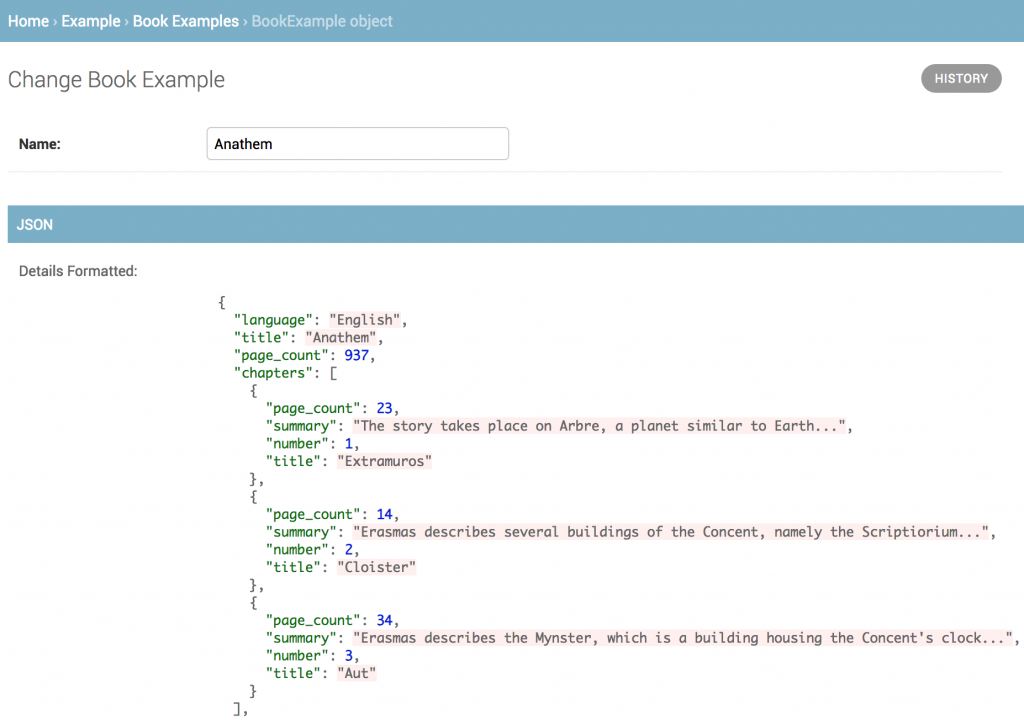
Hello, I have a JSON file of a 2500 English words, and I wanted to learn how I can insert them into a database (I'm using Django, very new to this)
 tranquil zinc
hi
I am using access with python
this is my code
Traceback (most recent call last):
  File "C:\Users\user123\PycharmProjects\review-reader\use_db.py", line 8, in <module>
    cursor.execute("""
pyodbc.ProgrammingError: ('42000', '[42000] [Microsoft][ODBC Microsoft Access Driver] Syntax error in DROP TABLE or DROP INDEX. (-3556) (SQLExecDirectW)')```and incase if u guys ask me to comment out drop table
heres the new error
 tranquil zinc
 vapid hawk
what is the best database engine for me if i have:
An ubuntu vps,
and I'm storing discord bot data, economy/items/so on.
rn i have sqlite and it works nicely, but I'm planning on scaling up soon, so i will need something that can also scale up, and i want it to have good python asyncio support,
does anyone know which dbsystem is going to be best fit for this?
torn sphinx
hello all
FROM python:3.9.5

RUN apt-get update && apt-get install -y  postgresql-client-11
for above dockerfile, docker build works
But for
FROM python:3.9.6

RUN apt-get update && apt-get install -y  postgresql-client-11
docker build throws the following error.
#5 2.088 Get:6 http://deb.debian.org/debian bullseye-updates/main amd64 Packages [2592 B]
#5 3.086 Fetched 8545 kB in 3s (3341 kB/s)
#5 3.086 Reading package lists...
#5 3.605 Reading package lists...
#5 4.113 Building dependency tree...
#5 4.251 Reading state information...
#5 4.356 E: Unable to locate package postgresql-client-11
Unable to locate pkg. Any idea?
fading patrol
rain osprey
Hello, I have a JSON file of a 2500 English words, and I wanted to learn how I c...
the details may depend on your models and stuff but maybe this will help: https://www.laurencegellert.com/2018/09/django-tricks-for-processing-and-storing-json/
Laurence Gellert's Blog | Re: Software Is My Life, So Make It A Good One
In this post I'll show a few tricks I use to make JSON fit into Django more seamlessly. The first is a lesson on coding that everybody should know. Parsing external JSON: Whenever you take in JSON from "strange computers" (which is basically any computer) it works most of the time. As C3p0 said: R2D2,
fading patrol
vapid hawk
what is the best database engine for me if i have:
An ubuntu vps,
and I'm stori...
Postgres
fading patrol
torn sphinx
can you use py dictionaries as a database
you can dump them to json and store them, you can pickle them, etc. but you can't edit individual records the way you can with a real db
torn sphinx
class userData(db.Model):
    DiscordID = db.Column(db.Integer, primary_key=True, nullable=False, unique=True)
    Web_ID = db.Column(db.String, nullable=False, unique=True)
    WebRank = db.Column(db.String(255), nullable=False)
    Points = db.Column(db.Integer, nullable=False)
    userPost = db.relationship("userPosts", backref="author", lazy=True)
class userPosts(db.Model):
    postid = db.Column(db.Integer, primary_key =True)
    postedWhen = db.Column(db.DateTime, nullable=False, default=datetime.datetime)
    postTitle = db.Column(db.String, nullable=False)
    postContent = db.Column(db.String, nullable=False)
    dID = db.Column(db.Integer, db.ForeignKey('userData.DiscordID'), nullable=False)
db.create_all()
Trying to create these tables gives me an error
sqlalchemy.exc.NoReferencedTableError: Foreign key associated with column 'user_posts.dID' could not find table 'userData' with which to generate a foreign key to target column 'DiscordID'
 vocal fern
hey, when im executing a command in python, how can i include the column names in the shell
vapid hawk
fading patrol
Postgres
thanks i was considering it
 torn pilot
...
  else:
    username = input("Enter your username: ")
    password = input("Enter your password: ")

    c.execute("SELECT 2 FROM fork WHERE username = ? AND password = ? LIMIT 2;", (username, password,))
    if c.fetchone():
      play(username, ':-')
    else:
      print("Incorrect password or username")
New to sql. This is just a simple test with sqlite but how would I go about setting a variable in python with the prefix attribute in the database for that specific username without explicitly doing it the way shown above.
Where prefix in play() is explicitly put in as :-.
 pure cypress
torn pilot
```py
...
else:
username = input("Enter your username: ")
password = i...
pure cypress
torn pilot
```py
...
else:
username = input("Enter your username: ")
password = i...
How is the prefix stored in the database? What's the schema for the table?
torn pilot
def c_table(name):
  c.execute(f"""CREATE TABLE {tableName} (
            server_id INT,
            username VARCHAR(20),
            password VARCHAR(20),
            cmds INT,
            prefix VARCHAR(3),
            language VARCHAR(15),
            PRIMARY KEY(username)
           );
            """)

I updated the prefix by calling this function
def update_prefix(usr_name, prefix):
  with conn:
    c.execute(f"UPDATE fork SET prefix = ? WHERE username = ?;", (prefix, usr_name,))
in
def play(username, prefix):
but prefix is set to the prefix in here (replied msg) and not the one in that specific user's db
pure cypress
c.execute("select prefix from fork where username = ? and password = ?", (username, password))
prefix = c.fetchone()

if prefix is not None:
  play(username, prefix[0])
Does this work for you?
pure cypress
You're welcome
 frank summit
I am undergoing a class assessment which includes converting a relational database to dimensional model. As you know, dimensional model contains many tables. So, I need to find some public database with multiple tables. So far, I couldn't find one online. Help needed. Thanks
 whole gate
torn pilot
```py
...
else:
username = input("Enter your username: ")
password = i...
whole gate
torn pilot
```py
...
else:
username = input("Enter your username: ")
password = i...
This doesn't answer your question, but it's generally recommended to use Python's getpass module to get passwords as input. Just a best practice, but it's a good thing to know.
torn pilot
hm I'll keep that in mind then
torn sphinx
can someone please explain what is wrong with this psql query
select 'some prefix'|| round(cast (float8(
    select SUM(transaction.amount) from transaction where type='deposit' and content_type_id='9'
) - (
    select SUM(transaction.amount) from transaction where type='withdraw'
)as numeric), 2)
Thanks!
torn sphinx

I been trying to sketch out why designing a curriculum for databases is hard and why it’s hard to learn it
So just by using select queries as an example, and listing out a couple of posible options in each clause we can see already we can form at least 96 possible types of select queries, unlike normal programming where I can devise a clean curriculum, I can not do that easily with sql
keen minnow
torn sphinx
So just by using select queries as an example, and listing out a couple of posib...
sounds like a non sequitur.
Teaching databases has nothing to do about teaching all the combinations of SQL. That's like saying how one cannot teach programming due to all the many combinations of the various keywords and operators in a programming language and how many programs you can express with them.
Can you expand on the problem you are trying to solve?
 ocean grotto
Hello everybody. I'm trying to create a table "Genre" to which the objects of the table "Movie" belong, and I wanted one movie to have several genres, and those several genres to be contained in one column (like a list of genres), but this type of column does not exist in SQL, maybe I don't know something
 crisp spade
is there any way to install mongodb on mac without brew?
grim vault
ocean grotto
Hello everybody. I'm trying to create a table "Genre" to which the objects of t...
The SQL way would be to make a third table with movie and genre as foreign keys to link them together.
Some databases do support an array like column type but that's non standard.
Table Movie
  movie_id PK
  ...

Table Genre
  genre_id PK
  ...

Table Movie_Genre
  movie_id FK
  genre_id FK
  PK(movie_id, genre_id)
how to do i get multiple output out of my sql enquiry
SELECT supervisor_name ,
supervisor_id FROM branch_info WHERE branch_code =(SELECT branch_code FROM linker_table WHERE car_plate_nr =(SELECT car_plate_nr FROM car_detail WHERE car_type ="SUV"))
getting only one row of output
but there are more output
 stone ocean
in mongodb how would i add another name in the characters object?

also how would i update the value if said name by +1
 obtuse vortex
i am learning SQLAlchemy ORM to use with my flask application and was reading the documentation, but i did not find anything in the docs that teaches about Migrating the Models i have written into database tables. Is Migration something Flask is responsible for or SQLAlchemy ?
 bleak needle
what would be the most optimal way to import a JSON file to a MongoDB database?
I've seen people doing it with MongoDB Compass, Atlas and a few more ways that I can't remember now, so is there any "best/fastest" option really? If so, which one?
 warm yacht
is is matter if a column in a table gets a NULL or NOT NULL if we changed the default value in SQL?
 native lodge
Hey there!
I don't know if that's the right place to ask for that but are files without any extension used as database files?
for example all the Login Data from Chrome is stored in "Login Data" (no extension)
pure cypress
They can be, but not necessarily.
Extensions are just part of the name. They don't affect the data. Like, I could take a text file and rename it to a .png extension and it will still contain the same data as it did when it was a .txt file.
unkempt prism
obtuse vortex
i am learning SQLAlchemy ORM to use with my flask application and was reading th...
Alembic is a extension on top of SQL Alchemy that is focused on migrations.
torn sphinx
keen minnow
sounds like a non sequitur.
Teaching databases has nothing to do about teaching ...
I’m a tutor bro, I’m saying there is no probably no efficient way of teaching it
I already learned it
But the way I learned it I had to keep going back and re reading
With programming you can roughly describe the knowledge obtained like a pyramid
But sql is different, it’s more like a network of facts
You have to put together
So somebody can’t learn the stuff 100% in a lecture
torn sphinx
keen minnow
sounds like a non sequitur.
Teaching databases has nothing to do about teaching ...
I’m giving an illustration, not an argument
One needs to learn relational algebra to help mental process what’s going on first
Which is what I did
keen minnow
torn sphinx
I’m a tutor bro, I’m saying there is no probably no efficient way of teaching it
That's great to be a tutor! But we can have a more interesting discussion if we don't rely on argument of authority. Let them stand on their own.
Learning the deeper side of SQL is tricky and probably not the most important topic because it varies from dialect to dialect and may miss on some more important topics like how to model the data, the purpose of ACID, the different types of DB, etc.
torn sphinx
And the one learns SQL
By breaking down tables and the possible quieres
But teaching somebody how to use those queries is not formulaic at all
torn sphinx
keen minnow
That's great to be a tutor! But we can have a more interesting discussion if we ...
An argument is when given a set of facts I claim something is true
I’m not making an arguments other than the one right now
torn sphinx
keen minnow
That's great to be a tutor! But we can have a more interesting discussion if we ...
Everything I’ve said said so far we’re explánations and illustrations
Your free to think what you wish, but it’s not helpful to the people who are learning here
keen minnow
torn sphinx
Everything I’ve said said so far we’re explánations and illustrations
they were wrong though.
You can teach databases and you can teach SQL
torn sphinx
keen minnow
they were wrong though.
You can teach databases and you can teach SQL
I said you can’t teach it EFFiCiENTlY
keen minnow
The fact that you can combine the various parts of a SQL dialect in many possibilities does not render learning SQL impossible
torn sphinx
You can sometimes treat knowledge like math
keen minnow
torn sphinx
I said you can’t teach it EFFiCiENTlY
can you describe why it wouldn't be efficient?
torn sphinx
And form curriculums easily
There is a formulaic sets of steps to learn a given topic
Sql isn’t like that
And I illustrated that by sketching the number of possible select queries
At best I’m making an inductive argument
So your free to judge it as weak
keen minnow
if you try to learn SQL by all the possible combinations of queries, that would still be the wrong way to go about it.
torn sphinx
keen minnow
can you describe why it wouldn't be efficient?
With programming you can teach it chapter by chapter
And can break down all the stuff step by step
I know because I have a curriculum on replit.com
I know exactly what problems to give etc
torn sphinx
keen minnow
if you try to learn SQL by all the possible combinations of queries, that would ...
It doesn’t matter I probably know sql better than you 
keen minnow
torn sphinx
With programming you can teach it chapter by chapter
Let's take an example like https://www.amazon.com/Learning-SQL-Generate-Manipulate-Retrieve/dp/1492057614/ Why shouldn't it exist?
torn sphinx
keen minnow
Let's take an example like <https://www.amazon.com/Learning-SQL-Generate-Manipul...
Giving an example of a book doesn’t prove that it efficient teaches it
I know because I’m literally reading a book right now
And even with all the facts provided there is many different ways to organize the facts
But it doesn’t make sql easier to understand for other people
Like the prerequisite to learn sql is literall “be good at math”
That’s how I can describe it
And why I can do it
Because I’ve reasoned about many different things
It’s easy for me to know what to do next
keen minnow
torn sphinx
Giving an example of a book doesn’t prove that it efficient teaches it
I am using it as an example so I can understand what makes something inefficient in this example. The table of content does seem pretty logical
torn sphinx
I’m not saying sql is easy for me, I’m just saying I know how to learn it
But I can’t teach that learning process
torn sphinx
keen minnow
I am using it as an example so I can understand what makes something inefficient...
You sound like one of those bad professors my dude
torn sphinx
keen minnow
I am using it as an example so I can understand what makes something inefficient...
Your free to think what you wish
keen minnow
torn sphinx
You sound like one of those bad professors my dude
Insulting people doesn't make you right
torn sphinx
keen minnow
Insulting people doesn't make you right
I know it doesn’t
keen minnow
If you can't have a normal discussion, I am not interested
torn sphinx
It’s my opinion;of you
 lunar pier
Good day! I have little question about database structure.
For now, i have sqlite3 database to store 25 different storage sites and items on this sites. Current database designed in one table, using columns like: serial, name, quantity, site1, site2 .. site25. Site columns are integers with just a number of item on them.
Now i want to remake all this and make structure like:
table1: serial FK, name, quantity
table2: site_name FK
table3: serial FK, site_name FK, quantity_on_site
I have around 2k items(rows) and 25 sites. Will this be the right structure for database?
torn sphinx
ok i created a way to make it optimized
an optimized way to learn fundamentals of sql
 bronze jetty
Is there a way to shift sqlite3 data to postgressql using Python easily?
 meager atlas
hi
Hey, I'm trying to domarket_hash_name = "AK-47 | Phantom Disruptor (Factory New)" cursor.execute(f"""Update Set where market_hash_name = 'market_hash_name'""")
It just say near "Disruptor": syntax error
what can I do
guys should I run con.commit() every time after the every process, or should I run after all process done?
meager atlas
meager atlas
hi
Hey, I'm trying to do```
market_hash_name = "AK-47 | Phantom Disruptor (Fa...
solved
meager atlas
meager atlas
guys should I run con.commit() every time after the every process, or should I r...
waiting
bronze jetty
meager atlas
guys should I run con.commit() every time after the every process, or should I r...
after all proccesses are done
Also the query is meant to be:
UPDATE <tablename> SET <column> = "whatever" WHERE <where stuff>
Example:
cursor.execute("UPDATE test SET market_hash_name = :market_hash where market_hash_name = 'something'", {"market_hash_name": market_hash)
anyone?
 minor citrus

the code when i have the error :


Hey i have an error with my discord bot command to check an column in table.
The error when i use the command :
Ignoring exception in command get:
Traceback (most recent call last):
  File "C:\Users\nstyb\AppData\Local\Programs\Python\Python310\lib\site-packages\discord\ext\commands\core.py", line 85, in wrapped
    ret = await coro(*args, **kwargs)
  File "D:\WORK\py\discordbot\main.py", line 27, in get
    rows = cursor.fetchAll()
AttributeError: 'MySQLCursorDict' object has no attribute 'fetchAll'

The above exception was the direct cause of the following exception:

Traceback (most recent call last):
  File "C:\Users\nstyb\AppData\Local\Programs\Python\Python310\lib\site-packages\discord\ext\commands\bot.py", line 939, in invoke
    await ctx.command.invoke(ctx)
  File "C:\Users\nstyb\AppData\Local\Programs\Python\Python310\lib\site-packages\discord\ext\commands\core.py", line 863, in invoke
    await injected(*ctx.args, **ctx.kwargs)
  File "C:\Users\nstyb\AppData\Local\Programs\Python\Python310\lib\site-packages\discord\ext\commands\core.py", line 94, in wrapped
    raise CommandInvokeError(exc) from exc
discord.ext.commands.errors.CommandInvokeError: Command raised an exception: AttributeError: 'MySQLCursorDict' object has no attribute 'fetchAll'
Code :
@bot.command()
async def get(ctx):
    cursor.execute(f"SELECT hour from players_laders where discord = {ctx.author.id}")
    rows = cursor.fetchAll()
error in line : rows = cursor.fetchAll()
thanks for your help
grim vault
minor citrus
Code :
```py
@bot.command()
async def get(ctx):
cursor.execute(f"SELECT hou...
method-names are case sensitive, .fetchall() is all lower case.
And please don't use f-strings.
@bot.command()
async def get(ctx):
    cursor.execute("SELECT hour from players_laders where discord = %s", (ctx.author.id,))
    rows = cursor.fetchall()
anyone good at sql query
minor citrus
grim vault
```py
@bot.command()
async def get(ctx):
cursor.execute("SELECT hour from pl...
thanks !
 wicked flax
I have this little project I’m working on, dealing with multiple nested dictionaries. As a beginner, It struck me that in a way nested dictionaries are similar to tables and the relationships I develop between them, and the resulting dataframes are like queries. It got me to wondering if maybe what I’m doing would be more properly set up as an actual database rather than multiple dictionaries that are created on the fly.
My next thought was, and I haven’t researched this yet, but what kind of database capabilities does python have? Can it create its own tables, stored externally to the script? Or would I only be able to use some kind of 3rd party software to hold the data?
keen minnow
wicked flax
My next thought was, and I haven’t researched this yet, but what kind of databas...
all of the above
One of the foundations of Computer Science is the ability to process data, and that include being able to store and retrieve it. There are many many many many ways to go about it as there are many many many many different use cases, each one with a different set of trade offs
wicked flax
So in my particular case, my thought process is overkill. I'm dealing with relatively small datasets, probably no more than 1000 records. The most time consuming part is the "foundational data" is obtained from a 3rd party software. Once that's done, the processing can start. The results of processing would then be imported back into the software, or perhaps an intermediate visualization step to see the results of the processing.
I just like trying to do things "the right way" for personal reasons. That and I love databases.
wicked flax
keen minnow
One of the foundations of Computer Science is the ability to process data, and t...
but it just kind of struck me how similar nested dictionaries are to tables, or the results of queries.
keen minnow
wicked flax
but it just kind of struck me how similar nested dictionaries are to tables, or ...
I am not sure if it would hold up as the relationships increase, but yeah, it's one way to retrieve the data 🙂
keen minnow
wicked flax
So in my particular case, my thought process is overkill. I'm dealing with rela...
It seems overkill for your case, but it's common in these cases to have a pipeline with the different steps and merging the output into a final file for the app. This way if a step fails, you can re-start it and you still have the previous file available. Plus, it can be scheduled across a set of machine for reliability/throughput benefits
wicked flax
keen minnow
It seems overkill for your case, but it's common in these cases to have a pipeli...
At the moment that's what I've done with the one "expensive" dictionary. I saved that as a text file and then included a boolean to indicate whether the script should go talk to the software, or go use a local file.
Come to think of it, at the moment, if the local file just had the same name as the model (3rd party) file, that could help a bit with the determination of whether or not to process.
But, at the moment I'm more skilled with SQL than I am with pandas so querying and linking dictionaries to produce new dictionaries is a bit cumbersome for me. But I digress.
I need to go google what's out there for python. I think wherever this script is used will have MS Access available so there's that, but I think things would be faster if I didn't have to go through another piece of software and just used local plain old text files, somehow.
keen minnow
wicked flax
At the moment that's what I've done with the one "expensive" dictionary. I save...
you may be interested in duckdb
wicked flax
keen minnow
you may be interested in duckdb
I appreciate the suggestion! I was just looking and saw that sqlite is included with python so I was thinking of that first. I'll definitely check out duckdb.
keen minnow
wicked flax
I appreciate the suggestion! I was just looking and saw that sqlite is included...
They are pretty close. Duckdb is more oriented towards analytics
obtuse vortex
unkempt prism
Alembic is a extension on top of SQL Alchemy that is focused on migrations.
initially i went the alembic route but did not succeed in the configuration part.
 hallow rover
is there an efficient way of selecting every column but excluding a specific one in postgresql?
 tepid walrus
Well my best bet would be to make a temp table and then drop that column from the temp table
 minor plover
I have a postgresql table that i'm trying to open in pandas with 23m rows, but, when I try to do so, it ends up running out of memory. However, I tried saving the table as a CSV file and opening the file in pandas and it worked perfectly, but what I'm noticing is that the CSV file is losing "metadata" of sorts in the table. In the table, I have a few JSON and array columns, but those get turned into strings and other undefined behavior when I import it into pandas from the CSV. What could I do to mitigate this? Is there another file format I could use?
fading patrol
minor plover
I have a postgresql table that i'm trying to open in pandas with 23m rows, but, ...
The best solution may depend on what you're trying to accomplish. Can you load direct from Postgres to pandas by leaving those columns out (the JSON and arrays)? Is the memory issue with your hardware or are you going over the limit of Pandas (I think it's 100gb / frame?)
minor plover
fading patrol
The best solution may depend on what you're trying to accomplish. Can you load d...
so my goal is to be able to load all of these columns in, and I'm able to do so when i limit the number of rows to something much lower (i.e. 10m vs 23m), but I'm just wondering if there's anyway to either:
- load the entire thing in memory
- save it locally in a format that preserves these columns that csv doesn't play nicely with
fading patrol
minor plover
so my goal is to be able to load all of these columns in, and I'm able to do so ...
How about JSON? Seems messy to load that in to Pandas, but it's the obvious alternative to CSV. Otherwise maybe a pickle file
minor plover
fading patrol
How about JSON? Seems messy to load that in to Pandas, but it's the obvious alte...
I could definitely try, how would I go about saving the postgres table to JSON?
fading patrol
I haven't done it but this is the idea ... https://www.peterbe.com/plog/from-postgres-to-json-strings
minor plover
fading patrol
I haven't done it but this is the idea ... https://www.peterbe.com/plog/from-pos...
errr slight problem, I just said that i couldn't load the entire table into memory due to memory restrictions 🙃
fading patrol
And you can do it in offset batches?
minor plover
fading patrol
And you can do it in offset batches?
oh wait really?
i never thought about that
i must need some sleep
 craggy ether
keen minnow
if you try to learn SQL by all the possible combinations of queries, that would ...
craggy ether
keen minnow
if you try to learn SQL by all the possible combinations of queries, that would ...
Just want to say i agree with this 100%....Why would you ever want to learn through every possible combination when the efficient way is to go through the parts of a query, what they do, and what to expect in the underlying tables. Also a teacher for SQL bootcamps and the number one thing people become confused on is when you throw 100 detail specific examples at them at once. Give them the basic foundation and a way to advance in knowledge and it takes care of itself.
In keeping with efficiency, does anyone know an efficient way to load 100k-800k rows in xlsx/csv workbooks into Teradata via python. Just curious on the most efficient module/method as there are a lot of options and idk whether to run a chunking process or insert rows in a loop
fading patrol
minor plover
i never thought about that
@minor plover Again I haven't tried it so I could be wrong, but name guessing it should be fairly trivial to dump a few million records at a time
broken gazelle
erm, how can i check if an element {"ABC"} belongs to an array column (text[]) of a table named XYZ? i am using postgresql
minor plover
fading patrol
<@302242079474581506> Again I haven't tried it so I could be wrong, but name gue...
i found another method, in psql:
\t
\a
\o file.json
SELECT row_to_json(r) FROM TABLE_NAME AS r;
works most of the way, only thing is that each line is json formatted, but the file as a whole isn't
you need to add commas and [] to make it a valid json
but that's easy to automate
unkempt prism
minor plover
works most of the way, only thing is that each line is json formatted, but the f...
Thats seems quite ideal as its streamable and don't need to load all into memory
unkempt prism
unkempt prism
Thats seems quite ideal as its streamable and don't need to load all into memory
and it behaves just like json-lines does here: https://docs.python.org/3/library/json.html#cmdoption-json.tool-json-lines
 haughty tree
please help
So I made a discord bot, it works with sqlite3, uploaded it to heroku. When I download the repository, the database file remains unchanged, although I made changes in the bot. I made the bot output the database values - and they were changed, but when I downloaded them , there were no changes. How do I download the sqlite3 database file from heroku?
fading patrol
First, you don't want to keep your DB in your repo, that should be ignored
But I've never used sqlite3 on Heroku so I'm not sure if or where the file would be accessible for download.
 little tendon
if choose == "2":
    username1 = input("Username: ")
    password1 = input("Password: ")
    with open(username1, 'w') as f:
        f.write(password1)
        time.sleep(2)
        folder = mega.find('DATA')
mega.upload(username1, folder[0])```im using mega as a database and everytime the files uploads there's no text in the file while there's the text in the file in my pc
 broken gazelle
hi! is there a way to check if a postgres array 'x' has an element 'y'?
 knotty valley
hello. Is there an API that lets define tables like SQLModel? I'm asking this since SQLModel has many features that I don't want to use in my project. The only purpose that I consider useful is the creation of a db using table models which is more user friendly. Regarding data manipulation, I pretend to use asyncpg.
 stray moss
postgres returns [0, 2, 133, 133, 51, 210, 141, 199] for a TIMESTAMP field, how would I decode it?
(ping on response)
 narrow saffron
Hey guys, how do i alter a field in transact sql to be auto increment?
 proven gyro
stray moss
postgres returns `[0, 2, 133, 133, 51, 210, 141, 199]` for a `TIMESTAMP` field, ...
proven gyro
stray moss
postgres returns `[0, 2, 133, 133, 51, 210, 141, 199]` for a `TIMESTAMP` field, ...
use TO_TIMESTAMP function to convert it to suitable format
ohh wait u want the other way around
but it should still work imo
and can u show your select statement ? why is timestamp a list ?
stone ocean
in mongodb can i make characters something like
characters:
  "Michael":
    6
    4
    3
    7
  "Seraph":
    7
    2
    6
    7```
what i have right now
but i still want to retain the ability to index characters
 orchid coral
Heya, I'm looking for some help with a Postgres query. I have a table that looks something like
id | title | alias_of
1  | 'foo' | 'foo'
1  | 'bar' | 'foo'
1  | 'bat' | 'foo'
2  | 'x'   | 'x'
2  | 'y'   | 'x'
...
```I'm trying to get, for a given input, the title with the minimum distance from that input (as calculated by pg_trgm's `<->` operator), for each group of 'alias_of'. The closest I've gotten myself is with
```postgres
SELECT DISTINCT ON (alias_of, min_dist)
*,
MIN(title <-> 'input here') OVER (PARTITION BY alias_of) AS min_dist
FROM tablename
ORDER BY min_dist, alias_of ASC;
```but it feels intuitively wrong to have both `alias_of` and `min_dist` as distinct parameters. I am quite unsure as to how I can make this work, so any help would be much appreciated ^^I seem to have found a working solution with
WITH ranking AS
(
SELECT *,
title <-> 'input here' as dist,
RANK() OVER (PARTITION BY alias_of ORDER BY title <-> 'input here' ASC) AS r
FROM tablename
)
SELECT *
FROM ranking
WHERE r=1
ORDER BY dist ASC;
```though it seems rather roundabout... maiden solar
hi I was wondering if someone could help me with my Peewee ORM's models and functions - I am writing a search application and I'm just having trouble to write it correctly. I keep getting mysterious error messages. I can share a whole "test file" with the relevant classes and functions or some excerpts where I think the problem might be but don't know how to fix it
delicate fieldBOT
Hey @maiden solar!
It looks like you tried to attach a Python file - please use a code-pasting service such as https://paste.pythondiscord.com
maiden solar
yup
So this is the code. Currently when I try to run it it gives me the error apsw.SQLError: SQLError: sub-select returns 5 columns - expected 1
and I'm honestly confused about which part the code this even is, because it only gets thrown when I iterate over the results since everything is returned as iterable. Even debugging this whole thing seems a little hard to me.
welp maybe I'll go over to one of the help channels
dull coyote
Hello everyone, how do I make múltiple database queries in the same endpoint with FastAPI?
Async/await? Middleware? Normal way?
For example this is a POST endpoint:
- Query to DB if whatever id is correct.
- If its correct get xyz data from DB.
- If everything is OK and we have all the necesary parameters, finally add registry to DB.
Note that everything is in the same endpoint.
In this example we have 3 DB operations.
dull coyote
Thanks, I used to put only one query per endpoint.
I cannot test my multiple queries in one endpoint because I need the especifications of my project.
But I think in the normal way it may work :
obj = db.query().filter()
if obj != None:
   xyz_data = db.query().filter().all()
if everything is OK:
    db.create()
 devout yacht
Hi everyone, i need a help with cursor, in python
how to make a cursor remember for every select query, lets take first time we have selected 100 rows
0-100
secondtime if i run query it should fetch from
101-200 rows
can it be possible?
fading patrol
devout yacht
can it be possible?
I don't know what db you're using etc. but in general that's what OFFSET is for
fading patrol
devout yacht
postgresql
So like I said: https://www.postgresql.org/docs/current/queries-limit.html

PostgreSQL Documentation
7.6. LIMIT and OFFSET LIMIT and OFFSET allow you to retrieve just a portion of the rows that are generated by …
 verbal jetty
hey guys. I need help. I'm using sqlite3 and I want to delete a table... can anyone me out with this ?
I want to delete a table from the database file
how can I do that ?
no no not table
I want to delete a row
really sorry
I want to delete a row from a table
I tried -> 'DELETE FROME <table_name> WHERE UID=<uid>'
yes I know
verbal jetty
verbal jetty
I tried -> 'DELETE FROME <table_name> WHERE UID=<uid>'
this didn't work
devout yacht
@fading patrol @slow cove there is no equivalent function in python like offset or limit
verbal jetty
okay the columns are UID, Email, Passwords
just some general columns
a basic table
Anyone ??
please help me
fading patrol
devout yacht
<@382671972829495298> <@303873532863971330> there is no equivalent function in p...
I have to Google everything for you? 🤣 Here are two different ways https://dellsystem.me/posts/psycopg2-offset-performance
If that doesn't solve your problem, show some code
devout yacht
no no i didnt mean that i tried searching i am sorry @fading patrol
 median dome
hey, is it possible to split the models of sqlmodels in multiple files? rn im getting circular imports when trying it
fringe sundial
Guys can anyone help me making a custom prefix for my discord bot pls
fringe sundial
@winged moth
async def setup_hook():
    connect = await aiosqlite.connect('prefixes.db')
    cursor = await connect.cursor()
I wrote this
Is it fine?
winged moth
fringe sundial
Is it fine?
ya?
make sure to close the connection before shutting the bot
stray moss
proven gyro
use `TO_TIMESTAMP` function to convert it to suitable format
No this is what the database sends to my driver
It’s a [u8] array
unsigned 8 byte integer array
How do I decode it to a time stamp I can understand
proven gyro
postges or something else?
fringe sundial
winged moth
make sure to close the connection before shutting the bot
Ok 👌
 frozen python


#100DaysOfCode #MySQL #Database #PostgreSQL
🎯 Learning Part 1: What is Structured Query Language (#SQL) and How I learn #SQL
Learning SQL has always had an advantage in the programming world.
It is not surprising that you have an advantage in employment once you know SQL.
 Twitter
·
stray moss
proven gyro
postges or something else?
Twitter
·
stray moss
proven gyro
postges or something else?
postgres
it's a [u8, 8] kind of array
8 members, all are type of unsigned integer 8 bits
proven gyro
how is the table initlized
stray moss
it's TIMESTAMP
DEFAULT current_timestamp
I'm trying to decode the byte array it's sending me
it looks like this: [0, 2, 133, 133, 51, 210, 141, 199]
and it's supposed to be this: 2022-06-28T18:45:00.002759
currently I'm trying to get it to unix timestamp
 topaz glen
hey so i want to store user media information right, is it wise to provide a user one folder with a related parent folder for thier data storage?
root
|- user 1
|- user 2
|- user 3
etc
I wanted to user buckets but i suppose thats a bit out of my reach but i wanted to replicate somthing of that case. the folders and thier relationship with the user will be stored in a "indexing" database entirely and querying will be available through an api interface. Any thoughts?
stray moss
there are nothing in postgres's documentation saying how the bytes work
proven gyro
stray moss
there are nothing in postgres's documentation saying how the bytes work
hanng on let me spin up a test db real quick
stray moss
thanks man
proven gyro
stray moss
thanks man
ok how are u inserting data into table and accessing it
and this good ?
postgres=# create table garbage (
col1 timestamp );
I figured it out
If I convert this [0, 2, 133, 133, 51, 210, 141, 199] to u64 with big endian
it will result in a timestamp
giving me how many microseconds it has passed since 2000 Jan 1st
 amber mountain
Any idea how to do this properly? (Excuse me if wrong channel, just saw this related to DBs)
proven gyro
amber mountain
Any idea how to do this properly? (Excuse me if wrong channel, just saw this rel...
do what ?
amber mountain
Oh sorry, forgot to delete that aswell. Already found an answer so I removed my wall of text
 bold hawk
would anyone be able to help me out in trying to write parts of my notebook into a docx file, i need to somehow save dataframes and plots into one file
im trying to follow this

and it seems to process just a regular table from a df fine but doesnt work when I try to input dataframes that i've made with .agg()
 craggy stag
I'm using pymongo but how exactly would you get the admin and local variable to not print when using list_database_names()?
I did that
I used a for loop and then a if loop inside saying if databases names in [admin, local] continue and then print
no
for categories in database.list_database_names():
    if database.name ["admin", "local"]:
        continue
    print(categories)
still printed admin and local
'str' object has no attribute 'name' thats what it returns when using categories.names
That worked, tysm!!
 maiden schooner
hay guys. what is the best database for a python bot (discord.py)
fading patrol
maiden schooner
hay guys. what is the best database for a python bot (discord.py)
SQLite is easier, Postgres is more robust
maiden schooner
fading patrol
SQLite is easier, Postgres is more robust
how do I start using it in python? any video/tuts recommendations?
fading patrol
maiden schooner
how do I start using it in python? any video/tuts recommendations?
There's plenty if you search, I haven't followed any
maiden schooner
fading patrol
There's plenty if you search, I haven't followed any
okay. thx for your time
 warped turtle
Is there an async database library?
or package?
(doesnt know what the imports are called)
fading patrol
warped turtle
Is there an async database library?
For what DB? Here's one for SQLite: https://pypi.org/project/asqlite3/
 delicate fieldBOT

asyncio bridge to the standard sqlite3 module
fringe sundial
@winged moth
Can you help at sqlite
I am not able understand how can write the get prefix function
import aiosqlite
import discord
from discord.ext import commands
import asyncio

def get_prefix():
    pass

bot = commands.Bot(command_prefix='<', intents=discord.Intents.all())

async def connect():
    connect = await aiosqlite.connect('prefixes.db')
    cursor = await connect.cursor()
    await cursor.execute('CREATE TABLE IF NOT EXISTS prefixes(guild_id INTEGER,prefix TEXT)')
    await connect.commit()
    await connect.close()

@bot.event
async def on_ready():
    print("ready")
    await connect()
Here is my code
 tiny eagle
I use a Dockerised Postgres db for my bot, and it often just raises asyncpg.exceptions.InvalidPasswordError: password authentication failed for user "postgres" randomly, after working normally for 3 days. I often end up needing to run docker volume prune -f and restart the container, and it'd go back to normal.
What could the cause of this be?
stone ocean
characters:
  "Michael":
    6
    4
    3
    7
    "light"
  "Seraph":
    7
    2
    6
    7
    "dark"
in mongo db can i do something like this?
i want to be able to search for a name in characters and also be able to get some data from that character
 cosmic summit
Hi. I have a simple cx_oracle question over in #🤡help-banana if anyone has a sec to help me out.
meager atlas
yo guys
 lethal warren
how to fix that in java program sir

 fair girder
what's the best solution when you want to select sum for total and for 30 first days in one select?
 astral jacinth
hi, i dont know very well how to explain what i want to do, i'll give you an example and you tell me what is the correct way of asking help for this sql query
i have some table like this
id cod value
1 2 1.0
1 3 2.0
2 1 1.0
2 2 1.0
and i want an output like this, with the columns of the cod values above
id 1 2 3
1 0 1.0 2.0
2 1.0 1.0 0
how can i do this?
 lost summit
Hello,
storm mauve
astral jacinth
hi, i dont know very well how to explain what i want to do, i'll give you an exa...
that operation is converting data from long to wide format, but I'm not sure if SQL supports it exactly all that well
(long = label as a column ; wide = each label is one column)
https://stackoverflow.com/questions/10404348/sql-server-dynamic-pivot-query
https://stackoverflow.com/questions/37450474/long-to-wide-sql
lost summit
Is there a way to merge rows so the output is like this? I use event sourcing and have 3 different events and i want to push them into the create ones
id name event reference_id object_reference_id object_id
1 test create 1 U00001 U00001
2 test2 correct 1 U00001 U00002
output
1 test2 create 1 U00001 U000001
so it merges updates into the create entry in database
astral jacinth
storm mauve
that operation is converting data from long to wide format, but I'm not sure if ...
thank you very much!
 silent grotto
Can someone give me an idea to keep records of files with date.... I mean when I load file into memory, I want to put that file name and the loaded date and time
Not an online database.... A local one
 restive turret
hello, when defining declarative tables with SQLAlchemy ORM, is there a built-in way of mapping each class attribute to a string?
I want to set up my tables in the modern declarative way, but also have a mapping of strings to the class attributes (column variables), so that I can programmatically refer to each attribute/column
I imagine I would have some kind of "imperative mapper" set up like this:
mapper_registry.map_imperatively(User, user_table, properties={
   'id': user_table.c.user_id,
   'name': user_table.c.user_name,
})
but I can't tell from the docs -- is it possible to have tables defined in the declarative way, and also have this mapping? also how would I even use this mapping?
I want the user to be able to use a string 'name' instead of a variable user_table.c.user_name when they add/insert data into that column
 marsh kite
anyone know what the fastest database file type is that is able to be opened with a basic text editor?
 zealous spire
marsh kite
anyone know what the fastest database file type is that is able to be opened wit...
zealous spire
marsh kite
anyone know what the fastest database file type is that is able to be opened wit...
text editors cannot open any database type, fast or slow, unless you stretch database to include json, yaml, and the like, and you really shouldn't do that
marsh kite
zealous spire
text editors cannot open any database type, fast or slow, unless you stretch `da...
i was thinking of just going with csv because i would only be writing to the file rather than getting data from it, do you know of any alternatives?
zealous spire
marsh kite
i was thinking of just going with csv because i would only be writing to the fil...
csv files can be thought of as 2-dimensional lists (or lists of dicts) in function in that you can access data by row and then column. If this is okay, sure, you can use csv. If you want more advanced data mappings - like how different data are related to each other, than proper databases are a better fit.
marsh kite
zealous spire
`csv` files can be thought of as 2-dimensional `list`s (or `list`s of `dict`s) i...
I suppose i will stick with a csv file in this case, thank you!
zealous spire
marsh kite
I suppose i will stick with a csv file in this case, thank you!
!d csv in that case you want this
delicate fieldBOT
Source code: Lib/csv.py
The so-called CSV (Comma Separated Values) format is the most common import and export format for spreadsheets and databases. CSV format was used for many years prior to attempts to describe the format in a standardized way in RFC 4180. The lack of a well-defined standard means that subtle differences often exist in the data produced and consumed by different applications. These differences can make it annoying to process CSV files from multiple sources. Still, while the delimiters and quoting characters vary, the overall format is similar enough that it is possible to write a single module which can efficiently manipulate such data, hiding the details of reading and writing the data from the programmer.
 flat pewter
Is it expected behavior in SQLAlchemy when I use a raw_connection on an engine that temp tables are still there when I con.close() and then open up a new connection? 🤔 I thought closing would already be enough to get rid of everything. It appears not? Do I need to also close and recreate the engine or did I go wrong somewhere? Thanks!
paper flower
flat pewter
Is it expected behavior in SQLAlchemy when I use a raw_connection on an engine t...
Engine holds a pool of connections, it uses FIFO implementation by default which may use more connections that LIFO:
https://docs.sqlalchemy.org/en/14/core/pooling.html#using-fifo-vs-lifo
I'm not sure about your problems with temporary tables though, but i'd also recommend using context managers instead of closing connections with .close() method:
with engine.begin() as connection:
    ...
hello in mongo db can i have something like
characters:
  "Earth Elemental": 7
  "Fire Elemental": 4
and then sort by the number for each character
keen minnow
stone ocean
hello in mongo db can i have something like
```py
characters:
"Earth Elementa...
yes you can
stone ocean
how would i do that if characters is an array?
keen minnow
stone ocean
how would i do that if characters is an array?
that would be an array of something like a struct
stone ocean
sorry, would you mind explaining what you mean?
keen minnow
stone ocean
sorry, would you mind explaining what you mean?
Something like: characters: [{"Earth elemental": 7}, {"Fire Elemental": 4}]
stone ocean
keen minnow
Something like: `characters: [{"Earth elemental": 7}, {"Fire Elemental": 4}]`
i tried this but it returns a assigned number: name instead? is it because im using $push
collection.update_one({"_id": userid}, {"$push": {"characters": [{name: rarity}]}})
keen minnow
stone ocean
i tried this but it returns a assigned number: name instead? is it because im us...
https://www.mongodb.com/docs/manual/core/databases-and-collections/ You can create collections of anything
paper flower
keen minnow
that would be an array of something like a struct
Why not
characters: [
  {
    "name": "Fire Elemental",
    "count": 4
  },
  ...
]
I don't use mongo but in this case it should be easy to sort by count/number
 shadow fossil
hello, i am working with mysql 5.7 and i would like to insert data into my db. but i have an error probably cuz i dont write with the good syntax.could u please give an example of an "insert into values where" from Python please
because i found nothing on internet
this is my code :
command_best_time = ("INSERT INTO best_score "
"(Best_time) "
"VALUES (%(speedrun_total_time)s)"
"WHERE user_id = (%(id_user)s)")
data_best_time = {'speedrun_total_time': total_time, 'id_user':file}
and it returns me that : SQL syntax; check the manual that corresponds to your MySQL server version for the right syntax to use near 'WHERE (user_id = ('67967437944310345335035921252057299374076208405004'))' at line 1
 snow drum
I just started backend developer, i learn database design but i only use ORM not native SQL. Do you think it is the suitable choice ?
fading patrol
snow drum
I just started backend developer, i learn database design but i only use ORM not...
It depends what kind of work you want to do. You probably need to know a little bit about native SQL but maybe not a lot
 past sundial
hey there, im currently building a timeseries database for pandas / dask dataframe data which can handle multiple billions of lines of dataframes. if anyone has a usecase for this and would like a specific feature hit me up! https://github.com/mercator-labs/oakstore
GitHub
highspeed timeseries pandas dataframe database. Contribute to mercator-labs/oakstore development by creating an account on GitHub.
 nimble monolith
I need to fetch few docs from s3 bucket whenever user id logged into their account. All user id are in dynamodb table. How to tag both ?
 lament sphinx
anyone got recommendations for a database for distributed computing/3d rendering?
debating which one to choose
redis seems to tick a lot of boxes but seems more cumbersome to deploy on nodes than something like sqlite or sqlalchemy
torn sphinx
CREATE TABLE `article_votes` (
  `id` int(11) NOT NULL AUTO_INCREMENT,
  `article` int(11) NOT NULL,
  `uid` int(11) NOT NULL,
  `created_at` datetime NOT NULL,
  `updated_at` datetime NOT NULL,
  PRIMARY KEY (`id`),
  UNIQUE KEY `article_uid` (`article`,`uid`)
) ENGINE=InnoDB DEFAULT CHARSET=latin1;
Can anyone tell me what this code means:
UNIQUE KEY `article_uid` (`article`,`uid`)
Thanks
And what's the equivalent of that in Django?
keen minnow
torn sphinx
And what's the equivalent of that in Django?
I don't know the equivalent in django, but I can tell you that it means it's a constraint on the uniqueness of the pair article and uid
keen minnow
lament sphinx
debating which one to choose
It's hard to say without more information.
That will depend a lot on your workflow, the users, the type of data, how it comes in, how it gets queried...
pure cypress
torn sphinx
And what's the equivalent of that in Django?
In Django it can be modelled using a UniqueConstraint
torn sphinx
keen minnow
I don't know the equivalent in django, but I can tell you that it means it's a c...
So if I'm understanding it correctly, every article can have only 1 article_votes from 1 uid(user id)?
keen minnow
torn sphinx
So if I'm understanding it correctly, every article can have only 1 article_vote...
it would appear so
torn sphinx
Ok
This is the full code just fyi https://github.com/tetreum/erep/blob/master/db.sql
keen minnow
torn sphinx
So if I'm understanding it correctly, every article can have only 1 article_vote...
on a side note, I would expect the IDs (user and article) to be foreign keys and the charset to be utf8mb4 (default since mysql 8) [although not really necessary in this table since it's not at risk of emojis]
torn sphinx
Right, in Django I could just set them as foreign keys
 lilac bolt
hey guys, im a sorta beginner to SQLite and would like some help with the syntax

is there a way to get this value?

under shieldQuantity and row 1?
fading patrol
lilac bolt
under shieldQuantity and row 1?
`SELECT shieldQuantity WHERE id = 1' might work https://www.sqlitetutorial.net/sqlite-where/
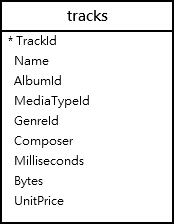
This tutorial shows you how to use SQLite WHERE clause to filter rows in a result set returned by the SELECT statement.
lilac bolt
OKOK
 white salmon
is anyone there?
i just wanted to see that what happens if i delete the partition i use for linux ?
cuz i need space for my windows
keen minnow
white salmon
i just wanted to see that what happens if i delete the partition i use for linux...
that data will be lost and most likely prevent linux from booting
Also that question would be more appropriate for #unix since it's unrelated to databases
white salmon
keen minnow
Also that question would be more appropriate for <#491523972836360192> since it'...
sorry i dont know much about computers and stuff i thought it was related.
and thank you very much!
 ashen mason
Hi there, I'm solving a delicate problem and gotta try to ask if someone has experience with this. I'm working in a company and previous developers messed up Django migrations and also everything is one single django app... I would love to refactor into multiple apps and to rework migrations from scratch, but I cannot lose data in production database. Anyone has any idea how to rework migrations and do not affect data in database?
unkempt prism
ashen mason
Hi there, I'm solving a delicate problem and gotta try to ask if someone has exp...
Its my understanding you can squash the migrations to make them easier to work with though apart from squashing you shouldn't be changing existing migrations. You will need to create migrations to go on the top.
and previous developers messed up Django migrations and also everything is one single django app.
I see this would just be a fresh migration after you've done the refactor that you want. Takes a bit of testing though with environments mirroring production though to make sure you've covered your bases. For something like this I'd take a backup of prod and restore it to another server so I can test and be sure.
ashen mason
unkempt prism
Its my understanding you can squash the migrations to make them easier to work w...
Thank you for the answer, well there is over 100models in a single app, that's why I want to split it... If you split it you divide migrations. It would Remove fields and recreate them in other migration tree. Also number of migrations should be 0192 but there is over 300migrations(Due to those duplicates. Dependencies don't add up. Few migrations deleted along the road because if you try to create new project, fields are missing if you fix all the issues in migration tree.) I'm kinda upset at the former devs due to this unsustainable code lol.
I've landed a question with a thought how to work this out on Stackoverflow, maybe someone who dealt with this will notice it. --> /questions/72920584/how-could-i-rework-django-migrations-without-affecting-database
The idea was to --fake zero --> delete migrations in project folder + in DB --> split models into separate apps --> makemigrations --> add flag: managed = False --> migrate
Already done a copy of DB and I'm preparing for an awful afternoon. 😀
knotty valley
hello. I'm using asyncpg. I pretend to create a database remotely, so first I connect to a db template (template1). Then, I send a create database (testdb) command. However, I need to connect to it in order to, for example, create tables, triggers... Do I need to close the first connection and then open a new one with the created database or is it possible to send (with the previous connection) a connect testdb and automatically connects to it?
unkempt prism
knotty valley
hello. I'm using asyncpg. I pretend to create a database remotely, so first I co...
I don’t think this is possible. Is this the same project? https://github.com/MagicStack/asyncpg/issues/368
GitHub
When we are using TLS connections to a PG server the cost to keep opened multiple connections to different databases is high. So I'd like to implement database switching to share the connec...
knotty valley
unkempt prism
I don’t think this is possible. Is this the same project? https://github.com/Mag...
yes it is

wow I didn't know that it doesn't allow to do that. thank you tourdownunder
https://stackoverflow.com/a/56277002 I need to do something like that unfortunately. It's a little tedious
Stack Overflow
Is there a way to create a database in a PostgreSQL server using asyncpg like you can in Hibernate, using:
jdbc:mysql://localhost:3306/db_name?createDatabaseIfNotExist=true
flags in the uri. Is t...
unkempt prism
knotty valley
https://stackoverflow.com/a/56277002 I need to do something like that unfortunat...
That looks a very neat solution.
knotty valley
my initial idea was just opening a connection to do the whole "creation". but seems I can't ahahahaha. I'll adopt that solution and that's it
 novel fjord
I am trying to make a moderation log for my bot and I am wondering on how I would auto_increment the case id per guild. For Example:
Guild 1 could have 39 Mod Cases and when a new mod log is entered I want the case id to be 40, not the amount of mod log entries there are for all the guilds in the database.
 deep maple
Hi, do you know how many select where are possible per second with consumer hardware and postgresql database?
fading patrol
deep maple
Hi, do you know how many select where are possible per second with consumer hard...
I would guess it varies widely on the exact hardware and data so you should just test... but tens to hundreds may be?
This person got 200 on a Pi https://blog.rustprooflabs.com/2019/04/postgresql-pgbench-raspberry-pi
 jade smelt
pw = "my_pw"
username = "admin"
mongoClient = pymongo.MongoClient(f"mongodb://{username}:{pw}@ip:port/")
pymongo.errors.OperationFailure: Authentication failed., full error: {'ok': 0.0, 'errmsg': 'Authentication failed.', 'code': 18, 'codeName': 'AuthenticationFailed'}
Mongo-Shell (docker):

mongodb    | 2022-07-09T22:01:27.305+0000 I NETWORK  [listener] connection accepted from ipipip:1437 #7 (3 connections now open)
mongodb    | 2022-07-09T22:01:27.310+0000 I NETWORK  [conn7] received client metadata from ipipip:1437 conn7: { driver: { name: "PyMongo", version: "3.12.1" }, os: { type: "Windows", name: "Windows 10", architecture: "AMD64", version: "10.0.19041-SP0" }, platform: "CPython 3.8.5.final.0" }
mongodb    | 2022-07-09T22:01:27.384+0000 I ACCESS   [conn7] SASL SCRAM-SHA-256 authentication failed for admin on admin from client ipipip:1437 ; AuthenticationFailed: SCRAM authentication failed, storedKey mismatch
mongodb    | 2022-07-09T22:01:27.419+0000 I NETWORK  [conn7] end connection ipipip:1437 (2 connections now open)
mongodb    | 2022-07-09T22:01:28.778+0000 I NETWORK  [conn5] end connection ipipip:1409 (1 connection now open)
But when I login via a mongobrowser it's working fine
Anyone have any idea?
Please @ on response
 chrome mango
ive got
                await cur.execute("INSERT INTO tickets (member_id, guild_id, opened, ticket_category, ticket_status) VALUES (%s, %s, %s, %s, 'online')", ctx.author.id, ctx.guild.id, get_now_time(), ticket_category.value)
                await cur.execute()
and its raising TypeError: Cursor.execute() takes from 2 to 3 positional arguments but 6 were given but im not sure why, as the statement looks the same as my other ones that are fine.
storm mauve
chrome mango
ive got
```py
await cur.execute("INSERT INTO tickets (member_id,...
that was a few hours ago so probably solved by now, but either way:
you have to put the query parameters on a list or a tuple instead of just passing them as function parameters, so ```py
await cur.execute("INSERT INTO tickets (member_id, guild_id, opened, ticket_category, ticket_status) VALUES (%s, %s, %s, %s, 'online')", [ctx.author.id, ctx.guild.id, get_now_time(), ticket_category.value])
or
await cur.execute("INSERT INTO tickets (member_id, guild_id, opened, ticket_category, ticket_status) VALUES (%s, %s, %s, %s, 'online')", (ctx.author.id, ctx.guild.id, get_now_time(), ticket_category.value))
 ember mural
my friend needs help building a website with node js does anyone mind helping
 celest rapids
Can someone tell me which website to learn for SQL interviews
Practicing some Google and AWS questions can help me
Any ideas?
 austere coyote
Do I need any python libraries for handling a database on my laptop? If there are can someone tell me some of them (thanks anyway)
 dark pasture
So i want to make a discord bot with items that a server can create, And i use for i in blabla, so would it be more practical if i create a table for every guild or store every item in one table but with guild id so i can identify it?
fair girder
what is the smart way of getting the max days between each customer's purchases from a single table that has date and customer_id?
not max-min, but the longest between a purchase and the next
celest rapids
Thanks will try out
 dire cedar
Hello everyone, i'm new on the channel and i need help for something  !! I would like install InfluxDB client on python. And i have no clue how to do it simply. Can someone please show me the way ? (I'm french sorry for the accent and syntax, lol) 🤠
I found the github link to get the documentation... but I'm still a bit of a novice. (https://github.com/influxdata/influxdb-client-python)
GitHub
InfluxDB 2.0 python client. Contribute to influxdata/influxdb-client-python development by creating an account on GitHub.
torn sphinx
hey guys! im trying to search a database with criterial of two columns, having a tough time finding the right code. For example I need to show column A and how many times Colum B = the word successful
any help would be appreciated 😄
 willow sequoia
torn sphinx
hey guys! im trying to search a database with criterial of two columns, having a...
willow sequoia
torn sphinx
hey guys! im trying to search a database with criterial of two columns, having a...
what do you mean by 'how many times column B'?
torn sphinx
so if column B only shows Successful or Unsuccesful.. I want to only show successfull but filter it by Column A say Column A is a department
willow sequoia
you can use groupby clause
torn sphinx
ok i ran this and it worked, but i have 23 to find out if they are success or un, wondering if there a better way then runing 23 seperate codes
len(july_df[(july_df['Referral Source Type Name']=='PCP') & (july_df['successful']=='successful')])
for group by, would i just individually type all 23 'Referral Source Type Name'?
torn sphinx
How to write your text to the 2nd line of the file?
the two columns are Referral Source Type Name and successful, there are 23 referral types and "successful" and "unsuccessful" under the second column
only need to find successful total for each referral type (118k rows)
 steel olive
Is there a way to use a database as file?
 mental quiver
steel olive
Is there a way to use a database as file?
mental quiver
steel olive
Is there a way to use a database as file?
Do you mean a saved file on drive?
mental quiver
That's with a lot of databases
 icy oyster
steel olive
it has **sqlite.db** file
icy oyster
steel olive
it has **sqlite.db** file
yes, .db, .sql, etc
icy oyster
import sqlite3
icy oyster
and just use it
mental quiver
You could have a csv or JSON as a database if youd like as well but things like sqlite can store it in a .db file on drive
icy oyster
!d sqlite3
delicate fieldBOT
Source code: Lib/sqlite3/
SQLite is a C library that provides a lightweight disk-based database that doesn’t require a separate server process and allows accessing the database using a nonstandard variant of the SQL query language. Some applications can use SQLite for internal data storage. It’s also possible to prototype an application using SQLite and then port the code to a larger database such as PostgreSQL or Oracle.
The sqlite3 module was written by Gerhard Häring. It provides an SQL interface compliant with the DB-API 2.0 specification described by PEP 249, and requires SQLite 3.7.15 or newer.
mental quiver
Np
mental quiver
steel olive
thanks
I made a database manager too if you want to try it out helps me create my databases etc
 versed inlet
Say I have tables T1 and T2. I want to join them so that I can only get the records from T1 which are unique and not found in T2. How can I do this?
 low hatch
@versed inlet In Sql theres several ways.
If T2 cant have null values, id do something like
left join T1 on T1.id = T2.id
where T2.id is null
If T2 can have null values, id do
where T1.id not in (select distinct T2.id from T2)
Alternatively, you can outer join, but somehow I could never get that to work properly
versed inlet
the id in T1 and T2 cannot be null, but the row itself may not exist in T2. I'm guessing this works in that case as well
low hatch
correct, a left join will leave a null value, left/right joins are essentially xlookups if youre familiar with excel
Outer join is meant for the exact case you specified, but Im not quite sure on the correct syntax
versed inlet
alright, thank you very much! I'll look into left and outer joins
 soft gorge
With SQLite is there a way to format my table to take any negative numbers and set them to zero on insert / update
 hidden jetty
Heroku Postgres + SQLAlchemy
I have psycopg2.OperationalError: connection to server at "qwertyuiop0" (0.0.0.0), port 5432 failed: FATAL: password authentication failed for user "qwertyuiop1"
when invoking
    def add_devlog(self, channel_id, user_id):
        devlog = Devlog(channel_id=channel_id, user_id=user_id, archived=False)
        self.session.add(devlog)
        self.session.commit()
        return devlog
code for making session
    def __init__(self):
        raw_db_url = subprocess.run(
            ["heroku", "config:get", "DATABASE_URL", "--app", 'pgd-bot'],
            shell=True, capture_output=True).stdout
        # Convert binary string to a regular string & remove the newline character
        db_url = raw_db_url.decode("ascii").strip()
        # Convert "postgres://<db_address>"  --> "postgresql+psycopg2://<db_address>" needed for SQLAlchemy
        final_db_url = "postgresql+psycopg2://" + db_url.lstrip("postgres://")

        # Create SQLAlchemy engine
        self.engine = create_engine(final_db_url, connect_args={'sslmode': 'require'})
        session = sessionmaker(self.engine)
        self.session = session()
It's external device so I can't use simple os.environ['DATABASE_URL'] for getting database url for engine
final_db_url looks like postgresql+psycopg2://XXXXXXXXXXX:x6545x54x564x87645xx465x@xx1-23-456-789-012.eu-west-1.compute.amazonaws.com:5432/xxxxxxxxxxxxx
hidden jetty
@brazen flower ?
 hidden jetty
Heroku Postgres + SQLAlchemy
I have psycopg2.OperationalError: connection to ser...
hidden jetty
hidden jetty
Heroku Postgres + SQLAlchemy
I have psycopg2.OperationalError: connection to ser...
Fixed this error by replacing
        db_url = raw_db_url.decode("ascii").strip()
        final_db_url = "postgresql+psycopg2://" + db_url.lstrip("postgres://")
        db_url = raw_db_url.decode("ascii")[11:]
        final_db_url = "postgresql+psycopg2://" + db_url
But got this
FATAL: database "dd9nm8qjb3a3t8" does not exist
But
 hidden jetty
 shy torrent
CAN anyone help me this error ?
shy torrent
CAN anyone help me this error ?
Are you setting up Postgres for the first time?
shy torrent
hidden jetty
Are you setting up Postgres for the first time?
yes
its hardly 1hr m started with sql
my sql
m using pop sql
hidden jetty
shy torrent
my sql
Err, is it postgres or mysql? 🤔
shy torrent
mysql
shy torrent
hidden jetty
Err, is it postgres or mysql? 🤔
.
hidden jetty
shy torrent
mysql
You need to create your database I think
shy torrent
hidden jetty
You need to create your database I think
but i have created
hidden jetty
ha-ha we have same errors xD
shy torrent
now what should i do ?
hidden jetty
shy torrent
now what should i do ?
Wait for more skilled developers or try to solve this problem by yourself
🥲
shy torrent
hidden jetty
Wait for more skilled developers or try to solve this problem by yourself
i have tried to solve using google but as i am new to database its hard for me to understand thinks
hidden jetty
shy torrent
i have tried to solve using google but as i am new to database its hard for me t...
me too 😅
shy torrent
🥲
 pliant ember
my values in pandas are type series,
even after I force them to be integers
means I cannot do logs with them even when using np.log which should work on series/arrays
frozen python

Medium
In this lesson we will learn constraints on how to add, delete, and modify constraints in a table.
 celest fractal
sql question that I feel like I should know but I'm struggling. I'm using a mysql 5.7 and I've an employee id and when the query is displayed I need to put dashes every three numbers. ie 123456789 needs to print as 123-456-789. I know I can truncate and divide by etc and concat it back together but I was wondering if theirs an int parse to string function.
 grim isle
Oracle and MS-sql might have some formatting built in functions for MySQL I guess it’s substring and concat
celest fractal
grim isle
Oracle and MS-sql might have some formatting built in functions for MySQL I gu...
lmao, I just like having clean code. Thanks
torn sphinx
I want to make it so that when a channel is created, 0 (the default value in my column), rises by 1, im not sure how to increase the default value
 carmine quiver
Is it possible to make an internal database with a python file? (.py) like if I wanted to create a data sheet for companys contact info
 lofty barn
How do I get the current prefix of a guild from a database (postgresql)
async def get_prefix(bot, message):
    prefix = bot.db.field('SELECT prefix FROM guilds WHERE "guild_id" = ?', message.guild.id)
    if len(prefix) == 0:
        await bot.db.execute('INSERT INTO guilds("guild_id",prefix) VALUES ($1, $2)', message.guild.id, DEFAULT_PREFIX)
        prefix = DEFAULT_PREFIX
    else:
        prefix = prefix[0].get("prefix")
    return commands.when_mentioned_or(prefix)(bot, message)```

That's what I have, but when I do `bot.db.field`, the error message I get is `'Pool' object has no attribute 'field'` . I'm not sure what that means. When I do `await bot.db.fetch` instead of `bot.db.field`, I get a LOT of red linesWell you can hard code data as constants into a python file, but that's not a "database". If you're going to modify the data, you don't want to hard code it
You might want to consider a config file (ini, toml, whatever) but if literally all your doing is putting an address in a constant in a .py file, there is nothing wrong with that.
If you have a lots of addresses, maybe put them in a CSV for a JSON file if they're not going to change. If you're tracking lots of addresses programaticaly, you probably want SQlite
carmine quiver
fading patrol
If you have a lots of addresses, maybe put them in a CSV for a JSON file if they...
Amazing that is what I was wondering thank you so much man!! 😁🔥🔥
 mellow trench
I'm testing cockroachdb, I installed it and I'm copying data into it... I'm using executemany() and it seems to be going at 250 rows/s. Apparently each inserted row is treated as a separate statement
is there a fast way to import data?
mellow trench
building a CSV file is very inconvenient
 fading siren
Hello, someone who uses Panda to generate csv, do you know how I can do this? , split the value of a column into several rows with the same value of the remainder
 uneven sinew
what would be the ideal way to access a database from multiple files? I don't want to create a new connection for each request to the API
EDIT: figured it out, same way as JS, one file
 green whale
hello guys
i dont know python but have to do assessment
Download a Comma Separated Values (csv) file titled shoppingtransactions.csv. This file contains over 7,000 transactions with each row representing a comma separated list of items purchased together in one transaction. Here are some samples rows:
• soup,light cream,shallot
• frozen vegetables,spaghetti,green tea
• french fries
• eggs,pet food
• cookies
• turkey,burgers,mineral water,eggs,cooking oil
• spaghetti,champagne,cookies
• mineral water,salmon
• mineral water
Implement an application in Python that reads in shoppingtransactions.csv and allows users to interact with the application with the following three commands:
- sup item[,item]
- con item[,item] --> item[,item]
- exit
Users will be prompted the menu above until the user selects Option 3. Command 1 calculates and prints the support of an item or a set of two items. For example, users may select Commend 1, then type:
sup Burger
Or
sup parmesan cheese,spaghetti
Command 2 calculates and prints the confidence of an item or two items provided that another item or the other two items were bought. For example, users may select Commend 2, then type:
con cookies --> chocolate
Or
con frozen vegetables --> sparkling water, ham
The only libraries that you can import are numpy and csv. Save your Python code in a file called shopping.py.
can u guys help me with this
its due date is near
 bitter lion
For avoiding SQL injection, it is safe by just removing the special characters from the user's input?
fading patrol
bitter lion
For avoiding SQL injection, it is safe by just removing the special characters f...
Website with the collection of all the cheat sheets of the project.
median dome
hey, can someone help me with this sqlmodel/sqlalchemy error i have in #help-carrot ?
bitter lion
fading patrol
https://cheatsheetseries.owasp.org/cheatsheets/SQL_Injection_Prevention_Cheat_Sh...
Too complicated for me 🙂
Because I am using Google Cloud's BigQuery, I have implemented parameterized queries + removed ; from user's input 🙂
https://cloud.google.com/bigquery/docs/parameterized-queries
 primal notch
A postgres question
I have a table of users and a table of their answers to some questions. I need to join those like that:
first_name | last_name | email | ... | answer_text_1 | answer_timestamp_1 | ... | answer_text_10 | answer_timestamp_10 |```
So I have their info and their answers to each question in one view. There is an arbitrary amount of questions, could be from 0 to like 100.

How should I go about that? Right now I build the SQL query with a cycle in my code, iterating over all questions, but there sure should be a way to do that with just SQL, right?So I would need to dynamically add columns to the main SELECT clause and join the answers table for each question. Seems pretty tough for me to solve on my own
 hidden hamlet
anyone know a good tutorial of some sorts for a leveling database for discord bots?
 jovial night
do you guys know some discord servers that have discussions/help about SQLAlchemy?
torn sphinx
cursor.rowcount and cursor.lastrowid , can someone explain guys
 opaque wave
is it bad practice to re-alias a sum with an existing alias in sql?
e.g. I have a chain of left joins, in the first one I get sum(a.revenue) as total, can I do in the next one sum(sum(b.revenue) + ISNULL(a.revenue,0)) as total instead of adding them in the end?
fading patrol
torn sphinx
cursor.rowcount and cursor.lastrowid , can someone explain guys
One is the row count, the other is the last row id.
In some cases they may happen to be the same number but try deleting a row and see what happens...
torn sphinx
fading patrol
One is the row count, the other is the last row id.
In some cases they may hap...
i dont understand in theory how it works
fading patrol
If you have three rows and their IDs are 2, 4 and 6 then the row count is 3 and the last I'd is 6. If that still isn't clear, read up on the basics of SQL
 hearty plover
can anyone help me with some database to JSON code ?
wicked flax
OK, using python to talk to a Microsoft SQL database. I installed pyodbc and the ODBC driver. I've made the connection, pulled data, it's working. But I got this warning and I'm not sure what to do about it:
UserWarning: pandas only support SQLAlchemy connectable(engine/connection) ordatabase string URI or sqlite3 DBAPI2 connectionother DBAPI2 objects are not tested, please consider using SQLAlchemy
So I found this answer to what to do about the warning and, as a beginner in python, I'm a bit confused on how to proceed.
I'm confused about the relationship between SQLAlchemy and Microsoft's SQL Server. For the moment, the only thing I'll be doing is SELECT queries to pull data into Excel. The most I'll ever be dealing with is < 1000 rows and maybe 300 columns. Is this a warning I can safely ignore, or do I need to start using SQLAlchemy? And is that instead of or in addition to pyodbc?
I'm just confused... 🙂
Stack Overflow
I am trying to make sense of the following error that I started getting when I setup my python code to run on a VM server, which has 3.9.5 installed instead of 3.8.5 on my desktop. Not sure that m...
 pure apex
Hi I am trying to connect to Microsoft SQL, however I am getting the following error. Can't connect to MySQL server on '10.0.99.208:3306' (111)
 cunning lotus
 candid swallow
how fast are SQL queries compared to some containers we normally use
unkempt prism
pure apex
Hi I am trying to connect to Microsoft SQL, however I am getting the following e...
Do you have a firewall from the machine you are trying from.
 mental sage
                "  <div class=\"thumbnail\"></div>\n" }```

is there a way to store a doc in this format? i am trying to store this in couchbasewhy is sql so garbage
how am I supposed to understand what's wrong if the issue just says that An error occurred while executing batch. Error message is: Value to add was out of range. Parameter name: value
 dark mica
Reposting it here cuz I didn't get any response in python general
Hi, I'm using tortoise-orm (pgsql) to connect to database. I'm using it with quart. Whenever I make a query I get this weird error message. But after making the query 7-10 times pgsql successfully executes my query.
OperationalError prepared statement "__asyncpg_stmt_a__" already exists HINT: NOTE: pgbouncer with pool_mode set to "transaction" or "statement" does not support prepared statements properly. You have two options: * if you are using pgbouncer for connection pooling to a single server, switch to the connection pool functionality provided by asyncpg, it is a much better option for this purpose; * if you have no option of avoiding the use of pgbouncer, then you can set statement_cache_size to 0 when creating the asyncpg connection object
I've not used tortoise but this message seems pretty clear, what's the question?
 analog totem
im tryna make a basic login system which uses json data to check if the user is there or not.
import json
def jsonlogin():
    usernameinput = input("Enter a username: ")
    passwordinput = input("Enter a password: ")
    with open("userdata.json","r") as f:
        users = json.load(f)
        users[str(username)] = password
    if password and username in users:
        print("Succesfully logged in \n")
    else:
        print("Invalid Username / password \n")
jsonlogin()```
Right now its always saying login success unless there is nothing inputted.
How can I fix that?
Here is a sample of what the data looks like in userdata.json
```json
        {"id":"9","username":"cogborne8","password":"VStasVgDd","email":"nswalteridge8@dmoz.org","access_level":"3"},
 stable bay
Hey y'all, can a table's PK be referenced as a FK in two different tables?
Here I have the zoo_id being used as a FK in both the enclosure and individual_animal tables
 keen minnow
analog totem
im tryna make a basic login system which uses json data to check if the user is ...
keen minnow
analog totem
im tryna make a basic login system which uses json data to check if the user is ...
How do you validate the passwords are the same?
(it looks wrong)
analog totem
keen minnow
How do you validate the passwords are the same?
thats what im tryna do
and im not sure how
keen minnow
analog totem
thats what im tryna do
how would you describe the check in plain english?
analog totem
if passwordinput is the same as password in json file then print success
keen minnow
analog totem
if passwordinput is the same as password in json file then print success
Oh something that may be relevant: users[str(username)] = password means "take the value of password and put it in users[str(username)]"
which does not match your intent
keen minnow
But it does mean you need to find the user where the username matches and then compare their password
torn sphinx
@bot.command()
@commands.has_permissions(administrator = True)
async def newcategory(ctx, acctype):
 c.execute("""CREATE TABLE ? (
         email text,
         password text,

            )""", (acctype,))
 await ctx.send("Successfully created new account type!")
 c.execute("""insert into ?  values("anything", 'rawr', 10)""", (acctype,))```
    c.execute("""CREATE TABLE ? (
sqlite3.OperationalError: near "?": syntax errorLook at the content of users and think about a way to find a specific users. That would be a good start
analog totem
keen minnow
Look at the content of users and think about a way to find a specific users. Tha...
ok so far I got something a bit like this... though it's giving me an error
import json
with open("userdata.json", "r") as f:
    users = json.loads(f.read())
def finduser(user):
    user = next(
        (item for item in users if item["username"] == user), None
    )
    if user:
        return user["email"]
    return None
usertofind = input("User you want to find: ")
print(finduser(usertofind))``` keen minnow
analog totem
keen minnow
analog totem
write your line as multiple statements. Keep It Simple and Stupid
also you are using user as different variables, which will mess up things
analog totem
ok
analog totem
keen minnow
write your line as multiple statements. Keep It Simple and Stupid
ok... i came up with this```py
import json
with open("userdata.json", "r") as f:
data = json.loads(f.read())
usertofind = input("User you want to find: ")
if usertofind in data:
print("User found!")
print(data[usertofind])
else:
print("User is not in the json data")
does it work?
(I would expect not to work)
keen minnow
Print the first few lines of data
analog totem
of the json file?
keen minnow
of the variable data


 keen minnow
cool
so
it's a map that has an entry "userInfo" which itself contains an array of user data
thus obviously, data[usertofind] wouldn't find anything
analog totem
so data[username]?
keen minnow
why?
analog totem
because we're tryna search in the usernames
torn sphinx
Does anyone know how I do it so when I run the ban command (or kick, whatever), the user can't ban the bot from the server?
keen minnow
How does that map to your data?
analog totem
i mean.. im not sure
analog totem
torn sphinx
Does anyone know how I do it so when I run the ban command (or kick, whatever), ...
#discord-bots i think
keen minnow
analog totem
i mean.. im not sure
In these cases, try to explore data
Look at the keys, the values so they make sense to you and you can understand how to get what you want out of it
analog totem
i'm confused with what you mean by map and explore data
keen minnow
I mean to think about the structure of the information in data
analog totem
i mean data is just a variable...
analog totem
which shows call of userdata.json
torn sphinx
wrong chat
keen minnow
analog totem
i mean `data` is just a variable...
Right and you would look for users very differently depending how it store values:
data = [
   {name: user1, password: user2},
    ...
]
is very different from
data = {
   users = [user1, user2, etc.],
   passwords = [password1, password2, etc.]
}
from other ways to organize it
and the way you currently have it in data is different from the two ways I wrote above
keen minnow
so if you just type data[username], it will means different things
and you would get different results
analog totem
wait but in that case if i did data[name] would it output user1?
analog totem
keen minnow
Right and you would look for users very differently depending how it store value...
ok but in that case
keen minnow
analog totem
ok but in that case
?
analog totem
nvm
keen minnow
analog totem
nvm
you can use the function keys() on dictionaries to get the list of keys
That can give you some clues
 velvet lotus
for firebase security rules, is it possible to only allow a read if the user knows the id?
so for example, it only allows it to read the specific reference for the key that the user has?
 lilac ruin
anyone know how can i put python code in php i want to calculate with python but i want to fetch data from phpmyadmin
 dark mica
fading patrol
I've not used tortoise but this message seems pretty clear, what's the question?
dark mica
fading patrol
I've not used tortoise but this message seems pretty clear, what's the question?
There's no statement_cache_size parameter in tortoise orm
I tried using only asyncpg and statement_cache_size is only accepted by asyncpg and not tortoise orm