#questions-2
1 messages · Page 76 of 1
 thin oak
 plush pelican
through B1, to be specific. And then there's some other loose stuff for B2, but it's not actually a course, more vocab and listening practice
 nova sparrow
Wir beginnen seit heute...
 pulsar steppe
nova sparrow
Wir beginnen ~~seit~~ heute...
pulsar steppe
nova sparrow
Wir beginnen ~~seit~~ heute...
can u explain when i need to use seit?
nova sparrow
pulsar steppe
can u explain when i need to use seit?
When you use seit, it must somehow be in the past:
Wir haben (seit) heute angefangen....
Wir arbeiten seit gestern an...
pulsar steppe
viele danke
plush pelican
pulsar steppe
can u explain when i need to use seit?
"seit" is approximately like "since"
We've been working since yesterday on this project
plush pelican
You don't say, "We start since today with the training"
nova sparrow
pulsar steppe
viele danke
-> Vielen Dank 👍
pulsar steppe
Also, wir beginnen heute mit dem Traning. Ist das korrekt?
plush pelican
https://www.tagesschau.de/ausland/amerika/nokings-proteste-trump-100.html
Proteste in allen 50 Bundesstaaten
In allen 50 Bundesstaaten waren Menschen auf den Straße. Einige der größten Proteste fanden in Metropolen wie Chicago oder Los Angeles statt, aber auch in Hunderten kleineren Städten und Orten.
I assume this should be "auf den Straßen"?
 rustic dock
yes
 uncut lotus
What does “Vielen Dank für Ihre Gedanken” mean?
rustic dock
i wonder too
 slate beacon
uncut lotus
What does “Vielen Dank für Ihre Gedanken” mean?
slate beacon
uncut lotus
What does “Vielen Dank für Ihre Gedanken” mean?
Source?
Gedanken can also mean idea, opinion in some cases -> only in plural, so i guess this would be the correct meaning of that?
nova sparrow
uncut lotus
What does “Vielen Dank für Ihre Gedanken” mean?
You could hear that after a meeting/brainstorming session where a group of ppl discussed some topics.
Thank you for your thoughts / for adding your opinion...
uncut lotus
slate beacon
Source?
Google translate. I wanted to know how to say “Thank you for your opinion”, ran it through Google translate, got that, and then thought “i should fact-check this.”
uncut lotus
nova sparrow
You could hear that after a meeting/brainstorming session where a group of ppl d...
So it does mean what I thought it did, thanks!
 hollow seal
uncut lotus
So it does mean what I thought it did, thanks!
hollow seal
uncut lotus
So it does mean what I thought it did, thanks!
The classic phrasing is: "Vielen Dank, dass du deine Gedanken mit uns geteilt hast" (thanks for sharing) 🤭
 jade hawk
ok muss ich das alles wirklich aufschreiben oder werden manche häufiger als andere verwendet (nicht die von den Herstellern)
 nova sparrow
jade hawk
ok muss ich das alles wirklich aufschreiben oder werden manche häufiger als ande...
nova sparrow
jade hawk
ok muss ich das alles wirklich aufschreiben oder werden manche häufiger als ande...
Wenn das 'Kram' ist den du für den Job brauchst wirst du es entweder irgendwo aufschreiben müssen, wo du es nachlesen kannst, oder einfach auswendig lernen. Als Patient dürften dir die verschiedenen Begriffe wohl ziemlich gleichgültig sein.
Kannst du jemanden direkt fragen, der vom Fach ist?
jade hawk
ach ja ich frage aus der perspektive des patients
ich kenne niemanden von diesem fach der gleichzeitig auch deutsch kann
Ich wollte eif wissen welcher begriff am häufigsten verwendet wird, aus Neugierde. Das ist mir gerade eingefallen, weil ich jetzt in einem Krankenhaus bin (nichts Seriöses ist passiert!)
 sharp tiger
jade hawk
Ich wollte eif wissen welcher begriff am häufigsten verwendet wird, aus Neugierd...
sharp tiger
jade hawk
Ich wollte eif wissen welcher begriff am häufigsten verwendet wird, aus Neugierd...
Gute Besserung!
 acoustic tendon
jade hawk
ok muss ich das alles wirklich aufschreiben oder werden manche häufiger als ande...
acoustic tendon
jade hawk
ok muss ich das alles wirklich aufschreiben oder werden manche häufiger als ande...
lmao die längste nominalphrase überhaupt
bis man das zu ende gelesen hat, vergisst man schon worum es geht
nova sparrow
jade hawk
ach ja ich frage aus der perspektive des patients
Ah, aus Sicht des Patienten...
Also ich hab Braunüle schon gehört 🤷♂️
Oder auch Butterfly 🦋
nova sparrow
jade hawk
Ich wollte eif wissen welcher begriff am häufigsten verwendet wird, aus Neugierd...
Und auch von mir gute Besserung
 viral vine
hi
nova sparrow
 fervent kernel
I am new here . please guide me for german speaking skills
fervent kernel
I am new here . please guide me for german speaking skills
faq beginner
 stoic mauveBOT
How to get started
The simplest way to learn German is to find topics you don’t understand yet and search for explanations of them. This list provides you with a guide for which topics to learn if you are completely new to German. Type the topic into Google (or YouTube) and start learning!
Introduction
1: Alphabet (especially ä, ü, ö and ß)
2: Basic greetings (hello, goodbye, etc.)
Part 1 - Simple Sentence
1: Noun gender & plurals
2: Nominative case (What are cases?)
3: Nominative pronouns (I, you, he, she, etc.)
4: Verbs in present tense
5: Definite/indefinite articles
6: Accusative case (for nouns)
7: Accusative pronouns
8: Word order of simple sentences
9: How to ask questions
See Part 2 on the next page.
Tips
- Always learn the gender of a noun when you learn a new noun
- Learn to use a translation dictionary (e.g. dict.cc, leo.org)
- Use
>faq resourcesto see our list of German learning resources - For listening and pronunciation practice, try watching movies or videos (incl. YouTube)
- You can listen to pronunciation for words on websites like dict.cc, forvo.com, and others
- Practice writing sentences every day (and asking people to correct them)
- Ask as many questions as possible
- Don’t be scared to make mistakes!!!! If you don’t let yourself make mistakes, you will never be able to learn German
Page 1/2
 woven phoenix
Can someone please explain to me how to write professional emails in german? I am trying to figure out how to write about the past. Ive heard i can use both perfect and simple past but ive also heard that simple past is better for writing. I am so confused
plush pelican
Is it "an" Flughäfen because Flughäfen comes from Hafen, so it's imagining being on the coast, even though airports are buildings that people are inside of rather than on?
 hollow seal
plush pelican
Is it "an" Flughäfen because Flughäfen comes from Hafen, so it's imagining being...
hollow seal
plush pelican
Is it "an" Flughäfen because Flughäfen comes from Hafen, so it's imagining being...
Hmm, you could also say "an Bahnhöfen" or "an Bushaltestellen". But "in" would work just as well, too, at least "in Flughäfen", "in Bahnhöfen", but not "in Bushaltestellen", these are too small for that. But "in Bibliotheken", "in Stadtparks", for these you cannot use "an"
<@&305455824174710787>
plush pelican
hollow seal
Hmm, you could also say "an Bahnhöfen" or "an Bushaltestellen". But "in" would w...
so then why "an" Bahnhöfen?
plush pelican
Today I learned: the "O" in Ostern and the "O" in Ost are NOT pronounced the same. "Ostern im Osten" produces two different O sounds.
But how are you supposed to be able to tell that from the spelling of the word?
 regal wave
woven phoenix
Can someone please explain to me how to write professional emails in german? I a...
regal wave
woven phoenix
Can someone please explain to me how to write professional emails in german? I a...
What does confuse you?
you want to use perfect primarily for stuff you experienced
plush pelican
regal wave
What does confuse you?
What about a formal report?
Like if you had to type up your experience at a conference or something, would you use Perfekt or Präteritum?
I hadn't even thought of this before 🤔
regal wave
plush pelican
Like if you had to type up your experience at a conference or something, would y...
Du meinst Protokolle?
what's the POV you are supposed to take here? "what I saw what happened" or "what happened"?
(e.g., simulated "objectivity"?)
in non-ficiton writing (which a protocol would be), past tense
regal wave
plush pelican
I don't know the word Protokolle
the thing people write on what people talked about xD
(while they listen to what they talk about)
plush pelican
So in texting, you'd use Perfekt.
But in Protokolle, you'd use Präteritum.
Is an email closer to a Protokoll or to a text?
plush pelican
Your boss
 gusty silo
plush pelican
Today I learned: the "O" in Ostern and the "O" in Ost are NOT pronounced the sam...
gusty silo
plush pelican
Today I learned: the "O" in Ostern and the "O" in Ost are NOT pronounced the sam...
youre not, hope that helps
its just one word has a long vowel and the other doesnt and it isnt a general issue because most people using german are competent speakers of the language 🙃
often before consonant clusters you cannot tell for sure if a single vowel letter is long or short
the german army actually has a variant pronunciation with a long vowel in Osten
plush pelican
gusty silo
youre not, hope that helps
Gehört habe ich laut und oft von mehreren Deutschen, "im Gegensatz zum Englischen wird Deutsch genauso ausgesprochen wie es geschrieben wird."
Deutsch ist zwar viel besser darin als Englisch, aber nicht 100% eins-zu-eins. Solange man das versteht, ist es akzeptabel.
gusty silo
absolut nicht eins zu eins, ja, Laien verzapfen oft scheiße
people LOVE to overstate how regular any given language's spelling is
im always surprised when people say it about german
regal wave
gusty silo
often before consonant clusters you cannot tell for sure if a single vowel lette...
except for the double consonant (ff, gg, etc.) that enforces the "short version"
gusty silo
im not considering them consonant clusters for this purpose yeah
regal wave
gusty silo
the german army actually has a variant pronunciation with a long vowel in Osten
Was? Oo
regal wave
plush pelican
Gehört habe ich laut und oft von mehreren Deutschen, "im Gegensatz zum Englische...
Das stimmt ja auch insofern, als dass alle Vokale eben "a i u e o" sind und nicht...andere Vokale werden.
gusty silo
i dont know why this is, but then standard german having different vowel lengths in Ost/Osten and Ostern is etymologically unexpected anyway.
maybe it's a dialectalism that got picked up and enjoy more widespread use just randomly. maybe its a dialectalism that got promoted for clarity in loud conditions or over the radio. maybe it's 'invented' for clarity
its not the only such case of the army having slightly different norms of speech in a few places compared to elsewhere
regal wave
(und bitte lasst mich jetzt nicht aus dem Internet Lautschrift-Kram Copypasten x.x)
regal wave
gusty silo
i dont know why this is, but then standard german having different vowel lengths...
Hm, wo du das sagst, wo haben wir sonst ein kurzes/langes O vor s[t]? 🤔
gusty silo
gusty silo
its not the only such case of the army having slightly different norms of speech...
zwo being preferred over zwei, Juno and Julei rather than Juni and Juli. both these points for reasons of clarity/to avoid mishearings, but atleast zwo of course being very common in colloquial german too.
also somewhat different usage of Fugenlaute in compound words sometimes, which i think is somewhat southern german?
gusty silo
regal wave
Hm, wo du das sagst, wo haben wir sonst ein kurzes/langes O vor s[t]? 🤔
i can think of another ambiguous word if nothing else
e.g. if you speak like me, Rost 'rust' has a short vowel but the Rost (lattice thing) you have on a bed or a grill has a long vowel
but most people have a short vowel in both
Trost! Trost is long
prost
which is short for prosit of course
so here the open syllable environment this comes from is still visible by comparison with its variant
plush pelican
gusty silo
zwo being preferred over zwei, Juno and Julei rather than Juni and Juli. both th...
You're saying the army has a different usage of Fugenlaute? Example?
regal wave
gusty silo
Trost! Trost is long
ja,. Trost lang, Prost kurz. Und dein "-rost" stimmt mit mir auch überein (urspr. Rheinland-Pfalz hier btw; edit: I think, we would have gone for the short ver.), aber wer macht das denn anders?
(Prost kurz aber stark betont)
gusty silo
Prost kurz? unfamiliar to me
regal wave
ja ok lang
gusty silo
regal wave
ja,. Trost lang, Prost kurz. Und dein "-rost" stimmt mit mir auch überein (urspr...
re rost: the average german, supposedly
regal wave
ist lang (auch wenn ich nie Bock darauf habe)
regal wave
gusty silo
re rost: the average german, supposedly
🤔
gusty silo
the Duden amusingly calls the long pronunciation of that one 'Schwezerisch, auch landschaftlich'
regal wave
Grillrost, ja, der ist kurz
gusty silo
and i feel like most people i know say it short, but a noticeable minority long
regal wave
meine Intuition, aber ich habe dieses Wort seit 20+ Jahren erst gar nicht gedacht
gusty silo
plush pelican
You're saying the army has a different usage of Fugenlaute? Example?
the first image on the german wikipedia article for Fugenlaute, amusingly

Fugenlaute werden in der deutschen und einigen anderen Sprachen mehr oder weniger regelmäßig bei Wortzusammensetzungen (Komposita) sowie, seltener, bei Wortableitungen an den Nahtstellen (Fugen) eingefügt. Beispiele sind: Arbeit-s-zeit, Seite-n-zahl, Gelenk(-s-)rheumatismus (hier optional).
Die Bezeichnung Fugenlaut ist traditionell gängig, ...
regal wave
Aber lang fühlt sich "richtiger" an? 🤔
gusty silo
gusty silo
https://de.wikipedia.org/wiki/Fugenlaut
Frühstückkonserven.
but! it's a swiss image anyway judging by the file description so maybe that's more normal there even so
the easiest to google for other example is Unteroffizieranwärter for what normal folk would put together as Unteroffiziersanwärter
the issue at any rate only ever concerns Fugen -s-, and i have read a mention before that southern varieties of german use that less (e.g. Austrian german) so i gather it must originate in difference use patterns from that
ive seen other references to certain compounds in use in the army not taking fugen -s-, but since im not in the thing and never have been, i cant spontaneously recall any
plush pelican
gusty silo
the first image on the german wikipedia article for Fugenlaute, amusingly
You're saying non-army adds an -s- in there, or what?
regal wave
army people don't? D:
plush pelican
gusty silo
yes, decidedly
This I did not know, because that exact picture was the first and only time I've seen Frühstück in a compound word, so I thought that was how all Germans did it 🙃
regal wave
plush pelican
This I did not know, because *that exact picture* was the first and only time I'...
Frühstückskonserve, totally 😄
gusty silo
there was once a time when someone complaind about verfassungsgebend rather than verfassunggebend in the Grundgesetz which feels completely mad to me
verfassunggebend (i.e. what the complainer desired) feels malformed to me
the news articles on this old event i can find on the web write that the duden considered it a case of fluctuation
the “desired” verfassunggebend must be some sort of holdover of some original distribution of the Fugen-s that 'feminines can't take Fugen-s' (as it originates from the genitive -s and feminines dont have a genitive in -s) which is simply not an accurate norm for most people alive
plush pelican
interesting
gusty silo
and feminines dont have a genitive in -s
(or allow me to specify: feminine nouns. feminine names do have genitives in -s)
plush pelican
gusty silo
> and feminines dont have a genitive in -s
(or allow me to specify: feminine nou...


Das Haus des Annas?
Das Haus der Annas?
gusty silo
no, but Annas Haus
plush pelican
oh, that way
plush pelican
Somewhere out there, some linguist does and is just dying to talk about it 🤣
gusty silo
i have met this hypothetical person if memory serves, but it's too indepth for this server
('genitive s on names is a clitic, unlike the case inflection of regular nouns' but this produces zero extra knowledge for anyone here)
plush pelican
"clitic" hmm, that word sounds somewhat familiar 🙃
gusty silo
hm i have been trying to find some insightful papers about variation in the use of Fugenelemente and if anything i have found hints of more Fugen-s rather than less Fugen-s in the south. i wonder what austriacism im trying to think of then that struck me as lacking it
oh well
hollow seal
regal wave
Frühstückskonserve, totally 😄
Frühstücksbuffet, Frühstücksfernsehen, Frühstücksraum...
hollow seal
gusty silo
hm i have been trying to find some insightful papers about variation in the use ...
Fugenelemente in the South: https://www.ardsounds.de/episode/urn:ard:episode:e6d7df2da1df2b1c/
ARD Sounds
Diesen Dialog, einen ihrer berühmtesten, nahmen Karl Valentin und Liesl Karlstadt 1940 für die Reichsrundfunkgesellschaft auf. Die "Semmelnknödeln", sagt Valentin-Kenner Andreas Koll, sind "Valentin in Reinkultur".



 rustic dock
gusty silo
verfassunggebend (i.e. what the complainer desired) feels malformed to me
rustic dock
gusty silo
verfassunggebend (i.e. what the complainer desired) feels malformed to me
archaism, this used to be very common ~150 years ago
i can’t understand why either, not only because it sounds clunky today, it’s also quite ungermanic
rustic dock
gusty silo
the easiest to google for other example is Unteroffizieranwärter for what normal...
or take for example Martinhorn vs. Martinshorn
even if through some ancient whatever it would be correct not to put a Bindeglied, it sounds ugly and i don’t like it
woven phoenix
regal wave
What does confuse you?
I've writing emails to the Austrian government and I realized very quickly that I did not know how to write a professional email in German haha. I figured I should use only praeteritum but ive seen and heard different things on the topic. That's why I am confused. To add to the confusion Ive heard that in Austria the amount of perfect used even in very professional settings is different than in say germany because the Austrians are more casual.
Honestly this seems like a sink or swim/learn in the wild situation haha. i need more sprachgefuhl maybe
nova sparrow
woven phoenix
Honestly this seems like a sink or swim/learn in the wild situation haha. i need...
And do you have a text that we might review? 🤔 Or are you 'just' wondering abt the use of 'tempi'?
woven phoenix
No text i can share. I was just wondering if there was a general convention to follow
 languid hollow
@elfin vine Let’s chat here, general is moving too fast
 elfin vine
Sure
languid hollow
AI can be ok but I wouldn’t use it personally, mostly out of principle but it’s definitely not reliable either. If you really only know so few words then you should use anki to get 100 common words so you can start forming sentences
Luckily forming sentences is really easy because the basic grammar of German isn’t too different from English
elfin vine
Makes sense. I should worry about Anki after I have the first 100 common words instilled in my brain
100 being an arbitrary number though, right?
You didn't put much thought into that
languid hollow
Yeah kinda, but it’s a good enough starting point to make really basic sentences

 cobalt ocean
don't start with frequency lists
languid hollow
elfin vine
Never thought I would be looking into frequency lists <:idiotbulli:8160237021433...
I mean you don’t have to, this is my personal preference mostly
elfin vine
Assimil is a german book that teaches vocabulary?
cobalt ocean
it's a language textbook that teaches you a ton of vocabulary, yes
and lots of actual sentences
you can find pdfs online.... if you know where to look
elfin vine
ASSIMIL favors intuitive language learning, combining flexibility, humor and autonomy... Over 100 languages available
cobalt ocean
you can use a frequency deck assimil, but it's usually better to put in your own words as you learn, so that you always learn the words from a particular context
it's really do as you like, though
i just warn against thinking that if all you train is a freqency list, you'll understand much
elfin vine
cobalt ocean
you can find pdfs online.... if you know where to look
Okay
 cobalt ocean
you need actual sentences and context to make progress in understanding sentences and context
nova sparrow
Guys: WHAT question do you have abt German language?
@languid hollow
@elfin vine
@cobalt ocean
cobalt ocean
anki is very useful, but you kind of have to experiment with what works fo you
elfin vine
cobalt ocean
it's really do as you like, though
I don't think there's anything that I'll like at this point. Being a beginner is brutal
I am looking for something that works, not that I like
Because I'll like nothing as of now 
Have you learned through assimil btw?
cobalt ocean
yes
but there's never just one answer to learning a language
it's always about trying different things
you can only improve by reading, hearing, watching new things
elfin vine
So your starting point was assimil, and then you diversified
cobalt ocean
consistency is really the most important part, so it is important you find something that you can do everyday for many months
cobalt ocean
elfin vine
So your starting point was assimil, and then you diversified
i recommend trying to listen to podcasts, read social media, etc. in German, even though you'll basically understand nothing at first. in addition to a more formal study with a textbook/anki
but that's just me
elfin vine
Did you use anki alongside assimil?
cobalt ocean
any textbook will teach you grammar, and anything you can come across in the wild you can look up/ ask about here
 vagrant osprey
cobalt ocean
any textbook will teach you grammar, and anything you can come across in the wil...
vagrant osprey
cobalt ocean
any textbook will teach you grammar, and anything you can come across in the wil...
what level did u get to with assimil/comprehensible input and how long did it take u
elfin vine
@cobalt ocean yesterday a great chunk of the discussion with the other members that I had was about note taking. And since you recommended me a great resource, I may as well know how you take notes throughout your German learning process. Is it also Anki or you do something else beyond Anki, or not use Anki at all?
 warm robin
elfin vine
<@177165144193892352> yesterday a great chunk of the discussion with the other m...
warm robin
elfin vine
<@177165144193892352> yesterday a great chunk of the discussion with the other m...
A coursebook will cover everything you need. However, that gets boring. And besides, you probably want to see some German media and start exploring ASAP right?
When you are exploring German media on your own, you will be forced to learn new words and maybe even new grammar.
That's where Anki comes in. If you want to drill with the new words you were exposed to, you need to write them down, make flashcards and then practice with them.
This is doubly helpful for songs (3 to 5 minutes). With about a week worth of drilling, I can learn maybe 50ish words, which is sufficient to learn many new songs in my experience.
 charred willow
Hello, i have to go germany this, im working on my A2 but i dont have time ig to waste, i dont wanna take wrong route, so can you guys teach me how u guys learn, i wanna avoid mistakes in the way. So i appriciate guidance on what course u guys taking how u learning, whats the best practice everything
warm robin
charred willow
Hello, i have to go germany this, im working on my A2 but i dont have time ig t...
I mean, the fastest way is to spend a ton of money on a private tutor or intensive course and spend 4+ hours or even 8+ hours studying German every day. But I'm closer to maybe 1 hour or 2 hours daily instead.
If you are going the self learning route, the cheapest option is to take the A1 online test from DW to gauge if you are ready for an A2 course (https://learngerman.dw.com/de/placementDashboard). I do think it's a hard term but they claim it's A1 level....
Then, if you are feeling confident enough, go to Nicos Weg A2 level and go through that material. https://learngerman.dw.com/de/nicos-weg/c-36519709
The problem with self study is that speaking and writing is very difficult to practice by yourself. So you'll need to work extra hard on speaking practice.
thin oak
Guys what does this mean?
I didn't understand it in English too

(English isn't my first language)
 lucid swan
 i do not understand it to
thin oak
Maybe some AI nonsense 🙂
lucid swan
it means wie Ich will den Hut anziehen i think
 delicate tiger
click the hat like in a find-the-object game
thin oak
delicate tiger
click the hat like in a find-the-object game
I don't understand
thin oak
lucid swan
it means wie Ich will den Hut anziehen i think
Might be lol
I'll just move on 😂
delicate tiger
find the hat and click on it in a computer game
 thin oak
Ooohh okay, it's a confusing example
Also Ihope you didn't use AI to draw this and it's a real game 😂
Thank you both!
delicate tiger
google picture search results 🤷
hollow seal
delicate tiger
google picture search results 🤷
Ist da ein Hut auf dem Bild? Ich sehe keinen, da kann ich auch keinen anklicken.
delicate tiger
Ist ja nur ein Beispiel, ich hab jetzt nicht ewig nach einem Screenshot mit Hüten gesucht
hollow seal
<@&305455824174710787> Cryptoscam
 dire python
I have a general language-learning question. At what point does input become "too comprehensible" to be useful, specifically if it is being consumed many times?
I have watched Nicos Weg (A1) maybe about 8 times using the "entire movie", for example, and I am at the point where the "intended learning" from each "lesson" is fairly internalized for me. Beyond that, most of the other dialogue I understand without subtitles, but there are still a few parts here and there where I pick up on something new on each listen/watch.
It's not the only input I use, but it's something I can put on while gaming or working and pick up on something new sometimes (or otherwise have some dialogue pretty well completely memorized)
Anyway, I'm wondering if there is a point at which there are diminishing returns and I should move on even if I don't have a 100% perfect "not translating, just understanding" understanding of a piece of content?
 willow socket
I mean, you can just go based on your feeling of whether it's still helpful. If you keep going back to it and recognising new things, it's still useful. In my opinion, even listening to a dialog you know 100% can be useful, but you wouldn't want to just do that.
dire python
willow socket
I mean, you can just go based on your feeling of whether it's still helpful. If ...
you wouldn't want to just do that what if my only interest in German is finding my bag? 😉
(idk if you used Nicos Weg as a language learning tool or if it was available when you were at an A1/A2 level, but the story of this is that the character loses his bag basically)
willow socket
dire python
(idk if you used Nicos Weg as a language learning tool or if it was available wh...
Thank you for the explanation, I never used Nico's Weg myself and am always curious about what exactly happens since it's discussed so often here 😄
dire python
haha
Spanish guy with a perfect Hochdeutsch accent arrives in Germany, immediately loses his bag and then immediately meets someone who is incendentally a language teacher who helps him find his bag 😛
It's honestly a really, really fantatic tool
warm robin
dire python
I have a general language-learning question. At what point does input become "t...
Its probably more likely that you'll get bored of it rather than stop learning from it.
dire python
and a lot of effort was put into it not just as a teaching tool but one that is actually acted surprisingly well, considering the limited grammar/vocab used
warm robin
There's a very high skill curve to listening or speaking. It takes a lot of repetition.
That being said: you can cover A1 topics by studying A2 and progressing with more grammar / vocabulary.
You want to be good enough with A1 that you aren't getting stuck with A2 topics and can progress comfortably.
And similarly, you don't have to master every A2 topic before you learn B1 stuff.
dire python
Oh totally -- I'm using A2/B1 graded readers and stuff at the moment
warm robin
The good news about reviewing content below your level, is that its near instantaneous. You probably don't need to rewind, it just goes and flows. So I don't think its a big "waste of time" so to speak.
It just takes longer to watch and study content at your actual level. Because you're not good with it yet.
I don't think anyone has really figured out the appropriate amount of German below / at / above your level. But clearly there's some kind of mix. Below your level builds confidence, fluency. The ability to think in German "without effort".
At your level clearly helps with vocabularly. EDIT: At your level exercises are probably the fastest way to pass a test.
Above your level is also a different skill. Almost the ability to gain the "gist" of things before you fully understand things. Looking for other context clues, etc. etc.
dire python
unrelated question -- I'm curious if anyone has some content suggestions that I could watch along with my partner, who has what is likely a lapsed B2 or C1 degree of fluency?
We have been watching an old cop show "Der Alter" on youtube, but with auto-generated captions so I miss a lot, especially since the main character mumbles.
warm robin
Disney movies are clearly designed for enjoyment at different levels of language understanding.
It kind of feels like: ex: Hyenas are A2 speakers, Simba is like a B1 speaker (and a lot of characters who talk with Simba keep it around there). While Scar, and a few others (Timmon and Pumba at times) are B2 / more advanced vocab.
willow socket
dire python
unrelated question -- I'm curious if anyone has some content suggestions that I ...
When I was still bad at German my partner and I watched Gravity Falls in German. Can recommend, fun even if you don’t understand it all
 plain umbra
dire python
I have a general language-learning question. At what point does input become "t...
plain umbra
dire python
I have a general language-learning question. At what point does input become "t...
There's no harm or downside to watching easy stuff. But if you don't diversify and keep moving forward as well, you will hold yourself back, so just continuously add some new/different stuff and challenge yourself sometimes.
Typically you want to go for most stuff being slightly above your level (people often suggest around 80% comprehension), but also doing revision (easy stuff you already know) and challenging stuff sometimes since that kinda gives your brain a boost.
You described how you listen to easy stuff while multitasking, but use other input at other times. I think that's a great balance and you will get a lot out of that overall.
 magic gale
Guys hi! Can anyone help me ?! Were can I find some texts to practice for Teil 2 in the B1 Telc prüfung :
über ein tema schpreqen
nova sparrow
@magic gale
AND using AI to improve is at least frowned upon on this server.
dire python
I'm curious if that's an ethical thing, or an accuracy thing?
I would guesstimate that German has enough of a presence online for there to be enough training data that, at least for beginners and intermediate learners, whatever information about a word/phrase it spits out would be fairly reliable
but idk 🤷♂️
plain umbra
dire python
I'm curious if that's an ethical thing, or an accuracy thing?
faq ai
stoic mauveBOT
**AI-generated text**
This FAQ explains rules and advice for using text AI tools such as ChatGPT.
🔹 **Server rules regarding this topic:**
- Do not answer any questions by using AI-generated text.
- Do not ask for AI-generated text to be corrected.
🔹 **Problems with using AI for answers and corrections**
-
No fact-checking: Tools like ChatGPT are very good at writing texts and often provide answers that sound good, but they are not capable of fact-checking their own answers.
-
Fake information: It’s very common for these programs to make up fake or incomplete information, which is explained convincingly but is mostly wrong.
-
Non-deterministic: The information is also partially randomly generated, meaning that if you ask the same question multiple times, you will usually end up with different answers.
-
No language knowledge: It shouldn't be used for grammar or vocabulary questions, as it doesn't understand linguistics, nuance, or how a native speaker might actually use a given word or grammar point.
-
Missing context: When correcting texts it needs to understand what the writer was trying to express. As such it may miss mistakes or correct things that don't need to be corrected.
🔹 **Reasons NOT to use generative AI for learning**
-
It delays the development of important skills in language learning.
Relying too much on AI generated texts or solutions may get in the way of learning the necessary skills of language acquisition, such as how to look up words or phrases in a dictionary, using critical thinking, or actually applying learned concepts. -
AI is not designed to guide learners.
If you ask an AI a question, it will provide you with information, whereas if you ask a human, they will ideally ask you to show your understanding and offer advice on how to find the answer. -
AI output requires scrutiny
AI output must be verified, but beginners to German or to language learning often lack the knowledge or experience to do so.
🔹 **Good uses of AI-generated text**
- Ask ChatGPT to come up with some story ideas that you can write about.
 earnest dune
hi i am daksh, and i am starting to learn german, and got really confused as people on reddit saying that nicos weg is the only thing you need for learning german , but i don't understand how do i use it as its not teaching me anything like whats hello in german and everyhting else,, can you guys like just give me a direction on what to do if i am starting from zero or how you guys did it
 pearl marsh
earnest dune
hi i am daksh, and i am starting to learn german, and got really confused as peo...
pearl marsh
earnest dune
hi i am daksh, and i am starting to learn german, and got really confused as peo...
It's a good learning materials, but you need to study it alomg with this website: https://learngerman.dw.com/en/beginners/s-62078399.
And Nein(No). That alone won't make you learn german. You will still need someone to correct your Grammar. And Most importantly, you need to learn the Artikels or Gender of every noun(der, die, das)
plus grammar rules.
For confident A1-Level, you need to learn all these:
- Start with Artikels (Bestimmte and Unbestimmte Artikels)
- Expand your vocabulary. Start with the things in your house. Learn their respective Artikels as well.
- Learn the Konjuntion-I (Learn the Infinitive form of a verb and its conjugated form)
- Learn the grammar rules, specially the verb placements and adjektives. (Tips: Nouns are always written with Capital letter first even if you will need to write it in the middle of the sentence. The adjective and verb are always written in small letters)
- Learn Nominative sentence
- Learn Akkusativ sentence
- Learn Modal Verbs and how to make a sentence with it.
- Learn possesive Sentences.
- Learn imperative Sentences.
- Then learn Dativ
plain umbra
pearl marsh
plus grammar rules.
For confident A1-Level, you need to learn all these:
- S...
Your list is a little inaccurate but we have one already that covers what you're trying to say.
faq beginner
stoic mauveBOT
How to get started
The simplest way to learn German is to find topics you don’t understand yet and search for explanations of them. This list provides you with a guide for which topics to learn if you are completely new to German. Type the topic into Google (or YouTube) and start learning!
Introduction
1: Alphabet (especially ä, ü, ö and ß)
2: Basic greetings (hello, goodbye, etc.)
Part 1 - Simple Sentence
1: Noun gender & plurals
2: Nominative case (What are cases?)
3: Nominative pronouns (I, you, he, she, etc.)
4: Verbs in present tense
5: Definite/indefinite articles
6: Accusative case (for nouns)
7: Accusative pronouns
8: Word order of simple sentences
9: How to ask questions
See Part 2 on the next page.
Tips
- Always learn the gender of a noun when you learn a new noun
- Learn to use a translation dictionary (e.g. dict.cc, leo.org)
- Use
>faq resourcesto see our list of German learning resources - For listening and pronunciation practice, try watching movies or videos (incl. YouTube)
- You can listen to pronunciation for words on websites like dict.cc, forvo.com, and others
- Practice writing sentences every day (and asking people to correct them)
- Ask as many questions as possible
- Don’t be scared to make mistakes!!!! If you don’t let yourself make mistakes, you will never be able to learn German
Page 1/2
plain umbra
earnest dune
hi i am daksh, and i am starting to learn german, and got really confused as peo...
Nicos Weg does teach you how to say hello and other basic phrases like that. Did you try the course or did you just watch the videos? It's important to do the course on the website.
plain umbra
pearl marsh
plus grammar rules.
For confident A1-Level, you need to learn all these:
- S...
Btw some corrections to your list for future reference:
- Changing verb forms is called conjugation (Konjugation), whereas Konjunktion is a separate topic.
- There is no such thing as a "nominative sentence" or "accusative sentence". Cases don't apply to whole sentences; they only apply to individual noun phrases and pronouns.
- Similarly, there's no such thing as a "possessive sentence".
- You've listed the topics in a slightly too difficult order.
@earnest dune And btw we already discussed this and you already agreed you would only post your question in ONE channel, so please stop posting the same question in multiple channels.
earnest dune
i am currently going through "learn german" playlist on youtube ,, and doing all the playlist for german, and giving words to AI to make a daily convo story to know where these words are actually used
 copper shoal
How do levels actually work? Do they go by how much you can understand or how much you can speak? For instance, I understand at around a B1, but can only speak at around an A2.
 chrome lodge
willow socket
copper shoal
How do levels actually work? Do they go by how much you can understand or how mu...
chrome lodge
willow socket
copper shoal
How do levels actually work? Do they go by how much you can understand or how mu...
The levels apply to speaking, reading, writing and listening. It is completely possible to be one level in one skill and a different level in another. In general, it's very normal for "active" skills (speaking and writing) to lag behind passive ones (reading, listening). And in my experience, at very early levels, it's not abnormal for listening to lag.
warm robin
copper shoal
How do levels actually work? Do they go by how much you can understand or how mu...
If you want to get an A2 certificate, you need to be A2 in all four skills.
copper shoal
Thank you all for the answers
regal wave
@plush pelican möchtest Du also über Negationen sprechen? 😄
plush pelican
regal wave
<@216341703915864064> möchtest Du also über Negationen sprechen? 😄
Na ja, wenn @hollow seal mehr darüber reden will. Ich wollte nur anmerken, dass die deutsche Grammatik oft verworren wird, je tiefer man reinschaut 😄
regal wave
plush pelican
Na ja, wenn <@848543944232665098> mehr darüber reden will. Ich wollte nur anmerk...
ach, und ich dachte, wir breiten jetzt "nicht" mal systematisch aus haha
 azure prism
Hallo zusammen! Ich bin neu hier und lerne Deutsch (B1-B2) 🙂
 stuck walrus
Das ist toll
hollow seal
Das lob ich mir
 dawn oxide
that you gotta ask in #1033125270217048246
 lone sedge
dawn oxide
that you gotta ask in <#1033125270217048246>
lone sedge
dawn oxide
that you gotta ask in <#1033125270217048246>
Thanks.
 untold void
Is germany a good career option for pg in medicine after doing mbbs in india
 icy flax
untold void
Is germany a good career option for pg in medicine after doing mbbs in india
icy flax
untold void
Is germany a good career option for pg in medicine after doing mbbs in india
Please, refrain from double posting..
As said in #questions , try ur luck in #1033125270217048246
 stoic patrol
untold void
Is germany a good career option for pg in medicine after doing mbbs in india
stoic patrol
untold void
Is germany a good career option for pg in medicine after doing mbbs in india
I would recommend the Gulf Countrys cuz you pay no taxes there
 pseudo breach
hallo
infolgedessen
auf grund dessen
can someone explain these words in intuitive way
why first word used in second word auf and what does dessen mean
why its deparated in second word
plain umbra
pseudo breach
infolgedessen
auf grund dessen
can someone explain these words in intuitive w...
The phrase "auf Grund" means like "based on", "due to", and things like that. Basically "Grund" refers to a reason/cause and "auf" is just the preposition used with that.
Auf Grund goes with a genitive object.
Dessen is the genitive form of der (as a standalone pronoun).

Like for example: Das ist der Mann, dessen Hund ich gesehen habe. That's the man whose dog I saw.
 sly jungle
which one is it
 dire thicket
sorry alexa... my grammar knowledge is limited
plain umbra
sly jungle
which one is it
Which one is what?
plain umbra
 quasi mulch
derer?!?!
quasi mulch
derer?!?!
Ja.
plain umbra
quasi mulch
derer?!?!
 sharp tiger
quasi mulch
derer?!?!
sharp tiger
quasi mulch
derer?!?!
not too common as deren
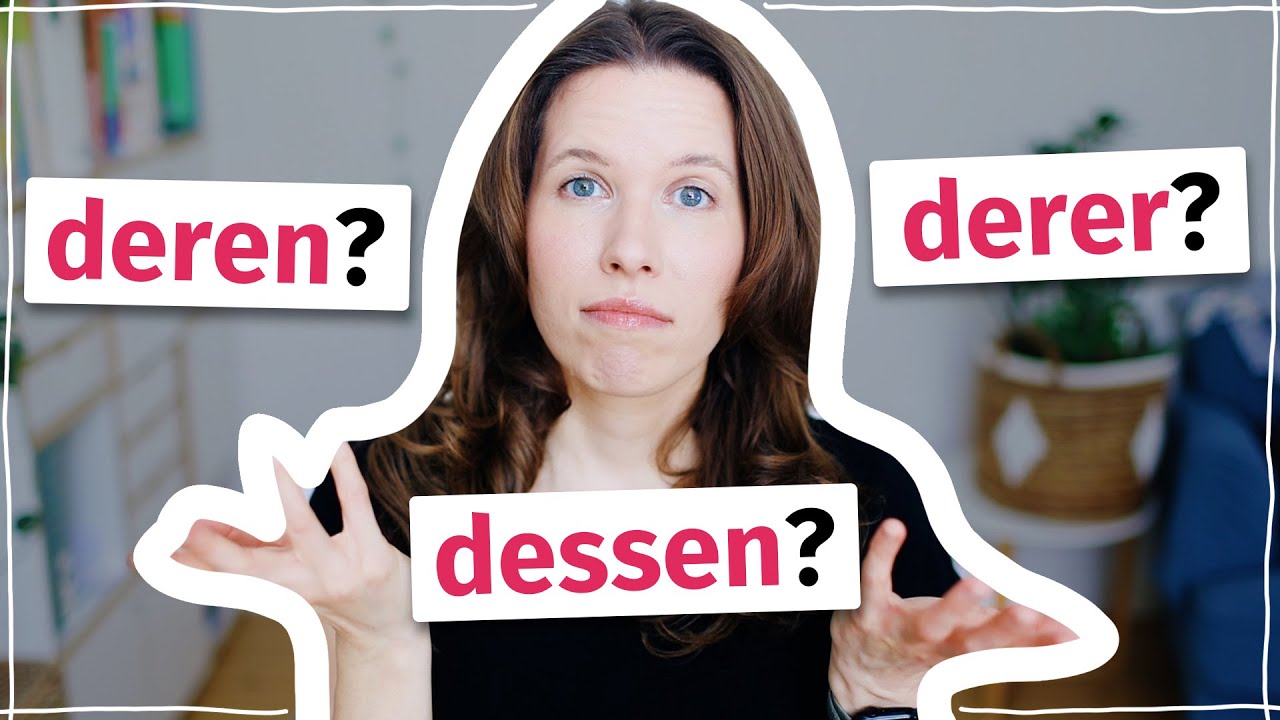
In diesem Video für sehr fortgeschrittene Deutschlerner (Niveau C1) schauen wir uns die Relativpronomen im Genitiv genauer an.
0:00 Intro
0:18 Wiederholung Relativpronomen Nominativ, Akkusativ, Dativ
2:07 Relativpronomen Genitiv
5:38 deren und derer
✨ FÜR MITGLIEDER ✨
▸ Aufgaben, das Skript als PDF und meine Videos als Podcast: https:...
pseudo breach
plain umbra
Like for example: Das ist der Mann, **dessen** Hund ich gesehen habe. That's the...
ty
 carmine bronze
Any easy way to memorize the gender (der die das) of German word?
plain umbra
carmine bronze
Any easy way to memorize the gender (der die das) of German word?
Every time you learn a new noun, memorise the article with it.
For example, instead of learning just Tisch, you learn: der Tisch.
slate beacon
carmine bronze
Any easy way to memorize the gender (der die das) of German word?
There are couple of suffixes/rules where you have to use a specific article
Check this
Der, die, das: Lerne die Verwendung der Artikel und prüfe dein Wissen in den Übungen. Hier findest du Übungen, deutsche Grammatik und praktische Informationen.
carmine bronze
slate beacon
There are couple of suffixes/rules where you have to use a specific article
Danke schön
I have learned Hindi by watching Doraemon in Hindi. Where can I watch Doraemon in German?
plush pelican
Saw this post on Reddit: https://www.reddit.com/r/buecher/comments/1so0fg0/ist_das_so_magazin_empfiehlt_zehn_romane_und/
Ist das so? Magazin empfiehlt: Zehn Romane und Buch-Reihen zeigen, wie Science-Fiction das Universum denken kann.
What is this meaning of "denken"? DeepL translates it as, "How Science Fiction can help us conceive of the universe", but that seems like maybe it's inserting words that weren't there.
nova sparrow
plush pelican
Saw this post on Reddit: https://www.reddit.com/r/buecher/comments/1so0fg0/ist_d...
mMn ist 'denken' hier im Sinne von 'sich vorstellen können' verwendet 🤔
willow socket
plush pelican
Saw this post on Reddit: https://www.reddit.com/r/buecher/comments/1so0fg0/ist_d...
I would've understood it the same as DeepL. 'Das Universum denken' is basically imagining/conceving of the universe.
see definition 5 in duden: https://www.duden.de/rechtschreibung/denken
 plucky moat
hellow, I'm wondering what does this mean "es steht ihnen nicht frei, die Zweiten zu sein. ", so I thought it means to be "it leaves them no choice but to be the second one", but the translation shows me to be "they are not at the liberty to be second", which means they can't be second. I'm really confused
plush pelican
plucky moat
hellow, I'm wondering what does this mean "es steht ihnen nicht frei, die Zweite...

Es steht dir frei, Kuchen zu essen. 😄
plucky moat
so it means no choice in the sentence
plush pelican
"die Zweiten" is this a duel or something?
plucky moat
no it means die Zweiten Typus Mensch
plush pelican
the what
plucky moat
the second type of man
plush pelican
yeah, what's that?
plucky moat
it's just this stupid quote from Nietzsche, which I have to do a translation, it just says that there are 3 types of man, the first being the most geistig, the second is the first type's right hand, the third are plebs that are good for nothing
I wanted to make a video that use some of the quote, but the translation are trash
it's from Antichrist 57
plush pelican
I see
Yeah, it seems to mean, "They're not at liberty to be the second type of man", so they can't be the second type of man, is how I would read it.
plush pelican
seems like it
plucky moat
thank you
 whole portal
plush pelican
Saw this post on Reddit: https://www.reddit.com/r/buecher/comments/1so0fg0/ist_d...
whole portal
plush pelican
Saw this post on Reddit: https://www.reddit.com/r/buecher/comments/1so0fg0/ist_d...
Looking over this, their whole post seems a little ... odd?
There's a "sich" missing at the very least imo
Idk they might just not be a native and half remembered 'sich etw. denken' being similar to vorstellen?
regal wave
at least its not written by AI-kun, which is a huge plus
(the mistakes are just too many)
plush pelican
whole portal
Looking over this, their whole post seems a little ... odd?
Das verstehe ich nicht. Wie er/sie Sätze formuliert klingt leicht falsch, oder wie meinst du das?
whole portal
Ja
Also vielleicht nicht falsch aber etwas ungewöhnlich
Hab ein paar andere Posts gelesen idk
plush pelican
So ein feines Sprachgefühl habe ich auf keinen Fall 🙃
whole portal
Kann auch einfach ein Muttersprachler mit einigen Eigenheiten sein
plush pelican
whole portal
Kann auch einfach ein Muttersprachler mit einigen Eigenheiten sein
Dialekt oder individuelle Idiosynkrasien oder was?
whole portal
willow socket
I would've understood it the same as DeepL. 'Das Universum denken' is basically ...
Aber hier sieht man ja recht klar, dass denken (5) reflexiv ist
whole portal
plush pelican
Dialekt oder individuelle Idiosynkrasien oder was?
Also in einem Post hat sich die Person "Zwerg" statt Kind genannt, das könnte auf einen Dialekt hinweisen, aber in anderen Posts scheint sie womöglich aus Berlin zu kommen? Und sonst werden zwar einige Fälle und Gedankenstriche komisch verwendet, aber das wirkt eher wie was individuelles.
regal wave
Ich habe so gar keinen Bock, dieses Rabbit hole zu verfolgen, aber das "denken kann" Ding ist doch total unproblematisch?
Also, man könnte jetzt diskutieren, ob es nicht doch aus dem Englischen entlehnt ist (...ich denke, es ist), aber sonst?
nova sparrow
regal wave
Ich habe so gar keinen Bock, dieses *Rabbit hole* zu verfolgen, aber das "denken...
Finde ich auch,
Ich lasse mir doch nicht vorschreiben, wie ich etwas denken kann oder darf. MMn **muss **man das nicht reflexiv formulieren. 🤔
regal wave
Ist halt "denkbar", fertig.
Passt total nicht für journalistische Schreibe, aber das ist halt so.
whole portal
Also es benutzt halt niemand so
whole portal
regal wave
Ich habe so gar keinen Bock, dieses *Rabbit hole* zu verfolgen, aber das "denken...
Hä?
Es denkt sich das Universum -> Es denkt das Universum, ja?
In welcher Welt ist das normale Grammatik?
Der Fragesteller hat einfach ganz klar ein Wort in der Überschrift weggelassen
Klar kann man sich aus dem Kontext denken, was gemeint ist, aber das hier ist ein Server für Leute, die Deutsch lernen, und da sollte man sowas mMn ganz klar als Fehler abgrenzen, gerade weil es wahrscheinlich irgendwie aus dem Englischen oder einer anderen Sprache entlehnt ist.
plush pelican
Es freut mich, immer wieder Fragen zu stellen, über die sogar Muttersprachler sich den Kopf zerbrechen 🤣
denn das bedeutet, dass es nicht nur an mir liegt, sondern, dass sie eigentlich schwierig sind
whole portal
Ich hab mal ganz blöd versucht, ob mir die KI irgendeine Quelle dafür (er-)finden kann, und das einzige was es mir präsentieren konnte waren irgendwelche philosophischen Werke über "Das Denken des Körpers"
Und ich denke nicht, dass hier spontan irgendwelche spezifischen philosophischen Sprachdefinitionen zweckentfremdet wurden ...
plush pelican
whole portal
Und ich denke nicht, dass hier spontan irgendwelche spezifischen philosophischen...
Reddit ist doch der Hauptsitz der Tiefdenkenden im Internet 😛
whole portal
Der Titel ist sowieso vom Focus kopiert
"Die Artemis-II-Mission begeistert nicht nur Weltraum-Fans. Zehn Romane und Buch-Reihen zeigen, wie Science-Fiction das Universum denken kann."
Wenn, dann liegt es also an Sabrina Reichhard und nicht am OP
Vielleicht ist es auch irgendwie schlecht hervorgehoben und soll eigentlich heißen:
Die Artemis-II-Mission begeistert nicht nur Weltraum-Fans. Zehn Romane und Buch-Reihen zeigen, wie Science-Fiction "das Universum" denken kann.
Nicht, dass das weniger komisch wäre tbh
Randnotiz, anscheinend ist das Ressort der Autorin eigentlich Gesundheit - die Veröffentlichungsfolge von "Gelbsucht: Symptome, Ursachen und Folgen" zu "Dark-Romance-Bücher: Das sind die Top 10 des Hype-Genres" ist amüsant.
 elder hamlet
Sag mir bitte, wie verstehst Sie Artikel "Das, Die und Der"?
Meine russisch Gehirn, das schwer verstehen
whole portal
elder hamlet
Sag mir bitte, wie verstehst Sie Artikel "Das, Die und Der"?
Meine russisch Gehi...
Do you speak English?
elder hamlet
whole portal
Do you speak English?
Little
whole portal
So, I'm not sure I understand your question? What do you mean by how do you "understand" articles?
elder hamlet
whole portal
So, I'm not sure I understand your question? What do you mean by how do you "und...
I don't understand how to determine the gender of nouns in German. Why is “girl” neuter in the first place?
whole portal
Hold on I need to research how russian does things
elder hamlet
whole portal
Hold on I need to research how russian does things
We use “he,” “she,” and ‘it’ to identify things. Let's take “the girl” as an example: “Whose girl is she? She's mine.”
whole portal
Okay so in general, this is the case in German too
However, as you know, most of the time it doesn't really make sense (why is 'night' feminine)
In this case, Mädchen is a diminutive (die Magd -> das Mächen) and all diminutives in German are neuter
There are some patterns (you can do >faq Gender patterns in #botchannel) but in general, you need to learn the word + the gender/noun class
elder hamlet
Thanks
elder hamlet
whole portal
Okay so in general, this is the case in German too
Ah. Die Sonne - she. Why? Sorry for the silly questions
nova sparrow
elder hamlet
Ah. Die Sonne - she. Why? Sorry for the silly questions
Die Sonne, die Erde, die Venus ... it's not the only female one
elder hamlet
nova sparrow
Die Sonne, die Erde, die Venus ... it's not the only female one
Yes, but in Russian, sun is neuter, while earth is feminine.
nova sparrow
elder hamlet
Yes, but in Russian, *sun* is neuter, while *earth* is feminine.
Yes and in English all 'big' machines are female. Why: 🤷♂️ ‼️ ⁉️ ❓
elder hamlet
nova sparrow
Yes and in English all 'big' machines are female. Why: 🤷♂️ ‼️ ⁉️ ❓
Oh 😅
nova sparrow
elder hamlet
Yes, but in Russian, *sun* is neuter, while *earth* is feminine.
and in Italian it's: il sole (male)😉
elder hamlet
nova sparrow
and in Italian it's: il sole (male)😉
Omg...
nova sparrow
it seems, there is no 'universal' concept, that would work for all 🫣
elder hamlet
nova sparrow
it seems, there is no 'universal' concept, that would work for all 🫣
Ahah, yeah
 south tapir
elder hamlet
Yes, but in Russian, *sun* is neuter, while *earth* is feminine.
south tapir
elder hamlet
Yes, but in Russian, *sun* is neuter, while *earth* is feminine.
In nordic mythology the sun (sunna) is personified as a woman
The moon was masculine
As opposed to the Latin Sol cult where the sun was male and the moon (Luna) was female
 stoic bay

 heady coral
How do you write:
1."There is the cat that saw my parents."
Vs
2."There is the cat that my parents saw."
Is it:
- "Da ist die Katze, die meine Eltern gesehen hat."
And - "Da ist die Katze, die meine Eltern gesehen haben"
Danke
 stray shell
how do you exactly use i. A. and can you say in Auftrag for somone else or how is it
warm robin
heady coral
How do you write:
1."There is the cat that saw my parents."
Vs
2."There is the ...
Huh. I never noticed that nominative and accusative line up in this case until now.
I mean, I think I knew it before but seeing it laid out like this makes it more obvious.
gusty silo
nom acc are the same everywhere outside of masculine singulars and some pronound
so yeah you get the pattern above where, in that example, only the number agreement disambiguates
nova sparrow
stray shell
how do you exactly use i. A. and can you say in Auftrag for somone else or how i...
When you use i.A. you confirm with your signature that you were tasked to take care of what you signed. And if you write it down it's im Auftrag.
Alternatively you also could use: i.V. in Vertretung
 split olive
hey how can i get access to join voice chat rooms?
stoic mauveBOT
@split olive, please read the Roles section in #getting-started for info on how to join VC and more.
split olive
there isnt info on that
gusty silo
i assure you theres information relevant to this question in there
split olive
thank you
 rustic spade
Hallo
rustic dock
stray shell
how do you exactly use i. A. and can you say in Auftrag for somone else or how i...
i.A. + your name
followed by company address
in e-mail signatures for example
nova sparrow
Hi, you could try #1489214184020250664
 delicate raptor
Hallo
 hoary marsh
I have no clue where to even start and I go to Germany in like 3/4 months! What do I do😭
gusty silo
did you have any german classes in school so far?
how much you need also depends on if it's on holiday, for an exchange, or moving long term
hoary marsh
No sadly no classes. Im going for vacation but I have german family and they want me to learn and im relaky interested, plus next year ill be moving there for abroad schooling
 timid vector
For travel you don't really need to know German (since you know English). For study abroad I'd imagine you'll either be studying in English (and also not need German) or studying in German in which case you'll need to get quite familiar with the language and quickly
plain umbra
hoary marsh
I have no clue where to even start and I go to Germany in like 3/4 months! What ...
Maybe try out Nicos Weg.
faq nicos
stoic mauveBOT
Nicos
Nicos Weg is a free online program aimed at helping people learn German. It includes video, audio, text, grammar explanations, notes, vocabulary, and exercises. It also includes very useful cultural and bureaucratic information, such as how to open a bank account, while teaching you the relevant grammar and vocabulary.
It’s fairly popular and well-recommended, but keep in mind that you can’t learn a language with only one resource, even if it’s a good one!
You can find the program here: https://learngerman.dw.com/en/nicos-weg/c-36519789
You can also see various other courses for learners by dw.com here: https://learngerman.dw.com/en/overview/
plain umbra
They specifically give a lot of travel German and things needed for surviving in Germany. So it's a good starting point if you're going there soon.
If you want to learn very quickly, you should look into private tutoring or maybe an intensive class.
It's pretty easy to learn on your own too, but a tutor can help you maximise your time if that's important to you.
 hushed mantle
Hallo
 velvet ivy
Hallo
gusty silo
<@&305455824174710787> eine neue Fahrt
 merry sedge
Es gibt ein Satz: "..., obwohl nichts Derartiges geplant gewesen war"
Gibt es eine Bedeutungsänderung, wenn ich sage es durch Vorgangspassiv: "..., obwohl nichts Derartiges geplant worden war"?
 white sentinel
merry sedge
Es gibt ein Satz: "..., obwohl nichts Derartiges geplant gewesen war"
Gibt es e...
white sentinel
merry sedge
Es gibt ein Satz: "..., obwohl nichts Derartiges geplant gewesen war"
Gibt es e...
Bei derartigen Änderungsfällen würde ich selbst nicht besonders auffassen, dass sich die Bedeutung geändert hat, sondern die Betonung auf der Lage des Zustandes.
Damit meine ich, ob der Sprecher die Betonung darauf setzt, dass es eine Änderung ("worden war") stattgefunden hat, oder dass das Objekt fest in seinem gegebenen Zustand ("gewesen war") ist. Außerdem kann der Gebrauch auch abhängen vom Kontext.
Das ist zum größten Teil meine persönliche Auffassung gegründet auf eigenes Gefühl beim Lernen und ich würde mich nicht als Gewandten bei solcher Nuance hinstellen, also empfehle ich dir, dass du noch etwas länger wartest auf jemanden, der dir eine weitere Antwort geben kann.
merry sedge
white sentinel
Bei derartigen Änderungsfällen würde ich selbst nicht besonders auffassen, dass ...
Auf jeden Fall Danke
 twin pilot
Okay when did this der das die, dem der dem start clicking
My questions are kind of bad too
And how long have you been learning german
quasi mulch
twin pilot
Okay when did this der das die, dem der dem start clicking
Maybe after 2-3 months, can't remember how long it took
If you're talking about getting the gender right for most nouns or being able to guess gender, I still struggle a lot with that ;-;
twin pilot
quasi mulch
If you're talking about getting the gender right for most nouns or being able to...
Okay okay
quasi mulch
twin pilot
And how long have you been learning german
6 months
twin pilot
Okay
 fathom lake
quasi mulch
If you're talking about getting the gender right for most nouns or being able to...
fathom lake
quasi mulch
If you're talking about getting the gender right for most nouns or being able to...
There are some ways to indicate a gernder easily
Like words end with heit, E are always feminine
twin pilot
Or ung ending
fathom lake
Die freiheit and so on
fathom lake
twin pilot
Or ung ending
YEP
fathom lake
twin pilot
Die Abschreibung
Like Die QIsWeirdung
twin pilot
Verdammt
fathom lake

quasi mulch
fathom lake
There are some ways to indicate a gernder easily
yeah but there isn't too many reliable suffixes
e isn't bad, but it's not always feminine, there's a lot of nouns like:
der Glaube, das Ende, der Gedanke, der Wille
twin pilot
AAAA, ich will etwas sagen aber ich weiß nicht wie
fathom lake
twin pilot
AAAA, ich will etwas sagen aber ich weiß nicht wie
Englisch
twin pilot
quasi mulch
yeah but there isn't too many reliable suffixes
e isn't bad, but it's not alway...
What is your mother language
Ja
fathom lake
quasi mulch
yeah but there isn't too many reliable suffixes
e isn't bad, but it's not alway...
Indeed
twin pilot
Now I forgot
fathom lake
How about we boycott die der das and use one noun like an english? Will this work @quasi mulch
twin pilot
fathom lake
Indeed
Was ist dein(?) Deutsch Niveau?
twin pilot
fathom lake
How about we boycott die der das and use one noun like an english? Will this wor...
Yes, ich stimme zu
twin pilot
A2?
fathom lake
 twin pilot
V2 engine?
quasi mulch
twin pilot
What is your mother language
swahili and english
alright I gtg eat and study afterwards
twin pilot
Okay okay
fathom lake
twin pilot
V2 engine?
Ja
fathom lake
quasi mulch
swahili and english
alright I gtg eat and study afterwards
Swahili!
twin pilot
quasi mulch
swahili and english
alright I gtg eat and study afterwards
Okay, good luck! I will ask more questions another day, I will annoy you more
Have a nice day!
fathom lake
quasi mulch
swahili and english
alright I gtg eat and study afterwards
Viel glück
twin pilot
Ja
 timber pilot
fathom lake
There are some ways to indicate a gernder easily
timber pilot
fathom lake
There are some ways to indicate a gernder easily
most German nouns beginning with the prefix ge- are neuter
twin pilot
Das Geheimnis
fathom lake
timber pilot
most German nouns beginning with the prefix ge- are neuter
Thanks Kowareta for this fabulous information
timber pilot
ja
twin pilot
fathom lake
Thanks Kowareta for this fabulous information
You are weird
fathom lake
twin pilot
You are weird
Im mimicking you
twin pilot
Lmao
fathom lake
twin pilot
Unglaublich
hollow seal
timber pilot
most German nouns beginning with the prefix ge- are neuter
Yeah, that's cool, only very few exceptions. Die Geburt, die Gewohnheit, die Gegend, der Gepard, but there it isn't really the proper presyllable "Ge-". And of course in combined words the latter word decides the gender. Der Gesprächsstoff, because der Stoff
south tapir
hollow seal
Yeah, that's cool, only very few exceptions. Die Geburt, die Gewohnheit, die Geg...
Gewohnheit is not an exception
because of the -heit ending
der Gestank, der Geruch, der Gehorsam
nova sparrow
fathom lake
Thanks Kowareta for this fabulous information
@south tapir @timber pilot @hollow seal
die Geschichte, die Gegend, die Gesinnung, der Gebrauch... and so on, you could look up a German dictionary to find more of them
timber pilot
<@&305455824174710787>
 vocal crystal
 plain loom
hallo ich brauche dringen Hilfe ! it's für ein Gespräch in der deutsche Sparche !
(i have to speak with a jury of german teachers and then they decide if i can be in the school)
 astral river
plain loom
hallo ich brauche dringen Hilfe ! it's für ein Gespräch in der deutsche Sparche...
astral river
plain loom
hallo ich brauche dringen Hilfe ! it's für ein Gespräch in der deutsche Sparche...
Du solltest jemanden suchen der mit dir Deutsch sprechen und üben kann am besten einen Muttersprachler
plain loom
astral river
Du solltest jemanden suchen der mit dir Deutsch sprechen und üben kann am besten...
ja
 quiet prawn
Ich glaube ich bin fast da
Ich hatte 9 Monaten unterricht, und habe A1 erreicht
dann habe ich seit 8 Monaten in Deutschland gewohnt
Das ist voll erreichbar in einem Jahr wenn du es wirklich willst
Vielleicht ein bischen mehr
regal wave
Das Problem ist bei dieser Frage: meint man Prüfung bestehen (60% reicht, und man kann für Prüfungen lernen, es gibt da Strategien für...) oder die Ideen hinter B2-Inhalten tatsächlich können?
plush pelican
Dinge, die mir beim Lesen eines ursprünglich auf Englisch und ins Deutsche übersetzten Buches aufgefallen sind:
Ich kannte den Mann gut (was man erwarten darf, angesichts der vielen unerfreulichen Überraschungen, die ich in der Schola in seinem Bett platziert hatte) und bemerkte mit gut verhohlener Zufriedenheit, wie er ein wenig die Lippen zusammenkniff.
Wieso 'in seinem Bett' und nicht 'in sein Bett'?
"platziert" klingt mir zu nah an dem Englischen "place". Wäre ein anderes deutsches Wort dort nicht passender? gelegt? gesteckt?
regal wave
plush pelican
> Ich kannte den Mann gut (was man erwarten darf, angesichts der vielen unerfreu...
Schola? D: Was ist das Setting?
Also, "seinem" ist hier total normal, da es um das Bett geht, in dem jemand üblicherweise schläft (und darum Possessivpronomen)
plush pelican
Warhammer 40k
Schola = School
regal wave
"School" ist leider zu offen hier 😄
(Ich kenne 40k so gar nicht)
Also, wenn Du von "school" redest, reden wir hier von Leuten, die 10, 12, 15, 20 sind? D:
plush pelican
regal wave
Also, "seinem" ist hier total normal, da es um das Bett geht, in dem jemand übli...
Er hat etwas in die Decken des Bettes gelegt, nicht in den Decken
regal wave
(und auch: wie alt ist der Sprechende jetzt?)
plush pelican
Er ist ein Erwachsener, aber er spricht von einem alten Schulkameraden
Er war nicht schon in dem Bett und hat etwas platziert. Er war außerhalb des Bettes und hat etwas in das Bett platziert.
Oder?
regal wave
...ja, ok, ähm, ich dachte jetzt: "Du, ich bin seit über 20 Jahren ein Erwachsener, aber ich spreche und denke heute anders als vor 20 Jahren", aber WH40k hat auch ein Setting, dass sehr weit weg von heutigem Sprechen ist...
ja auf jeden Fall außerhalb
er hat "etwas ins Bett gesteckt", würde ich erwarten
Es sind ja unerfreuliche Überraschungen 😄
plush pelican
Wieso "in seinem Bett platziert" und nicht "in sein Bett platziert" ist die Frage.
regal wave
plush pelican
Wieso "in seinem Bett platziert" und nicht "in sein Bett platziert" ist die Frag...
weil es sein Bett ist
plush pelican
He put something in another person's bed
regal wave
"in wessen Bett hast du etwas platziert?" ist die korrespondierende Frage
He put something in this person's bed
plush pelican
He himself was not in the bed of the other person when he put something in the bed
regal wave
Yes, but its still the bed that belongs to someone
plush pelican
The thing went from being "not in the bed" to being "in the bed"
 grim elbow
es geht hier nicht um eine Bewegung sondern um den Ort
plush pelican
regal wave
Yes, but its still the bed *that belongs to* someone
I'm not asking about the "sein"
I'm asking about the ending
Why seinem (dative) and not sein (accussative)
regal wave
plush pelican
Why sein**em** (dative) and not sein (accussative)
ah, @grim elbow said it!
grim elbow
Es gibt nicht immer ne logische Erklärung warum etwas so gesagt wird, wies gesagt wird, aber das wäre meine Interpretation
regal wave
"in wem/was" is the question that would be relevant
plush pelican
grim elbow
es geht hier nicht um eine Bewegung sondern um den Ort
If the verb had been "legen" instead of "platzieren", would it still be dative case?
grim elbow
man kann z.B. eine Kamera geschickt palatzieren, sodass sie schwer zu sehen ist (auch wenns ne größere Kamera ist). Da ist der Ort so wichtig, dass man ihn hervorheben möchte
plush pelican
Er hat etwas im Bett gelegt
or
Er hat erwas in das Bett gelegt
?
regal wave
plush pelican
Er hat etwas im Bett gelegt
or
Er hat erwas in das Bett gelegt
?
bitte das 2.
sonst legst du ein Ei im Bett 😄
plush pelican
regal wave
bitte das 2.
So then why doesn't the same logic apply to platzieren?
Sie sind doch Synonyme, oder?
regal wave
nee total anders D:
grim elbow
in der Bedeutung ähnlich, aber keine Synonyme
bin die ganze Zeit schon am überlegen wie ich den Unterschied erklären soll, aber da ist einer
und ich glaube auch nicht, dass hier "platzieren" benutzt wurde weils ne Übersetzung ist, wie du anfangs meintest
das Verb passt hier mMn besser
regal wave
plush pelican
Why sein**em** (dative) and not sein (accussative)
ok, so first: "...der Schola im Bett platziert hatte" is not a problem, right?
plush pelican
grim elbow
das Verb passt hier mMn besser
Wieso?
plush pelican
regal wave
ok, so first: "...der Schola im Bett platziert hatte" is not a problem, right?
Doch
regal wave
plush pelican
Doch
why? D:
plush pelican
Das sagt mir: "Ich war schon im Bett und habe etwas platziert."
Sonst hätte ich etwas in das Bett platziert.
regal wave
plush pelican
Sonst hätte ich etwas in das Bett platziert.
Nein, das ergibt keinen Sinn
...hmmhmhmh
Ok, first, problem is (main clause): "Ich platzierte Dinge in der Schola in seinem Bett."
...Dativ, ey.
"im Bett" -> "in dem Bett/ in einem Bett" -> Possessivpronomen -> "seinem"
Die Frage ist hier halt, "wo habe ich das gemacht?"
Aber nicht "Wohin habe ich X getan?"
("platzieren" als Wort ergibt nun auch keinen Sinn als Bewegungsverb)
plush pelican
regal wave
("platzieren" als Wort ergibt nun auch keinen Sinn als *Bewegungsverb*)
Wieso nicht?
regal wave
plush pelican
Wieso nicht?
...ist "Isso" okay? >_>
plush pelican
 plush pelican

Duden
Definition, Rechtschreibung, Synonyme und Grammatik von 'platzieren' auf Duden online nachschlagen. Wörterbuch der deutschen Sprache.
regal wave
Aber gerade da es narratives Präteritum ist in dem Text, finde ich das total normal, hier Dativ zu nehmen.
plush pelican
Die anderen Bedeutungen sind entweder Schweizerisch oder treffen nicht zu?
Aber eigentlich...

Nicht "sie platzierte den Ball in der linken Torecke"
regal wave
Du kannst das Verb sowohl transitiv als auch intransitiv benutzen, beide Fälle gehen je nach Kontext : /
plush pelican
...?
Die Überraschungen, die ich in seinem Bett platziert hatte.
Ist schon transitiv, warum redest du davon?
regal wave
wait hm
plush pelican

DWDS
DWDS – Digitales Wörterbuch der deutschen Sprache
regal wave
plush pelican
Die Überraschungen, die ich in seinem Bett platziert hatte.
Ist schon transitiv...
Ich spiele alle Möglichkeiten durch (bin auch auf dwds)
plush pelican
DWDS weist sowohl Akkusativ als auch Dativ auf
plush pelican
 plush pelican
regal wave
Aber nur Dativ ergibt hier Sinn für mich
plush pelican
regal wave
Aber nur Dativ ergibt hier Sinn für mich
Und bei den Beispielsätzen oben?
regal wave
..Dativ ist, vermute ich, 95+% üblicher. :/
Also, "ich platziere sie an einen Tisch" ergibt absolut Sinn in einem bestimmten Kontext
(Nämlich: Im Restaurant frage ich den Kellner, wo ich sitzen soll. Hier)
plush pelican
regal wave
..Dativ ist, vermute ich, 95+% üblicher. :/
Könnte dies ein regionaler Unterschied sein?

wer-weiss-was.de
Hallo! ich wollte herausfinden, ob nach dem Verb „Platzieren“ Dativ oder Akkusativ kommt? Im Duden habe ich dieses Wort nachgeschlagen: er platziert mich in einen Sessel Jemanden in einem Heim platzieren sein Geld auf dem Grundstücksmarkt platzieren Jetzt bin ich noch verwirrter und konfuser als vorher. Danke
regal wave
plush pelican
Könnte dies ein regionaler Unterschied sein?
Das wäre mir neu. Aber das Verb erlaubt eben sowohl eine reflexive Handlung (diese wäre ...shit...nicht unbedingt...Dativ) als auch ein "sich setzen", weil mir jemand sagt "setzen Sie sich hier". - und hier wäre der Kasuswechsel total eindeutig.
Ja, Richtung/Ort...
Aber wann ist die Richtung und wann der Ort wichtiger - das ist eher Dein Problem, oder?
plush pelican
Eine Richtung, die Überraschung fängt nicht im Bett an, und wird in das Bett gelegt.
regal wave
plush pelican
Eine Richtung, die Überraschung fängt nicht im Bett an, und wird in das Bett gel...
Beides ist hier sagbar...
Aber die Überraschung ist halt eine "Idee"
plush pelican
Ich lege eine Überraschung im Bett?
grim elbow
plush pelican
Eine Richtung, die Überraschung fängt nicht im Bett an, und wird in das Bett gel...
die Definition ist glaube ich einfach zu eng
regal wave
plush pelican
Ich lege eine Überraschung im Bett?
Du legst Überraschungseier? 😄
plush pelican
regal wave
Aber die Überraschung ist halt eine "Idee"
Nee. Er meinte eigentliche Dinge
Wie Schlangen oder so
plush pelican
Wenn es stattdessen ein bestimmtes Objekt wäre, meinst du, das würde einen Unterschied machen?
grim elbow
nein
plush pelican
Er platziert eine Schlange im Bett/in das Bett.
grim elbow
im Bett
regal wave
im
plush pelican
Echt jetzt
regal wave
ja
grim elbow
ja
regal wave
echt 😄
plush pelican
Das ergibt keinen verdammten Sinn
grim elbow
grim elbow
die Definition ist glaube ich einfach zu eng
^
regal wave
platzieren ist viel zu stark in dieser Bedeutung auf "wo?"
plush pelican
Was ist mit: Er legt eine Schlange im Bett/in das Bett.
?
regal wave
^
plush pelican
Je nach Verb, ignorieren wir halt die Regeln bezüglich Wechselpräpositionen, anscheinend
regal wave
Die gibts doch eh nur für ein paar!
grim elbow
Ausformulierte Regeln sind nur eine Abstraktion der Realität
regal wave
Aber ja, danke, platzieren ist hier tatsächlich was besonders '_'
regal wave
grim elbow
Ausformulierte Regeln sind nur eine Abstraktion der Realität
Sprache an sich ist das 😛
plush pelican
regal wave
Die gibts doch eh nur für ein paar!
Und woran soll man erkennen, welche Verben, die eine Bewegung bedeuten, eigentlich grammatikalisch gesehen wie eine Bewegung betrachtet werden sollten?
grim elbow
In dem Satz gehts nicht um die Bewegung
plush pelican
grim elbow
Ausformulierte Regeln sind nur eine Abstraktion der Realität
Da ich kein Muttersprachler bin, muss ich mich an diesen kargen Fels klammern.
regal wave
"platzieren" ist was besonders, fürchte ich.
grim elbow
Wenn ich dir sage "Du kannst dein Zelt an diesem Ort aufbauen", dann mag das so sein, dass du dein Zelt erst dahin bewegen musst, aber es geht ja um den Ort
regal wave
Man lernt ja eigtl. "gehen, fahren, setzen, stellen, legen, hängen, lehnen" ...
plush pelican
Entschuldigung, ich klammere mich an diesem kargen Fels. 😛
plush pelican
Jetzt weiß ich eigentlich nicht, ob da Akk oder Dat sein sollte
regal wave
"klammern an" ist ein anderes Wort als "klammern" 😛
plush pelican
ach so. Fels ist männlich
plush pelican
grim elbow
obwohls keine Bewegung ist
Das ergibt mir eigentlich Sinn
Ich stelle mir vor, es wäre eine Bewegung, ein aktiver Versuch, nicht runterzurutschen
regal wave
"klammern an" ist halt auch mit Akkusativ, fertig.
regal wave
plush pelican
Ok, das ist geklärt (platzieren ist halt eigenartig)
(gute Wahl, tue ich auch vorerst...)
plush pelican
mit dem Schauder einer schlimmen Vorahnung erkannte ich, dass jedes der Fahrzeuge, die Kolbe verfolgt hatten, mehrere Leute enthielt. Auf diese Entfernung und insbesondere im Zwielicht war es schwer zu erkennen, aber es schien, als wären sie für eine Art Karneval gekleidet. Ich korrigierte meine ursprüngliche Einschätzung ihrer Mannstärke nach oben, auf das mindestens Dreifache.
Auf das mindestens Dreifache
Oder
Auf mindestens das Dreifache?
regal wave
geht beides
plush pelican
aber mindestens ist kein Adjektiv?
grim elbow
plush pelican
Ok, das ist geklärt (platzieren ist halt eigenartig)
Ich würde denken, dass da schon ein System hinter steht, gerade weils manchmal Dat und machmal Akk ist (und sich die Beiden mMn etwas in der Bedeutung unterscheiden). Ist halt nur nicht so einfach.
plush pelican
grim elbow
Ich würde denken, dass da schon ein System hinter steht, gerade weils manchmal D...
Na ja. Anscheinend ist es komplizierter, als man sogar mit C1 erlernt
regal wave
plush pelican
aber mindestens ist kein Adjektiv?
ja, aber seit wann scherte sich Deutsch je über Wortstellung bis auf die Position des Verbs? >_>
plush pelican
regal wave
ja, aber seit wann scherte sich Deutsch je über Wortstellung bis auf die Positio...
Okay. Ich nenne mal ein Gegenbeispiel
Bzw ich nenne ein mal Gegenbeispiel.
Ich sage dir später ein Gegenbeispiel.
Ich sage dir ein später Gegenbeispiel.
grim elbow
plush pelican
Na ja. Anscheinend ist es komplizierter, als man sogar mit C1 erlernt
ja, und meine Theorie ist, dass man sowas eher intuitiv versteht als mit ausformulierten Regeln. Irgendwann werden Zusammenhänge zu komplex, denke ich
plush pelican
grim elbow
ja, und meine Theorie ist, dass man sowas eher intuitiv versteht als mit ausform...
Leider lebe ich nicht in Deutschland; ich habe viel zu wenig Kontakt mit der Sprache, als dass ich stattdessen ein echtes Sprachgefühl entwickeln könnte.
regal wave
plush pelican
Na ja. Anscheinend ist es komplizierter, als man sogar mit C1 erlernt
Win ist ja eh, dass es einfach so ist (seufz)
plush pelican
"mindestens" muss irgendwie eine Verbindung mit "Dreifache" haben, während "später" keine solche Verbindung mit "Gegenbeispiel" hat.
Nur weiß ich nicht, was für eine Verbindung es ist
Keine Verbindung wie mit einem Adjektiv, doch irgendeine Verbindung
regal wave
plush pelican
"mindestens" muss irgendwie eine Verbindung mit "Dreifache" haben, während "spät...
Huh?
grim elbow
plush pelican
Leider lebe ich nicht in Deutschland; ich habe viel zu wenig Kontakt mit der Spr...
glaub nicht, dass man hier leben muss, um ein Sprachgefühl zu entwickeln. Ich hab auch ein Sprachgefühl für Englisch und Schwedisch. Das ist nicht immer Korrekt, insbesondere was Schwedisch angeht, aber es geht ja nicht darum 100% korrekt zu liegen. Das schaffen nicht mal Muttersprachler
regal wave
Ich kann sagen, "Ich esse später das Dreifache" oder "Ich esse das Dreifache später"
plush pelican
Aber vermutlich nicht, "ich esse das später Dreifache"
plush pelican
grim elbow
glaub nicht, dass man hier leben muss, um ein Sprachgefühl zu entwickeln. Ich ha...
Englisch kriegt ihr unerwünscht, es ist allgegenwärtig. Ich kann mein ganzes Leben in den USA verbringen, ohne Deutsch jemals zu benutzen.
regal wave
plush pelican
Aber vermutlich nicht, "ich esse das später Dreifache"
Genau!
plush pelican
regal wave
Genau!
Aber man kann anscheinend sagen, "Ich esse das mindestens Dreifache"
"mindestens" hat irgendeine Verbindung mit dem Nomen.
Nicht die Art von Verbindung, die ein Adjektiv und ein Nomen haben, doch etwas in der Nähe
regal wave
plush pelican
Aber man kann anscheinend sagen, "Ich esse das mindestens Dreifache"
Hier übrigens: "das" = Demonstrativpronomen oder Artikel?
grim elbow
plush pelican
Englisch kriegt ihr unerwünscht, es ist allgegenwärtig. Ich kann mein ganzes Leb...
Naja, wer nichts mit Englisch zu tun haben will, muss das (nach der Schule) auch nicht. Gibt ja viele hier die kaum oder gar nicht Englisch sprechen. Der relevante Faktor ist, wie viel Zeit man mit der Sprache verbring und darüber hat man eine gewisse Kontrolle
je nach Situation mehr oder weniger
plush pelican
grim elbow
Naja, wer nichts mit Englisch zu tun haben will, muss das (nach der Schule) auch...
Ich meine, dass es schwieriger ist, Zeit mit Deutsch in den USA zu verbringen, als Englisch in Deutschland
grim elbow
Schwieriger ja, aber ist es schwer?
plush pelican
Ja
Ich muss aktiv entscheiden, mich mit der Sprache zu beschäftigen, sonst würde ich sie vergessen
plush pelican
Und wir haben keine 30 Tage Urlaub oder so; ich arbeite Vollzeit und oft am Wochenende
grim elbow
gibt es keine englischen Medien die du durch deutsche ersetzen könntest? Serien, Podcasts, Bücher, ...
plush pelican
grim elbow
gibt es keine englischen Medien die du durch deutsche ersetzen könntest? Serien,...
Doch, aber es ist anstrengend, vor allem, wenn man schon nach der Arbeit müde ist
Meine Arbeit ist vielleicht besonders anstrengend; ich bin Lehrer im ersten Jahr
regal wave
plush pelican
Ich meine, dass es schwieriger ist, Zeit mit Deutsch in den USA zu verbringen, a...
Marketing und Business-Speak ist halt mit englischen Wörtern verseucht...
plush pelican
Und wir haben kaum Arbeiterrechte in den USA
Also arbeite ich eigentlich 40h die Woche + normalerweise 4-6h am Wochenende
regal wave
plush pelican
Also arbeite ich eigentlich 40h die Woche + normalerweise 4-6h am Wochenende
+4-6...du machst white collar-Arbeit, oder?
plush pelican
Ich bin Lehrer
regal wave
plush pelican
Ich bin Lehrer
Ich aktuell auch...Du in einer Schule?
grim elbow
Kannst du auf dem Weg zur Arbeit nen deutschen Podcast hören?
regal wave
(Ich sehe mich nicht als Lehrer)
plush pelican
In einer Art Schule, die irgendwo zwischen öffentlich und privat ist und deshalb bestimmten Regelungen eigentlich nicht folgen muss...
grim elbow
Ich kann dir versichern, dass das mit der Zeit einfacher wird, wenn man dabei bleibt
regal wave
plush pelican
In einer Art Schule, die irgendwo zwischen öffentlich und privat ist und deshalb...
...wat 😄
plush pelican
grim elbow
Kannst du auf dem Weg zur Arbeit nen deutschen Podcast hören?
Ja, und das versuche ich, aber manchmal bin ich zu müde, um überhaupt etwas anzuhören
regal wave
Sofern Du dafür bezahlt wirst, ok!
grim elbow
aber stark, dass dus versuchst 💪
plush pelican
Geschweige denn etwas in einer Fremdsprache
plush pelican
regal wave
...wat 😄
Kennst du den Begriff "charter school"?
regal wave
plush pelican
Kennst du den Begriff "charter school"?
leider nicht
Ich mag Argus total hier, gerade weil er sehr genau verstehen will (...und mich darum zum Denken zwingt)
plush pelican
Ohne allzu politisch zu werden: Republikaner wollen öffentliche Schulen ersetzen. Dafür gibt's Charter Schools, die oft unter anderen (oft lockeren) Regelungen operieren dürfen als öffentliche.
regal wave
plush pelican
Ohne allzu politisch zu werden: Republikaner wollen öffentliche Schulen ersetzen...
Ah, du arbeitest da aber (...)
regal wave
`"ohne allzu politisch zu werden" ^^
plush pelican
Achso. Ja
regal wave
ja und ich dachte jetzt: "und ich möchte (HIER) nicht darüber reden, was ich davon halte"
plush pelican
Ich meine, "mindestens" kann man zwischen einen Artikel und das Nomen hineinsetzen, das ist eigenartig, andere Adverbien können das nicht
Ich weiß nicht, wieso dem so ist, aber so ist es, anscheinend
regal wave
plush pelican
Ich meine, "mindestens" kann man zwischen einen Artikel und das Nomen hineinsetz...
doch kann man!
ich esse das oft Dreifache ist sagbar z. B.
plush pelican
Was kann man sonst zwischen "das" und "Dreifache" hineinquetschen?
regal wave
plush pelican
Was kann man sonst zwischen "das" und "Dreifache" hineinquetschen?
Wenn du von Syntaktik zur Semantik wechselst (ich glaube, das ist Dein Problem), wirst Du verstehen, wann das geht.
(sorry for going technical, I can't say this otherwise in a single sentence)
plush pelican
Erstmals würde ich wissen müssen, was "Syntaktik" und "Semantik" hier bedeuten 😅
regal wave
(and its late)
regal wave
plush pelican
Erstmals würde ich wissen müssen, was "Syntaktik" und "Semantik" hier bedeuten �...
first is sentence structure and word usage regularities ("rules"), the second is meaning
plush pelican
#VibesCoding
regal wave
plush pelican
#VibesCoding
HAHAHHA Ja, ein bisschen schon 😄
Semantik (oder weiter: Semiotik) ist eben was arbiträr
plush pelican
Okay, letzte Frage:
Der entsprechende Punkt auf der anderen Seite des Planeten befand sich über einem der von Land umschlossenen Meere, sodass es nur einen offensichtlich geeigneten Ort für Adumbrias größten Raumhafen gab.
"der" ist in Bezug auf... welches Nomen?
Ach so
Die Meere
Einer der Meere
plush pelican
einer der (von Land umschlossenen) Meere
Ihr Deutsche verstecken gerne einen ganzen Satz da, wo ein Adjektiv stehen sollte 😛
Manchmal verliert man eben den Faden, weil es so verschachtelt wird
regal wave
plush pelican
Ihr Deutsche verstecken gerne einen ganzen Satz da, wo ein Adjektiv stehen sollt...
"above one of the oceans engulved by land"?
plush pelican
One of the oceans which is surrounded by land
regal wave
plush pelican
One of the oceans which is surrounded by land
ah ja macht Sinn
plush pelican
Or ... another word
"surrounded" isn't precisely it
Mir fällt das englische Wort gerade nicht ein
Es gibt irgendein geographisches Wort dafür
regal wave
Gut, dass es hier nicht um Englisch geht...
(Mein Englisch ist gut genug, dass ich Grammatik und Rechtschreibung perfekt kann, aber sonst... 😄 )
("vibes"...)
plush pelican
Stell dir allerdings vor:
The corresponding point on the other side of the planet found itself over one of the from land surrounded oceans, such that there existed only one obviously suitable spot for Adumbria's biggest spaceport.
Klingt dir das nicht komisch?
regal wave
plush pelican
Klingt dir das nicht komisch?
Ganz ehrlich: das und die deutsche Version vergleichen ist jetzt zu spät für mich.
(und ich wäre eher interessiert hier, über Englisch zu sprechen...)
plush pelican
Ich rede nur vom englischen
Auf Englisch klingt mir das komisch
Ich verstehe, dass es im Deutschen eigentlich normal ist
Trotzdem muss ich mich noch daran gewöhnen, die Stellen für Adjektive so zu missbrauchen 😛
 quick goblet
Hello 👋
My name is Mohamed, I’m from Egypt 🇪🇬
I’m learning German and looking for friends to practice with 😊
hollow seal
plush pelican
Ihr Deutsche verstecken gerne einen ganzen Satz da, wo ein Adjektiv stehen sollt...
Wenn man es übertreibt, wirkt es auch auf uns Deutsche komisch. Es gab mal ein Gerichtsurteil mit dem folgenden Satz:
Wer auf einer Autobahn im Bereich von durch die Aufstellung von fahrstreifengegliederten Vorwegweisern eingerichteten Vorsortierräumen auf der durch eine breite Leitlinie abgetrennten Rechtsabbiegerspur an den auf den für den Geradeausverkehr bestimmten Richtungsfahrbahnen befindlichen Fahrzeugkolonnen rechts vorbeifährt und anschließend nach links in eine Fahrzeuglücke einschert, überholt nur dann verbotswidrig, wenn er bei dem Rechtsvorbeifahren nicht beabsichtigt, die Autobahn an der Anschlußstelle zu verlassen.
Darüber haben sich die Kabarettisten lustig gemacht
 iron basalt
plush pelican
Ihr Deutsche verstecken gerne einen ganzen Satz da, wo ein Adjektiv stehen sollt...
iron basalt
plush pelican
Ihr Deutsche verstecken gerne einen ganzen Satz da, wo ein Adjektiv stehen sollt...
"ihr Deutschen"
hollow seal
Also über den Satz mit dem "an den auf den für den"
whole portal
plush pelican
Klingt dir das nicht komisch?
Btw. there is no usage of "klingen" like that to my knowledge
It's für jmdn. klingen, not jmdm. klingen
 hollow apex
plush pelican
Klingt dir das nicht komisch?
hollow apex
plush pelican
Klingt dir das nicht komisch?
"Klingt das für dich nicht komisch?"
plush pelican
iron basalt
"ihr Deutsche**n**"
Genau, ich habe mich erinnert, dass Deutsch da irgendwas Komisches macht, nur habe ich vergessen, was.
"Ihr" wird hier so behandelt, als ob es ein Artikel/Possessivpronomen wäre, wenn es eigentlich ein Personalpronomen ist.
plush pelican
whole portal
Btw. there is no usage of "klingen" like that to my knowledge
Tja, es ist schwierig, mich daran zu erinnern, wann "für jdn" und "jdm" austauschbar sind und wann nicht.
dawn oxide
plush pelican
Ihr Deutsche verstecken gerne einen ganzen Satz da, wo ein Adjektiv stehen sollt...
versteckt*
jade hawk
plush pelican
https://german.stackexchange.com/questions/65213/wir-deutsche-oder-wir-deutschen
endlich eine weitere quelle dazu
so was hab ich seit langem abgewartet
rustic dock
whole portal
Btw. there is no usage of "klingen" like that to my knowledge
yes there is
 rustic dock
there is no single grammatical reason why this would be wrong, but there is certainly a likelihood tied to region to construct it like that
„für mich“ is an example of shifting towards analytic grammar using more prepositions, most commonly so in young people
me personally i wouldn’t bat an eye at someone saying that
whole portal
There's a difference between there being an obvious grammatical flaw and just being a construction nobody uses
Which is why I said to my knowledge
Maybe you could provide an example of this being in actual use
hollow apex
plush pelican
So you're saying I *can* say "es klingt mir komisch"?
Sagt keiner.
"Es (er)scheint mir seltsam (/komisch)." vielleicht noch, oder eher "Es kommt mir komisch vor.", "Es hört sich komisch an."
rustic dock
whole portal
There's a difference between there being an obvious grammatical flaw and just be...
and how precisely would it be ungrammatical
whole portal
?
I was saying there is none
But that alone isn't reason enough for it to be commonly used
rustic dock
i didn’t say so either though
whole portal
I would not encourage learners to use such unusual constructions, and to me it seems like you were kinda doing so
rustic dock
?
whole portal
rustic dock
yes there is
You implicitly said "there is such a usage of 'klingen'", no?
rustic dock
which is true…?
whole portal
And imo, for all relevant purposes, there does not, even if it's not ungrammatical
rustic dock
it’s fairly simple grammar applied
but it’s not only both regionally fine, you also cannot point out a mistake with it other than it being unidiomatic in your view
whole portal
There's a difference between constructions I wouldn't bat an eye at if I read it in a poem and something I would encourage learners to use
rustic dock
so i don’t really understand why you have to be a gatekeeper of grammar
whole portal
I'm not ...?
whole portal
rustic dock
but it’s not only both regionally fine, you also cannot point out a mistake with...
But that is ... all I did?
I said "to my knowledge, nobody says it like that"
rustic dock
why argue then?
whole portal
Wdym why argue?
I wasn't really arguing as much as providing my pov and asking for an example because I was interested, where and how this would be used in practise
rustic dock
even in sentences like „das klingt mir aber schon danach“ it is a perfectly fine and common construction
i don’t understand you at all tbh
maybe you are very young, that’s fine
whole portal
Das klingt mir danach has (da)nach, which is a different construction, no?
rustic dock
not really
„das klingt mir nach ärger“ is also fine, it’s more that saying „das klingt mir komisch“ sounds redundant because most commonly people turn such exclamations into a very generalized statement like „das klingt komisch“
whole portal
It's definitely less odd. The point stands either way, two natives saw "das klingt mir" and instantly went "huh that seems like an unusual way to phrase that"
rustic dock
but that does not change anything about „das klingt mir komisch“ not being incorrect
whole portal
It's not about that?
Incorrect isn't an absolute term
Nobody claimed it was Incorrect
rustic dock
whole portal
It's definitely less odd. The point stands either way, two natives saw "das klin...
and i didn’t so either my being native is unimportant or there are differences both socially and geographically?
whole portal
"It sounds weird to most native" is very valuable information for learners
rustic dock
and most here means 2 or
whole portal
rustic dock
and i didn’t so either my being native is unimportant or there are differences b...
No, it just shows that there's something to be mindful of
grim elbow
rustic dock
but that does not change anything about „das klingt mir komisch“ not being incor...
something being grammatically correct is not sufficient to recommend people to use it.
Is something like "Wie bist du?" grammatically correct? Would you recommend it as a greeting?
rustic dock
no it is not grammatically correct to mean the thing you want it to mean
whole portal
rustic dock
and most here means 2 or
No, obviously I'm extrapolating
rustic dock
from a sample size of 3
plain umbra
grim elbow
something being grammatically correct is not sufficient to recommend people to u...
You are misunderstanding the above discussion.
whole portal
You're not gonna get a fully representative picture of the german language here obviously
grim elbow
plain umbra
You are misunderstanding the above discussion.
how so?
plain umbra
However I think there is not much more to gain from this discussion, so maybe it's best to end it here.
rustic dock
whole portal
You're not gonna get a fully representative picture of the german language here ...
then why try to make an argument that supposes a valuable samplesize
whole portal
It just felt like you were doing what you're trying to accuse me of here
plain umbra
grim elbow
how so?
They were not discussing the meaning of the sentence, only whether it sounds idiomatic or not (regardless of meaning).
whole portal
Just to clear the "oh you're just being weird"
rustic dock
plain umbra
However I think there is not much more to gain from this discussion, so maybe it...
alright
whole portal
Yeah
grim elbow
plain umbra
They were not discussing the meaning of the sentence, only whether it sounds idi...
I don't think there is a reason that "Wie bist du?" couldn't be used in german like it is in english. It just isn't used that way. That's my point. Even if there is no reason why Argus sentence doesn't work, doesn't mean that it does work
whole portal
I feel like you took my message as like fundamentally disagreeing with you? Idk?
whole portal
rustic dock
there is no single grammatical reason why this would be wrong, but there is cert...
Like I don't disagree with you here
I just felt like you were downplaying the importance of idiomatic-ness over how grammatical it is is all
plain umbra
whole portal
I just felt like you were downplaying the importance of idiomatic-ness over how ...
I think you both said your side of things and there is not point in continuing. If you want to continue for personal reasons, then there are other channels for that.
whole portal
Thanks
grim elbow
anyway, @plush pelican regarding this sentence
Klingt dir das nicht komisch?
I also reacted to this. To me this usage sounds wrong, because it's about the actual way it sounds (i.e. not metaphorical).
To me "Das klingt mir komisch" means something along the lines of "Diese Situation kommt mir komisch vor" / "Hier stimmt was nicht", and even then I wouldn't use it like you did
my two cents
rustic dock
das klingt mir zu engstirnig
grim elbow
^ auch ein Beispiel für eine mehr "metaphorische" Verwendung
mehr "das kommt mir vor"
als "das hört sich an"
aber ich wollte ja auch nur sagen wie sich das für mich anhört, und das hab ich ja auch klar und deutlich gesagt
rustic dock
welchen unterschied macht das? „klingen,“ wenn es nicht um ein glöckchen oder sowas geht, heißt sowieso nicht das gleiche wie „hören“
also klar ist das eher „metaphorisch“
grim elbow
und Argus wollte halt gerade nicht fragen, ob Morri das komisch vorkommt, das ein Meer von Land umschlossen ist. Ihm gings um einen viel weniger "metaphorischen" Klang
regal wave
"Das klingt für mich komisch" sagt man.
grim elbow
regal wave
"Das klingt *für mich* komisch" sagt man.
Für dich hören sich also weder "Das kling mir komisch" noch "Klingt dir das nicht komisch?" richtig an?
regal wave
grim elbow
Für dich hören sich also weder "Das kling mir komisch" noch "Klingt dir das nich...
Ja, beides klingt für mich komisch (😂). Gibt es aber wahrscheinlich in einem Dialekt.
grim elbow
kann sehr gut sein, dass das was Regionales ist
dann wärs wahrscheinlich besser das nicht zu benutzen. Ich würde Leuten ja auch nicht raten ein Wort zu benutzen, nur weils das in Schweizerdeutsch gibt
regal wave
grim elbow
dann wärs wahrscheinlich besser das nicht zu benutzen. Ich würde Leuten ja auch ...
Es sei denn, sie leben in der Schweiz xD
grim elbow
genau ^^
grim elbow
noch n besseres Beispiel, was mir eingefallen ist
X macht Sinn / X makes sense
X ergibt Sinn / X yields sense
X hat Sinn / X has sense
warum funktioniert manches und manches nicht? Gibts da nen Grund für, abgesehen von "sagt man halt nicht so"? An der Frage was das bedeutet wirds ja nicht scheitern.
regal wave
"macht Sinn" ist eigentlich falsch, aber da es mittlerweile Professoren in Fachbüchern schreiben (das kann ich belegen), ist es jetzt richtig xD
"hat Sinn" ist einfach eine andere Bedeutung...
hollow apex
Ja, man kann ja auch mittlerweile "mach das Essen" sagen.
 glass hawk
regal wave
"macht Sinn" ist eigentlich falsch, aber da es mittlerweile Professoren in Fachb...
glass hawk
regal wave
"macht Sinn" ist eigentlich falsch, aber da es mittlerweile Professoren in Fachb...
Der folgende Hinweis zu diesem Thema ("Sinn machen") findet sich im Eintrag zu "Sinn" auf de.wiktionary.org, was hältst du davon?
Wird fälschlicherweise oft als Anglizismus von ‚make sense‘ bezeichnet, aber es gibt auch Belege in älterer Literatur von Goethe, Lessing, Luther u. a. Siehe Sprachblog der Universität Bremen und Grimmsches Wörterbuch: ‚Petrus der maister Lampardus, der die sentencias machet, das ist das puch von hochen synnen zu teutsch.‘ Aus dem Mittellateinischen der Scholastik „sententiam facere“.
regal wave
glass hawk
Der folgende Hinweis zu diesem Thema ("Sinn machen") findet sich im Eintrag zu "...
Cool!
Das wusste ich nicht.
hollow apex
glass hawk
Der folgende Hinweis zu diesem Thema ("Sinn machen") findet sich im Eintrag zu "...
Die Engländer müssen's ja auch irgendwo her haben.
Dann wäre das eigentlich "facilitate sense" auf Englisch?
regal wave
Meine Professoren denken übrigens alle, das wäre falsch und käme von Englisch "make sense" 😄
hollow apex
Ist nachzuvollziehen, da man nicht inkompetent wirken will. Theoretisch auch in sich schlüssig.
quiet prawn
glass hawk
Der folgende Hinweis zu diesem Thema ("Sinn machen") findet sich im Eintrag zu "...
Wüsste ich nicht, ich sag trotzdem immer ,,das ergibt Sinn", weil jemand mich gesagt hat dass die andere Version ist falsch
Also man kann eigentlich macht Sinn sagen?
Höre ich viel zu oft
Auch mit ,,sei Leise"
Ich glaube das kamm aber von Englisch
regal wave
quiet prawn
Also man kann eigentlich macht Sinn sagen?
Ja, man sagt es auch. Und man darf es eben auch (wieder) in Wissenschaft schreiben.
iron basalt
regal wave
Meine Professoren denken übrigens alle, das wäre falsch und käme von Englisch "m...
Meine Sichtweise: Sprachen ändern sich seit tausenden Jahren. Heißt das deshalb, dass das Deutsch das wir jetzt sprechen auch "falsch ist" nur weil es vor 1000 Jahren anders gesprochen wurde? Natürlich nicht oder? Aber ich würde auch behaupten, dass "macht Sinn" zu 100% ein Anglizismus ist
hollow apex
Es gab und gibt immer wieder, vor allem in spezifischen Fachbereichen, Revisionsbemühungen der Ausdrucksweise. Das ist wie ich denke aber lediglich darauf zurückzuführen, dass Fachsprache etabliert werden soll, um sich besser vom Laien abzugrenzen.
grim elbow
iron basalt
Meine Sichtweise: Sprachen ändern sich seit tausenden Jahren. Heißt das deshalb,...
hast du das gesehen? #questions-2 message
 round basalt
Netzwerk Neu A1: Textbook + Workbook + Glossar + Lösungen (Set Of 4 Books )
GERMAN MADE EASY PART 1 + GERMAN MADE EASY PART 2 WITH ANSWER
Grammatik aktiv · A1-B1 Deutsch als Fremdsprache
I have order these 3books can anyone tell me whether they are good or not?
regal wave
Wouldn't you usually ask before buying? 😄
willow socket
round basalt
Netzwerk Neu A1: Textbook + Workbook + Glossar + Lösungen (Set Of 4 Books )
GERM...
grammatik aktiv is great
best book(s) imo
regal wave
Grammatik Aktiv is usually recommended, yeah
Textbooks, however, are designed to be used in class, not for self-study.
As for one that has a bit more meat (as in texts for reading comprehension and more vocabulary) to it, I might rather go for Spektrum, but that's A1+ (an intermediate concept between A1 and A2). Netzwerk seems fine as a textbook from what I can gather from the sample on their homepage, though. It reminds me of Cornelsen's books like Pluspunkt.
warm robin
I think Grammatik aktiv is A1+ as well. I personally wouldn't have been able to do it for at least a month or even two of study. (Self studied to A1 in 3 months).
And even on page 1 / lesson1 are A2 rated exercises. You can skip them I guess if you are absolutely beginner level.
The listening/speaking exercises, despite being over A1 grammar concepts, are also rather fast for a A1 IMO. I can do it at A2 but I am worried it's too much for the absolute beginner.
regal wave
Grammatik Aktiv is A1 to B1 or so, so its a level-transcending book.
warm robin
Yeah. Maybe that's the best way to look at it.
A lot of my A1/A2 listening practice material was way slower than Grammatik aktiv.
regal wave
I used such a grammar book when studying Japanese (where 3 of the 5 levels they have were just grouped together by theme. E.g., if you study A1 A2 B1 sequentially, you kinda do the same kind of grammatical topics over and over, just getting more and more complex. But eventually you want an overview that just groups all the things by theme, not by complexity or rarity.)
So its useful to have such a reference.
warm robin
It's also just the best preposition practice I've found
Like really really good material.
plush pelican
iron basalt
Meine Sichtweise: Sprachen ändern sich seit tausenden Jahren. Heißt das deshalb,...
Wird ein Wort irgendwann kein Anglizismus mehr?
"Smoking" wurde im 19. Jahrhundert aus dem Englischen enthlehnt. Ist "Smoking" noch ein Anglizismus?
"Restaurant" kommt aus dem Französischen. Ist das ein Franzismen? 😄
nova sparrow
plush pelican
Wird ein Wort irgendwann kein Anglizismus mehr?
"Smoking" wurde im 19. Jahrhund...
Mir fällt dazu der Begriff Lehnwort ein, es könnte sein dass ein Wort irgendwann nicht mehr den Status Fremdwort sondern Lehnwort hat. Aber ich bin kein Sprachwissenschaftler 🤷♂️ .
Dann kommt ja noch hinzu, dass ein Smoking nicht irgendein Anzug ist, sondern eben 'ein Smoking'. Was mir zum Restaurant einfällt, ist dass es im Deutschen gleichbedeutende Begriffe gibt, aber es trotz der ursprünglichen Herkunft sogar zum A1 Goethe Wortschatz gehört. 🤔
plain umbra
regal wave
Textbooks, however, are designed to be used *in class*, not for self-study.
Not all textbooks are designed to be used exclusively in class. Some are even specifically designed for self-study. Or do you just mean these 3 specific textbooks in the question?
iron basalt
plush pelican
Wird ein Wort irgendwann kein Anglizismus mehr?
"Smoking" wurde im 19. Jahrhund...
"Smoking" und "Restaurant" werden doch beide genauso im Englischen geschrieben, aber das stimmt nicht bei "das macht Sinn" das ist die Unterscheidung
hollow seal
iron basalt
"Smoking" und "Restaurant" werden doch beide genauso im Englischen geschrieben, ...
Deutsch "Smoking" heißt auf Englisch "Dinner Jacket", das ist ein "false friend", so wie "Handy"
iron basalt
hollow seal
Deutsch "Smoking" heißt auf Englisch "Dinner Jacket", das ist ein "false friend"...
Wusste ich tatsächlich nicht ☠️ danke für die Aufklärung
round basalt
warm robin
I think Grammatik aktiv is A1+ as well. I personally wouldn't have been able to ...
Which book is good for absolute beginner like for self study
 sharp marsh
is there any actual "good" translator plugins for if i dont understand something (itd be neat if it had like "direct" a button to expalin it and the english equivlent)
plush pelican
sharp marsh
is there any actual "good" translator plugins for if i dont understand something...
for web browsers or what? Kindle has a translate function to highlight passages and translate them if you read books in German.
sharp marsh
plush pelican
for web browsers or what? Kindle has a translate function to highlight passages ...
Yeah for browsers
plush pelican
There are a bunch of extensions that will do this, but you have to be careful, because the default is to give it access to literally everything on every website you see, which is a lot of data for a third party to have access to
Ultimately, I decided not to do such an extension because of data privacy concerns
sharp marsh
yeah thats why i asked for one specicly instead of just any
cobalt ocean
honestly, i find it easier to just use a dictionary in another tab
something about the clicking on it and the text displaying over text, i find very annoying
plush pelican
»Kompetenz auf dem Schlachtfeld ist ein Mythos. Die Seite, die es nicht als Letzte vermasselt, gewinnt, so einfach ist das.«
I'm curious about the position of "nicht" here.
I would've said, "Die Seite, die es als Letzte vermasselt, gewinnt" = the side that fucks up last, wins.
To me, the quote reads like, "the side that isn't the last one to mess it up, wins", which is the opposite of what it should be.
whole portal
🤔
The sentence is about how everyone messes up constantly
Right?
I think they mean whoever messes up last is the one to go out because that's when the battle ends?
Idk
I see your interpretation too
plush pelican
whole portal
I think they mean whoever messes up last is the one to go out because that's whe...
Right, but that's "die Seite, die es als Letzte vermasselt", right?
"die Seite, die es nicht als Letzte vermasselt" is the one who isn't last to fuck it up, meaning the side who fucks up first. But that's the side that loses, not the side that wins.
Btw, this book is translated from English
The original English sentence is apparently
Competence on the battlefield is a myth. The side which screws up next to last wins, it's as simple as that.
Which ... man, the English version here is confusing?
rustic dock
yes because last one to fuck up can’t win because the final fuckup causes the defeat
it’s just a way of saying that competence is a theoretical thing and in practice, the game consists of continuous fuckups, making it important to not fuck up last
sorry profanity
„next to last“ in the original sentence amounts to the same, but it makes the point clearer that a match consists of a chain of fuckups, next to last is safe because the last link in the chain of fuckups is the match losing fuckup (as opposed to a match winning play executed competently)
just the opposite way of seeing it. he who scores the final goal, for example, is the one who made the match winning play, the goalkeeper on the other hand fucked up last by not catching it
plush pelican
rustic dock
it’s just a way of saying that competence is a theoretical thing and in practice...
Ah, I see
The final fuck up is the one that causes defeat. I would've thought the first side to fuck up is defeated. But I guess it's a series of increasing fuck ups, and the last one is the biggest
rustic dock
right on
plush pelican
»Wo genau ist ›dort‹?«, fragte Kasteen. Anstelle einer Antwort lehnte sich Zyvan vor, um Einstellungen an einem Kontrollpult vorzunehmen, das wir nicht sehen konnten, und Asmars Gesicht wurde von einer rotierenden Ansicht des Planeten aus orbitaler Perspektive ersetzt.
I would've thought it would be "durche eine Ansicht", not "von"?
Btw, it's talking about someone being projected on a display, and then they get replaced with an image of the planet
Another question:
»Imperator auf Erden!« Ich wich zurück und würgte ob des Geruchs. So das möglich war, stank es noch schlimmer als in der Kammer, die wir in der Habkuppel gefunden hatten, wenngleich die Einzelheiten deprimierend vertraut waren. Der Haufen verdrehter Leichen, die noch immer in unheiliger Verzückung grinsten, die wahnwitzigen Symbole an den Wänden … Ich ging bis ans andere Ende des Korridors und kontaktierte den Lord-General direkt.
I recognize that as a Konsessivsatz, but I thought it should be "so x das auch war"? Where's the 'auch'? Is that not necessary?
whole portal
plush pelican
> »Wo genau ist ›dort‹?«, fragte Kasteen. Anstelle einer Antwort lehnte sich Zyv...
I'd agree that durch is probably the more common variant here but von isn't wrong or anything
whole portal
plush pelican
Another question:
> »Imperator auf Erden!« Ich wich zurück und würgte ob des Ge...
What do you think the sentence is trying to say? "So möglich das auch war" wouldn't really make sense here. It's definitely a very archaic/poetic phrasing but it means something akin to "Sofern das überhaupt möglich war ..."
So it's saying that it reeks really badly, possibly even worse than in that chamber, if that is even possible
So it's reinforcing how bad the chamber was as well as expressing that this is potentially worse
plush pelican
whole portal
What do you think the sentence is trying to say? "So möglich das auch war" would...
Is this type of clause mentioned anywhere?
whole portal
Uhh good question
plush pelican

That page has several examples, but all of them use "es", not "das", which I guess also threw me off
It seemed just different enough from the patterns I knew to seem off.
whole portal
I also found this page? Not sure
https://deutschegrammatik20.de/komplexer-satz/ubersicht-satzverbindung/satzverbindung-so/

Deutsche Grammatik 2.0
Die Bedeutung von so Konditionale Bedeutung So hat konditionale Bedeutung. So gehört zum gehobenen Sprachgebrauch und wird normalerweise in der Alltagssprach
plush pelican
They also all use an adverb after "so"
whole portal
Can I ask what this is from (and how old it is)
plush pelican
So leid es mir tut
So gut es uns bei der Party gefallen hat
So oft ich es versuche
whole portal
I wouldn't write like this, even in a novel these days
plush pelican
whole portal
Can I ask what this is from (and how old it is)
Warhammer 40k, translated from English, in the past 15 years, but they also use "Ihr" all the time
whole portal
So it might be a stylistic choice?

 plush pelican
- Jahrtausend
whole portal
(I barely know anything about warhammer)
plush pelican
whole portal
40k and all
40k = 40.000, not 401.000 ?
whole portal
no but you said century initially
plush pelican
Oh
whole portal
einhundert Jahrhunderten is funny
plush pelican
whole portal
einhundert Jahrhunderten is funny
We do that in English sometimes to exaggeratedly explain a big number
A thousand thousand years
Because the human brain has trouble actually comprehending big numbers, so "hundred centuries" sounds more impressive somehow than, "10,000"
whole portal
warhammer four ten ten ten decades 🔥
plush pelican
"auf dass" is itself older/more poetic, right?
They also use "ob" as a preposition a lot
whole portal
I'd say more poetic, but you'd still use it in your big movie speech these days
plush pelican
»Einen Frak werd ich.« Meine Erleichterung ob der markigen Antwort unseres Piloten war immens.
whole portal
(vgl. bis dass der Tod uns scheidet)
plush pelican
whole portal
(vgl. bis dass der Tod uns scheidet)
That somehow makes sense to me
whole portal
Yeah the ob is definitely a bit odd lol, I was a bit surprised you weren't asking about it earlier
whole portal
But if it's everywhere that makes sense
 wary glacier
I am a non eu student and am planning for ausbildung by next year guys pls hlep / suggest me path way. Thank you for reading.
dawn oxide
wary glacier
I am a non eu student and am planning for ausbildung by next year guys pls hlep ...
jade hawk
wenn ich versuche es nachzuschlagen bekomme ich stattdessen nur zugang also
wie oft sagt man mit etwas zugange sein statt beschäftigt sein?
 hushed verge
jade hawk
wenn ich versuche es nachzuschlagen bekomme ich stattdessen nur zugang also
wie ...
hushed verge
jade hawk
wenn ich versuche es nachzuschlagen bekomme ich stattdessen nur zugang also
wie ...
ich glaube das ist teilweise auch regional, ich nutze und höre "zugange sein" eher selten. "beschäftigt sein" ist relativ neutral - ich habe zutun/mache gerade irgendetwas. "zugange sein" ist eher für körperliche Tätigkeiten. z.B. im Garten, in der Küche oder in der Werkstatt zugange sein. ich würde auch sagen dass "beschäftigt sein" mehr "bitte störe mich nicht"-vibes hat als "zugange sein"
willow socket
jade hawk
wenn ich versuche es nachzuschlagen bekomme ich stattdessen nur zugang also
wie ...
habe ich noch nie gehört
dawn oxide
jade hawk
wenn ich versuche es nachzuschlagen bekomme ich stattdessen nur zugang also
wie ...
Ja ist eher so wie "mit etw. tätig sein"
Or you're like actively dealing with something
rustic dock
jade hawk
wenn ich versuche es nachzuschlagen bekomme ich stattdessen nur zugang also
wie ...
heh i said that like an hour ago
the context was me asking someone over the phone if they are working on my request, i think i wouldn’t ever use „beschäftigt sein“ for that

hollow seal
jade hawk
wenn ich versuche es nachzuschlagen bekomme ich stattdessen nur zugang also
wie ...
Viel zu selten. Man sollte öfter "mit etwas zugange sein" sagen, das ist ein prima Ausdruck
 vale hound
hollow seal
Viel zu selten. Man sollte öfter "mit etwas zugange sein" sagen, das ist ein pri...
vale hound
hollow seal
Viel zu selten. Man sollte öfter "mit etwas zugange sein" sagen, das ist ein pri...
/schreibt Notizen/
white sentinel
Habe ich die Nuancen folgender Wörter hier richtig verfasst?
Nutzlos - Ohne irgendwelchen Nutzen.
Unnütz - Unnötig und dadurch auch (praktisch) nutzlos.
Überflüssig - Überbietend oder -boten und dadurch auch nicht nötig.
plush pelican
Wie es schien, hatte der Feind aus dem ersten Angriff gelernt, vermutlich über den Voxverkehr, und wollte uns nun hier niederhalten, während er sich um das Hauptziel kümmerte. Nun, den Ketzern stand natürlich eine unangenehme Überraschung ins Haus, doch das würde weder uns noch den Bürgern von Gletscherspitze helfen.
Why ins Haus and not im Haus?
stehen is a verb of location, not motion?
hushed verge
white sentinel
Habe ich die Nuancen folgender Wörter hier richtig verfasst?
Nutzlos - Ohne irg...
Bin nicht sicher ob "überbietend/überboten" das richtige Wort ist bei "überflüssig". Ansonsten denke ich hast du es erkannt. Nutzlos -> ohne einen inhärenten Nutzen, härter als Unnütz. Unütz -> würde ich sagen in der Situation auch praktisch nutzlos, aber könnte anderweitig Nutzen haben. Überflüssig -> Die Sache kann an und für sich einen Nutzen haben, aber in einer bestimmten Situation ist es zu viel (ganz oder teilweise), überproportional oder falsch angewandt.
dawn oxide
plush pelican
> Wie es schien, hatte der Feind aus dem ersten Angriff gelernt, vermutlich über...

DWDS
DWDS – Digitales Wörterbuch der deutschen Sprache
plush pelican
dawn oxide
https://www.dwds.de/wb/ins%20Haus%20stehen
Das erklärt es nicht
gusty silo
es wird irgendwas damit zu tun haben, dass es um etwas zukünftiges geht, etwas das kommt
es steht (fest, jetzt schon), dass es ins Haus kommen wird (dann, wenn es eintritt)
plush pelican
"Ich stehe in die Schule."
Kann das jemals richtig sein?
Oder was ist, wenn es irgendein anderes Nomen ist?
"Ihm steht eine Überraschung in das Gebäude."
"Ihr steht eine Überraschung in das Fitnessstudio."
gusty silo
warum das aber so ausgedrückt wird, weiß ich nicht
plush pelican
gusty silo
es steht (fest, jetzt schon), dass es ins Haus kommen wird (dann, wenn es eintri...
Das klingt plausibel
 molten sigil
plush pelican
"Ich stehe in die Schule."
Kann das jemals richtig sein?
Oder was ist, wenn es...
molten sigil
plush pelican
"Ich stehe in die Schule."
Kann das jemals richtig sein?
Oder was ist, wenn es...
Der Satz "Ich stehe in die Schule" wäre richtig, wenn durch stehen man erst vor der Schule ist und dann in der Schule.
Daher ist korrekt "Ich stehe in der Schule". "Der" drückt hier aus, wo du dich befindest.
plush pelican
molten sigil
Der Satz "Ich stehe in die Schule" wäre richtig, wenn durch stehen man erst vor ...
Hast du die vorherigen Nachrichten gelesen?
molten sigil
Als Redewendung habe ich den Ausdruck noch nie gehört. Stattdessen nur "Ich stehe auf die Schule". Dies beschreibt dann Schüler, die gerne in die Schule gehen…
plush pelican
Bist du Muttersprachler?
molten sigil
Ja
 molten sigil
War meine erste Antwort etwa typisch Deutsch? Dann sorry für meine direkte Art...
plush pelican
molten sigil
War meine erste Antwort etwa typisch Deutsch? Dann sorry für meine direkte Art.....
Nee, durch die Farbe deines Namens kann man nicht sehen, ob du Muttersprachler bist oder nicht, deshalb wollte ich es wissen. Dass ein Nicht-Muttersprachler eine bestimmte Redewendung nicht kennt, wäre keine Überraschung. Aber dass ein Muttersprachler sie nicht kennt, spricht vielleicht dafür, dass die Redewendung selten ist.
molten sigil
plush pelican
Hier ein Beispiel:
https://www.n-tv.de/wirtschaft/der_boersen_tag/Lufthansa-ste...
Dies ist wirklich ein ungewöhnlicher Satz. Ist aber korrekt. Er bedeutet, dass der Streik wahrscheinlich passieren wird. Außerdem ist der Streik aus Sicht des Autors etwas Schlechtes.
plush pelican
molten sigil
Der Satz "Ich stehe in die Schule" wäre richtig, wenn durch stehen man erst vor ...
Diese Beispielsätze habe ich absichtlich so geschrieben, genau weil die Redewendung gegen die normale grammatikalische Regel bzgl Wechselpräpositionen und Akkusativ vs. Dativ verstößt.
Wenn es bei dieser Redewendung erlaubt ist, warum? Habe ich die Regel falsch verstanden bzw gibt's eine nuanciertere Regel, die das eigentlich erklärt?
molten sigil
In der deutschen Sprache sind viele Sätze, die nur mit Kontext verstanden werden können. Selbst für Muttersprachler.
plush pelican
Meinst du die Bedeutung des Satzes oder die Grammatik des Satzes, oder beides?
nova sparrow
plush pelican
Diese Beispielsätze habe ich absichtlich so geschrieben, genau weil die Redewend...
Guten Morgen und ins Haus stehen ist eine feste Redewendung, die man nicht übertragen kann (auf die Schule oder das Zelt). Ich vermute, dass mit Haus nicht das Gebäude sondern sozusagen der gesamte Besitzstand gemeint ist. Warum das aber so formuliert ist, kann ich nicht erklären.
molten sigil
Die Bedeutung: Aufgrund des Wortes Streiks ist klar, dass es was Politisches ist, daher wird zusätzlich zur wörtlichen Bedeutung angenommen, dass stehen ankündigen oder drohen bedeutet.
Wie Bernie64GER sagt, es ist eine Redewendung. Sie wird nur in bestimmten Situationen gebraucht.
Möglich ist, dass früher stehen auch belagern oder besetzen bedeutet hat. Heute ist diese Phrase nur noch in dieser Redewendung gebräuchlich.
hollow seal
plush pelican
"Ich stehe in die Schule."
Kann das jemals richtig sein?
Oder was ist, wenn es...
Stehen mit Akkusativ gibt es nicht, diese Sätze sind alle falsch. "Ins Haus stehen" ist eine feste Wendung. Oder am Ende des Satzes kommt noch die Vorsilbe eines trennbaren Verbes. "Ich stehe das aus!"
 near folio
molten sigil
Dies ist wirklich ein ungewöhnlicher Satz. Ist aber korrekt. Er bedeutet, dass d...
near folio
molten sigil
Dies ist wirklich ein ungewöhnlicher Satz. Ist aber korrekt. Er bedeutet, dass d...
Hat die Redewendung an sich schlechte Konnotationen oder gibt es etwas anderes im Artikel, dass auf die negative Meinung des Autors hinweist?
molten sigil
Für mich ist die negative Konnotation dadurch gegeben, dass der Streik als eine große Arbeit angekündigt wird.
Die Redewendung kann auch verwendet werden, wenn größere Renovierungen im Haus (diesmal wörtlich) geplant sind. Zumindest entspricht dies meiner Intuition.
 pseudo harness
I'm trying to understand the grammar behind this sentence. Specifically, I'd like to know why sich is used; is it because sich refers back to das Himmel?
It's from Signalis
 jade hawk
sich erstrecken = to extend/stretch out
pseudo harness
oh
jade hawk
Ein blasser Himmel -> 3rd person -> sich, so yes sich is related to Himmel (the subject of the sentence)