#questions-2
1 messages · Page 66 of 1
 plush pelican
Die Verwendung des historischen Präsens ist in der Prosa **eine Möglichkeit, dem Zuhörer oder Leser die Geschichtsdaten nahezubringen. **Der Leser soll durch die Verwendung des historischen Präsens die geschichtlichen Ereignisse besser nachvollziehen können, ebenso können wichtige punktuelle Ereignisse im historischen Präsens beschrieben werden. Es wird gelegentlich in Geschichtsbüchern, geschichtlichen Zusammenfassungen und Zeittafeln verwendet. Oft werden auch Zitate mit dem historischen Präsens eingeleitet.
https://deutschegrammatik20.de/verbformen/der-gebrauch-der-tempora-zeiten/der-gebrauch-des-praesens/
Das historische Präsens wird benutzt, um etwas, das in der Vergangenheit passiert ist, für den Zuhörer bildlich in die Gegenwart zu holen (besonders in der Umgangssprache oder in der Literatur). Aus dem Kontext z.B. den vorangehenden Sätzen ist aber klar, dass es sich um Vergangenes handelt.
Beispiel: Umgangssprache
„Also, gestern, gehe ich auf der Königstraße spazieren. Plötzlich kommt da ein großer Hund auf mich zu.“
„Gestern habe ich mich mit Marlene getroffen. Natürlich kommt sie dreißig Minuten zu spät und tut so, als ob das ganz normal wäre.Beispiel: Literatur
Die Sonne schien und der Mann lag am Strand. Plötzlich hört er ein lautes Geräusch. Er sieht, dass eine große Welle auf ihn zukommt.
 nova sparrow
Allerdings scheint mir
"eine der 7 Tausend, die von..."
die korrekte Version zu sein.
Was meinst du @plush pelican
 lofty aspen
"Er zündete seine Pfeife an, nur mit dem lauten Knall deren platzen begrüßt zu werden." Könnte Jemand mir sagen, ob dieser Satz Grammatisch richtig ist?
 icy flax
Ich glaub, es wird auch auf Portugiesisch benutzt. Wirklich eine Erzählungsmethode
Danke Dir, @nova sparrow und @plush pelican. Ich fahre mit der Folge fort
plush pelican
nova sparrow
Allerdings scheint mir
"eine der 7 Tausend, die von..."
die korrekte Version zu...
🤔
Du hast wohl Recht
nova sparrow
plush pelican
Du hast wohl Recht
also das Komma fehlte definitiv, aber mir ist tatsächlich auch nicht klar, woher das e bei Tausende herkommen sollte 🤔
plush pelican
nova sparrow
also das Komma fehlte definitiv, aber mir ist tatsächlich auch nicht klar, woher...
na ja
Sie ist eine der Frauen.
Er ist einer der Hunde.
Nur benutzt man den Plural nicht, wenn es um Zahlen geht.
Was eigentlich einen Unterschied zwischen dem Englischen und dem Deutschen darstellt:
Auf Englisch sagt man, "That will be seven thousand Dollars."
Auf Deutsch, "Das macht siebentausend Dollar."
Deshalb hast du wohl ein besseres Sprachgefühl dafür als ich, weil meine englischen Kenntnisse da etwas anderes empfehlen würden.
nova sparrow
Okay, danke, aber das mit dem historischen Präsens war spannend, vorhin. Ich wusste nicht, dass "dieses Kind" einen Namen hat XD, auch wenn mir die Form wohlbekannt war 😉
plush pelican


Vielleicht lautete der Satz ursprünglich, "eine der Tausende"
Später konnte man eine genauere Zahl finden, vergaß allerdings, "Tausende" anzupassen
nova sparrow
Könnte sein, aber auch eine der Tausende klingt komisch für mich
Ich würde eher formulieren:
... sie gehört zu den Tausenden ... 🤔
 rancid jay
Hi,
-Wenn ich mehr Zeit hätte, bliebe ich länger im Urlaub. -Wenn wir mehr Zeit hätten, bräuchten wir nicht so hetzen. -Hätten wir ein größeres Auto, brächten wir mehr Gepäck mit.
-Wenn ich Zeit hätte, ginge ich jeden Tag ins Fitnessstudio. -Käme ich früher von der Arbeit, hätte ich mehr Zeit für meine Familie.
-Es wäre besser, wenn du das Fenster offen ließest.
-Ich wünschte, er täte das nicht.
Ich brauche Hilfe bitte
Klingen meine Sätze natürlich?
Sind 2 und 3 eher umgangsprachlich?
nova sparrow
rancid jay
Hi,
-Wenn ich mehr Zeit hätte, bliebe ich länger im Urlaub. -Wenn wir mehr Zeit...
1 passt
2 was hat Zeit mit heizen zu tun? außer du meinst schnell zu fahren
3: größeres Auto, **brächten **wir mehr Gepäck mit
4 passt
5 passt
6 bin ich unsicher ... vielleicht:
offen lassen würdest ( um ließest zu vermeiden)
7 passt
rancid jay
nova sparrow
1 passt
2 was hat Zeit mit heizen zu tun? außer du meinst schnell zu fahren
3: g...
2- hetzen meine ich
nova sparrow
rancid jay
2- hetzen meine ich
Okay,
Hetzen, rasen und heizen im Sinne von schnell fahren geht hier
rancid jay
Vielen Dank
nova sparrow
Gerne!
icy flax
plush pelican
Vielleicht lautete der Satz ursprünglich, "eine der Tausende"
"eine der siebentausend Menschen" is what they say in the episode
plush pelican
icy flax
"eine der siebentausend Menschen" is what they say in the episode
Wo kommt dieses Zitat dann her?
plush pelican
icy flax
Gerne hier, <https://open.spotify.com/episode/2M6EZJxDvgjPAenshuvv36?si=2l_Eo2fa...
Der Link lässt sich nicht öffnen
icy flax
plush pelican
Der Link lässt sich nicht öffnen
Ihn mal also stark schlagen
Nur so wird er lernen 😂
Es ist eine Folge von Auf den Punkt und da wird gesprochen, wie den Jugendlichen der H0l0c4u5t verblasst. Da spricht eine Frau die in einer der gefährlichsten und größten Lage verhaftet war
Wenn du enorme Lust auf die Folge hast, sag mal, ich finde einen Weg, dir die Folge zur Verfügung zu stellen
plush pelican
icy flax
Wenn du enorme Lust auf die Folge hast, sag mal, ich finde einen Weg, dir die Fo...
welche Folge, welcher Zeitstempel?
ach so, "80 Jahre nach Auschwitz"?
Ich habe Zugang
icy flax
Vorletzte, ungefähr um 2m30
plush pelican
Ich glaube, etwas hat mit deinem Link einfach nicht gestimmt
icy flax
plush pelican
ach so, "80 Jahre nach Auschwitz"?
Ich bin verblüfft, wie du das Wort hierein zu schreiben wagst. Wundervoll wie dieses Wort nicht senziert ist.
plush pelican
einer der siebentausend Menschen
icy flax
einE (nicht?)
plush pelican
Wenn du "eine(r) der X" machst, entspricht es immer dem Geschlecht von X
einer der Hunde
eine der Frauen
eines der Autos
der Fall hängt dann von der Rolle des Nomens im Satz ab
Ich helfe einem der Hunde.
Ich helfe einer der Frauen.
Ich helfe einem der Autos.
eine der Personen
einer der Menschen
icy flax
Ich wusste nicht von dieser Regel, höre wirklich "eine" und in meiner Sprache (die auch Genus hat) kann man so sprechen
Insbesondere bei diesem Fall (~eine Frau von vielen Menschen)
Ist das eine feste Regel in Deutsch?
plush pelican
lass mich Hammer's German Grammar zitieren, 
Ich höre ebenfalls "eine", übrigens
Ich weiß allerdings nicht, ob mein Hörverständnis einfach nicht ausreicht, oder ob es sich hier um eine Ausnahme handelt
Hammer's German Grammar 5.5.4
 icy flax
Findest du diesen Teil von Hammer eindeutig zu dieser Diskussion? Ich glaube, der Mann bei der Folge wollte sagen, "sie ist eine Frau der Menschen" und "Frau" ist implizit. Selbst mit der 0.5x Geschwindigkeit höre ich einE bei der Passage.
plush pelican
icy flax
Findest du diesen Teil von Hammer eindeutig zu dieser Diskussion? Ich glaube, de...
Ich glaube, dass es möglich ist, dass es hier eine Ausnahme gibt.
Nicht, dass es "eine Frau" ist und "Frau" weggelassen wurde, sondern, dass hier "eine" statt "einer" benutzt wird, weil "sie" kurz davor gesagt wurde.
Irgendwie zieht "sie" stärker als "der Mensch", sodass es einen Drang gibt, dass das Geschlecht des Indefinitpronomens "einer" mit dem biologischen Geschlecht übereinstimmt.
Hier wird's aber auch möglicherweise politisch. Historisch gesehen hatte grammatikalisches Geschlecht kaum etwas mit dem biologischen Geschlecht zu tun.
In den letzten 15 Jahren gibt's allerdings "das Gendern" und das Gefühl, dass grammatikalisches Geschlecht und biologisches Geschlecht doch verknüpft sind bzw. sein sollten.
Das könnte ein Faktor, ein Grund dafür sein, warum er "eine" sagt.
Oder vielleicht sagt er eigentlich "einer", und wir beide können den Unterschied nicht hören.
nova sparrow
plush pelican
Ich glaube, dass es möglich ist, dass es hier eine Ausnahme gibt.
Nicht, dass e...
Oder... (ohne den Text gehört zu haben) der Sprecher macht hier einfach einen Fehler 🤔
 slender storm
„Eine“ should be correct here tbh
I gave it a listen
The sentence is „Sie ist ein**e **der 7000 Menschen“
„Eine“ bezieht sich hier auf das weibliche Subjekt.
„Sie ist einer der 7000 Menschen“ wäre grammatikalisch möglich aber würde ihr Geschlecht ignorieren.
nova sparrow
slender storm
„Eine“ bezieht sich hier auf das weibliche Subjekt.
„Sie ist einer der 7000 Me...
Imho it should be like this:
Sie ist eines der Opfer
Sie ist eine der Frauen
Sie ist einer der Menschen
🤷♂️
slender storm
nova sparrow
Imho it should be like this:
Sie ist eines der Opfer
Sie ist eine der Frauen
Sie...
Yeah, as I said both works in this case. One puts an extra emphasis on the gender instead of relying on the generic masculine.
nova sparrow
slender storm
„Eine“ bezieht sich hier auf das weibliche Subjekt.
„Sie ist einer der 7000 Me...
Welche Regel soll das denn ermöglichen, dass ich hier einfach wählen kann welches die Referenz sein soll?
slender storm
Ich kann dir leider keine exakte Regel geben - ich bin auch Muttersprachler.
Aber, wenn wie hier „Menschen“ eine Gruppe mit gemischtem Geschlecht ist, dann wird im „modernen Deutsch“ doch oftmals dieses Konstrukt wie in unserem Satz oben verwendet, um das Geschlecht der spezifischen Person nochmal zu betonen.
slender storm
Hab nochmal mehr drüber nachgedacht und nun bin ich mir unsicher :P streng genommen wäre „einer“ richtig, aber ich meine, dass man die andere Version heutzutage auch vermehrt hört 🤔
 gleaming tree
Ich persönlich würde "Sie war einer der 7000 Menschen" sagen. "Einer der Menschen"
slender storm
gleaming tree
Ich persönlich würde "Sie war einer der 7000 Menschen" sagen. "Einer der Mensche...
Yep, also wenn wir rein von Textbuch-Grammatik ausgehen habt ihr wohl recht
 craggy tusk
do some german universities offer llb courses in English? i tried looking online but i cant find a definitive answer
 rich prism
craggy tusk
do some german universities offer llb courses in English? i tried looking online...
rich prism
craggy tusk
do some german universities offer llb courses in English? i tried looking online...
Ask on #1033125270217048246 so you can make a thread of all your questions
plush pelican
slender storm
Ich kann dir leider keine exakte Regel geben - ich bin auch Muttersprachler.
A...
Klingt nach genach dem, wovon ich gesprochen habe. Dem Gendern und der Idee, dass grammatikalisches Geschlecht und biologisches Geschlecht doch übereinstimmen sollten.
Bernies Sprachgefühl hingegen entspricht der traditionellen Denkrichtung, nach der grammatikalisches Geschlecht und biologisches Geschlecht komplett unverwandt sein können.
https://open.spotify.com/episode/2M6EZJxDvgjPAenshuvv36?si=cbLgF11mRF2iyJ-5bW-QAA
@slender storm @nova sparrow Aber sehen wir mal, wir ihr da hört. Es fängt bei 2m26s an.
 nova sparrow
plush pelican
https://open.spotify.com/episode/2M6EZJxDvgjPAenshuvv36?si=cbLgF11mRF2iyJ-5bW-QA...
nova sparrow
plush pelican
https://open.spotify.com/episode/2M6EZJxDvgjPAenshuvv36?si=cbLgF11mRF2iyJ-5bW-QA...
Es ist sehr eindeutig: eine, was der Sprecher sagt.
plush pelican
Dann kann ich wenigstens meinem Hörverständnis ein bisschen vertrauen, 😄
slender storm
plush pelican
https://open.spotify.com/episode/2M6EZJxDvgjPAenshuvv36?si=cbLgF11mRF2iyJ-5bW-QA...
Der Sprachbereich meines Gehirns ist einfach zu woke 😔
plush pelican
slender storm
Der Sprachbereich meines Gehirns ist einfach zu woke 😔
Sprachen entwickeln sich im Laufe der Zeit
Das ist schon immer so
Das Gendern ist nur noch eine Änderung
slender storm
plush pelican
Sprachen entwickeln sich im Laufe der Zeit
Yes das stimmt
 cold lion
plush pelican
Das ist schon immer so
cold lion
plush pelican
Das ist schon immer so
+gewesen
icy flax
Na, ok, wir sind also endlich einig. Es ist einE und er sagt so, weil sich Sprachen entwickeln.
Gendern existiert nicht nur seit 15 Jahren
Auf Basis feministischer Sprachkritik seit der Mitte der 1970er Jahre erschienen im deutschsprachigen Raum 1980 die ersten Richtlinien zur Vermeidung sexistischen Sprachgebrauchs, zusammengestellt von vier Sprachwissenschaftlerinnen, die zu den Gründerinnen der Feministischen Linguistik gehören.
https://de.m.wikipedia.org/wiki/Geschlechtergerechte_Sprache
Woher weißt du, @plush pelican, dass Genera nichts mit den biologischen Geschlechtern zu tun haben?
plush pelican
icy flax
Na, ok, wir sind also endlich einig. Es ist einE und er sagt so, weil sich Sprac...
Ich "weiß" es nicht, das ist die traditionelle Ansicht
plush pelican
icy flax
Na, ok, wir sind also endlich einig. Es ist einE und er sagt so, weil sich Sprac...
Ich habe nichts gegen das Gendern, ich glaub nur, dass man die traditionelle Ansicht verstehen muss, weil es bei der Prüfung wichtig sein könnte.
Wenn man geschlechtergerechte Sprache bei einer Prüfung benutzt, ist es möglich, dass man deswegen Punkte verliert, weil diese Entwicklung noch nicht allgemein anerkannt wird, genau wie der am-Progressiv (Ich bin am Lesen.)
icy flax
plush pelican
Ich "weiß" es nicht, das ist die traditionelle Ansicht
Keinerlei kurze Antwort, aber das Sexus könnte auch eine Rolle gespielt haben, wobei es nicht das einzige gewesen ist https://www.grin.com/document/274061
II.1 Sexus-Unterschied als primäre Ursache der Genusdifferenzierung
Die erste Theorie argumentiert, dass der Sexusunterschied die Grundlage für die Entwicklung des Genus-Systems bildet. Protagoras wird als Urvater dieser Theorie vorgestellt, der die Kategorien maskulin, feminin und unbelebt als Kennzeichnungen für Substantive verwendete. Die Autorin erläutert, wie diese Theorie im 18. Jahrhundert durch romantische Strömungen beeinflusst wurde und wie Philosophen und Sprachtheoretiker wie Herder und Adelung die Entstehung der Sprache aus einer anthropologischen Perspektive betrachteten.
Wie toll dieser Teil
 limpid edge
Is there a meaningful difference in meaning between the sentences: „Sie ist zum Arbeiten in die USA gereist“ and „Sie ist nach USA gereist, um zu arbeiten“?
Is it just the emphasis that changes? I understand the first one as emphasizing that the trip was to work and the latter as the emphasis being on the trip being to the USA.
Idk if that’s right though.
 willow socket
In die USA not nach
limpid edge
Why couldn’t I use nach here?
willow socket
If the country has an article, you use in instead of nach
Ich fliege in die Schweiz, in die Türkei, in die USA.
Ich fliege nach Deutschland, nach Frankreich, nach Russland, etc
limpid edge
Ahhh that’s right I forgot about that rule! Thanks!
 proven stream
Kann ich mir selbst Niveau B2 beibringen?
 jade hawk
Mit diesem Discordserver und mit dem Internet, sicherlich
 tawny ice
would both allein and alleine be correct in these sentences? i've been using pimsleur to study and they always say "alleine" and "gerne" but i've seen them without the "e" and i don't really know the difference
 plush pelican
tawny ice
would both allein and alleine be correct in these sentences? i've been using pim...
plush pelican
tawny ice
would both allein and alleine be correct in these sentences? i've been using pim...
the additional E dates back to a very old distinction that isn't really made anymore, so you can use either with or without the E. Actually, the form without the E is considered slightly more correct.
tawny ice
plush pelican
the additional E dates back to a very old distinction that isn't really made any...
oh! that's interesting coming from a resource that hasn't taught me "du" for 28 lessons and uses Mark as the currency lol
thanks!


 fervent kernel
Was bedeutet "als Ausgleich" in dem Satz "Sie möchten als Ausgleich zum Lernen an einem Fitnesskurs des Sportinstituts Ihrer Hochschule teilnehmen"? Ein bisschen dumme Frage vielleicht, aber ich kann es einfach nicht nachvollziehen 
plush pelican
fervent kernel
Was bedeutet "als Ausgleich" in dem Satz "Sie möchten als Ausgleich zum Lernen a...
to balance it out, or possibly, to make up for a lack of something else
Was war der vorherige Satz?
fervent kernel
Es gibt keinen. Dieser Satz ist von einer Übung
plush pelican

You already had courses that would train your brain, and you want to "round out" your studies with a fitness course to train your physical fitness as well
fervent kernel
plush pelican
You already had courses that would train your brain, and you want to "round out"...
Ach, yeah, that makes sense. Thank you!
 whole portal
The sentence is a little odd tho I'll say
 sinful lily
it's probably part of an exam/exercise question and the task is then write an email to inquire about the course/ listen to a brief introduction about the course/ etc.
 green bolt
what’s the point of apostrophes in German?
 strong elm
green bolt
what’s the point of apostrophes in German?
strong elm
green bolt
what’s the point of apostrophes in German?
to annoy learners ofc
green bolt
lol I was thinking it was kinda like English with contractions since of geht’s
 plain umbra
green bolt
lol I was thinking it was kinda like English with contractions since of geht’s
plain umbra
green bolt
lol I was thinking it was kinda like English with contractions since of geht’s
Yes, they are sometimes used for contractions, but not all contractions.
Like contractions with prepositions never use apostrophes.
For example: im = in dem
For "geht's" the apostrophe is optional but it's considered better style to use it.
green bolt
that makes more sense thank you
plain umbra
It's also used for possessive use of names, if they end in an s-like character.
green bolt
s-like character? like s or ß?
plain umbra
So like, you would write Johns Haus, but Hans' Haus.
plain umbra
green bolt
s-like character? like s or ß?
Well, I think it's rather an s-like sound?
But stuff like s, ß, x, and so on.
green bolt
alright
 versed terrace
what is if in german? i use translator to check but ob always equates to whether
willow socket
versed terrace
what is if in german? i use translator to check but ob always equates to whether
ob = whether
wenn = if, every time when
falls = if (outcome uncertain)
versed terrace
thanks
versed terrace
willow socket
ob = whether
wenn = if, every time when
falls = if (outcome uncertain)
do u have some time everyday? i would like to ask for help in improving my sentences
willow socket
you can get help in the server mostly 24/7. I cannot guarantee I'll have time/be around when you ask, but plenty of other people will be 😉
 cursive moss
willow socket
ob = whether
wenn = if, every time when
falls = if (outcome uncertain)
cursive moss
willow socket
ob = whether
wenn = if, every time when
falls = if (outcome uncertain)
sorry could you explain what do you mean by outcome uncertain?
rich prism
cursive moss
sorry could you explain what do you mean by outcome uncertain?
Like, in the case that
Ich stehe hier, falls es scheitert
I don't know wether it's going to fail or not, but I'm standing here, just in case
 abstract notch
 karmic ruin
Whats a good translation of this?

 languid hare
Depends on the context. But overall i would translate it with "Ye, that's my point"
 tulip bramble
Does he says der or bei here in (1)?
Wenn das so ist, dann geht rein und fragt (1) Meister Stockfuß.
slender storm
tulip bramble
Does he says *der* or *bei* here in (1)?
> Wenn das so ist, dann geht rein und f...
Tbh I am hearing a „nach“ here
slender storm
Lol
tulip bramble
Does Stockfuß make sense as a word?
slender storm
It’s a name, right?
 balmy axle
yeah
slender storm
Meister Stockfuß
tulip bramble
I can't hear nach even if my life depends on it 😆
balmy axle
😭😭
tulip bramble
bei makes sense here, right?
balmy axle
it does sound like nach a bit more i feel like
balmy axle
tulip bramble
*bei* makes sense here, right?
yes
tulip bramble
The sentence with nach would imply asking for ..., right?
Is this what is being said here?
Und jetzt lassen wir uns hier zu Knappen ausbilden?
tulip bramble
@delicate tiger What do you here bei or nach?
tulip bramble
tulip bramble
Does he says *der* or *bei* here in (1)?
> Wenn das so ist, dann geht rein und f...
Here
What is being said in (1)
Auch wenn es (1) wäre, euch zu Knappen auszubilden
 viral ibex
in der Tat Zeitverschwendung
tulip bramble
viral ibex
in der Tat Zeitverschwendung
TIL what in der Tat means.
viral ibex
tulip bramble
TIL what *in der Tat* means.
what are these from btw?
tulip bramble
viral ibex
what are these from btw?
A cartoon called Die Abenteuer des jungen Marco Polo
viral ibex
I like the voices
tulip bramble
What is being said in (1)
Aber inzwischen ödet mich das Knappen-Dasein, (1).
willow socket
tulip bramble
What is being said in (1)
> Aber inzwischen ödet mich das Knappen-Dasein, (1).
sowas von an
anöden being the verb, presumably
tulip bramble
willow socket
sowas von an
Would so was von make no sense?
willow socket
tulip bramble
Would *so was von* make no sense?
I am confused, that is what I said: sowas von an = so was von an
https://www.dwds.de/wb/so was von
the 'an' at the end is necessary or else it wouldn't make sense.
edit: not that sure about this, maybe sowas von could stand alone? It's not something I've really encountered so would seem weird to me.
tulip bramble
willow socket
I am confused, that is what I said: sowas von an = so was von an
https://www.dw...
Sorry, I don't see where did you mention that sowas von = so was von.
willow socket
tulip bramble
Sorry, I don't see where did you mention that *sowas von = so was von*.
I am confused on if your question has to do with the spelling of sowas von/so was von or if it's about the 'an' being there
either spelling is fine
tulip bramble
willow socket
I am confused on if your question has to do with the spelling of sowas von/so wa...
No, I got the an thing, that's why I didn't include it.
Do you guys hear na or mal here in (1)?
Schnappt ihr euch (1) los!
tulip bramble
 thick apex
na
thick apex
na
Do you hear sie or ihr in there at the start?
thick apex
tulip bramble
Do you hear *sie* or *ihr* in there at the start?
Sie
"Schnappt sie euch, na los!"
"ihr" wouldn't work here
slender storm
„Ich werde…“
tulip bramble
Is this what is being said? And why is dürften at that position?
Ich hole sie und deine Freunde dürften im Wartezimmer Platz nehmen.
Or is it dürfen?
thick apex
tulip bramble
Is this what is being said? And why is *dürften* at that position?
> Ich hole si...
"Ich hole sie und deine Freunde dürfen im Wartezimmer Platz nehmen"
viral ibex
thick apex
Sie
"Schnappt sie euch, na los!"
not die? im struggling hearing sie
thick apex
viral ibex
not die? im struggling hearing sie
I get that, it does sound a bit like "die" but I'm pretty sure it's supposed to be "sie"
"Schnappt die euch" isn't a very natural expression ^^'
(you will hear "Schnappt sie euch!" quite often in movies or TV-shows
The pronounciation is a bit weird here, but I'm 100% sure it's supposed to be "sie"
viral ibex
thick apex
The pronounciation is a bit weird here, but I'm 100% sure it's supposed to be "s...
good to know, ty
thick apex
You're welcome!
limpid edge
Can some one explain what the difference in meaning is between these two sentences?
1.) Die Kapsel war mit der Außenwelt verbunden
2.) Die Kapsel wurde mit der Außenwelt verbunden
I know there is a difference but I’m having a hard time articulating/knowing what it is.
I read the first one as simply describing the state of the capsule whereas the second one emphasizes the action of the capsule being linked to the outside world.
Is that right?
 wispy yarrow
limpid edge
Can some one explain what the difference in meaning is between these two sentenc...
wispy yarrow
limpid edge
Can some one explain what the difference in meaning is between these two sentenc...
Yes
limpid edge
wispy yarrow
Yes
Great, thanks!
jade hawk
through using them in a conversation, reading or hearing them or through spaced repetition system programs like Anki
wispy yarrow
Or Videos, books etc
jade hawk
you also equip yourself with a dictionary (https://www.collinsdictionary.com/dictionary/english-german; https://www.dict.cc, https://www.dwds.de - this one is german only but you can use it with the DeepL extension for the browser you're using)
limpid edge
I‘m not an expert so for what it’s worth I’d recommend learning the gender at the same time as you learn the word otherwise it’ll get really confusing later on. Same with learning the past tense constructions when you learn a verb.
Np! I’m jealous of your language background lol german is the first language I’m learning as an adult and it’s kicking my ass lmao
Thanks! I’ll hit you up in 10 years when I’ve gotten good enough at German to try a new language 😅
 candid kiln
karmic ruin
Isnt pen Kuli?
candid kiln
karmic ruin
Isnt pen Kuli?
its colloquially
the short term for Kugelschreiber a ballpoint pen
Pen itself is Füller, pencil is Stift
candid kiln
Youre welcome lol
candid kiln
karmic ruin
danke
To be more specific, Stift is also used for colored pens like this


but we also call the second picture Marker/Textmarker
icy flax
limpid edge
Can some one explain what the difference in meaning is between these two sentenc...
Thats how I think:
In the past, the capsule was in a state in which it was connected to the outside world.
The capsule got connected with the outside world.
 signal arch
Hey
balmy axle
candid kiln
but we also call the second picture Marker/Textmarker
filzstift
candid kiln
balmy axle
filzstift
genau mir ist das wort in dem moment nicht eingefallen
 balmy axle
candid kiln
Oder Filzer in slang
balmy axle
candid kiln
Oder Filzer in slang
filzer hab ich noch nie gehört
einf filzstift
oder stift
candid kiln
balmy axle
filzer hab ich noch nie gehört
es wird häufiger unter kindern benutzt
balmy axle
candid kiln
es wird häufiger unter kindern benutzt
kinderslang
candid kiln
meine kleinen schwestern sagen das immer
balmy axle
😭
candid kiln
Ratzefummel - Radiergummi
balmy axle
candid kiln
Ratzefummel - Radiergummi
ratzifummel kenn ich
 teal cliff
balmy axle
filzer hab ich noch nie gehört
teal cliff
balmy axle
filzer hab ich noch nie gehört
Sagen deutsche lmao
balmy axle
😭
 left salmon
teal cliff
Sagen deutsche lmao
left salmon
teal cliff
Sagen deutsche lmao
nop lol
teal cliff
left salmon
nop lol
sagen deutsche in manchen regionen*
left salmon
viel besser so
 ruby ferry
ok so this going to sound insane and i know this channel is more for language based questions so feel free to tell me where to move to... but im being forced to make a uni magazine for some extra credits and my groupmates r super flaky ... and they left me to do a welcher deutsche Supermarkt bist du, except i am the only person in the group who studied in Austria and not germany so i literally dont know what supermarkets are even popular... let alone what the opinions of them are  so if someone could give me a rundown on which ones are good/bad/what they are all like that wld be so kind bc all i know is billa and spar and lidl and hofer lol
teal cliff
ruby ferry
ok so this going to sound insane and i know this channel is more for language ba...
hofer is called aldi in germany and thats like the only difference really
😭
(i think... i wouldnt really know i am from austria)
ruby ferry
teal cliff
hofer is called aldi in germany and thats like the only difference really
its more the rewe und edeka und kaufland i am confused by idk what the opinions r.... i just know ich liebe interspar loool but i heard its not as good in germany
teal cliff
all of the others also exist in germany i think
teal cliff
ruby ferry
its more the rewe und edeka und kaufland i am confused by idk what the opinions ...
okay yea sorry cant help you there 😭
ruby ferry
hahaha thats ok ty anyway <3
plain umbra
ruby ferry
ok so this going to sound insane and i know this channel is more for language ba...
This channel is for asking questions about the German language, such as grammar and vocab. For cultural questions, you should use #1033125270217048246 .
 warm flame
Hallo
viral ibex
I noticed in audios some readers when reading for example 37th will say siebenunddreißiGste while others will skim over it and it will sound more like dreißihste... I wanted to know where these variants stem from (i assume geographically?) and whether there's one pronounciation that's considered more "standard"
teal cliff
viral ibex
I noticed in audios some readers when reading for example 37th will say siebenun...
-ig is pronounced as its written in austria
in german standard german its pronounced like -ich
viral ibex
teal cliff
in german standard german its pronounced like -ich
perfect thank you
i was aware for the -ig alone but i noticed the iGste came up with readers whose -iG i didn't notice as much
teal cliff
viral ibex
i was aware for the -ig alone but i noticed the iGste came up with readers whose...
i guess thats just because the base word ends in -ig so for speakers who say zwanzich its more natural to say zwanzichste
but thats obviously just a theory of mine, i dont know the standard pronunciation myself lol
yea, as expected, both are standard
 viral ibex
Makes sense... but the distinction is still generally ichste germany igste austria?
teal cliff
viral ibex
Makes sense... but the distinction is still generally ichste germany igste austr...
yup!
austria / southern regions
viral ibex
teal cliff
yup!
thank you
teal cliff
viral ibex
thank you<:blobheart:1126632141548171294>
Nw
balmy axle
teal cliff
austria / southern regions
ig > ich
teal cliff
balmy axle
ig > ich
wiener wenn sie trotzdem ich sagen:
 turbid hemlock
balmy axle
ig > ich
turbid hemlock
balmy axle
ig > ich
wo bisch ufgwachse?
balmy axle
turbid hemlock
wo bisch ufgwachse?
österreich
balmy axle
niederösterreich
teal cliff
balmy axle
ig > ich
warte heißt das
dass du ich sagst
oder das du ig besser als ich findest?
balmy axle
teal cliff
dass du ich sagst
nein bro niemals
balmy axle
??😭
teal cliff
tbh. auf dialekt ist die endung bei mir oft einfach nicht existent
fiadi => fertig
wobei ich da das d eigentlich wie ein r ausspreche
limpid edge
Hallo Leute! Im back with another riveting A2 level question.
I was listening to a song and heard the following line: „Denn heute hat der Bruder meine Schwagers, dessen Onkel, deren Vater, dessen Opa mal ein Graf war, eine Feier bei dem Nachbar.“
I know it’s supposed to be tongue in cheek to highlight how little connection the artist has to these people and I get the gist of it but I figured if I studied it, I might improve my knowledge of relative pronouns. But the bit I’m confused about is „deren Vater“.
If I’m following right, the sentence is the brother of my brother in law‘s uncle, their father (whose grandfather used to be a count) is throwing a party at the neighbors house.
But why is it „deren“ Vater as though the thing the relative pronoun is referring to is feminine or plural?? All the family member listed are males and it can’t be the father of both the uncle and brother of the brother in law so how could it be „their“ (plural) father??
Am I missing something or am I just wasting time trying to analyze a silly song lyrics?
Thanks for the help in advance!
For reference, this is the song. Lyric in question is at about 1:37
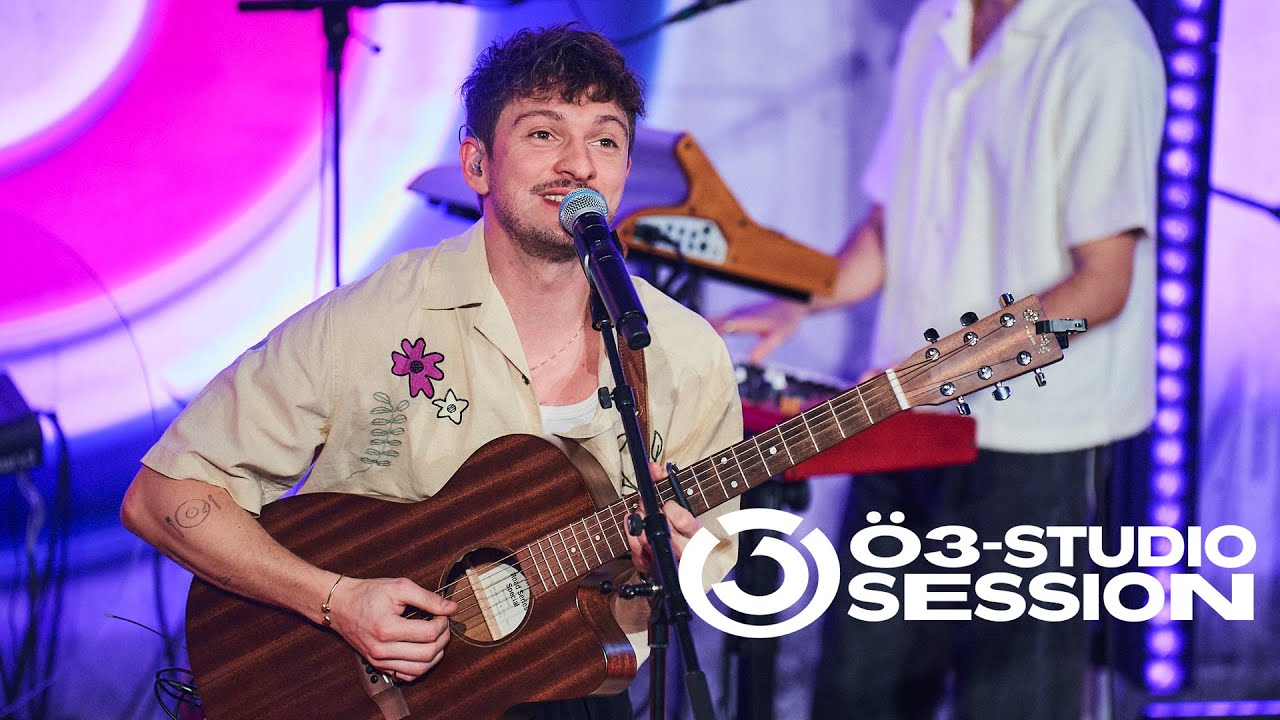
Ein superexklusives Konzert 80 glückliche Ö3-Gewinner:innen - die Ö3-Studio Session von NESS und Rian wird garantiert für immer in schöner Erinnerung behalten werden. Die XL-Version von Rians „Verwandschaftstreffen“ war definitiv eines der Highlights.
 near folio
limpid edge
Hallo Leute! Im back with another riveting A2 level question.
I was listening t...
near folio
limpid edge
Hallo Leute! Im back with another riveting A2 level question.
I was listening t...
I think "their" refers to the "brother of the brother-in-law" and the "brother-in-law" who are then both brothers and share the same father
limpid edge
near folio
I think "their" refers to the "brother of the brother-in-law" and the "brother-i...
I had that thought too, but then I didn’t understand what the uncle had to do with it lol
But if that’s the most logical reading of it then I can accept it
near folio
I understood it as him listing the ones who are hosting the party
but yeah, he's just being silly on purpose, makes it sound better I guess
 unique dune
teal cliff
-ig is pronounced as its written in austria
unique dune
teal cliff
-ig is pronounced as its written in austria
and bavaria ☝️
teal cliff
unique dune
and bavaria ☝️
👍
 versed wasp
könnte jemand mir das erklären?!

 delicate tiger
sei doch froh, dass du nicht traumatisiert wurdest 😉
versed wasp
Got sei dank, bruder
plush pelican
How does this translate with the "zum"?
To throw money out to the window?
I would've thought throwing money out of the window would be "Geld aus dem Fenster rauswerfen" or something. How does the "zu" work here?
 plain umbra
plush pelican
How does this translate with the "zum"?
To throw money out to the window?
I wo...
plain umbra
plush pelican
How does this translate with the "zum"?
To throw money out to the window?
I wo...
 plush pelican
plain umbra
plush pelican
plain umbra
Is this specific to those prefixes? I know prepositions are notoriously difficult to translate and often don't line up 1-to-1, but still, I didn't know about this for "zu"
plain umbra
plush pelican
Is this specific to those prefixes? I know prepositions are notoriously difficul...
I'm thinking it might be related to this:

So basically, how I summarise that in relation to this meaning:
- zu emphasises the direction (as opposed to destination)
- zu is strengthened by hin
- there's also an idiomatic component
Like maybe one way to think of it is "throwing it out, in the direction of the window".
nova sparrow
plain umbra
So basically, how I summarise that in relation to this meaning:
- zu emphasises ...
@plush pelican I think it might be related to former living situations: you threw garbage literally out of the window to get rid of it and this figure of speech tells you sb is acting with money as with garbage 🤔
You can't transfer this figure of speech to e. g. a door or sth.
If you want to express the same without a direction: er wirft mit Geld nur so um sich.
 feral bough
versed wasp
könnte jemand mir das erklären?!
feral bough
versed wasp
könnte jemand mir das erklären?!
Eigentlich, ich wusste es nur aber sah ich es nie
 rustic dock
plush pelican
Is this specific to those prefixes? I know prepositions are notoriously difficul...
rustic dock
plush pelican
Is this specific to those prefixes? I know prepositions are notoriously difficul...
pretty much, as those are the ones indicating motion
on second thought, in the song "la paloma" freddy quinn sings "lasse sie ohne säumen zum fenster ein", where "ein" indicates motion, but i think here it's separated from the verb "einlassen" 
so maybe the rare instances where someone would choose ein- and aus- over those above would be valid too
somebody more intelligent than me will have to figure that one out
fervent kernel
any german song suggestions?
balmy axle
fervent kernel
any german song suggestions?
EAV has much of the good stuff
i personally would recommend "An der Copacabana", "Fata Morgana" and "Banküberfall"
fervent kernel
okay
plush pelican
I have a story where elves split into two groups-- the minority group that splits off becomes fairies, and the remaining elves don't like the fairies.
When I say "the remaining elves", is it "die verbleibenden Elfen" or "die verbliebenden Elfen"?
I said, "Wie man sich vorstellen kann, herrscht zwischen den Feen und den (verbleibenden) Elfen böses Blut."
And I was corrected by a native that it should be "den verbliebenden Elfen", but that seems wrong.
thick apex
plush pelican
I have a story where elves split into two groups-- the minority group that split...
You can either use "verbleibenden" or "verbliebenen"
plush pelican
thick apex
You can either use "verbleibenden" or "verbliebenen"
Are you a native speaker?
thick apex
Yes
plush pelican
thick apex
You can either use "verbleibenden" or "verbliebenen"
Do you think they missed the D?
plush pelican
thick apex
You can either use "verbleibenden" or "verbliebenen"
Is there any difference between "verbleibenden" and "verbliebenen" at all?
thick apex
plush pelican
Is there any difference between "verbleibenden" and "verbliebenen" at all?
"verbleibenden" is Partizip I and "verbliebenen" is Partizip II
In this case you can use both forms, it doesn't really matter
thick apex
plush pelican
Do you think they missed the D?
hm, I guess they just misspelled the word - "verbliebenden" doesn't exist
plush pelican
thick apex
hm, I guess they just misspelled the word - "verbliebenden" doesn't exist
They very specifically corrected it to switch the I and the E
they even highlighted it
I can only assume they were reading fast and missed the D at the end and thought I meant "verbliebenen"
thick apex
plush pelican
I can only assume they were reading fast and missed the D at the end and thought...
yeah, propably ^^'
plush pelican
thick apex
yeah, propably ^^'
Thanks for your help 
thick apex
You're welcome! ^^
 vernal tusk
@gray urchin can u look dm?
 gray urchin
vernal tusk
<@1229087584127553710> can u look dm?
gray urchin
vernal tusk
<@1229087584127553710> can u look dm?
uhh sure
 wooden glen
when to use bist/sind
both mean 'are', don't they?
willow socket
wooden glen
when to use bist/sind
both mean 'are', don't they?
du bist
sie sind//Sie sind//wir sind
verbs are conjugated by subject
wooden glen
willow socket
verbs are conjugated by subject
vielen dank!
fervent kernel
can anyone help me to from where i should start learn german.
near folio
ex beginner
 stoic mauveBOT
How to get started
The simplest way to learn German is to find topics you don’t understand yet and search for explanations of them. This list provides you with a guide for which topics to learn if you are completely new to German. Type the topic into Google (or YouTube) and start learning!
Introduction
1: Alphabet (especially ä, ü, ö and ß)
2: Basic greetings (hello, goodbye, etc.)
Part 1 - Simple Sentence
1: Noun gender & plurals
2: Nominative case (What are cases?)
3: Nominative pronouns (I, you, he, she, etc.)
4: Verbs in present tense
5: Definite/indefinite articles
6: Accusative case (for nouns)
7: Accusative pronouns
8: Word order of simple sentences
9: How to ask questions
See Part 2 on the next page.
Tips
- Always learn the gender of a noun when you learn a new noun
- Learn to use a translation dictionary (e.g. dict.cc, leo.org)
- Use
>faq resourcesto see our list of German learning resources - For listening and pronunciation practice, try watching movies or videos (incl. YouTube)
- You can listen to pronunciation for words on websites like dict.cc, forvo.com, and others
- Practice writing sentences every day (and asking people to correct them)
- Ask as many questions as possible
- Don’t be scared to make mistakes!!!! If you don’t let yourself make mistakes, you will never be able to learn German
Page 1/2
fervent kernel
near folio
>ex beginner
thank u
near folio
You can enter >ex beginner yourself in #botchannel to see page 2.
fervent kernel
@near folio thanks for helping me
 golden nacelle
anyone aware of anything in the style of Lingua Latina Per Se Illustrata for german? (for those unaware of that book its written entirely in latin starting with basic sentences to build up your knowledge of the language without translation)
 slate mortar
Hi can I find some books for learning German pdf , any recommendations
 arctic marsh
versed wasp
könnte jemand mir das erklären?!
arctic marsh
versed wasp
könnte jemand mir das erklären?!
ich habe das sofort verstanden
und ich bin traurig davon
glücklicherweise habe ich nicht das Video gesehen
icy flax
Was hat das mit der deutschen Sprache zu tun? Hattest du vor, es in #1033125270217048246 zu posten?
Tja.. hab speziell für dich Uber geöffnet und eine Fahrt durch die Stadt über die App geplant. Da scheint Uber beide UberX und Uber Taxi zur Verfügung zu stellen. Also, hochwahrscheinlich ja, es gibt.
 narrow pier
slate mortar
Hi can I find some books for learning German pdf , any recommendations
narrow pier
slate mortar
Hi can I find some books for learning German pdf , any recommendations
Try Menschen 2012
limpid edge
Quick q on word order. I came across this sentence in a book:
Ich hatte natürlich nicht auf den Schulbus gezielt, aber von der Schule gefeuert wurde ich trotzdem.
Why is gefeuert, which is in Partizip 2 for this passive construction, placed before wurde?
Shouldn’t it be „ aber von der Schule wurde ich trotzdem gefeuert“? That way the conjugated verb is in position 2?
 lost frigate
limpid edge
Quick q on word order. I came across this sentence in a book:
Ich hatte natürli...
lost frigate
limpid edge
Quick q on word order. I came across this sentence in a book:
Ich hatte natürli...
Hi! In my opinion you are right, because "wurde" needs to be placed in front of the Partizip
limpid edge
Haha weird! Any idea why it may have been written out this way? It’s from the German version of the first Percy Jackson book so I can’t imagine it’s just translated poorly… does it give the sentence a more casual feel to a native reader perhaps?
lost frigate
As a native speaker it saounds kinder wrong
wispy yarrow
limpid edge
Haha weird! Any idea why it may have been written out this way? It’s from the Ge...
Maybe, all I can say is that I often read sentences put thid way
lost frigate
Maby its possible but i never heard that before
wispy yarrow
Oh lol
lost frigate
wispy yarrow
Maybe, all I can say is that I often read sentences put thid way
Yeah mb
sometimes i comes this way but then the particip sounds diffrent
Its pretty rare and i almost never use it but it can be right
but in this situation I would have used it like that but i dont know if it is wrong tbh
limpid edge
Got it. Sounds like it’s just something that happens sometimes lol
luckily I recognized the meaning immediately and only realized it was weird after I re-read it. I’ll keep an eye out for this type of stuff
lost frigate
So is it right or not, because i am now not sure
plush pelican
lost frigate
So is it right or not, because i am now not sure
I mean, it's topicalizing the entire sort of rechte Satzklammer, including the Verbgefährte. Idk if it sounds natural here, but I think there are other sentences that do this where it does sound natural.
News articles do this sort of sentence structure sometimes.
Here's an article on Trump announcing tariffs:
Welche Zölle hat Trump jetzt auf Stahl verhängt?Trump hat nun Zölle in Höhe von 25 Prozent auf Stahl- und Aluminiumimporte in die USA auf den Weg gebracht. Sie sollen alle Staaten der Welt betreffen - nur für Australien deutete Trump eine Ausnahme an, die er mit einem US-Handelsüberschuss gegenüber dem Land begründet.
In Kraft treten sollen die Zölle am 4. März. Der US-Präsident will damit nach eigenen Angaben die Stahlproduzenten im eigenen Land stärken. "Es ist an der Zeit, dass unsere großartigen Industrien nach Amerika zurückkehren", sagte Trump vor Reportern.
(in Kraft treten) sollen die Zölle am 4. März
That's the same sentence structure as
(von der Schule gefeuert) wurde ich trotzdem.
I think.
@limpid edge Do you know how you don't have to have the subject in position 1? For instance, instead of saying
Ich gehe heute mit meinem Bruder spazieren.
I'm going for a walk with my brother today.
You can say
Heute gehe ich mit meinem Bruder spazieren.
You move the time adverb "heute" into position 1. That's called "topicalization" or "Topikalisierung"
the thing that is in position 1 is the "topic", so by moving something into position 1, you are making something the topic, you are "topicalizing" it
And it turns out that you can topicalize a number of things, including prepositional phrases:
Mit meinem Bruder gehe ich heute spazieren.
And you can even topicalize the 2nd spot for verbs at the end
delicate tiger
"Mit meinem Bruder spazieren gehe ich heute" if you want to pull even more elements foreward
plush pelican
delicate tiger
"Mit meinem Bruder spazieren gehe ich heute" if you want to pull even more eleme...
right, so there the "mit meinem Bruder" is sort of attached to the verb "spazieren"
it's a Verbgefährte, additional information that is seen as important and strongly linked to the 2nd verb.
so when you topicalize the 2nd verb (pulling it to position 1), that information can get pulled along with it
Ich wurde trotzdem (von der Schule gefeuert).
(von der Schule gefeuert) ich wurde ich trotzdem (von der Schule gefeuert).
von der Schule gefeuert wurde ich trotzdem.
and the subject gets pushed out of position 1 and into position 3
plush pelican
lost frigate
So is it right or not, because i am now not sure
One thing I have particularly noticed with this sentence structure is whenever you hear about natural disasters like earthquakes or hurricanes or floods or something, and the news reporter says somewhere, "verletzt wurde niemand." instead of "niemand wurde verletzt."
icy flax
plush pelican
One thing I have particularly noticed with this sentence structure is whenever y...
True! Pretty recorrent in tagesschau
limpid edge
@plush pelican thank you so much for this really in depth write up!! Taking it step by step made it make sense! Can you topicalize any bits of the sentence? Presumably they have to be coherent fragments (like you couldn’t just pull „mit“ to the front in the brother example)
plush pelican
limpid edge
<@216341703915864064> thank you so much for this really in depth write up!! Taki...
You can topicalize almost anything except the conjugated verb
Except technically there is a workaround to topicalize that, too
Obviously, the subject can be the topic, then the sentence looks like English
Any prepositional phrase or adverb or object can be the topic
Mit dem Hund gehe ich heute spazieren.
Or like
Ich helfe dir gerne.
dir helfe ich gerne.
gerne helfe ich dir.
A key thing to recognize here is that when you make something the topic, you are putting a certain amount of weight on it, a certain amount of emphasis
So often, there needs to be a reason why you're doing this and pulling that object or adverb or whatever forward to be the topic
One reason can be that you mentioned something earlier, so that's already known information, and you link the sentences and continue the conversation by first mentioning (the thing we already talked about) and finishing the sentence with (new information related to that that I want to share with you)
For example:
Gestern habe ich einen Hund gesehen.
Den Hund habe ich heute wieder gesehen.
In the first sentence, we establish that there exists "a dog", and that I saw it yesterday
In the second sentence, you already know about the existence of the dog, so the dog gets mentioned first (despite being an accusative object), and the new information about the dog, is that I saw it again today.
so the sentences are linked more smoothly in this way
You can also put something as the topic because you want to imply something exclusive perhaps.
Dir helfe ich gerne. (Deinem Bruder helfe ich allerdings nicht gern. Er ist ein Arschloch.)
The bit in parentheses may just be implied
I'll gladly help you specifically, but I wouldn't gladly help other people, like your brother
But yeah, so basically anything can be topicalized, except for the conjugated verb, which has to remain in position 2
but then there is a trick to allow you to topicalize the conjugated verb, which is that you put "tun" (to do) in position 2 and conjugate it, and then pull the original verb into position 1 and use its infinitive form.
Ich helfe gerne.
I like to help.
Helfen tue ich gerne.
I forget exactly what the difference in emphasis is when you do that, but it changes something about emphasizing the verb more
I think there are some small and rare restrictions on what can be topicalized
but I forget what they are
plush pelican
limpid edge
<@216341703915864064> thank you so much for this really in depth write up!! Taki...
oh yeah, as to "how much" you can fit into position 1: It's still a single position, so you can still only fit sort of "1 unit's worth of information"
but "1 unit's worth of information" can be surprisingly long
For example, if you have adjectives in front of a noun, and then you have nouns in genitive after the noun, that can all count as "1 unit's worth of information", because that's all information about one single "thing"
(Der ältere Bruder meiner Frau) hilft mir.
Here, that's the subject, but the same rule applies for anything else, for example:
Ich helfe dem älteren Bruder meiner Schwester.
(Dem älteren Bruder meiner Frau) helfe ich.
For like adverbs, I think the general idea is that you cannot put multiple adverbs of differing types in position 1, like you can't put both "heute" (time adverb) and "im Park" (location adverb) all in position 1 together.
But if you have 2 time adverbs, like "heute um 9 Uhr", that still counts as "1 unit", because it's just drilling down further into the specifics of the time.
(Heute um 9 Uhr) treffen wir uns im Park.
At 9 am today, we're meeting in the park.
limpid edge
@plush pelican holy cow man you should write a grammar book lol I think it’d kick ass.
Thanks again for the explanations I’m going to save them and come back to it if I encounter a weird sentence like that one again!
 eternal ruin
Is anyone able to look this over for me?
Sehr geehrte Damen und Herren,
ich bin XX und ich habe Psychologie bei XX University studiert. Ich will eine Fremdsprachenassistenzkraft werden, weil ich nach Deutschland gehen will, mehr Deutsch zu lernen. Für mich ist es wichtig, Deutsch zu lernen, weil mein Familienhintergrund Deutsch ist. Ich will mehr über Deutschland erfahren, damit ich mehr über die Geschichte meiner Familie kenne.
Ich habe auch in Korea und online für chinesische Studenten angelernt. Diese Erfahrungen haben sehr Spaß gemacht, deshalb möchte ich wieder unterrichten. Ich hoffe, ich meinen Studenten über Kanada lernen helfe. Ich freue mich, unsere Erfahrungen in unseren Ländern auszutauschen.
Ich finde, dass Deutschland ein sehr schönes Land ist. Ich habe von meiner Deutschlehrerin gelernt, wie wunderbar Deutschland ist. Wenn ich nach Deutschland gehen könnte, würde ich das Land erkunden. Ich will die wunderschönen Landschaften und die historischen Museen sehen. Ich hoffe, ich auch viele Deutsche kennenlerne und deutschen Freunden mache. Ich weiß, dass Deutschland viel bieten hat, und ich hoffe, alles zu erleben.
 fair scaffold
"Ich will eine Fremd...mehr Deutsch lernen" Den Satz verstehe ich nicht, was genau möchtest du denn? So ergibt der Satz keinen Sinn.
"haben Spaß" oder "haben sehr viel Spaß"
"ich meine Studenten...helfen" Den Satz verstehe ich auch nicht.
"Ich hoffe, dass ich auch..."
"zu bieten hat und ich..."
There are many smaller mistakes too and it is defenitely noticable that german isn't your first language.
willow socket
Sehr geehrte Damen und Herren,
ich bin XX und ich habe Psychologie an der XX University studiert. Ich möchte eineFremdsprachenassistent werden, weil ich nach Deutschland gehen möchte, um mehr Deutsch zu lernen (meine Deutschkenntnisse zu verbessern). Für mich ist es wichtig, Deutsch zu lernen, weil mein Familienhintergrund Deutsch ist. Ich will mehr über Deutschland erfahren, um mehr über die Geschichte meiner Familie herauszufinden/zu lernen.
Ich habe auch in Korea und online für chinesische Studenten angelernt. <-- sentence is wrong, meaning unclear. (Ich habe Studenten gelehrt/unterrichtet? Etwas beigebracht?) Diese Erfahrungen haben sehr viel Spaß gemacht, deshalb möchte ich wieder unterrichten. Ich hoffe, dass ich meinen Studenten helfen kann, mehr über Kanada zu lernen. Ich freue mich darauf, unsere Erfahrungen in unseren Ländern auszutauschen.
Ich finde, dass Deutschland ein sehr schönes Land ist. Ich habe von meiner Deutschlehrerin gelernt, wie wunderbar Deutschland ist. Wenn ich nach Deutschland gehen könnte, würde ich das Land erkunden. Ich will die wunderschönen Landschaften und die historischen Museen sehen. Ich hoffe, dass ich auch viele Deutsche kennenlerne und deutsche Freunde finde. Ich weiß, dass Deutschland viel zu bieten hat und ich hoffe, alles zu erleben.
eternal ruin
willow socket
Sehr geehrte Damen und Herren,
ich bin XX und ich habe Psychologie **an der XX U...
Vielen Dank!
 nova sparrow
 verbal girder
bekommen can be used like this? couldnt find anything on dict.cc
verbal girder
bekommen can be used like this? couldnt find anything on dict.cc
It can: etwas von etwas (anderem) wegbekommen
verbal girder
but its bekommen
willow socket
the 'weg' is implied
like 'von meinen Feldern' already makes it clear that you would be getting (bekommen) it off/from the fields
rustic dock
verbal girder
but its bekommen
the english translation above does the same thing, "get it away/off my..."
there are a lot of similar constructions with bekommen and various prefixes
take for example "hinbekommen" which means "to manage to do something"
"wie bekomme ich das hin?" literally means "how to i get this thereto", but semantically it means "how can i manage that?" or "how can i make it work?"
verbal girder
ty guys
verbal girder
oh…… von can also mean off? i thought of it as meaning only from……
now it’s clear
rustic dock
verbal girder
oh…… von can also mean off? i thought of it as meaning only from……
now it’s clea...
here it means "from" too
it's just that 'away' doesn't have to be included
you could also say "von meinen Feldern weg bekommen"
which would mean "to get away from my fields"
but 'weg' doesn't have to be included
since 'von' already makes it clear from context
it implies motion but not a destination, since the point is that you just want it anywhere else but your fields
verbal girder
in english, from doesn't imply motion
"How to get x from this place", from here specifies location
for me the above to make sense , "von" must necessarily take the "off" definition, otherwise we are back to square one
if in german, it being "from" makes sense, i can imagine that
plain umbra
verbal girder
in english, from doesn't imply motion
"How to get x from this place", from here ...
The motion-location thing is the same between from and off though.
verbal girder
you're saying that in english
How to get these trespassers off my property and
How to get these trespassers from my property
mean the same thing?
plain umbra
No, they are different prepositions with different meanings. But you said that "from doesn't imply motion", even though "off" has equal implication of motion compared to "from".
Both are prepositions that refer to the point of origin of something.
I would say the difference is only in what the emphasis is, in this usage. Where "off" emphasises the end goal of the trespassers no longer being on the property, while "from" only emphasises the origin location.
verbal girder
rustic dock
since 'von' already makes it clear from context
well, that is the only way i managed to make sense of it, since "from" wouldn't work in the translation and thats what i have to work with since i don't have a intrinsic understanding of german
 vagrant vault
whats the meaning of noch here? also?
"ihrer Klasse sind außer Juliana noch 14 weitere Schüler"
 wise venture
It means: In your class, there are 14 other students besides Juliana
And noch mean: still, yet
Also: so
 charred harbor
verbal girder
you're saying that in english
How to get these trespassers off my property and
H...
charred harbor
verbal girder
you're saying that in english
How to get these trespassers off my property and
H...
The latter sounds incomplete to me
 void cave
Question about thinking in German, and "sein" as an auxiliary:
When someone born in Germany hears "Bist du gestern angekommen?", how does the tense of "Bist", specifically, seem in their mind?
Does the word "Bist", specifically, feel like a present tense word within the phrase, something like "Are you yesterday arrived"?
(Like a present state (Bist/are) of movement achieved, like you "are arrived", which was achieved yesterday.)
Or does the word "Bist" itself become understood as a past-tense version like "have", as in "Have you arrived yesterday?"
wispy yarrow
void cave
Question about thinking in German, and "sein" as an auxiliary:
When someone born...
Feels more like a past tense. And it’s “Bist” btw
void cave
wispy yarrow
Feels more like a past tense. And it’s “Bist” btw
Thank you!
So it seems like it's esentially not seen as the same present tense "bist" as in "Bist du zufrieden?", but feels more like "bist" becomes "have".
That's helpful to understand.
 glacial birch
I have my A1 exam in 10 days and I still am not able to remember artikel of a word and plural forms of some of the words. Is there any trick to memorise these?
near folio
glacial birch
I have my A1 exam in 10 days and I still am not able to remember artikel of a wo...
There are patterns, yeah, see here: https://germanstudiesdepartmenaluser.host.dartmouth.edu/Nouns/nouns.html
But for the A1 exam there are probably not that many words, so you can just try to memorise them.
glacial birch
Thank you so much!
fervent kernel
Ich spiele manchmal Minecraft
Why is manchmal in 3rd place? I thought it goes Subject Verb Noun
So I thought it would be Ich spiele Minecraft macnhmal
 narrow flame
Subject Verb Noun is not a fixed rule, moreso Subject Verb something Noun or something Verb Subject something noun
Moreso a suggestion
manchmal is in relation to spiele, so it is before or after it
Like an adjective is usually before the noun it references
willow socket
narrow flame
Subject Verb Noun is not a fixed rule, moreso Subject Verb *something* Noun or *...
Not completely. The verb in a German Hauptsatz is fixed in the second position, the rest is flexible.
so: something verb something
willow socket
fervent kernel
So I thought it would be Ich spiele Minecraft macnhmal
Here, the "verbal phrase" would be something like "Minecraft spielen". Much like "Fahrrad fahren" or "Tennis spielen". In these cases of article-less nouns which belong to the verb, they almost always come at the very end of a sentence.
'manchmal' describes frequency and as such belongs to either temporal or modal adverbial information (TeKaMoLo).
Note that either of these is possible:
Ich spiele manchmal Minecraft.
Manchmal spiele ich Minecraft.
This is a bit weird:
Ich spiele Minecraft manchmal.
fervent kernel
willow socket
Here, the "verbal phrase" would be something like "Minecraft spielen". Much like...
What is an article-less noun?
willow socket
fervent kernel
What is an article-less noun?
Minecraft (it doesn't have an indefinite or definite article in front of it)
fervent kernel
Ohh like die/der/das
willow socket
fervent kernel
Ohh like die/der/das
yes, or ein/eine
fervent kernel
willow socket
yes, or ein/eine
Achso, so would 'Ich esse manchmal ein Apfel und drei Kartoffeln' be correct?
willow socket
fervent kernel
Achso, so would 'Ich esse manchmal ein Apfel und drei Kartoffeln' be correct?
einen Apfel
but yes
fervent kernel
Danke
jade hawk
Satz aus einem Buch:
Manchmal hatten wir das Theater, das um Charlotte veranstaltet wurde, einfach über
Wäre das Folgende richtig?
Manchmal hatten wir das Theater einfach über, das um Charlotte veranstaltet wurde
 main flare
void cave
Question about thinking in German, and "sein" as an auxiliary:
When someone born...
main flare
void cave
Question about thinking in German, and "sein" as an auxiliary:
When someone born...
I’m not native in German but I speak a language with a similar construction. The tense comes from the participle and the auxiliary you don’t really think of seperately from that, it’s just an extension of the main verb in the participle
 granite spade
"Mein Deutsch ist nicht so gut und ich brauche viel Zeit zu lesen" - is this better with a comma after Zeit, or better phrased like "brauche viel Zeit zum Lesen"? Or simply "ich brauche viel Zeit um es zu lesen"? Or "ich brauche beim Lesen viel Zeit"
 robust glade
granite spade
"Mein Deutsch ist nicht so gut und ich brauche viel Zeit zu lesen" - is this be...
robust glade
granite spade
"Mein Deutsch ist nicht so gut und ich brauche viel Zeit zu lesen" - is this be...
I think the last one sounds the best, but i personally prefer "sehr lange" instead of "viel Zeit"
 pseudo breach
hey so theres something confusing me with gendered nouns
when I first knew about it in German I thought it would make vocabulary hard since I had to know the gender as well as spelling unlike English
but today I realized my native language too has gendered nouns and I never had to memorize gender of words
its like I can tell it by it sounding right/wrong
does similar thing happen with natives ?
jade hawk
yeah
pseudo breach
can this instinct be eventually picked up by learners?
like you feel der kind sounds wrong
jade hawk
Not fully but you can subconsciously pick up gender patterns
plain umbra
In some languages, the spelling of the word tells you the gender. In German it's not quite like that. So you can't 100% know the gender in German even as a native speaker. The reason why it seems as if native speakers intuitively know them is because they spent their whole life memorising every day.
@pseudo breach
 cobalt ocean
pseudo breach
can this instinct be eventually picked up by learners?
cobalt ocean
pseudo breach
can this instinct be eventually picked up by learners?
it's not really an instinct, it's just that you learn the noun with the gender when you're a kid
i mean it becomes instinctual in the same way that all language becomes instinctual
but if you introduce a german to a completely new word that they've never seen, if it doesn't have any of the tells for a certain gender like -chen or -keit etc., then they won't just know by instinct
but yeah, eventually it will sound wrong to your ears when someone messes up the gender of a word
icy flax
cobalt ocean
but yeah, eventually it will sound wrong to your ears when someone messes up the...
or when you are speaking fast and you messed up the gender and know it 😂 but then it is too late cz u r passed half sentence
 nocturne drift
Ist "Kriminalmetaroman" ein Wort? Wie wird man "mystery meta-novel" übersetzen?
 maiden yacht
nocturne drift
Ist "Kriminalmetaroman" ein Wort? Wie wird man "mystery meta-novel" übersetzen?
maiden yacht
nocturne drift
Ist "Kriminalmetaroman" ein Wort? Wie wird man "mystery meta-novel" übersetzen?
Ich weiß was für ein Mensch du bist....
Beatoriice uooohh
maiden yacht
nocturne drift
Ist "Kriminalmetaroman" ein Wort? Wie wird man "mystery meta-novel" übersetzen?
Metakrimi vielleicht
nocturne drift
maiden yacht
Ich weiß was für ein Mensch du bist....
BEATORICEEE
nocturne drift
maiden yacht
Metakrimi vielleicht
Das klingt gut
nocturne drift
Vielen Dank
maiden yacht
Kein Problem Bruder
nocturne drift
maiden yacht
@nocturne drift ohne Liebe lässt es sich nicht sehen
nocturne drift
ohne Liebe lässt es sich nicht sehen
 lost escarp

 frigid perch
is this a valid use of konjunktiv I ? "Sache wie Getränke und Lebensmittel könnten meine Tasche entleere"
plush pelican
frigid perch
is this a valid use of konjunktiv I ? "Sache wie Getränke und Lebensmittel könnt...
no
first off, the Konjunktiv 1 would only show up with the conjugated verb
"könnten" is the conjugated verb
Second, you seem to have confused what the subject and object is
Sachen/(Getränke und Lebensmittel) = subject
könnten
meine Tasche = object
leeren
What is the thing being emptied/drained? Your pocket
What is the thing doing the draining? things like drinks and food
third, I'm not sure why you're even trying to use Konjunktiv 1 here. It's mainly used for reported speech, but I don't see any "Peter sagt..." or anything like that
frigid perch
plush pelican
third, I'm not sure why you're even trying to use Konjunktiv 1 here. It's mainly...
yeah i know objektive and everything. I thought, because you use konjunktiv I when for example you say "Ich dachte, ich sei nicht in der Lage" - that´s konjunktiv I. And so, if i make entleeren to konjunktiv I, it kinda adds an invinsible "- denke ich" to the sentence. But wait, mistake it should be entleeren cause it´s sie, so it wont do a difference anyways but still
 tender current
Hallo, ich habe eine kurze Frage. Ich spiele gerade auf Deutsch ein Videospiel und hab dieser Satz gesehen. Ich verstehe es nicht, warum das Verb Werden zweimal gesagt wurde.
 plush pelican
tender current
Hallo, ich habe eine kurze Frage. Ich spiele gerade auf Deutsch ein Videospiel u...
plush pelican
tender current
Hallo, ich habe eine kurze Frage. Ich spiele gerade auf Deutsch ein Videospiel u...
Sieht aus wie ein Fehler
"werden wir"
nicht
"werden wird"
tender current
oh ja das konnte es sein. Vielen Dank ^^
charred harbor
tender current
Hallo, ich habe eine kurze Frage. Ich spiele gerade auf Deutsch ein Videospiel u...
diesen Satz* btw
tawny ice
is Sonnabend actually used?
gleaming tree
tawny ice
is Sonnabend actually used?
Ja, manchmal
 hushed dawn
Hallo liebe Leute,
ich habe eine Frage. Ich möchte einen plötzlichen auftretenden Vorfall in der Vergangenheit beschreiben. Ich weiß nicht ob meine Formulierung richtig liege. Bitte korrigieren Sie mich
"Der Patient habe einen Roller gefahren, als er plötzlich bremsen müsse, um einen Stoß gegen ein Fahrradfahrer zu vermeiden. "
willow socket
hushed dawn
Hallo liebe Leute,
ich habe eine Frage. Ich möchte einen plötzlichen auftreten...
Der Patient sei Roller gefahren, als er plötzlich habe bremsen müssen, um einen Zusammenstoß mit einem Fahrradfahrer zu vermeiden.
hushed dawn
willow socket
Der Patient sei Roller gefahren, als er plötzlich habe bremsen müssen, um einen ...
Ich danke Ihnen
 uneven totem
hushed dawn
Ich danke Ihnen
uneven totem
hushed dawn
Ich danke Ihnen
Der Patient fuhr einen Roller, als er plötzlich bremsen musste, um einen Kollision gegen einen Fahrradfahrer zu vermeiden # oder # um einen Zusammenstoß gegen den Fahrradfahrer zu vermeiden.
Here I made 2 sentence because I would prefer to say the marked thing but as you demanded to translate your sentence I did so
plush pelican
willow socket
Der Patient sei Roller gefahren, als er plötzlich habe bremsen müssen, um einen ...
Ersatzinfinitiv UND Konjunktiv 1? Ich glaube, ich habe das nie zuvor gesehen
willow socket
plush pelican
Ersatzinfinitiv UND Konjunktiv 1? Ich glaube, ich habe das nie zuvor gesehen <:A...
what's Ersatzinfinitiv?
double infinitives?
plush pelican
"habe" first in the Nebensatz
plush pelican
willow socket
double infinitives?
Yes, in English "the double infinitive"
arctic marsh
plain umbra
In some languages, the spelling of the word tells you the gender. In German it's...
there are general things though
obviously with exceptions
-ant, -ast, -ich, -ig, -ismus, -ling, -or, and -us endings are usually masculine
-a, -anz, -ei, -enz, -heit, -ie, -ik, -in, -keit, -schaft, -sion, -tät, -ung, -ur are usually feminine
-chen, -icht, -il, -it, -lein, -ma, -ment, -tel, -tum, -um are usually neuter
plain umbra
arctic marsh
-ant, -ast, -ich, -ig, -ismus, -ling, -or, and -us endings are usually masculine
These are gendered suffixes. This is different from what I was describing.
 woeful needle
plain umbra
These are gendered suffixes. This is different from what I was describing.
woeful needle
plain umbra
These are gendered suffixes. This is different from what I was describing.
I see.
Like words with no visible connection to any gender. Typically, those words are usually more or less English-language derived words, or words from other entirely different languages.
plain umbra
woeful needle
I see.
Like words with no visible connection to any gender. Typically, those wo...
That's not true.
Most simple words of Germanic origin do not have an obvious gender.
Random example: Brot.
woeful needle
plain umbra
Random example: Brot.
You're somehow still making my point.
plain umbra
woeful needle
You're somehow still making my point.
How so?
Brot is not English-derived or from an entirely different language and it has no visible connection to any gender.
frigid perch
hello what is the difference between "Mileu", "Umwelt" and "Umgebung" - i guess Umgebung correlates more with people but idk
teal cliff
frigid perch
hello what is the difference between "Mileu", "Umwelt" and "Umgebung" - i guess ...
ich hab das erste wort nachschauen müssen lmao
 gleaming tree
teal cliff
ich hab das erste wort nachschauen müssen lmao
gleaming tree
teal cliff
ich hab das erste wort nachschauen müssen lmao
Ist das nicht sogar französisch? Milieu ist doch kein original deutsches Wort
teal cliff
ja eben
der unterschied zwischen den anderen zweien ist extrem gering und schwer zu erklären
teal cliff
frigid perch
hello what is the difference between "Mileu", "Umwelt" and "Umgebung" - i guess ...
umwelt wird gerne im sinne von natur benutzt (siehe Umweltverschmutzung) während Umgebung ein gebiet in deiner nähe ist
@gleaming tree oder?
und dann noch Umfeld was dann meistens das soziale Umfeld meint
yap da scheinen mir ein paar leute zuzustimmen
 teal cliff
gleaming tree
Ist das nicht sogar französisch? Milieu ist doch kein original deutsches Wort
teal cliff
gleaming tree
Ist das nicht sogar französisch? Milieu ist doch kein original deutsches Wort
eben lmao
ausserdem wahrscheinlich höchst formell
gleaming tree
Das Rotlichtmilieu fällt mir als einziges Beispiel ein, wo man es häufig benutzt (das sagt nichts über mich aus 😒 )
 dawn oxide
teal cliff
ausserdem wahrscheinlich höchst formell
dawn oxide
teal cliff
ausserdem wahrscheinlich höchst formell
Also bei uns wurde das in der Schule oft verwendet in bestimmten Fächern
In Geschichte zB
gleaming tree
dawn oxide
Also bei uns wurde das in der Schule oft verwendet in bestimmten Fächern
Also ich hab es ja auch irgendwo her.. aber weiß nicht, ob das in der Schule war. Wüsste auch nicht wo in Geschichte das drangekommen sein sollte 
teal cliff
dawn oxide
Also bei uns wurde das in der Schule oft verwendet in bestimmten Fächern
interessant
ich habs schon mal gehört aber nicht gewusst was es heißt
(muss nix heißen ich benutze standarddeutsch nicht viel im alltag)
gleaming tree
teal cliff
(muss nix heißen ich benutze standarddeutsch nicht viel im alltag)
Jetzt wird wieder mit dem Dialekt geflext...
teal cliff
gleaming tree
Jetzt wird wieder mit dem Dialekt geflext...
nein wirklich nicht 😭
bei mir kann man bei solchen dingen nicht vertrauen
gleaming tree
Wie sagst du denn dazu?
teal cliff
das hab ich ja nicht gemeint. wir verwenden nur andere wörter häufiger als andere regionen. und deswegen auch andere wörter weniger häufig als andere regionen ^^
ich hab keine ahnung wie wir das sagen, tatsächlich
dawn oxide
gleaming tree
Also ich hab es ja auch irgendwo her.. aber weiß nicht, ob das in der Schule war...
Also wir hatten das Sinus-Milieus Modell besprochen, kann aber auch in Geographie gewesen sein. Erinnere mich nicht mehr 😆
teal cliff
teal cliff
bei mir kann man bei solchen dingen nicht vertrauen
es ist halt eh schon viel besser geworden seit ich diesem server beigetreten bin lmao
gleaming tree
dawn oxide
Also wir hatten das Sinus-Milieus Modell besprochen, kann aber auch in Geographi...
Sinus war bei mir in Mathe der Bruder von Kosinus. Ansonsten sagt mir das nichts XD
gleaming tree
teal cliff
es ist halt eh schon viel besser geworden seit ich diesem server beigetreten bin...
Ich bin stolz auf dich. Finde dein Deutsch schon richtig gut 😂
woeful needle
plain umbra
Brot is not English-derived or from an entirely different language and it has no...
Okay, apart from „Brot“, gimme other examples of random German nouns where their gender has nothing to do with spelling..
limpid edge
Y’all passiv is wrinkling my damn brain. Can anyone help me understand this? I feel like when I read a grammar book explaining it I feel like I get it and then I come across an example in the wild and I realize I don’t understand lmao
I was reading a book and came across this passage:
Sie zieht das Buch hervor. Was wird es ihr erzählen?
If I analyzed this correctly, „Was wird es ihr erzählen“ is clearly in the passive due to the werden + particip 2 but as I understand the passive it essentially just puts the recipient of the action as the subject.
Ihr has to be the subject here right? Like she is the one being told so as the recipient of the action (being told) ihr needs to be the subject. Es therefore needs to be the one doing the action (the book). The grammar books I read though say that if you want to include the agent doing the action it needs to be preceded by von so I would have expected it to be written like:
Was wird ihr von ihm erzählt
But then that’s indistinguishable from saying „what is she being told about him“!
Was I misled by the grammar books that said that the agent needs to be introduced by von in a passive sentence?
And does the placement of es matter here? Is saying „was wird ihr es erzählt“ the same as having es right after wird?
plush pelican
limpid edge
Y’all passiv is wrinkling my damn brain. Can anyone help me understand this? I f...
not passive
What will it tell her?
Futur 1 tense
Confusingly, "werden" is used both for "will" in future tense: He will help you: Er wird dir helfen.
and used for "get/become" in passive tense: The house is being built. Das Haus wird gebaut.
One way to tell here:
Was wird es ihr erzählen?
conjugated werden + infinitive form of the main verb = Futur 1
Das Haus wird gebaut.
conjugated werden + Partizip 2 form of the main verb = Passiv
"Partizip 2" is the form used in Perfekt, the "gespielt, erzählt, gebaut" thing
"erzählen" is the infinitive form, so that's definitely not passive
limpid edge
plush pelican
not passive
What will it tell her?
Futur 1 tense
Confusingly, "werden" is use...
Broooo im a dumbass lmao this whole time I thought it was erzählt 😂 even though I wrote erzählen! I’m at a loss for words lmao
plush pelican
limpid edge
Broooo im a dumbass lmao this whole time I thought it was erzählt 😂 even though...
the two forms do look very similar here
it's a common enough mistake
For comparison:
Was wird ihr erzählt?
What is being said to her?
When you compare that with "Was wird es ihr erzählen?"... I mean, yeah, those are similar
limpid edge
Yeah I think my brain is on passiv hunting mode since I just read like 3 different articles on it lol
They are very close in meaning so I feel vindicated lol
plush pelican
Now, if you really want a mindfuck: You can have Passiv in the future
Was wird ihr erzählt werden?
What will be told to her?/What will she be told?
Das Haus wird gebaut werden.
The house will get built.
limpid edge
Too many damn werdens!!!!
plush pelican
limpid edge
Yeah I think my brain is on passiv hunting mode since I just read like 3 differe...
They're close in appearance, not in meaning
limpid edge
plush pelican
They're close in *appearance*, not in meaning
True thanks for pointing that out! I looked at it again.
Don’t wanna learn something wrong…again lol
plain umbra
woeful needle
Okay, apart from „Brot“, gimme other examples of random German nouns where their...
How many times are you going to ask? Are you just going to keep asking until I give you 5000 words or what?
But sure: Milch.
charred harbor
plain umbra
How many times are you going to ask? Are you just going to keep asking until I g...
I think they were just under the misapprehension that Brot was an exception
plain umbra
charred harbor
I think they were just under the misapprehension that Brot was an exception
But it takes 2 seconds to think about it and come up with a million examples. I gave the Brot example because it might trigger for them the realisation "oh yeah, most words are like that if they aren't compound nouns".
But I guess it didn't work.
charred harbor
plain umbra
But it takes 2 seconds to think about it and come up with a million examples. I ...
They're level A to be fair, they could have only learnt a total of 3 nouns for all we know
nova sparrow
plain umbra
How many times are you going to ask? Are you just going to keep asking until I g...
I think they will only ask for like 3.000 words which is considered some basic vocab XD
charred harbor
I just don't like the principle of encouraging beginners to regret asking German questions based on their current understanding of the language
plain umbra
charred harbor
I just don't like the principle of encouraging beginners to regret asking German...
I think you misread the conversation. They weren't asking a question, they were making a statement that most nouns in German where the gender is not apparent are words of foreign origin.
Like they were trying to claim that as a fact and then when I told them it's not true, they were like "prove it" basically.
charred harbor
Apologies, I think I'm following 😅
plain umbra
charred harbor
Apologies, I think I'm following 😅
Here is the start if you're interested: #questions-2 message
viral ibex
struggling to understand the role of "als" in the phrase... does it work like "when i got demoted WHILE i was a detective at the time" or does it in the context of this phrase assume the same role as the english "from" as in "starting point"?


 crisp topaz
You could also translate this sentence to: but since I was demoted as an inspector two years ago. Als = as
viral ibex
that is exactly what my brain first read that as
but I know from context that it isn't true
crisp topaz
is this screenshot from a game, or where is it from?
viral ibex
So I'm wondering if als is a good choice for this phrase and if it would be immediately apparent to a native that he's instead saying "from the position of detective"
viral ibex
crisp topaz
is this screenshot from a game, or where is it from?
from a game, yes
crisp topaz
which game?
viral ibex
Ace Attorney Phoenix Wright
crisp topaz
did you ever watch a movie or a show in german dub?
because i can tell you from experience that these translations are... always right but never authentic
crisp topaz
viral ibex
So I'm wondering if als is a good choice for this phrase and if it would be imme...
yes, i am a native speaker btw
viral ibex
crisp topaz
because i can tell you from experience that these translations are... always rig...
Yeah I understand, it makes sense
I was more interested in how this als work in the phrase to translate a "from" because as you said my brain initially read it as "to detective"
since i do start with the assumption that the phrase is grammatically correct
crisp topaz
viral ibex
Yeah I understand, it makes sense
I was more interested in how this als work in ...
I already gave you the 1:1 translation. Als = as
plush pelican
crisp topaz
yes, i am a native speaker btw
And you still haven't gotten the native speaker role? weird 🤔
crisp topaz
viral ibex
since i do start with the assumption that the phrase is grammatically correct
and the phrase in the game is still correct
crisp topaz
plush pelican
And you still haven't gotten the native speaker role? weird 🤔
im not active on the server
slender storm
Is „demoted as“ correct English? It sounds a bit weird to me.
viral ibex
crisp topaz
I already gave you the 1:1 translation. Als = as
I'm aware, but is the as working like "i got demoted 'as' a detective" in the same way as in "i got demoted WHILE i was a detective at that point in time"?
crisp topaz
viral ibex
I'm aware, but is the as working like "i got demoted 'as' a detective" in the sa...
i got demoted 'as' a detective
viral ibex
slender storm
Is „demoted as“ correct English? It sounds a bit weird to me.
not really, i don't think
as you can see the original uses "from"
I am also not native english though
crisp topaz
viral ibex
I'm aware, but is the as working like "i got demoted 'as' a detective" in the sa...
while would be während
slender storm
@plush pelican lend me thy strength
viral ibex
crisp topaz
i got demoted 'as' a detective
just translating it literally as "as" isn't helping me much to understand how that "as" becomes a "from" though
crisp topaz
oh
i dont know, it shouldnt become "from". as i said the translations arent always 1:1 in games etc
plush pelican
slender storm
Is „demoted as“ correct English? It sounds a bit weird to me.
it's weird
slender storm
Imo from is the correct translation
plush pelican
You can be "demoted to" = Inspector is the lesser job you went down to
Or you can be "demoted from" = Inspector was the higher job that you lost
usually, you say "demoted to", because the focus is on where you ended up
viral ibex
slender storm
Imo from is the correct translation
maybe it's a weird question to answer lol, but how is your brain reading the phrase so that you understand that he's gotten demoted from inspector?
plush pelican
viral ibex
maybe it's a weird question to answer lol, but how is your brain reading the phr...
because it says "from" in the English translation
😄
slender storm
The German version says, that he used to be an Inspector but then he got demoted
viral ibex
okay
plush pelican
slender storm
The German version says, that he used to be an Inspector but then he got demoted
How do you say "demoted to" in German?
viral ibex
so the "als" works as in to say that he got demoted while he was one?
slender storm
„Being the Inspector“ was the starting point of this thing
So that‘s why they went with „from“ ig
plush pelican
plush pelican
How do you say "demoted to" in German?
Ich wurde zum Detective degradiert.
?
DeepL really wants to use "degradieren" for some reason
crisp topaz
the englisch phrase from the game would be: Aber seit ich vor zwei Jahren vom Inspektor zurückversetzt wurde. vom = from
slender storm
crisp topaz
the englisch phrase from the game would be: Aber seit ich vor zwei Jahren vom In...
Naaaaah
Hard no
crisp topaz
was ist falsch daran?
slender storm
crisp topaz
was ist falsch daran?
Your sentence carries the meaning that it was the Inspector who demoted you, but that's not what it says in the original.
crisp topaz
es kann beides sein
slender storm
Nein
"Vom" ist hier falsch
Höchstens sowas wie "Ich wurde von der Position des Inspektors degradiert"
crisp topaz
stimmt
slender storm
Würde mich aber interessieren wie andere Muttersprachler den Satz mit "vom" verstehen 🤔
Vielleicht ist es was regionales "vom" in der Art zu verwenden.
viral ibex
viral ibex
so the "als" works as in to say that he got demoted while he was one?
like, would the "vor zwei jahren als Inspektor " read as "two years ago back when I was an inspector" ?
crisp topaz
slender storm
Vielleicht ist es was regionales "vom" in der Art zu verwenden.
ja denke ich auch, aus welchen bundesland kommst du?
slender storm
crisp topaz
ja denke ich auch, aus welchen bundesland kommst du?
Rheinland-Pfalz, wohne aber heutzutage in NRW
crisp topaz
Ja ich komme aus Hessen
plush pelican
slender storm
Würde mich aber interessieren wie andere Muttersprachler den Satz mit "vom" vers...
Kannst du dir je vorstellen, dass "von" in einem passiven Satz etwas anderes als den Agenten vermitteln könnte?
slender storm
Verstehe, dann kann das vielleicht sein 🤔
Also ich stelle mir "vom" immer als "von dem" vor, also "Ich wurde von dem Inspektor degradiert"
slender storm
plush pelican
Kannst du dir je vorstellen, dass "von" in einem passiven Satz etwas anderes als...
Uhhhh, kannst du mir ein Beispiel geben? Ich glaub ich verstehe die Frage nicht ganz.
plush pelican
slender storm
Uhhhh, kannst du mir ein Beispiel geben? Ich glaub ich verstehe die Frage nicht ...
Ich baue das Haus.
Das Haus wird von mir gebaut.
"von" hier gibt an, wer das Haus baut.
Aber könnte es etwas anderes angeben? Muss es immer der Agent sein, die Person, die die Tat tut?
crisp topaz
slender storm
Verstehe, dann kann das vielleicht sein 🤔
Also ich stelle mir "vom" immer als ...
Ja deinen Satz verstehe ich auch. Aber vom Kontext her macht "vom" für mich auch Sinn. Vielleicht ist das auch ganz falsch
Schon komisch wie man in einem Land leben kann und trotzdem so verschieden redet
plush pelican
Das Haus wird vom See bis hin zur Straße ausgebaut.
slender storm
plush pelican
Das Haus wird vom See bis hin zur Straße ausgebaut.
Hmmm, yeah in this case it's "from" 🤔
I wonder what trips me up here
plush pelican
slender storm
Hmmm, yeah in this case it's "from" 🤔
Also muss "von" nicht immer nur den Agenten angeben.
slender storm
plush pelican
Also muss "von" nicht *immer* nur den Agenten angeben.
You mean "vom", right?
"von Agenten" is wrong
plush pelican
vom = von + dem
"vom" is a subset of "von"
eine Untermenge?
Das Haus wird von der Frau gebaut.
slender storm
How can vom be a subset of von if it's made up out of von
plush pelican
Ich spreche auch von diesem "von", nicht nur von "vom"
Ich spreche von allen "von"s
plush pelican
slender storm
"von" is the subset, "vom" is the superset
I'm talking about all "von's"
I'm not restricting myself to "von when it's with a masculine or neuter noun"
slender storm
Ahhhh, okay now I get it
plush pelican
vom is a specific instance of von
vom is von when it's with a masculine or neuter noun
the generalized case is for "von" as a whole
slender storm
plush pelican
Also muss "von" nicht *immer* nur den Agenten angeben.
Okay, so what is this about? I don't understand this.
plush pelican
We just had an example where you:
- Had a passive sentence
- That had von in it
And yet
- The object of "von" was not the agent that was carrying out the action of the verb
proving that "von" does not always have to indicate the agent
so "vom Inspektor" does not necessarily have to mean that the Inspektor is the agent doing the action
slender storm
Can you repeat the example sentence? I don't see a sentence mentioning an agent.
plush pelican
Das Haus wird vom See bis hin zur Straße ausgebaut.
Here, we have
- a passive sentence
- it has von
- but the object of "von" is not the person or thing carrying out the action
slender storm
plush pelican
Das Haus wird vom See bis hin zur Straße ausgebaut.
Imo this isn't comparable.
With inanimate objects it's obvious what you mean
plush pelican
the englisch phrase from the game would be: Aber seit ich vor zwei Jahren vom Inspektor zurückversetzt wurde.
Here, we have:
- a passive sentence
- it has von
But that doesn't necessarily mean that the object of "von" must be the person or thing carrying out the action
slender storm
I think my keyboard is about to die lol
plush pelican
Der Ball wird von einem Mann zum nächsten weitergegeben.
slender storm
Yeah, in this case "der Mann" is not necessarily carrying out the action.
plush pelican
So just because you have "von" in a passive sentence, and the object of "von" is a person, does not necessarily mean that the person has to be the agent carrying out the action
slender storm
But if you were to say "Der Ball wird vom Mann zum nächsten weitergegeben.", it would be the man who is carrying out the action.
Yeah but not necessarily, if I think about it.
Personally, for me I would never say "Ich wurde vom Inspektor degradiert" if I wanted to say "I was demoted from being inspector". This might be correct grammatically but to me it sounds weird as fuck.
Imma ask some of my friends what they think about it.
plush pelican
slender storm
Personally, for me I would **never** say "Ich wurde vom Inspektor degradiert" if...
Did you ever answer about "demoted to"?
slender storm
plush pelican
Did you ever answer about "demoted to"?
Hmmm, wdym? 🤔
plush pelican
"I was demoted to detective"
How do you do that in German?
DeepL says "Ich wurde zum Detective degradiert."
slender storm
I‘ll reply in a bit, am in a meeting rn
slender storm
plush pelican
DeepL says "Ich wurde zum Detective degradiert."
Yeah this sounds about right.
"Ich wurde zum Detektiv degradiert."
"Ich wurde von meiner Position als Inspektor zurückgestuft."
Or "Ich wurde vom Inspektor zum Detektiv degradiert." but in this case "vom" sounds fine becasue we're using this "vom - zum" construction which gets rid of any ambiguity.
slender storm
Ich habe nochmal ein paar Muttersprachler gefragt, und zumindest alle befragten stimmen mir zu.
„Ich wurde vom Apotheker degradiert“ wurde von allen als „Der Apotheker hat mich degradiert“ verstanden und die andere Bedeutung haben sie auch als sehr unnatürlich empfunden.
Die meisten haben von selbst gesagt, dass sie „Ich wurde als Apotheker degradiert“ dafür sagen würden - also wie im bereitgestellten Screenshot.
woeful needle
Ja…? Hast du immer noch Lust?
woeful needle
slender storm
Ich habe nochmal ein paar Muttersprachler gefragt, und zumindest alle befragten ...
Besprechen ihr diese Frage seit gestern Abend?
slender storm
woeful needle
Besprechen ihr diese Frage seit gestern Abend?
@woeful needle ne
viral ibex
woeful needle
Besprechen ihr diese Frage seit gestern Abend?
was this morning
fervent kernel
What does 'OHA OHA' mean
thick apex
fervent kernel
What does 'OHA OHA' mean
It's a expression very similar to "Woah, woah"
It's mostly used to express that you're surprised or impressed by something (and it's mainly used by younger people)
 jaunty flame
Your chat history seems to be just about asking in the wrong channel to VC with anyone here.
Questions channels are for grammar/language questions. Bitte versuch mal, ein/e Lernpartner/in eher im #1065443550004781067 zu finden. Da du sicherlich mit anderen Leuten einen Anruf machen könntest.
plush pelican
jaunty flame
Your chat history seems to be just about asking in the wrong channel to VC with ...
Ich bin mir ziemlich sicher, dass das ein Bot ist.
jaunty flame
plush pelican
Ich bin mir ziemlich sicher, dass das ein Bot ist.
Vielleicht. Das Konto kommt mir sehr verdächtig vor. 
plain umbra
jaunty flame
Your chat history seems to be just about asking in the wrong channel to VC with ...
In future if you see stuff like that, it's best to report it to mods.
I mean someone spamming the same thing over and over.
jaunty flame
plain umbra
In future if you see stuff like that, it's best to report it to mods.
Alright, will do.
fervent kernel
Kann jemand bitte mir dieses Bild erklären?
 delicate tiger
"die Fuge" hat zwei Bedeutungen (Musik und Handwerk)
 balmy basin
fervent kernel
Kann jemand bitte mir dieses Bild erklären?
balmy basin
fervent kernel
Kann jemand bitte mir dieses Bild erklären?
ngl, not even all natives would get that
teal cliff
balmy basin
ngl, not even all natives would get that
I didn't lol
thick apex
Me neither 😂
 dreamy fern
Hey is vielmehr really a word that translate as "rather" ?
Since there is already "lieber"
willow socket
dreamy fern
Hey is vielmehr really a word that translate as "rather" ?
it does translate to rather, but in a different context than lieber
dreamy fern
Oh do you have an example please ? Thanks btw
willow socket
diese Reise war für ihn keine Belastung, er hielt sie vielmehr für eine willkommene Abwechslung
(He didn't consider the trip a burden, rather a welcome diversion.)
ich trinke lieber Tee als Kaffee
(I prefer drinking tea to coffee)
(Beispiele von dwds)
balmy basin
^
teal cliff
balmy axle
same
:D
balmy axle
teal cliff
:D
jade hawk
Ist die Passivkonstruktion "lässt sich" eine umgangssprachliche Konstruktion oder eine hochdeutsche? Das heißt, darf man sie in einem offizielen Zusammenhang oder während einer Prüfung benutzen?
balmy axle
jade hawk
Ist die Passivkonstruktion "lässt sich" eine umgangssprachliche Konstruktion ode...
yes you can
i mean
it depends on the context
jade hawk
The context is an 'official' one. Business meetings, language exams, speaking to someone with whom you'd use Sie, etc
 fair belfry
Gibt es ein wort für 'tweaking'
balmy axle
jade hawk
The context is an 'official' one. Business meetings, language exams, speaking to...
You can get away with saying phrases like "Das lässt sich einrichten". idek how you would use it otherwise
balmy axle
fair belfry
Gibt es ein wort für 'tweaking'
the brainrot word or the act of making small changes?
plush pelican
balmy axle
the brainrot word or the act of making small changes?
Unter "tweaking" verstehe ich das Verhalten von jemandem, der gerade unter dem Einfluss von bestimmten Drogen steht, insbesondere Meth.
balmy basin
tweaking hat kein deutsches Wort, das alle Bedeutungen mit dem gleichen Spektrum abdeckt
Da muss man mehrere verwenden
plush pelican
balmy basin
tweaking hat kein deutsches Wort, das alle Bedeutungen mit dem gleichen Spektrum...
Was ist das Wort, nur für das komische, von Drogen beeinflusste Verhalten?
balmy basin
Gibt's da überhaupt eins?
plush pelican
Das frage ich dich, 😅
balmy basin
dich*
plush pelican
Du bist der Muttersprachler, oder?
balmy basin
ja
Mir würde dazu nix einfallen
Rausch?
Rauschverhalten?
Drogenrausch vielleicht
Aber so richtig überzeugt bin ich nicht
fair belfry
balmy basin
tweaking hat kein deutsches Wort, das alle Bedeutungen mit dem gleichen Spektrum...
Danke 🙏
 night dagger
plush pelican
Was ist das Wort, nur für das komische, von Drogen beeinflusste Verhalten?
night dagger
plush pelican
Was ist das Wort, nur für das komische, von Drogen beeinflusste Verhalten?
verballert @fair belfry
aber ich frag mich wie üblich das ist weil meth hier nicht so üblich ist, glaub ich?
vllt im Zusammenhang mit MDMA
plush pelican
night dagger
verballert <@737878776528109570>
Ich dachte, "verballert" wäre etwas Generelles wie "high"?
night dagger
plush pelican
Ich dachte, "verballert" wäre etwas Generelles wie "high"?
verballert bedeutet nicht unbedingt nur high oder bekifft, glaub ich — um ehrlich zu sein, wenn es um solche Leute in der U-Bahn geht, höre ich normalerweise einfach „verrückt“ oder ähnliches aber ja, keine perfekte 1zu1 Übersetzung
fair belfry
night dagger
aber ich frag mich wie üblich das ist weil meth hier nicht so üblich ist, glaub ...
Es geht nicht um meth aber mehr ein aktion. Es ist ein Brainrot wort
maiden yacht
11
 torn bone
Hällochen! Können jemande mich mit possessivpronomen Übung raten geben? Ich Verstehe es, aber ich kann es nicht gut Übung
 cold iris
*Den Einsatzgruppen der Sicherheitspolizei und des SD fielen im Zusammenwirken mit regulären Heereseinheiten am 29. und 30. September 1941 beim Massaker von Babyn Jar mehr als 33.000 zusammengetriebene Juden aus dem Großraum Kiew zum Opfer. *
Is the placement of the conjugated verb here weird or is it just me? im Zusammenwirken mit regulären Heereseinheiten definitely would fit better in the Vorfeld right since those are also people they fell victim to? idk i'm tired
 balmy hemlock
torn bone
Hällochen! Können jemande mich mit possessivpronomen Übung raten geben? Ich Vers...
balmy hemlock
torn bone
Hällochen! Können jemande mich mit possessivpronomen Übung raten geben? Ich Vers...
Hallo, es tut mir leid, dass dies 4 Stunden nach dem Abschicken gesendet wird, ich bin gerade erst aufgewacht, aber da ich keine Antworten auf Ihre Frage gesehen habe (es sei denn, es gab eine, die inzwischen gelöscht wurde), dachte ich, ich könnte genauso gut antworten, da ich mich schlecht fühlen würde, wenn Sie nie einen Weg gefunden hätten, Possessivpronomen zu üben. Also, womit haben Sie bei Possessivpronomen Probleme? Liegt es daran, welche Form sie in verschiedenen Fällen annehmen, oder ist es nur wichtig, welches man verwendet? Wenn Letzteres zutrifft, können Sie sich zur Übung einen Satz ansehen, zum Beispiel „Der Hund von Anna ist süß.“ und versuchen, ein Possessivpronomen darin einzusetzen, also etwa „Ihr Hund ist süß“, und wenn Sie sich nicht sicher sind, fragen Sie vielleicht jemanden, der die Sprache beherrscht, ob das, was Sie eingegeben haben, richtig ist (wenn Sie Hilfe brauchen, helfe ich Ihnen gerne, wenn Sie nicht bereits jemanden haben, der Ihnen helfen kann), aber ich empfehle nicht, Ressourcen wie Google zu verwenden, da diese nicht vertrauenswürdig sind und sich irren können (ich habe einmal jemanden, der Google verwendet hat, beim Chatten mit mir „Wie heißt du?“ statt „Wie geht es dir?“ sagen hören, lol). Aber wenn Ersteres zutrifft, kann dieses Bild vielleicht helfen (tut mir übrigens leid, dass diese Nachricht so lang ist):

 rain talon
Hi, I'm watching Cassandra on Netflix right now and need help understand a phrase.
The show is about a murderous smart home and I'm at the point where the teen manages to start all the electronic back up when his parents did not think it would work.
He says :
Crazy. Von wegen das Ding gehört auf'n Schrottplatz, Mama.
I know all the words in that sentence but have no understanding of the grammar/syntax of "von wegen".... Could someone explain? 😥
plush pelican
rain talon
Hi, I'm watching Cassandra on Netflix right now and need help understand a phras...

✔ Bedeutung ✔ Herkunft ✔ Synonyme der Redensart | Beispielsätze ...Es gibt kein Bier auf Hawaii ... – von wegen! Wen dieses Gerücht bisher von einem Trip auf...
jade hawk
I guess there should be a comma after von wegen, yeah? Von wegen, Das Ding [position 1] gehört [position 2]
plush pelican

DWDS
DWDS – Digitales Wörterbuch der deutschen Sprache
plush pelican
slender storm
Don’t try to translate it 1:1
How would you translate it in the example sentence? Just an increase of the disbelief at how bad the electronics are?
slender storm
plush pelican
How would you translate it in the example sentence? Just an increase of the disb...
It‘s liiiike
Hmmm
rain talon
Oh okay so there are two part to the sentence, Von wegen is the first part and the rest is the second part
willow socket
"As if!"
rain talon
Thank you guys @slender storm @plush pelican
slender storm
plush pelican
How would you translate it in the example sentence? Just an increase of the disb...
It‘s like a sarcastic „Yeah right!“
plush pelican
So the first DWDS entry?
But what are they negating/being sarcastic as a response to? @rain talon what was said before this line?
rain talon
plush pelican
But what are they negating/being sarcastic as a response to? <@51328911364692377...
Because his parents thought the electronic wouldn't work, but he managed to fix it all
slender storm
They‘re saying: „Yeah right! This thing belongs in the trash for sure!“
(It’s sarastic though, because it’s not broken at all)
plush pelican
But he's saying it belongs on the scrap heap
Or is he repeating something that they had claimed before?
Like, they had claimed it belongs on the scrap heap, but it doesn't
rain talon
The mother probably said earlier in the episode that it belonged in the trash
plush pelican
This is a great example of how easy it is to underestimate the amount of context that a sentence can connect to
slender storm
Oh no, you‘re going to summon him Argus
rain talon
I guess I could have been more precise
plush pelican
slender storm
Oh no, you‘re going to summon him Argus
?
slender storm
plush pelican
?
Nvm lol
@rain talon @plush pelican imo there‘s no context needed here
„Von wegen“ very clearly implies that it was either thought of or said before
balmy basin
willow socket
"As if!"

balmy basin
rain talon
Hi, I'm watching Cassandra on Netflix right now and need help understand a phras...
Hmm
In this sentence "as if" wouldn't be a great translation
balmy basin
slender storm
It‘s like a sarcastic „Yeah right!“
But i don't really like this translation either
But I think you guys already got, what it means
slender storm
Imo „as if“ doesn‘t get the right nuance across in this sentence.
balmy basin
Yep
slender storm
It’s difficult to translate
torn bone
balmy hemlock
Hallo, es tut mir leid, dass dies 4 Stunden nach dem Abschicken gesendet wird, i...
Sorry for the late response, what I’m looking for particularly is ways to practice using the correct possessive pronouns in the right situations, I understand in which situations what conjunction should be used, I just need good ways to practice them. (Also sorry if my message was confusing, I didn’t use google I just still suck at writing in German 😭)
fervent kernel
Meine is for woman
Mein is for men
right?
plush pelican
fervent kernel
Meine is for woman
Mein is for men
right?
no
fervent kernel
plush pelican
no
my bad 😦
plush pelican
"meine" you put in front of nouns that are grammatically female (and in nominative case)
meine Frau (my wife), but also meine Gabel (my work), meine Wand (my wall), etc
"mein" you put in front of nouns that are either grammatically masculine (and in nominative case)
or grammatically neuter
mein Mann (my husband), but also mein Löffel (my spoon), mein Hund (my dog)
neuter: mein Auto (my car), mein Messer (my knife)
and when the noun is in something other than nominative case, those will change
For example:
Das ist mein Mann.
That is my husband.
Das Geschenk ist für meinen Mann.
This gift is for my husband.
 upbeat needle
This might be a dumb question but whats a nominative??
delicate tiger
faq cases
stoic mauveBOT
Cases
Cases
German has four grammatical cases (der Fall or der Kasus in German): nominative, accusative, dative, and genitive. A case alters a noun, pronoun, adjective, etc., in some way to mark its grammatical function in a phrase, clause, or sentence. For example, the main function of the nominative (der Nominativ) case is to mark the subject in a sentence:
Ich liebe die deutsche Sprache!
In this sentence, the pronoun ich represents the first person subject and is in the nominative case. Every noun, pronoun, adjective, etc. has form in every case and it is very important to learn all of them. For example, the accusative form of ich is mich:
Die deutsche Sprache liebt mich!
See >explain adjective declension to get started on that. Don't get discouraged by how much there is, it takes some time master.
To see an explanation of the usages of every case, see their individual articles:
>explain nominative
>explain accusative
>explain dative
>explain genitive
plush pelican
upbeat needle
This might be a dumb question but whats a nominative??
German has a system of cases to help show what role a noun is playing in a sentence.
In English, the thing before the verb is the subject. The thing after the verb is the object. Thus, English gives you this information about roles through the location of the noun.
In German, they do this through cases, which translates to a change in how the definite article (der/die/das) or indefinite article (ein/eine) or possessive article (mein/dein/sein) look in front of the noun.
Nominative case is the case used, for example, for subjects
Accusative case is the case that most objects are in
(most, by no means all)
balmy hemlock
torn bone
Sorry for the late response, what I’m looking for particularly is ways to practi...
Ah, okay, that's fine lol. For practicing which possessive pronoun to use in the right situations, I guess what you could do is maybe do something like fill-in-the-blanks and like have a sentence like "Meine Schwester hat neue Kleidung gekauft, aber mir gefällt _____ neues Kleid nicht, weil es hässlich ist." for example and maybe try get used to practicing through methods like that for example? Although, you could also read german texts and pay attention to any sentences with possessive pronouns in them, and then try recreate your own sentences from that. Or you could just simply attempt at using them in a sentence and ask someone who knows the language if you are correct or not. (I know this isn't the best advice, but I've never really had an issue with it, but I hope what I said at least helps a little 😊, and also I get that you may not be confident on writing in german, it's unfortunately not an easy language)
plush pelican
Here's a playlist on German cases: https://www.youtube.com/playlist?list=PLKCEuz6wxDQk_EIj2hea3GbXiBdXfd3MW
upbeat needle
plush pelican
German has a system of **cases** to help show what role a noun is playing in a s...
Thank you
fervent kernel
Argus do you understand my name?
plush pelican
fervent kernel
Argus do you understand my name?
milk-beer?
fervent kernel
plush pelican
milk-beer?
i think it's a bad idea to name myself milk beer 🤣 i thought it would sound cool and gamer name
torn bone
balmy hemlock
Ah, okay, that's fine lol. For practicing which possessive pronoun to use in the...
Ok, vielen dank 🙏
rain talon
upbeat needle
Thank you
Out of curiosity, how come you are discovering cases now but declared yourself B-level ? What's your history with learning German?
cobalt ocean
rain talon
Out of curiosity, how come you are discovering cases now but declared yourself B...
i didn't discover adverbs until i was C1
rain talon
cobalt ocean
i didn't discover adverbs until i was C1
How come? I don't see how you can have that proficiency without understanding or using adverbs
 rare jetty
speaking german ≠ understanding german
cobalt ocean
rain talon
How come? I don't see how you can have that proficiency without understanding or...
i was just kidding
frigid perch
a what is the difference between Sollte and Müsste. They seem to translate to the same thing in English
 final carbon
Sollte is a recommendation or moral duty, müsste is a stronger necessity or obligation
frigid perch
isnt müssen a stronger necessity or obligation
final carbon
its the same word
frigid perch
wat
final carbon
Its Konjunktiv II
frigid perch
o
final carbon
sollte und sollen is the same word too
maiden yacht
müssen - must
frigid perch
ye
maiden yacht
müssten - would have to
frigid perch
aha
maiden yacht
np vro
 pearl dome
Is the perfect of gehören the same as the conjugation for er/sie/es?
Es gehört... und es hat gehört
To describe both it belonging and having belonged?
Also hab gehört being have belonged and have listened would be crazy
 jade hawk
Genauso wie man "gegen 5 Uhr" sagen kann, wenn man "around 5 PM" meint, darf man "gegen März" oder "gegen 2020" (oder irgendwelche anderen Monate/Jahre) sagen? Zum Beispiel: "Dieses Buch wurde gegen März veröffentlicht"
Wie sagt man es dann?
final carbon
Für mich hört sich ein Satz wie "Das Buch wird gegen März veröffentlicht" richtig an. Aber in der Vergangenheit hört es sich seltsam an
delicate tiger
"Das Buch wird/wurde im Frühjahr veröffentlicht"
final carbon
das ist aber ein anderer inhalt
 pale goblet
Das Buch wurde gegen März veröffentlicht so würde ich das in der Vergangenheit sagen
Wenn ich das Thema richtig verstanden hab natürlich
plush pelican
https://www.tagesschau.de/ausland/amerika/trump-macron-eu-usa-krieg-russland-ukraine-100.html
Differenzen zwischen Europa und den USA
Wie groß die Differenzen bleiben, wurde im nicht weit entfernten New York besonders deutlich. Im UN-Sicherheitsrat stimmten die USA zusammen mit Russland für eine Resolution, die ein Ende des Ukraine-Kriegs fordert, aber mit keinem Wort auf Russlands Rolle als Angreifer eingeht. Die europäischen Staaten im Sicherheitsrat enthielten sich.
Was bleibt also nach Macrons Washington-Besuch? Hat Europa nun einen Platz am Verhandlungstisch?** Einen Schritt auf den Tisch zu hat Macron wohl gemacht.** Trump hat ihm mehrere Stunden zugehört. Es sind Schnittmengen sichtbar geworden. Aber sehr viele Fragen sind noch offen.
So that's "zumachen" as the main verb, yes?
So this is an example of Topikalisierung where you're topicalizing a portion of the verb + the verb Gefährte.
willow socket
plush pelican
https://www.tagesschau.de/ausland/amerika/trump-macron-eu-usa-krieg-russland-ukr...
Yes it’s zumachen and the first position is basically the whole “predicate”
plush pelican
willow socket
Yes it’s zumachen and the first position is basically the whole “predicate”
Well, does the predicate not include the rechte Satzklammer?
because it only includes the prefix, and not the stem of the verb
IIRC, the last time I asked a question about something like this, someone linked me a research paper on the topic as an unresolved question in German linguistics,
willow socket
I have no clue, I don’t even think predicate is really the proper term.
plush pelican
plush pelican
IIRC, the last time I asked a question about something like this, someone linked...

Reddit
Explore this post and more from the German community
"Gespaltene Topikalisierung"
willow socket
I guess because it’s separable… I mean “was hat macron gemacht? Einen Schritt auf den Tisch zu hat er gemacht “
plush pelican
willow socket
I guess because it’s separable… I mean “was hat macron gemacht? Einen Schritt au...
but you're changing the verb between the sentences
because it's "zumachen"
willow socket
No I don’t think so. I mean yes, but this is how I would phrase the question
Not “was hat macron zugemacht”
plush pelican

That's almost it, but there the full main verb is used, not just "dich an werde ich bestimmt nicht lügen."

German Language Stack Exchange
In der Süddeutschen Zeitung vom 3. Juni heißt es im Artikel Auch wenn es weh tut zur Armenien-Resolution des Bundestages:
Den Ton vor gibt wie so oft und so gerne Norbert Lammert. (Auszeichnung me...
night dagger
plush pelican
https://www.tagesschau.de/ausland/amerika/trump-macron-eu-usa-krieg-russland-ukr...
Isn’t this just a directional phrase or whatever?
plush pelican
night dagger
Isn’t this just a directional phrase or whatever?
don't directional phrases usually have an implied verb? auf etwas zu(gehen)
But here, we know the verb is "zumachen"
willow socket
I don’t know the grammar but I was trying to think of any separable verbs that could do this and also came to the conclusion that it had to do with directions
plush pelican
 willow socket
And really it’s einen Schritt auf den Tisch zu machen
plush pelican
willow socket
And really it’s einen Schritt auf den Tisch zu machen
zu machen or zumachen?
Ich habe einen Schritt auf den Tisch zu gemacht.
Ich habe einen Schritt auf den Tisch zugemacht.
night dagger
The verb is machen
willow socket
I think zu machen
plush pelican
Wiktionary gives it as "zumachen": https://de.wiktionary.org/wiki/zumachen
https://de.wiktionary.org/wiki/zutreten
night dagger
so you think it’s einen Schritt zumachen not einen Schritt machen
night dagger
plush pelican
einen Schritt auf etw zumachen
I’ve never heard that before, have you?
plush pelican
night dagger
I’ve never heard that before, have you?
Under "zutreten" it's literally listed as a common synonym phrase
I believe I have read it in novels before
night dagger
ah ok
plush pelican
maybe I should check how they separate it
Sie schlug mir die Münze aus der Hand, was ich ziemlich unfreundlich fand, aber es kam noch schlimmer. Denn nun packte sie mich mit ihren rudimentären Händen, die wie Stulpenhandschuhe aus Lehm aussahen, an den Armen. Trotz ihrer matschigen Beschaffenheit waren sie sehr stark.
»Hey!«, sagte ich und trat ihr fest gegen die Brust, um sie von mir wegzustoßen, doch mein Stiefel rutschte ab, und das Ding machte einen Schritt auf mich zu. Ehe ich mich’s versah, schleuderte es mich gegen die Felswand am Wegesrand und drückte mir eine Lehmhand auf Nase und Mund, um mir die Luft abzuschnüren. Ich versuchte, mein Gesicht wegzudrehen, was mir die ersten beiden Male auch gelang, aber schließlich schaffte das Ding es, alle meine Atemlöcher zu verschließen, und ich spürte, wie mir die Augen aus den Höhlen traten.
plush pelican
Er sah so ernst aus. Ganz offensichtlich war er sich nicht bewusst, dass er seinem Versprechen bereits zuwiderhandelte. Sie konnte sich das Lachen nicht verkneifen.
»Mit Ausnahme von heute«, erklärte er. »Erlaube mir, es wiedergutzumachen …« Er machte einen Schritt auf sie zu, und da stellte sie sich schräg in den Türrahmen: Sie lehnte die Schulter gegen eine Seite, ließ die Füße aber auf der anderen stehen, als wäre das normal und lässig. Er hielt an.
night dagger
auf mich zu is very common
plush pelican
night dagger
I think it’s machen + directional phrase
I mean, if it were a separable prefix, it would look exactly the same
ah ha
Es half alles nichts: Ich löste meine Haltegurte und stemmte mich auf die Beine, während ich Sullas Blick auf mir spürte. Ich griff nach der nächstbesten Stahlstrebe, um mich abzustützen. Die imperiale Aquila war darin eingeprägt, was ich beruhigend fand, und mit ihrer Hilfe konnte ich ein paar schwankende Schritte auf die Pilotenkanzel zu machen.
There, they finally clearly separate them.
night dagger
Yes
plush pelican
But that's also a translation of a book that was originally in English, and they do occasionally make mistakes...
»Nicht ganz«, sagte Kranit. »Aber es wird teuer.« Er deutete auf den Wirt, der mit polternden Schritten auf sie zukam.
That's another book with "zukommen"
plush pelican
right, it's contradictory evidence
night dagger
idk what u mean but it’s not a full directional phrase which contains „zu“ + the verb
plush pelican
Der Ork zerschmetterte mit seinem Knüppel das Rückgrat eines dritten Milizionärs, bevor er mit weiten, springenden Schritten auf die unbeleuchteten Gebäude der Commercia zueilte.
"zu machen"
"zukommen"
"zueilen"
night dagger
It’s just the verb with „zu“ in it cus that’s the verb, zukommen, unlike ur initial example, I would say
plush pelican
1st case has the space
2nd and 3rd do not have the space
plush pelican
night dagger
It’s just the verb with „zu“ in it cus that’s the verb, zukommen, unlike ur init...
and Wiktionary lists the verb "zumachen", no space
night dagger
yeah alright what about other dictionaries
plush pelican
Duden has "zumachen", but it's not clear if it includes this definition
is "die Tür zumachen" the same as "einen Schritt auf jemanden zumachen"? Idk
night dagger
plush pelican
einen Schritt auf etw zumachen
as I said, I think this was almost right - but it’s einen Schritt auf jemanden/etw zu machen not zumachen
night dagger
plush pelican
is "die Tür zumachen" the same as "einen Schritt auf jemanden zumachen"? Idk
kinda reminds me of „closing in on something“ or whatever in English
plush pelican
idk, enough research for one night
night dagger
yeah idk if u will find examples with zu and machen together (zumachen) in that context
plush pelican
I found like 15 examples of them separate and thus totally indistinguishable xD
"Ich machte einen Schritt auf sie zu" oder so
night dagger
yeah but i just don’t think einen Schritt auf jemanden „zumachen“ is what’s meant there, but who knows, maybe it’s a construction I’ve never seen or heard before
willow socket
plush pelican
Duden has "zumachen", but it's not clear if it includes this definition
As I said, I believe it should be separated.
This seems to be supported by this forum post: https://www.korrekturen.de/forum.pl/md/read/id/142391/sbj/zu-machen-zumachen/
Someone claims it might be a "Zirkumpositionsartige Konstruktion": https://grammis.ids-mannheim.de/systematische-grammatik/1431
 thorn shadow
hello im using a non german keyboard how do you use a umlaut without copy paste
 short isle
thorn shadow
hello im using a non german keyboard how do you use a umlaut without copy paste
short isle
thorn shadow
hello im using a non german keyboard how do you use a umlaut without copy paste
On Windows, you can add the German keyboard layout under Settings -> Time & Language -> Language and Region, then use German (QWERTZ).
On Mac, you just do Option Key + u, then u, o, or a, for ü, ö, or ä, and Option Key + s for ß
thorn shadow
short isle
On Windows, you can add the German keyboard layout under Settings -> Time & Lang...
thanks!
delicate tiger
faq keyboard
stoic mauveBOT
German letters
Being able to type German letters is quite important!
- Schon = already. Schön = beautiful.
- Mutter = mother. Mütter = mothers.
How to? There are several options.
🔸 Use a program like AutoHotkey. Download the program from https://www.autohotkey.com/ and read the pinned message in #resources for instructions on how to set it up. It can be used with any keyboard layout and the hotkeys can be customised.
🔸 US International layout: this is basically just a US keyboard layout with extra characters, so if you're using a US-style keyboard or something similar, the transition is very easy! Everything stays as you know it, except that some of the symbol keys can be used to create the special characters. For example " + a = ä. You can also do RightAlt + s = ß.
To use US International on Windows, look for the Region & Language options and switch your selected keyboard layout to US International.
🔸 If you are on Mac, there are two simple possibilities:
- The accent menu - Pressing and holding a letter key will display multiple variants of the letter, including umlauts, which can then be selected using the number keys.
- Dead keys - Pressing
Option + u, then pressinga,u, oro, respectively, will display the umlaut variant of that letter. You can also pressOption + sto enterß.
See this support article for more information:
https://support.apple.com/guide/mac-help/enter-characters-with-accent-marks-on-mac-mh27474/mac
See the next page for more alternatives.
Page 1/2
plush pelican
willow socket
As I said, I believe it should be separated.
This seems to be supported by this...
I had considered that, but wasn't able to find a list of circumpositions
 sour gazelle
Guys, how is Falls used? Because I always see falls, jedenfalls, gleichfalls... I don't really get it. I can only really make guesses
 compact pilot
sour gazelle
Guys, how is Falls used? Because I always see falls, jedenfalls, gleichfalls... ...
compact pilot
sour gazelle
Guys, how is Falls used? Because I always see falls, jedenfalls, gleichfalls... ...
All those have a different meaning:
falls -> in case of / if
gleichfalls -> likewise
jedenfalls -> in any case
Loosely you can think of "falls" in other words as "case" in English, though it might not fit everywhere.
sour gazelle
compact pilot
All those have a different meaning:
falls -> in case of / if
gleichfalls -> like...
Thank you! That helped a lot
plush pelican
sour gazelle
Guys, how is Falls used? Because I always see falls, jedenfalls, gleichfalls... ...
The way that I understand it is that "falls" is "if", when you think there's less than a 50% chance of it happening, so if you had to bet, you think it won't happen, but in case it does, X.
plush pelican
sour gazelle
Guys, how is Falls used? Because I always see falls, jedenfalls, gleichfalls... ...
In words like "jedenfalls, gleichfalls", keep in mind the noun "der Fall" = the case, instance, event, matter
auf jeden Fall = in any case, almost literally
so "jedenfalls" is sort of like "anycases"
"gleichfalls" is sort of like "samecases"
frigid perch
a which one of these are korrekt???
Er wirkt, als tue er so, als ob er nett sei
or
Er wirkt, als tue er so, als ob er nett wäre
Trying to say, He seems that he pretends to be kind
 crystal sphinx
frigid perch
a which one of these are korrekt???
Er wirkt, als tue er so, als ob er nett sei
...
crystal sphinx
frigid perch
a which one of these are korrekt???
Er wirkt, als tue er so, als ob er nett sei
...
The second one is correct, its a very tricky question though since its double konjunktiv.
simple rule: after "als ob", the konjunktiv 2 is usually used because it describes a hypothetical or unreal situation.
You can make the whole sentence more pretty and easy to understand by changing it to „Er scheint so zu tun, als wäre er nett.“ or to make it even shorter "Er tut so, als ob er nett wäre"
plush pelican
crystal sphinx
The second one is correct, its a very tricky question though since its double ko...
You can also use Konjunktiv 1 for "als ob" clauses.
 crystal sphinx
plush pelican
You can also use Konjunktiv 1 for "als ob" clauses.
crystal sphinx
plush pelican
You can also use Konjunktiv 1 for "als ob" clauses.
Konjunktiv 2 is still the one that’s usually used though, and the rule makes it easy to understand and apply
plush pelican
crystal sphinx
Konjunktiv 2 is still the one that’s *usually* used though, and the rule makes i...
If you're doing Konjunktiv 2 only, the first clause "als tue er so" needs to be changed as well, right? Because that is itself Konjunktiv 1
crystal sphinx
Since it’s an indirect construction, „tue“ still is the correct form.
But the sentence is overall very „verschachtelt“ and there are simpler ways to say it, so I also mentioned easier sentences a few messages ago
 reef cloud
I have learned and understood the Grammatik rules by book after years of using it "with intuition", Now I am paying the price.
I am still worst at Schreiben and I've got a test in 8 days, What do you think I should do to ensure good / passing marks and improve my Schreiben with accurate Grammatik of B2 level?
Humbly request for any suggestions, Thanks in advance ❤️
 pine aurora
Probably revise grammar rules, phrases and vocab. then practice, practice, practice...
plain umbra
reef cloud
I have learned and understood the Grammatik rules by book after years of using i...
Here's a list of grammar topics: https://docs.google.com/document/d/1Kz1Xqx0sFXAWys-Mgfhjc-M8JDCMtoeeGXcg5-orP_A/edit

Google Docs
German Grammar - Order of Topics A basic list of what order to study grammar topics in, separated by level. This is not the only order you can study in. This is just a simple list people can use if they’re unsure what to study next. I put an asterisk next to topics that aren’t really essential ...
But basically what you need to do is first identify what things you don't know, and then prioritise which ones you think are more important.
fervent kernel
Das ergibt Sinn? Ewiggestrig in amerikanischer Politik zu sein ist der Status Quo und der Land kehrt dadurch ständig zurück
crystal sphinx
fervent kernel
Das ergibt Sinn? **Ewiggestrig in amerikanischer Politik zu sein ist der Status ...
There are several issues which make it hard to understand the sentence:
"der Land" → "das Land"
Land is a neuter noun, so it needs "das" instead of "der"
The middle part looks a bit chaotic and can be made more clear with punctuation before "und". Its not needed, and its also correct your way, but a "," before the "und" indicates the beginning of a new Haupt- or Nebensatz
"kehrt dadurch ständig zurück" sounds a bit off. zurückkehren usually means physically returning somewhere, which might not be what youre trying to say. a better way to say it could be „bleibt dadurch stehen“ (stagnates) or „kommt dadurch nicht voran“ (doesn’t progress)
So, if we put all of this together, the correct sentence would be „Ewiggestrig in der amerikanischen Politik zu sein, ist der Status quo, und das Land kommt dadurch nicht voran“
 visual ocean
Wenn ich zu Hause und im Kurs lerne, sage ich "Ich lerne auch zu Hause„
wenn ich mit anderen Menschen lerne, sage ich wieder "Ich lerne auch zu hause„
kann ich nicht diesen Unterschied bewirken?
crystal sphinx
visual ocean
Wenn ich _zu Hause_ und _im Kurs_ lerne, sage ich "Ich lerne **auch** zu Hause„
...
In Variante 1 liegt die Betonung auf „zu Hause“, in Variante 2 auf „auch“
Wenn es ein geschriebener Text ist, wird der Unterschied nur durch den Kontext deutlich
nova sparrow
visual ocean
Wenn ich _zu Hause_ und _im Kurs_ lerne, sage ich "Ich lerne **auch** zu Hause„
...
Oder du sagst einfach:
Ich lerne im Kurs/mit anderen und zusätzlich zu Hause.
visual ocean
👍
limpid edge
When describing living next to something like a lake or mountain, is it more idiomatic to use neben or an?
Ich wohne neben einem See/Berg
Ich wohne an einem See/Berg
I feel like both would literally work but would love to know what would actually be used
crystal sphinx
limpid edge
When describing living next to something like a lake or mountain, is it more idi...
For me, "an" implies that you live right there, that your property is (almost) connected to the lake or mountain. "Neben" implies a bit more distance.
Its like "Im living at a lake" and "Im living next to a lake", there is only a very small difference in implication, that realistically never matters
limpid edge
crystal sphinx
For me, "an" implies that you live right there, that your property is (almost) c...
Ahhh gotcha that’s good to know, I would have assumed the opposite! Thanks!
cursive moss
i think i understand the difference in german but in english these two sentences sound basically synonymous to me
like i would imagine "next to a lake" as, at the furthest, that i can see it from the window, is it what "neben" means?
 full socket
limpid edge
When describing living next to something like a lake or mountain, is it more idi...
full socket
limpid edge
When describing living next to something like a lake or mountain, is it more idi...
"an" sounds better in my opinion.
limpid edge
full socket
"an" sounds better in my opinion.
Sounds better to the extent that you don’t think you’d find yourself ever using neben in an example like that one?
Because that’d make my life easier if one is better lol
 timber yacht
Wir waren heute den ganzen Tag am See.
Sie wohnen direkt am See.
Das Grundstück liegt am See.
Die Hütte liegt an einem See.
Für See kannst du dir an/am merken.
(increasing the distance from the mountain top)
Sie wohnen auf dem Berg. | Ihr gehört eines der Häuser auf dem Berg.
Sie besitzen ein Grundstück am Berghang. | Sie besitzen ein Grundstück in Hanglage.
Er wohnt am Fuße des Berg(e)s. | Er besitzt ein Grundstück am Fuße des Berg(e)s.
Ich wohne in der Nähe des Berg(e)s. | Ich wohne unweit des Berges.
Ich denke, neben dem Berg sagt man fast nie, obwohl jeder verstünde, was gemeint ist.
 midnight cedar
You know how in English you can casually shorten sentences? For example.
"The key didn't work." --> "Didn't work."
"It's not here." --> "Not here."
Is there some rules for this in German, what's it called so I can look it up?
charred harbor
I wouldn’t say there’s much of a rule to being lazy
plush pelican
charred harbor
I wouldn’t say there’s much of a rule to being lazy
@midnight cedar
There are in fact some rules for this.
Commonly, you can omit the subject, if it's the pronouns "ich" or "du" or "es", for example:

For conjugated verbs in 1st person singular (conjugated for "ich"), you commonly drop the -e ending, hence:
Ich habe dir geholfen --> hab dir geholfen.
https://deutschegrammatik20.de/2014/03/19/gesprochenes-deutsch-ich-habe-vs-ich-hab/
Another rule for casual speech is that you use the subordinating conjunction "weil" as if it were a coordinating conjunction instead, meaning that it starts a sentence with the order of a main clause (verb in position 2) instead of the order of a dependent clause (verb at the end):
Ich will dir helfen, weil du hast mir geholfen.
(formally correct: Ich will dir helfen, weil du mir geholfen hast.)
For indefinite articles, you will commonly only pronounce the second syllable. Thus, "einen" becomes "nen", "einem" becomes "nem", eine becomes "ne", "ein" becomes just "n"
This is then represented in texting with something like "ne" or "nh"
hab ne Buch gekauft
hab nh Buch gekauft

If you have the subject after the verb, you can sort of blend the verb and subject together in some cases, especially with "haben"
Das hast du schon gemacht --> Das haste schon gemacht
Das haben wir schon gemacht --> Das hamma schon gemacht
charred harbor
plush pelican
<@404922945912307734>
There are in fact some rules for this.
Commonly, you ca...
My point was more that people don’t care to be “correct” in speech
charred harbor
plush pelican
For indefinite articles, you will commonly only pronounce the second syllable. T...
I take it “ne Buch gekauft” was a typo..?
N or nh sure, but ne is just weird.
fair scaffold
"ne" is definitely wrong. "n" is the only option.
willow socket
for some reason I thought there was some (very?) modern tendency to use 'ne' for everything regardless of gender. I think even in this server I saw from a native 'ne' used in place of 'nen' for masculine. Is this real or am I remembering wrong?
 ember lotus
willow socket
for some reason I thought there was some (very?) modern tendency to use 'ne' for...
ember lotus
willow socket
for some reason I thought there was some (very?) modern tendency to use 'ne' for...
i think its just a step of very slowly switching away from grammatical gender i think
i always found it weird how many germans tend to "obfuscate" the gender of words when speaking so you cant really tell what gender the word is supposed to be
plush pelican
willow socket
for some reason I thought there was some (very?) modern tendency to use 'ne' for...
I remember reading a scientific article on this, yes
What you type in order to represent this sort of "catch-all sound", well, that can vary
 uneven leaf
willow socket
for some reason I thought there was some (very?) modern tendency to use 'ne' for...
uneven leaf
willow socket
for some reason I thought there was some (very?) modern tendency to use 'ne' for...
from what I've heard irl at least the few times I've noticed someone doing stuff like this it's been more of a "nhn" sound (so like a long n sound) rather than "ne"
"ne" I'd say is more just a shortening of "eine"
although it might differ a lot by region
since it's a slang thing
 drifting moth
i wanna do ausbildung but im not sure about i can go with that is there any easy way to got like they are choosing for what kind of things. Is it enough earning 750-800 euro for month to live with by myself can you light me about ausbildung program?
(Im from Turkey)
rich prism
drifting moth
i wanna do ausbildung but im not sure about i can go with that is there any easy...
 delicate sapphire
Any tips for translating from German to English. I understand the thing in German just sometimes i am like in what gods name is this mean in english. I want to help translate stuff for my husband to make sure he iusnt just lost in nowheres vill when we visit germany together.
 atomic fiber
try https://www.deepl.com/en/translator or ask ai models like chatgpt ot gemini
delicate tiger
faq chatgpt
stoic mauveBOT
**AI-generated text**
This FAQ explains rules and advice for using text AI tools such as ChatGPT.
🔹 **Server rules regarding this topic:**
- Do not answer any questions by using AI-generated text.
- Do not ask for AI-generated text to be corrected.
🔹 **Problems with using AI for answers and corrections**
-
No fact-checking: Tools like ChatGPT are very good at writing texts and often provide answers that sound good, but they are not capable of fact-checking their own answers.
-
Fake information: It’s very common for these programs to make up fake or incomplete information, which is explained convincingly but is mostly wrong.
-
Non-deterministic: The information is also partially randomly generated, meaning that if you ask the same question multiple times, you will usually end up with different answers.
-
No language knowledge: It shouldn't be used for grammar or vocabulary questions, as it doesn't understand linguistics, nuance, or how a native speaker might actually use a given word or grammar point.
-
Missing context: When correcting texts it needs to understand what the writer was trying to express. As such it may miss mistakes or correct things that don't need to be corrected.
🔹 **Reasons NOT to use generative AI for learning**
-
It delays the development of important skills in language learning.
Relying too much on AI generated texts or solutions may get in the way of learning the necessary skills of language acquisition, such as how to look up words or phrases in a dictionary, using critical thinking, or actually applying learned concepts. -
AI is not designed to guide learners.
If you ask an AI a question, it will provide you with information, whereas if you ask a human, they will ideally ask you to show your understanding and offer advice on how to find the answer. -
AI output requires scrutiny
AI output must be verified, but beginners to German or to language learning often lack the knowledge or experience to do so.
🔹 **Good uses of AI-generated text**
- Ask ChatGPT to come up with some story ideas that you can write about.
plain umbra
delicate sapphire
Any tips for translating from German to English. I understand the thing in Germa...
I think the most important thing for translating is not to focus too much on the exact words used. You want to read the German, understand the meaning, and then convey the same info in English. Maybe it sounds kinda obvious but to me it sounds like that's what you're getting stuck on.
If you want an exercise to practice it... one option would be to try doing some practice writing German and English sentences in multiple ways. I don't mean translating. I mean writing the same thing in different ways in the same language.
For example, read an article and rephrase it in your own words in both languages.
nova sparrow
limpid edge
When describing living next to something like a lake or mountain, is it more idi...
If you say:
Ich wohne am Bodensee
Konstanz liegt am Bodensee
then you tell ppl you are in the vicinity of said lake but if you want to express the very close vicinity you would express it like:
Das Steigenberger Inselhotel liegt direkt am Bodensee
you would never use:
neben dem Bodensee.
You only use "neben" for sth like
neben der Kirche,
neben dem Hafen
-> an object that is not too big itself
so the Steigenberger Inselhotel:
liegt neben dem Konzil(sgebäude) but NEVER neben dem Bodensee
maybe check on Google Maps to see, what I try to tell here^^
plush pelican
nova sparrow
If you say:
Ich wohne am Bodensee
Konstanz liegt am Bodensee
then you tell ppl ...
Was ist mit zum Beispiel dem Hamburger Hafen? Der ist doch riesig, oder?
Wo fängt "too big" an?
nova sparrow
Okay:
Ich wohne am Hamburger Hafen will work even if you have to walk for some hours to get ot of that area
nova sparrow
plush pelican
Was ist mit zum Beispiel dem Hamburger Hafen? Der ist doch riesig, oder?
but you're right, it's a "feeling" (hard to describe)
nova sparrow
plush pelican
Was ist mit zum Beispiel dem Hamburger Hafen? Der ist doch riesig, oder?
Trotzdem betrachtet man den Hafen hier eher als einen Punkt auf der Landkarte
It's considered a point on a map 🤷♂️
even if you can walk there for some hours...
plush pelican
nova sparrow
Trotzdem betrachtet man den Hafen hier eher als einen Punkt auf der Landkarte
It...
Das heißt: Man kann nicht sagen "direkt am Hamburger Hafen"?
nova sparrow
Doch!
plush pelican
warte, ich habe mich selbst verwirrt, 😅
Man kann nicht sagen "neben dem Hamburger Hafen"?
timber yacht
Ich glaube, es kommt darauf an, was man genau sagen möchte.
plush pelican
timber yacht
Ich glaube, es kommt darauf an, was man genau sagen möchte.
Ich bin ganz Ohr, 😄
nova sparrow
Auch das geht so ungefähr...
Das Spanierviertel ist quasi neben dem Hamburger Hafen, ABER definitiv nicht AM Hafen...
plush pelican
nova sparrow
Auch das geht so ungefähr...
Das Spanierviertel ist quasi neben dem Hamburger Ha...
Wieso?
Um "am Hafen" zu sein, müsste das Viertel den Fluss berühren/angrenzen, oder was?
nova sparrow
plush pelican
Wieso?
you have to walk some minutes to get there from "Landungsbrücken" or sth like that, ....
plush pelican
nova sparrow
you have to walk some minutes to get there from "Landungsbrücken" or sth like th...
Eine Karte wäre hilfreich