#questions-2
1 messages · Page 44 of 1
 long whale
 plush pelican
sich etwas ausdenken = to make something up
"kannste dir nicht ausdenken" = you can't make something like that up (it's so unbelievable, it must be true)
 harsh terrace
"kannste" ist eine umgangssprachliche Abkürzung für "kannst du". Voll ausgesprochen wäre der Satz "Das kannst du dir nicht ausdenken."
- das was Argus sagt
 jade hawk
Am I understanding this correct? I can use "Dings/Dingsbums" as "thingy", to point to an object which I can't quite describe, and "Pipapo" as "all the other stuff [associated with it]", yeah?
 lilac sapphire
Hello, is this correct to say "Er rennt, sobald er dich sieht" or "Er rennt sobald er sieht dich" ? And why ?
But whyyyyy 😭 because depending on the adverb I put in the second part of the sentence, sometimes one order is right and sometimes it's wrong 😭
Or is it just duolingo tricking me 🥲
 steel patrol
The verb has to be at the end
lilac sapphire
For example, why is "ich sage dass ist reicht" correct and not "ich sage dass reicht ist" ?
steel patrol
What are you trying to say?
 delicate tiger
lilac sapphire
For example, why is "ich sage dass ist reicht" correct and not "ich sage dass re...
delicate tiger
lilac sapphire
For example, why is "ich sage dass ist reicht" correct and not "ich sage dass re...
neither is correct
lilac sapphire
I was on duolingo and I came across the sentence "er rennt sobald er dich sieht" which turned out to be correct. Then the next exercice was about this other sentence "ich sehe dass ist reicht" (sorry I didn't use the right word)
I just don't understand why the verb needs to be at the end for the first case and not the second
Both sentences have adverbs (sobald, dass) so I have trouble getting why the rule should be different
steel patrol
lilac sapphire
I was on duolingo and I came across the sentence "er rennt sobald er dich sieht"...
Do you have a translation for the second sentence? As for the first, the verb is at the end.
steel patrol
Uhhh, “ich sehe, dass es reicht”? Maybe?
I see that that’s enough
Still kind of an odd sentence
lilac sapphire
Duolingo has a lot of weird sentences like that 🥲
steel patrol
Yeah, well, Duolingo is… interesting.
lilac sapphire
Okay I'll just keep in mind that the verbs needs to be at the end in those cases
long whale
@lilac sapphire Have you considered switching to a more efficient way of learning? One which does explain these things? Like one of the courses here: https://learngerman.dw.com/en/learn-german/s-9528 - ?
DW Learn German
(Yes, they're free, in case you're wondering.)
 weary garden
Hallo
 fervent kernel
شما حالت خوبە
 midnight mica
fervent kernel
شما حالت خوبە
midnight mica
fervent kernel
شما حالت خوبە
Only German or English, please
 acoustic breach
Hallo
Ich möchte fragen, ob dieser Satz geht.
Ich habe eine Liste von Kanälen, Webseite usw. zum Deutschlernen und möchte sagen, dass diese Liste beim Hören hilft. Kann ich so sagen:
Es (die Liste) ist gut, um mein Hören zu verbessern<
Danke im Voraus!
 latent wadi
Anstelle von "sie" ?
acoustic breach
latent wadi
Anstelle von "sie" ?
Im Kontext (#beginner german) war es eigentlich auch nicht ganz klar. Jemand hat eine Nachricht geschickt, die einen Link zu einer anderen Nachricht hat, die so eine Liste hat
Aber abgesehen davon, passt die Struktur "um + zu infinitiv" hier?
long whale
acoustic breach
Im Kontext (#beginner german) war es eigentlich auch nicht ganz klar. Jemand hat...
How can you even type sth like Es (die Liste) ist gut?  - Apart from that, it feels awkward to me, since it's not the list which improves your German, is it? 🤔
 lyric shore
What does "Bubatz" mean?
acoustic breach
long whale
How can you even type sth like ~~Es (die Liste) ist gut~~? <:shocked_horse:81378...
Sorry 😅 "es" was in the original sentence but I added "die Liste" here for clarity. Basically someone sent a something, another person said "oh that thing is good" -> "es ist gut"
Is it non-optional that the pronouns of the item has to correspond to the gender of the item?
I saw someone discussed about a Waschmaschine. Someone (Native) in one of the question Channel said something like you can use "es" (das Gerät) or "sie" (die Maschine), like "ich habe eine Waschmaschine. Sie/es ist gut"
acoustic breach
long whale
How can you even type sth like ~~Es (die Liste) ist gut~~? <:shocked_horse:81378...
@abstract flame
long whale
acoustic breach
Sorry 😅 "es" was in the original sentence but I added "die Liste" here for clar...
It is 100% non-optional in writing - that is why in writing, at least the relative pronoun for "das Mädchen" must be neuter. In speaking... hey... while your mouth is still saying "die Waschmaschine", perhaps your brain has already switched to thinking about this brilliant programme (das Programm) it has, or you think you said "das Gerät", so, well - things happen. But native or not, even in speaking, referring back to a specific noun by anything than its gender-appropriate pronoun isn't normal. 🌻
acoustic breach
long whale
It is 100% non-optional in writing - that is why in writing, at least the relati...
I see… I shall then strictly adhere to this. Thank you!
 abstract flame
acoustic breach
<@812668205192445986>
abstract flame
acoustic breach
<@812668205192445986>
I don‘t actually get it
long whale
abstract flame
I don‘t actually get it
"Es ist sehr gut**,** um das Hören zu verbessern" works fine, grammar-wise (provided you use the comma and capitalize the noun). It's just that a list (which you'd have to refer as "sie": Sie ist sehr gut) wouldn't improve your listening, would it? 🍪
acoustic breach
I read back our conversation, and I just saw the sentence was referring to the Easy German channel, so:
Er (der Kanal) ist gut, um das Hören zu verbessern?
long whale
acoustic breach
I read back our conversation, and I just saw the sentence was referring to the E...
Yes, that would be fine.
abstract flame
long whale
"Es ist sehr gut**,** um das **H**ören zu verbessern" works fine, grammar-wise (...
Danke für deine Hilfe!!!!
@acoustic breach auch
plush pelican
lyric shore
What does "Bubatz" mean?
marijuana
Germany finalized a law just today that partially legalizes it
 whole portal
Ein Bubatz can also mean a Joint
lyric shore
plush pelican
marijuana
i see lmao
have been seeing all over r/ich_iel lately, i guess thats why lol
lyric shore
whole portal
Ein Bubatz can also mean a Joint
mhh alright
 lucid fable
lyric shore
What does "Bubatz" mean?
lucid fable
lyric shore
What does "Bubatz" mean?
WEED
 delicate sapphire
april 1st soon approaches
long whale
delicate sapphire
april 1st soon approaches
Is this a question? Or just the wrong channel? 😄
delicate sapphire
a joke about weed since its legal on the first so just furthing the conversation a day late
long whale
People saying "it's legal" as an April Fool's day thing?
 warped raptor
are unterschiedlich and anders synonyms?
 gusty silo
hmmm, well for one they are used in different places in a sentence. unterschiedlich is what two things are with respect to each other, anders is what one thing is compared to something else
you can't say a singular thing is unterschiedlich
warped raptor
is it okay if u can give me an example?
gusty silo
✅ Diese zwei Häuser sind unterschiedlich (they differ from each other)
✅ Diese zwei Häuser sind anders (they differ from some third thing)
❌ DIeses Haus ist unterschiedlich (does not work)
✅ Dieses Haus ist anders (it differs from some other mentioned or implied thing)
warped raptor
thank you!
 brittle jacinth
Hey
Does the order of the adjectives follow a specific rule here or i can put weibliche at the beginning of the sentence?
aus Schweden importierte weibliche Humboldt-Pinguin
gusty silo
sounds perfectly fine to me
less usual than the order with weibliche at the end of the adjective chain, but still
brittle jacinth
gusty silo
less usual than the order with weibliche at the end of the adjective chain, but ...
so the usual form is to place such long adjectives at the beginning?
gusty silo
no idea if it has something to do with adjective length or type to be honest
 thorny owl
what are the most common uses of the word "wohl"?
long whale
thorny owl
what are the most common uses of the word "wohl"?
I'd say 3. 6. 7. 8. 9. and 11. aren't really common: https://de.pons.com/übersetzung/deutsch-englisch/wohl
Übersetzung Deutsch-Englisch für wohl im PONS Online-Wörterbuch nachschlagen! Gratis Vokabeltrainer, Verbtabellen, Aussprachefunktion.
warped raptor
how do u know in a sentence if zu is used as "too" or "closed"?
long whale
warped raptor
how do u know in a sentence if zu is used as "too" or "closed"?
zu + adverbially used adjective: Der Karton ist zu klein = The cardboard box is too small.
vs.
Der Karton ist zu (OR geschlossen) = The cardboard box is closed.
Das ist auch ein Karton = This is a cardboard box, too.
delicate tiger
Der Karton ist zu verkaufen = ...is for sale
 viscid fern
onggg anyone can helppp me with my german workkk😭
 final marlin
faq homework
 stoic mauveBOT
How to ask a question
If you want something corrected, you can put it in a Google Doc and share a link with permission level »can suggest« in #writing .
Don't ask us to translate something for you outright: that takes professional time and effort and we're not here for that. You can try your luck with deepl.com.
For single words, use dict.cc or another dictionary, it'll be quicker.
If you want to know if/how a word can be used, provide some context to help us understand the situation.
Don't ask us to do your homework or exams for you! Show us your best attempt at something and try to pinpoint what exactly you don't understand.
viscid fern
This is the exercise that school given to us and idk if this is correct or not😭

Can someone help me 😭
 barren quiver
viscid fern
This is the exercise that school given to us and idk if this is correct or not😭
barren quiver
viscid fern
This is the exercise that school given to us and idk if this is correct or not😭
2: Lena baut ihr Zelt auf.
You wrote "Bauet"
- Misspelled "erklärt"
delicate tiger
typo in 2
 long whale
viscid fern
long whale
viscid fern
- spelling error 5. wrong form - In addition to this, you used the wrong modal in 1. Perhaps try to translate the sentence?
delicate tiger
count how often you have to use each word, it doesn't add up
long whale
viscid fern
Hmm 1 is wollt
Did you try to translate the sentences in 1? What do they say?
plush pelican
viscid fern
Like on the program of the day, the campfire is at 19'clock.
What's the first sentence, though?
viscid fern
Not to read ?
plush pelican
what?
Translate the sentence you wrote, along with the other sentences, into English. They do not fit together. You need to choose a different verb that does fit there.
To be clear: I'm not saying here you need to conjugate the verb differently, I'm saying the verb itself is wrong.
viscid fern
Oh
viscid fern
plush pelican
Translate the sentence you wrote, along with the other sentences, into English. ...
Don’t you want to read? On the program of the day, the campfire is at 19'clock.
Ok I see
Soo I have to change wollt to könnt?
plush pelican
viscid fern
Soo I have to change wollt to könnt?
yes
 sudden burrow
Contextually speaking, what's the difference between these two sentences: Was würden sie sagen, wenn wir nach Frankreich fliegen würden?
Was würden sie sagen, wenn wir nach Frankreich flögen?
Don't they both mean " What would they say if we would fly to France"?
long whale
sudden burrow
Contextually speaking, what's the difference between these two sentences: Was wü...
Zero difference in meaning. The thing is, only the most common verbs are used in their "strong" K2 form these days, whether in speaking or in writing. As to which ones are considered "most common verbs", I'd say it's basically those we tend to use in Präteritum even in speaking (e.g. kommen, gehen, finden)
(Apart from sein, haben and modal verbs, obviously.)
sudden burrow
long whale
Zero difference in meaning. The thing is, only the most common verbs are used in...
So the most common way to say it would be "Was würden sie sagen, wenn wir nach Frankreich flögen"?
long whale
sudden burrow
So the most common way to say it would be "Was würden sie sagen, wenn wir nach F...
No! What did I say to make you arrive at this conclusion?
sudden burrow
long whale
No! What did I say to make you arrive at this conclusion? <:shocked_horse:813785...
Because you said apart from modal verbs and werden is a modal verb
long whale
sudden burrow
Because you said apart from modal verbs and werden is a modal verb
Ehh - but "flögen"?
For a number of irregular verbs, even I would have to look up K2 to make sure I get it right - and I consider myself to be relatively well-read.
sudden burrow
long whale
For a number of irregular verbs, even I would have to look up K2 to make sure I ...
Yeah, I completely forgot fligen is an irregular verb. Würden fligen would make more sense
 long whale
sudden burrow
Yeah, I completely forgot fligen is an irregular verb. Würden fligen would make ...
long whale
sudden burrow
Yeah, I completely forgot fligen is an irregular verb. Würden fligen would make ...
Don't get me wrong - when you look up K2 in grammar books, they'll tell you the "flögen"-version is the Standard/correct version. Still, I'd be really surprised to see something like your "flögen" sentence appear in an official language exam. Those forms have simply become too rare in actual usage, I think.
 vernal ermine
Good morning friends!
I would like to know about the difference between kennen and wissen or Do both are same?
 night dagger
vernal ermine
I would like to know about the difference between kennen and wissen or Do both ...
night dagger
vernal ermine
I would like to know about the difference between kennen and wissen or Do both ...
As a rule of thumb you use kennen with nouns and wissen for everything else, like subordinate clauses.
 signal cipher
Kennen is like to be familiar kind of know
night dagger
Ich kenne den Mann.
- Ja, das weiß ich schon.
There were referring to additional info.
vernal ermine
night dagger
Ich kenne den Mann.
- Ja, das weiß ich schon.
There were referring to addition...
But here das is also refers to a noun, then how weiß will come?
night dagger
vernal ermine
But here das is also refers to a noun, then how weiß will come?
das is actually referring to the entire sentence
night dagger
vernal ermine
But here das is also refers to a noun, then how weiß will come?
think about it. If I say: das weiß ich schon, and I’m referring to the Mann, I would have to be inferring that I know the man too.
Instead, we’re saying, yeah, you know the man; I know that already.
Try it out with other sentences
Ich komme aus der Schweiz.
- das _____ ich schon.
vernal ermine
weiß
night dagger
vernal ermine
weiß
Right and:
Ich kenne die Frau.
- write a sentence where you confirm that you know that the person knows the woman.
- write a second sentence where you mention that you know the woman too.
vernal ermine
night dagger
Right and:
Ich kenne die Frau.
* write a sentence where you confirm that you kno...
1.Tom kennt Frau Jasmine. Ja, das weiß ich.
2. Ja, ich kenne auch die Frau.
night dagger
vernal ermine
1.Tom kennt Frau Jasmine. Ja, das weiß ich.
2. Ja, ich kenne auch die Frau.
See, ya already know how to do it.
vernal ermine
vernal ermine
1.Tom kennt Frau Jasmine. Ja, das weiß ich.
2. Ja, ich kenne auch die Frau.
Am I right?
night dagger
vernal ermine
Am I right?
Yes
vernal ermine
night dagger
See, ya already know how to do it.
Now only I know it. Because of you 😊
Vielen Dank❤ @night dagger
signal cipher
What is the difference between
Haben
And
Besitzen
steel patrol
signal cipher
What is the difference between
Haben
And
Besitzen
Haben - to have
Besitzen - to own
vernal ermine
Do fürchten and befürchten are same?
 mint sedge
why is the word for tradition/custom the same as "need" (brauch)
is there an explanation for thids
gusty silo
mint sedge
is there an explanation for thids
yes, give me a minute and i can tell you
mint sedge
thanks g
gusty silo
mint sedge
why is the word for tradition/custom the same as "need" (brauch)
so, originally brauchen meant 'use'. this is still around in derived verbs like verbrauchen 'use up', gebrauchen 'use, make use of' and nouns like Missbrauch 'misuse, abuse'
the noun for tradition/custom is from this meaning, it's what you're used to doing if you will.
the change from use to need came, according to the Kluge dictionary, in the 17th century, first in negated sentences. so Ich habe das nicht gebraucht, at first 'I didn't use this' acquired the interpretation 'I didn't need this'. It also makes sense in past tense statements in general: Ich brauchte einen Schlüssel, um die Tür zu öffnen => I needed/used a key to open the door
brauchen in the sense of 'use' is still around in german to an extent
gusty silo
one example i just picked from DWDS (a good online dictionary) is
Könntest du diese Jacke brauchen?
Could you make use of/need this jacket?
and a comparatively well known poetic line is "Und bist du nicht willig, so brauch ich Gewalt" from Goethe's Erlkönig ('and if you aren't willing, then i will use violence')
warped raptor
hii uhm why does:
"Er war während des Meetings sehr selbstsicher." make sense? I thought that german sentences were set as time manner place? so it'd be Er war sehr selbstsicher während des Meetings
warped raptor
verbs in german have genders.
e.g the car = das auto
der = male
die = female
das = neutral
same w/ "a"
 hollow inlet
Guyzz can anyone just write me a zimmerbeschreibung with best good sentences in it
gusty silo
warped raptor
hii uhm why does:
"Er war während des Meetings sehr selbstsicher." make sense? ...
both work, i'd say the first version you have there is more normal, the latter i'd expect to be followed up by some further complementing or contrasting information (alternatively i'd say it can be the additional information to a question for example)
gusty silo
warped raptor
verbs in german have genders.
e.g the car = das auto
der = male
die = fema...
nouns not verbs 😄
you mean »nouns in german have genders«
 white oracle
Hallo, what does the "nach" mean in the letter l

is it like
nach Konigsstraße // to konnigs street
2nd nach
gusty silo
nach links/nach rechts/nach vorne/nach hinten are just common phrasings when giving a direction to move in
white oracle
hmmm
gusty silo
it's just "she turns to the left in die Königsstraße"
gusty silo
kein Problem!
white oracle
do we add "gerne" when we wanna say that we would like to do an action

while using würden
gusty silo
yep
gerne is basically the all-purpose "i like something" adverb
(but it's strictly an adverb, it does not play the role of the verb like 'like' does in english)
jade hawk
würden is the verb used to create conditional sentences. möchten is the conditional version of mögen. It's basically würden mögen combined into one word
plush pelican
white oracle
what would be the difference between "möchten" and "würden"
möchten = would like
würden = would
 outer edge
ist "flirten" altmodisch?
soll ich "anmachen" nutzen?
night dagger
outer edge
ist "flirten" altmodisch?
soll ich "anmachen" nutzen?
flirten ist nicht altmodisch
gusty silo
ich würde sogar im Gegenteil zu flirten raten, da anmachen negativ klingen kann
plush pelican
gusty silo
ich würde sogar im Gegenteil zu flirten raten, da anmachen negativ klingen kann
inwiefern klingt "anmachen" negativ? Ist es mit alten Genderrollen assoziert?
gusty silo
für mich persönlich klingt ›anmachen‹ mehr nach »Ey Schnecke« und so Machogehabe, oder einfach nur nach 'ner unangenehmen Situation, als ›flirten‹ das tut. aber das muss vielleicht nicht immer sein und ist eher relativ zueinander gemeint, als absolut
 stray frigate
Hello! I'm having trouble understanding this sentence:
"Ich wollte auch gerade los."
I know it the literal translation, " I wanted also just loose", but I cannot for the life of me understand the meaning of the sentence itself. Can anyone help me understand the sentence, thanks!
For context, the whole paragaph I took the sentence from is:
Im Treppenhaus trifft sie ihren neuen Nachbarn Ben. "Hallo, ich bin Ben. Bist du neu hier?", fragt Ben. "Ja, ich wohne erst seit gestern hier. Ich heiße Tina. Kannst du mir sagen, wo der nächste Supermarkt ist?", möchte Tina wissen. "Lass uns zusammen gehen, ich wollte auch gerade los und ein paar Kleinigkeiten besorgen. Dann kann ich dir den Weg zeigen." "Das klingt gut, danke."
gusty silo
stray frigate
Hello! I'm having trouble understanding this sentence:
"Ich wollte auch gerade ...
los can mean loose as an adjective, but much more commonly it's an adverb meaning onwards, used unbelievably much more often in german whenever the start of some action is talked about
basically "I also wanted to get going right now"
additionally you can drop a verb in german if you already have a (modal) auxiliary and it's about movement
night dagger
stray frigate
Hello! I'm having trouble understanding this sentence:
"Ich wollte auch gerade ...
losgehen
gusty silo
so where we should get Ich wollte auch gerade losgehen we can drop the gehen
stray frigate
Ohhh, thanks you so much!
gusty silo
warten
night dagger
faq vc
stoic mauveBOT
How to join Voice Chat
Please read the [Roles section](#getting-started message) in #getting-started for info on how to join VC and more!
gusty silo
This will be removed after 60 minutes (longer for young accounts).
60 sind noch nicht umme :p
 willow epoch
I wonder if deswegen and indem and nachdem come from des Wegen in dem and nach dem
Or are these coincidences
plush pelican
willow epoch
I wonder if deswegen and indem and nachdem come from des Wegen in dem and nach ...
it is
währenddessen
trotzdem
These are frozen like that
But then you get the word "derselbe" and it's like half-way
plush pelican
you still decline it like it's a definite article and an adjective separate from each other, and yet it's stuck together as if it were one of these fossilized words
willow epoch
Cuz I thought that and tried inder and nachder
But iono if they made sense
But I figured it was using dem because Satz is masculine
And was referring to some earlier statement
Therefore in dem Satz and nach dem Satz
I wonder if my hypothesis is right
 opal narwhal
@Sniper: I'm not sure what you want to know exactly...
willow epoch
Well cuz I interpret these conjunctions with a better sense
If I knew what they sensed than dictionary meaning
So I wanted to know if my thinking was correct for indem and nachdem meant
Compared a dictionary saying afterwards
Which would make guessng easier
opal narwhal
I'm not a native speaker, but I interpret "indem" as in + das (Dativ: dem) and "nachdem" as nach + das (Dativ: dem), so literally "in that" / "after that" (if that's what you wanted to know)
willow epoch
That’s wat i guessed
 silent elk
Hello
Could anyone explain to me the difference between "bieten" and "anbieten", please ?
"Eine Alternative, die die Gelegenheit anbietet"
vs
"Eine Alternative, die die Gelegenheit bietet"
vernal ermine
vernal ermine
Do fürchten and befürchten are same?
Any idea?
 mild plinth
Yes and no.
Both mean „fear“, though only „fürchten“ is used when you say „I am afraid of something.“
Ich fürchte mich vor Spinnen.
Befürchten and fürchten are both used in a foreboding sense like:
Ich (be)fürchte, es wird heute regnen.
I fear, it will rain today
 pure crescent
silent elk
Could anyone explain to me the difference between "bieten" and "anbieten", pleas...
pure crescent
silent elk
Could anyone explain to me the difference between "bieten" and "anbieten", pleas...
bieten = to offer in general, can be done by anything and anyone
anbieten = to offer but only between people
mild plinth
I would add to that, that anbieten is also when someone actively does that. But it’s more of a gut feeling 🤔
Bieten also means to bid on sth during an auction.
Karl bietet eine Vase an.
Karl offers a vase.
Ella bietet 10€ auf diese Vase
Ella bids 10€ on this vase.
vernal ermine
mild plinth
Yes and no.
Both mean „fear“, though only „fürchten“ is used when you say „I am ...
Vielen Dank ❤
 urban granite
Hallo!
Why is it "Ich habe keine sechzig Cent" and not "Ich habe sechzig Cent nicht"
Aka, when do i use nicht vs keine?
Also, "Mein Baby kann nicht Fahrrad fahren" vs "Mein Baby kann kein Fahrrad fahren" as another example. Vielen dank!
whole portal
urban granite
Hallo!
Why is it "Ich habe keine sechzig Cent" and not "Ich habe sechzig Cent ni...
Countable vs uncountable
Ich kann kein Fahrrad fahren works too sorta
I can ride no bike vs I can't ride a bike
 warped oriole
In general, "kein" negates nouns and "nicht" negates verbs. Kein is like the negation of ein. For plural you don't use an indefinite article but you still use "keine" if you negate it.
If you use a definite article you negate the verb.
Ich habe die 60 Cent nicht.
urban granite
Das hilft mir. Danke!
 worldly epoch
I'm trying to find more ways to learn German, does anyone have any good book recommendations or song recommendations that are easy for beginners in German to learn and understand?
long whale
worldly epoch
I'm trying to find more ways to learn German, does anyone have any good book rec...
lyricstraining.com is a pretty good/fun way of learning (as a beginner, I'd choose children's songs/Kinderlieder or soft pop/rock instead of sth like rap or heavy metal). The book series "Dino lernt Deutsch" (don't know the author, but it's on amazon) and also "German Short Stories for Beginners" by Olly Richards are good. There's also a lot of material on https://deutschlernerblog.de/deutsch-a1-deutsch-lernen-a1-deutsch-fuer-anfaenger/ (click on Sprachniveau for level, I've already opened the A1 page for you), scroll down to the links (Hörverstehen = listening tasks; Leseverstehen = reading tasks), click on the one you want, then click on the individual tasks to open them. There are also youtube playlists for "Deutsch lernen durch Hören" and "Deutsch lernen mit Geschichten".
 plain umbra
worldly epoch
I'm trying to find more ways to learn German, does anyone have any good book rec...
plain umbra
worldly epoch
I'm trying to find more ways to learn German, does anyone have any good book rec...
One option is the magazine called Deutsch Perfekt. It's a magazine with articles written for German learners about many topics.
There's a website where you can get free access to an online library here: https://www.goethe.de/ins/fi/en/kul/bib/onl.html
And it has a lot of magazines and books in German.
worldly epoch
Thank you!!
 frank trellis
plain umbra
One option is the magazine called Deutsch Perfekt. It's a magazine with articles...
frank trellis
plain umbra
One option is the magazine called Deutsch Perfekt. It's a magazine with articles...
Does anyone know a similiar Thing for french? :)
delicate tiger
https://www.ecoute.de/ for German-French
 thorn zodiac
Hallo! I was wondering if anyone could point me in the direction of resources regarding or could explain this type of "3 verbs in a subordinating clause"?
Example I found in my book a little while ago, dont see it often so would like to know more
Danke im Voraus
Diego war sich leider absolut nicht sicher, ob er dieses Versprechen wirklich würde halten können
long whale
thorn zodiac
Hallo! I was wondering if anyone could point me in the direction of resources re...
It's called "double infinitive with modal verb", resp. doppelter Infinitiv mit Modalverb. Let me see...
thorn zodiac
long whale
It's called "double infinitive with modal verb", resp. doppelter Infinitiv mit M...
Brilliant as always Susanna, Ive managed to find resources on it now. 👍
plush pelican
thorn zodiac
Hallo! I was wondering if anyone could point me in the direction of resources re...

What is the double infinitive and how do you form it in German?: When in German you find two infinitive verbs in the same sentence, the sentence contains of a double infinitive. The double infinity is used with certain verbs, especially with modal verbs, when these are conjugated to compound times (Perfekt, Plusquamperfekt) or to Futur I.
near the bottom of the page, they talk about the weird order
The basic idea is: if you imagine a main clause, it would be:
Er würde1 dieses Versprechen [halten3 können2].
In English: He would1 be able to2 keep3 this promise.
In the subordinate clause, the conjugated verb, instead of joining with the group of verbs on the right, instead just moves to be just to the left of them:
Diego war sich leider absolut nicht sicher, ob er dieses Versprechen wirklich würde1 [halten3 können2].
the two verbs on the right that are grouped together are the "double infinitive", two verbs both in infinitive form
thorn zodiac
plush pelican
The basic idea is: if you imagine a main clause, it would be:
Er **würde1** die...
Ah that makes it a lot simpler to understand actually, since I already got the gyst of the regular main clause looking stuff
Thank you for your response
 fathom raft
Konjunktiv 2 existiert in ein paar Zeitformen, wird im Gegenwart aber am häufigsten verwendet
Wird für Wünsche, Bitten, Träume, Bestellungen usw. verwendet
Kann auch als Höflichkeitsform verwendet werden (Bsp.: Ich hätte gerne.... Wäre das möglich? Könnte ich...)
Für mehr Infos frag Dr. Google
long whale
It serves similar purposes as English could/should/would, etc., including hypothetical situations in the past (I could have done this; you should have done that, etc.) Perhaps check https://www.dartmouth.edu/~deutsch/Grammatik/Subjunctive/KonjunktivII.html 🌻
 rapid zodiac
what is the PP for separable verbs in the perfect tense? for example, machen is aufgemacht, but anrufen is angerufen
plush pelican
rapid zodiac
what is the PP for separable verbs in the perfect tense? for example, machen is ...
You can look this up on any good verb conjugation website
rapid zodiac
if i post a question here that means i already googled it and couldnt find an answer
plush pelican
As you've already noted, there's no one single solution for everything, but generally you'll have the -ge- between the separable prefix and the stem
Also, I think generally the PP tends to look like the PP for the base verb
rufen -> hat gerufen
machen -> hat gemacht
Other than that, you just sort of have to look them up for each verb
rapid zodiac
ok thanks
plush pelican
I forgot: Some verbs are only some of the time separable
That means: For some of their meanings, the prefix is attached to the stem, and for some other meanings, the prefix is separable
For example: umfahren.
When it's separable:
Ich fahre den Mann um.
I run the man over.
Ich habe den Mann umgefahren.
I ran the man over.
When it's non-separable:
Ich umfahre den Mann.
I drive around the man.
Ich habe den Mann umfahren.
I drove around the man.
As you can see, the PP changes, depending on the meaning and thus whether the verb is being used as a separable verb or a non-separable verb
That happens only with prefixes that can be either separable or non-separable, so the prefixes: durch-, über-, um-, unter-, voll-, wieder-
https://www.dartmouth.edu/~deutsch/Grammatik/Wortbildung/Inseparables.html#Either
 prisma hearth
when do I use weiß vs Kenne when saying “know”
delicate tiger
faq wissen
stoic mauveBOT
Wissen and kennen
The verbs wissen and kennen both translate to know. However, in most cases they cannot be used interchangeably.
You should use wissen with information or facts, for example:
(1) Ich weiß, dass er Peter heißt. (I know his name is Peter.)
(2) Ich weiß nicht, wie alt er ist. (I don't know how old he is.)
(3) Ich weiß, wo er wohnt. (I know where he lives.)
(4) Ich weiß es. (I know it.)
🌟Note that wissen almost always requires a subordinate clause which starts with either dass, wie, wann, wo, wer, or warum.
The verb kennen is used to express that you are familiar with a person, place or simply a thing, for example:
(5) Ich kenne Maria. (I know Maria.)
(6) Ich kenne diesen Fluss. (I know that river.)
(7) Ich kenne das Buch. (I know the book.)
(8) Ich kenne ihn. (I know him.)
🌟 Note that kennen almost always refers to a noun or pronoun.
‼ As with every rule, there are certain exceptions, in which you can use either, for example:
(9) Ich weiß/kenne den Weg. (I know the way.)
(10) Ich weiß/kenne deinen Namen (I know your name.)
Although they are often used interchangeably in this context, the general rules explained above still apply to them.
The wissen sentence is purely about knowing the way/name, while the kennen sentence also means that you already went that way a few times or have heard that name somewhere before.
 frail wraith
Bereits jeder dritte US-Landwirt lässt Drohnen für sich fliegen, knapp ein Drittel hat die Anschaffung von Drohnen ins Auge gefasst und nur etwa 30 % zeigen sich desinteressiert.
wie viele US-Landwirte interessieren sich für Drohnen?
fast jede zweite
ungefähr ein Drittel
circa 60%
wieso die Antwort ist 60%??ich verstehe nicht!wieso nicht ein Drittel
 daring fern
1/3 = 66,666...% (Ka wo Periode is)
3/5 = 60%
long whale
frail wraith
wieso die Antwort ist 60%??ich verstehe nicht!wieso nicht ein Drittel
Do you know what "etwas ins Auge fassen" means? Have you tried looking it up/translating it?
frail wraith
long whale
Do you know what "etwas ins Auge fassen" means? Have you tried looking it up/tra...
nein
long whale
frail wraith
nein
Well, it's the key to understanding why the answer is "60%", and not "ein Drittel"...
 manic raft
What method should I use to learn german
long whale
manic raft
What method should I use to learn german
You could try one of the (free and excellent) courses here: https://learngerman.dw.com/en/learn-german/s-9528
DW Learn German
warped oriole
frail wraith
Bereits jeder dritte US-Landwirt lässt Drohnen für sich fliegen, knapp ein Dritt...
⅓ are showing interest and ⅓ already have drones. I guess they see the ⅓ who already have drones as interested in drones too. So it adds up to ⅔ which are 66.66%.
pure crescent
daring fern
1/3 = 66,666...% (Ka wo Periode is)
3/5 = 60%
1/3 ist nicht 66,67%!!
 copper orchid
why do we say "gestern habe ich viel gemacht" and not "gestern ich habe viel gemacht"
is the second one wrong?
copper orchid
Alright thanks
daring fern
pure crescent
1/3 ist nicht 66,67%!!
2/3 🙂
 silk marsh
Hey Leute „In der Verkehrstechnik kann
der Prozessbegriff dabei sehr
weit gefasst werden“ was bedeutet hier fassen?
plush pelican
silk marsh
Hey Leute „In der Verkehrstechnik kann
der Prozessbegriff dabei sehr
weit gefass...

I assume "weit fassen" then means to be interpreted/defined broadly
silk marsh
Super danke dir!
fervent kernel
besuchen is Dativ
why sie not ihnen?

 charred harbor
Besuchen isn’t dative
fervent kernel
both dativ and akkusativ?
charred harbor
No, it’s not dative
 normal cove
Hallo quick question if y'all may: does the "ch" have a different pronounciation in the following words "sperche" "sprechen"?
gusty silo
normal cove
Hallo quick question if y'all may: does the "ch" have a different pronounciation...
did you mean spreche and sprechen, rather than sperche?
normal cove
Yes
gusty silo
spreche and sprechen have the same ch though, yeah
normal cove
Sorry
gusty silo
Sprache and spreche have different ch's for most but not all speakers though
normal cove
When I heard the words pronounced "spreche" had the same "ch" as "ich" but "sprechen" sounded more like a "k"
Am I tripping? Lol
gusty silo
normal cove
Am I tripping? Lol
likely, or picking up on a small phonetic detail that natives are used to
sprechen is definitely not sprecken
just say all those three words with the same pronunciation of ch
normal cove
Thank you very much
gusty silo
what?
spreche, sprechen, ich
ich hab zwar lange keinen Abakus mehr benutzt, aber das müssten drei sein
für eine hinreichende Definition von Wort
:p
prisma hearth
When do I use “wenn” for if instead of “wäre“
long whale
prisma hearth
When do I use “wenn” for if instead of “wäre“
Never?
gusty silo
i'm afraid you'll have to explain to us why you think these two words are both translations of what you're thinking about
because there's some kind of category error here
long whale
wenn = when/if; wäre ~ were
plain umbra
prisma hearth
I asked ChatGPT for examples and I think it lied to me
Yes, we specifically advise never to use ChatGPT for language learning questions.
long whale
prisma hearth
When do I use “wenn” for if instead of “wäre“
💡 Gotcha! You mean "Why can I drop "wenn", right? As in: Wäre ich reich, würde ich die Welt bereisen vs. Wenn ich reich wäre, würde ich die Welt bereisen - ?
prisma hearth
long whale
💡 Gotcha! You mean "Why can I drop "wenn", right? As in: Wäre ich reich, würde ...
Yea
long whale
It's basically what you can do in English as well: If you see him, give him a hug vs. Should you see him, give him a hug.
@prisma hearth
prisma hearth
ohhhh thank you
copper orchid
"Ich möchte nicht gleich studieren" What does gleich mean here? Is it a word like doch where the meaning changes depending on the context?
plain umbra
copper orchid
"Ich möchte nicht gleich studieren" What does gleich mean here? Is it a word lik...
Gleich has multiple meanings/translations, yes.
In this sentence it probably means "right now".
copper orchid
Also I don't really understand the meaning of an Ausbildung. Is it a university degree?
long whale
copper orchid
Also I don't really understand the meaning of an Ausbildung. Is it a university ...
No. Almost all jobs in Germany (those not requiring a university degree) require an Ausbildung, which is basically on-the-job-training (which you get paid for by the company who employs you), combined with some theoretical knowledge related to your profession, for which you go to school (not university).
To become a doctor, lawyer, architect, engineer, etc., you need a university degree. To become a nurse, a plumber, carpenter, electrician, etc., you need an Ausbildung.
 tired crescent
Ohhh, I didn't even ask and I found this really helpful.
copper orchid
so an Ausbildung is an alternative to a uni degree?
depending on the profession of course
If your job requires an Ausbildung, then you dont need to have a Uni degree?
long whale
copper orchid
so an Ausbildung is an alternative to a uni degree?
Mm... kind of. (An Ausbildung doesn't require the same leaving certificate as university does.) back later, gotta go
copper orchid
Alright thank you for the help
which one is better ausreichend or befriedigend?


which one corresponds to which
long whale
copper orchid
so an Ausbildung is an alternative to a uni degree?
Yes. Basically, if you don't want to spend your life (in Germany) frying hamburgers, or cleaning other people's houses/offices, you need either an Ausbildung or a university degree. 🌻
rapid zodiac
i'm reading something about memorizing genders and it says that animals are in the masculine gender group, but is that really true? i can name some common animals that don't fit in the group, like Kuh, Eule, Pferd, Katze, Schwein, etc
oops nevermind, it's only for the male counterparts, which makes sense
long whale
*die Eule 🦉
long whale
rapid zodiac
i'm reading something about memorizing genders and it says that animals are in t...
Might as well use this instead: http://uploads.neatorama.com/images/posts/329/72/72329/1400941587-0.jpg

;)
rapid zodiac
long whale
Might as well use this instead: http://uploads.neatorama.com/images/posts/329/72...
i'll make sure to add these to my anki deck 
 gaunt heart
I have some confusion about splitting verbs. Take anrufen as an example. I found an online explanation but im still confused. Why must you split anrufen up into an + rufen? Take for example: “Ich rufe Andrew an”. Why can i not say “Ich anrufe Andrew”?
long whale
gaunt heart
I have some confusion about splitting verbs. Take anrufen as an example. I found...
For pretty much the same reason you can't say "I off called the meeting" if you cancelled it. Pretty good explanation here: https://www.dartmouth.edu/~deutsch/Grammatik/Wortbildung/Separables.html
gaunt heart
thank you!
whole portal
I mean the question about the "why" when it comes to how languages do things is always a bit tricky to answer
I just realized that durchfahren and durchfahren lowkey mean the same but are different words and I think that's even funnier than the umfahren thing
gaunt heart
Oh i think i understand. Like how you say “I throw up” and not “I upthrow”. Or something like that?
whole portal
gaunt heart
Oh i think i understand. Like how you say “I throw up” and not “I upthrow”. Or s...
funnily enough In German you would say I upthrow myself but in principle, yes
gaunt heart
ok thank you both lol
 ripe dust
daß andererseits die Ausbreitungsgeschwindigkeit des Lichtes im Vakuum gleich einer Konstanten c zu setzen sei
What function does "sei" perform in the sentence?
pure crescent
ripe dust
daß andererseits die Ausbreitungsgeschwindigkeit des Lichtes im Vakuum gleich ei...
share the whole sentence please, not just the subordinate clause
ripe dust
pure crescent
share the whole sentence please, not just the subordinate clause
Sorry, I don't have the another part. Only an another example that is a full sentence
[die Rivalität zwischen Österreich und Frankreich] schien eine politische Konstante, mit welcher für alle Ewigkeit zu rechnen sei
long whale
ripe dust
daß andererseits die Ausbreitungsgeschwindigkeit des Lichtes im Vakuum gleich ei...
Do you know what "sei" is? Which form of which verb it is?
 lethal jetty
Can anyone explain what people mean by a1 and b1?
long whale
lethal jetty
Can anyone explain what people mean by a1 and b1?
Best call up >faq CEFR in #botchannel - you get all the info. 🌻
lethal jetty
long whale
Best call up >faq CEFR in <#248530603165614080> - you get all the info. 🌻
Vielen Dank
ripe dust
long whale
Do you know what "sei" *is*? Which form of which verb it is?
I think it's Konjunktiv I
long whale
ripe dust
I think it's Konjunktiv I
Exactly. Here's a pretty good explanation of what K1 is for: https://www.dartmouth.edu/~deutsch/Grammatik/Subjunctive/KonjunktivI.html Maybe have a look at it, then come back here for further questions?
rapid zodiac
is Stock (floor) used only in singular? What are Stöcke then
long whale
rapid zodiac
is Stock (floor) used only in singular? What are Stöcke then
Yes, if you want to say sth like "on the 3rd floor" (Im dritten Stock), you can only use it in singular. For the plural, there is "das Stockwerk, die Stockwerke", also "die Etage, die Etagen" (Das Haus hat 5 Stockwerke/Etagen). "der Stock, die Stöcke" = sticks (usually wooden sticks, like walking sticks, for example). Does that help? 🌻
 calm kernel
harsh terrace
"kannste" ist eine umgangssprachliche Abkürzung für "kannst du". Voll ausgesproc...
calm kernel
harsh terrace
"kannste" ist eine umgangssprachliche Abkürzung für "kannst du". Voll ausgesproc...
ty all for the responces
responses
 granite spade
„Darauf weiß ich nicht (zu?) antworten“ / „dem weiß ich nicht (zu?) antworten“ - are either of these grammatical?
I imagine the standard reply would be „ich weiß nicht, wie man darauf antworten (kann/soll etc)?
fervent kernel
What's the most common way to say "You're welcome." in German?
night dagger
fervent kernel
What's the most common way to say "You're welcome." in German?
bitte schön, gerne
those are v common
fervent kernel
night dagger
those are v common
Thank you.
fervent kernel
night dagger
bitte schön, gerne
Is it one or the other, or both?
night dagger
both are very common
fervent kernel
Like, I could just say "Bitte schön." right?
night dagger
yup
sudden burrow
At a lesson 3 in Assimil German, there is a sentence that goes "Ich spreche nur ein wenig Deutsch". Shouldn't it have an -e at the end, like for example "Ich kenne nur wenige Menschen"
night dagger
sudden burrow
At a lesson 3 in Assimil German, there is a sentence that goes "Ich spreche nur...
ein wenig is like an adverb there
wenige Menschen is an adjective
you'll also see this with countable vs non countable things
ich habe wenig Zeit, ich kenne wenige Menschen
dont need to decline "wenig" if its not countable
sudden burrow
night dagger
ich habe wenig Zeit, ich kenne wenige Menschen
so wenige, einige and other indefinite articles are adverb when trying to quantify an uncountable noun?
long whale
granite spade
„Darauf weiß ich nicht (zu?) antworten“ / „dem weiß ich nicht (zu?) antworten“ -...
"Darauf weiß ich nicht zu antworten" is definitely correct, but sounds as if you were born about 200+ years ago. I think you're looking for "Diese Frage/Das kann ich nicht beantworten" - ?
long whale
sudden burrow
so wenige, einige and other indefinite articles are adverb when trying to quanti...
einige = several -> try using this with "milk", "money" or "luggage", why don't you? ;)
long whale
granite spade
I imagine the standard reply would be „ich weiß nicht, wie man darauf antworten ...
Why use "man"? "Ich weiß nicht, wie ich diese Frage/das beantworten soll", resp. "Ich weiß nicht, wie ich darauf antworten soll" would work, though, yes. ;)
sudden burrow
long whale
einige = several -> try using this with "milk", "money" or "luggage", why don't ...
if that's the case then why does "wenig Deutsch" work "a few German" doesn't make sense, or is it the only one allowed?
granite spade
long whale
Why use "man"? "Ich weiß nicht, wie ich diese Frage/das beantworten soll", resp....
The context was me not knowing how one responds to a particular idiomatic phrase haha, if there is a set response or not.. (“wie macht die Kunst?”)
long whale
sudden burrow
if that's the case then why does "wenig Deutsch" work "a few German" doesn't mak...
wenig = little; wenig- = few
viel = much, a lot; viel- = many, a lot
sudden burrow
long whale
wenig = little; wenig- = few
Ah, so when you drop the -e it's used for uncountable nouns. Dankeschön
night dagger
but also adverbially
i speak german, a little bit = ich spreche ein wenig Deutsch
i speak german, well = ich spreche gut Deutsch
if that helps
long whale
night dagger
but also adverbially
E.g. as in "Ich habe wenig von der Stadt gesehen" (I saw little of the town/I haven't seen much of the town)
sudden burrow
Ah, so wenig and viel withot an e are treatet like adverb and can only be used to quantify uncountable nouns ex: Viel Glück/Viele Autos
Dankeschön!
plush pelican
prisma hearth
When do I say “Sie waren“ instead of “Sie wurden”
"wurden" is the past tense of "werden" = to get/ to become
Any time you could replace "to be" with "to get" or "to become", it's probably "werden". Otherwise, it's "sein"
To learn more about it, start learning about the passive voice in German. That's where you use "werden" like this
Das Haus wurde gebaut = The house got built.
Das Haus wird gebaut = The house is getting built.
plain umbra
But do note that passive is something you typically learn around the end of A2 and throughout B1, so don't try to rush to learn it early if you're still learning basic sentence construction right now.
prisma hearth
How do I know when I’m past A2?
midnight mica
prisma hearth
How do I know when I’m past A2?
type ">faq cefr" in #botchannel , might be helpful
plain umbra
prisma hearth
How do I know when I’m past A2?
There's no strict rule for the start/end of each level. You can use the command Helvik just wrote to see the descriptions of each level.
 ancient sequoia
prisma hearth
How do I know when I’m past A2?
ancient sequoia
prisma hearth
How do I know when I’m past A2?
For me, it's about the point at which you generally understand natives at full speed, as long as they're speaking about topics you're familiar with.
In theory you're past A2 once you pass a B1 exam. But if you use these levels just as a self-classification then I'd say B1 is an early kind of conversational fluency.
plain umbra
ancient sequoia
In theory you're past A2 once you pass a B1 exam. But if you use these levels ju...
It depends what you mean by being "past A2". Some would interpret that to mean you're done learning A2 content, which means passing the A2 exam.
But I will add that your CEFR level is not only about listening skills, as your comment suggests. It's a combination of your listening, speaking, writing and reading abilities. So you could be great at understanding someone speaking but not be B1 yet, or you could be basically C1 level with all the other skills but still struggle with listening (which is common).
copper orchid
How do I improve my pronunciation? I'm still A1 so my pronunciation is obviously not very good but I want to make sure once I reach a higher level, my pronunciation improves. Right now it doesn't really bother me because it's definitely not my biggest problem at the moment but it's a bit harder to make myself understood when pronouncing things incorrectly
plain umbra
copper orchid
How do I improve my pronunciation? I'm still A1 so my pronunciation is obviously...
A common way is listening to audios and repeating what's said.
Of course if you can chat with a native speaker (or at least someone with good pronunciation) and have them directly correct your weak points, that can be very useful, but of course it's not always easy to get someone to do that.
You can also post in #pronunciation for feedback.
long whale
copper orchid
How do I improve my pronunciation? I'm still A1 so my pronunciation is obviously...
In addition to the above, http://joycep.myweb.port.ac.uk/pronounce/consonch.html is generally a pretty helpful site, I think. The best method to improve pronunciation is 'shadowing', where you try to speak along with a native speaker, e.g. using a short dialogue with audio from your book, or a short scene from a video, or perhaps a part from https://www.youtube.com/watch?v=3h4AurqUUuE It's an extremely boring, but also an excellent method. If you enjoy singing, you could use lyricstraining.com, e.g. sth like https://lyricstraining.com/de/play/kinderlieder-zum-mitsingen/grun-grun-grun-sind-alle-meine-kleider-lyrics/Hw0ZDLkdDw#b7w to get familiar with the lyrics, then try to sing along (which seems a lot less boring to me ;) )
vernal ermine
Does liebe have das or die Artikel?
copper orchid
vernal ermine
Does liebe have das or die Artikel?
Der, die oder das Liebe? Artikel und Deklinationen lernen, Deutsch verbessern. Hier finden Sie Artikeltraining und Übungen zu Wortschatz und Grammatik!
vernal ermine
copper orchid
https://der-artikel.de/die/Liebe.html
Why alles is there in " Ich wünsche euch alles Liebe zur Hochzeit"
long whale
die Liebe (noun) = love. das Liebe (nominalized adjective/adjectival noun) = lovely/dear [thing] See https://www.dartmouth.edu/~deutsch/Grammatik/AdjectivalNouns/AdjectivalNouns.html
vernal ermine
long whale
die Liebe (noun) = love. das Liebe (nominalized adjective/adjectival noun) = lov...
Vielen Dank❤
 broken oasis
"Wenn Doktor Bernstein in das Vorzimmer kommt, hat Inge angst." My germanteacher wrote that the wordchoice "Wenn" is wrong in this sentence. Why is it wrong, and what would be a better alternative?
plush pelican
broken oasis
"Wenn Doktor Bernstein in das Vorzimmer kommt, hat Inge angst." My germanteacher...
What are you trying to express? Does the doctor come into the room regularly (as in, multiple times), or is it just something that happens once? Did it happen in the past, or are you talking about the present?
long whale
broken oasis
"Wenn Doktor Bernstein in das Vorzimmer kommt, hat Inge angst." My germanteacher...
*Angst - The sentence is fine the way it is. My guess is: you were supposed to use a past tense, in which case you'd have to use "als" -> When talking about the past, you must use "als" whenever you could not use "whenever" in English: Als ich klein war... (When I was little/a child...) Als ich 10 Jahre alt war... (When I was 10 years old...) Als meine Eltern geheiratet haben... (When my parents got married...)
plush pelican
Somewhat more complicated question: Can a Partizipialsatz functioning as an adjective start with a noun?
For example: Die Anzahl an Kirche besuchenden Menschen ist in Irland relative hoch.
I've been told that Germans would tend to make that into a full adjective, so "die Anzahl an kirchbesuchenden Menschen"
But is the first sentence actually wrong?
long whale
plush pelican
Somewhat more complicated question: Can a Partizipialsatz functioning as an adje...
Yup, it can. - Unfortunately, the example you chose sounds pretty unidiomatic to me for some reason, in both versions (can't even say which one seems stranger to me). But sth like "Ein von Parasiten befallener Organismus ist prinzipiell..." or "Von ihren Wählern im Stich gelassene Politiker haben häufig..." wouldn't stand out in an article.
Come to think of it, I feel we tend to prefer Partizipialattribute using Partizip II forms to Partizip I forms (but then, we generally do, don't we?). 🤔
plush pelican
I was told that "Die Anzahl an Kirche besuchenden Menschen" would then mean the number of churches, which I think that's just a misreading of the wording, because the rest of the sentence doesn't make sense if you do that
Can you think of an example of a Partizipialsatz that starts with a noun that wouldn't be unidiomatic?
long whale
plush pelican
I was told that "Die Anzahl an Kirche besuchenden Menschen" would then mean the ...
Yeah, no, that's not it. (Whoever said that probably just felt as unhappy with the construction as I do, but was equally unable to come up with a really good reason. ;) )
long whale
plush pelican
Can you think of an example of a Partizipialsatz that starts with a noun that wo...
What - didn't like my examples? confused
long whale
plush pelican
Yours start with "von"
So, where's the difference?
plush pelican
I mean one that literally starts with a noun
long whale
They're still Partizipialattribute, aren't they?
plush pelican
Well, but I was told you can't have it start with a noun like in my example
your examples don't disprove that
long whale
LMGTFY... 😄
plush pelican
I've tried
I mostly get pages explaining what a Partizipialsatz is
and they, in turn, mostly give examples involving a prepositional phrase, like yours
long whale
plush pelican
and they, in turn, mostly give examples involving a prepositional phrase, like y...
Yeah... it's not at all impossible/wrong, just far less common: "Den Rücktritt des Präsidenten fordernd, zogen die Demonstranten durch die Straßen." Because of our preference for Partizip II.
plush pelican
long whale
Yeah... it's not at all impossible/wrong, just far less common: "Den Rücktritt d...
How common is that kind of sentence, btw? I think I mentioned before, I read an indie author who used that construction constantly.
It's not wrong, but using it that often would be bad writing style, right?
long whale
plush pelican
How common is that kind of sentence, btw? I think I mentioned before, I read an ...
Which construction?
plush pelican
"Den Rücktritt des Präsidenten fordend, zogen die..."
Having a Partizipialsatz separated by a comma and then the main clause
long whale
plush pelican
It's not wrong, but using it that often would be bad writing style, right?
Are you sure it wasn't an extremely bad translation from English to German? Because yeah, that's uncommon, bordering on unidiomatic.
plush pelican
The book was written only in German, by a German native speaker
long whale
plush pelican
The book was written only in German, by a German native speaker
Meh. Then this was just an extremely untalented writer. 😄
"Seinen Rucksack vergessen habend, kehrte er nach Hause zurück." - that kind of thing?
plush pelican
So then, how does one know as a learner when it's appropriate to use this kind of stuff?
ja
plush pelican
I'm trying to find an example sentence
long whale
plush pelican
So then, how does one know as a learner when it's appropriate to use this kind o...
Avoid at all cost, I'd say.
plush pelican
Hmmm, maybe it's something slightly different
 scarlet comet
Servus! Es gibt einen Satz: “Kollektive Emotionen gehen selbstredend über die Zweierkonstellation hinaus: Teamemotionen, geteilte Emotionen in einer Organisation oder innerhalb des Staates bzw. einer Gruppe von beliebig vielen Menschen, die eine oder mehrere Gemeinsamkeiten besitzen. Bedeutet hier “Zweierkonstellation” Beziehungen zwischen 2 Menschen oder?
long whale
*oder
plush pelican
In the first couple of pages, these sentences pop out to me:
Die Wärme des Kamins im Rücken, tippte Feywind den Becher an und beobachtete, wie die Neige hin- und herschwappte, gleich dem Wellenschlag eines winzigen Sees.
Die Kapuze tief ins Gesicht gezogen, wollte er sich gerade auf den Weg zum Turm seines Vaters machen, als er frische Spuren im Schnee bemerkte, die von der Eingangstür zum Hinterhof der Schenke führten.
Von Neugier getrieben, umrundete Feywind das wuchtige, aus quer gelegten Eichenstämmen errichtete Gebäude.
The first one lacks a verb at all, the other two I think are Partizipialsätze, but with Partizip 2, not 1.
scarlet comet
long whale
*~~oder~~
Danke sehr
long whale
scarlet comet
Servus! Es gibt einen Satz: “Kollektive Emotionen gehen selbstredend über die Zw...
You can't end a question with "oder": Hast du Kopfschmerzen, oder? If you want the thing to end with "oder?", you have to use a main clause construction: Du hast Kopfschmerzen, oder?
plush pelican
long whale
You can't end a question with "oder": ~~Hast du Kopfschmerzen, oder?~~ If you wa...
 scarlet comet
long whale
You can't end a question with "oder": ~~Hast du Kopfschmerzen, oder?~~ If you wa...
scarlet comet
long whale
You can't end a question with "oder": ~~Hast du Kopfschmerzen, oder?~~ If you wa...
Kann ich dann in meinem Fall “nicht wahr” verwenden?
long whale
scarlet comet
Kann ich dann in meinem Fall “nicht wahr” verwenden?
No. Same principle.
scarlet comet
Danke sehrrrr
long whale
plush pelican
In the first couple of pages, these sentences pop out to me:
> Die Wärme des Ka...
Mm... Maybe the author just went a little overboard in their desire to avoid starting the majority of the sentences "Feywind verbte..." On their own, at least 1 and 3 are perfectly fine/unremarkable. But... you know, I mean, overuse of any kind of particular construction tends to get on the reader's nerves, doesn't it? (When I said "Avoid at all cost", I meant the example I came up with, using Partizip I)
 sullen pier
long whale
Mm... Maybe the author just went a little overboard in their desire to avoid sta...
sullen pier
long whale
Mm... Maybe the author just went a little overboard in their desire to avoid sta...
Bist du zufällig Deutsch Lehrerin?
Immmmmmer egal wo und wann sehe ich wie du das ganze Wörterbuch erklärst
Dein Deutsch ist soooooo gut
 storm burrow
WIe kann man in den Study-Groups im Chat schreiben? Der ist gesperrt.
vernal ermine
mit freundlichen Grüßen,
In the ending of letter, can I use small letter for mit and freundlichen and can I put comma at the end?
long whale
vernal ermine
mit freundlichen Grüßen,
In the ending of letter, can I use small letter for m...
No. No.
vernal ermine
long whale
No. No.
Which one is correct?
Mit Freundlichen Grüßen. Is this correct?
long whale
vernal ermine
Mit Freundlichen Grüßen. Is this correct?
*freundlichen
Mit freundlichen Grüßen
Jack Victor
is correct
vernal ermine
long whale
Mit freundlichen Grüßen
Danke 😊
Sehr geehrter Max,
Entschuldigen Sie bitte. Ich kann nicht zum Konferenz kommen weil ich habe einen Termin bei Arzt. Ich halte von dem Zahnschmerz aus , deshalb ich kann nicht zum Büro für drei Tage kommen. Können wir einen neuen Termin machen am Freitag morgen. Ich freue mich für Ihre Antwort.
Is this fine?
These are my own sentences.
whole portal
Alright let's start at the front
You can't put "Sehr geehrter <Vorname>"
Same with the Entschuldigen Sie
If you use their first name, you're at Du
So you probably wanna use Herr <Last Name>
Konferenz is feminine so zur
weil reverses the following sentence Order
Arzt is missing an Article
The next sentence doesn't work. I'm assuming you want to say something like "Ich habe Zahnschmerzen, ..."
The temporal modifier needs to come before nicht and I would suggest you say something like "die nächsten drei Tage" instead of "für drei Tage". The same issue is in the next sentence, the "am Freitag __M__orgen" needs to come before machen.
Lastly, you need to use auf, not für.
vernal ermine
Mit freundlichen Grüßen does it comes to the right or left side?
long whale
vernal ermine
Sehr geehrter Max,
Entschuldigen Sie bitte. Ich kann nicht zum Konferenz komme...
In addition to the above: Sehr geehrter Max [last name],
entschuldigen Sie bitte. -> the first letter of the word after the greeting does not get capitalized.
whole portal
Oh yeah
The sentence just continues from the first line onwards, there's just a break
long whale
whole portal
Oh yeah
You get the 🏅 anyway. ;)
vernal ermine
Sehr geehrter Taylor,
entschuldigen Sie bitte. Ich kann nicht zur Konferenz kommen weil ich einen Termin bei dem Arzt habe . Ich bin Krank, deshalb ich zum Büro die nächsten drei Tag nicht kommen. Können wir einen neuen Termin am Freitag Morgen machen? Ich freue mich auf Ihre Antwort.
Mit freundlichen Grüßen
Jack Victor
Now I corrected my mistakes. Is it good now?
vernal ermine
whole portal
The temporal modifier needs to come before nicht and I would suggest you say som...
I didn't understand this point bro
long whale
Sehr geehrter Herr Taylor,
entschuldigen Sie bitte. Ich kann nicht zur Konferenz kommen**,** weil ich einen Termin bei dem Arzt habe. Ich bin krank, deshalb verb?? ich die nächsten drei Tage nicht zum Büro kommen. Können wir einen neuen Termin am Freitagmorgen machen? Ich freue mich auf Ihre Antwort.
Mit freundlichen Grüßen
Jack Victor
long whale
vernal ermine
I didn't understand this point bro
I underlined the relevant part.
vernal ermine
long whale
Sehr geehrter **Herr** Taylor,
entschuldigen Sie bitte. Ich kann nicht zur Konf...
I missed kann
Why zum Büro comes after nicht?
vernal ermine
long whale
https://learnoutlive.com/german-negation-nicht/
I got it now
@long whale Vielen Dank ❤
@whole portal Vielen Dank ❤🫂
I have one doubt, after sehr geehrter, can I use Herr before name?
long whale
vernal ermine
I have one doubt, after sehr geehrter, can I use Herr before name?
*Sehr geehrter - You must use Herr for a man, Frau for a woman.
Formal letter:
Sehr geehrter Herr Taylor,
Sehr geehrte Frau Taylor,
Informal letter:
Lieber Max,
Liebe Susana,
copper orchid
Ich finde es schön, dass die Sonne morgen scheint
Ich finde es schön, dass morgen die Sonne scheint
Which one is correct?
long whale
copper orchid
Ich finde es schön, dass die Sonne morgen scheint
Ich finde es schön, dass morg...
The 1st is not exactly wrong, but the 2nd is the normal/default version. Reason: we like it when time gets mentioned early. ;)
 keen robin
Hallo! Was ist der Unterschied zwischen "Verantwortung" und "Haftung"?
plush pelican
keen robin
Hallo! Was ist der Unterschied zwischen "Verantwortung" und "Haftung"?
Wait for a native to confirm this, but based on this: https://www.vde-verlag.de/buecher/leseprobe/9783800758821_PROBE_01.pdf
It seems "Verantwortung" is responsibility, whereas "Haftung" is legal liability. You can be responsible for an accident (as in, you caused it), but not legally liable for it (as in, you don't have to pay a fine or whatever as punishment).
Ah, here: https://de.hinative.com/questions/452410
 keen robin
Wie heißt "solar panel" in Deutsch? Ich habe einige Übersetzungen gefunden.
 north spear
Was ist ein handyrechnung was bedeutet
Es gibt nicht in meinem Heimatland:/
north spear
north spear
Was ist ein handyrechnung was bedeutet
Es gibt nicht in meinem Heimatland:/
Ist es Für Internet oder was ?
vernal ermine
Aber ich fühle der Zug ist besser weil er schneller und billiger als das Auto ist.
Is this sentence correct?
long whale
keen robin
Wie heißt "solar panel" in Deutsch? Ich habe einige Übersetzungen gefunden.
Yeah. This depends on context. And since you didn't provide any... 😈 https://www.deepl.com/translator#en/de/They have solar panels on the roof of their house.
long whale
vernal ermine
Aber ich fühle der Zug ist besser weil er schneller und billiger als das Auto is...
No. Don't use "fühlen". Use "denken". And put in the commas.
vernal ermine
long whale
No. Don't use "fühlen". Use "denken". And put in the commas.
I have already used denken for some sentence but I need some other word related to denken?
vernal ermine
Any idea? @long whale
fervent kernel
vernal ermine
Aber ich fühle der Zug ist besser weil er schneller und billiger als das Auto is...
Ich glaube ,dass du auch glaube schreiben kannst
night dagger
vernal ermine
I have already used denken for some sentence but I need some other word related...
ich bin der Meinung, dass
Meiner Meinung nach…
Ich würde sagen, dass …
Plenty of options
 neat badge
vernal ermine
I have already used denken for some sentence but I need some other word related...
neat badge
vernal ermine
I have already used denken for some sentence but I need some other word related...
Meiner Ansicht zum Thema/zu diesem Thema....
Ich bin der Auffassung
Ich bin dafür/dagegen...
In meiner Perspektive
Aus meiner Sicht
long whale
north spear
Ist es Für Internet oder was ?
Do you know what "das Handy" means? And do you know what "die Rechnung" means?
long whale
neat badge
Meiner Ansicht zum Thema/zu diesem Thema....
Ich bin der Auffassung
Ich bin dafü...
Assuming you're interested: in aus meiner Perspektive ;)
neat badge
north spear
Was ist ein handyrechnung was bedeutet
Es gibt nicht in meinem Heimatland:/
I would assume its for a phone u bought or your data Tarif bill
delicate tiger
"Ich bin wieder da"
vernal ermine
fervent kernel
Ich glaube ,dass du auch glaube schreiben kannst
Vielen Dank ❤
vernal ermine
night dagger
ich bin der Meinung, dass
Vielen Dank❤
 brittle rain
Hey can i ask something
Is there any problem with this sentence and would a german say that ? ". Wir sind beide der Meinung , dass sich schwerwiegendere Probleme wie Rassenhass oder sogar extremistische Ansichten entwickeln können , die nicht nur für Deutschland, sondern auch für die Nachbarländer gefährlich sind."
vernal ermine
neat badge
Meiner Ansicht zum Thema/zu diesem Thema....
Ich bin der Auffassung
Ich bin dafü...
Vielen Dank❤
delicate tiger
brittle rain
Hey can i ask something
Is there any problem with this sentence and would a germ...
middle part doesn't work "dass das können sich schwerwiegendere Probleme wie Rassenhass oder sogar extremistische Ansichten entwickeln"
 urban walrus
delicate tiger
middle part doesn't work "dass das können sich schwerwiegendere Probleme wie Ras...
urban walrus
delicate tiger
middle part doesn't work "dass das können sich schwerwiegendere Probleme wie Ras...
are u look private?
brittle rain
delicate tiger
middle part doesn't work "dass das können sich schwerwiegendere Probleme wie Ras...
so how it would be right ?
delicate tiger
"dass ~~das ~~sich" from your last edit
brittle rain
ok thx
delicate tiger
and no spaces before punctuation
brittle rain
and if I want to say: I thought that he would be 100% for a reduction from 8 to 5 years, but it was not so. Can i say it like that : Ich dachte, er weder zu 100 % eine Verkürzung von 8 auf 5 Jahre, aber das war nicht der Fall.
delicate tiger
"Ich dachte, dass er 100%ig für eine Verkürzung von 8 auf 5 Jahre sein würde, aber das war nicht der Fall."
brittle rain
what is the meaning of IG after 100%
delicate tiger
"hundertprozentig"
brittle rain
okei thank you
vernal ermine
Can I use Sie form in conversation between friends.
long whale
vernal ermine
Can I use Sie form in conversation between friends.
Very, very unlikely. Not unless you're 60+, I'd say.
vernal ermine
long whale
Very, very unlikely. Not unless you're 60+, I'd say.
What about in between neighbors and also Kollegen?
long whale
vernal ermine
What about in between neighbors and also Kollegen?
Kollegen - depends on the company. Nachbarn - usually Sie (until they become friends, if they become friends)
vernal ermine
long whale
Kollegen - depends on the company. Nachbarn - usually Sie (until they become fri...
But mostly what I have to use for Kollegen?
Can I use " was noch können wir machen? " for - what else we can do? @long whale
long whale
vernal ermine
But mostly what I have to use for Kollegen?
You don't work, do you? 🤔
long whale
vernal ermine
Can I use " was noch können wir machen? " for - what else we can do? <@612557...
No. Word order is wrong. You know that.
vernal ermine
long whale
You don't work, do you? 🤔
I think I need to use Sie for elderly Kollegen and du for same age or young Kollegen. Am I right?
vernal ermine
long whale
No. Word order is wrong. You *know* that.
Was können wir noch machen?
vernal ermine
Ist das okay? -- what other expressions are similar to that?
 subtle tree
Does language fatigue go away as you get better at your target language?
long whale
vernal ermine
I think I need to use Sie for elderly Kollegen and du for same age or young Koll...
No. Only children up to the age of about 14 are always addressed using "du", while they are expected to use "Sie" when talking to grown-ups outside their family. Otherwise, relations are always symmetrical in German: either both parties use "Sie" OR both parties use "du". If both are using "Sie" and are becoming friends, it's up to the older person to suggest switching to "du" (if they are roughly of the same age/status, either one can suggest it, of course).
vernal ermine
long whale
No. Only children up to the age of about 14 are always addressed using "du", whi...
Vielen Dank ❤
vernal ermine
vernal ermine
Ist das okay? -- what other expressions are similar to that?
Any idea? @long whale
 meager kelp
Hallo, Könnten Sie mir bitte helfen? Im April habe ich B1-Prüfung und habe keine Wörter im Kopf. Wie muss ich machen?
 upper ember
meager kelp
Hallo, Könnten Sie mir bitte helfen? Im April habe ich B1-Prüfung und habe keine...
upper ember
meager kelp
Hallo, Könnten Sie mir bitte helfen? Im April habe ich B1-Prüfung und habe keine...
Warum glaubst du, dass du keine Wörter im Kopf behalten kannst?
vernal ermine
Is it good to use Es ist voller Bäume - for it is full of trees.
vernal ermine
vernal ermine
Is it good to use Es ist voller Bäume - for it is full of trees.
I have this question.
long whale
vernal ermine
Is it good to use Es ist voller Bäume - for it is full of trees.
Your sentence is correct, provided the "es" is for a neuter noun, e.g. "Das Land ist voller Bäume" -> "Es ist voller Bäume".
vernal ermine
long whale
Your sentence is correct, provided the "es" is for a neuter noun, e.g. "__Das__ ...
How er is coming in voller?
long whale
vernal ermine
How er is coming in voller?
"voller" can be a preposition meaning "full of", and that's what it is in your example.
vernal ermine
long whale
"voller" can be a preposition meaning "full of", and that's what it is in your e...
Does Er is not an adjective ending?
long whale
vernal ermine
Does Er is not an adjective ending?
Not in this case.
vernal ermine
long whale
"voller" can be a preposition meaning "full of", and that's what it is in your e...
So can I use voller for all gender?
long whale
vernal ermine
So can I use voller for all gender?
If you use it as a preposition, it can not change. You will only use it with plural and uncountable nouns -> voller Autos/Stifte/Bananen, voller Müll/Geld/Wasser -> gender doesn't matter.
rapid zodiac
why do some websites/videos list 5, some 6 or 7 accusative prepositions? i see that bis and entlang arent always listed, what's with them?
long whale
vernal ermine
So can I use voller for all gender?
If you use it as a comparative adjective (voll, voller = full, fuller), the ending will change -> Das Programm ist voller als früher (The agenda/programme is fuller than it used to be) -> Es ist ein volleres Programm
long whale
rapid zodiac
why do some websites/videos list 5, some 6 or 7 accusative prepositions? i see t...
Where does "von" show up as an Akkusativ preposition?
rapid zodiac
long whale
Where does "von" show up as an Akkusativ preposition? <:shocked_horse:8137851515...
oops, i meant bis
plain umbra
rapid zodiac
why do some websites/videos list 5, some 6 or 7 accusative prepositions? i see t...
There are a few prepositions that are a bit weird/unique, and entlang is one of those.
vernal ermine
Now I understand @long whale
Is there any fixed verb that is used with dass?
I habe eine Idee can I use dass after Idee?
plain umbra
So basically entlang can be used in multiple ways. It can be used as either a preposition or a postposition. I think, if I remember correctly, when it's a preposition, it's with genitive, and if it's a postposition, it's with accusative.
And colloquially the genitive can also be replaced with dative (as with many genitive prepositions).
And wiktionary adds this note: "A general tendency is to use the preposition with verbs showing location and the postposition with verbs of motion."
long whale
rapid zodiac
oops, i meant bis
Ehh... "bis" is only ever used with Akkusativ. However, bis is often used in combination with "zu/zum/zur" which is a Dativ preposition -> bis zum + Dativ. Maybe check if it came up as "bis zu" in the Dativ list?
long whale
vernal ermine
I habe eine Idee can I use dass after Idee?
"Ich habe eine die Idee, dass..." is possible. Better use "Ich denke/glaube/meine..." instead, though.
vernal ermine
Ich habe die Idee : can I use this punctuation mark(:) after Idee and start with a capital letter?
@long whale
long whale
vernal ermine
Ich habe die Idee : can I use this punctuation mark(:) after Idee and star...
Don't do that. Write "Ich habe eine Idee. Wir könnten.../Ich werde..."
vernal ermine
Ja, Das folge ich.
long whale
vernal ermine
Ja, Das folge ich.
Ja, das mache ich. "jemandem/etwas (Dativ!!) folgen" -> einem Rat folgen, resp. "etwas (Akkusativ) befolgen" -> einen Rat befolgen
vernal ermine
In Germany / Europe welche Verkehrsmittel ist besser? Auto/ Flugzeug/ Bahn. Für ein paare Kenntnisse, möchte ich das wissen.
vernal ermine
long whale
Ja, **d**as mache ich. "jemandem/etwas (Dativ!!) folgen" -> eine**m** Rat folgen...
Do I have to change das to dem or my word usage is wrong?
long whale
vernal ermine
Do I have to change das to dem or my word usage is wrong?
Yes. Yes.
vernal ermine
vernal ermine
In Germany / Europe welche Verkehrsmittel ist besser? Auto/ Flugzeug/ Bahn. F...
Does anyone have any idea?
long whale
vernal ermine
Does anyone have any idea?
Just go google - where's the problem?
vernal ermine
long whale
Just go google - where's the problem?
But native people knew better about it and also about current situation.
vernal ermine
long whale
Just go google - where's the problem?
Anyway I google it.
One thing I want to know which is cheaper for longer / medium distance train / bus / Flugzeug in Europe ?
long whale
vernal ermine
One thing I want to know which is cheaper for longer / medium distance train / ...
IMO, there is no answer to this. Country, booking in advance, destination - those all factor in.
vernal ermine
Danke @long whale
If I tell " Ich freue mich auf Sie " To reply that can I tell Ich auch or how can I reply ?
brittle jacinth
Heyy
besonders die ersten Wochen der Schwangerschaft sind häufig von Übelkeit begleitet
can we use werden instead of sind? why is sind better?
long whale
brittle jacinth
Heyy
besonders die ersten Wochen der Schwangerschaft sind häufig von Übelkeit b...
Think of "werden begleitet" as more of a process-like thing, like "get accompanied" or "are being accompanied". If you're talking about a head of state being accompanied by their spouse/ministers/assistants, "Der Präsident wird von seinem Handelsminister begleitet" sounds appropriate to me. Perhaps you'd like to have a look at my first post here: #1208877475715751976 message 🌻
vernal ermine
vernal ermine
If I tell " Ich freue mich auf Sie " To reply that can I tell Ich auch or ho...
Any idea?
calm kernel
Er musste schon öfter Preise erhöhen.
Welche Bedeutung hat das Wort schon in diesem Kontext?
 odd wadi
vernal ermine
If I tell " Ich freue mich auf Sie " To reply that can I tell Ich auch or ho...
odd wadi
vernal ermine
If I tell " Ich freue mich auf Sie " To reply that can I tell Ich auch or ho...
Ich mich auch
vernal ermine
odd wadi
Ich mich auch
How mich is coming?
odd wadi
„sich freuen“ is self-reflexive verb. So using "mich" is mandatory
long whale
calm kernel
> Er musste schon öfter Preise erhöhen.
Welche Bedeutung hat das Wort schon in...
🤔 Same as usual, I'd say.
 simple field
Hallo zusammen. Wie habt ihr das Vokabular gelernt?
Ich benutze "Easy German" Videos im Moment
 clever basin
simple field
Hallo zusammen. Wie habt ihr das Vokabular gelernt?
clever basin
simple field
Hallo zusammen. Wie habt ihr das Vokabular gelernt?
Ich benutze meistens Flash Cards (Anki, oder eine andere App wie DuoCards oder Cram)
night dagger
simple field
Hallo zusammen. Wie habt ihr das Vokabular gelernt?
mit allem, was möglich ist, aber Wörter aus dem Alltag zu nehmen und Karteikarten von denen zu erstellen ist wie ich am Ball bleib
also ANKI 
simple field
Dann werde ich Flashcards fur die Worter die ich kenne nicht so gut. Danke
vernal ermine
odd wadi
„sich freuen“ is self-reflexive verb. So using "mich" is mandatory
But you missed freue verb. Is it possible to do like that?
midnight mica
vernal ermine
But you missed freue verb. Is it possible to do like that?
I think so. Like:
— Ich liebe dich
— Ich dich auch
It's obvious what the second person means, so it's not mandatory to use the verb again.
 tulip obsidian
It's great when some english speakers say it.
'Ick liebe Dick'
vernal ermine
midnight mica
I think so. Like:
— Ich liebe dich
— Ich dich auch
It's obvious what the second...
Can I use it for formal?
midnight mica
vernal ermine
Can I use it for formal?
not sure
vernal ermine
What I can use as an Alternative to ich mich auch in formal?
 sleek bone
Ist das ein richtiger Satz?
"Ich höre Töne an, die Spaß machen."
whole portal
 analog wadi
on a english keyboard
analog wadi
on a english keyboard
Either install an international one or type ae/oe/ue/ss
Also note that these are NOT accents
analog wadi
so buy new keyboard for my practice>
long whale
sleek bone
Ist das ein richtiger Satz?
"Ich höre Töne an, die Spaß machen."
Grammar-wise, it's correct. It doesn't really make sense, though. 🌻
plush pelican
analog wadi
so buy new keyboard for my practice>
No, on Windows (and probably Mac as well) you can install a new keyboard layout as a software thing. Search "how to install English international keyboard"
analog wadi
danke sir! @plush pelican
sleek bone
long whale
Grammar-wise, it's correct. It doesn't really make sense, though. 🌻
Ach ja. Es ging um Computertöne oder Robotergeräusche, die Spaß machen. 😆
Dankeschön.
odd wadi
vernal ermine
What I can use as an Alternative to ich mich auch in formal?
Ich freue mich auch
calm kernel
long whale
🤔 Same as usual, I'd say.
schon bedeutet "already" soweit ich weiß. übersetzen wir dann es so? "he had to rise the prices already"
long whale
calm kernel
schon bedeutet "already" soweit ich weiß. übersetzen wir dann es so? "he had to ...
Yes. The "schon" is simply there to emphasize it had happened (öfter = several times) before the moment of speaking.
copper orchid
whats the difference between bescheidgeben and sagen?
fervent kernel
copper orchid
whats the difference between bescheidgeben and sagen?
Ich gebe Bescheid bedeutet,dass ich man Informationen geben
Sagen ist sagen
Ich sage dir etwas
long whale
copper orchid
whats the difference between bescheidgeben and sagen?
You mean the diff. between "jemandem Bescheid geben" and "jemandem Bescheid sagen"?
No difference, I'd say, except the version with "sagen" is far, far more common/sounds far more normal/idiomatic to me.
copper orchid
I was asking about the former actually
Still pretty using though thank you
What does Hiermit mean here?
 long whale
copper orchid
What does Hiermit mean here?
long whale
copper orchid
What does Hiermit mean here?
"here-with", i.e. "with this [letter/message]". In English, I think you could say sth like "This is to book..."
copper orchid
Thank you!
vernal ermine
Does anybody know how many genitive prepositions are in german?
@long whale is it necessary to learn genitiv prepositions also?
long whale
vernal ermine
<@612557923192799249> is it necessary to learn genitiv prepositions also?
Did any come up in your book/course?
vernal ermine
long whale
Did any come up in your book/course?
I collected from internet, there were about 40.
long whale
vernal ermine
I collected from internet, there were about 40.
I recommend focussing on getting basic sentences right, using the vocab required for B1.
signal cipher
vernal ermine
Does anybody know how many genitive prepositions are in german?
So many of them are in this video.
https://youtu.be/IG9y972Ph8U?si=EqrC3vGxqNCg8eCo
If you want to use their meanings, yes you have to learn them. But you don’t have hurry, if you don’t have a mandatory test or something. Don’t be hurry. Just study efficiently. Eventually you will be able to learn everything.

In this video you will learn how to use all of the prepositions in the German language. This video includes lessons on the accusative prepositions, dative prepositions, two-way prepositions (Wechselpräpositionen) and genitive prepositions.
Get Herr Antrim's "Everything Prepositions" Bundle: https://www.germanwithantrim.com/product/everything-p...
And I suggest you to learn basics and vocabulary first. Because studying is not the only way to learn. You can learn when you read a book, when you chat etc. too. So be able to read, listen etc. first. You can cover the details later, more easily.
I have studied English in school but I have learned most of the English I know by playing WoW. It was easier and more fun way to learn. Still I make so many grammar or vocabulary mistakes but who cares, I can communicate in English.
copper orchid
Sometimes I get really confused on where I should put adverbs/adjectives. What is the rule for them?
 long whale
copper orchid
Sometimes I get really confused on where I should put adverbs/adjectives. What i...
long whale
copper orchid
Sometimes I get really confused on where I should put adverbs/adjectives. What i...
There isn't a lot of choice, is there? You only have to decide which of the red ones to put first. And a pretty good rule of thumb for this is TeKaMoLo - if you've heard of this?
signal cipher
copper orchid
Sometimes I get really confused on where I should put adverbs/adjectives. What i...
There are many. I don’t know any guide which covers all. But these would help.
https://germanwithlaura.com/german-word-order/
https://youtu.be/NDrNwaDwqJA?si=GyDQqZ3duGS4sr69
https://youtu.be/O-_cxHx5FD4?si=LxUuvz-_cdZpatKE
https://youtu.be/fVaBS8ECO1g?si=-sfjpfBV5jWN-dkZ
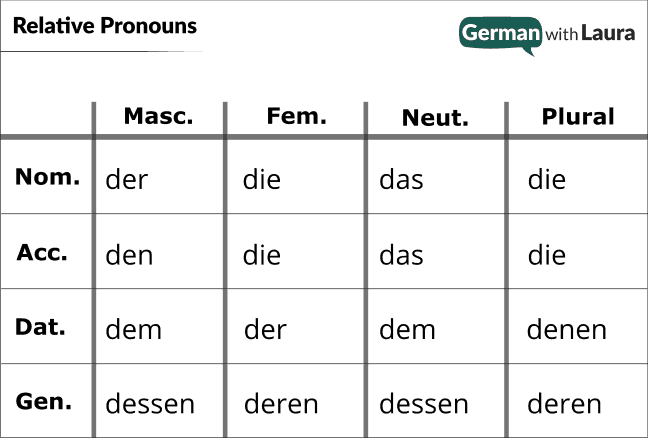
Just when German is starting to make sense, you’re thrown another curveball: the elements of German sentences can move around … a lot. We’re not used to this! To our English brains, having words swap places in a sentence drastically changes what is being said (including the option of the final result being utter nonsense). So, when we try to tra...

Part IV in my German Sentence Structure series where you can learn the positioning of subject, verb, objects AND adverbial phrases, such as place, time, reason and manner. The positioning of all words in a complete sentence.
All of those elements have their position in a German sentence. BUT specially when it comes to adverbial phrases, where t...

The German sentence structure can be a quiet confusing topic for German Students. In this video (Satzbau Part I) you can learn the basics of the the German sentence structure, which is all about the main clause, in German: "Hauptsatz". The focus of this video is on the subject (subjekt) and the verb (Verb). In which position you have to put the ...

This video is the Part 2 of this series about the German sentence structure. It's about the sentence structure (Satzbau) for the subordinate clause, in German: Nebensatz.
You will also get more information about the 7 different subordinate clauses that we have in German with details and examples to each and every type. And at the end as always...
signal cipher
copper orchid
Sometimes I get really confused on where I should put adverbs/adjectives. What i...
Also they don’t have completely fixed positions. For example you may move the emphasized adverb to the last position in adverbs group.
And I suggest you to learn these detail stuff by reading. Check the sentences in books etc.
Because finding guides about details is harder. Most of the guides teach basics. And trying to learn them by studying harder then getting used to.
Detailed guides about German are generally in German. And to be able to use them efficiently you should learn to read German first.
prisma hearth
How do I master those dative prepositions? Ex. an, auf, zu, nach, in
signal cipher
By using every method. One of them is reading example sentences on tatoeba.org
long whale
prisma hearth
How do I master those dative prepositions? Ex. an, auf, zu, nach, in
Only "zu" and "nach" are Dativ prepositions! https://i.pinimg.com/originals/48/09/c1/4809c140883760c2d8868ea421ce80f1.png

For the others, see >faq two-way prepositions in #botchannel
 frozen trail
Kurze Frage:
"Sehr geehrte Damen und Herren,
hiermit bewerbe ich mich bei Ihrem Unternehmen eine Ausbildung als Koch."
ist der Satz so richtig?
night dagger
frozen trail
Kurze Frage:
"Sehr geehrte Damen und Herren,
hiermit bewerbe ich mich bei Ihrem...
„um“ oder „für“ die Ausbildung ja
frozen trail
night dagger
„um“ oder „für“ die Ausbildung ja
danke dirr
vernal ermine
signal cipher
So many of them are in this video.
https://youtu.be/IG9y972Ph8U?si=EqrC3vGxqNCg...
Vielen Dank❤
vernal ermine
long whale
I recommend focussing on getting basic sentences right, using the vocab required...
Das ist in Ordnung.
 main tartan
Is B2 hard?  I really need words of motivation rn
night dagger
main tartan
Is B2 hard? <:peepocry:811330685658202202> <:peepocry:811330685658202202> I rea...
Doable in a little less than 2 years in my experience
Just gotta stay on the ball, learn everyday, even if only for a little bit, and incorporate the language into your everyday, YouTube, music, movies, shows, etc.
main tartan
night dagger
Just gotta stay on the ball, learn everyday, even if only for a little bit, and ...
Thank you
prisma hearth
How do i start speaking more instantaneously in German? Aka thinking in German?
 vestal wagon
prisma hearth
How do i start speaking more instantaneously in German? Aka thinking in German?
vestal wagon
prisma hearth
How do i start speaking more instantaneously in German? Aka thinking in German?
for this you will need to make german speaking friends and hear the language more often. When i moved to germany my german on paper was A2 but i was struggling to make out basic sentences, only after i made german friends and started listening to the language more often i became okay at speaking and thinking in the language.
fervent kernel
prisma hearth
How do i start speaking more instantaneously in German? Aka thinking in German?
Submerse yourself in German, like a language bath.
Try practicing German for at least 4-5 hours per week, reading, listening, writing etc.
Your brain will become used to the language.
it just takes time
also can someone correct a sentence of mine?
 dusky condor
anyone have some intresting german poadcasts to suggest? and does anyone have any intresting content creator also? doesnt matter the platform
 topaz shoal
dusky condor
anyone have some intresting german poadcasts to suggest? and does anyone have an...
topaz shoal
dusky condor
anyone have some intresting german poadcasts to suggest? and does anyone have an...
"Jay & Arya - Der eigentlich ganz gute Podcast " is a good podcast and I really enjoy watching "need to know" (youtuber)
plush pelican
dusky condor
anyone have some intresting german poadcasts to suggest? and does anyone have an...
for what level of German?
 scarlet token
dusky condor
anyone have some intresting german poadcasts to suggest? and does anyone have an...
scarlet token
dusky condor
anyone have some intresting german poadcasts to suggest? and does anyone have an...
EasyGerman on Youtube is pretty good with that stuff
helpful for learners
subtle tree
How do I stop myself from translating what I read into English? I usually don't have this problem until I read for more than ten or so minutes.
plush pelican
🤷♂️
I still don't really understand what people mean when they claim to "never translate"
plain umbra
subtle tree
How do I stop myself from translating what I read into English? I usually don't ...
Generally it's totally fine to translate in your head to your native language. The important thing is make sure you are not trying to force German to be another language and just taking it as it is.
Like the main issue beginners have is that they try to translate word-by-word into their own language. That's definitely not a good idea.
But if it's simply that you rephrase it in your head in a different language, that's not a problem.
subtle tree
plush pelican
I still don't really understand what people mean when they claim to "never trans...
Basically when you see a word you just understand it. Like most of the time you won't think of the word "homosexual" when you hear "gay" even though they're about the same concept.
plain umbra
subtle tree
Basically when you see a word you just understand it. Like most of the time you ...
I think the important thing to recognise with this is that you have to develop that feeling for every word individually. There's no switch you can turn on to suddenly understand the entire vocab at once. You have to develop it one by one.
So there are probably already many words you understand directly.
But then when you read a whole text, you're simply encountering more words that you don't read as often and you didn't develop the sense of all those words yet.
subtle tree
Thanks for the advice. I'm sorry that I can't really think up a detailed response about what you said.
plain umbra
That's fine.
vernal ermine
Wir können einen Ausflag machen / wir werden einen Ausflag machen.
Which is the correct one to use?
long whale
vernal ermine
Wir können einen Ausflag machen / wir werden einen Ausflag machen.
Which is th...
wir können = it is possible vs. wir werden = this is a fixed plan, the trip is scheduled. You'd be far more likely to use "wir könnten" (we could), to make a suggestion, though.
vernal ermine
long whale
wir können = it is possible vs. wir werden = this is a fixed plan, the trip is s...
Vielen Dank❤
vernal ermine
signal cipher
Also it’s Ausflug
Oops 😅
For suggestion which sentence and which tense is good to use?
long whale
vernal ermine
For suggestion which sentence and which tense is good to use?
I told you! #questions-2 message
könnten = could = Konjunktiv II
vernal ermine
I have to give 5 suggestion during a conversation which is part of exam/exercise . I don't know which word to use except Vorschlagen . Does any other words are there?
vernal ermine
long whale
könn**t**en = could = Konjunktiv II
Yes, I do it
dusky condor
plush pelican
for what level of German?
just started B2
vernal ermine
vernal ermine
For suggestion which sentence and which tense is good to use?
Any idea?
long whale
Look at your book. Look at the Redemittel list. Otherwise google sth like "B1 Vorschläge machen"
@vernal ermine
vernal ermine
Okay 👍
Can I use--> Ich denke, dass wir uns am Samstagabend um 14 uhr am Bahnhof treffen könnten. Is das Ok?
Is it fine?
long whale
vernal ermine
Can I use--> Ich denke, dass wir uns am Samstagabend um 14 uhr am Bahnhof treff...
It works, yes.
long whale
vernal ermine
Can I use--> Ich denke, dass wir uns am Samstagabend um 14 uhr am Bahnhof treff...
14 Uhr is not "evening/Abend", though!
vernal ermine
Is das Okay? I use it Repeatedly . Is it normal?
vernal ermine
long whale
14 **U**hr is not "evening/Abend", though!
Ja, Nachmittag 😅
vernal ermine
vernal ermine
Is das Okay? I use it Repeatedly . Is it normal?
@long whale
long whale
vernal ermine
Is das Okay? I use it Repeatedly . Is it normal?
If you want to pass the exam, you should not only use "Ist das okay?"
vernal ermine
I searched in Internet. It is difficult to find an Alternative for it. Do you know some? @long whale
long whale
vernal ermine
I searched in Internet. It is difficult to find an Alternative for it. Do you kn...

Trainieren Sie für die mündliche B1-Prüfung (Deutschtest für Zuwanderer - telc). Machen Sie Vorschläge.
Musik: "Lightning Bug" von Geographer / youtube Audiobib
Zeichnungen von Pusteblume.
Musik
Interessante Links / Videos
https://www.youtube.com/watch?feature=share&v=9lkyjt0j3Bs&app=desktop
vernal ermine
long whale
LMGTFY 😡 https://www.youtube.com/watch?v=0lwUjqQoOZo
Vielen Dank 😊❤
Why we are using Davon in " Was hältst du davon" ?
whole portal
hältst
long whale
vernal ermine
Why we are using Davon in " Was hältst du davon" ?
What do you think of-this?
vernal ermine
long whale
What do you think __of-this__?
So do I have to start with Davon as my response?
long whale
vernal ermine
So do I have to start with Davon as my response?
Not really. You're supposed to either agree (respond with sth like "That's a good idea") or disagree ("Why don't we + different suggestion...")
vernal ermine
long whale
Not really. You're supposed to either agree (respond with sth like "That's a goo...
Okay 👍
plush pelican
dusky condor
just started B2
You should update your level; your flair shows you as A-level still.
If you've only just started B2, you'll prob need to listen to German learning podcast stuff still.
Easy German Podcast, 14 Minuten, etc.
I have a long list of German YouTube channels, but a lot of them might be a bit too fast for you at the moment. Nevertheless, here is the list, in case you want to look over it:
https://www.reddit.com/user/Arguss/comments/198qcqw/deutschsprachige_youtubekanäle/
Reddit
Explore this post and more from Arguss's profile
 lavish marlin
faq vc
stoic mauveBOT
How to join Voice Chat
Please read the [Roles section](#getting-started message) in #getting-started for info on how to join VC and more!
 forest ravine
Warum wird Lässt für "to get a haircut" verwendet?
 boreal swift
forest ravine
Warum wird Lässt für "to get a haircut" verwendet?
boreal swift
forest ravine
Warum wird Lässt für "to get a haircut" verwendet?
"Lassen" hat viele Bedeutungen. Aber in diesem Kontext bedeutet es, dass du jemand anderem erlauben, die Arbeit zu erledigen.
zB: "Ich werde mein Auto reparieren lassen" Das heißt ein Mechaniker wird es reparieren.
plush pelican
forest ravine
Warum wird Lässt für "to get a haircut" verwendet?
die_stille hat Recht
Auf Englisch: "lassen" here means something like "to get (something done for you)"
Ich lasse mir die Haare schneiden = I get my hair cut (by someone else, probably a barber or hairdresser)
You don't explicitly say who will do it, so you leave it to be assumed that the most obvious choice (a hairdresser or barber) is probably what you mean.
Look at the 2nd meaning on this page: http://www.dartmouth.edu/~deutsch/Grammatik/Lassen/Lassen.html
lavish marlin
It looks like there was a bug with our bot, however do note that VC permissions have absolutely nothing to do with selecting roles or channels.
Please make sure to read #getting-started, as I hinted earlier, and tell me what it says about joining VC.
Thanks for reading the channel.
As mentioned, there was a bug with our bot, so it didn't give you the permissions. I've given them to you now. 
 finite hull
is it good? Ich meine, das liegt daran, dass es wie ein Hotel für Senioren aussah, es waren keine jungen Leute da
forest ravine
boreal swift
"Lassen" hat viele Bedeutungen. Aber in diesem Kontext bedeutet es, dass du jema...
Ach so, Das macht Sinn. Danke.
forest ravine
plush pelican
die_stille hat Recht
Auf Englisch: "lassen" here means something like "to get (...
Danke schön
 tiny scaffold
finite hull
is it good? Ich meine, das liegt daran, dass es wie ein Hotel für Senioren auss...
tiny scaffold
finite hull
is it good? Ich meine, das liegt daran, dass es wie ein Hotel für Senioren auss...
Last clause needs to be ''es gab keine jungen Leute dort''
Es gibt = there is
Es gab = there was
finite hull
thank you but does the sentence before look great?
tiny scaffold
Ja
finite hull
thank you mate
long whale
tiny scaffold
Last clause needs to be ''es **gab** keine jungen Leute dort''
This definitely didn't need changing! "es gibt" doesn't fully correspond to "there is/are", it's more like "there exist/s".
long whale
finite hull
is it good? Ich meine, das liegt daran, dass es wie ein Hotel für Senioren auss...
Yup, looks good.
tiny scaffold
long whale
This definitely didn't need changing! "es gibt" doesn't fully correspond to "the...
Hm, ''es waren'' would be like ''it was no young people'' which sounded odd to me
long whale
tiny scaffold
Hm, ''es waren'' would be like ''it was no young people'' which sounded odd to m...
No. OP wrote "es waren keine jungen Leute da", which is a perfectly idiomatic way of putting things. If you were talking about a party, it would sound quite odd if you said sth like Es gab dort viele/eine Menge Leute
tiny scaffold
So you could use sein + da or ''es gibt'' to mean similar things?
Or do they mean similar things but in different contexts?
Ah, I see now, the waren + da is an indiomatic construction
prisma hearth
What do I do when I’ve hit a plateau in learning? Like, everything around above my level is too hard for me, and anything below is too easy?
signal cipher
If you study efficiently hard things will become easy for sure.
prisma hearth
maybe that’s it
signal cipher
Also you can try to chat or read books if you are bored of studying.
Or only study vocabulary and give a break from grammar.
prisma hearth
It’s mainly just my understanding of speaking, and I can’t seem to get it better
 full osprey
heyy could anyone teach my like texting norms in german when you like text someone and stuff
signal cipher
prisma hearth
It’s mainly just my understanding of speaking, and I can’t seem to get it better
I didn’t understand. Is you speaking bad?
steel patrol
full osprey
heyy could anyone teach my like texting norms in german when you like text someo...
Umgangssprache und Abkürzungen?
full osprey
signal cipher
I didn’t understand. Is you speaking bad?
everything bad
like in terms of everything im new
prisma hearth
signal cipher
I didn’t understand. Is you speaking bad?
like, my understanding of spoken words
long whale
tiny scaffold
Or do they mean similar things but in different contexts?
Look, if you say sth like "There are people who think/say...", then you're just saying "those people exist" -> "es gibt..." is fine. We also use "es gibt" for things being available/for sale/on offer. However, we don't usually use "es gibt" for easily movable objects (Auf dem Tisch gibt es liegt/ist eine Zeitung), for things you can see in a picture, or things like the number of people in a certain location. 🌻
full osprey
oh my bad i thought you replied to my msg
signal cipher
prisma hearth
like, my understanding of spoken words
There are story videos on you tube. You can also turn simple texts to sounds on websites. You can watch kid shows like peppa pig.
steel patrol
full osprey
like in terms of everything im new
I would suggest looking into these topics (YouTube is great for that) — but not overdoing it, especially as a beginner.
full osprey
steel patrol
Umgangssprache und Abkürzungen?
both, like a breif understanding of how people text each other in german
steel patrol
Being familiar with this sort of thing is definitely useful though
full osprey
full osprey
both, like a breif understanding of how people text each other in german
im trying to text someone who knows german but also english, so we speak in english but his english is basic and idk how people text in german like the norms it would be a bit better yk
full osprey
steel patrol
I would suggest looking into these topics (YouTube is great for that) — but not ...
i see
steel patrol
Or alternatively you could just get one of those language exchange apps (Tandem, HelloTalk) and you’ll see how natives write that way
long whale
full osprey
heyy could anyone teach my like texting norms in german when you like text someo...
You may have your reasons for asking about that. However, people use a lot of colloquial language in texting. So, if you have a choice, I'd warmly recommend you learn normal/formal German first.
full osprey
are people like formal when they text in german or
like is it like idk like flirty when texting or like are people like super formal when it comes to texting in german
asking for research purposes
long whale
full osprey
like is it like idk like flirty when texting or like are people like super forma...
Did you not see, not read or not understand my message? This one: #questions-2 message
full osprey
long whale
Did you not see, not read or not understand my message? This one: https://discor...
gotchu
tiny scaffold
long whale
Look, if you say sth like "There are people who think/say...", then you're just ...
So tangible objects would use da instead right? That makes sense to me
Es gibt = general existence
Sein + da = tangible existence
Coins on the table, cats in the house, cars in the garage, all use da
long whale
tiny scaffold
Coins on the table, cats in the house, cars in the garage, all use da
Ehh... "Auf dem Tisch liegt/ist Geld", "Das [or some sort of quantifier, like Ein bisschen] Geld liegt auf dem Tisch". "In der Garage stehen 3 Autos". "Es sind zwei Katzen im Haus" -> You could use "da ist/sind" instead, but it's not as if it's necessary. 🤷
I'm also not sure how "In München gibt es viele Museen, Hotels und Geschäfte" would relate to general vs. tangible existence. 🤔
tiny scaffold
long whale
Ehh... "Auf dem Tisch liegt/ist Geld", "Das [or some sort of quantifier, like Ei...
I'm asking if you could use ''da'' in those 3 cases and not ''es gibt''
tiny scaffold
long whale
I'm also not sure how "In München gibt es viele Museen, Hotels und Geschäfte" wo...
Well, here you're saying that Munich has all these places, but not specifically which ones, or specifically ones in your vicinity
''In dieser Straße sind viele Museen'' = ''Da sind viele Museen''
As opposed to talking about there being many museums in Munich in general
 surreal crypt
Does anybody know any German e-book sites/digital reading apps? I am trying to find a digital copy of Im Land der Schokolade und Bananen and can't find any, wanted to check if there was a way to get it elsewhere
copper orchid
Letzt woche habe ich ein tolles Buch gekauft. Ich lese es gern. Ich habe auch viele kleidung gekauft. Ich habe eine schwarze Jacke, eine blaue Hose, einen braunen Gürtel, und ein Paar braune Schuhe gekauft. Sie sehen sehr schön aus. Vor ein paar tagen, war ich in der Supermarkt, Weil ich Lebensmittel gebracht hat. Ich habe einen roten Apfel, ein Paar Zwiebel, und eine Dose Thunfisch gekauft. Das war alles.
I'm practicing adjective endings so I'd appreciate if someone checked my writing
copper orchid
Eines Tages musste ich Apfelsaft für eine Party kaufen. Es hätte im Supermarkt verschiedene Säfte geben. Ich habe den Saft mit einem schonen Apfelbild mitgenommen. Auf der Party, viele leute haben den Saft versucht, aber er war kein Apfelsaft. Er war Orangensaft. Das war total lustig und wir hätten ihn sehr gern trinken.
Could someone also check this text? Thanks in advance
plush pelican
surreal crypt
Does anybody know any German e-book sites/digital reading apps? I am trying to f...
I've bought books in German on Kindle
I live in the US, so it's actually a little tricky to find such books, though, as Amazon.com usually tries to recommend you the English language version of a book.
tiny scaffold
You can find German translations of books
For example, Harry Potter, Percy Jackson, Hunger Games, what have you
surreal crypt
plush pelican
I live in the US, so it's actually a little tricky to find such books, though, a...
Yeah that seems to be the problem I'm running into, Ive set my location to German and will probably have it sent to someone I know for photocopying
thanks though
plain umbra
surreal crypt
Does anybody know any German e-book sites/digital reading apps? I am trying to f...
You can try Onleihe. Note that it only works outside of Germany. https://www.goethe.de/ins/au/en/kul/kon/onl.html
surreal crypt
plain umbra
You can try Onleihe. Note that it only works outside of Germany. https://www.goe...
Wasn't there sadly 
long whale
copper orchid
**Eines Tages musste ich Apfelsaft für eine Party kaufen. Es hätte im Supermarkt...
Why did you use "hätte"? You can't use it for things which really happened in the past. Word order is wrong in the sentence starting with "Auf der Party...". When you explain what something is/was or is not, you use "es/das". (Imagine someone is pointing to a dog and saying it's a cat. If you wanted to correct that person, you could not point to the dog (der) and say Die ist keine Katze. Die/Der (?? 🤕) ist ein Hund.
signal cipher
surreal crypt
Does anybody know any German e-book sites/digital reading apps? I am trying to f...
LangBrowser let you read TXT. It has build in google translator. And you can list words, phrases and send them to your e mail.
copper orchid
long whale
Why did you use "hätte"? You can't use it for things which really happened in th...
Einmal musste ich Apfelsaft für eine Party kaufen. Es hat im Supermarkt verschiedene Säfte gegeben. Ich habe den Saft mit einem schönen Apfelbild mitgenommen. Auf der Party haben viele leute den Saft versucht, aber es war kein Apfelsaft. Es war Orangensaft. Das war total lustig und wir hätten ihn sehr gern trinken.
vernal ermine
Könnten wir ein Iphone für sie kaufen? - Am I correct?
copper orchid
copper orchid
**Letzt woche habe ich ein tolles Buch gekauft. Ich lese es gern. Ich habe auch ...
If you have time, could you please check this writing too?
 brave flint
So I learned that "abhängen von" means to depend on something: Das Datum des Picknicks hängt von der Wettervorhersage ab.
Are the following sentences also okay? Is there a difference in nuance/meaning?
- Das Datum des Picknicks kommt auf die Wettervorhersage an.
- Das Datum des Picknicks ist auf die Wettervorhersage angewiesen.
vernal ermine
Where we buy a phone or mobile? How we call the place in german?
vernal ermine
plush pelican
You should update your level; your flair shows you as A-level still.
If you've ...
Is that you bro ? 😊 @plush pelican
long whale
brave flint
So I learned that "abhängen von" means to depend on something: Das Datum des Pic...
No, I'm afraid not. To make those work, both would require some kind of clause, like for the 1st, you could go with sth like "It's up to the weather forecast[,] on which day we'll have the picknick/which date we'll set for the picknick. For the 2nd, it's even more difficult because it has a different meaning. "auf jdn/etwas angewiesen sein" is more like... "Ich bin auf deine Hilfe angewiesen" ~ "I absolutely, totally cannot do without your help" or "Er ist gelähmt. Er ist auf fremde Hilfe angewiesen." = "He's paralyzed. He requires the help of others/He cannot do without a helping hand."
long whale
copper orchid
**Einmal musste ich Apfelsaft für eine Party kaufen. Es hat im Supermarkt versch...
This is a lot better! "mitgenommen" is not quite wrong, but it's more like "I took it with me in passing", so we'd say "genommen" (you chose it). Leute. The last bit is still wrong: "... wir hätten ihn sehr gern trinken -> check past participle", plus, it means "... we would very much have liked to drink it (but did not)"
long whale
The underlined words are missing the correct ending or they are in the wrong form: Letzt Woche habe ich ein tolles Buch gekauft. Ich lese es gern. Ich habe auch viele Kleidung (in German: much, because "Kleidung" is singular uncountable, i.e. it doesn't have a plural, same as milk, for example) gekauft. Ich habe eine schwarze Jacke, eine blaue Hose, einen braunen Gürtel, und ein Paar braune Schuhe gekauft. Sie sehen sehr schön aus. Vor ein paar Tagen (no comma!) war ich in der (gender??) Supermarkt, weil ich Lebensmittel gebracht hat (he/she/it [has] brought - ???). Ich habe einen roten Apfel, ein Paar Zwiebel, und eine Dose Thunfisch gekauft. Das war alles. Not bad! 🌻
@copper orchid
brave flint
long whale
No, I'm afraid not. To make those work, both would require some kind of clause, ...
Wie würdest du den ersten Satz formulieren, mit "ankommen auf"?
long whale
brave flint
Wie würdest du den ersten Satz formulieren, mit "ankommen auf"?
I thought I'd told you? "It's up to the weather forecast[,] on which day we'll have the picknick/which date we'll set for the picknick."
long whale
brave flint
Entschuldige, ich war unklar
*Ich habe mich unklar/nicht deutlich ausgedrückt or Mein Satz war unklar
brave flint
long whale
*Ich habe mich unklar/nicht deutlich ausgedrückt or Mein Satz war unklar
danke 🙂
long whale
No, I got that. I was just suggesting you try yourself. ;)
brave flint
Es kommt auf die Wettervorhersage an, an welchen Tag wir einen Termin fürs Picknick vereinbaren könnten.
Stimmt das?
long whale
brave flint
Es kommt auf die Wettervorhersage an, an welchen Tag wir einen Termin fürs Pickn...
Almost. welch- doesn't have the proper ending. I was thinking of "..., ... Tag wir das Picknick abhalten", but yours works fine. 🌻
brave flint
long whale
Almost. welch- doesn't have the proper ending. I was thinking of "..., ... Tag w...
an welchem Tag? 🙂
i didn't know the word „abhalten“ 😅
(now i do)
can I use abhalten for other events?
im Büro eine Besprechung abhalten?
im Park ein Grillfest abhalten?
eine Geburtstagsparty abhalten?
danke nochmals 🌻
vernal ermine
vernal ermine
Where we buy a phone or mobile? How we call the place in german?
Can I use das Mobilegeschaft or Telefongeschaft?
Mobilekaufhaus? /Telefonkaufhaus?
 versed mountain
vernal ermine
Mobilekaufhaus? /Telefonkaufhaus?
versed mountain
vernal ermine
Mobilekaufhaus? /Telefonkaufhaus?
Mobile phone is Handy in German, you'd usually say Handyshop or Handyladen, if you're talking about one of the small ones we got too many of.
copper orchid
long whale
The underlined words are missing the correct ending or they are in the wrong for...
Letzte Woche habe ich ein tolles Buch gekauft. Ich lese es gern. Ich habe auch viele (I still don't really understand the mistake with viel, could you please elaborate?) Kleidung gekauft. Ich habe eine schwarze Jacke, eine blaue Hose, einen braunen Gürtel, und ein Paar braune Schuhe gekauft. Sie sehen sehr schön aus. Vor ein paar Tagen war ich im Supermarkt, weil ich Lebensmittel gebraucht habe. Ich habe einen roten Apfel, ein Paar Zwiebel, (whats wrong with Zwiebel?) und eine Dose Thunfisch gekauft. Das war alles.
long whale
copper orchid
Letzte Woche habe ich ein tolles Buch gekauft. Ich lese es gern. Ich habe auch v...
Find the error: ... weil ich ... gebraucht hat. ;) Please look up the plural of "Zwiebel".
das Buch, die Bücher -> Ich habe viele Bücher. vs. das Gepäck (luggage, no plural, not in English, not in German -> uncountable noun) -> Ich habe viel Gepäck.
That's clear, isn't it? many books vs. much luggage, right?
copper orchid
long whale
This is a lot better! "mitgenommen" is not quite *wrong*, but it's more like "I ...
Einmal musste ich Apfelsaft für eine Party kaufen. Es hat im Supermarkt verschiedene Säfte gegeben. Ich habe den Saft mit einem schönen Apfelbild genommen. Auf der Party haben viele Leute den Saft versucht, aber es war kein Apfelsaft. Es war Orangensaft. Das war total lustig und wir hatten ihn sehr gern trinken.
long whale
And "die Kleidung" works the same as "das Gepäck".
long whale
copper orchid
Einmal musste ich Apfelsaft für eine Party kaufen. Es hat im Supermarkt verschie...
wir hatten ihn sehr gern trinken = we had drink it very gladly - ?? wir haben ihn sehr gern getrunken (= Perfekt)
copper orchid
Letzte Woche habe ich ein tolles Buch gekauft. Ich lese es gern. Ich habe auch viel Kleidung gekauft. Ich habe eine schwarze Jacke, eine blaue Hose, einen braunen Gürtel, und ein Paar braune Schuhe gekauft. Sie sehen sehr schön aus. Vor ein paar Tagen war ich im Supermarkt, weil ich Lebensmittel gebraucht habe. Ich habe einen roten Apfel, ein Paar Zwiebeln, und eine Dose Thunfisch gekauft. Das war alles.
copper orchid
long whale
~~wir hatten ihn sehr gern trinken~~ = we had drink it very gladly - ?? wir **ha...
Oh I thought it would have the same meaning
long whale
How do you say "I have" in German? @copper orchid
I mean, you got it right when you bought the red apple and the onions. Why would you want to use a different form for needing "Lebensmittel"?
long whale
ich habe gekauft -> ich hab_ gebraucht @copper orchid
The verb (in this case: haben) must be conjugated according to the subject (in both sentences: ich).
copper orchid
copper orchid
Letzte Woche habe ich ein tolles Buch gekauft. Ich lese es gern. Ich habe auch v...
Oh my bad again I corrected it here
copper orchid
copper orchid
Letzte Woche habe ich ein tolles Buch gekauft. Ich lese es gern. Ich habe auch v...
Should be fine now? 
long whale
Yes, it's all good now. 😅
copper orchid
Thank you for the help!
 worn sigil
why is this in the akkusativ: Wer ist nach (him) ....... an der Reihe?
long whale
worn sigil
why is this in the akkusativ: Wer ist nach (him) ....... an der Reihe?
Please don't post the same question in more than one channel. People will not realize a question has been answered elsewhere -> waste of time and effort. 🌻
gaunt heart
I learned that added -chen to a word makes it Neuter (like das Mädchen), but according to the sources im using chopsticks = Die stäbchen. If it ends in -chen, why is it Feminine?
long whale
gaunt heart
I learned that added -chen to a word makes it Neuter (like das Mädchen), but acc...
It isn't. It's just that a chopstick rarely shows up on its own, alone. ;)
And have you also checked the plural form of nouns ending in -chen?
gaunt heart
ohhh, i thought it was singular that makes sense
gaunt heart
long whale
And have you also checked the plural form of nouns ending in -chen?
oh, it doesn’t change?
thanks for the help that makes sense
 elfin crag
when we use akkusative dative please
long whale
elfin crag
when we use akkusative dative please
Have a look at this: #questions message - then come back for further questions?
tiny scaffold
elfin crag
when we use akkusative dative please
faq accusative
stoic mauveBOT
Accusative
The accusative case (der Akkusativ) is one of the four cases of the German language. A case affects how a noun or noun phrase is inflected, and indicates the role of the noun or noun phrase in a clause.
How do I decline in the accusative case?
Feminine and neuter nouns and adjectives are the same as nominative. Masculine determiners, adjectives, and weak nouns gain an -en ending::
Ich esse den/einen/keinen kleinen Apfel.
Personal pronouns differ for:
ich --> mich
du --> dich
er --> ihn
wir --> uns
ihr --> euch
For a full explanation see >explain adjective declension
Page 1/2
long whale
 sturdy solar
what is the difference between suchen nach and suchen
sturdy solar
what is the difference between suchen nach and suchen
I don't think there's a huge difference, really. Plain "suchen (+ Akk.)" is far more common, though. 🌻
long whale
It's great that you're helping here. Still, I'd recommend you either put your German example sentences through deepl write before posting them, or at least point out you're a learner yourself... Please note nouns with a normal plural, i.e. one with no change in meaning, aren't usually used in singular without any article at all. Which is why neither of your examples works without an article. Also, although your explanation looks good, to my knowledge, it simply isn't correct. 🌻
tiny scaffold
Oh, I see what you're saying
I thought the ''nach'' represented something tangible in the meaning. It doesn't really. My mistake
vernal ermine
versed mountain
Mobile phone is Handy in German, you'd usually say Handyshop or Handyladen, if y...
Apart from handyladen, in which area the mobiles are available?
vernal ermine
whole portal
You mean a carrier shop?
Where people get discounts/ offer more for Handy in Germany?
 brave harbor
vernal ermine
Where people get discounts/ offer more for Handy in Germany?
brave harbor
vernal ermine
Where people get discounts/ offer more for Handy in Germany?
Order lol
brave harbor
outer edge
are they completely interchangeable?
Sandwich is more... Made with 'sandwich toast' (which we don't call bread) while belegtes Brot is done with proper bread
vernal ermine
Just to prepare a dialogue, I don't know where to suggest my friend to buy a mobile/ Handy in Germany?
brave harbor
If it's just for a dialogue, suggest anything.
Elektofachmarkt (electronics store)
Amazon
Tell him to go to a Vodafone store and take an overly expensive contract right with it etc...
vernal ermine
brave harbor
If it's just for a dialogue, suggest anything.
Elektofachmarkt (electronics stor...
Vielen Dank❤
 past bobcat
Hallo Leute. Welcher Satz ist richtig?
Ich liebe am Nachmittagen schlafen.
oder
Ich liebe am Nachmittags schlafen.
tiny scaffold
past bobcat
Hallo Leute. Welcher Satz ist richtig?
Ich liebe am Nachmittagen schlafen.
oder...
Neither.
''nachmittags'' OR
''am Nachmittag''
You'll also need ''zu'' before ''schlafen''
 bleak inlet
I have a problem. I'm trying to understand how adjective declensions work but every single site explaining it is confusing to me. HOW does this work? Can anyone link me a very clear and detailed explanation to how to do this?
 near folio
bleak inlet
I have a problem. I'm trying to understand how adjective declensions work but ev...
near folio
bleak inlet
I have a problem. I'm trying to understand how adjective declensions work but ev...
German adjectives work just like English ones, except that they take on case endings when they come right before a noun: Der Hund ist groß und braun.The dog is big and brown. Der große braune Hund bellte mich an.The big … Continue reading →
bleak inlet
near folio
What about this? http://germanforenglishspeakers.com/adjectives/adjective-declen...
yeah, I think this one helped since it's pretty straightforward. thank you 🙂
 gray swift
Liebe Somer,
Hallo! Die Reise ist nicht schlecht. Wir gingen zum Strand, wie wir Volleyball in der Nähe des Ufers spielten und auch ein Sonnenbad nahmen. Wir sind in die Berge gegangen und haben gewandert. Und dann sind wir ans Meet gegangen und haben geschwommen. Wir haben ein Zelt aufgestellt um am Meer zuübernachten. Aber es gibt auch etwas, das uns nicht gefällt. Das wetter ist nicht gut. Die Sonne ist zu heiß und es gab zu viel Verkehr während der Fahrt. Wir waren zu müde, als wir wandern wollten. Aber eine besser Reise ist, dass wir genug Geld haben sollten, sollten wir alle Ressourcen, die notwendig sind und sollte gepackt werden. Es ist notwendig, einen Erste-Hilfe-Kasten mitzunehmen. Wir können mehr Unterhaltung haben, wenn wir als Gruppe reisen.
Liebe Grüße,
xxxxxxx.
Is my e-mail correct? Please correct it and solve my mistakes.
 peak sluice
Please answer this. Thank you
 plush pelican
peak sluice
Please answer this. Thank you
plush pelican
peak sluice
Please answer this. Thank you
passive voice (When the dishes are served cold) uses "werden". The real issue here is English, which uses "to be" for both things like "he is old" and for passive voice (the dishes are served).
In German, these are split into "sein" for the former use and "werden" (to get/become) for the latter.
Pro-tip: if you can replace "to be" with "get" or "become" (The dishes got served), it's probably "werden" that you need.
Here's an introductory video on passive voice in German: https://www.youtube.com/watch?v=43m6-wQuaGo&t=52s
peak sluice
Thank you very much. Appreciate it!
 scarlet hull
 real valley
besides rammstein and die Arzt
real valley
besides rammstein and die Arzt
Oomph maybe if you like industrial? blues fan in the states but i like learning with german rap- slang, dialect, etc. I'm not great tho so maybe with a grain of salt lol
real valley
i do love industrial
fervent kernel
What is "Duzen" and "Siezen"? How different is it from "Du" and "Sie", and when do I use it?
delicate tiger
">faq Duzen vs. siezen" in #botchannel
fervent kernel
Alright
Oh also, if I was to use "Sie" (formal) in a sentence, if it were to be after a comma, would I still capitalize it? F.e "Blah blah blah, Sie sind etc."?
fervent kernel
delicate tiger
">faq Duzen vs. siezen" in <#248530603165614080>
I don't understand what it means by "to be on du-basis with someone"
delicate tiger
"Kannst du mir helfen?" (du) vs "Können Sie mir helfen?" (Sie) which formal level you use when talking to someone
delicate tiger
"duzen" is just the act of using "du" with someone
fervent kernel
delicate tiger
"duzen" is just the act of using "du" with someone
How would I use duzen in a sentence just so I don't get confused?
delicate tiger
"Sollen wir uns duzen?"
fervent kernel
delicate tiger
"Sollen wir uns duzen?"
Or "wollen" (want) or "können" (can) but yeah I'd stick with "sollen" especially in workplace its more formal than "wollen" 😄
Siezen = formal, duzen = informal
charred harbor
Isn't "Wir können uns gern duzen, wenn du möchtest" kind of weird?
I feel like it's like asking "Is it okay to eat this biscuit?" while eating it right in front of them 🤣
fervent kernel
Haha
Yeah its weird
Not a good example bc u cant ask if you want to duze someone and then duze him right after before he accepts
 frail heron
I mean there are formal ways to say it
fervent kernel
What do U mean?
frail heron
You could just ask
"Wäre es für Sie in Ordnung wenn ich Sie mit du anspreche?"
Which well, sounds a bit clunky, but should work
keen robin
To say that your vote doesn't have a real impact on the result, would you say something like:
Meine Stimme ist wirklich nicht wichtig.
(Actually, my vote is not important.)
fervent kernel
keen robin
To say that your vote doesn't have a real impact on the result, would you say so...
Yes you can say that
pure crescent
keen robin
To say that your vote doesn't have a real impact on the result, would you say so...
That's more like "My vote is really unimportant" — it puts the emphasis on the "wirklich nicht". And "wirklich nicht" is a set phrase that simply strengthens the "nicht".
But what you mean is something different: you mean to say that it's "not really, actually, in truth" important. But you can't use wirklich for the negation here, as it's part of the set phrase that simply strengthens the "nicht".
I would phrase your sentiment as:
Meine Stimme zählt nicht wirklich.
or
Meine Stimme nützt doch eh nichts. [emphasis on the resignation you experience]
or
Meine Stimme ist in Wahrheit gar nicht wichtig.
or
Meine Stimme verändert das Ergebnis nicht.
etc. more options available — but yours communicates something different.
fervent kernel
keen robin
(Actually, my vote is not important.)
Well yeah its really not important
keen robin
pure crescent
That's more like "My vote is really unimportant" — it puts the emphasis on the "...
Ok I see, thanks a lot. That's clearer now!
delicate tiger
most online dictionaries have audio samples
fervent kernel
In two different ways
 buoyant cove
Any YouTube channels good for just watching and enjoying the content while learning?
signal cipher
buoyant cove
Any YouTube channels good for just watching and enjoying the content while learn...


 fervent kernel
Hi everyone
Why darin here is not right?
 night dagger
fervent kernel
Hi everyone
Why darin here is not right?
night dagger
fervent kernel
Hi everyone
Why darin here is not right?
Why do you think it's right? :) you can just remove it and the sentence is fine.
darin is something you could use when saying "inside of that", for example: das ist das Zimmer und darin ist die Katze.
night dagger
fervent kernel
Hi everyone
Why darin here is not right?
oh and you dont need the comma at the end for Liebe Grüße (or similar), even if gmail or whatever else does it automatically for you
whole portal
fervent kernel
Hi everyone
Why darin here is not right?
You're looking for dorthin
I'd use neither dort nor da and just use hingehen as the verb
fervent kernel
night dagger
Why do you think it's right? :) you can just remove it and the sentence is fine....
cus in the test I want to show that I can use A2 grammer : )
 open parcel
Hallo zussamen ich habe ein frage, when do we use “wenn” and when do we use “als”
whole portal
I assume you mean when they translate to english 'when'?
when as in if -> wenn
when as in the time something happened -> als
charred harbor
open parcel
Hallo zussamen ich habe ein frage, when do we use “wenn” and when do we use “als...
If it’s helpful it should be “eine Frage” by the way
And it’s “zusammen”
rapid zodiac
Füller is short for Füllfeder which is short for Füllfederhalter? Is Füller colloquial and the other 2 formal?
 cursive spoke
rapid zodiac
Füller is short for Füllfeder which is short for Füllfederhalter? Is Füller coll...
cursive spoke
rapid zodiac
Füller is short for Füllfeder which is short for Füllfederhalter? Is Füller coll...
Füller is not short for Füllfeder, but directly short for Füllfederhalter, and yes, it is colloquial
cursive spoke
fervent kernel
Hi everyone
Why darin here is not right?
Did you use darin because ins is used with Kino? (ins Kino gehen)?
cursive spoke
open parcel
Hallo zussamen ich habe ein frage, when do we use “wenn” and when do we use “als...
That's a big question, because the words have many uses. Can you tell us specific sentences so we can see which context you want to know about? (grammatically)
cursive spoke
gray swift
Liebe Somer,
Hallo! Die Reise ist nicht schlecht. Wir gingen zum Strand, wie wi...
wo wir Volleyball
sind gewandert (verb of transportation!!)
sind geschwommen (verb of transportation!!)
Comma after "aufgestellt"
Second-last sentence makes no sense
cursive spoke
past bobcat
Hallo Leute. Welcher Satz ist richtig?
Ich liebe am Nachmittagen schlafen.
oder...
Look up "Zu-Infinitiv"
fervent kernel
cursive spoke
Did you use *darin* because *ins* is used with *Kino*? (ins Kino gehen)?
Yes that is what I thought of
is it wrong?
prisma hearth
When do I use “falls” “ob” and “wenn” for the word “if” in German?
signal cipher
Ob is “positive or negative”
If … happened or … not happened
I don’t know if you are a doctor or not.
prisma hearth
Thank you. And for “falls”?
signal cipher
I need a professional help for that:

"falls" and "wenn" can both mean "if" in German. Today, we'll find out if there is a difference between the two and how to use "falls" properly.
prisma hearth
So falls is used when it’s especially surprising the result will happen?
or that you’ll be surprised if it does?
fervent kernel
signal cipher
I need a professional help for that:
https://yourdailygerman.com/falls-meaning/
Ich kann dir helfen, falls/wenn du willst = i can help you if you want.