#questions-2
1 messages · Page 31 of 1
 fervent kernel
hallo
 hushed dawn
warum ist es "eines Tages" und nicht einfach "ein Tag".
warum Genetiv so ?
 delicate tiger
"Ein Tag geht schnell vorüber" man muss es nur zum Subjekt machen
 fervent scroll
 plush pelican
hushed dawn
warum ist es "eines Tages" und nicht einfach "ein Tag".
warum Genetiv so ?
plush pelican
hushed dawn
warum ist es "eines Tages" und nicht einfach "ein Tag".
warum Genetiv so ?
Well, it depends on which way you mean "one day"
the same as it depends on which way you mean "get", which could be, depending on which meaning you intend, bekommen, verstehen, kaufen, werden, etc etc etc.
"eines Tages" for "one day" means a sort of generalized, unspecified "one day", like in a fairy tale: "One day, Little Red Riding Hood was walking in the woods..."
Hammer's German Grammar 2.3.3(c) talks about this:


TL;DR you use Genitive for "expressions of indefinite or habitual time"
hushed dawn
Danke für die Erklärung
fervent kernel


 obtuse steppe
fervent kernel
obtuse steppe
fervent kernel
This doesn't belong here, use #1025098289521119293.
fervent kernel
WHAT
 long whale
fervent kernel
WHAT
long whale
fervent kernel
WHAT
Please don't shout (all caps = shouting). The #questions channels are for questions about the German language (grammar, vocab) ;)
 vernal ermine
Fröhlichen Sonntag Freunde
 vague rain
Hallo. can someone help me with this? I looked at faq contractions but i still dont understand this. danke
 long whale
vague rain
Hallo. can someone help me with this? I looked at faq contractions but i still d...
long whale
vague rain
Hallo. can someone help me with this? I looked at faq contractions but i still d...
Maybe try looking up >faq two-way prepositions - ? And then come ask again if you still don't understand? (You're aware those are wrong, right?)
vague rain
yep theyre wrong i just dont know why yet 😂
vague rain
long whale
Maybe try looking up >faq two-way prepositions - ? And then come ask again if yo...
danke, i will 🙂
ok so i am still a bit confused ..
 proud oak
vague rain
Hallo. can someone help me with this? I looked at faq contractions but i still d...
proud oak
vague rain
Hallo. can someone help me with this? I looked at faq contractions but i still d...
In this case "in das Geschäft" is translated to "into the store".
But "in dem Geschäft" is translated to "in the store".
Perhaps seeing it like this will help.
long whale
vague rain
ok so i am still a bit confused ..
You are clear on ins = in+das = Akkusativ
and im = in+dem = Dativ
Right?
vague rain
long whale
Right?
yes 🙂
vague rain
proud oak
In this case "in das Geschäft" is translated to "into the store".
But "in dem Ge...
this does help danke.
vague rain
long whale
You *are* clear on ins = in+das = Akkusativ
so it is just the matter of working out which case to use?
long whale
vague rain
so it is just the matter of working out which case to use?
Yes, exactly.
vague rain
ok its starting to make more sense 😅
i probably will understand it better and better over time
danke schön 🙂
 brave flint
vernal ermine
Das Piknick ist von Morgen 9 Uhr bis Abend 4 Uhr.
brave flint
vernal ermine
Das Piknick ist von Morgen 9 Uhr bis Abend 4 Uhr.
do you mean 4pm or 4am?
Das Picknick ist von 9 bis 4 Uhr.
Das Picknick ist von 9 Uhr morgens bis 4 Uhr nachmittags.
vernal ermine
brave flint
do you mean 4pm or 4am?
4 pm
brave flint
Oder:
Das Picknick ist von 9 bis 16 Uhr.
vernal ermine
brave flint
Das Picknick ist von 9 Uhr morgens bis 4 Uhr nachmittags.
Can I know why we use morgens instead of Morgen and nachmittags instead of Abend?
brave flint
when used with time, "morgens" is typically used after to specify if am
vernal ermine
brave flint
when used with time, "morgens" is typically used after to specify if am
I didn't get it.
brave flint
if you wanna use "Morgen" you need the preposition "am"
9 Uhr am Morgen
but that sounds weird.
better to use "morgens"
vernal ermine
brave flint
better to use "morgens"
I think morgens has another meaning as every morning?
brave flint
yes, it does
If you wanna say that the picnic is tomorrow, you say
Das Picknick ist morgen von 9 bis 4 Uhr.
if you wanna say 9 am, you say
Das Picknick fängt um 9 Uhr morgens an.
if you wanna say there is a picnic everymorning
a) Es gibt jeden Morgen ein Picknick im Stadtpark.
b) Es gibt morgens ein Picknick im Stadtpark.
vernal ermine
@brave flint Vielen Dank ❤😊
brave flint
bitte schön 🙂
 neat ivy
What is the meaning of links on german tureng says links but not making a lot of sense
long whale
neat ivy
What is the meaning of *links* on german tureng says links but not making a lot ...
Well, a link to a website just translates to "der Link" in German (plural: die Links). However, there's also https://de.pons.com/übersetzung/deutsch-englisch/links?bidir=1
 flint shale
Hallo, I'm making Anki cards and looking for two words in German. When I'm finished in a restaurant and ask for the check, my dictionary says Rechnung, is dit correct? And the other word is for lunchroom.
long whale
flint shale
Hallo, I'm making Anki cards and looking for two words in German. When I'm finis...
Yes. "Die Rechnung, bitte" = "The check, please". I'm not sure what a "lunchroom" is - perhaps you could explain?
flint shale
long whale
Yes. "Die Rechnung, bitte" = "The check, please". I'm not sure what a "lunchroom...
maybe this is different in countries, but over here a lunchroom is a restaurant that only serves breakfast and lunch, but no abendessen
neat ivy
long whale
Well, a link to a website just translates to "der Link" in German (plural: die L...
Hmm at mine sheets its uses links by: links sind Angelo und Marina. Maybe its mean: on right hand angelo and marina?
long whale
neat ivy
Hmm at mine sheets its uses links by: links sind Angelo und Marina. Maybe its me...
"on the right hand" - ? Have you checked the dictionary I linked to above? ;)
neat ivy
Yeah
long whale
flint shale
maybe this is different in countries, but over here a lunchroom is a restaurant ...
I guess we'd call that "[das] Café"
long whale
neat ivy
Yeah
So, what made you come up with "on the right hand"?
flint shale
long whale
I guess we'd call that "[das] Café"
Danke sehr! 😄
neat ivy
long whale
So, what made you come up with "on the right hand"?
There is bla bla on the right hand there is bla bla too
long whale
neat ivy
There is bla bla on the right hand there is bla bla too
Yeah, but "links" does not mean "on the right hand/side"! Just look at the word! :D
neat ivy
long whale
Yeah, but "links" does __not__ mean "on the **right** hand/side"! Just look at t...
What is the meaning of links sind angelo ond marina than?
Angelo and marina is left?
long whale
neat ivy
What is the meaning of *links sind angelo ond marina* than?
On the left are Angelo and Marina, yes.
long whale
they are = sie sind
neat ivy
Thx
 undone verge
what do you want to say? The sentence has no verb
fervent kernel
neat ivy
is this sentence correct?: Mein Freund lustig wie deine
"Mein Freund ist genauso lustig wie deiner", Wolltest du sowas sagen?
neat ivy
undone verge
what do you want to say? The sentence has no verb
Mine friend lüstig as yours
fervent kernel
fervent kernel
"Mein Freund ist genauso lustig wie deiner", Wolltest du sowas sagen?
👍
neat ivy
Thx
 somber aspen
wir sind pech oder wir haben pech?
 verbal girder
thank god for technology (atleast i do)https://www.dict.cc/?s=pech#:~:text=to be unlucky (with)
long whale
Please don't post the same post in more than one channel. People may not realize your question has been anwered elsewhere -> waste of time and effort. ;)
 south zenith
somber aspen
wir sind pech oder wir haben pech?
south zenith
somber aspen
wir sind pech oder wir haben pech?
Haben
 dry breach
Was ist der unterschied zwischen erbitten und einfach bitten?
Gibts tatsächlich einen Unterschied?
 unique dune
man erbittet etwas aber man bittet um etwas, erbitten klingt aber sehr formal
ist jetzt nicht so normaler sprachgebrauch mMn obwohl es eig das gleiche bedeutet
dry breach
Ganz klar, danke!
long whale
formal -> formell, förmlich
 charred harbor
I thought it was Denglisch
vernal ermine
Guten Morgen
hushed dawn
"Es war alles anders als" or "Es war alles andere als" ????
long whale
hushed dawn
"Es war alles anders als" or "Es war alles andere als" ????
Both work, but they mean really different things.
hushed dawn
Könnten Sie Beispiele schreiben bitte ?
long whale
1st: Everything was totally different from what I'd expected
Es war alles [ganz] anders, als ich es erwartet hatte.
2nd: It was anything but nice
Es war alles andere als schön.
i.e. = It was really horrible.
hushed dawn
Einverstanden , danke
long whale
hushed dawn
Einverstanden , danke
"einverstanden" = I agree :D
hushed dawn
Dann alles verstanden 😂
hushed dawn
Könnte ich ***doch/bloß/doch nur/nur ***in Berlin wohnen !
Warum sind die fette Wörter "obligatorisch" zu schreiben?
undone verge
you have to have them to build this 'form' of sentence. It's part of the rules.
if you don't add them, it just sounds like a question
hushed dawn
Ach so,
also wenn es ein Wunsch ist, müssen wir sie addieren ? Aber wenn ein Satz ein Bedingung ist (Kon 2 satz), fällt sie aus ?
long whale
hushed dawn
also wenn es ein Wunsch ist, müssen wir sie addieren ? Aber wenn ein Satz ein Be...
Yes.
hushed dawn
Es war nicht "für"/"zu" essen geeignet.
Welches ist richtig ?
unique dune
long whale
~~formal~~ -> formell, förmlich
thank u for teaching me german 
long whale
unique dune
thank u for teaching me german <:prayge:947626776643923968>
That's just what I wasn't trying to do (or I'd have pinged you). 😄 It just occurred to me learners might think German "formal" was the exact equivalent of English "formal".
long whale
hushed dawn
Es war nicht "für"/"zu" essen geeignet.
Welches ist richtig ?
zum Essen ;)
unique dune
long whale
That's just what I wasn't trying to do (or I'd have pinged you). 😄 It just occu...
ik i was just kidding  ur just such a good teacher ur even teaching germans german (i fr forgot the word formell)
 oak wren
zum hier Essen xd
 olive sluice
Hi zusammen, kann ich kurz fragen, was bedeutet sich erwischen hier? Wenn mich irgendjemand mit diesem Buch in der Hand erwischt, weiß ich genau, was mir blüht.
long whale
olive sluice
Hi zusammen, kann ich kurz fragen, was bedeutet sich erwischen hier? Wenn mich i...
It isn't a reflexive verb. The "mich" is just the Akkusativobjekt: jemanden mit/bei etwas erwischen = to catch somebody [red-handed]
olive sluice
Danke dir sehr! Aber was bedeutet was mir blüht in diesem Kontext~
long whale
olive sluice
Danke dir sehr! Aber was bedeutet was mir blüht in diesem Kontext~
Scroll down a little, you'll find it: https://de.pons.com/übersetzung/deutsch-englisch/blühen ;)
Please note ugs = umgangssprachlich = colloquial
olive sluice
thanks!!! It means probably: if someone catchs me with this book in my hand, i know it clearly, what will happen to me~
long whale
olive sluice
thanks!!! It means probably: if someone catchs me with this book in my hand, i k...
Yes, you got it. ;)
 coarse briar
1: Es ist vier uhr fünfundvierzig. Es ist drei und. 3. Es ist sechs uhr fünfzig. 4. Es ist elf uhr zwanzig. 5. Es ist acht uhr sechs.

 rain galleon
How do I address a formal email to someone who is a woman doctor (but not a medical doctor or a professor)?
"Sehr geehrte Frau Doktor xyz"?
long whale
rain galleon
How do I address a formal email to someone who is a woman doctor (but not a medi...
Exactly like this, yes.
plush pelican
long whale
Exactly like this, yes.
Why not just "Sehr geehrte Doktorin xyz"?
south zenith
The female term doesn’t apply when directly addressing someone
plush pelican
south zenith
The female term doesn’t apply when directly addressing someone
Is this true of all titles?
Do you have to say, "Sehr geehrte Frau Bäcker xyz"?
south zenith
As far as I’m aware
It also goes with Frau Professor
Id that’s what you mean by it
Idk if Bäcker counts as a title
south zenith
Like in English we say dr/professor instead of Mr/mrs/ms, so its their title, we don’t use baker and most occupations as a title in the same manner
rain galleon
long whale
Exactly like this, yes.
thank you for the answer
long whale
rain galleon
How do I address a formal email to someone who is a woman doctor (but not a medi...
Let me correct myself: apparently, we're supposed to shorten it to "Sehr geehrte Frau Dr. Xyz," (but she's definitely not going to feel insulted if you spell out her titel, so...)
rain galleon
ok thank you I just sent the email, so hopefully I did it right lol
brave flint
Gehen Sie entlang der Straße.
Istder Straßehier im Genitiv?
plush pelican
brave flint
> Gehen Sie entlang der Straße.
Ist `der Straße` hier im Genitiv?
yes. "entlang" is interesting, it can be used either as a preposition (in which case, it requires Genitive case) OR as a postposition (in which case, it requires Accusative case).
brave flint
plush pelican
yes. "entlang" is interesting, it can be used *either* as a preposition (in whic...
also: Ich gehe die Staße/den Fluss entlang.
aber: Ich gehe entlang der Straße/entlang des Flusses.
Gibt es andere Postpositionen?
plush pelican
ja
brave flint
Sind sie immer + Genitiv?
plush pelican
hier ist es Genitiv als Präposition
grammis ist ein Informationssystem zur deutschen Grammatik und präsentiert aktuelle Forschung zu Syntax, Morphologie und Semantik sowie Wörterbücher, Bibliografien und linguistische Datenbanken.
brave flint
plush pelican
hier ist es Genitiv als *Präposition*
Ach, Entschuldigung
plush pelican
"zufolge", das erscheint sehr oft in Medienberichten/Nachrichten
Damals wünschten sich gerade mal sieben Prozent der Briten Camilla als neue Königin. Der jüngsten Umfrage zufolge hält sie mittlerweile jeder zweite Brite für eine würdige Nachfolgerin von Queen Elizabeth II.
brave flint
Der Umfrage zufolge
- Ist das im Dativ oder Genitiv?
brave flint
danke schön!
neat ivy
Can you make sentences like: Ich mache gern sport aber nicht FuBball
charred harbor
neat ivy
Can you make sentences like: Ich mache gern sport aber nicht FuBball
I’ll leave the “this is/n’t idiomatic” stuff up to natives but:
sport -> Sport
FuBball -> Fußball (B ≠ ß)
If you can't type ß for whatever reason you should always type it as ss, never B
neat ivy
k
 delicate sapphire
this is a fair long shot. have fun with another oddball question of mine but i gotta try asking the germans. when i was way younger i would stay at my grandparents and they had this blanket that i have been trying to find one similear to forever now. i dont know its name just remember what it was like. it us suppper fluffy lots of air in and the like the sheet over the blanket had equaldistant dots on it that gave it a nice texture.
obtuse steppe
delicate sapphire
this is a fair long shot. have fun with another oddball question of mine but i g...
This channel is for asking questions about German. Maybe this would fit in #1033125270217048246 better? (To be completely honest, I don't think anyone there will know exactly what blanket your grandparents had either, it might not even have been a German design.)
delicate sapphire
true ill give culture ago thanks
vernal ermine
In the word Mach's gut. Why there is 's after Mach.
unique dune
because its a contraction
Mach es gut -> Mach‘s gut
vernal ermine
unique dune
because its a contraction
Mach es gut -> Mach‘s gut
But for es the conjugation is Macht. Why it is Mach?
 gusty silo
in this case es is the object, it's conjugated to the imperative
vernal ermine
gusty silo
in this case *es* is the object, it's conjugated to the imperative
Danke 🤝
vernal ermine
Freunde, I have one doubt.
Consider there are 2 persons. One is Peter and another is Julia. In English we can say Peter and Julia are pilots as English don't have gender problems. But in German , how you will say Peter und Julia sind _____( pilots)?
charred harbor
In German mixed groups tend to use the masculine version
So "Peter und Julia sind Piloten", I believe
 whole portal
Berufe werden generell oft einfach in der maskulinen Version angegeben
vernal ermine
charred harbor
In German mixed groups tend to use the masculine version
Vielen Dank ❤
vernal ermine
whole portal
Berufe werden generell oft einfach in der maskulinen Version angegeben
Danke 🤝
 trail goblet
When I speak in German casually, will it necessarily make a difference if I mispronounce my cases? (As in, if I said "mein Schwester" instead of "meine Schwester" if I spoke too fast)
undone verge
it will make it sound like your german is worse than if you said them correctly
will germans notice? Yes, most of the time.
will it make what you said gibberish? No, not most of the time.
trail goblet
OK, thanks. Just wondering because I tend to stumble over my words and forget things
undone verge
just keep trying 😄
long whale
trail goblet
OK, thanks. Just wondering because I tend to stumble over my words and forget th...
I sympathize. It happens to everybody who's learning a language. IMO, the important thing is not to stop trying to get it right. ;)
trail goblet
long whale
I sympathize. It happens to everybody who's learning a language. IMO, the import...
I even stumble on my English sometimes and it's my first language lmao 😅 German definitely keeps me on my toes
 sour tiger
sie hat mir unterrichtet? oder mich
long whale
sour tiger
sie hat mir unterrichtet? oder mich
See where it says in the first line jdn/etwas [in etwas Dativ] unterrichten? The jdn stands for jemanden, i.e. Akkusativ: https://de.pons.com/übersetzung/deutsch-englisch/unterrichten ;)
long whale
vernal ermine
<@612557923192799249> ?
Please try yourself, first, or use deepl.com You can then ask whether your/deepl's version is correct/idiomatic. :)
long whale
vernal ermine
I am asking seriously
I was also serious about my reply. This is not a translation service, you see?
sour tiger
long whale
See where it says in the first line *jdn/etwas [in etwas Dativ] unterrichten*? T...
Ohh thanks 
vernal ermine
vernal ermine
How we will tell "That is nice of you" in German?
Das ist aber nett von dir.
Is it the correct translation for it @long whale
sour tiger
I usually use chatgpt
vernal ermine
sour tiger
I usually use chatgpt
There are many chatgpt. Which chatgypt you are using?
Is there are any German Chatgypt?
vernal ermine
vernal ermine
Das ist aber nett von dir.
Is it the correct translation for it <@6125579231927...
How it can be same ? There is aber which means but?
long whale
faq chatgpt
 stoic mauveBOT
**AI-generated text**
This FAQ explains rules and advice for using text AI tools such as ChatGPT.
🔹 **Server rules regarding this topic:**
- Do not answer any questions by using AI-generated text.
- Do not ask for AI-generated text to be corrected.
🔹 **Problems with using AI for answers and corrections**
-
No fact-checking: Tools like ChatGPT are very good at writing texts and often provide answers that sound good, but they are not capable of fact-checking their own answers.
-
Fake information: It’s very common for these programs to make up fake or incomplete information, which is explained convincingly but is mostly wrong.
-
Non-deterministic: The information is also partially randomly generated, meaning that if you ask the same question multiple times, you will usually end up with different answers.
-
No language knowledge: It shouldn't be used for grammar or vocabulary questions, as it doesn't understand linguistics, nuance, or how a native speaker might actually use a given word or grammar point.
-
Missing context: When correcting texts it needs to understand what the writer was trying to express. As such it may miss mistakes or correct things that don't need to be corrected.
🔹 **Reasons NOT to use generative AI for learning**
-
It delays the development of important skills in language learning.
Relying too much on AI generated texts or solutions may get in the way of learning the necessary skills of language acquisition, such as how to look up words or phrases in a dictionary, using critical thinking, or actually applying learned concepts. -
AI is not designed to guide learners.
If you ask an AI a question, it will provide you with information, whereas if you ask a human, they will ideally ask you to show your understanding and offer advice on how to find the answer. -
AI output requires scrutiny
AI output must be verified, but beginners to German or to language learning often lack the knowledge or experience to do so.
🔹 **Good uses of AI-generated text**
- Ask ChatGPT to come up with some story ideas that you can write about.
vernal ermine
long whale
>faq chatgpt
I am not using ai instead I use deepl.
vernal ermine
long whale
**II.2.** https://de.pons.com/%C3%BCbersetzung/deutsch-englisch/aber
What you were telling is that aber comes in the meaning of really. But in my sentence, I have not used really.
long whale
vernal ermine
What you were telling is that aber comes in the meaning of really. But in my sen...
deepl gave you the idiomatic version, i.e. what a German would probably say where an English speaker would say "That's nice of you"
vernal ermine


@long whale please see above.
The problem started with Ankicards.
@long whale Can I trust and learn ankicards?
long whale
vernal ermine
<@612557923192799249> Can I trust and learn ankicards?
I wouldn't know. I only use cards I made myself. 🤷
 jade hawk
Looks like this is an anki card set based on the Goethe wordlist, so it should be trustable
vernal ermine
But are you ok with the last sentence? @long whale
jade hawk
I always look up the phrase/word from an anki card in a dictionary, just to be sure/to look at other uses
vernal ermine
jade hawk
Looks like this is an anki card set based on the Goethe wordlist, so it should b...
Who make those?
jade hawk
The Goethe wordlist? Whoever's working in the Goethe Institute
The Anki cardset based on it? Some random ass internet user
vernal ermine
jade hawk
I always look up the phrase/word from an anki card in a dictionary, just to be s...
Which one( dictionary) you are using to refer the phrases?
long whale
vernal ermine
But are you ok with the last sentence? <@612557923192799249>
In spoken German, those particles/filler words frequently occur. It isn't really important whether you put it in or not.
jade hawk
vernal ermine
Which one( dictionary) you are using to refer the phrases?
Collins
vernal ermine
jade hawk
Collins
Mobile app or a book like dictionary?
jade hawk
Internet website
vernal ermine
jade hawk
The Goethe wordlist? Whoever's working in the Goethe Institute
The Anki cardset ...
I didn't know . I was trusting it as an standard phrases. ☹️ I think I learned wrongly.
vernal ermine
long whale
In spoken German, those particles/filler words frequently occur. It isn't really...
Danke for your patience🤝.
vernal ermine
jade hawk
Collins
Nice Surafd
jade hawk
long whale
In spoken German, those particles/filler words frequently occur. It isn't really...
Not sure if it's wrong. From what I understand, based on what's said here, I think aber in some contexts does not mean "but" and instead is just used a filler word which either doesn't mean anything, or changes the sentence to sound more casual or laid-back
vernal ermine
jade hawk
Not sure if it's wrong. From what I understand, based on what's said here, I thi...
Vielen Dank 🤝
hushed dawn
Im writing a "Meinungstext" and i have a question about the following:-
Can I use "einerseits" in the beginning of one paragraph and begin with "anderseits" in the following separate paragraph ?
Or is there a better way to formulate it ?
long whale
hushed dawn
Im writing a "Meinungstext" and i have a question about the following:-
Can I u...
Are you supposed to just explain your opinion? Or are you supposed to discuss something - Erörterung - ?
hushed dawn
a brief explanation of my opinion in a 3-4 lines in each paragraph.
long whale
In that case, you don't really need the "andererseits", do you? Here are a few suggestions for what to use: https://www.anleitung-zum-schreiben.de/meinungsrede-schreiben-muster/
@hushed dawn
 lime sigil
I pronounce german fairly good for a beginner, but I stuggle with long words like Kraftfahrzeug-Haftpflichtversicherung, which means motor vehicle liability insurance, or Rindfleischetikettierungsüberwachungsaufgabenübertragungsgesetz, which means "beef labeling monitoring task transfer act" (I dont know how 6 words fit into one, and how this is a job).
imagine telling someone what I do at my job is Rindfleischetikettierungsüberwachungsaufgabenübertragungsgesetz
I rarely encounter these words, but its better to know
 lusty plaza
lime sigil
imagine telling someone what I do at my job is Rindfleischetikettierungsüberwach...
lusty plaza
lime sigil
imagine telling someone what I do at my job is Rindfleischetikettierungsüberwach...
it is a law
lusty plaza
lime sigil
oh, really
yes, it is because the last word means "law" so the whole name is the name of the law
lime sigil
UK: I have insurance for workers!
germans: Arbeiterunfallverischerungsgesetz
UK: wat
Germans: arbeit=worker
wait
were getting off topic
my question is
how to pronounce longer german words
lusty plaza
maybe say the word slower
lime sigil
real
 tardy vault
or say it in dif parts 🤷
long whale
lime sigil
how to pronounce longer german words
Trust me, words like that are extremely rare in the wild. ;)
plush pelican
lime sigil
how to pronounce longer german words
You pronounce them like the individual words that make up the compound word, don't you?
Arbeiter-Unfall-Versicherungs-Gesetz
Here, there's an S at the end of "Versicherung" to help it connect more smoothly, but other than that, it's just the words themselves
lime sigil
plush pelican
Arbeiter-Unfall-Versicherungs-Gesetz
Here, there's an S at the end of "Versiche...
thx! I understand much better now
long whale
south zenith
Bewertung vs Rezension?
Bewertung can be about pretty much anything, like what you thought about a hotel on tripadvisor, or the evaluation of somebody's work performance. Rezension is specifically used for (professional) reviews of books, plays, exhibitions, etc. in the media.
south zenith
gotcha, danke
whole portal
long whale
Trust me, words like that are extremely rare in the wild. ;)
What do you mean by "like that"? Just composites of 4 or more words or ...?
 analog wharf
Hey guys, I am doing an A1 course in German and we are going to introduce ourselves. Does this make sense or would you change anything? We need to include name, phone number, where we live and birthday month:
Hallo, Ich heiße Simon. Mein handynummer ist ********, Ich Vohn in Schweden und mein Geburstag im April
 hard jewel
Not everything is correct
Hallo, ich heiße Simon. Meine Handynummer ist **, ich wohne in Schweden und mein Geburtstag ist im April.
I think that’s correct
long whale
*Meine Handynummer - otherwise, yes, that is now correct.
hard jewel
Ok
I forgot
But that’s not because I didn’t knew that
It’s because of my keyboard on mobile
analog wharf
Thanks guys, let's see if I can say it out loud today as well 👀
vernal ermine
Guten Tag Freunde!
hard jewel
Guten Tag
hushed dawn
Ich erwarte von dir, einen Teil der Kost/en zurückerzustatten.
"Kost" hat kein Plural, aber warum wird es als "Kosten" in diesem Fall geschrieben ?
gusty silo
they're not the same words
die Kosten - the costs (plural only)
die Kost - higher/formal register word for the food (singular only)
hushed dawn
Okey !
long whale
hushed dawn
Ich erwarte von dir, einen Teil der Kost/en zurückerzustatten.
As a side note: zurückzuerstatten ;)
zurückerzustatten
 kind crystal
Hey! Could someone help me check my translation for this text?
Das Erhabene, welches besonders das Resultat von formlosen, unbegrenzt erfahrenen Gegenständen sei und eine Vorstellung von Totalität und enormer Quantität beinhalte, ruft laut Kant Bewunderung, Achtung und Ehrfurcht hervor.
According to Kant, the sublime refers specifically to the result of formless, boundlessly experienced objects and contains a concept of totality and enormous quantity – it evokes admiration, respect, and reverence.
gusty silo
there's a mismatch between the two texts
i assume you're translation from german into english
besonders doesn't mean "refers specifically" but is "especially"
not a limitation of what is referred as saying that it's especially found in that context
long whale
kind crystal
Hey! Could someone help me check my translation for this text?
Das Erhabene, we...
I suspect (!) it's supposed to be "[als] unbegrenzt erfahrenen Gegenständen", i.e. things experienced as boundless, but that's just a hunch, albeit a pretty strong one. ;)
fervent kernel
Gfh
sour tiger
Which one is correct?
Internet ist wie ein Fenster in der Welt.
Internet ist wie ein Fenster zur Welt
 unique dune
please dont post the same message in different channels
 fallen ocean
unique dune
please dont post the same message in different channels
fallen ocean
unique dune
please dont post the same message in different channels
BEC I NEDD HELP SOORRUY
unique dune
you'll survive
long whale
sour tiger
Which one is correct?
Internet ist wie ein Fenster in der Welt.
Internet ist wi...
If you add "Das" to "Internet", both are fine, grammarwise. But only the 2nd says what you probably want it to say: the internet is like a window to the world. I suppose you didn't want to say "The internet is like a window in the world", did you? That's what your 1st sentence means. ;)
trail goblet
Even if I'm only B1-ish level German, can I still tutor Key Stage 2 (age 8-11) german kids the subject English? It's something I'd like to do as work experience
as in teach them the english language
long whale
trail goblet
Even if I'm only B1-ish level German, can I still tutor Key Stage 2 (age 8-11) g...
Sure, why not? (It might not be that easy to find an employer, but that wasn't the question, was it?)
trail goblet
long whale
Sure, why not? (It might not be that easy to find an employer, but that wasn't t...
Ja, I was talking about it with my German teacher and he said about doing a Zoom meeting once every 2 weeks, etc cuz we have a partnership school 🙃
sour tiger
long whale
If you add "Das" to "Internet", both are fine, grammarwise. But only the 2nd say...
plush pelican
trail goblet
as in teach them the english language
You'll need to learn about the common issues of going German->English, whereas what you've been learning is the opposite, the issues of going from English to German.
For instance, tenses are probably going to be a big issue, knowing when to do progressive stuff.
verbal girder
2day i learned about another dual dictionary (someone mentioned it here): https://de.langenscheidt.com/
besides this one i currently also know (and use(at least sometimes)) the following dictionaries: dict.cc, duden,dwds,wiktionary,leo,pons,linguee,verbformen(i think this one is better than reverso?)
any other tips for good dictionaries you advanced learners and not know?
plush pelican
verbal girder
2day i learned about another dual dictionary (someone mentioned it here): https:...
Today I learned about langenscheidt, 😄
Idk any others, other than what you listed
 neat crater
"Wir werden euch besuchen."
"Wird sie bei uns wohnen?"
"Mutter wird für mir kochen."
Are these correct?
 proven sphinx
neat crater
"Wir werden euch besuchen."
"Wird sie bei uns wohnen?"
"Mutter wird für mir koch...
proven sphinx
neat crater
"Wir werden euch besuchen."
"Wird sie bei uns wohnen?"
"Mutter wird für mir koch...
für + Akkusativ
long whale
neat crater
"Wir werden euch besuchen."
"Wird sie bei uns wohnen?"
"Mutter wird für mir koch...
The last one is not. What case does "für" require?
neat crater
Oh uhm that's right
proven sphinx
neat crater
Oh uhm that's right
So how would it be then?
neat crater
it's a translation task and I actually meant to write mich first, but then got confused because it's dative in Hungarian
proven sphinx
Yeah, exactly.
proven sphinx
neat crater
it's a translation task and I actually meant to write mich first, but then got c...
Yeah, cases aren't the same across languages, unfortunately.
neat crater
Yup, thanks a lot
plush pelican
proven sphinx
Yeah, cases aren't the same across languages, unfortunately.
Perhaps I'm lucky in some sense: English doesn't really have cases, so I can't get confused like this 😅
proven sphinx
plush pelican
Perhaps I'm lucky in some sense: English doesn't really have cases, so I can't g...
Yeah, but you had to wrap your head around the concept of cases in the first place, which can't have been easy, either.
plush pelican
yeah
proven sphinx
plush pelican
yeah
I mean, you guys don't even really understand the concept of grammatical gender, to be fair. 😅
plush pelican
proven sphinx
I mean, you guys don't even really understand the concept of grammatical gender,...
yeah, cause we don't have that, either
proven sphinx
plush pelican
yeah, cause we don't have that, either
Old English had four cases and three genders, but over time it lost all of them.
south zenith
truee, but id argue more can at least grasp the concept from the little bit of spanish or french they had to take in high school
proven sphinx
Yeah, that's what I thought as well.
plush pelican
I took 2 years of French in highschool, and I don't think we even talked about cases, or indeed the past tense... 💀
south zenith
not cases, the genders i mean
proven sphinx
French doesn't have cases...
plush pelican
ah
well, then, that would explain why we didn't talk about them 😄
But seriously, it was so bad. I learned more German in 2.5 months than I learned French in 2 years
proven sphinx
plush pelican
But seriously, it was so bad. I learned more German in 2.5 months than I learned...
That sounds very familiar....
To be fair, French is mandatory here and most students absolutely hate it.
south zenith
||its normal to hate the french||
 exotic dirge
Absolutely
proven sphinx
south zenith
||its normal to hate the french||
Especially if you're neighbors with them.
exotic dirge
proven sphinx
To be fair, French is mandatory here and most students absolutely _hate_ it.
Took spanish and I´m rather happy that I did
proven sphinx
exotic dirge
Took spanish and I´m rather happy that I did
Unfortunately, you can't choose between French and Spanish here in Switzerland. French is mandatory, either way.
south zenith
oh you mean neighbor neighbor
exotic dirge
Ah damn, I´m from Germany and if you go to the right school u can even take chinese xD
proven sphinx
south zenith
oh you mean *neighbor* neighbor
That would also apply to Germany...
exotic dirge
ye
south zenith
sorry i meant french speaking people, since switzerland also has a french speaking population
exotic dirge
Germany does too actually
proven sphinx
south zenith
sorry i meant french speaking people, since switzerland also has a french speaki...
Yeah, that's literally the reason why it's mandatory here.
proven sphinx
exotic dirge
Germany does too actually
Yeah, but I'm sure it's not 23% of the population. LOL.
exotic dirge
Roundabout 18% of the population can somewhat understand and speak French
*german population
proven sphinx
exotic dirge
Roundabout 18% of the population can somewhat understand and speak French
That's pretty impressive, actually. It's far higher than I was expecting.
Well, 23% of the Swiss population are native French speakers, so it's quite a bit different.
exotic dirge
More and more people are doing Abitur here and for that u need a second foreign language and u most likely can take spanish or french
proven sphinx
I don't actually know how many Swiss Germans can speak French, though.
exotic dirge
proven sphinx
Well, 23% of the Swiss population are _native French speakers_, so it's quite a ...
Dayum thats a lot
proven sphinx
Probably around 25%? Even that's pretty generous. It's probably much lower than that.
proven sphinx
exotic dirge
Didnt expect that tbh
Yeah, it's the second most spoken language in Switzerland.
exotic dirge
Not english?
proven sphinx
exotic dirge
Not english?
Well, no one speaks English natively here except for a few expats and immigrants.
exotic dirge
ah natively
proven sphinx
I was talking about native speakers, but I guess a fair amount of Swiss people overall speak French, I suppose.
Maybe if you count everyone with at least some basic knowledge of English, it may be more than French speakers overall.
Probably around 60% or so?
exotic dirge
In germany the amount of people who can speak english is about 80% I would say
Just most pensioners cant and they only make a cut of 22% or so
proven sphinx
exotic dirge
In germany the amount of people who can speak english is about 80% I would say
That seems like a very high amount. Maybe a bit too high? What about all those older people from former East Germany who didn't learn English in school?
exotic dirge
Yeah when I think about it maybe like 60%
I mean kids cant and most elderly neither
proven sphinx
Yeah, I think that's more realistic.
exotic dirge
True
proven sphinx
80% seems more like Denmark numbers or something.
Apparently, it's close to 90% in The Netherlands somehow.
south zenith
why even learn dutch at that point smh
 south zenith
surprised by swedens number tbh, didnt expect it that high
exotic dirge
proven sphinx
Apparently, it's close to 90% in The Netherlands somehow.
apparently about 69 million people in germany can speak and understand english or somewhat and that about 60.72%
proven sphinx
exotic dirge
apparently about 69 million people in germany can speak and understand english o...
Yeah, it's a very similar percentage in Switzerland, apparently.
exotic dirge
south zenith
surprised by swedens number tbh, didnt expect it *that* high
It´s a official language there so I´m not really surprised
proven sphinx
exotic dirge
It´s a official language there so I´m not really surprised
No, it isn't...
exotic dirge
*official
plush pelican
south zenith
surprised by swedens number tbh, didnt expect it *that* high
Their language isn't big enough to dub everything, so a lot of American tv shows are simply played in English, with Swedish subtitles. So Swedish kids learn English watching television and YouTube and stuff
exotic dirge
plush pelican
Their language isn't big enough to dub everything, so a lot of American tv shows...
Ah, that explains it
proven sphinx
exotic dirge
Im trippin
Only in the UK, Ireland and Malta is English an official language, though the Maltese aren't native speakers, either.
In Europe, I mean.
exotic dirge
Oh I thought it was in the nothern European countrys too, but well nvm
proven sphinx
exotic dirge
Oh I thought it was in the nothern European countrys too, but well nvm
No, but they speak English extremely well anyway.
exotic dirge
They still do learn it from an early age
exotic dirge
proven sphinx
No, but they speak English extremely well anyway.
yeah
proven sphinx
exotic dirge
They still do learn it from an early age
Not dubbing movies also helps.
exotic dirge
Lol
proven sphinx
They only dub children's shows/movies.
delicate sapphire
just had a though does german also have that whole strong vs weak statments that english has when your writing acdemically
gusty silo
what are the strong and weak statements in academic writing? i've not heard of this (but perhaps i just don't recognise your phrasing)
delicate sapphire
ehhh mmm gimme a second
think thats the word but let me double check o wait its active vs passive
gusty silo
people's opinions on active versus passive are a case of much ado about nothing from what i gather
occasionally muddled by people thinking some things are and some things aren't passives when it is not so, simply because of how it comes across, rather than for grammatical reasons
for what it's worth i think as much as certain institutions advise people to not use passives, actual academic writing seems to not have heard of this because many authors in academia seem to do their darndest to get rid of themselves as actual figures in the paper (be that through using "we" even when it's a single author or, quite commonly, a million passives)
i do imagine the same opinions either in favour of personal or in favour of impersonal writing will crop up in German writing too, even if maybe there's a bit less of a deal made about this(?)
long whale
You're quite likely right. Still, I do think German tends to use Vorgangspassiv (that's the one with "werden", KingOfNova) a lot less than English.
gusty silo
that seems plausible indeed
if nothing else german probably uses fewer genuine passives because we can do basically the same with using "man" as the subject, rather than getting rid of a subject
delicate sapphire
nifty thanks for the answere anothere one of my questiosn
i guess tangently releted follow up question is there a style of writing that is normal in a formal setting?
long whale
delicate sapphire
i guess tangently releted follow up question is there a style of writing that is...
I... guess so. Just like in English, right?
plush pelican
This is taken from a German server, they were talking about how right-wing demonstrators have experience avoiding getting their stuff banned by avoiding the strafbare statements and such.
Bei Demos kriegen die das leider recht gut hin, doch
Hast natürlich immer deine Handvoll Trottel dies nicht hinkriegen aber da schauen die Cops dann gerne woanders hin
Is "dies" supposed to be, "die es"? Is this a common misspelling when writing casually? Or is this even a misspelling at all, or just a very very umgangssprachliche way to write it, like writing "gonna" instead of "going to"?
long whale
plush pelican
This is taken from a German server, they were talking about how right-wing demon...
You're right. Should be "die's", and yes, I think spelling it without the apostrophe is very common on the internet.
hushed dawn
"Besuch auch unsere bunte Welt der Dinos oder die Piratenwelt, ____ außer Piraten auch schlangen, Krokodile, Affen, und andere Tierfiguren zum Einsatz kommen."
Warum wird "wobei" als falsche Antwort betrachtet ? Nur "wo" war akzeptabel
undone verge
'wo' refers to the place, the 'bunte Welt'
wobei means something different and doesn't make sense there
sour tiger
Ich habe eine gute Laune tagsüber / oder während des Tages
long whale
sour tiger
Ich habe eine gute Laune tagsüber / oder während des Tages
I'd use the 1st. If you're basically trying to say this changes in the evening, I'd pull it forward (and no article): Tagsüber habe ich eine gute Laune ;)
sour tiger
long whale
I'd use the 1st. If you're basically trying to say this changes in the evening, ...
Thank you so much 
plush pelican
long whale
You're right. Should be "die's", and yes, I think spelling it without the apostr...
Danke!
jade hawk
When saying something like "You'll get better" or "You'll become more confident" or something akin to that, am I supposed to just use werden two times? Doesn't it sound a bit weird? Du wirst besser werden. Du wirst selbstbewusster werden
lusty plaza
jade hawk
When saying something like "You'll get better" or "You'll become more confident"...
it is grammatically right and for germans it sounds normal
jade hawk
Very well
 tacit bramble
kann mir jemand eine frage beantworten?
gibt es vielleicht eine Möglichkeit die " Native speaker " rolle schneller zu bekommen?
long whale
tacit bramble
gibt es vielleicht eine Möglichkeit die " Native speaker " rolle schneller zu b...
Only the mods can confer it, and good luck on rushing them. ;)
tacit bramble
kann ich nicht einfach sowas wie nen einbürgerungstest machen
long whale
tacit bramble
kann ich nicht einfach sowas wie nen einbürgerungstest machen
You'll have to do a bit of writing, anyway, yes. 🧁
tacit bramble
tacit bramble
kann ich nicht einfach sowas wie nen einbürgerungstest machen
also über dich oder ein mod, sodass ich die rolle (schneller) bekomme
long whale
tacit bramble
also über dich oder ein mod, sodass ich die rolle (schneller) bekomme
I'm not a mod. 🤷
Why is it so important to you to get the role so very quickly? If I may ask? @tacit bramble
tacit bramble
wollte nur fragen
hab lust mit deutschen über politik zu reden
Normal
Und auf der suche nach einem server auf dem das eventuell geht habe ich euren gefunden
lusty plaza
tacit bramble
hab lust mit deutschen über politik zu reden
dann musst du aber in #1025098221653073940 schreiben
long whale
tacit bramble
hab lust mit deutschen über politik zu reden
So? Once you're in VC, everybody's going to know you're a native speaker: 🤷
tacit bramble
aber ich kann ja nicht ohne rolle in ein VC oder?
long whale
tacit bramble
aber ich kann ja nicht ohne rolle in ein VC oder?
Sure. Didn't you read #get-roles ?
tacit bramble
lusty plaza
dann musst du aber in <#1025098221653073940> schreiben
geht ja nicht ohne rolle
tacit bramble
long whale
Sure. Didn't you read <#1091650024166936617> ?
Doch
lusty plaza
tacit bramble
geht ja nicht ohne rolle
du kannst selbst einstellen, dass du in diesen Kanal kommst
tacit bramble
soweit ich verstanden habe muss ich nur lange genug deutsch schreiben
tacit bramble
lusty plaza
du kannst selbst einstellen, dass du in diesen Kanal kommst
Wie?
lusty plaza
undone verge
alles gut!
long whale
@calm kernel You can just DM me, you know. 😄
neat crater
Does 'also' also take inverted word order like 'so'?
south zenith
are you asking does 'also' take first position?
''also habe ich das gemacht'' (correct) vs ''also ich habe das gemacht'' (incorrect)
if so, then the answer is yes
neat crater
What's the correct word order here: "Ich werde auf den Computer Sachen machen."?
 novel tangle
i will do stuff on my computer
neat crater
I'm asking whether the word order is correct, not its meaning
neat crater
Thanks
novel tangle
but use dem instead of den
neat crater
Why?
novel tangle
u used the wrong case
neat crater
Does auf take dative or?
novel tangle
novel tangle
u used the wrong case
i dont know how to explain that in english bro but trust me
south zenith
auf can take either depending on the situation
novel tangle
you just have to use dem instead of den
 modern night
"ich werde an dem Computer Sachen machen"
neat crater
it's not about trust, it doesn't even matter if I get it wrong, I need the reason so I can learn
south zenith
wechselpräpositionen
jade hawk
 novel tangle
neat crater
it's not about trust, it doesn't even matter if I get it wrong, I need the reaso...
novel tangle
neat crater
it's not about trust, it doesn't even matter if I get it wrong, I need the reaso...
yes okay no problem but the word order was good
neat crater
jade hawk
https://cdn.discordapp.com/attachments/381911915095654401/1155829262167842836/2b...
That seems useful, I'll save it
novel tangle
neat crater
That seems useful, I'll save it
thats very useful
obtuse steppe
jade hawk
https://cdn.discordapp.com/attachments/381911915095654401/1155829262167842836/2b...
The mods pinned one in #questions;
https://cdn.discordapp.com/attachments/221709483284496394/339907286048964619/eDSIrIY.png?ex=6539a054&is=65272b54&hm=f13b0aa6e3f15c1edbb56452125f715a2138545ad69d2afd5aedf3f74bc86892&
 jade hawk
ya
brave flint
obtuse steppe
The mods pinned one in <#221709483284496394>;
https://cdn.discordapp.com/attachm...
wo steht entlang?
long whale
brave flint
wo steht entlang?
It doesn't fit in there, because it works in a different way. entlang der Straße -> preposition + Genitiv vs. die Straße entlang -> postposition + Akkusativ
brave flint
long whale
It doesn't fit in there, because it works in a different way. entlang der Straße...
danke! ♥️
sour tiger
Can we use während when comparing two things like in English we say living alone can bring... While living with family can bring...
long whale
sour tiger
Can we use **während** when comparing two things like in English we say living a...
Sure!
sour tiger
long whale
Sure!
we also use the genetiv in that case? 👀
long whale
sour tiger
we also use the genetiv in that case? 👀
No, no, you're using it as a (subordinating) conjunction -> case doesn't come into it.
Ich esse gern Pizza, während meine Freundin lieber Lasagne isst.
hushed dawn
Ihr müsst nur zwischen 18 und 29 Jahre alt sein.
wird "sollt" stattdessen müsst in diesem Fall falsch sein ? Erklären Sie bitte, wenn es ja ist.
long whale
hushed dawn
Ihr müsst nur zwischen 18 und 29 Jahre alt sein.
wird "sollt" stattdessen müsst...
*Wäre "sollt" in diesem Fall falsch? Erklären Sie es mir bitte, wenn es so ja ist.
"sollt" doesn't work. "solltet" would work, though.
hushed dawn
long whale
"sollt" doesn't work. "solltet" would work, though.
Warum ist es so ?
long whale
"sollen" in indicative: someone in authority said this!
Now, you can be as much in command as you want to, you cannot oblige me to be a certain age - is the best explanation I can come with, I'm afraid.
hushed dawn
long whale
Now, you can be as much in command as you want to, you cannot oblige me to be a ...
Ohh !! Ich dachte, dass "sollt" höflicher ist als "müsst"
hushed dawn
long whale
Now, you can be as much in command as you want to, you cannot oblige me to be a ...
Aber ja, es ist jetzt klar. Danke
 mortal notch
"Es hat relativ wenig Nähr.....t - it has relatively less nutritional value" what word did I write in my notes beginning with Nähr
gusty silo
Wert
Nährwert
that's the value part (nähren - 'to feed', that's the nutrition part)
long whale
... and if you'd just looked up "value" in the dictionary, you'd have got there as well. ;)
gusty silo
😆 tja ja, kommt vor
geht mir oft nicht anders
(oder ging, kA, hat sich etwas gebessert)
 raw merlin
how do i breathe air
gusty silo
Do us a favour and stick to the sort of questions outlined in the channel-description rather than this
fervent kernel
Könnte jemand mir bitte erklären, was die Unterschiede zwischen diesen Sätzen sind?
- wenn wir nur nicht dorthin fahren müssten
- wenn wir nur nicht dorthin fahren mussten
- wenn wir nur nicht dorthin hätten fahren müssen
Zusätzlich, was für Grammatik ist die Nummer 3? Es ist tatsächlich ein Nebensatz. Allerdings sieht mir die Wörterordnung falsch aus. Sollte es nicht so sein?
"wenn wir nur nicht dorthin fahren müssen hätten"
long whale
fervent kernel
Könnte jemand mir bitte erklären, was die Unterschiede zwischen diesen Sätzen si...
1 means to wish for something unreal (present/future) 3 is what's called 3rd conditional in English (hypothetical past) 2 is... weird. For 3, Argus just answered this, wait, I'll find it for you: #1162551041888370738 message Hope this helps?
gusty silo
i feel like 2 is either ungrammatical or unparseable, but i'm unsure which
maybe i'm overstating the case but it feels malformed
i assume the intended meaning is equivalent to the not highly elegant Wenn wir nur nicht dorthin fahren gemusst hätten
(unsure if that's grammatically proper but it atleast is easily parseable for me)
hm maybe i should engage both the thinky bit in my head and the looky bits in it too and come to the conclusion it is equivalent to the infact fine option 3
fervent kernel
long whale
1 means to wish for something unreal (present/future) 3 is what's called 3rd con...
Ok, I was mostly confused with 1 and 2, because 2 was one of the results of DeepL. About the number 3, it sounds really unusual to me (because of the grammar I've learnt). Well, I guess, there's nothing to do about it, but just get used to it 😄
Thanks
long whale
fervent kernel
Ok, I was mostly confused with 1 and 2, because 2 was one of the results of Deep...
Yes, I'm afraid that's "because of the grammar you've learnt so far" Argus explained it extremely well in the thread I linked to - I'd really recommend you read all of it. ;)
fervent kernel
long whale
Yes, I'm afraid that's "because of the grammar you've learnt *so far*" Argus exp...
I've just read it 😉 Thank you
hushed dawn
"Würden wir darüber gewusst, konnten wir die Zeit sparren."
Give es etwas falsches ?
delicate tiger
"Hätten wir das gewusst, hätten wir Zeit sparen können"
hushed dawn
how to say in german "to deal with a company" in the sense of to pay to them to work/do something.
delicate tiger
"jemanden beauftragen"?
hushed dawn
Benutzt man den Begriff "gebrochen" in Bezug auf Tischtennis Ball ?
long whale
hushed dawn
Benutzt man den Begriff "gebrochen" in Bezug auf Tischtennis Ball ?
*Tischtennisball (in German, you can't put 2 nouns next to one another, you have to at least hyphenate them) - I wouldn't. If it's in pieces, it would be "zerbrochen".
jade hawk
Do I need to use dative for the phrase "to be sure"?
"Ich bin mir sicher, dass..."
I'm getting mixed result with DeepL and different dictionaries, some are saying that the dative sich is needed, some are saying its not
A while ago I saw a distinction somewhere on the internet that specified that "sicher sich sein" meant "to be sure", while just "sicher sein" meant to be safe
long whale
jade hawk
Do I need to use dative for the phrase "to be sure"?
"Ich bin mir sicher, dass....
It's optional in "I'm sure"
Other native speakers may disagree with me, but I wouldn't say "Du bist sicher" to mean "You're safe", I'd say "Du bist in Sicherheit"
jade hawk
What about this phrase
 long whale
jade hawk
What about this phrase
long whale
jade hawk
What about this phrase
Yes, that's perfectly idiomatic. Nirgends ist man vor ihm sicher! (You aren't safe from him anywhere!)
jade hawk
Alright thanks
hushed dawn
"Hätten die Betroffenen in kälterer Umgebung gelebt, wären manche Fälle verhindert worden."
Is it correct ?
long whale
hushed dawn
"Hätten die Betroffenen in kälterer Umgebung gelebt, wären manche Fälle verhinde...
Not quite. kälter- is missing the correct ending (no article at all -> different ending) And in the 2nd part, the conjugated verb is not in accordance with the subject (which is plural).
hushed dawn
jetzt ?
long whale
hushed dawn
jetzt ?
👍
 pure walrus
does this sentence make sense: Ein täglich die Zeitung lesender Mensch
 lunar void
pure walrus
does this sentence make sense: Ein täglich die Zeitung lesender Mensch
lunar void
pure walrus
does this sentence make sense: Ein täglich die Zeitung lesender Mensch
as an answer to a question or as a first part of a sentence, yes
 upbeat thicket
pure walrus
does this sentence make sense: Ein täglich die Zeitung lesender Mensch
upbeat thicket
pure walrus
does this sentence make sense: Ein täglich die Zeitung lesender Mensch
grammatically correct although it sounds quite stiff - you might try saying "ein täglicher Zeitungsleser"
pure walrus
thank you all
pure walrus
upbeat thicket
grammatically correct although it sounds quite stiff - you might try saying "ein...
That was example from book. I asked because i have never seen or heard this before
 long whale
fervent kernel
can't seem to figure out
long whale
fervent kernel
can't seem to figure out
Perhaps a stupid question, but have you looked up the words in a dictionary, and if so, in which?
fervent kernel
leo
long whale
Hmm... Perhaps have a look at this page here: https://www.dwds.de/wb/anführen
Tell me if that helps, okay?
Because I can't quite figure out how to help you to do this (except just by giving you the answers, which doesn't seem a very constructive kind of help).
I mean, it's basically a vocabulary exercise: either you know the words and which other words they go with (and they should all have come up in the book before) - or you don't. 🤔
fervent kernel
ill check it out
long whale
For 6, 2 of them should have come up in this particular form in the dictionary, while 1 of them didn't - that's the one which doesn't fit.
 opaque heron
Hallo! Is picobello a German word? Is it used in daily life?
 gusty silo
picobello means very proper, very clean
it's decently common i guess
like it's definitely not obscure
there are a few more weird pseudo-borrowings from romance languages like italian or spanish in informal german
opaque heron
wow, that is really interesting, danke!
gusty silo
if you speak spanish (no reason to think you in particular do), try not to think about it too much when germans say "mit Karacho" for example
(yes that is theoretically the spanish word it sounds like, but germans simply mean "with full force/lots of speed" with that phrase)
opaque heron
Interesting, thank you!
 sleek lily
Hi, I hope everybody's doing grand. I was wondering if someone could help me by explaining the following sentence:
"Da ermöglicht durch dieses vorgängige phänomenale Bewusstsein von der Einheit des eigenen Selbst, liegt Wissen von der Welt für Jacobi in der organischen Natur des Menschen begründet"
I'm trying to render it into English but I'm not sure how it should be translated. So I thought I'd ask. It's from a formal text.
gusty silo
Da in this usage means "because"
whether that's the best english translation or not
It's from a formal text.
indeed it is, as evidenced by its language
like, well, the da
:p
you could translate the da as "As it is bla bla bla by bla bla bla, knowledge of the world for Jacobi lies in yadda yadda"
sleek lily
gusty silo
*Da* in this usage means "because"
Thanks.
I think the "Da ermörglicht ..." sort of confused me. So I guess it could be rendered as "As it is facilitated ..."
gusty silo
completely understandable, what the german there is doing is that an "ist" is dropped
"Da X ermöglicht ist"
normally i'd also expect the ermöglicht to still be on the other side of the whole rest of that clause, but i assume for clarity-to-one-type-of-reader, clarity to another type has been sacrificed
sleek lily
gusty silo
normally i'd also expect the ermöglicht to still be on the other side of the who...
True
@gusty silo Danke vielmals für deine Hilfe 🙂
gusty silo
kein Problem!
hushed dawn
"Was gibt es da Schöneres als sich ein erfrischendes Eis zu gönnen."
Why is "Schöneres" capitalized ?
undone verge
it is a nominalised adjective, since it is a noun here, it is capitalised
hushed dawn
In Bezug auf einen Beschwerdetext. Ist solcher Satz richtig zu schreiben ?
" ...... , daher ließ sich die unterhaltsame Möglichkeit nicht erleben" ?
upbeat thicket
hushed dawn
In Bezug auf einen Beschwerdetext. Ist solcher Satz richtig zu schreiben ?
" .....
grammatically speaking it is correct although it sounds a bit stiff because of the use of passive form - so rather phrase it with active : " ... , daher konnte ich / konnten wir die unterhaltsame Möglichkeit nicht erleben. "
 shut briar
Does Entwurf come from entwerfen? That would imply that Entwurf is meant to be entwerfen
whole portal
shut briar
Does Entwurf come from entwerfen? That would imply that Entwurf is meant to be e...
entworfen* on the last one
But yes they're related
shut briar
whole portal
entworfen* on the last one
Wow that's cool though, has so much more meaning in it
 calm kernel
Can I use hierher in these contexts? :
"Gehen Sie hierher." "Kommen Sie hierher" etc
oder reicht hier?
long whale
calm kernel
Can I use hierher in these contexts? :
"Gehen Sie hierher." "Kommen Sie hierher...
No, "hier" alone doesn't work. However, except in certain dialects, Gehen Sie hierher doesn't work, since it kind of contradicts itself: "Gehen Sie!" can be used on its own to mean "Go away! Leave!", while "her" = towards the speaker.
-> For "Come here!", "Kommen Sie her!" is enough, you don't need the "hier", provided the person you're addressing knows where you, the speaker, are. ;)
calm kernel
Okay, danke für die umfangsreiche Klärung
long whale
*umfangreich- (no -s-)
You'd use Erklärung here. "Klärung" (clarification) doesn't really work with detailed/long/umfangreich ;)
@calm kernel
whole portal
umfangreiche Klärung is what they do in a sewage treatment plant
calm kernel
i was gonna say erklaerung, and changed it the last secon
d
sometimes u gotta go with ur first answer for real
obtuse steppe
If I recall correctly I already recommended you simply use a translator like DeepL earlier, if you have questions about why something is translated like it is, then feel free to ask them.
 unkempt gust
you can say: "Wie geht es Ihnen?"; (formal)
"Wie geht´s?" / "Wie geht es dir?"; (informal)
obtuse steppe
I'm very sorry if that's how I came across, it wasn't what I meant. I'm just trying to say it saves time if you just use a translator.
unkempt gust
Are there any translators that give you multiple, different translations?
obtuse steppe
unkempt gust
Are there any translators that give you multiple, different translations?
Yes, DeepL gives multiple options.
They also have the option to check individual words' translations and definitions.
 opaque heron
Hallo! Why is "Bayern" plural here? 🤔
 gusty silo
opaque heron
Hallo! Why is "Bayern" plural here? 🤔
gusty silo
opaque heron
Hallo! Why is "Bayern" plural here? 🤔
the people, not the Land
ein Bayer, mehrere Bayern
opaque heron
Oh, thank you!
flint shale
Weird question probably but how do people 'meet' for the voice channels? For example, I'm at A1, how do I find others at this level to talk/chat with? I don't think we have level tags do we? Thats where the colors come in Martian duhhh 😄
upbeat thicket
flint shale
Weird question probably but how do people 'meet' for the voice channels? For exa...
flint shale
Danke sehr
vague rain
Hallo! I have a question about this phrase:
Die Temperaturen waren hoch, mir war immer heiß.
first why do i use "mir" here, and second could i instead use "ich?"
upbeat thicket
vague rain
first why do i use "mir" here, and second could i instead use "ich?"
Mir ist heiß -> I feel hot
Ich bin heiß -> I am hot (attractive)
vague rain
ok perfect thank you 🙂
upbeat thicket
subtle but significant detail 🙂
vague rain
definitely, could you also explain to me why i use mir instead of mich?
gusty silo
dative is used for feelings oftentimes
vague rain
ok sure. first time im encountering this so its good to know 🙂
gusty silo
it's not endlessly productive (you can't apply this to all constructions involving feelings), but it's rather common
Mir is kalt, warm, heiß, schlecht, übel, unwohl dabei...
upbeat thicket
Mir ist (es) x -> Es is the hidden subject here similar as in "It is raining" in English where the "it" also is no real object but a mere grammatical construction
gusty silo
also in other constructions like "Mir gefällt das" or "Mir ist nach Eiscreme"
gusty silo
gusty silo
also in other constructions like "Mir gefällt das" or "Mir ist nach Eiscreme"
which resemble spanish "me gusta" if you are familiar with that
you have come to the right place
we may have an answer
gusty silo
zwei Dumme, ein Gedanke
upbeat thicket

vague rain
sorry guys i have another question ... i am currently practicing talking about the past and i cant really seem to get this
 gusty silo
sure go ahead
aha
which auxiliary to use, a relatively complex thing at the beginning
vague rain
auxiliary 😳
gusty silo
Hilfsverb in german
upbeat thicket
if you have verbs that are for movement or changing of a state then you'd use "sein", else "haben"
vague rain
ok i see, same in my native tongue
vague rain
upbeat thicket
if you have verbs that are for movement or changing of a state then you'd use "s...
ok only that?
gusty silo
if you want the thing in Fachchinesisch (jargonese), this is what the Duden says in its big grammar

 upbeat thicket
so schwimmen is a verb that indicates movement -> "sein"
machen is a verb that doesn't fit in that category -> "haben"
upbeat thicket
gusty silo
if you want the thing in Fachchinesisch (jargonese), this is what the Duden says...
that would make me quit learning german
vague rain
gusty silo
if you want the thing in Fachchinesisch (jargonese), this is what the Duden says...
what is this 😭
gusty silo
i'm only really posting it for the many verbs that are given as examples
 plush pelican
vague rain
ok only that?
plush pelican
vague rain
ok only that?
There are some exceptions, but that's a sort of general rule that's right most of the time.
If you want to be sure, check the verb online somewhere, for example: https://conjugator.reverso.net/conjugation-german-verb-schwimmen.html
Note: most verbs use "haben", verbs using "sein" are a minority.
gusty silo
what Lena says is what you should focus on. just think of that and check the dictionary
vague rain
upbeat thicket
so schwimmen is a verb that indicates movement -> "sein"
machen is a verb that d...
ok understood.
ok um.
i found this on the dictionary ive been using

is this wrong then?
gusty silo
there is infact a note about this in the duden grammar
but you will by and large not hear this
vague rain
sorry what is duden?
vague rain
ok i see
upbeat thicket
THE go to dictionary
gusty silo
for the record the note is that with a few verbs of movement, the choice can vary depending on a certain aspect of the movement, but with schwimmen (and one or two others) speakers nevertheless still prefer sein despite that
so encountering schwimmen with haben needs you to encounter an exception without encountering the exception to the exception
so uh yeah no :p
gusty silo
language is a fractally complex thing if you really look at it. luckily, we usually don't need to
it is really need only be sein for you, yep
upbeat thicket

 final pond
Yeah bro
Good luck with your "verbs of movement"
Ich bin geblieben
Just learn an auxiliary verb for every verb
 queen horizon
hi
verbal girder
best one is goethe institut's Onleihe
 tranquil flower
vernal ermine
tranquil flower
vernal ermine
Guten Morgen Freunde!
In the phrase -- ein stück Kuchen. Why there is no declension in stück. Does stück act as an adjective.
verbal girder
there's no "stück"
 median briar
actually, "Stück" is still a noun in this context.
just like when saying "a piece of cake". the word "piece" doesnt turn into an adjective either.
the difference is, that "ein Stück" would be the subject, and "Kuchen" would be the object, if that helps.
 jovial hedge
i love adjectives and their endings
vernal ermine
median briar
the difference is, that "ein Stück" would be the subject, and "Kuchen" would be ...
I didn't understand your point.
median briar
the difference between "ein Stück" and "Kuchen". Because in your example, both are nouns
verbal girder
you wrote the sentence wrong
vernal ermine
vernal ermine
In the phrase -- ein stück Kuchen. Why there is no declension in stück. Does st...
I was meaning a piece of cake.
Please give me a piece of cake.
median briar
yes. piece is a noun, and cake is also a noun. thats what I meant
vernal ermine
vernal ermine
Please give me a piece of cake.
How you will tell it in German.?
median briar
you'd either translate it literally (Bitte gib mir ein Stück Kuchen.), or youd ask "may I have a piece of cake" (darf ich ein Stück Kuchen haben)
vernal ermine
median briar
you'd either translate it literally (Bitte gib mir ein Stück Kuchen.), or youd a...
What case is followed here?
charred harbor
"ein Stück" would be the subject, and "Kuchen" would be the object,
I don't think this is correct
median briar
charred harbor
> "ein Stück" would be the subject, and "Kuchen" would be the object,
I don't t...
please elaborate. If I made a mistake, it would be beneficial to be corrected
charred harbor
median briar
you'd either translate it literally (Bitte gib mir ein Stück Kuchen.), or youd a...
In this sentence the subject would be “ich”
In those sentences, sorry
No I’m misreading
The sentence with ich xD
“Ein Stück Kuchen” may as well be one giant noun, anyway, and the case it would be depends on context.
median briar
charred harbor
In this sentence the subject would be “ich”
you are correct, however, the example provided was not a complete sentence, it was "ein Stück Kuchen". in that case, the subject would be "ein Stück". in a full sentence, both would be the object
"ein Stück" and "Kuchen" that is
verbal girder
its basically just how you express a piece of cake in german
verbal girder
please..
median briar
jovial hedge
,Kuchstück'
actually, it would be "Kuchenstück", but yes, you can put it in a single word
verbal girder
still it's zwei Stück Kuchen
median briar
zwei Stücke Kuchen
verbal girder


 median briar
"ein Stück des Kuchen(s)" is genitive
jovial hedge
Kuchen can be plural tho right
so it would have a ,der' article and wouldn't have an ,s' added
median briar
oh, if you meant one piece of multiple cakes, you are correct
jovial hedge
feminine also, right ?
charred harbor
Mostly masculine
jovial hedge
no i mean feminine wouldnt have the s
charred harbor
singular genitive -> "des Kuchens"
plural genitive -> "der Kuchen"
Ah yeah feminine usually doesn't
jovial hedge
i was taught that only masculine and neutered have the ,s' and ,des' article
jovial hedge
youre right too !
verbal girder
median briar
zwei Stücke Kuchen
i don't know ...
median briar
if the meaning is two pieces of cake, you have to use the plural of piece (Stück), so pieces (Stücke).
verbal girder
according to my book it stays singular
jovial hedge
bitte gib mir zwei Kuchenstücke 🙂
median briar
actually, both of you are kinda right, I was wrong
It is Kuchenstücke
but "zwei Stück Kuchen" is also correct
honestly, I should have known better, with german being my mother tongue and all
jovial hedge
i get english wrong all the time too
charred harbor
drei Dutzend Eier
zwei Paar Schuhe```I think the "zwei Stück Kuchen" version is more common
median briar
yeah, usually you would use that. for example, when my grandma used to call us to eat cake, she'd say "Jeder bekommt zwei Stück Kuchen"(everyone gets two pieces of cake). I just thought it was colloquial.
charred harbor
Nice grandma 😆
vernal ermine
charred harbor
“Ein Stück Kuchen” may as well be one giant noun, anyway, and the case it would ...
I want to know whether ein is based on gender of Kuchen or Stück? in this sentence.
long whale
vernal ermine
I want to know whether ein is based on gender of Kuchen or Stück? in this sente...
Stück
die Torte -> Ich möchte ein Stück Torte
vernal ermine
long whale
Stück
Why it is so? Normally the noun in the last decides the gender of article.
long whale
vernal ermine
Why it is so? Normally the noun in the last decides the gender of article.
What you said applies to compound nouns (still neuter in this case): ein Kuchenstück, ein Tortenstück
vernal ermine
vernal ermine
In the phrase -- ein stück Kuchen. Why there is no declension in stück. Does st...
What type of noun is this?
charred harbor
You'd have to elaborate what you mean - it's neuter though
Also it should be capitalised obviously
vernal ermine
charred harbor
You'd have to elaborate what you mean - it's neuter though
Little bit confused but ok 👌
@charred harbor @long whale Vielen Dank ❤
south zenith
ein Stück Kuchen
das Stück, so in nominative and accusative it stays ein, if it was dative it would be "mit einem Stück Kuchen"
its the same grammar concept as "eine Flasche Wasser"
 quaint cipher
so i am a little confused why "es gibt" doesn't conjugate for the accusative case. could anyone help?
undone verge
what do you mean? It does take accusative case
quaint cipher
i was talking with a german friend and she corrected me because i said "es gibt ihr" but she corrected me to say "es gibt sie"
quaint cipher
oh she was going on a rant about how it's not conjugated
undone verge
native german speakers who don't interact a lot with learners often do not understand themselves what is going on with their langauge under the hood
so the correction is almost always right, the reasoning might not always be
that said: this indeed isn't 'conjugation'
the verb 'geben' conjugates for 'es' (the subject) as always. geben --> gibt
the case of the object taken by the construction 'es gibt' is accusative
quaint cipher
"ich hoffe es gibt ein Apfel"
i just asked her and apparently this is a correct sentence
so i could force an accusative out
quaint cipher
undone verge
that said: this indeed isn't 'conjugation'
i mean accusative conjugation
undone verge
Ich hoffe, es gibt einen Apfel.
undone verge
quaint cipher
i mean accusative conjugation
there's no such thing as accusative conjugation, unless I'm missing something obvious
quaint cipher
undone verge
is your friend really german?
yea she is
quaint cipher
undone verge
there's no such thing as accusative conjugation, unless I'm missing something ob...
einen
undone verge
that isn't conjugation 💀
in any case, I wouldn't take your friend's advice on anything anymore, since that is a very simple sentence that is very obviously wrong
quaint cipher
undone verge
that isn't conjugation 💀
conjugation isn't just verbs
quaint cipher
undone verge
in any case, I wouldn't take your friend's advice on anything anymore, since tha...
that's what i was thinking but she is a native speaker
so I'm very confused such to say
ok she said that she made a mistake but like idk that seems like a tough mistake to make
long whale
quaint cipher
ok she said that she made a mistake but like idk that seems like a tough mistake...
Were you writing or speaking when you asked her? (It's still a bit weird, because I'm usually able to tell whether someone says "einen", just swallowing most of the -en at the end, as is normal in spoken German, or if they just said "ein".)
quaint cipher
writing
long whale
quaint cipher
writing
Either the world's coming to an end, or... maybe her parents aren't native speakers? 🤔
long whale
quaint cipher
her parents are polish
Mm... well, there you probably have your explanation. Don't get me wrong, though, there are many kids with non-native parents whose German is excellent. And your friend may just have had a 🧠 💨 ;)
quaint cipher
i mean, no one is perfect always in any language
shut briar
Die Rolle des Übersetzers ist die des Kulturmittlers
Is this sentence correct? I translated it using deepl cause i wanted to find out how 'is that of a' could be written in german
hushed dawn
Das Jahr bring für unser Unternehmen eine große Veränderung mit ______.
Can you explain why the most suitable word is "sich" and not "Ihnen" ?
 glossy jay
Whatt's the difference between beantragen and sich bewerben?
opaque heron
Hallo! How can we write this sentence without "da"? Can we say "Gibt es Kaffee zur Brezel?" 🤔 What is the meaning of "zu" here?
 delicate tiger
hushed dawn
Das Jahr bring für unser Unternehmen eine große Veränderung mit ______.
Can you ...
delicate tiger
hushed dawn
Das Jahr bring für unser Unternehmen eine große Veränderung mit ______.
Can you ...
"etwas mit sich bringen"
hushed dawn
how does it differ from mitbringen ?
proven sphinx
hushed dawn
how does it differ from mitbringen ?
It doesn't mean the same thing. "mit sich bringen" means "to entail/involve", whereas "mitbringen" means "to take with you".
hushed dawn
Ach so, vielen Dank
 edgy belfry
I love relaxing at home.
is "Ich mag bei mein Hause entspannen" a wrong translation, if so, why
Ich liebe es, zu Hause zu entspannen
is shown as the translation on google translate
 past harness
the google translation is right
 stuck pendant
opaque heron
Hallo! How can we write this sentence without "da"? Can we say "Gibt es Kaffee z...
stuck pendant
opaque heron
Hallo! How can we write this sentence without "da"? Can we say "Gibt es Kaffee z...
with. It is basically asking "Could I get [Is there] coffee with the ..."
edgy belfry
past harness
the google translation is right
why
opaque heron
stuck pendant
*with*. It is basically asking "Could I get [Is there] coffee with the ..."
Danke!
stuck pendant
opaque heron
Danke!
no prob
upbeat thicket
edgy belfry
why
„Zu Hause“ or „Zuhause“ is a fixed expression meaning at home
But I would suggest looking up the zu-Infinitive and getting a more detailed explanation than I gave you 🙂
edgy belfry
I see
jovial hedge
edgy belfry
I love relaxing at home.
is "Ich mag bei mein Hause entspannen" a wrong transl...
it sounds like youre saying "i like relaxing with my house" haha
edgy belfry
If I say "Ich mag in meinem Büro entspannen" would that be correct
upbeat thicket
and the „zu entspannen“ is because „Ich liebe es“ (in front of the comma) is a main clause and the part after the comma is a subordinate clause, therefore the zu-Infinitive-form. If you didn’t know, in German basically the verb in a subordinate clause has to go at the end
jovial hedge
i think you can say ,ich mag zu Hause entspannen' too right ?
upbeat thicket
edgy belfry
If I say "Ich mag in meinem Büro entspannen" would that be correct
Yeah but that has a slightly different meaning than „Ich mag **es, ** in meinem Büro zu entspannen“
jovial hedge
insted of lieben you can use mögen
upbeat thicket
Ich mag es, in meinem Büro zu entspannen
[I like to relax in my office]
Ich mag in meinem Büro entspannen
[I would like to relax in my office]
jovial hedge
upbeat thicket
and the „zu entspannen“ is because „Ich liebe es“ (in front of the comma) is a m...
oh wow i didnt know that thats really interesting
edgy belfry
upbeat thicket
Yeah but that has a slightly different meaning than „Ich mag **es, ** in meinem ...
Is the "es" in "Ich mag es", er or sie in any case?
If so, what does it depend on
upbeat thicket
No it is similar to „It is raining“ where the „it“ is just a symbolical grammatical structure
edgy belfry
alright
upbeat thicket
don‘t know if that makes any sense
edgy belfry
I understand
edgy belfry
upbeat thicket
Ich mag es, in meinem Büro zu entspannen
[I like to relax in my office]
Ich mag ...
I see. Danke
I'll have to learn when to use zu infinitives then
edgy belfry
upbeat thicket
No it is similar to „**It** is raining“ where the „it“ is just a symbolical gram...
is there any instance where we refer to the noun by their gender. like can I say "I bought a Donut. He is not good." when translated literally from German because it is Der Donut (It isn't actually the case for this sentence, according the google translate). Is there any other situation when that happens. I remember seeing something like that, but idk if its a special case or something.
referring to inanimate objects by their grammatical gender.
oh huh. It is actually the case when I changed the full top to a comma
So it's a mistranslation, right?
proven sphinx
edgy belfry
is there any instance where we refer to the noun by their gender. like can I say...
That's always the case in German.
"Ich aß einen Apfel. Er war köstlich."
"Ich aß eine Birne. Sie war köstlich."
plush pelican
quaint cipher
conjugation isn't just verbs
conjugation is just verbs, FYI. For anything else, it's "declension", and both conjugation and declension fall under the umbrella term of "inflection".
proven sphinx
edgy belfry
I thought so, but google translate made me a bit confused
The only case that gives native speakers pause is "das Mädchen", but even there it's more correct to say "es" rather than "sie", especially if the sentence comes immediately afterwards.
"Das Mädchen war auf dem Spielplatz. Es spielte mit den anderen Kindern."
quaint cipher
plush pelican
conjugation *is* just verbs, FYI. For anything else, it's "declension", and both...
huh ok. seems like a weird distinction but thanks anyway
plush pelican
yeah, idk why the terms are like that, that's just the way they are
edgy belfry
proven sphinx
The _only_ case that gives native speakers pause is "das Mädchen", but even ther...
right
proven sphinx
quaint cipher
huh ok. seems like a weird distinction but thanks anyway
Conjugating verbs just works quite differently from declining cases, so I guess it makes sense that there's a different word for that.
jovial hedge
quaint cipher
huh ok. seems like a weird distinction but thanks anyway
my native language is vietnamese, which has no declensions, no conjugations, and no purals haha
plush pelican
jovial hedge
my native language is vietnamese, which has no declensions, no conjugations, and...
wow, you have my sympathies 😅
jovial hedge
also no cases i dont think
edgy belfry
jovial hedge
my native language is vietnamese, which has no declensions, no conjugations, and...
but has 6 tones
proven sphinx
Yeah, East Asian languages tend to be very analytic in that respect.
quaint cipher
jovial hedge
my native language is vietnamese, which has no declensions, no conjugations, and...
ah yea i've heard of that. pretty tough phonology but super easy grammar (easier than english)
quaint cipher
proven sphinx
Conjugating verbs just works quite differently from declining cases, so I guess ...
tbf my brain thinks very simplistically
jovial hedge
we do have tones but it's less grammatical and more definitions
quaint cipher
i don't think grammatical tone exists
jovial hedge
honestly its a really simple language to learn
edgy belfry
My native language has no genders (and inflection I think since it's mostly an agglutinative lang) but tons of grammatical moods and cases
quaint cipher
the phonology tho
jovial hedge
quaint cipher
i don't think grammatical tone exists
there are some instances where you'd change the tone depending on the situation but its really rare
and each dialect is different as well
edgy belfry
edgy belfry
My native language has no genders (and inflection I think since it's mostly an a...
17 grammatical moods and 8 cases
proven sphinx
quaint cipher
the phonology tho
German doesn't exactly have a simple phonology, either. It has a pretty ridiculous amount of distinct vowels, for example.
jovial hedge
there are a lot of vowels in vietnamese as well lol
quaint cipher
proven sphinx
German doesn't exactly have a simple phonology, either. It has a pretty ridiculo...
8 vowels with length (not counting dipthongs)
proven sphinx
jovial hedge
there are a lot of vowels in vietnamese as well lol
https://upload.wikimedia.org/wikipedia/commons/f/fc/Hanoi_Vietnamese_vowel_chart.svg

Yeah, you're right, but German still has like almost double that amount, I think?
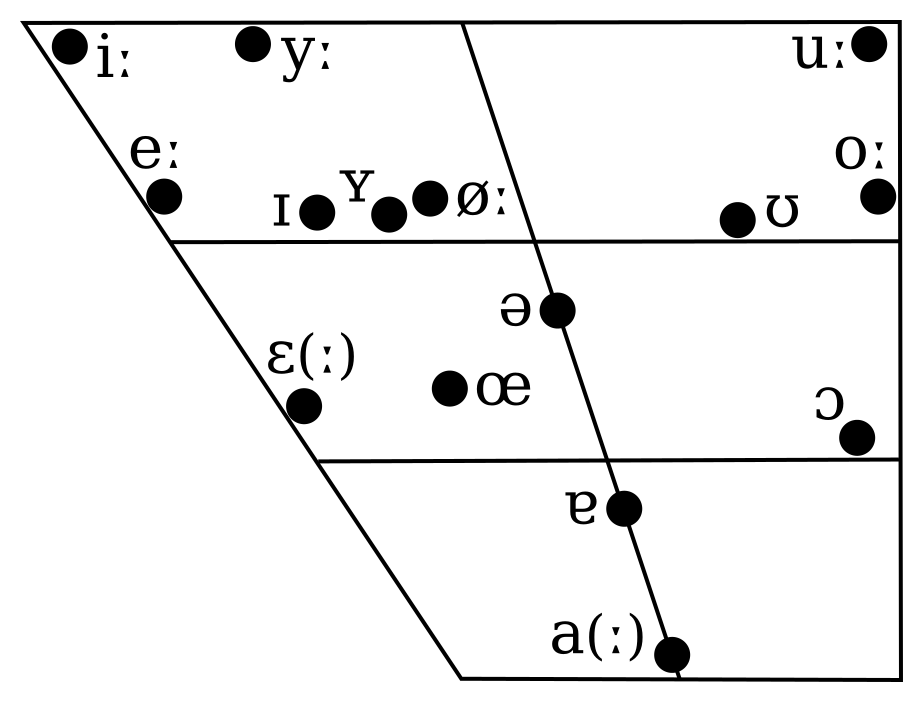
Yeah...
And those are just the monophthongs.
edgy belfry
interesting
quaint cipher
proven sphinx
German doesn't exactly have a simple phonology, either. It has a pretty ridiculo...
also a distinction between h and x is very rare
edgy belfry
quite focused on the front of the mouth
proven sphinx
quaint cipher
also a distinction between h and x is very rare
Is it? I feel like every Semitic language has it, for example.
Dutch naturally has it as well.
quaint cipher
are semetic languages known for simple phonology tho?
proven sphinx
Not really. 😅
jovial hedge
proven sphinx
https://upload.wikimedia.org/wikipedia/commons/f/fc/Hanoi_Vietnamese_vowel_chart...
but we have a lot of accents for vowels, 5 for each specifically
proven sphinx
edgy belfry
quite focused on the front of the mouth
Yeah, indeed it is.
Lots and lots of front vowels.
jovial hedge
a ă â e ê i/y o ơ ô u ư plus their 5 accents
quaint cipher
proven sphinx
Is it? I feel like every Semitic language has it, for example.
but yea arabic as like 3 laringals iirc
edgy belfry
I'm curious now. but I can't really find the vowel chart of my language, malayalam.
proven sphinx
quaint cipher
but yea arabic as like 3 laringals iirc
Yeah, Arabic phonology is very complex, I won't deny it, but at least they only have three phonemic vowels.
quaint cipher
all can be distincted by length tho and dipthong
proven sphinx
I guess it's a matter of perspective if you find distinguishing between a ton of consonants or a ton of vowels harder.
quaint cipher
also most modern dialects have 5 but MSA has 3
proven sphinx
quaint cipher
also most modern dialects have 5 but MSA has 3
Yeah, true.
quaint cipher
consonants are like pushing the buttons in a trumpet. vowels are like sliding a cornet
that's how i think of it tho
proven sphinx
Danish has even more vowels than German does.
quaint cipher
danish also has a phoneme not found in any other language
proven sphinx
Germanic languages in general are infamous for having a large vowel inventory.
edgy belfry

The phonology of Danish is similar to that of the other closely related Scandinavian languages, Swedish and Norwegian, but it also has distinct features setting it apart. For example, Danish has a suprasegmental feature known as stød which is a kind of laryngeal phonation that is used phonemically. It also exhibits extensive lenition of plosives...
proven sphinx
English is not an exception here, obviously. English vowels are very hard to get right.
quaint cipher
proven sphinx
Germanic languages in general are infamous for having a large vowel inventory.
which is weird that proto germanic only had 5 core vowels
proven sphinx
quaint cipher
which is weird that proto germanic only had 5 core vowels
Yeah, true.
edgy belfry
https://en.wikipedia.org/wiki/Help:IPA/Malayalam it's kinda weird that they consider r as a vowel in my language
The charts below show the way in which the International Phonetic Alphabet (IPA) represents Malayalam pronunciations. For a guide to adding IPA characters to Wikipedia articles, see Template:IPA and Wikipedia:Manual of Style/Pronunciation § Entering IPA characters.
quaint cipher
but with nasality and even some vowels had a 3 way length distinction
proven sphinx
In the end, whether a language has a "hard" phonology or not always depends on your native language. French is really hard to pronounce for speakers of other Romance languages, but not so much for speakers of German, which shares almost all sounds with French.
edgy belfry
yeah
Number of phonemes and frequency of those phonemes across all the languages make a language phonology difficult usually
proven sphinx
I mean, I'm not surprised at all that learning to speak French as a Spanish speaker would be a nightmare. Their phonologies barely line up at all, despite being related.
edgy belfry
yeah
proven sphinx
So it's not just a matter of speaking a related language, at least not always.
jovial hedge
this is gonna sound weird but as a vietnamese speaker french doesn't seem too hard
it might have to do with their occupation but we share some words
proven sphinx
jovial hedge
this is gonna sound weird but as a vietnamese speaker french doesn't seem too ha...
Maybe you've just had plenty of exposure to it since Vietnam used to be a French colony?
Yeah.
jovial hedge
which is pretty interesting how an eastern and western language matches up
jovial hedge
proven sphinx
https://upload.wikimedia.org/wikipedia/commons/f/fc/Hanoi_Vietnamese_vowel_chart...
here are all the vowels with their accents, and you can also combine vowels but they'll share an accent
á à ả ã ạ ắ ằ ẳ ẵ ặ ấ ầ ẩ ẫ ậ
é è ẻ ẽ ẹ ế ề ể ễ ệ
í ì ỉ ĩ ị ý ỳ ỷ ỹ ỵ
ó ò ỏ õ ọ ớ ờ ở ỡ ợ ố ồ ổ ỗ ộ
ú ù ủ ũ ụ ứ ừ ử ữ ự
shut briar
shut briar
Die Rolle des Übersetzers ist die des Kulturmittlers
Hey can someone bitte help me with this
 bronze root
shut briar
Hey can someone bitte help me with this
bronze root
shut briar
Hey can someone bitte help me with this
looks good to me :)
plush pelican
You can say either
"Ich hasse es, das Badezimmer zu putzen"
OR
"Das Badezimmer zu putzen hasse ich"
But how common is it to phrase things like the 2nd sentence there, with an Infinitivsatz that is both the topic of the sentence as well as the object of the verb?
 inland folio
hey guys, i need help in something
we know how things get seperated into nominativ,akkusativ,genetiv,dativ?
what happens with plural?
how does it change
in "the"
plush pelican
inland folio
in "the"
just look at a declension chart for "the"
https://www.germanveryeasy.com/article-declension#Definite-Article

The articles (der, ein, kein) change form (are declined) depending on the gender, case and number
inland folio
plush pelican
just look at a declension chart for "the"
https://www.germanveryeasy.com/articl...
thank you so much!
shut briar
bronze root
looks good to me :)
Thanks 🙏, also would you sya this is eher gehoben oder Standard?
bronze root
shut briar
Thanks 🙏, also would you sya this is eher gehoben oder Standard?
a little bit more gehoben than standard
inland folio
guys whats the article
when u say the nationality of something
like
Der ......... amerikanische Erfinder Thomas Edison
we need a certain article of Beruhmte
proven sphinx
inland folio
we need a certain article of Beruhmte
I'm not sure what you mean?
"Der berühmte amerikanische Erfinder Thomas Edison" is already perfectly fine.
inland folio
proven sphinx
"Der berühmte amerikanische Erfinder Thomas Edison" is already perfectly fine.
ohh okay thank you so much
is there an easy way
to find the cases
i struggle a lot with it
proven sphinx
inland folio
ohh okay thank you so much
Well, it depends on the gender and the case.
But in this particular case, it's the same for all three genders at least.
inland folio
like when do we know its nominativ, akkusativ etc etc
inland folio
yes
proven sphinx
inland folio
yes

Maybe this helps.
It should be the same for any other adjective.
inland folio
yes ik this
but how do we know
when its akkusativ
when its nominativ
for eg in feminin the articles are the same
for nom and akk
proven sphinx
It basically depends on what comes before it and what function it has in the sentence.
Die schöne Frau (Nom.) sieht mich vs Ich sehe die schöne Frau (Akk.)
Is it the subject or the object?
Of course, it is more obvious in the masculine: "Der schöne Mann sieht mich" vs "Ich sehe den schönen Mann."
But that doesn't change the fact that "die schöne Frau" is still in the accusative case in the second sentence above.
And as for all cases, it's the preceding verb or preposition that tells you what case it needs to be.
For example, "sehen" always requires the accusative.
inland folio
thank you so muchhh
fervent kernel
Hey, I am looking for someone to make me a structured study plan that I can do. I have many resources but they are just all over the place and I just need something more structured. I am in A1. Feel free to shoot me a DM!!!
 agile summit
heyo, when casually texting a friend in german, what would be your equivalent to starting a sentence with "also" or "btw"?
übrigens feels a little contrived lol
upbeat thicket
agile summit
heyo, when casually texting a friend in german, what would be your equivalent to...
i was about to say "übrigens" 
whole portal
agile summit
übrigens feels a little contrived lol
🤔
opaque heron
Hallo! I learned "nach einer Weile", but this is "noch" and I couldn't find its meaning. What does "noch" mean here? 🤔
 opaque heron
fervent kernel
„we sat a little more time under the sun
opaque heron
fervent kernel
„we sat a little more time under the sun
Danke!
fervent kernel
Np
south zenith
opaque heron
Hallo! I learned "nach einer Weile", but this is "noch" and I couldn't find its ...
ist das Dino lernt deutsch?
agile summit
upbeat thicket
i was about to say "übrigens" <:flooshedzimtschnecke:993241750799912980>
ahahah sorry
i was looking for a super super casual way, like an equivalent of btw. but as i found out there isnt rly one
and either way the person im speaking to is also young and internationalized so weve been just saying btw
whole portal
Übrigens is pretty casual to me idk
Like it's not Nebenbei bemerkt
Lassen Sie mich anmerken, dass
verbal girder
verbal girder
2day i learned about another dual dictionary (someone mentioned it here): https:...
ehhh it has problems loading 🤷♂️
glossy jay
Would the imperative of rechnen be "rechn"? How is it pronounced?
fervent kernel
glossy jay
Would the imperative of rechnen be "rechn"? How is it pronounced?
rechne. and it’s pronounced the same as rechen, just the n before the e
glossy jay
fervent kernel
rechne. and it’s pronounced the same as rechen, just the n before the e
i mean, like for machen it'd be "mach"
So it wouldn't be "rechn" because that's unpronouncable?
glossy jay
wait
i thought that "mach" is the formal and "mache" is the informal for imperative lol
so thanks
fervent kernel
np
plush pelican
glossy jay
Would the imperative of rechnen be "rechn"? How is it pronounced?
If you want to look up the imperative of a word, just use a verb conjugation website.
https://conjugator.reverso.net/conjugation-german-verb-rechnen.html
Conjugate the German verb rechnen: future, participle, present. See German conjugation models. Translate rechnen in context, with examples of use and definition.
Scroll down to the bottom:
 plush pelican
glossy jay
wait
i thought that "mach" is the formal and "mache" is the informal for imperat...
plush pelican
glossy jay
wait
i thought that "mach" is the formal and "mache" is the informal for imperat...
Depends on what you mean by "formal" vs. "informal"
both "mach" and "mache" are the imperative for "du", meaning both are addressing someone informally.
For addressing someone formally, it would be, "Machen Sie".
On top of that, it's very common in colloquial German to drop the E ending for the du version of the imperative.
glossy jay
plush pelican
Depends on what you mean by "formal" vs. "informal"
both "mach" and "mache" are...
By formal I meant colloquial, sorry
plush pelican
no problem
glossy jay
anw danke
glossy jay
meins - in substantival use only, slightly informal, but fully standard) Alternative form of meines
What does "substantival use only" mean?
vernal ermine
Guten Tag Freunde!
hushed dawn
Sagt man "Lesen zum Spaß" oder "Lesen aus Vergnügen" ?
fervent kernel
hushed dawn
Sagt man "Lesen zum Spaß" oder "Lesen aus Vergnügen" ?
Beides ist möglich. Es ist formeller zu sagen „Lesen aus Vergnügen“