#botchannel
1 messages · Page 154 of 1
 heady skiff
 lean flickerBOT
Jay-Z feat. Alicia Keys - Empire State of Mind (Official Music Video) [00:04:41] added to the queue.
heady skiff
play can we kiss forever
lean flickerBOT
Kina - Can We Kiss Forever? (Lyrics) ft. Adriana Proenza [00:03:08] added to the queue.
heady skiff
play Coeur de pirate, la republique
lean flickerBOT
Cœur de pirate - Place de la République [Vidéoclip officiel] [00:04:21] added to the queue.
heady skiff
play blonde, coeur de pirate
lean flickerBOT
:x: The requested track is longer than 12 minutes and cannot be played.
heady skiff
play smile youssoupha
lean flickerBOT
Youssoupha ft. Madame Monsieur - Smile (Clip officiel) [00:03:40] added to the queue.
heady skiff
play wake me up madylin bailey
lean flickerBOT
Wake Me Up Avicii // Madilyn Bailey [00:03:43] added to the queue.
heady skiff
play je ne parle pas francais feat Black M
lean flickerBOT
Namika - Je ne parle pas français [Beatgees Remix] feat. Black M (Official Video) [00:04:06] added to the queue.
heady skiff
play the scientist Alex Goot
lean flickerBOT
"The Scientist" - Coldplay [Alex Goot & Jada Facer] [00:04:10] added to the queue.
heady skiff
play forever lewis capaldi
lean flickerBOT
Lewis Capaldi - Forever (Lyrics) [00:03:58] added to the queue.
heady skiff
play rewrite the stars Jame sarthur
lean flickerBOT
Anne-Marie & James Arthur - Rewrite The Stars [from The Greatest Showman: Reimagined] [00:03:47] added to the queue.
heady skiff
play naked james arthur
lean flickerBOT
James Arthur - Naked [00:04:01] added to the queue.
 tawdry summit
play when i'm 64
lean flickerBOT
:x: The bot is already active in a different channel.
 carmine fulcrum
cefr A2
lean flickerBOT
:x: You already have the Level A role. Use >rr <role> to remove the role.
lean flickerBOT
The bot is not playing any songs.
heady skiff
play the scientist Alex Goot
lean flickerBOT
"The Scientist" - Coldplay [Alex Goot & Jada Facer] [00:04:10] added to the queue.
heady skiff
play naked james arthur
lean flickerBOT
James Arthur - Naked [00:04:01] added to the queue.
heady skiff
play rewrite the stars Jame sarthur
lean flickerBOT
Anne-Marie & James Arthur - Rewrite The Stars [from The Greatest Showman: Reimagined] [00:03:47] added to the queue.
heady skiff
play wake me up madylin bailey
lean flickerBOT
Wake Me Up Avicii // Madilyn Bailey [00:03:43] added to the queue.
lean flickerBOT
:x: The required argument name is missing.
lean flickerBOT
These groups are currently accessible
News
Announcements! Subscribe for pings!
Grammar
Lessons! Subscribe for pings!
AdvancedReading
Like Reading but only B2+ level content.
AdvancedGrammar
Like Grammar but only B2+ level content.
Activities
Lessons! Subscribe for pings!
Reading
Lessons! Subscribe for pings!
Translation
Offers weekly sentences to translate.
Writing
Join to get weekly and monthly prompts!
Pronunciation
Offers weekly texts to practise pronunciation.
Dialects
A group to discuss German dialects.
Science
STEM-related topics.
Gaming
All gaming-related topics.
Ouija
A Ouija-style game just for fun.
Food
A group for food talks.
Coding
For all the coding nerds.
Type >sub to join a group or >group joinall to join all available groups .
 wet path
sub all
lean flickerBOT
:x: Use the >group joinall command to join all available groups.
wet path
group joinall
lean flickerBOT
:white_check_mark: Added you to 16 available groups: Coding, AdvancedReading, Science, Gaming, Ouija, Pronunciation, Food, Activities, Dialects, Grammar, Writing, Translation, Reading, Art, News, AdvancedGrammar.
heady skiff
play naked james arthur
lean flickerBOT
James Arthur - Naked [00:04:01] added to the queue.
heady skiff
play coeur de pirate
lean flickerBOT
Cœur de pirate - T'es belle [vidéoclip officiel] [00:02:54] added to the queue.
heady skiff
play uncover
lean flickerBOT
Zara Larsson - Uncover (Official Music Video) [00:03:38] added to the queue.
 tender trellis
faq beginner
lean flickerBOT
How to get started
The simplest way to learn German is to find topics you don’t understand yet and search for explanations of them. This list provides you with a guide for which topics to learn if you are completely new to German. Type the topic into Google (or YouTube) and start learning!
Introduction
1: Alphabet (especially ä, ü, ö and ß)
2: Basic greetings (hello, goodbye, etc.)
Part 1 - Simple Sentence
1: Noun gender & plurals
2: Nominative case (What are cases?)
3: Nominative pronouns (I, you, he, she, etc.)
4: Verbs in present tense
5: Definite/indefinite articles
6: Accusative case (for nouns)
7: Accusative pronouns
8: Word order of simple sentences
9: How to ask questions
See Part 2 on the next page.
Tips
- Always learn the gender of a noun when you learn a new noun
- Learn to use a translation dictionary (e.g. dict.cc, leo.org)
- Use
>faq resourcesto see our list of German learning resources - For listening and pronunciation practice, try watching movies or videos (incl. YouTube)
- You can listen to pronunciation for words on websites like dict.cc, forvo.com, and others
- Practice writing sentences every day (and asking people to correct them)
- Ask as many questions as possible
- Don’t be scared to make mistakes!!!! If you don’t let yourself make mistakes, you will never be able to learn German
Page 1/2
tender trellis
faq beginner
lean flickerBOT
How to get started - Part 2
Please make sure to read Part 1 before starting Part 2!
Part 2 – Beyond a Simple Sentence
1: Conjunctions (coordinating and subordinating)
2: Subordinate clause word order
3: Dative case
4: Dative verbs
5: Verbs with two objects (e.g. geben)
6: Prepositions (accusative, dative, and two-way)
7: Spoken past tense (Perfekt)
8: Written past tense (Präteritum)
9: Genitive case
10: Relative clauses
11: Adjective declension
Tips
- Make sure to practice writing and reading simple texts
- Some of these concepts are confusing to start with, so it’s a good idea to ask for help in #questions when you’re unsure
- You should use a declension chart to help with declension to start with, because you won’t be able to memorize it straight away
- After you feel confident with creating sentences, you can start learning the adjective declension properly by using the command >faq adjective declension and reading the guide provided
Page 2/2
 stoic raptor
faq accusative
lean flickerBOT
When do I use the accusative case?
The accusative case is mainly used:
- to mark the direct object of many transitive verbs
Ich lese einen Roman.
Er hat die schöne Frau ermordet.
Sie besitzen kein Auto.
- after some prepositions
Danke für deine Hilfe!
Ohne dich kann ich nicht leben.
Sie hatten keine Einwände gegen den Plan.
The following prepositions are always followed by the accusative case:
bis, durch, für, gegen, ohne, um
- to indicate movement in a particular direction in two-way prepositions
Er steigt auf den Gipfel.
Sie hängt das Bild an die Wand.
Ich gehe gleich ins Bett. (ins = in das)
- by adverbials of time and measurement
A definite length or point in time:
Ich habe den ganzen Tag geschlafen.
Sie kommt nächste Woche zurück.
A measurement:
Das Kind ist vier Jahre alt.
Das Tier ist einen Meter groß.
Expressing distance with verbs of motion:
Ich ging die Treppe hinauf.
Ich lief den ganzen Weg zu Fuß.
- in common greetings and wishes
Guten Morgen/Tag/Abend!
Gute Besserung!
Herzlichen Glückwunsch!
Here there is an implicit verb such as 'wünschen', where the greeting/wish is the direct object.
Page 2/2
 hard heath
cefr c
hard heath
rr c
 queen crypt
faq beginner
lean flickerBOT
How to get started
The simplest way to learn German is to find topics you don’t understand yet and search for explanations of them. This list provides you with a guide for which topics to learn if you are completely new to German. Type the topic into Google (or YouTube) and start learning!
Introduction
1: Alphabet (especially ä, ü, ö and ß)
2: Basic greetings (hello, goodbye, etc.)
Part 1 - Simple Sentence
1: Noun gender & plurals
2: Nominative case (What are cases?)
3: Nominative pronouns (I, you, he, she, etc.)
4: Verbs in present tense
5: Definite/indefinite articles
6: Accusative case (for nouns)
7: Accusative pronouns
8: Word order of simple sentences
9: How to ask questions
See Part 2 on the next page.
Tips
- Always learn the gender of a noun when you learn a new noun
- Learn to use a translation dictionary (e.g. dict.cc, leo.org)
- Use
>faq resourcesto see our list of German learning resources - For listening and pronunciation practice, try watching movies or videos (incl. YouTube)
- You can listen to pronunciation for words on websites like dict.cc, forvo.com, and others
- Practice writing sentences every day (and asking people to correct them)
- Ask as many questions as possible
- Don’t be scared to make mistakes!!!! If you don’t let yourself make mistakes, you will never be able to learn German
Page 1/2
wet path
faq all
lean flickerBOT
See a listed FAQ with >faq [name]
:small_blue_diamond: doch
:small_blue_diamond: lessons
Aliases: sessions, activities
:small_blue_diamond: nicos
Aliases: nicos weg
:small_blue_diamond: roles
:small_blue_diamond: seeing verbs
Aliases: schauen, sehen
:small_blue_diamond: so und also
:small_blue_diamond: weil, denn, da
:small_blue_diamond: wissen und kennen
Aliases: wissen vs. kennen, kennen vs. wissen
Page 4/4 (53 entries)
lean flickerBOT
doch
⭐ doch for beginners ⭐
Germans tend to use the word doch in lots of different situations. But what does it mean, and when do you use it? ⁉
🔆 Using doch to contradict negative statements 🔆
You can use doch to contradict a negative statement/question in the same manner as you would use nein to contradict a positive statement.
(1) Laura hat keinen Fernseher, oder? - Doch, sie hat einen Fernseher!
Laura doesn't have a TV, does she? - Yes, she does!
(2) Du kannst kein Schach spielen! - Doch, das kann ich!
You can't play chess! - Yes, I can!
💡 With doch, correctly answering negative questions (with positive tags) has never been easier. Isn't that awesome? Doch, it is! 😏
🔅 Using doch as an adversative conjunction 🔅
You can also use doch as an adversative conjunction (yet, however, ...).
(3) Du hattest genug Zeit, doch du hast nicht für die Prüfung gelernt.
You had enough time, yet you didn't study for the exam.
(4) Es ist noch nicht Sommer, doch es ist fast genauso heiß.
It is not yet summer, it is, however, almost as hot.
‼ Keep in mind that doch as an adversative conjunction doesn't change the word order. ‼
🔅 Using doch as a subjunctive 🔅
Furthermore, you can use doch in concessive clauses.
(5) Auch wenn wir erwarteten, zu verlieren, so haben wir das Spiel doch gewonnen.
Though we expected to lose, we still won the game.
(6) Obwohl sie sehr nett ist, findet sie doch keine neuen Freunde.
Although she's very kind, she doesn't make new friends.
 spark glen
faq cefr
lean flickerBOT
CEFR levels
If you see something like A1, B2 or C1, these represent the proficiency of a speaker in a language they're not native in, and are called CEFR levels. They are valid for any language, not only German!
Roughly speaking, A levels are beginners and C levels are experts. Remember that CEFR level are self-assessed and indicative!
You can see more specific names and descriptions on the Wikipedia page:
https://en.wikipedia.org/wiki/Common_European_Framework_of_Reference_for_Languages
🗨 How do I know what level I am?
If the table on Wikipedia is too generic for you, you can try using this one here:
https://rm.coe.int/168045bb52
Just check each column one at a time: if you can do all it describes, move to the next column. Your level is the highest where you can do the most things.
Alternatively, you can use this questionnaire to estimate your level more accurately:
https://www.laits.utexas.edu/fi/sites/laits.utexas.edu.fi/files/Self Assessment Checklist European.pdf
spark glen
faq cefr Level b2
lean flickerBOT
FAQ not found. I found the following similar entry: CEFR levels.
spark glen
faq CEFR levels
lean flickerBOT
CEFR levels
If you see something like A1, B2 or C1, these represent the proficiency of a speaker in a language they're not native in, and are called CEFR levels. They are valid for any language, not only German!
Roughly speaking, A levels are beginners and C levels are experts. Remember that CEFR level are self-assessed and indicative!
You can see more specific names and descriptions on the Wikipedia page:
https://en.wikipedia.org/wiki/Common_European_Framework_of_Reference_for_Languages
🗨 How do I know what level I am?
If the table on Wikipedia is too generic for you, you can try using this one here:
https://rm.coe.int/168045bb52
Just check each column one at a time: if you can do all it describes, move to the next column. Your level is the highest where you can do the most things.
Alternatively, you can use this questionnaire to estimate your level more accurately:
https://www.laits.utexas.edu/fi/sites/laits.utexas.edu.fi/files/Self Assessment Checklist European.pdf
spark glen
faq CEFR b
lean flickerBOT
FAQ not found. I found the following similar entry: CEFR.
spark glen
rr Level B
lean flickerBOT
:x: You do not have the Level B role.
spark glen
cefr Level B
 maiden badge
cefr B
tender trellis
groups
lean flickerBOT
These groups are currently accessible
News
Announcements! Subscribe for pings!
Grammar
Lessons! Subscribe for pings!
AdvancedReading
Like Reading but only B2+ level content.
AdvancedGrammar
Like Grammar but only B2+ level content.
Activities
Lessons! Subscribe for pings!
Reading
Lessons! Subscribe for pings!
Translation
Offers weekly sentences to translate.
Writing
Join to get weekly and monthly prompts!
Pronunciation
Offers weekly texts to practise pronunciation.
Dialects
A group to discuss German dialects.
Science
STEM-related topics.
Gaming
All gaming-related topics.
Ouija
A Ouija-style game just for fun.
Food
A group for food talks.
Coding
For all the coding nerds.
Type >sub to join a group or >group joinall to join all available groups .
lean flickerBOT
These groups are currently accessible
News
Announcements! Subscribe for pings!
Grammar
Lessons! Subscribe for pings!
AdvancedReading
Like Reading but only B2+ level content.
AdvancedGrammar
Like Grammar but only B2+ level content.
Activities
Lessons! Subscribe for pings!
Reading
Lessons! Subscribe for pings!
Translation
Offers weekly sentences to translate.
Writing
Join to get weekly and monthly prompts!
Pronunciation
Offers weekly texts to practise pronunciation.
Dialects
A group to discuss German dialects.
Science
STEM-related topics.
Gaming
All gaming-related topics.
Ouija
A Ouija-style game just for fun.
Food
A group for food talks.
Coding
For all the coding nerds.
Type >sub to join a group or >group joinall to join all available groups .
 rancid acorn
cefr a
 west raptor
faq beginner
lean flickerBOT
How to get started
The simplest way to learn German is to find topics you don’t understand yet and search for explanations of them. This list provides you with a guide for which topics to learn if you are completely new to German. Type the topic into Google (or YouTube) and start learning!
Introduction
1: Alphabet (especially ä, ü, ö and ß)
2: Basic greetings (hello, goodbye, etc.)
Part 1 - Simple Sentence
1: Noun gender & plurals
2: Nominative case (What are cases?)
3: Nominative pronouns (I, you, he, she, etc.)
4: Verbs in present tense
5: Definite/indefinite articles
6: Accusative case (for nouns)
7: Accusative pronouns
8: Word order of simple sentences
9: How to ask questions
See Part 2 on the next page.
Tips
- Always learn the gender of a noun when you learn a new noun
- Learn to use a translation dictionary (e.g. dict.cc, leo.org)
- Use
>faq resourcesto see our list of German learning resources - For listening and pronunciation practice, try watching movies or videos (incl. YouTube)
- You can listen to pronunciation for words on websites like dict.cc, forvo.com, and others
- Practice writing sentences every day (and asking people to correct them)
- Ask as many questions as possible
- Don’t be scared to make mistakes!!!! If you don’t let yourself make mistakes, you will never be able to learn German
Page 1/2
west raptor
cefr level A
rancid acorn
sessions
lean flickerBOT
There are no sessions currently scheduled.
 rustic linden
sessions
lean flickerBOT
There are no sessions currently scheduled.
rustic linden
:(
 keen marsh
cefr level B
 fallow orbit
hard heath
fallow orbit
hard heath
rr coding
lean flickerBOT
:x: No such role exists. Possible roles are: Level A, Level B, Level C.
 snow compass
sub ouija
 manic star

Once upon a time there was a tavern
Where we used to raise a glass or two
Remember how we laughed away the hours
And dreamed of all the great things we would do
Those were the days my friend
We thought they'd never end
We'd sing and dance forever and a day
We'd live the life we choose
We'd fight and never lose
For we were young and sure to have...
lean flickerBOT
Mary Hopkin - Those Were The Days - 1968 [00:04:25] added to the queue.
 quartz agate

🔉SPOTIFY🔊
https://spoti.fi/32o8iXF
🎸APPLE MUSIC🎸
https://apple.co/33JUln7
🎹GOOGLE PLAY🎹
https://bit.ly/35Jlath
☔️SOUNDCLOUD☔️
https://bit.ly/33G8aCQ
👻BEAT VON KIRA👻
https://www.youtube.com/channel/UCT8KO9xxmsGkFPk_FpES1Aw
https://twitter.com/YoungKiraFlyboy
💓SPECIAL THANKS💓
Anestis: https://www.instagram.com/wild_anestis_tattoo_style/
wavvy...
lean flickerBOT
TJ_beastboy - 1000x COOLER + W1NNER (prod. by Young Kira) [00:03:41] added to the queue.
 inland thistle
faq cefr
lean flickerBOT
CEFR levels
If you see something like A1, B2 or C1, these represent the proficiency of a speaker in a language they're not native in, and are called CEFR levels. They are valid for any language, not only German!
Roughly speaking, A levels are beginners and C levels are experts. Remember that CEFR level are self-assessed and indicative!
You can see more specific names and descriptions on the Wikipedia page:
https://en.wikipedia.org/wiki/Common_European_Framework_of_Reference_for_Languages
🗨 How do I know what level I am?
If the table on Wikipedia is too generic for you, you can try using this one here:
https://rm.coe.int/168045bb52
Just check each column one at a time: if you can do all it describes, move to the next column. Your level is the highest where you can do the most things.
Alternatively, you can use this questionnaire to estimate your level more accurately:
https://www.laits.utexas.edu/fi/sites/laits.utexas.edu.fi/files/Self Assessment Checklist European.pdf
lean flickerBOT
These groups are currently accessible
News
Announcements! Subscribe for pings!
Grammar
Lessons! Subscribe for pings!
AdvancedReading
Like Reading but only B2+ level content.
AdvancedGrammar
Like Grammar but only B2+ level content.
Activities
Lessons! Subscribe for pings!
Reading
Lessons! Subscribe for pings!
Translation
Offers weekly sentences to translate.
Writing
Join to get weekly and monthly prompts!
Pronunciation
Offers weekly texts to practise pronunciation.
Dialects
A group to discuss German dialects.
Science
STEM-related topics.
Gaming
All gaming-related topics.
Ouija
A Ouija-style game just for fun.
Food
A group for food talks.
Coding
For all the coding nerds.
Type >sub to join a group or >group joinall to join all available groups .
inland thistle
sub news
sub grammar
sub activities
sub reading
sub translation
sub writing
sub pronunciation
sub dialects
sub scrience
lean flickerBOT
:x: Group scrience not found.
Try >groups to see a list of all groups or >group joinall to join all available groups.
 olive vine
cefr A
 whole ruin
 late lintel
cefr B
sub reading
sub writing
sub pronunciation
sub activities
sub translation
sub all
lean flickerBOT
:x: Use the >group joinall command to join all available groups.
late lintel
group joinall
lean flickerBOT
:white_check_mark: Added you to 11 available groups: Coding, AdvancedReading, Science, Gaming, Ouija, Food, Dialects, Grammar, Art, News, AdvancedGrammar.
 reef shard
faq beginner
lean flickerBOT
How to get started - Part 2
Please make sure to read Part 1 before starting Part 2!
Part 2 – Beyond a Simple Sentence
1: Conjunctions (coordinating and subordinating)
2: Subordinate clause word order
3: Dative case
4: Dative verbs
5: Verbs with two objects (e.g. geben)
6: Prepositions (accusative, dative, and two-way)
7: Spoken past tense (Perfekt)
8: Written past tense (Präteritum)
9: Genitive case
10: Relative clauses
11: Adjective declension
Tips
- Make sure to practice writing and reading simple texts
- Some of these concepts are confusing to start with, so it’s a good idea to ask for help in #questions when you’re unsure
- You should use a declension chart to help with declension to start with, because you won’t be able to memorize it straight away
- After you feel confident with creating sentences, you can start learning the adjective declension properly by using the command >faq adjective declension and reading the guide provided
Page 2/2
reef shard
cefr A
late lintel
faq adjective declension
lean flickerBOT
Adjective Declension
A Brief Guide to Memorizing German Noun and Adjective Declension by Basementality
https://docs.google.com/document/d/1jWl5-kkqF3FQLDzrz8XLBJj7hvPFQK7MT5SYEDGK65E/edit
 untold hamlet
cefr A
 lean pulsar
faq beginner
lean flickerBOT
How to get started - Part 2
Please make sure to read Part 1 before starting Part 2!
Part 2 – Beyond a Simple Sentence
1: Conjunctions (coordinating and subordinating)
2: Subordinate clause word order
3: Dative case
4: Dative verbs
5: Verbs with two objects (e.g. geben)
6: Prepositions (accusative, dative, and two-way)
7: Spoken past tense (Perfekt)
8: Written past tense (Präteritum)
9: Genitive case
10: Relative clauses
11: Adjective declension
Tips
- Make sure to practice writing and reading simple texts
- Some of these concepts are confusing to start with, so it’s a good idea to ask for help in #questions when you’re unsure
- You should use a declension chart to help with declension to start with, because you won’t be able to memorize it straight away
- After you feel confident with creating sentences, you can start learning the adjective declension properly by using the command >faq adjective declension and reading the guide provided
Page 2/2
rustic linden
sessions
lean flickerBOT
There are no sessions currently scheduled.
 queen briar
sub hidden group
lean flickerBOT
:x: Group hidden group not found.
Try >groups to see a list of all groups or >group joinall to join all available groups.
tender trellis
lookup de lying
lean flickerBOT
Translations for lying:
**:small_blue_diamond:** liegend
lying [stretched out, recumbent]
**:small_blue_diamond:** lügend
lying [telling lies]
**:small_blue_diamond:** verlogen *[Person]*
lying [telling lies]
**:small_blue_diamond:** lügnerisch
lying
**:small_blue_diamond:** Liege- *[z.* *B.* *Komfort,* *Meditation,* *Fläche,* *Vase]*
lying [attr.] [e.g. comfort, meditation, surface, vase]
Page 1/2 (10 entries)
tender trellis
lookup en Lügner
lean flickerBOT
Translations for Lügner:
**:small_blue_diamond:** Lügner
liar
**:small_blue_diamond:** Lügner
shammer
**:small_blue_diamond:** Lügner
liars
**:small_blue_diamond:** Lügner
storyteller [coll.] [liar]
**:small_blue_diamond:** Lügner
Ananias [a liar]
Page 1/2 (10 entries)
tender trellis
lookup en lügend
lean flickerBOT
Translations for lügend:
**:small_blue_diamond:** lügend
lying [telling lies]
lean flickerBOT
Generic 1/2 commands
:small_blue_diamond: **compliment**
No description provided.
:small_blue_diamond: **getrole** <role name>
Assigns you a role with the given name, removing any previous assignable roles.
Note: Use >sub to subscribe to groups and ping a moderator for the native speaker role.
:small_blue_diamond: **info** [user]
Displays information about the given user. If no user is specified, information about you will be displayed.
:small_blue_diamond: **ping**
Displays how long it takes for a message that the bot sends to arrive.
:small_blue_diamond: **quote** <channel> <message id>
Quotes a message in the channel you are in. Specify the channel that the message was originally posted in and the message id of the message (accessible if you turn on developer mode in your Discord settings).
Page 1/17 (17 entries)
 elder widget
getrole help
lean flickerBOT
:x: The required argument roleName is missing.
elder widget
getrole help
lean flickerBOT
:x: No such role exists. Possible roles are: Level A, Level B, Level C.
elder widget
getrole coding
lean flickerBOT
:x: No such role exists. Possible roles are: Level A, Level B, Level C.
elder widget
help
lean flickerBOT
Session Schedule commands
:small_blue_diamond: **📒 session**
Commands for the bot's session scheduling system.
Group moderators can edit and delete existing sessions for their group.
Page 17/17 (17 entries)
elder widget
sub coding
lean flickerBOT
Meme 1/2 commands
:small_blue_diamond: **cat**
Display a random cat image.
:small_blue_diamond: **dog**
Display a random dog image.
:small_blue_diamond: **inspireme**
Displays an AI-generated inspirational quote.
:small_blue_diamond: **patcat** <member>
Pats the given member's cat.
:small_blue_diamond: **petdog** <member>
Pets the given member's dog.
Page 13/17 (17 entries)
tender trellis
dog
lean flickerBOT
 tender trellis
cat
lean flickerBOT

 shy snow

Auf der Heide blüht ein kleines Blümelein
Und das heißt:
Erika.
Heiß von hunderttausend kleinen Bienelein
Wird umschwärmt:
Erika
Denn ihr Herz ist voller Süßigkeit,
Zarter Duft entströmt dem Blütenkleid.
Auf der Heide blüht ein kleines Blümelein
Und das heißt:
Erika.
In der Heimat wohnt ein blondes Mägdelein
Und das heißt:
Erika.
Dieses Mädel is...
lean flickerBOT
German Song- Erika [00:02:08] added to the queue.
 faint zephyr
dog
lean flickerBOT

 icy dew
lean flickerBOT
icy dew
lean flickerBOT
Christmas Music: O Tannenbaum - ARETHA FRANKLIN from BIG BAND HOLIDAYS II [00:02:39] added to the queue.
shy snow
play nico nico ni
lean flickerBOT
Nico-Nico-Nii! [BEATSTEP REMIX] [00:01:46] added to the queue.
lean flickerBOT
Rammstein - Diamant Live (Gelsenkirchen. Veltins Arena 2019) 1080p (AM) [00:03:05] added to the queue.
shy snow
play frau und mann lindemann lyrics
lean flickerBOT
Frau & Mann LINDEMANN //(Lyrics)// [00:03:34] added to the queue.
shy snow
play mamamoo helly friday
lean flickerBOT
Mamamoo [마마무] - Friday Night (Feat. Junggigo) — [Color Coded in Han/Rom/Eng Lyrics] [00:03:23] added to the queue.
lean flickerBOT
MAMAMOO (마마무) - 'HELLO MAMA' Lyrics [Color Coded_Han_Rom_Eng] [00:03:54] added to the queue.
shy snow
play mamamoo
lean flickerBOT
[MV] 마마무 (MAMAMOO) - AYA [00:03:39] added to the queue.
shy snow
play short jazz mix
lean flickerBOT
MUSIC JAZZ MIX- short mix [00:04:57] added to the queue.
 devout tree
rr
lean flickerBOT
:x: The required argument roleName is missing.
devout tree
faq cefr
lean flickerBOT
CEFR levels
If you see something like A1, B2 or C1, these represent the proficiency of a speaker in a language they're not native in, and are called CEFR levels. They are valid for any language, not only German!
Roughly speaking, A levels are beginners and C levels are experts. Remember that CEFR level are self-assessed and indicative!
You can see more specific names and descriptions on the Wikipedia page:
https://en.wikipedia.org/wiki/Common_European_Framework_of_Reference_for_Languages
🗨 How do I know what level I am?
If the table on Wikipedia is too generic for you, you can try using this one here:
https://rm.coe.int/168045bb52
Just check each column one at a time: if you can do all it describes, move to the next column. Your level is the highest where you can do the most things.
Alternatively, you can use this questionnaire to estimate your level more accurately:
https://www.laits.utexas.edu/fi/sites/laits.utexas.edu.fi/files/Self Assessment Checklist European.pdf
devout tree
cefr B
 trim patio

Hit like and subscribe!!
Was ist dein Lieblingsfach?
Hit the like button if you like
auf deutsch:
DRÜCK DEN DAUMEN NACH OBEN !!!!!!!
Sag mir was!
For more videos visit my channel or buy me a beer. Paypal down below. Thank you :***
Chillen ist mein Lieblingsfach, Lieblingsdach, Lieblingslachs
www.Christoph-Rieger.de
Instagram: krys_mond
Face...
lean flickerBOT
:x: The requested track is longer than 12 minutes and cannot be played.
trim patio
FFFF
 native shale
 tropic estuary
cefr A
lean flickerBOT
:x: You already have the Level B role. Use >rr <role> to remove the role.
late lintel
rr Level B
lean flickerBOT
:x: No such role exists. Possible roles are: Level A, Level B, Level C.
late lintel
rr Level B
 cerulean jolt
rr groups
lean flickerBOT
:x: No such role exists. Possible roles are: Level A, Level B, Level C.
 tulip sluice
tender trellis
tulip sluice
tender trellis
faq beginner
lean flickerBOT
How to get started
The simplest way to learn German is to find topics you don’t understand yet and search for explanations of them. This list provides you with a guide for which topics to learn if you are completely new to German. Type the topic into Google (or YouTube) and start learning!
Introduction
1: Alphabet (especially ä, ü, ö and ß)
2: Basic greetings (hello, goodbye, etc.)
Part 1 - Simple Sentence
1: Noun gender & plurals
2: Nominative case (What are cases?)
3: Nominative pronouns (I, you, he, she, etc.)
4: Verbs in present tense
5: Definite/indefinite articles
6: Accusative case (for nouns)
7: Accusative pronouns
8: Word order of simple sentences
9: How to ask questions
See Part 2 on the next page.
Tips
- Always learn the gender of a noun when you learn a new noun
- Learn to use a translation dictionary (e.g. dict.cc, leo.org)
- Use
>faq resourcesto see our list of German learning resources - For listening and pronunciation practice, try watching movies or videos (incl. YouTube)
- You can listen to pronunciation for words on websites like dict.cc, forvo.com, and others
- Practice writing sentences every day (and asking people to correct them)
- Ask as many questions as possible
- Don’t be scared to make mistakes!!!! If you don’t let yourself make mistakes, you will never be able to learn German
Page 1/2
 willow summit
faq intermediate
lean flickerBOT
FAQ not found. Try >explain all.
faint zephyr
faq cefr
lean flickerBOT
CEFR levels
If you see something like A1, B2 or C1, these represent the proficiency of a speaker in a language they're not native in, and are called CEFR levels. They are valid for any language, not only German!
Roughly speaking, A levels are beginners and C levels are experts. Remember that CEFR level are self-assessed and indicative!
You can see more specific names and descriptions on the Wikipedia page:
https://en.wikipedia.org/wiki/Common_European_Framework_of_Reference_for_Languages
🗨 How do I know what level I am?
If the table on Wikipedia is too generic for you, you can try using this one here:
https://rm.coe.int/168045bb52
Just check each column one at a time: if you can do all it describes, move to the next column. Your level is the highest where you can do the most things.
Alternatively, you can use this questionnaire to estimate your level more accurately:
https://www.laits.utexas.edu/fi/sites/laits.utexas.edu.fi/files/Self Assessment Checklist European.pdf
faint zephyr
faq roles
lean flickerBOT
:x: No such role exists. Possible roles are: Level A, Level B, Level C.
faint zephyr
ok for that you would do >sub ___
lean flickerBOT
:x: Group music not found.
Try >groups to see a list of all groups or >group joinall to join all available groups.
These groups are currently accessible
News
Announcements! Subscribe for pings!
Grammar
Lessons! Subscribe for pings!
AdvancedReading
Like Reading but only B2+ level content.
AdvancedGrammar
Like Grammar but only B2+ level content.
Activities
Lessons! Subscribe for pings!
Reading
Lessons! Subscribe for pings!
Translation
Offers weekly sentences to translate.
Writing
Join to get weekly and monthly prompts!
Pronunciation
Offers weekly texts to practise pronunciation.
Dialects
A group to discuss German dialects.
Science
STEM-related topics.
Gaming
All gaming-related topics.
Ouija
A Ouija-style game just for fun.
Food
A group for food talks.
Coding
For all the coding nerds.
Type >sub to join a group or >group joinall to join all available groups .
 arctic sage
help
lean flickerBOT
Generic 1/2 commands
:small_blue_diamond: **compliment**
No description provided.
:small_blue_diamond: **getrole** <role name>
Assigns you a role with the given name, removing any previous assignable roles.
Note: Use >sub to subscribe to groups and ping a moderator for the native speaker role.
:small_blue_diamond: **info** [user]
Displays information about the given user. If no user is specified, information about you will be displayed.
:small_blue_diamond: **ping**
Displays how long it takes for a message that the bot sends to arrive.
:small_blue_diamond: **quote** <channel> <message id>
Quotes a message in the channel you are in. Specify the channel that the message was originally posted in and the message id of the message (accessible if you turn on developer mode in your Discord settings).
Page 1/17 (17 entries)
arctic sage
sub
lean flickerBOT
:x: The required argument groupName is missing.
 languid anchor
faq nicos
lean flickerBOT
nicos
Nicos Weg is a free online program aimed at helping people learn German. It includes video, audio, text, grammar explanations, notes, vocabulary, and exercises. It also includes very useful cultural and bureaucratic information, such as how to open a bank account, while teaching you the relevant grammar and vocabulary.
It’s fairly popular and well-recommended, but keep in mind that you can’t learn a language with only one resource, even if it’s a good one!
You can find the courses here: https://learngerman.dw.com/en/overview/
You can also see various other courses for learners by dw.com here: https://www.dw.com/en/learn-german/s-2469/
 native summit
faq
lean flickerBOT
:x: The required argument name is missing.
 nocturne ocean
cefr B
lean flickerBOT
:white_check_mark: Your current CEFR role has been replaced with Level B.
tender trellis
help
lean flickerBOT
German commands
:small_blue_diamond: **lookup** <target> <phrase>
Translates the given phrase into the specified target language using dict.cc. Specify either en or de as targets.
:small_blue_diamond: **verb** <infinitive>
Provides a link to the conjugation of the given infinitive.
:small_blue_diamond: **words**
A command that helps you train vocabulary using dict.cc.
Page 6/17 (17 entries)
tender trellis
info @tender trellis
lean flickerBOT

Information about Jazz#1807
Name
@weak fossil
ID
407962170903494657
Joined
29/11/2020 15:39 (1 minute and 24 seconds ago)
Account created
30/01/2018 18:16 (2 years, 9 months and 4 weeks ago)
tender trellis
lookup de constituency
lean flickerBOT
Translations for constituency:
**:small_blue_diamond:** Wahlkreiskandidat *[für* *ein* *Direkmandat* *in* *der* *BRD]*
constituency candidate
**:small_blue_diamond:** Wahlbezirk
constituency district
**:small_blue_diamond:** Wahlkreisbüro
constituency office
**:small_blue_diamond:** Wahlkreisbüro
constituency surgery [Br.]
**:small_blue_diamond:** Erststimme *[Stimme* *für* *einen* *Direktkandidaten]*
constituency vote
Page 2/2 (10 entries)
tender trellis
verb hätte
lean flickerBOT
:x: All infinitives end with 'n'!
tender trellis
verb haben
lean flickerBOT

Konjugation Verb haben: im Präsens, Präteritum, Konjunktiv, Perfekt, ... viele Beispiele, Grammatik, Regeln erklärt, Übersetzung, Übungen, Bedeutung und kostenlose Downloads.
tender trellis
words
lean flickerBOT
**Wrong.** What does *Hochrelief* mean?
:regional_indicator_a: amphibian
:regional_indicator_b: meditativeness
:regional_indicator_c: high relief
:regional_indicator_d: glass fiber filter
tender trellis
help
lean flickerBOT
Generic 1/2 commands
:small_blue_diamond: **compliment**
No description provided.
:small_blue_diamond: **getrole** <role name>
Assigns you a role with the given name, removing any previous assignable roles.
Note: Use >sub to subscribe to groups and ping a moderator for the native speaker role.
:small_blue_diamond: **info** [user]
Displays information about the given user. If no user is specified, information about you will be displayed.
:small_blue_diamond: **ping**
Displays how long it takes for a message that the bot sends to arrive.
:small_blue_diamond: **quote** <channel> <message id>
Quotes a message in the channel you are in. Specify the channel that the message was originally posted in and the message id of the message (accessible if you turn on developer mode in your Discord settings).
Page 1/17 (17 entries)
tender trellis
isbanned 650820493557104671
lean flickerBOT
Bottfried W. Leibniz#8528 has not been banned on this server.
lean flickerBOT
session 1/2
**Alias: **lesson
Commands for the bot's session scheduling system.
Group moderators can edit and delete existing sessions for their group.
:small_blue_diamond: **session cancel** <id>
**Aliases: **session delete, session remove
Cancels the session with the given id. Use >session list to get the IDs of all sessions.
:small_blue_diamond: **session create** <group name> <time> <description>
**Alias: **session new
Create a new session for the group with the specified group name. Specify a group name, a time in a short time format (e.g., 1y, 7w 2mo, 1h30m) or a long format (e.g, 2020-12-31 23:59), and a brief description of your session.
:small_blue_diamond: **session edit** <id> <description>
**Alias: **session description
Replaces the description of the session with the given id.
:small_blue_diamond: **session info** <id>
Shows all posts for the session with the given id.
:small_blue_diamond: **session list**
**Short aliases: **sessions, lessons
**Aliases: **session all, session show
Shows a list of all upcoming sessions.
Module: Session Schedule
tender trellis
sub gaming
 prime saddle
roles
 wicked vale
cefr Level B
prime saddle
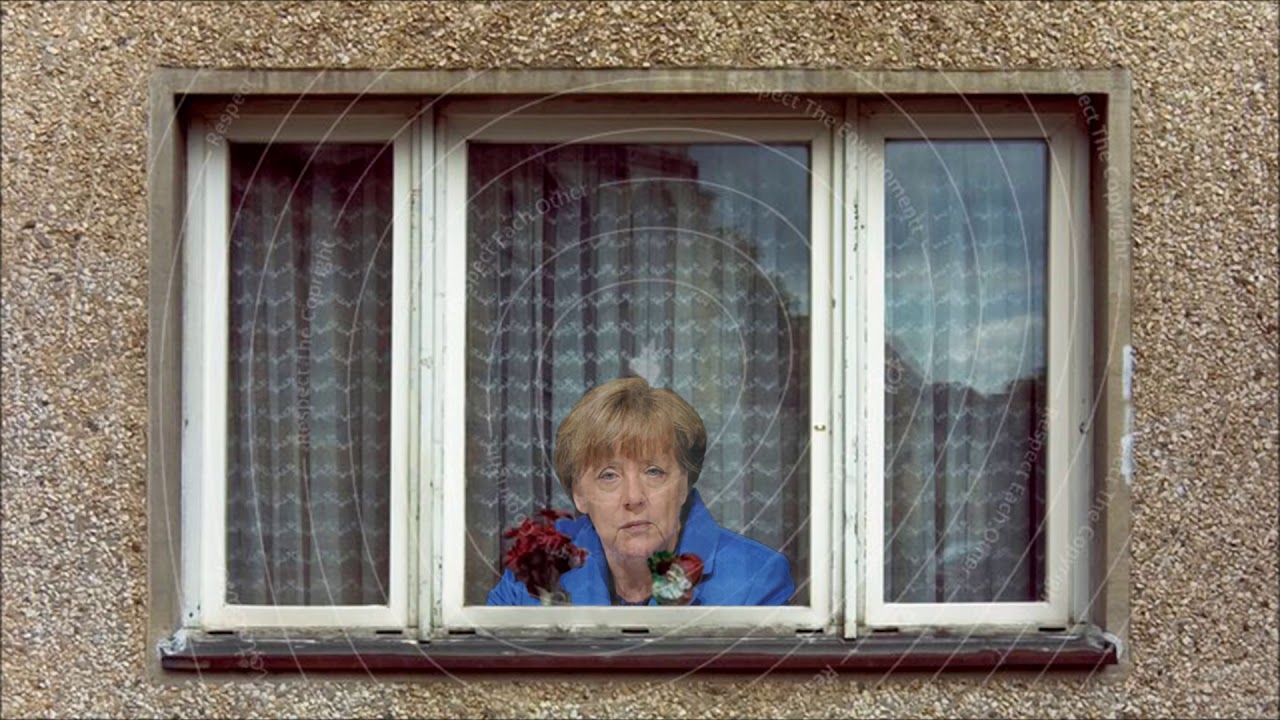
Ich möchte Ihnen für Ihre Geduld danken und für das Durchhalten!
Instagram: https://www.instagram.com/theunrealmidi
Sparschwein: https://www.paypal.me/midiocre128
Beat and Artwork by Midiocre
lean flickerBOT
M E R K E L W A V E - Abstand [00:03:00] added to the queue.
prime saddle
Ich möchte Ihnen für Ihre Geduld danken und für das Durchhalten!
Instagram: https://www.instagram.com/theunrealmidi
Sparschwein: https://www.paypal.me/midiocre128
Beat and Artwork by Midiocre
lean flickerBOT
M E R K E L W A V E - Abstand [00:03:00] added to the queue.
 compact mauve
faq beginner
lean flickerBOT
How to get started
The simplest way to learn German is to find topics you don’t understand yet and search for explanations of them. This list provides you with a guide for which topics to learn if you are completely new to German. Type the topic into Google (or YouTube) and start learning!
Introduction
1: Alphabet (especially ä, ü, ö and ß)
2: Basic greetings (hello, goodbye, etc.)
Part 1 - Simple Sentence
1: Noun gender & plurals
2: Nominative case (What are cases?)
3: Nominative pronouns (I, you, he, she, etc.)
4: Verbs in present tense
5: Definite/indefinite articles
6: Accusative case (for nouns)
7: Accusative pronouns
8: Word order of simple sentences
9: How to ask questions
See Part 2 on the next page.
Tips
- Always learn the gender of a noun when you learn a new noun
- Learn to use a translation dictionary (e.g. dict.cc, leo.org)
- Use
>faq resourcesto see our list of German learning resources - For listening and pronunciation practice, try watching movies or videos (incl. YouTube)
- You can listen to pronunciation for words on websites like dict.cc, forvo.com, and others
- Practice writing sentences every day (and asking people to correct them)
- Ask as many questions as possible
- Don’t be scared to make mistakes!!!! If you don’t let yourself make mistakes, you will never be able to learn German
Page 1/2
 fickle charm
play optimal
lean flickerBOT
Gzuz - Optimal (Jambeatz) [00:03:28] added to the queue.
fickle charm
play kopfnüsse gzuz
lean flickerBOT
Kopfnüsse [00:02:32] added to the queue.
 red finch
groups
lean flickerBOT
These groups are currently accessible
News
Announcements! Subscribe for pings!
Grammar
Lessons! Subscribe for pings!
AdvancedReading
Like Reading but only B2+ level content.
AdvancedGrammar
Like Grammar but only B2+ level content.
Activities
Lessons! Subscribe for pings!
Reading
Lessons! Subscribe for pings!
Translation
Offers weekly sentences to translate.
Writing
Join to get weekly and monthly prompts!
Pronunciation
Offers weekly texts to practise pronunciation.
Dialects
A group to discuss German dialects.
Science
STEM-related topics.
Gaming
All gaming-related topics.
Ouija
A Ouija-style game just for fun.
Food
A group for food talks.
Coding
For all the coding nerds.
Type >sub to join a group or >group joinall to join all available groups .
:x: Group grammas not found.
Try >groups to see a list of all groups or >group joinall to join all available groups.
 amber trail
sub all
lean flickerBOT
:x: Use the >group joinall command to join all available groups.
red finch
sub grammar
amber trail
group joinall
lean flickerBOT
:white_check_mark: Added you to 16 available groups: Coding, AdvancedReading, Science, Gaming, Ouija, Pronunciation, Food, Activities, Dialects, Grammar, Writing, Translation, Reading, Art, News, AdvancedGrammar.
red finch
group joinall
lean flickerBOT
:white_check_mark: Added you to 14 available groups: Coding, AdvancedReading, Science, Gaming, Ouija, Pronunciation, Food, Activities, Dialects, Writing, Translation, Reading, Art, AdvancedGrammar.
lean flickerBOT
:x: The bot is already active in a different channel.
BTS (방탄소년단) 'Dynamite' Official MV [00:03:43] added to the queue.
BTS (방탄소년단) 'DNA' Official MV [00:04:16] added to the queue.
prime saddle
skip

BTS (방탄소년단) 'IDOL' Official MV
Director : YongSeok Choi (Lumpens)
Assistant Director : Guzza, MinJe Jeong, HyeJeong Park (Lumpens)
Director of Photography : HyunWoo Nam(GDW)
Gaffer : HyunSuk Song (Real lighting)
Art Director : JinSil Park, Bona Kim (MU:E)
Art Team : HyunSeung Lee, YeMin Ahn
Construction Manager : SukKi Song
Key Scenic artist ...
lean flickerBOT
BTS (방탄소년단) 'IDOL' Official MV [00:03:51] added to the queue.
lean flickerBOT
FAQ not found. I found the following similar entries: beginner, beginner 2.
 abstract escarp
faq beginner
lean flickerBOT
How to get started
The simplest way to learn German is to find topics you don’t understand yet and search for explanations of them. This list provides you with a guide for which topics to learn if you are completely new to German. Type the topic into Google (or YouTube) and start learning!
Introduction
1: Alphabet (especially ä, ü, ö and ß)
2: Basic greetings (hello, goodbye, etc.)
Part 1 - Simple Sentence
1: Noun gender & plurals
2: Nominative case (What are cases?)
3: Nominative pronouns (I, you, he, she, etc.)
4: Verbs in present tense
5: Definite/indefinite articles
6: Accusative case (for nouns)
7: Accusative pronouns
8: Word order of simple sentences
9: How to ask questions
See Part 2 on the next page.
Tips
- Always learn the gender of a noun when you learn a new noun
- Learn to use a translation dictionary (e.g. dict.cc, leo.org)
- Use
>faq resourcesto see our list of German learning resources - For listening and pronunciation practice, try watching movies or videos (incl. YouTube)
- You can listen to pronunciation for words on websites like dict.cc, forvo.com, and others
- Practice writing sentences every day (and asking people to correct them)
- Ask as many questions as possible
- Don’t be scared to make mistakes!!!! If you don’t let yourself make mistakes, you will never be able to learn German
Page 1/2
abstract escarp
faq beginner 2
lean flickerBOT
beginner 2
Make sure to check Part 1 if you’re a beginner - >faq beginner
The simplest way to learn German is to find topics you don’t understand yet and search for explanations of them. This list provides you with a guide for which topics to learn if you are completely new to German. Type the topic into Google (or YouTube) and start learning!
Part 2 – Beyond a Simple Sentence
1: Conjunctions (coordinating and subordinating)
2: Subordinate clause word order
3: Dative case
4: Dative verbs
5: Verbs with two objects (e.g. geben)
6: Prepositions (accusative, dative, and two-way)
7: Spoken past tense (Perfekt)
8: Written past tense (Präteritum)
9: Genitive case
10: Relative clauses
11: Adjective declension
Tips
- Make sure to practice writing and reading simple texts
- Some of these concepts are confusing to start with, so it’s a good idea to ask for help in #questions when you’re unsure
- You should use a declension chart to help with declension to start with, because you won’t be able to memorize it straight away
- After you feel confident with creating sentences, you can start learning the adjective declension properly by using the command
>faq adjective declensionand reading the guide provided
 jaunty oriole
stoic raptor
jaunty oriole
stoic raptor
explain all
lean flickerBOT
See a listed FAQ with >faq [name]
:small_blue_diamond: Accusative
Aliases: Akkusativ
:small_blue_diamond: Adjective Declension
Aliases: adjective endings, Adjektivdeklination
:small_blue_diamond: Anki
Aliases: flashcards
:small_blue_diamond: Beide vs. Beides
Aliases: Beides vs. Beide, Beides, Beide
:small_blue_diamond: Best way to learn German
Aliases: learn fast, learn German fast, learn efficiently, best way to learn, fastest way to learn, most efficient way to learn
:small_blue_diamond: CEFR levels
Aliases: lvl, CEFR
:small_blue_diamond: Cases
Aliases: case, grammatical case
:small_blue_diamond: DACH
:small_blue_diamond: Dative
Aliases: Dativ
:small_blue_diamond: Duolingo
Aliases: duo
:small_blue_diamond: Eszett
Aliases: Scharfes S, ẞ, ß
:small_blue_diamond: FAQ
:small_blue_diamond: Formal and informal speech
Aliases: duzen vs. siezen, Sie, Du vs. Sie
:small_blue_diamond: Gender patterns
:small_blue_diamond: Genitive
Aliases: Genitiv
Page 1/4 (53 entries)
stoic raptor
explain perfect tense
lean flickerBOT
FAQ not found. Try >explain all.
stoic raptor
faq perfect tense
lean flickerBOT
FAQ not found. Try >explain all.
 vale fiber
faq cefr
lean flickerBOT
CEFR levels
If you see something like A1, B2 or C1, these represent the proficiency of a speaker in a language they're not native in, and are called CEFR levels. They are valid for any language, not only German!
Roughly speaking, A levels are beginners and C levels are experts. Remember that CEFR level are self-assessed and indicative!
You can see more specific names and descriptions on the Wikipedia page:
https://en.wikipedia.org/wiki/Common_European_Framework_of_Reference_for_Languages
🗨 How do I know what level I am?
If the table on Wikipedia is too generic for you, you can try using this one here:
https://rm.coe.int/168045bb52
Just check each column one at a time: if you can do all it describes, move to the next column. Your level is the highest where you can do the most things.
Alternatively, you can use this questionnaire to estimate your level more accurately:
https://www.laits.utexas.edu/fi/sites/laits.utexas.edu.fi/files/Self Assessment Checklist European.pdf
vale fiber
sub science
tender trellis

Link for full interview https://youtu.be/liRvscK5vPc
Why are you gay MEME playlist https://www.youtube.com/playlist?list=PLvNyQXgtQ3gnudQh_4AJpZsC1L0uyi0g8&jct=b4Okf8Iq3oFuza-CsF06YOFDgI8tVQ&disable_polymer=1
I usually upload music tutorials but this was soo hilarious I Had to upload
Go ahead and add your video.Remember to subscribe to my chann...
lean flickerBOT
Why are you Gay - Funniest African interview ever! Link to full interview below [00:01:14] added to the queue.
tender trellis
stop
lean flickerBOT
:x: This command can only be used by a moderator.
tender trellis
help
lean flickerBOT
Generic 1/2 commands
:small_blue_diamond: **compliment**
No description provided.
:small_blue_diamond: **getrole** <role name>
Assigns you a role with the given name, removing any previous assignable roles.
Note: Use >sub to subscribe to groups and ping a moderator for the native speaker role.
:small_blue_diamond: **info** [user]
Displays information about the given user. If no user is specified, information about you will be displayed.
:small_blue_diamond: **ping**
Displays how long it takes for a message that the bot sends to arrive.
:small_blue_diamond: **quote** <channel> <message id>
Quotes a message in the channel you are in. Specify the channel that the message was originally posted in and the message id of the message (accessible if you turn on developer mode in your Discord settings).
Page 1/17 (17 entries)
tender trellis
skip
rustic linden
sessions
lean flickerBOT
There are no sessions currently scheduled.
prime saddle
faq cefr
lean flickerBOT
CEFR levels
If you see something like A1, B2 or C1, these represent the proficiency of a speaker in a language they're not native in, and are called CEFR levels. They are valid for any language, not only German!
Roughly speaking, A levels are beginners and C levels are experts. Remember that CEFR level are self-assessed and indicative!
You can see more specific names and descriptions on the Wikipedia page:
https://en.wikipedia.org/wiki/Common_European_Framework_of_Reference_for_Languages
🗨 How do I know what level I am?
If the table on Wikipedia is too generic for you, you can try using this one here:
https://rm.coe.int/168045bb52
Just check each column one at a time: if you can do all it describes, move to the next column. Your level is the highest where you can do the most things.
Alternatively, you can use this questionnaire to estimate your level more accurately:
https://www.laits.utexas.edu/fi/sites/laits.utexas.edu.fi/files/Self Assessment Checklist European.pdf
 jagged blade
info
lean flickerBOT

Information about Alya#7674
Name
@jagged blade
ID
685818504661958697
Joined
23/11/2020 16:04 (6 days, 15 hours and 25 minutes ago)
Account created
07/03/2020 11:57 (8 months, 3 weeks and 1 day ago)
lean flickerBOT
FAQ not found. I found the following similar entries: beginner, beginner 2.
tender trellis
faq beginner
lean flickerBOT
How to get started
The simplest way to learn German is to find topics you don’t understand yet and search for explanations of them. This list provides you with a guide for which topics to learn if you are completely new to German. Type the topic into Google (or YouTube) and start learning!
Introduction
1: Alphabet (especially ä, ü, ö and ß)
2: Basic greetings (hello, goodbye, etc.)
Part 1 - Simple Sentence
1: Noun gender & plurals
2: Nominative case (What are cases?)
3: Nominative pronouns (I, you, he, she, etc.)
4: Verbs in present tense
5: Definite/indefinite articles
6: Accusative case (for nouns)
7: Accusative pronouns
8: Word order of simple sentences
9: How to ask questions
See Part 2 on the next page.
Tips
- Always learn the gender of a noun when you learn a new noun
- Learn to use a translation dictionary (e.g. dict.cc, leo.org)
- Use
>faq resourcesto see our list of German learning resources - For listening and pronunciation practice, try watching movies or videos (incl. YouTube)
- You can listen to pronunciation for words on websites like dict.cc, forvo.com, and others
- Practice writing sentences every day (and asking people to correct them)
- Ask as many questions as possible
- Don’t be scared to make mistakes!!!! If you don’t let yourself make mistakes, you will never be able to learn German
Page 1/2
 cobalt flower
faq Anki
lean flickerBOT
Anki
What is Anki?
Anki is a free and very versatile flashcard program that is often used for learning new vocabulary. You can import spreadsheets to quickly create your own flashcards, and you can add your own images and audio for highly custom flashcard decks. You can also access and use a wide range of community created and shared flashcard decks all for free*.
Note: Anki uses a method of learning called spaced repetition. Flashcards and spaced repetition are one of many techniques used for language learning. However, we all learn differently and while these methods work for many people, they may not necessarily work for you. Give it a try, but don’t be disheartened if these methods aren’t right for you. Even if flashcards and spaced repetition work for you, don’t forget to incorporate other forms of practice. E.g. try using your new vocabulary to write your own practice sentences.
Where To Get It
It is available here on PC, Mac, Linux, iPhone, and Android. You can also find the browser AnkiWeb version here.
Manually adding basic cards is quite simple, but making custom templates is a bit more complex. Basementality has put together this handy guide for making custom card types and decks. You can also find Anki’s documentation / instruction guide here.
*The iPhone app AnkiMobile costs $24.99 USD on the iTunes store. The Android app and all other platforms are completely free. The mobile browser version of AnkiWeb is still available for free on iPhones.
See the next page for some helpful tips on creating your flashcards.
Page 1/2
 vernal rapids
help
lean flickerBOT
Generic 1/2 commands
:small_blue_diamond: **compliment**
No description provided.
:small_blue_diamond: **getrole** <role name>
Assigns you a role with the given name, removing any previous assignable roles.
Note: Use >sub to subscribe to groups and ping a moderator for the native speaker role.
:small_blue_diamond: **info** [user]
Displays information about the given user. If no user is specified, information about you will be displayed.
:small_blue_diamond: **ping**
Displays how long it takes for a message that the bot sends to arrive.
:small_blue_diamond: **quote** <channel> <message id>
Quotes a message in the channel you are in. Specify the channel that the message was originally posted in and the message id of the message (accessible if you turn on developer mode in your Discord settings).
Page 1/17 (17 entries)
vernal rapids
compliment
lean flickerBOT
vernal rapids
>compliment
You look like you showered in the last month.
lean flickerBOT
CEFR levels
If you see something like A1, B2 or C1, these represent the proficiency of a speaker in a language they're not native in, and are called CEFR levels. They are valid for any language, not only German!
Roughly speaking, A levels are beginners and C levels are experts. Remember that CEFR level are self-assessed and indicative!
You can see more specific names and descriptions on the Wikipedia page:
https://en.wikipedia.org/wiki/Common_European_Framework_of_Reference_for_Languages
🗨 How do I know what level I am?
If the table on Wikipedia is too generic for you, you can try using this one here:
https://rm.coe.int/168045bb52
Just check each column one at a time: if you can do all it describes, move to the next column. Your level is the highest where you can do the most things.
Alternatively, you can use this questionnaire to estimate your level more accurately:
https://www.laits.utexas.edu/fi/sites/laits.utexas.edu.fi/files/Self Assessment Checklist European.pdf
:x: The required argument roleName is missing.
:white_check_mark: Added you to 7 available groups: AdvancedReading, Science, Ouija, Dialects, Art, News, AdvancedGrammar.
:x: No such role exists. Possible roles are: Level A, Level B, Level C.
lean flickerBOT

Information about ali.#2002
Name
@errant reef
ID
296669747527811082
Joined
15/10/2019 04:58 (1 year, 1 month and 2 weeks ago)
Account created
29/03/2017 15:39 (3 years, 8 months and 20 hours ago)
lean flickerBOT
Information about Alya#7674
Name
@jagged blade
ID
685818504661958697
Joined
23/11/2020 16:04 (6 days, 19 hours and 44 minutes ago)
Account created
07/03/2020 11:57 (8 months, 3 weeks and 1 day ago)
lean flickerBOT

Information about Saleh#4324
Name
@flint drum
ID
759003051541004298
Joined
25/09/2020 15:14 (2 months, 4 days and 20 hours ago)
Account created
25/09/2020 10:47 (2 months, 5 days and 1 hour ago)
tender trellis
Ç O K interesting
 whole hearth
cefr Level B
 errant reef
tender trellis
Test, uyuyabilirsin
errant reef
tender trellis
Test, uyuyabilirsin
Skshkdhdhddh
tender trellis
fak beginner
lean flickerBOT
:x: The required argument name is missing.
tender trellis
help
lean flickerBOT
Bans commands
:small_blue_diamond: **isbanned** <user>
Checks whether the given user is banned.
Page 7/17 (17 entries)
You are not as dumb as you look.
:ping_pong: Pong! | 192ms
lean flickerBOT
:x: The required argument user is missing.
lean flickerBOT
JisooForever#0717 has not been banned on this server.
tender trellis
:D
You can not escape it
You meet the requirements.
Which requirements?
wow not good
İt is ok fristicim
If you don't meet the requirements, then no vc at all.
Look at the kurnaz he tries to flee
info
lean flickerBOT

Information about JisooForever#0717
Name
@dense aurora
ID
317274734574174208
Joined
17/12/2019 16:47 (11 months, 1 week and 5 days ago)
Account created
25/05/2017 12:16 (3 years, 6 months and 5 days ago)
tender trellis
A lot of year went through a lot of water flow I fell into this
Btw we gotta speak either English or German out of #other-languages

 maiden crescent
cefr B
 ancient garnet
cefr A
lean flickerBOT
:x: The required argument roleName is missing.
Session Schedule commands
:small_blue_diamond: **📒 session**
Commands for the bot's session scheduling system.
Group moderators can edit and delete existing sessions for their group.
Page 17/17 (17 entries)
lean flickerBOT
How to get started
The simplest way to learn German is to find topics you don’t understand yet and search for explanations of them. This list provides you with a guide for which topics to learn if you are completely new to German. Type the topic into Google (or YouTube) and start learning!
Introduction
1: Alphabet (especially ä, ü, ö and ß)
2: Basic greetings (hello, goodbye, etc.)
Part 1 - Simple Sentence
1: Noun gender & plurals
2: Nominative case (What are cases?)
3: Nominative pronouns (I, you, he, she, etc.)
4: Verbs in present tense
5: Definite/indefinite articles
6: Accusative case (for nouns)
7: Accusative pronouns
8: Word order of simple sentences
9: How to ask questions
See Part 2 on the next page.
Tips
- Always learn the gender of a noun when you learn a new noun
- Learn to use a translation dictionary (e.g. dict.cc, leo.org)
- Use
>faq resourcesto see our list of German learning resources - For listening and pronunciation practice, try watching movies or videos (incl. YouTube)
- You can listen to pronunciation for words on websites like dict.cc, forvo.com, and others
- Practice writing sentences every day (and asking people to correct them)
- Ask as many questions as possible
- Don’t be scared to make mistakes!!!! If you don’t let yourself make mistakes, you will never be able to learn German
Page 1/2
 past beacon
faq beginner
lean flickerBOT
How to get started - Part 2
Please make sure to read Part 1 before starting Part 2!
Part 2 – Beyond a Simple Sentence
1: Conjunctions (coordinating and subordinating)
2: Subordinate clause word order
3: Dative case
4: Dative verbs
5: Verbs with two objects (e.g. geben)
6: Prepositions (accusative, dative, and two-way)
7: Spoken past tense (Perfekt)
8: Written past tense (Präteritum)
9: Genitive case
10: Relative clauses
11: Adjective declension
Tips
- Make sure to practice writing and reading simple texts
- Some of these concepts are confusing to start with, so it’s a good idea to ask for help in #questions when you’re unsure
- You should use a declension chart to help with declension to start with, because you won’t be able to memorize it straight away
- After you feel confident with creating sentences, you can start learning the adjective declension properly by using the command >faq adjective declension and reading the guide provided
Page 2/2
past beacon
faq resources
lean flickerBOT
Resources
 void patio
 vale walrus
faq
lean flickerBOT
:x: The required argument name is missing.
vale walrus
faq all
prime saddle

60 Jahre Sandmännchen- Unser Sandmännchen - Lied mit Text
Das Sandmännchen Lied | Sandmann Titelmusik (DDR)
Anfangs- und Endmelodie
Sandmann, lieber Sandmann
es ist noch nicht soweit.
Wir sehen erst den Abendgruß,
ehe jedes Kind ins Bettchen muss.
Du hast gewiss noch Zeit.
Kinder, liebe Kinder,
es hat mir Spaß gemacht.
Nun schnell ins Bett
u...
lean flickerBOT
Unser Sandmännchen | Lied | Sandmann Titelmusik (DDR) 60 Jahre Sandmännchen [00:01:12] added to the queue.
prime saddle

Gesungen von: Gitti & Erika-Heidi (Neuaufnahme)
Verwaltet von: Kontor New Media
gute alte zeiten!
:D:D
SONGTEXT:
Holadio, holadio
Heidi, Heidi
Deine Welt sind die Berge
Heidi, Heidi
Denn hier oben bist Du zu Haus'
Dunkle Tannen
Grüne Wiesen im Sonnenschein
Heidi, Heidi
Brauchst Du zum Glücklichsein
(Jodelteil)
Heidi, Heidi
Komm nac...
lean flickerBOT
Heidi Intro (LANGE VERSION) [00:03:02] added to the queue.
prime saddle

Habe das Intro bis jetzt nirgends auf YT gefunden.
Keine tolle Quali, aber immerhin :D
lean flickerBOT
Jim Knopf - Intro (German/Deutsch) [00:01:01] added to the queue.
prime saddle
 lean flickerBOT
Little Amadeus – Intro (deutsch) [00:01:08] added to the queue.
lean flickerBOT
FAQ not found. Try >explain all.
lean flickerBOT
FAQ not found. Try >explain all.
 vagrant crow
explain all
lean flickerBOT
See a listed FAQ with >faq [name]
:small_blue_diamond: Structure of Konjunktiv II
Aliases: KII 2
:small_blue_diamond: Study Vocabulary
Aliases: unterrichten, lernen, beibringen
:small_blue_diamond: Swiss German
Aliases: gsw
:small_blue_diamond: Switzerland
Aliases: Schweiz, CH
:small_blue_diamond: Umlauts
Aliases: Umlaute, Umlaut, ä, ö, ü
:small_blue_diamond: Usage of Konjunktiv II
Aliases: KII 1
:small_blue_diamond: Usage of zu
Aliases: um zu
:small_blue_diamond: Vorgangspassiv
:small_blue_diamond: Weak Nouns
Aliases: N-Declension, N-Deklination
:small_blue_diamond: Word Order for Nouns & Pronouns
:small_blue_diamond: Word Order for Verbs
Aliases: word order verbs, word order of verbs
:small_blue_diamond: absentive
Aliases: absentiv
:small_blue_diamond: beginner 2
:small_blue_diamond: birthdays
:small_blue_diamond: conjugation
Aliases: praesens, präsens, present tense, verbs, verb conjugation, Konjugation
Page 3/4 (53 entries)
prime saddle
 lean flickerBOT
Wickie und die starken Männer - Intro [HQ] [00:01:09] added to the queue.
 sullen salmon
vagrant crow
<@222074968832344065>
sullen salmon
vagrant crow
<@222074968832344065>
👀 ❓
 warm zealot
cefr B
lean flickerBOT
CEFR levels
If you see something like A1, B2 or C1, these represent the proficiency of a speaker in a language they're not native in, and are called CEFR levels. They are valid for any language, not only German!
Roughly speaking, A levels are beginners and C levels are experts. Remember that CEFR level are self-assessed and indicative!
You can see more specific names and descriptions on the Wikipedia page:
https://en.wikipedia.org/wiki/Common_European_Framework_of_Reference_for_Languages
🗨 How do I know what level I am?
If the table on Wikipedia is too generic for you, you can try using this one here:
https://rm.coe.int/168045bb52
Just check each column one at a time: if you can do all it describes, move to the next column. Your level is the highest where you can do the most things.
Alternatively, you can use this questionnaire to estimate your level more accurately:
https://www.laits.utexas.edu/fi/sites/laits.utexas.edu.fi/files/Self Assessment Checklist European.pdf
:x: You cannot assign yourself the Native Speaker role. You must ask a moderator.
:x: You already have the Level C role. Use >rr <role> to remove the role.
:x: No such role exists. Possible roles are: Level A, Level B, Level C.
 empty olive
help
lean flickerBOT
German commands
:small_blue_diamond: **lookup** <target> <phrase>
Translates the given phrase into the specified target language using dict.cc. Specify either en or de as targets.
:small_blue_diamond: **verb** <infinitive>
Provides a link to the conjugation of the given infinitive.
:small_blue_diamond: **words**
A command that helps you train vocabulary using dict.cc.
Page 6/17 (17 entries)
empty olive
help
lean flickerBOT
Session Schedule commands
:small_blue_diamond: **📒 session**
Commands for the bot's session scheduling system.
Group moderators can edit and delete existing sessions for their group.
Page 17/17 (17 entries)
empty olive
faq
lean flickerBOT
:x: The required argument name is missing.
empty olive
faq konnen
lean flickerBOT
FAQ not found. Try >explain all.
empty olive
explain all
lean flickerBOT
See a listed FAQ with >faq [name]
:small_blue_diamond: German letters
Aliases: german keyboard, keyboard
:small_blue_diamond: Grammar terms
Aliases: Glossary, Grammatical terms
:small_blue_diamond: Grammatical gender
Aliases: genders, der-die-das, gender
:small_blue_diamond: How to ask a question
Aliases: Translation, Homework
:small_blue_diamond: How to get started
Aliases: Starting out, beginner
:small_blue_diamond: IPA
Aliases: Pronunciation, Sound transcription, International Phonetic Alphabet
:small_blue_diamond: Impersonal Verbs
Aliases: unpersönliche Verben, impersonal es
:small_blue_diamond: Negation
Aliases: kein, nicht
:small_blue_diamond: Nominative
Aliases: Nominativ
:small_blue_diamond: Omission of movement verbs
:small_blue_diamond: Passive
Aliases: Passiv
:small_blue_diamond: Past Tense
:small_blue_diamond: Prepositions of Place Part 1
Aliases: Nach-In-Auf-Zu
:small_blue_diamond: Resources
Aliases: resource list
:small_blue_diamond: Stative Passive
Aliases: Zustandspassiv, statal passive
Page 2/4 (53 entries)
empty olive
faq german letters
lean flickerBOT
More alternatives
🔸 Alternatively, you can memorise the altcodes for German characters. Learning them is easier than you might think! Simply hold Alt and type the numbers on your numpad:
ä = 132; Ä = 142
ö = 148; Ö = 153
ü = 129; Ü = 154
ß = 225
🔸 If all else fails, you can use ASCII conventions for the characters: add an e to other vowels, and write ss or sz for ß. For example:
ae = ä
oe = ö
ue = ü
ss = ß
But this is discouraged since it's harder to read and... looks ugly. It is only done in situations where alternatives are impossible (fonts with no unicode etc).
Page 2/2
empty olive
faq grammar terms
lean flickerBOT
Grammar terms
When learning languages, it's useful to know some grammatical terms.
Note that these are very simplified definitions aimed at giving you a general idea: do your own research if you need details.
- Adjective: a word that describes a name: the dog is old or the smart kid.
- Adverb: something that aids the verb or other part of the sentence, or words that don't fall into other categories: yes, I've done it swiftly or he's very good.
- Affix: a small word piece attached to another word to change its meaning. If it comes before the word it's a prefix: __in__credible, after it it's a suffix: time__ly__.
- Article: a word that tells you if a name is specific or generic: the apple, an apple.
- Case: the form of a word depending on its role: he and him refer to the same person, but he gives an apple to him.
- Clause: each unit that has one conjugated verb. Those before and after the comma are each a clause: Berzi said something, but I didn't understand.
- Conjugation: the form a verb takes depending on when it happens and who does it: I go, he goes, he went are all conjugations of the same verb.
- Conjunction: a word that connects two clauses together: he went there but I didn't.
- Declension: the form a word takes depending on its case: der Mann is a subject, den Mann is an object.
- Noun: the name of a thing, such as table or dog.
- Object: the one at the receiving end of the verb, or being affected by it directly: he touched me, she gave her an apple.
- Pronoun: a word that stands in for a name: he gave me a ring. I like it.
- Subject: the one that enacts the verb in first person: I saw a dog or a dog saw me.
- Tense: the form of a verb depending on when it happens: I see: present, I will see: future.
- Verb: a word describing an action: I go running every day.
 candid stump
cefr b1
 peak hearth
faq
lean flickerBOT
:x: The required argument name is missing.
peak hearth
faq pronunciation
lean flickerBOT
IPA
The International Phonetic Alphabet is a system for writing sounds regardless of the language: one sound will have only one letter for it, so it's really helpful for learning pronunciation in any language without relying on approximations.
IPA has a lot of symbols, but you don't need to learn them all.
🔸 What are those // and [] I see around?
Symbols in slashes (like /r/) represent so-called phonemes, units of sound. Each phoneme can be pronounced in different ways depending on where it is in the word. For example, the phoneme /r/ is pronounced [ʁ] in most situations, but [ɐ] after vowels. As you can see, square brackets (like [ʁ]) represent actual sounds. Finally, pointy brackets like ⟨r⟩ represent how a sound is written, which can vary from language to language.
Example: ⟨sprechen⟩ /sprεçən/ [ʃpʁε.çn̩]
🔸 So how to learn it?
All you need to learn is the few symbols used by the language you're interested in. For German, you can look up the relevant letters on Wikipedia: https://en.wikipedia.org/wiki/Help:IPA/Standard_German. Notice the Help:IPA/Language_Name pattern in the URL.
There, you will find a table of symbols with an approximation, but you can also click on each specific symbol to learn exactly how to pronounce it studying the Features section, for example: https://en.wikipedia.org/wiki/Voiceless_palatal_fricative#Features
🔸 Which IPA letters are important for German?
Sounds you are likely to have trouble with are ⟨x⟩, ⟨ç⟩, ⟨ʁ⟩, ⟨ɐ⟩ and several vowels. These are all described in the Wiki link above.
You can use this website to transcribe German words if your dictionary doesn't give an IPA transcription:
http://tom.brondsted.dk/text2phoneme/
 uncut stump
faq beginner
lean flickerBOT
How to get started
The simplest way to learn German is to find topics you don’t understand yet and search for explanations of them. This list provides you with a guide for which topics to learn if you are completely new to German. Type the topic into Google (or YouTube) and start learning!
Introduction
1: Alphabet (especially ä, ü, ö and ß)
2: Basic greetings (hello, goodbye, etc.)
Part 1 - Simple Sentence
1: Noun gender & plurals
2: Nominative case (What are cases?)
3: Nominative pronouns (I, you, he, she, etc.)
4: Verbs in present tense
5: Definite/indefinite articles
6: Accusative case (for nouns)
7: Accusative pronouns
8: Word order of simple sentences
9: How to ask questions
See Part 2 on the next page.
Tips
- Always learn the gender of a noun when you learn a new noun
- Learn to use a translation dictionary (e.g. dict.cc, leo.org)
- Use
>faq resourcesto see our list of German learning resources - For listening and pronunciation practice, try watching movies or videos (incl. YouTube)
- You can listen to pronunciation for words on websites like dict.cc, forvo.com, and others
- Practice writing sentences every day (and asking people to correct them)
- Ask as many questions as possible
- Don’t be scared to make mistakes!!!! If you don’t let yourself make mistakes, you will never be able to learn German
Page 1/2
uncut stump
faq cefr
lean flickerBOT
CEFR levels
If you see something like A1, B2 or C1, these represent the proficiency of a speaker in a language they're not native in, and are called CEFR levels. They are valid for any language, not only German!
Roughly speaking, A levels are beginners and C levels are experts. Remember that CEFR level are self-assessed and indicative!
You can see more specific names and descriptions on the Wikipedia page:
https://en.wikipedia.org/wiki/Common_European_Framework_of_Reference_for_Languages
🗨 How do I know what level I am?
If the table on Wikipedia is too generic for you, you can try using this one here:
https://rm.coe.int/168045bb52
Just check each column one at a time: if you can do all it describes, move to the next column. Your level is the highest where you can do the most things.
Alternatively, you can use this questionnaire to estimate your level more accurately:
https://www.laits.utexas.edu/fi/sites/laits.utexas.edu.fi/files/Self Assessment Checklist European.pdf
lean flickerBOT
Best way to learn German
Should I study all these skills every day?
If you want to study them all every day, you can, but some people may find it easier to focus on particular skills on particular days. For example, on Monday you might choose to do a lot of writing practice, and then on Tuesday you might plan some conversation practice with some speaking partners.
If you try to cover too many different things in one day, then you might be jumping around all over the place and not able to focus on each individual task. It’s also a really good idea to have a different schedule or set of tasks each day to keep things from getting boring. So setting a special schedule or set of tasks for each day of the week - like the Monday writing day, or every Friday you do some grammar exercises followed by watching TV shows, or any other combination you like – is a really good way to go.
How much time should I dedicate to studying?
Everyone has a different schedule and everyone learns at a different pace. It is recommended to study every day, preferably for 30 minutes or more, but taking 1-2 days off is okay. More important is how many hours you study in a week.
A casual pace will be roughly around 5-8 hours a week, a steady pace would be around 10-14 hours a week, and a fast pace (around the same pace as a university subject) will be 15-20 hours a week.
Anything less than 5 hours and you may find it hard to keep improving steadily (but feel free to try it and see how it works for you), while studying one subject for over 25 hours a week may quickly lead to burnout.
How you choose to spread those hours out over the week is not that important; for example, if you have a lot of time on the weekend but not during the week, it’s fine to do short study sessions on weekdays and then dedicate a bunch of time on Saturday and Sunday.
Page 2/2
uncut stump
faq beginner
lean flickerBOT
How to get started
The simplest way to learn German is to find topics you don’t understand yet and search for explanations of them. This list provides you with a guide for which topics to learn if you are completely new to German. Type the topic into Google (or YouTube) and start learning!
Introduction
1: Alphabet (especially ä, ü, ö and ß)
2: Basic greetings (hello, goodbye, etc.)
Part 1 - Simple Sentence
1: Noun gender & plurals
2: Nominative case (What are cases?)
3: Nominative pronouns (I, you, he, she, etc.)
4: Verbs in present tense
5: Definite/indefinite articles
6: Accusative case (for nouns)
7: Accusative pronouns
8: Word order of simple sentences
9: How to ask questions
See Part 2 on the next page.
Tips
- Always learn the gender of a noun when you learn a new noun
- Learn to use a translation dictionary (e.g. dict.cc, leo.org)
- Use
>faq resourcesto see our list of German learning resources - For listening and pronunciation practice, try watching movies or videos (incl. YouTube)
- You can listen to pronunciation for words on websites like dict.cc, forvo.com, and others
- Practice writing sentences every day (and asking people to correct them)
- Ask as many questions as possible
- Don’t be scared to make mistakes!!!! If you don’t let yourself make mistakes, you will never be able to learn German
Page 1/2
 untold wind
lk Aussatz
lean flickerBOT
:x: The required argument phrase is missing.
untold wind
lk en Aussatz
lean flickerBOT
Translations for Aussatz:
**:small_blue_diamond:** Aussatz
leprosy
**:small_blue_diamond:** mit Aussatz behaftet
leprous
untold wind
lk en Aufsatz
lean flickerBOT
Translations for Aufsatz:
**:small_blue_diamond:** Aufsatz *[Schulaufsatz* *etc.]*
essay [in school]
**:small_blue_diamond:** Aufsatz
composition
**:small_blue_diamond:** Aufsatz *[wissenschaftlich]*
paper [essay]
**:small_blue_diamond:** Aufsatz
article [essay etc.]
**:small_blue_diamond:** Aufsatz
attachment
Page 1/2 (10 entries)
 stark barn
help
lean flickerBOT
Generic 1/2 commands
:small_blue_diamond: **compliment**
No description provided.
:small_blue_diamond: **getrole** <role name>
Assigns you a role with the given name, removing any previous assignable roles.
Note: Use >sub to subscribe to groups and ping a moderator for the native speaker role.
:small_blue_diamond: **info** [user]
Displays information about the given user. If no user is specified, information about you will be displayed.
:small_blue_diamond: **ping**
Displays how long it takes for a message that the bot sends to arrive.
:small_blue_diamond: **quote** <channel> <message id>
Quotes a message in the channel you are in. Specify the channel that the message was originally posted in and the message id of the message (accessible if you turn on developer mode in your Discord settings).
Page 1/17 (17 entries)
 twilit bramble
faq
lean flickerBOT
:x: The required argument name is missing.
twilit bramble
faq cefr
lean flickerBOT
CEFR levels
If you see something like A1, B2 or C1, these represent the proficiency of a speaker in a language they're not native in, and are called CEFR levels. They are valid for any language, not only German!
Roughly speaking, A levels are beginners and C levels are experts. Remember that CEFR level are self-assessed and indicative!
You can see more specific names and descriptions on the Wikipedia page:
https://en.wikipedia.org/wiki/Common_European_Framework_of_Reference_for_Languages
🗨 How do I know what level I am?
If the table on Wikipedia is too generic for you, you can try using this one here:
https://rm.coe.int/168045bb52
Just check each column one at a time: if you can do all it describes, move to the next column. Your level is the highest where you can do the most things.
Alternatively, you can use this questionnaire to estimate your level more accurately:
https://www.laits.utexas.edu/fi/sites/laits.utexas.edu.fi/files/Self Assessment Checklist European.pdf
 quick mural
sessions
lean flickerBOT
There are no sessions currently scheduled.
stark barn
help
lean flickerBOT
Generic 1/2 commands
:small_blue_diamond: **compliment**
No description provided.
:small_blue_diamond: **getrole** <role name>
Assigns you a role with the given name, removing any previous assignable roles.
Note: Use >sub to subscribe to groups and ping a moderator for the native speaker role.
:small_blue_diamond: **info** [user]
Displays information about the given user. If no user is specified, information about you will be displayed.
:small_blue_diamond: **ping**
Displays how long it takes for a message that the bot sends to arrive.
:small_blue_diamond: **quote** <channel> <message id>
Quotes a message in the channel you are in. Specify the channel that the message was originally posted in and the message id of the message (accessible if you turn on developer mode in your Discord settings).
Page 1/17 (17 entries)
stark barn
getrole Level B
 modern fern
lean flickerBOT
modern fern
lean flickerBOT
:x: No such role exists. Possible roles are: Level A, Level B, Level C.
 cosmic pebble
getrole Level A
lean flickerBOT
:white_check_mark: Your current CEFR role has been replaced with Level A.
 sweet thistle
prime saddle
sweet thistle
prime saddle
play atemlos durch die nacht
lean flickerBOT
Helene Fischer - Atemlos durch die Nacht [00:03:38] added to the queue.
prime saddle
60 Jahre Sandmännchen- Unser Sandmännchen - Lied mit Text
Das Sandmännchen Lied | Sandmann Titelmusik (DDR)
Anfangs- und Endmelodie
Sandmann, lieber Sandmann
es ist noch nicht soweit.
Wir sehen erst den Abendgruß,
ehe jedes Kind ins Bettchen muss.
Du hast gewiss noch Zeit.
Kinder, liebe Kinder,
es hat mir Spaß gemacht.
Nun schnell ins Bett
u...
lean flickerBOT
Unser Sandmännchen | Lied | Sandmann Titelmusik (DDR) 60 Jahre Sandmännchen [00:01:12] added to the queue.
:x: The required argument prompt is missing.
 uneven tendon
play skandal im sperrbezirk
lean flickerBOT
Skandal Im Sperrbezirk - Spider Murphy Gang [00:03:48] added to the queue.
 ionic arrow
play Aber bitte mit Sahne
lean flickerBOT
Udo Jürgens - Aber bitte mit Sahne (Udo live '77 12.03.1977) [00:03:51] added to the queue.
uneven tendon
skip
prime saddle
 lean flickerBOT
Udo Jürgens — Griechischer Wein [00:04:05] added to the queue.
prime saddle

Original von der Zeichentrick Serie 1977
lean flickerBOT
Karel Gott - Die Biene Maja - [00:02:36] added to the queue.
prime saddle

Provided to YouTube by Sony Music / Kosmo-RecordsNa Klar!
Verlieben, verloren, vergessen, verzeih'n · Wolfgang Petry
Verlieben, Verloren, ...
℗ 1992 BMG Berlin Musik GmbH/Na Klar!
Released on: 1992-06-19
Composer, Lyricist: J.P. Valance
Composer: Michael Buschjan
Producer: Helmuth Rüßmann
Auto-generated by YouTube.
lean flickerBOT
Verlieben, verloren, vergessen, verzeih'n [00:03:30] added to the queue.
uneven tendon
play alles klar auf der andrea doria
lean flickerBOT
Udo Lindenberg - Andrea Doria (Video von 1973) [00:03:20] added to the queue.
prime saddle

Das deutsche Intro der Kinderserie 'Typisch Andy'.
lean flickerBOT
Typisch Andy - Intro - Deutsch / German [00:00:30] added to the queue.
 viscid sparrow
uneven tendon
viscid sparrow
uneven tendon
indeed
prime saddle

Die ganze Serie gibt es hier: http://www.kinderkino.de/serien/little-amadeus/
Wolfgang Amadeus Mozart war auch in seinem jungen Alter ein Genie. Immer wieder lässt er uns stauen. Bereits mit fünf Jahren schrieb er sein erstes Klavierstück. In halb Europa erklangen seine Konzerte. Die größten Persönlichkeiten seiner Zeit lernte er schon in jungen...
lean flickerBOT
Kinderserie Little Amadeus - Die Serie - Intro german/deutsch [00:02:50] added to the queue.
prime saddle

Hier findet ihr sehr viele Retro Themes von älteren und klassischen TV Fernsehserien hauptsächlich in deutscher Sprache.
lean flickerBOT
Benjamin Blümchen (1988) (Deutsch) | Retro Themes [00:01:30] added to the queue.
prime saddle
skip
empty olive
words
lean flickerBOT
**Correct!** What does *to amidate* mean?
:regional_indicator_a: wiederaufflackern
:regional_indicator_b: angehen
:regional_indicator_c: großziehen
:regional_indicator_d: amidieren
uneven tendon
play tkkg intro
lean flickerBOT
TKKG altes Intro [00:00:32] added to the queue.
prime saddle

Vorschulkinder auf der ganzen Welt kennen und lieben den fleißigen Handwerker. Auf ebenso phantasievolle wie kurzweilige Weise vermittelt Bob seinen kleinen Fans, dass mit Freundlichkeit, Hilfsbereitschaft, Teamgeist und Solidarität auch die größten Herausforderungen spielend leicht gemeistert werden können: "Können wir das schaffen?" - "Yo, wir...
lean flickerBOT
Bob der Baumeister Intro [00:00:46] added to the queue.
prime saddle

http://thefightersoffreedom.beepworld.de/index.htm
http://thefightersoffreedom.beeplog.de
Wer kennt es nicht, einfach mal nett zwischendurch :-)
lean flickerBOT
Probier's mal mit Gemütlichkeit - Dschungelbuch [00:04:07] added to the queue.
uneven tendon
play ich wär so gern wie du das dschungelbuch
lean flickerBOT
DAS DSCHUNGELBUCH - Ich wär so gern wie du [00:03:52] added to the queue.
SpongeBob Schwammkopf | F.U.N. Song | Nickelodeon Deutschland [00:01:39] added to the queue.
prime saddle

G Minor Bach
J. S. Bach – Prelude No. 2 in C Minor, BWV 847 (Arranged by Luo Ni (from Piano Tiles 2))
🎧 Spotify: https://spoti.fi/38a8agH
🎧 Apple Music: https://apple.co/2KqLG1k
🎧 Other Streaming Services: https://fanlink.to/Kassia
🎼 Sheet Music: https://www.patreon.com/kassiapiano
💕Facebook: https://www.facebook.com/pianistkassia
💕Instagram: h...
lean flickerBOT
G Minor Bach (Arr. Luo Ni) [00:02:58] added to the queue.
prime saddle
skip
lean flickerBOT
Skip vote added. 1/2 votes required to skip.
prime saddle
skip
lean flickerBOT
You have already voted to skip this song.
lean flickerBOT
:notes: 1 song currently in the queue.
:small_blue_diamond: **1.** `G Minor Bach (Arr. Luo Ni)`
Duration: 00:02:58, requested by: @prime saddle
Total duration: 00:02:58
uneven tendon

Kaikhosru Shapurji Sorabji - In the Hothouse for Piano (1918)
Steven Max, piano
Support this YouTube Channel: https://www.patreon.com/georgengianopoulos
lean flickerBOT
Kaikhosru Shapurji Sorabji - In the Hothouse for Piano (1918) [Score-Video] [00:06:21] added to the queue.
prime saddle

Chopin - Nocturne Op. 55 No. 1
F. Chopin – Nocturne No. 15 in F minor, Op. 55, No. 1
🎧 Spotify: https://spoti.fi/38a8agH
🎧 Apple Music: https://apple.co/2KqLG1k
🎧 Other Streaming Services: https://fanlink.to/Kassia
🎼 Sheet Music: https://www.patreon.com/kassiapiano
💕Facebook: https://www.facebook.com/pianistkassia
💕Instagram: https://www.instag...
lean flickerBOT
Chopin - Nocturne Op. 55 No. 1 [00:05:45] added to the queue.
uneven tendon
play chopin 55 2
lean flickerBOT
Chopin Nocturne Op.55 No.2 By Arthur Rubinstein (16/154) [00:05:52] added to the queue.
uneven tendon
skip
prime saddle

Chopin - Marche Funèbre (Funeral March), Sonata Op. 35 Mvt. 3
Click the 🔔bell to always be notified on new uploads!
♫ Listen on Spotify: http://spoti.fi/2LdpqK7
♫ Instagram: http://bit.ly/rousseauig
♫ Twitter: http://bit.ly/rousseautw
♫ Sheet Music on nkoda: http://bit.ly/nkodaChopinFuneralMarch
♫ MIDI: https://patreon.com/rousseau
♫ Facebook: h...
lean flickerBOT
Chopin - Marche Funèbre (Funeral March) [00:09:12] added to the queue.
uneven tendon
play chopin sonata 1 movement 34
lean flickerBOT
:x: The requested track is longer than 12 minutes and cannot be played.
uneven tendon
play chopin sonata 1 movement 4
lean flickerBOT
:x: The requested track is longer than 12 minutes and cannot be played.
prime saddle
xd
uneven tendon

Pianist- Vladimir Ashkenazy
lean flickerBOT
Chopin - Sonata No.1 Op.4 IV. Finale - Presto [00:06:32] added to the queue.
prime saddle

Danse Macabre (first performed in 1875) is the name of opus 40 by French composer Camille Saint-Saëns.
The composition is based upon a poem by Henri Cazalis, on an old French superstition:
Zig, zig, zig, Death in a cadence,
Striking with his heel a tomb,
Death at midnight plays a dance-tune,
Zig, zig, zig, on his violin....
Camille Saint-Saëns - Danse Macabre [00:07:10] added to the queue.
prime saddle
Modest Mussorgsky - Night on Bald Mountain, 1867. Reorchestrated and adapted by Nikolai Rimsky-Korsakov, 1886.
Transcription for Solo Piano by Konstantin Chernov, adapted by Boris Berezovsky.
Performed by Boris Berezovsky.
The Night on Bald Mountain, a "fantasy for orchestra," was originally conceived by Mussorgsky as a tone poem describing t...
lean flickerBOT
Mussorgsky - Night on Bald Mountain, Sheet Music + Audio [00:11:06] added to the queue.
uneven tendon
See the actual performance here: https://www.youtube.com/watch?v=BOuRTgPcJYc
Composed by Liszt (1838, revised later and finished in 1859).
Played by Enrico Pace, 1989 at the Liszt Competition, Utrecht, Netherlands.
1st prize.
The music you're listening to comes from S.126, the score (S.652) has 2 parts, the second part is the orchestral one (f...
lean flickerBOT
:x: The requested track is longer than 12 minutes and cannot be played.
uneven tendon

Moderst Mussorgsky
Night on the Bald Mountain
USSR Academic State Orchestra conducted by Evgeny Svetlanov
lean flickerBOT
Modest Mussorgsky - Night on the Bald Mountain [00:11:07] added to the queue.
prime saddle

Piano Sonata No. 9 "Black Mass", Op. 68 (1912-13)
A late piano sonata in one movement by Russian composer and pianist Alexander Scriabin (1872-1915). A highly chromatic, dissonant work, this sonata exploits the harsh sound of the tritone interval, which has traditionally been associated with the Devil, for mystical effect.
Pianist: Grigory...
lean flickerBOT
Sokolov plays Scriabin - Black Mass Sonata: Piano Sonata No. 9, Op. 68 (1912-13) [00:09:31] added to the queue.
uneven tendon
play polovinkin seventh event
lean flickerBOT
Polovinkin - Seventh Event [00:05:08] added to the queue.
uneven tendon
play constantinescu toccata
lean flickerBOT
Paul Constantinescu - Toccata "Joc Dobrogean " [00:03:54] added to the queue.
prime saddle
This video provides musicians a tool to practice with.
The Moderato metronome marking is ♩.= 46.
Piece: Cello Concerto op. 85 - I. Adagio. Moderato - E. Elgar
Piano accompaniment for: CELLO
Piano: Victor Garcia
Please feel free to comment, like and subscribe to my channel!!
lean flickerBOT
Cello Concerto op. 85 - I. Adagio. Moderato - E. Elgar [PIANO ACCOMPANIMENT FOR CELLO] [00:08:13] added to the queue.
prime saddle

Be apart of my Facebook page! http://www.facebook.com/Blop888
Sergei Prokofiev's Piano Sonata No. 3 in A minor, Op. 28 (1917) is a sonata composed for solo piano, using sketches dating from 1907. The piece was premiered in 1917 by the composer. Sergei Prokofiev composed this piece in 1917, the same year as his fourth sonata. Both of these sonata...
lean flickerBOT
Boris Berman Plays Prokofiev Piano sonata no. 3 op. 28 In A minor (Full) [00:07:28] added to the queue.
uneven tendon
skip
 austere mulch
getrole Level A
lean flickerBOT
:white_check_mark: Your current CEFR role has been replaced with Level A.
uneven tendon
play skrr skrr in mein audi
lean flickerBOT
100,000 Abo spezial Skrrr Skrrr Offizielles Musikvideo [00:02:07] added to the queue.
prime saddle
skip
faint zephyr
cat
lean flickerBOT

 tulip pike
faq beginner
lean flickerBOT
How to get started
The simplest way to learn German is to find topics you don’t understand yet and search for explanations of them. This list provides you with a guide for which topics to learn if you are completely new to German. Type the topic into Google (or YouTube) and start learning!
Introduction
1: Alphabet (especially ä, ü, ö and ß)
2: Basic greetings (hello, goodbye, etc.)
Part 1 - Simple Sentence
1: Noun gender & plurals
2: Nominative case (What are cases?)
3: Nominative pronouns (I, you, he, she, etc.)
4: Verbs in present tense
5: Definite/indefinite articles
6: Accusative case (for nouns)
7: Accusative pronouns
8: Word order of simple sentences
9: How to ask questions
See Part 2 on the next page.
Tips
- Always learn the gender of a noun when you learn a new noun
- Learn to use a translation dictionary (e.g. dict.cc, leo.org)
- Use
>faq resourcesto see our list of German learning resources - For listening and pronunciation practice, try watching movies or videos (incl. YouTube)
- You can listen to pronunciation for words on websites like dict.cc, forvo.com, and others
- Practice writing sentences every day (and asking people to correct them)
- Ask as many questions as possible
- Don’t be scared to make mistakes!!!! If you don’t let yourself make mistakes, you will never be able to learn German
Page 1/2
tulip pike
faq intermediate
lean flickerBOT
FAQ not found. Try >explain all.
tulip pike
explain all
lean flickerBOT
See a listed FAQ with >faq [name]
:small_blue_diamond: doch
:small_blue_diamond: lessons
Aliases: sessions, activities
:small_blue_diamond: nicos
Aliases: nicos weg
:small_blue_diamond: roles
:small_blue_diamond: seeing verbs
Aliases: schauen, sehen
:small_blue_diamond: so und also
:small_blue_diamond: weil, denn, da
:small_blue_diamond: wissen und kennen
Aliases: wissen vs. kennen, kennen vs. wissen
Page 4/4 (53 entries)
lean flickerBOT
Resources
:x: The requested track is longer than 12 minutes and cannot be played.
 indigo sigil
faq beginner
lean flickerBOT
How to get started
The simplest way to learn German is to find topics you don’t understand yet and search for explanations of them. This list provides you with a guide for which topics to learn if you are completely new to German. Type the topic into Google (or YouTube) and start learning!
Introduction
1: Alphabet (especially ä, ü, ö and ß)
2: Basic greetings (hello, goodbye, etc.)
Part 1 - Simple Sentence
1: Noun gender & plurals
2: Nominative case (What are cases?)
3: Nominative pronouns (I, you, he, she, etc.)
4: Verbs in present tense
5: Definite/indefinite articles
6: Accusative case (for nouns)
7: Accusative pronouns
8: Word order of simple sentences
9: How to ask questions
See Part 2 on the next page.
Tips
- Always learn the gender of a noun when you learn a new noun
- Learn to use a translation dictionary (e.g. dict.cc, leo.org)
- Use
>faq resourcesto see our list of German learning resources - For listening and pronunciation practice, try watching movies or videos (incl. YouTube)
- You can listen to pronunciation for words on websites like dict.cc, forvo.com, and others
- Practice writing sentences every day (and asking people to correct them)
- Ask as many questions as possible
- Don’t be scared to make mistakes!!!! If you don’t let yourself make mistakes, you will never be able to learn German
Page 1/2
tender trellis
lookup de go
lean flickerBOT
Translations for go:
**:small_blue_diamond:** Gehe!
Go!
**:small_blue_diamond:** Los!
Go!
**:small_blue_diamond:** Geh!
Go!
**:small_blue_diamond:** Lauf!
Go!
**:small_blue_diamond:** Loof! *[bes.* *berlinerisch:*
Go!
Page 1/2 (10 entries)
tender trellis
which one do i use though?
gehe
means just go, ich gehe, would mean i go to,
lookup de leave
lean flickerBOT
Translations for leave:
**:small_blue_diamond:** weggehen
leave [go away]
**:small_blue_diamond:** etw. hinterlassen *[Flecken,* *Narben,* *einen* *Eindruck,* *eine* *Nachricht* *etc.]*
leave sth. [stains, scars, an impression, a message, etc.]
**:small_blue_diamond:** abreisen
leave [depart on a journey]
**:small_blue_diamond:** aufbrechen *[weggehen]*
leave [make move, go]
**:small_blue_diamond:** jdn. etw. zurücklassen
leave sb. sth. [behind]
Page 2/2 (10 entries)
tender trellis
lookup en könnte
lean flickerBOT
Translations for könnte:
**:small_blue_diamond:** jd. könnte
sb. might
**:small_blue_diamond:** jd. etw. könnte
sb. sth. may [might]
**:small_blue_diamond:** jd. etw. könnte
sb. sth. could [would be able]
**:small_blue_diamond:** jd. könnte
sb. would be able
**:small_blue_diamond:** *[ich]* könnte nicht
[I] couldn't [would not be able]
Page 1/2 (10 entries)
 desert mural
faq konjunktiv
lean flickerBOT
FAQ not found. I found the following similar entries: Structure of Konjunktiv II, Usage of Konjunktiv II.
lean flickerBOT
:x: The required argument name is missing.
 finite crag
faq resources
lean flickerBOT
Resources
tender trellis
lookup de need
lean flickerBOT
Translations for need:
**:small_blue_diamond:** Bedarf
need
**:small_blue_diamond:** Bedürfnis
need
**:small_blue_diamond:** Notwendigkeit
need
**:small_blue_diamond:** Not
need
**:small_blue_diamond:** Erfordernis
need [requirement]
Page 2/2 (10 entries)
tender trellis
lookup en scheißt
lean flickerBOT
Translations for scheißt:
**:small_blue_diamond:** jd. etw. scheißt *[vulg.]*
sb. sth. shits [vulg.]
**:small_blue_diamond:** Da scheißt der Hund ins aufs Feuerzeug! *[hum.]* *[derb]* *[regional,* *bes.* *österr.* *und* *bayer.]* *[Ausruf]*
Fuck a duck! [vulg.] [exclamation]
**:small_blue_diamond:** Der Teufel scheißt immer auf den größten Haufen.
Money makes money.
**:small_blue_diamond:** Der Teufel scheißt immer auf den größten Haufen.
Money goes money.
**:small_blue_diamond:** Du-scheißt-nie-mehr
U-No-Poo [Harry Potter]
 silk quail
sub gaming
 fossil nimbus
faq beginner
lean flickerBOT
How to get started
The simplest way to learn German is to find topics you don’t understand yet and search for explanations of them. This list provides you with a guide for which topics to learn if you are completely new to German. Type the topic into Google (or YouTube) and start learning!
Introduction
1: Alphabet (especially ä, ü, ö and ß)
2: Basic greetings (hello, goodbye, etc.)
Part 1 - Simple Sentence
1: Noun gender & plurals
2: Nominative case (What are cases?)
3: Nominative pronouns (I, you, he, she, etc.)
4: Verbs in present tense
5: Definite/indefinite articles
6: Accusative case (for nouns)
7: Accusative pronouns
8: Word order of simple sentences
9: How to ask questions
See Part 2 on the next page.
Tips
- Always learn the gender of a noun when you learn a new noun
- Learn to use a translation dictionary (e.g. dict.cc, leo.org)
- Use
>faq resourcesto see our list of German learning resources - For listening and pronunciation practice, try watching movies or videos (incl. YouTube)
- You can listen to pronunciation for words on websites like dict.cc, forvo.com, and others
- Practice writing sentences every day (and asking people to correct them)
- Ask as many questions as possible
- Don’t be scared to make mistakes!!!! If you don’t let yourself make mistakes, you will never be able to learn German
Page 1/2
 nova gust
cefr A
nova gust
faq
lean flickerBOT
:x: The required argument name is missing.
nova gust
faq all
lean flickerBOT
See a listed FAQ with >faq [name]
:small_blue_diamond: Structure of Konjunktiv II
Aliases: KII 2
:small_blue_diamond: Study Vocabulary
Aliases: unterrichten, lernen, beibringen
:small_blue_diamond: Swiss German
Aliases: gsw
:small_blue_diamond: Switzerland
Aliases: Schweiz, CH
:small_blue_diamond: Umlauts
Aliases: Umlaute, Umlaut, ä, ö, ü
:small_blue_diamond: Usage of Konjunktiv II
Aliases: KII 1
:small_blue_diamond: Usage of zu
Aliases: um zu
:small_blue_diamond: Vorgangspassiv
:small_blue_diamond: Weak Nouns
Aliases: N-Declension, N-Deklination
:small_blue_diamond: Word Order for Nouns & Pronouns
:small_blue_diamond: Word Order for Verbs
Aliases: word order verbs, word order of verbs
:small_blue_diamond: absentive
Aliases: absentiv
:small_blue_diamond: beginner 2
:small_blue_diamond: birthdays
:small_blue_diamond: conjugation
Aliases: praesens, präsens, present tense, verbs, verb conjugation, Konjugation
Page 3/4 (53 entries)
nova gust
faq duo
lean flickerBOT
Duolingo
Duolingo is a decent resource to start with if you're a complete beginner, but it's neither efficient nor comprehensive!
What Duolingo will teach you about grammar is very limited, and none of the systems they use will help you practise much of it.
You can learn some vocabulary with it, but their method (based on the concept of spaced repetition) doesn't work for everybody, and the way Duolingo teaches is not very effective compared to the amount of time it requires from you.
So, if you find it useful, by all means keep using it, but remember not to fall for its gamification of language learning, and move past it when it stops being beneficial. Ignore the streaks.
In any case, keep in mind that Duolingo is not enough to learn a language, ever.
If you're looking for guidance or alternatives, check out >faq beginner in our #botchannel .
lean flickerBOT
See a listed FAQ with >faq [name]
:small_blue_diamond: doch
:small_blue_diamond: lessons
Aliases: sessions, activities
:small_blue_diamond: nicos
Aliases: nicos weg
:small_blue_diamond: roles
:small_blue_diamond: seeing verbs
Aliases: schauen, sehen
:small_blue_diamond: so und also
:small_blue_diamond: weil, denn, da
:small_blue_diamond: wissen und kennen
Aliases: wissen vs. kennen, kennen vs. wissen
Page 4/4 (53 entries)
nova gust
faq lessons
lean flickerBOT
lessons
Lessons
The lessons held on the server don’t have a consistent schedule, because we allow lesson hosts to choose their own times and days. Lessons are held in the Lessons voice channel along with the #lessons text channel. Everyone is welcome to listen to the lessons even if they don’t wish to participate.
You can subscribe to a specific group to get pings whenever a session is announced. The current lesson groups are:
- Reading: Read and translate German texts together.
- AdvancedReading: Like Reading but aimed at B2+ speakers.
- Grammar: Lesson about a specific grammar topic.
- Activities: Speaking practice, learning games, or things that don’t fit in the other categories.
Subscribe by typing >sub Reading (for example) in #botchannel.
Lesson Hosting
Lesson hosting is a voluntary role and we welcome any members who are interested to host their own sessions. If you’re interested in running a session, feel free to DM one of the moderators to discuss the process.
Even if you feel inexperienced or have no idea what to run a session about, we’re always happy to provide guidance and teach people how they can hold learning sessions.
 karmic thicket
cefr A
 magic needle
faq beginner
lean flickerBOT
How to get started
The simplest way to learn German is to find topics you don’t understand yet and search for explanations of them. This list provides you with a guide for which topics to learn if you are completely new to German. Type the topic into Google (or YouTube) and start learning!
Introduction
1: Alphabet (especially ä, ü, ö and ß)
2: Basic greetings (hello, goodbye, etc.)
Part 1 - Simple Sentence
1: Noun gender & plurals
2: Nominative case (What are cases?)
3: Nominative pronouns (I, you, he, she, etc.)
4: Verbs in present tense
5: Definite/indefinite articles
6: Accusative case (for nouns)
7: Accusative pronouns
8: Word order of simple sentences
9: How to ask questions
See Part 2 on the next page.
Tips
- Always learn the gender of a noun when you learn a new noun
- Learn to use a translation dictionary (e.g. dict.cc, leo.org)
- Use
>faq resourcesto see our list of German learning resources - For listening and pronunciation practice, try watching movies or videos (incl. YouTube)
- You can listen to pronunciation for words on websites like dict.cc, forvo.com, and others
- Practice writing sentences every day (and asking people to correct them)
- Ask as many questions as possible
- Don’t be scared to make mistakes!!!! If you don’t let yourself make mistakes, you will never be able to learn German
Page 1/2
karmic thicket
faq nicos
lean flickerBOT
nicos
Nicos Weg is a free online program aimed at helping people learn German. It includes video, audio, text, grammar explanations, notes, vocabulary, and exercises. It also includes very useful cultural and bureaucratic information, such as how to open a bank account, while teaching you the relevant grammar and vocabulary.
It’s fairly popular and well-recommended, but keep in mind that you can’t learn a language with only one resource, even if it’s a good one!
You can find the courses here: https://learngerman.dw.com/en/overview/
You can also see various other courses for learners by dw.com here: https://www.dw.com/en/learn-german/s-2469/
karmic thicket
faq beginner
lean flickerBOT
How to get started
The simplest way to learn German is to find topics you don’t understand yet and search for explanations of them. This list provides you with a guide for which topics to learn if you are completely new to German. Type the topic into Google (or YouTube) and start learning!
Introduction
1: Alphabet (especially ä, ü, ö and ß)
2: Basic greetings (hello, goodbye, etc.)
Part 1 - Simple Sentence
1: Noun gender & plurals
2: Nominative case (What are cases?)
3: Nominative pronouns (I, you, he, she, etc.)
4: Verbs in present tense
5: Definite/indefinite articles
6: Accusative case (for nouns)
7: Accusative pronouns
8: Word order of simple sentences
9: How to ask questions
See Part 2 on the next page.
Tips
- Always learn the gender of a noun when you learn a new noun
- Learn to use a translation dictionary (e.g. dict.cc, leo.org)
- Use
>faq resourcesto see our list of German learning resources - For listening and pronunciation practice, try watching movies or videos (incl. YouTube)
- You can listen to pronunciation for words on websites like dict.cc, forvo.com, and others
- Practice writing sentences every day (and asking people to correct them)
- Ask as many questions as possible
- Don’t be scared to make mistakes!!!! If you don’t let yourself make mistakes, you will never be able to learn German
Page 1/2
 vernal ravine
faq cefr
lean flickerBOT
CEFR levels
If you see something like A1, B2 or C1, these represent the proficiency of a speaker in a language they're not native in, and are called CEFR levels. They are valid for any language, not only German!
Roughly speaking, A levels are beginners and C levels are experts. Remember that CEFR level are self-assessed and indicative!
You can see more specific names and descriptions on the Wikipedia page:
https://en.wikipedia.org/wiki/Common_European_Framework_of_Reference_for_Languages
🗨 How do I know what level I am?
If the table on Wikipedia is too generic for you, you can try using this one here:
https://rm.coe.int/168045bb52
Just check each column one at a time: if you can do all it describes, move to the next column. Your level is the highest where you can do the most things.
Alternatively, you can use this questionnaire to estimate your level more accurately:
https://www.laits.utexas.edu/fi/sites/laits.utexas.edu.fi/files/Self Assessment Checklist European.pdf
vernal ravine
cefr B
tender trellis
help
lean flickerBOT
Generic 1/2 commands
:small_blue_diamond: **compliment**
No description provided.
:small_blue_diamond: **getrole** <role name>
Assigns you a role with the given name, removing any previous assignable roles.
Note: Use >sub to subscribe to groups and ping a moderator for the native speaker role.
:small_blue_diamond: **info** [user]
Displays information about the given user. If no user is specified, information about you will be displayed.
:small_blue_diamond: **ping**
Displays how long it takes for a message that the bot sends to arrive.
:small_blue_diamond: **quote** <channel> <message id>
Quotes a message in the channel you are in. Specify the channel that the message was originally posted in and the message id of the message (accessible if you turn on developer mode in your Discord settings).
Page 1/17 (17 entries)
tender trellis
music
 surreal fable
faq preposition
lean flickerBOT
FAQ not found. Try >explain all.
surreal fable
explain all
lean flickerBOT
See a listed FAQ with >faq [name]
:small_blue_diamond: German letters
Aliases: german keyboard, keyboard
:small_blue_diamond: Grammar terms
Aliases: Glossary, Grammatical terms
:small_blue_diamond: Grammatical gender
Aliases: genders, der-die-das, gender
:small_blue_diamond: How to ask a question
Aliases: Translation, Homework
:small_blue_diamond: How to get started
Aliases: Starting out, beginner
:small_blue_diamond: IPA
Aliases: Pronunciation, Sound transcription, International Phonetic Alphabet
:small_blue_diamond: Impersonal Verbs
Aliases: unpersönliche Verben, impersonal es
:small_blue_diamond: Negation
Aliases: kein, nicht
:small_blue_diamond: Nominative
Aliases: Nominativ
:small_blue_diamond: Omission of movement verbs
:small_blue_diamond: Passive
Aliases: Passiv
:small_blue_diamond: Past Tense
:small_blue_diamond: Prepositions of Place Part 1
Aliases: Nach-In-Auf-Zu
:small_blue_diamond: Resources
Aliases: resource list
:small_blue_diamond: Stative Passive
Aliases: Zustandspassiv, statal passive
Page 2/4 (53 entries)
 carmine plover
faq cefr
lean flickerBOT
CEFR levels
If you see something like A1, B2 or C1, these represent the proficiency of a speaker in a language they're not native in, and are called CEFR levels. They are valid for any language, not only German!
Roughly speaking, A levels are beginners and C levels are experts. Remember that CEFR level are self-assessed and indicative!
You can see more specific names and descriptions on the Wikipedia page:
https://en.wikipedia.org/wiki/Common_European_Framework_of_Reference_for_Languages
🗨 How do I know what level I am?
If the table on Wikipedia is too generic for you, you can try using this one here:
https://rm.coe.int/168045bb52
Just check each column one at a time: if you can do all it describes, move to the next column. Your level is the highest where you can do the most things.
Alternatively, you can use this questionnaire to estimate your level more accurately:
https://www.laits.utexas.edu/fi/sites/laits.utexas.edu.fi/files/Self Assessment Checklist European.pdf
magic needle
cefr A
lean flickerBOT
How to get started - Part 2
Please make sure to read Part 1 before starting Part 2!
Part 2 – Beyond a Simple Sentence
1: Conjunctions (coordinating and subordinating)
2: Subordinate clause word order
3: Dative case
4: Dative verbs
5: Verbs with two objects (e.g. geben)
6: Prepositions (accusative, dative, and two-way)
7: Spoken past tense (Perfekt)
8: Written past tense (Präteritum)
9: Genitive case
10: Relative clauses
11: Adjective declension
Tips
- Make sure to practice writing and reading simple texts
- Some of these concepts are confusing to start with, so it’s a good idea to ask for help in #questions when you’re unsure
- You should use a declension chart to help with declension to start with, because you won’t be able to memorize it straight away
- After you feel confident with creating sentences, you can start learning the adjective declension properly by using the command >faq adjective declension and reading the guide provided
Page 2/2
 uneven kettle
cefr A
tender trellis
lookup de need
lean flickerBOT
Translations for need:
**:small_blue_diamond:** jdn. etw. brauchen
need sb. sth.
**:small_blue_diamond:** benötigen
need
**:small_blue_diamond:** etw. bedürfen *[geh.]*
need sth.
**:small_blue_diamond:** nötig haben
need
**:small_blue_diamond:** unbedingt brauchen
need
Page 1/2 (10 entries)
 left reef
cefr A
quartz agate
help
lean flickerBOT
Generic 1/2 commands
:small_blue_diamond: **compliment**
No description provided.
:small_blue_diamond: **getrole** <role name>
Assigns you a role with the given name, removing any previous assignable roles.
Note: Use >sub to subscribe to groups and ping a moderator for the native speaker role.
:small_blue_diamond: **info** [user]
Displays information about the given user. If no user is specified, information about you will be displayed.
:small_blue_diamond: **ping**
Displays how long it takes for a message that the bot sends to arrive.
:small_blue_diamond: **quote** <channel> <message id>
Quotes a message in the channel you are in. Specify the channel that the message was originally posted in and the message id of the message (accessible if you turn on developer mode in your Discord settings).
Page 1/17 (17 entries)
quartz agate
getrole
lean flickerBOT
:x: The required argument roleName is missing.
quartz agate
sub
lean flickerBOT
:x: The required argument groupName is missing.
quartz agate
ping
lean flickerBOT
:ping_pong: Pong! | 179ms
quartz agate
ping
lean flickerBOT
:ping_pong: Pong! | 138ms
quartz agate
wow
lean flickerBOT
:x: The required argument groupName is missing.
 sterile nova
groups
lean flickerBOT
These groups are currently accessible
News
Announcements! Subscribe for pings!
Grammar
Lessons! Subscribe for pings!
AdvancedReading
Like Reading but only B2+ level content.
AdvancedGrammar
Like Grammar but only B2+ level content.
Activities
Lessons! Subscribe for pings!
Reading
Lessons! Subscribe for pings!
Translation
Offers weekly sentences to translate.
Writing
Join to get weekly and monthly prompts!
Pronunciation
Offers weekly texts to practise pronunciation.
Dialects
A group to discuss German dialects.
Science
STEM-related topics.
Gaming
All gaming-related topics.
Ouija
A Ouija-style game just for fun.
Food
A group for food talks.
Coding
For all the coding nerds.
Type >sub to join a group or >group joinall to join all available groups .
sterile nova
group joinall
lean flickerBOT
:white_check_mark: Added you to 16 available groups: Coding, AdvancedReading, Science, Gaming, Ouija, Pronunciation, Food, Activities, Dialects, Grammar, Writing, Translation, Reading, Art, News, AdvancedGrammar.
 obtuse mist
explain
lean flickerBOT
:x: The required argument name is missing.
obtuse mist
faq
lean flickerBOT
:x: The required argument name is missing.
obtuse mist
explain help
lean flickerBOT
FAQ not found. Try >explain all.
obtuse mist
explain all
lean flickerBOT
See a listed FAQ with >faq [name]
:small_blue_diamond: Structure of Konjunktiv II
Aliases: KII 2
:small_blue_diamond: Study Vocabulary
Aliases: unterrichten, lernen, beibringen
:small_blue_diamond: Swiss German
Aliases: gsw
:small_blue_diamond: Switzerland
Aliases: Schweiz, CH
:small_blue_diamond: Umlauts
Aliases: Umlaute, Umlaut, ä, ö, ü
:small_blue_diamond: Usage of Konjunktiv II
Aliases: KII 1
:small_blue_diamond: Usage of zu
Aliases: um zu
:small_blue_diamond: Vorgangspassiv
:small_blue_diamond: Weak Nouns
Aliases: N-Declension, N-Deklination
:small_blue_diamond: Word Order for Nouns & Pronouns
:small_blue_diamond: Word Order for Verbs
Aliases: word order verbs, word order of verbs
:small_blue_diamond: absentive
Aliases: absentiv
:small_blue_diamond: beginner 2
:small_blue_diamond: birthdays
:small_blue_diamond: conjugation
Aliases: praesens, präsens, present tense, verbs, verb conjugation, Konjugation
Page 3/4 (53 entries)
obtuse mist
explain absentiv
lean flickerBOT
Absentiv
What on earth is absentiv?
Theo ist einkaufen
Absentiv (or absentive in english) is a grammatical aspect (like how konjunktiv ii is also an aspect) in German. It is used quite commonly in spoken / colloquial standard german, and almost never in formal / written german. As the name 'absentive' might suggest, it is used to express someone's absence in combination with an activity that is the reason for their absence. Key parts of this include the implication that the person will eventually return from their absence, and that the action they're partaking is is something that they do regularly. E.g. hobbies, occupations, etc.
The absentiv is not a progressive tense
Unlike the 'am-progress' Theo ist am einkaufen, the absentiv makes no comment on the state of progress or completion of the activity the subject is doing. It only states that they are not in the current location due to the mentioned activity: for all we know Theo might have already finished shopping and currently be on his way home, or he might only just have arrived at the store.
Page 1/2
candid stump
group reading
group joinreading
sub reading
sub ouija
sub grammar
sub activities
group joinall
lean flickerBOT
:white_check_mark: Added you to 12 available groups: Coding, AdvancedReading, Science, Gaming, Pronunciation, Food, Dialects, Writing, Translation, Art, News, AdvancedGrammar.
uneven kettle
sub gaming
 patent scaffold
sessions
lean flickerBOT
There are no sessions currently scheduled.
patent scaffold
😔
tender trellis
cefr A
lean flickerBOT
:x: Use the >group joinall command to join all available groups.
 open copper
faq beginner
lean flickerBOT
How to get started
The simplest way to learn German is to find topics you don’t understand yet and search for explanations of them. This list provides you with a guide for which topics to learn if you are completely new to German. Type the topic into Google (or YouTube) and start learning!
Introduction
1: Alphabet (especially ä, ü, ö and ß)
2: Basic greetings (hello, goodbye, etc.)
Part 1 - Simple Sentence
1: Noun gender & plurals
2: Nominative case (What are cases?)
3: Nominative pronouns (I, you, he, she, etc.)
4: Verbs in present tense
5: Definite/indefinite articles
6: Accusative case (for nouns)
7: Accusative pronouns
8: Word order of simple sentences
9: How to ask questions
See Part 2 on the next page.
Tips
- Always learn the gender of a noun when you learn a new noun
- Learn to use a translation dictionary (e.g. dict.cc, leo.org)
- Use
>faq resourcesto see our list of German learning resources - For listening and pronunciation practice, try watching movies or videos (incl. YouTube)
- You can listen to pronunciation for words on websites like dict.cc, forvo.com, and others
- Practice writing sentences every day (and asking people to correct them)
- Ask as many questions as possible
- Don’t be scared to make mistakes!!!! If you don’t let yourself make mistakes, you will never be able to learn German
Page 1/2
open copper
cefr A
nova gust
faq duo
lean flickerBOT
Duolingo
Duolingo is a decent resource to start with if you're a complete beginner, but it's neither efficient nor comprehensive!
What Duolingo will teach you about grammar is very limited, and none of the systems they use will help you practise much of it.
You can learn some vocabulary with it, but their method (based on the concept of spaced repetition) doesn't work for everybody, and the way Duolingo teaches is not very effective compared to the amount of time it requires from you.
So, if you find it useful, by all means keep using it, but remember not to fall for its gamification of language learning, and move past it when it stops being beneficial. Ignore the streaks.
In any case, keep in mind that Duolingo is not enough to learn a language, ever.
If you're looking for guidance or alternatives, check out >faq beginner in our #botchannel .
nova gust
faq beginner
lean flickerBOT
How to get started
The simplest way to learn German is to find topics you don’t understand yet and search for explanations of them. This list provides you with a guide for which topics to learn if you are completely new to German. Type the topic into Google (or YouTube) and start learning!
Introduction
1: Alphabet (especially ä, ü, ö and ß)
2: Basic greetings (hello, goodbye, etc.)
Part 1 - Simple Sentence
1: Noun gender & plurals
2: Nominative case (What are cases?)
3: Nominative pronouns (I, you, he, she, etc.)
4: Verbs in present tense
5: Definite/indefinite articles
6: Accusative case (for nouns)
7: Accusative pronouns
8: Word order of simple sentences
9: How to ask questions
See Part 2 on the next page.
Tips
- Always learn the gender of a noun when you learn a new noun
- Learn to use a translation dictionary (e.g. dict.cc, leo.org)
- Use
>faq resourcesto see our list of German learning resources - For listening and pronunciation practice, try watching movies or videos (incl. YouTube)
- You can listen to pronunciation for words on websites like dict.cc, forvo.com, and others
- Practice writing sentences every day (and asking people to correct them)
- Ask as many questions as possible
- Don’t be scared to make mistakes!!!! If you don’t let yourself make mistakes, you will never be able to learn German
Page 1/2
 limpid cosmos
explain all
lean flickerBOT
See a listed FAQ with >faq [name]
:small_blue_diamond: doch
:small_blue_diamond: lessons
Aliases: sessions, activities
:small_blue_diamond: nicos
Aliases: nicos weg
:small_blue_diamond: roles
:small_blue_diamond: seeing verbs
Aliases: schauen, sehen
:small_blue_diamond: so und also
:small_blue_diamond: weil, denn, da
:small_blue_diamond: wissen und kennen
Aliases: wissen vs. kennen, kennen vs. wissen
Page 4/4 (53 entries)
open copper
faq resources
lean flickerBOT
Resources
open copper
Nice
tender trellis
lookup de immortal
lean flickerBOT
Translations for immortal:
**:small_blue_diamond:** unsterblich
immortal
**:small_blue_diamond:** unvergänglich
immortal
**:small_blue_diamond:** ewig
immortal
**:small_blue_diamond:** immer während *[ewig]*
immortal
**:small_blue_diamond:** Unsterblicher
immortal
Page 1/2 (10 entries)
 vital crest
cefr A
 ruby gale
ex weak nouns
lean flickerBOT
Weak Nouns
Weak nouns are called this way because they receive the same endings as adjectives inflected with weak endings. They take an additional ending -n in every case except nominative singular. This is also known as N-Declension and affects almost exclusively masculine nouns.
Nominativ: der Junge, die Junge__n__
Genitiv: des Junge__n__, der Junge__n__
Dativ: dem Junge__n__, den Junge__n__
Akkusativ: den Junge__n__, die Junge__n__
Some nouns end with a suffix -en to make the pronunciation easier:
der Mensch, den Mensch__en__
‼ Das Herz is the only non-masculine (neuter) noun with N-Declension❣
So how do we recognize these nouns? We can divide them into 3 big groups:
- nouns of Greek and Latin origin,
- nouns ending with
-e(most of these refer to people or animals), - other random German nouns (Mensch, Herr, Student, Nachbar, Prinz etc.)
Another way to divide the groups could be:
- nouns denoting male beings in general (der Bauer, der Knabe, der Herr, der Junge, der Kunde etc.)
- nouns indicating nationality or religious affiliation (der Chinese, der Russe, der Türke, der Jude, der Katholik, der Protestant)
- nouns designating male beings and ending in the foreign suffixes (
-ant,-arch,-ast,-ege,-ent,-ist,-oge,-om,-oph,-ot: der Kollege, der Student, der Psychologe, der Polizist, der Philosoph)
‼ der Käse and words ending with -ee aren’t weak nouns.
Genitive of Weak Nouns
You might have noticed from the examples above that weak nouns don’t have the additional -s in genitive like other masculine nouns.
Some exceptions are das Herz and nouns of group 3 that don’t refer to people nor animals (Name, Wille, Glaube, Buchstabe etc.), which take both the -n and -s endings.
Example: der Name, des Name__ns__.
 hollow edge
sub gaming
 dusk zealot
faq cefr
lean flickerBOT
CEFR levels
If you see something like A1, B2 or C1, these represent the proficiency of a speaker in a language they're not native in, and are called CEFR levels. They are valid for any language, not only German!
Roughly speaking, A levels are beginners and C levels are experts. Remember that CEFR level are self-assessed and indicative!
You can see more specific names and descriptions on the Wikipedia page:
https://en.wikipedia.org/wiki/Common_European_Framework_of_Reference_for_Languages
🗨 How do I know what level I am?
If the table on Wikipedia is too generic for you, you can try using this one here:
https://rm.coe.int/168045bb52
Just check each column one at a time: if you can do all it describes, move to the next column. Your level is the highest where you can do the most things.
Alternatively, you can use this questionnaire to estimate your level more accurately:
https://www.laits.utexas.edu/fi/sites/laits.utexas.edu.fi/files/Self Assessment Checklist European.pdf
dusk zealot
cefr A
 digital cipher
faq nicos
lean flickerBOT
nicos
Nicos Weg is a free online program aimed at helping people learn German. It includes video, audio, text, grammar explanations, notes, vocabulary, and exercises. It also includes very useful cultural and bureaucratic information, such as how to open a bank account, while teaching you the relevant grammar and vocabulary.
It’s fairly popular and well-recommended, but keep in mind that you can’t learn a language with only one resource, even if it’s a good one!
You can find the courses here: https://learngerman.dw.com/en/overview/
You can also see various other courses for learners by dw.com here: https://www.dw.com/en/learn-german/s-2469/
 signal saffron
sessions
lean flickerBOT
There are no sessions currently scheduled.
 sonic ravine
faq
lean flickerBOT
:x: The required argument name is missing.
sonic ravine
@sacred pendant
 sacred pendant
faq beginner
lean flickerBOT
How to get started
The simplest way to learn German is to find topics you don’t understand yet and search for explanations of them. This list provides you with a guide for which topics to learn if you are completely new to German. Type the topic into Google (or YouTube) and start learning!
Introduction
1: Alphabet (especially ä, ü, ö and ß)
2: Basic greetings (hello, goodbye, etc.)
Part 1 - Simple Sentence
1: Noun gender & plurals
2: Nominative case (What are cases?)
3: Nominative pronouns (I, you, he, she, etc.)
4: Verbs in present tense
5: Definite/indefinite articles
6: Accusative case (for nouns)
7: Accusative pronouns
8: Word order of simple sentences
9: How to ask questions
See Part 2 on the next page.
Tips
- Always learn the gender of a noun when you learn a new noun
- Learn to use a translation dictionary (e.g. dict.cc, leo.org)
- Use
>faq resourcesto see our list of German learning resources - For listening and pronunciation practice, try watching movies or videos (incl. YouTube)
- You can listen to pronunciation for words on websites like dict.cc, forvo.com, and others
- Practice writing sentences every day (and asking people to correct them)
- Ask as many questions as possible
- Don’t be scared to make mistakes!!!! If you don’t let yourself make mistakes, you will never be able to learn German
Page 1/2
sacred pendant
faq nicos weg
lean flickerBOT
nicos
Nicos Weg is a free online program aimed at helping people learn German. It includes video, audio, text, grammar explanations, notes, vocabulary, and exercises. It also includes very useful cultural and bureaucratic information, such as how to open a bank account, while teaching you the relevant grammar and vocabulary.
It’s fairly popular and well-recommended, but keep in mind that you can’t learn a language with only one resource, even if it’s a good one!
You can find the courses here: https://learngerman.dw.com/en/overview/
You can also see various other courses for learners by dw.com here: https://www.dw.com/en/learn-german/s-2469/
 twin kiln
help
lean flickerBOT
Bans commands
:small_blue_diamond: **isbanned** <user>
Checks whether the given user is banned.
Page 7/17 (17 entries)
lean flickerBOT
See a listed FAQ with >faq [name]
:small_blue_diamond: Accusative
Aliases: Akkusativ
:small_blue_diamond: Adjective Declension
Aliases: adjective endings, Adjektivdeklination
:small_blue_diamond: Anki
Aliases: flashcards
:small_blue_diamond: Beide vs. Beides
Aliases: Beides vs. Beide, Beides, Beide
:small_blue_diamond: Best way to learn German
Aliases: learn fast, learn German fast, learn efficiently, best way to learn, fastest way to learn, most efficient way to learn
:small_blue_diamond: CEFR levels
Aliases: lvl, CEFR
:small_blue_diamond: Cases
Aliases: case, grammatical case
:small_blue_diamond: DACH
:small_blue_diamond: Dative
Aliases: Dativ
:small_blue_diamond: Duolingo
Aliases: duo
:small_blue_diamond: Eszett
Aliases: Scharfes S, ẞ, ß
:small_blue_diamond: FAQ
:small_blue_diamond: Formal and informal speech
Aliases: duzen vs. siezen, Sie, Du vs. Sie
:small_blue_diamond: Gender patterns
:small_blue_diamond: Genitive
Aliases: Genitiv
Page 1/4 (53 entries)
 queen bloom
faq anki
lean flickerBOT
Flashcard Tips
When creating flashcards it is not enough to just have a single german word on one side, and a single word translation on the other side of the card. You want to provide details that match your learning style and help you better understand what the word means.
For nouns
At the very least, include the gender and the plural form. E.g. Der Mann | Die Männer or Der Mann -:er Whichever form helps you recognise the plural ending and any vowel changes. You may also want to add a note for weak masculine nouns. (See >explain N-Declension.)
For verbs
Include the infinitive, the preterite (simple past) and the past participle (perfect form). E.g. rennen | rannte | gerannt or for a separable verb anrufen | rief an | angerufen. For irregular verbs, you may want to list all present tense conjugations. You may also want to include if the verb uses haben or sein as its auxiliary.
For all words
Adding an example sentence is important for helping you understand the usage and context of a word (dwds.de and linguee.com are good sources of example sentences). You may also want to add multiple translations for words that have multiple meanings. E.g. Die Auflage can mean both a requirement, and the edition of a book. You may also want to try picture cues or audio recordings (possible sources for voice recordings include dict.cc, linguee.com, duden.de, and wiktionary.de).
Close Passages
Flashcards based on close passages can be a very effective way to learn new vocabulary. E.g. put Ich kaufe Lebensmittel im [blank] ein. on one side of the flashcard, and Ich kaufe Lebensmittel im *Markt* ein; der Markt, die Märkte - market. This places vocabulary in context to help you understand its meaning and usages, and also provides you with whole phrases that help jolt your memory when trying to remember an individual word.
Recall vs. Reproduction
Flashcards are most effective when they train your ability to reproduce knowledge. I.e. Seeing the word Baum and recognising it as tree is a lot less effective than being able to look at a picture of a tree and know it means der Baum. Taking that a step further you want to be able to also know that that while die Struktur also means 'tree', it doesn't actually mean the plant. When creating flashcards, try to design them with these concepts in mind. E.g. Using minimal or no flashcards that show you a german word and ask you to recall what it means in english, and instead focus on the other way around: giving you an english word and asking you to recall what it means in german.
Page 2/2
queen bloom
explain all
lean flickerBOT
See a listed FAQ with >faq [name]
:small_blue_diamond: German letters
Aliases: german keyboard, keyboard
:small_blue_diamond: Grammar terms
Aliases: Glossary, Grammatical terms
:small_blue_diamond: Grammatical gender
Aliases: genders, der-die-das, gender
:small_blue_diamond: How to ask a question
Aliases: Translation, Homework
:small_blue_diamond: How to get started
Aliases: Starting out, beginner
:small_blue_diamond: IPA
Aliases: Pronunciation, Sound transcription, International Phonetic Alphabet
:small_blue_diamond: Impersonal Verbs
Aliases: unpersönliche Verben, impersonal es
:small_blue_diamond: Negation
Aliases: kein, nicht
:small_blue_diamond: Nominative
Aliases: Nominativ
:small_blue_diamond: Omission of movement verbs
:small_blue_diamond: Passive
Aliases: Passiv
:small_blue_diamond: Past Tense
:small_blue_diamond: Prepositions of Place Part 1
Aliases: Nach-In-Auf-Zu
:small_blue_diamond: Resources
Aliases: resource list
:small_blue_diamond: Stative Passive
Aliases: Zustandspassiv, statal passive
Page 2/4 (53 entries)
queen bloom
explain lernen
lean flickerBOT
Study Vocabulary
Study Vocabulary
Let’s take a look at differences in meanings between studieren, lernen, unterrichten, lehren and beibringen.
So what does studieren mean? Pfff, to study ofc, duh. Well, NO! Studieren is used only in the sense of studying at a university (or college).
(1) Ich studiere Mathematik. = “I study math as a uni student.”
To study as in to learn, to practice etc. translates to lernen.
(2) Ich lerne Mathematik. = “I’m learning/practicing math (for school).”
Now let’s compare the rest of the verbs - unterrichten, lehren and beibringen. They all mean to teach but are used in different contexts.
Unterrichten means to teach at an institute (school, language school) or some other formal way of teaching (private tutoring).
(3) Meine Schwester unterrichtet Deutsch am Goethe Institut = “My sister teaches German at the Goethe Institute.”
Lehren means to teach but as a tutor at a university.
(4) Herr Arrem lehrt die Kunst der Memes an der Nationalmemeuniversität Wien. = “Mister Arrem teaches the Art of Memes at the National Meme University of Vienna.”
Beibringen is more general, usually used with skills that you learn outside of an institute.
(5) Mein Vater hat mir beigebracht, wie man Fahrrad fährt. = “My father taught me how to ride a bike.”
🌟 Bonus verb üben: to practice is üben in German, not praktizieren.
queen bloom
explain beginner
lean flickerBOT
How to get started
The simplest way to learn German is to find topics you don’t understand yet and search for explanations of them. This list provides you with a guide for which topics to learn if you are completely new to German. Type the topic into Google (or YouTube) and start learning!
Introduction
1: Alphabet (especially ä, ü, ö and ß)
2: Basic greetings (hello, goodbye, etc.)
Part 1 - Simple Sentence
1: Noun gender & plurals
2: Nominative case (What are cases?)
3: Nominative pronouns (I, you, he, she, etc.)
4: Verbs in present tense
5: Definite/indefinite articles
6: Accusative case (for nouns)
7: Accusative pronouns
8: Word order of simple sentences
9: How to ask questions
See Part 2 on the next page.
Tips
- Always learn the gender of a noun when you learn a new noun
- Learn to use a translation dictionary (e.g. dict.cc, leo.org)
- Use
>faq resourcesto see our list of German learning resources - For listening and pronunciation practice, try watching movies or videos (incl. YouTube)
- You can listen to pronunciation for words on websites like dict.cc, forvo.com, and others
- Practice writing sentences every day (and asking people to correct them)
- Ask as many questions as possible
- Don’t be scared to make mistakes!!!! If you don’t let yourself make mistakes, you will never be able to learn German
Page 1/2
queen bloom
explain all
lean flickerBOT
See a listed FAQ with >faq [name]
:small_blue_diamond: Structure of Konjunktiv II
Aliases: KII 2
:small_blue_diamond: Study Vocabulary
Aliases: unterrichten, lernen, beibringen
:small_blue_diamond: Swiss German
Aliases: gsw
:small_blue_diamond: Switzerland
Aliases: Schweiz, CH
:small_blue_diamond: Umlauts
Aliases: Umlaute, Umlaut, ä, ö, ü
:small_blue_diamond: Usage of Konjunktiv II
Aliases: KII 1
:small_blue_diamond: Usage of zu
Aliases: um zu
:small_blue_diamond: Vorgangspassiv
:small_blue_diamond: Weak Nouns
Aliases: N-Declension, N-Deklination
:small_blue_diamond: Word Order for Nouns & Pronouns
:small_blue_diamond: Word Order for Verbs
Aliases: word order verbs, word order of verbs
:small_blue_diamond: absentive
Aliases: absentiv
:small_blue_diamond: beginner 2
:small_blue_diamond: birthdays
:small_blue_diamond: conjugation
Aliases: praesens, präsens, present tense, verbs, verb conjugation, Konjugation
Page 3/4 (53 entries)
queen bloom
faq learn fast
lean flickerBOT
Best way to learn German
Should I study all these skills every day?
If you want to study them all every day, you can, but some people may find it easier to focus on particular skills on particular days. For example, on Monday you might choose to do a lot of writing practice, and then on Tuesday you might plan some conversation practice with some speaking partners.
If you try to cover too many different things in one day, then you might be jumping around all over the place and not able to focus on each individual task. It’s also a really good idea to have a different schedule or set of tasks each day to keep things from getting boring. So setting a special schedule or set of tasks for each day of the week - like the Monday writing day, or every Friday you do some grammar exercises followed by watching TV shows, or any other combination you like – is a really good way to go.
How much time should I dedicate to studying?
Everyone has a different schedule and everyone learns at a different pace. It is recommended to study every day, preferably for 30 minutes or more, but taking 1-2 days off is okay. More important is how many hours you study in a week.
A casual pace will be roughly around 5-8 hours a week, a steady pace would be around 10-14 hours a week, and a fast pace (around the same pace as a university subject) will be 15-20 hours a week.
Anything less than 5 hours and you may find it hard to keep improving steadily (but feel free to try it and see how it works for you), while studying one subject for over 25 hours a week may quickly lead to burnout.
How you choose to spread those hours out over the week is not that important; for example, if you have a lot of time on the weekend but not during the week, it’s fine to do short study sessions on weekdays and then dedicate a bunch of time on Saturday and Sunday.
Page 2/2
empty olive
help
lean flickerBOT
Generic 2/2 commands
:small_blue_diamond: **removerole** <role name>
Removes the CEFR role with the given name from you.
Note: Use >unsub for group roles.
:small_blue_diamond: **serverinfo**
Shows information about the current guild.
:small_blue_diamond: **showcolor** <hex code>
Shows an image of the given color hex code.
Page 2/17 (17 entries)
empty olive
faq beginner
lean flickerBOT
How to get started - Part 2
Please make sure to read Part 1 before starting Part 2!
Part 2 – Beyond a Simple Sentence
1: Conjunctions (coordinating and subordinating)
2: Subordinate clause word order
3: Dative case
4: Dative verbs
5: Verbs with two objects (e.g. geben)
6: Prepositions (accusative, dative, and two-way)
7: Spoken past tense (Perfekt)
8: Written past tense (Präteritum)
9: Genitive case
10: Relative clauses
11: Adjective declension
Tips
- Make sure to practice writing and reading simple texts
- Some of these concepts are confusing to start with, so it’s a good idea to ask for help in #questions when you’re unsure
- You should use a declension chart to help with declension to start with, because you won’t be able to memorize it straight away
- After you feel confident with creating sentences, you can start learning the adjective declension properly by using the command >faq adjective declension and reading the guide provided
Page 2/2
empty olive
faq how to ask questions
lean flickerBOT
FAQ not found. I found the following similar entry: How to ask a question.
empty olive
faw how to ask a question
lean flickerBOT
FAQ not found. I found the following similar entry: How to ask a question.
empty olive
faq how to ask a question
lean flickerBOT
How to ask a question
If you want something corrected, you can put it in a Google Doc and share a link with permission level »can suggest« in #writing .
Don't ask us to translate something for you outright: that takes professional time and effort and we're not here for that. You can try your luck with deepl.com.
For single words, use dict.cc or another dictionary, it'll be quicker.
If you want to know if/how a word can be used, provide some context to help us understand the situation.
Don't ask us to do your homework or exams for you! Show us your best attempt at something and try to pinpoint what exactly you don't understand.
empty olive
Thats not what i meant
 misty token
Well what do u mean?
empty olive
How do you ask questions in german
misty token
Go to #questions
empty olive
Like.. i just told a friend 'du weißt wieso?'
But do you say 'weißt du wieso?'
Are the verbs switched etc
misty token
But the first implies that you know why and are now checking if the target knows why, eg when a cop pulls u over and asks “yk why i pulled you over?”—> “Wissen Sie, warum ich Sie angehalten habe?” and the other implies you dont know why and are asking for info eg “no, why did u pull me over?” —> “Nein, warum haben Sie mich angehalten?”. @empty olive
empty olive
In both of those though, you put the verb first
"Wissen Sie"
And then "warum haben Sie"
Instead of
Sie wissen / warum Sie haben
misty token
#questions @empty olive or #questions-2
empty olive
O sorry
 onyx cairn
help
lean flickerBOT
Generic 1/2 commands
:small_blue_diamond: **compliment**
No description provided.
:small_blue_diamond: **getrole** <role name>
Assigns you a role with the given name, removing any previous assignable roles.
Note: Use >sub to subscribe to groups and ping a moderator for the native speaker role.
:small_blue_diamond: **info** [user]
Displays information about the given user. If no user is specified, information about you will be displayed.
:small_blue_diamond: **ping**
Displays how long it takes for a message that the bot sends to arrive.
:small_blue_diamond: **quote** <channel> <message id>
Quotes a message in the channel you are in. Specify the channel that the message was originally posted in and the message id of the message (accessible if you turn on developer mode in your Discord settings).
Page 1/17 (17 entries)
onyx cairn
sub
lean flickerBOT
:x: The required argument groupName is missing.
onyx cairn
sub B
lean flickerBOT
:x: Group B not found.
Try >groups to see a list of all groups or >group joinall to join all available groups.
onyx cairn
groups
lean flickerBOT
These groups are currently accessible
News
Announcements! Subscribe for pings!
Grammar
Lessons! Subscribe for pings!
AdvancedReading
Like Reading but only B2+ level content.
AdvancedGrammar
Like Grammar but only B2+ level content.
Activities
Lessons! Subscribe for pings!
Reading
Lessons! Subscribe for pings!
Translation
Offers weekly sentences to translate.
Writing
Join to get weekly and monthly prompts!
Pronunciation
Offers weekly texts to practise pronunciation.
Dialects
A group to discuss German dialects.
Science
STEM-related topics.
Gaming
All gaming-related topics.
Ouija
A Ouija-style game just for fun.
Food
A group for food talks.
Coding
For all the coding nerds.
Type >sub to join a group or >group joinall to join all available groups .
uneven tendon
 lean flickerBOT
Ich will Unreal Tournament spielen [Full HD] & [3D] [00:04:32] added to the queue.
 crimson forum
cefr A
 shut halo
ex doch
lean flickerBOT
doch
⭐ doch for beginners ⭐
Germans tend to use the word doch in lots of different situations. But what does it mean, and when do you use it? ⁉
🔆 Using doch to contradict negative statements 🔆
You can use doch to contradict a negative statement/question in the same manner as you would use nein to contradict a positive statement.
(1) Laura hat keinen Fernseher, oder? - Doch, sie hat einen Fernseher!
Laura doesn't have a TV, does she? - Yes, she does!
(2) Du kannst kein Schach spielen! - Doch, das kann ich!
You can't play chess! - Yes, I can!
💡 With doch, correctly answering negative questions (with positive tags) has never been easier. Isn't that awesome? Doch, it is! 😏
🔅 Using doch as an adversative conjunction 🔅
You can also use doch as an adversative conjunction (yet, however, ...).
(3) Du hattest genug Zeit, doch du hast nicht für die Prüfung gelernt.
You had enough time, yet you didn't study for the exam.
(4) Es ist noch nicht Sommer, doch es ist fast genauso heiß.
It is not yet summer, it is, however, almost as hot.
‼ Keep in mind that doch as an adversative conjunction doesn't change the word order. ‼
🔅 Using doch as a subjunctive 🔅
Furthermore, you can use doch in concessive clauses.
(5) Auch wenn wir erwarteten, zu verlieren, so haben wir das Spiel doch gewonnen.
Though we expected to lose, we still won the game.
(6) Obwohl sie sehr nett ist, findet sie doch keine neuen Freunde.
Although she's very kind, she doesn't make new friends.
shut halo
Thanks @lean flicker
uneven tendon

Precipitato, third movement from Piano Sonata No. 7, Op. 83
Maurizio Pollini, piano
Sergei Prokofiev's Piano Sonata No. 7 in B flat major, Op. 83 (sometimes also called "Stalingrad"), the second of his three War Sonatas, was composed between 1939-1942 and premiered January 18, 1943 in Moscow by Sviatoslav Richter. Considered by some to be ...
lean flickerBOT
Prokofiev - Piano Sonata No. 7, Op. 83 III. Precipitato (Pollini) [00:03:13] added to the queue.
uneven tendon
play debussy minstrels
lean flickerBOT
Debussy. Preludios. Libro I. Preludio nº 12 Minstrels [00:02:15] added to the queue.
jagged blade
unsub coding
uneven tendon

Richard Wagner's PARSIFAL
Conductor: Kirill Petrenko
Production: Pierre Audi
Stage design: Georg Baselitz
Bayerisches Staatsorchester
with Jonas Kaufmann (Parsifal), Christian Gerhaher (Amfortas), Nina Stemme (Kundry), René Pape (Gurnemanz)
More: https://www.staatsoper.de/stueckinfo/parsifal-1.html
Recorded on 8 July 2018 for STAATSOPER.TV a...
lean flickerBOT
:x: The bot is already active in a different channel.
uneven tendon
Richard Wagner's PARSIFAL
Conductor: Kirill Petrenko
Production: Pierre Audi
Stage design: Georg Baselitz
Bayerisches Staatsorchester
with Jonas Kaufmann (Parsifal), Christian Gerhaher (Amfortas), Nina Stemme (Kundry), René Pape (Gurnemanz)
More: https://www.staatsoper.de/stueckinfo/parsifal-1.html
Recorded on 8 July 2018 for STAATSOPER.TV a...
lean flickerBOT
PARSIFAL: Vorspiel | Conductor: Kirill Petrenko [00:11:15] added to the queue.
tender trellis
play princeton lvurfr3nz
lean flickerBOT
LvUrFR3NZ [00:02:19] added to the queue.
uneven tendon
Marino Formenti (piano)
there are most likely some editing mistakes ... sorry for these...
Just for promotion.
Please write me a direct message if you have complains about this upload concerning copyright issues. In that case, I will delete the video immediately.
lean flickerBOT
Brian Ferneyhough - Lemma-Icon-Epigram (w/ score) (for piano solo) (1981) [00:11:33] added to the queue.
prime saddle
skip
tender trellis
skip
lean flickerBOT
Skip vote added. 1/2 votes required to skip.
prime saddle
skip
lean flickerBOT
Skip vote passed with 2 votes.
tender trellis
play yesterday's tears (shingo nakamura)
lean flickerBOT
Jacob Henry & Approaching Black - Yesterday's Tears (Shingo Nakamura Remix) [Silk Music] [00:08:42] added to the queue.
trim patio
faq resources
lean flickerBOT
Resources
uneven tendon

Provided to YouTube by The Orchard Enterprises
Choral: Nun seid ihr wohl gerochen · The King's Singers / The WDR Big Band
J.S. Bach: Christmas Oratorio
℗ 2010 Signum Records
Released on: 2010-10-15
Auto-generated by YouTube.
lean flickerBOT
Choral: Nun seid ihr wohl gerochen [00:05:26] added to the queue.
prime saddle
skip
lean flickerBOT
Skip vote added. 1/2 votes required to skip.
uneven tendon
skip
lean flickerBOT
Skip vote passed with 2 votes.
prime saddle

Provided to YouTube by Rhino/Warner Records
Mack the Knife · Bobby Darin
The Ultimate Bobby Darin
℗ 1959 Atco Records. A Division of Atlantic Recording Corporation for the United States and WEA International for the world outside of the United States.
Producer: Ahmet Ertegün
Vocals: Bobby Darin
Producer: H Abramson
Producer: Herb Abramson
Co...
lean flickerBOT
Mack the Knife [00:03:04] added to the queue.
uneven tendon

Provided to YouTube by RCA Red Seal
Die Dreigroschenoper: Seeräuberjenny · Ensemble Modern · HK Gruber · Kurt Weill
Kurt Weill: Die Dreigroschenoper
℗ 1999 BMG Entertainment
Released on: 1999-03-29
Producer: Udo Wüstendorfer
Author: Bertolt Brecht
Translator: Elisabeth Hauptmann
Recording Engineer: Thomas Eschler
Assistant Engineer: Thoma...
lean flickerBOT
Die Dreigroschenoper: Seeräuberjenny [00:04:08] added to the queue.
uneven tendon
skip

Dichter: Will Quadflieg
Lustige Person: Gustaf Gründgens
Direktor: Hermann Schomberg
lean flickerBOT
Goethes Faust - Vorspiel auf dem Theater [00:04:22] added to the queue.
prime saddle

REMASTERED IN HD!
Playlist Best of Offspring: https://goo.gl/cwFfP6
Subscribe for more: https://goo.gl/JaSm1N
REMASTERED IN HD!
Music video by The Offspring performing The Kids Aren't Alright. (C) 1999 Round Hill Records Manufactured and distributed by Universal Music Enterprises, a division of UMG Recordings, Inc.
#TheO...
lean flickerBOT
The Offspring - The Kids Aren't Alright (Official Music Video) [00:03:00] added to the queue.
prime saddle

Music video by Rise Against performing Prayer Of The Refugee. (C) 2006 Geffen Records
#RiseAgainst #PrayerOfTheRefugee #Vevo #Rock
lean flickerBOT
Rise Against - Prayer Of The Refugee (Official Music Video) [00:03:27] added to the queue.
prime saddle

Music video by Rise Against performing Savior. (C) 2009 DGC Records
#RiseAgainst #Savior #Vevo #Rock #VevoOfficial
lean flickerBOT
Rise Against - Savior (Official Video) [00:04:03] added to the queue.
prime saddle

Music video by Sum 41 performing Still Waiting. (C) 2002 The Island Def Jam Music Group
#Sum41 #StillWaiting #Vevo #Rock #OfficialMusicVideo
lean flickerBOT
Sum 41 - Still Waiting (Official Music Video) [00:03:46] added to the queue.
prime saddle
REMASTERED IN HD!
Playlist Best of Offspring: https://goo.gl/cwFfP6
Subscribe for more: https://goo.gl/JaSm1N
REMASTERED IN HD!
Music video by The Offspring performing The Kids Aren't Alright. (C) 1999 Round Hill Records Manufactured and distributed by Universal Music Enterprises, a division of UMG Recordings, Inc.
#TheO...
lean flickerBOT
The Offspring - The Kids Aren't Alright (Official Music Video) [00:03:00] added to the queue.
 tame sedge
sub
lean flickerBOT
:x: The required argument groupName is missing.
tame sedge
roles
 fading swift
faq CEFR
lean flickerBOT
CEFR levels
If you see something like A1, B2 or C1, these represent the proficiency of a speaker in a language they're not native in, and are called CEFR levels. They are valid for any language, not only German!
Roughly speaking, A levels are beginners and C levels are experts. Remember that CEFR level are self-assessed and indicative!
You can see more specific names and descriptions on the Wikipedia page:
https://en.wikipedia.org/wiki/Common_European_Framework_of_Reference_for_Languages
🗨 How do I know what level I am?
If the table on Wikipedia is too generic for you, you can try using this one here:
https://rm.coe.int/168045bb52
Just check each column one at a time: if you can do all it describes, move to the next column. Your level is the highest where you can do the most things.
Alternatively, you can use this questionnaire to estimate your level more accurately:
https://www.laits.utexas.edu/fi/sites/laits.utexas.edu.fi/files/Self Assessment Checklist European.pdf
 thin iris
groups
lean flickerBOT
These groups are currently accessible
News
Announcements! Subscribe for pings!
Grammar
Lessons! Subscribe for pings!
AdvancedReading
Like Reading but only B2+ level content.
AdvancedGrammar
Like Grammar but only B2+ level content.
Activities
Lessons! Subscribe for pings!
Reading
Lessons! Subscribe for pings!
Translation
Offers weekly sentences to translate.
Writing
Join to get weekly and monthly prompts!
Pronunciation
Offers weekly texts to practise pronunciation.
Dialects
A group to discuss German dialects.
Science
STEM-related topics.
Gaming
All gaming-related topics.
Ouija
A Ouija-style game just for fun.
Food
A group for food talks.
Coding
For all the coding nerds.
Type >sub to join a group or >group joinall to join all available groups .
 dull cosmos
sub coding
sub science
sub food
sub reading
sub pronunciation
sub reading
sub grammar
sub translation
faq cefr
lean flickerBOT
CEFR levels
If you see something like A1, B2 or C1, these represent the proficiency of a speaker in a language they're not native in, and are called CEFR levels. They are valid for any language, not only German!
Roughly speaking, A levels are beginners and C levels are experts. Remember that CEFR level are self-assessed and indicative!
You can see more specific names and descriptions on the Wikipedia page:
https://en.wikipedia.org/wiki/Common_European_Framework_of_Reference_for_Languages
🗨 How do I know what level I am?
If the table on Wikipedia is too generic for you, you can try using this one here:
https://rm.coe.int/168045bb52
Just check each column one at a time: if you can do all it describes, move to the next column. Your level is the highest where you can do the most things.
Alternatively, you can use this questionnaire to estimate your level more accurately:
https://www.laits.utexas.edu/fi/sites/laits.utexas.edu.fi/files/Self Assessment Checklist European.pdf
untold wind
@woeful ravine please ignore them lol
 upbeat compass
faq resources
lean flickerBOT
Resources
upbeat compass
@shrewd oasis
 compact cypress
Übungen mit lassen sich (Passiversatz)
 shrewd oasis
tender trellis
shrewd oasis
tender trellis
faq gender
lean flickerBOT
Grammatical gender
German nouns are sorted in three different genders: masculine, neuter and feminine. These have nothing to do with sex or social gender.
The first thing genders will influence are articles like der, das, die. Each word has its own and you better get it right: some words that look identical can have different meanings depending on the gender they're used with. For example:
die Band = the (musical) band,
der Band = the (book) volume,
das Band = the tape.
Some words, mainly trademarks and loanwords, have multiple acceptable genders while having no change in meaning:
der Jogurt = das Jogurt
das Virus = der Virus
These may vary by region or colloquiality.
💢 But WHY, German, WHY ⁉
Gender is actually quite useful! Since sentence structure is less rigid than in English, grammatical case helps you tell the various elements apart (with some practice), and that works through genders: each gender has its own forms, which makes everything a little less ambiguous. Besides, as you've seen with Band above, it allows us to make up words with different meanings that look the same but are not ambiguous, and if that's not magic, I don't know what is. ✨
🙀 But how am I supposed to tell them apart? 🙀
Check out >explain gender patterns. 😉
tender trellis
explain gender patterns
lean flickerBOT
Gender patterns
Unfortunately, many German words don't have immediately clear clues that reveal it, but thankfully, many common words do follow patterns that reveal their gender.
In general, you are advised to learn the article together with the word (and its plural!).
Plural forms always use die and follow plural declension rules, which are the same for all genders (yay 🎉).
For compound words, remember that only the last word matters.
Type >explain grammatical gender for an explanation on grammatical gender.
Here's a list of patterns to recognise word gender.
Note that exceptions may apply.
Page 1/4
tender trellis
explain grammatical gender
lean flickerBOT
Grammatical gender
German nouns are sorted in three different genders: masculine, neuter and feminine. These have nothing to do with sex or social gender.
The first thing genders will influence are articles like der, das, die. Each word has its own and you better get it right: some words that look identical can have different meanings depending on the gender they're used with. For example:
die Band = the (musical) band,
der Band = the (book) volume,
das Band = the tape.
Some words, mainly trademarks and loanwords, have multiple acceptable genders while having no change in meaning:
der Jogurt = das Jogurt
das Virus = der Virus
These may vary by region or colloquiality.
💢 But WHY, German, WHY ⁉
Gender is actually quite useful! Since sentence structure is less rigid than in English, grammatical case helps you tell the various elements apart (with some practice), and that works through genders: each gender has its own forms, which makes everything a little less ambiguous. Besides, as you've seen with Band above, it allows us to make up words with different meanings that look the same but are not ambiguous, and if that's not magic, I don't know what is. ✨
🙀 But how am I supposed to tell them apart? 🙀
Check out >explain gender patterns. 😉
 untold lily
eval
lean flickerBOT
:x: The required argument code is missing.
untold lily
help eval
lean flickerBOT
eval <code>
**Aliases: **compile, evalin
Evaluate the given code using an external compilation service. Any attempt to abuse this command will lead to a permanent blacklist.
Supported languages are: csharp (cs), java, python (py), c, c++ (cpp), haskell (hs), perl, nasm, javascript (js), lisp, kotlin (kt), brainfuck (bf) and rust (rs).
To use the command, specify a code block with your language of choice and provide any desired input after the code block.
Example invocation with input:
```py
print('Hello,', input())
```
Barnabus Sandlers```
*Note: write out the command yourself, the example won't work if you copy it, due to Discord's formatting.*
:small_blue_diamond: Language specific notes:
- C# - the namespace and class must be called `Rextester` and `Program` respectively.
- Java - the class must be called `Rextester`
Module: Eval
untold lily
eval ```js
"hgt:170cm ecl:oth iyr:2010 eyr:2025 hcl:#602927 byr:1983 pid:113809908".match(/(?=.*byr:(19[2-9][0-9]|200[0-2])\s)(?=.*iyr:(201[0-9]|2020)\s)(?=.*eyr:(202[0-9]|2030)\s)(?=.*hgt:(1[5-8][0-9]cm|19[0-3]cm|7[0-6]in|6[0-9]in|59in)\s)(?=.*hcl:#([0-9]|[a-f]){6}\s)(?=.*ecl:(amb|blu|brn|gry|grn|hzl|oth)\s)(?=.*pid:([0-9]){9}\s)/gm)
 Nola1222
Evaluated code
No output produced.
Absolute running time: 1.18 sec, cpu time: 0.94 sec, memory peak: 51 Mb, absolute service time: 1,34 sec
untold lily
eval ```js
console.log("hgt:170cm ecl:oth iyr:2010 eyr:2025 hcl:#602927 byr:1983 pid:113809908".match(/(?=.*byr:(19[2-9][0-9]|200[0-2])\s)(?=.*iyr:(201[0-9]|2020)\s)(?=.*eyr:(202[0-9]|2030)\s)(?=.*hgt:(1[5-8][0-9]cm|19[0-3]cm|7[0-6]in|6[0-9]in|59in)\s)(?=.*hcl:#([0-9]|[a-f]){6}\s)(?=.*ecl:(amb|blu|brn|gry|grn|hzl|oth)\s)(?=.*pid:([0-9]){9}\s)/gm))
Evaluation failed
js: uncaught JavaScript runtime exception: ReferenceError: "console" is not defined.
eval ```js
return "hgt:170cm ecl:oth iyr:2010 eyr:2025 hcl:#602927 byr:1983 pid:113809908".match(/(?=.*byr:(19[2-9][0-9]|200[0-2])\s)(?=.*iyr:(201[0-9]|2020)\s)(?=.*eyr:(202[0-9]|2030)\s)(?=.*hgt:(1[5-8][0-9]cm|19[0-3]cm|7[0-6]in|6[0-9]in|59in)\s)(?=.*hcl:#([0-9]|[a-f]){6}\s)(?=.*ecl:(amb|blu|brn|gry|grn|hzl|oth)\s)(?=.*pid:([0-9]){9}\s)/gm)
:tools: An error happened. This has been logged and reported.
 proud obsidian
the fuck
untold lily
lmfao
proud obsidian
it's uh
untold lily
I'm trying to see if my solution works
untold lily
oh
eval ```js
print("hgt:170cm ecl:oth iyr:2010 eyr:2025 hcl:#602927 byr:1983 pid:113809908".match(/(?=.*byr:(19[2-9][0-9]|200[0-2])\s)(?=.*iyr:(201[0-9]|2020)\s)(?=.*eyr:(202[0-9]|2030)\s)(?=.*hgt:(1[5-8][0-9]cm|19[0-3]cm|7[0-6]in|6[0-9]in|59in)\s)(?=.*hcl:#([0-9]|[a-f]){6}\s)(?=.*ecl:(amb|blu|brn|gry|grn|hzl|oth)\s)(?=.*pid:([0-9]){9}\s)/gm))
Evaluated code
null
Absolute running time: 0.52 sec, cpu time: 0.67 sec, memory peak: 51 Mb, absolute service time: 0,66 sec
untold lily
shit
oh wait I know
eval ```js
print("hgt:170cm ecl:oth iyr:2010 eyr:2025 hcl:#602927 byr:1983 pid:113809908".match(/(?=.*byr:(19[2-9][0-9]|200[0-2])\s)(?=.*iyr:(201[0-9]|2020)\s)(?=.*eyr:(202[0-9]|2030)\s)(?=.*hgt:(1[5-8][0-9]cm|19[0-3]cm|7[0-6]in|6[0-9]in|59in)\s)(?=.*hcl:#([0-9]|[a-f]){6}\s)(?=.*ecl:(amb|blu|brn|gry|grn|hzl|oth)\s)(?=.*pid:([0-9]){9}\s)/))
Evaluated code
null
Absolute running time: 0.99 sec, cpu time: 0.84 sec, memory peak: 51 Mb, absolute service time: 1,13 sec
untold lily
Hmmm it worked on regex101
eval ```js
print("hgt:170cm ecl:oth iyr:2010 eyr:2025 hcl:#602927 byr:1983 pid:113809908 ".match(/(?=.*byr:(19[2-9][0-9]|200[0-2])\s)(?=.*iyr:(201[0-9]|2020)\s)(?=.*eyr:(202[0-9]|2030)\s)(?=.*hgt:(1[5-8][0-9]cm|19[0-3]cm|7[0-6]in|6[0-9]in|59in)\s)(?=.*hcl:#([0-9]|[a-f]){6}\s)(?=.*ecl:(amb|blu|brn|gry|grn|hzl|oth)\s)(?=.*pid:([0-9]){9}\s)/))
Evaluated code
,1983,2010,2025,170cm,7,oth,8
Absolute running time: 0.54 sec, cpu time: 0.64 sec, memory peak: 48 Mb, absolute service time: 0,81 sec
uneven kettle
sub food
 timid fossil
sub
lean flickerBOT
:x: The required argument groupName is missing.
timid fossil
groups
lean flickerBOT
These groups are currently accessible
News
Announcements! Subscribe for pings!
Grammar
Lessons! Subscribe for pings!
AdvancedReading
Like Reading but only B2+ level content.
AdvancedGrammar
Like Grammar but only B2+ level content.
Activities
Lessons! Subscribe for pings!
Reading
Lessons! Subscribe for pings!
Translation
Offers weekly sentences to translate.
Writing
Join to get weekly and monthly prompts!
Pronunciation
Offers weekly texts to practise pronunciation.
Dialects
A group to discuss German dialects.
Science
STEM-related topics.
Gaming
All gaming-related topics.
Ouija
A Ouija-style game just for fun.
Food
A group for food talks.
Coding
For all the coding nerds.
Type >sub to join a group or >group joinall to join all available groups .
 old slate

"Last Christmas" by Wham! - Pudding Remix
Listen to Wham!: https://Wham.lnk.to/listenYD
Enjoy more Christmas classics! https://holiday.lnk.to/classicsYD
Subscribe to the official Wham! youtube channel: https://Wham.lnk.to/subscribeYD
Watch more Wham! videos: https://Wham.lnk.to/listenYD/youtube
Follow Wham!:
Facebook: https://Wham.lnk.to/foll...
lean flickerBOT
Wham! - Last Christmas (Pudding Mix) [00:06:41] added to the queue.
old slate

Order 'Fire In The Blood' and the 'Singled Out' here: https://shakinstevens.lnk.to/fitbID
The official 4K video for Shakin’ Stevens – Merry Christmas Everyone, © 1985 Sony Music Entertainment (UK) Ltd. under exclusive licence to BMG Rights Management (UK) Limited.
Merry Christmas Everyone, written by Bob Heatlie specifically for Shakin’ Stev...
lean flickerBOT
No songs are in the queue.
old slate
Order 'Fire In The Blood' and the 'Singled Out' here: https://shakinstevens.lnk.to/fitbID
The official 4K video for Shakin’ Stevens – Merry Christmas Everyone, © 1985 Sony Music Entertainment (UK) Ltd. under exclusive licence to BMG Rights Management (UK) Limited.
Merry Christmas Everyone, written by Bob Heatlie specifically for Shakin’ Stev...
lean flickerBOT
Shakin' Stevens - Merry Christmas Everyone (Official 4K Video) [00:03:41] added to the queue.
old slate

'McCartney III' - the new album, out December 18th 🎲
Pre-order: https://PaulMcCartney.lnk.to/McCartney3
Paul McCartney - Wonderful Christmastime
#PaulMcCartney
#WonderfulChristmastime
#Remastered
#Christmas
#Holidays
Music video by Paul McCartney performing Wonderful Christmastime. © 1979 MPL Communications Ltd, under exclusive license to...
lean flickerBOT
Paul McCartney - Wonderful Christmastime [00:03:46] added to the queue.
old slate

"Feliz Navidad" by José Feliciano
Listen to José Feliciano: https://JoseFeliciano.lnk.to/listenYD
Subscribe to the official José Feliciano YouTube channel: https://JoseFeliciano.lnk.to/subscribeYD
Follow José Feliciano:
Facebook: https://JoseFeliciano.lnk.to/followFI
Twitter: https://JoseFeliciano.lnk.to/followTI
Instagram: https://JoseFelicia...
lean flickerBOT
José Feliciano - Feliz Navidad (Official Audio) [00:03:04] added to the queue.
old slate
 lean flickerBOT
Libera - Carol of the Bells (New) [00:03:05] added to the queue.
old slate

"White Christmas" is an Irving Berlin song reminiscing about an old-fashioned Christmas setting. According to the Guinness Book of World Records, the version sung by Bing Crosby is the best-selling single of all time, with estimated sales in excess of 50 million copies worldwide.
The original version was No. 1 on the US charts for 11 weeks on i...
lean flickerBOT
Bing Crosby - White Christmas (1942) Original Version [00:03:00] added to the queue.
lean flickerBOT
Generic 1/2 commands
:small_blue_diamond: **compliment**
No description provided.
:small_blue_diamond: **getrole** <role name>
Assigns you a role with the given name, removing any previous assignable roles.
Note: Use >sub to subscribe to groups and ping a moderator for the native speaker role.
:small_blue_diamond: **info** [user]
Displays information about the given user. If no user is specified, information about you will be displayed.
:small_blue_diamond: **ping**
Displays how long it takes for a message that the bot sends to arrive.
:small_blue_diamond: **quote** <channel> <message id>
Quotes a message in the channel you are in. Specify the channel that the message was originally posted in and the message id of the message (accessible if you turn on developer mode in your Discord settings).
Page 1/17 (17 entries)
old slate
help play
lean flickerBOT
play <prompt>
Queues a song to be played by the music bot. This command will only work if you are connected to a voice channel that has at least two members.
The given prompt can be either a YouTube link or a query that will be used to search YouTube and fetch the first result.
Please note that playing any sort of nationalistic, war-related songs, songs that violate our rules or abusing the feature in any way will get you blacklisted.
Module: Voice
lean flickerBOT
star
Provides stargazing functionality for the server. The stargazing system highlights memorable moments from the server. The starboard can be configured dynamically, temporarily locked and posts from it can be displayed.
:small_blue_diamond: **star random** [user]
Displays a random public star entry. If the user is specified, only starred entries from that user will be displayed.
:small_blue_diamond: **star recent**
Shows the most recent stars on the server. If the command is invoked in a public channel, it will display stars from all public channels. If it is executed in a group channel, it will display only the stars from that channel.
:small_blue_diamond: **star recentlist**
Shows the most recent stars on the server in a list form. If the command is invoked in a public channel, it will display stars from all public channels. If it is executed in a group channel, it will display only the stars from that channel.
:small_blue_diamond: **star show** <message id>
**Aliases: **star display, star view
Shows the starred post with the given message ID.
Module: Stargazing
 wooden frost
help stargazing
lean flickerBOT
Stargazing commands
:small_blue_diamond: **📒 star**
Provides stargazing functionality for the server. The stargazing system highlights memorable moments from the server. The starboard can be configured dynamically, temporarily locked and posts from it can be displayed.
 red hinge
faq beginner
lean flickerBOT
How to get started
The simplest way to learn German is to find topics you don’t understand yet and search for explanations of them. This list provides you with a guide for which topics to learn if you are completely new to German. Type the topic into Google (or YouTube) and start learning!
Introduction
1: Alphabet (especially ä, ü, ö and ß)
2: Basic greetings (hello, goodbye, etc.)
Part 1 - Simple Sentence
1: Noun gender & plurals
2: Nominative case (What are cases?)
3: Nominative pronouns (I, you, he, she, etc.)
4: Verbs in present tense
5: Definite/indefinite articles
6: Accusative case (for nouns)
7: Accusative pronouns
8: Word order of simple sentences
9: How to ask questions
See Part 2 on the next page.
Tips
- Always learn the gender of a noun when you learn a new noun
- Learn to use a translation dictionary (e.g. dict.cc, leo.org)
- Use
>faq resourcesto see our list of German learning resources - For listening and pronunciation practice, try watching movies or videos (incl. YouTube)
- You can listen to pronunciation for words on websites like dict.cc, forvo.com, and others
- Practice writing sentences every day (and asking people to correct them)
- Ask as many questions as possible
- Don’t be scared to make mistakes!!!! If you don’t let yourself make mistakes, you will never be able to learn German
Page 1/2
red hinge
groups
lean flickerBOT
These groups are currently accessible
News
Announcements! Subscribe for pings!
Grammar
Lessons! Subscribe for pings!
AdvancedReading
Like Reading but only B2+ level content.
AdvancedGrammar
Like Grammar but only B2+ level content.
Activities
Lessons! Subscribe for pings!
Reading
Lessons! Subscribe for pings!
Translation
Offers weekly sentences to translate.
Writing
Join to get weekly and monthly prompts!
Pronunciation
Offers weekly texts to practise pronunciation.
Dialects
A group to discuss German dialects.
Science
STEM-related topics.
Gaming
All gaming-related topics.
Ouija
A Ouija-style game just for fun.
Food
A group for food talks.
Coding
For all the coding nerds.
Type >sub to join a group or >group joinall to join all available groups .
red hinge
sub
lean flickerBOT
:x: The required argument groupName is missing.
red hinge
group joinall
lean flickerBOT
:white_check_mark: Added you to 16 available groups: Coding, AdvancedReading, Science, Gaming, Ouija, Pronunciation, Food, Activities, Dialects, Grammar, Writing, Translation, Reading, Art, News, AdvancedGrammar.
red hinge
faq cefr
lean flickerBOT
CEFR levels
If you see something like A1, B2 or C1, these represent the proficiency of a speaker in a language they're not native in, and are called CEFR levels. They are valid for any language, not only German!
Roughly speaking, A levels are beginners and C levels are experts. Remember that CEFR level are self-assessed and indicative!
You can see more specific names and descriptions on the Wikipedia page:
https://en.wikipedia.org/wiki/Common_European_Framework_of_Reference_for_Languages
🗨 How do I know what level I am?
If the table on Wikipedia is too generic for you, you can try using this one here:
https://rm.coe.int/168045bb52
Just check each column one at a time: if you can do all it describes, move to the next column. Your level is the highest where you can do the most things.
Alternatively, you can use this questionnaire to estimate your level more accurately:
https://www.laits.utexas.edu/fi/sites/laits.utexas.edu.fi/files/Self Assessment Checklist European.pdf
red hinge
cefr A
 lapis seal
play dua lipa no lies
lean flickerBOT
Sean Paul - No Lie ft. Dua Lipa [00:03:49] added to the queue.
 exotic drift
group joinall
lean flickerBOT
:white_check_mark: Added you to 16 available groups: Coding, AdvancedReading, Science, Gaming, Ouija, Pronunciation, Food, Activities, Dialects, Grammar, Writing, Translation, Reading, Art, News, AdvancedGrammar.
lean flickerBOT
How to get started
The simplest way to learn German is to find topics you don’t understand yet and search for explanations of them. This list provides you with a guide for which topics to learn if you are completely new to German. Type the topic into Google (or YouTube) and start learning!
Introduction
1: Alphabet (especially ä, ü, ö and ß)
2: Basic greetings (hello, goodbye, etc.)
Part 1 - Simple Sentence
1: Noun gender & plurals
2: Nominative case (What are cases?)
3: Nominative pronouns (I, you, he, she, etc.)
4: Verbs in present tense
5: Definite/indefinite articles
6: Accusative case (for nouns)
7: Accusative pronouns
8: Word order of simple sentences
9: How to ask questions
See Part 2 on the next page.
Tips
- Always learn the gender of a noun when you learn a new noun
- Learn to use a translation dictionary (e.g. dict.cc, leo.org)
- Use
>faq resourcesto see our list of German learning resources - For listening and pronunciation practice, try watching movies or videos (incl. YouTube)
- You can listen to pronunciation for words on websites like dict.cc, forvo.com, and others
- Practice writing sentences every day (and asking people to correct them)
- Ask as many questions as possible
- Don’t be scared to make mistakes!!!! If you don’t let yourself make mistakes, you will never be able to learn German
Page 1/2
tender trellis
help
lean flickerBOT
Generic 1/2 commands
:small_blue_diamond: **compliment**
No description provided.
:small_blue_diamond: **getrole** <role name>
Assigns you a role with the given name, removing any previous assignable roles.
Note: Use >sub to subscribe to groups and ping a moderator for the native speaker role.
:small_blue_diamond: **info** [user]
Displays information about the given user. If no user is specified, information about you will be displayed.
:small_blue_diamond: **ping**
Displays how long it takes for a message that the bot sends to arrive.
:small_blue_diamond: **quote** <channel> <message id>
Quotes a message in the channel you are in. Specify the channel that the message was originally posted in and the message id of the message (accessible if you turn on developer mode in your Discord settings).
Page 1/17 (17 entries)
dull cosmos
faq beginner
lean flickerBOT
How to get started
The simplest way to learn German is to find topics you don’t understand yet and search for explanations of them. This list provides you with a guide for which topics to learn if you are completely new to German. Type the topic into Google (or YouTube) and start learning!
Introduction
1: Alphabet (especially ä, ü, ö and ß)
2: Basic greetings (hello, goodbye, etc.)
Part 1 - Simple Sentence
1: Noun gender & plurals
2: Nominative case (What are cases?)
3: Nominative pronouns (I, you, he, she, etc.)
4: Verbs in present tense
5: Definite/indefinite articles
6: Accusative case (for nouns)
7: Accusative pronouns
8: Word order of simple sentences
9: How to ask questions
See Part 2 on the next page.
Tips
- Always learn the gender of a noun when you learn a new noun
- Learn to use a translation dictionary (e.g. dict.cc, leo.org)
- Use
>faq resourcesto see our list of German learning resources - For listening and pronunciation practice, try watching movies or videos (incl. YouTube)
- You can listen to pronunciation for words on websites like dict.cc, forvo.com, and others
- Practice writing sentences every day (and asking people to correct them)
- Ask as many questions as possible
- Don’t be scared to make mistakes!!!! If you don’t let yourself make mistakes, you will never be able to learn German
Page 1/2
dull cosmos
faq resources
lean flickerBOT
Resources
desert mural
faq best way to learn
lean flickerBOT
Best way to learn German
Should I study all these skills every day?
If you want to study them all every day, you can, but some people may find it easier to focus on particular skills on particular days. For example, on Monday you might choose to do a lot of writing practice, and then on Tuesday you might plan some conversation practice with some speaking partners.
If you try to cover too many different things in one day, then you might be jumping around all over the place and not able to focus on each individual task. It’s also a really good idea to have a different schedule or set of tasks each day to keep things from getting boring. So setting a special schedule or set of tasks for each day of the week - like the Monday writing day, or every Friday you do some grammar exercises followed by watching TV shows, or any other combination you like – is a really good way to go.
How much time should I dedicate to studying?
Everyone has a different schedule and everyone learns at a different pace. It is recommended to study every day, preferably for 30 minutes or more, but taking 1-2 days off is okay. More important is how many hours you study in a week.
A casual pace will be roughly around 5-8 hours a week, a steady pace would be around 10-14 hours a week, and a fast pace (around the same pace as a university subject) will be 15-20 hours a week.
Anything less than 5 hours and you may find it hard to keep improving steadily (but feel free to try it and see how it works for you), while studying one subject for over 25 hours a week may quickly lead to burnout.
How you choose to spread those hours out over the week is not that important; for example, if you have a lot of time on the weekend but not during the week, it’s fine to do short study sessions on weekdays and then dedicate a bunch of time on Saturday and Sunday.
Page 2/2
lean flickerBOT
How to get started
The simplest way to learn German is to find topics you don’t understand yet and search for explanations of them. This list provides you with a guide for which topics to learn if you are completely new to German. Type the topic into Google (or YouTube) and start learning!
Introduction
1: Alphabet (especially ä, ü, ö and ß)
2: Basic greetings (hello, goodbye, etc.)
Part 1 - Simple Sentence
1: Noun gender & plurals
2: Nominative case (What are cases?)
3: Nominative pronouns (I, you, he, she, etc.)
4: Verbs in present tense
5: Definite/indefinite articles
6: Accusative case (for nouns)
7: Accusative pronouns
8: Word order of simple sentences
9: How to ask questions
See Part 2 on the next page.
Tips
- Always learn the gender of a noun when you learn a new noun
- Learn to use a translation dictionary (e.g. dict.cc, leo.org)
- Use
>faq resourcesto see our list of German learning resources - For listening and pronunciation practice, try watching movies or videos (incl. YouTube)
- You can listen to pronunciation for words on websites like dict.cc, forvo.com, and others
- Practice writing sentences every day (and asking people to correct them)
- Ask as many questions as possible
- Don’t be scared to make mistakes!!!! If you don’t let yourself make mistakes, you will never be able to learn German
Page 1/2
lean flickerBOT
conjugation
Präsens (Present Tense)
When you use a verb in a sentence (or clause), you have to conjugate it (change the form) to match the subject of the sentence (or clause).
For example, in English, we write I eat but he/she eats. The verb has a different ending! The concept is the same in German, except German has more endings.
The first thing you need to know in order to conjugate verbs is: which ending fits which subject? Here is a simple verb “trinken” (to drink) as an example:
trinken
ich trinke
du trinkst
er/sie/es trinkt
wir trinken
ihr trinkt
sie trinken / Sie trinken
(Note: the conjugation for sie (they) and Sie (formal you) is always the same)
Vowel/Stem Changes
There are a few variations and exceptions, but the most important is vowel changes (also called stem changes). Some verbs get a vowel change, which only affects the du and er/sie/es forms of the verb. (However, modal verbs and wissen have their own special pattern, which also has a vowel change in the ich form.)
Example: ich schlafe, du schläfst
Other Changes
There are various other differences but I can’t describe them all here, so please read these websites or use Google to find more information: https://www.vistawide.com/german/grammar/german_verbs_present_tense.htm
https://www.thoughtco.com/german-present-tense-verbs-4074838
http://www.dartmouth.edu/~deutsch/Grammatik/PresentTense/Present.html
 inner fog
help
lean flickerBOT
Generic 1/2 commands
:small_blue_diamond: **compliment**
No description provided.
:small_blue_diamond: **getrole** <role name>
Assigns you a role with the given name, removing any previous assignable roles.
Note: Use >sub to subscribe to groups and ping a moderator for the native speaker role.
:small_blue_diamond: **info** [user]
Displays information about the given user. If no user is specified, information about you will be displayed.
:small_blue_diamond: **ping**
Displays how long it takes for a message that the bot sends to arrive.
:small_blue_diamond: **quote** <channel> <message id>
Quotes a message in the channel you are in. Specify the channel that the message was originally posted in and the message id of the message (accessible if you turn on developer mode in your Discord settings).
Page 1/17 (17 entries)
nova gust
faq all
lean flickerBOT
See a listed FAQ with >faq [name]
:small_blue_diamond: Accusative
Aliases: Akkusativ
:small_blue_diamond: Adjective Declension
Aliases: adjective endings, Adjektivdeklination
:small_blue_diamond: Anki
Aliases: flashcards
:small_blue_diamond: Beide vs. Beides
Aliases: Beides vs. Beide, Beides, Beide
:small_blue_diamond: Best way to learn German
Aliases: learn fast, learn German fast, learn efficiently, best way to learn, fastest way to learn, most efficient way to learn
:small_blue_diamond: CEFR levels
Aliases: lvl, CEFR
:small_blue_diamond: Cases
Aliases: case, grammatical case
:small_blue_diamond: DACH
:small_blue_diamond: Dative
Aliases: Dativ
:small_blue_diamond: Duolingo
Aliases: duo
:small_blue_diamond: Eszett
Aliases: Scharfes S, ẞ, ß
:small_blue_diamond: FAQ
:small_blue_diamond: Formal and informal speech
Aliases: duzen vs. siezen, Sie, Du vs. Sie
:small_blue_diamond: Gender patterns
:small_blue_diamond: Genitive
Aliases: Genitiv
Page 1/4 (53 entries)
lean flickerBOT
See a listed FAQ with >faq [name]
:small_blue_diamond: Accusative
Aliases: Akkusativ
:small_blue_diamond: Adjective Declension
Aliases: adjective endings, Adjektivdeklination
:small_blue_diamond: Anki
Aliases: flashcards
:small_blue_diamond: Beide vs. Beides
Aliases: Beides vs. Beide, Beides, Beide
:small_blue_diamond: Best way to learn German
Aliases: learn fast, learn German fast, learn efficiently, best way to learn, fastest way to learn, most efficient way to learn
:small_blue_diamond: CEFR levels
Aliases: lvl, CEFR
:small_blue_diamond: Cases
Aliases: case, grammatical case
:small_blue_diamond: DACH
:small_blue_diamond: Dative
Aliases: Dativ
:small_blue_diamond: Duolingo
Aliases: duo
:small_blue_diamond: Eszett
Aliases: Scharfes S, ẞ, ß
:small_blue_diamond: FAQ
:small_blue_diamond: Formal and informal speech
Aliases: duzen vs. siezen, Sie, Du vs. Sie
:small_blue_diamond: Gender patterns
:small_blue_diamond: Genitive
Aliases: Genitiv
Page 1/4 (53 entries)
nova gust
faq lernen
lean flickerBOT
Study Vocabulary
Study Vocabulary
Let’s take a look at differences in meanings between studieren, lernen, unterrichten, lehren and beibringen.
So what does studieren mean? Pfff, to study ofc, duh. Well, NO! Studieren is used only in the sense of studying at a university (or college).
(1) Ich studiere Mathematik. = “I study math as a uni student.”
To study as in to learn, to practice etc. translates to lernen.
(2) Ich lerne Mathematik. = “I’m learning/practicing math (for school).”
Now let’s compare the rest of the verbs - unterrichten, lehren and beibringen. They all mean to teach but are used in different contexts.
Unterrichten means to teach at an institute (school, language school) or some other formal way of teaching (private tutoring).
(3) Meine Schwester unterrichtet Deutsch am Goethe Institut = “My sister teaches German at the Goethe Institute.”
Lehren means to teach but as a tutor at a university.
(4) Herr Arrem lehrt die Kunst der Memes an der Nationalmemeuniversität Wien. = “Mister Arrem teaches the Art of Memes at the National Meme University of Vienna.”
Beibringen is more general, usually used with skills that you learn outside of an institute.
(5) Mein Vater hat mir beigebracht, wie man Fahrrad fährt. = “My father taught me how to ride a bike.”
🌟 Bonus verb üben: to practice is üben in German, not praktizieren.
nova gust
faq doch
lean flickerBOT
doch
⭐ doch for beginners ⭐
Germans tend to use the word doch in lots of different situations. But what does it mean, and when do you use it? ⁉
🔆 Using doch to contradict negative statements 🔆
You can use doch to contradict a negative statement/question in the same manner as you would use nein to contradict a positive statement.
(1) Laura hat keinen Fernseher, oder? - Doch, sie hat einen Fernseher!
Laura doesn't have a TV, does she? - Yes, she does!
(2) Du kannst kein Schach spielen! - Doch, das kann ich!
You can't play chess! - Yes, I can!
💡 With doch, correctly answering negative questions (with positive tags) has never been easier. Isn't that awesome? Doch, it is! 😏
🔅 Using doch as an adversative conjunction 🔅
You can also use doch as an adversative conjunction (yet, however, ...).
(3) Du hattest genug Zeit, doch du hast nicht für die Prüfung gelernt.
You had enough time, yet you didn't study for the exam.
(4) Es ist noch nicht Sommer, doch es ist fast genauso heiß.
It is not yet summer, it is, however, almost as hot.
‼ Keep in mind that doch as an adversative conjunction doesn't change the word order. ‼
🔅 Using doch as a subjunctive 🔅
Furthermore, you can use doch in concessive clauses.
(5) Auch wenn wir erwarteten, zu verlieren, so haben wir das Spiel doch gewonnen.
Though we expected to lose, we still won the game.
(6) Obwohl sie sehr nett ist, findet sie doch keine neuen Freunde.
Although she's very kind, she doesn't make new friends.
nova gust
faq conjunction
lean flickerBOT
FAQ not found. I found the following similar entry: conjugation.
nova gust
faq kenne
lean flickerBOT
FAQ not found. Try >explain all.
nova gust
faq weiße
lean flickerBOT
FAQ not found. Try >explain all.
nova gust
faq all