#botchannel
1 messages · Page 109 of 1
 kindred wyvern
 proud obsidian
neat is that you
kindred wyvern
Might be in 5 years
proud obsidian
hashtag homeless milly
kindred wyvern
Tempted to fuck the uni and get into event organising
proud obsidian
smart
can you organize a GLaD party in vienna
no
exactly, there's a party at the TU monday 8am audimax TU getreidemarkt 9 vorlesung analysis gitti best party uwu big party big fun big friends
kindred wyvern
More fun
proud obsidian
Milly, Milly. It's never too early for math.
kindred wyvern
I could 😍
 main arrowBOT
Queued songs:
- nsa sarab me hoti to nachti botal/ Sharaabi 1984 avi
Queued by: Arrem
Duration: 0:04:46 - Lewis Capaldi - Someone You Loved
Queued by: Arrem
Duration: 0:03:53 - Taylor Swift - Blank Space
Queued by: Arrem
Duration: 0:04:32 - Princess Chelsea - The Cigarette Duet
Queued by: Arrem
Duration: 0:04:23 - It's Tea Time! Check out my Favorite eLiquid & Mods
Queued by: Arrem
Duration: 0:09:02 - Selena Gomez & The Scene - Love You Like A Love Song (Official Music Video)
Queued by: Arrem
Duration: 0:03:40
proud obsidian
stop
kindred wyvern
f
proud obsidian
tell me you wouldnt want to look at this pretty face at 8am
plus you're probably like the same age anyway, might even get a date uwuuwuwu
I'm writing that down, thank you.
Gonna quote it out of context every day.
Perfect. Now we are too.
No, now we're making fun of you too.
But I do like older math people.
no that's not his lecture, his are even better he's so uwuwuwu cuddly warm
umu shit speaker UwU
le france honhonhon
anyway i am sleep man you are all goodnootmen bikwub bigowo cuddlywuddly uwuwuwu
proud obsidian
i dont even get an uwu wtf
 twin dirge
@proud obsidian night
 torn rivet
good night arremo <3 bikwuuub
twin dirge
@proud obsidian night uwuwuwuwu 
proud obsidian
yaaaay night umumumu uwuwuwuwu 
night owowowmillmanuwuwuwu 
 kindred wyvern
stfu mum
torn rivet

 wanton quarry
help
main arrowBOT
Page 6/14 (38 commands)
German Commands
Commands used by the German learning server.
removerole <role>
Removes a previously assigned role.
role [role]
Assigns a role to you from a list of available roles.
verb <verb>
Get the conjugation for a verb you provided.
Use ">help command" for more info on a command.
wanton quarry
role NATIVE SPEAKER
main arrowBOT
:x: Sorry, this role is not assignable.
Roles you can give yourself
- Level A
- Level B
- Level C
- Learning German
Use >groups for a list of group roles.
wanton quarry
role gaming
main arrowBOT
:x: Sorry, this role is not assignable.
Roles you can give yourself
- Level A
- Level B
- Level C
- Learning German
Use >groups for a list of group roles.
wanton quarry
bruh
 quaint lark
info
main arrowBOT

Information about Elias
Name
Elias
Nick
Elias
Tag
2845
ID
164869272697438209
Joined
4 months, 4 days and 2 hours ago
Created
3 years, 21 days and 1 hour ago
Roles
Gaming, Learning German, Level B
torn rivet
info
main arrowBOT

Information about Migawari
Name
Migawari
Nick
owo appreciator uwu
Tag
0637
ID
239461274151419906
Joined
2 months, 2 days and 22 hours ago
Created
2 years, 5 months and 29 days ago
Roles
Translation, Reading, Food, Hidden Group, Gaming, Science, Native Speaker
quaint lark
I'm the old one, Milly
 manic shell
getrole A
 surreal badge
das kinda cool
 vernal gulch
info
main arrowBOT

Information about infp_arvvays
Name
infp_arvvays
Nick
None
Tag
8525
ID
392295592510095361
Joined
2 days, 11 hours and 29 minutes ago
Created
1 year, 4 months and 3 days ago
Roles
Learning German
 stark stag
ex gender
main arrowBOT
German nouns are sorted in three different genders: masculine, neuter and feminine. These have nothing to do with sex or social gender.
The first thing genders will influence are articles like der, das, die. Each word has its own and you better get it right: some words that look identical can have different meanings depending on the gender they're used with. For example:
die Band = the (musical) band,
der Band = the (book) volume,
das Band = the tape.
Some words, mainly trademarks and loanwords, have multiple acceptable genders while having no change in meaning:
der Jogurt = das Jogurt
das Virus = der Virus
These may vary by region or colloquiality.
💢 But WHY, German, WHY ⁉
Gender is actually quite useful! Since sentence structure is less rigid than in English, grammatical case helps you tell the various elements apart (with some practice), and that works through genders: each gender has its own forms, which makes everything a little less ambiguous. Besides, as you've seen with Band above, it allows us to make up words with different meanings that look the same but are not ambiguous, and if that's not magic, I don't know what is. ✨
🙀 But how am I supposed to tell them apart? 🙀
Check out >explain gender patterns. 😉
 radiant grove
stark stag
radiant grove
stark stag
explain gender patterns
main arrowBOT
Unfortunately, many German words don't have immediately clear clues that reveal it, but thankfully, many common words do follow patterns that reveal their gender.
Plural forms always use die and follow plural declension rules, which are the same for all genders (yay 🎉).
Type >explain grammatical gender for an explanation on grammatical gender.
Here's a list of patterns to recognise word gender.
Note that exceptions may apply.
💙 Masculine words (der):
- profession/role names (der Verkäufer, der Lehrer)
- many elements of time (der Tag, der Monat, der Winter)
- cardinal directions (der Norden, der Süden)
- words ending in:
---igder König, der Teig
---lingder Neuling, der Schwächling
---antder Praktikant, der Elefant
---ismusder Faschismus, der Sozialismus
💚 Neuter words (das):
- nominalised verbs (das Leben, das Lesen)
- metals (das Gold, das Kupfer)
- babies and cubs (das Baby, das Lamm)
- diminutives in
-chen/-lein(das Hündchen) - words ending in:
---mentdas Experiment, das Sakrament
---ma(usually of Greek origin) das Komma, das Thema
❤ Feminine words (die):
- many words ending in
-e(die Nase, die Kiste) - words ending in:
---in(feminine professions/roles): die Verkäuferin, die Lehrerin
---eidie Fischerei, die Bäckerei
---schaftdie Mannschaft, die Gemeinschaft
---heit/-keitdie Freiheit, die Gerechtigkeit
---ungdie Bedeutung, die Achtung
---iondie Aktion, die Religion
---ikdie Logistik, die Logik
---anzwords of classical origin: die Allianz, die Toleranz
---urdie Natur, die Kultur
---tätdie Professionalität, die Kriminalität
stark stag
Danke, Botty!
 left cliff
cat
main arrowBOT

 icy egret
Yessss
 smoky kayak
getrole Level A
 stable lotus
ex begginner
main arrowBOT
FAQ not found. Did you mean...
beginner
stable lotus
ex beginner
main arrowBOT
How to get started
The simplest way to learn German is to find topics you don’t understand yet and search for explanations of them. This list provides you with a guide for which topics to learn if you are completely new to German. Type the topic into Google (or YouTube) and start learning!
Introduction
1: Alphabet (especially ä, ü, ö and ß)
2: Basic greetings (hello, goodbye, etc.)
Part 1 - Simple Sentence
1: Noun gender & plurals
2: Nominative case (What are cases?)
3: Nominative pronouns (I, you, he, she, etc.)
4: Verbs in present tense
5: Definite/indefinite articles
6: Accusative case (for nouns)
7: Accusative pronouns
8: Word order of simple sentences
9: How to ask questions
Tips
- Always learn the gender of a noun when you learn a new noun
- Learn to use a translation dictionary (e.g. dict.cc, leo.org)
- Use
>faq resourcesto see our list of German learning resources - For listening and pronunciation practice, try watching movies or videos (incl. YouTube)
- You can listen to pronunciation for words on websites like dict.cc, forvo.com, and others
- Practice writing sentences every day (and asking people to correct them)
- Ask as many questions as possible
- Don’t be scared to make mistakes!!!! If you don’t let yourself make mistakes, you will never be able to learn German
main arrowBOT
:heavy_check_mark: I replaced your old CEFR role with Level B.
left cliff
cat
main arrowBOT
 left cliff
cat
main arrowBOT
 left cliff
😻
 orchid leaf
sub grammar
main arrowBOT
:x: You're already in this group.
 cursive plaza
getrole level a
 rough abyss
explain german letters
main arrowBOT
Being able to type German letters is quite important!
- Schon = already. Schön = beautiful.
- Mutter = mother. Mütter = mothers.
How to? There are several options.
🔸 US International layout: if you're using a US keyboard or a keyboard based on it, the transition is very easy! Everything stays as you know it, except for some symbol keys like ~, ` or ", which can be pressed to add accents. For example " + a = ä. You can also do RightAlt + s = ß.
To use US International on Windows, look for the Region & Language options and switch your selected keyboard layout to US International.
:small_orange_diamond: Use a program like AutoHotkey to automatically type the symbols you need when you type certain shortcuts: https://www.autohotkey.com/
🔸 Alternatively, you can memorise the altcodes for German characters. Learning them is easier than you might think! Simply hold Alt and type the numbers on your numpad:
ä = 132; Ä = 142
ö = 148; Ö = 153
ü = 129; Ü = 154
ß = 225
🔸 If all else fails, you can use ASCII conventions for the characters: add an e to other vowels, and write ss or sz for ß. For example:
ae = ä
oe = ö
ue = ü
ss = ß
But this is discouraged since it's harder to read and... looks ugly. It is only done in situations where alternatives are impossible (fonts with no unicode etc).
rough abyss
@cursive plaza 👆
cursive plaza
faq beginner
main arrowBOT
How to get started
The simplest way to learn German is to find topics you don’t understand yet and search for explanations of them. This list provides you with a guide for which topics to learn if you are completely new to German. Type the topic into Google (or YouTube) and start learning!
Introduction
1: Alphabet (especially ä, ü, ö and ß)
2: Basic greetings (hello, goodbye, etc.)
Part 1 - Simple Sentence
1: Noun gender & plurals
2: Nominative case (What are cases?)
3: Nominative pronouns (I, you, he, she, etc.)
4: Verbs in present tense
5: Definite/indefinite articles
6: Accusative case (for nouns)
7: Accusative pronouns
8: Word order of simple sentences
9: How to ask questions
Tips
- Always learn the gender of a noun when you learn a new noun
- Learn to use a translation dictionary (e.g. dict.cc, leo.org)
- Use
>faq resourcesto see our list of German learning resources - For listening and pronunciation practice, try watching movies or videos (incl. YouTube)
- You can listen to pronunciation for words on websites like dict.cc, forvo.com, and others
- Practice writing sentences every day (and asking people to correct them)
- Ask as many questions as possible
- Don’t be scared to make mistakes!!!! If you don’t let yourself make mistakes, you will never be able to learn German
 vernal nimbus
faq resources
main arrowBOT

Google Docs
The resource list of the German Learning and Discussion Discord server. Join us at https://discord.gg/german Grammar: Schenke and Seago - Basic German Miell and Schenke - Intermediate German Hammer’s German grammar and usage, 4th edition pdf Modern German grammar: A pract...
vernal nimbus
explain german
main arrowBOT
FAQ not found. Did you mean...
Swiss German
German letters
German keyboard
quaint lark
Lol
 proper ibex
ping
main arrowBOT
:ping_pong: Pong! | 209.72ms
proud obsidian
play loud cat noises
proper ibex

proud obsidian
play uwu copypasta
orchid leaf
ping
main arrowBOT
:ping_pong: Pong! | 360.86ms
orchid leaf
ping
main arrowBOT
:ping_pong: Pong! | 404.97ms
orchid leaf
tragique
 steep mango
ping
main arrowBOT
:ping_pong: Pong! | 271.99ms
main arrowBOT
:ping_pong: Pong! | 188.03ms
These groups are currently accessible
- Grammar - Lessons! Subscribe for pings.
- Reading - Lessons! Subscribe for pings.
- Food - A group for food talks.
- Gaming - All gaming-related topics.
- Python - For the Python nerds.
- Science - STEM-related topics.
- Sciencepractice - For solving science problems.
- Translation - Offers weekly sentences to translate.
- Writing - Join to get weekly and monthly prompts!
Type >sub to join a group or >group joinall to join all available groups .
 leaden moon
help
main arrowBOT
Page 7/14 (38 commands)
Group Commands
Commands for temporary sessions.
Groups are made of text and voice channels that are
temporarily created whenever a session is happening.
All groups are opt-in by default which means you
have to explicitly join them in order to be able
to access them.
Each group has moderators assigned to it who can
either start or end a group session and even ping
all members of it along with the ability to manage
messages within the group channel.
group
Commands for the central bot group system.
groups
List all groups this guild has.
sub <group>
Join an existing group.
unsub <group>
Leave an existing group
Use ">help command" for more info on a command.
 tender trellis

Über 250.000 Klicks innerhalb von 24 Stunden können nicht lügen - dieses Video hat die wackeren Kameraden von der NPD Trier innerhalb von einer Nacht zu Inte...
play danny p fortnite song
play gegen merkel
play
main arrowBOT
❌ Bad argument: query is a required argument that is missing.
 main arrowBOT
Skip vote added, currently at [1/4]
main arrowBOT
Skip vote added, currently at [1/4]
main arrowBOT
MarioOdysseyOffiziellRW#0155 has skipped the song.
tender trellis
play hitler remix shooting stars
 heady bloom
Lyrics: oh yeah yeah yeah
tender trellis
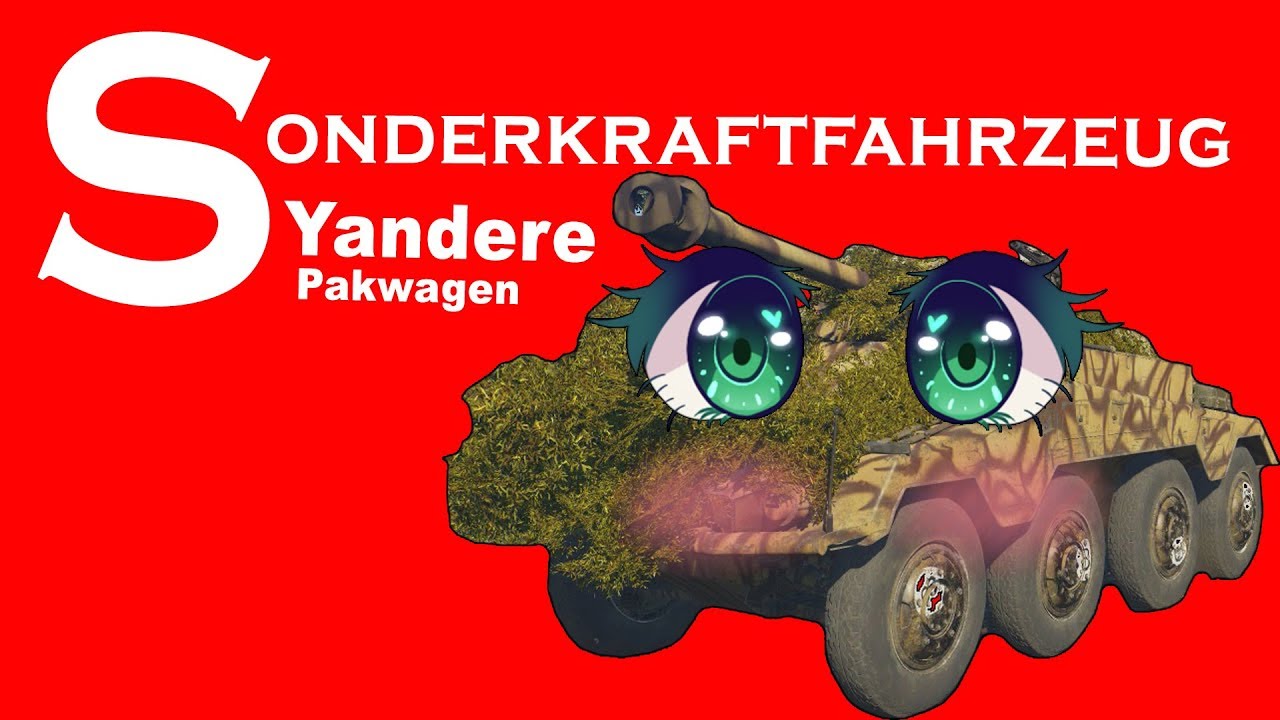
🔎 SCHWERER PANZERSPÄHWAGEN SIEBEN KOMMA FÜNF ZENTIMETER SONDERKRAFTFAHRZEUG ZWEIHUNDERTVIERUNDDREISSIG / VIER PANZERABWEHRKANONENWAGEN (sowwy Iron) MOAR STUF...
skip
main arrowBOT
wint#9479 has skipped the song.
tender trellis
play
main arrowBOT
❌ Bad argument: query is a required argument that is missing.
main arrowBOT
Skip vote added, currently at [1/2]
tender trellis
skip
main arrowBOT
MarioOdysseyOffiziellRW#0155 has skipped the song.
 lime plume
@tender trellis I would like to request that you use the bot for appropriate music
tender trellis
i would say kunstfreiheit
meinungsfreiheit
but arguing with mods hasnt brought me far in the past
lime plume
and I would like to say, it's 0x1s bot, follow the rules, or don't use it
tender trellis
so ill just do as you say
play meinungsfreiheit song
play hoch die hände wochenende
play tanzverbot asmr
 uneven urchin
ex beginner
main arrowBOT
How to get started
The simplest way to learn German is to find topics you don’t understand yet and search for explanations of them. This list provides you with a guide for which topics to learn if you are completely new to German. Type the topic into Google (or YouTube) and start learning!
Introduction
1: Alphabet (especially ä, ü, ö and ß)
2: Basic greetings (hello, goodbye, etc.)
Part 1 - Simple Sentence
1: Noun gender & plurals
2: Nominative case (What are cases?)
3: Nominative pronouns (I, you, he, she, etc.)
4: Verbs in present tense
5: Definite/indefinite articles
6: Accusative case (for nouns)
7: Accusative pronouns
8: Word order of simple sentences
9: How to ask questions
Tips
- Always learn the gender of a noun when you learn a new noun
- Learn to use a translation dictionary (e.g. dict.cc, leo.org)
- Use
>faq resourcesto see our list of German learning resources - For listening and pronunciation practice, try watching movies or videos (incl. YouTube)
- You can listen to pronunciation for words on websites like dict.cc, forvo.com, and others
- Practice writing sentences every day (and asking people to correct them)
- Ask as many questions as possible
- Don’t be scared to make mistakes!!!! If you don’t let yourself make mistakes, you will never be able to learn German
uneven urchin
faq resources
main arrowBOT
Google Docs
The resource list of the German Learning and Discussion Discord server. Join us at https://discord.gg/german Grammar: Schenke and Seago - Basic German Miell and Schenke - Intermediate German Hammer’s German grammar and usage, 4th edition pdf Modern German grammar: A pract...
quaint lark
groups
main arrowBOT
These groups are currently accessible
- Grammar - Lessons! Subscribe for pings.
- Reading - Lessons! Subscribe for pings.
- Food - A group for food talks.
- Gaming - All gaming-related topics.
- Python - For the Python nerds.
- Science - STEM-related topics.
- Sciencepractice - For solving science problems.
- Translation - Offers weekly sentences to translate.
- Writing - Join to get weekly and monthly prompts!
Type >sub to join a group or >group joinall to join all available groups .
quaint lark
group joinall
main arrowBOT
:white_check_mark: Added you to all available groups.
 keen swallow
group gaming
main arrowBOT
Page 1/2 (7 commands)
group
Commands for the central bot group system.
group join <group>
Join a group
group joinall
Join all available groups at once.
group leave <group>
Leave an existing group.
group list
List all groups this server has.
Use ">help command" for more info on a command.
left cliff
cat
main arrowBOT
 left cliff
cat
main arrowBOT
 left cliff
cat
main arrowBOT
 left cliff
cat
main arrowBOT
 torn rivet
loll
left cliff
You watch Trailer Park Boys?
left cliff
cat

 wintry grotto
getrole level b
 simple barn
help
main arrowBOT
Page 12/14 (38 commands)
Stars Commands
A starboard to upvote posts obviously.
There are two ways to make use of this feature, the first is
via reactions, react to a message with ⭐ and
the bot will automatically add (or remove) it to the starboard.
The second way is via Developer Mode. Enable it under Settings >
Appearance > Developer Mode and then you get access to Copy ID
and using the star/unstar commands.
star <message>
Stars a message via message ID.
unstar <message>
Unstars a message via message ID.
Use ">help command" for more info on a command.
 pliant nova
group STEM
main arrowBOT
Page 2/2 (7 commands)
group
Commands for the central bot group system.
group members <group>
Get a list of all group members for a group.
group mine
List all groups that you've joined.
group moderators <group>
Get a list of all moderators for a group.
Use ">help command" for more info on a command.
main arrowBOT
❌ Bad argument: Group "STEM" not found.
 late lintel
getrole Level B
 vale frigate
help
main arrowBOT
Page 7/14 (38 commands)
Group Commands
Commands for temporary sessions.
Groups are made of text and voice channels that are
temporarily created whenever a session is happening.
All groups are opt-in by default which means you
have to explicitly join them in order to be able
to access them.
Each group has moderators assigned to it who can
either start or end a group session and even ping
all members of it along with the ability to manage
messages within the group channel.
group
Commands for the central bot group system.
groups
List all groups this guild has.
sub <group>
Join an existing group.
unsub <group>
Leave an existing group
Use ">help command" for more info on a command.
kindred wyvern
gr b
main arrowBOT
:heavy_check_mark: I replaced your old CEFR role with Level B.
left cliff
cat
main arrowBOT
 left cliff
cat
 left cliff
cat
main arrowBOT

 vocal spire
explain noch
main arrowBOT
FAQ not found. Try >explain all.
Note: This entry has been added to our FAQ idea pool.
vocal spire
explain all
main arrowBOT
Please enter an FAQ name
- Accusative [Akkusativ]
- Adjective Declension [Adjektivdeklination]
- also [so, so und also]
- beginner [How to get started, Starting out]
- beibringen [lernen, studieren, Study Vocabulary, unterrichten]
- Beide [Beides, Beides vs. Beide, Beide vs. Beides]
- Birthdays
- case [Cases, grammatical case]
- CEFR [CEFR levels]
- CH [Schweiz, Switzerland]
- Dativ [Dative]
- denn [weil, weil, denn, da]
- der-die-das [gender, genders, Grammatical gender]
- Duolingo
- Eszett [Scharfes S, ss, ß]
- FAQ
- Gender patterns
- Genitiv [Genitive]
- German keyboard [German letters, Keyboard]
- Glossary [Grammar terms, Grammatical terms]
Confused? React with ℹ for more info.
Page 1/2 (38 entries)
vocal spire
explain gender patterns
main arrowBOT
Unfortunately, many German words don't have immediately clear clues that reveal it, but thankfully, many common words do follow patterns that reveal their gender.
Plural forms always use die and follow plural declension rules, which are the same for all genders (yay 🎉).
Type >explain grammatical gender for an explanation on grammatical gender.
Here's a list of patterns to recognise word gender.
Note that exceptions may apply.
💙 Masculine words (der):
- profession/role names (der Verkäufer, der Lehrer)
- many elements of time (der Tag, der Monat, der Winter)
- cardinal directions (der Norden, der Süden)
- words ending in:
---igder König, der Teig
---lingder Neuling, der Schwächling
---antder Praktikant, der Elefant
---ismusder Faschismus, der Sozialismus
💚 Neuter words (das):
- nominalised verbs (das Leben, das Lesen)
- metals (das Gold, das Kupfer)
- babies and cubs (das Baby, das Lamm)
- diminutives in
-chen/-lein(das Hündchen) - words ending in:
---mentdas Experiment, das Sakrament
---ma(usually of Greek origin) das Komma, das Thema
❤ Feminine words (die):
- many words ending in
-e(die Nase, die Kiste) - words ending in:
---in(feminine professions/roles): die Verkäuferin, die Lehrerin
---eidie Fischerei, die Bäckerei
---schaftdie Mannschaft, die Gemeinschaft
---heit/-keitdie Freiheit, die Gerechtigkeit
---ungdie Bedeutung, die Achtung
---iondie Aktion, die Religion
---ikdie Logistik, die Logik
---anzwords of classical origin: die Allianz, die Toleranz
---urdie Natur, die Kultur
---tätdie Professionalität, die Kriminalität
vocal spire
explain weil
main arrowBOT
weil vs denn vs da
These are the three common causal conjunctions in German: weil, denn, and da. They are all used to introduce a cause or reason to something and are analagous to 'because' or 'since' in English.
So what are the differences between them?
The main difference is the placement of the verb. denn is a coordinating conjunction, so it introduces a main clause and the verb is the second element:
Ich habe einen Apfel gegessen, denn ich hatte Hunger.
weil and da are subordinating conjunctions, so introduce subordinate clauses, where the verb is (usually) the last element:
Ich habe einen Apfel gegessen, weil/da ich Hunger hatte.
Subordinating conjunctions can introduce a sentence:
Weil/da ich Hunger hatte, habe ich einen Apfel gegessen.
But this does not work with a coordinating conjunction like denn:
❌ Denn ich hatte Hunger, habe ich einen Apfel gegessen.
What are the other differences?
There are many subtle differences in usage between them that you can only really learn by immersion. However, there are a few of note:
da is similar to English 'as' or 'since', in that it often precedes a main clause and introduces a reason that is already known.
weil can have qualifiers like nur, but this does not work (or sounds pecuilar) with the other conjunctions:
Ich habe ihn festgenommen, nur weil ich sein Grinsen nicht mochte.
It can also have a 'placeholder' adverb, like darum, deshalb, or deswegen, in a main clause, where it points to the subordinate clause:
Er konnte deswegen nicht kommen, weil er krank war.
When should I use which?
You can use whichever one you like and you will be understood. However, weil is widely favoured in spoken language, followed by da. denn is not common in spoken language, but still fairly common in written language.
 pliant ridge
explain sind
main arrowBOT
FAQ not found. Try >explain all.
Note: This entry has been added to our FAQ idea pool.
pliant ridge
explain Dative
main arrowBOT
The dative case (der Dativ) is one of the four cases of the German language. A case affects how a noun or noun phrase is inflected, and indicates the role of the noun or noun phrase in a clause.
🗨 How do I decline in the dative case?
Nouns, pronouns, and adjective declension is completely different compared to the nominative case. See >explain adjective declension for a full explanation.
🗨 When do I use the dative case?
The dative case has a great number of usages, many of which are idiomatic, but is mainly used:
- to mark the indirect object of many transitive verbs (the "indirect object" is that which receives the result of an action):
Ich habe dir ein Bier gekauft.
Sie gibt dem Mann das Buch.
Er zeigte ihm seinen Führerschein.
- to mark the object of some transitive verbs:
Dir fehlen die richtigen Materialien.
Es fällt mir gleich bestimmt wieder ein.
Das gefällt ihr gar nicht.
- after some prepositions:
Ich komme aus den USA.
Komm mit mir.
Ich lerne seit vielen Jahren Deutsch.
The following prepositions are always followed by the dative case:
aus, außer, bei, gegenüber, mit, nach, seit, von, zu
- after two-way prepositions when they do not indicate movement:
Das Bild hängt jetzt an der Wand.
Er geht im Wald. (he is roaming in the woods)
Sie steht vor mir.
- to show possession, mainly of clothing or body parts:
Ich habe mir in die Finger geschnitten.
Er hat ihr die Nase gebrochen.
Die Mütze fiel mir vom Kopf.
- with many adjectives:
Ich war mir nicht sicher.
Ist dir kalt?
Er ist seinem Bruder sehr ähnlich.
pliant ridge
explain grammatical case
main arrowBOT
Cases
German has four grammatical cases (der Fall or der Kasus in German): nominative, accusative, dative, and genitive. A case alters a noun, pronoun, adjective, etc., in some way to mark its grammatical function in a phrase, clause, or sentence. For example, the main function of the nominative (der Nominativ) case is to mark the subject in a sentence:
Ich liebe die deutsche Sprache!
In this sentence, the pronoun "ich" represents the first person subject and is in the nominative case. Every noun, pronoun, adjective, etc. has form in every case and it is very important to learn all of them. For example, the accusative form of ich is mich:
Die deutsche Sprache liebt mich!
See >explain adjective declension to get started on that. Don't get discouraged by how much there is, it takes some time master.
To see an explanation of the usages of every case, see their individual articles:
>explain nominative
>explain accusative
>explain dative
>explain genitive
pliant ridge
explain genitive
main arrowBOT
Genitive
The genitive case (der Genitiv) is one of the four cases of the German language. A case affects how a noun or noun phrase is inflected, and indicates the role of the noun or noun phrase in a clause.
🗨 How do I decline in the dative case?
Nouns and adjective declension is completely different compared to the nominative case. Pronoun declension does exist but it is virtually never used. See >explain adjective declension for a full explanation.
🗨 When do I use the genitive case?
The genitive case is mainly used:
- to link nouns, especially when showing possession
Dies ist der größte Bahnhof der Welt.
Die Hälfte des Kuchens gehört mir.
Es gibt noch einen Strahl der Hoffnung.
For proper names, the order is reversed and an 's' is attached to the proper name as long as it does not end with an 's' sound.
Deutschlands längster Fluss ist der Rhein.
- to mark the object of very few transitive verbs
Empfindliche Haut bedarf besonderer Pflege.
Heute gedenkt die Nation des Jahrestages der Verfassung.
Wir harren einer Antwort.
- after some prepositions
The following prepositions are commonly followed by the genitive case in written German, but usually with the dative case in spoken German:
(an)statt, trotz, während, wegen
Prepositions denoting position are usually followed by the genitive case:
außerhalb, innerhalb, oberhalb, unterhalb, jenseits
A great number of prepositions that are only used in formal German, such as:
angesichts, bezüglich, einschließlich, fernab, infolge, namens, seitens, zugunsten
- by adverbials of indefinite time
Eines Tages werde ich Deutsch beherrschen.
Sonntags sind wir meist unterwegs.
Eines Nachts hörte ihr Vater sie weinen.
Note the declension in the last sentence. Although ìt is die Nacht, it assumes a similar form as the rest.
main arrowBOT
 left cliff
😻
 ionic breach
getrole Level A
tender trellis
remind list
main arrowBOT
Reminders
In 3 months, 11 days and 30 minutes
[462] “Ask @UMU to teach me french”
In 3 months, 14 days and 1 hour
[496] ask if callum started learning german yet
2 reminders
proper ibex
explain seeing verbs
main arrowBOT
In German, there are a few different verbs describing the act of seeing. The most important ones are sehen, schauen, zuschauen, anschauen, zusehen and ansehen.
🔸 sehen (sieht, sah, hat gesehen) is the closest translation to “see”. It indicates an ability to see something.
(1) Ich sehe dich. (I can see you.)
(2) Siehst du das Auto? (Can you see the car?)
🔸 schauen (schaut, schaute, hat geschaut) is similar to English “look”. It indicates that you are actively trying to see something or looking in a particular direction. You usually use it together with some prepositional phrase that indicates the target. Schauen does not take a direct object! The verb gucken means the same as schauen, which one is used is mostly regional.
(3) Ich schaue aus dem Fenster. (I am looking out of the window.)
(4) Sie schaute unter den Tisch. (She looked under the table.)
‼ There are a lot of idioms with schauen, such as nach jmdm. schauen “to look after someone” and auf etw. schauen “to guard sth.”
🔸 anschauen means “to look at sth”. You use it when indicating that you are looking at an object. zuschauen on the other hand indicates you’re looking at an action.
‼ anschauen requires an accusative object, but zuschauen requires dative.
(5) Ich schaue die Landschaft an. (I am looking at the landscape.)
(6) Ich schaue den Kindern zu. (I am watching the children (doing sth).)
🔸 ansehen and zusehen mean the same thing as anschauen and zuschauen respectively.
(7) Sie sehen uns an. (They are looking at us.)
proper ibex
@simple glacier ^ wrong channel :p
proper ibex
yeah but you used #suggestions instead of #botchannel 😄
quaint lark
dog
main arrowBOT
 quaint lark
dog

 simple glacier
cat
main arrowBOT

 past sail
getrole Level A
left cliff
cat
main arrowBOT
 left cliff
ex beginner
main arrowBOT
How to get started
The simplest way to learn German is to find topics you don’t understand yet and search for explanations of them. This list provides you with a guide for which topics to learn if you are completely new to German. Type the topic into Google (or YouTube) and start learning!
Introduction
1: Alphabet (especially ä, ü, ö and ß)
2: Basic greetings (hello, goodbye, etc.)
Part 1 - Simple Sentence
1: Noun gender & plurals
2: Nominative case (What are cases?)
3: Nominative pronouns (I, you, he, she, etc.)
4: Verbs in present tense
5: Definite/indefinite articles
6: Accusative case (for nouns)
7: Accusative pronouns
8: Word order of simple sentences
9: How to ask questions
Tips
- Always learn the gender of a noun when you learn a new noun
- Learn to use a translation dictionary (e.g. dict.cc, leo.org)
- Use
>faq resourcesto see our list of German learning resources - For listening and pronunciation practice, try watching movies or videos (incl. YouTube)
- You can listen to pronunciation for words on websites like dict.cc, forvo.com, and others
- Practice writing sentences every day (and asking people to correct them)
- Ask as many questions as possible
- Don’t be scared to make mistakes!!!! If you don’t let yourself make mistakes, you will never be able to learn German
left cliff
@tender trellis here have a look at this
tender trellis
Danke.
stark stag
ex beginner
main arrowBOT
How to get started
The simplest way to learn German is to find topics you don’t understand yet and search for explanations of them. This list provides you with a guide for which topics to learn if you are completely new to German. Type the topic into Google (or YouTube) and start learning!
Introduction
1: Alphabet (especially ä, ü, ö and ß)
2: Basic greetings (hello, goodbye, etc.)
Part 1 - Simple Sentence
1: Noun gender & plurals
2: Nominative case (What are cases?)
3: Nominative pronouns (I, you, he, she, etc.)
4: Verbs in present tense
5: Definite/indefinite articles
6: Accusative case (for nouns)
7: Accusative pronouns
8: Word order of simple sentences
9: How to ask questions
Tips
- Always learn the gender of a noun when you learn a new noun
- Learn to use a translation dictionary (e.g. dict.cc, leo.org)
- Use
>faq resourcesto see our list of German learning resources - For listening and pronunciation practice, try watching movies or videos (incl. YouTube)
- You can listen to pronunciation for words on websites like dict.cc, forvo.com, and others
- Practice writing sentences every day (and asking people to correct them)
- Ask as many questions as possible
- Don’t be scared to make mistakes!!!! If you don’t let yourself make mistakes, you will never be able to learn German
kindred wyvern
gr c
main arrowBOT
:heavy_check_mark: I replaced your old CEFR role with Level C.
 jovial spade
gr c
left cliff
cat
main arrowBOT
 left cliff
cat
main arrowBOT

 sour prism
ex separable verbs
main arrowBOT
FAQ not found. Did you mean...
seeing verbs
main arrowBOT
Please enter an FAQ name
- gsw [Swiss German]
- Homework [How to ask a question, Translation]
- kein [Negation, nicht]
- kennen [wissen, wissen und kennen]
- KII 1 [Usage of Konjunktiv II]
- KII 2 [Structure of Konjunktiv II]
- Nach-In-Auf-Zu [Prepositions of Place Part 1]
- N-Declension [N-Deklination, Weak Nouns]
- Nominativ [Nominative]
- Passiv [Passive]
- Proposals [Suggestions]
- Resource List [Resources]
- schauen [seeing verbs, sehen]
- Stative Passive [Zustandspassiv]
- um zu [Usage of zu]
- verbs word order [Word Order for Verbs, word order verbs]
- Vorgangspassiv
- Word Order for Nouns & Pronouns [word order nouns, word order pronouns]
Page 2/2 (38 entries)
sour prism
ex verbs word order
main arrowBOT
Word Order - Verbs
The placement of the finite verb (or conjugated verb) is very important to the structure of a German sentence. While most other elements in a sentence can be moved, the position of the finite verb is fixed.
🔸 Main clause
A main clause is an independent clause that makes sense by itself. Here the finite verb is always the second element.
Der Mann gibt der Frau das Buch.
An auxiliary/modal verb (e.g. müssen) replaces the original verb (called the main verb) as the finite verb and results in the main verb being placed at the end of the clause. Additionally, the main verb is returned to its infinitive or past participle form, depending on the tense.
Der Mann muss der Frau das Buch geben.
🔸 Questions & Statements
The finite verb is always the first element.
Siehst du den Ausgang?
Interrogative words (or w-words) are considered to be in the zeroth position.
Worauf wartet ihr?
Auxiliary/modal verbs have the same effect as before:
Kannst du den Ausgang sehen?
Worauf habt ihr gewartet?
🔸 Subordinate clause
A subordinate clause depends on a main clause to make sense. It is often introduced by a conjunction as the first element and the finite verb is usually the last element.
Ich bin nicht zur Arbeit gefahren, weil ich krank war.
Du könntest ihm helfen, statt dich nur zu beschweren!
When an auxiliary/modal verb is introduced, it is placed before the finite verb:
Er ist sich immer noch nicht sicher, ob er ihr alles erzählen soll.
If a double infintive is present, it is placed at the end and the finite verb comes before it.
Das ist das Haus, das ich hätte verkaufen sollen.
 random hazel
help
main arrowBOT
Page 7/14 (38 commands)
Group Commands
Commands for temporary sessions.
Groups are made of text and voice channels that are
temporarily created whenever a session is happening.
All groups are opt-in by default which means you
have to explicitly join them in order to be able
to access them.
Each group has moderators assigned to it who can
either start or end a group session and even ping
all members of it along with the ability to manage
messages within the group channel.
group
Commands for the central bot group system.
groups
List all groups this guild has.
sub <group>
Join an existing group.
unsub <group>
Leave an existing group
Use ">help command" for more info on a command.
random hazel
role
main arrowBOT
Roles you can give yourself
- Level A
- Level B
- Level C
- Learning German
Use >groups for a list of group roles.
random hazel
group
main arrowBOT
Page 1/2 (7 commands)
group
Commands for the central bot group system.
group join <group>
Join a group
group joinall
Join all available groups at once.
group leave <group>
Leave an existing group.
group list
List all groups this server has.
Use ">help command" for more info on a command.
random hazel
group join
main arrowBOT
❌ Bad argument: group is a required argument that is missing.
random hazel
group list
main arrowBOT
These groups are currently accessible
- Grammar - Lessons! Subscribe for pings.
- Reading - Lessons! Subscribe for pings.
- Food - A group for food talks.
- Gaming - All gaming-related topics.
- Python - For the Python nerds.
- Science - STEM-related topics.
- Sciencepractice - For solving science problems.
- Translation - Offers weekly sentences to translate.
- Writing - Join to get weekly and monthly prompts!
Type >sub to join a group or >group joinall to join all available groups .
random hazel
Python 😶
torn rivet
sub gaming
main arrowBOT
:x: You're already in this group.
left cliff
explain akkusative
main arrowBOT
FAQ not found. Did you mean...
Akkusativ
Accusative
left cliff
ex akkusativ
main arrowBOT
Accusative
The accusative case (der Akkusativ) is one of the four cases of the German language. A case affects how a noun or noun phrase is inflected, and indicates the role of the noun or noun phrase in a clause.
🗨 How do I decline in the accusative case?
Feminine and neuter nouns and adjectives are the same as nominative. Masculine nouns, adjectives (and weak nouns) gain an -en ending:
Ich esse den/einen/keinen kleinen Apfel.
Personal pronouns differ for:
ich --> mich
du --> dich
er --> ihn
wir --> uns
ihr --> euch
For a full explanation see >explain adjective declension
🗨 When do I use the accusative case?
The accusative case is mainly used:
- to mark the direct object of many transitive verbs
Ich lese einen Roman.
Er hat die schöne Frau ermordet.
Sie besitzen kein Auto.
- after some prepositions
Danke für deine Hilfe!
Ohne dich kann ich nicht leben.
Sie hatten keine Einwände gegen den Plan.
The following prepositions are always followed by the accusative case:
bis, durch, für, gegen, ohne, um
- to indicate movement in a particular direction in two-way prepositions
Er steigt auf den Gipfel.
Sie hängt das Bild an die Wand.
Ich gehe gleich ins Bett. (ins = in das)
- by adverbials of time and measurement
A definite length or point in time:
Ich habe den ganzen Tag geschlafen.
Sie kommt nächste Woche zurück.
A measurement:
Das Kind ist vier Jahre alt.
Das Tier ist einen Meter groß.
Expressing distance with verbs of motion:
Ich ging die Treppe hinauf.
Ich lief den ganzen Weg zu Fuß.
- in common greetings and wishes
Guten Morgen/Tag/Abend!
Gute Besserung!
Herzlichen Glückwunsch!
Here there is an implicit verb such as 'wünschen', where the greeting/wish is the direct object.
left cliff
@tender bison
 tender bison
thanks
left cliff
You can also use >ex command for dativ, genitiv
tender bison
oph cool
left cliff
ex all
main arrowBOT
Please enter an FAQ name
- Accusative [Akkusativ]
- Adjective Declension [Adjektivdeklination]
- also [so, so und also]
- beginner [How to get started, Starting out]
- beibringen [lernen, studieren, Study Vocabulary, unterrichten]
- Beide [Beides, Beides vs. Beide, Beide vs. Beides]
- Birthdays
- case [Cases, grammatical case]
- CEFR [CEFR levels]
- CH [Schweiz, Switzerland]
- Dativ [Dative]
- denn [weil, weil, denn, da]
- der-die-das [gender, genders, Grammatical gender]
- Duolingo
- Eszett [Scharfes S, ss, ß]
- FAQ
- Gender patterns
- Genitiv [Genitive]
- German keyboard [German letters, Keyboard]
- Glossary [Grammar terms, Grammatical terms]
Confused? React with ℹ for more info.
Page 1/2 (38 entries)
left cliff
cat
main arrowBOT
 left cliff
cat
main arrowBOT
 sour prism
help
main arrowBOT
Page 10/14 (38 commands)
OpenEval Commands
Open eval command made for the German server.
Do not try to exploit this.
compile <code>
Compiles code via rextester.com
Use ">help command" for more info on a command.
sour prism
help compile
main arrowBOT
[compile|evalin] <code>
Compiles code via rextester.com
You have to pass in a code block with the language
syntax set to one of these:
- python | py
- kotlin | kt
- cpp
- c
- rb
- haskell
- pascal
- bash
- octave
- sql
Python code is automatically wrapped in an async function with its own loop.
Kotlin code is wrapped in a normal function with threads imported.
Additionally, if you'd like to pass input,
please append it after the end of the code block.
sour prism
evalin ```py
import random
def thing(n):
return [random.choice([chr(0x4F)+chr(0x77)+chr(0x4F), chr(0x55)+chr(0x77)+chr(0x55), chr(0x62)+chr(0x69)+chr(0x6B)+chr(0x77)+chr(0x75)+chr(0x62)]) for _ in range(n)]
print(thing(10))
 sebi
sebi
Evaluation has finished
Result
['bikwub', 'UwU', 'OwO', 'bikwub', 'UwU', 'UwU', 'UwU', 'OwO', 'UwU', 'OwO']
Absolute running time: 12.37 sec, cpu time: 0.63 sec, memory peak: 13 Mb, absolute service time: 15,58 sec
sour prism
evalin ```py
import random
def thing(n):
return [random.choice([chr(0x4F)+chr(0x77)+chr(0x4F), chr(0x55)+chr(0x77)+chr(0x55), chr(0x62)+chr(0x69)+chr(0x6B)+chr(0x77)+chr(0x75)+chr(0x62)]) for _ in range(n)]
print(thing(10))
verry slow func
evalin ```py
import random
def thing(n):
return [random.choice('OwO UwU bikwub'.split()) for _ in range(n)]
print(thing(10))
ping
main arrowBOT
:ping_pong: Pong! | 145.83ms
sebi
Evaluation has finished
Result
['bikwub', 'UwU', 'OwO', 'UwU', 'bikwub', 'bikwub', 'OwO', 'UwU', 'UwU', 'UwU']
Absolute running time: 4.9 sec, cpu time: 0 sec, memory peak: 0 Mb, absolute service time: 24,2 sec
sebi
Evaluation has finished
Result
['OwO', 'OwO', 'bikwub', 'bikwub', 'bikwub', 'OwO', 'UwU', 'bikwub', 'OwO', 'bikwub']
Absolute running time: 72.56 sec, cpu time: 0 sec, memory peak: 0 Mb, absolute service time: 72,73 sec
proper ibex
72.56 sec
sour prism
lol
didnt know adding strings was that time consuming
like, i know it is, but i didnt know it took that long, especially on single char strings
 mighty nebula
rip
mighty nebula
evalin ```c
#include <stdio.h>
#include <stdlib.h>
#include <string.h>
#include <time.h>
int main(int argc, char* argv[]) {
unsigned int n, random, count = 0;
char str_n[6], pool[] = "OwOUwUbikwub";
char* string = NULL;

srand(time(NULL));

if(fgets(str_n, sizeof str_n, stdin) == NULL) {
	printf("Meme.\n");
	return 1;
}

sscanf(str_n, "%u", &n);
printf("\n");

string = malloc((n * 7) * sizeof(char));

for(int i = 0; i < n; i++) {

	int m, p;

	random = rand() % 3;

	switch(random) {
		case(0):
			m = 0;
			p = 2;
			break;
		case(1):
			m = 3;
			p = 5;
			break;
		case(2):
			m = 6;
			p = 11;
		}

	for(int j = 0; j <= p - m; j++){

		string[count] = pool[j + m];
		count++;

	}

	string[count] = ' ';
	count++;
}

printf("%s\n\n", string);

free(string);

return 0;
}```
30
main arrowBOT
 Lillie
Evaluation has finished
Result
bikwub UwU OwO OwO UwU bikwub OwO bikwub bikwub OwO UwU bikwub OwO bikwub bikwub bikwub bikwub UwU bikwub UwU bikwub bikwub OwO UwU OwO OwO OwO bikwub bikwub UwU
Compilation time: 0.13 sec, absolute running time: 0.07 sec, cpu time: 0.01 sec, memory peak: 3 Mb, absolute service time: 0,28 sec
mighty nebula
Eine alte Lillieweisheit sagt, dass das Programm zuerst funktionieren soll, danach kommen die Verbesserungen und Optimierungen 
tender trellis
ew multiline declarations
mighty nebula
Well, I guess I didn't want to make this program even longer than it is now
tender trellis
dangling access to NULL is also a bit memey
mighty nebula
Oh well, uh, yes
oops
Naja, ich meme leider immer noch unabsichtlich beim Programmieren, manchmal denke ich nicht genug nach, bevor ich Code schreibe
proud obsidian
If only we could make something like arrays of strings. 😔
main arrowBOT
Roles you can give yourself
- Level A
- Level B
- Level C
- Learning German
Use >groups for a list of group roles.
 meager lake
group list
main arrowBOT
These groups are currently accessible
- Grammar - Lessons! Subscribe for pings.
- Reading - Lessons! Subscribe for pings.
- Food - A group for food talks.
- Gaming - All gaming-related topics.
- Python - For the Python nerds.
- Science - STEM-related topics.
- Sciencepractice - For solving science problems.
- Translation - Offers weekly sentences to translate.
- Writing - Join to get weekly and monthly prompts!
Type >sub to join a group or >group joinall to join all available groups .
main arrowBOT
Page 1/2 (7 commands)
group
Commands for the central bot group system.
group join <group>
Join a group
group joinall
Join all available groups at once.
group leave <group>
Leave an existing group.
group list
List all groups this server has.
Use ">help command" for more info on a command.
meager lake
group joinall
main arrowBOT
:white_check_mark: Added you to all available groups.
meager lake
group leave scienecepractice
main arrowBOT
❌ Bad argument: Group "scienecepractice" not found.
past sail
role Learning German
main arrowBOT
:x: You already have this role.
 small coral
gr science
main arrowBOT
:x: Sorry, this role is not assignable.
Roles you can give yourself
- Level A
- Level B
- Level C
- Learning German
Use >groups for a list of group roles.
 glass hornet
getrole Level B
proper ibex
ex keyboard
main arrowBOT
Being able to type German letters is quite important!
- Schon = already. Schön = beautiful.
- Mutter = mother. Mütter = mothers.
How to? There are several options.
🔸 US International layout: if you're using a US keyboard or a keyboard based on it, the transition is very easy! Everything stays as you know it, except for some symbol keys like ~, ` or ", which can be pressed to add accents. For example " + a = ä. You can also do RightAlt + s = ß.
To use US International on Windows, look for the Region & Language options and switch your selected keyboard layout to US International.
:small_orange_diamond: Use a program like AutoHotkey to automatically type the symbols you need when you type certain shortcuts: https://www.autohotkey.com/
:small_orange_diamond: Alternatively, you can memorise the altcodes for German characters. Learning them is easier than you might think! Simply hold Alt and type the numbers on your numpad:
ä = 132; Ä = 142
ö = 148; Ö = 153
ü = 129; Ü = 154
ß = 225
:small_orange_diamond: If all else fails, you can use ASCII conventions for the characters: add an e to other vowels, and write ss or sz for ß. For example:
ae = ä
oe = ö
ue = ü
ss = ß
But this is discouraged since it's harder to read and... looks ugly. It is only done in situations where alternatives are impossible (fonts with no unicode etc).
random hazel
gr translation
main arrowBOT
:x: Sorry, this role is not assignable.
Roles you can give yourself
- Level A
- Level B
- Level C
- Learning German
Use >groups for a list of group roles.
main arrowBOT
Page 6/14 (38 commands)
German Commands
Commands used by the German learning server.
removerole <role>
Removes a previously assigned role.
role [role]
Assigns a role to you from a list of available roles.
verb <verb>
Get the conjugation for a verb you provided.
Use ">help command" for more info on a command.
random hazel
role
main arrowBOT
Roles you can give yourself
- Level A
- Level B
- Level C
- Learning German
Use >groups for a list of group roles.
main arrowBOT
These groups are currently accessible
- Grammar - Lessons! Subscribe for pings.
- Reading - Lessons! Subscribe for pings.
- Food - A group for food talks.
- Gaming - All gaming-related topics.
- Python - For the Python nerds.
- Science - STEM-related topics.
- Sciencepractice - For solving science problems.
- Translation - Offers weekly sentences to translate.
- Writing - Join to get weekly and monthly prompts!
Type >sub to join a group or >group joinall to join all available groups .
 kindred pond
group joinall
main arrowBOT
:white_check_mark: Added you to all available groups.
 sour panther
-Level C
 dusty vortex
sub translation
tender trellis
missing >
left cliff
cat
main arrowBOT
 left cliff
cat
main arrowBOT
 left cliff
cat
main arrowBOT
 left cliff
star random
main arrowBOT
⭐ 2 #german-only ID: 386981078860169217
 🐶 Arreng 🎄 (Algebro)
Das wusste ich nicht, dass Stiere Eier haben :thinking_cat:
LOL
left cliff
star random

 left cliff
star random
main arrowBOT
⭐ 3 #general ID: 449236434562580510
 🐶 Powerful Austrian Man
I think the best thing to start is HTML
Lmao. If we had a #poopgazing, I'd poop that.
left cliff
dog
main arrowBOT
 main arrowBOT
 quaint lark
dog
main arrowBOT
 tender trellis
cat
main arrowBOT
 sour prism
ex all
main arrowBOT
Please enter an FAQ name
- Accusative [Akkusativ]
- Adjective Declension [Adjektivdeklination]
- also [so, so und also]
- beginner [How to get started, Starting out]
- beibringen [lernen, studieren, Study Vocabulary, unterrichten]
- Beide [Beides, Beides vs. Beide, Beide vs. Beides]
- Birthdays
- case [Cases, grammatical case]
- CEFR [CEFR levels]
- CH [Schweiz, Switzerland]
- Dativ [Dative]
- denn [weil, weil, denn, da]
- der-die-das [gender, genders, Grammatical gender]
- Duolingo
- Eszett [Scharfes S, ss, ß]
- FAQ
- Gender patterns
- Genitiv [Genitive]
- German keyboard [German letters, Keyboard]
- Glossary [Grammar terms, Grammatical terms]
Confused? React with ℹ for more info.
Page 1/2 (38 entries)
sour prism
ex beginner
main arrowBOT
How to get started
The simplest way to learn German is to find topics you don’t understand yet and search for explanations of them. This list provides you with a guide for which topics to learn if you are completely new to German. Type the topic into Google (or YouTube) and start learning!
Introduction
1: Alphabet (especially ä, ü, ö and ß)
2: Basic greetings (hello, goodbye, etc.)
Part 1 - Simple Sentence
1: Noun gender & plurals
2: Nominative case (What are cases?)
3: Nominative pronouns (I, you, he, she, etc.)
4: Verbs in present tense
5: Definite/indefinite articles
6: Accusative case (for nouns)
7: Accusative pronouns
8: Word order of simple sentences
9: How to ask questions
Tips
- Always learn the gender of a noun when you learn a new noun
- Learn to use a translation dictionary (e.g. dict.cc, leo.org)
- Use
>faq resourcesto see our list of German learning resources - For listening and pronunciation practice, try watching movies or videos (incl. YouTube)
- You can listen to pronunciation for words on websites like dict.cc, forvo.com, and others
- Practice writing sentences every day (and asking people to correct them)
- Ask as many questions as possible
- Don’t be scared to make mistakes!!!! If you don’t let yourself make mistakes, you will never be able to learn German
left cliff
cat
 torn rivet
cat
main arrowBOT
 torn rivet
@snow compass
 snow compass
ja?
left cliff
lmao
 potent skiff
group list
main arrowBOT
These groups are currently accessible
- Grammar - Lessons! Subscribe for pings.
- Reading - Lessons! Subscribe for pings.
- Food - A group for food talks.
- Gaming - All gaming-related topics.
- Python - For the Python nerds.
- Science - STEM-related topics.
- Sciencepractice - For solving science problems.
- Translation - Offers weekly sentences to translate.
- Writing - Join to get weekly and monthly prompts!
Type >sub to join a group or >group joinall to join all available groups .
potent skiff
group joinall
main arrowBOT
:white_check_mark: Added you to all available groups.
:white_check_mark: Added you to all available groups.
 radiant moon
group writing
main arrowBOT
Page 1/2 (7 commands)
group
Commands for the central bot group system.
group join <group>
Join a group
group joinall
Join all available groups at once.
group leave <group>
Leave an existing group.
group list
List all groups this server has.
Use ">help command" for more info on a command.
❌ Bad argument: Group "<writing>" not found.
 silent vigil
group joinall
main arrowBOT
:white_check_mark: Added you to all available groups.
left cliff
cat
main arrowBOT

 jolly moth
gr Level B
dusty vortex
gr Level A
left cliff
cat
main arrowBOT
 left cliff
help
main arrowBOT
Page 11/14 (38 commands)
Reminder Commands
Reminders to do something.
reminder <when>
Reminds you about something after a certain amount of time.
Use ">help command" for more info on a command.
left cliff
emojistats
main arrowBOT
Emoji Leaderboard
Top 10
- : 26453 uses (25.18%), 61.74 uses/day.
- : 7042 uses (6.70%), 29.28 uses/day.
 : 4801 uses (4.57%), 39.77 uses/day.
 : 3344 uses (3.18%), 7.80 uses/day.
 : 3268 uses (3.11%), 11.64 uses/day.
 : 3179 uses (3.03%), 7.42 uses/day.
 : 2862 uses (2.72%), 6.68 uses/day.
 : 2200 uses (2.09%), 5.13 uses/day.
- Unknown Emoji: 1969 uses (1.87%), 4.60 uses/day.
 : 1835 uses (1.75%), 4.28 uses/day.
Bottom 10
 : 20 uses (0.02%), 0.28 uses/day.
 : 36 uses (0.03%), 0.08 uses/day.
 : 46 uses (0.04%), 0.11 uses/day.
 : 48 uses (0.05%), 0.68 uses/day.
 : 53 uses (0.05%), 0.71 uses/day.
 : 58 uses (0.06%), 0.77 uses/day.
 : 63 uses (0.06%), 3.59 uses/day.
 : 66 uses (0.06%), 0.15 uses/day.
 : 71 uses (0.07%), 0.17 uses/day.
 : 72 uses (0.07%), 1.02 uses/day.
105066 uses over 5244 emoji for 245.21 uses per day.
left cliff
word
left cliff
Are you a pathetic, worthless punk? Because I'm going to turn you down as if you were a hippy parasite. And then I'm going to make you feel like you're a turkey fucker.
tender trellis
ex all
main arrowBOT
Please enter an FAQ name
- Accusative [Akkusativ]
- Adjective Declension [Adjektivdeklination]
- also [so, so und also]
- beginner [How to get started, Starting out]
- beibringen [lernen, studieren, Study Vocabulary, unterrichten]
- Beide [Beides, Beides vs. Beide, Beide vs. Beides]
- Birthdays
- case [Cases, grammatical case]
- CEFR [CEFR levels]
- CH [Schweiz, Switzerland]
- Dativ [Dative]
- denn [weil, weil, denn, da]
- der-die-das [gender, genders, Grammatical gender]
- Duolingo
- Eszett [Scharfes S, ss, ß]
- FAQ
- Gender patterns
- Genitiv [Genitive]
- German keyboard [German letters, Keyboard]
- Glossary [Grammar terms, Grammatical terms]
Page 1/2 (38 entries)
tender trellis
ex gender patterns
main arrowBOT
Unfortunately, many German words don't have immediately clear clues that reveal it, but thankfully, many common words do follow patterns that reveal their gender.
Plural forms always use die and follow plural declension rules, which are the same for all genders (yay 🎉).
Type >explain grammatical gender for an explanation on grammatical gender.
Here's a list of patterns to recognise word gender.
Note that exceptions may apply.
💙 Masculine words (der):
- profession/role names (der Verkäufer, der Lehrer)
- many elements of time (der Tag, der Monat, der Winter)
- cardinal directions (der Norden, der Süden)
- words ending in:
---igder König, der Teig
---lingder Neuling, der Schwächling
---antder Praktikant, der Elefant
---ismusder Faschismus, der Sozialismus
💚 Neuter words (das):
- nominalised verbs (das Leben, das Lesen)
- metals (das Gold, das Kupfer)
- babies and cubs (das Baby, das Lamm)
- diminutives in
-chen/-lein(das Hündchen) - words ending in:
---mentdas Experiment, das Sakrament
---ma(usually of Greek origin) das Komma, das Thema
❤ Feminine words (die):
- many words ending in
-e(die Nase, die Kiste) - words ending in:
---in(feminine professions/roles): die Verkäuferin, die Lehrerin
---eidie Fischerei, die Bäckerei
---schaftdie Mannschaft, die Gemeinschaft
---heit/-keitdie Freiheit, die Gerechtigkeit
---ungdie Bedeutung, die Achtung
---iondie Aktion, die Religion
---ikdie Logistik, die Logik
---anzwords of classical origin: die Allianz, die Toleranz
---urdie Natur, die Kultur
---tätdie Professionalität, die Kriminalität
tender trellis
@winter yacht ^
mighty nebula
star stats @mighty nebula
main arrowBOT
 Lylli
Lylli
Messages Starred
67
Stars Received
218
Stars Given
402
Top Starred Posts
🥇: 517869964682854430 (15 stars)
🥈: 516993709569736704 (8 stars)
🥉: 492810532416389120 (7 stars)
mighty nebula
star random @mighty nebula
 mighty nebula
star random @mighty nebula

 weary fox
star random @weary fox


 main arrowBOT
Could not find anything.
random hazel
Am i a joke to you?
main arrowBOT
Yes
mighty nebula
proper ibex
random hazel
mighty nebula
star random @mighty nebula

 random hazel
@main arrow Danke
proper ibex
star random Syronoid
 proper ibex
wtf
main arrowBOT
⭐ 2 #general ID: 541331613477503037

🌟 5 #archived-media ID: 490140239285977099
 Bun
Bun
 left cliff
star random @pearl heath
main arrowBOT
⭐ 2 #general ID: 502476756322746378
Bun
Ppl only use 10% of brain capacity. so its ok to lose 90% of it
mighty nebula
star random Lillie
 random hazel
@main arrow Am I still a joke to you :c
main arrowBOT
❌ Bad argument: Member "arrem" not found
⭐ 3 #general ID: 440675681001799682
🐶 Powerful Austrian Man
He's like omg I'm so totaled I need to control my jimmy sweat now.
⭐ 4 #general ID: 571037543160741907
 mighty nebula
star random Lillie

 random hazel
star random Typ
main arrowBOT
❌ Bad argument: Member "Typ" not found
random hazel
aaaaaaa
mighty nebula
star random Lillie
main arrowBOT
⭐ 2 #general ID: 498976382735613953
 Lola Panel #prayforbee
@vast radish You're a cute package of rice
torn rivet
Aww
mighty nebula
star random Lillie

 mighty nebula
RIP Flopsie
torn rivet
?
mighty nebula
@torn rivet Flops fand das nicht so schön
weary fox
star random @weary fox
 weary fox
Wtf
mighty nebula
weary fox
star random @weary fox
main arrowBOT
🌟 5 #general ID: 505515258073317387
 🌈dextrumi🌈
Filho da puta @weary vine
🌟 5 #general ID: 504669148572286977
Bun
BrOwO
weary fox
Omfg
mighty nebula
star random Lillie
main arrowBOT
⭐ 2 #daddy-bercow-channel ID: 542973826204696586

⭐ 3 #general ID: 503714623250497537
Bun
 ** **
** **
** ** 🍚
weary fox
star random @weary fox
 mighty nebula
star random Lillie
 weary fox
Hahahahaha
mighty nebula
RIP fuckbottle
 mighty nebula
star random Lillie
main arrowBOT
⭐ 3 #general ID: 498840714818486273
Lola Panel #prayforbee
Callum's whole life consists of alcohol, JS and 0 math
proper ibex
Lola Panel
i like this one
mighty nebula
star random Lillie


 mighty nebula
star random Lillie
main arrowBOT
⭐ 3 #general ID: 498840714818486273
Lola Panel #prayforbee
Callum's whole life consists of alcohol, JS and 0 math
 mighty nebula
star random Lillie
main arrowBOT
⭐ 4 #general ID: 501495978235396097
Lolar "Machat" Panel #needspats
"Ihren Ausweis, bitte!" -
"Ich mag Brot." -
"Entschuldigen Sie mich bitte für die Störung, ich halte Sie nicht weiter auf."

 mighty nebula
star random Lillie
main arrowBOT
⭐ 2 #general ID: 515599527999307786
 Lillie 🥀
You're not a fucking pony, you're fucking a pony Bro
main arrowBOT
⭐ 2 #general ID: 515599527999307786
Lillie 🥀
You're not a fucking pony, you're fucking a pony Bro
main arrowBOT
⭐ 2 #german-only ID: 492190137443418112
 Michelle
Ich mag Callum ja

 mighty nebula
star random Lillie
mighty nebula
star random Lillie
mighty nebula
star random Lillie
 proper ibex
👀
mighty nebula
star random Lillie
mighty nebula
star random Lillie
main arrowBOT
🌟 5 #general ID: 498779958265511938
Lola Panel #prayforbee
Bik bik brain with lotsa air innit
mighty nebula
star random Lillie
 vast radish
Wtf no
proper ibex
ex adjective declension
main arrowBOT
A Brief Guide to Memorizing German Noun and Adjective Declension by Basementality
https://docs.google.com/document/d/1jWl5-kkqF3FQLDzrz8XLBJj7hvPFQK7MT5SYEDGK65E/edit

Google Docs
A Brief Guide to Memorizing German Noun and Adjective Declension Introduction Don’t try to memorize this whole guide at once. This guide was written to help people learn these concepts in parts over a period of time. This way you will (hopefully) be able to remember the i...
proper ibex
@wooden locust ^
 wooden locust
❤ @proper ibex
surreal badge
star random Broseidon
 surreal badge

surreal badge
star random @surreal badge
 surreal badge
star random @surreal badge
main arrowBOT
⭐ 3 #german-only ID: 472238527569068043
 Knots
Knots
Hast du versucht, to use yourself as a trap, and stick out nur dein Arm, um die Mücke zu attract?
 urban mist
ex CEFR
main arrowBOT
If you see something like A1, B2 or C1, these represent the proficiency of a speaker in a language they're not native in, and are called CEFR levels. They are valid for any language, not only German!
Roughly speaking, A levels are beginners and C levels are experts. Remember that CEFR level are self-assessed and indicative!
You can see more specific names and descriptions on the Wikipedia page:
https://en.wikipedia.org/wiki/Common_European_Framework_of_Reference_for_Languages
🗨 How do I know what level I am?
If the table on Wikipedia is too generic for you, you can try using this one here:
https://rm.coe.int/168045bb52
Just check each column one at a time: if you can do all it describes, move to the next column. Your level is the highest where you can do the most things.
Alternatively, you can use this questionnaire to estimate your level more accurately:
https://www.laits.utexas.edu/fi/sites/laits.utexas.edu.fi/files/Self Assessment Checklist European.pdf
tender trellis
ex beginner
main arrowBOT
How to get started
The simplest way to learn German is to find topics you don’t understand yet and search for explanations of them. This list provides you with a guide for which topics to learn if you are completely new to German. Type the topic into Google (or YouTube) and start learning!
Introduction
1: Alphabet (especially ä, ü, ö and ß)
2: Basic greetings (hello, goodbye, etc.)
Part 1 - Simple Sentence
1: Noun gender & plurals
2: Nominative case (What are cases?)
3: Nominative pronouns (I, you, he, she, etc.)
4: Verbs in present tense
5: Definite/indefinite articles
6: Accusative case (for nouns)
7: Accusative pronouns
8: Word order of simple sentences
9: How to ask questions
Tips
- Always learn the gender of a noun when you learn a new noun
- Learn to use a translation dictionary (e.g. dict.cc, leo.org)
- Use
>faq resourcesto see our list of German learning resources - For listening and pronunciation practice, try watching movies or videos (incl. YouTube)
- You can listen to pronunciation for words on websites like dict.cc, forvo.com, and others
- Practice writing sentences every day (and asking people to correct them)
- Ask as many questions as possible
- Don’t be scared to make mistakes!!!! If you don’t let yourself make mistakes, you will never be able to learn German
urban mist
ex gender patterns
main arrowBOT
Unfortunately, many German words don't have immediately clear clues that reveal it, but thankfully, many common words do follow patterns that reveal their gender.
Plural forms always use die and follow plural declension rules, which are the same for all genders (yay 🎉).
Type >explain grammatical gender for an explanation on grammatical gender.
Here's a list of patterns to recognise word gender.
Note that exceptions may apply.
💙 Masculine words (der):
- profession/role names (der Verkäufer, der Lehrer)
- many elements of time (der Tag, der Monat, der Winter)
- cardinal directions (der Norden, der Süden)
- words ending in:
---igder König, der Teig
---lingder Neuling, der Schwächling
---antder Praktikant, der Elefant
---ismusder Faschismus, der Sozialismus
💚 Neuter words (das):
- nominalised verbs (das Leben, das Lesen)
- metals (das Gold, das Kupfer)
- babies and cubs (das Baby, das Lamm)
- diminutives in
-chen/-lein(das Hündchen) - words ending in:
---mentdas Experiment, das Sakrament
---ma(usually of Greek origin) das Komma, das Thema
❤ Feminine words (die):
- many words ending in
-e(die Nase, die Kiste) - words ending in:
---in(feminine professions/roles): die Verkäuferin, die Lehrerin
---eidie Fischerei, die Bäckerei
---schaftdie Mannschaft, die Gemeinschaft
---heit/-keitdie Freiheit, die Gerechtigkeit
---ungdie Bedeutung, die Achtung
---iondie Aktion, die Religion
---ikdie Logistik, die Logik
---anzwords of classical origin: die Allianz, die Toleranz
---urdie Natur, die Kultur
---tätdie Professionalität, die Kriminalität
left cliff
word
random hazel
star random
random hazel
star random @random hazel
main arrowBOT
⭐ 3 #botchannel ID: 571718179966156821

 finite panther
getrole Level
main arrowBOT
❌ Bad argument: Role "Level" not found.
finite panther
getrole Level A1
main arrowBOT
❌ Bad argument: Role "Level A1" not found.
finite panther
getrole Level a
 desert mural
star random @torn rivet
 desert mural
star random @snow compass
 desert mural
star random @quaint lark
main arrowBOT
⭐ 4 #general ID: 571892953790939147
 Elias | ping and I'll do nothing
Jump to post
Well Milly we were just alluding to sex with a basket so this is a step in the right direction I believe
desert mural
star random @desert mural
main arrowBOT
🌟 5 #general ID: 481641646136492032
 🌞 Basementality 🐈
I'd be like screw all these Brazilians, I'm out, BYE.
snow compass
star random @snow compass
main arrowBOT
⭐ 2 #questions ID: 567291164722724874
desert mural
star random @desert mural
main arrowBOT
🌟 6 #lessons ID: 503594659117793290
🌞 Basementality 🐈
For second one: "GEH LANGSAM. ICH BIN LERNER."
desert mural
star random @snow compass
main arrowBOT
⭐ 2 #questions ID: 567291164722724874
desert mural
star random @snow compass
desert mural
star random @desert mural
main arrowBOT
⭐ 3 #general-2 ID: 521081940489535498
desert mural
star random @quaint lark
main arrowBOT
⭐ 4 #general ID: 571892953790939147
Elias | ping and I'll do nothing
Jump to post
Well Milly we were just alluding to sex with a basket so this is a step in the right direction I believe
desert mural
star random @torn rivet
 desert mural
star random @torn rivet
snow compass
star random @snow compass
main arrowBOT
⭐ 2 #questions ID: 567291164722724874
desert mural
star random @desert mural
main arrowBOT
⭐ 3 #general ID: 533674767698493441
🌞 Basementality 🐈
Jump to post
But anyway, at least habri is here to learn us the difference between proof and prove.
quaint lark
help
main arrowBOT
Page 7/14 (38 commands)
Group Commands
Commands for temporary sessions.
Groups are made of text and voice channels that are
temporarily created whenever a session is happening.
All groups are opt-in by default which means you
have to explicitly join them in order to be able
to access them.
Each group has moderators assigned to it who can
either start or end a group session and even ping
all members of it along with the ability to manage
messages within the group channel.
group
Commands for the central bot group system.
groups
List all groups this guild has.
sub <group>
Join an existing group.
unsub <group>
Leave an existing group
Use ">help command" for more info on a command.
quaint lark
groups
main arrowBOT
These groups are currently accessible
- Grammar - Lessons! Subscribe for pings.
- Reading - Lessons! Subscribe for pings.
- Food - A group for food talks.
- Gaming - All gaming-related topics.
- Python - For the Python nerds.
- Science - STEM-related topics.
- Sciencepractice - For solving science problems.
- Translation - Offers weekly sentences to translate.
- Writing - Join to get weekly and monthly prompts!
Type >sub to join a group or >group joinall to join all available groups .
urban mist
ex gender patterns
main arrowBOT
Unfortunately, many German words don't have immediately clear clues that reveal it, but thankfully, many common words do follow patterns that reveal their gender.
Plural forms always use die and follow plural declension rules, which are the same for all genders (yay 🎉).
Type >explain grammatical gender for an explanation on grammatical gender.
Here's a list of patterns to recognise word gender.
Note that exceptions may apply.
💙 Masculine words (der):
- profession/role names (der Verkäufer, der Lehrer)
- many elements of time (der Tag, der Monat, der Winter)
- cardinal directions (der Norden, der Süden)
- words ending in:
---igder König, der Teig
---lingder Neuling, der Schwächling
---antder Praktikant, der Elefant
---ismusder Faschismus, der Sozialismus
💚 Neuter words (das):
- nominalised verbs (das Leben, das Lesen)
- metals (das Gold, das Kupfer)
- babies and cubs (das Baby, das Lamm)
- diminutives in
-chen/-lein(das Hündchen) - words ending in:
---mentdas Experiment, das Sakrament
---ma(usually of Greek origin) das Komma, das Thema
❤ Feminine words (die):
- many words ending in
-e(die Nase, die Kiste) - words ending in:
---in(feminine professions/roles): die Verkäuferin, die Lehrerin
---eidie Fischerei, die Bäckerei
---schaftdie Mannschaft, die Gemeinschaft
---heit/-keitdie Freiheit, die Gerechtigkeit
---ungdie Bedeutung, die Achtung
---iondie Aktion, die Religion
---ikdie Logistik, die Logik
---anzwords of classical origin: die Allianz, die Toleranz
---urdie Natur, die Kultur
---tätdie Professionalität, die Kriminalität
tender trellis
groups
main arrowBOT
These groups are currently accessible
- Grammar - Lessons! Subscribe for pings.
- Reading - Lessons! Subscribe for pings.
- Food - A group for food talks.
- Gaming - All gaming-related topics.
- Python - For the Python nerds.
- Science - STEM-related topics.
- Sciencepractice - For solving science problems.
- Translation - Offers weekly sentences to translate.
- Writing - Join to get weekly and monthly prompts!
Type >sub to join a group or >group joinall to join all available groups .
 rancid sluice
ex studieren
main arrowBOT
Study Vocabulary
Let’s take a look at differences in meanings between studieren, lernen, unterrichten, lehren and beibringen.
So what does studieren mean? Pfff, to study ofc, duh. Well, NO! Studieren is used only in the sense of studying at a university (or college).
(1) Ich studiere Mathematik. = “I study math as a uni student.”
To study as in to learn, to practice etc. translates to lernen.
(2) Ich lerne Mathematik. = “I’m learning/practicing math (for school).”
Now let’s compare the rest of the verbs - unterrichten, lehren and beibringen. They all mean to teach but are used in different contexts.
Unterrichten means to teach at an institute (school, language school) or some other formal way of teaching (private tutoring).
(3) Meine Schwester unterrichtet Deutsch am Goethe Institut = “My sister teaches German at the Goethe Institute.”
Lehren means to teach but as a tutor at a university.
(4) Herr Arrem lehrt die Kunst der Memes an der Nationalmemeuniversität Wien. = “Mister Arrem teaches the Art of Memes at the National Meme University of Vienna.”
Beibringen is more general, usually used with skills that you learn outside of an institute.
(5) Mein Vater hat mir beigebracht, wie man Fahrrad fährt. = “My father taught me how to ride a bike.”
🌟 Bonus verb üben: to practice is üben in German, not praktizieren.
proud obsidian
play skinner says yes
mighty nebula
skinner sez yes
rough abyss
help suggest
main arrowBOT
Page 1/1 (1 commands)
suggest <text>
This command can be used in order to suggest something for the server.
suggest list
Lists active suggestions.
Use ">help command" for more info on a command.
rough abyss
suggest list
main arrowBOT
Active suggestions (8 in total)
:zzz: [56] Suggested 2 months, 22 days and 1 hour ago
add a command like this one here, but for suggesting stuff regarding the resource list in #resources
By: Saʃʃa 🇨🇭 | something
Link to suggestion
:zzz: [57] Suggested 2 months, 18 days and 22 hours ago
making it an obligation to put tags (like with # or idk $ maybe?) on #resources postings so that resource postings can be indexable/searchable (Regexp via Botty McBotface could work I think) Further improvements can include bot commands on #resources such as >BeginnerBook || >IntermediateBook etc. etc. that would lead to a posting
By: myeyesareburning
Link to suggestion
:clock1: [82] Suggested 29 days, 17 hours and 59 minutes ago
ne Möglichkeit gepingt zu werden wenn zum Beispiel jemand ne frage in #questions hat. Also ne extra Rolle die dann gepingt wird
By: Dextrumi
Link to suggestion
:speech_balloon: [89] Suggested 20 days, 14 hours and 29 minutes ago
Voicechats with userlimits so people don't get overloaded by so many people talking. I suggest a limit of 5 or 4 on those
By: Left guild
Link to suggestion
:clock1: [93] Suggested 18 days, 17 hours and 54 minutes ago
a "thing of the day" channel with maximum slowmode enabled, where anyone can post cool expressions, words and facts they come across, while leaving all research up to the users (= the thing is not explained, just posted; people can ask about it in #questions or just research it on their own).
We've implemented it on the Italian server and it's been successful; it would be cool to have here too, especially for advanced speakers who struggle to find new stuff to learn (expressions especially).
By: brzrkr 💍🐾
Link to suggestion
:clock1: [94] Suggested 18 days, 17 hours and 38 minutes ago
a "ja" and a "nein" emote to reduce clutter. Someone posted 9⃣ which was clever
By: Korrigiert mich bitte immer
Link to suggestion
:clock1: [98] Suggested 12 days, 15 hours and 59 minutes ago
remove the old emotes no one is using. And maybe make some new ones
By: Dextrumi
Link to suggestion
:clock1: [99] Suggested 10 days, 15 hours and 29 minutes ago
Eine Rolle für Natives die Nachts eher aktiv sind und helfen wollen, wenn Leute Probleme haben beim lernen oder so.
Das man die halt Pingen kann wenn es ist und die Leute sehen wer wie helfen kann nachts, wenn der Rest am schlafen ist.
By: Dextrumi
Link to suggestion
 grim cobalt
getrole Level a
 stoic onyx
sub
main arrowBOT
❌ Bad argument: group is a required argument that is missing.
stoic onyx
help
main arrowBOT
Page 14/14 (38 commands)
WordTrainer Commands
A cog that lets you train your vocabulary.
word
A command that helps you train and expand your vocabulary.
Use ">help command" for more info on a command.
stoic onyx
role
main arrowBOT
Roles you can give yourself
- Level A
- Level B
- Level C
- Learning German
Use >groups for a list of group roles.
stoic onyx
role Learning german
main arrowBOT
:x: You already have this role.
stoic onyx
verb waiting
main arrowBOT
main arrowBOT
Current uptime ⌛
3 hours, 10 minutes, and 40 seconds
left cliff
ex um zu
main arrowBOT
Usage of ZU
Zu is a word that has a lot of uses.
As a preposition it means “to/towards”. (see >ex Dative and >ex Prepositions of Place Part 1)
But it can also be used to indicate an infinitive/gerund in a sentence, for example:
(1) Es ist schwierig, Deutsch zu lernen. = “Learning German is hard.” or ”It’s hard to learn German.”
As you can see, the zu is placed before the infinitive verb that has no prefix or a non-separable prefix. For verbs with a separable prefix, the zu goes between the prefix and the verb with no space in between:
(2) Ich habe heute bloß vor, Essen einzukaufen. = I only plan to buy food today.
You can also see it in the um...zu structure, where it means ”in order to”.
The um goes to the beginning of the phrase and zu works the same way as explained above.
(3) Wir sind zum Supermarkt gegangen, um etwas Brot zu kaufen. = We went to the shop (in order) to buy some bread.
(4) Ich lerne Deutsch, um mit Deutschen reden zu können. = I am learning German (in order) to be able to speak to Germans.
‼you can use um...zu only if the people doing both actions are the same. So in the examples above:
• in (3) we go and we buy bread
• in (4) I learn and I speak
❌ *ich gebe ihm ein Geschenk, um er glücklich zu sein - This and other weird stuffs are WRONG!
🌟 Bonus: When you want to say in order to, but the subjects are different, you use the subordinate conjunction damit.
left cliff
@dusty vortex ^
dusty vortex
ahh ok
left cliff
word
stoic onyx
Oh that is really helpful, thank you.
 rose furnace

lyrics: All around me are familiar faces Worn out places, worn out faces Bright and early for the daily races Going nowhere, going nowhere Their tears are fi...
lyrics: All around me are familiar faces Worn out places, worn out faces Bright and early for the daily races Going nowhere, going nowhere Their tears are fi...
skip
main arrowBOT
.fluesterkonzert.#7874 has skipped the song.
rose furnace
skip
main arrowBOT
.fluesterkonzert.#7874 has skipped the song.
rose furnace
lyrics: All around me are familiar faces Worn out places, worn out faces Bright and early for the daily races Going nowhere, going nowhere Their tears are fi...
skip
main arrowBOT
.fluesterkonzert.#7874 has skipped the song.
stoic onyx
word
main arrowBOT
to display sth. oscilloscopically
A: etw. oszillographieren
B: vorbeischauen
C: etw. fassen
D: überfakturieren
Score -1 | Wrong
mighty nebula
star random @mighty nebula
proper ibex
ex beginner
main arrowBOT
How to get started
The simplest way to learn German is to find topics you don’t understand yet and search for explanations of them. This list provides you with a guide for which topics to learn if you are completely new to German. Type the topic into Google (or YouTube) and start learning!
Introduction
1: Alphabet (especially ä, ü, ö and ß)
2: Basic greetings (hello, goodbye, etc.)
Part 1 - Simple Sentence
1: Noun gender & plurals
2: Nominative case (What are cases?)
3: Nominative pronouns (I, you, he, she, etc.)
4: Verbs in present tense
5: Definite/indefinite articles
6: Accusative case (for nouns)
7: Accusative pronouns
8: Word order of simple sentences
9: How to ask questions
Tips
- Always learn the gender of a noun when you learn a new noun
- Learn to use a translation dictionary (e.g. dict.cc, leo.org)
- Use
>faq resourcesto see our list of German learning resources - For listening and pronunciation practice, try watching movies or videos (incl. YouTube)
- You can listen to pronunciation for words on websites like dict.cc, forvo.com, and others
- Practice writing sentences every day (and asking people to correct them)
- Ask as many questions as possible
- Don’t be scared to make mistakes!!!! If you don’t let yourself make mistakes, you will never be able to learn German
main arrowBOT
If you see something like A1, B2 or C1, these represent the proficiency of a speaker in a language they're not native in, and are called CEFR levels. They are valid for any language, not only German!
Roughly speaking, A levels are beginners and C levels are experts. Remember that CEFR level are self-assessed and indicative!
You can see more specific names and descriptions on the Wikipedia page:
https://en.wikipedia.org/wiki/Common_European_Framework_of_Reference_for_Languages
🗨 How do I know what level I am?
If the table on Wikipedia is too generic for you, you can try using this one here:
https://rm.coe.int/168045bb52
Just check each column one at a time: if you can do all it describes, move to the next column. Your level is the highest where you can do the most things.
Alternatively, you can use this questionnaire to estimate your level more accurately:
https://www.laits.utexas.edu/fi/sites/laits.utexas.edu.fi/files/Self Assessment Checklist European.pdf
proper ibex
@tender trellis ^
tender trellis
@proper ibex Okay Thanks.
kindred wyvern
gr c
 untold lily
evalin ```py
from bisect import bisect
n = 2 * 28123
precomp = [0] + [1] * n
for d in range(2, n // 2 + 1):
for i in range(2 * d, n + 1, d):
# if i % d == 0:
precomp[i] += d
abun = [i for i in range(n // 2 + 1) if precomp[i] > i]
even = [i for i in abun if i % 2 == 0]
odd = [i for i in abun if i % 2 == 1]
s = 0
for x in range(n // 2 + 1):
for a in odd if x % 2 else even:
i = bisect(even, x - a)
if i and even[i - 1] == x - a:
break
else:
s += x
print(s)
 Nola1222
Evaluation has finished
Result
4179871
Absolute running time: 0.41 sec, cpu time: 0.6 sec, memory peak: 15 Mb, absolute service time: 0,41 sec
quaint lark
info
main arrowBOT
Information about Elias
Name
Elias
Nick
Elias 🍆
Tag
2845
ID
164869272697438209
Joined
4 months, 11 days and 23 hours ago
Created
3 years, 28 days and 21 hours ago
Roles
Writing, Translation, Reading, Food, Grammar, Gaming, Science, Learning German, Level B
main arrowBOT
How to get started
The simplest way to learn German is to find topics you don’t understand yet and search for explanations of them. This list provides you with a guide for which topics to learn if you are completely new to German. Type the topic into Google (or YouTube) and start learning!
Introduction
1: Alphabet (especially ä, ü, ö and ß)
2: Basic greetings (hello, goodbye, etc.)
Part 1 - Simple Sentence
1: Noun gender & plurals
2: Nominative case (What are cases?)
3: Nominative pronouns (I, you, he, she, etc.)
4: Verbs in present tense
5: Definite/indefinite articles
6: Accusative case (for nouns)
7: Accusative pronouns
8: Word order of simple sentences
9: How to ask questions
Tips
- Always learn the gender of a noun when you learn a new noun
- Learn to use a translation dictionary (e.g. dict.cc, leo.org)
- Use
>faq resourcesto see our list of German learning resources - For listening and pronunciation practice, try watching movies or videos (incl. YouTube)
- You can listen to pronunciation for words on websites like dict.cc, forvo.com, and others
- Practice writing sentences every day (and asking people to correct them)
- Ask as many questions as possible
- Don’t be scared to make mistakes!!!! If you don’t let yourself make mistakes, you will never be able to learn German
 upbeat glen
faq resources
main arrowBOT
Google Docs
The resource list of the German Learning and Discussion Discord server. Join us at https://discord.gg/german Grammar: Schenke and Seago - Basic German Miell and Schenke - Intermediate German Hammer’s German grammar and usage, 4th edition pdf Modern German grammar: A pract...
tender trellis
help
main arrowBOT
Page 1/14 (38 commands)
DictCC Commands
lookup <lang_in> <lang_out> <word>
Allows you to look up words you don't know.
Use ">help command" for more info on a command.
 karmic peak
np
 steel wave
ex beginner
main arrowBOT
How to get started
The simplest way to learn German is to find topics you don’t understand yet and search for explanations of them. This list provides you with a guide for which topics to learn if you are completely new to German. Type the topic into Google (or YouTube) and start learning!
Introduction
1: Alphabet (especially ä, ü, ö and ß)
2: Basic greetings (hello, goodbye, etc.)
Part 1 - Simple Sentence
1: Noun gender & plurals
2: Nominative case (What are cases?)
3: Nominative pronouns (I, you, he, she, etc.)
4: Verbs in present tense
5: Definite/indefinite articles
6: Accusative case (for nouns)
7: Accusative pronouns
8: Word order of simple sentences
9: How to ask questions
Tips
- Always learn the gender of a noun when you learn a new noun
- Learn to use a translation dictionary (e.g. dict.cc, leo.org)
- Use
>faq resourcesto see our list of German learning resources - For listening and pronunciation practice, try watching movies or videos (incl. YouTube)
- You can listen to pronunciation for words on websites like dict.cc, forvo.com, and others
- Practice writing sentences every day (and asking people to correct them)
- Ask as many questions as possible
- Don’t be scared to make mistakes!!!! If you don’t let yourself make mistakes, you will never be able to learn German
main arrowBOT
:heavy_check_mark: I replaced your old CEFR role with Level B.
 fresh solstice
gr Level A
main arrowBOT
:heavy_check_mark: I replaced your old CEFR role with Level A.
fresh solstice
faq resources
main arrowBOT
Google Docs
The resource list of the German Learning and Discussion Discord server. Join us at https://discord.gg/german Grammar: Schenke and Seago - Basic German Miell and Schenke - Intermediate German Hammer’s German grammar and usage, 4th edition pdf Modern German grammar: A pract...
main arrowBOT
❌ Bad argument: name is a required argument that is missing.
fresh solstice
help
main arrowBOT
Page 3/14 (38 commands)
Faqs Commands
FAQ related commands that serve as FAQ
faq <name>
Allows you to create automatic replies to popular questions and things.
Use ">help command" for more info on a command.
fresh solstice
faq
main arrowBOT
❌ Bad argument: name is a required argument that is missing.
main arrowBOT
Page 1/2 (6 commands)
[faq|explain|ex] <name>
Allows you to create automatic replies to popular questions and things.
If a subcommand is not provided, the bot will search its DB for the requested
FAQ.
faq all
Lists all server-specific faqs for this server.
faq info <name>
Fetches info about an FAQ.
faq raw <name>
Fetches the raw content of an FAQ.
faq search <query>
Searches for an FAQ.
Use ">help command" for more info on a command.
main arrowBOT
Page 1/2 (7 commands)
group
Commands for the central bot group system.
group join <group>
Join a group
group joinall
Join all available groups at once.
group leave <group>
Leave an existing group.
group list
List all groups this server has.
Use ">help command" for more info on a command.
left cliff
cat
main arrowBOT
 left cliff
cat
main arrowBOT

 fluid orbit
getrole A
left cliff
word
kindred wyvern
gr c
main arrowBOT
:heavy_check_mark: I replaced your old CEFR role with Level C.
 civic spruce
main arrowBOT
civic spruce
main arrowBOT
:x: Sorry, this role is not assignable.
Roles you can give yourself
- Level A
- Level B
- Level C
- Learning German
Use >groups for a list of group roles.
 marble pasture
getrole Learning German
main arrowBOT
:x: You already have this role.
proper ibex
ex beginner
main arrowBOT
How to get started
The simplest way to learn German is to find topics you don’t understand yet and search for explanations of them. This list provides you with a guide for which topics to learn if you are completely new to German. Type the topic into Google (or YouTube) and start learning!
Introduction
1: Alphabet (especially ä, ü, ö and ß)
2: Basic greetings (hello, goodbye, etc.)
Part 1 - Simple Sentence
1: Noun gender & plurals
2: Nominative case (What are cases?)
3: Nominative pronouns (I, you, he, she, etc.)
4: Verbs in present tense
5: Definite/indefinite articles
6: Accusative case (for nouns)
7: Accusative pronouns
8: Word order of simple sentences
9: How to ask questions
Tips
- Always learn the gender of a noun when you learn a new noun
- Learn to use a translation dictionary (e.g. dict.cc, leo.org)
- Use
>faq resourcesto see our list of German learning resources - For listening and pronunciation practice, try watching movies or videos (incl. YouTube)
- You can listen to pronunciation for words on websites like dict.cc, forvo.com, and others
- Practice writing sentences every day (and asking people to correct them)
- Ask as many questions as possible
- Don’t be scared to make mistakes!!!! If you don’t let yourself make mistakes, you will never be able to learn German
sour prism
aw u were faster
 short egret
Ok thanks
proper ibex
Yus
 ionic arrow
group translation
main arrowBOT
Page 1/2 (7 commands)
group
Commands for the central bot group system.
group join <group>
Join a group
group joinall
Join all available groups at once.
group leave <group>
Leave an existing group.
group list
List all groups this server has.
Use ">help command" for more info on a command.
main arrowBOT
:white_check_mark: Added you to all available groups.
desert mural
faq all
main arrowBOT
Please enter an FAQ name
- Accusative [Akkusativ]
- Adjective Declension [Adjektivdeklination]
- also [so, so und also]
- beginner [How to get started, Starting out]
- beibringen [lernen, studieren, Study Vocabulary, unterrichten]
- Beide [Beides, Beides vs. Beide, Beide vs. Beides]
- Birthdays
- case [Cases, grammatical case]
- CEFR [CEFR levels]
- CH [Schweiz, Switzerland]
- Dativ [Dative]
- denn [weil, weil, denn, da]
- der-die-das [gender, genders, Grammatical gender]
- Duolingo
- Eszett [Scharfes S, ss, ß]
- FAQ
- Gender patterns
- Genitiv [Genitive]
- German keyboard [German letters, Keyboard]
- Glossary [Grammar terms, Grammatical terms]
Page 1/2 (38 entries)
untold lily
evalin ```c
#import <stdio.h>
int main(int argc, char* argv[]) {
printf("%c", 97);
return 0;
}
Evaluation has finished
Result
a```
Compilation time: 0.12 sec, absolute running time: 0.07 sec, cpu time: 0.01 sec, memory peak: 3 Mb, absolute service time: 0,28 sec
main arrowBOT
❌ Bad argument: Missing code block. Please use the following markdown
```language
code here
```
 Lady Starbreeze
Evaluation has finished
Result
meme
Compilation time: 0.12 sec, absolute running time: 0.07 sec, cpu time: 0.01 sec, memory peak: 3 Mb, absolute service time: 0,28 sec
Nola1222
Evaluation has finished
Result
a```
Compilation time: 0.12 sec, absolute running time: 0.07 sec, cpu time: 0.01 sec, memory peak: 3 Mb, absolute service time: 0,28 sec
untold lily
Yesss
main arrowBOT
Page 7/14 (38 commands)
Group Commands
Commands for temporary sessions.
Groups are made of text and voice channels that are
temporarily created whenever a session is happening.
All groups are opt-in by default which means you
have to explicitly join them in order to be able
to access them.
Each group has moderators assigned to it who can
either start or end a group session and even ping
all members of it along with the ability to manage
messages within the group channel.
group
Commands for the central bot group system.
groups
List all groups this guild has.
sub <group>
Join an existing group.
unsub <group>
Leave an existing group
Use ">help command" for more info on a command.
:x: Cannot remove this role. Are you sure this isn't a group role?
:x: Cannot remove this role. Are you sure this isn't a group role?
[removerole|rr] <role>
Removes a previously assigned role.
 north flame
group translation
main arrowBOT
Page 1/2 (7 commands)
group
Commands for the central bot group system.
group join <group>
Join a group
group joinall
Join all available groups at once.
group leave <group>
Leave an existing group.
group list
List all groups this server has.
Use ">help command" for more info on a command.
tender trellis
@uneven ermine it's a group role, which means you need to use >unsub instead
untold lily
about
main arrowBOT
 0x1#0001
Python version
3.7.2
Hostname
scw-germanserv
discord.py version
1.0.0
 Powered by asyncio
untold lily
Powered by asyncio
untold lily
info
main arrowBOT

Information about Nola1222
Name
Nola1222
Nick
New Orleans LouisianA
Tag
2557
ID
188725806065909760
Joined
1 year, 8 months and 25 days ago
Created
2 years, 10 months and 26 days ago
Roles
Writing, Translation, Reading, Food, Grammar, Python, Sciencepractice, Gaming, Science, Learning German, Level B
left cliff
info
main arrowBOT

Information about Alt132
Name
Alt132
Nick
None
Tag
3271
ID
347363069296640001
Joined
1 year, 8 months and 14 days ago
Created
1 year, 8 months and 14 days ago
Roles
Writing, Translation, Reading, Food, Python, Science, Learning German, Level B
sour prism
help evalin
main arrowBOT
[compile|evalin] <code>
Compiles code via rextester.com
You have to pass in a code block with the language
syntax set to one of these:
- python | py
- kotlin | kt
- cpp
- c
- rb
- haskell
- pascal
- bash
- octave
- sql
Python code is automatically wrapped in an async function with its own loop.
Kotlin code is wrapped in a normal function with threads imported.
Additionally, if you'd like to pass input,
please append it after the end of the code block.
 jade quartz
ex beginner
main arrowBOT
How to get started
The simplest way to learn German is to find topics you don’t understand yet and search for explanations of them. This list provides you with a guide for which topics to learn if you are completely new to German. Type the topic into Google (or YouTube) and start learning!
Introduction
1: Alphabet (especially ä, ü, ö and ß)
2: Basic greetings (hello, goodbye, etc.)
Part 1 - Simple Sentence
1: Noun gender & plurals
2: Nominative case (What are cases?)
3: Nominative pronouns (I, you, he, she, etc.)
4: Verbs in present tense
5: Definite/indefinite articles
6: Accusative case (for nouns)
7: Accusative pronouns
8: Word order of simple sentences
9: How to ask questions
Tips
- Always learn the gender of a noun when you learn a new noun
- Learn to use a translation dictionary (e.g. dict.cc, leo.org)
- Use
>faq resourcesto see our list of German learning resources - For listening and pronunciation practice, try watching movies or videos (incl. YouTube)
- You can listen to pronunciation for words on websites like dict.cc, forvo.com, and others
- Practice writing sentences every day (and asking people to correct them)
- Ask as many questions as possible
- Don’t be scared to make mistakes!!!! If you don’t let yourself make mistakes, you will never be able to learn German
jade quartz
ex gender
main arrowBOT
German nouns are sorted in three different genders: masculine, neuter and feminine. These have nothing to do with sex or social gender.
The first thing genders will influence are articles like der, das, die. Each word has its own and you better get it right: some words that look identical can have different meanings depending on the gender they're used with. For example:
die Band = the (musical) band,
der Band = the (book) volume,
das Band = the tape.
Some words, mainly trademarks and loanwords, have multiple acceptable genders while having no change in meaning:
der Jogurt = das Jogurt
das Virus = der Virus
These may vary by region or colloquiality.
💢 But WHY, German, WHY ⁉
Gender is actually quite useful! Since sentence structure is less rigid than in English, grammatical case helps you tell the various elements apart (with some practice), and that works through genders: each gender has its own forms, which makes everything a little less ambiguous. Besides, as you've seen with Band above, it allows us to make up words with different meanings that look the same but are not ambiguous, and if that's not magic, I don't know what is. ✨
🙀 But how am I supposed to tell them apart? 🙀
Check out >explain gender patterns. 😉
jade quartz
explain gender patterns
main arrowBOT
Unfortunately, many German words don't have immediately clear clues that reveal it, but thankfully, many common words do follow patterns that reveal their gender.
Plural forms always use die and follow plural declension rules, which are the same for all genders (yay 🎉).
Type >explain grammatical gender for an explanation on grammatical gender.
Here's a list of patterns to recognise word gender.
Note that exceptions may apply.
💙 Masculine words (der):
- profession/role names (der Verkäufer, der Lehrer)
- many elements of time (der Tag, der Monat, der Winter)
- cardinal directions (der Norden, der Süden)
- words ending in:
---igder König, der Teig
---lingder Neuling, der Schwächling
---antder Praktikant, der Elefant
---ismusder Faschismus, der Sozialismus
💚 Neuter words (das):
- nominalised verbs (das Leben, das Lesen)
- metals (das Gold, das Kupfer)
- babies and cubs (das Baby, das Lamm)
- diminutives in
-chen/-lein(das Hündchen) - words ending in:
---mentdas Experiment, das Sakrament
---ma(usually of Greek origin) das Komma, das Thema
❤ Feminine words (die):
- many words ending in
-e(die Nase, die Kiste) - words ending in:
---in(feminine professions/roles): die Verkäuferin, die Lehrerin
---eidie Fischerei, die Bäckerei
---schaftdie Mannschaft, die Gemeinschaft
---heit/-keitdie Freiheit, die Gerechtigkeit
---ungdie Bedeutung, die Achtung
---iondie Aktion, die Religion
---ikdie Logistik, die Logik
---anzwords of classical origin: die Allianz, die Toleranz
---urdie Natur, die Kultur
---tätdie Professionalität, die Kriminalität
tender trellis
getrole Level A
tender trellis
help
main arrowBOT
Page 14/14 (38 commands)
WordTrainer Commands
A cog that lets you train your vocabulary.
word
A command that helps you train and expand your vocabulary.
Use ">help command" for more info on a command.
main arrowBOT
:x: You already have this role.
main arrowBOT
:x: Sorry, this role is not assignable.
Roles you can give yourself
- Level A
- Level B
- Level C
- Learning German
Use >groups for a list of group roles.
tender trellis
oops ;w;
main arrowBOT
These groups are currently accessible
- Grammar - Lessons! Subscribe for pings.
- Reading - Lessons! Subscribe for pings.
- Food - A group for food talks.
- Gaming - All gaming-related topics.
- Python - For the Python nerds.
- Science - STEM-related topics.
- Sciencepractice - For solving science problems.
- Translation - Offers weekly sentences to translate.
- Writing - Join to get weekly and monthly prompts!
Type >sub to join a group or >group joinall to join all available groups .
tender trellis
ohh, how do I access it though? I'm new here 😮😅
proper ibex
Read the embed above :p
tender trellis
alright ^^
tender trellis
group joinall
main arrowBOT
:white_check_mark: Added you to all available groups.
kindred wyvern
gr b
main arrowBOT
:heavy_check_mark: I replaced your old CEFR role with Level B.
left cliff
group
main arrowBOT
Page 1/2 (7 commands)
group
Commands for the central bot group system.
group join <group>
Join a group
group joinall
Join all available groups at once.
group leave <group>
Leave an existing group.
group list
List all groups this server has.
Use ">help command" for more info on a command.
left cliff
group list
main arrowBOT
These groups are currently accessible
- Grammar - Lessons! Subscribe for pings.
- Reading - Lessons! Subscribe for pings.
- Food - A group for food talks.
- Gaming - All gaming-related topics.
- Python - For the Python nerds.
- Science - STEM-related topics.
- Sciencepractice - For solving science problems.
- Translation - Offers weekly sentences to translate.
- Writing - Join to get weekly and monthly prompts!
Type >sub to join a group or >group joinall to join all available groups .
left cliff
sub reading
main arrowBOT
:x: You're already in this group.
main arrowBOT
Page 11/14 (38 commands)
Reminder Commands
Reminders to do something.
reminder <when>
Reminds you about something after a certain amount of time.
Use ">help command" for more info on a command.
rough abyss
faq all
main arrowBOT
Please enter an FAQ name
- gsw [Swiss German]
- Homework [How to ask a question, Translation]
- kein [Negation, nicht]
- kennen [wissen, wissen und kennen]
- KII 1 [Usage of Konjunktiv II]
- KII 2 [Structure of Konjunktiv II]
- Nach-In-Auf-Zu [Prepositions of Place Part 1]
- N-Declension [N-Deklination, Weak Nouns]
- Nominativ [Nominative]
- Passiv [Passive]
- Proposals [Suggestions]
- Resource List [Resources]
- schauen [seeing verbs, sehen]
- Stative Passive [Zustandspassiv]
- um zu [Usage of zu]
- verbs word order [Word Order for Verbs, word order verbs]
- Vorgangspassiv
- Word Order for Nouns & Pronouns [word order nouns, word order pronouns]
Page 2/2 (38 entries)
proper ibex
do >sub Reading to get pings about reading sessions @autumn pendant
 autumn pendant
karmic peak
autumn pendant
karmic peak
group list
main arrowBOT
These groups are currently accessible
- Grammar - Lessons! Subscribe for pings.
- Reading - Lessons! Subscribe for pings.
- Food - A group for food talks.
- Gaming - All gaming-related topics.
- Python - For the Python nerds.
- Science - STEM-related topics.
- Sciencepractice - For solving science problems.
- Translation - Offers weekly sentences to translate.
- Writing - Join to get weekly and monthly prompts!
Type >sub to join a group or >group joinall to join all available groups .
karmic peak
join Reading
proper ibex
ex beginner
main arrowBOT
How to get started
The simplest way to learn German is to find topics you don’t understand yet and search for explanations of them. This list provides you with a guide for which topics to learn if you are completely new to German. Type the topic into Google (or YouTube) and start learning!
Introduction
1: Alphabet (especially ä, ü, ö and ß)
2: Basic greetings (hello, goodbye, etc.)
Part 1 - Simple Sentence
1: Noun gender & plurals
2: Nominative case (What are cases?)
3: Nominative pronouns (I, you, he, she, etc.)
4: Verbs in present tense
5: Definite/indefinite articles
6: Accusative case (for nouns)
7: Accusative pronouns
8: Word order of simple sentences
9: How to ask questions
Tips
- Always learn the gender of a noun when you learn a new noun
- Learn to use a translation dictionary (e.g. dict.cc, leo.org)
- Use
>faq resourcesto see our list of German learning resources - For listening and pronunciation practice, try watching movies or videos (incl. YouTube)
- You can listen to pronunciation for words on websites like dict.cc, forvo.com, and others
- Practice writing sentences every day (and asking people to correct them)
- Ask as many questions as possible
- Don’t be scared to make mistakes!!!! If you don’t let yourself make mistakes, you will never be able to learn German
proper ibex
@inland pecan that might help you a bit ^
 inland pecan
Thanks Slurp
left cliff
word
tender trellis
group list
main arrowBOT
These groups are currently accessible
- Grammar - Lessons! Subscribe for pings.
- Reading - Lessons! Subscribe for pings.
- Food - A group for food talks.
- Gaming - All gaming-related topics.
- Python - For the Python nerds.
- Science - STEM-related topics.
- Sciencepractice - For solving science problems.
- Translation - Offers weekly sentences to translate.
- Writing - Join to get weekly and monthly prompts!
Type >sub to join a group or >group joinall to join all available groups .
main arrowBOT
Arrem#4798 has skipped the song.
proud obsidian
vol 50
main arrowBOT
Changed player volume to: 50%
main arrowBOT
Arrem#4798 has skipped the song.
main arrowBOT
:ping_pong: Pong! | 220.48ms
main arrowBOT
Arrem#4798 has skipped the song.
proud obsidian
play snoring 10 hours
proper ibex
skip
main arrowBOT
Syronoid#1888 has skipped the song.
proper ibex
I hate snorring :/
proud obsidian
vol 50
main arrowBOT
Changed player volume to: 50%
 lucid karma
skip
main arrowBOT
Skip vote added, currently at [4/7]
proud obsidian
skip
main arrowBOT
Arrem#4798 has skipped the song.
main arrowBOT
Arrem#4798 has skipped the song.
proud obsidian
play falco
lucid karma
play supergeil
proud obsidian
vol 10
main arrowBOT
Changed player volume to: 10%
lucid karma
play supergeil
proper ibex
play der mann mit dem koks ist da
main arrowBOT
Changed player volume to: 20%
main arrowBOT
Skip vote added, currently at [1/6]
left cliff
ex beides
main arrowBOT
Both Beide and Beides mean "both", then how to differentiate them?
🔸 Use beide if the items are of the same kind.
🔸 If the items are different, use beides.
- Ich will beide Äpfel!
- Möchten Sie Ketchup oder Mayo?
- Beides, danke.
🔸 With people you always use beide.
🔸 Article or no article?
An article is used when the people described are doing something together.
- Die beide sind verlobt. (they are engaged to one another)
- Beide sind verlobt. (they are both engaged, each to their own significant other)
Note: other forms of beid* like beidem or beiden depend on grammatical case, see >explain case.
left cliff
@simple glacier
left cliff
Np
main arrowBOT

Information about zoop
Name
zoop
Nick
Zooperman 🕷🕷🕷
Tag
7245
ID
221167310986149888
Joined
1 year, 6 months and 28 days ago
Created
2 years, 7 months and 29 days ago
Roles
Reading, Food, Hidden Group, Python, Sciencepractice, Gaming, Science, Learning German
main arrowBOT

Information about bartwen
Name
bartwen
Nick
None
Tag
2182
ID
573203240275935232
Joined
5 hours, 2 minutes and 2 seconds ago
Created
5 hours, 3 minutes and 16 seconds ago
Roles
Learning German
 median mason
help
main arrowBOT
Page 1/14 (38 commands)
DictCC Commands
lookup <lang_in> <lang_out> <word>
Allows you to look up words you don't know.
Use ">help command" for more info on a command.
 grave wind
queue
main arrowBOT
Queued songs:
- Kontra K - Warnung (Official Video)
Queued by: HaloNest
Duration: 0:03:36 - Kontra K feat. Rico - Hände weg (Official Video)
Queued by: HaloNest
Duration: 0:03:05 - Ernst Busch - Der heimliche Aufmarsch (HQ)
Queued by: HaloNest
Duration: 0:02:30
grave wind
play farben
rose furnace
queue
main arrowBOT
Queued songs:
- Ernst Busch - Der heimliche Aufmarsch (HQ)
Queued by: HaloNest
Duration: 0:02:30 - Kontra K - Farben (Official Video)
Queued by: HaloNest
Duration: 0:03:41
rose furnace
skip
main arrowBOT
Skip vote added, currently at [1/2]
left cliff
cat
 icy egret
<333
quaint lark
dog
main arrowBOT
 quaint lark
Eeeeeee
torn rivet
dog
main arrowBOT
 quaint lark
dog

 mossy solar
getrole Level B
left cliff
ex all
main arrowBOT
Please enter an FAQ name
- gsw [Swiss German]
- Homework [How to ask a question, Translation]
- kein [Negation, nicht]
- kennen [wissen, wissen und kennen]
- KII 1 [Usage of Konjunktiv II]
- KII 2 [Structure of Konjunktiv II]
- Nach-In-Auf-Zu [Prepositions of Place Part 1]
- N-Declension [N-Deklination, Weak Nouns]
- Nominativ [Nominative]
- Passiv [Passive]
- Proposals [Suggestions]
- Resource List [Resources]
- schauen [seeing verbs, sehen]
- Stative Passive [Zustandspassiv]
- um zu [Usage of zu]
- verbs word order [Word Order for Verbs, word order verbs]
- Vorgangspassiv
- Word Order for Nouns & Pronouns [word order nouns, word order pronouns]
Page 2/2 (38 entries)
left cliff
cat
main arrowBOT
 left cliff
cat
main arrowBOT
 left cliff
cat
main arrowBOT

 scenic locust
removerole Learning German
main arrowBOT
Page 7/14 (38 commands)
Group Commands
Commands for temporary sessions.
Groups are made of text and voice channels that are
temporarily created whenever a session is happening.
All groups are opt-in by default which means you
have to explicitly join them in order to be able
to access them.
Each group has moderators assigned to it who can
either start or end a group session and even ping
all members of it along with the ability to manage
messages within the group channel.
group
Commands for the central bot group system.
groups
List all groups this guild has.
sub <group>
Join an existing group.
unsub <group>
Leave an existing group
Use ">help command" for more info on a command.
 clear stirrup
lookup de en gelb
main arrowBOT
Translations for gelb
- flavescent
- yellow/blue
- yellow/brown
- yellow/grey
- yellow/pink
- yellow/red
- yellow/black
- fulvid
- fulvous
- of Christian democrats and liberals
Page 2/2 (20 entries)
clear stirrup
sub
main arrowBOT
❌ Bad argument: group is a required argument that is missing.
clear stirrup
sub python
main arrowBOT
:x: You're already in this group.
 fiery terrace
main arrowBOT
fiery terrace
main arrowBOT
:x: You already have this role.
 analog charm
getrole Level A
left cliff
cat
main arrowBOT

 regal tundra
getrole Level B
main arrowBOT
:heavy_check_mark: I replaced your old CEFR role with Level B.
mighty nebula
gr level a
main arrowBOT
:heavy_check_mark: I replaced your old CEFR role with Level A.
left cliff
cat
main arrowBOT
left cliff
word
main arrowBOT
paschal
A: betreuungsbedürftig
B: eingeschossig
C: österlich
D: großspurig
Score -6 | Wrong
torn rivet
getrole Level C
main arrowBOT
:x: You can't assign CEFR roles if you're a native.
tender trellis
getrole Level C
 wet locust
group python
main arrowBOT
Page 1/2 (7 commands)
group
Commands for the central bot group system.
group join <group>
Join a group
group joinall
Join all available groups at once.
group leave <group>
Leave an existing group.
group list
List all groups this server has.
Use ">help command" for more info on a command.
snow compass
cat
main arrowBOT
 tender trellis
getrole Level A
left cliff
cat
 stoic onyx
cat
main arrowBOT
 stoic onyx
Awwh
quaint lark
info
main arrowBOT
Information about Elias
Name
Elias
Nick
Ausgezeichnet Elias 🍆
Tag
2845
ID
164869272697438209
Joined
4 months, 18 days and 1 hour ago
Created
3 years, 1 month and 3 days ago
Roles
Writing, Translation, Reading, Food, Grammar, Gaming, Science, Learning German, Level B
torn rivet
info
main arrowBOT

Information about OneTrickPony
Name
OneTrickPony
Nick
Silly Milly
Tag
0637
ID
239461274151419906
Joined
2 months, 16 days and 22 hours ago
Created
2 years, 6 months and 12 days ago
Roles
Translation, Reading, Food, Hidden Group, Gaming, Science, Session Holder, Native Speaker
mighty nebula
info
main arrowBOT

Information about Lady Starbreeze
Name
Lady Starbreeze
Nick
Lola Panels
Tag
4302
ID
441410965972582401
Joined
5 months, 4 days and 22 hours ago
Created
1 year, 1 day and 22 hours ago
Roles
Hidden Group, Python, Gaming, Science, Native Speaker
mighty nebula
Naja, eigentlich bin ich ja schon fast ein Jahr hier
quaint lark
star random @quaint lark
main arrowBOT
🌟 5 #general ID: 574414122251321345
❌ Bad argument: Member "@Ausgezeichnet Elias 🍆" not found
quaint lark
star random @quaint lark
main arrowBOT
🌟 5 #general ID: 571892953790939147
Elias 🍆
Jump to post
Well Milly we were just alluding to sex with a basket so this is a step in the right direction I believe
mighty nebula
star random Lady Starbreeze
 quaint lark
Well said Lilly
desert mural
group Python
main arrowBOT
Page 2/5 (18 commands)
group
Commands for the central bot group system.
group info <group>
Displays information about a group
group join <group>
Join a group
group joinall
Join all available groups at once.
group leave <group>
Leave an existing group.
Use ">help command" for more info on a command.
desert mural
sub Python
main arrowBOT
:x: You're already in this group.
 dreamy gazelle
group Python
main arrowBOT
Page 1/2 (7 commands)
group
Commands for the central bot group system.
group join <group>
Join a group
group joinall
Join all available groups at once.
group leave <group>
Leave an existing group.
group list
List all groups this server has.
Use ">help command" for more info on a command.
desert mural
Sorry, wrong command. It's "sub".
dreamy gazelle
sub python
main arrowBOT
:x: You're already in this group.
main arrowBOT
Page 1/2 (7 commands)
group
Commands for the central bot group system.
group join <group>
Join a group
group joinall
Join all available groups at once.
group leave <group>
Leave an existing group.
group list
List all groups this server has.
Use ">help command" for more info on a command.
dreamy gazelle
group list
main arrowBOT
These groups are currently accessible
- Grammar - Lessons! Subscribe for pings.
- Reading - Lessons! Subscribe for pings.
- Food - A group for food talks.
- Gaming - All gaming-related topics.
- Python - For the Python nerds.
- Science - STEM-related topics.
- Sciencepractice - For solving science problems.
- Translation - Offers weekly sentences to translate.
- Writing - Join to get weekly and monthly prompts!
Type >sub to join a group or >group joinall to join all available groups .
dreamy gazelle
group joinall
main arrowBOT
:white_check_mark: Added you to all available groups.
 wheat harbor
help
main arrowBOT
Page 14/14 (38 commands)
WordTrainer Commands
A cog that lets you train your vocabulary.
word
A command that helps you train and expand your vocabulary.
Use ">help command" for more info on a command.
main arrowBOT
:x: Sorry, this role is not assignable.
Roles you can give yourself
- Level A
- Level B
- Level C
- Learning German
Use >groups for a list of group roles.
wheat harbor
groups
main arrowBOT
These groups are currently accessible
- Grammar - Lessons! Subscribe for pings.
- Reading - Lessons! Subscribe for pings.
- Food - A group for food talks.
- Gaming - All gaming-related topics.
- Python - For the Python nerds.
- Science - STEM-related topics.
- Sciencepractice - For solving science problems.
- Translation - Offers weekly sentences to translate.
- Writing - Join to get weekly and monthly prompts!
Type >sub to join a group or >group joinall to join all available groups .
wheat harbor
group joinall
main arrowBOT
:white_check_mark: Added you to all available groups.
wheat harbor
removerole learning German
 teal rock
sub Grammar
main arrowBOT
:x: You're already in this group.
teal rock
info
main arrowBOT

Information about pannekoekenschip
Name
pannekoekenschip
Nick
None
Tag
3384
ID
364813987801726977
Joined
13 hours, 6 minutes and 13 seconds ago
Created
1 year, 7 months and 1 day ago
Roles
Writing, Translation, Reading, Grammar, Learning German
 fierce cipher
main arrowBOT
fierce cipher
main arrowBOT
How to get started
The simplest way to learn German is to find topics you don’t understand yet and search for explanations of them. This list provides you with a guide for which topics to learn if you are completely new to German. Type the topic into Google (or YouTube) and start learning!
Introduction
1: Alphabet (especially ä, ü, ö and ß)
2: Basic greetings (hello, goodbye, etc.)
Part 1 - Simple Sentence
1: Noun gender & plurals
2: Nominative case (What are cases?)
3: Nominative pronouns (I, you, he, she, etc.)
4: Verbs in present tense
5: Definite/indefinite articles
6: Accusative case (for nouns)
7: Accusative pronouns
8: Word order of simple sentences
9: How to ask questions
Tips
- Always learn the gender of a noun when you learn a new noun
- Learn to use a translation dictionary (e.g. dict.cc, leo.org)
- Use
>faq resourcesto see our list of German learning resources - For listening and pronunciation practice, try watching movies or videos (incl. YouTube)
- You can listen to pronunciation for words on websites like dict.cc, forvo.com, and others
- Practice writing sentences every day (and asking people to correct them)
- Ask as many questions as possible
- Don’t be scared to make mistakes!!!! If you don’t let yourself make mistakes, you will never be able to learn German
 gleaming arch
getrole Level A
proud obsidian
play boney m rasputin
main arrowBOT
Queued songs:
- Boney M. - Rasputin
Queued by: Arrem
Duration: 0:04:44 - Boney M. - Sunny (1976)
Queued by: d_extrumi
Duration: 0:04:25
proud obsidian
play ferencz hallelujah
weary fox
play boney m daddy cool
torn rivet

Yoda is not fond of seagulls. Full-length version of the song first seen here: https://youtu.be/UkiI2vM2lfA ITUNES: http://apple.co/2gmEqCi AMAZON: http://a....
proud obsidian
play vitalmouse she's gone
weary fox
play dj Bobo





















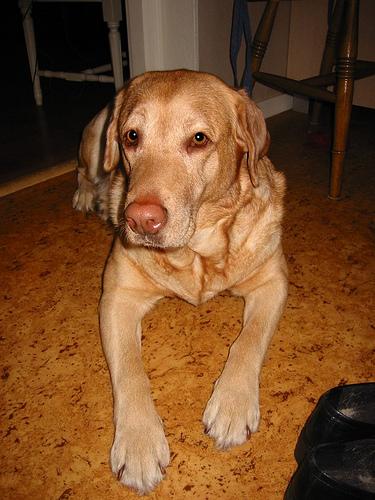



 weary fox
play groove of the manwhore
torn rivet

Ben's musical lecture on the perils of love... iTUNES!: http://itunes.apple.com/album/id1070988438?ls=1&app=itunes AMAZON!: https://amzn.com/B019SBYC1O Like ...
main arrowBOT
Queued songs:
- DJ BoBo - Greatest Hits - Megamix
Queued by: d_extrumi
Duration: 0:40:38 - Groove of the Manwhore
Queued by: d_extrumi
Duration: 0:02:22 - "BUSHES OF LOVE" -- Extended Lyric Video
Queued by: OneTrickPony
Duration: 0:04:49 - She's gone 익룡쉬즈곤 쉬즈곤
Queued by: Arrem
Duration: 0:01:58
proud obsidian
movesong 4
main arrowBOT
Successfully moved your song!
proud obsidian
skip
main arrowBOT
Arrem#4798 has skipped the song.
weary fox
queue
main arrowBOT
Queued songs:
- DJ BoBo - Greatest Hits - Megamix
Queued by: d_extrumi
Duration: 0:40:38 - Groove of the Manwhore
Queued by: d_extrumi
Duration: 0:02:22 - "BUSHES OF LOVE" -- Extended Lyric Video
Queued by: OneTrickPony
Duration: 0:04:49
proud obsidian
fewm 239461274151419906 148531513816907776