#botchannel
1 messages · Page 15 of 1
 unkempt bough
 lean flickerBOT
How to get started
The simplest way to learn German is to find topics you don’t understand yet and search for explanations of them. This list provides you with a guide for which topics to learn if you are completely new to German. Type the topic into Google (or YouTube) and start learning!
Introduction
1: Alphabet (especially ä, ü, ö and ß)
2: Basic greetings (hello, goodbye, etc.)
Part 1 - Simple Sentence
1: Noun gender & plurals
2: Nominative case (What are cases?)
3: Nominative pronouns (I, you, he, she, etc.)
4: Verbs in present tense
5: Definite/indefinite articles
6: Accusative case (for nouns)
7: Accusative pronouns
8: Word order of simple sentences
9: How to ask questions
See Part 2 on the next page.
Tips
- Always learn the gender of a noun when you learn a new noun
- Learn to use a translation dictionary (e.g. dict.cc, leo.org)
- Use
>faq resourcesto see our list of German learning resources - For listening and pronunciation practice, try watching movies or videos (incl. YouTube)
- You can listen to pronunciation for words on websites like dict.cc, forvo.com, and others
- Practice writing sentences every day (and asking people to correct them)
- Ask as many questions as possible
- Don’t be scared to make mistakes!!!! If you don’t let yourself make mistakes, you will never be able to learn German
Page 1/2
unkempt bough
faq resources
lean flickerBOT
Resources
Here's a link to our curated list of resources: https://bit.ly/gladresources. Check out #resources if you want to submit some yourself!
unkempt bough
faq anki
lean flickerBOT
Anki
What is Anki?
Anki is a free and very versatile flashcard program that is often used for learning new vocabulary. You can import spreadsheets to quickly create your own flashcards, and you can add your own images and audio for highly custom flashcard decks. You can also access and use a wide range of community created and shared flashcard decks all for free*.
Note: Anki uses a method of learning called spaced repetition. Flashcards and spaced repetition are one of many techniques used for language learning. However, we all learn differently and while these methods work for many people, they may not necessarily work for you. Give it a try, but don’t be disheartened if these methods aren’t right for you. Even if flashcards and spaced repetition work for you, don’t forget to incorporate other forms of practice. E.g. try using your new vocabulary to write your own practice sentences.
Where To Get It
It is available here on PC, Mac, Linux, iPhone, and Android. You can also find the browser AnkiWeb version here.
Manually adding basic cards is quite simple, but making custom templates is a bit more complex. Basementality has put together this handy guide for making custom card types and decks. You can also find Anki’s documentation / instruction guide here.
*The iPhone app AnkiMobile costs $24.99 USD on the iTunes store. The Android app and all other platforms are completely free. The mobile browser version of AnkiWeb is still available for free on iPhones.
See the next page for some helpful tips on creating your flashcards.
Page 1/2
unkempt bough
@coarse bison
 coarse bison
 rustic olive
faq beginner
lean flickerBOT
How to get started - Part 2
Please make sure to read Part 1 before starting Part 2!
Part 2 – Beyond a Simple Sentence
1: Conjunctions (coordinating and subordinating)
2: Subordinate clause word order
3: Dative case
4: Dative verbs
5: Verbs with two objects (e.g. geben)
6: Prepositions (accusative, dative, and two-way)
7: Spoken past tense (Perfekt)
8: Written past tense (Präteritum)
9: Genitive case
10: Relative clauses
11: Adjective declension
Tips
- Make sure to practice writing and reading simple texts
- Some of these concepts are confusing to start with, so it’s a good idea to ask for help in #questions when you’re unsure
- You should use a declension chart to help with declension to start with, because you won’t be able to memorize it straight away
- After you feel confident with creating sentences, you can start learning the adjective declension properly by using the command >faq adjective declension and reading the guide provided
Page 2/2
rustic olive
faq resources
lean flickerBOT
Resources
Here's a link to our curated list of resources: https://bit.ly/gladresources. Check out #resources if you want to submit some yourself!
 normal rover
faq perfekt
lean flickerBOT
Past Tense
German has two basic past tenses: Perfekt and Präteritum.
What’s the difference? Which one should I use?
To put it simply: Perfekt is used for spoken and casual German, and Präteritum is used for formal writing such as novels. For anything in between or if you’re unsure, it’s best to simply ask a native speaker. But most of the time, you will be using Perfekt, so it’s recommended that you learn that first!
However, even when you are using the Perfekt tense, a few verbs are often still used in Präteritum. This varies by region! Some native speakers use 100% Perfekt tense when they speak, but most people use at least a few words with Präteritum in their speech.
The main verbs commonly used in Präteritum form even when using Perfekt are:
• haben (e.g. ich hatte instead of ich habe gehabt)
• sein (e.g. ich war instead of ich bin gewesen)
• modal verbs
• wissen, denken (e.g. ich wusste, ich dachte)
The following are sometimes also used in Präteritum form but not as pervasively:
• bleiben, brauchen, finden, geben, gehen, laufen, liegen, rufen, sehen, sitzen, stehen, tun
Page 1/2
 fickle sage
faq beginner
lean flickerBOT
How to get started
The simplest way to learn German is to find topics you don’t understand yet and search for explanations of them. This list provides you with a guide for which topics to learn if you are completely new to German. Type the topic into Google (or YouTube) and start learning!
Introduction
1: Alphabet (especially ä, ü, ö and ß)
2: Basic greetings (hello, goodbye, etc.)
Part 1 - Simple Sentence
1: Noun gender & plurals
2: Nominative case (What are cases?)
3: Nominative pronouns (I, you, he, she, etc.)
4: Verbs in present tense
5: Definite/indefinite articles
6: Accusative case (for nouns)
7: Accusative pronouns
8: Word order of simple sentences
9: How to ask questions
See Part 2 on the next page.
Tips
- Always learn the gender of a noun when you learn a new noun
- Learn to use a translation dictionary (e.g. dict.cc, leo.org)
- Use
>faq resourcesto see our list of German learning resources - For listening and pronunciation practice, try watching movies or videos (incl. YouTube)
- You can listen to pronunciation for words on websites like dict.cc, forvo.com, and others
- Practice writing sentences every day (and asking people to correct them)
- Ask as many questions as possible
- Don’t be scared to make mistakes!!!! If you don’t let yourself make mistakes, you will never be able to learn German
Page 1/2
 vagrant turret
faq beginner
lean flickerBOT
How to get started
The simplest way to learn German is to find topics you don’t understand yet and search for explanations of them. This list provides you with a guide for which topics to learn if you are completely new to German. Type the topic into Google (or YouTube) and start learning!
Introduction
1: Alphabet (especially ä, ü, ö and ß)
2: Basic greetings (hello, goodbye, etc.)
Part 1 - Simple Sentence
1: Noun gender & plurals
2: Nominative case (What are cases?)
3: Nominative pronouns (I, you, he, she, etc.)
4: Verbs in present tense
5: Definite/indefinite articles
6: Accusative case (for nouns)
7: Accusative pronouns
8: Word order of simple sentences
9: How to ask questions
See Part 2 on the next page.
Tips
- Always learn the gender of a noun when you learn a new noun
- Learn to use a translation dictionary (e.g. dict.cc, leo.org)
- Use
>faq resourcesto see our list of German learning resources - For listening and pronunciation practice, try watching movies or videos (incl. YouTube)
- You can listen to pronunciation for words on websites like dict.cc, forvo.com, and others
- Practice writing sentences every day (and asking people to correct them)
- Ask as many questions as possible
- Don’t be scared to make mistakes!!!! If you don’t let yourself make mistakes, you will never be able to learn German
Page 1/2
 tender trellis
play it must have been love - Roxette
lean flickerBOT
Roxette - It Must Have Been Love (Official Music Video) [00:04:16] added to the queue.
tender trellis
play i wanna know what love is - Foreigner
lean flickerBOT
Foreigner - I Want To Know What Love Is (Official Music Video) [00:05:01] added to the queue.
tender trellis
play L'Impératrice - La Lune
lean flickerBOT
L'Impératrice — LA LUNE (audio) [00:03:14] added to the queue.
 harsh olive
help
lean flickerBOT
Meme 1/2 commands
:small_blue_diamond: **bonk** <member>
Bonks the given member.
:small_blue_diamond: **cat**
Display a random cat image.
:small_blue_diamond: **dog**
Display a random dog image.
:small_blue_diamond: **inspireme**
Displays an AI-generated inspirational quote.
:small_blue_diamond: **patcat** <member>
Pats the given member's cat.
Page 8/20 (20 entries)
 formal halo
faq beginners
lean flickerBOT
How to get started - Part 2
Please make sure to read Part 1 before starting Part 2!
Part 2 – Beyond a Simple Sentence
1: Conjunctions (coordinating and subordinating)
2: Subordinate clause word order
3: Dative case
4: Dative verbs
5: Verbs with two objects (e.g. geben)
6: Prepositions (accusative, dative, and two-way)
7: Spoken past tense (Perfekt)
8: Written past tense (Präteritum)
9: Genitive case
10: Relative clauses
11: Adjective declension
Tips
- Make sure to practice writing and reading simple texts
- Some of these concepts are confusing to start with, so it’s a good idea to ask for help in #questions when you’re unsure
- You should use a declension chart to help with declension to start with, because you won’t be able to memorize it straight away
- After you feel confident with creating sentences, you can start learning the adjective declension properly by using the command >faq adjective declension and reading the guide provided
Page 2/2
:x: The required argument name is missing.
FAQ not found. Try >explain all.
tender trellis
faq beginner
 plain ore
faq beginners
lean flickerBOT
How to get started - Part 2
Please make sure to read Part 1 before starting Part 2!
Part 2 – Beyond a Simple Sentence
1: Conjunctions (coordinating and subordinating)
2: Subordinate clause word order
3: Dative case
4: Dative verbs
5: Verbs with two objects (e.g. geben)
6: Prepositions (accusative, dative, and two-way)
7: Spoken past tense (Perfekt)
8: Written past tense (Präteritum)
9: Genitive case
10: Relative clauses
11: Adjective declension
Tips
- Make sure to practice writing and reading simple texts
- Some of these concepts are confusing to start with, so it’s a good idea to ask for help in #questions when you’re unsure
- You should use a declension chart to help with declension to start with, because you won’t be able to memorize it straight away
- After you feel confident with creating sentences, you can start learning the adjective declension properly by using the command >faq adjective declension and reading the guide provided
Page 2/2
unkempt bough
faq perfekt
lean flickerBOT
Past Tense
German has two basic past tenses: Perfekt and Präteritum.
What’s the difference? Which one should I use?
To put it simply: Perfekt is used for spoken and casual German, and Präteritum is used for formal writing such as novels. For anything in between or if you’re unsure, it’s best to simply ask a native speaker. But most of the time, you will be using Perfekt, so it’s recommended that you learn that first!
However, even when you are using the Perfekt tense, a few verbs are often still used in Präteritum. This varies by region! Some native speakers use 100% Perfekt tense when they speak, but most people use at least a few words with Präteritum in their speech.
The main verbs commonly used in Präteritum form even when using Perfekt are:
• haben (e.g. ich hatte instead of ich habe gehabt)
• sein (e.g. ich war instead of ich bin gewesen)
• modal verbs
• wissen, denken (e.g. ich wusste, ich dachte)
The following are sometimes also used in Präteritum form but not as pervasively:
• bleiben, brauchen, finden, geben, gehen, laufen, liegen, rufen, sehen, sitzen, stehen, tun
Page 1/2
unkempt bough
faq
lean flickerBOT
:x: The required argument name is missing.
unkempt bough
faq all
lean flickerBOT
See a listed FAQ with >faq [name]
:small_blue_diamond: Absentive
Aliases: Absentiv
:small_blue_diamond: Accusative
Aliases: Akkusativ
:small_blue_diamond: Adjective Declension
Aliases: Adjektivdeklination, Adjective endings
:small_blue_diamond: Anki
Aliases: Flashcards
:small_blue_diamond: Beide vs. Beides
Aliases: Beides vs. Beide, Beides, Beide
:small_blue_diamond: Best way to learn German
Aliases: Fastest way to learn, Learn fast, Most efficient way to learn, Learn efficiently, Best way to learn, Learn German fast
:small_blue_diamond: Can anyone teach me German
Aliases: Private tutors, Teach me, Teach me German, Teach German, Private lessons, Private teachers
:small_blue_diamond: Cases
Aliases: Grammatical case, Case
:small_blue_diamond: CEFR levels
Aliases: CEFR, CERF
:small_blue_diamond: Conjugation
Aliases: Konjugation, Praesens, Verbs, Verb conjugation, Present tense, Präsens
:small_blue_diamond: Contractions
Aliases: Verschmelzung, Schmelzwort, Vom
:small_blue_diamond: DACH
:small_blue_diamond: Dative
Aliases: Dativ
:small_blue_diamond: Doch
:small_blue_diamond: Duolingo
Aliases: Duo
Page 1/5 (62 entries)
unkempt bough
faq present tense
lean flickerBOT
Conjugation
Präsens (Present Tense)
When you use a verb in a sentence (or clause), you have to conjugate it (change the form) to match the subject of the sentence (or clause).
For example, in English, we write I eat but he/she eats. The verb has a different ending! The concept is the same in German, except German has more endings.
The first thing you need to know in order to conjugate verbs is: which ending fits which subject? Here is a simple verb “trinken” (to drink) as an example:
trinken
ich trinke
du trinkst
er/sie/es trinkt
wir trinken
ihr trinkt
sie trinken / Sie trinken
(Note: the conjugation for sie (they) and Sie (formal you) is always the same)
Vowel/Stem Changes
There are a few variations and exceptions, but the most important is vowel changes (also called stem changes). Some verbs get a vowel change, which only affects the du and er/sie/es forms of the verb. (However, modal verbs and wissen have their own special pattern, which also has a vowel change in the ich form.)
Example: ich schlafe, du schläfst
Other Changes
There are various other differences but I can’t describe them all here, so please read these websites or use Google to find more information: https://www.vistawide.com/german/grammar/german_verbs_present_tense.htm
https://www.thoughtco.com/german-present-tense-verbs-4074838
http://www.dartmouth.edu/~deutsch/Grammatik/PresentTense/Present.html
unkempt bough
Danke Herr Leibniz
 quaint rain
sessions
lean flickerBOT
There are no sessions currently scheduled.
 jolly panther
verb würden
lean flickerBOT
jolly panther
verb werden
lean flickerBOT
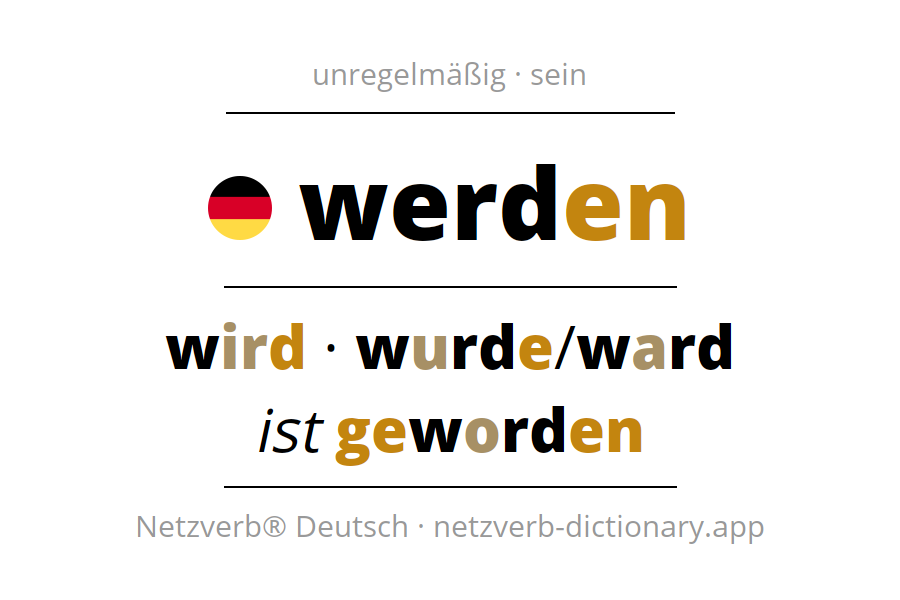
Netzverb Wörterbuch
Konjugation Verb werden: im Präsens, Präteritum, Konjunktiv, Perfekt, ... viele Beispiele, Grammatik, Regeln erklärt, Übersetzung, Übungen, Bedeutung und kostenlose Downloads.
 crystal tiger
faq beginner
lean flickerBOT
How to get started
The simplest way to learn German is to find topics you don’t understand yet and search for explanations of them. This list provides you with a guide for which topics to learn if you are completely new to German. Type the topic into Google (or YouTube) and start learning!
Introduction
1: Alphabet (especially ä, ü, ö and ß)
2: Basic greetings (hello, goodbye, etc.)
Part 1 - Simple Sentence
1: Noun gender & plurals
2: Nominative case (What are cases?)
3: Nominative pronouns (I, you, he, she, etc.)
4: Verbs in present tense
5: Definite/indefinite articles
6: Accusative case (for nouns)
7: Accusative pronouns
8: Word order of simple sentences
9: How to ask questions
See Part 2 on the next page.
Tips
- Always learn the gender of a noun when you learn a new noun
- Learn to use a translation dictionary (e.g. dict.cc, leo.org)
- Use
>faq resourcesto see our list of German learning resources - For listening and pronunciation practice, try watching movies or videos (incl. YouTube)
- You can listen to pronunciation for words on websites like dict.cc, forvo.com, and others
- Practice writing sentences every day (and asking people to correct them)
- Ask as many questions as possible
- Don’t be scared to make mistakes!!!! If you don’t let yourself make mistakes, you will never be able to learn German
Page 1/2
crystal tiger
faq resource
lean flickerBOT
Resources
Here's a link to our curated list of resources: https://bit.ly/gladresources. Check out #resources if you want to submit some yourself!
lean flickerBOT
:x: Infinitives only contain letters!
crystal tiger
faq
lean flickerBOT
:x: The required argument name is missing.
crystal tiger
faq all
lean flickerBOT
See a listed FAQ with >faq [name]
:small_blue_diamond: Study Vocabulary
Aliases: Unterrichten, Studieren, Lernen, Beibringen
:small_blue_diamond: Swiss German
Aliases: gsw
:small_blue_diamond: Switzerland
Aliases: Schweiz, CH
:small_blue_diamond: Two-way prepositions
Aliases: Two way prepositions, Dual prepositions
:small_blue_diamond: Umlauts
Aliases: Umlaute, Umlaut, ä, ö, ü
:small_blue_diamond: Usage of Freund and Freundin
Aliases: Freundin, Friend, Friend vs. Boyfriend, Friend vs. Girlfriend, Boyfriend, Girlfriend, Freund
:small_blue_diamond: Usage of Konjunktiv II
Aliases: KII 1
:small_blue_diamond: Usage of zu
Aliases: Um zu
:small_blue_diamond: Verbs with prepositions
Aliases: Verb prepositions, Pferd's verb list
:small_blue_diamond: Vorgangspassiv
:small_blue_diamond: Weak Nouns
Aliases: N-Declension, N-Deklination, Weak noun
:small_blue_diamond: Weil, denn, da
:small_blue_diamond: What does GLaD mean
Aliases: GLaD
:small_blue_diamond: What does this word mean
Aliases: Duden, Meaning, Dict, Dictionary, Definition
:small_blue_diamond: Wissen and kennen
Aliases: Kennen vs. wissen, Wissen vs. kennen
Page 4/5 (62 entries)
crystal tiger
faq week nouns
lean flickerBOT
Weak Nouns
Weak nouns are called this way because they receive the same endings as adjectives inflected with weak endings. They take an additional ending -n in every case except nominative singular. This is also known as N-Declension and affects almost exclusively masculine nouns.
Nominativ: der Junge, die Junge__n__
Genitiv: des Junge__n__, der Junge__n__
Dativ: dem Junge__n__, den Junge__n__
Akkusativ: den Junge__n__, die Junge__n__
Some nouns end with a suffix -en to make the pronunciation easier:
der Mensch, den Mensch__en__
‼ Das Herz is the only non-masculine (neuter) noun with N-Declension❣
So how do we recognize these nouns? We can divide them into 3 big groups:
- nouns of Greek and Latin origin,
- nouns ending with
-e(most of these refer to people or animals), - other random German nouns (Mensch, Herr, Student, Nachbar, Prinz etc.)
Another way to divide the groups could be:
- nouns denoting male beings in general (der Bauer, der Knabe, der Herr, der Junge, der Kunde etc.)
- nouns indicating nationality or religious affiliation (der Chinese, der Russe, der Türke, der Jude, der Katholik, der Protestant)
- nouns designating male beings and ending in the foreign suffixes (
-ant,-arch,-ast,-ege,-ent,-ist,-oge,-om,-oph,-ot: der Kollege, der Student, der Psychologe, der Polizist, der Philosoph)
‼ der Käse and words ending with -ee aren’t weak nouns.
Genitive of Weak Nouns
You might have noticed from the examples above that weak nouns don’t have the additional -s in genitive like other masculine nouns.
Some exceptions are das Herz and nouns of group 3 that don’t refer to people nor animals (Name, Wille, Glaube, Buchstabe etc.), which take both the -n and -s endings.
Example: der Name, des Name__ns__.
 clear gale
faq cefr
lean flickerBOT
CEFR levels
If you see something like A1, B2 or C1, these represent the proficiency of a speaker in a language they're not native in, and are called CEFR levels. They are valid for any language, not only German!
Roughly speaking, A levels are beginners and C levels are experts. Remember that CEFR level are self-assessed and indicative!
You can see more specific names and descriptions on the Wikipedia page:
https://en.wikipedia.org/wiki/Common_European_Framework_of_Reference_for_Languages
🗨 How do I know what level I am?
If the table on Wikipedia is too generic for you, you can try using this one here:
https://rm.coe.int/168045bb52
Just check each column one at a time: if you can do all it describes, move to the next column. Your level is the highest where you can do the most things.
Alternatively, you can use this questionnaire to estimate your level more accurately:
https://www.laits.utexas.edu/fi/sites/laits.utexas.edu.fi/files/Self Assessment Checklist European.pdf
 sinful wagon
help
lean flickerBOT
Bans commands
:small_blue_diamond: **isbanned** <user>
Checks whether the given user is banned.
Page 20/20 (20 entries)
 latent geode
faq cefr
lean flickerBOT
CEFR levels
If you see something like A1, B2 or C1, these represent the proficiency of a speaker in a language they're not native in, and are called CEFR levels. They are valid for any language, not only German!
Roughly speaking, A levels are beginners and C levels are experts. Remember that CEFR level are self-assessed and indicative!
You can see more specific names and descriptions on the Wikipedia page:
https://en.wikipedia.org/wiki/Common_European_Framework_of_Reference_for_Languages
🗨 How do I know what level I am?
If the table on Wikipedia is too generic for you, you can try using this one here:
https://rm.coe.int/168045bb52
Just check each column one at a time: if you can do all it describes, move to the next column. Your level is the highest where you can do the most things.
Alternatively, you can use this questionnaire to estimate your level more accurately:
https://www.laits.utexas.edu/fi/sites/laits.utexas.edu.fi/files/Self Assessment Checklist European.pdf
unkempt bough
explain freund
lean flickerBOT
What does Freund/Freundin mean?
Does it mean *"friend"*, *"boyfriend/girlfriend"* or both?
It can mean both, although the meaning depends on the context in which the word is used. There are, however, a few commonly used ways to make its meaning clearer:
***ein* Freund/*eine* Freundin (von mir)**
Means a friend (of mine) = one of many.
In most cases it's clear that it refers to a friend and not a partner. Adding von mir emphasizes that even more.
Examples:
Eine Freundin von mir ist Ingenieurin. - A friend of mine is an engineer.
Ich habe einen Freund getroffen. - I met a friend.
but: Sie hat einen Freund. - She has a boyfriend.
_ _
_ _
***mein* Freund/*meine* Freundin**
Means my boyfriend/girlfriend.
In most cases this would refer to a partner.
Examples:
Meine Freundin ist endlich zu mir gezogen. Wir sind seit einem Jahr zusammen.
My girlfriend finally moved in with me. We've been together for a year.
but: Meine gute Freundin Arrem macht ausgezeichnete Pizza.
My good friend Arrem makes excellent pizza.
_ _
_ _
**fester Freund/feste Freundin**
In this case it's clear that it's referring to a partner and not a friend.
Examples:
Ich habe einen festen Freund, aber leider nur in meinen Träumen.
I have a boyfriend, but sadly only in my dreams.
 hollow juniper
faq
lean flickerBOT
:x: The required argument name is missing.
 eager mantle
faq nicht
lean flickerBOT
Negation
Negations or negative sentences in German are formed with either kein or nicht.
You use kein if you want to negate nouns with an indefinite article or without an article, for example:
(1) Ich besitze kein Auto. (I don't own a car.)
(2) Ich habe keinen Hunger. (I'm not hungry.)
‼ kein is always placed right before the noun you want to negate. Also note that you need to decline kein.
If you want to negate anything else you use nicht, for example:
(3) Ich schlafe nicht. (I don't sleep.) [verb]
(4) Ich habe gestern nicht geduscht. (I didn't shower yesterday.) [verb]
(5) Ich gehe nicht gerne schwimmen. (I don't like to go swimming.) [adverb]
(6) Es ist nicht heiß. (It's not hot.) [adjective]
(7) Ich habe nicht dich, sondern ihn gerufen. (I didn't call you, but him.) [pronoun]
(8) Das ist nicht Peters Fahrrad, sondern meins. (This isn't Peters bicycle, but mine.) [proper noun]
(9) Der Zug kommt nicht um 18 Uhr an. (The train doesn't arrive at 6pm.) [preposition]
(10) Ich habe nicht das Essen bezahlt, sondern die Getränke. (I didn't pay for the food, but for the drinks.) [definite article]
‼ Note that nicht almost always comes before the word it negates, unless you want to negate a verb.
If that's the case, it depends on the tense of the verb and on whether there is an auxiliary verb or not. nicht is placed right after the verb if the verb is in present or past tense. For compound tenses or when the sentence has an auxiliary it is placed before the verb.
🌟 Confused by the terminology? See >ex Grammar terms
 neon granite
faq gender
lean flickerBOT
Grammatical gender
German nouns are sorted in three different genders: masculine, neuter and feminine. These have nothing to do with sex or social gender.
The first thing genders will influence are articles like der, das, die. Each word has its own and you better get it right: some words that look identical can have different meanings depending on the gender they're used with. For example:
die Band = the (musical) band,
der Band = the (book) volume,
das Band = the tape.
Some words, mainly trademarks and loanwords, have multiple acceptable genders while having no change in meaning:
der Jogurt = das Jogurt
das Virus = der Virus
These may vary by region or colloquiality.
💢 But WHY, German, WHY ⁉
Gender is actually quite useful! Since sentence structure is less rigid than in English, grammatical case helps you tell the various elements apart (with some practice), and that works through genders: each gender has its own forms, which makes everything a little less ambiguous. Besides, as you've seen with Band above, it allows us to make up words with different meanings that look the same but are not ambiguous, and if that's not magic, I don't know what is. ✨
🙀 But how am I supposed to tell them apart? 🙀
Check out >explain gender patterns. 😉
neon granite
There.
neon granite
lean flicker
I did it for you, @dusky moss !
 dusky moss
neon granite
I did it for you, <@993604137478537250> !
dusky moss
neon granite
I did it for you, <@993604137478537250> !
Thank you! <3
neon granite
The faq system here is very helpful, you can see all the faqs we have if you try >faq all to see all the faqs available.
neon granite
dusky moss
Thank you! <3
You're welcome, don't hesitate to ask. <3
dusky moss
neon granite
The faq system here is very helpful, you can see all the faqs we have if you try...
Ill definitely be utilizing this bot alot! :D
lean flickerBOT
CEFR levels
If you see something like A1, B2 or C1, these represent the proficiency of a speaker in a language they're not native in, and are called CEFR levels. They are valid for any language, not only German!
Roughly speaking, A levels are beginners and C levels are experts. Remember that CEFR level are self-assessed and indicative!
You can see more specific names and descriptions on the Wikipedia page:
https://en.wikipedia.org/wiki/Common_European_Framework_of_Reference_for_Languages
🗨 How do I know what level I am?
If the table on Wikipedia is too generic for you, you can try using this one here:
https://rm.coe.int/168045bb52
Just check each column one at a time: if you can do all it describes, move to the next column. Your level is the highest where you can do the most things.
Alternatively, you can use this questionnaire to estimate your level more accurately:
https://www.laits.utexas.edu/fi/sites/laits.utexas.edu.fi/files/Self Assessment Checklist European.pdf
 tidal crown
lean flickerBOT
tidal crown
lean flickerBOT
CEFR levels
Welcome to the interactive paginator!
This interactively allows you to see pages of text by navigating with reactions. They are as follows:
:track_previous: Goes to the first page.
:arrow_backward: Goes to the previous page.
:arrow_forward: Goes to the next page.
:track_next: Goes to the last page.
:stop_button: Stops the interactive pagination session.
:information_source: Shows this message.
React with ℹ again to hide this message.
tender trellis
explain all
lean flickerBOT
See a listed FAQ with >faq [name]
:small_blue_diamond: Absentive
Aliases: Absentiv
:small_blue_diamond: Accusative
Aliases: Akkusativ
:small_blue_diamond: Adjective Declension
Aliases: Adjektivdeklination, Adjective endings
:small_blue_diamond: Anki
Aliases: Flashcards
:small_blue_diamond: Beide vs. Beides
Aliases: Beides vs. Beide, Beides, Beide
:small_blue_diamond: Best way to learn German
Aliases: Fastest way to learn, Learn fast, Most efficient way to learn, Learn efficiently, Best way to learn, Learn German fast
:small_blue_diamond: Can anyone teach me German
Aliases: Private tutors, Teach me, Teach me German, Teach German, Private lessons, Private teachers
:small_blue_diamond: Cases
Aliases: Grammatical case, Case
:small_blue_diamond: CEFR levels
Aliases: CEFR, CERF
:small_blue_diamond: Conjugation
Aliases: Konjugation, Praesens, Verbs, Verb conjugation, Present tense, Präsens
:small_blue_diamond: Contractions
Aliases: Verschmelzung, Schmelzwort, Vom
:small_blue_diamond: DACH
:small_blue_diamond: Dative
Aliases: Dativ
:small_blue_diamond: Doch
:small_blue_diamond: Duolingo
Aliases: Duo
Page 1/5 (62 entries)
tender trellis
faq Accusative
lean flickerBOT
When do I use the accusative case?
The accusative case is mainly used:
- to mark the direct object of many transitive verbs
Ich lese einen Roman.
Er hat die schöne Frau ermordet.
Sie besitzen kein Auto.
- after some prepositions
Danke für deine Hilfe!
Ohne dich kann ich nicht leben.
Sie hatten keine Einwände gegen den Plan.
The following prepositions are always followed by the accusative case:
bis, durch, für, gegen, ohne, um
- to indicate movement in a particular direction in two-way prepositions
Er steigt auf den Gipfel.
Sie hängt das Bild an die Wand.
Ich gehe gleich ins Bett. (ins = in das)
- by adverbials of time and measurement
A definite length or point in time:
Ich habe den ganzen Tag geschlafen.
Sie kommt nächste Woche zurück.
A measurement:
Das Kind ist vier Jahre alt.
Das Tier ist einen Meter groß.
Expressing distance with verbs of motion:
Ich ging die Treppe hinauf.
Ich lief den ganzen Weg zu Fuß.
- in common greetings and wishes
Guten Morgen/Tag/Abend!
Gute Besserung!
Herzlichen Glückwunsch!
Here there is an implicit verb such as 'wünschen', where the greeting/wish is the direct object.
Page 2/2
lean flickerBOT
Dative
The dative case (der Dativ) is one of the four cases of the German language. A case affects how a noun or noun phrase is inflected, and indicates the role of the noun or noun phrase in a clause.
How do I decline in the dative case?
Nouns, pronouns, and adjective declension is completely different compared to the nominative case. See >explain adjective declension for a full explanation.
Page 1/2
tender trellis
explain adjective declension
lean flickerBOT
Adjective Declension
A Brief Guide to Memorizing German Noun and Adjective Declension by Basementality
https://docs.google.com/document/d/1jWl5-kkqF3FQLDzrz8XLBJj7hvPFQK7MT5SYEDGK65E/edit
:x: The required argument groupName is missing.
 karmic peak
faq translations
lean flickerBOT
FAQ not found. I found the following similar entry: Translation (1)
Select one of the values in the brackets to directly open the suggested FAQ.
karmic peak
faq translation
lean flickerBOT
How to ask a question
If you want something corrected, you can put it in a Google Doc and share a link with permission level »can suggest« in #writing .
Don't ask us to translate something for you outright: that takes professional time and effort and we're not here for that. You can try your luck with deepl.com.
For single words, use dict.cc or another dictionary, it'll be quicker.
If you want to know if/how a word can be used, provide some context to help us understand the situation.
Don't ask us to do your homework or exams for you! Show us your best attempt at something and try to pinpoint what exactly you don't understand.
tender trellis
faq beginner
lean flickerBOT
How to get started
The simplest way to learn German is to find topics you don’t understand yet and search for explanations of them. This list provides you with a guide for which topics to learn if you are completely new to German. Type the topic into Google (or YouTube) and start learning!
Introduction
1: Alphabet (especially ä, ü, ö and ß)
2: Basic greetings (hello, goodbye, etc.)
Part 1 - Simple Sentence
1: Noun gender & plurals
2: Nominative case (What are cases?)
3: Nominative pronouns (I, you, he, she, etc.)
4: Verbs in present tense
5: Definite/indefinite articles
6: Accusative case (for nouns)
7: Accusative pronouns
8: Word order of simple sentences
9: How to ask questions
See Part 2 on the next page.
Tips
- Always learn the gender of a noun when you learn a new noun
- Learn to use a translation dictionary (e.g. dict.cc, leo.org)
- Use
>faq resourcesto see our list of German learning resources - For listening and pronunciation practice, try watching movies or videos (incl. YouTube)
- You can listen to pronunciation for words on websites like dict.cc, forvo.com, and others
- Practice writing sentences every day (and asking people to correct them)
- Ask as many questions as possible
- Don’t be scared to make mistakes!!!! If you don’t let yourself make mistakes, you will never be able to learn German
Page 1/2
unkempt bough
faq nicos weg
lean flickerBOT
Nicos
Nicos Weg is a free online program aimed at helping people learn German. It includes video, audio, text, grammar explanations, notes, vocabulary, and exercises. It also includes very useful cultural and bureaucratic information, such as how to open a bank account, while teaching you the relevant grammar and vocabulary.
It’s fairly popular and well-recommended, but keep in mind that you can’t learn a language with only one resource, even if it’s a good one!
You can find the courses here: https://learngerman.dw.com/en/overview/
You can also see various other courses for learners by dw.com here: https://www.dw.com/en/learn-german/s-2469/
unkempt bough
faq wurde
lean flickerBOT
FAQ not found. Try >explain all.
unkempt bough
faq werden
lean flickerBOT
FAQ not found. Try >explain all.
unkempt bough
ex all
lean flickerBOT
See a listed FAQ with >faq [name]
:small_blue_diamond: Study Vocabulary
Aliases: Unterrichten, Studieren, Lernen, Beibringen
:small_blue_diamond: Swiss German
Aliases: gsw
:small_blue_diamond: Switzerland
Aliases: Schweiz, CH
:small_blue_diamond: Two-way prepositions
Aliases: Two way prepositions, Dual prepositions
:small_blue_diamond: Umlauts
Aliases: Umlaute, Umlaut, ä, ö, ü
:small_blue_diamond: Usage of Freund and Freundin
Aliases: Freundin, Friend, Friend vs. Boyfriend, Friend vs. Girlfriend, Boyfriend, Girlfriend, Freund
:small_blue_diamond: Usage of Konjunktiv II
Aliases: KII 1
:small_blue_diamond: Usage of zu
Aliases: Um zu
:small_blue_diamond: Verbs with prepositions
Aliases: Verb prepositions, Pferd's verb list
:small_blue_diamond: Vorgangspassiv
:small_blue_diamond: Weak Nouns
Aliases: N-Declension, N-Deklination, Weak noun
:small_blue_diamond: Weil, denn, da
:small_blue_diamond: What does GLaD mean
Aliases: GLaD
:small_blue_diamond: What does this word mean
Aliases: Duden, Meaning, Dict, Dictionary, Definition
:small_blue_diamond: Wissen and kennen
Aliases: Kennen vs. wissen, Wissen vs. kennen
Page 4/5 (62 entries)
unkempt bough
verb werden
lean flickerBOT
Netzverb Wörterbuch
Konjugation Verb werden: im Präsens, Präteritum, Konjunktiv, Perfekt, ... viele Beispiele, Grammatik, Regeln erklärt, Übersetzung, Übungen, Bedeutung und kostenlose Downloads.
unkempt bough
verb wurden
 feral tartan
lean flickerBOT
feral tartan
lean flickerBOT
How to get started
The simplest way to learn German is to find topics you don’t understand yet and search for explanations of them. This list provides you with a guide for which topics to learn if you are completely new to German. Type the topic into Google (or YouTube) and start learning!
Introduction
1: Alphabet (especially ä, ü, ö and ß)
2: Basic greetings (hello, goodbye, etc.)
Part 1 - Simple Sentence
1: Noun gender & plurals
2: Nominative case (What are cases?)
3: Nominative pronouns (I, you, he, she, etc.)
4: Verbs in present tense
5: Definite/indefinite articles
6: Accusative case (for nouns)
7: Accusative pronouns
8: Word order of simple sentences
9: How to ask questions
See Part 2 on the next page.
Tips
- Always learn the gender of a noun when you learn a new noun
- Learn to use a translation dictionary (e.g. dict.cc, leo.org)
- Use
>faq resourcesto see our list of German learning resources - For listening and pronunciation practice, try watching movies or videos (incl. YouTube)
- You can listen to pronunciation for words on websites like dict.cc, forvo.com, and others
- Practice writing sentences every day (and asking people to correct them)
- Ask as many questions as possible
- Don’t be scared to make mistakes!!!! If you don’t let yourself make mistakes, you will never be able to learn German
Page 1/2
tender trellis
faq beginner
lean flickerBOT
How to get started
The simplest way to learn German is to find topics you don’t understand yet and search for explanations of them. This list provides you with a guide for which topics to learn if you are completely new to German. Type the topic into Google (or YouTube) and start learning!
Introduction
1: Alphabet (especially ä, ü, ö and ß)
2: Basic greetings (hello, goodbye, etc.)
Part 1 - Simple Sentence
1: Noun gender & plurals
2: Nominative case (What are cases?)
3: Nominative pronouns (I, you, he, she, etc.)
4: Verbs in present tense
5: Definite/indefinite articles
6: Accusative case (for nouns)
7: Accusative pronouns
8: Word order of simple sentences
9: How to ask questions
See Part 2 on the next page.
Tips
- Always learn the gender of a noun when you learn a new noun
- Learn to use a translation dictionary (e.g. dict.cc, leo.org)
- Use
>faq resourcesto see our list of German learning resources - For listening and pronunciation practice, try watching movies or videos (incl. YouTube)
- You can listen to pronunciation for words on websites like dict.cc, forvo.com, and others
- Practice writing sentences every day (and asking people to correct them)
- Ask as many questions as possible
- Don’t be scared to make mistakes!!!! If you don’t let yourself make mistakes, you will never be able to learn German
Page 1/2
 snow sentinel
faq beginner
lean flickerBOT
How to get started
The simplest way to learn German is to find topics you don’t understand yet and search for explanations of them. This list provides you with a guide for which topics to learn if you are completely new to German. Type the topic into Google (or YouTube) and start learning!
Introduction
1: Alphabet (especially ä, ü, ö and ß)
2: Basic greetings (hello, goodbye, etc.)
Part 1 - Simple Sentence
1: Noun gender & plurals
2: Nominative case (What are cases?)
3: Nominative pronouns (I, you, he, she, etc.)
4: Verbs in present tense
5: Definite/indefinite articles
6: Accusative case (for nouns)
7: Accusative pronouns
8: Word order of simple sentences
9: How to ask questions
See Part 2 on the next page.
Tips
- Always learn the gender of a noun when you learn a new noun
- Learn to use a translation dictionary (e.g. dict.cc, leo.org)
- Use
>faq resourcesto see our list of German learning resources - For listening and pronunciation practice, try watching movies or videos (incl. YouTube)
- You can listen to pronunciation for words on websites like dict.cc, forvo.com, and others
- Practice writing sentences every day (and asking people to correct them)
- Ask as many questions as possible
- Don’t be scared to make mistakes!!!! If you don’t let yourself make mistakes, you will never be able to learn German
Page 1/2
 molten grotto
faq beginner
lean flickerBOT
How to get started
The simplest way to learn German is to find topics you don’t understand yet and search for explanations of them. This list provides you with a guide for which topics to learn if you are completely new to German. Type the topic into Google (or YouTube) and start learning!
Introduction
1: Alphabet (especially ä, ü, ö and ß)
2: Basic greetings (hello, goodbye, etc.)
Part 1 - Simple Sentence
1: Noun gender & plurals
2: Nominative case (What are cases?)
3: Nominative pronouns (I, you, he, she, etc.)
4: Verbs in present tense
5: Definite/indefinite articles
6: Accusative case (for nouns)
7: Accusative pronouns
8: Word order of simple sentences
9: How to ask questions
See Part 2 on the next page.
Tips
- Always learn the gender of a noun when you learn a new noun
- Learn to use a translation dictionary (e.g. dict.cc, leo.org)
- Use
>faq resourcesto see our list of German learning resources - For listening and pronunciation practice, try watching movies or videos (incl. YouTube)
- You can listen to pronunciation for words on websites like dict.cc, forvo.com, and others
- Practice writing sentences every day (and asking people to correct them)
- Ask as many questions as possible
- Don’t be scared to make mistakes!!!! If you don’t let yourself make mistakes, you will never be able to learn German
Page 1/2
 tired dust
faq beginner
lean flickerBOT
How to get started - Part 2
Please make sure to read Part 1 before starting Part 2!
Part 2 – Beyond a Simple Sentence
1: Conjunctions (coordinating and subordinating)
2: Subordinate clause word order
3: Dative case
4: Dative verbs
5: Verbs with two objects (e.g. geben)
6: Prepositions (accusative, dative, and two-way)
7: Spoken past tense (Perfekt)
8: Written past tense (Präteritum)
9: Genitive case
10: Relative clauses
11: Adjective declension
Tips
- Make sure to practice writing and reading simple texts
- Some of these concepts are confusing to start with, so it’s a good idea to ask for help in #questions when you’re unsure
- You should use a declension chart to help with declension to start with, because you won’t be able to memorize it straight away
- After you feel confident with creating sentences, you can start learning the adjective declension properly by using the command >faq adjective declension and reading the guide provided
Page 2/2
 rich scroll
faq noch
rich scroll
faq noch
lean flickerBOT
FAQ not found. Try >explain all.
rich scroll
faq explain all
lean flickerBOT
FAQ not found. Try >explain all.
rich scroll
explain all
lean flickerBOT
See a listed FAQ with >faq [name]
:small_blue_diamond: Absentive
Aliases: Absentiv
:small_blue_diamond: Accusative
Aliases: Akkusativ
:small_blue_diamond: Adjective Declension
Aliases: Adjektivdeklination, Adjective endings
:small_blue_diamond: Anki
Aliases: Flashcards
:small_blue_diamond: Beide vs. Beides
Aliases: Beides vs. Beide, Beides, Beide
:small_blue_diamond: Best way to learn German
Aliases: Fastest way to learn, Learn fast, Most efficient way to learn, Learn efficiently, Best way to learn, Learn German fast
:small_blue_diamond: Can anyone teach me German
Aliases: Private tutors, Teach me, Teach me German, Teach German, Private lessons, Private teachers
:small_blue_diamond: Cases
Aliases: Grammatical case, Case
:small_blue_diamond: CEFR levels
Aliases: CEFR, CERF
:small_blue_diamond: Conjugation
Aliases: Konjugation, Praesens, Verbs, Verb conjugation, Present tense, Präsens
:small_blue_diamond: Contractions
Aliases: Verschmelzung, Schmelzwort, Vom
:small_blue_diamond: DACH
:small_blue_diamond: Dative
Aliases: Dativ
:small_blue_diamond: Doch
:small_blue_diamond: Duolingo
Aliases: Duo
Page 1/5 (62 entries)
rich scroll
faq dative
lean flickerBOT
Dative
The dative case (der Dativ) is one of the four cases of the German language. A case affects how a noun or noun phrase is inflected, and indicates the role of the noun or noun phrase in a clause.
How do I decline in the dative case?
Nouns, pronouns, and adjective declension is completely different compared to the nominative case. See >explain adjective declension for a full explanation.
Page 1/2
tender trellis
faq beginner
lean flickerBOT
How to get started
The simplest way to learn German is to find topics you don’t understand yet and search for explanations of them. This list provides you with a guide for which topics to learn if you are completely new to German. Type the topic into Google (or YouTube) and start learning!
Introduction
1: Alphabet (especially ä, ü, ö and ß)
2: Basic greetings (hello, goodbye, etc.)
Part 1 - Simple Sentence
1: Noun gender & plurals
2: Nominative case (What are cases?)
3: Nominative pronouns (I, you, he, she, etc.)
4: Verbs in present tense
5: Definite/indefinite articles
6: Accusative case (for nouns)
7: Accusative pronouns
8: Word order of simple sentences
9: How to ask questions
See Part 2 on the next page.
Tips
- Always learn the gender of a noun when you learn a new noun
- Learn to use a translation dictionary (e.g. dict.cc, leo.org)
- Use
>faq resourcesto see our list of German learning resources - For listening and pronunciation practice, try watching movies or videos (incl. YouTube)
- You can listen to pronunciation for words on websites like dict.cc, forvo.com, and others
- Practice writing sentences every day (and asking people to correct them)
- Ask as many questions as possible
- Don’t be scared to make mistakes!!!! If you don’t let yourself make mistakes, you will never be able to learn German
Page 1/2
tender trellis
faq resources
lean flickerBOT
Resources
Here's a link to our curated list of resources: https://bit.ly/gladresources. Check out #resources if you want to submit some yourself!
tender trellis
faq vc
lean flickerBOT
How to join Voice Chat
Please read the [Roles section](#getting-started message) in #getting-started for info on how to join VC and more!
 spring knoll
explain gender patterns
lean flickerBOT
Gender patterns
Unfortunately, many German words don't have immediately clear clues that reveal it, but thankfully, many common words do follow patterns that reveal their gender.
In general, you are advised to learn the article together with the word (and its plural!).
Plural forms always use die and follow plural declension rules, which are the same for all genders (yay 🎉).
For compound words, remember that only the last word matters.
Type >explain grammatical gender for an explanation on grammatical gender.
Here's a list of patterns to recognise word gender.
Note that exceptions may apply.
Page 1/4
spring knoll
explain grammatical gender
lean flickerBOT
Grammatical gender
German nouns are sorted in three different genders: masculine, neuter and feminine. These have nothing to do with sex or social gender.
The first thing genders will influence are articles like der, das, die. Each word has its own and you better get it right: some words that look identical can have different meanings depending on the gender they're used with. For example:
die Band = the (musical) band,
der Band = the (book) volume,
das Band = the tape.
Some words, mainly trademarks and loanwords, have multiple acceptable genders while having no change in meaning:
der Jogurt = das Jogurt
das Virus = der Virus
These may vary by region or colloquiality.
💢 But WHY, German, WHY ⁉
Gender is actually quite useful! Since sentence structure is less rigid than in English, grammatical case helps you tell the various elements apart (with some practice), and that works through genders: each gender has its own forms, which makes everything a little less ambiguous. Besides, as you've seen with Band above, it allows us to make up words with different meanings that look the same but are not ambiguous, and if that's not magic, I don't know what is. ✨
🙀 But how am I supposed to tell them apart? 🙀
Check out >explain gender patterns. 😉
spring knoll
explain gender patterns
lean flickerBOT
**Masculine words (der)**
- profession/role names (der Verkäufer, der Lehrer)
- many elements of time (der Tag, der Monat, der Winter)
- cardinal directions (der Norden, der Süden)
- words ending in:
---igder König, der Teig
---lingder Neuling, der Schwächling
---antder Praktikant, der Elefant
---ismusder Faschismus, der Sozialismus
Page 2/4
latent geode
lessons
lean flickerBOT
There are no sessions currently scheduled.
latent geode
sessions
lean flickerBOT
There are no sessions currently scheduled.
 flint sparrow
hallo
tender trellis
faq all
lean flickerBOT
See a listed FAQ with >faq [name]
:small_blue_diamond: Absentive
Aliases: Absentiv
:small_blue_diamond: Accusative
Aliases: Akkusativ
:small_blue_diamond: Adjective Declension
Aliases: Adjektivdeklination, Adjective endings
:small_blue_diamond: Anki
Aliases: Flashcards
:small_blue_diamond: Beide vs. Beides
Aliases: Beides vs. Beide, Beides, Beide
:small_blue_diamond: Best way to learn German
Aliases: Fastest way to learn, Learn fast, Most efficient way to learn, Learn efficiently, Best way to learn, Learn German fast
:small_blue_diamond: Can anyone teach me German
Aliases: Private tutors, Teach me, Teach me German, Teach German, Private lessons, Private teachers
:small_blue_diamond: Cases
Aliases: Grammatical case, Case
:small_blue_diamond: CEFR levels
Aliases: CEFR, CERF
:small_blue_diamond: Conjugation
Aliases: Konjugation, Praesens, Verbs, Verb conjugation, Present tense, Präsens
:small_blue_diamond: Contractions
Aliases: Verschmelzung, Schmelzwort, Vom
:small_blue_diamond: DACH
:small_blue_diamond: Dative
Aliases: Dativ
:small_blue_diamond: Doch
:small_blue_diamond: Duolingo
Aliases: Duo
Page 1/5 (62 entries)
tender trellis
faq Absentive
lean flickerBOT
The grammar of the absentiv
The abesentive takes the form: [subject] + [conjugated sein] + [infinitive of action verb] (e.g. Theo ist einkaufen).
The action verb is typically an intransitive verb, but can also be a transitive verb. It is additionally important to note that the absentiv should not have any local adverbs, or other syntactic indications of absence. I.e. weg and (weg)gegangen are not found in sentences that use the absentive. Additionally, the absentiv cannot be formed in combination with progressive forms such as am Einkaufen, beim Einkaufen, etc. Finally, the absentiv is typically built in the preterite (präteritum) and present tense.
E.g.
Er war arbeiten - He was away at work.
Ich bin pinkeln - I am away peeing.
More information
Unfortunately the amount of information available on the absentiv is fairly limited as it's both only typically used in spoken language, and is a fairly recent development within german language research. Thus explanations in grammar books are scarce, and the absentiv is typically not taught in Deutsch als Fremdsprache classes. However, you can read a bit about the absentiv here in Alle sind Deutschland … außer Fritz Eckenga – der ist einkaufen!, König 2009.
Page 2/2
tender trellis
faq all
lean flickerBOT
See a listed FAQ with >faq [name]
:small_blue_diamond: Absentive
Aliases: Absentiv
:small_blue_diamond: Accusative
Aliases: Akkusativ
:small_blue_diamond: Adjective Declension
Aliases: Adjektivdeklination, Adjective endings
:small_blue_diamond: Anki
Aliases: Flashcards
:small_blue_diamond: Beide vs. Beides
Aliases: Beides vs. Beide, Beides, Beide
:small_blue_diamond: Best way to learn German
Aliases: Fastest way to learn, Learn fast, Most efficient way to learn, Learn efficiently, Best way to learn, Learn German fast
:small_blue_diamond: Can anyone teach me German
Aliases: Private tutors, Teach me, Teach me German, Teach German, Private lessons, Private teachers
:small_blue_diamond: Cases
Aliases: Grammatical case, Case
:small_blue_diamond: CEFR levels
Aliases: CEFR, CERF
:small_blue_diamond: Conjugation
Aliases: Konjugation, Praesens, Verbs, Verb conjugation, Present tense, Präsens
:small_blue_diamond: Contractions
Aliases: Verschmelzung, Schmelzwort, Vom
:small_blue_diamond: DACH
:small_blue_diamond: Dative
Aliases: Dativ
:small_blue_diamond: Doch
:small_blue_diamond: Duolingo
Aliases: Duo
Page 1/5 (62 entries)
tender trellis
faq Beide vs. Beides
lean flickerBOT
Beide vs. Beides
Both Beide and Beides mean both, then how to differentiate them?
🔸 Use beide if the items are of the same kind.
🔸 If the items are different, use beides.
- Ich will beide Äpfel!
- Möchten Sie Ketchup oder Mayo?
- Beides, danke.
🔸 With people you always use beide.
🔸 Article or no article?
An article is used when the people described are doing something together.
- Die beiden sind verlobt. (they are engaged to one another)
- Beide sind verlobt. (they are both engaged, each to their own significant other)
Note: other forms of beid* like beidem or beiden depend on grammatical case, see >explain case.
 last arrow
faq cefr
lean flickerBOT
CEFR levels
If you see something like A1, B2 or C1, these represent the proficiency of a speaker in a language they're not native in, and are called CEFR levels. They are valid for any language, not only German!
Roughly speaking, A levels are beginners and C levels are experts. Remember that CEFR level are self-assessed and indicative!
You can see more specific names and descriptions on the Wikipedia page:
https://en.wikipedia.org/wiki/Common_European_Framework_of_Reference_for_Languages
🗨 How do I know what level I am?
If the table on Wikipedia is too generic for you, you can try using this one here:
https://rm.coe.int/168045bb52
Just check each column one at a time: if you can do all it describes, move to the next column. Your level is the highest where you can do the most things.
Alternatively, you can use this questionnaire to estimate your level more accurately:
https://www.laits.utexas.edu/fi/sites/laits.utexas.edu.fi/files/Self Assessment Checklist European.pdf
 foggy maple
purpose Heritage Speaker
lean flickerBOT
Information about Heritage Speaker
Heritage Speaker
Indicates members who are Heritage Speakers of German.
This means that they were exposed to the language from a very young age (e.g. by their parents) but usually don't consider it their native language and never learned German in a formal school setting, for example.
You cannot assign yourself this role. You must request it by clicking the appropriate button here.
jolly panther
verb erzahlen
lean flickerBOT
jolly panther
verb spielen
lean flickerBOT

Netzverb Wörterbuch
Konjugation Verb spielen: im Präsens, Präteritum, Konjunktiv, Perfekt, ... viele Beispiele, Grammatik, Regeln erklärt, Übersetzung, Übungen, Bedeutung und kostenlose Downloads.
jolly panther
verb sich fühlen
lean flickerBOT
:x: Infinitives only contain letters!
 modest carbon
faq beginner
lean flickerBOT
How to get started
The simplest way to learn German is to find topics you don’t understand yet and search for explanations of them. This list provides you with a guide for which topics to learn if you are completely new to German. Type the topic into Google (or YouTube) and start learning!
Introduction
1: Alphabet (especially ä, ü, ö and ß)
2: Basic greetings (hello, goodbye, etc.)
Part 1 - Simple Sentence
1: Noun gender & plurals
2: Nominative case (What are cases?)
3: Nominative pronouns (I, you, he, she, etc.)
4: Verbs in present tense
5: Definite/indefinite articles
6: Accusative case (for nouns)
7: Accusative pronouns
8: Word order of simple sentences
9: How to ask questions
See Part 2 on the next page.
Tips
- Always learn the gender of a noun when you learn a new noun
- Learn to use a translation dictionary (e.g. dict.cc, leo.org)
- Use
>faq resourcesto see our list of German learning resources - For listening and pronunciation practice, try watching movies or videos (incl. YouTube)
- You can listen to pronunciation for words on websites like dict.cc, forvo.com, and others
- Practice writing sentences every day (and asking people to correct them)
- Ask as many questions as possible
- Don’t be scared to make mistakes!!!! If you don’t let yourself make mistakes, you will never be able to learn German
Page 1/2
modest carbon
faq resources
lean flickerBOT
Resources
Here's a link to our curated list of resources: https://bit.ly/gladresources. Check out #resources if you want to submit some yourself!
 ember oak
faq cefr
lean flickerBOT
CEFR levels
If you see something like A1, B2 or C1, these represent the proficiency of a speaker in a language they're not native in, and are called CEFR levels. They are valid for any language, not only German!
Roughly speaking, A levels are beginners and C levels are experts. Remember that CEFR level are self-assessed and indicative!
You can see more specific names and descriptions on the Wikipedia page:
https://en.wikipedia.org/wiki/Common_European_Framework_of_Reference_for_Languages
🗨 How do I know what level I am?
If the table on Wikipedia is too generic for you, you can try using this one here:
https://rm.coe.int/168045bb52
Just check each column one at a time: if you can do all it describes, move to the next column. Your level is the highest where you can do the most things.
Alternatively, you can use this questionnaire to estimate your level more accurately:
https://www.laits.utexas.edu/fi/sites/laits.utexas.edu.fi/files/Self Assessment Checklist European.pdf
 young swan
faq beginner
lean flickerBOT
How to get started - Part 2
Please make sure to read Part 1 before starting Part 2!
Part 2 – Beyond a Simple Sentence
1: Conjunctions (coordinating and subordinating)
2: Subordinate clause word order
3: Dative case
4: Dative verbs
5: Verbs with two objects (e.g. geben)
6: Prepositions (accusative, dative, and two-way)
7: Spoken past tense (Perfekt)
8: Written past tense (Präteritum)
9: Genitive case
10: Relative clauses
11: Adjective declension
Tips
- Make sure to practice writing and reading simple texts
- Some of these concepts are confusing to start with, so it’s a good idea to ask for help in #questions when you’re unsure
- You should use a declension chart to help with declension to start with, because you won’t be able to memorize it straight away
- After you feel confident with creating sentences, you can start learning the adjective declension properly by using the command >faq adjective declension and reading the guide provided
Page 2/2
 ruby gale
test™
unkempt bough
faq beginner
lean flickerBOT
How to get started
The simplest way to learn German is to find topics you don’t understand yet and search for explanations of them. This list provides you with a guide for which topics to learn if you are completely new to German. Type the topic into Google (or YouTube) and start learning!
Introduction
1: Alphabet (especially ä, ü, ö and ß)
2: Basic greetings (hello, goodbye, etc.)
Part 1 - Simple Sentence
1: Noun gender & plurals
2: Nominative case (What are cases?)
3: Nominative pronouns (I, you, he, she, etc.)
4: Verbs in present tense
5: Definite/indefinite articles
6: Accusative case (for nouns)
7: Accusative pronouns
8: Word order of simple sentences
9: How to ask questions
See Part 2 on the next page.
Tips
- Always learn the gender of a noun when you learn a new noun
- Learn to use a translation dictionary (e.g. dict.cc, leo.org)
- Use
>faq resourcesto see our list of German learning resources - For listening and pronunciation practice, try watching movies or videos (incl. YouTube)
- You can listen to pronunciation for words on websites like dict.cc, forvo.com, and others
- Practice writing sentences every day (and asking people to correct them)
- Ask as many questions as possible
- Don’t be scared to make mistakes!!!! If you don’t let yourself make mistakes, you will never be able to learn German
Page 1/2
unkempt bough
faq resources
lean flickerBOT
Resources
Here's a link to our curated list of resources: https://bit.ly/gladresources. Check out #resources if you want to submit some yourself!
last arrow
faq du dich dir
lean flickerBOT
FAQ not found. Try >explain all.

 haughty charm
faq cefr
lean flickerBOT
CEFR levels
If you see something like A1, B2 or C1, these represent the proficiency of a speaker in a language they're not native in, and are called CEFR levels. They are valid for any language, not only German!
Roughly speaking, A levels are beginners and C levels are experts. Remember that CEFR level are self-assessed and indicative!
You can see more specific names and descriptions on the Wikipedia page:
https://en.wikipedia.org/wiki/Common_European_Framework_of_Reference_for_Languages
🗨 How do I know what level I am?
If the table on Wikipedia is too generic for you, you can try using this one here:
https://rm.coe.int/168045bb52
Just check each column one at a time: if you can do all it describes, move to the next column. Your level is the highest where you can do the most things.
Alternatively, you can use this questionnaire to estimate your level more accurately:
https://www.laits.utexas.edu/fi/sites/laits.utexas.edu.fi/files/Self Assessment Checklist European.pdf

 shut glacier
faq anki
lean flickerBOT
Flashcard Tips
When creating flashcards it is not enough to just have a single german word on one side, and a single word translation on the other side of the card. You want to provide details that match your learning style and help you better understand what the word means.
For nouns
At the very least, include the gender and the plural form. E.g. Der Mann | Die Männer or Der Mann -:er Whichever form helps you recognise the plural ending and any vowel changes. You may also want to add a note for weak masculine nouns. (See >explain N-Declension.)
For verbs
Include the infinitive, the preterite (simple past) and the past participle (perfect form). E.g. rennen | rannte | gerannt or for a separable verb anrufen | rief an | angerufen. For irregular verbs, you may want to list all present tense conjugations. You may also want to include if the verb uses haben or sein as its auxiliary.
For all words
Adding an example sentence is important for helping you understand the usage and context of a word (dwds.de and linguee.com are good sources of example sentences). You may also want to add multiple translations for words that have multiple meanings. E.g. Die Auflage can mean both a requirement, and the edition of a book. You may also want to try picture cues or audio recordings (possible sources for voice recordings include dict.cc, linguee.com, duden.de, and wiktionary.de).
Close Passages
Flashcards based on close passages can be a very effective way to learn new vocabulary. E.g. put Ich kaufe Lebensmittel im [blank] ein. on one side of the flashcard, and Ich kaufe Lebensmittel im *Markt* ein; der Markt, die Märkte - market. This places vocabulary in context to help you understand its meaning and usages, and also provides you with whole phrases that help jolt your memory when trying to remember an individual word.
Recall vs. Reproduction
Flashcards are most effective when they train your ability to reproduce knowledge. I.e. Seeing the word Baum and recognising it as tree is a lot less effective than being able to look at a picture of a tree and know it means der Baum. Taking that a step further you want to be able to also know that that while die Struktur also means 'tree', it doesn't actually mean the plant. When creating flashcards, try to design them with these concepts in mind. E.g. Using minimal or no flashcards that show you a german word and ask you to recall what it means in english, and instead focus on the other way around: giving you an english word and asking you to recall what it means in german.
Page 2/2
 quick glen
faq beginner
lean flickerBOT
How to get started
The simplest way to learn German is to find topics you don’t understand yet and search for explanations of them. This list provides you with a guide for which topics to learn if you are completely new to German. Type the topic into Google (or YouTube) and start learning!
Introduction
1: Alphabet (especially ä, ü, ö and ß)
2: Basic greetings (hello, goodbye, etc.)
Part 1 - Simple Sentence
1: Noun gender & plurals
2: Nominative case (What are cases?)
3: Nominative pronouns (I, you, he, she, etc.)
4: Verbs in present tense
5: Definite/indefinite articles
6: Accusative case (for nouns)
7: Accusative pronouns
8: Word order of simple sentences
9: How to ask questions
See Part 2 on the next page.
Tips
- Always learn the gender of a noun when you learn a new noun
- Learn to use a translation dictionary (e.g. dict.cc, leo.org)
- Use
>faq resourcesto see our list of German learning resources - For listening and pronunciation practice, try watching movies or videos (incl. YouTube)
- You can listen to pronunciation for words on websites like dict.cc, forvo.com, and others
- Practice writing sentences every day (and asking people to correct them)
- Ask as many questions as possible
- Don’t be scared to make mistakes!!!! If you don’t let yourself make mistakes, you will never be able to learn German
Page 1/2
 hushed mason
lean flickerBOT
hushed mason
lean flickerBOT
When do I use the accusative case?
The accusative case is mainly used:
- to mark the direct object of many transitive verbs
Ich lese einen Roman.
Er hat die schöne Frau ermordet.
Sie besitzen kein Auto.
- after some prepositions
Danke für deine Hilfe!
Ohne dich kann ich nicht leben.
Sie hatten keine Einwände gegen den Plan.
The following prepositions are always followed by the accusative case:
bis, durch, für, gegen, ohne, um
- to indicate movement in a particular direction in two-way prepositions
Er steigt auf den Gipfel.
Sie hängt das Bild an die Wand.
Ich gehe gleich ins Bett. (ins = in das)
- by adverbials of time and measurement
A definite length or point in time:
Ich habe den ganzen Tag geschlafen.
Sie kommt nächste Woche zurück.
A measurement:
Das Kind ist vier Jahre alt.
Das Tier ist einen Meter groß.
Expressing distance with verbs of motion:
Ich ging die Treppe hinauf.
Ich lief den ganzen Weg zu Fuß.
- in common greetings and wishes
Guten Morgen/Tag/Abend!
Gute Besserung!
Herzlichen Glückwunsch!
Here there is an implicit verb such as 'wünschen', where the greeting/wish is the direct object.
Page 2/2
 surreal vessel
faq beginner
lean flickerBOT
How to get started
The simplest way to learn German is to find topics you don’t understand yet and search for explanations of them. This list provides you with a guide for which topics to learn if you are completely new to German. Type the topic into Google (or YouTube) and start learning!
Introduction
1: Alphabet (especially ä, ü, ö and ß)
2: Basic greetings (hello, goodbye, etc.)
Part 1 - Simple Sentence
1: Noun gender & plurals
2: Nominative case (What are cases?)
3: Nominative pronouns (I, you, he, she, etc.)
4: Verbs in present tense
5: Definite/indefinite articles
6: Accusative case (for nouns)
7: Accusative pronouns
8: Word order of simple sentences
9: How to ask questions
See Part 2 on the next page.
Tips
- Always learn the gender of a noun when you learn a new noun
- Learn to use a translation dictionary (e.g. dict.cc, leo.org)
- Use
>faq resourcesto see our list of German learning resources - For listening and pronunciation practice, try watching movies or videos (incl. YouTube)
- You can listen to pronunciation for words on websites like dict.cc, forvo.com, and others
- Practice writing sentences every day (and asking people to correct them)
- Ask as many questions as possible
- Don’t be scared to make mistakes!!!! If you don’t let yourself make mistakes, you will never be able to learn German
Page 1/2
surreal vessel
sessions
lean flickerBOT
There are no sessions currently scheduled.
 cold canopy
Adjektivendung
 austere dagger
faq omission of movement verbs
lean flickerBOT
Omission of movement verbs
When it's obvious that a verb of movement is meant, it is implied:
- ich muss zur Toilette
- ich will nach Deutschland
This happens when there's
- a preposition of movement, and
- a modal verb.
Without any of these two, the sentence is too generic and you can't infer what's happening.
It comes in handy since movement verbs in german are rather specific (you either go on foot, fly, or go with a vehicle, you can't just generically gosomewhere).
So if the target is a country, like nach Deutschland, this helps you get away with not mentioning whether you're going to fly there, drive or go by train, or cross the border on foot: you just say ich muss nach Deutschland, I have [to go] to Germany.
austere dagger
faq Absentiv
lean flickerBOT
Absentiv
What on earth is absentiv?
Theo ist einkaufen
Absentiv (or absentive in english) is a grammatical aspect (like how konjunktiv ii is also an aspect) in German. It is used quite commonly in spoken / colloquial standard german, and almost never in formal / written german. As the name 'absentive' might suggest, it is used to express someone's absence in combination with an activity that is the reason for their absence. Key parts of this include the implication that the person will eventually return from their absence, and that the action they're partaking is is something that they do regularly. E.g. hobbies, occupations, etc.
The absentiv is not a progressive tense
Unlike the 'am-progress' Theo ist am einkaufen, the absentiv makes no comment on the state of progress or completion of the activity the subject is doing. It only states that they are not in the current location due to the mentioned activity: for all we know Theo might have already finished shopping and currently be on his way home, or he might only just have arrived at the store.
Page 1/2
 broken oxide
help
lean flickerBOT
Voice commands
:small_blue_diamond: **nowplaying**
Displays the currently playing song and its remaining duration.
:small_blue_diamond: **play** <prompt>
Queues a song to be played by the music bot. This command will only work if you are connected to a voice channel that has at least two members.
The given prompt can be either a YouTube link or a query that will be used to search YouTube and fetch the first result.
Please note that playing any sort of nationalistic, war-related songs, songs that violate our rules or abusing the feature in any way will get you blacklisted.
:small_blue_diamond: **queue**
Displays the songs that are in the song queue.
:small_blue_diamond: **skip**
Votes to skip the currently playing song.
For a skip vote to pass, more than a half of the members in the currently playing voice chat (rounded up) must vote for the skip.
:small_blue_diamond: **upcoming**
Displays the upcoming song and its remaining duration.
Page 5/20 (20 entries)
lean flickerBOT
Grammar terms
When learning languages, it's useful to know some grammatical terms.
Note that these are very simplified definitions aimed at giving you a general idea: do your own research if you need details.
- Adjective: a word that describes a name: the dog is old or the smart kid.
- Adverb: something that aids the verb or other part of the sentence, or words that don't fall into other categories: yes, I've done it swiftly or he's very good.
- Affix: a small word piece attached to another word to change its meaning. If it comes before the word it's a prefix: __in__credible, after it it's a suffix: time__ly__.
- Article: a word that tells you if a name is specific or generic: the apple, an apple.
- Case: the form of a word depending on its role: he and him refer to the same person, but he gives an apple to him.
- Clause: each unit that has one conjugated verb. Those before and after the comma are each a clause: Berzi said something, but I didn't understand.
- Conjugation: the form a verb takes depending on when it happens and who does it: I go, he goes, he went are all conjugations of the same verb.
- Conjunction: a word that connects two clauses together: he went there but I didn't.
- Declension: the form a word takes depending on its case: der Mann is a subject, den Mann is an object.
- Noun: the name of a thing, such as table or dog.
- Object: the one at the receiving end of the verb, or being affected by it directly: he touched me, she gave her an apple.
- Pronoun: a word that stands in for a name: he gave me a ring. I like it.
- Subject: the one that enacts the verb in first person: I saw a dog or a dog saw me.
- Tense: the form of a verb depending on when it happens: I see: present, I will see: future.
- Verb: a word describing an action: I go running every day.
unkempt bough
faq declension
lean flickerBOT
Adjective Declension
A Brief Guide to Memorizing German Noun and Adjective Declension by Basementality
https://docs.google.com/document/d/1jWl5-kkqF3FQLDzrz8XLBJj7hvPFQK7MT5SYEDGK65E/edit
unkempt bough
lean flicker
@drifting gorge
 rustic linden
lessons
lean flickerBOT
There are no sessions currently scheduled.
lean flickerBOT
There are no sessions currently scheduled.
lean flickerBOT
Help commands
:small_blue_diamond: **help** [term]
Displays help information for modules and individual commands. The optional argument term is the search term to use. If no value is provided, the bot will display a list of all available modules. Otherwise, it will attempt to find information about the given term.
Page 1/20 (20 entries)
tender trellis
beginner
lean flickerBOT
How to get started
The simplest way to learn German is to find topics you don’t understand yet and search for explanations of them. This list provides you with a guide for which topics to learn if you are completely new to German. Type the topic into Google (or YouTube) and start learning!
Introduction
1: Alphabet (especially ä, ü, ö and ß)
2: Basic greetings (hello, goodbye, etc.)
Part 1 - Simple Sentence
1: Noun gender & plurals
2: Nominative case (What are cases?)
3: Nominative pronouns (I, you, he, she, etc.)
4: Verbs in present tense
5: Definite/indefinite articles
6: Accusative case (for nouns)
7: Accusative pronouns
8: Word order of simple sentences
9: How to ask questions
See Part 2 on the next page.
Tips
- Always learn the gender of a noun when you learn a new noun
- Learn to use a translation dictionary (e.g. dict.cc, leo.org)
- Use
>faq resourcesto see our list of German learning resources - For listening and pronunciation practice, try watching movies or videos (incl. YouTube)
- You can listen to pronunciation for words on websites like dict.cc, forvo.com, and others
- Practice writing sentences every day (and asking people to correct them)
- Ask as many questions as possible
- Don’t be scared to make mistakes!!!! If you don’t let yourself make mistakes, you will never be able to learn German
Page 1/2
austere dagger
tender trellis
>beginner
There you go. :)
tender trellis
Is the sounds similar to swedish? in alphabet
austere dagger
tender trellis
Is the sounds similar to swedish? in alphabet
Not knowing any Swedish, I'm afraid I can't answer that. But you can check the pronunciation of any German word on wiktionary, which should help. ;)
tender trellis
austere dagger
Not knowing any Swedish, I'm afraid I can't answer that. But you can check the p...
ok, thanks anyway
lean flickerBOT
Nicos
Nicos Weg is a free online program aimed at helping people learn German. It includes video, audio, text, grammar explanations, notes, vocabulary, and exercises. It also includes very useful cultural and bureaucratic information, such as how to open a bank account, while teaching you the relevant grammar and vocabulary.
It’s fairly popular and well-recommended, but keep in mind that you can’t learn a language with only one resource, even if it’s a good one!
You can find the courses here: https://learngerman.dw.com/en/overview/
You can also see various other courses for learners by dw.com here: https://www.dw.com/en/learn-german/s-2469/
tender trellis
ok, thanks! i'll check it out after learning the alphabet
austere dagger
tender trellis
ok, thanks! i'll check it out after learning the alphabet
You'll do whatever you think is best, of course. But personally, I feel learning the alphabet may not be all that useful, since there are various combinations of letters which have their own pronuncation...
tender trellis
Ok, so learning expressions would be better then? and learn pronounciation while learning new words?
 wild steppe
 polar oriole
faq resources
lean flickerBOT
Resources
Here's a link to our curated list of resources: https://bit.ly/gladresources. Check out #resources if you want to submit some yourself!
 digital furnace
explain konjunktiv 1
lean flickerBOT
FAQ not found. I found the following similar entry: Usage of Konjunktiv II (1)
Select one of the values in the brackets to directly open the suggested FAQ.
digital furnace
uhh
 vital pecan
halo
 zenith mist
faq cefr
lean flickerBOT
CEFR levels
If you see something like A1, B2 or C1, these represent the proficiency of a speaker in a language they're not native in, and are called CEFR levels. They are valid for any language, not only German!
Roughly speaking, A levels are beginners and C levels are experts. Remember that CEFR level are self-assessed and indicative!
You can see more specific names and descriptions on the Wikipedia page:
https://en.wikipedia.org/wiki/Common_European_Framework_of_Reference_for_Languages
🗨 How do I know what level I am?
If the table on Wikipedia is too generic for you, you can try using this one here:
https://rm.coe.int/168045bb52
Just check each column one at a time: if you can do all it describes, move to the next column. Your level is the highest where you can do the most things.
Alternatively, you can use this questionnaire to estimate your level more accurately:
https://www.laits.utexas.edu/fi/sites/laits.utexas.edu.fi/files/Self Assessment Checklist European.pdf
 hexed coral
faq beginner
lean flickerBOT
How to get started
The simplest way to learn German is to find topics you don’t understand yet and search for explanations of them. This list provides you with a guide for which topics to learn if you are completely new to German. Type the topic into Google (or YouTube) and start learning!
Introduction
1: Alphabet (especially ä, ü, ö and ß)
2: Basic greetings (hello, goodbye, etc.)
Part 1 - Simple Sentence
1: Noun gender & plurals
2: Nominative case (What are cases?)
3: Nominative pronouns (I, you, he, she, etc.)
4: Verbs in present tense
5: Definite/indefinite articles
6: Accusative case (for nouns)
7: Accusative pronouns
8: Word order of simple sentences
9: How to ask questions
See Part 2 on the next page.
Tips
- Always learn the gender of a noun when you learn a new noun
- Learn to use a translation dictionary (e.g. dict.cc, leo.org)
- Use
>faq resourcesto see our list of German learning resources - For listening and pronunciation practice, try watching movies or videos (incl. YouTube)
- You can listen to pronunciation for words on websites like dict.cc, forvo.com, and others
- Practice writing sentences every day (and asking people to correct them)
- Ask as many questions as possible
- Don’t be scared to make mistakes!!!! If you don’t let yourself make mistakes, you will never be able to learn German
Page 1/2
 still finch
sessions
lean flickerBOT
There are no sessions currently scheduled.
still finch
lessons
lean flickerBOT
There are no sessions currently scheduled.
tender trellis
faq cefr
lean flickerBOT
CEFR levels
If you see something like A1, B2 or C1, these represent the proficiency of a speaker in a language they're not native in, and are called CEFR levels. They are valid for any language, not only German!
Roughly speaking, A levels are beginners and C levels are experts. Remember that CEFR level are self-assessed and indicative!
You can see more specific names and descriptions on the Wikipedia page:
https://en.wikipedia.org/wiki/Common_European_Framework_of_Reference_for_Languages
🗨 How do I know what level I am?
If the table on Wikipedia is too generic for you, you can try using this one here:
https://rm.coe.int/168045bb52
Just check each column one at a time: if you can do all it describes, move to the next column. Your level is the highest where you can do the most things.
Alternatively, you can use this questionnaire to estimate your level more accurately:
https://www.laits.utexas.edu/fi/sites/laits.utexas.edu.fi/files/Self Assessment Checklist European.pdf
 halcyon bronze
faq beginner
lean flickerBOT
How to get started
The simplest way to learn German is to find topics you don’t understand yet and search for explanations of them. This list provides you with a guide for which topics to learn if you are completely new to German. Type the topic into Google (or YouTube) and start learning!
Introduction
1: Alphabet (especially ä, ü, ö and ß)
2: Basic greetings (hello, goodbye, etc.)
Part 1 - Simple Sentence
1: Noun gender & plurals
2: Nominative case (What are cases?)
3: Nominative pronouns (I, you, he, she, etc.)
4: Verbs in present tense
5: Definite/indefinite articles
6: Accusative case (for nouns)
7: Accusative pronouns
8: Word order of simple sentences
9: How to ask questions
See Part 2 on the next page.
Tips
- Always learn the gender of a noun when you learn a new noun
- Learn to use a translation dictionary (e.g. dict.cc, leo.org)
- Use
>faq resourcesto see our list of German learning resources - For listening and pronunciation practice, try watching movies or videos (incl. YouTube)
- You can listen to pronunciation for words on websites like dict.cc, forvo.com, and others
- Practice writing sentences every day (and asking people to correct them)
- Ask as many questions as possible
- Don’t be scared to make mistakes!!!! If you don’t let yourself make mistakes, you will never be able to learn German
Page 1/2
 cursive wedge
faq beginner
lean flickerBOT
How to get started
The simplest way to learn German is to find topics you don’t understand yet and search for explanations of them. This list provides you with a guide for which topics to learn if you are completely new to German. Type the topic into Google (or YouTube) and start learning!
Introduction
1: Alphabet (especially ä, ü, ö and ß)
2: Basic greetings (hello, goodbye, etc.)
Part 1 - Simple Sentence
1: Noun gender & plurals
2: Nominative case (What are cases?)
3: Nominative pronouns (I, you, he, she, etc.)
4: Verbs in present tense
5: Definite/indefinite articles
6: Accusative case (for nouns)
7: Accusative pronouns
8: Word order of simple sentences
9: How to ask questions
See Part 2 on the next page.
Tips
- Always learn the gender of a noun when you learn a new noun
- Learn to use a translation dictionary (e.g. dict.cc, leo.org)
- Use
>faq resourcesto see our list of German learning resources - For listening and pronunciation practice, try watching movies or videos (incl. YouTube)
- You can listen to pronunciation for words on websites like dict.cc, forvo.com, and others
- Practice writing sentences every day (and asking people to correct them)
- Ask as many questions as possible
- Don’t be scared to make mistakes!!!! If you don’t let yourself make mistakes, you will never be able to learn German
Page 1/2
lean flickerBOT
Cases
Cases
German has four grammatical cases (der Fall or der Kasus in German): nominative, accusative, dative, and genitive. A case alters a noun, pronoun, adjective, etc., in some way to mark its grammatical function in a phrase, clause, or sentence. For example, the main function of the nominative (der Nominativ) case is to mark the subject in a sentence:
Ich liebe die deutsche Sprache!
In this sentence, the pronoun ich represents the first person subject and is in the nominative case. Every noun, pronoun, adjective, etc. has form in every case and it is very important to learn all of them. For example, the accusative form of ich is mich:
Die deutsche Sprache liebt mich!
See >explain adjective declension to get started on that. Don't get discouraged by how much there is, it takes some time master.
To see an explanation of the usages of every case, see their individual articles:
>explain nominative
>explain accusative
>explain dative
>explain genitive
 mystic ferry
explain adjective declension
lean flickerBOT
Adjective Declension
A Brief Guide to Memorizing German Noun and Adjective Declension by Basementality
https://docs.google.com/document/d/1jWl5-kkqF3FQLDzrz8XLBJj7hvPFQK7MT5SYEDGK65E/edit
mystic ferry
explain nominative
lean flickerBOT
Nominative
The nominative case (der Nominativ) is one of the four cases of the German language. A case affects how a noun or noun phrase is inflected, and indicates the role of the noun or noun phrase in a clause.
How do I decline in the nominative case?
Definite articles: der, die, das
Indefinite articles: ein, eine, ein
Personal pronouns:
ich - I
du - you
er - he
es - it
sie - she/they
wir - we
ihr - you guys
Sie - (formal) you/you guys
For a full explanation, including adjectives, see >explain adjective declension
Page 1/2
 heavy cipher
play Dehei
lean flickerBOT
:x: There must be at least two users in a voice channel before the bot can start playing songs.
lean flickerBOT
Stereo Luchs - Ziitreis [00:03:31] added to the queue.
heavy cipher
stop
lean flickerBOT
:x: This command can only be used by a moderator.
lean flickerBOT
LCone - Dehei [00:03:30] added to the queue.
lean flickerBOT
WILL NOMEH [00:02:39] added to the queue.
lean flickerBOT
LEXI - QUARTIER (prod. by Mili) [00:02:45] added to the queue.
heavy cipher
skip
halcyon bronze
faq beginner
lean flickerBOT
How to get started - Part 2
Please make sure to read Part 1 before starting Part 2!
Part 2 – Beyond a Simple Sentence
1: Conjunctions (coordinating and subordinating)
2: Subordinate clause word order
3: Dative case
4: Dative verbs
5: Verbs with two objects (e.g. geben)
6: Prepositions (accusative, dative, and two-way)
7: Spoken past tense (Perfekt)
8: Written past tense (Präteritum)
9: Genitive case
10: Relative clauses
11: Adjective declension
Tips
- Make sure to practice writing and reading simple texts
- Some of these concepts are confusing to start with, so it’s a good idea to ask for help in #questions when you’re unsure
- You should use a declension chart to help with declension to start with, because you won’t be able to memorize it straight away
- After you feel confident with creating sentences, you can start learning the adjective declension properly by using the command >faq adjective declension and reading the guide provided
Page 2/2
jolly panther
verb losschen
lean flickerBOT
jolly panther
help
lean flickerBOT
German commands
:small_blue_diamond: **lookup** <target> <phrase>
Translates the given phrase into the specified target language using dict.cc. Specify either en or de as targets.
:small_blue_diamond: **noun** <noun>
Provides a link to the declension of the given noun.
:small_blue_diamond: **verb** <infinitive>
Provides a link to the conjugation of the given infinitive.
:small_blue_diamond: **words**
A command that helps you train vocabulary using dict.cc.
Page 15/20 (20 entries)
jolly panther
noun Schüle
lean flickerBOT

Netzverb Wörterbuch
Deklination Substantiv Schule: im Plural, Genitiv, allen Kasus, ... mit Beispielen, Bedeutungen, Übersetzungen, Sprachausgabe und Downloads.
jolly panther
noun papier
lean flickerBOT
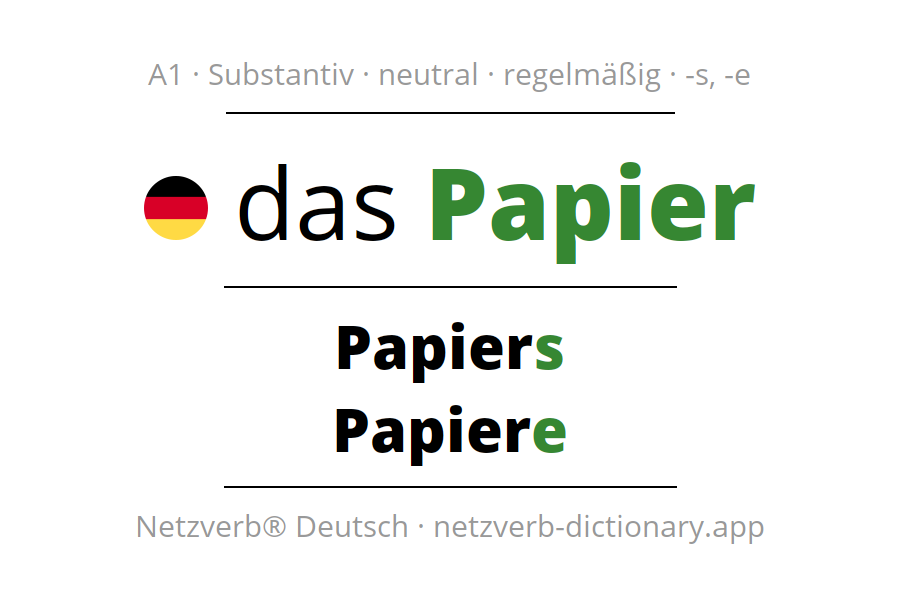
Netzverb Wörterbuch
Deklination Substantiv Papier: im Plural, Genitiv, allen Kasus, ... mit Beispielen, Bedeutungen, Übersetzungen, Sprachausgabe und Downloads.
jolly panther
help
lean flickerBOT
Stats commands
:small_blue_diamond: **📒 stats**
Shows statistics about the command usage of the server.
This includes the total amount of invoked commands, the top 5 users who invoked the most commands, the top 5 channels with the most command invocations and the rate of successful invocations.
Page 18/20 (20 entries)
jolly panther
stats
lean flickerBOT
Server Command Stats
Total Amount Of Command Invocations
104609
Top Commands
:first_place:: info (17114 uses)
:second_place:: faq (14316 uses)
:third_place:: play (6488 uses)
:medal:: tts (6463 uses)
:medal:: wörtle (5790 uses)
Top Commands Today
:first_place:: faq (10 uses)
:second_place:: info (7 uses)
:third_place:: quote (5 uses)
:medal:: play (5 uses)
:medal:: wörtle (5 uses)
Top Command Users
:first_place:: @proud obsidian (15829 uses)
:second_place:: @upbeat compass (11586 uses)
:third_place:: @desert mural (9822 uses)
:medal:: @prime fjord (7104 uses)
:medal:: @proper ibex (3187 uses)
Top Command Users Today
:first_place:: @heavy cipher (9 uses)
:second_place:: @desert mural (7 uses)
:third_place:: @jolly panther (6 uses)
:medal:: @latent talon (4 uses)
:medal:: @rare sierra (4 uses)
Successful Invocations
100%
Successful Invocations Today
100%
jolly panther
lookup de eng Schule
lean flickerBOT
Translations for eng Schule:
**:small_blue_diamond:** Doktoringenieur <Dr.-Ing.>
Doctor of Engineering <D.Eng, D.Engr., Dr.Eng., Eng.D>
**:small_blue_diamond:** Elektroneurographie <ENG>
electroneurography <ENG>
**:small_blue_diamond:** Elektronystagmographie <ENG>
electronystagmography <ENG>
**:small_blue_diamond:** Ingenieur <Ing.>
engineer <eng.>
**:small_blue_diamond:** englisch <engl.>
English <Eng., Engl.>
Page 1/2 (8 entries)
jolly panther
lookup eng de Süß
lean flickerBOT
Invalid target language. Specify en or de.
jolly panther
lookup en de süß
lean flickerBOT
Translations for de süß:
**:small_blue_diamond:** darling *[sweet]*
süß
**:small_blue_diamond:** dolce
süß
**:small_blue_diamond:** doux *[of* *champagne:* *very* *sweet]*
süß
**:small_blue_diamond:** dulcid *[literary]*
süß
**:small_blue_diamond:** sugary
süß
Page 1/2 (10 entries)
jolly panther
lookup de en mistake
lean flickerBOT
Translations for en mistake:
**:small_blue_diamond:** zweidimensionale En-face-Aufnahmen
two-dimensional en-face en face images
**:small_blue_diamond:** Europäische Norm <EN>
EN standard <EN>
**:small_blue_diamond:** Exanewton <EN>
exanewton <EN>
**:small_blue_diamond:** alle Richter zusammen
en banc
**:small_blue_diamond:** als Ganzes
en bloc
Page 1/2 (10 entries)
jolly panther
lookup en de krank
lean flickerBOT
Translations for de krank:
**:small_blue_diamond:** bad *[sick]*
krank
**:small_blue_diamond:** crook *[Aus.,* *NZ]* *[coll.]*
krank
**:small_blue_diamond:** ill
krank
**:small_blue_diamond:** invalid
krank
**:small_blue_diamond:** invalidly
krank
Page 1/2 (10 entries)
jolly panther
lookup de en cry
lean flickerBOT
Translations for en cry:
**:small_blue_diamond:** angegriffen
en prise [chess: exposed to capture]
**:small_blue_diamond:** ausweinend
having good cry
**:small_blue_diamond:** beiläufig
en passant
**:small_blue_diamond:** Bürsten- *[Haarschnitt]*
en brosse [postpos.] [haircut]
**:small_blue_diamond:** gar *[geh.* *für:* *sogar]*
e'en [chiefly poet.: even]
Page 1/2 (10 entries)
jolly panther
lookup en de unterricht
lean flickerBOT
Translations for de unterricht:
**:small_blue_diamond:** classes *[school,* *lessons]*
Unterricht
**:small_blue_diamond:** ed *[coll.]*
Unterricht
**:small_blue_diamond:** education *[lessons,* *classes* *etc.]*
Unterricht
**:small_blue_diamond:** schooling
Unterricht
**:small_blue_diamond:** tuition
Unterricht
Page 1/2 (10 entries)
lean flickerBOT
How to get started - Part 2
Please make sure to read Part 1 before starting Part 2!
Part 2 – Beyond a Simple Sentence
1: Conjunctions (coordinating and subordinating)
2: Subordinate clause word order
3: Dative case
4: Dative verbs
5: Verbs with two objects (e.g. geben)
6: Prepositions (accusative, dative, and two-way)
7: Spoken past tense (Perfekt)
8: Written past tense (Präteritum)
9: Genitive case
10: Relative clauses
11: Adjective declension
Tips
- Make sure to practice writing and reading simple texts
- Some of these concepts are confusing to start with, so it’s a good idea to ask for help in #questions when you’re unsure
- You should use a declension chart to help with declension to start with, because you won’t be able to memorize it straight away
- After you feel confident with creating sentences, you can start learning the adjective declension properly by using the command >faq adjective declension and reading the guide provided
Page 2/2
 spice cape
faq resources
lean flickerBOT
Resources
Here's a link to our curated list of resources: https://bit.ly/gladresources. Check out #resources if you want to submit some yourself!
 sage fern
faq beginner
lean flickerBOT
How to get started - Part 2
Please make sure to read Part 1 before starting Part 2!
Part 2 – Beyond a Simple Sentence
1: Conjunctions (coordinating and subordinating)
2: Subordinate clause word order
3: Dative case
4: Dative verbs
5: Verbs with two objects (e.g. geben)
6: Prepositions (accusative, dative, and two-way)
7: Spoken past tense (Perfekt)
8: Written past tense (Präteritum)
9: Genitive case
10: Relative clauses
11: Adjective declension
Tips
- Make sure to practice writing and reading simple texts
- Some of these concepts are confusing to start with, so it’s a good idea to ask for help in #questions when you’re unsure
- You should use a declension chart to help with declension to start with, because you won’t be able to memorize it straight away
- After you feel confident with creating sentences, you can start learning the adjective declension properly by using the command >faq adjective declension and reading the guide provided
Page 2/2
unkempt bough
faq best way to learn
lean flickerBOT
Best way to learn German
There isn’t only one “best” way to learn German, especially since different methods work better for different people. However, this FAQ will outline the main aspects of learning efficiently, which you can cater to your needs.
If you’re a beginner, type >faq beginner in #botchannel to see our beginner guide.
Cover all skills
There are many combinations of activities you can use to study and practice a language. How do you know which combinations are suitable? The key is to make sure you cover each of the main skills with at least one activity. Some activities only train one skills, while some train multiple – either is fine, as long as all the 6 skills are covered somewhere in your studies.
The skills
• Reading
• Writing
• Listening
• Speaking
• Grammar
• Vocabulary
Which resources should I use?
It doesn’t really matter which resources you use, as long as you can follow along, and the information is correct and reliable. If you have any doubts about whether a resource is correct, feel free to ask. You do not need to find just one resource and stick to it – in fact, to learn best, it’s recommended that you use a large variety of resources and switch between them when needed.
Type >faq resources in #botchannel to see our list of resources.
On the next page
• Should I study all these skills every day?
• How much time should I dedicate to studying?
Page 1/3
 cosmic flame
purpose levelA
lean flickerBOT
:x: 'levelA' is not a channel or a role.
cosmic flame
purpose LevelA
lean flickerBOT
:x: 'LevelA' is not a channel or a role.
unkempt bough
faq cefr
lean flickerBOT
CEFR levels
If you see something like A1, B2 or C1, these represent the proficiency of a speaker in a language they're not native in, and are called CEFR levels. They are valid for any language, not only German!
Roughly speaking, A levels are beginners and C levels are experts. Remember that CEFR level are self-assessed and indicative!
You can see more specific names and descriptions on the Wikipedia page:
https://en.wikipedia.org/wiki/Common_European_Framework_of_Reference_for_Languages
🗨 How do I know what level I am?
If the table on Wikipedia is too generic for you, you can try using this one here:
https://rm.coe.int/168045bb52
Just check each column one at a time: if you can do all it describes, move to the next column. Your level is the highest where you can do the most things.
Alternatively, you can use this questionnaire to estimate your level more accurately:
https://www.laits.utexas.edu/fi/sites/laits.utexas.edu.fi/files/Self Assessment Checklist European.pdf
 latent talon
faq spaced repetition
lean flickerBOT
FAQ not found. Try >explain all.
mystic ferry
faq anki
lean flickerBOT
Flashcard Tips
When creating flashcards it is not enough to just have a single german word on one side, and a single word translation on the other side of the card. You want to provide details that match your learning style and help you better understand what the word means.
For nouns
At the very least, include the gender and the plural form. E.g. Der Mann | Die Männer or Der Mann -:er Whichever form helps you recognise the plural ending and any vowel changes. You may also want to add a note for weak masculine nouns. (See >explain N-Declension.)
For verbs
Include the infinitive, the preterite (simple past) and the past participle (perfect form). E.g. rennen | rannte | gerannt or for a separable verb anrufen | rief an | angerufen. For irregular verbs, you may want to list all present tense conjugations. You may also want to include if the verb uses haben or sein as its auxiliary.
For all words
Adding an example sentence is important for helping you understand the usage and context of a word (dwds.de and linguee.com are good sources of example sentences). You may also want to add multiple translations for words that have multiple meanings. E.g. Die Auflage can mean both a requirement, and the edition of a book. You may also want to try picture cues or audio recordings (possible sources for voice recordings include dict.cc, linguee.com, duden.de, and wiktionary.de).
Close Passages
Flashcards based on close passages can be a very effective way to learn new vocabulary. E.g. put Ich kaufe Lebensmittel im [blank] ein. on one side of the flashcard, and Ich kaufe Lebensmittel im *Markt* ein; der Markt, die Märkte - market. This places vocabulary in context to help you understand its meaning and usages, and also provides you with whole phrases that help jolt your memory when trying to remember an individual word.
Recall vs. Reproduction
Flashcards are most effective when they train your ability to reproduce knowledge. I.e. Seeing the word Baum and recognising it as tree is a lot less effective than being able to look at a picture of a tree and know it means der Baum. Taking that a step further you want to be able to also know that that while die Struktur also means 'tree', it doesn't actually mean the plant. When creating flashcards, try to design them with these concepts in mind. E.g. Using minimal or no flashcards that show you a german word and ask you to recall what it means in english, and instead focus on the other way around: giving you an english word and asking you to recall what it means in german.
Page 2/2
 fair flint
faq beginner
 obtuse mist
explain beide
lean flickerBOT
Beide vs. Beides
Both Beide and Beides mean both, then how to differentiate them?
🔸 Use beide if the items are of the same kind.
🔸 If the items are different, use beides.
- Ich will beide Äpfel!
- Möchten Sie Ketchup oder Mayo?
- Beides, danke.
🔸 With people you always use beide.
🔸 Article or no article?
An article is used when the people described are doing something together.
- Die beiden sind verlobt. (they are engaged to one another)
- Beide sind verlobt. (they are both engaged, each to their own significant other)
Note: other forms of beid* like beidem or beiden depend on grammatical case, see >explain case.
unkempt bough
explain präsens
lean flickerBOT
Conjugation
Präsens (Present Tense)
When you use a verb in a sentence (or clause), you have to conjugate it (change the form) to match the subject of the sentence (or clause).
For example, in English, we write I eat but he/she eats. The verb has a different ending! The concept is the same in German, except German has more endings.
The first thing you need to know in order to conjugate verbs is: which ending fits which subject? Here is a simple verb “trinken” (to drink) as an example:
trinken
ich trinke
du trinkst
er/sie/es trinkt
wir trinken
ihr trinkt
sie trinken / Sie trinken
(Note: the conjugation for sie (they) and Sie (formal you) is always the same)
Vowel/Stem Changes
There are a few variations and exceptions, but the most important is vowel changes (also called stem changes). Some verbs get a vowel change, which only affects the du and er/sie/es forms of the verb. (However, modal verbs and wissen have their own special pattern, which also has a vowel change in the ich form.)
Example: ich schlafe, du schläfst
Other Changes
There are various other differences but I can’t describe them all here, so please read these websites or use Google to find more information: https://www.vistawide.com/german/grammar/german_verbs_present_tense.htm
https://www.thoughtco.com/german-present-tense-verbs-4074838
http://www.dartmouth.edu/~deutsch/Grammatik/PresentTense/Present.html
 frank pilot
faq beginner
lean flickerBOT
How to get started
The simplest way to learn German is to find topics you don’t understand yet and search for explanations of them. This list provides you with a guide for which topics to learn if you are completely new to German. Type the topic into Google (or YouTube) and start learning!
Introduction
1: Alphabet (especially ä, ü, ö and ß)
2: Basic greetings (hello, goodbye, etc.)
Part 1 - Simple Sentence
1: Noun gender & plurals
2: Nominative case (What are cases?)
3: Nominative pronouns (I, you, he, she, etc.)
4: Verbs in present tense
5: Definite/indefinite articles
6: Accusative case (for nouns)
7: Accusative pronouns
8: Word order of simple sentences
9: How to ask questions
See Part 2 on the next page.
Tips
- Always learn the gender of a noun when you learn a new noun
- Learn to use a translation dictionary (e.g. dict.cc, leo.org)
- Use
>faq resourcesto see our list of German learning resources - For listening and pronunciation practice, try watching movies or videos (incl. YouTube)
- You can listen to pronunciation for words on websites like dict.cc, forvo.com, and others
- Practice writing sentences every day (and asking people to correct them)
- Ask as many questions as possible
- Don’t be scared to make mistakes!!!! If you don’t let yourself make mistakes, you will never be able to learn German
Page 1/2
 languid gate
faq beginner
lean flickerBOT
How to get started - Part 2
Please make sure to read Part 1 before starting Part 2!
Part 2 – Beyond a Simple Sentence
1: Conjunctions (coordinating and subordinating)
2: Subordinate clause word order
3: Dative case
4: Dative verbs
5: Verbs with two objects (e.g. geben)
6: Prepositions (accusative, dative, and two-way)
7: Spoken past tense (Perfekt)
8: Written past tense (Präteritum)
9: Genitive case
10: Relative clauses
11: Adjective declension
Tips
- Make sure to practice writing and reading simple texts
- Some of these concepts are confusing to start with, so it’s a good idea to ask for help in #questions when you’re unsure
- You should use a declension chart to help with declension to start with, because you won’t be able to memorize it straight away
- After you feel confident with creating sentences, you can start learning the adjective declension properly by using the command >faq adjective declension and reading the guide provided
Page 2/2
 undone bramble
faq cefr
lean flickerBOT
CEFR levels
If you see something like A1, B2 or C1, these represent the proficiency of a speaker in a language they're not native in, and are called CEFR levels. They are valid for any language, not only German!
Roughly speaking, A levels are beginners and C levels are experts. Remember that CEFR level are self-assessed and indicative!
You can see more specific names and descriptions on the Wikipedia page:
https://en.wikipedia.org/wiki/Common_European_Framework_of_Reference_for_Languages
🗨 How do I know what level I am?
If the table on Wikipedia is too generic for you, you can try using this one here:
https://rm.coe.int/168045bb52
Just check each column one at a time: if you can do all it describes, move to the next column. Your level is the highest where you can do the most things.
Alternatively, you can use this questionnaire to estimate your level more accurately:
https://www.laits.utexas.edu/fi/sites/laits.utexas.edu.fi/files/Self Assessment Checklist European.pdf
tender trellis
purpose helper
lean flickerBOT
Information about Helper
Helper
A helper aids moderators in ensuring that the server stays a welcoming and helpful place. They have a few extra permissions to enable this, such as the ability to mute people.
tender trellis
purpose session holder
lean flickerBOT
Information about Session Holder
Session Holder
Session Holders are those lovely people who hold sessions, such as grammar lessons or reading together, and have special permissions that enable them to do that more easily.
lean flickerBOT
Anki
What is Anki?
Anki is a free and very versatile flashcard program that is often used for learning new vocabulary. You can import spreadsheets to quickly create your own flashcards, and you can add your own images and audio for highly custom flashcard decks. You can also access and use a wide range of community created and shared flashcard decks all for free*.
Note: Anki uses a method of learning called spaced repetition. Flashcards and spaced repetition are one of many techniques used for language learning. However, we all learn differently and while these methods work for many people, they may not necessarily work for you. Give it a try, but don’t be disheartened if these methods aren’t right for you. Even if flashcards and spaced repetition work for you, don’t forget to incorporate other forms of practice. E.g. try using your new vocabulary to write your own practice sentences.
Where To Get It
It is available here on PC, Mac, Linux, iPhone, and Android. You can also find the browser AnkiWeb version here.
Manually adding basic cards is quite simple, but making custom templates is a bit more complex. Basementality has put together this handy guide for making custom card types and decks. You can also find Anki’s documentation / instruction guide here.
*The iPhone app AnkiMobile costs $24.99 USD on the iTunes store. The Android app and all other platforms are completely free. The mobile browser version of AnkiWeb is still available for free on iPhones.
See the next page for some helpful tips on creating your flashcards.
Page 1/2
unkempt bough
ex nominative pronouns
lean flickerBOT
When do I use the nominative case?
The nominative case is mainly used:
- to mark the subject of the finite verb
Ich lese einen Roman.
Der Mann hat die schöne Frau ermordet.
Sie besitzen kein Auto.
- for the predicate complement of copular verbs (a verb that links the subject to the object)
Eine Maus ist ein kleines Tier.
Wir wurden gute Freunde.
Du bleibst immer mein Freund.
- for nouns or pronouns used in isolation, such as in exclamations or when addressing people
Ein schöner Tag heute, nicht?
So geht es nicht, du Idiot.
Ach meine Güte!
Page 2/2
unkempt bough
ex akkusative
lean flickerBOT
When do I use the accusative case?
The accusative case is mainly used:
- to mark the direct object of many transitive verbs
Ich lese einen Roman.
Er hat die schöne Frau ermordet.
Sie besitzen kein Auto.
- after some prepositions
Danke für deine Hilfe!
Ohne dich kann ich nicht leben.
Sie hatten keine Einwände gegen den Plan.
The following prepositions are always followed by the accusative case:
bis, durch, für, gegen, ohne, um
- to indicate movement in a particular direction in two-way prepositions
Er steigt auf den Gipfel.
Sie hängt das Bild an die Wand.
Ich gehe gleich ins Bett. (ins = in das)
- by adverbials of time and measurement
A definite length or point in time:
Ich habe den ganzen Tag geschlafen.
Sie kommt nächste Woche zurück.
A measurement:
Das Kind ist vier Jahre alt.
Das Tier ist einen Meter groß.
Expressing distance with verbs of motion:
Ich ging die Treppe hinauf.
Ich lief den ganzen Weg zu Fuß.
- in common greetings and wishes
Guten Morgen/Tag/Abend!
Gute Besserung!
Herzlichen Glückwunsch!
Here there is an implicit verb such as 'wünschen', where the greeting/wish is the direct object.
Page 2/2
unkempt bough
ex modal
lean flickerBOT
FAQ not found. Try >explain all.
unkempt bough
ex modal verbs
lean flickerBOT
Conjugation
Präsens (Present Tense)
When you use a verb in a sentence (or clause), you have to conjugate it (change the form) to match the subject of the sentence (or clause).
For example, in English, we write I eat but he/she eats. The verb has a different ending! The concept is the same in German, except German has more endings.
The first thing you need to know in order to conjugate verbs is: which ending fits which subject? Here is a simple verb “trinken” (to drink) as an example:
trinken
ich trinke
du trinkst
er/sie/es trinkt
wir trinken
ihr trinkt
sie trinken / Sie trinken
(Note: the conjugation for sie (they) and Sie (formal you) is always the same)
Vowel/Stem Changes
There are a few variations and exceptions, but the most important is vowel changes (also called stem changes). Some verbs get a vowel change, which only affects the du and er/sie/es forms of the verb. (However, modal verbs and wissen have their own special pattern, which also has a vowel change in the ich form.)
Example: ich schlafe, du schläfst
Other Changes
There are various other differences but I can’t describe them all here, so please read these websites or use Google to find more information: https://www.vistawide.com/german/grammar/german_verbs_present_tense.htm
https://www.thoughtco.com/german-present-tense-verbs-4074838
http://www.dartmouth.edu/~deutsch/Grammatik/PresentTense/Present.html
 sudden otter
faq Anki
lean flickerBOT
Flashcard Tips
When creating flashcards it is not enough to just have a single german word on one side, and a single word translation on the other side of the card. You want to provide details that match your learning style and help you better understand what the word means.
For nouns
At the very least, include the gender and the plural form. E.g. Der Mann | Die Männer or Der Mann -:er Whichever form helps you recognise the plural ending and any vowel changes. You may also want to add a note for weak masculine nouns. (See >explain N-Declension.)
For verbs
Include the infinitive, the preterite (simple past) and the past participle (perfect form). E.g. rennen | rannte | gerannt or for a separable verb anrufen | rief an | angerufen. For irregular verbs, you may want to list all present tense conjugations. You may also want to include if the verb uses haben or sein as its auxiliary.
For all words
Adding an example sentence is important for helping you understand the usage and context of a word (dwds.de and linguee.com are good sources of example sentences). You may also want to add multiple translations for words that have multiple meanings. E.g. Die Auflage can mean both a requirement, and the edition of a book. You may also want to try picture cues or audio recordings (possible sources for voice recordings include dict.cc, linguee.com, duden.de, and wiktionary.de).
Close Passages
Flashcards based on close passages can be a very effective way to learn new vocabulary. E.g. put Ich kaufe Lebensmittel im [blank] ein. on one side of the flashcard, and Ich kaufe Lebensmittel im *Markt* ein; der Markt, die Märkte - market. This places vocabulary in context to help you understand its meaning and usages, and also provides you with whole phrases that help jolt your memory when trying to remember an individual word.
Recall vs. Reproduction
Flashcards are most effective when they train your ability to reproduce knowledge. I.e. Seeing the word Baum and recognising it as tree is a lot less effective than being able to look at a picture of a tree and know it means der Baum. Taking that a step further you want to be able to also know that that while die Struktur also means 'tree', it doesn't actually mean the plant. When creating flashcards, try to design them with these concepts in mind. E.g. Using minimal or no flashcards that show you a german word and ask you to recall what it means in english, and instead focus on the other way around: giving you an english word and asking you to recall what it means in german.
Page 2/2
unkempt bough
ex dativ
lean flickerBOT
When do I use the dative case?
The dative case has a great number of usages, many of which are idiomatic, but is mainly used:
- to mark the indirect object of many transitive verbs (the indirect objectis that which receives the result of an action)
Ich habe dir ein Bier gekauft.
Sie gibt dem Mann das Buch.
Er zeigte ihm seinen Führerschein.
- to mark the object of some transitive verbs:
Dir fehlen die richtigen Materialien.
Es fällt mir bestimmt gleich wieder ein.
Das gefällt ihr gar nicht.
- after some prepositions:
Ich komme aus den USA.
Komm mit mir.
Ich lerne seit vielen Jahren Deutsch.
The following prepositions are always followed by the dative case:
aus, außer, bei, gegenüber, mit, nach, seit, von, zu
- after two-way prepositions when they do not indicate movement:
Das Bild hängt jetzt an der Wand.
Er joggt im Wald. (he is jogging in the woods)
Sie steht vor mir.
- to show possession, mainly of clothing or body parts:
Ich habe mir in die Finger geschnitten.
Er hat ihr die Nase gebrochen.
Die Mütze fiel mir vom Kopf.
- with many adjectives:
Ich war mir nicht sicher.
Ist dir kalt? (See >ex impersonal verbs for why there is no subject here.)
Er ist seinem Bruder sehr ähnlich.
Page 2/2
unkempt bough
ex adjective declension
lean flickerBOT
Adjective Declension
A Brief Guide to Memorizing German Noun and Adjective Declension by Basementality
https://docs.google.com/document/d/1jWl5-kkqF3FQLDzrz8XLBJj7hvPFQK7MT5SYEDGK65E/edit
unkempt bough
ex modal verbs
lean flickerBOT
Conjugation
Präsens (Present Tense)
When you use a verb in a sentence (or clause), you have to conjugate it (change the form) to match the subject of the sentence (or clause).
For example, in English, we write I eat but he/she eats. The verb has a different ending! The concept is the same in German, except German has more endings.
The first thing you need to know in order to conjugate verbs is: which ending fits which subject? Here is a simple verb “trinken” (to drink) as an example:
trinken
ich trinke
du trinkst
er/sie/es trinkt
wir trinken
ihr trinkt
sie trinken / Sie trinken
(Note: the conjugation for sie (they) and Sie (formal you) is always the same)
Vowel/Stem Changes
There are a few variations and exceptions, but the most important is vowel changes (also called stem changes). Some verbs get a vowel change, which only affects the du and er/sie/es forms of the verb. (However, modal verbs and wissen have their own special pattern, which also has a vowel change in the ich form.)
Example: ich schlafe, du schläfst
Other Changes
There are various other differences but I can’t describe them all here, so please read these websites or use Google to find more information: https://www.vistawide.com/german/grammar/german_verbs_present_tense.htm
https://www.thoughtco.com/german-present-tense-verbs-4074838
http://www.dartmouth.edu/~deutsch/Grammatik/PresentTense/Present.html
unkempt bough
ex subordinating conjunctions
lean flickerBOT
FAQ not found. Try >explain all.
unkempt bough
ex all
lean flickerBOT
See a listed FAQ with >faq [name]
:small_blue_diamond: Word Order for Nouns & Pronouns
:small_blue_diamond: Word Order for Verbs
Aliases: Word order verbs, Word order of verbs
Page 5/5 (62 entries)
 left oar
faq cefr
lean flickerBOT
CEFR levels
If you see something like A1, B2 or C1, these represent the proficiency of a speaker in a language they're not native in, and are called CEFR levels. They are valid for any language, not only German!
Roughly speaking, A levels are beginners and C levels are experts. Remember that CEFR level are self-assessed and indicative!
You can see more specific names and descriptions on the Wikipedia page:
https://en.wikipedia.org/wiki/Common_European_Framework_of_Reference_for_Languages
🗨 How do I know what level I am?
If the table on Wikipedia is too generic for you, you can try using this one here:
https://rm.coe.int/168045bb52
Just check each column one at a time: if you can do all it describes, move to the next column. Your level is the highest where you can do the most things.
Alternatively, you can use this questionnaire to estimate your level more accurately:
https://www.laits.utexas.edu/fi/sites/laits.utexas.edu.fi/files/Self Assessment Checklist European.pdf
shut glacier
explain all
lean flickerBOT
See a listed FAQ with >faq [name]
:small_blue_diamond: IPA
Aliases: Pronunciation, Sound transcription, International Phonetic Alphabet
:small_blue_diamond: Lessons
Aliases: Sessions, Activities
:small_blue_diamond: Negation
Aliases: Nicht, Kein
:small_blue_diamond: Nicos
Aliases: Nicos Weg
:small_blue_diamond: Nominative
Aliases: Nominativ
:small_blue_diamond: Omission of movement verbs
:small_blue_diamond: Passive
Aliases: Passiv
:small_blue_diamond: Past Tense
Aliases: perfekt, präteritum, praeteritum, present perfect, simple past
:small_blue_diamond: Prepositions of Place Part 1
Aliases: Nach-In-Auf-Zu
:small_blue_diamond: Resources
Aliases: Resource list
:small_blue_diamond: Roles
:small_blue_diamond: Seeing verbs
Aliases: Sehen, Schauen
:small_blue_diamond: So and also
:small_blue_diamond: Stative Passive
Aliases: Zustandspassiv, Statal passive
:small_blue_diamond: Structure of Konjunktiv II
Aliases: KII 2
Page 3/5 (62 entries)
shut glacier
explain all
lean flickerBOT
See a listed FAQ with >faq [name]
:small_blue_diamond: Study Vocabulary
Aliases: Unterrichten, Studieren, Lernen, Beibringen
:small_blue_diamond: Swiss German
Aliases: gsw
:small_blue_diamond: Switzerland
Aliases: Schweiz, CH
:small_blue_diamond: Two-way prepositions
Aliases: Two way prepositions, Dual prepositions
:small_blue_diamond: Umlauts
Aliases: Umlaute, Umlaut, ä, ö, ü
:small_blue_diamond: Usage of Freund and Freundin
Aliases: Freundin, Friend, Friend vs. Boyfriend, Friend vs. Girlfriend, Boyfriend, Girlfriend, Freund
:small_blue_diamond: Usage of Konjunktiv II
Aliases: KII 1
:small_blue_diamond: Usage of zu
Aliases: Um zu
:small_blue_diamond: Verbs with prepositions
Aliases: Verb prepositions, Pferd's verb list
:small_blue_diamond: Vorgangspassiv
:small_blue_diamond: Weak Nouns
Aliases: N-Declension, N-Deklination, Weak noun
:small_blue_diamond: Weil, denn, da
:small_blue_diamond: What does GLaD mean
Aliases: GLaD
:small_blue_diamond: What does this word mean
Aliases: Duden, Meaning, Dict, Dictionary, Definition
:small_blue_diamond: Wissen and kennen
Aliases: Kennen vs. wissen, Wissen vs. kennen
Page 4/5 (62 entries)
shut glacier
faq verbs with prepositions
lean flickerBOT
Verbs with prepositions
Linked is a table of verbs with prepositional objects, and nouns and adjectives that are paired with certain prepositions. Examples sentences are given for (almost) every word.
https://docs.google.com/spreadsheets/d/14sOz9dpsht9aw7_z2hVhjCj-5tMc0MxshWbnerdcRPs/edit#gid=0
This table is curated by @ruby gale. Feel free to ping him directly if you have words or examples of your own or have noticed a mistake.
shut glacier
faq prepositions of place
lean flickerBOT
FAQ not found. I found the following similar entries: Prepositions of Place Part 1, Dual prepositions, Two-way prepositions, Verb prepositions, Two way prepositions, Verbs with prepositions.
shut glacier
faq prepositions of place part 1
lean flickerBOT
Prepositions of Place Part 1
Generally you use the preposition nach when talking about going to countries, cities or directions, for example:
(1) Ich fahre nach Berlin. (I’m going to Berlin.)
(2) Ich gehe nach Westen. (I’m going west.)
(3) Ich fahre nach Deutschland. (I'm going to Germany.)
‼ Note that nach does not work with countries or regions that take an article. In this case you need to replace it with in, for example: Ich fahre in die Schweiz. (I’m going to Switzerland.)
In addition to that you will need to use auf for specific islands, for example: Ich fliege auf die Balearen. (I fly to the Balearic Islands.)
Here you can find a map with countries that take an article: http://i.imgur.com/QRFA2WI.png
🌟 nach is also idiomatically used in nach Hause gehen (to go home)
The preposition zu is used when talking about going to people, or places with a proper name, for example:
(4) Ich gehe zu ihm. (I go to him.)
(5) Ich gehe zum [zu dem] Arzt. (I go to the doctor.)
(6) Ich gehe zu Aldi. (I go to Aldi.)
You use in if you will end up inside a place or location, for example:
(7) Ich gehe in die Kirche. (I go to church.)
(8) Ich gehe ins [in das] Kino. (I go to the cinema.)
You use auf if you will end up on something, or for going to formal events, for example:
(9) Ich klettere auf den Berg. (I climb up the mountain.)
(10) Ich gehe auf die Toilette. (I go to the toilet.)
(11) Ich gehe auf eine Party. (I go to a party.)
🌟 When in doubt, use zu, since you can often replace in and auf with zu, for example:
(12) Ich gehe zur Kirche. (I go to the church.) [but not necessarily inside]
(13) Ich gehe zu einer Party. (I go to a party.)
‼ However, note that you cannot replace zu with in if it would be absurd to speak of going inside:
(14) Ich fahre in die Kirche. (I drive into the church.)
shut glacier
faq usage of zu
lean flickerBOT
Usage of zu
Usage of ZU
Zu is a word that has a lot of uses.
As a preposition it means “to/towards”. (see >ex Dative and >ex Prepositions of Place Part 1)
But it can also be used to indicate an infinitive/gerund in a sentence, for example:
(1) Es ist schwierig, Deutsch zu lernen. = “Learning German is hard.” or ”It’s hard to learn German.”
As you can see, the zu is placed before the infinitive verb that has no prefix or a non-separable prefix. For verbs with a separable prefix, the zu goes between the prefix and the verb with no space in between:
(2) Ich habe heute bloß vor, Essen einzukaufen. = I only plan to buy food today.
You can also see it in the um...zu structure, where it means ”in order to”.
The um goes to the beginning of the phrase and zu works the same way as explained above.
(3) Wir sind zum Supermarkt gegangen, um etwas Brot zu kaufen. = We went to the shop (in order) to buy some bread.
(4) Ich lerne Deutsch, um mit Deutschen reden zu können. = I am learning German (in order) to be able to speak to Germans.
‼you can use um...zu only if the people doing both actions are the same. So in the examples above:
• in (3) we go and we buy bread
• in (4) I learn and I speak
❌ *ich gebe ihm ein Geschenk, um er glücklich zu sein - This and other weird stuffs are WRONG!
🌟 Bonus: When you want to say in order to, but the subjects are different, you use the subordinate conjunction damit.
unkempt bough
explain zu
lean flickerBOT
Usage of zu
Usage of ZU
Zu is a word that has a lot of uses.
As a preposition it means “to/towards”. (see >ex Dative and >ex Prepositions of Place Part 1)
But it can also be used to indicate an infinitive/gerund in a sentence, for example:
(1) Es ist schwierig, Deutsch zu lernen. = “Learning German is hard.” or ”It’s hard to learn German.”
As you can see, the zu is placed before the infinitive verb that has no prefix or a non-separable prefix. For verbs with a separable prefix, the zu goes between the prefix and the verb with no space in between:
(2) Ich habe heute bloß vor, Essen einzukaufen. = I only plan to buy food today.
You can also see it in the um...zu structure, where it means ”in order to”.
The um goes to the beginning of the phrase and zu works the same way as explained above.
(3) Wir sind zum Supermarkt gegangen, um etwas Brot zu kaufen. = We went to the shop (in order) to buy some bread.
(4) Ich lerne Deutsch, um mit Deutschen reden zu können. = I am learning German (in order) to be able to speak to Germans.
‼you can use um...zu only if the people doing both actions are the same. So in the examples above:
• in (3) we go and we buy bread
• in (4) I learn and I speak
❌ *ich gebe ihm ein Geschenk, um er glücklich zu sein - This and other weird stuffs are WRONG!
🌟 Bonus: When you want to say in order to, but the subjects are different, you use the subordinate conjunction damit.
shut glacier
faq two-way prepositions
lean flickerBOT
Two-way prepositions
Two-way prepositions (or dual prepositions) are prepositions that govern the accusative or dative case. Ten prepositions have this property, namely:
an     auf      entlang    hinter    in
neben  über     unter      vor       zwischen
Generally, these prepositions are used with the accusative if they express a direction or change of position. They are used with the dative if they express location.
For example, the verb etw. an etw. hängen can be used to express both meanings depending on the intention:
Ich hänge das Bild an die Wand. (I am hanging the picture on the wall.)
Das Bild hängt an der Wand. (The picture is hanging on the wall.)
Expressing direction vs. location
It is important to note that the accusative should only be used if something has moved from one position to another. If movement has been indicated, but the location has not changed, then the dative should be used. For example,
Der Hund läuft in den Park. (The dog ran (from somewhere) into the park.)
Der Hund läuft im Park (herum). (The dog is running in the park.)
The dative is usually used with verbs of arriving, appearing and disappearing
Even though these verbs indicate direction, they are still used with dative rather than accusative.
Sie kamen am Bahnhof an.
Sie landeten auf dem Mond.
Das Pferd verschwand hinter dem Berg.
lean flickerBOT
See a listed FAQ with >faq [name]
:small_blue_diamond: Absentive
Aliases: Absentiv
:small_blue_diamond: Accusative
Aliases: Akkusativ
:small_blue_diamond: Adjective Declension
Aliases: Adjektivdeklination, Adjective endings
:small_blue_diamond: Anki
Aliases: Flashcards
:small_blue_diamond: Beide vs. Beides
Aliases: Beides vs. Beide, Beides, Beide
:small_blue_diamond: Best way to learn German
Aliases: Fastest way to learn, Learn fast, Most efficient way to learn, Learn efficiently, Best way to learn, Learn German fast
:small_blue_diamond: Can anyone teach me German
Aliases: Private tutors, Teach me, Teach me German, Teach German, Private lessons, Private teachers
:small_blue_diamond: Cases
Aliases: Grammatical case, Case
:small_blue_diamond: CEFR levels
Aliases: CEFR, CERF
:small_blue_diamond: Conjugation
Aliases: Konjugation, Praesens, Verbs, Verb conjugation, Present tense, Präsens
:small_blue_diamond: Contractions
Aliases: Verschmelzung, Schmelzwort, Vom
:small_blue_diamond: DACH
:small_blue_diamond: Dative
Aliases: Dativ
:small_blue_diamond: Doch
:small_blue_diamond: Duolingo
Aliases: Duo
Page 1/5 (62 entries)
shut glacier
faq best way to learn german
lean flickerBOT
Best way to learn German
Should I study all these skills every day?
If you want to study them all every day, you can, but some people may find it easier to focus on particular skills on particular days. For example, on Monday you might choose to do a lot of writing practice, and then on Tuesday you might plan some conversation practice with some speaking partners.
If you try to cover too many different things in one day, then you might be jumping around all over the place and not able to focus on each individual task. It’s also a really good idea to have a different schedule or set of tasks each day to keep things from getting boring. So setting a special schedule or set of tasks for each day of the week - like the Monday writing day, or every Friday you do some grammar exercises followed by watching TV shows, or any other combination you like – is a really good way to go.
How much time should I dedicate to studying?
Everyone has a different schedule and everyone learns at a different pace. It is recommended to study every day, preferably for 30 minutes or more, but taking 1-2 days off is okay. More important is how many hours you study in a week.
A casual pace will be roughly around 5-8 hours a week, a steady pace would be around 10-14 hours a week, and a fast pace (around the same pace as a university subject) will be 15-20 hours a week.
Anything less than 5 hours and you may find it hard to keep improving steadily (but feel free to try it and see how it works for you), while studying one subject for over 25 hours a week may quickly lead to burnout.
How you choose to spread those hours out over the week is not that important; for example, if you have a lot of time on the weekend but not during the week, it’s fine to do short study sessions on weekdays and then dedicate a bunch of time on Saturday and Sunday.
On the next page
• Factors that influence learning a language.
Page 2/3
 acoustic fractal
faq cefr
lean flickerBOT
CEFR levels
If you see something like A1, B2 or C1, these represent the proficiency of a speaker in a language they're not native in, and are called CEFR levels. They are valid for any language, not only German!
Roughly speaking, A levels are beginners and C levels are experts. Remember that CEFR level are self-assessed and indicative!
You can see more specific names and descriptions on the Wikipedia page:
https://en.wikipedia.org/wiki/Common_European_Framework_of_Reference_for_Languages
🗨 How do I know what level I am?
If the table on Wikipedia is too generic for you, you can try using this one here:
https://rm.coe.int/168045bb52
Just check each column one at a time: if you can do all it describes, move to the next column. Your level is the highest where you can do the most things.
Alternatively, you can use this questionnaire to estimate your level more accurately:
https://www.laits.utexas.edu/fi/sites/laits.utexas.edu.fi/files/Self Assessment Checklist European.pdf
tender trellis
faq cefr
lean flickerBOT
CEFR levels
If you see something like A1, B2 or C1, these represent the proficiency of a speaker in a language they're not native in, and are called CEFR levels. They are valid for any language, not only German!
Roughly speaking, A levels are beginners and C levels are experts. Remember that CEFR level are self-assessed and indicative!
You can see more specific names and descriptions on the Wikipedia page:
https://en.wikipedia.org/wiki/Common_European_Framework_of_Reference_for_Languages
🗨 How do I know what level I am?
If the table on Wikipedia is too generic for you, you can try using this one here:
https://rm.coe.int/168045bb52
Just check each column one at a time: if you can do all it describes, move to the next column. Your level is the highest where you can do the most things.
Alternatively, you can use this questionnaire to estimate your level more accurately:
https://www.laits.utexas.edu/fi/sites/laits.utexas.edu.fi/files/Self Assessment Checklist European.pdf
lean flickerBOT
Bans commands
:small_blue_diamond: **isbanned** <user>
Checks whether the given user is banned.
Page 20/20 (20 entries)
 digital folio
faq cefr
lean flickerBOT
CEFR levels
If you see something like A1, B2 or C1, these represent the proficiency of a speaker in a language they're not native in, and are called CEFR levels. They are valid for any language, not only German!
Roughly speaking, A levels are beginners and C levels are experts. Remember that CEFR level are self-assessed and indicative!
You can see more specific names and descriptions on the Wikipedia page:
https://en.wikipedia.org/wiki/Common_European_Framework_of_Reference_for_Languages
🗨 How do I know what level I am?
If the table on Wikipedia is too generic for you, you can try using this one here:
https://rm.coe.int/168045bb52
Just check each column one at a time: if you can do all it describes, move to the next column. Your level is the highest where you can do the most things.
Alternatively, you can use this questionnaire to estimate your level more accurately:
https://www.laits.utexas.edu/fi/sites/laits.utexas.edu.fi/files/Self Assessment Checklist European.pdf
 normal sequoia
faq beginner
lean flickerBOT
How to get started
The simplest way to learn German is to find topics you don’t understand yet and search for explanations of them. This list provides you with a guide for which topics to learn if you are completely new to German. Type the topic into Google (or YouTube) and start learning!
Introduction
1: Alphabet (especially ä, ü, ö and ß)
2: Basic greetings (hello, goodbye, etc.)
Part 1 - Simple Sentence
1: Noun gender & plurals
2: Nominative case (What are cases?)
3: Nominative pronouns (I, you, he, she, etc.)
4: Verbs in present tense
5: Definite/indefinite articles
6: Accusative case (for nouns)
7: Accusative pronouns
8: Word order of simple sentences
9: How to ask questions
See Part 2 on the next page.
Tips
- Always learn the gender of a noun when you learn a new noun
- Learn to use a translation dictionary (e.g. dict.cc, leo.org)
- Use
>faq resourcesto see our list of German learning resources - For listening and pronunciation practice, try watching movies or videos (incl. YouTube)
- You can listen to pronunciation for words on websites like dict.cc, forvo.com, and others
- Practice writing sentences every day (and asking people to correct them)
- Ask as many questions as possible
- Don’t be scared to make mistakes!!!! If you don’t let yourself make mistakes, you will never be able to learn German
Page 1/2
 ancient gorge
faq beginner
lean flickerBOT
How to get started - Part 2
Please make sure to read Part 1 before starting Part 2!
Part 2 – Beyond a Simple Sentence
1: Conjunctions (coordinating and subordinating)
2: Subordinate clause word order
3: Dative case
4: Dative verbs
5: Verbs with two objects (e.g. geben)
6: Prepositions (accusative, dative, and two-way)
7: Spoken past tense (Perfekt)
8: Written past tense (Präteritum)
9: Genitive case
10: Relative clauses
11: Adjective declension
Tips
- Make sure to practice writing and reading simple texts
- Some of these concepts are confusing to start with, so it’s a good idea to ask for help in #questions when you’re unsure
- You should use a declension chart to help with declension to start with, because you won’t be able to memorize it straight away
- After you feel confident with creating sentences, you can start learning the adjective declension properly by using the command >faq adjective declension and reading the guide provided
Page 2/2
eager mantle
faq gender
lean flickerBOT
Grammatical gender
German nouns are sorted in three different genders: masculine, neuter and feminine. These have nothing to do with sex or social gender.
The first thing genders will influence are articles like der, das, die. Each word has its own and you better get it right: some words that look identical can have different meanings depending on the gender they're used with. For example:
die Band = the (musical) band,
der Band = the (book) volume,
das Band = the tape.
Some words, mainly trademarks and loanwords, have multiple acceptable genders while having no change in meaning:
der Jogurt = das Jogurt
das Virus = der Virus
These may vary by region or colloquiality.
💢 But WHY, German, WHY ⁉
Gender is actually quite useful! Since sentence structure is less rigid than in English, grammatical case helps you tell the various elements apart (with some practice), and that works through genders: each gender has its own forms, which makes everything a little less ambiguous. Besides, as you've seen with Band above, it allows us to make up words with different meanings that look the same but are not ambiguous, and if that's not magic, I don't know what is. ✨
🙀 But how am I supposed to tell them apart? 🙀
Check out >explain gender patterns. 😉
eager mantle
explain gender patterns
lean flickerBOT
**Feminine words (die)**
- many words ending in
-e(die Nase, die Kiste) - words ending in:
---in(feminine professions/roles): die Verkäuferin, die Lehrerin
---eidie Fischerei, die Bäckerei
---schaftdie Mannschaft, die Gemeinschaft
---heit/-keitdie Freiheit, die Gerechtigkeit
---ungdie Bedeutung, die Achtung
---iondie Aktion, die Religion
---ikdie Logistik, die Logik
---anzwords of classical origin: die Allianz, die Toleranz
---urdie Natur, die Kultur
---tätdie Professionalität, die Kriminalität
Page 4/4
 random wharf
faq beginner
lean flickerBOT
How to get started
The simplest way to learn German is to find topics you don’t understand yet and search for explanations of them. This list provides you with a guide for which topics to learn if you are completely new to German. Type the topic into Google (or YouTube) and start learning!
Introduction
1: Alphabet (especially ä, ü, ö and ß)
2: Basic greetings (hello, goodbye, etc.)
Part 1 - Simple Sentence
1: Noun gender & plurals
2: Nominative case (What are cases?)
3: Nominative pronouns (I, you, he, she, etc.)
4: Verbs in present tense
5: Definite/indefinite articles
6: Accusative case (for nouns)
7: Accusative pronouns
8: Word order of simple sentences
9: How to ask questions
See Part 2 on the next page.
Tips
- Always learn the gender of a noun when you learn a new noun
- Learn to use a translation dictionary (e.g. dict.cc, leo.org)
- Use
>faq resourcesto see our list of German learning resources - For listening and pronunciation practice, try watching movies or videos (incl. YouTube)
- You can listen to pronunciation for words on websites like dict.cc, forvo.com, and others
- Practice writing sentences every day (and asking people to correct them)
- Ask as many questions as possible
- Don’t be scared to make mistakes!!!! If you don’t let yourself make mistakes, you will never be able to learn German
Page 1/2
random wharf
faq resources
lean flickerBOT
Resources
Here's a link to our curated list of resources: https://bit.ly/gladresources. Check out #resources if you want to submit some yourself!
 high remnant
faq
lean flickerBOT
:x: The required argument name is missing.
high remnant
faq beginner\
lean flickerBOT
How to get started
The simplest way to learn German is to find topics you don’t understand yet and search for explanations of them. This list provides you with a guide for which topics to learn if you are completely new to German. Type the topic into Google (or YouTube) and start learning!
Introduction
1: Alphabet (especially ä, ü, ö and ß)
2: Basic greetings (hello, goodbye, etc.)
Part 1 - Simple Sentence
1: Noun gender & plurals
2: Nominative case (What are cases?)
3: Nominative pronouns (I, you, he, she, etc.)
4: Verbs in present tense
5: Definite/indefinite articles
6: Accusative case (for nouns)
7: Accusative pronouns
8: Word order of simple sentences
9: How to ask questions
See Part 2 on the next page.
Tips
- Always learn the gender of a noun when you learn a new noun
- Learn to use a translation dictionary (e.g. dict.cc, leo.org)
- Use
>faq resourcesto see our list of German learning resources - For listening and pronunciation practice, try watching movies or videos (incl. YouTube)
- You can listen to pronunciation for words on websites like dict.cc, forvo.com, and others
- Practice writing sentences every day (and asking people to correct them)
- Ask as many questions as possible
- Don’t be scared to make mistakes!!!! If you don’t let yourself make mistakes, you will never be able to learn German
Page 1/2
 kindred pivot
faq beginner
lean flickerBOT
How to get started - Part 2
Please make sure to read Part 1 before starting Part 2!
Part 2 – Beyond a Simple Sentence
1: Conjunctions (coordinating and subordinating)
2: Subordinate clause word order
3: Dative case
4: Dative verbs
5: Verbs with two objects (e.g. geben)
6: Prepositions (accusative, dative, and two-way)
7: Spoken past tense (Perfekt)
8: Written past tense (Präteritum)
9: Genitive case
10: Relative clauses
11: Adjective declension
Tips
- Make sure to practice writing and reading simple texts
- Some of these concepts are confusing to start with, so it’s a good idea to ask for help in #questions when you’re unsure
- You should use a declension chart to help with declension to start with, because you won’t be able to memorize it straight away
- After you feel confident with creating sentences, you can start learning the adjective declension properly by using the command >faq adjective declension and reading the guide provided
Page 2/2
 cedar plume
faq cefr
lean flickerBOT
CEFR levels
If you see something like A1, B2 or C1, these represent the proficiency of a speaker in a language they're not native in, and are called CEFR levels. They are valid for any language, not only German!
Roughly speaking, A levels are beginners and C levels are experts. Remember that CEFR level are self-assessed and indicative!
You can see more specific names and descriptions on the Wikipedia page:
https://en.wikipedia.org/wiki/Common_European_Framework_of_Reference_for_Languages
🗨 How do I know what level I am?
If the table on Wikipedia is too generic for you, you can try using this one here:
https://rm.coe.int/168045bb52
Just check each column one at a time: if you can do all it describes, move to the next column. Your level is the highest where you can do the most things.
Alternatively, you can use this questionnaire to estimate your level more accurately:
https://www.laits.utexas.edu/fi/sites/laits.utexas.edu.fi/files/Self Assessment Checklist European.pdf
tender trellis
faq beginner
lean flickerBOT
How to get started
The simplest way to learn German is to find topics you don’t understand yet and search for explanations of them. This list provides you with a guide for which topics to learn if you are completely new to German. Type the topic into Google (or YouTube) and start learning!
Introduction
1: Alphabet (especially ä, ü, ö and ß)
2: Basic greetings (hello, goodbye, etc.)
Part 1 - Simple Sentence
1: Noun gender & plurals
2: Nominative case (What are cases?)
3: Nominative pronouns (I, you, he, she, etc.)
4: Verbs in present tense
5: Definite/indefinite articles
6: Accusative case (for nouns)
7: Accusative pronouns
8: Word order of simple sentences
9: How to ask questions
See Part 2 on the next page.
Tips
- Always learn the gender of a noun when you learn a new noun
- Learn to use a translation dictionary (e.g. dict.cc, leo.org)
- Use
>faq resourcesto see our list of German learning resources - For listening and pronunciation practice, try watching movies or videos (incl. YouTube)
- You can listen to pronunciation for words on websites like dict.cc, forvo.com, and others
- Practice writing sentences every day (and asking people to correct them)
- Ask as many questions as possible
- Don’t be scared to make mistakes!!!! If you don’t let yourself make mistakes, you will never be able to learn German
Page 1/2
tender trellis
faq resources
lean flickerBOT
Resources
Here's a link to our curated list of resources: https://bit.ly/gladresources. Check out #resources if you want to submit some yourself!
 novel ferry
faq cefr
lean flickerBOT
CEFR levels
If you see something like A1, B2 or C1, these represent the proficiency of a speaker in a language they're not native in, and are called CEFR levels. They are valid for any language, not only German!
Roughly speaking, A levels are beginners and C levels are experts. Remember that CEFR level are self-assessed and indicative!
You can see more specific names and descriptions on the Wikipedia page:
https://en.wikipedia.org/wiki/Common_European_Framework_of_Reference_for_Languages
🗨 How do I know what level I am?
If the table on Wikipedia is too generic for you, you can try using this one here:
https://rm.coe.int/168045bb52
Just check each column one at a time: if you can do all it describes, move to the next column. Your level is the highest where you can do the most things.
Alternatively, you can use this questionnaire to estimate your level more accurately:
https://www.laits.utexas.edu/fi/sites/laits.utexas.edu.fi/files/Self Assessment Checklist European.pdf
 queen jackal
faq cefr
lean flickerBOT
CEFR levels
If you see something like A1, B2 or C1, these represent the proficiency of a speaker in a language they're not native in, and are called CEFR levels. They are valid for any language, not only German!
Roughly speaking, A levels are beginners and C levels are experts. Remember that CEFR level are self-assessed and indicative!
You can see more specific names and descriptions on the Wikipedia page:
https://en.wikipedia.org/wiki/Common_European_Framework_of_Reference_for_Languages
🗨 How do I know what level I am?
If the table on Wikipedia is too generic for you, you can try using this one here:
https://rm.coe.int/168045bb52
Just check each column one at a time: if you can do all it describes, move to the next column. Your level is the highest where you can do the most things.
Alternatively, you can use this questionnaire to estimate your level more accurately:
https://www.laits.utexas.edu/fi/sites/laits.utexas.edu.fi/files/Self Assessment Checklist European.pdf
 half cradle
help
lean flickerBOT
Reminders commands
:small_blue_diamond: **📒 remind** <time> <message>
Has the bot remind you about things. You can specify a time in a short time format (e.g., 1y, 7w, 2mo, 1h30m) or a long format (e.g, 2020-12-31 23:59 CET) and a message for your reminder text.
Page 3/20 (20 entries)
 distant parrot
faq danke
lean flickerBOT
FAQ not found. Try >explain all.
distant parrot
explain all
lean flickerBOT
See a listed FAQ with >faq [name]
:small_blue_diamond: Absentive
Aliases: Absentiv
:small_blue_diamond: Accusative
Aliases: Akkusativ
:small_blue_diamond: Adjective Declension
Aliases: Adjektivdeklination, Adjective endings
:small_blue_diamond: Anki
Aliases: Flashcards
:small_blue_diamond: Beide vs. Beides
Aliases: Beides vs. Beide, Beides, Beide
:small_blue_diamond: Best way to learn German
Aliases: Fastest way to learn, Learn fast, Most efficient way to learn, Learn efficiently, Best way to learn, Learn German fast
:small_blue_diamond: Can anyone teach me German
Aliases: Private tutors, Teach me, Teach me German, Teach German, Private lessons, Private teachers
:small_blue_diamond: Cases
Aliases: Grammatical case, Case
:small_blue_diamond: CEFR levels
Aliases: CEFR, CERF
:small_blue_diamond: Conjugation
Aliases: Konjugation, Praesens, Verbs, Verb conjugation, Present tense, Präsens
:small_blue_diamond: Contractions
Aliases: Verschmelzung, Schmelzwort, Vom
:small_blue_diamond: DACH
:small_blue_diamond: Dative
Aliases: Dativ
:small_blue_diamond: Doch
:small_blue_diamond: Duolingo
Aliases: Duo
Page 1/5 (62 entries)
distant parrot
faq anki
lean flickerBOT
Anki
What is Anki?
Anki is a free and very versatile flashcard program that is often used for learning new vocabulary. You can import spreadsheets to quickly create your own flashcards, and you can add your own images and audio for highly custom flashcard decks. You can also access and use a wide range of community created and shared flashcard decks all for free*.
Note: Anki uses a method of learning called spaced repetition. Flashcards and spaced repetition are one of many techniques used for language learning. However, we all learn differently and while these methods work for many people, they may not necessarily work for you. Give it a try, but don’t be disheartened if these methods aren’t right for you. Even if flashcards and spaced repetition work for you, don’t forget to incorporate other forms of practice. E.g. try using your new vocabulary to write your own practice sentences.
Where To Get It
It is available here on PC, Mac, Linux, iPhone, and Android. You can also find the browser AnkiWeb version here.
Manually adding basic cards is quite simple, but making custom templates is a bit more complex. Basementality has put together this handy guide for making custom card types and decks. You can also find Anki’s documentation / instruction guide here.
*The iPhone app AnkiMobile costs $24.99 USD on the iTunes store. The Android app and all other platforms are completely free. The mobile browser version of AnkiWeb is still available for free on iPhones.
See the next page for some helpful tips on creating your flashcards.
Page 1/2
distant parrot
faq bride
lean flickerBOT
FAQ not found. Try >explain all.
distant parrot
faq absentive
lean flickerBOT
The grammar of the absentiv
The abesentive takes the form: [subject] + [conjugated sein] + [infinitive of action verb] (e.g. Theo ist einkaufen).
The action verb is typically an intransitive verb, but can also be a transitive verb. It is additionally important to note that the absentiv should not have any local adverbs, or other syntactic indications of absence. I.e. weg and (weg)gegangen are not found in sentences that use the absentive. Additionally, the absentiv cannot be formed in combination with progressive forms such as am Einkaufen, beim Einkaufen, etc. Finally, the absentiv is typically built in the preterite (präteritum) and present tense.
E.g.
Er war arbeiten - He was away at work.
Ich bin pinkeln - I am away peeing.
More information
Unfortunately the amount of information available on the absentiv is fairly limited as it's both only typically used in spoken language, and is a fairly recent development within german language research. Thus explanations in grammar books are scarce, and the absentiv is typically not taught in Deutsch als Fremdsprache classes. However, you can read a bit about the absentiv here in Alle sind Deutschland … außer Fritz Eckenga – der ist einkaufen!, König 2009.
Page 2/2
 gritty beacon
faq
lean flickerBOT
:x: The required argument name is missing.
lean flickerBOT
FAQ not found. Try >explain all.
gritty beacon
explain all
lean flickerBOT
See a listed FAQ with >faq [name]
:small_blue_diamond: Absentive
Aliases: Absentiv
:small_blue_diamond: Accusative
Aliases: Akkusativ
:small_blue_diamond: Adjective Declension
Aliases: Adjektivdeklination, Adjective endings
:small_blue_diamond: Anki
Aliases: Flashcards
:small_blue_diamond: Beide vs. Beides
Aliases: Beides vs. Beide, Beides, Beide
:small_blue_diamond: Best way to learn German
Aliases: Fastest way to learn, Learn fast, Most efficient way to learn, Learn efficiently, Best way to learn, Learn German fast
:small_blue_diamond: Can anyone teach me German
Aliases: Private tutors, Teach me, Teach me German, Teach German, Private lessons, Private teachers
:small_blue_diamond: Cases
Aliases: Grammatical case, Case
:small_blue_diamond: CEFR levels
Aliases: CEFR, CERF
:small_blue_diamond: Conjugation
Aliases: Konjugation, Praesens, Verbs, Verb conjugation, Present tense, Präsens
:small_blue_diamond: Contractions
Aliases: Verschmelzung, Schmelzwort, Vom
:small_blue_diamond: DACH
:small_blue_diamond: Dative
Aliases: Dativ
:small_blue_diamond: Doch
:small_blue_diamond: Duolingo
Aliases: Duo
Page 1/5 (62 entries)
gritty beacon
faq Absentive
lean flickerBOT
Absentive
Welcome to the interactive paginator!
This interactively allows you to see pages of text by navigating with reactions. They are as follows:
:track_previous: Goes to the first page.
:arrow_backward: Goes to the previous page.
:arrow_forward: Goes to the next page.
:track_next: Goes to the last page.
:stop_button: Stops the interactive pagination session.
:information_source: Shows this message.
React with ℹ again to hide this message.
gritty beacon
explain all
lean flickerBOT
See a listed FAQ with >faq [name]
:small_blue_diamond: Eszett
Aliases: Scharfes S, ẞ, ß
:small_blue_diamond: FAQ
:small_blue_diamond: Formal and informal speech
Aliases: Sie, Du vs. Sie, Formal, Du, Siezen, Duzen vs. siezen, Du vs. sie, Informal
:small_blue_diamond: Gender patterns
:small_blue_diamond: Genitive
Aliases: Genitiv
:small_blue_diamond: German letters
Aliases: German keyboard, Keyboard
:small_blue_diamond: Grammar terms
Aliases: Glossary, Grammatical terms
:small_blue_diamond: Grammatical gender
Aliases: der-die-das, Genders, Gender
:small_blue_diamond: How long does it take to learn German
Aliases: Time required, How long to learn
:small_blue_diamond: How to ask a question
Aliases: Translation, Homework, hw, questions
:small_blue_diamond: How to get started
Aliases: Starting out, Beginner
:small_blue_diamond: How to join Voice Chat
Aliases: VC-pending, VC pending, Limited Permissions, VC
:small_blue_diamond: How to use writing
:small_blue_diamond: Imperative
Aliases: imperativ
:small_blue_diamond: Impersonal Verbs
Aliases: Unpersönliche Verben, Impersonal es
Page 2/5 (62 entries)
lean flickerBOT
See a listed FAQ with >faq [name]
:small_blue_diamond: Word Order for Nouns & Pronouns
:small_blue_diamond: Word Order for Verbs
Aliases: Word order verbs, Word order of verbs
Page 5/5 (62 entries)
lean flickerBOT
FAQ not found. Try >explain all.
gritty beacon
explain all
lean flickerBOT
See a listed FAQ with >faq [name]
:small_blue_diamond: Word Order for Nouns & Pronouns
:small_blue_diamond: Word Order for Verbs
Aliases: Word order verbs, Word order of verbs
Page 5/5 (62 entries)
gritty beacon
faq Word Order for Nouns & Pronouns
lean flickerBOT
Word Order for Nouns & Pronouns
Word Order - Nouns & Pronouns
The placement of nouns and pronouns in a German sentence is dependent on their case and is flexible, but still tends to come in a particular order. When placed outside this neutral word order, the noun/pronoun is often emphasised.
🔸 Nouns Only
Sentence with only nouns: Nominativ -> Dativ -> Akkusativ
Der Mann gibt der Frau das Buch.
Heute muss der Mann der Frau das Buch geben.
🔸 Pronouns Only
Sentence with only personal pronouns: Nominativ -> Akkusativ -> Dativ
Er gibt es ihr.
Heute gibt er es ihr.
🔸 Nouns & Pronouns
Pronouns tend to go before nouns. If a noun is the topic (the focus of the sentence), then it's always the first element in a main clause and the pronoun does not go before it.
Er gibt der Frau das Buch.
Der Mann gibt ihr das Buch.
Der Mann gibt es der Frau.
If something else is the topic, then pronouns tend to precede nouns:
Heute gibt er der Frau das Buch.
Heute gibt ihr der Mann das Buch.
Heute gibt es der Mann der Frau.
‼ However, a pronoun object (i.e. Akkusativ/Dativ) can also go after the noun subject (and only the noun subject) when confusion is possible. Compare these two sentences:
Heute ruft die Journalistin sie an.
Heute ruft sie die Journalistin an.
They will not be interpreted to mean the same thing, so you need to be careful.
🔸 Other Pronouns
Demonstrantive pronouns (das, der, dies, etc.) always go after personal pronouns, irrespective of case.
Heute gibt er mir das.
Reflexive pronouns follow the same order as personal pronouns (Akk -> Dat) and tend to also precede nouns. Sometimes it can be very important to stick to this rule, as seen here:
Gestern hat er sich mir vorgestellt. (He introduced himself to me yesterday.)
Gestern hat er es sich vorgestellt. (He imagined it yesterday.)
gritty beacon
faq Word Order for Nouns & Pronouns
tender trellis
hi
lean flickerBOT
FAQ not found. Try >explain all.
gritty beacon
explain all
lean flickerBOT
See a listed FAQ with >faq [name]
:small_blue_diamond: Absentive
Aliases: Absentiv
:small_blue_diamond: Accusative
Aliases: Akkusativ
:small_blue_diamond: Adjective Declension
Aliases: Adjektivdeklination, Adjective endings
:small_blue_diamond: Anki
Aliases: Flashcards
:small_blue_diamond: Beide vs. Beides
Aliases: Beides vs. Beide, Beides, Beide
:small_blue_diamond: Best way to learn German
Aliases: Fastest way to learn, Learn fast, Most efficient way to learn, Learn efficiently, Best way to learn, Learn German fast
:small_blue_diamond: Can anyone teach me German
Aliases: Private tutors, Teach me, Teach me German, Teach German, Private lessons, Private teachers
:small_blue_diamond: Cases
Aliases: Grammatical case, Case
:small_blue_diamond: CEFR levels
Aliases: CEFR, CERF
:small_blue_diamond: Conjugation
Aliases: Konjugation, Praesens, Verbs, Verb conjugation, Present tense, Präsens
:small_blue_diamond: Contractions
Aliases: Verschmelzung, Schmelzwort, Vom
:small_blue_diamond: DACH
:small_blue_diamond: Dative
Aliases: Dativ
:small_blue_diamond: Doch
:small_blue_diamond: Duolingo
Aliases: Duo
Page 1/5 (62 entries)
lean flickerBOT
When do I use the accusative case?
The accusative case is mainly used:
- to mark the direct object of many transitive verbs
Ich lese einen Roman.
Er hat die schöne Frau ermordet.
Sie besitzen kein Auto.
- after some prepositions
Danke für deine Hilfe!
Ohne dich kann ich nicht leben.
Sie hatten keine Einwände gegen den Plan.
The following prepositions are always followed by the accusative case:
bis, durch, für, gegen, ohne, um
- to indicate movement in a particular direction in two-way prepositions
Er steigt auf den Gipfel.
Sie hängt das Bild an die Wand.
Ich gehe gleich ins Bett. (ins = in das)
- by adverbials of time and measurement
A definite length or point in time:
Ich habe den ganzen Tag geschlafen.
Sie kommt nächste Woche zurück.
A measurement:
Das Kind ist vier Jahre alt.
Das Tier ist einen Meter groß.
Expressing distance with verbs of motion:
Ich ging die Treppe hinauf.
Ich lief den ganzen Weg zu Fuß.
- in common greetings and wishes
Guten Morgen/Tag/Abend!
Gute Besserung!
Herzlichen Glückwunsch!
Here there is an implicit verb such as 'wünschen', where the greeting/wish is the direct object.
Page 2/2
gritty beacon
explain all
lean flickerBOT
See a listed FAQ with >faq [name]
:small_blue_diamond: Absentive
Aliases: Absentiv
:small_blue_diamond: Accusative
Aliases: Akkusativ
:small_blue_diamond: Adjective Declension
Aliases: Adjektivdeklination, Adjective endings
:small_blue_diamond: Anki
Aliases: Flashcards
:small_blue_diamond: Beide vs. Beides
Aliases: Beides vs. Beide, Beides, Beide
:small_blue_diamond: Best way to learn German
Aliases: Fastest way to learn, Learn fast, Most efficient way to learn, Learn efficiently, Best way to learn, Learn German fast
:small_blue_diamond: Can anyone teach me German
Aliases: Private tutors, Teach me, Teach me German, Teach German, Private lessons, Private teachers
:small_blue_diamond: Cases
Aliases: Grammatical case, Case
:small_blue_diamond: CEFR levels
Aliases: CEFR, CERF
:small_blue_diamond: Conjugation
Aliases: Konjugation, Praesens, Verbs, Verb conjugation, Present tense, Präsens
:small_blue_diamond: Contractions
Aliases: Verschmelzung, Schmelzwort, Vom
:small_blue_diamond: DACH
:small_blue_diamond: Dative
Aliases: Dativ
:small_blue_diamond: Doch
:small_blue_diamond: Duolingo
Aliases: Duo
Page 1/5 (62 entries)
lean flickerBOT
When do I use the genitive case?
The genitive case is mainly used:
- to link nouns, especially when showing possession
Dies ist der größte Bahnhof der Welt.
Die Hälfte des Kuchens gehört mir.
Es gibt noch einen Strahl der Hoffnung.
For proper names, the order is reversed and an 's' is attached to the proper name as long as it does not end with an 's' sound.
Deutschlands längster Fluss ist der Rhein.
- to mark the object of very few transitive verbs
Empfindliche Haut bedarf besonderer Pflege.
Heute gedenkt die Nation des Jahrestages der Verfassung.
Wir harren einer Antwort.
- after some prepositions
The following prepositions are commonly followed by the genitive case in written German, but usually with the dative case in spoken German:
(an)statt, trotz, während, wegen
Prepositions denoting position are usually followed by the genitive case:
außerhalb, innerhalb, oberhalb, unterhalb, jenseits
A great number of prepositions that are only used in formal German, such as:
angesichts, bezüglich, einschließlich, fernab, infolge, namens, seitens, zugunsten
- by adverbials of indefinite time
Eines Tages werde ich Deutsch beherrschen.
Sonntags sind wir meist unterwegs.
Eines Nachts hörte ihr Vater sie weinen.
Note the declension in the last sentence. Although it is die Nacht, it assumes a similar form as the rest.
Page 2/2
unkempt bough
faq anki
lean flickerBOT
Flashcard Tips
When creating flashcards it is not enough to just have a single german word on one side, and a single word translation on the other side of the card. You want to provide details that match your learning style and help you better understand what the word means.
For nouns
At the very least, include the gender and the plural form. E.g. Der Mann | Die Männer or Der Mann -:er Whichever form helps you recognise the plural ending and any vowel changes. You may also want to add a note for weak masculine nouns. (See >explain N-Declension.)
For verbs
Include the infinitive, the preterite (simple past) and the past participle (perfect form). E.g. rennen | rannte | gerannt or for a separable verb anrufen | rief an | angerufen. For irregular verbs, you may want to list all present tense conjugations. You may also want to include if the verb uses haben or sein as its auxiliary.
For all words
Adding an example sentence is important for helping you understand the usage and context of a word (dwds.de and linguee.com are good sources of example sentences). You may also want to add multiple translations for words that have multiple meanings. E.g. Die Auflage can mean both a requirement, and the edition of a book. You may also want to try picture cues or audio recordings (possible sources for voice recordings include dict.cc, linguee.com, duden.de, and wiktionary.de).
Close Passages
Flashcards based on close passages can be a very effective way to learn new vocabulary. E.g. put Ich kaufe Lebensmittel im [blank] ein. on one side of the flashcard, and Ich kaufe Lebensmittel im *Markt* ein; der Markt, die Märkte - market. This places vocabulary in context to help you understand its meaning and usages, and also provides you with whole phrases that help jolt your memory when trying to remember an individual word.
Recall vs. Reproduction
Flashcards are most effective when they train your ability to reproduce knowledge. I.e. Seeing the word Baum and recognising it as tree is a lot less effective than being able to look at a picture of a tree and know it means der Baum. Taking that a step further you want to be able to also know that that while die Struktur also means 'tree', it doesn't actually mean the plant. When creating flashcards, try to design them with these concepts in mind. E.g. Using minimal or no flashcards that show you a german word and ask you to recall what it means in english, and instead focus on the other way around: giving you an english word and asking you to recall what it means in german.
Page 2/2
 trail lintel
faq beginner
lean flickerBOT
How to get started - Part 2
Please make sure to read Part 1 before starting Part 2!
Part 2 – Beyond a Simple Sentence
1: Conjunctions (coordinating and subordinating)
2: Subordinate clause word order
3: Dative case
4: Dative verbs
5: Verbs with two objects (e.g. geben)
6: Prepositions (accusative, dative, and two-way)
7: Spoken past tense (Perfekt)
8: Written past tense (Präteritum)
9: Genitive case
10: Relative clauses
11: Adjective declension
Tips
- Make sure to practice writing and reading simple texts
- Some of these concepts are confusing to start with, so it’s a good idea to ask for help in #questions when you’re unsure
- You should use a declension chart to help with declension to start with, because you won’t be able to memorize it straight away
- After you feel confident with creating sentences, you can start learning the adjective declension properly by using the command >faq adjective declension and reading the guide provided
Page 2/2
gritty beacon
faq ressources
lean flickerBOT
Resources
Here's a link to our curated list of resources: https://bit.ly/gladresources. Check out #resources if you want to submit some yourself!
gritty beacon
faq explain all
lean flickerBOT
FAQ not found. Try >explain all.
gritty beacon
explain all
lean flickerBOT
See a listed FAQ with >faq [name]
:small_blue_diamond: Absentive
Aliases: Absentiv
:small_blue_diamond: Accusative
Aliases: Akkusativ
:small_blue_diamond: Adjective Declension
Aliases: Adjektivdeklination, Adjective endings
:small_blue_diamond: Anki
Aliases: Flashcards
:small_blue_diamond: Beide vs. Beides
Aliases: Beides vs. Beide, Beides, Beide
:small_blue_diamond: Best way to learn German
Aliases: Fastest way to learn, Learn fast, Most efficient way to learn, Learn efficiently, Best way to learn, Learn German fast
:small_blue_diamond: Can anyone teach me German
Aliases: Private tutors, Teach me, Teach me German, Teach German, Private lessons, Private teachers
:small_blue_diamond: Cases
Aliases: Grammatical case, Case
:small_blue_diamond: CEFR levels
Aliases: CEFR, CERF
:small_blue_diamond: Conjugation
Aliases: Konjugation, Praesens, Verbs, Verb conjugation, Present tense, Präsens
:small_blue_diamond: Contractions
Aliases: Verschmelzung, Schmelzwort, Vom
:small_blue_diamond: DACH
:small_blue_diamond: Dative
Aliases: Dativ
:small_blue_diamond: Doch
:small_blue_diamond: Duolingo
Aliases: Duo
Page 1/5 (62 entries)
unkempt bough
ex doch
lean flickerBOT
Doch
⭐ doch for beginners ⭐
Germans tend to use the word doch in lots of different situations. But what does it mean, and when do you use it? ⁉
🔆 Using doch to contradict negative statements 🔆
You can use doch to contradict a negative statement/question in the same manner as you would use nein to contradict a positive statement.
(1) Laura hat keinen Fernseher, oder? - Doch, sie hat einen Fernseher!
Laura doesn't have a TV, does she? - Yes, she does!
(2) Du kannst kein Schach spielen! - Doch, das kann ich!
You can't play chess! - Yes, I can!
💡 With doch, correctly answering negative questions (with positive tags) has never been easier. Isn't that awesome? Doch, it is! 😏
🔅 Using doch as an adversative conjunction 🔅
You can also use doch as an adversative conjunction (yet, however, ...).
(3) Du hattest genug Zeit, doch du hast nicht für die Prüfung gelernt.
You had enough time, yet you didn't study for the exam.
(4) Es ist noch nicht Sommer, doch es ist fast genauso heiß.
It is not yet summer, it is, however, almost as hot.
‼ Keep in mind that doch as an adversative conjunction doesn't change the word order. ‼
🔅 Using doch as a subjunctive 🔅
Furthermore, you can use doch in concessive clauses.
(5) Auch wenn wir erwarteten, zu verlieren, so haben wir das Spiel doch gewonnen.
Though we expected to lose, we still won the game.
(6) Obwohl sie sehr nett ist, findet sie doch keine neuen Freunde.
Although she's very kind, she doesn't make new friends.
 light turtle
help
lean flickerBOT
Emoji Stats commands
:small_blue_diamond: **📒 emojistats** [order]
Shows statistics about the emoji usage of the server.
This includes the total amount of the top 10 emoji and emoji reaction uses.
By setting the order parameter to desc you can also view the 10 least used emoji and emoji reactions.
Page 19/20 (20 entries)
tender trellis
faq beginner
lean flickerBOT
How to get started
The simplest way to learn German is to find topics you don’t understand yet and search for explanations of them. This list provides you with a guide for which topics to learn if you are completely new to German. Type the topic into Google (or YouTube) and start learning!
Introduction
1: Alphabet (especially ä, ü, ö and ß)
2: Basic greetings (hello, goodbye, etc.)
Part 1 - Simple Sentence
1: Noun gender & plurals
2: Nominative case (What are cases?)
3: Nominative pronouns (I, you, he, she, etc.)
4: Verbs in present tense
5: Definite/indefinite articles
6: Accusative case (for nouns)
7: Accusative pronouns
8: Word order of simple sentences
9: How to ask questions
See Part 2 on the next page.
Tips
- Always learn the gender of a noun when you learn a new noun
- Learn to use a translation dictionary (e.g. dict.cc, leo.org)
- Use
>faq resourcesto see our list of German learning resources - For listening and pronunciation practice, try watching movies or videos (incl. YouTube)
- You can listen to pronunciation for words on websites like dict.cc, forvo.com, and others
- Practice writing sentences every day (and asking people to correct them)
- Ask as many questions as possible
- Don’t be scared to make mistakes!!!! If you don’t let yourself make mistakes, you will never be able to learn German
Page 1/2
tender trellis
faq resources
lean flickerBOT
Resources
Here's a link to our curated list of resources: https://bit.ly/gladresources. Check out #resources if you want to submit some yourself!
shut glacier
faq Best way to learn German
lean flickerBOT
Best way to learn German
There isn’t only one “best” way to learn German, especially since different methods work better for different people. However, this FAQ will outline the main aspects of learning efficiently, which you can cater to your needs.
If you’re a beginner, type >faq beginner in #botchannel to see our beginner guide.
Cover all skills
There are many combinations of activities you can use to study and practice a language. How do you know which combinations are suitable? The key is to make sure you cover each of the main skills with at least one activity. Some activities only train one skills, while some train multiple – either is fine, as long as all the 6 skills are covered somewhere in your studies.
The skills
• Reading
• Writing
• Listening
• Speaking
• Grammar
• Vocabulary
Which resources should I use?
It doesn’t really matter which resources you use, as long as you can follow along, and the information is correct and reliable. If you have any doubts about whether a resource is correct, feel free to ask. You do not need to find just one resource and stick to it – in fact, to learn best, it’s recommended that you use a large variety of resources and switch between them when needed.
Type >faq resources in #botchannel to see our list of resources.
On the next page
• Should I study all these skills every day?
• How much time should I dedicate to studying?
Page 1/3
 sudden raft
voicecaht
gritty beacon
faq Best way to learn German
faq Beide vs Beides
1
faq DACH
faq doch
faq duolingo
faq Cases
faq Genitiv
faq Contractions
explain all
lean flickerBOT
See a listed FAQ with >faq [name]
:small_blue_diamond: Eszett
Aliases: Scharfes S, ẞ, ß
:small_blue_diamond: FAQ
:small_blue_diamond: Formal and informal speech
Aliases: Sie, Du vs. Sie, Formal, Du, Siezen, Duzen vs. siezen, Du vs. sie, Informal
:small_blue_diamond: Gender patterns
:small_blue_diamond: Genitive
Aliases: Genitiv
:small_blue_diamond: German letters
Aliases: German keyboard, Keyboard
:small_blue_diamond: Grammar terms
Aliases: Glossary, Grammatical terms
:small_blue_diamond: Grammatical gender
Aliases: der-die-das, Genders, Gender
:small_blue_diamond: How long does it take to learn German
Aliases: Time required, How long to learn
:small_blue_diamond: How to ask a question
Aliases: Translation, Homework, hw, questions
:small_blue_diamond: How to get started
Aliases: Starting out, Beginner
:small_blue_diamond: How to join Voice Chat
Aliases: VC-pending, VC pending, Limited Permissions, VC
:small_blue_diamond: How to use writing
:small_blue_diamond: Imperative
Aliases: imperativ
:small_blue_diamond: Impersonal Verbs
Aliases: Unpersönliche Verben, Impersonal es
Page 2/5 (62 entries)
lean flickerBOT
FAQ not found. Try >explain all.
gritty beacon
faq Eszet
faq formal and informal
faq Gender patterns
faq grammar terms
faq grammatical gender
faq how long to learn
faq hw
faq how to use writing
faq Imperativ
faq impersonnal verbs
gritty beacon
explain all
lean flickerBOT
See a listed FAQ with >faq [name]
:small_blue_diamond: IPA
Aliases: Pronunciation, Sound transcription, International Phonetic Alphabet
:small_blue_diamond: Lessons
Aliases: Sessions, Activities
:small_blue_diamond: Negation
Aliases: Nicht, Kein
:small_blue_diamond: Nicos
Aliases: Nicos Weg
:small_blue_diamond: Nominative
Aliases: Nominativ
:small_blue_diamond: Omission of movement verbs
:small_blue_diamond: Passive
Aliases: Passiv
:small_blue_diamond: Past Tense
Aliases: perfekt, präteritum, praeteritum, present perfect, simple past
:small_blue_diamond: Prepositions of Place Part 1
Aliases: Nach-In-Auf-Zu
:small_blue_diamond: Resources
Aliases: Resource list
:small_blue_diamond: Roles
:small_blue_diamond: Seeing verbs
Aliases: Sehen, Schauen
:small_blue_diamond: So and also
:small_blue_diamond: Stative Passive
Aliases: Zustandspassiv, Statal passive
:small_blue_diamond: Structure of Konjunktiv II
Aliases: KII 2
Page 3/5 (62 entries)
gritty beacon
faq IPA
lean flickerBOT
IPA
The International Phonetic Alphabet is a system for writing sounds regardless of the language: one sound will have only one letter for it, so it's really helpful for learning pronunciation in any language without relying on approximations.
IPA has a lot of symbols, but you don't need to learn them all.
🔸 What are those // and [] I see around?
Symbols in slashes (like /r/) represent so-called phonemes, units of sound. Each phoneme can be pronounced in different ways depending on where it is in the word. For example, the phoneme /r/ is pronounced [ʁ] in most situations, but [ɐ] after vowels. As you can see, square brackets (like [ʁ]) represent actual sounds. Finally, pointy brackets like ⟨r⟩ represent how a sound is written, which can vary from language to language.
Example: ⟨sprechen⟩ /sprεçən/ [ʃpʁε.çn̩]
🔸 So how to learn it?
All you need to learn is the few symbols used by the language you're interested in. For German, you can look up the relevant letters on Wikipedia: https://en.wikipedia.org/wiki/Help:IPA/Standard_German. Notice the Help:IPA/Language_Name pattern in the URL.
There, you will find a table of symbols with an approximation, but you can also click on each specific symbol to learn exactly how to pronounce it studying the Features section, for example: https://en.wikipedia.org/wiki/Voiceless_palatal_fricative#Features
🔸 Which IPA letters are important for German?
Sounds you are likely to have trouble with are ⟨x⟩, ⟨ç⟩, ⟨ʁ⟩, ⟨ɐ⟩ and several vowels. These are all described in the Wiki link above.
You can use this website to transcribe German words if your dictionary doesn't give an IPA transcription:
http://tom.brondsted.dk/text2phoneme/
gritty beacon
faq lessons
faq negation
faq Nicos
faq Omission of movement verbs
passive
faq passive
faq Vorgangpassiv
faq Zutandzpassiv
lean flickerBOT
Stative Passive
Stative Passive (Zustandspassiv)
The passive voice with werden (Vorgangspassiv) refers to the process of an action; it indicates that an action is taking place. The resulting state of this action can be indicated with a different version of the passive voice called the Stative Passive (Zustandspassiv). This form uses sein instead of werden as its auxiliary verb. For example:
Das Fenster ist zerbrochen. (The window is broken)
Transitive verbs that are valid in the Vorgangspassiv can typically be used in the Zustandspassiv and vice versa. The Zustandspassiv, however, tends to prefer verbs that have a clear end state, such as: zerstören, öffnen, schließen.
Vorgangspassiv vs Zustandspassiv
The difference between the two passive voice forms is best illustrated with an example:
Der Tresor war verschlossen, aber wir haben nicht gesehen, wie er verschlossen wurde.
The safe was locked but we did not see how it was locked.
In the first clause, the state of the safe is being discussed. The process of locking the safe was completed and the safe reached a condition of being locked. The last clause concentrates on the process of locking the safe, namely how it was done. The safe has somehow reached a state of being locked, but this process was not observed.
As the Vorgangspassiv discusses a process, it often relates to the English progressive aspect, but this is never true for the Zustandspassiv. For example, the English sentence:
The product is being packed.
Can be translated as:
Die Ware wird verpackt.
But cannot be translated as:
Die Ware ist verpackt.
This loses the implication of a process, which the English progressive aspect and Vorgangspassiv possess. Instead, this sentence indicates that this process is complete and the product is now packed. Thus, it would be an acceptable translation for:
The product has been packed.
lean flickerBOT
Prepositions of Place Part 1
Generally you use the preposition nach when talking about going to countries, cities or directions, for example:
(1) Ich fahre nach Berlin. (I’m going to Berlin.)
(2) Ich gehe nach Westen. (I’m going west.)
(3) Ich fahre nach Deutschland. (I'm going to Germany.)
‼ Note that nach does not work with countries or regions that take an article. In this case you need to replace it with in, for example: Ich fahre in die Schweiz. (I’m going to Switzerland.)
In addition to that you will need to use auf for specific islands, for example: Ich fliege auf die Balearen. (I fly to the Balearic Islands.)
Here you can find a map with countries that take an article: http://i.imgur.com/QRFA2WI.png
🌟 nach is also idiomatically used in nach Hause gehen (to go home)
The preposition zu is used when talking about going to people, or places with a proper name, for example:
(4) Ich gehe zu ihm. (I go to him.)
(5) Ich gehe zum [zu dem] Arzt. (I go to the doctor.)
(6) Ich gehe zu Aldi. (I go to Aldi.)
You use in if you will end up inside a place or location, for example:
(7) Ich gehe in die Kirche. (I go to church.)
(8) Ich gehe ins [in das] Kino. (I go to the cinema.)
You use auf if you will end up on something, or for going to formal events, for example:
(9) Ich klettere auf den Berg. (I climb up the mountain.)
(10) Ich gehe auf die Toilette. (I go to the toilet.)
(11) Ich gehe auf eine Party. (I go to a party.)
🌟 When in doubt, use zu, since you can often replace in and auf with zu, for example:
(12) Ich gehe zur Kirche. (I go to the church.) [but not necessarily inside]
(13) Ich gehe zu einer Party. (I go to a party.)
‼ However, note that you cannot replace zu with in if it would be absurd to speak of going inside:
(14) Ich fahre in die Kirche. (I drive into the church.)
lean flickerBOT
Vorgangspassiv
Vorgangspassiv
The Vorgangspassiv is formed with werden as the finite/conjugated verb and the past participle of the main verb (or action verb) in the active voice sentence.
For example, when we translate The man eats the apple., we get:
Der Mann isst den Apfel.
When this sentence is converted into its passive voice equivalent, several things happen:
- The finite verb becomes the equivalent conjugation for werden.
isst-->wird - The main verb is then converted into its past participle and placed at the end of the clause, when possible.
isst-->gegessen - The accusative object becomes the (nominative) subject.
den Apfel-->Der Apfel - The subject is indicated with the preposition
vonor simply left out altogether.Der Mann-->(vom Mann)
Putting this together, we create the passive voice sentence:
Der Apfel wird (vom Mann) gegessen.
‼ Only the accusative object of a verb can become the subject in a passive sentence. This means verbs that govern a dative, genitive, or prepositional object can never become the subject. Instead, the object remains as it was.
For example, the verb helfen governs a dative object. An example with it in an active sentence would be:
Der Mann hat dem Kollegen geholfen.
When converted to the passive voice, dem Kollegen does not change case:
Dem Kollegen wurde (vom Mann) geholfen.
This applies equally to verbs that govern genitive and prepositonal objects:
Der Toten wurde gedacht.
Über das Thema wird kaum gesprochen.
Tenses & Moods
Present: Der Apfel wird gegessen.
Simple Past: Der Apfel wurde gegessen.
Future: Der Apfel wird gegessen werden.
Present Perfect: Der Apfel ist gegessen worden.
Past Perfect: Der Apfel war gegessen worden.
Future Perfect: Der Apfel wird gegessen worden sein.
See Also:
https://bit.ly/2Quvo8q (Pferd's blog)
gritty beacon
faq dativ
faq akkusativ
faq negation
faq Omission of movement verbs
faq Seeing verbs
faq So and also
faq past tense
faq KII 2
explain all
lean flickerBOT
See a listed FAQ with >faq [name]
:small_blue_diamond: Absentive
Aliases: Absentiv
:small_blue_diamond: Accusative
Aliases: Akkusativ
:small_blue_diamond: Adjective Declension
Aliases: Adjektivdeklination, Adjective endings
:small_blue_diamond: Anki
Aliases: Flashcards
:small_blue_diamond: Beide vs. Beides
Aliases: Beides vs. Beide, Beides, Beide
:small_blue_diamond: Best way to learn German
Aliases: Fastest way to learn, Learn fast, Most efficient way to learn, Learn efficiently, Best way to learn, Learn German fast
:small_blue_diamond: Can anyone teach me German
Aliases: Private tutors, Teach me, Teach me German, Teach German, Private lessons, Private teachers
:small_blue_diamond: Cases
Aliases: Grammatical case, Case
:small_blue_diamond: CEFR levels
Aliases: CEFR, CERF
:small_blue_diamond: Conjugation
Aliases: Konjugation, Praesens, Verbs, Verb conjugation, Present tense, Präsens
:small_blue_diamond: Contractions
Aliases: Verschmelzung, Schmelzwort, Vom
:small_blue_diamond: DACH
:small_blue_diamond: Dative
Aliases: Dativ
:small_blue_diamond: Doch
:small_blue_diamond: Duolingo
Aliases: Duo
Page 1/5 (62 entries)
lean flickerBOT
See a listed FAQ with >faq [name]
:small_blue_diamond: Absentive
Aliases: Absentiv
:small_blue_diamond: Accusative
Aliases: Akkusativ
:small_blue_diamond: Adjective Declension
Aliases: Adjektivdeklination, Adjective endings
:small_blue_diamond: Anki
Aliases: Flashcards
:small_blue_diamond: Beide vs. Beides
Aliases: Beides vs. Beide, Beides, Beide
:small_blue_diamond: Best way to learn German
Aliases: Fastest way to learn, Learn fast, Most efficient way to learn, Learn efficiently, Best way to learn, Learn German fast
:small_blue_diamond: Can anyone teach me German
Aliases: Private tutors, Teach me, Teach me German, Teach German, Private lessons, Private teachers
:small_blue_diamond: Cases
Aliases: Grammatical case, Case
:small_blue_diamond: CEFR levels
Aliases: CEFR, CERF
:small_blue_diamond: Conjugation
Aliases: Konjugation, Praesens, Verbs, Verb conjugation, Present tense, Präsens
:small_blue_diamond: Contractions
Aliases: Verschmelzung, Schmelzwort, Vom
:small_blue_diamond: DACH
:small_blue_diamond: Dative
Aliases: Dativ
:small_blue_diamond: Doch
:small_blue_diamond: Duolingo
Aliases: Duo
Page 1/5 (62 entries)
gritty beacon
explain all
lean flickerBOT
See a listed FAQ with >faq [name]
:small_blue_diamond: Eszett
Aliases: Scharfes S, ẞ, ß
:small_blue_diamond: FAQ
:small_blue_diamond: Formal and informal speech
Aliases: Sie, Du vs. Sie, Formal, Du, Siezen, Duzen vs. siezen, Du vs. sie, Informal
:small_blue_diamond: Gender patterns
:small_blue_diamond: Genitive
Aliases: Genitiv
:small_blue_diamond: German letters
Aliases: German keyboard, Keyboard
:small_blue_diamond: Grammar terms
Aliases: Glossary, Grammatical terms
:small_blue_diamond: Grammatical gender
Aliases: der-die-das, Genders, Gender
:small_blue_diamond: How long does it take to learn German
Aliases: Time required, How long to learn
:small_blue_diamond: How to ask a question
Aliases: Translation, Homework, hw, questions
:small_blue_diamond: How to get started
Aliases: Starting out, Beginner
:small_blue_diamond: How to join Voice Chat
Aliases: VC-pending, VC pending, Limited Permissions, VC
:small_blue_diamond: How to use writing
:small_blue_diamond: Imperative
Aliases: imperativ
:small_blue_diamond: Impersonal Verbs
Aliases: Unpersönliche Verben, Impersonal es
Page 2/5 (62 entries)
gritty beacon
explain all
faq Eszett
explain all
faq genitiv
faq Grammatical gender
faq ressource
lean flickerBOT
Resources
Here's a link to our curated list of resources: https://bit.ly/gladresources. Check out #resources if you want to submit some yourself!
gritty beacon
faq beginner
lean flickerBOT
See a listed FAQ with >faq [name]
:small_blue_diamond: Study Vocabulary
Aliases: Unterrichten, Studieren, Lernen, Beibringen
:small_blue_diamond: Swiss German
Aliases: gsw
:small_blue_diamond: Switzerland
Aliases: Schweiz, CH
:small_blue_diamond: Two-way prepositions
Aliases: Two way prepositions, Dual prepositions
:small_blue_diamond: Umlauts
Aliases: Umlaute, Umlaut, ä, ö, ü
:small_blue_diamond: Usage of Freund and Freundin
Aliases: Freundin, Friend, Friend vs. Boyfriend, Friend vs. Girlfriend, Boyfriend, Girlfriend, Freund
:small_blue_diamond: Usage of Konjunktiv II
Aliases: KII 1
:small_blue_diamond: Usage of zu
Aliases: Um zu
:small_blue_diamond: Verbs with prepositions
Aliases: Verb prepositions, Pferd's verb list
:small_blue_diamond: Vorgangspassiv
:small_blue_diamond: Weak Nouns
Aliases: N-Declension, N-Deklination, Weak noun
:small_blue_diamond: Weil, denn, da
:small_blue_diamond: What does GLaD mean
Aliases: GLaD
:small_blue_diamond: What does this word mean
Aliases: Duden, Meaning, Dict, Dictionary, Definition
:small_blue_diamond: Wissen and kennen
Aliases: Kennen vs. wissen, Wissen vs. kennen
Page 4/5 (62 entries)
gritty beacon
faq Study Vocabulary
Study Vocabulary
faq Study vocabulary
faq Two-way prepositions
lean flickerBOT
Two-way prepositions
Two-way prepositions (or dual prepositions) are prepositions that govern the accusative or dative case. Ten prepositions have this property, namely:
an     auf      entlang    hinter    in
neben  über     unter      vor       zwischen
Generally, these prepositions are used with the accusative if they express a direction or change of position. They are used with the dative if they express location.
For example, the verb etw. an etw. hängen can be used to express both meanings depending on the intention:
Ich hänge das Bild an die Wand. (I am hanging the picture on the wall.)
Das Bild hängt an der Wand. (The picture is hanging on the wall.)
Expressing direction vs. location
It is important to note that the accusative should only be used if something has moved from one position to another. If movement has been indicated, but the location has not changed, then the dative should be used. For example,
Der Hund läuft in den Park. (The dog ran (from somewhere) into the park.)
Der Hund läuft im Park (herum). (The dog is running in the park.)
The dative is usually used with verbs of arriving, appearing and disappearing
Even though these verbs indicate direction, they are still used with dative rather than accusative.
Sie kamen am Bahnhof an.
Sie landeten auf dem Mond.
Das Pferd verschwand hinter dem Berg.
gritty beacon
faq Usage of Freund
faq usage of Konjunktiv II
faq Usage of zu
faq Weak Nouns
faq verb with prepositions
faq weil denn da
faq What does this word mean
faq 🔹 Wissen and kennen
unkempt bough
faq flashcards
lean flickerBOT
Flashcard Tips
When creating flashcards it is not enough to just have a single german word on one side, and a single word translation on the other side of the card. You want to provide details that match your learning style and help you better understand what the word means.
For nouns
At the very least, include the gender and the plural form. E.g. Der Mann | Die Männer or Der Mann -:er Whichever form helps you recognise the plural ending and any vowel changes. You may also want to add a note for weak masculine nouns. (See >explain N-Declension.)
For verbs
Include the infinitive, the preterite (simple past) and the past participle (perfect form). E.g. rennen | rannte | gerannt or for a separable verb anrufen | rief an | angerufen. For irregular verbs, you may want to list all present tense conjugations. You may also want to include if the verb uses haben or sein as its auxiliary.
For all words
Adding an example sentence is important for helping you understand the usage and context of a word (dwds.de and linguee.com are good sources of example sentences). You may also want to add multiple translations for words that have multiple meanings. E.g. Die Auflage can mean both a requirement, and the edition of a book. You may also want to try picture cues or audio recordings (possible sources for voice recordings include dict.cc, linguee.com, duden.de, and wiktionary.de).
Close Passages
Flashcards based on close passages can be a very effective way to learn new vocabulary. E.g. put Ich kaufe Lebensmittel im [blank] ein. on one side of the flashcard, and Ich kaufe Lebensmittel im *Markt* ein; der Markt, die Märkte - market. This places vocabulary in context to help you understand its meaning and usages, and also provides you with whole phrases that help jolt your memory when trying to remember an individual word.
Recall vs. Reproduction
Flashcards are most effective when they train your ability to reproduce knowledge. I.e. Seeing the word Baum and recognising it as tree is a lot less effective than being able to look at a picture of a tree and know it means der Baum. Taking that a step further you want to be able to also know that that while die Struktur also means 'tree', it doesn't actually mean the plant. When creating flashcards, try to design them with these concepts in mind. E.g. Using minimal or no flashcards that show you a german word and ask you to recall what it means in english, and instead focus on the other way around: giving you an english word and asking you to recall what it means in german.
Page 2/2
gritty beacon
faq explain all
lean flickerBOT
FAQ not found. Try >explain all.
gritty beacon
explain all
lean flickerBOT
See a listed FAQ with >faq [name]
:small_blue_diamond: Word Order for Nouns & Pronouns
:small_blue_diamond: Word Order for Verbs
Aliases: Word order verbs, Word order of verbs
Page 5/5 (62 entries)
 gloomy beacon
faq help
lean flickerBOT
FAQ not found. Try >explain all.
gloomy beacon
explain all
lean flickerBOT
See a listed FAQ with >faq [name]
:small_blue_diamond: Eszett
Aliases: Scharfes S, ẞ, ß
:small_blue_diamond: FAQ
:small_blue_diamond: Formal and informal speech
Aliases: Sie, Du vs. Sie, Formal, Du, Siezen, Duzen vs. siezen, Du vs. sie, Informal
:small_blue_diamond: Gender patterns
:small_blue_diamond: Genitive
Aliases: Genitiv
:small_blue_diamond: German letters
Aliases: German keyboard, Keyboard
:small_blue_diamond: Grammar terms
Aliases: Glossary, Grammatical terms
:small_blue_diamond: Grammatical gender
Aliases: der-die-das, Genders, Gender
:small_blue_diamond: How long does it take to learn German
Aliases: Time required, How long to learn
:small_blue_diamond: How to ask a question
Aliases: Translation, Homework, hw, questions
:small_blue_diamond: How to get started
Aliases: Starting out, Beginner
:small_blue_diamond: How to join Voice Chat
Aliases: VC-pending, VC pending, Limited Permissions, VC
:small_blue_diamond: How to use writing
:small_blue_diamond: Imperative
Aliases: imperativ
:small_blue_diamond: Impersonal Verbs
Aliases: Unpersönliche Verben, Impersonal es
Page 2/5 (62 entries)
gloomy beacon
faq Fastest way to learn
lean flickerBOT
Best way to learn German
Should I study all these skills every day?
If you want to study them all every day, you can, but some people may find it easier to focus on particular skills on particular days. For example, on Monday you might choose to do a lot of writing practice, and then on Tuesday you might plan some conversation practice with some speaking partners.
If you try to cover too many different things in one day, then you might be jumping around all over the place and not able to focus on each individual task. It’s also a really good idea to have a different schedule or set of tasks each day to keep things from getting boring. So setting a special schedule or set of tasks for each day of the week - like the Monday writing day, or every Friday you do some grammar exercises followed by watching TV shows, or any other combination you like – is a really good way to go.
How much time should I dedicate to studying?
Everyone has a different schedule and everyone learns at a different pace. It is recommended to study every day, preferably for 30 minutes or more, but taking 1-2 days off is okay. More important is how many hours you study in a week.
A casual pace will be roughly around 5-8 hours a week, a steady pace would be around 10-14 hours a week, and a fast pace (around the same pace as a university subject) will be 15-20 hours a week.
Anything less than 5 hours and you may find it hard to keep improving steadily (but feel free to try it and see how it works for you), while studying one subject for over 25 hours a week may quickly lead to burnout.
How you choose to spread those hours out over the week is not that important; for example, if you have a lot of time on the weekend but not during the week, it’s fine to do short study sessions on weekdays and then dedicate a bunch of time on Saturday and Sunday.
On the next page
• Factors that influence learning a language.
Page 2/3
gloomy beacon
faq how long to learn
lean flickerBOT
How long does it take to learn German?
According to the U.S. Foreign Service Institute (FSI), a person is estimated to require 750-900 hours of guided learning to reach B2 in German. However, study habits and other factors can drastically affect this estimation. These factors include your native language, previous language learning experience, the methods you use, your discipline and motivation, consistency, grammar, exposure and immersion, and training each ability equally. You can find an overview of these factors on page 3 of >faq best way to learn.
ℹ *Note*
The term "guided learning hours" refers to time spent learning with a more advanced language partner (such as a tutor), while making use of language materials (tools, texts and other resources). Guided learning hours, while very helpful, are not necessarily required to learn German. Many people learn German by self-studying, however, self-study hours are too variable to measure, and are consequently excluded from this definition and estimate.
latent talon
faq gender
lean flickerBOT
Grammatical gender
German nouns are sorted in three different genders: masculine, neuter and feminine. These have nothing to do with sex or social gender.
The first thing genders will influence are articles like der, das, die. Each word has its own and you better get it right: some words that look identical can have different meanings depending on the gender they're used with. For example:
die Band = the (musical) band,
der Band = the (book) volume,
das Band = the tape.
Some words, mainly trademarks and loanwords, have multiple acceptable genders while having no change in meaning:
der Jogurt = das Jogurt
das Virus = der Virus
These may vary by region or colloquiality.
💢 But WHY, German, WHY ⁉
Gender is actually quite useful! Since sentence structure is less rigid than in English, grammatical case helps you tell the various elements apart (with some practice), and that works through genders: each gender has its own forms, which makes everything a little less ambiguous. Besides, as you've seen with Band above, it allows us to make up words with different meanings that look the same but are not ambiguous, and if that's not magic, I don't know what is. ✨
🙀 But how am I supposed to tell them apart? 🙀
Check out >explain gender patterns. 😉
latent talon
faq gender patterns
lean flickerBOT
**Neuter words (das)**
- nominalised verbs (das Leben, das Lesen)
- metals (das Gold, das Kupfer)
- babies and cubs (das Baby, das Lamm)
- diminutives in
-chen/-lein(das Hündchen) - words ending in:
---mentdas Experiment, das Sakrament
---ma(usually of Greek origin) das Komma, das Thema
Page 3/4
**Feminine words (die)**
- many words ending in
-e(die Nase, die Kiste) - words ending in:
---in(feminine professions/roles): die Verkäuferin, die Lehrerin
---eidie Fischerei, die Bäckerei
---schaftdie Mannschaft, die Gemeinschaft
---heit/-keitdie Freiheit, die Gerechtigkeit
---ungdie Bedeutung, die Achtung
---iondie Aktion, die Religion
---ikdie Logistik, die Logik
---anzwords of classical origin: die Allianz, die Toleranz
---urdie Natur, die Kultur
---tätdie Professionalität, die Kriminalität
Page 4/4
 fickle hare
faq beginner
lean flickerBOT
How to get started - Part 2
Please make sure to read Part 1 before starting Part 2!
Part 2 – Beyond a Simple Sentence
1: Conjunctions (coordinating and subordinating)
2: Subordinate clause word order
3: Dative case
4: Dative verbs
5: Verbs with two objects (e.g. geben)
6: Prepositions (accusative, dative, and two-way)
7: Spoken past tense (Perfekt)
8: Written past tense (Präteritum)
9: Genitive case
10: Relative clauses
11: Adjective declension
Tips
- Make sure to practice writing and reading simple texts
- Some of these concepts are confusing to start with, so it’s a good idea to ask for help in #questions when you’re unsure
- You should use a declension chart to help with declension to start with, because you won’t be able to memorize it straight away
- After you feel confident with creating sentences, you can start learning the adjective declension properly by using the command >faq adjective declension and reading the guide provided
Page 2/2
 full plinth
sessions
lean flickerBOT
There are no sessions currently scheduled.
 proper oar
faq beginner
lean flickerBOT
How to get started
The simplest way to learn German is to find topics you don’t understand yet and search for explanations of them. This list provides you with a guide for which topics to learn if you are completely new to German. Type the topic into Google (or YouTube) and start learning!
Introduction
1: Alphabet (especially ä, ü, ö and ß)
2: Basic greetings (hello, goodbye, etc.)
Part 1 - Simple Sentence
1: Noun gender & plurals
2: Nominative case (What are cases?)
3: Nominative pronouns (I, you, he, she, etc.)
4: Verbs in present tense
5: Definite/indefinite articles
6: Accusative case (for nouns)
7: Accusative pronouns
8: Word order of simple sentences
9: How to ask questions
See Part 2 on the next page.
Tips
- Always learn the gender of a noun when you learn a new noun
- Learn to use a translation dictionary (e.g. dict.cc, leo.org)
- Use
>faq resourcesto see our list of German learning resources - For listening and pronunciation practice, try watching movies or videos (incl. YouTube)
- You can listen to pronunciation for words on websites like dict.cc, forvo.com, and others
- Practice writing sentences every day (and asking people to correct them)
- Ask as many questions as possible
- Don’t be scared to make mistakes!!!! If you don’t let yourself make mistakes, you will never be able to learn German
Page 1/2
 sharp coyote
explain all
lean flickerBOT
See a listed FAQ with >faq [name]
:small_blue_diamond: Absentive
Aliases: Absentiv
:small_blue_diamond: Accusative
Aliases: Akkusativ
:small_blue_diamond: Adjective Declension
Aliases: Adjektivdeklination, Adjective endings
:small_blue_diamond: Anki
Aliases: Flashcards
:small_blue_diamond: Beide vs. Beides
Aliases: Beides vs. Beide, Beides, Beide
:small_blue_diamond: Best way to learn German
Aliases: Fastest way to learn, Learn fast, Most efficient way to learn, Learn efficiently, Best way to learn, Learn German fast
:small_blue_diamond: Can anyone teach me German
Aliases: Private tutors, Teach me, Teach me German, Teach German, Private lessons, Private teachers
:small_blue_diamond: Cases
Aliases: Grammatical case, Case
:small_blue_diamond: CEFR levels
Aliases: CEFR, CERF
:small_blue_diamond: Conjugation
Aliases: Konjugation, Praesens, Verbs, Verb conjugation, Present tense, Präsens
:small_blue_diamond: Contractions
Aliases: Verschmelzung, Schmelzwort, Vom
:small_blue_diamond: DACH
:small_blue_diamond: Dative
Aliases: Dativ
:small_blue_diamond: Doch
:small_blue_diamond: Duolingo
Aliases: Duo
Page 1/5 (62 entries)
unkempt bough
ex contractions
lean flickerBOT
Contractions
A contraction (Verschmelzung or Schmelzwort) is a shortened form of a word or group of words created by omitting letters and sounds. Common examples of contractions in English are:
I'm = I am
won't = will not
let's = let us
-'re = are (e.g. we're walking home)
Contractions are often used in German, especially with prepositions and definite articles that take the accusative or dative (never the genitive). For example, zu dem is often shortened to zum, as seen here:
Pferd geht zum Zahnarzt.
Some contractions with prepositions are so common (see below) that they are effectively manadatory in normal speech. Writing the full form has the effect of emphasising the definite article, indicating that you are referring to a specific object. For example:
Pferd geht zu dem Zahnarzt, der ihm gestern empfohlen wurde.
Common contractions in German
These contractions are used very often and are acceptable in formal German.
ans = an das
am = an dem
beim = bei dem
im = in dem
ins = in das
vom = von dem
zum = zu dem
zur = zu der
Additionally, the pronoun es is often contracted when it comes directly after the verb in certain set phrases. For example, the greeting Wie geht es dir? is often contracted to Wie geht's dir?
Contractions in informal German
Contracting the article das to -s in prepositions is very commonly used in informal, spoken German, and sometimes appears in formal German in set phrases.
aufs = auf das
durchs = durch das
fürs = für das
übers = über das
ums = um das
unters = unter das
Contracting the article dem to -m is relatively common in spoken German with almost all prepositions. For example:
hinterm = hinter dem
überm = über dem
unterm = unter dem
Contracting the other articles can also occur, but this is relatively rare.
 ember igloo
faq beginner
lean flickerBOT
How to get started
The simplest way to learn German is to find topics you don’t understand yet and search for explanations of them. This list provides you with a guide for which topics to learn if you are completely new to German. Type the topic into Google (or YouTube) and start learning!
Introduction
1: Alphabet (especially ä, ü, ö and ß)
2: Basic greetings (hello, goodbye, etc.)
Part 1 - Simple Sentence
1: Noun gender & plurals
2: Nominative case (What are cases?)
3: Nominative pronouns (I, you, he, she, etc.)
4: Verbs in present tense
5: Definite/indefinite articles
6: Accusative case (for nouns)
7: Accusative pronouns
8: Word order of simple sentences
9: How to ask questions
See Part 2 on the next page.
Tips
- Always learn the gender of a noun when you learn a new noun
- Learn to use a translation dictionary (e.g. dict.cc, leo.org)
- Use
>faq resourcesto see our list of German learning resources - For listening and pronunciation practice, try watching movies or videos (incl. YouTube)
- You can listen to pronunciation for words on websites like dict.cc, forvo.com, and others
- Practice writing sentences every day (and asking people to correct them)
- Ask as many questions as possible
- Don’t be scared to make mistakes!!!! If you don’t let yourself make mistakes, you will never be able to learn German
Page 1/2
ember igloo
faq beginner
lean flickerBOT
How to get started - Part 2
Please make sure to read Part 1 before starting Part 2!
Part 2 – Beyond a Simple Sentence
1: Conjunctions (coordinating and subordinating)
2: Subordinate clause word order
3: Dative case
4: Dative verbs
5: Verbs with two objects (e.g. geben)
6: Prepositions (accusative, dative, and two-way)
7: Spoken past tense (Perfekt)
8: Written past tense (Präteritum)
9: Genitive case
10: Relative clauses
11: Adjective declension
Tips
- Make sure to practice writing and reading simple texts
- Some of these concepts are confusing to start with, so it’s a good idea to ask for help in #questions when you’re unsure
- You should use a declension chart to help with declension to start with, because you won’t be able to memorize it straight away
- After you feel confident with creating sentences, you can start learning the adjective declension properly by using the command >faq adjective declension and reading the guide provided
Page 2/2
ember igloo
faq resources
lean flickerBOT
Resources
Here's a link to our curated list of resources: https://bit.ly/gladresources. Check out #resources if you want to submit some yourself!
 fallen creek
faq cefr
lean flickerBOT
CEFR levels
If you see something like A1, B2 or C1, these represent the proficiency of a speaker in a language they're not native in, and are called CEFR levels. They are valid for any language, not only German!
Roughly speaking, A levels are beginners and C levels are experts. Remember that CEFR level are self-assessed and indicative!
You can see more specific names and descriptions on the Wikipedia page:
https://en.wikipedia.org/wiki/Common_European_Framework_of_Reference_for_Languages
🗨 How do I know what level I am?
If the table on Wikipedia is too generic for you, you can try using this one here:
https://rm.coe.int/168045bb52
Just check each column one at a time: if you can do all it describes, move to the next column. Your level is the highest where you can do the most things.
Alternatively, you can use this questionnaire to estimate your level more accurately:
https://www.laits.utexas.edu/fi/sites/laits.utexas.edu.fi/files/Self Assessment Checklist European.pdf
fallen creek
faq intermediate
lean flickerBOT
FAQ not found. Try >explain all.
fallen creek
explain all
lean flickerBOT
See a listed FAQ with >faq [name]
:small_blue_diamond: Eszett
Aliases: Scharfes S, ẞ, ß
:small_blue_diamond: FAQ
:small_blue_diamond: Formal and informal speech
Aliases: Sie, Du vs. Sie, Formal, Du, Siezen, Duzen vs. siezen, Du vs. sie, Informal
:small_blue_diamond: Gender patterns
:small_blue_diamond: Genitive
Aliases: Genitiv
:small_blue_diamond: German letters
Aliases: German keyboard, Keyboard
:small_blue_diamond: Grammar terms
Aliases: Glossary, Grammatical terms
:small_blue_diamond: Grammatical gender
Aliases: der-die-das, Genders, Gender
:small_blue_diamond: How long does it take to learn German
Aliases: Time required, How long to learn
:small_blue_diamond: How to ask a question
Aliases: Translation, Homework, hw, questions
:small_blue_diamond: How to get started
Aliases: Starting out, Beginner
:small_blue_diamond: How to join Voice Chat
Aliases: VC-pending, VC pending, Limited Permissions, VC
:small_blue_diamond: How to use writing
:small_blue_diamond: Imperative
Aliases: imperativ
:small_blue_diamond: Impersonal Verbs
Aliases: Unpersönliche Verben, Impersonal es
Page 2/5 (62 entries)
lean flickerBOT
Help commands
:small_blue_diamond: **help** [term]
Displays help information for modules and individual commands. The optional argument term is the search term to use. If no value is provided, the bot will display a list of all available modules. Otherwise, it will attempt to find information about the given term.
Page 1/20 (20 entries)
tender trellis
faq cefr
lean flickerBOT
CEFR levels
If you see something like A1, B2 or C1, these represent the proficiency of a speaker in a language they're not native in, and are called CEFR levels. They are valid for any language, not only German!
Roughly speaking, A levels are beginners and C levels are experts. Remember that CEFR level are self-assessed and indicative!
You can see more specific names and descriptions on the Wikipedia page:
https://en.wikipedia.org/wiki/Common_European_Framework_of_Reference_for_Languages
🗨 How do I know what level I am?
If the table on Wikipedia is too generic for you, you can try using this one here:
https://rm.coe.int/168045bb52
Just check each column one at a time: if you can do all it describes, move to the next column. Your level is the highest where you can do the most things.
Alternatively, you can use this questionnaire to estimate your level more accurately:
https://www.laits.utexas.edu/fi/sites/laits.utexas.edu.fi/files/Self Assessment Checklist European.pdf
 wispy thistle
explain all
lean flickerBOT
See a listed FAQ with >faq [name]
:small_blue_diamond: Absentive
Aliases: Absentiv
:small_blue_diamond: Accusative
Aliases: Akkusativ
:small_blue_diamond: Adjective Declension
Aliases: Adjektivdeklination, Adjective endings
:small_blue_diamond: Anki
Aliases: Flashcards
:small_blue_diamond: Beide vs. Beides
Aliases: Beides vs. Beide, Beides, Beide
:small_blue_diamond: Best way to learn German
Aliases: Fastest way to learn, Learn fast, Most efficient way to learn, Learn efficiently, Best way to learn, Learn German fast
:small_blue_diamond: Can anyone teach me German
Aliases: Private tutors, Teach me, Teach me German, Teach German, Private lessons, Private teachers
:small_blue_diamond: Cases
Aliases: Grammatical case, Case
:small_blue_diamond: CEFR levels
Aliases: CEFR, CERF
:small_blue_diamond: Conjugation
Aliases: Konjugation, Praesens, Verbs, Verb conjugation, Present tense, Präsens
:small_blue_diamond: Contractions
Aliases: Verschmelzung, Schmelzwort, Vom
:small_blue_diamond: DACH
:small_blue_diamond: Dative
Aliases: Dativ
:small_blue_diamond: Doch
:small_blue_diamond: Duolingo
Aliases: Duo
Page 1/5 (62 entries)
tender trellis
/imagine Paradies
 woven spear
faq cefr
lean flickerBOT
CEFR levels
If you see something like A1, B2 or C1, these represent the proficiency of a speaker in a language they're not native in, and are called CEFR levels. They are valid for any language, not only German!
Roughly speaking, A levels are beginners and C levels are experts. Remember that CEFR level are self-assessed and indicative!
You can see more specific names and descriptions on the Wikipedia page:
https://en.wikipedia.org/wiki/Common_European_Framework_of_Reference_for_Languages
🗨 How do I know what level I am?
If the table on Wikipedia is too generic for you, you can try using this one here:
https://rm.coe.int/168045bb52
Just check each column one at a time: if you can do all it describes, move to the next column. Your level is the highest where you can do the most things.
Alternatively, you can use this questionnaire to estimate your level more accurately:
https://www.laits.utexas.edu/fi/sites/laits.utexas.edu.fi/files/Self Assessment Checklist European.pdf
tender trellis
faq beginner
lean flickerBOT
How to get started
The simplest way to learn German is to find topics you don’t understand yet and search for explanations of them. This list provides you with a guide for which topics to learn if you are completely new to German. Type the topic into Google (or YouTube) and start learning!
Introduction
1: Alphabet (especially ä, ü, ö and ß)
2: Basic greetings (hello, goodbye, etc.)
Part 1 - Simple Sentence
1: Noun gender & plurals
2: Nominative case (What are cases?)
3: Nominative pronouns (I, you, he, she, etc.)
4: Verbs in present tense
5: Definite/indefinite articles
6: Accusative case (for nouns)
7: Accusative pronouns
8: Word order of simple sentences
9: How to ask questions
See Part 2 on the next page.
Tips
- Always learn the gender of a noun when you learn a new noun
- Learn to use a translation dictionary (e.g. dict.cc, leo.org)
- Use
>faq resourcesto see our list of German learning resources - For listening and pronunciation practice, try watching movies or videos (incl. YouTube)
- You can listen to pronunciation for words on websites like dict.cc, forvo.com, and others
- Practice writing sentences every day (and asking people to correct them)
- Ask as many questions as possible
- Don’t be scared to make mistakes!!!! If you don’t let yourself make mistakes, you will never be able to learn German
Page 1/2
tender trellis
faq resources
lean flickerBOT
Resources
Here's a link to our curated list of resources: https://bit.ly/gladresources. Check out #resources if you want to submit some yourself!
 patent patrol
fag beginner
patent patrol
sessions
lean flickerBOT
There are no sessions currently scheduled.
tender trellis
ex beginner
lean flickerBOT
How to get started
The simplest way to learn German is to find topics you don’t understand yet and search for explanations of them. This list provides you with a guide for which topics to learn if you are completely new to German. Type the topic into Google (or YouTube) and start learning!
Introduction
1: Alphabet (especially ä, ü, ö and ß)
2: Basic greetings (hello, goodbye, etc.)
Part 1 - Simple Sentence
1: Noun gender & plurals
2: Nominative case (What are cases?)
3: Nominative pronouns (I, you, he, she, etc.)
4: Verbs in present tense
5: Definite/indefinite articles
6: Accusative case (for nouns)
7: Accusative pronouns
8: Word order of simple sentences
9: How to ask questions
See Part 2 on the next page.
Tips
- Always learn the gender of a noun when you learn a new noun
- Learn to use a translation dictionary (e.g. dict.cc, leo.org)
- Use
>faq resourcesto see our list of German learning resources - For listening and pronunciation practice, try watching movies or videos (incl. YouTube)
- You can listen to pronunciation for words on websites like dict.cc, forvo.com, and others
- Practice writing sentences every day (and asking people to correct them)
- Ask as many questions as possible
- Don’t be scared to make mistakes!!!! If you don’t let yourself make mistakes, you will never be able to learn German
Page 1/2
unkempt bough
explain past tense
lean flickerBOT
Past Tense
German has two basic past tenses: Perfekt and Präteritum.
What’s the difference? Which one should I use?
To put it simply: Perfekt is used for spoken and casual German, and Präteritum is used for formal writing such as novels. For anything in between or if you’re unsure, it’s best to simply ask a native speaker. But most of the time, you will be using Perfekt, so it’s recommended that you learn that first!
However, even when you are using the Perfekt tense, a few verbs are often still used in Präteritum. This varies by region! Some native speakers use 100% Perfekt tense when they speak, but most people use at least a few words with Präteritum in their speech.
The main verbs commonly used in Präteritum form even when using Perfekt are:
• haben (e.g. ich hatte instead of ich habe gehabt)
• sein (e.g. ich war instead of ich bin gewesen)
• modal verbs
• wissen, denken (e.g. ich wusste, ich dachte)
The following are sometimes also used in Präteritum form but not as pervasively:
• bleiben, brauchen, finden, geben, gehen, laufen, liegen, rufen, sehen, sitzen, stehen, tun
Page 1/2
 teal helm
faq cefr
lean flickerBOT
CEFR levels
If you see something like A1, B2 or C1, these represent the proficiency of a speaker in a language they're not native in, and are called CEFR levels. They are valid for any language, not only German!
Roughly speaking, A levels are beginners and C levels are experts. Remember that CEFR level are self-assessed and indicative!
You can see more specific names and descriptions on the Wikipedia page:
https://en.wikipedia.org/wiki/Common_European_Framework_of_Reference_for_Languages
🗨 How do I know what level I am?
If the table on Wikipedia is too generic for you, you can try using this one here:
https://rm.coe.int/168045bb52
Just check each column one at a time: if you can do all it describes, move to the next column. Your level is the highest where you can do the most things.
Alternatively, you can use this questionnaire to estimate your level more accurately:
https://www.laits.utexas.edu/fi/sites/laits.utexas.edu.fi/files/Self Assessment Checklist European.pdf
 rigid mason
faq cefr
 patent gate
 grave peak
faq cefr
lean flickerBOT
CEFR levels
If you see something like A1, B2 or C1, these represent the proficiency of a speaker in a language they're not native in, and are called CEFR levels. They are valid for any language, not only German!
Roughly speaking, A levels are beginners and C levels are experts. Remember that CEFR level are self-assessed and indicative!
You can see more specific names and descriptions on the Wikipedia page:
https://en.wikipedia.org/wiki/Common_European_Framework_of_Reference_for_Languages
🗨 How do I know what level I am?
If the table on Wikipedia is too generic for you, you can try using this one here:
https://rm.coe.int/168045bb52
Just check each column one at a time: if you can do all it describes, move to the next column. Your level is the highest where you can do the most things.
Alternatively, you can use this questionnaire to estimate your level more accurately:
https://www.laits.utexas.edu/fi/sites/laits.utexas.edu.fi/files/Self Assessment Checklist European.pdf
tender trellis
faq beginner
lean flickerBOT
How to get started
The simplest way to learn German is to find topics you don’t understand yet and search for explanations of them. This list provides you with a guide for which topics to learn if you are completely new to German. Type the topic into Google (or YouTube) and start learning!
Introduction
1: Alphabet (especially ä, ü, ö and ß)
2: Basic greetings (hello, goodbye, etc.)
Part 1 - Simple Sentence
1: Noun gender & plurals
2: Nominative case (What are cases?)
3: Nominative pronouns (I, you, he, she, etc.)
4: Verbs in present tense
5: Definite/indefinite articles
6: Accusative case (for nouns)
7: Accusative pronouns
8: Word order of simple sentences
9: How to ask questions
See Part 2 on the next page.
Tips
- Always learn the gender of a noun when you learn a new noun
- Learn to use a translation dictionary (e.g. dict.cc, leo.org)
- Use
>faq resourcesto see our list of German learning resources - For listening and pronunciation practice, try watching movies or videos (incl. YouTube)
- You can listen to pronunciation for words on websites like dict.cc, forvo.com, and others
- Practice writing sentences every day (and asking people to correct them)
- Ask as many questions as possible
- Don’t be scared to make mistakes!!!! If you don’t let yourself make mistakes, you will never be able to learn German
Page 1/2
 stuck stump
lean flickerBOT
stuck stump
lean flickerBOT
There are no sessions currently scheduled.
 tidal oar
faq cefr
lean flickerBOT
CEFR levels
If you see something like A1, B2 or C1, these represent the proficiency of a speaker in a language they're not native in, and are called CEFR levels. They are valid for any language, not only German!
Roughly speaking, A levels are beginners and C levels are experts. Remember that CEFR level are self-assessed and indicative!
You can see more specific names and descriptions on the Wikipedia page:
https://en.wikipedia.org/wiki/Common_European_Framework_of_Reference_for_Languages
🗨 How do I know what level I am?
If the table on Wikipedia is too generic for you, you can try using this one here:
https://rm.coe.int/168045bb52
Just check each column one at a time: if you can do all it describes, move to the next column. Your level is the highest where you can do the most things.
Alternatively, you can use this questionnaire to estimate your level more accurately:
https://www.laits.utexas.edu/fi/sites/laits.utexas.edu.fi/files/Self Assessment Checklist European.pdf
jolly panther
verb sich füllen
lean flickerBOT
:x: Infinitives only contain letters!
jolly panther
help
lean flickerBOT
Bans commands
:small_blue_diamond: **isbanned** <user>
Checks whether the given user is banned.
Page 20/20 (20 entries)
jolly panther
cat
lean flickerBOT
 jolly panther
cat
lean flickerBOT
 lean flickerBOT

Netzverb Wörterbuch
Konjugation Verb verbieten: im Präsens, Präteritum, Konjunktiv, Perfekt, ... viele Beispiele, Grammatik, Regeln erklärt, Übersetzung, Übungen, Bedeutung und kostenlose Downloads.
jolly panther
lookup de en late
lean flickerBOT
Translations for en late:
**:small_blue_diamond:** *[zu* *spät* *und* *zu* *schwach* *die* *gewünschte* *Wirkung* *zu* *erzielen)]*
day late and dollar short [Am.] [Idiom]
**:small_blue_diamond:** angegriffen
en prise [chess: exposed to capture]
**:small_blue_diamond:** ausgehend *[Jahrhundert]*
late [century]
**:small_blue_diamond:** ausschlafend
sleeping late
**:small_blue_diamond:** beiläufig
en passant
Page 1/2 (10 entries)
jolly panther
verb werden
lean flickerBOT
Netzverb Wörterbuch
Konjugation Verb werden: im Präsens, Präteritum, Konjunktiv, Perfekt, ... viele Beispiele, Grammatik, Regeln erklärt, Übersetzung, Übungen, Bedeutung und kostenlose Downloads.
jolly panther
verb gefalllen
lean flickerBOT
jolly panther
verb gefallen
lean flickerBOT

Netzverb Wörterbuch
Konjugation Verb gefallen: im Präsens, Präteritum, Konjunktiv, Perfekt, ... viele Beispiele, Grammatik, Regeln erklärt, Übersetzung, Übungen, Bedeutung und kostenlose Downloads.
jolly panther
verb schlafen
lean flickerBOT

Netzverb Wörterbuch
Konjugation Verb schlafen: im Präsens, Präteritum, Konjunktiv, Perfekt, ... viele Beispiele, Grammatik, Regeln erklärt, Übersetzung, Übungen, Bedeutung und kostenlose Downloads.
jolly panther
verb umziegen,
lean flickerBOT
:x: Infinitives only contain letters!
lean flickerBOT
:tools: An error happened. This has been logged and reported.
jolly panther
verb umziehen
lean flickerBOT
jolly panther
verb renovieren
lean flickerBOT

Netzverb Wörterbuch
Konjugation Verb renovieren: im Präsens, Präteritum, Konjunktiv, Perfekt, ... viele Beispiele, Grammatik, Regeln erklärt, Übersetzung, Übungen, Bedeutung und kostenlose Downloads.
jolly panther
verb geboren
lean flickerBOT
jolly panther
verb boren
lean flickerBOT
jolly panther
lookup de en born
lean flickerBOT
Translations for en born:
**:small_blue_diamond:** Bürsten- *[Haarschnitt]*
en brosse [postpos.] [haircut]
**:small_blue_diamond:** echt
true-born
**:small_blue_diamond:** ehelich *[Kind]*
born in marriage [postpos.] [child]
**:small_blue_diamond:** erdgeboren *[geh.]*
earth-born
**:small_blue_diamond:** erstgeboren
first-born
Page 2/2 (10 entries)
jolly panther
verb frühstücken
lean flickerBOT

Netzverb Wörterbuch
Konjugation Verb frühstücken: im Präsens, Präteritum, Konjunktiv, Perfekt, ... viele Beispiele, Grammatik, Regeln erklärt, Übersetzung, Übungen, Bedeutung und kostenlose Downloads.
jolly panther
verb spazieren
lean flickerBOT

Netzverb Wörterbuch
Konjugation Verb spazieren: im Präsens, Präteritum, Konjunktiv, Perfekt, ... viele Beispiele, Grammatik, Regeln erklärt, Übersetzung, Übungen, Bedeutung und kostenlose Downloads.
jolly panther
help
lean flickerBOT
Timezones commands
:small_blue_diamond: **timestamp** <time>
Converts a given time into a Discord timestamp that each user sees in their own timezone.
Specify a time in a short time format (e.g., 1y, 7w, 2mo, 1h30m) or a long format (e.g, 2020-12-31 23:59 CET). Daylight saving time is accounted for automatically.
If your timezone isn't supported yet, let a moderator know.
Page 16/20 (20 entries)
jolly panther
queue
lean flickerBOT
The bot is not playing any songs.
jolly panther
inspireme
lean flickerBOT
jolly panther
>inspireme

https://inspirobot.me/
jolly panther
timestamp 1h
lean flickerBOT
jolly panther
>timestamp 1h
Your time: <t:1678017121>
Copy <t:1678017121> to send this timestamp yourself.
jolly panther
stats
lean flickerBOT
Server Command Stats
Total Amount Of Command Invocations
105685
Top Commands
:first_place:: info (17343 uses)
:second_place:: faq (14543 uses)
:third_place:: play (6488 uses)
:medal:: tts (6463 uses)
:medal:: wörtle (5837 uses)
Top Commands Today
:first_place:: verb (16 uses)
:second_place:: suggest answer (12 uses)
:third_place:: info (5 uses)
:medal:: wörtle (4 uses)
:medal:: faq (3 uses)
Top Command Users
:first_place:: @proud obsidian (15902 uses)
:second_place:: @upbeat compass (11743 uses)
:third_place:: @desert mural (9981 uses)
:medal:: @prime fjord (7112 uses)
:medal:: @proper ibex (3195 uses)
Top Command Users Today
:first_place:: @jolly panther (26 uses)
:second_place:: @proud obsidian (14 uses)
:third_place:: @desert mural (6 uses)
:medal:: @upbeat compass (2 uses)
:medal:: @rare sierra (2 uses)
Successful Invocations
100%
Successful Invocations Today
98%
jolly panther
verb leihen
lean flickerBOT

Netzverb Wörterbuch
Konjugation Verb leihen: im Präsens, Präteritum, Konjunktiv, Perfekt, ... viele Beispiele, Grammatik, Regeln erklärt, Übersetzung, Übungen, Bedeutung und kostenlose Downloads.
jolly panther
lookup en de leihen
lean flickerBOT
Translations for de leihen:
**:small_blue_diamond:** hire
leihen
**:small_blue_diamond:** lend
leihen
**:small_blue_diamond:** lend out
leihen
**:small_blue_diamond:** loan
leihen
**:small_blue_diamond:** lending
Leihen
Page 1/2 (10 entries)
jolly panther
cat
lean flickerBOT
 jolly panther
dog
lean flickerBOT
 lean flickerBOT

Netzverb Wörterbuch
Konjugation Verb schwimmen (ist): im Präsens, Präteritum, Konjunktiv, Perfekt, ... viele Beispiele, Grammatik, Regeln erklärt, Übersetzung, Übungen, Bedeutung und kostenlose Downloads.
jolly panther
verb helfen
lean flickerBOT

Netzverb Wörterbuch
Konjugation Verb helfen: im Präsens, Präteritum, Konjunktiv, Perfekt, ... viele Beispiele, Grammatik, Regeln erklärt, Übersetzung, Übungen, Bedeutung und kostenlose Downloads.
jolly panther
verb suchen
lean flickerBOT
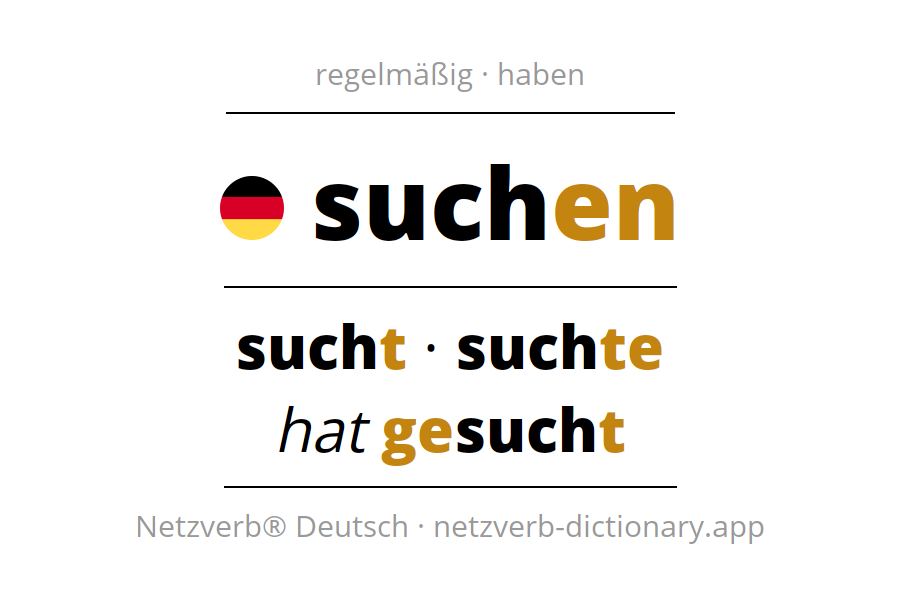
Netzverb Wörterbuch
Konjugation Verb suchen: im Präsens, Präteritum, Konjunktiv, Perfekt, ... viele Beispiele, Grammatik, Regeln erklärt, Übersetzung, Übungen, Bedeutung und kostenlose Downloads.
jolly panther
verb verstehen
lean flickerBOT

Netzverb Wörterbuch
Konjugation Verb verstehen: im Präsens, Präteritum, Konjunktiv, Perfekt, ... viele Beispiele, Grammatik, Regeln erklärt, Übersetzung, Übungen, Bedeutung und kostenlose Downloads.
jolly panther
verb probieren
lean flickerBOT

Netzverb Wörterbuch
Konjugation Verb probieren: im Präsens, Präteritum, Konjunktiv, Perfekt, ... viele Beispiele, Grammatik, Regeln erklärt, Übersetzung, Übungen, Bedeutung und kostenlose Downloads.
jolly panther
verb schleißen
lean flickerBOT

Netzverb Wörterbuch
Konjugation Verb schleißen (unr) (hat): im Präsens, Präteritum, Konjunktiv, Perfekt, ... viele Beispiele, Grammatik, Regeln erklärt, Übersetzung, Übungen, Bedeutung und kostenlose Downloads.
jolly panther
verb geschehen
lean flickerBOT

Netzverb Wörterbuch
Konjugation Verb geschehen: im Präsens, Präteritum, Konjunktiv, Perfekt, ... viele Beispiele, Grammatik, Regeln erklärt, Übersetzung, Übungen, Bedeutung und kostenlose Downloads.
jolly panther
verb holen
lean flickerBOT

Netzverb Wörterbuch
Konjugation Verb holen: im Präsens, Präteritum, Konjunktiv, Perfekt, ... viele Beispiele, Grammatik, Regeln erklärt, Übersetzung, Übungen, Bedeutung und kostenlose Downloads.
jolly panther
verb entschneiden
lean flickerBOT
jolly panther
verb wohnen
lean flickerBOT

Netzverb Wörterbuch
Konjugation Verb wohnen: im Präsens, Präteritum, Konjunktiv, Perfekt, ... viele Beispiele, Grammatik, Regeln erklärt, Übersetzung, Übungen, Bedeutung und kostenlose Downloads.
jolly panther
verb singen
lean flickerBOT

Netzverb Wörterbuch
Konjugation Verb singen: im Präsens, Präteritum, Konjunktiv, Perfekt, ... viele Beispiele, Grammatik, Regeln erklärt, Übersetzung, Übungen, Bedeutung und kostenlose Downloads.
jolly panther
verb beschweren
lean flickerBOT

Netzverb Wörterbuch
Konjugation Verb beschweren: im Präsens, Präteritum, Konjunktiv, Perfekt, ... viele Beispiele, Grammatik, Regeln erklärt, Übersetzung, Übungen, Bedeutung und kostenlose Downloads.
jolly panther
lookup en de erholen
lean flickerBOT
Translations for de erholen:
**:small_blue_diamond:** bounce back *[coll.]* *[health,* *share* *values]*
sich erholen
**:small_blue_diamond:** get better *[in* *health]*
sich erholen
**:small_blue_diamond:** get well again
sich erholen
**:small_blue_diamond:** pick up *[to* *improve]*
sich erholen
**:small_blue_diamond:** rally *[improve* *healthwise]*
sich erholen
Page 1/2 (10 entries)
jolly panther
verb erkälten
lean flickerBOT

Netzverb Wörterbuch
Konjugation Verb sich erkälten: im Präsens, Präteritum, Konjunktiv, Perfekt, ... viele Beispiele, Grammatik, Regeln erklärt, Übersetzung, Übungen, Bedeutung und kostenlose Downloads.
jolly panther
verb erkundigen
lean flickerBOT

Netzverb Wörterbuch
Konjugation Verb sich erkundigen: im Präsens, Präteritum, Konjunktiv, Perfekt, ... viele Beispiele, Grammatik, Regeln erklärt, Übersetzung, Übungen, Bedeutung und kostenlose Downloads.
 green shard
faq cefr
lean flickerBOT
CEFR levels
If you see something like A1, B2 or C1, these represent the proficiency of a speaker in a language they're not native in, and are called CEFR levels. They are valid for any language, not only German!
Roughly speaking, A levels are beginners and C levels are experts. Remember that CEFR level are self-assessed and indicative!
You can see more specific names and descriptions on the Wikipedia page:
https://en.wikipedia.org/wiki/Common_European_Framework_of_Reference_for_Languages
🗨 How do I know what level I am?
If the table on Wikipedia is too generic for you, you can try using this one here:
https://rm.coe.int/168045bb52
Just check each column one at a time: if you can do all it describes, move to the next column. Your level is the highest where you can do the most things.
Alternatively, you can use this questionnaire to estimate your level more accurately:
https://www.laits.utexas.edu/fi/sites/laits.utexas.edu.fi/files/Self Assessment Checklist European.pdf
jolly panther
verb beginnen
lean flickerBOT
:tools: An error happened. This has been logged and reported.
jolly panther
verb beginnen
lean flickerBOT
:tools: An error happened. This has been logged and reported.
jolly panther
verb fragen
lean flickerBOT

Netzverb Wörterbuch
Konjugation Verb fragen (regelm): im Präsens, Präteritum, Konjunktiv, Perfekt, ... viele Beispiele, Grammatik, Regeln erklärt, Übersetzung, Übungen, Bedeutung und kostenlose Downloads.
jolly panther
verb stellen
lean flickerBOT

Netzverb Wörterbuch
Konjugation Verb stellen: im Präsens, Präteritum, Konjunktiv, Perfekt, ... viele Beispiele, Grammatik, Regeln erklärt, Übersetzung, Übungen, Bedeutung und kostenlose Downloads.
jolly panther
verb lieben
lean flickerBOT

Netzverb Wörterbuch
Konjugation Verb lieben: im Präsens, Präteritum, Konjunktiv, Perfekt, ... viele Beispiele, Grammatik, Regeln erklärt, Übersetzung, Übungen, Bedeutung und kostenlose Downloads.
jolly panther
verb warten
lean flickerBOT

Netzverb Wörterbuch
Konjugation Verb warten: im Präsens, Präteritum, Konjunktiv, Perfekt, ... viele Beispiele, Grammatik, Regeln erklärt, Übersetzung, Übungen, Bedeutung und kostenlose Downloads.
jolly panther
verb reden
lean flickerBOT

Netzverb Wörterbuch
Konjugation Verb reden: im Präsens, Präteritum, Konjunktiv, Perfekt, ... viele Beispiele, Grammatik, Regeln erklärt, Übersetzung, Übungen, Bedeutung und kostenlose Downloads.
jolly panther
verb hoffen
lean flickerBOT

Netzverb Wörterbuch
Konjugation Verb hoffen: im Präsens, Präteritum, Konjunktiv, Perfekt, ... viele Beispiele, Grammatik, Regeln erklärt, Übersetzung, Übungen, Bedeutung und kostenlose Downloads.
lean flickerBOT

Netzverb Wörterbuch
Konjugation Verb lachen: im Präsens, Präteritum, Konjunktiv, Perfekt, ... viele Beispiele, Grammatik, Regeln erklärt, Übersetzung, Übungen, Bedeutung und kostenlose Downloads.
jolly panther
verb regnen
lean flickerBOT

Netzverb Wörterbuch
Konjugation Verb regnen (hat): im Präsens, Präteritum, Konjunktiv, Perfekt, ... viele Beispiele, Grammatik, Regeln erklärt, Übersetzung, Übungen, Bedeutung und kostenlose Downloads.
jolly panther
verb zahlen
lean flickerBOT

Netzverb Wörterbuch
Konjugation Verb zahlen: im Präsens, Präteritum, Konjunktiv, Perfekt, ... viele Beispiele, Grammatik, Regeln erklärt, Übersetzung, Übungen, Bedeutung und kostenlose Downloads.
jolly panther
verb holen
lean flickerBOT
Netzverb Wörterbuch
Konjugation Verb holen: im Präsens, Präteritum, Konjunktiv, Perfekt, ... viele Beispiele, Grammatik, Regeln erklärt, Übersetzung, Übungen, Bedeutung und kostenlose Downloads.
jolly panther
verb legen
lean flickerBOT

Netzverb Wörterbuch
Konjugation Verb legen: im Präsens, Präteritum, Konjunktiv, Perfekt, ... viele Beispiele, Grammatik, Regeln erklärt, Übersetzung, Übungen, Bedeutung und kostenlose Downloads.
jolly panther
verb reisen
lean flickerBOT

Netzverb Wörterbuch
Konjugation Verb reisen: im Präsens, Präteritum, Konjunktiv, Perfekt, ... viele Beispiele, Grammatik, Regeln erklärt, Übersetzung, Übungen, Bedeutung und kostenlose Downloads.
jolly panther
verb hängen
lean flickerBOT

Netzverb Wörterbuch
Konjugation Verb hängen (unr) (hat): im Präsens, Präteritum, Konjunktiv, Perfekt, ... viele Beispiele, Grammatik, Regeln erklärt, Übersetzung, Übungen, Bedeutung und kostenlose Downloads.
jolly panther
verb grüßen
lean flickerBOT

Netzverb Wörterbuch
Konjugation Verb grüßen: im Präsens, Präteritum, Konjunktiv, Perfekt, ... viele Beispiele, Grammatik, Regeln erklärt, Übersetzung, Übungen, Bedeutung und kostenlose Downloads.
jolly panther
verb kochen
lean flickerBOT
:tools: An error happened. This has been logged and reported.
jolly panther
lookup en de noch
lean flickerBOT
Translations for de noch:
**:small_blue_diamond:** nor
noch
**:small_blue_diamond:** still
noch
**:small_blue_diamond:** yet *[still]*
noch
**:small_blue_diamond:** as yet
noch
**:small_blue_diamond:** in addition
noch [außerdem, zusätzlich]
Page 1/2 (10 entries)
jolly panther
lookup de en until
lean flickerBOT
Translations for en until:
**:small_blue_diamond:** angegriffen
en prise [chess: exposed to capture]
**:small_blue_diamond:** beiläufig
en passant
**:small_blue_diamond:** bis
until
**:small_blue_diamond:** bisher
until now
**:small_blue_diamond:** bisherig
until now [postpos.]
Page 1/2 (10 entries)
 clear rampart
faq b
lean flickerBOT
FAQ not found. Try >explain all.
clear rampart
faq beginner
lean flickerBOT
How to get started
The simplest way to learn German is to find topics you don’t understand yet and search for explanations of them. This list provides you with a guide for which topics to learn if you are completely new to German. Type the topic into Google (or YouTube) and start learning!
Introduction
1: Alphabet (especially ä, ü, ö and ß)
2: Basic greetings (hello, goodbye, etc.)
Part 1 - Simple Sentence
1: Noun gender & plurals
2: Nominative case (What are cases?)
3: Nominative pronouns (I, you, he, she, etc.)
4: Verbs in present tense
5: Definite/indefinite articles
6: Accusative case (for nouns)
7: Accusative pronouns
8: Word order of simple sentences
9: How to ask questions
See Part 2 on the next page.
Tips
- Always learn the gender of a noun when you learn a new noun
- Learn to use a translation dictionary (e.g. dict.cc, leo.org)
- Use
>faq resourcesto see our list of German learning resources - For listening and pronunciation practice, try watching movies or videos (incl. YouTube)
- You can listen to pronunciation for words on websites like dict.cc, forvo.com, and others
- Practice writing sentences every day (and asking people to correct them)
- Ask as many questions as possible
- Don’t be scared to make mistakes!!!! If you don’t let yourself make mistakes, you will never be able to learn German
Page 1/2
clear rampart
faq CEFR
lean flickerBOT
CEFR levels
If you see something like A1, B2 or C1, these represent the proficiency of a speaker in a language they're not native in, and are called CEFR levels. They are valid for any language, not only German!
Roughly speaking, A levels are beginners and C levels are experts. Remember that CEFR level are self-assessed and indicative!
You can see more specific names and descriptions on the Wikipedia page:
https://en.wikipedia.org/wiki/Common_European_Framework_of_Reference_for_Languages
🗨 How do I know what level I am?
If the table on Wikipedia is too generic for you, you can try using this one here:
https://rm.coe.int/168045bb52
Just check each column one at a time: if you can do all it describes, move to the next column. Your level is the highest where you can do the most things.
Alternatively, you can use this questionnaire to estimate your level more accurately:
https://www.laits.utexas.edu/fi/sites/laits.utexas.edu.fi/files/Self Assessment Checklist European.pdf
 cunning compass
faq beginner
lean flickerBOT
How to get started
The simplest way to learn German is to find topics you don’t understand yet and search for explanations of them. This list provides you with a guide for which topics to learn if you are completely new to German. Type the topic into Google (or YouTube) and start learning!
Introduction
1: Alphabet (especially ä, ü, ö and ß)
2: Basic greetings (hello, goodbye, etc.)
Part 1 - Simple Sentence
1: Noun gender & plurals
2: Nominative case (What are cases?)
3: Nominative pronouns (I, you, he, she, etc.)
4: Verbs in present tense
5: Definite/indefinite articles
6: Accusative case (for nouns)
7: Accusative pronouns
8: Word order of simple sentences
9: How to ask questions
See Part 2 on the next page.
Tips
- Always learn the gender of a noun when you learn a new noun
- Learn to use a translation dictionary (e.g. dict.cc, leo.org)
- Use
>faq resourcesto see our list of German learning resources - For listening and pronunciation practice, try watching movies or videos (incl. YouTube)
- You can listen to pronunciation for words on websites like dict.cc, forvo.com, and others
- Practice writing sentences every day (and asking people to correct them)
- Ask as many questions as possible
- Don’t be scared to make mistakes!!!! If you don’t let yourself make mistakes, you will never be able to learn German
Page 1/2
 marble wave
faq beginner
lean flickerBOT
How to get started - Part 2
Please make sure to read Part 1 before starting Part 2!
Part 2 – Beyond a Simple Sentence
1: Conjunctions (coordinating and subordinating)
2: Subordinate clause word order
3: Dative case
4: Dative verbs
5: Verbs with two objects (e.g. geben)
6: Prepositions (accusative, dative, and two-way)
7: Spoken past tense (Perfekt)
8: Written past tense (Präteritum)
9: Genitive case
10: Relative clauses
11: Adjective declension
Tips
- Make sure to practice writing and reading simple texts
- Some of these concepts are confusing to start with, so it’s a good idea to ask for help in #questions when you’re unsure
- You should use a declension chart to help with declension to start with, because you won’t be able to memorize it straight away
- After you feel confident with creating sentences, you can start learning the adjective declension properly by using the command >faq adjective declension and reading the guide provided
Page 2/2
 grave dew
lean flickerBOT
grave dew
lean flickerBOT
How to get started - Part 2
Please make sure to read Part 1 before starting Part 2!
Part 2 – Beyond a Simple Sentence
1: Conjunctions (coordinating and subordinating)
2: Subordinate clause word order
3: Dative case
4: Dative verbs
5: Verbs with two objects (e.g. geben)
6: Prepositions (accusative, dative, and two-way)
7: Spoken past tense (Perfekt)
8: Written past tense (Präteritum)
9: Genitive case
10: Relative clauses
11: Adjective declension
Tips
- Make sure to practice writing and reading simple texts
- Some of these concepts are confusing to start with, so it’s a good idea to ask for help in #questions when you’re unsure
- You should use a declension chart to help with declension to start with, because you won’t be able to memorize it straight away
- After you feel confident with creating sentences, you can start learning the adjective declension properly by using the command >faq adjective declension and reading the guide provided
Page 2/2
lean flickerBOT
How to get started
The simplest way to learn German is to find topics you don’t understand yet and search for explanations of them. This list provides you with a guide for which topics to learn if you are completely new to German. Type the topic into Google (or YouTube) and start learning!
Introduction
1: Alphabet (especially ä, ü, ö and ß)
2: Basic greetings (hello, goodbye, etc.)
Part 1 - Simple Sentence
1: Noun gender & plurals
2: Nominative case (What are cases?)
3: Nominative pronouns (I, you, he, she, etc.)
4: Verbs in present tense
5: Definite/indefinite articles
6: Accusative case (for nouns)
7: Accusative pronouns
8: Word order of simple sentences
9: How to ask questions
See Part 2 on the next page.
Tips
- Always learn the gender of a noun when you learn a new noun
- Learn to use a translation dictionary (e.g. dict.cc, leo.org)
- Use
>faq resourcesto see our list of German learning resources - For listening and pronunciation practice, try watching movies or videos (incl. YouTube)
- You can listen to pronunciation for words on websites like dict.cc, forvo.com, and others
- Practice writing sentences every day (and asking people to correct them)
- Ask as many questions as possible
- Don’t be scared to make mistakes!!!! If you don’t let yourself make mistakes, you will never be able to learn German
Page 1/2
Resources
Here's a link to our curated list of resources: https://bit.ly/gladresources. Check out #resources if you want to submit some yourself!
Flashcard Tips
When creating flashcards it is not enough to just have a single german word on one side, and a single word translation on the other side of the card. You want to provide details that match your learning style and help you better understand what the word means.
For nouns
At the very least, include the gender and the plural form. E.g. Der Mann | Die Männer or Der Mann -:er Whichever form helps you recognise the plural ending and any vowel changes. You may also want to add a note for weak masculine nouns. (See >explain N-Declension.)
For verbs
Include the infinitive, the preterite (simple past) and the past participle (perfect form). E.g. rennen | rannte | gerannt or for a separable verb anrufen | rief an | angerufen. For irregular verbs, you may want to list all present tense conjugations. You may also want to include if the verb uses haben or sein as its auxiliary.
For all words
Adding an example sentence is important for helping you understand the usage and context of a word (dwds.de and linguee.com are good sources of example sentences). You may also want to add multiple translations for words that have multiple meanings. E.g. Die Auflage can mean both a requirement, and the edition of a book. You may also want to try picture cues or audio recordings (possible sources for voice recordings include dict.cc, linguee.com, duden.de, and wiktionary.de).
Close Passages
Flashcards based on close passages can be a very effective way to learn new vocabulary. E.g. put Ich kaufe Lebensmittel im [blank] ein. on one side of the flashcard, and Ich kaufe Lebensmittel im *Markt* ein; der Markt, die Märkte - market. This places vocabulary in context to help you understand its meaning and usages, and also provides you with whole phrases that help jolt your memory when trying to remember an individual word.
Recall vs. Reproduction
Flashcards are most effective when they train your ability to reproduce knowledge. I.e. Seeing the word Baum and recognising it as tree is a lot less effective than being able to look at a picture of a tree and know it means der Baum. Taking that a step further you want to be able to also know that that while die Struktur also means 'tree', it doesn't actually mean the plant. When creating flashcards, try to design them with these concepts in mind. E.g. Using minimal or no flashcards that show you a german word and ask you to recall what it means in english, and instead focus on the other way around: giving you an english word and asking you to recall what it means in german.
Page 2/2
 void seal
faq cefr
lean flickerBOT
CEFR levels
If you see something like A1, B2 or C1, these represent the proficiency of a speaker in a language they're not native in, and are called CEFR levels. They are valid for any language, not only German!
Roughly speaking, A levels are beginners and C levels are experts. Remember that CEFR level are self-assessed and indicative!
You can see more specific names and descriptions on the Wikipedia page:
https://en.wikipedia.org/wiki/Common_European_Framework_of_Reference_for_Languages
🗨 How do I know what level I am?
If the table on Wikipedia is too generic for you, you can try using this one here:
https://rm.coe.int/168045bb52
Just check each column one at a time: if you can do all it describes, move to the next column. Your level is the highest where you can do the most things.
Alternatively, you can use this questionnaire to estimate your level more accurately:
https://www.laits.utexas.edu/fi/sites/laits.utexas.edu.fi/files/Self Assessment Checklist European.pdf
 subtle drift
faq gender patterns
lean flickerBOT
**Masculine words (der)**
- profession/role names (der Verkäufer, der Lehrer)
- many elements of time (der Tag, der Monat, der Winter)
- cardinal directions (der Norden, der Süden)
- words ending in:
---igder König, der Teig
---lingder Neuling, der Schwächling
---antder Praktikant, der Elefant
---ismusder Faschismus, der Sozialismus
Page 2/4
 lone mesa
faq cefr
lean flickerBOT
CEFR levels
If you see something like A1, B2 or C1, these represent the proficiency of a speaker in a language they're not native in, and are called CEFR levels. They are valid for any language, not only German!
Roughly speaking, A levels are beginners and C levels are experts. Remember that CEFR level are self-assessed and indicative!
You can see more specific names and descriptions on the Wikipedia page:
https://en.wikipedia.org/wiki/Common_European_Framework_of_Reference_for_Languages
🗨 How do I know what level I am?
If the table on Wikipedia is too generic for you, you can try using this one here:
https://rm.coe.int/168045bb52
Just check each column one at a time: if you can do all it describes, move to the next column. Your level is the highest where you can do the most things.
Alternatively, you can use this questionnaire to estimate your level more accurately:
https://www.laits.utexas.edu/fi/sites/laits.utexas.edu.fi/files/Self Assessment Checklist European.pdf
jolly panther
lookup de en suicide
lean flickerBOT
Translations for en suicide:
**:small_blue_diamond:** zweidimensionale En-face-Aufnahmen
two-dimensional en-face en face images
**:small_blue_diamond:** Europäische Norm <EN>
EN standard <EN>
**:small_blue_diamond:** Exanewton <EN>
exanewton <EN>
**:small_blue_diamond:** alle Richter zusammen
en banc
**:small_blue_diamond:** als Ganzes
en bloc
Page 1/2 (10 entries)
 violet ether
faq resources
lean flickerBOT
Resources
Here's a link to our curated list of resources: https://bit.ly/gladresources. Check out #resources if you want to submit some yourself!
 dim ginkgo
lean flickerBOT
dim ginkgo
lean flickerBOT
How to get started
The simplest way to learn German is to find topics you don’t understand yet and search for explanations of them. This list provides you with a guide for which topics to learn if you are completely new to German. Type the topic into Google (or YouTube) and start learning!
Introduction
1: Alphabet (especially ä, ü, ö and ß)
2: Basic greetings (hello, goodbye, etc.)
Part 1 - Simple Sentence
1: Noun gender & plurals
2: Nominative case (What are cases?)
3: Nominative pronouns (I, you, he, she, etc.)
4: Verbs in present tense
5: Definite/indefinite articles
6: Accusative case (for nouns)
7: Accusative pronouns
8: Word order of simple sentences
9: How to ask questions
See Part 2 on the next page.
Tips
- Always learn the gender of a noun when you learn a new noun
- Learn to use a translation dictionary (e.g. dict.cc, leo.org)
- Use
>faq resourcesto see our list of German learning resources - For listening and pronunciation practice, try watching movies or videos (incl. YouTube)
- You can listen to pronunciation for words on websites like dict.cc, forvo.com, and others
- Practice writing sentences every day (and asking people to correct them)
- Ask as many questions as possible
- Don’t be scared to make mistakes!!!! If you don’t let yourself make mistakes, you will never be able to learn German
Page 1/2
 rugged axle
faq resources
lean flickerBOT
Resources
Here's a link to our curated list of resources: https://bit.ly/gladresources. Check out #resources if you want to submit some yourself!
rugged axle
faq cefr
lean flickerBOT
CEFR levels
If you see something like A1, B2 or C1, these represent the proficiency of a speaker in a language they're not native in, and are called CEFR levels. They are valid for any language, not only German!
Roughly speaking, A levels are beginners and C levels are experts. Remember that CEFR level are self-assessed and indicative!
You can see more specific names and descriptions on the Wikipedia page:
https://en.wikipedia.org/wiki/Common_European_Framework_of_Reference_for_Languages
🗨 How do I know what level I am?
If the table on Wikipedia is too generic for you, you can try using this one here:
https://rm.coe.int/168045bb52
Just check each column one at a time: if you can do all it describes, move to the next column. Your level is the highest where you can do the most things.
Alternatively, you can use this questionnaire to estimate your level more accurately:
https://www.laits.utexas.edu/fi/sites/laits.utexas.edu.fi/files/Self Assessment Checklist European.pdf
unkempt bough
ex Präteritum
lean flickerBOT
Past Tense
German has two basic past tenses: Perfekt and Präteritum.
What’s the difference? Which one should I use?
To put it simply: Perfekt is used for spoken and casual German, and Präteritum is used for formal writing such as novels. For anything in between or if you’re unsure, it’s best to simply ask a native speaker. But most of the time, you will be using Perfekt, so it’s recommended that you learn that first!
However, even when you are using the Perfekt tense, a few verbs are often still used in Präteritum. This varies by region! Some native speakers use 100% Perfekt tense when they speak, but most people use at least a few words with Präteritum in their speech.
The main verbs commonly used in Präteritum form even when using Perfekt are:
• haben (e.g. ich hatte instead of ich habe gehabt)
• sein (e.g. ich war instead of ich bin gewesen)
• modal verbs
• wissen, denken (e.g. ich wusste, ich dachte)
The following are sometimes also used in Präteritum form but not as pervasively:
• bleiben, brauchen, finden, geben, gehen, laufen, liegen, rufen, sehen, sitzen, stehen, tun
Page 1/2
unkempt bough
ex hätte
lean flickerBOT
FAQ not found. Try >explain all.
 woven whale
faq beginner
lean flickerBOT
How to get started
The simplest way to learn German is to find topics you don’t understand yet and search for explanations of them. This list provides you with a guide for which topics to learn if you are completely new to German. Type the topic into Google (or YouTube) and start learning!
Introduction
1: Alphabet (especially ä, ü, ö and ß)
2: Basic greetings (hello, goodbye, etc.)
Part 1 - Simple Sentence
1: Noun gender & plurals
2: Nominative case (What are cases?)
3: Nominative pronouns (I, you, he, she, etc.)
4: Verbs in present tense
5: Definite/indefinite articles
6: Accusative case (for nouns)
7: Accusative pronouns
8: Word order of simple sentences
9: How to ask questions
See Part 2 on the next page.
Tips
- Always learn the gender of a noun when you learn a new noun
- Learn to use a translation dictionary (e.g. dict.cc, leo.org)
- Use
>faq resourcesto see our list of German learning resources - For listening and pronunciation practice, try watching movies or videos (incl. YouTube)
- You can listen to pronunciation for words on websites like dict.cc, forvo.com, and others
- Practice writing sentences every day (and asking people to correct them)
- Ask as many questions as possible
- Don’t be scared to make mistakes!!!! If you don’t let yourself make mistakes, you will never be able to learn German
Page 1/2
 next crown
faq cefr
lean flickerBOT
CEFR levels
If you see something like A1, B2 or C1, these represent the proficiency of a speaker in a language they're not native in, and are called CEFR levels. They are valid for any language, not only German!
Roughly speaking, A levels are beginners and C levels are experts. Remember that CEFR level are self-assessed and indicative!
You can see more specific names and descriptions on the Wikipedia page:
https://en.wikipedia.org/wiki/Common_European_Framework_of_Reference_for_Languages
🗨 How do I know what level I am?
If the table on Wikipedia is too generic for you, you can try using this one here:
https://rm.coe.int/168045bb52
Just check each column one at a time: if you can do all it describes, move to the next column. Your level is the highest where you can do the most things.
Alternatively, you can use this questionnaire to estimate your level more accurately:
https://www.laits.utexas.edu/fi/sites/laits.utexas.edu.fi/files/Self Assessment Checklist European.pdf
 mint atlas
faq beginner
lean flickerBOT
How to get started
The simplest way to learn German is to find topics you don’t understand yet and search for explanations of them. This list provides you with a guide for which topics to learn if you are completely new to German. Type the topic into Google (or YouTube) and start learning!
Introduction
1: Alphabet (especially ä, ü, ö and ß)
2: Basic greetings (hello, goodbye, etc.)
Part 1 - Simple Sentence
1: Noun gender & plurals
2: Nominative case (What are cases?)
3: Nominative pronouns (I, you, he, she, etc.)
4: Verbs in present tense
5: Definite/indefinite articles
6: Accusative case (for nouns)
7: Accusative pronouns
8: Word order of simple sentences
9: How to ask questions
See Part 2 on the next page.
Tips
- Always learn the gender of a noun when you learn a new noun
- Learn to use a translation dictionary (e.g. dict.cc, leo.org)
- Use
>faq resourcesto see our list of German learning resources - For listening and pronunciation practice, try watching movies or videos (incl. YouTube)
- You can listen to pronunciation for words on websites like dict.cc, forvo.com, and others
- Practice writing sentences every day (and asking people to correct them)
- Ask as many questions as possible
- Don’t be scared to make mistakes!!!! If you don’t let yourself make mistakes, you will never be able to learn German
Page 1/2
 cobalt oracle
help
lean flickerBOT
Bans commands
:small_blue_diamond: **isbanned** <user>
Checks whether the given user is banned.
Page 20/20 (20 entries)
 gleaming jackal
faq beginner
lean flickerBOT
How to get started
The simplest way to learn German is to find topics you don’t understand yet and search for explanations of them. This list provides you with a guide for which topics to learn if you are completely new to German. Type the topic into Google (or YouTube) and start learning!
Introduction
1: Alphabet (especially ä, ü, ö and ß)
2: Basic greetings (hello, goodbye, etc.)
Part 1 - Simple Sentence
1: Noun gender & plurals
2: Nominative case (What are cases?)
3: Nominative pronouns (I, you, he, she, etc.)
4: Verbs in present tense
5: Definite/indefinite articles
6: Accusative case (for nouns)
7: Accusative pronouns
8: Word order of simple sentences
9: How to ask questions
See Part 2 on the next page.
Tips
- Always learn the gender of a noun when you learn a new noun
- Learn to use a translation dictionary (e.g. dict.cc, leo.org)
- Use
>faq resourcesto see our list of German learning resources - For listening and pronunciation practice, try watching movies or videos (incl. YouTube)
- You can listen to pronunciation for words on websites like dict.cc, forvo.com, and others
- Practice writing sentences every day (and asking people to correct them)
- Ask as many questions as possible
- Don’t be scared to make mistakes!!!! If you don’t let yourself make mistakes, you will never be able to learn German
Page 1/2
 near ether
faq cefr
lean flickerBOT
CEFR levels
If you see something like A1, B2 or C1, these represent the proficiency of a speaker in a language they're not native in, and are called CEFR levels. They are valid for any language, not only German!
Roughly speaking, A levels are beginners and C levels are experts. Remember that CEFR level are self-assessed and indicative!
You can see more specific names and descriptions on the Wikipedia page:
https://en.wikipedia.org/wiki/Common_European_Framework_of_Reference_for_Languages
🗨 How do I know what level I am?
If the table on Wikipedia is too generic for you, you can try using this one here:
https://rm.coe.int/168045bb52
Just check each column one at a time: if you can do all it describes, move to the next column. Your level is the highest where you can do the most things.
Alternatively, you can use this questionnaire to estimate your level more accurately:
https://www.laits.utexas.edu/fi/sites/laits.utexas.edu.fi/files/Self Assessment Checklist European.pdf
 wispy burrow
faq cefr
lean flickerBOT
CEFR levels
If you see something like A1, B2 or C1, these represent the proficiency of a speaker in a language they're not native in, and are called CEFR levels. They are valid for any language, not only German!
Roughly speaking, A levels are beginners and C levels are experts. Remember that CEFR level are self-assessed and indicative!
You can see more specific names and descriptions on the Wikipedia page:
https://en.wikipedia.org/wiki/Common_European_Framework_of_Reference_for_Languages
🗨 How do I know what level I am?
If the table on Wikipedia is too generic for you, you can try using this one here:
https://rm.coe.int/168045bb52
Just check each column one at a time: if you can do all it describes, move to the next column. Your level is the highest where you can do the most things.
Alternatively, you can use this questionnaire to estimate your level more accurately:
https://www.laits.utexas.edu/fi/sites/laits.utexas.edu.fi/files/Self Assessment Checklist European.pdf
unkempt bough
ex perfekt
lean flickerBOT
Perfekt
How to form the Perfekt tense
The Perfekt tense is formed by combining an auxiliary verb (haben or sein) with the past participle form of the main verb.
For example, if I want to write the past tense of “essen”/“to eat”, such as in the English sentence “I ate”, I first need to know the auxiliary verb that goes with essen (which happens to be haben), and the past participle form of essen (which is gegessen).
I can then combine them with the usual verb conjugation and word order rules, as such:
Ich habe gegessen. -> I ate. / I have eaten.
Ich habe das Brot gegessen. -> I ate the bread. / I have eaten the bread.
How to determine the past participle?
Just look it up in the dictionary! There are a few general patterns you can also learn about, but a dictionary will pretty much always list the past participle somewhere near the verb itself.
When to use haben and when to use sein as the auxiliary verb?
The basic rules are:
• Transitive verbs (verbs which take an accusative object) use haben
• Intransitive verbs which describe a change of location or change of state use sein
• Other intransitive verbs use haben
This may not be a 100% reliable set of rules, so if in doubt, you can always use a dictionary to verify the correct auxiliary. Also note that there are a few regional variations.
Page 2/2
unkempt bough
ex Präteritum
lean flickerBOT
Past Tense
German has two basic past tenses: Perfekt and Präteritum.
What’s the difference? Which one should I use?
To put it simply: Perfekt is used for spoken and casual German, and Präteritum is used for formal writing such as novels. For anything in between or if you’re unsure, it’s best to simply ask a native speaker. But most of the time, you will be using Perfekt, so it’s recommended that you learn that first!
However, even when you are using the Perfekt tense, a few verbs are often still used in Präteritum. This varies by region! Some native speakers use 100% Perfekt tense when they speak, but most people use at least a few words with Präteritum in their speech.
The main verbs commonly used in Präteritum form even when using Perfekt are:
• haben (e.g. ich hatte instead of ich habe gehabt)
• sein (e.g. ich war instead of ich bin gewesen)
• modal verbs
• wissen, denken (e.g. ich wusste, ich dachte)
The following are sometimes also used in Präteritum form but not as pervasively:
• bleiben, brauchen, finden, geben, gehen, laufen, liegen, rufen, sehen, sitzen, stehen, tun
Page 1/2
 fast igloo
faq cefr
lean flickerBOT
CEFR levels
If you see something like A1, B2 or C1, these represent the proficiency of a speaker in a language they're not native in, and are called CEFR levels. They are valid for any language, not only German!
Roughly speaking, A levels are beginners and C levels are experts. Remember that CEFR level are self-assessed and indicative!
You can see more specific names and descriptions on the Wikipedia page:
https://en.wikipedia.org/wiki/Common_European_Framework_of_Reference_for_Languages
🗨 How do I know what level I am?
If the table on Wikipedia is too generic for you, you can try using this one here:
https://rm.coe.int/168045bb52
Just check each column one at a time: if you can do all it describes, move to the next column. Your level is the highest where you can do the most things.
Alternatively, you can use this questionnaire to estimate your level more accurately:
https://www.laits.utexas.edu/fi/sites/laits.utexas.edu.fi/files/Self Assessment Checklist European.pdf
 stray dew
sessions
lean flickerBOT
There are no sessions currently scheduled.
 dawn ginkgo

Provided to YouTube by RCA Victor
Das ist Berlin · Liane & The Boheme Bar Trio
Apt Pupil
℗ 1998 BMG Music
Released on: 1998-10-13
Producer: John Ottman
Mixing Engineer, Recording Engineer: Tim Boyle
Composer: Matthias Hen
Composer: Leo Leux
Lyricist: Bruno Balz
Lyricist: Hans Hannes
Auto-generated by YouTube.
lean flickerBOT
Das ist Berlin [00:01:40] added to the queue.
dawn ginkgo

MTV Unplugged-Konzerte warten gerne mit stimmungsvollen, oftmals noch nie für Musik genutzten Orten auf, die aber immer eine besondere Verbindung zu den jeweiligen Künstlern haben. Auch Max Raabe & Palast Orchester hatten schnell eine Idee: Der Shabby Chic des Spiegelsaals in Clärchens Ballhaus in Berlin Mitte ist perfekt. Die wunderschöne Inter...
lean flickerBOT
Max Raabe, Palast Orchester - Guten Tag, liebes Glück (MTV Unplugged) ft. LEA [00:02:26] added to the queue.
 crisp forge
faq beginner
lean flickerBOT
How to get started - Part 2
Please make sure to read Part 1 before starting Part 2!
Part 2 – Beyond a Simple Sentence
1: Conjunctions (coordinating and subordinating)
2: Subordinate clause word order
3: Dative case
4: Dative verbs
5: Verbs with two objects (e.g. geben)
6: Prepositions (accusative, dative, and two-way)
7: Spoken past tense (Perfekt)
8: Written past tense (Präteritum)
9: Genitive case
10: Relative clauses
11: Adjective declension
Tips
- Make sure to practice writing and reading simple texts
- Some of these concepts are confusing to start with, so it’s a good idea to ask for help in #questions when you’re unsure
- You should use a declension chart to help with declension to start with, because you won’t be able to memorize it straight away
- After you feel confident with creating sentences, you can start learning the adjective declension properly by using the command >faq adjective declension and reading the guide provided
Page 2/2
 steady salmon
faq beginner
lean flickerBOT
How to get started - Part 2
Please make sure to read Part 1 before starting Part 2!
Part 2 – Beyond a Simple Sentence
1: Conjunctions (coordinating and subordinating)
2: Subordinate clause word order
3: Dative case
4: Dative verbs
5: Verbs with two objects (e.g. geben)
6: Prepositions (accusative, dative, and two-way)
7: Spoken past tense (Perfekt)
8: Written past tense (Präteritum)
9: Genitive case
10: Relative clauses
11: Adjective declension
Tips
- Make sure to practice writing and reading simple texts
- Some of these concepts are confusing to start with, so it’s a good idea to ask for help in #questions when you’re unsure
- You should use a declension chart to help with declension to start with, because you won’t be able to memorize it straight away
- After you feel confident with creating sentences, you can start learning the adjective declension properly by using the command >faq adjective declension and reading the guide provided
Page 2/2
 somber wharf
sessions
lean flickerBOT
There are no sessions currently scheduled.
 silver gust
faq beginner
lean flickerBOT
How to get started
The simplest way to learn German is to find topics you don’t understand yet and search for explanations of them. This list provides you with a guide for which topics to learn if you are completely new to German. Type the topic into Google (or YouTube) and start learning!
Introduction
1: Alphabet (especially ä, ü, ö and ß)
2: Basic greetings (hello, goodbye, etc.)
Part 1 - Simple Sentence
1: Noun gender & plurals
2: Nominative case (What are cases?)
3: Nominative pronouns (I, you, he, she, etc.)
4: Verbs in present tense
5: Definite/indefinite articles
6: Accusative case (for nouns)
7: Accusative pronouns
8: Word order of simple sentences
9: How to ask questions
See Part 2 on the next page.
Tips
- Always learn the gender of a noun when you learn a new noun
- Learn to use a translation dictionary (e.g. dict.cc, leo.org)
- Use
>faq resourcesto see our list of German learning resources - For listening and pronunciation practice, try watching movies or videos (incl. YouTube)
- You can listen to pronunciation for words on websites like dict.cc, forvo.com, and others
- Practice writing sentences every day (and asking people to correct them)
- Ask as many questions as possible
- Don’t be scared to make mistakes!!!! If you don’t let yourself make mistakes, you will never be able to learn German
Page 1/2
 sullen wadi
faq beginner
lean flickerBOT
How to get started
The simplest way to learn German is to find topics you don’t understand yet and search for explanations of them. This list provides you with a guide for which topics to learn if you are completely new to German. Type the topic into Google (or YouTube) and start learning!
Introduction
1: Alphabet (especially ä, ü, ö and ß)
2: Basic greetings (hello, goodbye, etc.)
Part 1 - Simple Sentence
1: Noun gender & plurals
2: Nominative case (What are cases?)
3: Nominative pronouns (I, you, he, she, etc.)
4: Verbs in present tense
5: Definite/indefinite articles
6: Accusative case (for nouns)
7: Accusative pronouns
8: Word order of simple sentences
9: How to ask questions
See Part 2 on the next page.
Tips
- Always learn the gender of a noun when you learn a new noun
- Learn to use a translation dictionary (e.g. dict.cc, leo.org)
- Use
>faq resourcesto see our list of German learning resources - For listening and pronunciation practice, try watching movies or videos (incl. YouTube)
- You can listen to pronunciation for words on websites like dict.cc, forvo.com, and others
- Practice writing sentences every day (and asking people to correct them)
- Ask as many questions as possible
- Don’t be scared to make mistakes!!!! If you don’t let yourself make mistakes, you will never be able to learn German
Page 1/2
sullen wadi
faq resources
lean flickerBOT
Resources
Here's a link to our curated list of resources: https://bit.ly/gladresources. Check out #resources if you want to submit some yourself!
 primal mica
faq resources
lean flickerBOT
Resources
Welcome to the interactive paginator!
This interactively allows you to see pages of text by navigating with reactions. They are as follows:
:track_previous: Goes to the first page.
:arrow_backward: Goes to the previous page.
:arrow_forward: Goes to the next page.
:track_next: Goes to the last page.
:stop_button: Stops the interactive pagination session.
:information_source: Shows this message.
React with ℹ again to hide this message.
 full furnace
faq cefr
lean flickerBOT
CEFR levels
If you see something like A1, B2 or C1, these represent the proficiency of a speaker in a language they're not native in, and are called CEFR levels. They are valid for any language, not only German!
Roughly speaking, A levels are beginners and C levels are experts. Remember that CEFR level are self-assessed and indicative!
You can see more specific names and descriptions on the Wikipedia page:
https://en.wikipedia.org/wiki/Common_European_Framework_of_Reference_for_Languages
🗨 How do I know what level I am?
If the table on Wikipedia is too generic for you, you can try using this one here:
https://rm.coe.int/168045bb52
Just check each column one at a time: if you can do all it describes, move to the next column. Your level is the highest where you can do the most things.
Alternatively, you can use this questionnaire to estimate your level more accurately:
https://www.laits.utexas.edu/fi/sites/laits.utexas.edu.fi/files/Self Assessment Checklist European.pdf
 hazy stone
faq cefr
lean flickerBOT
CEFR levels
If you see something like A1, B2 or C1, these represent the proficiency of a speaker in a language they're not native in, and are called CEFR levels. They are valid for any language, not only German!
Roughly speaking, A levels are beginners and C levels are experts. Remember that CEFR level are self-assessed and indicative!
You can see more specific names and descriptions on the Wikipedia page:
https://en.wikipedia.org/wiki/Common_European_Framework_of_Reference_for_Languages
🗨 How do I know what level I am?
If the table on Wikipedia is too generic for you, you can try using this one here:
https://rm.coe.int/168045bb52
Just check each column one at a time: if you can do all it describes, move to the next column. Your level is the highest where you can do the most things.
Alternatively, you can use this questionnaire to estimate your level more accurately:
https://www.laits.utexas.edu/fi/sites/laits.utexas.edu.fi/files/Self Assessment Checklist European.pdf
 fair coyote
faq beginners
lean flickerBOT
How to get started - Part 2
Please make sure to read Part 1 before starting Part 2!
Part 2 – Beyond a Simple Sentence
1: Conjunctions (coordinating and subordinating)
2: Subordinate clause word order
3: Dative case
4: Dative verbs
5: Verbs with two objects (e.g. geben)
6: Prepositions (accusative, dative, and two-way)
7: Spoken past tense (Perfekt)
8: Written past tense (Präteritum)
9: Genitive case
10: Relative clauses
11: Adjective declension
Tips
- Make sure to practice writing and reading simple texts
- Some of these concepts are confusing to start with, so it’s a good idea to ask for help in #questions when you’re unsure
- You should use a declension chart to help with declension to start with, because you won’t be able to memorize it straight away
- After you feel confident with creating sentences, you can start learning the adjective declension properly by using the command >faq adjective declension and reading the guide provided
Page 2/2
tender trellis
help
lean flickerBOT
Generic 1/2 commands
:small_blue_diamond: **getrole** <role name>
Assigns you a role with the given name, removing any previous assignable roles.
Note: Use >sub to subscribe to groups and ping a moderator for the native speaker role.
:small_blue_diamond: **info** [user]
Displays information about the given user. If no user is specified, information about you will be displayed.
:small_blue_diamond: **quote** <message>
Quotes a message in the channel you are in.
As input specify the mention or name of the channel that the message was originally posted in and provide the message id of the message (accessible if you turn on developer mode in your Discord settings).
Instead of channel and message id you may also specify a message link.
:small_blue_diamond: **removerole** <role name>
Removes the CEFR role with the given name from you.
Note: Use >unsub for group roles.
:small_blue_diamond: **roles**
Lists all roles on the server.
Page 10/20 (20 entries)
tender trellis
help
lean flickerBOT
Bans commands
:small_blue_diamond: **isbanned** <user>
Checks whether the given user is banned.
Page 20/20 (20 entries)
lean flickerBOT
How to get started
The simplest way to learn German is to find topics you don’t understand yet and search for explanations of them. This list provides you with a guide for which topics to learn if you are completely new to German. Type the topic into Google (or YouTube) and start learning!
Introduction
1: Alphabet (especially ä, ü, ö and ß)
2: Basic greetings (hello, goodbye, etc.)
Part 1 - Simple Sentence
1: Noun gender & plurals
2: Nominative case (What are cases?)
3: Nominative pronouns (I, you, he, she, etc.)
4: Verbs in present tense
5: Definite/indefinite articles
6: Accusative case (for nouns)
7: Accusative pronouns
8: Word order of simple sentences
9: How to ask questions
See Part 2 on the next page.
Tips
- Always learn the gender of a noun when you learn a new noun
- Learn to use a translation dictionary (e.g. dict.cc, leo.org)
- Use
>faq resourcesto see our list of German learning resources - For listening and pronunciation practice, try watching movies or videos (incl. YouTube)
- You can listen to pronunciation for words on websites like dict.cc, forvo.com, and others
- Practice writing sentences every day (and asking people to correct them)
- Ask as many questions as possible
- Don’t be scared to make mistakes!!!! If you don’t let yourself make mistakes, you will never be able to learn German
Page 1/2
 spare imp
faq resources
lean flickerBOT
Resources
Here's a link to our curated list of resources: https://bit.ly/gladresources. Check out #resources if you want to submit some yourself!
 empty ermine
help
lean flickerBOT
Help commands
:small_blue_diamond: **help** [term]
Displays help information for modules and individual commands. The optional argument term is the search term to use. If no value is provided, the bot will display a list of all available modules. Otherwise, it will attempt to find information about the given term.
Page 1/20 (20 entries)
empty ermine
faq cefr
lean flickerBOT
CEFR levels
If you see something like A1, B2 or C1, these represent the proficiency of a speaker in a language they're not native in, and are called CEFR levels. They are valid for any language, not only German!
Roughly speaking, A levels are beginners and C levels are experts. Remember that CEFR level are self-assessed and indicative!
You can see more specific names and descriptions on the Wikipedia page:
https://en.wikipedia.org/wiki/Common_European_Framework_of_Reference_for_Languages
🗨 How do I know what level I am?
If the table on Wikipedia is too generic for you, you can try using this one here:
https://rm.coe.int/168045bb52
Just check each column one at a time: if you can do all it describes, move to the next column. Your level is the highest where you can do the most things.
Alternatively, you can use this questionnaire to estimate your level more accurately:
https://www.laits.utexas.edu/fi/sites/laits.utexas.edu.fi/files/Self Assessment Checklist European.pdf
empty ermine
faq beginner
lean flickerBOT
How to get started
The simplest way to learn German is to find topics you don’t understand yet and search for explanations of them. This list provides you with a guide for which topics to learn if you are completely new to German. Type the topic into Google (or YouTube) and start learning!
Introduction
1: Alphabet (especially ä, ü, ö and ß)
2: Basic greetings (hello, goodbye, etc.)
Part 1 - Simple Sentence
1: Noun gender & plurals
2: Nominative case (What are cases?)
3: Nominative pronouns (I, you, he, she, etc.)
4: Verbs in present tense
5: Definite/indefinite articles
6: Accusative case (for nouns)
7: Accusative pronouns
8: Word order of simple sentences
9: How to ask questions
See Part 2 on the next page.
Tips
- Always learn the gender of a noun when you learn a new noun
- Learn to use a translation dictionary (e.g. dict.cc, leo.org)
- Use
>faq resourcesto see our list of German learning resources - For listening and pronunciation practice, try watching movies or videos (incl. YouTube)
- You can listen to pronunciation for words on websites like dict.cc, forvo.com, and others
- Practice writing sentences every day (and asking people to correct them)
- Ask as many questions as possible
- Don’t be scared to make mistakes!!!! If you don’t let yourself make mistakes, you will never be able to learn German
Page 1/2
jolly panther
lookup en de nützlich
lean flickerBOT
Translations for de nützlich:
**:small_blue_diamond:** advantageous
nützlich
**:small_blue_diamond:** beneficial
nützlich
**:small_blue_diamond:** beneficially
nützlich
**:small_blue_diamond:** expedient
nützlich
**:small_blue_diamond:** handy
nützlich
Page 1/2 (10 entries)
jolly panther
verb umsteigen
lean flickerBOT

Netzverb Wörterbuch
Konjugation Verb umsteigen: im Präsens, Präteritum, Konjunktiv, Perfekt, ... viele Beispiele, Grammatik, Regeln erklärt, Übersetzung, Übungen, Bedeutung und kostenlose Downloads.
 marsh gate
faq beginner
lean flickerBOT
How to get started
The simplest way to learn German is to find topics you don’t understand yet and search for explanations of them. This list provides you with a guide for which topics to learn if you are completely new to German. Type the topic into Google (or YouTube) and start learning!
Introduction
1: Alphabet (especially ä, ü, ö and ß)
2: Basic greetings (hello, goodbye, etc.)
Part 1 - Simple Sentence
1: Noun gender & plurals
2: Nominative case (What are cases?)
3: Nominative pronouns (I, you, he, she, etc.)
4: Verbs in present tense
5: Definite/indefinite articles
6: Accusative case (for nouns)
7: Accusative pronouns
8: Word order of simple sentences
9: How to ask questions
See Part 2 on the next page.
Tips
- Always learn the gender of a noun when you learn a new noun
- Learn to use a translation dictionary (e.g. dict.cc, leo.org)
- Use
>faq resourcesto see our list of German learning resources - For listening and pronunciation practice, try watching movies or videos (incl. YouTube)
- You can listen to pronunciation for words on websites like dict.cc, forvo.com, and others
- Practice writing sentences every day (and asking people to correct them)
- Ask as many questions as possible
- Don’t be scared to make mistakes!!!! If you don’t let yourself make mistakes, you will never be able to learn German
Page 1/2
marsh gate
faq resources
lean flickerBOT
Resources
Here's a link to our curated list of resources: https://bit.ly/gladresources. Check out #resources if you want to submit some yourself!
 verbal tangle
faq how long to learn
lean flickerBOT
How long does it take to learn German?
According to the U.S. Foreign Service Institute (FSI), a person is estimated to require 750-900 hours of guided learning to reach B2 in German. However, study habits and other factors can drastically affect this estimation. These factors include your native language, previous language learning experience, the methods you use, your discipline and motivation, consistency, grammar, exposure and immersion, and training each ability equally. You can find an overview of these factors on page 3 of >faq best way to learn.
ℹ *Note*
The term "guided learning hours" refers to time spent learning with a more advanced language partner (such as a tutor), while making use of language materials (tools, texts and other resources). Guided learning hours, while very helpful, are not necessarily required to learn German. Many people learn German by self-studying, however, self-study hours are too variable to measure, and are consequently excluded from this definition and estimate.
verbal tangle
900 hours
 broken plank
faq best way to learn
lean flickerBOT
Factors that influence learning a language
The following factors (and many others) can influence how easily or quickly you learn German. Remember that everyone is different and these factors will influence different people in different ways.
Native language
As an example, if your native language is English, you may need more time than someone who speaks Dutch.
Previous language learning
Some learners find it easier to learn German if they have already learned a foreign language, or if they have a natural ability to learn languages.
Methods
Some are able to identify what type of learner they are, and leverage that to their benefit.
Discipline and Motivation
Learning a language is fun and exciting at first, but it can be easy to lose motivation and become less disciplined very quickly.
Consistency
Learning a little bit each day every week is generally considered better than studying for several hours, one day per week.
Grammar
The time needed to acquire grammar passively is quite large, so German learners who actively study grammar typically make less grammar mistakes as they progress.
Exposure and immersion
Interacting with native speakers and consuming native content such as the news, magazines, books, movies, podcasts, etc. can help tremendously with achieving an idiomatic usage of the language.
Training each ability equally
Listening, reading, speaking, writing, translating and interpreting are all various abilities associated with language learning. Training these abilities equally is important to ensure that a person can not only pass a language test, but also have the ability to use the language in various contexts while demonstrating great control over grammar.
Page 3/3
 gloomy wolf
faq beginner
lean flickerBOT
How to get started
The simplest way to learn German is to find topics you don’t understand yet and search for explanations of them. This list provides you with a guide for which topics to learn if you are completely new to German. Type the topic into Google (or YouTube) and start learning!
Introduction
1: Alphabet (especially ä, ü, ö and ß)
2: Basic greetings (hello, goodbye, etc.)
Part 1 - Simple Sentence
1: Noun gender & plurals
2: Nominative case (What are cases?)
3: Nominative pronouns (I, you, he, she, etc.)
4: Verbs in present tense
5: Definite/indefinite articles
6: Accusative case (for nouns)
7: Accusative pronouns
8: Word order of simple sentences
9: How to ask questions
See Part 2 on the next page.
Tips
- Always learn the gender of a noun when you learn a new noun
- Learn to use a translation dictionary (e.g. dict.cc, leo.org)
- Use
>faq resourcesto see our list of German learning resources - For listening and pronunciation practice, try watching movies or videos (incl. YouTube)
- You can listen to pronunciation for words on websites like dict.cc, forvo.com, and others
- Practice writing sentences every day (and asking people to correct them)
- Ask as many questions as possible
- Don’t be scared to make mistakes!!!! If you don’t let yourself make mistakes, you will never be able to learn German
Page 1/2
gloomy wolf
faq resources
lean flickerBOT
Resources
Here's a link to our curated list of resources: https://bit.ly/gladresources. Check out #resources if you want to submit some yourself!
 oak rock
faq Anki
lean flickerBOT
Flashcard Tips
When creating flashcards it is not enough to just have a single german word on one side, and a single word translation on the other side of the card. You want to provide details that match your learning style and help you better understand what the word means.
For nouns
At the very least, include the gender and the plural form. E.g. Der Mann | Die Männer or Der Mann -:er Whichever form helps you recognise the plural ending and any vowel changes. You may also want to add a note for weak masculine nouns. (See >explain N-Declension.)
For verbs
Include the infinitive, the preterite (simple past) and the past participle (perfect form). E.g. rennen | rannte | gerannt or for a separable verb anrufen | rief an | angerufen. For irregular verbs, you may want to list all present tense conjugations. You may also want to include if the verb uses haben or sein as its auxiliary.
For all words
Adding an example sentence is important for helping you understand the usage and context of a word (dwds.de and linguee.com are good sources of example sentences). You may also want to add multiple translations for words that have multiple meanings. E.g. Die Auflage can mean both a requirement, and the edition of a book. You may also want to try picture cues or audio recordings (possible sources for voice recordings include dict.cc, linguee.com, duden.de, and wiktionary.de).
Close Passages
Flashcards based on close passages can be a very effective way to learn new vocabulary. E.g. put Ich kaufe Lebensmittel im [blank] ein. on one side of the flashcard, and Ich kaufe Lebensmittel im *Markt* ein; der Markt, die Märkte - market. This places vocabulary in context to help you understand its meaning and usages, and also provides you with whole phrases that help jolt your memory when trying to remember an individual word.
Recall vs. Reproduction
Flashcards are most effective when they train your ability to reproduce knowledge. I.e. Seeing the word Baum and recognising it as tree is a lot less effective than being able to look at a picture of a tree and know it means der Baum. Taking that a step further you want to be able to also know that that while die Struktur also means 'tree', it doesn't actually mean the plant. When creating flashcards, try to design them with these concepts in mind. E.g. Using minimal or no flashcards that show you a german word and ask you to recall what it means in english, and instead focus on the other way around: giving you an english word and asking you to recall what it means in german.
Page 2/2
 subtle tiger
faq beginner
lean flickerBOT
How to get started - Part 2
Please make sure to read Part 1 before starting Part 2!
Part 2 – Beyond a Simple Sentence
1: Conjunctions (coordinating and subordinating)
2: Subordinate clause word order
3: Dative case
4: Dative verbs
5: Verbs with two objects (e.g. geben)
6: Prepositions (accusative, dative, and two-way)
7: Spoken past tense (Perfekt)
8: Written past tense (Präteritum)
9: Genitive case
10: Relative clauses
11: Adjective declension
Tips
- Make sure to practice writing and reading simple texts
- Some of these concepts are confusing to start with, so it’s a good idea to ask for help in #questions when you’re unsure
- You should use a declension chart to help with declension to start with, because you won’t be able to memorize it straight away
- After you feel confident with creating sentences, you can start learning the adjective declension properly by using the command >faq adjective declension and reading the guide provided
Page 2/2
subtle tiger
faq resources
lean flickerBOT
Resources
Here's a link to our curated list of resources: https://bit.ly/gladresources. Check out #resources if you want to submit some yourself!
oak rock
faq deutsche Tastatur
lean flickerBOT
FAQ not found. Try >explain all.
oak rock
faq Tastatur
lean flickerBOT
FAQ not found. Try >explain all.
 frail wadi
help
lean flickerBOT
Help commands
:small_blue_diamond: **help** [term]
Displays help information for modules and individual commands. The optional argument term is the search term to use. If no value is provided, the bot will display a list of all available modules. Otherwise, it will attempt to find information about the given term.
Page 1/20 (20 entries)
 molten adder
faq beginner
lean flickerBOT
How to get started
The simplest way to learn German is to find topics you don’t understand yet and search for explanations of them. This list provides you with a guide for which topics to learn if you are completely new to German. Type the topic into Google (or YouTube) and start learning!
Introduction
1: Alphabet (especially ä, ü, ö and ß)
2: Basic greetings (hello, goodbye, etc.)
Part 1 - Simple Sentence
1: Noun gender & plurals
2: Nominative case (What are cases?)
3: Nominative pronouns (I, you, he, she, etc.)
4: Verbs in present tense
5: Definite/indefinite articles
6: Accusative case (for nouns)
7: Accusative pronouns
8: Word order of simple sentences
9: How to ask questions
See Part 2 on the next page.
Tips
- Always learn the gender of a noun when you learn a new noun
- Learn to use a translation dictionary (e.g. dict.cc, leo.org)
- Use
>faq resourcesto see our list of German learning resources - For listening and pronunciation practice, try watching movies or videos (incl. YouTube)
- You can listen to pronunciation for words on websites like dict.cc, forvo.com, and others
- Practice writing sentences every day (and asking people to correct them)
- Ask as many questions as possible
- Don’t be scared to make mistakes!!!! If you don’t let yourself make mistakes, you will never be able to learn German
Page 1/2
 oblique raptor
faq cefr
lean flickerBOT
CEFR levels
If you see something like A1, B2 or C1, these represent the proficiency of a speaker in a language they're not native in, and are called CEFR levels. They are valid for any language, not only German!
Roughly speaking, A levels are beginners and C levels are experts. Remember that CEFR level are self-assessed and indicative!
You can see more specific names and descriptions on the Wikipedia page:
https://en.wikipedia.org/wiki/Common_European_Framework_of_Reference_for_Languages
🗨 How do I know what level I am?
If the table on Wikipedia is too generic for you, you can try using this one here:
https://rm.coe.int/168045bb52
Just check each column one at a time: if you can do all it describes, move to the next column. Your level is the highest where you can do the most things.
Alternatively, you can use this questionnaire to estimate your level more accurately:
https://www.laits.utexas.edu/fi/sites/laits.utexas.edu.fi/files/Self Assessment Checklist European.pdf
 undone wing
faq beginner
lean flickerBOT
How to get started
The simplest way to learn German is to find topics you don’t understand yet and search for explanations of them. This list provides you with a guide for which topics to learn if you are completely new to German. Type the topic into Google (or YouTube) and start learning!
Introduction
1: Alphabet (especially ä, ü, ö and ß)
2: Basic greetings (hello, goodbye, etc.)
Part 1 - Simple Sentence
1: Noun gender & plurals
2: Nominative case (What are cases?)
3: Nominative pronouns (I, you, he, she, etc.)
4: Verbs in present tense
5: Definite/indefinite articles
6: Accusative case (for nouns)
7: Accusative pronouns
8: Word order of simple sentences
9: How to ask questions
See Part 2 on the next page.
Tips
- Always learn the gender of a noun when you learn a new noun
- Learn to use a translation dictionary (e.g. dict.cc, leo.org)
- Use
>faq resourcesto see our list of German learning resources - For listening and pronunciation practice, try watching movies or videos (incl. YouTube)
- You can listen to pronunciation for words on websites like dict.cc, forvo.com, and others
- Practice writing sentences every day (and asking people to correct them)
- Ask as many questions as possible
- Don’t be scared to make mistakes!!!! If you don’t let yourself make mistakes, you will never be able to learn German
Page 1/2
oak rock
faq reflexivverben
lean flickerBOT
FAQ not found. Try >explain all.
oak rock
faq reflexive verben
lean flickerBOT
FAQ not found. Try >explain all.
 hallow dirge
sessions
lean flickerBOT
There are no sessions currently scheduled.
tender trellis
sessions
lean flickerBOT
There are no sessions currently scheduled.
 deep solstice
faq beginner
lean flickerBOT
How to get started - Part 2
Please make sure to read Part 1 before starting Part 2!
Part 2 – Beyond a Simple Sentence
1: Conjunctions (coordinating and subordinating)
2: Subordinate clause word order
3: Dative case
4: Dative verbs
5: Verbs with two objects (e.g. geben)
6: Prepositions (accusative, dative, and two-way)
7: Spoken past tense (Perfekt)
8: Written past tense (Präteritum)
9: Genitive case
10: Relative clauses
11: Adjective declension
Tips
- Make sure to practice writing and reading simple texts
- Some of these concepts are confusing to start with, so it’s a good idea to ask for help in #questions when you’re unsure
- You should use a declension chart to help with declension to start with, because you won’t be able to memorize it straight away
- After you feel confident with creating sentences, you can start learning the adjective declension properly by using the command >faq adjective declension and reading the guide provided
Page 2/2
undone wing
faq cefr
lean flickerBOT
CEFR levels
If you see something like A1, B2 or C1, these represent the proficiency of a speaker in a language they're not native in, and are called CEFR levels. They are valid for any language, not only German!
Roughly speaking, A levels are beginners and C levels are experts. Remember that CEFR level are self-assessed and indicative!
You can see more specific names and descriptions on the Wikipedia page:
https://en.wikipedia.org/wiki/Common_European_Framework_of_Reference_for_Languages
🗨 How do I know what level I am?
If the table on Wikipedia is too generic for you, you can try using this one here:
https://rm.coe.int/168045bb52
Just check each column one at a time: if you can do all it describes, move to the next column. Your level is the highest where you can do the most things.
Alternatively, you can use this questionnaire to estimate your level more accurately:
https://www.laits.utexas.edu/fi/sites/laits.utexas.edu.fi/files/Self Assessment Checklist European.pdf
See a listed FAQ with >faq [name]
:small_blue_diamond: Absentive
Aliases: Absentiv
:small_blue_diamond: Accusative
Aliases: Akkusativ
:small_blue_diamond: Adjective Declension
Aliases: Adjektivdeklination, Adjective endings
:small_blue_diamond: Anki
Aliases: Flashcards
:small_blue_diamond: Beide vs. Beides
Aliases: Beides vs. Beide, Beides, Beide
:small_blue_diamond: Best way to learn German
Aliases: Fastest way to learn, Learn fast, Most efficient way to learn, Learn efficiently, Best way to learn, Learn German fast
:small_blue_diamond: Can anyone teach me German
Aliases: Private tutors, Teach me, Teach me German, Teach German, Private lessons, Private teachers
:small_blue_diamond: Cases
Aliases: Grammatical case, Case
:small_blue_diamond: CEFR levels
Aliases: CEFR, CERF
:small_blue_diamond: Conjugation
Aliases: Konjugation, Praesens, Verbs, Verb conjugation, Present tense, Präsens
:small_blue_diamond: Contractions
Aliases: Verschmelzung, Schmelzwort, Vom
:small_blue_diamond: DACH
:small_blue_diamond: Dative
Aliases: Dativ
:small_blue_diamond: Doch
:small_blue_diamond: Duolingo
Aliases: Duo
Page 1/5 (62 entries)
unkempt bough
ex freund
lean flickerBOT
What does Freund/Freundin mean?
Does it mean *"friend"*, *"boyfriend/girlfriend"* or both?
It can mean both, although the meaning depends on the context in which the word is used. There are, however, a few commonly used ways to make its meaning clearer:
***ein* Freund/*eine* Freundin (von mir)**
Means a friend (of mine) = one of many.
In most cases it's clear that it refers to a friend and not a partner. Adding von mir emphasizes that even more.
Examples:
Eine Freundin von mir ist Ingenieurin. - A friend of mine is an engineer.
Ich habe einen Freund getroffen. - I met a friend.
but: Sie hat einen Freund. - She has a boyfriend.
_ _
_ _
***mein* Freund/*meine* Freundin**
Means my boyfriend/girlfriend.
In most cases this would refer to a partner.
Examples:
Meine Freundin ist endlich zu mir gezogen. Wir sind seit einem Jahr zusammen.
My girlfriend finally moved in with me. We've been together for a year.
but: Meine gute Freundin Arrem macht ausgezeichnete Pizza.
My good friend Arrem makes excellent pizza.
_ _
_ _
**fester Freund/feste Freundin**
In this case it's clear that it's referring to a partner and not a friend.
Examples:
Ich habe einen festen Freund, aber leider nur in meinen Träumen.
I have a boyfriend, but sadly only in my dreams.
Voice commands
:small_blue_diamond: **nowplaying**
Displays the currently playing song and its remaining duration.
:small_blue_diamond: **play** <prompt>
Queues a song to be played by the music bot. This command will only work if you are connected to a voice channel that has at least two members.
The given prompt can be either a YouTube link or a query that will be used to search YouTube and fetch the first result.
Please note that playing any sort of nationalistic, war-related songs, songs that violate our rules or abusing the feature in any way will get you blacklisted.
:small_blue_diamond: **queue**
Displays the songs that are in the song queue.
:small_blue_diamond: **skip**
Votes to skip the currently playing song.
For a skip vote to pass, more than a half of the members in the currently playing voice chat (rounded up) must vote for the skip.
:small_blue_diamond: **upcoming**
Displays the upcoming song and its remaining duration.
Page 5/20 (20 entries)
lean flickerBOT
FAQ not found. Try >explain all.
tender trellis
faqbeginner
lean flickerBOT
Resources
Here's a link to our curated list of resources: https://bit.ly/gladresources. Check out #resources if you want to submit some yourself!
 halcyon helm
faq cefr
lean flickerBOT
CEFR levels
If you see something like A1, B2 or C1, these represent the proficiency of a speaker in a language they're not native in, and are called CEFR levels. They are valid for any language, not only German!
Roughly speaking, A levels are beginners and C levels are experts. Remember that CEFR level are self-assessed and indicative!
You can see more specific names and descriptions on the Wikipedia page:
https://en.wikipedia.org/wiki/Common_European_Framework_of_Reference_for_Languages
🗨 How do I know what level I am?
If the table on Wikipedia is too generic for you, you can try using this one here:
https://rm.coe.int/168045bb52
Just check each column one at a time: if you can do all it describes, move to the next column. Your level is the highest where you can do the most things.
Alternatively, you can use this questionnaire to estimate your level more accurately:
https://www.laits.utexas.edu/fi/sites/laits.utexas.edu.fi/files/Self Assessment Checklist European.pdf
tender trellis
faq beginner
lean flickerBOT
How to get started - Part 2
Please make sure to read Part 1 before starting Part 2!
Part 2 – Beyond a Simple Sentence
1: Conjunctions (coordinating and subordinating)
2: Subordinate clause word order
3: Dative case
4: Dative verbs
5: Verbs with two objects (e.g. geben)
6: Prepositions (accusative, dative, and two-way)
7: Spoken past tense (Perfekt)
8: Written past tense (Präteritum)
9: Genitive case
10: Relative clauses
11: Adjective declension
Tips
- Make sure to practice writing and reading simple texts
- Some of these concepts are confusing to start with, so it’s a good idea to ask for help in #questions when you’re unsure
- You should use a declension chart to help with declension to start with, because you won’t be able to memorize it straight away
- After you feel confident with creating sentences, you can start learning the adjective declension properly by using the command >faq adjective declension and reading the guide provided
Page 2/2
jolly panther
lookup en de Kreisverkehr
lean flickerBOT
Translations for de Kreisverkehr:
**:small_blue_diamond:** gyratory system
Kreisverkehr
**:small_blue_diamond:** roundabout
Kreisverkehr
**:small_blue_diamond:** roundabout circulation *[Br.]* *[traffic* *sign]*
Kreisverkehr
**:small_blue_diamond:** roundabout traffic
Kreisverkehr
**:small_blue_diamond:** traffic circle *[Am.]*
Kreisverkehr
Page 1/2 (10 entries)
jolly panther
lookup en de runter
lean flickerBOT
Translations for de runter:
**:small_blue_diamond:** Head Down *[Stephen* *King]*
Kopf runter
**:small_blue_diamond:** Keep your head down!
Kopf runter! [ugs.]
**:small_blue_diamond:** be run down
runter sein [ugs.]
**:small_blue_diamond:** up and down
hoch und runter [ugs.]
**:small_blue_diamond:** up and down
rauf und runter [ugs.]
Page 2/2 (10 entries)
 barren tendon

 terse loom
faq begginers
lean flickerBOT
FAQ not found. Try >explain all.
terse loom
faq beginner
lean flickerBOT
How to get started
The simplest way to learn German is to find topics you don’t understand yet and search for explanations of them. This list provides you with a guide for which topics to learn if you are completely new to German. Type the topic into Google (or YouTube) and start learning!
Introduction
1: Alphabet (especially ä, ü, ö and ß)
2: Basic greetings (hello, goodbye, etc.)
Part 1 - Simple Sentence
1: Noun gender & plurals
2: Nominative case (What are cases?)
3: Nominative pronouns (I, you, he, she, etc.)
4: Verbs in present tense
5: Definite/indefinite articles
6: Accusative case (for nouns)
7: Accusative pronouns
8: Word order of simple sentences
9: How to ask questions
See Part 2 on the next page.
Tips
- Always learn the gender of a noun when you learn a new noun
- Learn to use a translation dictionary (e.g. dict.cc, leo.org)
- Use
>faq resourcesto see our list of German learning resources - For listening and pronunciation practice, try watching movies or videos (incl. YouTube)
- You can listen to pronunciation for words on websites like dict.cc, forvo.com, and others
- Practice writing sentences every day (and asking people to correct them)
- Ask as many questions as possible
- Don’t be scared to make mistakes!!!! If you don’t let yourself make mistakes, you will never be able to learn German
Page 1/2
lean flickerBOT
CEFR levels
If you see something like A1, B2 or C1, these represent the proficiency of a speaker in a language they're not native in, and are called CEFR levels. They are valid for any language, not only German!
Roughly speaking, A levels are beginners and C levels are experts. Remember that CEFR level are self-assessed and indicative!
You can see more specific names and descriptions on the Wikipedia page:
https://en.wikipedia.org/wiki/Common_European_Framework_of_Reference_for_Languages
🗨 How do I know what level I am?
If the table on Wikipedia is too generic for you, you can try using this one here:
https://rm.coe.int/168045bb52
Just check each column one at a time: if you can do all it describes, move to the next column. Your level is the highest where you can do the most things.
Alternatively, you can use this questionnaire to estimate your level more accurately:
https://www.laits.utexas.edu/fi/sites/laits.utexas.edu.fi/files/Self Assessment Checklist European.pdf
oak rock
faq intermediate
lean flickerBOT
FAQ not found. Try >explain all.
oak rock
faq study group
lean flickerBOT
FAQ not found. Try >explain all.
 lucid robin
faq beginner
lean flickerBOT
How to get started
The simplest way to learn German is to find topics you don’t understand yet and search for explanations of them. This list provides you with a guide for which topics to learn if you are completely new to German. Type the topic into Google (or YouTube) and start learning!
Introduction
1: Alphabet (especially ä, ü, ö and ß)
2: Basic greetings (hello, goodbye, etc.)
Part 1 - Simple Sentence
1: Noun gender & plurals
2: Nominative case (What are cases?)
3: Nominative pronouns (I, you, he, she, etc.)
4: Verbs in present tense
5: Definite/indefinite articles
6: Accusative case (for nouns)
7: Accusative pronouns
8: Word order of simple sentences
9: How to ask questions
See Part 2 on the next page.
Tips
- Always learn the gender of a noun when you learn a new noun
- Learn to use a translation dictionary (e.g. dict.cc, leo.org)
- Use
>faq resourcesto see our list of German learning resources - For listening and pronunciation practice, try watching movies or videos (incl. YouTube)
- You can listen to pronunciation for words on websites like dict.cc, forvo.com, and others
- Practice writing sentences every day (and asking people to correct them)
- Ask as many questions as possible
- Don’t be scared to make mistakes!!!! If you don’t let yourself make mistakes, you will never be able to learn German
Page 1/2
 full sand
sessions
lean flickerBOT
There are no sessions currently scheduled.
oak rock
faq Ankie
lean flickerBOT
FAQ not found. I found the following similar entry: Anki (1)
Select one of the values in the brackets to directly open the suggested FAQ.
oak rock
faq Anki
lean flickerBOT
Anki
What is Anki?
Anki is a free and very versatile flashcard program that is often used for learning new vocabulary. You can import spreadsheets to quickly create your own flashcards, and you can add your own images and audio for highly custom flashcard decks. You can also access and use a wide range of community created and shared flashcard decks all for free*.
Note: Anki uses a method of learning called spaced repetition. Flashcards and spaced repetition are one of many techniques used for language learning. However, we all learn differently and while these methods work for many people, they may not necessarily work for you. Give it a try, but don’t be disheartened if these methods aren’t right for you. Even if flashcards and spaced repetition work for you, don’t forget to incorporate other forms of practice. E.g. try using your new vocabulary to write your own practice sentences.
Where To Get It
It is available here on PC, Mac, Linux, iPhone, and Android. You can also find the browser AnkiWeb version here.
Manually adding basic cards is quite simple, but making custom templates is a bit more complex. Basementality has put together this handy guide for making custom card types and decks. You can also find Anki’s documentation / instruction guide here.
*The iPhone app AnkiMobile costs $24.99 USD on the iTunes store. The Android app and all other platforms are completely free. The mobile browser version of AnkiWeb is still available for free on iPhones.
See the next page for some helpful tips on creating your flashcards.
Page 1/2
 small wharf
faq cefr
lean flickerBOT
CEFR levels
If you see something like A1, B2 or C1, these represent the proficiency of a speaker in a language they're not native in, and are called CEFR levels. They are valid for any language, not only German!
Roughly speaking, A levels are beginners and C levels are experts. Remember that CEFR level are self-assessed and indicative!
You can see more specific names and descriptions on the Wikipedia page:
https://en.wikipedia.org/wiki/Common_European_Framework_of_Reference_for_Languages
🗨 How do I know what level I am?
If the table on Wikipedia is too generic for you, you can try using this one here:
https://rm.coe.int/168045bb52
Just check each column one at a time: if you can do all it describes, move to the next column. Your level is the highest where you can do the most things.
Alternatively, you can use this questionnaire to estimate your level more accurately:
https://www.laits.utexas.edu/fi/sites/laits.utexas.edu.fi/files/Self Assessment Checklist European.pdf
 ashen oar
faq cefr
lean flickerBOT
CEFR levels
If you see something like A1, B2 or C1, these represent the proficiency of a speaker in a language they're not native in, and are called CEFR levels. They are valid for any language, not only German!
Roughly speaking, A levels are beginners and C levels are experts. Remember that CEFR level are self-assessed and indicative!
You can see more specific names and descriptions on the Wikipedia page:
https://en.wikipedia.org/wiki/Common_European_Framework_of_Reference_for_Languages
🗨 How do I know what level I am?
If the table on Wikipedia is too generic for you, you can try using this one here:
https://rm.coe.int/168045bb52
Just check each column one at a time: if you can do all it describes, move to the next column. Your level is the highest where you can do the most things.
Alternatively, you can use this questionnaire to estimate your level more accurately:
https://www.laits.utexas.edu/fi/sites/laits.utexas.edu.fi/files/Self Assessment Checklist European.pdf
 amber solar
faq beginner
lean flickerBOT
How to get started
The simplest way to learn German is to find topics you don’t understand yet and search for explanations of them. This list provides you with a guide for which topics to learn if you are completely new to German. Type the topic into Google (or YouTube) and start learning!
Introduction
1: Alphabet (especially ä, ü, ö and ß)
2: Basic greetings (hello, goodbye, etc.)
Part 1 - Simple Sentence
1: Noun gender & plurals
2: Nominative case (What are cases?)
3: Nominative pronouns (I, you, he, she, etc.)
4: Verbs in present tense
5: Definite/indefinite articles
6: Accusative case (for nouns)
7: Accusative pronouns
8: Word order of simple sentences
9: How to ask questions
See Part 2 on the next page.
Tips
- Always learn the gender of a noun when you learn a new noun
- Learn to use a translation dictionary (e.g. dict.cc, leo.org)
- Use
>faq resourcesto see our list of German learning resources - For listening and pronunciation practice, try watching movies or videos (incl. YouTube)
- You can listen to pronunciation for words on websites like dict.cc, forvo.com, and others
- Practice writing sentences every day (and asking people to correct them)
- Ask as many questions as possible
- Don’t be scared to make mistakes!!!! If you don’t let yourself make mistakes, you will never be able to learn German
Page 1/2
 stark elk
faq beginner
lean flickerBOT
How to get started
The simplest way to learn German is to find topics you don’t understand yet and search for explanations of them. This list provides you with a guide for which topics to learn if you are completely new to German. Type the topic into Google (or YouTube) and start learning!
Introduction
1: Alphabet (especially ä, ü, ö and ß)
2: Basic greetings (hello, goodbye, etc.)
Part 1 - Simple Sentence
1: Noun gender & plurals
2: Nominative case (What are cases?)
3: Nominative pronouns (I, you, he, she, etc.)
4: Verbs in present tense
5: Definite/indefinite articles
6: Accusative case (for nouns)
7: Accusative pronouns
8: Word order of simple sentences
9: How to ask questions
See Part 2 on the next page.
Tips
- Always learn the gender of a noun when you learn a new noun
- Learn to use a translation dictionary (e.g. dict.cc, leo.org)
- Use
>faq resourcesto see our list of German learning resources - For listening and pronunciation practice, try watching movies or videos (incl. YouTube)
- You can listen to pronunciation for words on websites like dict.cc, forvo.com, and others
- Practice writing sentences every day (and asking people to correct them)
- Ask as many questions as possible
- Don’t be scared to make mistakes!!!! If you don’t let yourself make mistakes, you will never be able to learn German
Page 1/2
lean flickerBOT
How to get started
The simplest way to learn German is to find topics you don’t understand yet and search for explanations of them. This list provides you with a guide for which topics to learn if you are completely new to German. Type the topic into Google (or YouTube) and start learning!
Introduction
1: Alphabet (especially ä, ü, ö and ß)
2: Basic greetings (hello, goodbye, etc.)
Part 1 - Simple Sentence
1: Noun gender & plurals
2: Nominative case (What are cases?)
3: Nominative pronouns (I, you, he, she, etc.)
4: Verbs in present tense
5: Definite/indefinite articles
6: Accusative case (for nouns)
7: Accusative pronouns
8: Word order of simple sentences
9: How to ask questions
See Part 2 on the next page.
Tips
- Always learn the gender of a noun when you learn a new noun
- Learn to use a translation dictionary (e.g. dict.cc, leo.org)
- Use
>faq resourcesto see our list of German learning resources - For listening and pronunciation practice, try watching movies or videos (incl. YouTube)
- You can listen to pronunciation for words on websites like dict.cc, forvo.com, and others
- Practice writing sentences every day (and asking people to correct them)
- Ask as many questions as possible
- Don’t be scared to make mistakes!!!! If you don’t let yourself make mistakes, you will never be able to learn German
Page 1/2
tender trellis
faq cefr
lean flickerBOT
CEFR levels
If you see something like A1, B2 or C1, these represent the proficiency of a speaker in a language they're not native in, and are called CEFR levels. They are valid for any language, not only German!
Roughly speaking, A levels are beginners and C levels are experts. Remember that CEFR level are self-assessed and indicative!
You can see more specific names and descriptions on the Wikipedia page:
https://en.wikipedia.org/wiki/Common_European_Framework_of_Reference_for_Languages
🗨 How do I know what level I am?
If the table on Wikipedia is too generic for you, you can try using this one here:
https://rm.coe.int/168045bb52
Just check each column one at a time: if you can do all it describes, move to the next column. Your level is the highest where you can do the most things.
Alternatively, you can use this questionnaire to estimate your level more accurately:
https://www.laits.utexas.edu/fi/sites/laits.utexas.edu.fi/files/Self Assessment Checklist European.pdf
 warm crest
faq beginner
lean flickerBOT
How to get started
The simplest way to learn German is to find topics you don’t understand yet and search for explanations of them. This list provides you with a guide for which topics to learn if you are completely new to German. Type the topic into Google (or YouTube) and start learning!
Introduction
1: Alphabet (especially ä, ü, ö and ß)
2: Basic greetings (hello, goodbye, etc.)
Part 1 - Simple Sentence
1: Noun gender & plurals
2: Nominative case (What are cases?)
3: Nominative pronouns (I, you, he, she, etc.)
4: Verbs in present tense
5: Definite/indefinite articles
6: Accusative case (for nouns)
7: Accusative pronouns
8: Word order of simple sentences
9: How to ask questions
See Part 2 on the next page.
Tips
- Always learn the gender of a noun when you learn a new noun
- Learn to use a translation dictionary (e.g. dict.cc, leo.org)
- Use
>faq resourcesto see our list of German learning resources - For listening and pronunciation practice, try watching movies or videos (incl. YouTube)
- You can listen to pronunciation for words on websites like dict.cc, forvo.com, and others
- Practice writing sentences every day (and asking people to correct them)
- Ask as many questions as possible
- Don’t be scared to make mistakes!!!! If you don’t let yourself make mistakes, you will never be able to learn German
Page 1/2
warm crest
faq resources
lean flickerBOT
Resources
Here's a link to our curated list of resources: https://bit.ly/gladresources. Check out #resources if you want to submit some yourself!
tender trellis
faq beginner
lean flickerBOT
How to get started
The simplest way to learn German is to find topics you don’t understand yet and search for explanations of them. This list provides you with a guide for which topics to learn if you are completely new to German. Type the topic into Google (or YouTube) and start learning!
Introduction
1: Alphabet (especially ä, ü, ö and ß)
2: Basic greetings (hello, goodbye, etc.)
Part 1 - Simple Sentence
1: Noun gender & plurals
2: Nominative case (What are cases?)
3: Nominative pronouns (I, you, he, she, etc.)
4: Verbs in present tense
5: Definite/indefinite articles
6: Accusative case (for nouns)
7: Accusative pronouns
8: Word order of simple sentences
9: How to ask questions
See Part 2 on the next page.
Tips
- Always learn the gender of a noun when you learn a new noun
- Learn to use a translation dictionary (e.g. dict.cc, leo.org)
- Use
>faq resourcesto see our list of German learning resources - For listening and pronunciation practice, try watching movies or videos (incl. YouTube)
- You can listen to pronunciation for words on websites like dict.cc, forvo.com, and others
- Practice writing sentences every day (and asking people to correct them)
- Ask as many questions as possible
- Don’t be scared to make mistakes!!!! If you don’t let yourself make mistakes, you will never be able to learn German
Page 1/2
 modest dew
purpose Reading
lean flickerBOT
Information about Reading
Reading
This role is for members of the Reading group. Members of this group will be pinged with updates regarding reading sessions. This involves reading a text in German and (usually) translating it into English. This activity is aimed at all levels.
Enter >sub reading in #botchannel to get pings about sessions.