#botchannel
1 messages · Page 1 of 1 (latest)
 visual isle
 lean flickerBOT
CEFR levels
If you see something like A1, B2 or C1, these represent the proficiency of a speaker in a language they're not native in, and are called CEFR levels. They are valid for any language, not only German!
Roughly speaking, A levels are beginners and C levels are experts. Remember that CEFR level are self-assessed and indicative!
You can see more specific names and descriptions on the Wikipedia page:
https://en.wikipedia.org/wiki/Common_European_Framework_of_Reference_for_Languages
🗨 How do I know what level I am?
If the table on Wikipedia is too generic for you, you can try using this one here:
https://rm.coe.int/168045bb52
Just check each column one at a time: if you can do all it describes, move to the next column. Your level is the highest where you can do the most things.
Alternatively, you can use this questionnaire to estimate your level more accurately:
https://www.laits.utexas.edu/fi/sites/laits.utexas.edu.fi/files/Self Assessment Checklist European.pdf
 tender trellis
faq beginner
lean flickerBOT
How to get started
The simplest way to learn German is to find topics you don’t understand yet and search for explanations of them. This list provides you with a guide for which topics to learn if you are completely new to German. Type the topic into Google (or YouTube) and start learning!
Introduction
1: Alphabet (especially ä, ü, ö and ß)
2: Basic greetings (hello, goodbye, etc.)
Part 1 - Simple Sentence
1: Noun gender & plurals
2: Nominative case (What are cases?)
3: Nominative pronouns (I, you, he, she, etc.)
4: Verbs in present tense
5: Definite/indefinite articles
6: Accusative case (for nouns)
7: Accusative pronouns
8: Word order of simple sentences
9: How to ask questions
See Part 2 on the next page.
Tips
- Always learn the gender of a noun when you learn a new noun
- Learn to use a translation dictionary (e.g. dict.cc, leo.org)
- Use
>faq resourcesto see our list of German learning resources - For listening and pronunciation practice, try watching movies or videos (incl. YouTube)
- You can listen to pronunciation for words on websites like dict.cc, forvo.com, and others
- Practice writing sentences every day (and asking people to correct them)
- Ask as many questions as possible
- Don’t be scared to make mistakes!!!! If you don’t let yourself make mistakes, you will never be able to learn German
Page 1/2
 lapis seal

Provided to YouTube by TuneCore
Loverboy · Mariah Carey
Glitter
℗ 2001 MARIAH
Released on: 2001-09-11
Auto-generated by YouTube.
lean flickerBOT
Loverboy [00:03:49] added to the queue.

 ebon lichen
faq beginner
lean flickerBOT
How to get started
The simplest way to learn German is to find topics you don’t understand yet and search for explanations of them. This list provides you with a guide for which topics to learn if you are completely new to German. Type the topic into Google (or YouTube) and start learning!
Introduction
1: Alphabet (especially ä, ü, ö and ß)
2: Basic greetings (hello, goodbye, etc.)
Part 1 - Simple Sentence
1: Noun gender & plurals
2: Nominative case (What are cases?)
3: Nominative pronouns (I, you, he, she, etc.)
4: Verbs in present tense
5: Definite/indefinite articles
6: Accusative case (for nouns)
7: Accusative pronouns
8: Word order of simple sentences
9: How to ask questions
See Part 2 on the next page.
Tips
- Always learn the gender of a noun when you learn a new noun
- Learn to use a translation dictionary (e.g. dict.cc, leo.org)
- Use
>faq resourcesto see our list of German learning resources - For listening and pronunciation practice, try watching movies or videos (incl. YouTube)
- You can listen to pronunciation for words on websites like dict.cc, forvo.com, and others
- Practice writing sentences every day (and asking people to correct them)
- Ask as many questions as possible
- Don’t be scared to make mistakes!!!! If you don’t let yourself make mistakes, you will never be able to learn German
Page 1/2
tender trellis
faq resources
lean flickerBOT
Resources
tender trellis
faq beginner
lean flickerBOT
How to get started
The simplest way to learn German is to find topics you don’t understand yet and search for explanations of them. This list provides you with a guide for which topics to learn if you are completely new to German. Type the topic into Google (or YouTube) and start learning!
Introduction
1: Alphabet (especially ä, ü, ö and ß)
2: Basic greetings (hello, goodbye, etc.)
Part 1 - Simple Sentence
1: Noun gender & plurals
2: Nominative case (What are cases?)
3: Nominative pronouns (I, you, he, she, etc.)
4: Verbs in present tense
5: Definite/indefinite articles
6: Accusative case (for nouns)
7: Accusative pronouns
8: Word order of simple sentences
9: How to ask questions
See Part 2 on the next page.
Tips
- Always learn the gender of a noun when you learn a new noun
- Learn to use a translation dictionary (e.g. dict.cc, leo.org)
- Use
>faq resourcesto see our list of German learning resources - For listening and pronunciation practice, try watching movies or videos (incl. YouTube)
- You can listen to pronunciation for words on websites like dict.cc, forvo.com, and others
- Practice writing sentences every day (and asking people to correct them)
- Ask as many questions as possible
- Don’t be scared to make mistakes!!!! If you don’t let yourself make mistakes, you will never be able to learn German
Page 1/2
 royal swallow
help
lean flickerBOT
Stargazing commands
:small_blue_diamond: **📒 star**
Provides stargazing functionality for the server. The stargazing system highlights memorable moments from the server. The starboard can be configured dynamically, temporarily locked and posts from it can be displayed.
Page 7/20 (20 entries)
 coral crane
faq beginner
lean flickerBOT
How to get started - Part 2
Please make sure to read Part 1 before starting Part 2!
Part 2 – Beyond a Simple Sentence
1: Conjunctions (coordinating and subordinating)
2: Subordinate clause word order
3: Dative case
4: Dative verbs
5: Verbs with two objects (e.g. geben)
6: Prepositions (accusative, dative, and two-way)
7: Spoken past tense (Perfekt)
8: Written past tense (Präteritum)
9: Genitive case
10: Relative clauses
11: Adjective declension
Tips
- Make sure to practice writing and reading simple texts
- Some of these concepts are confusing to start with, so it’s a good idea to ask for help in #questions when you’re unsure
- You should use a declension chart to help with declension to start with, because you won’t be able to memorize it straight away
- After you feel confident with creating sentences, you can start learning the adjective declension properly by using the command >faq adjective declension and reading the guide provided
Page 2/2
lean flickerBOT
How to get started
The simplest way to learn German is to find topics you don’t understand yet and search for explanations of them. This list provides you with a guide for which topics to learn if you are completely new to German. Type the topic into Google (or YouTube) and start learning!
Introduction
1: Alphabet (especially ä, ü, ö and ß)
2: Basic greetings (hello, goodbye, etc.)
Part 1 - Simple Sentence
1: Noun gender & plurals
2: Nominative case (What are cases?)
3: Nominative pronouns (I, you, he, she, etc.)
4: Verbs in present tense
5: Definite/indefinite articles
6: Accusative case (for nouns)
7: Accusative pronouns
8: Word order of simple sentences
9: How to ask questions
See Part 2 on the next page.
Tips
- Always learn the gender of a noun when you learn a new noun
- Learn to use a translation dictionary (e.g. dict.cc, leo.org)
- Use
>faq resourcesto see our list of German learning resources - For listening and pronunciation practice, try watching movies or videos (incl. YouTube)
- You can listen to pronunciation for words on websites like dict.cc, forvo.com, and others
- Practice writing sentences every day (and asking people to correct them)
- Ask as many questions as possible
- Don’t be scared to make mistakes!!!! If you don’t let yourself make mistakes, you will never be able to learn German
Page 1/2
 nimble shard
faq resources
lean flickerBOT
Resources
 manic garden
faq beginner
lean flickerBOT
How to get started
The simplest way to learn German is to find topics you don’t understand yet and search for explanations of them. This list provides you with a guide for which topics to learn if you are completely new to German. Type the topic into Google (or YouTube) and start learning!
Introduction
1: Alphabet (especially ä, ü, ö and ß)
2: Basic greetings (hello, goodbye, etc.)
Part 1 - Simple Sentence
1: Noun gender & plurals
2: Nominative case (What are cases?)
3: Nominative pronouns (I, you, he, she, etc.)
4: Verbs in present tense
5: Definite/indefinite articles
6: Accusative case (for nouns)
7: Accusative pronouns
8: Word order of simple sentences
9: How to ask questions
See Part 2 on the next page.
Tips
- Always learn the gender of a noun when you learn a new noun
- Learn to use a translation dictionary (e.g. dict.cc, leo.org)
- Use
>faq resourcesto see our list of German learning resources - For listening and pronunciation practice, try watching movies or videos (incl. YouTube)
- You can listen to pronunciation for words on websites like dict.cc, forvo.com, and others
- Practice writing sentences every day (and asking people to correct them)
- Ask as many questions as possible
- Don’t be scared to make mistakes!!!! If you don’t let yourself make mistakes, you will never be able to learn German
Page 1/2
 opaque cliff
faq beginner
lean flickerBOT
How to get started
The simplest way to learn German is to find topics you don’t understand yet and search for explanations of them. This list provides you with a guide for which topics to learn if you are completely new to German. Type the topic into Google (or YouTube) and start learning!
Introduction
1: Alphabet (especially ä, ü, ö and ß)
2: Basic greetings (hello, goodbye, etc.)
Part 1 - Simple Sentence
1: Noun gender & plurals
2: Nominative case (What are cases?)
3: Nominative pronouns (I, you, he, she, etc.)
4: Verbs in present tense
5: Definite/indefinite articles
6: Accusative case (for nouns)
7: Accusative pronouns
8: Word order of simple sentences
9: How to ask questions
See Part 2 on the next page.
Tips
- Always learn the gender of a noun when you learn a new noun
- Learn to use a translation dictionary (e.g. dict.cc, leo.org)
- Use
>faq resourcesto see our list of German learning resources - For listening and pronunciation practice, try watching movies or videos (incl. YouTube)
- You can listen to pronunciation for words on websites like dict.cc, forvo.com, and others
- Practice writing sentences every day (and asking people to correct them)
- Ask as many questions as possible
- Don’t be scared to make mistakes!!!! If you don’t let yourself make mistakes, you will never be able to learn German
Page 1/2
 wide pond
faq beginner
lean flickerBOT
How to get started
The simplest way to learn German is to find topics you don’t understand yet and search for explanations of them. This list provides you with a guide for which topics to learn if you are completely new to German. Type the topic into Google (or YouTube) and start learning!
Introduction
1: Alphabet (especially ä, ü, ö and ß)
2: Basic greetings (hello, goodbye, etc.)
Part 1 - Simple Sentence
1: Noun gender & plurals
2: Nominative case (What are cases?)
3: Nominative pronouns (I, you, he, she, etc.)
4: Verbs in present tense
5: Definite/indefinite articles
6: Accusative case (for nouns)
7: Accusative pronouns
8: Word order of simple sentences
9: How to ask questions
See Part 2 on the next page.
Tips
- Always learn the gender of a noun when you learn a new noun
- Learn to use a translation dictionary (e.g. dict.cc, leo.org)
- Use
>faq resourcesto see our list of German learning resources - For listening and pronunciation practice, try watching movies or videos (incl. YouTube)
- You can listen to pronunciation for words on websites like dict.cc, forvo.com, and others
- Practice writing sentences every day (and asking people to correct them)
- Ask as many questions as possible
- Don’t be scared to make mistakes!!!! If you don’t let yourself make mistakes, you will never be able to learn German
Page 1/2
tender trellis
faq cefr
lean flickerBOT
CEFR levels
If you see something like A1, B2 or C1, these represent the proficiency of a speaker in a language they're not native in, and are called CEFR levels. They are valid for any language, not only German!
Roughly speaking, A levels are beginners and C levels are experts. Remember that CEFR level are self-assessed and indicative!
You can see more specific names and descriptions on the Wikipedia page:
https://en.wikipedia.org/wiki/Common_European_Framework_of_Reference_for_Languages
🗨 How do I know what level I am?
If the table on Wikipedia is too generic for you, you can try using this one here:
https://rm.coe.int/168045bb52
Just check each column one at a time: if you can do all it describes, move to the next column. Your level is the highest where you can do the most things.
Alternatively, you can use this questionnaire to estimate your level more accurately:
https://www.laits.utexas.edu/fi/sites/laits.utexas.edu.fi/files/Self Assessment Checklist European.pdf
 weary forge
faq begginer
lean flickerBOT
How to get started
The simplest way to learn German is to find topics you don’t understand yet and search for explanations of them. This list provides you with a guide for which topics to learn if you are completely new to German. Type the topic into Google (or YouTube) and start learning!
Introduction
1: Alphabet (especially ä, ü, ö and ß)
2: Basic greetings (hello, goodbye, etc.)
Part 1 - Simple Sentence
1: Noun gender & plurals
2: Nominative case (What are cases?)
3: Nominative pronouns (I, you, he, she, etc.)
4: Verbs in present tense
5: Definite/indefinite articles
6: Accusative case (for nouns)
7: Accusative pronouns
8: Word order of simple sentences
9: How to ask questions
See Part 2 on the next page.
Tips
- Always learn the gender of a noun when you learn a new noun
- Learn to use a translation dictionary (e.g. dict.cc, leo.org)
- Use
>faq resourcesto see our list of German learning resources - For listening and pronunciation practice, try watching movies or videos (incl. YouTube)
- You can listen to pronunciation for words on websites like dict.cc, forvo.com, and others
- Practice writing sentences every day (and asking people to correct them)
- Ask as many questions as possible
- Don’t be scared to make mistakes!!!! If you don’t let yourself make mistakes, you will never be able to learn German
Page 1/2
 azure pike
 willow cedar
faq beginne
lean flickerBOT
How to get started
The simplest way to learn German is to find topics you don’t understand yet and search for explanations of them. This list provides you with a guide for which topics to learn if you are completely new to German. Type the topic into Google (or YouTube) and start learning!
Introduction
1: Alphabet (especially ä, ü, ö and ß)
2: Basic greetings (hello, goodbye, etc.)
Part 1 - Simple Sentence
1: Noun gender & plurals
2: Nominative case (What are cases?)
3: Nominative pronouns (I, you, he, she, etc.)
4: Verbs in present tense
5: Definite/indefinite articles
6: Accusative case (for nouns)
7: Accusative pronouns
8: Word order of simple sentences
9: How to ask questions
See Part 2 on the next page.
Tips
- Always learn the gender of a noun when you learn a new noun
- Learn to use a translation dictionary (e.g. dict.cc, leo.org)
- Use
>faq resourcesto see our list of German learning resources - For listening and pronunciation practice, try watching movies or videos (incl. YouTube)
- You can listen to pronunciation for words on websites like dict.cc, forvo.com, and others
- Practice writing sentences every day (and asking people to correct them)
- Ask as many questions as possible
- Don’t be scared to make mistakes!!!! If you don’t let yourself make mistakes, you will never be able to learn German
Page 1/2
 gaunt wigeon
explain accusative
lean flickerBOT
Accusative
The accusative case (der Akkusativ) is one of the four cases of the German language. A case affects how a noun or noun phrase is inflected, and indicates the role of the noun or noun phrase in a clause.
How do I decline in the accusative case?
Feminine and neuter nouns and adjectives are the same as nominative. Masculine determiners, adjectives, and weak nouns gain an -en ending::
Ich esse den/einen/keinen kleinen Apfel.
Personal pronouns differ for:
ich --> mich
du --> dich
er --> ihn
wir --> uns
ihr --> euch
For a full explanation see >explain adjective declension
Page 1/2
gaunt wigeon
explain capitalization
lean flickerBOT
FAQ not found. Try >explain all.
 left cliff
emojistats
lean flickerBOT
Server Emoji Stats
Total Amount Of Emoji Uses
277582
Total Amount Of Emoji Reaction Uses
78486
Top Emojis
 (24954 uses, 9%, 59.42 uses/day)
 (20654 uses, 7%, 49.18 uses/day)
 (17675 uses, 6%, 42.09 uses/day)
 (16634 uses, 6%, 82.34 uses/day)
 (12510 uses, 5%, 29.79 uses/day)
 (11860 uses, 4%, 28.24 uses/day)
 (11487 uses, 4%, 27.35 uses/day)
 (7620 uses, 3%, 18.14 uses/day)
 (6529 uses, 2%, 21.74 uses/day)
 (6076 uses, 2%, 14.47 uses/day)
Top Reaction Emojis
- (5128 uses, 7% 25.38 uses/day)
- (5105 uses, 7% 12.16 uses/day)
 (4006 uses, 5% 9.54 uses/day)
- (3576 uses, 5% 8.51 uses/day)
 (3420 uses, 4% 8.14 uses/day)
 (3391 uses, 4% 8.07 uses/day)
- (3346 uses, 4% 7.97 uses/day)
- (2935 uses, 4% 6.99 uses/day)
 (2890 uses, 4% 21.89 uses/day)
- (2569 uses, 3% 6.12 uses/day)
:x: The required argument emoji is missing.
left cliff
emojistats
lean flickerBOT
Server Emoji Stats
Total Amount Of Emoji Uses
277582
Total Amount Of Emoji Reaction Uses
78486
Top Emojis
- (24954 uses, 9%, 59.42 uses/day)
- (20654 uses, 7%, 49.18 uses/day)
- (17675 uses, 6%, 42.09 uses/day)
- (16634 uses, 6%, 82.34 uses/day)
- (12510 uses, 5%, 29.79 uses/day)
- (11860 uses, 4%, 28.24 uses/day)
- (11487 uses, 4%, 27.35 uses/day)
- (7620 uses, 3%, 18.14 uses/day)
- (6529 uses, 2%, 21.74 uses/day)
- (6076 uses, 2%, 14.47 uses/day)
Top Reaction Emojis
- (5128 uses, 7% 25.38 uses/day)
- (5105 uses, 7% 12.16 uses/day)
- (4006 uses, 5% 9.54 uses/day)
- (3576 uses, 5% 8.51 uses/day)
- (3420 uses, 4% 8.14 uses/day)
- (3391 uses, 4% 8.07 uses/day)
- (3346 uses, 4% 7.97 uses/day)
- (2935 uses, 4% 6.99 uses/day)
- (2890 uses, 4% 21.89 uses/day)
- (2569 uses, 3% 6.12 uses/day)
left cliff
emojistats emoji
lean flickerBOT

Server Emoji Stats
Total Amount Of Emoji Uses
4917 uses, 37.24 uses/day
Top Reaction Emojis
2890 uses, 21.89 uses/day
lapis seal
 lean flickerBOT
Nat King Cole - Chestnuts roasting on an open fire [00:03:10] added to the queue.
 chilly crescent
play nat king cole paper moon
lean flickerBOT
"It's Only a Paper Moon" The Nat King Cole Trio [00:02:54] added to the queue.
lapis seal
play fly me to the moon
lean flickerBOT
Fly Me To The Moon (2008 Remastered) [00:02:28] added to the queue.
lapis seal

Pašanu sam napisao inspirisan djevojkom koja se u Hadži Fatiminom hammamu u Foči 1871 godine otrovala zbog oženjenog muškarca
Selmana,koji je ostao u Dubrovniku i prestao joj dolaziti...
Pašana, u majke jedina,
godina za godinom, preduga,
kako ga ruke njene ne grle,
kako ga usne njene ne ljube.
Pašana, od Boga molila,
Bože daj,da mi se dragi...
lean flickerBOT
Božo Vrećo feat Marko Louis - Pašana [00:05:38] added to the queue.
chilly crescent
play pistol packin mama bing crosby
lean flickerBOT
Bing Crosby And The Andrew Sisters, "Pistol Packin' Mama" [00:03:01] added to the queue.
chilly crescent
play the lady is a tramp frank sinatra
lean flickerBOT
Frank Sinatra ft. Ella Fitzgerald - The Lady Is A Tramp (Official Video) [00:04:24] added to the queue.
 fair yacht
explain adjective declension
lean flickerBOT
Adjective Declension
A Brief Guide to Memorizing German Noun and Adjective Declension by Basementality
https://docs.google.com/document/d/1jWl5-kkqF3FQLDzrz8XLBJj7hvPFQK7MT5SYEDGK65E/edit
lapis seal

From the album "Never Never Land "
lean flickerBOT
My Foolish Heart - Jane Monheit [00:04:32] added to the queue.
lapis seal
lean flickerBOT
Ain't Nobody [00:04:41] added to the queue.
chilly crescent
play let's stay together al green
lean flickerBOT
Al Green - Let's Stay Together [00:03:21] added to the queue.
chilly crescent
play only you the platters
lean flickerBOT
The Platters - Only You - Lyrics [00:02:38] added to the queue.
chilly crescent
play copacabana barry manilow
lean flickerBOT
Barry Manilow - Copacabana - 1978. [00:03:42] added to the queue.
chilly crescent
play life is but a dream the harptones
lean flickerBOT
THE HARPTONES LIFE IS BUT A DREAM [00:02:54] added to the queue.
lapis seal
np
lean flickerBOT
:notes: Currently playing THE HARPTONES LIFE IS BUT A DREAM, 00:02:28 remaining, by Natsu.
lapis seal

KEY's the 1st Album "FACE" is out!
Listen on iTunes & Apple Music, Spotify, and Google Play Music http://smarturl.it/KEY_FACE
[Tracklist]
01 센 척 안 해 (One of Those Nights) (Feat. Crush)
02 Good Good
03 Honest
04 Forever Yours (Feat. 소유)
05 Imagine
06 Chemicals
07 I Will Fight (Feat. 빈첸 (VINXEN))
08 Easy To Love
09 미워 (The Duty of Love)
10 This L...
lean flickerBOT
KEY 키 '센 척 안 해 (One of Those Nights) (Feat. Crush)' MV [00:03:22] added to the queue.
chilly crescent
play volare dean martin
lean flickerBOT
Dean Martin - Volare - Lyrics [00:03:02] added to the queue.
chilly crescent
play what's going on marvin gaye
lean flickerBOT
Marvin Gaye - What's Going On [00:03:52] added to the queue.
chilly crescent
skip
lapis seal

TVXQ! new album 'Catch Me' has been released.
Listen and download on iTunes & Apple Music
http://itunes.apple.com/us/album/catch-me/id563873137
TVXQ! Official
http://tvxq.smtown.com
http://www.youtube.com/tvxq
http://www.facebook.com/tvxq
http://www.instagram.com/tvxq.official
http://twitter.com/TVXQ
TVXQ! 동방신기 'Catch Me' MV ℗ S.M.Entertainme...
lean flickerBOT
TVXQ! 동방신기 'Catch Me' MV [00:04:56] added to the queue.
lapis seal

SHINee’s 2nd full length album "Lucifer" has been released.
Listen and download on iTunes & Apple Music, Spotify, and Google Play Music
http://itunes.apple.com/us/album/the-2nd-album-lucifer/id383063258
#SHINee #샤이니 #Lucifer #루시퍼 #Release #100719
SHINee Official
http://www.youtube.com/shinee
http://www.facebook.com/shinee
http://www.instagram...
lean flickerBOT
SHINee 샤이니 'Lucifer' MV [00:03:58] added to the queue.
lapis seal

The music video of EXO's 'Overdose' is released.
Listen and download on iTunes & Apple Music
EXO-K : https://itunes.apple.com/album/2nd-mini-album-jungdog-overdose/id874164741
EXO-M : https://itunes.apple.com/album/the-2nd-mini-album-overdose/id874290401
EXO Official
http://www.youtube.com/weareoneEXO
http://www.facebook.com/weareoneEXO
http://...
lean flickerBOT
EXO-K 엑소케이 '중독(Overdose)' MV [00:04:21] added to the queue.
lapis seal

GOT7(갓세븐) "If You Do(니가 하면)" M/V
Download and Listen to GOT7 "MAD"
iTunes: https://itunes.apple.com/us/album/mad-ep/id1044537487
rdio: https://www.rdio.com/artist/GOT7/album/MAD
GOT7 Official Facebook: http://www.facebook.com/GOT7Official
GOT7 Official Twitter: http://www.twitter.com/GOT7Official
GOT7 Official Fan's: http://fans.jype.com/GOT7
...
lean flickerBOT
GOT7 "If You Do(니가 하면)" M/V [00:03:37] added to the queue.
chilly crescent
play can't take my eyes off you andy williams
lean flickerBOT
Andy Williams - Can't Take My Eyes Of Off You [00:03:16] added to the queue.
lapis seal

Official Video for "U" (English Version) from Belle (Original Motion Picture Soundtrack).
Performed by millennium parade × Belle
Listen to the English Edition Soundtrack: https://soundtracks.lnk.to/belle-engAY
Follow the Official Belle Playlist: https://soundtracks.lnk.to/belleplaylistAY
Music & Lyrics by Daiki Tsuneta
English Lyrics by Ludvig...
lean flickerBOT
millennium parade x Belle - U (English Version) | Belle (Original Motion Picture Soundtrack) [00:03:29] added to the queue.
lapis seal
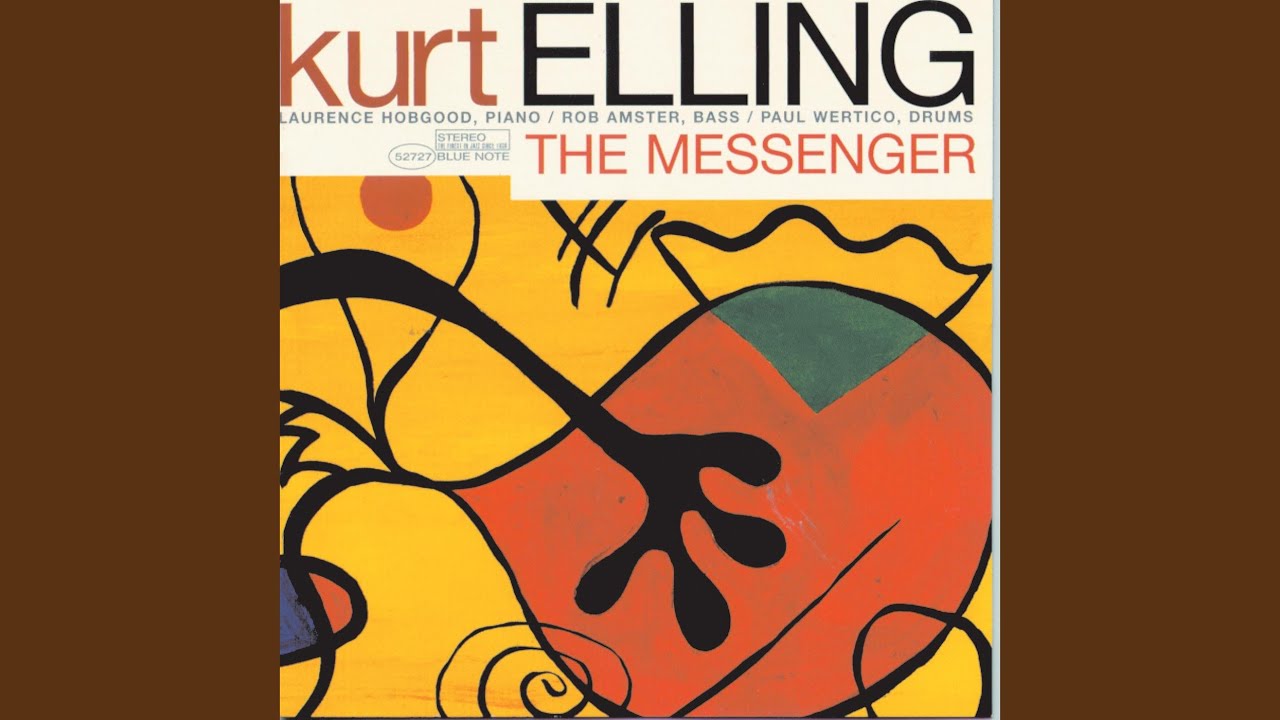
Provided to YouTube by Universal Music Group
Nature Boy · Kurt Elling
The Messenger
℗ 1997 Blue Note Records
Released on: 1997-01-01
Producer, Associated Performer, Vocals: Kurt Elling
Associated Performer, Upright Bass: Rob Amster
Associated Performer, Drums, Producer, Co- Producer: Paul Wertico
Producer: Laurence Hobgood
Composer Lyr...
lean flickerBOT
Nature Boy [00:06:09] added to the queue.
lapis seal
skip
willow cedar
faq begginer
lean flickerBOT
How to get started
The simplest way to learn German is to find topics you don’t understand yet and search for explanations of them. This list provides you with a guide for which topics to learn if you are completely new to German. Type the topic into Google (or YouTube) and start learning!
Introduction
1: Alphabet (especially ä, ü, ö and ß)
2: Basic greetings (hello, goodbye, etc.)
Part 1 - Simple Sentence
1: Noun gender & plurals
2: Nominative case (What are cases?)
3: Nominative pronouns (I, you, he, she, etc.)
4: Verbs in present tense
5: Definite/indefinite articles
6: Accusative case (for nouns)
7: Accusative pronouns
8: Word order of simple sentences
9: How to ask questions
See Part 2 on the next page.
Tips
- Always learn the gender of a noun when you learn a new noun
- Learn to use a translation dictionary (e.g. dict.cc, leo.org)
- Use
>faq resourcesto see our list of German learning resources - For listening and pronunciation practice, try watching movies or videos (incl. YouTube)
- You can listen to pronunciation for words on websites like dict.cc, forvo.com, and others
- Practice writing sentences every day (and asking people to correct them)
- Ask as many questions as possible
- Don’t be scared to make mistakes!!!! If you don’t let yourself make mistakes, you will never be able to learn German
Page 1/2
 humble walrus
info 598621390542995465
lean flickerBOT

Information about xverwirrte#0420
Name
@candid coral
ID
598621390542995465
Joined
<t:1658649084> (2 hours, 24 minutes and 32 seconds ago)
Account created
<t:1562792861> (3 years, 1 week and 6 days ago)
598621390542995465
 humble walrus
Selber
 night swan
faq cefr
lean flickerBOT
CEFR levels
If you see something like A1, B2 or C1, these represent the proficiency of a speaker in a language they're not native in, and are called CEFR levels. They are valid for any language, not only German!
Roughly speaking, A levels are beginners and C levels are experts. Remember that CEFR level are self-assessed and indicative!
You can see more specific names and descriptions on the Wikipedia page:
https://en.wikipedia.org/wiki/Common_European_Framework_of_Reference_for_Languages
🗨 How do I know what level I am?
If the table on Wikipedia is too generic for you, you can try using this one here:
https://rm.coe.int/168045bb52
Just check each column one at a time: if you can do all it describes, move to the next column. Your level is the highest where you can do the most things.
Alternatively, you can use this questionnaire to estimate your level more accurately:
https://www.laits.utexas.edu/fi/sites/laits.utexas.edu.fi/files/Self Assessment Checklist European.pdf
tender trellis
sessions
lean flickerBOT
There are no sessions currently scheduled.
 sweet kestrel
faq cefr
lean flickerBOT
CEFR levels
If you see something like A1, B2 or C1, these represent the proficiency of a speaker in a language they're not native in, and are called CEFR levels. They are valid for any language, not only German!
Roughly speaking, A levels are beginners and C levels are experts. Remember that CEFR level are self-assessed and indicative!
You can see more specific names and descriptions on the Wikipedia page:
https://en.wikipedia.org/wiki/Common_European_Framework_of_Reference_for_Languages
🗨 How do I know what level I am?
If the table on Wikipedia is too generic for you, you can try using this one here:
https://rm.coe.int/168045bb52
Just check each column one at a time: if you can do all it describes, move to the next column. Your level is the highest where you can do the most things.
Alternatively, you can use this questionnaire to estimate your level more accurately:
https://www.laits.utexas.edu/fi/sites/laits.utexas.edu.fi/files/Self Assessment Checklist European.pdf
 daring meteor
faq beginner
lean flickerBOT
How to get started - Part 2
Please make sure to read Part 1 before starting Part 2!
Part 2 – Beyond a Simple Sentence
1: Conjunctions (coordinating and subordinating)
2: Subordinate clause word order
3: Dative case
4: Dative verbs
5: Verbs with two objects (e.g. geben)
6: Prepositions (accusative, dative, and two-way)
7: Spoken past tense (Perfekt)
8: Written past tense (Präteritum)
9: Genitive case
10: Relative clauses
11: Adjective declension
Tips
- Make sure to practice writing and reading simple texts
- Some of these concepts are confusing to start with, so it’s a good idea to ask for help in #questions when you’re unsure
- You should use a declension chart to help with declension to start with, because you won’t be able to memorize it straight away
- After you feel confident with creating sentences, you can start learning the adjective declension properly by using the command >faq adjective declension and reading the guide provided
Page 2/2
 brazen mango
faq beginner
lean flickerBOT
How to get started
The simplest way to learn German is to find topics you don’t understand yet and search for explanations of them. This list provides you with a guide for which topics to learn if you are completely new to German. Type the topic into Google (or YouTube) and start learning!
Introduction
1: Alphabet (especially ä, ü, ö and ß)
2: Basic greetings (hello, goodbye, etc.)
Part 1 - Simple Sentence
1: Noun gender & plurals
2: Nominative case (What are cases?)
3: Nominative pronouns (I, you, he, she, etc.)
4: Verbs in present tense
5: Definite/indefinite articles
6: Accusative case (for nouns)
7: Accusative pronouns
8: Word order of simple sentences
9: How to ask questions
See Part 2 on the next page.
Tips
- Always learn the gender of a noun when you learn a new noun
- Learn to use a translation dictionary (e.g. dict.cc, leo.org)
- Use
>faq resourcesto see our list of German learning resources - For listening and pronunciation practice, try watching movies or videos (incl. YouTube)
- You can listen to pronunciation for words on websites like dict.cc, forvo.com, and others
- Practice writing sentences every day (and asking people to correct them)
- Ask as many questions as possible
- Don’t be scared to make mistakes!!!! If you don’t let yourself make mistakes, you will never be able to learn German
Page 1/2
brazen mango
faq resources
lean flickerBOT
Resources
 coarse saffron
help
lean flickerBOT
German commands
:small_blue_diamond: **lookup** <target> <phrase>
Translates the given phrase into the specified target language using dict.cc. Specify either en or de as targets.
:small_blue_diamond: **noun** <noun>
Provides a link to the declension of the given noun.
:small_blue_diamond: **verb** <infinitive>
Provides a link to the conjugation of the given infinitive.
:small_blue_diamond: **words**
A command that helps you train vocabulary using dict.cc.
Page 15/20 (20 entries)
coarse saffron
help semantle
lean flickerBOT
semantle
:small_blue_diamond: **semantle addprompts** <words>
**Aliases: **semantle addprompt, semantle newprompt, semantle newprompts
Adds all the given words as prompts. They will be saved, but won't appear in new games until a moderator reloads the prompt list.
Before adding a word please check if it would make a good prompt by running >semantle similar first.
:small_blue_diamond: **semantle clearpromptcache**
Clears the bot's prompt cache. When the next round starts it will be reloaded from the database.
:small_blue_diamond: **semantle similar** <words>
Shows the 1000 most similar words to the words you provide. This can be used to check if a word would make a good prompt before adding it.
For example, you can type >semantle similar hund katze bulli gehen. The bot will take some time and give you the lists of words most similar to the ones you provided. You should then go through the lists, check whether they make sense and wouldn't drive you insane if they appeared as prompts, and you can then add the prompts that you're happy with by running >semantle addprompt hund katze.
If you make a mistake, there isn't a delete command, just ping Arrem.
Module: Semantle
coarse saffron
verb sollen
lean flickerBOT

Konjugation Verb sollen: im Präsens, Präteritum, Konjunktiv, Perfekt, ... viele Beispiele, Grammatik, Regeln erklärt, Übersetzung, Übungen, Bedeutung und kostenlose Downloads.
coarse saffron
verb meinen
lean flickerBOT

Konjugation Verb meinen: im Präsens, Präteritum, Konjunktiv, Perfekt, ... viele Beispiele, Grammatik, Regeln erklärt, Übersetzung, Übungen, Bedeutung und kostenlose Downloads.
lean flickerBOT
Purpose commands
:small_blue_diamond: **📒 purpose** <input>
Gives information about a role or channel.
Page 6/20 (20 entries)
 dreamy moon
play Around the world
lean flickerBOT
Daft Punk - Around the World (Official Audio) [00:07:10] added to the queue.
dreamy moon
play Around the world
lean flickerBOT
Daft Punk - Around the World (Official Audio) [00:07:10] added to the queue.
dreamy moon

Provided to YouTube by Antilopen Geldwaesche/WM Germany
Das schreckliche Buch · Danger Dan
Das ist alles von der Kunstfreiheit gedeckt
℗ 2021 Antilopen Geldwäsche
Producer: Daniel Pongratz
Composer, Lyricist: Daniel Pongratz
Auto-generated by YouTube.
lean flickerBOT
Das schreckliche Buch [00:03:23] added to the queue.
dreamy moon
Provided to YouTube by Antilopen Geldwaesche/WM Germany
Das schreckliche Buch · Danger Dan
Das ist alles von der Kunstfreiheit gedeckt
℗ 2021 Antilopen Geldwäsche
Producer: Daniel Pongratz
Composer, Lyricist: Daniel Pongratz
Auto-generated by YouTube.
lean flickerBOT
Das schreckliche Buch [00:03:23] added to the queue.
lean flickerBOT
Lil Baby - Right On (Official Video) [00:03:37] added to the queue.
dreamy moon
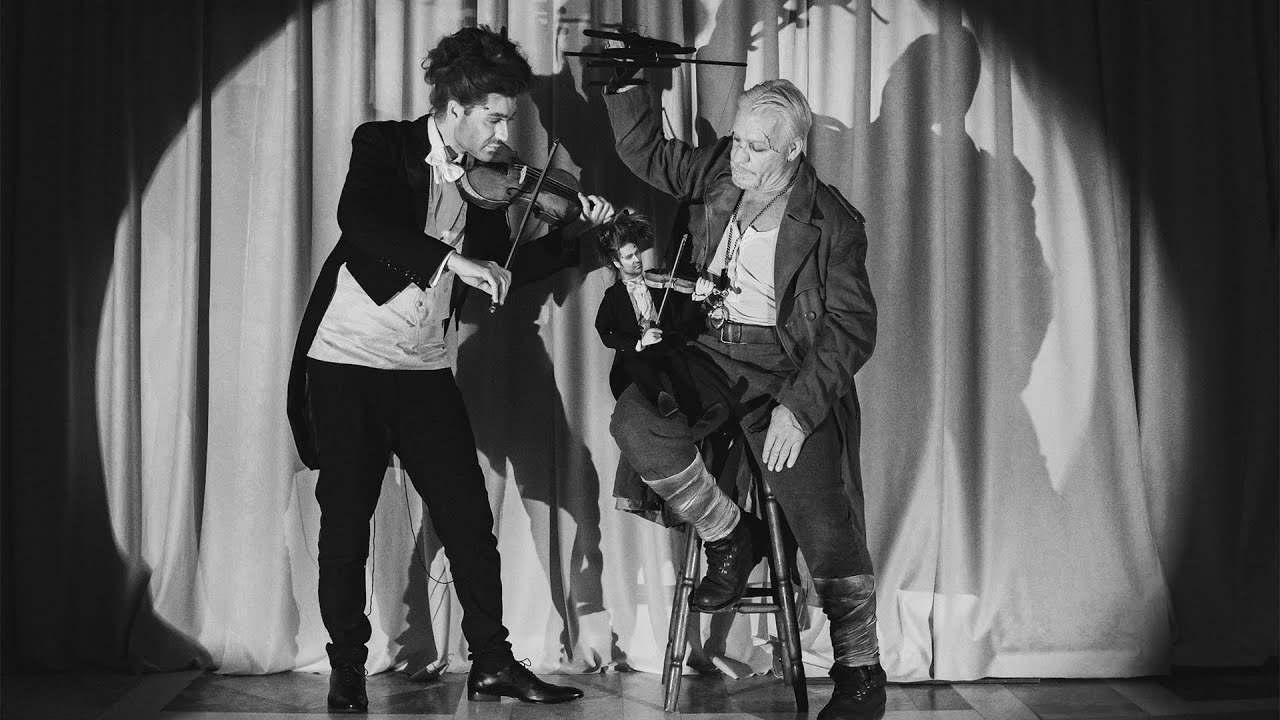
“Alle Tage ist kein Sonntag” out now: http://umg.lnk.to/ATikS
Video directed by Zoran Bihac
#alletageistkeinsonntag #TillLindemann #DavidGarrett
lean flickerBOT
Till Lindemann & David Garrett – Alle Tage ist kein Sonntag (Offical Video) [00:04:09] added to the queue.
 prime lagoon
verdammt
Ich kann dem Voice-Chat nicht beitreten
Mein Discord verhält sich komisch
 latent talon
faq lassen
lean flickerBOT
FAQ not found. Try >explain all.
tender trellis
Tbh h don’t now much about Baltic’s so I’ll let till slide
If u j know about it let me know
tender trellis
faq beginner
lean flickerBOT
How to get started - Part 2
Please make sure to read Part 1 before starting Part 2!
Part 2 – Beyond a Simple Sentence
1: Conjunctions (coordinating and subordinating)
2: Subordinate clause word order
3: Dative case
4: Dative verbs
5: Verbs with two objects (e.g. geben)
6: Prepositions (accusative, dative, and two-way)
7: Spoken past tense (Perfekt)
8: Written past tense (Präteritum)
9: Genitive case
10: Relative clauses
11: Adjective declension
Tips
- Make sure to practice writing and reading simple texts
- Some of these concepts are confusing to start with, so it’s a good idea to ask for help in #questions when you’re unsure
- You should use a declension chart to help with declension to start with, because you won’t be able to memorize it straight away
- After you feel confident with creating sentences, you can start learning the adjective declension properly by using the command >faq adjective declension and reading the guide provided
Page 2/2
latent talon
purpose aldi
lean flickerBOT
Aldi created me. Aldi is here to always watch over us, waiting for the chance to spit on someone.
 candid coral
play ranch asmr
lean flickerBOT
mukbangers DROWNING their food in ranch [00:06:02] added to the queue.
candid coral

coarse saffron
faq cefr
lean flickerBOT
CEFR levels
If you see something like A1, B2 or C1, these represent the proficiency of a speaker in a language they're not native in, and are called CEFR levels. They are valid for any language, not only German!
Roughly speaking, A levels are beginners and C levels are experts. Remember that CEFR level are self-assessed and indicative!
You can see more specific names and descriptions on the Wikipedia page:
https://en.wikipedia.org/wiki/Common_European_Framework_of_Reference_for_Languages
🗨 How do I know what level I am?
If the table on Wikipedia is too generic for you, you can try using this one here:
https://rm.coe.int/168045bb52
Just check each column one at a time: if you can do all it describes, move to the next column. Your level is the highest where you can do the most things.
Alternatively, you can use this questionnaire to estimate your level more accurately:
https://www.laits.utexas.edu/fi/sites/laits.utexas.edu.fi/files/Self Assessment Checklist European.pdf
humble walrus

During his speech, US President Joseph Biden used one word to describe America. However, no one seems to know what it means, not even himself.
lean flickerBOT
Joe Biden - The word that defines America [00:00:11] added to the queue.
fair yacht
explain adjective declension
lean flickerBOT
Adjective Declension
A Brief Guide to Memorizing German Noun and Adjective Declension by Basementality
https://docs.google.com/document/d/1jWl5-kkqF3FQLDzrz8XLBJj7hvPFQK7MT5SYEDGK65E/edit
 teal cosmos
faq cefr
lean flickerBOT
CEFR levels
If you see something like A1, B2 or C1, these represent the proficiency of a speaker in a language they're not native in, and are called CEFR levels. They are valid for any language, not only German!
Roughly speaking, A levels are beginners and C levels are experts. Remember that CEFR level are self-assessed and indicative!
You can see more specific names and descriptions on the Wikipedia page:
https://en.wikipedia.org/wiki/Common_European_Framework_of_Reference_for_Languages
🗨 How do I know what level I am?
If the table on Wikipedia is too generic for you, you can try using this one here:
https://rm.coe.int/168045bb52
Just check each column one at a time: if you can do all it describes, move to the next column. Your level is the highest where you can do the most things.
Alternatively, you can use this questionnaire to estimate your level more accurately:
https://www.laits.utexas.edu/fi/sites/laits.utexas.edu.fi/files/Self Assessment Checklist European.pdf
 sacred pendant
faq beginner
lean flickerBOT
How to get started
The simplest way to learn German is to find topics you don’t understand yet and search for explanations of them. This list provides you with a guide for which topics to learn if you are completely new to German. Type the topic into Google (or YouTube) and start learning!
Introduction
1: Alphabet (especially ä, ü, ö and ß)
2: Basic greetings (hello, goodbye, etc.)
Part 1 - Simple Sentence
1: Noun gender & plurals
2: Nominative case (What are cases?)
3: Nominative pronouns (I, you, he, she, etc.)
4: Verbs in present tense
5: Definite/indefinite articles
6: Accusative case (for nouns)
7: Accusative pronouns
8: Word order of simple sentences
9: How to ask questions
See Part 2 on the next page.
Tips
- Always learn the gender of a noun when you learn a new noun
- Learn to use a translation dictionary (e.g. dict.cc, leo.org)
- Use
>faq resourcesto see our list of German learning resources - For listening and pronunciation practice, try watching movies or videos (incl. YouTube)
- You can listen to pronunciation for words on websites like dict.cc, forvo.com, and others
- Practice writing sentences every day (and asking people to correct them)
- Ask as many questions as possible
- Don’t be scared to make mistakes!!!! If you don’t let yourself make mistakes, you will never be able to learn German
Page 1/2
 mild prawn
faq beginner
lean flickerBOT
How to get started
The simplest way to learn German is to find topics you don’t understand yet and search for explanations of them. This list provides you with a guide for which topics to learn if you are completely new to German. Type the topic into Google (or YouTube) and start learning!
Introduction
1: Alphabet (especially ä, ü, ö and ß)
2: Basic greetings (hello, goodbye, etc.)
Part 1 - Simple Sentence
1: Noun gender & plurals
2: Nominative case (What are cases?)
3: Nominative pronouns (I, you, he, she, etc.)
4: Verbs in present tense
5: Definite/indefinite articles
6: Accusative case (for nouns)
7: Accusative pronouns
8: Word order of simple sentences
9: How to ask questions
See Part 2 on the next page.
Tips
- Always learn the gender of a noun when you learn a new noun
- Learn to use a translation dictionary (e.g. dict.cc, leo.org)
- Use
>faq resourcesto see our list of German learning resources - For listening and pronunciation practice, try watching movies or videos (incl. YouTube)
- You can listen to pronunciation for words on websites like dict.cc, forvo.com, and others
- Practice writing sentences every day (and asking people to correct them)
- Ask as many questions as possible
- Don’t be scared to make mistakes!!!! If you don’t let yourself make mistakes, you will never be able to learn German
Page 1/2
 timid slate
faq beginner
lean flickerBOT
How to get started - Part 2
Please make sure to read Part 1 before starting Part 2!
Part 2 – Beyond a Simple Sentence
1: Conjunctions (coordinating and subordinating)
2: Subordinate clause word order
3: Dative case
4: Dative verbs
5: Verbs with two objects (e.g. geben)
6: Prepositions (accusative, dative, and two-way)
7: Spoken past tense (Perfekt)
8: Written past tense (Präteritum)
9: Genitive case
10: Relative clauses
11: Adjective declension
Tips
- Make sure to practice writing and reading simple texts
- Some of these concepts are confusing to start with, so it’s a good idea to ask for help in #questions when you’re unsure
- You should use a declension chart to help with declension to start with, because you won’t be able to memorize it straight away
- After you feel confident with creating sentences, you can start learning the adjective declension properly by using the command >faq adjective declension and reading the guide provided
Page 2/2
latent talon
help
lean flickerBOT
Generic 2/2 commands
:small_blue_diamond: **roles**
Lists all roles on the server.
:small_blue_diamond: **serverinfo**
Shows information about the current guild.
:small_blue_diamond: **showcolor** <hex code>
Shows an image of the given color hex code.
Page 13/25 (25 entries)
latent talon
help vc
 primal dune
faq begininner
lean flickerBOT
How to get started
The simplest way to learn German is to find topics you don’t understand yet and search for explanations of them. This list provides you with a guide for which topics to learn if you are completely new to German. Type the topic into Google (or YouTube) and start learning!
Introduction
1: Alphabet (especially ä, ü, ö and ß)
2: Basic greetings (hello, goodbye, etc.)
Part 1 - Simple Sentence
1: Noun gender & plurals
2: Nominative case (What are cases?)
3: Nominative pronouns (I, you, he, she, etc.)
4: Verbs in present tense
5: Definite/indefinite articles
6: Accusative case (for nouns)
7: Accusative pronouns
8: Word order of simple sentences
9: How to ask questions
See Part 2 on the next page.
Tips
- Always learn the gender of a noun when you learn a new noun
- Learn to use a translation dictionary (e.g. dict.cc, leo.org)
- Use
>faq resourcesto see our list of German learning resources - For listening and pronunciation practice, try watching movies or videos (incl. YouTube)
- You can listen to pronunciation for words on websites like dict.cc, forvo.com, and others
- Practice writing sentences every day (and asking people to correct them)
- Ask as many questions as possible
- Don’t be scared to make mistakes!!!! If you don’t let yourself make mistakes, you will never be able to learn German
Page 1/2
latent talon
faq cefr
lean flickerBOT
CEFR levels
If you see something like A1, B2 or C1, these represent the proficiency of a speaker in a language they're not native in, and are called CEFR levels. They are valid for any language, not only German!
Roughly speaking, A levels are beginners and C levels are experts. Remember that CEFR level are self-assessed and indicative!
You can see more specific names and descriptions on the Wikipedia page:
https://en.wikipedia.org/wiki/Common_European_Framework_of_Reference_for_Languages
🗨 How do I know what level I am?
If the table on Wikipedia is too generic for you, you can try using this one here:
https://rm.coe.int/168045bb52
Just check each column one at a time: if you can do all it describes, move to the next column. Your level is the highest where you can do the most things.
Alternatively, you can use this questionnaire to estimate your level more accurately:
https://www.laits.utexas.edu/fi/sites/laits.utexas.edu.fi/files/Self Assessment Checklist European.pdf
 willow osprey
lean flickerBOT
willow osprey
lean flickerBOT
CEFR levels
If you see something like A1, B2 or C1, these represent the proficiency of a speaker in a language they're not native in, and are called CEFR levels. They are valid for any language, not only German!
Roughly speaking, A levels are beginners and C levels are experts. Remember that CEFR level are self-assessed and indicative!
You can see more specific names and descriptions on the Wikipedia page:
https://en.wikipedia.org/wiki/Common_European_Framework_of_Reference_for_Languages
🗨 How do I know what level I am?
If the table on Wikipedia is too generic for you, you can try using this one here:
https://rm.coe.int/168045bb52
Just check each column one at a time: if you can do all it describes, move to the next column. Your level is the highest where you can do the most things.
Alternatively, you can use this questionnaire to estimate your level more accurately:
https://www.laits.utexas.edu/fi/sites/laits.utexas.edu.fi/files/Self Assessment Checklist European.pdf
 glacial seal
faq beginner
lean flickerBOT
How to get started - Part 2
Please make sure to read Part 1 before starting Part 2!
Part 2 – Beyond a Simple Sentence
1: Conjunctions (coordinating and subordinating)
2: Subordinate clause word order
3: Dative case
4: Dative verbs
5: Verbs with two objects (e.g. geben)
6: Prepositions (accusative, dative, and two-way)
7: Spoken past tense (Perfekt)
8: Written past tense (Präteritum)
9: Genitive case
10: Relative clauses
11: Adjective declension
Tips
- Make sure to practice writing and reading simple texts
- Some of these concepts are confusing to start with, so it’s a good idea to ask for help in #questions when you’re unsure
- You should use a declension chart to help with declension to start with, because you won’t be able to memorize it straight away
- After you feel confident with creating sentences, you can start learning the adjective declension properly by using the command >faq adjective declension and reading the guide provided
Page 2/2
 tiny kiln
lean flickerBOT
tiny kiln
lean flickerBOT
CEFR levels
If you see something like A1, B2 or C1, these represent the proficiency of a speaker in a language they're not native in, and are called CEFR levels. They are valid for any language, not only German!
Roughly speaking, A levels are beginners and C levels are experts. Remember that CEFR level are self-assessed and indicative!
You can see more specific names and descriptions on the Wikipedia page:
https://en.wikipedia.org/wiki/Common_European_Framework_of_Reference_for_Languages
🗨 How do I know what level I am?
If the table on Wikipedia is too generic for you, you can try using this one here:
https://rm.coe.int/168045bb52
Just check each column one at a time: if you can do all it describes, move to the next column. Your level is the highest where you can do the most things.
Alternatively, you can use this questionnaire to estimate your level more accurately:
https://www.laits.utexas.edu/fi/sites/laits.utexas.edu.fi/files/Self Assessment Checklist European.pdf
 brazen mesa
faq nicos
lean flickerBOT
nicos
Nicos Weg is a free online program aimed at helping people learn German. It includes video, audio, text, grammar explanations, notes, vocabulary, and exercises. It also includes very useful cultural and bureaucratic information, such as how to open a bank account, while teaching you the relevant grammar and vocabulary.
It’s fairly popular and well-recommended, but keep in mind that you can’t learn a language with only one resource, even if it’s a good one!
You can find the courses here: https://learngerman.dw.com/en/overview/
You can also see various other courses for learners by dw.com here: https://www.dw.com/en/learn-german/s-2469/
latent talon
info
lean flickerBOT

Information about leer#4509
Name
@latent talon
ID
946155050600915005
Joined
<t:1655966104> (1 month, 2 days and 15 hours ago)
Account created
<t:1645651342> (5 months, 2 days and 12 minutes ago)
946155050600915005
candid coral
_ _
latent talon
hi, I see you are still lurking everywhere
candid coral
 ofc
ofc
 hollow crystal
faq beginner
lean flickerBOT
How to get started - Part 2
Please make sure to read Part 1 before starting Part 2!
Part 2 – Beyond a Simple Sentence
1: Conjunctions (coordinating and subordinating)
2: Subordinate clause word order
3: Dative case
4: Dative verbs
5: Verbs with two objects (e.g. geben)
6: Prepositions (accusative, dative, and two-way)
7: Spoken past tense (Perfekt)
8: Written past tense (Präteritum)
9: Genitive case
10: Relative clauses
11: Adjective declension
Tips
- Make sure to practice writing and reading simple texts
- Some of these concepts are confusing to start with, so it’s a good idea to ask for help in #questions when you’re unsure
- You should use a declension chart to help with declension to start with, because you won’t be able to memorize it straight away
- After you feel confident with creating sentences, you can start learning the adjective declension properly by using the command >faq adjective declension and reading the guide provided
Page 2/2
latent talon
faq all
lean flickerBOT
See a listed FAQ with >faq [name]
:small_blue_diamond: absentive
Aliases: absentiv
:small_blue_diamond: Accusative
Aliases: Akkusativ
:small_blue_diamond: Adjective Declension
Aliases: adjective endings, Adjektivdeklination
:small_blue_diamond: Anki
Aliases: flashcards
:small_blue_diamond: beginner 2
:small_blue_diamond: Beide vs. Beides
Aliases: Beides vs. Beide, Beides, Beide
:small_blue_diamond: Best way to learn German
Aliases: learn fast, learn German fast, learn efficiently, best way to learn, fastest way to learn, most efficient way to learn
:small_blue_diamond: birthdays
:small_blue_diamond: Cases
Aliases: case, grammatical case
:small_blue_diamond: CEFR levels
Aliases: lvl, CEFR, cerf
:small_blue_diamond: conjugation
Aliases: praesens, präsens, present tense, verbs, verb conjugation, Konjugation
:small_blue_diamond: Contractions
Aliases: Verschmelzung, vom, Schmelzwort
:small_blue_diamond: DACH
:small_blue_diamond: Dative
Aliases: Dativ
:small_blue_diamond: doch
Page 1/4 (59 entries)
latent talon
faq ipa
lean flickerBOT
IPA
The International Phonetic Alphabet is a system for writing sounds regardless of the language: one sound will have only one letter for it, so it's really helpful for learning pronunciation in any language without relying on approximations.
IPA has a lot of symbols, but you don't need to learn them all.
🔸 What are those // and [] I see around?
Symbols in slashes (like /r/) represent so-called phonemes, units of sound. Each phoneme can be pronounced in different ways depending on where it is in the word. For example, the phoneme /r/ is pronounced [ʁ] in most situations, but [ɐ] after vowels. As you can see, square brackets (like [ʁ]) represent actual sounds. Finally, pointy brackets like ⟨r⟩ represent how a sound is written, which can vary from language to language.
Example: ⟨sprechen⟩ /sprεçən/ [ʃpʁε.çn̩]
🔸 So how to learn it?
All you need to learn is the few symbols used by the language you're interested in. For German, you can look up the relevant letters on Wikipedia: https://en.wikipedia.org/wiki/Help:IPA/Standard_German. Notice the Help:IPA/Language_Name pattern in the URL.
There, you will find a table of symbols with an approximation, but you can also click on each specific symbol to learn exactly how to pronounce it studying the Features section, for example: https://en.wikipedia.org/wiki/Voiceless_palatal_fricative#Features
🔸 Which IPA letters are important for German?
Sounds you are likely to have trouble with are ⟨x⟩, ⟨ç⟩, ⟨ʁ⟩, ⟨ɐ⟩ and several vowels. These are all described in the Wiki link above.
You can use this website to transcribe German words if your dictionary doesn't give an IPA transcription:
http://tom.brondsted.dk/text2phoneme/
 digital furnace
faq
lean flickerBOT
:x: The required argument name is missing.
digital furnace
faq resources
lean flickerBOT
Resources
digital furnace
explain
lean flickerBOT
:x: The required argument name is missing.
digital furnace
explain help
lean flickerBOT
FAQ not found. Try >explain all.
digital furnace
explain all
lean flickerBOT
See a listed FAQ with >faq [name]
:small_blue_diamond: Duolingo
Aliases: duo
:small_blue_diamond: Eszett
Aliases: Scharfes S, ẞ, ß
:small_blue_diamond: FAQ
:small_blue_diamond: Formal and informal speech
Aliases: duzen vs. siezen, Sie, Du vs. Sie, siezen, du, informal, formal, du vs sie
:small_blue_diamond: Gender patterns
:small_blue_diamond: Genitive
Aliases: Genitiv
:small_blue_diamond: German letters
Aliases: german keyboard, keyboard
:small_blue_diamond: Grammar terms
Aliases: Glossary, Grammatical terms
:small_blue_diamond: Grammatical gender
Aliases: genders, der-die-das, gender
:small_blue_diamond: How to ask a question
Aliases: Translation, Homework
:small_blue_diamond: How to get started
Aliases: Starting out, beginner
:small_blue_diamond: How to use writing
:small_blue_diamond: Impersonal Verbs
Aliases: unpersönliche Verben, impersonal es
:small_blue_diamond: IPA
Aliases: Pronunciation, Sound transcription, International Phonetic Alphabet
:small_blue_diamond: lessons
Aliases: sessions, activities
Page 2/4 (59 entries)
digital furnace
explain adjective endings
lean flickerBOT
Adjective Declension
A Brief Guide to Memorizing German Noun and Adjective Declension by Basementality
https://docs.google.com/document/d/1jWl5-kkqF3FQLDzrz8XLBJj7hvPFQK7MT5SYEDGK65E/edit
digital furnace
explain Genter patterns
lean flickerBOT
**Feminine words (die)**
- many words ending in
-e(die Nase, die Kiste) - words ending in:
---in(feminine professions/roles): die Verkäuferin, die Lehrerin
---eidie Fischerei, die Bäckerei
---schaftdie Mannschaft, die Gemeinschaft
---heit/-keitdie Freiheit, die Gerechtigkeit
---ungdie Bedeutung, die Achtung
---iondie Aktion, die Religion
---ikdie Logistik, die Logik
---anzwords of classical origin: die Allianz, die Toleranz
---urdie Natur, die Kultur
---tätdie Professionalität, die Kriminalität
Page 4/4
digital furnace
explain impersonal es
 full frigate
faq beginner
lean flickerBOT
How to get started - Part 2
Please make sure to read Part 1 before starting Part 2!
Part 2 – Beyond a Simple Sentence
1: Conjunctions (coordinating and subordinating)
2: Subordinate clause word order
3: Dative case
4: Dative verbs
5: Verbs with two objects (e.g. geben)
6: Prepositions (accusative, dative, and two-way)
7: Spoken past tense (Perfekt)
8: Written past tense (Präteritum)
9: Genitive case
10: Relative clauses
11: Adjective declension
Tips
- Make sure to practice writing and reading simple texts
- Some of these concepts are confusing to start with, so it’s a good idea to ask for help in #questions when you’re unsure
- You should use a declension chart to help with declension to start with, because you won’t be able to memorize it straight away
- After you feel confident with creating sentences, you can start learning the adjective declension properly by using the command >faq adjective declension and reading the guide provided
Page 2/2
lapis seal
SHINee’s 2nd full length album "Lucifer" has been released.
Listen and download on iTunes & Apple Music, Spotify, and Google Play Music
http://itunes.apple.com/us/album/the-2nd-album-lucifer/id383063258
#SHINee #샤이니 #Lucifer #루시퍼 #Release #100719
SHINee Official
http://www.youtube.com/shinee
http://www.facebook.com/shinee
http://www.instagram...
lean flickerBOT
SHINee 샤이니 'Lucifer' MV [00:03:58] added to the queue.
lapis seal

TAEMIN’s first mini album "ACE" has been released.
Listen and download on iTunes & Apple Music
https://itunes.apple.com/us/album/the-1st-mini-album-ace-ep/id910085715?ls=1
TAEMIN Official
https://www.youtube.com/SHINee
https://www.facebook.com/shinee
https://www.instagram.com/shinee
https://www.vlive.tv/channel/96DD0B
https://twitter.com/SHINee...
lean flickerBOT
TAEMIN 태민 '괴도 (Danger)' MV [00:03:27] added to the queue.
lapis seal

Stray Kids(스트레이 키즈) "神메뉴(God's Menu)" M/V
Stray Kids THE 1ST ALBUM "GO生"
iTunes & Apple Music: https://apple.co/3ebMDYj
Spotify: https://spoti.fi/3ddIDVT
Stray Kids ‘GO LIVE’ Limited Version: https://geni.us/StrayKidsGLCD
Download Stray Kids 'GO LIVE': https://orcd.co/golive
Stray Kids Official YouTube: https://www.youtube.com/c/StrayKids
Stra...
lean flickerBOT
Stray Kids "神메뉴(God's Menu)" M/V [00:03:06] added to the queue.
lapis seal
 lean flickerBOT
AI - Voice [00:05:16] added to the queue.
lapis seal

2011.02.02発売ニューシングル WHAT'S MY NAME? music video
lean flickerBOT
MIYAVI - WHAT'S MY NAME? [00:03:28] added to the queue.
lapis seal

●ストリーミングはコチラ♪
https://umj.lnk.to/Superfly_music
●CD購入はコチラ💿
https://umj.lnk.to/Superfly_CD
Twitter
https://twitter.com/Superfly_staff
Instagram
https://www.instagram.com/superfly_sh...
YouTube
https://www.youtube.com/Superfly/
================================================================
フジテレビ系水10ドラマ「無痛〜診える眼〜」主題歌「黒い雫」収録!!
Superfly 20thシングル...
lean flickerBOT
Superfly『黒い雫』Music Video〜フジテレビ系水10ドラマ「無痛〜診える眼〜」主題歌〜 [00:03:44] added to the queue.
 unreal kraken
faq cefr
lean flickerBOT
CEFR levels
If you see something like A1, B2 or C1, these represent the proficiency of a speaker in a language they're not native in, and are called CEFR levels. They are valid for any language, not only German!
Roughly speaking, A levels are beginners and C levels are experts. Remember that CEFR level are self-assessed and indicative!
You can see more specific names and descriptions on the Wikipedia page:
https://en.wikipedia.org/wiki/Common_European_Framework_of_Reference_for_Languages
🗨 How do I know what level I am?
If the table on Wikipedia is too generic for you, you can try using this one here:
https://rm.coe.int/168045bb52
Just check each column one at a time: if you can do all it describes, move to the next column. Your level is the highest where you can do the most things.
Alternatively, you can use this questionnaire to estimate your level more accurately:
https://www.laits.utexas.edu/fi/sites/laits.utexas.edu.fi/files/Self Assessment Checklist European.pdf
unreal kraken
faq best way to learn
lean flickerBOT
Best way to learn German
Should I study all these skills every day?
If you want to study them all every day, you can, but some people may find it easier to focus on particular skills on particular days. For example, on Monday you might choose to do a lot of writing practice, and then on Tuesday you might plan some conversation practice with some speaking partners.
If you try to cover too many different things in one day, then you might be jumping around all over the place and not able to focus on each individual task. It’s also a really good idea to have a different schedule or set of tasks each day to keep things from getting boring. So setting a special schedule or set of tasks for each day of the week - like the Monday writing day, or every Friday you do some grammar exercises followed by watching TV shows, or any other combination you like – is a really good way to go.
How much time should I dedicate to studying?
Everyone has a different schedule and everyone learns at a different pace. It is recommended to study every day, preferably for 30 minutes or more, but taking 1-2 days off is okay. More important is how many hours you study in a week.
A casual pace will be roughly around 5-8 hours a week, a steady pace would be around 10-14 hours a week, and a fast pace (around the same pace as a university subject) will be 15-20 hours a week.
Anything less than 5 hours and you may find it hard to keep improving steadily (but feel free to try it and see how it works for you), while studying one subject for over 25 hours a week may quickly lead to burnout.
How you choose to spread those hours out over the week is not that important; for example, if you have a lot of time on the weekend but not during the week, it’s fine to do short study sessions on weekdays and then dedicate a bunch of time on Saturday and Sunday.
Page 2/2
unreal kraken
faq beginner
lean flickerBOT
How to get started - Part 2
Please make sure to read Part 1 before starting Part 2!
Part 2 – Beyond a Simple Sentence
1: Conjunctions (coordinating and subordinating)
2: Subordinate clause word order
3: Dative case
4: Dative verbs
5: Verbs with two objects (e.g. geben)
6: Prepositions (accusative, dative, and two-way)
7: Spoken past tense (Perfekt)
8: Written past tense (Präteritum)
9: Genitive case
10: Relative clauses
11: Adjective declension
Tips
- Make sure to practice writing and reading simple texts
- Some of these concepts are confusing to start with, so it’s a good idea to ask for help in #questions when you’re unsure
- You should use a declension chart to help with declension to start with, because you won’t be able to memorize it straight away
- After you feel confident with creating sentences, you can start learning the adjective declension properly by using the command >faq adjective declension and reading the guide provided
Page 2/2
unreal kraken
faq resources
lean flickerBOT
Resources
 radiant delta
faq beginner
lean flickerBOT
How to get started
The simplest way to learn German is to find topics you don’t understand yet and search for explanations of them. This list provides you with a guide for which topics to learn if you are completely new to German. Type the topic into Google (or YouTube) and start learning!
Introduction
1: Alphabet (especially ä, ü, ö and ß)
2: Basic greetings (hello, goodbye, etc.)
Part 1 - Simple Sentence
1: Noun gender & plurals
2: Nominative case (What are cases?)
3: Nominative pronouns (I, you, he, she, etc.)
4: Verbs in present tense
5: Definite/indefinite articles
6: Accusative case (for nouns)
7: Accusative pronouns
8: Word order of simple sentences
9: How to ask questions
See Part 2 on the next page.
Tips
- Always learn the gender of a noun when you learn a new noun
- Learn to use a translation dictionary (e.g. dict.cc, leo.org)
- Use
>faq resourcesto see our list of German learning resources - For listening and pronunciation practice, try watching movies or videos (incl. YouTube)
- You can listen to pronunciation for words on websites like dict.cc, forvo.com, and others
- Practice writing sentences every day (and asking people to correct them)
- Ask as many questions as possible
- Don’t be scared to make mistakes!!!! If you don’t let yourself make mistakes, you will never be able to learn German
Page 1/2
radiant delta
faq resources
lean flickerBOT
Resources
 scarlet silo
faq duolingo
lean flickerBOT
Duolingo
Duolingo is a decent resource to start with if you're a complete beginner, but it's neither efficient nor comprehensive!
What Duolingo will teach you about grammar is very limited, and none of the systems they use will help you practise much of it.
You can learn some vocabulary with it, but their method (based on the concept of spaced repetition) doesn't work for everybody, and the way Duolingo teaches is not very effective compared to the amount of time it requires from you.
So, if you find it useful, by all means keep using it, but remember not to fall for its gamification of language learning, and move past it when it stops being beneficial. Ignore the streaks.
In any case, keep in mind that Duolingo is not enough to learn a language, ever.
If you're looking for guidance or alternatives, check out >faq beginner in our #botchannel .
scarlet silo
lean flicker
@gentle owl there's an explanation for it! ^^
 gentle owl
scarlet silo
<@833606248536473630> there's an explanation for it! ^^
gentle owl
scarlet silo
<@833606248536473630> there's an explanation for it! ^^
Thanks.
tender trellis
faq beginner
lean flickerBOT
How to get started
The simplest way to learn German is to find topics you don’t understand yet and search for explanations of them. This list provides you with a guide for which topics to learn if you are completely new to German. Type the topic into Google (or YouTube) and start learning!
Introduction
1: Alphabet (especially ä, ü, ö and ß)
2: Basic greetings (hello, goodbye, etc.)
Part 1 - Simple Sentence
1: Noun gender & plurals
2: Nominative case (What are cases?)
3: Nominative pronouns (I, you, he, she, etc.)
4: Verbs in present tense
5: Definite/indefinite articles
6: Accusative case (for nouns)
7: Accusative pronouns
8: Word order of simple sentences
9: How to ask questions
See Part 2 on the next page.
Tips
- Always learn the gender of a noun when you learn a new noun
- Learn to use a translation dictionary (e.g. dict.cc, leo.org)
- Use
>faq resourcesto see our list of German learning resources - For listening and pronunciation practice, try watching movies or videos (incl. YouTube)
- You can listen to pronunciation for words on websites like dict.cc, forvo.com, and others
- Practice writing sentences every day (and asking people to correct them)
- Ask as many questions as possible
- Don’t be scared to make mistakes!!!! If you don’t let yourself make mistakes, you will never be able to learn German
Page 1/2
tender trellis
@tender trellis
tender trellis
tender trellis
<@456226577798135808>
Thank you❤️
 pearl stream
faq beginner
lean flickerBOT
How to get started
The simplest way to learn German is to find topics you don’t understand yet and search for explanations of them. This list provides you with a guide for which topics to learn if you are completely new to German. Type the topic into Google (or YouTube) and start learning!
Introduction
1: Alphabet (especially ä, ü, ö and ß)
2: Basic greetings (hello, goodbye, etc.)
Part 1 - Simple Sentence
1: Noun gender & plurals
2: Nominative case (What are cases?)
3: Nominative pronouns (I, you, he, she, etc.)
4: Verbs in present tense
5: Definite/indefinite articles
6: Accusative case (for nouns)
7: Accusative pronouns
8: Word order of simple sentences
9: How to ask questions
See Part 2 on the next page.
Tips
- Always learn the gender of a noun when you learn a new noun
- Learn to use a translation dictionary (e.g. dict.cc, leo.org)
- Use
>faq resourcesto see our list of German learning resources - For listening and pronunciation practice, try watching movies or videos (incl. YouTube)
- You can listen to pronunciation for words on websites like dict.cc, forvo.com, and others
- Practice writing sentences every day (and asking people to correct them)
- Ask as many questions as possible
- Don’t be scared to make mistakes!!!! If you don’t let yourself make mistakes, you will never be able to learn German
Page 1/2
lean flickerBOT
FAQ not found. Try >explain all.
 tribal kite
sessions
lean flickerBOT
Upcoming Sessions
:calendar: Want to add our sessions schedule to your Google calendar?
:small_blue_diamond: (Your time: <t:1659294000:F>) held by timmy
[ID: 224] (AdvancedReading)
Reading: Siddhartha
Recommended level(s):

Type `>session info [ID#]` e.g. `>session info 3` for more detail about a specific session.
 viscid cargo
purpose german-only
lean flickerBOT
Information about german-only
german-only
🇩🇪 :flag_at: :flag_ch: :flag_be: :flag_lu: :flag_li: Please only talk in German here. :)
lean flickerBOT
CEFR levels
If you see something like A1, B2 or C1, these represent the proficiency of a speaker in a language they're not native in, and are called CEFR levels. They are valid for any language, not only German!
Roughly speaking, A levels are beginners and C levels are experts. Remember that CEFR level are self-assessed and indicative!
You can see more specific names and descriptions on the Wikipedia page:
https://en.wikipedia.org/wiki/Common_European_Framework_of_Reference_for_Languages
🗨 How do I know what level I am?
If the table on Wikipedia is too generic for you, you can try using this one here:
https://rm.coe.int/168045bb52
Just check each column one at a time: if you can do all it describes, move to the next column. Your level is the highest where you can do the most things.
Alternatively, you can use this questionnaire to estimate your level more accurately:
https://www.laits.utexas.edu/fi/sites/laits.utexas.edu.fi/files/Self Assessment Checklist European.pdf
Groups commands
:small_blue_diamond: **📒 group**
Commands for the bot's group system. You can use these to join and leave groups.
Group moderators can also start sessions, ping members and manage group membership.
Page 17/20 (20 entries)
Information about german-only
german-only
🇩🇪 :flag_at: :flag_ch: :flag_be: :flag_lu: :flag_li: Please only talk in German here. :)
 elfin summit
faq beginner
lean flickerBOT
How to get started
The simplest way to learn German is to find topics you don’t understand yet and search for explanations of them. This list provides you with a guide for which topics to learn if you are completely new to German. Type the topic into Google (or YouTube) and start learning!
Introduction
1: Alphabet (especially ä, ü, ö and ß)
2: Basic greetings (hello, goodbye, etc.)
Part 1 - Simple Sentence
1: Noun gender & plurals
2: Nominative case (What are cases?)
3: Nominative pronouns (I, you, he, she, etc.)
4: Verbs in present tense
5: Definite/indefinite articles
6: Accusative case (for nouns)
7: Accusative pronouns
8: Word order of simple sentences
9: How to ask questions
See Part 2 on the next page.
Tips
- Always learn the gender of a noun when you learn a new noun
- Learn to use a translation dictionary (e.g. dict.cc, leo.org)
- Use
>faq resourcesto see our list of German learning resources - For listening and pronunciation practice, try watching movies or videos (incl. YouTube)
- You can listen to pronunciation for words on websites like dict.cc, forvo.com, and others
- Practice writing sentences every day (and asking people to correct them)
- Ask as many questions as possible
- Don’t be scared to make mistakes!!!! If you don’t let yourself make mistakes, you will never be able to learn German
Page 1/2
tender trellis
faq resources
lean flickerBOT
Resources
tender trellis
faq beginner
 slender ember
faq beginner
lapis seal
 lean flickerBOT
Angelika Vee Tokyo Love Video HD [00:03:34] added to the queue.
chilly crescent
play love never felt so good michael jackson
lean flickerBOT
Michael Jackson, Justin Timberlake - Love Never Felt So Good (Official Video) [00:04:07] added to the queue.
chilly crescent
play i thought it was you herbie hancock
lean flickerBOT
Herbie Hancock - I Thought It Was You [00:08:55] added to the queue.
chilly crescent
play chet baker let's get lost
lean flickerBOT
Chet Baker - Let’s Get Lost [01:03:06] added to the queue.
lean flickerBOT
Gil Scott-Heron - Gun [00:04:02] added to the queue.
chilly crescent
 languid fossil
Any channel for music
languid fossil
Any channel for music
this
languid fossil
What channel?
chilly crescent
german only blue
languid fossil
chilly crescent
this
Where do I go to listen
O k
play the world's smallest violin
lean flickerBOT
AJR - World's Smallest Violin (Lyrics) [00:03:01] added to the queue.
lapis seal
np
lean flickerBOT
:notes: Currently playing Chet Baker - Let’s Get Lost, 00:56:55 remaining, by Natsu.
lean flickerBOT
Chet Baker - But Not For Me [00:03:05] added to the queue.
chilly crescent
play i fall in love too easily chet baker
lean flickerBOT
Chet Baker - I fall in love too easily [00:03:23] added to the queue.
chilly crescent
play it wasn't me shaggy
lean flickerBOT
Shaggy It Wasn't Me (Official Music Video) (uncensored) [00:03:46] added to the queue.
 dense loom
faq beginner
lean flickerBOT
How to get started
The simplest way to learn German is to find topics you don’t understand yet and search for explanations of them. This list provides you with a guide for which topics to learn if you are completely new to German. Type the topic into Google (or YouTube) and start learning!
Introduction
1: Alphabet (especially ä, ü, ö and ß)
2: Basic greetings (hello, goodbye, etc.)
Part 1 - Simple Sentence
1: Noun gender & plurals
2: Nominative case (What are cases?)
3: Nominative pronouns (I, you, he, she, etc.)
4: Verbs in present tense
5: Definite/indefinite articles
6: Accusative case (for nouns)
7: Accusative pronouns
8: Word order of simple sentences
9: How to ask questions
See Part 2 on the next page.
Tips
- Always learn the gender of a noun when you learn a new noun
- Learn to use a translation dictionary (e.g. dict.cc, leo.org)
- Use
>faq resourcesto see our list of German learning resources - For listening and pronunciation practice, try watching movies or videos (incl. YouTube)
- You can listen to pronunciation for words on websites like dict.cc, forvo.com, and others
- Practice writing sentences every day (and asking people to correct them)
- Ask as many questions as possible
- Don’t be scared to make mistakes!!!! If you don’t let yourself make mistakes, you will never be able to learn German
Page 1/2
dense loom
faq resources
lean flickerBOT
Resources
 cold shard
faq wissen vs kennen
lean flickerBOT
wissen und kennen
The verbs wissen and kennen both translate to know. However, in most cases they cannot be used interchangeably.
You should use wissen with information or facts, for example:
(1) Ich weiß, dass er Peter heißt. (I know his name is Peter.)
(2) Ich weiß nicht, wie alt er ist. (I don't know how old he is.)
(3) Ich weiß, wo er wohnt. (I know where he lives.)
(4) Ich weiß es. (I know it.)
🌟Note that wissen almost always requires a subordinate clause which starts with either dass, wie, wann, wo, wer, or warum.
The verb kennen is used to express that you are familiar with a person, place or simply a thing, for example:
(5) Ich kenne Maria. (I know Maria.)
(6) Ich kenne diesen Fluss. (I know that river.)
(7) Ich kenne das Buch. (I know the book.)
(8) Ich kenne ihn. (I know him.)
🌟 Note that kennen almost always refers to a noun or pronoun.
‼ As with every rule, there are certain exceptions, in which you can use either, for example:
(9) Ich weiß/kenne den Weg. (I know the way.)
(10) Ich weiß/kenne deinen Namen (I know your name.)
Although they are often used interchangeably in this context, the general rules explained above still apply to them.
The wissen sentence is purely about knowing the way/name, while the kennen sentence also means that you already went that way a few times or have heard that name somewhere before.
 inner stump
faq beginner
 neon granite
faq keyboard
lean flickerBOT
German letters
Being able to type German letters is quite important!
- Schon = already. Schön = beautiful.
- Mutter = mother. Mütter = mothers.
How to? There are several options.
🔸 US International layout: if you're using a US keyboard or a keyboard based on it, the transition is very easy! Everything stays as you know it, except for some symbol keys like ~, ` or , which can be pressed to add accents. For example `` + a = ä. You can also do RightAlt + s = ß.
To use US International on Windows, look for the Region & Language options and switch your selected keyboard layout to US International.
🔸 If you're on Mac, on most systems you can press and hold a letter to show several variants including umlauts. You can type ß by pressing Option + B.
🔸 Use a program like AutoHotkey to automatically type the symbols you need when you type certain shortcuts: https://www.autohotkey.com/
See the next page for more alternatives.
Page 1/2
neon granite
@dapper cargo just do what I did and look through
 dapper cargo
lean flickerBOT
dapper cargo
lean flickerBOT
German letters
Being able to type German letters is quite important!
- Schon = already. Schön = beautiful.
- Mutter = mother. Mütter = mothers.
How to? There are several options.
🔸 US International layout: if you're using a US keyboard or a keyboard based on it, the transition is very easy! Everything stays as you know it, except for some symbol keys like ~, ` or , which can be pressed to add accents. For example `` + a = ä. You can also do RightAlt + s = ß.
To use US International on Windows, look for the Region & Language options and switch your selected keyboard layout to US International.
🔸 If you're on Mac, on most systems you can press and hold a letter to show several variants including umlauts. You can type ß by pressing Option + B.
🔸 Use a program like AutoHotkey to automatically type the symbols you need when you type certain shortcuts: https://www.autohotkey.com/
See the next page for more alternatives.
Page 1/2
lapis seal

Video: Ingrid Simensen, Marte Gravem Isaksen
Lyd: Bjarne Dankel Dy
lean flickerBOT
P3 Live: AURORA "God is a woman" (Ariana Grande cover) [00:03:34] added to the queue.
lapis seal
Listen to AURORA: https://Aurora.lnk.to/listenID
“Apple Tree is about the potential that hides in all of us. We can all save the world if we put our minds to it. The world won’t listen to scientific proof that the world is dying, so maybe it will listen to the dreamers, the children. In a bleeding world the power of the individual is our only ...
lean flickerBOT
AURORA - Apple Tree [00:03:09] added to the queue.
lapis seal

Listen to AURORA: https://Aurora.lnk.to/listenID
Merch here: https://Aurora.lnk.to/OfficialStoreVD
Director: Tim Mattia
Producer: Jack Winter
Editor: Jennifer Kennedy @ LaLim Edit
Exec. Producer: Brandon Bonfiglio
Production Co: London Alley
DP: Douglas Porter
Colorist: Marshall Plante @ Olio Creative
CONNECT WITH AURORA...
Instagram - http...
lean flickerBOT
AURORA - Animal [00:03:43] added to the queue.
tender trellis
help
lean flickerBOT
Stargazing commands
:small_blue_diamond: **📒 star**
Provides stargazing functionality for the server. The stargazing system highlights memorable moments from the server. The starboard can be configured dynamically, temporarily locked and posts from it can be displayed.
Page 7/20 (20 entries)
tender trellis
faq gender patterns
lean flickerBOT
**Masculine words (der)**
- profession/role names (der Verkäufer, der Lehrer)
- many elements of time (der Tag, der Monat, der Winter)
- cardinal directions (der Norden, der Süden)
- words ending in:
---igder König, der Teig
---lingder Neuling, der Schwächling
---antder Praktikant, der Elefant
---ismusder Faschismus, der Sozialismus
Page 2/4
 finite agate
faq cefr
lean flickerBOT
CEFR levels
If you see something like A1, B2 or C1, these represent the proficiency of a speaker in a language they're not native in, and are called CEFR levels. They are valid for any language, not only German!
Roughly speaking, A levels are beginners and C levels are experts. Remember that CEFR level are self-assessed and indicative!
You can see more specific names and descriptions on the Wikipedia page:
https://en.wikipedia.org/wiki/Common_European_Framework_of_Reference_for_Languages
🗨 How do I know what level I am?
If the table on Wikipedia is too generic for you, you can try using this one here:
https://rm.coe.int/168045bb52
Just check each column one at a time: if you can do all it describes, move to the next column. Your level is the highest where you can do the most things.
Alternatively, you can use this questionnaire to estimate your level more accurately:
https://www.laits.utexas.edu/fi/sites/laits.utexas.edu.fi/files/Self Assessment Checklist European.pdf
 errant reef
star random @errant reef
lean flickerBOT
 ali.
ali.
:star: 4 - `#general`
[Jump to post](#general message)
When messages starred, they show up there
Message ID: 902552166210895954
·
errant reef
Wtf is that grammar lmao
lean flickerBOT
:x: User '1001807600695918652' not found.
 vast radish
avatar 929359027471810591
lean flickerBOT
෴ ǝᴉʞɔⁿᗡɹǝᑫᑫⁿꓤ ෴#6704's avatar

Click on the image to display it in true size.
humble walrus
vast radish
>avatar 929359027471810591
 grim coral
faq beginner
lean flickerBOT
How to get started
The simplest way to learn German is to find topics you don’t understand yet and search for explanations of them. This list provides you with a guide for which topics to learn if you are completely new to German. Type the topic into Google (or YouTube) and start learning!
Introduction
1: Alphabet (especially ä, ü, ö and ß)
2: Basic greetings (hello, goodbye, etc.)
Part 1 - Simple Sentence
1: Noun gender & plurals
2: Nominative case (What are cases?)
3: Nominative pronouns (I, you, he, she, etc.)
4: Verbs in present tense
5: Definite/indefinite articles
6: Accusative case (for nouns)
7: Accusative pronouns
8: Word order of simple sentences
9: How to ask questions
See Part 2 on the next page.
Tips
- Always learn the gender of a noun when you learn a new noun
- Learn to use a translation dictionary (e.g. dict.cc, leo.org)
- Use
>faq resourcesto see our list of German learning resources - For listening and pronunciation practice, try watching movies or videos (incl. YouTube)
- You can listen to pronunciation for words on websites like dict.cc, forvo.com, and others
- Practice writing sentences every day (and asking people to correct them)
- Ask as many questions as possible
- Don’t be scared to make mistakes!!!! If you don’t let yourself make mistakes, you will never be able to learn German
Page 1/2
:x: This command can only be used by a staff member.
 visual arrow
explain all
lean flickerBOT
See a listed FAQ with >faq [name]
:small_blue_diamond: Duolingo
Aliases: duo
:small_blue_diamond: Eszett
Aliases: Scharfes S, ẞ, ß
:small_blue_diamond: FAQ
:small_blue_diamond: Formal and informal speech
Aliases: duzen vs. siezen, Sie, Du vs. Sie, siezen, du, informal, formal, du vs sie
:small_blue_diamond: Gender patterns
:small_blue_diamond: Genitive
Aliases: Genitiv
:small_blue_diamond: German letters
Aliases: german keyboard, keyboard
:small_blue_diamond: Grammar terms
Aliases: Glossary, Grammatical terms
:small_blue_diamond: Grammatical gender
Aliases: genders, der-die-das, gender
:small_blue_diamond: How to ask a question
Aliases: Translation, Homework
:small_blue_diamond: How to get started
Aliases: Starting out, beginner
:small_blue_diamond: How to use writing
:small_blue_diamond: Impersonal Verbs
Aliases: unpersönliche Verben, impersonal es
:small_blue_diamond: IPA
Aliases: Pronunciation, Sound transcription, International Phonetic Alphabet
:small_blue_diamond: lessons
Aliases: sessions, activities
Page 2/4 (59 entries)
latent talon

vast radish
humble walrus
<:hmmnote:952693277495279678>
Why are you taking notes
 brittle wharf
session info 224
lean flickerBOT
This session does not yet have any further details.
 rancid beacon
Purpose level A
 summer mist
play World cup song 2018
lean flickerBOT
:x: There must be at least two users in a voice channel before the bot can start playing songs.
summer mist
play world cup song 2018
lean flickerBOT
:x: The bot cannot join the AFK channel.
 muted drift
faq gender patterns
lean flickerBOT
**Feminine words (die)**
- many words ending in
-e(die Nase, die Kiste) - words ending in:
---in(feminine professions/roles): die Verkäuferin, die Lehrerin
---eidie Fischerei, die Bäckerei
---schaftdie Mannschaft, die Gemeinschaft
---heit/-keitdie Freiheit, die Gerechtigkeit
---ungdie Bedeutung, die Achtung
---iondie Aktion, die Religion
---ikdie Logistik, die Logik
---anzwords of classical origin: die Allianz, die Toleranz
---urdie Natur, die Kultur
---tätdie Professionalität, die Kriminalität
Page 4/4
digital furnace
faq adjective declension
lean flickerBOT
Adjective Declension
A Brief Guide to Memorizing German Noun and Adjective Declension by Basementality
https://docs.google.com/document/d/1jWl5-kkqF3FQLDzrz8XLBJj7hvPFQK7MT5SYEDGK65E/edit
lapis seal

Crush (크러쉬) - 'OHIO' MV
MV Executive Producer: P NATION
Producer: Crush
MV Director: Bang Jae Yeob
Choreographer: Yang Seung Jin
Creative Director: San Yawn
Stylist: Ji Yeon Park, Sang Wook Park
Hair: Lee Hyun Woo
Make-up: Kwak Han Bin
Mixed by Stay Tuned @ Stay Tuned Studio
Mastered by Mike Bozzi at Bernie Grundman Mastering Hollywood, C...
lean flickerBOT
Crush (크러쉬) - 'OHIO' MV [00:04:01] added to the queue.
lapis seal
Crush (크러쉬) - 'OHIO' MV
MV Executive Producer: P NATION
Producer: Crush
MV Director: Bang Jae Yeob
Choreographer: Yang Seung Jin
Creative Director: San Yawn
Stylist: Ji Yeon Park, Sang Wook Park
Hair: Lee Hyun Woo
Make-up: Kwak Han Bin
Mixed by Stay Tuned @ Stay Tuned Studio
Mastered by Mike Bozzi at Bernie Grundman Mastering Hollywood, C...
lean flickerBOT
Crush (크러쉬) - 'OHIO' MV [00:04:01] added to the queue.
chilly crescent
play day dreaming aretha franklin
lean flickerBOT
Aretha Franklin - Day Dreaming (Official Lyric Video) [00:04:03] added to the queue.
chilly crescent
play acercate mas natalie cole nat king cole
lean flickerBOT
Natalie Cole - Acércate Más [feat. Nat King Cole] [00:02:49] added to the queue.
chilly crescent
play count every star al hibbler
lean flickerBOT
Mafia 2 Radio Soundtrack - Albert Hibbler - Count every star [00:02:48] added to the queue.
chilly crescent
play life is but a dream the harptones
lean flickerBOT
THE HARPTONES LIFE IS BUT A DREAM [00:02:54] added to the queue.
chilly crescent
play hello stranger barabra lewis
lean flickerBOT
Barbara Lewis - Hello Stranger [00:02:44] added to the queue.
chilly crescent
play it's always you chet baker
lean flickerBOT
Chet Baker / It's Always You [00:03:38] added to the queue.
chilly crescent
play time after time chet baker
lean flickerBOT
Chet Baker - Time After Time [00:06:44] added to the queue.
lean flickerBOT
Marvin Gaye - Sexual Healing (Official HD Video) [00:04:06] added to the queue.
chilly crescent
play what is this feeling al green
lean flickerBOT
Al Green - "What Is This Feeling" [00:03:43] added to the queue.
chilly crescent
play i wish you love sam cooke
lean flickerBOT
I Wish You Love [00:02:23] added to the queue.
chilly crescent
play the days of wine and roses frank sinatra
lean flickerBOT
Days Of Wine And Roses [00:02:16] added to the queue.
chilly crescent
play the sunny side of the street frank sinatra
lean flickerBOT
On The Sunny Side Of The Street (Remastered) [00:02:42] added to the queue.
chilly crescent
play sh-boom the crew cuts
lean flickerBOT
The Crew Cuts - Sh Boom Sh Boom [00:02:50] added to the queue.
chilly crescent
play c'est si bon dean martin
lean flickerBOT
C'est Si Bon - Dean Martin - (Lyrics) [00:02:54] added to the queue.
chilly crescent
play donna ritchie valens
lean flickerBOT
Ritchie Valens-Donna [00:02:59] added to the queue.
chilly crescent
play slender tender and tall nat king cole
lean flickerBOT
Slender, Tender, and Tall [00:02:07] added to the queue.
chilly crescent
play my baby just care for me nina simone
lean flickerBOT
Nina Simone - My Baby Just Cares For Me- Special Extended Smoochtime Version [00:05:20] added to the queue.
chilly crescent
play jardin d'hiver henri salvador
lean flickerBOT
Henri Salvador - Jardin d'Hiver [00:03:00] added to the queue.
chilly crescent
play the gambler kenny rogers
lean flickerBOT
Kenny Rogers - The Gambler [00:03:31] added to the queue.
chilly crescent
play the girl from ipanema antonio carlos jobim and frank sinatra
lean flickerBOT
The Girl From Ipanema - Frank Sinatra & Antônio Carlos Jobim | Concert Collection [00:02:05] added to the queue.
 teal falcon
.
chilly crescent
play doris day whatever will be will be
lean flickerBOT
Doris Day - Que Sera, Sera (Whatever Will Be Will Be) [00:02:09] added to the queue.
chilly crescent
play onde anda voce
lean flickerBOT
" Onde Anda Você " - ( Vinicius de Moraes & Toquinho ) [00:03:03] added to the queue.
chilly crescent
play swing low sweet chariot dizzy gillespie
lean flickerBOT
Swing Low, Sweet Cadillac (Live At Memory Lane, Los Angeles, 1967) [00:07:29] added to the queue.
chilly crescent
lean flickerBOT
大橋トリオ / ポラリス (Lyric Video) [00:04:13] added to the queue.
chilly crescent
play i wanna be loved marilyn monroe
lean flickerBOT
"I Wanna Be Loved By You",Marilyn Monroe [00:02:47] added to the queue.
chilly crescent
play i can't help it mj
lean flickerBOT
Michael Jackson - I Can't Help It (Audio) [00:04:31] added to the queue.
lean flickerBOT
Fujii Kaze - Kirari (Official Video) [00:04:01] added to the queue.
chilly crescent
play matsuri fuuji kaze
lean flickerBOT
Fujii Kaze - Matsuri(Official Video) [00:04:10] added to the queue.
chilly crescent
play jikan ga nai kirinji
lean flickerBOT
KIRINJI - 時間がない (Jikanga Nai) (MV) [00:04:51] added to the queue.
lapis seal
play miyavi what is my name
lean flickerBOT
MIYAVI - WHAT'S MY NAME? [00:03:29] added to the queue.
 tribal hare
Hi
 slender salmon
lean flickerBOT
slender salmon
lean flickerBOT
Upcoming Sessions
:calendar: Want to add our sessions schedule to your Google calendar?
:small_blue_diamond: (Your time: <t:1659294000:F>) held by timmy
[ID: 224] (AdvancedReading)
Reading: Siddhartha
Recommended level(s):
Type `>session info [ID#]` e.g. `>session info 3` for more detail about a specific session.
 winged sedge
faq Keyboard
lean flickerBOT
German letters
Being able to type German letters is quite important!
- Schon = already. Schön = beautiful.
- Mutter = mother. Mütter = mothers.
How to? There are several options.
🔸 US International layout: if you're using a US keyboard or a keyboard based on it, the transition is very easy! Everything stays as you know it, except for some symbol keys like ~, ` or , which can be pressed to add accents. For example `` + a = ä. You can also do RightAlt + s = ß.
To use US International on Windows, look for the Region & Language options and switch your selected keyboard layout to US International.
🔸 If you're on Mac, on most systems you can press and hold a letter to show several variants including umlauts. You can type ß by pressing Option + B.
🔸 Use a program like AutoHotkey to automatically type the symbols you need when you type certain shortcuts: https://www.autohotkey.com/
See the next page for more alternatives.
Page 1/2
 whole basin
faq beginners
lean flickerBOT
How to get started
The simplest way to learn German is to find topics you don’t understand yet and search for explanations of them. This list provides you with a guide for which topics to learn if you are completely new to German. Type the topic into Google (or YouTube) and start learning!
Introduction
1: Alphabet (especially ä, ü, ö and ß)
2: Basic greetings (hello, goodbye, etc.)
Part 1 - Simple Sentence
1: Noun gender & plurals
2: Nominative case (What are cases?)
3: Nominative pronouns (I, you, he, she, etc.)
4: Verbs in present tense
5: Definite/indefinite articles
6: Accusative case (for nouns)
7: Accusative pronouns
8: Word order of simple sentences
9: How to ask questions
See Part 2 on the next page.
Tips
- Always learn the gender of a noun when you learn a new noun
- Learn to use a translation dictionary (e.g. dict.cc, leo.org)
- Use
>faq resourcesto see our list of German learning resources - For listening and pronunciation practice, try watching movies or videos (incl. YouTube)
- You can listen to pronunciation for words on websites like dict.cc, forvo.com, and others
- Practice writing sentences every day (and asking people to correct them)
- Ask as many questions as possible
- Don’t be scared to make mistakes!!!! If you don’t let yourself make mistakes, you will never be able to learn German
Page 1/2
 untold lily
info
lean flickerBOT

Information about Nola1222#8783
Name
@untold lily
ID
188725806065909760
Joined
<t:1501922015> (4 years, 11 months and 3 weeks ago)
Account created
<t:1465066138> (6 years, 1 month and 3 weeks ago)
188725806065909760
 tulip mango
faq cefr
lean flickerBOT
CEFR levels
If you see something like A1, B2 or C1, these represent the proficiency of a speaker in a language they're not native in, and are called CEFR levels. They are valid for any language, not only German!
Roughly speaking, A levels are beginners and C levels are experts. Remember that CEFR level are self-assessed and indicative!
You can see more specific names and descriptions on the Wikipedia page:
https://en.wikipedia.org/wiki/Common_European_Framework_of_Reference_for_Languages
🗨 How do I know what level I am?
If the table on Wikipedia is too generic for you, you can try using this one here:
https://rm.coe.int/168045bb52
Just check each column one at a time: if you can do all it describes, move to the next column. Your level is the highest where you can do the most things.
Alternatively, you can use this questionnaire to estimate your level more accurately:
https://www.laits.utexas.edu/fi/sites/laits.utexas.edu.fi/files/Self Assessment Checklist European.pdf
 amber condor
faq cefr
 drowsy scaffold
guten morgen
latent talon
faq cases
lean flickerBOT
Cases
Cases
German has four grammatical cases (der Fall or der Kasus in German): nominative, accusative, dative, and genitive. A case alters a noun, pronoun, adjective, etc., in some way to mark its grammatical function in a phrase, clause, or sentence. For example, the main function of the nominative (der Nominativ) case is to mark the subject in a sentence:
Ich liebe die deutsche Sprache!
In this sentence, the pronoun ich represents the first person subject and is in the nominative case. Every noun, pronoun, adjective, etc. has form in every case and it is very important to learn all of them. For example, the accusative form of ich is mich:
Die deutsche Sprache liebt mich!
See >explain adjective declension to get started on that. Don't get discouraged by how much there is, it takes some time master.
To see an explanation of the usages of every case, see their individual articles:
>explain nominative
>explain accusative
>explain dative
>explain genitive
latent talon
faq imperative
lean flickerBOT
FAQ not found. Try >explain all.
latent talon
faq all
lean flickerBOT
See a listed FAQ with >faq [name]
:small_blue_diamond: Swiss German
Aliases: gsw
:small_blue_diamond: Switzerland
Aliases: Schweiz, CH
:small_blue_diamond: Two-way prepositions
Aliases: two way prepositions, dual prepositions
:small_blue_diamond: Umlauts
Aliases: Umlaute, Umlaut, ä, ö, ü
:small_blue_diamond: Usage of Konjunktiv II
Aliases: KII 1
:small_blue_diamond: Usage of zu
Aliases: um zu
:small_blue_diamond: Verbs with prepositions
Aliases: verb prepositions, pferd's verb list
:small_blue_diamond: Vorgangspassiv
:small_blue_diamond: Weak Nouns
Aliases: N-Declension, N-Deklination, weak noun
:small_blue_diamond: weil, denn, da
:small_blue_diamond: What does GLaD mean?
Aliases: GLaD
:small_blue_diamond: wissen und kennen
Aliases: wissen vs. kennen, kennen vs. wissen
:small_blue_diamond: Word Order for Nouns & Pronouns
:small_blue_diamond: Word Order for Verbs
Aliases: word order verbs, word order of verbs
Page 4/4 (59 entries)
 neat vortex
faq glad
lean flickerBOT
What does GLaD mean?
German Learning and Discussion
grim coral
faq cefr
lean flickerBOT
CEFR levels
If you see something like A1, B2 or C1, these represent the proficiency of a speaker in a language they're not native in, and are called CEFR levels. They are valid for any language, not only German!
Roughly speaking, A levels are beginners and C levels are experts. Remember that CEFR level are self-assessed and indicative!
You can see more specific names and descriptions on the Wikipedia page:
https://en.wikipedia.org/wiki/Common_European_Framework_of_Reference_for_Languages
🗨 How do I know what level I am?
If the table on Wikipedia is too generic for you, you can try using this one here:
https://rm.coe.int/168045bb52
Just check each column one at a time: if you can do all it describes, move to the next column. Your level is the highest where you can do the most things.
Alternatively, you can use this questionnaire to estimate your level more accurately:
https://www.laits.utexas.edu/fi/sites/laits.utexas.edu.fi/files/Self Assessment Checklist European.pdf
 stone wigeon
faq beginner
lean flickerBOT
How to get started
The simplest way to learn German is to find topics you don’t understand yet and search for explanations of them. This list provides you with a guide for which topics to learn if you are completely new to German. Type the topic into Google (or YouTube) and start learning!
Introduction
1: Alphabet (especially ä, ü, ö and ß)
2: Basic greetings (hello, goodbye, etc.)
Part 1 - Simple Sentence
1: Noun gender & plurals
2: Nominative case (What are cases?)
3: Nominative pronouns (I, you, he, she, etc.)
4: Verbs in present tense
5: Definite/indefinite articles
6: Accusative case (for nouns)
7: Accusative pronouns
8: Word order of simple sentences
9: How to ask questions
See Part 2 on the next page.
Tips
- Always learn the gender of a noun when you learn a new noun
- Learn to use a translation dictionary (e.g. dict.cc, leo.org)
- Use
>faq resourcesto see our list of German learning resources - For listening and pronunciation practice, try watching movies or videos (incl. YouTube)
- You can listen to pronunciation for words on websites like dict.cc, forvo.com, and others
- Practice writing sentences every day (and asking people to correct them)
- Ask as many questions as possible
- Don’t be scared to make mistakes!!!! If you don’t let yourself make mistakes, you will never be able to learn German
Page 1/2
 hollow ember
help
lean flickerBOT
Meme 2/2 commands
:small_blue_diamond: **petdog** <member>
Pets the given member's dog.
:small_blue_diamond: **shootcat** <member>
Shoot the given member's cat, like the monster you are.
:small_blue_diamond: **shootdog** <member>
Shoot the given member's dog, like the monster you are.
Page 9/20 (20 entries)
 fair frigate
faq beginner
lean flickerBOT
How to get started
The simplest way to learn German is to find topics you don’t understand yet and search for explanations of them. This list provides you with a guide for which topics to learn if you are completely new to German. Type the topic into Google (or YouTube) and start learning!
Introduction
1: Alphabet (especially ä, ü, ö and ß)
2: Basic greetings (hello, goodbye, etc.)
Part 1 - Simple Sentence
1: Noun gender & plurals
2: Nominative case (What are cases?)
3: Nominative pronouns (I, you, he, she, etc.)
4: Verbs in present tense
5: Definite/indefinite articles
6: Accusative case (for nouns)
7: Accusative pronouns
8: Word order of simple sentences
9: How to ask questions
See Part 2 on the next page.
Tips
- Always learn the gender of a noun when you learn a new noun
- Learn to use a translation dictionary (e.g. dict.cc, leo.org)
- Use
>faq resourcesto see our list of German learning resources - For listening and pronunciation practice, try watching movies or videos (incl. YouTube)
- You can listen to pronunciation for words on websites like dict.cc, forvo.com, and others
- Practice writing sentences every day (and asking people to correct them)
- Ask as many questions as possible
- Don’t be scared to make mistakes!!!! If you don’t let yourself make mistakes, you will never be able to learn German
Page 1/2
lean flickerBOT
Generic 1/2 commands
:small_blue_diamond: **getrole** <role name>
Assigns you a role with the given name, removing any previous assignable roles.
Note: Use >sub to subscribe to groups and ping a moderator for the native speaker role.
:small_blue_diamond: **info** [user]
Displays information about the given user. If no user is specified, information about you will be displayed.
:small_blue_diamond: **quote** <input>
Quotes a message in the channel you are in.
As input specify the mention or name of the channel that the message was originally posted in and provide the message id of the message (accessible if you turn on developer mode in your Discord settings).
Instead of channel and message id you may also specify a message link.
:small_blue_diamond: **removerole** <role name>
Removes the CEFR role with the given name from you.
Note: Use >unsub for group roles.
:small_blue_diamond: **roles**
Lists all roles on the server.
Page 10/20 (20 entries)
scarlet silo
info
lean flickerBOT

Information about sebxstixn#5444
Name
@scarlet silo
ID
825616295453786123
Joined
<t:1626772651> (1 year, 1 week and 1 day ago)
Account created
<t:1616912664> (1 year, 4 months and 12 hours ago)
825616295453786123
 elfin jay
faq beginner
lean flickerBOT
How to get started
The simplest way to learn German is to find topics you don’t understand yet and search for explanations of them. This list provides you with a guide for which topics to learn if you are completely new to German. Type the topic into Google (or YouTube) and start learning!
Introduction
1: Alphabet (especially ä, ü, ö and ß)
2: Basic greetings (hello, goodbye, etc.)
Part 1 - Simple Sentence
1: Noun gender & plurals
2: Nominative case (What are cases?)
3: Nominative pronouns (I, you, he, she, etc.)
4: Verbs in present tense
5: Definite/indefinite articles
6: Accusative case (for nouns)
7: Accusative pronouns
8: Word order of simple sentences
9: How to ask questions
See Part 2 on the next page.
Tips
- Always learn the gender of a noun when you learn a new noun
- Learn to use a translation dictionary (e.g. dict.cc, leo.org)
- Use
>faq resourcesto see our list of German learning resources - For listening and pronunciation practice, try watching movies or videos (incl. YouTube)
- You can listen to pronunciation for words on websites like dict.cc, forvo.com, and others
- Practice writing sentences every day (and asking people to correct them)
- Ask as many questions as possible
- Don’t be scared to make mistakes!!!! If you don’t let yourself make mistakes, you will never be able to learn German
Page 1/2
cold shard
.
 pure token
info
lean flickerBOT

Information about Utopia#5996
Name
@pure token
ID
709530003515244544
Joined
<t:1614259418> (1 year, 5 months and 3 days ago)
Account created
<t:1589235535> (2 years, 2 months and 2 weeks ago)
709530003515244544
 graceful hollow
faq beginner
lean flickerBOT
How to get started - Part 2
Please make sure to read Part 1 before starting Part 2!
Part 2 – Beyond a Simple Sentence
1: Conjunctions (coordinating and subordinating)
2: Subordinate clause word order
3: Dative case
4: Dative verbs
5: Verbs with two objects (e.g. geben)
6: Prepositions (accusative, dative, and two-way)
7: Spoken past tense (Perfekt)
8: Written past tense (Präteritum)
9: Genitive case
10: Relative clauses
11: Adjective declension
Tips
- Make sure to practice writing and reading simple texts
- Some of these concepts are confusing to start with, so it’s a good idea to ask for help in #questions when you’re unsure
- You should use a declension chart to help with declension to start with, because you won’t be able to memorize it straight away
- After you feel confident with creating sentences, you can start learning the adjective declension properly by using the command >faq adjective declension and reading the guide provided
Page 2/2
 rare sierra
info
lean flickerBOT

Information about Mightymauz#8396
Name
@rare sierra
ID
357913087698927617
Joined
<t:1505403540> (4 years, 10 months and 2 weeks ago)
Account created
<t:1505403529> (4 years, 10 months and 2 weeks ago)
357913087698927617
 proven star
faq cefr
lean flickerBOT
CEFR levels
If you see something like A1, B2 or C1, these represent the proficiency of a speaker in a language they're not native in, and are called CEFR levels. They are valid for any language, not only German!
Roughly speaking, A levels are beginners and C levels are experts. Remember that CEFR level are self-assessed and indicative!
You can see more specific names and descriptions on the Wikipedia page:
https://en.wikipedia.org/wiki/Common_European_Framework_of_Reference_for_Languages
🗨 How do I know what level I am?
If the table on Wikipedia is too generic for you, you can try using this one here:
https://rm.coe.int/168045bb52
Just check each column one at a time: if you can do all it describes, move to the next column. Your level is the highest where you can do the most things.
Alternatively, you can use this questionnaire to estimate your level more accurately:
https://www.laits.utexas.edu/fi/sites/laits.utexas.edu.fi/files/Self Assessment Checklist European.pdf
wide pond
faq resources
lean flickerBOT
Resources
 torpid field
lean flickerBOT
torpid field
lean flickerBOT
Upcoming Sessions
:calendar: Want to add our sessions schedule to your Google calendar?
:small_blue_diamond: (Your time: <t:1659294000:F>) held by timmy
[ID: 224] (AdvancedReading)
Reading: Siddhartha
Recommended level(s):
Type `>session info [ID#]` e.g. `>session info 3` for more detail about a specific session.
 pseudo flare
help
 stray cave
faq gender patterns
lean flickerBOT
**Feminine words (die)**
- many words ending in
-e(die Nase, die Kiste) - words ending in:
---in(feminine professions/roles): die Verkäuferin, die Lehrerin
---eidie Fischerei, die Bäckerei
---schaftdie Mannschaft, die Gemeinschaft
---heit/-keitdie Freiheit, die Gerechtigkeit
---ungdie Bedeutung, die Achtung
---iondie Aktion, die Religion
---ikdie Logistik, die Logik
---anzwords of classical origin: die Allianz, die Toleranz
---urdie Natur, die Kultur
---tätdie Professionalität, die Kriminalität
Page 4/4
 still juniper
faq adjective declension
lean flickerBOT
Adjective Declension
A Brief Guide to Memorizing German Noun and Adjective Declension by Basementality
https://docs.google.com/document/d/1jWl5-kkqF3FQLDzrz8XLBJj7hvPFQK7MT5SYEDGK65E/edit
candid coral
ex all
lean flickerBOT
See a listed FAQ with >faq [name]
:small_blue_diamond: Duolingo
Aliases: duo
:small_blue_diamond: Eszett
Aliases: Scharfes S, ẞ, ß
:small_blue_diamond: FAQ
:small_blue_diamond: Formal and informal speech
Aliases: duzen vs. siezen, Sie, Du vs. Sie, siezen, du, informal, formal, du vs sie
:small_blue_diamond: Gender patterns
:small_blue_diamond: Genitive
Aliases: Genitiv
:small_blue_diamond: German letters
Aliases: german keyboard, keyboard
:small_blue_diamond: Grammar terms
Aliases: Glossary, Grammatical terms
:small_blue_diamond: Grammatical gender
Aliases: genders, der-die-das, gender
:small_blue_diamond: How to ask a question
Aliases: Translation, Homework
:small_blue_diamond: How to get started
Aliases: Starting out, beginner
:small_blue_diamond: How to use writing
:small_blue_diamond: Impersonal Verbs
Aliases: unpersönliche Verben, impersonal es
:small_blue_diamond: IPA
Aliases: Pronunciation, Sound transcription, International Phonetic Alphabet
:small_blue_diamond: lessons
Aliases: sessions, activities
Page 2/4 (59 entries)
 vernal wolf
lessons
lean flickerBOT
Upcoming Sessions
:calendar: Want to add our sessions schedule to your Google calendar?
:small_blue_diamond: (Your time: <t:1659294000:F>) held by timmy
[ID: 224] (AdvancedReading)
Reading: Siddhartha
Recommended level(s):
Type `>session info [ID#]` e.g. `>session info 3` for more detail about a specific session.
 wintry quail
faq beginner
lean flickerBOT
How to get started
The simplest way to learn German is to find topics you don’t understand yet and search for explanations of them. This list provides you with a guide for which topics to learn if you are completely new to German. Type the topic into Google (or YouTube) and start learning!
Introduction
1: Alphabet (especially ä, ü, ö and ß)
2: Basic greetings (hello, goodbye, etc.)
Part 1 - Simple Sentence
1: Noun gender & plurals
2: Nominative case (What are cases?)
3: Nominative pronouns (I, you, he, she, etc.)
4: Verbs in present tense
5: Definite/indefinite articles
6: Accusative case (for nouns)
7: Accusative pronouns
8: Word order of simple sentences
9: How to ask questions
See Part 2 on the next page.
Tips
- Always learn the gender of a noun when you learn a new noun
- Learn to use a translation dictionary (e.g. dict.cc, leo.org)
- Use
>faq resourcesto see our list of German learning resources - For listening and pronunciation practice, try watching movies or videos (incl. YouTube)
- You can listen to pronunciation for words on websites like dict.cc, forvo.com, and others
- Practice writing sentences every day (and asking people to correct them)
- Ask as many questions as possible
- Don’t be scared to make mistakes!!!! If you don’t let yourself make mistakes, you will never be able to learn German
Page 1/2
fair yacht
faq CEFR
lean flickerBOT
CEFR levels
If you see something like A1, B2 or C1, these represent the proficiency of a speaker in a language they're not native in, and are called CEFR levels. They are valid for any language, not only German!
Roughly speaking, A levels are beginners and C levels are experts. Remember that CEFR level are self-assessed and indicative!
You can see more specific names and descriptions on the Wikipedia page:
https://en.wikipedia.org/wiki/Common_European_Framework_of_Reference_for_Languages
🗨 How do I know what level I am?
If the table on Wikipedia is too generic for you, you can try using this one here:
https://rm.coe.int/168045bb52
Just check each column one at a time: if you can do all it describes, move to the next column. Your level is the highest where you can do the most things.
Alternatively, you can use this questionnaire to estimate your level more accurately:
https://www.laits.utexas.edu/fi/sites/laits.utexas.edu.fi/files/Self Assessment Checklist European.pdf
 indigo grove
faq beginner
lean flickerBOT
How to get started - Part 2
Please make sure to read Part 1 before starting Part 2!
Part 2 – Beyond a Simple Sentence
1: Conjunctions (coordinating and subordinating)
2: Subordinate clause word order
3: Dative case
4: Dative verbs
5: Verbs with two objects (e.g. geben)
6: Prepositions (accusative, dative, and two-way)
7: Spoken past tense (Perfekt)
8: Written past tense (Präteritum)
9: Genitive case
10: Relative clauses
11: Adjective declension
Tips
- Make sure to practice writing and reading simple texts
- Some of these concepts are confusing to start with, so it’s a good idea to ask for help in #questions when you’re unsure
- You should use a declension chart to help with declension to start with, because you won’t be able to memorize it straight away
- After you feel confident with creating sentences, you can start learning the adjective declension properly by using the command >faq adjective declension and reading the guide provided
Page 2/2
lean flickerBOT
FAQ not found. Try >explain all.
 shell owl
purpose
lean flickerBOT
:x: The required argument input is missing.
indigo grove
explain all
lean flickerBOT
See a listed FAQ with >faq [name]
:small_blue_diamond: absentive
Aliases: absentiv
:small_blue_diamond: Accusative
Aliases: Akkusativ
:small_blue_diamond: Adjective Declension
Aliases: adjective endings, Adjektivdeklination
:small_blue_diamond: Anki
Aliases: flashcards
:small_blue_diamond: beginner 2
:small_blue_diamond: Beide vs. Beides
Aliases: Beides vs. Beide, Beides, Beide
:small_blue_diamond: Best way to learn German
Aliases: learn fast, learn German fast, learn efficiently, best way to learn, fastest way to learn, most efficient way to learn
:small_blue_diamond: birthdays
:small_blue_diamond: Cases
Aliases: case, grammatical case
:small_blue_diamond: CEFR levels
Aliases: lvl, CEFR, cerf
:small_blue_diamond: conjugation
Aliases: praesens, präsens, present tense, verbs, verb conjugation, Konjugation
:small_blue_diamond: Contractions
Aliases: Verschmelzung, vom, Schmelzwort
:small_blue_diamond: DACH
:small_blue_diamond: Dative
Aliases: Dativ
:small_blue_diamond: doch
Page 1/4 (59 entries)
shell owl
purpose german-only
lean flickerBOT
Information about german-only
german-only
🇩🇪 :flag_at: :flag_ch: :flag_be: :flag_lu: :flag_li: Please only talk in German here. :)
latent talon
faq beginner
lean flickerBOT
How to get started - Part 2
Please make sure to read Part 1 before starting Part 2!
Part 2 – Beyond a Simple Sentence
1: Conjunctions (coordinating and subordinating)
2: Subordinate clause word order
3: Dative case
4: Dative verbs
5: Verbs with two objects (e.g. geben)
6: Prepositions (accusative, dative, and two-way)
7: Spoken past tense (Perfekt)
8: Written past tense (Präteritum)
9: Genitive case
10: Relative clauses
11: Adjective declension
Tips
- Make sure to practice writing and reading simple texts
- Some of these concepts are confusing to start with, so it’s a good idea to ask for help in #questions when you’re unsure
- You should use a declension chart to help with declension to start with, because you won’t be able to memorize it straight away
- After you feel confident with creating sentences, you can start learning the adjective declension properly by using the command >faq adjective declension and reading the guide provided
Page 2/2
lapis seal
Crush (크러쉬) - 'OHIO' MV
MV Executive Producer: P NATION
Producer: Crush
MV Director: Bang Jae Yeob
Choreographer: Yang Seung Jin
Creative Director: San Yawn
Stylist: Ji Yeon Park, Sang Wook Park
Hair: Lee Hyun Woo
Make-up: Kwak Han Bin
Mixed by Stay Tuned @ Stay Tuned Studio
Mastered by Mike Bozzi at Bernie Grundman Mastering Hollywood, C...
lean flickerBOT
Crush (크러쉬) - 'OHIO' MV [00:04:01] added to the queue.
lapis seal
np
lean flickerBOT
The bot is not playing any songs.
lapis seal
play billy joel piano man
chilly crescent
play piano man billy
lean flickerBOT
Billy Joel - Piano Man (Official HD Video) [00:05:42] added to the queue.
Billy Joel - Piano Man (Official HD Video) [00:05:42] added to the queue.
lapis seal
KEY's the 1st Album "FACE" is out!
Listen on iTunes & Apple Music, Spotify, and Google Play Music http://smarturl.it/KEY_FACE
[Tracklist]
01 센 척 안 해 (One of Those Nights) (Feat. Crush)
02 Good Good
03 Honest
04 Forever Yours (Feat. 소유)
05 Imagine
06 Chemicals
07 I Will Fight (Feat. 빈첸 (VINXEN))
08 Easy To Love
09 미워 (The Duty of Love)
10 This L...
lean flickerBOT
KEY 키 '센 척 안 해 (One of Those Nights) (Feat. Crush)' MV [00:03:22] added to the queue.
lapis seal
Crush (크러쉬) - 'OHIO' MV
MV Executive Producer: P NATION
Producer: Crush
MV Director: Bang Jae Yeob
Choreographer: Yang Seung Jin
Creative Director: San Yawn
Stylist: Ji Yeon Park, Sang Wook Park
Hair: Lee Hyun Woo
Make-up: Kwak Han Bin
Mixed by Stay Tuned @ Stay Tuned Studio
Mastered by Mike Bozzi at Bernie Grundman Mastering Hollywood, C...
lean flickerBOT
Crush (크러쉬) - 'OHIO' MV [00:04:01] added to the queue.
chilly crescent
play simple man linnard skinnard
lean flickerBOT
Lynyrd Skynyrd - Simple Man - Live At The Florida Theatre / 2015 (Official Video) [00:07:14] added to the queue.
chilly crescent
play blue monday
lean flickerBOT
New Order - Blue Monday [00:07:27] added to the queue.
lapis seal
 lean flickerBOT
Diamonds are a girl's best friend ~ Marilyn Monroe (Gentlemen prefere blondes, 1953) [00:01:38] added to the queue.
lapis seal
np
lean flickerBOT
:notes: Currently playing Lynyrd Skynyrd - Simple Man - Live At The Florida Theatre / 2015 (Official Video), 00:02:08 remaining, by Natsu.
lapis seal
queue
lean flickerBOT
:notes: 2 songs currently in the queue.
:small_blue_diamond: **1.** `New Order - Blue Monday`
Duration: 00:07:27, requested by: @chilly crescent
:small_blue_diamond: **2.** `Diamonds are a girl's best friend ~ Marilyn Monroe (Gentlemen prefere blondes, 1953)`
Duration: 00:01:38, requested by: @lapis seal
Total duration: 00:09:05
lapis seal

Moulin Rouge! movie clips: http://j.mp/1IjFFs8
BUY THE MOVIE:
FandangoNOW - https://www.fandangonow.com/details/movie/moulin-rouge-2001/1MVd38d273c92594d737c83960322d68cb6?cmp=Movieclips_YT_Description
iTunes - http://apple.co/1eQ8ZzA
Google Play - http://bit.ly/1QqCweM
Amazon - http://amzn.to/1RKm2AD
Fox Movies - http://fox.co/2j20eGw
Don't mi...
lean flickerBOT
Moulin Rouge! (1/5) Movie CLIP - Diamonds Are a Girl's Best Friend (2001) HD [00:02:42] added to the queue.
lapis seal
vol 50
lean flickerBOT
:speaker: Music player volume set to 50.
lapis seal

Official video for "Diamonds On The Soles Of Her Shoes" by Paul Simon
Listen to Paul Simon: https://paulsimon.lnk.to/listenYD
Subscribe to the official Paul Simon YouTube channel: https://paulsimon.lnk.to/subscribeYD
Watch more Paul Simon videos: https://paulsimon.lnk.to/listenYD/youtube
Follow Paul Simon:
Facebook: https://paulsimon.lnk.to/_...
lean flickerBOT
Paul Simon - Diamonds On The Soles Of Her Shoes [00:05:47] added to the queue.
lapis seal
skip

You're watching the official music video for "Vogue" directed by David Fincher from Madonna's soundtrack album 'I'm Breathless' for the motion picture 'Dick Tracy' released on Sire Records in 1990.
Listen to Madonna’s latest release here: https://Madonna.lnk.to/latest
Subscribe to the Madonna Channel! https://Madonna.lnk.to/YouTubeID
Check o...
lean flickerBOT
Madonna - Vogue (Official Video) [00:04:53] added to the queue.
chilly crescent
play lancinho turma do pagode
lean flickerBOT
Turma do Pagode - Lancinho (Ao vivo) [00:03:52] added to the queue.
chilly crescent
play let's stay together al green
lean flickerBOT
Al Green - Let's Stay Together [00:03:21] added to the queue.
chilly crescent
play woman marvin gaye
lean flickerBOT
Woman Of The World [00:03:31] added to the queue.
lapis seal

【 欢迎订阅歌手官方频道: https://goo.gl/ii2a3S 】
竞演名单:
华晨宇 《我管你》
张韶涵 《追梦人》
Jessie J 《Never too much》
KZ·谭定安《Say Something》
李泉 《一生所爱》
汪峰 《的青春》
腾格尔《天堂》
返场表演:苏诗丁 《身后》
【 欢迎订阅歌手官方频道: https://goo.gl/zWxtx8 】
《歌手2018》YouTube更新时间:北京时间 每周五 21:00抢先版 23:00完整版
《歌手2018》是湖南卫视推出的音乐竞技节目,由湖南卫视节目中心制作。首发歌手为汪峰、Jessie J、李圣杰、张韶涵、张天、李晓东;
补位歌手为李泉、华晨宇;腾格尔 踢馆歌手为苏诗丁、KZ Tandi...
lean flickerBOT
Jessie J《Never Too Much》-单曲纯享《歌手2018》第7期 Singer 2018 【歌手官方频道】 [00:05:43] added to the queue.
chilly crescent
play don't it make it better bill withers
lean flickerBOT
Bill Withers - Don't It Make It Better (1978) [Vinyl] [00:05:23] added to the queue.
chilly crescent
play moshi moshi os cariocas
lean flickerBOT
Moshi, Moshi [00:03:02] added to the queue.
lapis seal
sam sâm
chilly crescent
lapis seal
Crush (크러쉬) - 'OHIO' MV
MV Executive Producer: P NATION
Producer: Crush
MV Director: Bang Jae Yeob
Choreographer: Yang Seung Jin
Creative Director: San Yawn
Stylist: Ji Yeon Park, Sang Wook Park
Hair: Lee Hyun Woo
Make-up: Kwak Han Bin
Mixed by Stay Tuned @ Stay Tuned Studio
Mastered by Mike Bozzi at Bernie Grundman Mastering Hollywood, C...
lean flickerBOT
Crush (크러쉬) - 'OHIO' MV [00:04:01] added to the queue.
lapis seal
play ella fitzgerald misty
lean flickerBOT
Ella Fitzgerald - Misty [00:02:55] added to the queue.
lapis seal
play ella fitzgerald moonlight in vermont
lean flickerBOT
Ella Fitzgerald & Louis Armstrong: Moonlight In Vermont [00:03:40] added to the queue.
lapis seal
play sarah vaughn misty
lean flickerBOT
Sarah Vaughan - Misty (Live from Sweden) Mercury Records 1964 [00:05:46] added to the queue.
 elder kraken
explain all
lean flickerBOT
See a listed FAQ with >faq [name]
:small_blue_diamond: absentive
Aliases: absentiv
:small_blue_diamond: Accusative
Aliases: Akkusativ
:small_blue_diamond: Adjective Declension
Aliases: adjective endings, Adjektivdeklination
:small_blue_diamond: Anki
Aliases: flashcards
:small_blue_diamond: beginner 2
:small_blue_diamond: Beide vs. Beides
Aliases: Beides vs. Beide, Beides, Beide
:small_blue_diamond: Best way to learn German
Aliases: learn fast, learn German fast, learn efficiently, best way to learn, fastest way to learn, most efficient way to learn
:small_blue_diamond: birthdays
:small_blue_diamond: Cases
Aliases: case, grammatical case
:small_blue_diamond: CEFR levels
Aliases: lvl, CEFR, cerf
:small_blue_diamond: conjugation
Aliases: praesens, präsens, present tense, verbs, verb conjugation, Konjugation
:small_blue_diamond: Contractions
Aliases: Verschmelzung, vom, Schmelzwort
:small_blue_diamond: DACH
:small_blue_diamond: Dative
Aliases: Dativ
:small_blue_diamond: doch
Page 1/4 (59 entries)
elder kraken
faq doch
lean flickerBOT
doch
⭐ doch for beginners ⭐
Germans tend to use the word doch in lots of different situations. But what does it mean, and when do you use it? ⁉
🔆 Using doch to contradict negative statements 🔆
You can use doch to contradict a negative statement/question in the same manner as you would use nein to contradict a positive statement.
(1) Laura hat keinen Fernseher, oder? - Doch, sie hat einen Fernseher!
Laura doesn't have a TV, does she? - Yes, she does!
(2) Du kannst kein Schach spielen! - Doch, das kann ich!
You can't play chess! - Yes, I can!
💡 With doch, correctly answering negative questions (with positive tags) has never been easier. Isn't that awesome? Doch, it is! 😏
🔅 Using doch as an adversative conjunction 🔅
You can also use doch as an adversative conjunction (yet, however, ...).
(3) Du hattest genug Zeit, doch du hast nicht für die Prüfung gelernt.
You had enough time, yet you didn't study for the exam.
(4) Es ist noch nicht Sommer, doch es ist fast genauso heiß.
It is not yet summer, it is, however, almost as hot.
‼ Keep in mind that doch as an adversative conjunction doesn't change the word order. ‼
🔅 Using doch as a subjunctive 🔅
Furthermore, you can use doch in concessive clauses.
(5) Auch wenn wir erwarteten, zu verlieren, so haben wir das Spiel doch gewonnen.
Though we expected to lose, we still won the game.
(6) Obwohl sie sehr nett ist, findet sie doch keine neuen Freunde.
Although she's very kind, she doesn't make new friends.
lean flickerBOT
CEFR levels
If you see something like A1, B2 or C1, these represent the proficiency of a speaker in a language they're not native in, and are called CEFR levels. They are valid for any language, not only German!
Roughly speaking, A levels are beginners and C levels are experts. Remember that CEFR level are self-assessed and indicative!
You can see more specific names and descriptions on the Wikipedia page:
https://en.wikipedia.org/wiki/Common_European_Framework_of_Reference_for_Languages
🗨 How do I know what level I am?
If the table on Wikipedia is too generic for you, you can try using this one here:
https://rm.coe.int/168045bb52
Just check each column one at a time: if you can do all it describes, move to the next column. Your level is the highest where you can do the most things.
Alternatively, you can use this questionnaire to estimate your level more accurately:
https://www.laits.utexas.edu/fi/sites/laits.utexas.edu.fi/files/Self Assessment Checklist European.pdf
 spark valve
faq cefr
 vague anvil
faq bock
lean flickerBOT
FAQ not found. Try >explain all.
vague anvil
explain all
lean flickerBOT
See a listed FAQ with >faq [name]
:small_blue_diamond: absentive
Aliases: absentiv
:small_blue_diamond: Accusative
Aliases: Akkusativ
:small_blue_diamond: Adjective Declension
Aliases: adjective endings, Adjektivdeklination
:small_blue_diamond: Anki
Aliases: flashcards
:small_blue_diamond: beginner 2
:small_blue_diamond: Beide vs. Beides
Aliases: Beides vs. Beide, Beides, Beide
:small_blue_diamond: Best way to learn German
Aliases: learn fast, learn German fast, learn efficiently, best way to learn, fastest way to learn, most efficient way to learn
:small_blue_diamond: birthdays
:small_blue_diamond: Cases
Aliases: case, grammatical case
:small_blue_diamond: CEFR levels
Aliases: lvl, CEFR, cerf
:small_blue_diamond: conjugation
Aliases: praesens, präsens, present tense, verbs, verb conjugation, Konjugation
:small_blue_diamond: Contractions
Aliases: Verschmelzung, vom, Schmelzwort
:small_blue_diamond: DACH
:small_blue_diamond: Dative
Aliases: Dativ
:small_blue_diamond: doch
Page 1/4 (59 entries)
vague anvil
faq cases
lean flickerBOT
Cases
Cases
German has four grammatical cases (der Fall or der Kasus in German): nominative, accusative, dative, and genitive. A case alters a noun, pronoun, adjective, etc., in some way to mark its grammatical function in a phrase, clause, or sentence. For example, the main function of the nominative (der Nominativ) case is to mark the subject in a sentence:
Ich liebe die deutsche Sprache!
In this sentence, the pronoun ich represents the first person subject and is in the nominative case. Every noun, pronoun, adjective, etc. has form in every case and it is very important to learn all of them. For example, the accusative form of ich is mich:
Die deutsche Sprache liebt mich!
See >explain adjective declension to get started on that. Don't get discouraged by how much there is, it takes some time master.
To see an explanation of the usages of every case, see their individual articles:
>explain nominative
>explain accusative
>explain dative
>explain genitive
 spiral obsidian
faq duolingo
lean flickerBOT
Duolingo
Duolingo is a decent resource to start with if you're a complete beginner, but it's neither efficient nor comprehensive!
What Duolingo will teach you about grammar is very limited, and none of the systems they use will help you practise much of it.
You can learn some vocabulary with it, but their method (based on the concept of spaced repetition) doesn't work for everybody, and the way Duolingo teaches is not very effective compared to the amount of time it requires from you.
So, if you find it useful, by all means keep using it, but remember not to fall for its gamification of language learning, and move past it when it stops being beneficial. Ignore the streaks.
In any case, keep in mind that Duolingo is not enough to learn a language, ever.
If you're looking for guidance or alternatives, check out >faq beginner in our #botchannel .
spiral obsidian
faq nicos
lean flickerBOT
nicos
Nicos Weg is a free online program aimed at helping people learn German. It includes video, audio, text, grammar explanations, notes, vocabulary, and exercises. It also includes very useful cultural and bureaucratic information, such as how to open a bank account, while teaching you the relevant grammar and vocabulary.
It’s fairly popular and well-recommended, but keep in mind that you can’t learn a language with only one resource, even if it’s a good one!
You can find the courses here: https://learngerman.dw.com/en/overview/
You can also see various other courses for learners by dw.com here: https://www.dw.com/en/learn-german/s-2469/
 thorny plinth
faq beginner
lean flickerBOT
How to get started
The simplest way to learn German is to find topics you don’t understand yet and search for explanations of them. This list provides you with a guide for which topics to learn if you are completely new to German. Type the topic into Google (or YouTube) and start learning!
Introduction
1: Alphabet (especially ä, ü, ö and ß)
2: Basic greetings (hello, goodbye, etc.)
Part 1 - Simple Sentence
1: Noun gender & plurals
2: Nominative case (What are cases?)
3: Nominative pronouns (I, you, he, she, etc.)
4: Verbs in present tense
5: Definite/indefinite articles
6: Accusative case (for nouns)
7: Accusative pronouns
8: Word order of simple sentences
9: How to ask questions
See Part 2 on the next page.
Tips
- Always learn the gender of a noun when you learn a new noun
- Learn to use a translation dictionary (e.g. dict.cc, leo.org)
- Use
>faq resourcesto see our list of German learning resources - For listening and pronunciation practice, try watching movies or videos (incl. YouTube)
- You can listen to pronunciation for words on websites like dict.cc, forvo.com, and others
- Practice writing sentences every day (and asking people to correct them)
- Ask as many questions as possible
- Don’t be scared to make mistakes!!!! If you don’t let yourself make mistakes, you will never be able to learn German
Page 1/2
 digital sundial

Provided to YouTube by Ariola
Gib acht auf den Jahrgang · Heino
Einmal am Rhein - Heino singt die schönsten Weinlieder
℗ 2002 BMG Ariola München GmbH
Released on: 2001-01-01
Composer: Gerhard Jussenhoven
Lyricist: Jupp Schlösser
Auto-generated by YouTube.
lean flickerBOT
:x: The bot cannot join the AFK channel.
 unkempt kindle
sub and >gr
lean flickerBOT
:x: Group and >gr not found.
Try >groups to see a list of all groups or >group joinall to join all available groups.
elder kraken
faq learn fast
lean flickerBOT
Best way to learn German
Should I study all these skills every day?
If you want to study them all every day, you can, but some people may find it easier to focus on particular skills on particular days. For example, on Monday you might choose to do a lot of writing practice, and then on Tuesday you might plan some conversation practice with some speaking partners.
If you try to cover too many different things in one day, then you might be jumping around all over the place and not able to focus on each individual task. It’s also a really good idea to have a different schedule or set of tasks each day to keep things from getting boring. So setting a special schedule or set of tasks for each day of the week - like the Monday writing day, or every Friday you do some grammar exercises followed by watching TV shows, or any other combination you like – is a really good way to go.
How much time should I dedicate to studying?
Everyone has a different schedule and everyone learns at a different pace. It is recommended to study every day, preferably for 30 minutes or more, but taking 1-2 days off is okay. More important is how many hours you study in a week.
A casual pace will be roughly around 5-8 hours a week, a steady pace would be around 10-14 hours a week, and a fast pace (around the same pace as a university subject) will be 15-20 hours a week.
Anything less than 5 hours and you may find it hard to keep improving steadily (but feel free to try it and see how it works for you), while studying one subject for over 25 hours a week may quickly lead to burnout.
How you choose to spread those hours out over the week is not that important; for example, if you have a lot of time on the weekend but not during the week, it’s fine to do short study sessions on weekdays and then dedicate a bunch of time on Saturday and Sunday.
Page 2/2
 cedar spire
faq beginner
lean flickerBOT
How to get started
The simplest way to learn German is to find topics you don’t understand yet and search for explanations of them. This list provides you with a guide for which topics to learn if you are completely new to German. Type the topic into Google (or YouTube) and start learning!
Introduction
1: Alphabet (especially ä, ü, ö and ß)
2: Basic greetings (hello, goodbye, etc.)
Part 1 - Simple Sentence
1: Noun gender & plurals
2: Nominative case (What are cases?)
3: Nominative pronouns (I, you, he, she, etc.)
4: Verbs in present tense
5: Definite/indefinite articles
6: Accusative case (for nouns)
7: Accusative pronouns
8: Word order of simple sentences
9: How to ask questions
See Part 2 on the next page.
Tips
- Always learn the gender of a noun when you learn a new noun
- Learn to use a translation dictionary (e.g. dict.cc, leo.org)
- Use
>faq resourcesto see our list of German learning resources - For listening and pronunciation practice, try watching movies or videos (incl. YouTube)
- You can listen to pronunciation for words on websites like dict.cc, forvo.com, and others
- Practice writing sentences every day (and asking people to correct them)
- Ask as many questions as possible
- Don’t be scared to make mistakes!!!! If you don’t let yourself make mistakes, you will never be able to learn German
Page 1/2
 inner sedge
help
lean flickerBOT
Voice commands
:small_blue_diamond: **nowplaying**
Displays the currently playing song and its remaining duration.
:small_blue_diamond: **play** <prompt>
Queues a song to be played by the music bot. This command will only work if you are connected to a voice channel that has at least two members.
The given prompt can be either a YouTube link or a query that will be used to search YouTube and fetch the first result.
Please note that playing any sort of nationalistic, war-related songs, songs that violate our rules or abusing the feature in any way will get you blacklisted.
:small_blue_diamond: **queue**
Displays the songs that are in the song queue.
:small_blue_diamond: **skip**
Votes to skip the currently playing song.
For a skip vote to pass, more than a half of the members in the currently playing voice chat (rounded up) must vote for the skip.
:small_blue_diamond: **upcoming**
Displays the upcoming song and its remaining duration.
Page 5/20 (20 entries)
inner sedge

German music & German folk music - ONE Hour of traditional german music. This German music collection is compiled for your enjoyment.
- Take some time off each day to relax and recharge by watching and listening to the vast collection of relaxation music videos on this channel ranging from blues, jazz, new age fusion through to classical mu...
lean flickerBOT
:x: The bot cannot join the AFK channel.
inner sedge

yay im back! sorry for not uploading videos for a while, got really busy with school, moving and stuff. here are some songs that i like listening to while on a train (or as i like to call them, my new besties).
hope you like it :))
time stamps are in the comments as usual :)
spotify playlist - https://open.spotify.com/playlist/2ZX5VPH7UWpJ1RTHG...
lean flickerBOT
:x: There must be at least two users in a voice channel before the bot can start playing songs.
inner sedge
yay im back! sorry for not uploading videos for a while, got really busy with school, moving and stuff. here are some songs that i like listening to while on a train (or as i like to call them, my new besties).
hope you like it :))
time stamps are in the comments as usual :)
spotify playlist - https://open.spotify.com/playlist/2ZX5VPH7UWpJ1RTHG...
lean flickerBOT
aesthetic german songs for a long train ride [00:50:23] added to the queue.
 still ibex
faq beginner
lean flickerBOT
How to get started
The simplest way to learn German is to find topics you don’t understand yet and search for explanations of them. This list provides you with a guide for which topics to learn if you are completely new to German. Type the topic into Google (or YouTube) and start learning!
Introduction
1: Alphabet (especially ä, ü, ö and ß)
2: Basic greetings (hello, goodbye, etc.)
Part 1 - Simple Sentence
1: Noun gender & plurals
2: Nominative case (What are cases?)
3: Nominative pronouns (I, you, he, she, etc.)
4: Verbs in present tense
5: Definite/indefinite articles
6: Accusative case (for nouns)
7: Accusative pronouns
8: Word order of simple sentences
9: How to ask questions
See Part 2 on the next page.
Tips
- Always learn the gender of a noun when you learn a new noun
- Learn to use a translation dictionary (e.g. dict.cc, leo.org)
- Use
>faq resourcesto see our list of German learning resources - For listening and pronunciation practice, try watching movies or videos (incl. YouTube)
- You can listen to pronunciation for words on websites like dict.cc, forvo.com, and others
- Practice writing sentences every day (and asking people to correct them)
- Ask as many questions as possible
- Don’t be scared to make mistakes!!!! If you don’t let yourself make mistakes, you will never be able to learn German
Page 1/2
still ibex
faq resources
lean flickerBOT
Resources
cedar spire
faq beginner
lean flickerBOT
How to get started - Part 2
Please make sure to read Part 1 before starting Part 2!
Part 2 – Beyond a Simple Sentence
1: Conjunctions (coordinating and subordinating)
2: Subordinate clause word order
3: Dative case
4: Dative verbs
5: Verbs with two objects (e.g. geben)
6: Prepositions (accusative, dative, and two-way)
7: Spoken past tense (Perfekt)
8: Written past tense (Präteritum)
9: Genitive case
10: Relative clauses
11: Adjective declension
Tips
- Make sure to practice writing and reading simple texts
- Some of these concepts are confusing to start with, so it’s a good idea to ask for help in #questions when you’re unsure
- You should use a declension chart to help with declension to start with, because you won’t be able to memorize it straight away
- After you feel confident with creating sentences, you can start learning the adjective declension properly by using the command >faq adjective declension and reading the guide provided
Page 2/2
latent talon
cedar spire
explain nominative
lean flickerBOT
When do I use the nominative case?
The nominative case is mainly used:
- to mark the subject of the finite verb
Ich lese einen Roman.
Der Mann hat die schöne Frau ermordet.
Sie besitzen kein Auto.
- for the predicate complement of copular verbs (a verb that links the subject to the object)
Eine Maus ist ein kleines Tier.
Wir wurden gute Freunde.
Du bleibst immer mein Freund.
- for nouns or pronouns used in isolation, such as in exclamations or when addressing people
Ein schöner Tag heute, nicht?
So geht es nicht, du Idiot.
Ach meine Güte!
Page 2/2
latent talon
faq all
lean flickerBOT
See a listed FAQ with >faq [name]
:small_blue_diamond: Swiss German
Aliases: gsw
:small_blue_diamond: Switzerland
Aliases: Schweiz, CH
:small_blue_diamond: Two-way prepositions
Aliases: two way prepositions, dual prepositions
:small_blue_diamond: Umlauts
Aliases: Umlaute, Umlaut, ä, ö, ü
:small_blue_diamond: Usage of Konjunktiv II
Aliases: KII 1
:small_blue_diamond: Usage of zu
Aliases: um zu
:small_blue_diamond: Verbs with prepositions
Aliases: verb prepositions, pferd's verb list
:small_blue_diamond: Vorgangspassiv
:small_blue_diamond: Weak Nouns
Aliases: N-Declension, N-Deklination, weak noun
:small_blue_diamond: weil, denn, da
:small_blue_diamond: What does GLaD mean?
Aliases: GLaD
:small_blue_diamond: wissen und kennen
Aliases: wissen vs. kennen, kennen vs. wissen
:small_blue_diamond: Word Order for Nouns & Pronouns
:small_blue_diamond: Word Order for Verbs
Aliases: word order verbs, word order of verbs
Page 4/4 (59 entries)
 pale pulsar
faq resources
lean flickerBOT
Resources
 plain plume
faq duolingo
lean flickerBOT
Duolingo
Welcome to the interactive paginator!
This interactively allows you to see pages of text by navigating with reactions. They are as follows:
:track_previous: Goes to the first page.
:arrow_backward: Goes to the previous page.
:arrow_forward: Goes to the next page.
:track_next: Goes to the last page.
:stop_button: Stops the interactive pagination session.
:information_source: Shows this message.
React with ℹ again to hide this message.
 edgy silo
faq beginner
lean flickerBOT
How to get started - Part 2
Please make sure to read Part 1 before starting Part 2!
Part 2 – Beyond a Simple Sentence
1: Conjunctions (coordinating and subordinating)
2: Subordinate clause word order
3: Dative case
4: Dative verbs
5: Verbs with two objects (e.g. geben)
6: Prepositions (accusative, dative, and two-way)
7: Spoken past tense (Perfekt)
8: Written past tense (Präteritum)
9: Genitive case
10: Relative clauses
11: Adjective declension
Tips
- Make sure to practice writing and reading simple texts
- Some of these concepts are confusing to start with, so it’s a good idea to ask for help in #questions when you’re unsure
- You should use a declension chart to help with declension to start with, because you won’t be able to memorize it straight away
- After you feel confident with creating sentences, you can start learning the adjective declension properly by using the command >faq adjective declension and reading the guide provided
Page 2/2
 unborn tartan
faq beginner
lean flickerBOT
How to get started
The simplest way to learn German is to find topics you don’t understand yet and search for explanations of them. This list provides you with a guide for which topics to learn if you are completely new to German. Type the topic into Google (or YouTube) and start learning!
Introduction
1: Alphabet (especially ä, ü, ö and ß)
2: Basic greetings (hello, goodbye, etc.)
Part 1 - Simple Sentence
1: Noun gender & plurals
2: Nominative case (What are cases?)
3: Nominative pronouns (I, you, he, she, etc.)
4: Verbs in present tense
5: Definite/indefinite articles
6: Accusative case (for nouns)
7: Accusative pronouns
8: Word order of simple sentences
9: How to ask questions
See Part 2 on the next page.
Tips
- Always learn the gender of a noun when you learn a new noun
- Learn to use a translation dictionary (e.g. dict.cc, leo.org)
- Use
>faq resourcesto see our list of German learning resources - For listening and pronunciation practice, try watching movies or videos (incl. YouTube)
- You can listen to pronunciation for words on websites like dict.cc, forvo.com, and others
- Practice writing sentences every day (and asking people to correct them)
- Ask as many questions as possible
- Don’t be scared to make mistakes!!!! If you don’t let yourself make mistakes, you will never be able to learn German
Page 1/2
 gentle barn
faq duolingo
 ivory blade
gr
lean flickerBOT
:x: The required argument roleName is missing.
digital sundial
Provided to YouTube by Ariola
Gib acht auf den Jahrgang · Heino
Einmal am Rhein - Heino singt die schönsten Weinlieder
℗ 2002 BMG Ariola München GmbH
Released on: 2001-01-01
Composer: Gerhard Jussenhoven
Lyricist: Jupp Schlösser
Auto-generated by YouTube.
lean flickerBOT
Einmal am Rhein [00:03:14] added to the queue.
digital sundial
Provided to YouTube by Ariola
Gib acht auf den Jahrgang · Heino
Einmal am Rhein - Heino singt die schönsten Weinlieder
℗ 2002 BMG Ariola München GmbH
Released on: 2001-01-01
Composer: Gerhard Jussenhoven
Lyricist: Jupp Schlösser
Auto-generated by YouTube.
lean flickerBOT
Gib acht auf den Jahrgang [00:02:54] added to the queue.
digital sundial

Provided to YouTube by The Orchard Enterprises
Wenn Das Wasser Im Rhein Goldner Wein Wär (Original Mix) · Fred Bertelmann
Das Leben Ist Erinnerung
℗ 2010 Rubin
Released on: 2010-10-15
Music Publisher: MV Otto Kuhl
Auto-generated by YouTube.
lean flickerBOT
Wenn Das Wasser Im Rhein Goldner Wein Wär (Original Mix) [00:02:53] added to the queue.
digital sundial

Text, Melodie und Gesang von Marie-Luise Nikuta
- Das Lied zur Wirtschaftskrise -
Mir losse uns nit lumpe,
un wenn mer oss jet pumpe,
et is doch janz ejal, wie et kütt!
Äwwer Kniesköpp, äwwer Kniesköpp,
äwwer Kniesköpp simmer nit.
In Bonn kohm Futschi Lumba
mit singem Harem an -
en Hillef von 50 Mille,
die wollt he von ons hann!
...
lean flickerBOT
Mir losse uns nit lumpe - Marie-Luise Nikuta (1971) [00:02:50] added to the queue.
digital sundial

Rüdesheim ist wunderbar
Es liegt am schönen Rhein
Schuld daran ist die Gemütlichkeit
und auch der goldne Wein
Gehst Du spazieren durch den Ort
willst Du nie mehr wieder nie mehr wieder fort
Denn Rüdesheim ist wunderbar
wir kommen wieder nächstes Jahr
Wir waren schon in mancher Stadt
auf dieser schönen Welt
doch keine von den ganzen hat das was u...
lean flickerBOT
rued [00:02:53] added to the queue.
digital sundial

Provided to YouTube by montanamusic
Mer losse d'r Dom en Kölle '98 · Lotti Krekel
Top 101 Wir Singen Deutsch, Vol. 1
℗ 2008 montana
Released on: 2008-10-01
Composer, Lyricist: Dieter Jänisch
Composer, Lyricist: Ernst Stoklosa
Composer, Lyricist: Günter Lückerath
Composer, Lyricist: Hartmut Priess
Composer, Lyricist: Peter Schütten
Composer,...
lean flickerBOT
Mer losse d'r Dom en Kölle '98 [00:03:40] added to the queue.
 dire bolt
sessions
lean flickerBOT
Upcoming Sessions
:calendar: Want to add our sessions schedule to your Google calendar?
:small_blue_diamond: (Your time: <t:1659294000:F>) held by timmy
[ID: 224] (AdvancedReading)
Reading: Siddhartha
Recommended level(s):
Type `>session info [ID#]` e.g. `>session info 3` for more detail about a specific session.
 ebon blade
faq dativ
lean flickerBOT
When do I use the dative case?
The dative case has a great number of usages, many of which are idiomatic, but is mainly used:
- to mark the indirect object of many transitive verbs (the indirect objectis that which receives the result of an action)
Ich habe dir ein Bier gekauft.
Sie gibt dem Mann das Buch.
Er zeigte ihm seinen Führerschein.
- to mark the object of some transitive verbs:
Dir fehlen die richtigen Materialien.
Es fällt mir bestimmt gleich wieder ein.
Das gefällt ihr gar nicht.
- after some prepositions:
Ich komme aus den USA.
Komm mit mir.
Ich lerne seit vielen Jahren Deutsch.
The following prepositions are always followed by the dative case:
aus, außer, bei, gegenüber, mit, nach, seit, von, zu
- after two-way prepositions when they do not indicate movement:
Das Bild hängt jetzt an der Wand.
Er joggt im Wald. (he is jogging in the woods)
Sie steht vor mir.
- to show possession, mainly of clothing or body parts:
Ich habe mir in die Finger geschnitten.
Er hat ihr die Nase gebrochen.
Die Mütze fiel mir vom Kopf.
- with many adjectives:
Ich war mir nicht sicher.
Ist dir kalt? (See >ex impersonal verbs for why there is no subject here.)
Er ist seinem Bruder sehr ähnlich.
Page 2/2
ebon blade
explain adjective declension
lean flickerBOT
Adjective Declension
A Brief Guide to Memorizing German Noun and Adjective Declension by Basementality
https://docs.google.com/document/d/1jWl5-kkqF3FQLDzrz8XLBJj7hvPFQK7MT5SYEDGK65E/edit
ebon blade
faq
lean flickerBOT
:x: The required argument name is missing.
ebon blade
faq help
lean flickerBOT
FAQ not found. Try >explain all.
ebon blade
explain all
lean flickerBOT
See a listed FAQ with >faq [name]
:small_blue_diamond: absentive
Aliases: absentiv
:small_blue_diamond: Accusative
Aliases: Akkusativ
:small_blue_diamond: Adjective Declension
Aliases: adjective endings, Adjektivdeklination
:small_blue_diamond: Anki
Aliases: flashcards
:small_blue_diamond: beginner 2
:small_blue_diamond: Beide vs. Beides
Aliases: Beides vs. Beide, Beides, Beide
:small_blue_diamond: Best way to learn German
Aliases: learn fast, learn German fast, learn efficiently, best way to learn, fastest way to learn, most efficient way to learn
:small_blue_diamond: birthdays
:small_blue_diamond: Cases
Aliases: case, grammatical case
:small_blue_diamond: CEFR levels
Aliases: lvl, CEFR, cerf
:small_blue_diamond: conjugation
Aliases: praesens, präsens, present tense, verbs, verb conjugation, Konjugation
:small_blue_diamond: Contractions
Aliases: Verschmelzung, vom, Schmelzwort
:small_blue_diamond: DACH
:small_blue_diamond: Dative
Aliases: Dativ
:small_blue_diamond: doch
Page 1/4 (59 entries)
ebon blade
faq absentive
lean flickerBOT
The grammar of the absentiv
The abesentive takes the form: [subject] + [conjugated sein] + [infinitive of action verb] (e.g. Theo ist einkaufen).
The action verb is typically an intransitive verb, but can also be a transitive verb. It is additionally important to note that the absentiv should not have any local adverbs, or other syntactic indications of absence. I.e. weg and (weg)gegangen are not found in sentences that use the absentive. Additionally, the absentiv cannot be formed in combination with progressive forms such as am Einkaufen, beim Einkaufen, etc. Finally, the absentiv is typically built in the preterite (präteritum) and present tense.
E.g.
Er war arbeiten - He was away at work.
Ich bin pinkeln - I am away peeing.
More information
Unfortunately the amount of information available on the absentiv is fairly limited as it's both only typically used in spoken language, and is a fairly recent development within german language research. Thus explanations in grammar books are scarce, and the absentiv is typically not taught in Deutsch als Fremdsprache classes. However, you can read a bit about the absentiv here in Alle sind Deutschland … außer Fritz Eckenga – der ist einkaufen!, König 2009.
Page 2/2
tender trellis
 vague anvil
av @lapis seal
lean flickerBOT
:x: This command can only be used by a staff member.
 wispy pollen
help
lean flickerBOT
Semantle commands
:small_blue_diamond: **📒 semantle**
No description provided.
Page 12/20 (20 entries)
tender trellis
faq beginner
lean flickerBOT
How to get started
The simplest way to learn German is to find topics you don’t understand yet and search for explanations of them. This list provides you with a guide for which topics to learn if you are completely new to German. Type the topic into Google (or YouTube) and start learning!
Introduction
1: Alphabet (especially ä, ü, ö and ß)
2: Basic greetings (hello, goodbye, etc.)
Part 1 - Simple Sentence
1: Noun gender & plurals
2: Nominative case (What are cases?)
3: Nominative pronouns (I, you, he, she, etc.)
4: Verbs in present tense
5: Definite/indefinite articles
6: Accusative case (for nouns)
7: Accusative pronouns
8: Word order of simple sentences
9: How to ask questions
See Part 2 on the next page.
Tips
- Always learn the gender of a noun when you learn a new noun
- Learn to use a translation dictionary (e.g. dict.cc, leo.org)
- Use
>faq resourcesto see our list of German learning resources - For listening and pronunciation practice, try watching movies or videos (incl. YouTube)
- You can listen to pronunciation for words on websites like dict.cc, forvo.com, and others
- Practice writing sentences every day (and asking people to correct them)
- Ask as many questions as possible
- Don’t be scared to make mistakes!!!! If you don’t let yourself make mistakes, you will never be able to learn German
Page 1/2
 spark aurora
remind 20m take cake out
lean flickerBOT
Okay @spark aurora. You will be reminded in 20 minutes.
candid coral
remind 20m Cosma show cake please
lean flickerBOT
Okay @candid coral. You will be reminded in 20 minutes.
lean flickerBOT
@spark aurora, 20 minutes ago
You asked to be reminded about "take cake out"
[Jump to message](#botchannel message)
Reminder created
·
spark aurora
candid coral
>remind 20m Cosma show cake please
lmao
lean flickerBOT
@candid coral, 19 minutes and 59 seconds ago
You asked to be reminded about "Cosma show cake please"
[Jump to message](#botchannel message)
Reminder created
·
candid coral
@spark aurora show cake please|| ||
||
spark aurora
humble walrus
faq best way
lean flickerBOT
FAQ not found. I found the following similar entry: best way to learn (1)
Select one of the values in the brackets to directly open the suggested FAQ.
 delicate fox
faq best way to learn for a brief guide
lean flickerBOT
Best way to learn German
There isn’t only one “best” way to learn German, especially since different methods work better for different people. However, this FAQ will outline the main aspects of learning efficiently, which you can cater to your needs.
If you’re a beginner, type >faq beginner in #botchannel to see our beginner guide.
Cover all skills
There are many combinations of activities you can use to study and practice a language. How do you know which combinations are suitable? The key is to make sure you cover each of the main skills with at least one activity. Some activities only train one skills, while some train multiple – either is fine, as long as all the 6 skills are covered somewhere in your studies.
The skills
• Reading
• Writing
• Listening
• Speaking
• Grammar
• Vocabulary
Which resources should I use?
It doesn’t really matter which resources you use, as long as you can follow along, and the information is correct and reliable. If you have any doubts about whether a resource is correct, feel free to ask. You do not need to find just one resource and stick to it – in fact, to learn best, it’s recommended that you use a large variety of resources and switch between them when needed.
Type >faq resources in #botchannel to see our list of resources.
On the next page
• Should I study all these skills every day?
• How much time should I dedicate to studying?
Page 1/2
delicate fox
faq resouces
lean flickerBOT
Resources
latent talon
purpose curator
lean flickerBOT
Information about Curator
Curator
Curators produce and/or edit learning content on the server, such as the FAQs or the tasks posted in #study-tasks.
They have access to the #curators channel to discuss such content. This role can only be given by a moderator.
latent talon
purpose tester
lean flickerBOT
Information about Tester
Tester
No information is currently available.
 jagged radish
faq how to join a voice chat
lean flickerBOT
@jagged radish, please read the Roles section in #getting-started for info on how to join VC and more.
FAQ not found. Try >explain all.
jagged radish
explain all
lean flickerBOT
See a listed FAQ with >faq [name]
:small_blue_diamond: absentive
Aliases: absentiv
:small_blue_diamond: Accusative
Aliases: Akkusativ
:small_blue_diamond: Adjective Declension
Aliases: adjective endings, Adjektivdeklination
:small_blue_diamond: Anki
Aliases: flashcards
:small_blue_diamond: beginner 2
:small_blue_diamond: Beide vs. Beides
Aliases: Beides vs. Beide, Beides, Beide
:small_blue_diamond: Best way to learn German
Aliases: learn fast, learn German fast, learn efficiently, best way to learn, fastest way to learn, most efficient way to learn
:small_blue_diamond: birthdays
:small_blue_diamond: Cases
Aliases: case, grammatical case
:small_blue_diamond: CEFR levels
Aliases: lvl, CEFR, cerf
:small_blue_diamond: conjugation
Aliases: praesens, präsens, present tense, verbs, verb conjugation, Konjugation
:small_blue_diamond: Contractions
Aliases: Verschmelzung, vom, Schmelzwort
:small_blue_diamond: DACH
:small_blue_diamond: Dative
Aliases: Dativ
:small_blue_diamond: doch
Page 1/4 (59 entries)
jagged radish
faq beginner
lean flickerBOT
How to get started
The simplest way to learn German is to find topics you don’t understand yet and search for explanations of them. This list provides you with a guide for which topics to learn if you are completely new to German. Type the topic into Google (or YouTube) and start learning!
Introduction
1: Alphabet (especially ä, ü, ö and ß)
2: Basic greetings (hello, goodbye, etc.)
Part 1 - Simple Sentence
1: Noun gender & plurals
2: Nominative case (What are cases?)
3: Nominative pronouns (I, you, he, she, etc.)
4: Verbs in present tense
5: Definite/indefinite articles
6: Accusative case (for nouns)
7: Accusative pronouns
8: Word order of simple sentences
9: How to ask questions
See Part 2 on the next page.
Tips
- Always learn the gender of a noun when you learn a new noun
- Learn to use a translation dictionary (e.g. dict.cc, leo.org)
- Use
>faq resourcesto see our list of German learning resources - For listening and pronunciation practice, try watching movies or videos (incl. YouTube)
- You can listen to pronunciation for words on websites like dict.cc, forvo.com, and others
- Practice writing sentences every day (and asking people to correct them)
- Ask as many questions as possible
- Don’t be scared to make mistakes!!!! If you don’t let yourself make mistakes, you will never be able to learn German
Page 1/2
 prisma linden
 wind steppe
faq beginner
lean flickerBOT
How to get started
The simplest way to learn German is to find topics you don’t understand yet and search for explanations of them. This list provides you with a guide for which topics to learn if you are completely new to German. Type the topic into Google (or YouTube) and start learning!
Introduction
1: Alphabet (especially ä, ü, ö and ß)
2: Basic greetings (hello, goodbye, etc.)
Part 1 - Simple Sentence
1: Noun gender & plurals
2: Nominative case (What are cases?)
3: Nominative pronouns (I, you, he, she, etc.)
4: Verbs in present tense
5: Definite/indefinite articles
6: Accusative case (for nouns)
7: Accusative pronouns
8: Word order of simple sentences
9: How to ask questions
See Part 2 on the next page.
Tips
- Always learn the gender of a noun when you learn a new noun
- Learn to use a translation dictionary (e.g. dict.cc, leo.org)
- Use
>faq resourcesto see our list of German learning resources - For listening and pronunciation practice, try watching movies or videos (incl. YouTube)
- You can listen to pronunciation for words on websites like dict.cc, forvo.com, and others
- Practice writing sentences every day (and asking people to correct them)
- Ask as many questions as possible
- Don’t be scared to make mistakes!!!! If you don’t let yourself make mistakes, you will never be able to learn German
Page 1/2
lapis seal
vague anvil
>av <@206553478607273984>
May I help you!?
lapis seal
why?
vague anvil
its cool pic
lapis seal
Thank you
 wary hill
faq nicos
lean flickerBOT
nicos
Nicos Weg is a free online program aimed at helping people learn German. It includes video, audio, text, grammar explanations, notes, vocabulary, and exercises. It also includes very useful cultural and bureaucratic information, such as how to open a bank account, while teaching you the relevant grammar and vocabulary.
It’s fairly popular and well-recommended, but keep in mind that you can’t learn a language with only one resource, even if it’s a good one!
You can find the courses here: https://learngerman.dw.com/en/overview/
You can also see various other courses for learners by dw.com here: https://www.dw.com/en/learn-german/s-2469/
lean flickerBOT
:x: The required argument roleName is missing.
 dull dove
Cefr
lean flickerBOT
How to get started
The simplest way to learn German is to find topics you don’t understand yet and search for explanations of them. This list provides you with a guide for which topics to learn if you are completely new to German. Type the topic into Google (or YouTube) and start learning!
Introduction
1: Alphabet (especially ä, ü, ö and ß)
2: Basic greetings (hello, goodbye, etc.)
Part 1 - Simple Sentence
1: Noun gender & plurals
2: Nominative case (What are cases?)
3: Nominative pronouns (I, you, he, she, etc.)
4: Verbs in present tense
5: Definite/indefinite articles
6: Accusative case (for nouns)
7: Accusative pronouns
8: Word order of simple sentences
9: How to ask questions
See Part 2 on the next page.
Tips
- Always learn the gender of a noun when you learn a new noun
- Learn to use a translation dictionary (e.g. dict.cc, leo.org)
- Use
>faq resourcesto see our list of German learning resources - For listening and pronunciation practice, try watching movies or videos (incl. YouTube)
- You can listen to pronunciation for words on websites like dict.cc, forvo.com, and others
- Practice writing sentences every day (and asking people to correct them)
- Ask as many questions as possible
- Don’t be scared to make mistakes!!!! If you don’t let yourself make mistakes, you will never be able to learn German
Page 1/2
dull dove
Faq beginner
 novel pendant
faq cefr
lean flickerBOT
CEFR levels
If you see something like A1, B2 or C1, these represent the proficiency of a speaker in a language they're not native in, and are called CEFR levels. They are valid for any language, not only German!
Roughly speaking, A levels are beginners and C levels are experts. Remember that CEFR level are self-assessed and indicative!
You can see more specific names and descriptions on the Wikipedia page:
https://en.wikipedia.org/wiki/Common_European_Framework_of_Reference_for_Languages
🗨 How do I know what level I am?
If the table on Wikipedia is too generic for you, you can try using this one here:
https://rm.coe.int/168045bb52
Just check each column one at a time: if you can do all it describes, move to the next column. Your level is the highest where you can do the most things.
Alternatively, you can use this questionnaire to estimate your level more accurately:
https://www.laits.utexas.edu/fi/sites/laits.utexas.edu.fi/files/Self Assessment Checklist European.pdf
tender trellis
faq help
lean flickerBOT
FAQ not found. Try >explain all.
tender trellis
explain all
lean flickerBOT
See a listed FAQ with >faq [name]
:small_blue_diamond: Swiss German
Aliases: gsw
:small_blue_diamond: Switzerland
Aliases: Schweiz, CH
:small_blue_diamond: Two-way prepositions
Aliases: two way prepositions, dual prepositions
:small_blue_diamond: Umlauts
Aliases: Umlaute, Umlaut, ä, ö, ü
:small_blue_diamond: Usage of Konjunktiv II
Aliases: KII 1
:small_blue_diamond: Usage of zu
Aliases: um zu
:small_blue_diamond: Verbs with prepositions
Aliases: verb prepositions, pferd's verb list
:small_blue_diamond: Vorgangspassiv
:small_blue_diamond: Weak Nouns
Aliases: N-Declension, N-Deklination, weak noun
:small_blue_diamond: weil, denn, da
:small_blue_diamond: What does GLaD mean?
Aliases: GLaD
:small_blue_diamond: wissen und kennen
Aliases: wissen vs. kennen, kennen vs. wissen
:small_blue_diamond: Word Order for Nouns & Pronouns
:small_blue_diamond: Word Order for Verbs
Aliases: word order verbs, word order of verbs
Page 4/4 (59 entries)
lapis seal

Provided to YouTube by Universal Music Group
Fly Me To The Moon (In Other Words) · Ella Fitzgerald
Ella In Japan
℗ 2011 The Verve Music Group, a Division of UMG Recordings, Inc.
Released on: 2011-01-01
Composer Lyricist: Bart Howard
Auto-generated by YouTube.
lean flickerBOT
Fly Me To The Moon (In Other Words) [00:03:00] added to the queue.
lapis seal

stupenda versione di un classico del jazz
lean flickerBOT
Ella Fitzgerald - Cry me a river [00:04:17] added to the queue.
 past solar
faq
lean flickerBOT
:x: The required argument name is missing.
past solar
faq duolingo
lean flickerBOT
Duolingo
Duolingo is a decent resource to start with if you're a complete beginner, but it's neither efficient nor comprehensive!
What Duolingo will teach you about grammar is very limited, and none of the systems they use will help you practise much of it.
You can learn some vocabulary with it, but their method (based on the concept of spaced repetition) doesn't work for everybody, and the way Duolingo teaches is not very effective compared to the amount of time it requires from you.
So, if you find it useful, by all means keep using it, but remember not to fall for its gamification of language learning, and move past it when it stops being beneficial. Ignore the streaks.
In any case, keep in mind that Duolingo is not enough to learn a language, ever.
If you're looking for guidance or alternatives, check out >faq beginner in our #botchannel .
past solar
faq beginner
lean flickerBOT
How to get started
The simplest way to learn German is to find topics you don’t understand yet and search for explanations of them. This list provides you with a guide for which topics to learn if you are completely new to German. Type the topic into Google (or YouTube) and start learning!
Introduction
1: Alphabet (especially ä, ü, ö and ß)
2: Basic greetings (hello, goodbye, etc.)
Part 1 - Simple Sentence
1: Noun gender & plurals
2: Nominative case (What are cases?)
3: Nominative pronouns (I, you, he, she, etc.)
4: Verbs in present tense
5: Definite/indefinite articles
6: Accusative case (for nouns)
7: Accusative pronouns
8: Word order of simple sentences
9: How to ask questions
See Part 2 on the next page.
Tips
- Always learn the gender of a noun when you learn a new noun
- Learn to use a translation dictionary (e.g. dict.cc, leo.org)
- Use
>faq resourcesto see our list of German learning resources - For listening and pronunciation practice, try watching movies or videos (incl. YouTube)
- You can listen to pronunciation for words on websites like dict.cc, forvo.com, and others
- Practice writing sentences every day (and asking people to correct them)
- Ask as many questions as possible
- Don’t be scared to make mistakes!!!! If you don’t let yourself make mistakes, you will never be able to learn German
Page 1/2
past solar
faq resources
lean flickerBOT
Resources
 elder stump
lean flickerBOT
elder stump
lean flickerBOT
nicos
Nicos Weg is a free online program aimed at helping people learn German. It includes video, audio, text, grammar explanations, notes, vocabulary, and exercises. It also includes very useful cultural and bureaucratic information, such as how to open a bank account, while teaching you the relevant grammar and vocabulary.
It’s fairly popular and well-recommended, but keep in mind that you can’t learn a language with only one resource, even if it’s a good one!
You can find the courses here: https://learngerman.dw.com/en/overview/
You can also see various other courses for learners by dw.com here: https://www.dw.com/en/learn-german/s-2469/
 haughty summit
purpose german-only
lean flickerBOT
Information about german-only
german-only
🇩🇪 :flag_at: :flag_ch: :flag_be: :flag_lu: :flag_li: Please only talk in German here. :)
haughty summit
purpose german-only
lean flickerBOT
Information about german-only
german-only
🇩🇪 :flag_at: :flag_ch: :flag_be: :flag_lu: :flag_li: Please only talk in German here. :)
 mighty marten
faq beginner
lean flickerBOT
How to get started
The simplest way to learn German is to find topics you don’t understand yet and search for explanations of them. This list provides you with a guide for which topics to learn if you are completely new to German. Type the topic into Google (or YouTube) and start learning!
Introduction
1: Alphabet (especially ä, ü, ö and ß)
2: Basic greetings (hello, goodbye, etc.)
Part 1 - Simple Sentence
1: Noun gender & plurals
2: Nominative case (What are cases?)
3: Nominative pronouns (I, you, he, she, etc.)
4: Verbs in present tense
5: Definite/indefinite articles
6: Accusative case (for nouns)
7: Accusative pronouns
8: Word order of simple sentences
9: How to ask questions
See Part 2 on the next page.
Tips
- Always learn the gender of a noun when you learn a new noun
- Learn to use a translation dictionary (e.g. dict.cc, leo.org)
- Use
>faq resourcesto see our list of German learning resources - For listening and pronunciation practice, try watching movies or videos (incl. YouTube)
- You can listen to pronunciation for words on websites like dict.cc, forvo.com, and others
- Practice writing sentences every day (and asking people to correct them)
- Ask as many questions as possible
- Don’t be scared to make mistakes!!!! If you don’t let yourself make mistakes, you will never be able to learn German
Page 1/2
 elder widget
sessions
lean flickerBOT
There are no sessions currently scheduled.
 slate river
faq nicos
lean flickerBOT
nicos
Nicos Weg is a free online program aimed at helping people learn German. It includes video, audio, text, grammar explanations, notes, vocabulary, and exercises. It also includes very useful cultural and bureaucratic information, such as how to open a bank account, while teaching you the relevant grammar and vocabulary.
It’s fairly popular and well-recommended, but keep in mind that you can’t learn a language with only one resource, even if it’s a good one!
You can find the courses here: https://learngerman.dw.com/en/overview/
You can also see various other courses for learners by dw.com here: https://www.dw.com/en/learn-german/s-2469/
pale pulsar
faq resources
lean flickerBOT
Resources
 glacial jay
faq beginner
lean flickerBOT
How to get started
The simplest way to learn German is to find topics you don’t understand yet and search for explanations of them. This list provides you with a guide for which topics to learn if you are completely new to German. Type the topic into Google (or YouTube) and start learning!
Introduction
1: Alphabet (especially ä, ü, ö and ß)
2: Basic greetings (hello, goodbye, etc.)
Part 1 - Simple Sentence
1: Noun gender & plurals
2: Nominative case (What are cases?)
3: Nominative pronouns (I, you, he, she, etc.)
4: Verbs in present tense
5: Definite/indefinite articles
6: Accusative case (for nouns)
7: Accusative pronouns
8: Word order of simple sentences
9: How to ask questions
See Part 2 on the next page.
Tips
- Always learn the gender of a noun when you learn a new noun
- Learn to use a translation dictionary (e.g. dict.cc, leo.org)
- Use
>faq resourcesto see our list of German learning resources - For listening and pronunciation practice, try watching movies or videos (incl. YouTube)
- You can listen to pronunciation for words on websites like dict.cc, forvo.com, and others
- Practice writing sentences every day (and asking people to correct them)
- Ask as many questions as possible
- Don’t be scared to make mistakes!!!! If you don’t let yourself make mistakes, you will never be able to learn German
Page 1/2
 silent dome
faq nicos
lean flickerBOT
nicos
Nicos Weg is a free online program aimed at helping people learn German. It includes video, audio, text, grammar explanations, notes, vocabulary, and exercises. It also includes very useful cultural and bureaucratic information, such as how to open a bank account, while teaching you the relevant grammar and vocabulary.
It’s fairly popular and well-recommended, but keep in mind that you can’t learn a language with only one resource, even if it’s a good one!
You can find the courses here: https://learngerman.dw.com/en/overview/
You can also see various other courses for learners by dw.com here: https://www.dw.com/en/learn-german/s-2469/
 grand heron
botchannel
lean flickerBOT
@humble walrus, 2 months, 2 hours and 46 minutes ago
You asked to be reminded about "berliner Döner"
[Jump to message](#botchannel message)
Reminder created
·
 halcyon walrus
help
lean flickerBOT
Eval commands
:small_blue_diamond: **eval** <code>
Evaluate the given code using an external compilation service. Any attempt to abuse this command will lead to a permanent blacklist.
Supported languages are: csharp (cs), java, python (py), c, c++ (cpp), haskell (hs), perl, nasm, javascript (js), lisp, kotlin (kt), brainfuck (bf) and rust (rs).
To use the command, specify a code block with your language of choice and provide any desired input in the same message, after the code block.
Example invocation with input:
```py
print('Hello,', input())
```
Barnabus Sandlers```
*Note: write out the command yourself, the example won't work if you copy it, due to Discord's formatting.*
:small_blue_diamond: Language specific notes:
- C# - the namespace and class must be called `Rextester` and `Program` respectively.
- Java - the class must be called `Rextester`
Page 4/20 (20 entries)
halcyon walrus
help
lean flickerBOT
German commands
:small_blue_diamond: **lookup** <target> <phrase>
Translates the given phrase into the specified target language using dict.cc. Specify either en or de as targets.
:small_blue_diamond: **noun** <noun>
Provides a link to the declension of the given noun.
:small_blue_diamond: **verb** <infinitive>
Provides a link to the conjugation of the given infinitive.
:small_blue_diamond: **words**
A command that helps you train vocabulary using dict.cc.
Page 15/20 (20 entries)
halcyon walrus
words
lean flickerBOT
**Wrong.** What does *to operate sth.* mean?
:regional_indicator_a: übertragen
:regional_indicator_b: immatrikulieren
:regional_indicator_c: scheuern
:regional_indicator_d: etw. führen
left cliff
emojistats users Cosma
lean flickerBOT
Server Emoji Stats
Total Amount Of Emoji Uses
288632
Total Amount Of Emoji Reaction Uses
81262
Top Emojis
- (25676 uses, 9%, 59.93 uses/day)
- (21026 uses, 7%, 49.08 uses/day)
- (18355 uses, 6%, 42.84 uses/day)
- (17661 uses, 6%, 83.91 uses/day)
- (12964 uses, 4%, 30.26 uses/day)
- (12585 uses, 4%, 29.37 uses/day)
- (11763 uses, 4%, 27.46 uses/day)
- (7809 uses, 3%, 18.23 uses/day)
- (6900 uses, 2%, 22.35 uses/day)
- (6257 uses, 2%, 14.6 uses/day)
Top Reaction Emojis
- (5320 uses, 7% 25.28 uses/day)
- (5235 uses, 6% 12.22 uses/day)
- (4085 uses, 5% 9.53 uses/day)
- (3700 uses, 5% 8.64 uses/day)
- (3598 uses, 4% 8.4 uses/day)
- (3427 uses, 4% 8.0 uses/day)
- (3422 uses, 4% 7.99 uses/day)
- (3235 uses, 4% 23.02 uses/day)
- (2979 uses, 4% 6.95 uses/day)
- (2646 uses, 3% 6.18 uses/day)
left cliff
emojistats user Cosma
lean flickerBOT
User Emoji Stats for Cosma#1093
Total Amount Of Emoji Uses
2326
Total Amount Of Emoji Reaction Uses
1444
Top Emojis
- (256 uses, 11%, 1.82 use/day)
- (176 uses, 8%, 0.41 uses/day)
 (129 uses, 6%, 0.3 uses/day)
- (114 uses, 5%, 0.27 uses/day)
- (107 uses, 5%, 0.25 uses/day)
- (98 uses, 4%, 0.47 uses/day)
 (95 uses, 4%, 0.22 uses/day)
 (87 uses, 4%, 0.2 uses/day)
- (84 uses, 4%, 0.2 uses/day)
 (77 uses, 3%, 0.42 uses/day)
Top Reaction Emojis
- (300 uses, 21% 2.14 uses/day)
- (111 uses, 8% 0.26 uses/day)
- (81 uses, 6% 0.19 uses/day)
- (68 uses, 5% 0.32 uses/day)
- (67 uses, 5% 0.16 uses/day)
- (65 uses, 5% 0.15 uses/day)
- (61 uses, 4% 0.14 uses/day)
- (50 uses, 3% 0.12 uses/day)
- (41 uses, 3% 0.13 uses/day)
 (40 uses, 3% 0.09 uses/day)
left cliff
emojistats user Alt132
lean flickerBOT
User Emoji Stats for Alt132#3271
Total Amount Of Emoji Uses
4057
Total Amount Of Emoji Reaction Uses
1339
Top Emojis
- (596 uses, 15%, 1.39 use/day)
 (474 uses, 12%, 1.54 use/day)
- (286 uses, 7%, 0.67 uses/day)
- (228 uses, 6%, 1.08 use/day)
- (199 uses, 5%, 0.46 uses/day)
 (197 uses, 5%, 1.76 use/day)
- (181 uses, 4%, 1.29 use/day)
- (115 uses, 3%, 0.37 uses/day)
- (104 uses, 3%, 0.24 uses/day)
 (101 uses, 2%, 0.55 uses/day)
Top Reaction Emojis
- (186 uses, 14% 1.32 use/day)
- (173 uses, 13% 0.4 uses/day)
- (118 uses, 9% 0.56 uses/day)
- (52 uses, 4% 0.12 uses/day)
- (52 uses, 4% 0.12 uses/day)
- (51 uses, 4% 0.12 uses/day)
- (45 uses, 3% 0.11 uses/day)
- (36 uses, 3% 0.08 uses/day)
- (34 uses, 3% 0.08 uses/day)
- (33 uses, 2% 0.08 uses/day)
left cliff
emojistats user Aldi
lean flickerBOT
:x: User 'Aldi' not found.
left cliff
emojistats user aldi
lean flickerBOT
User Emoji Stats for aldi#4444
Total Amount Of Emoji Uses
728
Total Amount Of Emoji Reaction Uses
154
Top Emojis
- (347 uses, 48%, 0.81 uses/day)
- (180 uses, 25%, 0.42 uses/day)
 (51 uses, 7%, 0.12 uses/day)
- (26 uses, 4%, 0.06 uses/day)
 (25 uses, 3%, 0.06 uses/day)
- (11 uses, 2%, 0.05 uses/day)
 (8 uses, 1%, 0.02 uses/day)
 (6 uses, 1%, 0.02 uses/day)
 (6 uses, 1%, 0.02 uses/day)
- (5 uses, 1%, 0.01 uses/day)
Top Reaction Emojis
- (31 uses, 20% 0.07 uses/day)
- (21 uses, 14% 0.05 uses/day)
- (9 uses, 6% 0.08 uses/day)
- (9 uses, 6% 0.04 uses/day)
- (8 uses, 5% 0.02 uses/day)
- (7 uses, 5% 0.02 uses/day)
 (6 uses, 4% 0.01 uses/day)
 (4 uses, 3% 0.01 uses/day)
- (4 uses, 3% 0.01 uses/day)
- (3 uses, 2% 0.01 uses/day)
tender trellis
faq Genitiv
lean flickerBOT
When do I use the genitive case?
The genitive case is mainly used:
- to link nouns, especially when showing possession
Dies ist der größte Bahnhof der Welt.
Die Hälfte des Kuchens gehört mir.
Es gibt noch einen Strahl der Hoffnung.
For proper names, the order is reversed and an 's' is attached to the proper name as long as it does not end with an 's' sound.
Deutschlands längster Fluss ist der Rhein.
- to mark the object of very few transitive verbs
Empfindliche Haut bedarf besonderer Pflege.
Heute gedenkt die Nation des Jahrestages der Verfassung.
Wir harren einer Antwort.
- after some prepositions
The following prepositions are commonly followed by the genitive case in written German, but usually with the dative case in spoken German:
(an)statt, trotz, während, wegen
Prepositions denoting position are usually followed by the genitive case:
außerhalb, innerhalb, oberhalb, unterhalb, jenseits
A great number of prepositions that are only used in formal German, such as:
angesichts, bezüglich, einschließlich, fernab, infolge, namens, seitens, zugunsten
- by adverbials of indefinite time
Eines Tages werde ich Deutsch beherrschen.
Sonntags sind wir meist unterwegs.
Eines Nachts hörte ihr Vater sie weinen.
Note the declension in the last sentence. Although it is die Nacht, it assumes a similar form as the rest.
Page 2/2
tender trellis
faq Dativ
lean flickerBOT
When do I use the dative case?
The dative case has a great number of usages, many of which are idiomatic, but is mainly used:
- to mark the indirect object of many transitive verbs (the indirect objectis that which receives the result of an action)
Ich habe dir ein Bier gekauft.
Sie gibt dem Mann das Buch.
Er zeigte ihm seinen Führerschein.
- to mark the object of some transitive verbs:
Dir fehlen die richtigen Materialien.
Es fällt mir bestimmt gleich wieder ein.
Das gefällt ihr gar nicht.
- after some prepositions:
Ich komme aus den USA.
Komm mit mir.
Ich lerne seit vielen Jahren Deutsch.
The following prepositions are always followed by the dative case:
aus, außer, bei, gegenüber, mit, nach, seit, von, zu
- after two-way prepositions when they do not indicate movement:
Das Bild hängt jetzt an der Wand.
Er joggt im Wald. (he is jogging in the woods)
Sie steht vor mir.
- to show possession, mainly of clothing or body parts:
Ich habe mir in die Finger geschnitten.
Er hat ihr die Nase gebrochen.
Die Mütze fiel mir vom Kopf.
- with many adjectives:
Ich war mir nicht sicher.
Ist dir kalt? (See >ex impersonal verbs for why there is no subject here.)
Er ist seinem Bruder sehr ähnlich.
Page 2/2
 dreamy valley
faq duolingo
lean flickerBOT
Duolingo
Duolingo is a decent resource to start with if you're a complete beginner, but it's neither efficient nor comprehensive!
What Duolingo will teach you about grammar is very limited, and none of the systems they use will help you practise much of it.
You can learn some vocabulary with it, but their method (based on the concept of spaced repetition) doesn't work for everybody, and the way Duolingo teaches is not very effective compared to the amount of time it requires from you.
So, if you find it useful, by all means keep using it, but remember not to fall for its gamification of language learning, and move past it when it stops being beneficial. Ignore the streaks.
In any case, keep in mind that Duolingo is not enough to learn a language, ever.
If you're looking for guidance or alternatives, check out >faq beginner in our #botchannel .
humble walrus
words
lean flickerBOT
**Correct!** What does *to fizz* mean?
:regional_indicator_a: rosten
:regional_indicator_b: jdn. einschüchtern
:regional_indicator_c: jdn. verärgern
:regional_indicator_d: moussieren
lean flickerBOT
There are no sessions currently scheduled.
 frigid girder
lean flickerBOT
frigid girder
lean flickerBOT
nicos
Nicos Weg is a free online program aimed at helping people learn German. It includes video, audio, text, grammar explanations, notes, vocabulary, and exercises. It also includes very useful cultural and bureaucratic information, such as how to open a bank account, while teaching you the relevant grammar and vocabulary.
It’s fairly popular and well-recommended, but keep in mind that you can’t learn a language with only one resource, even if it’s a good one!
You can find the courses here: https://learngerman.dw.com/en/overview/
You can also see various other courses for learners by dw.com here: https://www.dw.com/en/learn-german/s-2469/
 mild anvil
lean flickerBOT
mild anvil
lean flickerBOT
CEFR levels
If you see something like A1, B2 or C1, these represent the proficiency of a speaker in a language they're not native in, and are called CEFR levels. They are valid for any language, not only German!
Roughly speaking, A levels are beginners and C levels are experts. Remember that CEFR level are self-assessed and indicative!
You can see more specific names and descriptions on the Wikipedia page:
https://en.wikipedia.org/wiki/Common_European_Framework_of_Reference_for_Languages
🗨 How do I know what level I am?
If the table on Wikipedia is too generic for you, you can try using this one here:
https://rm.coe.int/168045bb52
Just check each column one at a time: if you can do all it describes, move to the next column. Your level is the highest where you can do the most things.
Alternatively, you can use this questionnaire to estimate your level more accurately:
https://www.laits.utexas.edu/fi/sites/laits.utexas.edu.fi/files/Self Assessment Checklist European.pdf
@humble walrus, 2 months, 3 weeks and 2 days ago
You asked to be reminded about "Ferhat"
[Jump to message](#botchannel message)
Reminder created
·
 lethal kindle
faq cefr
lean flickerBOT
CEFR levels
If you see something like A1, B2 or C1, these represent the proficiency of a speaker in a language they're not native in, and are called CEFR levels. They are valid for any language, not only German!
Roughly speaking, A levels are beginners and C levels are experts. Remember that CEFR level are self-assessed and indicative!
You can see more specific names and descriptions on the Wikipedia page:
https://en.wikipedia.org/wiki/Common_European_Framework_of_Reference_for_Languages
🗨 How do I know what level I am?
If the table on Wikipedia is too generic for you, you can try using this one here:
https://rm.coe.int/168045bb52
Just check each column one at a time: if you can do all it describes, move to the next column. Your level is the highest where you can do the most things.
Alternatively, you can use this questionnaire to estimate your level more accurately:
https://www.laits.utexas.edu/fi/sites/laits.utexas.edu.fi/files/Self Assessment Checklist European.pdf
 hallow copper
help
lean flickerBOT
Bans commands
:small_blue_diamond: **isbanned** <user>
Checks whether the given user is banned.
Page 20/20 (20 entries)
hallow copper
faq
lean flickerBOT
:x: The required argument name is missing.
hallow copper
explain all
lean flickerBOT
See a listed FAQ with >faq [name]
:small_blue_diamond: Duolingo
Aliases: duo
:small_blue_diamond: Eszett
Aliases: Scharfes S, ẞ, ß
:small_blue_diamond: FAQ
:small_blue_diamond: Formal and informal speech
Aliases: duzen vs. siezen, Sie, Du vs. Sie, siezen, du, informal, formal, du vs sie
:small_blue_diamond: Gender patterns
:small_blue_diamond: Genitive
Aliases: Genitiv
:small_blue_diamond: German letters
Aliases: german keyboard, keyboard
:small_blue_diamond: Grammar terms
Aliases: Glossary, Grammatical terms
:small_blue_diamond: Grammatical gender
Aliases: genders, der-die-das, gender
:small_blue_diamond: How to ask a question
Aliases: Translation, Homework
:small_blue_diamond: How to get started
Aliases: Starting out, beginner
:small_blue_diamond: How to use writing
:small_blue_diamond: Impersonal Verbs
Aliases: unpersönliche Verben, impersonal es
:small_blue_diamond: IPA
Aliases: Pronunciation, Sound transcription, International Phonetic Alphabet
:small_blue_diamond: lessons
Aliases: sessions, activities
Page 2/4 (59 entries)
hallow copper
faq beginner
lean flickerBOT
How to get started
The simplest way to learn German is to find topics you don’t understand yet and search for explanations of them. This list provides you with a guide for which topics to learn if you are completely new to German. Type the topic into Google (or YouTube) and start learning!
Introduction
1: Alphabet (especially ä, ü, ö and ß)
2: Basic greetings (hello, goodbye, etc.)
Part 1 - Simple Sentence
1: Noun gender & plurals
2: Nominative case (What are cases?)
3: Nominative pronouns (I, you, he, she, etc.)
4: Verbs in present tense
5: Definite/indefinite articles
6: Accusative case (for nouns)
7: Accusative pronouns
8: Word order of simple sentences
9: How to ask questions
See Part 2 on the next page.
Tips
- Always learn the gender of a noun when you learn a new noun
- Learn to use a translation dictionary (e.g. dict.cc, leo.org)
- Use
>faq resourcesto see our list of German learning resources - For listening and pronunciation practice, try watching movies or videos (incl. YouTube)
- You can listen to pronunciation for words on websites like dict.cc, forvo.com, and others
- Practice writing sentences every day (and asking people to correct them)
- Ask as many questions as possible
- Don’t be scared to make mistakes!!!! If you don’t let yourself make mistakes, you will never be able to learn German
Page 1/2
tender trellis
faq beginner
lean flickerBOT
How to get started - Part 2
Please make sure to read Part 1 before starting Part 2!
Part 2 – Beyond a Simple Sentence
1: Conjunctions (coordinating and subordinating)
2: Subordinate clause word order
3: Dative case
4: Dative verbs
5: Verbs with two objects (e.g. geben)
6: Prepositions (accusative, dative, and two-way)
7: Spoken past tense (Perfekt)
8: Written past tense (Präteritum)
9: Genitive case
10: Relative clauses
11: Adjective declension
Tips
- Make sure to practice writing and reading simple texts
- Some of these concepts are confusing to start with, so it’s a good idea to ask for help in #questions when you’re unsure
- You should use a declension chart to help with declension to start with, because you won’t be able to memorize it straight away
- After you feel confident with creating sentences, you can start learning the adjective declension properly by using the command >faq adjective declension and reading the guide provided
Page 2/2
 ornate thistle
Y
errant reef
words
lean flickerBOT
**Correct!** What does *bezwungen* mean?
:regional_indicator_a: stumm
:regional_indicator_b: non-load bearing
:regional_indicator_c: downed
:regional_indicator_d: flooded with sunlight
 hollow minnow
faq cefr
lean flickerBOT
CEFR levels
If you see something like A1, B2 or C1, these represent the proficiency of a speaker in a language they're not native in, and are called CEFR levels. They are valid for any language, not only German!
Roughly speaking, A levels are beginners and C levels are experts. Remember that CEFR level are self-assessed and indicative!
You can see more specific names and descriptions on the Wikipedia page:
https://en.wikipedia.org/wiki/Common_European_Framework_of_Reference_for_Languages
🗨 How do I know what level I am?
If the table on Wikipedia is too generic for you, you can try using this one here:
https://rm.coe.int/168045bb52
Just check each column one at a time: if you can do all it describes, move to the next column. Your level is the highest where you can do the most things.
Alternatively, you can use this questionnaire to estimate your level more accurately:
https://www.laits.utexas.edu/fi/sites/laits.utexas.edu.fi/files/Self Assessment Checklist European.pdf
hollow minnow
faq duo
lean flickerBOT
Duolingo
Duolingo is a decent resource to start with if you're a complete beginner, but it's neither efficient nor comprehensive!
What Duolingo will teach you about grammar is very limited, and none of the systems they use will help you practise much of it.
You can learn some vocabulary with it, but their method (based on the concept of spaced repetition) doesn't work for everybody, and the way Duolingo teaches is not very effective compared to the amount of time it requires from you.
So, if you find it useful, by all means keep using it, but remember not to fall for its gamification of language learning, and move past it when it stops being beneficial. Ignore the streaks.
In any case, keep in mind that Duolingo is not enough to learn a language, ever.
If you're looking for guidance or alternatives, check out >faq beginner in our #botchannel .
 lyric prawn
 midnight temple
play vida de rico
lean flickerBOT
Camilo - Vida de Rico (Official Video) [00:03:10] added to the queue.
midnight temple
play una noche en medellin
lean flickerBOT
Cris MJ - Una Noche En Medellín (Official Music Video) [00:03:11] added to the queue.
midnight temple
play desconocidos
lean flickerBOT
Mau y Ricky, Manuel Turizo, Camilo - Desconocidos (Official Video) [00:03:24] added to the queue.
 jaunty sun
faq cefr
lean flickerBOT
CEFR levels
If you see something like A1, B2 or C1, these represent the proficiency of a speaker in a language they're not native in, and are called CEFR levels. They are valid for any language, not only German!
Roughly speaking, A levels are beginners and C levels are experts. Remember that CEFR level are self-assessed and indicative!
You can see more specific names and descriptions on the Wikipedia page:
https://en.wikipedia.org/wiki/Common_European_Framework_of_Reference_for_Languages
🗨 How do I know what level I am?
If the table on Wikipedia is too generic for you, you can try using this one here:
https://rm.coe.int/168045bb52
Just check each column one at a time: if you can do all it describes, move to the next column. Your level is the highest where you can do the most things.
Alternatively, you can use this questionnaire to estimate your level more accurately:
https://www.laits.utexas.edu/fi/sites/laits.utexas.edu.fi/files/Self Assessment Checklist European.pdf
latent talon
purpose
lean flickerBOT
:x: The required argument input is missing.
latent talon
purpose Curator
lean flickerBOT
Information about Curator
Curator
Curators produce and/or edit learning content on the server, such as the FAQs or the tasks posted in #study-tasks.
They have access to the #curators channel to discuss such content. This role can only be given by a moderator.
latent talon
faq roles
lean flickerBOT
roles
See a listed FAQ with >faq [name]
:small_blue_diamond: absentive
Aliases: absentiv
:small_blue_diamond: Accusative
Aliases: Akkusativ
:small_blue_diamond: Adjective Declension
Aliases: adjective endings, Adjektivdeklination
:small_blue_diamond: Anki
Aliases: flashcards
:small_blue_diamond: beginner 2
:small_blue_diamond: Beide vs. Beides
Aliases: Beides vs. Beide, Beides, Beide
:small_blue_diamond: Best way to learn German
Aliases: learn fast, learn German fast, learn efficiently, best way to learn, fastest way to learn, most efficient way to learn
:small_blue_diamond: birthdays
:small_blue_diamond: Cases
Aliases: case, grammatical case
:small_blue_diamond: CEFR levels
Aliases: lvl, CEFR, cerf
:small_blue_diamond: conjugation
Aliases: praesens, präsens, present tense, verbs, verb conjugation, Konjugation
:small_blue_diamond: Contractions
Aliases: Verschmelzung, vom, Schmelzwort
:small_blue_diamond: DACH
:small_blue_diamond: Dative
Aliases: Dativ
:small_blue_diamond: doch
Page 1/4 (59 entries)
See a listed FAQ with >faq [name]
:small_blue_diamond: Duolingo
Aliases: duo
:small_blue_diamond: Eszett
Aliases: Scharfes S, ẞ, ß
:small_blue_diamond: FAQ
:small_blue_diamond: Formal and informal speech
Aliases: duzen vs. siezen, Sie, Du vs. Sie, siezen, du, informal, formal, du vs sie
:small_blue_diamond: Gender patterns
:small_blue_diamond: Genitive
Aliases: Genitiv
:small_blue_diamond: German letters
Aliases: german keyboard, keyboard
:small_blue_diamond: Grammar terms
Aliases: Glossary, Grammatical terms
:small_blue_diamond: Grammatical gender
Aliases: genders, der-die-das, gender
:small_blue_diamond: How to ask a question
Aliases: Translation, Homework
:small_blue_diamond: How to get started
Aliases: Starting out, beginner
:small_blue_diamond: How to use writing
:small_blue_diamond: Impersonal Verbs
Aliases: unpersönliche Verben, impersonal es
:small_blue_diamond: IPA
Aliases: Pronunciation, Sound transcription, International Phonetic Alphabet
:small_blue_diamond: lessons
Aliases: sessions, activities
Page 2/4 (59 entries)
See a listed FAQ with >faq [name]
:small_blue_diamond: Limited Permissions
Aliases: vc pending, vc-pending
:small_blue_diamond: Negation
Aliases: kein, nicht
:small_blue_diamond: nicos
Aliases: nicos weg
:small_blue_diamond: Nominative
Aliases: Nominativ
:small_blue_diamond: Omission of movement verbs
:small_blue_diamond: Passive
Aliases: Passiv
:small_blue_diamond: Past Tense
:small_blue_diamond: Prepositions of Place Part 1
Aliases: Nach-In-Auf-Zu
:small_blue_diamond: Resources
Aliases: resource list
:small_blue_diamond: roles
:small_blue_diamond: seeing verbs
Aliases: schauen, sehen
:small_blue_diamond: so und also
:small_blue_diamond: Stative Passive
Aliases: Zustandspassiv, statal passive
:small_blue_diamond: Structure of Konjunktiv II
Aliases: KII 2
:small_blue_diamond: Study Vocabulary
Aliases: unterrichten, lernen, beibringen, studieren
Page 3/4 (59 entries)
See a listed FAQ with >faq [name]
:small_blue_diamond: Swiss German
Aliases: gsw
:small_blue_diamond: Switzerland
Aliases: Schweiz, CH
:small_blue_diamond: Two-way prepositions
Aliases: two way prepositions, dual prepositions
:small_blue_diamond: Umlauts
Aliases: Umlaute, Umlaut, ä, ö, ü
:small_blue_diamond: Usage of Konjunktiv II
Aliases: KII 1
:small_blue_diamond: Usage of zu
Aliases: um zu
:small_blue_diamond: Verbs with prepositions
Aliases: verb prepositions, pferd's verb list
:small_blue_diamond: Vorgangspassiv
:small_blue_diamond: Weak Nouns
Aliases: N-Declension, N-Deklination, weak noun
:small_blue_diamond: weil, denn, da
:small_blue_diamond: What does GLaD mean?
Aliases: GLaD
:small_blue_diamond: wissen und kennen
Aliases: wissen vs. kennen, kennen vs. wissen
:small_blue_diamond: Word Order for Nouns & Pronouns
:small_blue_diamond: Word Order for Verbs
Aliases: word order verbs, word order of verbs
Page 4/4 (59 entries)
latent talon
faq glad
lean flickerBOT
What does GLaD mean?
German Learning and Discussion
latent talon
purpose glad
lean flickerBOT
A nice server to assist you in learning the mysterious German language.
latent talon
purpose glad member
lean flickerBOT
Information about GLaD Member
GLaD Member
The default role given to all members. GLaD stands for German Learning and Discussion, the name of the server.
latent talon
faq absentiv
lean flickerBOT
The grammar of the absentiv
The abesentive takes the form: [subject] + [conjugated sein] + [infinitive of action verb] (e.g. Theo ist einkaufen).
The action verb is typically an intransitive verb, but can also be a transitive verb. It is additionally important to note that the absentiv should not have any local adverbs, or other syntactic indications of absence. I.e. weg and (weg)gegangen are not found in sentences that use the absentive. Additionally, the absentiv cannot be formed in combination with progressive forms such as am Einkaufen, beim Einkaufen, etc. Finally, the absentiv is typically built in the preterite (präteritum) and present tense.
E.g.
Er war arbeiten - He was away at work.
Ich bin pinkeln - I am away peeing.
More information
Unfortunately the amount of information available on the absentiv is fairly limited as it's both only typically used in spoken language, and is a fairly recent development within german language research. Thus explanations in grammar books are scarce, and the absentiv is typically not taught in Deutsch als Fremdsprache classes. However, you can read a bit about the absentiv here in Alle sind Deutschland … außer Fritz Eckenga – der ist einkaufen!, König 2009.
Page 2/2
 harsh siren
faq cefr
lean flickerBOT
CEFR levels
If you see something like A1, B2 or C1, these represent the proficiency of a speaker in a language they're not native in, and are called CEFR levels. They are valid for any language, not only German!
Roughly speaking, A levels are beginners and C levels are experts. Remember that CEFR level are self-assessed and indicative!
You can see more specific names and descriptions on the Wikipedia page:
https://en.wikipedia.org/wiki/Common_European_Framework_of_Reference_for_Languages
🗨 How do I know what level I am?
If the table on Wikipedia is too generic for you, you can try using this one here:
https://rm.coe.int/168045bb52
Just check each column one at a time: if you can do all it describes, move to the next column. Your level is the highest where you can do the most things.
Alternatively, you can use this questionnaire to estimate your level more accurately:
https://www.laits.utexas.edu/fi/sites/laits.utexas.edu.fi/files/Self Assessment Checklist European.pdf
 simple oasis
faq beginner
lean flickerBOT
How to get started
The simplest way to learn German is to find topics you don’t understand yet and search for explanations of them. This list provides you with a guide for which topics to learn if you are completely new to German. Type the topic into Google (or YouTube) and start learning!
Introduction
1: Alphabet (especially ä, ü, ö and ß)
2: Basic greetings (hello, goodbye, etc.)
Part 1 - Simple Sentence
1: Noun gender & plurals
2: Nominative case (What are cases?)
3: Nominative pronouns (I, you, he, she, etc.)
4: Verbs in present tense
5: Definite/indefinite articles
6: Accusative case (for nouns)
7: Accusative pronouns
8: Word order of simple sentences
9: How to ask questions
See Part 2 on the next page.
Tips
- Always learn the gender of a noun when you learn a new noun
- Learn to use a translation dictionary (e.g. dict.cc, leo.org)
- Use
>faq resourcesto see our list of German learning resources - For listening and pronunciation practice, try watching movies or videos (incl. YouTube)
- You can listen to pronunciation for words on websites like dict.cc, forvo.com, and others
- Practice writing sentences every day (and asking people to correct them)
- Ask as many questions as possible
- Don’t be scared to make mistakes!!!! If you don’t let yourself make mistakes, you will never be able to learn German
Page 1/2
simple oasis
faq resources
lean flickerBOT
Resources
 odd oxide
faq cefr
lean flickerBOT
CEFR levels
If you see something like A1, B2 or C1, these represent the proficiency of a speaker in a language they're not native in, and are called CEFR levels. They are valid for any language, not only German!
Roughly speaking, A levels are beginners and C levels are experts. Remember that CEFR level are self-assessed and indicative!
You can see more specific names and descriptions on the Wikipedia page:
https://en.wikipedia.org/wiki/Common_European_Framework_of_Reference_for_Languages
🗨 How do I know what level I am?
If the table on Wikipedia is too generic for you, you can try using this one here:
https://rm.coe.int/168045bb52
Just check each column one at a time: if you can do all it describes, move to the next column. Your level is the highest where you can do the most things.
Alternatively, you can use this questionnaire to estimate your level more accurately:
https://www.laits.utexas.edu/fi/sites/laits.utexas.edu.fi/files/Self Assessment Checklist European.pdf
 desert mural
faq weak nouns
lean flickerBOT
Weak Nouns
Weak nouns are called this way because they receive the same endings as adjectives inflected with weak endings. They take an additional ending -n in every case except nominative singular. This is also known as N-Declension and affects almost exclusively masculine nouns.
Nominativ: der Junge, die Junge__n__
Genitiv: des Junge__n__, der Junge__n__
Dativ: dem Junge__n__, den Junge__n__
Akkusativ: den Junge__n__, die Junge__n__
Some nouns end with a suffix -en to make the pronunciation easier:
der Mensch, den Mensch__en__
‼ Das Herz is the only non-masculine (neuter) noun with N-Declension❣
So how do we recognize these nouns? We can divide them into 3 big groups:
- nouns of Greek and Latin origin,
- nouns ending with
-e(most of these refer to people or animals), - other random German nouns (Mensch, Herr, Student, Nachbar, Prinz etc.)
Another way to divide the groups could be:
- nouns denoting male beings in general (der Bauer, der Knabe, der Herr, der Junge, der Kunde etc.)
- nouns indicating nationality or religious affiliation (der Chinese, der Russe, der Türke, der Jude, der Katholik, der Protestant)
- nouns designating male beings and ending in the foreign suffixes (
-ant,-arch,-ast,-ege,-ent,-ist,-oge,-om,-oph,-ot: der Kollege, der Student, der Psychologe, der Polizist, der Philosoph)
‼ der Käse and words ending with -ee aren’t weak nouns.
Genitive of Weak Nouns
You might have noticed from the examples above that weak nouns don’t have the additional -s in genitive like other masculine nouns.
Some exceptions are das Herz and nouns of group 3 that don’t refer to people nor animals (Name, Wille, Glaube, Buchstabe etc.), which take both the -n and -s endings.
Example: der Name, des Name__ns__.
desert mural
@lunar trellis Read above.
 lunar trellis
desert mural
<@455774357176713227> Read above.
lunar trellis
desert mural
<@455774357176713227> Read above.
I was looking for a full list of weak nouns
desert mural
lunar trellis
I was looking for a full list of weak nouns
Does that exist?
I don't think I've ever seen something like that.
lunar trellis
I'm not sure, I'm hoping it does though
It's fine, thanks for the help
Although someone volunteered to send over their pdf list
so am excited to receive it :D
lunar trellis
faq Directional prefixes
lean flickerBOT
FAQ not found. Try >explain all.
lunar trellis
explain all
lean flickerBOT
See a listed FAQ with >faq [name]
:small_blue_diamond: Swiss German
Aliases: gsw
:small_blue_diamond: Switzerland
Aliases: Schweiz, CH
:small_blue_diamond: Two-way prepositions
Aliases: two way prepositions, dual prepositions
:small_blue_diamond: Umlauts
Aliases: Umlaute, Umlaut, ä, ö, ü
:small_blue_diamond: Usage of Konjunktiv II
Aliases: KII 1
:small_blue_diamond: Usage of zu
Aliases: um zu
:small_blue_diamond: Verbs with prepositions
Aliases: verb prepositions, pferd's verb list
:small_blue_diamond: Vorgangspassiv
:small_blue_diamond: Weak Nouns
Aliases: N-Declension, N-Deklination, weak noun
:small_blue_diamond: weil, denn, da
:small_blue_diamond: What does GLaD mean?
Aliases: GLaD
:small_blue_diamond: wissen und kennen
Aliases: wissen vs. kennen, kennen vs. wissen
:small_blue_diamond: Word Order for Nouns & Pronouns
:small_blue_diamond: Word Order for Verbs
Aliases: word order verbs, word order of verbs
Page 4/4 (59 entries)
 wispy niche
hallo
 blazing delta
faq nicos
lean flickerBOT
nicos
Nicos Weg is a free online program aimed at helping people learn German. It includes video, audio, text, grammar explanations, notes, vocabulary, and exercises. It also includes very useful cultural and bureaucratic information, such as how to open a bank account, while teaching you the relevant grammar and vocabulary.
It’s fairly popular and well-recommended, but keep in mind that you can’t learn a language with only one resource, even if it’s a good one!
You can find the courses here: https://learngerman.dw.com/en/overview/
You can also see various other courses for learners by dw.com here: https://www.dw.com/en/learn-german/s-2469/
blazing delta
faq duolingo
lean flickerBOT
Duolingo
Duolingo is a decent resource to start with if you're a complete beginner, but it's neither efficient nor comprehensive!
What Duolingo will teach you about grammar is very limited, and none of the systems they use will help you practise much of it.
You can learn some vocabulary with it, but their method (based on the concept of spaced repetition) doesn't work for everybody, and the way Duolingo teaches is not very effective compared to the amount of time it requires from you.
So, if you find it useful, by all means keep using it, but remember not to fall for its gamification of language learning, and move past it when it stops being beneficial. Ignore the streaks.
In any case, keep in mind that Duolingo is not enough to learn a language, ever.
If you're looking for guidance or alternatives, check out >faq beginner in our #botchannel .
blazing delta
faq beginner
lean flickerBOT
How to get started - Part 2
Please make sure to read Part 1 before starting Part 2!
Part 2 – Beyond a Simple Sentence
1: Conjunctions (coordinating and subordinating)
2: Subordinate clause word order
3: Dative case
4: Dative verbs
5: Verbs with two objects (e.g. geben)
6: Prepositions (accusative, dative, and two-way)
7: Spoken past tense (Perfekt)
8: Written past tense (Präteritum)
9: Genitive case
10: Relative clauses
11: Adjective declension
Tips
- Make sure to practice writing and reading simple texts
- Some of these concepts are confusing to start with, so it’s a good idea to ask for help in #questions when you’re unsure
- You should use a declension chart to help with declension to start with, because you won’t be able to memorize it straight away
- After you feel confident with creating sentences, you can start learning the adjective declension properly by using the command >faq adjective declension and reading the guide provided
Page 2/2
 paper jackal
 lean flickerBOT
Help commands
:small_blue_diamond: **help** [term]
Displays help information for modules and individual commands. The optional argument term is the search term to use. If no value is provided, the bot will display a list of all available modules. Otherwise, it will attempt to find information about the given term.
Page 1/20 (20 entries)
 willow sage
faq begginer
lean flickerBOT
How to get started - Part 2
Please make sure to read Part 1 before starting Part 2!
Part 2 – Beyond a Simple Sentence
1: Conjunctions (coordinating and subordinating)
2: Subordinate clause word order
3: Dative case
4: Dative verbs
5: Verbs with two objects (e.g. geben)
6: Prepositions (accusative, dative, and two-way)
7: Spoken past tense (Perfekt)
8: Written past tense (Präteritum)
9: Genitive case
10: Relative clauses
11: Adjective declension
Tips
- Make sure to practice writing and reading simple texts
- Some of these concepts are confusing to start with, so it’s a good idea to ask for help in #questions when you’re unsure
- You should use a declension chart to help with declension to start with, because you won’t be able to memorize it straight away
- After you feel confident with creating sentences, you can start learning the adjective declension properly by using the command >faq adjective declension and reading the guide provided
Page 2/2
tender trellis
faq begginer
lean flickerBOT
How to get started
The simplest way to learn German is to find topics you don’t understand yet and search for explanations of them. This list provides you with a guide for which topics to learn if you are completely new to German. Type the topic into Google (or YouTube) and start learning!
Introduction
1: Alphabet (especially ä, ü, ö and ß)
2: Basic greetings (hello, goodbye, etc.)
Part 1 - Simple Sentence
1: Noun gender & plurals
2: Nominative case (What are cases?)
3: Nominative pronouns (I, you, he, she, etc.)
4: Verbs in present tense
5: Definite/indefinite articles
6: Accusative case (for nouns)
7: Accusative pronouns
8: Word order of simple sentences
9: How to ask questions
See Part 2 on the next page.
Tips
- Always learn the gender of a noun when you learn a new noun
- Learn to use a translation dictionary (e.g. dict.cc, leo.org)
- Use
>faq resourcesto see our list of German learning resources - For listening and pronunciation practice, try watching movies or videos (incl. YouTube)
- You can listen to pronunciation for words on websites like dict.cc, forvo.com, and others
- Practice writing sentences every day (and asking people to correct them)
- Ask as many questions as possible
- Don’t be scared to make mistakes!!!! If you don’t let yourself make mistakes, you will never be able to learn German
Page 1/2
FAQ not found. I found the following similar entry: Akkusativ (1)
Select one of the values in the brackets to directly open the suggested FAQ.
FAQ not found. I found the following similar entry: Akkusativ (1)
Select one of the values in the brackets to directly open the suggested FAQ.
When do I use the accusative case?
The accusative case is mainly used:
- to mark the direct object of many transitive verbs
Ich lese einen Roman.
Er hat die schöne Frau ermordet.
Sie besitzen kein Auto.
- after some prepositions
Danke für deine Hilfe!
Ohne dich kann ich nicht leben.
Sie hatten keine Einwände gegen den Plan.
The following prepositions are always followed by the accusative case:
bis, durch, für, gegen, ohne, um
- to indicate movement in a particular direction in two-way prepositions
Er steigt auf den Gipfel.
Sie hängt das Bild an die Wand.
Ich gehe gleich ins Bett. (ins = in das)
- by adverbials of time and measurement
A definite length or point in time:
Ich habe den ganzen Tag geschlafen.
Sie kommt nächste Woche zurück.
A measurement:
Das Kind ist vier Jahre alt.
Das Tier ist einen Meter groß.
Expressing distance with verbs of motion:
Ich ging die Treppe hinauf.
Ich lief den ganzen Weg zu Fuß.
- in common greetings and wishes
Guten Morgen/Tag/Abend!
Gute Besserung!
Herzlichen Glückwunsch!
Here there is an implicit verb such as 'wünschen', where the greeting/wish is the direct object.
Page 2/2
lean flickerBOT
FAQ not found. Try >explain all.
lean flickerBOT
Information about xverwirrte#0420
Name
@candid coral
ID
598621390542995465
Joined
<t:1658649084> (1 week, 2 days and 8 hours ago)
Account created
<t:1562792861> (3 years, 3 weeks and 1 day ago)
598621390542995465
candid coral
bonk 122777548391186432
lean flickerBOT
candid coral
>bonk 122777548391186432
You have prescribed 435 bonks to @upbeat compass. 
candid coral
cat
lean flickerBOT
 candid coral
 wzf
wzf
 final oriole
faq
lean flickerBOT
:x: The required argument name is missing.
final oriole
faq beginner
lean flickerBOT
How to get started - Part 2
Please make sure to read Part 1 before starting Part 2!
Part 2 – Beyond a Simple Sentence
1: Conjunctions (coordinating and subordinating)
2: Subordinate clause word order
3: Dative case
4: Dative verbs
5: Verbs with two objects (e.g. geben)
6: Prepositions (accusative, dative, and two-way)
7: Spoken past tense (Perfekt)
8: Written past tense (Präteritum)
9: Genitive case
10: Relative clauses
11: Adjective declension
Tips
- Make sure to practice writing and reading simple texts
- Some of these concepts are confusing to start with, so it’s a good idea to ask for help in #questions when you’re unsure
- You should use a declension chart to help with declension to start with, because you won’t be able to memorize it straight away
- After you feel confident with creating sentences, you can start learning the adjective declension properly by using the command >faq adjective declension and reading the guide provided
Page 2/2
 icy vigil
faq beginner
lean flickerBOT
How to get started
The simplest way to learn German is to find topics you don’t understand yet and search for explanations of them. This list provides you with a guide for which topics to learn if you are completely new to German. Type the topic into Google (or YouTube) and start learning!
Introduction
1: Alphabet (especially ä, ü, ö and ß)
2: Basic greetings (hello, goodbye, etc.)
Part 1 - Simple Sentence
1: Noun gender & plurals
2: Nominative case (What are cases?)
3: Nominative pronouns (I, you, he, she, etc.)
4: Verbs in present tense
5: Definite/indefinite articles
6: Accusative case (for nouns)
7: Accusative pronouns
8: Word order of simple sentences
9: How to ask questions
See Part 2 on the next page.
Tips
- Always learn the gender of a noun when you learn a new noun
- Learn to use a translation dictionary (e.g. dict.cc, leo.org)
- Use
>faq resourcesto see our list of German learning resources - For listening and pronunciation practice, try watching movies or videos (incl. YouTube)
- You can listen to pronunciation for words on websites like dict.cc, forvo.com, and others
- Practice writing sentences every day (and asking people to correct them)
- Ask as many questions as possible
- Don’t be scared to make mistakes!!!! If you don’t let yourself make mistakes, you will never be able to learn German
Page 1/2
 trim heath
info Benny H#6386
lean flickerBOT
:x: User 'Benny H#6386' not found.
trim heath
info @tender trellis
lean flickerBOT

Information about Benny H#6386
Name
@wintry axle
ID
1002340109070385284
Joined
<t:1659047779> (4 days, 19 hours and 53 minutes ago)
Account created
<t:1659046904> (4 days, 20 hours and 8 minutes ago)
1002340109070385284
tender trellis
info @trim heath
lean flickerBOT

Information about BennyH#1008
Name
@trim heath
ID
273526098741166101
Joined
<t:1631447250> (10 months, 3 weeks and 6 hours ago)
Account created
<t:1485284103> (5 years, 6 months and 1 week ago)
273526098741166101
 charred vortex
faq beginner
lean flickerBOT
How to get started - Part 2
Please make sure to read Part 1 before starting Part 2!
Part 2 – Beyond a Simple Sentence
1: Conjunctions (coordinating and subordinating)
2: Subordinate clause word order
3: Dative case
4: Dative verbs
5: Verbs with two objects (e.g. geben)
6: Prepositions (accusative, dative, and two-way)
7: Spoken past tense (Perfekt)
8: Written past tense (Präteritum)
9: Genitive case
10: Relative clauses
11: Adjective declension
Tips
- Make sure to practice writing and reading simple texts
- Some of these concepts are confusing to start with, so it’s a good idea to ask for help in #questions when you’re unsure
- You should use a declension chart to help with declension to start with, because you won’t be able to memorize it straight away
- After you feel confident with creating sentences, you can start learning the adjective declension properly by using the command >faq adjective declension and reading the guide provided
Page 2/2
charred vortex
faq resources
lean flickerBOT
Resources
 strong ember
faq cefr
lean flickerBOT
CEFR levels
If you see something like A1, B2 or C1, these represent the proficiency of a speaker in a language they're not native in, and are called CEFR levels. They are valid for any language, not only German!
Roughly speaking, A levels are beginners and C levels are experts. Remember that CEFR level are self-assessed and indicative!
You can see more specific names and descriptions on the Wikipedia page:
https://en.wikipedia.org/wiki/Common_European_Framework_of_Reference_for_Languages
🗨 How do I know what level I am?
If the table on Wikipedia is too generic for you, you can try using this one here:
https://rm.coe.int/168045bb52
Just check each column one at a time: if you can do all it describes, move to the next column. Your level is the highest where you can do the most things.
Alternatively, you can use this questionnaire to estimate your level more accurately:
https://www.laits.utexas.edu/fi/sites/laits.utexas.edu.fi/files/Self Assessment Checklist European.pdf
 paper forge
faq beginner
lean flickerBOT
How to get started
The simplest way to learn German is to find topics you don’t understand yet and search for explanations of them. This list provides you with a guide for which topics to learn if you are completely new to German. Type the topic into Google (or YouTube) and start learning!
Introduction
1: Alphabet (especially ä, ü, ö and ß)
2: Basic greetings (hello, goodbye, etc.)
Part 1 - Simple Sentence
1: Noun gender & plurals
2: Nominative case (What are cases?)
3: Nominative pronouns (I, you, he, she, etc.)
4: Verbs in present tense
5: Definite/indefinite articles
6: Accusative case (for nouns)
7: Accusative pronouns
8: Word order of simple sentences
9: How to ask questions
See Part 2 on the next page.
Tips
- Always learn the gender of a noun when you learn a new noun
- Learn to use a translation dictionary (e.g. dict.cc, leo.org)
- Use
>faq resourcesto see our list of German learning resources - For listening and pronunciation practice, try watching movies or videos (incl. YouTube)
- You can listen to pronunciation for words on websites like dict.cc, forvo.com, and others
- Practice writing sentences every day (and asking people to correct them)
- Ask as many questions as possible
- Don’t be scared to make mistakes!!!! If you don’t let yourself make mistakes, you will never be able to learn German
Page 1/2
 golden carbon
faq writting
lean flickerBOT
FAQ not found. Try >explain all.
golden carbon
explain all
lean flickerBOT
See a listed FAQ with >faq [name]
:small_blue_diamond: Duolingo
Aliases: duo
:small_blue_diamond: Eszett
Aliases: Scharfes S, ẞ, ß
:small_blue_diamond: FAQ
:small_blue_diamond: Formal and informal speech
Aliases: duzen vs. siezen, Sie, Du vs. Sie, siezen, du, informal, formal, du vs sie
:small_blue_diamond: Gender patterns
:small_blue_diamond: Genitive
Aliases: Genitiv
:small_blue_diamond: German letters
Aliases: german keyboard, keyboard
:small_blue_diamond: Grammar terms
Aliases: Glossary, Grammatical terms
:small_blue_diamond: Grammatical gender
Aliases: genders, der-die-das, gender
:small_blue_diamond: How to ask a question
Aliases: Translation, Homework
:small_blue_diamond: How to get started
Aliases: Starting out, beginner
:small_blue_diamond: How to use writing
:small_blue_diamond: Impersonal Verbs
Aliases: unpersönliche Verben, impersonal es
:small_blue_diamond: IPA
Aliases: Pronunciation, Sound transcription, International Phonetic Alphabet
:small_blue_diamond: lessons
Aliases: sessions, activities
Page 2/4 (59 entries)
midnight temple
play titi me regunto
lean flickerBOT
Bad Bunny - Tití Me Preguntó (Official Video) | Un Verano Sin Ti [00:04:51] added to the queue.
midnight temple
play quevedo bzrp
lean flickerBOT
QUEVEDO || BZRP Music Sessions #52 [00:03:24] added to the queue.
midnight temple
play ultra solo remix
lean flickerBOT
ULTRA SOLO REMIX - Polimá Westcoast, Pailita, Paloma Mami, Feid, De la Ghetto (Video Oficial) [00:05:29] added to the queue.
midnight temple
play efecto remix
lean flickerBOT
Rauw Alejandro❌Chencho Corleone FT. Kevvo ❌ Bryant Myers❌Lyanno ❌Dalex - El Efecto RMX (VIDEO LYRIC) [00:04:50] added to the queue.
midnight temple
play ojitos lindos
lean flickerBOT
Bad Bunny (ft. Bomba Estéreo) - Ojitos Lindos (360° Visualizer) | Un Verano Sin Ti [00:04:19] added to the queue.
midnight temple
play jordan
lean flickerBOT
Ryan Castro - JORDAN 🏀 (Video Oficial) [00:03:39] added to the queue.
midnight temple
play vida de rico
lean flickerBOT
Camilo - Vida de Rico (Official Video) [00:03:10] added to the queue.
midnight temple
play botella tras botella
lean flickerBOT
Gera MX, Christian Nodal - Botella Tras Botella (Video Oficial) [00:03:27] added to the queue.
midnight temple
play se le ve
lean flickerBOT
Dimelo Flow, Sech, Lenny Tavarez, Arcangel, De La Ghetto, Justin Quiles, Dalex - Se Le Ve [00:04:34] added to the queue.
midnight temple
play dj no pare
lean flickerBOT
DJ No Pare REMIX Justin Quiles, Natti Natasha, Farruko, Zion, Dalex, Lenny Tavárez (Video Oficial) [00:04:21] added to the queue.
midnight temple
play titi me pregunto
lean flickerBOT
Bad Bunny - Tití Me Preguntó (Official Video) | Un Verano Sin Ti [00:04:51] added to the queue.
midnight temple
play canguro
lean flickerBOT
WOS - CANGURO (Video Oficial) [00:03:29] added to the queue.
midnight temple
play bzrp-lgante
lean flickerBOT
L-Gante || BZRP Music Sessions #38 [00:03:15] added to the queue.
midnight temple
play me porto bonito
lean flickerBOT
Bad Bunny (ft. Chencho Corleone) - Me Porto Bonito (Official Video) | Un Verano Sin Ti [00:03:12] added to the queue.
midnight temple
play desesperados
lean flickerBOT
Rauw Alejandro & Chencho Corleone - Desesperados (Video Oficial) [00:03:52] added to the queue.
midnight temple
play llegamos a la disco
lean flickerBOT
Daddy Yankee - Llegamos a La Disco (Official Video) [00:08:00] added to the queue.
midnight temple
play es un secreto
lean flickerBOT
Plan B - Es un secreto [Official Video] [00:03:35] added to the queue.
midnight temple
play tito el bambino mix
lean flickerBOT
Tito El Bambino Mix - Grandes Éxitos, Sus Mejores Canciones - A Que No Te Atreves, Ay Mami [00:42:01] added to the queue.
midnight temple
play العسيلى
lean flickerBOT
Mahmoud El Esseily - Dom Dom ( Official Music Video - 2022 ) " محمود العسيلي - دوم دوم " دماغي لفت [00:03:03] added to the queue.
latent talon
faq beginner 2
lean flickerBOT
beginner 2
Make sure to check Part 1 if you’re a beginner - >faq beginner
The simplest way to learn German is to find topics you don’t understand yet and search for explanations of them. This list provides you with a guide for which topics to learn if you are completely new to German. Type the topic into Google (or YouTube) and start learning!
Part 2 – Beyond a Simple Sentence
1: Conjunctions (coordinating and subordinating)
2: Subordinate clause word order
3: Dative case
4: Dative verbs
5: Verbs with two objects (e.g. geben)
6: Prepositions (accusative, dative, and two-way)
7: Spoken past tense (Perfekt)
8: Written past tense (Präteritum)
9: Genitive case
10: Relative clauses
11: Adjective declension
Tips
- Make sure to practice writing and reading simple texts
- Some of these concepts are confusing to start with, so it’s a good idea to ask for help in #questions when you’re unsure
- You should use a declension chart to help with declension to start with, because you won’t be able to memorize it straight away
- After you feel confident with creating sentences, you can start learning the adjective declension properly by using the command
>faq adjective declensionand reading the guide provided
latent talon
faq beginner
lean flickerBOT
How to get started - Part 2
Please make sure to read Part 1 before starting Part 2!
Part 2 – Beyond a Simple Sentence
1: Conjunctions (coordinating and subordinating)
2: Subordinate clause word order
3: Dative case
4: Dative verbs
5: Verbs with two objects (e.g. geben)
6: Prepositions (accusative, dative, and two-way)
7: Spoken past tense (Perfekt)
8: Written past tense (Präteritum)
9: Genitive case
10: Relative clauses
11: Adjective declension
Tips
- Make sure to practice writing and reading simple texts
- Some of these concepts are confusing to start with, so it’s a good idea to ask for help in #questions when you’re unsure
- You should use a declension chart to help with declension to start with, because you won’t be able to memorize it straight away
- After you feel confident with creating sentences, you can start learning the adjective declension properly by using the command >faq adjective declension and reading the guide provided
Page 2/2
latent talon
faq birthdays
lean flickerBOT
midnight temple
play sirenas
lean flickerBOT
Taburete - Sirenas (Vídeo Oficial) [00:03:10] added to the queue.
latent talon
faq faq
lean flickerBOT
FAQ
Q: What does FAQ mean?
A: Frequently Asked Questions.
Q: How does it relate to this server?
A: You can invoke answers to FAQs regarding grammar, geography and culture of DACH or other topics related to GLaD.
Q: What does GLaD mean?
A: German Language and Discussion (a.k.a. this server).
Q: How do I invoke these answers?
A: Type >explain [faq name] (additionally >ex or >faq instead of >explain)
Q: Where do I invoke the answers?
A: Please use #botchannel for the FAQs.
Q: I can’t find an answer to my question.
A: Use >explain [topic name] and the results will either show you related searches, or add your questions to our suggestion list.
Q: I want to write an FAQ entry, how do I do it?
A: Try writing something in the same style as other FAQs and ping Pferd to ask for proofreading.
Q: I found some mistakes/typos in an FAQ entry.
A: Ping Pferd to correct it.
Q: I don’t understand some parts of an FAQ entry.
A: Ask in #questions or ping Pferd for help.
latent talon
faq grammat terms
lean flickerBOT
Grammar terms
When learning languages, it's useful to know some grammatical terms.
Note that these are very simplified definitions aimed at giving you a general idea: do your own research if you need details.
- Adjective: a word that describes a name: the dog is old or the smart kid.
- Adverb: something that aids the verb or other part of the sentence, or words that don't fall into other categories: yes, I've done it swiftly or he's very good.
- Affix: a small word piece attached to another word to change its meaning. If it comes before the word it's a prefix: __in__credible, after it it's a suffix: time__ly__.
- Article: a word that tells you if a name is specific or generic: the apple, an apple.
- Case: the form of a word depending on its role: he and him refer to the same person, but he gives an apple to him.
- Clause: each unit that has one conjugated verb. Those before and after the comma are each a clause: Berzi said something, but I didn't understand.
- Conjugation: the form a verb takes depending on when it happens and who does it: I go, he goes, he went are all conjugations of the same verb.
- Conjunction: a word that connects two clauses together: he went there but I didn't.
- Declension: the form a word takes depending on its case: der Mann is a subject, den Mann is an object.
- Noun: the name of a thing, such as table or dog.
- Object: the one at the receiving end of the verb, or being affected by it directly: he touched me, she gave her an apple.
- Pronoun: a word that stands in for a name: he gave me a ring. I like it.
- Subject: the one that enacts the verb in first person: I saw a dog or a dog saw me.
- Tense: the form of a verb depending on when it happens: I see: present, I will see: future.
- Verb: a word describing an action: I go running every day.
latent talon
faq lessons
lean flickerBOT
lessons
Lessons
The lessons held on the server don’t have a consistent schedule, because we allow lesson hosts to choose their own times and days. Lessons are held in the Lessons voice channel along with the #lessons text channel. Everyone is welcome to listen to the lessons even if they don’t wish to participate.
You can subscribe to a specific group to get pings whenever a session is announced. The current lesson groups are:
- Reading: Read and translate German texts together.
- AdvancedReading: Like Reading but aimed at B2+ speakers.
- Grammar: Lesson about a specific grammar topic.
- Activities: Speaking practice, learning games, or things that don’t fit in the other categories.
Subscribe by getting the roles from #850404908946423828!
Lesson Hosting
Lesson hosting is a voluntary role and we welcome any members who are interested to host their own sessions. If you’re interested in running a session, feel free to create a ticket in #report-issue and discuss it with a <@&305455824174710787>.
Even if you feel inexperienced or have no idea what to run a session about, we’re always happy to provide guidance and teach people how they can hold learning sessions.
latent talon
faq omission of movement verbs
lean flickerBOT
Omission of movement verbs
When it's obvious that a verb of movement is meant, it is implied:
- ich muss zur Toilette
- ich will nach Deutschland
This happens when there's
- a preposition of movement, and
- a modal verb.
Without any of these two, the sentence is too generic and you can't infer what's happening.
It comes in handy since movement verbs in german are rather specific (you either go on foot, fly, or go with a vehicle, you can't just generically gosomewhere).
So if the target is a country, like nach Deutschland, this helps you get away with not mentioning whether you're going to fly there, drive or go by train, or cross the border on foot: you just say ich muss nach Deutschland, I have [to go] to Germany.
latent talon
faq roles
lean flickerBOT
roles
latent talon
faq resources
lean flickerBOT
Resources
latent talon
faq zustandspassiv
lean flickerBOT
Stative Passive
Stative Passive (Zustandspassiv)
The passive voice with werden (Vorgangspassiv) refers to the process of an action; it indicates that an action is taking place. The resulting state of this action can be indicated with a different version of the passive voice called the Stative Passive (Zustandspassiv). This form uses sein instead of werden as its auxiliary verb. For example:
Das Fenster ist zerbrochen. (The window is broken)
Transitive verbs that are valid in the Vorgangspassiv can typically be used in the Zustandspassiv and vice versa. The Zustandspassiv, however, tends to prefer verbs that have a clear end state, such as: zerstören, öffnen, schließen.
Vorgangspassiv vs Zustandspassiv
The difference between the two passive voice forms is best illustrated with an example:
Der Tresor war verschlossen, aber wir haben nicht gesehen, wie er verschlossen wurde.
The safe was locked but we did not see how it was locked.
In the first clause, the state of the safe is being discussed. The process of locking the safe was completed and the safe reached a condition of being locked. The last clause concentrates on the process of locking the safe, namely how it was done. The safe has somehow reached a state of being locked, but this process was not observed.
As the Vorgangspassiv discusses a process, it often relates to the English progressive aspect, but this is never true for the Zustandspassiv. For example, the English sentence:
The product is being packed.
Can be translated as:
Die Ware wird verpackt.
But cannot be translated as:
Die Ware ist verpackt.
This loses the implication of a process, which the English progressive aspect and Vorgangspassiv possess. Instead, this sentence indicates that this process is complete and the product is now packed. Thus, it would be an acceptable translation for:
The product has been packed.
latent talon
faq konjunktiv 2
lean flickerBOT
Usage of Konjunktiv II
Konjunktiv II: Usage
Konjunktiv II is a grammatical mood that expresses irreality - it describes something that isn't guaranteed to happen.
(1) Wenn ich Millionen Dollar hätte, würde ich alle Speisen der ganzen Welt probieren. = “If I had million dollars, I would try all dishes around the world.”
(2) Wäre ich Mod, würde ich alle bannen. = “If I were a Mod, I would ban everybody.”
Konjunktiv II is also used as a form of politeness.
(3) Könnten Sie mir bitte helfen? = “Could you help me, please?”
And it also replaces Konjunktiv I (see >explain Konjunktiv I) when the conjugation of Konjunktiv I is ambiguous. For example, when it matches Präsens:
(4) Sie sagte, ich brauche sie. ➡️ Sie sagte, ich würde sie brauchen.
Now that we have explained the usage of Konjunktiv II, let’s see how it’s built!
Type >explain Structure of Konjunktiv II to read the second part.
latent talon
faq structure of konjunktiv II
lean flickerBOT
Structure of Konjunktiv II
Structure of Konjunktiv II
In the first part, we explained the usage of Konjunktiv II. (see >explain Usage of Konjunktiv II)
Now let’s see how it’s built!
We can create KII through Präteritum - slap an Umlaut on the verb and add the suffixes of Konjunktiv I (or basically suffixes of Präteritum without the -t-).
(5) Ich äße gern mehr, aber ich bin schon satt. = “I would love to eat more but I’m already full.”
(6) Wäre ich nicht arm, ginge ich ab und zu außer Haus essen = “If I wasn’t poor, I would eat out now and then.”
(7) Ich probierte diese Speisen gern, wenn sie nicht ein Vermögen kosten. = “I’d love to try these dishes if they didn’t cost a fortune.”
⁉️ Wait, what?! Isn’t the verb in example (7) in Präteritum?!
Well, yeah, building KII through Präteritum works well with strong verbs, but it doesn’t show in weak verbs because the forms are the same in both Konjunktiv II and Präteritum.
So how do we distinguish between these two?
For weak verb, the würden-structure is used. Würden (= werden in KII) acts as an auxiliary verb with infinitive. The meaning doesn’t change, it’s just clearer what we want to say.
So if we rewrite (7):
(8) Ich würde diese Speisen gern probieren, wenn sie nicht ein Vermögen kosten.
As you can see, würden stays at the second position and the infinitive goes to the end of a clause.
latent talon
faq eszett
lean flickerBOT
Eszett
The ß, called Eszett or scharfes S, is a letter of the Standard German alphabet.
🗨 How to type it?
If you're on a US keyboard, you can use the US International layout and type ß with [right alt] + s. There is also an altcode (press [alt], type the numbers and release [alt]):
ß = alt+225
🗨 What about capital ẞ?
Capital ẞ is only used in typography and all caps words (and not even always). It never occurs as the first letter of a word, so you will never really need to be able to write it. ;)
🗨 How to read it?
It is always read as an unvoiced [s], like in the English word ma__ss__.
🗨 When to ß and when to ss?
The pronunciation is the same, but they're used in different positions.
ẞ is used after long vowels, which are vowels pronounced for slightly longer than otherwise (Fuß, Straße); compare the English m__i__nd and m__i__tten: same letter, different length, thus different pronunciation.
ẞ is also used after diphthongs, which are groups of vowels pronounced together (gießen, Preußen).
ss is used after short vowels (Schloss, Abfluss). This also occurs for ck vs k and similar: double consonant means short (even in English, see mitten above!)
ss is also found after diphthongs and long vowels if the two Ses belong to separate parts; this can happen in prefixes (aussteigen) and compound words (Moossee).
🗨 I've seen something that doesn't follow these rules! ‼
Not to worry! The above rules apply for Standard German and you can follow them religiously. If you find exceptions, these are the possible reasons:
- The writer or text follows old rules, where all instances of
ssin the same word becameßregardless of the vowel. - The writer or text comes from Switzerland, where ß is seldom used, if at all.
latent talon
faq umlauts
lean flickerBOT
The vowel *ü*
The short ü [Y] is pronounced like u [ʊ], but the tongue is at the front of the mouth, touching the teeth. The lips should be rounded. It can be written as ü and y (the latter only from Greek loanwords). Examples: Brücke, dünn, glücklich
The long ü [yː] is lengthened and the lips are a bit rounder. It can be written as ü, üh and y (the latter only from Greek loanwords). Examples: Bühne, Mythos, über
Page 4/4
latent talon
faq keyboard
lean flickerBOT
German letters
Being able to type German letters is quite important!
- Schon = already. Schön = beautiful.
- Mutter = mother. Mütter = mothers.
How to? There are several options.
🔸 US International layout: if you're using a US keyboard or a keyboard based on it, the transition is very easy! Everything stays as you know it, except for some symbol keys like ~, ` or , which can be pressed to add accents. For example `` + a = ä. You can also do RightAlt + s = ß.
To use US International on Windows, look for the Region & Language options and switch your selected keyboard layout to US International.
🔸 If you're on Mac, on most systems you can press and hold a letter to show several variants including umlauts. You can type ß by pressing Option + B.
🔸 Use a program like AutoHotkey to automatically type the symbols you need when you type certain shortcuts: https://www.autohotkey.com/
See the next page for more alternatives.
Page 1/2
latent talon
faq pferd's verb list
lean flickerBOT
Verbs with prepositions
Linked is a table of verbs with prepositional objects, and nouns and adjectives that are paired with certain prepositions. Examples sentences are given for (almost) every word.
https://docs.google.com/spreadsheets/d/14sOz9dpsht9aw7_z2hVhjCj-5tMc0MxshWbnerdcRPs/edit#gid=0
This table is curated by @ruby gale. Feel free to ping him directly if you have words or examples of your own or have noticed a mistake.
midnight temple
play العسيلى
lean flickerBOT
Mahmoud El Esseily - Dom Dom ( Official Music Video - 2022 ) " محمود العسيلي - دوم دوم " دماغي لفت [00:03:03] added to the queue.
 vocal belfry
ex locked-out
lean flickerBOT
FAQ not found. Try >explain all.
vocal belfry
ex all
latent talon
vocal belfry
>ex locked-out
purpose locked out
lean flickerBOT
Information about Locked Out
Locked Out
This role means that a member has been restricted from all channels except for the Server category. They cannot read or write in the channels which are restricted.
vocal belfry
That’s the one. Thanks.
midnight temple
play musica para dormir 30 min
lean flickerBOT
🍂 Musica Profunda🍂 Duerme en 30 minutos, descansar combatir el insomnio y relajarse. [00:30:21] added to the queue.
midnight temple
play musica para dormir 30 min
lean flickerBOT
🍂 Musica Profunda🍂 Duerme en 30 minutos, descansar combatir el insomnio y relajarse. [00:30:21] added to the queue.
fair yacht
faq beginner
lean flickerBOT
How to get started
The simplest way to learn German is to find topics you don’t understand yet and search for explanations of them. This list provides you with a guide for which topics to learn if you are completely new to German. Type the topic into Google (or YouTube) and start learning!
Introduction
1: Alphabet (especially ä, ü, ö and ß)
2: Basic greetings (hello, goodbye, etc.)
Part 1 - Simple Sentence
1: Noun gender & plurals
2: Nominative case (What are cases?)
3: Nominative pronouns (I, you, he, she, etc.)
4: Verbs in present tense
5: Definite/indefinite articles
6: Accusative case (for nouns)
7: Accusative pronouns
8: Word order of simple sentences
9: How to ask questions
See Part 2 on the next page.
Tips
- Always learn the gender of a noun when you learn a new noun
- Learn to use a translation dictionary (e.g. dict.cc, leo.org)
- Use
>faq resourcesto see our list of German learning resources - For listening and pronunciation practice, try watching movies or videos (incl. YouTube)
- You can listen to pronunciation for words on websites like dict.cc, forvo.com, and others
- Practice writing sentences every day (and asking people to correct them)
- Ask as many questions as possible
- Don’t be scared to make mistakes!!!! If you don’t let yourself make mistakes, you will never be able to learn German
Page 1/2
conjugation
Präsens (Present Tense)
When you use a verb in a sentence (or clause), you have to conjugate it (change the form) to match the subject of the sentence (or clause).
For example, in English, we write I eat but he/she eats. The verb has a different ending! The concept is the same in German, except German has more endings.
The first thing you need to know in order to conjugate verbs is: which ending fits which subject? Here is a simple verb “trinken” (to drink) as an example:
trinken
ich trinke
du trinkst
er/sie/es trinkt
wir trinken
ihr trinkt
sie trinken / Sie trinken
(Note: the conjugation for sie (they) and Sie (formal you) is always the same)
Vowel/Stem Changes
There are a few variations and exceptions, but the most important is vowel changes (also called stem changes). Some verbs get a vowel change, which only affects the du and er/sie/es forms of the verb. (However, modal verbs and wissen have their own special pattern, which also has a vowel change in the ich form.)
Example: ich schlafe, du schläfst
Other Changes
There are various other differences but I can’t describe them all here, so please read these websites or use Google to find more information: https://www.vistawide.com/german/grammar/german_verbs_present_tense.htm
https://www.thoughtco.com/german-present-tense-verbs-4074838
http://www.dartmouth.edu/~deutsch/Grammatik/PresentTense/Present.html
FAQ not found. Try >explain all.
FAQ not found. Try >explain all.
FAQ not found. Try >explain all.
fair yacht
faq accusative case
lean flickerBOT
FAQ not found. I found the following similar entry: Accusative (1)
Select one of the values in the brackets to directly open the suggested FAQ.
fair yacht
faq accusative
lean flickerBOT
Accusative
The accusative case (der Akkusativ) is one of the four cases of the German language. A case affects how a noun or noun phrase is inflected, and indicates the role of the noun or noun phrase in a clause.
How do I decline in the accusative case?
Feminine and neuter nouns and adjectives are the same as nominative. Masculine determiners, adjectives, and weak nouns gain an -en ending::
Ich esse den/einen/keinen kleinen Apfel.
Personal pronouns differ for:
ich --> mich
du --> dich
er --> ihn
wir --> uns
ihr --> euch
For a full explanation see >explain adjective declension
Page 1/2
fair yacht
faq order
lean flickerBOT
FAQ not found. Try >explain all.
See a listed FAQ with >faq [name]
:small_blue_diamond: absentive
Aliases: absentiv
:small_blue_diamond: Accusative
Aliases: Akkusativ
:small_blue_diamond: Adjective Declension
Aliases: adjective endings, Adjektivdeklination
:small_blue_diamond: Anki
Aliases: flashcards
:small_blue_diamond: beginner 2
:small_blue_diamond: Beide vs. Beides
Aliases: Beides vs. Beide, Beides, Beide
:small_blue_diamond: Best way to learn German
Aliases: learn fast, learn German fast, learn efficiently, best way to learn, fastest way to learn, most efficient way to learn
:small_blue_diamond: birthdays
:small_blue_diamond: Cases
Aliases: case, grammatical case
:small_blue_diamond: CEFR levels
Aliases: lvl, CEFR, cerf
:small_blue_diamond: conjugation
Aliases: praesens, präsens, present tense, verbs, verb conjugation, Konjugation
:small_blue_diamond: Contractions
Aliases: Verschmelzung, vom, Schmelzwort
:small_blue_diamond: DACH
:small_blue_diamond: Dative
Aliases: Dativ
:small_blue_diamond: doch
Page 1/4 (59 entries)
fair yacht
explain all
lean flickerBOT
See a listed FAQ with >faq [name]
:small_blue_diamond: Swiss German
Aliases: gsw
:small_blue_diamond: Switzerland
Aliases: Schweiz, CH
:small_blue_diamond: Two-way prepositions
Aliases: two way prepositions, dual prepositions
:small_blue_diamond: Umlauts
Aliases: Umlaute, Umlaut, ä, ö, ü
:small_blue_diamond: Usage of Konjunktiv II
Aliases: KII 1
:small_blue_diamond: Usage of zu
Aliases: um zu
:small_blue_diamond: Verbs with prepositions
Aliases: verb prepositions, pferd's verb list
:small_blue_diamond: Vorgangspassiv
:small_blue_diamond: Weak Nouns
Aliases: N-Declension, N-Deklination, weak noun
:small_blue_diamond: weil, denn, da
:small_blue_diamond: What does GLaD mean?
Aliases: GLaD
:small_blue_diamond: wissen und kennen
Aliases: wissen vs. kennen, kennen vs. wissen
:small_blue_diamond: Word Order for Nouns & Pronouns
:small_blue_diamond: Word Order for Verbs
Aliases: word order verbs, word order of verbs
Page 4/4 (59 entries)
fair yacht
faq order
lean flickerBOT
FAQ not found. Try >explain all.
fair yacht
help
lean flickerBOT
Eval commands
:small_blue_diamond: **eval** <code>
Evaluate the given code using an external compilation service. Any attempt to abuse this command will lead to a permanent blacklist.
Supported languages are: csharp (cs), java, python (py), c, c++ (cpp), haskell (hs), perl, nasm, javascript (js), lisp, kotlin (kt), brainfuck (bf) and rust (rs).
To use the command, specify a code block with your language of choice and provide any desired input in the same message, after the code block.
Example invocation with input:
```py
print('Hello,', input())
```
Barnabus Sandlers```
*Note: write out the command yourself, the example won't work if you copy it, due to Discord's formatting.*
:small_blue_diamond: Language specific notes:
- C# - the namespace and class must be called `Rextester` and `Program` respectively.
- Java - the class must be called `Rextester`
Page 4/20 (20 entries)
fair yacht
@desert mural May I get help here? I want to get information of word ordering in simple sentence but I'm still not understanding how.
lean flickerBOT
No command or module called word order in simple sentence found.
fair yacht
help word order
lean flickerBOT
No command or module called word order found.
fair yacht
help
lean flickerBOT
Generic 1/2 commands
:small_blue_diamond: **getrole** <role name>
Assigns you a role with the given name, removing any previous assignable roles.
Note: Use >sub to subscribe to groups and ping a moderator for the native speaker role.
:small_blue_diamond: **info** [user]
Displays information about the given user. If no user is specified, information about you will be displayed.
:small_blue_diamond: **quote** <input>
Quotes a message in the channel you are in.
As input specify the mention or name of the channel that the message was originally posted in and provide the message id of the message (accessible if you turn on developer mode in your Discord settings).
Instead of channel and message id you may also specify a message link.
:small_blue_diamond: **removerole** <role name>
Removes the CEFR role with the given name from you.
Note: Use >unsub for group roles.
:small_blue_diamond: **roles**
Lists all roles on the server.
Page 10/20 (20 entries)
fair yacht
faq questions
lean flickerBOT
FAQ not found. Try >explain all.
fair yacht
faq beginner
lean flickerBOT
How to get started - Part 2
Please make sure to read Part 1 before starting Part 2!
Part 2 – Beyond a Simple Sentence
1: Conjunctions (coordinating and subordinating)
2: Subordinate clause word order
3: Dative case
4: Dative verbs
5: Verbs with two objects (e.g. geben)
6: Prepositions (accusative, dative, and two-way)
7: Spoken past tense (Perfekt)
8: Written past tense (Präteritum)
9: Genitive case
10: Relative clauses
11: Adjective declension
Tips
- Make sure to practice writing and reading simple texts
- Some of these concepts are confusing to start with, so it’s a good idea to ask for help in #questions when you’re unsure
- You should use a declension chart to help with declension to start with, because you won’t be able to memorize it straight away
- After you feel confident with creating sentences, you can start learning the adjective declension properly by using the command >faq adjective declension and reading the guide provided
Page 2/2
fair yacht
explain adjective declension
lean flickerBOT
Adjective Declension
A Brief Guide to Memorizing German Noun and Adjective Declension by Basementality
https://docs.google.com/document/d/1jWl5-kkqF3FQLDzrz8XLBJj7hvPFQK7MT5SYEDGK65E/edit
haughty summit
faq cefr
lean flickerBOT
CEFR levels
If you see something like A1, B2 or C1, these represent the proficiency of a speaker in a language they're not native in, and are called CEFR levels. They are valid for any language, not only German!
Roughly speaking, A levels are beginners and C levels are experts. Remember that CEFR level are self-assessed and indicative!
You can see more specific names and descriptions on the Wikipedia page:
https://en.wikipedia.org/wiki/Common_European_Framework_of_Reference_for_Languages
🗨 How do I know what level I am?
If the table on Wikipedia is too generic for you, you can try using this one here:
https://rm.coe.int/168045bb52
Just check each column one at a time: if you can do all it describes, move to the next column. Your level is the highest where you can do the most things.
Alternatively, you can use this questionnaire to estimate your level more accurately:
https://www.laits.utexas.edu/fi/sites/laits.utexas.edu.fi/files/Self Assessment Checklist European.pdf
desert mural
fair yacht
<@217080185252478987> May I get help here? I want to get information of word ord...
faq word order for verbs