#science-help
1 messages · Page 8 of 1
 past axle
Yeah
 forest hollow
ah oky okay
 thorny gyro
if any of you figure it out lmk
past axle
thorny gyro
if any of you figure it out lmk
We make 2 cases
In first we incident light ray from infinity on comvex lens
That makes an image I1 at 30cm if the concave lens wasnt there
Now, because the concave lens is there, the ray is diverged a bit
So the image I1 becomes object for the concave lens
Now distance of I1 from concave lens is 30-8= 22cm
Put this in lens formula
Then we get 1/v = 1/22-1/20
Thus v(the final image distance from concave lens is) = -220 cm
Which is at 216cm from the mid point of the lens system
In the second case we incident a light ray from infinity on the concave lens
Which makes an image I1 at a dist of 20cm from it
Thus I1 becomes a object for the convex lens
And distance of I1 from convex lens is 28cm
So using the lens formula we get 1/v = 1/30-1/28
So v = -420
Cm
forest hollow
past axle
Which is at 216cm from the mid point of the lens system
i got 216cm from the midpoint
past axle
forest hollow
i got 216cm from the midpoint
Uhhj yeah thats a confusion of mine
forest hollow
did you add d/2?
past axle
How is it 216
past axle
forest hollow
did you add d/2?
Yeah but why does sign convention matter
Its just distance no?
forest hollow
but the nature of image distance is negative indicating its diverging nature right?
past axle
past axle
So v = -420
This results in the distance from center being 416cm
So both distances are different at the end of the day
Thus
The side from which it is incident matters
And there can be no effective focal length
Becaue there is significant gap between the lenses
past axle
Bro
past axle
past axle
How is it 216
Someone explain ts
😭
Mever mind
I got it
😭😭😭
My diagram was wrong
Idk how the diagram is supposed to be drawn
But mathematically
216 and 416 are the distances in respective cases
Bro actually
Fuck this question
Its mind fuck
thorny gyro
past axle
Its mind fuck
jee pyqs were easier than this 😭 😭
past axle
thorny gyro
jee pyqs were easier than this 😭 😭
Fr 😭😭😭
past axle
forest hollow
it's giving me brain damage

 sturdy arrow
Our teacher taught us this formula but i didn't know it's not in ncert😭😭😭
 rough bramble
thorny gyro
if this comes tomorrow im leaving it man
rough bramble
thorny gyro
if this comes tomorrow im leaving it man
Wait yall doin ncert questions
Damn which means i am gonna fail cause i did 0 ncert questions
past axle
thorny gyro
if this comes tomorrow im leaving it man
-5 marks
thorny gyro
past axle
-5 marks
oh im gonna lose much more than that dont worry
not a single derivation is stuck in my brain
past axle
Bro 😭😭😭
thorny gyro
past axle
Bro 😭😭😭
the unfortunate truth
thorny gyro
past axle
This optics chapter is so bad
that shit took me so long
and i didnt get few q's in the exercise because its so weirdly hard
past axle
thorny gyro
and i didnt get few q's in the exercise because its so weirdly hard
Can you tell me which ones they are so I can skip 😭
thorny gyro
past axle
Can you tell me which ones they are so I can skip 😭
bro its also cause im dumb 😭
i skipped 9.20 (you told that one), 9.27 part b cause i didnt get it, 9.29 cause i dont know how a cassegrain telescope works, and i had to see solution for 9.31
why tf is there a cassegrain telescope seriously
 bleak oyster
cbse boards 🤭
thorny gyro
bleak oyster
cbse boards 🤭
torture 💔
bleak oyster
thorny gyro
torture 💔
sheesh so glad i'm not in cbse then 😌
like omg mh boards gave us 2 day gap for chem and 1 day gap for maths now???
eating good yall
😌
 forest hollow
because the circuital element y is identified as the capacitor filter
 flint venture
anyone here?
 maiden cosmos
What's the circuit configuration of this? (As in what resistors are series and parallel to each other)
I need to find Resistance R_ab?
 flint venture
motivate me to love the subject science
flint venture
maiden cosmos
What's the circuit configuration of this? (As in what resistors are series and p...
calcutale the equivalent of series resistor then the equivalent parallel resistor then….dump the all calculation on the ohm law ( V = IR ) then you will get the voltage across every resistor
through my calculation
V1 - 0.37v
V2 - 1.22v
V3 - 1.74v
V4 - 6.67v
the total resistance from a to b is approx 1kohm or simply 1000ohm
maiden cosmos
@flint venture Assume
R1 = 1 ohms
R2 = 3.3 ohms
R3 = 4.7 ohms
R4 = 18 ohms
What Resistors are connected in series and in parallel?
flint venture
R2 , R3 , R4 are in series where as R1 is parallel (parallel with R2+R3+R4)
maiden cosmos
@flint venture R1 short circuits, meaning no current flows into it, where R1, R2 and R3 are parallel.
I appreciate your help though, thanks
thorny gyro
maiden cosmos
What's the circuit configuration of this? (As in what resistors are series and p...
you can convert it into this and get what you want simple diagram
 flint venture
can anyone help me with this question?
 forest hollow
flint venture
can anyone help me with this question?
forest hollow
flint venture
can anyone help me with this question?
 flint venture
forest hollow
flint venture
forest hollow
thankkkkssssss
flint venture
forest hollow
btw can u say me where i can buy this type of copies
i was looking for it
forest hollow
the notebook?
flint venture
yeah
forest hollow
i bought it off amazon
flint venture
can u give me the link? in my dm
forest hollow
if you want i can send you a link to one
flint venture
forest hollow
if you want i can send you a link to one
yes please
forest hollow
okayy
thorny gyro
forest hollow
if you want i can send you a link to one
can you send one to me too? thanks!
 solemn cave
forest hollow
solemn cave
forest hollow
holy moly pretty handwriting
forest hollow
haha thank youu <3
flint venture
someone balance this equation 😭
 bleak oyster
forest hollow
bleak oyster
forest hollow
this feels like a fever dream, HELLA GOOD HANDWRITING WTF
@sturdy arrow you gotta take a look at that beauty
bleak oyster
flint venture
someone balance this equation 😭
3 8 3 2 4
flint venture
bleak oyster
3 8 3 2 4
ty
sturdy arrow
bleak oyster
<@1330174158663061614> you gotta take a look at that beauty
Tyy :3
bleak oyster
yww :3
forest hollow
sturdy arrow
Gurlll your handwriting 😍😍😍😭😭😭😭😭
omg tytyy ^^
sturdy arrow
forest hollow
omg tytyy ^^
😭😭😭🎀💓💓
flint venture
forest hollow
omg tytyy ^^
u should probably give a tutorial of ur handwriting lmao
its too good
forest hollow
haha I just might,, it’d be a great side hustle
sturdy arrow
forest hollow
haha I just might,, it’d be a great side hustle
YES
 brazen timber
Guys i need good online courses for general biology. Biotech, biophysics, bio engineering also work. Anything but medical
 lyric dove
brazen timber
Guys i need good online courses for general biology. Biotech, biophysics, bio en...
lyric dove
brazen timber
Guys i need good online courses for general biology. Biotech, biophysics, bio en...
try out an edx program
 fickle canopy
flint venture
someone balance this equation 😭
fickle canopy
flint venture
someone balance this equation 😭
use electron balance
it’s more easier to balance redox equations
check it out on youtube I think it’s not too hard
 blissful parcel
ah good old highschool days
fickle canopy
blissful parcel
ah good old highschool days
I’m actually in highschool bro xD
forest hollow
 sand cloak
can someone teach me solutions from class 12th chemistry??
sand cloak
can someone teach me solutions from class 12th chemistry??
i think i can help u out w that ^^
i have my boards the day after too
sand cloak
forest hollow
i think i can help u out w that ^^
wow at last a ray hope
i lost hope after physics paper
plss teach me teacher
forest hollow
sand cloak
i lost hope after physics paper
real
sand cloak
i mean i can learn the formulas
but sometimes i don't understand the question itself
don't know to how to start it
and i also get confused between molarity and molality
so what do you think i should do
forest hollow
sand cloak
don't know to how to start it
the more questions surrounding a certain topic you do, you'll be able to find patterns in what is being asked and how to go about it
are there certain topics in the chapter whose questions ur more confused by?
sand cloak
forest hollow
are there certain topics in the chapter whose questions ur more confused by?
the whole of chemistry🙂
but resoning questions i find it difficult
related to organic
and biomolicules ig
forest hollow
biomolecules is pretty easy if you're taking bio
sand cloak
i do have bio but the glucose related stuff is hard to understand in that
forest hollow
yeah thats understandable
maybe break the section down into smaller subsections to make it easier to understand and to read also
and go through each section on by one
sand cloak
Yeah that's the thing about me I get bored easily
I would study like 5 min and then take a whole day brake
But don't know how I get the mood of studying just a day before the exam
forest hollow
i get bored easily too
and i tend to put off studying till the last minute
if i don't feel like studying,, i'll maybe read a bit of a chapter, and have some goal in mind like i'll finish this section/page and even after reaching that goal you still don't feel like studying then move on to a different chapter
i usually listen to music for the first hour or two until i actually feel like studying
obviously it does get a little boring but we're no longer in a position where we can afford to skip studying yk
sand cloak
Yeah right now I'm just thinking of doing pyq's it helps
But looking back I did the same for physics but not even one same question came in my set
forest hollow
oof what set did you get
forest hollow
set 3 screwed literally everyone over lol
sand cloak
Then your paper would have been easier
Yep
Delhi had the hardesr set
It even had question of jee
forest hollow
alot of my friends who got that set were talking about jee pyqs being in the paper
sand cloak
Hopefully chemistry will go better
forest hollow
yeah hopefullyy
forest hollow
sand cloak
Yeah right now I'm just thinking of doing pyq's it helps
you could also do chapter wise questions like question banks or the exercises, that way you can cover all the topics without having to read the chapter
sand cloak
Hey can you teach me the reasoning questions??
I find it hard to learn
Do you have any trick m
forest hollow
assertion reasoning?
sand cloak
Well like normal quesuions also
Theory mainly ig
Like deciding the strength and stuff
forest hollow
for theory questions you gotta know the theory first of all
but you can kind of make out what kind of questions could be asked from each section
you can study more efficiently that way
sand cloak
So like do I have to study the full of battery
forest hollow
sand cloak
Like deciding the strength and stuff
wdym by strength??
sand cloak
Or is there something like important in that
forest hollow
sand cloak
So like do I have to study the full of battery
pretty much
sand cloak
forest hollow
wdym by strength??
Like deciding strength of basicity and acidity
forest hollow
in organic?
forest hollow
haha okayy just give me a minute
sand cloak
k
thorny gyro
since it's on the basis of vbt, we cant state pairing takes place because its a strong field ligand because thats a part of crystal field theory, right?

or am i wrong cause everywhere they're using the strong ligand logic
which is right but they said on the basis of vbt
forest hollow
yeah ur right you can't state the reason to be because of sfl
since its a concept thats apart of cft and not vbt
thorny gyro
forest hollow
since its a concept thats apart of cft and not vbt
yeah okay thanks
thorny gyro
@thorny gyro You can assume pairing of electrons in most cases for SFL without CFT. *CFT is the talk on the basis of Pairing energy and CFSE.
thorny gyro
forest hollow
since its a concept thats apart of cft and not vbt
VBT - Pairing of unpaired electrons on the basis of ligand type.
CFT- Pairing of unpaired electrons on the basis of CFSE and Pairing energy.
*If there was no talk about Pairing of electrons in VBT. How are we able to find out about Hybridisation and shape?
rough bramble
thorny gyro
*If there was no talk about Pairing of electrons in VBT. How are we able to find...
Coordination number, if its 6 then octa hedral or if 4 then tetrahedral more on if you want to know hybridization just have oxidation no. Start filling electrons and see how many left vaccant d s p orbitals, if hybridization comes to be d2sp3 then it in inner orbital if sp3d2 then outer
Correct me if i am wrong 🫡🤝
thorny gyro
rough bramble
Coordination number, if its 6 then octa hedral or if 4 then tetrahedral more on ...
COORDINATION NUMBER WON'T HELP YOU FIND HYBRIDISATION.
rough bramble
thorny gyro
COORDINATION NUMBER WON'T HELP YOU FIND HYBRIDISATION.
I aint sayin that i said structure
thorny gyro
The structure depends on hybridisation
thorny gyro
And hybridisation on VBT
rough bramble
Or a theory
rough bramble
thorny gyro
And hybridisation on VBT
Try the trick out i can assure you get it
6 = octa
4 = tetra
Take a random complex
thorny gyro
rough bramble
6 = octa
6 is Octa for Both SFL and WFL
rough bramble
Yea well i said that..
thorny gyro
But 4
rough bramble
Tetra
rough bramble
Yea. Most probably tetra
thorny gyro
rough bramble
Yea. Most probably tetra
Try solving boards PYQ.
rough bramble
thorny gyro
Try solving boards PYQ.
Well you know what tmrw is ma boards exam
rough bramble
Ay i gotchu but hear me out
Sq planar is rare in boards
Thats some jee type shit
thorny gyro
rough bramble
Thats some jee type shit
Nah
thorny gyro
thorny gyro
*If there was no talk about Pairing of electrons in VBT. How are we able to find...
its written in the textbook that its predicted by the knowledge of magnetic behaviour
like for co(nh3)6 we know its diagmagnetic and then we conclude that pairing occurs because otherwise it'll be paramagnetic
thorny gyro
thorny gyro
like for co(nh3)6 we know its diagmagnetic and then we conclude that pairing occ...
Page no?
Wait let me clarify
thorny gyro
thorny gyro
Page no?
in the latest tb its 129
thorny gyro
thorny gyro
in the latest tb its 129
Yea got it
Read the top most para.
It tells us that we can predict the geometry through knowledge of magnetic behaviour
On the basis of VBT.
VBT talks about SFL and WFL
For most cases SFL pairs the unpaired electrons
Hence it becomes diamagnetic
Now if we have have an empty orbital
It will participate in the bonding
thorny gyro
thorny gyro
VBT talks about SFL and WFL
a literal drawback of vbt is that is doesnt differentiate between ligands
if you can show me one statement in the tb IN vbt where it states pairing happens because its a strong ligand ill take my word back
thorny gyro
thorny gyro
a literal drawback of vbt is that is doesnt differentiate between ligands
It doesn't explain paramagnetic behaviour properly
thorny gyro
thorny gyro
if you can show me one statement in the tb IN vbt where it states pairing happen...
^
Just wait a few min
yeah sure
Turn to magnetic Properties of compounds last para
Page 130
The line "this anomaly is explained by VBT"
And guess what
NCERT doesn't give a descriptive picture about SFL and WFL
In VBT
They put that as limitations
That VBT doesn't differentiate SFL and WFL
VBT made an assumption
That the following complexes form Inner or outer orbital complexes
thorny gyro
thorny gyro
That the following complexes form Inner or outer orbital complexes
Now that was explained by SFL and WFL
what you said makes sense
TL;DR
but since its not an outright statement
Ncert is useless
mentioned anywhere
yeah i agree
this shit is confusinf
and they dont know how to write books
but thank you
thorny gyro
thorny gyro
and they dont know how to write books
They make books, so that author can learn how to "NOT" write textbooks.
thorny gyro
thorny gyro
but thank you
If you have any doubt in organic chem please ask. 🙏
It will be helpful for me
thorny gyro
thorny gyro
If you have any doubt in organic chem please ask. 🙏
i will sure
i need to finish my syllabus first 😭
Anyways good luck.
I give up
D and F block aur Chemical Kinetics is still left.
rough bramble
thorny gyro
D and F block aur Chemical Kinetics is still left.
Well those ones are easy mine is biomolecules
Still left i am dying
 sullen sorrel
does anyone have a good book that introduces gene editing?
lyric dove
sullen sorrel
does anyone have a good book that introduces gene editing?
textbook?
Bruce alberts does a fantastic job at describing processes tangential to gene editing and modern techniques like CRISPR
lyric dove
 rough bramble
lyric dove
rough bramble
lyric dove
Yes? Due to resonance?
lyric dove
yea it's nonaromatic bc one carbon is sp3
 tender fox
is anyone good with significant figures in chemistry/physics?
sand cloak
can someone teach me the important concepts of molecular basis of inheritance
 tranquil holly
A rectangular solid box of length 0.3 m is held horizontally,
with one of its sides on the edge of a platform of height 5 m.
When released, it slips off the table in a very short time
τ = 0.01 s, remaining essentially horizontal. The angle by
which it would rotate when it hits the ground will be (in
radians) close to
tranquil holly
tranquil holly
**A rectangular solid box of length 0.3 m is held horizontally,
with one of its ...
Hello fellows, can anyone please help me solve this question?
 crystal hare
Hey, I need help with the following problem: a proton beam is used to generate antiprotons. Following reactions are at play: pp->pp+p\bar{p} and pn->pn+p\bar{p}. What kinetic energy does the proton beam need so that one antiproton can be generated. Use m_p=m_n=1GeV
lyric dove
crystal hare
Hey, I need help with the following problem: a proton beam is used to generate a...
can u resend?
crystal hare
lyric dove
can u resend?
Hey, I need help with the following problem: a proton beam is used to generate antiprotons. Following reactions are at play: pp->pp+p\bar{p} and pn->pn+p\bar{p}. What kinetic energy does the proton beam need so that one antiproton can be generated. Use m_p=m_n=1GeV
 midnight jolt
An infinitely long, straight wire lies along the x axis. It carries a steady current I in the positive x direction. An electron is placed at a distance r from the wire. It is given a velocity v in the positive x direction (parallel to the wire).
In the ground frame, the electron experiences a magnetic force due to the wire’s magnetic field. As the velocity is parallel to the wire, the force is directed away from the wire and is, F = qvB, where q is the charge of electron, v is the velocity of the electron and B is the magnetic field at that point.
Consider an observer who is moving alongside the electron with the same velocity v. In his frame, the electron is at rest. Hence force arising from the magnetic field is 0. However, he also sees the electron move away from the wire. This is due to a force!
In the moving frame, the wire is no longer neutral. Due to relativistic length contraction, the positive charges and the negative charges in the wire are no longer in the same situation! There is a net charge accumulation on the wire. This charge imbalance creates an electric field which exerts a force on the electron.
Show that the force which we get from the ground frame is equal to the force which we get from the moving frame.
Can anyone help me with this question?
I did try but am kinda hitting a roadblock. If you want we can try it together as well.
Ping me while replying
 glass cave
If you are good at chemistry, stuff with pH, Ka, Kb, pOH, acids/bases , iontic balance , msg me , I need help asap, I have like 5-10 questions I need to be answered and chat gpt is answering like its out of tune
lyric dove
glass cave
If you are good at chemistry, stuff with pH, Ka, Kb, pOH, acids/bases , iontic b...
bro AI is cooked when it comes to acid-bases
 open cargo
glass cave
If you are good at chemistry, stuff with pH, Ka, Kb, pOH, acids/bases , iontic b...
open cargo
glass cave
If you are good at chemistry, stuff with pH, Ka, Kb, pOH, acids/bases , iontic b...
oh no i am late! but if ur okay thennhit me those questions, I'll solve them for you tomorrow morning
 small notch
Can someone explain the 8th one

 restive valve
small notch
Can someone explain the 8th one
restive valve
small notch
Can someone explain the 8th one
which part of the problem are you having trouble with?
small notch
The approach, I did half of it, finding the heat needed to convert that 0° C ice to 0°C water (8000 calories) and that 80°C water to 0°C water, (80, 000 calories) but after that I didn't understand what to do exactly
restive valve
small notch
The approach, I did half of it, finding the heat needed to convert that 0° C ice...
8000 calories is correct. You don't need to calculate the calories needed to turn 80C water into 0C water.
Now those 8000 calories will be provided by the 80C water. So then you can calculate the change in temperature of the 300 g of water that started from 80C. So you will have 100 g of water at 0C and 300 g of water at a less than 80C temperature and you can take the weighted average of them to find the final temperature.
small notch
Oh alright now I understand
Thank youu!
 minor otter
HELLO GUYS I RECENTLY GOT MY EXAM RESULTS AND I WAS IN PANIC MODE AS I DISNT STUDY AT ALL LIKE ONLY 3 4 DAYS BEFORE THE EXAM AND I WAS SUPRISED AS THE RESULTS WAS I PASSED WITH 50 OUT OF 70 IN ALL MY SUBJECTS WHERE AS THE WHOLE CLASS AVERGAE WAS 17 OUT OF 70 LIKE ONLY 20 GOT GOOD MARKS 50 STIUDENSTS FAILED IN MORE THANONE SUBJECT SO I KNOW THAT I CAN ACHIVE ACADEMIC EXCELLENCE BUT STILL LACK THA WILL FOR HARWDWORK THE DRIVE SO SOMEONE TELL ME HOW TO IMPROVE AS I KNOW I CAN I WANT BUT I LACK THE HARDWORK
midnight jolt
restive valve
8000 calories is correct. You don't need to calculate the calories needed to tur...
I guess you need to also calculate the calories needed to turn 80 deg C water into 0 deg C water. Coz if that came out to be less than 8000 cal then all ice won't melt!
small notch
midnight jolt
I guess you need to also calculate the calories needed to turn 80 deg C water in...
Yeah you're right, cause the solution online (similar question but different numbers) the calories to convert water to 0°C was less than ice at 0 C to water at 0 C, so the final temperature came out to be 0°C
 limpid vapor
how do we compare if a compound with more than 2 chiral centers is erythro or threo compound?
midnight jolt
limpid vapor
how do we compare if a compound with more than 2 chiral centers is erythro or th...
afaik, suppose we have three chiral centres, namely in sequence A,B,C
then we check for A and B and then for B and C and then name it separately
like in RS config you say 2R, 3S
similarly we say, 2 erythro, 3 threo or anything that is the ans!
limpid vapor
i see! thanks!!
 gleaming ridge
someone please explain this :((
 bleak oyster
gleaming ridge
someone please explain this :((
bleak oyster
gleaming ridge
someone please explain this :((
i think you chose B seeing that Cu+1 has full d orbital but you overlooked that it goes underway disproportionation, Cu+2 will be more stable as it doesn't go underway disproportionation
btw it's a common trend to check if it goes under disproportionation in such question type so keep that in mind next pyq
just wrote disproportionation 4 times, kms
examgoal user spotted 😌
gleaming ridge
bleak oyster
i think you chose B seeing that Cu+1 has full d orbital but you overlooked that ...
ohhhh got it thanks :>
gleaming ridge
bleak oyster
examgoal user spotted 😌
yup
lyric dove
gleaming ridge
ohhhh got it thanks :>
I would also consider diamagnetic/paramagnetic properties, as copper II contains an unpaired electron in a given orbital, thus generating a greater affinity to an electric field
the opposite is true for copper I (diamagnetic), so it is repelled by a given magnetic field
 agile sable
Hello guys I'm preparing for the ijso
I'm planning to study from general chem by raymond chang
How can i get on with it if anyone has studied from it and if possible please provide some tips for the exam as well
 rotund gust
Can someone explain redox titration?
 bitter pivot
how do yall memorise sm in short time?
every line has like 3 things i gotta remember minimum
but have super less time
help pls 😭
(biology) - mostly human physiology
thorny gyro
Someone help me pls

 quartz silo
In the mRNA you reverse the adn but instead of putting the T you put U
T=> A
A=> U instead of T
C=> G
G => C
And protein I'm sorry i don't remember exactly
Search?
lyric dove
quartz silo
Search?
would just be the corresponding amino acid
quartz silo
lyric dove
would just be the corresponding amino acid
Yea exactly
English is not my first language so i didn't know how to say it
Thanks
lyric dove
for sure nw
 rain tusk
Good day, everyone. I am currently working on a research assignment and I am seeking insights specifically related to Malaysia. If there are any Malaysian individuals here who would be willing to have a brief chat, I would greatly appreciate your time and assistance.  🙏 May I ask, what are the most well-known or commonly used herbal food supplements in your country? Thank you in advance for your time and help!
 rare mountain
guys can u draw R 4 kloro 2 pentın , and oksıran(with steroch)
 covert salmon
what are some easiest ways to get my paper cited??
thorny gyro
quartz silo
T=> A
A=> U instead of T
C=> G
G => C
but you forgot that when in a normal sequence of DNA we change just the A to U
and the mutated one we change all of the like you said
lyric dove
covert salmon
what are some easiest ways to get my paper cited??
publish in a high impact journal that has a lot of eyes on it
midnight jolt
covert salmon
what are some easiest ways to get my paper cited??
Well I am interested in reading your paper
 quartz comet
covert salmon
what are some easiest ways to get my paper cited??
quartz comet
covert salmon
what are some easiest ways to get my paper cited??
All jokes aside, get in contact with a professor
and say you want to get a paper published
maybe do some work on the side for him/her
 distant sky
hii anybody here that's cool with studying together in the subject of pharmaceutical manufacturing?
 hardy shoal
best channels to learn c basic or c programming language
 livid vessel
is this a statement or a question
hardy shoal
livid vessel
is this a statement or a question
Question
livid vessel
got it, please put a little more effort into asking questions

edX
An introduction to the intellectual enterprises of computer science and the art of programming.
you can audit harvard courses for free, you only pay money if you want the certificate
this book has been teaching people for like thirty years
http://knking.com/books/c2/index.html
i don't really know what you mean by channels, these are the normal channels of learning anything
if you mean youtube channels, i wouldn't recommend following a series from a youtube channel without first trying established resources like these because these organizations actually have skin on the line to make something accurate and decent
 marble spruce
A container AB in the shape of a rectangular parallelopiped of length 5 m is divided internally by a movable partition P as shown in the figure .The left compartment is filled with a given mass of an ideal gas of molar mass 32 while the right compartment is filled with an equal mass another ideal gas of molar mass 18 at same temperature .What will be the distance of P from the left wall A when equilibrium is established ?
A) 2.5m
B) 1.8m
C) 3.2m
D) 2.1m
Can someone help with answering this pleasee
 rich pilot
marble spruce
A container AB in the shape of a rectangular parallelopiped of length 5 m is div...
rich pilot
marble spruce
A container AB in the shape of a rectangular parallelopiped of length 5 m is div...
the ans is 1.8 m
this is a wbjee pyq
they gave the masses of gass to be equal
so find moles of gases on each side of partition
n=(M/atomic mass)
for equilibrium pressure is equal
so use ideal gas equation
V1/n1 = V2/n2
since area of cross section same:
l1/n1 =l2/n2
i think u will be able to solve aftet this
marble spruce
rich pilot
i think u will be able to solve aftet this
Yuppp thankk youuu soo muchhh
marble spruce
rich pilot
this is a wbjee pyq
Yeahhh
forest hollow
Can someone help with solving this please
 thorny gyro
Anyone here know how to explain the structural arrangement for ‘polysaccharides’ in carbohydrates cause I ‘m so clueless rn thanks chat
 open shard
thorny gyro
Anyone here know how to explain the structural arrangement for ‘polysaccharides’...
open shard
thorny gyro
Anyone here know how to explain the structural arrangement for ‘polysaccharides’...
Polysaccharides = long chains of monosaccharides (simple sugars) joined together.
- The bond between them is called a glycosidic bond.Common ones:
- Starch: how plants store energy (made of glucose, mostly straight with some branches).
- Glycogen: how animals store energy (like starch, but more branched).
- Cellulose: gives structure to plant cell walls (straight chains of glucose, tightly packed).
dk how much this woul help
thorny gyro
Ok this is great thanks sm
rich pilot
forest hollow
Can someone help with solving this please
u have to use henderson huckelbatch
pH = pka - log (ac/Hac)
its a buffer solution so will be easier
forest hollow
rich pilot
pH = pka - log (ac/Hac)
yeahh i used that but the answer i'm getting is 10^-5
but the answer given is 2 x 10^-5
rich pilot
forest hollow
yeahh i used that but the answer i'm getting is 10^-5
its a buffer solution
yo wait hol up
did u convert ml to L?
cauz
5*10^-4 right?
so.....
10^-3 off the top of my head
that divided by 5*10^-4
log 2
so 4.699 + log 2 = pka
rich pilot
rich pilot
so 4.699 + log 2 = pka
this is 5 btw
so yea ka is 2 x 10^something
i did the calulation mentaly so no accuracy on significant digits
 honest bronze
can someone please help me with this
"draw electron dot and cross structure of coordinate
covalent compounds, for example ammonium ion,
oxonium (hydronium) ion, aluminium tetrachloride anion,
adduct (addition product) of ammonia and boron
trifluoride;"
maiden cosmos
Anyone who can solve this question with proper steps?
 blissful parcel
maiden cosmos
Anyone who can solve this question with proper steps?
blissful parcel
maiden cosmos
Anyone who can solve this question with proper steps?
Which grade r u in? If clg then we can just solve it using Fourier Transform
 winter cosmos
this solution is wrong right?
(cause C != Q/EA, thats the formula for electric field bw the capacitor and not capacitance)
 restive valve
winter cosmos
this solution is wrong right?
(cause C != Q/EA, thats the formula for electric f...
restive valve
winter cosmos
this solution is wrong right?
(cause C != Q/EA, thats the formula for electric f...
yeah doesn't make sense
winter cosmos
restive valve
yeah doesn't make sense
phew 😮💨
 elfin wigeon
there is some french who can help me ?
hardy shoal
elfin wigeon
there is some french who can help me ?
Bonjur
 slate cloud
I would like to ask question b
Using the formula Rate=k [a]^x [b]^y.....
Should i include OBr- in the formula to find the order of reaction?because the question already mentioned that OBr- is a catalyst, so it isn't a reactant, so can't include it in the formula?
But the question gave a values of the concentration of OBr- , so i guess its a trick question or something? and they even ask the order of reaction. so i guess that the order of reaction is 0?

 native bison
what's up lads. At this stage I actually do not know what I'm fucking doin/I have absolutely no engineering or robotics background. This is supposed to be a lamp that's turning on at a specific time(5 a.m.) but now I am stumped by what to do next/I got all the coding done as I'm a comp.science student but welding is getting me freaking out.


 wanton nest
is anyone taking microbio
rich pilot
native bison
what's up lads. At this stage I actually do not know what I'm fucking doin/I hav...
your wireing is giveing me a heart attack lol
it is shorting out?
also i am sure u need 2 data pins for the relay
native bison
rich pilot
it is shorting out?
Nah, it's not even a circle yet.The way it is wired now is depicted on the diagram😩
 fringe meadow

anyone have any clue how the hell this answer came from this q
never seen anything like it on the psych spec so im lost
is using correlational methods for test retest standard??
rich pilot
native bison
Nah, it's not even a circle yet.The way it is wired now is depicted on the diagr...
dont compleat the circle its gonna short lol
 somber bison
So anything approaching extremely close to a blackholes event horizon (say within 0.01 mm) will be blasted by the extremely blue-shifted cmb radiation, effectively vaporizing organic matter. But if something approached the blackhole fast enough, could it then cancel out the blue shifting with its speed to the point it wasn't vaporized at the event horizon by the blue-shifted cmbr?
quartz comet
somber bison
So anything approaching extremely close to a blackholes event horizon (say withi...
No. As you fall in, the gravitational blueshift of incoming CMB photons grows like (r–rs) ^−1/2, while any Doppler redshift from your fall only scales like (r–rs) ^1/4.
In the limit r→rs, the net blueshift still diverges, so no finite infall speed can prevent the CMB from being infinitely energetic at the horizon.
In other words, the gravitational blueshift “wins”—no matter how close to c you go, the CMB photons still end up arbitrarily energetic as r→rs.
Hope it makes sense!
quartz comet
somber bison
So anything approaching extremely close to a blackholes event horizon (say withi...
You can also solve your question with that "something". What IS that something? Try to imagine that 😄
quartz comet
somber bison
So anything approaching extremely close to a blackholes event horizon (say withi...
Maybe this helps to
lyric dove
quartz comet
Maybe this helps to
🤓
Brother Gilles, back to studying physics or just dabbling?
quartz comet
lyric dove
Brother Gilles, back to studying physics or just dabbling?
Need to keep the brain active :))
 obtuse rampart
Hey
can someone help me studying Optics?
rich pilot
obtuse rampart
Hey
can someone help me studying Optics?
wat in optics?
obtuse rampart
rich pilot
wat in optics?
Mirrors and lenses
rich pilot
obtuse rampart
Mirrors and lenses
are u in highschool or collage
cauz "mirrors and lenses" is not a lot to go by
 waxen python
i did study optics like 4 years ago 1 year in uni i dont remembre much but i can try what do you need help with ?
obtuse rampart
rich pilot
cauz "mirrors and lenses" is not a lot to go by
U mean it’s that easy?
rich pilot
obtuse rampart
U mean it’s that easy?
i mean its a comman chapter in hs and first year in collage
also its a popular chapter for exams like the csat, jee and gaokao
so ppl comeup with "short cuts" n stuff
obtuse rampart
U do know that not all people had the same education?
rich pilot
obtuse rampart
U do know that not all people had the same education?
thats why i am asking which level do u want help with?
cauz the topic is vast
waxen python
@obtuse rampart wha do you need help wih
obtuse rampart
rich pilot
cauz the topic is vast
Well I appreciate ur willing to help but I don’t like ur attitude
rich pilot
obtuse rampart
Well I appreciate ur willing to help but I don’t like ur attitude
i am not a native english speaker
i am sry if i sounded rude
 still peak
rich pilot
i am sry if i sounded rude
still peak
rich pilot
i am sry if i sounded rude
U good floof dw
rich pilot
still peak
U good floof dw
thenku but i feel sad for some reasion
still peak
obtuse rampart
U do know that not all people had the same education?
What they mean (from what I understand) is that it’s a common subject for both high school and first year in university, which leads to confusion - and in addition to that, various tests include material on “mirrors and lenses”, for which some material can be glossed over whilst retaining high grades
still peak
rich pilot
thenku but i feel sad for some reasion
Come here amazefloof 🫂 
still peak
U trying to help is all, dw ;3
still peak
Oki den, gud luckkkkk
 deft fox
wanton nest
is anyone taking microbio
deft fox
wanton nest
is anyone taking microbio
i did last semester. whats the matter?
wanton nest
deft fox
i did last semester. whats the matter?
we are half way into the semester, and i kinda bombed the first two lecture exams... ive taken courses that i thought were harder than this one but i guess i underestimated it.. any advice when it comes to studying the subject?
thorny gyro
Anyone here know C#?
 fierce stump

 wraith eagle
how is this an AND gate ?
 thorny gyro
Hello guys, i saw you told about AI, so i want to ask your advice!
AI acts strangely and has become bad at giving me theory and notes, as well as constantly spoiling my problem solving and practice. I can't avoid this, so instead of writing "Explain arrays to me," I decided to find the language documentation and study it. Did I by any chance cross over to another circle of hell? Haha, I'm just starting out and I'm worried that the documentation will defeat me.😅
restive valve
wraith eagle
how is this an AND gate ?
both inputs have to be 10 V for the output to also be 10 V
wraith eagle
restive valve
both inputs have to be 10 V for the output to also be 10 V
yeah but how does it work?
restive valve
wraith eagle
yeah but how does it work?
when both inputs are at 10 V no current flows so V out is 10 V.
if one input is less than 10 V then current will flow toward that input and V out will be less than 10 V
wraith eagle
oh , thanks
still peak
thorny gyro
Anyone here know C#?
My C ain’t sharp enough to be of use to you, sorry
thorny gyro
still peak
My C ain’t sharp enough to be of use to you, sorry
Kekwait
 plucky dune
Is mathematical expression for LC oscillator and a Simple harmonic oscillator similar?
rich pilot
plucky dune
Is mathematical expression for LC oscillator and a Simple harmonic oscillator si...
lc is a harmonic oscillator tho
lambda is 2pi sqrt(LC)
rich pilot
plucky dune
I studied them in different chapters, they showed resemblance
u prolly studied lc oscillations and damped oscillations
in lcr circuits
plucky dune
Yes yes
sullen sorrel
Does anyone know about mechanotransduction?
 bright seal
Guys if a body is changing it’s direction of motion but not it’s speed is it interaction with energy or without
Chat gpt says with but my book says without
restive valve
bright seal
Guys if a body is changing it’s direction of motion but not it’s speed is it int...
Not sure what you mean by interaction with energy but since its speed doesn't change its kinetic energy also doesn't change. Its momentum, however, does change because it is a vector.
bright seal
Ohh okayyy thank you SOO much ☺️
restive valve
bright seal
Ohh okayyy thank you SOO much ☺️
you're welcome :)
 soft lantern
I just want to know why we take potential energy final as Kq²/a and not 0 (since both charges C and D went to infinity, potential energy final must be 0)
 restive valve
soft lantern
I just want to know why we take potential energy final as Kq²/a and not 0 (since...
restive valve
soft lantern
I just want to know why we take potential energy final as Kq²/a and not 0 (since...
the initial configuration of the four charges has a lower potential energy than the final configuration (just the two positive charges), so you need to expend energy to go from the initial configuration to the final
intuitively, the negative charges are attracted to the positive ones so you need to expend energy to move them away to infinity
soft lantern
restive valve
the initial configuration of the four charges has a lower potential energy than ...
Ik I require some energy to move them away to infinity.
But what I'm saying is this
I'm using Potential energy final - potential energy initial (Uf - Ui)to get the required energy.
Potential energy final is the potential energy of the point where I took the charges (C and D to infinity) and potential energy initial is the potential energy of initial configuration
So Uf must be 0 since distance is infinite
And Ui will be (-√2Kq²)/a cuz of initial configuration
And after using Uf - Ui, I get +√2Kq²/a, which is wrong.
And answers which I saw in Google don't take Uf =0, why?
restive valve
soft lantern
Ik I require some energy to move them away to infinity.
But what I'm saying is ...
just like the potential energy initial is the potential energy of the initial configuration, the potential energy final is the potential energy of the final configuration, which is the charges at A and B, essentially removing the charges at C and D.
soft lantern
restive valve
just like the potential energy **initial** is the potential energy of the **init...
I see
restive valve
The electric potential energy is defined for a system of charges. To say that the electric potential energy is zero at infinity doesn't make sense because this potential energy is not a property of the space but a property of a system of charges. The correct thing to say is that the electric potential at infinity is zero, which is also a convention.
The electric potential and the electric potential energy are different things, but related.
soft lantern
Can we say electric potential is zero at a point in infinity?
restive valve
soft lantern
Can we say electric potential is zero at a point in infinity?
you can, but remember that this is just a convention that makes calculations easier
restive valve
you're welcome
 glass forge
hii, i have some questions regarding fluid mechanics (heat transfer and pumps), could someone here help me with these topics or guide me on how to solve them?
 sinful pumice
Can anyone help me how to study electrostatics like I know basics still I am not able to answer basic questiyon and feel bored I just want to know how to study it effectively
lyric dove
sinful pumice
Can anyone help me how to study electrostatics like I know basics still I am not...
develop a strong understanding of the units
and practice problems
i used ak lectures and the organic chemistry tutor
ak lectures for a conceptual understanding, then the oct for practice problems
quartz comet
sinful pumice
Can anyone help me how to study electrostatics like I know basics still I am not...
using college material is also a good idea
you can use giancoli
or physics for scientist and engineers
loads of challenging questions where you have to combine a load of concepts which makes it challenging
sinful pumice
Thanks, @lyric dove nd @quartz comet ! I really appreciate the advice.
 wet trench
economics is also considered a science tho
anyone studying economics?? how about a chit-chat
wet trench
cool
micro was so fun back then
macro is on my nerves
there's a cool playlist for micro on yt
do u want me to send it to u
ure in school?

What is economics? 0:38
People face tradeoffs 10:45
The cost of something is what you give up to get it 14:16
- Opportunity cost 15:43
People respond to incentives 21:48 - Types of incentives 22:53
People think at the margin 35:28
Trade can make everyone better off 43:22
Markets are usually the best way to organize economic activity 46:33
So...
this one is uni level
but it's really fun hes got a full playlist
feel free to explore
it follows a book called principles of economics
try watching lectures that are in your syllabus only
trust me college will have you do shit like this lol
i have my sems reaching in 2weeks and i got loads to study too
good luck
we're cooked 🤝
soft lantern
sinful pumice
Can anyone help me how to study electrostatics like I know basics still I am not...
I just completed that chapter even I was confused a little bit, but I think I can help. Tell me ur doubts
sinful pumice
 sinful pumice
What is the answer?
restive valve
sinful pumice
the flux is -16 from the left face and +32 from the right face so the total is +16 units
sinful pumice
How 32 from the right side
restive valve
sinful pumice
How 32 from the right side
x = 4 there, so the field is 8 units, and the area of the face is 4
sinful pumice
But side of cube is 2
restive valve
sinful pumice
But side of cube is 2
yes and the area is 2x2 = 4
sinful pumice
restive valve
x = 4 there, so the field is 8 units, and the area of the face is 4
No how x=4
restive valve
sinful pumice
No how x=4
left face is at x=2 and the right face is at x=4, as seen in the figure
restive valve
no problem
restive valve
Just make sure you calculate the initial and the final electric potential energy correctly, accounting for all pairs. The answer should be D.
restive valve
do you know the formula for the electric potential energy between two charges?
yes, so you have to calculate that for all possible unique pairs
in the initial and final configuration
for 5 particles, there are 10 unique pairs
sinful pumice
how to solve this
 rich pilot
sinful pumice
how to solve this
rich pilot
sinful pumice
how to solve this
it looks like a mains pyq
find change in potential energy
-gMm/2r +gMm/r
equate it to KE
answer will be sqrt(gr)
sinful pumice
rich pilot
it looks like a mains pyq
Woah how do you know
rich pilot
rich pilot
-gMm/2r +gMm/r
sry wrote formula for force rather than energy, corrected it
sinful pumice
why equating it to ke
rich pilot
sinful pumice
Woah how do you know
its a very comman question i think 2023
sinful pumice
ooh okay thanks
 bleak monolith
I have 3 days left to study for my science chem final (8 units) and I have 4 days left to study for my math alg/trig final (7 units) and haven’t really studied yet
We get a cheat sheet for chem just a page just front and for math 1 page front and back
How should I study and put on my sheets
Also I need to get an A because I’m both classes if I get a B I won’t get an A and I need an A
rich pilot
bleak monolith
I have 3 days left to study for my science chem final (8 units) and I have 4 day...
mug up stuff and try to solve varied questions on math
idk how big a unit is for u as it varies wildly per country but 15 units in 3-4 days is a tall task
its possible and many have done it dont get me wrong but a tall task none the less
i have seen ppl strugle with 60 units in 20 days which is roughly 3 units per day
u are doing 15 in 3 which is 5 a day
gl i guess
i dont mean to discourage u theres no harm trying i guess
bleak monolith
bleak monolith
I have 3 days left to study for my science chem final (8 units) and I have 4 day...
guys i did it I ended with As in both classes 🙂
thank you for your help
 olive sable
Hello everyone! I am having a difficult time choosing between dentistry and pharmaceuticals studies. Can someone help me? Your knowledge, thoughts and experience on either fields can be very helpful!
thorny gyro
Hi
rich pilot
bleak monolith
guys i did it I ended with As in both classes 🙂
congrats dude u pulled it off !
 crimson pelican
Anyone here???
I rlly need one help
Plsss
@here
Sorry for pinging all of em
I rlly need one help
Can u guys explain me plant hormones and animal hormones? And how human body act on release of adrenaline hormone, and also feedback mechanism?
 narrow mist
from ai (since it's not my field):
lyric dove
crimson pelican
Can u guys explain me plant hormones and animal hormones? And how human body act...
 frail zealot
lyric dove
frail zealot
lyric dove
?
deft fox
wanton nest
we are half way into the semester, and i kinda bombed the first two lecture exam...
sorry for the delayed response i dont really go to discord too often. i dont really know if there is any advice since i dont even know your syllabus. the general thing i did is after reading the part of the notes, i was closing my eyes and trying to review things i just read and then go back to it after some time. theres a lot of memorizing in microbio, just as in the whole biology field so i would suggest to review the material few times. but then ofc you can also just do a speedrun over one night (i did it and got b, cannot recommend tho)
 hardy hearth
Do we got physics here?
wanton nest
deft fox
sorry for the delayed response i dont really go to discord too often. i dont rea...
hey !! yeah i did a lot of active recall and it saved me !! i also got a B and glad its over ! thank you for taking the time to reply nonetheless.
 neat dune
What did I do wrong? - dimensions and dimensional analysis

 restive valve
neat dune
What did I do wrong? - dimensions and dimensional analysis
restive valve
neat dune
What did I do wrong? - dimensions and dimensional analysis
c is cubed
 restive valve
sinful pumice
restive valve
sinful pumice
x(0) = 0, v(0) = 0
v = b root(x)
dv/dt = b/2root(x) dx/dt = bv/2root(x) = b^2 root(x)/2root(x) = b^2/2
v(t) = b^2 t/2 + v(0) = b^2 t/2
v(τ) = b^2 τ/2
sinful pumice
restive valve
x(0) = 0, v(0) = 0
v = b root(x)
dv/dt = b/2root(x) dx/dt = bv/2root(x) = b^2 ro...
How b^2 came
restive valve
sinful pumice
How b^2 came
substitute v with b root(x)
sinful pumice
Ooooh
restive valve
there's already a b there so it becomes b^2 after substitution
restive valve
you're welcome
 open elbow
Can someone help me on this problem?
 restive valve
open elbow
Can someone help me on this problem?
restive valve
open elbow
Can someone help me on this problem?
the angle between F2 and the x axis is also 20° I assume?
restive valve
If so, then the net force along the x axis is: + F1 cos20° - F2 cos20° - μk N, where N is the normal force and assuming the block is moving to the right.
The net force along the y axis is: + F1 sin20° + F2 sin20° - mg + N = 0, zero because the block does not change its vertical position.
From the last equation you get N = mg - (F1 + F2) sin20°
So the net force becomes: Fnet = + F1 cos20° - F2 cos20° - μk [mg - (F1 + F2) sin20°] along the x axis.
And since Fnet = ma, then the acceleration is a = Fnet/m.
If you substitute the values of F1, F2, μk, m, cos20°, sin20° (use a calculator for the last two) and take g = 9.81 m/s/s, then you get a ~ 5.136 m/s/s
@open elbow
open elbow
How can I find the tension in two angles?

 topaz coral
open elbow
How can I find the tension in two angles?
topaz coral
open elbow
How can I find the tension in two angles?
are these two different tensions or the same one?
i'd assume different but i am #notgreatatphysics
restive valve
open elbow
How can I find the tension in two angles?
The tensions at the ends of each string are equal. So you have tension T1 in the shorter string and tension T2 in the longer string. Then just use the fact that all blocks must have the same acceleration, and write the two equations equating the net forces for each pair of blocks. From that you get two linear equations with the two tensions as the two unknowns, then it's just a matter of linear algebra to find T1 and T2.
topaz coral
open elbow
How can I find the tension in two angles?
^ you also need to remember to model the two cubes separately on the left side of the question; when you're modelling the 3kg one, there is T1 (acting up the slope) working against friction AND working against T2 (the tension caused by the 5kg one)
 sage orchid
<@&942391219206647828>
somber bison
Id previously asked about what the wavelength of light exactly was in here, and I learned some, like that a 'beam of light' would take the path of least action within some (raidus?) the size of its wavelength around it, but outside of its wavelength it would not take paths that could be even faster than its current path.
So what exactly is wavelength? Is this some circular area tangent to its direction of motion it could possibly be found to exist in? Like matter within its wavelength could interact with that 'beam of light '?
I know many facts about wavelength but id like a deeper understanding of what it actually represents physically
 ripe dock
topaz coral
^ you also need to remember to model the two cubes separately on the left side o...
ripe dock
topaz coral
^ you also need to remember to model the two cubes separately on the left side o...
Guys I have a doubt about hybridisation in genetic engineering
 frozen holly
Anyone know the big difference between cs and applied cs ?
 zealous scarab
can anyone help me with this problem pls

 gilded lantern
dang, that looks tough
lyric dove
zealous scarab
can anyone help me with this problem pls <:why_god_why:1300490095446458378>
dam psych major taking ochem is crazy
but 1) look at ur starting materials and reagents
then identify the reagents and understand what does what: 1. strong acid + alkene = formation of alcohol 2. h2cro4 (jones reagent) + alcohols -> oxidation, and since we have a secondary alcohol, we can only oxidize to a ketone. 3. this composition of reagents corresponds to a wolff-kishner reduction, so we are going to reduce the carbonyl to a bare chain; also, the C -> D step is just getting rid of the n2 group
 zealous scarab
lyric dove
dam psych major taking ochem is crazy
zealous scarab
lyric dove
dam psych major taking ochem is crazy
its part of our curriculum man 
zealous scarab
lyric dove
then identify the reagents and understand what does what: 1. strong acid + alken...
thank you so much 
lyric dove
 wintry pebble
Does anyone have any tips for reading research - review papers?
wintry pebble
Does anyone have any tips for reading research - review papers?
meta analyses?
practice practice practice
if ur reading articles
I would read the abstract, then jump to the figures, granted you are familiar with the topic
 toxic turtle
I can't counter current multiplier mechanism, if anyone knows about a YouTube video which can explain it well, pls
lyric dove
toxic turtle
I can't counter current multiplier mechanism, if anyone knows about a YouTube vi...
concerning renal physiology?
u can never go wrong with a classic ak lecture
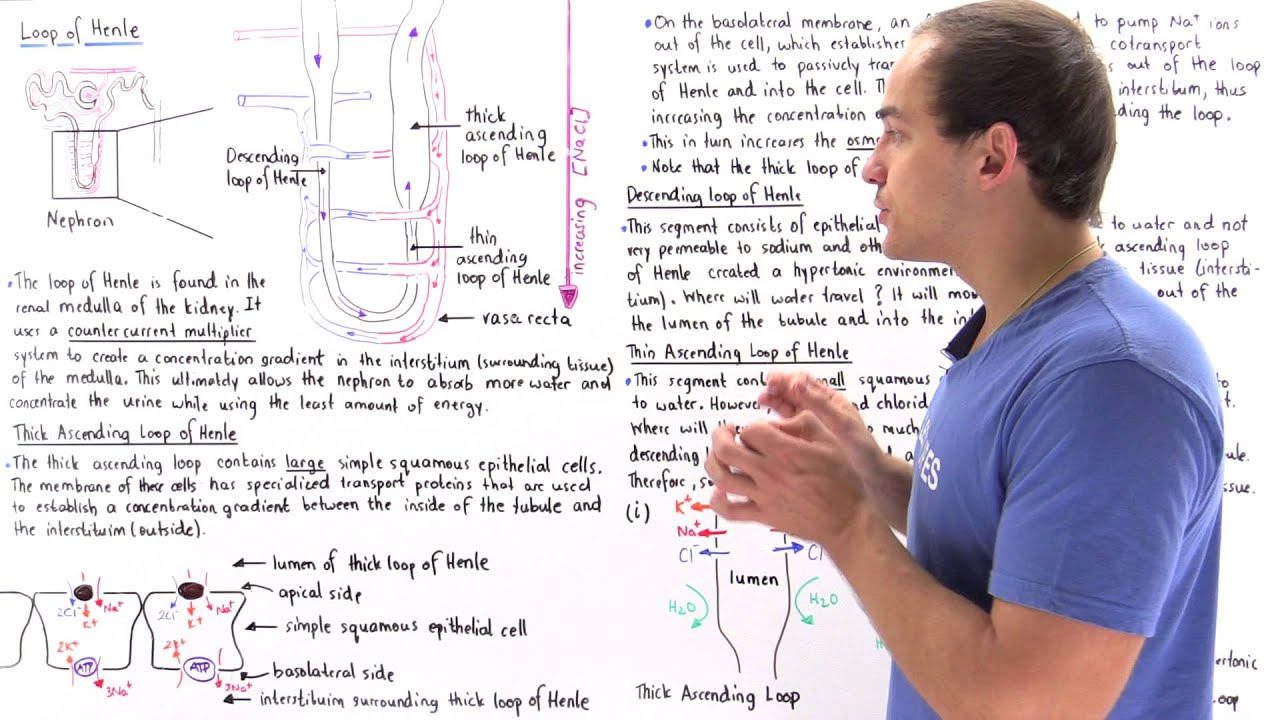
Donate here: http://www.aklectures.com/donate.php
Website video http://www.aklectures.com/lecture/countercurrent-multiplier-system-and-loop-of-henle
Facebook link: https://www.facebook.com/aklectures
Website link: http://www.aklectures.com
toxic turtle
Yes
toxic turtle
Thx alot 🤝
lyric dove
toxic turtle
Thx alot 🤝
ofc my brother
 loud cradle
lyric dove
dam psych major taking ochem is crazy
loud cradle
lyric dove
dam psych major taking ochem is crazy
Hey sorry to ping you but I am impressed with your orcganic chem knowledge and question solving approach I am preparing for an entrance exam have organic chem wanna know how to get so good at this just like you how to think like you did in this ques, and yeah I am geniunely impressed how you explained that so I am starting organic chem and looking for tips to make it strong got about time till nov. Please help asap bro, would appreciate it.
quartz comet
loud cradle
Hey sorry to ping you but I am impressed with your orcganic chem knowledge and q...
my brother been grinding like a real one
loud cradle
quartz comet
my brother been grinding like a real one
lol anyways do you have any advice for me
deft fox
wintry pebble
Does anyone have any tips for reading research - review papers?
ask ai to summarize every paragraph (make sure it's not hallucinating too much), then read it before reading actual paragraph. it makes following the text way easier
lyric dove
loud cradle
Hey sorry to ping you but I am impressed with your orcganic chem knowledge and q...
hello!
i recommend developing a purpose to attribute meaning to the material
but more specifically
make sure that u have a strong foundation of general chemistry topics--though I don't if this applies in your country. i believe succeeding in organic chemistry requires a strong understanding of how electrons move and the properties of different elements
and when you come across new reagents, I would immediately create a flashcard
so that u end up having a library of reagents
idk what specific u are looking for so i don't know if this helps
but like with approaching a problem I would start by considering what reagents we have and how they react with a given molecule.. like if we have an oxidizing agent reacting with a ketone, we should know from content knowledge that further oxidation isn't possible, so no rxn occurs..
and for looking at compounds, there are ways to crudely discriminate between oxidation/reduction reagents
loud cradle
thank you so much
loud cradle
lyric dove
hello!
Okay so I get it you mean to say that I should know the basics or organic chemistry like all the electron displacement effects properties of hyperconjugation resonance mesomeric inductive effect and etc and should know the basic mechanisms. Then I should focus on noting down every reagent i come across properly so it would help me in future. And also I need to learn the ways in which I would be able to tell what a specific molecule or reagent does
btw I ap preparing for JEE it's an engineering entrance exam in India with chemistry as one of the core subject
syllabus covers foundational principles (GOC, isomerism, reaction intermediates), diverse hydrocarbons (alkanes, alkenes, alkynes, aromatics) and their reactions, and compounds containing functional groups like alcohols, aldehydes, ketones, carboxylic acids, amines, and halides. Key reactions include substitutions, additions, eliminations, and rearrangements. biomolecules, polymers, and everyday chemistry applications. a deeper understanding of reaction mechanisms and stereochemistry is crucial. Practical aspects like purification and qualitative analysis are also included.
Sorry for that long bulky message but just wanna show you the syllabus I am dealing with, so do you have some more specific advice for me ?
toxic turtle
Hi, I have a question related to chemistry, there are two cases
I) chlorine with carboxylic acid, where it acts as an electron withdrawing group and increases the acidic character of carboxylic acid
II) in phenol, chlorine substitutent acts as an electron donating group and decreases acidic character.
So my question was that what factors decide chlorine to be either of them and why they do so differently for carboxylic acid and phenol
This topic is new to my syllabus and I am trying to understand the relations between reactions. So if anyone could help I will be really thankful.
 fading leaf
can anyone help me out with this? ive kept trying
 lyric dove
deft fox
ask ai to summarize every paragraph (make sure it's not hallucinating too much),...
lyric dove
deft fox
ask ai to summarize every paragraph (make sure it's not hallucinating too much),...
where is the part where u come to learn/understand the material?
crazy recommendation
imo
lyric dove
fading leaf
can anyone help me out with this? ive kept trying
what's causing trouble? did u identify the longest chain then assign priorities
and r u familiar w/ naming dienes
fading leaf
yes
lyric dove
and idk if they want u to include stereochemistry
fading leaf
let me send what i thought it was
(7S)-2-bromo-7-chloro-8-ethyl-5-methyl-2,4-decadiene
yes they want stereochem
lyric dove
fading leaf
yes they want stereochem
are u supposed to assign z and e?
lyric dove
hmm yes, but i'd try naming while ignoring R/S and do E/Z instead
correct me if i'm wrong!
haven't named stuff in awhile
deft fox
lyric dove
where is the part where u come to learn/understand the material?
after the first comma lol
loud cradle
lyric dove
hmm yes, but i'd try naming while ignoring R/S and do E/Z instead
I GUESS YOU MISSED THIS LOL
Okay so I get it you mean to say that I should know the basics or organic chemistry like all the electron displacement effects properties of hyperconjugation resonance mesomeric inductive effect and etc and should know the basic mechanisms. Then I should focus on noting down every reagent i come across properly so it would help me in future. And also I need to learn the ways in which I would be able to tell what a specific molecule or reagent does
btw I ap preparing for JEE it's an engineering entrance exam in India with chemistry as one of the core subject
syllabus covers foundational principles (GOC, isomerism, reaction intermediates), diverse hydrocarbons (alkanes, alkenes, alkynes, aromatics) and their reactions, and compounds containing functional groups like alcohols, aldehydes, ketones, carboxylic acids, amines, and halides. Key reactions include substitutions, additions, eliminations, and rearrangements. biomolecules, polymers, and everyday chemistry applications. a deeper understanding of reaction mechanisms and stereochemistry is crucial. Practical aspects like purification and qualitative analysis are also included.
Sorry for that long bulky message but just wanna show you the syllabus I am dealing with, so do you have some more specific advice for me ?
quartz comet
loud cradle
I GUESS YOU MISSED THIS LOL
Okay so I get it you mean to say that I should know...
I fully support Nas here. All the "difficult" questions are reduceable to basic concepts; Olympiads, finals, entrance exams. In the end its all about pattern recognition. And you achieve this by practicing, A LOT. But you need a basis - which again are the basic concepts. Its important to not move on to quickly from the basic concepts saying "oh this is easy". NO. WRONG. Drill it into your brain until you dream it. Youll notice how the "difficult" problems become more intuitive - which is pretty important in science and maths.
At the end of the day, the people that you call genius/smart/intellectual: they might have had certain biological upgrades, but at the end of the day, they showed up, everyday and studied.
So in short: study mate
loud cradle
quartz comet
I fully support Nas here. All the "difficult" questions are reduceable to basic ...
thanks I would practice a lot then would surely keep updating my progress here
lyric dove
i couldn't have said it any better than the GOAT himself!
I'd only confirm that ochem is literally all about pattern recognition
so yes, more complex mechanisms will eventually become intuitive
however, this achievement is uncommon to most, resulting in immense grief, lol.
loud cradle
lyric dove
however, this achievement is uncommon to most, resulting in immense grief, lol.
I hope I get there 😅
 vagrant otter
can someone explain to me polymers, monomers and polymerisation? I know nothing about these topics a short explanation would be helpful
 terse barn
Monomer: a small molecule, such as ethene, which can be polymerised to make a polymer.
Polymer: a long chain of molecules made by reacting several monomers together
Polymerisation: the chemical reaction in which molecules join together to form a long-chain polymer.
There are two types of polymerisation, addition polymerisation and condensation polymerisation.
In addition polymerisation, the monomer could be ethene, which has a double bond, and when it reacts with another ethene to form a polymer the double-bond changes into a single bond and continuation bonds are placed on both ends. In condensation polymerisation, there can be several monomers that react together to form a polymer and water, such as diamide and dicarboxylic acid react together to form polyamide and water.

This is condensation polymerisation

This is addition polymerisation
I tried to be concise but I'm not good at summaries
vagrant otter
thank youu
terse barn
No problem
 livid crest
I was watching this video:
https://youtu.be/nGggU-Cxhv0?si=slyl7m8Q7LiCcb1m
And from what I understood (I don't have much knowledge around biology), the superficial part of our skin is dead. And that's good because it protects us from the outside.
Soo I was wondering, wouldn't exfoliation be bad then?
Don't know if anyone could help with this, just some random thoughts haha

Go to https://brilliant.org/nutshell/ to dive deeper into these topics and more with a free 30-day trial + 20% off for the first 200 people!
This video was sponsored by Brilliant. Thanks a lot for the support!
Sources & further reading: https://sites.google.com/view/sources-tattoo-inside/
Your tattoos are inside your immune system, literally....
livid vessel
i'm not formally educated in this field, but from a skincare perspective, while your skin's outer layer is dead skin cells, your skin is also constantly shedding the very top layer of those dead skin cells naturally
sometimes portions of that very top layer don't fall off entirely, which results in issues like a dull looking skin texture or clogged pores
and so we exfoliate through chemical or physical means to assist our skin in removing dead skin cells, improving the quality of our skin and reducing the chance of clogging
exfoliation is good, but too much exfoliation is bad - scrub too hard, use too much topical treatment, cleanse too frequently, and you're going to irritate your skin and make things worse
we generate new skin cells at about the same rate that they die and we should definitely not be treating our skin harshly so it's not like we're scrubbing our skin down to the next layer
so, you could conclude that the act of exfoliation is an assistance that specifically targets only the removal of the dead skin cells that should have been shed naturally in daily life but didn't
livid crest
Okaay that makes sense, we should find the right balance for us I guess
Thanks for the info! 🙏🏻
livid vessel
yep, balance is key
as an addendum, the hobby of skincare consists of a lot of people experimenting and coming up with solutions that work for their unique composition of skin type or promoting unproven home-remedies for things, that kind of environment promotes a lot of misinformation or at least just really really biased solutions that aren't catered to your specific needs
if you want a professional answer to this question or to any skincare question, it's best to ask a dermatologist
livid crest
Yeah totally, we have really different skins, so it makes sense that everyone should have an independent treatment
 mossy rampart
So when we calculate change in momentum how do we use the final vector??
 magic tiger
CAN ANYONE HELP ME WITH RAY DIAGRAMS (LIGHT)
lyric dove
magic tiger
CAN ANYONE HELP ME WITH RAY DIAGRAMS (LIGHT)
which one?
solemn cave
magic tiger
CAN ANYONE HELP ME WITH RAY DIAGRAMS (LIGHT)
yes
toxic turtle
Can someone help me with the concept of photoelectric effect, I was really confused regarding this, my confusions are
-
what is the passage of flow of electrons after reaching anode, I think they might go to positive terminal of battery which makes ammeter to deflect, from positive terminal of battery they flow to negative and then to cathode ( I searched it via chatgpt), won't electrons be repelled by negative charge on cathode or negative terminal of battery
-
if we reverse the terminals, giving the cathode a positive charge while anode a negative charge, won't the electrons be attracted towards the cathode making them hard to be excited.
-
what is the direction of current in such a circuit
I am very weak at physics particularly the current and voltage, so if my questions don't make sense or are so basic, I apologize
 hexed geyser
Hello
Does anyone have any tips on how to study Inorganic chem??? I have P block in my 3rd sem but I just can't figure out where to start...
thorny gyro
hexed geyser
Hello
Does anyone have any tips on how to study Inorganic chem??? I have P bloc...
You can check out chemistry libretexts, this site has a lot of introductory material with a lot of authors. You can choose the book/articles you like and get started
https://chem.libretexts.org/Bookshelves/Inorganic_Chemistry

Chemistry LibreTexts
Inorganic chemistry deals with the synthesis and behavior of inorganic and organometallic compounds and covers all chemical compounds except the myriad organic compounds (carbon-based compounds), …
 vale lark
hexed geyser
Hello
Does anyone have any tips on how to study Inorganic chem??? I have P bloc...
vale lark
hexed geyser
Hello
Does anyone have any tips on how to study Inorganic chem??? I have P bloc...
if its for neet or jee mains
you can just go for ncert
make some short notes and all
you will be good
 urban rock
toxic turtle
Can someone help me with the concept of photoelectric effect, I was really confu...
urban rock
toxic turtle
Can someone help me with the concept of photoelectric effect, I was really confu...
Hi, this is a great question. Also I think this confusion probably stems from electronics, not from the concept of photoelectric effect itself.
-
The direction of current is ALWAYS OPPOSITE to the flow of electron direction. If the electrons flow from left to right, current will flow from right to left.
-
Let's call the cathode the emitter plate (emits photoelectrons) and anode the collector plate (collects the photoelectrons) for ease of understanding. Outside of the tube the collector plate is connected to the positive end of the variable voltage. The ammeter deflects due to the presence of photocurrent.
The voltage of the anode is positive WITH RESPECT TO the voltage of cathode. The battery is there to create a potential difference between the two plates to accelerate photoelectrons and to ensure these photoelectrons reach the collector. -
If we reverse the terminals then there aren't many electrons to eject from the metal surface. Since it has a positive charge. But if you really wanted to use a +ve cathode then most probably you'd have to use a high frequency light source to eject electrons. Then I assume the anode would have to be at a much high +ve potential to collect the electrons, or even if it -ve potential, we will still get some photoelectrons as we have a concept of minimum potential (stopping potential). Stopping potential is the maximum -ve volatge of anode wrt cathode to still get photocurrent.
Also, when you say electrons are "excited", I just want to point out a better language for clarification just in case. The electrons are bound to the metal surface. Now they will need some energy which is higher than the energy they are bound by in order to be able to leave the metal surface. The electrons are actually ejected from the metal, not excited. Excited would probably be the wrong word to use here. Excitation will refer to the electron/particle getting excited or jumping to a higher energy level.
toxic turtle
urban rock
Hi, this is a great question. Also I think this confusion probably stems from el...
thanks alot, it actually helped me alot, tysm,
one question
the electrons after reaching the collector plate will flow to the positive terminal of battery, right? from there will they go to negative terminal of battery and then reach back to cathode, completing the circuit, or they will deposit at either anode or positive plate of battery because negatively charged electrons flow to negative terminal wont have repulsion, if you could help me with it please.
toxic turtle
urban rock
Also, when you say electrons are "excited", I just want to point out a better la...
thanks alot for the clarification👍
 nimble mortar
yo I seem to really like physics but I have 0 background, what path should I follow to lead up to Quantum physics.
 fleet tinsel
how do people remember organic equations im struggling 😭
 warm beacon
nimble mortar
yo I seem to really like physics but I have 0 background, what path should I fol...
warm beacon
nimble mortar
yo I seem to really like physics but I have 0 background, what path should I fol...
General physics, analysis, linear algebra, classical mechanics, waves and oscillators, more liner algebra, statistical physics, much more waves, electromagnetism, and then maybe quantum physics
nimble mortar
warm beacon
General physics, analysis, linear algebra, classical mechanics, waves and oscill...
I jumped a few steps but I think I am there
 queen loom
fleet tinsel
how do people remember organic equations im struggling 😭
queen loom
fleet tinsel
how do people remember organic equations im struggling 😭
Revise daily(9-10 times) through short notes
fleet tinsel
queen loom
Revise daily(9-10 times) through short notes
so basically sell my soul to the organic demon?
ill do that honestly i need good grades
lyric dove
fleet tinsel
so basically sell my soul to the organic demon?
it is your responsibility as a student to perform well, so you should make any accommodations/sacrifices to do so!!
fleet tinsel
lyric dove
it is your responsibility as a student to perform well, so you should make any a...
i have made the deal dw!
lyric dove
this guy is crazy
queen loom
fleet tinsel
i have made the deal dw!
Dealing won't work, REVISE DAILY
 glad ridge
revising daily
queen loom
fleet tinsel
i have made the deal dw!
Hi, are you revising daily?
lyric dove
queen loom
Hi, are you revising daily?
accountability
 austere tree
Hi guys, I assist busy students with their academic assignments. Anyone who may need this service dm.
 vital quest
austere tree
Hi guys, I assist busy students with their academic assignments. Anyone who may ...
vital quest
austere tree
Hi guys, I assist busy students with their academic assignments. Anyone who may ...
don't be the type of guy that replies with chatgpt...
fleet tinsel
queen loom
Hi, are you revising daily?
I AM TRYING MY BEST
i am more focused on physics
but thanks for checking in 😭 ❤️
lyric dove
vital quest
don't be the type of guy that replies with chatgpt...
yea I'm starting to notice this A LOT
so many bots nowaday
vital quest
lyric dove
yea I'm starting to notice this A LOT
fun fact, he was
 limber dock
can anybody help me understand how a resistor-capacitor circuit provides an input to an integrated circuit? Does the potential difference cause a current to flow into the circuit, or does the capacitor provide the input current.
toxic turtle
Hi, anyone good at transition metals substitution reactions, I need help urgently regarding a question, I cant share image here, I have an exam in few hours
Cu²⁺(aq) → pale blue precipitate A
Cu²⁺(aq) (with concentrated HCl) → solution C
Cu²⁺(aq). (With excess of NH₃) → solution B
[CuCl₂]⁻(aq) + heat with Cu(s) → solution C
a. Suggest the formulae of A, B and C.
b. State the colours of solutions B and C.
c. Name the type of reactions occurring when C is heated with copper. Also state the role of copper in this reaction.
d. When the solution of complex [CuCl₂]⁻ is poured into water, which colour precipitate is formed? Justify its colour.
solemn cave
fleet tinsel
how do people remember organic equations im struggling 😭
flashcards for name reactions and stuff rlly helpful
 gray nova
A circular loop of radius r, carrying a current I lies in the y-z plane with its centre at the origin. The net magnetic field through the loop is:
A directly proportional to r
B zero
C inversely proportional to r
D directly propertional to I
my textbook is giving some wierd logic that:
circular loop behaves as a magnetic dipole whose one surface will be N pole and other S pole. Therefore the magnetic lines that emerge from north will meet at south. Hence total magnetic flux is 0
why dont we just use the formula to find field at centre of ring then do
field*area?? I dont get it.
 placid axle
 midnight jolt
Anyone?
Topic : Quantum Simple Harmonic Oscillator

 coral axle
can anyone help me with IB HL Physics on simple harmonic motion and. waves? @everyone
 foggy walrus
how do XOR gates work
restive valve
foggy walrus
how do XOR gates work
what do you mean?
foggy walrus
nevermind , I've already got it
coral axle
Hello everybody, im looking for 1-2 people (good at physics and science) for a MIT competition this saturday 25th of October; the deadline closes in 3 hours. I think the payment to enter is 40$. https://www.algoed.co/competitions/mit-ewb-engineering-competition
Please Let me know if you want to compete!

Priority Deadline: Dec 15, 2024; Regular Deadline: Jan 25, 2025; Late Deadline: Feb 7, 2025
 solid horizon
@everyone Is anyone here a MS Materials/Chemical Engineering Student from the US?
 tight snow
solid horizon
@everyone Is anyone here a MS Materials/Chemical Engineering Student from the US...
tight snow
solid horizon
@everyone Is anyone here a MS Materials/Chemical Engineering Student from the US...
bro thinks he can tag a 20000+ member server just like that
 peak moon
at least he tried though 🙏💀
sinful pumice
is acceration 0?

 short stone
can anyone explain E = mc^2
 void sky
guys im cooked
 rugged timber
void sky
guys im cooked
rugged timber
void sky
guys im cooked
Why?
 sharp olive
short stone
can anyone explain E = mc^2
sharp olive
short stone
can anyone explain E = mc^2
Relativity
short stone
well its senku
sharp olive
LOL
short stone
XD
 hazy totem
void sky
guys im cooked
hazy totem
void sky
guys im cooked
What happened bud
hazy totem
Ghost ping?
 rigid rampart
Do you have any methods for learning the operating principles of a circuit? I am a college student. Example:
 toxic turtle
Hi there, can anyone help me understand the concept,
Why does a bulb glow when a.c is passing through a circuit having a capacitor but a bulb doesn't glow when d.c is passing through a circuit having a capacitor?
Also am very poor at physics, so if someone could help me understand what is the link between the presence of an insulator between the capacitor and this phenomenon.
Also, do we suppose conventional current while talking about circuits cuz this confuses a lot.
I would be really thankful if someone could help me with this!
 gleaming temple
toxic turtle
Hi there, can anyone help me understand the concept,
Why does a bulb glow when a...
gleaming temple
toxic turtle
Hi there, can anyone help me understand the concept,
Why does a bulb glow when a...
because with a constant voltage and constant current, the capacitor will charge, and once its fully charge it will act as an open circuit, so no current is going to flow through it and the led wont turn on
when you have an ac voltage, the capacitor is charging and discharging continuously so youre gonna be able to turn the led on cause the current can flow
toxic turtle
Thank you so much
gleaming temple
i wont answer the rest of your questions, cause its physics related and sometimes we eng. might use different ways of explaining it, so im afraid i could make you even more confused ahahah
toxic turtle
gleaming temple
i wont answer the rest of your questions, cause its physics related and sometime...
Tysm for the guide, you already helped me a lot and honestly regarding the other questions I had seen some lectures and my concept for them is now significantly clear.
gleaming temple
toxic turtle
Tysm for the guide, you already helped me a lot and honestly regarding the other...
sure, no prob! :D
 full horizon
Hi everyone, I'm studying analog IC design. I'm trying to design this circuit that generates a supply-independent current, but I have no idea how to approach it. Can someone guide me through the design process?

 queen charm
heyguys i have to do a statistical analysis on a dataset for my econometrics class. requires R codeand OLS regression which i have done. in analysis i am doing t-tests, looking at confidence intervals, coefiicients, and p-values. and r^2 values. is there anything else i should talk about ?
 green ridge
Hi, does anyone know why, in approximating non-continuous functions, we need 2 hidden layers of neurons? I know that UAT states that we need 1 layer to approximate any continuous non-linear function, but I don't really understand why the second layer allows non-continuous functions.
 vernal jackal
does anyone know how to do this:

 twilit ocean

Get It Here : https://discord.gg/enhEZHbTa6
tags:
fivem realistic graphics,
fivem realistic graphics pack,
fivem realistic graphics mod,
fivem realistic graphics mod low end pc,
fivem realistic graphics pack for low end pc,
fivem realistic graphics pack free,
fivem realistic graphics pack fps boost,
fivem realistic graphics pack 2023,
fivem r...
ripe dock
guys anyone from bioinformatics here... I need help with protein motif designing.. I have done MSA already... now i need to design the conserved domains .. I might sound confusing because I am...
somber bison
So I have a question about quantum mechanics and relativity. I have heard people say that one cannot gain information below the planck length. However in GR there is no preferred inertial frame, and all are correct descriptions of reality.
So say you had some quantum experiment with a cube-like detector. Then for an observer with a reference frame approaching this detector at a certain velocity, this detector will seem arbitrarily small, for this thought experiment say it has sides of 2 planck length. The thing it is detecting will be sub-planck length. Then you have an experiment detecting something sub planck length in size, so planck length cannot be a measurement restriction across all intertial frames.
Hence if this limit exists, it must only be for an experiment and a detector in the same inertial frame relative to each other. Right?
 runic hull
anyone can help me in physics of class 12th
midnight jolt
runic hull
anyone can help me in physics of class 12th
Sure what is your doubt?
runic hull
now clear thku for asking
 shy marten
can someone recommend me good books or videos to self study chemistry? I am planning to major in chemistry and have already taken 3 gen chem classes (dual enrollment) , but I feel like I still need a stronger understanding and honestly during the classes I was not motivated at all lol but I do find chemistry interesting.
 tender yacht
someone help me with valency derivation of polyatomic ion
midnight jolt
tender yacht
someone help me with valency derivation of polyatomic ion
Sure let me know!
tender yacht
midnight jolt
Sure let me know!
yk like one polyatomic element and i want to find its valency ? there are 2 formlar, one is valence electron ( of 1st element ) + valency * no of atoms ( 2nd element ). another is sum of valency of both the atoms. however i dont understand where to use what. i think its related to whether both the elements are electro -ve or +ve idk man
midnight jolt
tender yacht
yk like one polyatomic element and i want to find its valency ? there are 2 form...
Could you share some appropriate examples as well?
Might as well DM me
 paper mirage
Anyone have any resources for medical microbiology? Anything covering enterics and special pathogens would be helpful
sage orchid
paper mirage
Anyone have any resources for medical microbiology? Anything covering enterics a...
here https://www.ncbi.nlm.nih.gov/books/NBK7627/ idk if this will help much

NCBI Bookshelf
Medical Microbiology begins with a review of the immune system, focusing on the body's response to invading microorganisms. Bacteria are then covered, first with a series of chapters presenting the general concepts of bacterial microbiology and then with chapters detailing the major bacterial pathogenes of humans. Similar sections cover virology...
paper mirage
I like the way chapters/topics are organized, will definitely use this
 wanton latch
Anybody got books for starting out with biology?
 ancient thicket
Hey there! I’m Anastasia, a proud Swede 🇸🇪 with a taste for adventure and good vibes.
Think you can guess my age? Take a shot but no sneaky shortcuts 👀. If you’re bold, my DMs are wide open 😉
I thrive on meeting amazing people, spreading positive energy, and savoring life one incredible moment at a time 🌱✨.
What started as a tiny side hustle a few months ago has transformed into a full-blown adventure taking me to dream destinations, giving me freedom I never imagined, and allowing me to support my family in ways that truly warm my heart. Grateful doesn’t even begin to cover it. 🌍💫
 quaint forge
Hello, I'm Mim from Bangladesh. I graduated from doing my bachelors in CS in December 2024. However In mid 2025 I decided to switch from a corporate job to academia as my interest grew in Computational Neuroscience. Ik this is random but anyone doing research around computational neuroscience here? If yes, I would love to connect and chat.
 scenic spear
@alpine mortar This is a pretty trivial example for some Arduino code I wrote for working with a temperature alarm, but you can see how must of what you're doing is very simple stuff to do with interacting with specific portions of memory defined in the spec/different pins on the board, and reading off of those inputs and doing something:
#include <avr/io.h>
#include <stdio.h>
#include <stdint.h>
#include <util/delay.h>


#define TEMP_PIN 0         // A0 for temperature sensor
#define LED1_PIN PB0       // Pin 8
#define LED2_PIN PB1       // Pin 9
#define LED3_PIN PB2       // Pin 10

#define BASELINE_TEMP 180
#define TEMP_STEP 20

#define BAUD 9600
#define F_CPU 16000000UL
#define UBRR_VALUE ((F_CPU / (16UL * BAUD)) - 1)


// UART init needed to monitor serial output for debugging
void uart_init(){
    UBRR0H = (uint8_t)(UBRR_VALUE >> 8);
    UBRR0L = (uint8_t)UBRR_VALUE;
    UCSR0B = (1 << TXEN0);
    UCSR0C = (1 << UCSZ01) | (1 << UCSZ00);
}

void uart_putchar(char c) {
    while(!(UCSR0A & (1 << UDRE0)));
    UDR0 = c;
}

void uart_puts(const char* s) {
    while(*s) {
        uart_putchar(*s++);
    }
}

// ADC initialisation
void adc_init() {
    // using AVcc as ref, left adjust result
    ADMUX = (1 << REFS0) | (1 << ADLAR);
    // enable ADC, set prescalar to 128 (for 16MHz/128 = 125kHz)
    ADCSRA = (1 << ADEN ) | (1 << ADPS2) | (1 << ADPS1) | (1 << ADPS0);
}


// read from adc channel
uint8_t adc_read(uint8_t channel) {
    ADMUX = (ADMUX & 0xF0) | (channel & 0x0F); // select channel
    ADCSRA |= (1 << ADSC); // start conversion
    while (ADCSRA & (1 << ADSC)); // wait for completion
    return ADCH; // return 8-bit result
}

int16_t adc_to_celsius_x10(uint16_t adc_value) {
    int32_t millivolts = ((int32_t)adc_value * 5000) / 1024;
    return millivolts - 500;
}


int main(void) {
   // set LED pins as outputs
   DDRB |= (1 << LED1_PIN) | (1 << LED2_PIN) | (1 << LED3_PIN);

   uart_init();
   adc_init();

   char buffer[64];

   while (1) {
       uint8_t sensor_value = adc_read(TEMP_PIN);
       float millivolts = sensor_value * (3300/1024);
       float temp_celsius = ((millivolts * 1000) - .5) * 100;

       // numbers coming out are wonky, says it's 4C in here when it's 18/19...
       sprintf(buffer, "ADC: %d, mV: %.2f, Temp: %.2f C\r\n", sensor_value, millivolts, temp_celsius);
       uart_puts(buffer);


       // clear all LEDs
       PORTB &= ~((1 << LED1_PIN) | (1 << LED2_PIN) | (1 << LED3_PIN));

       // light LEDs based on temp difference
       if(temp_celsius >= BASELINE_TEMP + TEMP_STEP)
           PORTB |= (1 << LED1_PIN);

       if (temp_celsius >= BASELINE_TEMP + (2 * TEMP_STEP))
           PORTB |= (1 << LED2_PIN);

       if (temp_celsius >= BASELINE_TEMP + (3 * TEMP_STEP))
           PORTB |= (1 << LED3_PIN);

       _delay_ms(500);
   }
   return 0;
}
 alpine mortar
woah
scenic spear
don't feel too overwhelmed, embedded code always looks wonky the the first time you look at it but most of the time it's trivial operations like flipping a bit in one place, shifting in another
it just doesn't look like regular software dev code because you don't typically operate on that scale
alpine mortar
yeah i see some bitflags set i see some stuff i mostly understand what is happening
what kind of arduino do pros use ?
micro ?
alpine mortar
scenic spear
it just doesn't look like regular software dev code because you don't typically ...
thats true i work in the unoptimized land haha i mostly deal with validating json and making as few calls to db as possible so its nothing like that 😆
scenic spear
alpine mortar
what kind of arduino do pros use ?
i've got the uno r3
alpine mortar
and did you go to collage for embeded ?
thats what im curious about
im considering college but thats after i get a job
definietly dont want to work a part time waiter or anything like that anymre 😭
i was hoping to get this backend web dev done attend college and then pivot to embeded
alpine mortar
scenic spear
i've got the uno r3
woah i expected bells and whistles
we had some at our school i went to bonus classes to play around with them
scenic spear
alpine mortar
and did you go to collage for embeded ?
i just did comp sci at university
alpine mortar
scenic spear
i just did comp sci at university
thanks for sending me that snippet btw
i apreciate it
thanks for sharing your experience
scenic spear
you're good g no need to thank me so much haha, i love talking about this stuff
addicted to this whole field
 oblique ivy
Hello everyone! I am conducting a short survey on the meaning of life and immortality. It will only take 2 minutes of your time and the answers are completely anonymous. Your ideas are very interesting to me, I would be happy if you would support me. 🙏
https://forms.gle/Mfbi4CrswsGvmYV78

Google Docs
An exploration of fundamental motivations, life's purpose, the role of finitude, and beliefs concerning the afterlife.
lyric dove
oblique ivy
Hello everyone! I am conducting a short survey on the meaning of life and immort...
 midnight jolt
oblique ivy
Hello everyone! I am conducting a short survey on the meaning of life and immort...
midnight jolt
oblique ivy
Hello everyone! I am conducting a short survey on the meaning of life and immort...
they couldve left one text box empty so that peope could write their own thinking
woulve been more interesting; its imposing the author's versions only rn
 urban onyx
hi can someone please help me understand how to draw proton NMR spectra of organic molecules with the help of pascal's triangle. i need it urgently
 crystal fossil
Hello everyone! I was trying to build a pen plotter. Since I have zero exp in doing projects, I am actually buying a lot of things but ending up doing nothing right.
If someone wishes to help for my pen plotter project, it'll mean a lot for me.
I lack engineering skills, making a stable design of a complete body that supports the gearing-motors-arduino boards etc
 acoustic topaz
guys. I have results for my Hepothesis Chi-squared test statistic: 1.59
Degrees of freedom: 3
Level of significance: 0.6619
and other level of significance over 0.2 (0.4, 0.6 etc). Is my Hypothesis correct?
nimble mortar
are there any good books on steady state sinusoidal circuits or textbooks with solved problems?
 red violet
nimble mortar
are there any good books on steady state sinusoidal circuits or textbooks with s...
red violet
nimble mortar
are there any good books on steady state sinusoidal circuits or textbooks with s...
Suppp
nimble mortar
red violet
Suppp
guts didn't deserve this
red violet
nimble mortar
guts didn't deserve this
Ayee
red violet
nimble mortar
guts didn't deserve this
True, but grifithh didnt deserve it eitherr💔
nimble mortar
red violet
True, but grifithh didnt deserve it eitherr💔
bro
he will deserve what he gets
red violet
nimble mortar
he will deserve what he gets
Hahhaha
Im trolling dw
Im matching w guts😭
 trail hatch
Can I do
current electricity before doing:
chapter 1- electric charge and fields
chapter 2- electrostatic potential
open cargo
I don’t understand the solution, even tried multiple times with chat gpt I can’t imagine the solution in my head. The answer is 34V btw please help me out with preferably with voice messages maybe cus I can’t think for my dear life which node chat gpt is talking about
 runic hull
open cargo
I don’t understand the solution, even tried multiple times with chat gpt I can’t...
runic hull
open cargo
I don’t understand the solution, even tried multiple times with chat gpt I can’t...
use deepseek or kimi instead of chatgpt
 livid kite
open cargo
I don’t understand the solution, even tried multiple times with chat gpt I can’t...
livid kite
open cargo
I don’t understand the solution, even tried multiple times with chat gpt I can’t...
Solve from the end and comes toward the start terminal with taking voltage and current in each resistor.
Still if u don't understand LMK
 open cargo
livid kite
Solve from the end and comes toward the start terminal with taking voltage and c...
open cargo
livid kite
Solve from the end and comes toward the start terminal with taking voltage and c...
This is what chat gpt told me dude, I srsly don’t understand. I have only done infinite chain questions not these ones.
livid kite
open cargo
This is what chat gpt told me dude, I srsly don’t understand. I have only done i...
its really long to explain,idk exactly what u dont understand. as you can see all resistor has resistance 1 ohm,at the end both resistor has 1A current thru it so on each resistor voltage drop(v=iR) is 1v these two resistor combine 2v voltage drop across it, which is parallel to other resistor so total 2v comes on that too.so current in that resistor will be (i=v/r) 2A. now check the next resistor on leftward it will have 2+1=3A current,accordingly voltage drop 3v on it. same thing with whole circuit,i hope now u get the idea how i solved it here..i tried😭
open cargo
livid kite
its really long to explain,idk exactly what u dont understand. as you can see al...
Okay I understand that the right end has 1 A on both the side resistance and 1V also I understand but I don’t understand where did 2,8,13 came from? I am sorry physics is not my strong subject I am trying
livid kite
open cargo
Okay I understand that the right end has 1 A on both the side resistance and 1V ...
same idea 3v+2v=5v which will come on next resistor bcz of parallel, again i=v/r, current will come 5A in that resistor,5A+3A Will come on next leftward resistor, as 8v on that resistor of resistance 1ohm so current 8a in that resistor 8a+5a=13a. KCL AANE WALA CURRENT EQUAL TO JANE WALA ON JUNCTION..
open cargo
livid kite
same idea 3v+2v=5v which will come on next resistor bcz of parallel, again i=v/r...
It’s okay bro you don’t have to yell. You seem frustrated, I can ask someone else don’t worry about it, thanks for the help
livid kite
open cargo
It’s okay bro you don’t have to yell. You seem frustrated, I can ask someone els...
behan,what is this behaviour,u are reading with wrong tone...😭
I'm not frustrated, i thought it would be better for you,if you try further understanding on ur own.
open cargo
livid kite
behan,what is this behaviour,u are reading with wrong tone...😭
I'm not frustra...
No it’s js that I barely post any doubt here, so when i do I have already tried all means it’s not like I have home tutor whom I can ask.
livid kite
open cargo
No it’s js that I barely post any doubt here, so when i do I have already tried ...
its my first time too.. i didnt mean to sound frustrated.That caps lock text just to emphasize more i usually take help from gemini if something i dont understand. i ask something like try to explain to a 13yr old or something if i feel things getting too complex for me. you can try that too. i thought i dont have to explain fully, you will get the hint. just try to see circuit from right to leftward.🫡
thorny gyro
@plush talon
 proud cave
uh

can someone help me
I just needa figure out
if there is a second dash
in the 4th column in the gel
 upbeat summit
proud cave
upbeat summit
proud cave
id say no
 tranquil trout
proud cave
tranquil trout
proud cave
is this PCR?
proud cave
tranquil trout
is this PCR?
technically my RD gel
but yea basically same thing
gel electrophoresis
tranquil trout
proud cave
gel electrophoresis
ohhh thats cool
proud cave
thxs
 rapid patio
proud cave
rapid patio
proud cave
This is so cool I've only learned gel electrophoresis or pcr in theory but seeing it is pretty cool

 viscid folio
Hello
I’m wondering if someone can help me with naming this using IUPAC
So the rule is to find the longest continuous carbon chain which in this case there is two the straight one and the one with a turn
It’s supposed to give the same name regardless of which I choose to use but I can’t get it to do that. Not sure how to use the chain with the turn
 rapid patio
viscid folio
Hello
I’m wondering if someone can help me with naming this using IUPAC
So the ...
rapid patio
viscid folio
Hello
I’m wondering if someone can help me with naming this using IUPAC
So the ...
We apply the lowest locant rule which is why we start from the left
3 ethyl 2 methyl hexane
 brazen pasture
 pulsar mountain
Hello , kindly ask does anyone knows the answer to this?
pulsar mountain
Hello , kindly ask does anyone knows the answer to this?
EDD
HDD
brazen pasture
viscid folio
Hello
I’m wondering if someone can help me with naming this using IUPAC
So the ...
from the numbering in the image you showed the iupac name would be 3 ethyl 2 methyl hexane
if you use the chain with the turn then it wont be correct
viscid folio
brazen pasture
from the numbering in the image you showed the iupac name would be 3 ethyl 2 met...
What is that based on?
Is it a general rule that im meant to choose the straight chain in order to get the correct name? I went over quite a few of these and that’s the only one I came across with that issue
 bleak egret
viscid folio
What is that based on?
Is it a general rule that im meant to choose the straight...
bleak egret
viscid folio
What is that based on?
Is it a general rule that im meant to choose the straight...
i'm pretty sure it's based on IUPAC
and you're supposed to choose the longest continuous chain, which in this case is the straight chain
viscid folio
bleak egret
and you're supposed to choose the longest continuous chain, which in this case i...
Both chains have the same number of carbons
bleak egret
no, if you take the turn at 2 then it becomes propane, if you take the turn at 3 then it becomes bentane, when you take the straight chain it becomes hexane
so you take the longest chain which is hexane, and then the methyl and ethyl coming from 2 and 3 become branches (sorry for any incorrect terminology i took this in my native language and not english)
so the final name is 3-ethyl-2-methyl hexane
viscid folio
bleak egret
no, if you take the turn at 2 then it becomes propane, if you take the turn at 3...
Wouldn’t this also be hexane?

6 carbons
bleak egret
well yes, but you're supposed to start counting from the area that's closest to the first branch, which would be from the left
so you can't start counting from the right
brazen pasture
viscid folio
Wouldn’t this also be hexane?
The lowest locant rule in IUPAC nomenclature dictates that the main chain must be numbered to give the substituent(s) or functional group(s) the lowest possible position numbers (locants). If multiple numbering options exist, compare them at the first point of difference; the set with the lowest number at that first point is preferred
rapid patio
Exactly
viscid folio
brazen pasture
The lowest locant rule in IUPAC nomenclature dictates that the main chain must b...
I see
Thank you for your help:))
brazen pasture
viscid folio
I see
Thank you for your help:))
anytime !
 maiden fog
anyone studying for ap bio lmk we can join a study room
proud cave
hey
uh
help me gng
@maiden fog
ap bio
ik its kinda late
and anyone else
pls
maiden fog
ight bet
friend me gang
i stared studying last week u in a better position than i need helplpl
 glass harness
helloo can someone pls explain if we can cancel the circled terms in vector form of coulombs law or not and if not why?
 rapid patio
we cannot cancel because
rapid patio
glass harness
helloo can someone pls explain if we can cancel the circled terms in vector form...
they both are different quantites
quantities*
numerator is a vector and the denominator is magnitude
we can re write it as kq1q2/r^2 and the numerator has r cap
glass harness
rapid patio
we can re write it as kq1q2/r^2 and the numerator has r cap
ohh right alright thanks smm
 deep crow
yo can i teach someone about deep ATP production??
i need to test ma understanding🥰🥰 add me
 novel basin
Hey hey physics people I have a couple of questions, would anyone be willing to help out?
 low garden
novel basin
Hey hey physics people I have a couple of questions, would anyone be willing to ...
low garden
novel basin
Hey hey physics people I have a couple of questions, would anyone be willing to ...
you should specify the level of physics you need help with
low garden
Okay, differently, what topic of physics
novel basin


This was my force diagram, just checking it's right

Here's the first part (for context)
 grim matrix
is N your normal force?
novel basin
Ya
grim matrix
thats not correct i think
novel basin
Thought so, the Normal force isn't horizontal, right?
low garden
normal force is always perpendicular to a surface i believe
grim matrix
no he's sitting on the knot of the rope which means the normal force is the same as the pulling force i think
 weary bronze
novel basin
weary bronze
novel basin
equilibrium means no net force acting on a body? not sure
grim matrix
yup
novel basin
The problem I have is with the diagram and then the final question

This is the ms for (c)

updated diagram
grim matrix
no the normal force isn't there either
novel basin
I am a buffoon
grim matrix
if he sits on the knot of rope the rope supports him in this direction: ↖️
 stoic tide
Anyone willin to do my physics exam for 50 bucks? it would be good to know or at least understand a bit german?
😄
grim matrix
😄 no you can do it
stoic tide
😮
novel basin
Hold up, the normal force is the contact force exerted by the ground on the dude at the point where he is standing
That's N
T is the tension of the rope, acting in ↖️
stoic tide
grim matrix
😄 no you can do it
I hope so 😄
low garden
and there is also gravity
novel basin
Yeah that's W
novel basin
They're in equilibrium, yep
grim matrix
stoic tide
I hope so 😄
i had to retake all my physics exams and i succeeded the second time i only have one more retake to go
even if you don't, just keep trying
stoic tide
grim matrix
i had to retake all my physics exams and i succeeded the second time i only have...
You can do it I belive in you
low garden
Just actually study for it, don't hope for a miracle
stoic tide
For me its the first try so I have a second and third if necessary
stoic tide
low garden
Just actually study for it, don't hope for a miracle
I am right now 😄
low garden
👍
grim matrix
stoic tide
For me its the first try so I have a second and third if necessary
and theres nothing wrong with having to take more changes than one, as long as you work for it you'll get there
stoic tide
grim matrix
and theres nothing wrong with having to take more changes than one, as long as y...
Thanks for the motivation I'll try my best 😄
low garden
motivation 😠
novel basin
Might I recommend Prof Walter Lewin's lectures on youtube. They're on classical mechanics (idk if that helps) and they're so fun to watch in surprisingly high quality. He was the previous classical mechanics prof at MIT
This lecture has been viewed more than 13.5 million times. About 1 million times on MIT's OCW, more than 6.7 million times in the channel "For the Allure of Physics" and 5.8 million times in this channel. Prof. Lewin put his life on the line to demonstrate that he is a strong believer in the conservation of energy. He explained why the sky is...
 willow gale
Anyone doing physic? I need help...
 nova matrix
Any gods of x86-64 in here?
I'm trying to save a 128 byte buffer on the stack and access it after a recursive call. I keep getting bus errors, I think I'm misunderstanding something fundamental.
novel basin
willow gale
Anyone doing physic? I need help...
what level?
willow gale
There's level..?
willow gale
Like gravitation and orbits and stuff
I wasnt paying much attention in this class lol
novel basin
Are you in high school? Bc I don't know about that stuff
willow gale
Woahh
novel basin
Could u send an example of the question, maybe I can figure something out?
willow gale
Alright hold on
Im actually doing a project researching about this planet
And i have to find the period of that planet orbiting the Sun
The planet is called ceres i think
There are so many different formulas on google i dont know which one to use 😩
novel basin
You want to find the period of the planet?
 potent plank
 willow gale
novel basin
You want to find the period of the planet?
willow gale
novel basin
You want to find the period of the planet?
Yep
novel basin
What are your values?>