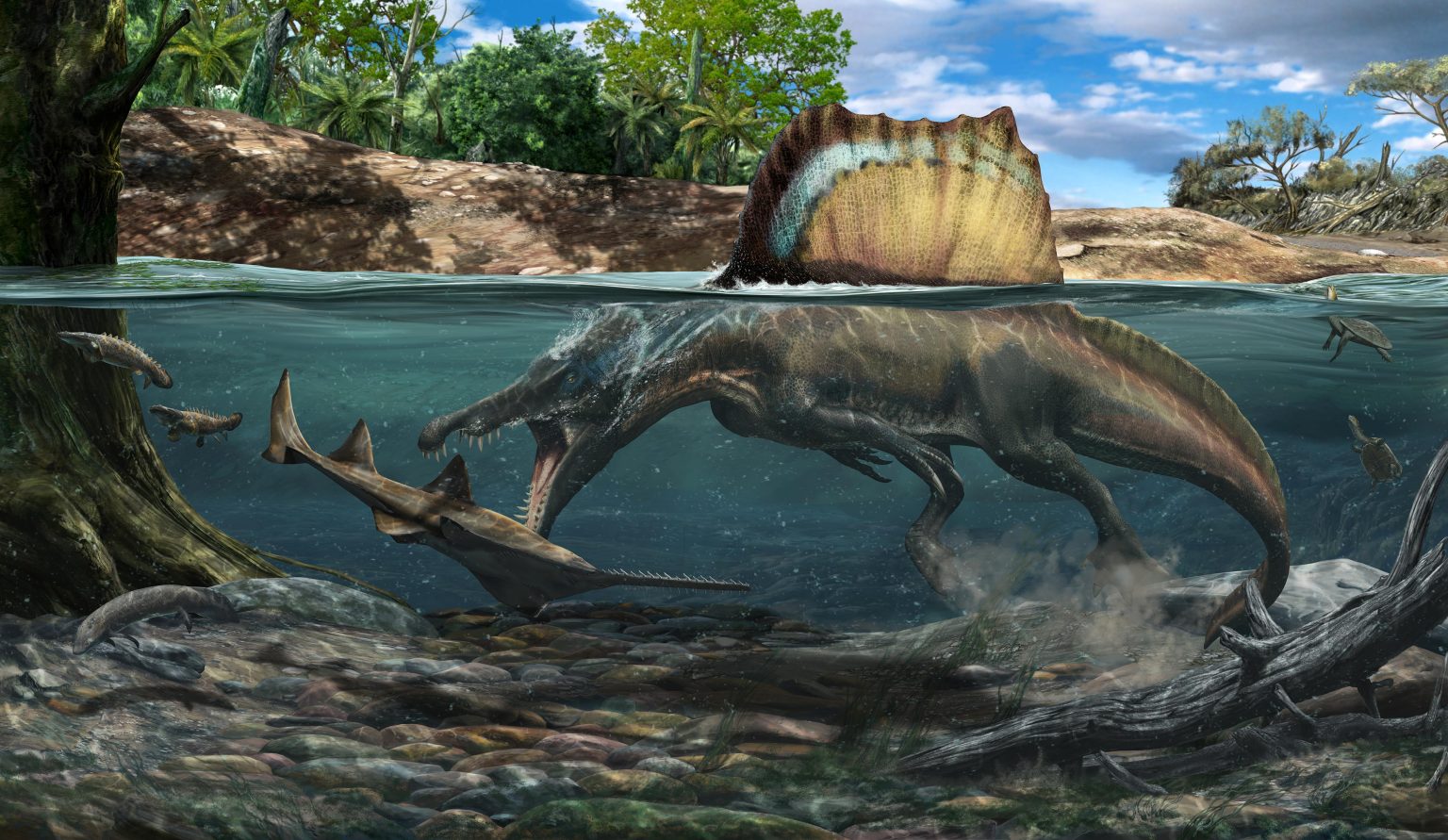
I wouldn’t trust any kind of concrete speed estimate to be honest. However, "6 mph" is too low.
Osteological evidence clearly suggests giant theropods, especially Tyrannosaurids, had more cursorial adaptations than similar-sized elephants (non-columnar limbs with digitigrady and flexed posture, larger limb muscles), and elephants can at least approach, if not exceed, 20 km/h, which suggests that giant theropods must have been capable of at least that.
The open question is, how much more? And whether their more cursorial limb proportions translated into superior athletic potential such as the ability to run properly, with an airborne phase, or whether they were just there to enhance safety factors or efficiency.
In direct comparison with Giganotosaurus, Tyrannosaurus has the more cursorial limb proportions and larger (proximal) limb muscles, suggesting that it was likely faster and more efficient at top speed. However the differences are likely not exactly huge.
There is some evidence that suggests giant carcharodontosaurs may have been more geared towards stability (dorsally located femoral head allowing a wider stance/more lateral abduction of the hindlimb, and lighter skull and head making the animal less top-heavy) rather than speed and agility.
Seeing how Giganotosaurus was probably typically heavier than T. rex, T. rex being "heavy" ceases to be an argument one way or another.
 thorn grove
 stiff osprey
 tough parcel
 opaque kayak
 wind prairie
 frigid delta
 steady rock


 the only bad thing is we have to acknowledge the pyroclastic flow in the room....
 loud wing
 rose gate
 stable sun

 brisk quiver
 snow python


 robust crane
 strange umbra
 fluid inlet

 patent mist
 light osprey
 uncut salmon
 keen tundra


 bitter oasis
 floral ivy
 spice snow
 fossil ingot
 white matrix

 tulip dove


 solemn lily

 umbral kite
 tough sleet
 lavish otter
 (there's like only a few drawings I could find LOL)


 drifting arch
 undone rapids

 calm agate
 manic grail
 outer tusk


 halcyon cobalt

 scenic flame

 keen yew

 sullen cairn






 tacit pine
 winter marsh

 zealous ravine
 old river

 balmy oyster

 compact leaf




 small geyser


 elfin pulsar

 hallow spear


 topaz shell






 warm saddle


 open compass


 rancid arch





 rancid dove
 warped peak


 bright zinc


 desert jolt


 primal ice

 sudden wind


 midnight meteor







 hardy sentinel
 ripe walrus
 lunar copper

 lapis lintel


 brave nova


 storm merlin


 proud prawn

 stuck chasm


 whole umbra
 little mauve



 low raven


 hearty ridge
 velvet burrow


 ❤️
❤️ 


 sharp canyon