#archived-code-general
1 messages · Page 48 of 1
 hollow stone
 nova python
it should do yeah
I have no idea why it's not incrementing the second time I press Jump but for the rest it will
1st Press: Counter = 1
2nd Press Counter = 1
3rd Press: Counter = 2
4th Press: Counter = 3
 proper pier
@hollow stone Wait, I think it's possible that my spherecast is hitting my own player. If I put my player on it's own layer and exclude it from what you are allowed to grapple on to, would that prevent the spherecast from hitting my own player?
proper pier
nova python
it should do yeah
what are you using to input for jump?
nova python
spacebar
proper pier
did u try testing that on its own to see if it was the problem?
hollow stone
proper pier
<@140883503565766656> Wait, I think it's possible that my spherecast is hitting ...
Should do
proper pier
hollow stone
Should do
Thanks I'll try it
@hollow stone Yay it worked! Thanks so much
nova python
proper pier
did u try testing that on its own to see if it was the problem?
It can't be since the the log gets outputted each time I press space
proper pier
oh my b
that is so weird
the error is prrobably coming from somewhere else then
maybe you have something somewhere modifiying a public variable that it is not supposed to modfiy
that wouldnt really make sense tho since its all in 1 method
nova python
yeah
That's the only place it's been modified
wait no I'm wrong
when the player is grounded the index is set back to 0
During the jump the raycast is still hitting the ground and sets it back to 0 I bet
 hybrid gale
hey guys i am struggling so hard setting up a database in unity does anyone have some suggestions? I tried mysql but the app for it was to much so i switched to firebase got around with the website easily but anytime i go to write code for auth functions it keeps saying my app is not found and ive re downloaded the sdk have the auth installed and my json for google
 blazing smelt
How do people make thumbnails from images on a device? Because it seems like reading the entire image file is overkill when it's a large image and I only need a small sized graphic for the thumbnail.
I'm making a UI for selecting images from a camera roll
 supple hinge
!code
 tawny elkBOT

Posting code
📃 Large Code Blocks
Large code blocks should be posted as links to services like:
https://gdl.space/, https://paste.ofcode.org/, https://hatebin.com/
https://paste.myst.rs/, https://hastebin.com/
📃 Inline Code
Surround code with three backquotes. Not quotation marks.
To get C# formatting the first line should only contain cs or csharp.
Add a comment with a line number if there is an error message.
```cs
// Your code here
```
Do not share screenshots of code unless requested.
 void basalt
Trying to RSA encrypt with a key generated from openSSL in php.
byte[] base64Bytes = Convert.FromBase64String("MIIBIjANBgkqhkiG9w0BAQEFAAOCAQ8AMIIBCgKCAQEA4Q9oqSbWLu779TLQNkvd GRzzKhHtkZcJecz7N0E9RzwhqWztS5wnTzZMZGZRVzB/5hhZSh+U4xBnSbfs/y7q vC9kzzP2yZR5qwlWUjy3iPgtWtn7DbFZ8gdkVrTcubg9HC7TFtDcAE0DVg8jefFq 1eowQhkJgdEyyGORS1DO+fmhhciV/ahD/m3DiIWwNTvjllTHCqNSHEnR0SQO4hb5 HAEIf8kYNLtUCmboX7ZAKTY2+PyRMSRtN3cYEw91LUPu1Xcq0XPI3l1LfswdjaFB XKvFEgv/kzP7c2EYr3i5JvQKe4MFW5H9PxwEUQ7idwifGb0BICcKY+rdZTNchSq4 AwIDAQAB");

CSP.ImportRSAPublicKey(base64Bytes, out int bytesReadd);```

Gives me an "Operation is not supported on this platform." error.I'm on .net standard 2.1 and the docs even state that it targets that framework
 ionic socket
For whatever reason, when I call <mesh>.submeshCount I'm getting 1 instead of the 12 listed here?

 empty wing
how can I have a raycast interact with the canvas?
ionic socket
empty wing
how can I have a raycast interact with the canvas?
Can you explain what you need in plain terms?
empty wing
Im trying to make a setting in my game where I can drag and drop ui elements to allow my players to customize the hud in the way they want it to look, so I am using a mousepointtoray but it doesnt detect ui elements, is there a way to allow that?
ionic socket
typically you'd use camera.Main.ScreenPointToRay(Input.MousePosition) to draw a ray from your camera into the 3d space calculated by your mouse position.
also make sure to check into the drag/drop handers, IPointerDragHandler and it's sublings.
empty wing
okay thank you
 unique cloak
I have a script which lets me drag objects with the script attached around in a grid-like fashion where they snap to coordinates of a particular "cell size" increment. heres the code https://hatebin.com/nalqhcnupz - unfortunately, this has an issue where every time I adjust the location of an object, it comes closer and closer to the camera, and theres no way to move it "backwards" to where it originally started. Does anyone have any suggestions for how I could go about fixing this? either a video showcasing an alternative system or some way I can manipulate the camera to avoid this little issue altogether? Any help appreciated, thanks
 unreal temple
Okay, got a solution working!
using System.Runtime.CompilerServices;
using System;

namespace EffortStar {
  public class RuntimeCache<TKey, TValue>
    where TKey : class
    where TValue : class
  {
    ConditionalWeakTable<TKey, TValue> _table = new();
    Func<TKey, TValue> _calculate;

    public RuntimeCache(Func<TKey, TValue> calculate) {
      _calculate = calculate;
    }

    public TValue Get(TKey key) {
      if (!_table.TryGetValue(key, out var result)) {
        result = _calculate(key);
        _table.Add(key, result);
      }
      return result;
    }

    public void Clear() => _table.Clear();
  }
}
using UnityEngine;

namespace EffortStar {
  public static class AimInfoCache {
    public static readonly RuntimeCache<AttackActionConfig, AimInfo> Cache = new(GenerateAimInfo);

#pragma warning disable IDE0051
    [RuntimeInitializeOnLoadMethod]
    static void Initialize() => Cache?.Clear();
#pragma warning restore IDE0051

    static AimInfo GenerateAimInfo(AttackActionConfig config) =>
      config.CalculateAimInfo();
  }
}
Simple enough I guess, and prevents any unwanted changes persisting between runs.
 dim furnace
Any idea why my player controller (in the bottom left) has its movement and rotation thingy in the top right?

 gloomy swan
is NavMeshAgent.SetDestination() effect your performance? Like if I set a new destination every frame vs every second will it make any difference?
 leaden ice
dim furnace
Any idea why my player controller (in the bottom left) has its movement and rota...
leaden ice
dim furnace
Any idea why my player controller (in the bottom left) has its movement and rota...
You have your tool handle position set to Center instead of Pivot
unique cloak
unique cloak
I have a script which lets me drag objects with the script attached around in a ...
bump
dim furnace
leaden ice
You have your tool handle position set to Center instead of Pivot
thanks
 long glacier
hello, i must apologize if this is not the correct channel for this to post, but i need a ps3 webcam driver from github updated to support multiple cameras at the same time (very urgently)
if anyone knows how to implement this or by attempt, please write me
@ me
ionic socket
erm how do I set the material of a mesh at runtime? I'm calling mesh.materials[i] = myMaterial but it doesn't seem to change the default value
ionic socket
mesh.material = MyMaterial works for the first entry in the list; but does not work when I use the indexed reference.
 mossy snow
copy to temp array, change the material in the temp array, assign it back to the mesh
 kind grove
Are there any downsides to using the Enabled flag on scripts that don't update but I'd like to be able to turn on and off? They're reacting to other game events.
 crude mortar
unique cloak
I have a script which lets me drag objects with the script attached around in a ...
crude mortar
unique cloak
I have a script which lets me drag objects with the script attached around in a ...
is there a particular reason you are offsetting the Z position?
and "theres no way to move it "backwards" to where it originally started" isn't exactly accurate
but perhaps your code right now doesn't allow for it
unique cloak
crude mortar
is there a particular reason you are offsetting the Z position?
just tryna debug
 fluid lily
I have an Object instance, Most things I assign to it are Monobehabiors/components, as I need the GameObject reference they are on so I cast them to Component, but I tried to put a GameObject as the Object and I am getting a cast exception. Is there something else I can cast Object to that would allow me to get the GameObject it is related to(aka itself if it is a GameObject)?
fluid lily
I mean I think GameObject would be the only thing not supported that could be assigned from editor so I can do a check for it.
 ruby fulcrum
how do i prevent child objects from being scaled when i scale the parent
 somber nacelle
either don't make it a child or scale it the opposite way
 paper heart
i created separate thread for long math operation, but when it gets run, unity still freezes...
how can i do it so it doesnt freeze during the math calculation?
 somber nacelle
paper heart
i created separate thread for long math operation, but when it gets run, unity s...
somber nacelle
paper heart
i created separate thread for long math operation, but when it gets run, unity s...
well for one you probably cannot use GetComponent on a separate thread so that likely wouldn't work correctly anyway. but also are you certain this is even the code causing the freeze?
 swift falcon
for jumping Im using add force but its super inconsistent with the amount of force idk if its because i press the space bar multiple times during the jump or what
what is the best workaround or should i just set the velocity
somber nacelle
swift falcon
for jumping Im using add force but its super inconsistent with the amount of for...
you'd have to share the code for anyone to be able to tell what you are doing incorrectly
somber nacelle
okay well for one, i'd recommend just calling the IsGrounded method once per Update rather than twice, there's literally no reason to call it more than once. but it is possible that you are being considered grounded for one or more frames after applying the force. What I normally do is I only check for ground when Y velocity is at or below a certain threshold, then reset the grounded state to false as soon as i jump so that it doesn't start checking for ground again until the object has started descending from its jump
also if you just want a single impulse of force you should consider using GetKeyDown instead of GetKey, this will also help prevent the object from applying the impulse force for multiple frames in a row
 knotty sun
swift falcon
heres what I have: https://hst.sh/xicedapaqi.cpp
knotty sun
swift falcon
heres what I have: https://hst.sh/xicedapaqi.cpp
using Input.GetKey in Update will mean it is executed multiple times inside the physics loop
swift falcon
thanks it works much better now
 elder temple
Is there a better way to get component of a triggered object, instead of using getcomponent in OnTriggerEnter()
??
somber nacelle
TryGetComponent in OnTriggerEnter
elder temple
But won't it run like every frame?
somber nacelle
no? OnTriggerEnter only happens when an object initially enters the trigger
somber nacelle
even if that were the case, how else would you expect to get a component if all you are given is a reference to a Collider?
elder temple
Yeah..i thought there's a different way which I don't know of
 fresh cosmos
how does this work?
i tried to use it but i couldnt get it to trigger
https://docs.unity3d.com/ScriptReference/SceneManagement.SceneManager-activeSceneChanged.html
 somber nacelle
it is an event that you subscribe to. do you know how events work?
fresh cosmos
yeah, i added the event from basic c# class with [InitializeOnLoad] and added a test method to it in its constructor
it logged that it should have added the method to the event but it never logged that it triggered
somber nacelle
show the relevant code
fresh cosmos
hold on let me find it
somber nacelle
also are you certain you don't want to be using either RuntimeInitializeOnLoad (since the event you are subscribing to is only invoked during Play mode or in a build) or using the editor version of the event instead?
fresh cosmos
oh, that might be an good idea
paper heart
somber nacelle
well for one you probably cannot use GetComponent on a separate thread so that l...
oh ok i will delete that and put it outside
though can i use Debug.Log() or print() in threads or these not too?
fresh cosmos
looks like i dont have the code on my laptop but i can rewrite it real quick its just a couple of lines
somber nacelle
paper heart
oh ok i will delete that and put it outside
though can i use Debug.Log() or prin...
you can certainly try. but most of the unity API is not thread safe, a lot of it will even throw an error if you try to call it from another thread (or will just stop the thread if you aren't correctly handling your errors)
fresh cosmos
i believe it was something similar to this
using UnityEngine;
using UnityEngine.SceneManagement;
using UnityEditor;
using UnityEditor.SceneManagement;

[InitializeOnLoad]
public static class SceneChangeDetector
{
    private static Scene _previousScene;

    SceneChangeDetector()
    {
        _previousScene = EditorSceneManager.GetActiveScene();
        EditorSceneManager.activeSceneChanged += onSceneChanged;
        Debug.Log("Added to event");
    }

    static void onSceneChanged(Scene previousScene, Scene newScene)
    {
        Debug.Log("Trigger");
    }
}
why not wait until you have access to the actual code to ask for help? then you can get help that won't require guessing at what the issue is
swift falcon
should i use a raycast or bullets with colliders for guns
fresh cosmos
i guess i can come back later when so i know for sure 
 lusty dragon
How do I change the layer in an object like this?
 somber nacelle
lusty dragon
somber nacelle
lusty dragon
Sorting Layer.
 craggy cedar
In what order do Scene GUI Handles get drawn?
If I draw 2 handles in the same location
Which one comes on top
How do I control it?
I'm talking 2D, so I think I can change the Z position
 vague slate
I remember Unity Editor has built in API to open explorer so you could choose a specific folder. Anyone remembers what is it's name?
 maiden breach
Or one of the variants in the EditorUtility class? There are several depending on where/what youre looking for.
vague slate
maiden breach
You mean this? https://docs.unity3d.com/ScriptReference/EditorUtility.SaveFilePa...
yeah
 stark veldt
Hi.
I have a prefab that contains a certain amount of tagged objects.
Is there a way to count those objects on Scene launch prior to initializing any instances of that prefab?
leaden ice
stark veldt
Hi.
I have a prefab that contains a certain amount of tagged objects.
Is there a...
sure just iterate over all the prefab's children
and count
stark veldt
leaden ice
sure just iterate over all the prefab's children
Oh, I didn't think it would be that easy.
Thanks!
 neon plank
Using NavMesh, is possible to add path restrictions to specific agents (not specific agent types, but specific instances of an agent)?
I would like for example: to disallow a specific agent from getting outside some rectangle(s).
 main shuttle
neon plank
Using `NavMesh`, is possible to add path restrictions to specific agents (not sp...
main shuttle
neon plank
Using `NavMesh`, is possible to add path restrictions to specific agents (not sp...
You can give the navmeshagent an area mask.
Then you need to give all the rectacles an area type.
All explained here: https://docs.unity3d.com/Manual/nav-AreasAndCosts.html


 timid meteor
Does anyone know how to set a position of a grid with a vector3int?
swift falcon
anyone know how to make a box collider hide all entities that enter it, but reveal those entities if the player also enters it? ChatGPT wrote an OK little script
 hexed pecan
swift falcon
anyone know how to make a box collider hide all entities that enter it, but reve...
hexed pecan
swift falcon
anyone know how to make a box collider hide all entities that enter it, but reve...
Yes
timid meteor
hexed pecan
Yes
how would I approach this?
hexed pecan
Show what you have attempted?
With a grid do you mean some sort of array or some grid component?
GridLayout?
 thick plume
Does anyone have an idea why I'm able to instantiate the gameobject, but as soon as I try to add it to the list, I get NullReferenceException? I have no idea what could even try to figure it out
        ...
        static public List<GameObject> level;

        void PlaceItemOnScreen(Vector3 mousePosition)
        {
          ...
          GameObject gameObject = SelectedItem.selectedPrefab;
          gameObject.transform.position = prefabPosition;
          Instantiate(gameObject);
          level.Add(gameObject);
        }
the prefab gets instantiated as expected, it appears on my screen, but as soon as it tried to add to the list it errors
main shuttle
thick plume
Does anyone have an idea why I'm able to instantiate the gameobject, but as soon...
Given your story I would think a static List doesn't get serialized by default and you did not initialize the list yourself.
timid meteor
hexed pecan
GridLayout?
one sec

so this is just the part of the code that refers to the generation of terrain
what I am trying to do is
move the grid that generates the terrain via code
in the line
Vector3Int SpawnHere = new Vector3Int((int)SetGridPosition.transform.position.x, (int)SetGridPosition.transform.position.y, 0);
SetGridPosition is a gameobject that I assign a cube to that will make the grid active once the player has entered into the trigger box
the problem I am having is
hexed pecan
timid meteor
the problem I am having is
You can type full sentences btw
hexed pecan
timid meteor
move the grid that generates the terrain via code
Move it where? The question isn't very clear
The GridLayout component is probably a good choice if you want to do conversions
Or anything grid based
timid meteor
hexed pecan
Move it where? The question isn't very clear
SetGridPosition is where I want the grid to be moved to
timid meteor
hexed pecan
The GridLayout component is probably a good choice if you want to do conversions
I am trying to do it via code so that it can be randomly generated in the world as the player progresses
hexed pecan
GridLayout can be used with code
I havent used it yet but if you look it has useful functions for converting local to world coordinates etc
https://docs.unity3d.com/ScriptReference/GridLayout.html
hexed pecan
timid meteor
SetGridPosition is where I want the grid to be moved to
Loop the grid array and add the offset to each position
Calculate the offset with SetGridPosition.position - pivotPos where pivotPos can be your first grid position or whatever you want
timid meteor
hmmm ok I'll take a look into it thanks 😄
swift falcon
hexed pecan
Yes
here is what I attempted
using UnityEngine;

public class HideObjectsInCollider : MonoBehaviour
{
    private void OnTriggerEnter(Collider other)
    {
        if (other.gameObject.tag == "Player")
        {
            foreach (Transform child in transform)
            {
                child.gameObject.layer = LayerMask.NameToLayer("Ignore Raycast");
            }
        }
    }

    private void OnTriggerExit(Collider other)
    {
        if (other.gameObject.tag == "Player")
        {
            foreach (Transform child in transform)
            {
                child.gameObject.layer = LayerMask.NameToLayer("HiddenObjects");
            }
        }
    }
}
@hexed pecan what do you think?
hexed pecan
Do you mean to just hide them or disable them?
Also what object is this script on, is it the one that other objects enter?
Why would it hide its own children? Im confused
 tepid river
i have this interactive (mini) map i built and now i wanna draw more information as text into the scene. whats the proper way to have text anchored to 3d objects?
i read you can make a canvas and glue that to the object, but i smell that this might be overkill?

 vagrant blade
Just child it to the object
tepid river
well i dont care about the canvas. i just want to anchor a bunch (20+) texts to different transforms
hexed pecan
tepid river
i have this interactive (mini) map i built and now i wanna draw more information...
Is it for debugging or final stuff?
tepid river
final
 thorny spindle
oh, then just child it
But you'll probably want to make sure the text always faces the player
tepid river
so attach a canvas with a UI text to each object?
afaik UI texts need a canvas to work
vagrant blade
You can use the 3D textmeshpro object as well, no need for a canvas.
tepid river
cool thanks 👍
thorny spindle
Also I have a question
If in a game I have a bunch of items that I might want to add to later in some update
How would I take care of that list
like if I had a list of swords somewhere with sword1, sword2, sword3
But I added a sword4
How would I make sure that gets added to the list of swords so that I can iterate over the list to show in a menu later or smth
And how would I even add the sword?
hexed pecan
Where does that list live?
thorny spindle
Would it be an addressable asset that I push in an update or smth?
I haven't made any of this yet lol
This is just a problem I suddenly thought of, since I've never considered stuff like updates to a game after release
I guess.... would it make sense for the list to live in a scriptable object?
But then I would need access to the sword prefabs for instantiation at some point, so maybe it'd have to be a monobehaviour?
I guess I could have it be a scriptable object or smth, and then match the string of sword list and the prefab names and then something else in game could instantiate from resources
hexed pecan
thorny spindle
But then I would need access to the sword prefabs for instantiation at some poin...
It could be an SO as well, that's how I personally store this type of lists. As for the updating/adressables question, no idea
hexed pecan
thorny spindle
I guess I could have it be a scriptable object or smth, and then match the strin...
You could just reference the SO asset that has the list and get the prefab reference from there. No need for Resources.Load or anything
thorny spindle
Yeah, but I'm worried about how live updates would affect everything I guess
But I don't know how those work at all
Maybe that's what I should study next
tepid river
cool the TextMeshPro was exactly what i wanted.
cant believe how obsolete my "central canvas that imperatively positions UI images to screenpos of worldobjets" was
 thorny spindle
Henlo to you too
thorny spindle
tepid river
cool the TextMeshPro was exactly what i wanted.
cant believe how obsolete my "ce...
lol I mean, sometimes the worldtoscreenpos is useful if you just want the icons to all be the same size on the canvas and such
tepid river
i even resized the canvas images to simulate 3d space size differences 
 hard sparrow
How sus is a singleton that tracks state?
tepid river
uh depends. in my old project, the GameServer and GameClient were Singeltons
hard sparrow
I don't know anything about multiplayer or servers yet
(hoping to delay that since I know it will be very hard)
hard sparrow
Well it's a status effect manager that can take a generic status type and matching enum to add a status from a list of prefabs to the specified unit
I figure I'll end up using FindObjectOfType on it most of the time anyway
How often do you guys use FindObjectOfType (or equivalent) ?
tepid river
if its a singleton, you dont need to find it tho.
just give it a public static MyClass instance
hard sparrow
hard sparrow
Well it's a status effect manager that can take a generic status type and matchi...
oh and it keeps track of every status on every unit
tepid river
i try to avoid anything like Find. never use it.
but im not a gamedeveloper and not used to even have the ability to search for instances by class
 polar marten
tepid river
cool the TextMeshPro was exactly what i wanted.
cant believe how obsolete my "ce...
polar marten
tepid river
cool the TextMeshPro was exactly what i wanted.
cant believe how obsolete my "ce...
if you're drawing little text labels that you purposefully want to be legible, it will be easier to place the labels on a canvas and translate world space to screen space to position them
if it isn't important that they are legible, you can put the text meshes in world space
hard sparrow
I'm using it a lot when implementing particular derived classes that implement and handle their own implementations - they find the classes they need and call the methods they want
polar marten
it is also sometimes, but rarely, expensive to render another camera. make sure your camera is configured correctly by putting all this stuff on a layer, and turning off unused features
hard sparrow
But then I think, if I'm using Find like this maybe I might as well make some of these managers singletons...
But THEN I think, well if this is my thought process I'll just end up making every manager a singleton, and that can't be right
tepid river
my former roommate did a unity project for his bachelor, and had almost no coding experience. so instead of properly managing a tree of references, he just had a ton of scripts and objects floating around somewhere and used search everytime.
THAT was a codesmell
a lot of managers are singletons by nature, doesnt mean you have to build them as such
hard sparrow
I think my architecture is pretty good. But it's not like I get any feedback on it so who knows
tepid river
also its kinda pointless to hand down a reference to your WorldManager or whatever into every single tiny object.
a public static getInstance() is much better
hard sparrow
K I'll just make it singleton. Might as well learn by doing
swift falcon
hence why DI is used for stuff like this but for some reason nobody in game dev which is making a client uses DI
tepid river
whats DI
 rich girder
hello can somebody help me
swift falcon
dependency injection library
hard sparrow
DI?
swift falcon
It autowires the dependencies
hard sparrow
I heard from professional game devs that DI in gamedev is pretty pointless
swift falcon
.e.g.
Lets say you had
MyComponent(MyMenuManager manager)
It will autowire inside the object
rich girder
hello can somebody help me
swift falcon
so u dont need to deal with the object lifetime
swift falcon
rich girder
hello can somebody help me
ask ur question dont ask if someone can help u
THIS IS A HELP CHANNEL
DI is pretty nice for decoupling logic
hard sparrow
swift falcon
.e.g.
Lets say you had
MyComponent(MyMenuManager manager)
So you're saying DI should be used more than it is?
swift falcon
its not used at all unfortunately
in every part of software development we generally use DI
to wire up constructor dependencies
You can use stuff like myDiContainer.AddSingleton<MenuManager>()
then it'll automatically resolve it
when myDiCotainer.Dispose is called it disposes all the services
tepid river
not a fan of dependency injection mostly. it hides a lot of things and makes understanding stuff more difficult.
still has its usages oc
swift falcon
So u dont have to handle the lifetime
the beauty of the DI is u dont have to handle construction or lifetime of the object
hard sparrow
I would need to see an example to understand
swift falcon
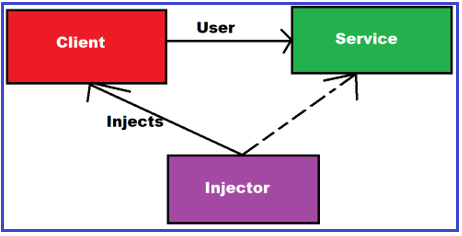
In this article, I am going to discuss the Dependency Injection Design Pattern in C# with examples. Dependency Injection is a process in which
tbf nothing that the client uses
for some reason people dont use DI in game clients
hard sparrow
When I was learning to code (explicitly for purposes of game dev) I spent like two weeks trying to understand DI, not really succeeding, and then never using it anyway after hearing some gamedev pros trash talk it in gamedev context
swift falcon
for game servers its a differen story 🙂
In enterprise DI is used for nearly every large application
except in the gaming industry for game clients.
better examples

Learn how .NET implements dependency injection and how to use it.
hard sparrow
What are the kinds of situations where you start thinking about using DI?
swift falcon
When you have a huge amount of dependencies in your services which can change, or when you have dependencies and you dont want to manage their lifetimes and creation yourself
 mental lava
if im using unity on Linux, is it recommended to use vs code? if not, what other alternatives do you guys suggest
hard sparrow
"dependencies which can change" as in a class depends on a certain class at one time, and a different class at a later time?
tepid river
VSC works well on linux (for my work, dont know about unity)
swift falcon
.e.g.
MyConstructor(MyDependency dep) {
}
MyDependency(AnotherDependency1 dep1, AnotherDependency2 dep2) {
}
Now normally without DI i will need to do:
new MyConstructor(new MyDependency(new AnotherDep1(), new AnotherDep2()))
With DI you can just do:
serverProvider.GetComponent<MyConstructor>()
It will new up the objects automatically
and handle them
ofc u need to register them .e.g.
serviceProvider.AddSingleton<AnotherDependency1>();
serviceProvider.AddSingleton<AnotherDependency2>();
serviceProvider.AddSingleton<MyConstructor>();
hard sparrow
mental lava
if im using unity on Linux, is it recommended to use vs code? if not, what other...
Jetbrains Rider is the best IDE afaik, but vscode is fine
swift falcon
you can see the benefits right here.
swift falcon
hard sparrow
"dependencies which can change" as in a class depends on a certain class at one ...
yes, so imagine you had a interface called
IFileSystem.
Now in the DI
You can register the interface like this:
serviceProvider.AddSingleton<IFileSystem, PhysicalFileSystem>();
or if you had another impl of IFileSYstem you can change it to something like this:
serviceProvider.AddSingleton<IFileSystem, CloudPhysicalFileSystem>();
Ability to easily change out deps is a nice one
now whenever you reference IFileSystem in a constructor it will automatically resolve the correct one registered in the DI
mental lava
hard sparrow
Jetbrains Rider is the best IDE afaik, but vscode is fine
okay
rich girder
hello can somebody help me
tepid river
dude just ask your question
rich girder
how do i fix this problem
 tepid river
looks like your code editor is set to something wierd (at least thats suggested in the error)
check edit>preferences> external tools
swift falcon
rich girder
hello can somebody help me
no
rich girder
tepid river
looks like your code editor is set to something wierd (at least thats suggested ...
do i need to have visual studio
 tall lagoon
Hey guys so im making an fps and im making a big room for a level but for some reasonwhen the walls are are the walls do this bc of the camera.how can i fix?

 brittle sparrow
yeah sorry
hexed pecan
brittle sparrow
yeah sorry
Make sure that font supports the characters too
tepid river
rich girder
do i need to have visual studio
no you can use any IDE you want. generally Visual Studio is a good starting point if you dont know what you are doing
swift falcon
hexed pecan
Do you mean to just hide them or disable them?
either is fine. The script I posted would be attached to the collider. It's to hide enemies, other players, and objects on 2nd and nth floors of buildings while the player is on the lower floors in a top down game. The approach was to have a tag or layer for hidden objects and add and remove objects from that tag or layer as they enter or exit the trigger. Maybe there is a better way?
hexed pecan
Well the script is hiding/showing its own children instead of the one its colliding with, so I'm not even sure if it works correctly
swift falcon
that's probably why it doesn't work or do anything
because it can't parent itself to objects dynamically... How can I make it so that it works on collision / trigger enter and exit
rich girder
tepid river
no you can use any IDE you want. generally Visual Studio is a good starting poin...
how do i get IDE
tepid river
An integrated development environment (IDE) is a software application that provides comprehensive facilities to computer programmers for software development. An IDE normally consists of at least a source code editor, build automation tools, and a debugger. Some IDEs, such as NetBeans and Eclipse, contain the necessary compiler, interpreter, or ...
rich girder
tepid river
https://en.wikipedia.org/wiki/Integrated_development_environment
how do I install
vagrant blade
You install visual studio either manually from the website or through Unity Hub.
Instructions for configuring it are in #854851968446365696.
 whole night
I have a bunch of objects that i instantiate and i have a follow script on them and they follow me, but how do i set their rotation to face me?
leaden ice
whole night
I have a bunch of objects that i instantiate and i have a follow script on them ...
transform.LookAt(playerPosition)``` gray zephyr
tepid river
no you can use any IDE you want. generally Visual Studio is a good starting poin...
gray zephyr
tepid river
no you can use any IDE you want. generally Visual Studio is a good starting poin...
Visual Studio on Mac is practically featureless xD
whole night
leaden ice
```cs
transform.LookAt(playerPosition)```
thanks, although this did work because the mesh was facing the opposite direction of what it was supposed to look at so i further had to rotate it by 180 degrees on y axis
leaden ice
whole night
thanks, although this did work because the mesh was facing the opposite directio...
Better fix is to fix your mesh 😉
neon plank
main shuttle
You can give the navmeshagent an area mask.
Then you need to give all the recta...
But there is limit of area masks which is shared across all agents. I'm looking something which is not shared by all agents.
hexed pecan
swift falcon
anyone know how to make a box collider hide all entities that enter it, but reve...
Alright so this was the original question.
Sounds like you want the object to have a script that has a list of gameobjects or renderers, and you would add/remove objects in that list when they enter/exit your trigger.
When the player enters, you can loop over the list and unhide the objects, and clear the list
hexed pecan
swift falcon
here is what I attempted
```cs
using UnityEngine;
public class HideObjectsInCol...
Was this the script written by ChatGPT?
hexed pecan
swift falcon
either is fine. The script I posted would be attached to the collider. It's to h...
If you want to disable all objects on the floor, you could put them under an empty parent and just disable the parent gameobject (instead of collecting them into a List like I suggested above)
tepid river
leaden ice
Better fix is to fix your mesh 😉
rotating/shifting/scaling a mesh is a 60 second operation in blender 👍
swift falcon
hexed pecan
Was this the script written by ChatGPT?
yes it was lol 🤣 I wrote my own script for hiding/toggling roofs and floors when the player collides but this was a starting point for hiding players and monsters (and other objects) on other floors because it seemed like a really complex task
swift falcon
hexed pecan
If you want to disable all objects on the floor, you could put them under an emp...
that works for objects that are there all the time (like furniture in a static building) but it doesn't work for gameobjects that come and go (like mobs, enemies, other players). I haven't found anyone working on a similar problem online
hexed pecan
swift falcon
that works for objects that are there all the time (like furniture in a static b...
Okay then I suggest collecting them into a List in TriggerEnter/Exit
swift falcon
hexed pecan
Okay then I suggest collecting them into a List in TriggerEnter/Exit
oh that's a good idea!! thank you
whole night
if i want to do onCollisionEnter do any of the two GO need to have rigidbody ?
 whole night
rich girder
what is wrong in this comand help me
whole night
rich girder
what is wrong in this comand help me
, after horizontal
 delicate olive
whole night
if i want to do onCollisionEnter do any of the two GO need to have rigidbody ?
delicate olive
whole night
if i want to do onCollisionEnter do any of the two GO need to have rigidbody ?
nope I don't think so
knotty sun
whole night
if i want to do onCollisionEnter do any of the two GO need to have rigidbody ?
yes, please read the Unity documentation
knotty sun
rich girder
what is wrong in this comand help me
Horizontal with capital H
 zinc parrot
Are there any examples I can follow yet of inline raytracing in unity? from what ive seen the documentation on it is very very sparse
 night relic
hello, does anyone know how can I get informed when recenter event occurs (right Oculus menu button long press) with XR Plugin Management?
target is to implement recenter in my app on right Oculus menu button long press...
 vagrant marsh
does anyone know good examples of enemy ais in sidescroller games?
 covert nest
hey everyone, is there any way to get a sprite into a tilemap with code? i couldnt find any helpful information about it on the internet pls help me out
 valid relic
Hey, I need to sort small lists (usually 1-20 elements, rarely above 30) extremely efficiently. The keys are positive floats. They tend to be near-sorted a lot of the time so the default quicksort used by List.Sort() may be the bottleneck, and I'm looking for a better algorithm for this scenario.
Here is an example of a typical list:
[14.43493, 65.56322, 172.989, 213.8974, 257.5395, 324.424, 346.906, 357.6949, 368.1883, 0.2753617, 0.419436]
As you can see the list is almost sorted, except for the last two elements which are at the wrong end. It is quite common for the list to be made up of some number of ordered subsequences. As such, what is the most efficient sorting algorithm for this? I am thinking of using Insertion Sort but it does not take advantage of the subsequences being sorted. I would prefer one which splits up the list as such and re-orders the subsequences based on their first and last element, and handles overlaps appropriately:
[14.43493, 65.56322, 172.989, 213.8974, 257.5395, 324.424, 346.906, 357.6949, 368.1883], [0.2753617, 0.419436]
Does something like this exist? Would handling overlaps be too big an overhead?
knotty sun
valid relic
Hey, I need to sort small lists (usually 1-20 elements, rarely above 30) extreme...
bubble sort
 cunning sleet
Question! I'm positioning a bunch of walls right next to each other with this line of code:
wall.transform.position = previousWall.transform.position + -1 * previousWall.transform.up;
The issue is that they are getting spawned/positioned directly next to the previous spawned-in wall while the wall is moving. This leads to some inconsistencies on where the walls actually get spaced. How can I ensure that they are always directly next to each other (no space between)?

Note: If the walls are not moving, they spawn in correctly. I think its an issue with the previous wall moving a pixel or two during the calculation of the next one.
knotty sun
cunning sleet
Question! I'm positioning a bunch of walls right next to each other with this li...
the problem may be you are mixing float and int math
cunning sleet
knotty sun
the problem may be you are mixing float and int math
Switching -1 to -1f didn't affect anything and there is no other math happening here (other than the vector addition)
knotty sun
cunning sleet
Switching `-1` to `-1f` didn't affect anything and there is no other math happen...
well, if that is not the case then the obvious answer is to cache the position
hexed pecan
cunning sleet
Note: If the walls are not moving, they spawn in correctly. I think its an issue...
Are they moving with a rigidbody?
You could try rigidbody.position instead of transform.position
Im assuming youre updating previousWall to be the newest wall after creating it?
cunning sleet
hexed pecan
Are they moving with a rigidbody?
Yep its a pretty simple movement script:
rigidBody.velocity = new Vector2(0, fallingSpeed.getSpeed() * (1 / parallaxMultiplier));
Yeah I have a list of wall GameObjects that I'm pushing/popping to.
GameObject previousWall = walls[walls.Count - 1];
What do you mean by caching the position here?
knotty sun
cunning sleet
What do you mean by caching the position here?
it would seem that there is a mismatch between position and actual position. As you are using physics then this would indicate a mismatch between Update and FixedUpdate positions, so you have a choice, move your code to FixedUpdate or cache the FixedUpdate position and use it in Update
swift falcon
What is going on with my compute shader, why are the alpha maps being tiled like that?
I have 8 terrain layers and the compute shader sets the alphamaps for the terrain using a texture2d to find the closest color from the terrain layer diffuse texture, but its not working the way its intended to work.
The 1st image its how im getting the result from the GPU, and the 2nd image is how im getting the results from loops in C#.

 cunning sleet
knotty sun
it would seem that there is a mismatch between position and actual position. As ...
cunning sleet
knotty sun
it would seem that there is a mismatch between position and actual position. As ...
Switching to FixedPosition got it closer, but there are still spaces about 10% of the time.
 untold siren
hi guys I'm stuck on a current issue with coding a shotgun that uses raycasting to give it an accurate and randomized spread; it can randomize it's point however I'm using a trail renderer to imitate that it's actually shooting a projectile. I'm trying to figure out how to still draw a trail even if the raycast is unsuccessful; by trying to use the direction of the ray but it's not working - if anyone has a realistic method of going about implementing this, it'd be heavily appreciated. the current code is:
        private void ShotgunFire()
        {
            for (var i = 0; i < shotgunPelletCount; i++)
            {
                var accuracy = Random.insideUnitCircle * shotgunSpreadSize;
                var dir = new Vector3(accuracy.x, accuracy.y, 1f);
                var sprayDir = transform.TransformVector(dir);
                Debug.ClearDeveloperConsole();
                Debug.Log(accuracy);
                var ray = _playerCamera.ScreenPointToRay(Mouse.current.position.ReadValue() + accuracy);
                var targetPoint =  Physics.Raycast(ray, out var hit) ? hit.point : -sprayDir * 30f;
                TrailRenderer trail = Instantiate(bulletTrail, shotgunSpawnPos.transform.position, Quaternion.identity);
                StartCoroutine(SpawnTrailAlternative(trail, targetPoint));
                switch (hit.transform.tag)
                {
                    case "Enemy":
                        var collidedEnemy = hit.transform.gameObject;
                        collidedEnemy.GetComponent<EnemyController>().TakeDamage(shotgunDamage);
                        break;
                    case null:
                        break;
                }
            }
            CurrentAmmo--;
            if (CurrentAmmo > 0) return;
            _playerInventory.ExpireWeapon(_playerInventory.CurrentCard);
      }
I've also tried it with this
var targetPoint = Physics.Raycast(ray, out var hit) ? hit.point : ray.direction * 20f;
however it doesn't shoot straight ahead and instead either to the side or behind the player
 elfin vessel
How can I change the editor camera's position from a script?
elfin vessel
leaden ice
https://docs.unity3d.com/ScriptReference/SceneView.html
Yeah, but the currentDrawingSceneView is always null
leaden ice
elfin vessel
Yeah, but the currentDrawingSceneView is always null
Not what you want then
How about this one? https://docs.unity3d.com/ScriptReference/SceneView-lastActiveSceneView.html
I assume currentDrawing is only set during a scene view repaint or whatever
empty wing
I am trying to change the pivot point of a hud element to the location of a mouse input, but im struggling on converting the pivot point to world space. How can this be done?
leaden ice
empty wing
I am trying to change the pivot point of a hud element to the location of a mous...
It depends on which canvas render mode you're using
empty wing
oh damnnnnn
elfin vessel
leaden ice
How about this one? https://docs.unity3d.com/ScriptReference/SceneView-lastActiv...
That one Isn't null but changing the camera position doesnt do anything. Hopw do I know I've got the right one?
empty wing
that was probably the most useful thing someone has ever said to me ever, that would have changed everything sixteen centuries ago
thank you
leaden ice
empty wing
thank you
Yw lol
 grim copper
UnityEngine.AI.NavMeshAgent:SetDestination (UnityEngine.Vector3)```

how do i fix thisi've got a baked navmesh on my floor
and a navmeshagent
 elder spoke
hello 🙂 My objects have no shadows as you can see in the image, any tips? thanks!

 quartz folio
elder spoke
hello 🙂 My objects have no shadows as you can see in the image, any tips? thank...
quartz folio
elder spoke
hello 🙂 My objects have no shadows as you can see in the image, any tips? thank...
This is not a code question. See #🔀┃art-asset-workflow instead
elder spoke
okk, thanks
 deep willow
When should I be using a Singleton Pattern?
I have a player script and there will only ever be one player
wondering if its worth making it into a singleton
 wraith coral
is there a quick way to get a scene’s build index using the scene’s name?
hexed pecan
wraith coral
is there a quick way to get a scene’s build index using the scene’s name?
Use GetSceneByName and access the buildIndex, that should work
Why do you need this though?
wraith coral
leaden ice
This https://docs.unity3d.com/ScriptReference/SceneManagement.SceneUtility.GetBu...
Yeah used this, thanks. GetScneByName only works if scene is already loaded
wraith coral
hexed pecan
Why do you need this though?
specific stuffs really
void basalt
            Buffer.BlockCopy(webRequestBuffer, 0, webRequestBytes, 0, 1024);
            Decoder myDecoder = Encoding.UTF8.GetDecoder();

            // Full string no problem
            Debug.Log(new string(webRequestBuffer));

            myDecoder.Convert(webRequestBytes, 0, 1024, webRequestBuffer, 0, 1024, true, out int one, out int two, out bool three);

            // Only first letter, despite char buffer being full
            Debug.Log(new string(webRequestBuffer, 0, 1024));```

After the decoder convert, the char array is having trouble getting processed back into a stringWhen I create a new string with that char buffer after the convert, it only copies over the first character to the string, no matter what I do
before the conversion, the entire char buffer goes into a string just fine
The char buffer is also full of characters after the conversion. I can see if I loop through them
 elder jay
Help
 plucky karma
elder jay
Help
plucky karma
elder jay
Help
Saying "Help" with absolutely no content to what problem you're having is difficult to answer.
elder jay
I have a [SerializeField] Camera worldCam; but when I try to add the camera it doesnt let me
void basalt
That's a beginner question pal
elder jay
my bad
plucky karma
elder jay
I have a ```[SerializeField] Camera worldCam;``` but when I try to add the camer...
Sounds like the object your dragging does not have any camera component attached.
void basalt
drag the component in, rather than the gameobject. If that doesn't work, just grab it through C#
Camera myCamera = GameObject.Find("someObjectWithCamera").GetComponent<Camera>();
plucky karma
void basalt
Camera myCamera = GameObject.Find("someObjectWithCamera").GetComponent<Camera>()...
Camera.main 😄
void basalt
Then you're doing something wrong
elder jay
thats what Idk what Im doing wrong
 void basalt
Which object is your camera component on
oh nevermind
Just drag the main camera on to your variable
If that doesn't work then you need to screenshot the inspector view of the variable
 void basalt
I'm not much help. I don't drag stuff in, I usually just initialize through C#
Sorry
I think to drag stuff in, it has to be in the same hierarchy
Like you can't drag a camera from your scene inspector hiearchy, into your asset in your asset folder
elder jay
hmm
void basalt
But that's weird because your game controller is in the same hierarchy view
elder jay
yeh
void basalt
Make a new camera in your scene inspector view
right click -> new camera
try with that
void basalt
restart unity?
void basalt
Just out of curiosity, change [SerializeField] Camera worldCam; to public Camera worldCam;
void basalt
no clue then
elder jay
dang
void basalt
You will have much better luck in the beginner section
elder jay
k
 cosmic rain
elder jay
its so weird
cosmic rain
elder jay
its so weird
Share the game controller script
elder jay
cosmic rain
Share the game controller script
k
plucky karma
@elder jay Click on this and see what pop up on the list -
 elder jay
plucky karma
<@610560736930037763> Click on this and see what pop up on the list -
elder jay
plucky karma
<@610560736930037763> Click on this and see what pop up on the list -
The Camera I was trying to add
still didnt work that way
 chrome berry
It's probably not the case here, but an OnValidate that immediately nulls the reference could do something like that.
plucky karma
Something seems very wrong with this....
chrome berry
Though from the video, it looks like it's not letting you drop it in. It's got the crossed circle when you hover over the reference field
cosmic rain
In this case they might have a class called Camera in the project.
elder jay
cosmic rain
Share the game controller script
using System.Collections.Generic;
using UnityEngine;

public enum GameState
{
    FreeRoam, Battle
}

public class GameController : MonoBehaviour
{


    [SerializeField] PlayerController playerController;
    [SerializeField] BattleSystem battleSystem;

       [SerializeField] Camera worldCamera;


    //public Camera worldCamera;

    GameState state;
    // Update is called once per frame

    private void Start()
    {
        playerController.OnEncountered += StartBattle;
        battleSystem.OnBattleOver += EndBattle;


    }

    void StartBattle()
    {

        state = GameState.Battle;
        battleSystem.gameObject.SetActive(true);

        //worldCam.gameObject.SetActive(false);

        var playerParty = playerController.GetComponent<PokemonParty>();
         var wildPokemon = FindObjectOfType<MapArea>().GetComponent<MapArea>().GetRandomWildPokemon();

         battleSystem.StartBattle(playerParty, wildPokemon);
    }


    void EndBattle(bool won)
    {
        state = GameState.FreeRoam;
        battleSystem.gameObject.SetActive(false);
        //worldCam.gameObject.SetActive(true);
    }


    private void Update()
    {
        if (state == GameState.FreeRoam)
        {
            playerController.HandleUpdate();

        } else if (state == GameState.Battle)
        {
            battleSystem.HandleUpdate();
        }
    }
}
So it thinks the object you're dragging in DOESN'T match the reference field's type
plucky karma
Try this, see for sanity checks?
[SerializeField]
private Camera _cam;
public Camera Cam
{
  get => _cam;
  set {
    _cam = value;  // add a breakpoint here, see the stack trace?
  }
}
Change all of your camera reference to use "Cam" instead.
elder jay
k
cosmic rain
It kinda looks like their pointer is offseted too..?
Perhaps the field doesn't get the drop down event.
elder jay
plucky karma
Try this, see for sanity checks?
```cs
[SerializeField]
private Camera _cam;
pub...
still did the same thing
chrome berry
Here's another (unlikely) possibility: Do you have a script called Camera that you made yourself?
plucky karma
elder jay
still did the same thing
Read the comments...
elder jay
chrome berry
Here's another (unlikely) possibility: Do you have a script called Camera that y...
Actually I might
plucky karma
Refrain naming your class with an already existing class name, how is it that you haven't receive any compiler errors?
chrome berry
If you ever need to make your own scripts that have the same name as UnityEngine stuff, put it into a namespace to avoid ambiguity
elder jay
plucky karma
Refrain naming your class with an already existing class name, how is it that yo...
No clue
plucky karma
Something awfully suspicious here, if that was the case.
elder jay
I completely forgot about that Camera script
plucky karma
Ah yes... the namespace...
chrome berry
Ah ha, unlikely possibility FTW
 restive dirge
I have a game planing going on in which player squats with the mobile by keeping the mobile in landscape left format, is it possible to identify whether player is squatting accurately with his mobile, currently we have an idea of checking mobiles accelerometer values but its not accurate ,
void basalt
restive dirge
I have a game planing going on in which player squats with the mobile by keeping...
You want other players to check if a player is squatting?
restive dirge
void basalt
You want other players to check if a player is squatting?
No i want the player holding the device to be checked, like example detecting how many squats have the player achieved while holding the mobile in front of him
void basalt
Oh, for some reason I read the word "multiplayer" in your text
whole night
can you use shader graph if you dont use URP ?
 brisk marsh
restive dirge
No i want the player holding the device to be checked, like example detecting ho...
brisk marsh
restive dirge
No i want the player holding the device to be checked, like example detecting ho...
You'd probably have to check the mobile accelerometer for that regardless even if it's not accurate, maybe the gyroscope (if that would even help considering that sensor is specifically rotation-oriented). Problem might be the device itself. Some manufacturers cheap out on the sensors inside their devices, leading to accuracy issues from poor-quality components.
restive dirge
brisk marsh
You'd probably have to check the mobile accelerometer for that regardless even i...
Yeah i have heard that too the values differ in devices, anyway will check with accelerometer and gyro thanks guys
brisk marsh
restive dirge
Yeah i have heard that too the values differ in devices, anyway will check with ...
I'd imagine the gyroscope being in-tandem with the accelerometer, being used to account for any device rotation that happened when the user was squatting with the phone in their hand / on their person(s). It probably won't help on it's own though.
whole night
can you use shader graph with normal renderer pipeline(I am not using URP or HDRP) ?
chrome berry
AFAIK, no, it's URP and HDRP only
unreal temple
I want to override sprite geometry every frame with a varying number of vertices/triangles. Is there any way to do this without allocating a new array each time?
I can't see a way to set the vertices with an array that exceeds the length of the sprite.
https://docs.unity3d.com/ScriptReference/Sprite.OverrideGeometry.html
So if I have 5 vertices, then 10 vertices, then 4 vertices, I will need to create a new array each time.
How can I do this without throwing arrays in the garbage each time?
polar marten
unreal temple
How can I do this without throwing arrays in the garbage each time?
you can use array pool from https://learn.microsoft.com/en-us/dotnet/api/system.buffers.arraypool-1?view=netstandard-2.1 or from visualscripting

Provides a resource pool that enables reusing instances of type T[].
polar marten
unreal temple
How can I do this without throwing arrays in the garbage each time?
i mean you know how to do this, i assume you meant if this already existed
i think this is what this arraypool class is for
plucky karma
Could use ShaderForge 😄 @whole night
leaden ice
whole night
can you use shader graph with normal renderer pipeline(I am not using URP or HDR...
Yes you can, since 2021 I believe, shader graph is supported in BRP
unreal temple
polar marten
i mean you know how to do this, i assume you meant if this already existed
Right, so pooling an array of every length.
Guess that's an option.
Pretty annoying they don't let you pass a length in with the arrays.
Retrieves a buffer that is at least the requested length.
wont' work, but I could make my own
 foggy tree
Looking for a person to create a mobile game. write in private messages
main shuttle
foggy tree
Looking for a person to create a mobile game. write in private messages
!collab
tawny elkBOT
📢 Collaborating and Job Posting
We do not accept job or collab posts on discord.
Please use the forums:
• Commercial Job Seeking
• Commercial Job Offering
• Non Commercial Collaboration
unreal temple
Why do all Mesh.SetTriangles overrides take a submesh? If I use 0 for the submesh will that apply to the single mesh?
For SetVertices we have:
public void SetVertices(Vector3[] inVertices, int start, int length, Rendering.MeshUpdateFlags flags = MeshUpdateFlags.Default);
Because Unity's meshes are made of of a single vertex array and any number of submeshes (indices into that data)
If you only have one submesh in the first place, then yes, 0 is the single mesh
 lean wagon
Hi, i want to make a plane with the shape of my Field of View
using UnityEngine;

public class ViewportQuad : MonoBehaviour
{
    public Camera camera;
    private float distanceToCamera;

    private MeshRenderer meshRenderer;

    private void Awake()
    {
        meshRenderer = GetComponent<MeshRenderer>();
        distanceToCamera = 0.5f / Mathf.Tan(0.5f * camera.fieldOfView * Mathf.Deg2Rad);
        UpdateQuadSize();
    }

    private void Update()
    {
        UpdateQuadSize();
    }

    private void UpdateQuadSize()
    {
        if (camera == null || meshRenderer == null) return;

        float aspectRatio = camera.aspect;
        float screenWidth = Screen.width;
        float screenHeight = Screen.height;

        float quadHeight = 2f * distanceToCamera * Mathf.Tan(0.5f * camera.fieldOfView * Mathf.Deg2Rad);
        float quadWidth = quadHeight * aspectRatio;

        meshRenderer.transform.localScale = new Vector3(quadWidth / screenWidth, quadHeight / screenHeight, 1f);
    }
}
can someone tell me what i have to change to achieve that? i dont see my mistake
the scene looks like this
 quartz folio
I don't understand why you're dividing by screen width and height, or why you're calculating the distance if your quad was 1 high?
Where do you actually want this quad in space?
If it's where it is already, then surely you want to be using the distance it is to the camera at some point? And not just calculating something else entirely
vague slate
Is there a way to get current scene load handle? Particulary for first scene load
lean wagon
my actual goal is to create a plane to resterize the scene at that region and then compare the values with the values in the Field of View.
i tought i create a plane and position it at the field of view and with the script it should scale to the field of view
quartz folio
lean wagon
my actual goal is to create a plane to resterize the scene at that region and th...
So does this not work?
float distanceToCamera = Vector3.Distance(transform.position, camera.transform.position);
float quadHeight = 2f * distanceToCamera * Mathf.Tan(0.5f * camera.fieldOfView * Mathf.Deg2Rad);
float quadWidth = quadHeight * aspectRatio;
transform.localScale = new Vector3(quadWidth, quadHeight, 1f);
Thanks. :-)
unreal temple
vague slate
Is there a way to get current scene load handle? Particulary for first scene loa...
There can be more than one "current" scene, but one will be considered "active". You can get it here:
https://docs.unity3d.com/ScriptReference/SceneManagement.SceneManager.GetActiveScene.html
You'll only have multiple scenes if you load additive
unreal temple
Runtime!
You can also get the scene from any GameObject
https://docs.unity3d.com/ScriptReference/GameObject-scene.html
All the SceneManager stuff is runtime. There's an editor version too if you need it
But that's quite a different use case.
vague slate
🤔
unreal temple
?
vague slate
that's very interesting
unreal temple
isn't it what you wanted?
oh wait... "scene load handle"
I don't know what that is
This is to get a handle to the scene itself
vague slate
when you load scene you get operation handle
which provides you data about current loading operation
unreal temple
Ah, well there cannot be a load handle to the current scene because the current scene would already be loaded
lean wagon
quartz folio
So does this not work?
```cs
float distanceToCamera = Vector3.Distance(transform...
great thank you
unreal temple
I believe the first scene loads before any code runs, but what you can do is have a very lean scene that is your loading scene
And put a single script in that that loads your scene in the background
I have our company logo/splash in a scene like this
vague slate
unreal temple
I believe the first scene loads before any code runs, but what you can do is hav...
that's not true
you can run code at any point of time
even before all dlls are loaded
unreal temple
Hm. Okay, well I'm not sure how to do that
vague slate
through attributes on static methods
unreal temple
Like RuntimeInitializeOnLoad?
vague slate
yeah
vague slate
yeah
unreal temple
Well...
You can't do that until you have a rendered frame
And you can't have that before the first scene is loaded
unreal temple
So I'm not really sure what RuntimeInitializeOnLoad has to do with it
vague slate
I'm pretty sure it wasn't here before
unreal temple
vague slate
Is that 2021 feature?
No, it's been around for many years, I can't remember when it was added.
It was available in 2017
So it's at least 6 years old
Looks like it was introduced in 5.3
So 2015
vague slate
😮
unreal temple
I do basically all my scene management via additive scenes
vague slate
yeah, this should be indeed very interesting
but I'm so sceptical about it, so I literally making a build rn to check it works runtime xD
vague slate
Can't believe it until I see it with my own eyes 😅
vague slate
@unreal temple sir, what about runtime scene saving? Are you familiar with that sort of stuff?
unreal temple
vague slate
<@105859971064852480> sir, what about runtime scene saving? Are you familiar wit...
That's not how I do save games.
vague slate
unreal temple
That's not how I do save games.
it's not for game saving, it's for runtime level editor thingy
 west lotus
The way we have done a runtime editor is treat like a save game. Serialize the changes to the scene in our own data format and then recreate it at runtime
vague slate
sure, that's the thing, but I'm curious for scene format
cause if that's a thing, I don't have to write my own format
west lotus
Im pretty sure that the yaml scenes are stored in gets crunched into some unity black box format when build
 grand rain
how to i get the rotation of transform as if it used lookat? i want to smooth it))

 potent sleet
grand rain
how to i get the rotation of transform as if it used lookat? i want to smooth it...
grand rain
potent sleet
https://docs.unity3d.com/ScriptReference/Quaternion.RotateTowards.html
potent sleet
grand rain
how to i get the rotation of transform as if it used lookat? i want to smooth it...
grand rain
potent sleet
https://docs.unity3d.com/ScriptReference/Quaternion.RotateTowards.html
OOOO
 worthy cape
    public void DisplayMessage(string text, Sender sender)
    {
        Image messageBox = Instantiate(_messageBox, _scrollRect.content);
        TextMeshProUGUI messageText = Instantiate(_messageText, _scrollRect.content);

        messageText.gameObject.SetActive(true);
        messageBox.gameObject.SetActive(true);

        messageText.text = text;
        messageText.ForceMeshUpdate();
        Bounds bounds = messageText.bounds;
        messageBox.rectTransform.sizeDelta = bounds.size;
    }
messageText.bounds.size is very inaccurate and also very big, i am not sure what's causing this, does anyone know why?
tepid river
i have a worldscene and i have built an interactive map.
when i press M i want to switch between both views.
Whats a proper way to handle that?
have world and map in two gameobjects, only one enabled at a time?
disable worldcamera, enable map camera?
 drowsy harbor
Hello all, I would like to ask you.
I am working on my asset (which possibly could be published to asset store). How I can ensure in my code - that even the end-user change the folder based on his requirements (for example to Assets/3rdParty" folder) How I can check / setup my code that it always will have an access to correct "asset folder" ?
 tired drift
Hey hey guys, I've a doubt about which would be the best approach for a zoomable and scrollable 2D grid map.
Explaining a bit of the idea, it would be having an image that would be the background of the map, and the game would develop there. I would have a grid to create events on certain points of the grid, create NPC movements etc.
I have in a certain way a structure for the gridcell already defined (I can provide it, but i don't think it's necessary for what i'm looking for) and some base code.
Here are the following problems i've found so far (And idk how to handle):
If i use an GameObject to hold the image and then use the camera to zoom in and out, it may present some errors when it comes to the Aspect ratios and maybe it could potentially zoom out a lot? (The zoom can be fixed by having an underlay with the same background color as the map.
If i use an image in a canvas, the image can be zoomed (scaled) but the grid won't do the same thing. (Can this be the best way to approach it but handle the zoom + X/Y position of the click?)
Has anyone ever done a grid system in a 2D world that can be zoomed in or zoomed out that could kinda point me in the right direction?
unreal temple
vague slate
it's not for game saving, it's for runtime level editor thingy
I would define a JSON format for your maps and then load to and from that
vague slate
well yeah, it seems like that's the only choice so far
quite weird they implemented runtime scene creation
but no runtime serialization of it
 rain meadow
I wonder if any of you guys would be able to help me set up an IK rig for a character from Mixamo with the animation package? I'm pulling my hair out a bit over this!
 warped dust
Guys I have wierd results with camera.WorldToScreenPoint.
worldPos = new Vector3(7.58f, 0f, 4f);
camera.WorldToScreenPoint(worldPos) returns (4699201.00, -2872043.00, 0.00)
What am I doing wrong? My camera setup:

Why are the values so big
 frosty pawn
Hi guys! What is the best way today of culling UI elements. I want to disable UI element gameobject when it outside of scroll view.
 lost delta
I am looking for the quickest way to optimize drawing sprites without the overhead of thousands of game objects.
Simplifying the images to tiles and drawing tiles worked fairly good, but I don't get to place them in-between the tiles.
I think going straight to applying pixels to a texture may be even better.
So I tried SetPixels(), on to a separate texture, and only apply it to the screen when it gets through all of the characters. (lets call them goblins) Eventually this will be multi-threaded, but for now I am just limiting the amount of time it has, to keep a reasonable frame rate. It picks up where it left off the previous frame)
Anyway, 100,000 of my little 8x8 pixel image takes about 12 frames to be drawn when formatted as a R8, and also unchanged as RGBA 32 bit. I would expect a performance increase with the shorter bit format.
Does anyone have advice for the fastest method to do this? I would love to be able to push this up to 1,000,000 characters processed, even if I have to slash down the image quality.
Thanks
 frosty pawn
lost delta
I am looking for the quickest way to optimize drawing sprites without the overhe...
frosty pawn
lost delta
I am looking for the quickest way to optimize drawing sprites without the overhe...
Are you using DOTS?
lost delta
nope
lost delta
frosty pawn
Are you using DOTS?
I just have a separate C# class to handle it. All I want is a unit type (enum) and an int for the mapLocation.
frosty pawn
@lost delta I think when case is 1kk of something rendered then you should look at GPU instancing
lost delta
frosty pawn
<@242463704883527681> I think when case is 1kk of something rendered then you sh...
hmm... I think this is more or less what I'm building, just in a single class. I have one single tiny sprite texture, that I use to apply multiple copies of the same thing based on an already established array of data.
Is the difference here that it is the GPU rather than the CPU doing the calculations?
I am sticking to 2d if that makes a difference
frosty pawn
@lost delta no difference in result, but I would expect difference in performance. Instancing happens all on GPU side, so CPU not loaded so much. In your case you doing tones of work (1kk coping something to same texture) on CPU and then just 1 simple drawcall on GPU
lost delta
hmm... are Tilemaps GPU instanced?
frosty pawn
@lost delta guess it's not, because you can use regular material with GPU instanced checkbox disabled. I think tilemaps do some performance tricks though
lost delta
lol very small spaced tiles. about one pixel across😅
frosty pawn
I think that the problem is always not in how many pixels you have but in how many actions your CPU does to render it
main shuttle
This is one of the best use cases for DOTS, so why don't you use it? 1.000.000 should be easily doable in DOTS.
There are a bunch of examples, some in older versions of people that have animated sprites in DOTS already.
lost delta
I mostly haven't used it because I am unfamiliar with it. But my 8 byte array ends up being 8 megabytes when I have 1,000,000 instances, and it is hard for me to imagine using a game object would be more efficient. I suppose the efficiency here is drawing them, not holding their information in ram.
frosty pawn
It's not about holding something. It is about all times you rewriting data to texture. If it happens ones or really rarely then ok, that is your case. But if your 1kk goblins will run and jump across the screen, then you will ended up with writing to texture 1kk times.
main shuttle
lost delta
I mostly haven't used it because I am unfamiliar with it. But my 8 byte array e...
https://github.com/fabriziospadaro/SpriteSheetRenderer
This was the one I used ~a year ago, the problem that this one only did 1 million, was because the sprites overlapped, which caused z-fighting, which dropped the FPS significantly. When spaced out I got way more. With the new versions of entities, you get way better performance then 0.17, so I wonder how many millions of sprites you could get if you updated this. Anyhow, I think this is a way better approach, at least for the sprite rendering part. You can also go hybrid if you want.
frosty pawn
Also I've implemented similar up to date solution but without any limiting of how to use it for animation / sorting and stuff. https://github.com/Antoshidza/NSprites
lost delta
Thank you both so much! I will look into this
west lotus
frosty pawn
Also I've implemented similar up to date solution but without any limiting of ho...
Am I mistaken or do I see a NativeCounter that can be incremented from a parallel for job? Just today I got the need to implement this.
main shuttle
frosty pawn
Also I've implemented similar up to date solution but without any limiting of ho...
Looks cool, gonna check it out this weekend. 
 tall fog
It is possible to save the child (Camera) before destroying its parent?
 frosty pawn
west lotus
Am I mistaken or do I see a NativeCounter that can be incremented from a paralle...
frosty pawn
west lotus
Am I mistaken or do I see a NativeCounter that can be incremented from a paralle...
yep. Also in separate assembly, or just copy the code 🙂
 primal wind
tall fog
It is possible to save the child (Camera) before destroying its parent?
primal wind
tall fog
It is possible to save the child (Camera) before destroying its parent?
Transform.DetachChildren() https://docs.unity3d.com/ScriptReference/Transform.DetachChildren.html
west lotus
frosty pawn
yep. Also in separate assembly, or just copy the code 🙂
Thank you
tall fog
Description
Unparents all children.
Useful if you want to destroy the root of a hierarchy without destroying the children.
See Also: Transform.parent to detach/change the parent of a single transform.
I tried DetachChildren too, but it didn't work
primal wind
Try setting the parent to null?
 brittle haven
{
Instantiate(PlayerListItemPrefab, playerListContent).GetComponent<PlayerListItem>().SetUp(player);
}``` gives an error like: ```The type or namespace name 'Player' could not be found (are you missing a using directive or an assembly reference?)``` why isn't it working? mellow sigil
Do you have a class called Player?
 sacred frost
import the namespace?
brittle haven
yes
 stable rivet
brittle haven
yes
stable rivet
brittle haven
yes
post the script
brittle haven
 sacred frost
brittle haven
sacred frost
brittle haven
maybe you have the old version of photon
im not sure really lol
try to import the package again or whatever
brittle haven
ok i will try
polar marten
brittle haven
you're on the start of a very long journey
what are you trying to do?
and do you have a screenshot of your game?
stable rivet
polar marten
you're on the start of a very long journey
remind me to make this quote into a nice desktop background and send it to you! one of your favourites, haha
polar marten
lol
polar marten
lost delta
Thank you both so much! I will look into this
what are you trying to do?
like what's the game?
destructible terrain?
lost delta
polar marten
what are you trying to do?
something like this, but bigger and smoother with more variety of characters:
https://www.youtube.com/watch?v=c3FFuJy61nM

Doing a performance test for using tiles and arrays instead of game objects for Unity
Not sure how I cropped it poorly
like.. tilt your phone and thousands of little guys roll over to that side of the map
stable rivet
polar marten
lol
check dms - expecting to see this littered around the code channels soon 😄
 slim spruce
Hi! I'm currently experiencing a bug where the rope on my character's fishing rod seems to "lag behind" a frame or so. The rope is made out of a LineRenderer, as well as some kind of gravity simulation for the rope as well as the hook.
I've tried putting the DrawFunction in LateUpdate, FixedUpdate, Update, and OnPreRender. Regardless of the method used this resulted in the same bug, with OnPreRender being the exception where the rope didn't render at all. The rope is also on an overlay camera that only renders weapons. Unchecking "Use world space" temporarily fixes one of the rope segments, but breaks the other.
This code wasn't written by me, so I'm not exactly sure where to start looking to debug something like this. I'd appreciate any help available with this. Thanks!
polar marten
stable rivet
check dms - expecting to see this littered around the code channels soon 😄
lol
polar marten
lost delta
something like this, but bigger and smoother with more variety of characters:
ht...
so is your approach right now to use unity tile maps?
polar marten
slim spruce
Hi! I'm currently experiencing a bug where the rope on my character's fishing ro...
there's a lot of nuance as to why this error is occuring
slim spruce
polar marten
there's a lot of nuance as to why this error is occuring
I understand that, trying to give as much information as possible so I at least know where to start looking.
polar marten
slim spruce
I understand that, trying to give as much information as possible so I at least ...
right now what is happening is
- start of frame
- the position of the line renderer is calculated with respect to the position of the fishing rod. at this point in time, the fishing rod's position is still the same as it was in the previous frame.
- the player's input is read and the movement is applied to the camera
- the fishing rod is repositioned with respect to the camera. at this point, the line renderer appears to be in the wrong place.
- render the frame
or
- start of frame
- the player's input is read and the movement is applied to the camera
- the position of the line renderer is calculated with respect to the position of the fishing rod. at this point in time, the fishing rod's position is still the same as it was in the previous frame.
- the fishing rod is repositioned with respect to the camera. at this point, the line renderer appears to be in the wrong place.
- render the frame
lost delta
polar marten
so is your approach right now to use unity tile maps?
yeah, that is currently shown in the video. it works surprisingly well, but I am only have one type of unit, and am grouping them up to groups of 8 on a tile
polar marten
lost delta
yeah, that is currently shown in the video. it works surprisingly well, but I am...
yeah you were saying something about 1 million... you mean when you zoom out? is that what you're working on right now?
slim spruce
polar marten
right now what is happening is
0. start of frame
1. the position of the line re...
so we'd want to calculate the line-render after repositioning the fishing rod, right? Isn't that what lateUpdate is for?
 spark shore
Is it possible to track Flick speed/inertia using a mac trackpad in Unity?
polar marten
slim spruce
so we'd want to calculate the line-render after repositioning the fishing rod, r...
you probably stuck the code that moves the camera with respect to the player input into lateupdate
spark shore
spark shore
Is it possible to track Flick speed/inertia using a mac trackpad in Unity?
similar to how ive seen it in mobile touchscreen games
polar marten
clearly the order of the LateUpdates are not in the order you want*
lost delta
polar marten
yeah you were saying something about 1 million... you mean when you zoom out? is...
Yeah, I have a fairly optimized method of keeping track and updating the cute little guys, i'm just exploring the best way to render them. Looking into DOTS next.
slim spruce
polar marten
you probably stuck the code that moves the camera with respect to the player inp...
Camera movement is just in regular update, so that's not it.
polar marten
well the snippet i described is what's happening
i can't see your code, so i don't know which callbacks you are putting this stuff into
it sort of doesn't matter
the positioning of the rope is strongly coupled to the fishing rod's position
slim spruce
polar marten
i can't see your code, so i don't know which callbacks you are putting this stuf...
here it is regardless, but alright. just strange how this issue only affects the rope and nothing else in the scene.
https://pastebin.com/wQTHLy2x
polar marten
i don't think it's strange, exactly what i am describing is what's happening
this can be easily resolved by moving the code that positions the fishing line points to be after the fishing rod is positioned with respect to the camera
LineRenderer itself may use LateUpdate to update the mesh with respect to the points. so if you are doing this all in a LateUpdate, you may have to call a method on the line renderer to update the mesh manually after you have changed its positions
polar marten
slim spruce
here it is regardless, but alright. just strange how this issue only affects the...
well this is buggy
slim spruce
polar marten
this can be easily resolved by moving the code that positions the fishing line p...
and the latter applies even if the fishing rod is just a child to the player object.
polar marten
slim spruce
and the latter applies even if the fishing rod is just a child to the player obj...
you have to make an attempt at comprehending what i am saying
none of that matters
the rope is simply strongly coupled to the position of the fishing rod. you have to do that work in the same place
it cannot be decoupled like it is now
this is using fixed update to move around the points. the camera will be "later" than a fixed update
the reason the gap is big is because the camera is positioned on update, where the input is read
but fixed update is run before update, so the input is from the previous frame
i.e., the apparent camera position read by the fishing rope is the previous frame's camera position, and hence the previous frame's fishing pole position
look at my snippet. that is what's happening
slim spruce
alright, sorry for asking irrelevant questions. I greatly appreciate the help, really. thanks for explaining this so thoroughly. I'll take a crack at it and come back if I have any more questions.
polar marten
slim spruce
alright, sorry for asking irrelevant questions. I greatly appreciate the help, r...
hmm
am i making sense?
you have to find the code where the camera is positioned with respect to player input.
After that occurs, you have to calculate at least the first few positions of the fishing line with respect to the fishing pole. it sounds like the pole is a child of the camera transform, so its position will have been updated at that point
then you have to apply the positions
then your bug is solved
slim spruce
polar marten
then your bug is solved
sweet, thanks again. just need to go through it all step by step now and i'm sure i'll figure it out!
polar marten
lol
i'm sure [you]'ll figure it out!
i'm supposed to say this part when someone is really confused, not the confused person
slim spruce
pfft well fair enough. the step by step breakdown helped a ton in understanding it all though, so thanks again!!
grim copper
I've got a code that rotates the enemy's gun towards the player so that the enemy can shoot the player. But, the attackPoint (which is at the barrel of the gun) doesn't shoot straight but sideways. and when the gun rotates towards the player the barrel doesnt face the player, instead the side of the gun faces the player.
        Transform attackPoint = enemyGun.transform.Find("attackPoint");
        if (Physics.Raycast(attackPoint.position, direction, out hit, Mathf.Infinity))
        {
            // Rotate the gun towards the hit point
            Quaternion targetRotation = Quaternion.LookRotation(hit.point - attackPoint.position);
            enemyGun.transform.rotation = Quaternion.RotateTowards(enemyGun.transform.rotation, targetRotation, rotationSpeed * Time.deltaTime);
        }

        if (!alreadyAttacked)
        {
            // Attack code here
            Rigidbody rb = Instantiate(projectile, attackPoint.position, Quaternion.identity).GetComponent<Rigidbody>();
            rb.transform.forward = attackPoint.forward;
            rb.AddForce(enemyGun.transform.forward * shootForce, ForceMode.Impulse);
            rb.AddForce(transform.up * upwardForce, ForceMode.Impulse);
// End of attack code```idk how to fix this
leaden ice
grim copper
I've got a code that rotates the enemy's gun towards the player so that the enem...
Have you made sure your gun model is actually imported properly, facing forward?
grim copper
leaden ice
Have you made sure your gun model is actually imported properly, facing forward?
probably not, what do you mean?
leaden ice
grim copper
probably not, what do you mean?
the "forward" of your gun model might not match with the visual forward
with tool handle rotation set to local, if you select the gun object, the blue arrow should align with the barrel of the gun
grim copper
how do i make it match then?
I just got the blend file and dragged it into my models
grim copper
leaden ice
with tool handle rotation set to local, if you select the gun object, the blue a...
ok let me check
leaden ice
if it doesn't, you need to fix the model export from blender
leaden ice
Now you know your issue
grim copper
leaden ice
if it doesn't, you need to fix the model export from blender
thanks a lot
whole night
I have a audio clip whose volume i want to reduce, how do i do that?
doing audioSource.volume = 0.3 does not reduce the volume
 soft shard
whole night
doing audioSource.volume = 0.3 does not reduce the volume
soft shard
whole night
doing audioSource.volume = 0.3 does not reduce the volume
Through the audio source is how you lower the volume, as the audio source plays clips - you might be affecting the wrong audio source, or something may be overriding the volume level, or you might have a mixer on the source affecting the volume
 static matrix
how can I make a TMPro TextMeshPro appear above its parent, which uses a normal sprite?
soft shard
static matrix
how can I make a TMPro TextMeshPro appear above its parent, which uses a normal ...
IIRC, the top-most elements in a UI's hierarchy are drawn first (so they appear behind other elements) and the lowest elements are drawn last (so they appear above everything), if you want your text infront of an image, assuming the text is not nested in the image, the text should be lower in the Canvas hierarchy than the image
brittle haven
sacred frost
try to import the package again or whatever
nothing happens when i press download button (not downloading)
static matrix
soft shard
IIRC, the top-most elements in a UI's hierarchy are drawn first (so they appear ...
ah, thats the issue, the object needs to be a child

any tips?

 thin frigate
I'm trying to create an enemy spawner that creates a new instance of an enemy at a fixed rate. However, whenever I try to create a new enemy, the first one gets destroyed. Is there some functionality of Instatiate that I'm missing here?
public class DroneSpawner : MonoBehaviour
{
public GameObject enemies;
public GameObject drone;
float coolDown = 1.3f;

// Start is called before the first frame update
public void Start()
{
    Invoke("SpawnDrone", 2);
}

void SpawnDrone()
{
    GameObject newDrone = (GameObject)Instantiate(drone, enemies.transform);
    newDrone.transform.position = gameObject.transform.position;

    Invoke("SpawnDrone", coolDown);
}
}
 buoyant crane
thin frigate
public class DroneSpawner : MonoBehaviour
{
public GameObject enemies;
p...
buoyant crane
thin frigate
public class DroneSpawner : MonoBehaviour
{
public GameObject enemies;
p...
is drone a scene object or a prefab?
buoyant crane
thin frigate
Prefab
and you’re directly dragging the prefab from the asset folder into the drone field?
leaden ice
thin frigate
I'm trying to create an enemy spawner that creates a new instance of an enemy at...
Where is your code that destroys enemies?
Also your (GameObject) cast is unecessary
thin frigate
buoyant crane
and you’re directly dragging the prefab from the asset folder into the `drone` f...
Yes
thin frigate
leaden ice
Where is your code that destroys enemies?
I don't have any, that's the issue
 thick socket
thin frigate
I'm trying to create an enemy spawner that creates a new instance of an enemy at...
thick socket
thin frigate
I'm trying to create an enemy spawner that creates a new instance of an enemy at...
 soft shard
static matrix
any tips?
soft shard
static matrix
any tips?
The easiest solution might be to use a empty RectTransform as the parent, then you can sort the image and texts both as children - though if "InventBG" is the white square, it looks like another UI element or canvas is infront of it, unless your text color is meant to be grey
leaden ice
thin frigate
I don't have any, that's the issue
objects don't just get destroyed willy nilly
you must have some. What scripts does the prefab have?
thin frigate
`public class Drone : Enemy
{
int score = 100;
enum DroneState
{
    searching,
    mining,
    collecting
}

DroneState droneState;

// Start is called before the first frame update
protected override void Start()
{
    base.Start();
    droneState = DroneState.searching;
}

// Update is called once per frame
protected override void FixedUpdate()
{
    base.FixedUpdate();
}

public override void HasHit()
{
    Remove();
}

public override void Remove()
{
    GameManager.Instance.playerScore += score;
    CollManager.Instance.scope.Remove(gameObject);
    Destroy(gameObject);
}
}
`
thin frigate
Remove is the only way to destroy it, and it's not being called
leaden ice
also !code
tawny elkBOT
Posting code
📃 Large Code Blocks
Large code blocks should be posted as links to services like:
https://gdl.space/, https://paste.ofcode.org/, https://hatebin.com/
https://paste.myst.rs/, https://hastebin.com/
📃 Inline Code
Surround code with three backquotes. Not quotation marks.
To get C# formatting the first line should only contain cs or csharp.
Add a comment with a line number if there is an error message.
```cs
// Your code here
```
Do not share screenshots of code unless requested.
leaden ice
thin frigate
Remove is the only way to destroy it, and it's not being called
how do you know it's not being called?
Put Debug.Log in it
thin frigate
ColManager.Instance.scope is the list of all game objects that I'm using for collisions and stuff. Any time a game entity is destroyed, it should remove its reference from scope. That's what Remove is for. However, the issue I'm having is that Scope is being cluttered with null references, which should be impossible and is causing bugs.
if Remove was being called, the reference would have been removed from scope.
thin frigate
leaden ice
also !code
sorry
leaden ice
thin frigate
ColManager.Instance.scope is the list of all game objects that I'm using for col...
- Fix your null reference exceptions first
- Add Debug.Log to Remove to make sure it's not being called
thin frigate
leaden ice
1. Fix your null reference exceptions first
2. Add Debug.Log to Remove to make s...
The NullReference exeptions are a result of the GameObject being destroyed, which is what I'm trying to fix
leaden ice
thin frigate
The NullReference exeptions are a result of the GameObject being destroyed, whic...
GameObjects being destroyed will not cause a NullReferenceException
they will cause MissingReferenceException
If you have NullReferenceException it has nothing to do with objects being destroyed
thin frigate
Then I guess I meant MissingReferenceExeption
 leaden ice
thin frigate
leaden ice
thin frigate
ok and on what filename/line number is this happening?
show the full stack trace
(the preview section at the bottom of the console window)
 thin hollow
Is there a way to know if the Animator's Controller is a controller itself, or an override of one? I'm trying to write a script for managing custom animations for stuff like weapons and scripted sequences by just having a few "generic" animations that I intend to dynamically swap during the game, with overrides, and RN it seems that on a startup it gets the initial animator from my character, and not the actual override controller I've assigned to it. So I want to include an "if" statement that checks whether it's an override or not there.
        public void Start()
        {
            animator = GetComponent<Animator>();

            RuntimeAnimatorController anim = animator.runtimeAnimatorController;

            animatorOverrideController = new AnimatorOverrideController(anim);

            animator.runtimeAnimatorController = animatorOverrideController;

            clipOverrides = new AnimationClipOverrides(animatorOverrideController.overridesCount);

            animatorOverrideController.GetOverrides(clipOverrides);
        }
that totally fixed it. no idea why anyone would think drawing the rope before simulating it is how it'd work. LateUpdate in the right order fixed the issue.
thank you for your thorough help!
thin frigate
leaden ice
ok and on what filename/line number is this happening?
I know where the error itself is happening and how to prevent it from crashing, but knowing where the missing reference is being called doesn't help me find why the GameObject is being destroyed in the first place.
leaden ice
thin frigate
I know where the error itself is happening and how to prevent it from crashing, ...
show us
maybe we can help
but without details, hard to help
thin frigate
cs
public static bool HasCollision(GameObject a, GameObject b)
    {
        //Missing Reference Preventers
        //if(a == null)
        //{
        //    Debug.Log("GameObject a was null");
        //    return false;
        //}
        //if (b == null)
        //{
        //    Debug.Log("GameObject b was null");
        //    return false;
        //}

        if (a == b) { return false; }

        CollisionBox aBox = a.GetComponent<CollisionBox>();
        CollisionBox bBox = b.GetComponent<CollisionBox>();

        float distance = (b.transform.position.x - a.transform.position.x)* (b.transform.position.x - a.transform.position.x) +(b.transform.position.y - a.transform.position.y)* (b.transform.position.y - a.transform.position.y);

        if(distance < Mathf.Pow((aBox.radius + bBox.radius), 2) )
        {
            return true;
        }
        return false;
    }
This is the code where the MissingReference is being thrown, in the collision checker.
Which makes sense, the collision checker loops through all objects in the scope and uses this to check if the two objects have a collision. The issue isn't that this method fails if there is a missing reference, the issue is that there should never be a missing reference
I was pretty sure that the issue must have been from some kink of the Instantiate method that I wasn't aware about, but if that's not it then I have absolutely no clue what could be causing this.
leaden ice
thin frigate
I was pretty sure that the issue must have been from some kink of the Instantiat...
Are you reloading any scenes?
Otherwise, search your code for Destroy calls
thin frigate
The only other destroy that's not inside of a Remove method is in my singleton implementation
cs
    public void Awake()
    {
        if (Instance != null && Instance != this)
        {
            Destroy(this);
        }
        else
        {
            Instance = this;
        }
    }
(This is in GameManager)
thin frigate
leaden ice
Are you reloading any scenes?
Are you sure it doesn't have something to do with using the same reference to refer to the new GameObject instance?
        newDrone = Instantiate(drone, enemies.transform);
        newDrone.transform.position = gameObject.transform.position + new Vector3(0,0,5);
Where newDrone is named in the class
 sleek bough
Don't leave space before cs
leaden ice
thin frigate
Are you sure it doesn't have something to do with using the same reference to re...
It doesn't matter, no, though I don't see why you would need to make that a class variable
 candid kiln
where the hell is "gizmos"
 thin frigate
 leaden ice
candid kiln
where the hell is "gizmos"
leaden ice
candid kiln
where the hell is "gizmos"
top-rightmost button in scene window
candid kiln
thank you
sleek bough
@candid kiln And please use #💻┃unity-talk next time for general questions
candid kiln
aight
leaden ice
thin frigate
```
cs
public void Awake()
{
if (Instance != null && Instance !=...
Maybe one of your Remove calls is forgetting to remove itself from your singleton
thin frigate
Remove isn't being called at all, I checked with Debug.Log
leaden ice
But you have multiple Remove implementations right?
On different enemies?
Drones are just one
thin frigate
This is the first enemy I've implemented
leaden ice
Here's a question
you're doing CollManager.Instance.scope.Remove(gameObject); in Remove
but where are you adding things to the scope?
I don't see that anywhere
thin frigate
In Start()
public abstract class GameEntity : MonoBehaviour
{
    [Header("GameEntity Vars")]
    public Vector3 direction = new Vector3(0, 0, 0);
    public Vector3 velocity;
    public float speed;

    // Start is called before the first frame update
    protected virtual void Start()
    {
        //Make sure that any GameEntity has a CollisionBox
        gameObject.GetComponent<CollisionBox>();

        //Add to Scope
        CollManager.Instance.scope.Add(gameObject);
    }

    // Update is called once per frame
    protected virtual void FixedUpdate()
    {
        transform.position += velocity;
        speed = velocity.magnitude;
    }

    public virtual void Remove()
    {
        CollManager.Instance.scope.Remove(gameObject);
        Destroy(gameObject);
    }
}
GameEntity is the parent class for anything that is in Scope
leaden ice
thin frigate
```CS
public abstract class GameEntity : MonoBehaviour
{
[Header("GameEntity...
So did you add the Debug.Log to GameEntity.Remove or Drone.Remove?
leaden ice
Also shouldn't you just do:
    public override void Remove()
    {
        base.Remove();
        GameManager.Instance.playerScore += score;
}```And can you show the code for CollManager?
Ideally in a pastebin site
thin frigate
leaden ice
Also shouldn't you just do:
```cs
public override void Remove()
{
...
That's what I have, I changed it when I was debugging to see if it was the issue but it was not
thin frigate
leaden ice
Ideally in a pastebin site
what is that?
leaden ice
!code
tawny elkBOT
Posting code
📃 Large Code Blocks
Large code blocks should be posted as links to services like:
https://gdl.space/, https://paste.ofcode.org/, https://hatebin.com/
https://paste.myst.rs/, https://hastebin.com/
📃 Inline Code
Surround code with three backquotes. Not quotation marks.
To get C# formatting the first line should only contain cs or csharp.
Add a comment with a line number if there is an error message.
```cs
// Your code here
```
Do not share screenshots of code unless requested.
leaden ice
any of those links
thin frigate
https://gdl.space/ayutahobuq.cs
Like this?
thick socket
 public Button BackgroundButton => _backgroundButton ??=
        _rootVisualElement.Q<Button>("backgroundButton");
private void Start()
    {
        _rootVisualElement = GetComponent<UIDocument>().rootVisualElement;
        _backgroundButton.clicked += () => buttonClicked();
        SpawnIn(40, GameManager.instance.playerInventory.WeaponList[0], 100);
    }```
error says _backgroundButton is not set to an instance...yet it should be...not sure if the _backgroundButton declaration is set correctly
does this code not actually set the private variable?
public Button BackgroundButton => _backgroundButton ??=
        _rootVisualElement.Q<Button>("backgroundButton");
Where are you calling GetCollisionsByComponent from?
leaden ice
thin frigate
PlayerController.FixedUpdate()
Can you show that code?
thin frigate
        #region collisions
        if(CollManager.GetCollisionsByComponent<Astroid>(gameObject, out GameObject asteroid))
        {
            velocity = -velocity;
        }

        #endregion
And asteroids never get destroyed?
thin frigate
They do, but they get Removed correctly
leaden ice
thin frigate
They do, but they get Removed correctly
So There ARE other GameEntities
thin frigate
Yes
leaden ice
Can you show the asteroid code
thin frigate
Not Enemies specifically though
leaden ice
I didn't know there was a difference 😉
thin frigate
Yeah, I realize that in hindsight haha
Astroids are created in WorldBuilder
(Destructible is the type of GameEntity's that can be hit by player's bullets)
(This includes both Asteroid and Enemy)
leaden ice
thin frigate
(This includes both Asteroid and Enemy)
I would add some more logs
you need to get to the bottom of this
Inside public static bool HasCollision(GameObject a, GameObject b)
thin frigate
thin frigate
(This includes both Asteroid and Enemy)
(It's what gives Drone the HasHit method. Which works perfectly right now, btw. If a drone is hit by a laser, it will be Removed, and the next Drone will spawn with no problem)
thin frigate
leaden ice
Inside `public static bool HasCollision(GameObject a, GameObject b)`
This seems like it's working fine, though? The only issue is that it's being called with empty GameObjects
Or am I wrong?

 leaden ice
thin frigate
This seems like it's working fine, though? The only issue is that it's being cal...
leaden ice
thin frigate
This seems like it's working fine, though? The only issue is that it's being cal...
I think part of the issue here is that you are letting things have external access to scope
scope should be private, and access to it controlled with public methods
in those public methods you can add more logging etc to see when things are being added and removed from the scope
that can give you some more insight into what's happening
thin frigate
leaden ice
I think part of the issue here is that you are letting things have external acce...
IMPORTANT UPDATE
This works fine:
    void SpawnDrone()
    {
        //newDrone = Instantiate(drone);
        //newDrone.transform.position = gameObject.transform.position + new Vector3(0,0,5);
        Instantiate(drone);

        Invoke("SpawnDrone", coolDown);
    }
why don;t you just make newDrone a local variable
thin frigate
That's what I had initially
 eternal geyser
what does invoke mean
leaden ice
"run this function later"
eternal geyser
ou alright thanks
leaden ice
it's a poor man's coroutine
thin frigate
Or a lazy man's coroutine haha
eternal geyser
guys so this code is working perfectly fine, but do you think i could have done something better?
 eternal geyser
thin frigate
```CS
void SpawnDrone()
{
//newDrone = Instantiate(drone);
...
eternal geyser
thin frigate
```CS
void SpawnDrone()
{
//newDrone = Instantiate(drone);
...
btw how do you do this
thin frigate
    void SpawnDrone()
    {
        GameObject newDrone;
        newDrone = Instantiate(drone);
        newDrone.transform.position = gameObject.transform.position + new Vector3(0,0,5);
        //Instantiate(drone);

        Invoke("SpawnDrone", coolDown);
    }
This is broken again
eternal geyser
like how do you do that code thing
thin frigate
thick socket
https://media.discordapp.net/attachments/497874004401586176/936716538818482278/c...
Like this
eternal geyser
ou sick thanks
eternal geyser
will do too now xD
eternal geyser
thin frigate
Like this
btw nice profile pic
eternal geyser
ouuuu nice
thin frigate
I was not expecting to like it but
 dusk apex
thin frigate
```CS
void SpawnDrone()
{
GameObject newDrone;
newDrone ...
dusk apex
thin frigate
```CS
void SpawnDrone()
{
GameObject newDrone;
newDrone ...
What's the issue with it? A coroutine if you're wanting this to stop when the GameObject is set inactive: cs IEnumerator SpawnDrone() { var wait = new WaitForSeconds(coolDown); while(true) { Instantiate(drone, transform.position + new Vector3(0,0,5), Quaternion.identity); yield return wait; } }
thin frigate
good show
thin frigate
That's probably a code-beginner question if I had to say
that channel's more active anyways
eternal geyser
yeah but like, is there any way i can save destroyed objects when switching scenes
then this way
eternal geyser
eternal geyser
guys so this code is working perfectly fine, but do you think i could have done ...
.
i mean i understand the code and made it somehow without tutorials
but does it really need to be like that
thick socket
eternal geyser
but does it really need to be like that
if you post code and not SC more people will probs help fyi
 lunar anvil
How can I turn on Tonemapping per code?
 eternal geyser
thick socket
if you post code and not SC more people will probs help fyi
eternal geyser
thick socket
if you post code and not SC more people will probs help fyi
alr
thanks
for info
soft shard
lunar anvil
How can I turn on Tonemapping per code?
Through its volume profile, youd access or cache it with TryGet<T>, a simple example:
public class SomeScript : Mono
{
[SerializeField] Volume fx;

LensDistortion distort;

void Start()
{
fx.profile.TryGet<LensDistortion>(out distort);
distort.enabled = false;
}
}
Thanks
thick socket
eternal geyser
thanks
you still haven't reposted the code as a non-sc 😭
grim copper
Hi, I've got an enemy script and whenever the enemy attacks the player its gun rotates towards the player. I Want the robots hand (the one that is holding the grip/handle) to rotate along with the gun so it looks like the robot is actually holding the gun.
Here's my current code which doesnt work and creates really odd rotations
                Quaternion targetRotation = Quaternion.LookRotation(hit.point - attackPoint.position);
                enemyGun.transform.rotation = Quaternion.RotateTowards(enemyGun.transform.rotation, targetRotation, rotationSpeed * Time.deltaTime);
                // Rotate the arm in the opposite direction of the gun
                Quaternion armRotation = arm.rotation;
                float gunRotationY = enemyGun.transform.eulerAngles.y;
                armRotation.eulerAngles = new Vector3(armRotation.eulerAngles.x, gunRotationY, armRotation.eulerAngles.z);
                arm.rotation = armRotation;```

here's my desired effect


i made those in the inspector ^
thick socket
grim copper
i made those in the inspector ^
if it was me I would just copy those values from inspector and make it slowly rotate to those values when moving the gun
idk if 3d you use the animator but I do it in the animator for things like that for 2d
grim copper
oh yeah
how would i make it so that the gun can only rotate 24 degrees max cuz in the pictures the gun is at 24 and -24 degrees i believe
i tried to and it didnt work
thick socket
if x>24, x=24
then rotate it maybe
grim copper
alr thanks
swift falcon
y does this not work? its not detecting the collisions.
im trying to check if the player(a cube) is colliding with the maze.
 grim copper
thick socket
if it was me I would just copy those values from inspector and make it slowly ro...
grim copper
thick socket
if it was me I would just copy those values from inspector and make it slowly ro...
im stuck o how to implement it tho
 dusty badger
swift falcon
y does this not work? its not detecting the collisions.
im trying to check if th...
dusty badger
swift falcon
y does this not work? its not detecting the collisions.
im trying to check if th...
there's a few different reasons it could be but it probably has to do with what you have in the inspector, the player needs a rigidbody and to not be a trigger or something, the maze needs to be marked trigger, stuff like that
somber nacelle
swift falcon
y does this not work? its not detecting the collisions.
im trying to check if th...
dont' compare tags using string equality, use the CompareTag method instead. also you may want to put a debug.log outside of the if statement to make sure it actually is detecting the trigger
if you find that it is not, then go through this: https://help.vertx.xyz/programming/physics-messages
swift falcon
dusty badger
there's a few different reasons it could be but it probably has to do with what ...
i already did that
swift falcon
somber nacelle
dont' compare tags using string equality, use the CompareTag method instead. als...
k ill try
dusty badger
swift falcon
y does this not work? its not detecting the collisions.
im trying to check if th...
could also be you didnt tag the wall with "maze" or stuff like that, maybe try using layers i never go by tag so i dont know what problems can happen with tags
grim copper
I've got some faulty code, basically the gun rotates to the right and is clamped at 24 degrees like it should be, but bugs out going to a bunch of random numbers and like snapping back and forth.
            {
                // Rotate the gun towards the hit point
                Quaternion targetRotation = Quaternion.LookRotation(hit.point - attackPoint.position);
                enemyGun.transform.rotation = Quaternion.RotateTowards(enemyGun.transform.rotation, targetRotation, rotationSpeed * Time.deltaTime);

                // Limit the y-axis rotation of the gun to the range of -24 to 24 degrees
                Vector3 gunRotation = enemyGun.transform.eulerAngles;
                gunRotation.y = Mathf.Min(gunRotation.y, 24f);
                enemyGun.transform.eulerAngles = gunRotation;
            }```

this code is just for an ai rotating a gun towards a playeri did tag it, but how do u use layers for this?
somber nacelle
grim copper
I've got some faulty code, basically the gun rotates to the right and is clamped...
eulerAngles are interpreted from the quaternion at the time you access them. they can also be signed or unsigned. you generally don't want to perform logic on the directly but rather keep your own float that represents the current angle on the axis you want to clamp and add/subtract to that when you want to rotate it, then you clamp the value and assign it as the rotation for that axis
dusty badger
swift falcon
i did tag it, but how do u use layers for this?
public LayerMask mazeLayer; //Set in inspector, and set all maze objects to maze layer

private void OnTriggerEnter(Collider other)
{
    if (other.gameObject.layer == mazeLayer)
    {
        //Do stuff
    }
}
its not detecting, n the code is exactly as the site shows
somber nacelle
then move on to the next step. there are many things you need to check and that site walks you through all of them
dusty badger
i might have messed that up honestly its been a while
somber nacelle
well for one you shouldn't be comparing a layermask to a layer directly like that
two, if you're going to use layers you might as well go all in with layer based collision rather than comparing the layer ints like that
and three, comparing tags works just fine if you do it right
dusty badger
yeah theres the bitshift stuff, same idea
thats not really relevant but if youre talking about best practices then you want to stay away from strings whenever possible
grim copper
somber nacelle
eulerAngles are interpreted from the quaternion at the time you access them. the...
honestly idk how to make this thing work im just trying to create this effect hold on
grim copper
grim copper
Hi, I've got an enemy script and whenever the enemy attacks the player its gun r...
this.
somber nacelle
dusty badger
thats not really relevant but if youre talking about best practices then you wan...
using CompareTag is just fine with strings because it takes into account whether the tag is actually spelled correctly and throws relevant errors if it is not
grim copper
i have no idea how i tried inverse kinematics but it made the robot one not work two all bendy
somber nacelle
grim copper
honestly idk how to make this thing work im just trying to create this effect ho...
search "clamp camera" in this discord and once you get past the results of me telling others to search that you'll find plenty of examples of how to clamp a single angle for an object's rotation (which is what you are trying to do)
grim copper
well what im really trying is to basically have the hand move along w the gun handle. I originally tried IK which failed and then realised that i could maybe clamp the gun to 24 degrees (this degree is the max you can go with both the gun and hand while looking accurate), and then i thought i'd move the hand along with the gun too but thats another thing i'll have to try to do
 elfin tree
Can anyone tell me what's null looking at this?

I've tried running debugging but everything seems fine..
Will keep on testing things unless someone has an idea!
Found it I think!
I wish it said which var it is..
neon plank
If I call a method with [WriteAccessRequired] inside an IJobParallelFor, what happens exactly? Is the method still called concurrently or Unity will schedule and execute the job in a way that it is only acceded once at the same time?
 pale owl
I have an Audio Manager which holds multiple audio clips / audio sources to spawn and despawn whenever the sound is over.
I need a way to change the music in the audio manager whenever I change scenes and so I was wondering if I can somehow set the audio clip to = the audio source of an objecd named Music. So the audio managers SPECIFIC audio clip for playing music would only ever play the audio of the object Music that is in the scene.
Or if there's a code I can use to change the audio for "Music" in the audio manager
Does anyone know how I can do this or any alternative ways?
I havent been able to find the answer anywhere for hours. I feel like I've tried all I know to do it but I dont know enough.
LOL I've been looking through the old messages here to see if anyoen else had the same problem too but I havent found anything yet.
leaden ice
elfin tree
Can anyone tell me what's null looking at this?
Something on line 196 of Instantiator.cs
dusty badger
pale owl
I have an Audio Manager which holds multiple audio clips / audio sources to spaw...
im having trouble following that, but how about setting your audio manager to DontDestroyOnLoad and always keep it around
stable rivet
elfin tree
I've tried running debugging but everything seems fine..
have you attached your IDE to unity's process and hit debug mode? it will throw an exception and stop executing where it's null
(i think, haven't had to do this with exceptions in a while & can't remember if IDE debuggers work the same in unity as it does other processes)
leaden ice
Debuggers don't stop on exceptions by default
But he knows which line it is so easy enough to drop a breakpoint
stable rivet
yup, would be my approach
pale owl
dusty badger
im having trouble following that, but how about setting your audio manager to Do...
Thanks for responding
I have it always in the scene. It plays the audio even when I switch scenes which is perfect, but I need to be able to change the audio when I switch scenes.
The problem is that when I switch to, lets say an item shop scene, I want to change the music to a different song, but I dont know how to change my audio managers audio clip without goofing everything 😂
Because since it doesnt destroy on load, the audio stays the same.
If I were to Stop the music, I'd have to make an entirely new audio source in my audio manager which would mean I'd have like 120 different audio sources in my audio manager. But instead, what I had before I had my audio manager was I'd have an object in my scene which contains the music and plays the music attached to itself. But with the audio manager allowing the music to continue between scenes, I dont wanna lose that so I need a way to perhaps... ... Have an object (MusicObject). In that object is the audio and then set the audio clip in a separate object (Audio Manager) to be = to the audio of the first object.(Music Object).
That way the music wont change on load if the Music object in the scene is the same audio clip, but if its a different audio clip then audio manager will play the new one.
I'm not sure how to do that.
If anyone knows audio sources, audio clips or audio managers well, I can share my code. I just really need help 😭
dusty badger
im having trouble visualizing this system with the MusicObject so its hard for me to say, maybe someone will get it
i feel like you can just have all your audio in one place and then assign audiosource.clip whenever you need to, or dont
but again i feel like im just missing what youre trying to do
pale owl
Maybe I could idk XD
dusty badger
why do you have to make a new audio source?
pale owl
Because I have walking sounds, jumping sounds, landing sounds, attack sounds, enemy hit sounds, etc...
So the audio manager creates a new audio source and deletes it when the sound is complete
dusty badger
i need to stop answering questions on topics i havent worked on in a long time haha
but is it necessary to delete the audio source when the sound is done?
dusty badger
you could have a separate audiosource for the music maybe
and keep doing whatever youre doing for sounds
pale owl
It used to do that
Not anymore I got confused
So yeah, like you said, it creates all of the audio sources in the hierarchy as a child of AudioManager

Looks like this in the inspector
I need to find a way to change Clip (under the music at the bottom) when I change scenes to be a specific song for each of my scenes.
dusty badger
why doesnt this work? https://docs.unity3d.com/ScriptReference/AudioSource-clip.html
hmm that example is using a coroutine but i dont think its necessary
if you can access the audio source called "music" here at some point in your scene loading logic you should just be able to change the clip right?
maybe you have to call Stop() on the audiosource, assign the clip, then call play?
pale owl
I'm trying to think about how that would fit into my code. 
dusty badger
hmm well you have to figure out when you want one music to stop and the other play, is it right when you start loading, when loading finishes
to keep it simple, maybe just inside your "load scene" function, you assign the clip that you want there
pale owl
My biggest problem is figuring out how to get the clip from AudioManager's Music Sound's clip.
Thats hard to say
dusty badger
public function called SwitchMusic() that you call from the load scene function?
SwitchMusic() would be in the audio manager
dusty badger
where are you storing it?
dusty badger
do you have a List<AudioClip> in your audio manager?
and you are dragging and dropping all the audioclips from your assets into the inspector
pale owl
Yeah
dusty badger
then you have a reference to all the audioclips in audiomanager, so you could just do SwitchMusic(int musicIndexInList) for example
pale owl
OH! Wait do you mean, list all of them and then choose the int for example if music was 15???
Then change the audio clip for 15
dusty badger
yep that way the scene loader doesnt need a reference to the audioclip
pale owl
OwO
dusty badger
although you could also do it that way, you can make that list public and have the logic directly in the scene loader if you wanted
its just cleaner to have all that logic in the audio manager
and theres other ways to be cleaner too but you can clean that up later
paper heart
How to make c# errors in another thread be thrown into debug console?
because when error occurs there (for example, div by zero) the thread stops and it doesnt print anything into the console
dusty badger
they have to be in a try/catch block
im not sure if try/catch works in a thread you created yourself actually, if you use C# Tasks you can get the exceptions with try/catch
i havent seen if theres a method to automatically do it nowadays that popped up but when i checked a while back you had to do that
elfin tree
I instantiate the same Canvas prefab twice at runtime, one time it has the World Space property [1], which does not appear in the original prefab (which is the desired result, not sure why it works that way). In the second case, it stays as the prefab, with missing options in the Canvas component [2].


(click the images, not sure why discord sized them like that)
 simple egret
Hm, maybe it doesn't show all options if the canvas is a child of another
Which would make sense as only the root can dictate where it's placed and how it's rendered
 solemn raven
hi,
is it possible to hide/show some properties on the editor based on enum or a bool ?
simple egret
If you have NaughtyAttributes, you can use a conditional attribute. Else, make your own custom inspector
elfin tree
simple egret
Hm, maybe it doesn't show all options if the canvas is a child of another
That was exactly the issue, thanks!
solemn raven
simple egret
If you have NaughtyAttributes, you can use a conditional attribute. Else, make y...
thanks is there is any resource to the conditional attribute ?
simple egret
NaughtyAttribute's docs, online
solemn raven
simple egret
NaughtyAttribute's docs, online
Thanks , after looking at it and I've decided to give a chance to the CustomEditor :), thanks for the help ❤️
 latent latch
I suggest just using naughty's
There's a lot of attributes among the conditional attribute that you'll find useful
That and it does supply you with some functionality for custom inspector stuff if you do want to create some later
elfin tree
Anything wrong here at first glance?


I guess I'll order them in paint, Discord messes it up.
simple egret
Canvas positions should be set using the RectTransform's anchoredPosition, so your anchoring preset is respected
elfin tree
I'll check, better version (since i already did it)
 simple egret
(Discard if the target position is translated from world space to screen space)
elfin tree
Btw I call it an anchor but it's not really one
Not sure if relevant
But those are all transform.position
It's the whole canvas that's moving
simple egret
You'll have to explain what you want to do, and what those variables are
elfin tree
simple egret
You'll have to explain what you want to do, and what those variables are
Those are where the world space canvas will be placed
 raw relic
Hi, I have a simple question: I have a player with a Rigidbody which in turn has multiple colliders under it (a few for general collision and one to check if it's feet are grounded). I want to know which one of the colliders was hit in OnCollisionEnter(Collision collision). Looking at collision.collider is not right since it's just the thing I'm colliding with, not my own collider. Do i really need to give each collider a separate kinematic Rigidbody and MonoBehaviour just to know which collider generated the event?
elfin tree
I guess my thing is hard to understand as is, will keep on testing things!
I think all it was was me changing .position instead of .localPositon
dusty badger
raw relic
Hi, I have a simple question: I have a player with a Rigidbody which in turn has...
i think you can do collision.GetContact(0).thisCollider
or iterate through all the contacts
raw relic
@dusty badger Ah thanks! I've always just assumed GetContact was to get a basic Vector3 impact point for some reason. I usually don't work too much with gameplay code 😅
thin frigate
What is the best way to debug how a certain list in my code is losing references to game objects?
 graceful rampart
hey so I just updated my game to newest version of unity and now Im just getting this error message and dont know what it means or how to fix it
thin frigate
I have a "scope" list in my GameManager containing all active game objects of a certain type, and for some reason it keeps losing references to one specific type of game object shortly after they're instantiated. I'm not familiar enough with VisualStudios debugging, help would be appreciated.
graceful rampart
 raw relic
Algo 3602 Ah thanks I ve always just
 warm wren
graceful rampart
warm wren
graceful rampart
I think u can just ignore that, u can restart the editor if u want and it only really becomes a problem if it continues to come back
graceful rampart
ya ive restarted multiple times and its been happening for a few days now
i cant delete the line of code or anything either
warm wren
Have u tried deleting your project's library folder?