#history
1 messages · Page 177 of 1
 remote monolith
Kilij Arslan simply did not have experiences dealing with thundering hooves of heavy knights because he's used to being able to deal with Byzantine-style army formations instead
Norman charges were alien to the Turkic people at the time and for a while casualties were disproportionately in favor of Bohemond and co
of course then they quickly adapted by repeating the Parthian method of just keeping their distance and shot the not-heavily armored guys to pieces
 autumn sorrel
Don’t forget, there were allegations that the captured airmen not only were dissected by Japanese uni student but their organ were use as food as well.
 narrow rover
autumn sorrel
Don’t forget, there were allegations that the captured airmen not only were diss...
narrow rover
autumn sorrel
Don’t forget, there were allegations that the captured airmen not only were diss...
Airmen that parachuted down also got lynched repeatedly across all fronts
Gruesome really
The Japanese one was particularly bad and the doctor responsible was tried for warcrimes
Also one of the very few war crime trials where cannibalism was explicitly condemned
 subtle prawn

This video covers a conference by Hitler from 1941, where he talks about the limitations of the Panzer III, which he calls a "failed design", the potential "end of the tank", the lack of anti-tank weapons, the capability of of HEAT (High Explosive Anti-Tank Tank), the capability of Soviet and British tanks and various other aspects as well.
DI...
 chilly flower
narrow rover
Airmen that parachuted down also got lynched repeatedly across all fronts
Grueso...
chilly flower
narrow rover
Airmen that parachuted down also got lynched repeatedly across all fronts
Grueso...
The phenomenon got so bad and so common in Germany and Japan in the later half of the war, that they had to start issuing identifiers for their own aircrew uniforms, to prevent them from being mistaken for Allied pilots and subsequently beaten or killed
As a result of the similarity in the flight suits and flying helmets of almost all nations German aircrew personnel downed over Germany were being misidentified as Allied aircrew personnel which prompted the OKL to introduce the “Deutsche Luftwaffe”, (German Air Force), armband on December 29TH 1944 as a form of identification for downed German pilots and aircrew personnel. Coarsely wove, bright, yellow cotton/rayon blend construction armband with a black printed Luftwaffe style eagle in flight, clutching a canted swastika in one talon and block Latin script, “Deutsche Luftwaffe”, (German Air-Force), to the obverse.
I believe there may have been at least one incident where a German pilot wound up killed by a mob as well, but I cannot find it at this moment, so take that with a grain of salt


and on the Japanese side, they hadn't made such a change until one of their own (a pilot from the Yokosuka Kokutai) was outright killed by a mob on February 16, 1945, following a carrier raid over Atsugi- I believe there were more cases as well, but this is one I can recall off the top of my head

Aside from good luck, the Hinomarus you often see on late war IJNAS/IJAAS uniforms served that purpose

"When Men Fell from the Sky" by Claire Andrieu extensively covers many lynchings of aviators in Western Europe over the course of the war
subtle prawn
I remember seeing a Polish pilot who got shot down and parachuted in the Battle of Britain movie telling an angry mob he wasn't a German and was on their side
On another note, how could Japanese civvies mistaken their own pilots for Allied ones?
chilly flower
In some cases airmen fell down into a waiting crowd below in urban areas, which would not offer much time for clarification if they attacked them immediately- generally they also tended to see more Allied aircrews over land than Japanese due to the circumstances at that point in the war (e.g. kamikaze use, less surviving Japanese pilots, lower amount and frequency of sorties relative to the allies, allied bomber crews with 10-11 men, etc) so assumptions were likely to be made on the mere sight of a pilot by an angry crowd
autumn sorrel
chilly flower
In some cases airmen fell down into a waiting crowd below in urban areas, which ...
I don’t think it take too much time to say “Chotto Matte”
chilly flower
chilly flower
and on the Japanese side, they hadn't made such a change until one of their own ...
well, tell that to Yamazaki here
autumn sorrel
chilly flower
well, tell that to Yamazaki here
Or, the Pilot speak with a Kansai accent 
narrow rover
Yea, in WW2 there must have been people that spoke in heavy regional dialects
 peak mango
That and lots of skin tone variation too.
 supple sandal
We can expand the talk to even civilian consumer goods
narrow rover

Germany's population pyramid, 1946
...you can see where the war took a chunk out of the population
It would get somewhat repaired due to the expulsion of ethnic Germans from Eastern Europe
Without that (or god forbid Stalin just killed them all), ironically, Germany would have been completely impossible to recover, simply due to a lack of able bodied people
peak mango
 arctic pulsar
Found the general plans for a Yorktown class carrier
arctic pulsar
Found the general plans for a Yorktown class carrier
My favorite part of visiting any ship is checking out the DC plates.
Here's Ryan's talk on them https://www.youtube.com/watch?v=oCc3AMqnBXo

In this episode we're looking at different types of "blueprints", how to read them, and how they can help you follow along with our channel.
To follow along with your own deck plans:
https://maritime.org/doc/plans/index.htm
To support this channel and the museum, go to:
https://www.battleshipnewjersey.org/videofund
And ... oooh. linked from the vid. https://maritime.org/doc/plans/index.php
arctic pulsar
peak mango
My favorite part of visiting any ship is checking out the DC plates.
looking at the forecastle, poor officer who has to live with an ammo hoist shaft (for the 5 in guns) in the center of their room lol
 arctic pulsar
there's another hoist too, one for each gun in each platform, but it's in the hallway at least
peak mango
Eh if they're hoisting ammo you ain't sleeping lol
arctic pulsar
I'm surprised by how detailed some parts are, like how each ward room seems to show every bit of furniture from chairs to desks to beds to closets
And meanwhile something like one of the squadron ready rooms is just a void
 peak mango
arctic pulsar
I'm surprised by how detailed some parts are, like how each ward room seems to s...
peak mango
arctic pulsar
I'm surprised by how detailed some parts are, like how each ward room seems to s...
bunch of chairs that can be moved, and some plotting boards
Anyway, fixed furniture vs movable stuff.
subtle prawn

武士道ガーディアンは、2019年に日本における日豪による共同訓練として開始され、今回が3回目の訓練であり、米国の参加は初めてである。
 brittle glacier
Here’s a question:
say something really big happened, circa later ‘41/early ‘42, who would the various powers involved in WW2 send to a big ass naval conference?(assuming they are doing so willingly)
narrow rover
I mean everyone's already fighting in WW2
So just how big?
autumn sorrel
brittle glacier
Here’s a question:
say something really big happened, circa later ‘41/early ‘42,...
Why naval conference? What for?
narrow rover
"Uhh Germany I know we're at war now but Moscow is getting invaded by aliens"
"Yea me too Berlin is gone"
brittle glacier
autumn sorrel
Why naval conference? What for?
Let’s say alien tentacle pirate invasion.
brittle glacier
narrow rover
"Uhh Germany I know we're at war now but Moscow is getting invaded by aliens"
"Y...
“Hey 99.9% our warships just got disappeared and now there are aliens blowing our shipping.”
narrow rover
Let alone a "naval conference" I'd try to organize a meeting between the heads of state
brittle glacier
narrow rover
Let alone a "naval conference" I'd try to organize a meeting between the heads o...
Kinda risky to have a guy that can’t swim cross the Atlantic when you’ve got all of two warships to your name.
narrow rover
Mate a literal alien invasion is serious enough I'd risk it
brittle glacier
narrow rover
Mate a *literal alien invasion* is serious enough I'd risk it
Aye, but I’m taking some creative liberties, mostly because I’m trying to avoid portraying certain world leaders. England, France and maybe Japan I’m fine with, but the rest? Ick.
peak mango
You read any of the Harry Turtledove books?
The Worldwar series is the fan name given to a series of eight alternate history science fiction novels by Harry Turtledove. Its premise is an alien invasion of Earth during World War II, with a timeline ranging from 1942 to 2031. The series includes Turtledove's Worldwar tetralogy, the Colonization trilogy, and the novel Homeward Bound. The ear...
brittle glacier
peak mango
You read any of the Harry Turtledove books?
Sadly not.
peak mango
brittle glacier
Sadly not.
Conceptually similar
brittle glacier
peak mango
Conceptually similar
Kinda what I’m trying to do with an AL story Im writing, looking at the description.
narrow rover
Only thing I agree is that only divine intervention could have prevented the WW1 + WW2 double whammy disaster
remote monolith
Jesus Christ himself came back and told people to knock it off or he'll call upon Dad to make another great flood
narrow rover
Or just nail an earthquake at a good location
9.0+ on Berlin in 1939 should prevent a WW2... just, not other chaos
brittle glacier
narrow rover
Only thing I agree is that only divine intervention could have prevented the WW1...
Considering how dependant both sides were on maritime shipping to do literally ANYFUCKINGTHING a third party rocking up with a thousand year technology blowing all of your boats out of the water after snapping away 99% of the global warship population, you Mr e Mord likely to make friends.
brittle glacier
narrow rover
9.0+ on Berlin in 1939 should prevent a WW2... just, not other chaos
Less about preventing and more putting it off to later…maybe.
narrow rover
I don't think you understand just how insane a 9.0 earthquake on 1940s Berlin would be
brittle glacier
So does a B-29
narrow rover
It'd make the Xichuan megaquake look like a joke
brittle glacier
Fair
narrow rover

Earthquakes in Germany are relatively weak but occur several times a year, some of them in coal mining areas where blasting sets them off. Following a 4.0 quake, attributed to mining and centered in Saarwellingen, around 1,000 demonstrators protested on 24 February 2008, demanding an end to mining work. Reportedly, the tremor knocked over chimn...
Most of Germany is simply outside the seismic zone
Berlin has no history of dealing with earthquakes, so if a megaquake hits it...
brittle glacier
Shit goes tits up…hmm…that does give me an idea, simulating an earthquake should be easy for the Sirens to generate, yes?
narrow rover
What
brittle glacier
brittle glacier
Kinda what I’m trying to do with an AL story Im writing, looking at the descript...
This.
supple sandal
narrow rover
Mate a *literal alien invasion* is serious enough I'd risk it
Azur Lane lore
brittle glacier
I wish there was a good place to look to get the full story/timeline. If there is one.
brittle glacier
You know I’m writing a scene when I’m watching Rogue Heroes or Ministry of Ungentlemanly Warfare…it’s either way over the top or very crass.
narrow rover
I wonder if anyone has successfully flamethrower'd a plane out of the sky
brittle glacier
narrow rover
I wonder if anyone has successfully flamethrower'd a plane out of the sky
I remember reading something about that, in WWI that was one of the AA tactics, one sec.
brittle glacier
narrow rover
I wonder if anyone has successfully flamethrower'd a plane out of the sky
Wait, it was BRI’ISH!!! WWII to boot. Lagonda flamethrower! https://en.m.wikipedia.org/wiki/Lagonda_flamethrower
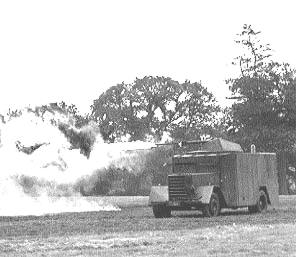
The Lagonda company produced a number of flamethrowers during the Second World War.
Initial developments were for defence against expected German attacks. It was believed that it would act as a deterrent to Luftwaffe dive-bombers targeting the lightly defended Merchant Navy ships and coastal bases of the Fleet Air Arm. The project was jointly ma...
Ooooo The Great War has a bit on it, so it was both WWs…https://m.youtube.com/watch?v=a6O90Ucpejk

In this week's episode we answer your questions about flamethrowers, anti aircraft guns and the role of reserves.
» HOW CAN I SUPPORT YOUR CHANNEL?
You can support us by sharing our videos with your friends and spreading the word about our work.You can also support us financially on Patreon: https://www.patreon.com/thegreatwar
You can also bu...
brittle glacier
brittle glacier
Ooooo The Great War has a bit on it, so it was both WWs…https://m.youtube.com/wa...
Never mind.
The Luftwaffe also tested flamethrower mounts for bomber defensive armaments.
Nothing I could find on recorded kills though.
That said something like a Stuka or Dauntless with wing mounted flamethrowers would be pretty cool.
peak mango
So... napalm drops
can't project them forward into the airstream but anti ground, sure.
That said, if you're going to be burning stuff, smoke/fog generators help against visual based bombing.
peak mango
narrow rover
9.0+ on Berlin in 1939 should prevent a WW2... just, not other chaos
Or at least the european front. Japan was already rolling in china by 1937.
narrow rover
peak mango
Or at least the european front. Japan was already rolling in china by 1937.
That one probably doesn't explode into a global conflict if it wasn't for Europe being in the shitter tbh
A lot of people will die, though... if the Japan vs China fiasco keeps going on and on and on...
brittle glacier
peak mango
can't project them forward into the airstream but anti ground, sure.
Yes but on bunkers and trucks instead of “That one area and there’s my lot.”
peak mango
brittle glacier
Yes but on bunkers and trucks instead of “That one area and there’s my lot.”
Pretty much you can't get that accurate with a flamethrower strafe and still have it be effective.
brittle glacier
peak mango
Pretty much you can't get that accurate with a flamethrower strafe and still hav...
I was thinking of it more for a longevity rather than accuracy issue.
Also strafing a flattop with a fuck load of burning napalm would be funny.
peak mango
A brief flame doesn't hurt anything. You need it to stick in order to cause damage.
brittle glacier
Yes. Im not talking about giant propane burners here.
peak mango
brittle glacier
Also strafing a flattop with a fuck load of burning napalm would be funny.
True esp w/ wooden decks, but you're already set up for damage control parties with water washdown already...
And you're going to be pretty airspeed limited to do a good drop.
brittle glacier
Depends on the pressure of the system. Could even angle it downwards?
peak mango
brittle glacier
Depends on the pressure of the system. Could even angle it downwards?
A flamethrower? Better off with a bigger drop (aka napalm)
brittle glacier
peak mango
True esp w/ wooden decks, but you're already set up for damage control parties w...
I’d imagine it’d mostly to silence AA crews.
brittle glacier
peak mango
A flamethrower? Better off with a bigger drop (aka napalm)
Hmmm…
peak mango
brittle glacier
I’d imagine it’d mostly to silence AA crews.
Not seeing it. Coming across strafing you're a worse torpedo bomber, diving with it from altitude (assuming you don't exceed the airspeed of the flaming fluid) you're a worse dive bomber
brittle glacier
Aye that’s fair.
peak mango
And all those AA gunners are wearing flash gear anyway so it'd basically take a direct hit to hurt them, and even then the DC parties should be there to put them out pretty quick.
brittle glacier
I don’t think flash gear is rated for vitamin nape.
peak mango
brittle glacier
I don’t think flash gear is rated for vitamin nape.
not soaked in it flaming, but a near hit that that doesn't soak won't do that much. And like I said, damage controlmen are standing by.
Much better odds than compared to a torp hitting amidships, or a dive bomb.
brittle glacier
I realise now Im trying to recreate early war torpedo bomber tactics…
Smoke to cover the approached of live ordinance. Only this time it’s for 1000 pounders instead of torps that don’t work.
peak mango
Against a target without AA or damage control, yeah, go nuts.
brittle glacier
Imagine smacking an interwar French tank with twin streams of jungle jelly.
peak mango
brittle glacier
Smoke to cover the approached of live ordinance. Only this time it’s for 1000 po...
Sufficient smoke to screen the approaching aircraft is sufficient smoke to make the aircraft not be able to see their targets.
brittle glacier
peak mango
Sufficient smoke to screen the approaching aircraft is sufficient smoke to make ...
If only interwar brass understood that…
subtle prawn

Japan plans to modify one of its destroyers to be Tomahawk cruise missile capable by March 31, 2026, and may conduct operational firing tests the following year in the U.S., Japan’s defense minister said Tuesday. The country is working to modify Japan Maritime Self-Defense Force (JMSDF) destroyer JS Chokai (DDG-176) to launch the long-range, s...
peak mango
Awaiting the inevetible news of Japanese Destroyer to be armed with railguns and variable fighters ...
brittle glacier
peak mango
Awaiting the inevetible news of Japanese Destroyer to be armed with railguns and...
JAPAAAAAN INEED YOU TO REBUILD THE YAMATO WITH RAILGUNS AND LASERS!!!
 peak mango
brittle glacier
JAPAAAAAN INEED YOU TO REBUILD THE YAMATO WITH RAILGUNS AND LASERS!!!
peak mango
brittle glacier
JAPAAAAAN INEED YOU TO REBUILD THE YAMATO WITH RAILGUNS AND LASERS!!!
https://www.twz.com/sea/japanese-warship-fires-railgun-at-target-vessel-for-the-first-time Oh wait.... https://theaviationist.com/2025/08/09/british-us-f-35bs-js-kaga/

The War Zone
Japan says the test is the first of its kind ever as it continues to pursue naval railguns years after the U.S. Navy halted work on its own program.

For the first time, a British F-35B Lightning II landed on the Japanese JS Kaga during joint training as part of CSG25. British and U.S. F-35Bs landed on
brittle glacier
peak mango
https://www.twz.com/sea/japanese-warship-fires-railgun-at-target-vessel-for-the-...
LESSSSSSS FUCKING GOOOOOOO!!!! HYBRID BATTLESHIP YAMATO HERE WE COME!!!
 timber linden
brittle glacier
JAPAAAAAN INEED YOU TO REBUILD THE YAMATO WITH RAILGUNS AND LASERS!!!
timber linden
brittle glacier
JAPAAAAAN INEED YOU TO REBUILD THE YAMATO WITH RAILGUNS AND LASERS!!!

 scenic spoke

 frozen kestrel
Anyone have any idea what class of ship this is? Looks like either an interwar American DD or someone really irrevocably fucked up a model of a Fletcher-class

 wintry moat
whats it from?
frozen kestrel
Screenshot's from Predator: Killer of Killers
 lilac pollen
scenic spoke
lilac pollen
scenic spoke
Still both side reaches stalemate lol
frozen kestrel
frozen kestrel
Screenshot's from Predator: Killer of Killers
the scene takes place during Operation Torch
and said scene is making my neurons angry
 desert agate
frozen kestrel
Anyone have any idea what class of ship this is? Looks like either an interwar A...
desert agate
frozen kestrel
Anyone have any idea what class of ship this is? Looks like either an interwar A...
Looks like a very poor render of an S class or a V and W class

 subtle prawn
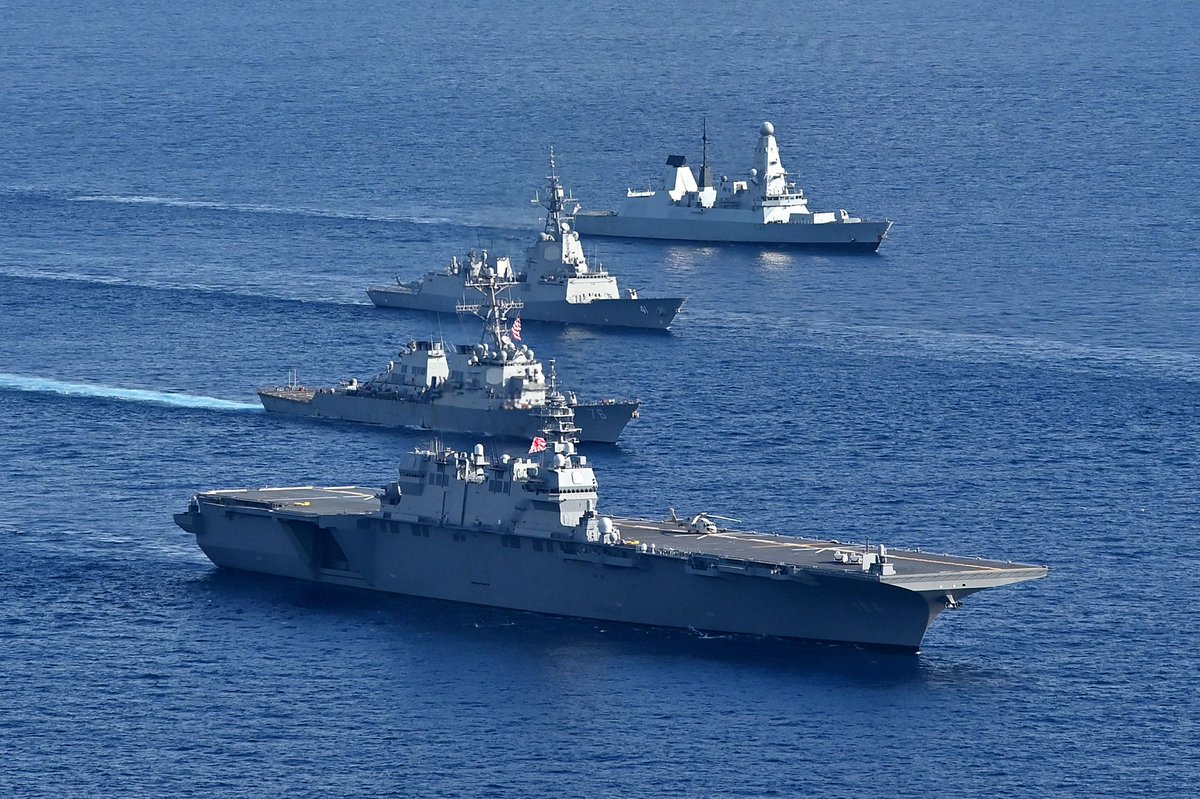
The Japanese Ministry of Defense has revised the hull classification symbols for JMSDF vessels effective October 2024. The change adds two new symbols, “CG” and “CVM,” which will be applied to upcoming ship types.
brittle glacier
subtle prawn
https://www.navalnews.com/naval-news/2025/09/jmsdf-changes-its-largest-destroyer...
Ooooo…Guided missile cruisers.
subtle prawn
It's for the upcoming ASEV
brittle glacier
subtle prawn
It's for the upcoming ASEV
Wer?
scenic spoke
when shit’s so good you use it for another 100 years
brittle glacier
The most inaccurate aspect of Helldivers is that the HMG isn’t just an M2 Browning with a stock and pistol grip.
scenic spoke
brittle glacier
The most inaccurate aspect of Helldivers is that the HMG isn’t just an M2 Browni...
Space B-52
brittle glacier
To be fair we’ve not seen many strategic assets, which the B52 would be.
scenic spoke
B-52
but
more powerful jet engines
high fuel capacity
and yh
NASA-made fuselage and cockpit
brittle glacier
I wouldn’t trust NASA with a combat craft.
 junior trench
you probably should considering where basically all their astronauts usually come from
brittle glacier
junior trench
you probably should considering where basically all their astronauts usually com...
It’s one thing to fly, another to build.
supple sandal
You say as if NASA didn't ask defense contractors to build shits
desert agate
brittle glacier
It’s one thing to fly, another to build.
Do you know where most JPL employees come from?
brittle glacier
desert agate
Do you know where most JPL employees come from?
The who?
desert agate
The Jet Propulsion Laboratory
You know
Where all the rockets are designed
And built
Lockheed Martin has a fair few former JPL employees among their staff and vice versa
 twilit geyser
subtle prawn
https://www.navalnews.com/naval-news/2025/09/jmsdf-changes-its-largest-destroyer...
twilit geyser
subtle prawn
https://www.navalnews.com/naval-news/2025/09/jmsdf-changes-its-largest-destroyer...
Cruiser voler, archaic way of saying aircraft carrier
brittle glacier
twilit geyser
Cruiser voler, archaic way of saying aircraft carrier <:EssexWheeze:111392162027...
CV means “Carrier Vessel”.
desert agate
No it doesn’t
It means cruiser, flying/aviation
And the theory that the V is the French word Voler is also wrong
Admittedly cruiser aviation is almost as much an educated guess as anything else, no one is entirely sure of what it exactly means but cruiser aviation has the most evidence in favour
The orders which established the designation in 1920 do not specify why they chose their letters
V was for heavier than air
Z for lighter than air
It is however almost certainly not carrier vessel because carrier wasn’t the general term used at the time and vessel is a pointlessly vague term
Navy Department, Office of Naval Operations, Washington, D. C., July 17, 1920 STANDARD NOMENCLATURE FOR NAVAL VESSELS 1. In order to provide a standard nomenclature for types and classes of vessels comprised in the United States Navy, as well as a standard system of identification numbers which may be used, where pertinent, in correspondence and...
 brittle glacier
desert agate
It means cruiser, flying/aviation
brittle glacier
desert agate
It means cruiser, flying/aviation
 peak mango
CVN-6 .. lol
subtle prawn

Use „MAH“ for 10% off on your REC Watch: https://www.recwatches.com/timepieces/limited-editions/aircraft/habu/
The Bf 109s and Fw 190s weren‘t built to combat heavy bombers - how can that be?
Stanley Baldwins speech I briefly mention:
https://speakola.com/political/stanley-baldwin-bomber-will-always-get-through-1932
Check out my books
...
scenic spoke
armored tractor turned into a box
 lilac pollen
My favorite story mission from bf1 along with the Italian juggernaut mission
junior trench
scenic spoke
armored tractor turned into a box
that's not one of the Holt tractor conversions
scenic spoke
lilac pollen
My favorite story mission from bf1 along with the Italian juggernaut mission
Black Bess my goat 🥹

lilac pollen
scenic spoke
Black Bess my goat 🥹
The ending is very emotional (well the Runner story actually made me cry)
 lilac pollen
lol
The commander sacrifice her in the end tho
Atleast he say sorry to her before dying
scenic spoke
maybe we can see a reference to her in an M1 Abrams story in BF6 campaign mode…

maybe some easter eggs containing some files about her
twilit geyser
brittle glacier
CV means “Carrier Vessel”.
This is blatantly incorrect. But okay
autumn sorrel
This seem an appropriate place to ask but I remember once there were a documentary on Discovery channel about Archimedes claw, even go as far as recreate it and even build a small Trireme to test it. I just can't seem to find it anywhere. Can anyone help me with it?
brittle glacier
twilit geyser
This is blatantly incorrect. But okay
 autumn sorrel
brittle glacier
autumn sorrel
brittle glacier
"Does not" 
 supple sandal
brittle glacier
https://tenor.com/view/computer-stick-man-table-flip-look-at-you-9gag-gif-262573...
supple sandal
brittle glacier
https://tenor.com/view/computer-stick-man-table-flip-look-at-you-9gag-gif-262573...
Contemplating your life choices?
remote monolith
autumn sorrel
This seem an appropriate place to ask but I remember once there were a documenta...
the one he used to defend Syracuse's wall?
The plausibility of this invention was tested in 1999 in the BBC series Secrets of the Ancients and again in early 2005 in the Discovery Channel series Superweapons of the Ancient World. The producers of Superweapons brought together a group of engineers tasked with conceiving and implementing a design that was realistic, given what is known about Archimedes. Within seven days they were able to test their creation, and they did succeed in tipping over a model of a Roman ship so that it would sink. While this does not prove the existence of the Claw, it suggests that it would have been possible.
oh yeah it is
autumn sorrel
remote monolith
> The plausibility of this invention was tested in 1999 in the BBC series Secret...
Yep, that's the one. Now I just need to find where I can watch it.
brittle glacier
supple sandal
Contemplating your life choices?
Probably
supple sandal
This embarrassment now has joined your "play before sleep" playlist
frozen kestrel
this is a dumb as fuck question, but would a battle line use navigation lights at night? asking for a render again...
timber linden
frozen kestrel
this is a dumb as fuck question, but would a battle line use navigation lights a...
Nothing is a dumb question if you use the knowledge gained. My answer and there are pretty surely exceptions would be no.
Us carriers during the war would sail without landing lights while in the operational theater. I remember we almost lost H W to this but he was able to follow glow in dark plankton kicked up by the ships to land
frozen kestrel
well fuck
on the one hand, this actually makes my job easier because now it's easier to hide that the ship I'm using for Ramillies is actually Arkhangelsk (because the UK tree in WT has no R-class BBs) and that Belfast is in her '59 configuration
on the other hand, I have no fucking clue how I'm gonna light this render properly
Also, is there any resources I can find on the camo schemes certain ships wore during D-Day?
Like, I've had a little luck with Rodney, but Texas is making me rip my hair out
brittle glacier
frozen kestrel
Like, I've had a *little* luck with Rodney, but Texas is making me rip my hair o...
I don’t think they repainted specifically for the operation. Check the Wiki and follow the service history section until you hit D-Day, most recently mentioned paint job is the most likely one they had on D-Day.
I say this because painting a ship is a fairly resource intensive process.
desert agate
frozen kestrel
Also, is there any resources I can find on the camo schemes certain ships wore d...
@eternal veldt
 eternal veldt
Depends on the nation of the ship - the US has an extensive database on usndazzle.net and snyder and short's website.
 zealous vine
How did the evolution of rangefinding from ww1 to ww2 go? How did it evolve to factor in things like Coriolis effect and wind?
Was it vital for the ship to remain on the same course to obtain a solution?
brittle glacier
zealous vine
How did the evolution of rangefinding from ww1 to ww2 go? How did it evolve to f...
That second question? Admiral “Ching” Lee.
frozen kestrel
Apparently she wore Measure 22 until November 1944
so now i have to edit her WT texture... because there's no camo for that on WTLive
subtle prawn

Sturmpanzer A7V is Germany's first successful home-built tank. A 20-man beastie, built too late to have major impact in the war, this replica is to be found at the German Panzermuseum.
Merchandise (The carousel below seems dodgy)
https://the-chieftains-retail-hatch.creator-spring.com/
Public facebook page:
https://www.facebook.com/TheChieftain...
lilac pollen
subtle prawn
https://www.youtube.com/watch?v=s7WzirNkjRw
Sadly they did not produce enough of this thing also it’s chunky, heavy and requires too many people to operate
junior trench
... sadly?
lilac pollen
Wdym
 lilac pollen
 manic latch
Why do you want Germany to be more successful in ww1
manic latch
Why do you want Germany to be more successful in ww1
Feeling unfortunate for them
manic latch

lilac pollen
Not wishing them to success
 runic ermine
junior trench
... sadly?
runic ermine
junior trench
... sadly?
They only produced 20
Germany used more captured tanks than domestically produced ones in ww1 btw
timber linden
manic latch
Why do you want Germany to be more successful in ww1
Probably would have been a better timeline after the war
autumn sorrel
timber linden
Probably would have been a better timeline after the war
Still going to be shit
desert agate
timber linden
Probably would have been a better timeline after the war
Sorry but the krauts lost and deserved it
 eternal veldt
Ew, Imperial Germany sympathising
lilac pollen
Just because i said “sadly” now there’s a war happening
eternal veldt
Oh no, that's directed at someone else.
lilac pollen
lol
narrow rover
You know there was a whole ass generational argument in Germany over this
Because people after WW2 argued the ENTIRETY of German history all the way from the Germanic tribes was just a leadup to Hitler
So the question became, how much history can we be proud of
timber linden
narrow rover
So the question became, *how much* history can we be proud of
The answer was determined to be none
narrow rover
timber linden
The answer was determined to be none
Basically everything after Bismarck came around is eeeeh
 alpine onyx
"none to be proud of"
sees Stresemann
No slander shall befall him
remote monolith
narrow rover
Basically everything after Bismarck came around is eeeeh
Arguably there was a potentially better path had Frederick III not died of cancer
At the very least he was significantly less mercurial than Wilhelm
narrow rover
I mean there's always a better path
I can think of a better path for Japan had emperor Taisho not been literally insane
remote monolith
Meningitis man, nuff said
zealous vine
brittle glacier
That second question? Admiral “Ching” Lee.
Ah, that's a special case
brittle glacier
zealous vine
Ah, that's a special case
Dude is one of the primary reasons the US Navy did so well during the war, AA, Radars, VT fuses, etc.
But he was also an Olympic sharpshooter and wrote the formula(s) on calculating how the Coriolis effect impacted artillery shells, dude rewrote the gunnery charts for his ship too.
brittle glacier
timber linden
Probably would have been a better timeline after the war
Nope. If we had kept France from pumping Germany for all theyre worth it would’ve avoided a lot.
remote monolith
They didn't though that's the thing
The Versailles payments stopped after 1923 and even before that the amount paid was more than doable for Germany, mostly because by then Germany didn't have to pay upkeep for a huge army or navy
narrow rover
If anything both Germany and France still had some juice left to keep going after WW1
You could extend the war so that everyone is too exhausted to fight for another 50 years like post WW2
desert agate
If Germany had any fighting capacity left then it would not have collapsed in late 1918
narrow rover
No I mean it wasn't stormed all the way to Berlin
That would have taken another year or two
desert agate
How would it have taken another year or two for the French to reach Berlin when the German army didn't exist anymore
I don't know if you realise the extent to which the German army collapsed
There was no more army to fight with
The surrender was merely a matter of accepting reality, it didn't change anything about the war
Sure there was still troops on the frontline but they had no food, no ammunition, no morale and they were deserting in droves
Even if the German government hadn't surrendered in spite of the complete political collapse of Germany, there was no more army left
eternal veldt
I think part of the problem is that no foreign troop really landed in German soil - despite the extensive hindrance by the British blockade and impact on the German daily life.
remote monolith
tha's pretty much it, Erich Ludendorff and Hindeburg quickly seized on that
eternal veldt
Therefore, the German Army on paper appeared undefeated and it fans the flames of a backstabbing theory.
remote monolith
hence stab-in-the-back legend appeared
desert agate
That was simply because what was left of the German government didn't want to see German towns and cities destroyed, they had no actual method of preventing an Allied incursion deep into the rheinland
eternal veldt
Meanwhile, Northeastern France is turned into a barren wasteland that wrecked the French populace and industry.
remote monolith
also it didn't help Ludendorff was an actual nutjob whose thinking was basically "a nation has to be always at war, all time every time"
eternal veldt
As for Imperial Germany itself, Bismarck himself to my knowledge was very much in favour of trying to befriend England into opposing France and isolating it
Until Wilhelm took reign and decided to play fuck-fuck games with England
remote monolith
he was, but the system he made would have likely collapsed sooner or later without him
basically its a system that could have only worked with intense micromanagement and his specific style of leadership (eg he gets to be in charge of EVERYTHING), the moment a Kaiser won't just kowtow to his demands it'll fall apart
as it happened, Wilhelm was that kaiser and called Bismarck's bluff when the latter said he'd resign unless Wilhelm gives him everything he wants
eternal veldt
Hmm, almost sounds like a certain batshit crazy admiral across the pond.
remote monolith
gee wonder who could that be
eternal veldt
"Give me complete control of the navy, including the schedule and budget for ship construction"
"No"
"Ok I quit"
remote monolith
roughly at the same age as Bismarck too
but yeah Bismarck was unqestionably skilled but he was egocentric to the max and basically never made an actual lasting system that'll be stable without him, kind of like a lot of monarchs actually
subtle prawn
<@&460646206851252224> We got a scammer here

During a Japanese attack on Bougainville in 1944, Seabee E.C. Scarborough searched his foxhole for more ammo. He found and opened a package of gun clips that contained a slip of paper upon which was printed "Inspected by Mrs. Bernice Scarborough"...his wife.
#SeaStorySaturday

 Bluesky
·
Bluesky
·
Thanks to whoever did that
 icy nebula

autumn sorrel
remote monolith
At the very least he was significantly less mercurial than Wilhelm
I mean, Wilhelm only getting into the whole arms race and colonialism bc he want to dick measure with his British cousin. That and Tirpitz massive propaganda effort to gain public support for his dream.
autumn sorrel
eternal veldt
As for Imperial Germany itself, Bismarck himself to my knowledge was very much i...
Honestly, even if Bismarck somehow curb Wilhelm ambition back to create an alliance with Britain, it not bound to last. It has always been British policy since Louis XIV to prevent a dominant power on mainland Europe, the moment thay see that Germany is going to tip the scale and overtake France, they will react to it accordingly.
peak mango
narrow rover
So the question became, *how much* history can we be proud of
Everything is cringe when reexamined in a modern context.
supple sandal
Germany should try to get people to remember them for something else other than wars
autumn sorrel
supple sandal
Germany should try to get people to remember them for something else other than ...
It is hard to do when you one of the world top weapon seller
zealous vine
I've made a convenient pen hierarchy derived from Navweaps' values by the USN empirical formula
I wanna ask if these positions are even remotely accurate (assuming the best version of each weapon in ideal external conditions)
 narrow rover
IJA with hilariously long rifles or very short soldiers
 brittle glacier
narrow rover
IJA with hilariously long rifles or very short soldiers
brittle glacier
narrow rover
IJA with hilariously long rifles or very short soldiers
It’s the former.
junior trench
narrow rover
I mean there's always a better path
I can think of a better path for Japan had e...
Uh...
No
Frankly Japan was lucky Taisho was unable to effectively rule because it means however briefly there were some people who got a taste for democratic civil government
Taisho democracy was an anomaly which existed because of an emperor who was indisposed
And because the Diet was ruling effectively as the Emperor's regent during that era
it also meant the usual fuck fuck games of the military plotting a hundred and one things while nominally being loyal to the emperor, had to run their plans in a way which was still relatively supportive of said regency
 torpid mountain
Porsche is getting into the defense or weapon industry again
narrow rover
junior trench
Taisho democracy was an anomaly which existed because of an emperor who was indi...
I'm counting on the Taisho democracy not happening at all
Because quite brutally it did more harm
remote monolith
junior trench
Taisho democracy was an anomaly which existed because of an emperor who was indi...
tbf if compared to the usual Japanese history
its more business as usual
considering the last Japanese emperor to hold any real power before Meiji was Go-Daigo
and he was uuuuh, about 700 years before Meiji
narrow rover

The Tokyo Foundation
R-2021-026EDoes democratic government contain the seeds of its own destruction? Drawing on recent re... [Theme: Populism]

"Better path" for Japan simply means not causing the biggest land war in Asia since the Taiping rebellion because they couldn't control an army or something
I don't care what happens internally. It should be better than 20~50 million dead all over Asia because a general had ideas
runic ermine
eternal veldt
Ew, Imperial Germany sympathising
Kaiserboo?
narrow rover
Imperial Germany was more appreciated until people realized how brutal they were to poles
runic ermine
narrow rover
Imperial Germany was more appreciated until people realized how brutal they were...
Was? I thought they still are
runic ermine
narrow rover
Imperial Germany was more appreciated until people realized how brutal they were...
The partitions?
narrow rover
Deportations
narrow rover
runic ermine
Was? I thought they still are
In more serious circles? Nah
remote monolith
narrow rover
Imperial Germany was more appreciated until people realized how brutal they were...
And the more forgotten genocides like the Herero-Namaqua
narrow rover
That one was also the first genocide of the 20th century
junior trench
narrow rover
Imperial Germany was more appreciated until people realized how brutal they were...
A lot of people don't realize "genocide eastern Europe" had been Germany's while overarching goal since the late 1800s
The first forays into the study of demographics resulted in some really whacked out shit
Like the UK realizing their American colonies were going to surpass them, so they tried to hobble them
And the German states realizing Eastern Europe and especially Russia was going to surpass them... So time for a planned genocide decades in the making by the 1940s
narrow rover
Simply press the genocide button and hope people dont get mad at you apparantly
great idea Germany
Meanwhile Poland stuck between Germany and Russia
☠️
brittle glacier
I’d still rather be a Pole than a Mongolian, imagine being stuck between the USSR and the CCP…
At least the Poles had ready access to the outside world.
narrow rover
I mean modern day Poland sure but in WW2? Absolutely Mongolia lmao
lilac pollen
narrow rover
Meanwhile Poland stuck between Germany and Russia
Is fun to split in half, one side likes drinking beer the other side drinks Vodka
brittle glacier
WW2? Ehhh…coin toss, in Poland? Toilets. In Mongolia? Freedom.
Cold War? Poland
narrow rover
If you're a pole in WW2 you have a 20% chance of dying horrifically
brittle glacier
I guess it comes down to what your opinion on living as a Steppe nomad is. Especially that far north.
narrow rover
You might be working with the Japanese if you're in Mongolia
lilac pollen
What
narrow rover

Mengjiang, also known as Mengkiang, officially the Mengjiang United Autonomous Government, was an autonomous zone in Inner Mongolia. It was formed in 1939 as a puppet state of the Empire of Japan, and from 1940 was placed under the nominal sovereignty of the Reorganized National Government of the Republic of China (which was itself also a puppet...
lilac pollen
Didn’t the Mongolians fought with the Soviet during the border clashes
lilac pollen
narrow rover
https://en.m.wikipedia.org/wiki/Mengjiang
Oh
narrow rover
Mongolia in this stage isn't exactly current borders
subtle prawn

The First Indochina War reaches its climax at Dien Bien Phu. In late 1953 the French parachute into the valley, build a fortress under Christian de Castries, and plan to smash the Viet Minh with artillery and air power. Võ Nguyên Giáp answers with a siege: anti-air guns on the surrounding hills, trenches creeping forward, and relentless assau...
autumn sorrel
subtle prawn
https://www.youtube.com/watch?v=y7skgKWnZnc
While I appreciate the effort, this is like the 14th video in like 2yrs. Only actually new thing that I would recommend people to watch is Type 56 series on DBP and the chinese advisors group.
brittle glacier
All Im saying is that next time we don’t want to support one side or the other in a civil war we just decapitate both sides to prevent another checks list…yyyyeahhhh…
autumn sorrel
Like, everyone just repeat each other about DBP at this point, at least type 56 provide a different perspective and actual mentions of French documents about DBP
 spring briar
in what way?
lilac pollen
subtle prawn
https://www.youtube.com/watch?v=y7skgKWnZnc
Nice vid, love to see something about my country’s history
autumn sorrel
spring briar
in what way?
He bring up some anecdote about how disjointed French Operational planning office are with their logistical and air force department. That and he mentioned Na San, not just about the battle but about how the battle of Na San was prepare. And about Chinese support for Vietnam during the entire ordeal, he isn't going into it like most normally do of taking each side talking point about who did more but a nuance view of why China support Viet Minh as a mean to contain the French and stop another front from opening in the South for them.
Did I mentioned that he is a fan of Marcel Bigeard? Bigeard is actually one of the few French Military officer that I actually have good opinion about.
spring briar
As in from the 20th century
autumn sorrel
spring briar
As in from the 20th century
You could say that way, 20th century is certainly a period that I found it hard to like a French general or officers. Either they are a tyrant that got their men killed, political officer that more worry about optic than actually look at the doctrine or adventurists who jump into colonial war. Bigeard might be counted in the latter group but he was a very talented officer with strict discipline and a rare sense of honor. A foe he might be but a worthy foe nonetheless.
runic ermine
autumn sorrel
Did I mentioned that he is a fan of Marcel Bigeard? Bigeard is actually one of t...
In history?
zealous vine
zealous vine
I've made a convenient pen hierarchy derived from Navweaps' values by the USN em...
May I ask for any opinions?
runic ermine
narrow rover
IJA with hilariously long rifles or very short soldiers
The average height was 5'3 wasnt it?
narrow rover
Probably
runic ermine
zealous vine
May I ask for any opinions?
Idk
zealous vine
Ong
runic ermine

Archival Replica Frères Chasseurs [Hunter Brothers] Balaclava.
LMX Unlimited locates a uniquely Canadian National Culture through the aesthetic fragments of 500 years of Canadian being.
Likes
473
 Instagram
A reel about the Rebellions of 1837-1838, in this economy?
 real oasis
Question: was Italy's navy really that scary that France made the Richelieu?
 cyan oriole
real oasis
Question: was Italy's navy really that scary that France made the Richelieu?
cyan oriole
real oasis
Question: was Italy's navy really that scary that France made the Richelieu?
yes, the richelieus were a response to the first 2 littorios, which would not only counter every ship the french had in service, they also were superior to the dunkerques currently under construction
the Richelieus were a necessary step up
real oasis
And Churchill said it was the soft underbelly of Europe
zealous vine
real oasis
Question: was Italy's navy really that scary that France made the Richelieu?
Italy's navy was quite considerable and arguably even more relevant than the Krieg's short of their U-boats
Also there were already tensions with France (in terms of geographical dominance near the Mediterranean and as a naval power)
Them building Littorio really worried France
twilit geyser
real oasis
And Churchill said it was the soft underbelly of Europe
Maybe in terms of their army or air force, or if you'd accept it, maybe as propaganda too, but the Regia Marina was very much one of the most powerful navies in the Mediterranean during the interwar years leading up to the war.
desert agate
People very much undersell the Regia Marina
It was obviously incapable of winning against the Royal Navy but it managed to hold naval supremacy in the central Mediterranean for pretty reasonable amounts of time during the war
And it managed to do so without really challenging the Royal Navy directly and suffering losses as a result
 mental tapir
Also Taranto was somewhat exaggerated in the damage and losses they achieved
cyan oriole
real oasis
And Churchill said it was the soft underbelly of Europe
I mean compared to germany, that is true
cyan oriole
zealous vine
Italy's navy was quite considerable and arguably even more relevant than the Kri...
not really arguable, the surface KM's only contribution was getting wiped out supporting Weserubung
real oasis
And somehow Italy lost to Greece
cyan oriole
PQ 17 had to be exploited by submarines
although the Germans did tie down more forces at least
cyan oriole
desert agate
People very much undersell the Regia Marina
It was obviously incapable of winnin...
yes, but having naval supremacy in the central med for 3 years meant nothing in the end
the Italians had to be more proactive even if it meant suffering losses, maybe they could have ended up with a more favorable peace
remote monolith
cyan oriole
I mean compared to germany, that is true
and yet in the end its far easier to go through Germany itself than through Italy
considering the Allies had significant numerical superiority against Albert Kesselring and yet it took until 1945 to decisively break through the Italian front
cyan oriole
I mean by then the italians had German help, Italy itself had been effectively forced to terms in 1943
remote monolith
even so, the Italian campaign still bogged down so it was anything but soft
yeah they had German help, but it didn'tchange that the goal of offering an easy path to Berlin and the Balkans didn't pan out at all, and easier gains were to be made elsewhere
 terse mesa

Check Out Delete Me: https://joindeleteme.com/Electrician
20% Off Code: Electrician
Merch Store & ALL Other Links:
https://thefatelectrician.com/
Seriously EVERYTHING is on my website
Other channels:
The...
subtle prawn

在紀念中國人民抗日戰爭暨世界反法西斯戰爭勝利80週年大會上受閱的殲-15T、殲-35和空警-600三型艦載機,已完成在福建艦上首次彈射起飛和著艦訓練,標誌著福建艦具備了電磁彈射和回收能力。這是我國航母發展歷程中取得的又一次突破,對推進海軍轉型建設具...
 zealous vine
cyan oriole
the Italians had to be more proactive even if it meant suffering losses, maybe t...
zealous vine
cyan oriole
the Italians had to be more proactive even if it meant suffering losses, maybe t...
Them ceding mid-war did leave them off better compared to the other 2 at least
zealous vine
cyan oriole
yes, but having naval supremacy in the central med for 3 years meant nothing in ...
I mean.. the RAF was inevitable. Expanding anywhere meant stepping on Malta, and vital chokepoints like Suez and Gibraltar.
desert agate
mental tapir
USS Gerald R. Ford could never <:AkagiLUL:531988392699887616>
Could never what?
Impressive as the PLAN's new CATOBAR capability is, there's no legitimate argument that it is in any way comparable to the USN's existing capability
It is a potent capability yes, but the ships themselves are smaller, less capable, and more vulnerable
They're also operated by a far less experienced force which is still writing the doctrines that will define their own carrier operations
subtle prawn
I think he's talking about the fact Gerald R. Ford isn't capable of operating so-called fifth gen fighters
timber linden
Oh germany and shackling oneself to a corpse
desert agate
Must be photoshop then
 subtle prawn
Some of the older carriers are capable of operating the F-35s, but Ford herself is only capable of using Hornets thus far
desert agate
That's because she's in an extended working up period
FOC issues will always develop on new ships
mental tapir
extended working up period
Old Ford's commissioned in 2017 and still has yet to launch an F-35C using their EM catapult
Silksong players waited a shorter time
desert agate
Yes it's almost as if the most complex piece of engineering ever built might face some issues
subtle prawn
I heard there was EMALS testing with the F-35C on land over a decade ago, but not much since then
desert agate
It's also a case of F-35s being prioritised for the Pacific carriers, not the Atlantic ones
The F-35C rollout is intentionally slow right now while the USN awaits some critical weapons integrations which are expected in the next year or two
And so the F-35Cs which are being rolled out are being sent to the INDOPACOM carriers
brittle glacier
remote monolith
considering the Allies had significant numerical superiority against Albert Kess...
The defenders usually have the advantage…
desert agate
Which is inarguably where they are most needed
remote monolith
brittle glacier
The defenders usually have the advantage…
well yeah, and Italy was anything but indefensible
that's why the moniker soft underbelly was undeserved
Narses and Belisarius had a hard time retaking it from Theodoric, and Hannibal couldn't feasibly siege Rome or its surrounding city states for 15 years
desert agate
desert agate
And so the F-35Cs which are being rolled out are being sent to the INDOPACOM car...
I would note that the first ever operational deployment of F-35Cs in 2020, was onboard an INDOPACOM carrier, USS Carl Vinson
All 3 USN carriers in the INDOPACOM area are operating F-35Cs right now
I don't believe any of the NATO carriers are
remote monolith
also, even if they did manage to break through to Northern Italy before 1944, there's not many navigable passes through the Alps that are easy to use by armies
it could have turned out incredibly difficult to supply any transalpine operations
hell thats exactly why Hannibal caught Rome by surprise, back then carrying a massive army through the Alps was tantamount to suicide
he did it sure, but he lost half of his army of 70,000, that he had to replace with Cisalpine Gauls
scenic spoke
ah yes
paint a battleship red and it still survives a nuke

they had another nuke dropped on it because they didn’t want nevada bragging about it
brittle glacier
scenic spoke
ah yes
paint a battleship red and it still survives a nuke
They actually missed…then they shot her up and torpedoed her.
autumn sorrel
remote monolith
it could have turned out incredibly difficult to supply any transalpine operatio...
You just need to look at ww1 and see how brutal and harsh a mountain campaign in the Alps going to be
remote monolith
autumn sorrel
You just need to look at ww1 and see how brutal and harsh a mountain campaign in...
when the front devolved into "who can crash down the most mountain on top of the other guy"
 spiral cedar
zealous vine
I've made a convenient pen hierarchy derived from Navweaps' values by the USN em...
spiral cedar
zealous vine
I've made a convenient pen hierarchy derived from Navweaps' values by the USN em...
Unfortunately, the answer is “not really.” It isn’t your fault, but rather the fault of the rather impressive-sounding “empirical” part of the formula’s name. Surely if it’s empirical, it must be derived from real testing data, right?
Well yes, but actually no.
The USN Empirical armor penetration formula of the early 20th century is of interest as a historical artifact and a snapshot of the nature of their understanding of armor penetration of the time. However, we now know that at the core physics level, they weren’t even using the right type of formula to fit their data to. The modern understanding of shock physics in materials did not exist at the time, and the creators of the formula (one of many competing ones at the time, and not even the only US one) had to make assumptions about the form of a reasonably workable penetration formula in order to start. They assumed that the penetration, in T/D (thickness to diameter ratio of plate to shell), was dependent on the square of the velocity—in other words, they though that kinetic energy was fundamentally the determinant of penetration. This is roughly correct…for homogeneous armor plates thicker than the shell’s diameter. Unfortunately, this is very wrong for facehardened plates, aka the type of armor on the belts of battleship (and indeed, wrong for deck armor, which is much thinner than the shell’s diameter).
The reason is that different armor fails (is penetrated) in different ways under different impact regimes. Facehardened armor is relatively simple—it fails by plugging. Imagine using a hole puncher through a piece of cardboard—you’d push a cylinder of material the diameter of your “puncher” (shell) right out the back. Empirically (for real this time), this has a velocity exponent of 1.21. Homogeneous armor, by contrast, fails by multiple different ways under different impact regimes (mainly differing T/D ratios for our purposes with naval artillery), with a velocity exponent ranging from 1 (for thin plates, representing a plug of material being stamped out) up to 2 for very thick plates (the thicker the plate relative to the shell diameter, the better—though this is only really a good approximation for more modern APFSDS-style “darts” as 20th century naval shells cannot penetrate armor this thick). Per the late Nathan Okun, on the topic of homogeneous armor penetration:
the resistance of the armor varies considerably as it thickens from dishing (wide stretching dents before tearing open) to petalling (stretching and splitting open in several triangular flaps of full plate thickness from the bulge at the back of the plate) to cratering ("coronet" forming by stretching and bending a narrow raised ring on a shallow bulge around the edge of the hole in the plate face) to wedging (sometimes called "plastic deformation", pushing the plate material in the middle of a thick plate sideways since the back and front of the plate is is too thick to let it move forwards or backwards under the pressure of the projectile nose until you get within about 0.3-calibe of the plate back at right-angels, when petals can form).
You might be noticing that my explanation is already a simplification! The reality is, for homogeneous armor, no single velocity exponent covers all relevant (20th century naval artillery) velocity and T/D regimes, so any formula that uses a single velocity exponent is inherently of the wrong form, let alone incorrect. So the USN empirical armor penetration formula, using a velocity exponent of 2, is inherently wrong in general, and especially wrong for use in battleship belt penetration (since those are facehardened armor). The DeMarre formula, which uses an implicit 1.43 exponent, is closer for most practical deck armor penetration purposes since it’s a reasonable compromise between the extremes, but even then is invariably accompanied by a table of “fudge factors” in practical use because everyone at the time knew the theoretical formulas they were using weren’t matching the actual data obtained in testing (mostly ‘proofing’ of shells and armor for production). The USN empirical formula is a historical curiosity that tells a tale of the USN’s attempts to start with their theoretical assumption about kinetic energy being the core rule of all armor penetration, but it turns out real penetration physics is dependent on many more factors than kinetic energy and thus the attempt was doomed from the start.
In practice, the USN usually didn’t even use the “USN empirical armor penetration formula” for most of their own penetration modeling—they used most commonly the DeMarre formula and the Thomson F formula (both with tables of coefficients, aka fudge factors), which are closer to the real test results (though they grow progressively more inaccurate under different T/D regimes, and fail even faster for facehardened armor for reasons I’ll get to) than the USN empirical formula. The formula’s main advantage is convenience, making it easy for people to make tables out of—not accuracy.
Facehardened armor is an even poorer fit for the USN empirical armor penetration formula than realistic homogeneous armor (under 20th century naval artillery conditions), because unlike homogeneous armor, where the weight of the shell (basically the length) can fairly effectively assist in penetration, the hard, brittle face of facehardened armor shatters at the speed of sound (in steel) when defeated—so fast that the majority of the shell’s weight(/length) doesn’t contribute to the penetration process. This means that the mass of the shell M is not linearly contributing to penetration T/D, but rather has a much lower exponent—the USN of the time, when comparing their real test data during proofing, implicitly used a 0.6 exponent, but Nathan Okun’s FACEHARD program (combining data differently) uses a 0.2 exponent for mass (both ended up using a 1.21 exponent for velocity or facehardened armor, which is a useful secondary confirmation). The USN empirical formula, tied to kinetic energy (and thus a mass exponent of 1), simply is of the wrong dimensional form to work for facehardened armor penetration to any useful degree.
Worse yet, as you might have guessed, armor penetration will also depend on the impact angle (obliquity—the angle away from normal, aka perpendicular, impact), and the geometry and hardness patterns of shells affects how increasing obliquity affects them. So the assumed initial starting “angle” (incline) of armor plates also changes the comparisons by affecting different shells to a greater or lesser extent. By the treaty era, most battleship armor belts were made inclined, the top overhanging the bottom (and thus increasing the impact obliquity), which means a comparison table assuming vertical armor plates is going to be distorted since most modern battleships of the period used inclined armor belts.
Fortunately for you, a few years ago I took the time to make comparison graphs of the WWII era battleship guns firing at a standardized range, armor material, incline angle, and shell condition (which I also didn’t touch on in my simplified overview above). The horizontal axis is target angle, which is a measure of how far away from broadside the target is—90 deg is flat broadside, 80 deg is 10 degrees rotated away, etc. so 90 deg is the easiest impact condition for belt penetration and thus has the highest max penetrable thickness (vertical axis). The graphs can be found here:
Note that the dramatic fall-off for the British shells is a simulation artifact in FACEHARD; in reality, treat the British shells as having progressively higher probability of failure as the thickness and impact obliquity increase due to the construction of their shell bodies, rather than a hard drop to all shells failing. Penetration in the real world is a stochastic process, after all, and all the tables in the world have implicit probability baselines for their calculations (FACEHARD uses V50, 50% probability, though depending on context you commonly see V0, V20, V80, and V100 in other contexts).
spiral cedar
spiral cedar
The reason is that different armor fails (is penetrated) in different ways under...
This is, incidentally, why deck protection of multiple spaced layers of steel cannot simply be added together for a single “effective” deck thickness (which is commonly done, but totally wrong). Simple addition of deck thicknesses only has theoretical justification in the velocity exponent of 2 regime (extremely thick plates, thicker than shell diameter), aka the kinetic energy regime, which fits no combination of WWII shell and WWII deck because no shell plunging down can even remotely penetrate multiple armor decks of more than its diameter in thickness. In reality, unless you’ve got time-traveling APFSDS darts coming down from above, multiple decks will have an effective thickness less than what simple addition would imply. Thus it is far more beneficial from a ballistic standpoint to have a single thick deck than multiple thin ones of the same total thickness (aka weight). In practice there are benefits to having multiple decks, so everyone had them (e.g. fuze initiation, splinter catching), but from a purely ballistic perspective the thickest plate is disproportionately more important than the rest.
junior trench
(and single plate means single plate. Layering two plates directly on each other even with full contact doesn't result in the same protection as a single plate the same thickness)
mental tapir
Yet another Jaba essay 🗣️🔥
eternal veldt
paging maka
 spring briar
love the superstructure
wintry moat
junior trench
I miss these
Same
desert agate
USS Gerald R Ford could never 

 wintry moat
Wha
narrow rover
"The President referred to the question of the Ryukyu Islands and enquired more than once whether China would want the Ryukyus." To this, Chiang reportedly replied that "China would be agreeable to joint occupation of the Ryukyus by China and the United States and, eventually, joint administration by the two countries under the trusteeship of an international organization." (See "Chinese Summary Record [translation] of Roosevelt-Chiang Dinner Meeting [November 23, 1943]," FRUS, The Conferences at Cairo and Tehran, 1943 [Washington, D.C.: Government Printing Office, 1961], p. 324.) Chiang, in his own notes, explained that he responded this way because he did not want the United States to think that China had territorial ambitions in mind, and thus sought to "put the U.S. (government) at ease." (See Chiang Kai-shek, Sho Kai Seki Hiroku 14 (Jihon Kofuku [Chiang Kai-shek's Secret Records Vol. 14 (Japan's Surrender), Tokyo: Sankei Shimbunsha , 1977), p. 122.)
I wonder if Roosevelt knew about East Asian borders historically not being all that clear cut. Korea used to have border disputes with the Qing in the late 1800s, Japan sort of forced its claim on the Qing
runic ermine
desert agate
People very much undersell the Regia Marina
It was obviously incapable of winnin...
Not just against the Royal Navy too, but also the RAN and the RNZN
narrow rover
Once Japan lost WW2 though, with China potentially being an ally (which never happened but that's what people thought in 1945)... rethinking Japan - China borders suddenly becomes an issue
Though China in 1945 and China in 1895 aren't the same government so that is a bit of a legal issue
supple sandal
desert agate
USS Gerald R Ford could never <:AkagiLUL:531988392699887616>
How many carriers can do this
desert agate
Just her
peak mango
desert agate
Just her
Mental picture - shipgirl huffing a cigar...
subtle prawn
By Royal approval...
︀︀
︀︀HM The King saw Britain's newest hunter-killer submarine HMS Agamemnon commissioned at @BAES_Maritime in #Barrow. @RoyalFamily
︀︀
︀︀The first steel was also cut for ballistic missile boat HMS King George VI.
︀︀
︀︀🔗www.royalnavy.mod.uk/news/2025/september/22/20250922-agamemnon-royal-navy-newest-submarine-commissioned

 FxTwitter
·
FxTwitter
·


 cinder escarp
supple sandal
How many carriers can do this
cinder escarp
supple sandal
How many carriers can do this
Any conventionally powered one, boilers starting up do that.
It's not a carrier and is a LHD, but USS Boxer had to cold start her boilers after the automatic control system went down a while ago

Just something we don't see much anymore due to how few ships are boiler-fired.
(the other conventionally powered carriers are also PLAN - Liaoning and Shandong. QEs are oilburners, but CODAG IEP)
cyan oriole
aren't the italians massively underrated here? their shells should be similar to the top french ones, no?
they have the american superheavy shell cap design, just with a super high velocity
barely better than the nelson gun seems ridiculous
the nelson shell is barely heavier despite being larger, has a lower velocity, and has an inferior shell design
manic latch
supple sandal
How many carriers can do this
As mentioned any carrier with conventional power can make smoke
manic latch
cyan oriole
aren't the italians massively underrated here? their shells should be similar to...
Wait
How did you find that post from 2021 
spiral cedar
cyan oriole
they have the american superheavy shell cap design, just with a super high veloc...
They do not, the Italian APC shell design heritage is mostly derived from Royal Navy shells (they used British designed APC during WWI and improved the design, building off the UK 15" Mark Va during the interwar years, as did the British themselves in parallel). While the Italians drew heavily from German influence for their SAPC type shells, I don't know why you'd assume the Italians (who used the same basic AP cap shape as British manufacturer Firth and German manufacturer Krupp, the "sombrero"-like shape) used the American superheavy cap design, which was different. Also, "barely better than Nelson" is rather quite a compliment, in fact--while Nelson guns often get short shrift in older works in regards to their vertical armor penetration, FACEHARD quite likes them at low obliquity, and ranks them (at the muzzle) close to or at the top depending on your metric (and when given new-gun muzzle velocity, as I did). The issue is that historically, the Nelson guns were compared using British penetration tables, which used British penetration formulae that tended to be less optimistic for armor penetration than most other navies. Likewise, the British also tended to use "average gun" muzzle velocities for many analyses and tables, which had lower muzzle velocity and consequently inferior belt penetration. When you standardize the comparisons, however, they are quite effective belt punchers at low obliquity impacts--the British "layer cake" hardening pattern, while not good at highly oblique impact, was very resistant to damage at lower obliquities. When using apples to apples, the Nelson guns are coming out of the barrel less than 7% slower, with a 5% heavier shell and 9% larger diameter, so given the common lineage and similar burster percentage, the similar low-obliquity performance isn't all that shocking.
The 'top' French shell, the M1943, is also not derived from the US 'superheavy' lineage despite being US-designed. It's from the parallel standard-weight lineage, and is closer to an upscaled US 14" rather than a downscaled US 16" SHS. The standard-weight US shells had superior toughness to the 1930s-1943 SHS, and US SHS design wouldn't receive these upgrades until 1944 (at which point they were hurriedly rushed to the fleet). Moreover, for BB caliber shells, this toughness mostly applied to changes to the shell body rather than the cap, so the nature of the cap design wasn't the unique selling point of the shells anyway (in fact the USN used softer than average AP caps for their BB caliber shells, making them slightly worse at facehardened armor penetration than they could've been, though perhaps slightly better at homogeneous armor penetration).
Put another way, the Italian 15 inch APC is punching a full caliber up in belt penetration due to its high muzzle velocity, and is nearly on par with the Japanese 18 inch APC in terms of medium obliquity effective penetration. That sounds like quite a good performance to me, not 'massive underrating.'
 narrow cloak
 cyan oriole
spiral cedar
They do not, the Italian APC shell design heritage is mostly derived from Royal ...
cyan oriole
spiral cedar
They do not, the Italian APC shell design heritage is mostly derived from Royal ...
yea I oversimplified, but the Italian shells are still similar to the americans: lower filler, heavier cap; the difference is the funny concave tip instead of the blunt rounded cap of the american SHS

surprised that for being so hyped up, they are barely better than the nelson shells
spiral cedar
I argue that's more a function of the Nelson shells being unfairly put down in the histories than they ought to be
cyan oriole
yeah you are right in that
the nelson guns are worse than they could be, but that doesn't make them useless
by chance, do you have figures for the Mark II gun intended for the 1938 Lions?
in terms of penetration
timber linden
narrow cloak
Should have saved nevada
cyan oriole
timber linden
Should have saved nevada
they were, they just didn't realize nevada would be sunk obviously 
spiral cedar
Personally I'd argue that the biggest fault of Nelson's main armament (besides a few aspects of her fire control) is the bizarre decision by the RN to mix riflings within guns of each turret, a practice they didn't do for any other ship class (and for good reason)
The power of the shells were enough for anything short of a Yamato class
cyan oriole
is that why the dispersion patterns of that gun are said to be so bad?
spiral cedar
The rifling mixing was a late 30s to 40s thing so is separate from the interwar dispersion issues primarily stemming from excessive muzzle velocity
cyan oriole
yeah, I meant during the war era, I think I saw somewhere that the dispersion was sometimes excessive
spiral cedar
cyan oriole
by chance, do you have figures for the Mark II gun intended for the 1938 Lions?
Not in a complete way, but I did some small comparisons for specific cases and concluded that outside the British bendy-shell regime (high obliquity thick armor impacts), they should only be marginally behind the US 16"/50 and /45 in effective deck and belt punching, a quite good performance
Quite good guns
Again, they'll have issues with Yamato due to her very thick belt and deck armor with high sloping, but anything short of that they're plenty sufficient
cyan oriole
would be interesting to see what would have happened if the postwar Lion designs had gone through
don't have the friedman up, but I think the intention was for a 2400lb AP shell
narrow cloak
timber linden
Should have saved nevada
USN : i pretend i never seen that
cyan oriole
spiral cedar
Again, they'll have issues with Yamato due to her very thick belt and deck armor...
wasn't the yamato's armor uncemented (just fae-hardened)? how much would that affect its effectiveness?
I think I saw an estimate that US battleship armor was 0.84x the British battleshjip armor, and the Japanese was 0.67x
and for cruiser armor, the US was now the best and the British was the 20% less effective one; the Italians were the best at both
spiral cedar
I believe this is a quick analysis I did, with the caveat that they didn't settle on a final shell weight so we are using one of the proposed but not selected shell weights. I concluded that, to my judgement, it's a slightly worse deck penetrator than the /45 with SHS (but better belt penetrator) and a slightly worse belt penetrator than the /50, but with unclear deck performance relative to the /50—either way, top of the line for the era.
cyan oriole
apparently it had to do with the thickness of the hardened layer or something, not sure how that works at all
this is impact velocity in FPS and angle of fall, right?
spiral cedar
cyan oriole
wasn't the yamato's armor uncemented (just fae-hardened)? how much would that af...
That is true, but the loss of effective resistance is not due much to the lack of cementing (all modern AP shells of the era used very hard caps; only the older shells would've been seriously compromised by the cementation layer on the armor so given the thickness, the Japanese wisely decided to skip the expensive step). What made Yamato's VH armor inferior was lower steel quality; impurities (e.g. sulfur) in the steel create stress points during penetration that cause the armor to fail earlier than desired. That's why American steel is of very high "quality" (very pure), but was let down by poor design (too-thick face layer) at BB thicknesses.
spiral cedar
cyan oriole
this is impact velocity in FPS and angle of fall, right?
Yeah
cyan oriole
spiral cedar
That is true, but the loss of effective resistance is not due much to the lack o...
yeah, the face layer was too thick (and therefore too brittle) when on BBs, but apparently on cruisers this was a boon as it helped shatter cruiser-caliber shells
but this doesn't make that much sense, you would think it's a benefit against undersized projectiles but a hindreance for overmatching, too large projectiles
or was it that the percentage of the hardness layer was relatively larger in the cruiser? I forgot
spiral cedar
cyan oriole
and for cruiser armor, the US was now the best and the British was the 20% less ...
These are a bit exaggerated in magnitude though at least in the right ranking. Italian and French BB belt armor was probably the best (data on the French plates are lacking but what little we have is compatible with this), then a few percent lower are the "standard" British plates, then a few percent lower are German, then a bit lower American, then Japanese. We're talking maybe 5% differences on average between a "tier," give or take a few percentage points. Note that quality control of the time was a trade-off with cost and production time, so there was noticeable variation; for example, some of the best Tirpitz KC plates outperformed some British CA plates in postwar testing, though on average they were slightly worse. Typically armor thickness was also permitted to vary by ±2% as well, and the Royal Navy (bizarrely, in my opinion) permitted plates a few percent below "standard" spec to pass for a lower purchase price (and didn't distinguish between the two standards during installation, meaning unfortunately you might get unlucky and have a slightly inferior plate over a vital area).
spiral cedar
cyan oriole
but this doesn't make that much sense, you would think it's a benefit against un...
It's mostly a matter of scaling; the entire face layer basically fails at once (brittle shatter, since it's so hard) so it has to do enough damage to the projectile to be worth it, relative to having a thicker back layer. Due to the speed out sound in steel not scaling, however, as Thickness and Diameter scale, there is a scaling effect that makes thicker faces more efficient for smaller plates (and thus smaller shells) and the reverse effect for thick plates/shells
cyan oriole
interesting
spiral cedar
cyan oriole
or was it that the percentage of the hardness layer was relatively larger in the...
Only the Italians with their Terni Cemented armor scaled the face % with armor thickness, hence their "best of both worlds" facehardened armor design
cyan oriole
what about the french, is it known why their armor was good?
all I heard is that the french plates were comparable to the german for both cemented and homogenous
spiral cedar
Unfortunately no. They were designed similarly to the German plates, though without much surviving data we have to rely on a small handful of examples where they seem to have performed well, suggesting high steel quality comparable to the Italians and Americans
But we just don't have a lot of data
cyan oriole
spiral cedar
That is true, but the loss of effective resistance is not due much to the lack o...
and this would also apply to decapped shells, right? so like the littorio double plate composite layout would be pointless if the back plate skipped the cementing process
cyan oriole
spiral cedar
But we just don't have a lot of data
yeah, seems like another case of records being destroyed
spiral cedar
Facehardening does inflict considerable damage to uncapped shells, so it wouldn't be pointless without cementing, but without a sacrificial AP cap the cementing will inflict extra damage yes
cyan oriole
and assumedly there is 0 data on the soviet proprietary krupp armor
which was apparently to be used on the postwar battleship pipedreams
I doubt that soviet quality control would have produced effective plates either way
spiral cedar
I suspect they'd have gone with practical expediency over paper perfection, yeah, as the British did (their great facehardened plate design with British CA was modestly let down by lower steel quality due to a shortage of plate production capacity; in order to put the KGV class in the water and operational faster than the other Euro navies they allowed lower steel quality and foreign production, hence the above-average but not best performance they got at BB thicknesses)
cyan oriole
oh yeah the foreign production, how did the Skoda armor perform in tests?
I assume it was skoda
spiral cedar
I can't speak to that, though everything had to pass the minimum test specs so I doubt it was meaningfully different in practice
cyan oriole
so at least the brits got their money's worth
spiral cedar
Yeah
Given the British context, a bunch of good modern BBs at the start of the war was a lot more important than 5% better BBs halfway through it
Though they did have a fair few teething troubles, as did most new ships
cyan oriole
spiral cedar
I suspect they'd have gone with practical expediency over paper perfection, yeah...
always wondered how they managed to get 5, assumed it was just better shipyard capacity
cyan oriole
spiral cedar
Given the British context, a bunch of good modern BBs at the start of the war wa...
how much of a sacrifice would you say it was? earlier on another server people were talking about the best prewar European treaty battleship
spiral cedar
The British shipbuilding industry was highly experienced and efficient, even despite the slack caused by the naval treaties, and the lower pay rates (relative to the Americans) for labor allowed them to do it cheaper too
cyan oriole
so basically KGV, Littorio, Bismarck, and Richelieu (as well as Richelieu can be compared)
I would say the KGVs are still the best because of soft characteristics like fire control and other electronics
spiral cedar
spiral cedar
The British shipbuilding industry was highly experienced and efficient, even des...
It wouldn't match the Americans once they fully geared up as the war went on, but of course no one could
spiral cedar
cyan oriole
so basically KGV, Littorio, Bismarck, and Richelieu (as well as Richelieu can be...
Did you mean to include Dunkerque instead of Richy twice
cyan oriole
well dunkerque doesn't build up to the treaty limits anyways, so it's not really in contention I think
Dunkerque was fit for its job of taking down german raiders and italian cruisers, but I don't think it really can be compared to the others
spiral cedar
Ah, I see what you meant now, you're talking about the lack of data on certain aspects of the Marine Nationale
Fortunately more of that has filtered over to the Anglophone world over the years, though the armor remains a big question mark
cyan oriole
spiral cedar
Ah, I see what you meant now, you're talking about the lack of data on certain a...
well more so that Richelieu was never completed to her original design, and then was completed by the Americans with yeah not much known about that, and even still never really managed to get settled in with all the trials and debugging until after the war
and yeah things like the armor, fire controls, damage control practices and effectiveness, etc I don't even have an idea of
same goes for the italians, there is still a lot of uncertainty and misinformation
even the bagnasco and de toro book is getting old I think
spiral cedar
We know that the French had issues with homogeneous armor quality during the early interwar period with their early treaty cruisers (perhaps why they went with KC type armor for Algerie, though I'm not certain). Beyond that we don't know a lot, though given Massy's penetration of Jean Bart's exceptionally thick deck armor, I think it's plausible that they were still a bit behind in that regard relative to the USN and RN—for my calcs I give them the equivalent of British 1920s homogeneous armor, as used on the Nelson class. A few percent worse
cyan oriole
hmm interesting
and the american, british, and german homogenous armor of the war is similar
at least in effectiveness apparently
spiral cedar
They had the top of the line steel quality, but the German homogeneous was designed worse (low percent elongation; not relevant at cruiser thicknesses but weaker at resisting BB shells)
Italian homogeneous was nearly as good in terms of steel quality, but had even worse % elongation than the Germans, which is the primary reason the Littorios have such poor machinery deck resistance (their magazine decks were thicker)
The British ended up lucky that their doctrine called for thick deck armor to keep the ships safe as they closed to "ideal" combat range, since they went with beefy deck armor (arguably best of the treaty era bar Yamato) which combined with high grade homogeneous armor made them well resistant to potential aerial bombing
Roma probably would've failed to stop the Fritz X even with better or more homogeneous deck armor, but for other AP bombs it might've been a dicier proposition
cyan oriole
spiral cedar
The British ended up lucky that their doctrine called for thick deck armor to ke...
yeah, apparently the bomb deck meant to initiate bomb fuse was a failure, and the single thick deck was best
spiral cedar
Bismarck, with her very thin armor deck, was even vulnerable to AP bombs from carrier dive bombers (we know of one case of a 1600 lb US AP bomb going nearly though her before coming to rest—fortunately for her crew, a dud, but something that only inaccurate high-level bombing would've achieved for US or British treaty BBs)
cyan oriole
spiral cedar
Roma probably would've failed to stop the Fritz X even with better or more homog...
I mean 150mm is still a lot even if low quality, I don't think any reasonable battleship deck stops something like a Fritz X
spiral cedar
Yeah Fritz X is beyond what was reasonably foreseeable in the 1930s when these ships were designed, though there are plenty of Stukas with 1000 kg AP bombs to worry about in the Med
cyan oriole
part of why the British gave up on the armor deck at the very end of the Lion studies
no reasonable design can be armored against the best weapons
and then at that point, why bother building battleships
spiral cedar
Well you couldn't armor carriers or destroyers against them either; it was a bit more complicated than that. But yes, it contributed to the shift in fleet composition (the need for more air cover and escorts)
Anyway, back to the Euro BBs
cyan oriole
yeah, but carriers at least have more offensive potential
and carrier decks need to be armored since that is the main armament, can't do for a few light bomb or rocket hits to prevent flight operations
cyan oriole
spiral cedar
Anyway, back to the Euro BBs
ah right sidetrack
spiral cedar
Protection (broader than "armor") has to be subdivided into multiple categories, since a ship's ballistic resistance usually has little to do with their torpedo resistance, and so forth. We also have to acknowledge that many factors changed over the course of the war (particularly AA and radar), so it's unfortunately easy to pick a "favorite" timeframe for your favorite ship and retroject that against a more primitively-equipped rival (e.g. trying to compare North Carolina in her mid-late 1943 fit with Mark 8 fire control radar against poor early-1941 Bismarck; the matchup would've been different had peacetime-condition 1941 NC stumbled into combat against a worked-up Bismarck). Then we have to admit that personnel factors not part of the ship design (e.g. the ever-present "USN damcon wins!" argument) should probably be excluded from the comparison of ship designs. There is a case to be made that more design "slack" permits more upgrade margin (the more "fully utilized" South Dakotas for example had less upgrade margin than the North Carolinas), but it's hard to make cross-nation comparisons of that so I won't
cyan oriole
tbf some aspects of damage control are built into the ship itself
fire extinguishing capacity, counterflooding systems, pumps, emergency power egneration to power said systems, etc
but yeah, damage control doctrine is a large part of american success I think
and that can be excluded
spiral cedar
Indeed, though people have a tendency to project nationalistic biases and flavor to stuff that distorts fair comparison (e.g. the British and Germans both thought themselves the better at gunnery)
cyan oriole
spiral cedar
Protection (broader than "armor") has to be subdivided into multiple categories,...
yeah, which is why the issue that a lot of these ships don't exist at the same time comes up
Richelieu entered service after Tirpitz was permanently crippled for example
so a richelieu could never fight a bismarck
although some leeway is reasonable of course
spiral cedar
In terms of overall horizontal (deck) protection, the KGVs and Richelieus are top of the list, mostly due to sheer thickness. Then comes Littorio (decent magazine, bad machinery), and then Scharnhorst and Bismarck (the Scharnhorsts are marginally better deck armored than the Bismarcks overall, though still poor). The end result is that only the very best deck punchers (for Euro navies, probably the UK 15") and level bombers can reasonably threaten the decks of the KGVs and Richelieus, though with the caveat that in the Mediterranean longer-range gunnery would make this a credible threat. Littorio's magazine protection is decent due to thickness (and in reality covers more than just the magazine areas), but the machinery deck is so bad that even relatively flat-shooting guns like Richelieu's can penetrate it at less than 25k yards--in the Mediterranean, and especially given mid-late war fire control, that's a real liability. And of course, the Scharnhorsts and Bismarcks dangerously flirt with disaster with their thin deck protection, though due to the low position of the armor deck in the ship a sizable percentage of British AP fuzes (which had multiple settings but maxed out at a nominal 0.025s) would have detonated prior to penetrating it after fuzing on an outer layer of metal (fuze delays are a normal distribution but the British would have a significantly higher % failing to reach the armor deck compared to most navies using the 0.035s nominal standard), which would make that layout less disadvantageous against British shells than other navies.
cyan oriole
spiral cedar
In terms of overall horizontal (deck) protection, the KGVs and Richelieus are to...
yeah, germans want to fight in the north sea anyways at least, so they can cope that they won't be shot much from long range
at least in the earlywar
interesting about the fuse delay, I guess british short fuse in wows is actually historical
in terms of other "gimmicks", apparently german shells were harder to decap but also were less reliable when fusing and needed a greater thickness to fuse as well
although that was a russian source I read a while back, might not be entirely correct
spiral cedar
cyan oriole
yeah, germans want to fight in the north sea anyways at least, so they can cope ...
The irony is that because the Germans thought themselves superior gunners, their early war doctrine called for a relatively long ideal fighting range, betting that the "inaccurate" British wouldn't hit and thus sparing the German ships potentially fatal battle damage. So the Bismarcks would've doctrinally preferred long range battle when possible
cyan oriole
wasn't the doctrine to open up at 31km when conditions were good?
also sounds similar to the japanese midway plan, the americans are too cowardly to press a suprise attack, but also brave enough to come to fight in the first place
spiral cedar
cyan oriole
interesting about the fuse delay, I guess british short fuse in wows is actually...
WOWs overinflates the fuze delays (you can calculate yourself how far a shell at, say, 1500 fps exit velocity travels in 0.035s and see that it ain't overpenetrating a 100 ft wide ship) but yes it's true the British went with a shorter delay than most navies (retaining their 1918 "Greenboy" delay, itself copied from captured German fuzes--the delay, not the design; the British immediately recognized the German fuze design as junk and did it their own way)
cyan oriole
spiral cedar
WOWs overinflates the fuze delays (you can calculate yourself how far a shell at...
I mean wows has some ridiculous distance compression, with ships being over a km long
it was just surprising that this gimmick where british BBs have 0.010s fuse instead of 0.033 is actually grounded in reality
I guess that Japanese have their comically long fuse delay on type 91 diving shells, which might overpen an entire ship
spiral cedar
Bugger, I accidentally wiped out my vertical armor comparison again
Discord is kinda bad for typing long messages in
spiral cedar
cyan oriole
ctrl z doesn't work?
Nope
cyan oriole
spiral cedar
Discord is kinda bad for typing long messages in
yea whenever I type a long message, I put it in google docs
and copy it in after
spiral cedar
I used to use Notepad; should probably do that again
cyan oriole
saved me once or twice when like gmail or reddit bugs out and my message would have been lost
cyan oriole
spiral cedar
I used to use Notepad; should probably do that again
yea
spiral cedar
cyan oriole
I mean wows has some ridiculous distance compression, with ships being over a km...
0.010s was a selectable delay; the standard British delay fuze had non-delay (in practice, about 0.003s for the firing pin to move), 0.010s, and 0.025s. There's an example of Rodney switching to non-delay while pounding Bismarck at close range because other British ships were complaining about the overpens, which is probably yet another reason why Bismarck received few "vitals" penetrations--most of the shells that could do it, at the right range to do it, were set to non-delay!
And yeah the Japanese 0.4s (!) delay did cause quite a few overpens, though sometimes something like a big hunk of engine machinery would catch the shell long enough to let them detonate inside
Only the 155mm Type 91 AP had a less-extreme 0.080s delay
cyan oriole
were there any other shells with ridiculously long delays?
spiral cedar
In a different way, the French interwar designed and implemented a diving shell fuze for their shells--against armor, the acceleration would trigger a normal delay, but against water, the smaller negative acceleration would not trigger the final fuze, allowing it to travel some distance 'unlit' before piercing the enemy hull and detonating inside. A far cleverer solution than the Japanese attempt used in the Type 91, and likely more reliable than the USN's similar interwar attempt (which was abandoned due to reliability and safety concerns in favor of a fixed 0.033s delay)
I don't actually have said data on reliability, so it's possible it was just as flawed as the USN's attempt, but I think it's fair to say that if the French thought it fit for service they probably got it to work well enough for their standards
And, obviously, nose-fuzed shells had very long delays for AA purposes
zealous vine
spiral cedar
This is, incidentally, why deck protection of multiple spaced layers of steel ca...
Oh bless thee
spiral cedar

zealous vine
 I can't imagine being this well-read
cyan oriole
spiral cedar
In a different way, the French interwar designed and implemented a diving shell ...
wasn't that only used on the Dunkerque's higher-filler shells?
or is this something different
spiral cedar
Our resident Richy is the go-to for that but I believe it was on the Richy shells too
subtle prawn
So it appears the American government has changed its mind on cancelling the E-7 Wedgetail
spiral cedar
spiral cedar
In terms of overall horizontal (deck) protection, the KGVs and Richelieus are to...
For vertical armor protection, we have to treat Bismarck/Scharnhorst and Littorio separately due to their unique designs. Of the remainder, Richelieu has the stronger vertical ballistic protection (best of her time short of Yamato, slightly superior to South Dakota/Iowa and KGV's magazine belt). It was, in effect, a 'perfected' North Carolina arrangement, with better-designed facehardened armor and slightly more thickness. KGV's magazine belt is not far behind and quite good, and near 'A' and 'Y' turrets the natural conformation of the belt to the hull adds some extra resistance through inclination--as a rule of thumb, I consider it sufficient against most 15 inch guns and below. The machinery belt is less ideal, given that it's vertical and thinner, and I'd rate it only sufficient against 14 inch guns as a rule of thumb (given British cordite, it's hard to say the extra magazine protection wasn't warranted). Belts, however, have an additional factor--they have "height," how much of the hull they cover vertically. The KGVs extend their belts another deck upwards relative to most contemporaries, a deliberate design decision intended to give them more armored freeboard in the event of significant, gradual cumulative damage (e.g. extended pounding over a long battleline action) without sacrificing underwater coverage. The Richelieus seem to have maintained average above-waterline coverage at a modest cost in underwater coverage, making them slightly more vulnerable to under-belt 'diving' shells as a consequence.
Vertical protection has another, often overlooked component, however--barbette armor. In terms of effective "target area," the barbettes are quite significant since they're entirely above-waterline, and on the North Carolinas they have a similar chance of being hit as the belt (other ships somewhat less so, but a major concern for all of them). While we can debate at length the merits of turret and conning tower armor, barbette armor is both inarguably effective and inarguably critical--any penetration effectively guarantees loss of at least one turret for the rest of the battle. Here Richelieu is well-protected again, but the KGVs fall short--featuring only 12.75" British CA, they risk penetration from contemporary treaty BB guns out to fairly long ranges. The (partial) saving graces here are that a) much of the barbette area is curved away, so while at every target angle there is a chance of a nearly flat-on hit that sails through, there is also a sizable chance of hitting a highly curved portion and bouncing off--so in effect, the "dangerous area" for KGV's barbettes is larger than some other treaty BBs, but at least part of the area is still immune; and b) the extra deck of belt armor coverage means the barbettes have a smaller exposed area above the belt, meaning again a lower probability of being hit in the vulnerable portion. Still not great, but worth putting into context.
zealous vine
Omg there's more 
peak mango
cinder escarp
(the other conventionally powered carriers are also PLAN - Liaoning and Shandong...
And the Kuznetsov ...
spiral cedar
spiral cedar
Vertical protection has another, often overlooked component, however--barbette a...
Then we get into the tricky ships. The German sloped armor deck layout is complex, but we should note that it's of a different character to earlier WWI-era sloped decks featuring modest sloping and made of construction steel (a trend that went into Nagato). The 'modern' German sloped armor deck arrangement could be quite formidable, sacrificing most hope of protecting the waterline to gain extra protection for the vitals. These decks were very heavily sloped (68 degrees from the vertical on Bismarck, far better than the 40-50 degrees on WWI era designs), and made of a single slab of armor-grade homogeneous steel, not one or more layers of construction steel. While the WWI type sloped decks are mostly for catching fragments and splinters (since many shells would explode without delay in that period), the modern German arrangement was from the start intended for ballistic resistance. Due to the peculiarities of multi-plate penetration physics featuring different installation angles, this arrangement is remarkably insensitive to range--you can think of this as an angle of fall better for belt penetration is worse for sloped deck penetration and vice-versa. This means that the arrangement has a "threshold" character--shells of insufficient power can be rejected by the sloped deck down to comically short ranges, while shells above the threshold can penetrate easily out to fairly long ranges.
A narrow range of shells more or less straddle the threshold, which comes out to be roughly in the high-15 inch to low 16-inch range. So while all the 14"-armed ships will have serious trouble tickling Bismarck's machinery and magazine spaces, even below 10000 yards, most of the 16"-armed ships can happily do so at 20000 yards (close to broadside, of course), which when paired with her weak horizontal deck armor gives her a negative immune zone against many of the 16"-armed ships. The 15" guns unfortunately have to be taken case-by-case; the British 15" tends to really struggle while the French and Italian 15" tend to do alright. Since her main belt is topped by a thin upper belt, this upper belt will help guard against medium-range hits that go over the main belt and into the sloped deck (with limited effectiveness) as well as against medium-range hits that go over the main belt and into the horizontal deck (where it performs well at highly oblique target angles but has little effect close to broadside). Importantly, the barbette armor thins below the upper edge of the upper belt, so it plays a crucial role in making the thinner lower barbette not a massive point of vulnerability--Rodney still happily punches through the 340mm max thickness portion in Bismarck's final battle, but it's a 16" shell, so it's a rough test anyway. Besides this, the upper belt also increases the hull area proof against high-explosive shells and most cruiser shells, though it can be penetrated by the best 8" AP at medium to short ranges. Thus Bismarck's vertical protection is highly dependent on the exact "matchup" and is hard to generalize otherwise. The waterline end belts, 80mm and 60mm, will help against HE shells and near-miss bombs, but won't stop cruiser AP at most ranges.
Overall Bismarck's layout is pretty good at "punching down" (though not great at waterline flooding resistance) but can run into serious trouble against the more heavily-armed battleship guns
peak mango
subtle prawn
So it appears the American government has changed its mind on cancelling the E-7...
Wedgetails are interim at best. IMHO. I have thoughts, heh. But the tl;dr is, really, it's based on a 737. And basically E-3 but newish. A /modern/ scheme would put the battle managers in a stealth-ish (at longer ranges) craft, have the sensors and receivers forward in uncrewed vehicles with narrowbeam comms, and do that whole distributed/networked/etc schema thing.
cinder escarp
peak mango
And the Kuznetsov ...
She's dead
peak mango
spiral cedar
Protection (broader than "armor") has to be subdivided into multiple categories,...
Re: upgrade margin .. there's a reason why our girls get .. ahem .. higher displacement every retrofit. Also USN DC doctrine is pretty decentralized. Same problem with everything US .. 'oh you killed the officer in charge? Too bad everyone else can think on their own and figure out a plan, too, down to the NCOs... '
peak mango
cinder escarp
She's dead
Put out of her misery, finally. Or at least they're considering it...
cinder escarp
Rumod-tied sources say scrapping already started.
peak mango
That said the Liaoning is her sister ship.
spiral cedar
USN damcon ended the war the best, though we have to remember that many ships early war had pretty severe damcon failures. What the USN did was learn from each heavily damaged (or sunk) ship in a very systematic, documented way, implementing changes to damage control doctrine fleetwide once demonstrated effective and constantly analyzing each lost ship as a case study of what to improve upon.
peak mango
spiral cedar
USN damcon ended the war the best, though we have to remember that many ships ea...
Rgr. Lots of lessons learned, to be sure. And a lot of it still pertains to the modern experience.
spiral cedar
Other navies could have pretty solid overall damcon doctrine, or individually very skilled damcon teams, but the USN led the pack in terms of implementation and standardization by becoming a learning organization
Trent Hone has a series of works on the USN as a learning organization; mostly focused on the rough learning process from the South Pacific night battles, but touching on other areas of institutional culture as well
spiral cedar
spiral cedar
A narrow range of shells more or less straddle the threshold, which comes out to...
Littorio has her famous (or infamous) "decapping" arrangement. There's really no way to come to a satisfactory conclusion about how reliable the system would've likely been in practice, causing a pretty severe dichotomy in how resilient we might expect Littorio to have been against her peers. If the decapping reliably works as intended (both detaching the AP cap and knocking it out of the way of the shell--if it's still 'riding' the nose it still functions to absorb the impact shock), it'll fairly reliably cause severe damage to penetrating shells, so shells that piece the main belt will largely not be 'fit to burst.' Now, a literal ton of hardened steel and burning (even if not detonating high-order) explosive material, plus dozens of metal fragments, careening through your ship at 1000 feet per second is still a major event and can still take out important machinery with a direct hit (and in fact will travel deeper), so while we might (as a rule of thumb) halve the damage of each penetration that fails to detonate (since maybe somewhat over half a typical AP shell's energy payload is chemical not kinetic), the ship is hardly unsinkable even if it's converting every belt penetration into fancy solid shot. However, this would greatly enhance the ship's overall survivability if it reliably works as advertised. On the flip side, if it fails to work reliably, then you're basically looking at North Carolina (or KGV machinery) tier belt protection--only good up to 14 inch guns (mostly carried by the high quality Italian facehardened armor and 15 degree incline to make up for the thinness). Not great for a treaty-busting ship. The Italians also used the 'decapping' principle over other areas of the ship (e.g. conning tower), though here the efficacy was much lower--it doesn't matter much if the shell that punches into your barbette detonates or not, the barbette will be out of action for the rest of the battle.
Oh, and since I didn't mention: Bismarck had fairly limited underwater main belt coverage, so she was somewhat more vulnerable to 'diving' shells below the main belt. Prince of Wales famously got one in her that way, though whether a deeper belt would've been sufficient, I don't know (personally I give less than even odds).
peak mango
spiral cedar
Littorio has her famous (or infamous) "decapping" arrangement. There's really no...
Not that there's a WW2 equivalent, but the modern way to defeat layered armor is multi/tandem charges. Also random other thought, if we're going a little crazy, flechettes for AP with some pre bursting to soften up hardening.
Also in the let's go crazy category, quicksink style keelbuster rounds.
spiral cedar
Briefly covering turret protection: Richelieu is the best, then Littorio, then KGV and Bismarck. Bismarck has a rather embarrassing 'forehead' typical of German turrets of the period that, while beefed up relative to the turret roof, were still weakpoints that would risk turret knockouts even from hits that might not fully penetrate. Richy also has an interior armored bulkhead separating the halves of the turret, which adds a chance in some (not all) hits to limit the damage of a penetration to half the turret (worked in the case of Dunkerque's turret roof glancing penetration, but did not help when Massy jammed Jean Bart's turret)
In practice, besides Richelieu, the Euro navies didn't go hard into turret armor relative to the big Pacific rivals. Again, there are relative merits and demerits to this use of weight, but it's worth at least recording
peak mango
So, say, a 16"HE shell that has terminal guidance to go underneath the keel of a target and explode.
spiral cedar
This is what I mean when I talk about barbette armor being a matter of 'probabilities' and 'dangerous areas' btw
Obviously Montana's turret face being immune to Yamato's guns at the muzzle is very much an extreme case, but the main focus here is the barbette area probability explanation
For lesser barbette armor, at any given range (except beyond where even a flat-on hit bounces), the penetration probabilities will be higher
cyan oriole
spiral cedar
Vertical protection has another, often overlooked component, however--barbette a...
yea, turret armor being valued more than barbette armor is odd
peak mango
spiral cedar
For lesser barbette armor, at any given range (except beyond where even a flat-o...
I don't think it matters when you can deliver a ton of explosives under the keel.
cyan oriole
turret armor covers a much smaller area
spiral cedar
cyan oriole
turret armor covers a much smaller area
Yeah, and doesn't always prevent loss of firepower. I characterize turret armor as a "saving throw;" if it stops the shell, there's a reasonable probability the turret remains in action (sometimes down a gun), but if it fails to stop the shell, the turret's definitely a goner.
cyan oriole
spiral cedar
Oh, and since I didn't mention: Bismarck had fairly limited underwater main belt...
yea it's funny, both ships hit each other underwater
spiral cedar
My personal list of examples comes out to very roughly half and half, so I chalk it up to a coin toss--though I must acknowledge that there's more to it than that, since examples of 6" hits on Iowa class turrets hardly proves much
cyan oriole
bismarck had that shell that flipped around and didn't burst but penetrated rear-first
and of course the hit on Bismarck was the critical hit that caused the operation to be called off
cyan oriole
spiral cedar
Yeah, and doesn't always prevent loss of firepower. I characterize turret armor ...
depends on the force of the impact for sure
sometimes it feel strange, like boise turret faceplate shattering a 203 japanese AP shell
peak mango
spiral cedar
Yeah, and doesn't always prevent loss of firepower. I characterize turret armor ...
Humans inside the turret might not survive a hit... and when it's a human fed weapon...
cyan oriole
wasn't that at close range too
spiral cedar
cyan oriole
yea, turret armor being valued more than barbette armor is odd
I think it's mainly a matter of visual clarity; the belt and turrets are very visible from the outside so anyone with a cursory interest in naval combat will want to know what it takes to defeat them. Barbettes are largely hidden below the weather deck and get little attention relative to the spinny shooty thing sitting atop.
cyan oriole
makes sense
zealous vine
Jaba, so from what I'm getting
Velocity for face hardened and oblique armor, Mass for homogenous, Diameter for thinner plates? (Forgive me for the oversimplification, but I want to discuss in good faith)
spiral cedar
That hit you're thinking off was an HE shell, which if anything would've created a much larger "shockwave" due to the large explosive filler. The fact that all three guns, though gouged, continued to fire for the rest of the battle is a useful example. You might've unintentionally merged that memory with the 203mm AP shell that punched into and got stuck in the barbette armor; the barbette armor rendered the shell 'unfit to burst' but the burning toxic fumes from the ignited TNA filler forced the evacuation of the barbette anyway
spiral cedar
zealous vine
Jaba, so from what I'm getting
Velocity for face hardened and oblique armor, Ma...
That's reasonable enough yeah, which is why for a given powder charge, heavy shells are better for deck punching and lighter shells are better for belt punching.
peak mango
spiral cedar
That hit you're thinking off was an HE shell, which if anything would've created...
With the same crew?
spiral cedar
Yeah
Turns out several inches of steel is a pretty useful way of redirecting blastwaves
spiral cedar
Pressure will be relieved in the direction of least resistance, aka open air away from the turret rather than into solid steel
peak mango
spiral cedar
Turns out several inches of steel is a pretty useful way of redirecting blastwav...
Fair.
cyan oriole
that thing is pretty fun, if not exactly the most accurate
peak mango
Though I'm still interested in what you think of a 16" as a keelbuster
cyan oriole
spiral cedar
That hit you're thinking off was an HE shell, which if anything would've created...
I think that came from Neptune's Inferno or something
spiral cedar
Shock can absolutely jam turrets--Bismarck has a turret rendered inoperable that way, though the crew survives--but it's not a guarantee and probably depends on too many random factors of the construction of the barbette roller path and the direction of the momentum impulse to get any hard numbers for
cyan oriole
spiral cedar
That's reasonable enough yeah, which is why for a given powder charge, heavy she...
but the light shell with high velocity does tend to end up with attendant issues with dispersion it seems
spiral cedar
peak mango
Though I'm still interested in what you think of a 16" as a keelbuster
Well we know at least that Yamato's 18.1" APC managed such an underbottom blast-effect disable on White Plains, so it's not without merit. The real limitation is the precise fuzing needed; that timing was really mostly luck since they had no "smart" fuze
cyan oriole
then the velocity has to be reduced, and we are comparing the 203mm SHS to the earlier shell that doesn't even have much higher muzzle velocity, in exchange for 30kg lighter shell
peak mango
Smacking rudders works too.
peak mango
spiral cedar
Well we know at least that Yamato's 18.1" APC managed such an underbottom blast-...
radar fusing existed in that era.
not that deliberate targetting for such was utilized.
spiral cedar
Not for underwater travel—radar fuzes were in the nose, whereas underwater fuzing was installed in the base to survive the impact
peak mango
radar fusing was mainly for airburst.
spiral cedar
Mhm
peak mango
spiral cedar
Not for underwater travel—radar fuzes were in the nose, whereas underwater fuzin...
but.. that's a calibration thing.
cyan oriole
wouldn't the different medium properties of water compared to air throw off the sensors?
assuming the shock of impact with the water doesn't damage the fuze
peak mango
cyan oriole
wouldn't the different medium properties of water compared to air throw off the ...
Calibration. And lack of 'needing to figure it out'
spiral cedar
cyan oriole
but the light shell with high velocity does tend to end up with attendant issues...
Indeed, everything in naval engineering is a matter of trade-offs. Though I'll also note that a flatter trajectory also translates into a larger "danger space," which can counteract dispersion to raise hit probability by offsetting aiming errors. Indeed, while the Iowas had slightly larger dispersion than the NC/SD guns, their flatter trajectories would've created more overall hits. On the flip side, steeper trajectories tend to be more damaging on average (more vitals are low in the ship than high up), so steeper trajectories on average result in more damage...and you can see how it becomes an endless chain of minor variables
narrow rover
I'm still pissed WW2 didn't end with Yamato and Iowa having the final great showdown of the war
spiral cedar
Blame Halsey
peak mango
spiral cedar
Blame Halsey
blame the JP government for not being able to handle what they asked for.
cyan oriole
maybe if kurita had proceeded to destroy the transports instead of leaving the battlefield, the engagement would have happened
peak mango
narrow rover
The only real BB showdown of the entire war was... Bismarck vs Hood
bbs are cringe. 😛
spiral cedar
What, North Cape not enough for you?
narrow rover
peak mango
blame the JP government for not being able to handle what they asked for.
I'd struggle to call the Japanese government a "government"
spiral cedar
As well as Calabria?
narrow rover
Eh, North Cape more of an execution than a showdown lmao
Calabria I'd say that one was cool
peak mango
narrow rover
I'd struggle to call the Japanese government a "government"
three shogunates in a trenchcoat
narrow rover
peak mango
three shogunates in a trenchcoat

Even if imperial Japan had not gone to war with the US (actually quite possible) by the late 1930s I give it a maximum 10 years before it collapses into a state of civil war
peak mango
narrow rover
Even if imperial Japan had not gone to war with the US (actually quite possible)...
idk. Depends on how the china campaign went.
narrow rover
What kind of Japan would emerge out of that, I have ZERO clue
narrow rover
peak mango
idk. Depends on how the china campaign went.
China campaign can only end one way
Japan getting slowly ground down and eventually kicked out of China proper
peak mango
narrow rover
What kind of Japan would emerge out of that, I have ZERO clue
IJA ... china focused. IJN, pacific war focused.
cyan oriole
narrow rover
this is a pretty good way of putting it
imperial japan was still mostly unindustrialized and had few natural resources
how they ever hoped to defeat the Americans, nobody knows
peak mango
narrow rover
Japan getting slowly ground down and eventually kicked out of China proper
you underestimate the chinese. And how many cultures steamrolled the area... just to 'become chinese' later.
mental tapir
Tbh the IJA only made it so far because China was in an even worse state of infighting and incompetency at the time
cyan oriole
spiral cedar
What, North Cape not enough for you?
obviously the best battleship engagement is Lotofen
where weather causes more damage to the combatants than enemy shells
peak mango
mental tapir
Tbh the IJA only made it so far because China was in an even worse state of infi...
Literally how china gets beaten.
mental tapir
Chiang "let's open the floodgates and drown our own people to slow down the Japanese" Kai-Shek
narrow rover
mental tapir
Tbh the IJA only made it so far because China was in an even worse state of infi...
I mean yea, the pitiful state of China actually contributed to Japan's perception of China overall and the subsequent invasion
cyan oriole
japan at its zenith couldn't conquer china near its lowest point
peak mango
narrow rover
I mean yea, the pitiful state of China actually contributed to Japan's perceptio...
I mean really. Every northern invader hits when "china is in a state of civil war"
cyan oriole
it's just unlucky for japan to be an island nation instead of a massive superpower
peak mango
cyan oriole
it's just unlucky for japan to be an island nation instead of a massive superpow...
'China' is many factions doing many things, really.
narrow rover
cyan oriole
japan at its zenith couldn't conquer china near its lowest point
I mean not really, I'd give them more credit than that
By the time Japan steamrolles Manchuria in 1931, it has gone closer to permanently breaking China than any other power ever
Just... Japan's political situation means it will never be controllable
cyan oriole
narrow rover
I mean not really, I'd give them more credit than that
By the time Japan steamro...
I think the mongols might take that title, they conquered china fully
peak mango
'China' isn't a unified state. not then... <looks over shoulder> not now.
peak mango
cyan oriole
I think the mongols might take that title, they conquered china fully
RIP tang dynasty.
mental tapir
peak mango
'China' isn't a unified state. not then... <looks over shoulder> not now.
Soon™ /j
peak mango
Wait no some of us are still tong yun.
peak mango
mental tapir
Soon™ /j
fite me
cyan oriole
wasn't it song?
last ones were song, yuan for mongolia, ming the exploration one, and the manchurian qing
mental tapir
Yeah it was the Song dynasty that fell to the Mongols iirc
peak mango
cyan oriole
wasn't it song?
nah it's a southern china / overseas chinese thing.
cyan oriole
I see
narrow rover
cyan oriole
it's just unlucky for japan to be an island nation instead of a massive superpow...
I mean
Brits
Japan's problem was fundamentally, that it went from having no experience conquering anything to... getting control over the Korean peninsula and Manchuria (de facto) in 1905 while their modernization was still ongoing
They got overwhelmed with the task
It's why the Russo Japanese war was both imperial Japan's high point and also the beginning of the end
(Yes I know about Hokkaido, but it's more occupation than conquest considering just how little native population was left by the 1800s)
mental tapir
I like to think Japan 1925 to 1930 was okay-ish
After the earthquake and before the great depression
peak mango
mental tapir
I like to think Japan 1925 to 1930 was okay-ish
no?
narrow rover
mental tapir
I like to think Japan 1925 to 1930 was okay-ish
It was not terrible but also it's still a very unstable empire
The earthquake resulted in riots that killed a shit tonne of Koreans
It actually shocked the US
Shocked the US... which was in the Jim Crow era
desert agate
cyan oriole
it's just unlucky for japan to be an island nation instead of a massive superpow...
Naval powers rarely win against land powers, but land powers often struggle to project themselves over oceans
This can be seen in the conflict between Carthage and Rome
Rome was a land power
Carthage a naval one
And the Romans, who were notoriously poor seafarers only managed to win by simple economic reality
But compare this to say, Germany and Britain where Germany could never truly threaten British security, but Britain could take advantage of German reliance on foreign trade in wartime
cyan oriole
narrow rover
I mean
Brits
Japan's problem was fundamentally, that it went from having *no* ...
yeah, but the brits were always one of the most developed nations
peak mango
'okay' is a very modern context statement.
mental tapir
I suppose
cyan oriole
japan hadn't even been unified by the time the brits were conquering
peak mango
There's very little 'okay' in a ww2 context
mental tapir
I was thinking interwar though
narrow rover
cyan oriole
japan hadn't even been unified by the time the brits were conquering
Insert 10000000 page long thesis on how Europe "overtook" the east
(It's still not enough explaining)
peak mango
narrow rover
Insert 10000000 page long thesis on how Europe "overtook" the east
(It's still n...
ikr
desert agate
Starting the industrial revolution probably helped
peak mango
mental tapir
I was thinking interwar though
lots of loaded history there.
narrow rover
Credit I can give to Japan is that it was "okay" compared to everywhere else in Asia at the time
(Conquered, at war, or both)
cyan oriole
the japanese should just have sailed across the ocean and colonized america, why didn't they think of that??
peak mango
cyan oriole
the japanese should just have sailed across the ocean and colonized america, why...
because the chinese obv did it before lol
narrow rover
I got the feeling that western perception of Asia at the time was sort of similar to how we view Africa today
desert agate
Why didn't the Ming simply colonise the whole world
peak mango
desert agate
Why didn't the Ming simply colonise the whole world
unix... er eunuchx
desert agate
Eunuchs?
narrow rover
With Japan being a sort of... Kenya like place, functional enough but not great
peak mango
narrow rover
Credit I can give to Japan is that it was "okay" compared to everywhere else in ...
Um... no.
desert agate
Dear god no
Okay the level of stupid in this channel is beyond comprehension I'm out
peak mango
both a joke on how the chinese checked civil service power by gelding people who passed the exams, and the modern operating system
peak mango
desert agate
Okay the level of stupid in this channel is beyond comprehension I'm out
sorry
narrow rover
Probably worth noting the Qing was MASSIVELY overstretched by the time it fell
Hence, Sun Yat Sen's idea of just ditching everything that isn't traditionally "China proper" and downsizing the country
remote monolith
desert agate
Naval powers rarely win against land powers, but land powers often struggle to p...
in fairness to the Romans they learned quickly
peak mango
narrow rover
Hence, Sun Yat Sen's idea of just ditching everything that isn't traditionally "...
doesn't explain the territorital claims, but yeah.
remote monolith
by the time of the second Punic Wars the Carthaginian Navy couldn't compare with the Roman one
peak mango
remote monolith
by the time of the second Punic Wars the Carthaginian Navy couldn't compare with...
ignores the elephant in the room
narrow rover
peak mango
doesn't explain the territorital claims, but yeah.
There's a massive difference between what Sun himself thought and what people around him thought lmao
remote monolith
also in addition to economic reality, Rome simply had a better manpower network to rely on than the Carthaginian. Carthage did not have the large amount of allied city states that it can draw soldiers from for soldiers
peak mango
narrow rover
There's a massive difference between what Sun himself thought and what people ar...
Yes and it goes into a modern quandry at that point. "what does China claim" ...
remote monolith
peak mango
ignores the elephant in the room
I mean Cannae was a massive shocker, but then Rome raised at least half a dozen other legions to put out Hannibal's fires, and he himself couldn't attack Rome directly
peak mango
remote monolith
I mean Cannae was a massive shocker, but then Rome raised at least half a dozen ...
Yup.
remote monolith
one was fighting the Macedonians in Illyria, one got sent to Sicily to corral rebelling Greek city states, at least two sent to harry Hannibals and defeat the Cisalpine Gauls, and one sent to Iberia
spiral cedar
desert agate
Naval powers rarely win against land powers, but land powers often struggle to p...
Rome did indeed have to brute force its way into naval superiority in the First Punic war, but by the second Rome was the superior naval power and used that advantage to strategically isolate Hannibal's army in Italia, giving a pretty good example of a naval power using sea control (even if leaky sea control) to isolate a strategic theater
peak mango
remote monolith
one was fighting the Macedonians in Illyria, one got sent to Sicily to corral re...
Basically Hannibal was a shock troop that incited locals to act...
remote monolith
case in point Hannibal had to sneak by the Romans in order to return in time to Zama
and he chose the overland route through the Alps precisely to avoid the Roman Navy
peak mango
... special forces loss.
remote monolith
peak mango
Basically Hannibal was a shock troop that incited locals to act...
yeah it was a sort of shock and awe strategy that ultimately didn't pan out because the strongest allies of Rome like Umbria and Etrusca didn't buckle
peak mango
but tbh? carthage sucked in force generation.
spiral cedar
remote monolith
also in addition to economic reality, Rome simply had a better manpower network ...
I mean, not city-states per se, but 'allies' is absolutely the core method by which Carthage raised manpower in the Second Punic War--Numidian and other African allies by longstanding treaties and control, and Iberian manpower (the bulk) by force and marriage alliances in the recent Spanish conquests
peak mango
And yes, 'elephant in the room' is a funny pun.
narrow rover
Blue whale in the room
remote monolith
spiral cedar
I mean, not city-states *per se*, but 'allies' is absolutely the core method by ...
all true, problem was the Numidians were less reliable than the Roman city states-and indeed they got subverted by Rome instead in a reverse uno-and Rome had enough men to simply manhandle the Barcids' stronghold in Iberia at the same time as Hannibal's own venture
spiral cedar
peak mango
but tbh? carthage sucked in force generation.
Carthage was second to Rome, but it was also second in the entire Mediterranean basin in terms of manpower generation--it managed double the men under arms compared to the massively more populated and massively wealthier Seleucid and Ptolemaic empires to the east
peak mango
so anywho ... bedtime ..
narrow rover
Also
I don't know how you'd make an armor scheme so stupid but
Is 80mm main deck + 80mm weather deck + 80mm somewhere in the middle of that enough deck armor
peak mango
internal vs external.
spiral cedar
Roman authors liked to exaggerate the differences between Rome and Carthage but the two republics were more similar than they were to the various monarchies elsewhere in the region
peak mango
spiral cedar
Carthage was second to Rome, but it was also second in the entire Mediterranean ...
rome relied on internal levies, carthage was reliant on partners.
peak mango
spiral cedar
Roman authors liked to exaggerate the differences between Rome and Carthage but ...
agreed.
spiral cedar
Rome raised less than half its manpower through the citizen population
A majority was the 'allies'
remote monolith
spiral cedar
Carthage was second to Rome, but it was also second in the entire Mediterranean ...
admittedly helped that the eastern Diadochi continuously bashed their heads into each other for decades
spiral cedar
At least during the middle republican times we're discussing
remote monolith
and court intrigue on them was....well the Roman Senate would be a breeze compared to the average Ptolemaic's court
narrow rover
Oh, of course the Germans designed something that stupid lmao
 peak mango
spiral cedar
At least during the middle republican times we're discussing
peak mango
spiral cedar
At least during the middle republican times we're discussing
that's when those wars happened
remote monolith
spiral cedar
A majority was the 'allies'
this leads to a massive issue down the line btw
peak mango
remote monolith
this leads to a massive issue down the line btw
citizens
spiral cedar
spiral cedar
Rome raised less than half its manpower through the citizen population
Michael J. Taylor generally uses a figure of 2 'citizen' to 3 'allied' legions as a typical ratio
remote monolith
arguably one that helped lead Rome into the path of an empire
spiral cedar
In Soldiers & Silver
peak mango
spiral cedar
Michael J. Taylor generally uses a figure of 2 'citizen' to 3 'allied' legions a...
roman citizenship did vastly expand after the punic wars
spiral cedar
Yes, Carthage used an abnormally small percentage of citizens in its 2nd Punic War armies (more in times of crisis and different points in history), but when contemporary and later authors are trying to contrast Rome's 'virtuous citizen soldiers' versus the 'Carthaginian wage-bearers' they're trying to draw moralistic conclusions not strictly historical ones
remote monolith
well, not so much after the Punic Wars and more after they literally rebelled and screamed for citizenship, but yeah
spiral cedar
peak mango
roman citizenship did vastly expand after the punic wars
Well, 'after' is doing a lot of work there. The Social Wars are still a ways off, as is the mass granting of citizenship during the Empire
peak mango
spiral cedar
Well, 'after' is doing a lot of work there. The Social Wars are still a ways off...
Well... yes. But it does provide a contrast to carthage, which was pretty mercenary ridden.
spiral cedar
You are of course correct that Rome relied far more on its citizen levies than Carthage did, but Carthage nevertheless raised enormous manpower by other means
'Mercenary' is also of variable applicability to Carthaginian armies; while they always had some, the high use of them during the First Punic War (and the resulting revolt when unpaid afterwards) led the Carthaginians to use local alliances to raise most of their manpower in the second--not really what we generally mean as "mercenaries" since they were closer to alliances to local big men who drew upon their local levies to lead into overseas battle
peak mango
Carthage was the last of the phoenecians. A vast trading empire. Rome had a different base.
remote monolith
don't forget Hannibal set out to Rome with about 90,000 soldiers from his holdings in Iberia
peak mango
And yes, mercenary has a different definition.
peak mango
remote monolith
don't forget Hannibal set out to Rome with about 90,000 soldiers from his holdin...
And he lost half, and gained replacements from local force generation.
remote monolith
Polybius I know, but at least he's not particularly biased on this passage
Having completed the arrangements I mentioned above during the winter and thus assured the security of Africa and Spain, he advanced on the day he had fixed with an army of about ninety thousand foot and twelve thousand horse. 2 Crossing the Ebro, he set about subduing the tribes of the Ilurgetes, Bargusii, Aerenosii, and Andosini as far as the Pyrenees, 3 and having reduced them all and taken some cities by assault, with unexpected rapidity indeed, but after many severe engagements and with great loss, 4 he left Hanno in command of all the country on this side of the river, placing the Bargusii under his absolute rule, as he mistrusted them most, owing to their friendly sentiments toward Rome. 5 He assigned to Hanno out of his own army ten thousand foot and one thousand horse, and he left with him all the heavy baggage of the expeditionary force. 6 He dismissed at the same time an equal number of troops to their homes, with the view of leaving them well disposed to himself and encouraging the hope of a safe return in the rest of the Spaniards, not only those who were serving with him, but those who remained at home, so that if he ever had to call on them for reinforcements, they might all readily respond. 7 With the rest of his force, thus lightened of its impedimenta and p85 consisting now of fifty thousand foot and about nine thousand horse, he advanced throughout the Pyrenees towards the crossing of the Rhone, 8 having now an army not so strong in number as serviceable and highly trained owing to the unbroken series of wars in Spain.
spiral cedar
Though despite the popular stereotype, the Roman state enjoyed noticeably larger revenues than Carthage did--over the same period, up to fifty percent more as measured in Attic drachmas, according to Taylor
remote monolith
spiral cedar
Though despite the popular stereotype, the Roman state enjoyed noticeably larger...
it is not surprising considering Magna Graecia was highly developed already, and its connections to wealthy city states like Narbonnensis
spiral cedar
Indeed Carthage was one of the lesser-resourced of the great Mediterranean powers of the period, and could not possibly have been close to competitive with Rome in manpower if they were competing for the same expensive and strictly limited mercenary pool that the three successor states were eternally competing over. Which is, to me, pretty strong evidence that mercenaries can't have been the backbone of the Carthaginian armies of the 2nd Punic War
peak mango
spiral cedar
Indeed Carthage was one of the lesser-resourced of the great Mediterranean power...
Local ally levies.
remote monolith
well yeah it couldn't be, most of Hannibal's army was from Iberia anyway in his family holdings, where practically speaking the Barcids were somewhat independent from the Carthaginian senate
spiral cedar
Though ultimately still inferior to "free, if you feed them" of Rome's system
peak mango
spiral cedar
Much cheaper than true mercenaries
Remember the Sicilian campaign
spiral cedar
spiral cedar
Though ultimately still inferior to "free, if you feed them" of Rome's system
If I did my math right, per Taylor that means an allied soldier is about 30% of the cost to Rome as a citizen one
cyan oriole
narrow rover
Also
I don't know how you'd make an armor scheme so stupid but
Is 80mm main dec...
that is probably the worst armor scheme imaginable
takes lots of space, takes lots of weight, minimal efficiency possible
80mm weather deck sounds like a topweight nightmare
remote monolith
spiral cedar
If I did my math right, per Taylor that means an allied soldier is about 30% of ...
it helps that soldiers generally had to pay out of their own pocket for equipments
spiral cedar
It's good for giving me a stroke and that's about it
cyan oriole
now you need to increase beam
cyan oriole
spiral cedar
It's good for giving me a stroke and that's about it
yeah, after all, 80mm is not enough deck armor
if you increase the weather deck to 81mm, it should be fine
cyan oriole
narrow rover
Oh, of course the Germans designed something that stupid lmao
it's mostly just a concept study to waste time and appear useful
so as to not get sent to the eastern front
cyan oriole
80mm weather deck seems like a wargaming ship design for world of warships
in the late 40s, sweden could have designed a battleship that was then sold to ecuador
it would be renamed Patria and equipped with experimental italian technology
spiral cedar
spiral cedar
Briefly covering turret protection: Richelieu is the best, then Littorio, then K...
We should also cover torpedo protection here. Broadly speaking, the two main design factors that affect torpedo damage are a) torpedo defense system (TDS) and b) subdivision. In reality there are many more factors (leaky electrical cable holes being a surprisingly universal vulnerability), but those are the main ones to consider. You're never going to reject torpedo damage entirely (unlike a shell, which can bounce off), so it's a matter of priorities--first, limiting 'vital area' damage, then limiting 'dangerous' flooding, then limiting total flooding amount. Ideally, the former is best achieved by limiting all flooding to the TDS itself, with no flooding passing through the innermost "holding" bulkhead and into the vital spaces. In practice this wasn't always possible against the most powerful modern torpedoes, though often a marginal failure would cause slow-enough flooding for pumps and damcon efforts to minimize the effects. Likewise hits beyond the ends of the TDS were a serious risk, as the plentiful record of ships crippled by prop shaft or rudder hits shows.
'Depth' (distance between outer skin and innermost holding bulkhead) is the most important factor in TDS efficacy, since the blast pressure is going to fall off by the square of distance from detonation. Here Richelieu is the winner, as the French use of relatively compact boilers gave them the flexibility to invest lots of beam to the TDS. Not far behind is KGV, though we should remember that the RN apparently considered the outboard backup diesel generator spaces to be an expendable final layer for the TDS (which is how you get the depth needed for the very high "1000 lb TNT" paper ratings for the KGV TDS that conveniently don't mention the assumption that backup diesel generator rooms are implicit torpedo defense). The Italian Pugliese system, while much-maligned, is hardly the disaster pop-history makes it out to be--while not quite as efficient as the parallel-bulkheads system (pioneered by the Americans on the Tennessees and quickly becoming the international standard), it did allow the Italians to keep the shape of the hull closer to their desired form without costing as much weight, which helped with propulsive efficiency through the water. The Germans...well, they had a TDS system. It only had 2 layers, it had weird geometry that created stress points and would lead to faster failure, and it didn't take good advantage of liquid-void loading arrangements.
Then we have to consider non-TDS factors in torpedo resistance. Again, too many to name, but subdivision is probably the most important. Here again, pure number of compartments is not a good metric--as I've noted before, longitudinal subdivision can create pockets of off-center flooding that in turn create dangerous listing moments faster than damcon can evaluate and mitigate. There is also the question of machinery subdivision--while some navies broke the machinery into tiny chunks, hoping to limit flooding to as few machinery components as possible (risking off-center flooding), others (like the French) used big machinery spaces that went all the way across to minimize off-center flooding risk (but at the cost of fewer torpedoes needed to disable the entire propulsion). There's no one always-right answer here, though we can at least point out the differences. As noted, the French used fewer compartments for the machinery (2 boiler and 2 engine rooms for Richy, in alternating arrangement) for the sake of space efficiency, while the other navies included more longitudinal subdivision within machinery spaces. My personal judgement is that the Richelieu system is a bit too dodgy for my tastes--while the TDS is great, just two unlucky torpedoes that defeat the system could theoretically disable power production--but that would depend on the tactical circumstances. We do know of one case of a pair of British 15" shells disabling Dunkerque's very similar 5-machinery-compartment arrangement, so it's not a mere theoretical vulnerability, though we should avoid over-extrapolating from small sample sizes (else every penetration is a Hood, every torpedo a rudder jam).
There are a host of other considerations as well--metacentric height (which Bismarck comes off well in), armored freeboard (KGV wins here), redundant rudder protection (unique to the Littorios), and so forth, so we're not going to end up with a single nice neat ranking here. Again, I just wanted to touch on some of the considerations and complexity.
peak mango
I'm not sure you can protect against under keel strikes.
spiral cedar
Yeah, though again, no reliable ways to deliver such in this period, despite many attempts at magnetic detonators
peak mango
spiral cedar
Yeah, though again, no reliable ways to deliver such in this period, despite man...
Radar detonators did exist though
But yeah, not utilized in that context
spiral cedar
It's getting late for me so I'm going to leave firepower considerations for another day
in this euro BB comparison
I'm also probably just going to skip over maneuverability since either it's super easy to find (speed statistics) or nearly impossible to find (turning circles at differing speeds)
peak mango
spiral cedar
It's getting late for me so I'm going to leave firepower considerations for anot...
Same...
narrow rover

I wonder if Jacob Schiff slipping on a banana peel would have led to Japan losing the Russo Japanese war lol
It's kinda remarkable the British didn't want to give Japan a loan at the time considering they were allies
Though there's some evidence Britain preferred a draw over one side steamrolling the other
 autumn sorrel
peak mango
you underestimate the chinese. And how many cultures steamrolled the area... jus...
autumn sorrel
peak mango
you underestimate the chinese. And how many cultures steamrolled the area... jus...
You are overplaying the whole dominant culture thing. Outsider like Qing might adopt Han culture and Confucius system but that mostly for administrative purpose.
autumn sorrel
remote monolith
also in addition to economic reality, Rome simply had a better manpower network ...
I mean, they kinda do but the problem is that once it seem the Roman got the upper hand, those ally quickly switch side. Rome does superior in the fact that their Socii allies remained mostly loyal even in the face of defeat like Cannae.
autumn sorrel
remote monolith
Polybius I know, but at least he's not particularly biased on this passage
> Ha...
Man, it sound awfully like Xiang Yu and his entire strategy of "You men are in enemy territory now, there no way back, either we win or we die".
remote monolith
autumn sorrel
Man, it sound awfully like Xiang Yu and his entire strategy of "You men are in e...
it is similar to it yeah, Hannibal was stuck in Italy, he had to turn around the Socii or face total defear'
 scenic spoke
narrow rover
scenic spoke
narrow rover
I feel like that’s in battlefield 1…
frozen kestrel
narrow rover

 lilac pollen
scenic spoke
I feel like that’s in battlefield 1…
lilac pollen
scenic spoke
I feel like that’s in battlefield 1…
Bro it is BF1 take place in ww1 lol
narrow rover
frozen kestrel
https://tenor.com/view/daleks-exterminate-doctor-who-whovian-gif-10468156
It's fitting because it's Japanese too
They were the Daleks of WW2 after all
remote monolith
Well, minus the destroyiny entire universe through quantum bombs capable of breaking open military tardises
narrow rover
Lmao
Less that and more the "exterminate" part if you know what I mean
Though the Daleks were very obviously Germany themed
subtle prawn

During the Maritime Archaeology of Guadalcanal expedition (NA173), the international team onboard E/V Nautilus explored the World War II shipwreck USS Quincy. This is the first visual survey of the 179-meter-long New Orleans-class heavy cruiser in 33 years since its discovery by a Dr. Robert Ballard-led expedition in 1992. Like her sister ships ...
scenic spoke
And all I have, is this photograph, of an engine with ten big wheels!

wished they preserved big bertha
cyan oriole
spiral cedar
'Depth' (distance between outer skin and innermost holding bulkhead) is the most...
bismarck torpedo defense does at least cover a large portion of the ship's length, weak as it is
 echo onyx

Phoenix neighbors are left with questions after a church's maintenance work removed boulders containing ancient petroglyphs.
I am outraged
narrow rover

Japanese soldier stands under an anti-Japanese slogan
Around 1942 from what I could find
Shanghai
supple sandal

The space shuttle as we know it was not the Space Shuttle NASA originally envisaged, and in the original concepts the orbiter would carry turbojets to help it land, and give it the option of performing a go around if there was a problem. The engines would also give the orbiter the ability to ferry itself from its landing site to its launch site,...
 grave ravine
remote monolith
by the time of the second Punic Wars the Carthaginian Navy couldn't compare with...
grave ravine
remote monolith
by the time of the second Punic Wars the Carthaginian Navy couldn't compare with...
Polybius also just plays up the degree of incapability of the Roman fleet before the 1st Punic War
Some of the Socii had a fairly experienced fleets which Rome could draw on
remote monolith
grave ravine
Some of the Socii had a fairly experienced fleets which Rome could draw on
yeah it was already an unreliable narrative when you consider city-states like Tarentum were proficient sailors and seamen
grave ravine
Prof Devereaux had a really interesting talk with Drachinifel a little while back about the 1st Punic War
remote monolith
Bret talked with Drachinifel?
grave ravine
yeah
remote monolith
damn, can I have get the link?
grave ravine

Today we take a look at the strategy and shipping of the 1st Punic War with expert Bret Deveraux!
Naval History books, use code 'DRACH' for 25% off - https://www.usni.org/press/books?f[0]=subject%3A1966
Free naval photos and channel posters - www.drachinifel.co.uk
Want to support the channel? - https://www.patreon.com/Drachinifel
Want t...
remote monolith
cheers
but yeah while early on the Carthaginians scored good victories it quickly got reversed during the first, and by 2nd it had no real chance of winning a protracted naval conflict
grave ravine
yeah
and one of the less well known parts of the later wars against the hellenistic states is how easily Rome rolled the hellenistic fleets
not that the Roman wars in the East are particularly well known at all in the first place
remote monolith
admittedly the series of wars Rome had against the Diadochi were charitably one-sided
zealous vine
Im attempting a transcript of Jaba's meaningful dialogues 
 timber linden
narrow rover
B-25 with nose art
"Death ray"
timber linden
narrow rover
B-25 with nose art
"Death ray"
Wasnt that more enola gay and bockscar
narrow rover
I mean that's a death bomb
subtle prawn

Wow! 🇩🇪 🤝 🇯🇵
︀︀
︀︀“Today, we’re making history again. We’re flying wing to wing, Japanese F-15s and German Eurofighters,” said General Holger Neumann during the handshake on the open ramp of the A-400M with General Morita.”
︀︀
︀︀📷 Bundeswehr/Heyn
 FxTwitter
·
runic ermine
subtle prawn
https://fxtwitter.com/thenewarea51/status/1970886670334709902
FxTwitter
·
runic ermine
subtle prawn
https://fxtwitter.com/thenewarea51/status/1970886670334709902
It feels like someone is missing...
I got an idea, who wants to talk about generals and say if they are: overrated, underrated, overhated, or underhated
I'll go first: Patton, in my opinion is overrated and fairly liked/hated
 subtle prawn
mental tapir
Also inb4 this marks when Germany finally leaves FCAS and joins GCAP
subtle prawn
mental tapir
Also inb4 this marks when Germany finally leaves FCAS and joins GCAP

Reuters
The head of Dassault Aviation said on Tuesday the French planemaker had the capability to develop a new fighter jet alone and challenged Germany to do the same in the latest sign of tensions threatening to blow apart a shared European project.
zealous vine
How possible would it be for the Japanese to load a 20" shell in 30s at loading elevation
junior trench
yes
mental tapir
subtle prawn
https://www.reuters.com/business/aerospace-defense/frances-dassault-aviation-say...
Can't spell Dassault without L
cyan oriole
zealous vine
How possible would it be for the Japanese to load a 20" shell in 30s at loading ...
very possible trust, 1000 times folded japanese rammers and shell hoists will handle it no problem
narrow rover
Admiral Fisher apparently once considered 22 inch guns
You'd probably need an H-44 sized hull at the very least if you want more than 4 of those monster guns
spring briar
mental tapir
Can't spell Dassault without L
Funny considering they can actually back it up
mental tapir
Sure they can design and prototype it, but I'd be very surprised if they managed to procure anything approaching meaningful numbers without German funding
Muh economies of scale and all that
brittle glacier
Why would you willfully buy inferior products? The F-15 is RIGHT THERE…
desert agate
Why would France buy an American plane?
France desires strategic autonomy
It buys as little foreign equipment as it can reasonably get away with
On top of that, why would France buy an obsolete 4th gen platform for its 6th gen program?
The F-15 is obsolete in the high end 6th generation warfighting capability regime that the FCAS program is designed for
I can't imagine many worse platforms to buy for that role
FCAS is the superior product
Or at least if it ever gets built it will be
desert agate
mental tapir
Sure they can design and prototype it, but I'd be very surprised if they managed...
I'd be surprised if the Germans would be willing to fund anything
They're utterly useless partners in these sorts of acquisition programs
autumn sorrel
brittle glacier
Why would you willfully buy inferior products? The F-15 is RIGHT THERE…
Buddy, I don't think F-15 even better than Rafale
autumn sorrel
desert agate
I'd be surprised if the Germans would be willing to fund anything
I mean, there were a few time but then you have stuff like Panavia Tornado and the shitshow that were it design process
brittle glacier
The F-15 is designed to do whatever the hell you wanna configure it for.
And do it really fucking fasts
desert agate
I would really like to see an F-15EX act as a carrier based fleet defence platform
I would pay money to see them try it
brittle glacier
desert agate
I would really like to see an F-15EX act as a carrier based fleet defence platfo...
There was a carrier conversion…
autumn sorrel
desert agate
I would really like to see an F-15EX act as a carrier based fleet defence platfo...
I wish you good luck convincing USN to choose F-15EX over Hornet upgrades programs
desert agate
Yeah so a single prototype that never went anywhere doesn't really count
brittle glacier
They’ve got an STOL/MTD demonstrator prototype with canards.
You wanna fuck em in the air? F-15 line.
desert agate
The two planes are very different and are designed for completely different roles
brittle glacier
You wanna fuck em on the surface? F-15E line.
desert agate
The F-15 is fundamentally an air superiority fighter with a vague multi-role capability
autumn sorrel
desert agate
The two planes are very different and are designed for completely different role...
You are asking for another "Why not Naval F-111" scenario
USN don't need it
brittle glacier
desert agate
The F-15 is fundamentally an air superiority fighter with a vague multi-role ca...
Kinda? The F-15 has an offshoot designed for strike capability in the F-15E and its derivatives.
desert agate
The Rafale is a multirole fighter, primarily designed for fleet operations
It carries long ranged strike missions to fulfil the roles of carrier based maritime strike and fleet air defence
autumn sorrel
If they really want something new, well they already have the program for it and Hornet is more than enough of a stop gap to wait for future platform
desert agate
brittle glacier
Kinda? The F-15 has an offshoot designed for strike capability in the F-15E and ...
The F-15EX is a multirole fighter but it is not a dedicated strike platform in the same vein as the Rafale
brittle glacier
desert agate
Yeah so a single prototype that never went anywhere doesn't really count
 desert agate
Compare the weapons integration of an F-15E or EX to a Rafale
Most of the F-15E's weapons are PGMs and glide bomb
Most of the Rafales weapons are long ranged strike missiles
The F-15E is well and truly at home bombing terrorists and troop columns with basically no air defence
brittle glacier
The F-15 can carry anything short of an ALBM, mostly because we don’t have one to strap to it.
desert agate
I would not like to be the poor pilot being sent to hit a PLAN carrier with Paveways
desert agate
brittle glacier
The F-15 can carry anything short of an ALBM, mostly because we don’t have one t...
Do you not know how weapons integration works?
You can't just throw an LRASM or an NSM on a plane and expect it to work
brittle glacier
desert agate
I would not like to be the poor pilot being sent to hit a PLAN carrier with Pave...
 desert agate
Yeah so notably none of those except the obsolete Harpoon are naval missiles
brittle glacier
We don’t need a million different missiles. Just a good one.
desert agate
Like sure you can throw JASSM at a carrier all day but it's probably not going to do as well as an LRASM or an Exocet
desert agate
brittle glacier
We don’t need a million different missiles. Just a good one.
That's not how maritime stike works
Especially not in the 21st century
Again, these are different planes designed for different roles
brittle glacier
Dude, we use Harpoons for everything. Ship launched, air launched, sub launched, ground launched.
desert agate
Used*
The Harpoon is obsolete
It is being replaced
Because it is obsolete
It is no longer an effective weapons system in a high intensity naval conflict
Because it is obsolete
It is being phased out
brittle glacier
You are aware that the JSM is a multirole missile developed from the NSM, correct?
desert agate
You are aware that JSM has a different warhead and targeting system to the NSM, correct?
Yes the JSM can do maritime strike but I'd far prefer the NSM
brittle glacier
Uh-huh…
 desert agate
Yes they have different systems
JSM is a multi role missile it has land attack capability, in fact it was primarily designed for land attack
brittle glacier
…

 desert agate
The NSM is a Naval Strike Missile, hence the name
The targeting software on board the missile is more suited to the naval strike environment
Wow, amazing
You prove my point
Thank you
brittle glacier
Not really. For all of 20 kilos of explosives you lose out on critical capabilities that make your munition competitive in a modern environment.
desert agate
The NSM benefits far more from its greater range in a naval environment, this is a huge part of what makes it a naval missile vs a land missile
Missiles designed for land targets do not need the range, and inherent weight that Naval missiles also have
desert agate
brittle glacier
Not really. For all of 20 kilos of explosives you lose out on critical capabilit...
Those 20KG results in almost double the range and the warheads for warships are designed differently to land targets
Land missiles generally need more armour penetration capability because they're designed to hit harder targets
brittle glacier
desert agate
Those 20KG results in almost double the range and the warheads for warships are ...
No. The JSM has a 555km range.
desert agate
Naval missiles generally hit softer targets, warships aren't armoured in the 21st century
desert agate
brittle glacier
No. The JSM has a 555km range.
My bad
autumn sorrel
brittle glacier
Buddy, anything other than a Harpoon is asking for a death sentence and even Harpoon it itself is an old missile
desert agate
What
brittle glacier
The warhead has 20 kilos less of a warhead yield but like, twice the capability.
desert agate
NSM and JSM aren't really the primary strike platforms of USAF/USN anyway
LRASM and JASSM are
brittle glacier
desert agate
What
He’s talking about the original munitions list.
brittle glacier
desert agate
NSM and JSM aren't really the primary strike platforms of USAF/USN anyway
LRASM...
That’s what the F-35 is for.
Or a HIMARS launcher on a cargo ship.
desert agate
wrong, F-15EX is integrated with JASSM and F/A-18F/E is integrated with LRASM
autumn sorrel
desert agate
What
As much as people like to laugh at Chinese air defense capability, I wouldn't want to be the pilot who have to test it out by flying inside their AD bubble just to deliver glide bomb.
brittle glacier
desert agate
wrong, F-15EX is integrated with JASSM and F/A-18F/E is integrated with LRASM
Ah.
brittle glacier
autumn sorrel
As much as people like to laugh at Chinese air defense capability, I wouldn't wa...
I’ve already proven that the F-15E has more than glide bombs.
The EX has even MORE capability.
desert agate
In fact F-15EX will also be integrated with LRASM invalidating my argument but honestly who cares at this point
autumn sorrel
brittle glacier
I’ve already proven that the F-15E has more than glide bombs.
And most of those munition still place you right inside their AA missile range
brittle glacier
Look man, I’d like to see a Rafale land with only one wing and a massive pair of pilot gonads.
autumn sorrel
Ah yes, the fabled F-15 endurance
brittle glacier
autumn sorrel
And most of those munition still place you right inside their AA missile range
Yeah, THATS why you attack a ship with an ASM…
brittle glacier
autumn sorrel
Ah yes, the fabled F-15 endurance
Less Im endurance and just massive horsepower.
autumn sorrel
Wouldn't be a F-15 discussion without people bringing it up
brittle glacier
The F-15 is a 5.0 Boss Mustang and the Rafale is a Miata.
desert agate
LRASM and JASSM are very similar on paper
LRASM was developed from JASSM
However LRASM has double the range (nearly 1000km) (JASSM-ER will have similar range)
The warheads are completely different
And the software involved on LRASM is completely different to JASSM-ER
LRASM can identify independently what ships are in a task force, what ships are the most important, and where to strike them, while avoiding radar pickets, being a sea skimmer and being stealth
desert agate
brittle glacier
Look man, I’d like to see a Rafale land with only one wing and a massive pair of...
Who cares about a stupid anecdote
That's not a comparison
It's just wank
autumn sorrel
brittle glacier
Yeah, THATS why you attack a ship with an ASM…
And Harpoon is a 50 yrs old design, no matter how many block you have, it still obsolete
desert agate
If you want to have an actual discussion, lets have one
Don't just wank stuff off for the sake of it
It's fucking annoying and pathetic
And defeats the whole purpose of having a discussion
brittle glacier
desert agate
Who cares about a stupid anecdote
Not really an anecdote…that would imply it’s only a story…