#offtopic-discussion
1 messages · Page 147 of 1
 barren bear
 hallow parrot
comparatively speaking
barren bear
Tbf though
Those more expensive ones still suck as you almost always need to be connected to a PC
hallow parrot
oh, well thats good for me then since i use oculus
barren bear
But yeah
Don't want your face blowing up with the oculus
barren bear
Lol
 modest isle
You are a hero 👍🏼
 wintry marlin
Man
This game is gonna be great, it’s just the beta and already one of my favorite games-
Can’t wait to play it on pc tomorrow, will be a lot easier since I’m used to the controls there
Rey dau is so damn cool in game
Top tier monster
barren bear
hi
modest isle
Hi
Sorry for the late reply i was driving my 2022 Toyota Camry so i couldn’t use my phone
barren bear
modest isle
Sorry for the late reply i was driving my 2022 Toyota Camry so i couldn’t use my...
why...
why not a 2021 toyota camry!
modest isle
 barren bear
modest isle
https://tenor.com/view/aintnoway-gif-26881270
barren bear
modest isle
https://tenor.com/view/aintnoway-gif-26881270
sorry
modest isle

barren bear
we recently upgraded our toyota tarago
to a japanese important toyota velfire
it really is BEAUTIFUL
modest isle
barren bear
to a japanese important toyota velfire
it really is BEAUTIFUL
 thats a nice luxury minivan
Congrats 
barren bear
modest isle
<:TI_Pog:411454417615847434> thats a nice luxury minivan
Congrats <:TI_PteraHyp...

got it cheap
'second hand' from japanese owners is like saying BRAND NEW lol
it even smelled new
despite it being quite a few years old
 solid bough
wer da ai @ im dying over here
 rigid sand
wintry marlin
rigid sand
wintry marlin
The game looks amazing, I'm also hella excited to get to play. I'm as interested to hunt the monsters as I am finding the cute little endemic life around the map.
I just hope that we can abduct them like world for house customization reasons

 full patrol

It's back! Adam Savage has always been obsessed with building a walkaround full-size velociraptor costume. In fact, he started this costume build 4 years ago, and at long last will be finishing it with the help fo a few collaborators in the workshop. But first, let's recap how Adam got to this point, speed building and experimenting with the mov...
 hidden raptor
 sullen merlin
Wait im still pink
sullen merlin
Wait im still pink
I doubt they take away the benefits just because you didn't keep nitro, pretty sure it's just because you boosted that one time
full patrol
Pink role is automatic once the boost goes away pink goes away we don't manually give/take boosters role
 rustic badger

 narrow dock
if i have 5 mutal freinds with someone should i dm them or nah (we play the same games)
 nocturne basalt
@undone kelp check dms please
 young gale

Man I need one of those algae scraper blade things to clean the glass on the inside of my fishtank
full patrol
young gale
Man I need one of those algae scraper blade things to clean the glass on the ins...
A razor blade works too but careful not to cut yourself
If it's just the start of spot algae and not mineral buildup, you can also use a new rinsed scrubby pad for dishes or a plastic card like a giftcard
We have a magnet scraper and it's awesome. Just make sure you get a good brand one with a decent magnet. Way better than the scraper wand things

 young gale
 molten portal
Harleqquins rasboras! and a cory of some type nice
molten portal
Harleqquins rasboras! and a cory of some type nice
espei rasboras
and juli corydoras
 spice gyro
My fungus gnat control

Also found a half inch long one downstairs
Bold jumping spider for anyone wondering
 placid osprey
spice gyro
My fungus gnat control
placid osprey
spice gyro
My fungus gnat control
what is his name
spice gyro
Not sure, I’ll have to think on it for a while
spice gyro
Perhaps
full patrol
spice gyro
My fungus gnat control
Literally how I got rid of the fungus gnats that were in my isopod terrarium 
Grabbed a jumping spider and put him in with them. I then had a pet jumping spider freeroaming in my room but he set up his house in the terrarium and I often found him patrolling the rocks and plants for gnats 
 wintry marlin
The picture taking has begun


 slow hazel
wintry marlin
The picture taking has begun
slow hazel
wintry marlin
The picture taking has begun
Pc?
 distant nymph


Soon PC beta! 😊
It starts <t:1730430000:R> and ends on the <t:1730689140:F> <t:1730689140:R> !
barren bear
1
 soft lily
distant nymph
soft lily
distant nymph
It’s so stupidly good
distant nymph
soft lily
It’s so stupidly good
I'm really excited for it 😊
sullen merlin
First Animal species of the day (438) :
Death's-head hawkmoth / (Acherontia lachesis)

The name death's-head hawkmoth refers to any of three moth species of the genus Acherontia (Acherontia atropos, Acherontia styx and Acherontia lachesis). The former species is found throughout Africa and in Europe, the latter two are Asian; most uses of the common name refer to the African species. These moths are easily distinguishable by the vaguely human skull-shaped pattern of markings on the thorax. They are large nocturnal moths with brown and yellow or orange coloring, and all three species are fairly similar in size, coloration and life cycle.
Description
The African death's-head hawkmoth (Acherontia atropos) is the largest moth in the British Isles (though not in Africa), with a wingspan of 13 cm (5 in); it is a powerful flier, having sometimes been found on ships far from land. The forewings are a mottled dark brown and pale brown, and the hind wings are orangey-buff with two narrow dark bands parallel with the hind margin. The abdomen is a similar orangey-brown, with a broad, dark dorsal stripe. The most notable feature is a patch of short yellowish hairs on the thorax that gives the impression of depicting a human skull. It is a striking insect, but is seldom seen because it flies late in the night.[1]
A 2020 study describes how, when viewed upside-down, Acherontia atropos creates an illusion of a head with eyes: the mark on its thorax likened to a human skull is the "nose", with the skull's eye-sockets resembling nostrils. Spots on its forewings can be seen as eyes, and various other markings and features can be interpreted as ears, muzzle and lips. This illusion is also present in Agrius convolvuli (convolvulus hawk-moth) and five other species, with the study author suggesting that the function of the illusion of an eyed head is "almost certainly to deter, distract or otherwise deceive predators".[2]
The caterpillar of the African death's-head hawkmoth is also sturdy and somewhat variable in colour, being some shade of buff, green or brown, with seven diagonal blue lines. At the rear is a curved, thorn-like horn. It can attain a length of 5 to 6 in (13 to 15 cm). The other two species of death's-head hawkmoth similarly have three larval color forms: typically, green, brown and yellow. The pupa is stout and reddish-brown, and is formed 8 to 10 in (20 to 25 cm) under the ground in a chamber the size of a large hen's egg.[1

Development
Eggs are laid singly under old leaves of a host plant and are green or greyish-blue. In the greater death's-head hawkmoth the host plant is usually the potato, but may also be tomato, woody nightshade, jasmine or common buckthorn. None of the three species is restricted to a single family of host plant, but hosts are typically in the families Solanaceae, Verbenaceae, Oleaceae, Bignoniaceae and others. The larvae are stout, reaching 120–130 mm, with a prominent tail horn. Larvae do not move much, and will click their mandibles or even bite if threatened. When mature, they burrow underground and excavate a chamber where they pupate.
Behaviour
These moths have several unusual features. All three species have the ability to emit a loud chirp if irritated. The sound is produced by inhaling and expelling air, which vibrates the epipharynx like an accordion, often accompanied by flashing of the brightly colored abdomen in a further attempt to deter predators. The chirp of the death's head hawkmoth takes approximately one-fifth of a second. A study by National Geographic found that the epipharynx was originally built to suck up honey, but later evolved to produce sound.[3]
Adults of all three species are commonly observed raiding beehives of different species of honey bee; A. atropos only invades colonies of the well-known western honey bee, Apis mellifera, and feeds on both nectar and honey. They can move about in hives without being disturbed because they mimic the scent of the bees and are not recognised as intruders.[4] If their disguise is discovered, the moth's thick waxy cuticle helps to protect it against stings.
Leaves of the potato plant contain calystegines, a group of polyhydroxy alkaloids, which are toxic. The larva of A. atropos feeding on potato foliage accumulates these alkaloids.[5]

In popular culture
The species names atropos, lachesis and styx are all from Greek myth and related to death. The first refers to the member of the three Moirai who cuts the threads of life of all beings; the second to the Moira who allots the correct amount of life to a being; and the last refers to the river of the dead. In addition the genus name Acherontia is derived from Acheron, a river of Greek myth that was said to be a branch of the river Styx.
According to John Jarvis Bisset in his 1875 work Sport and War in South Africa, "The death's-head moth, as found in South Africa, is about the size and length of a man's finger, and it has a most perfect death's-head-and-marrowbones painted by Nature with all her beauty on its back. The legend both amongst the Dutch and the natives of the Cape of Good Hope, is, that this moth has a sting, and that a puncture from it causes instant death. This moth is generally found in beehives, particularly when they are in the ground or in decayed trees."
The skull-like pattern and its fanciful associations with the supernatural and evil have fostered superstitious fears of Acherontia species, particularly Acherontia atropos, perhaps because it is the most widely known. The moths' sharp, mouse-like squeaking intensify the effect. Nor is this a new attitude: during the mid-19th century, entomologist Edward Newman, having earlier mentioned the mark on the thorax wrote: "However, let the cause of the noise be what it may, the effect is to produce the most superstitious feelings among the uneducated, by whom it is always regarded with feelings of awe and terror."[6]
According to legend, the species (atropos) was first seen in Britain at the time of the execution of King Charles I,[7] but it is more likely to have simply become more common by that time, having arrived with the first transportation of potatoes some decades earlier. Though rarer, it is still occasionally sighted in the country.[8]
Edgar Allan Poe's short story The Sphinx describes a close encounter with a death's-head sphinx moth, describing it as "the genus Sphinx, of the family Crepuscularia of the order Lepidoptera."[9]
These moths have often been featured in art, such as by German artist Sulamith Wülfing and English artist William Holman Hunt in his 1851 painting The Hireling Shepherd.
Films such as Un Chien Andalou (1929, by Luis Buñuel and Salvador Dalí) and the 1991 film The Silence of the Lambs (and in Chapter 33 of the source novel, whereas in Chapter 14 a different moth species is used, the black witch moth[10]) feature the moth. The death's-head moth also featured in the 1968 horror film The Blood Beast Terror starring Peter Cushing. The species Acherontia atropos is mentioned, though the costume of the human-moth hybrid creature is not an accurate representation of the moth.[11] The moth plays a central role in the 2015 Taiwanese horror film The Tag-Along.[12]
In 2018 survival horror game, Remothered: Tormented Fathers by Italian artist Chris Darril, they represent both the transformation and the human psyche. They also work as a parasite which interfere with people's memories, old repressed events, and feelings of guilt.[13][14]


@rustic badger
@cedar crescent
@distant nymph
@spice gyro
@wintry marlin
@modest isle
@lone star
@hallow parrot
@limber grove
@full patrol
@lilac dagger
@drowsy egret
@azure oar
@silent cargo
@crimson marlin
@restive charm
@neat basalt
distant nymph
That's an Edgy name o:
Though it fits, I guess xD
sullen merlin
Zoologist have come up with worse names so i guess we cant complain lol
(looking at you mountain chicken)
modest isle
sullen merlin
First Animal species of the day (438) :
Death's-head hawkmoth / (Acherontia lach...
Hawk tuah moth
i once killed a moth that looked exactly like this one (i had to put it out of its misery  )
)
Since i saw my cats slapping it with their claws and torturing it and biting it
It was already way too weak it couldn’t fly
 fleet cave
Squeaky lil things
 crimson marlin
Neat insect
wintry marlin
slow hazel
Pc?
Nope
wintry marlin
sullen merlin
<@872830054982365195>
<@585846202705248276>
<@478213198458257409>
<@102410911...
Moth
My last clip from the ps5 exclusive beta before I switch over to the pc beta when it comes out later
modest isle
I saw it
sullen merlin
i forgot to add the main picture lol
modest isle
sullen merlin
Second Animal species of the day (439) :
Halloween moon crab / (Gecarcinus quadratus)

Gecarcinus quadratus, known as the red land crab,[1] whitespot crab,[1] Halloween crab,[2] moon crab, Halloween moon crab, mouthless crab,[2] or harlequin land crab,[2] is a colourful land crab from the family Gecarcinidae.
Distribution
Gecarcinus quadratus is found in mangroves, sand dunes, and rainforests along the Pacific coast from Mexico south to Panama.[3][4] Previously it has also been reported from the Pacific coast of northwestern South America,[3] but in 2014 this population was recognized as a separate species, G. nobili.[4]
The taxonomy in relation to the Atlantic G. lateralis is disputed, with many considering G. quadratus and G. lateralis to be conspecific.[4][5]
Description
Gecarcinus quadratus in Panama
The carapace of G. quadratus may reach a length of 5 cm (2.0 in). It has a pair of largely purple claws, red-orange legs, and an almost entirely black carapace with a pair of yellow, orange, purple or reddish spots behind the eyes, and an additional pair of whitish spots on the central-lower carapace.[2][4]
Behaviour
This nocturnal crab digs burrows—sometimes as long as 1.5 m (4.9 ft)[5]—in the coastal rainforests of Mexico and Central America, and is common along the coasts of Mexico, Costa Rica, Panama, and Nicaragua. It lives in the forest for at least some of its adult life, but needs to return to the ocean to breed.[2] It is largely herbivorous and consumes leaf litter and seedlings.[5]


@rustic badger
@cedar crescent
@distant nymph
@spice gyro
@wintry marlin
wintry marlin
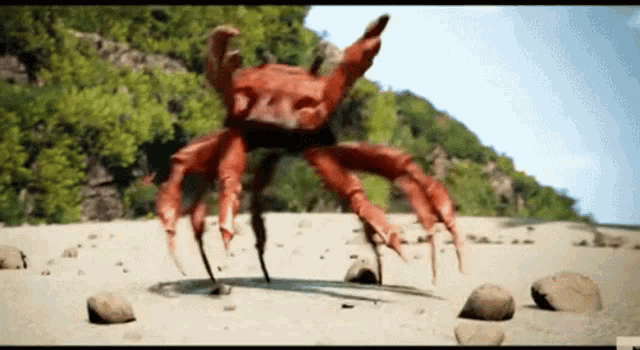
Crab
sullen merlin
@modest isle
@lone star
@hallow parrot
@limber grove
hallow parrot
crab
sullen merlin
@full patrol
@lilac dagger
@drowsy egret
@azure oar
@silent cargo
@crimson marlin
@restive charm
@neat basalt
 wintry marlin

hallow parrot
yum
 azure oar
Krabbe
crimson marlin
...crab
wintry marlin
 sullen merlin
@modest isle does it for u?
modest isle
sullen merlin
<@810796428002721822> does it for u?
Yeah it always does that since its a relatively new message it will appear once its older than 5 minutes
sullen merlin
first time experiencing this tbh
azure oar
wintry marlin
Hzd remaster is out
I saw, wont buy the game now tho, not enough money and time.
azure oar
Really? then I‘ll buy it!
wintry marlin
So fun to play again after 4 ish years
Yea
Idk how it works for pc to get the discount
Maybe enter the game
And buy it from there?
You should look it up
azure oar
I‘ll check
azure oar
wintry marlin
So fun to play again after 4 ish years
It does look way better graphically
 silent cargo
WHO PINGED MEEEE
rustic badger
silent cargo
WHO PINGED MEEEE
ping
hallow parrot
whoops my bad
 young gale
erm
sullen merlin
Third Animal species of the day (440) :
Common vampire bat / (Desmodus rotundus)

The common vampire bat (Desmodus rotundus) is a small, leaf-nosed bat native to the Americas. It is one of three extant species of vampire bats, the other two being the hairy-legged and the white-winged vampire bats.
The common vampire bat practices hematophagy, mainly feeding on the blood of livestock. The bat usually approaches its prey at night while they are sleeping. It then uses its razor-sharp teeth to cut open the skin of its hosts and lap up their blood with its long tongue. The species is highly polygynous, and dominant adult males defend groups of females. It is one of the most social of bat species with a number of cooperative behaviors such as social grooming and food sharing. Because it feeds on livestock and is a carrier of rabies, the common vampire bat is considered a pest. Its conservation status is categorized as Least Concern by the International Union for Conservation of Nature (IUCN) because of "its wide distribution, presumed large population tolerance of a degree of habitat modification, and because it is unlikely to be declining at nearly the rate required to qualify for listing in a threatened category."
rustic badger

sullen merlin
Physical description
The common vampire bat is short-haired, with silver-gray fur on its undersides, demarcated from the darker fur on its back.[3] It has a deeply grooved lower lip, and a flat, leaf-shaped nose.[3] A well-developed, clawed thumb on each wing is used to climb onto prey and to assist the animal in take-off.[3] The bat averages about 9 cm (3.5 in) long with a wingspan of 18 cm (7 in). It commonly weighs about 25–40 grams (2 oz), but its weight can drastically increase after a single feeding.[12] The braincase is relatively large, but the snout is reduced to accommodate large incisors and canines.[3] It has the fewest teeth among bats. The upper incisors lack enamel, which keeps them razor-sharp.[3] Its dental formula is
1.1.2.0
1.1.3.0
, for a total of 18 teeth.[7]
While most other bats have almost completely lost the ability to maneuver on land, vampire bats are an exception.[13] They can run using a unique, bounding gait in which the forelimbs are used instead of the hindlimbs to propel forward, as the wings are much more powerful than the legs.[13] This ability likely evolved independently within the bat lineage.[13] Three pads under the thumb function like a sole.[3] It is also capable of leaping in various directions, heights, and distances.[14] When making a jump, the bat pushes up with its pectoral limbs. The hindlimbs keep the body over the pectoral limbs which are stabilized by the thumbs.[15]
Common vampire bats have good eyesight. They are able to distinguish different optical patterns and may use vision for long-range orientation.[3] These bats also have well-developed senses of smell and hearing: the cochlea is highly sensitive to low-frequency acoustics, and the nasal passages are relatively large.[3] They emit echolocation signals orally, and thus fly with their mouths open for navigation.[16] They can identify a metal strip 1 centimetre (0.39 in) wide at a distance of 50 centimetres (20 in), which is moderate compared to other bats.[16]

Behavior
Feeding
Common vampire bat feeding on a cow calf (taxidermy specimens).
The common vampire bat feeds primarily on mammalian blood, particularly that of livestock such as cattle and horses.[18] Vampire bats feed on wild prey like the tapir, but seem to prefer domesticated animals, and favor horses over cattle when given the choice.[21] Female animals, particularly those in estrus, are more often targeted than males. This could be because of the hormones.[22]
Vampire bats hunt at night,[18] using echolocation and olfaction to track down prey.[23] They feed in a distance of 5 to 8 km (3.1 to 5.0 mi) from their roosts.[24] When a bat selects a target, it lands on it, or jumps up onto it from the ground,[18][24] usually targeting the rump, flank, or neck of its prey;[18] heat sensors in the nose help it to detect blood vessels near the surface of the skin.[21] It pierces the animal's skin with its teeth, biting away a small flap,[24] and laps up the blood with its tongue, which has lateral grooves adapted to this purpose.[25] The blood is kept from clotting by an anticoagulant in the saliva.[24]
They are protective of their host and will fend off other bats while feeding.[19][23] It is uncommon for two or more bats to feed on the same host, with the exception of mothers and their offspring.[19][23]
rustic badger
We interrupt this Commercial To Remind you that Bats are Great
sullen merlin
Mating and reproduction
During estrus, a female releases one egg.[3] Mating usually lasts three to four minutes; the male bat mounts the female from the posterior end, grasps her back with his teeth, holds down her folded wings, and inseminates her.[25] Vampire bats are reproductively active year-round, although the number of conceptions and births peak in the rainy season.[18][24] Females give birth to one offspring per pregnancy,[18][24] following a gestation period of about seven months.[3] The young are raised primarily by the females. Mothers leave their young to hunt, and call their young to feed upon returning.[18] The young accompany their mothers to hunt at six months, but are not fully weaned until nine months.[18] Female offspring usually remain in their natal groups into adulthood, unless their mothers die or move.[26] The occasional movements of unrelated females between groups leads to the formation of multiple matrilines within groups.[26] Male offspring tend to live in their natal groups until they are one to two years old, sometimes being forced out by the resident adult males.[26
Range and habitat
The common vampire bat is found in parts of Mexico, Central America, and South America, as well as the Caribbean islands of Margarita and Trinidad.[3] They can be found as far north as 280 kilometres (170 mi) south of the Mexico–United States border. Fossils of this species have been found in Florida and states bordering Mexico. The common vampire is the most common bat species in southeastern Brazil.[17] The southern extent of its range is Uruguay, northern Argentina, and central Chile. In the West Indies, the bat is only found on Trinidad. It prefers warm and humid climates,[18][19] and uses tropical and subtropical woodlands and open grasslands for foraging.[7] Bats roost in trees, caves, abandoned buildings, old wells, and mines.[18][20] Vampire bats will roost with about 45 other bat species,[3] and tend to be the most dominant at roosting sites.[20] They occupy the darkest and highest places in the roosts; when they leave, other bat species move in to take over these vacated spots.

Cooperation
Regurgitated food sharing in common vampire bats has been studied in both the lab and field, and is predicted by kinship, association, and reciprocal help [27] In a field study conducted in Costa Rica from 1978 to 1983,[21] vampire bats frequently switched between several roost trees and co-roosted with kin and non-kin.[27] Mean genetic kinship within roosting groups was low (r = 0.03 − 0.11), but 95% of food sharing observed in the wild occurred between close kin (first cousins or higher). Most observed food sharing (70%) was mothers feeding their pups. The non-maternal sharing events were kin-biased suggesting that vampire bats prefer to help relatives.[27] However, non-maternal food sharing is even better explained by frequency of interaction, even after controlling for kinship. Food sharing was only observed when the co-roosting association was greater than 60%. Food sharing appears to require social bonds that require development over long periods of time.[27] Among familiar bats, the amount of food given from bat A to bat B is best predicted by the amount of food given from bat B to A.[27] Reciprocal sharing is most obvious over longer time spans as found in primate cooperation.
Vampire bats also participate in mutual grooming;[23] two bats groom each other simultaneously to clean one another, and to strengthen social bonds.[28] Bats that groom one another also share food. It was suggested that while grooming, a bat might assess the size of its partner's abdomen to determine if it really needs to eat.[28]

Relationship with humans
The highest occurrence of rabies in vampire bats occurs in the large populations found in South America. The danger is not so much to the human population, but rather to livestock.[29] Joseph Lennox Pawan, a government bacteriologist in Trinidad, found the first infected vampire bat in March 1932.[30] He soon proved various species of bat, including the common vampire bat, are capable of transmitting rabies for an extended period of time without artificial infection or external symptoms.[30] Fruit bats of the genus Artibeus were later shown to demonstrate the same abilities. During this asymptomatic stage, the bats continue to behave normally and breed. At first, Pawan's finding that bats transmitted rabies to people and animals were thought fantastic and were ridiculed.[citation needed]
Although most bats do not have rabies, those that do may be clumsy, disoriented, and unable to fly, which makes them more likely to come into contact with humans. There is evidence that it is possible for the rabies virus to infect a host purely through airborne transmission, without direct physical contact of the victim with the bat.[31][32] Although one should not have an unreasonable fear of bats, one should avoid handling them or having them in one's living space, as with any wild animal. Medical attention should be given to any person who awakens to discover a vampire bat in their sleeping quarters. It is possible that young children may not fully awaken due to the presence of a bat (or its bite).[33]
The unique properties of the vampire bats' saliva have found some positive use in medicine. A genetically engineered drug called desmoteplase, which uses the anticoagulant properties of the saliva of Desmodus rotundus, has been shown to increase blood flow in stroke patients.[34]


@rustic badger
@cedar crescent
@distant nymph
@spice gyro
@wintry marlin
@modest isle
@lone star
@hallow parrot
@limber grove
wintry marlin
Bat
rustic badger
Cutie Bats
sullen merlin
@full patrol
@lilac dagger
@drowsy egret
@azure oar
@silent cargo
@crimson marlin
@restive charm
@neat basalt
modest isle
sullen merlin
Third Animal species of the day (440) :
Common vampire bat / (Desmodus rotundus)
 wintry marlin
A couple of hours now and we get the pc beta…
modest isle
rustic badger
Cutie Bats
Im going to send you to the shadow realm 
For interrupting @sullen merlin 
sullen merlin
And i know glaive also kept spamming wumpus on me
rustic badger
modest isle
Im going to send you to the shadow realm <:TI_DangerRex:612417184588628024>
Fo...
@sullen merlin send Sleepy to English Class
modest isle
rustic badger
<@784728629917384704> send Sleepy to English Class
I meant “send you” but you onow the autocorrect 
 rustic badger
modest isle
But you Know ***
crimson marlin
Oh
rustic badger
Yeah... Sleepy is getting old
modest isle


 lofty bone
Dunno where to put this, but doesn't that Hypsilophodon looks similar to someone we know lmao ?

Ahahahah.
sullen merlin
lofty bone
Dunno where to put this, but doesn't that Hypsilophodon looks similar to someone...
Wut?
lofty bone
Look at the pic.
modest isle
lofty bone
No way 💀
sullen merlin
The taco?
lofty bone
sullen merlin
The taco?
No, the Hypsilophodon, the one who looks like a paradise bird.
lofty bone
modest isle
No way 💀
Lmaooo I know.
lofty bone
rustic badger
yeah its new mattel toys iirc
It is yeah.
sullen merlin
Oh wait wow im stupid
lofty bone
It's ok lmao.
modest isle
Ok but the accurate Hypsi should look like a dryosaurus
The isle’s one is speculation
Then these guys copied it
lofty bone
And so is the Mattel one now.
lofty bone
Repaint that guy into TI colors and let it cook.
modest isle
sullen merlin
with feathers ofc
Hypsilophodon with feathers would look like this

 graceful trail

 wary lichen
Hey, not sure if this is right channel for my question but hope it is.
Would anyone playing V3 (if its still available) be willing to help me out with ingame pics for specific locations for a project im working on in Jurassic World Evolution 2? I tried using google for this, but I can't find the pics I'm after. I'd greatly appreciate it. I have all the DLCs, too 🙂
rigid sand
mh wilds beta has started!
 polar forge
If the gifs in phase 3 are crashing mobile discord where do I tell it ? xD
 limber grove
polar forge
If the gifs in phase 3 are crashing mobile discord where do I tell it ? xD
limber grove
polar forge
If the gifs in phase 3 are crashing mobile discord where do I tell it ? xD
I saw they were working in the devblog now, try there
polar forge
Ty
 jaunty heath
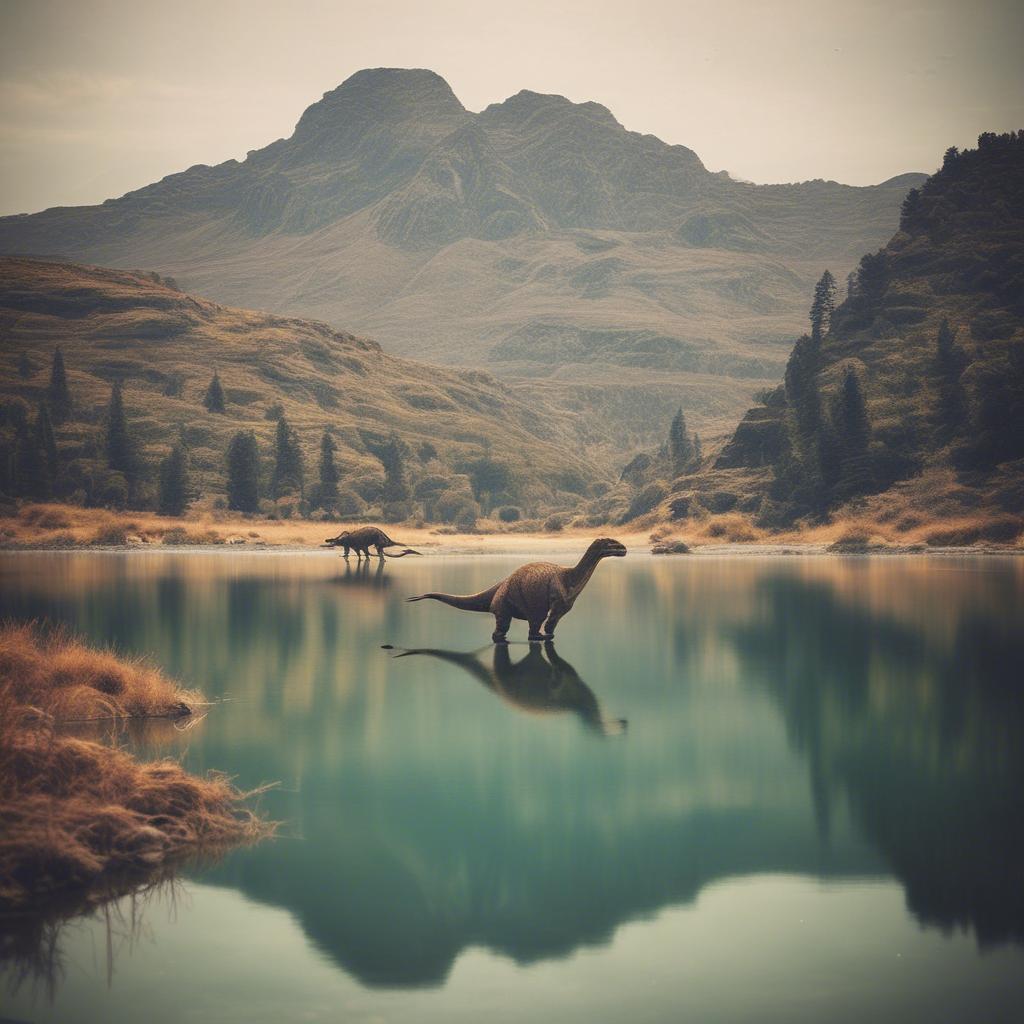
electric rock song. Listen and make your own with Suno.
 barren bear
i love ai! !!
rustic badger
F-35? Isn't this supposed to be their locally developed 5th gen airframe?
 hazy gate
rustic badger
F-35? Isn't this supposed to be their locally developed 5th gen airframe?
hazy gate
rustic badger
F-35? Isn't this supposed to be their locally developed 5th gen airframe?
Yes but its clearly using the basis of the f-35 frame, but def locally developed
also it will be highest 4.5/4 gen, as no way its keeping the same stealth capabilities as the authentic US f-35
 granite cipher

ABC11 Raleigh-Durham
Google reportedly owes the Kremlin more than 2 undecillion rubles.
 remote fiber
deino human mixpackers smh
 gentle gate
 fluid linden
You want to @ me for no reason and delete my posts which don't break rules purely because they show a large flaw, but won't remove posts of actual rule breakers? Here's your return @ :) @limber grove

 limber grove
fluid linden
You want to @ me for no reason and delete my posts which don't break rules purel...
limber grove
fluid linden
You want to @ me for no reason and delete my posts which don't break rules purel...
Thanks for letting me know!
And your post did break the rules, since we don't allow text in that channel and you added comments
BTW, disable DLSS to fix your problem
spice gyro
lol
young gale
limber grove
BTW, disable DLSS to fix your problem
Sorry
 ashen relic

Sculpting, Printing, Flocking and Painting a small Pterosaur called Anurognathus #ELEGOO
Saturn 4 Ultra
https://us.elegoo.com/products/saturn-4-ultra-12k-10inch-monochrome-lcd-resin-3d-printer
Let's Resin UV resin: https://amzn.to/4f83b3c
Let's Resin homepage: https://amzn.to/3YJ7Pi4
Patreon
https://www.patreon.com/c/Kayakasaurus
Etsy (Anuro...
 mortal echo
 full patrol
An asteroid is basically a giant rock and paper beats rock 
@mortal echo
 wintry matrix
Idc what ANY of u say
This is as best as life can get
A QUADRUPLE PIECE
4 DOUBLES
AND A BUNCHBOF REALLY FROSTED SHREDDED WHEATS

And made into a lil dude B)
full patrol
Nice
mortal echo
full patrol
An asteroid is basically a giant rock and paper beats rock <:TI_WeSmart:46484459...
Somebody said that in another server I sent it to lol-
 rough hollow
hey is there anyway i can contact a moderator i have a friend thats banned from the serv and idk why
limber grove
rough hollow
hey is there anyway i can contact a moderator i have a friend thats banned from ...
Send them this form, and if they've got any questions they can send me a friend request! https://dyno.gg/form/8ceec187
If you'd like to appeal a mute/ban from The Isle Official Discord then please fill out this form accordingly.
NOTE: If your appeal is rejected you'll be eligible to submit another appeal after 60 days.
rough hollow
much appreciated will do
sullen merlin
First Animal species of the day (441) :
Banded sea krait / (Laticauda colubrina)

The yellow-lipped sea krait (Laticauda colubrina), also known as the banded sea krait or colubrine sea krait, is a species of highly venomous snake found in tropical Indo-Pacific oceanic waters. The snake has distinctive black stripes and a yellow snout, with a paddle-like tail for use in swimming.
It spends much of its time under water to hunt, but returns to land to digest, rest, and reproduce. It has very potent neurotoxic venom, which it uses to prey on eels and small fish. Because of its affinity to land, the yellow-lipped sea krait often encounters humans, but the snake is not aggressive and only attacks when feeling threatened.
Description
The head of a yellow-lipped sea krait is black, with lateral nostrils and an undivided rostral scale. The upper lip and snout are characteristically colored yellow, and the yellow color extends backward on each side of the head above the eye to the temporal scales.[3]
The body of the snake is subcylindrical, and is taller than it is wide. Its upper surface is typically a shade of blueish gray, while the belly is yellowish, with wide ventral scales that stretch from a third to more than half of the width of the body. Black rings of about uniform width are present throughout the length of the snake, but the rings narrow or are interrupted at the belly. The midbody is covered with 21 to 25 longitudinal rows of imbricated (overlapping) dorsal scales.[3] The dorsal and lateral scales can be used to differentiate between this species and the similar yellow-lipped New Caledonian sea krait, which typically has fewer rows of scales and scales that narrow or fail to meet (versus the yellow-lipped sea krait's ventrally meeting dark bands).[4] The tail of the snake is paddle-shaped and adapted to swimming.[5]
On average, the total length of a male is 875 mm (2 ft 10.4 in) long, with a 13 cm (5.1 in) long tail. Females are significantly larger, with an average total length of 1.42 m (4 ft 8 in) and a tail length of 145 mm (5.7 in).[3
Distribution and habitat
The yellow-lipped sea krait is widespread throughout the eastern Indian Ocean and Western Pacific. It can be found from the eastern coast of India, along the coast of the Bay of Bengal in Bangladesh, Myanmar, and other parts of Southeast Asia, to the Malay Archipelago and to some parts of southern China, Taiwan, and the Ryukyu Islands of Japan. The species is also common near Fiji and other Pacific islands within its range. Vagrant individuals have been recorded in Australia, New Caledonia, and New Zealand.[1] Six specimens have been found around the North Island of New Zealand between 1880 and 2005, suspected to have come from populations based in Fiji and Tonga.[4] It is the most common sea krait identified in New Zealand, and second-most seen sea snake after the yellow-bellied sea snake - common enough to be considered a native species, protected under the Wildlife Act 1953.[4]

Venom
The venom of this elapid, L. colubrina, is a very powerful neurotoxic protein, with a subcutaneous LD50 in mice of 0.45 mg/kg body weight.[6] The venom is an α-neurotoxin that disrupts synapses by competing with acetylcholine for receptors on the postsynaptic membrane, similar to erabutoxins and α-bungarotoxins.[7] In mice, lethal venom doses cause lethargy, flaccid paralysis, and convulsions in quick succession before death. Dogs injected with lethal doses produced symptoms consistent with fatal hypertension and cyanosis observed in human sea snake bite victims.[6]
Some varieties of eels, which are a primary food source for yellow-lipped sea kraits, may have coevolved resistance to yellow-lipped sea krait venom.[8] Gymnothorax moray eels taken from the Caribbean, where yellow-lipped sea kraits are not endemic, died after injection with doses as small as 0.1 mg/kg body weight, but Gymnothorax individuals taken from New Guinea, where yellow-lipped sea kraits are endemic, were able to tolerate doses as large as 75 mg/kg without severe injury.[9]
Behavior
Yellow-lipped sea kraits are semiaquatic. Juveniles stay in water and on adjacent coasts, but adults are able to move further inland and spend half their time on land and half in the ocean. Adult males are more terrestrially active during mating and hunt in shallower water, requiring more terrestrial locomotive ability. Adult females, though, are less active on land during mating and hunt in deeper water, requiring more aquatic locomotive ability. Because males are smaller, they crawl and swim faster than females.[5]
Body adaptations, especially a paddle-like tail, help yellow-lipped sea kraits to swim. These adaptations are also found in more distantly related sea snakes (Hydrophiinae) because of convergent evolution, but because of the differences in motion between crawling and swimming, these same adaptations impede the snake's terrestrial motion. On dry land, a yellow-lipped sea krait can still move, but typically at only slightly more than a fifth of its swimming speed. In contrast, most sea snakes other than Laticauda spp. are virtually stranded on dry land.[5]
When hunting, yellow-lipped sea kraits frequently head into deep water far from land, but return to land to digest meals, shed skin, and reproduce. Individuals return to their specific home islands, exhibiting philopatry. When yellow-lipped sea kraits on Fijian islands were relocated to different islands 5.3 km away, all recaptured individuals were found on their home islands in an average of 30.7 days.[10]
Yellow-lipped sea kraits collected near the tip of Borneo had heavy tick infections.[11]

Hunting and diet
Hunting is often performed alone, but L. colubrina kraits may also do so in large numbers in the company of hunting parties of giant trevally and goatfish. This cooperative hunting technique is similar to that of the moray eel, with the yellow-lipped sea kraits flushing out prey from narrow crevices and holes, and the trevally and goatfish feeding on fleeing prey.[12]
While probing crevices with their heads, yellow-lipped sea kraits are unable to observe approaching predators and can be vulnerable. The snakes can deter predators, such as larger fish, sharks, and birds, by fooling them into thinking that their tail is their head, because the color and movement of the tail is similar to that of the snake's head. For example, the lateral aspect of the tail corresponds to the dorsal view of the head.[13][14]
Yellow-lipped sea kraits primarily feed on varieties of eels (of the families Congridae, Muraenidae, and Ophichthidae), but also eat small fish (including those of the families Pomacentridae and Synodontidae).[15] Males and females exhibit sexual dimorphism in hunting behavior, as adult females, which are significantly larger than males, prefer to hunt in deeper water for larger conger eels, while adult males hunt in shallower water for smaller moray eels. In addition, females hunt for only one prey item per foraging bout, while males often hunt for multiple items.[5][16] After hunting, yellow-lipped sea kraits return to land to digest their prey.[10]
Courtship and reproduction
The yellow-lipped sea krait is oviparous, meaning it lays eggs that develop outside of the body.[1]
Each year during the warmer months of September through December, males gather on land and in the water around gently sloping areas at high tide. Males prefer to mate with larger females because they produce larger and more offspring.[17]
When a male detects a female, he chases the female and begins courtship. Females are larger and slower than males, and many males escort and intertwine around a single female. The males then align their bodies with the female and rhythmically contract; the resulting mass of snakes can remain nearly motionless for several days.[17][18] After courtship, the snakes copulate for about an average of two hours.[17]
The female yellow-lipped sea kraits then lay as many as 10 eggs per clutch. The eggs are deposited in crevices where they remain until hatching.[19] These eggs are very rarely found in the wild; only two nests have been definitively reported throughout the entire range of the species.[1]
Interaction with humans
Because yellow-lipped sea kraits spend much of their time on land, they are often encountered by humans. They are frequently found in the water intake and exhaust pipes of boats.[19] They are also attracted to light and can be distracted by artificial sources of light, including hotels and other buildings, on coasts.[1]
Fewer bites from this species are recorded compared to other venomous species such as cobras and vipers, as it is less aggressive and tends to avoid humans.[15] If they do bite, it is usually in self-defense when accidentally grabbed. Most sea snake bites occur when fishermen attempt to untangle the snakes from their fishing nets.[20]
In the Philippines, yellow-lipped sea kraits are caught for their skin and meat; the meat is smoked and exported for use in Japanese cuisine.[1] The smoked meat of a related Laticauda species, the black-banded sea krait, is used in Okinawan cuisine to make irabu-jiru (Japanese: イラブー汁, irabu soup).[21]


@rustic badger
@cedar crescent
@distant nymph
@spice gyro
@wintry marlin
@modest isle
@lone star
@hallow parrot
@limber grove
@full patrol
@lilac dagger
@drowsy egret
@azure oar
hallow parrot
snake
sullen merlin
@silent cargo
@crimson marlin
@restive charm
@neat basalt
 azure oar
Snek
modest isle
sullen merlin
Almost as goofy as the arabian sandboa
modest isle
Innocent face
hazy gate
Goofiest snake for me is the boomslang or vine snake


 crimson marlin
🐍
sullen merlin
hazy gate
Goofiest snake for me is the boomslang or vine snake
Judgemental shoelace
aka asian vine snake
I wanted to keep one of those but they arent white-listed where i live
sadge
 sage hearth

After FOUR YEARS of sitting in Adam Savage's storage, it's time to complete the dinosaur costume! But first, Adam must take the raptor pieces down from the loft one by one (terrifying, truly) and then prepare them in situ for painting. It's amazing to see her all back together finally!
Adam Savage's Four Year Build: Life-Size Velociraptor Costu...
modest isle
hazy gate
Goofiest snake for me is the boomslang or vine snake
The second image looks like a Carnotaurus but without horns
wintry marlin
sullen merlin
<@872830054982365195>
<@585846202705248276>
<@478213198458257409>
<@1024109...
Snake
full patrol
sage hearth
https://youtu.be/bITSvA_P-wg?si=5Q7cvRlZcKsKy5Y5
Same! Cool video
#offtopic-discussion message
sage hearth
full patrol
Same! Cool video
https://discord.com/channels/401464048610312193/855535605178171...
AH beat me to it!
rustic badger
An Eagle tried to hunt a Harbour Porpoise(Cetacean) in Norway : https://www.vg.no/stories/297834

 tropic owl
@crystal zinc fisch
 crystal zinc
tropic owl
<@710601277419159654> fisch
crystal zinc
tropic owl
<@710601277419159654> fisch
WHAT!!!!
 dense fox
Доброго вечора, де я можу знайти паті або клан що б грати разом?
limber grove
dense fox
Доброго вечора, де я можу знайти паті або клан що б грати разом?
Please only use English in this server. You'll probably have the best chance of finding a group by asking in the official server channels, such as #evrima-eu
dense fox
limber grove
Please only use English in this server. You'll probably have the best chance of ...
i undestand!
hallow parrot
Are A and B different coloured squares?

 lone star
Nope, colour theory is a crazy thing
 hallow parrot
lone star
Nope, colour theory is a crazy thing
hallow parrot
lone star
Nope, colour theory is a crazy thing
Now go and check the hex code
modest isle
Hex code this color : #9FE2BF
tropic owl
They are the same colour
modest isle
Same color / Hex code
 hallow parrot
yum
full patrol
illusion broken
day ruined
 tired hinge
I just sunk 6 hours into a Physics Exercise sheet for Uni, I just wanna look at cool rocks and dinosaur bones 
no wait it's almost 7 hours now, my dear
rustic badger
Good Luck
 tropic elbow
plz dondi make a exception 😭

i been staring at this fan art for years praying for it to be added
rustic badger
I can see Hyper Herbis being a cool mod
or maybe devs will add an equivalent, who knows
tired hinge
rustic badger
Good Luck
thanks, the sciences are really the worst part about studying geosciences (geology)
slow hazel
tropic elbow
plz dondi make a exception 😭
bro that is unkillable
silent cargo
also hypers dont have literal rock armor
stepp concepts tend to be just sharp rocks
modest isle
silent cargo
stepp concepts tend to be just sharp rocks
It would be a cooler idea if these rocks looking scales are not actually part of his body but instead its some sharp rocks he collects from the environment around him and uses honey to gule these rocks🪨 on him

 modest isle
 umbral niche
Looking for a PC is like looking for a kid to adopt, blimey
distant nymph

Sneaky Snails - an original Hermitcraft 10 Song. Geminitay (Gem) and Grian puppet sneaky snails to prank and cause chaos around the Hermitcraft server. Scar, Mumbo, Tango, and Skizz have now all been victims of the pesky snails' crimes. This song describes the events...
Art by Maxx: https://twitter.com/maxx_d00dles
The Giddy-Inn (Discord): htt...
Such a cute Hermitcraft song 😊
In case anyone is following Grian or Gems point of view for Season 10
mortal echo
hazy gate
Goofiest snake for me is the boomslang or vine snake
First and second ones look like eels.
hallow parrot
is this cat real or fake

 elder meadow
Imma go with fake
 void zinc
Fake. Slanty irises, fuzzy looks mushy and artefacted.
full patrol
fake, the tail is escaping the mortal plane
spice gyro
Fake, slope of the top of the head is biased to one side
 heavy temple
distant nymph
In case anyone is following Grian or Gems point of view for Season 10
heavy temple
distant nymph
In case anyone is following Grian or Gems point of view for Season 10
I haven't watched Grian in a good while
 smoky mauve
submitting assignments due no later than 11:59 at 11:59 I need to stop procrastinating man
spice gyro
Relatable
 heavy temple
 modest isle
Speaking of Grian : literally everyone died to their immortal snails 🐌 in the life series

Wild Life: Episode 3 - THE SNAIL. The snail is added.
Welcome to WILD LIFE the next season in the Wild Life series. This time, there will be a different twist that affects the game every session/episode (only one person episode). The twists may or may not present some danger to the participants.
This season, we have 6 lives. 4-6 Lives you ha...
modest isle
hallow parrot
is this cat real or fake
Obviously fake it has the same eyes as the previous Ai Cat
Delete this 
distant nymph
heavy temple
I haven't watched Grian in a good while
Are you following Season 10 over anyone ? o:
I watch Mumbo, Grian and Gem
At the start I also watched Scar, Etho and Joel
but I just didn't have the time to keep up ):
distant nymph
modest isle
Speaking of Grian : literally everyone died to their immortal snails 🐌 in the l...
They were really mean to be fair xD
modest isle
distant nymph
They were really mean to be fair xD
Yeah i felt bad for Skizzleman 😭 he gave up and became desperate at the end and kept dying alot
 unreal pier
modest isle
Yeah i felt bad for Skizzleman 😭 he gave up and became desperate at the end and...
unreal pier
modest isle
Yeah i felt bad for Skizzleman 😭 he gave up and became desperate at the end and...
WHat?!
 modest isle
unreal pier
WHat?!
modest isle
unreal pier
WHat?!
True
distant nymph
modest isle
Yeah i felt bad for Skizzleman 😭 he gave up and became desperate at the end and...
Aw yeah xD
Though some of those were his fault honestly
Also, a gread video explaining the "missing impact/weight" of some weapons in the MonHun Wilds beta:
https://www.vxreddit.com/r/MonsterHunter/comments/1gj4oqu/hitstop_in_mh_wilds_comparison_to_previous_games/
 heavy temple
distant nymph
Are you following Season 10 over anyone ? o:
heavy temple
distant nymph
Are you following Season 10 over anyone ? o:
I haven’t watched herbitcraft since I watched Iskall85 in season 6
rustic badger
distant nymph
** **
Also, a gread video explaining the "missing impact/weight" of some weapons...
Some people are saying Rise beta also had less hitstun, but it was in the main game. Hope its the same here. IG feels way better with it
distant nymph
rustic badger
Some people are saying Rise beta also had less hitstun, but it was in the main g...
I'm sure they'll fix it, yeah 😊
rustic badger

ワイルズベータ版の生態行動集を投稿しました!
チャタカブラ、バーラハーラ、ドシャグマ、レ・ダウの4体分を時間の許す限り撮影してきました。
 tepid jay
i miss it already
 fair mesa
modest isle
Delete this <:TI_Limmy:992752086586507365>
fair mesa
modest isle
Delete this <:TI_Limmy:992752086586507365>
Dint see that
rustic badger
Just find this really really cool,
https://vxtwitter.com/Quackity/status/1853210010836402417

INTRODUCING THE UNIVERSAL REAL TIME TRANSLATION TOOL.
REVOLUTIONIZING THE GLOBAL CONTENT CREATION SPACE, FOREVER.
SPEAK ANY LANGUAGE, WITH ANYBODY, ANYWHERE. https://t.co/IjLEYJ7SdM
distant nymph
tepid jay
i miss it already
same ):
tepid jay
distant nymph
same ):
my man will now be in stasis for 10 months :(
 rustic badger

 rustic badger

 lapis otter
peak theme of all time
rustic badger
I do hope val makes it either here or in the expansion, Big Console Graphics for Val would be a first
Rise was on PC and stuff yeah but still made for the switch
rustic badger

ワイルズのシンクロリヴァイの音が気持ち良すぎる件
#モンハンワイルズ
#MHWilds https://t.co/BujlTZIhpN
 nocturne basalt
@half sinew are you still online?
spice gyro
 stoic vale
Ooh very nice
wintry matrix
What yall think abt my animal from a spec evo project i been working on?
Not the best artist but im trying my best.
I named it Cuatralas vuelito (words from Spanish meaning "four-winged little flyer")

 wintry matrix
What yall think abt my animal from a spec evo project i been working on?
Not the...
wintry matrix
wintry matrix
What yall think abt my animal from a spec evo project i been working on?
Not the...
Also gonna specify, it is NOT from earth. From a alien planet i created called Kryka
umbral niche
I think it’s neat! 🙂
Shivering my timbers rn, got chased into a home cave by a Conc in PoT as a lil Bars
distant nymph
rustic badger
https://x.com/valky_uniguri/status/1825581039332504056
That's pretty 😊
hallow parrot
 rustic badger
distant nymph
That's pretty 😊
rustic badger
distant nymph
That's pretty 😊
Yeah all her art is Great
So Much Wallpaper Material
void zinc
Hey dumb-dumb. Don't be this dumb.
modest isle
No way dude just said that 
and then used the sweating emoji 🥵
void zinc
Yeah, nah. Imma just remove him.
 burnt sandal
Heyy, I'm pretty new to Envrima, what does this mean?
 rustic badger
burnt sandal
Heyy, I'm pretty new to Envrima, what does this mean?
rustic badger
burnt sandal
Heyy, I'm pretty new to Envrima, what does this mean?
The Eyes are Patrol Zones, they are basically Mini-Migration Zones for your Group.
burnt sandal
Thank you!
 alpine mason
I thought those were eggs 😭
 lofty blade

 sullen merlin
modest isle
No way dude just said that <:TI_Limmy:992752086586507365> <:TI_Scream:4877105042...
sullen merlin
modest isle
No way dude just said that <:TI_Limmy:992752086586507365> <:TI_Scream:4877105042...
Why am i curious now
modest isle
sullen merlin
Why am i curious now

 still willow
Gateway be like:

 mystic tendon
 fleet cave
You want to download your driver info from here https://www.asus.com/us/motherboards-components/motherboards/prime/prime-x670-p-wifi/helpdesk_download?model2Name=PRIME-X670-P-WIFI
ASUS PRIME X670-P WIFI is an AMD X670 (Ryzen AM5) ATX motherboard with PCIe 5.0 storage support, three M.2 slots, DDR5, USB 3.2 Gen 2x2 Type-C®, front USB 3.2 Gen 1 Type-C®, BIOS FlashBack™, DisplayPort/HDMI, Thunderbolt™ 4 header, Wi-Fi 6, and 2.5Gb Ethernet. It also features AI Cooling ll, Aura Sync, M.2 Q-Latch, Q-LED Core, ASUS OptiMem II, M...
@lone thorn
How much RAM do you ahve
distant nymph
@azure oar
hallow parrot
poor guy is just tryna eat but some hairless ape stares intently through a camera lens
 surreal nacelle
Let's keep political conversations out of this server please. (Not you Run)
 pearl elm
1984
hallow parrot
lol
wintry matrix
surreal nacelle
Let's keep political conversations out of this server please. (Not you Run)
literally just came here to see if there would be any juicey drama going on XD
 limber star

rustic badger
 pallid palm
surreal nacelle
Let's keep political conversations out of this server please. (Not you Run)
pallid palm
surreal nacelle
Let's keep political conversations out of this server please. (Not you Run)
 void zinc
inb4 "Wheeeh, I want talk politics in the server about dinosaurs running around and having a silly time"
 drifting tundra
anyone knows if i can play evrima with these specs?
i3 10100 3.60 ghz
rx 6500 xt
24 gb ram
how many fps?
full patrol
You'll find out when you play 💀
Can't really predict the fps
drifting tundra
full patrol
You'll find out when you play 💀
Can't really predict the fps
k
hallow parrot
I wonder if anyone in this server can play the accordion
full patrol
Give me a couple months 👍
(I will not actually go learn the accordian)
hallow parrot
NOOO
 plucky flume
 rustic badger
sullen merlin
Third Animal species of the day (440) :
Common vampire bat / (Desmodus rotundus)
rustic badger
sullen merlin
Third Animal species of the day (440) :
Common vampire bat / (Desmodus rotundus)

New paper out! 🚨 We show that vampire bats use amino acids from a recent blood meal to fuel RUNNING - a rare mode of locomotion in bats ideal for stalking prey. I’d worry less about your neck and more about your ankles!…
 visual hound
rustic badger
https://vxtwitter.com/giuliasrossi/status/1854120058118623659
visual hound
rustic badger
https://vxtwitter.com/giuliasrossi/status/1854120058118623659
looks like a wyvern running
azure oar
Clearly shows that bats aren‘t mammals but actually the only surving lineage of the wyverns
hallow parrot
If you want to support & learn about a diversity of restoration projects, then check out the Curious Membership - https://www.patreon.com/c/leavecurious
To sponsor a Stork & get exclusive perks with Celtic Rewilding you can do that here https://www.patreon.com/celticrewilding
Celtic Rewildings website - https://celtic-rewilding.co.uk/
Celtic...
hallow parrot
rustic badger
https://vxtwitter.com/giuliasrossi/status/1854120058118623659
it looks like it cannot decide between galloping or "sprint walking"
idk what to call it
void zinc
hallow parrot
https://youtu.be/aaMwqKdAwSk
Food.
soft lily
Bats are cute af I don’t want them in my house
sullen merlin
hallow parrot
it looks like it cannot decide between galloping or "sprint walking"
It looks like one of those wooden walking machines driven by wind
hallow parrot
void zinc
Food.
They were quite literally eaten to extinction in the UK

 dark pier
tryna lock in wit my korean dawg, language barrier tough asf
 hallow parrot
idk, i dont think every korean speaker understands latinised korean
 neat basalt
hallow parrot
idk, i dont think every korean speaker understands latinised korean
neat basalt
hallow parrot
idk, i dont think every korean speaker understands latinised korean
this is true
although they might idk
barren bear
hallow parrot
idk, i dont think every korean speaker understands latinised korean
same
soft lily
hallow parrot
They were quite literally *eaten* to extinction in the UK
Getting rid of our natural heritage is a point of pride for the UK
 hazy gate
hallow parrot
https://tenor.com/view/eight-crazy-dancing-dance-move-friends-gif-15454395
hazy gate
hallow parrot
https://tenor.com/view/eight-crazy-dancing-dance-move-friends-gif-15454395
Kim jong un after agreeing to send soldiers to help putin in Ukraine lol
sullen merlin
hazy gate
Kim jong un after agreeing to send soldiers to help putin in Ukraine lol
Saw some weird news articles about that
hallow parrot
sullen merlin
Saw some weird news articles about that
OH, all i had to do was change server and WOW lmaoo
anywayssssssssssssss... away from that
hazy gate
hallow parrot
OH, all i had to do was change server and WOW lmaoo
anywayssssssssssssss... away...
 remote fiber
Thanks Dondi.
 sullen merlin
hallow parrot
OH, all i had to do was change server and WOW lmaoo
anywayssssssssssssss... away...
sullen merlin
hallow parrot
OH, all i had to do was change server and WOW lmaoo
anywayssssssssssssss... away...
Wait hold up, im a bit lost now. Wdym change servers lmao
hallow parrot
sullen merlin
Wait hold up, im a bit lost now. Wdym change servers lmao
discord servers
sullen merlin
ah lol
hidden raptor
@barren bear hey issac, you use davinci as an editing software right?
surreal nacelle
@manic remnant
Dragons are cool but they don't really belong in #isle-fan-art , you can post them here instead
 manic remnant
Thanks for your apperication❤️
manic remnant
surreal nacelle
<@1200139457307889726>
Dragons are cool but they don't really belong in <#401480...
Got it! I'll make sure to post them in the right place next time. Thanks for letting me know!
manic remnant
surreal nacelle
<@1200139457307889726>
Dragons are cool but they don't really belong in <#401480...
If you don't mind can we talk over dm
surreal nacelle
Sure you can dm me
hazy gate
 barren bear
hidden raptor
<@734274653878747169> hey issac, you use davinci as an editing software right?
barren bear
hidden raptor
<@734274653878747169> hey issac, you use davinci as an editing software right?
Yes
 fleet fable
does anyone know how to make roblox shirts
full patrol
Like on your roblox character?
If it's the same as it was 14 years ago it's under your profile where you can customize your character and you select the shirt area and customize it from there
@fleet fable
hidden raptor
barren bear
Yes
have you ever experienced it crashing whenever you try and import a video file in the editing and media pool menus? keeps happening to me, not sure why
barren bear
hidden raptor
have you ever experienced it crashing whenever you try and import a video file i...
No
Weird
barren bear
hidden raptor
rip, been a major problem for a while now
Tried updating it or maybe re downloading it?
hidden raptor
barren bear
Tried updating it or maybe re downloading it?
I did re download it and I'm updating it rn, hope that's the problem, not seeing much in the settings as to why it's happening
barren bear
Hmm
Have you tried seeing if there are other people with the similar problem on their forums?
hidden raptor
barren bear
Have you tried seeing if there are other people with the similar problem on thei...
Yeah I've seen a couple people having what seems to be the same problem on the forums, and there's a few videos talking about it, but the weird thing is that it was working a couple of months ago just fine
also, update: I copied the same recorded footage to my local disk storage, imported it, and it worked just fine, yet when I try it via harddrive, it just crashes
I mean it's better than nothing but still
barren bear
hidden raptor
Yeah I've seen a couple people having what seems to be the same problem on the f...
Wack
pallid palm
i miss the quiet
modest isle
fleet cave
Who does the animal facts
Me
and @sullen merlin
modest isle
fleet cave
Ten-Lined June Bug
Will do soon 👍🏼
fleet cave
Yassss
young gale
 fleet cave
Cherry shrimp and snail eggs
young gale
Fire red shrimp
fleet cave
Ohhh hard to tell for me
fleet cave
Yeah I think the fire red have the white stripe
sullen merlin
modest isle
Me
and <@784728629917384704>
I was busy this week so I’ll resume aotd probably this Sunday 👍
modest isle
sullen merlin
I was busy this week so I’ll resume aotd probably this Sunday 👍
If you are busy its ok you can always count on me to do the work 👍🏼
 orchid furnace
What do you guys think about Beasts of Bermuda and Path of Titans? I’m thinking about trying both of them and maybe just refunding (idk if I can refund pot)
sullen merlin
orchid furnace
What do you guys think about Beasts of Bermuda and Path of Titans? I’m thinking ...
I have only played PoT but i dont like either of them. PoT needs mods and custom server settkngs to be playable imo. I dont like either of them tbh but it also depends on ur own game preferences
orchid furnace
sullen merlin
I have only played PoT but i dont like either of them. PoT needs mods and custom...
Really, What is it you don’t like about PoT? BoB seems kinda weird but the big events look cool
sullen merlin
orchid furnace
Really, What is it you don’t like about PoT? BoB seems kinda weird but the big e...
BoB's arcadey style and visuals etc is what throws me off the most. For PoT the base game ir pretty bad, i hate the combat since combat stance pretty much allows u to turn in place etc. Growing on base game rules is extremely annoying. Its pretty much quest simulator with little progression.
orchid furnace
sullen merlin
BoB's arcadey style and visuals etc is what throws me off the most. For PoT the ...
Is it pay to win?
Or at least pay for each Dino?
sullen merlin
no
orchid furnace
Oh ok good
plucky flume

 drowsy locust

The inland taipan, also known as the "fierce snake," holds the title of the most venomous snake in the world. But what makes its venom so deadly? In this video, we dive deep into the science of taipan venom, exploring how it affects the human body and why a single bite can be fatal within hours if untreated. From its toxic components to the rapi...
 maiden junco
low taper fade
rustic badger
Arcane is Really Really Great
tired hinge
rustic badger
Arcane is Really Really Great
WE ARE SO BACK!!!
been listening to "To Ashes and Blood" on loop for a good hour now lol
hallow parrot
tired hinge
been listening to "To Ashes and Blood" on loop for a good hour now lol
for me, Sucker has been the track that has been looped all day
tired hinge
hallow parrot
for me, Sucker has been the track that has been looped all day
also very good but that screaming chorus? just pure heaven to my ears
hallow parrot
tired hinge
also very good but that screaming chorus? just pure heaven to my ears
All the music either way, is brilliant, it'd be foolish to pick favourites
barren bear
hallow parrot
All the music either way, is brilliant, it'd be foolish to pick favourites
hallow parrot
barren bear
ah those last three notes sound the same to the first three on my childhood home's doorbell
barren bear
hallow parrot
ah those last three notes sound the same to the first three on my childhood home...
oh lol
hallow parrot
kinda scary
barren bear
hallow parrot
kinda scary
https://youtu.be/m2JL0xABlrQ
does it do this

1977 Steven Spielberg, Richard Dreyfuss, François Truffaut
go to 1:50
hallow parrot
barren bear
go to 1:50
yes, it did
barren bear
yay
 pine estuary

 void zinc
Heh. Doody.
sullen merlin
First Animal species of the day (442) :
Atlantic mudskipper / (Periophthalmus barbarus)

The Atlantic mudskipper (Periophthalmus barbarus) is a species of mudskipper native to fresh, marine, and brackish waters of the tropical Atlantic coasts of Africa, including most offshore islands, through the Indian Ocean and into the western Pacific Ocean to Guam. The Greek scientific name Periophthalmus barbarus is named after the eyes that provide the Atlantic mudskipper with a wide field of vision. The Atlantic mudskipper is a member of the genus Periophthalmus, which includes oxudercine gobies that have one row of canine-like teeth.
The Atlantic mudskipper can grow up to 16 cm (6.3 in) in body length. Similar to other members of the genus, it has dorsally positioned eyes and pectoral fins that aid in locomotion on land and in water. Atlantic mudskippers can skip, crawl, and climb on land using their pelvic and pectoral fins.
Atlantic mudskippers are semi-aquatic animals that occur on tidal flats and mangrove forests, where it readily crosses mud and sand surfaces out of the water. The Atlantic mudskipper is carnivorous and utilises an ambushing strategy to capture prey. Capturing prey is performed through the use of a 'hydrodynamic tongue', which involves using water to suction the prey into the mouth.
Sexual maturity is reached at approximately 10.2 cm (4.0 in) for females and 10.8 cm (4.3 in) for males. The Atlantic mudskipper can live around five years. Atlantic mudskippers have been used by humans for food, bait, and medicinal purposes. The conservation status of the Atlantic mudskipper is classified as 'Least Concern'.
Distribution
Atlantic mudskippers are found throughout West Africa, in mangrove swamps, and primarily brackish bodies of water near the coast.[1] Countries where the mudskipper are found include Angola, the Democratic Republic of the Congo, Cameroon, and Ghana.[1]
The distribution of Atlantic mudskippers within these regions are influenced by the availability of food and shelter.[2] The distribution may also be influenced by the Atlantic mudskipper's hibernation.[2]
 sullen merlin
Anatomy and morphology
The Atlantic mudskipper can grow up to 16 cm in length.[6] The body is covered with scales, coated with a mucus layer that helps to retain moisture.[6] The Atlantic mudskippers have more than 90 scales along the side of their body.[3] Atlantic mudskippers also retain moisture by storing water within gill chambers, that allows them to breathe when out of water.[6] Atlantic mudskippers do not have a membrane that covers the gill chambers; instead, they are able to control the opening and closing of the gill chambers.[7] The gill chambers may be controlled through either the muscles around the slits, or through the differences in partial pressures.[7] In addition to retaining moisture by storing water, the surface of the Atlantic mudskipper enables it to breathe through its skin, otherwise known as cutaneous respiration.[8]
Mudskippers have a pair of pectoral fins, which allows them to 'skip' on land and maintain stability within water.[6][4][9] The Atlantic mudskipper also has a pair of caudal fins that aid in aquatic locomotion, and pelvic fins that aid the pectoral fins in terrestrial locomotion.[9] The pelvic fins are adapted to terrestrial living by acting as a sucker to attach the Atlantic mudskipper to land.[8] Atlantic mudskippers can also crawl and climb on land using their pelvic and pectoral fins.[8]
The eyes of the Atlantic mudskipper are adapted to terrestrial living by being located closely together, providing the mudskipper with a large field of vision.[4] The eyes can move independent of the other at 360 degrees.[10] The eyes are also positioned further up on the head, enabling the eyes to remain above the water surface whilst their body is submerged underwater.[4] Cup-like structures that hold water are located beneath the eye, which aids in lubricating the eyes when the Atlantic mudskipper is on land.[4] While on land, they perform a whole-body rolling behavior in which their eyes are retracted and the dermal cup structures cover them, such that the dermal cup membrane comes into contact with fluids on the surface they are rolling on. When they finish the roll, their eyes extend again and the dermal cup recedes. This rolling behavior may capture water in these cups and body for lubrication, supported by the fact that they were observed to roll much more frequently when exposed to higher air flow (and thus, higher evaporation) in a laboratory setting.[11] The Atlantic mudskipper has chemosensory receptors that are located within the nose and on the skin's surface.[12]
The Atlantic mudskipper has the ability to rotate its mouth opening so that its jaws can be oriented over prey.[13] Sharp teeth, reflective of their carnivorous diet, are present within the mouth.[14] Atlantic mudskippers have a short digestive system, that is composed of an oesophagus, stomach, intestine, and rectum.[15] The stomach was historically not described in Atlantic mudskippers as it is not well defined unless structures are compared microscopically.[15] The surface of the intestine is folded, which increases the surface area that enhances the absorption of nutrients.[15]
The Atlantic mudskipper has a unique olfactory organ that includes a canal 0.3mm in diameter near its upper lip that increases in size into a chamber-like sac. The chamber-like sacs only serve a mechanical purpose, which is to circulate water through the canals, which are sensory structures.[16][17]
The Atlantic mudskippers have genital papillae that are located on the abdomen. Females can be distinguished from males, who have less rounded papillae.[18]
rustic badger
Interruption
sullen merlin
Habitat
Atlantic mudskippers are semi-aquatic animals that live in areas with water that is slightly salty, such as river estuaries and mudflats.[10][19] Generally, Atlantic mudskippers spend the majority of the day on land.[10] In tidal regions, Atlantic mudskippers may appear only during low tide to feed; conversely, they hide in their burrow at high tide.[19] Their burrows can extend to 1.5 metres deep, in which mudskippers can seek refuge from predators.[4] Burrows may contain a pocket of air which the Atlantic mudskipper can breathe from, despite there being low oxygen availability.[4] The Atlantic mudskipper is generally able to tolerate high concentrations of toxic substances produced by industrial waste, including cyanide and ammonia, in the surrounding environments.[20] For example, in the presence of high ammonia contamination, the Atlantic mudskipper can actively secrete ammonia through its gills within highly acidic environments.[4] They are also able to survive in a variety of environments, including waters with different temperatures and salinity levels.[20]
Hot and humid climates are optimal for Atlantic mudskippers as it enhances cutaneous respiration and helps them with maintaining their body temperature. The body temperature of Atlantic mudskippers on the surface can range from 14 to 35 degrees celsius. The Atlantic mudskipper is territorial and builds a wall of mud around its territory and its resources. The territory is approximately 1 metre long and can aid in maintaining Atlantic mudskipper populations by storing food resources.[4]
Predator-prey behaviour
The Atlantic mudskipper is carnivorous,[21] and has adopted an ambushing strategy to capture terrestrial prey.[22] While hunting, the Atlantic mudskipper submerges itself underwater whilst leaving its eyes out, using only sight to identify and locate prey.[22] To ambush prey, Atlantic mudskippers launch onto land using predominantly their pectoral fins, and catch the prey using their mouth.[22] When Atlantic mudskippers are in danger from predation on land, they proceed into 'flight' behaviour and either jump in the water or skip away on mud.[4]
rustic badger
Hey that was alot of reading, take a Break
sullen merlin

Feeding behaviour
On land, the Atlantic mudskipper feeds by covering its prey with water, then sucking back the water and prey into its mouth, named as the 'hydrodynamic tongue'.[23] The Atlantic mudskipper carries water in their mouth prior to emerging on land, enabling them to feed.[24] In water, the Atlantic mudskipper feeds through suction feeding, similar to other aquatic species.[7] Suction-feeding involves building up pressure by expanding the head and mouth rapidly, which pulls both food and water in.[25] Although the feeding technique is similar in both environments, the Atlantic mudskipper alters the force of suction, such that the flow underwater is stronger than on land.[7] The gape size of the mouth is larger in water, potentially due to water pressure.[25] Furthermore, the Atlantic mudskipper lunges simultaneously as suctioning, in order to catch prey.[25] The direction of the lunge is different between terrains. The Atlantic mudskipper catches prey horizontally underwater; whereas, the Atlantic mudskipper rotates its body and reorientates its mouth on land, such that it feeds on prey from above.[25] The Atlantic mudskippers are diurnal, which means they are active and feed during the day.[10]
Atlantic mudskippers are flexible in regard to their diet choices. Larger Atlantic mudskippers ingest larger-sized prey, potentially due to the correlation between their mouth gape and prey size.[26] The feeding choices also may vary by habitats and seasonally, depending on what resources are most abundant.[26] The Atlantic mudskippers feed more during dry season than wet, reflective of the optimal foraging theory, which proposes that diet flexibility increases with lower food availability.[26] Atlantic mudskippers feed frequently, where larger Atlantic mudskippers feed at higher intensities as they are less prone to predation.[26]
Diet
The Atlantic mudskipper is a consumer of a wide variety of food.[26] In the wild, mudskippers prefer to eat worms, crickets, flies, mealworms, beetles, small fish, and small crustaceans (sesarmid crabs).[27] Mudskippers kept as pets can eat frozen fare such as bloodworm or artemia and flakes. It cannot eat dried food; however, because its stomach swells up. It is recommended to feed it frozen food for a healthy diet.[28]
Reproduction
Females reach sexual maturity at a body length of around 10.2 cm, and males approximately 10.8 cm. The Atlantic mudskipper can spawn throughout the year.[29] However, spawning mainly occurs for male Atlantic mudskippers between February and May, and females between March and May.[30] The peak spawning times are associated with high food availability for their young.[30] The fertility of Atlantic mudskippers increases with the length of their body, as females may be able to carry more eggs at larger sizes.[29] Females lay thousands of eggs at one time; however, the eggs are highly prone to predation.[4] Mudskippers flood their burrows to trigger the eggs to hatch. Only a small proportion of offspring survive as they are highly susceptible to predation.[4]
During courtship, after the male pairs with a female mudskipper, the male and female go into the male's burrow to mate.[29] After the female releases her eggs onto the burrow wall,[29] the male displays a large amount of paternal care.[4] The male Atlantic mudskipper will guard and take care of the eggs within the burrow.[4]
Usage by humans
The Atlantic mudskippers are used by humans as food, bait, ornamental fishes, and for medicine.[2][30] It is important to local indigenous peoples as a food fish and can also be found in the aquarium trade.[1] Fishing has caused population declines in parts of the species' range.[30] Mudskippers can be used as a bio-indicator of pollution in marine ecosystems as they are sensitive to the environment and have an absorptive body.[4] Analyses can be performed by examining various organs of the mudskipper.[4] The digestive system, gills, and skin are common places of the Atlantic mudskipper that are contaminated by heavy metals, like copper and iron.[4] A less invasive method of using mudskippers as a bio-indicator is to use their growth and development as a measure for potential contamination.[4]


@rustic badger
@cedar crescent
@distant nymph
@spice gyro
@wintry marlin
rustic badger
wintry marlin
Fish
sullen merlin
@modest isle
@lone star
@hallow parrot
@limber grove
@full patrol
@lilac dagger
@drowsy egret
@azure oar
@silent cargo
@crimson marlin
@restive charm
@neat basalt
wintry marlin
Glorious day
sullen merlin
Land fibsch
wintry marlin
Literally me
rustic badger
skipper
distant nymph
sullen merlin
First Animal species of the day (442) :
Atlantic mudskipper / (Periophthalmus ba...
Mudskipper are funny xD
 modest isle
sullen merlin
First Animal species of the day (442) :
Atlantic mudskipper / (Periophthalmus ba...
modest isle
sullen merlin
First Animal species of the day (442) :
Atlantic mudskipper / (Periophthalmus ba...
 modest isle
https://tenor.com/view/lol-fish-laugh-funny-gif-4741797
modest isle
modest isle
https://tenor.com/view/lol-fish-laugh-funny-gif-4741797
Blue spotted mudskipper (41)
#offtopic-discussion message
azure oar
sullen merlin
<@238005729519206400>
<@272951380371570700>
<@908223851949867008>
<@923986024...
Very beautifull creature
crimson marlin
Cute animal
modest isle
rustic badger
*Hey that was alot of reading, take a Break*

@sullen merlin
Also you don’t have to copy the entire page just put the important stuff
Doing this will make you get tired fast and feel burned out from doing the AOTD
rustic badger
Next Time also paste the References section
 rustic badger
The Hammer Approaches 0.0 but will never reach it, Lim Is Cruel
sullen merlin
modest isle
<@784728629917384704>
Also you don’t have to copy the entire page just put the ...
I dont put every section, if its in the wiki i usually do stuff like distribution, ecology, diet etc
rustic badger
 potent timber
is there a way i can choose spawn point
potent timber
is there a way i can choose spawn point
No, its been removed. Might be enabled on some unoffcial servers
sullen merlin
potent timber
damn
It might seem annoying but its for the better
potent timber
yeah i guess so
wintry marlin
Arcane season 2 is already peak
rustic badger
So True
wintry marlin
God the first episode set the tone perfectly
And the 3rd has such a good ending
Can’t wait for next week
hallow parrot

 willow venture
This lil guy came into my house and interrupted me midgame 😅 i think he is a blind snake
Spoilered in case anyone has a fear of snakes
But hes just a little guy

 hallow parrot
willow venture
This lil guy came into my house and interrupted me midgame 😅 i think he is a bl...
hallow parrot
willow venture
This lil guy came into my house and interrupted me midgame 😅 i think he is a bl...
 hallow parrot
protein noodle
full patrol
willow venture
This lil guy came into my house and interrupted me midgame 😅 i think he is a bl...
Awww is it a brahminy blind snake?? So cute!!!
Harmless little fellas he has no idea where he's going
willow venture
most likely!
 vast wind
what should my rules be for my low rules isle server?
wintry matrix
Hard to see each individual but here is some sauropods with my spec evo alien with them (the one with a frill and horns on its head). In oder from smallest to biggest we got, saltasaurus, camarasaurus, brachiosaurus, Titanastiskrykas (my alien, name meaning Titan of Kryka), then argentinasaurs
 wintry matrix
vast wind
what should my rules be for my low rules isle server?
wintry matrix
vast wind
what should my rules be for my low rules isle server?
No mixpacking, no body camping as a herbivore, no megapacking like having more members in a maxxed out group
vast wind
wintry matrix
No mixpacking, no body camping as a herbivore, no megapacking like having more m...
Thanks!
do you wanna help me with it or no?
wintry matrix
vast wind
Thanks!
No prob :D
wintry matrix
vast wind
do you wanna help me with it or no?
I would love too if I had the time. Unfortunately ive been extremely busy with school and work so i cant. But if you want any suggestions or advice on things, feel free to DM me about it :)
vast wind
wintry matrix
I would love too if I had the time. Unfortunately ive been extremely busy with s...
yes for sure
it has no players but its called Lost Origins
if you wanna check it out
lone star
vast wind
Thanks!
Make sure to clearly define what mixpacking is though! There’s nothing more painful than thinking you aren’t but it turns out you are in terms of the rules
And example of clearly stating what mixpacking is defined as would be:
No mixpacking!- this means no following and aiding another species for long periods of time. temporary alliances, such as fighting equal threats or opportunistic hunting is fine.
Even there you could specify more, like maybe you don’t mind some species being together like.. idk… maybe symbiotic relationships? Like Troodon hanging around nesting dinosaurs to eat the compy (and maybe occasional child)
Really, ultimately, it’s up to you, but I would still recommend clearly defining what is and isn’t mixpacking, easier for players and mods
Also, even if it seems obvious, adding no cheating/hacking is necessary for many servers
full patrol
lone star
Make sure to clearly define what mixpacking is though! There’s nothing more pain...
Honestly if you can make your rules clear and concise it's much better. Leaves less wiggle room for people trying to find loopholes.
If you're going to say no mixpacking it could be written:
No mixpacking:
Different species are not allowed to defend eachother or team up against other players under any circumstances.
This allows for people to hang out together if they're different species but they cannot fight or defend eachother.
If really wanted nobody to mix at all, they can also add for example:
You may only play with dinosaurs of the same species. The only dinosaurs exempt from this rule are hypsi and dryo who can play with any dinosaur.
lone star
full patrol
Honestly if you can make your rules clear and concise it's much better. Leaves l...
Yeah
Because many people look for loopholes (which from experience as an admin from a very different server, it’s annoying)
Being specific helps to avoid some of the annoyances of people finding those loopholes, though eventually you’ll find some by, well, people finding loopholes
silent cargo
drip
 full patrol
lone star
Yeah
Because many people look for loopholes (which from experience as an admin ...
full patrol
lone star
Yeah
Because many people look for loopholes (which from experience as an admin ...
I know all about it, also was an admin on some community servers and those people who look for loopholes are honestly the worst. If I were to do it over I'd not be so nice about it. If it happens more than once they know exactly what they're doing.
lone star
I bet you do know all about it heheh
but yeah people who look for loopholes usually know they are and it’s soooo annoyinggg
full patrol
"uwu but the rules said as carnivore I can't mix with other carnivores but you didn't specify that I can't mix with herbivores"
lone star
how dare you make a joke with a word I can’t use so I can’t replicate it..,,,
full patrol
"uwu you said I have to stay with a body until someone takes it or it's gone, and the same people keep taking my bodies so I have to keep hunting other players. I'm so sad I'm totally not doing this on purpose as a giga so I can get around the no kos rule uwu"
Lol sorry I forgot uwu is banned
^ something someone actually did btw to get around the no kos rule
lone star
yeahhhh, always there’s people to point out loopholes, just a shame they abuse it rather than simply state it’s there smh my head..,,,
 humble talon
Why did I legit just hear a legacy herrerasaurus 1 call in RLcraft
crimson marlin
 digital sleet
<@1143554716492628089> https://cdn.discordapp.com/attachments/113351892501188621...
digital sleet
<@1143554716492628089> https://cdn.discordapp.com/attachments/113351892501188621...
LMAO! Goofy ragdoll
 lilac venture
😂
hallow parrot
hi
willow venture

 rain light
Thoughts on the new trending psychological horror called Mouthwashing ?
 eager dagger
Yutaraptor.
 modest isle
eager dagger
Yutaraptor.
modest isle
eager dagger
Yutaraptor.
 sullen merlin
eager dagger
Yutaraptor.
sullen merlin
eager dagger
Yutaraptor.
 rough hollow

 cedar crescent
@modest isle @brittle rampart
 brittle rampart
Buh
brittle rampart
Oh of course
 cedar crescent
Hang on he's typing up his whole copypasta advertisement that I'm gonna use to mock him from this point onward 
modest isle
cedar crescent
Ever heard of ECOS, sleepy
brittle rampart
@modest isle hello fellow islecorder sleepywheely, I remember you did the animal of the day things in here if my memory is correct, so I thought you'd like to know about a certain game that is coming soon (or perhaps not), but either way I'll let you know
 modest isle
cedar crescent
Ever heard of ECOS, sleepy
modest isle
cedar crescent
Ever heard of ECOS, sleepy
The game
brittle rampart
I am
brittle rampart
cedar crescent
And is trying to recruit people like a missionary
Well not quite
modest isle
brittle rampart
SMILDON !!!!!
brittle rampart
modest isle
SMILDON !!!!!
Yeah!!!!!
modest isle
cedar crescent
No bison love 
modest isle
Bison latiforms the biggest species of bison

 cedar crescent
No selfies pls
modest isle

cedar crescent
Is that the species in ecos?
modest isle
No
 @brittle rampart
modest isle
brittle rampart
@brittle rampart
modest isle
brittle rampart
But the hump is big while the horns are small on the image
Could be the modern day American bison
brittle rampart
modest isle
But the hump is big while the horns are small on the image
Could be the modern d...
It's meant to be bison antiquus
Or the ancient bison
Unfortunately no long horned bison
@cedar crescent
cedar crescent
Oh ok
modest isle
brittle rampart
It's meant to be bison antiquus
Oh i see
smoky mauve
modest isle
Parasaur more like Allo fodder

 long estuary

 stiff zealot

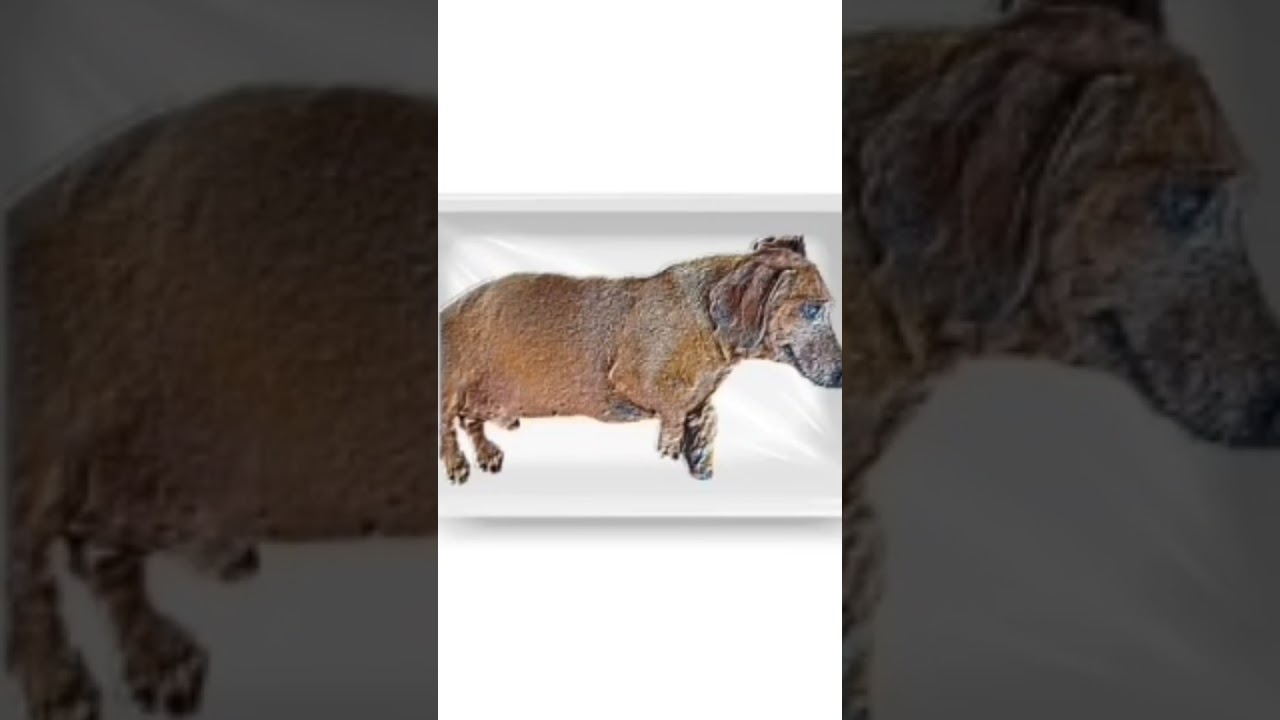 unreal pier
modest isle
https://tenor.com/view/dondi-pizza-dondi-pizza-the-isle-the-isle-diets-gif-27333...
unreal pier
modest isle
https://tenor.com/view/dondi-pizza-dondi-pizza-the-isle-the-isle-diets-gif-27333...
dondi eating all the time why? is he a dinosaur too? always be hungry
modest isle
unreal pier
dondi eating all the time why? is he a dinosaur too? always be hungry
Maybe
unreal pier
modest isle
Maybe
dondisaurus cool thing
 pseudo hazel

TikTok
271.9K likes, 1590 comments. “Ratp, images, pieds a sonic. Grandeur gloire et pouvoir #pourtoi #humour #prank”
willow venture
Gamer kitty
He is helping

 wild yacht
my new velociraptor charm just came in the mail today!

 unreal pier
wild yacht
my new velociraptor charm just came in the mail today!
unreal pier
wild yacht
my new velociraptor charm just came in the mail today!
is you watch which mobie today now?
tired hinge


Behold my cool minerals
Gathered from a mineral "trashcan" at my uni campus that is free pickings
rustic badger
hmm.... rocks.... how do they taste?
hallow parrot
they do rather look chewable for rocks
tired hinge
None of them are halides so I doubt they taste like much
Found a further batch of good ones just now gotta take a plastic bag tomorrow and brush them off cause they be dusty
 rose valve
@languid horizon
Sorry I don't accept random DMs from people I don't know, did you need anything?
 ancient torrent
tired hinge
Gathered from a mineral "trashcan" at my uni campus that is free pickings
ancient torrent
tired hinge
Gathered from a mineral "trashcan" at my uni campus that is free pickings
I miss the geology department at my school. They would let us pick through the little devonian fossil shard bins and sometimes you'd find the tiniest little bivalaves. My favorites were always crinoid stems.
tired hinge
Found a small fragment of a cephalopod shell yesterday
ancient torrent
Nice! I dont think I've ever found one, myself. I hope to find another trilobite. I lost the one I had as a kid ages ago.
unreal pier
ancient torrent
Nice! I dont think I've ever found one, myself. I hope to find another trilobite...
what?
 cedar crescent
So true king
 echo helm
wintry marlin
And the 3rd has such a good ending
echo helm
wintry marlin
And the 3rd has such a good ending
It was actually peak
The music was so good
rustic badger
God there's 6 more episodes, its gonna be a painful wait
neat basalt
ive learned that i hate downloading minecraft mods
echo helm
rustic badger
God there's 6 more episodes, its gonna be a painful wait

I feel like I have a good idea where the story is going but I still want to find out
Based on trailers and such
rustic badger
Yeah, the teaser for ACT 2 also give a good idea
Though no idea what else could show up in act 3
 rustic badger
Rename it, surely nothing will go wrong
sullen merlin
neat basalt
HUH
Thats why i just use overwolf premade packs lol
neat basalt
sullen merlin
Thats why i just use overwolf premade packs lol
i hatched a pteranodon :3
wild yacht
unreal pier
is you watch which mobie today now?
What?
 pallid plaza
hi I'm new here i just need to know if can i get any MOD assistance??
limber grove
pallid plaza
hi I'm new here i just need to know if can i get any MOD assistance??
What do you need help with?
pallid plaza
I am being harassed by the same person inside the game and outside the game I am a streamer and I would like to know if you can do something I have screenshots, video, and conversations and the steam id of the person who is stream sniping me
limber grove
pallid plaza
I am being harassed by the same person inside the game and outside the game I am...
I'd try talking to one of the senior admins about that, they've got the orange names in here
pallid plaza
limber grove
I'd try talking to one of the senior admins about that, they've got the orange n...
Thank you very much, I would like to keep the conversation private with one of these senior admins!
 fleet fable
hello
hallow parrot
hi
 oak bane
@mystic oriole its ok I can show mine
 hallow parrot
echo helm
https://tenor.com/view/ambessa-arcane-ambessa-salute-salute-bad-ass-gif-14531201...
hallow parrot
echo helm
https://tenor.com/view/ambessa-arcane-ambessa-salute-salute-bad-ass-gif-14531201...
ambessa superiority 😍
 mystic oriole
Para! Noice 
oak bane
a Male sai skin I loved this skin then they made the remodel & this one just got nuked v.v

 mystic oriole
Aww i feel ya, some skins of mine got lost to remodels too.
Also I think i have screenshot of my snek! Lets see
oak bane
Male Lurd skin I made

This para skin would of been my fav if the damn skin makers would fix stupid crap like this

 mystic oriole
oak bane
Male Lurd skin I made
mystic oriole
oak bane
Male Lurd skin I made
Ohh, looks like a fish cx
oak bane
that para wasnt popular because it wasnt brown or blue & this was on a realism server >.> everyone would say it looked amazing but boy no one ever wanted to make eggs with it
 mystic oriole
Aww
oak bane
Average bob player

I miss the cowpato skin ONLY because I could make a blaze on the face
mystic oriole
I used to have a para skin I made. Not realistic colors at all but the color combos were rly nice. Pastel teal, purple n black
Also my snek! I'll show u some of my others when i get back home next week if u want

 oak bane
I used to have a massive apa on Official 2 back in the day, but then a dev & her buddies started targeting me on mosa, they killed one of the few children that looked like me almost exactly thinking it was me then said sorry we were actually looking for x (me)
 mystic oriole
Huh.. thats p scummy
oak bane
I really do miss how the game used to be, they removed ptera tumble mechanic allow birds to deal damage to apa/bronto when they used to not be able to. made a map that you cant traverse easily everything looks like you should be able to climb but cant because theres just enough of a lip
young gale
We're so back

 shell rapids
 shell rapids
Ah, i missed bob posting, still hate thr community but they added carcharo, so thats a pretty big bonus to me
 wise solstice
How to find people
full patrol
wise solstice
How to find people
Spam 1 call if you want to find people fast and also die fast
Otherwise going to places that people frequent like swamp, south plains, west rail access, NE lake, highlands, and delta
 tall umbra
 echo bloom
oh my gosh another quetz fanatic
digital sleet
@lofty blade i need your assistance when you awaken
im looking for a tf2 gmod video with a spy that speaks nonsense, and a demoman in the background that says "KILL HIM!" before the spy speaks more nonsense
i initially thought it was CrazyScoutFIN but i cant find it if it IS one of his videos
oak bane
shell rapids
Ah, i missed bob posting, still hate thr community but they added carcharo, so t...
making pretty skins is like the only fun thing I can have in bob now. I miss old bob tbh. now its so toxic clan based
shell rapids
its been toxic and clan based for as long as ive played it, ofc, now i just dont have a community server with ppl i like to play
And thus am relegated to 02
barren bear
young gale
We're so back
nice
i'm getting close with my rexes
 dim raven
So we accidentally hit this manatee with our wake board boat, very embarrassing. The Ranger gave us a warning and shared information about treating manatees with bacitracin ointment. He was a summer intern from Indiana University where he was studying marine mammals, we bought him lunch n slipped him $50. We were later able to snag the behemoth with a Mepps 5 on a Musky rod and pull it to shore. I dashed off to Walgreens and purchased 39 tubes of bacitracin that we slathered on the wounds. Unfortunately the manatee was having trouble breathing so my brother attempted a Tracheostomy that was extremely difficult due to the creature’s mass. The animal ultimately passed on, so sad. Rather than waste the life we dressed it out saving some of the flesh for burger-like sandwichs. The Ranger intern returned and threatened arrest, fortunately my brother had taped the lunch and $50 payment so he backed off. We took the hide to a tannery who asked no questions thank god. There was enough hide to make two jackets that we adorned with a MANATEE MC. During a cross country trip we sold em to bikers at a swap meet in Wisconsin.
digital sleet
lads, rising storm 2 OCE scene is back
neat basalt
mystic oriole
Also my snek! I'll show u some of my others when i get back home next week if u ...
i get the urge to play BoB sometimes. i may put in a game suggestion for boosteroid to add it
lofty blade
digital sleet
im looking for a tf2 gmod video with a spy that speaks nonsense, and a demoman i...
I know exactly what one you're talking about, but I cannot find the video.
I swear it was by MegaGFilms though.
;O;
digital sleet
lofty blade
I know exactly what one you're talking about, but I cannot find the video.
I swe...
possibly
 quaint scaffold
Here’s me filming a bull elephant
 floral nebula
quaint scaffold
Here’s me filming a bull elephant
floral nebula
quaint scaffold
Here’s me filming a bull elephant
beautiful
quaint scaffold
Ikr!
Tbh, my heart was pumping and I could almost feel the adrenaline in my vanes when being that close
floral nebula
it seemed fairly calm, I cant really tell how it was feeling though cause of idk body language
quaint scaffold
I think it didn’t want us too close and wanted us to back off. Not too sure tho
However, I’ve heard animals only see the vehicle and not the people in it. If I were to stand there alone, I’d be doomed
floral nebula
quaint scaffold
Tbh, my heart was pumping and I could almost feel the adrenaline in my vanes whe...
I would be too lol I think we tend to forget how large and intimidating animals truly are until we see them up close and personal.
quaint scaffold
Precisely, I know how dangerous animals can be so I try to show all respect I can
floral nebula
quaint scaffold
Precisely, I know how dangerous animals can be so I try to show all respect I ca...
Yeah same here, just give them the most distance possible and observe em safely and respectfully. I wish more people would follow this though.. so many don't respect animals to that degree.
rough hollow
quaint scaffold
Here’s me filming a bull elephant
cool! so close tho 😭
quaint scaffold
floral nebula
Yeah same here, just give them the most distance possible and observe em safely ...
Yes and I hate how people treat animals too. Not only that they disturbing them in their natural habitat but also farm animals, domesticated etc…
neat basalt
they be in da trees
 shell rapids
quaint scaffold
I think it didn’t want us too close and wanted us to back off. Not too sure tho
shell rapids
quaint scaffold
I think it didn’t want us too close and wanted us to back off. Not too sure tho
Thats probably thr case, kept facing yall with ears fanned out, he didnt seem too pleased with the vehicle being there
young gale
barren bear
nice
i'm getting close with my rexes
I just got a rajastega from the wheel after winning a pvp battle
Now I can get a lvl 20 rajastega
Yippee!!!!
rustic badger
wintry marlin
2 days…
 neat basalt
update; they're breeding and the babies are evil :(
 sullen merlin
quaint scaffold
I think it didn’t want us too close and wanted us to back off. Not too sure tho
sullen merlin
quaint scaffold
I think it didn’t want us too close and wanted us to back off. Not too sure tho
It was just curious i think, it definelty wasnt scared or felt threatened since he didnt keep his trunk close to his body.
quaint scaffold
sullen merlin
It was just curious i think, it definelty wasnt scared or felt threatened since ...
Oh that’s cool and good to know
sullen merlin
quaint scaffold
Oh that’s cool and good to know
An elephant that takes a defensive stance looks more like this

trunk curled op a bit
quaint scaffold
Cool

 echo bloom
tall umbra
oh my gosh another quetz fanatic
echo bloom
tall umbra
oh my gosh another quetz fanatic
correct
rustic badger
hallow parrot
guh
Its still 12 hours away apparently.... welp I guess time to sleep
 flint yacht
Finally brought Metro Redux (Last Light and Exodus) for cheap on steam, this game... What a masterpiece
 wintry matrix
:)

 twin valley
Art is strong 2night

 woeful ice
#isle-discussion message Yeah it seems like a sniffing animation. Perhaps the smell mechanic or tracking blood is a thing in hl2 or was planned from hl1?

@lofty blade
lofty blade
Aw that would'a been neat to have them track ya down
woeful ice
lofty blade
Aw that would'a been neat to have them track ya down <:TI_LUL:461642094671429634...
Yeah idk I keep messing with zombies and headcrabs and spraying blood but I don't think this animation is ever utilized.
lofty blade
It's so cute though ;o;
lofty blade
@heady spoke The power is too much

 heady spoke

 young gale
barren bear
DAMN
young gale
barren bear
DAMN
Hi
barren bear
hi
young gale
Hop on Jurassic world the game
young gale
Holy guacamole
young gale
I have the normal trex
I need 2 more to get my lvl40 trex back after I fused my other one to make indominus
barren bear
nice
young gale
I have 400K DNA 😁
young gale
So true
unreal pier
young gale
So true
did you call me now?
 iron pumice
has nobody talked about how most survival combat games get combat according to real life wrong?
barren bear
yes because video game
irl, you get shot
you're basically either dead or can't do anything
it is better to aim for fun over realism
rustic badger
or if you mean in animal survival games, then stuff like grip I think hasn't really been explored much as far as i know. If you bite somethin it just does 100 or 125 damage depending on where cuz again game
young gale
unreal pier
did you call me now?
Better call trusurrealguy
hallow parrot
Can say Act 2 was the one that broke me for Arcane

They dropped the vase, patched it up and dropped the vase again with that one.
digital sleet
@pulsar crown i felt like you might appreciate this

Months after the events of Chicken Pig Attack, Aki has captured Takeo to exact his revenge. Will a tiny hairy friend hears Takeo's SOS?? GET THE SONG OR GET JUMP-KICKED BY A NINJA: https://open.spotify.com/album/3UGdXEHbd2WasfCStrrJak
More stems and BTS on our schmotreon: https://patreon.com/gregorybrothers
See all of the TCU (Takeo Cinematic U...
 pulsar crown
I HAVE SEEN THIS
digital sleet
see it once more
pulsar crown
Good point
unreal pier
young gale
Better call trusurrealguy
coool thing
unreal pier
digital sleet
see it once more
what?!
 cedar crescent
unreal pier
what?!
cedar crescent
unreal pier
what?!

 sullen merlin
First Animal species of the day (443) :
Giant clam / (Tridacna gigas)

Tridacna gigas, the giant clam, is the best-known species of the giant clam genus Tridacna. Giant clams are the largest living bivalve mollusks. Several other species of "giant clam" in the genus Tridacna are often misidentified as Tridacna gigas.
These clams were known to indigenous peoples of East Asia for thousands of years and the Venetian scholar and explorer Antonio Pigafetta documented them in a journal as early as 1521. One of a number of large clam species native to the shallow coral reefs of the South Pacific and Indian oceans, they may weigh more than 200 kilograms (440 lb), measure as much as 120 cm (47 in) across, and have an average lifespan in the wild of more than 100 years.[4] They also are found off the shores of the Philippines and in the South China Sea in the coral reefs of Malaysia.[5]
The giant clam lives in flat coral sand or broken coral and may be found at depths of as great as 20 m (66 ft).[6]: 10 Its range covers the Indo-Pacific, but populations are diminishing quickly and the giant clam has become extinct in many areas where it was once common.[5] The maxima clam has the largest geographical distribution among giant clam species; it may be found off high- or low-elevation islands, in lagoons or fringing reefs.[7] Its rapid growth rate is likely due to its ability to cultivate algae in its body tissue.[6]: 10
Although larval clams are planktonic, they become sessile in adulthood.[8] The creature's mantle tissues act as a habitat for the symbiotic single-celled dinoflagellate algae (zooxanthellae) from which the adult clams get most of their nutrition. By day, the clam opens its shell and extends its mantle tissue so that the algae receive the sunlight they need to photosynthesise. This method of algal farming is under study as a model for highly efficient bioreactors.
Anatomy
Young T. gigas are difficult to distinguish from other species of Tridacninae. Adult T. gigas are the only giant clams unable to close their shells completely, allowing part of the brownish-yellow mantle to remain visible.[6]: 32 Tridacna gigas has four or five vertical folds in its shell, which serves as the main characteristic differentiating it from the similar T. derasa that has six or seven vertical folds.[9] Similar to coral matrices composed of calcium carbonate, giant clams grow their shells through the process of biomineralization, which is very sensitive to seasonal temperature.[10][11] The isotopic ratio of oxygen in carbonate and the ratio between Strontium and Calcium together may be used to determine historical sea surface temperature.[10]
The mantle border itself is covered in several hundred to several thousand pinhole eyespots approximately 0.5 mm (0.020 in) in diameter.[12][13] Each one consists of a small cavity containing a pupil-like aperture and a base of 100 or more photoreceptors sensitive to three different ranges of light, including UV, which may be unique among molluscs.[13] These receptors allow T. gigas to partially close their shells in response to dimming of light, change in the direction of light, or the movement of an object.[14] The optical system forms an image by sequential, local dimming of some eyes using pigment from the aperture.[12]
rustic badger
sullen merlin
Largest specimens
The largest known T. gigas specimen measured 137 centimetres (4 ft 6 in), and it weighed 230 kg (510 lb) dead and was estimated to be 250 kg (550 lb) alive. It was discovered around 1817 on the north western coast of Sumatra, Indonesia, and its shells are now on display in a museum in Northern Ireland.[6]: 31 [15]
A heavier giant clam was found in 1956 off the Japanese island of Ishigaki. The shell's length was 115 centimetres (3 ft 9 in), and it weighed 333 kilograms (734 lb) dead and estimated 340 kilograms (750 lb) alive.[6]: 32
rustic badger
Gigacalmosaurus
sullen merlin

Ecology
Feeding
Giant clams are filter-feeders, yet 65-70 percent of their nutritional needs are supplied by zooxanthellae.[16] This enables giant clams to grow as large as one meter in length even in nutrient-poor coral-reef waters.[17][18] The clams cultivate algae in a special circulatory system that enables them to keep a substantially higher number of symbionts per unit of volume.[19][20] The mantle's edges are packed with symbiotic zooxanthellae, which presumably use carbon dioxide, phosphates, and nitrates supplied by the clam.[17]
In very small clams—10 milligrams (0.010 g) dry tissue weight—filter feeding provides approximately 65% of total carbon needed for respiration and growth; comparatively larger clams (10 grams (0.35 oz)) acquire only 34% of carbon from this source.[21] A single species of zooxenthellae may be symbionts of both giant clams and nearby reef–building (hermatypic) corals.[17]
Reproduction
Tridacna gigas reproduce sexually and are hermaphrodites (producing both eggs and sperm by one clam). While self-fertilization is not possible, having both characteristics does allow them to reproduce with any other member of the species as well as hermaphrodically. As with all other forms of sexual reproduction, hermaphroditism ensures that new gene combinations be passed to further generations.[6]: 46 This flexibility in reproduction reduces the burden of finding a compatible mate, while simultaneously doubling the number of offspring produced.
Since giant clams cannot move themselves, they adopt broadcast spawning, releasing sperm and eggs into the water. A transmitter substance called spawning induced substance (SIS) helps synchronize the release of sperm and eggs to ensure fertilization. The substance is released through a syphonal outlet. Other clams can detect SIS immediately. Incoming water passes chemoreceptors situated close to the incurrent syphon that transmit the information directly to the cerebral ganglia, a simple form of brain.[6]: 47
Detection of SIS stimulates the giant clam to swell its mantle in the central region and to contract its adductor muscle. Each clam then fills its water chambers and closes the incurrent syphon. The shell contracts vigorously with the adductor's help, so the excurrent chamber's contents flows through the excurrent syphon. After a few contractions containing only water, eggs and sperm appear in the excurrent chamber and then pass through the excurrent syphon into the water. Female eggs have a diameter of 100 micrometres (0.0039 in). Egg release initiates the reproductive process. An adult T. gigas can release more than 500 million eggs at a time.[6]: 48
Spawning seems to coincide with incoming tides near the second (full), third, and fourth (new) quarters of the moon phase. Spawning contractions occur every two or three minutes, with intense spawning ranging from thirty minutes to two and a half hours. Clams that do not respond to the spawning of neighboring clams may be reproductively inactive.[22]
Development
The fertilized egg floats in the sea for approximately 12 hours until eventually a larva (trochophore) hatches. It then starts to produce a calcium carbonate shell. Two days after fertilization it measures 160 micrometres (0.0063 in). Soon it develops a "foot," which is used to move on the ground. Larvae also can swim to search for appropriate habitat.[6]: 49
At roughly one week of age, the clam settles on the ground, although it changes location frequently within the first few weeks. The larva does not yet have symbiotic algae, so it depends completely on plankton. Also, free-floating zooxanthellae are captured while filtering food. Eventually the front adductor muscle disappears and the rear muscle moves into the clam's center. Many small clams die at this stage. The clam is considered a juvenile when it reaches a length of 20 cm (8 in).[6]: 53 It is difficult to observe the growth rate of T. gigas in the wild, but laboratory-reared giant clams have been observed to grow 12 cm (4.7 in) a year.[24]
The ability for Tridacna to grow to such large sizes with fleshy mantles that extend beyond the edges of their shells is considered to be the result of total reorganization of bivalve development and morphology.[8] Historically, two evolutionary explanations have been suggested for this process. Sir Yonge suggested and maintained for many years that the visceral-pedal ganglia complex rotate 180 degrees relative to the shell, requiring that they develop and evolve independently.[25] Stasek proposed instead that the growth occurs primarily in a posterior direction instead of the more typical direction of ventral in most bivalves, which is reflected in the transitional stages of alternative ways of growing that juveniles undergo.[26]
rustic badger
-# Take a Break
sullen merlin

Human relevance
The giant clam is considered a delicacy in Japan (known as himejako), France, Southeast Asia, and many Pacific Islands. Some Asian foods include the meat from the muscles of clams. Large amounts of money are paid for the adductor muscle, which Chinese people believe to have aphrodisiac powers.[6]: 11
On the black market, giant clam shells are sold as decorative accoutrements.
Aquaculture
Mass culture of giant clams began at the Micronesian Mariculture Demonstration Center in Palau (Belau).[30] A large Australian government-funded project from 1985 to 1992 mass-cultured giant clams, particularly T. gigas at James Cook University's Orpheus Island Research Station, and supported the development of hatcheries in the Pacific Islands and the Philippines.[31][32][33] Seven of the ten known species of giant clams in the world are found in the coral reefs of the South China Sea.[5]


@rustic badger
@cedar crescent
@distant nymph
@spice gyro
@wintry marlin
@modest isle
@lone star
@hallow parrot
@limber grove
rustic badger
wintry marlin
Clam
sullen merlin
@full patrol
@lilac dagger
@drowsy egret
@azure oar
@silent cargo
@crimson marlin
@restive charm
@neat basalt
azure oar
They look so cool
sullen merlin
Fun fact: People have died cuz they stuck their hand inside the clam and then the clam shut itself close resulting in the people drowing.
azure oar
Fun indeed
wintry marlin
ARCANE IS TODAY!! Or was I’ve already watched the new episodes-
rustic badger
wintry marlin
ARCANE IS TODAY!! Or was I’ve already watched the new episodes-
same....
There's so much for Act 3... I have no idea how it'll wrap up
wintry marlin
Episode 6 man…
wintry marlin
Made my friend cry as well
hallow parrot
i cant specify without spoiling it for others
wintry marlin
Reunion?
hallow parrot
yep
wintry marlin
I think that’s pretty spoiler free
hallow parrot
remember me song
rustic badger
Ye the was so nice
wintry marlin
Ye
rustic badger
First time i've gotten tears from a series twice
wintry marlin
Fair enough, I mean the show covers heavy topics kinda
modest isle
rustic badger
Gigacalmosaurus
 rustic badger
modest isle
wintry marlin
Wah oh
sullen merlin
modest isle
https://tenor.com/view/caseoh-yourebanned-gif-1226601772032564017
I always wonder how glaive knows im doing it
I havent posted in over a week and the moment i type in off topic, lil bro spawn in cuz he just senses it when i type in off topic
modest isle
He is inside your home cave
modest isle
wintry marlin
What kinda war planning is this-
sullen merlin
wintry marlin
What kinda war planning is this-
 modest isle
 rustic badger
sullen merlin
I gotta figure out glaive's sleeping schedule
rustic badger
sullen merlin
I gotta figure out glaive's sleeping schedule
Good Luck
hallow parrot
sleepy about to be the reason we lose our reaction privledges in #offtopic-discussion
its been under the admin's radar for so long now, I dont even know if it was intentional or not
modest isle
hallow parrot
sleepy about to be the reason we lose our reaction privledges in <#8555356051781...
I wasn’t the one who started it 😭 it was glaive i just continued to the rest of the message related to the topic
modest isle
I mean its only 4 messages so its ok
In the #isle-discussion there are more fish 🐟 reactions spams are more frequent

 barren bear
young gale
My resources are low 😭
barren bear
young gale
My resources are low 😭
Low...
smoky mauve
"My resources are low" 🤓
 nimble grail
do any of you guys get heart palpitations (fast heart rate, heart beating really hard) from sitting down too quickly or awkward posture?  this happens to me on occasion and they can last from a minute to 25 minutes which is confusing the heck outta me. Exercise doesn’t seem to have an effect on how frequent they are
young gale
smoky mauve
"My resources are low" 🤓
They kinda are:(
I had 20K bucks, 40 million food, 50 million gold, and 410K DNA
Now I'm broke 😭
hallow parrot
nimble grail
do any of you guys get heart palpitations (fast heart rate, heart beating really...
No but I have had weird moments where my heart is beating really heavy despite no exercise but its usually linked to whats going through my head
barren bear
nimble grail
do any of you guys get heart palpitations (fast heart rate, heart beating really...
checked your iron lately
nimble grail
barren bear
checked your iron lately
I haven’t! Could be that
they went away for like a year and came back recently 😔
digital sleet
@analog smelt time to do Aperture Files in half life 2
https://steamcommunity.com/sharedfiles/filedetails/?id=3366598916&searchtext=

 analog smelt
digital sleet
<@430195078787497986> time to do Aperture Files in half life 2
https://steamcomm...
analog smelt
digital sleet
<@430195078787497986> time to do Aperture Files in half life 2
https://steamcomm...
 unreal pier
cedar crescent
https://tenor.com/view/doomer-doomer-sad-depressed-gif-15543940
unreal pier
cedar crescent
https://tenor.com/view/doomer-doomer-sad-depressed-gif-15543940
hmm i see
neat basalt
nimble grail
do any of you guys get heart palpitations (fast heart rate, heart beating really...
no but sometimes i stand up too fast and almost pass out
neat basalt
the dilophosaurus has entered the world and im scared to be near them
 neat basalt
the dilophosaurus has entered the world and im scared to be near them
neat basalt
neat basalt
the dilophosaurus has entered the world and im scared to be near them
i watched alot of poet plays growing up and the amount of times these things killed him has made me horrified
like genuinely i am horrified
i also recently hatched a lio but ill be DAMNED if i go near that
modest isle
Enjoy this cinematic story of how I rescued roughly 1,000 tree frog tadpoles from a pool and built them a big paludarium to grow in.
👇 (See the bottom of the description for a life-giving message)👇
💥 Special Tadpole T-Shirt I designed to comemorate this video! 🐸
https://practically-nature-shop.creator-spring.com/listing/egg-to-tadpole-to-tree...
Gray treefrog (Dryophytes versicolor)
1,000 but only 10 becomes adults
spice gyro
He… he misspelled hosta…
modest isle
spice gyro
He… he misspelled hosta…

 polar gate
hey, would anyone here know why a friend of mine cant join the isle discord? invites from me dont work, if he googles the isle disc it still wont let him...is there anything to be done?
heavy temple
polar gate
hey, would anyone here know why a friend of mine cant join the isle discord? inv...
If he’s never joined before, the automod does filter newer or suspicious looking accounts, give them this https://dyno.gg/form/8ceec187
If you'd like to appeal a mute/ban from The Isle Official Discord then please fill out this form accordingly.
NOTE: If your appeal is rejected you'll be eligible to submit another appeal after 60 days.
polar gate
thank you so much!
lone star
neat basalt
i watched alot of poet plays growing up and the amount of times these things kil...
do not fear the little pest, conquer your fears
neat basalt
lone star
do not fear the little pest, conquer your fears
THEY HURT
THEY HURT SO MUCH
lone star
TIS IN YOUR HEAD!! CONQUER YOUR FEARS.
young gale
Dead by daylight
sullen merlin
First Animal species of the day (444) :
Titan beetle / (Titanus giganteus)

The titan beetle (Titanus giganteus) is a Neotropical longhorn beetle, the sole species in the genus Titanus, and one of the largest known beetles, as well as one of the largest known insects, at over 170 mm (6.7 in) in length. Adult titan beetles only live for a few weeks, and protect themselves from predators with their sharp spines and powerful jaws.[1]
Distribution and habitat
The titan beetle is native to tropical rainforests throughout South America, including Venezuela, Colombia, Ecuador, Peru, the Guianas, and north-central Brazil. While the Titan Beetle is most generally associated with the Amazon Rainforest, it may also be found in other parts of South America if ecological conditions are favorable. This comprises sections of the Atlantic Forest in Brazil, the Orinoco Basin in Venezuela, and the Chocó-Darién region in Colombia.[2]
These beetles are primarily found in old-growth forests with plenty of rotting wood, which serves as their principal food supply.[3] They can, however, be found in secondary forests and disturbed habitats where sufficient circumstances for survival exist.[3]
Despite their broad distribution throughout South America, the titan beetle is secretive and rarely seen due to its nocturnal habits and cryptic behavior. As a result, thorough surveys and research are required to acquire a better knowledge of its distribution throughout its range, as well as population dynamics within various forest habitats. However, like many other species that live in tropical rainforests, the titan beetle is threatened by habitat degradation, deforestation, and climate change, all of which can have a substantial influence on its distribution and population levels. Conservation activities focused at maintaining their natural habitats are therefore critical for assuring their continued survival.[2]

Anatomy and physiology
Titanus giganteus is known for being one of the largest beetles, spanning over 170 mm (6.7 in). Though great in size, studies have shown that within the family Cerambycidae, they have exceptionally short hind wings. Additionally, the hind wings are not present in females, indicating that they are incapable of flight.[4]
Titan beetles have compound eyes (an eye consisting of an array of numerous small visual units), with hundreds of hexagonal facets covering the central region of the eye and the periphery being covered by pentagonal or squares.[5]
Unique to Titanus giganteus, there exists a distinct row of proprioceptive hairs that is visible on the anterior edge of the prothorax. The hairs have a mechanoreceptive function, detecting changes to the body surface to assess the environment.[4]
Their antennae have sensilla which provide sensory information about the environment. There are different types of sensilla, e.g. coeloconic sensilla and sensilla trichoidea, detecting different stimuli. The reproductive system of the titan beetle is very similar to other species within the subfamily Prioninae, with the pupal testis consisting of 12 to 15 lobes each containing 15 follicles.[4] One unusual characteristic regarding the reproductive anatomy of titan beetles is the variation in follicle size. Titan beetles with larger follicles were seen to have greater rates of spermatogenesis. The mechanism for such variation is unknown.
Size
Insect size is constrained by the amount of air that can be supplied via their respiratory system.[6] The respiratory system of insects is different from mammals, as gas exchange involves tracheal tubes delivering oxygen directly to tissues throughout the beetle's body, instead of having oxygen carried by blood. The constraint on the diffusion of oxygen into the tracheal system limits the maximum body size attainable, as there will be a point where some tissues in the body will not receive oxygen at all.
Microbiome
Because adult titan beetles do not feed, it is interesting that the very narrow gut microbiota show no activity of proteases, despite there being recorded activity of digestive amylase and lipase activity.[4] Digestive amylase, lipase, and protease in human and other animal organisms are responsible for breaking down food proteins into amino acids for absorption. There is no fat surrounding the gut of T. giganteus, which differs from other Prioninae. It is suggested that the metabolic rate could differ, such that adult titan beetles exhaust all of their fat reserves faster than related beetles. Liquid chromatography-mass spectrometry analysis indicated that 70 percent of the lipids were triacylglycerols. These lipids were found only in the flight muscles, in which the fat reserves were used to provide energy for muscle activity. Within the triacylglycerols, it was found oleic acid is the most abundant.

Ecology and behavior
Diet
Even though the Cerambycidae family is known to utilize a plant diet for sustenance, the Priorinae subfamily does not accept any food with the exception of water. Reflected in their anatomy, titan beetles do not have all the digestive enzymes and fat reserves needed to consume food on a daily basis. Rather when the titan beetles are larvae, they ingest dead wood and plants infested by fungi.[4] This initial caloric intake is meant to last the lifetime of the beetle. Their dietary habits as larvae contribute to the recycling of dead plants in the ecosystem, converting decayed matter into humus.
The subfamily Priorinae of titan beetles are known as gall-inducing insects. Galls, which are abnormal growths in plants, are a byproduct of plant consumption. These galls are used as nests for many insects, including beetles.[7]
Mating
Because of the short life span of the titan beetle, little is concretely known about their mating behavior. We do know that titan beetles locate their mates by sensing pheromones.[1] In the field of coleopterology the larvae of titan beetles have yet to be found. This makes witnessing the life cycle and reproduction of titan beetles very difficult.


@rustic badger
@cedar crescent
@distant nymph
@spice gyro
@wintry marlin
rustic badger
sullen merlin
@modest isle
@lone star
@hallow parrot
@limber grove
rustic badger
Bootle
sullen merlin
@full patrol
@lilac dagger
@drowsy egret
@azure oar
@silent cargo
@crimson marlin
@restive charm
@neat basalt
hallow parrot
i just remembered
i have a huge collection of insects trapped inside glass
modest isle
Next species : Black Horsefly
A gigantic fly species

 modest isle
sullen merlin
First Animal species of the day (444) :
Titan beetle / (Titanus giganteus)
modest isle
sullen merlin
First Animal species of the day (444) :
Titan beetle / (Titanus giganteus)
 wintry marlin
sullen merlin
<@872830054982365195>
<@585846202705248276>
<@478213198458257409>
<@10241091...
wintry marlin
sullen merlin
<@872830054982365195>
<@585846202705248276>
<@478213198458257409>
<@10241091...
Bug
azure oar
Big Bug
 drowsy egret
modest isle
Next species : Black Horsefly
A gigantic fly species
drowsy egret
modest isle
Next species : Black Horsefly
A gigantic fly species
Horseflies are very annoying ngl
Easy to catch tho
Fat and Slow
modest isle
I agree
hallow parrot
are horseflies edible?
wintry marlin
Yes
full patrol
Anything is edible at least once
 still onyx
half life 2 free on steam
young gale
 hallow parrot
big
fat
coral
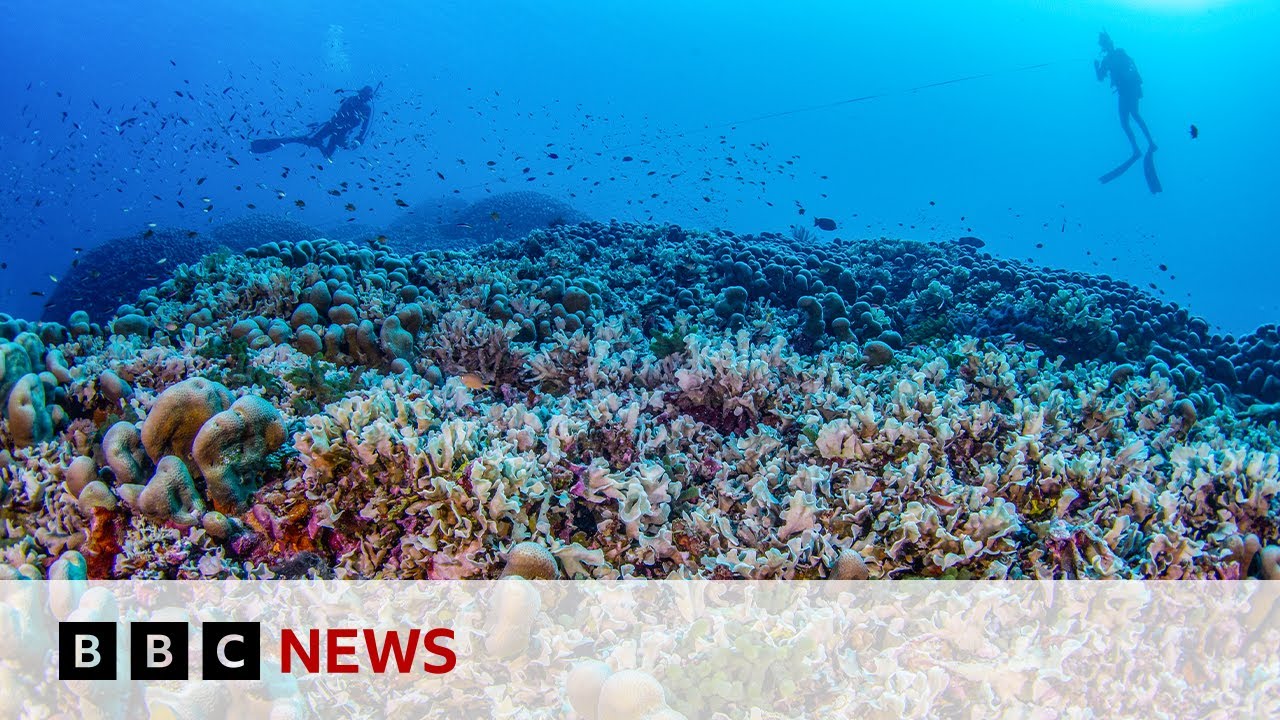
The largest coral ever recorded has been found by scientists in the southwest Pacific Ocean.
The mega coral - which is a collection of multiple organisms that together form one structure, rather than a reef - could be more than 300 years old.
It was found by a videographer working on a National Geographic ship visiting remote parts of the Paci...
sullen merlin
First Animal species of the day (445) :
Common liver fluke / (Fasciola hepatica)

Fasciola hepatica, also known as the common liver fluke or sheep liver fluke, is a parasitic trematode (fluke or flatworm, a type of helminth) of the class Trematoda, phylum Platyhelminthes. It infects the livers of various mammals, including humans, and is transmitted by sheep and cattle to humans all over the world. The disease caused by the fluke is called fasciolosis or fascioliasis, which is a type of helminthiasis and has been classified as a neglected tropical disease.[2] Fasciolosis is currently classified as a plant/food-borne trematode infection, often acquired through eating the parasite's metacercariae encysted on plants.[3] F. hepatica, which is distributed worldwide, has been known as an important parasite of sheep and cattle for decades and causes significant economic losses in these livestock species, up to £23 million in the UK alone.[4] Because of its relatively large size and economic importance, it has been the subject of many scientific investigations and may be the best-known of any trematode species. F. hepatica's closest relative is Fasciola gigantica. These two flukes are sister species; they share many morphological features and can mate with each other.[5]
Life cycle
The lifecycle of Fasciola hepatica
Fasciola hepatica occurs in the liver of a definitive host and its lifecycle is indirect. Definitive hosts of the fluke are cattle, sheep, and buffaloes. Wild ruminants and other mammals, including humans, can act as definitive hosts as well.[6] The life cycle of F. hepatica goes through the intermediate host and several environmental larval stages.[7] Intermediate hosts of F. hepatica are air-breathing freshwater snails from the family Lymnaeidae. Although several lymnaeid species susceptible to F. hepatica have been described, the parasite develops only in one or two major species on each continent. Galba truncatula is the main snail host in Europe, partly in Asia, Africa, and South America. Lymnaea viator, L. neotropica, Pseudosuccinea columella, and L. cubensis are most common intermediate hosts in Central and South America.[5][8][6] Several other lymnaeid snails may be naturally or experimentally infected with F. hepatica, but their role in transmission of the fluke is low.[5] The list of lymnaeid snails that may serve as natural or experimental intermediate hosts of F. hepatica include:[9]

Morphology and anatomy
Fasciola hepatica is one of the largest flukes of the world, reaching a length of 30 mm and a width of 13 mm (Fasciola gigantica, though, is even bigger and can reach up to 75 mm).[12] It is leaf-shaped, pointed at the back (posteriorly), and wide in the front (anteriorly). The oral sucker is small but powerful and is located at the end of a cone-shape projection at the anterior end. The acetabulum is a larger sucker than the oral sucker and is located at the anterior end.[10]
Tegument
The outer surface of the fluke is called the tegument. This is composed of scleroprotein, and its primary function is to protect the fluke from the destructive digestive system of the host.[13] Its also used for renewal of the surface plasma membrane and the active uptake of nutrients, and the uptake of some compounds (e.g. taurine) make flukes even more resistant to be killed by the digestive system of host.[14][15] On the surface of the tegument are also small spines. Initially, these spines are single-pointed, then, just prior to the fluke entering the bile ducts, they become multipointed. At the anterior end of the fluke, the spines have between 10 and 15 points, whereas at the posterior end, they have up to 30 points.[16] The tegument is a syncytial epithelium. This means it is made from the fusion of many cells, each containing one nucleus, to produce a multinucleated cell membrane. In the case of F. hepatica, no nuclei are in the outer cytoplasm between the basal and apical membranes. Thus, this region is referred to as anucleate. Instead, the nuclei are found in the cell bodies, also known as tegumental cells, these connect to the outer cytoplasm via thin cytoplasmic strands. The tegumental cells contain the usual cytoplasmic organelles (mitochondria, Golgi bodies, and endoplasmic reticulum).[17] The tegument plays a key role in the fluke's infection of the host. Studies have shown that certain parts of the tegument (in this case, the antigen named Teg) can actually suppress the immune response of the mammalian host. This means that the fluke is able to weaken the immune response, and increase its chances of a successful infection. A successful infection is needed for the fluke to have enough time to develop into an adult and continue its lifecycle.[18]
Digestive system
The alimentary canal of F. hepatica has a single mouth which leads into the blind gut; it has no anus. The mouth is located within the anterior sucker on the ventral side of the fluke. This mouth leads to the pharynx, which is then followed by a narrow oesophagus. The oesophagus, which is lined with a thin layer of epithelial cells, then opens up into the large intestine. As no anus is present, the intestine branches, with each branch ending blindly near the posterior end of the body.[19] Flukes migrate into smaller capillaries and bile ducts when feeding within the host. They use their mouth suckers to pull off and suck up food, bile, lymph, and tissue pieces from the walls of the bile ducts.[19] F. hepatica relies on extracellular digestion which occurs within the intestine of the host. The waste materials are egested through the mouth. The nonwaste matter is adsorbed back in through the tegument and the general surface of the fluke. The tegument facilitates this adsorption by containing many small folds to increase the surface area.[19]
Respiratory system
F. hepatica has no respiratory organs: the adult flukes respire anaerobically (without oxygen). Glycogen taken from within the host is broken down by glycolysis to produce carbon dioxide and fatty acids. This process provides the fluke with energy.[20] In contrast, the free-living miracidia stages of the parasite generally develop within oxygen-rich environments. The free-living stages of the parasite are thought to respire aerobically, to gain the most energy from their environment.[21]
Excretory system
F. hepatica's excretory system contains a network of tubules surrounding one main excretory canal. This canal leads to the excretory pore at the posterior end of the fluke. This main canal branches into four sections within the dorsal and ventral regions of the body. The role of F. hepatica's excretory system is excretion and osmoregulation.[20] Each tubule within the excretory system is connected to a flame cell, otherwise known as protonephridia. These cells are modified parenchyme cells. In F. hepatica, their role is to perform excretion, but more importantly, osmoregulatory functions. Flame cells are therefore primarily used to remove excess water.[20]

Nervous system and sensory organs
The nerve system of F. hepatica consists of a pair of nerve ganglia, each one is located on either side of the oesophagus. Around the oesophagus is a nerve ring, which connects the two nerve ganglia together. The nerves stem from this ring, reaching the posterior end of the body. At the posterior end, one pair of nerves becomes thicker than the others; these are known as the lateral nerve cords. From these lateral nerve cords, the other nerves branch. Sensory organs are absent from F. hepatica.[22][23]
Reproductive system
F. hepatica adult flukes are hermaphrodite; each contains both male and female reproductive organs. The male and female reproductive organs open up into the same chamber within the body, which is called the genital atrium. The genital atrium is an ectodermal sac which opens up to the outside of the fluke via a genital pore.[22] The testes are formed of two branched tubules, these are located in the middle and posterior regions of the body. From the epithelium lining of the tubules, sperm is produced. The sperm then passes into the vas deferens and then into the seminal vesicle. From the seminal vesicle projects the ejaculatory duct, and this opens into the genital atrium, and many prostate glands surround this opening.[22] The right side of the anterior testis has a branched, tubular ovary. From here, a short oviduct passes to the vitelline duct. This duct connects, via a junction, the ovaries, the uterus, and the yolk reservoir. From this junction, the uterus opens into the genital atrium; this opening is surrounded by Mehlis glands. In some flukes, the terminal end of the uterus is strengthened with muscles and spines.[22]
F. hepatica reproduces both sexually, via the hermaphrodite adult flukes, and asexually. The miracidia can reproduce asexually within the intermediate snail host.[24]
Prevalence
Currently, F. hepatica has one of the widest geographical spread of any parasitic and vector-borne disease. Originating in Europe, it has expanded to colonize over 50 countries, covering all continents except Antarctica.[31] In contrast, F. gigantica is generally considered more geographically restricted to the tropical regions of Africa, Asia, and the Middle East, with some overlap between the two species.[29]
Climate affects both F. hepatica and its intermediate host, the snail. For example, the development of F. hepatica miracidia and larvae, and the reproduction of Galba truncatula, require a temperature range of 10 to 25 °C. In addition, they both require high levels of moisture in the air, as both are at risk of desiccation. Due to this, the prevalence, along with the intensity of infection, of F. hepatica is primarily dependent on rainfall levels and temperature.[31]

Epidemiology
For more information on the epidemiology – see the disease page, fasciolosis
Infection begins when cyst-covered aquatic vegetation is eaten or when water containing metacercariae is drunk. In the United Kingdom, F. hepatica frequently causes disease in ruminants, most commonly between March and December.[34]
Humans become infected by eating watercress or by drinking 'Emoliente', a Peruvian drink that uses drops of watercress juice. Cattle and sheep are infected when they consume the infectious stage of the parasite from low-lying, marshy pasture.[34]
Human infections have been reported from more than 75 countries around the world. In Asia and Africa, people are infected both by F. hepatica and F. gigantica whereas human fasciolosis is caused only by F. hepatica in South and Central America and Europe.[35]
The presence of F. hepatica can interfere with the detection of bovine tuberculosis in cattle. Cattle co-infected with F. hepatica, compared to those infected with M. bovis alone, react weakly to the single intradermal comparative cervical tuberculin (SICCT) test.[36] Therefore, an infection from F. hepatica can make it difficult to detect bovine tuberculosis; this is, of course, a major problem in the farming industry.[37]
Fasciolosis
Main article: Fasciolosis
Both F. hepatica and F. gigantica can cause fasciolosis. Human symptoms vary depending on whether the disease is chronic or acute. During the acute phase, the immature worms begin penetrating the gut, causing symptoms of fever, nausea, swollen liver (caused by Fh8), skin rashes, and extreme abdominal pain.[38] The chronic phase occurs when the worms mature in the bile duct, and can cause symptoms of intermittent pain, jaundice, and anemia.[38] In cattle and sheep, classic signs of fasciolosis include persistent diarrhea, chronic weight loss, anemia, and reduced milk production.[39] Some remain asymptomatic. F. hepatica can cause sudden death in both sheep and cattle, due to internal hemorrhaging and liver damage.[4]
Fasciolosis is an important cause of both production and economic losses in the dairy and meat industries. Over the years, the prevalence has increased and it is likely to continue increasing in the future.[40] Livestock are often treated with flukicides, chemicals toxic to flukes, including bromofenofos,[41][42] triclabendazole, and bithionol. Ivermectin, which is widely used for many helminthic parasites, has low effectivity against F. hepatica, as does praziquantel.[43][44] For humans, the type of control depends on the setting. One important method is through the strict control over the growth and sales of edible water plants such as watercress. This is particularly important in highly endemic areas. Some farms are irrigated with polluted water, hence, vegetables farmed from such land should be thoroughly washed and cooked before being eaten.[10]
The best way to prevent fasciolosis is by reducing the lymnaeid snail population or separating livestock from areas with these snails.[39] These two methods are not always the most practical, so control by treating the herd before they are potentially infected is commonly practiced.


@rustic badger
@cedar crescent
@distant nymph
@spice gyro
@wintry marlin
@modest isle
@lone star
@hallow parrot
@limber grove
@full patrol
@lilac dagger
@drowsy egret
@azure oar
@silent cargo
@crimson marlin
@restive charm
@neat basalt
modest isle
sullen merlin
I literally saw a video on YouTube yesterday about the leaf shaped fish

Oh wait never mind
sullen merlin
Lmao
modest isle
Silly me
modest isle
sullen merlin
First Animal species of the day (445) :
Common liver fluke / (Fasciola hepatica)
Real life blob animal
azure oar
sullen merlin
First Animal species of the day (445) :
Common liver fluke / (Fasciola hepatica)
I can‘t decide if that is a beautifull animal or a disgusting one
modest isle
azure oar
I can‘t decide if that is a beautifull animal or a disgusting one
Beautifully disgusting
Or Disgustingly Beautiful
azure oar
I think the first one fits more
sullen merlin
Biologically beautiful, aesthetically a bit less
full patrol
Nooo not flukers 💀
Those are on par with planaria
And 80% of my fishtank just got wiped out by septicemia because the new fish I quarantined were asymptomatic carriers
rustic badger
full patrol
The survivors are
- 3 neon tetras
- 1 glowlight tetra
- 9 mixed corydoras
Those who did not survive
- 20 neon tetras
- 7 glowlight tetras
- 5 panda corydoras
- 1 Julius corydora
- the 10 year old goldfish
Septicemia is very difficult to reverse once a fish is showing symptoms, especially in larger tanks
young gale
full patrol
The survivors are
- 3 neon tetras
- 1 glowlight tetra
- 9 mixed corydoras
Those...
Massacre
I've only had 2 espei rasboras die
full patrol
For real, wanted to expand my neon tetra school and it backfired massively
young gale
One died cuz I guess he just couldn't handle the change from the fish tank at the store to my own tank
And the other died I guess cuz of old age (had them for a year)
full patrol
Ya that'll happen
young gale
I'm planning on getting 2 more espei rasboras to complete my school of espei
full patrol
To prevent death of new fish, you want to acclimate them not just to the temperature of the water but also to the new water parameters by drip acclimating them.
If they're the only fish you don't have to worry about quarantine but if they're getting added to a established tank you want to quarantine them for a couple weeks first
young gale
Yeah I always acclimate them for 15-20 minutes
I guess this one just couldn't handle the change though
I only have 7 espei rasboras 3 juli corydoras and like a couple adult red shrimp and a bunch of babies
In a 10 gallon tank
full patrol
It's rough, especially when they're young fish. Also why people recommend you buy a couple more than you want if you're doing small schooling fish because 1 or 2 tend to die off because of stress or possible unknown illness at the pet store
Ya I have a 75gal x)
My 10gal is just my betta and a handful of amano shrimp
young gale
I'm planning on getting one of those shallow fish tanks soon and just have like a ton of shrimp in it
full patrol
That'll be fun! I definitely recommend a lid on any shrimp tank though they tend to jump out for any reason x)
young gale
Sure thing boss
I really wanna get like either blue dream shrimp or the green jade shrimp
full patrol
I tried a 7gal shrimp cube last year and every once in a while I'd just find one dried out on the counter until I put a lid on it x)
young gale
But the fish store I go to has like Sunkist shrimp and fire red shrimp
full patrol
Green jade are really nice but hard to see in planted tank
young gale
Real
full patrol
My personal favorite shrimp are the golden fireback shrimp
A pic of one of mine when I had em a few years ago
