#offtopic-discussion
1 messages · Page 144 of 1
 wintry marlin
 sullen merlin
@full patrol
@lilac dagger
@drowsy egret
@azure oar
@silent cargo
@crimson marlin
@restive charm
@neat basalt
 distant nymph
Aww xD I've never seen those before
sullen merlin
distant nymph
Aww xD I've never seen those before
Me neither and according to the map they should live where i am
distant nymph
Same for me, yeah o:
sullen merlin
Also they are called rhododendron leafhoppers but arent rhodendrons usually native in asia?
distant nymph

 full patrol
Ayy I've seen those guys they're super cool but those pics make them look green for some reason
The ones I've seen are turquoise and red
 modest isle
Good looking bug 🐞
full patrol
Pic I took few years ago never knew what it was
 sullen merlin
full patrol
Ayy I've seen those guys they're super cool but those pics make them look green ...
sullen merlin
full patrol
Ayy I've seen those guys they're super cool but those pics make them look green ...
Thats another species, they look the same shape-wise except the colors are different
 rough hollow
guys, someone have a good graphics config for a ryzen 5 5600g with 16gb ram pls lol
distant nymph
hm xD

 hallow parrot
I eat bug, I dont like wet bugs
chocolate honey ants, i cant eat any seafood except seaweed
full patrol
Ya I can't see myself just eating a bug wholesale. Since it's been engraved in my bones bugs are toxic and never food. I'd have to use like the cricket flour in cooking not munch on whole crickets like chips.
full patrol
I can't eat calamari if it's the shape of the octopus either
hallow parrot
Im so distant when it comes to seafood, I had to double check what calamari was
full patrol
I'm honestly surprised I'm not a vegetarian. I have problems eating bone in chicken sometimes even x)
hallow parrot
full patrol
Does your brain ever go "is animal, don't eat animal" ?
But only when it's animal shaped
 elder veldt
You see if it’s shaped like it came from the animal I “think”it’s actually from an animal and therefore better for me than the processed chicken fingies that slowly give me cancer
 barren bear
hallow parrot
I eat bug, I dont like wet bugs
barren bear
hallow parrot
I eat bug, I dont like wet bugs
it's because you speak french, isn't it run
full patrol
elder veldt
You see if it’s shaped like it came from the animal I “think”it’s actually from ...
Ya I'm not a fan of processed foods but there's a weird roadblock in my brain that makes it occasionally difficult for me to eat like chicken wings, whole smoked fish, or calamari that isn't cut in cubes and fried as a few examples.
I can work past it but sometimes brain just goes "nope that's an animal that's gross no way" despite me personally not having any problem eating it
elder veldt
I find calamari pretty unappealing too tbh som ab squid and octopi doesn’t sit right with me
full patrol
Fried calamari is so good 
full patrol
2 of those are questionable but passible
 full patrol
Fry cookin
elder veldt
If you’ve never had fried Oreos or pickles you’re doing yourself a disservice
full patrol
Don't like pickles as a main ingredient
Oreos are mid except the pokemon ones which were really good
elder veldt
That’s the thing I don’t like pickles either but then I tried them fried
full patrol
Hmmmm
elder veldt
game changer
full patrol
I'm really craving some mozzarella sticks or cheese curds now lol
elder veldt
Mmmm food I don’t have atm but want
full patrol
 hallow parrot
barren bear
it's because you speak french, isn't it run
hallow parrot
barren bear
it's because you speak french, isn't it run


 forest river
guys I desperately need help
I am pretty close to 50 subscribers; I have been waiting to hit it for so long so if anyone could help me out I would greatly appreciate it.

 twin valley
mcdonalds no?
 sour hatch
@crimson marlin https://www.youtube.com/watch?v=Q5RbV3KAOQE

Green highlight is the part of the demo map that exists IRL. The other roads are fantasy. Full game maps, will be more like 75% real roads, 25% fantasy.
Free demo will release before the end of 2023! Patreon supporters will get early builds of the demo before full release.
Support On Patreon: https://www.patreon.com/NightRunnersGame
Follow on ...

Thanks to Pimax for sponsoring this video! Use my referral link:
https://pimax.com/pages/crystal-light?ref=hipgamestvor
Porsche 911 (993) RWB Stats
- Power: 705Hp
- Torque: 705N-m
- Weight: 1270kg
Nissan Silvia S15 Spec-R Stats (Driver: @2Fast4UBro)
- Power: 676Hp
- Torque: 820N-m
- Weight: 1210kg
___Nissan Skyline GT-R R34 Stats...
barren bear
if only forza horizon 6 will be good
which it likely won't
sadly
as much as I want to believe
Forza just seem to blinded
"they'll buy whatever we make anyways"
which is a shame
we should be able to get out of cars
heck, even have motorbikes
etc
 tired hinge
barren bear
which is a shame
we *should* be able to get out of cars
heck, even have motorbik...
tired hinge
barren bear
which is a shame
we *should* be able to get out of cars
heck, even have motorbik...
have you ever heard of motorstorm?
sullen merlin
First Animal species of the day (408) :
Siamese crocodile / (Crocodylus siamensis)

The Siamese crocodile (Crocodylus siamensis) is a medium-sized freshwater crocodile native to Indonesia (Borneo and possibly Java), Brunei, East Malaysia, Laos, Cambodia, Myanmar, Thailand and Vietnam. The species is critically endangered and already extirpated from many regions. Its other common names include Siamese freshwater crocodile, Singapore small-grain, and soft-belly.[3]
The Siamese crocodile is a medium-sized, freshwater crocodilian, with a relatively broad, smooth snout and an elevated, bony crest behind each eye. Overall, it is olive-green, with some variation to dark-green.[6] Young individuals measure 1.2 to 1.5 m (3 ft 11 in – 4 ft 11 in) and weigh 6 to 12 kg (13 to 26 lb), growing to a length of 2.1 to 3 m (6 ft 11 in – 9 ft 10 in) and a weight of 40 to 120 kg (88 to 265 lb) as an adult.[7][8] Three individuals measuring 2.12 to 2.63 m (6 ft 11 in – 8 ft 8 in) and weighing 40–87 kg (88–192 lb) had bite force of 2,073–4,577 N (466–1,029 lbf).[9] Large male individuals reach 4 m (13 ft 1 in) and 350 kg (770 lb) in weight.[10]
Siamese crocodiles occur in a wide range of freshwater habitats, including slow-moving rivers and streams, lakes, seasonal oxbow lakes, marshes and swamps.[11]

Despite conservation concerns, many aspects of C. siamensis life history in the wild remain unknown, particularly regarding its reproductive biology.[11]
Adults feed mainly on fish and snakes, but also eat amphibians and small mammals.[3]
Very little is known about the natural history of this species in the wild, but females build mound-nests constructed from scraped-up plant debris mixed with mud.[6] In captivity, these crocodiles breed during the wet season (April to May), laying between 15 and 50 eggs, which are then guarded until they hatch.[12] After incubation, the female will assist her young as they break out of their eggs and then carry the hatchlings to the water in her jaws.[13]
Pure, unhybridised examples of this species are generally unaggressive towards humans,[14] and there are only four confirmed attacks, none of them fatal. One was defending its young,[15] another was probably defending itself,[16] one was provoked,[17] and the reason for the last is unclear.[18] A fifth attack in 1928 that was probably done by a Siamese crocodile was fatal, with the victim being a child.[19]
This crocodile is classified as critically endangered on the IUCN Red List, and is listed on Appendix I of CITES.[2] It is one of the most endangered crocodiles in the wild, although it is extensively bred in captivity.[12]
Yayasan Ulin (The Ironwood Foundation) ran a small project to conserve an important wetland habitat in the area of East Kalimantan which is known to contain the crocodiles.[34]
In Cambodia Fauna and Flora International and the Government of Cambodia's Forestry Administration have established the Cambodian Crocodile Conservation Programme for the protection and recovery of Siamese crocodiles. This programme works with a network of indigenous villages who are helping to protect key sites such as Veal Veng Marsh (Veal Veng District), the Tatai River (Thmar Bang District) and the Araeng River. The latter is considered to have the second largest population of Siamese crocodiles in the world, but is currently threatened by the proposed construction of a massive dam in the river. During the heavy monsoon period of June–November, Siamese crocodiles take advantage of the increase in water levels to move out of the river and onto large lakes and other local bodies of water, returning to their original habitat once water levels start receding back to their usual levels.[35]
The Cambodian Crocodile Conservation Programme conducted DNA analysis of 69 crocodiles in Phnom Tamao Wildlife Rescue Centre in Cambodia 2009, and found 35 of them were purebred C. siamensis. Conservationists from the Forestry Administration and Fauna and Flora International subsequently launched a conservation breeding program at the Centre. Since 2012, approximately 50 purebred Cambodian Siamese crocodiles have been released into community-protected areas to reinforce the depleted wild populations.[36]
Poaching is a severe threat to this species, with the value of wild Siamese crocodiles reaching hundreds of dollars in the black market, where they are illegally taken into crocodile farms and hybridized with other, larger species.[37] The total wild population is unknown, since most groups are in isolated areas where access is extremely complicated. A number of captively held individuals are the result of hybridization with the saltwater crocodile, but several thousand "pure" individuals do exist in captivity, and are regularly bred at crocodile farms, especially in Thailand.
Pang Sida National Park in Thailand, near Cambodia, has a project to reintroduce Siamese crocodile into the wild. A number of young crocodiles have been released into a small and remote river in the park, not accessible to visitors.[22]
The Wildlife Conservation Society (WCS) is working with the government of Laos on a new programme to save this critically endangered crocodile and its wetland habitat. In August, 2011, a press release announced the successful hatching of a clutch of 20 Siamese crocodiles. These eggs were then incubated at the Laos Zoo. This project represents a new effort by WCS to conserve the biodiversity and habitat of Laos’ Savannakhet Province, promotes conservation of biodiversity for the whole landscape, and relies on community involvement from local residents.[38]
In September 2021, eight hatchlings were found in a wildlife sanctuary in eastern Cambodia.[39]
In Cambodia's Southern Cardamom National Park, sixty Siamese crocodiles from five distinct nests successfully hatched in July 2024. This marks the largest wild breeding record of the species this century and significantly enhances the survival prospects of this critically endangered reptile.[40][41]


^juvi's
@rustic badger
@cedar crescent
@distant nymph
@spice gyro
@wintry marlin
@modest isle
@lone star
@hallow parrot
@limber grove
 rustic badger

sullen merlin
@full patrol
@lilac dagger
@drowsy egret
@azure oar
@silent cargo
@crimson marlin
@restive charm
@neat basalt
distant nymph
sullen merlin
Tiny deinos o:
 azure oar
Smoll dragons 
sullen merlin
 azure oar
croc in croc drip 
 spice gyro
Juvi deino
modest isle
sullen merlin
First Animal species of the day (408) :
Siamese crocodile / (Crocodylus siamensi...
 sullen merlin
Phillipine, freshwater, new guinea and morelets i think
sullen merlin
azure oar
soon no more dragons <:TI_Succ:447626423365271562>
Theres still caimans left 
modest isle
Yeah but altleast we still have some alligator species and some caimans
sullen merlin
i think both chinese and american alligator have been done already
modest isle
I have finished ✅
Both species of Gharials
- Indian Gharial
- Flase Gharial
modest isle
sullen merlin
i think both chinese and american alligator have been done already
Yep i did those
sullen merlin
Caiman's are quite a big group so theres still some more
Ok nvm its not that big of a group
forest river
 toxic sage

 full patrol
Cute game but is it on mobile?
I'd play thr crap out of it if it was on mobile
Google says it's only PC sad
 digital sleet
full patrol
Cute game but is it on mobile?
I'd play thr crap out of it if it was on mobile
digital sleet
full patrol
Cute game but is it on mobile?
I'd play thr crap out of it if it was on mobile
seems way too complicated for mobile
its tempting to get it, but i know id just get bored and leave it sitting in my steam library for months
 hazy gate

Welcome to Solar System Explorers! 🌌🪐
Title :- Asteroid Vs Nasa 😎 #space #shorts #nasa
🎥Video Credit :- Nasa, Istock, Storyblocks, V101 SPACE, Insane Curiosity, Research Tv India
Copyright Disclaimer: - Under section 107 of the copyright Act 1976, allowance is mad for FAIR USE for purpose such a as criticism, comment, news reporting, teachin...
barren bear
full patrol
Google says it's only PC sad
Yeah
Not surprised though
Made by a Dev couple
 crimson marlin
Croc
sullen merlin
First Animal species of the day (409) :
Hornwrack / (Flustra foliacea)

Flustra foliacea is a species of bryozoans found in the northern Atlantic Ocean. It is a colonial animal that is frequently mistaken for a seaweed. Colonies begin as encrusting mats, and only produce loose fronds after their first year of growth. They may reach 20 cm (8 in) long, and smell like lemons. Its microscopic structure was examined by Robert Hooke and illustrated in his 1665 work Micrographia.
Flustra foliacea was studied as early as 1665, when Robert Hooke published observations of various organisms and materials made with an early microscope.[1] It was first given a binomial name in 1758, when Carl Linnaeus included it in the 10th edition of his Systema Naturae as Eschara foliacea.[2] In later publications, Linnaeus divided bryozoans into more than one genus, and so the species came to be called Flustra foliacea. It is the type species of the genus Flustra.[3]
Description
Flustra foliacea is often mistaken for a seaweed, but is actually a colony of animals.[4] The fronds can reach a height of 20 centimetres (7.9 in) and have rounded ends.[4] They have a strong aroma of lemons.[4] It differs from the superficially similar Securiflustra securifrons by the tendency of the frond branches to become markedly wider towards the tip.[5] Each zooid is roughly rectangular, with 4–5 short spines at the distal end and 13–14 tentacles around the lophophore.[4]
Distribution and ecology
Flustra foliacea has a wide distribution in the north Atlantic Ocean, on both the European and American sides.[5] It is restricted to colder sublittoral waters, and reaches its southern limit in northern Spain.[6]
The fronds of Flustra foliacea are often used by other animals as a substrate to live on. Such epibionts include other bryozoa such as Crista eburnea, hydroids, sessile polychaete worms and the porcelain crab Pisidia longicornis.[4][7] Other animals feed on F. foliacea, including the sea urchins Echinus esculentus and Psammechinus miliaris and the nudibranch Crimora papillata; the pycnogonid Achelia echinata feeds preferentially on F. foliacea.[7]
Life cycle
Flustra foliacea colonies only grow in spring and summer, which can result in visible annual growth rings.[4] Breeding occurs between separate male and female zooids within the colony in autumn and winter.[4] The cells produce outgrowths known as ovicells, which contain embryos and are visible from October to February.[4] The larvae are released in spring and, after a short period, settle to the substrate. For the first year, colonies grow only along the surface (encrusting), with loose fronds only being formed in subsequent years.[4] These are produced when two encrusting colonies meet, and the two edges that make contact begin to grow upwards, back to back.[7] The total lifespan of a colony may reach 12 years.[4] It is frequently found washed up on beaches after storms.[8]


@rustic badger
@cedar crescent
@distant nymph
@spice gyro
@wintry marlin
rustic badger
sullen merlin
@modest isle
@lone star
@hallow parrot
@limber grove
wintry marlin
Plant
sullen merlin
@full patrol
@lilac dagger
@drowsy egret
@azure oar
@silent cargo
@crimson marlin
@restive charm
@neat basalt
 modest isle
wintry marlin
Plant
modest isle
wintry marlin
Plant
Plant of the day doesn’t exist yet …. 
wintry marlin
One day
hallow parrot
get jolly to do that
distant nymph
):
sullen merlin
this is the distribution
 modest isle
hallow parrot
get jolly to do that
modest isle
hallow parrot
get jolly to do that
The Jolly raptor
distant nymph
sullen merlin
this is the distribution
huh, interesting o:
modest isle
 distant nymph
They're only found there ?
hallow parrot
modest isle
The Jolly raptor
rotpaR yllK ehT
sullen merlin
distant nymph
They're only found there ?
Theres small populations at the east coast of like the US etc but i think thats not endemic
 modest isle
Guys i also made new one for Bubulblu
 sullen merlin
this is like those random dots is random accidental distribution i assume
hallow parrot
 sullen merlin
modest isle
Guys i also made new one for Bubulblu
sullen merlin
modest isle
Guys i also made new one for Bubulblu
This one was higjly needed
modest isle
hallow parrot
https://cdn.discordapp.com/attachments/855527844670865438/1196725758832427049/C1...
Ok Ru”n is soon 
distant nymph
aw xD
 distant nymph
 hallow parrot
I have been 500 miles within range of a pygmy hippo :>
 sullen merlin
hallow parrot
I have been 500 miles within range of a pygmy hippo :>
sullen merlin
hallow parrot
I have been 500 miles within range of a pygmy hippo :>
I will make it my mission to see one in the wild one day
hallow parrot
I wish you luck on your journey
spice gyro
hallow parrot
get jolly to do that
I’ve thought about it
modest isle
spice gyro
I’ve thought about it
 distant nymph
sullen merlin
I will make it my mission to see one in the wild one day
distant nymph
sullen merlin
I will make it my mission to see one in the wild one day
That would be awesome 😊
modest isle
spice gyro
I’ve thought about it
AOTD 🐟
POTD 🌿 soon
spice gyro
I’d prolly do a plant of the week instead
Just cause I’d get too tired of every day lol
sullen merlin
So who's gonna do fungi of the day?
 tepid jay
 distant nymph
Wait wait wait

The hunt begins in Monster Hunter Wilds on February 28, 2025! We’re thrilled to reveal the global launch date of the next major entry in the Monster Hunter series first to PlayStation fans during today’s State of Play. Pre-order on PlayStation 5 starting today to receive bonus items.
Why is it only mentioning PS5 D:

Mark your calendars, Hunters. The expedition commences in Monster Hunter Wilds on Feb. 28, 2025! The fearsome new main monster awaits you in Capcom's new trailer, packed with story teases, monsters, Scarlet Forest details, & more.
Pre-order today:
https://store.playstation.com/en-us/concept/10005176/
#ps5 #ps5games #monsterhunterwilds #stateo...
distant nymph


 young gale
distant nymph
https://tenor.com/view/dancing-parrott-bird-crazy-bird-funny-bird-gif-1781784834...
young gale
distant nymph
https://tenor.com/view/dancing-parrott-bird-crazy-bird-funny-bird-gif-1781784834...
Omg rabbithorn hiiii!!
😁


 rigid sand
box art monster looks sick as hell. seems to be swinging around a "chain" or something.
that new brute wyvern, i need that ASAP
rigid sand
YOOOOOOOOOOOOOOO
 distant nymph
rigid sand
YOOOOOOOOOOOOOOO
distant nymph
rigid sand
YOOOOOOOOOOOOOOO

I already read through everything xD
They're so awesome
rigid sand
fastest pre-order of my life lmfao
wintry marlin
I’m so excited for monster hunter wilds oml
Man
Also got horizon zero dawn remaster announcement trailer as well
I’m in heaven

Experience Aloy's critically acclaimed adventure with stunning new visuals and upgraded features. This epic origin story is coming to PC and PlayStation 5 on 31 October, 2024 - and pre-orders are available now.
#ps5 #ps5games #pcgames #horizonzerodawn #stateofplay
@azure oar
No way

Ghost of Yotei Reveal Trailer (Ghost of Tsushima 2).
Subscribe for all the latest trailers and gameplay: http://goo.gl/8LO96F
Become a member! https://www.youtube.com/channel/UClFuUQ2pO1ED3BNorWf9huA/join
Join our Discord server: https://discord.gg/7J9puGC
Follow us on Twitter: http://goo.gl/aBy2yP
Like us on Facebook: http://goo.gl/ahkcSu
Beco...
This is is the day
 slow hazel
wintry marlin
https://youtu.be/kMN-x9goE7M?si=XGTCQsa9ESFAulVp
slow hazel
wintry marlin
https://youtu.be/kMN-x9goE7M?si=XGTCQsa9ESFAulVp
Never going to understand this.
wintry marlin
Ok
rigid sand
Uth Duna looks great
 wintry marlin
Yea
Looks really cool
For a second I was praying for legiacrus
But it looks cool
rigid sand
i do miss lagi, wish he'd come back
rigid sand
im prayin hes in the base game 🙏🏿
 rigid sand
Quematrice is 
 rustic badger
ARKVELD LOOKS SO GOOODDD AAAHHHHHHHH

If elders really are ancestors of the other taxas maybe Uth Duna is a closer descendant of Amatsu compared to the other leviathans
Cuz it feels like a more grounded amatsu
digital sleet
monster hunter fans really be like "WOW THEYRE ADDING GLUP SHITTOSAURUS TO THE GAME" and its just big ugly reptile number 68401 with different spikes this time
yeah thats right im ANTAGONISING
rustic badger
Its a new psudo-wyvern, tigrex and bois have a new friend
Maybe Arkveld is close to Akantor and Ukanlos too, since iirc they were pretty basal Flying wyverns
And Aekveld was though to have been extinct
rustic badger
rigid sand
Quematrice is <:TI_Perfect:735343168555450430>
Tacosaurus Rex
azure oar
wintry marlin
https://youtu.be/kMN-x9goE7M?si=XGTCQsa9ESFAulVp
YEAAAAAAAAAHHHHHHHHH
 soft lily
rigid sand
Quematrice is <:TI_Perfect:735343168555450430>
soft lily
rigid sand
Quematrice is <:TI_Perfect:735343168555450430>
I LOVE HIM
Inb4 arkveld has a final boss version like gore magala and it’s him unchained
I just wanna know how hot I can make my Hunter
rustic badger
There's still more to come from TGS....
rustic badger


 rigid sand
digital sleet
monster hunter fans really be like "WOW THEYRE ADDING GLUP SHITTOSAURUS TO THE G...
rigid sand
digital sleet
monster hunter fans really be like "WOW THEYRE ADDING GLUP SHITTOSAURUS TO THE G...
YOURE DAMN RIGHT IM EXCITED ABOUT GLUP SHITTOSAURUS THE BIG UGLY REPTILE.
Keep hating pinky, the different spikes make it cooler too
rigid sand
rustic badger
Maybe Arkveld is close to Akantor and Ukanlos too, since iirc they were pretty b...
I wish they'd make a return. I loved fighting them both in the old games. Going in and beating a cruise ship sized animal as a single player is peak gaming
young gale
Smol

 void zinc
Crunch.
full patrol
young gale
Smol
You wouldn't happen to have a nerite snail in there too? 👀
young gale
full patrol
You wouldn't happen to have a nerite snail in there too? 👀

how did you know
 rocky quest
 slow hazel
Disagree
 broken fog
The Isle Bug Report Photos:
last two pictures are located at the drive-in checkpoint at the recently added NE Docks.
All photos take place on the Gateway Map.


 hazy gate

Provided to YouTube by IIP-DDS
Say So (Japanese Version) · Rainych
Say So
℗ Rainych
Released on: 2020-03-31
Composer Lyricist: Amala Zandile Dlamini
Composer Lyricist: Yeti Beats
Composer Lyricist: Lydia Asrat
Composer Lyricist: Lukasz Gottwald
Auto-generated by YouTube.
The song Say so, in japanese
rigid sand
Our baby boy kut ku is coming back 🥰
 rustic badger
LETS GOOOOOOOO

Maybe even... Yian Garuga?
Big monster herds being a thing now are so good for alot of monsters
sullen merlin
First Animal species of the day (410) :
Mediterranean amphioxus / (Branchiostoma lanceolatum)

Branchiostoma lanceolatum, the European lancelet or Mediterranean amphioxus is a lancelet in the subphylum Cephalochordata. It is a marine invertebrate with a notochord but no backbone and is used as a model organism to study the evolutionary development of vertebrates.[3]
Branchiostoma lanceolatum has an elongated body, flattened laterally and pointed at both ends. A stiffening rod of tightly packed cells, the notochord, extends the whole length of the body. Unlike vertebrates, the notochord persists in the adult, in the form of a simple dorsal neural tube slightly thickened in the anterior part (the cerebral vesicle). Above it is a nerve cord with a single frontal eye. The mouth is on the underside of the body and is surrounded by a tuft of 20 or 30 cirri or slender sensory appendages. The gut runs just below the notochord from the mouth to the anus, in front of the tail. There is a flap-like, vertical fin surrounding the pointed tail. Gas exchange takes place as water passes through gill slits in the mid region, and segmented gonads lie just behind these. The animal is pearly white and semi-transparent which enables the internal organs to be seen from outside. Its appearance is similar to a "primitive fish". It can grow up to 6 cm (2.5 in) long.[4][5]

Branchiostoma lanceolatum is found in shallow seas in the north-east Atlantic Ocean, from 67°N in Norway south to the Mediterranean Sea and east to the Black Sea. Its range has expanded through the Suez Canal to the northerly parts of the Indian Ocean and the coasts of East Africa. It burrows in soft substrates such as sand, gravel and shell fragments and is quite particular as to the size of the particles. It occurs from the low tide mark down to about 40 metres (130 ft).[5]
In the North Sea, breeding takes place in June and July. The mature adult Branchiostoma lanceolatum, aged 2 to 3 years, congregate in masses on the sea floor. Individuals are either male or female and spawn once a year. The eggs are laid and fertilisation takes place externally. The early larval stages take place in the substrate but a little later, the larvae become pelagic. They are elongated and flattened laterally and have a swollen region around the gill slits. These slits number 6 to 19, the number increasing as the larva passes through its various stages. The larvae have a vertical daily migration. Each evening they rise to near the surface of the sea and in the morning they sink through the water column, feeding on phytoplankton, copepods and detritus as they descend. While in these surface waters they drift with the current. The larval stage lasts for up to 200 days.[5] Toll-like receptors (TLR's) act as important mediators of the inflammatory pathways for creating an innate immune response in chordates. Data has demonstrated evidence that amphioxus TLRs maintained a similar framework as it pertains to protein structure, while also demonstrating similar features to TLRs of invertebrates despite their lineage. In short, TLRS in amphioxus propose a paraphyletic relationship with the vertebrate TLR lineage.[6]
rustic badger
sullen merlin
The mitochondrial genome of Branchiostoma lanceolatum has been sequenced,[7][4] and the species serves as a model organism for studying the development of vertebrates. The way the coding genes and the two rRNA genes are organised is the same as the organisational method used by the sea lamprey (Petromyzon marinus). These data, among others, suggest a close relationship between Branchiostoma lanceolatum and the vertebrates.[7]
Adults can be induced to spawn in the laboratory with a thermal shock several times per year. Metamorphosis in the lab takes place in 1 to 3 months.[4] Since 2015, a merged effort from different labs working on this species, the Amphiencode consortium, provides a centralized platform on which genomic data is publicly accessible.[8]


@rustic badger
@cedar crescent
@distant nymph
@spice gyro
@wintry marlin
@modest isle
@lone star
@hallow parrot
@limber grove
@full patrol
@lilac dagger
@drowsy egret
@azure oar
@silent cargo
@crimson marlin
@restive charm
@neat basalt
azure oar
YOOOOOOOOOOOOOO thats is the coolest fibsh I have ever seen
sullen merlin
Spoiler alert: its not a fish
hallow parrot
worm
hallow parrot
wurm
sullen merlin
also not a worm
azure oar
looks like a fish
hallow parrot
lol
sullen merlin
keep guessing
hallow parrot
lancelet
hallow parrot
tuberculosis
modest isle
sullen merlin
First Animal species of the day (410) :
Mediterranean amphioxus / (Branchiostoma...
Worm pretends to be a fish 💀
sullen merlin
Lancelets are the most primitive chordates
No real vertebrae, no cranium, no amniotic egg
modest isle
sullen merlin
No real vertebrae, no cranium, no amniotic egg


Dude is more weird than a hag fish
sullen merlin
I just noticed that i subconsciously spammed european species mostly lately
sullen merlin
modest isle
Dude is more weird than a hag fish
Theres only a few things thats more weird than hagfish, and thats cephalochordates (lancelets) and tunicates (sea squirts etc)
azure oar
Finally more government drones
modest isle
azure oar
Finally more government drones
 modest isle
sullen merlin
Next animal will be a birb probably
modest isle
sullen merlin
Next animal will be a birb probably
I hope you do theses guys soon they have a more ridiculous tail compared to green swordtail
Montezuma swordtail (Xiphophorus montezumae) :

Green swordtail (Xiphophorus hellerii) : ✅

They are all part of the Poeciliidae family of live bearer fish 🐟
Which means yes they are related to
Common Guppy (Poecilia reticulata) : ✅

 lilac venture
Fishiesss!
So cute🥺
I want to have fish again one day when I have the time and money to do so. Used to have swordtails and those shark looking fish when I was a kid. It was so fun 🤩
A big salt water tank would be a dream, but they’re so much work
modest isle
lilac venture
I want to have fish again one day when I have the time and money to do so. Used ...
Good way to start again is by having Guppies they are very easy to care for and breed
 lilac venture
Very true, I’d have to start small.
My parents were friends with a family that had these massive wall length salt water tanks in their basement full of all sorts of beautiful coral, and fancy ocean fish. It was absolutely mesmerizing. They had a one up on most people for that type of aquariums. They owned an exotic pet store that mostly dealt with lots of oceanic species. So they could get discounts to stock their store. It was amazing as a kid. But they made sure to stress how much work and cost goes into that type of aquarium
full patrol
Aquariums cost alot to set up. Then depending on how much of the maintenance you want to do yourself and how hands on/off it is it can continue to be expensive.
lilac venture
For sure, why I don’t want to start something I can’t foresee the costs for.
full patrol
Personally I have 2 low maintenance tanks so I don't have to hire anyone though we aren't going to talk about the 75gal because it's in a sad state esthetically due to it housing a 16" goldfish and my mom refusing to let me properly aquascape it
lilac venture
😟
full patrol
He's almost 10 years old and a feeder goldfish so probably won't be around much longer. Then I might try convincing her to let me overhaul the tank since she seems to like neon tetras
lilac venture
Oh no, poor guy :(. That would be awesome if she would let you. Could do something super cool and amazing for them.
 north aspen
Check out my WIP Herrerasaurus model, made it in under 30 minutes.

Just thought I’d share what I’ve been working on since I made a thing.
full patrol
Noice
 idle goblet
north aspen
Check out my WIP Herrerasaurus model, made it in under 30 minutes.
idle goblet
north aspen
Check out my WIP Herrerasaurus model, made it in under 30 minutes.
He a funny guy
 uneven wraith
This song has been stuck in my head
https://www.youtube.com/watch?v=C8H-k1z9Z7A

Music Video animated by ▸ @Shigloo
Pre-Order Merch ▸ http://store.starbomb.com/
Pre-Save the album ▸ https://stayleveldistro.com/BOOM
Listen to “Nintendo Online’s Greatest Announcement" ▸ https://stayleveldistro.com/nintendolisten
Instagram ▸ https://www.instagram.com/starbombband
LYRICS
Listen up girl, I know you a Nintendo fan
Got a Swi...
full patrol
uneven wraith
This song has been stuck in my head
https://www.youtube.com/watch?v=C8H-k1z9Z7A
I can give you a different one that's nice and crunchy because it's 16 years old. Welcome to youtube when I was a kid
Alternatively, enjoy the nostalgia 👀
https://youtu.be/KMYN4djSq7o?si=b-46fPsOhKK6boIv

by Burton Earny
MP3 with lyrics: http://www.albinoblacksheep.com/audio/llama
See the original high quality and looping version here:
http://www.albinoblacksheep.com/audio/llama
Published on October 24, 2004 on albinoblacksheep.com
Llama song with lyrics:
Here's a llama
There's a llama
And another little llama
Fuzzy llama
Funny lla...
uneven wraith
full patrol
I can give you a different one that's nice and crunchy because it's 16 years old...
oh I forgot this existed
probably haven't seen it in 16 years 
full patrol
it's exactly as annoying as I remember it
 mortal echo
Do y'all think humans could communicate with fireflies by mimicking their flashing patterns?
sullen merlin
mortal echo
Do y'all think humans could communicate with fireflies by mimicking their flashi...
Imagine getting swarmed cuz u accidently flipped them off in firefly language
First Animal species of the day (411) :
Keel-billed toucan/ (Ramphastos sulfuratus)

The keel-billed toucan (Ramphastos sulfuratus), also known as sulfur-breasted toucan, keel toucan, or rainbow-billed toucan, is a colorful Latin American member of the toucan family. It is the national bird of Belize.[3] The species is found in tropical jungles from southern Mexico to Ecuador. It is an omnivorous forest bird that feeds on fruits, seeds, insects, invertebrates, lizards, snakes, and small birds and their eggs.[4]
Subspecies
Two subspecies are recognized:[5]
Ramphastos sulfuratus sulfuratus
and
Ramphastos sulfuratus brevicarinatus
Including its bill, the keel-billed toucan ranges in length from around 42 to 55 cm (17 to 22 in).[6] Their large and colorful bill averages around 12–15 cm (4.7–5.9 in), about one-third of its length. It typically weighs about 380–500 g (13–18 oz).[7] While the bill seems large and cumbersome, it is in fact a spongy, hollow bone covered in keratin, a very light and hard protein.
The plumage of the keel-billed toucan is mainly black with a yellow neck and chest. Molting occurs once per year.[8] It has blue feet and red feathers at the tip of its tail. The bill is mainly green with a red tip and orange sides.
Keel-billed toucans have zygodactyl feet (or feet with toes 2 and 3 facing forwards, and toes 1 and 4 facing backwards) – two toes face forward and two face back. Because toucans spend a large portion of time in the trees, this helps the birds to stay on the branches of the trees and jump from one branch to another.
Distribution and habitat
The keel-billed toucan can be found from Southern Mexico to Venezuela and Colombia. It roosts in the canopies of tropical, subtropical, and lowland rainforests, up to altitudes of 1,900 m (6,200 ft).[9] It roosts in holes in trees,[8] often with several other toucans. This can be very cramped, so the birds tuck their tails and beaks under their bodies to keep their body temperature at a normal level while sleeping. Adding to the lack of space, the bottoms of the holes are often covered with pits from the fruit the toucans have eaten.[8]

Behaviour and ecology
Like many toucans, keel-billed toucans are very social birds, rarely seen alone. They fly in small flocks of approximately six to twelve individuals through lowland rainforests. Their flight is slow and undulating, consisting of rapid wing beats (six to ten), then a glide with the bird's beak extending forward and dipping downward as though pulling the rest of the bird.[8] Their feet are drawn up forward in flight. The flight distances are typically short.[8] They live together in groups, often sharing cramped living quarters of holes in trees. There is a family structure within the group. Birds often "duel" with each other using their bills, and throw fruit into each other's mouths. They 'play ball', one throwing a fruit in the air and a second seizing it.[8]
Breeding
The female keel-billed toucan will lay 1–4 white eggs in a natural or already-made tree cavity.[10] The male and female share in the caring of the eggs, both taking turns incubating.[8] The eggs hatch approximately 15–20 days after being laid. After hatching, the male and female again take turns feeding the chicks. When the chicks hatch, they have no feathers, and have their eyes closed for approximately 3 weeks. The chicks have adequately formed heel pads, which assist on the pit-covered bottom of the nest.[8] The chicks stay in their nest for approximately eight to nine weeks while their bills develop fully and they are ready to fledge from the nest.
Food and feeding
The diet of keel-billed toucans consists mostly of a wide range of fruit,[12] but may also include insects, eggs, nestlings and lizards. The bill, surprisingly dexterous, allows this toucan to utilize a large variety of fruit that might not otherwise be reached. When eating the fruit, it uses its bill to dissect the fruit, and then tosses its head back to swallow the fruit whole.
Aviculture
The keel-billed toucan is sometimes kept in captivity, but it requires a high-fruit diet and is sensitive to hemochromatosis (an iron storage disease).[13]
Status
This species is threatened by habitat loss, which has been accelerating in recent years, and by hunting and trapping for the pet trade. The species is undergoing a moderately rapid population decline and is therefore evaluated as Near Threatened.[1]
They are threatened by hunting for their meat and beaks, and toucan populations are on a decreasing trend.


@rustic badger
@cedar crescent
@distant nymph
@spice gyro
@wintry marlin
@modest isle
@lone star
@hallow parrot
@limber grove
@full patrol
@lilac dagger
@drowsy egret
@azure oar
@silent cargo
@crimson marlin
@restive charm
@neat basalt
 modest isle
sullen merlin
modest isle
sullen merlin
For second i was about to say we did this
But them i remembered i did the “Toco Toucan” not the “Keel billed Toucan”
 distant nymph
sullen merlin
First Animal species of the day (411) :
Keel-billed toucan/ (Ramphastos sulfura...
distant nymph
sullen merlin
First Animal species of the day (411) :
Keel-billed toucan/ (Ramphastos sulfura...
 distant nymph
modest isle
https://tenor.com/view/toucan-gif-7816567
distant nymph
modest isle
https://tenor.com/view/toucan-gif-7816567
Toucan are cool 😊
modest isle
Cool indeed 
rustic badger
 modest isle
distant nymph
So, when Tupandactylus ? <a:HoloPlease:944345988561260595>
modest isle
distant nymph
So, when Tupandactylus ? <a:HoloPlease:944345988561260595>
Hopefully the devs will see this we need more upvotes ✅ i made that post in September 2023
#general-feedback message
distant nymph
modest isle
Hopefully the devs will see this we need more upvotes ✅ i made that post in Sept...

Flying Herbivore ( omnivore with main focus on plants ) would be nice
modest isle
Yea would be unique playable
slow hazel
Just headbutt a dryosaurus. ----> flying herbivore
 young gale
distant nymph
<a:al_pout:1052287755838824548>
young gale
distant nymph
<a:al_pout:1052287755838824548>
Is that THE rabbithorn???
modest isle
slow hazel
Just headbutt a dryosaurus. ----> flying herbivore
 💨💥
💨💥
distant nymph
young gale
Is that THE rabbithorn???

 past verge
lol
 slow hazel
Let me guess
Ur german


 full patrol
I was right you do have a nerite snail!!! Enjoy the egg spam I already saw some of em stuck to the wood in the pic you sent earlier. (I have the exact same snail) 💀
young gale
full patrol
I was right you do have a nerite snail!!! Enjoy the egg spam I already saw some ...
There's eggs everywhere on the wood
full patrol
If they get on the glass they're super easy to scrape off with a razor blade
young gale
I haven't really seen any eggs on the glass
Just the driftwood
Went to the fish store earlier and got 3 more espei rasboras and 3 pumpkin shrimp and some moss
Now my school of rasboras is complete 😁
rigid sand
MONKEY

 real harness
rigid sand
MONKEY
real harness
real harness
rigid sand
MONKEY
No way
rustic badger
rigid sand
MONKEY
HE'S BACCKKKKKKKKKKKKKKKKKKKKKKKKKKKK
rustic badger
Rey Dau during day
 rigid sand
He's gorgeous
 fair terrace
I found an amazing "Stegosaurus" plushy today


 modest isle

YouTube
DINOSAURIA IS BACK! :D As I mentioned in my "Making of | Rise of the Decayed" video, SAURIA is on hold for a little bit as I'm going back to my Dinosauria An...
Dinosauria Series IS BACK !!!!

Morrison Formation meaning we might see an ALLOSAURUS
This allo is from a different series “Sauria”
 rough hollow
yay
 north sable
@oblique zephyr Any particular reason for the dm?
hallow parrot
modest isle
Morrison Formation meaning we might see an ALLOSAURUS
This allo is from a diffe...
yay, brutally maimed allosaurus
modest isle
hallow parrot
yay, brutally maimed allosaurus
 hallow parrot
we'll see about that
rigid sand
modest isle
https://tenor.com/view/the-allosaurus-allo-always-gets-back-up-allosaurus-get-ba...
 modest isle
rigid sand
modest isle
rigid sand
Our fallen brother 😩😔
rigid sand
And his ass STAYED fallen. Bad animals DONT get up

 wanton grotto

 tight plover

 smoky mauve
spice gyro
smoky mauve
spice gyro
Plant of the Week (1):
Musa ingens

The plant species Musa ingens, also known as the giant highland banana or Oem,[2] is the physically largest member of the family Musaceae and the only member of the section Ingentimusa. Growing in the tropical montane forests of New Guinea - Arfak Mountains Regency in Indonesia, its leaves can reach a length of 5 meters (16 feet) and a width of 1 m (39 in).[3] This, the largest herbaceous plant on earth, was completely unknown to science prior to 1960.[2]
The "trunk" (actually the tightly rolled petioles (or stalks) of its leaves; the longest petioles of any known plant) is typically up to 15 m (49 ft) in height, and with the leaves having a total height of 20 m (66 ft). Since its discovery in 1954, though, taller individuals up to 30 m (98 ft) have been reported,[4] but these measurements have yet to be confirmed by a specific scientific study. Photos exist of M. ingens "trunks" up to 94 cm (37 in) in diameter at breast height. Its fruit grows in a cluster weighing up to 60 kg (132 lb). This cluster is borne on a peduncle up to 10 cm (4 in) thick and up to 15 m (49 ft) in length, again the longest of any known plant. The large inflorescence can hold over 300 oblong fruits to 18 cm long that are filled with blackish-brown seeds and yellowish pulp that is edible, sweet, and delicious when cooked, and according to some, reminiscent of fine butternut squash mixed with a sweet banana with a dash of tangy lime and citrus added.[5]

 woeful ice
Nice.
 modest isle
WHAT 
modest isle
Yeah its thick and huge compared to to the humans compared to its relative bananaas
wintry marlin
Omg plant of the week is real
elder veldt
What’s it taste like
spice gyro
It says in the last bit
 eager robin
Anybody else watched The Wild Robot yet? 
 near grove
anyone been on that god of war ragnarok ark lately
 cedar crescent
eager robin
Anybody else watched The Wild Robot yet? <:flushd:817106655749210132>
cedar crescent
eager robin
Anybody else watched The Wild Robot yet? <:flushd:817106655749210132>
I haven't but it looks really good I can't lie
eager robin
cedar crescent
I haven't but it looks really good I can't lie
Its so good! 
cedar crescent
im definitely gonna watch it when it comes to streaming services, i love the style
and it just seems so cute
 nocturne basalt
@viscid robin check your dms please
distant nymph
spice gyro
Plant of the Week (1):
Musa ingens

 neon kindle
Chat what do you think this model comes from
 modest isle
neon kindle
Chat what do you think this model comes from
modest isle
neon kindle
Chat what do you think this model comes from
Dinosaur model with a visable Anus 
looks like something the Saurian game would do
neon kindle
It’s a clouca, and nah it’s not
modest isle
neon kindle
Chat what do you think this model comes from
Came from you ? Are you the one who made it ?
modest isle
Oh i see
cedar crescent
modest isle
Dinosaur model with a visable Anus <:TI_monkaS:461274233209749514>
looks like s...
The Isle also has visible cloacas
At least last I saw
modest isle
cedar crescent
At least last I saw
I think they are only part of the skin texture and not the actual models
cedar crescent
Hmm I see
modest isle
I don’t remember exactly since i haven’t played in long time 
 mystic tendon
yeah guys try Prior Extinction its free
sullen merlin
First Animal species of the day (412) :
Grooved brain coral / (Diploria labyrinthiformis)

Diploria is a monotypic genus of massive reef building stony corals in the family Mussidae.[3][4][5][6] It is represented by a single species, Diploria labyrinthiformis, commonly known as grooved brain coral and is found in the western Atlantic Ocean and Caribbean Sea.[7][2][8][9] It has a familiar, maze-like appearance.
This species of reef-building coral has a hemispherical, brain-like shape with a brown, yellow, or grey colour.[8] It has characteristic deep, interconnected double-valleys. These polyp-bearing valleys are each separated by grooved ambulacral ridges. There may be a difference in colour between the valleys and the grooves.[10]
Diploria labyrinthiformis can grow upward at a rate of approximately 3.5 millimeters per year, achieving about 2 metres (6.6 feet) in diameter. During its planktonic larval stage, the coral has locomotion. After that time, it becomes permanently sessile.[11]
This species is a suspension feeder, and survives mainly on zooplankton and bacteria. These are captured by the polyps, by extruding mesenterial filaments and tentacles. The polyps have nematocysts which are triggered to hold their prey immobile. The prey is then transported to the mouth with the assistance of mucus and cilia.[11]
Diploria labyrinthiformis is hermaphroditic, and reproduces through broadcast spawning. This entails eggs and sperm being released by adult colonies, followed by fertilization and the development of larvae at the water surface. Unlike most other Caribbean broadcast spawners, Diploria labyrinthiformis spawns over multiple months from the late spring until even mid-autumn.[12]

Distribution and habitat
Diploria labyrinthiformis is found in tropical parts of the west Atlantic Ocean, the Gulf of Mexico, the Caribbean Sea, the southern tip of Florida, the Bahamas, Bermuda and the coasts of Central America.[1][2][13]
This coral occurs offshore at depths ranging from 1 to 30 metres (3.3 to 98.4 feet).[11]
Status
This species was listed as Least Concern for years on the IUCN Red List, however the most recent assessment in 2021 has resulted in a sudden uplisting due to the species' predicted decline, in part due to its susceptibility to Stony Coral Tissue Loss Disease.[14]
Relationships with other species
Symbiotic
Diploria labyrinthiformis hosts Zooxanthella, a symbiotic dinoflagellate alga. The alga benefits from being in a protective environment in an elevated position. The coral benefits from the nutrients produced photosynthetically by the alga which provides part of its needs for growth and calcification.[11]
The coral also has a relationship with Diadema antillarum, the long-spined urchin, whose grazing helps to reduce the effects of shading, as well as the overgrowth of macroalgae.[11]
Predators
Despite the polyps being equipped with nematocysts, various species prey upon Diploria labyrinthiformis. These include:[11]
Gastropods
Polychaetes (annelid worms)
Sea urchins
Starfishes
Sea spiders
Parrotfish and other fishes
Parasites
This species is host to a parasite in the Corallovexiidae family:[2]
Corallovexia brevibrachium is both an ectoparasite and an endoparasite.
Taxonomy
In the past, other species were classified as pertaining to the Diploria genus. Some of those species are now classified as Pseudodiploria, a genus erected in 2012, such as P. strigosa and P. clivosa.[15]
Reproduction
Diploria labyrinthiformis is hermaphroditic, employing a broadcast-spawning method to reproduce. As with most coral species, timing of gamete release is related to moon cycles.[16] Exact timing of this event can vary, even within its regional range, but is typically earlier in the year than many other scleractinian species in the Caribbean [17]
Postage stamps
Images of Diploria labyrinthiformis appear on three postage stamps: a 75 cent Belizean stamp created by Georges Declercq,[18] a 15 cent stamp from United States issued 1980-08-26 and a 54 Euro cent stamp from Mayotte.[19]


@rustic badger
@cedar crescent
@distant nymph
@spice gyro
@bright light
@modest isle
@lone star
@hallow parrot
@limber grove
@full patrol
@lilac dagger
@drowsy egret
@azure oar
@silent cargo
@crimson marlin
@restive charm
@neat basalt
modest isle
sullen merlin
First Animal species of the day (412) :
Grooved brain coral / (Diploria labyrint...
 azure oar
Is that a Minecraft reference???
sullen merlin
azure oar
Is that a Minecraft reference???
No dave the diver reference
azure oar
wait no that one was blue
 modest isle
azure oar
Is that a Minecraft reference???
modest isle
azure oar
Is that a Minecraft reference???
Brain coral Minecraft
 azure oar
wait so it was the pink one
distant nymph
sullen merlin
First Animal species of the day (412) :
Grooved brain coral / (Diploria labyrint...
🧠
That's a weird one >.<
modest isle
azure oar
wait so it was the pink one
Actually they 5 
Not 4
 azure oar
I was thinking of the tube corals
azure oar
modest isle
Actually they 5 <:TI_Trollge:811957711397978112>
Not 4
also wierd that the brain coral is just a „normal“ branchy one in small form
modest isle
Tuube coral is the blue one
rustic badger
spice gyro
Huh why is yeetthatmolotov muted now
 untold ibex
How to record evrima with smooth camera moviment?
full patrol
game controller in spectator
 neat basalt

The fire broke out at a BioLab plant in Conyers, Georgia.
well the smoke is going right over my house
yayayayayayaya
its so joeber
hallow parrot
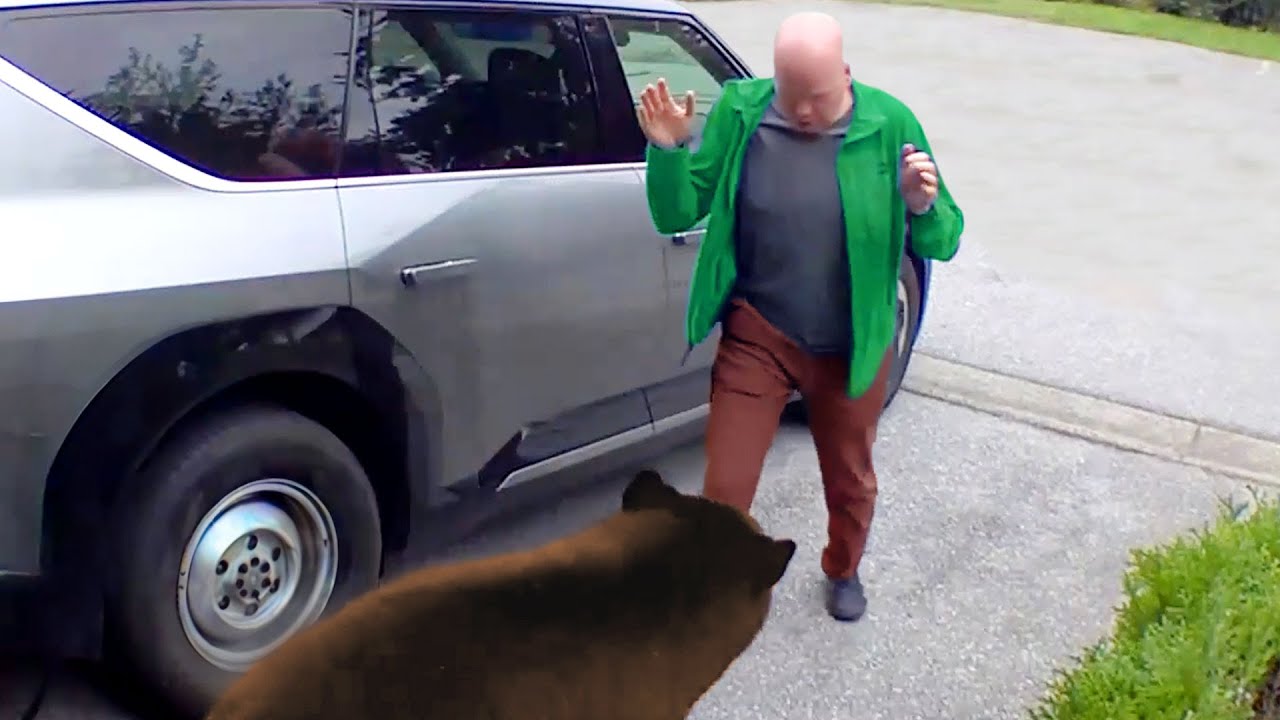
Hello everyone, this is YOUR Daily Dose of Internet. In this video, never go to Canada.
Links To Sources:
https://docs.google.com/document/d/1YkT4aYvdoFuPrSLJfefFYqgtyOhCO1e8w-S523E8sJg/edit?usp=sharing
Songs:
Totem by KV / kvmusicprod
Creative Commons — Attribution 3.0 Unported — CC BY 3.0
Free Download / Stream: https://tinyurl.co...
what bird is this O.O
 hollow flame

 full patrol
hallow parrot
https://youtu.be/VYEUrnGpIMw?t=359
full patrol
hallow parrot
https://youtu.be/VYEUrnGpIMw?t=359
I saw this last week pretty sure it's the potoo iirc
I did not click the video to double check
I love the potoo
 hallow parrot
uhhhhh, yeah, looks nothing alike
full patrol
Ok then wrong video I'll watch rq
hallow parrot
lol
 full patrol
Australian bustard
hallow parrot
interesting
full patrol
I think he had a video of the potoo in a different recent video 
hallow parrot
mayhaps
sullen merlin
 sterile sapphire
should i buy the isle
sterile sapphire
should i buy the isle
Depends, do you like fighting as a dinosaur or actually surviving. Cuz a lot of ppl treat the game as a battle simulator. Also check ur pc specs etc
sterile sapphire
sullen merlin
Depends, do you like fighting as a dinosaur or actually surviving. Cuz a lot of ...
I have a good gaming pc so graphics and fps wont be a problem. i would play with a friend. he likes to play chill and survive.
but idk if i wanna spend 20 bucks
sullen merlin
sterile sapphire
I have a good gaming pc so graphics and fps wont be a problem. i would play with...
Then its worth considering, however its important to realise te game is early acces, so a mot of bugs and performance issues etc. As for the money, u could wait for like christmas sales or something
I think ive seen it drop to like 12 bucks during sales
sterile sapphire
sullen merlin
I think ive seen it drop to like 12 bucks during sales
my friend said i could buy it for like 3 bucks on a website
but idk if it is safe. i might wait for a sale
sullen merlin
Lemme DM u, idk if talking about such sites is even allowed in the server
sterile sapphire
oops
 mystic wasp
 heavy temple
Warp speed
 rigid sand
Sleeby
 mystic wasp
 rigid sand
 heavy temple
rigid sand
heavy temple
rigid sand
You stole my car
rigid sand
heavy temple
You stole my car

 tulip condor
old photo of Orange cat energy
 mystic wasp
 rustic badger
 tulip condor
rustic badger
tulip condor
rustic badger

 sullen merlin
First Animal species of the day (413) :
Mexican alligator lizard / (Abronia graminea)

The Mexican alligator lizard (Abronia graminea), also known as the green arboreal alligator lizard, is an endangered species of lizard endemic to the Sierra Madre de Oaxaca highlands of Mexico.[3][4] It can be found in the states of Puebla, Veracruz, and Oaxaca.[3] It was originally described under the genus Gerrhonotus as Gerrhonotus gramineus by Edward D. Cope in 1864.[5]
The Mexican alligator lizard adopts an arboreal lifestyle and is commonly found inhabiting the bromeliads among mesic cloud or pine-oak forest canopies.[6][7][8][9] This habitat offers a humid temperate climate with summer rains. The preferred diet of this species is a variety of insects.[6][10] Colour patterns of the Mexican alligator lizard can range from bright emerald green to dark teal blue;[8][9] juvenile colouration is a tan ground colour with dark crossbands.[3][7][11]
The IUCN rates the Mexican alligator lizard as endangered.[3][1] Decline of the species is mainly the result of habitat fragmentation due to fire, deforestation, and land use change for agriculture.[6][10] Illegal trafficking for the pet trade has also contributed to the status of this species.[6]
Taxonomy
The genus Abronia was first described by John Edward Gray in 1838.[12] In 1864, Edward D. Cope described a new species: Gerrhonotus gramineus.[5] This name was used in subsequent literature until 1949, where it was then re-classified under the genus Abronia.[13] In 1949, Tihen reported this species as Abronia taeniata graminea. Tihen considered A. graminea to be a subspecies of A. taeniata based on observations of four specimens collected in Veracruz, Mexico, exhibiting morphological characteristics of both species.[13] Additional literature published after Tihen (1949) also reported the name A. taeniata graminea to reflect these potential intergrades. However, Martin's observations in 1955 argued that A. graminea was not a subspecies of A. taeniata based on clear morphological differences, and re-elevated A. graminea to species status. Currently, the Mexican alligator lizard's valid taxonomic identifier is Abronia graminea.[14][15]
A. graminea is one of 29 species described in this genus.[3][16] Little is known about its relation to other Abronia species. Its distribution range has been shown to overlap with that of A. taeniata.[4] These two species can be distinguished by the number of transverse dorsal scale rows, longitudinal nuchal scale rows, and adult dorsal body colourations.[4] Individuals of A. graminea have 25-29 transverse dorsal scale rows, while A. taeniata has 30-36; 4-6 longitudinal nuchal scale rows in A. graminea, and 6 in A. taeniata; adult dorsal body colour is uniform in A. graminea whereas A. taeniata adult dorsal body colour includes dark crossbands.[9]

Distribution
The Mexican alligator lizard is a widely distributed species endemic to the highlands of Mexico along the Sierra Madre de Oaxaca mountain range.[3][7] It has an estimated distribution of approximately 11,500 km2.[6][10] This range include the states of Puebla, Veracruz, and Oaxaca.[6] The region this species inhabits is located at elevations of 1,350-2,743m above sea level.[3][6][7]
Description
The Mexican alligator lizard has a dorsoventrally depressed body with a flattened, triangular head and weak lateral fold.[5][6][13][17] It reaches up to about 10.6 cm (4.2 in) in snout–vent length and 16.0 cm (6.3 in) in tail length.[5][6] An individual that had a snout–vent length of 9.8 cm (3.9 in) weighed 21.2 g (0.75 oz) and another with a snout–vent length of 10.0 cm (3.9 in) weighed 20.7 g (0.73 oz).[8] This species has a prehensile tail, that can be regrown if lost,[16] and long, strong limbs and digits ideal for its arboreal habitat.[7][13] The adult colour pattern varies significantly from the juvenile colouration. Adult males are typically bright emerald green while females exhibit colour variations that include bright to dull orange on the dorsal side.[4][5][8][17] Other colour elements present in adults include bright yellow orbital skin, blue highlights on the supralabial scales, and yellow snout, lower jaw, and throat.[8] Dorsal scales contain variable amounts of dark pigmentation on the basal half of the scales.[8] Females of this species occasionally retain dark crossbands characteristic of juvenile colour patterns.[4][8] Juveniles typically express a light tan ground colour with 9 irregular black crossbands on the body and 19 on the tail, and a dirty yellow ventrum.[7][11]
Typical scale patterns for A. graminea includes:
12 longitudinal rows of ventral scales[5][17][18]
25-29 transverse dorsal scale rows
4-6 longitudinal nuchal scale rows[4][9]
12-14 longitudinal dorsal scale rows[17][18]
11 supralabial scales[5][18]
2 rows of infralabial scales (5 scales in 1st row, 6 scales in 2nd row)[5]
The preauricular scales are granular, and the dorsal scales are slightly keeled.[6][13][17][18][19] The plates of the head are often thickened and roughed, giving the head a triangular appearance.[5][19] Typically, the dorsal scales are larger than the ventrals.[18]
Diet
In captivity, A. graminea typically feeds on a variety of insects and other arthropods.[6][10] Due to limited research, it is unknown what exact feeding strategies are used by this species.
Lifespan
Lifespan in the wild is unknown. In captivity, A. graminea has been reported to live up to 10 years.[20]
Reproduction & lifecycle
A. graminea is considered to be viviparous (giving birth to live offspring).[3][6][7] Typically, females become sexually mature in their 3rd year of life and can give birth to litters of 1-12 offspring.[3] Although copulation has not been observed in the wild, mating typically occurs in the summer/fall, and parturition occurs in the spring.[3] The gestation period for the Mexican alligator lizard is approximately 6–8 months.[20]
Conservation
Status
The Mexican alligator lizard is considered an Endangered species on the IUCN Red List. It is a protected animal under Mexican Federal Law as a Threatened species on the Norma Oficial Mexicana list.[3][16]
Threats
Population fragmentation and destruction of habitat are the main factors contributing to the decline of this species.[6] Forest fires, deforestation, and change of land use for agricultural purposes has degraded this habitat and reduced the distribution of A. graminea dramatically.[16] Illegal international trade of A. graminea for the purpose of maintaining it as a pet has significantly contributed to the status of this species.[16]


@rustic badger
@cedar crescent
@distant nymph
@spice gyro
@bright light
rustic badger
sullen merlin
@modest isle
@lone star
@hallow parrot
@limber grove
@full patrol
@lilac dagger
@drowsy egret
@azure oar
full patrol
bro looks cool af
modest isle
sullen merlin
Peak species design
sullen merlin
@silent cargo
@crimson marlin
@restive charm
@neat basalt
azure oar
sullen merlin
First Animal species of the day (413) :
Mexican alligator lizard / (Abronia gram...
Naaaah those aren‘t real,
they look like AI generated dragons!
sullen merlin
One of thge most beautful lizards in the world imo
They come in green and blue

This is what the babies look like
 azure oar
I want to pet them all
modest isle
Tomorrow spooky month 🎃👻💀 :
- cave dwellings animals as long as they are
- fish 🐟
- Amphibian 🐸
- Arthropods 🦟
sullen merlin
modest isle
Tomorrow spooky month 🎃👻💀 :
- cave dwellings animals as long as they are
- ...
Yes
modest isle
No mammals / reptiles / birds allowed ❌
azure oar
modest isle
Tomorrow spooky month 🎃👻💀 :
- cave dwellings animals as long as they are
- ...
There is a group of seals that spent part of their lives in caves
sullen merlin
Although i would argue for a bat species on the day of halloween, ill do 3 species that day anyway
azure oar
azure oar
There is a group of seals that spent part of their lives in caves <:TI_Troll:472...
just one colony tho, and no mammals rule anyways
sullen merlin
azure oar
There is a group of seals that spent part of their lives in caves <:TI_Troll:472...
Wait wut
modest isle
azure oar
There is a group of seals that spent part of their lives in caves <:TI_Troll:472...
Not sppoky but cute
But they dont rely on caves
We want species that are so adapted to caves that they would die if they left the cave
 modest isle
sullen merlin
Although i would argue for a bat species on the day of halloween, ill do 3 speci...
modest isle
sullen merlin
Although i would argue for a bat species on the day of halloween, ill do 3 speci...
Ok we will let those flying mammals have a pass
modest isle
sullen merlin
LOOK AT THIS
Dragons 🐉
azure oar
sullen merlin
Wait wut
WAIT I JUST REALISED IT‘S MULTIPLE species who do it 
sullen merlin
modest isle
Dragons 🐉
On the day of halloween i think ill do:
A bat (idk which one)
Pumpkin bug
Some spider
Never mind i found the best animal suited for it
azure oar
azure oar
WAIT I JUST REALISED IT‘S **MULTIPLE** species who do it <:TI_Pog:41145441761584...
South American fur seals and Mediterranean monk seals do it
only knew of the South American furs
sullen merlin
Death's head moth
 azure oar
sullen merlin
azure oar
<:TI_DangerRex:612417184588628024>
Within the next few weeks im going on excursion on a boat, if i see some seals ill drop em here
distant nymph
sullen merlin
First Animal species of the day (413) :
Mexican alligator lizard / (Abronia gram...
oh wow, that's a pretty lizard 😊
azure oar
Cool!  Hope you see some epic Wildlife 👍
modest isle
sullen merlin
Death's head moth
sullen merlin
distant nymph
oh wow, that's a pretty lizard 😊
its THE pretty lizard
modest isle
This video shows the difference between animals that visit the caves but rely heavily on the outside world (Bats)
Vs species that only lives in caves and never leave some of them dont even have eyes (Cave fish)

This is my attempt at a comprehensive guide to life underground. Inevitably, I have missed some species. I have a lot of people to credit, as many of these species have only been documented/photographed once. Thank you to:
Eric C. Maxwell (hydrophilus) for many unique photos and resources
Matthew L. Niemiller (cavemander17) for MANY photos and ...
azure oar
I love lizards, probably my favourite kind of animal after Seals
azure oar
modest isle
This video shows the difference between animals that visit the caves but rely he...
Cave animals are also highly interesting. There are entire Species that only exist in ONE cave
modest isle
azure oar
or one underground lake even
sullen merlin
spice gyro
Green anole for aotd soon?
Only brown anole has been done, Ill do it in november since october will be pretty much exclusively arthropods
 fleet marsh
has anyone here played beasts of burmuda?
 elder meadow
sullen merlin
Only brown anole has been done, Ill do it in november since october will be pret...
elder meadow
sullen merlin
Only brown anole has been done, Ill do it in november since october will be pret...
No bats?
spice gyro
sullen merlin
Only brown anole has been done, Ill do it in november since october will be pret...
sounds good
modest isle
elder meadow
No bats?
We did 2 bats species before and here is the brown anole :
brown anole #225
#offtopic-discussion message
honduran white bat #95
#offtopic-discussion message
Hammerhead bat #123
#offtopic-discussion message
@sullen merlin
@elder meadow
@spice gyro
 hidden patrol
Whats yalls opinion on new eden
elder meadow
modest isle
We did 2 bats species before and here is the brown anole :
brown anole #225
htt...
Yeah, but bats for October
elder veldt
Vampire bat for Halloween
 lusty helm
 lime copper
@ivory glacier Please check your DMs!
 vast coral
Whoever fixed my timeout, tysm!!
If possible can i be told what word triggered the bot/if there's a banned word list to avoid it happening again?
(Context, random word trigger auto mod. All is well.)
 limber grove
You made a typo that resulted in a pretty bad word is all, I'll dm you
vast coral
Ohhhh, tysm!!
So sorryyyy, im dyslexic and have a ton of typos. 😊
Wrong emoji, ehat
😭*
 earnest bear
Is anyone able to assist? Maybe get me in contact with an admin? ❤️
My friend has never been able to join the server, the message she gets every time is that the link has expired, even if its a link sent mere minutes ago, shes tried on pc, mobile, tablet, always the same that the server link is invalid or expired.
Shes never been on the server before and we are quite confused, any help is appreciated ✨
 limber grove
earnest bear
Is anyone able to assist? Maybe get me in contact with an admin? ❤️
My friend h...
limber grove
earnest bear
Is anyone able to assist? Maybe get me in contact with an admin? ❤️
My friend h...
Could you dm me her username?
earnest bear
limber grove
Could you dm me her username?
absolutely! one moment <3
mystic wasp
 sterile sapphire
Does anyone know when "The Isle" is in stock on Instant Gaming?
 polar minnow
Skibidi
 unreal pier
october is here which mobie should i watch from today
modest isle
unreal pier
october is here which mobie should i watch from today
Toys story 1
unreal pier
modest isle
Toys story 1 <:TI_Troll:472576085482143745>
cool thing I will watch today thanks
nocturne basalt
@mossy granite dms please\
 noble coyote
Yo what kind of dog is this
 full patrol
Extinct
rough hollow
 sterile sapphire
Does anyone know when "The Isle" is in stock on Instant Gaming? Or any other Website to buy it.
full patrol
sterile sapphire
Does anyone know when "The Isle" is in stock on Instant Gaming? Or any other Web...
please do not talk about piracy websites on discord as it it against the TOS
The isle is available on steam for $20 USD. If you would like it for less it may be discounted around the holidays and is usually on sale in steam summer sale
sterile sapphire
full patrol
please do not talk about piracy websites on discord as it it against the TOS
The...
I am sorry i didnt know that
sullen merlin
sterile sapphire
I am sorry i didnt know that
Didnt i literally tell u this yesterday
sterile sapphire
sullen merlin
Didnt i literally tell u this yesterday <:TI_LUL:461642094671429634>
what no
sullen merlin
sterile sapphire
what no
 sullen merlin
I mean its comon sense, i just didnt double check it lol
No game is gonna allow piracy in its official discord lmao
sterile sapphire
well fair i just forgot
sullen merlin
First Animal species of the day (414) :
Giant burrowing cockroach / (Macropanesthia rhinoceros)

The giant burrowing cockroach (Macropanesthia rhinoceros) is also known as the rhinoceros cockroach, and Queensland giant cockroach. These cockroaches are native to Australia and mostly found in tropical and subtropical parts of Queensland. They are the world's heaviest species of cockroach and can weigh up to 30-35 grams[1][unreliable source?][2] and measure up to 7.5-8 cm (3.1 in) in length.[1] It is a member of the family Blaberidae, which contains hundreds of species. It is part of the blaberid subfamily Geoscapheinae.[3][4] It is prominent in the wild and can also be sold and kept as a pet.
Unlike some other cockroaches, the giant burrowing cockroach does not have wings and is not considered a pest. This species plays a vital part in the ecosystem by consuming dead leaves, eucalyptus in particular, and recycling other matter. They may burrow down in soil to a depth of about 1 m (3 ft 3 in),[1] where they make permanent homes and feed on collected dry leaf litter. The giant burrowing cockroach is the only cockroach in the world known to have permanent burrows in the soil.[5] The species play an important ecological role in that it contributes to the recycling of nutrients in the wild.
The cockroach is popular in Brisbane and is frequently sold as a pet.[6]
The giant burrowing cockroach is identifiable by its large size and weight. An adult can reach over 60 mm[7] and up to 75–80 mm, and can weigh up to 30-35 grams. The pronotum is a prominent plate-like structure that covers the first segment of the thorax, has short tubercles at the sides, and can exceed 15 mm. Their pronotum assists with digging, acting as a shovel[7] while its abdomen rests on the ground.[8] The cockroach use their spiny tibiae in order to dig and burrow into the ground. The giant burrowing cockroach is well adapted for burrowing and digging with large back legs and a strong body armour, which offers protection from predators. It is one of few native Australian cockroaches without wings, with a concurrent lack of mobility.[9] It is nocturnal.[4]
Adult males and females can be differentiated by the size of the "scoop" on the pronotum, which covers the head; with the male having a much more pronounced scoop. They grow by moulting several times before reaching full size. When a cockroach moults, it will appear pure white except for the eyes.[3] Individuals have lifespans up to ten years in captivity. Adult males are more commonly-encountered than females.[10]
As in other hemimetabolous insects, the immature stages of the giant burrowing cockroaches are referred to as nymphs. Nymphs are creamy white when born, but soon develop a reddish brown colour. Both adult females and males are dark brown. Nymphs remain with their mothers for five to seven months, and she provides food and cares for them.[3][5]

Distribution and habitat
close up of insects in tank with cut fruit
Macropanesthia rhinoceros in captivity
The giant burrowing cockroach species are mostly found in Queensland, Australia. It is commonly found along the coastal stretch between Rockhampton and Cooktown. The cockroach can also be located on the islands of the Whitsundays.[3]
The species build burrows that can stretch up to one metre underground,[11] which is where it stores food and lives permanently. Burrow depth appears to change depending on soil type, with burrows ranging from approximately 10 cm underground to 100 cm.[10]
It is prevalent in dry Eucalyptus woodlands in the northeastern territory within Australia. There are 18 known geographical populations of the cockroach along subtropical Queensland.[9] The cockroach has a wide geographical distribution in relation to other burrowing cockroach species.[12][13][14] It is present across a one thousand kilometre range. The cockroach can be found in both dry and wet areas of Australia, including rainforests, woodlands and savannas. Common dry areas it inhabits include Maiden Springs, Boonderoo and Alpha. Common wet areas the cockroach is found in include Cooktown, Magnetic island and the Whitsundays. Locations that are in the mid-range between dry and wet regions where the cockroach is present include Coen, Rochford Scrub and Mount Garnet.[14]
Populations of the cockroach can be geographically isolated due to unsuitable ground soil or by water. The species tends to prefer the drier savanna areas west of the Great Dividing Range.[9]
The most common vegetation where the cockroach is found is Eucalyptus woodland and grass.[10]
Behaviour
The cockroach stays underground as it lives permanently in its burrows. The cockroach often surfaces during wet weather, with most activity coinciding with summer rains. During the dry season it remains in its burrows and feed on collected litter. It feeds mostly on dry, decomposing eucalyptus leaves. The cockroach composts the leaves in the burrow with some bark and dry grass.[4]
Burrows are often composed of grass, tree root and leaves. The entrance to the cockroach burrows resembles a flattened semi-circle. Burrows can be identifiable when the cockroach has been active, yet are often covered by litter or collapsed. The size of the burrow entrance is approximately five centimetres wide and two centimetres high. Burrows often follow a path just below the soil surface for up to one metre, and occasionally descend downwards sharply. The burrows do not follow a pattern. The cockroaches occupy the end of the burrows, which is widened up to one metre wide to contain the collected litter. Other species of insects have been located within the burrows, including scarabs, aleculid beetles, silverfish, larvae of tenebrionids and caesmaking moths, as well as other species of cockroaches.[10]
Social behaviour
The cockroach is generally solitary, yet young nymphs remain with mothers for several months after birth. The cockroach is active after sunrise, and may begin to burrow and dig. Males wander outside of burrows more than females do. Males tend to wander in search of a mate, whilst females collect litter to take back into their burrows.[10]
Foraging is common with grown female cockroaches, and the cockroach can wander up to 50 cm from the entrance of the burrow to collect ground litter. It collects mostly dead leaves and use the mandibles to drag the litter back into their burrow.
Fighting is common amongst adult males, yet adult females with nymphs are also highly aggressive. Aggressiveness is associated with its solitary existence.[10] Aggressive behaviour can include butting, barging and hissing which often results in a cockroach being knocked over. Males can fight at the entrances to burrows in order to prevent the other male cockroaches from entering the burrow. Whilst fighting, males use the front of the pronotum to force the intruder away. A hissing sound is produced when the giant burrowing cockroach fights another.
Sounds
The cockroach can emit a hissing sound during both reproduction and when threatened. The hissing sound is produced by the expulsion of air from the cockroach’s spiracles, which is an external respiratory opening on the abdomen.[15]
Biology
Reproduction
Reproductive behaviour between the cockroaches tends to occur at night time, and is based mostly on scent, taste and touch. The male cockroaches attempt to court the females with motions such as hissing, changing posture, motioning with antennas, grooming the female, and pushing the female with their body in an attempt to lift the female. It is unknown if female cockroaches engage in multiple matings and if so, if it occurs with different male cockroaches.[9] Females can annually have up to thirty young at once.[3]
The species is ovoviviparous[4] meaning it has young by means of eggs which hatch internally in the parent. Unlike most insects, which lay eggs, the female Giant burrowing cockroach gives birth to her young, and protects her offspring in her underground alcove, providing them with leaf litter she gathers overnight.[14] The cockroaches can live for up to 10 years.[2] The species is often found with the mothers with the young together within the burrows, whereas the males are mostly absent from the burrows.
The parenting cycle of the giant burrowing cockroach can last up to six months, or until nymphs are capable to leave and construct their own burrows and fend for themselves.[4] One brood of approximately thirty nymphs is produced each year, and tends to be in late spring after an incubation period of approximately three months.[10] The cockroaches shed their outer skin approximately fourteen times in their life cycle. This skin is often ingested as it is nutritious.[3]
Young nymphs are rarely found above ground, outside of the burrow.[10] Nymphs grow at the same rate and once the nymphs leave the nest they live alone until they fully develop and become adults.[16]
Obesity
Depending on the temperature, they perform different patterns of eating, carbon dioxide production,[17] and metabolic rates.[11] Macropanesthia rhinoceros can be diagnosed with obesity when there are no changes in its husbandry. When an individual lacks nutrition, they are susceptible to adopting a "thrifty phenotype", which prioritises fat storage over reproductive development to be able to handle dangerous environment conditions. In optimal environmental conditions, this thrifty phenotype has the potential to become maladaptive, thus causing excessive fat storage and metabolic disease. In the future, this may result in obesity or metabolic disease. Obesity can cause, "an atypical body conformation with narrow, elongated abdominal profiles compared to the wide, flat bodies of neighbouring conspecifics." In addition, this exposes a mushy and pale tissue between their abdominal sclerites.[4]


@rustic badger
@cedar crescent
@distant nymph
@spice gyro
@bright light
spice gyro
Bug
sullen merlin
@modest isle
@lone star
@hallow parrot
@limber grove
@full patrol
@lilac dagger
@drowsy egret
@azure oar
modest isle
sullen merlin
First Animal species of the day (414) :
Giant burrowing cockroach / (Macropanest...

I hope they GO EXTINCT !!!!! 😡🤬
sullen merlin
@silent cargo
@crimson marlin
@restive charm
@neat basalt
sullen merlin
modest isle
I hope they GO EXTINCT !!!!! 😡🤬
 sullen merlin
modest isle
I hope they GO EXTINCT !!!!! 😡🤬
sullen merlin
modest isle
I hope they GO EXTINCT !!!!! 😡🤬
Theres even bigger species
distant nymph
sullen merlin
First Animal species of the day (414) :
Giant burrowing cockroach / (Macropanest...
Somehow it being bigger makes it less ew-y than the smaller ones o:
 sullen merlin
modest isle
Madagascar hissing cocksroach <:TI_Scream:487710504270168074> <:TI_Scream:487710...
sullen merlin
modest isle
Madagascar hissing cocksroach <:TI_Scream:487710504270168074> <:TI_Scream:487710...
They are so cool
I want them as pets
But keeping insects etc is kinda annoying since they dont live very long
modest isle
Please no
modest isle
Thats too long for an insect
modest isle
sullen merlin
Only 5 years
For example guppies would only live between 2-4 years , 4 years is a long time when you think about it .
Also female guppies are basically pregnant simulator you will never run out of guppies

Female guppies are pregnant 24/7
Also adults They will eat their own children keep some hiding spaces so some could survive
sullen merlin
Ye but these tiny fish are like absolute bottom prey items, short lifespan is really usual for those types of animals. Cockroaches of this size dont have that much predators i think since they are also moslty subterranean
modest isle
sullen merlin
Ye but these tiny fish are like absolute bottom prey items, short lifespan is re...
Fair
rustic badger


 lofty blade
Guys
GUYS
The Unsolved skin won for DBD's skin contest. This is brilliant!
 sullen merlin
lofty blade
Guys
GUYS
The Unsolved skin won for DBD's skin contest. This is brilliant!
sullen merlin
lofty blade
Guys
GUYS
The Unsolved skin won for DBD's skin contest. This is brilliant!
Thats a neat skin ngl
I just died to this guy aswell
lofty blade
lofty blade
I've never used it so I am unsure ;o;
sullen merlin
Like i did it, then got broken status effect. It went away , i healed but i couldnt see locker auras anymore, even after hook
i didnt try but i couldnt see the auras so i just assumed its a one time use
 onyx pike
any hotfix for this ? happened the first time to me today
limber grove
onyx pike
any hotfix for this ? happened the first time to me today
dISABLE dlss
Whoops, caps
onyx pike
oh my god, thanks a lot, I can finally see against
limber grove
Np! If you'd like to try keeping it on, go to localappdata, then go to TheIsle/Saved/Config/WindowsClient/GameUserSettings.ini
find where it says DLSSEnabled= and set it to True if it isnt already
Can also fix the stretching
hallow parrot
 mortal echo
Hey guys.
Do you think it'd be possible to communicate with fireflies by mimicking their flashing patterns?
young gale
lofty blade
Guys
GUYS
The Unsolved skin won for DBD's skin contest. This is brilliant!
But not the dredge skin:(
I wanted the house dredge skin to win
cedar crescent
lofty blade
Guys
GUYS
The Unsolved skin won for DBD's skin contest. This is brilliant!
sable skin won 
 strong marten
 spice gyro
Ooh nice
spice gyro
Yess it looks so good
spice gyro
All my araceae plants have their new leaves synced up
 tame python
satsifying af
I gotta consider moving my main shelf away from the window soon, starting to get cold here in the nights/mornings
spice gyro
tame python
post baby frydek pics
 spice gyro
One of the leaves got caught in a fly trap so it got damaged taking it off but otherwise fine
And it’s putting out a new leaf too
Also I realized my gigantic elephant ear I have is also an alocasia not a colocasia, so I guess I know how to care for alocasias as well lol
 tame python
augh gorgeous
spice gyro
Yup
It took a while to push to the surface
But since it did it’s been putting out a new leaf like every couple weeks
unreal pier
what?!
 modest isle
unreal pier
what?!
modest isle
unreal pier
what?!
This the future Incels want
Because they cant date a real person so they decide to date some robots and microwaves 🤖
unreal pier
modest isle
This the future Incels want <:TI_Limmy:992752086586507365>
Because they cant da...
exactly haha
digital sleet
@pulsar crown @granite hearth have you tried deadlock
 granite hearth
digital sleet
<@275775820201721857> <@271991689072214016> have you tried deadlock
granite hearth
digital sleet
<@275775820201721857> <@271991689072214016> have you tried deadlock
nah
digital sleet
granite hearth
nah
its pretty damn fun
granite hearth
I'm looking it up rn
digital sleet
valve game
digital sleet
 pulsar crown
I like the robit
pulsar crown
I like the robit
bassed
digital sleet
i found myself enjoying ivy, the gremlin
digital sleet
mcginnis with a turret build is also pretty funny
granite hearth
Um
Is only the french page lame or is it normal that there's just a very non-informative video and the description just says "it's a multiplayer game in early development" ?
digital sleet
pulsar crown
THIS IS THE GOD DREAM
they recently added a new character called mirage
he launches fire scarabs
whatever. go my scarab
pulsar crown
 digital sleet
granite hearth
Um
Is only the french page lame or is it normal that there's just a very non-inf...
digital sleet
granite hearth
Um
Is only the french page lame or is it normal that there's just a very non-inf...
its normal that its uninformative
valve has been doing a sneaky with it by only letting people with invites from other people to play
granite hearth
So I guess there's alpha testing going on in that game ?
pulsar crown
ya
digital sleet
granite hearth
So I guess there's alpha testing going on in that game ?
you can play it publicly, as long as someone sends you an invite
granite hearth
I see
And what kind of game is it ? MOBA ?
pulsar crown
granite hearth
I see
And what kind of game is it ? MOBA ?
MOBA/Hero Shooter fusion
digital sleet
its pretty fun playing mo & kirill, and speccing into a movement speed build for burrowing
flying through the earth at mach 10 before jumping out and mauling someone for 10 seconds straight
granite hearth
pulsar crown
MOBA/Hero Shooter fusion
Sounds interesting
pulsar crown
It's made by Valve so it's good
They have a big slime character that can turn into a large cube
digital sleet
pulsar crown
They have a big slime character that can turn into a large cube
also into a ball
pulsar crown
This too
digital sleet
his ult lets him roll around lmao
pulsar crown
Also they have a big slime fist that punches you
digital sleet
ivy's ult is picking up a teammate and ditching the poor bastard at some other poor bastard
works with immobile characters/abilities too
so you can pick up the electric guy currently tweaking and throw him at other people
pulsar crown
digital sleet
ivy's ult is picking up a teammate and ditching the poor bastard at some other p...
My fave hero shooter is still absolutely Marvel Rivals though because there's a character that does that but even crueller
digital sleet
pulsar crown
My fave hero shooter is still absolutely Marvel Rivals though because there's a ...
honestly i think deadlock might just be my most favourite moba game
granite hearth
The art direction looks good
pulsar crown
It picks up EVERYTHING in a range, friend/foe, and can carry them to the pit.
He can ensure death to all
digital sleet
i only ever played vs bots in dota 2 and i never got a chance to actually play HOTS
pulsar crown
I can't wait for the Dragon Ball MOBA 😍
I don't even like MOBAs I just like the idea of Goku in MOBA
granite hearth
Dota 2 is fun in its own way
But Only if you like suffering
After HOTS release, they started stealing ideas from them and improving them
Like stupid characters (Monkey King) and talent trees
digital sleet
pulsar crown
It picks up EVERYTHING in a range, friend/foe, and can carry them to the pit.
H...
i watched a teammate bebop hook an enemy from his spawn to the other side of the base, spin 180 degrees and punch him directly into the static defence that rapidly kills players
pulsar crown
LMAO
digital sleet
people are also speccing into his grenade ability to let him put like 3 grenades at once onto a person which just nukes them
granite hearth
Dota 2 also has the best character that ever has been in a MOBA
I shall name Rubick
granite hearth
granite hearth
Dota 2 also has the best character that ever has been in a MOBA
I shall name Rub...
Who can steal his opponents abilities, making them STRONGER in the process
digital sleet
theres also a gun build that turns his laser into an hydro powered gem cutter
granite hearth
Wait so can you guys invite me to test Deadlock's alpha ?
Or is it a limited thing ?
digital sleet
granite hearth
Wait so can you guys invite me to test Deadlock's alpha ?
are you on my or wave's friends list on steam
granite hearth
digital sleet
are you on my or wave's friends list on steam
I think I'm on yours
Nope I'm not
digital sleet
granite hearth
I think I'm on yours
you are not
133718098
my friend code
ill pop into deadlock and send you the invite
granite hearth
Thanks
sullen merlin
First Animal species of the day (415) :
Yellow-legged hornet / (Vespa velutina)

The Asian hornet (Vespa velutina), also known as the yellow-legged hornet or Asian predatory wasp, is a species of hornet indigenous to Southeast Asia. It is of concern as an invasive species in some other countries, including most of Europe.[1]
Appearance
Vespa velutina is significantly smaller than the European hornet. Typically, queens are 30 mm (1.2 in) in length, and males about 24 mm (0.95 in). Workers measure about 20 mm (0.80 in) in length.[2] The species has distinctive yellow tarsi (legs). The thorax is a velvety brown or black with a brown abdomen. Each abdominal segment has a narrow posterior yellow border, except for the fourth segment, which is orange. The head is black and the face yellow. Regional forms vary sufficiently in color to cause difficulties in classification, and several subspecies have been variously identified and ultimately rejected; while a history of recognizing subspecies within many of the Vespa species exists, including V. velutina, the most recent taxonomic revision of the genus treats all subspecific names in the genus Vespa as synonyms, effectively relegating them to no more than informal names for regional color forms.[3] The color form causing concern about its invasiveness in Europe has been referred to as V. v. nigrithorax,[4][5] though this name no longer has any taxonomic standing.[3]
Biology
Like other hornets, V. velutina builds nests that may house colonies of several thousand individuals.[6] Females in the colony are armed with formidable stingers with which they defend their nests and kill their prey. The nest is of paper, roughly in the shape of a huge egg, usually at least half a meter (20") long. Unlike the nest of the European hornet (V. crabro), its exit is usually lateral rather than at the bottom. The nesting season is long, and a colony commonly begins by building a nest in a low shrub, then abandoning it after some months and rapidly building a new one high in a tree, possibly as an antiparasitic measure. The next generation of young queens disperses in the late autumn to hibernate over winter.[7]

Distribution
Known distribution of the different color forms of Vespa velutina across southeastern Asia
V. velutina originates from Southeast Asia, particularly the tropical regions, from northern India, Pakistan, Afghanistan, Bhutan, China, Taiwan, Burma, Thailand, Laos, Vietnam, Malaysia, the Indo-Chinese peninsula, and surrounding archipelagoes.[3]
Pest status and invasiveness
As an invasive species, the Asian hornet appeared earliest in France, Spain, Portugal, South Korea, and Japan. Further invasions are ongoing in various countries, including much of Europe.[10] Humans have been attacked after disturbing hornets; although the species is not aggressive, it "charges in a group as soon as it feels its nest is threatened".[6] People have been hospitalised in France after suffering anaphylactic shock as a result of multiple stings. Because of Asian hornets' larger size, their stings are more serious than those of western honey bees. In November 2017, a man was killed in Galicia, Spain after being stung over 20 times while pruning an apple tree.[11] Several people have died in south west France near the original introduction site, including a resident of Chaillevette, Charente-Maritime,[12] a 60-year-old woman in Gironde, Nouvelle-Aquitaine in 2019,[13] and a farmer in Orival, Charente in 2020.[14] There were nineteen confirmed Asian hornet sightings in England between 2016 and 2020, including ten nests, all of which were destroyed.[15]
The Asian hornet has been reported as naturalised on the Japanese island of Tsushima since about 2010.[16]
In Europe, the Asian hornet is included since 2016 in the list of Invasive Alien Species of Union concern ("the Union list"),[17] meaning that it cannot be intentionally imported, kept, bred, transported (except for purposes of eradication), offered for sale, used or exchanged, permitted to reproduce in any way, or released into the environment, in the European Union.[18]
In August 2023, the Georgia Department of Agriculture, in coordination with the United States Department of Agriculture Plant & Animal Health Inspection Service and the University of Georgia, confirmed the presence of a yellow-legged hornet near Savannah, Ga. This is the first time a live specimen of this species has been detected in the United States.[19]
Predation on honeybees
The major concern about their invasiveness, however, is that when they find a honey bee colony or an apiary, they tend to settle down and specialize in honey bees as their prey, as do the larger Japanese giant hornets. A hornet occupies a position above a beehive as its hunting territory. It flies about within an area of about half a square metre (half a square yard), scanning the direction from which foraging honey bees return to the hive. Each hornet vigorously defends its hunting territory, chasing off any rivals. However, as soon as it catches a bee, it flies off and another hornet replaces it, usually within a few seconds. The circadian activities of the two species are similar, and the hunting hornets match them; their most intense activity is in the morning and afternoon, not near dusk or noon.[1]
In its native range, V. velutina mainly hunts Apis cerana, the eastern honey bee, which has evolved a strategy of avoiding hovering hornets by rapid entry and exit from the hive when hornets are about. The guard bees also ball hornets to death. However, where A. mellifera, the western honey bee, has been imported, V. velutina finds them easier prey than A. cerana, because A. mellifera has not been subjected to selection for countering concentrated hawking by hornets. For example, A. mellifera approach their hives more indirectly and slowly when they detect hawking hornets, instead of darting in as fast as possible in the way that A. cerana does. They also ball hornets, but less effectively, and they do not achieve as high a temperature in the ball. Furthermore, when they detect that hornets are hawking, A. cerana tend to withdraw into the nest, but A. mellifera do not.[1]
A. cerana guard bees also use wing shimmering in response to the presence of V. velutina. This has variously been suggested to be an aposematic signal or a strategy for disruption of visual patterns, similar to the behavior of Apis cerana nuluensis and Apis dorsata,[8] but instead has been shown, in conjunction with rocking, to be endothermic heat production in preparation for a ball attack on the hornet.[9] Whilst A. mellifera, also ball attack hornets, they exhibit no such endothermic heat production behavior,[9] and when A. mellifera occurs together with A. cerana, the hornet V. velutina preferentially hawks A. mellifera foragers.[1]
digital sleet
is it true it is a hornet


 spice gyro
Bug
sullen merlin
@modest isle
@lone star
@hallow parrot
@limber grove
limber grove
:D the wauce
distant nymph
Hornet o:
sullen merlin
@full patrol
@lilac dagger
@drowsy egret
@azure oar
rustic badger
 sullen merlin
@silent cargo
@crimson marlin
@restive charm
@neat basalt
distant nymph
Hornets here aren't as scary as Wasps at least o:
So I never minded them too much
modest isle
modest isle
https://tenor.com/view/wasp-insect-gif-22724739
She is cleaning her self
crimson marlin
Ooo hornet
heavy temple
sullen merlin
Kill it with fire
sullen merlin
heavy temple
Kill it with fire
 digital sleet
@heady spoke @inner bronze devs are intending on adding a colony editor too
 inner bronze

 heady spoke
colony editor?
digital sleet
heady spoke
colony editor?

idk if this worked or not because my internet sucks atm
but basically, you can edit a colony to have whatever ants you want
inner bronze
including non-campaign ants like army ants? that's really cool.
heady spoke
army ants were fkn scary
inner bronze
rip and tear.
digital sleet
inner bronze
including non-campaign ants like army ants? that's really cool.
driver ants too
digital sleet
heady spoke
army ants were fkn scary
you can finish that mission in 7 minutes exactly
heady spoke
digital sleet
you can finish that mission in 7 minutes exactly
the leaf cutter one?
digital sleet
heady spoke
the leaf cutter one?
infact, 3.2 is the easiest mission to grind by spamming majors and immediately bumrushing their spawn
you kill them faster than they can spawn
digital sleet
heady spoke
the leaf cutter one?
I really want to see your live reaction to formicarium challenge 5
it’s quite
entertaining
digital sleet
you’re going to love him more
digital sleet
heady spoke
voice actor had a blast recording that
the dude is voiced by MauLer on YouTube, who does movie reviews and whatnot with the critical drinker
it’s very jarring to hear the narrator swear so violently lmfao
heady spoke
digital sleet
the dude is voiced by MauLer on YouTube, who does movie reviews and whatnot with...
oh wait really? i think i know who u talking about
digital sleet
heady spoke
dude deserves a raise
yeah he turns it up a notch in FC5
granite hearth
@digital sleet @pulsar crown I'm launching Deadlock for the first time
The game looks nuts
I can smell the complexity of Dota 2 just from the tutorial
digital sleet
granite hearth
<@327761922701262849> <@275775820201721857> I'm launching Deadlock for the first...
honestly, after a match or two, its not that complex
atleast, at face value, i dont care about the minor stat changes that adjust this value from 0.005 to 0.006 and whatnot
im glad the shop system is very easy to understand
granite hearth
Oh the characters also have high mobility
granite hearth
digital sleet
honestly, after a match or two, its not that complex
atleast, at face value, i...
I meant it in a good way
digital sleet
granite hearth
Oh the characters also have high mobility
you can slide and walljump too
granite hearth
Looks there is no keys rebind though, screw me and my AZERTY keyboard I guess
Oh they ticked phycial keys
I'm saved
I was wrong there is key rebinds
And it's literally Dota 2's interface
digital sleet

pulsar crown
granite hearth
<@327761922701262849> <@275775820201721857> I'm launching Deadlock for the first...
i cant fathom any of the builds i just pick whatever the community votes the highest
granite hearth
pulsar crown
i cant fathom any of the builds i just pick whatever the community votes the hig...
I'm gonna make my own builds, like I did in Dota 2
And they're gonna be terrible, like in Dota 2
pulsar crown
zamn
digital sleet
pulsar crown
i cant fathom any of the builds i just pick whatever the community votes the hig...
theres a build specifically for bebop around his punching, i believe
ive tried to use it but i keep going against the sweatiest people ive ever encountered
granite hearth
YOU HAVE INFINITE AMMO DURING SLIDES
This is awesome
 hidden hamlet
what to do when the girl u asked to prom said no?
unreal pier
wow
 idle goblet
hidden hamlet
what to do when the girl u asked to prom said no?
idle goblet
hidden hamlet
what to do when the girl u asked to prom said no?
Ask a dude
hidden hamlet
idle goblet
Ask a dude
nuh uh
 willow knot
 tired hinge
willow knot
tired hinge
willow knot
https://www.thetruesize.com/#?borders=1~!MTU1MDU5OTU.NTAwNjgxMA*MzIwNDM5MTY(NTQ0ODIxMw~!CONTIGUOUS_US*MTAwMjQwNzU.MjUwMjM1MTc(MTc1)MQ~!IN*NTI2NDA1MQ.Nzg2MzQyMQ)MA~!CN*OTkyMTY5Nw.NzMxNDcwNQ(MjI1)Mg

The True Size
Drag and drop countries around the map to compare their relative size. Is Greenland really as big as all of Africa? You may be surprised at what you find! A great tool for educators.
willow knot
I've used that before :D
barren bear
thanks
wintry marlin
Wait i don’t get @ed for animal of the day anymore?
spice gyro
Your name was forgotten I guess
wintry marlin

Wait I think maybe goblino has just @ed someone else with forgot in the name by accident
modest isle
wintry marlin
Wait I think maybe goblino has just @ed someone else with forgot in the name by ...
@sullen merlin
He accidentally pinged @bright light instead of you raven/forgot my name
wintry marlin
Yea I thought so
modest isle
💀😭
wintry marlin

sullen merlin
Thats what u get for having an annoying name to ping
modest isle
sullen merlin
Thats what u get for having an annoying name to ping
Fr the dot “ . “ makes the ping so painful
It used to happen to me too
sullen merlin
Also all these ppl with halloween emojis are at risk of not getting pinged
wintry marlin
sorry but if discord didn’t force me to change the name there wouldn’t be a .
modest isle
modest isle
wintry marlin
Discord L
Its ok lets not think too much of the past and just move on improving our future 💪🏼
wintry marlin

 lone star
-# how do you even ping people with a “.” In their name
-# I never learned how
modest isle
lone star
-# how do you even ping people with a “.” In their name
-# I never learned how
If you are on mobile just click the name
 lone star
Guess I only ever tried pinging people w/a dot on pc before
wintry marlin
Man… wilds will be my game of the year no doubt about it

Idk what my game of the year this year is tho, since game awards is only 2 months away
sullen merlin
First Animal species of the day (416) :
Common green bottle fly / (Lucilia sericata)

The common green bottle fly (Lucilia sericata) is a blowfly found in most areas of the world and is the most well-known of the numerous green bottle fly species. Its body is 10–14 mm (0.39–0.55 in) in length – slightly larger than a house fly – and has brilliant, metallic, blue-green or golden coloration with black markings. It has short, sparse, black bristles (setae) and three cross-grooves on the thorax. The wings are clear with light brown veins, and the legs and antennae are black. The larvae of the fly may be used for maggot therapy, are commonly used in forensic entomology, and can be the cause of myiasis in livestock and pets. The common green bottle fly emerges in the spring for mating.
Description
Macro image of the head
The defining characteristic of L. sericata and the one most used when identifying the adult fly is the presence of three bristles on the dorsal mesothorax, located on the middle of the back of the fly. L. sericata is almost identical to its conspecific, L. cuprina, and identification between them requires microscopic examination of two main distinguishing characteristics. L. sericata is blue-black, as opposed to L. cuprina, which has a metallic green femoral joint in the first pair of legs. Also, when looking at the occipital setae, L. sericata has one to nine bristles on each side, while L. cuprina has three or less.[3] Additionally, the eyes of L. sericata are smaller, with the frontal stripe also being thinner than the ones of L. cuprina.[4]
Distribution and habitat
Squirrel carrion (L. sericata in bottom right)
Lucilia sericata is common all over the temperate and tropical regions of the planet, including Europe, Africa, and Australia. It prefers warm and moist climates, so is especially common in coastal regions, but can also be found in arid areas.[5] The female lays her eggs in carrion of all kinds, sometimes in the skin or hair of live animals, causing myiasis. The larvae feed on decaying organic tissue. The fly favours host species of the genus Ovis, domestic sheep in particular, and sometimes lays eggs in the wet wool of living sheep. This can lead to blowfly strike, causing problems for sheep farmers. L. sericata has been known to prefer lower elevations relative to other Calliphoridae species, such as Calliphora vomitoria.[6]

Life cycle
Green bottle fly found in Lodi, California
Greenbottle flies on dead vole.
Common green bottle flies on rabbit carrion; day two and three.
Common green bottle fly on rabbit carrion; day two and three.
The lifecycle of L. sericata is typical of flies in the family Calliphoridae. After the female deposits the egg, it hatches into a larva that passes through three instars as it grows, then enters prepupal and pupal stages (which can eclose quickly or overwinter depending on temperature) before emerging into the adult stage or imago. To start, the female lays a mass of eggs in carrion. The eggs hatch between nine hours and three days after being deposited on the host, with eggs laid in warmer weather hatching more quickly than those in cooler weather.[7] In this, they differ from the more opportunistic Sarcophagidae, which lay hatching eggs or completely hatched larvae into carrion and eliminate the time needed for the eggs to hatch. The flies are extremely prolific; a single female L. sericata typically lays 150−200 eggs per clutch and may produce 2,000 to 3,000 eggs in her lifetime. The pale yellow or grayish conical larvae, like those of most blow flies, have two posterior spiracles through which they respire. The larvae are moderately sized, ranging from 10 to 14 millimeters long.
The larva feeds on dead or necrotic tissue for 3 to 10 days, depending on temperature and the quality of the food. During this period the larva passes through three larval instars. At a temperature of 16 °C (61 °F), the first larval instar lasts about 53 hours, the second about 42 hours and the third about 98 hours. At higher temperatures, say 27 °C (81 °F), the first larval instar lasts about 31 hours, the second about 12 hours, and the third about 40 hours.[5] Third-instar larvae enter a "wandering" stage and drop off the host to find an appropriate location with soft enough soil, where they bury themselves to enter a pupal stage, which usually lasts from 6 to 14 days. Burial allows the pupa to more reliably avoid desiccation or predation. The larger the larva, the farther it is able to travel to find a suitable location to pupate; L. sericata is noted to be remarkably active and can travel over 100 feet before pupating.[8] If the temperature is suitably low, however, a pupa might overwinter in the soil until the temperature rises. After emerging from the pupa, the adult feeds opportunistically on nectar, pollen, feces, or carrion while it matures. Adults usually lay eggs about 2 weeks after they emerge. Their complete lifecycle typically ranges from 2 to 3 weeks, but this varies with seasonal and other environmental circumstances. L. sericata usually completes three or four generations each year in cold, temperate climates, and more in warmer
Food resources
Adult L. sericata feeding on nectar
The larvae of L. sericata feed exclusively on dead organic tissue; as the eggs are laid directly into carrion, they are able to feed on the corpse on which they hatch until they are ready to pupate. The adults are more varied in their diets, eating carrion and feces, as well as pollen and nectar, as they are important pollinators in their native range and important agents of decomposition. The pollen (which the flies can digest, perhaps with the assistance of bacteria in their digestive tracts) may be used as an alternative protein source, especially for gravid females who need large amounts of protein and cannot reliably find carrion. Notably, gravid flies are particularly attracted to sapromyophilous flowers that exude a carrion-like odor, such as the dead horse arum lily. These flowers are tricking the flies into pollinating them by mimicking the scent of a corpse, but the flies also frequently visit myophilous flowers such as the oxeye daisy, and are attracted to the color yellow, as well as to the scent of flowers.[10] This indicates that the flies are attracted to flowers not only because they smell like carrion (in the case of the arum lily), but specifically for the pollen offered by the flower (in the case of myophilous flowers).
Social behavior
Mating
L. sericata mating
The complex courtship process of L. sericata consists of several stages of display on the part of the male.[15] First, the male identifies a potential mate and pushes her with his head; he then taps her with his fore leg multiple times. The male then mounts the female and attempts copulation, continuing to tap his fore leg on her body. If the female is receptive, copulation proceeds, genital contact is achieved, and when the process is over, both individuals move away. If she is not receptive, the female kicks at the male with her hind legs, but this is not usually successful at dismounting the male, and the mating proceeds, nevertheless. Some males are left-biased and some males are right-biased in their fore leg tapping, but this bias does not appear to have an effect on their mating success.
Mate detection
Males are able to recognize potential mates by the frequency at which the light from their iridescent bodies glints through their wings, using the fast and precise visual processing that many flies rely upon for their manoeuvrability and agility in flight. They interpret these flashes to assess the age and sex of a potential mate. Under direct sunlight there is a reflected flash at each wingbeat. Males recognise fertile females by light flashing at the frequency at which they flap their wings - slower than young males or old flies of either sex. Eichorn et al. (2017) showed that male L. sericata show a strong preference for a diode flashing alternately on and off at 178 Hz over an immobilized female, 178 Hz being the characteristic wing-beat frequency of a young female L. sericata, over constant light on the same female.[16] This shows that, close up, sexually active males recognize a flash frequency rather than an attraction by sight or smell. Males preferred a diode flashing at 178 Hz to a diode flashing at other frequencies. L. sericata flies mate less frequently on cloudy days, suggesting that they rely on direct sunlight flashing through, off, or between their wings to recognize potential mates.[16]


@rustic badger
@cedar crescent
@distant nymph
@spice gyro
@wintry marlin
wintry marlin
Fly
sullen merlin
@modest isle
@lone star
@hallow parrot
@limber grove
@full patrol
@lilac dagger
@drowsy egret
@azure oar
hallow parrot
i‘ve knocked one of those out with a sock and decapitated it
sullen merlin
@silent cargo
@crimson marlin
@restive charm
@neat basalt
azure oar
Just saw one of those today
distant nymph
Fly o:
distant nymph
hallow parrot
i‘ve knocked one of those out with a sock and decapitated it
huh o:
sullen merlin
 azure oar
Just saw one of those today
azure oar
azure oar
Just saw one of those today
My dogs teamed up and ate it
well not teamed up but chased it both
hallow parrot
it was annoying me and its rent was long overdue
rustic badger
modest isle
sullen merlin
All species of fly we done so far ✅
- House fly
- Common fruit fly
- hairy maggot blow fly
- Common green bottle fly


@sullen merlin
Since its Halloween we need to do some species of flies that only eat Carcasses and dead things 🥩🦴
like “Flesh fly”
Not sure what exact species of flesh fly is this

 cobalt kettle
 modest isle
cobalt kettle
modest isle
cobalt kettle
Garden wall
Cool drawing 👍🏼
 plucky galleon
why i cant conect to servers, it keep saying Connecting ( evrima ) but it keeps loading
 reef coral
I feel like anaconda snake fell off so hard
Like no one talks about it anymore
Although it's the biggest snake species currently to my knowledge
sullen merlin
reef coral
Although it's the biggest snake species currently to my knowledge
Its the heaviest snake ye
Retics are cooler imo tho
@lofty blade poor demodog
reef coral
sullen merlin
Its the heaviest snake ye
Fat ass snake need to watch calories
sullen merlin
lofty blade
He's trying his best!!
Tbf he got me after that cuz my dumb ah slowvaulted the window lol
lofty blade

sullen merlin
He didnt like the guitar either
 rain topaz
<@&505047238674874368> Hiya, I admin at another gaming server, and we have had an increase in bot scams/compromised accounts- and a few of them are also in this server, in case ya'll wanted to be made aware!! Can dm me and I'd be happy to pass them over as we receive them, ok thank you bye!
nocturne basalt
rain topaz
<@&505047238674874368> Hiya, I admin at another gaming server, and we have had ...
you'd be best of contacting a senior admin or punch himself
rain topaz
nocturne basalt
you'd be best of contacting a senior admin or punch himself
TY! Sorry!
rain topaz
rain topaz
<@&505047238674874368> Hiya, I admin at another gaming server, and we have had ...
<@&579345586965446657> or @abstract lily I apologize for the pings, just wanted to help if I could. Let me know ❤️
void zinc
rain topaz
<@&579345586965446657> or <@115385482384375810> I apologize for the pings, just ...
Sure! Drop me a list in DMs.
sullen merlin
First Animal species of the day (417) :
American grasshopper / (Schistocerca americana)

Schistocerca americana is a species of grasshopper in the family Acrididae known commonly as the American grasshopper[3] and American bird grasshopper.[4] It is native to North America, where it occurs in the eastern United States, Mexico, and the Bahamas.[3] Occasional, localized outbreaks of this grasshopper occur, and it is often referred to as a locust,[5] though it lacks the true swarming form of its congener, the desert locust (S. gregaria).[6]
Description
The adult male of the species is up to 4.5 cm (1.8 in) long, and the adult female may reach 5.5 cm (2.2 in). The body of the adult is generally yellow-brown in color and the wings are pale with large brown spots. The nymphs are different in appearance.[3] They change color as they mature and their coloration is a polyphenic trait – influenced by environmental conditions, producing multiple forms from one genotype. This is not uncommon among grasshoppers. In this species, the coloration of the nymphs is especially influenced by temperature. Nymphs are various shades of green, yellow, or red, usually with a pattern of black markings. They are often red at lower temperatures, but at higher temperatures, only green and yellow shades occur. Black patterning is also influenced by temperature, with lower temperatures inducing darker markings. Density is also a common factor in color polyphenism, but it is less important in this species than in many other grasshoppers. Nymphs reared in crowded conditions develop darker black markings, but density has little effect on their background colors.[7]
Taxonomy
S. americana is closely related to the tropical swarming locust S. piceifrons with which it can be readily hybridized in the laboratory.[8]

Development
Two generations occur per year. The female lays up to three clutches of eggs in a season. A clutch contains 60 to 80 light orange eggs, each about 7 to 8 mm long. The eggs stick together in a frothy mass and the female deposits the mass up to 3 cm deep in the soil. In 3 to 4 weeks, the nymphs emerge and dig to the surface. They remain in a group, feeding together, becoming less gregarious as they develop.[3]
An individual usually progresses through six instars during development, but in low densities, some nymphs complete five. The first-instar nymph is up to 9 mm long and lacks wing structures. The second instar has wing pads and more segments in its antennae. The third instar is up to 2 cm long and the wing pads are triangular. The fourth instar has venation in its wing pads. The fifth instar is up to 3.5 cm long and the wing pads have changed position. By the sixth instar, the wings have elongated.[3]
This species overwinters as an adult rather than in the egg, as many other grasshoppers do.[3]
Impacts
This is not a severe agricultural pest in terms of economic losses, but it can sometimes cause significant damage to many kinds of crops. It is perhaps best known in Florida, where it can be a pest of citrus. When conditions are right, "population explosions" occur and masses of grasshoppers descend on crop plants.[6] It can defoliate trees and eat smaller plants to the ground.[3] Though its outbreaks are rare, it is considered to be the most destructive grasshopper in Florida.[9]
Besides citrus, it is known to feed on corn, cotton, oats, peanut, rye, sugarcane, tobacco, vegetable crops,[3] and ornamentals.[9] Other host plants include many grasses, such as bahiagrass, bermudagrass, and crabgrass. It can infest dogwood, hickory, and palm trees. It can also damage buildings with chewing activity, particularly objects such as window screens.[3]
Chemistry
This species was the source of a newly discovered class of chemical compounds called caeliferins. These are fatty acid chains present in the grasshopper's regurgitant. When the grasshopper feeds on a plant, the caeliferins in the regurgitant induce the plant to release volatile organic compounds. This is a common response to herbivory in plants; the volatile organic compounds are attractive to predators of the herbivorous insects. Caeliferins may also play a role in defense, as the grasshopper expels large amounts of regurgitant when attacked.[4]


^ nymph
@rustic badger
@cedar crescent
@distant nymph
@spice gyro
@wintry marlin
spice gyro
Food
sullen merlin
@modest isle
@lone star
@hallow parrot
@limber grove
@full patrol
@lilac dagger
@drowsy egret
@azure oar
modest isle
sullen merlin
First Animal species of the day (417) :
American grasshopper / (Schistocerca ame...
https://tenor.com/view/hopper-grasshopper-a-bugs-life-game-angry-gif-14701717
in Popular Culture :
 sullen merlin
@silent cargo
@crimson marlin
@restive charm
@neat basalt
azure oar
lifeform
sullen merlin
azure oar
lifeform
This is correct
wintry marlin
Bug
modest isle
azure oar
lifeform
“Lower Lifeform” since its an insect/bug
sullen merlin
modest isle
“Lower Lifeform” since its an insect/bug <:TI_DiloSip:779083177238593556> <:TI_T...
Also "bugs" being the most dominant animal on earth
modest isle
 wintry marlin
 azure oar
modest isle
“Lower Lifeform” since its an insect/bug <:TI_DiloSip:779083177238593556> <:TI_T...
azure oar
modest isle
“Lower Lifeform” since its an insect/bug <:TI_DiloSip:779083177238593556> <:TI_T...
It is indeed lower to the ground 
modest isle
sullen merlin
Also "bugs" being the most dominant animal on earth
Having more population doesn’t equal dominance
wintry marlin
That is true
sullen merlin
modest isle
Having more population doesn’t equal dominance <:TI_BigBrain:782075528140161035>
They take up some of the most important ecological roles and niches tho like pollinators etc
Also iirc, 30% of all animal species is just beetles 💀
modest isle
All animals literally step on them daily without knowing it 💀
azure oar
sullen merlin
modest isle
All animals literally step on them daily without knowing it 💀
By all u mean mammals which is 5% of all animals
maybe some birds and large reptiles as well
wintry marlin
modest isle
sullen merlin
By all u mean mammals which is 5% of all animals <:TI_DiloSip:779083177238593556...
All the big 3 👍🏼
Mammals / Birds / Reptiles
azure oar
Amphibians: 
sullen merlin
Sleepy least biased animal man
modest isle
full patrol
Bugs are the most by far by population
modest isle
azure oar
Amphibians: <:TI_Hyper:1128931501191467008>
I forgot fish too 💀
azure oar
fish can step on insects?
sullen merlin
Hard for fish to trample bugs lmao
modest isle
Fish constantly bully Insects
wintry marlin
Some fish can technically step on bugs
modest isle
The fish that spits at the mosquito
azure oar
azure oar
fish can step on insects?
some who can breath on land sure
but the wast majority
sullen merlin
Theres barely any insects in the water tho, well ratio wise that is
azure oar
modest isle
The fish that spits at the mosquito
more active hunting than accident
full patrol
There's a bunch of water insects most of them are just suuuuuper tiny
A major one being daphnia
sullen merlin
full patrol
There's a bunch of water insects most of them are just suuuuuper tiny
most of those are are crustaceans
full patrol
Crustaceans are water bugs
sullen merlin
full patrol
Crustaceans are water bugs
 wintry marlin
 modest isle
Mammals 🐅💪🏼
Birds 🦅💪🏼
Reptiles 🦖💪🏼
Amphibians 🐸💪🏼
Fish 🐟💪🏼
Insects 🪰🤡
wintry marlin
I think sleepy doesn’t like insects
sullen merlin
Sleepy is a vertabrate stan
modest isle
I accidentally ate an ANT 🐜 when i was 2 years old 😭😩😩
I HATE THEM
hallow parrot
Insects are cool guys??!!
wintry marlin
Protein
hallow parrot
modest isle
I accidentally ate an ANT 🐜 when i was 2 years old 😭😩😩
I HATE THEM
Try honey ants, they're sweeter
modest isle
🤢🤮
hallow parrot
Just hating smh
full patrol
When you're raised in a culture where "bug is bad bug is poison" it's quite difficult to overcome that for many
sullen merlin
wintry marlin
Protein
Crickets are best for preotein iirc
full patrol
Crickets are a more sustainable and reliable source of protein than farming cattle and require significantly less space (and money) for the same amount of food/protein produced
azure oar
modest isle
I accidentally ate an ANT 🐜 when i was 2 years old 😭😩😩
I HATE THEM
I have a deep hatred of wasps for similar reasons
modest isle
wintry marlin
You ate a wasp!
sullen merlin
azure oar
I have a deep hatred of wasps for similar reasons
Dont eat wasps silly
wintry marlin
?
azure oar
wintry marlin
You ate a wasp!
nearly, thrice
sullen merlin
Bombardier beetles taste better
 wintry marlin
azure oar
azure oar
nearly, thrice
wintry marlin
azure oar
azure oar
nearly, thrice
first I nearly didn‘t see one in my aple juice
then one landed on a [Whatever the singular of fries is] with my mouth already open to eat it…
and the third I can‘t remember what it was, might not even have happened
modest isle
Fourth one soon ™️
azure oar
since the second time I scream like a baby whenever one gets near me
sullen merlin
I never have problems with wasps tbh, only german/austrian wasps are hunting me down for some reason
azure oar
German wasps are made of pure hatred apparently.
azure oar
In conclusion, all wasps are evil, we should cleanse them of the face of this planet.
spice gyro
Wasps saved my ferns from caterpillars
modest isle
COCKROACHES TOO 🪳
kill them all
azure oar
spice gyro
Wasps saved my ferns from caterpillars
well then the ferns must die too, some sacrifices must be made
spice gyro
No
sullen merlin
No ferns are awesome


 sullen merlin
asparagus fern my beloved
azure oar
I have to leave now
 spice gyro
Awesome ancient plant 💪
spice gyro
sullen merlin
asparagus fern my beloved
Not a fern…
spice gyro
Asparagus fern has fruit and flowers, not spores
spice gyro
It is an asparagus tho
sullen merlin
Look at it
 spice gyro
Ticks are on anything they want to be on
rustic badger
 silent cargo
some random low effort doodles and WIPs (not isle fan art)

 limber grove
those look great!!
you could still post them in #isle-fan-art if you wanted to, we allow pretty much all dino content c:
limber grove
caffeine hasnt hit be nice :(
spice gyro
lol
silent cargo
limber grove
you could still post them in <#401480390528729091> if you wanted to, we allow pr...
im picky when it comes to that
sterile sapphire
Yo guys i got 10 fps on the isle but 250 in minecraft and valorant what do i do?