#help-39
1 messages · Page 311 of 1
 safe prairie
im gonna make my previous whole denominator ^2
since itself is just Pr(a1) expanded by lotp
 queen rock
No you must square inside each conditional not after summing
safe prairie
but theres this
queen rock
Your denominator is P(a1 cap a1) = P(K1 cap a1 cap a1) + P(complement(K1) cap a1 cap a1)
You already have the first term
safe prairie
if each result is independent what makes Pr{a1}^2 wrong?
queen rock
safe prairie
if each result is independent what makes Pr{a1}^2 wrong?
They are only independent given the key
Both prints depend on the same chosen key, right?
safe prairie
queen rock
Both prints depend on the same chosen key, right?
Pr{ a1 cap a1 } never specifies they had to be correct/from k1 tho
queen rock
safe prairie
Pr{ a1 cap a1 } never specifies they had to be correct/from k1 tho
Yes exactly, which is why you have to sum over both possibilities
Each print has the same probability, but the two prints are not independent overall since they both depend on the same key
safe prairie
is this the nature of a1 cap a1 or is this part of my situation where both did in fact come from k1
queen rock
safe prairie
is this the nature of a1 cap a1 or is this part of my situation where both did i...
Due to your situation yes
It's just about both prints sharing the same key in this case
safe prairie
queen rock
They are only independent given the key
what makes you say this
queen rock
safe prairie
what makes you say this
Only independent once the key is fixed
safe prairie
reading the question again i didnt infer this
is there any way you can elaborate as of maybe how its dependent when the key is not fixed
queen rock
'one impulse is chosen, then it is used twice' so both prints come from the same underlying key
safe prairie
by independence only when given a key, do you mean that, when not given a key, id know that first a1's p is not second a1's p (itd be 1-p and sth)
queen rock
If the first output is a1 for example, it becomes more likely the key was k1. but the same key is used again, so the second output is now more likely to also be a1
Does that make more sense?
safe prairie
ig it does more now
so now i have Pr{ a1 cap a1 cap k1' }, itd be Pr{ a1 cap a1 | k1' }Pr{ k1' }, and the first on would be Pr{ a1 | k1' }^2?
why is reading comprehension in math so much more difficult now
queen rock
safe prairie
so now i have Pr{ a1 cap a1 cap k1' }, itd be Pr{ a1 cap a1 | k1' }Pr{ k1' }, an...
Yes that looks right
queen rock
safe prairie
why is reading comprehension in math so much more difficult now
Yeah in probability you really have to pay attention to small phrases in the problem
 pearl pondBOT
@safe prairie Has your question been resolved?
Channel closed
Closed by @safe prairie
Use .reopen if this was a mistake.
 Available help channel!
Send your question here to claim the channel.
Remember:
• Ask your math question in a clear, concise manner.
• Show your work, and if possible, explain where you are stuck.
• Do not immediately ping people or roles. After 15 minutes, feel free to ping <@&286206848099549185> once.
• Type the command .close to free the channel when you're done.
• Be polite and have a nice day!
Read #❓how-to-get-help for further information on how to ask a good question, and about conduct in the question channels.
 sharp smelt
I'm confused here
 pearl pondBOT
sharp smelt
I'm confused here
sharp smelt
pearl pondBOT
sharp smelt
I'm confused here
sharp smelt
How is a_n≥0
 dusty jungle
if a_n < 0 say a_n = - epsilion with epsilon>0 then the series converges to something <= - epsilon
because every term in the series after that is <= -eps
 livid aurora
sharp smelt
I'm confused here
livid aurora
sharp smelt
I'm confused here
you can clearly see an is tending towards zero so it's never gonna be exactly zero or smaller than zero
pearl pondBOT
Channel closed
Closed by @sharp smelt
Use .reopen if this was a mistake.
 unborn charm
@sharp smelt what book is that
 brisk scarab
likely "Understanding Analysis" by abbott
sharp smelt
unborn charm
<@796939110815629322> what book is that
abbott
pearl pondBOT
Available help channel!
Send your question here to claim the channel.
Remember:
• Ask your math question in a clear, concise manner.
• Show your work, and if possible, explain where you are stuck.
• Do not immediately ping people or roles. After 15 minutes, feel free to ping <@&286206848099549185> once.
• Type the command .close to free the channel when you're done.
• Be polite and have a nice day!
Read #❓how-to-get-help for further information on how to ask a good question, and about conduct in the question channels.
sharp smelt
 pearl pondBOT
sharp smelt
sharp smelt
pearl pondBOT
sharp smelt
sharp smelt
I have a proof
one minute
To begin our hypothesis is
\
(i) $\abs{a_1}≥\abs{a_2} \dots \abs{a_n}$
\
(ii)$\left( \abs{a_n} \right) \to 0$
Just want tot be sure of this
 jolly parrotBOT
Wai

 autumn fossil
sharp smelt
To begin our hypothesis is
\\
(i) $\abs{a_1}≥\abs{a_2} \dots \abs{a_n}$
\\
(ii)...
autumn fossil
sharp smelt
To begin our hypothesis is
\\
(i) $\abs{a_1}≥\abs{a_2} \dots \abs{a_n}$
\\
(ii)...
you sure?
is that what your theorem states?
 cinder flower
(i) is poorly written
autumn fossil
and its also wrong as stated
cinder flower
it doesn’t even parse. what is n
sharp smelt
autumn fossil
is that what your theorem states?
it states this
 autumn fossil
sharp smelt
it states this
autumn fossil
sharp smelt
it states this
why did you add the absolute values then?
sharp smelt
autumn fossil
why did you add the absolute values then?
I thought I had to here 😭
autumn fossil
sharp smelt
I thought I had to here 😭
You don't have to, and you shouldnt. The hypotheses are written in the theorem, so you can just copy them down word for word
or rather symbol for symbol
i dont get why they didnt just say "an is decreasing"
sharp smelt
okay, I think I messed up
oops
I'll continue late, it's near 1 am
sorry
.close
pearl pondBOT
Channel closed
Closed by @sharp smelt
Use .reopen if this was a mistake.
pearl pondBOT
Available help channel!
Send your question here to claim the channel.
Remember:
• Ask your math question in a clear, concise manner.
• Show your work, and if possible, explain where you are stuck.
• Do not immediately ping people or roles. After 15 minutes, feel free to ping <@&286206848099549185> once.
• Type the command .close to free the channel when you're done.
• Be polite and have a nice day!
Read #❓how-to-get-help for further information on how to ask a good question, and about conduct in the question channels.
 celest yoke
 pearl pondBOT
celest yoke
celest yoke
pearl pondBOT
celest yoke
celest yoke
Hey guys, I’m confused how is their x intercepts at -5, -1
Jm in adv func and how do I know which one intersects the asymptop

Something like this!
?
 dense jasper
celest yoke
Hey guys, I’m confused how is their x intercepts at -5, -1
dense jasper
celest yoke
Hey guys, I’m confused how is their x intercepts at -5, -1
$$\frac{a}{b}=0 \implies a=0 \text{ and } b \neq 0.$$
jolly parrotBOT
Civil Service Pigeon
 dense jasper
,w 2x^2+12x+10=0
jolly parrotBOT


 Requested by civil_service_pigeon
dense jasper
Requested by civil_service_pigeon
dense jasper
(this is immediate from factoring)
dense jasper
celest yoke
you can check this yourself on desmos
pearl pondBOT
@celest yoke Has your question been resolved?
pearl pondBOT
Channel closed
Closed by @celest yoke
Use .reopen if this was a mistake.
dense jasper
celest yoke
Thx .close

pearl pondBOT
Available help channel!
Send your question here to claim the channel.
Remember:
• Ask your math question in a clear, concise manner.
• Show your work, and if possible, explain where you are stuck.
• Do not immediately ping people or roles. After 15 minutes, feel free to ping <@&286206848099549185> once.
• Type the command .close to free the channel when you're done.
• Be polite and have a nice day!
Read #❓how-to-get-help for further information on how to ask a good question, and about conduct in the question channels.
 north talon
Find all integers $a,b$ and prime $p$ such that $a^p + b^p = p$
jolly parrotBOT
Copter

 supple hill
north talon
Find all integers $a,b$ and prime $p$ such that $a^p + b^p = p$
supple hill
north talon
Find all integers $a,b$ and prime $p$ such that $a^p + b^p = p$
What ideas you have?
north talon
i have that if a,b neq 0 mod p then (a,b) = 1
and by fermat a= -b mod p but other than plugging that in i have no idea
supple hill
north talon
i have that if a,b neq 0 mod p then (a,b) = 1
We know that: $a^p \equiv a \pmod{p}$ y $b^p \equiv b \pmod{p}$, right?
jolly parrotBOT
Ga³¹Br³⁵I⁵³9000✞
 north talon
yes
 grave mirage
Maybe first look for bounds for a and b
supple hill
north talon
yes
Then $a+b$ it's multiple of $p$, right?
jolly parrotBOT
Ga³¹Br³⁵I⁵³9000✞
 north talon
yes, thats what i did
north talon
grave mirage
Maybe first look for bounds for a and b
well a and b can be negative tho
if p = 2 we have solutions so we can consider odd p
grave mirage
north talon
well a and b can be negative tho
The difference in general will still be bigger than p
supple hill
north talon
yes, thats what i did
And since $a^p + b^p = (a+b)(\frac{a^p+b^p}{a+b}) = p$, doesn't that mean that $a+b$ can only be $1, -1, p$ or $-p$?
jolly parrotBOT
Ga³¹Br³⁵I⁵³9000✞
 supple hill
north talon
but p | a+b so a +b = p,-p right
supple hill
north talon
but p | a+b so a +b = p,-p right
Yeah!
So if $a+b = p$, the other factor $\frac{a^p+b^p}{a+b}$ has to be equal to 1, and if $a+b = -p$, it has to be -1. Do you see any solution for $p > $2 that meets that?
jolly parrotBOT
Ga³¹Br³⁵I⁵³9000✞
 pearl pondBOT
Channel closed
Closed by @north talon
Use .reopen if this was a mistake.
pearl pondBOT
Available help channel!
Send your question here to claim the channel.
Remember:
• Ask your math question in a clear, concise manner.
• Show your work, and if possible, explain where you are stuck.
• Do not immediately ping people or roles. After 15 minutes, feel free to ping <@&286206848099549185> once.
• Type the command .close to free the channel when you're done.
• Be polite and have a nice day!
Read #❓how-to-get-help for further information on how to ask a good question, and about conduct in the question channels.
 strong schooner
 pearl pondBOT
strong schooner
https://tenor.com/view/ishowspeed-speed-i-show-speed-tweaking-tweaker-gif-471744...
supple hill
strong schooner
https://tenor.com/view/ishowspeed-speed-i-show-speed-tweaking-tweaker-gif-471744...
pearl pondBOT
strong schooner
https://tenor.com/view/ishowspeed-speed-i-show-speed-tweaking-tweaker-gif-471744...
supple hill
strong schooner
https://tenor.com/view/ishowspeed-speed-i-show-speed-tweaking-tweaker-gif-471744...
State your question and what have you tried?
strong schooner
supple hill
State your question and what have you tried?
 dense jasper
<@&268886789983436800> troll, also left server
 pearl pondBOT
Channel closed
Closed by @merry carbon
Use .reopen if this was a mistake.
pearl pondBOT
Available help channel!
Send your question here to claim the channel.
Remember:
• Ask your math question in a clear, concise manner.
• Show your work, and if possible, explain where you are stuck.
• Do not immediately ping people or roles. After 15 minutes, feel free to ping <@&286206848099549185> once.
• Type the command .close to free the channel when you're done.
• Be polite and have a nice day!
Read #❓how-to-get-help for further information on how to ask a good question, and about conduct in the question channels.
 terse patio
Help rq
 pearl pondBOT
terse patio
Help rq
pearl pondBOT
terse patio
Help rq
 plush bramble
 ruby cargo
terse patio
Help rq
ruby cargo
terse patio
Help rq
with which one and for what?
terse patio
ruby cargo
with which one and for what?
Question 3, I don’t wanna read just please tell me what I’m supposed to do🙏

 crystal dew
idw read is kinda a bad idea when asking for help in a text-based platform, fyi
terse patio
crystal dew
idw read is kinda a bad idea when asking for help in a text-based platform, fyi
Dw I read better when it’s on the digital screen instead of a textbook
🙏
 summer imp
What you're supposed to do is interchanging x and y in vertex form and solving for y.
i.e. what is written
terse patio
Alr
terse patio
summer imp
What you're supposed to do is interchanging x and y in vertex form and solving f...

huh
Wait
The 2 on the y^2 got to go somewhere

Correct?
summer imp
Yes, 2 under the root.
pearl pondBOT
Channel closed
Closed by @terse patio
Use .reopen if this was a mistake.
terse patio
Bru how do I answer 4 a


 buoyant cypress
terse patio
Bru how do I answer 4 a
buoyant cypress
terse patio
Bru how do I answer 4 a
2(2^2) is not equal to 2 +4,
bracket means multipliccation,
2 is multiplied with 2(2^2)
buoyant cypress
terse patio
Bru how do I answer 4 a
also if you do not reopen the channel it will be recycled
terse patio
buoyant cypress
2(2^2) is not equal to 2 +4,
bracket means multipliccation,
2 is multiplied with...
This?

Where did bro go
@buoyant cypress
pearl pondBOT
Available help channel!
Send your question here to claim the channel.
Remember:
• Ask your math question in a clear, concise manner.
• Show your work, and if possible, explain where you are stuck.
• Do not immediately ping people or roles. After 15 minutes, feel free to ping <@&286206848099549185> once.
• Type the command .close to free the channel when you're done.
• Be polite and have a nice day!
Read #❓how-to-get-help for further information on how to ask a good question, and about conduct in the question channels.
terse patio
Br
pearl pondBOT
terse patio
Br

 plush bramble
mistake in this step
 buoyant cypress
terse patio
buoyant cypress
terse patio
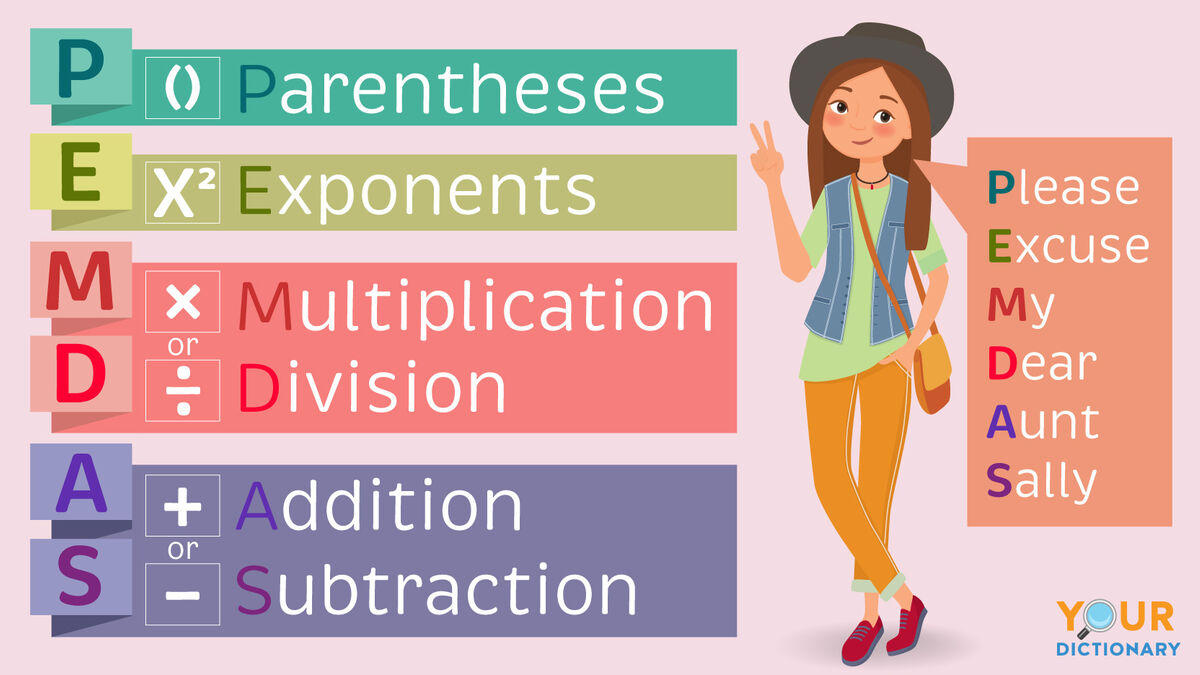
do you know BODMAS or PEDMAS
 pearl pondBOT
Channel closed
Closed by @terse patio
Use .reopen if this was a mistake.
pearl pondBOT
Available help channel!
Send your question here to claim the channel.
Remember:
• Ask your math question in a clear, concise manner.
• Show your work, and if possible, explain where you are stuck.
• Do not immediately ping people or roles. After 15 minutes, feel free to ping <@&286206848099549185> once.
• Type the command .close to free the channel when you're done.
• Be polite and have a nice day!
Read #❓how-to-get-help for further information on how to ask a good question, and about conduct in the question channels.
 modest tartan
2 things
- did i do the log part right?
- how do i find range of the thing inside log
 pearl pondBOT
modest tartan
2 things
1) did i do the log part right?
2) how do i find range of the thing in...
modest tartan
pearl pondBOT
modest tartan
2 things
1) did i do the log part right?
2) how do i find range of the thing in...
modest tartan
also can i just keep this channel open so i dont spam make new channels
plush bramble
modest tartan
also can i just keep this channel open so i dont spam make new channels
that would make it harder for people to help you
modest tartan
plush bramble
that would make it harder for people to help you
ok ill just make new channels
plush bramble
modest tartan
2 things
1) did i do the log part right?
2) how do i find range of the thing in...
which step is the "log part" all 4 of them have log
modest tartan
hope no one minds
modest tartan
plush bramble
which step is the "log part" all 4 of them have log
the last step
and the thing i made with the arrow to explain
 modest tartan
plush bramble
the last expression is incomplete
modest tartan
plush bramble
the last expression is incomplete
yeah i didnt really didnt do whole thing
just to explain the step which is joined by the arrow
the base for last equals to is 5
plush bramble
are you just asking if $\sqrt{5} = 5^\tfrac{1}{2}$?
jolly parrotBOT
pi_day
Compile Error! Click the  reaction for more information.
(You may edit your message to recompile.)
 modest tartan
jolly parrot
**pi\_day**
Compile Error! Click the <:errors:504266556054962196> reaction for m...
modest tartan
jolly parrot
**pi\_day**
Compile Error! Click the <:errors:504266556054962196> reaction for m...
im not sure if the base's power come in denominator or numinator
im wondering about that part
 merry carbon
(also to step back a little bit, are you implying that sin(x) - cos(x) is between -1 and 1?)
 modest tartan
merry carbon
(also to step back a little bit, are you implying that sin(x) - cos(x) is betwee...
modest tartan
merry carbon
(also to step back a little bit, are you implying that sin(x) - cos(x) is betwee...
yes?
oh wait shoot
its root2
man maybe i should take a break im messing up simple stuff
then the 2nd part of what i asked is just dumb now
anyways about the log part
does base power come in deno or numerator
buoyant cypress
bit 
merry carbon
modest tartan
does base power come in deno or numerator
How do you mean "base power"? as in where does the 1/2 go?
modest tartan
would it become 1/3 log10 base5
modest tartan
merry carbon
How do you mean "base power"? as in where does the 1/2 go?
yeah thats what i mean
english is 2nd lang so not really the best
merry carbon
Pretty much, if you use the change of base rule, you can write $\log_{b^k}(c)$ as $\frac{\log_b(c)}{\log_b(b^k)} = \frac 1k \log_b(c)$
jolly parrotBOT
@merry carbon
 modest tartan
jolly parrot
<@788085606483361802>
modest tartan
jolly parrot
<@788085606483361802>
thanks alot
i just hv last question left in set
which i dont know how to appraoch
merry carbon
Sure, which question? 
modest tartan
range of x^3 -12x for x belongs [-3,1]
i belive if i take x common it would creat a quadratic
however i dont know if i would get min value like that
caus min is at x=-3
wait no its "-12x"
so idk
merry carbon
Hmmmm, what have you learned up to this point? Have you e.g. covered calculus yet? 
modest tartan
we havnt done calc yet
merry carbon
Fairs 
modest tartan
wehv done quadratic graphs and the basic funtions
and the GM>AM stuff but i dont think thats usefull here
modest tartan
modest tartan
we havnt done calc yet
well we have done it in phy
differentiate then =0
then differentiate again to see if it a maxima or minima
is that what im supposed to do here?
merry carbon
You could do it that way, and that was the way I was wondering whether they expected you to do it that way, but it can be done without it
modest tartan
merry carbon
You _could_ do it that way, and that was the way I was wondering whether they ex...
can u explain the way to do it without calc?
also i just tried the differentian way however the minima comes at x=2
which is outside of our range of x
so do i just put in the end points of our range of x and see which value is min?
merry carbon
modest tartan
can u explain the way to do it without calc?
I may need to leave an explanation for someone else tbh  I can't remember how to do it off the top of my head, so I'd need to do some digging
modest tartan
merry carbon
I may need to leave an explanation for someone else tbh <:sadCatThumbsUp:7231060...
no worries ill just ask my teach when we have our next class
merry carbon
modest tartan
also i just tried the differentian way however the minima comes at x=2
which is...
And cause we have the minima being "after" x = 1, if we made a roughish sketch, we have that the minimum is gonna be what we get when we plug in x = 1 into the cubic
(it's not too hard to find the roots of the cubic, hence why we can figure out that will be the minimum  )
)
modest tartan
merry carbon
And cause we have the minima being "after" x = 1, if we made a roughish sketch, ...
hmm
well we havnt really studied the cubic graph so i though that if i put end points of range it would give max or min
im not quite sure if this is correct but i belive the cubic graph is somewhat similar to the quadratic graph
bro had to cross his explination 🥀
nvm he uncrossed
merry carbon
Ah no I crossed it out cause I forgot we found the turning points with calculus, I was gonna say "that assumes the turning points" 
modest tartan
merry carbon
Ah no I crossed it out cause I forgot we found the turning points with calculus,...
oh lol
merry carbon
The explanation is fine, I've only slightly embarrassed myself there 
modest tartan
merry carbon
The explanation is fine, I've only slightly embarrassed myself there <:Hehe:6690...
nw bro
if u saw the shi i was asking u wouldnt feel bad 
merry carbon
modest tartan
im not quite sure if this is correct but i belive the cubic graph is somewhat si...
Anyways, depends on how you mean by "similar", odd degree polynomials will either go "up" or "down" (e.g. from bottom left to top right, or top left to bottom right)
modest tartan
merry carbon
Anyways, depends on how you mean by "similar", odd degree polynomials will eithe...
yeah thats what i was saying similar
the max and min of the interval would either be at end points or the turning points
merry carbon
modest tartan
yeah thats what i was saying similar
the max and min of the interval would eith...
Yep, that's pretty much always the case
I'm gonna cheat a little bit and get a graph for us
,w plot y = x^3 - 12x
jolly parrotBOT

 modest tartan
merry carbon
Yep, that's pretty much always the case <:SCgoodjob2:750436894915166321>
modest tartan
merry carbon
Yep, that's pretty much always the case <:SCgoodjob2:750436894915166321>
 modest tartan
jolly parrot
modest tartan
jolly parrot
min in our interval is at x=1
letzzzz gooo
im finly done wit this assigment
 merry carbon
modest tartan
im finly done wit this assigment
merry carbon
modest tartan
im finly done wit this assigment
Do we have to get the max as well? 
modest tartan
merry carbon
Do we have to get the max as well? <:catGiggle:668948717772079128>
max is at x=2
from calc method
um the funtion becomes 16
final range becomes [-11,16]
merry carbon
Yep, -3 is between the left hand root and the max so we're happy 
modest tartan
merry carbon
Yep, -3 is between the left hand root and the max so we're happy <:happycat:9073...

well ima go sleep now
its like 1am where i live
merry carbon
Hope you sleep well  you definitely should get some rest, it's quite late
pearl pondBOT
Channel closed
Closed by @modest tartan
Use .reopen if this was a mistake.
modest tartan
thanks a lot
merry carbon
Have a good one, rest well 
modest tartan
merry carbon
Have a good one, rest well <:SCCOZY:742960114692128868>
Zzz
pearl pondBOT
Available help channel!
Send your question here to claim the channel.
Remember:
• Ask your math question in a clear, concise manner.
• Show your work, and if possible, explain where you are stuck.
• Do not immediately ping people or roles. After 15 minutes, feel free to ping <@&286206848099549185> once.
• Type the command .close to free the channel when you're done.
• Be polite and have a nice day!
Read #❓how-to-get-help for further information on how to ask a good question, and about conduct in the question channels.
 hearty quartz

pearl pondBOT
hearty quartz
<:nyan:999924415284392056>
 slim vigil
Do you have a question?
pearl pondBOT
hearty quartz
<:nyan:999924415284392056>
Asking the actual question right away is more likely to get responses.
Asking "Can I ask...?" or "Does anyone know about...?" doesn't give people enough information to decide whether they can help, and answering can feel like a promise to help with the actual question, which they might find themselves unable to.
pearl pondBOT
hearty quartz
<:nyan:999924415284392056>
If you are done with this channel, please mark your problem as solved by typing .close
pearl pondBOT
@hearty quartz Has your question been resolved?
pearl pondBOT
Channel closed
Closed due to timeout
Use .reopen if this was a mistake.
pearl pondBOT
Available help channel!
Send your question here to claim the channel.
Remember:
• Ask your math question in a clear, concise manner.
• Show your work, and if possible, explain where you are stuck.
• Do not immediately ping people or roles. After 15 minutes, feel free to ping <@&286206848099549185> once.
• Type the command .close to free the channel when you're done.
• Be polite and have a nice day!
Read #❓how-to-get-help for further information on how to ask a good question, and about conduct in the question channels.
sharp smelt
Wanted a quick proof of this checked
 pearl pondBOT
sharp smelt
Wanted a quick proof of this checked
sharp smelt
pearl pondBOT
sharp smelt
Wanted a quick proof of this checked
sharp smelt
As $\sum a_n$ converges absolutely, $(\abs{a_n})$ is bounded, by say $M$. Then $\sum a_n^2 = \sum \abs{a_n} \abs {a_n} ≤ M \sum \abs{a_n}$. As $\sum \abs{a_n}$ converges, by the series comparison test we're done.
 sharp vigil
do you mean absolutely
jolly parrotBOT
Wai
 pearl pondBOT
@sharp smelt Has your question been resolved?
Channel closed
Closed by @sharp smelt
Use .reopen if this was a mistake.
pearl pondBOT
Available help channel!
Send your question here to claim the channel.
Remember:
• Ask your math question in a clear, concise manner.
• Show your work, and if possible, explain where you are stuck.
• Do not immediately ping people or roles. After 15 minutes, feel free to ping <@&286206848099549185> once.
• Type the command .close to free the channel when you're done.
• Be polite and have a nice day!
Read #❓how-to-get-help for further information on how to ask a good question, and about conduct in the question channels.
 shadow elm
 pearl pondBOT
shadow elm
pearl pondBOT
shadow elm
 dire tapir
Have you tried anything?
shadow elm

 ivory basin
I genuinely can't tell what your answer is here
If it's 2^2025-1 then I'm gonna ask you to read the definition of period again
shadow elm
mb
$(2^{2025} - 1) - ( \sum_{d|2025} 2^d - 1)$
ivory basin
Sigma, not sigma
 tropic saddle
\sum
jolly parrotBOT
parthisjoking
 ivory basin
But yea you have the right idea then
Find everything of "period" 2025, and remove elements that have period dividing 2025
shadow elm
is this correct answer ?
do i leave it like this or do i actually calculate everything ?
ivory basin
I don't believe this is correct though, since you'd have to do some inclusion exclusion
Cuz like, smth with period 405 would include periods 81 and 5 and what not
So you can't just naively subtract all factors
ivory basin
Unfortunately not a number theory person myself
Hopefully someone else can help you with that
I'd personally do this by some dynamic programming argument but that's quite computationally heavy
shadow elm
oh
pearl pondBOT
@shadow elm Has your question been resolved?
shadow elm
<@&286206848099549185> 💔
what is mobius inversion
 proper nova
shadow elm
<@&286206848099549185> 💔
what is mobius inversion
proper nova
shadow elm
<@&286206848099549185> 💔
what is mobius inversion
God damn i just scrolled past your channel
 slim jackal
 brazen blaze
shadow elm
<@&286206848099549185> 💔
what is mobius inversion
brazen blaze
shadow elm
<@&286206848099549185> 💔
what is mobius inversion
try to count many secrets as possible
something
 worthy spindle
💀
 red hull
shadow elm
<@&286206848099549185> 💔
what is mobius inversion
red hull
shadow elm
<@&286206848099549185> 💔
what is mobius inversion
A mathematical operation
grave mirage
shadow elm
am i cooked
No this was arguably the hardest from previous year alonside 2^a*3^b problem
pearl pondBOT
@shadow elm Has your question been resolved?
pearl pondBOT
brazen blaze
<@752611007880233101>
Please do not trust ChatGPT or similar AI tools for mathematical tasks, as they often generate output which "sounds correct" but has numerous factual or logical errors. Use of these AI tools to answer other people's help questions is strictly against server rules (see #rules).
Channel closed
Closed due to timeout
Use .reopen if this was a mistake.
pearl pondBOT
Available help channel!
Send your question here to claim the channel.
Remember:
• Ask your math question in a clear, concise manner.
• Show your work, and if possible, explain where you are stuck.
• Do not immediately ping people or roles. After 15 minutes, feel free to ping <@&286206848099549185> once.
• Type the command .close to free the channel when you're done.
• Be polite and have a nice day!
Read #❓how-to-get-help for further information on how to ask a good question, and about conduct in the question channels.
 plush prism
whats 20+1
pearl pondBOT
plush prism
whats 20+1
summer imp
Do you have an actual question?
 smoky gull
21?
plush prism
smoky gull
21?
thx
smoky gull
Ur wlcm ig?
 frank violet
smoky gull
plush prism
damn bro
frank violet
smoky gull
plush prism
damn bro
Please . close if that was all
smoky gull
Just type in . close
pearl pondBOT
Channel closed
Closed by @plush prism
Use .reopen if this was a mistake.
pearl pondBOT
Available help channel!
Send your question here to claim the channel.
Remember:
• Ask your math question in a clear, concise manner.
• Show your work, and if possible, explain where you are stuck.
• Do not immediately ping people or roles. After 15 minutes, feel free to ping <@&286206848099549185> once.
• Type the command .close to free the channel when you're done.
• Be polite and have a nice day!
Read #❓how-to-get-help for further information on how to ask a good question, and about conduct in the question channels.
jolly parrotBOT
Pom

 worldly jewel
yes but it is bad style to write in this way
jolly parrotBOT
Pom
 pearl pondBOT
Channel closed
Closed by @opaque stone
Use .reopen if this was a mistake.
✅ Original question: #help-39 message
worldly jewel
Were you given a statement in that format
because nobody writes like that
Are you in like an intro to proofs class that specifically tests if you can parse logic symbols
because otherwise that is a pretty atrocious way to write mathematics and there's no excuse for it

I guess that makes sense
carry on
pearl pondBOT
Channel closed
Closed by @opaque stone
Use .reopen if this was a mistake.
✅ Original question: #help-39 message
Channel closed
Closed by @opaque stone
Use .reopen if this was a mistake.
pearl pondBOT
Available help channel!
Send your question here to claim the channel.
Remember:
• Ask your math question in a clear, concise manner.
• Show your work, and if possible, explain where you are stuck.
• Do not immediately ping people or roles. After 15 minutes, feel free to ping <@&286206848099549185> once.
• Type the command .close to free the channel when you're done.
• Be polite and have a nice day!
Read #❓how-to-get-help for further information on how to ask a good question, and about conduct in the question channels.
 stoic imp
 jolly parrotBOT
Renato
 ruby cargo
!status
pearl pondBOT
What step are you on?
1. I don't know where to begin.
2. I have begun but got stuck midway.
3. I got an answer but I was told that it's wrong.
4. I got an answer and would like my work checked.
5. I have a question about someone else's work/solution.
6. I have completed the problem and don't need help anymore. Thank you.
7. None of the above
@stoic imp Has your question been resolved?
stoic imp
stoic imp
ruby cargo
!status
can I get some help proving these using this axioms?
ivory basin
jolly parrot
**Renato**
Cute, lemme just look up the field axioms once cuz I keep forgetting which ones are axioms and which ones are theorems
,w field axioms
jolly parrotBOT

 Requested by xavier_dragon
ivory basin
Requested by xavier_dragon
ivory basin
Okay so for the first one, you wanna prove a ⋅ 0 = 0
The first step would be to rewrite the 0 on the LHS to something more useful
Also I'd highly recommend the natural numbers game for this sorta stuff. It's a very good way to learn how to prove stuff starting from axioms
pearl pondBOT
@stoic imp Has your question been resolved?
stoic imp
ivory basin
Cute, lemme just look up the field axioms once cuz I keep forgetting which ones ...
i need to use the axioms that i attached above
ivory basin
Isn't the stuff in the image what you need to prove
stoic imp
ivory basin
Oh right that mb
Hold on
Okay so the axioms in this are:
Commutativity of addition and multiplication
Associativity
Existence of additive identity and additive inverse
Existence of multiplicative identity and inverse (except for 0)
Distributivity
Cool same stuff as what wa said
ivory basin
ivory basin
Okay so for the first one, you wanna prove a ⋅ 0 = 0
Anyway, let's write the 0 as b + (-b) and see what we get from that
 ivory basin
Yup that would work as well
ivory basin
Minor nitpick cuz this is foundational stuff, you wanna write + (- a.0) instead
Cuz you haven't defined subtraction
But yes that proof is correct
stoic imp
a.0 = a.(0+0) = a.0 + a.0
a.0 = a.0 + a.0
a.0 + (-a.0) = a.0 + (a.0 + (-a.0))
0 = a.0 + 0
a.0 = 0
ivory basin
Yup
stoic imp
which axioms are i am using
ivory basin
Firstly you're using the axiom of additive identity to write 0 as 0+0
stoic imp
s3?
ivory basin
ivory basin
Then you're using distributivity to write a.(0+0) as a.0 + a.0
And then D
And then you're using some properties of equations which aren't really field axioms
Stuff like "you can add the same thing to both sides of an equation and that doesn't change it"
stoic imp
ivory basin
And then D
where
ivory basin
Writing a. (0+0) as a.0+a.0
stoic imp
oh. distributivity
ivory basin
Ye
stoic imp
which axioms we used
stoic imp
S3
a.0 = a.(0+0)
D
a.0 = a.0 + a.0
S4
a.0 + (-a.0) = (a.0 + a.0) + (-a.0)
S1
0 = a.0 + (a.0 + (-a.0))
S4
0 = a.0 + 0
S3
0 = a.0
P2
0 = 0.a
ivory basin
Yup.
Also you'd need P2 since the question asks for 0.a
And we have worked with a.0
stoic imp
we good?
ivory basin
Yup
stoic imp
now what
ivory basin
The second question I imagine?
stoic imp
ab = ac
P4
b = c
ivory basin
Basically yeah
ivory basin
Ye
stoic imp
ab = 0
Suppose a ≠ 0
P4
b = 0.a^-1
 worthy lotus
??
ivory basin
stoic imp
ab = 0
Suppose a ≠ 0
P4
b = 0.a^-1
You've also used P2 implicitly
But yes that works
ivory basin
A full proof of what you've done would be
ab = 0
Suppose a ≠ 0. By P4, there exists a^-1
a^-1.(ab) = a^-1.0
By P3,
(a^-1.a)b = a^-1.0
By P2 and P4,
1.b = 0.a^-1
By P3 and (a),
b = 0
It is easy to forget just how much is done implicitly most of the time
stoic imp
ivory basin
ab = 0
Suppose a ≠ 0. By P4, there exists a^-1
a^-1.(ab) = a^-1.0
By P3,
(a^-1....
i shee
stoic imp
ab = ac
By P4, there exists a^-1
a^-1(ab) = a^-1(ac)
by p1
(a^-1a)b = (a^-1a)c
by p4
1.b = 1.c
by p3
b = c
stoic imp
ivory basin
ab = 0
Suppose a ≠ 0. By P4, there exists a^-1
a^-1.(ab) = a^-1.0
By P3,
(a^-1....
what if a = 0
ivory basin
stoic imp
what if a = 0
Well, yes what we have done is one half of it
We have shown that if a ≠ 0 then b = 0
If a = 0, then we already have a = 0
(we need a = 0 or b = 0)
(a = 0 already gives us that)
ivory basin
stoic imp
ab = ac
By P4, there exists a^-1
a^-1(ab) = a^-1(ac)
by p1
(a^-1a)b = (a^-1a)c
b...
Yup
stoic imp
ivory basin
If a = 0, then we already have a = 0
whats your point
stoic imp
 ivory basin
We have two cases for this
Case 1, a = 0. In this case we already have what we want
Case 2, a ≠ 0. In this case, we showed that b = 0
So we have what we want in both cases
stoic imp
what if both a=b=0
ivory basin
That's fine too, it's not an exclusive or
stoic imp
you said two cases
ivory basin
Yes, a = 0 and b = 0 is a subcase of the firdt
The point is, once a = 0, we don't care about the value of b
Cuz we already have one part of the or
So we are done
The idea is that p or q is logically equivalent to "if not p, then q"
We don't care what happens if we have p
All we care about is having q if we don't have p
stoic imp
ivory basin
We don't care what happens if we have p
tautology?
stoic imp
F -> ?
ivory basin
Okay let me put this explicitly
We want to prove a = 0 or b = 0
Case 1: a = 0
In this case, we do not care what the value of b is
Because no matter what the value of b is, we already have a = 0 and therefore the or is already true
Case 2: a ≠ 0
In this case, we have proven that b = 0
Since b = 0 in this case, our or is true once again
These are the only possible cases because a is either zero or non zero
It cannot be anything else
ivory basin
We don't need to do anything if we assume a = 0
Assuming it makes the result we want true immediately

 stoic imp
(-1).a = (-ac)
-ac + ac = 0
-ac + ac + a = a
ivory basin
Make it explicit
stoic imp
fuck my life
stoic imp
(-1).a = a.(-1)
a.(-1) + a.(1) = a(-1+1) = a.0 = 0
a - a = 0
a.(-1) + a.(1) = 0 = a - a
ivory basin
This works if S4 mentions uniqueness
stoic imp
we can prove the inverse is uniK
suppose it isnt, then we
suppose x and y are both inverse additive of z
such that x ≠ y
then
ivory basin
That we can yeah, just makes your life easier if the axioms mention uniqueness
ivory basin
Cool, then attach this as a lemma
stoic imp
stoic imp
x + z = y + z = 0
x + z = y + z
x = y
 woven matrix
the proof of uniqueness in a commutative field (I meant more that the group is commutative) is really short so you're ok
x+z = 0 if x is inverse, if y is another you can add y on both sides
x+(z+y) = y
x+0 = y
ivory basin
Commutative fields are really nice once you're done proving all this obvious bullshit
Unfortunately proving this obvious bullshit is extremely annoying
stoic imp
ivory basin
Commutative fields are really nice once you're done proving all this obvious bul...
sorry
ivory basin
Why are you sorry not like you came up with the bullshit
If anything you're a victim
Yeah e is really really annoying, but you can use d to help somewhat
stoic imp
jejejehe
(-1).a = a.(-1)
a.(-1) + a.(1) = a(-1+1) = a.0 = 0
does this shit work or no
a - a = 0
a- a = a.(-1) + a.(1)
(a - a.(1)) -a = a.(-1)
 ivory basin
Looks good to me but I'm also sleepy lol
stoic imp
fuck my life
pearl pondBOT
@stoic imp Has your question been resolved?
 rough forge
what's your progress on that
stoic imp
well
stoic imp
stoic imp
jejejehe
here
stoic imp
stoic imp
(-1).a = a.(-1)
a.(-1) + a.(1) = a(-1+1) = a.0 = 0
does this shit work or no
a...
@rough forge
rough forge
stoic imp
(-1).a = a.(-1)
a.(-1) + a.(1) = a(-1+1) = a.0 = 0
does this shit work or no
a...
the first line doesnt work, that's what you want to show
but the seocnd line is correct, because you apply P3
by adding both sides the additive inverse of -a
stoic imp
the first line doesnt work, that's what you want to show
care to elaborate?
rough forge
You want to prove (-1)a=-a
but by writing -a as (-1)a you already assume that's true
(-1)a=-a is an assertion
The only things you know is P3: a=1a, D: distributivity and S4: that a has an additive inverse
stoic imp
rough forge
but by writing -a as (-1)a you already assume that's true
I never did that
rough forge
(-1).a = a.(-1)
must have been the wind
stoic imp
but i am just doing xy = yx
rough forge
oh okay
stoic imp
srry, my clipboard is dirty I pasted something else hehe
stoic imp
rough forge
maybe you could state in each step which axiom you use

I am trying to figure out which stuff I did one sec
 rough forge

stoic imp
uff sorry I went to a yogurt eating break for a bit
P2
(-1).a = a.(-1)
S4 and D
a.(-1) + a.(1) = a(-1+1)
no axioms
a(-1+1) = a.0
used exercise a)
a.0= 0
S4
a - a = 0
S3
a- a = a.(-1) + a.(1)
P3 ??
(a - a.(1)) -a = a.(-1)
@errant cedar @rough forge
rough forge
stoic imp
P2
(-1).a = a.(-1)
S4 and D
a.(-1) + a.(1) = a(-1+1)
no axioms
a(-1+1) = a.0
u...
you basically want to prove that (-1)a is an additive inverse of a which means a+(-1)a=0 which you showed since a(-1+1)=a0=0 so this is where you finish
stoic imp
alrighty!!
stoic imp
rough forge
you basically want to prove that (-1)a is an additive inverse of a which means a...
can I get more help with e)
rough forge
what's e)
woven matrix

 stoic imp
this ^
used the proof from d)
(-a) . b = ((-1).a) . b
P1
((-1).a) . b = (-1).(ab)
P2
(-1).(ab) = (-1).(ba)
P1
(-1).(ba) = ((-1).b).a
used the proof from b)
((-1).b).a = (-b).a
P2
(-b).a = a.(-b)
 steel dagger
pretty sure you can derive e) without using commutativity
stoic imp
care to elaborate?
steel dagger
stoic imp
care to elaborate?
consider (a-a)=0 for all a in the ring
steel dagger
then use a)
steel dagger
spoiler, try a bit before unspoilering: || start from using 0b= 0 and a0=0||
rough forge

stoic imp
i am trying
stoic imp
what i dont understand is how to avoid using p2
this lad is saying we can avoid commutativity, correct?
steel dagger
a hint if you havent unspoilered yet: prove that a(-b)= -(ab) and (-a)b= -ab instead
stoic imp
Mmm
stoic imp
steel dagger
a hint if you havent unspoilered yet: prove that a(-b)= -(ab) and (-a)b= -ab ins...
i dont get it
wtff is going on
steel dagger
stoic imp
i dont get it
do you see the motivation of the hint?
stoic imp
nop
stoic imp
steel dagger
pretty sure you can derive e) without using commutativity
is this true?
steel dagger
stoic imp
is this true?
its, i have done it on a call
stoic imp
call?
rough forge
stoic imp
is this true?
is this proof-baiting
stoic imp
can I join
rough forge
sure
stoic imp
rough forge
is this proof-baiting
i was wondering because i dont see how
steel dagger
im in vc
rough forge
stoic imp
you can still learn a lot from others proof
yes but in your situation it's only instant gratification, you dont gain anything, you think you do, but when the paper is blank, your mind is blank
stoic imp
uff I already forgot
let me try
(-a).b + ab = (-a + a).b = 0.b = 0
(-a).b + ab = 0
(-a).b -ab + ab = -ab
(-a).b + (ab - ab) = -ab
(-a).b + 0 = -ab
(-a).b = -ab
steel dagger
stoic imp
(-a).b + ab = (-a + a).b = 0.b = 0
(-a).b + ab = 0
(-a).b -ab + ab = -ab
(-a).b ...
do you remember the motivation of this?
steel dagger
stoic imp
not use commutativity?
partially correct but not the actual intention
stoic imp
steel dagger
partially correct but not the actual intention
what is the real motivation
to use transitivity?
oh maybe that
steel dagger
steel dagger
a hint if you havent unspoilered yet: prove that a(-b)= -(ab) and (-a)b= -ab ins...
how do you know if this is true?
stoic imp
if everything is equal to each other
I pressume
like, pairwise
if everything is pairwise equal to each other
steel dagger
stoic imp
if everything is equal to each other
?
stoic imp

stoic imp
idk
steel dagger
stoic imp
(-a).b + ab = (-a + a).b = 0.b = 0
(-a).b + ab = 0
(-a).b -ab + ab = -ab
(-a).b ...
you are missing implication signs
is it both ways or one way implication
stoic imp
should be iffs
rough forge

pearl pondBOT
@stoic imp Has your question been resolved?
Channel closed
Closed by @stoic imp
Use .reopen if this was a mistake.
pearl pondBOT
Available help channel!
Send your question here to claim the channel.
Remember:
• Ask your math question in a clear, concise manner.
• Show your work, and if possible, explain where you are stuck.
• Do not immediately ping people or roles. After 15 minutes, feel free to ping <@&286206848099549185> once.
• Type the command .close to free the channel when you're done.
• Be polite and have a nice day!
Read #❓how-to-get-help for further information on how to ask a good question, and about conduct in the question channels.
 fading nexus
I’m stuck on what to do next
 pearl pondBOT
fading nexus
I’m stuck on what to do next
pearl pondBOT
fading nexus
I’m stuck on what to do next
 sweet junco
fading nexus
I’m stuck on what to do next
sweet junco
fading nexus
I’m stuck on what to do next
keep going
 sterile python
There are two -cos^2x
sweet junco
fading nexus
I don’t know what else I can do tho
what if you multiplied the first one on the right by (1+cosx)
sterile python
You can try simplify numerator
sweet junco
sweet junco
what if you multiplied the first one on the right by (1+cosx)
both sides
fading nexus
sterile python
There are two -cos^2x
The first one has a 1- but the second one doesn’t
sweet junco
by (1+cosx)/(1+cosx)
fading nexus
I’m confused
sweet junco
fading nexus
I’m confused
sinx/(1-cosx), multiplying it by (1+cosx)/(1+cosx)
fading nexus
This is how my teacher did it and I’m very confused
 sweet junco
fading nexus
I’m stuck on what to do next
sweet junco
fading nexus
I’m stuck on what to do next
how did you randomly get 1-2cosx-cos^2x
I'm seeing it now
fading nexus
sweet junco
how did you randomly get 1-2cosx-cos^2x
I factored it by putting it in the box
sweet junco
fading nexus
I factored it by putting it in the box
-cosx * -cosx = +cos^2x, u also had that one
pearl pondBOT
@fading nexus Has your question been resolved?
pearl pondBOT
Channel closed
Closed due to timeout
Use .reopen if this was a mistake.
Available help channel!
Send your question here to claim the channel.
Remember:
• Ask your math question in a clear, concise manner.
• Show your work, and if possible, explain where you are stuck.
• Do not immediately ping people or roles. After 15 minutes, feel free to ping <@&286206848099549185> once.
• Type the command .close to free the channel when you're done.
• Be polite and have a nice day!
Read #❓how-to-get-help for further information on how to ask a good question, and about conduct in the question channels.
 stark basin
guyes
pearl pondBOT
stark basin
guyes
stark basin
in one is free for a call i need help
plush bramble
stark basin
in one is free for a call i need help
Just ask your question here
pearl pondBOT
stark basin
guyes
Asking the actual question right away is more likely to get responses.
Asking "Can I ask...?" or "Does anyone know about...?" doesn't give people enough information to decide whether they can help, and answering can feel like a promise to help with the actual question, which they might find themselves unable to.
What step are you on?
1. I don't know where to begin.
2. I have begun but got stuck midway.
3. I got an answer but I was told that it's wrong.
4. I got an answer and would like my work checked.
5. I have a question about someone else's work/solution.
6. I have completed the problem and don't need help anymore. Thank you.
7. None of the above
@stark basin Has your question been resolved?
pearl pondBOT
Channel closed
Closed due to timeout
Use .reopen if this was a mistake.
Available help channel!
Send your question here to claim the channel.
Remember:
• Ask your math question in a clear, concise manner.
• Show your work, and if possible, explain where you are stuck.
• Do not immediately ping people or roles. After 15 minutes, feel free to ping <@&286206848099549185> once.
• Type the command .close to free the channel when you're done.
• Be polite and have a nice day!
Read #❓how-to-get-help for further information on how to ask a good question, and about conduct in the question channels.
 wraith wraith
explain inverse functions
pearl pondBOT
wraith wraith
explain inverse functions
wraith wraith
liek I wanyt you to start from the very basics
my teacher yapped abt random stuff but I got so confused by all of it
sterile python
wraith wraith
explain inverse functions
wraith wraith
sterile python
google
it does not make sense
sterile python
inverse function is instead y interm of x is now x interm of y
y=3x? then x = y/3
sterile python
wraith wraith
it does not make sense

 vestal tapir
it's when you flip the graph
wraith wraith
sterile python
I know hwo to do the proecdure
I just do not understand why that works
or why we solve to make y the subject after
sterile python
wdym why that works
wraith wraith
vestal tapir
it's when you flip the graph
I also understand this
wraith wraith
sterile python
wdym why that works
like WHY does changing the variables (x and y) GIVE the inverse
sterile python
reverse the role of input and output
 wicked kayak
if f turns x's into y's, then the inverse turns y's into x's
sterile python
if input x gives output y, if you change, then the role also change
wraith wraith
sterile python
if input x gives output y, if you change, then the role also change
ok but then why do we solve for y in that one after
sterile python
wraith wraith
ok but then why do we solve for y in that one after
then tell me why you solve for x in normal functions
its the same but just inverse, thats it
wraith wraith
sterile python
then tell me why you solve for x in normal functions
cuz thats what ur looling fo
sterile python
then we looking for y in the inverse
wraith wraith
sterile python
its the same but just inverse, thats it
ok but like if there is a restriction in an inverse but u rearrange it for the y
then u might lose a resitrction
sterile python
example?
rough forge
wraith wraith
like WHY does changing the variables (x and y) GIVE the inverse
You are mirroring the function values across the y=x line
so in a sense it's a transformation
wraith wraith
sterile python
example?
y=2/x+3
change the x and y
x=2/y+3
yx=2+3y
yx-3y=2
y(x-3)=2
y=2/(x-3)
we have now lost the original restriction of y cannot equal -3
@sterile python I just don't understand the logic
wraith wraith
sterile python
then we looking for y in the inverse
why
rough forge
blud
wraith wraith
rough forge
blud
wassup
rough forge
try to solve 3=2/x+3
you get 2/x=0 which is a contradiction
you will never attain y=3
you never lost something cause there was never something to begin with
wicked kayak
wraith wraith
ok but then why do we solve for y in that one after
You don't have to swap the variables. Suppose you have a function y=f(x), and f is invertible. You can just write x = f^-1 (y). In other words just solve for x in the original equation.
wraith wraith
wicked kayak
You don't have to swap the variables. Suppose you have a function y=f(x), and f ...
how can we find the inverse from just the original function
ok sorry I think I just am not getting it
are theer any videos you reccomend I watch?
wraith wraith
rough forge
you will never attain y=3
but I was referring to y=-3
rough forge
as mention ^ swapping y with x in other words y=x is only mirroring your original function along the first y=x line
wicked kayak
Try to pinpoint your question. It seems you are just getting caught up in notation. x and y are ultimately just symbols. in the notation y = f(x), x is the input of the function and y is the output. When we write x = f^-1 (y), we are saying y is the input of f^-1 and x is the output.
rough forge
wraith wraith
but I was referring to y=-3
why can't it be -3?
wraith wraith
rough forge
why can't it be -3?
loook at my word abnove
wraith wraith
wraith wraith
change the x and y
^^
rough forge
i looked and it doesnt make sense
wraith wraith
I think I am overcompiating this
wraith wraith
rough forge
i looked and it doesnt make sense
why not
I want to work thru this step by step sorry im just very confused rn
like from the beginning
so f(x)=y
rough forge
let y=-3 then -3=2/x+3 => -6=2/x => x=-1/3 so f maps -1/3 to -3 and the invese -3 to -1/3
wraith wraith
inverse of f(x) = x
wicked kayak
wraith wraith
I think I am overcompiating this
It does seem you are overthinking a bit -- do you know how to draw a function-as-a-machine diagram?
wraith wraith
wicked kayak
It does seem you are overthinking a bit -- do you know how to draw a function-as...
yea
wicked kayak
let's call our function f, you can put x's in it and it turns them into y's
wraith wraith
wicked kayak
let's call our function f, you can put x's in it and it turns them into y's
yes
wicked kayak
okay, so if f is invertible
wraith wraith
like f(x)=2x^2+6x+2 or whatevr
wraith wraith
wicked kayak
okay, so if f is invertible
it must pass the horizontal line test
wicked kayak
then there is another function f^-1, that takes in those same y's that came out of f, and turns them back into x's
wraith wraith
because if it does not, that means there are multiple x's for the same y
which altho is a function,
it means if u invert it, the function will not know which x to take
wraith wraith
wicked kayak
then there is another function f^-1, that takes in those same y's that came out ...
yes
wicked kayak
Is any part of what i have said not clear atp
wraith wraith
wraith wraith
it means if u invert it, the function will not know which x to take
what wud happen if u took the inverse of smth where it does not pass horizontal line test?
wraith wraith
wicked kayak
Is any part of what i have said not clear atp
nope! everything makes sense so far!
wicked kayak
you can't, because in that case the inverse does not exist
We say that a function f is invertible if it (1) is one-to-one (i.e. passes the horizontal line test) and (2) is "onto"
It seems that at your level of understanding you do not need to worry about "onto"-ness
wraith wraith
wicked kayak
you can't, because in that case the inverse does not exist
ok
wicked kayak
so if your function is not 1-1, then the question "what is the inverse?" makes no sense
does that help?
wraith wraith
wicked kayak
so if your function is not 1-1, then the question "what is the inverse?" makes n...
yes
wraith wraith
wicked kayak
does that help?
yes
wicked kayak
what else you got
wraith wraith
but more specifically now I want to dig into why flipping the x and y does work for finding the inverse
sorry mb I mistyped
wicked kayak
okay so this is just notation, again you do not have to do it
we typically do it because we are interested in plotting f and its inverse on the same set of axes
wraith wraith
wicked kayak
we typically do it because we are interested in plotting f and its inverse on th...
ok
wait I just realixed if u flip a horizontal line over the line y=x then you get a vertical line
does that have anything to do with inverse functions not working if it does not pas s horizontal line test?
wicked kayak
again, there is no "inverse function" if the function in question does not pass the horizontal line test, so there is nothing to either work or not work
wicked kayak
wraith wraith
wait I just realixed if u flip a horizontal line over the line y=x then you get ...
yes, but realize vertical lines do not pass the vertical line test and so are not functions, so this is irrelevant to the discussion of inverse functions
or functions in general
wraith wraith
wicked kayak
yes, but realize vertical lines do not pass the vertical line test and so are no...
I meant like
the fact that the above is true
is another reason the horizontal line test works right
wicked kayak
the "solve for y" part when finding the inverse is attempted in order to basically check whether the "inverse" is a function. If you can solve it for y then the inverse is a function. If you cannot, it is not.
wicked kayak
wraith wraith
is another reason the horizontal line test works right
what do you mean reason the horizontal line test works?
what do you mean "works"?
wraith wraith
wicked kayak
what do you mean reason the horizontal line test works?
the reason the horizontal line test proves an inverse function exists
wicked kayak
the horizontal line test is a graphical characterization of the definition of injectivity (1-1)
Okay so tell me what a function is, precisely
we need to check that your understanding is correct
wraith wraith
wicked kayak
Okay so tell me what a function is, precisely
every input gives one output
one output and exactly one
 verbal whale
Very well
wicked kayak
correct. now a definition: we say a function is 1-1 if whenever f(x)=f(y), we have x=y.
graphically, a function is 1-1 if it passes the horizontal line test.
(1-1 is read "one-to-one")
a function needs to be 1-1 in order to be invertible, because if it is not, then the "inverse" could take in single numbers and output more than one thing, and thus won't be a function
make sense?
wraith wraith
wicked kayak
correct. now a definition: we say a function is 1-1 if whenever f(x)=f(y), we ha...
ok
wraith wraith
wicked kayak
make sense?
yea
wicked kayak
okay good, feel better now?
wraith wraith
wicked kayak
okay good, feel better now?
hm
I am still confused why after flipping the variabales
u need to solve for y = something
like for the inverse ^^
wraith wraith
wicked kayak
correct. now a definition: we say a function is 1-1 if whenever f(x)=f(y), we ha...
I thought of it more like one to one means every y only corresponds to one x
how does this work
verbal whale
Because we usually write our functions with x as the input variable and y as the output variable
wraith wraith
verbal whale
Because we usually write our functions with x as the input variable and y as the...
I think all the variable changes is what ocnfuses me
wicked kayak
wraith wraith
u need to solve for y = something
you don't "need" to necessarily. but your ability to do it gives you information about whether or not the function is invertible. Again, the notation y = f(x) means y is a function of x. We don't typically plot x = g(y) graphs on the same set of axes and call g a "function". More precisely, f is a function of x, and g is a function of y, but may not be a function of x
wraith wraith
wicked kayak
you don't "need" to necessarily. but your ability to do it gives you information...
ok
wicked kayak
wraith wraith
I think all the variable changes is what ocnfuses me
if we have f(x) = x + 3, we know the inverse of "adding 3" is "subtracting 3". Hence f^-1(x) = x-3
verbal whale
wraith wraith
I think all the variable changes is what ocnfuses me
For example, f(x) = x - 6
If we write y = x - 6 and, given a value of y we want to know the x that generated it, we isolate x
=> x = y + 6
So f^-1(y) = y + 6
But it isn't common to use y as independent variable, hence we change it to x and write:
f^-1(x) = x + 6
wraith wraith
ok
wicked kayak
You are bogging yourself down in the roles that the symbols are playing. It does not matter that much. Like @verbal whale said, we typically use x as the independent variable, and y as the dependent variable, so writing f^-1(y) = x is a bit awkward
wicked kayak
for sure, good luck
wraith wraith
@wicked kayak @verbal whale !
wraith wraith
wicked kayak
for sure, good luck
I have an exam on monday
wicked kayak
take some time to digest. draw some pictures.
pearl pondBOT
@wraith wraith Has your question been resolved?
Channel closed
Closed by @wraith wraith
Use .reopen if this was a mistake.
pearl pondBOT
Available help channel!
Send your question here to claim the channel.
Remember:
• Ask your math question in a clear, concise manner.
• Show your work, and if possible, explain where you are stuck.
• Do not immediately ping people or roles. After 15 minutes, feel free to ping <@&286206848099549185> once.
• Type the command .close to free the channel when you're done.
• Be polite and have a nice day!
Read #❓how-to-get-help for further information on how to ask a good question, and about conduct in the question channels.
 prime stream
Pinter, Abstract Algebra, Chapter 29, Ex. A7
Clearly, $\pi$ is algebraic over $\mathbb{Q}(\pi^3)$. Now, as I understand it, we need to prove that no polynomial of degree less than $3$ in $\mathbb{Q}(\pi^3)[x]$ has $\pi$ as a root.
If so, I proceeded as follows, although there might be a simpler way. Let us prove that $\pi \notin \mathbb{Q}(\pi^3)$. By a previously proven theorem, $\mathbb{Q}(\pi^3)$ consists of rational expressions of the form
[
\frac{a_n (\pi^3)^n + \cdots + a_0}{b_m (\pi^3)^m + \cdots + b_0}
]
(with nonzero denominator). Suppose $\pi \in \mathbb{Q}(\pi^3)$. Then
[
\pi = \frac{a_n (\pi^3)^n + \cdots + a_0}{b_m (\pi^3)^m + \cdots + b_0}.
]
Hence,
[
a_n (\pi^3)^n + \cdots + a_0 - b_m \pi^{3m+1} - \cdots - b_0 \pi = 0.
]
Since the powers of $\pi$ in the first part do not coincide with those in the second part, the expression can equal zero only if all coefficients are zero, which contradicts the assumption. Therefore, $\pi \notin \mathbb{Q}(\pi^3)$.
Thus, $\pi$ cannot be a root of a linear polynomial in $\mathbb{Q}(\pi^3)[x]$. Suppose $\pi$ is a root of a quadratic polynomial $x^2 + bx + c \in \mathbb{Q}(\pi^3)[x]$. Then it is divisible by $x - \pi$ in $\mathbb{Q}(\pi^3)[x]$, which again is impossible. Therefore, the minimal polynomial of $\pi$ is $x^3 - \pi^3$.
 pearl pondBOT
prime stream
Pinter, Abstract Algebra, Chapter 29, Ex. A7
Clearly, $\pi$ is algebraic over $...
jolly parrotBOT
pearl pondBOT
prime stream
Pinter, Abstract Algebra, Chapter 29, Ex. A7
Clearly, $\pi$ is algebraic over $...
jolly parrotBOT
Dedekind
 prime stream
Check, please, if the proof is correct. Or maybe there is a simpler way to do it?
pearl pondBOT
@prime stream Has your question been resolved?
 autumn trellis
Looks correct, maybe you should say something like x-pi dividing x^2+bx+c is not possible due to the same reason as before, instead of just saying that's it's not possible (although maybe you meant that, some may take it wrongly)
As for an easier method, just showing that x^3-pi^3 is irreducible in Q(pi^3)[x] is enough (think of eisensteins criteria + gauss lemma)
prime stream
autumn trellis
Looks correct, maybe you should say something like x-pi dividing x^2+bx+c is not...
Thank you! But isn't the eisensteins criteria applied only in Q[x]?
autumn trellis
 prime stream
autumn trellis
prime stream
autumn trellis
ah, I see, didn't know about it. But as I understand, we still need to prove that pi is not in Q(pi^3) in order to use it?
autumn trellis
take D=Q[pi^3].
(pi^3) Is a prime ideal be ause quotient by it is Q which is an integral domain
Then the above theorem (Eisenstein) says x^3-pi^3 is irreducible in Q[pi^3][x]
And Gauss lemma says that the irreducibility carries over to Q(pi^3)[x]
prime stream
autumn trellis
take D=Q[pi^3].
(pi^3) Is a prime ideal be ause quotient by it is Q which is an ...
think I understood, thank you very much!
.close
pearl pondBOT
Channel closed
Closed by @prime stream
Use .reopen if this was a mistake.
autumn trellis
prime stream
think I understood, thank you very much!
No problem!
pearl pondBOT
Available help channel!
Send your question here to claim the channel.
Remember:
• Ask your math question in a clear, concise manner.
• Show your work, and if possible, explain where you are stuck.
• Do not immediately ping people or roles. After 15 minutes, feel free to ping <@&286206848099549185> once.
• Type the command .close to free the channel when you're done.
• Be polite and have a nice day!
Read #❓how-to-get-help for further information on how to ask a good question, and about conduct in the question channels.
 onyx otter
Task: Given a poset $(X,\leq)$, prove that
$$A \preceq B : \Leftrightarrow \inf(A) \leq \inf(B)$$
never defines a partial order on the power set of $X$.
Hint: Do the cases of $X = \varnothing$ and $X \neq \varnothing$ seperately.
My question: If $X = \varnothing$ I'd just start checking the properties of a partial order one by one. But like... What is $\inf(\varnothing)$?
pearl pondBOT
onyx otter
Task: Given a poset $(X,\leq)$, prove that
$$A \preceq B : \Leftrightarrow \in...
jolly parrotBOT
Ruby
 onyx otter
.close
pearl pondBOT
Channel closed
Closed by @onyx otter
Use .reopen if this was a mistake.
ivory basin
onyx otter
Task: Given a poset $(X,\leq)$, prove that
$$A \preceq B : \Leftrightarrow \in...
What set are you working in
onyx otter
I noticed that since X is the empty set, the infimum can't even exist
ivory basin
$\inf{\varnothing} = \sup{X}$ usually
jolly parrotBOT
Xavier 🌺
 onyx otter
Because it would have to be an element of X
ivory basin
.reopen so it doesn't close on us
pearl pondBOT
✅ Original question: #help-39 message
onyx otter
So it's obviously no partial order, since it isn't even a well defined relation
I'm working on the other part now
(X nonempty)
ivory basin
Ah fair
onyx otter
Thank you :)
onyx otter
ivory basin
And the other way around for sup
Ok, got the other direction too:
We know, that $\abs{X} < \abs{P(X)}$ (Cantor type shi), so $inf: P(X) \to X$ (just assume that all infima exist, cus otherwise it's not well defined) cannot be injective, so there are $X, Y \in P(X)$ s.t. $X \neq Y$, but $\inf(X) = \inf(Y)$, so $X \preceq Y \preceq X$, which shows that this is never antisymmetric.
jolly parrotBOT
Ruby
 pearl pondBOT
Channel closed
Closed by @onyx otter
Use .reopen if this was a mistake.
 smoky tartan
onyx otter
Ok, got the other direction too:
We know, that $\abs{X} < \abs{P(X)}$ (Cantor t...
smoky tartan
onyx otter
Ok, got the other direction too:
We know, that $\abs{X} < \abs{P(X)}$ (Cantor t...
Wtf is this
I thought maths was just 2+2
onyx otter
smoky tartan
I thought maths was just 2+2
What is "2"? Have you previously defined this symbol? (I'm in uni. We don't really do numbers...)
pearl pondBOT
Available help channel!
Send your question here to claim the channel.
Remember:
• Ask your math question in a clear, concise manner.
• Show your work, and if possible, explain where you are stuck.
• Do not immediately ping people or roles. After 15 minutes, feel free to ping <@&286206848099549185> once.
• Type the command .close to free the channel when you're done.
• Be polite and have a nice day!
Read #❓how-to-get-help for further information on how to ask a good question, and about conduct in the question channels.
smoky tartan
onyx otter
What is "2"? Have you previously defined this symbol? (I'm in uni. We don't real...
Stfu. I can't even do factorization. And how tf u do maths in uni. I once saw it and I almost died
pearl pondBOT
smoky tartan
Stfu. I can't even do factorization. And how tf u do maths in uni. I once saw it...
pearl pondBOT
Channel closed
Closed by @smoky tartan
Use .reopen if this was a mistake.
smoky tartan
.close
onyx otter
smoky tartan
Stfu. I can't even do factorization. And how tf u do maths in uni. I once saw it...
It's... An aquired taste, ig
sterile python
smoky tartan
Stfu. I can't even do factorization. And how tf u do maths in uni. I once saw it...
Valid crashout😂
pearl pondBOT
Available help channel!
Send your question here to claim the channel.
Remember:
• Ask your math question in a clear, concise manner.
• Show your work, and if possible, explain where you are stuck.
• Do not immediately ping people or roles. After 15 minutes, feel free to ping <@&286206848099549185> once.
• Type the command .close to free the channel when you're done.
• Be polite and have a nice day!
Read #❓how-to-get-help for further information on how to ask a good question, and about conduct in the question channels.
pearl pondBOT
Channel closed
Channel closed due to the original message being deleted.
If you did not intend to do this, please open a new help channel,
as this action is irreversible, and this channel may abruptly lock.
Available help channel!
Send your question here to claim the channel.
Remember:
• Ask your math question in a clear, concise manner.
• Show your work, and if possible, explain where you are stuck.
• Do not immediately ping people or roles. After 15 minutes, feel free to ping <@&286206848099549185> once.
• Type the command .close to free the channel when you're done.
• Be polite and have a nice day!
Read #❓how-to-get-help for further information on how to ask a good question, and about conduct in the question channels.
 arctic hatch
 pearl pondBOT
arctic hatch
arctic hatch
pearl pondBOT
arctic hatch
arctic hatch
Just like the 1st image end behavior (marked green), for the 2nd image, can I say that the end behavior is as follows:

3rd image

would this be correct?
 humble tendon
arctic hatch
would this be correct?
humble tendon
arctic hatch
would this be correct?
i don't see why not
pearl pondBOT
@arctic hatch Has your question been resolved?
buoyant cypress
arctic hatch
3rd image
for f(x) = $\frac{3x^5 - x^2}{x^3 + 3}$ \
$x \to \pm \infty, f(x) \approx 3x^2$\
$\lim_{x \to \pm \infty}, f(x) \to \infty$
jolly parrotBOT
professor paradox
 arctic hatch
if we look at the graph, as x is approaching -ve infinity, f(x) is approaching 3x^2 right? so can I not say that?
 sweet junco
arctic hatch
if we look at the graph, as x is approaching -ve infinity, f(x) is approaching 3...
sweet junco
arctic hatch
if we look at the graph, as x is approaching -ve infinity, f(x) is approaching 3...
it would be appropriate to say acts like 3x^2 or is similar to 3x^2 the higher x-values we have, it also goes both ways(- and +)
but yeah approaching is also the right wording I would suppose
buoyant cypress
arctic hatch
if we look at the graph, as x is approaching -ve infinity, f(x) is approaching 3...
you can say that
arctic hatch
arctic hatch
3rd image
so this is correct?
buoyant cypress
arctic hatch
3rd image
mhm.. i dont feel its incorrect it like saying f(x) is asymptotic to 3x^2 as x-> +- infinity
sweet junco
arctic hatch
so this is correct?
it goes both ways, it does approach 3x^2 both ways
arctic hatch
sweet junco
it goes both ways, it does approach 3x^2 both ways
but for +ve infinity, the curve is outside 3x^2 then how is it approaching, it just acts like 3x^2
arctic hatch
arctic hatch
I want to say it this way bcz in the 1st image, they said it like this
sweet junco
arctic hatch
but for +ve infinity, the curve is outside 3x^2 then how is it approaching, it j...
it is not exactly 3x^2, as x approaches infinity it will act closer and closer to it but it is NEVER exactly 3x^2, it doesn't matter if it's inside or outside, that's just cuz I think (3x^2-1/x)/(1+3/x^3) gets higher if x is negative whereas it gets lower if x is positive
arctic hatch
sweet junco
it is not exactly 3x^2, as x approaches infinity it will act closer and closer t...
if it's outside, how is it going towards 3x^2
it's not, so we can't say that, can we?
sweet junco
arctic hatch
if it's outside, how is it going towards 3x^2
bc the distance shortens
think of what happens with -1/x as you go to negative infinity or something, it becomes increasingly positive, what about the bottom part, 3/x^3 becomes decreasingly negative so it tends to be higher than the graph of 3x^2(or in this case "inside")
now what if x approaches positive infinity, the values of -1/x decreases 3x^2 or rather gets more subtracted to it or smth while the value of 3/x^3 keeps being positive so it would be smaller than 3x^2, thus outside as you are referring to,
however, as we keep going along, the deficit gets shorter and shorter, it gets trimmed as we're going along until there isn't any
wait
I'm not done typing
sweet junco
sweet junco
bc the distance shortens
think of what happens with -1/x as you go to negative ...
I prolly didn't make sense here but the behavior at the start of the graph doesn't always define the behavior of a graph at infinity
arctic hatch
yh I don't get it
sweet junco
arctic hatch
yh I don't get it
-1/x if x is negative is positive, so the numerator increases
+3/x^3 if x is negative is negative, so the denominator decreases, as the denominator decreases and the numerator increases, it would be greater than JUST 3x^2, thus appearing to be "inside" 3x^2
-1/x if x is positive is negative, so the numerator decreases
+3/x^3 if x is positive, is positive, so the denominator increaseS
as the numerator decreases and the denominator increases, it would be lower than JUST 3x^2, thus appearing to be "outside" 3x^2
vice versa also applies here where 3x^2 would be inside of f(x) and the other one or smth
however these values LOWER to almost 0 as they approach infinity thus being negligible
buoyant cypress
arctic hatch
if it's outside, how is it going towards 3x^2
even if its it outside youcan still say that it is moving closer the parabola
arctic hatch
so if it were an asymptote we would've said that the curve is approaching 3x^2 (just like the 1st image), but since it's not , we are saying that it approaches +- infinity instead.... right?
buoyant cypress
arctic hatch
so if it were an asymptote we would've said that the curve is approaching 3x^2 (...

In analytic geometry, an asymptote ( ) of a curve is a straight line such that the distance between the curve and the line approaches zero as one or both of the x or y coordinates tends to infinity. In projective geometry and related contexts, an asymptote of a curve is a line which is tangent to the curve at a point at infinity.
The word "asymp...
arctic hatch
buoyant cypress
https://en.wikipedia.org/wiki/Asymptote#Curvilinear_asymptotes
but there is no H.A or S.A in this problem
sweet junco
arctic hatch
so if it were an asymptote we would've said that the curve is approaching 3x^2 (...
asymptote has a few different meanings, the high school one is super generalized to just a line or something
well not a few different meanings
arctic hatch
sweet junco
asymptote has a few different meanings, the high school one is super generalized...
so it's an asymptote? 3x^2 ?
sweet junco
arctic hatch
so it's an asymptote? 3x^2 ?
yea ig
buoyant cypress
arctic hatch
so it's an asymptote? 3x^2 ?
not a linear asymptote
altho i do not much about the terminology we might need to consider the definition of asymptote
arctic hatch
sweet junco
yea ig
so can I say that as x approaches both +ve and -ve infinity, f(x) approaches 3x^2?
sweet junco
arctic hatch
so can I say that as x approaches both +ve and -ve infinity, f(x) approaches 3x^...
prolly
pearl pondBOT
Channel closed
Closed by @arctic hatch
Use .reopen if this was a mistake.
pearl pondBOT
Available help channel!
Send your question here to claim the channel.
Remember:
• Ask your math question in a clear, concise manner.
• Show your work, and if possible, explain where you are stuck.
• Do not immediately ping people or roles. After 15 minutes, feel free to ping <@&286206848099549185> once.
• Type the command .close to free the channel when you're done.
• Be polite and have a nice day!
Read #❓how-to-get-help for further information on how to ask a good question, and about conduct in the question channels.
 jolly meadow
hey i need some help with f(x) = ((1-5a)/(a+1))^x, i have to find the values of a so that f is defined in all R. I know a+1 must not be 0 but is there another condition that is neccesary?
pearl pondBOT
jolly meadow
hey i need some help with f(x) = ((1-5a)/(a+1))^x, i have to find the values of ...
 light helm
you don't want the base to be negative
 random ermine
first note that what ur exponentiating is a constant
wrt x
let b = (1-5a)/(a+1)
if b < 0 then f(1/2) = sqrt(b) which it not defined
pearl pondBOT
Channel closed
Closed by @jolly meadow
Use .reopen if this was a mistake.
pearl pondBOT
Available help channel!
Send your question here to claim the channel.
Remember:
• Ask your math question in a clear, concise manner.
• Show your work, and if possible, explain where you are stuck.
• Do not immediately ping people or roles. After 15 minutes, feel free to ping <@&286206848099549185> once.
• Type the command .close to free the channel when you're done.
• Be polite and have a nice day!
Read #❓how-to-get-help for further information on how to ask a good question, and about conduct in the question channels.
pearl pondBOT
Please don't occupy multiple help channels.
Channel closed
Channel closed due to the original message being deleted.
If you did not intend to do this, please open a new help channel,
as this action is irreversible, and this channel may abruptly lock.
Available help channel!
Send your question here to claim the channel.
Remember:
• Ask your math question in a clear, concise manner.
• Show your work, and if possible, explain where you are stuck.
• Do not immediately ping people or roles. After 15 minutes, feel free to ping <@&286206848099549185> once.
• Type the command .close to free the channel when you're done.
• Be polite and have a nice day!
Read #❓how-to-get-help for further information on how to ask a good question, and about conduct in the question channels.
 midnight haven
need help in linear algebra, 2 questions:
-
If matrix A is an nxn matrix and Ax=b has more than 1 solution for some b, then the transformation x->Ax is not 1-to-1. What else can you say about this transformation?
-
Suppose A is an nxn matrix with the property that the equation Ax=b has at least one solution for each b in R^n. Without using Theorems 5 or 8, explain why each equation Ax=b has exactly one solution.
Theorem 5 & 8 will be provided with photos.

 pearl pondBOT
midnight haven
need help in linear algebra, 2 questions:
1) If matrix A is an nxn matrix and A...
midnight haven
pearl pondBOT
midnight haven
need help in linear algebra, 2 questions:
1) If matrix A is an nxn matrix and A...
midnight haven
I'm confused by question 1 because Theorem 8 says an invertible matrix must have "at least one solution" (g) and the transformation x->Ax is 1-to-1 (f). In the question, though, it says Ax=b has more than 1 solution for some b, and that the transformation is NOT 1-to-1. I understand that an invertible matrix can only have one solution (linearly independent), but I'm confused by the "at least". It's worded strangely. If that's the case, then I guess it makes sense why it wouldn't apply here. I'm not sure what else I could say about it. That it's not invertible? Singular matrix?
tropic saddle
yes not invertible
thats about it
the reason th 8 states it like that is that its often convenient to have slightly weaker sounding statements that you can prove
midnight haven
And I'm not sure how to answer question 2 without using the 2 theorems. I could apply logical reasoning and just say "if it has more than 1 solution it will have infinitely many solutions which means there would be infinitely many inverses"
but I'm not sure if I'm expected to answer more in a more in depth manner
tropic saddle
if th 8 had both the statements "Ax=b has at least one solution for all b" and "Ax=b has exactly one solution for each b" then the first obviously seems easier to prove in some cases
and the second seems stronger as a tool to apply
I dont know what other things you have covered in your course that they expect you to say
rank nullity maybe?
midnight haven
furthest we've gotten is theorem 8 and invertible linear transformations
midnight haven
tropic saddle
rank nullity maybe?
idk that
midnight haven
no
tropic saddle
hmm
midnight haven
midnight haven
And I'm not sure how to answer question 2 without using the 2 theorems. I could ...
what do u think of this reasoning
tropic saddle
well the conclusion would be that it has no inverse, not infinitely many. but even then, so what
the matrix wasnt stated to be invertible
so it doesnt get you closer to your goal
midnight haven
let me see if the instructions contain any information i may have excluded
tropic saddle
what are theorems 1,2,3,4,6,7?
midnight haven
Nope
Suppose A is an n x n matrix with the property that the
equation Ax = b has at least one solution for each b in JE. 11 •
Without using Theorems 5 or 8, explain why each equation
Ax = b has in fact exactly one solution.
One sec
oops i forgot i can do photos
one sec
FUdge


@tropic saddle
midnight haven
why
tropic saddle
what does "there exists at least one solution" mean for solving linear systems by gauss/row reduction
midnight haven
it is invertible
tropic saddle
without th8
midnight haven
it will at least equal 0
tropic saddle
what will equal 0
midnight haven
the matrix
tropic saddle
that makes no sense
midnight haven
im confused then
tropic saddle
you have solved linear systems by row reduction, yes?
midnight haven
yeah
tropic saddle
at which point can you see that there is at least one solution
midnight haven
when Ax=0
midnight haven
whats the difference
tropic saddle
that the thing on the right can have nonzero entries