
#help-39
1 messages · Page 308 of 1
 jolly parrotBOT
 proper nova
we want to prove that whatever 13 elements we pick, we will always end up with at least one pair such that $a = 2b$
jolly parrotBOT
1 divided by 0 equals Infinity
 proper nova
so uhm
 slim jackal
It's impossible
proper nova
rewrite each $a_i$ as $2^{k_i} \cdot b_i$ where $k_i$ is either 0 or 1
slim jackal
slim jackal
It's impossible
But idk how to explain
jolly parrotBOT
1 divided by 0 equals Infinity
 slim jackal
If I explain it will be more complex
proper nova
we only care the $i$ that $k_i = 1$, so with $i$ like those, we want to care that $b_i = a_j$ ($i \neq j$)
jolly parrotBOT
1 divided by 0 equals Infinity

 latent glen
jolly parrot
**1 divided by 0 equals Infinity**
latent glen
jolly parrot
**1 divided by 0 equals Infinity**
but what can we get from here?
like any groups?
 pearl pondBOT
@latent glen Has your question been resolved?
pearl pondBOT
@latent glen Has your question been resolved?
latent glen
do groups like 1 2 4 8 16, 3 6 12, 5 10,.. work?
 foggy scarab
aight so if we write out all numbers from 1 to 17 and mark up pairs of a and b, we find that 9,11,13,15,17 are not in any pair so we can include them
this leaves us out with 8 pairs and from them we need 8 elements
once we write the pairs , we find that only pairs (5,10) and (7,14) have elements that are not common in any other pair, Hence we can select one element from each.
This leaves us with 6 pairs and we need 6 elements
But these pairs have common elements
In batch (3,6) and (6,12), we see that their is clearly 6 in common, so we can eleminate it and now we need 4 elements in the 4 pairs (1,2),(2,4),(4,8),(8,16)
However, on selecting one, the pairs with the selected elements get removed as we already selected a common element, leading us to getting only 2 elements from the 4 sets, leading to a maximum subset size of 11 elements
hence proved ig
latent glen
the max subset size is 12...
latent glen
okay i can move on to the other problems
foggy scarab
🙏
latent glen
it's a mix of many diff topics
foggy scarab
where did u get this q from?
latent glen
last ques in a model test
foggy scarab
😮
jolly parrotBOT
Thomas
 foggy scarab
you could take 1 out and differentiate
latent glen
so that gives us $\frac{-4m}{m^2+2m+2}$
jolly parrotBOT
Thomas
 jolly parrotBOT


 Requested by thomas2406
foggy scarab
latent glen
but how can we progress from here
Requested by thomas2406
foggy scarab
latent glen
but how can we progress from here
you know how to differentiate?
latent glen
foggy scarab
you know how to differentiate?
haven't learnt that yet i think
,w differentiation
jolly parrotBOT
 Requested by thomas2406
latent glen
Requested by thomas2406
latent glen
the first subquestion in this was proving that the equations always has two dinstinct roots and now we're here..
foggy scarab
am not sure how we do it without differentiation tbh
jolly parrotBOT
 Requested by thomas2406
 frank violet
latent glen
so that gives us $\frac{-4m}{m^2+2m+2}$
frank violet
latent glen
so that gives us $\frac{-4m}{m^2+2m+2}$
any restriction for m? like m is a positive number or smth?
latent glen
frank violet
any restriction for m? like m is a positive number or smth?
i don't think so
i've just proven that every m can be used
frank violet
latent glen
i don't think so
okay that's a bit annoying
frank violet
latent glen
i don't think so
Can you show for any m<0 it's always greater than any m>0
complete the square in the denom, that would help
latent glen
(m+1)^2 + 1?
frank violet
latent glen
(m+1)^2 + 1?
yeah so the denom is always positive
latent glen
frank violet
yeah so the denom is always positive
the upper part is also positive tho
 sterile python
This channel still on the pair thingy?
frank violet
and m>0 , T<0
frank violet
sterile python
This channel still on the pair thingy?
nope
frank violet
latent glen
Find the minimum and maximum value of $S = \frac{m^2-2m+2}{m^2+2m+2}$.
that one
frank violet
frank violet
and m>0 , T<0
Now you can focus on m>0 and use some kind of inequalities
We have already shown that min can't occur for m<0
sterile python
Have you guys removed the denominator
frank violet
Think of each number as a cursed energy flow
😭
sterile python
Would be easier to progress
frank violet
I'm sure how that help, but we didn't go that way
sterile python
Oh okay
Try your way then
Since i think it would be nicer to make denominator eliminated, then set it into an inequality equation
frank violet
sterile python
Since i think it would be nicer to make denominator eliminated, then set it into...
not sure what you meant by that
 warm patio
jolly parrot
**Thomas**
warm patio
jolly parrot
**Thomas**
max is not that difficult
just
divide by m
and use AM-GM
just note that after divding by m we need to find the minimum/maximum of m + 2/m
my bad
amgm is only for positive
frank violet
warm patio
amgm is only for positive
right
warm patio
warm patio
just note that after divding by m we need to find the minimum/maximum of m + 2/m
but this shoudl be useful
frank violet
It does
We have shown that min only occur for m>0
So we can use AM-GM now
idk where OP is rn tho
warm patio
frank violet
We have shown that min only occur for m>0
oh cool okay
oh so we are actually pretyt much done
just see
that the function is odd
this m + 2/m
latent glen
warm patio
that the function is odd
wdym?
warm patio
latent glen
wdym?
We had that the min occurs only when m > 0, similarly we can show that the max occurs when m < 0 from m + 2/m being odd we get the max by plugging in -x where x is the argument for the min.
warm patio
jolly parrot
**Thomas**
this is just $\frac{-4}{m+2+\frac{2}{m}}$, so its sufficient to minimise/maximise that m + 2/m
jolly parrotBOT
k
 latent glen
which gives us -4/(2*sqrt(2)+2)
2 - 2*sqrt(2) for minimum value
how do i get max tho
@warm patio
warm patio
first we need to show that the max is for m < 0
latent glen
cauchy for two numbers work tho
warm patio
latent glen
cauchy for two numbers work tho
wdym
latent glen
m + 2/m >= 2*sqrt(m x 2/m) = 2 sqrt(2)
warm patio
latent glen
m + 2/m >= 2*sqrt(m x 2/m) = 2 sqrt(2)
yes this works for m > 0
warm patio
latent glen
2 - 2*sqrt(2) for minimum value
exactly just dont forget the +1 we put in front earlier
If you plug -x into f(x) = x + 2/x we get f(-x) = -x + 2/(-x) = -(x+2/x)
so if we have some min (x+2/x) it will be the max of -(x+2/x)
our x + 2/x looks like this

maybe its easier to see on a graph
latent glen
oooh ok
warm patio
warm patio
first we need to show that the max is for m < 0
sorry, we actually dont need this just the bit about the function
latent glen
last question for today

Given a circle with center O and radius R, and a fixed chord BC. A is a point that varies on the major arc BC. CD and BE are altitudes. Let B' be the point symmetric to B with respect to E, and C' be the point symmetric to C with respect to D.
a) Prove that DE has a constant length.
b) The circumcircles of triangles ABB' and ACC' intersect at point K. Prove that K is the intersection of lines BC' and CB'.
c) Prove that K belongs to a fixed line and AK passes through a fixed point.
latent glen
<@&286206848099549185>
 slim vigil
You should start a new channel for a new question
pearl pondBOT
Channel closed
Closed by @latent glen
Use .reopen if this was a mistake.
pearl pondBOT
 Available help channel!
Send your question here to claim the channel.
Remember:
• Ask your math question in a clear, concise manner.
• Show your work, and if possible, explain where you are stuck.
• Do not immediately ping people or roles. After 15 minutes, feel free to ping <@&286206848099549185> once.
• Type the command .close to free the channel when you're done.
• Be polite and have a nice day!
Read #❓how-to-get-help for further information on how to ask a good question, and about conduct in the question channels.
pearl pondBOT
 somber night
im sorry dude i think no one rly understand the question
im not good in this field of math so i cant rly help im sorry , i hope someone can help u though maybe ping mods
 merry carbon
No, don't ping us for this please 
 slow oak
the mods are not picked on the basis of mathematical ability
merry carbon
somber night
im not good in this field of math so i cant rly help im sorry , i hope someone c...
And don't encourage people to do that  mods are for moderation issues, not for solving problems
 lilac jackal
pls ping us for server issues or queries, not math help
merry carbon
Not your fault  just remember that for next time
pearl pondBOT
@odd prism Has your question been resolved?
pearl pondBOT
@odd prism Has your question been resolved?
What step are you on?
1. I don't know where to begin.
2. I have begun but got stuck midway.
3. I got an answer but I was told that it's wrong.
4. I got an answer and would like my work checked.
5. I have a question about someone else's work/solution.
6. I have completed the problem and don't need help anymore. Thank you.
7. None of the above
 supple hill
Can you explain more where is your question and what you tried?
 pearl mauve
slow oak
the mods are not picked on the basis of mathematical ability
pearl mauve
slow oak
the mods are not picked on the basis of mathematical ability
What????? I thought all mods were uncs who have a phd in math
supple hill
Think about the fact that your figure is not a complete circle, but a sector of a larger regular polygon.
We would better use this formula since in your problem, that curve is made of n_2 straight segments of length s. The line below has n_1 segments of length s.

Yes.
Yes, but to find it you need to isolate theta.
You are right, you have it!
Okay, now that we've solved the problem, here are the formulas I would use for a problem like this:
Find $\theta$: $1 = \sin(\theta) / \sin(\theta/2) \implies \theta = 120^\circ$. Then, Calculate X: $X = 180^\circ - 120^\circ = \mathbf{60^\circ}$. Finally, Calculate Y: $Y = 90^\circ - \frac{(2-1)120^\circ}{2} = 90^\circ - 60^\circ = \mathbf{30^\circ}$.
I used the coefficients given in this problem.
jolly parrotBOT
Ga³¹Br³⁵I⁵³9000✞
 supple hill
We can find both, and we use theta as a centre angle.
It's complex to explain, the point is that as we have observed, if you use the formula, you find theta and you can then find the angles.
Do you understand it better?
Yes. How we can get that?
Right. Use that.
supple hill
With the angular change formula.
Do you remeber?
interior angle=180∘−Δθ
Yes.
No, because 90*4 are: 360, right?
Sorry, you're right, it's only for each individual vertex.
somber night
merry carbon
And don't encourage people to do that <:sully:651816820122189834> mods are for m...
Oh im sorry i didnt know that
 brisk lynx
square root of 156?
 robust oar
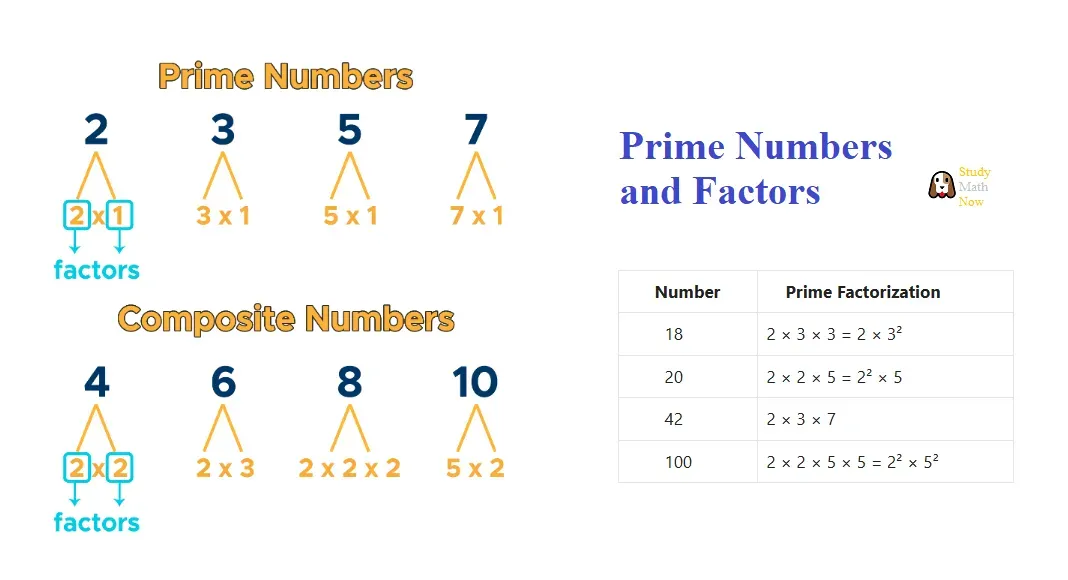
Confused between prime numbers and factors? Understand their key differences, rules, and examples to boost your math skills fast.
pearl pondBOT
@odd prism Has your question been resolved?
 sand dagger
brisk lynx
whats a prime actor and factor
sand dagger
brisk lynx
whats a prime actor and factor
Prime factor is a factor that can't be split into any more factors other than 1 and itself
And a factor is...just any factor
😢 Mb bro
sterile python
brisk lynx
whats a prime actor and factor
Just go to other channels btw
pearl pondBOT
@odd prism Has your question been resolved?
jolly parrotBOT
Civil Service Pigeon

 dense jasper
jolly parrot
**Civil Service Pigeon**
dense jasper
dense jasper
jolly parrot
**Civil Service Pigeon**
dense jasper
 are you sure that this is well posed

If it wasn't obvious, this configuration is for n1=1 and n2=7
You can scale it up so that all of the segments have length 1
my point still stands
oh I'm a muppet I connected them in the wrong order
hold on

So did you mean to say that the segments that make up "line" B cannot be self-intersecting
These angles are all between 0 and 180 degrees. So I'm asking again - are you trying to say that the segments in line B cannot be self intersecting?

because your phrasing is very hard to follow at the moment
ok
please try to make sure that the questions you ask have all of the relevant details
\textbf{Updated Question Statement}:
\begin{tcolorbox}
Consider two paths in a plane composed of segments of equal length. Path $A$, consisting of $n_1$ segments, remains perfectly straight. Path $B$, consisting of $n_2$ segments, bends such that every interior angle between adjacent segments is a uniform value $X$. \
The endpoints of the longer path ($B$) coincide with the endpoints of the shorter straight path ($A$). The interior angles formed at the two points where these paths intersect are also uniform, denoted as $Y$. \
Given that $n_1$ and $n_2$ are positive integers such that $n_1 < n_2 < \infty$, and assuming Path $B$ does not intersect itself, determine the values of angles $X$ and $Y$ in terms of $n_1$ and $n_2$.
\end{tcolorbox}
jolly parrotBOT
Civil Service Pigeon
 dense jasper
So is this what you meant
dense jasper
jolly parrot
**Civil Service Pigeon**
I don't feel like culling through the entire chat, so I'm just going to give my commentary from the start: \
Without loss of generality, assume that each segment has length $1$. Let the turning angle of path $B$ be $\alpha \coloneqq 180-X$. Because all of the interior angles of $B$ are equal, each step of the chain turns by the same amount $\alpha$. Since the two endpoint angles with the straight path $A$ are equal to $Y$, we have that
$$2Y=(n_2-1)\alpha \implies Y=\frac{n_2-1}{2} \alpha.$$
The distance between the endpoints is precisely $n_1$, so
$$n_1=\frac{\sin \left(\frac{n_2 \alpha}{2} \right)}{\sin \left(\frac{\alpha}{2} \right)}.$$
Equivalently, in terms of $X$ and $Y$,
$$n_1=\frac{\sin \left(\frac{n_2}{n_2-1} Y \right)}{\sin \left(\frac{Y}{n_2-1} \right)}, \qquad X=180^{\circ}-\frac{2Y}{n_2-1}.$$
However, except for very special cases (such as when you get a regular hexagon), the values are not "nice" and cannot be easily found in closed form because the equation is transcendental (the equation is not algebraic). In cases like this, you would normally resort to numeric approximation. If you have a decent starting guess, Newton's method works. You could also do bisection on $\alpha$ if you don't have a good initial guess since
$$\frac{\sin \left(\frac{n_2 \alpha}{2} \right)}{\sin \left(\frac{\alpha}{2} \right)}-n_1$$
has the relevant root in and is well-behaved on the interval $\alpha \in (0,2\pi/n_2)$ (note that the total curvature $n_2 \alpha$ must be less than $360^{\circ}$ for path $B$ to not intersect itself).
I should say that you can also write the answer in terms of the definition of the Chebyshev polynomial of the second kind: If you let $\theta \coloneqq \alpha/2$, then your equation becomes
$$U_{n_2-1} (\cos \theta)=n_1$$
meaning that your angle is determined by the real root $x \in (-1,1)$ of $U_{n_2-1}(x)=n_1$, and then $\alpha=2 \arccos x$.
jolly parrotBOT
Civil Service Pigeon
 pearl pondBOT
Channel closed
Closed by @odd prism
Use .reopen if this was a mistake.
pearl pondBOT
Available help channel!
Send your question here to claim the channel.
Remember:
• Ask your math question in a clear, concise manner.
• Show your work, and if possible, explain where you are stuck.
• Do not immediately ping people or roles. After 15 minutes, feel free to ping <@&286206848099549185> once.
• Type the command .close to free the channel when you're done.
• Be polite and have a nice day!
Read #❓how-to-get-help for further information on how to ask a good question, and about conduct in the question channels.
pearl pondBOT
warm patio
<@&268886789983436800>
pearl pondBOT
Channel closed
Channel closed due to the original message being deleted.
If you did not intend to do this, please open a new help channel,
as this action is irreversible, and this channel may abruptly lock.
Available help channel!
Send your question here to claim the channel.
Remember:
• Ask your math question in a clear, concise manner.
• Show your work, and if possible, explain where you are stuck.
• Do not immediately ping people or roles. After 15 minutes, feel free to ping <@&286206848099549185> once.
• Type the command .close to free the channel when you're done.
• Be polite and have a nice day!
Read #❓how-to-get-help for further information on how to ask a good question, and about conduct in the question channels.
 wooden flare
whats the way to like "show" a function is a one-to-one function or not?
pearl pondBOT
wooden flare
whats the way to like "show" a function is a one-to-one function or not?
supple hill
wooden flare
whats the way to like "show" a function is a one-to-one function or not?
What did you try?
Think about x.
wooden flare
the way the textbook has us do it is to show: f(x) = f(y) and end up with x = y
 green aurora
Assume f(x1)=f(x2)->x1=x2
wooden flare
so if i end up with anything but x = y, the function is not one-to-one right?
supple hill
wooden flare
so if i end up with anything but x = y, the function is not one-to-one right?
Yeah.
green aurora
Example : 3x_1+2=3x_2+3 -> x_1=x_2
wooden flare
green aurora
Example : 3x_1+2=3x_2+3 -> x_1=x_2
x = x^2?
green aurora
I made it clearer
green aurora
Yes
wooden flare
just preference
green aurora
Yes
supple hill
wooden flare
or just use x and y
Yes, you can use what you prefer.
wooden flare
wait. so is f(x) = 1/(x+3) one-to-one?
do the asymptotes mean anything?
bc i do get x = y, but is doesn't look right idk
supple hill
wooden flare
wait. so is f(x) = 1/(x+3) one-to-one?
Try it.
wooden flare
i did
supple hill
wooden flare
i did
And what did you get?
wooden flare
x=y
green aurora
Its correct
wooden flare
yea, but idk it doesn't "feel" right bc of the asymptotes
green aurora
,w graph 1/(x+3)
jolly parrotBOT

 Requested by lightningmcqueen04978
green aurora
Requested by lightningmcqueen04978
green aurora
Graphically function one-to-one : it must pass the horizontal line test, intersecting only once.
wooden flare
doesn't it intersect at pos infinity and neg infinity?
so it has two intersections?
green aurora
Infinity Is not a Number
supple hill
wooden flare
so it has two intersections?
No, because infinity it’s not a number.
wooden flare
green aurora
Graphically function one-to-one : it must pass the horizontal line test, inters...
i mean yea, but if it doesnt intersect the x axis then what do you mean by
supple hill
wooden flare
i mean yea, but if it doesnt intersect the x axis then what do you mean by
For example, if we draw a horizontal line in the function, we would need to draw two to intersect both. That's another indication that it's one-to-one.
wooden flare
that makes more sense
supple hill
wooden flare
that makes more sense
To avoid a one-to-one interaction, you would need to be able to select two points on the graph.
wooden flare
bc it never equals 0, so a line drawn horizontally will never cross the "other side of the function"
supple hill
wooden flare
bc it never equals 0, so a line drawn horizontally will never cross the "other s...
Right.
wooden flare
that makes sense
supple hill
Do you have more questions?
wooden flare
and now how would you show that: f(x) = x^n + x for n>0 is not one-to-one. would you state a case for n where it is not true, and hence it is not one-to-one for all n
because i dont believe showing f(x) = f(y) => x=y is possible for this question?
in general case for n rather than n = some constant
supple hill
wooden flare
and now how would you show that: f(x) = x^n + x for n>0 is not one-to-one. would...
First, you should analyze the parity, since depending on the value of n, it would be either even or odd. Then you would give it an even value and you just need to calculate the counterexample.
 grave mirage
wooden flare
whats the way to like "show" a function is a one-to-one function or not?
grave mirage
wooden flare
whats the way to like "show" a function is a one-to-one function or not?
If it's always increasing or decreasing ig
supple hill
wooden flare
and now how would you show that: f(x) = x^n + x for n>0 is not one-to-one. would...
You will have two answers. Depending it's n pair or impair. Try it.
grave mirage
grave mirage
If it's always increasing or decreasing ig
If it's continuous that is
If it's piecewise check the ranges of individual fxn
grave mirage
wooden flare
so if i end up with anything but x = y, the function is not one-to-one right?
You'll always end up at x=y
But if you end up anything besides x=y, it's not one to one
supple hill
wooden flare
in general case for n rather than n = some constant
In this case, try n=2 and n=1, for example, and see what happens.
grave mirage
grave mirage
But if you end up anything besides x=y, it's not one to one
Also it's also not a good way to do things
try doing this with f(x)= e^x+x
pearl pondBOT
@wooden flare Has your question been resolved?
wooden flare
sorry, had to do a thing rq
supple hill
wooden flare
sorry, had to do a thing rq
Np, do you have more questions about that?
wooden flare
im going through it atm
if n=1, its oto. i assume if n=2 its not oto
for for n=2k+1, f(x) is oto, and for n=2k, f(x) is not oto
is my assumption, but ill see
wooden flare
hm, i mean. i still gotta prove it tho no?
so for n=2, i end up with: x(x+1) = y(y+1) how do i progress from here
supple hill
wooden flare
hm, i mean. i still gotta prove it tho no?
You can, but you are right.
grave mirage
wooden flare
hm, i mean. i still gotta prove it tho no?
Try to factor (x^2k)-(y^2k)
supple hill
Yes, factor and move to one side.
grave mirage
No what?
grave mirage
wooden flare
x^2 - y^2 = y - x?
How did you reach this conclusion?
wooden flare
x^2 + x = y^2 + y ==> x^2 - y^2 = y - x
wooden flare
soo x^2 - y^2 -y + x = 0
grave mirage
also use completing the squares
wooden flare
ok ill try from here
grave mirage
But here it works either way
supple hill
Yeah, when you have that, you can continue.
wooden flare
idk how do this with 2 variables...
wooden flare
grave mirage
also use completing the squares
how do i go about this?
grave mirage
wooden flare
how do i go about this?
It's not necessary for this example
wooden flare
i know how to CTS but with 2 variables idk what im doing
grave mirage
What's your general f(x)?
wooden flare
x^n + x
grave mirage
wooden flare
i know how to CTS but with 2 variables idk what im doing
Just do it one at a time
pearl pondBOT
Channel closed
Closed due to timeout
Use .reopen if this was a mistake.
wooden flare
.reopen
supple hill
You can have on one side the letters with n and on the other the letters without.
pearl pondBOT
✅ Original question: #help-39 message
grave mirage
wooden flare
.reopen
Ok do you know x^n-y^n is always factorable by x-y?
wooden flare
so: x^2 + x = (x+1/2) ^2 - 1/4
wooden flare
yea
grave mirage
Even then it's just better to factor
grave mirage
grave mirage
Ok do you know x^n-y^n is always factorable by x-y?
...
Do you know differentiation?
wooden flare
yea
grave mirage
Ok so
grave mirage
wooden flare
yea
If you differentiate a fxn
And the derivative is always greater than or equal to 0
OR
always less than or equal to 0
supple hill
That's it.
wooden flare
... wha
grave mirage
wooden flare
... wha
Visualise
wooden flare
grave mirage
It is one to one
how do we come to this conclusion?
grave mirage
If a fxn is both increasing and decreasing
There has to be a point
Where the fxn went from increasing to decreasing
Do you get that idea?
wooden flare
a point of inflection right?
grave mirage
Critical point
wooden flare
or that
supple hill
wooden flare
a point of inflection right?
Yeah.
grave mirage
A function doesn't go from increasing to decreasing on an inflection point
grave mirage
wooden flare
or that
Basically a minima or a maxima
wooden flare
so set f'(x) = 0?
wooden flare
hmm ok, lemme try
grave mirage
And see if it holds
If it does, you have an one to one
If it doesn't, it isn't a one to one
wooden flare
this looks harder to solve no? x^(n-1) >= -1/n
grave mirage
Nope
grave mirage
wooden flare
this looks harder to solve no? x^(n-1) >= -1/n
Take cases
When n is even or odd
What's the domain on n?
wooden flare
wait 1sec
grave mirage
Huh?
wooden flare
n {R\{0}}
grave mirage
It's in the set of real numbers?
grave mirage
I thought it was natural
wooden flare
cant it be any number?
grave mirage
What's given
grave mirage
wooden flare
its just n>0 is our condition for this qustion
Is it a self made question?
wooden flare
no
grave mirage
Can you show the original question?
 grave mirage
x^3+x is definitely one to one what do they mean 🥀
supple hill
wooden flare
Now it's clearly.
grave mirage
wooden flare
Tell the teacher it's wrong
wooden flare
yea it is wrong
like this textbook is cooked 😭

thats def not one-to-one (trust)
grave mirage
🥀
wooden flare
lemme check the answer rq
grave mirage
Also it becomes veryyy complicated if you take n in R
supple hill
wooden flare
No, because if n=a non even it will be non.
grave mirage
grave mirage
Also it becomes veryyy complicated if you take n in R
Atleast at a starting level
 grave mirage
😭😭😭😭😭😭😭
supple hill
wooden flare
the answer is proof
Oh.
grave mirage
Proof by proof
wooden flare
so would we just prove, if n is odd f(x) is oto, and if n is even f(x) is not oto
wooden flare
R+ \{0}
grave mirage
So you'd have to first see if it is rational or irrational
grave mirage
So {N}
wooden flare
more than likely yea
grave mirage
wooden flare
bc what is x^2.7 even mean
(x^27)^1/10
supple hill
wooden flare
so would we just prove, if n is odd f(x) is oto, and if n is even f(x) is not ot...
Yeah, it's a good option.
wooden flare
ive already shown for n=1, x=y. for n=2 im stuck on (x+1/2)^2 - (y+1/2)^2 = 0
grave mirage
wooden flare
ive already shown for n=1, x=y. for n=2 im stuck on (x+1/2)^2 - (y+1/2)^2 = 0
Use difference of squares
wooden flare
oh yea that does work here
supple hill
wooden flare
oh yea that does work here
Good.
grave mirage
So if x+y=-1, the equality still holds, thus it is not one to one
wooden flare
since it has one case where its not oto, then the entire thing isnt oto right
grave mirage
wooden flare
x=-y -1 or x=y
Yes
grave mirage
wooden flare
since it has one case where its not oto, then the entire thing isnt oto right
It's really infinite cases
But yes
It it's even one
It's not
wooden flare
so thats for odd and even, now we extend it to general cases? if n=2k+1 and n=2k
or do we not need to do that in this case
supple hill
wooden flare
so thats for odd and even, now we extend it to general cases? if n=2k+1 and n=2k
It's not necessary because, if it fails in at least one case, it will be non-one-to-one.
wooden flare
that makes sense
supple hill
wooden flare
that makes sense
Do you have more questions?
wooden flare
.close
pearl pondBOT
Channel closed
Closed by @wooden flare
Use .reopen if this was a mistake.
Available help channel!
Send your question here to claim the channel.
Remember:
• Ask your math question in a clear, concise manner.
• Show your work, and if possible, explain where you are stuck.
• Do not immediately ping people or roles. After 15 minutes, feel free to ping <@&286206848099549185> once.
• Type the command .close to free the channel when you're done.
• Be polite and have a nice day!
Read #❓how-to-get-help for further information on how to ask a good question, and about conduct in the question channels.
 graceful marsh
 pearl pondBOT
graceful marsh
pearl pondBOT
graceful marsh
What step are you on?
1. I don't know where to begin.
2. I have begun but got stuck midway.
3. I got an answer but I was told that it's wrong.
4. I got an answer and would like my work checked.
5. I have a question about someone else's work/solution.
6. I have completed the problem and don't need help anymore. Thank you.
7. None of the above
This is a solved example from a textbook and i dont quite understand the solution given in the textbook
and i don't know where to begin
 wary bane
well since they're rationals, my approach would be to use that
although that might not help
without further context / book solution its hard for me to tell what you are or aren't allowed to use
 crimson veldt
graceful marsh
and i don't know where to begin
crimson veldt
graceful marsh
and i don't know where to begin
think that any relation lets me reduce everything to degree <=1 forces x rational
the key fact is that { 1, p^(1/3),p^(2/3) } are linearly independent over Q
which followes from the minimal polynomial of p^(1/3)
since p is not a perfect cube
x^3-p is is irreducible over Q
if factored it would have a rational root
graceful marsh
that sounds like very advanced math
crimson veldt
thus some rational q with q^3=p which contradicts p not being a perfect cube
can u show the solution from the textbook?
graceful marsh
This is the solution given in the textbook
 wary bane
graceful marsh
that sounds like very advanced math
wary bane
graceful marsh
that sounds like very advanced math
so we need more context to determine what you're allowed to use or not
so you need to use viete's identities to solve this
graceful marsh
sorry i am unfamiliar with those
wary bane
that's what that solution looks like its using to me? maybe not
oh no its not, mb
I mean - I follow what the solution is doing, but are you stuck trying to understand it
or worried you wouldn't be able to come up with it on your own
Which bit don't you understand
crimson veldt
graceful marsh
This is the solution given in the textbook
so (1) is the og equation ,multiply through by p^(1/3) to get (2). so it's shifting each term up by one power
hen bx(1) - cx(2) is an elimination.it removes the p^(2/3) terms and leaves you with only p^(1/3) and rational numbers in equation (3)
since sine p^(1/3) is irrational the only way (3) holds is if both coefficients are 0 independently..so b^2 - ac =0 and ab = c^2p
graceful marsh
wary bane
I mean - I follow what the solution is doing, but are you stuck trying to unders...
i am not understading the solution
graceful marsh
crimson veldt
so (1) is the og equation ,multiply through by p^(1/3) to get (2). so it's shift...
oh
wary bane
which part
graceful marsh
wary bane
which part
well now i do understand it
crimson veldt
so we got
c^4p^2=a^2b^2=a^3c, if c!=0 you can divide through and get p^2=a^3/c^3, meaning p^(2/3)=a/c is rational, which forces p^(1/3) to be rational too
graceful marsh
i think the b*(1) - c*(2) part was confusing me
but it is irrational, so every cofficient must have been 0?
crimson veldt
crimson veldt
so we got
c^4p^2=a^2b^2=a^3c, if c!=0 you can divide through and get p^2=a^3/c^3...
so a contradiction since p isn't a perfect cube so c=0 & then the og equation collapses to a+bp^(1/3)=0 which immediately gives a=b=0 since p^(1/3) is irrational
wary bane
they are equating coefficients on 2 sides of a polynomial equation
since the rhs is the 0 polynomial, all coefficients on the lhs must equal 0
pearl pondBOT
Channel closed
Closed by @graceful marsh
Use .reopen if this was a mistake.
pearl pondBOT
Available help channel!
Send your question here to claim the channel.
Remember:
• Ask your math question in a clear, concise manner.
• Show your work, and if possible, explain where you are stuck.
• Do not immediately ping people or roles. After 15 minutes, feel free to ping <@&286206848099549185> once.
• Type the command .close to free the channel when you're done.
• Be polite and have a nice day!
Read #❓how-to-get-help for further information on how to ask a good question, and about conduct in the question channels.
 tawdry charm
i need help understanding this task i have due

 pearl pondBOT
tawdry charm
i need help understanding this task i have due
tawdry charm
pearl pondBOT
tawdry charm
i need help understanding this task i have due
tawdry charm
like what math i should apply
tawdry charm
yes
i dont get the 25-30s bit?
and the "within the allowable ranges" part, what are the ranges?
sterile python
So you find heights of infernos to find total distance travelled
tawdry charm
no integration?
sterile python
No i dont see anything that need integration
I havent done a method assignment ever, i did double specialist only
tawdry charm
it says vertically up and down twice each, uh how am i supposed to do that? with like four different functions thata re going to differ
idk im really dumb at math ahhh
sterile python
First you might need to find max height and min height
Note that 10% taller sth and 20% lower sth there
You could construct a function on desmos that starts at lowest point (lowest height?)
Go up twice, down twice? What does this suggest about polynomial structure? Quartic, cubic, or more?
Include that in function formula as well
It also reach highest peak (highest height) only once
And total time between 25 -30s, which indicates an interval
pearl pondBOT
@tawdry charm Has your question been resolved?
pearl pondBOT
Channel closed
Closed due to timeout
Use .reopen if this was a mistake.
Available help channel!
Send your question here to claim the channel.
Remember:
• Ask your math question in a clear, concise manner.
• Show your work, and if possible, explain where you are stuck.
• Do not immediately ping people or roles. After 15 minutes, feel free to ping <@&286206848099549185> once.
• Type the command .close to free the channel when you're done.
• Be polite and have a nice day!
Read #❓how-to-get-help for further information on how to ask a good question, and about conduct in the question channels.
 crimson haven
Question 3 pls

 pearl pondBOT
crimson haven
Question 3 pls
somber night
pearl pondBOT
crimson haven
Question 3 pls
somber night
u dont need to calculate tough
supple hill
!nosols
pearl pondBOT
As a helper, please do not give out answers that could be copied as a homework solution. Have the student work through the problem themselves and guide them along the way.
supple hill
crimson haven
Question 3 pls
What have you tried?
crimson veldt
b3
somber night
crimson haven
Question 3 pls
do u have to calculate it
crimson haven
somber night
do u have to calculate it
Uh no we use the Cartesian plane
somber night
cz if not just imagine the unit circle going 180 degrees to the left
like a pendelum
crimson veldt
uhm
somber night
crimson veldt
uhm
?
crimson veldt
why do i get a different result
somber night
crimson veldt
why do i get a different result
show ur work
crimson haven
Mines wrong

 cosmic sinew
how did that turn to that?

 crimson veldt
they got the demoninator wrong i think
crimson haven
Yes I just realized
Tysm
Pls help me with question c


I found Ira angle but idk what else to do
 rough forge
nice bunny
 prisma kernel
crimson haven
Pls help me with question c
prisma kernel
crimson haven
Pls help me with question c
have you solved (i)?
 agile hedge
crimson haven
Pls help me with question c
agile hedge
crimson haven
Pls help me with question c
check if this matches
 crimson haven
No
crimson haven
agile hedge
check if this matches
Won’t it be in the third quadrant?
pearl pondBOT
The purpose of this server is to help you learn; please don't ask for direct answers. Ask for guidance, explanations, or feedback instead.
pearl pondBOT
As a helper, please do not give out answers that could be copied as a homework solution. Have the student work through the problem themselves and guide them along the way.
agile hedge
crimson haven
Pls help me with question c
for ii,
sin^2(180-theta) = sin^2 theta (identity)
and 1-sin^2 theta = cos^2 theta
and using i
cos theta = 2/rt 5
so cos^2 theta = 4/5
prisma kernel
dude, guide her to the answer
agile hedge
crimson haven
Won’t it be in the third quadrant?
since we are using pythagorus, we cannot expect it the length to be in negative
prisma kernel
don't just show it at once
prisma kernel
no problem man
crimson haven
agile hedge
since we are using pythagorus, we cannot expect it the length to be in negative
I got 5
Oops wrong questions
crimson haven
agile hedge
for ii,
sin^2(180-theta) = sin^2 theta (identity)
and 1-sin^2 theta = cos^2 t...
So I put the values given in to cos and 1-sim^2
How do I do d2)

 prisma kernel
well sin^2(pi + theta) = cos^2(theta), and 1 - cos^(theta) = sin^2(theta)
prisma kernel
crimson haven
How do I do d2)
okay let me see
prisma kernel
crimson haven
How do I do d2)
yeah you did it correctly here
crimson haven
But it says 17
prisma kernel
wait, you squared it, so it should be just -8 - 9
prisma kernel
crimson haven
But it says 17
can you confirm if it's -17?
crimson haven
prisma kernel
can you confirm if it's -17?
Yeah
prisma kernel
prisma kernel
wait, you squared it, so it should be just -8 - 9
yup, then this should do it
(-3)^2 becomes 9, so it's just -8 - 9, and not -8 - (-9)
crimson haven
Oh I did it wrong
crimson haven
prisma kernel
(-3)^2 becomes 9, so it's just -8 - 9, and not -8 - (-9)
Tysm
How do I do question f pls

 prisma kernel
god okay let me think properly
okay okay, so sin(alpha) is positive and lies in second or third quadrant, but sine is positive so we know it lies in second quadrant
similarly, cos(beta) is negative and lies in first or second quadrant, but cosine is negative so we know it lies in second quadrant too
so, alpha and beta are both in second quadrant
now, what is cos(pi + alpha)?
@crimson haven
prisma kernel
ahhh, you can say cos(180 + alpha)
crimson haven
prisma kernel
ahhh, you can say cos(180 + alpha)
-cos
prisma kernel
okay nice, so it's just -cos(alpha)
and tan(180 + beta) [hint : if you don't know it directly, convert it into sin/cos and then find it]
crimson haven
prisma kernel
and tan(180 + beta) [hint : if you don't know it directly, convert it into sin/c...
Positive tan
 I sunk at thinking
prisma kernel
I sunk at thinking
prisma kernel
where they both are negative because alpha and beta are both in second quadrant, and cos and tan are negative in second quadrant
so yeah, just convert sin(alpha) into cos(alpha) {use the negative value of cos}, and convert cos(beta) into tan(beta) {use the negative value of tan, convert cos into sec, and then apply tan^(beta) = sqrt(sec^2(beta) - 1)}
prisma kernel
crimson haven
<:blobcry:971797574916907028> I sunk at thinking
don't we all sometimes
crimson haven
prisma kernel
so yeah, just convert sin(alpha) into cos(alpha) {use the negative value of cos}...
Tysm

.close
pearl pondBOT
Channel closed
Closed by @crimson haven
Use .reopen if this was a mistake.
pearl pondBOT
Available help channel!
Send your question here to claim the channel.
Remember:
• Ask your math question in a clear, concise manner.
• Show your work, and if possible, explain where you are stuck.
• Do not immediately ping people or roles. After 15 minutes, feel free to ping <@&286206848099549185> once.
• Type the command .close to free the channel when you're done.
• Be polite and have a nice day!
Read #❓how-to-get-help for further information on how to ask a good question, and about conduct in the question channels.
 frank urchin
 pearl pondBOT
frank urchin
frank urchin
pearl pondBOT
frank urchin
frank urchin
How do we see invariant subspace in rotation?
 pseudo oxide
invariant = doesn't change
pseudo oxide
i.e., after rotating it, the subspace stays the exact same
frank urchin
??
frank urchin
(0,0)?
pseudo oxide
it needs to be a 1 dimensional subspace
are there any other vectors, apart from the 0 vector, that are invariant under rotation
frank urchin
I guess there is none
pseudo oxide
correct!
frank urchin
a line which is rotated 90°
pseudo oxide
therefore how many 1 dimensional subspaces are there
frank urchin
0
pseudo oxide
?
frank urchin
Rotation when 180° or 360°
pseudo oxide
ah, yes
then there are indeed invariant subspaces, but notice that rotation by 360 is just the identity matrix
and rotation by 180 is the negative of the identity matrix
frank urchin
By 180° can we make any invariant subspaces?
R^2 is an invariant subspace
.closd
.close
pearl pondBOT
Channel closed
Closed by @frank urchin
Use .reopen if this was a mistake.
pearl pondBOT
Available help channel!
Send your question here to claim the channel.
Remember:
• Ask your math question in a clear, concise manner.
• Show your work, and if possible, explain where you are stuck.
• Do not immediately ping people or roles. After 15 minutes, feel free to ping <@&286206848099549185> once.
• Type the command .close to free the channel when you're done.
• Be polite and have a nice day!
Read #❓how-to-get-help for further information on how to ask a good question, and about conduct in the question channels.
crimson haven
 pearl pondBOT
crimson haven
pearl pondBOT
crimson haven
 somber night
wdym by wich
crimson haven
somber night
wdym by wich
There sin and cos given
Idk if I’m to use the values
And how
 toxic remnant
can you simplify cos(180+alpha) and tan(180+beta)
supple hill
<@&268886789983436800>
crimson haven
Oop
wary bane
toxic remnant
can you simplify cos(180+alpha) and tan(180+beta)
??? is that necessary
toxic remnant
crimson haven
Wait wdym
you have been given alpha and beta, not 180+alpha or 180+beta
no but it'll be easier to see
wary bane
the point of the question is to surely use CAST to figure out the sign
/ correct quadrant
you're told sin a = 3/5
what quadrant must angle a be in?
given this information
crimson haven
1st or 2nd
wary bane
yes
toxic remnant
wary bane
the point of the question is to surely use CAST to figure out the sign
i mean that is what i mean by simplifying
 crimson haven
2nd or third
wary bane
yes but combining the 2 pieces of information together
crimson haven
Second
wary bane
ok do the same for beta
crimson haven
1st
wary bane
its in the 2nd quadrant
crimson haven
Ok
wary bane
so they're both in the 2nd quadrant
crimson haven
Oki
wary bane
that should then help you simplify the expression then.
wary bane
if you add 180 degrees to an angle in the 2nd quadrant
which quadrant does it end up in
crimson haven
Third
 crimson haven
Huh
wary bane
adding 180 degrees is like going from 10 o clock to 4 o clock
on a clock
?
10 11 o clock are in the 2nd quadrant
4 5 o clock are in the 4th quadrant
crimson haven
My teacher taught as to start at 180 and add by one
crimson haven
Huh
 crimson haven
Why are we adding 180
 crimson haven
I still don’t get it
wary bane
do you understand why i'm asking you which quadrant 180 + a is in?
or not.
you need to know in order to figure out whats the sign of cos(180 + a)
cosmic sinew
crimson haven
I still don’t get it
hm.. do you agree alpha lies in second quandrant, second quadrant starts from 90 degree and ends at 180 ?
crimson haven
wary bane
you need to know in order to figure out whats the sign of cos(180 + a)
I do
 wild wren
So first we establish where α and β are, because that gives us an idea about their sign
And then we want to establish where (α+180) and (β+180) are
Because +180 is just moving by two quadrants
Aka half a cycle
We know that the unit cycle has four quadrants, each quadrant has certain properties i.e cos and sin being positive/negative
That's usually the visual approach, it's also the easier to understand
||You can also think of it as cos (α+π) which should be an identity, but I suggest following the previous approach||
Try to draw a unit circle and plug random values of α and β that follow the condition, and then add 180°
One way to do that is to draw a line connecting that angle α or β with the center of the circle, and check where it intersects with the other side
crimson haven
The thing is
Is don’t understand moving by 180
It’s different to what I was taught
cosmic sinew
crimson haven
Is don’t understand moving by 180
what do you not understand?
cosmic sinew
cosmic sinew
hm.. do you agree alpha lies in second quandrant, second quadrant starts from 90...
again can you answer this?
crimson haven
Yes
But what I mean is that my teach made as start from 180
And move forward once
So I’d move form the second to the third quadrant
 wary bane
(from the first quadrant)
wild wren
Yes that's just a clarification of what moving 180° means, regardless of where your initial angle is
So in this example, α was in the 1st quadrant, we can see that (α+180) is in the 3rd quadrant
Clear enough?
crimson haven
 wild wren
crimson haven
Why did it mov 180
wild wren
crimson haven
Why did it mov 180
We were told to compute for α+180, so we looked into it
wild wren
crimson haven
Very good
wary bane
 crimson haven
It moved backwards
wary bane
aka if theta is in quadrant 1
wild wren
crimson haven
Quadrant 1 θ
But what if θ is not in the first quadrant?
How can we adjust
wild wren
crimson haven
@crimson haven I think a good way to go about this is: try to think why this was made
crimson haven
Ok
wild wren
Why theta +180 was there
And why theta - 180
Oh and remember that those are just degrees, and that adding a degree is basically a rotation
crimson haven
For these my teacher makes as start on the lines
wild wren
So adding 180 is just turning around
cosmic sinew
crimson haven
theta is acute, so it lies between [0,90] if you add 180 + theta it will range from 180 +0 <= 180 +theta<= 180+ 90
180<= 180+theta <=270 which you can see is the 3rd quadrant
consider case where theta is >90 but < 180
as you can see the bounds change again and you moveto the 4th qyadrant
180 + 90 < 180 +theta< 180+180
270 <180 +theta< 360
crimson haven
cosmic sinew
theta is acute, so it lies between [0,90] if you add 180 + theta it will range ...
Is that a Ute a right angle?
cosmic sinew
UTE?
crimson haven
cosmic sinew
UTE?
acute
cosmic sinew
acute angle means theta lie in 1st quadrant or 0< theta < 90
crimson haven
Ok
pearl pondBOT
@crimson haven Has your question been resolved?
 midnight haven
pearl pondBOT
midnight haven
pearl pondBOT
Channel closed
Closed due to timeout
Use .reopen if this was a mistake.
Available help channel!
Send your question here to claim the channel.
Remember:
• Ask your math question in a clear, concise manner.
• Show your work, and if possible, explain where you are stuck.
• Do not immediately ping people or roles. After 15 minutes, feel free to ping <@&286206848099549185> once.
• Type the command .close to free the channel when you're done.
• Be polite and have a nice day!
Read #❓how-to-get-help for further information on how to ask a good question, and about conduct in the question channels.
 pearl pondBOT
 blissful brook

 terse root
is this an A-level paper by any chance?
blissful brook
terse root
is this an A-level paper by any chance?
yes
this is the only question in this paper that i didnt understand
and its 3 marks
terse root
is this normal or futher? which exam board?
blissful brook
terse root
is this normal or futher? which exam board?
edexcel normal
terse root
ah
 light helm
apply that the line l passes through the origin
light helm
use the non-derivative way to get the slope
terse root
to show something is the solution i suppose u need the factor theorem?
light helm
no
blissful brook
light helm
use the non-derivative way to get the slope
wdym? like y1 - y2 / x1 - x2 ?
blissful brook
using P and 0,0?
light helm
yes
pearl pondBOT
Channel closed
Closed by @blissful brook
Use .reopen if this was a mistake.
pearl pondBOT
Available help channel!
Send your question here to claim the channel.
Remember:
• Ask your math question in a clear, concise manner.
• Show your work, and if possible, explain where you are stuck.
• Do not immediately ping people or roles. After 15 minutes, feel free to ping <@&286206848099549185> once.
• Type the command .close to free the channel when you're done.
• Be polite and have a nice day!
Read #❓how-to-get-help for further information on how to ask a good question, and about conduct in the question channels.
frank urchin
 pearl pondBOT
frank urchin
frank urchin
pearl pondBOT
frank urchin
frank urchin
I asked the question yesterday but i went to market
How do I find the congruent circles radius?
pearl pondBOT
Show your work, and if possible, explain where you are stuck.
frank urchin


for circle i can see
tan(theta/2)=r/a
tan(theta/2)=r/(25-x-2r)
I don't know why i am thinking about this angle
pearl pondBOT
@frank urchin Has your question been resolved?
pearl pondBOT
Channel closed
Closed due to timeout
Use .reopen if this was a mistake.
pearl pondBOT
Available help channel!
Send your question here to claim the channel.
Remember:
• Ask your math question in a clear, concise manner.
• Show your work, and if possible, explain where you are stuck.
• Do not immediately ping people or roles. After 15 minutes, feel free to ping <@&286206848099549185> once.
• Type the command .close to free the channel when you're done.
• Be polite and have a nice day!
Read #❓how-to-get-help for further information on how to ask a good question, and about conduct in the question channels.
 safe prairie
im finding expectation given a geometric distribution, and i got my hands on a summation of a^x/x. how do i proceed?

 pearl pondBOT
safe prairie
im finding expectation given a geometric distribution, and i got my hands on a s...
safe prairie
pearl pondBOT
safe prairie
im finding expectation given a geometric distribution, and i got my hands on a s...
safe prairie
im unsure what limits to put into the highlighted part if i int wrt x, or if i just use t instead then after swapping int and sum idk how to change the limits of summation to fit the needs of sth thats written wrt t
supple hill
safe prairie
im unsure what limits to put into the highlighted part if i int wrt x, or if i j...
I recommend you use that identity: $$\frac{1}{x+1} = \int_0^1 t^x , dt$$
jolly parrotBOT
Ga³¹Br³⁵I⁵³9000✞
 pearl pondBOT
@safe prairie Has your question been resolved?
safe prairie
so now its this
 pearl pondBOT
Channel closed
Closed by @safe prairie
Use .reopen if this was a mistake.
pearl pondBOT
✅ Original question: #help-39 message
safe prairie
i dont know how to swap summation and integral in this form
well idk even in the form of sum(int(x dx)) neither when it comes to the integration limits but thats for later
supple hill
safe prairie
so now its this
Yeah, do you have any ideas how to continue?
safe prairie
safe prairie
i dont know how to swap summation and integral in this form
no
first one looks like typical geometric sequence but i cant use it
cuz id need to separate the front part from the back then
supple hill
safe prairie
cuz id need to separate the front part from the back then
The objective is have: $\sum r^n$
jolly parrotBOT
Ga³¹Br³⁵I⁵³9000✞
 supple hill
Right?
safe prairie
if this happens itd be nice but idk if thats what we are looking for
supple hill
safe prairie
if this happens itd be nice but idk if thats what we are looking for
Yeah, because we can apply the sumatory distributive.
safe prairie
idk what that is
taking out a constant?
to take out a constant id need a - or + to appear in my summation
supple hill
safe prairie
taking out a constant?
Yes, it is.
cosmic sinew
alternately you can sub (1-p) = u then use the taylor series for ln(1-u) change the index for n = x+1
safe prairie
wait no by then itd have already been separated
supple hill
cosmic sinew
alternately you can sub (1-p) = u then use the taylor series for ln(1-u) change ...
Yes you can use that.
safe prairie
should i have remembered the taylor series form for lnx then
i never remembered any
cosmic sinew
safe prairie
should i have remembered the taylor series form for lnx then
not really
you can use the way they suggested
safe prairie
i dont understand their way yet
supple hill
safe prairie
i dont understand their way yet
You can apply that if you don't want the Taylor serie.
$$\frac{1}{x+1} = \int_0^1 t^x , dt$$
jolly parrotBOT
Ga³¹Br³⁵I⁵³9000✞
 safe prairie
supple hill
Yeah, do you have any ideas how to continue?
safe prairie
supple hill
Yeah, do you have any ideas how to continue?
what i meant to say is idk how to proceed after this
supple hill
safe prairie
what i meant to say is idk how to proceed after this
Ok.
supple hill
safe prairie
working on it
You can move the integral out and the sum inside.
safe prairie
safe prairie
im finding expectation given a geometric distribution, and i got my hands on a s...
whereas here i think i make the mistake of assuming its power rule but its actually int a^x instead
supple hill
safe prairie
whereas here i think i make the mistake of assuming its power rule but its actua...
Yes, it's correct.
safe prairie
like this?
 supple hill
safe prairie
like this?
supple hill
safe prairie
like this?
Exactly, it is the exchange property.
safe prairie
how does that work
the mess i put before int is not a constant
wait i should check my work again
i got here, which is cleaner then my first photos i think

but with taylor series i got this what i think should be a final answer
 safe prairie
i got here, which is cleaner then my first photos i think
safe prairie
safe prairie
i got here, which is cleaner then my first photos i think
anyways i dont know how to adjust the bounds of the operators
safe prairie
safe prairie
but with taylor series i got this what i think should be a final answer
deepseek says this is close except its -lnp so i guess i got it
safe prairie
supple hill
Exactly, it is the exchange property.
my devices are running low on battery so i think ill stop working for now but i still wanna hear how this works on my phone
cosmic sinew
this does not feel right what happened here?
 supple hill
safe prairie
my devices are running low on battery so i think ill stop working for now but i ...
supple hill
safe prairie
my devices are running low on battery so i think ill stop working for now but i ...
Np.
I think you missed a negative sign in Taylor.
safe prairie
Subject is (1-p) instead of t
Or must I use t to make swapping possible
supple hill
safe prairie
Subject is (1-p) instead of t
Or must I use t to make swapping possible
Yeah.
cosmic sinew
safe prairie
but with taylor series i got this what i think should be a final answer
this is the expansion of ln(1-x) what you have is -ln(1-(1-p))
 supple hill
Do you see it better now?
safe prairie
No cuz even if it’s t the summation concerns x instead
cosmic sinew
safe prairie
Subject is (1-p) instead of t
Or must I use t to make swapping possible
ok, no it will work if you dont take t
safe prairie
So it’s fine
But still from double int I learnt that swapping order means redefining bounds
Uh afk
supple hill
safe prairie
So it’s fine
But still from double int I learnt that swapping order means redefi...
Yes, it's fine.
cosmic sinew
safe prairie
So it’s fine
But still from double int I learnt that swapping order means redefi...
hm.. i do not know multivariable calculus much lol i step back
sorry
safe prairie
cuz at this stage int wrt t and sum wrt x does feel like two unknowns
safe prairie
supple hill
Yes, it's fine.
so how would redefining bounds work in this context?
supple hill
safe prairie
so how would redefining bounds work in this context?
Here it's not necessary since x and t are totally independent. Right?
safe prairie
oh alr
supple hill
safe prairie
oh alr
Do you understand better?
safe prairie
better now
my first mistake is making int t^x wrt x instead of wrt t, and swapping like this doesnt need to change bounds
supple hill
safe prairie
my first mistake is making int t^x wrt x instead of wrt t, and swapping like thi...
Exactly.
safe prairie
but last question, now ik sum(int(x)dx)) can be swapped, what about sum(x int(x)dx))?
supple hill
safe prairie
but last question, now ik sum(int(x)dx)) can be swapped, what about sum(x int(x)...
To be valid, the x that is outside the integral must be treated as a constant by the integral.
supple hill
safe prairie
but last question, now ik sum(int(x)dx)) can be swapped, what about sum(x int(x)...
Do you have more questions?
safe prairie
supple hill
To be valid, the x that is outside the integral must be treated as a constant by...
sounds confusing
sum(t int(x dx)wrt t) works, but sum(x int(x dx)wrt x) doesnt?
supple hill
safe prairie
sum(t int(x dx)wrt t) works, but sum(x int(x dx)wrt x) doesnt?
Yes, because the order.
safe prairie
Maybe sumt(t int(x dx)) is clearer, so this can become int(t sumt(x)dx)??
Then sumt(x) just multiplies x by range of t, and int whatever dx would look off
Then looks like it’s still impossible
supple hill
safe prairie
Then looks like it’s still impossible
The sum cannot depend on the same variable as the integral.
I recommend you use the x for the sum and t for the integral.
pearl pondBOT
@safe prairie Has your question been resolved?
pearl pondBOT
Channel closed
Closed due to timeout
Use .reopen if this was a mistake.
Available help channel!
Send your question here to claim the channel.
Remember:
• Ask your math question in a clear, concise manner.
• Show your work, and if possible, explain where you are stuck.
• Do not immediately ping people or roles. After 15 minutes, feel free to ping <@&286206848099549185> once.
• Type the command .close to free the channel when you're done.
• Be polite and have a nice day!
Read #❓how-to-get-help for further information on how to ask a good question, and about conduct in the question channels.
 lament eagle
 pearl pondBOT
lament eagle
sterile python
pearl pondBOT
lament eagle
sterile python
What have you done
cosmic sinew
sterile python
What have you done
im about to post the same gif
 subtle crow
sterile python
I am asking what have he done, not to teach him now
subtle crow
sterile python
I am asking what have he done, not to teach him now
Ohh sorry
sterile python
We need to know what he up to yet
lament eagle
Thank you
cosmic sinew
sterile python
I am asking what have he done, not to teach him now
you good im jk
 lament eagle
I'll use the Pythagorean theorem to do this
lament eagle
sterile python
Thank you, what have you done?
So far I've found the volume of the top cone
AD² = 3 -> AD √3cm
subtle crow
No no
That would make it lengthy
You see, finding the area of the rest of stuff will be complex
I'd say you're better off doing this
First find the initial volume of the cone (before stuff was removed). I believe you can do that. Then, find the volume of the cylinder removed. Now,
Final volume = initial volume - volume of cylinder
sterile python
No he did correct, he got AD
lament eagle
.close
pearl pondBOT
Channel closed
Closed by @lament eagle
Use .reopen if this was a mistake.
subtle crow
sterile python
No he did correct, he got AD
Oh did he? Well mb then
pearl pondBOT
Available help channel!
Send your question here to claim the channel.
Remember:
• Ask your math question in a clear, concise manner.
• Show your work, and if possible, explain where you are stuck.
• Do not immediately ping people or roles. After 15 minutes, feel free to ping <@&286206848099549185> once.
• Type the command .close to free the channel when you're done.
• Be polite and have a nice day!
Read #❓how-to-get-help for further information on how to ask a good question, and about conduct in the question channels.
 smoky gull
A person has 6 friends and during a certain vacation he met them during several dinners. He found that he dined with all 6 exactly on one day, with every 5 of them on 2 days, with every 4 of them on 3 days, with every 3 of them on 4 days, with every 2 on 5 days. Further every friend was present at 7 dinners and every friend was absent at 7 dinners. The number of dinner he had alone is equal to?
pearl pondBOT
smoky gull
A person has 6 friends and during a certain vacation he met them during several ...
sterile python
What do you think? What have you done?
smoky gull
!status
pearl pondBOT
What step are you on?
1. I don't know where to begin.
2. I have begun but got stuck midway.
3. I got an answer but I was told that it's wrong.
4. I got an answer and would like my work checked.
5. I have a question about someone else's work/solution.
6. I have completed the problem and don't need help anymore. Thank you.
7. None of the above
Let N be total number of dinner
Sk is sum of the number of days he dined with a specific combination of k friends
smoky gull
no i think number of dinners is given in question i just know what it may be
smoky gull
sterile python
Sk is sum of the number of days he dined with a specific combination of k friend...
but sure okay
sterile python
The number of ways to choose k friends from 6 is 6ck right
smoky gull
hm
sterile python
But 6 friends
smoky gull
@sterile python i appreciate it but please stick to 1-2channel at a time else other helpers might assume you are currenty helping me
sterile python
I am bro
smoky gull
K sorry then
sterile python
So you need at least 2 friends to dine with
smoky gull
no only 1 is also fine
sterile python
So you take 6C6+6c5+...6c2 is total of ways to find k
cosmic sinew
smoky gull
<@894183628131688518> i appreciate it but please stick to 1-2channel at a time e...
you are underestimitating his power
sterile python
N=7+7 where absent and present meals
smoky gull
okay and?
sterile python
Now find s1
smoky gull
sterile python
N=7+7 where absent and present meals
wait are you sure abut this tho
smoky gull
yeah
supple hill
smoky gull
yeah
And absent in 7.
rough forge
I thought you were @rigid mist
smoky gull
supple hill
And absent in 7.
but that doesnt mean there cant be more righ?
oh wait nvm yeah okay go on
sterile python
Then use Principle of Inclusion-Exclusion
smoky gull
rough forge
I thought you were <@735816115908902913>
ik thqt dude but sry not him
cosmic sinew
smoky gull
A person has 6 friends and during a certain vacation he met them during several ...
confusing wording he dines with every 5 on 2days so with all set of 5 people on 2days or what how many times is he dining
smoky gull
sterile python
Then use Principle of Inclusion-Exclusion
doesnt come out
rough forge
smoky gull
ik thqt dude but sry not him
You are the good yajat dw
smoky gull
sterile python
Then use Principle of Inclusion-Exclusion
tried this
sterile python
Try
smoky gull
I tried
supple hill
smoky gull
I tried
And what did you get?
sterile python
P=S1-s2+s3 -s4+s5-s6
sterile python
Correct
smoky gull
yeah butanswer isnt 1
smoky gull
yeak ikr
supple hill
smoky gull
so i gto 13
It's right.
sterile python
Then idk theoretically its 1
supple hill
sterile python
Then idk theoretically its 1
Yeah I calculated and it is.
smoky gull
smoky gull
yeah butanswer isnt 1
?
 vestal tapir
i don't get it
sterile python
Get what
vestal tapir
like i can assume 2 days includes the 6-friends day, so there was only one day where he met 5 specific people
it still means some person went to 6 dinners already
how can it add up to 7
supple hill
smoky gull
so i gto 13
Can you send us your process?
It can be clearly to see what happened.
smoky gull
yeah gimme a sec to type it out in notes using latex it
frank violet
smoky gull
A person has 6 friends and during a certain vacation he met them during several ...
hmmm, every 5? exactly 5 or just 5?
if it's not exactly 5
Then when you meet all 6 of them you also meet 5 of them and that's counted as 1
vestal tapir
it's just nonsensical
smoky gull
Let At,t=1,2,3,4,5,6 be the set of days on which the friend is present at dinner & Bt be the set of days on which friend is absent at dinner
Then
|At|=|Bt|=7
Also
∣∣Ai∩Aj∣∣=5,∣∣Ai∩Aj∩Ak∣∣=4∣∣Ai∩Aj∩Ak∩Aℓ∣∣=3,∣∣Ai∩Aj∩Ak∩Aℓ∩Am∣∣=2
& |A1∩A2∩A3∩A4∩A5∩A6|=1
Where i,j,k,ℓ,m vary from 1 to 6& distinct number of days/dinners at which at least one friend was present =|A1∪A2∪A3∪A4∪A5∪A6|
∑|Ai|−∑∣∣Ai∩Aj∣∣+∑∣∣Ai∩Aj∩Ak∣∣−∑∣∣Ai∩Aj∩Ak∩Aℓ∣∣+∑∣∣Ai∩Aj∩Ak∩Am∣∣−∣A1∩A2∩…..=6C1×7−6C2×5+6C3×4−6C4×3+6C5×2−6C6×1=13
Total number of dinners =|At|+|Bt|=14
Aw frick
one sec lemme find a latex software
 supple hill
smoky gull
one sec lemme find a latex software
supple hill
smoky gull
one sec lemme find a latex software
Yeah, better.
vestal tapir
oh wait so
with every 4 of them on 3 days is just covered already we ignore that
i don;t get it anyway
smoky gull
 smoky gull
sterile python
Fuckass alien language
smoky gull
sterile python
Fuckass alien language
sorry could you not curse😅
sterile python
smoky gull
sorry could you not curse😅
Skibidi
smoky gull
Tryna keepit family friendlu,y
supple hill
smoky gull
It's correct.
smoky gull
sterile python
Skibidi
😭😭
supple hill
smoky gull
What do you not understand?
smoky gull
supple hill
What do you not understand?
Sorry?
vestal tapir
i don't understand anything
supple hill
smoky gull
Sorry?
What's your question about the problem?
supple hill
smoky gull
what?
Nothing, I was thinking.