#help-39
1 messages · Page 307 of 1
 magic bolt
 slim escarp
you'd naturally get a monoid otherwise
slim escarp
wait nvm
 cinder flower
the symmetries of an object always form a group
cinder flower
sure
magic bolt
What's the reasoning for this
cinder flower
bijection = invertible
slim escarp
it's automorphic by definition
 pseudo oxide
not sure helpee'd understand automorphisms
slim escarp
oh
pseudo oxide
considering they're only just learning the definition of a symmetry
pseudo oxide
do you have any other questions
magic bolt
I just today started learning group theory basically
magic bolt
pseudo oxide
do you have any other questions
I'll probably have more today though thanks for the help!
 worldly jewel
magic bolt
But am I right in saying all symmetries are bijections
worldly jewel
magic bolt
But am I right in saying all symmetries are bijections
it is essentially by definition because when we think about what properties we would like symmetries to have, we would naturally want to compose and undo them, which leads to a group structure
as ren explained
pseudo oxide
0lante approved yay
magic bolt
Yeah makes sense
cinder flower
i want 0lante approval
 pearl pondBOT
Channel closed
Closed by @magic bolt
Use .reopen if this was a mistake.
worldly jewel
amen slayla
pseudo oxide
now i'm not special 😔
pearl pondBOT
 Available help channel!
Send your question here to claim the channel.
Remember:
• Ask your math question in a clear, concise manner.
• Show your work, and if possible, explain where you are stuck.
• Do not immediately ping people or roles. After 15 minutes, feel free to ping <@&286206848099549185> once.
• Type the command .close to free the channel when you're done.
• Be polite and have a nice day!
Read #❓how-to-get-help for further information on how to ask a good question, and about conduct in the question channels.
 trail linden
Hello !
 pearl pondBOT
trail linden
Hello !
trail linden
pearl pondBOT
trail linden
Hello !
trail linden
for R4, its not reflexive nor symmetrical but it is anti and transitive right
this is an exercise btw
 autumn fossil
trail linden
for R4, its not reflexive nor symmetrical but it is anti and transitive right
autumn fossil
trail linden
for R4, its not reflexive nor symmetrical but it is anti and transitive right
Its the > relation actually
trail linden
for R6, its anti and transitive
trail linden
autumn fossil
Its the > relation actually
wdym
autumn fossil
trail linden
wdym
(x,y) in R4 iff x > y
autumn fossil
trail linden
R7 is reflexive, symmetrical and transitive
And also antisymmetric
autumn fossil
Relations can be both symmetric and antisymmetric, specifically, this holds for subsets of the identity relation
trail linden
so in a purely reflexive (meaning only THOSE elements like in R7), its antisymmetric, transitive and symmetric at the same time

for exercise 2, number 1
i got sample set A following set of integers condition
A = {-1, -2, -3, 0, 1, 2, 3}
R = {(1, -1), (1, 1), (2, -2), (2, 2), (3, -3), (3, 3), (0, 0)}
is the plotting correct?
autumn fossil
trail linden
R = {(1, -1), (1, 1), (2, -2), (2, 2), (3, -3), (3, 3), (0, 0)}
You are missing some stuff here
trail linden
wdym
autumn fossil
And by the set of integers they prolly meant the set of all integers
trail linden
autumn fossil
And by the set of integers they prolly meant the set of all integers
yeah thats why i got a "small sample" of it following the condition
in ordered pairs (x, y), y is the output of x right
autumn fossil
trail linden
in ordered pairs (x, y), y is the output of x right
In case of functions, yeah. But generally I dont tend to think of relations as input output machines
I usually think of them like relations - they just relate stuff to other stuff
trail linden
fair fair
dumb question but we consider 0 as an integer right? its just that its neither pos nor neg
 glacial bluff
0 is an integer, yes.
there's no contention here, in fact.
the only contention is whether to include 0 as a natural (I will not go there in this channel as I do not want to start the first Mathcord Help Channel Civil War).
trail linden
yes
trail linden
glacial bluff
there's no contention here, in fact.
the only contention is whether to include 0...
yeah even my professor has brought that up its still heavily debated
pearl pondBOT
@trail linden Has your question been resolved?
pearl pondBOT
Channel closed
Closed due to timeout
Use .reopen if this was a mistake.
Available help channel!
Send your question here to claim the channel.
Remember:
• Ask your math question in a clear, concise manner.
• Show your work, and if possible, explain where you are stuck.
• Do not immediately ping people or roles. After 15 minutes, feel free to ping <@&286206848099549185> once.
• Type the command .close to free the channel when you're done.
• Be polite and have a nice day!
Read #❓how-to-get-help for further information on how to ask a good question, and about conduct in the question channels.
pearl pondBOT
Channel closed
Channel closed due to the original message being deleted.
If you did not intend to do this, please open a new help channel,
as this action is irreversible, and this channel may abruptly lock.
 sterile python
?
 crystal kernel
Can any1 explain me why n Here is -1/2 and not -1

 jolly parrotBOT
 crystal kernel
.reopen
 unborn abyss
sterile python
Please do .reopen
sterile python
unborn abyss
sterile python
Please do .reopen
sterile python
Wdym irreversible 😭
unborn abyss
sterile python
Wdym irreversible 😭
 sterile python
@crystal kernel please send question to other channels😭
sterile python
unborn abyss
Why ts lwk like thanos snap☠💀☠
unborn abyss
i don't see -1/2 anywhere on that paper
crystal kernel
unborn abyss
i don't see -1/2 anywhere on that paper
that is the problem
n should've been -1/2
i asked chatgpt and it told me that square root isnt exactly 1 it would be 1+ 1/2x
but i dont really understand why
 dark rock
never ask chat gpt for math
crystal kernel
this is basically what i did and he told me i ignored the very small terms of the square root
 crystal kernel
dark rock
never ask chat gpt for math
crystal kernel
dark rock
never ask chat gpt for math
but he is right i checked with geo gebra and the asymptote wasnt y = x-1 it was actually y = x-1/2
 quick star
how do you know it's a he
crystal kernel
my bad
 rustic gate
its an it
crystal kernel
i said and IT said IT forgives me
rustic gate
this channel might vanish in a moment so preferably repost in a new channel
dark rock
crystal kernel
but he is right i checked with geo gebra and the asymptote wasnt y = x-1 it was ...
well that could be, but chat gpt is usually very very wrong
at least all the times i asked
sterile python
rustic gate
this channel might vanish in a moment so preferably repost in a new channel
 pearl pondBOT
Available help channel!
pearl pondBOT
Available help channel!
Send your question here to claim the channel.
Remember:
• Ask your math question in a clear, concise manner.
• Show your work, and if possible, explain where you are stuck.
• Do not immediately ping people or roles. After 15 minutes, feel free to ping <@&286206848099549185> once.
• Type the command .close to free the channel when you're done.
• Be polite and have a nice day!
Read #❓how-to-get-help for further information on how to ask a good question, and about conduct in the question channels.
 silver garden
question f
 pearl pondBOT
silver garden
question f
pearl pondBOT
silver garden
question f
@silver garden Has your question been resolved?
What step are you on?
1. I don't know where to begin.
2. I have begun but got stuck midway.
3. I got an answer but I was told that it's wrong.
4. I got an answer and would like my work checked.
5. I have a question about someone else's work/solution.
6. I have completed the problem and don't need help anymore. Thank you.
7. None of the above
@silver garden Has your question been resolved?
pearl pondBOT
Channel closed
Closed due to timeout
Use .reopen if this was a mistake.
Available help channel!
Send your question here to claim the channel.
Remember:
• Ask your math question in a clear, concise manner.
• Show your work, and if possible, explain where you are stuck.
• Do not immediately ping people or roles. After 15 minutes, feel free to ping <@&286206848099549185> once.
• Type the command .close to free the channel when you're done.
• Be polite and have a nice day!
Read #❓how-to-get-help for further information on how to ask a good question, and about conduct in the question channels.
 alpine tusk
hi
pearl pondBOT
alpine tusk
hi
alpine tusk
can someone help me?

i thought on writing the function as
r(t) = 4cost(i + k) + 4sint j
and then i + k = sqrt(2) û
but i dont know if it would work
 rough stream
Yeah that looks pretty good to me. I'm convinced.
cos(t)x + sin(t)y for some vectors x, y, maybe?
 restive imp
alpine tusk
i thought on writing the function as
r(t) = 4cost(i + k) + 4sint j
and then i ...
restive imp
alpine tusk
i thought on writing the function as
r(t) = 4cost(i + k) + 4sint j
and then i ...
x= 4cos(t)
y=4sin(t)
z= 4cos(t)
then use trig to find the relations
rough stream
Then again, do x and y need to be orthogonal for that to work?
alpine tusk
restive imp
then use trig to find the relations
x² + y² = y² + z² = 16, but how does it help me?
restive imp
alpine tusk
x² + y² = y² + z² = 16, but how does it help me?
That is a part of the equation of the ellipse
alpine tusk
rough stream
Then again, do x and y need to be orthogonal for that to work?
i think so
restive imp
well u have used the other part too
rough stream
Does your book define an ellipse? We could use that.
alpine tusk
the book is calculus 1 by apostol, there are some definitions and i think
r(t) = acos(t) i + bsin(t) j
would be enough
rough stream
It does so happen that i+k and j are orthogonal
alpine tusk
oh it is true
then my guess is correct
i'll be using that
thank you guys
.close
pearl pondBOT
Channel closed
Closed by @alpine tusk
Use .reopen if this was a mistake.
 light axle
silver garden
question f
light axle
silver garden
question f
where are u getting these qs from ?
pearl pondBOT
Available help channel!
Send your question here to claim the channel.
Remember:
• Ask your math question in a clear, concise manner.
• Show your work, and if possible, explain where you are stuck.
• Do not immediately ping people or roles. After 15 minutes, feel free to ping <@&286206848099549185> once.
• Type the command .close to free the channel when you're done.
• Be polite and have a nice day!
Read #❓how-to-get-help for further information on how to ask a good question, and about conduct in the question channels.
 boreal slate
hey, as much as i understand the purple equation is false. am i right? cuz there cannot be L<0 and R<0 at the same time
 pearl pondBOT
boreal slate
hey, as much as i understand the purple equation is false. am i right? cuz there...
pearl pondBOT
boreal slate
hey, as much as i understand the purple equation is false. am i right? cuz there...
 smoky gull
boreal slate
hey, as much as i understand the purple equation is false. am i right? cuz there...
smoky gull
boreal slate
hey, as much as i understand the purple equation is false. am i right? cuz there...
well L and R can both be <0 simultaneously
its Absolute functions so they would ultimately become positive right?
boreal slate
smoky gull
well L and R can both be <0 simultaneously
how could they be both <0.
for example if you check the purple equation which came up if we assume that they can be both <0, and you do x=0 you get y=-1.
y=-1 gives L>0 and R<0
i mean inside the absoulute functions
 midnight haven
boreal slate
how could they be both <0.
for example if you check the purple equation which c...
midnight haven
boreal slate
how could they be both <0.
for example if you check the purple equation which c...
that is the equal to case
smoky gull
boreal slate
how could they be both <0.
for example if you check the purple equation which c...
what about -0.5?
pearl pondBOT
@boreal slate Has your question been resolved?
Channel closed
Closed by @boreal slate
Use .reopen if this was a mistake.
Available help channel!
Send your question here to claim the channel.
Remember:
• Ask your math question in a clear, concise manner.
• Show your work, and if possible, explain where you are stuck.
• Do not immediately ping people or roles. After 15 minutes, feel free to ping <@&286206848099549185> once.
• Type the command .close to free the channel when you're done.
• Be polite and have a nice day!
Read #❓how-to-get-help for further information on how to ask a good question, and about conduct in the question channels.
 turbid lark
For the alternating series test, do I need to prove a_(n+1) <= a_n ?
turbid lark
or can i just use a derivative on a_n
 tropic saddle
well the derivative could be a way to prove that a_(n+1) <= a_n
but in the end thats still the inequality you have to show
turbid lark
well yeah but you jusyt have to show a_n is decreasing, no?
so doesnt a derivative prove that
tropic saddle
its one way to show it, yes
turbid lark
.close
pearl pondBOT
Channel closed
Closed by @turbid lark
Use .reopen if this was a mistake.
pearl pondBOT
Available help channel!
Send your question here to claim the channel.
Remember:
• Ask your math question in a clear, concise manner.
• Show your work, and if possible, explain where you are stuck.
• Do not immediately ping people or roles. After 15 minutes, feel free to ping <@&286206848099549185> once.
• Type the command .close to free the channel when you're done.
• Be polite and have a nice day!
Read #❓how-to-get-help for further information on how to ask a good question, and about conduct in the question channels.
 shadow elm
can someone please tell me what $\lor$ is
pearl pondBOT
shadow elm
can someone please tell me what $\lor$ is
jolly parrotBOT
parthisjoking
 tropic saddle
in what context
shadow elm
tropic saddle
"or"
 steep saddle
the latex you typed is logical or
 brisk lynx
What is (-)x(-)?
shadow elm
brisk lynx
What is (-)x(-)?
brisk lynx
i like it like negative energy x negative energy=positive energy from gojo more
it helps explain
shadow elm
tropic saddle
"or"
whats the difference between the down arrow and up arrow tho
tropic saddle
$\land$ means and
jolly parrotBOT
Denascite
 pearl pondBOT
Channel closed
Closed by @shadow elm
Use .reopen if this was a mistake.
pearl pondBOT
Available help channel!
Send your question here to claim the channel.
Remember:
• Ask your math question in a clear, concise manner.
• Show your work, and if possible, explain where you are stuck.
• Do not immediately ping people or roles. After 15 minutes, feel free to ping <@&286206848099549185> once.
• Type the command .close to free the channel when you're done.
• Be polite and have a nice day!
Read #❓how-to-get-help for further information on how to ask a good question, and about conduct in the question channels.
 flint basalt
i don't understand how to do this problem, i got a similar one incorrect on my midterm and still have no clue how to do it
 pearl pondBOT
flint basalt
i don't understand how to do this problem, i got a similar one incorrect on my m...
flint basalt
pearl pondBOT
flint basalt
i don't understand how to do this problem, i got a similar one incorrect on my m...
flint basalt
for now i just have $\frac{\partial Q}{\partial x} = 2x-3y$ and $\frac{\partial P}{\partial y} = 2y$
jolly parrotBOT
Krish
 flint basalt
so its $\int \int_D (2x-5y) \dd A$ but idk where to go from there
jolly parrotBOT
Krish

 sharp vigil
have you tried applying the hint?
flint basalt
i can say u from 6-10 and v from 2-3
but do i have to solve for x and y in terms of u and v?
 lilac jackal
ur lecture notes should explain how to change variables in an integral
sharp vigil
it's a linear system of equations
 stray vine
help
flint basalt
since its $v=2x-5y$ can i just say $\int_6^{10} \int_2^3 v \dd v \dd u$?
jolly parrotBOT
Krish
 stray vine
flint basalt
since its $v=2x-5y$ can i just say $\int_6^{10} \int_2^3 v \dd v \dd u$?
stray vine
flint basalt
since its $v=2x-5y$ can i just say $\int_6^{10} \int_2^3 v \dd v \dd u$?
what is that
sharp vigil
needs jacobian
sharp vigil
the normal way?
flint basalt
give me a sec ill calculate it real quick i just looked back at my notes to find that
lilac jackal
u can use J=1/J^-1 and J^-1 is easy to compute
jolly parrotBOT
Krish
 lilac jackal
pls show work
flint basalt

 flint basalt
do i not solve for x and y and then take the derivative with respect to u?
x = (u-5y)/2 and x = (v+5y)/2
lilac jackal
flint basalt
do i not solve for x and y and then take the derivative with respect to u?
u can but those values are very wrong
easier way: use J=1/J^-1 and J^-1 is easy to compute
flint basalt
how would i go about doing that? i havent been taught that way so i have zero clue sorry
lilac jackal
do u know what J means?
flint basalt
is that just the jacobian matrix?
lilac jackal
sometimes yes but here i mean jacobian determinant
flint basalt
gotcha, how would J^-1 be computed?
lilac jackal
actually lets say jacobian matrix
then detJ=1/det(J^-1)
J is the transform from u,v to x,y
so J^-1 is the transform from x,y to u,v
J takes time to compute but we have J^-1 for free
flint basalt
thats just the coefficients of u and v, right?
2, 5, 2, -5?
and then 2(-5) - 2(5) so -20, and 1/det would be -1/20?
lilac jackal
yes
flint basalt
i also did look back at another note i had, where i could solve for x and y however i forgot that since theres two equations and since the coefficients are the same with different signs i could add the two equations together
and u-v=10y, and u+v=4x
therefore y=(u-v)/10 and x(u+v)/4, and if you do the partial derivatives that would come out to be (1/4)(-1/10) - (1/4)(1/10) = -1/40 - 1/40 = -2/40 = -1/20
lilac jackal
thats what i mean by J taking time to compute..
flint basalt
ahh got it
lilac jackal
now u see J^-1 is easier
flint basalt
yes that makes a lot more sense now
thank you for the help ill keep this channel open while i just evaluate the integral
lilac jackal
np
flint basalt
do i always use the absolute value of the jacobian? when i solved it i got -1/2 but when i put it into WA i got 1/2
lilac jackal
@flint basalt based on what we said, a tip for future is to use J or J^-1 depending on which transform is given for free
lilac jackal
flint basalt
do i always use the absolute value of the jacobian? when i solved it i got -1/2 ...
yes inside the integral is |detJ| not detJ
flint basalt
got it thank you, i guess i got a little bit mixed up because the symbol for determinant is the same as abs
.close
pearl pondBOT
Channel closed
Closed by @flint basalt
Use .reopen if this was a mistake.
lilac jackal
np
pearl pondBOT
Available help channel!
Send your question here to claim the channel.
Remember:
• Ask your math question in a clear, concise manner.
• Show your work, and if possible, explain where you are stuck.
• Do not immediately ping people or roles. After 15 minutes, feel free to ping <@&286206848099549185> once.
• Type the command .close to free the channel when you're done.
• Be polite and have a nice day!
Read #❓how-to-get-help for further information on how to ask a good question, and about conduct in the question channels.
 stoic imp

 ashen ivy
where are you stuck, and what have you tried?
jolly parrotBOT
Renato
 stoic imp
ashen ivy
where are you stuck, and what have you tried?
stoic imp
ashen ivy
where are you stuck, and what have you tried?
i dont know how to start
a prime number is a number that is only divisible by 1 and by itself
autumn fossil
jolly parrot
**Renato**
well, you basically need to decide which of these statements hold iff p is a prime
 ebon skiff
stoic imp
a prime number is a number that is only divisible by 1 and by itself
ebon skiff
stoic imp
a prime number is a number that is only divisible by 1 and by itself
This is basically all you need
autumn fossil
so starting with a), what does it say?
stoic imp
I still need a little bit more of help
 autumn fossil
okay, yeah, but can you like convert it to words?
Say in words what (a) says
as simply as possible
stoic imp
forall d in N such that (d < p AND d divides p) implies d = 1
autumn fossil
Okay so it says that all d, which are <p and divide p are = 1
in other words, all divisors of p, which are smaller than p, are = 1
does that mean p is a prime?
stoic imp
yes
stoic imp
autumn fossil
in other words, all divisors of p, which are smaller than p, are = 1
you are good at this
autumn fossil
and conversely, if p is a prime, does the statement hold?
 cloud tulip
Is d<p or d< gcd(p,d)?
stoic imp
nobody mentioned gcd
autumn fossil
cloud tulip
Is d<p or d< gcd(p,d)?
(a) says d < p, not d < gcd(p, d)
stoic imp
because 1 | p
autumn fossil
stoic imp
no
can you give a concrete example of a prime for which the statement is false?
stoic imp
what
autumn fossil
stoic imp
no
I was asking whether the statement holds for prime p
you said it doesnt
so im asking for a counterexample, that is, a prime p, for which it doesnt hold
cloud tulip
autumn fossil
I was asking whether the statement holds for prime p
There is not
autumn fossil
okay so lets think about it
if p is a prime, then only 1 and p divide it
and we need to check whether this holds
 cloud tulip
So gcd may be p or 1
autumn fossil
d | p is already quite constraining
there are only two divisors of p
1 and p itself
but furthermore, it says d < p
so that eliminates p and we're left with d = 1
stoic imp
what
cloud tulip
stoic imp
what
Answer that question
What is the divisors of p
stoic imp
p and 1
autumn fossil
i was currently checking for what d does (d < p) ^ (d | p) hold, if p is a prime
and which of these are also < p?
cloud tulip
stoic imp
p and 1
That's right
So what is the possible values of gcd(d,p)
autumn fossil
cloud tulip
That's right
So what is the possible values of gcd(d,p)
where are you taking the gcd from?
its nowhere in the question
cloud tulip
p ^ d it's the symbol of gcd
autumn fossil
cloud tulip
p ^ d it's the symbol of gcd
oh that ^ is logical conjunction, not gcd
it means and
cloud tulip
Or that's mean "and"?
cloud tulip
autumn fossil
it means and
Ah okay
autumn fossil
it's (d < p) and (d | p)
stoic imp
i need help
autumn fossil
stoic imp
p and 1
okay yeah, so you find the divisors of p
those are the numbers for which d | p is true (assuming our p is a prime)
cloud tulip
stoic imp
i need help
Think about the possible values of d
autumn fossil
What are all the d for which (d < p) ^ (d | p) is true? (So other than the d | p condition, you also have the d < p condition)
cloud tulip
d is a divisor of p
stoic imp
autumn fossil
What are all the d for which (d < p) ^ (d | p) is true? (So other than the d | p...
if d divides p then
d = 1 or d = p
cloud tulip
Right
autumn fossil
but there is also the d < p condition
stoic imp
so d = 1
autumn fossil
indeed
stoic imp
whats your point
autumn fossil
so this part is only true if d = 1

now tell me, when is an implication true
when is A => B true?
stoic imp
 autumn fossil
okay cool, notice that its true when either the premise (A) is false, or when the conclusion is true
our premise is the red one, and conclusion is the blue one

so lets check whether it holds for all d
indeed
the red premise is equivalent to d = 1 as we previously found
autumn fossil
so that finishes (a)
autumn fossil
 stoic imp
jajaja
this exercises are making me sweat
suppose p is a prime number, then Div+(p) = {1, p}
d = 1 or d = p
cloud tulip
d>1
stoic imp
yeah yeah
cloud tulip
So d=p
autumn fossil
and what if d=p
stoic imp
wait wait, false => false is true BTW
autumn fossil
false -> anything is true, yeah
autumn fossil
stoic imp
and B is false
why
autumn fossil
indeed, B says that d^2 doesnt divide p, so if d=p, it would say that p^2 doesnt divide p, which is true
so for prime p, b holds
now we need to check the other direction
if (b) holds, then p is prime
for this direction, it might be worth it to translate it into words and understand what its saying
stoic imp
mamma mia
autumn fossil
can you translate it?
stoic imp
wdym
 stoic imp
but its only right side implication
autumn fossil
wdym?
stoic imp
why do we need to check the other direction
we checked what happens when d = 1 and what happens when d = p
when d = 1, A is false and B is false, so A => B is true
autumn fossil
stoic imp
why do we need to check the other direction
They are asking us to decide which of these are a definition of a prime number
for (b) to be a good definition of a prime number, the following 2 things should hold:
p is prime -> (b) is true (This is what we checked already)
(b) is true -> p is prime (we haven't checked this yet)
 autumn fossil
What is the counterexample
stoic imp
fuck, true, my bad. . .
autumn fossil
this basically says:
Forall d, if d divides p and d is > 1, then d^2 doesnt divide p
If d is a divisor of p and d > 1, then d^2 is not a divisor of p

does that necessarily imply that p is a prime number?
If not, try to find an example of non-prime p, for which it holds
stoic imp
autumn fossil
does that necessarily imply that p is a prime number?
the divisors of p are p and 1
autumn fossil
stoic imp
the divisors of p are p and 1
that holds if p is a prime number
but here we dont know what p is yet
cloud tulip
b don't implies that p is prime
autumn fossil
when we were doing the
"p is a prime -> (b) is true" direction, we could assume that p is prime (it was the premise afterall)
autumn fossil
cloud tulip
p=4
this is actually an example, not a counterexample
stoic imp
take for example F F
when F => F
(b) is true
particularly the second F is d^2 | p
@autumn fossil
stoic imp
I am trying to see a case when (b) is true but p is not prime
stoic imp
d = p = 4
cloud tulip
autumn fossil
this is actually an example, not a counterexample
We need to prove that b implies p is false
So we can choose that d=2 and p=4
If this condition
We have b is true and p prime false
That's mean b implies p is prime false
stoic imp
where p is not prime
autumn fossil
stoic imp
d = p = 4
you dont really have the choice of d
you can choose p, but d is in a quantifier
but sure, we can check whether (b) holds for p = 4
so for p = 4, this becomes:
Forall d, if (d > 1 and d | 4), then d^2 doesnt divide 4

is that true or false?
stoic imp
false
autumn fossil
stoic imp
false
why?
stoic imp
d = 2
autumn fossil
indeed
for d = 2, d>1 and d|p is true, but "d^2 doesnt divide 4" is false
so it is false
so in case of p=4,
p isnt prime, but (b) isnt true either
so that didnt really work as a counterexample ( @cloud tulip , do you see why now?)
stoic imp
jajaja
autumn fossil
try a different non-prime p
autumn fossil
-# If you wanna make a good choice now, try thinking about what made the choice p = 4 fail
cloud tulip
autumn fossil
-# If you wanna make a good choice now, try thinking about what made the choice ...
it's perfect square
stoic imp
p = 10
cloud tulip
autumn fossil
so that didnt really work as a counterexample ( <@1283768725824340010> , do you ...
I think I don't understand you in first
autumn fossil
cloud tulip
it's perfect square
||more precisely, it has a factor that is a perfect square||
autumn fossil
stoic imp
p = 10
thats a good choice
stoic imp
cloud tulip
it's perfect square
no spoilers please
autumn fossil
try to check whether (b) holds for it
 stoic imp
(d > 1 and d | 10 ) => d^2 not | 10
autumn fossil
cloud tulip
We need to prove that b implies p is false
So we can choose that d=2 and p=4
If...
Well, we are trying to disprove that
(b) is true -> p is prime
So we need a counterexample, where b is true but p isnt prime. In your case where p = 4, p isnt prime but b is false. So its not the counterexample we need
autumn fossil
stoic imp
(d > 1 and d | 10 ) => d^2 not | 10
* (d > 1 and d | 10 ) => d^2 not | 10
and is that true?
 cloud tulip
autumn fossil
Well, we are trying to disprove that
(b) is true -> p is prime
So we need a coun...
cloud tulip
autumn fossil
Well, we are trying to disprove that
(b) is true -> p is prime
So we need a coun...
Good, you need a counter example when All d make b true
autumn fossil
you seem to be overthinking it
autumn fossil
stoic imp
2 > 1 and 2 | 10 => 4 not | 10
before we jump to the conclusion that b is true, you should also verify it for 5 and 10
you need to verify that:
If d > 1 and d | 10, then d^2 doesnt divide 10
d > 1 and d | 10
This holds for 2, 5, 10
stoic imp
right, for p = 10 , d = {2,5,10}
autumn fossil
so you need to verify that 2^2 doesnt divide 10, 5^2 doesnt divide 10 and 10^2 doesnt divide 10
all of which are obvious
autumn fossil
stoic imp
this definition sucks
but indeed, this definition sucks
stoic imp
yes all of them are false
autumn fossil
with this definition, 10 would be a prime number
so this one sucks and we can move to c
 stoic imp
gcd
cloud tulip
d is different than p ?
autumn fossil
lets start simple then
lets just verify whether this definition makes sense at least for the small primes, such as 3
just a little sanity check before we even attempt the general proof
so for p = 3, it would be
d | 3 -> (d : 3) = 1, for all d
is that true or false?
stoic imp
well
suppose p = 3
(d:3) = 1 if d and 3 are coprime
wait but we know d | 3
wait a second
there is a
property that for
gcd(a,b) = x, then x | a and x | b @autumn fossil
stoic imp
autumn fossil
is that true or false?
not necessarily
autumn fossil
well, that is true, but dont overcomplicate
autumn fossil
stoic imp
not necessarily
wdym not necessarily? It's either true or false, nothing inbetween
stoic imp
fuck my life
autumn fossil
(talking about the p=3 case)
stoic imp
d is either 3 or 1
because d | 3
lets get that out of the way first. shall we
other than that. gcd(d,3) = 1 when d = {3,1} is true you are asking
yes thats false
gcd(3,3) = 3
booyah!
autumn fossil
autumn fossil
so for p = 3, it would be
d | 3 -> (d : 3) = 1, for all d
okay so this is true / false?
stoic imp
false as hell
autumn fossil
exactly
so according to this defintiion, 3 wouldnt even be a prime
sounds like a terrible defn
stoic imp
ok perfect good, yeah, booyah
 stoic imp
its called euclids lemma
autumn fossil
very good, euclids lemma states that if p is a prime, then p | ab -> (p | a or p | b)
cloud tulip
We call it theorem of Gauss
stoic imp
cloud tulip
We call it theorem of Gauss
same, where you from?
autumn fossil
now the only question is, is it also true that if p | ab -> (p | a or p | b), then p is necessarily a prime?
stoic imp
autumn fossil
very good, euclids lemma states that if p is a prime, then p | ab -> (p | a or p...
we still need to check both directions no?
autumn fossil
stoic imp
we still need to check both directions no?
yeah, but fortunately we got one direction for free
The "p is prime -> (d) is true" direction is just euclids lemma
so we only need to check the
d is true -> p is prime direction
cloud tulip
We can use bezout theorem
stoic imp
you mean bezouts identity
cloud tulip
where gcd(a,b)=1
stoic imp
what is that
autumn fossil
have you never heard of it? It's when instead of proving
A -> B, you prove
not B -> not A
stoic imp
i shee
autumn fossil
if u havent heard of it, we can avoid it ig
stoic imp
is valid approach most likely heard of it and used it before, im just bad with memory and stuff
stoic imp
autumn fossil
I'd probably do contrapositive here
whats the rationale
autumn fossil
Well, we need to prove that:
if d is true, then p is prime
By contrapositive, we could instead prove
If p is composite, then d is false
If x is a pig, then x cant fly
If x can fly, then x isnt a pig
Can you see why those 2 things are kinda the same
stoic imp
ok
yeah I kinda see it is just that
why are we using it
does it make things simpler, you said I would jusst use contrapositive
autumn fossil
Yes, it does make things a bit simpler
stoic imp
ok
autumn fossil
the reason is thta negation of d is quite easy to prove (with the right premises)

can you negate (d)?
or just say what you'd need to do to prove that (d) is false
stoic imp
ok
stoic imp
autumn fossil
the reason is thta negation of d is quite easy to prove (with the right premises...
A = > B you want me to negate this?
or you want me to write
not B => not A
autumn fossil
stoic imp
A = > B you want me to negate this?
negate it
autumn fossil
autumn fossil
the reason is thta negation of d is quite easy to prove (with the right premises...
or explain how would you prove that d is false, since thats gonna be our goal, like what would your strategy be, what you'd have to do
stoic imp
first of all if you want me to negate A => B then I would convert A => B to A or not B
autumn fossil
stoic imp
first of all if you want me to negate A => B then I would convert A => B to A or...
oh and also negate the forall part
stoic imp
A = > B is equivalent to
not A or B
@autumn fossil
now, if you want me to negate this:
not A or B
that would be
A and not B
aka,
p | ab and (p not | and p not | b)
autumn fossil
great
and the forall a, b would get negated into exists a,b
so there exist a,b such that p | ab and (p not | and p not | b)
and thats what we need to prove, given p is composite
autumn fossil
If p is composite, then d is false
That's the contrapositive
it's basically "p is not prime", i just stated it as "p is composite", which is the same thing (for p in N_>1)
stoic imp
wait a second lets do a little recap
(d) is true => p is prime
p is prime => (d) is true
which ones we did?
autumn fossil
p is prime => (d) is true
This is true by euclids lemma
(d) is true => p is prime
This one we're doing right now
stoic imp
ok ok
autumn fossil
and we're doing it by contrapositive
so p isn't prime -> (d) isn't true
Or in other words
p is composite -> (d) is false
or in yet other words
if p is composite, then there exist a,b such that p | ab and (p not | a and p not | b)
stoic imp
by contrapositive that would be
p is composite => (d) is false
stoic imp
autumn fossil
so p isn't prime -> (d) isn't true
Or in other words
p is composite -> (d) is fa...
OK
this shit is making me sweat

or in yet other words
if p is composite, then there exist a,b such that p | ab and (p not | a and p not | b)
autumn fossil
maybe lets try an example just to get ourselves familiar with it
stoic imp
p is composite , p can be 10 for example (?
autumn fossil
10 is composite, so lets prove that there exist a,b such that 10 | ab and (10 doesnt divide a and 10 doesnt divide b)
can you find such a and b
stoic imp
yes a = 2 and b = 5
stoic imp
10 | 10 and 10 doesnt divide 5 and 10 does not divide 2
autumn fossil
yeah perfect
in general, every composite number can be written as product of numbers r * s (with r, s > 1)
and then we can just take a = r and b = s
stoic imp
oki
autumn fossil
and we'll have ab | rs and ab doesnt divide r, ab doesnt divide s
so that verifies the other direction and shows that (d) is also a good defn
now the last one, e
 unborn abyss
for y'all's proof of (d) i think you forgot that 1 exists and is neither prime nor composite
autumn fossil
unborn abyss
for y'all's proof of (d) i think you forgot that 1 exists and is neither prime n...
p is in N_>1
stoic imp
say my predicate P(x) => Q(x) is true, then the contrapositive
not Q(x) = > not P(x)
is true aswell
unborn abyss
autumn fossil
p is in N_>1
oh my brain read that as N ≥ 1 as in N without 0. carry on. 
autumn fossil
but its definitely worth mentioning explicitly
p isnt prime is only equivalent to p is composite if p is an integer > 1
 cloud tulip
autumn fossil
now the last one, e
cloud tulip
autumn fossil
now the last one, e
This is false
autumn fossil
stoic imp
say my predicate P(x) => Q(x) is true, then the contrapositive
not Q(x) = > not...
that is true, but dont overthink it
usually its best to start by a little sanity check
at least in your mind, try to plug in some value for p and check how it behaves
autumn fossil
autumn fossil
now the last one, e
for example to me, this part looks quite weird. What does it say? When is it true?
 stoic imp
lets check both directions
(e) is true => p is prime
p is prime -> (e) is true
stoic imp
autumn fossil
for example to me, this part looks quite weird. What does it say? When is it tru...
seems like never true if p is prime? with p > 1
stoic imp
this d < p condition is making it only possibility d = 1, in the case that p is prime, with that out of the way, we get p | 1, and that is impossible when p is in N _ > 1
stoic imp
autumn fossil
what if p isnt prime, can it be true?
if p is composite, for example p = 10, then
d = {2,5}
thats also false
autumn fossil
stoic imp
d = {2,5}
where does it say that d | p?
stoic imp
ok ok my bad
autumn fossil
stoic imp
this d < p condition is making it only possibility d = 1, in the case that p is...
and why does d < p imply d = 1? If p was e.g. 5, you could have d = 1, 2, 3, 4 and d woudl still be < p
stoic imp
p | d means we are looking for p where p divides d
what I mean is, say p is a prime number, this p | d condition is saying that p divides d, basically that d is equal to a prime number p multiplied by a k
stoic imp
yes yes, wait
p | d => d = p.k with k in N
d < p => p.k < p
thats literally impossible
that predicate is always false for any P
autumn fossil
so what does it say about (e)?
By the (e) definition, would:
3 be a prime?
10 be a prime?
YY, YN, NY, or NN?
 stoic imp
using what I said earlier, F => anything, is always true
autumn fossil
autumn fossil
so what does it say about (e)?
By the (e) definition, would:
3 be a prime?
10 be...
so..?
stoic imp
im processing the stuff
wait a second
for any p in N, the A in A => B is false
what I am saying is, if p is composite number, then this definition would think the composite number is prime, which is not
stoic imp
yes exactly
autumn fossil
so its certainly a bad defn
 stoic imp
@autumn fossil I appreciate the handholding really, this was a tricky one
my ass was sweating in the chair, no joke
I appreciate it @autumn fossil
autumn fossil
np 
stoic imp
.solved
pearl pondBOT
Channel closed
Closed by @stoic imp
Use .reopen if this was a mistake.
pearl pondBOT
Available help channel!
Send your question here to claim the channel.
Remember:
• Ask your math question in a clear, concise manner.
• Show your work, and if possible, explain where you are stuck.
• Do not immediately ping people or roles. After 15 minutes, feel free to ping <@&286206848099549185> once.
• Type the command .close to free the channel when you're done.
• Be polite and have a nice day!
Read #❓how-to-get-help for further information on how to ask a good question, and about conduct in the question channels.
 stray abyss
is it js a^3 + 3ab + b^3? so confused
 pearl pondBOT
stray abyss
is it js a^3 + 3ab + b^3? so confused
pearl pondBOT
stray abyss
is it js a^3 + 3ab + b^3? so confused
 dense jasper
stray abyss
is it js a^3 + 3ab + b^3? so confused
dense jasper
stray abyss
is it js a^3 + 3ab + b^3? so confused
,w (a+b)^3, a=2, b=3
jolly parrotBOT


 Requested by civil_service_pigeon
dense jasper
Requested by civil_service_pigeon
dense jasper
,w a^3+3ab+b^3, a=2, b=3
jolly parrotBOT
 Requested by civil_service_pigeon
dense jasper
stray abyss
is it js a^3 + 3ab + b^3? so confused
Requested by civil_service_pigeon
dense jasper
stray abyss
is it js a^3 + 3ab + b^3? so confused
no
pearl pondBOT
Show your work, and if possible, explain where you are stuck.
stray abyss
woa
 kindred frost
stray abyss
is it js a^3 + 3ab + b^3? so confused
kindred frost
stray abyss
is it js a^3 + 3ab + b^3? so confused
I dont think so...

 honest helm
i think its a^3+3a^2b+3ab^2+b^2
stray abyss
woa
stray abyss
stray abyss
Uhh dis?
i think i have that here?
honest helm
stray abyss
i think i have that here?
no u wrote a^3+ab^2+ba^2+b^3
ur missing the coefficients
u got 1ab^2 and 1ba^2 it apears 3 times each
so therefor
its a^3+3a^2b+3ab^2+b^2
honest helm
stray abyss
i think i have that here?
close tho
stray abyss
So there is no b cubed? This formula is so wacky
honest helm
stray abyss
So there is no b cubed? This formula is so wacky
ur right
at the end there is a b cubed my bad
sorry for missleading
 honest helm
yeah
honest helm
stray abyss
?
 stray abyss
.close
pearl pondBOT
Channel closed
Closed by @stray abyss
Use .reopen if this was a mistake.
stray abyss
yippee
pearl pondBOT
Available help channel!
Send your question here to claim the channel.
Remember:
• Ask your math question in a clear, concise manner.
• Show your work, and if possible, explain where you are stuck.
• Do not immediately ping people or roles. After 15 minutes, feel free to ping <@&286206848099549185> once.
• Type the command .close to free the channel when you're done.
• Be polite and have a nice day!
Read #❓how-to-get-help for further information on how to ask a good question, and about conduct in the question channels.
 swift kelp
Can someone give me induction questions that need use P(k-1) instead of P(k+1)
For example, AM-GM induction that uses P(2^k) and then P(k-1) to fill in the gaps
or proving de moivre for negative integers starting at base case 0 and moving down using P(k-1)
pearl pondBOT
swift kelp
Can someone give me induction questions that need use P(k-1) instead of P(k+1)
...
glacial bluff
wouldn't retrofitting the induction step to use P(k-1) => P(k) work for any induction problem if that is what you're asking for?
dense jasper
swift kelp
Can someone give me induction questions that need use P(k-1) instead of P(k+1)
...
In a related flavor to AM-GM, the convex case of Jensen's inequality.
 swift kelp
glacial bluff
wouldn't retrofitting the induction step to use P(k-1) => P(k) work for any indu...
swift kelp
glacial bluff
wouldn't retrofitting the induction step to use P(k-1) => P(k) work for any indu...
wait
i lwk dont know what that means
but like yk how u prove P(k+1) for induction normally
are there any interesting P(k-1) induction questions
something simple
like the ones i mentioned
glacial bluff
what that means is that you usually use P(k) to prove P(k+1), but using P(k-1) to prove P(k) is more or less the same idea.
swift kelp
glacial bluff
what that means is that you usually use P(k) to prove P(k+1), but using P(k-1) t...
uh
im still looking for using P(k) to prove P(k-1)
not P(k-1) to prove P(k)
glacial bluff
I see. then my apologies; that was the point of my initial question.
swift kelp
glacial bluff
I see. then my apologies; that was the point of my initial question.
ahh ok
like for example, to prove de moivre for negative integers i'd do
\begin{align*}
(\cos\theta+i\sin\theta)^{k-1} &= (\cos\theta+i\sin\theta)^{k} \cdot (\cos\theta+i\sin\theta)^{-1} \
&= (\cos k\theta+i\sin k\theta) \cdot (\cos\theta+i\sin\theta)^{-1} \text{ (from assumption)} \
&= (\cos k\theta+i\sin k\theta) \cdot \frac{\cos\theta-i\sin\theta}{(\cos\theta+i\sin\theta)(\cos\theta-i\sin\theta)} \
&= (\cos k\theta+i\sin k\theta) \cdot (\cos\theta-i\sin\theta) \
&=\cos k\theta \cos\theta - i\cos k\theta\sin\theta + i\sin k\theta\cos\theta + \sin k\theta\sin\theta \
&= (\cos k\theta \cos\theta + \sin k\theta\sin\theta) + i(\sin k\theta\cos\theta - \cos k\theta\sin\theta) \
&= \cos (k-1)\theta + i\sin (k-1)\theta
\end{align*}
jolly parrotBOT
xetarious
 swift kelp
looking for qs like this ykwimmm
pearl pondBOT
@swift kelp Has your question been resolved?
pearl pondBOT
Channel closed
Closed due to timeout
Use .reopen if this was a mistake.
swift kelp
.reopen
pearl pondBOT
✅ Original question: #help-39 message
@swift kelp Has your question been resolved?
pearl pondBOT
@swift kelp Has your question been resolved?
brisk lynx
shadow elm
was that even relevant lmao
im in 8th grade
swift kelp
🥀
 median rock
swift kelp
.reopen
median rock
swift kelp
.reopen
What is ur qurstion ?
glacial bluff
check pins.
swift kelp
median rock
What is ur qurstion ?
im looking for questions with inductive step proving that P(k-1) holds true
pearl pondBOT
@swift kelp Has your question been resolved?
pearl pondBOT
@swift kelp Has your question been resolved?
sterile python
swift kelp
im looking for questions with inductive step proving that P(k-1) holds true
just look up online
swift kelp
sterile python
just look up online
yeah i cant find
sterile python
https://www.reddit.com/r/askmath/comments/1apyaz7/induction_with_k1_instead_of_k1/ idk if this works
So I need to prove that the formula for the number of diagonals in an n-sided polygon is: n(n-3)/2 by mathematical induction. I got a tip on this…
 Reddit
swift kelp
sterile python
https://www.reddit.com/r/askmath/comments/1apyaz7/induction_with_k1_instead_of_k...
Reddit
swift kelp
sterile python
https://www.reddit.com/r/askmath/comments/1apyaz7/induction_with_k1_instead_of_k...
why would u do P(k+1) for that
i dont get that reasoning
sterile python
Idk they using k-1
sterile python
Maybe you can look up reddit
swift kelp
aren't u going to a k+1gon
sterile python
Most common way is k+1
swift kelp
sterile python
just look up online
i searched "k-1 induction" and couldnt find anything before
 rough forge
backwards induction 
 warm patio
swift kelp
Can someone give me induction questions that need use P(k-1) instead of P(k+1)
...
warm patio
swift kelp
Can someone give me induction questions that need use P(k-1) instead of P(k+1)
...
this uses backwards induction
 swift kelp
warm patio
this uses backwards induction
swift kelp
warm patio
this uses backwards induction
yess this is what i'm looking for
where did u find it from
swift kelp
warm patio
this is from a polish math olympiad that I took
wait so what's the general idea to solve it
ah
swift kelp
warm patio
this uses backwards induction
wait could u explain how it's induction
warm patio
this is the official solution
\noindent \textit{Solution:} We will prove that such a number exists. We construct the sequence $x_1, x_2, \dots, x_{2024}$ ``backwards'': let $x_{2024} = 2$ and
[
x_n = \frac{x_{n+1}^2 + 1}{2x_{n+1}} \quad \text{for } n = 2023, 2022, \dots, 1.
]
It follows directly from the definition of the sequence that the numbers $x_{2024}, x_{2023}, \dots, x_2, x_1$ are rational. We will prove by induction that $x_n > 1$ for any $n$. We have $x_{2024} = 2 > 1$ and for any $n = 2023, 2022, \dots, 1$:
[
x_n - 1 = \frac{x_{n+1}^2 + 1}{2x_{n+1}} - 1 = \frac{x_{n+1}^2 + 1 - 2x_{n+1}}{2x_{n+1}} = \frac{(x_{n+1} - 1)^2}{2x_{n+1}} > 0.
]
It remains to verify that the formula from the problem statement is satisfied. For any $n = 1, 2, \dots, 2023$:
\begin{align*}
x_n^2 - 1 &= \left( \frac{x_{n+1}^2 + 1}{2x_{n+1}} \right)^2 - 1 = \frac{x_{n+1}^4 + 2x_{n+1}^2 + 1}{4x_{n+1}^2} - 1 = \
&= \frac{x_{n+1}^4 - 2x_{n+1}^2 + 1}{4x_{n+1}^2} = \left( \frac{x_{n+1}^2 - 1}{2x_{n+1}} \right)^2,
\end{align*}
therefore
[
x_n + \sqrt{x_n^2 - 1} = \frac{x_{n+1}^2 + 1}{2x_{n+1}} + \frac{x_{n+1}^2 - 1}{2x_{n+1}} = x_{n+1}.
]
jolly parrotBOT
k
 warm patio
swift kelp
wait could u explain how it's induction
warm patio
swift kelp
wait could u explain how it's induction
we infer that since $ x_{n+1}$ is rational, then $x_n$ is and so on
jolly parrotBOT
k
 swift kelp
warm patio
we infer that since $ x_{n+1}$ is rational, then $x_n$ is and so on
swift kelp
warm patio
we infer that since $ x_{n+1}$ is rational, then $x_n$ is and so on
ah interesting
pearl pondBOT
@swift kelp Has your question been resolved?
 crimson veldt
swift kelp
Can someone give me induction questions that need use P(k-1) instead of P(k+1)
...
crimson veldt
swift kelp
Can someone give me induction questions that need use P(k-1) instead of P(k+1)
...
$$\binom{n}{k} = \binom{n-1}{k} + \binom{n-1}{k-1}$$ by descending on n, assume the identity holds for row n and use it to build row n-1
jolly parrotBOT
fixer aah
 crimson veldt
also
$$n! > 2^n$$ for large n by going down. assume it at k, show $$\frac{k!}{2^k} > 1$$ forces the same ratio at k-1 under the right bound
jolly parrotBOT
fixer aah
 pearl pondBOT
Channel closed
Closed due to timeout
Use .reopen if this was a mistake.
Available help channel!
Send your question here to claim the channel.
Remember:
• Ask your math question in a clear, concise manner.
• Show your work, and if possible, explain where you are stuck.
• Do not immediately ping people or roles. After 15 minutes, feel free to ping <@&286206848099549185> once.
• Type the command .close to free the channel when you're done.
• Be polite and have a nice day!
Read #❓how-to-get-help for further information on how to ask a good question, and about conduct in the question channels.
 mortal crypt
I would apprieciate if someone were to give me a hint and also perhaps guide a bit how to solve dis
 pearl pondBOT
mortal crypt
I would apprieciate if someone were to give me a hint and also perhaps guide a b...
mortal crypt
pearl pondBOT
mortal crypt
I would apprieciate if someone were to give me a hint and also perhaps guide a b...
mortal crypt
My work so far

Continuation

Yes it's messy and I thank you for bearing to go through all that, but i appreciate help from people who knows what they are doing and can guide me towards the answer instead of handing me the solution
mortal crypt
mortal crypt
Yes it's messy and I thank you for bearing to go through all that, but i appreci...
I would prefer if we were to not use cosine product formula as I haven't learnt it yet
 open cave
mortal crypt
Continuation
open cave
mortal crypt
Continuation
How did 3π/7 become 4π/7 in the last line
mortal crypt
open cave
How did 3π/7 become 4π/7 in the last line
3𝛑/7 + 4𝛑/7 + 𝛑, so cosA = -cosB, and -1 gets squared so the overall remains +ve
open cave
mortal crypt
3𝛑/7 + 4𝛑/7 + 𝛑, so cosA = -cosB, and -1 gets squared so the overall remains ...
Okay so
Do you know about the identity
[\sin(2\theta)=2\sin\theta\cos\theta]
jolly parrotBOT
Will
 open cave
mortal crypt
I do
open cave
mortal crypt
I do
Do you see if you can create such a situation in the last line
mortal crypt
open cave
Do you see if you can create such a situation in the last line
alright
open cave
mortal crypt
we can use it here? wont the resulting expression beocme a bit messy?
Trust the algebra
Something should eventually work out
mortal crypt
open cave
Do you see if you can create such a situation in the last line
one way i can see is that if 3pie/7 = x, sinxsin2xcos2pie/7 is formed
but i suppose im deviating a bit
should I observe even more?
open cave
mortal crypt
should I observe even more?
Do you see how the angles double in the last line from right to left
mortal crypt
open cave
Do you see how the angles double in the last line from right to left
they triple, not double.
open cave
[2\times\frac{\pi}{7}=\frac{2\pi}{7}]
[2\times\frac{2\pi}{7}=\frac{4\pi}{7}]
jolly parrotBOT
Will
 open cave
It doubles
mortal crypt
open cave
Do you see how the angles double in the last line from right to left
oh mb you meant the last line of my given solution
open cave
mortal crypt
oh mb you meant the last line of my given solution
Yeah
mortal crypt
mortal crypt
one way i can see is that if 3pie/7 = x, sinxsin2xcos2pie/7 is formed
i assumed this
open cave
Lol
open cave
mortal crypt
yes
Wouldn't it be nice if you could somehow make a double angle situation
Using the above identity
mortal crypt
open cave
Wouldn't it be nice if you could somehow make a double angle situation
it would be, but using the above identity? let me give another try then
open cave
mortal crypt
it would be, but using the above identity? let me give another try then
Hint: ||x/y = (ax)/(ay) where a, y ≠ 0||
mortal crypt
open cave
Hint: ||x/y = (ax)/(ay) where a, y ≠ 0||
on the right track or I need to reevaulate?
open cave
It should be sin 8x on the numerator
mortal crypt
open cave
It should be sin 8x on the numerator
oh yea mb
forgot to double the angle for a sec
open cave
mortal crypt
oh yea mb
Now can you see a relation between the angles of the numerator and denominator
mortal crypt
open cave
Now can you see a relation between the angles of the numerator and denominator
I cannot, does it involve usage of a formula other than sin2theta?
open cave
mortal crypt
I cannot, does it involve usage of a formula other than sin2theta?
It's basic manipulation
[\frac{8\pi}{7}=\frac{7\pi+\pi}{7}]
jolly parrotBOT
Will
 pearl pondBOT
@mortal crypt Has your question been resolved?
pearl pondBOT
Channel closed
Closed due to timeout
Use .reopen if this was a mistake.
mortal crypt
.reopen
pearl pondBOT
✅ Original question: #help-39 message
mortal crypt
open cave
Alright
apologies for the wait
open cave
Np
mortal crypt
open cave
Np
okay so, the reason I couldnt solve this problem was because my thought process was formula oriented and I was failing to experiment around a bit and catch patterns
anything you would like to add from your observation?
open cave
mortal crypt
okay so, the reason I couldnt solve this problem was because my thought process ...
Happens
open cave
mortal crypt
anything you would like to add from your observation?
My thought process was to see that the angles were getting doubled
And if there would be a way for me to double the smallest angle and start a chain reaction
mortal crypt
open cave
My thought process was to see that the angles were getting doubled
basically observe a pattern right?
mortal crypt
open cave
And if there would be a way for me to double the smallest angle and start a chai...
mhm
well, thanks for help and active response
.close
pearl pondBOT
Channel closed
Closed by @mortal crypt
Use .reopen if this was a mistake.
open cave
Np
pearl pondBOT
Available help channel!
Send your question here to claim the channel.
Remember:
• Ask your math question in a clear, concise manner.
• Show your work, and if possible, explain where you are stuck.
• Do not immediately ping people or roles. After 15 minutes, feel free to ping <@&286206848099549185> once.
• Type the command .close to free the channel when you're done.
• Be polite and have a nice day!
Read #❓how-to-get-help for further information on how to ask a good question, and about conduct in the question channels.
 vernal sable
in dy/dx why cant we think of the d as like a infinitely small number that is multiplying y and x
pearl pondBOT
vernal sable
in dy/dx why cant we think of the d as like a infinitely small number that is mu...
@vernal sable Has your question been resolved?
 limber pivot
vernal sable
in dy/dx why cant we think of the d as like a infinitely small number that is mu...
limber pivot
vernal sable
in dy/dx why cant we think of the d as like a infinitely small number that is mu...
Because it's not d times y or d times x
It's notation for "(small) difference in y over (small) difference in x)"
dy/dx is a shorthand for the limit definition
vernal sable
oh ok
 worldly comet
Shawn i thought
vernal sable
hi shawn
worldly comet
Shawn you did not understand
vernal sable
nah i was just clarifying smth
worldly comet
Is this easy topic
vernal sable
i guess
limber pivot
$\frac{dy}{dx} = \lim_{x \to a} \frac{f(x)-f(a)}{x-a}$
jolly parrotBOT
Erk Gah
 vernal sable
jolly parrot
**Erk Gah**
vernal sable
jolly parrot
**Erk Gah**
in terms of the formal definiton, what would d/dx be then since its like an operator
limber pivot
when we write d/dx we write something after it that stands for the y
For example, d/dx (x^2) would be dy/dx with y=x^2
pearl pondBOT
Channel closed
Closed by @vernal sable
Use .reopen if this was a mistake.
pearl pondBOT
Available help channel!
Send your question here to claim the channel.
Remember:
• Ask your math question in a clear, concise manner.
• Show your work, and if possible, explain where you are stuck.
• Do not immediately ping people or roles. After 15 minutes, feel free to ping <@&286206848099549185> once.
• Type the command .close to free the channel when you're done.
• Be polite and have a nice day!
Read #❓how-to-get-help for further information on how to ask a good question, and about conduct in the question channels.
 spark cargo
We prove the inequality
$\frac{a}{b+c}+\frac{b}{c+a}+\frac{c}{a+b} \ge \frac{3}{2} + \frac{(a-b)^2+(b-c)^2+(c-a)^2}{(a+b+c)^2}$
for positive a,b,c.
pearl pondBOT
spark cargo
We prove the inequality
$\frac{a}{b+c}+\frac{b}{c+a}+\frac{c}{a+b} \ge \frac{3}...
jolly parrotBOT
Luffy
 sterile python
what have you done so far
sterile python
okay
spark cargo
Step 1: Normalize
By homogeneity, set a+b+c=1. Then the inequality becomes
$\sum_{\text{cyc}} \frac{a}{b+c} \ge \frac{3}{2} + \sum (a-b)^2.
Step 2: Use the identity
We have the well‑known identity
\sum_{\text{cyc}} \frac{a}{b+c} = \frac{3}{2} + \frac{1}{2}\sum_{\text{cyc}} \frac{(a-b)^2}{(a+c)(b+c)}.
Thus the inequality reduces to
\frac{1}{2}\sum_{\text{cyc}} \frac{(a-b)^2}{(a+c)(b+c)} \ge \sum (a-b)^2,
or
\sum_{\text{cyc}} \frac{(a-b)^2}{(a+c)(b+c)} \ge 2\sum (a-b)^2.
Step 3: Simplify denominators
Since a+b+c=1, note that (a+c)(b+c) = ab + c(a+b) + c^2 = ab + c(1-c) + c^2 = ab + c. Also ab + c = (1-a)(1-b) because
(1-a)(1-b) = 1 - a - b + ab = c + ab.
Similarly, (b+c)(c+a) = (1-b)(1-c) and (c+a)(a+b) = (1-c)(1-a). Hence the inequality becomes
\sum_{\text{cyc}} \frac{(a-b)^2}{(1-a)(1-b)} \ge 2\sum (a-b)^2.
Step 4: Substitute x=1-a, y=1-b, z=1-c
Then x,y,z > 0 and x+y+z = 3 - (a+b+c) = 2. Also a-b = (1-x)-(1-y) = y-x, so (a-b)^2 = (x-y)^2. The inequality transforms to
\frac{(x-y)^2}{xy} + \frac{(y-z)^2}{yz} + \frac{(z-x)^2}{zx} \ge 2\left[(x-y)^2+(y-z)^2+(z-x)^2\right]$
jolly parrotBOT
Luffy
Compile Error! Click the  reaction for more information.
(You may edit your message to recompile.)
 spark cargo
Step 5: Express in terms of reciprocals
Note that $\frac{(x-y)^2}{xy} = \frac{x}{y} + \frac{y}{x} - 2. Summing cyclically gives
\sum \left(\frac{x}{y}+\frac{y}{x}\right) - 6 \ge 2S,
where S = (x-y)^2+(y-z)^2+(z-x)^2. But \sum (x/y + y/x) = (x+y+z)\left(\frac1x+\frac1y+\frac1z\right) - 3. With x+y+z=2, this becomes 2\left(\frac1x+\frac1y+\frac1z\right) - 3. Hence we need
2\left(\frac1x+\frac1y+\frac1z\right) - 9 \ge 2S.
Step 6: Use symmetric sums
Let p = x+y+z = 2, q = xy+yz+zx, r = xyz. Then
\frac1x+\frac1y+\frac1z = \frac{q}{r}, \quad S = 2(p^2-3q) = 8-6q.
Substituting, the inequality becomes
\frac{2q}{r} \ge 9 + 2(8-6q) = 25 - 12q,
or
2q \ge r(25-12q). \tag{1}
Step 7: Apply the uvw method
For fixed q, the right‑hand side of (1) is linear in r. Since q \le \frac{4}{3} (maximum when x=y=z=\frac23), we have 25-12q > 0. Moreover, the coefficient of r is negative because 12q-25 < 0. Thus the left‑hand side 2q is fixed, and the inequality is hardest to satisfy when r is as large as possible. By the uvw principle, for fixed p and q, r is maximized when two variables are equal. So we set y = z = t, then x = 2-2t with 0 < t < 1. Then
q = xy + yz + zx = 2t(2-2t) + t^2 = 4t - 3t^2, \quad r = xyz = 2t^2(1-t).
Substitute into (1):
2(4t-3t^2) \ge 2t^2(1-t)(25 - 12(4t-3t^2)).
After simplification (or by direct algebra) this reduces to
6t(3t-2)^2(2t-1)^2 \ge 0,
which is true for all t>0. Hence (1) holds for the maximal r, and therefore for all admissible r.
Thus the original inequality is proved. Equality occurs when a=b=c or when one variable is zero and the other two equal (in the limit)$
jolly parrotBOT
Luffy
Compile Error! Click the reaction for more information.
(You may edit your message to recompile.)
 pearl pondBOT
@spark cargo Has your question been resolved?
spark cargo
<@&286206848099549185>
sterile python
 minor cipher
sorry
minor cipher
sorry
if dont help so dont chat here
pearl pondBOT
@spark cargo Has your question been resolved?
Channel closed
Closed by @spark cargo
Use .reopen if this was a mistake.
Available help channel!
Send your question here to claim the channel.
Remember:
• Ask your math question in a clear, concise manner.
• Show your work, and if possible, explain where you are stuck.
• Do not immediately ping people or roles. After 15 minutes, feel free to ping <@&286206848099549185> once.
• Type the command .close to free the channel when you're done.
• Be polite and have a nice day!
Read #❓how-to-get-help for further information on how to ask a good question, and about conduct in the question channels.
 sharp galleon
 pearl pondBOT
sharp galleon
sharp galleon
pearl pondBOT
sharp galleon
sharp galleon
Whats difference between general and particular solution?
 iron basin
general solutions have unknowns like +C
youre given values of t and dx/dt to find a particular solution having particular values in place of the unknowns
sharp galleon
So how do the methods differ
iron basin
particular solutions are easy to find after finding the general solution
iron basin
yeah
sharp galleon
And then i js do like
The x=asint+bcost
And i differentiate till x’’
Then i sub those into the first equation and compare to find out p and q
Right?
iron basin
yeah
iron basin
the general solution still has the variables A and B
this info is given to solve for those two variables
 pearl pondBOT
@sharp galleon Has your question been resolved?
pearl pondBOT
Channel closed
Closed due to timeout
Use .reopen if this was a mistake.
Available help channel!
Send your question here to claim the channel.
Remember:
• Ask your math question in a clear, concise manner.
• Show your work, and if possible, explain where you are stuck.
• Do not immediately ping people or roles. After 15 minutes, feel free to ping <@&286206848099549185> once.
• Type the command .close to free the channel when you're done.
• Be polite and have a nice day!
Read #❓how-to-get-help for further information on how to ask a good question, and about conduct in the question channels.
 atomic minnow
Hi, could someone help me check if this mark scheme is right or wrong?
pearl pondBOT
atomic minnow
Hi, could someone help me check if this mark scheme is right or wrong?
atomic minnow
 jolly parrotBOT

 Requested by iaminfinityiq
 proper nova
atomic minnow
proper nova
atomic minnow
yep it's correct
atomic minnow
 proper nova
,rccw
jolly parrotBOT


 shrewd thicket
no a= -8
sterile python
huh
 vernal jasper
proper nova
-10a = -80 so a = 8?
vernal jasper
proper nova
-10a = -80 so a = 8?
this looks right to me
proper nova
hold up im kinda confused here
proper nova
yea ic
im just confused about the marking
marking supports a = 8 while answer key is a = -10?
atomic minnow
no im lost sorry
shrewd thicket
Divide both sides by -10
proper nova
,w simplify x^3 + 10x^2 + 27x - 18
jolly parrotBOT
 Requested by iaminfinityiq
jolly parrotBOT
Requested by iaminfinityiq
jolly parrotBOT

 Requested by hereisa_ghost
atomic minnow
atomic minnow
Requested by hereisa_ghost
atomic minnow
atomic minnow
so is mark scheme wrong
proper nova
wait hold up yall
atomic minnow
or are they both right
atomic minnow
where did mark scheme go wrong
atomic minnow
proper nova
YOU are correct
yay
proper nova
the polynomial was $x^3 - ax^2 + 27x + b$, so $-a = -10$ which is $a = 10$
 jolly parrotBOT
1 divided by 0 equals Infinity
 proper nova
tell your god damn teacher
proper nova
yea
 proper nova
 atomic minnow
is it not 2-3x+5x^2
proper nova
proper nova
ngl i think this is a typo
 cosmic sinew
atomic minnow
is it not 2-3x+5x^2
cosmic sinew
atomic minnow
is it not 2-3x+5x^2
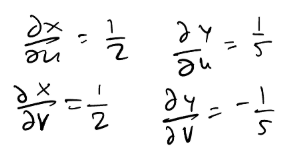
It is they missed it


 jolly parrotBOT
 atomic minnow
sterile python
Yours is good but too long
atomic minnow
sterile python
Yours is good but too long
aight

this is such a bad mark scheme
 sterile python
Thats wild
But you made some significant mistakes, such as using log10 instead of ln
pearl pondBOT
@atomic minnow Has your question been resolved?
sterile python
@atomic minnow please close channel
 blazing geode
2x
pearl pondBOT
Channel closed
Closed due to timeout
Use .reopen if this was a mistake.
Available help channel!
Send your question here to claim the channel.
Remember:
• Ask your math question in a clear, concise manner.
• Show your work, and if possible, explain where you are stuck.
• Do not immediately ping people or roles. After 15 minutes, feel free to ping <@&286206848099549185> once.
• Type the command .close to free the channel when you're done.
• Be polite and have a nice day!
Read #❓how-to-get-help for further information on how to ask a good question, and about conduct in the question channels.
 latent glen
Prove that it is impossible to create a subset of length 13 from whole numbers from 1 to 17 that has no a = 2b.
pearl pondBOT
latent glen
Prove that it is impossible to create a subset of length 13 from whole numbers f...
latent glen
<@&286206848099549185>
 vestal tapir
i don't know a short proof
vestal tapir
but like
1 2 4 8
7 14
3 6 12
5 10
you can only pick about half of each of these group, there's already 5 numbers you can't pick
1 2
4 8
7 14
3 6
5 10
so like this simpler said
 slim jackal
vestal tapir
but like
1 2 4 8
7 14
3 6 12
5 10
you can only pick about half of each of these...
slim jackal
vestal tapir
but like
1 2 4 8
7 14
3 6 12
5 10
you can only pick about half of each of these...
Yuppp... 1, 2, 4, 8, 16
3, 6, 12
5, 10
7, 14
and then 9, 11, 13, 15, 17 are alone
Think about it bro in each of those little chains, if you pick two numbers, one will be double the other. So to avoid that, you can only take one number from each ⛓️
You wanna me do sound like Gojo?
Maybe I can use cursed energy as the base if you want. Maybe it will be more easier to understand
latent glen
...what?
latent glen
i mean as long as i can write it out to my teacher in some way/form
slim jackal
Wait
Think of each number as a cursed energy flow. Start small, it doubles — positive energy evolves:
1 → 2 → 4 → 8 → 16
3 → 6 → 12
5 → 10
7 → 14
…others are just solo cursed energy
And if you take two numbers from the same flow, positive and negative energy will fight, fhat’s your a = 2b.
You can only take one per flow. There are 9 flows.
13? Too much energy. Impossible. Can you still understand it? 

latent glen
but why can't you just take 1 and 4 or 1 and 8 for example?
proper nova
latent glen
Prove that it is impossible to create a subset of length 13 from whole numbers f...
dirichlet exercise?
proper nova
latent glen
Prove that it is impossible to create a subset of length 13 from whole numbers f...
when you pick 13 elements, let them be $a_1$, $a_2$, $a_3$,..., $a_{13}$