#help-38
1 messages · Page 17 of 1
 frozen plover
 fringe minnow
thats not a polynomial then though
 oak lion
so because x is a polynomial, does that means that if the exponent was any other number, the domain would still be all real numbers?
fringe minnow
yes
so y=x^3+x^2 + 62
same domain
if the function was y= (x^2 -1) / (x-1)
then thats not a polynomial because of the division
and you would have a hole at x=1
oak lion
jeez, not looking forward to algebra 2
but thank you! I think I have the gist of it now 
fringe minnow
good luck 🙂
oak lion
.close
 trim joltBOT
Channel closed
Closed by @oak lion
Use .reopen if this was a mistake.
 Available help channel!
Send your question here to claim the channel.
Remember:
• Ask your math question in a clear, concise manner.
• Show your work, and if possible, explain where you are stuck.
• After 15 minutes, feel free to ping <@&286206848099549185>.
• Type the command .close to free the channel when you're done.
• Be polite and have a nice day!
Read #❓how-to-get-help for further information on how to ask a good question, and about conduct in the question channels.
 summer turret
I don't even know where to start tbh
 trim joltBOT
summer turret
I don't even know where to start tbh
trim joltBOT
summer turret
I don't even know where to start tbh
@summer turret Has your question been resolved?
summer turret
<@&286206848099549185>
trim joltBOT
@summer turret Has your question been resolved?
 eager robin

 hot flare
Is 160 u just ask
 trim joltBOT
@summer turret Has your question been resolved?
trim joltBOT
Channel closed
Closed due to timeout
Use .reopen if this was a mistake.
Available help channel!
Send your question here to claim the channel.
Remember:
• Ask your math question in a clear, concise manner.
• Show your work, and if possible, explain where you are stuck.
• After 15 minutes, feel free to ping <@&286206848099549185>.
• Type the command .close to free the channel when you're done.
• Be polite and have a nice day!
Read #❓how-to-get-help for further information on how to ask a good question, and about conduct in the question channels.
 icy cobalt
hey im curious why do we get dx = 2cos dtheta in step 1,
i would excpect to get dx= dtheta / 2cos, what am i doing wrong?
 trim joltBOT
icy cobalt
hey im curious why do we get dx = 2cos dtheta in step 1,
i would excpect to get...
trim joltBOT
icy cobalt
hey im curious why do we get dx = 2cos dtheta in step 1,
i would excpect to get...
 zinc ginkgo
icy cobalt
hey im curious why do we get dx = 2cos dtheta in step 1,
i would excpect to get...
zinc ginkgo
icy cobalt
hey im curious why do we get dx = 2cos dtheta in step 1,
i would excpect to get...
Why would you expect cosine to be in the denominator
x = cos(theta). What's the derivative of cos(theta)?
icy cobalt
because for other problems you get dx derivative of something = du
zinc ginkgo
those other problems have u=f(x)
Here you have x=sin(theta)
Just follow rules for derivatives
icy cobalt
hm i think i see what u mean
so other problems have u = f(x), how is this problem different
zinc ginkgo
You tell me
icy cobalt
we are using theta instead of x
fringe minnow
nvm i misread everything
zinc ginkgo
icy cobalt
because for other problems you get dx derivative of something = du
You're the one bringing up other problems
icy cobalt
huh?
zinc ginkgo
icy cobalt
because for other problems you get dx derivative of something = du
Name an example
zinc ginkgo
right
zinc ginkgo
icy cobalt
or 3x^2(x^3)
u = x^3 here
icy cobalt
yeah
zinc ginkgo
not x = f(theta)
icy cobalt
so the difference here is that x has been changed
 prime shoal
isnt he supposed to do trig sub?
zinc ginkgo
prime shoal
isnt he supposed to do trig sub?
snow is.
icy cobalt
yeah you do it after
ok but the difference here is that you have dx=du, and x= 2sin, therfor we have to change dx to dtheta
becauses 2sin uses theta
im i correct?
zinc ginkgo
there is no u in this problem at all
icy cobalt
but is my line of thinking right
because du becomes dtheta 2cos
i think im right so im just gonna play around with that for a bit
thanks for the help!
.close
trim joltBOT
Channel closed
Closed by @icy cobalt
Use .reopen if this was a mistake.
trim joltBOT
Available help channel!
Send your question here to claim the channel.
Remember:
• Ask your math question in a clear, concise manner.
• Show your work, and if possible, explain where you are stuck.
• After 15 minutes, feel free to ping <@&286206848099549185>.
• Type the command .close to free the channel when you're done.
• Be polite and have a nice day!
Read #❓how-to-get-help for further information on how to ask a good question, and about conduct in the question channels.
 glacial aurora
Proving an equivalence:
The definition we learned for an injective function goes as follows: a function f: X --> Y is injective iff for every y in Y there exists an x in X. I know the statement to be equivalent to the statement that the range of f f(X) is equal to the codomain Y. But how do i prove that equivalence?
trim joltBOT
glacial aurora
Proving an equivalence:
The definition we learned for an injective function go...
 marble wharf
that's surjective, not injective
what do you have to show for the sets f(X) and Y to be equal
glacial aurora
marble wharf
that's surjective, not injective
Oops i ment surjective
glacial aurora
marble wharf
what do you have to show for the sets f(X) and Y to be equal
That they're subsets of eachother
Also, does it not suffice to say that the codomain is a subset of f(X)?
marble wharf
yes
cause clearly f(X) is a subset of Y
so what do you have to do to show that Y is a subset of f(X) ?
glacial aurora
Show that if y is an element of Y then it is an element of f(X)
marble wharf
and when is y an element of f(X) ?
glacial aurora
marble wharf
and when is y an element of f(X) ?
if for an for an x element for X, y = f(x)
marble wharf
which is exactly the other definition
glacial aurora
marble wharf
which is exactly the other definition
Specifically im trying to show that a choice function K on a non empty set X is surjective, i have to show that every singleton {x} maps to its only element {x}. Do i also have to show that there is a singleton {x} for every x in X?
marble wharf
well on what level are you doing set theory
glacial aurora
very basic set theory
marble wharf
then {x} clearly exists
glacial aurora
$$K: P(X)\setminus{\emptyset}\to X: A\mapsto K(A)$$ so that for every $$A \subset X: K(A)\in A$$
marble wharf
dont put everything in $$stuff$$
 solid kilnBOT
نعمان
 glacial aurora
marble wharf
then {x} clearly exists
glacial aurora
marble wharf
then {x} clearly exists
Yeah i pasted directly from latex
glacial aurora
marble wharf
then {x} clearly exists
i thought so too but its for a task worth so i had to make sure haha
thanks!
Wait so, should i show that K(X) = X or do i show X subset of K(X)
marble wharf
if anything, K(P(x)\{emptyset})=X
you need to show that for every element in the codomain (so for every x in X) there exists an element in the domain (so a subset A of X, A not empty) so that K(A) = x
and the choice A={x} works here
trim joltBOT
Channel closed
Closed by @glacial aurora
Use .reopen if this was a mistake.
Available help channel!
Send your question here to claim the channel.
Remember:
• Ask your math question in a clear, concise manner.
• Show your work, and if possible, explain where you are stuck.
• After 15 minutes, feel free to ping <@&286206848099549185>.
• Type the command .close to free the channel when you're done.
• Be polite and have a nice day!
Read #❓how-to-get-help for further information on how to ask a good question, and about conduct in the question channels.
 pearl sleet
What just happened in this step? Please explain it to me in layman's terms as I don't understand linear algebra well yet
 trim joltBOT
pearl sleet
What just happened in this step? Please explain it to me in layman's terms as I ...
pearl sleet
trim joltBOT
pearl sleet
What just happened in this step? Please explain it to me in layman's terms as I ...
pearl sleet
Tag me for reply
zinc ginkgo
pearl sleet
What just happened in this step? Please explain it to me in layman's terms as I ...
They used the definition given in the beginning of Example 7
trim joltBOT
@pearl sleet Has your question been resolved?
trim joltBOT
Channel closed
Closed due to timeout
Use .reopen if this was a mistake.
trim joltBOT
Available help channel!
Send your question here to claim the channel.
Remember:
• Ask your math question in a clear, concise manner.
• Show your work, and if possible, explain where you are stuck.
• After 15 minutes, feel free to ping <@&286206848099549185>.
• Type the command .close to free the channel when you're done.
• Be polite and have a nice day!
Read #❓how-to-get-help for further information on how to ask a good question, and about conduct in the question channels.
 ripe owl
for a≠0, solve 2x³-2ax²+a³ = 0 (solve for x)
trim joltBOT
ripe owl
for a≠0, solve 2x³-2ax²+a³ = 0 (solve for x)
ripe owl
i have no idea where to begin
trim joltBOT
@ripe owl Has your question been resolved?
trim joltBOT
@ripe owl Has your question been resolved?
trim joltBOT
@ripe owl Has your question been resolved?
trim joltBOT
Channel closed
Closed due to timeout
Use .reopen if this was a mistake.
Available help channel!
Send your question here to claim the channel.
Remember:
• Ask your math question in a clear, concise manner.
• Show your work, and if possible, explain where you are stuck.
• After 15 minutes, feel free to ping <@&286206848099549185>.
• Type the command .close to free the channel when you're done.
• Be polite and have a nice day!
Read #❓how-to-get-help for further information on how to ask a good question, and about conduct in the question channels.
 distant burrow
 trim joltBOT
distant burrow
distant burrow
trim joltBOT
distant burrow
distant burrow
I know that (i) is equal to 0, but how would I find the others?
trim joltBOT
@distant burrow Has your question been resolved?
 digital bison
distant burrow
I know that (i) is equal to 0, but how would I find the others?
digital bison
distant burrow
I know that (i) is equal to 0, but how would I find the others?
how many functions are there total?
distant burrow
12^12
digital bison
and how many are onto?
distant burrow
2^12 - 2
digital bison
way less than that
distant burrow
I guess I forgot the formula for onto functions
I thought it was 2^n - 2? Where n is the number of elements in a set
digital bison
think about it like this.
f is assiging a number from 1 to 12, to the numbers from 1 to 12
Or putting them in an order determined by f
how many ways can you order the numbers 1 to 12?
distant burrow
12!
digital bison
yep
distant burrow
So 12! would be the number of onto functions?
digital bison
yes
distant burrow
Ok, idk what I was thinking there lol
digital bison
distant burrow
I thought it was 2^n - 2? Where n is the number of elements in a set
this would be the number of onto functions from {1,...,n} to {0,1}
digital bison
so, if you know that none of the onto functions have f(5) = f(7)
Then how many of them have to have f(5) != f(7)?
distant burrow
12!, and then f(5) < f(7) is 12!/2
digital bison
yep
trim joltBOT
Channel closed
Closed by @distant burrow
Use .reopen if this was a mistake.
Available help channel!
Send your question here to claim the channel.
Remember:
• Ask your math question in a clear, concise manner.
• Show your work, and if possible, explain where you are stuck.
• After 15 minutes, feel free to ping <@&286206848099549185>.
• Type the command .close to free the channel when you're done.
• Be polite and have a nice day!
Read #❓how-to-get-help for further information on how to ask a good question, and about conduct in the question channels.
 cunning fox
 trim joltBOT
cunning fox
cunning fox
trim joltBOT
cunning fox
cunning fox
I have the zero which is -1 but I cant seem to do the syntheic division for it
the answer I get is 2 when I try to use synthetic
whoops got it
;close
.close
trim joltBOT
Channel closed
Closed by @cunning fox
Use .reopen if this was a mistake.
Available help channel!
Send your question here to claim the channel.
Remember:
• Ask your math question in a clear, concise manner.
• Show your work, and if possible, explain where you are stuck.
• After 15 minutes, feel free to ping <@&286206848099549185>.
• Type the command .close to free the channel when you're done.
• Be polite and have a nice day!
Read #❓how-to-get-help for further information on how to ask a good question, and about conduct in the question channels.
 low mountain
the first 2 are easy, but I don't understand how to solve the last 2 ((sinx + siny)/2 <= sin((x+y)/2))
 trim joltBOT
low mountain
the first 2 are easy, but I don't understand how to solve the last 2 ((sinx + si...
trim joltBOT
low mountain
the first 2 are easy, but I don't understand how to solve the last 2 ((sinx + si...
 granite cove
Apparently sending the screenshot doesn't work
low mountain
rip
granite cove
I think you can use that sin(a+b) = 2*sin([a+b]/2)cos([a-b]/2)
low mountain
oh yeah trig identities i forgor about them
thanks
I can get it from there
.close
trim joltBOT
Channel closed
Closed by @low mountain
Use .reopen if this was a mistake.
granite cove
You're welcome
trim joltBOT
Available help channel!
Send your question here to claim the channel.
Remember:
• Ask your math question in a clear, concise manner.
• Show your work, and if possible, explain where you are stuck.
• After 15 minutes, feel free to ping <@&286206848099549185>.
• Type the command .close to free the channel when you're done.
• Be polite and have a nice day!
Read #❓how-to-get-help for further information on how to ask a good question, and about conduct in the question channels.
 idle quarry
 trim joltBOT
idle quarry
trim joltBOT
idle quarry
 wraith hinge
do we know if u1, u2, u3 are all linearly independent?
 haughty oasis
no
wraith hinge
Then you can't say anything about dim(S)
idle quarry
wraith hinge
do we know if u1, u2, u3 are all linearly independent?
So if we knew this it would be true?
wraith hinge
Yes..
idle quarry
Ok thank you
haughty oasis
wraith hinge
Then you can't say anything about dim(S)
so the statement would be false
trim joltBOT
@idle quarry Has your question been resolved?
trim joltBOT
Channel closed
Closed due to timeout
Use .reopen if this was a mistake.
Available help channel!
Send your question here to claim the channel.
Remember:
• Ask your math question in a clear, concise manner.
• Show your work, and if possible, explain where you are stuck.
• After 15 minutes, feel free to ping <@&286206848099549185>.
• Type the command .close to free the channel when you're done.
• Be polite and have a nice day!
Read #❓how-to-get-help for further information on how to ask a good question, and about conduct in the question channels.

 reef plaza
what value of lambda do i need for them to be co-planar
 delicate bobcat
reef plaza
what value of lambda do i need for them to be co-planar
delicate bobcat
reef plaza
what value of lambda do i need for them to be co-planar
scalar triple product = 0
trim joltBOT
Channel closed
Closed by @reef plaza
Use .reopen if this was a mistake.
Available help channel!
Send your question here to claim the channel.
Remember:
• Ask your math question in a clear, concise manner.
• Show your work, and if possible, explain where you are stuck.
• After 15 minutes, feel free to ping <@&286206848099549185>.
• Type the command .close to free the channel when you're done.
• Be polite and have a nice day!
Read #❓how-to-get-help for further information on how to ask a good question, and about conduct in the question channels.
wraith hinge
trim joltBOT
wraith hinge
*
 solid kilnBOT
Kizima
 wraith hinge
no its cos2x+cosx
delicate bobcat
a
wraith hinge
why there is a pi/2
delicate bobcat
have you used formula for sum?
 random citrus
Just solve for x
wraith hinge
in $cos4z-cosz it was 5z/2=kpi and for this is 3x/2=pi/2+kpi$
random citrus
Or double angle formula
solid kilnBOT
Kizima

 wraith hinge
$in cos4z-cosz why its 5z/2=kpi$ and not like the first one =pi/2+kpi
solid kilnBOT
Kizima
 wraith hinge
you understand my question or no ?
 lament jewel
oh no latex monster
delicate bobcat
yep, but have you tried anything or u're trying to memorize answers
wraith hinge
what is memorize answers
lament jewel
try using $ just beside the eq stuff
ur words became variables which is probably not intended
delicate bobcat
wraith hinge
what is memorize answers
What are your steps in order to solve this equation? Have you done anything so far? Why do you think it's 3x/2 = ...?
wraith hinge
i use cosa+cosb
delicate bobcat
so then you have
wraith hinge
then i get 3x/2
wraith hinge
wraith hinge
this is
solid kilnBOT
Modus
 wraith hinge
yes
delicate bobcat
3x/2 = pi/2 + kpi OR x/2 = pi/2 + kpi
delicate bobcat
x = pi/3 + 2/3kpi or x = pi + 2kpi
cos(4x) - cos(x) = -2sin(5x/2) * sin(3x/2)
then sin(5x/2) = 0 or sin(3x/2) = 0
5x/2 = kpi or 3x/2 = kpi
wraith hinge
where there is no the pi/2
delicate bobcat
because sin(pi/2) is 1 not 0
trim joltBOT
@wraith hinge Has your question been resolved?
Channel closed
Closed by @exotic pagoda
Use .reopen if this was a mistake.
Available help channel!
Send your question here to claim the channel.
Remember:
• Ask your math question in a clear, concise manner.
• Show your work, and if possible, explain where you are stuck.
• After 15 minutes, feel free to ping <@&286206848099549185>.
• Type the command .close to free the channel when you're done.
• Be polite and have a nice day!
Read #❓how-to-get-help for further information on how to ask a good question, and about conduct in the question channels.
 livid haven
hey
trim joltBOT
livid haven
hey
 minor shadow
you done?
 minor shadow
livid haven
minor shadow
livid haven
system of equations
both are true at the same time
so you plot it in a system of equations
livid haven
minor shadow
so you plot it in a system of equations
ah okay
trim joltBOT
Channel closed
Closed by @livid haven
Use .reopen if this was a mistake.
trim joltBOT
Available help channel!
Send your question here to claim the channel.
Remember:
• Ask your math question in a clear, concise manner.
• Show your work, and if possible, explain where you are stuck.
• After 15 minutes, feel free to ping <@&286206848099549185>.
• Type the command .close to free the channel when you're done.
• Be polite and have a nice day!
Read #❓how-to-get-help for further information on how to ask a good question, and about conduct in the question channels.
 grand hull
can you help me understand why this works?
 trim joltBOT
grand hull
can you help me understand why this works?
trim joltBOT
trim joltBOT
grand hull
can you help me understand why this works?
trim joltBOT
Channel closed
Closed by @grand hull
Use .reopen if this was a mistake.
Available help channel!
Send your question here to claim the channel.
Remember:
• Ask your math question in a clear, concise manner.
• Show your work, and if possible, explain where you are stuck.
• After 15 minutes, feel free to ping <@&286206848099549185>.
• Type the command .close to free the channel when you're done.
• Be polite and have a nice day!
Read #❓how-to-get-help for further information on how to ask a good question, and about conduct in the question channels.
 unique cloud

hello I had trouble on c, I’m not sure if I did it correctly
if my process is wrong please let me know what I did wrong
trim joltBOT
Available help channel!
Send your question here to claim the channel.
Remember:
• Ask your math question in a clear, concise manner.
• Show your work, and if possible, explain where you are stuck.
• After 15 minutes, feel free to ping <@&286206848099549185>.
• Type the command .close to free the channel when you're done.
• Be polite and have a nice day!
Read #❓how-to-get-help for further information on how to ask a good question, and about conduct in the question channels.
wraith hinge
 trim joltBOT
wraith hinge
trim joltBOT
trim joltBOT
wraith hinge
trim joltBOT
@wraith hinge Has your question been resolved?
trim joltBOT
@wraith hinge Has your question been resolved?
wraith hinge
.close
trim joltBOT
Channel closed
Closed by @modern fern
Use .reopen if this was a mistake.
Available help channel!
Send your question here to claim the channel.
Remember:
• Ask your math question in a clear, concise manner.
• Show your work, and if possible, explain where you are stuck.
• After 15 minutes, feel free to ping <@&286206848099549185>.
• Type the command .close to free the channel when you're done.
• Be polite and have a nice day!
Read #❓how-to-get-help for further information on how to ask a good question, and about conduct in the question channels.
 fickle helm
 trim joltBOT
fickle helm
fickle helm
trim joltBOT
fickle helm
fickle helm
Are these two valid sub spaces of R^2
 rapid flicker
I think so
fickle helm
But then how would I define U union V?
Is it just simply vectors in either the sub space U or subspace V
rapid flicker
yea
trim joltBOT
Channel closed
Closed by @fickle helm
Use .reopen if this was a mistake.
Available help channel!
Send your question here to claim the channel.
Remember:
• Ask your math question in a clear, concise manner.
• Show your work, and if possible, explain where you are stuck.
• After 15 minutes, feel free to ping <@&286206848099549185>.
• Type the command .close to free the channel when you're done.
• Be polite and have a nice day!
Read #❓how-to-get-help for further information on how to ask a good question, and about conduct in the question channels.
 dreamy yew
Describe as simply as possible the set of all real numbers x, for
which applies (the solution must be specified): |x − 1| + |x − 2| > 1
trim joltBOT
dreamy yew
Describe as simply as possible the set of all real numbers x, for
which applies ...
Please don't occupy multiple help channels.

 stoic saddle
dreamy yew
stoic saddle
dreamy yew
.close
trim joltBOT
Channel closed
Closed by @dreamy yew
Use .reopen if this was a mistake.
Available help channel!
Send your question here to claim the channel.
Remember:
• Ask your math question in a clear, concise manner.
• Show your work, and if possible, explain where you are stuck.
• After 15 minutes, feel free to ping <@&286206848099549185>.
• Type the command .close to free the channel when you're done.
• Be polite and have a nice day!
Read #❓how-to-get-help for further information on how to ask a good question, and about conduct in the question channels.
 limpid wind
 trim joltBOT
limpid wind
limpid wind
trim joltBOT
limpid wind
limpid wind
they did integration by parts
how is integral of l_n^(n)
l_n^(n-1)
what rule is this
limpid wind

i know its integration by parts
but why is that polynomial integral
= l_n^(n-1)
wait its order not power
i get it now
.close
trim joltBOT
Channel closed
Closed by @limpid wind
Use .reopen if this was a mistake.
Available help channel!
Send your question here to claim the channel.
Remember:
• Ask your math question in a clear, concise manner.
• Show your work, and if possible, explain where you are stuck.
• After 15 minutes, feel free to ping <@&286206848099549185>.
• Type the command .close to free the channel when you're done.
• Be polite and have a nice day!
Read #❓how-to-get-help for further information on how to ask a good question, and about conduct in the question channels.
 atomic delta
 trim joltBOT
@atomic delta Has your question been resolved?
 long basin
atomic delta
long basin
atomic delta
Set f'(x) = 0, solve for x
trim joltBOT
@atomic delta Has your question been resolved?
trim joltBOT
Channel closed
Closed by @atomic delta
Use .reopen if this was a mistake.
Available help channel!
Send your question here to claim the channel.
Remember:
• Ask your math question in a clear, concise manner.
• Show your work, and if possible, explain where you are stuck.
• After 15 minutes, feel free to ping <@&286206848099549185>.
• Type the command .close to free the channel when you're done.
• Be polite and have a nice day!
Read #❓how-to-get-help for further information on how to ask a good question, and about conduct in the question channels.
 humble needle
How would one approach a triangle with two trapezoid heights?
 trim joltBOT
humble needle
How would one approach a triangle with two trapezoid heights?
trim joltBOT
humble needle
How would one approach a triangle with two trapezoid heights?
@humble needle Has your question been resolved?
trim joltBOT
@humble needle Has your question been resolved?
trim joltBOT
Channel closed
Closed due to timeout
Use .reopen if this was a mistake.
trim joltBOT
Available help channel!
Send your question here to claim the channel.
Remember:
• Ask your math question in a clear, concise manner.
• Show your work, and if possible, explain where you are stuck.
• After 15 minutes, feel free to ping <@&286206848099549185>.
• Type the command .close to free the channel when you're done.
• Be polite and have a nice day!
Read #❓how-to-get-help for further information on how to ask a good question, and about conduct in the question channels.
fickle helm

 trim joltBOT
fickle helm
fickle helm
trim joltBOT
fickle helm
fickle helm
For the forward implication is my method valid?
trim joltBOT
@fickle helm Has your question been resolved?
trim joltBOT
@fickle helm Has your question been resolved?
trim joltBOT
@fickle helm Has your question been resolved?
trim joltBOT
@fickle helm Has your question been resolved?
zinc ginkgo
.close
trim joltBOT
Channel closed
Closed by @zinc ginkgo
Use .reopen if this was a mistake.
Available help channel!
Send your question here to claim the channel.
Remember:
• Ask your math question in a clear, concise manner.
• Show your work, and if possible, explain where you are stuck.
• After 15 minutes, feel free to ping <@&286206848099549185>.
• Type the command .close to free the channel when you're done.
• Be polite and have a nice day!
Read #❓how-to-get-help for further information on how to ask a good question, and about conduct in the question channels.
 worthy vale
 trim joltBOT
worthy vale
trim joltBOT
worthy vale
 solid kilnBOT
Modus
 worthy vale
Could you explain it at highschool mathematics
delicate bobcat
there are formulas
 delicate bobcat
ye, basically
I use modulus z as |z| instead of r
but it's same
so from here u can determine the argument
worthy vale
Im still confused
solid kilnBOT
Modus
 delicate bobcat
or if you necessarily want to use tan(b/a) u can imagine graph of tan(x)
worthy vale
Where does that sin and cos come from
delicate bobcat
basically x = -pi/2 is an asymptote of tan(x) and then tan(x) --> - inf
worthy vale
I know Tang is sin/ cos
 worthy vale
Could you call for a second?
Because i still dont really get ir
It*

With these formules can i make that excersice
Or do i need your magic formules ?
worthy vale
Could you write all the steps from what i have to the answer
Im not so talented in mathematics as you might have noticed 😅

Can you build further on this with the in between steps
delicate bobcat
with this one it's even harder to explain why it's pi/2
worthy vale
Can you pls try
delicate bobcat
but you've asked how I had had these formulas
worthy vale
Even photomath gives different answers
worthy vale
 worthy vale
 delicate bobcat
which changes nothing (2pi is period of sin and cos)
worthy vale
This is what the book says
delicate bobcat
both are right, don't worry
delicate bobcat
look carefully on this
worthy vale
Or could you call for a second
solid kilnBOT
Modus
 delicate bobcat
same thing for sine
worthy vale
Yes
delicate bobcat
now u know why I've used them
worthy vale
Is a alpha?
delicate bobcat
nope
worthy vale
Or just a

 topaz gorge
pi/2

 zinc ginkgo
you should memorize the values on the unit circle
worthy vale
And that is?
zinc ginkgo
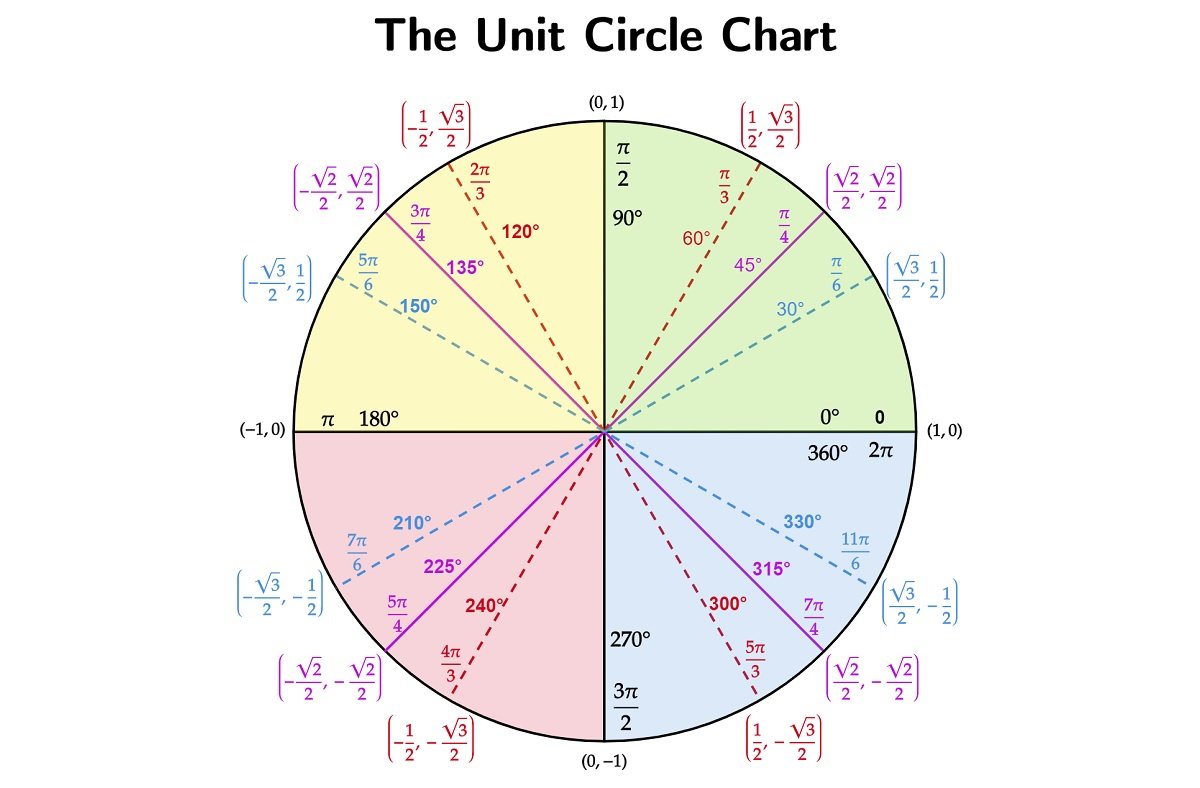
https://matterofmath.com/wp-content/uploads/2021/07/The-Unit-Circle-Colored-Cover.jpg bookmark and memorize
worthy vale
Is 0= pi?
zinc ginkgo
pi = pi
worthy vale
Okay but is it correct what i said
zinc ginkgo
no
worthy vale
I make pi out of the zero
How is it then cos 45°
Oops
That was from the previous excersice
 silent canyon
I think you need to study trigonometry before complex numbers
worthy vale
 silent canyon
My suggestion: Organic Chemistry Tutor on YouTube.
delicate bobcat
how 0 can equal to pi/2
worthy vale
silent canyon
I think you need to study trigonometry before complex numbers
I live in Belgium and i am in highschool in 5th grade i saw geometry then i went to the 5 grade where i had calculus and i failed that year so i had to redo my 5th so i moved to another school and here we are doing complex numbers now doing it graphical and after this matrix
So i am just trying to get my highschool degree
So geometry is 2 years ago so it is a bit Far awey
silent canyon
Seems pretty advance for high school
worthy vale
I agree
I have 4h a week
Of mathematics

Is this correct?
In the book its - pi \ 2
delicate bobcat
nope because 0 isn't pi/2 cos(alpha) = 0 can imply that alpha = pi/2
thing is doing this method for finding an argument you need to find an angle such that it satisfies BOTH conditions
sin = b/r and cos = a/r
not only cos
worthy vale
I am stuck on this problem for way too long can someone write the steps in between so its logic to me
delicate bobcat
aka pi/2 is a solution to cos(alpha) = 0 but that doesn't necessarily mean angle is pi/2
worthy vale
And build further on my photo that i sent
Pls
Could it be that the answer in the book is wrong with the -
delicate bobcat
nope answer is ok
 solid kilnBOT
Modus
 delicate bobcat
same thing for cosine
worthy vale
Where does the frikking - come from
 delicate bobcat
generally if you add +2pi (or subtract) you'll get equivalent answer which is also true
delicate bobcat
worthy vale
Where does the frikking - come from
bro, for a moment stop thinking about the final answer
worthy vale
Like here 0 = to pi
 delicate bobcat
this is still wrong, don't use "=" sign
0 isn't equal pi
look carefully at the solution in your book
worthy vale
Here 0 = is equal to -pi
 delicate bobcat
they used
worthy vale
Get me way of thinking?
solid kilnBOT
Modus
 zinc ginkgo
try not to abuse = signs
zinc ginkgo
zinc ginkgo
try not to abuse = signs
.
solid kilnBOT
Result:
0
,calc -pi
solid kilnBOT
Result:
-3.1415926535898
those are not equal
pi is a number approximately equal to 3.14
0 is a different number
delicate bobcat
worthy vale
And what does it mean
this mean "implies", that is one thing follows from another

 silent canyon
How did you get 0/2 = π/2?
 silent canyon
I assume you made a=0 and r=2 here?
Right? Otherwise where did the 0 and 2 come from?
worthy vale
Could someone pls write all the steps you do for that excersice in order to get the answer in the book i been trying to get the answer for way to long and its making me crazy
silent canyon
What even is the question?
worthy vale
Book question or my question??
zinc ginkgo
Both
trim joltBOT
@worthy vale Has your question been resolved?
trim joltBOT
Channel closed
Closed due to timeout
Use .reopen if this was a mistake.
Available help channel!
Send your question here to claim the channel.
Remember:
• Ask your math question in a clear, concise manner.
• Show your work, and if possible, explain where you are stuck.
• After 15 minutes, feel free to ping <@&286206848099549185>.
• Type the command .close to free the channel when you're done.
• Be polite and have a nice day!
Read #❓how-to-get-help for further information on how to ask a good question, and about conduct in the question channels.
 ancient falcon
x+1/x > or = 2
trim joltBOT
ancient falcon
x+1/x > or = 2
 trim joltBOT
@ancient falcon Has your question been resolved?
 flat narwhal
I would multiply by x.
Then it's easy to draw the two functions. Just don't forget that the comparison between the two changes depending on whether x is negative.
trim joltBOT
Channel closed
Closed due to timeout
Use .reopen if this was a mistake.
Available help channel!
Send your question here to claim the channel.
Remember:
• Ask your math question in a clear, concise manner.
• Show your work, and if possible, explain where you are stuck.
• After 15 minutes, feel free to ping <@&286206848099549185>.
• Type the command .close to free the channel when you're done.
• Be polite and have a nice day!
Read #❓how-to-get-help for further information on how to ask a good question, and about conduct in the question channels.
wraith hinge
I need some help with basic algebra
trim joltBOT
wraith hinge
I need some help with basic algebra
wraith hinge
Let say i have an equation
x^2=a
Can i take square root of both side to solve this equation
 viral shore
Ye
 quaint gazelle
be careful square root is not a bijection so the equation you'll get is not equivalent to this
it will only be a consequence
like x=sqrt(a) is a right solution
but since its not equivalent
its not necessarely the only one
wraith hinge
$$ \sqrt{x^{2}} = \sqrt{a} $$
$$ \lvert x \rvert = \sqrt{a} $$
$$ x = \sqrt{a} $$ or $$ x = -\sqrt{a} $$
solid kilnBOT
lnh_8
 wraith hinge
is this correct
 inland orbit
yeah
wraith hinge
solid kiln
**lnh\_8**
can i use this similar approach
$$ \sqrt{x^{2}} > \sqrt{a} $$
$$ \lvert x \rvert > \sqrt{a} $$
$$ x > \sqrt{a} $$ or $$ x < -\sqrt{a} $$
solid kilnBOT
lnh_8
 wraith hinge
inland orbit
starting from x^2 > a, I assume?
wraith hinge
inland orbit
starting from x^2 > a, I assume?
yes
inland orbit
yep that works
wraith hinge
also
inland orbit
"or" when |x| > c
"and" when |x| < c
think of |x| < 2
x must be between -2 and 2
that is, x > -2 and x < 2
as opposed to |x| > 2
which implies that x < -2 or x > 2
As a rule of thumb, you can check to see if both statements can be true at the same time
"x < -2 and x > 2" gives no solutions, since no real number is both less than -2 and greater than 2
trim joltBOT
Channel closed
Closed by @empty aspen
Use .reopen if this was a mistake.
inland orbit
no problem 👍
trim joltBOT
Available help channel!
Send your question here to claim the channel.
Remember:
• Ask your math question in a clear, concise manner.
• Show your work, and if possible, explain where you are stuck.
• After 15 minutes, feel free to ping <@&286206848099549185>.
• Type the command .close to free the channel when you're done.
• Be polite and have a nice day!
Read #❓how-to-get-help for further information on how to ask a good question, and about conduct in the question channels.
 median iron
I need help on trigonometry quadrants, I don't get how you get the 2nd angle and how does trigonometry (sin/cos/tan) quadrant differ from one another...
trim joltBOT
median iron
I need help on trigonometry quadrants, I don't get how you get the 2nd angle and...
median iron
any link explaining the topic would be ok too
wraith hinge
median iron
I need help on trigonometry quadrants, I don't get how you get the 2nd angle and...
What do you mean by this dude?
Like
 wraith hinge
Ah okay this
Hmm
Subtract the reference angle from the π, see if that works in the second quadrant
median iron
is there any relation to acute angle?
or when will acute angle be used in certain situation?
wraith hinge
Wait a sec
median iron
if u want more detail one of what I meant that this...
 wraith hinge

This trigonometry video tutorial provides a basic introduction into reference angles. It explains how to find the reference angle in radians and degrees.
New Trigonometry Playlist:
https://www.youtube.com/watch?v=oxhXz9_uyiM&index=1&list=PL0o_zxa4K1BVCB8iCVCGOES9pEF6byTMT
Access to Premium Videos:
https://www.patreon.com/MathScienceTutor
h...
wraith hinge
median iron
if u want more detail one of what I meant that this...
Have you tried this video?
median iron
watching it rn
median iron
that is different from what im asking tho.... but a bit helpful cuz now ik more about ref angle
one I was asking before
wraith hinge
median iron
that is different from what im asking tho.... but a bit helpful cuz now ik more ...
Hmm
median iron
trigonometric identity to be more excact
wraith hinge
median iron
trigonometric identity to be more excact
Ah okay okay
median iron
trigonometry quadrant in short
how does one identity differs from one another
like for example, tan and cot is + in q1 and q3 while - in q2 and 4
wraith hinge
Yes
median iron
meaning if tan/cot teta will have at least more than 2 reference angle for this
how do tell or get those angle and differentiate it with the other identity
wraith hinge
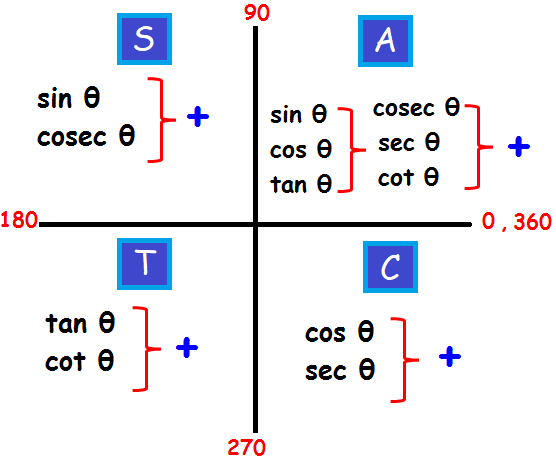
onlinemath4all
Trigonometry Quadrant Formulas - Concept - Examples with step by step explanation
Have you seen this site?
median iron
thats formula only
wraith hinge
Hmm
I believe i cannot get it
Ping a helper
Im noob at this shit
<@&286206848099549185>
median iron
this is A level math for ur reference
wraith hinge
Which grade mathematics is this anyways?
wraith hinge
median iron
this is A level math for ur reference
Oh well
No wonder its outta my expertise
Im stoopid
Im so sorry about that lol
<@&286206848099549185>
 fathom kernel
it's been a while since i've done trig, so i can't explain it very well by myself

this would be a good explanation on the concept of reference angles
fathom kernel
no problem
 orchid ember
I hate discord
median iron
.close
trim joltBOT
Channel closed
Closed by @median iron
Use .reopen if this was a mistake.
Available help channel!
Send your question here to claim the channel.
Remember:
• Ask your math question in a clear, concise manner.
• Show your work, and if possible, explain where you are stuck.
• After 15 minutes, feel free to ping <@&286206848099549185>.
• Type the command .close to free the channel when you're done.
• Be polite and have a nice day!
Read #❓how-to-get-help for further information on how to ask a good question, and about conduct in the question channels.
 rotund sand
 trim joltBOT
rotund sand
trim joltBOT
rotund sand
 stark bison
Rewrite the expression as e^((x + 1) * ln(ln(x + 1))) or use logarithmic differentiation
trim joltBOT
@rotund sand Has your question been resolved?
rotund sand
i'm still confused, what will i do after i rewrite the expression?
trim joltBOT
Channel closed
Closed due to timeout
Use .reopen if this was a mistake.
trim joltBOT
Available help channel!
Send your question here to claim the channel.
Remember:
• Ask your math question in a clear, concise manner.
• Show your work, and if possible, explain where you are stuck.
• After 15 minutes, feel free to ping <@&286206848099549185>.
• Type the command .close to free the channel when you're done.
• Be polite and have a nice day!
Read #❓how-to-get-help for further information on how to ask a good question, and about conduct in the question channels.
 signal bridge
 trim joltBOT
signal bridge
signal bridge
trim joltBOT
signal bridge
signal bridge
so the answer is apparently wrong?
signal bridge
heh
wraith hinge
Lol
signal bridge
so my teacher made a form where she gave the answers available and we have to choose which one fits for the number

and in the list i dont see it
unless i missread something?
 signal bridge
maybe i think?
signal bridge
yeah
wraith hinge
signal bridge
ah ok then
Cool
wraith hinge
signal bridge
thank you
Remember to do things like these if the answer doesnt match
trim joltBOT
Channel closed
Closed by @signal bridge
Use .reopen if this was a mistake.
Available help channel!
Send your question here to claim the channel.
Remember:
• Ask your math question in a clear, concise manner.
• Show your work, and if possible, explain where you are stuck.
• After 15 minutes, feel free to ping <@&286206848099549185>.
• Type the command .close to free the channel when you're done.
• Be polite and have a nice day!
Read #❓how-to-get-help for further information on how to ask a good question, and about conduct in the question channels.
 timber edge
There are 9 different prices, and 9 people. Exactly 1 person does not get a price. In how many ways can the prices be given out? (the order does not matter)
trim joltBOT
timber edge
There are 9 different prices, and 9 people. Exactly 1 person does not get a pric...
 olive condor
by does not get a price u mean does not get a choice?
olive condor
ok so are u taught some formulas or supposed to take the intuitive route?
olive condor
ok so the first price can be anyone
so 9
same with the others except the last one
but the last is one
so 9! is fine
but then again
theres the last prize that one of the 8 will get
becasue the last one is empty handed
so 9!*8
wait order doesnt matter

timber edge
lol
olive condor
u try solving and send ur work if u have ANY idea
timber edge
Ive tried everything I can think of already
Tried using different combinations of nCr and nPr but it just wont be right

 fathom ivy
simplification: solve the case where 9 prizes are identical first
because at the end you can with very little effort convert your answer to the case where 9 prizes are distinct
timber edge
with 9 prizes if everyone wins 1 it would just be 9!
but where do I go from there to exclude 1
fathom ivy
no, your question explicitly forbids the case where everyone wins one, no?
timber edge
yea I thought that was what you meant with simplification
olive condor
so there this thing where 8 get their share right?
timber edge
yeah
olive condor
now each of those 8 have equal chance of getting the last one
so 1+8=9
im trying to think thru combination tho

digital bison
olive condor
im trying to think thru combination tho
how many ways can 8 of the 9 people win once?
timber edge
im lost too
olive condor
so 9 ways the 8 winners get decided
(each case has each indivudual excluded)
now there are 8 ways the final guy gets decided
so 9+8=17 is the final answer

fathom ivy
so close
fathom ivy
but that's not how combinations work :p
timber edge
I was thinking 9! + 8 but thats not right either
fathom ivy
that's how combinations work.
olive condor
🤓
olive condor
same still
fathom ivy
then suppose the same 8 people win in 2 different scenarios, but in one case person 1 won prize #1, in the other case person 1 won prize #2, are they counted as separate combinations or no?
timber edge
fathom ivy
then suppose the same 8 people win in 2 different scenarios, but in one case per...
Id say seperate
fathom ivy
so how would you account for the case where all prizes are distinct?
timber edge
thats what Im trying to figure out too
fathom ivy
okay, since we've got the arrangements of the winners already, suppose it's time to hand them the prizes they deserve.
we prepare the prizes in order so when person 1-9 walk through the door they just take the first prize(s) they see. how many ways can we prepare the prizes?
timber edge
9!
fathom ivy
yes, but there's a slight problem: suppose person 1 is the person who wins two prizes. then it doesn't matter if our prize order starts with, for example, 89xxxx or 98xxxxx, they'll be taking prizes 8 and 9 anyway
how can we account for this?
timber edge
9x8
fathom ivy
not quite, we're trimming out a lot of possible arrangements if we take 9*8 instead of 9!
fathom ivy
suppose person 1 is the person taking 2 prizes, and your current prize order is ab cdefghi
how many sequences can you form such that person 1 and all other people will be taking home the same prizes, and therefore we're guaranteed to be overcounting?
timber edge
idk I would think he could take them in 9x8 ways..
fathom ivy
oh actually setting the rest to x's might not be the smartest idea :p
fathom ivy
not sure what you're going for there but that's a big number
given that you know the current sequence is ab cdefghi, can you construct another sequence where everyone receives the same prizes, so we're 100% overcounting?
remember that we're assuming that person 1 receives 2 prizes
timber edge
Idk im not getting anywhere but 9! and the things Ive been doing alr
wait 9!*8
is when the sequence doesnt matter
but Im not sure how to apply that when the sequence does matter
fathom ivy
no, it's 9*8 as shah said
timber edge
How
oh
nvm
yeah so 72 ways for that sequence
but it can be any sequence so x9?
fathom ivy
well, there's certainly more than 9 ways to arrange 9 distinct objects
or in this case 9 distinct prizes
fathom ivy
close, but we're overcounting as previously discussed: the person receiving 2 prizes causes issues
fathom ivy
so suppose that person received prize a,b in that order
if we're overcounting, it means everyone received the same prizes, right?
so how many other ways can that person receive those two prizes?
fathom ivy
it has nothing to do with the fact that there are 9 prizes
if you have 2 objects, how many different ways can you order them?
timber edge
2
fathom ivy
yes, so you just divide by 2
timber edge
oh
fathom ivy
you divide by 2 because if the person receives prizes say a,b in that order, you can always swap the order to make them receive b,a, therefore for every valid arrangement you're overcounting 1 duplicate arrangement
fathom ivy
and if you understood that you should be able to generalize rather easily cases where 1 person receives 3 or more prizes
timber edge
yeah thats what I was trying to think of now
so for 3 it would be 9x8x7 = 504 and 9! so (504x9!)/3?
fathom ivy
9!/3 part is correct
if you have 7 winners and 1 of them receiving 3 prizes it's not 504 ways to choose the winners tho
oh actually no :c
it's 9!/3!
fathom ivy
because if you 1 person receives 3 prizes, you have 3! ways to permute the 3 prizes
timber edge
yeah I was going a bit too fast there
fathom ivy
ye the idea is there
timber edge
how would I do the 504 part
fathom ivy
and since it's 4am and i should really at leas try to sleep, the case where you have 7 winners from the 9, where 1 person receives 3 prizes:
||you choose 2 losers from 9 people first, so 9c2 ways for losers||
||the you choose 1 from the 7 to be the person winning a triple, so 7*9c2||
trim joltBOT
Channel closed
Closed by @timber edge
Use .reopen if this was a mistake.
trim joltBOT
Available help channel!
Send your question here to claim the channel.
Remember:
• Ask your math question in a clear, concise manner.
• Show your work, and if possible, explain where you are stuck.
• After 15 minutes, feel free to ping <@&286206848099549185>.
• Type the command .close to free the channel when you're done.
• Be polite and have a nice day!
Read #❓how-to-get-help for further information on how to ask a good question, and about conduct in the question channels.
 sinful summit
Hi guys
trim joltBOT
sinful summit
Hi guys
sinful summit
Does the sequence n^4/(n^3)-2n converges or diverges ?
fringe minnow
what have u tried
sinful summit
I simplified and then applied the limit but it exploded
sinful summit
Diverge
fringe minnow
yes.
sinful summit
This is sufficient to prove that the sequence diverge ?
fringe minnow
yes
sinful summit
Nice ty
trim joltBOT
@sinful summit Has your question been resolved?
trim joltBOT
Channel closed
Closed due to timeout
Use .reopen if this was a mistake.
Available help channel!
Send your question here to claim the channel.
Remember:
• Ask your math question in a clear, concise manner.
• Show your work, and if possible, explain where you are stuck.
• After 15 minutes, feel free to ping <@&286206848099549185>.
• Type the command .close to free the channel when you're done.
• Be polite and have a nice day!
Read #❓how-to-get-help for further information on how to ask a good question, and about conduct in the question channels.
 mental gust
a
trim joltBOT
mental gust
a

 trim lichen
you are calculating things modulo 5. do you know what that means?
trim joltBOT
@mental gust Has your question been resolved?
mental gust
trim lichen
you are calculating things modulo 5. do you know what that means?
think so
oh tihnk i get it
trim joltBOT
Channel closed
Closed due to timeout
Use .reopen if this was a mistake.
Available help channel!
Send your question here to claim the channel.
Remember:
• Ask your math question in a clear, concise manner.
• Show your work, and if possible, explain where you are stuck.
• After 15 minutes, feel free to ping <@&286206848099549185>.
• Type the command .close to free the channel when you're done.
• Be polite and have a nice day!
Read #❓how-to-get-help for further information on how to ask a good question, and about conduct in the question channels.
 gaunt axle
Lol OK so like x²-x-1 does not factor evenly
 trim joltBOT
gaunt axle
Lol OK so like x²-x-1 does not factor evenly
gaunt axle
trim joltBOT
gaunt axle
Lol OK so like x²-x-1 does not factor evenly
gaunt axle
So do I have to use the quadratic formula to find the zeroes? Is there a way to do this without a calculator
 keen plover
The quadratic formula doesn't need a calculator
gaunt axle
Well I kew that bit
but like it's gonna end up being decimals and stuff which is icky
wanted to see if I messed up early or smth
gaunt axle
oh alr
yay
so like if another question had like a point where I found and it ended up being ln of whatever number, I could leave that too?
keen plover
Yea
gaunt axle
oh yay
that makes life so much easier, thanks king
I really need to stop overthinking everything
.close
trim joltBOT
Channel closed
Closed by @gaunt axle
Use .reopen if this was a mistake.
trim joltBOT
Available help channel!
Send your question here to claim the channel.
Remember:
• Ask your math question in a clear, concise manner.
• Show your work, and if possible, explain where you are stuck.
• After 15 minutes, feel free to ping <@&286206848099549185>.
• Type the command .close to free the channel when you're done.
• Be polite and have a nice day!
Read #❓how-to-get-help for further information on how to ask a good question, and about conduct in the question channels.
 hollow minnow
How do i find the x-intercepts of the function y=arctan((x+1)/(x-1))-x
hollow minnow
without graphing
 faint rover
Put y = 0
faint rover
Show what u did pls

 trim joltBOT
@hollow minnow Has your question been resolved?
hollow minnow
NO
trim joltBOT
@hollow minnow Has your question been resolved?
hollow minnow
NOOOOO
keen plover
Wolfram alpha doesn't show exact solutions
So you probably can't find an exact solution
hollow minnow
its for a curve sketching question so
keen plover
Well, you can't solve it algebraically ¯\_(ツ)_/¯
trim joltBOT
Channel closed
Closed by @hollow minnow
Use .reopen if this was a mistake.
Available help channel!
Send your question here to claim the channel.
Remember:
• Ask your math question in a clear, concise manner.
• Show your work, and if possible, explain where you are stuck.
• After 15 minutes, feel free to ping <@&286206848099549185>.
• Type the command .close to free the channel when you're done.
• Be polite and have a nice day!
Read #❓how-to-get-help for further information on how to ask a good question, and about conduct in the question channels.
wraith hinge
Hello
trim joltBOT
wraith hinge
Hello
wraith hinge
Can someone explain me
When
We have to find if a sequence is divergent or convergent
Can someone explain me that trick for the definition with epsilon for supposing it converge
Why in some problems we need to have that l/2 compared with something
Where l is the limit from supposing that is convergent
I quite understand that |x_n - l | < epsilon where epsilon > 0
But why in some problems we have that epsilon equal to l/2
<@&286206848099549185>
We can take any value we want for that epsilon to go to a contradiciton?
I thought that epsilon is something very very small
And if you guys know
Can you also explain this trick comparing with l/2
marble wharf
can you give an example of what you are talking about?
do you want to show that something does not converge?
wraith hinge
Yes
marble wharf
ok so for something to converge, you need that for all epsilon eventually |x_n - L | < epsilon
so to show that it does not converge, it is enough to give a single epsilon for which this is not true
wraith hinge
And that epsilon can be every value > 0?
marble wharf
well as long as the proof works, yes
like if you want to prove that (-1)^n does not converge, then picking epsilon=5 won't do anything
wraith hinge
Oh so the main trick is to give that epsilon a value that the inequality fails
marble wharf
but picking epsilon=1/2 for example works
trim joltBOT
Channel closed
Closed by @floral sparrow
Use .reopen if this was a mistake.
trim joltBOT
Available help channel!
Send your question here to claim the channel.
Remember:
• Ask your math question in a clear, concise manner.
• Show your work, and if possible, explain where you are stuck.
• After 15 minutes, feel free to ping <@&286206848099549185>.
• Type the command .close to free the channel when you're done.
• Be polite and have a nice day!
Read #❓how-to-get-help for further information on how to ask a good question, and about conduct in the question channels.
 cloud plank
 trim joltBOT
cloud plank
cloud plank
trim joltBOT
cloud plank
cloud plank
whats the answer
 frigid pine
let the first term be x. write the third, fourth, and thus fifth terms in terms of x. then you have an equation for 23=the fifth term in terms of x
cloud plank
frigid pine
let the first term be x. write the third, fourth, and thus fifth terms in terms ...
so x is the answer?
idk man im tired
 pearl granite
 shrewd ridge
they want "trial and improvement" not algebra
shrewd ridge
they want "trial and improvement" not algebra
whats the answer
shrewd ridge
4
pearl granite
@shrewd ridge thank you so much
cloud plank
.close
trim joltBOT
Channel closed
Closed by @cloud plank
Use .reopen if this was a mistake.
trim joltBOT
Available help channel!
Send your question here to claim the channel.
Remember:
• Ask your math question in a clear, concise manner.
• Show your work, and if possible, explain where you are stuck.
• After 15 minutes, feel free to ping <@&286206848099549185>.
• Type the command .close to free the channel when you're done.
• Be polite and have a nice day!
Read #❓how-to-get-help for further information on how to ask a good question, and about conduct in the question channels.
 heady nimbus
The aim of this assignment is to work with mathematical argumentation, which is part of the oral exam. You have to work with the proof of one of the logarithmic rules.
The individual steps in the proof are described below. It is your task to explain what happens in the individual steps.
 trim joltBOT
heady nimbus
The aim of this assignment is to work with mathematical argumentation, which is ...
heady nimbus
trim joltBOT
heady nimbus
The aim of this assignment is to work with mathematical argumentation, which is ...
heady nimbus
How do I do this?
wraith hinge
You have to explain why the consecutive steps are true based on some properties which I'm assuming is already known to you
heady nimbus
wraith hinge
You have to explain why the consecutive steps are true based on some properties ...
There's no properties, they want me to explain the argumentation
wraith hinge
a = 10^(log a) there must be some known property for this step
heady nimbus
Nope
It's an argumentation, not a normal assignment
It's proving why the math is correct in general
long basin
You have to explain why that proof works
heady nimbus
How do I do that though? I have no idea
I don't even understand what's going on in the picture
long basin
They're manipulating the situation such that it can work
You would agree that $a = 10^{\log(a)}$ correct
solid kilnBOT
Umbraleviathan
 heady nimbus
but they want me to explain what happens every step
long basin
solid kiln
**Umbraleviathan**
Because of this
So you would explain that "$a$ is equivalent to $10^{\log(a)}$ because a default logarithm is the inverse of $10^x$ by definition."
solid kilnBOT
Umbraleviathan
 long basin
Therefore you can rewrite the term as $\log((10^{\log(a)})^x)$
solid kilnBOT
Umbraleviathan
 long basin
heady nimbus
but they want me to explain what happens every step
long basin
heady nimbus
but they want me to explain what happens every step
It's really testing you on understanding the fundamentals of logarithmic properties
long basin
solid kiln
**Umbraleviathan**
This right here
So you would explain that "$a$ is equivalent to $10^{\log(a)}$ because a default logarithm is the inverse of $10^x$ by definition. Therefore, you can rewrite the term as $\log((10^{\log(a)})^x)$
solid kilnBOT
Umbraleviathan
 heady nimbus
sorry im dumb
i really dont get it
lets take it one by one please

how do i do the first?
what do i say about it i dont understand
trim joltBOT
@heady nimbus Has your question been resolved?
heady nimbus
<@&286206848099549185>
long basin
heady nimbus
lets take it one by one please
I legit just did
First step
You would explain that "$a$ is equivalent to $10^{\log(a)}$ because a default logarithm is the inverse of $10^x$ by definition. Therefore, you can rewrite the term as $\log((10^{\log(a)})^x)$"
solid kilnBOT
Umbraleviathan
 long basin
You understand that $\log_b(x)$ is the inverse of $b^x$ right
solid kilnBOT
Umbraleviathan
 heady nimbus
long basin
You would explain that "$a$ is equivalent to $10^{\log(a)}$ because a default lo...
heady nimbus
long basin
You would explain that "$a$ is equivalent to $10^{\log(a)}$ because a default lo...
i understand this
what about the next step then
second one
@long basin
solid kilnBOT
Umbraleviathan
Compile Error! Click the  reaction for more information.
(You may edit your message to recompile.)
 long basin
You're familiar with this right
heady nimbus
no
heady nimbus
so what do i write
long basin
What's inside the first log
solid kilnBOT
Umbraleviathan
 long basin
What's inside the FIRST (outside) LOG?
heady nimbus
i dont understand ur question
long basin
What part about it do you not understand? Don't make me spoonfeed you
heady nimbus
ur saying inside the first (outside)
makes no sense to me
no need to be rude, im just bad at maths
heady nimbus
log(a^x) right?
heady nimbus
long basin
The first
thats the first tho
long basin
solid kiln
**Umbraleviathan**
Look inside
The first log
It is not
I gave you the image
heady nimbus
thats the second
heady nimbus
long basin
What is inside that one
theres a 10(log)
heady nimbus
10^(log(a))
long basin
That's not the full thing
heady nimbus
(10^(log(a)))^(x)
long basin
Yes
long basin
solid kiln
**Umbraleviathan**
Compile Error! Click the <:errors:504266556054962196> reactio...
Use this law on that