#help-23
1 messages · Page 482 of 1
 cedar rover
don't worry lol
 quaint spear
THE AMOUNT**
cedar rover
yeah, those are the functions we are working with
one of them is the composition of the other two
can you tell which?
cedar rover
Yeah those are what we use to compose A(x)
so A(x) will just be our result, let's leave it as it is for the moment
cedar rover
let's take it logically
- I "choose" how much I want to spend
- I get a discount
- the discount gets taxed
and we get our A(x)
Let's give some names to the discount and tax functions, shall we?
cedar rover
great names
quaint spear
LOL
cedar rover
how can we write this?
quaint spear
D(x) = (0.2)x
cedar rover
That's super close good job
quaint spear
aw what was it
quaint spear
oh so x - 0.2(x)
cedar rover
Yup!
quaint spear
ohhhhhhokok
cedar rover
So
D(x) = 0.8(x)
cedar rover
you can also think of it as: I have to pay x money, but i get 20% discounted off, so I just have to pay 80% of what i was meant to (which is x)
quaint spear
i shouldve thought of that
yeah
ur so smart okok i get that
so now we do
tax?
cedar rover
go ahead ^^
cedar rover
putting together the functions is the last thing, that's when we find A(x) (in fact that's what you just did, good job on that)
But let's find just how much we will have to pay with the tax
so
T(x), where x is the money we want to tax
cedar rover
Yes exactly what I meant
Let's just write it as
T(x) = 1.0625(x)
but that's the same
cedar rover
cedar rover
1) I "choose" how much I want to spend
2) I get a discount
3) the discount gets ...
let's think about how we are supposed to get A(x), and then compose it
cedar rover
Oh I'm sorry I choose a poor wording lol
I mean, let's use D(x) and T(x) to find A(x)
so we will have
A(x) = ...
another little thing: remember, inner first
cedar rover
quaint spear
A(d(t(x))) ????????/
if this was A(x) = d(t(x)) this meant:
- Take x
- Tax it
- Discount it
quaint spear
ok
cedar rover
2 and 3 are swapped
quaint spear
oh ok
d(x) + t(x)
sorry im replying slow im just looking thru notes and stuff trying to process everything 😭
cedar rover
this means that you
- find how much money we will have after the discount
- find how much money will be left after the tax
- sum them
cedar rover
quaint spear
sorry im replying slow im just looking thru notes and stuff trying to process ev...
Don't worry
let's work it out together
first of all we have to have some money
x
then let's get the amount of money we have to pay with the discount
D(x)
then let's tax it
T(D(x))
and we are done
quaint spear
ohh t(d(x))
quaint spear
ok
cedar rover
YES!
cedar rover
Exactly!
cedar rover
Yeah u got it
cedar rover
A(x) = 1.0625(0.8x)
quaint spear
yayyy
ur actually so good at explaining stuff
you made it a lot more processable
do u have to go
cedar rover
not really
Do you have more questions?
(As a rule of thumb: divide problems like this in smaller parts, it will become way easier)
quaint spear
cedar rover
(As a rule of thumb: divide problems like this in smaller parts, it will become ...
okok
yeah
theres this one
 cedar rover
yes
cedar rover
yes
cedar rover
Wait
quaint spear
what
cedar rover
what equation do you have?
cedar rover
you forgot the nominator of your fraction
quaint spear
1/x(x-2) = 1/4
cedar rover
$\frac{a}{b}+\frac{c}{d}=\frac{ad+cb}{bd}$
 flat frigateBOT
Nonna
 quaint spear
woah..
cedar rover
$\frac{1}{x}+\frac{1}{x-2}=\frac{1}{4}$
flat frigateBOT
Nonna
 cedar rover
$\frac{(1)(x-2) + (1)(x)}{x(x-2)}=\frac{1}{4}$
flat frigateBOT
Nonna
 cedar rover
$\frac{2x-2}{x(x-2)}=\frac{1}{4}$
flat frigateBOT
Nonna
 quaint spear
okay
cedar rover
Do you agree?
cedar rover
If you want to
quaint spear
umm
4(2x-2) / x(x-2) = 1
8x - 8 = x(x-2)
8x - 8 = x^2 -2x
x^2 - 10x +8
?
????????
???????????????//
cedar rover
yes that's good
quaint spear
is that the right answer
cedar rover
quaint spear
.
cedar rover
did you type x² - bx + c = 0 or was is there?
cedar rover
I'm not sure what's meant by "replace the values of b and c to create the equation"
quaint spear
v

it wanted me to write it in standard form
so it gave me a formula for standarm form
and i just had to replace the values
cedar rover
we found a = 1, b = -10, c = 8
so x² - bx + c = 0
should be
x² +10x + 8 = 0
I'm probably wrong lol
 cedar rover
yes that's right

 quaint spear
cedar rover
yes that's right
quaint spear
cedar rover
yes that's right
is this right? if not which one did i get wrong
cedar rover
Yes it's right
quaint spear
which one is it i wanna figure this one out by myself
 cedar rover
What's an inverse function?
cedar rover
quaint spear
like the inverse of its values idk how to explain
It's fine, explain the concept
I don't care about the rigorous definition
quaint spear
its ok i figured it out im better w inverses

did i get it right
if not which one i wanna figure it out LOL i wanna have a thought process like u
break it down
quaint spear
the one i just sent
quaint spear
which one is it tho
i am
the parent
which one is it and ill try to talk it thru
 quaint spear
i gotta get off disc soon tho 😭
cedar rover
Yeah
that leaves us with A and C
-f(x) flips a function upside down
f(-x) flips it horizontally
So in this case?
quaint spear
-f(x)
cedar rover
Yes
cedar rover
Yup
cedar rover
Bye
cedar rover
quaint spear
u should be a teacher
Lol i'm bad
cedar rover
ok bye
 safe radishBOT
Channel closed
Closed by @quaint spear
Use .reopen if this was a mistake.
 Available help channel!
Send your question here to claim the channel.
Remember:
• Ask your math question in a clear, concise manner.
• Show your work, and if possible, explain where you are stuck.
• After 15 minutes, feel free to ping <@&286206848099549185>.
• Type the command .close to free the channel when you're done.
• Be polite and have a nice day!
Read #❓how-to-get-help for further information on how to ask a good question, and about conduct in the question channels.
 lean otter
Need help finding value of X
 safe radishBOT
lean otter
Need help finding value of X
lean otter
safe radishBOT
lean otter
Need help finding value of X
lean otter
What have you try
Did you try some identities of trigonometry? Like soh cah toa
No I haven’t i need X in order to figure out sine a
I think you can use tangent to figure out x
Am i right?
Tangent is opposite/adjacent right?
Yes
 shadow glade
$\tan 24= \frac{x}{19}$
flat frigateBOT
Sooshon
 shadow glade
$x=19\tan24$
flat frigateBOT
Sooshon
 shadow glade
and make sure your calculator is in degrees mode not radians
lean otter
Ohh will the answer be 14.8 I rounded it up
 timber nova
8.46
lean otter
timber nova
8.46
Bowed u get that?
lean otter
Ohhh Alr thanks
safe radishBOT
@lean otter Has your question been resolved?
Channel closed
Closed by @visual lagoon
Use .reopen if this was a mistake.
Available help channel!
Send your question here to claim the channel.
Remember:
• Ask your math question in a clear, concise manner.
• Show your work, and if possible, explain where you are stuck.
• After 15 minutes, feel free to ping <@&286206848099549185>.
• Type the command .close to free the channel when you're done.
• Be polite and have a nice day!
Read #❓how-to-get-help for further information on how to ask a good question, and about conduct in the question channels.
 jaunty oasis
hi i need some help with this question so i got 0.8bt=v but it aint on the answer choices xd
 safe radishBOT
jaunty oasis
hi i need some help with this question so i got 0.8bt=v but it aint on the answe...
safe radishBOT
jaunty oasis
hi i need some help with this question so i got 0.8bt=v but it aint on the answe...
@jaunty oasis Has your question been resolved?
jaunty oasis
<@&286206848099549185>
thanks in advance xd
my work:
1 container = 200mL/15mins
1 container = 0.8L/hr
B containers = 0.8B L/hr
B containers = 0.8Bt L/t hrs
Therefore 0.8*Bt L = v L
0.8Bt = v
B=1.25v/t
forgot to send this sry xd
 stray socket
Seems linear
You have a consistent slope of $\frac{0.2L}{0.25hr}$
Time is in hours
So if we do a bit of analysis
$$B = \frac{0.2v}{0.25hr}thr$$
$$\= 1.25vt$$
@jaunty oasis
Lmk if you have any issues
jaunty oasis
should be 0.2L?
stray socket
Also since $v = L$ I just replaced the L with v
flat frigateBOT
Umbraleviathan
 flat frigateBOT
Umbraleviathan
 jaunty oasis
oh
stray socket
I did a moment
And
And then that should be 0.8 not 1.25
Which doesn't make sense hold on
jaunty oasis
stray socket
$$B = \frac{0.2v}{0.25hr}thr$$
$$\\= 1.25vt$$
may i know why is it $B=\frac{0.2L}{0.25hr}thr$ instead of $v=\frac{0.2L}{0.25hr}thr$?
flat frigateBOT
andrewkong972
 jaunty oasis
oh ok xd
flat frigateBOT
Umbraleviathan
 jaunty oasis
actually can we assume B=v coz each container = 1L xd
jaunty oasis
stray socket
Is $v$ the number of liters
yea
stray socket
I mean no because v = 1, which is a constant
Okay so idk why they don't just use L in the formula
stray socket
Well you can say that after 1.25 hours you'll have one B
1 = 1.25v
Cool
B = 1.25t
jaunty oasis
B = t/1.25?
jaunty oasis
okie :>
stray socket
You can safely say that one L is made per 1.25 hours
jaunty oasis
v=1.25t
jaunty oasis
yea ;-;
jaunty oasis
hmm
t/1.25 = B
could we say this?
(1) v=1.25t
(2) t/1.25 = B
sub (1) into (2)
v=B xddd
my brain is dying halp xd
jaunty oasis
stray socket
Because I got B = 0.8vt
how did you get this again?
jaunty oasis
stray socket
Sorry I had to do something
nvm xd
flat frigateBOT
Umbraleviathan
 jaunty oasis
flat frigate
**Umbraleviathan**
jaunty oasis
flat frigate
**Umbraleviathan**
1L/1.25hr?
stray socket
v is the number of water in T hours correct
jaunty oasis
never heard of that before xd
jaunty oasis
yes xd
stray socket
Hmm
v L of water in t hours
so v = slope if I read that like 29 million times
Who wrote this question
Well no, v isn't slope
It's like
v/t
jaunty oasis
stray socket
Who wrote this question
i have no idea xd
stray socket
The slope is $\frac{v}{1.25hr}$
flat frigateBOT
Umbraleviathan
 stray socket
If you said that v = number if liters
jaunty oasis
yeah
jaunty oasis
XD that was what i was thinking too
stray socket
v = number of liters when given time against the rate
jaunty oasis
stray socket
Oh I get it (as I said many times and failed)
relatable!!!
jaunty oasis
stray socket
v = number of liters when given time against the rate
yea
stray socket
$$v = \frac{L}{1.25hr}thr$$
$$\= 0.8Lt$$
jaunty oasis
makes sense
stray socket
Well T is hours
flat frigateBOT
andrewkong972
 stray socket
I mean but then v is the number of liters
jaunty oasis
4/5Lt?
jaunty oasis
XD
flat frigateBOT
Umbraleviathan
 jaunty oasis
i think $vL = 0.8Lt$?
flat frigateBOT
andrewkong972
 jaunty oasis
coz we need L on the LHS too
stray socket
But then that would mean that v = 0.8t
And v is just time
Not the liters
We need to make v = 1
Essentially v = B = 1
jaunty oasis
but the equation is basically
no. of litres = rate of water x time?
stray socket
Yeah
jaunty oasis
stray socket
Essentially v = B = 1
oooo
flat frigateBOT
Umbraleviathan
 stray socket
Oh but that's when L, as a changing variable, = 1, = v (which is changing)
So if you like
Magic and shit
1.25vt
But honestly that's as far as I can get without having to take an educated guess
Hm
Maybe there's an easier way
I'm gonna go sleep
Maybe someone can make it easier to solve if they can somehow decode whatever the question's saying
jaunty oasis
i have no idea whats the question tryna say too tbh ;-;
anyways thanks man!!
have a good day
<@&286206848099549185> need some backup here xd
safe radishBOT
@jaunty oasis Has your question been resolved?
safe radishBOT
@jaunty oasis Has your question been resolved?
safe radishBOT
@jaunty oasis Has your question been resolved?
jaunty oasis
.close
safe radishBOT
Channel closed
Closed by @jaunty oasis
Use .reopen if this was a mistake.
Available help channel!
Send your question here to claim the channel.
Remember:
• Ask your math question in a clear, concise manner.
• Show your work, and if possible, explain where you are stuck.
• After 15 minutes, feel free to ping <@&286206848099549185>.
• Type the command .close to free the channel when you're done.
• Be polite and have a nice day!
Read #❓how-to-get-help for further information on how to ask a good question, and about conduct in the question channels.
 empty meteor
 safe radishBOT
empty meteor
empty meteor
safe radishBOT
empty meteor
empty meteor
linear operator has been given as a matrix
find the basis and defect
the answer already has been given but i need explanation
safe radishBOT
@empty meteor Has your question been resolved?
safe radishBOT
@empty meteor Has your question been resolved?
safe radishBOT
@empty meteor Has your question been resolved?
safe radishBOT
Channel closed
Closed due to timeout
Use .reopen if this was a mistake.
Available help channel!
Send your question here to claim the channel.
Remember:
• Ask your math question in a clear, concise manner.
• Show your work, and if possible, explain where you are stuck.
• After 15 minutes, feel free to ping <@&286206848099549185>.
• Type the command .close to free the channel when you're done.
• Be polite and have a nice day!
Read #❓how-to-get-help for further information on how to ask a good question, and about conduct in the question channels.
 glacial lion
how to get derivative of big number like this
 safe radishBOT
glacial lion
how to get derivative of big number like this
stray socket
safe radishBOT
glacial lion
how to get derivative of big number like this
stray socket
Chain rule lol
stray socket
Yoy
glacial lion
ahh okay thanks homies
stray socket
Oh also I found out what you meant by obtuse lol
 sweet mica
Length of Mars daylight
glacial lion
that is me
sweet mica
stray socket
Oh also I found out what you meant by obtuse lol
Oh, are you the one of trigonometric circumference?
lean otter
glacial lion
how to get derivative of big number like this
nice chain rule
sweet mica
I meant Collect's length of Mars' daylight
stray socket
sweet mica
Oh, are you the one of trigonometric circumference?
The thing about coterminacy
lean otter
also ig that $\frac{2 \pi}{365}$ refers to the speed of a planet or something?
flat frigateBOT
0/0=:Hmmcat:
 sweet mica
That formula is about the length of the day in Mars
stray socket
Why do you just know that on the top of your head lol
stray socket
glacial lion
how to get derivative of big number like this
I would expand the inside of the cosine and then just use chain rule
safe radishBOT
@glacial lion Has your question been resolved?
glacial lion
how do u do chain rule with no exponents??
safe radishBOT
Channel closed
Closed due to timeout
Use .reopen if this was a mistake.
Available help channel!
Send your question here to claim the channel.
Remember:
• Ask your math question in a clear, concise manner.
• Show your work, and if possible, explain where you are stuck.
• After 15 minutes, feel free to ping <@&286206848099549185>.
• Type the command .close to free the channel when you're done.
• Be polite and have a nice day!
Read #❓how-to-get-help for further information on how to ask a good question, and about conduct in the question channels.
 lone arch
66 is divided into smaller numbers. One number is 3 greater than twice another number.
How big is the bigger number of the two?
safe radishBOT
lone arch
66 is divided into smaller numbers. One number is 3 greater than twice another n...

 lone arch
And gone through them all
Then I noticed 6 - 3 = 2 * 1.5
so the pair is (6, 1.5) and the greater number is 6.
Is there another approach to this?
 sacred wren
ab=66
a=2b+3
solve the system for a and b
safe radishBOT
@lone arch Has your question been resolved?
lone arch
sacred wren
ab=66
a=2b+3
solve the system for a and b
(2b + 3)(b) = 66
2b² + 3b = 66
2b² + 3b - 66 = 0
Uh, something is wrong
lone arch
sacred wren
ab=66
a=2b+3
solve the system for a and b
They don't exactly have to equal 66 I think
It's just 66 divided into many smaller numbers
sacred wren
we can't assume that with the information given
I have no reason to believe it isn't some pair a and b s.t. ab=66
lone arch
sacred wren
we can't assume that with the information given
Yeah, I hate these kinds of statements because of this
thx
.close
safe radishBOT
Channel closed
Closed by @lone arch
Use .reopen if this was a mistake.
Available help channel!
Send your question here to claim the channel.
Remember:
• Ask your math question in a clear, concise manner.
• Show your work, and if possible, explain where you are stuck.
• After 15 minutes, feel free to ping <@&286206848099549185>.
• Type the command .close to free the channel when you're done.
• Be polite and have a nice day!
Read #❓how-to-get-help for further information on how to ask a good question, and about conduct in the question channels.
lean otter
 safe radishBOT
lean otter
lean otter
safe radishBOT
lean otter
lean otter
Pretty sure there is a formula for finding this but I’m not sure what it is
 fossil shell
lean otter
fossil shell
lean otter
what’s the problem here
safe radishBOT
@lean otter Has your question been resolved?
 nova creek
There's indeed a formula for the integral of an absolute value, but it may be easier to just split the integral into two
safe radishBOT
Channel closed
Closed due to timeout
Use .reopen if this was a mistake.
safe radishBOT
Available help channel!
Send your question here to claim the channel.
Remember:
• Ask your math question in a clear, concise manner.
• Show your work, and if possible, explain where you are stuck.
• After 15 minutes, feel free to ping <@&286206848099549185>.
• Type the command .close to free the channel when you're done.
• Be polite and have a nice day!
Read #❓how-to-get-help for further information on how to ask a good question, and about conduct in the question channels.
 onyx turret
Hey
safe radishBOT
onyx turret
Hey
 safe radishBOT
@onyx turret Has your question been resolved?
Channel closed
Closed by @onyx turret
Use .reopen if this was a mistake.
Available help channel!
Send your question here to claim the channel.
Remember:
• Ask your math question in a clear, concise manner.
• Show your work, and if possible, explain where you are stuck.
• After 15 minutes, feel free to ping <@&286206848099549185>.
• Type the command .close to free the channel when you're done.
• Be polite and have a nice day!
Read #❓how-to-get-help for further information on how to ask a good question, and about conduct in the question channels.
 alpine ravine
Quick question? Is isomorphism commutative?
If A isom to B
then B isom to A?
safe radishBOT
alpine ravine
Quick question? Is isomorphism commutative?
If A isom to B
then B isom to A?
alpine ravine
i though this might be the case because of bijectivity
 wild cape
alpine ravine
Quick question? Is isomorphism commutative?
If A isom to B
then B isom to A?
wild cape
alpine ravine
Quick question? Is isomorphism commutative?
If A isom to B
then B isom to A?
whats ur def of "A iso to B"?
alpine ravine
there exists a function f:A->B that is a homomorphism and also bijective
and A and B are fields for example
 analog flare
Pretty sure it is
wild cape
ok so maybe this is smth u can try showing urself
say there exists an isomorphism f:A->B
if u can show there exists an isomorphism B->A (say what u think it is before showing its an isomorphism) then ur claim is proved
alpine ravine
wild cape
say there exists an isomorphism f:A->B
there exists an isomorphism f:A->B
(A, + *) (B, + *) fields
let g be the inverse of f (also bijective)
g(f(x)) = x
=>
g(f(x)+f(y)) = g(f(x+y)) = x+y = g(f(x)) + g(f(y))
g(f(x)*f(y)) = g(f(x*y)) = x*y = g(f(x)) * g(f(y))
is this ok?
wild cape
alpine ravine
```
there exists an isomorphism f:A->B
(A, + *) (B, + *) fields
let g be the inv...
i expected it to go like g(x+y)=g(x)+g(y) & g(xy)=g(x)g(y) [x,y in B], directly using the def of homomorphism
but the proof is essentially done, it can be quickly fixed to fit expectation
alpine ravine
what do you mean
i tried to show that the inverse of f is also an isomorphism
so then there exists a g:B->A which is also an isomorphism
wild cape
we already know g is bijective so it suffices to show g is a homomorphism
wild cape
im aware hence "already know"
alpine ravine
let g be the inverse of f (also bijective)
wild cape
its a fact we dont bother to show
alpine ravine
g(f(x)+f(y)) = g(f(x+y)) = x+y = g(f(x)) + g(f(y))
g(f(x)*f(y)) = g(f(x*y)) = x*y = g(f(x)) * g(f(y))
this is to show that g is a homomorphism
alpine ravine
oh
wild cape
directly going thru the def of homomorphism, we must show g(x+y)=g(x)+g(y) & g(xy)=g(x)g(y) for all x,y in B
alpine ravine
you said g(x+y) not g(f(x)+f(y)) that's what confused me
i thought you wanted me to prove this using B directly, not B as the image of f
got it
wild cape
the proof relies on writing stuff in terms of f (which u did fine) but ive provided the format each side of the equalities must match
so heres that fix
let x',y' in B, we show g(x'+y')=g(x')+g(y')
f is surjective so x'=f(x), y'=f(y) for some x,y in A
now ill copy ur work
g(x'+y') = g(f(x)+f(y)) = g(f(x+y)) = x+y = g(f(x)) + g(f(y)) = g(x')+g(y')
g(x'y')=g(x')g(y') is shown similarly
safe radishBOT
Channel closed
Closed by @alpine ravine
Use .reopen if this was a mistake.
safe radishBOT
✅
wild cape
heres smth else before i go
theres also "transitivity"
ie if A is iso to B and B is iso to C then A is iso to C
try showing this @alpine ravine
if ur stuck u can open a channel later and ping me
.close
safe radishBOT
Channel closed
Closed by @wild cape
Use .reopen if this was a mistake.
Available help channel!
Send your question here to claim the channel.
Remember:
• Ask your math question in a clear, concise manner.
• Show your work, and if possible, explain where you are stuck.
• After 15 minutes, feel free to ping <@&286206848099549185>.
• Type the command .close to free the channel when you're done.
• Be polite and have a nice day!
Read #❓how-to-get-help for further information on how to ask a good question, and about conduct in the question channels.
 severe crystal

 safe radishBOT
severe crystal
severe crystal
safe radishBOT
severe crystal
severe crystal
How do I get 256
 final halo
Complete the square
 neat kiln
Vertex?
severe crystal
-128 ± 128/3
lean otter
128t is the positive term and -16t^2 is the negative term. you are looking at when the object stops in the air, so when 16t^2 == 128t
severe crystal
Do I combine the 128 and -128?
severe crystal
Uh sort of
lean otter
so 16t^2 is the force of gravity pulling down, and 128t is your speed.
severe crystal
16^2 = 256
severe crystal
Ok
lean otter
do you know how functions work
severe crystal
Ye
lean otter
good. this is a function.
we are trying to find when the object stops in the air because it: goes up --> stops --> goes down. the highest point is when the object stops
if you can see that
so we look for the point where 128t - 16t² == 0
severe crystal
Ok
lean otter
severe crystal
Ok
now the easiest way to find that point is using the quadratic formula
or if you are willing to do more work, you can factor the expression and find the solution that way
severe crystal
Alright
safe radishBOT
@severe crystal Has your question been resolved?
safe radishBOT
Channel closed
Closed due to timeout
Use .reopen if this was a mistake.
Available help channel!
Send your question here to claim the channel.
Remember:
• Ask your math question in a clear, concise manner.
• Show your work, and if possible, explain where you are stuck.
• After 15 minutes, feel free to ping <@&286206848099549185>.
• Type the command .close to free the channel when you're done.
• Be polite and have a nice day!
Read #❓how-to-get-help for further information on how to ask a good question, and about conduct in the question channels.
severe crystal
Thanks
safe radishBOT
severe crystal
Thanks
 upbeat swan
.close
safe radishBOT
Channel closed
Closed by @upbeat swan
Use .reopen if this was a mistake.
Available help channel!
Send your question here to claim the channel.
Remember:
• Ask your math question in a clear, concise manner.
• Show your work, and if possible, explain where you are stuck.
• After 15 minutes, feel free to ping <@&286206848099549185>.
• Type the command .close to free the channel when you're done.
• Be polite and have a nice day!
Read #❓how-to-get-help for further information on how to ask a good question, and about conduct in the question channels.
 meager junco
 safe radishBOT
meager junco
meager junco
safe radishBOT
meager junco
meager junco
I instantly went for answer choice A but the correct answer was E
I don't know how to approach this question “for all values x is greater than x”
I made the presumption of making x=5 and didnt go anywhere with it
 tropic steeple
i guess you can just plug in any x that is greater than 3 (eg 5) and just calculate each of the given choices and the expression given
you get 7/8 which is equivalent to the answer E
 upbeat swan
hi
 tropic steeple
sure, ask
meager junco
I chose C, but the correct answer was A
I made an uneducated guess
I tried making the fractions add together
And it didnt amount to A
OH
THERE WAS A MULTIPLICATION SIGN

Oh my god
tropic steeple
is that + or / in the end XD
meager junco
Thank you
tropic steeple
i cant see
meager junco
It’s a division sign
 tropic steeple
are you calculating it manually?
tropic steeple
meager junco
Is 5/24?
yes
meager junco
Ive done something wrong
 tropic steeple
wait
tropic steeple
meager junco
25/24
this is what you got?
tropic steeple
okay, thats not good lol
lets go from the beggining
what are you calculating first, tell me
 tropic steeple
okay thats you first mistake
meager junco
Oh,
tropic steeple
you cant add before multiplying
meager junco
Wait do i haveto do pemdas
tropic steeple
exactly
meager junco

tropic steeple
so, what are you calculating first
meager junco
So 1/2+1/12
Im gojn to do 1/3*1/4
1/12
Ih gos i gotta divide after the
Which is 5/12
Then i add 1/2 to 5/12

11/12
tropic steeple
exactlx
meager junco
HOW DO I FORGRT PEMDAS
tropic steeple
do you know what to do after?
tropic steeple
you understand how you got 11 and 12 to be x and y respectively?
tropic steeple
no, i mean when u got 11/12=x/y
i mean it doesnt matter actually
forget about it
meager junco

I have another question
5 more

I chose answer F
And the correct answer was H
I know lattice points are at two lines
Ithink
tropic steeple
yeah they are
integer numbers aswell (cause it says its that in the question)
and it cant be on the rectangle
meager junco
What does the question mean by “A lattice poin inside but NOT on thr rectangle will be chosen at random.”
meager junco
Oh ok
tropic steeple
so for example point 0,0 isnt part of your points that you are calculating
and every point on rectangle respectfully
you doing fine there 😄
meager junco
So would only 3 pairs
Or 3 points be used in answering the question?
And not (6,4)
tropic steeple
there is 15 points in total that are inside your rectangle
tropic steeple
you know what integers are?
tropic steeple
yes
maybe its easier if you draw the rectangle
and the x y plane
i will show you
meager junco
Ok
tropic steeple

so all the intersections inside the rectangle count up to 15
and now you must determine how many of them add up to odd number
so for example point with coordinates (1,1) adds to and even number (1+1=2) and isnt part of your solution
when you determine how many of your points give odd number as a soultion, you divide that number with 15 (total amount of points) and you will get your probability
😄
 safe radishBOT
@meager junco Has your question been resolved?
Channel closed
Closed by @meager junco
Use .reopen if this was a mistake.
Available help channel!
Send your question here to claim the channel.
Remember:
• Ask your math question in a clear, concise manner.
• Show your work, and if possible, explain where you are stuck.
• After 15 minutes, feel free to ping <@&286206848099549185>.
• Type the command .close to free the channel when you're done.
• Be polite and have a nice day!
Read #❓how-to-get-help for further information on how to ask a good question, and about conduct in the question channels.
 whole oasis
I'm getting 1 + DNE, what do I do?

 safe radishBOT
whole oasis
I'm getting 1 + DNE, what do I do?
whole oasis
safe radishBOT
whole oasis
I'm getting 1 + DNE, what do I do?
whole oasis
Does the limit not exist or is it 1?
lean otter
notice that $\lim_{x \to 1} f(x) + g(x) = \lim_{x \to 1} f(x) + \lim_{x \to 1} g(x)$ by the property of limits, you can evaluate them simply. also notice that for $\lim_{x \to 1} g(x)$ to exist, we must satisfy $\lim_{x \to 1^+} g(x) = \lim_{x \to 1^-} g(x)$.
flat frigateBOT
Renegade
 whole oasis
the limit of g(x) as x approaches 1 doesn't exist
lean otter
yep, exactly
lean otter
yes, because the one-sided limits are not equal to eachother
as we approach x = 1 from the right, we have 1, but 0 as we approach from the left
the limit for f(x) is negligible because it is a removable discontinuity
so, the answer to your question is just DNE
whole oasis
$\lim{x \to 1} f(x) + g(x) = 0?$
flat frigateBOT
Zyleaf
 lean otter
yes, this is the situation we have

the one-sided limits do exist for both, however we cannot evaluate their sum because one limit does not exist
this is often the trouble for piecewise functions
whole oasis
Ahh
lean otter
so your thinking is completely correct
safe radishBOT
@whole oasis Has your question been resolved?
safe radishBOT
Channel closed
Closed due to timeout
Use .reopen if this was a mistake.
Available help channel!
Send your question here to claim the channel.
Remember:
• Ask your math question in a clear, concise manner.
• Show your work, and if possible, explain where you are stuck.
• After 15 minutes, feel free to ping <@&286206848099549185>.
• Type the command .close to free the channel when you're done.
• Be polite and have a nice day!
Read #❓how-to-get-help for further information on how to ask a good question, and about conduct in the question channels.
 mint flax
$\bC\cong\bR(i)$ right?
safe radishBOT
mint flax
$\bC\cong\bR(i)$ right?
flat frigateBOT
gmod
 flat frigateBOT
gmod
 mint flax
.close
safe radishBOT
Channel closed
Closed by @mint flax
Use .reopen if this was a mistake.
Available help channel!
Send your question here to claim the channel.
Remember:
• Ask your math question in a clear, concise manner.
• Show your work, and if possible, explain where you are stuck.
• After 15 minutes, feel free to ping <@&286206848099549185>.
• Type the command .close to free the channel when you're done.
• Be polite and have a nice day!
Read #❓how-to-get-help for further information on how to ask a good question, and about conduct in the question channels.
 drowsy charm
how do i solve this?
 safe radishBOT
drowsy charm
how do i solve this?
drowsy charm
safe radishBOT
drowsy charm
how do i solve this?
drowsy charm
amount of squares is 64
nova creek
What have you tried?
safe radishBOT
Channel closed
Closed by @drowsy charm
Use .reopen if this was a mistake.
Available help channel!
Send your question here to claim the channel.
Remember:
• Ask your math question in a clear, concise manner.
• Show your work, and if possible, explain where you are stuck.
• After 15 minutes, feel free to ping <@&286206848099549185>.
• Type the command .close to free the channel when you're done.
• Be polite and have a nice day!
Read #❓how-to-get-help for further information on how to ask a good question, and about conduct in the question channels.
Channel closed
Closed due to the original message being deleted
Available help channel!
Send your question here to claim the channel.
Remember:
• Ask your math question in a clear, concise manner.
• Show your work, and if possible, explain where you are stuck.
• After 15 minutes, feel free to ping <@&286206848099549185>.
• Type the command .close to free the channel when you're done.
• Be polite and have a nice day!
Read #❓how-to-get-help for further information on how to ask a good question, and about conduct in the question channels.
drowsy charm
how do I solve this? I have no clue what to do.
 safe radishBOT
drowsy charm
how do I solve this? I have no clue what to do.
safe radishBOT
drowsy charm
how do I solve this? I have no clue what to do.
 worthy hemlock
drowsy charm
<@&286206848099549185>
worthy hemlock
drowsy charm
<@&286206848099549185>
You have to wait at least 15 minutes before pinging helpers
drowsy charm
worthy hemlock
You have to wait at least 15 minutes before pinging helpers
well, I had to delete the thing, but then i decided to put it back up
I have no absolute idea what to do
worthy hemlock
drowsy charm
well, I had to delete the thing, but then i decided to put it back up
Okay, and you opened a new channel, you still wait
 grave ferry
@drowsy charm Join point O and D
that forms a radius
and you know radius
and put pythagoras theorem and find ans
drowsy charm
grave ferry
<@824918063987818516> Join point O and D
ok thx
grave ferry
np
drowsy charm
lemmejust try it out
grave ferry
ok
drowsy charm
.close
safe radishBOT
Channel closed
Closed by @drowsy charm
Use .reopen if this was a mistake.
safe radishBOT
Available help channel!
Send your question here to claim the channel.
Remember:
• Ask your math question in a clear, concise manner.
• Show your work, and if possible, explain where you are stuck.
• After 15 minutes, feel free to ping <@&286206848099549185>.
• Type the command .close to free the channel when you're done.
• Be polite and have a nice day!
Read #❓how-to-get-help for further information on how to ask a good question, and about conduct in the question channels.
Channel closed
Closed due to the original message being deleted
Available help channel!
Send your question here to claim the channel.
Remember:
• Ask your math question in a clear, concise manner.
• Show your work, and if possible, explain where you are stuck.
• After 15 minutes, feel free to ping <@&286206848099549185>.
• Type the command .close to free the channel when you're done.
• Be polite and have a nice day!
Read #❓how-to-get-help for further information on how to ask a good question, and about conduct in the question channels.
lean otter
can someone help me write 2 sentences each on how to do roman number operations on addition and subtraction
safe radishBOT
lean otter
can someone help me write 2 sentences each on how to do roman number operations ...
safe radishBOT
@lean otter Has your question been resolved?
lean otter
<@&286206848099549185>
safe radishBOT
@lean otter Has your question been resolved?
stray socket
lean otter
can someone help me write 2 sentences each on how to do roman number operations ...
- Convert to Arabic numerals, do operation
- Convert back to Roman lol
Idk why anyone would wanna do VIII + IX
lean otter
.close
safe radishBOT
Channel closed
Closed by @hoary basalt
Use .reopen if this was a mistake.
Available help channel!
Send your question here to claim the channel.
Remember:
• Ask your math question in a clear, concise manner.
• Show your work, and if possible, explain where you are stuck.
• After 15 minutes, feel free to ping <@&286206848099549185>.
• Type the command .close to free the channel when you're done.
• Be polite and have a nice day!
Read #❓how-to-get-help for further information on how to ask a good question, and about conduct in the question channels.
 jade vessel
 jade vessel
<@&286206848099549185>
 frank niche
What do you need help with?
What are you struggling with this question?
Have you attempted it?
 tame smelt
jade vessel
tame smelt
jade vessel
Ok, to find the equation, it looks similar to the graph of 1/e^x. The asymptote of this expression is y=0 and y intercept is 1. To make the y intercept 11 (as clear from the graph), we multiply our expression with 9 to get 9/e^x, so the y intercept becomes 1*9 = 9 (multiplying with 9 instead of 11 because we are also going to shift the graph up by 2 units to match the asymptote y=2. Then the intercept will become 11). Now match the asymptote by adding 2. We get 9/e^x + 2. Which is decently close! The only thing left is the “stretching” along the x axis. I am not sure how one could find that out, as enough info is not given. Maybe someone else can help on this little bit!
safe radishBOT
@jade vessel Has your question been resolved?
jade vessel
tame smelt
Ok, to find the equation, it looks similar to the graph of 1/e^x. The asymptote ...
thanks for the help
safe radishBOT
Channel closed
Closed by @jade vessel
Use .reopen if this was a mistake.
Available help channel!
Send your question here to claim the channel.
Remember:
• Ask your math question in a clear, concise manner.
• Show your work, and if possible, explain where you are stuck.
• After 15 minutes, feel free to ping <@&286206848099549185>.
• Type the command .close to free the channel when you're done.
• Be polite and have a nice day!
Read #❓how-to-get-help for further information on how to ask a good question, and about conduct in the question channels.
 vast summit
formulate and solve accurately real-life problems involving areas of plane regions
Can someone give me another example of this: https://www.desmos.com/calculator/gnfqi7zhbg
Using this image provider below or you can use your own image as an example

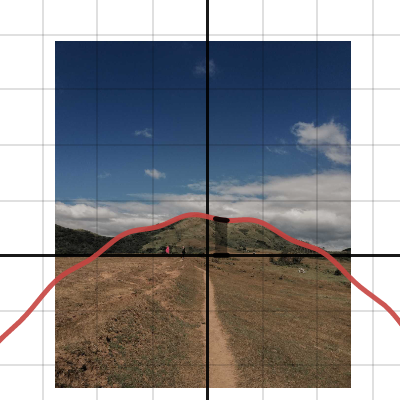
Desmos
safe radishBOT
vast summit
formulate and solve accurately real-life problems involving areas of plane regio...
@vast summit Has your question been resolved?
safe radishBOT
@vast summit Has your question been resolved?
safe radishBOT
@vast summit Has your question been resolved?
 cobalt parrot
vast summit
formulate and solve accurately real-life problems involving areas of plane regio...
cobalt parrot
vast summit
formulate and solve accurately real-life problems involving areas of plane regio...
of a desmos thing that does that?
vast summit
cobalt parrot
of a desmos thing that does that?
yep
cobalt parrot
lol gl
safe radishBOT
@vast summit Has your question been resolved?
tropic steeple
cobalt parrot
of a desmos thing that does that?
XDDD
stray socket
cobalt parrot
of a desmos thing that does that?
Yup
Although the function it's doing is simply just doing what I call "sine wrapping"
safe radishBOT
@vast summit Has your question been resolved?
safe radishBOT
Channel closed
Closed due to timeout
Use .reopen if this was a mistake.
safe radishBOT
Available help channel!
Send your question here to claim the channel.
Remember:
• Ask your math question in a clear, concise manner.
• Show your work, and if possible, explain where you are stuck.
• After 15 minutes, feel free to ping <@&286206848099549185>.
• Type the command .close to free the channel when you're done.
• Be polite and have a nice day!
Read #❓how-to-get-help for further information on how to ask a good question, and about conduct in the question channels.
 kind dove
#help-30 message
@quasi bison I have tried to come up with solution, but unsuccessfully. I dont get the fact why there is a problem with number of edges
safe radishBOT
kind dove
https://discord.com/channels/268882317391429632/905285721886187580/9841164560883...
@kind dove Has your question been resolved?
safe radishBOT
@kind dove Has your question been resolved?
 quasi bison
@kind dove have you proved that we cannot have all 4 edges from the removed vertex all going into the same component?
kind dove
no
quasi bison
try to picture it
kind dove
i have tried
quasi bison
something impossible will happen if we try to add this vertex back in with 4 edges going into the same component
remember that we assumed that cutting out the removed vertex turned our connected graph into a disconnected one
kind dove
hmm
quasi bison
i've said all i can without giving it away
kind dove
quasi bison
something impossible will happen if we try to add this vertex back in with 4 edg...
we are giving vertex back to one component or between two components ?
quasi bison
what do you mean
kind dove
our graph is disconnected so we have two components
kind dove
we are adding vertex back to same position ?
quasi bison
of course we are
kind dove
hmm, then i dont get what impossible can happen
quasi bison
 quasi bison
no that is not the issue
why have i been talking about connectedness all this time???
do you not see that the entire graph as pictured in my sketch is disconnected?
kind dove
quasi bison
do you not see that the entire graph as pictured in my sketch is **disconnected*...
i see
quasi bison
right, so this is where the contradiction comes from.
because we started with a connected graph.
kind dove
what is the contradiction ?
quasi bison
assume that removing a vertex caused G to go from connected to disconnected.
this directly contradicts our assumption!
if the removed vertex had all edges going into the same component, then the graph was disconnected to begin with, which it was not!!!
quasi bison
yes
but to actually explain what the problem is, we need to know that the edges from the removed vertex cannot split 4-0 between components
quasi bison
consider the first component. by the argument i laid out above, there are either 1, 2 or 3 edges going to it from the removed vertex.
do you understand this? Y/N
kind dove
y
quasi bison
since the removed vertex is red (in my coloring), all the vertices in the first component adjacent to the removed vertex are blue.
kind dove
y
quasi bison
thus they are not adjacent to one another, and upon removal of the removed vertex their degree becomes exactly 3.
kind dove
y
quasi bison
all other vertices in the first component, and in particular all red vertices in the first component, still have degree 4.
kind dove
y
quasi bison
in a bipartite graph, the number of edges equals the total degree of all vertices from either part.
thus it equals the total degree of all red vertices and it also equals the total degree of all blue vertices.
kind dove
y
quasi bison
let me now attempt to get you to finish this up:
by considering both total degrees mod 4, show that this cannot happen.
kind dove
i cant finish it
safe radishBOT
@kind dove Has your question been resolved?
safe radishBOT
Channel closed
Closed due to timeout
Use .reopen if this was a mistake.
safe radishBOT
Available help channel!
Send your question here to claim the channel.
Remember:
• Ask your math question in a clear, concise manner.
• Show your work, and if possible, explain where you are stuck.
• After 15 minutes, feel free to ping <@&286206848099549185>.
• Type the command .close to free the channel when you're done.
• Be polite and have a nice day!
Read #❓how-to-get-help for further information on how to ask a good question, and about conduct in the question channels.
lean otter
 safe radishBOT
lean otter
safe radishBOT
lean otter
 safe radishBOT
Channel closed
Closed by @lethal moon
Use .reopen if this was a mistake.
Available help channel!
Send your question here to claim the channel.
Remember:
• Ask your math question in a clear, concise manner.
• Show your work, and if possible, explain where you are stuck.
• After 15 minutes, feel free to ping <@&286206848099549185>.
• Type the command .close to free the channel when you're done.
• Be polite and have a nice day!
Read #❓how-to-get-help for further information on how to ask a good question, and about conduct in the question channels.
 hybrid flare
 safe radishBOT
hybrid flare
cedar rover
safe radishBOT
hybrid flare
cedar rover
What have you tried?
hybrid flare
3.45 and 31.62
cedar rover
what do you mean
hybrid flare
like i seclet them
cedar rover
turn everything into numerical values
hybrid flare
do u know the anser
 blissful gate
we're not going to give you answers. if you want help, show what work you've done other than guesses
cedar rover
Remember that to transform a % into a number, you have to divide it by 100, so 5% is 0.05
 upbeat ridge
safe radishBOT
upbeat ridge
safe radishBOT
Channel closed
Closed by @hybrid flare
Use .reopen if this was a mistake.
Available help channel!
Send your question here to claim the channel.
Remember:
• Ask your math question in a clear, concise manner.
• Show your work, and if possible, explain where you are stuck.
• After 15 minutes, feel free to ping <@&286206848099549185>.
• Type the command .close to free the channel when you're done.
• Be polite and have a nice day!
Read #❓how-to-get-help for further information on how to ask a good question, and about conduct in the question channels.
lean otter
What’s the difference between the two? And are both right?
 lean otter
I don’t see why one of them are wrong
worthy hemlock
lean otter
What’s the difference between the two? And are both right?
Which two?
lean otter
The ones that aren’t crossed out
I see that the Focus is 1,2
So the graph has to move right which means a negative number in the parenthesis
worthy hemlock
One is a vertical stretch, the other is a vertical shrink
lean otter
Uh huh, but I don’t get why one of them are wrong…
worthy hemlock
Because one has a = 8, the other a = 1/8
lean otter
Yeah, but why is it wrong??? I know there’s a difference between them
lean otter
worthy hemlock
.
- you gave me the answer, partially without explanation
worthy hemlock
So the equation you are would be applying is $(x - h)^2 = 4p(y - k)$. You can find the vertex, because you know the focus is at (1, 2), so the x coordinate is 1, the y is the midpoint between the directrix and focus, so (-2 + 2)/ 2 = 0, y coordinate is 0
flat frigateBOT
dldh06
 lean otter
I know the y = 0 part
worthy hemlock
The variable p, is the distance from the vertex to the directrix or vertex to focus
worthy hemlock
Nope
lean otter
What
worthy hemlock
Plug everything in $(x - h)^2 = 4p(y - k)$
flat frigateBOT
dldh06
 worthy hemlock
Set it equal to y
worthy hemlock
You know h, p, and k
Plug those values in that equation
Manipulate so it becomes y = ...
lean otter
What’s H again
worthy hemlock
Coordinates of the vertex
lean otter
I can’t plug cords of a vertex into an equation though
worthy hemlock
Yes you can
lean otter
(1-1,0)???
worthy hemlock
h is the x coordinate of the vertex, k is the y coordinate
worthy hemlock
No
worthy hemlock
Where is 1 - 1 coming from?
$$(x - h)^2 = 4p(y - k)$$
You know h, p, and k,
Plug those values in that equation,
Manipulate so it becomes y = ...
lean otter
Actually wait one sec
flat frigateBOT
dldh06
 lean otter
It’s answer 4 when I plug it in
worthy hemlock
Then that's the answer
 safe radishBOT
Channel closed
Closed by @sour orbit
Use .reopen if this was a mistake.
Available help channel!
Send your question here to claim the channel.
Remember:
• Ask your math question in a clear, concise manner.
• Show your work, and if possible, explain where you are stuck.
• After 15 minutes, feel free to ping <@&286206848099549185>.
• Type the command .close to free the channel when you're done.
• Be polite and have a nice day!
Read #❓how-to-get-help for further information on how to ask a good question, and about conduct in the question channels.
 solemn epoch
 safe radishBOT
solemn epoch
solemn epoch
safe radishBOT
solemn epoch
solemn epoch
To have a basis, vectors must be linearly independent and span the subspace
I have proved the vectors are linearly independent but don't know how to prove that they span the subspace
 obtuse jackal
It's a family of 3 elements in a 3D vector space
So one property (free or spanning) is enough to show it's a base because it has the right number of elements. Assuming you've seen that in class, which you should have
solemn epoch
Hmm I don't recall seeing that in class
obtuse jackal
What theory do you have on bases then ? And subsequently on free and spanning families
But anyways if you just want to show it spans S you can just show it spans something that spans S. If you can construct a basis for something, then you can construct any element in the set by expressing the basis in that other coordinate system
So showing you span u, v, w is enough
solemn epoch
I have that 1. Bases are not unique, 2. Given a basis for a subspace, every vector in the subspace can be written as a unique linear combination of vectors in that basis, and 3. Any two basis for. The same subspace have the same number of elements
In terms of the theory presented on basis
obtuse jackal
How did you prove 3 ?
solemn epoch
obtuse jackal
So one property (free or spanning) is enough to show it's a base because it has ...
Oh wait would 3 qualify then for my case
solemn epoch
obtuse jackal
How did you prove 3 ?
It's given in our textbook
solemn epoch
obtuse jackal
You see this but don't do proofs ?
The proof isn't presented for this