#help-23
1 messages · Page 368 of 1
 mighty mango
so no need for the absolute value
wait no.
ok the exact opposite
for x>4 its negative
its always negative
 magic junco
So what can it be simplified to
mighty mango
does that mean... you can remove the absolute value for a negative sign..?
magic junco
Yep
magic junco
Look, everything comes out from abs should be positive
If something if guaranteed to be negative inside the abs value, just give it another negative sign to convert it
mighty mango
ooooh
okay yeah im convinced.
I forgot negative x negative = positive for a hot secxond
 mighty mango
magic junco
If something if guaranteed to be negative inside the abs value, just give it ano...
mighty mango
magic junco
If something if guaranteed to be negative inside the abs value, just give it ano...
so you turned f(x)=|8x^3| to f(x)=-8x^3
magic junco
mighty mango
so you turned f(x)=|8x^3| to f(x)=-8x^3
noo, that’s not f(x)
magic junco
I’ve actually omitted something in this process, which is called the piecewise function
Have you heard of it before?
mighty mango
yeah differentiating twice is 48
mighty mango
magic junco
Have you heard of it before?
I didnt hear the english phrase before. is that type of function which can only be represented with two other different functions
like
x^2 and 2x
from
magic junco
mighty mango
I didnt hear the english phrase before. is that type of function which can only ...
Yep
magic junco
It’s also a technique used when describing complicated functions containing abs
mighty mango
magic junco
How did you get 48?
-8x^3
-24x^2
-48x
subbing x=-1
-48 * -1
mighty mango
no problem!
mighty mango
magic junco
It’s also a technique used when describing complicated functions containing abs
oh?
magic junco
magic junco
It’s also a technique used when describing complicated functions containing abs
This explains why we can simply see 8|x^3| as -8|x^3|
But not that important in this question since looks like you’ve done it smoothly
mighty mango
yes! I really really hope there isn't a "get the derivative by graph" method
alright.
ty again
.close
 safe radishBOT
Channel closed
Closed by @mighty mango
Use .reopen if this was a mistake.
 safe radishBOT
 Available help channel!
Send your question here to claim the channel.
Remember:
• Ask your math question in a clear, concise manner.
• Show your work, and if possible, explain where you are stuck.
• Do not immediately ping people or roles. After 15 minutes, feel free to ping <@&286206848099549185> once.
• Type the command .close to free the channel when you're done.
• Be polite and have a nice day!
Read #❓how-to-get-help for further information on how to ask a good question, and about conduct in the question channels.
 weary island
 safe radishBOT
weary island
weary island
safe radishBOT
weary island
weary island
can someone teach me #4 how to find the range

I got one of the ranges but I am not sure whether or not I need to consider f(x)
safe radishBOT
@weary island Has your question been resolved?
 tardy mango
weary island
tardy mango
weary island
I'd just go for the fact that
$$f(x)=1-\frac{13}{x+7}$$ and use the fact that $\frac{13}{x+7}$ can't be $0$
 flat frigateBOT
Civil Service Pigeon
 tardy mango
If you want the range of $f(f(x))$, you can then note that the range of the "inner" $f(x)$ is what you're inputting into the "outer" $f(x)$
flat frigateBOT
Civil Service Pigeon
 weary island
flat frigate
**Civil Service Pigeon**
weary island
flat frigate
**Civil Service Pigeon**
is this how I determine whether or not f(x) has a range in f(f(x))?
weary island
flat frigate
**Civil Service Pigeon**
wait I think 13/x+7 can be zero
I dont think the denominator can be zero
tardy mango
weary island
wait I think 13/x+7 can be zero
For what value of $x$ would that occur
flat frigateBOT
Civil Service Pigeon
 weary island
flat frigate
**Civil Service Pigeon**
weary island
flat frigate
**Civil Service Pigeon**
-7
tardy mango
that would give you 13/0
that's not zero
in fact, that would give you undefined
because, as you said, you can't divide by zero
weary island
right my bad I meant 13/x+7 can be 0 when f(x) = 1-13/x+7
because f(x) =1
oh
wait
13/x+7 won't be zero because the denominator can't be zero
tardy mango
you're dividing something that isn't zero by another number
dividing a number by infinitely larger numbers (in terms of magnitude) makes the result go closer to zero
but you never actually get a result of zero
,w graph 1/x, y=0, 0<x<1000
flat frigateBOT

Wolfram Alpha doesn't understand your query!
Perhaps try rephrasing your question?
Click here to refine your query online
 Requested by civil_service_pigeon
 flat frigateBOT

 Requested by civil_service_pigeon
weary island
tardy mango
but you never actually get a result of zero
Requested by civil_service_pigeon
weary island
tardy mango
but you never actually get a result of zero
idk how zero affects whether or not the range of f(x) is included in f(f(x))
This question only came up because for some reason the domain of f(x) is included in f(f(x))
and I am confused by why we won't do the same thing with the range
tardy mango
weary island
This question only came up because for some reason the domain of f(x) is include...
Because you're putting an "inner" $f(x)$ back into the "outer" $f(x)$
flat frigateBOT
Civil Service Pigeon
 tardy mango
so if the inner f(x) isn't even defined, then there's no way you can get a value for the outer f(x)
ex. consider $f(f(x))$ where $f(x)=1/x$
flat frigateBOT
Civil Service Pigeon
 tardy mango
If you go through the algebra, it appears as if $f(f(x))=x$
flat frigateBOT
Civil Service Pigeon
 tardy mango
but note that for x=0, the "inner" f(x) is 1/0
which is undefined
you can't put 1/0 into f because 1/0 isn't defined
that's why we need to deal with when the "inner" function is defined when finding when a composition of functions is defined
safe radishBOT
Channel closed
Closed due to timeout
Use .reopen if this was a mistake.
tardy mango
.reopen
safe radishBOT
✅ Original question: #help-23 message
tardy mango
in essence, there's two things you need to exclude:
- values that aren't in the domain of the inner function
- values that are in the domain of the inner function but give the inner function a value that makes the outer function undefined
tardy mango
tardy mango
in essence, there's two things you need to exclude:
- values that aren't in the ...
in a way, you can also run with this for the range
tardy mango
flat frigate
**Civil Service Pigeon**
my intention here was for you to realise that f(x) outputs all real values except for 1 (since you can't attain 1-0=1)
and hence the range of f(f(x)) is just the range of $f(x)$ for $x \neq 1$
flat frigateBOT
Civil Service Pigeon
 weary island
I'm lost are you trying to answer my question with an example?
weary island
tardy mango
so if the inner f(x) isn't even defined, then there's no way you can get a value...
inner f(x) is defined as x-6/x+7. thus there is a range
weary island
flat frigate
**Civil Service Pigeon**
when you plugged x=0 into this equation we already know that f(f(x))= x is undefined
OH so you are saying that when we plug f(x) = x-6/x+7 in the equation
and the only undefined value is 1 for thr range
and the range of f(f(x) is defined therefore it is a possible value?
tardy mango
weary island
and the range of f(f(x) is defined therefore it is a possible value?
What is "it" in this sentence
tardy mango
So you're asking if 1 is in the range of f(f(x))?
weary island
tardy mango
So you're asking if 1 is in the range of f(f(x))?
basically
because I am trying to figure out why the range (restrictions) of f(x) does not exist for f(f(x)
tardy mango
mhm
like I said earlier, the range of f(g(x)) is the same as the range of f(x) over a domain that is the range of g(x)
weary island
wdym range of f(x) over a domain (which is the range of g(x)
weary island
tardy mango
mhm
wait but if we say that y is 1 and that gave us a domain restriction for f(f(x)) doesn't that mean 1 also cannot be included in the range?
tardy mango
weary island
wdym range of f(x) over a domain (which is the range of g(x)
If $g$ has domain $D$ and range $R$, then the range of $f(g(x))$ is the same as the range of $f$ when taking a domain of $R$
flat frigateBOT
Civil Service Pigeon
 tardy mango
weary island
wait but if we say that y is 1 and that gave us a domain restriction for f(f(x))...
tardy mango
weary island
wait but if we say that y is 1 and that gave us a domain restriction for f(f(x))...
Also not generally - it just happened to work out like that this way. For example, consider $f(f(x))$ where $f(x)=\frac{1}{x-1}$ and $x=3/2$.
flat frigateBOT
Civil Service Pigeon
 tardy mango
hello?
weary island
idk what to reply with
weary island
flat frigate
**Civil Service Pigeon**
so I considered this should i find the range?
does it contradict
weary island
weary island
wait but if we say that y is 1 and that gave us a domain restriction for f(f(x))...
this?
nvm I don't want to waste your time I'll just check the range by inputting the restricted range in and seeing if it becomes a domain restriction. Thank you though
.close
safe radishBOT
Channel closed
Closed by @weary island
Use .reopen if this was a mistake.
Available help channel!
Send your question here to claim the channel.
Remember:
• Ask your math question in a clear, concise manner.
• Show your work, and if possible, explain where you are stuck.
• Do not immediately ping people or roles. After 15 minutes, feel free to ping <@&286206848099549185> once.
• Type the command .close to free the channel when you're done.
• Be polite and have a nice day!
Read #❓how-to-get-help for further information on how to ask a good question, and about conduct in the question channels.
tardy mango
weary island
so I considered this should i find the range?
You could find the range as an exercise, but my main point here was to show that just because a value isn't in the domain of f doesn't mean it can't be in the range of f(f(x))
safe radishBOT
tardy mango
You could find the range as an exercise, but my main point here was to show that...
tardy mango
said value being 1 in this case
tardy mango
 jagged kindle
How do I open
jagged kindle
How do I open
go to another channel since this one is already taken
weary island
tardy mango
said value being 1 in this case
oh but mine was an exception because inputting 1 from the range so happened to give a domain restriction
tardy mango
yeah that was just a coincidence if you will since you're putting f back into f, so if 1 isn't in the range of f, then "redoing" f isn't magically going to put 1 back into the range
tardy mango
flat frigate
**Civil Service Pigeon**
similarly here, 0 wouldn't be in the range of $f(x), f(f(x)), f(f(f(x))), \dots$
flat frigateBOT
Civil Service Pigeon
 weary island
no 0 can be in the range of f(f(x)
cus when we input 0 into f(f(x) = (-2x-1)/x+1. we get a value
weary island
flat frigate
**Civil Service Pigeon**
I'm using this
tardy mango
weary island
cus when we input 0 into f(f(x) = (-2x-1)/x+1. we get a value
what value of x makes this zero
and what happens when you calculate the "inner" f(x) at this value
weary island
tardy mango
what value of x makes this zero
when it is -1/2
tardy mango
weary island
cus when we input 0 into f(f(x) = (-2x-1)/x+1. we get a value
hold on


Wolfram|Alpha brings expert-level knowledge and capabilities to the broadest possible range of people—spanning all professions and education levels.
are you sure you didn't mess up the algebra
weary island
no because for f(f(x) I got y= -x-1/x+2
then when I tried to find the range
I swapped x and y
I got -2x-1/x+1
tardy mango
so you found the inverse of $f(f(x))$
flat frigateBOT
Civil Service Pigeon
 tardy mango
but the range of $f(f(x))$ is the same as the domain of the inverse of $f(f(x))$
flat frigateBOT
Civil Service Pigeon
 tardy mango
$f(f(x))=0 \implies (f(f(0)))^{-1}=x$
flat frigateBOT
Civil Service Pigeon
 tardy mango
weary island
did I find the wrong thing?
tardy mango
weary island
did I find the wrong thing?
yes
weary island
flat frigate
**Civil Service Pigeon**
are we not looking at this?
weary island
flat frigate
**Civil Service Pigeon**
and you said
tardy mango
In words, if $0$ was in the range of $f(f(x))$, then we'd need to find a value of $x$ such that $f(f(x))=0$. Taking the inverse of both sides, this implies that $x=(f(f(0)))^{-1}$, aka the value of $x$ that would make this happen is the result of inputting $0$ into the inverse of $f \circ f$. What you did earlier was solving $(f(f(x)))^{-1}=0$, which is the same as finding $f(f(0))$.
flat frigateBOT
Civil Service Pigeon
 weary island
so you are saying if f(x) = 0
and f(f(x) = 0
and both values of x are the same
meaning that f(f(x) should be true and therefore the range of f(x) is included in the function f(f(x)
and you are trying to tell me that this is generalizable for everything?
tardy mango
tardy mango
yeah that was just a coincidence if you will since you're putting f back into f,...
yeah that was just a coincidence if you will since you're putting f back into f, so if 1 isn't in the range of f, then "redoing" f isn't magically going to put 1 back into the range
my point here was that if a value isn't in the range of f, then no matter times you compose f with itself, that value will still never be in the range
weary island
tardy mango
my point here was that if a value isn't in the range of f, then no matter times ...
oh and therefore the range f(x) should also not be included in f(f(x)
tardy mango
idk what this is supposed to mean
the values that are not in the range of f(x) should not be in the range of f(f(x))
weary island
weary island
my question?
weary island
tardy mango
the values that are not in the range of f(x) should not be in the range of f(f(x...
ok
weary island
weary island
oh and therefore the range f(x) should also not be included in f(f(x)
this was to address my question
weary island
tardy mango
the values that are not in the range of f(x) should not be in the range of f(f(x...
is this also generalizable for f(g(x)?
tardy mango
Take $g(x)=\frac{x^2}{x}$ and $f(x)=x-1$ at $x=1$.
flat frigateBOT
Civil Service Pigeon
 tardy mango
weary island
g(x) excludes 0 for range
tardy mango
weary island
g(x) excludes 0 for range
how would you get g(x)=0
weary island
tardy mango
how would you get g(x)=0
you cant
tardy mango
mhm
tardy mango
my main point here was to show that even though 0 is not in the domain of g, 0 is in the range of f(g(x))
weary island
so we can't generalize f(f(x)) by saying if the range of f(x) =0 (0 cannot be in the range) that means for f(f(x) (0 also cannot be in the range)
weary island
flat frigate
**Civil Service Pigeon**
and that was bc if g(x) cannot be zero, in f(g(x)) it can be zero
safe radishBOT
@tardy mango Has your question been resolved?
safe radishBOT
Channel closed
Closed due to timeout
Use .reopen if this was a mistake.
Available help channel!
Send your question here to claim the channel.
Remember:
• Ask your math question in a clear, concise manner.
• Show your work, and if possible, explain where you are stuck.
• Do not immediately ping people or roles. After 15 minutes, feel free to ping <@&286206848099549185> once.
• Type the command .close to free the channel when you're done.
• Be polite and have a nice day!
Read #❓how-to-get-help for further information on how to ask a good question, and about conduct in the question channels.
 soft lava
Can somebody check this information before I draw th graph

 opaque fern
,rcw
flat frigateBOT

 hard crest
soft lava
?
hard crest
soft lava
?
i'm a bit confused by your work. i'm going to rewrite it and you let me know if it's what you meant to write
soft lava
Oh sorry and thank you
weary island
flat frigate
you missed a 1 on the y-intercept for your answer: (0,-0.133)
hard crest
$K(x) = \f{2x+6}{(x^2-2x-15)(x+4)} = \f{2x+8}{(x+3)(x-5)(x+4)} = \f{2\cancel{(x+1)}}{(x+3)(x-5)(x+4)} = \f2{(x+3)(x-5)}$
flat frigateBOT
two wuggen in a trenchcoat
 hard crest
this is how i read that top line, is that what you meant to write?
soft lava
hard crest
this is how i read that top line, is that what you meant to write?
Sorry that four was really bad it is 2(x+4)
hard crest
okay, i see. did it start as 2x+6 though?
soft lava
No 8
 soft lava
LOLL
hard crest
the breakdown looks right but i don't understand "hole disc"
safe radishBOT
@soft lava Has your question been resolved?
soft lava
So I know we don’t have x intercepts because y=0 since the degree of the numerator and the denominator are the same. But this does not look rigjt. Why can I find points using x=3,-1 but the points for them appear on the graph

And there isn’t a hole disc there
Wait
Maybe I know now
Who knows
safe radishBOT
@soft lava Has your question been resolved?
safe radishBOT
Channel closed
Closed due to timeout
Use .reopen if this was a mistake.
Available help channel!
Send your question here to claim the channel.
Remember:
• Ask your math question in a clear, concise manner.
• Show your work, and if possible, explain where you are stuck.
• Do not immediately ping people or roles. After 15 minutes, feel free to ping <@&286206848099549185> once.
• Type the command .close to free the channel when you're done.
• Be polite and have a nice day!
Read #❓how-to-get-help for further information on how to ask a good question, and about conduct in the question channels.
 hard jacinth
The bisector of the external angle at vertex A of triangle ABC intersects line BC at point D. Prove that BD/AB=DC/AC
safe radishBOT
hard jacinth
The bisector of the external angle at vertex A of triangle ABC intersects line B...
 fierce kernel
hard jacinth
The bisector of the external angle at vertex A of triangle ABC intersects line B...
fierce kernel
hard jacinth
The bisector of the external angle at vertex A of triangle ABC intersects line B...
for starters, did you attempt drawing it/did the question come with a figure? it'll help you see more relations
hard jacinth
fierce kernel
for starters, did you attempt drawing it/did the question come with a figure? it...
Yea, one sec
hard jacinth
fierce kernel
for starters, did you attempt drawing it/did the question come with a figure? it...
 fierce kernel
hard jacinth
fierce kernel
hard jacinth
alright, may I ask what you have tried or proved already about the two triangles?
hard jacinth
My assumption is this. AG = DB, then OA is bisector, hence AG/GO = AB/OB. It then kinda leads to the relation we need
 hard jacinth
fierce kernel
alright, may I ask what you have tried or proved already about the two triangles...
hard jacinth
fierce kernel
alright, may I ask what you have tried or proved already about the two triangles...
About these two i see nothing tbh
fierce kernel
hard jacinth
My assumption is this. AG = DB, then OA is bisector, hence AG/GO = AB/OB. It the...
why "kinda" is there any roadblock? are you sure everything you're assuming here is true?
hard jacinth
fierce kernel
why "kinda" is there any roadblock? are you sure everything you're assuming here...
Yea, instead of DC/AC we got GO/OB. But we have BD/AB which is required
hard jacinth
fierce kernel
alright, may I ask what you have tried or proved already about the two triangles...
I noticed that they share the same altitude
fierce kernel
alright, well I believe there's a simpler approach to this problem, would you prefer we attempt that or work off what you have here?
hard jacinth
fierce kernel
alright, well I believe there's a simpler approach to this problem, would you pr...
Try to attempt that
Maybe theres actually easier approach
fierce kernel
hard jacinth
Try to attempt that
can you add a line anywhere that can help you use angle properties of parallels anywhere?
hard jacinth
fierce kernel
can you add a line anywhere that can help you use angle properties of parallels ...
Like this one?

Df || ab
fierce kernel
hard jacinth
Df || ab
yeah great, so from this we know
DF || AB
AD bisects A
D, B, C are colinear
can you give me two angle relations based on the angle bisector AD?
hard jacinth
fierce kernel
yeah great, so from this we know
DF || AB
AD bisects A
D, B, C are colinear
can ...
FDA = DAB i believe
BAC = DFA
fierce kernel
@brave wolf @prisma wren can you guys take over for a sec? I can send my solve in dms if you'd like, it just takes a bit of explaining and I gtg
 prisma wren
fierce kernel
<@951190447185874994> <@332937144383569922> can you guys take over for a sec? I ...
prisma wren
fierce kernel
<@951190447185874994> <@332937144383569922> can you guys take over for a sec? I ...
Don't know if I can help personally but if you dm me your solution I can drop it in the helpers' chat in case someone wants to take over
safe radishBOT
@hard jacinth Has your question been resolved?
hard jacinth
Oh wait i figured that out
hard jacinth
hard jacinth
I noticed that they share the same altitude
Hence S(ADB)/S(ABC) = DB/BC
Drawing DH and DH1 on AB and AC gives S(ABD) = 1/2 * DM * AB and S(ADC) = 1/2 * DH1 * AC
triangles DAH1 and DAH are equal, and so do DH1 and DH
Then S(ABD)/S(ADC) = AB/AC
 open wedge
prisma wren
Don't know if I can help personally but if you dm me your solution I can drop it...
open wedge
prisma wren
Don't know if I can help personally but if you dm me your solution I can drop it...
Helpers have their own chat???
hard jacinth
hard jacinth
Hence S(ADB)/S(ABC) = DB/BC
Or it can be S(ADB)/S(ADC) = DB/DC
AB/AC = DB/DC
Bd/ab=dc/ac
fierce kernel
mate figured out while I was gone
that's definitely more concise than the parallel line solution
@hard jacinth you got it I presume? need help with anything else? 😅
open wedge
!done @hard jacinth
safe radishBOT
If you are done with this channel, please mark your problem as solved by typing .close
safe radishBOT
@hard jacinth Has your question been resolved?
Channel closed
Closed by @hard jacinth
Use .reopen if this was a mistake.
Available help channel!
Send your question here to claim the channel.
Remember:
• Ask your math question in a clear, concise manner.
• Show your work, and if possible, explain where you are stuck.
• Do not immediately ping people or roles. After 15 minutes, feel free to ping <@&286206848099549185> once.
• Type the command .close to free the channel when you're done.
• Be polite and have a nice day!
Read #❓how-to-get-help for further information on how to ask a good question, and about conduct in the question channels.
 real yarrow
forgot how to do change of order
 safe radishBOT
real yarrow
forgot how to do change of order
safe radishBOT
real yarrow
forgot how to do change of order
 finite igloo
consider the bounds
from ${y = \sqrt{ax-x^2}}$ to ${y = \sqrt{ax}}$ first then from ${x=a}$ to ${x=0}$
flat frigateBOT
k
 finite igloo
they want u to change it from x = ? to x = ? first
then
y = ? to y =?
essentially
from dy dx to dx dy
 fathom jewel
try to draw the region
safe radishBOT
@real yarrow Has your question been resolved?
 split kayak
tbh the region is a mess
real yarrow
.close
safe radishBOT
Channel closed
Closed by @real yarrow
Use .reopen if this was a mistake.
Available help channel!
Send your question here to claim the channel.
Remember:
• Ask your math question in a clear, concise manner.
• Show your work, and if possible, explain where you are stuck.
• Do not immediately ping people or roles. After 15 minutes, feel free to ping <@&286206848099549185> once.
• Type the command .close to free the channel when you're done.
• Be polite and have a nice day!
Read #❓how-to-get-help for further information on how to ask a good question, and about conduct in the question channels.
 faint seal
 safe radishBOT
faint seal
faint seal
safe radishBOT
faint seal
faint seal
how do I show that rankT = m
well I just need to show that there is $u\in\operatorname{span}(u_2, \dots, u_m)^\perp$ with $\langle u, u_1\rangle \ne 0$
flat frigateBOT
kheer257
 safe radishBOT
@faint seal Has your question been resolved?
faint seal
<@&286206848099549185>
 desert pasture
faint seal
how do I show that rankT = m
desert pasture
faint seal
how do I show that rankT = m
rank nullity ?
faint seal
well the whole point is to find the dimension of U^\perp
every proof I've seen of this just uses gram-schmidt
but we haven't covered it so i don't wanna use it
fathom jewel
derive it by accident
faint seal
oh wait
can I say T(u_1), ..., T(u_m) have to be linearly independent
because [ \sum \alpha_i T(u_i) = 0 \iff \sum \alpha_i u_i \in \operatorname{ker} T \cap U = U^\perp\cap U = {0} ]
flat frigateBOT
kheer257
 faint seal
less goo
 velvet nebula
looks about right
safe radishBOT
Channel closed
Closed by @faint seal
Use .reopen if this was a mistake.
safe radishBOT
Available help channel!
Send your question here to claim the channel.
Remember:
• Ask your math question in a clear, concise manner.
• Show your work, and if possible, explain where you are stuck.
• Do not immediately ping people or roles. After 15 minutes, feel free to ping <@&286206848099549185> once.
• Type the command .close to free the channel when you're done.
• Be polite and have a nice day!
Read #❓how-to-get-help for further information on how to ask a good question, and about conduct in the question channels.
 hybrid needle
this is ans but can anyone tell me how he got it b part only

 hybrid needle
this is ans but can anyone tell me how he got it b part only
hybrid needle
hybrid needle
this is ans but can anyone tell me how he got it b part only
can anyone explain?
: (
,close
 proud tree
hybrid needle
can anyone explain?
proud tree
hybrid needle
can anyone explain?
you want to multiply everything in 2:2:1 (say you multiply and get x:y:z), 24-x, 12-y, 18-z are as big as possible
x,y,z are the actual amount of vehicles he sold
since he sold the least he could, you want them to be as big as you can
hybrid needle
proud tree
since he sold the least he could, you want them to be as big as you can
them ?
hybrid needle
proud tree
since he sold the least he could, you want them to be as big as you can
ok ok
proud tree
(you can't take 12:12:6 because 12 -12 = 0, so he sold no vans, but one of the conditions is he sold one of every vehicle)
proud tree
hybrid needle
them ?
x,y,z
hybrid needle
proud tree
x,y,z
but how did he get ans
safe radishBOT
Channel closed
Closed by @hybrid needle
Use .reopen if this was a mistake.
proud tree
hybrid needle
im gonna skip this i dont get it and thanks green : )
actually mb i could definitely have explained it better
hybrid needle
proud tree
actually mb i could definitely have explained it better
.reopen
safe radishBOT
✅ Original question: #help-23 message
proud tree
hybrid needle
.reopen
2:2:1 is the ratio of vehicles he has
hybrid needle
yes
proud tree
24:12:18 is the ratio of actual vehicles he had
hybrid needle
proud tree
24:12:18 is the ratio of actual vehicles he had
yea
proud tree
hybrid needle
yea
that means the actual vehicles he has left is: 2x cars, 2x vans, and x trucks
hybrid needle
hmm ok
proud tree
the amount of cars he sold is 24-2x
the amount of vans is 12-2x
the amount of trucks is 18-2x
you want the largest (integers) value of x so all 3 are positive
hybrid needle
yes
proud tree
in this case you have 2x, you just solve for 12-2x (since 12 is the smallest)
and you get x=5
proud tree
proud tree
you want the largest (integers) value of x so all 3 are positive
you understand why, right?
hybrid needle
proud tree
you want the largest (integers) value of x so all 3 are positive
yea i get it
hybrid needle
proud tree
in this case you have 2x, you just solve for 12-2x (since 12 is the smallest)
but how u got ans of x
hybrid needle
proud tree
x has to be an integer
yea x is integer
proud tree
proud tree
we need 12-2x>0
12-2x>0 => 12>2x => 6>x
the largest integer smaller than 6 is 5
hybrid needle
proud tree
we need 12-2x>0
and yes we need x bigger than zero
hybrid needle
proud tree
the largest integer smaller than 6 is 5
ohhh
proud tree
proud tree
the amount of cars he sold is 24-2x
the amount of vans is 12-2x
the amount of tr...
sub x = 5 in these expressions and you get how many of each vehicle he sold
hybrid needle
proud tree
sub x = 5 in these expressions and you get how many of each vehicle he sold
wowe
12-2(5)
=2
n 18-1(5)=13
proud tree
👍
hybrid needle
proud tree
sub x = 5 in these expressions and you get how many of each vehicle he sold
thank you man you are absoulty life savour.
 proud tree
glad i was able to help
proud tree
bye bye
safe radishBOT
Channel closed
Closed by @hybrid needle
Use .reopen if this was a mistake.
Available help channel!
Send your question here to claim the channel.
Remember:
• Ask your math question in a clear, concise manner.
• Show your work, and if possible, explain where you are stuck.
• Do not immediately ping people or roles. After 15 minutes, feel free to ping <@&286206848099549185> once.
• Type the command .close to free the channel when you're done.
• Be polite and have a nice day!
Read #❓how-to-get-help for further information on how to ask a good question, and about conduct in the question channels.
 prisma light
hello i need help for my test tomorow i have to proove the existence part in the euclidienne division (sorry for bad english)
safe radishBOT
prisma light
hello i need help for my test tomorow i have to proove the existence part in the...
Please don't occupy multiple help channels.
prisma light
you are here ?!
 restive niche
yes
restive niche
prisma light
hello i need help for my test tomorow i have to proove the existence part in the...
are you french? i can try to get someone who know french
restive niche
prisma light
yes i am
ok until then, what exactly do you mean by "existence part of euclidean division", do you mean that the remainder exists or quotient exists?
prisma light
yeah like we have two part in our demo for the euclidienne division its first that there is only on couple and then that couple exist
restive niche
oh ok so both quotient and remainder
so what have you tried?
you are given a number a and you have to divide it by b
prisma light
Yes
restive niche
you want to find couple q and r so that a = bq + r
prisma light
Exact
restive niche
if i consider the sequence b,2b,3b,..., it will exceed a right?
prisma light
I can send you my lesson if you wanna see
restive niche
so consider the first point in the sequence where it will exceed a
prisma light
Well b(q+1) > a nah ?
restive niche
yes, what can you say about bq?
bq <= a or bq > a?
restive niche
and do you agree that a = bq + (a-bq) and also we just discussed that bq <= a < b(q+1)
prisma light
Humm how did you figure that
restive niche
prisma light
Humm how did you figure that
i simply add and subtract bq from a in the RHS
prisma light
Oh ok well why not
prisma light
0<=a-bq<b(q+1)-bq
restive niche
b(q+1) - bq = b
prisma light
Yup
restive niche
so 0 <= a-bq < b
prisma light
Okkk yeah
restive niche
if i call a-bq = r, what does a = bq + (a-bq) become into?
a = bq + r, and 0 <= r < b
prisma light
a= bq+r
restive niche
yes, and also 0 <= r < b which is important
prisma light

 restive niche
so such a couple exists
prisma light
We did this
restive niche
prisma light
We did this
it looks like the same thing as what we did now
prisma light
Ya kinda
restive niche
prisma light
Ya kinda
so what is your question? can you write it on your own now or do you have any question regarding the proof in your class
restive niche
i dont know french, but it looks like they are handling the case when a and b have different signs
prisma light
Its a bout every set A not empty got a smaller element
restive niche
yes, every set of positive numbers has smallest element
prisma light
Yes but he dont precis that its only positive
restive niche
we are assuming b > 0 right?
prisma light
Yes
restive niche
so {bq | q\in N, bq > a} is positive
restive niche
i didnt understand what you mean
prisma light
b is include in the set A right ?
restive niche
prisma light
b is include in the set A right ?
A = {q | q\in N, bq > a}
so we cannot say if b is included or not
prisma light
Ok i see
restive niche
but we know A has positive elements only
prisma light
And last question what is p=a+1
prisma light
restive niche
so a+1 in A
How b(a+1) >a mean that a+1 in A
restive niche
prisma light
How b(a+1) >a mean that a+1 in A
because A = {p \in N | bp > a}
restive niche
p = a+1 yes
safe radishBOT
Channel closed
Closed by @prisma light
Use .reopen if this was a mistake.
safe radishBOT
Available help channel!
Send your question here to claim the channel.
Remember:
• Ask your math question in a clear, concise manner.
• Show your work, and if possible, explain where you are stuck.
• Do not immediately ping people or roles. After 15 minutes, feel free to ping <@&286206848099549185> once.
• Type the command .close to free the channel when you're done.
• Be polite and have a nice day!
Read #❓how-to-get-help for further information on how to ask a good question, and about conduct in the question channels.
 daring forge
hi i am trying to rewrite this in symbolic logic
 safe radishBOT
daring forge
hi i am trying to rewrite this in symbolic logic
daring forge
safe radishBOT
daring forge
hi i am trying to rewrite this in symbolic logic
daring forge
i didnt understand what he said in the video
 keen tulip
Write the first part first
For every epsilon greater than 0
daring forge
 split kayak
now the following part

 split kayak
Okay to be honest they kinda trolled in the way they phrased it
prisma wren
Lmao
daring forge
ugh
split kayak
In language, they reversed the order of the condition
instead of writing "when a then b", it says "b happens when a"
 split kayak
yep
split kayak
You do use the arrow, but you inverse the order from language to math
 split kayak
Youd first write |x-x0| < delta ==> etc...
daring forge
like first first
split kayak
No, just that line, if i get to give some advice, when you have a st. , try moving the following part of the notation down a line
daring forge
wdym
split kayak
$\forall\varepsilon > 0, \exists\delta > 0$ st.
$\|x-x_0|$ bla bla bla ....
flat frigateBOT

 split kayak
The arrow goes after the delta
split kayak
daring forge
It should look almost the same to this except you switch around the thing before and after the arrow
daring forge
 split kayak
and then the |f(x)-f(x0)| < epsilon part
 split kayak
yeah, thats it
split kayak
The problem with the phrasing is that language is a bit more open to different ways to describe a logic condition.
daring forge
yeah true
split kayak
and while you could arguably use $\Longleftarrow$ to respect the order in which is written, that just looks horrible.
flat frigateBOT
 daring forge
so how do i read this?
for all epsilon greater than zero, there exists delta greater than 0 such that the absolute value of x minus x0 is less than delta
then i am confused from there with the arrow
how do i read that
split kayak
gimme a sec
|x − x₀| < δ ⇒ |f(x) − f(x₀)| < ε```
`∀ ε > 0` for all Epsilon greater than 0
`, ∃ δ > 0` there exists a Delta greater than 0
such that.
`|x − x₀| < δ` if Delta is greater than the absolute value of the difference of x and x0 (initial value)
Then
`|f(x) − f(x₀)| < ε` Epsilon will be greater than the absolute value of the difference of f(x) and f(x0)mb
This is not definition of a limit, its about continuity, lmao
similar proof anyways
daring forge
right that makes sense actually
split kayak
daring forge
right that makes sense actually
its mostly about a small region of a function always constricting to a specific value determined by the function itself and not only a close value
whatevs, hope that helped
safe radishBOT
Channel closed
Closed by @daring forge
Use .reopen if this was a mistake.
daring forge
.reopen
safe radishBOT
✅ Original question: #help-23 message
split kayak
daring forge
it did thanks kind stranger
keep in mind that when you have a p ==> q part of a proof, you always read it as if p then q
safe radishBOT
Channel closed
Closed by @daring forge
Use .reopen if this was a mistake.
Available help channel!
Send your question here to claim the channel.
Remember:
• Ask your math question in a clear, concise manner.
• Show your work, and if possible, explain where you are stuck.
• Do not immediately ping people or roles. After 15 minutes, feel free to ping <@&286206848099549185> once.
• Type the command .close to free the channel when you're done.
• Be polite and have a nice day!
Read #❓how-to-get-help for further information on how to ask a good question, and about conduct in the question channels.
 lofty nexus
Can someone please help me with the congruent statements? I’m having a hard time with most of them and am confused on how an easy way is to do this? Thank you! Also maybe checking the work I already have done? Greatly appreciated and also, walking through as many as possible with me would be greatly helpful as I have a test over them in a few days!

 safe radishBOT
lofty nexus
Can someone please help me with the congruent statements? I’m having a hard time...
safe radishBOT
lofty nexus
Can someone please help me with the congruent statements? I’m having a hard time...
@lofty nexus Has your question been resolved?
lofty nexus
<@&286206848099549185>
 still vine
what do you need to do
lofty nexus
Need to find the congruence statements part so like; Triangle ABC= Triangle____ for example
For them
 quasi bison
!noping
safe radishBOT
Please do not ping individual helpers unprompted.
lofty nexus
<@&286206848099549185> did this look correct?

 primal oyster
lofty nexus
<@&286206848099549185> did this look correct?
primal oyster
lofty nexus
<@&286206848099549185> did this look correct?
,rotate
flat frigateBOT
 still vine
try to ping housam @valid kindle he’s active in help 7 right now
lofty nexus
<@&286206848099549185>
 signal wave
flat frigate
signal wave
flat frigate
I watched this video last night about this, I recommend it. https://youtu.be/302eJ3TzJQU?si=ltD3LOLByGt9MoGl&t=1050
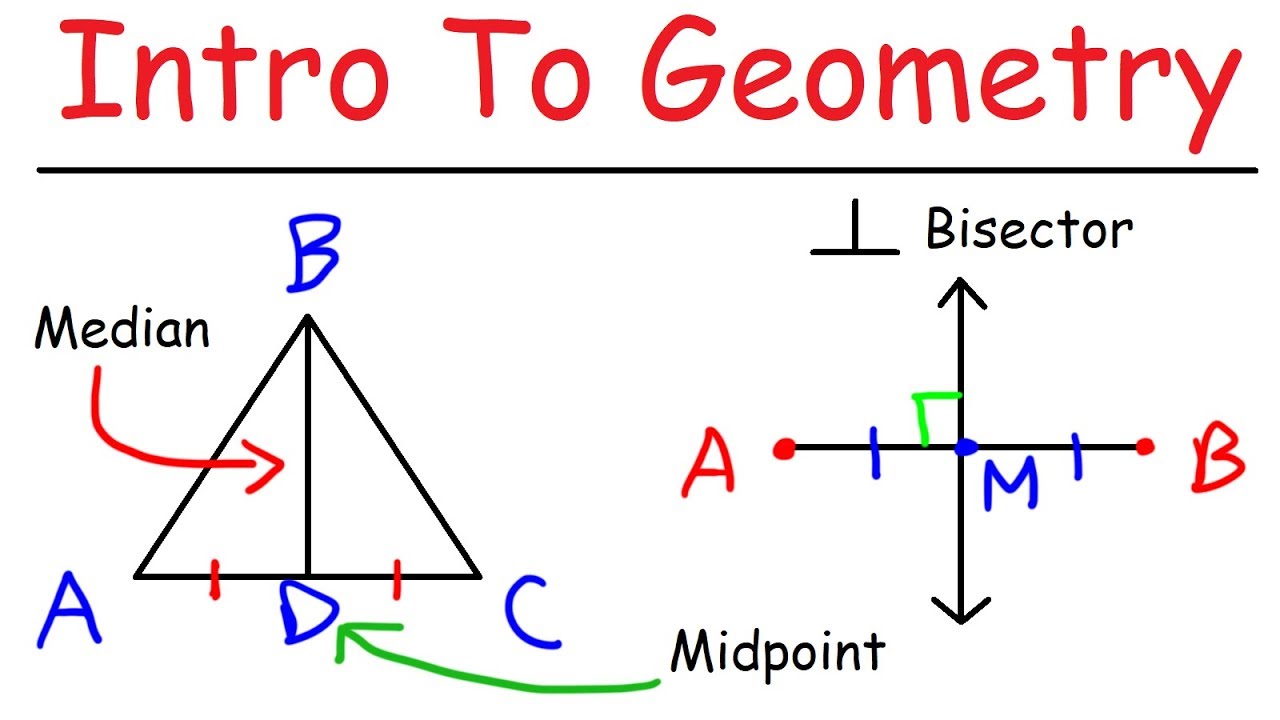
This video tutorial provides a basic introduction into geometry.
Geometry Introduction: https://www.youtube.com/watch?v=302eJ3TzJQU
Algebra Review:
https://www.youtube.com/watch?v=i6sbjtJjJ-A
Lines, Rays, Line Segments, & Angles:
https://www.youtube.com/watch?v=oeO8f0taQDA...
I linked the timestamp for the SAS and other stuff, I hope this helps.
lofty nexus
Thank you I understand it better now I just need someone to check my answers
<@&286206848099549185>
lofty nexus
.close
safe radishBOT
Channel closed
Closed by @lofty nexus
Use .reopen if this was a mistake.
safe radishBOT
Available help channel!
Send your question here to claim the channel.
Remember:
• Ask your math question in a clear, concise manner.
• Show your work, and if possible, explain where you are stuck.
• Do not immediately ping people or roles. After 15 minutes, feel free to ping <@&286206848099549185> once.
• Type the command .close to free the channel when you're done.
• Be polite and have a nice day!
Read #❓how-to-get-help for further information on how to ask a good question, and about conduct in the question channels.
 marsh walrus
its positive, yea
say the correlation was 0
what would the line look like
yea it'd just be scattered
so whats the line look like in that case
i guess i really mean whats its slope
but even more loosely
if we drew the line of best fit
yea
and perfect correlation
(positive)
thats a 1
i think lower
yea
sorry i realized im dumb and im just mixing things up
line of best fit is gonna give us just the sign, really
idk why i decided to help with stats 
especially when @solar hazel was already about to start helping
to my dumb brain, i think really 0.3-0.5 is probably FINE and if you explain why you think that it should be good
although you could do the math and sit down and get it exactly
it wouldnt be that much work
the question seems qualitative
yea
 sorry for the dumb np
 solar hazel
yea i agree it would be a little lower
marsh walrus
im wondering now if theres some nice like
low-order approximation formula
but idk any off the top of my head
doesnt really seem like what the question wants
solar hazel
0.3 might be an ok answer
it might be even lower than that but i can’t really tell
0.5 is too high
 urban ermine
there
im working on it
if you want to improve part b a bit, you could mention exactly how many positive and negative residuals there are, but overall it's solid
everything makes sense
i looked over part b and c. for part b, your explanation about positive and negative residuals makes sense, and you got the general idea right with more points above the line. for part c, you nailed the point with the biggest residual (6 donuts, $2) and explained it well.
@patent musk
dab me up

rule #67
always look for improvements
you're done? dont forget to .close
safe radishBOT
Channel closed
Closed by @patent musk
Use .reopen if this was a mistake.
safe radishBOT
Available help channel!
Send your question here to claim the channel.
Remember:
• Ask your math question in a clear, concise manner.
• Show your work, and if possible, explain where you are stuck.
• Do not immediately ping people or roles. After 15 minutes, feel free to ping <@&286206848099549185> once.
• Type the command .close to free the channel when you're done.
• Be polite and have a nice day!
Read #❓how-to-get-help for further information on how to ask a good question, and about conduct in the question channels.
 rustic wyvern
Using Pythagorean theorem. Both sides are nine. I got 162. I was just wondering how the correct answer is nine times the square root of two.
safe radishBOT
rustic wyvern
Using Pythagorean theorem. Both sides are nine. I got 162. I was just wondering ...
 misty gull
a^2 + b^2 = c^2
you know that c^2 = 162
therefore, c = sqrt(162) = sqrt(2*81)
= sqrt(2)*sqrt(81)
= 9sqrt(2)
safe radishBOT
Channel closed
Closed by @rustic wyvern
Use .reopen if this was a mistake.
Available help channel!
Send your question here to claim the channel.
Remember:
• Ask your math question in a clear, concise manner.
• Show your work, and if possible, explain where you are stuck.
• Do not immediately ping people or roles. After 15 minutes, feel free to ping <@&286206848099549185> once.
• Type the command .close to free the channel when you're done.
• Be polite and have a nice day!
Read #❓how-to-get-help for further information on how to ask a good question, and about conduct in the question channels.
 small rampart
What is the geometrical meaning of xyz≤k in Oxyz space?
 median vigil
you can put it in a graphing calculator if you want
safe radishBOT
Channel closed
Closed by @small rampart
Use .reopen if this was a mistake.
safe radishBOT
Available help channel!
Send your question here to claim the channel.
Remember:
• Ask your math question in a clear, concise manner.
• Show your work, and if possible, explain where you are stuck.
• Do not immediately ping people or roles. After 15 minutes, feel free to ping <@&286206848099549185> once.
• Type the command .close to free the channel when you're done.
• Be polite and have a nice day!
Read #❓how-to-get-help for further information on how to ask a good question, and about conduct in the question channels.
 proper nymph
,tex Im trying to model the following transfer function in matlab $G(s) = \frac{K{e^{-Ls}}}{\tau s+1}$ so far I have a Transfer function and transport delay block being multiplied with one another
safe radishBOT
proper nymph
,tex Im trying to model the following transfer function in matlab $G(s) = \frac{...
flat frigateBOT
EthMiC_
 proper nymph
according to gpt im supposed to be driving the output of one block into the other but that doesnt seem right
 plucky elk
proper nymph
according to gpt im supposed to be driving the output of one block into the othe...
plucky elk
proper nymph
according to gpt im supposed to be driving the output of one block into the othe...
!nogpt
safe radishBOT
proper nymph
according to gpt im supposed to be driving the output of one block into the othe...
Please do not trust ChatGPT or similar AI tools for mathematical tasks, as they often generate output which "sounds correct" but has numerous factual or logical errors. Use of these AI tools to answer other people's help questions is strictly against server rules (see #rules).
proper nymph
i assumed, that is why i am here
because now that its muliplied closed loop PID control stalls the simulation
so im still doing something wrong somewhere
.close
safe radishBOT
Channel closed
Closed by @proper nymph
Use .reopen if this was a mistake.
safe radishBOT
Available help channel!
Send your question here to claim the channel.
Remember:
• Ask your math question in a clear, concise manner.
• Show your work, and if possible, explain where you are stuck.
• Do not immediately ping people or roles. After 15 minutes, feel free to ping <@&286206848099549185> once.
• Type the command .close to free the channel when you're done.
• Be polite and have a nice day!
Read #❓how-to-get-help for further information on how to ask a good question, and about conduct in the question channels.
 pearl musk
HIII i need help with coordinate proofs 😭 i dont understand what my figure should be and how to solve to prove itt
C. Graph each figure on a coordinate plane and label all necessary points. Then, use
coordinates to prove the given statements or properties.
- In a trapezoid, the segment connecting the midpoints of the two non-parallel
sides is parallel to the bases. Also, the length of this segment is the average of
the lengths of the bases. - In a parallelogram, the sum of the squares of the four sides equals the sum of the
squares of the two diagonals.
safe radishBOT
pearl musk
HIII i need help with coordinate proofs 😭 i dont understand what my figure shou...
opaque fern
pearl musk
HIII i need help with coordinate proofs 😭 i dont understand what my figure shou...
Ok do you know how to draw a trapezoid?
pearl musk
opaque fern
Ok do you know how to draw a trapezoid?
yes
opaque fern
Ok so lets draw a general trapezoid which lets call TRAP
Place vertex T at the origin
pearl musk
okok
opaque fern
Place vertex R at (a, 0)
pearl musk
yes
opaque fern
Since it is a trapezoid, the top base must be parallel to the bottom one. Let's place the top vertices at P(b, c) and A(d, c) respectively
Did you do that
pearl musk
mhm
opaque fern
Ok cool
Let M be the midpoint of the non-parallel side TP, and N be the midpoint of RA. Can you tell me what those midpoints should be in terms of a, b, c and d?
pearl musk
TP and RA? or did i misunderstand ur ques ;w;
opaque fern
Do you know the midpoint formula
pearl musk
yes i do
opaque fern
What is it
pearl musk
(x1 + x2 / 2 , y1 + y2 / 2)
pearl musk
a + d / 2, c / 2?
opaque fern
no
pearl musk
oh
opaque fern
Oh wait
 pearl musk
b/2 , c/2
pearl musk
yes
opaque fern
You need to shoe that the midsegment MN is parallel to the bases (TR and PA)
To do that you need to check the slopes
Whats the slope of TR, PA, and MN
pearl musk
so i slope formula right?
opaque fern
Yeah
opaque fern
pearl musk
theyre all 0
Yeah
So that means they are parallel
Yes?
Sorry for the late reply as well
opaque fern
Ok so you proved the parallelism but now you need to prove the length relationship
[
MN = \4{TR+PA}2
]
flat frigateBOT
 opaque fern
pearl musk
is that all i need to do in 1?
opaque fern
pearl musk
is that all i need to do in 1?
Not yet there's rhe above still
pearl musk
it tells me that that MN is the exact average of both bases?
waot
im so sorry im awful at answrring 😭😭
opaque fern
pearl musk
it tells me that that MN is the exact average of both bases?
Yeah
opaque fern
pearl musk
im so sorry im awful at answrring 😭😭
No no you have been doing amazing compared to most haha
opaque fern
Question 2 might take a bit...
opaque fern
Ok so
pearl musk
yes
opaque fern
Do you know the distance formula
opaque fern
pearl musk
sqrt (x2-x1)^2 + (y2-y1)^2
Calculate AB^2, CD^2, AD^2, BC^2
opaque fern
pearl musk
i got 2(a^2 + b^2)
For what
opaque fern
pearl musk
both a^2, and both b^2
No
pearl musk
wait so i probably did this wrong somehow cuz i got 2(a^2 + b^2)
opaque fern
Hmm yeah thay dont seem right
pearl musk
can u write it somewhere... so i can see how u did it
pearl musk
(0, 0) and (0, b) ?
pearl musk
yeahh
opaque fern
A = (0,0)
B = (a, 0)
C = (a + b, c)
D = (b, c)
pearl musk
oohh
opaque fern
pearl musk
oohh
Try again now?
opaque fern
Ye
pearl musk
(0, 0) and (b, c)
opaque fern
pearl musk
(0, 0) and (b, c)
Yeah so AD^2?
safe radishBOT
@pearl musk Has your question been resolved?
 versed wave

safe radishBOT
Channel closed
Closed due to timeout
Use .reopen if this was a mistake.
safe radishBOT
Available help channel!
Send your question here to claim the channel.
Remember:
• Ask your math question in a clear, concise manner.
• Show your work, and if possible, explain where you are stuck.
• Do not immediately ping people or roles. After 15 minutes, feel free to ping <@&286206848099549185> once.
• Type the command .close to free the channel when you're done.
• Be polite and have a nice day!
Read #❓how-to-get-help for further information on how to ask a good question, and about conduct in the question channels.
 thin lion
Hi for surjectivity, idk how this shows surjectivity? Is it via the intermediate value theorem
 safe radishBOT
thin lion
Hi for surjectivity, idk how this shows surjectivity? Is it via the intermediate...
thin lion
safe radishBOT
thin lion
Hi for surjectivity, idk how this shows surjectivity? Is it via the intermediate...
thin lion
Like for all elements [f(a),f(b)] there exists some c in (a,b) for which f(c) lies in the codomain?
solar hazel
i think you want to say image (or range) there, not codomain
solar hazel
but yes the intermediate value theorem is what’s going on there
safe radishBOT
Channel closed
Closed by @thin lion
Use .reopen if this was a mistake.
safe radishBOT
Available help channel!
Send your question here to claim the channel.
Remember:
• Ask your math question in a clear, concise manner.
• Show your work, and if possible, explain where you are stuck.
• Do not immediately ping people or roles. After 15 minutes, feel free to ping <@&286206848099549185> once.
• Type the command .close to free the channel when you're done.
• Be polite and have a nice day!
Read #❓how-to-get-help for further information on how to ask a good question, and about conduct in the question channels.
 drowsy compass
im just wondering why not ask chatgpt for these questions?
 austere goblet
because you asked a question in it
austere goblet
drowsy compass
im just wondering why not ask chatgpt for these questions?
because most that ask here can't verify GPT's outputs OR prefer a more human explanation
drowsy compass
true i guess
austere goblet
or their problems are hard enough that GPT starts producing inconsistent output
drowsy compass
thats also true
austere goblet
anything else?
drowsy compass
no
austere goblet
.close
safe radishBOT
Channel closed
Closed by @austere goblet
Use .reopen if this was a mistake.
austere goblet
didn't know you could close something alrd closed
austere goblet
safe radish
. but yes it's already closed. you could see it here
opaque fern
austere goblet
didn't know you could close something alrd closed
It never got closed
Thats why
Oh you are talking about him
Lol
austere goblet
wot
safe radishBOT
Available help channel!
Send your question here to claim the channel.
Remember:
• Ask your math question in a clear, concise manner.
• Show your work, and if possible, explain where you are stuck.
• Do not immediately ping people or roles. After 15 minutes, feel free to ping <@&286206848099549185> once.
• Type the command .close to free the channel when you're done.
• Be polite and have a nice day!
Read #❓how-to-get-help for further information on how to ask a good question, and about conduct in the question channels.
 limpid lodge
Let the area of the triangle $PQR$ with vertices
$P(5,4)$, $Q(-2,4)$ and $R(a,b)$ be $35$ square units.
If the orthocenter of the triangle is $O(2,\tfrac{14}{5})$ and the centroid is
$C(c,d)$, then find the value of $c + 2d$.
safe radishBOT
limpid lodge
Let the area of the triangle $PQR$ with vertices
$P(5,4)$, $Q(-2,4)$ and $R(a,...
flat frigateBOT
ch3rry

 visual linden
do you remember the formula for othocenter?
limpid lodge
i got a=2 and b=-32/7
 rigid blaze
isnt there a relation between ortho center and sides thing
limpid lodge
c=5/3 and d=24/21
visual linden
rigid blaze
isnt there a relation between ortho center and sides thing
yeah but I don't remember it
limpid lodge
visual linden
do you remember the formula for othocenter?
Not really no
visual linden
limpid lodge
Not really no
wait let me look it up
limpid lodge
Which value is wrong?
 quiet juniper
Could take the intersection of two altitudes
visual linden
visual linden
wait let me look it up
whoops, yeah that'd get messy
limpid lodge
visual linden
wait let me look it up
Oh ik there exists a formula
But dont wanna use it
I used the orthocentric system to find a and b
visual linden
Alright seeing that you already have an answer, can you send your working so we can review that
limpid lodge
I cant🥲 its really messy
visual linden
I see
So you just want to know if your answer is correct, and you already know how to solve this?
limpid lodge
visual linden
So you just want to know if your answer is correct, and you already know how to ...
It isnt
I think b is wrong
limpid lodge
rigid blaze
just send it
Its lit js calculation. On top of one another.
visual linden
okay so what did you do, can you describe the process?
limpid lodge
Found the orthocenter of PQO which would be equal to R(a,b)
Ok i got it. Silly calculation error.
.close
safe radishBOT
Channel closed
Closed by @limpid lodge
Use .reopen if this was a mistake.
safe radishBOT
Available help channel!
Send your question here to claim the channel.
Remember:
• Ask your math question in a clear, concise manner.
• Show your work, and if possible, explain where you are stuck.
• Do not immediately ping people or roles. After 15 minutes, feel free to ping <@&286206848099549185> once.
• Type the command .close to free the channel when you're done.
• Be polite and have a nice day!
Read #❓how-to-get-help for further information on how to ask a good question, and about conduct in the question channels.
 fervent pulsar
 safe radishBOT
fervent pulsar
fervent pulsar
safe radishBOT
fervent pulsar
fervent pulsar
yo
so
i did not do this method
so what i basically did
make 1+2x=u
and like
made the expansion that way
i can only find the 18
i cant find th 60
oh wait.
waitttttttttttttt
i found it.
 woeful moss
helo im asian
fervent pulsar
.close
safe radishBOT
Channel closed
Closed by @fervent pulsar
Use .reopen if this was a mistake.
quasi bison
woeful moss
helo im asian
hello and welcome to the server. if you want to chat, go to #discussion or #chill.
rigid blaze
yuh what
safe radishBOT
Available help channel!
Send your question here to claim the channel.
Remember:
• Ask your math question in a clear, concise manner.
• Show your work, and if possible, explain where you are stuck.
• Do not immediately ping people or roles. After 15 minutes, feel free to ping <@&286206848099549185> once.
• Type the command .close to free the channel when you're done.
• Be polite and have a nice day!
Read #❓how-to-get-help for further information on how to ask a good question, and about conduct in the question channels.
 silver cloud
Ik it's not really maths but I am just confused why an object doesn't go inwards when following a circular path because it has a centripital acceleration and force
safe radishBOT
silver cloud
Ik it's not really maths but I am just confused why an object doesn't go inwards...
 covert yoke
Hi @silver cloud, so you're wondering why an object falls into an orbit?
There are several reasons I could give you. But it might be useful to get your thoughts about it, why do you think it should fall inward? And how do you think this would work?
silver cloud
Because the centripetal force is pointed to the center of M(the bigger mass) and there is no force on the tiny mass that oposses it
covert yoke
alright, but the tiny mass is moving right?
silver cloud
Yes
covert yoke
alright, so if the tiny mass were stationary, then yeah, it would fall into the large mass and speed up.
now imagine for a moment that the large mass and tiny mass phased through each other, what would happen after the tiny mass moved to the middle of the large mass?
covert yoke
well, both the large mass and the tiny mass have some size, so actually the acceleration doesn't go infinite.
silver cloud
Yeah but it goes to +infinity but it doesn't reach it
quasi bison
the dumb answer is that it moves sideways exactly fast enough to keep falling "around" the center.
covert yoke
in fact, inside of an object, in the middle of the object, there would be no net gravity, because all of the mass of the object is pulling in different directions.
I was working up to that.
So you have a rapidly moving object, and then we phase through, there's decreasing and then no gravity inside of the large object, because the object is pulling "up" on the tiny object just as much as it is pulling "down"
so you have a fast moving tiny object right at the center of the mass, what happens?
where does it go?
silver cloud
Because there is no netforce acting on it
covert yoke
ok, if there is no net force wouldn't it move in the direction it's already moving?
silver cloud
No because it's stationary
covert yoke
it was stationary when it started
but it was accelerated from the gravity of the large object, wasn't it?
silver cloud
Yes but when it passes the mass it goes back
covert yoke
what do you mean by passes the mass?
silver cloud
If it somehow kept moving past the point of the large mass then it would accelerate back to that point
covert yoke
alright, so it seems we have a few things going on here, you have a mass that accelerates up to a certain point, then it passes through that point, and then the acceleration starts moving in the opposite direction.
do you agree?
silver cloud
Yeah and how is this related?
covert yoke
is there another thing that does something similar that might be more familiar?
For instance, a pendulum
silver cloud
Not done that one yet
silver cloud
Ig they just swing
covert yoke
ok, so imagine a pendulum, it starts stationary up high on the right, you let it go, it speeds up until it reaches the bottom, then it's going fast, it heads off to the left, slowing down until it reaches the same height as it started at except now on the left.
at this point, it's stopped again.
yes?
covert yoke
Can you tell me how this picture relates to the small mass large mass example I gave above?
silver cloud
That it phases through the mass until it's equally far from the mass on the other side and then goes back and so on
covert yoke
ok!
 chrome night
yyooooo
covert yoke
So now what happens if instead of being still, the mass initially has some other velocity
such that it's going up or down, instead of just left and right?
silver cloud
The speed vector would be in between being pointed and rhe center and being pointed in the direction of the speed
Velocity*
I forgot the English word
Ok i get it thanks
covert yoke
well, a little bit more of a nuance.
 keen edge
are u guys in uni
covert yoke
graduated already
keen edge
covert yoke
graduated already
what uni did u go
safe radishBOT
Channel closed
Closed by @silver cloud
Use .reopen if this was a mistake.
covert yoke
So with a circular orbit, what is going on is that the velocity vector and acceleration vector are perpendicular to each other. So the acceleration vector pulls the velocity vector towards it.
but then because the position is changing the acceleration vector is also changing, and that change keeps the two vectors perpendicular.
safe radishBOT
Available help channel!
Send your question here to claim the channel.
Remember:
• Ask your math question in a clear, concise manner.
• Show your work, and if possible, explain where you are stuck.
• Do not immediately ping people or roles. After 15 minutes, feel free to ping <@&286206848099549185> once.
• Type the command .close to free the channel when you're done.
• Be polite and have a nice day!
Read #❓how-to-get-help for further information on how to ask a good question, and about conduct in the question channels.
thin lion
Hi is this the right approach?
 safe radishBOT
thin lion
Hi is this the right approach?
thin lion
safe radishBOT
thin lion
Hi is this the right approach?
thin lion
Pls don’t give me solutions, just hints ❤️
opaque fern
I mean, M - epsilon is usually not in E anyways
but that doesnt prove anything
you actually gotta show the opposite
thin lion
Ohhh I see what u mean, we want to show anything below M however small is in thr set E
So that M is the biggest thing in the set
Hm
So want to show M-epsilon is in E
solar hazel
no
opaque fern
i dont think you need any epsilons to prove this
thin lion
If M is least uppser bound then that’s the same as saying for every m less than M, there exists some x in E such that x is bigger than m
 severe pond
a = b if a <= b and b <= a
thin lion
Wait am I trying to show the uniqueness of a least uppser bound?
So suppose there’s 2 Ms
severe pond
no you're trying to show M = sup E
thin lion
U need to be an upper bound
 vital bison
Yes
thin lion
And for it to be the Least such upper bound
vital bison
Yes
M is already given to be an upper bound
How do you know that it is the least upper bound?
thin lion
So suppose there is smth smaller than m that’s the least upper bound? Then prove by contradiction
severe pond
severe pond
a = b if a <= b and b <= a
^
solar hazel
what’s your definition for supremum?
thin lion
 thin lion
Is there another definition?
severe pond
yes there are plenty
severe pond
s = sup A if s >= a for all a in A and if b is an upper bound for A then s <= b is the usual one. you can also use the epsilon definition which is for all epsilon > 0 there exists a in A such that s - epsilon < a
thin lion
Yea tbf the top on u wrote is what makes most sense to me
severe pond
agreed
thin lion
What I imagine on a number line anyway
solar hazel
i would just write there is no upper bound m with m < M because M is in E
still very simple with that definition
thin lion
severe pond
s = sup A if s >= a for all a in A and if b is an upper bound for A then s <= b ...
Wait so using the top definition, isn’t the fact that if x<=M by definition make it a supremum for all x in E
Wait no we have to show for any other upper bound, M is less than or equal to it
severe pond
i mean that tells us that M is an upper bound
to show M is the least upper bound is simple since M is in E any upper bound would also have to satisfy b >= M
thin lion
But that would mean that either b = M or b > M which then would not make it a least upper bound since the former would be the least upper bound
severe pond
we don't need to consider the second possibility
thin lion
Cause it would just be an upper bound?
severe pond
severe pond
to show M is the least upper bound is simple since M is in E any upper bound wou...
i only said b was an upper bound, not the least upper bound
no need to split into b = m or b > M
thin lion
Ohh I see it somewhat, so we say that M is an upper bound from an assumption, suppose we have a b>=M, this would also be an upper bound for E but since M is also an upper bound, for b to be least upper bound b must equal M?
severe pond
and if we instead treated b as the least upper bound then we would have
b <= M since M is an upper bound for E
M <= b since M is in E
severe pond
thin lion
Ohh I see it somewhat, so we say that M is an upper bound from an assumption, su...
if you're treating b as the least upper bound then you'd state b <= M since M is an upper bound
severe pond
severe pond
and if we instead treated b as the least upper bound then we would have
b <= M ...
and these two inequalities combine to give us M = b
thin lion
severe pond
if you're treating b as the least upper bound then you'd state b <= M since M is...
Oh my god
I see
severe pond
yes since b is the least upper bound
thin lion
😤 this feels less satisfactory that I was spoon fed but ty, at least I understand it now ❤️
severe pond
you can try your definition