#help-23
1 messages · Page 355 of 1
 austere goblet
so what exactly do you think you're lacking?
can you express what you think you're misunderstanding?
 hoary seal
this example but with permutation
how would that look like?
thats combination I am pretty sure

Combinations are easy to work out and understand using the right method. Combinations differ from permutations in that with combinations order does not matter....so take this into account and the answer is easy.
Part of the permutations and combinations playlist: https://www.youtube.com/playlist?list=PLjbxBzUM6SLnfCY-opFl5WOdRLVzNwyoI
To dona...
Im watching a combination vid
 burnt notch
hoary seal
https://www.youtube.com/watch?v=w1nlzDAVyzk
burnt notch
hoary seal
https://www.youtube.com/watch?v=w1nlzDAVyzk
Well, permutations are used to explain combinations
That's why you have both
austere goblet
if that is confusing, you can think of permutations in terms of combinations
suppose you want to pick 3 books in a certain order out of 5.
then, first consider how many different combinations of 3 books you can get
then, each distinct set of 3 books can be arranged in 6 ways
so just mult the number of combinations by the number of arrangements per combination and you get the total number of arrangements
that's how 10 and 60 came about
hoary seal
so in this example, it would be 60 ways for permutation whereas for combinaion its only 1
burnt notch
No
austere goblet
10*
burnt notch
austere goblet
10 combinations, 60 permutations.
@hoary seal
austere goblet
then 1 combination only ofc
hoary seal
and why is there an additional r! in the denominator
 austere goblet
there's only one way to select n items out of n, and that's to select all n items
austere goblet
hoary seal
and why is there an additional r! in the denominator
notice that the formula contains nPr; in fact, nCr = (nPr)/r!
now if you think about it, this is just the other way around of viewing the relationship
earlier, we multiplied the number of combinations we got by the number of ways to arrange a set of r items to get the number of permutations
so to get the number of combinations from the number of permutations, we just divide by the number of ways to arrange a set of r items, which is r!
 safe radishBOT
@hoary seal Has your question been resolved?
safe radishBOT
Channel closed
Closed due to timeout
Use .reopen if this was a mistake.
safe radishBOT
 Available help channel!
Send your question here to claim the channel.
Remember:
• Ask your math question in a clear, concise manner.
• Show your work, and if possible, explain where you are stuck.
• Do not immediately ping people or roles. After 15 minutes, feel free to ping <@&286206848099549185> once.
• Type the command .close to free the channel when you're done.
• Be polite and have a nice day!
Read #❓how-to-get-help for further information on how to ask a good question, and about conduct in the question channels.
 unique hawk
I have question
safe radishBOT
unique hawk
I have question

 manic tangle
You mean < to > or vice versa
unique hawk
?????
manic tangle
Symbol
unique hawk
manic tangle
You mean < to > or vice versa
Yes bruh
manic tangle
When u divide by -1 or carry the negative to the other side
unique hawk
manic tangle
When u divide by -1 or carry the negative to the other side
Ummm ?
unique hawk
manic tangle
When u divide by -1 or carry the negative to the other side
Can you solve it ?
manic tangle
eg
-x > 5
x < -5
unique hawk
manic tangle
eg
-x > 5
x < -5
Ohh ok
manic tangle
When u carry the minus From x to the other side
you change it
unique hawk
manic tangle
When u carry the minus From x to the other side
you change it
So it's just when we carry sign from variables to other side than. We gonna change ?
manic tangle
Yup
unique hawk
And it depend on variables just not on number right ?
manic tangle
We need only x at da side
So that's when the sign carry happens
manic tangle
unique hawk
And it depend on variables just not on number right ?
Yup
unique hawk
manic tangle
We need only x at da side
So that's when the sign carry happens
Ok perfect bro !
Thank you so much!
manic tangle
Np ✨
unique hawk
.close
safe radishBOT
Channel closed
Closed by @unique hawk
Use .reopen if this was a mistake.
Available help channel!
Send your question here to claim the channel.
Remember:
• Ask your math question in a clear, concise manner.
• Show your work, and if possible, explain where you are stuck.
• Do not immediately ping people or roles. After 15 minutes, feel free to ping <@&286206848099549185> once.
• Type the command .close to free the channel when you're done.
• Be polite and have a nice day!
Read #❓how-to-get-help for further information on how to ask a good question, and about conduct in the question channels.
 lunar basalt
im gonna kms now i hate maths
safe radishBOT
lunar basalt
im gonna kms now i hate maths
 split fulcrum
Whats your doubt?
 versed wave
lunar basalt
im gonna kms now i hate maths
versed wave
lunar basalt
im gonna kms now i hate maths
the help channels are not a place for you to rant
unless you have a problem, please close this channel
 elder moss
versed wave
the help channels are not a place for you to rant
elder moss
versed wave
the help channels are not a place for you to rant
bro was offended
safe radishBOT
No need to ask “Can I ask…?” or “Does anyone know about…?”—it’s faster for everyone if you just ask your question!
lunar basalt
why its like that
 low canyon
lunar basalt
low canyon
lunar basalt
wait a sec
 astral glacier
Do you have a question that you need help with?
safe radishBOT
@lunar basalt Has your question been resolved?
Channel closed
Closed by @lunar basalt
Use .reopen if this was a mistake.
safe radishBOT
Available help channel!
Send your question here to claim the channel.
Remember:
• Ask your math question in a clear, concise manner.
• Show your work, and if possible, explain where you are stuck.
• Do not immediately ping people or roles. After 15 minutes, feel free to ping <@&286206848099549185> once.
• Type the command .close to free the channel when you're done.
• Be polite and have a nice day!
Read #❓how-to-get-help for further information on how to ask a good question, and about conduct in the question channels.
 rustic canyon
 safe radishBOT
rustic canyon
safe radishBOT
rustic canyon
 stark spruce
Did you solve the previous problem?
 quasi bison
rustic canyon
for continuity what do i do
quasi bison
rustic canyon
for continuity what do i do
are you allowed to use the fact that polynomial functions are always continuous
stark spruce
What have you learnt about how continuous functions behave under multiplication, division etc
rustic canyon
quasi bison
are you allowed to use the fact that polynomial functions are always continuous
i think i dont
its probably to check for avoidable/unavoidable discontinuity
quasi bison
rustic canyon
i think i dont
what the fuck
you have to do epsilon delta bs from scratch???

rustic canyon
quasi bison
you have to do epsilon delta bs from scratch???
fuck yes
stark spruce
stark spruce
What have you learnt about how continuous functions behave under multiplication,...
Well it's not hard if you know these properties + identity(f(x)=x) is continuous
rustic canyon
thats the fun
quasi bison
for a very strange definition of "fun"
rustic canyon
stark spruce
Well it's not hard if you know these properties + identity(f(x)=x) is continuous
i have to check f(x) at -4
stark spruce
What?
rustic canyon
quasi bison
for a very strange definition of "fun"
surely it doesnt get worse than this
rustic canyon
stark spruce
What?
for what i know, i have to check for points out of the domain
rustic canyon
stark spruce
Can you answer my question?
which
stark spruce
stark spruce
What have you learnt about how continuous functions behave under multiplication,...
This
rustic canyon
im not using that
rustic canyon
stark spruce
So you know those properties but you wont use them?
i have to not use them
even if it was logic i have to follow procedures
stark spruce
I don't get it, why do you have to not use them
The question is not saying you cant
Is a teacher imposing this arbitrary condition on you or is it yourself
rustic canyon
stark spruce
Is a teacher imposing this arbitrary condition on you or is it yourself
i vaguely remember this stuff
im gonna do what i have in my notes
and for continuity its using lim x-> -4 by left and right
and some other stuff im not sure about
stark spruce
Well il tell you that the result of this will not tell you anything about it's continuity
Those limits are completely irrelevant to determining the continuity
astral glacier
rustic canyon
have to do full analysis
What does full analysis even mean here
rustic canyon
stark spruce
Well il tell you that the result of this will not tell you anything about it's c...
if both limits tend to the same value its avoidable i think
stark spruce
$f$ is continuous at $a$ means $$\lim_{x\rightarrow a} f(x)= f(a)$$
 flat frigateBOT
Herzog
 rustic canyon
astral glacier
What does full analysis even mean here
rustic canyon
astral glacier
What does full analysis even mean here
domain, continuity, asymptots, cuts on Y and X, symetry, critical points, max and min, point of inflexion, concavity and graph
 molten acorn
rustic canyon
domain, continuity, asymptots, cuts on Y and X, symetry, critical points, max an...
molten acorn
rustic canyon
domain, continuity, asymptots, cuts on Y and X, symetry, critical points, max an...
You're supposed to use Epsilon Delta for continuity right?
rustic canyon
astral glacier
Okay, and you wanna do all of that from scratch?
thats it i think
stark spruce
rustic canyon
if both limits tend to the same value its avoidable i think
I don't know what you are trying to avoid
Those limits are simply irrelavant for determining continuity
astral glacier
molten acorn
You're supposed to use Epsilon Delta for continuity right?
Not in this case very much no
rustic canyon
molten acorn
You're supposed to use Epsilon Delta for continuity right?
never heard of it
rustic canyon
stark spruce
Those limits are simply irrelavant for determining continuity
how
astral glacier
rustic canyon
never heard of it
What does continuity even mean for you then
What grade are you in
stark spruce
rustic canyon
how
They don't tell you anything about continuity. They tell you something about asymptotes
rustic canyon
astral glacier
What does continuity even mean for you then
F(Xa)=Lim x->xa
rustic canyon
stark spruce
They don't tell you anything about continuity. They tell you something about asy...
i know an asymptot is a kind of discontinuity
so ill end up doing it regardless
astral glacier
rustic canyon
F(Xa)=Lim x->xa
And what is xa
rustic canyon
astral glacier
And what is xa
value where im checking for discontuinity
-4 for this
astral glacier
Why are you not checking other values
rustic canyon
because i dont need to
domain of f(x) is all real numbers but -4
even if its out of the domain im required to check it
astral glacier
No you're not
molten acorn
rustic canyon
even if its out of the domain im required to check it
What grade are you in, knowing that will help us know how much rigor you need to solve this in actually
rustic canyon
molten acorn
What grade are you in, knowing that will help us know how much rigor you need to...
i dont understand united states system of grades
astral glacier
Unless you're trying to check for removable discontinuities
rustic canyon
i know its different
rustic canyon
astral glacier
Unless you're trying to check for removable discontinuities
so that was the wors
astral glacier
rustic canyon
i dont understand united states system of grades
What class are you in, wherever you're from
rustic canyon
word
astral glacier
How old are you
molten acorn
rustic canyon
i dont understand united states system of grades
High school?
rustic canyon
im translating from spanish the best i can
molten acorn
rustic canyon
im translating from spanish the best i can
I see
rustic canyon
astral glacier
How old are you
16
astral glacier
Send us the original ig
rustic canyon
yea its removable discontinuity
astral glacier
Does the book ever explain what full analysis is
rustic canyon
astral glacier
Does the book ever explain what full analysis is
no book, its a homework
astral glacier
Well did your teacher ever explain what full analysis is
rustic canyon
whatever

im solving A13 now
so i have to do F(Xa) and Lim x->xa?
i have to study for something else, when im done with that ill ask again
in around 2 hours or some
safe radishBOT
@rustic canyon Has your question been resolved?
safe radishBOT
Channel closed
Closed due to timeout
Use .reopen if this was a mistake.
safe radishBOT
Available help channel!
Send your question here to claim the channel.
Remember:
• Ask your math question in a clear, concise manner.
• Show your work, and if possible, explain where you are stuck.
• Do not immediately ping people or roles. After 15 minutes, feel free to ping <@&286206848099549185> once.
• Type the command .close to free the channel when you're done.
• Be polite and have a nice day!
Read #❓how-to-get-help for further information on how to ask a good question, and about conduct in the question channels.
 minor gale
need help with this problem, the closest i came to the solution is (5/3)^log_5/7 1/3 but im pretty sure the answer is supposed to be a whole number
 safe radishBOT
minor gale
need help with this problem, the closest i came to the solution is (5/3)^log_5/7...
safe radishBOT
minor gale
need help with this problem, the closest i came to the solution is (5/3)^log_5/7...
 open wedge
Can you show us your work?
 elder moss
minor gale
elder moss
minor gale
,rccw
flat frigateBOT
 minor gale
elder moss
,rccw
minor gale
elder moss
,rccw
what does this mean?
open wedge
minor gale
what does this mean?
It just rotates your picture
So others wouldn't rotate the setup just to see your work
minor gale
oh okay
elder moss
how (5/3)^x at the end
minor gale
elder moss
how (5/3)^x at the end
5^x/3^x should be (5/3)^x
elder moss
minor gale
5^x/3^x should be (5/3)^x
ah right i forgot they asked that
open wedge
So you meant $\left( \frac53 \right)^{\log_{\frac57} \frac13}$
flat frigateBOT
1 divided by 0 equals Infinity
 minor gale
yeah thats the final i got
open wedge
That's your answer?
open wedge
minor gale
i think it should be simplifieable
What's $\log_m{\frac1a}$ equal to
flat frigateBOT
1 divided by 0 equals Infinity
 minor gale
-$\log_m{a}$
flat frigateBOT
Jest
 minor gale
since 1/a = a^-1 and we take it to the left
open wedge
minor gale
since 1/a = a^-1 and we take it to the left
Alr
How about $a^{\log_b c}$ where $a \ne c$?
flat frigateBOT
1 divided by 0 equals Infinity
 open wedge
minor gale
oh yeah i remember that
open wedge
minor gale
oh yeah i remember that
Idk if that's useful
minor gale
but i dont see how i can apply that here
open wedge
flat frigate
**1 divided by 0 equals Infinity**
Try applying for $\log_bc$
flat frigateBOT
1 divided by 0 equals Infinity
 minor gale
1 sec
open wedge
Using base $a$
flat frigateBOT
1 divided by 0 equals Infinity
 minor gale
$\log_{3/5}{3}$ is irrational no?
flat frigateBOT
Jest
 open wedge
💀
open wedge
flat frigate
**1 divided by 0 equals Infinity**
Wait
minor gale
okay ima need vscode to type this out i keep getting lost with all the {}
open wedge
minor gale
okay ima need vscode to type this out i keep getting lost with all the {}
You have vscode?
Me too
minor gale
$\frac{3}{5}^\frac{\log{\frac{3}{5}}{\frac{5}{7}}}{-\log{\frac{3}{5}}{\frac{1}{3}}}$
flat frigateBOT
Jest
 open wedge
add underscores after the logs
$\frac{3}{5}^\frac{\log_{\frac{3}{5}}{\frac{5}{7}}}{-\log_{\frac{3}{5}}{\frac{1}{3}}}$
flat frigateBOT
1 divided by 0 equals Infinity
 minor gale
\frac{3}{5}^\frac{\log_{\frac{3}{5}}{\frac{5}{7}}}{-\log_{\frac{3}{5}}{\frac{1}{3}}}
yes
open wedge
why are there negatives on the denominator 🙏
open wedge
flat frigate
**1 divided by 0 equals Infinity**
i just used my calculator
this guy is irrational
,w simplifty (5/3)^(log_5/7(1/3))
flat frigateBOT


 Requested by iaminfinityiq
open wedge
Requested by iaminfinityiq
open wedge
,w simplify (5/3)^(log_5/7 1/3)
flat frigateBOT
 Requested by iaminfinityiq
open wedge
Requested by iaminfinityiq
open wedge
,w simplify (5/3)^(log_(5/7) 1/3)
flat frigateBOT
 Requested by iaminfinityiq
open wedge
Requested by iaminfinityiq
open wedge
💀
open wedge
,w simplify (5/3)^(log_(5/7) (1/3))
flat frigateBOT
 Requested by iaminfinityiq
open wedge
minor gale
should i close this for now?
Requested by iaminfinityiq
open wedge
minor gale
should i close this for now?
yeah
minor gale
.close
safe radishBOT
Channel closed
Closed by @minor gale
Use .reopen if this was a mistake.
Available help channel!
Send your question here to claim the channel.
Remember:
• Ask your math question in a clear, concise manner.
• Show your work, and if possible, explain where you are stuck.
• Do not immediately ping people or roles. After 15 minutes, feel free to ping <@&286206848099549185> once.
• Type the command .close to free the channel when you're done.
• Be polite and have a nice day!
Read #❓how-to-get-help for further information on how to ask a good question, and about conduct in the question channels.
 fossil shell
is this a real proof or a joke
 safe radishBOT
fossil shell
is this a real proof or a joke
quasi bison
safe radishBOT
fossil shell
is this a real proof or a joke
quasi bison
it's kiiiiiinda dodgy
but ig like, rearrangement on a convergent series where all terms are positive is fineish
and we assumed (towards a contradiction) that the series converges)
fossil shell
so is there anything wrong with it?
 plucky elk
yes
fossil shell
oh
plucky elk
oh wait no it's fine
fossil shell
so we're allowed to rearrange terms like this because we assumed it converges with sum S?
 vagrant ice
fossil shell
so we're allowed to rearrange terms like this because we assumed it converges wi...
vagrant ice
fossil shell
so we're allowed to rearrange terms like this because we assumed it converges wi...
no, not at all

well actually, you can start with the assumption this is absolutely convergent, then you would be allowed to rearrange the terms like that
so then the harmonic series is not absolutely convergent
fossil shell
vagrant ice
well actually, you can start with the assumption this is absolutely convergent, ...
so the proof is correct then right
vagrant ice
do you understand the difference between absolutely convergent and conditionally convergent?
fossil shell
yes
vagrant ice
what is conditional convergence then?
fossil shell
if it absolutely converges, then it will converge to a specific value no matter what order the terms are in
but if it's conditional, then you can rearrange it to make any sum you want
vagrant ice
vagrant ice
what is conditional convergence then?
you're missing the definition that $\sum a_n$ is finite but $\sum |a_n|$ is infinite
flat frigateBOT
south
 vagrant ice
I don't like this proof cause there's a lot of explanation missing
it's implicitly assumed that the harmonic series isn't finite
so okay, by contradiction we've shown that the series is not absolutely convergent
vagrant ice
flat frigate
**south**
nor is it conditionally convergent
so it must diverge
the devil is in the details
fossil shell
vagrant ice
it's implicitly assumed that the harmonic series isn't finite
I thought we assumed it was finite (converges with sum S)
and then we got a contradiction
vagrant ice
fossil shell
I thought we assumed it was finite (converges with sum S)
that would be assuming the sum even exists
for example, the sum 1 - 2 + 3 - 4 + 5 - 6 + 7 - 8 + ... does not exist at all
the partial sums don't tend to any limit
like I think their logic works out fine but a lot is left unsaid
fossil shell
vagrant ice
the partial sums don't tend to *any* limit
the harmonic sum doesn't either, right?
vagrant ice
fossil shell
the harmonic sum doesn't either, right?
well you can argue the limit is +infinity
so that's a different case
 lone arch
Yeah, it's implicitly 'S converges => S coverges absolutely (since all terms +ve) => we can rearrange'
vagrant ice
lone arch
Yeah, it's implicitly 'S converges => S coverges absolutely (since all terms +ve...
same, I arrived to that observation
but you've stated it more neatly
fossil shell
so we assumed it converges absolutely but we got a contradiction
so it diverges right?
because it can't be conditionally convergent
vagrant ice
vagrant ice
nor is it conditionally convergent
no, you have to check this
fossil shell
because all terms positive
vagrant ice
then you can be satisfied yes
lone arch
conditional and absolute convergence are equivalent when all terms are positive
vagrant ice
it is, it's just that their explanation is terrible
you have to read between the lines to get at what they mean
normally this isn't an issue, but on Twitter the average maths background isn't great
lone arch
I like the original/well-known proof more because you can continue the idea and get the proof of Cauchy's condensation test with it - I don't think it works out well with this one
vagrant ice
it is a nice idea though
it just fails at its purpose of convincing the intended audience
safe radishBOT
Channel closed
Closed by @fossil shell
Use .reopen if this was a mistake.
Available help channel!
Send your question here to claim the channel.
Remember:
• Ask your math question in a clear, concise manner.
• Show your work, and if possible, explain where you are stuck.
• Do not immediately ping people or roles. After 15 minutes, feel free to ping <@&286206848099549185> once.
• Type the command .close to free the channel when you're done.
• Be polite and have a nice day!
Read #❓how-to-get-help for further information on how to ask a good question, and about conduct in the question channels.
 unique moss
I know this group isn't for physics but this is the most active group
So I have attended two classes of two different teachers. Each of them showed how to derive the equation for standing wave.
One of them(approach 1) used cosine waves and told that standing wave and static waves r not same
The other one (approach 2) used sine waves and told that standing wave is a type of static wave.
So now I am confused as to which one should be followed,can anyone please check on these?

 safe radishBOT
unique moss
I know this group isn't for physics but this is the most active group
So I have ...
safe radishBOT
unique moss
I know this group isn't for physics but this is the most active group
So I have ...
 lean otter
Hi
unique moss
Hi
safe radishBOT
@unique moss Has your question been resolved?
safe radishBOT
Channel closed
Closed by @unique moss
Use .reopen if this was a mistake.
safe radishBOT
Available help channel!
Send your question here to claim the channel.
Remember:
• Ask your math question in a clear, concise manner.
• Show your work, and if possible, explain where you are stuck.
• Do not immediately ping people or roles. After 15 minutes, feel free to ping <@&286206848099549185> once.
• Type the command .close to free the channel when you're done.
• Be polite and have a nice day!
Read #❓how-to-get-help for further information on how to ask a good question, and about conduct in the question channels.
 marble wren
Hello, to get the characteristic function of a matrix in order to calculate eigenvalues, which one is better? det(A-XI) or det(XI-A) where A is a n*n matrix
safe radishBOT
marble wren
Hello, to get the characteristic function of a matrix in order to calculate eige...
 atomic sedge
marble wren
Hello, to get the characteristic function of a matrix in order to calculate eige...
atomic sedge
marble wren
Hello, to get the characteristic function of a matrix in order to calculate eige...
Both give same results tho i personally like 2nd one more
Since it makes x^n cooefficient 1
marble wren
In my notebook the characteristic function f is det(XI-A) but I prefer det(A-XI). Do you think in my exam it will be penalized because i'm giving -f and not f?
In this particuliar context it does not change anything
 median vigil
it produces the same polynomialup to a factor of (-1)^n (where the matrix is size n x n). in my opinion, for theoretical purposes det(xI - A) is better since it makes the leading coefficient always 1, but for practical calculations det(A - xI) is better since there are less sign flips to keep track of
i can't really speak to whether your professor would penalize you for using one vs the other
atomic sedge
marble wren
In my notebook the characteristic function f is det(XI-A) but I prefer det(A-XI)...
Your teacher might find it confusing
Also do note the characsteric polynomial is always
det(A-xI)
safe radishBOT
Channel closed
Closed by @marble wren
Use .reopen if this was a mistake.
Available help channel!
Send your question here to claim the channel.
Remember:
• Ask your math question in a clear, concise manner.
• Show your work, and if possible, explain where you are stuck.
• Do not immediately ping people or roles. After 15 minutes, feel free to ping <@&286206848099549185> once.
• Type the command .close to free the channel when you're done.
• Be polite and have a nice day!
Read #❓how-to-get-help for further information on how to ask a good question, and about conduct in the question channels.
 harsh narwhal
hi, id appreciate help with this expression. i know the final answer is -1. thanks!
 safe radishBOT
harsh narwhal
hi, id appreciate help with this expression. i know the final answer is -1. than...
safe radishBOT
harsh narwhal
hi, id appreciate help with this expression. i know the final answer is -1. than...
 noble mango
harsh narwhal
hi, id appreciate help with this expression. i know the final answer is -1. than...
noble mango
harsh narwhal
hi, id appreciate help with this expression. i know the final answer is -1. than...
Hi! It does look pretty complicated. I'd say the first step would be to get rid of the irrational denominators.
For example, how would you rationalise the last fraction?


 noble mango
You're good. Sweet! So what do you get when you simplify? Then repeat for the other fractions.
Hint:
sqrt(1 - x^2) - 1 + x is equal to sqrt(1 - x^2) - (1 - x)
noble mango
Np :)
harsh narwhal
.close
safe radishBOT
Channel closed
Closed by @harsh narwhal
Use .reopen if this was a mistake.
Available help channel!
Send your question here to claim the channel.
Remember:
• Ask your math question in a clear, concise manner.
• Show your work, and if possible, explain where you are stuck.
• Do not immediately ping people or roles. After 15 minutes, feel free to ping <@&286206848099549185> once.
• Type the command .close to free the channel when you're done.
• Be polite and have a nice day!
Read #❓how-to-get-help for further information on how to ask a good question, and about conduct in the question channels.
 modest copper
how to simplify this
 safe radishBOT
modest copper
how to simplify this
modest copper
safe radishBOT
modest copper
how to simplify this
modest copper
idk where to go from here

 edgy breach
$x^2-y^2=(x+y)(x-y)$
flat frigateBOT
ImOakley
 burnt notch
modest copper
how to simplify this
burnt notch
modest copper
how to simplify this
b = (√b)²
a = (√a)²
(unless you want/need to use conjugates)
modest copper
do i use the x^2 - y^2 = (x + y)(x - y) here
 modest copper
ah right
burnt notch
burnt notch
b = (√b)²
a = (√a)²
(unless you want/need to use conjugates)
Using this
 modest copper
burnt notch
No need of the 1 in the denominator of the second fraction, though
modest copper
burnt notch
No need of the 1 in the denominator of the second fraction, though
where should i go from here? my thought is maybe write the bottom of the fraction to this

and then cancel them out
if thats possible
modest copper
.close
safe radishBOT
Channel closed
Closed by @modest copper
Use .reopen if this was a mistake.
safe radishBOT
Available help channel!
Send your question here to claim the channel.
Remember:
• Ask your math question in a clear, concise manner.
• Show your work, and if possible, explain where you are stuck.
• Do not immediately ping people or roles. After 15 minutes, feel free to ping <@&286206848099549185> once.
• Type the command .close to free the channel when you're done.
• Be polite and have a nice day!
Read #❓how-to-get-help for further information on how to ask a good question, and about conduct in the question channels.
 tranquil geyser
 safe radishBOT
tranquil geyser
safe radishBOT
tranquil geyser

 safe radishBOT
@tranquil geyser Has your question been resolved?
safe radishBOT
Channel closed
Closed due to timeout
Use .reopen if this was a mistake.
Available help channel!
Send your question here to claim the channel.
Remember:
• Ask your math question in a clear, concise manner.
• Show your work, and if possible, explain where you are stuck.
• Do not immediately ping people or roles. After 15 minutes, feel free to ping <@&286206848099549185> once.
• Type the command .close to free the channel when you're done.
• Be polite and have a nice day!
Read #❓how-to-get-help for further information on how to ask a good question, and about conduct in the question channels.
 lethal anvil
I'm having a good experience learning with chatgbt but some people here said don't use ai for learning math. Right now I'm just reviewing arithmetic but I was wondering what they saw when using ai.
safe radishBOT
lethal anvil
I'm having a good experience learning with chatgbt but some people here said don...

 noble mango
lethal anvil
I'm having a good experience learning with chatgbt but some people here said don...
noble mango
lethal anvil
I'm having a good experience learning with chatgbt but some people here said don...
Hi! The reason why we say not to use AI is because if the AI spits out garbage, you (as the learner) may not easily recognise that the information you are given is actually wrong. I wouldn't say don't use AI at all (because that may not necessarily be practical), but I would say to use another resource as a better primary resource. As mentioned above, using tools like Khan Academy or textbooks are much more reliable and more "human-friendly" to use.
lethal anvil
Can you suggest books you like for arithmetic, algebra, logarithms and logic
noble mango
I'm not sure what education system or grade you are in - it may be better to ask your school or to look for textbooks that are designed for your curriculum and your year level. If you can find any Cambridge books, those will be good since they usually offer a mix of theory and conceptual questions.
 severe pond
i don't see why a book would cover arithmetic and logarithms in the same book
you shouldn't need a book for arithmetic
lethal anvil
Why
severe pond
why would you need a book to learn how to add subtract multiply and divide
lethal anvil
noble mango
I'm not sure what education system or grade you are in - it may be better to ask...
I'm 27 lol
severe pond
if you can't do those things then im sure you'd learn quite quickly online
there isn't much to it
noble mango
oh snap
lethal anvil
severe pond
why would you need a book to learn how to add subtract multiply and divide
That's not all arithmetic is. That's why
severe pond
no by definition thats what it is
lethal anvil
How old are you people
severe pond
what are you thinking of when you say arithmetic?
severe pond
lethal anvil
How old are you people
im 19
plucky elk
lethal anvil
Can you suggest books you like for arithmetic, algebra, logarithms and logic
khan academy covers the first 3.
lethal anvil
plucky elk
khan academy covers the first 3.
Yeah but I don't always like Khan academy
severe pond
why
plucky elk
and https://www.wikihow.com/Add and https://www.wikihow.com/Subtract for arithmetic
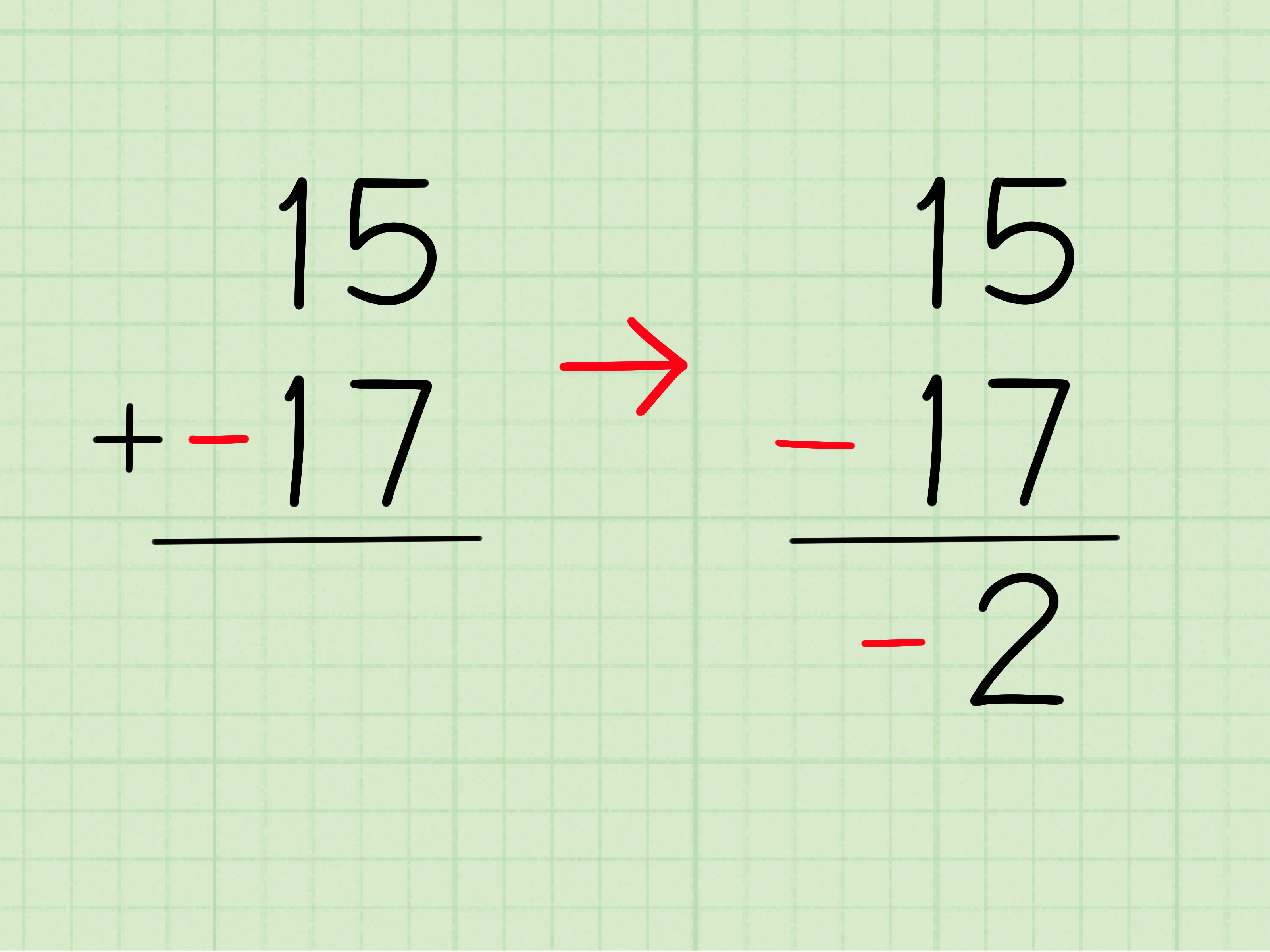
wikiHow
Addition is an essential skill in both math class and everyday life. It's normal to find addition to be challenging, but you can improve your math skills! If you're just learning how to add, start by practicing basic addition. Take...
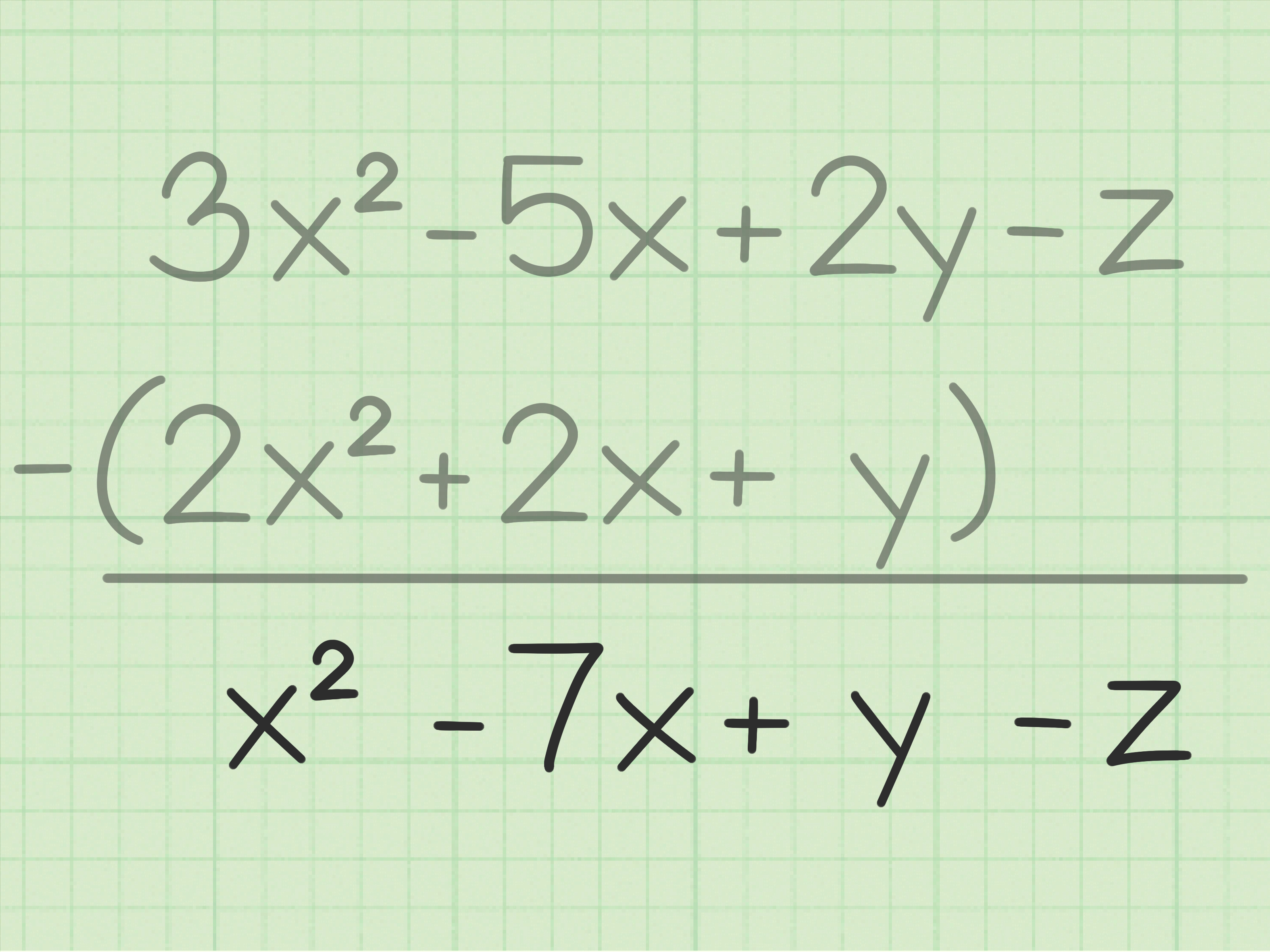
wikiHow
Subtraction is simply taking one number away from the other. It's pretty straightforward when you're subtracting one whole number from another, but subtraction can get a bit more complicated when you're working with fractions or decimals....
safe radishBOT
@lethal anvil Has your question been resolved?
Channel closed
Closed by @lethal anvil
Use .reopen if this was a mistake.
Available help channel!
Send your question here to claim the channel.
Remember:
• Ask your math question in a clear, concise manner.
• Show your work, and if possible, explain where you are stuck.
• Do not immediately ping people or roles. After 15 minutes, feel free to ping <@&286206848099549185> once.
• Type the command .close to free the channel when you're done.
• Be polite and have a nice day!
Read #❓how-to-get-help for further information on how to ask a good question, and about conduct in the question channels.
 lavish silo
Carol is walking home from school along a path. She sees a dog that is 40 feet away, and her line of sight makes an angle of 20° with the sidewalk. The dog's leash is 25 feet long. What length of the sidewalk should Carol avoid to remain safe from the unknown dog?
I don’t understand how to sketch this
safe radishBOT
lavish silo
Carol is walking home from school along a path. She sees a dog that is 40 feet a...
safe radishBOT
Channel closed
Closed by @lavish silo
Use .reopen if this was a mistake.
safe radishBOT
Available help channel!
Send your question here to claim the channel.
Remember:
• Ask your math question in a clear, concise manner.
• Show your work, and if possible, explain where you are stuck.
• Do not immediately ping people or roles. After 15 minutes, feel free to ping <@&286206848099549185> once.
• Type the command .close to free the channel when you're done.
• Be polite and have a nice day!
Read #❓how-to-get-help for further information on how to ask a good question, and about conduct in the question channels.
 dim rock
If I wanted to find out whether a critical point is a minima or maxima do I plug it into the original function or the first derivative?
safe radishBOT
dim rock
If I wanted to find out whether a critical point is a minima or maxima do I plug...
severe pond
dim rock
If I wanted to find out whether a critical point is a minima or maxima do I plug...
first derivative or second derivative test
 clever gale
dim rock
If I wanted to find out whether a critical point is a minima or maxima do I plug...
clever gale
dim rock
If I wanted to find out whether a critical point is a minima or maxima do I plug...
You plug x into the second derivative. If f''(x) > 0 it's a local minimum (slope is increasing so it curves upwards), and if f''(x) < 0 it's a local maximum (vice versa).
You can also check to see if the sign of the first derivative around your x-value changes.
dim rock
thx
 inland kestrel

Okay so, having a bit of trouble here. I'm not allowed to use any eigenvector theory here. What I tried to say was, if S is not 0 or I, then let there be some basis B = {(a,b), (c,d)}. I then did a change of basis to obtain [S]_B, where I used the matrix A to convert between them because it is the standard matrix of S. Then I realised that it won't work, because S is a general transformation, not the specific one defined by T
safe radishBOT
@dim rock Has your question been resolved?
safe radishBOT
Channel closed
Closed due to timeout
Use .reopen if this was a mistake.
safe radishBOT
Available help channel!
Send your question here to claim the channel.
Remember:
• Ask your math question in a clear, concise manner.
• Show your work, and if possible, explain where you are stuck.
• Do not immediately ping people or roles. After 15 minutes, feel free to ping <@&286206848099549185> once.
• Type the command .close to free the channel when you're done.
• Be polite and have a nice day!
Read #❓how-to-get-help for further information on how to ask a good question, and about conduct in the question channels.
lavish silo
I’m lost — where’d I go wrong??


 safe radishBOT
lavish silo
I’m lost — where’d I go wrong??
safe radishBOT
lavish silo
I’m lost — where’d I go wrong??
Please don't occupy multiple help channels.
lavish silo
Original problem:
 safe radishBOT
Please stick to your channel.
lavish silo
Well I’ve got three problems I need help with
 quasi timber
You should continue the previous problem you have first.
quasi timber
lavish silo
No one has helped me for like 45 mins with it though
You might wanna close the previous one then.
clever gale
lavish silo
I’m lost — where’d I go wrong??
Should be squared
 lavish silo
Damn bro
Allat for nothing 😭
I would assume there is an easier solution nonetheless though? How would you solve it?
clever gale
Heron's formula :)
lavish silo
clever gale
Heron's formula :)
We’re supposed to use previous knowledge from the course — haven’t learned that.
We learned Pythagorean, Sine Law and Cosine Law.
 north raven
lavish silo
We learned Pythagorean, Sine Law and Cosine Law.
north raven
lavish silo
We learned Pythagorean, Sine Law and Cosine Law.
Use cosine law to get any of the interior angles, then use 1/2 ab sinC to get the area of the triangle
lavish silo
north raven
Use cosine law to get any of the interior angles, then use 1/2 ab sinC to get th...
But I need the height of the triangle, no?
north raven
lavish silo
But I need the height of the triangle, no?
1/2 ab sinC, not 1/2 bh
lavish silo
Oh, we haven’t learned that yet I think
north raven
bruh
lavish silo
This course is so weird. Not even the 1/2bh formula is on the formula sheet
Which would insinuate that we don’t know that either
north raven
lavish silo
Oh, we haven’t learned that yet I think
use cosine law to get the included angle between 12cm and 19cm, or between 16cm and 19cm, then find the height of the triangle using sine
lavish silo
north raven
1/2 ab sinC, not 1/2 bh
Guess you learn something new everyday 😭
lavish silo
north raven
use cosine law to get the included angle between 12cm and 19cm, or between 16cm ...
But we only know the base of the big triangle, not the small triangles?
north raven
lavish silo
This course is so weird. Not even the 1/2bh formula is on the formula sheet
the formula sheet is for stuff that they dont expect students to memorise, not a syllabus.
north raven
lavish silo
Wait you’re actually right omg
$sin(\alpha)=\frac{x}{12}$
cosine?
i said sine
flat frigateBOT
Elliot Pixel
 lavish silo
There you go?
north raven
yeah
lavish silo
Ok thank you I don’t know how I didn’t realize that lol
north raven
you can get alpha by cosine rule, and then just solve for x which is the height
lavish silo
Have a good day
north raven
np
lavish silo
.close
safe radishBOT
Channel closed
Closed by @lavish silo
Use .reopen if this was a mistake.
safe radishBOT
Available help channel!
Send your question here to claim the channel.
Remember:
• Ask your math question in a clear, concise manner.
• Show your work, and if possible, explain where you are stuck.
• Do not immediately ping people or roles. After 15 minutes, feel free to ping <@&286206848099549185> once.
• Type the command .close to free the channel when you're done.
• Be polite and have a nice day!
Read #❓how-to-get-help for further information on how to ask a good question, and about conduct in the question channels.
 loud osprey
How do i do this?
 safe radishBOT
loud osprey
How do i do this?
safe radishBOT
loud osprey
How do i do this?
 velvet nebula
loud osprey
How do i do this?
velvet nebula
loud osprey
How do i do this?
consider finding a bijection between (0, 5) and (1, 2) and find some way to stuff in the 2 endpoints
loud osprey
velvet nebula
consider finding a bijection between (0, 5) and (1, 2) and find some way to stuf...
how do you find bijection between (0, 5) and (1,2)
becuase (1,2) is really restrictive
velvet nebula
can you send 0 to 1 and 5 to 2
velvet nebula
2x+3 sends 0 to 3 and 5 to 13, and it also sends (0, 5) to ...
loud osprey
velvet nebula
2x+3 sends 0 to 3 and 5 to 13, and it also sends (0, 5) to ...
(3,13) ?
velvet nebula
loud osprey
(3,13) ?
Yeah can you modify this to make it map (0,5) to (1,2)?
loud osprey
velvet nebula
Yeah can you modify this to make it map (0,5) to (1,2)?
so would -3x + 5 work?
or mb would x/5 + 1 work
safe radishBOT
@loud osprey Has your question been resolved?
velvet nebula
loud osprey
or mb would x/5 + 1 work
yeah
now you have that bijection all you have to do is find some way to stuff in the 2 endpoints
if you recall hilbert's hotel you can try doing a trick similar to that
loud osprey
velvet nebula
if you recall hilbert's hotel you can try doing a trick similar to that
Hilberts hotel is like shifting it to the everything to the right to accomodate for the person in front
velvet nebula
well, more like shifting countably infinitely many things
now we need to accomodate 2 more endpoints
so we need to find a hilbert's hotel inside (1, 2) to accomodate 0 and 5
loud osprey
I dont get how i would shift the equation tho
safe radishBOT
@loud osprey Has your question been resolved?
velvet nebula
loud osprey
I dont get how i would shift the equation tho
you don't have to change the equation
just choose countably infinitely things to follow some other relation than the x/5+1 you have selected earlier
safe radishBOT
Channel closed
Closed due to timeout
Use .reopen if this was a mistake.
Available help channel!
Send your question here to claim the channel.
Remember:
• Ask your math question in a clear, concise manner.
• Show your work, and if possible, explain where you are stuck.
• Do not immediately ping people or roles. After 15 minutes, feel free to ping <@&286206848099549185> once.
• Type the command .close to free the channel when you're done.
• Be polite and have a nice day!
Read #❓how-to-get-help for further information on how to ask a good question, and about conduct in the question channels.
 frigid arch
$\lim_{k\to\infty}\frac{k^k}{(k+1)^k} = \frac{1}{e}$
severe pond
what is your question
frigid arch
I don't quite understand how this is the case.
severe pond
$\frac{k}{k + 1} = \frac{k + 1 - 1}{k + 1} = 1 - \frac{1}{k + 1}$

 frigid arch
Ok, so you've taken it to the limit definition of e?
severe pond
$\lim_{k \to \infty} \left(1 - \frac{1}{k + 1}\right)^k$
flat frigateBOT
knief
 frigid arch
Ok! I think I am starting to understand. But why is it the reciprocal?
severe pond
$e^a = \lim_{x \to \infty} \left(1 + \frac{a}{x}\right)^x$
flat frigateBOT
knief
 frigid arch
So essentially:
$e^-a = \lim_{x \to \infty} \left(1 + \frac{a}{x}\right)^-x = \lim_{k \to \infty} \left(1 - \frac{1}{k + 1}\right)^k$
flat frigateBOT
NullSquare
 severe pond
i mean just take a = -1
e^-1 = 1/e
the difference of k + 1 vs k btw doesn’t matter here you can multiply and divide by 1 - 1/(k + 1). as k —> inf the extra factor goes to 1 anyway
frigid arch
Right! I think I understand! Thank you!
severe pond
you’re welcome
safe radishBOT
If you are done with this channel, please mark your problem as solved by typing .close
frigid arch
.close
safe radishBOT
Channel closed
Closed by @frigid arch
Use .reopen if this was a mistake.
Available help channel!
Send your question here to claim the channel.
Remember:
• Ask your math question in a clear, concise manner.
• Show your work, and if possible, explain where you are stuck.
• Do not immediately ping people or roles. After 15 minutes, feel free to ping <@&286206848099549185> once.
• Type the command .close to free the channel when you're done.
• Be polite and have a nice day!
Read #❓how-to-get-help for further information on how to ask a good question, and about conduct in the question channels.
hoary seal
I dont really understand permutations with repetitions
 hoary seal

 winged flare
hoary seal
I dont really understand permutations with repetitions
winged flare
hoary seal
I dont really understand permutations with repetitions
if i have 3 shirts and 3 pants, how many combinations of dresses can i wear
safe radishBOT
@hoary seal Has your question been resolved?
safe radishBOT
Channel closed
Closed due to timeout
Use .reopen if this was a mistake.
Available help channel!
Send your question here to claim the channel.
Remember:
• Ask your math question in a clear, concise manner.
• Show your work, and if possible, explain where you are stuck.
• Do not immediately ping people or roles. After 15 minutes, feel free to ping <@&286206848099549185> once.
• Type the command .close to free the channel when you're done.
• Be polite and have a nice day!
Read #❓how-to-get-help for further information on how to ask a good question, and about conduct in the question channels.
 twin matrix
My teacher had an exercise on the board:
Given that f: A → B and g: B → C and they g(f(x)) is surjective, prove or disprove that:
A) g is surjective
B) f is surjective
The teacher only showed proof that A is correct and skipped B. Out of curiosity I checked online for an answer. I kept seeing f(x) = e^x and g(x) = lnx as a counterexample for B.
But you can also set f(x) = e^x and g(x) = lnx as a counterexample for A.
safe radishBOT
twin matrix
My teacher had an exercise on the board:
Given that f: A → B and g: B → C and th...
 peak estuary
lnx is surjective
as a function R_>0 -> R
the problem here is what you choose as the set B
intuitively speaking, you can make B bigger and then define g on the "new" elements that you added to B arbitrarily, without changing that g(f(x)) is surjective
but by making B bigger you change whether f is surjective
safe radishBOT
@twin matrix Has your question been resolved?
twin matrix
peak estuary
intuitively speaking, you can make B bigger and then define g on the "new" eleme...
I don't understand what you mean by that
And how it doesn't apply to the proof that statement B is incorrect
 night magnet
twin matrix
My teacher had an exercise on the board:
Given that f: A → B and g: B → C and th...
night magnet
twin matrix
My teacher had an exercise on the board:
Given that f: A → B and g: B → C and th...
well, the counterexample is a little bit sloppy. if B is the codomain of f and the domain of g, and since g(x)=ln(x), B would be (0, inf), and f(x)=e^x is surjective for positive real numbers
f(x)=e^x is not surjective if you let the codomain B be the entire real line, but ln(x) is only defined for the positive reals
peak estuary

consider this picture
I can make B bigger without changing the fact that g(f(x)) is surjective, because all elements from C are already hit by a black arrow, so adding "random" red arrows is not gonna change that
but now f as a function f:A->B' is not surjective
because the new red elements arent hit
twin matrix
peak estuary
But here you claim you can extend lnx's domain from R+ to R, no?
peak estuary
I dont have to use the same "formula" for negative numbers
I could have g(x)=lnx for x>0 and g(x)=3 for x<=0
that would give me a valid function g:R->R
and that new function g still satisfies that g(e^x) is surjective
twin matrix
But this is not g(x) so how is that relevant
night magnet
if f's codomain and g's domain have to be identical, then f(x)=e^x wouldn't be surjective for g:R->R bc e^x has a range of (0, inf)
twin matrix
But e^x is surjective for R+
night magnet
yes it is
so it if you let the codomain of f be R+, f(x)=e^x would be surjective even under f(g(x)) where g(x)=ln(x)
bc g has a domain of R+
it depends on what the question means by surjective though, as in what is the codomain
some intro classes force the codomain to be full R, but in a strict sense, it doesn't have to be that way
surjectivity is relative to the codomain
twin matrix
night magnet
some intro classes force the codomain to be full R, but in a strict sense, it do...
The teacher said that A B C can be any group of numbers, not just the reals
night magnet
twin matrix
The teacher said that A B C can be any group of numbers, not just the reals
great
twin matrix
night magnet
it depends on what the question means by surjective though, as in what is the co...
Surjective in codomain D by the definition I was taught is that if d is in D, there is at least one solution for the equation f(x)=d
night magnet
yeah that is correct
in other words, the range (image) of f is equal to the codomain D
twin matrix
Yes
night magnet
consider an A with 3 elements, B with 4 elements, and C with 3 elements
f maps A to B, and g maps B to C
can you see an example where g(f(x)) is surjective and f is not?
maybe drawing it will help
hint: g doesn't have to be injective (one-to-one)
tbf denascite did provide a counterexample as a picture. just let B' be B
as in pretend B' was B to begin with
twin matrix
night magnet
can you see an example where g(f(x)) is surjective and f is not?
Not a concrete example, but I know that if a function that maps from A to B is surjective than the amount of terms in group B is smaller or equal to the amount of terms in group A.
So g is surjective and f(g) is surjective, no?
night magnet
g and g°f are surjective
im assuming you're referring to g(f(x))?
g°f being surjective means that g has to be surjective too. in short, if only a subset of the domain of g meets surjectivity, then the full domain will meet surjectivity too
you brought up the correct intuition with the fact you brought up
twin matrix
night magnet
im assuming you're referring to g(f(x))?
Yea probably, I got confused
night magnet
just a note, if your teacher is fine with sets being any collection of numbers, then you can just let A={2, 3, 4} B={4,6,7,8} and just let f(2)=4, f(3)=6 ... etc
no need for "formulas"
twin matrix
night magnet
you brought up the correct intuition with the fact you brought up
But the fact is true only for finite groups, so why it holds for infinite groups as well?
twin matrix
night magnet
countable and uncountable
I'm pretty sure there are more, but yea, let's say the uncountable since we were using the real numbers
night magnet
did you learn cardinality of sets? otherwise, it's going to be hard to explain quickly. also it's not necessary to answer your original question
twin matrix
night magnet
did you learn cardinality of sets? otherwise, it's going to be hard to explain q...
The teacher did mention this concept and I'm also a bit familar with it without this course, so let's try
night magnet
well, the simplest explanation is that each element in the domain must be paired with something in the codomain (in this case, inside the range). but if the range is equal to the codomain, everything in the codomain is paired with something in the domain. and since everything in the domain must be paired, for surjective functions, the codomain is at most the cardinality of the domain
it's actually agnostic of infinity or (un) countability
i can't offer a super rigorous proof bc there's probably some foundational framework for this
that I'm not familiar with
twin matrix
I get it
So can you explain again why the "counterexample" I provided for g has to be surjective if g(f(x)) is surjective?
night magnet
so f:R->R+ f(x)=e^x and g:R+->R g(x)=ln(x). and e^x is surjective on R+ which is the domain of ln(x)
and g(f(x))=ln(e^x)=x is surjective on R
if you let the codomain of f be R+, then e^x is surjective on R+
that's the reason
and if you let f codomain be R, then it's not surjective bc e^x range is R+
but f codomain being R doesn't make sense for the domain of g bc it's ln(x) which is defined for only positive reals
twin matrix
Wait let me process it properly
There's too much g and f and e^x and lnx lmao
Wait again, if f(x)=lnx and g(x)=e^x, f maps from R+ to R, g maps from R to R+.
g(f(x))=x is surjective on R.
The domain of g is R, which makes sense.
But then I do not follow how to rest contradicts what I said
I noticed I formulated poorly my original question
I meant that setting g(x)=e^x and f(x) = lnx is a counterexample for g being surjective if g(f(x)) is surjective
peak estuary
g(f(x)) is surjective as a map R+ to R+
and g is surjective as a map R to R+
so works out
you are confusing the map g(f(x)) which is only defined R+ to R+ with the map h(x)=x which has the same "formula" but is defined on a bigger set, i.e. h:R->R
twin matrix
I am sorry, this is way too confusing for me right now
Maybe another day I will understand it
Thank you two so much for your help
.close
safe radishBOT
Channel closed
Closed by @twin matrix
Use .reopen if this was a mistake.
Available help channel!
Send your question here to claim the channel.
Remember:
• Ask your math question in a clear, concise manner.
• Show your work, and if possible, explain where you are stuck.
• Do not immediately ping people or roles. After 15 minutes, feel free to ping <@&286206848099549185> once.
• Type the command .close to free the channel when you're done.
• Be polite and have a nice day!
Read #❓how-to-get-help for further information on how to ask a good question, and about conduct in the question channels.
 high fog
How do you make a canonical form of a matrix?
safe radishBOT
high fog
How do you make a canonical form of a matrix?
Please don't occupy multiple help channels.
vagrant ice
.close
safe radishBOT
Channel closed
Closed by @vagrant ice
Use .reopen if this was a mistake.
Available help channel!
Send your question here to claim the channel.
Remember:
• Ask your math question in a clear, concise manner.
• Show your work, and if possible, explain where you are stuck.
• Do not immediately ping people or roles. After 15 minutes, feel free to ping <@&286206848099549185> once.
• Type the command .close to free the channel when you're done.
• Be polite and have a nice day!
Read #❓how-to-get-help for further information on how to ask a good question, and about conduct in the question channels.
 broken forum
I don't quite get the convergent test
 safe radishBOT
broken forum
I don't quite get the convergent test
safe radishBOT
broken forum
I don't quite get the convergent test
 mortal sandal
this looks evil
broken forum
$$\sum_{n=2}^{\infty} \left| \frac{4n^3+2}{n^4 \cdot \sin(n^2)} \right |$$
flat frigateBOT
Nyxzore
 broken forum
I mean if a series is abosulately convergent then it is convergent no?
broken forum
$$\sum_{n=2}^{\infty} \frac{4n^3+2}{n^4 \cdot |\sin(n^2)|} $$
mortal sandal
right
flat frigateBOT
Nyxzore
 broken forum
$$|sin(n^2)| \le 1$$
flat frigateBOT
Nyxzore
 mortal sandal
good
broken forum
$$\frac{1}{n^4|sin(n^2)|} \ge \frac{1}{n^4}$$
flat frigateBOT
Nyxzore
 mortal sandal
right
broken forum
$$\frac{4n^3+2}{n^4|sin(n^2)|} \ge \frac{4n^3+2}{n^4}$$
flat frigateBOT
Nyxzore
 mortal sandal
surely it would be larger than 4/n
broken forum
mb
flat frigateBOT
Nyxzore
 mortal sandal
?
broken forum
lim n-> infty of 4/n
mortal sandal
that doesn't converge
broken forum
=0
broken forum
oh the series converges but the sum doesnt
broken forum
so everything is divergent then?
mortal sandal
the sum is called the series
the sequence doesn't converge
but the series (i.e. the sum) does
its confusing terminology
mortal sandal
broken forum
so everything is divergent then?
only absolutely
mortal sandal
but something can absolutely diverge while still converging
broken forum
mortal sandal
only absolutely
everything is absoultely divergent so it could still be convergent
mortal sandal
like
broken forum
so we need to try a different approach?
mortal sandal
yeah
idk what approach would work though
i'd look at it intuitively
the sum of 2/(n^4 * sin(n^2)) might be quite difficult as well
but the behavior is dominated by the 4n^3 part
and the 4 is irrelevant
so i'm gonna think about $\frac{1}{n\sin(n^2)}$
flat frigateBOT
Dreyuk
 mortal sandal
yeah actually we can fully justify this
broken forum
and how this wont converge because sin(n^2) just keeps bouncing ?
mortal sandal
4n^3 < 4n^3+2 < 5n^3 comparison test stuff
mortal sandal
broken forum
and how this wont converge because sin(n^2) just keeps bouncing ?
that's kinda the idea
sin(n^2) is going to randomly bounce between positive and negative
so you could argue the series looks something like the sum of $\f{(-1)^n}{n}$
flat frigateBOT
Dreyuk
 mortal sandal
which would converge
however sin(n^2) doesn't just switch between positive and negative, it also gets really close to 0
broken forum
yep
mortal sandal
when it gets really close to 0, you suddenly have a big term
broken forum
so i keep getting small big small big?
mortal sandal
so it's very possible that the sequence $\f{1}{n\sin(n^2)}$ doesn't converge to 0
yeah
flat frigateBOT
Dreyuk
 mortal sandal
i would expect the value of sin(n^2) to be somewhat randomly sampled in [-1. 1]
not perfectly uniformly, but not super thin anywhere
so, getting |sin(n^2)| < 1/n should happen with probability proportional to 1/n
in this case we can kind of argue that we expect $\f{1}{n\sin(n^2)}$ to have a magnitude greater than 1 with probability around 1/n
flat frigateBOT
Dreyuk
 mortal sandal
which means we would expect it to happen infinitely often and the sequence to not converge
broken forum
😭
mortal sandal
if it were $\f{1}{n\sin(n)}$, there would be some well-known approaches to proving that, by using the fact that pi has good rational approximations, and thus eventually n will be close to an integer multiple m*pi (where n/m is the good rational approximation)
flat frigateBOT
Dreyuk
 mortal sandal
(all irrational numbers have rational approximations good enough for this to work btw)
(so we don't need any deep knowledge about pi)
broken forum
bro is getting very practical implementation about this
I think just calling it abs divergent at my level is fine
ty
.close
safe radishBOT
Channel closed
Closed by @broken forum
Use .reopen if this was a mistake.
mortal sandal
rip
we'd need to find some good rational approximations to pi with square numerators
.reopen
safe radishBOT
✅ Original question: #help-23 message
mortal sandal
@broken forum forgive me but i gotta show the results of my search 
Ah... does this work?
Showing sin(n^2) gets really close to 0 might be done by showing that the polynomial n^2/pi is something called "equidistributed"
Colorllary 2 in this paper gives that: https://mathweb.ucsd.edu/~jverstra/Weyl2.pdf
But I don't think the equidistribution condition is actually strong enough to resolve the question so never mind
broken forum
whaaaa
mortal sandal
idk where you got this question from lmao
broken forum
it was given to me in a lab as practice ...
 broken forum
my lecturer probs didnt think it through when she came up with ts
if i take the sequence
and show that it doesnt converge then doesnt the sum not converge?
mortal sandal
yeah that would be sufficient
and it's hard to imagine another way
if the sequence did converge
you would somehow have to show that the positives and negatives weren't actually random
or
show that they're so random that you actually expect them to deviate from 50-50 as a random sequence will do sometimes
which is even harder
but yeah it's just not feasible to show the sequence doesn't converge sadly
broken forum
eeek
@mortal sandal
$$[
\textbf{Theorem.}\quad
\text{The series } \displaystyle\sum_{n=2}^{\infty} \frac{4n^3+2}{n^4 \sin(n^2)} \text{ diverges.}
]
\textbf{Proof.}
Let
[
a_n = \frac{4n^3+2}{n^4 \sin(n^2)}.
]
We analyze the asymptotic behavior of $|a_n|$:
[
|a_n| = \frac{4 + 2/n^3}{n ,|\sin(n^2)|}.
]
For sufficiently large $n$, we have $4 + 2/n^3 > 4$, hence
[
|a_n| > \frac{4}{n,|\sin(n^2)|}.
]
We investigate the limit of $|a_n|$ as $n\to \infty$.
Consider the sequence $x_n = n^2 \pmod{\pi}$.
By Weyl's equidistribution theorem, the sequence $(n^2)$ is uniformly distributed modulo $\pi$.
Consequently, the values of $n^2$ are dense in the interval $[0,\pi]$.
This density implies that for any $\delta > 0$ there exist infinitely many integers $n$ such that the distance
from $n^2$ to the nearest multiple of $\pi$ is less than $\delta$:
[
\min_{k\in \mathbb{Z}} |n^2 - k\pi| < \delta .
]
Since $|\sin x| \le |x|$ for all $x$, and $\sin x \sim x$ near $0$, this implies that
$|\sin(n^2)|$ takes values arbitrarily close to $0$.
More precisely, by results from Diophantine approximation, there exists a subsequence
${n_k}$ such that
[
|\sin(n_k^2)| < \frac{1}{n_k}.
]
This estimate is quite weak; stronger bounds (e.g.\ $|\sin(n_k^2)| < n_k^{-2}$) are known.
Substituting the bound $|\sin(n_k^2)| < 1/n_k$ into our inequality for $|a_n|$ gives
[
|a_{n_k}| > \frac{4}{n_k (1/n_k)} = 4.
]
Using the stronger estimate $|\sin(n_k^2)| < n_k^{-2}$ yields
[
|a_{n_k}| > \frac{4}{n_k^{-1}} = 4n_k \longrightarrow \infty.
]
Thus the sequence ${a_n}$ contains a subsequence that diverges to infinity, and therefore
[
\lim_{n\to\infty} a_n \neq 0.
]
By the Divergence Test, the series
[
\sum_{n=2}^{\infty} \frac{4n^3+2}{n^4 \sin(n^2)}
]
diverges.
\qed$$
flat frigateBOT
Nyxzore

Nyxzore
Compile Error! Click the  reaction for more information.
(You may edit your message to recompile.)
 mortal sandal
Ah they probably chatGPT'd it
looks similar to what I got when I tried
More precisely, by results from Diophantine approximation, there exists a subsequence
${n_k}$ such that
[
|\sin(n_k^2)| < \frac{1}{n_k}.
]
flat frigateBOT
Dreyuk
 mortal sandal
this is the core of the proof and i was struggling to get it to actually tell me what those results were or where i could find them
the stronger bound it gives right after this doesn't look right as well
Hurwit'z theorem tells us there are infinitely many n such that [ |\sin(n)|<\f{1}{n\sqrt{5}} ]
flat frigateBOT
Dreyuk
 mortal sandal
It's probably very hard to do any better than that
broken forum
silly fricking question
mortal sandal

As far as I can tell this textbook doesn't exist lmfao
and it keeps referencing the "Weyl difference method" which also doesn't exist
welp you can close
it's actually unbelievable that i can't find this problem anywhere
if pi has an irrationality measure greater than 3 then it should diverge, but this isn't helpful (pi probably has an irrationality measure of 2, and it probably diverges anyways)
safe radishBOT
@broken forum Has your question been resolved?
mortal sandal
mortal sandal
and it keeps referencing the "Weyl difference method" which also doesn't exist
Oh people call it Weyl differencing
safe radishBOT
Channel closed
Closed due to timeout
Use .reopen if this was a mistake.
safe radishBOT
Available help channel!
Send your question here to claim the channel.
Remember:
• Ask your math question in a clear, concise manner.
• Show your work, and if possible, explain where you are stuck.
• Do not immediately ping people or roles. After 15 minutes, feel free to ping <@&286206848099549185> once.
• Type the command .close to free the channel when you're done.
• Be polite and have a nice day!
Read #❓how-to-get-help for further information on how to ask a good question, and about conduct in the question channels.
 loud cedar
help me ans no.12 pls
 safe radishBOT
loud cedar
help me ans no.12 pls
loud cedar
safe radishBOT
loud cedar
help me ans no.12 pls
loud cedar
I fell asleepp
 normal moss
loud cedar
help me ans no.12 pls
normal moss
loud cedar
help me ans no.12 pls
12?
quasi timber
I’m seeing 5 problems here. 😵💫
normal moss
Or are they *1, 12., 23., 34. and 45.
quasi timber
normal moss
Or are they *1, 12., 23., 34. and 45.
what the hell 😭
normal moss
quasi timber
what the hell 😭

vagrant ice
loud cedar
help me ans no.12 pls

a good first step is to find vectors AB, AC, and BC by subtracting the coordinates
 empty forge
vagrant ice
a good first step is to find vectors AB, AC, and BC by subtracting the coordinat...
empty forge
vagrant ice
a good first step is to find vectors AB, AC, and BC by subtracting the coordinat...
Bro why we using vectors to solve the problem 😭
vagrant ice
that's what the question wants
safe radishBOT
@loud cedar Has your question been resolved?
safe radishBOT
Channel closed
Closed due to timeout
Use .reopen if this was a mistake.
Available help channel!
Send your question here to claim the channel.
Remember:
• Ask your math question in a clear, concise manner.
• Show your work, and if possible, explain where you are stuck.
• Do not immediately ping people or roles. After 15 minutes, feel free to ping <@&286206848099549185> once.
• Type the command .close to free the channel when you're done.
• Be polite and have a nice day!
Read #❓how-to-get-help for further information on how to ask a good question, and about conduct in the question channels.
 verbal kite
 safe radishBOT
verbal kite
flat frigateBOT
safe radishBOT
verbal kite
flat frigateBOT

 rugged arch
?
verbal kite
What about (d)?
 rustic goblet
verbal kite
What about (d)?
rustic goblet
verbal kite
What about (d)?
another way to think about this is to look at the limiting behaviour as the polynomial goes to infinity and negative infinity
an even degree polynomial exhibits the same limiting behaviour on both sides (both go to infinity or both go to negative infinity), while an odd degree polynomial exhibits opposing behaviour
here, the polynomial tends to negative infinity as x tends to negative infinity, while it tends to infinity as x does
that’s opposite behaviour, so it can’t be even degree, so d) is ruled out :p
safe radishBOT
Channel closed
Closed by @verbal kite
Use .reopen if this was a mistake.
Available help channel!
Send your question here to claim the channel.
Remember:
• Ask your math question in a clear, concise manner.
• Show your work, and if possible, explain where you are stuck.
• Do not immediately ping people or roles. After 15 minutes, feel free to ping <@&286206848099549185> once.
• Type the command .close to free the channel when you're done.
• Be polite and have a nice day!
Read #❓how-to-get-help for further information on how to ask a good question, and about conduct in the question channels.
 soft lava
Would these two x’s cancel out?
 safe radishBOT
soft lava
Would these two x’s cancel out?
safe radishBOT
soft lava
Would these two x’s cancel out?
 jaunty monolith
No
The one in the numerator is multiplied with another expression. The one I. The denominator is added, it would’ve been only possible of both were multiplied
soft lava
Kk ty
jaunty monolith
Do you actually understand? If not, I can try illustrating in which cases it can be cancelled
Will be a bit challenging as I’m on my phone but I can try
soft lava
No I think I understand
jaunty monolith
Okay I hope
soft lava
I feel like I did these wrong though

 empty gyro
,rccw
flat frigateBOT

 glacial cairn
You did these wrong indeed
soft lava
I just never know how to start them
soft lava
 glacial cairn
You factorized correctly the first time
soft lava
Did I factor wrong here
glacial cairn
You got a different answer so yes
 glacial cairn
That's a lot better 
soft lava
Is it still wrong
glacial cairn
No, -3/7 is correct
soft lava
Yay
safe radishBOT
@soft lava Has your question been resolved?
safe radishBOT
Channel closed
Closed due to timeout
Use .reopen if this was a mistake.
Available help channel!
Send your question here to claim the channel.
Remember:
• Ask your math question in a clear, concise manner.
• Show your work, and if possible, explain where you are stuck.
• Do not immediately ping people or roles. After 15 minutes, feel free to ping <@&286206848099549185> once.
• Type the command .close to free the channel when you're done.
• Be polite and have a nice day!
Read #❓how-to-get-help for further information on how to ask a good question, and about conduct in the question channels.
 umbral haven
Can someone validate my answers?
I got, x = 1.5, y = -3
 elder moss
umbral haven
Can someone validate my answers?
I got, x = 1.5, y = -3
elder moss
umbral haven
Can someone validate my answers?
I got, x = 1.5, y = -3
You can check by substitution
 exotic bolt
btw they are wrong
elder moss
umbral haven
nah u can substitute
Are they valid for both equations?
elder moss
exotic bolt
no 4 + 9 = 15
*6
 fallow marsh
hey
exotic bolt
ye 6
fallow marsh
umbral haven
Can someone validate my answers?
I got, x = 1.5, y = -3
you can just multiply the second eqn by 3 to make the coefficients of y same
then just subtract eqn 1 from eqn 2 to get the value of x
elder moss
Show your work
safe radishBOT
Channel closed
Closed by @umbral haven
Use .reopen if this was a mistake.
safe radishBOT
Available help channel!
Send your question here to claim the channel.
Remember:
• Ask your math question in a clear, concise manner.
• Show your work, and if possible, explain where you are stuck.
• Do not immediately ping people or roles. After 15 minutes, feel free to ping <@&286206848099549185> once.
• Type the command .close to free the channel when you're done.
• Be polite and have a nice day!
Read #❓how-to-get-help for further information on how to ask a good question, and about conduct in the question channels.
modest copper
i have to find the highlighted area
safe radishBOT
modest copper
i have to find the highlighted area


 tight basalt
I know nothing about math💔
safe radishBOT
tight basalt
I know nothing about math💔
Please read the channel description before posting, and stay on topic.
 wary turret
modest copper
would this be right
wary turret
modest copper
would this be right
That's right
You can also use this formula
$\frac{|a|}{6}\cdot(\beta-\alpha)^3$
flat frigateBOT
오락악당
 modest copper
wary turret
That's right
modest copper
wary turret
That's right
thank you so much
not familiar with the one you provided unfortunately, ill stick to mine since its more familiar
thank you again
.close
safe radishBOT
Channel closed
Closed by @modest copper
Use .reopen if this was a mistake.
safe radishBOT
Available help channel!
Send your question here to claim the channel.
Remember:
• Ask your math question in a clear, concise manner.
• Show your work, and if possible, explain where you are stuck.
• Do not immediately ping people or roles. After 15 minutes, feel free to ping <@&286206848099549185> once.
• Type the command .close to free the channel when you're done.
• Be polite and have a nice day!
Read #❓how-to-get-help for further information on how to ask a good question, and about conduct in the question channels.
modest copper
In a pyramid with a square base, two of the lateral faces are perpendicular to the base, and the other two lateral faces form a 45° angle with the base (see the figure). The edge connecting the apex to the midpoint of a base side is 2. Calculate the volume of the pyramid.
safe radishBOT
modest copper
In a pyramid with a square base, two of the lateral faces are perpendicular to t...

 quasi bison
The edge connecting the apex to the midpoint of a base side is 2.
 modest copper
are the 45 degrees correct
modest copper
quasi bison
> The edge connecting the apex to the midpoint of a base side is 2.
<:thonk:406...
i apologise if its wrongly translated, its originally in estonian
quasi bison
yes the 45° angles are okay
modest copper
okay thats what i wanted to know, ill try to solve it and then send my solution
quasi bison
hm yeah that sounds like a translation issue but i dont speak estonian
modest copper
hope its right
quasi bison
can you share the original anyway

 quasi bison
if it really does mean "medium-sized edge" then yeah those are AE and CE
i would've really liked if the question just gave you the edges by name tbh, it's really annoying to have to piece things like this together
modest copper
quasi bison
i would've really liked if the question just gave you the edges by name tbh, it'...
yeah unfortunately, i think i got the solution though so i'll send it in a minute
modest copper
quasi bison
i would've really liked if the question just gave you the edges by name tbh, it'...

hopefully the handwriting is readable
i had to find the volume
h is height
a is the base edge
quasi bison
applying sine law to a right triangle is definitely something
modest copper
quasi bison
applying sine law to a right triangle is definitely something
we got taught this way like a month ago
is it wrong or
quasi bison
it's not WRONG mathematically but it's overkill!
weren't you taught basic trig ratios like...
okay let me make a picture real quick
modest copper
quasi bison
okay let me make a picture real quick
sure thank you
 modest copper
oh right lol
quasi bison
this is what i was talking about
i think ANYWHERE in the world if you're gonna learn trig you'll begin with this
modest copper
forgot about this tbh, i just do the overkill one cause ive been using a ton recently lol
quasi bison
muscle memory is quite strong eh
anyway, assuming you and i both understand the translation correctly, the volume 2 sqrt(2)/3 is correct
modest copper
quasi bison
anyway, assuming you and i both understand the translation correctly, the volume...
okay cool thank you so much
appreciate the help
.close
safe radishBOT
Channel closed
Closed by @modest copper
Use .reopen if this was a mistake.
safe radishBOT
Available help channel!
Send your question here to claim the channel.
Remember:
• Ask your math question in a clear, concise manner.
• Show your work, and if possible, explain where you are stuck.
• Do not immediately ping people or roles. After 15 minutes, feel free to ping <@&286206848099549185> once.
• Type the command .close to free the channel when you're done.
• Be polite and have a nice day!
Read #❓how-to-get-help for further information on how to ask a good question, and about conduct in the question channels.
 open pulsar
hi
safe radishBOT
open pulsar
hi
safe radishBOT
Channel closed
Closed by @open pulsar
Use .reopen if this was a mistake.
Available help channel!
Send your question here to claim the channel.
Remember:
• Ask your math question in a clear, concise manner.
• Show your work, and if possible, explain where you are stuck.
• Do not immediately ping people or roles. After 15 minutes, feel free to ping <@&286206848099549185> once.
• Type the command .close to free the channel when you're done.
• Be polite and have a nice day!
Read #❓how-to-get-help for further information on how to ask a good question, and about conduct in the question channels.
 mighty totem
help me
 safe radishBOT
mighty totem
help me
safe radishBOT
mighty totem
help me
 mighty totem
help me understand the functions do 2 of the harder ones please
molten acorn
mighty totem
help me understand the functions do 2 of the harder ones please
Which one are the "harder ones" to you?
mighty totem
the 2nd one and the 3rd one
molten acorn
mighty totem
the 2nd one and the 3rd one
Do you know the absolute value function?
It's shaped like the letter v
mighty totem
i just need to learn everything
molten acorn
mighty totem
i just need to learn everything
Well, you know what x^2, |x|, and √x graphs look like right?
mighty totem
cubic absulute value and square root right?
molten acorn
mighty totem
cubic absulute value and square root right?
Just normal absolute value
mighty totem
absulute value is the v right
I just need help with the transformations, like the formulas and how to plug them in.

safe radishBOT
@mighty totem Has your question been resolved?
mighty totem
no
safe radishBOT
Channel closed
Closed by @mighty totem
Use .reopen if this was a mistake.
mighty totem
.reopen
safe radishBOT
✅ Original question: #help-23 message
 molten acorn
For the 2nd one, the V is upside down right?
So it should be -|x|
Also, it's translated 4 units to the right
So -|x-4|
Also translated 2 units down
-|x-4|-2
 tardy mango
mighty totem
how do you get A?
tardy mango
mighty totem
how do you get A?
Test a point on the graph