#help-10
1 messages · Page 454 of 1
 uneven schooner
hm so either B = F and D = f, or B = f and D = f'
 thick oracle
yeah
and we've established above that C is the derivative of D
so
B , D, C
i mean this has to be it
uneven schooner
well C is the derivative of D (im not gonna fact check that), and D is the derivative of B, so...............
(mb)
uneven schooner
im a bit confused here so if i were you i'd wait for another helper but i feel b,d,c is correct
thick oracle
which is only true for D
but D has a positive slope
so A should have been in the positive quadrant
thick oracle
uneven schooner
*im a bit confused here so if i were you i'd wait for another helper but i feel ...
yes
yeah also this is an easy question the only reason i am bringing this up is because someone got a different answer than me
 broken wolf
thick oracle
but D has a positive slope
broken wolf
thick oracle
but D has a positive slope
D has a positivr slope till 1-2 or at 2 then it decresed
broken wolf
thick oracle
so graph only graph C can be D's derivative
how?
broken wolf
thick oracle
C is the only graph that is positive until 1-2 and decreases afterwards
no
broken wolf
thick oracle
C is the only graph that is positive until 1-2 and decreases afterwards
C decreased till 3 then increased toward x=infinity
 tame mortar
I agree
or B A and C
it's not exactly clear on the image if A and C cross the x axis
 obtuse pebbleBOT
@thick oracle Has your question been resolved?
 short crescent
<@&268886789983436800> spam
 unreal musk
That's very kind of you 
short crescent
💀
unreal musk
Lmfao 
obtuse pebbleBOT
@thick oracle Has your question been resolved?
 torn flower
if F = B
f=C
f' = D
since B cant be anyone's derivative cuz B is 0 at 0 and noone's slope is 0 at 0
B is either F or unrelated
if its unrelated, the only possible way we can arrange them is
ACD or DCA
left to right in the order F,f,f'
none of them make sense cuz A and C are negatives of each other, if A is f(x) then C is -f(x)
the only option left is BCD
 solar stump
The diagrams show the graph of a function f, its derivative f', an antiderivative F of f and another fourth graph. Assign a graph to each of the functions f, f' and F and explain your reasoning.
Not really in a mood to assist, sorry, but I thought a translation might better help other helpers here
 solar stump
> The diagrams show the graph of a function f, its derivative f', an antiderivat...
tame mortar
solar stump
solar stump
> The diagrams show the graph of a function f, its derivative f', an antiderivat...
tame mortar
ok no this is correct symply because D crosses the x axis at 1 (min of B) and A crosses at 2
you can close dw
obtuse pebbleBOT
@thick oracle Has your question been resolved?
 toxic harbor
@thick oracle
obtuse pebbleBOT
Channel closed
Closed due to timeout
Use .reopen if this was a mistake.
 Available help channel!
Send your question here to claim the channel.
Remember:
• Ask your math question in a clear, concise manner.
• Show your work, and if possible, explain where you are stuck.
• Do not immediately ping people or roles. After 15 minutes, feel free to ping <@&286206848099549185> once.
• Type the command .close to free the channel when you're done.
• Be polite and have a nice day!
Read #❓how-to-get-help for further information on how to ask a good question, and about conduct in the question channels.
 tired quest
 obtuse pebbleBOT
tired quest
obtuse pebbleBOT
tired quest
 hollow ocean
!nosols, I believe?
obtuse pebbleBOT
As a helper, please do not give out answers that could be copied as a homework solution. Have the student work through the problem themselves and guide them along the way.
 open kayak
mb, instinct
 ember frost
tired quest
so this thing should equal C
ember frost
tired quest
so this thing should equal C
this is a definite integral
ember frost
think for a minute then tell me
tired quest
is it 0
ember frost
why do you think it's 0?
tired quest
i added one to the power
so its 0*x^1
and thats all timesed by 1
so 0 times anything is 0
ember frost
tired quest
can you answer this now?
tired quest
yes its 0
ember frost
there we go
tired quest
.close
obtuse pebbleBOT
Channel closed
Closed by @tired quest
Use .reopen if this was a mistake.
Available help channel!
Send your question here to claim the channel.
Remember:
• Ask your math question in a clear, concise manner.
• Show your work, and if possible, explain where you are stuck.
• Do not immediately ping people or roles. After 15 minutes, feel free to ping <@&286206848099549185> once.
• Type the command .close to free the channel when you're done.
• Be polite and have a nice day!
Read #❓how-to-get-help for further information on how to ask a good question, and about conduct in the question channels.
toxic harbor
Ik this is the answer but is there a way to be more accurate? I remember using a way but I forgot it
 obtuse pebbleBOT
toxic harbor
Ik this is the answer but is there a way to be more accurate? I remember using a...
toxic harbor
obtuse pebbleBOT
toxic harbor
Ik this is the answer but is there a way to be more accurate? I remember using a...
toxic harbor
please @ me
hollow ocean
more accurate in what sense?
 graceful crescent
@toxic harbor
toxic harbor
in drawing it
hollow ocean
plot some points using the transformed function.
graceful crescent
oh uh no not really
graceful crescent
unless u use desmos and copy it exactly
hollow ocean
pick some values of x and compute the corresponding values of y.
then join them in the expected shape.
toxic harbor
what is compute
hollow ocean
calculate.
toxic harbor
so lets say i used 2 i got 8 where does y go?
hollow ocean
the transformed function.
also, if you used x = 2, then y = x^3 = 2^3 = 8, so x = 2 leads to y = 8 in the original function.
toxic harbor
ohh now i see where my mistake is lmao
hollow ocean
but you want the transformed function, so.
but also, note that the question asked you to sketch the transformed function.
hollow ocean
when a sketch is involved you have some leeway anyway.
toxic harbor
whats leeway
hollow ocean
a sketch by definition need not be perfect.
toxic harbor
but some words ive never heard of
hollow ocean
if you are told to graph the transformed function then you should be more accurate, but you're not expected to be perfect anyway.
toxic harbor
and the transformative one does it have to be the same size?
hollow ocean
you're not compressing or stretching it, so...
toxic harbor
i mean like in length
hollow ocean
I know.
toxic harbor
what if it was 1 box smaller
hollow ocean
then it depends on whether your examiner is in a good mood.
toxic harbor
hollow ocean
then it depends on whether your examiner is in a good mood.
✅
thank you
for your help Chiaki
it is very much appreciated
😊
have a great day
.close
obtuse pebbleBOT
Channel closed
Closed by @toxic harbor
Use .reopen if this was a mistake.
obtuse pebbleBOT
Available help channel!
Send your question here to claim the channel.
Remember:
• Ask your math question in a clear, concise manner.
• Show your work, and if possible, explain where you are stuck.
• Do not immediately ping people or roles. After 15 minutes, feel free to ping <@&286206848099549185> once.
• Type the command .close to free the channel when you're done.
• Be polite and have a nice day!
Read #❓how-to-get-help for further information on how to ask a good question, and about conduct in the question channels.
 vale orchid
Let triangle ABC be isosceles at B. The line BH is the angle bisector of angle B.
Let K and M be the feet of the perpendiculars drawn from H to BC and BA, respectively.
a) Prove that triangles BKH and BMH are congruent.
b) Prove that BH is perpendicular to CA. From that, prove that
BH < \frac{BC + BA}{2}.
c) Let E be a point on segment BH (with E \ne B, E \ne H, and E not on line KM).
Construct point I such that E is the midpoint of segment MI.
Prove that IK \parallel BH.
obtuse pebbleBOT
vale orchid
Let triangle ABC be isosceles at B. The line BH is the angle bisector of angle B...
What step are you on?
1. I don't know where to begin.
2. I have begun but got stuck midway.
3. I got an answer but I was told that it's wrong.
4. I got an answer and would like my work checked.
5. I have a question about someone else's work/solution.
6. I have completed the problem and don't need help anymore. Thank you.
7. None of the above
1
uneven schooner
have you drawn a diagram?
vale orchid
uneven schooner
have you drawn a diagram?
Ýe
uneven schooner
If you have, may I ask you to upload it?
vale orchid
uneven schooner
If you have, may I ask you to upload it?
Hold up

Here ya go
Currently on c problem
uneven schooner
vale orchid
vale orchid
ive proven that bh is perpendicular to mk, now i have to do the same with ik
uneven schooner
Hm I have a hint which may or may not work
In a right angled triangle, what are the properties of the median to the hypotenuse?
observe in right angled MKI
that ME = EI
so EK is a median
since its to the hypotenuse, do you know the propety that EK = ME = EI?
i feel if you could somehow show ME = EK, you're done
@vale orchid is this clear? this may not work, take my words with a pinch of salt
uneven schooner
Well try atleast.
uneven schooner
vale orchid
if i were to prove that me equals ek whats next
then you can show by the properties of isosclees triangle(angles opp. equal sides are equal) and angle sum property(angles sum to 180) that it IS a right triangle
uneven schooner
vale orchid
honestly i dont feel like thatd work
I can clearly see two triangles, if you show congruence between them, then its done. hint: you'll have to use the fact that BMH congruent to BKH
vale orchid
yea the 2 small triangles on the top right
uneven schooner
vale orchid
yea the 2 small triangles on the top right
I mean, maybe, but what i as thiking of was MHE and KHE
vale orchid
do those triangles have anything to do with the angle that were focusing on
uneven schooner
vale orchid
do those triangles have anything to do with the angle that were focusing on
those triangles will show you ME = EK
as I've explained before, since ME = EI, you'll have ME = EK = IE, and from there you can deduce MKI is right angled at K
obtuse pebbleBOT
Channel closed
Closed by @vale orchid
Use .reopen if this was a mistake.
obtuse pebbleBOT
Available help channel!
Send your question here to claim the channel.
Remember:
• Ask your math question in a clear, concise manner.
• Show your work, and if possible, explain where you are stuck.
• Do not immediately ping people or roles. After 15 minutes, feel free to ping <@&286206848099549185> once.
• Type the command .close to free the channel when you're done.
• Be polite and have a nice day!
Read #❓how-to-get-help for further information on how to ask a good question, and about conduct in the question channels.
 lament ledge
this is gonna sound idiotic of me but (this is my teachers digital writing)
is that a "-2" or "- 2" for question 1
 obtuse pebbleBOT
lament ledge
this is gonna sound idiotic of me but (this is my teachers digital writing)
is ...
obtuse pebbleBOT
lament ledge
this is gonna sound idiotic of me but (this is my teachers digital writing)
is ...
 digital hound
lament ledge
this is gonna sound idiotic of me but (this is my teachers digital writing)
is ...
digital hound
lament ledge
this is gonna sound idiotic of me but (this is my teachers digital writing)
is ...
minus two
lament ledge
im assuming the 3 is also "-3" and not "- 3" in question 1
digital hound
negative three times (x minus two)
the kerning is shitty but generally you assume its a minus unless its completely obvious
does this answer your question?
lament ledge
yes
digital hound
ok cool
oh also
it appears that everything will be some combination of
- a number
- (x plus something)
- (x minus something)
- (something plus x)
- (something minus x)
(not all of those at once)
so if youre not sure just check which one its closest to
hollow ocean
it's .close.
obtuse pebbleBOT
Channel closed
Closed by @lament ledge
Use .reopen if this was a mistake.
obtuse pebbleBOT
Available help channel!
Send your question here to claim the channel.
Remember:
• Ask your math question in a clear, concise manner.
• Show your work, and if possible, explain where you are stuck.
• Do not immediately ping people or roles. After 15 minutes, feel free to ping <@&286206848099549185> once.
• Type the command .close to free the channel when you're done.
• Be polite and have a nice day!
Read #❓how-to-get-help for further information on how to ask a good question, and about conduct in the question channels.
 serene jackal
 obtuse pebbleBOT
serene jackal
serene jackal
obtuse pebbleBOT
serene jackal
serene jackal
Anyone?
 azure dagger
!status
obtuse pebbleBOT
What step are you on?
1. I don't know where to begin.
2. I have begun but got stuck midway.
3. I got an answer but I was told that it's wrong.
4. I got an answer and would like my work checked.
5. I have a question about someone else's work/solution.
6. I have completed the problem and don't need help anymore. Thank you.
7. None of the above
and is the point to just expand it
 azure dagger
unfortunately no, i can help YOU try to solve it but i need effort from your end
serene jackal
What effort?
 hidden compass
serene jackal
hidden compass
serene jackal
You've already sent it
azure dagger
serene jackal
What effort?
have you tried attempting the question
serene jackal
Factorissation
hidden compass
obtuse pebble
```
What step are you on?
1. I don't know where to begin.
2. I have begun but go...
Answer this, please. @serene jackal
serene jackal
obtuse pebble
```
What step are you on?
1. I don't know where to begin.
2. I have begun but go...
1
?
hidden compass
serene jackal
Factorissation
How? Send a photo of your work so far, if you've written down something
azure dagger
where have you gotten this question from
serene jackal
From my book
azure dagger
is this schoolwork, where you've done other questions that are similar to this one
serene jackal
In copies...This is my first question so far
azure dagger
you've studied this at school, correct?
azure dagger
do you know how to multiply brackets in algebra
azure dagger
alright, so can you start with that and open the brackets
hidden compass
serene jackal
If u dont mind can u just send me photo?
No! ....
serene jackal
ok
azure dagger
serene jackal
If u dont mind can u just send me photo?
as i've tried to tell you before, no one here is going to just "solve" and give it to you
hidden compass
!nosols
obtuse pebbleBOT
As a helper, please do not give out answers that could be copied as a homework solution. Have the student work through the problem themselves and guide them along the way.
azure dagger
we can walk you through it if you want
hidden compass
!noans
obtuse pebbleBOT
The purpose of this server is to help you learn; please don't ask for direct answers. Ask for guidance, explanations, or feedback instead.
serene jackal
Ok
obtuse pebbleBOT
@serene jackal Has your question been resolved?
obtuse pebbleBOT
Channel closed
Closed due to timeout
Use .reopen if this was a mistake.
Available help channel!
Send your question here to claim the channel.
Remember:
• Ask your math question in a clear, concise manner.
• Show your work, and if possible, explain where you are stuck.
• Do not immediately ping people or roles. After 15 minutes, feel free to ping <@&286206848099549185> once.
• Type the command .close to free the channel when you're done.
• Be polite and have a nice day!
Read #❓how-to-get-help for further information on how to ask a good question, and about conduct in the question channels.
 steep pike
how do I do this
 obtuse pebbleBOT
steep pike
how do I do this
steep pike
obtuse pebbleBOT
steep pike
how do I do this
steep pike
my intuition is its not countably infinite
 daring ravine
y?
 dusk widget
I believe your intuition is correct 
steep pike
daring ravine
y?
cant see how there would be a bijection
dusk widget
hm, I don't want to give away too much, but a good idea might be to associate each subset of N to a sequence in S
that way, you construct an injection from P(N) to S, and since P(N) is uncountable, so is S
the real work comes from coming up with a sequence for A \subseteq N, but it shouldn't be too bad 
steep pike
Whats P(N) here
dusk widget
the power set of N, which has cardinality |R|, i.e. uncountable
dusk widget
the power set of N is just the set of all subsets of N
steep pike
how would I form an injection from S to power set of \mathbb{N}
dusk widget
dusk widget
hm, I don't want to give away *too* much, but a good idea might be to associate ...
^^
and you've got the injection the wrong way around
steep pike
dusk widget
the power set of N is just the set of all subsets of N
Yeah this is one of the few things I know 😭
dusk widget
you want to inject P(N) into S, because that means S will have equal or greater cardinality than P(N)
 zenith raft
daring ravine
y?
zenith raft
daring ravine
y?


dusk widget
dusk widget
hm, I don't want to give away *too* much, but a good idea might be to associate ...
my suggestion is to try fixing a subset A of N and coming up with a sequence q_A of S you can assign to it 
steep pike
dusk widget
you want to inject P(N) into S, because that means S will have equal or greater ...
makes sense makes sense
dusk widget
that'll give you an injection automatically (via A \mapsto q_A)
steep pike
but howww can I complete the set of S in that case
bc like its the set of ALL rational sequences
dusk widget
S is a subset of the set of rational sequences, not the rational sequences themselves
I also don't quite understand what you mean by "completing" S 
steep pike
oh wait yeah am being dumb
steep pike
dusk widget
I also don't quite understand what you mean by "completing" S <:pikathink:879066...
Idt I need to actually
if Im injecting P(N) to S it doesnt need to be surjective
dusk widget
a very classical example of a sequence in S is q_n = 1/n, and I suggest you think about using that sequence for this problem
dusk widget
steep pike
if Im injecting P(N) to S it doesnt need to be surjective
indeed, and we don't require a surjection
we aren't showing these two sets have the same cardinality
just that one has a cardinality equal to or greater than the other
steep pike
I think I'm beginning to understand
dusk widget
an injection from the smaller set into the bigger one is sufficient
 upbeat plinth
@steep pike @dusk widget consider a diagonal argument to prove its uncountable
steep pike
upbeat plinth
<@844971706204422186> <@456913063300431934> consider a diagonal argument to prov...
not sure what this means sry
dusk widget
upbeat plinth
<@844971706204422186> <@456913063300431934> consider a diagonal argument to prov...
huh. is that necessary?
dusk widget
upbeat plinth
<@844971706204422186> <@456913063300431934> consider a diagonal argument to prov...
see hlounge for my initial idea 
upbeat plinth
steep pike
not sure what this means sry
cantor provided a famous method of proving a certain set is uncountable. the same method can be adapted for our set
steep pike
@dusk widget so with the power set of N
can my injection be
1/n * sample mean of power set
not power set but for each element in power set
bc its still rational and tends towards 0
dusk widget
err, I don't know anything about sample means, sorry 
I had a what I think is simpler idea 
steep pike
dusk widget
err, I don't know anything about sample means, sorry <:MiniheraNervous1:10771376...
just the mean
upbeat plinth
steep pike
not sure what this means sry
the method is to assume there exists an enumeration, ie a bijection N->S, then use the enumeration to construct an element of S that does not appear in the enumeration, giving a contradiction
dusk widget
that sounds like you're gonna be mapping many subsets to 0, since there are infinitely many infinite subsets of N
steep pike
dusk widget
that sounds like you're gonna be mapping many subsets to 0, since there are infi...
is that not fine
dusk widget
that's not an injection
steep pike
oh wait yeah
dusk widget
you're mapping a bajillion things to one :p
 thorny fiber
i have been directed here
dusk widget
a more natural idea would be to define a sequence that depends on the subset itself
like q_n = something for n in A, and q_n = smth else for n not in A
 prisma crane
steep pike
is that not fine
prisma crane
steep pike
is that not fine
sry am new here ru doubt asker or solver?
steep pike
prisma crane
sry am new here ru doubt asker or solver?
asker
prisma crane
steep pike
asker
who solves it
steep pike
prisma crane
who solves it
higher
prisma crane
ohh
thorny fiber
if it hasnt been suggested already, a diagonal argument similar to cantor's diagonalization argument to show R is uncountable is likely helpful
upbeat plinth
i did above
steep pike
thorny fiber
if it hasnt been suggested already, a diagonal argument similar to cantor's diag...
yeah idk how to do ts
thorny fiber
upbeat plinth
i did above
i see, sorry then
upbeat plinth
steep pike
yeah idk how to do ts
the proof method is given here https://en.wikipedia.org/wiki/Cantor's_diagonal_argument#Uncountable_set

Cantor's diagonal argument (among various similar names) is a mathematical proof that there are infinite sets which cannot be put into one-to-one correspondence with the infinite set of natural numbers – informally, that there are sets which in some sense contain more elements than there are positive integers. Such sets are now called uncount...
steep pike
dusk widget
like q_n = something for n in A, and q_n = smth else for n not in A
is A the power set here
dusk widget
I'm kinda unsure now because Roketto thinks the diagonalization argument is easier, and I don't want to confuse you by giving you another independent approach 
dusk widget
steep pike
is A the power set here
no, A is a subset of N, or an element of the power set
you're mapping elements of the power set to sequences of S
that is the injection I initially wanted
thorny fiber
steep pike
yeah idk how to do ts
the core of Cantor's diagonal argument is:
- assume the reals (let's say in the interval (0, 1), for simplicity) are countable
- list all of them in decimal format (use zeros if the number terminates) out by enumerating them
- construct a real number in (0, 1) by choosing the diagonal digits of the sequence
- this real isn't in the list, which is a contradiction
upbeat plinth
note that in the link cantor is specifically proving uncountability of T=set of sequences of 0s and 1s, but the method can be adapted to our set S
dusk widget
I honestly might bow out of this channel for the time being, and let others give the diagonalization approach
thorny fiber
thorny fiber
the core of Cantor's diagonal argument is:
1. assume the reals (let's say in the...
you may also adapt this to any reals, but writing the real number in base 2 (binary)
dusk widget
I'll ping you elsewhere and explain my idea afterwards, perhaps 
thorny fiber
try to see if you can adapt this to S:?
steep pike
dusk widget
no, A is a subset of N, or an element of the power set
in this injection, would q_n just become every element of power set
steep pike
upbeat plinth
the proof method is given here https://en.wikipedia.org/wiki/Cantor%27s_diagonal...
wait I kinda remember this
dusk widget
q_n has to be a rational sequence lying in S, not a subset of N
steep pike
dusk widget
q_n has to be a rational sequence lying in S, not a subset of N
yes I mean the set of q_n mb
dusk widget
steep pike
wait I kinda remember this
great! I'll let Roketto and Atlantis take over then 
lemme ping you in a different channel later
thorny fiber
i am gone, i was just told to check this channel by someone
steep pike
upbeat plinth
the proof method is given here https://en.wikipedia.org/wiki/Cantor%27s_diagonal...
so like remind me
is the argument that
upbeat plinth
steep pike
so like remind me
ill repeat the method
the method is to assume there exists an enumeration, ie a bijection N->S, then use the enumeration to construct an element of S that does not appear in the enumeration, giving a contradiction
upbeat plinth
yes the diagonal forms an element that does not appear in the enumeration, giving a contradiction
steep pike
okay okay got it
so applying this to the question
do I like assume countable and say S is the set of S_i for i in naturals
upbeat plinth
we assume countable ie there exists a bijection N->S (we call it enumeration)
steep pike
then define new sequence S' st S'_j = S_i(j)
argue that this is none of the S_i s
?
 steep pike
upbeat plinth
no, you should review how cantor picked the diagonal
steep pike
upbeat plinth
no, you should review how cantor picked the diagonal
I thought I had 🙁
upbeat plinth
see the details of how s is constructed above
basically we make each diagonal entry different from its original value
this is the key to constructing a sequence outside the enumeration
steep pike
but in this case how do I make the diagonal entries diff bc we're looking at the entire rationals
do I just to
like 1/ diagonal entry or smth
I cant guarantee that this is different in every case
upbeat plinth
remember our new sequence must be in S, ie rational entries and converges to 0
how do we change the diagonal entries to keep these properties?
steep pike
square it maybe?
upbeat plinth
but we also need them to be different from the original values
doesnt work if some are 1s
steep pike
upbeat plinth
doesnt work if some are 1s
yeah that was what I was thinking
can I do square then define differently for 1
upbeat plinth
what would you do for 1?
steep pike
upbeat plinth
what would you do for 1?
like 1/j for jth term maybe
upbeat plinth
ya
obtuse pebbleBOT
Channel closed
Closed by @steep pike
Use .reopen if this was a mistake.
upbeat plinth
yw!
dusk widget
@steep pike ah, here was my idea: fix a subset $A \subseteq \N$ and consider the sequence given by $q_{n, A} = \frac{1}{n}$ for $n \in A$ and $q_{n, A} = 0$ for $n \notin A$. each such sequence is clearly in $S$, and two subsets $A, B \subseteq \N$ generate the same sequence if and only if they are equal: $A = B$. then the map $\iota: P(\N) \to S$ given by $\iota(A) = q_{n, A}$ is an injection, hence $|P(N)| \leq |S|$, and we deduce that $S$ is uncountable.
 warm shaleBOT
higher!
 dusk widget
I'm glad you managed to get the problem done via diagonalization though c:
steep pike
dusk widget
<@844971706204422186> ah, here was my idea: fix a subset $A \subseteq \N$ and co...
this is rly clever
analysis enjoyers are next level
dusk widget
I am no analysis enjoyer, I fear 
you can find many instances of me hating the subject 
steep pike
dusk widget
you can find many instances of me hating the subject <:hehe:1315853047213064192>
me too dw
upbeat plinth
.reopen
obtuse pebbleBOT
✅ Original question: #help-10 message
upbeat plinth
@steep pike u need a different formula. for example if the diagonal is all 2s then the new entries dont converge to 0
steep pike
upbeat plinth
<@844971706204422186> u need a different formula. for example if the diagonal is...
can I construct diagonal st if entry greater than 1, take reciprocal, if not leave as is?
steep pike
steep pike
can I construct diagonal st if entry greater than 1, take reciprocal, if not lea...
if 1, = 0
I feel like this still doesnt guarantee convergence
upbeat plinth
steep pike
can I construct diagonal st if entry greater than 1, take reciprocal, if not lea...
what if diagonal is all 1/2?
steep pike
yeahhh tricky
hmm
i^i if less than 1, i^-i if more than 1?
def converges to 0
and still rational
@upbeat plinth
obtuse pebbleBOT
@steep pike Has your question been resolved?
upbeat plinth
steep pike
i^i if less than 1, i^-i if more than 1?
its bad if diagonal is all <1..
steep pike
upbeat plinth
its bad if diagonal is all <1..
what do I do thennn
upbeat plinth
so far u tried conditions based on 1. try a simpler condition
upbeat plinth
we want convergence to 0 so try conditions based on 0
steep pike
upbeat plinth
we want convergence to 0 so try conditions based on 0
yeah idkkk
upbeat plinth
so try .. if entry is 0, .. if entry is not 0
steep pike
upbeat plinth
so try .. if entry is 0, .. if entry is not 0
if entry is 0 then 0
if not then..
0?
hows that unique tho
gen losing my mind over this question
upbeat plinth
u forgot every entry needs to be different from original value..
steep pike
upbeat plinth
u forgot every entry needs to be different from original value..
I didn't I js dont know how to guarantee this or find a diagonal such that this is true 😭
upbeat plinth
recall the conditions we need on diagonal sequence:
- rational entries
- converges to 0
- every entry is different from original value
steep pike
upbeat plinth
recall the conditions we need on diagonal sequence:
- rational entries
- converg...
yeah I got this I js rly cant find anything that doesnt contradict at least one of these
upbeat plinth
steep pike
yeah I got this I js rly cant find anything that doesnt contradict at least one ...
our conditions are if entry is 0 or not 0
whats the simplest nonzero sequence converging to 0?
steep pike
upbeat plinth
whats the simplest nonzero sequence converging to 0?
1/n
so entry 0 leave as is
entry non zero choose 1/n
unless 1/n is already on diagonal
else 0?
??
will this work
steep pike
upbeat plinth
u forgot again
> every entry is different from original value
thats why I said unless already on diagonal
upbeat plinth
lets try again slowly
the conditions are if entry is 0 or not 0
if entry is 0 what do i pick?
upbeat plinth
if entry is not 0 what do i pick?
steep pike
i being a natural not the entry
steep pike
upbeat plinth
if entry is not 0 what do i pick?
1/entry unless entry is 1
if 1 then 0
upbeat plinth
no try simpler
upbeat plinth
just 0
obtuse pebbleBOT
Channel closed
Closed by @steep pike
Use .reopen if this was a mistake.
upbeat plinth
yw :))
obtuse pebbleBOT
Available help channel!
Send your question here to claim the channel.
Remember:
• Ask your math question in a clear, concise manner.
• Show your work, and if possible, explain where you are stuck.
• Do not immediately ping people or roles. After 15 minutes, feel free to ping <@&286206848099549185> once.
• Type the command .close to free the channel when you're done.
• Be polite and have a nice day!
Read #❓how-to-get-help for further information on how to ask a good question, and about conduct in the question channels.
 trim portal
<@&268886789983436800>
 brazen viper
.close
obtuse pebbleBOT
Channel closed
Closed by @brazen viper
Use .reopen if this was a mistake.
uneven schooner

obtuse pebbleBOT
Available help channel!
Send your question here to claim the channel.
Remember:
• Ask your math question in a clear, concise manner.
• Show your work, and if possible, explain where you are stuck.
• Do not immediately ping people or roles. After 15 minutes, feel free to ping <@&286206848099549185> once.
• Type the command .close to free the channel when you're done.
• Be polite and have a nice day!
Read #❓how-to-get-help for further information on how to ask a good question, and about conduct in the question channels.
 stray hatch
Why is the b not distributed but the 2 is
obtuse pebbleBOT
stray hatch
Why is the b not distributed but the 2 is
stray hatch
 hollow ocean
because the b is being added to the whole 2(b + 2b) term.
multiplication precedes addition, so the distribution (being a form of multiplication) is done prior to b being added to that product.
if it was (b + 2)(b + 2b) on the other hand, then the b will have to be distributed as well.
 surreal plover
stray hatch
surreal plover
stray hatch
well because the b isnt multiplied with (b+2b)
 round nova
stray hatch
round nova
stray hatch
becuse its 2( something + something)
when u have 2( x + y) for example
it means that its 2(x) +2(y)
hollow ocean
 so many helpers all of a sudden. I'll step back then.
round nova
hollow ocean
<:kongouderp:483988392099446794> so many helpers all of a sudden. I'll step back...
a sorry- 
hollow ocean
no, it's fine! think you guys will do a better job than me, so keep going.
round nova
stray hatch
okay lets take an exapmle
what if u have 4 (2 + 3)
how much do u think that is?
stray hatch
I see so it means that the two in b+2 (b+ 2b) will be the only one who is gonna be multiplied cus it is beside the parentheses?
stray hatch
round nova
okay lets take an exapmle
what if u have 4 (2 + 3)
20?
stray hatch
30?
round nova
yes that is correct!
notice how we didnt do
(10 + 4) (2+3) that would be incorrect- and give us a way bigger number
remeber you distrubute the outside number that touches the () into the things inside
does that make sense?
round nova
round nova
(10 + 4) (2+3) that would be incorrect- and give us a way bigger number
for refrence it would be
10 (2) + 10(3) + 4(2) + 4(3) = 70 which is ofcourse an inccorect answer
stray hatch
I see I see, I really understand it now thank you so much everyone 💗 I really appreciate y'all help
Muchas gracias
.close
obtuse pebbleBOT
Channel closed
Closed by @stray hatch
Use .reopen if this was a mistake.
 deep kraken
stray hatch
Muchas gracias
deep kraken
stray hatch
Muchas gracias
Ningún problema
stray hatch
Alr I'm back again, I'm curious, if the two in the 2nd to the last step were to be negative, would the equation be a minus?

 dense yoke
.reopen
obtuse pebbleBOT
✅ Original question: #help-10 message
dense yoke
stray hatch
stray hatch
dense yoke
.reopen
Thank you so much 🌱
dense yoke
nw
surreal plover
stray hatch
if a(x+y) where a is negative, we flip all the signs inside when expanding
-a(x+y) = -ax - ay
stray hatch
surreal plover
if a(x+y) where a is negative, we flip all the signs inside when expanding
-a(x...
Oh I see, so it's always given then that it would be addition?
surreal plover
stray hatch
Oh I see, so it's always given then that it would be addition?
wdym
im not good at english can you please explain it more clearly
 stray hatch
surreal plover
if a(x+y) where a is negative, we flip all the signs inside when expanding
-a(x...
stray hatch
surreal plover
if a(x+y) where a is negative, we flip all the signs inside when expanding
-a(x...
So if a were to be -, the sign that I circled would be an addition sign still if expanded?
surreal plover
stray hatch
So if a were to be -, the sign that I circled would be an addition sign still if...
nope
there is actually an implicit addition sign before each (3d+3) term in the original equation
which gets switched in case a < 0
stray hatch
What is an implicit addition sign?
surreal plover
stray hatch
What is an implicit addition sign?
implicit means that by convention its there, we just dont write it out
for example would you write +9?
nope
we write 9
the addition sign here is implicit
stray hatch
Ohhhh I see, I see, thank you so much 🌱so if a would be less than zero the sign would be minus ?
Let me know if I got it wrong
Which is it 😭
surreal plover
stray hatch
Which is it 😭
nope ur correct i think
hollow ocean
(correct but potential misunderstanding, hence both. I'm using this so as not to interrupt the conversation.)
stray hatch
Oke! Thank you so much! I may be back again soon cus I'm currently studying for college entrance exams, y'all answers weren't taught to us way back high school 😭
stray hatch
hollow ocean
(correct but potential misunderstanding, hence both. I'm using this so as not to...
Why so?
I'm baffled 😭
hollow ocean
you have considered the sign in the middle, but do not forget about the (implicit) sign in front of the first (3d + 3) as well.
if that 2 was a -2, then the RHS on the last line isn't just (3d + 3) - (3d + 3), but -(3d + 3) - (3d + 3). (note the extra negative sign out the front of the first (3d + 3).)
this was also why I ⚠️'d the image and the message underneath, just in case.
because I did not see you mention the sign of the first binomial.
if you remember about the sign of the first binomial, then ignore the ⚠️.
obtuse pebbleBOT
Channel closed
Closed by @stray hatch
Use .reopen if this was a mistake.
obtuse pebbleBOT
Available help channel!
Send your question here to claim the channel.
Remember:
• Ask your math question in a clear, concise manner.
• Show your work, and if possible, explain where you are stuck.
• Do not immediately ping people or roles. After 15 minutes, feel free to ping <@&286206848099549185> once.
• Type the command .close to free the channel when you're done.
• Be polite and have a nice day!
Read #❓how-to-get-help for further information on how to ask a good question, and about conduct in the question channels.
 crisp nebula
how would i find AB?
 obtuse pebbleBOT
crisp nebula
how would i find AB?
obtuse pebbleBOT
crisp nebula
how would i find AB?
 flat leaf
u could split the triangle into 2 right angled triangles and apply usual trig
hollow ocean
I think there might be a few different ways here.
 latent quiver
crisp nebula
how would i find AB?
latent quiver
crisp nebula
how would i find AB?
law of cosines or law of sines are two approaches
hollow ocean
oh, oops.
latent quiver
flat leaf
u could split the triangle into 2 right angled triangles and apply usual trig
this is another approach
but yeah
whatever you recently learnt, i guess...
crisp nebula
flat leaf
u could split the triangle into 2 right angled triangles and apply usual trig
the 42 gets split into 26 right?
flat leaf
how are you splitting the triangle
crisp nebula
splitting it in the center
flat leaf
yes, by drawing a vertical line on the center right?
crisp nebula
yep
flat leaf
the angle on either side wont be affected by this split
the length u compute (x) will be affected if u use one half of the triangle
obtuse pebbleBOT
Channel closed
Closed by @crisp nebula
Use .reopen if this was a mistake.
obtuse pebbleBOT
Available help channel!
Send your question here to claim the channel.
Remember:
• Ask your math question in a clear, concise manner.
• Show your work, and if possible, explain where you are stuck.
• Do not immediately ping people or roles. After 15 minutes, feel free to ping <@&286206848099549185> once.
• Type the command .close to free the channel when you're done.
• Be polite and have a nice day!
Read #❓how-to-get-help for further information on how to ask a good question, and about conduct in the question channels.
stray hatch
How do you solve this graph? This wasn't in the tutorial
obtuse pebbleBOT
stray hatch
How do you solve this graph? This wasn't in the tutorial
stray hatch

 hidden compass
Well, y = 0.5x + 5 has what shape?
Is it a piece of circle? Is it a straight line? Or something else?
stray hatch
It didn't have a shape indicated😭 that's why I find it hard
hidden compass
Ohh I see
What do you know about equations such as y = x, or y = -x + 2 and so on?
In other words, what have you been taught about them?
stray hatch
Yess, I know about em. It's just my first time seeing that problem
 karmic bronze
stray hatch
karmic bronze
stray hatch
well what do you know when x = 0?
stray hatch
karmic bronze
well what do you know when x = 0?
Then x would be in the middle
karmic bronze
stray hatch
Then x would be in the middle
middle of what
stray hatch
karmic bronze
middle of what
The cross :))))
karmic bronze
stray hatch
The cross :))))
umm
u can put it that way
now if you plug in x = 0 in
y = 0.5x + 5
what is the y value
stray hatch
Is it y=5 ?
karmic bronze
stray hatch
Is it y=5 ?
yes
so that gives you a point
of (0, 5)
now what model is y = 0.5x + 5
stray hatch
karmic bronze
yes
Ohhhh! I get it :)))
stray hatch
karmic bronze
now what model is y = 0.5x + 5
Would that be linear?
karmic bronze
stray hatch
Would that be linear?
yes
now look at A
is that linear and hit at the point (0, 5)
stray hatch
Oke oke! Lemme look at it again
stray hatch
karmic bronze
is that linear and hit at the point (0, 5)
It ain't hitting 😭 these answers gonna make my nosebleed

 karmic bronze
stray hatch
karmic bronze
stray hatch
okay A does hit at (0, 5) however it is not linear
B doesn’t hit at (0, 5) but it is linear
now look at C
there isn’t a point of (0, 5) but
if you plug in x = 2
you get 6
which is shown on C
stray hatch
YAYYY WE GOT IT RIGHT ! What was the procedure to solve it
karmic bronze
for me i like to make a table
so you notice all graphs is always positive
so you have a table of
x y
0
1
2
3
4
then you plug in for x
in the model
y = 0.5x + 5
and then see where it matches
obtuse pebbleBOT
Channel closed
Closed by @stray hatch
Use .reopen if this was a mistake.
Available help channel!
Send your question here to claim the channel.
Remember:
• Ask your math question in a clear, concise manner.
• Show your work, and if possible, explain where you are stuck.
• Do not immediately ping people or roles. After 15 minutes, feel free to ping <@&286206848099549185> once.
• Type the command .close to free the channel when you're done.
• Be polite and have a nice day!
Read #❓how-to-get-help for further information on how to ask a good question, and about conduct in the question channels.
 frail vigil
Let there be 3 people Donald, Jim and Tom. Also, let there be a bag containing 10 cards, 3 of which are winners. Given that Donald Jim and Tom pick cards in that order without returning their card, find the probability of each of them winning.
obtuse pebbleBOT
frail vigil
Let there be 3 people Donald, Jim and Tom. Also, let there be a bag containing 1...
 drifting wraith
they all have the same chance
 inner sierra
this is a fair game like what?
drifting wraith
they sorta simultaneoulsy pick a random card, so 3/10 and 3/10 and 3/10
if they return the card, it's the same thing
solar stump
no hold on
drifting wraith
you got me
solar stump
If they're NOT returning cards, the chance e.g. that Jim wins depends on what Donald draws
karmic bronze
drifting wraith
they sorta simultaneoulsy pick a random card, so 3/10 and 3/10 and 3/10
well you also have a chance of a previous person picking a winning card, letting the bag have 2/9 instead of 3/10
drifting wraith
then theyall have the same chacne
i you look at the first three, they all the same chacne
karmic bronze
drifting wraith
then theyall have the same chacne
but they aren’t returning the card
karmic bronze
drifting wraith
then theyall have the same chacne
it all depends on the previous person’s card
solar stump
drifting wraith
i you look at the first three, they all the same chacne
But they literally don't
Donald draws a card and doesn't return it
drifting wraith
they have the same chance ok
solar stump
Whether or not he wins, now Jim has to choose from NINE cards
karmic bronze
drifting wraith
they have the same chance ok
how?
solar stump
If Donald drew a winning card, then Jim can only pick one of TWO remaining winning cards to win
If not, then he still has THREE cards to win with
drifting wraith
because the first card hase 3/10 chance to be right
solar stump
Neither 2/9 nor 3/9=1/3 is equal to 3/10
drifting wraith
and 2nd card does
karmic bronze
drifting wraith
and 2nd card does
no it doesn’t
because they don’t return the card
so it’s 3/9
drifting wraith
they have no advanatage over each other
solar stump
drifting wraith
and 2nd card does
No- the card DOESN'T GO BACK
karmic bronze
drifting wraith
they have no advanatage over each other
ehh the last person does
karmic bronze
karmic bronze
ehh the last person does
assuming the previous people have not winning cards
 abstract vortex
solar stump
Neither 2/9 nor 3/9=1/3 is equal to 3/10
abstract vortex
solar stump
Neither 2/9 nor 3/9=1/3 is equal to 3/10
3/10 * 2/9 + 7/10 * 3/9 = 3/10 so yeah its 3/10 no matter how you calculate
frail vigil
So there is no returning cards
drifting wraith
solar stump
No- the card DOESN'T GO BACK
you;re assuming the first person wins
frail vigil
But I got the answer its 3/10 for all
karmic bronze
drifting wraith
you;re assuming the first person wins
okay assume they don’t
the second person has 3/9 chance
drifting wraith
so the second person has no advantage
karmic bronze
since the card doesn’t go back
karmic bronze
drifting wraith
so the second person has no advantage
yes they do 🥀
drifting wraith
no, it equalizes
karmic bronze
bro i don’t think 3/10, 3/9 or 2/9, 3/8 or 2/8 or 1/8 equalizes
frail vigil
You need to add the probability of the first person wins or not to find the second person's probability of winning
solar stump
okay annoyingly the maths does hold out that it does come out to that
drifting wraith
it doesn't even matter if the card goes back
karmic bronze
second person has advantage IF the first person doesn’t pick a winning card
karmic bronze
drifting wraith
it doesn't even matter if the card goes back
it does
solar stump
But the reasoning should still warrant checking each case, imo
drifting wraith
ok you geot me again
abstract vortex
frail vigil
You need to add the probability of the first person wins or not to find the seco...
- its actually doesn't matter if first person wins, you can calculate directly if second drawed card is win
karmic bronze
solar stump
okay annoyingly the maths does hold out that it does come out to that
it comes out to 3/10?
karmic bronze
abstract vortex
+ its actually doesn't matter if first person wins, you can calculate directly i...
if they win second person is 2/9
if they don’t win, second person is 3/9
3/9 > 2/9
abstract vortex
abstract vortex
3/10 * 2/9 + 7/10 * 3/9 = 3/10 so yeah its 3/10 no matter how you calculate
.
karmic bronze
so it does matter
karmic bronze
abstract vortex
3/10 * 2/9 + 7/10 * 3/9 = 3/10 so yeah its 3/10 no matter how you calculate
hmm
abstract vortex
you need to include probability of first then
abstract vortex
Actually its possible to say that we shuffle cards and put them in deck, each person picks top card. Probabilities are same but for second person, question now is if second card is win, and its easy to calculate as 3/10, and we don't care about first card
solar stump
Having the right approach to count these probabilities will help determine how to find Tom's chances, I reckon
frail vigil
abstract vortex
+ its actually doesn't matter if first person wins, you can calculate directly i...
Yes it does. You break it down into two scenarios
solar stump
-# I cba to check otherwise
abstract vortex
frail vigil
Yes it does. You break it down into two scenarios
no you dont need scenarios if you do it like
frail vigil
abstract vortex
Actually its possible to say that we shuffle cards and put them in deck, each pe...
We do because if its a win we remove it from the deck
abstract vortex
abstract vortex
Actually its possible to say that we shuffle cards and put them in deck, each pe...
this
abstract vortex
frail vigil
We do because if its a win we remove it from the deck
if its lose card also removed no?
frail vigil
Yes. But those are 2 different events
drifting wraith
i'm pretty sure it doesn't matter if the card is returned
karmic bronze
solar stump
-# man fok statistics <:KEK:586240877358350341>
-# fr
frail vigil
drifting wraith
i'm pretty sure it doesn't matter if the card is returned
It does. Because the event of Tim winning is dependant on Donald winning
abstract vortex
frail vigil
Yes. But those are 2 different events
are you agree that
we shuffle cards and put them in deck, each person picks top card.
is same probability as original problem?
frail vigil
Coincidentally the probability is the same
frail vigil
abstract vortex
are you agree that
we shuffle cards and put them in deck, each person picks top ...
Yes should be
abstract vortex
frail vigil
Yes should be
so if we want to know if second person wins we just need to check if second (specific in deck) card is win, it can be done without checking cases for first card
abstract vortex
But its random, deck is shuffled random, we just say that probability of each card to be win card is same
frail vigil
No its not a deck it's a bag
You take random cards form a BAG
Making it impossible to compare to a deck
frail vigil
frail vigil
Yes should be
So i was mistaken here
abstract vortex
get 10 persons get each take random card -> bag become a deck of ordered cards
frail vigil
Its not ordered its a bag
Let's say me and you are playing
If i pull a card
And I win
Whats the probability of you winning?
abstract vortex
Total is still same, since total is calculated before game
frail vigil
No because its a bag not an ordered deck
frail vigil
frail vigil
Whats the probability of you winning?
Please answer this
abstract vortex
You need probabilities before game started, and prev outcomes doesn't affect next person choice (still random)
frail vigil
abstract vortex
You need probabilities before game started, and prev outcomes doesn't affect nex...
Yes it does
abstract vortex
you run into Monty Hall problem if you think loke that
frail vigil
frail vigil
Whats the probability of you winning?
Still waiting...
abstract vortex
abstract vortex
3/10 * 2/9 + 7/10 * 3/9 = 3/10 so yeah its 3/10 no matter how you calculate
.
frail vigil
abstract vortex
3/10 * 2/9 + 7/10 * 3/9 = 3/10 so yeah its 3/10 no matter how you calculate
See how it depends on if the first person wins or not?
abstract vortex
frail vigil
See how it depends on if the first person wins or not?
if you calculate like that. I just showed that you can get result without cases more easily. you can check it is for 3rd it will also be 3/10 amd for next to
frail vigil
Well its still dependant. You showed that is dependant
abstract vortex
frail vigil
Well its still dependant. You showed that is dependant
i showed its not by calculating it differently and getting correct answer
obtuse pebbleBOT
Channel closed
Closed by @frail vigil
Use .reopen if this was a mistake.
frail vigil
Pls DM me for more about this @abstract vortex
zenith raft
solar stump
But the reasoning _should_ still warrant checking each case, imo
there is no computation needed to see they all have equal chance to win
solar stump
. yh I did eventually notice that post scriptum
zenith raft
them picking in sequence is an equivalent process to them all picking simultaneously
obtuse pebbleBOT
Available help channel!
Send your question here to claim the channel.
Remember:
• Ask your math question in a clear, concise manner.
• Show your work, and if possible, explain where you are stuck.
• Do not immediately ping people or roles. After 15 minutes, feel free to ping <@&286206848099549185> once.
• Type the command .close to free the channel when you're done.
• Be polite and have a nice day!
Read #❓how-to-get-help for further information on how to ask a good question, and about conduct in the question channels.
obtuse pebbleBOT
Channel closed
Channel closed due to the original message being deleted.
If you did not intend to do this, please open a new help channel,
as this action is irreversible, and this channel may abruptly lock.
upbeat plinth
 obtuse pebbleBOT
Available help channel!
obtuse pebbleBOT
Available help channel!
Send your question here to claim the channel.
Remember:
• Ask your math question in a clear, concise manner.
• Show your work, and if possible, explain where you are stuck.
• Do not immediately ping people or roles. After 15 minutes, feel free to ping <@&286206848099549185> once.
• Type the command .close to free the channel when you're done.
• Be polite and have a nice day!
Read #❓how-to-get-help for further information on how to ask a good question, and about conduct in the question channels.
 slim ibex


 mortal blade
I do not see a T in the diagram
 mystic folio
I don't even see a T

 slim ibex
slim ibex
slim ibex
this has really put me off because. for other questions this would be the ideal drawing
now im questioning everything
how can it accelerate this way, according to the person, if the tension are opposing it?

im going insane
obtuse pebbleBOT
@slim ibex Has your question been resolved?
 calm rose
slim ibex
<@&286206848099549185> oops wrong one 😭
calm rose
slim ibex
<@&286206848099549185> oops wrong one 😭
what's the problem?
slim ibex
calm rose
what's the problem?
ok so
slim ibex
slim ibex
how can it accelerate this way, according to the person, if the tension are oppo...
you see the tension on the string
here
 calm rose
yup
slim ibex
shouldnt it look like this

because in other questions
it always looks like this
and now im really confused
calm rose
slim ibex
I'm confused, where does tension act like this
it's always supposed to act against mg
slim ibex
calm rose
I'm confused, where does tension act like this
because if ur pulling a string there will be tension along the string towards you
calm rose
I mean if it's towards mg it's just 0
calm rose
slim ibex
because if ur pulling a string there will be tension along the string towards yo...
well you pull it with a Force 'F' to left direction, so tension acts on the right towards the pulley
slim ibex
calm rose
well you pull it with a Force 'F' to left direction, so tension acts on the righ...
so tension acts away from you?
calm rose
tension is supposed to act against the force being applied, at least in a string

 tender condor
slim ibex
tender condor
slim ibex
like doctorstrangejr said, tension acts in the direction opposite the applied force along the string at the end of the string
slim ibex
so in general could i just point the tension arrow towards the pulley/ pivot?
calm rose
slim ibex
so in general could i just point the tension arrow towards the pulley/ pivot?
yup, pretty much always
in both a string and a rod
slim ibex
slim ibex
how can it accelerate this way, according to the person, if the tension are oppo...
what if the masses were flipped? would tension still be towards the pulley? i.e same concept?
tender condor
slim ibex
what if the masses were flipped? would tension still be towards the pulley? i.e ...
yes
calm rose
slim ibex
what if the masses were flipped? would tension still be towards the pulley? i.e ...
yup, the concept is constant
the only variable is where the system goes, i.e. the acceleration of the system
obtuse pebbleBOT
Channel closed
Closed by @slim ibex
Use .reopen if this was a mistake.
tender condor
slim ibex
how can it accelerate this way, according to the person, if the tension are oppo...
the tensions cancel out within the string, but the system as a whole will have a net acceleration once you consider all the forces. Draw the FDBs of each mass, and the combined mass of both, and you'll see
obtuse pebbleBOT
Available help channel!
Send your question here to claim the channel.
Remember:
• Ask your math question in a clear, concise manner.
• Show your work, and if possible, explain where you are stuck.
• Do not immediately ping people or roles. After 15 minutes, feel free to ping <@&286206848099549185> once.
• Type the command .close to free the channel when you're done.
• Be polite and have a nice day!
Read #❓how-to-get-help for further information on how to ask a good question, and about conduct in the question channels.
 sharp harness
Hi trying to understand the monty hall problem https://betterexplained.com/articles/understanding-the-monty-hall-problem/ The author writes "Here’s how I visualize the filtering process. At the start, every door has an equal chance — I imagine a pale green cloud, evenly distributed among all the doors.
As Monty starts removing the bad candidates (in the 99 you didn’t pick), he “pushes” the cloud away from the bad doors to the good ones on that side. On and on it goes — and the remaining doors get a brighter green cloud.
After all the filtering, there’s your original door (still with a pale green cloud) and the “Champ Door” glowing nuclear green, containing the probabilities of the 98 doors."
obtuse pebbleBOT
sharp harness
Hi trying to understand the monty hall problem https://betterexplained.com/artic...
sharp harness
I don't understand why that pale green cloud isn't distributed into the door I picked as well. Is it because Monty can't open the door I picked?
 dire moss
sharp harness
I don't understand why that pale green cloud isn't distributed into the door I p...
dire moss
sharp harness
I don't understand why that pale green cloud isn't distributed into the door I p...
The easiest way to think abt this is with the classic Monty Hall problem
3 doors
behind one of which is a car
 wraith leaf
I like 100 doors more tbh
dire moss
wraith leaf
I like 100 doors more tbh
One can build to that my dear friend
 remote skiff
I think 100 doors is easier to understand without some meandering prose about green fog
wraith leaf
dire moss
One can build to that my dear friend
Meh
sharp harness
He does mention the 100 doors as well
wraith leaf
With 100 doors, your initial choice has only a 1% chance of being correct, leaving a 99% probability that the prize is behind one of the other doors. After the host eliminates 98 empty doors, that 99% probability concentrates into the single remaining door, making switching the statistically better move.
wraith leaf
wraith leaf
With 100 doors, your initial choice has only a 1% chance of being correct, leavi...
Btw your initial choice cant be chosen by the host
sharp harness
Bc the door I picked hasn't been filtered
Ok cool
Yeah the green fog part confused me more
wraith leaf
sharp harness
Yeah the green fog part confused me more
Try making the fog blue
sharp harness
It's just I am not sure I get it logically. Like yes I can make a weird variation of the problem with 7 doors, I pick nr 1 monty removes nr 2 and then the 6/7 chance of car concentrates into 5 doors.
wraith leaf
sharp harness
Hi trying to understand the monty hall problem https://betterexplained.com/artic...
Yeah no that explanation is pretty weird
sharp harness
But that's because you told me that the chance gets concentrated so I do that. Do you know another statistical problem that's tricky like monty hall? With filtering?
Maybe you can make one?
wraith leaf
sharp harness
But that's because you told me that the chance gets concentrated so I do that. D...
You can google the tuesday child problem for a famous problem with filtering
sharp harness
But thx for the help I appreciate it!
wraith leaf
Though its famous because its unintuitive
remote skiff
All these problems are just conditional probability questions. Monty Hall is just a warning about your intuition spun into a story and then you are usually introduced to more formal mathematics.
Another problem is that John has 2 children, at least one of them is a boy, what is the probability the other is a girl.
sharp harness
Ahh shit I keep thinking its 50/50
how does at least one of them is a boy make that conditional
remote skiff
There are two children, so it is either BB GG BG GB
Then condition on the statement
wraith leaf
sharp harness
how does at least one of them is a boy make that conditional
Its linguistically unintuitive. Many people wouls interpret John walking up to them in a park and telling them one child is a boy. So the probabikity of the other chikd being a girl is 50℅ naturally
But at least one is asking smth differently then that
sharp harness
If John tells me one is a boy I can remove GG and GB as possibility and I am left with BB and BG which gives me 50%???
sharp harness
wraith leaf
Its linguistically unintuitive. Many people wouls interpret John walking up to t...
Ok can you phrase it so it's linguistically intuitive?
wraith leaf
sharp harness
Ok can you phrase it so it's linguistically intuitive?
In the set of all families with two children where at least one is a boy, what is the probability of the other being a girl
sharp harness
I still think of that other child as an independent event. Like when you make two coin flips.
remote skiff
My first child is a boy and at least one child is a boy are two different statements
sharp harness
at least one child is a boy = My first child is a boy and the other child is maybe a boy?
wraith leaf
sharp harness
I still think of that other child as an independent event. Like when you make tw...
Well lets do coim flips then. Lets say we flip a coin two times we have 4 equally likely outcomes.
HH
TT
HT
TH
Now im telling you at least one is head. But I havent told you which of those two coin is head. Ao we can exclude TT because if at least one is Head TT cant be true we land with: HH, HT, TH
sharp harness
Ohhh they are pairs!
wraith leaf
wraith leaf
Well lets do coim flips then. Lets say we flip a coin two times we have 4 equall...
Now imagine Id say the first coin is head we would get at the end: HH, HT
So the chance for the second being Head or tails is 50℅
sharp harness
That helped a lot!
Ok at least one is head but it doesnt specify first or second, that makes sense.
Okay how would you calculate the probablity if you did pars of 10 coin flips. I don't want to write it all out
Ah I only remove the one with all tails
thx JordenJost!
.close
obtuse pebbleBOT
Channel closed
Closed by @sharp harness
Use .reopen if this was a mistake.
obtuse pebbleBOT
Available help channel!
Send your question here to claim the channel.
Remember:
• Ask your math question in a clear, concise manner.
• Show your work, and if possible, explain where you are stuck.
• Do not immediately ping people or roles. After 15 minutes, feel free to ping <@&286206848099549185> once.
• Type the command .close to free the channel when you're done.
• Be polite and have a nice day!
Read #❓how-to-get-help for further information on how to ask a good question, and about conduct in the question channels.
 queen merlin
From 9 students, 4 of them wear glasses. if 3 students were chosen at once, what is the probability that:
a. all 3 don't wear glasses
b. 2 of them dont wear glasses
c. at least 1 of them wears glasses
can someone help explain to me how to do this?
obtuse pebbleBOT
queen merlin
From 9 students, 4 of them wear glasses. if 3 students were chosen at once, what...
latent quiver
Where are you stuck
queen merlin
like
from what my teacher said
i'm supposed to use a formula which looks like this

i THINK i can do the first question, but i'm not sure with the second and third
latent quiver
Binomial distribution
queen merlin
yeaa that thing
queen merlin
what
latent quiver
It's much simpler than that
queen merlin
what am i supposed to use?
zenith raft
for b you will probably want to use that
queen merlin
like with the formula i think a looks like
9C3 (5/9)^3 (4/9)^0
so
9!/6!3! x 625/729
84 x 625/729
and boom i think i put in the wrong number 😭
latent quiver
queen merlin
what am i supposed to use?
,, P(A) = \4{\t{number of favorable outcomes}}{\t{total number of possible outcomes}}
warm shaleBOT
 latent quiver
How many ways can you select 3 students from 9 students?
latent quiver
Yeah
latent quiver
warm shale
So thats the denominator here
latent quiver
For a, you want to choose 3 students from a group of 5 that doesnt wear glasses. How would u do that
latent quiver
Yea
latent quiver
Yea
queen merlin
ok so
9C3 x (4/9)^2 x (5/9)^1
like that?
9!/6!3! x 16/81 x 5/9
84 x 16/81 x 45/81
60480/6561
what
latent quiver
Yeah no
latent quiver
warm shale
Maybe its better to just stick with this for now
queen merlin
uhuh
queen merlin
ok
latent quiver
How many ways can you pick 2 students without glasses
queen merlin
5!/3!2!
10
latent quiver
Yep
queen merlin
then from the one wearing glasses
latent quiver
Complement
queen merlin
1 - (5!/2!3!) / 84
1- 10/84
74/84
37/42?
latent quiver
You nailed it
latent quiver
.close
obtuse pebbleBOT
Channel closed
Closed by @latent quiver
Use .reopen if this was a mistake.
latent quiver
Did it for you
obtuse pebbleBOT
Available help channel!
Send your question here to claim the channel.
Remember:
• Ask your math question in a clear, concise manner.
• Show your work, and if possible, explain where you are stuck.
• Do not immediately ping people or roles. After 15 minutes, feel free to ping <@&286206848099549185> once.
• Type the command .close to free the channel when you're done.
• Be polite and have a nice day!
Read #❓how-to-get-help for further information on how to ask a good question, and about conduct in the question channels.
 grave thunder
Hello, i am struggling to understand what it is asking me here. I cannot figure out where certain bits of informations are missing, how to find them, and its getting compounded with this platform that does not explain anything well at all.
 obtuse pebbleBOT
grave thunder
Hello, i am struggling to understand what it is asking me here. I cannot figure ...
hollow ocean
obtuse pebbleBOT
grave thunder
Hello, i am struggling to understand what it is asking me here. I cannot figure ...
hollow ocean
it's asking you for the sine of that angle, by hand, presumably by constructing special triangles.
 astral dagger
i need help in converting 2 complex numbers from triogenometric to rectangular
hollow ocean
or, well, one particular special triangle.
 silk nexus
astral dagger
i need help in converting 2 complex numbers from triogenometric to rectangular
silk nexus
astral dagger
i need help in converting 2 complex numbers from triogenometric to rectangular
!occupied
obtuse pebbleBOT
astral dagger
i need help in converting 2 complex numbers from triogenometric to rectangular
Someone else is already using this help channel. If you need help with a question, please open your own help channel/thread (see #❓how-to-get-help for instructions).
silk nexus
grave thunder
Hello, i am struggling to understand what it is asking me here. I cannot figure ...
what exactly are you struggling with
hollow ocean
silk nexus
what exactly are you struggling with
do you wish to take over?
if so I'll just take a step back.
silk nexus
hollow ocean
do you wish to take over?
sure
hollow ocean
okay.
grave thunder
like, most of it... Im know that the radian measure ends up pointing down, but i am unaware of how to figure out the quadrant the triangle always ends up in. Would this specific one be in the double negative quadrant?
silk nexus
grave thunder
like, most of it... Im know that the radian measure ends up pointing down, but i...
are you aware of the ASTC mnemonic?
grave thunder
i am not
silk nexus
 silk nexus
grave thunder
i am not
silk nexus
grave thunder
i am not
do you know how a coordinate on a unit circle is given by (cos(theta), sin(theta))?
grave thunder
i think.. sin represents y and cosin x?
silk nexus
grave thunder
i think.. sin represents y and cosin x?
yes
grave thunder
cool
silk nexus
grave thunder
Hello, i am struggling to understand what it is asking me here. I cannot figure ...
so what you should do here is
figure out the value of sin(-11pi/6) and the sign of it
do this by first considering -11pi/6 as a more familiar angle
grave thunder
 silk nexus
when you have a negative angle, you can repeatedly add 2pi to it until it becomes posaitive
grave thunder
using unit circle?
silk nexus
yes
silk nexus
silk nexus
when you have a negative angle, you can repeatedly add 2pi to it until it become...
because adding 2pi (rotating 360deg) brings you back to the same position
so it has no effect on the value of sine or cosine
what is -11pi/6 + 2pi?
grave thunder
joy
silk nexus
,w sin(-11pi/6)
warm shaleBOT


 Requested by von_neumann_algebra
silk nexus
Requested by von_neumann_algebra
silk nexus

obtuse pebbleBOT
Channel closed
Closed by @grave thunder
Use .reopen if this was a mistake.
silk nexus
no it's closed dw
obtuse pebbleBOT
Available help channel!
Send your question here to claim the channel.
Remember:
• Ask your math question in a clear, concise manner.
• Show your work, and if possible, explain where you are stuck.
• Do not immediately ping people or roles. After 15 minutes, feel free to ping <@&286206848099549185> once.
• Type the command .close to free the channel when you're done.
• Be polite and have a nice day!
Read #❓how-to-get-help for further information on how to ask a good question, and about conduct in the question channels.
 raw fractal
 obtuse pebbleBOT
raw fractal
raw fractal
obtuse pebbleBOT
raw fractal
raw fractal
this answer makes 0 sense to me
so is it saying that if 99 out of 100 samples gives a sample proportion as high or higher than the one obtained i would not reject the null hypothesis?
why?
 drowsy cradle
thats just the definition of p-value
just the probability of obtaining data as extreme as observed, assuming the null hypothesis is true
in this case your pvalue is 0.21
obtuse pebbleBOT
@raw fractal Has your question been resolved?
Channel closed
Closed by @raw fractal
Use .reopen if this was a mistake.
Available help channel!
Send your question here to claim the channel.
Remember:
• Ask your math question in a clear, concise manner.
• Show your work, and if possible, explain where you are stuck.
• Do not immediately ping people or roles. After 15 minutes, feel free to ping <@&286206848099549185> once.
• Type the command .close to free the channel when you're done.
• Be polite and have a nice day!
Read #❓how-to-get-help for further information on how to ask a good question, and about conduct in the question channels.
 reef gyro
Hi. I've been assigned to find an example of a triary complete code with word lengths ${a,,b,b,c,c,d}$, respectively, such that $1 \leq a<b<c<d$. I'm struggling to find one that satisfies the Kraft equality and been searching online for a while with no luck.
obtuse pebbleBOT
reef gyro
Hi. I've been assigned to find an example of a triary complete code with word le...
warm shaleBOT
Gol D Roger


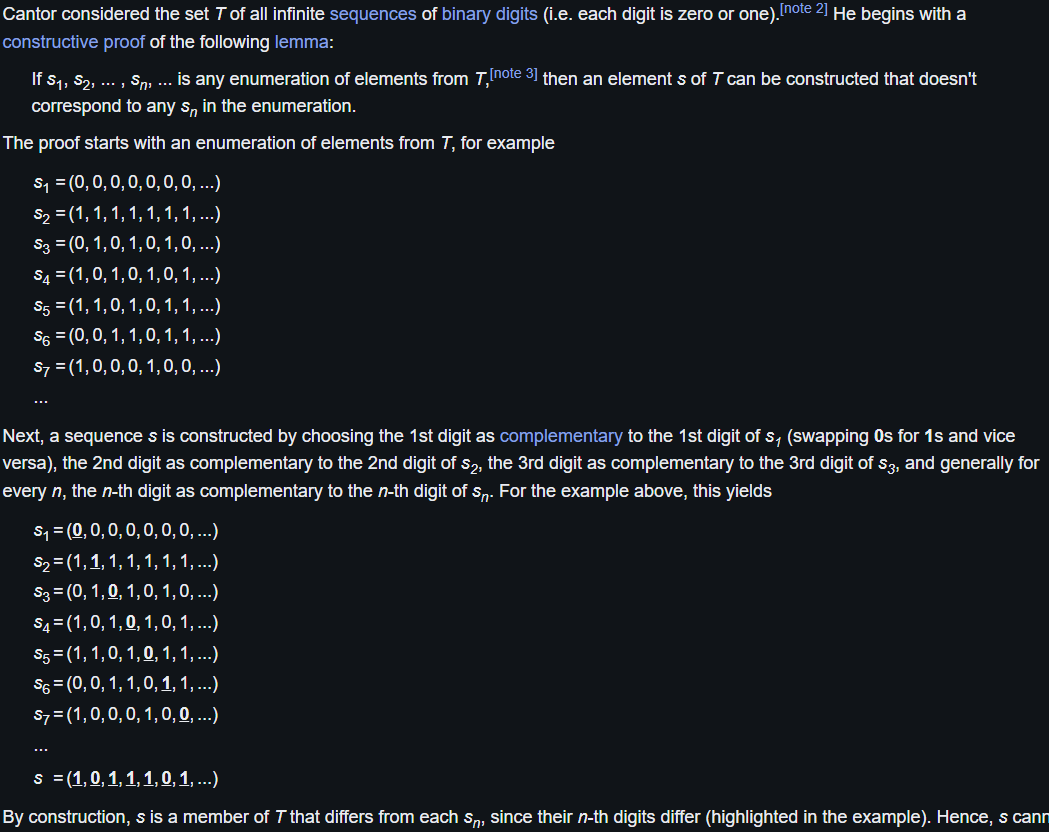 warm shaleBOT
Gol D Roger
 inner sierra
reef gyro
Hi. I've been assigned to find an example of a triary complete code with word le...
inner sierra
reef gyro
Hi. I've been assigned to find an example of a triary complete code with word le...
is it really a, b, c, c, d or just a, b, c, d?
obtuse pebbleBOT
@reef gyro Has your question been resolved?
obtuse pebbleBOT
Channel closed
Closed due to timeout
Use .reopen if this was a mistake.
reef gyro
.reopen
obtuse pebbleBOT
✅ Original question: #help-10 message
reef gyro
inner sierra
is it really a, b, c, c, d or just a, b, c, d?
Like that, ${ a,b,b,c,c,d}$
warm shaleBOT
Gol D Roger
 reef gyro
I forgot a $b$ there
warm shaleBOT
Gol D Roger
 warm shaleBOT
Gol D Roger

 stoic breach
reef gyro
Hi. I've been assigned to find an example of a triary complete code with word le...
stoic breach
reef gyro
Hi. I've been assigned to find an example of a triary complete code with word le...
The word length is a,b,b,c,c,d?
reef gyro
For each word, correct
stoic breach
So isn't you can transfer them into: $3^{-a} + 2 \cdot 3^{-b} + 2 \cdot 3^{-c} + 3^{-d} = 1$?
warm shaleBOT
Mercury.
 reef gyro
How can I proceed to get there?
stoic breach
reef gyro
It should satisfy this
You got this sum here.
So which means you can just expand the sum.
stoic breach
And since we were given: a<b<c<d, then we can see 3^(-a) is the greatest contributor.
stoic breach
reef gyro
But, I can't see how to transfer them
You just substitute a,b,c,d in l_i.
Hope this make sense?
reef gyro
Ok, $3^{-a}$ is the greatest contributor, , but I can't see how to substitute
warm shaleBOT
Gol D Roger
 reef gyro
stoic breach
You mean expanding the sum part?
reef gyro
stoic breach
You mean expanding the sum part?
Yeah, but more specifically, like, giving values to a,b,c and d
Should I just try brute force?
<@&286206848099549185>
 desert light
reef gyro
Hi. I've been assigned to find an example of a triary complete code with word le...
desert light
reef gyro
Hi. I've been assigned to find an example of a triary complete code with word le...
Are you sure the inequalities are strict?
 hardy widget
I'm backing up Mercury that this is impossible. A complete ternary code corresponds to a strictly full ternary tree. If you start with 1 root node and continuously branch it to 3, then the total number of leaves will be 1+2k (where k is the number of internal nodes). But your proposed set of word lengths is exactly 6 words, and 6 is not odd.
@reef gyro
obtuse pebbleBOT
Channel closed
Closed by @reef gyro
Use .reopen if this was a mistake.
obtuse pebbleBOT
Available help channel!
Send your question here to claim the channel.
Remember:
• Ask your math question in a clear, concise manner.
• Show your work, and if possible, explain where you are stuck.
• Do not immediately ping people or roles. After 15 minutes, feel free to ping <@&286206848099549185> once.
• Type the command .close to free the channel when you're done.
• Be polite and have a nice day!
Read #❓how-to-get-help for further information on how to ask a good question, and about conduct in the question channels.
 static beacon
,help
obtuse pebbleBOT
static beacon
,help
warm shaleBOT
A brief description and guide on how to use me was sent to your DMs!
Please use ,list to see a list of all my commands, and ,help cmd to get detailed help on a command!
hollow ocean
do you have a question for the channel?
obtuse pebbleBOT
@static beacon Has your question been resolved?
static beacon
hollow ocean
do you have a question for the channel?
Yess
hollow ocean
please send your question!