#help-10
1 messages · Page 421 of 1
 left mesa
 coarse ibex
that lets you "cancel the powers"
here we "cancelled the base"
i.e. we went from 3^(3x+1) = 3^(2x) to 3x+1 = 2x
left mesa
so it's one to one because? Sorry I'm pretty slow
coarse ibex
I'm saying that we can do the cancelling because f(x) = 3^x is one-to-one
left mesa
Ohhh
wait but why 😭 how do you consider something one-to-one again? Sorry it's just our teacher focused on solving more and she didn't tackle on this one that much
coarse ibex
one-to-one means f(x_1) = f(x_2) implies x_1 = x_2
we use that here with x_1 = 3x+1 and x_2 = 2x
left mesa
ohh
Ohhhhhh Thanks!
I at least understood it now I just hope I remember... Considering how our gen bio that consists of 1000 things to remember I'll probably forget abt this 😭
Anyways thank u so much ((: Have a wonderful day!
.close
 obtuse pebbleBOT
Channel closed
Closed by @left mesa
Use .reopen if this was a mistake.
obtuse pebbleBOT
 Available help channel!
Send your question here to claim the channel.
Remember:
• Ask your math question in a clear, concise manner.
• Show your work, and if possible, explain where you are stuck.
• After 15 minutes, feel free to ping <@&286206848099549185>.
• Type the command .close to free the channel when you're done.
• Be polite and have a nice day!
Read #❓how-to-get-help for further information on how to ask a good question, and about conduct in the question channels.
 thorn marsh
Proof by induction: 2^n>n^2 for all integer n greater than 4
 thorn marsh
This is the inductive step of the proof
I'm having trouble understanding why (n-1)^2 is used. And what exactly are the first and second inequalities here?
 marsh geyser
I think you have a typo
thorn marsh
oh
 ember frost
thorn marsh
Proof by induction: 2^n>n^2 for all integer n greater than 4
ember frost
thorn marsh
Proof by induction: 2^n>n^2 for all integer n greater than 4
2n > n^2 is false
thorn marsh
yeah
sorry i changed it
i just took it from stackexchange
still having trouble with understanding what they did
thorn marsh
Proof by induction: 2^n>n^2 for all integer n greater than 4
 gilded needle
ah got it
thorn marsh
that is the problem statement
gilded needle
i suspect that when putting the proof together, they started with 2n^2 > (n+1)^2 and worked their way backward, and found that it reduced to (n-1)^2 > 2
that's usually what happened when someone pulls a fact out of the air like that
thorn marsh
gilded needle
i suspect that when putting the proof together, they started with 2n^2 > (n+1)^2...
can you explain this
this is what i pieced so far for what they meant for inequality 2
 gilded needle
in the highlighted line, they claimed that 2n^2 > (n+1)^2 for n >= 5
since it's not obvious why that is true, they need to provide a proof
they probably started with 2n^2 > (n+1)^2 and rearranged it to get (n-1)^2 > 2
and said aha, but that is true
then when they wrote the proof, they did it in the reverse order
thorn marsh
i'll probably take a minute to process this and then reply to you
ok now i am confused as to where did 2*n^2 come from because
I am looking at it from this inductive step

and how did he get that whole inequality to equal 2^(n+1)
is he assuming that 2* 2^n> 2*n^2 as 2^n >n^2?
In that case it does make sense
but why is there an equal sign
that makes no sense

oh
nvm
i think i got it now
gilded needle
yea that should be the least controversial part haha
thorn marsh
it's very confusing to wrap my head around this
gilded needle
it's not a very clearly written proof
thorn marsh
gilded needle
i suspect that when putting the proof together, they started with 2n^2 > (n+1)^2...
can you show me how they reduced it to to (n-1)^2>2 or provide some insight
like how did they come up with (n-1)
gilded needle
just reverse these steps:

i.e. start with the last line and do the opposite manipulations
all four lines are equivalent
obtuse pebbleBOT
@thorn marsh Has your question been resolved?
thorn marsh
yes
obtuse pebbleBOT
Channel closed
Closed by @thorn marsh
Use .reopen if this was a mistake.
obtuse pebbleBOT
Available help channel!
Send your question here to claim the channel.
Remember:
• Ask your math question in a clear, concise manner.
• Show your work, and if possible, explain where you are stuck.
• After 15 minutes, feel free to ping <@&286206848099549185>.
• Type the command .close to free the channel when you're done.
• Be polite and have a nice day!
Read #❓how-to-get-help for further information on how to ask a good question, and about conduct in the question channels.
 sinful falcon
Is this correct
 obtuse pebbleBOT
sinful falcon
Is this correct
obtuse pebbleBOT
sinful falcon
Is this correct
 warm shaleBOT
Light
 sinful falcon
$x* -2e^{-2x} + e^{-2x}*1$ isnt that what i did
warm shaleBOT
Light
 sinful falcon
can i remove e^-2x
i dont think i can
so thats just it right
oh ok
,w diff of ln(xe^(-2x)
,w diff of ln(xe^(-2x))
warm shaleBOT


 Requested by light945850
obtuse pebbleBOT
Requested by light945850
obtuse pebbleBOT
Channel closed
Closed by @sinful falcon
Use .reopen if this was a mistake.
sinful falcon
.reopen
obtuse pebbleBOT
✅
obtuse pebbleBOT
Channel closed
Closed by @sinful falcon
Use .reopen if this was a mistake.
obtuse pebbleBOT
Available help channel!
Send your question here to claim the channel.
Remember:
• Ask your math question in a clear, concise manner.
• Show your work, and if possible, explain where you are stuck.
• After 15 minutes, feel free to ping <@&286206848099549185>.
• Type the command .close to free the channel when you're done.
• Be polite and have a nice day!
Read #❓how-to-get-help for further information on how to ask a good question, and about conduct in the question channels.
sinful falcon
 obtuse pebbleBOT
sinful falcon
sinful falcon
obtuse pebbleBOT
sinful falcon
sinful falcon
is derivative of that first part
my last part
is that righ
im nots rue
obut i think im right
 junior granite
sinful falcon
junior granite
sinful falcon
derivative of arscosine is negative of 1/sqrt{1-{thing}^2}
sinful falcon
junior granite
derivative of arscosine is negative of 1/sqrt{1-{thing}^2}
thought it was this
 junior granite
yeah
sinful falcon
hea so i took derivative which is 1/2sqrtx
and then over that
which is sqrt 1- sqrtx^2
obtuse pebbleBOT
Channel closed
Closed by @sinful falcon
Use .reopen if this was a mistake.
obtuse pebbleBOT
✅

 timid silo
sinful falcon
thank
timid silo
sinful falcon
thank
 sinful falcon
find derivative of $e^{sin^-1(z^2)}$
warm shaleBOT
Light
 sinful falcon
am i righ
junior granite
how the heck that extra "e" came to existence?
junior granite
sinful falcon
the way you factored out that "e" is scary tbh'
sinful falcon
junior granite
the way you factored out that "e" is scary tbh'
it would just be 2e right
here
i wil show
 junior granite
huh?
junior granite
$\frac{d(e^{f(x)})}{dx}=f'(x)e^{f(x)}$
warm shaleBOT
 obtuse pebbleBOT
Channel closed
Closed by @sinful falcon
Use .reopen if this was a mistake.
sinful falcon
thank u
obtuse pebbleBOT
Available help channel!
Send your question here to claim the channel.
Remember:
• Ask your math question in a clear, concise manner.
• Show your work, and if possible, explain where you are stuck.
• After 15 minutes, feel free to ping <@&286206848099549185>.
• Type the command .close to free the channel when you're done.
• Be polite and have a nice day!
Read #❓how-to-get-help for further information on how to ask a good question, and about conduct in the question channels.
 quiet plover
I need help figuring out how to solve these

 obtuse pebbleBOT
quiet plover
I need help figuring out how to solve these
quiet plover
obtuse pebbleBOT
quiet plover
I need help figuring out how to solve these
quiet plover
If anyone helps can you @me?
 slow prawn
quiet plover
If anyone helps can you @me?
slow prawn
quiet plover
If anyone helps can you @me?
Give a number or letter you wanna solve first
quiet plover
slow prawn
Give a number or letter you wanna solve first
2
obtuse pebbleBOT
@quiet plover Has your question been resolved?
 eternal moth
Read about parallel line angle theorems, ive attached a page that discusses some which I assume are all that are needed for your questions. https://thirdspacelearning.com/us/math-resources/topic-guides/geometry/corresponding-angles/
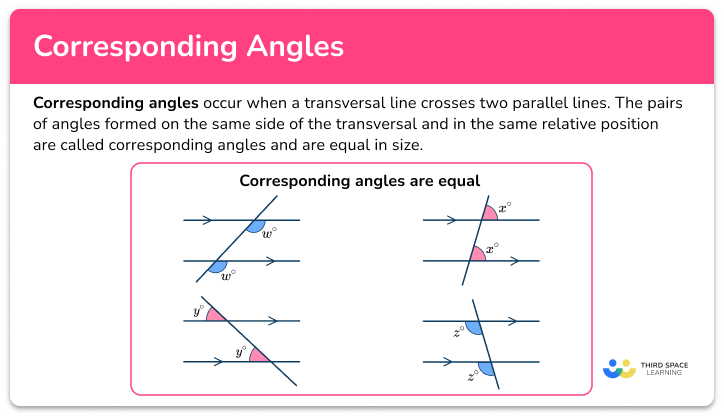
Third Space Learning
Free corresponding angles math topic guide, including step-by-step examples, free practice questions, teaching tips and more!
obtuse pebbleBOT
Channel closed
Closed due to timeout
Use .reopen if this was a mistake.
Available help channel!
Send your question here to claim the channel.
Remember:
• Ask your math question in a clear, concise manner.
• Show your work, and if possible, explain where you are stuck.
• After 15 minutes, feel free to ping <@&286206848099549185>.
• Type the command .close to free the channel when you're done.
• Be polite and have a nice day!
Read #❓how-to-get-help for further information on how to ask a good question, and about conduct in the question channels.
 hidden river
This type of questions, here to proceed i squared both of the sides( sinalpha + sinbeta + singamma )^2 = 0 then i'm stuck, How do i use the x= cosalpha + i sinalpha
 obtuse pebbleBOT
hidden river
This type of questions, here to proceed i squared both of the sides( sinalpha + ...
obtuse pebbleBOT
hidden river
This type of questions, here to proceed i squared both of the sides( sinalpha + ...
 restive acorn
Which part are you workkng on?
restive acorn
Did you try double angle identity?
hidden river
restive acorn
That's the first thing I would try
Yes and then i squared the given equations, but how do i proceed
we do the sin^2 terms and cos^2 terms, but 2(sinalphasinbeta+ ... )
restive acorn
Can you do me a favor and write it expanded from the identity
Don't do any additional algebra just invoke the double angle one
hidden river
restive acorn
Don't do any additional algebra just invoke the double angle one
You mean like
cos^2 alpha - sin^2 alpha + cos^2 beta - sin^2 beta + cos^2gamma - sin^2 gamma?
restive acorn
Yea
hidden river
I'm using laptop is it okay if i just type?
restive acorn
It's fine I'll try to see it in a sec
hidden river
okayy
restive acorn
I'm out rn hard for me to think about it
hidden river
Oh
( sin alpha + sin beta + sin gamma)^2 = 0 (1)
sin^2 alpha + sin^2 beta + sin^2 gamma + 2(sinalphasingamma + sinalphasinbeta + sinbetasingamma) = 0
( cos alpha + cos beta + cos gamma)^2 = 0 - (2)
cos^2 alpha + cos^2 beta + cos^2 gamma + 2(cosalphacosgamma +cosalphacosbeta + cosbetacosgamma) = 0
subtracting 2 from 1
cos^2 alpha - sin^2alpha + cos^2beta - sin^2beta + cos^2 gamma - sin^2gamma +2 ( cosalphacosgamma +cosalphacosbeta + cosbetacosgamma - ( sinalphasingamma + sinalphasinbeta + sinbetasingamma ) = 0
obtuse pebbleBOT
@hidden river Has your question been resolved?
obtuse pebbleBOT
Channel closed
Closed due to timeout
Use .reopen if this was a mistake.
Available help channel!
Send your question here to claim the channel.
Remember:
• Ask your math question in a clear, concise manner.
• Show your work, and if possible, explain where you are stuck.
• After 15 minutes, feel free to ping <@&286206848099549185>.
• Type the command .close to free the channel when you're done.
• Be polite and have a nice day!
Read #❓how-to-get-help for further information on how to ask a good question, and about conduct in the question channels.
 final light
i know the volume is 2970meters cubed, just dont understand the second part
 obtuse pebbleBOT
final light
i know the volume is 2970meters cubed, just dont understand the second part
obtuse pebbleBOT
final light
i know the volume is 2970meters cubed, just dont understand the second part
 candid dawn
demn
final light
.close
obtuse pebbleBOT
Channel closed
Closed by @final light
Use .reopen if this was a mistake.
obtuse pebbleBOT
Available help channel!
Send your question here to claim the channel.
Remember:
• Ask your math question in a clear, concise manner.
• Show your work, and if possible, explain where you are stuck.
• After 15 minutes, feel free to ping <@&286206848099549185>.
• Type the command .close to free the channel when you're done.
• Be polite and have a nice day!
Read #❓how-to-get-help for further information on how to ask a good question, and about conduct in the question channels.
 dark agate
Help
 wary badger
$\log_2(5) - 3\log_2(a) + \frac{7}{3}\log_2(9)$
 frigid burrow
Is this the question?
wary badger
frigid burrow
Is this the question?
it’s supposed to have 5
she stole the question from someone else
frigid burrow
Ohk
frigid burrow
dark agate
my ans
What is your answer?
warm shaleBOT
knief
 dark agate
Log2(-5xa^3x9^(7/3))
wary badger
please don’t use x for multiplication
frigid burrow
Use * or •
frigid burrow
Yeah
dark agate
log2(-10935*a^3)
frigid burrow
No minus
 brazen viper
No
frigid burrow
Log of negative numbers isn't defined
wary badger
$\log(a) - \log(b) = \log(\frac{a}{b})$
warm shaleBOT
knief
 dark agate
ohhhh
frigid burrow
Similarly for addition it's *
wary badger
,w 9^(7/3)
warm shaleBOT

 wary badger
2187?
frigid burrow
,w log_3 2187
wary badger
,w 3^7
warm shaleBOT
 frigid burrow
Nice
wary badger
Nice
wary badger
dark agate
am I right?
no
dark agate
How do I do it??????
frigid burrow
7/3 log_2(9) becomes?
wary badger
dark agate
9^{7/3}
yup
dark agate
ty guyss
wary badger
what’s your final answer
dark agate
168.49*x^3
obtuse pebbleBOT
@dark agate Has your question been resolved?
obtuse pebbleBOT
Channel closed
Closed due to timeout
Use .reopen if this was a mistake.
Available help channel!
Send your question here to claim the channel.
Remember:
• Ask your math question in a clear, concise manner.
• Show your work, and if possible, explain where you are stuck.
• After 15 minutes, feel free to ping <@&286206848099549185>.
• Type the command .close to free the channel when you're done.
• Be polite and have a nice day!
Read #❓how-to-get-help for further information on how to ask a good question, and about conduct in the question channels.
 cunning parrot
e
obtuse pebbleBOT
cunning parrot
e
cunning parrot

Is the theorem able to have wlog because proving for y=2k is the same thing as
proving for x right
 cunning parrot
gotcha
cunning parrot
wary badger
oh you’re asking for confirmation that that’s the reason why
ty
.close
obtuse pebbleBOT
Channel closed
Closed by @cunning parrot
Use .reopen if this was a mistake.
Available help channel!
Send your question here to claim the channel.
Remember:
• Ask your math question in a clear, concise manner.
• Show your work, and if possible, explain where you are stuck.
• After 15 minutes, feel free to ping <@&286206848099549185>.
• Type the command .close to free the channel when you're done.
• Be polite and have a nice day!
Read #❓how-to-get-help for further information on how to ask a good question, and about conduct in the question channels.
 near saddle
 obtuse pebbleBOT
near saddle
near saddle
obtuse pebbleBOT
near saddle
near saddle
ooo
wary badger
similar triangles
wary badger
but d = 2r
near saddle
h = 4r
wary badger
so r = ..
wary badger
put that here
near saddle
or h^3 / 16
warm shaleBOT
knief
 near saddle
that's simpler
warm shaleBOT
smeagol
 warm shaleBOT
smeagol
 near saddle
Yay that's what I was supposed to get :)
ty!
somehow in my previous attempt I got
16/45pi
wary badger
warm shale
**smeagol**
dv/dt and dh/dt*
wary badger
near saddle
ty!
you’re welcome
just make sure to write dv/dt and dh/dt
not just dv and dh
near saddle
gotcha
near saddle
near saddle
somehow in my previous attempt I got
16/45pi
(because I did 2r = h instead of 4r = h)
.close
obtuse pebbleBOT
Channel closed
Closed by @near saddle
Use .reopen if this was a mistake.
Available help channel!
Send your question here to claim the channel.
Remember:
• Ask your math question in a clear, concise manner.
• Show your work, and if possible, explain where you are stuck.
• After 15 minutes, feel free to ping <@&286206848099549185>.
• Type the command .close to free the channel when you're done.
• Be polite and have a nice day!
Read #❓how-to-get-help for further information on how to ask a good question, and about conduct in the question channels.
 south star
 obtuse pebbleBOT
south star
obtuse pebbleBOT
south star
 final steppe
what do you need help with
 final steppe
what have you solved so far
south star
Nothing 🙂
south star
I can't solve this problem so i need help
south star
Yes all the problem
final steppe
ok well
when you divide a fraction by another number
that dividend comes up and gets multipled
so in the case of 544 you can bring it up to multiply with (6/11+2)
from there onwards just use pemdas/bodmas/bidmas whatever it is you use
final steppe
final steppe
that dividend comes up and gets multipled
sorry i mean divisor
final steppe
final steppe
so in the case of 544 you can bring it up to multiply with (6/11+2)
you can convert 2 into 22/11
and then add
then multiply the 544
in the numerator
and then multiply the 10/816 to the -6/11
add (28/11)544 to the product
and then you'll get a new denominator
btw do this with the numerator you already have
and then multiply the new denominator to the numerator you already have
im sure you could also just simplify
south star
Thanks bro 🙏🙏
final steppe
np
south star
.close
obtuse pebbleBOT
Channel closed
Closed by @south star
Use .reopen if this was a mistake.
obtuse pebbleBOT
Available help channel!
Send your question here to claim the channel.
Remember:
• Ask your math question in a clear, concise manner.
• Show your work, and if possible, explain where you are stuck.
• After 15 minutes, feel free to ping <@&286206848099549185>.
• Type the command .close to free the channel when you're done.
• Be polite and have a nice day!
Read #❓how-to-get-help for further information on how to ask a good question, and about conduct in the question channels.
 fierce vale
$A,B,C \subset E \$Prove $A\Delta B=A\Delta C \iff B=C$
obtuse pebbleBOT
fierce vale
$A,B,C \subset E \\$Prove $A\Delta B=A\Delta C \iff B=C$
 simple ermine
what does delta mean here ?
warm shaleBOT
Adam Ch.
 simple ermine
fierce vale
$A,B,C \subset E \\$Prove $A\Delta B=A\Delta C \iff B=C$
simple ermine
fierce vale
$A,B,C \subset E \\$Prove $A\Delta B=A\Delta C \iff B=C$
what does the sign delta mean in the question
scalar product ?
fierce vale
 simple ermine
oh a logic problem
obtuse pebbleBOT
@fierce vale Has your question been resolved?
obtuse pebbleBOT
@fierce vale Has your question been resolved?
obtuse pebbleBOT
@fierce vale Has your question been resolved?
fierce vale
.close
obtuse pebbleBOT
Channel closed
Closed by @fierce vale
Use .reopen if this was a mistake.
obtuse pebbleBOT
Available help channel!
Send your question here to claim the channel.
Remember:
• Ask your math question in a clear, concise manner.
• Show your work, and if possible, explain where you are stuck.
• After 15 minutes, feel free to ping <@&286206848099549185>.
• Type the command .close to free the channel when you're done.
• Be polite and have a nice day!
Read #❓how-to-get-help for further information on how to ask a good question, and about conduct in the question channels.
 arctic sage
My brain is fried, simple thing tho
4 whole numbers must equal 140
- numbers 1-8, one time use
(multiply only)
obtuse pebbleBOT
arctic sage
My brain is fried, simple thing tho
4 whole numbers must equal 140
- numbers ...
 void quartz
hint: 140 = 20 x 7
obtuse pebbleBOT
Channel closed
Closed by @arctic sage
Use .reopen if this was a mistake.
obtuse pebbleBOT
Available help channel!
Send your question here to claim the channel.
Remember:
• Ask your math question in a clear, concise manner.
• Show your work, and if possible, explain where you are stuck.
• After 15 minutes, feel free to ping <@&286206848099549185>.
• Type the command .close to free the channel when you're done.
• Be polite and have a nice day!
Read #❓how-to-get-help for further information on how to ask a good question, and about conduct in the question channels.
 bronze flame
 obtuse pebbleBOT
bronze flame
obtuse pebbleBOT
bronze flame
 obtuse pebbleBOT
@bronze flame Has your question been resolved?
obtuse pebbleBOT
@bronze flame Has your question been resolved?
Channel closed
Closed by @bronze flame
Use .reopen if this was a mistake.
Available help channel!
Send your question here to claim the channel.
Remember:
• Ask your math question in a clear, concise manner.
• Show your work, and if possible, explain where you are stuck.
• After 15 minutes, feel free to ping <@&286206848099549185>.
• Type the command .close to free the channel when you're done.
• Be polite and have a nice day!
Read #❓how-to-get-help for further information on how to ask a good question, and about conduct in the question channels.
 fleet dock
Let f(x)=x^3+x+1. Suppose g is a cubic polynomial such that g(0)=-1, and the roots of g are the squares of the roots of f. Find g(4)
obtuse pebbleBOT
fleet dock
Let f(x)=x^3+x+1. Suppose g is a cubic polynomial such that g(0)=-1, and the roo...
fleet dock
I can't find a good approach to this problem
I think that if I figure out the first step I can do the rest, any ideas?
obtuse pebbleBOT
@fleet dock Has your question been resolved?
fleet dock
<@&286206848099549185>
obtuse pebbleBOT
@fleet dock Has your question been resolved?
obtuse pebbleBOT
@fleet dock Has your question been resolved?
obtuse pebbleBOT
@fleet dock Has your question been resolved?
obtuse pebbleBOT
Channel closed
Closed due to timeout
Use .reopen if this was a mistake.
Available help channel!
Send your question here to claim the channel.
Remember:
• Ask your math question in a clear, concise manner.
• Show your work, and if possible, explain where you are stuck.
• After 15 minutes, feel free to ping <@&286206848099549185>.
• Type the command .close to free the channel when you're done.
• Be polite and have a nice day!
Read #❓how-to-get-help for further information on how to ask a good question, and about conduct in the question channels.
 vital verge
can i have some help with 20b i keep on getting y=7
obtuse pebbleBOT
vital verge
can i have some help with 20b i keep on getting y=7
 obtuse pebbleBOT
Channel closed
Closed by @vital verge
Use .reopen if this was a mistake.
obtuse pebbleBOT
Available help channel!
Send your question here to claim the channel.
Remember:
• Ask your math question in a clear, concise manner.
• Show your work, and if possible, explain where you are stuck.
• After 15 minutes, feel free to ping <@&286206848099549185>.
• Type the command .close to free the channel when you're done.
• Be polite and have a nice day!
Read #❓how-to-get-help for further information on how to ask a good question, and about conduct in the question channels.
 lime venture
How can I get better at 3D trigonometry just the basic stuff with the sine and cosine rules etc.
obtuse pebbleBOT
lime venture
How can I get better at 3D trigonometry just the basic stuff with the sine and c...
lime venture
<@&286206848099549185>
 timid panther
lime venture
How can I get better at 3D trigonometry just the basic stuff with the sine and c...
timid panther
lime venture
How can I get better at 3D trigonometry just the basic stuff with the sine and c...
3d and trigonometry?
Anyway what I can tell you is simple. Noone can make you better at anything, only you can do that. Just keep practicing that's the cure.
lime venture
Yeah I mean where do I practice
timid panther
lime venture
Yeah I mean where do I practice
You must have questions in your books right?
lime venture
I'm relatively good at maths compared to my year group anyway I just feel like I want extra practise
lime venture
timid panther
You must have questions in your books right?
yeah I was thinking something more on the digital side
timid panther
lime venture
I'm relatively good at maths compared to my year group anyway I just feel like I...
You always need practice dude dont think you are good at maths. Maths is never ending.
timid panther
lime venture
yeah I was thinking something more on the digital side
Use books
lime venture
timid panther
You always need practice dude dont think you are good at maths. Maths is never e...
Yeah that's why I'm here
lime venture
timid panther
Use books
Well alright then
 warm dome
lime venture
warm dome
lime venture
Thanks
obtuse pebbleBOT
@lime venture Has your question been resolved?
Channel closed
Closed by @lime venture
Use .reopen if this was a mistake.
obtuse pebbleBOT
Available help channel!
Send your question here to claim the channel.
Remember:
• Ask your math question in a clear, concise manner.
• Show your work, and if possible, explain where you are stuck.
• After 15 minutes, feel free to ping <@&286206848099549185>.
• Type the command .close to free the channel when you're done.
• Be polite and have a nice day!
Read #❓how-to-get-help for further information on how to ask a good question, and about conduct in the question channels.
 wintry lark
 obtuse pebbleBOT
wintry lark
wintry lark
obtuse pebbleBOT
wintry lark
wintry lark
found the domain is [-4,2) union (2,4]
but how would i determine the rnage of it
little confused
timid silo
you can differentiate the function to find the maximum and minimum
that is one way
another way is to do it intuitively
another way is to do it graphically by plotting it and seeing where the value is maximum and minimum
,w plot y = (sqrt{16 - x^2} / (x-2))
warm shaleBOT

 Requested by alison_burg3r5
timid silo
Requested by alison_burg3r5
timid silo
it doesn;'t seem like this function has any specific maximum or minimum
 trim portal
look at the points of discontinuity ig
wintry lark
wait is my domain answer right
wintry lark
wintry lark
found the domain is [-4,2) union (2,4]
this
timid silo
yup yup
wintry lark
alright
trim portal
at -4 the value of the function is 0, and it will decrease after it
because sqrt(16-x^2) is gonna be always positive
wintry lark
yep that's how i got my domain
trim portal
and x - 2 is gonna be negative for x around -4
wintry lark
range looks like il just have to do it intuitively
trim portal
yeah
next point of discontinuity is 2
at that point, the function jumps from -infinity to infinity
and then the last one is 4
where it's 0 again
so it's gonna look approximately like this

very approximately
junior granite
wintry lark
range looks like il just have to do it intuitively
(you could also make a trig sub to figure out the range, imo it'll be a bit easier to transform this function into something that know the range of than analysing the function in its base form)
obtuse pebbleBOT
@wintry lark Has your question been resolved?
Channel closed
Closed by @wintry lark
Use .reopen if this was a mistake.
Available help channel!
Send your question here to claim the channel.
Remember:
• Ask your math question in a clear, concise manner.
• Show your work, and if possible, explain where you are stuck.
• After 15 minutes, feel free to ping <@&286206848099549185>.
• Type the command .close to free the channel when you're done.
• Be polite and have a nice day!
Read #❓how-to-get-help for further information on how to ask a good question, and about conduct in the question channels.
 fierce ice
I'm not sure if this is the right channel to ask in, but I wanted to ask if someone would be willing to explain to me what the XOR operation does and how it's defined inside of Set notation? I'm a little lost
obtuse pebbleBOT
fierce ice
I'm not sure if this is the right channel to ask in, but I wanted to ask if some...
fierce ice
In bitwise arithmetic, I understand what XOR does, but I have no idea if that carries over to the topic of sets.
 last pilot
like if you perform S OR T, it returns all elements in S or in T but not both
warm shaleBOT
ren
 last pilot
XOR returns all elements such that they are in either S or T but not both
obtuse pebbleBOT
Channel closed
Closed by @fierce ice
Use .reopen if this was a mistake.
obtuse pebbleBOT
Available help channel!
Send your question here to claim the channel.
Remember:
• Ask your math question in a clear, concise manner.
• Show your work, and if possible, explain where you are stuck.
• After 15 minutes, feel free to ping <@&286206848099549185>.
• Type the command .close to free the channel when you're done.
• Be polite and have a nice day!
Read #❓how-to-get-help for further information on how to ask a good question, and about conduct in the question channels.
 violet yarrow
i got 14x-1 for 15, which sounds right but this is such a weird question
 obtuse pebbleBOT
violet yarrow
i got 14x-1 for 15, which sounds right but this is such a weird question
violet yarrow
obtuse pebbleBOT
violet yarrow
i got 14x-1 for 15, which sounds right but this is such a weird question
violet yarrow
it's just an irregular one
frigid burrow
And then share each side length?
violet yarrow
i'm going to be honest, i haven't done this in awhile
frigid burrow
Like ABCDE
frigid burrow

violet yarrow
frigid burrow
<:bleakkekw:913344117981999125>
i have no clue 😞
frigid burrow
violet yarrow
i got 14x-1 for 15, which sounds right but this is such a weird question

I am saying something just like this
frigid burrow
frigid burrow
I am saying something just like this
(tu ru ru tu ru ru)
violet yarrow
not that i can remember
 lunar nymph
 frigid burrow
@violet yarrow ?
violet yarrow
frigid burrow
Do you not know how to name polygons?
i do
violet yarrow
lunar nymph
this just made so much more sense 😭
lunar nymph
violet yarrow
this just made so much more sense 😭
glad to hear that
violet yarrow
you would add 5x-3 + 3x, giving you 8x-3,no?
lunar nymph
violet yarrow
you would add 5x-3 + 3x, giving you 8x-3,no?
Yes!
violet yarrow
lunar nymph
Yes!
yay!
violet yarrow
lunar nymph
and now what do you get
8x-3+3x+2x+4x+2
lunar nymph
violet yarrow
8x-3+3x+2x+4x+2
there's one more side left
violet yarrow
for now
violet yarrow
lunar nymph
there's one more side left
it would be another 4x+2
i split it

ignore the 3x, i erased it
lunar nymph
Yes!!
violet yarrow
lunar nymph
Yes!!
so then just add the other 4x+2 and 2x?
lunar nymph
Correct!!
violet yarrow
okay!
lunar nymph
violet yarrow
8x-3+3x+2x+4x+2
oh you also forget the 5x-3 side
violet yarrow
it would 28x-2
violet yarrow
okay! so area is a=w•l
lunar nymph
violet yarrow
okay! so area is a=w•l
yes, this is the equation for rectangle
violet yarrow
for the perimeter what would be the width?
lunar nymph
try spliting the shape to small rectangles first
violet yarrow
so 6x+6x+2x+2x
lunar nymph
violet yarrow
so 6x+6x+2x+2x
i don't understand
For example, you could split it like this
 obtuse pebbleBOT
@violet yarrow Has your question been resolved?
obtuse pebbleBOT
Channel closed
Closed due to timeout
Use .reopen if this was a mistake.
Available help channel!
Send your question here to claim the channel.
Remember:
• Ask your math question in a clear, concise manner.
• Show your work, and if possible, explain where you are stuck.
• After 15 minutes, feel free to ping <@&286206848099549185>.
• Type the command .close to free the channel when you're done.
• Be polite and have a nice day!
Read #❓how-to-get-help for further information on how to ask a good question, and about conduct in the question channels.
 hard imp
anyone got any pointers on how to solve this?
 obtuse pebbleBOT
hard imp
anyone got any pointers on how to solve this?
hard imp
obtuse pebbleBOT
hard imp
anyone got any pointers on how to solve this?
hard imp
i'd start by converting 0,2 and 0,04 to fractions
if not, where should i start?
.close
obtuse pebbleBOT
Channel closed
Closed by @hard imp
Use .reopen if this was a mistake.
obtuse pebbleBOT
Available help channel!
Send your question here to claim the channel.
Remember:
• Ask your math question in a clear, concise manner.
• Show your work, and if possible, explain where you are stuck.
• After 15 minutes, feel free to ping <@&286206848099549185>.
• Type the command .close to free the channel when you're done.
• Be polite and have a nice day!
Read #❓how-to-get-help for further information on how to ask a good question, and about conduct in the question channels.
 left lotus
So I have a type of questions saying
[Translation] find a generic (/general) term of numerical sequence {x_k}, which is defined
x_1 = A
x_(k+1) = B*x_k+C
(A B C depend on the problem but they're integer constants)
And calculate their sum, s_k, of terms from 1, to k.
I don't really know how to go about solving it
I didn't really do well in a school so I'm trying again but it's really hard
obtuse pebbleBOT
left lotus
So I have a type of questions saying
[Translation] find a generic (/general) te...
@left lotus Has your question been resolved?
left lotus
<@&286206848099549185> hii
 left lotus
 fallen elm
done u got help
fallen elm
done u got help
What does that even mean
I didn't specify A B and C but the answer turns out to be a constant?
fallen elm
.reopen
 little jewel
left lotus
So I have a type of questions saying
[Translation] find a generic (/general) te...
little jewel
left lotus
So I have a type of questions saying
[Translation] find a generic (/general) te...
Try summing the equation on both the sides from k=1 to k=n
left lotus
little jewel
Try summing the equation on both the sides from k=1 to k=n
Wait, whats about the first question of finding a generic term?
little jewel
Oh ok I misunderstood and thought that was a translation problem
But yes you'd need that too to solve the s_k
It means we have to find x_k in terms of A,B and C (and k)
left lotus
Oh translation means I translated it from my native language
left lotus
x_1 is A,
x_2 is BA + C
x_3 is B(BA + C) + C
= BBA + BC + C
x_4 is B(BBA + BC + C) + C
= BBBA + BBC + BC + C
So, um let me think
Do we use Σ? Like
k-1
Σ B^n
n=0
Then multiply that by C, and add B^k * A?
Umm but it mismatches if I put k=4
little jewel
left lotus
Do we use Σ? Like
k-1
Σ B^n
n=0
Then multiply that by C, and add B^k * A?
Umm bu...
Yes we use summation
Separate the first term from the rest and then see if you can see any pattern
First term is easy to guess for x_k I think
Do you know sum of a geometric series?
Like C + CB + CB^2 + CB^3 + ... CB^(n-1) = ?
left lotus
little jewel
Like C + CB + CB^2 + CB^3 + ... CB^(n-1) = ?
are you asking if I can write it with sigma?
left lotus
Hmm?
little jewel
Ok do you have any idea of
left lotus
There is a shorter way to write it?
little jewel
What would be the sum of 1 + 3 + 9 + 27 + ... upto 10 terms?
left lotus
little jewel
What would be the sum of 1 + 3 + 9 + 27 + ... upto 10 terms?
I think I got it, let me write it down
little jewel
left lotus
There is a shorter way to write it?
Yes, it solves out to a single short formula
left lotus
little jewel
Yes, it solves out to a single short formula
In base 3, it would be
1, 10, 100, 1000
Then adding them results in
1111
Add one more 0 to the biggest term
10000 then subtract 1
So it's 2222, divide by 2 and it's the answer
It's embarrassing if it's wrong :p
For base b, sum up to k is
(b^(k+1) - 1)/(b-1)
little jewel
Oh thats a rather cute / unique way to do it XD
But yes!
That formula is right
Except
For 1 + b + b^2 + ... b^(k-1) = (b^(k) - 1)/(b-1)
left lotus
Ok!!
little jewel
left lotus
x_1 is A,
x_2 is BA + C
x_3 is B(BA + C) + C
= BBA + BC + C
x_4 is B(BBA + BC + ...
ok now do you have any idea for how you can simplify this?
left lotus
little jewel
ok now do you have any idea for how you can simplify this?
For k = 4, I can separate to BBBA and BBC + BC + C, then bring C to the back (BB + B + 1)*C
Then it's just what I did earlier
The biggest exponent is 2 (= k-2)
(B^(k-2+1)-1)/(B-1)*C
The first part is A*(B^(k-1))
So the sum is (B^(k-1)-1)/(B-1)*C + (B^(k-1))*A ?
little jewel
Yesss
Except I don't get why you wrote it like (B^(k-2+1)-1)/(B-1)*C
There are n = k-1 terms and the formula puts the n as the exponent so u can directly write it like k-1
But maybe you meant it like the highest term exponent (B^2 = 2) + 1 = 3
left lotus
left lotus
For base b, sum up to k is
(b^(k+1) - 1)/(b-1)
I just used this one
Here k is the biggest exponent
little jewel
left lotus
I just used this one
Here k is the biggest exponent
That's wrong tho
little jewel
little jewel
For 1 + b + b^2 + ... b^(k-1) = (b^(k) - 1)/(b-1)
Notice how there's k here
I'm talking about 1 + b + b^2 + .. b^(k-1) aka k terms
Maybe you're talking about k + 1 terms like 1+b+b^2+...+b^k ??
little jewel
left lotus
For k = 4, I can separate to BBBA and BBC + BC + C, then bring C to the back (BB...
Because your final answer here is correct
left lotus
little jewel
Notice how there's k here
Oh sorry I named the variable k too
For k terms highest exponent is k-1 so your k-1 corresponds to my k
little jewel
Oki
left lotus
But I think I got the main idea!
little jewel
Yupp
So you already found the x_k
Now try summing the equation on both the sides for k=1 to k=n and you'll find s_n
left lotus
It's getting late so I'll do it in tomorrow (actually todays) morning
Nice help <3 I appreciate your kindness
But I'm just happy I've made some progress
.close
obtuse pebbleBOT
Channel closed
Closed by @left lotus
Use .reopen if this was a mistake.
obtuse pebbleBOT
Available help channel!
Send your question here to claim the channel.
Remember:
• Ask your math question in a clear, concise manner.
• Show your work, and if possible, explain where you are stuck.
• After 15 minutes, feel free to ping <@&286206848099549185>.
• Type the command .close to free the channel when you're done.
• Be polite and have a nice day!
Read #❓how-to-get-help for further information on how to ask a good question, and about conduct in the question channels.
 bleak chasm
hello
I have a question about vectors.
Assume we have two vectors:
u = (1;1;1)
and vector v
I want v to be parrallel and equal to vector u but not on the same line.
What do I need to have?
obtuse pebbleBOT
bleak chasm
hello
I have a question about vectors.
Assume we have two vectors:
u = (1;1;1)...
simple ermine
bleak chasm
hello
I have a question about vectors.
Assume we have two vectors:
u = (1;1;1)...
wdym not on the same line ?
also for vectors we do not say parallel we say colinear
bleak chasm
it means the points of the vector are not on the same,
like AB and CD are two vectors that have to be colinear and equal
simple ermine
bleak chasm
it means the points of the vector are not on the same,
like AB and CD are two ve...
not on the same what ?
bleak chasm
Suppose we have a line AB,
and we have another line CD
They need to be equal and colinear
simple ermine
bleak chasm
Suppose we have a line AB,
and we have another line CD
They need to be equal an...
well
if you want to find a parallel vector that is not equal
you can multiply the three coordinates by a same number
for ex if you have v(1,1,1) ; u(2,2,2) is colinear but with unequal coordinates
idk if that is what you are asking for
bleak chasm
but their length is not equal
they need to be equal
vector AB has to be equal to vector CD
simple ermine
bleak chasm
but their length is not equal
wdyouwant then
simple ermine
bleak chasm
they need to be equal
vector AB has to be equal to vector CD
then they are the same vector
simple ermine
bleak chasm
I need to find a vector AB = CD
if vector AB = vector CD then the vector is the same
a vector is not static
bleak chasm
so how do I find it?
bleak chasm
I have vector u(1,1,1)
how do I find vector v that's equal and colinear to vector u?
simple ermine
bleak chasm
I have vector u(1,1,1)
how do I find vector v that's equal and colinear to vecto...
it can only be u then lol
bleak chasm
<@&286206848099549185>
simple ermine
bleak chasm
<@&286206848099549185>
listen to me
if the vectors have the same coordinates then they are the same vector
bleak chasm
@hot hazel
 hot hazel
Please do not ping individual users for math help
The response you've already gotten is correct in any case
Formally vectors have no "placement" on the plane; by convention we often position them at the origin
But we could place them anywhere
And they'd be the same vector
bleak chasm
but say I want a vector that is equal in length and colinear to another vector
how would I find it?
hot hazel
It's the same vector
Idk what else to say
Those two conditions imply the vectors are equal
bleak chasm
there's only one vector on a plane that has the same length and is colinear to a vector?
hot hazel
Oh I guess you could have a collinear vector in the opposite direction
Like (1, 1) vs (-1, -1)
obtuse pebbleBOT
Channel closed
Closed by @bleak chasm
Use .reopen if this was a mistake.
obtuse pebbleBOT
Available help channel!
Send your question here to claim the channel.
Remember:
• Ask your math question in a clear, concise manner.
• Show your work, and if possible, explain where you are stuck.
• After 15 minutes, feel free to ping <@&286206848099549185>.
• Type the command .close to free the channel when you're done.
• Be polite and have a nice day!
Read #❓how-to-get-help for further information on how to ask a good question, and about conduct in the question channels.
 opaque mesa
There were 48 students from different classes. 6 of them had 1 friend from their class, 9 of them had 2 friends from their class, 4 of them had 3 friends from their class and the rest didn't have any friends from their classes. How many classes were there?
obtuse pebbleBOT
opaque mesa
There were 48 students from different classes. 6 of them had 1 friend from their...
 haughty stump
opaque mesa
There were 48 students from different classes. 6 of them had 1 friend from their...
haughty stump
opaque mesa
There were 48 students from different classes. 6 of them had 1 friend from their...
is this an actual problem or did you like find this from tiktok and want an answer
 zenith raft

 obtuse swan
haughty stump
is this an actual problem or did you like find this from tiktok and want an answ...
obtuse swan
haughty stump
is this an actual problem or did you like find this from tiktok and want an answ...
I mean it is a problem in combinatorics techincally
Let me solve it
So if 6 of them had a friend form their class that means there was 3 pairs of people from same class
haughty stump
/shrug
 glass dagger
zenith raft
<:AA_Sus:702402047852413009>
glass dagger
zenith raft
<:AA_Sus:702402047852413009>
I agree with this
obtuse swan
The rest i.e. 48-6-9-4=29 were solo
So 29+4+3+1=37 classes
But looks like some tiktok fr
Or instagram reels
Answer is sus
obtuse pebbleBOT
@opaque mesa Has your question been resolved?
obtuse pebbleBOT
Channel closed
Closed due to timeout
Use .reopen if this was a mistake.
Available help channel!
Send your question here to claim the channel.
Remember:
• Ask your math question in a clear, concise manner.
• Show your work, and if possible, explain where you are stuck.
• After 15 minutes, feel free to ping <@&286206848099549185>.
• Type the command .close to free the channel when you're done.
• Be polite and have a nice day!
Read #❓how-to-get-help for further information on how to ask a good question, and about conduct in the question channels.
 fossil raven
Could anyone check if those derivatives are correct please ? 🙏
 obtuse pebbleBOT
fossil raven
Could anyone check if those derivatives are correct please ? 🙏
obtuse pebbleBOT
fossil raven
Could anyone check if those derivatives are correct please ? 🙏
@fossil raven Has your question been resolved?
obtuse pebbleBOT
@fossil raven Has your question been resolved?
obtuse pebbleBOT
Channel closed
Closed due to timeout
Use .reopen if this was a mistake.
obtuse pebbleBOT
Available help channel!
Send your question here to claim the channel.
Remember:
• Ask your math question in a clear, concise manner.
• Show your work, and if possible, explain where you are stuck.
• After 15 minutes, feel free to ping <@&286206848099549185>.
• Type the command .close to free the channel when you're done.
• Be polite and have a nice day!
Read #❓how-to-get-help for further information on how to ask a good question, and about conduct in the question channels.
 flat shell
I was finding the gradient of F to get the normal vector and everything was right except the Z part of the gradient, which apparently is -1. Can someone explain why that is? I checked the answer and apparently we subtract z in the original equation?
 obtuse pebbleBOT
flat shell
I was finding the gradient of F to get the normal vector and everything was righ...
obtuse pebbleBOT
flat shell
I was finding the gradient of F to get the normal vector and everything was righ...
@flat shell Has your question been resolved?
obtuse pebbleBOT
Channel closed
Closed due to timeout
Use .reopen if this was a mistake.
obtuse pebbleBOT
Available help channel!
Send your question here to claim the channel.
Remember:
• Ask your math question in a clear, concise manner.
• Show your work, and if possible, explain where you are stuck.
• After 15 minutes, feel free to ping <@&286206848099549185>.
• Type the command .close to free the channel when you're done.
• Be polite and have a nice day!
Read #❓how-to-get-help for further information on how to ask a good question, and about conduct in the question channels.
 plain tiger
how do you do this one?
 obtuse pebbleBOT
plain tiger
how do you do this one?
obtuse pebbleBOT
plain tiger
how do you do this one?
 tough reef
plain tiger
how do you do this one?
tough reef
plain tiger
how do you do this one?
Do you know the formula for the derivative of the inverse function at point x?
plain tiger
(f-1)'(x) = 1/f'(f-1(x))
 versed pier
plain tiger
yeah i was having some trouble finding the inverse of f
versed pier
plain tiger
yeah i was having some trouble finding the inverse of f
well is there even an inverse?
 dry anchor
I think the inverse of this function is a little annoying though right?
 versed pier
plain tiger
versed pier
plain tiger
you don't even need the inverse
if you have a point (x,y) on the graph f
 ripe jay
dont find the inverse
versed pier
f^-1(y) = ?
plain tiger
oh
obtuse pebbleBOT
@plain tiger Has your question been resolved?
obtuse pebbleBOT
@plain tiger Has your question been resolved?
Channel closed
Closed by @plain tiger
Use .reopen if this was a mistake.
obtuse pebbleBOT
Available help channel!
Send your question here to claim the channel.
Remember:
• Ask your math question in a clear, concise manner.
• Show your work, and if possible, explain where you are stuck.
• After 15 minutes, feel free to ping <@&286206848099549185>.
• Type the command .close to free the channel when you're done.
• Be polite and have a nice day!
Read #❓how-to-get-help for further information on how to ask a good question, and about conduct in the question channels.
 idle patio
I don’t need an answer I just wanna know what type of math is this and does anyone recognize it
 obtuse pebbleBOT
idle patio
I don’t need an answer I just wanna know what type of math is this and does anyo...
obtuse pebbleBOT
idle patio
I don’t need an answer I just wanna know what type of math is this and does anyo...
 empty musk
idle patio
I don’t need an answer I just wanna know what type of math is this and does anyo...
empty musk
idle patio
I don’t need an answer I just wanna know what type of math is this and does anyo...
It's just the graph properties of x^n and -x^n
idle patio
How does it work?
empty musk
idle patio
How does it work?
So you know if you square a number it's always positive, yes?
idle patio
Yea
empty musk
That works for every even power
idle patio
And odd is negative?
empty musk
thats why it says that for x^n (even) the graph is only above Ox (the result is always positive)
empty musk
idle patio
And odd is negative?
Odd powers dont change the sign
- * - = +
and if you multiply it again with a minus you get a minus back
It's just a game of signs
obtuse pebbleBOT
Channel closed
Closed by @idle patio
Use .reopen if this was a mistake.
obtuse pebbleBOT
Available help channel!
Send your question here to claim the channel.
Remember:
• Ask your math question in a clear, concise manner.
• Show your work, and if possible, explain where you are stuck.
• After 15 minutes, feel free to ping <@&286206848099549185>.
• Type the command .close to free the channel when you're done.
• Be polite and have a nice day!
Read #❓how-to-get-help for further information on how to ask a good question, and about conduct in the question channels.
 bitter terrace
Why is 17 false?
 obtuse pebbleBOT
bitter terrace
Why is 17 false?
bitter terrace
obtuse pebbleBOT
bitter terrace
Why is 17 false?
bitter terrace
it makes intuitive sense
because if they have the same vector field
then at each point on that vector field the derivates must equal each other
meaning that the two systems would need to be equal
and 18 would be true since it does take into account the magnitude?
obtuse pebbleBOT
@bitter terrace Has your question been resolved?
obtuse pebbleBOT
@bitter terrace Has your question been resolved?
obtuse pebbleBOT
Channel closed
Closed due to timeout
Use .reopen if this was a mistake.
Available help channel!
Send your question here to claim the channel.
Remember:
• Ask your math question in a clear, concise manner.
• Show your work, and if possible, explain where you are stuck.
• After 15 minutes, feel free to ping <@&286206848099549185>.
• Type the command .close to free the channel when you're done.
• Be polite and have a nice day!
Read #❓how-to-get-help for further information on how to ask a good question, and about conduct in the question channels.
 eternal monolith
quick question on rationalizing denominators
obtuse pebbleBOT
eternal monolith
quick question on rationalizing denominators
eternal monolith
lets say for example i have a cube root in the denominator, could i multiply it by that expression squared to rationalize the denominator
glass dagger
Sounds like it could work. Have you tried it?
eternal monolith
not yet
glass dagger
Maybe you could try it for yourself :)
eternal monolith
 glass dagger
,rotate
eternal monolith
Does that seem right?
warm shaleBOT
 glass dagger
I was gonna show that they're not equal by plugging in t=0 but they have the same value at zero 😂
eternal monolith
 glass dagger
,rotate
warm shaleBOT
 glass dagger
t=7 gives 2/6 from the first expression
t=7 gives 4/6 from the second expression
so something's wrong
eternal monolith
How to I rationalize the cube roots?
glass dagger
Your issue is that a cube root would need to be multiplied by itself three times to give back what's inside
so cbrt(t+1) * cbrt(t+1) is not sufficient to give t+1
eternal monolith
i understand but how do i multiply a cube root by itself 3 times
glass dagger
eternal monolith
you could do what you did here but do it twice
eternal monolith
why twice?
glass dagger
at first there's one lonely little root
then you give the root a friend
then you give it another friend
eternal monolith
so if it was an expression raised to 1/4 and i wanted to rationalize the denominator i would multiply it by itself 3 times?
glass dagger
sounds like it could work
There's also a shorthand for multiplying it three times
you can multiply by the third power of whatever you want to multiply three times
obtuse pebbleBOT
@eternal monolith Has your question been resolved?
Channel closed
Closed by @eternal monolith
Use .reopen if this was a mistake.
Available help channel!
Send your question here to claim the channel.
Remember:
• Ask your math question in a clear, concise manner.
• Show your work, and if possible, explain where you are stuck.
• After 15 minutes, feel free to ping <@&286206848099549185>.
• Type the command .close to free the channel when you're done.
• Be polite and have a nice day!
Read #❓how-to-get-help for further information on how to ask a good question, and about conduct in the question channels.
 bold junco
hi
obtuse pebbleBOT
bold junco
hi
 latent walrus
allo
 latent walrus
are t and n both variables?
bold junco
yes
latent walrus
alrighty, what have you tried
bold junco
i tried the quotient rule
latent walrus
you can do that though i dont think its the most efficient
bold junco
and i also tried splitting the nominator and demominator then using product rule on the bottom
bold junco
latent walrus
you can do that though i dont think its the most efficient
whats the most effecient way?
bold junco
how can you use them both?
latent walrus
well, youre first using the chain rule
but youll have a (t^4 * n)' which needs the product rule
bold junco
shouldnt you distribute the power to whats inside the brackets then use power rule for each one?
latent walrus
even if you distribute the exponent it still needs the product rule
t^(-12) * n^(-3)
bold junco
every single time i have a variable times a variable i MUST use product rule?
latent walrus
yeah, essentially
bold junco
t^(-12) * n^(-3) so i just use product rule on this and thats it?
latent walrus
yup
bold junco
in that case chain rule wasnt necessary right?
latent walrus
youre still technically going to be using it
since we're diff with respect to x
so eg n^(-3) goes to -3n^(-4) dn/dx
chain rule
bold junco
these technichalities confuse me
i just use product rule right?
whatever technicly comes let it come
latent walrus
latent walrus
so eg n^(-3) goes to -3n^(-4) dn/dx
we usually call this implicit differentiation, but it is just the chain rule
bold junco
latent walrus
we usually call this implicit differentiation, but it is just the chain rule
how is this implicit when implicit is when we differentiate with respect to a variable thats inside the finction and we just add a derivative multiplier of it next to its normal version
latent walrus
latent walrus
so eg n^(-3) goes to -3n^(-4) dn/dx
this is implicit differentiation, and implicit differentiation is just the chain rule
eg if i have y^2, my outer function is u^2, my inner is v=y
so i do v' * u' which is dy/dx * 2u = dy/dx * 2y
its the chain rule, youre just not thinking of it as doing the chain rule
bold junco
alright
well like i said lets keep it uncomplicated
i basicly just

remove the division by making the power 3 a negative
then distributing it to remove the brackets
then use the product rule
all done?
latent walrus
yeah, its a valid approach
bold junco
if i write that in the final exam it will be correct?
obtuse pebbleBOT
Channel closed
Closed by @bold junco
Use .reopen if this was a mistake.
Available help channel!
Send your question here to claim the channel.
Remember:
• Ask your math question in a clear, concise manner.
• Show your work, and if possible, explain where you are stuck.
• After 15 minutes, feel free to ping <@&286206848099549185>.
• Type the command .close to free the channel when you're done.
• Be polite and have a nice day!
Read #❓how-to-get-help for further information on how to ask a good question, and about conduct in the question channels.
timid silo
Given the equation of the line 𝑥+𝑦+8=0. Determine the equation of the line equivalent to this
in a coordinate system with the origin at (3,4).
obtuse pebbleBOT
timid silo
Given the equation of the line 𝑥+𝑦+8=0. Determine the equation of the line equ...
timid silo
what is about to do with it, what kind of formula does exist to it
what does it means
 obtuse pebbleBOT
@timid silo Has your question been resolved?
obtuse pebbleBOT
@timid silo Has your question been resolved?
obtuse pebbleBOT
Channel closed
Closed due to timeout
Use .reopen if this was a mistake.
Available help channel!
Send your question here to claim the channel.
Remember:
• Ask your math question in a clear, concise manner.
• Show your work, and if possible, explain where you are stuck.
• After 15 minutes, feel free to ping <@&286206848099549185>.
• Type the command .close to free the channel when you're done.
• Be polite and have a nice day!
Read #❓how-to-get-help for further information on how to ask a good question, and about conduct in the question channels.
 final ledge
I need help making this function so that it outputs the exact same value but so that h is defined as any integer >=1,the only issue is h=1 as it creates a singularity, I would preferably like it to be a "discrete" function per se ie,. it doesnt have any domain restrictions and doesnt have any other external definitions
 obtuse pebbleBOT
final ledge
I need help making this function so that it outputs the exact same value but so ...
obtuse pebbleBOT
obtuse pebbleBOT
final ledge
I need help making this function so that it outputs the exact same value but so ...
obtuse pebbleBOT
@final ledge Has your question been resolved?
obtuse pebbleBOT
@final ledge Has your question been resolved?
obtuse pebbleBOT
@final ledge Has your question been resolved?
final ledge
ion think its gonna get resolved
 odd sage
final ledge
ion think its gonna get resolved
odd sage
final ledge
ion think its gonna get resolved
can you not just make it piecewise
final ledge
odd sage
can you not just make it piecewise
no, not for this certain problem as this was originally intended to be apart of a much larger function
 drifting wraith
i don't understand what you expect instead
final ledge
a way to rewrite or a different form of the function that still has the same output values at each integer input >=1 that doesnt have a singularity at h=1
drifting wraith
but what should it be instead at h=1
final ledge
if it would be helpful i can provide a table of values if reconstructing a whole new function would work
final ledge
drifting wraith
but what should it be instead at h=1
any integer >=1 works
drifting wraith
what does that mean, you want a horizontal line?
final ledge
no, I want when you plug in 1 for h into the function to not get an undefined term, however dividing by 0 gives that
odd sage
make it lim g(x)?
final ledge
i had already considered a limit but as the function only takes integer inputs, unless this would work
ill provide a table of outputs to the function in case that might be helpful to construct a new one
final ledge
odd sage
wait why wouldnt a limit work
im not sure how a limit could be applied to this but if it can im well open to this
odd sage
just do like lim g(x) as h-> c and replace all the hs with c in the equation
final ledge
if this were applied to a sum for example, this would still give discrete integer values
 final ledge
I also need to prevent it from going to infinity at h=1
final ledge
?
drifting wraith
i meant this
 drifting wraith
no like this
 final ledge
still giving non integer outputs, but its closer than the latter
final ledge
what do you mean mod inside?
final ledge
well dang
thats alot messier of a function than i originally intended but it does what i need it to
i guess then
is there any way to simplify it?

if not thats also fine, just wondering
im not familar enough with the modulo function to know if its possible
drifting wraith
@final ledge
 obtuse pebbleBOT
Channel closed
Closed by @final ledge
Use .reopen if this was a mistake.
obtuse pebbleBOT
Available help channel!
Send your question here to claim the channel.
Remember:
• Ask your math question in a clear, concise manner.
• Show your work, and if possible, explain where you are stuck.
• After 15 minutes, feel free to ping <@&286206848099549185>.
• Type the command .close to free the channel when you're done.
• Be polite and have a nice day!
Read #❓how-to-get-help for further information on how to ask a good question, and about conduct in the question channels.
timid silo
is this correct?
10^2^2^2
times
10^2^2^2
equals
10^4^4^4
obtuse pebbleBOT
timid silo
is this correct?
10^2^2^2
times
10^2^2^2
equals
10^4^4^4
 fathom light
timid silo
how do i do it then
fathom light
timid silo
how do i do it then
Simplify
10^2^2^2 as 10^x then multiply 10^x with 10^x or square them
Same thing
timid silo
cant
 timid silo
i cant do that
timid silo
i need something that works for any amount of exponents
timid silo
so like 10^10^10 times 10^25
timid silo
fathom light
So it's better you paste your original question
my original question is a little too much-
but i guess
my question, how to represent a number?
timid silo
timid silo
my question, how to represent a number?
where you may represent ludicrously large numbers
obtuse pebbleBOT
@timid silo Has your question been resolved?
timid silo
.close
obtuse pebbleBOT
Channel closed
Closed by @lime grove
Use .reopen if this was a mistake.
Available help channel!
Send your question here to claim the channel.
Remember:
• Ask your math question in a clear, concise manner.
• Show your work, and if possible, explain where you are stuck.
• After 15 minutes, feel free to ping <@&286206848099549185>.
• Type the command .close to free the channel when you're done.
• Be polite and have a nice day!
Read #❓how-to-get-help for further information on how to ask a good question, and about conduct in the question channels.
 tardy kestrel
Not sure how to answer this using cosine rule. Do I have to rearrange?
 obtuse pebbleBOT
tardy kestrel
Not sure how to answer this using cosine rule. Do I have to rearrange?
obtuse pebbleBOT
tardy kestrel
Not sure how to answer this using cosine rule. Do I have to rearrange?
 graceful rapids
cosine rule solves for the side opposite angle
so in this case you have a, c, y and are looking for b

= yes rearrange
 formal island
tardy kestrel
Not sure how to answer this using cosine rule. Do I have to rearrange?
formal island
tardy kestrel
Not sure how to answer this using cosine rule. Do I have to rearrange?
you can calculate all through sine rule which for me is easier, but whatevs > takes 1 more step
tardy kestrel
ok i did:
let unknown side = x
19^2 = 12^2 + x^2 - 2 * 12 * x * cos70
and struggling to rearrange for x
tardy kestrel
formal island
you can calculate all through sine rule which for me is easier, but whatevs > ta...
do you mind showing me how you would do it using sine rule?
just so i have an alternate way to view the problem
formal island
shakes sine rule* $\frac{a}{sin(\alpha)}=\frac{b}{sin(\beta)}=\frac{c}{sin(\gamma)}$
 safe haven
tardy kestrel
ok i did:
let unknown side = x
19^2 = 12^2 + x^2 - 2 * 12 * x * cos70
and st...
safe haven
tardy kestrel
ok i did:
let unknown side = x
19^2 = 12^2 + x^2 - 2 * 12 * x * cos70
and st...
whats the problem with that
formal island
just simply look for the angle opposing 12cm, and then find the other angle, and do another sine rule
warm shaleBOT
zzz0nnn
 safe haven
looks to me like a quadratic
formal island
safe haven
looks to me like a quadratic
a little bit cursed of a quadratic, but yeah
 safe haven
uh huh
graceful rapids
tardy kestrel
ok i did:
let unknown side = x
19^2 = 12^2 + x^2 - 2 * 12 * x * cos70
and st...
yeah this is good
quadratic formula is the way to go
tardy kestrel
redid equation using sine rule, found it longer but easier then struggling to rearrange cosine rule
obtuse pebbleBOT
Channel closed
Closed by @tardy kestrel
Use .reopen if this was a mistake.
obtuse pebbleBOT
Available help channel!
Send your question here to claim the channel.
Remember:
• Ask your math question in a clear, concise manner.
• Show your work, and if possible, explain where you are stuck.
• After 15 minutes, feel free to ping <@&286206848099549185>.
• Type the command .close to free the channel when you're done.
• Be polite and have a nice day!
Read #❓how-to-get-help for further information on how to ask a good question, and about conduct in the question channels.
timid silo
So.. Another off topic no math subject. I don't know what the hell am I doing in research..
obtuse pebbleBOT
timid silo
So.. Another off topic no math subject. I don't know what the hell am I doing in...
timid panther
What?
 brazen gorge
timid silo
So.. Another off topic no math subject. I don't know what the hell am I doing in...
brazen gorge
timid silo
So.. Another off topic no math subject. I don't know what the hell am I doing in...
just ask
timid silo
It turns out they didn't do anything yet
obtuse pebbleBOT
@timid silo Has your question been resolved?
timid silo
.close
obtuse pebbleBOT
Channel closed
Closed by @solemn wadi
Use .reopen if this was a mistake.
Available help channel!
Send your question here to claim the channel.
Remember:
• Ask your math question in a clear, concise manner.
• Show your work, and if possible, explain where you are stuck.
• After 15 minutes, feel free to ping <@&286206848099549185>.
• Type the command .close to free the channel when you're done.
• Be polite and have a nice day!
Read #❓how-to-get-help for further information on how to ask a good question, and about conduct in the question channels.
 floral bramble
how to get access to topology channel?
obtuse pebbleBOT
floral bramble
how to get access to topology channel?
floral bramble
#point-set-topology to be exact
 kind hawk
floral bramble
kind hawk
floral bramble
thnx buddy
obtuse pebbleBOT
@floral bramble Has your question been resolved?
Channel closed
Closed by @floral bramble
Use .reopen if this was a mistake.
Available help channel!
Send your question here to claim the channel.
Remember:
• Ask your math question in a clear, concise manner.
• Show your work, and if possible, explain where you are stuck.
• After 15 minutes, feel free to ping <@&286206848099549185>.
• Type the command .close to free the channel when you're done.
• Be polite and have a nice day!
Read #❓how-to-get-help for further information on how to ask a good question, and about conduct in the question channels.
timid silo
what have u done alrdy ?
 heady turtle
sta1 as I said
timid silo
ye but idk what stat1 mean
heady turtle
basically no clue
timid silo
ok
frigid burrow
!status
obtuse pebbleBOT
What step are you on?
1. I don't know where to begin.
2. I have begun but got stuck midway.
3. I got an answer but I was told that it's wrong.
4. I got an answer and would like my work checked.
5. I have a question about someone else's work/solution.
6. I have completed the problem and don't need help anymore. Thank you.
7. None of the above
this 1 i think
heady turtle
doesn't matter
timid silo
if u are like 4 grade above me, i dont think i can solve so we will both loose time on it
even just 1 grade above
obtuse pebbleBOT
@heady turtle Has your question been resolved?
timid silo
are u allowed to do the limit in the integral, and after, calculate the integral ?
heady turtle
wait im gonna delete and ask another q cuz I feel that no one can help this q for now 😂
@timid silo ty maybe I'll ask later
obtuse pebbleBOT
Channel closed
Channel closed due to the original message being deleted.
If you did not intend to do this, please open a new help channel,
as this action is irreversible, and this channel may abruptly lock.
timid silo
wait im trying rn
obtuse pebbleBOT
Available help channel!
Send your question here to claim the channel.
Remember:
• Ask your math question in a clear, concise manner.
• Show your work, and if possible, explain where you are stuck.
• After 15 minutes, feel free to ping <@&286206848099549185>.
• Type the command .close to free the channel when you're done.
• Be polite and have a nice day!
Read #❓how-to-get-help for further information on how to ask a good question, and about conduct in the question channels.
 lapis spire
Hi! I need a little help studying for an exam, when dealing with transformations like stretches, and you want to find the mew coordinates of a specific point, what would you do?
obtuse pebbleBOT
lapis spire
Hi! I need a little help studying for an exam, when dealing with transformations...
lapis spire
Would you like sub in the point in x and multiply for the streches and add for translations ect?
 crimson pike
Simply yes
but mostly people mess up in rotations and reflections
obtuse pebbleBOT
@lapis spire Has your question been resolved?
obtuse pebbleBOT
Channel closed
Closed due to timeout
Use .reopen if this was a mistake.
Available help channel!
Send your question here to claim the channel.
Remember:
• Ask your math question in a clear, concise manner.
• Show your work, and if possible, explain where you are stuck.
• After 15 minutes, feel free to ping <@&286206848099549185>.
• Type the command .close to free the channel when you're done.
• Be polite and have a nice day!
Read #❓how-to-get-help for further information on how to ask a good question, and about conduct in the question channels.
 raven kettle
 obtuse pebbleBOT
raven kettle
raven kettle
obtuse pebbleBOT
raven kettle
raven kettle
can anyone help me
 sonic rover
raven kettle
can anyone help me
sonic rover
raven kettle
can anyone help me
You want to get the equation in the form ax^2+bx+c=0, with no fractions
sonic rover
Ok so following that, how can you get rid of the /5 and /4
sonic rover
You don't necessarily need to do that but I guess you could
sonic rover
Nope you're good
sonic rover
By the other denominator
raven kettle
i divide
then miltiply
thx
holdup let me check if ingot it righ
how do i get the bx?
sonic rover
bx is whatever the 5x turns into after undoing the fractions
 hidden apex
just times everything by 20
sonic rover
Yea
raven kettle
.close
obtuse pebbleBOT
Channel closed
Closed by @raven kettle
Use .reopen if this was a mistake.
obtuse pebbleBOT
Available help channel!
Send your question here to claim the channel.
Remember:
• Ask your math question in a clear, concise manner.
• Show your work, and if possible, explain where you are stuck.
• After 15 minutes, feel free to ping <@&286206848099549185>.
• Type the command .close to free the channel when you're done.
• Be polite and have a nice day!
Read #❓how-to-get-help for further information on how to ask a good question, and about conduct in the question channels.