#help-10
1 messages · Page 124 of 1
 distant fulcrum
 quartz mortar
what do I do with the mass and distance?
distant fulcrum
try and fill out the suvat first, s=11.4, what wound u be?
quartz mortar
am I trying to find my height first?
distant fulcrum
you want to find out what end velocity is, since suvat has v, which is end veocity, if you can figure out any 3 of s,u,a or t then you can work out v using a suvat equation, without worrying about the mass and forces
its an easier approach
quartz mortar
oh ok
distant fulcrum
we know what s is as discussed earlier, think about what u, a or t would be with the information you are given
do you know the difference between dropped and thrown?
quartz mortar
Yeah. Drop is how far up you drop it from and thrown is how far you threw the coin
Drop= hieght
thrown= distance
distant fulcrum
i see, when you drop something do you give it any additional force
quartz mortar
no
distant fulcrum
so what would u be?
quartz mortar
0?
quartz mortar
I think its 0 as well
quartz mortar
because it hit the ground to hard?
distant fulcrum
i think i worded my question wrong, if this is the coin falling what are the forces on it, disregarding frictional forces?
 quartz mortar
The forces of gravity
distant fulcrum
ok what is the acceleration on it then
have you studied acceleration due to gravity yet?
quartz mortar
I have but it's been awhile. I tend to forget things
quartz mortar
No
distant fulcrum
9.8m/s^2?
quartz mortar
I don't remember
distant fulcrum
9.8 or 9.81 is acceleration due to gravity
any object in free fall
falling from a certain height
will have acceleration of 9.81
disregarding frictional forces
quartz mortar
oh ok. I only knew gravity equals 10 m/s ^2
distant fulcrum
quartz mortar
oh ok. I only knew gravity equals 10 m/s ^2
ahhhh
i see
yes
thats what i mean
10 also works
quartz mortar
ohhh ok
distant fulcrum
9.8 is more precise
but you learnt it as 10 thats fine
so now we know
s
u
and a
and we want to work out v
can you find a suvat equation which might help us?
quartz mortar
I think the second one
 quartz mortar
thank you so much. It's been bothering me all day 🥹
distant fulcrum
not a problem
if you are really interested
there is an another approach
think about how much gravitational energy at the start of its drop
and how this will change at the end of its drop
and you can form 2 equations and work out v from there
but only do it if you wish to and are interested to do so lol
quartz mortar
Is it the longer way or is it the same amount of work?
distant fulcrum
i think it maybe quicker depending on how well you understand it
quartz mortar
I want to try it
distant fulcrum
do you know how you work out gravitational potential energy?
quartz mortar
Yes
distant fulcrum
what is it?
quartz mortar
Gravitational potential energy is conserving energy
distant fulcrum
what about an equation for it?
quartz mortar
GPE equals mass times gravity times height
distant fulcrum
yup
so you know mass gravity and height
so you can work out gpe
what happens to gpe as the coin drops and compare it with kinetic energy?
quartz mortar
It will turn out to be Potential energy?
distant fulcrum
yup so by the end of the fall all the gpe = kinetic energy
quartz mortar
ohh ok
distant fulcrum
so you can equate mgh=1/2mv^2
and work out v from there
epic physics moment -> both ways you get the same answer!!!
quartz mortar
Once I calculate this hopefully I get the answer
I'll tell you my answer
I got the same answer. I think I put it in wrong
 obtuse pebbleBOT
@timid silo Has your question been resolved?
distant fulcrum
quartz mortar
I got the same answer. I think I put it in wrong
did you not get 15.1?
quartz mortar
no but is velocity supposed to be 0 right?
distant fulcrum
quartz mortar
no but is velocity supposed to be 0 right?
are you using suvat or mgh = 1/2mv^2
your initial velocity is 0, so u is 0
quartz mortar
what I did when I used mgh=1/2mv^2 was
distant fulcrum
v is final velocity which you want to work out
quartz mortar
0.42kg * 10 * 11.4 = 1/2 * 0.42 kg * 0^2 from mgh=1/2mv^2
distant fulcrum
thats incorrect because v -> final velocity which you are trying to work out, u = 0 , which is the starting velocity
so you dont sub in v=0, but instead work out what v would equal
you should be getting 0.42* 10 * 11.4 = 1/2 * 0.42 * v^2 and rearrange to find v^2 then v
quartz mortar
So I dont put a number there and just leave it as v^2?
distant fulcrum
yes and rearrange the equation to find v^2
quartz mortar
do I have to get v^2 by itself?
distant fulcrum
yes
quartz mortar
ok that makes sense
distant fulcrum
and then square root to get v
quartz mortar
ill try it again
distant fulcrum
yup
obtuse pebbleBOT
Channel closed
Closed due to timeout
Use .reopen if this was a mistake.
quartz mortar
.reopen
obtuse pebbleBOT
 Available help channel!
Send your question here to claim the channel.
Remember:
• Ask your math question in a clear, concise manner.
• Show your work, and if possible, explain where you are stuck.
• After 15 minutes, feel free to ping <@&286206848099549185>.
• Type the command .close to free the channel when you're done.
• Be polite and have a nice day!
Read #❓how-to-get-help for further information on how to ask a good question, and about conduct in the question channels.
quartz mortar
Can I still get the answer even if I multiply 1/2 times 0.42 and subtract it to put it on the other side of the equation to solve the rest and get the final answer?
obtuse pebbleBOT
quartz mortar
Can I still get the answer even if I multiply 1/2 times 0.42 and subtract it to ...
distant fulcrum
quartz mortar
Can I still get the answer even if I multiply 1/2 times 0.42 and subtract it to ...
Yes
You wouldnt subtract however
You will have to divide on the other side
Since you are multiplying on the right hand side
distant fulcrum
All good
obtuse pebbleBOT
@quartz mortar Has your question been resolved?
obtuse pebbleBOT
Channel closed
Closed due to timeout
Use .reopen if this was a mistake.
Available help channel!
Send your question here to claim the channel.
Remember:
• Ask your math question in a clear, concise manner.
• Show your work, and if possible, explain where you are stuck.
• After 15 minutes, feel free to ping <@&286206848099549185>.
• Type the command .close to free the channel when you're done.
• Be polite and have a nice day!
Read #❓how-to-get-help for further information on how to ask a good question, and about conduct in the question channels.
 timid silo
I am creating a TCG that contains card rarities. Each rarity has a point value that can be applied to a point total of 100. There has to be 30 cards in a deck, no more, no less. I am trying to figure out all possible deck combinations based off of the given point values bellow. Any links that I could use would be amazing. All help is appreciated I have got everything figured out but this, thanks!
Here are the point values:
1 Point: Bronze
2 Points: Silver
3 Points: Gold
4 Points: Emerald
5 Points: Sapphire
6 Points: Ruby
7 Points: Amethyst
8 Points: Diamond
9 Points: Champions
obtuse pebbleBOT
timid silo
I am creating a TCG that contains card rarities. Each rarity has a point value t...
 viral blade
timid silo
I am creating a TCG that contains card rarities. Each rarity has a point value t...
viral blade
timid silo
I am creating a TCG that contains card rarities. Each rarity has a point value t...
You're looking for the number of ways to choose 30 cards such that the rarity points add up to at most 100?
timid silo
Yep exactly
viral blade
do the rarities correspond to specific cards?
or it's just the number of ways to choose 30 rarities
so like do you have a specific number of bronze cards to choose from
and then a different specific number of silver cards
etc
timid silo
each card rarity has a point value, there can be any combination of these cards as long as the total points is <=100 and there are 30 cards.
for example 30 silver cards = 60 points
or 30 gold cards = 90 points
viral blade
so "20 gold cards, 10 emerald cards" would be an entire unique solution?
as in, that's what you want to count?
timid silo
yep exactly
viral blade
looks like a dynamic programming problem
timid silo
right? Its such a dynamic problem for a tcg
viral blade
for every combination (n,c,k) with 1 <= n <= 9, 1 <= c <= 30, and 1 <= k <= 100
you want to calculate the number of ways (at most) k points can be used, with c cards, and no card having rarity higher than n
if you want to only count combos with exactly 100 points get rid of the at most
viral blade
viral blade
for every combination (n,c,k) with 1 <= n <= 9, 1 <= c <= 30, and 1 <= k <= 100
there are 27000 possible combos for this, pretty easy for a computer to handle
for each combo the number of possible ways needs to be computed based on the lower values
 nocturne minnow
viral blade
you want to calculate the number of ways (at most) k points can be used, with c ...
nocturne minnow
viral blade
you want to calculate the number of ways (at most) k points can be used, with c ...
Shouldn't c = 30? Because of the OP's statement of
There has to be 30 cards in a deck, no more, no less
timid silo
Dang that many combos? Thats crazy!
viral blade
nocturne minnow
Shouldn't c = 30? Because of the OP's statement of
> There has to be 30 cards in...
no
it's a dynamic programming solution
timid silo
What would be a good computer source to use for this?
viral blade
so i'm assuming we've already determined how many cards of rarities higher than n we have
viral blade
timid silo
Dang that many combos? Thats crazy!
27000 is not the answer, it's just the number of memory cells you'd need to use to solve the problem
you'd do well to look up some simpler dynamic programming problems if you haven't heard of them before
determining shortest path in a graph is a classic one
the idea is to build up a tablebase of how many possible combos there are for computationally simpler cases
then build the more complicated cases using the simpler cases
if you've ever seen the "recursive" solution to calculating fibonacci numbers that's a good example of how dynamic programming can be useful
(the actual number of combinations will be well over 100 billion) nvm
timid silo
Yep Im looking at a source now, thanks for all the help/advice.
viral blade
you're welcome
timid silo
.close
obtuse pebbleBOT
Channel closed
Closed by @sinful fjord
Use .reopen if this was a mistake.
Available help channel!
Send your question here to claim the channel.
Remember:
• Ask your math question in a clear, concise manner.
• Show your work, and if possible, explain where you are stuck.
• After 15 minutes, feel free to ping <@&286206848099549185>.
• Type the command .close to free the channel when you're done.
• Be polite and have a nice day!
Read #❓how-to-get-help for further information on how to ask a good question, and about conduct in the question channels.
 simple mulch
 obtuse pebbleBOT
simple mulch
obtuse pebbleBOT
simple mulch
 wooden cipher
you multiply the numerator and denominator by x
obtuse pebbleBOT
Channel closed
Closed by @simple mulch
Use .reopen if this was a mistake.
simple mulch
.reopen
obtuse pebbleBOT
✅
simple mulch
wooden cipher
you multiply the numerator and denominator by x
wait why do we have to do that?
is it 100% necessary or is it just the way this particular site does it?
wooden cipher
it helps to get it in a way that can be integrated easier
obtuse pebbleBOT
Channel closed
Closed by @simple mulch
Use .reopen if this was a mistake.
Available help channel!
Send your question here to claim the channel.
Remember:
• Ask your math question in a clear, concise manner.
• Show your work, and if possible, explain where you are stuck.
• After 15 minutes, feel free to ping <@&286206848099549185>.
• Type the command .close to free the channel when you're done.
• Be polite and have a nice day!
Read #❓how-to-get-help for further information on how to ask a good question, and about conduct in the question channels.
 balmy meteor
Is anyone able to call and help me understand how derivatives connect to graphs? Such as extrema and points of inflection?
obtuse pebbleBOT
balmy meteor
Is anyone able to call and help me understand how derivatives connect to graphs?...
 tardy epoch
In this section we define absolute (or global) minimum and maximum values of a function and relative (or local) minimum and maximum values of a function. It is important to understand the difference between the two types of minimum/maximum (collectively called extrema) values for many of the applications in this chapter and so we use a variety ...
In this section we discuss how to find the absolute (or global) minimum and maximum values of a function. In other words, we will be finding the largest and smallest values that a function will have.
obtuse pebbleBOT
@balmy meteor Has your question been resolved?
Channel closed
Closed by @balmy meteor
Use .reopen if this was a mistake.
Available help channel!
Send your question here to claim the channel.
Remember:
• Ask your math question in a clear, concise manner.
• Show your work, and if possible, explain where you are stuck.
• After 15 minutes, feel free to ping <@&286206848099549185>.
• Type the command .close to free the channel when you're done.
• Be polite and have a nice day!
Read #❓how-to-get-help for further information on how to ask a good question, and about conduct in the question channels.
 karmic hedge
Whats the trick to doing cos^-1() and sin^-1() of angles
obtuse pebbleBOT
karmic hedge
Whats the trick to doing cos^-1() and sin^-1() of angles
 lethal cloud
you need to know the unit circle/special triangles
you also need to know that $\frac{\sqrt{2}}{2} = \frac{1}{\sqrt{2}}$
 warm shaleBOT
Shell
 karmic hedge
I know the entire unit circle in my head but I never bothered to learn a single special triangle 
But what do I do once I know all of this ^^
wooden cipher
those will help you find angles
 grizzled shore
hold up i have a trick
wooden cipher
other angles you will need a calcualtor
grizzled shore

 ashen dove
Nice one +1
 empty sky
personally i just think of it as cos^-1(sqrt(2)/2) = x
then cos(x) = (sqrt(2)/2)
which might be easier if u have it memorized
grizzled shore
drawing it on the cartesian plane helps me visualise what the answer looks like
karmic hedge
grizzled shore
drawing it on the cartesian plane helps me visualise what the answer looks like
How about sin^-1
grizzled shore
especially when there's negatives and multiple answers and restricted domains
karmic hedge
empty sky
personally i just think of it as cos^-1(sqrt(2)/2) = x
then cos(x) = (sqrt(2)/2)...
This is a nice way too!!
grizzled shore
karmic hedge
How about sin^-1
then you look at the vertical distance
my diagram im looking at the x axis
sin would just be the y axis
so the dotted line
wooden cipher
theres the really funny mnemonic where its like
0: sqrt(4)/2,sqrt(0)/2
pi/6: sqrt(3)/2,sqrt(1)/2
pi/4: sqrt(2)/2,sqrt(2)/2
pi/3: sqrt(1)/2,sqrt(3)/2
pi/2: sqrt(0)/2,sqrt(4)/2
idk if it really counts as a mnemonic
also thats sin,cos
wait cos,sin*
karmic hedge
wooden cipher
theres the really funny mnemonic where its like
0: sqrt(4)/2,sqrt(0)/2
pi/6: sqr...
Ah nice, I think I will learn this!!
Thank you guys this is 3 really nice ways to do it 😄
You're all amazing
❤️
wooden cipher
thanks
karmic hedge
.close
obtuse pebbleBOT
Channel closed
Closed by @karmic hedge
Use .reopen if this was a mistake.
Available help channel!
Send your question here to claim the channel.
Remember:
• Ask your math question in a clear, concise manner.
• Show your work, and if possible, explain where you are stuck.
• After 15 minutes, feel free to ping <@&286206848099549185>.
• Type the command .close to free the channel when you're done.
• Be polite and have a nice day!
Read #❓how-to-get-help for further information on how to ask a good question, and about conduct in the question channels.
timid silo
may i get help on (b)
 obtuse pebbleBOT
timid silo
may i get help on (b)
obtuse pebbleBOT
timid silo
may i get help on (b)
 latent walrus
if $y_1=k/x^2$ what happens if x is halved? $y_2=\frac{k}{\frac{1}{4}x^2}$
warm shaleBOT
AℤØ
 timid silo
i dont understand it
latent walrus
warm shale
**AℤØ**
this?
timid silo
basically the b
latent walrus
warm shale
**AℤØ**
okay, do you see what i have done here though? - in y2, i have just replaced x with x/2
timid silo
i think i get it
latent walrus
from that we can see that $\frac{1}{4}y_2=k/x^2$ so $\frac{1}{4}y_2=y_1$ essentially meaning you quadruple y by halving x
warm shaleBOT
AℤØ
 latent walrus
since $y_2=4y_1$
warm shaleBOT
AℤØ
 timid silo
oh so do you need to input the original equation
to actually find the effect on y when x i halved
latent walrus
its a way to see it clearly in case youre not sure yeah
latent walrus
nw
timid silo
.close
obtuse pebbleBOT
Channel closed
Closed by @proven fiber
Use .reopen if this was a mistake.
Available help channel!
Send your question here to claim the channel.
Remember:
• Ask your math question in a clear, concise manner.
• Show your work, and if possible, explain where you are stuck.
• After 15 minutes, feel free to ping <@&286206848099549185>.
• Type the command .close to free the channel when you're done.
• Be polite and have a nice day!
Read #❓how-to-get-help for further information on how to ask a good question, and about conduct in the question channels.
 elfin abyss
how many ways can we add up 3 numbers i,j,k so that i+j+k=7
obtuse pebbleBOT
elfin abyss
how many ways can we add up 3 numbers i,j,k so that i+j+k=7
elfin abyss
how do we reason through this?
 fathom flicker
I'd reason through it like this
let k=0
so we can just forget about it for now
choose i=1 and j=6
this will add to 7
now add 1 to i and -1 from j
this will also add to 7
how many times can you add 1 to i and -1 from j?
well forever right?
and then we didn't even ever need to use k
so it seems like there are infinite ways
do you agree?
 keen vapor
unless you are talking about that they must be natural numbers
fathom flicker
true
keen vapor
or else this would be infinite
wooden cipher
stars and bars should do the trick
obtuse pebbleBOT
@elfin abyss Has your question been resolved?
obtuse pebbleBOT
Channel closed
Closed due to timeout
Use .reopen if this was a mistake.
Available help channel!
Send your question here to claim the channel.
Remember:
• Ask your math question in a clear, concise manner.
• Show your work, and if possible, explain where you are stuck.
• After 15 minutes, feel free to ping <@&286206848099549185>.
• Type the command .close to free the channel when you're done.
• Be polite and have a nice day!
Read #❓how-to-get-help for further information on how to ask a good question, and about conduct in the question channels.
 merry rover
im in year 9 14yrs and doing completing the square just got a quick question, 4x^2+16x+7=0 Can i still factorise and take out the 4 or is that not possible?
obtuse pebbleBOT
merry rover
im in year 9 14yrs and doing completing the square just got a quick question, 4x...
merry rover
with the 7?
 weary aspen
are you required to complete the square for that equation?
weary aspen
wait can you explain what you're doing
merry rover
well because 4 is a common factor in that equation so im taking it out to make it easier
 gleaming ridge
Not very necessary but ultimately it's your call
merry rover
why could you explain love to learn
gleaming ridge
you can see that 4 = 2^2. So, 4x^2 = (2x)^2
merry rover
so how do you put that in a complete square?
gleaming ridge
for completing the square all you have to do is figure out a and b such that (a + b)^2 is similar to what you have
first thing is to identify a, that is easy just check what's the coefficient for x^2
since here we have a coefficient that can be taken square root of, there's no issue
so, a = 2x
next, coefficient of x tells b, since that would be 2ab
16x = 2 . 2x . 4 (in the form of 2 . a . b)
hence b must be 4
which means, b^2 = 16
we only have 7, so we need to add 9 to make it 16
thus, we have
$4x^2+16x+7=0$ OR $4x^2+16x+16=9$
warm shaleBOT
numbpy
 gleaming ridge
I hope you can proceed from here
merry rover
thankyou
obtuse pebbleBOT
@merry rover Has your question been resolved?
obtuse pebbleBOT
Channel closed
Closed due to timeout
Use .reopen if this was a mistake.
obtuse pebbleBOT
Available help channel!
Send your question here to claim the channel.
Remember:
• Ask your math question in a clear, concise manner.
• Show your work, and if possible, explain where you are stuck.
• After 15 minutes, feel free to ping <@&286206848099549185>.
• Type the command .close to free the channel when you're done.
• Be polite and have a nice day!
Read #❓how-to-get-help for further information on how to ask a good question, and about conduct in the question channels.
 late roost
 obtuse pebbleBOT
late roost
obtuse pebbleBOT
late roost

 fathom flicker
it should be solvable, and the answer should be positive
^ look at a graph of the functions to find your mistake
 stable rain
wait whats the question lol
late roost
late roost
^
fathom flicker
He's doing integrals
fathom flicker
the question was about finding the area, he had some earlier about finding the area between two curves
stable rain
yes
late roost
sorry @stable rain
stable rain
late roost
add a dx at the start
fathom flicker
^ Boss in this case, are you sure that for x=-1 to x=1 either of the curves are "above" the other
stable rain
ah ya
late roost
 stable rain
also
late roost
so even if I did forget to split it where did i mess up the integral
stable rain
derivative of -e^(-x) = e^(-x)
fathom flicker
and then you only have to integrate a single function
late roost
stable rain
derivative of -e^(-x) = e^(-x)
yeah i worked backwords but i got that part right
stable rain
no u didnt u left it with a - in front
obtuse pebbleBOT
Please stick to your channel.
late roost
okok so
stable rain
stable rain
derivative of -e^(-x) = e^(-x)
oops integral lol
late roost
 fathom flicker
that is funny, how does the bot know to say that
late roost
wait the bot lets you write out funtions too right
might be easier than writing them down to ss all the time lol
late roost
e^x is greater at the start tho
stable rain
no its the red line
late roost
wait
stable rain
smaller
stable rain
ya to find points of intersection
stable rain
and see which is greater before and after the pointsof intersections
 balmy mortar
late roost
e^x=e^-x
balmy mortar
late roost
e^x=e^-x
multiply both sides by e^x
late roost
@balmy mortar I dont need to
anything to the power of 0 is 1 so
0 is the intersection
fathom flicker
owned.
balmy mortar
uhh
late roost
kinda makes sense
stable rain
no they alr k they justw anna k for future ref
late roost
oh
balmy mortar
im saying thats the proper way to solve it
stable rain
they desmoed it
late roost
yeah gotu
balmy mortar
given a more complex equation u dont know theres only one solution
stable rain
anw
stable rain
late roost
integrand of e^x - e^(-x) = e^x + e^(-x) +c
late roost
im gonna keep doing some more before my sleep deprivation kicks in but yall are a godsend
stable rain
late roost
u did ur line 3 wrong here
late roost
stable rain
integrand of e^x - e^(-x) = e^x + e^(-x) +c
i wrote e^-x as 1/e^x
stable rain
yes
late roost
hmm?
 stable rain
late roost
stable rain
late roost
here
 stable rain
ya
late roost
i forgot to take the integral
stable rain
late roost
anw use this n cont ig
late roost
yup
stable rain
atb
late roost
tysm
i think im just making careless errors at this point
might need to get some sleep
but yeah nice catch
🫡
.sleep
crap
.close
obtuse pebbleBOT
Channel closed
Closed by @late roost
Use .reopen if this was a mistake.
obtuse pebbleBOT
Available help channel!
Send your question here to claim the channel.
Remember:
• Ask your math question in a clear, concise manner.
• Show your work, and if possible, explain where you are stuck.
• After 15 minutes, feel free to ping <@&286206848099549185>.
• Type the command .close to free the channel when you're done.
• Be polite and have a nice day!
Read #❓how-to-get-help for further information on how to ask a good question, and about conduct in the question channels.
 strong birch
How to find the zeropoints of a polynomial of higher degree e.g. 10 without guessing any zeropoints?
obtuse pebbleBOT
strong birch
How to find the zeropoints of a polynomial of higher degree e.g. 10 without gues...
strong birch
 kind hawk
numerically
kind hawk
numerically
What about algebraic with exact solutions?
kind hawk
in general impossible
strong birch
What? how?
strong birch
kind hawk
in general impossible
And what do you mean by general?
kind hawk
it can be proved that there is no formula only using +,-,*,/ and nth roots to solve a general quintic (or higher) polynomial
strong birch
kind hawk
it can be proved that there is no formula only using +,-,*,/ and nth roots to so...
Where can I learn more about this?
kind hawk
galois theory
obtuse pebbleBOT
Channel closed
Closed by @strong birch
Use .reopen if this was a mistake.
Available help channel!
Send your question here to claim the channel.
Remember:
• Ask your math question in a clear, concise manner.
• Show your work, and if possible, explain where you are stuck.
• After 15 minutes, feel free to ping <@&286206848099549185>.
• Type the command .close to free the channel when you're done.
• Be polite and have a nice day!
Read #❓how-to-get-help for further information on how to ask a good question, and about conduct in the question channels.
 wicked current
 obtuse pebbleBOT
wicked current
wicked current
obtuse pebbleBOT
wicked current
wicked current
Is this one coreect?
 frosty spoke
,rotate 90
warm shaleBOT
 frosty spoke
,w solve 4 sin^2 x = 1
warm shaleBOT


 Requested by Saccharine#3780
obtuse pebbleBOT
Requested by Saccharine#3780
obtuse pebbleBOT
@wicked current Has your question been resolved?
wicked current
frosty spoke
like where it's negative
I know. I wanted to make sure the process is correct.
Thanks.
.close
.close
obtuse pebbleBOT
Channel closed
Closed by @wicked current
Use .reopen if this was a mistake.
Available help channel!
Send your question here to claim the channel.
Remember:
• Ask your math question in a clear, concise manner.
• Show your work, and if possible, explain where you are stuck.
• After 15 minutes, feel free to ping <@&286206848099549185>.
• Type the command .close to free the channel when you're done.
• Be polite and have a nice day!
Read #❓how-to-get-help for further information on how to ask a good question, and about conduct in the question channels.
 obtuse pebbleBOT
karmic hedge
https://i.gyazo.com/0b3caf43f31446da932f0af12856b4bd.png
karmic hedge
obtuse pebbleBOT
karmic hedge
https://i.gyazo.com/0b3caf43f31446da932f0af12856b4bd.png
karmic hedge
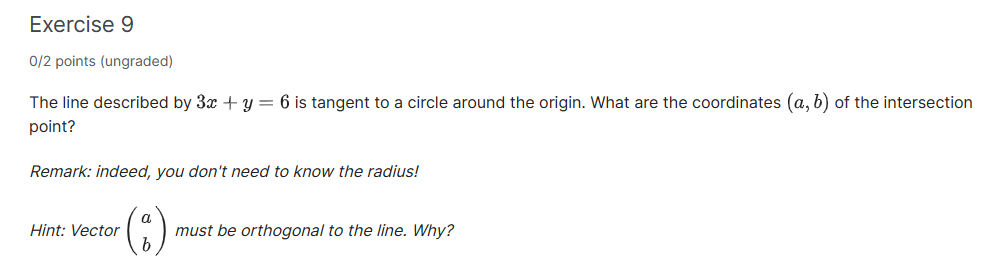
I dont really know how to solve this without the radius since we cant get the equation of the circle without it...
karmic hedge
I know that the vector (3 over 1) is orthogonal to 3x+y=6
karmic hedge
wtf is going on
balmy mortar
test
 sage geode
It's a bot
 royal basin
 karmic hedge
.close
obtuse pebbleBOT
Channel closed
Closed by @karmic hedge
Use .reopen if this was a mistake.
balmy mortar
!help
obtuse pebbleBOT
Please read #❓how-to-get-help
obtuse pebbleBOT
Available help channel!
Send your question here to claim the channel.
Remember:
• Ask your math question in a clear, concise manner.
• Show your work, and if possible, explain where you are stuck.
• After 15 minutes, feel free to ping <@&286206848099549185>.
• Type the command .close to free the channel when you're done.
• Be polite and have a nice day!
Read #❓how-to-get-help for further information on how to ask a good question, and about conduct in the question channels.
elfin abyss
if f is differentiable and dfa is the differential in a then the derivative of f following a vector v, in a is = dfa(v)
obtuse pebbleBOT
elfin abyss
if f is differentiable and dfa is the differential in a then the derivative of f...
elfin abyss
can someone explain this sentence
why?
dfa is the closest linear approximation to f near a
and the derivative is that also...but why dfa(v)? what if v is big. then v is nowhere close to a and dfa(v) is far from being the derivative in a
i mean this equality

how can the differential be evaluated at a point as far from a as we want
and still give us the derivative of the function in a
obtuse pebbleBOT
@elfin abyss Has your question been resolved?
obtuse pebbleBOT
@elfin abyss Has your question been resolved?
Channel closed
Closed by @elfin abyss
Use .reopen if this was a mistake.
Available help channel!
Send your question here to claim the channel.
Remember:
• Ask your math question in a clear, concise manner.
• Show your work, and if possible, explain where you are stuck.
• After 15 minutes, feel free to ping <@&286206848099549185>.
• Type the command .close to free the channel when you're done.
• Be polite and have a nice day!
Read #❓how-to-get-help for further information on how to ask a good question, and about conduct in the question channels.
timid silo
 obtuse pebbleBOT
timid silo
nocturne minnow
obtuse pebbleBOT
timid silo
nocturne minnow
 timber fox
Also is that a O=(-2) or 0=(-2)?
timber fox
Also is that a O=(-2) or 0=(-2)?
Looks like O = -2, in my opinion, because they substituted -2 in their equation, so O makes the most sense
timber fox
Hopefully
timid silo
.close
obtuse pebbleBOT
Channel closed
Closed by @winter smelt
Use .reopen if this was a mistake.
Available help channel!
Send your question here to claim the channel.
Remember:
• Ask your math question in a clear, concise manner.
• Show your work, and if possible, explain where you are stuck.
• After 15 minutes, feel free to ping <@&286206848099549185>.
• Type the command .close to free the channel when you're done.
• Be polite and have a nice day!
Read #❓how-to-get-help for further information on how to ask a good question, and about conduct in the question channels.
 hasty lily
Found a paradox saying that $\beth_1 = \beth_2 = ... = \beth_n \forall n$. Can anyone check for something incorrect in the reasoning here?
obtuse pebbleBOT
hasty lily
Found a paradox saying that $\beth_1 = \beth_2 = ... = \beth_n \forall n$. Can a...
warm shaleBOT
random-internet-guy
 hasty lily
Define an operation ++ so that for sequences A = (a_1, ..., a_n) and B = (b_1, ..., b_m), we have A ++ B = (a_1, ..., a_n, b_1, ..., b_m) - basically concatenates the two sequences.
We declare a sequence to be valid if and only if it is the sequence (0,1), or can be written as
(0) ++ (some valid sequence) ++ (2) ++ (some valid sequence) ++ (2) ++ (some valid sequence) ++ ... ++ (2) ++ (some valid sequence) ++ (1)
Let S be the set of all valid sequences. What is the cardinality of S? It's supposedly possible to prove that it's any beth n, as long as n >= 1.
Here's my reasoning:
warm shaleBOT
random-internet-guy
 kind hawk
that is not a function from {0,1,2} to N
hasty lily
kind hawk
that is not a function from {0,1,2} to N
oops i meant it the other way around
Define an operator ^{} on sets so that $A^B = {f: B \to A}$.
It's obvious that there exists an injection from S to ${0, 1, 2}^{\mathbb{N}} \cross \mathbb{N}$: for any sequence in S, just map it to the appropriate function in ${{0, 1, 2}}^{\mathbb{N}}$, with the second component being the length of the sequence.
warm shaleBOT
random-internet-guy
 hasty lily
For example, the sequence (0, 0, 1, 1) maps to the pair containing function that sends 0 to 0, 1 to 0, 2 to 1, 3 to 1, and everything else to 0, along with the number 4 (the sequence's length).

 hasty lily
For any number n, use the set theoretical representation of natural numbers and convert the representation into a string of digits 0, 1, 2 by replacing every { with a 0, } with a 1, and , with a 2. The result - once you organize these digits to form a sequence instead of just a string - will be a valid sequence. (Trust me - I defined valid sequences so that that will always work.)

 hasty lily
For any set A of natural numbers, use the set theoretical representation of natural numbers and convert the entire set A into a string of digits 0, 1, 2 by replacing every { with a 0, } with a 1, and , with a 2. The result - once you organize these digits to form a sequence instead of just a string - will be a valid sequence.
warm shaleBOT
random-internet-guy
 hasty lily
There's also an injective function from $2^{2^{\mathbb{N}}}$ to $S$.
warm shaleBOT
random-internet-guy
 hasty lily
For any set A of members of 2^N, use the set theoretical representation of natural numbers and convert the entire set A into a string of digits 0, 1, 2 by replacing every { with a 0, } with a 1, and , with a 2. The result - once you organize these digits to form a sequence instead of just a string - will be a valid sequence.
kind hawk
why should that string be finite
hasty lily
they can be infinite though
wait actually i think i only defined it for finite sequences
but it should also work for infinite ones
kind hawk
well better check
hasty lily
yeah it works - involves infinite ordinals, but it should work for our purposes
anyways, moving on -
Call this function $f_2: 2^{2^{\mathbb{N}}} \to S$.
warm shaleBOT
random-internet-guy
 hasty lily
Similarly, we can take the power set of $2^{2^{\mathbb{N}}}$ and define an $f_3$, and so on.
warm shaleBOT
random-internet-guy
 hasty lily
Therefore, there is an injection from any power sets of power sets of power sets of.... of the naturals to S.
warm shaleBOT
random-internet-guy
 hasty lily
By Schroder-Bernstein, this means that for any power set higher than $2^\mathbb{N}$, there exists a bijection from that set to S
warm shaleBOT
random-internet-guy
 kind hawk
hasty lily
yeah it works - involves infinite ordinals, but it should work for our purposes
kind hawk
hasty lily
yeah it works - involves infinite ordinals, but it should work for our purposes
I'm not convinced by this. but then again this isn't exactly a topic I know a lot about so maybe wait for someone else
kind hawk
hasty lily
Define an operator \^{} on sets so that $A^B = {f: B \to A}$.
It's obvious that ...
or well, if we allow infinite sequences then I'm not sure about this
obtuse pebbleBOT
@hasty lily Has your question been resolved?
Channel closed
Closed by @hasty lily
Use .reopen if this was a mistake.
Available help channel!
Send your question here to claim the channel.
Remember:
• Ask your math question in a clear, concise manner.
• Show your work, and if possible, explain where you are stuck.
• After 15 minutes, feel free to ping <@&286206848099549185>.
• Type the command .close to free the channel when you're done.
• Be polite and have a nice day!
Read #❓how-to-get-help for further information on how to ask a good question, and about conduct in the question channels.
 lethal pier
+laugh
obtuse pebbleBOT
lethal pier
+laugh
obtuse pebbleBOT
Channel closed
Closed by @lethal pier
Use .reopen if this was a mistake.
obtuse pebbleBOT
Available help channel!
Send your question here to claim the channel.
Remember:
• Ask your math question in a clear, concise manner.
• Show your work, and if possible, explain where you are stuck.
• After 15 minutes, feel free to ping <@&286206848099549185>.
• Type the command .close to free the channel when you're done.
• Be polite and have a nice day!
Read #❓how-to-get-help for further information on how to ask a good question, and about conduct in the question channels.
Channel closed
Closed due to the original message being deleted
Available help channel!
Send your question here to claim the channel.
Remember:
• Ask your math question in a clear, concise manner.
• Show your work, and if possible, explain where you are stuck.
• After 15 minutes, feel free to ping <@&286206848099549185>.
• Type the command .close to free the channel when you're done.
• Be polite and have a nice day!
Read #❓how-to-get-help for further information on how to ask a good question, and about conduct in the question channels.
obtuse pebbleBOT
 fair canyon
<#903430332324405288>
fair canyon
fair canyon
<#903430332324405288>
fair canyon
So my lecturer did this while explaining second derivative, I understand the first two lines properly, but I don't get what he was trying to prove here and how the third line(last one) came about and why it came about

PS: for the first derivative, he choose a line joining two points of the curve and he showed that if two points are close enough, the line can be considered a tangent (dy/dx), he draw one tangen back then and everything made sense, it doesn't make sense here, why did he draw two tangents and what is he trying to demonstrate
ahh got it, he is taking the tangents at two points and trying to show the rate of change of slope(derivative) so, he took two points
ahh... if anyone was trying to help me, thank you very much
.close
obtuse pebbleBOT
Channel closed
Closed by @fair canyon
Use .reopen if this was a mistake.
Available help channel!
Send your question here to claim the channel.
Remember:
• Ask your math question in a clear, concise manner.
• Show your work, and if possible, explain where you are stuck.
• After 15 minutes, feel free to ping <@&286206848099549185>.
• Type the command .close to free the channel when you're done.
• Be polite and have a nice day!
Read #❓how-to-get-help for further information on how to ask a good question, and about conduct in the question channels.
 remote fiber
 obtuse pebbleBOT
remote fiber
remote fiber
obtuse pebbleBOT
remote fiber
remote fiber
do i go about pulling the 11pi out of the integral and solving by integration by parts or is there a shorter method to solve this
i feel like i could use the a+b-x rule but idk if it would really help here
obtuse pebbleBOT
@remote fiber Has your question been resolved?
timid silo
remote fiber
i feel like i could use the a+b-x rule but idk if it would really help here
it will make it harder cuz there will be a whole square on 1-x
obtuse pebbleBOT
@remote fiber Has your question been resolved?
obtuse pebbleBOT
@remote fiber Has your question been resolved?
obtuse pebbleBOT
Channel closed
Closed due to timeout
Use .reopen if this was a mistake.
Available help channel!
Send your question here to claim the channel.
Remember:
• Ask your math question in a clear, concise manner.
• Show your work, and if possible, explain where you are stuck.
• After 15 minutes, feel free to ping <@&286206848099549185>.
• Type the command .close to free the channel when you're done.
• Be polite and have a nice day!
Read #❓how-to-get-help for further information on how to ask a good question, and about conduct in the question channels.
 honest lynx
i got stuck on the highlighted step and what goes beyond it can anyone help
obtuse pebbleBOT
honest lynx
i got stuck on the highlighted step and what goes beyond it can anyone help
honest lynx


i personally tried a difference of square at the highlighted step but it didnt really work out
.solved
,solved
.close
obtuse pebbleBOT
Channel closed
Closed by @honest lynx
Use .reopen if this was a mistake.
obtuse pebbleBOT
Available help channel!
Send your question here to claim the channel.
Remember:
• Ask your math question in a clear, concise manner.
• Show your work, and if possible, explain where you are stuck.
• After 15 minutes, feel free to ping <@&286206848099549185>.
• Type the command .close to free the channel when you're done.
• Be polite and have a nice day!
Read #❓how-to-get-help for further information on how to ask a good question, and about conduct in the question channels.
 flat dune
 flat dune
I have a simple question
very easy actually
can anyone please
explain the first and second step?
that's all I'm asking for
 trim portal
This?
 flat dune
yes
trim portal
x-y=1, so when you do -(x-y) you essentially do just -1
So they did -(x-y) on the left side, and -1 on the right side
flat dune
how did they take it out of brackets and make y positive?
trim portal
That's a property, when you -(a+b-c+d+e-f) = -a-b+c-d-e+f
You basically switch - and +
flat dune
oh, a rule
well then, thank you very much for your time. جزاك الله خيراً
bye
.close
obtuse pebbleBOT
Channel closed
Closed by @flat dune
Use .reopen if this was a mistake.
Available help channel!
Send your question here to claim the channel.
Remember:
• Ask your math question in a clear, concise manner.
• Show your work, and if possible, explain where you are stuck.
• After 15 minutes, feel free to ping <@&286206848099549185>.
• Type the command .close to free the channel when you're done.
• Be polite and have a nice day!
Read #❓how-to-get-help for further information on how to ask a good question, and about conduct in the question channels.
 pulsar comet
hi
obtuse pebbleBOT
pulsar comet
hi
pulsar comet
is it true that

is this always true? and can someone explain in simple, intuitive terms, why?
 drifting wraith
most of the reason is that it's the definition of that | symbol
pulsar comet
ahhh you mean if I flip it around, it is the rule but one of the sides in the P(a|b) form is more complex
pulsar comet
so every time I have a fracture like that and some things from above are same as below, that applies
faction
thank you!
.close
obtuse pebbleBOT
Channel closed
Closed by @pulsar comet
Use .reopen if this was a mistake.
Available help channel!
Send your question here to claim the channel.
Remember:
• Ask your math question in a clear, concise manner.
• Show your work, and if possible, explain where you are stuck.
• After 15 minutes, feel free to ping <@&286206848099549185>.
• Type the command .close to free the channel when you're done.
• Be polite and have a nice day!
Read #❓how-to-get-help for further information on how to ask a good question, and about conduct in the question channels.
 quartz yoke
 obtuse pebbleBOT
quartz yoke
quartz yoke
obtuse pebbleBOT
quartz yoke
quartz yoke
I’m hopeless on this integral
 bold bane
,rotate
warm shaleBOT
 obtuse pebbleBOT
@quartz yoke Has your question been resolved?
obtuse pebbleBOT
Channel closed
Closed due to timeout
Use .reopen if this was a mistake.
Available help channel!
Send your question here to claim the channel.
Remember:
• Ask your math question in a clear, concise manner.
• Show your work, and if possible, explain where you are stuck.
• After 15 minutes, feel free to ping <@&286206848099549185>.
• Type the command .close to free the channel when you're done.
• Be polite and have a nice day!
Read #❓how-to-get-help for further information on how to ask a good question, and about conduct in the question channels.
 zenith kraken
Algebra question : can someone please check this for me?
 obtuse pebbleBOT
zenith kraken
Algebra question : can someone please check this for me?
timid silo
obtuse pebbleBOT
zenith kraken
Algebra question : can someone please check this for me?
timid silo
I'll just zoom on the different parts for whoever comes across this real quick

 obtuse pebbleBOT
Channel closed
Closed by @zenith kraken
Use .reopen if this was a mistake.
Available help channel!
Send your question here to claim the channel.
Remember:
• Ask your math question in a clear, concise manner.
• Show your work, and if possible, explain where you are stuck.
• After 15 minutes, feel free to ping <@&286206848099549185>.
• Type the command .close to free the channel when you're done.
• Be polite and have a nice day!
Read #❓how-to-get-help for further information on how to ask a good question, and about conduct in the question channels.
 solar frigate

 obtuse pebbleBOT
solar frigate
solar frigate
obtuse pebbleBOT
solar frigate
solar frigate
I'm not sure if this is a proper usage of instantiation
Can I instantiate both quantifiers to same arbitrary variable a?
In my mind you can because we are saying there exists x that has all y, but they share domain so that means that if all elements are considered for Y then we can use the arbitrary element for x for Y as well
Also I'm not too sure if this proves that it's unsatisfiable with rules of inference, since I didn't really use inference, I used logical equivalences
obtuse pebbleBOT
@solar frigate Has your question been resolved?
solar frigate
<@&286206848099549185>
obtuse pebbleBOT
@solar frigate Has your question been resolved?
timid silo
solar frigate
Can I instantiate both quantifiers to same arbitrary variable a?
yes you could have
makes more sense because on step (5) i kinda got confused
step (3) you could just universal instantiated y to a
timid silo
solar frigate
In my mind you can because we are saying there exists x that has all y, but they...
if there exists some x for all y, that must mean that y contains x
so its fine to instantiate y to the arbitrary x value that satisfies the existential quantifier
solar frigate
Okay perfect. I was stuck on how to procede with the question earlier which is why it's unnecessarily complicated. I should have just done it without referring to the definition, but it helped me see what was being stated
This would show that it's unsatisfiable right?
timid silo
yes, you should say definition of biconditional though
not just definition
maybe ur professors fine with that though
solar frigate
I'll do that
Yeah it's good to be specific
Good practice
I was getting confused tho cuz it said use the rules of inference to prove unsatisfiablity but I used mostly definitions to prove it
But I guess I used instantiation so..?
timid silo
well universal/existential instantiation
timid silo
solar frigate
But I guess I used instantiation so..?
yeah
obtuse pebbleBOT
Channel closed
Closed by @solar frigate
Use .reopen if this was a mistake.
obtuse pebbleBOT
Available help channel!
Send your question here to claim the channel.
Remember:
• Ask your math question in a clear, concise manner.
• Show your work, and if possible, explain where you are stuck.
• After 15 minutes, feel free to ping <@&286206848099549185>.
• Type the command .close to free the channel when you're done.
• Be polite and have a nice day!
Read #❓how-to-get-help for further information on how to ask a good question, and about conduct in the question channels.
 silver moon
Hi everyone, I'm currently learning polar graphs and I'm having trouble understanding finding the bounds for area.
obtuse pebbleBOT
silver moon
Hi everyone, I'm currently learning polar graphs and I'm having trouble understa...
silver moon

Could someone explain how it was determined that the lower bound starts at 0 and why the upper bounds is at pi/3 instead of 5pi/3?
obtuse pebbleBOT
@silver moon Has your question been resolved?
silver moon
<@&286206848099549185>
obtuse pebbleBOT
@silver moon Has your question been resolved?
fathom flicker
silver moon
<@&286206848099549185>
I'd like to help you with this, could you be more clear what your question is?
silver moon
Yes!
So the equation i was given to find the area of a polar curve is

the first photo i sent was the solution and explanation but I'm having trouble understand why they indicated beta is pi/3 and not 5pi/3
and how they determined that alpha is 0
does that help?
fathom flicker
I'll take a second to think it through now, thanks for the details
could you also tell me what the function you are trying to find the area is
r= ?
silver moon
 fathom flicker
thanks
silver moon
i know to set the equation to 0 to find theta
but idk which one to pick if there's multiple
fathom flicker
So
setting the equation = 0 tells us when r is 0, which basically means we are at the origin. The reason there are more than one theta (other than the fact that our function will periodically repeat) is because we start at the origin, and then we do that smaller inner loop and end up back there again
the next time we reach r=0, we are just periodically repeating whatever the first point was
it appears to me that the first time r=0, starting our function out is at pi/3 and secondly at 5pi/3. I believe that these indicate the time when we start at the origin, and the second time when we reach the origin. Before beginning to repeat
I am a bit rusty with this so sorry if explanations are slow or confusing, ask me anything if its confusing
silver moon
no that helps a bit
so is there really a difference between setting the upper bounds to 5pi/3 from setting the upper bounds to pi/3?
fathom flicker
Yes, I believe setting the upper bound as 5pi/3 would include the inner loop an extra amount
compared to pi/3 starting at the true beginning
5pi/3 would start after we did the first loop
heading into the bigger one
silver moon
ahhh i see
so the inner loop
starts at 0
and then ends at pi/3
and then moves onto the bigger loop?
fathom flicker
hmmm, not quite sure exactly what you mean by that but I'll try to explain what I mean more concisely real quick.
When we have theta=0
we get the point -2
so you can tell where we are on that graph
but
when theta = pi/3 we get r=0, the origin. Now as theta increases, we head through the inner loop, until we reach theta= 5pi/3 where we again get r=0 , and are at the origin. From there we traverse the outer curve before repeating
fathom flicker
I am realizing that these are not the best explanations, so I am glad if you are understanding, but I am going to spend some time getting this down 100% and then I'll send an explanation and tag you
silver moon
thank you i appreciate that
im having trouble with polar coordinates because theyre really different from rectangular coordinates
which im used to
fathom flicker
@silver moon ready (hopefully) when you are
To find the area of the inner loop, looking at it graphically we can tell that it is symmetrical about the x-axis. We can either find the area of the top half, or the bottom half and then double our result. The tricky part as always with these polar questions is to decipher what the proper bounds of integration are. We know that because our function is r = 2-4cos(theta) and cosine(theta) has a period of 2pi that our function itself has a period of 2pi. This just means that the point theta=0 and theta=2pi will be the same and everything you know already about period tells you that the function will just continue repeating itself for further intervals of theta larger than 2pi (4pi -> 6pi = 0 -> 2pi... etc...).
We will begin finding our bounds now
if we choose theta = 0 we get that
warm shaleBOT
AustinU
 fathom flicker
If we then choose theta = pi/3 we get
warm shaleBOT
AustinU
 fathom flicker
and the same for theta=5pi/3
warm shaleBOT
AustinU
 fathom flicker
So now we have to figure out, which one of these values of theta where we are at the origin should be our bound for the integral?
We can figure this out by thinking about what the angles themself mean
an angle of theta = pi/3 is an angle of 60 degrees
think of what that angle looks like on your graph
it is pointing up and out of the bottom loop, going through the origin
this tells us that when theta=pi/3 we are exiting the bottom of the inner loop
you could also think about what an angle of 5pi/3 looks like
it is an angle of 300 degrees, and likewise tells us that we are entering the top of the inner loop
And the reason we know one is entering, and the other is exiting, is based on the fact that 0 is on the inside of the loop. Progressing from theta=0 to theta=pi/3 only works in one direction, which is the outward direction of the bottom of the inner loop.
so we can see from all of this, that the bounds to get half the area of the inner loop
can be either
0 to pi/3 for the area of the bottom half
or
5pi/3 to 2pi
for the area of the top half
The function is going counterclockwise
and here is an excellent graphical representation of what point the function plots as theta increases from 0 to 2pi

Desmos
Hopefully this helps you out! @silver moon
silver moon
it does
the animation helps a lot as well!
i get it now i think
im gonna try and study a bit more about this. i wanna make sure i get this concept down
fathom flicker
Awesome, feel free to DM me if you need more help with anything in the future
obtuse pebbleBOT
@silver moon Has your question been resolved?
 proper gulch
sub pls

This video shows how to derive the quadratic formula from the quadratic equation in a step by step process. This video also introduces the Vieta's formulas and the proof of the Vieta's formulas.
obtuse pebbleBOT
Channel closed
Closed due to timeout
Use .reopen if this was a mistake.
Available help channel!
Send your question here to claim the channel.
Remember:
• Ask your math question in a clear, concise manner.
• Show your work, and if possible, explain where you are stuck.
• After 15 minutes, feel free to ping <@&286206848099549185>.
• Type the command .close to free the channel when you're done.
• Be polite and have a nice day!
Read #❓how-to-get-help for further information on how to ask a good question, and about conduct in the question channels.
 frigid cipher
 obtuse pebbleBOT
frigid cipher
frigid cipher
obtuse pebbleBOT
frigid cipher
frigid cipher
how do i find fucntion from graph
latent walrus
you know g(7)=4.8
for the second part, you can use the 2 points on the tangent line to calculate a gradient
latent walrus
change in y/change in x, yeah
frigid cipher
so would i do 4.8/4.76?
frigid cipher
im sorry im rly bad at this so if i sound dumb
latent walrus
no worries
frigid cipher
would i do like x1,y1?
latent walrus
$gradient=\frac{y_B-y_A}{x_B-x_A}$
warm shaleBOT
AℤØ
 frigid cipher
(4.8-4.78)/(7-6.94)
latent walrus
so we know the gradient of the tangent line is the gradient of g(x) at x=7, this means that g'(7)=1/3
latent walrus
yeah, the derivative gives you the gradient of a function at a point
latent walrus
np
frigid cipher
.close
obtuse pebbleBOT
Channel closed
Closed by @frigid cipher
Use .reopen if this was a mistake.
Available help channel!
Send your question here to claim the channel.
Remember:
• Ask your math question in a clear, concise manner.
• Show your work, and if possible, explain where you are stuck.
• After 15 minutes, feel free to ping <@&286206848099549185>.
• Type the command .close to free the channel when you're done.
• Be polite and have a nice day!
Read #❓how-to-get-help for further information on how to ask a good question, and about conduct in the question channels.
 raven mango
help
 obtuse pebbleBOT
raven mango
help
raven mango
obtuse pebbleBOT
raven mango
help
raven mango
i want to understand how to do this
 frigid prism
@raven mangoa or b
raven mango
both
 gilded needle
well probably you have some idea how to do A
there's not really much math involved there
raven mango
yes
frigid prism
raven mango
yes
part B is asking if you were to buy 10 individual tickets instead, how much more expensive it would be
does that help
raven mango
frigid prism
part B is asking if you were to buy 10 individual tickets instead, how much more...
but doesnt a 10 trip single ticket cost 39.40 ?
 inland sphinx
anyone in her able to help me with geometry stuff?
frigid prism
inland sphinx
anyone in her able to help me with geometry stuff?
dont ask to ask just ask also this chanlel is full pleaseread the rules
frigid prism
raven mango
but doesnt a 10 trip single ticket cost 39.40 ?
yes
you have to find the difference between 10*one ticket and 1 10 ticket pass
inland sphinx
frigid prism
dont ask to ask just ask also this chanlel is full pleaseread the rules
i dont think i broke any
 teal turret
@inland sphinx #❓how-to-get-help
inland sphinx
teal turret
<@691073827370958920> <#488120190538743810>
thx
raven mango
frigid prism
you have to find the difference between 10*one ticket and 1 10 ticket pass
is ten single trip tickets = one ticket?
im confused
frigid prism
raven mango
is ten single trip tickets = one ticket?
you have two options if you want 10 tickets
you can either buy 1 ticket 10 times
or buy a bulk ticket that gives you 10 tickets
those options have different prices
raven mango
so we have to find the price for the bulk ticket, thats what ur saying right ?
obtuse pebbleBOT
@raven mango Has your question been resolved?
frigid prism
raven mango
so we have to find the price for the bulk ticket, thats what ur saying right ?
sorry for the late response
no
you know that price
its 39.4
you need to find the price of buying 10 single tickets
obtuse pebbleBOT
Channel closed
Closed due to timeout
Use .reopen if this was a mistake.
Available help channel!
Send your question here to claim the channel.
Remember:
• Ask your math question in a clear, concise manner.
• Show your work, and if possible, explain where you are stuck.
• After 15 minutes, feel free to ping <@&286206848099549185>.
• Type the command .close to free the channel when you're done.
• Be polite and have a nice day!
Read #❓how-to-get-help for further information on how to ask a good question, and about conduct in the question channels.
timid silo
Hi! I have a few graphs and was wondering how I can prove they are increasing exponentially. I did an residual test to prove they weren't linear, but I can't find a way to prove they are exponential as these are real world data, so it's very inconsistent, but overall is exponentially increasing.
What I have thought of: Exponential increases at a ratio consecutively. However, because this is "stocks" and real world data, this increase obviously won't be at a constant ratio, but since stocks are really volatile, one day it cam increase a lot and another day it may decrease, which disproves my claim.
obtuse pebbleBOT
timid silo
Hi! I have a few graphs and was wondering how I can prove they are increasing ex...
timid silo
Graphs:

Raw data: Can provide link at request

Linear residual:

If it's easier, I can provide links
Oh. I've also tried exponential residual, which also didn't prove it.
used the formula y=ab^x
and substituted values and subtracted
 frosty spoke
timid silo
Hi! I have a few graphs and was wondering how I can prove they are increasing ex...
frosty spoke
timid silo
Hi! I have a few graphs and was wondering how I can prove they are increasing ex...
if you're trying to use a hypothesis test to "prove" that something fits a given model, you're going to be awfully disappointed
there is no way to do that
timid silo
If it's aproximate works too
frosty spoke
no what you are asking is simply impossible
it's just not how the theory is developed
timid silo
So there is no way to prove my graphs I have are exponential?
frosty spoke
the most you can do is fit some sort of model to it and make the claim that there is not enough evidence to reject the model
timid silo
okay
frosty spoke
no there isn't, and in any case it likely isn't true
imagine someone gave you some data from some process that's very close to linear but not
timid silo
okay. sounds interesting
frosty spoke
if there were a way to "prove" that something were linear, then the whole theory would be inconsistent
timid silo
but if it's close to linear, then it could be done as "best fit"
frosty spoke
yeah so? that's not a proof that the underlying process is linear
timid silo
Is it possible finding a line that is "best fit" for my work?
frosty spoke
all it's saying is that we model it as linear, and assuming that the underlying process is linear or close enough to linear, here are some inferences we make
obtuse pebbleBOT
Channel closed
Closed by @wary trellis
Use .reopen if this was a mistake.
Available help channel!
Send your question here to claim the channel.
Remember:
• Ask your math question in a clear, concise manner.
• Show your work, and if possible, explain where you are stuck.
• After 15 minutes, feel free to ping <@&286206848099549185>.
• Type the command .close to free the channel when you're done.
• Be polite and have a nice day!
Read #❓how-to-get-help for further information on how to ask a good question, and about conduct in the question channels.
 round dune
just how 💀
(ping me if responded)
 obtuse pebbleBOT
round dune
just how 💀
(ping me if responded)
obtuse pebbleBOT
round dune
just how 💀
(ping me if responded)
 supple granite
So you know the formula for the distance of two points? @round dune
round dune
nope
supple granite
Do you understand this?
 frosty spoke
here you go
 round dune
supple granite
Do you understand this?
round dune
supple granite
Do you understand this?
eh kinda
supple granite
frosty spoke
here you go
Thank youu
round dune
frosty spoke
here you go
how do i know which ones x1 or x2? Do i just assume its in the order which they gave me the coords
supple granite
Doesn't matter
You're gonna square the difference of the coordinates so it doesn't matter
frosty spoke
round dune
how do i know which ones x1 or x2? Do i just assume its in the order which they ...
you should try both ways if you're unsure. you might be surprised if you get the same answer, and then you might ponder why
round dune
ah ok-
OH
got it
i got a=3 which is technically correct thx hang on lemme write that formula down
i thought it would be more complicated 💀
.close
obtuse pebbleBOT
Channel closed
Closed by @round dune
Use .reopen if this was a mistake.
Available help channel!
Send your question here to claim the channel.
Remember:
• Ask your math question in a clear, concise manner.
• Show your work, and if possible, explain where you are stuck.
• After 15 minutes, feel free to ping <@&286206848099549185>.
• Type the command .close to free the channel when you're done.
• Be polite and have a nice day!
Read #❓how-to-get-help for further information on how to ask a good question, and about conduct in the question channels.
gleaming ridge
Suppose y > 1 is some approximation to x = sqrt(2) + 1. Give a brief reason why one should expect (1 ⁄ y) + 2 to be a closer approximation to x than y is. (I don’t ask for a proof, because we are only seeking to motivate Rudin’s computation, for which he gives an exact proof.)
obtuse pebbleBOT
gleaming ridge
Suppose y > 1 is some approximation to x = sqrt(2) + 1. Give a brief reason why ...
gleaming ridge
Context: This is from Rudin's companion where he wants to motivate the weird out-of-blue proof for non-existence of sqrt(2) in rationals
 obsidian hedge
Algebra 1, my teacher said any number works as a Substitution for V and I wanna know why in simple terms
 gleaming ridge
sorry, this channel is taken
obsidian hedge
Oh ok sorry
frosty spoke
I think it's because x = sqrt(2) + 1 is a fixed point in that
i.e. 1/x + 2 = x
but you also need some form of contraction
gleaming ridge
Hmm... that makes sense. I wasn't thinking in terms of an iterative process
 marble moon
Might be related to a newton's method approximation?
frosty spoke
not exactly newton's method I think, but a similar fixed point method
gleaming ridge
frosty spoke
not exactly newton's method I think, but a similar fixed point method
I see that but using fixed points to show this seems weird like showing something simple using something complicated
marble moon
Yeah like I said I thought it might be related, since it looks like roughly fits the formula
gleaming ridge
Like is there something more obvious that makes 1/y + 2 to be a better approximation than y
frosty spoke
well like in general
there's a whole class of ideas where if you characterize something as a fixed point of something else
then you do iteration like f(f(f(f(f(f(x))))))) to get to it
gleaming ridge
marble moon
Yeah like I said I thought it might be related, since it looks like roughly fits...
Still, it hasn't been introduced so I don't think that's what the author intended
frosty spoke
like it's the same way the existence/uniqueness of solutions to ODEs is proven I think
marble moon
Oh yeah def not then
frosty spoke
it does sorta smell like Newton's method for square roots for example
where if you have a guess for the square root of 8000, say 90 or something
then (8000/90 + 90)/2 is a better guess
obtuse pebbleBOT
@gleaming ridge Has your question been resolved?
gleaming ridge
I think I figured it out mostly, it's as you said that x = 1/x + 2 has a fixed point but more importantly 1+sqrt(2) is the only positive solution for x = 1/x + 2
So, when we do 1/x + 2 we are creating a better approximation cause if there is one place it would work it would be for 1 + sqrt(2)
In particular |1/x + 2 - a| is always less than equal to |x - a| where a = 1/x + 2
Thanks for the help @frosty spoke and @marble moon
Like it's the same thing what y'll said but more loosely I guess
frosty spoke
so there's a theorem called the Banach fixed-point theorem
says that if the mapping contracts things
then the iteration converges to the fixed point
gleaming ridge
Yeah I have heard of it, would probably encounter is soon
Thanks for the help again
.close
obtuse pebbleBOT
Channel closed
Closed by @gleaming ridge
Use .reopen if this was a mistake.
Available help channel!
Send your question here to claim the channel.
Remember:
• Ask your math question in a clear, concise manner.
• Show your work, and if possible, explain where you are stuck.
• After 15 minutes, feel free to ping <@&286206848099549185>.
• Type the command .close to free the channel when you're done.
• Be polite and have a nice day!
Read #❓how-to-get-help for further information on how to ask a good question, and about conduct in the question channels.
 obtuse pebbleBOT
karmic hedge
https://i.gyazo.com/61434107941c051232ff7cb84876d43f.png
karmic hedge
obtuse pebbleBOT
karmic hedge
https://i.gyazo.com/61434107941c051232ff7cb84876d43f.png
karmic hedge

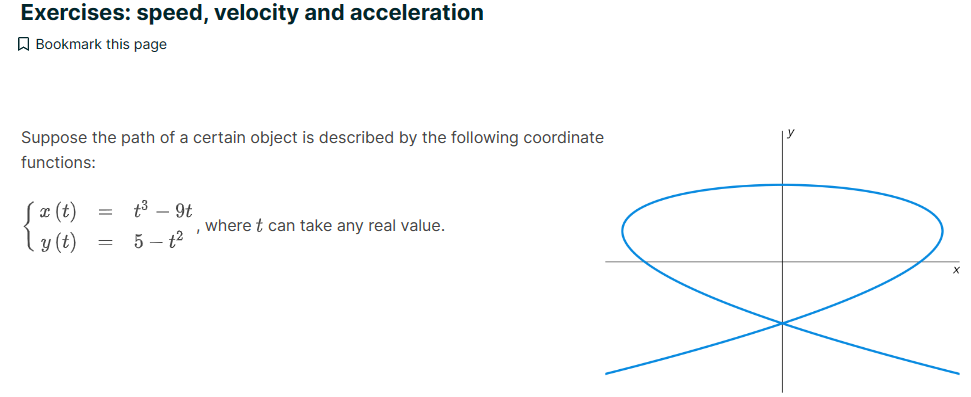
I know that I need to first get x'(t) and y'(t) to get the velocity vector
Then I know that the velocity vector will be pointing straight up, so either x'(t) or y'(t) is equal to zero, but I cant figure out which
HI CHARTBIT!!!
I figured out the last question from reading the chat, thanks again for your help with that one ❤️
karmic hedge
karmic hedge
Then I know that the velocity vector will be pointing straight up, so either x'(...
I know we did this one aswell I think I can manage it on my own but im just stuck on this bit ^^
like the vector is just pointing straight up
So either x'(t) or y'(t) is = 0
 unreal musk
Yep yep 
If y’(t) were zero you’d be moving parallel to the x axis, and if x’(t) were zero you’d be moving parallel to the y axis
karmic hedge
Ok so x'(t)
Thats what I was going to say but wasnt 100% sure haha
1 moment I will try to solve the rest...
unreal musk
[also note how you have two “vertical points” and one “horizontal point” from the graph, and that should also give an idea of if you’re going in the right direction ]
karmic hedge
unreal musk
[also note how you have two “vertical points” and one “horizontal point” from th...
Hmm I dont really understand what you mean, there isnt any points on the graph?
unreal musk
karmic hedge
Hmm I dont really understand what you mean, there isnt any points on the graph?
As in like this, if you see what I mean now? Green and purple

Two of the purple, one of the green
karmic hedge
unreal musk
As in like this, if you see what I mean now? Green and purple
but the green is also vertical (up and then down) and the purples are also horizontal (1 is down then up the other is up then down)
unreal musk
I mean more that the green is where you’re moving parallel to the x axis, and the purple are where you’re moving parallel to the y axis, sorry if that wasn’t clear 
And they ask where you move parallel to the y axis, and there are two points where that would be true (as opposed to one for the x axis)
But anyways, that’s like a side comment, don’t worry too much if it isn’t clear 
karmic hedge
Aaaah ok I understand, like you mean the vectors
I was thinking about the line 🙃
I get it now haha sry
I got the answer!!
Thanks youuu ❤️
.close
obtuse pebbleBOT
Channel closed
Closed by @karmic hedge
Use .reopen if this was a mistake.
Available help channel!
Send your question here to claim the channel.
Remember:
• Ask your math question in a clear, concise manner.
• Show your work, and if possible, explain where you are stuck.
• After 15 minutes, feel free to ping <@&286206848099549185>.
• Type the command .close to free the channel when you're done.
• Be polite and have a nice day!
Read #❓how-to-get-help for further information on how to ask a good question, and about conduct in the question channels.
obtuse pebbleBOT
karmic hedge
https://i.gyazo.com/61434107941c051232ff7cb84876d43f.png
karmic hedge

I got the acceleration
x''(t) = 6t
y''(t) = -2
But I know in order to get the minimal value it needs to be a polynomial
karmic hedge
karmic hedge
I got the acceleration
x''(t) = 6t
y''(t) = -2
So how do I get this into that form
Also once its in polynomial form I can get the norm...
Nvm I got it
.close
obtuse pebbleBOT
Channel closed
Closed by @karmic hedge
Use .reopen if this was a mistake.
Available help channel!
Send your question here to claim the channel.
Remember:
• Ask your math question in a clear, concise manner.
• Show your work, and if possible, explain where you are stuck.
• After 15 minutes, feel free to ping <@&286206848099549185>.
• Type the command .close to free the channel when you're done.
• Be polite and have a nice day!
Read #❓how-to-get-help for further information on how to ask a good question, and about conduct in the question channels.
 lime juniper
hi, i have a quick question why did the first brack get a 3x but the second bracket did not get 7x?
 obtuse pebbleBOT
lime juniper
hi, i have a quick question why did the first brack get a 3x but the second brac...
obtuse pebbleBOT
lime juniper
hi, i have a quick question why did the first brack get a 3x but the second brac...
 trim locust
Because expanding that would get you 21x^2 which is not what you want
supple granite
because 3x multiplied by x is 3x^2
lime juniper
so lets say
lime juniper
supple granite
because 3x multiplied by x is 3x^2
the questions was 3x+7x-6 = 0 how would the initial brackets look in that case?
(x )(x )?
trim locust
What does x * x give you?
obtuse pebbleBOT
Channel closed
Closed by @lime juniper
Use .reopen if this was a mistake.
Available help channel!
Send your question here to claim the channel.
Remember:
• Ask your math question in a clear, concise manner.
• Show your work, and if possible, explain where you are stuck.
• After 15 minutes, feel free to ping <@&286206848099549185>.
• Type the command .close to free the channel when you're done.
• Be polite and have a nice day!
Read #❓how-to-get-help for further information on how to ask a good question, and about conduct in the question channels.
 novel salmon
i dont get any part of this
 obtuse pebbleBOT
novel salmon
i dont get any part of this
obtuse pebbleBOT
novel salmon
i dont get any part of this
 twilit pelican
novel salmon
i dont get any part of this
twilit pelican
novel salmon
i dont get any part of this
do you know what extraneous solution means?
novel salmon
yeah when the solution doesnt make sense
twilit pelican
right
so use the model you're given to like
come up with an equation that has an extraneous solution
twilit pelican
yeah you do
novel salmon
so
a = 2
b = 3
c = 6
d = 1
okay so that one has no solution
does this make it an extraneous solution
twilit pelican
yeah
twilit pelican
yeah i think that'd be better
 novel salmon
WWWWW
twilit pelican
LOL
 novel salmon
 twilit pelican
looks good

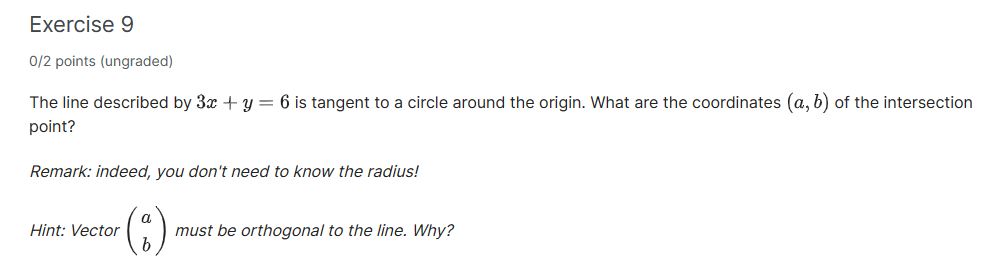
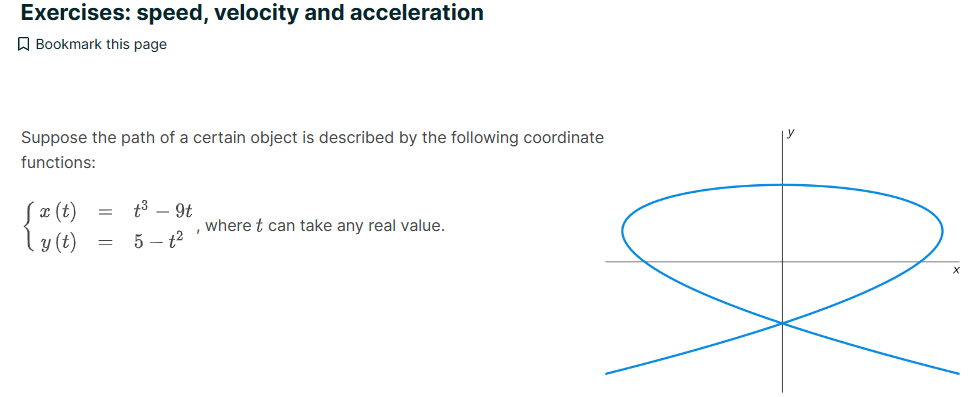

 novel salmon
.close
obtuse pebbleBOT
Channel closed
Closed by @novel salmon
Use .reopen if this was a mistake.
obtuse pebbleBOT
Available help channel!
Send your question here to claim the channel.
Remember:
• Ask your math question in a clear, concise manner.
• Show your work, and if possible, explain where you are stuck.
• After 15 minutes, feel free to ping <@&286206848099549185>.
• Type the command .close to free the channel when you're done.
• Be polite and have a nice day!
Read #❓how-to-get-help for further information on how to ask a good question, and about conduct in the question channels.
 sweet edge
what's ur question