#book-recommendations
1 messages · Page 166 of 1
 mortal ore
 rigid trail
yeah i didnt like it 😭 but his problems are good i know
mortal ore
If he ever hits u with a "clearly" feel free to ask about the reasoning here
rigid trail
What topics are most worth drilling
groups and rings i guess
i honestly dont know what else is relevant for me at the moment
 wicked fractal
Not a big fan of D&F
wicked fractal
rigid trail
D&F i probably would use only for exercises and as a reference
For exercises it's good I guess
reference maybe not so much
wicked fractal
rigid trail
Is ch0 any good as a reference / for learning/refreshing
Just read Aluffi
wicked fractal
if you are hardcore you can try lang
rigid trail
as a rule of thumb i prefer having my eyes open while i read
i just realized that i had removed #groups-rings-fields from my channel list out of spite 💀
 gray gazelle
thx but I'm not the student of that..its just for extra stuff..I'm not from China
 jolly tendon
Anyone have recommendations for linear algebra? beside book by rorres and anton? 
 half vigil
jolly tendon
Anyone have recommendations for linear algebra? beside book by rorres and anton?...
half vigil
jolly tendon
Anyone have recommendations for linear algebra? beside book by rorres and anton?...
linear algebra done right by sheldon axler
https://linear.axler.net/ it's open access
jolly tendon
ohh this book is on my course next semester
rorres anton is this semester along spivak calculus
 vital chasm
jolly tendon
Anyone have recommendations for linear algebra? beside book by rorres and anton?...
vital chasm
jolly tendon
Anyone have recommendations for linear algebra? beside book by rorres and anton?...
Linear algebra done wrong by Sergei Treil
jolly tendon
perfect, thank you!
 frozen perch
Axler is fine but his treatment of the determinant leaves much to be desired. "Done Wrong" is ironically a better book
frozen perch
Yes, I was being nice this time
"Axler's distaste for the determinant is pedagogically insane" would be my actual take
 median rock
Can someone help with quandles racks and Young Baxter Equation ?
wicked fractal
<@&268886789983436800> smite
 random minnow
any alternatives to rubinsteins a course in game theory?
my module has that as key but i dont really want to.. go through that book..
GOAT MENTIONED i took analysis 1 under her she's an amazing lecturer
 odd cargo
motherfucker is just typing
 sacred thicket
 fallen relic
i love 1984 but its js pro capitalist slop
fallen relic
i love 1984 but its js pro capitalist slop
wasnt author communist/socialist lol
 grim wedge
fallen relic
i love 1984 but its js pro capitalist slop
grim wedge
fallen relic
i love 1984 but its js pro capitalist slop
no it's not lol
 plain maple
Good evening does anyone have a book on latex?
 junior palm
plain maple
Good evening does anyone have a book on latex?
junior palm
plain maple
Good evening does anyone have a book on latex?
any basic tutorial on the internet is enough (as little as 20 minutes is perfect), the rest you kinda just search up on the spot whenever you need it
plain maple
junior palm
any basic tutorial on the internet is enough (as little as 20 minutes is perfect...
Aiit tysm
random minnow
random minnow
any alternatives to rubinsteins a course in game theory?
my module has that as k...
anyone?
 surreal bay
hi so
does anyone have any alg books (competition based) that dont just focus on problems / focus on the theoretical side more
it’s hard to explain but
odd cargo
surreal bay
hi so
does anyone have any alg books (competition based) that dont just focus on...
this is exactly why you need a lot of books to supplement early algebra
mortal ore
i mean youd only get good at the theory if you did exercises
odd cargo
mortal ore
i mean youd only get good at the theory if you did exercises
this is only true to a certain extent
Algebra, by israel gelfand. with Hall and knights higher algebra, is enough primary reading
mortal ore
odd cargo
this is only true to a certain extent
wdym
odd cargo
mortal ore
wdym
writing proofs is not like finding x
mortal ore
yes
oh youre saying that if the stuff is "finding x" level then exercises may not be necessary
uhh i suppose but i wouldnt risk it
odd cargo
mortal ore
oh youre saying that if the stuff is "finding x" level then exercises may not be...
exercises are always necessary*
definitely not alone though
mortal ore
odd cargo
definitely not alone though
wdym by not alone
like exercises along with external instruction?
odd cargo
mortal ore
wdym by not alone
A book that focuses on "theory" coupled with a book that is problem based.
kind of a no-brain combo
odd cargo
mortal ore
though id assume the theoretical book would still have problems
take it up with the arbiter of mathematics then bubba
mortal ore
odd cargo
take it up with the arbiter of mathematics then bubba
fair enough
im only the arbiter of necessary and sufficient conditions
 delicate drift
uys tell me how can i find a practice questions
 wary path
I need a book for Geometry
surreal bay
odd cargo
this is exactly why you need a lot of books to supplement early algebra
early algebra as in?
odd cargo
surreal bay
early algebra as in?
How new are you to maths
surreal bay
odd cargo
How new are you to maths
i mean
I’m currently a 10th grader
and sadly haven’t expanded past curriculum mathematics much
odd cargo
surreal bay
I’m currently a 10th grader
and sadly haven’t expanded past curriculum mathemati...
Higher algebra by Hall and Knight
10th grader, is that 16 years old
surreal bay
odd cargo
10th grader, is that 16 years old
Yes
odd cargo
if you're in school then you probably dont need to do pre-algebra
or atleast i hope
The book i suggested is top notch
solid book
surreal bay
odd cargo
The book i suggested is top notch
how would you describe it?
who do you think it’d fit?
and should it be enough for preliminarily reading?
odd cargo
surreal bay
and should it be enough for preliminarily reading?
what are you planning to do
odd cargo
wary path
I need a book for Geometry
Coxeter's Geometry revisited
surreal bay
odd cargo
what are you planning to do
in general?
hopefully be able to start getting into mathematics (starting from alg -> other topics) & try to develop the right background for competitive math
odd cargo
surreal bay
in general?
hopefully be able to start getting into mathematics (starting from a...
Hall and knight's Higher Algebra is probably a good start
surreal bay
odd cargo
Hall and knight's Higher Algebra is probably a good start
is there a specific copy / edition i should get?
odd cargo
surreal bay
is there a specific copy / edition i should get?
Well the first edition was released ~100 years ago
look around in your schools library, you'll probably find a copy.
surreal bay
odd cargo
Well the first edition was released ~100 years ago
oh
also
just wanted to ask
where do you think i should go on after finishing the book?
its pretty early to ask, but just incase ^
odd cargo
surreal bay
where do you think i should go on after finishing the book?
its pretty early to ...
Problem-solving strategies by Arthur engel
or you could read a bunch of other higher algebra books, especially those that cover permutation and combination
 mortal cypress
yall should try كتاب تع خيرالدين تع تيرمينال
surreal bay
odd cargo
Problem-solving strategies by Arthur engel
this is for competitive math?
- another question mb
what kind of background would you need for hall & knights?
odd cargo
surreal bay
this is for competitive math?
+ another question mb
what kind of background woul...
Yep and pre-algebra to intermediate algebra
also, unfortunately for you, you cant really do "competitive math" without doing a lot of problems
you can find resources available on the net.
odd cargo
mortal cypress
yall should try كتاب تع خيرالدين تع تيرمينال
write it in english
surreal bay
odd cargo
also, unfortunately for you, you cant really do "competitive math" without doing...
^^ yes ofc there’s no point in them without problem-solving
surreal bay
odd cargo
Yep and pre-algebra to intermediate algebra
oh
intermediate algebra = alg2?
odd cargo
surreal bay
oh
intermediate algebra = alg2?
yes
it does also cover algebra 2 though
so dont let it scare you
surreal bay
odd cargo
it does also cover algebra 2 though
but should i still have a bit of background on it?
odd cargo
surreal bay
but should i still have a bit of background on it?
well obviously
again, if you're in school, the book shouldnt be a problem
surreal bay
odd cargo
well obviously
oh alr
it’s just that we don’t start covering alg2 yet so just wanted 2 be sure
and tysm for the help
 tender cobalt
anyone any ideas about Structure and Interpretation of computer program? I've heard it changes how you view programming altogether
 molten gulch
tender cobalt
anyone any ideas about Structure and Interpretation of computer program? I've he...
molten gulch
tender cobalt
anyone any ideas about Structure and Interpretation of computer program? I've he...
SICP is a fun read, but it's oh so very long
tender cobalt
molten gulch
SICP is a fun read, but it's oh so very long
oo, what's it about though
molten gulch
tender cobalt
oo, what's it about though
LISP (scheme), what is programming, how are computer programs interpretted and executed, data formats, and a bunch of other stuff
tender cobalt
molten gulch
LISP (scheme), what is programming, how are computer programs interpretted and e...
what's the benefit of learning those
molten gulch
I can't share the book itself here, even though MIT shares it on the page for their 6.037 class because technically the book is still under copyright and so the TeX format is unofficial and technically illegal
tender cobalt
Ye dw i have the pdf
molten gulch
tender cobalt
what's the benefit of learning those
Well you get a better understanding of how computers work, the biggest thing to learn here IMHO is data formats and how to think about programming
tender cobalt
molten gulch
Well you get a better understanding of how computers work, the biggest thing to ...
Ooo
this "How to think about programming" seems very vague to me , been hearing that everywhere
 tender river
800 pages 🙏
if it's just to learn a functional read anything by richard bird and phil wadler
molten gulch
That PDF is CC BY SA, but without permission from the original copyright holders for SICP it's not a legally authorized copy
That is the paid version
Also considering it explicitly says "Unofficial" I wouldn't trust it to be safe for sharing
 tender cobalt
Tcc you should stop caring about piracy here all the time tbh , this diverges the main discussion alwyas
Like if there's pirated content it's going to be obvious
But things like these imo shouldn't bother much
might be "illegal technically" but as long as it looks legal from outside i think it's fine
Links don't get you into trouble usually
molten gulch
Yes, but this is not specifically the PDF version, which is not official
 tender cobalt
public links that pop up right at the beginning, that is
molten gulch
tender cobalt
Links don't get you into trouble usually
They should IMHO
tender cobalt
Thats ur opinion
molten gulch
The version you linked, Chipper, is allowed
but the GH link to the PDF version is not
I'll go do some more digging
 full cairn
molten gulch
Yes, but this is not specifically the PDF version, which is not official
full cairn
molten gulch
Yes, but this is not specifically the PDF version, which is not official
It doesn't matter that it's unofficial, the CC license allows you to modify it and republish
tender cobalt
tender cobalt
this "How to think about programming" seems very vague to me , been hearing that...
.
now someone pls answr
molten gulch
tender cobalt
this "How to think about programming" seems very vague to me , been hearing that...
It's generally a big vague because IMHO it is somewhat hard to actually pin down
The main idea is "your program is a series of functions which interact, how should one think about those functions, building those functions, what is the scope, etc..."
Yea
I quite like that it does a lot of it in LISP
nice excuse to learn LISP if you don't already know it
tender cobalt
wow
enlighten me
what kind of things
alright
ima see
If this is actually the cs sorcerer book
molten gulch
I think my favourite books so far this term has been boneh and shoup's cryptography and the dragon book for compilers
hmmm I don't usually read a lot as much as I should but the 2 books I just mentioned have been quite fun, I also quite liked sipser's theory of comp, Doot has gotten me on a bit of a logic/computability kick recently so I really 'ought to go read Soare or Boolos, besides that I quite like pure maths, I've been reading some of Artin's algebra and at Miz's recommendation, Jacobson 1. I also have a copy of Rotman's Advanced Modern Algebra I ruffle through sometimes, I think Spamakin quite likes it. He also got me interested in IVA (ideals varieties and algorithms) and I plan to read that properly once I have a bit more ring theory under my belt (which is almost nonexistent right now). I also read friedberg insel and spence for LA (I didn't like our class book, which was Lay) and I also quite like Treil's LADW, though afaik it does have some gross errata in it
I do need to eventually study some analysis but that will be when I have some more time
 scarlet drum
are there any good books on the monte carlo theorem? preferably undergrad suitable
 desert oriole
second treatise
 hasty void
want a good introduction to homological algbra ?
 rapid solar

I apologize for the bad picture
Which one of these books are worth reading?
I don’t want to read any like textbooks
A nice alternative to who gave you the epsilon
Because my university doesn’t have that
I just want like a nice beginner math book
I was recommended what is calculus
And my university doesn’t have that
😭
Where is that I don’t see it
I see
I’ll do one at a time since I’m not given much to check out at once, but I’ll definitely keep mackay in mind
Thank you much
I’ll read cover and Thomas
full cairn
McKay is great, I don't know why it isn't recommended more often
McKay has so many interesting examples, like this one

Lol, that one is also great 
Nice, looks interesting  information theory is an underrated subject IMO
I'm honestly astounded that there's not a single course on information theory at my uni 
 earnest quartz
@full cairn please show the example I'm curious now
earnest quartz
full cairn
McKay has so many interesting examples, like this one
also isn't it possible to id someone from a blood sample?
gray gazelle
I’d suggest learning technical french used in maths papers as it’s relatively less difficult to learn compared to learning it with a goal of fluency and there’s a great number of modern maths books written in french, especially in AG (afaik)
Although, you could try Milne’s notes if you don’t have enough time.
https://www.jmilne.org/math/Documents/DeligneWeilI.pdf
https://www.jmilne.org/math/CourseNotes/LEC.pdf#page151
edit: more specified, thanks to c2b7’s feedback
 midnight gulch
gray gazelle
I’d suggest learning technical french used in maths papers as it’s relatively le...
midnight gulch
gray gazelle
I’d suggest learning technical french used in maths papers as it’s relatively le...
learning an entire language is a ton of work (regardless of what language that is). i assume you mean strictly being able to parse french mathematical works
but whenever people say "just learn X language" that's almost always terrible advice
yeah, becoming fluent in a language without being surrounded by that language constantly is extremely hard
even getting to B1-B2 fluency is a lot of work
but if you just need enough knowledge to parse text from a mathematical work, its not so hard. most terminology is the same and you can always use a translator tool / dictionary, since directly translating text doesn't require much synthesis ability
full cairn
earnest quartz
<@541326887277035570> please show the example I'm curious now
the book is freely available online: https://www.inference.org.uk/mackay/itila/book.html
full cairn
earnest quartz
also isn't it possible to id someone from a blood sample?
technically yeah, but that's not the point of the example. You'd think that since the suspect's blood type matches the one on the scene, that makes it more likely that he was the culprit, right? The neat thing is that it's actually evidence against the fact that he was the culprit
midnight gulch
also @tribal cove from search it appears the only two english translations are Goncharov and Milne's
 tame tree
full cairn
technically yeah, but that's not the point of the example. You'd think that sinc...
tame tree
full cairn
technically yeah, but that's not the point of the example. You'd think that sinc...
how is it evidence against?
 velvet flax
is godement's book on sheaves modern enough to be useful
that is, is it preparation enough to not have to constantly look things up when reading ega
gray gazelle
midnight gulch
learning an entire language is a ton of work (regardless of what language that i...
yup
I’m sorry for not specifying it
midnight gulch
yeah its just learning the language in one very specific context
full cairn
tame tree
how is it evidence against?
I think McKay explains it best himself. AFAICT this paradox relies on there being (at least) 2 blood samples at scene - if it was just one blood sample then the probabilities would work as you'd expect, so I think this is part of why it's so confusing

it's chapter 3.4, page 55 if you want to read the whole thing
tame tree
doesnt it just mean its not strong enough evidence
full cairn
no, it's actually evidence against, you can do the calculation:
 molten gulch
<@&268886789983436800>
 narrow bloom
What have peoples experiences been w diamond and shurman?
Only done the exercises in ch 1 so far and curious what ppl think
narrow bloom
narrow bloom
What have peoples experiences been w diamond and shurman?
The modular forms boom
Book
 unborn hazel
Can anyone guide me with what to start with first for https://mathematics.gg/books ? I am a physics student atm, year 1 but I am planning on dropping out at the end of the year but I still love my mathematics and would love to keep on learning it from a mathematics pov. We haven't treated mathematics rigorously so I am not sure where to start tbh.
narrow bloom
Real analysis is fun
I really liked the problems in baby rudin
Might be rlly hard if ur just starting tho
unborn hazel
idk if that is the right level for me yet lmao
narrow bloom
Linear algebra is also really cool
unborn hazel
i have never had to touch any proofs, sets or whatever
narrow bloom
Have u tried Axler? That was my first experience w proofs and I liked it a lot
For linear algebra
unborn hazel
I mean I am gonna be dropping out at the end of this year and they cover linear algebra next year. I have only covered sv calculus, and this semester we are doing mv and vector calculus, and some mathematical modelling. Although I want to stress that none of this is rigorous at all.
Do i need to know proof writing for that?
Looks interesting though, I will have a look
Would you recommend for me to try out some proof writing before hand or to just get stuck into it and see how I go?
That looks cool, I like how they set that up
I guess I will just get stuck in with it then, and see how it goes. I will have a look at that if I think I will need it, I appreciate it.
at what level is the book pitching the different topics? Is it more or less a "taster" in that area of mathematics or is there a bit more depth to it?
Got it, really cool though. Thank you for the help!!
velvet flax
unborn hazel
Can anyone guide me with what to start with first for https://mathematics.gg/boo...
i think a decent intro to "real" math would be something like kelley's gen top
or algebra ch 0
the latter is gentle but somewhat high-brow
the other one is more down to earth but slightly more terse
velvet flax
i put real in quotations bc its not well defined
ig what i mean is math on semi-rigorous foundations
velvet flax
gray gazelle
isn’t arithmetic real math?
serre reference
velvet flax
velvet flax
ig what i mean is math on semi-rigorous foundations
in fact, kelley does some actual axiomatics iirc
in a system stronger than zfc
(mk)
gray gazelle
unborn hazel
Got it, really cool though. Thank you for the help!!
you could try this one too for your proof writing:
-
Velleman’s How to Prove It
-
some course notes from uoft
https://www.math.utoronto.ca/~alfonso/proofs/fuchs.pdf -
Michael Penn did a yt lecture on it too (you could pair it well with the textbooks/course notes)
https://youtube.com/playlist?list=PL22w63XsKjqykuLOimt7N59e6wn_aE0wd&si=O7U9a9ndsegqU2aa

YouTube
tender cobalt
I'm looking to deepen my general CS knowledge and would appreciate feedback on my roadmap.
While I’ve spent time building projects in Python, Lua, and C++, I haven’t yet done a formal study of Computer Science or low-level programming. To bridge that gap, I’m currently starting with SICP (Sussman) for abstraction and CS:APP (Bryant) for systems fundamentals.
Following those, I plan to dive into:
- Hardware & Computer Architecture (using Harris & Harris or Patterson & Hennessy)
- Networking & Cryptography (Any book recommendations are appreciated)
Does this sequence look solid for someone moving into low-level/systems programming, or are there other recommendations I should consider?
 full scaffold
tender cobalt
I'm looking to deepen my general CS knowledge and would appreciate feedback on m...
full scaffold
tender cobalt
I'm looking to deepen my general CS knowledge and would appreciate feedback on m...
I am an expeirenced shopify developer and currently I am going to study Computer Science.
I'd like to study together
 normal crystal

 lament scaffold
Can anyone recommend me a book about Matrix Analysis
Preferably something I can buy hard copy
 rich sun
Matrix Computations
 short fable
https://press.princeton.edu/books/paperback/9780691176536/scalar-vector-and-matrix-mathematics
If you want just something fanc

The essential reference book on matrices—now fully updated and expanded, with new material on scalar and vector mathematics
 zinc scroll
Which are the best books to study intro LA?
 trail void
zinc scroll
Which are the best books to study intro LA?
trail void
zinc scroll
Which are the best books to study intro LA?
pick any bro
if u wanna pair it up with a lecture go for Gilbert Strang
 molten gulch
zinc scroll
Which are the best books to study intro LA?
molten gulch
zinc scroll
Which are the best books to study intro LA?
friedberg insel spence
trail void
short fable
https://press.princeton.edu/books/paperback/9780691176536/scalar-vector-and-matr...
WHY TF IS IT ALMOST 1600 PAGES 😭
 dapper lichen
I am not sure if I should start with a book like Artin's or directly go to Abstract Algebra
 hallow robin
Can anyone suggest me a good book for Partial differential equations.
 loud cradle
dapper lichen
I am not sure if I should start with a book like Artin's or directly go to Abstr...
loud cradle
dapper lichen
I am not sure if I should start with a book like Artin's or directly go to Abstr...
isn't artin's book an abstract algebra book?
dapper lichen
loud cradle
isn't artin's book an abstract algebra book?
It is
It is much more computational than, Dummit's, for instance
loud cradle
if you're asking whether a book like artin's is a necessary prerequisite to dummit and foote, then no
you can go straight to D&F if that's your goal
loud cradle
i prefer to engage directly in the channels
 oblique girder
Hello, I finished my degree without having taken Complex Analysis. Anyone recommend a book?
short fable
trail void
WHY TF IS IT ALMOST 1600 PAGES 😭
cuz matrices
odd cargo
bros reading the book of facts

 shut geode
 mighty tartan
this might be the best book ever written
mighty tartan
this might be the best book ever written
good lord
tender cobalt
tender cobalt
I'm looking to deepen my general CS knowledge and would appreciate feedback on m...
anyone
 still notch
Is Horn and Johnson for a second course in Linear Algebra?
I've been looking for a second book in Linear Algebra after reading FIS, but not sure what to choose
 main turret
Hello, I am interested in mathematics as a hobby. I have basic algebra knowledge, but I would like to build on this and learn subjects such as abstract algebra and linear algebra. Is there a book you can recommend that has translations into many languages?
 remote sparrow
still notch
I've been looking for a second book in Linear Algebra after reading FIS, but not...
remote sparrow
still notch
I've been looking for a second book in Linear Algebra after reading FIS, but not...
FIS is a second course in a lot of places
you can look at roman if you want
 tidal hare
I want non-fiction psychology books and/or how to interact with humans books (don't judge me, I'm bad at that stuff) please
jolly tendon
dapper lichen
Any good book to start
Linear algebra anton rorres
mortal ore
main turret
Hello, I am interested in mathematics as a hobby. I have basic algebra knowledge...
First you gotta make sure you know how to prove things
I think theres a list of such books here somewhere, check pinned messages maybe
For linear algebra FIS is the standard
Abstract algebra u could start with dummit and foote but its pretty direct, so books like gallian could be more comfortable
But u should eventually be using D&F
 celest stump
main turret
Hello, I am interested in mathematics as a hobby. I have basic algebra knowledge...
celest stump
main turret
Hello, I am interested in mathematics as a hobby. I have basic algebra knowledge...
I recommend Algebra Notes from the underground by Paulo Aluffi. I dont know about the translations but it has the rest covered. Im also doing it as a hobby and Im enjoying this book.
Make sure to read the "background" appendix after the introduction (and before chapter 1 starts).
A few pieces of advice:
proving trivial stuff is not a waste of time (especially at the beggining)
it is fine if some pages (or exercises) take a couple of hours to read/complete each
Always do all the exercises as the material is very often built around doing them. It is fine if you skip some of them (after trying) as long as you return
try proving the statements yourself before reading their proofs
 hybrid sigil
tender cobalt
I'm looking to deepen my general CS knowledge and would appreciate feedback on m...
hybrid sigil
tender cobalt
I'm looking to deepen my general CS knowledge and would appreciate feedback on m...
SICP is good. I’d also recommend to study algorithms and data structures, for example using CLRS (there are also MIT video lectures based on it by Eric Demaine). For cryptography Katz and Lindell is not bad
Compilers and Operating systems are also exciting topics
For OS I liked “OS: Three easy pieces” - https://pages.cs.wisc.edu/~remzi/OSTEP/
For networking Kurose and Ross is standard
I read a chapter about integer valued polynomials and properties of their bases in that Prasolov’s book, it was not bad. Overall Prasolov wrote tons of useful books at different levels, most of them not yet translated to English though. He is a good author I think
Not sure if that book is a good companion to your course though, why not to read some Galois Theory book directly? Like Rotman, Cox or Stewart? There is also a free book by Tom Leinster: https://arxiv.org/abs/2408.07499
molten gulch
hybrid sigil
SICP is good. I’d also recommend to study algorithms and data structures, for ex...
I'm reading katz and lindell right now and idfk what to do about the notation being somewhat obtuse compared to what I'm used to it's making following some arguments rlly hard for me
velvet flax
main turret
Hello, I am interested in mathematics as a hobby. I have basic algebra knowledge...
first, learn to do proofs (vellerman has a book on this, as well as cummings). I think the most "grounded" thing that is accessible at this level is real anal, so maybe read rudin or the like. after that, a course in topology or algebra (or both!) would probably be a good idea; i recommend lang or aluffi (probably a good idea to read both) for algebra, and kelley for topology. once you do that, you will have enough knowledge to know what you want/need to learn to progress.
celest stump
if you go the real anal route, checking Tao might be worth it as he is beginner friendly
normal crystal
that's not what you were saying last semester
 light gale
can anyone recommend a book for development in standard C++ or firmware?
 gray sedge
Book:they thought they were free, rhetoric and philosophy 101
 remote knoll
light gale
can anyone recommend a book for development in standard C++ or firmware?
remote knoll
light gale
can anyone recommend a book for development in standard C++ or firmware?
Bare metal development is significantly different to standard c++.
This is roughly equivalent to someone asking for information on the malliard reaction, and also how to make a nice plate of hummus.
remote knoll
Then you need two different books
What in specific are you developing firmware for btw?
 compact bough
what are some good books or resources on complex integrals/complex analysis?
remote knoll
light gale
I need both
If you just want a generic book, maybe Saltzer's Principles of Computer System Design will satisfy your need for a firmware book. For C++ I do not know of anything in specific that will give you a good modern grounding in the language, because I learned on C++03.
And taught myself modern C++ the hard way. Through the standard documents.
This resource looks like a good place to start though: https://github.com/yuchdev/CppBooks
GitHub
A comprehensive catalog of modern and classic books on C++ programming language - yuchdev/CppBooks
remote knoll
compact bough
what are some good books or resources on complex integrals/complex analysis?
https://mathematics.gg/books/complex-analysis does anything here help?
loud cradle
fwiw, the c++ server generally recommends learncpp to newbs
compact bough
remote knoll
https://mathematics.gg/books/complex-analysis does anything here help?
seems like it might, yes!
tysm
light gale
I've been using AI Code to teach me C++ 😭
compact bough
insert the !noai thing
remote knoll
!nogpt
 hybrid sparrowBOT
Please do not trust ChatGPT or similar AI tools for mathematical tasks, as they often generate output which "sounds correct" but has numerous factual or logical errors. Use of these AI tools to answer other people's help questions is strictly against server rules (see #rules).
remote knoll
Though @light gale using AI to code is pretty common, but I do recommend that you at least learn how to live without it.
light gale
Yeah, that's why I started w3schools
remote knoll
Because mostly my brother has no idea how to code and is just vibe coding himself into a corner. And he's too proud/lazy to admit it
light gale
remote knoll
Because mostly my brother has no idea how to code and is just vibe coding himsel...
dude
I code cuz its fun, but I code for anything that pops up in my mind
so x-cruncher/picalc
remote knoll
Not saying you do, just
Cautionary tale
Don't be like my brother, learn the tools.
light gale
yes, I understand, but I am simply saying, vibe-coding makes sense for me
remote knoll
If you're doing performance critical stuff, you'll definitely need to understand not just how coding works, but also how optimization, cpus, and memory caching works.
light gale
that stuff I learn from a calculator-modding discord for no reason
velvet flax
the calculator cpus have much clearer architecture
modern optimized cpus are genuinely on some black magic shi
e.g. out of order exec, speculative exec (see meltdown/spectre)
tender cobalt
hybrid sigil
SICP is good. I’d also recommend to study algorithms and data structures, for ex...
aLRIGHT THANKS
tender cobalt
hybrid sigil
Compilers and Operating systems are also exciting topics
YESS I WANT TO STUDY THOSE AS WELL
tender cobalt
hybrid sigil
For OS I liked “OS: Three easy pieces” - https://pages.cs.wisc.edu/~remzi/OSTEP/
aLR
tender cobalt
hybrid sigil
For networking Kurose and Ross is standard
okay thanks
tender cobalt
hybrid sigil
For networking Kurose and Ross is standard
what order do you recommend i read all those books in?
hybrid sigil
tender cobalt
what order do you recommend i read all those books in?
I think SICP and algorithms/data structures should come early, and then the rest. One potential order and more recommendations can be found here: https://teachyourselfcs.com/
tender cobalt
hybrid sigil
I think SICP and algorithms/data structures should come early, and then the rest...
ohh thanks
Distributed systems ☠️ final boss
hybrid sigil
tender cobalt
Distributed systems ☠️ final boss
It’s not that hard , I think :)
tender cobalt
hybrid sigil
It’s not that hard , I think :)
but doesnt require everything from previous 😔
hybrid sigil
Martin Kleppmann's “Designing Data-Intensive Applications” — I read this book for example, one of the few technical books that I actually read fully
tender cobalt
hybrid sigil
Martin Kleppmann's “Designing Data-Intensive Applications” — I read this book fo...
Ooo
hybrid sigil
Which is already saying something (that it’s not that challenging, otherwise I’d give up earlier)
tender cobalt
i see
If the idea of self-studying 9 topics over multiple years feels overwhelming, we suggest you focus on just two books: Computer Systems: A Programmer's Perspective and Designing Data-Intensive Applications. In our experience, these two books provide incredibly high return on time invested, particularly for self-taught engineers and bootcamp grads working on networked applications. They may also serve as a "gateway drug" for the other topics and resources listed above.
should i start with those two books and SICP
hybrid sigil
Whatever works
tender cobalt
hybrid sigil
Whatever works
i wanna build bootloader and os type stuff
bare metal programming typa stuff
but i guess i need to become a good programmer first 😔
 hybrid sigil
tender cobalt
i wanna build bootloader and os type stuff
hybrid sigil
tender cobalt
i wanna build bootloader and os type stuff
OSTEP has nice coding projects and exercises for that. You may also find creating tiny databases and compilers fun, as practical projects
tender cobalt
hybrid sigil
Firee
hybrid sigil
And overall this is a good collection of links for “project based learning”, to give you inspiration:
 tender cobalt
hybrid sigil
And overall this is a good collection of links for “project based learning”, to ...
tender cobalt
hybrid sigil
And overall this is a good collection of links for “project based learning”, to ...
yessir big fan of project based learning
tender cobalt
hybrid sigil
https://github.com/practical-tutorials/project-based-learning
Btw is this good

GitHub
Bootstrap yourself to write an OS from scratch. A book for self-learner. - tuhdo/os01
tender cobalt
hybrid sigil
I think SICP and algorithms/data structures should come early, and then the rest...
damnn that page is keep recommending SICP
tender cobalt
hybrid sigil
yo do you also have the dragon book
hybrid sigil
tender cobalt
yo do you also have the dragon book
Nope :(
 cerulean thicket
hybrid sigil
Nope :(
cerulean thicket
hybrid sigil
Nope :(
Congrats on Active
hybrid sigil
Yes, I’m not a big fan of Skiena, to be honest.
I like Sedgewick for algorithms. And CLRS too
Everything is free after you bought it! (or borrowed from library!)
tender cobalt
which one is better 
molten gulch
tender cobalt
which one is better <:think:1408037930185920694>
They both do different things, one teaches you have to analyze algorithms and use data structures, the kther teaches you how to design algorithms
hybrid sigil
Sedgewick’s code and APIs are well designed and beautiful
Skiena’s code is sometimes ugly
CLRS does everything in pseudocode, so harder to compare with other two

Here we go, the first code snippet from Skiena
Odd 8-tabs, inconsistent parenthesis style, inconsistent spacing, unnecessary odd comment “counters”
No return type definition
These are all minor complaints, of course, but why I should let this guy teach me programming?)
tender cobalt
hybrid sigil
Odd 8-tabs, inconsistent parenthesis style, inconsistent spacing, unnecessary od...
comptetitive programmer ahh
tender cobalt
hybrid sigil
These are all minor complaints, of course, but why I should let this guy teach m...
that does look odd af
hybrid sigil
 hybrid sigil
And Sedgewick ^^. Teaches the right approach: separation between API, implementation, client code. Shows usages, beautifully formatted
hybrid sigil
vital chasm
Ah its java
There is a C version of Sedgewick book, if you are somehow allergic to Java
But there is no need to express any condolences
vital chasm
I meme haha
Java is OK unless I really need the program to be fast
Even then there are ways around it
Right tool for the right job tho
hybrid sigil
Tell that to hedge funds that use Java to implement trading low-latency strategies ;)
molten gulch
Java can be highly optimized
hybrid sigil
And you can use garbage-free approaches in order not to invoke the garbage collector
vital chasm
Ah
 obtuse thistle
dont trust this guy his books will scam u
 vital chasm
Isn't the jvm slow though
hybrid sigil
But that’s fine, not directly related to Skiena vs Sedgewick comparison
vital chasm
I would think that is still a significant difference
obtuse thistle
Anyway, does anyone have any good undergraduate complex analysis books similar to Abbot's Understanding Analysis
vital chasm
Ahlfors is one of the default texts but I admit it is a little hard
molten gulch
obtuse thistle
dont trust this guy his books will scam u
<@&268886789983436800> accusations of scamming and outright misgendering
vital chasm
Maybe needham's visual complex analysis
I am not exactly a fan but some of my friends like it
obtuse thistle
I was just gonna say how is that
molten gulch
obtuse thistle
Anyway, does anyone have any good undergraduate complex analysis books similar t...
Stein and shakarchi is p. Good from what I've heard
been told VCA is a good supplement
obtuse thistle
molten gulch
<@&268886789983436800> accusations of scamming and outright misgendering
Yo chill tf out lol, u literally have been labled a scammer, it was a joke
vital chasm
Spammer*
obtuse thistle
^
vital chasm
scammer and spammer are two different words haha
obtuse thistle
Maybe they r just very enthusiastic about book reccomendations and spam all the time
vital chasm
Nah discord labels you a spammer when you add too many friends
No cap
Anyway back to books
Visual complex analysis to me is too verbose
obtuse thistle
Heard Ahlfors is very rigourous
I think id prefer visual, as im trying to couple it to my lecture notes
Its not in my local library though and 40$ :(
hybrid sigil
There are tons of Complex Analysis books…
Bak, Gamelin, Stein and Shikarchi looked good. Ahlfors felt somewhat annoying
obtuse thistle
Have you read the one by Priestly?
hybrid sigil
Ahlfors has a somewhat pretentious style of writing at times. On the other hand, he is the only Fields medalist from all those authors ;)
hybrid sigil
obtuse thistle
Have you read the one by Priestly?
Nope. Sampled it in the bookshop but not enough to form any opinion
obtuse thistle
👍
hybrid sigil
obtuse thistle
Have you read the one by Priestly?

Looking at it now :) So far I like it: many images, formatting is clean, writing is good. Short chapters with short sections, average number of exercises, not too many, probably possible to do all of them, if self-studying
Has some nice “beware!” sections like this:
obtuse thistle
That’s cool, I think my lecturer uses a lot of material from her book so could also be a good combo
 wicked fractal
something something analytic implies harmonic
hybrid sigil
 wicked fractal
hybrid sigil
wicked fractal
hybrid sigil
This cover looks sick
hybrid sigil
Published by Oxford University Press
trail void
hybrid sigil
y would you sit in your own home in jeans
shut geode
any recs for a categorically-minded first treatment of tensors and tensor products
hybrid sigil
trail void
y would you sit in your own home in jeans
That’s in the bookshop!
But actually what’s wrong with jeans at home? Am I supposed to wear pyjamas or something? 😆
odd cargo
the indian math curriculum lowkey has top-tier reading material
tender cobalt
hybrid sigil
But actually what’s wrong with jeans at home? Am I supposed to wear pyjamas or s...
yessir
 lavish radish
trail void
y would you sit in your own home in jeans
lavish radish
trail void
y would you sit in your own home in jeans
jabberwocky ass question
 mortal iris
odd cargo
the indian math curriculum lowkey has top-tier reading material
mortal iris
odd cargo
the indian math curriculum lowkey has top-tier reading material
Elaborate. In my experience it absolutely does not.
odd cargo
mortal iris
Elaborate. In my experience it absolutely does not.
you dont think those classical trig and algebra texts are good?
off the dome im thinking plane trigonometry by Loney
its a very good book in my opinion
mortal iris
odd cargo
off the dome im thinking plane trigonometry by Loney
They're not common place in the standard Indian curriculum today. Used to be a long time ago and a great book indeed.
molten gulch
Some books are good sure but they weren't written by indians, used in the indian cirriculum sure but not for the indian cirriculum
odd cargo
mortal iris
They're not common place in the standard Indian curriculum today. Used to be a l...
A damn shame
mortal iris
It's originally a British authored textbook that found its way into India during British Raj for obvious reasons. Back then the curriculum was very much British at the high schools and universities but at a lower level of rigor.
 signal zenith
shut geode
any recs for a categorically-minded first treatment of tensors and tensor produc...
signal zenith
shut geode
any recs for a categorically-minded first treatment of tensors and tensor produc...
Aluffi is the usual reference for categorically minded treatments of algebra
Can’t speak too much abt it myself tho
Most treatments of tensors are at least decently categorical
Namely because the definition in terms of free modules is absolute ass
In particular, categorical =/= “you can’t use elements”
odd cargo
mortal iris
It's originally a British authored textbook that found its way into India during...
Surely they're still keeping some texts around to supplement the curriculum, no?
signal zenith
signal zenith
In particular, categorical =/= “you can’t use elements”
If you accept that elements exist in modules, elementary tensors are then simply the images of pairs of maps under the universal mapping into the tensor product
One need not actually choose or work with a construction to use elements for things like diagram chasing and showing maps are bijections
In particular it also follows from the universal property that elementary tensors generate the tensor product, so no matter the construction you know that all elements of tensor products are linear combinations of elementary tensors
Anyway you just asked for a book sorry so I’ll say Aluffi 💀
mortal iris
odd cargo
Surely they're still keeping some texts around to supplement the curriculum, no?
Yeah of course. There's a solid minority that use these texts. I'm using them to teach for instance. But the overall curriculum, be it the national ones or the state ones don't care for these books. The competitive exam scene somewhat cares but only among those who like the subject matter, not those who wish to secure a seat.
Other examples include Maron for Calculus. Hall and Knight for Algebra. Irodov and Krotov for General Physics. Many old Soviet texts found their way into India and kinda stayed in some ways for those who look for it. There's a publishing company that reprints these books here for sale. Most of them are freely available on Mir books afaik.
odd cargo
mortal iris
Other examples include Maron for Calculus. Hall and Knight for Algebra. Irodov a...
I have an old soviet treatise on calculus by piskunov
mortal iris
But these are so not a part of the Indian curriculum. Most of the teachers are woefully incompetent here. They wouldn't be able to solve the harder end of the problems in these books lol.
mortal iris
odd cargo
I have an old soviet treatise on calculus by piskunov
Yeah that's also in circulation here. This one in particular is popular in colleges and unis.
odd cargo
It's calculus 3 section is laid out pretty well
mortal iris
One of the nicer, relatively concise Calc texts.
odd cargo
mortal iris
Other examples include Maron for Calculus. Hall and Knight for Algebra. Irodov a...
Hall and Knight is practically staple
though personally id prefer chrystal
a lot harder to read, unfortunately, but a phenomenal book.
or books if you count both volumes
mortal iris
odd cargo
Hall and Knight is practically staple
Not here. Not any more. I honestly laughed at the high school math book here yesterday. Some 9th graders doing problems on compound interest. Had to find the net interest for some problem. Textbook example assumes the principal to be 100 outta nowhere.
odd cargo
The british had a good run for sure, no clue where all that went
odd cargo
mortal iris
Not here. Not any more. I honestly laughed at the high school math book here yes...
how can someone make a concrete example so abstract
mortal iris
Let me send you a screenshot. It's hilarious
odd cargo
Principal may have achieved enlightenment
mortal iris
Well. Can't find it rn. I'll send it here tmrw. It's probably a stupidity of one of the newer editions.
odd cargo
to be honest, though, i think its harmless
mortal iris
odd cargo
to be honest, though, i think its harmless
Nah. It's problematic. You can't just make up numbers on the fly. They were given information to deduce the principal amount from the problem. Either way. There's more stupidity in that textbook. It's just horrendous.
The worst part is that it's a worked example. The idiots who wrote it couldn't solve it themselves.
odd cargo
mortal iris
Nah. It's problematic. You can't just make up numbers on the fly. They were give...
making up numbers on the fly is a specialty for people like me by the way
do check out chrystals algebra books though
mortal iris
odd cargo
making up numbers on the fly is a specialty for people like me by the way
In an actual calculation where you have all the information you need, would you rather deduce or throw in a wild guess and hope it sticks?
Deduce with a calculator ofc.
odd cargo
mortal iris
In an actual calculation where you have all the information you need, would you ...
given the context, it does seem a little too loopy
mortal iris
And it's a simple enough calculation
odd cargo
Do teachers in india have the freedom to diverge from the standard curriculum or not
cuz this is dreadful shit
mortal iris
odd cargo
Do teachers in india have the freedom to diverge from the standard curriculum or...
The curriculum is not the problematic bit. The board prescribing these senseless books and the public that lacks the knowledge to vet them on the other hand is an issue. I'm pretty sure several people (still a minority) would have raised the alarms on these things. And ik for a fact that some teachers do their own thing. The problem is most of the teachers themselves need a re-education in math. If you looked at how our universities work it should tell you a lot.
 copper hornet
guys i recomend 1984
hybrid sigil
It was a bright cold day in April, and the clocks were striking thirteen
 unique garden
Why did I get a ping?
hybrid sigil
Maybe because the clocks were striking thirteen
unique garden
hybrid sigil
Maybe because the clocks were striking thirteen
oh that makes sense, i never added a 13 oclock in my math clock
 lapis ledge
do we have to talk about math books here?
or could we talk about my 2001 chemistry book
molten gulch
lapis ledge
or could we talk about my 2001 chemistry book
Reading the channel descriprion would inform you nicely
lapis ledge
molten gulch
Reading the channel descriprion would inform you nicely
where is the desc?
molten gulch
lapis ledge
where is the desc?
On PC it's at the top of the discord page next to the channel name, on mobile it's in the user menu, it's not exactly hard to find
 lapis ledge
ok thx
 daring wolf
ive never seen mathcord people reading channel descriptions at least once before writing weird stuffs
gray gazelle
bro reacted to himself
molten gulch
<@&268886789983436800> irrelevant gif
remote knoll
gray gazelle
bro reacted to himself
please don't post gifs here.
take that to #chill
lapis ledge
daring wolf
why did you block me
compact bough
any suggestions for abstract algebra or like group/ring/field theory books/resources that i'll totally absolutely definitely get around to reading?
i sorta have a bit of footing in it but not as much as i'd like
 livid blade
check the last message in the pins. IMO Artin deserves its spot as the standard recommendation; it does a better job of making contact with the rest of undergrad mathematics than many intro algebra texts, without spending a ton of time belaboring the obvious
compact bough
livid blade
check the last message in the pins. IMO Artin deserves its spot as the standard ...
alr tysm
this?
(dw i switched off the notif for the reply)
 junior shoal
is there a book between hertein and artin
artin is kind of terse to read
and i am having kind of a hard time
any help would be appreciated
hybrid sigil
junior shoal
is there a book between hertein and artin
artin is kind of terse to read
and i a...
Dummit and Foote "Abstract Algebra", quite a nice read, and not terse!
molten gulch
I quite like artin and rotman
junior shoal
hybrid sigil
Dummit and Foote "Abstract Algebra", quite a nice read, and not terse!
i tried reading that. but found it a bit too simple for my taste. the problems were not challanging (to the point i had done it) and the theory was not terse enough. ik this sounds weird but its very handed down in some sense i do not have to think much
junior shoal
molten gulch
I quite like artin and rotman
i will try rotman thanks
molten gulch
junior shoal
i tried reading that. but found it a bit too simple for my taste. the problems w...
Then use lang I guess
It's known for its very hard problems and somewhat abstract nature
hybrid sigil
junior shoal
i tried reading that. but found it a bit too simple for my taste. the problems w...
ok, and what is your concern about Herstein? (I assume that you mean his "Topics in Algebra")
junior shoal
hybrid sigil
ok, and what is your concern about Herstein? (I assume that you mean his "Topics...
I completed the first chapter. from the second it became smt like dummit and foote. the problems got fairly simpler and the feeking that the first chapter had was just not there
junior shoal
molten gulch
Then use lang I guess
this was another rec i had. tho i was told the problems are brutally hard and are meant for a grad student should i still try it?
molten gulch
junior shoal
this was another rec i had. tho i was told the problems are brutally hard and ar...
If other texts seem too easy, try it
Jacobson is another good rec with hard problems afaik
junior shoal
molten gulch
Jacobson is another good rec with hard problems afaik
oh could you say the full name
hybrid sigil
Maybe Clark is for you, it's basically a sequence of problems where you have to derive everything yourself :)
molten gulch
junior shoal
oh could you say the full name
Basic Algebra Volumes 1 and 2, Nathaniel Jacobson
livid blade
Jacobson, Basic algebra I was my first algebra book and I would not recommend it as a first algebra book
hybrid sigil
Clark "Elements of Abstract Algebra"
or Dixon "Problems in Group Theory", Borcherds recommended it
junior shoal
hybrid sigil
Maybe Clark is for you, it's basically a sequence of problems where you have to ...
wait this sounds wonderful, cuold you tell the full name
oh just saw it thanks
junior shoal
hybrid sigil
or Dixon "Problems in Group Theory", Borcherds recommended it
sry who is borcherds?
remote knoll
junior shoal
sry who is borcherds?
Field's medalist
hybrid sigil
British mathematician, Fields prize winner, he has YouTube channel with nice lectures
molten gulch
junior shoal
wait this sounds wonderful, cuold you tell the full name
A very good skill for a budding mathematician should be the ability to search for things using the internet
junior shoal
remote knoll
Field's medalist
oh i should have known him.
remote knoll
He proved the monsterous moonshine conjecture.
junior shoal
molten gulch
A very good skill for a budding mathematician should be the ability to search fo...
i shall learn that soon thank you for all of your help
hybrid sigil
junior shoal
i shall learn that soon thank you for all of your help
let me know how it goes with Clark :)
junior shoal
hybrid sigil
let me know how it goes with Clark :)
sure
tender river
junior shoal
is there a book between hertein and artin
artin is kind of terse to read
and i a...
ah it's been recd already
 bronze yoke
dapper lichen
Okay
bronze yoke
dapper lichen
Okay
Yo, any recommendations for a real analysis book or linalg book for self-study?
Lowk need to read this stuff on my own atp
Whoops, didn’t mean to reply on that one
normal crystal
only every seventh comment
bronze yoke
lol I should’ve checked
tender river
#book-recommendations message
#book-recommendations message check out some of these books
 spiral heath
Calc 1 books?
midnight gulch
spiral heath
Calc 1 books?
first 9 ish chapters of stewart's calculus
 flat plaza
spiral heath
Calc 1 books?
flat plaza
spiral heath
Calc 1 books?
Zorich seems fine, though I would classify it more as a real analysis
 primal mica
 haughty mural
book on quantum physics
haughty mural
book on quantum physics
You’ll have to be more specific, I’ve got a couple dozen that could fall in that category on my bookshelf.
 blazing holly
Also depends on your skill level
primal mica
Pop sci? Undergrad? Early grad? Research?
Quantum mechanics? Quantum fields? Quantum materials? Quantum computing?
Terse? Verbose? Concept heavy? Math heavy? Philosophy heavy?
Lots of different categories here
If you just want a standard easy intro to quantum mechanics you could check out Griffith’s book. Or even earlier than that could be a modern physics text like Krane’s. His nuclear text has a pretty quick crash course on basics as well
blazing holly
Idk if this is a hot take or not but I do not enjoy Griffiths QM
primal mica
I actually think reading Weinberg’s quantum mechanics as an undergrad could be helpful, just skimming the math and focusing more on his presentation. Historical perspectives are also helpful and can be fun, I usually recommend students read Segrè’s From X-Rays to Quarks
blazing holly
I almost despise it in comparison to his E&M book
primal mica
Haha, I think that’s fair enough.
My intro course used Liboff, I and many others also like Shankar
And I think Levi’s applied quantum had a lot of fun sections in it
blazing holly
I hear great things about Shankar’s book, same w/ Schroeder’s (if im spelling it correctly)
primal mica
Woit or Hall for math students both seem good, I liked Woit’s just as a read, but I didn’t dive deep. I don’t think it even had exercises
blazing holly
Uhhh
I have some math QM textbooks
I have the one by Hall and another by Faddeev
I don’t have too strong of opinions of them one way or the other
primal mica
But yeah, ping with some higher level of specificity on what you’re looking for and I’d be happy to reply. :)
 nimble osprey
Wow some books are pretty expensive with shipping
Like for example axlers ladr book is 70$ with shipping
 hushed spire
bronze yoke
Yo, any recommendations for a real analysis book or linalg book for self-study?...
hushed spire
bronze yoke
Yo, any recommendations for a real analysis book or linalg book for self-study?...
LADR, Understanding analysis (alternatively the analyses books by Tao)
mighty tartan
inflation
 heady ember
What? It had always been free 
⛵
Nothing wrong with what I said
But, you are free to make your own inferences 😉
Mm yes some libraries allow you to borrow unlimited copies, for unlimited periods of time.
✅
hallow robin
Pde book recommendation please
signal zenith
Evans PDE
mortal iris
hallow robin
Pde book recommendation please
Rustom Choksi's book is good for an intro
compact bough
😭
anyway is the diff forms coverage in Gravitation by misner, et. al any good?
rapid solar
Would anyone tell me what they think about “Infinite Powers”?
livid blade
compact bough
😭
anyway is the diff forms coverage in Gravitation by misner, et. al any good?
It's very wordy, not super precise, and also entangled with a lot of other material and context. If you are not already reading this book for some other reason, I would suggest a more self-contained treatment.
I learned this material from Spivak, Calculus on manifolds and Spivak, Comprehensive introduction to differential geometry volume I. A more recent book that I like for its care and thoroughness is John Lee, Introduction to smooth manifolds (though it's quite long).
I have also heard Shifrin, Multivariable mathematics recommended as an accessible introduction (with lower prerequisites than Lee), but I have not read this one.
rapid solar
rapid solar
Would anyone tell me what they think about “Infinite Powers”?
By Steven strogatz
 rapid lily
livid blade
It's very wordy, not super precise, and also entangled with a lot of other mater...
rapid lily
livid blade
It's very wordy, not super precise, and also entangled with a lot of other mater...
yeah I second Spivak and Lee, I learned differential forms from calculus on manifolds
compact bough
livid blade
It's very wordy, not super precise, and also entangled with a lot of other mater...
i see
i've heard a lot of good things about spivak and lee's works
i just haven't gotten around to sitting down and reading them lol
though i have read shifrin
tysm
rapid lily
Also, I think I like Spivaks a lot more than Lee. Lee would be good to read after
also the Lee one is like 700 pages spivak is like 100 lol
rapid solar
Guys I want some opinions on my book too 😢
livid blade
Lee really expects you to have the multivariable calculus other than differential forms under your belt already (like chapters 1-6 of Duistermaat & Kolk, Multidimensional real analysis, or 1-3 of Calculus on manifolds).
molten gulch
rapid solar
By Steven strogatz
it's pop maths, what of it
rapid solar
Okay I don’t know what that means
molten gulch
rapid solar
Okay I don’t know what that means
popular mathematics, not rigorous
 mellow rivet
Pop math is normally bad
molten gulch
rapid solar
I’m asking what do you think about it
If it's not obvious, I don't like popular mathematics
compact bough
rapid lily
also the Lee one is like 700 pages spivak is like 100 lol
oh damn
yeah i'll def check it out first
molten gulch
mellow rivet
Pop math is normally bad
strogatz does have some good books (mainly nonlinear dynamics), but I'm not really a fan of pop maths whoever it's from
mellow rivet
Pop math would be like "the sum of all natural numbers is -1/12"
rapid solar
Well I’ve never read a math book before, I’m and I’m trying to get into it
compact bough
molten gulch
If it's not obvious, I don't like popular mathematics
i feel like most ppl here don't, which i don't blame them for bc neither do i
rapid solar
I got like
molten gulch
rapid solar
Well I’ve never read a math book before, I’m and I’m trying to get into it
how much maths have you done so far
rapid solar
molten gulch
how much maths have you done so far
I’m taking calc 3 now
mellow rivet
Real math would show the extension of the zeta function having value -1/12 at -1
rapid solar
Maybe might take linear algebra over the summer
molten gulch
rapid solar
I’m taking calc 3 now
okay then go read abbott's understanding analysis
 molten gulch
daring wolf
read rudin <:woke:480964061140353036>
molten gulch
daring wolf
read rudin <:woke:480964061140353036>
or this
rapid lily
@rapid solar read that spivak book I was just recommending XD
rapid solar
rapid lily
<@692806020543676616> read that spivak book I was just recommending XD
I’ll look into it, what was it called again?
I’ll make a list
rapid lily
calculus on manifolds
its like a math textbook though (albeit a small one)
but it is the natural step after calc3/lin alg or you could at least do the beginning chapters
Those pop math books might be good for "inspiration" or something idk but they could also be misleading
compact bough
i've heard mixed opinions on spivak's proof of stokes', but i'm intrigued to read it when i get around to it
molten gulch
rapid solar
What is that
A very good skill for budding mathematicians to have is to learn how to search the Internet for information
rapid lily
rudin is like a calculus book
rapid solar
When I search Rudin, I just get some dude
molten gulch
rapid solar
What a wonderful community
Took 5 seconds 
 compact bough
rapid lily
rudin is like a calculus book
compact bough
rapid lily
rudin is like a calculus book
insert the one very bouncy cat gif sticker
rapid solar
molten gulch
Took 5 seconds <:catshrug:563818735085944843>
This community has some people that are actually helpful and others that sort of look down on you because you’re a beginner
I think you can tell which one you are
compact bough
well that's a bit rude imo
molten gulch
rapid solar
This community has some people that are actually helpful and others that sort of...
Oh I really don't care if someone is a "beginner". It is a simple skill to learn to use the internet to search for things
rapid solar
Well sorry if I wanted to get a quick gist
signal zenith
FWIW I don’t actually dislike pop math. There’s ways to do it well that I generally like even if they’re explaining things I understand
EG I think Veritasium does their videos generally very well
This also may be controversial but I have a generally positive opinion of quanta magazine
Idk anything about Strogatz
rapid solar
signal zenith
EG I think Veritasium does their videos generally very well
I love this creator
compact bough
signal zenith
FWIW I don’t actually dislike pop math. There’s ways to do it well that I genera...
i've got mixed feelings
some topics can be interesting,
but most of it feels repetitive after a while
i do appreciate pop math and pop sci for getting ppl involved and interested in math and science so long as they don't turn to crackpot conspiracy ai slop responses and "theories"
rapid solar
His videos are very interesting
I think 1 pop math book should be enough to get me going
Then I can go more rigorous
I’ll read infinite powers
rapid lily
I like veritasiums videos bc sometimes they explain common misconceptions
signal zenith
Pop math is kinda like that bell curve meme imo lol
compact bough
signal zenith
Pop math is kinda like that bell curve meme imo lol
the one with the wojaks?
signal zenith
Although maybe it’s arrogant of me to pretend to be on the right
rapid lily
like how energy doesnt travel through a wire or how a light bulb can turn on within 1ms even if the cable powering it is 1 light year long
signal zenith
And it definitely can be done badly
And you can’t pretend to know math by knowing pop math. But if you do know math the intuition is really what’s most important. There are many for example 3B1B videos which I felt have given me way deeper intuition for things I already know the rigor of pretty well
Eg 3b1b video on the Fourier transform
rapid solar
rapid lily
I like veritasiums videos bc sometimes they explain common misconceptions
I liked the video on the creation of i
rapid lily
Thanks to pop sci and pop math I thought calculus was the end of math until I went back to school to study physics lmao
rapid solar
Yeah I’m thinking of getting my masters in math
rapid lily
then I found abstract algebra etc
compact bough
rapid lily
Thanks to pop sci and pop math I thought calculus was the end of math until I we...
lowk same
for the longest time i thought it was like the final step until i actually looked into math properly and discovered i like learning about whatever the fuck graded derivations and cotangent bundles are
idk if i'm getting off topic from the channel tho
compact bough
compact bough
idk if i'm getting off topic from the channel tho
uhhhh any suggestions for stuff covering number theory? (unless there's a pin with some)
ooo alr
molten gulch
rapid solar
Well sorry if I wanted to get a quick gist
Rudin's Principles of Mathematical Analysis is an introduction to Mathematical Analysis (at this level some may regard it as "proof based calculus", though this is generally incorrect. It was originally published, if I recall, in 1953. The text itself is a relatively terse introduction which begins with a construction of the real numbers then proceeds to providing basic notions of topology such as open and closed sets, the euclidean topology, the notion of a metric spaces, connected and compact spaces, topological properties of metric spaces, etc... before proceeding to explain the idea of numerical sequences (functions whose domain is the natural numbers (or sometimes integers and codomain is some target space). He then quickly discusses the notion of sequence convergence and limit before then moving on to subsequences, cauchy sequences (sequences where eventually points start to cluster together after some point), the monotone convergence theorem (monotone bounded sequences converge), before moving on to a quick discussion of infinite series (sums of an infinite number of terms of a sequence), series convergence tests, summation techniques, how to find the sum of an infinite series, etc... Then he introduces the notion of limits of functions whose domain may not be N or Z, so general functions, the notion of continuity and continuous maps between metric spaces, relationships between continuity, compactness, and connectedness, and discontinuous functions. After this, he introduces the notion of a derivative in the following chapter along with mean value theorem, l'Hopital's rule, and Taylor's theorem. The next chapter is a quick introduction to the Riemann-Stieltjes integral, which one may regard as a sort of generalization of the classical Riemann integral. There is a further chapter on sequences of functions and a discussion of uniform continuity.
After this, one should probably move to a different text, such as (based on previous recommendations within this channel, W. Rudin's Real and Complex Analysis, H. Royden and P. Fitzpatrick's Real Analysis, E. Stein and R. Shakarchi's Real Analysis, G. Folland's Real Analysis, S. Axler's Measure, Integration, and Real Analysis, P. M. Cohn's Measure Theory, R. Schilling's Measures, Integrals, and Martinagles, or D. Salamon's Measure and Integration as W. Rudin's treatment of multivariable analysis and lebesgue integration is quite universally disliked.
Here's a note from Dami's review of Rudin located in the pinned messages for this channel.

 heavy pelican
3 messages hidden from likely spammer
mellow rivet
We need a counter for this
compact bough
fr
compact bough
also i don't wanna dwell on this for too long bc it's off topic, but fwiw, regarding the earlier convo, i don't think anyone's rude or overtly pedantic for just expecting some ppl to have a bit of a sense of direction and/or common sense here lol
some ppl are more open to newer ppl than others so long as it's not gpt crackpot nonsense, and not everyone has to have the same exact disposition to newcomers or to 'beginners' as others
compact bough
rapid lily
never read baby rudin though
why's it called that anyway lol
rapid lily
Nah @compact bough @rapid solar I have been in this server for years @molten gulch is just kind of like that 😂
compact bough
rapid lily
Nah <@1355994728478277824> <@692806020543676616> I have been in this server for ...
lmaooo fair
or wait
you've only been here for like a year 😭💀
still tho if you're telling the truth i guess that makes sense lol
rapid lily
I think I left at one point and came back
compact bough
ohhhhhhh
rapid lily
But I have been in the server off and on for probably like 4+ years
compact bough
well nonetheless my point is that nobody is owed perfect joyful enthusiastic responses when they join lol
rapid lily
I remember going to college meeting someone in person an they were also in this discord lol
oh yeah that’s true
compact bough
crazy
molten gulch
compact bough
why's it called that anyway lol
It's because of the sequence of "baby Rudin" being PMA, it's the easiest/least complicated of the bunch, then you have Papa/Mama Rudin, which is RCA, and then Grandpa/Grandma Rudin, which is FA, and then Great Grandma/Grandpa Rudin which is Fourier Analysis on groups OR Function Theory in the Unit Ball of C^n
rapid solar
compact bough
well nonetheless my point is that nobody is owed perfect joyful enthusiastic res...
my point is i just didnt want to feel ridiculed as i had been
thats all
rapid lily
oh nice, never heard of “grandpa rudin” 🤣
compact bough
compact bough
well nonetheless my point is that nobody is owed perfect joyful enthusiastic res...
then again, to give the benefit of the doubt a little, i guess some ppl want help without a layer of MSE-esque pedantry lmaooo
not calling anyone, let alone thecatcollective, pedantic ofc
just saying
rapid solar
i mean it really costs nothing to be kind
molten gulch
 compact bough
rapid lily
oh nice, never heard of “grandpa rudin” 🤣
compact bough
rapid lily
oh nice, never heard of “grandpa rudin” 🤣
lmao me neither
compact bough
molten gulch
It's because of the sequence of "baby Rudin" being PMA, it's the easiest/least c...
ohh boy
btw one of these days i rlly gotta check out some of shifrin's other works
if any of them hold up to his multivar mathematics book, i'll def recommend them to anyone here
compact bough
molten gulch
i see
molten gulch
compact bough
ohh boy
Well ofc the definition one may have for "least complicated" is a bit subjective, I personally have struggled a LOT any time I have tried to read Rudin, I've liked Zorich, Amann and Escher, and Abbott's treatments of basic analysis better
compact bough
molten gulch
Well ofc the definition one may have for "least complicated" is a bit subjective...
oh that's completely fair
molten gulch
I actually do formally need to sit down and learn some analysis, I've never done it formally past maybe 2 ish chapters in any book before I either got busy with uni again or burned out due to whatever else in my life
livid blade
My feeling about baby Rudin is that it's a book everyone should try to read and no one should feel bad if it doesn't work for them. Some people will come to it at just the right point in their development, where what they need is to hang the accumulating ideas of analysis onto as small a structure as possible. Other people will bounce off because they need more explanation, or more applications, or wider difficulty ranges in the problem sets, or just something other than his maddening efficiency. None of these people are wrong.
(The people who tell you to read chapters 9-10 though, those people are wrong.)
hushed spire
livid blade
(The people who tell you to read chapters 9-10 though, _those_ people are wrong....
What did those chapters do (haven't read it btw)
livid blade
Differential and integral calculus in R^n, so compressed as to need exegesis from another book to understand what's going on at all
hushed spire
oh I see
 vital wyvern
Im looking for a document with exercises on proof by induction and the principle of well ordering, including strong induction.
Anyone got good references on that?
remote sparrow
 tender river
vital wyvern
Im looking for a document with exercises on proof by induction and the principle...
tender river
vital wyvern
Im looking for a document with exercises on proof by induction and the principle...
pretty much any intro to proofs books or discrete math book will have that
https://www.cs.ucdavis.edu/~koehl/Teaching/ECS20/Handouts/Induction_problems.pdf and go a page back here you'll get problems on strong induction too https://www.cs.ucdavis.edu/~koehl/Teaching/ECS20/Handouts/
vital wyvern
Thanks! I'll check those links
tender river
vital wyvern
Thanks! I'll check those links
if you want a proper book chapter you can read the induction chapter in https://www.cambridge.org/us/universitypress/subjects/mathematics/logic-categories-and-sets/how-prove-it-structured-approach-3rd-edition?format=PB&isbn=9781108439534 how to prove it by velleman
 cunning elk
livid blade
(The people who tell you to read chapters 9-10 though, _those_ people are wrong....
cunning elk
livid blade
(The people who tell you to read chapters 9-10 though, _those_ people are wrong....
my analysis course is just speedrunning baby rudin and I’m not looking forward to those chapters 
midnight gulch
cunning elk
my analysis course is just speedrunning baby rudin and I’m not looking forward t...
usually those wouldn't be covered in a first analysis course
normal crystal
"the remaining weeks will be spent card counting in a class project"
cunning elk
midnight gulch
usually those wouldn't be covered in a first analysis course
this is supposed to be a second semester course 
but like the entire first half has been reviewing shit we should've covered first semester
my first semester course
would not have gotten past like ch4 of rudin
normal crystal
you made it obvious several times
sorry😬
cunning elk
we're on ch8 rn i think?
lapis ledge
guys do you guys have guys a book
that can help me learn math
competetive geometry is killing me
 pale mica
lapis ledge
guys do you guys have guys a book
pale mica
lapis ledge
guys do you guys have guys a book
rudin
lapis ledge
who is that
pale mica
thank curse me later
trail void
lapis ledge
who is that
professional gambler
lapis ledge
trail void
professional gambler
how is he gonna help in math
trail void
lapis ledge
how is he gonna help in math
gambling is math
geometry, game theory, trig, proofs, sets and category theory aswell as probabilities and statistics
lapis ledge
trail void
gambling is math
its not
trail void
lapis ledge
its not
hey listen kid, ya wanna hear his magic or not?
lapis ledge
trail void
geometry, game theory, trig, proofs, sets and category theory aswell as probabil...
well
lapis ledge
trail void
hey listen kid, ya wanna hear his magic or not?
how did you know im under the age of consent
trail void
lapis ledge
how did you know im under the age of consent
cuz i read rudin ofcourse
molten gulch
molten gulch
Rudin's *Principles of Mathematical Analysis* is an introduction to *Mathematica...
@lapis ledge rudin's PMA overview I wrote earlier today
lapis ledge
this guy?
 lapis ledge
ignore the arabic
molten gulch
Rudin's book is for analysis not geometry btw
lapis ledge
molten gulch
Rudin's book is for *analysis* not *geometry* btw
oh
molten gulch
It's in the name of the book
molten gulch
lapis ledge
i cant read english
Yes you can, you seem to read English just fine while in this server
lapis ledge
molten gulch
Yes you can, you seem to read English just fine while in this server
i was just jk
trail void
🤣
lapis ledge
my level in english is C1
but american shows make me feel A2
like i cant catch what they're saying without captions
lapis ledge
molten gulch
Yes you can, you seem to read English just fine while in this server
thx ig
lapis ledge
molten gulch
Yes you can, you seem to read English just fine while in this server
you're the first one to get mad at me
lapis ledge
molten gulch
Yes you can, you seem to read English just fine while in this server
will you be my witness to get chat back?
normal crystal
lapis ledge
you're the first one to get mad at me
weren't you muted more than once 
lapis ledge
normal crystal
weren't you muted more than once <:blobsweat:584506239661113371>
3 times
molten gulch
normal crystal
weren't you muted more than once <:blobsweat:584506239661113371>
he was
lapis ledge
normal crystal
weren't you muted more than once <:blobsweat:584506239661113371>
one was an accident
normal crystal
so I guess it wasn't just TCC
lapis ledge
i got unmuted when i contacted modmail
normal crystal
I see how this ends
mhm
lapis ledge
the second one was bc i didnt shut up about my mute
molten gulch
lapis ledge
the second one was bc i didnt shut up about my mute
I can already see where you're heading with this
lapis ledge
the third was i was testing how bad i can swear
normal crystal
too bad he won't be able to tell us about his fourth one
molten gulch
lapis ledge
the third was i was testing how bad i can swear
yeah why weren't you already banned holy shit
lapis ledge
normal crystal
too bad he won't be able to tell us about his fourth one
thats my last
normal crystal
exactly
 languid tangle
Oh
lapis ledge
molten gulch
yeah why weren't you already banned holy shit
I dont wanna be banned im just a kid
languid tangle
Finally something interesting
lapis ledge
languid tangle
Finally something interesting
my mutes are not interesting
languid tangle
lapis ledge
my mutes are not interesting
You are
lapis ledge
languid tangle
You are
im under the age of consent
languid tangle
lapis ledge
im under the age of consent
I mean character
You're funny
I'm not a pdf dude 😭
lapis ledge
Yay?
languid tangle
And I'm straight
molten gulch
lapis ledge
I dont wanna be banned im just a kid
"Just a kid" is not some excuse you can throw around to be a dick, to derail channels, to get yourself - role'd, to constantly act immature in a space where you're expected to have at-least some sense of maturity, to constantly bring up sex, to constantly test the boundaries of moderation, to act like you can get away with anything, to bring up your past moderation actions as a badge of honour, etc...
Yes I am taking this personally
languid tangle
molten gulch
"Just a kid" is not some excuse you can throw around to be a dick, to derail cha...

In the history of ever in forever
First time I'm seeing this server mod crashing out
molten gulch
languid tangle
In the history of ever in forever
First time I'm seeing this server mod crashin...
I'm not a mod
languid tangle
Valid crashout tbh
lapis ledge
molten gulch
"Just a kid" is not some excuse you can throw around to be a dick, to derail cha...
sorry 😭
languid tangle
molten gulch
I'm not a mod
Uh-
 molten gulch
lapis ledge
are we good?
molten gulch
lapis ledge
are we good?
You have asked me this repeatedly over the past several days, take a hint at me not answering
lapis ledge
molten gulch
You have asked me this repeatedly over the past several days, take a hint at me ...
so are we or not?
molten gulch
lapis ledge
so are we or not?
The answer is obvious, figure it out for yourself please
lapis ledge
No?
molten gulch
Now I think I've derailed this chat enough for today, I'm out
lapis ledge
we're not goood?
lapis ledge
molten gulch
Now I think I've derailed this chat enough for today, I'm out
Bye
I just want to make sure everyone is happy with me being in this server
compact bough
uhhh
anyway
(i admittedly have been more collecting source recs than i've actually dedicated time into getting my hands on a copy but still lol)
anyone got any suggestions for uhh
molten gulch
Sure, what recs do you need?
compact bough
compact bough
anyone got any suggestions for uhh
cgt?
i feel like @unique garden may know some lol
molten gulch
compact bough
cgt?
conway's on numbers and games or winnings ways for your mathematical plays 1-4
unique garden
for what?
compact bough
molten gulch
conway's on numbers and games or winnings ways for your mathematical plays 1-4
tyty
compact bough
unique garden
for what?
cgt resource recs
unique garden
molten gulch
conway's on numbers and games or winnings ways for your mathematical plays 1-4
ye[
those are the best
molten gulch
There's also Siegel's Combinatorial Game Theory as published by the AMS
unique garden
by far
compact bough
unique garden
those are the best
alr!
compact bough
molten gulch
There's also Siegel's Combinatorial Game Theory as published by the AMS
ooo alr
compact bough
thanks sm to both of y'all
unique garden
im always here if u want clarification for cgt :3
lapis ledge
unique garden
for what?
Hi
molten gulch
compact bough
ooo alr
Siegel recommends Nowakowski, Albert, and Wolfe's Lessons in Play: An Introduction to Combinatorial Game Theory
compact bough
unique garden
its much more easy
i'll take your word for it tysm dawg
compact bough
molten gulch
Siegel recommends Nowakowski, Albert, and Wolfe's *Lessons in Play: An Introduct...
i'll give those a look too
unique garden
molten gulch
Siegel recommends Nowakowski, Albert, and Wolfe's *Lessons in Play: An Introduct...
oooh, thats good aswell from what ive heard
molten gulch
There's also Osborne and Rubenstein's A Course in Game Theory and Maschler, Solan, and Zamir's Game Theory, which are NOT CGT books, but just general Game Theory books
compact bough
molten gulch
There's also Osborne and Rubenstein's *A Course in Game Theory* and Maschler, So...
oo that sounds interesting too
molten gulch
compact bough
oo that sounds interesting too
I think for those you do need some real analysis
unique garden
molten gulch
I think for those you do need some real analysis
most likely
compact bough
molten gulch
I think for those you do need some real analysis
ah damn
i've got a bit of a grasp of real analysis but i prob gotta brush up a bit
alr i think that's plenty of source ideas for now tysm y'all
 naive compass
Anyone read lotm or orv or RI here
compact bough
you're gonna have to tell me what those acronyms are i'm lost lol
normal crystal
Lord of the Mysteries
Omniscient Reader's Viewpoint
Reverend Insanity
compact bough
ohhh
never heard of any of em mb
 willow pecan
Yeah
hallow robin
mortal iris
Rustom Choksi's book is good for an intro
Okayy thankss (do u have pdf? Will be great if you could send it)
 barren vortex
Does anyone know of a good resource for problems/exercises on localizations of categories in algtop, and/or using the adjunction between smashing with a pointed space K and taking pointed maps out of K?
lament scaffold
Apostol or Spivak Calculus?
jolly tendon
lament scaffold
Apostol or Spivak Calculus?
Spivak is the basic one
lament scaffold
Cool
mortal iris
hallow robin
Okayy thankss (do u have pdf? Will be great if you could send it)
That would be illegal
mortal iris
jolly tendon
Spivak is the basic one
Both are equivalent
jolly tendon
mortal iris
Both are equivalent
in my uni spivak is used commonly
 rotund eagle
What is the best abstract algebra book(s) for references? I.e. without lot of details or motivation stuff, like introductory books, but still with proofs of the key results and comprehensive enough to cover all or almost all of the field.
And the same question about linear algebra and real analysis
Great, thank you! And, since we’re here, could you please also recommend the same for complex analysis and differential geometry?
3k pages, I bet it is:) Thank you again!
great, exactly what I'm looking for
what is Lurie?
yes, sure, I am using different textbooks for introduction. But sometimes it is useful to have some sort of compendium of this kind as well
hm, haven't heard about the nlab, will take a look
jolly tendon
Ok
tender cobalt
 gentle flint
guys read IE irodov
gentle flint
guys read IE irodov
"read"? bro
it's a problem book
😭
Say "solve IE irodov"
its not a book you learn things from, its a book you solve problems from
hybrid sigil
Well, technically you need to read problem statements first before solving
If we are being pedantic here
mortal iris
hybrid sigil
Well, technically you need to read problem statements first before solving
You can also just jerk off to problems
cerulean thicket
mortal iris
You can also just jerk off to problems

trail void
mortal iris
You can also just jerk off to problems
"sit at the table and play with yourself" - Magnus Carlsen, Field Medalist
tidal hare
Where do y’all tend to buy your books from?
tidal hare
trail void
"sit at the table and play with yourself" - Magnus Carlsen, Field Medalist
He also said F1 is driving around in circles… I don’t think he knows what a circle is
trail void
tidal hare
Where do y’all tend to buy your books from?
depends what country
rapid lily
amazon, book stores, etc
 sharp holly
tidal hare
Where do y’all tend to buy your books from?
sharp holly
tidal hare
Where do y’all tend to buy your books from?
buy?
hybrid sigil
tidal hare
Where do y’all tend to buy your books from?
Amazon, AbeBooks, ebay, Springer, Biblio, brick and mortar bookstores
tidal hare
Thanks guys
mortal iris
rapid lily
amazon, book stores, etc
You buy books from the rainforest or the river?
rapid lily
the store is named after the river
mortal iris
rapid lily
the store is named after the river
There's a store?
 foggy quest
mortal iris
There's a store?
foggy quest
mortal iris
There's a store?
probably https://www.amazon.com/

Free shipping on millions of items. Get the best of Shopping and Entertainment with Prime. Enjoy low prices and great deals on the largest selection of everyday essentials and other products, including fashion, home, beauty, electronics, Alexa Devices, sporting goods, toys, automotive, pets, baby, books, video games, musical instruments, office ...
compact bough
what lol
shut geode
no sorry
trail void
you can find them in many places: the homeless shelter, the psychiatry ( ideally the section reserved for schizophrenics)
molten gulch
not funny
trail void
Ryan i do not see who ur replying to
molten gulch
trail void
Ryan i do not see who ur replying to
you
trail void
ur labelled as a spammer
molten gulch
trail void
ur labelled as a spammer
I know
trail void
molten gulch
*I know*
descartes may disagree
compact bough
trail void
you can find them in many places: the homeless shelter, the psychiatry ( ideally...
fr
trail void
molten gulch
not funny

 jovial wave
whats are nice ressources to learn pre university calc 1 & 2 ? I've been using aops lately.
molten gulch
jovial wave
whats are nice ressources to learn pre university calc 1 & 2 ? I've been using a...
thomas' calculus textbook, stewart's calculus textbook, paul's online maths notes (which are free), etc...
trail void
jovial wave
whats are nice ressources to learn pre university calc 1 & 2 ? I've been using a...
bro tbh u can use absolutely anything for that level
 arctic yew
trail void
arctic yew
trail void
Why is blud so angry in this painting
trail void
arctic yew
Why is blud so angry in this painting
thats the happiest mathematician alive wdym??
arctic yew
trail void
thats the happiest mathematician alive wdym??
Galois looks better than this
trail void
arctic yew
Galois looks better than this
and guess who lived longer than 20?
arctic yew
trail void
and guess who lived longer than 20?
... Euler
 proud osprey
My favourite thing about Legendre is how there's another picture that was long thought to be of him but then it turned out its just another guy with the same exact name
compact bough
proud osprey
My favourite thing about Legendre is how there's another picture that was long t...
lmao fr?
 umbral field

Adrien-Marie Legendre (; French: [adʁiɛ̃ maʁi ləʒɑ̃dʁ]; 18 September 1752 – 9 January 1833) was a French mathematician who made numerous contributions to mathematics. Well-known and important concepts such as the Legendre polynomials and Legendre transformation are named after him. He is also known for his contributions to the method ...
compact bough
umbral field
https://en.wikipedia.org/wiki/Adrien-Marie_Legendre#Mistaken_portrait
ohh that one
 grim sorrel
I'll check it out..
 small estuary
 flint dove
https://artofproblemsolving.com/wiki/index.php?title=Mathematics_books
flint dove
https://artofproblemsolving.com/wiki/index.php?title=Mathematics_books
They expensive af
Are there cheaper e books available for sale ?
remote sparrow
small estuary
Are there cheaper e books available for sale ?
don't buy ebooks
small estuary
remote sparrow
don't buy ebooks
Why not ?
remote sparrow
small estuary
Why not ?
because they can be free
flint dove
small estuary
They expensive af
fr
small estuary
remote sparrow
because they can be free
I see, will explore
small estuary
flint dove
fr
Whats your level in maths
flint dove
small estuary
Whats your level in maths
Well, I am not sure how to respond that question because I don’t think I am advanced nor beginner. I am studying physics but I self study math by my own. I have studied some Olympiad books from my country even though I never participated in it, some real analysis, linear algebra, a little bit of topology, differential geometry, and rn I am studying calculus of variations and complex analysis
grim sorrel
flint dove
Well, I am not sure how to respond that question because I don’t think I am adva...
Ohh most part matches to myself too.. can I get to know about the resources you use..?
grim sorrel
small estuary
They expensive af
Wasn't the pdf available though?
flint dove
grim sorrel
Ohh most part matches to myself too.. can I get to know about the resources you ...
Sure, some of the books that I used are in Spanish, so if you know Spanish I can also name those books.
I used Linear algebra done right by Axler, introduction to real analysis by bartle, I also started to read real analysis by Carothers but I moved to other subjects so I really didn’t go that deep. I read Introduction to topology by gamelin and I am looking forward to read topology by Munkres. For differential geometry I used differential geometry of curves and surfaces by Stephen Lovett, and I read very few sections of the 4 books on manifolds by John Lee. For complex analysis I am using Alfhor’s book and for calculus of variations I am using gelfand’s book
trail void
flint dove
https://artofproblemsolving.com/wiki/index.php?title=Mathematics_books
ohh this is amazing
are there any other mindful book lists? for mathematics
id love to browse through
midnight gulch
trail void
are there any other mindful book lists? for mathematics
look at pinned
or search mse/mo for long list book recommendations
or look at the chicago ug math bibliography
or search google to find more
trail void
Bet, Thank you
its very lovely from what im seeing
i will save it and look into it later
thank you :))
 visual delta
https://complex-analysis.com/content/brief_history.html Why is the paragraph right before "Final Comments" pulled directly from Theodore W. Gamelin's Complex Analysis at page xvii? No citation to Gamelin at all.
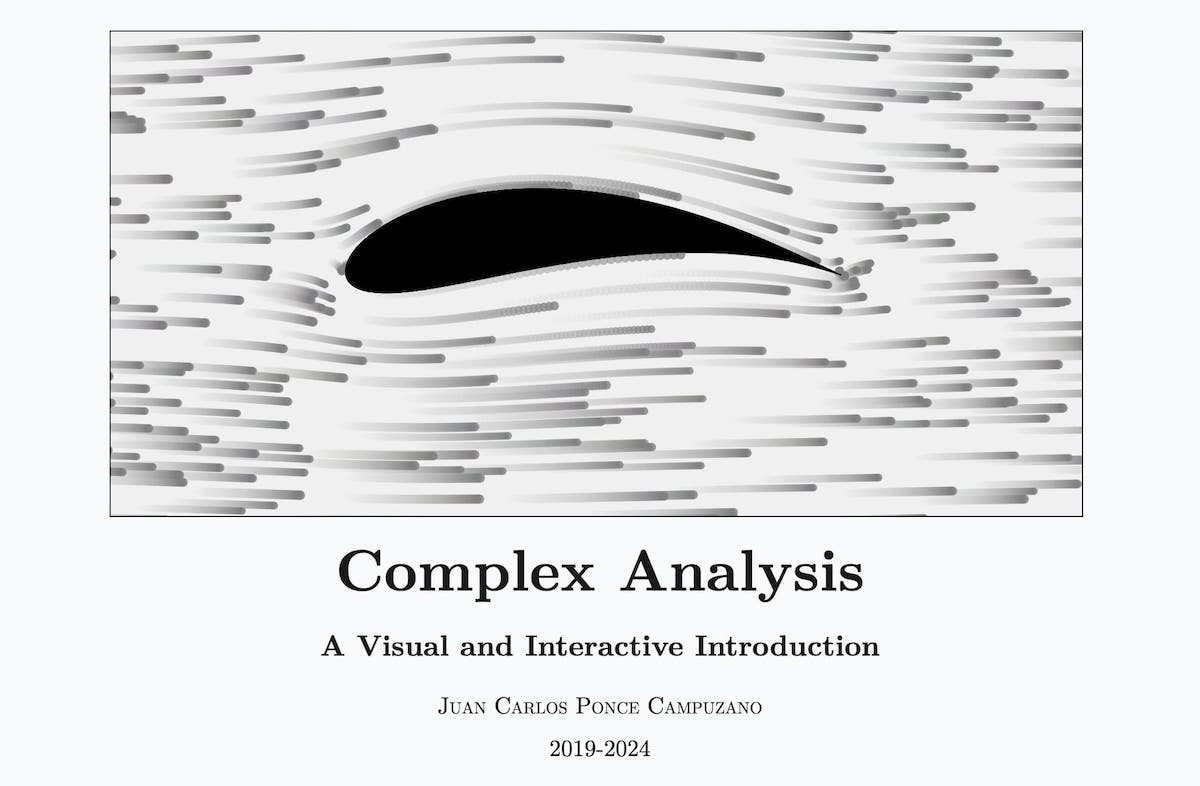
Complex Analysis
An online interactive introduction to the study of complex analysis.
short fable
IDK talk to the author, author seems contactable
 fast harness
nice domain name
 stiff tide
What do you guys think about "The beginning of Infinity"?
fast harness
visual delta
https://complex-analysis.com/content/brief_history.html Why is the paragraph rig...
looks like its a community project so someone could have pushed that to the github
 signal zenith
From the wiki page it doesn’t seem to be a math book
Anyway this is the type of yap that physicists love
cunning elk
10 equations that cHANgEd tHE woRLd
wicked fractal
cunning elk
10 equations that cHANgEd tHE woRLd
"A cohomological approach to cohomology"
tender cobalt
cunning elk
10 equations that cHANgEd tHE woRLd
"The new Einstein of 2026" (referring to some kid who did some whatever science project)
cunning elk
tender cobalt
"The new Einstein of 2026" (referring to some kid who did some whatever science ...
THE NEXT MOZART? (it’s a 3 year old playing early intermediate piano repertoire badly)
wicked fractal
Reminds me when my peers call me a genius 
midnight gulch
i hate when my peers talk about how tall and cool and smart and handsome i am
mortal iris
midnight gulch
i hate when my peers talk about how tall and cool and smart and handsome i am
Typically the length of a material contracts when cooled.
 steady sleet
Hi! due to the weirdness of my countries education systems my calculus class only taught derivatives but not integrals. Now I'm at uni and I need to learn to integrate rather quickly (I know miracles don't exist, but I am willing to put in a lot of effort), does anyone have any good resources?
odd cargo
steady sleet
Hi! due to the weirdness of my countries education systems my calculus class onl...
how quickly lmao
 grizzled kraken
what books to get to get a deep understanding of philosophy of math and of course help me actually do math ( in english ). So my american friend is coming to my country and I'm gonna make him bring me some book
because he wants to bring me something
I have graduated High school by cheating on all my math exams. You know but I think I want to start from 0 and build my way to 100 somehow. I'm willing to forget the ways I was taught in high school
I'm willing to like open my mind about math maybe I was badly introduced to math in school. I want to understand it
I hated math so that's why I cheated in the past but maybe I was close minded and badly introduced
odd cargo
grizzled kraken
I'm willing to like open my mind about math maybe I was badly introduced to math...
whats "100" to you, genuinely
grizzled kraken
odd cargo
whats "100" to you, genuinely
Well it is university level math ( higher maths )
A+ in that
I prefer books to be honest
odd cargo
grizzled kraken
what books to get to get a deep understanding of philosophy of math and of cours...
let him bring you a book on calculus
by Spivak or Courant
most pre-calc texts freely available on the internet are decent enough to get you up there
pre-algebra and IT/College algebra texts are good enough as well
Dont do Khan academy
or OCW
not enough rigor
you need a lot of books for each sub-field in maths, even as simple as pre-algebra
Khan academy and OCW is waste of time
i promise you
grizzled kraken
Yea I'm more so interested in philosophy and how its tied to math I don't know
That makes it interesting for me
I think
odd cargo
grizzled kraken
Yea I'm more so interested in philosophy and how its tied to math I don't know
Bertrand Russel has a book
very famous one
not sure if you should be reading it if you dont know, at the very least, high school algebra
grizzled kraken
odd cargo
Bertrand Russel has a book
The Principles of Mathematics?
odd cargo
grizzled kraken
The Principles of Mathematics?
yea
but dont read it
if you're shit at maths
its just going to confuse you a lot more
grizzled kraken
I'm pretty shit at the moment I guess
odd cargo
grizzled kraken
I'm pretty shit at the moment I guess
find an intro to algebra book on the internet, any, and start there
grizzled kraken
I know some basic stuff tho