#groups-rings-fields
1 messages · Page 126 of 1
 south patrol
 tender wharf
that is so good
 spice whale
i mean it's so you can naturally define a surjection to the quotient
 coral shale
G/N 
south patrol
M \ G / N
 open sluice
setminus gang
tender wharf
I was avoiding G\N because that quotients it the other way lol
thats why I used setminus
coral shale
just use -
tender wharf
weird
coral shale
sorry for detracting from the discussion, carry on.
 summer path
I mean usually it's clear in context
But also with set minus there's often a space between the variables and the setminus
But with quotient there often isn't I think
 spiral scarab
So for example R/Z would be all a+Z where 0<=a<1?
tender wharf
yeah (I'm guessing the z is a typo and you meant a)
spiral scarab
Ohhhhhhhh
tender wharf
I mean there are more common examples like Z/nZ which is just integers mod n really
tender wharf
lmao you should've seen the number of times i posted crankery here
(accidentally ofc)
 wraith cargo
@hidden haven btw very quick here's a challenge for you (I wanna hear your take on this problem lol)
I'm trying to show that Hom_Z(Z[1/p], Q/Z) is isomorphic to the p-adics
Somebody said that it can be done by constructing the isomorphism explicitly but I'm trying to see if there's a cleaner way
spiral scarab
tender wharf
lmao you should've seen the number of times i posted crankery here
so youre the abstract algebra version of the RH crank or the Collatz crank?
jk
tender wharf
lol by crankery I meant I posted something incorrect
summer path
Derpz (complexvariable)
 hidden haven
wraith cargo
<@427909312099385346> btw very quick here's a challenge for you (I wanna hear yo...
hidden haven
wraith cargo
<@427909312099385346> btw very quick here's a challenge for you (I wanna hear yo...
Not sure, seems like constructing an isomorphism would be the cleanest thing possible
Maybe you can show that Hom(-, this) = Hom(-, p-adics)
south patrol
by p-adics do you mean Q_p or Z_p lol
hidden haven
Both have universal properties with respect to mapping in
wraith cargo
hidden haven
Not sure, seems like constructing an isomorphism would be the cleanest thing pos...
I was thinking maybe like
Writing Z[1/p] as lim-> 1/p^n Z then taking out the direct limit
south patrol
i mean must be the latter ig
wraith cargo
south patrol
by p-adics do you mean Q_p or Z_p lol
Z_p
hidden haven
wraith cargo
I was thinking maybe like
Writing Z[1/p] as lim-> 1/p^n Z then taking out the d...
Might work
wraith cargo
Concretely I'm doing this problem from Weibel
 hidden haven
Maybe you can show that Hom(-, this) = Hom(-, p-adics)
hidden haven
hidden haven
Maybe you can show that Hom(-, this) = Hom(-, p-adics)
Try this too maybe
tender wharf
summer path
Derpz (complexvariable)
I should totally do this
wraith cargo
hidden haven
Maybe you can show that Hom(-, this) = Hom(-, p-adics)
Might work
Will try
coral shale
spiral scarab
So for example R/Z would be all a+Z where 0<=a<1?
R/Z is also visualized as a circle. (R number line, R/Z 'number circle')
 formal ermine
yes?
spiral scarab
coral shale
R/Z is also visualized as a circle. (R number line, R/Z 'number circle')
i am bamboozled
is it using euler's identity?
e^ix?
spiral scarab
yeah but what is the isomorphism
 delicate orchid
spiral scarab
e^ix?
delicate orchid
spiral scarab
e^ix?
actually no wait you can see it like this using first iso you're right
spiral scarab
from R/Z to presumably S^1?
delicate orchid
good idea
the kernel of the map x |-> e^{2pi*i*x} is Z, and so by first iso R/Z \cong S^1
but that's not fantastic for intuition
coral shale
i drew it and deleted earlier cus its ugly

note im writing .1, .2, .3, .4, .5 (for 0.1, ...) there
delicate orchid
 coral shale
1=0 
spiral scarab
delicate orchid
the kernel of the map x |-> e^{2pi\*i*x} is Z, and so by first iso R/Z \cong S^1
oh i understand
delicate orchid
coral shale
1=0 <:sotrue:826971355542192148>
literally what we're quotienting by
nerd
spiral scarab
but why e^{2piix}
coral shale
trivially true
delicate orchid
so the kernel is Z and not 2piZ
not like it matters cause they're iso but
trying to keep things intuitive
coral shale
spiral scarab
but why e^{2pi*i*x}
there's an i in there.
isnt there
oh \* to escape discord formatting
 empty rose
$e^{2\pi ix}$
 cloud walrusBOT
bee [it/its]
 coral shale
the reason is just because that's how circles are in the complex plane
or more specifically - the unit circle in C
So this particular quotient is a bit like taking the number line and winding it around this circle again and again and again, and gluing points together that coincide. Is my visual for it
spiral scarab
coral shale
So this particular quotient is a bit like taking the number line and winding it ...
Ohhh I see
yeah it makes sense because you wind it again and again for each integer right?
spiral scarab
Oh I get it
delicate orchid
coral shale
So this particular quotient is a bit like taking the number line and winding it ...
oh my golly gosh it's the wholesome pi_1(S^1) chungus
coral shale
shh
spiral scarab
delicate orchid
oh my golly gosh it's the wholesome pi_1(S^1) chungus
now that I did spheric and hyperbolic geometry I finally know what 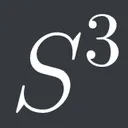 is
is
delicate orchid
the glome
trying to think of the funniest way to describe the 3-sphere now
open ball in the 2-norm on R^4?
SO(4, R)
 teal vessel
just checking, the groups under which I'm checking subgroup-ness are the sets of numbers from which each restriction is drawn, right? (part a is checking for a subgroup of C, part c is checking for a subgroup of Q, etc)?
 delicate orchid
yeah
teal vessel
aight, (non) challenge accepted.
delicate orchid
although I suppose it would only be an issue for showing it's a subset
could just show they're all groups lol
delicate orchid
delicate orchid
although I suppose it would only be an issue for showing it's a subset
ah no, inherits the operation as well
ignore me
spiral scarab
actually
why is it left coset and not right coset
for quotient groups
if the subgroup is normal it doesnt matter sure
but what if it isnt?
empty rose
well if the subgroup isn't normal you don't get a quotient group
(you can have the set of cosets but there isn't a nice way to give them a group operation)
delicate orchid
the fact that they're the same for a normal subgroup is why it's a group
coral shale
spiral scarab
why is it left coset and not right coset
what is 'it' 🤔
weird if your defn writes that
but theyre the same, as others have said due to normality
spiral scarab
delicate orchid
the fact that they're the same for a normal subgroup is why it's a group
well nA isnt necessarily An if the groups operation is not commutative
tender wharf
yeah sure if A ain't normal
if A isn't normal G/A and G\A (right cosets) aren't groups in the canoncial way
tender wharf
spiral scarab
well nA isnt necessarily An if the groups operation is not commutative
in your case here even if the operation of G is not commutative
if A is normal then they're equal
for example consider D_4 and
<R_90> which is the subgroup of rotations in D_4
coral shale
i usually recommend checking defn of quotient sets before introducing quotient groups btw
idk why its usually not done
as far as ive seen
 autumn kite
how do they teach the construction of the rationals
open sluice
the field of fractions
south patrol
of Z
spiral scarab
coral shale
i usually recommend checking defn of quotient sets before introducing quotient g...
i just realised its the same as quotient spaces in ligear algebra
🤦♂️
today is not my day
open sluice
that must be why it’s called algebra 
spiral scarab
open sluice
that must be why it’s called algebra <:surprisedpikachu:556851991763091456>
formal ermine
linear algebra is just commutative algebra with extra steps
 chilly radish
?
open sluice
tbh idk what a quotient space is, I don’t think it was covered in my edition of axler
 barren sierra
quick group module question
south patrol
group module 
barren sierra
Let G be a group
if M is the direct sum of completely reducible G modules
and H normal in G
then M is the direct sum of completely reducible H modules right?
restricting the G action to H doesn't change reducibility?
delicate orchid
yeah I think so - irreducible H modules will be "smaller" than irreducible G modules
so it should all still work
 coral spindle
I’m not sure. An irr G-mod may split up when restricted to H
I’m not sure if one of those H-mod constituents may be nonsimple
barren sierra
coral spindle
I’m not sure. An irr G-mod may split up when restricted to H
Well completely reducible
Not irreducible
coral spindle
Unless you’re talking only about the case when Mashke holds
coral spindle
barren sierra
Well completely reducible
Doesn’t matter, still happens
If any of the simple constituents split up into something indecomposable then we have issues
barren sierra
Hm
coral spindle
I can’t think of an example, but I know zilch about modular reps
I have a vague idea but I’ll have to wait until I’m in front of a keyboard
delicate orchid
ah yeah, good point about modular reps
the only irreducible representation of a finite p-group over a field of char p is the trivial
so if H is a normal p-group (like Q_8 in SL_2(3) or something) then it could break
 rocky cloak
So at least if H is not normal, then (over a field of characteristic 2) the standard representation of S3 is irreducible, but applying restriction of scalar to C2 < S3 does not give a completely reducible representation
 glossy crag
If A is a simple central artinian algebra, is there an elementary way of seeing M_n(A) is artinian (e.g. without appeal to Hopkins-Levitzky or Morita equivalence or whatever else)?
glossy crag
glossy crag
If A is a simple central artinian algebra, is there an elementary way of seeing ...
Actually it's enough to show M_n(A) has a minimal left ideal (since M_n(A) is simple)
So i need to come up with one...
I was thinking matrices with 0 columns except the first, with entries in a minimal left ideal of A
or the same with rows
 wooden ember
glossy crag
If A is a simple central artinian algebra, is there an elementary way of seeing ...
wooden ember
glossy crag
If A is a simple central artinian algebra, is there an elementary way of seeing ...
Maybe I’m being dumb but can’t you use that A^n is artinian and multiply a descending chain of ideals on the left by orthogonal idempotents of this to get stabilizing chains in A^n?
And then combine those to show your original thing stabilizes?
Probably doesn’t work
glossy crag
Lol it's actually even easier than I thought
A simple artinian => A\cong M_k(D) with D a division algebra => M_n(A)\cong M_nk(D), a simple artinian ring
wooden ember
Noice
rocky cloak
You don't really need all that fancy machinery of simple central algebras. M_n(A) is a finitely generated A module, so if A is artinian so is M_n(A). Same for noetherian.
glossy crag
rocky cloak
You don't really need all that fancy machinery of simple central algebras. M_n(A...
True dat, didn't cross my mind.
What is the most accepted definition of a subfield of a K-algebra?
Subalgebra that is a field or subring that is a field?
i.e. should it contain K or not
 static yew
-
I wish discord would fix keyboard support on mobile
-
I'm up to polynomials over a field in my book. It is strewn with
"exercises" for which no answers are provided
One of these is "show that F[x] is not a field" (for some unspecified field F)
Is that because, without a polynomial for modular reduction, many polynomials have no multiplicative inverse? (And if you don't allow negative exponents, which this author does not seem to do so, then only constant polynomials would have inverses)
glossy crag
static yew
1. I wish discord would fix keyboard support on mobile
2. I'm up to polynomials...
Precisely so, no polynomial of positive degree in F[x] has an inverse (because multiplying adds degrees).
static yew
Is something going to get to why negative exponents aren't valid?
Would I need an F[x,x'] where xx' = 1 by definition?
Hopefully my syntax makes sense
glossy crag
static yew
Is something going to get to why negative exponents aren't valid?
Would I need ...
Because polynomials are literally defined not to have negative exponents.
You would need to take F[x][x^-1], i.e. adjoin an inverse of x, then every polynomial has an inverse
static yew
glossy crag
Because polynomials are literally defined not to have negative exponents.
Is there a term for an expression where you can have negative exponents? It seems odd to think that nobody has ever done anything useful with one of those
glossy crag
static yew
Is there a term for an expression where you _can_ have negative exponents? It se...
Yes, there is, these are called formal Laurent series (or sometimes formal Laurent series with finite principal part) and they are important, just not at the beginner level.
glossy crag
Sorry, I misspoke a little actually
I forgot you were talking about the polynomial ring, not formal power series
For the polynomial ring you have the field of rational functions F(x)
Literally defined as sets of fractions f/g
There every polynomial is invertible
static yew
Right but this is a field not a field of fractions
glossy crag
If you were to talk about formal power series, i.e. expressions of the form \sum_n a_nx^n (with infinitely many a_n non-zero), THEN the place where everything gets an inverse is the field of Laurent series that I talked about
In particular, it contains F[x] and F(x)
glossy crag
static yew
Right but this is a field not a field of fractions
A field of fractions is an example of a field
And this IS a field of fractions, namely of F[x]
static yew
Ahh yeah I'm not interested in a polynomial with infinite terms
glossy crag
static yew
Right but this is a field not a field of fractions
Field of fractions just means the smallest field containing your integral domain of choice. In the case of F[x], the FOF is F(x)
static yew
Yeah but even if you have a field of fractions FF
The ring created by adjoining x FF[x] would itself not be a field
glossy crag
static yew
Yeah but even if you have a field of fractions FF
The ring created by adjoining ...
Ofc
E.g. F(x)[y]
This is not a field
static yew
Not ready for that stuff yet
glossy crag
But it's FOF is F(x,y), i.e. the FOF of F[x,y]
static yew
I'm thinking about F[x] where defining x as a root of unity, e.g. xx=x^2=1. Is that even a valid concept?
static yew
glossy crag
But it's FOF is F(x,y), i.e. the FOF of F[x,y]
Wait before you used F[x][y] for F plus two variables, is this F[x,y] different?
glossy crag
static yew
I'm thinking about F[x] where defining x as a root of unity, e.g. xx=x^2=1. Is ...
It is but not entirely the way you imagine it.
glossy crag
static yew
Wait before you used F[x][y] for F plus two variables, is this F[x,y] different?
No, they're isomorphic
You can either construct F[x,y], i.e. formal expressions in two variables with coefficients in F
static yew
glossy crag
It is but not entirely the way you imagine it.
Mmmmmh this seems like an interesting avenue of exploration
glossy crag
or you can construct F[x][y], i.e. formal expressions in varibale y with coefficients in F[x]
it's the same thing
glossy crag
static yew
Mmmmmh this seems like an interesting avenue of exploration
If you pick a root of unity z in C, then Q[z] is what you're looking for. Note Q[z] is a subring of C, not some new concept entirely.
Sorry, i gotta get back to studying
static yew
So if it's a square root I get polynomials with coefficients in Q with degree at most 1? Cuz x^2=1
glossy crag
static yew
So if it's a square root I get polynomials with coefficients in Q with degree at...
Yes, Q[-1] is Q, but just to clarify, you don't get "literal" formal polynomials.
static yew
Although I might need 4
I^4=1
glossy crag
Q[...] means smallest subring of C containing Q and ...
If you take something like a 3rd root of unity w^3=1, then Q[w] will be of the form a+bw
static yew
Since my focus is on finite stuff anyway I'll deal with that later
Gl studying
glossy crag
glossy crag
If you take something like a 3rd root of unity w^3=1, then Q[w] will be of the f...
It's isomorphic to a quotient of Q[x] by the ideal (x^2+x+1)
south patrol
glossy crag
Q[...] means smallest subring of C containing Q and ...
TIL every extension of Q is contained in C
static yew
Ahh i see
Next section says that the analog for absolute value is the degree
Absolute value of x^(-32) might make some heads pop
delicate orchid
south patrol
TIL every extension of Q is contained in C
my favourite subring of C is Q[S_3]
glossy crag
south patrol
TIL every extension of Q is contained in C
He's reading Stillwell's Elements of Algebra, it just deals with finite extensions of Q.
I don't think it's necessary to confuse him with more complicated definitions, no?
But feel free to rectify my explanation, if you wish
static yew
I wonder if this is how someone with access to the multiverse would feel
Polynomial rings F[x] which have coefficients in F, when F is GF(p^k) k>1, where the traditional representation is a polynomial, also usually in x
Keeping which field I'm in is not easy
Gotta head back to work
 sly rain
glossy crag
It's isomorphic to a quotient of Q[x] by the ideal (x^2+x+1)
sly rain
glossy crag
It's isomorphic to a quotient of Q[x] by the ideal (x^2+x+1)
When does one think of the elements as a quotient of Q[x]/(x^2+x+1) instead of Q[w]? Q[w] seems nicer
delicate orchid
Stevie-O is constructing these rings via polynomial quotients iirc?
might be wrong
sly rain
Its a general question, I didnt really follow the conversation, but im learning this stuff now too
delicate orchid
ah I see, well it's easier to implement in software via a polynomial quotient 
also it's directly showing the use of the universal property of polynomial rings
glossy crag
sly rain
When does one think of the elements as a quotient of Q[x]/(x^2+x+1) instead of Q...
When one doesn't know Q[w], I'd say. Same with finite fields and stuff like Z_2[x]/(x^2+x+1)
delicate orchid
but once you have the isomorphism I'd just switch to Q[w]
glossy crag
You first learn about constructions "ex nihilo", i.e. out of nothing
E.g. you take a field K, an irreducible polynomial f and see that K[x]/(f) is a field
formal ermine
south patrol
TIL every extension of Q is contained in C
huh
glossy crag
glossy crag
E.g. you take a field K, an irreducible polynomial f and see that K[x]/(f) is a ...
Then some time later, once you know that such fields exist, you simply view the latter as a field L containing K such that L=K(a) for a root a of f
It's just a matter of juggling viewpoints
delicate orchid
formal ermine
huh
read
glossy crag
delicate orchid
read
 formal ermine
oh kek
 alpine island
glossy crag
E.g. you take a field K, an irreducible polynomial f and see that K[x]/(f) is a ...
alpine island
glossy crag
E.g. you take a field K, an irreducible polynomial f and see that K[x]/(f) is a ...
this construction is honestly one of the coolest things in algebra for me so far. It's a simple concept and yet it leads to almost any field you can think of
(almost)
 lethal dune
freedom is an illustion
glossy crag
glossy crag
Subalgebra that is a field or subring that is a field?
If D is a division K-algebra, do these definitions agree?
The former are subfields that contain K, so my question is if every subfield necessarily contains K.
lethal dune
what's the question?
glossy crag
lethal dune
what's the question?
I was wondering about the definition of a subfield of an algebra, whether it's better to have it mean "subalgebra that is a field" or "subring that is a field"
And i was wondering if there are any situations when the definitions agree
e.g. in a division ring finite-dimensional over its centre
or when talking about maximal subfields (in the former or latter sense)
 white oxide
this might be a little silly, but i remember briefly reading something about galois groups being closely tied with the symmetric group on n letters. so $|\mathrm{Gal}(\mathbb{Q}(\sqrt[3]{2}, i\sqrt{3})/\mathbb{Q})| = 6$, which directly corresponds with the permutation of 3 roots, the order of $S_3$. is this what they were talking about, or something of those lines?
cloud walrusBOT
okeyokay (analysis is MID)
 glossy crag
white oxide
this might be a little silly, but i remember briefly reading something about gal...
glossy crag
white oxide
this might be a little silly, but i remember briefly reading something about gal...
Yes, that's exactly what it is. If f is a separable polynomial, then the Galois group of its splitting field acts as permuttaions of its roots (not necessarily transitively)
lethal dune
glossy crag
I was wondering about the definition of a subfield of an algebra, whether it's b...
without any context if I have to guess, I would guess the same
if your algebra is a field extension, it could mean the prime subfield
glossy crag
What about situations when the definitions agree?
lethal dune
I think it needs to be clarified what the author means in what context
glossy crag
lethal dune
I think it needs to be clarified what the author means in what context
It's not one author, i've seen the definition used by different authors to mean different things and i was wondering when they might agree
coral spindle
Does anyone know of a reference for the (possibly false!) statement that chi(1) divides |G| for characters over non-algebraically-closed fields of characteristic zero? I think it might be in Curtis–Reiner's tomes but christ I cannot find it.
N.b. I mean only irreducible characters, ofc I realise this shan't hold for reducible ones.
rocky cloak
glossy crag
It's not one author, i've seen the definition used by different authors to mean ...
Well, they should agree iff the field is prime. If the field isn't prime then its prime field would distinguish the two definitions
coral spindle
rocky cloak
So at least if H is not normal, then (over a field of characteristic 2) the stan...
Very nice counterexample
As expected a semidirect product works
I had something like this in mind. Glad I saw your answer and saved myself the effort lmao
rocky cloak
coral spindle
Very nice counterexample
I haven't been able to come up with a normal counterexample though. Probably mostly because I don't want to think about groups of order more than 6
formal ermine
rocky cloak
Well, they should agree iff the field is prime. If the field isn't prime then it...
when is a field prime?
coral spindle
Yeah I think such an example might force one to look outside of Z/p
white oxide
Why is it that $$\mathrm{Gal}(\mathbb{Q}(\sqrt[3]{2}, i\sqrt{3})/\mathbb{Q}(i\sqrt{3})) \simeq \langle \mathbb{Z}_3, + \rangle$$? The two complex roots are not in $\mathbb{Q}(i\sqrt{3})$, so they don't have to be fixed; therefore shouldn't it be of order 6 and hence can't be isomorphic to $\mathbb{Z}_3$?

 cloud walrusBOT
okeyokay (analysis is MID)
 rocky cloak
formal ermine
when is a field prime?
rocky cloak
formal ermine
when is a field prime?
When it has no subfields, i.e. when it is equal to Q or Z/p
formal ermine
Ah
rocky cloak
white oxide
Why is it that $$\mathrm{Gal}(\mathbb{Q}(\sqrt[3]{2}, i\sqrt{3})/\mathbb{Q}(i\sq...
An automorphism is determined by where it maps cbroot(2)
There are 3 choices for where that could be
The thing to observe is that Q(cbroot(2), isqrt(3)) is the splitting field of x^3 - 2.
Or at least that it contains the roots
white oxide
oh i thought it was the number of permutations of all of the roots of x^3 - 2
rocky cloak
white oxide
oh i thought it was the number of permutations of all of the roots of x^3 - 2
Not every permutation gives you an automorphism necessarily. Here the extension is generated by cbroot(2), so an automorphism is determined by where it is mapped
It's enough to define a map on generators
white oxide
sorry to post this example again, but i'm not quite following how alpha_i being a zero of q(x) of multiplicity 1 implies that F(alpha_1, ... alpha_i) is separable over F(alpha_1, ..., alpha_i - 1). i know that it's separable over the latter if and only if q(x) has all zeros of multiplicity 1, but we only showed that alpha_i is of multiplicity one, and i'm struggling to see which part implies that the rest of the zeros of q(x) are of multiplicity 1

i know it's there somewhere but my poor slow brain
also how is this expression true? for any f(x), g(x) with coefficients from a field F, it is not true in general that (f(x)g(x))^n = f(x)^n times g(x)^n
 south patrol
white oxide
also how is this expression true? for any f(x), g(x) with coefficients from a fi...
south patrol
white oxide
also how is this expression true? for any f(x), g(x) with coefficients from a fi...
Yes it is
This is just how multiplication works
In any commutative ring (ab)^n = a^n b^n
white oxide
yeah nvm im so stupid i tried to produce a counterexample and i did the computation wrong
formal ermine
white oxide
yeah nvm im so stupid i tried to produce a counterexample and i did the computat...
real
rocky cloak
white oxide
sorry to post this example again, but i'm not quite following how alpha_i being ...
For an irreducible polynomial all roots have the same multiplicity. You can see this because you have an automorphism mapping and root to any other.
glossy crag
Frobenius theorem (division R-algebras) via Skolem-Noether and maximal subfields is neat.
That is all, carry on.
coral spindle
I noticed that while I was flipping through Curtis–Reiner! I might give it a read.
white oxide
rocky cloak
For an irreducible polynomial all roots have the same multiplicity. You can see ...
ah ok got it thanks
yo i'm not going insane here right it should be $E = F(\alpha)$
 cloud walrusBOT
okeyokay (analysis is MID)
 white oxide
or am i trippin
 cloud walrusBOT
 formal ermine
lambda is C -> T and chi is T -> C so it would only make sense
 untold turret
can any isomorphism of two sets be extended to a module isomorphism on the free modules generated from these sets?
formal ermine
untold turret
can any isomorphism of two sets be extended to a module isomorphism on the free ...
what is an isomorphism of sets lol
untold turret
set-isomorphism, a function bijection
coral spindle
untold turret
can any isomorphism of two sets be extended to a module isomorphism on the free ...
Yes, dare I say obviously
Any map induces a homomorphism which restricts to that map, and if we have a pair of bijections that are mutually inverse their induced homomorphisms must also be mutually inverse.
You don't even need the universal property for this – it follows from functoriality.
untold turret
noted, thanks a lot!
 lime badge
I just wanted to check something that seemed deceptively simple (I'm sure I'm wrong). This problem I'm doing in Aluffi (problem 5.23 in chapter 7) is as follows: Suppose there are no irreducible polynomials of degree n in k[x], where n > 0 and k is a field. Prove there are no separable extensions of k of degree n.
If there was such an extension, it would be a finite separable extension and therefore simple. Wouldn't this immediately give a contradiction or am I missing something?
south patrol
That's the solution I'd give too
lime badge
Ok, thanks!
white oxide
how does one get the abstract algebra role
 ashen heron
formal ermine
ashen heron
formal ermine
@white oxide based name
ashen heron
(Analysis is HIGH btw)
white oxide
ashen heron
<#790023107708583946>
thx ur the goat
white oxide
formal ermine
<@418474799208071180> based name
indeed
glossy crag
What are some non-commutative infinite-dimensional division algebras over R and C?
formal ermine
what is a flat extension of rings? one being flat as a module over the other?
 rustic crown
yee an injection R --> S such that S is a flat R-mod
formal ermine
rustic crown
yee an injection R --> S such that S is a flat R-mod
yeah ok thx
another question
since you're here now det
what does it mean for a polynomial in C[x, y] to be y-generic?
rustic crown
not really sure
rustic crown
glossy crag
What are some non-commutative infinite-dimensional division algebras over R and ...
what about something like H[x]?
and that ⊗_R C
south patrol
Uhh don't think that is a division algebra
rustic crown
oh oops
whut about H(x) then
does this make sense?

what if i just say R(x) ⊗_R H
south patrol
H(x) ought to make sense right
rustic crown
and C(x) ⊗_R H
are these division algs
yea feels like it
idk how to see it lol
south patrol
Yeag I looked it up and they gave same example as you lol
rustic crown
i see non-zero elementary tensors are invertible
what about sums
i can think of it as an R(x) algebra with basis {1, i, j, k}
so shouldn't the same f0 + f1i+f2j+f3k behave nicely with f0 - f1i -f2j - f3k
yee this looks legit
south patrol
Ye
rustic crown
at least it multipies to give me a elementary tensor f⊗1
and this is invertible
okie maybe it wont be as nice over C though
glossy crag
rustic crown
what if i just say R(x) ⊗_R H
Nice
rustic crown
rustic crown
okie maybe it wont be as nice over C though
because stuff like i⊗1 - 1⊗i
just like how C⊗_R C doesn't stay a field anymore
glossy crag
Thanks @rustic crown, good example.
Centraliser theorem via Skolem-Noether is just HNNNNG 

SO fucking clean
I feel dirty just copying it to my notes
glossy crag
rustic crown
so shouldn't the same f0 + f1i+f2j+f3k behave nicely with f0 - f1i -f2j - f3k
One question though
If K/R is an arbitrary transcendental extension (e.g. R(x) like you said), how do we know a^2+b^2+c^2+d^2\neq0 in K?
I'm not that familiar with the topic, but I believe such fields are called real-closed or something like that (sums of non-zero squares non-zero)
Do we know that every extension of R is real-closed?
south patrol
C
rustic crown
rustic crown
okie maybe it wont be as nice over C though
yea that's exactly the problem here
rustic crown
feels like it lmao
maybe clear denoms and argue a lil
yea i think arguing at the highest degree works
glossy crag
Yeah it's fine looks like
rustic crown
glossy crag
I'm not that familiar with the topic, but I believe such fields are called real-...
det no familiar either >.<
rustic crown
rustic crown
maybe clear denoms and argue a lil
or maybe just think of it as real valued functions, that gives it too
at each value of x, you must have all are 0s
and polys are determined by their values
(as R is infinite)
glossy crag
glossy crag
I'm not that familiar with the topic, but I believe such fields are called real-...
Looks like this ought to be true in every ordered field, so the question is which extensions of R can be ordered.
white oxide
yo theorem 8.6 is just lemma 37.5 extended by induction right


and i guess generalized
open sluice
wait what’s H v K?
white oxide
the subgroup generated by the union of H and K
open sluice
spook
white oxide
no way ur in #groups-rings-fields
open sluice
this specific notation isn’t covered in my books
white oxide
yeah hungy has some weird ass notation
oh
you were talking about fraleigh right
interesting i thought that was the universal notation for the join of two groups
open sluice
I don’t think I’ve covered that as a concept at all
but I’m not an algebraist so whatever
 sweet echo
I looks to be arbitrary so its not necessarily just extending by induction
open sluice
white oxide
yo theorem 8.6 is just lemma 37.5 extended by induction right
what book is this from?
oh hungerford?
ashen heron
looks like it
white oxide
yup
white oxide
ye
it's actually surprisingly very good
lots of examples
sure it's terse but in a good way
not like a rudin type of way
(or so i've heard)
 white oxide
yee lol fraleigh was pretty good for a first semester algebra class imo
untold turret
Let $R$ be an integral domain, let $R^n$ be a free $R$-module with basis ${v_i}i^n$, let $\phi:R^n \to R^n: v_j \mapsto \sum_i^n m{ij}v_i$ be an $R$-module homomorphism, let $F$ be $R$-module isomorphic to $R^n$, and let ${\sum^n_i m_{ij}x_i}j^n$ be a basis for $F$. How would you argue $\phi$ is an isomorphism (in order to establish ${\sum_i^n m{ij}v_i}^n_j$ is a basis)?
cloud walrusBOT
nrs
 untold turret
ah, we need basis under module isomorphism is basis
white oxide
what does he mean that a "for the trivial group, a G-invariant subspace is nothing more than a subspace"? aren't all G-invariant subspaces subspaces lol for any group G
 glossy crag
If A is a finite-dimensional K-algebra, then it has maximal subfields (subalgebras that are fields), since the set of subfields is non-empty (contains K), thus has a maximal element by the noetherian condition, right?
south patrol
Yessirree
 frigid lark
If A is a G module, $N \in \mathbb{Z}^+$ what does $A_N$ mean?
cloud walrusBOT
parrottea


 tough raven
Is the following argument correct?
Let K be a p-adic field (i.e. finite extension of Q_p) with valuation ring A and uniformiser π. Let f in A[X] be monic.
Suppose f is irreducible and the constant coefficient a_0 of f has valuation equal to that of π (i.e., it is divisible by π but not π^2). Then f is an Eisenstein polynomial (i.e., all the intermediate coefficients are also divisible by π).
Proof: let e = deg(f) and α be a root of f in an extension of K, then it is clear from the norm formula for valuation in an extension that v(α) = v(a_0)/e = v(π)/e; but K(α) is of degree e over K. Thus K(α)/K is totally ramified and α is a uniformiser for K(α), so its minimal polynomial f is an Eisenstein polynomial.
It seems too good to be true that just because the constant coefficient is divisible by π exactly once that all the other coefficients are also divisible by π. Is there a more direct argument? It would be nice to see how irreducibility plays a role in it, for example.
 real sparrow
an Injective homomorphism only maps to a group from one of its subgroups.
a surjective homomorphism only maps from a group to one of its quotients.
A surjective injective homomorphism is an isomorphism.
lethal dune
real sparrow
an Injective homomorphism only maps to a group from one of its subgroups.
a surj...
what's the question
 sly crescent
real sparrow
an Injective homomorphism only maps to a group from one of its subgroups.
a surj...
sly crescent
real sparrow
an Injective homomorphism only maps to a group from one of its subgroups.
a surj...
Hi
 delicate bloom
tough raven
It seems too good to be true that just because the constant coefficient is divis...
delicate bloom
tough raven
It seems too good to be true that just because the constant coefficient is divis...
irreducibility played a role when you found the valuation based off the degree, if it weren't irreducible, it couldn't have a norm of that form
maybe a different perspective to look at is to look at the newton polygon, although I don't know if that helps other than to give a visual perspective on what it looks like
tough raven
delicate bloom
irreducibility played a role when you found the valuation based off the degree, ...
Well yes, and now that I think about it, in assuming that the norm is the constant coefficient (upto sign).
But what I meant is that it would be interesting how irreducibility would be used in a “direct” proof.
delicate bloom
tough raven
Well yes, and now that I think about it, in assuming that the norm is the consta...
when you say "direct" can you give a fake example to help me understand what you mean by that
like what would that look like
tough raven
I don't know; something that doesn't feel like it used black boxes, I guess.
Say, an argument algebraically manipulating coefficients and evaluating the polynomial at some values, using the norm and the ultrametric inequality, or something concrete like that.
delicate bloom
hmm, I think I might be able to come up with a version like that, I'll think about it
also maybe thinking about your assumption earlier: "assuming that the norm is the constant coefficient (upto sign)." might help too, since that sorta contains the black-boxiness I feel
idk if this is more convincing to see, but the fact that in the extension field we have $v(\alpha)=v(\sigma(\alpha))$ for each galois conjugate means it factors as, $$f(x)=\prod_\sigma(x-\sigma(\alpha))$$ which once you expand it you can see all the intermediate coefficients are divisible by $\alpha$, but since they actually lie in $A$, they must be divisible by $\pi$
cloud walrusBOT
merosity
 delicate bloom
the main trick is seeing that if you have v(x)>0 after we expand the linear terms out in the extension field, and if our original irreducible polynomial were in, say Q_p, this means the smallest v(x) can be is 1. So it kind of forces it upwards magically.
Krasner's lemma is also a good one that's a bit peculiar like this I feel
idk, ping me if you come up with something better or if you think about this and feel like that helps later would be fun to think about more
rocky cloak
white oxide
is my question
It's the "nothing more" part that is important. When G is trivial every subspace is invariant. So the only irreducible representations are those without subspaces.
 fervent gyro
Do you have book recommendations for the basics of exterior algebra? I need to reference some basic properties to include this proof in my work:
 untold turret
A is a basis for free module F_1, B is basis for free submodule F_2 of same rank as F_1. How is the determinant of the change of basis A to B matrix related to the quotient module F_1/F_2?
lethal dune
what's the relationship of F_1 and F_2? How's the quotient is defined then?
rocky cloak
untold turret
A is a basis for free module F_1, B is basis for free submodule F_2 of same rank...
Are you saying you have a homomorphism F_2 -> F_1 and you write it as a matrix with respect to the bases A and B?
Then at least you can say that if the determinant is a unit the homomorphism is an isomorphism, so F_1/F_2 = 0.
untold turret
rocky cloak
Are you saying you have a homomorphism F_2 -> F_1 and you write it as a matrix w...
oh! I see! I'm trying to figure out if we can infer something about the size of F_1/F_2 from that determinant and your result makes a lot of sense
you're right, it isn't a change of basis matrix, but a matrix expressed in two bases
rocky cloak
For commutative rings you might be able to use the adjugate matrix to say something more. But I'm not sure how much you can say
wraith cargo
fervent gyro
Do you have book recommendations for the basics of exterior algebra? I need to r...
Appendix in Eisenbud's commutative algebra book
formal ermine
this lecture we did lie theory stuff
like the classification of finite dimensional complex irreducible representations of sl and how newton okounkov bodies help you find bases
hidden haven
@gritty sparrow look, your favourite topic in the wild
 gritty sparrow
lol nice
 agile burrow
That's cool
Rep theory of sl(2, C) is cool
I want to understand geometric interpretation via action of PGL_2(C) on rational normal curve but I do not understand projective geometry
delicate orchid
agile burrow
Rep theory of sl(2, C) is cool
C[x, y]
I do find it funny how you can just like
for sl(n, C) you just consider 2n elements acting on C[x_1, ..., x_n] it's so easyyyy
 elder wave
What
None of the things you showed me required any of this apart from basic terminology
white oxide
rocky cloak
It's the "nothing more" part that is important. When G is trivial every subspace...
ah ok that makes much more sense, thanks!
summer path
im getting the feeling more and more that whatever class illumi is taking doesn't actually teach much of anything and just does an overview of the material instead 
formal ermine
elder wave
None of the things you showed me required any of this apart from basic terminolo...
I learnt some new stuff so I didn't see it as basic terminology
elder wave
The course using the word functor does not mean cat theory is a prereq
delicate orchid
elder wave
The course using the word functor does not mean cat theory is a prereq
edrmmm mbut how can you ermmm uhhh how cna you eemrmm how can you map between categoryies without huhhh carateogries bieng a hting???
lethal dune
my algebra 1 was: cat theory, groups and solvability of groups, rings, modules over pid, projective injective modules, quadratic forms, homological algebra and rep theory
summer path
in that order
 delicate orchid
never seen that before in my life
barren sierra
yea me either which is why I'm asking
delicate orchid
nobody has ever seen that before
barren sierra
wunderbar
delicate orchid
it is an artefact of antediluvian origins long forgotten to modern man
coral spindle
You know what, I saw that symbol in the TeX symbol list recently 
If you find out what the hell it means let me know
I think it was \ydown or something?
lethal dune
I'm willing to call it a typo
delicate orchid
maybe we can work it out
lethal dune

delicate orchid
what's G_1 and what's E
barren sierra
E is an extraspecial group
barren sierra
lethal dune
I'm willing to call it a typo
this is used many times
lethal dune
and they never mentioned what that is?
barren sierra
I mean this is for my REU so like there's alot of BS moving around elsewhere
delicate orchid
ok just an extra special group right
lethal dune
not even on the symbols section,
barren sierra
this is purely a notation question in case anyone here knew lol
delicate orchid
do you know the order of G_1 so we can at least determine if the base set is E x SL(2, 3) x C_12
barren sierra
delicate orchid
ok just an extra special group right
specifically order 27 exponent 3 if you care

 delicate orchid
now if it was extraspecial of exponent 7 of order 343 we might be in business
coral spindle
barren sierra
Not sure it's a typo since they state it twice
delicate orchid
it's obviously not a typo
lethal dune
could it be the wreath product?
barren sierra
but none of the appearences define it
no that's a different symbol
that they do bother to define

south patrol
Wreath
lethal dune
there's not many group products known to mankind
coral spindle
S'not wreath
barren sierra
lethal dune
there's not many group products known to mankind
I've learned of them than I want to
lethal dune
idk what wreath product is, just saw on wiki
barren sierra
groups suck man gimme back my rings
delicate orchid
ok so the extra special group p_{1+2}^+ is the sylow p-subgroup of PSL_3(p) which does not help because it's SL(2, 3) not SL(3, 2) FUCK
what's the action I don't get itttt
coral spindle
lethal dune
there's not many group products known to mankind
Perhaps this? https://en.wikipedia.org/wiki/Central_product They mention extraspecial groups on this page
In mathematics, especially in the field of group theory, the central product is one way of producing a group from two smaller groups. The central product is similar to the direct product, but in the central product two isomorphic central subgroups of the smaller groups are merged into a single central subgroup of the product. Central products ...
delicate orchid
no way it's the central product
delicate orchid
\ast is standard for central product
when it's clear from context that \ast isn't the free product
coral spindle
Well I mean
delicate orchid
before you quip
lethal dune
is there a similar notion of attaching map in group theory?
barren sierra
but the only time they state something is the central product here they do so without a symbol
formal ermine
elder wave
The course using the word functor does not mean cat theory is a prereq
do YOU know what a flavorable module is
wraith cargo
barren sierra
do they cite a source for the results
lethal dune
f: H ( ⊆ G) → N and define G×N/ ~
delicate orchid
that's basically the form a central product takes
lethal dune
oh lol
barren sierra
wraith cargo
do they cite a source for the results
this is the result lol
OH IT MAY BE CENTRAL PRODUCT?
I think it is
delicate orchid
you take a subgroup Z of Z(G) with an isomorphic image in Z(H) then the central product is GxH/{(x_i, x_i'^{-1}) : x_i \in Z} lol
coral spindle
😏
lethal dune
spam is getting spam answers rather than a helpful one 
delicate orchid
so if that symbol is commonly used for an attaching map then it would make sense
barren sierra
lethal dune
spam is getting spam answers rather than a helpful one <:bleakkekw:9133441179819...
I appreciate the efforts to cheer me up
delicate orchid
proceed by assuming it's the central product
lethal dune
what's the map tho
delicate orchid
wdym what's the map
 lethal dune
the isomorphism you need for a central product
barren sierra
ngl idk what central product really is
delicate orchid
there's a copy of Z in Z(G) and one in Z(H)
lethal dune
there's no canonical one unless Z is itself the product on the right
barren sierra
it kinda keeps popping up and so far I've been able to brush it under the rug
but now I cannot
lethal dune
delicate orchid
sure ok it's up to an automorphism but like
yeah
 hollow mica
is (2) somehow equivalent to completeness since it characterizes the real numbers?
 delicate orchid
oh oh I remember
barren sierra
hollow mica
is (2) somehow equivalent to completeness since it characterizes the real number...
I don't think you get completeness from either of these
coral spindle
hollow mica
is (2) somehow equivalent to completeness since it characterizes the real number...
This is model theory more than anything, just so you know. But as it happens, it certainly does not characterise the real numbers! Skolem–Lowenheim tells us otherwise.
rocky cloak
hollow mica
is (2) somehow equivalent to completeness since it characterizes the real number...
The real algebraic numbers should satisfy (2), and they're not complete.
 hollow mica
oh for some reason I thought if (1) was true for some field F then F must be isomorphic (as a field) to the reals
coral spindle
No that's definitely not true.
Elementary equivalence is actually quite a weak condition.
barren sierra
delicate orchid
no wonder no one uses this DOG construction bro
it's all over my REU project and rn I'm semi sweeping it under the rug lol
coral spindle
As I alluded to, Skolem–Lowenheim tells us that there are infinitely many distinct structures that satisfy this property, at least one for every infinite cardinality.
delicate orchid
barren sierra
it's all over my REU project and rn I'm semi sweeping it under the rug lol
it's well defined for extra special groups :trollshiro:
lethal dune
delicate orchid
CRINGE!
Wtf is an extra special group
delicate orchid
Z(G) = C_p and Inn(G) is
uhh
elementary abelian
yeah that's the one
thinkin bout p^3 🤤
lethal dune
Cringe af
delicate orchid
actually they're quite cool
barren sierra
they are neat
delicate orchid
cool fusion systems on them :pack:
barren sierra
they're p groups with center = Z_p
lethal dune
They are made up terms to create more jobs
barren sierra
so true (I just got paid today)
delicate orchid
yeah I suppose "p groups with minimal centre and nice inner automorphisms" is quicker
I don't get paid
summer path
you won't be homeless today! (i hope)
lethal dune
barren sierra
so true (I just got paid today)
me yesterday for shittalking on the internet
barren sierra
summer path
you won't be homeless today! (i hope)
I will be eating good today*
*I will not be, I will be eating the free dining hall food
summer path
is the dining hall food good there
formal ermine
barren sierra
I will be eating good today*
*I will not be, I will be eating the free dining h...
free food????
open sluice
free at the price of 80 years of debt
barren sierra
summer path
is the dining hall food good there
fuck no
summer path

barren sierra
aaaand I'm trying to lose weight and all the food is like
pasta, pizza, fried chicken in some sauce, mashed potatoes, that type of stuff
but it's free
barren sierra
formal ermine
I'm like constantly hungry
me too since i'm on a heavy calorie deficit now
formal ermine
barren sierra
shitty versions of that
still better than bütterken
lethal dune
formal ermine
still better than bütterken
is that a misspelling of butter chicken
 small bramble
been reading bout localization for two days and I just realized localizing by a prime means making the ring (R-P)^(-1)R rather than P^(-1)R  . It's not like dividing by 0 shouldn't make sense
lethal dune
happens
formal ermine
lethal dune
is that a misspelling of butter chicken
it's dull bread with butter
lethal dune
shit
formal ermine
I would rather have chicken right now
delicate orchid
small bramble
been reading bout localization for two days and I just realized localizing by a ...
yeah this is why I've seen some authors take the localisation "away from" the prime
which makes much more sense to me
small bramble
yeah sounds less bamboozling 
teal vessel
oh, @delicate orchid you remember when I said my brother calls fibers pullbacks? it's because his textbook never defined fiber and calls them all pullbacks.
rocky cloak
delicate orchid
yeah this is why I've seen some authors take the localisation "away from" the pr...
I see some authors use "localize away from" when talking about elements and "localize at" when talking about prime ideals.
That way you can be totally confused when they talk about the localization at 2 and the localization away from 2.
Geometrically it makes sense though.
south patrol
Lol this just reminds me of when I emailed a professor about some notes cause I confused R_(0) and R_0
rocky cloak
Localization at 2, zooms in on 2 and localization away from 2 zooms into the other primes
south patrol
Was embarrassing
glossy crag
In a product set $\bigcap_{i,j}A_i\times B_j=(\bigcap_iA_i)\times(\bigcap_jB_j)$ for arbitrary index sets, right? There are no infinite nuances I'm missing?
cloud walrusBOT
leave_no_norm
 coral spindle
Seems so.
glossy crag
coral spindle
Seems so.
Just checking.
delicate orchid
rocky cloak
I see some authors use "localize away from" when talking about elements and "loc...
very funny
delicate orchid
rocky cloak
Geometrically it makes sense though.
geometry is non-rigorous cope
rocky cloak
delicate orchid
geometry is non-rigorous cope
Geometry = coming up with weird names for algebra
delicate orchid
if it's in a non-hausdorff topology I will not call it a shape
south patrol
cloud walrus
**leave\_no\_norm**
This works for arbitrary products too
I guess the question now is what the funniest way to prove this is
delicate orchid
are A_i B_j just sets
south patrol
ye
delicate orchid
ok lol "product set" is a weird term
south patrol
why
delicate orchid
find the indecomposable sets
delicate orchid
what else could I possibly mean you fool
X is indecomposable iff there are no doodads such that Y \coprod Z = X or whatever
south patrol
coprod different tho
well usually decomposability is in situations with biproducts right
but ye
delicate orchid
yeah normally with biproducts
but if you'd ask me to generalise it I'd choose the coproduct
south patrol
me too
delicate orchid
wholesome!
glossy crag
Is the assumption that R has non-zero maximal left ideals used anywhere here? I don't see it, looks like the proof works just as well without it.
 south patrol
I agree yeah it seems the proof would go through fine with Q being 0 for everything lol
formal ermine
what is the mapping for $V \tensor V^\vee \iso \on{End}{V}$
cloud walrusBOT
 formal ermine
my prof said v tensor phi maps to phi(v)v but that just sounds like nonsense to me
lethal dune
(v, f) ↦f(_)v
delicate orchid
formal ermine
my prof said v tensor phi maps to phi(v)v but that just sounds like nonsense to ...
yeah that's right
lethal dune
noo
formal ermine
lethal dune
(v, f) ↦f(_)v
okay this makes mure moch sense lmao
maybe he typo'd on the blackboard
I was so confoosed
formal ermine
delicate orchid
yeah that's right
wait huh?
formal ermine
nono
delicate orchid
yeah I got it now
formal ermine
why for lie algebras we consider endomorphisms instead of just automorphisms
lethal dune
formal ermine
why for lie algebras we consider endomorphisms instead of just automorphisms
because Aut don't form a lie algebra
delicate orchid
I know about root systems and how they relate to lie groups and their reps but I'm way more into the associated Weyl group than the actual reps
formal ermine
$e_1 \tensor e_3^* = E_{31}$ right????
cloud walrusBOT
 formal ermine
uhhhh in $\bC^3$
cloud walrusBOT
 formal ermine
over C
delicate orchid
I got no idea what you're talking about
formal ermine
cloud walrus
this
lethal dune
no
lethal dune
try plugging e_3, you're supposed to get e_1
lethal dune
lethal dune
try plugging e_3, you're supposed to get e_1
trick
delicate orchid
troll
lethal dune
 lethal dune
vectors as rows
formal ermine
ok thank you wew uwu
lethal dune

formal ermine
when we define an algebra what do we mean with "calculation rule"
delicate orchid
yeah so e_i \otimes e_j* is the matrix that's e_i evaluated on e_j and 0 elsewhere
formal ermine
in my case U(n^+)
it says "U(n^+) is the algebra with generating system blabla and calculation rule XY - YX = [X, Y]"
what do they mean with this
delicate orchid
that's a lie bracket
who the fuck calls that a calculation rule on the nine celestial spheres
but then again who calls M_{3\times3}(C) "C^3"
real sparrow
there is 1 group of order 15 and 2 groups of order 21
formal ermine
what is the calculation rule supposed to mean
real sparrow
One of those groups of order 21 is non abelian
delicate orchid
yeah it's C_7 \ltimes C_3 with the obvious embedding of C_3 into Aut(C_7) \cong C_6
real sparrow
The smallest odd order non abelian group.
formal ermine
delicate orchid
it's not a lie algebra without a lie bracket
oh lmao
 tribal moss
formal ermine
what is the calculation rule supposed to mean
tribal moss
formal ermine
what is the calculation rule supposed to mean
It's the (non-commutiative) multiplication operation in the algebra. Calling it "calculation rule" instead of "operation" is very nonstandard.
real sparrow
C7 has automotphism group of C6
formal ermine
tribal moss
It's the (non-commutiative) multiplication operation in the algebra. Calling it ...
how do you define multiplication in terms of itself?
tribal moss
I ... don't?
 rustic crown
delicate orchid
yeah it's C_7 \ltimes C_3 with the obvious embedding of C_3 into Aut(C_7) \cong ...
rustic crown
delicate orchid
yeah it's C_7 \ltimes C_3 with the obvious embedding of C_3 into Aut(C_7) \cong ...
(thats rtimes  )
)
delicate orchid
tribal moss
It's the (non-commutiative) multiplication operation in the algebra. Calling it ...
anticommutivity is BASICALLY commutivity cmon now
delicate orchid
rustic crown
(thats rtimes <:slightlyembarrassed:834483370117300336>)
my supervisor gets annoyed at me because I have literally never once got it the right way round
formal ermine
also calculation rule might be lost in translation
delicate orchid
and I will never learn which way round it goes
real sparrow
The symbol points in the direction of the automotphism
delicate orchid
wow... cool
rustic crown
it points in the direction of the subgruop that's going to be normal
delicate orchid
"the triangle is the normal subgroup tirangle sotrue"
rustic crown
.<
real sparrow
delicate orchid
"the triangle is the normal subgroup tirangle sotrue"
Not the vest way to see it because then it just reduces to the same problem but for normal subgroups
Instead I just look at the direction of the homomorphism
tribal moss
Wikipedia https://en.wikipedia.org/wiki/Semidirect_product helpfully informs us that
some sources[9] may use this symbol with the opposite meaning.
real sparrow
$$\varphi:A\to\text{Aut},B$$
$$A\ltimes_{\varphi} B$$
cloud walrusBOT
s5
 delicate orchid
real sparrow
Not the vest way to see it because then it just reduces to the same problem but ...
delicate orchid
real sparrow
Not the vest way to see it because then it just reduces to the same problem but ...
I don't see it at all I just write \ltimes because that seems to be more correct more often than not
real sparrow
Triangle points in the direction of the honomorphism.
delicate orchid
it's usually obvious anyway as who split extends anything other than cyclic groups ykwim
rocky cloak
The way I always think about it is that the normal group is on the open side. Because for $A\times B$ both sides are open, and both are normal.
cloud walrusBOT
jagr2808
 delicate orchid
hit mfs up with that $\ltimes !!!!!\rtimes$
cloud walrusBOT
wew ladz
 real sparrow
delicate orchid
hit mfs up with that $\ltimes \!\!\!\!\!\rtimes$
real sparrow
delicate orchid
hit mfs up with that $\ltimes \!\!\!\!\!\rtimes$
Isn't that just the Zappa–Szép product
teal vessel
we love that group theory literally just said "subgroup? we can't use the subset notation, so..... hmmm.....meh, just call it less than"
coral spindle
It's good notation imo.
teal vessel
it's definitely not bad notation, just funny
real sparrow
Or just say there is an injective homomorphism.
delicate orchid
tbf set theory is the odd one out on this
literally every other poset in existence is \leq \geq but nooo
or the weird \underset{\sim}{<} the analysists use
coral spindle
It's good that we have specific \subseteq notation. Not to open a can of worms of course, but distinguishing between a mere subset of a group and a subgroup of a group is helpful
delicate orchid
put which category you're talking about as a subscript on the \leq
teal vessel
I just like the fact that the following is true
real sparrow
why is there no symbol for a surjective homomorphism
delicate orchid
\pi lol
coral spindle
real sparrow
why is there no symbol for a surjective homomorphism
Yeah there is, it's a double-headed arrow
you see it in diagrams all the time
teal vessel
$\forall x,y \in \mathbb{N} x < y \iff x \in y \iff x \subset y$
coral spindle
Yup
cloud walrusBOT
.goldenphoenix
 teal vessel
that makes things very nice™️
coral spindle
Yup that is indeed why we construct it like that.
summer path
is $\subset, \subseteq$ preferred or $\subsetneq, \subset$?
cloud walrusBOT
tubularcat
 teal vessel
I prefer the former pair, but will on occasion use neq if I've fucked up in my notes
summer path
(personally i dislike the second one)
ashen heron
$\subseteq > \subset$, $\subset < \subsetneq$
coral spindle
It's a matter of preference. I use \subseteq and \subsetneq.
lethal dune
⊆ ⊊
cloud walrusBOT
pikapikapikapikachu
 real sparrow
$$A\hookrightarrow B$$
teal vessel
now for the cursed \eqnsubset
coral spindle
Unfortunately people use \subset to mean various things so it's best avoided.
cloud walrusBOT
s5
 summer path
well i went through half of my topology class before i realized my prof was using the second one
coral spindle
Also, #groups-rings-fields is getting clogged. Move to #math-discussion pls thanks xox
summer path
teal vessel
I don't particularly like the element xox, I prefer the element xox^-1
real sparrow
What's that
lethal dune
teal vessel
some arbitrary commutator
coral spindle
That's not a commutator
teal vessel
(to use the cubing terminology cuz I can't remember the actual word)
delicate orchid
speaking of which
summer path
you'd need another o\inv on the right
lethal dune
o=e
summer path
broken glasses
delicate orchid
formal ermine
why do we care
[g, h] = gh(hg)^{-1}
[X,Y] = XY-YX
really... makes u think....
summer path
ok maybe we should stop shitposting
real sparrow
This is how I like my commutators
$$a^{-1}bab^{-1}$$
cloud walrusBOT
s5
 south patrol
Pain
lethal dune
cursed
coral spindle
There's a nice problem actually
Where this form is good
The problem is: can you find a way to hang a frame on two pegs such that if either peg is removed, the painting falls?
Big spoiler I guess but the solution is the commutator.
And if you use this form, it ends up being a symmetric solution.
lethal dune
yeah
teal vessel
conjugation.... dangit. why do all my interests have to use the same words in very different contexts??
real sparrow
[a,b] = b^-aba^-
delicate orchid
what other use of the word conjugation is there
other than the stupid field automorphism of C
teal vessel
linguistics
teal vessel
a subtype of declension, yeah
hidden haven
delicate orchid
le verbs
les* ☝️
teal vessel
time to show some strange meta morphism between linguistics and math actually that's too much work
alpine island
declension, when applied to verbs, is conjugation
real sparrow
verbing
teal vessel
I'm so glad my second and third languages have minimal declension
delicate orchid
hidden haven
les* ☝️<:glassescat:1037770587235434567>
MODS!!! FRENCHIE!!!
MODDSSS
hidden haven
real sparrow
Le frenche
hidden haven
real sparrow
Le frenche
La* ☝️
coral spindle
Move to #serious-discussion for discussion thanks.
real sparrow
Phroge
alpine island
teal vessel
~~time to show some strange meta morphism between linguistics and math~~ actuall...
words are elements of the free monoid over the set of phonemes
real sparrow
🐸
lethal dune
teal vessel
alpine island
words are elements of the free monoid over the set of phonemes
blursed. never speak to me again
just kidding that's really funny
now I need to choose: continue working through my abstract algebra textbook, or finish doing my slide rule competition practice problems
delicate orchid
your.... what...
teal vessel
abstalg it is
coral spindle
That's nice, but can you keep discussion in #discussion or #serious-discussion , please.
 lethal dune
Ok here's a serious question
delicate orchid
serious face
lethal dune
 formal ermine
uhhhhhhh trivial
formal ermine
so trivial that I will in fact not mention the solution
hidden haven
Not sure why R is required to be a PID
lethal dune
tor hom? tensor hom
lethal dune
hidden haven
Not sure why R is required to be a PID
becaise NO SPECTRAL SEQUENCES
rustic crown
hidden haven
Not sure why R is required to be a PID
it true for higher tor/ext?
hidden haven
hidden haven
rustic crown
it true for higher tor/ext?
Thimkin
lethal dune
it was given in our basic homological algebra class
hidden haven
I assume first you can check that
Hom(Tor(A, B), C) = Hom(A, Ext(B, C))
lethal dune
tor and ext as well?
rustic crown
should you just blindly pick free resolution of B of length 1 or something and play
lethal dune
wait
hidden haven
hidden haven
I assume first you can check that
Hom(Tor(A, B), C) = Hom(A, Ext(B, C))
No
delicate orchid
simply apply Hom to a resolution... the rest will follow... you must trust...
hidden haven
Not Tor and Ext wait
I mean the total right and left derived functors of Hom and Tensor
Idk how to denote that
lethal dune
Ext(Tor, ).. whatevery
delicate orchid
I buy it
lethal dune
LTensor?
hidden haven
Like you tensor a projective resolution of A with B
Or vice versa
The entire chain complex
gritty sparrow
lethal dune
LTensor?
I hardly know her
hidden haven
And RHom is
lethal dune
oh so you mean the tensor in Derived cat?
lethal dune
gritty sparrow
I hardly know her
you know Reisz, that's enough
lethal dune
hidden haven
Then you need to pass to homology
that complicated solution for a basic HA question
hidden haven
hidden haven
Hom(LTensor(A, B), C) = Hom(A, RHom(B, C))
You can put R outside both the Homs?
And then taking first homology should do it assuming R is a PID
hidden haven
lethal dune
that complicated solution for a basic HA question
oh was it supposed to be basic
delicate orchid
delicate orchid
wait one mo
no nvm
hidden haven
Take resolutions of all things I am sure it works
hidden haven
Yeah LTensor is left adjoint to RHom
lethal dune
I mean all adjoint pair, but I need to specify category carefully
hidden haven
Not all adjunctions are preserved when you derive them
They need to be Quillen adjunctions
lethal dune
of course
hidden haven
Tensor-Hom is a Quillen adjunction
lethal dune
if anyone wants to torture themselves
 hidden haven
Epic
lethal dune
ahem basic homolgoical algebra ahem
hidden haven
delicate orchid
I got like no intuition for anything in that image except for the direct sum
hidden haven
If you don't use derived categories then I am guessing taking projective and injective resolutions of all modules involved should allow you to just work through it
hidden haven
lethal dune
my eyes just fly right off
looney tunes
By any chance
Is HA short for higher algebra
formal ermine
high school algebra
hidden haven

lethal dune
Is this true? Ext(A \otimes B, C) = Ext(A, Hom(B, C))?
I suppose not
anything to do with Quillin adj
hidden haven
Should be
lethal dune
Interesting
hidden haven
Ye because that is true at the Hom level
lethal dune
so somehow all derived functors also preseve the adjunction
hidden haven
So it is true if you take RHom on both sides
And then it is true if you take first homology on both sides
lethal dune
cool cool let me read up on Quillin adj
hidden haven
Quillen adjunctions are homotopy theory terminology btw idk if there is simpler terminology for derived cats
Like derived cats are older theory
I guess it is just called a derived adjunction
For Quillen adjunction you would need to look up model cats
lethal dune
I've been wanting to read those for a long time
just unmotivating definitons set me off
hidden haven
Look at Quillen's original manuscript or my thesis
lethal dune
send your thesis
hidden haven
Divided opinions
south patrol
Fair
hidden haven
The standard axioms are slightly modified from what he took as his axioms
south patrol
Every opinion has a factorisation into a weak fibratory opinion and a
hidden haven
I think the standard one now is Hovey's
Except maybe sometimes functoriality of the factorizations is not assumed
lethal dune
cool notation for lift
hidden haven
alpine island
hidden haven
I think the standard one now is Hovey's
damn I opened this chat and thought heavy from tf2 had made up some axioms
hidden haven
hidden haven
So it is true if you take RHom on both sides
Actually this is kinda silly not sure if it works
At least not immediately
Because I want to take right derived functors of both sides
Not just of the outermost Homs on both sides
@lethal dune I might be messing up here be careful
Mathing while gaming
lethal dune
take ^op on one category? I kinda had a rough solution of the first one using Grothendieck SS
hidden haven
How will ops help?
lethal dune
idk I forgot
hidden haven
lol
lethal dune
it was long ago and I'm too lazy now to retrace the steps
hidden haven
rocky cloak
lethal dune
Is this true? Ext(A \otimes B, C) = Ext(A, Hom(B, C))?
If A=B=Z/2 and C=Z, you get Z/2 on LHS and 0 on RHS
hidden haven
Ye makes sense
My argument had that flaw with right deriving only parts of both sides
rocky cloak
There should be some universal coefficient theorem stuff relating them though probably
lethal dune
wym by weak equivalence of functors here? what's the model structure on Fun(Top, Top)?

do you mean each \eta(x) : Gamma(x) \to 1_Top(x) is a weak equivalence?
that would make sense
rocky cloak
That would be my guess
hidden haven
lethal dune
do you mean each \eta(x) : Gamma(x) \to 1_Top(x) is a weak equivalence?
Yes
formal ermine
lethal dune
do you mean each \eta(x) : Gamma(x) \to 1_Top(x) is a weak equivalence?
whom are you talking to
lethal dune
the author
hidden haven
Natural somethingmorphism means a natural transformation that is level wise somethingmorphism
In general
south patrol
Tbh kinda amazing you can turn it into a functor lol
lethal dune
everything is
hidden haven
Small object argument op 
south patrol
I guess this probably requires like a proper class of chocies right
lethal dune
south patrol
Yeah sure
delicate orchid
I presumed a natural swagmorphism was a natural transformation such that each of the maps were swagmorphisms
summer path
It's swagmorphism time!
south patrol
Lol nice
 void cosmos
whats Ext
formal ermine
void cosmos
whats Ext
homology of something something
formal ermine
@void cosmos this is from my ha notes
 void cosmos
oh