#groups-rings-fields
1 messages · Page 30 of 1
 left estuary
Ok first I’ve read the definition of nil potent elements but still am confused on what it means
Says for x^n=0 where x is a unit of R right?
 chilly ocean
no
an element x of R is nilpotent if x^k = 0 for some positive integer k
a nilpotent element cannot be a unit
left estuary
Ok
chilly ocean
unless 1 = 0, but that's not an interesting ring in the first place
left estuary
Can you help me define unit in a way I can understand
chilly ocean
elements with inverses
left estuary
cause right now the way I see it is a unit is the same as an element
chilly ocean
a unit is an element with an inverse
a unit in a ring R is an element x of R such that xy = 1 for some element y of R
well, xy = yx = 1, but we're dealing with commutative rings so it's okay for me to just write xy = 1
left estuary
Right that was part of group theory
chilly ocean
it might resemble something you've seen in group theory, but there is no group theory involved in the mere definition of a unit in a ring
chilly ocean
chilly ocean
a unit in a ring R is an element x of R such that xy = 1 for some element y of R
"for some element y of R"
everything stays in the ring R
 delicate orchid
ok dude you very clearly don't have the pre-reqs for this, don't mean to be rude
it would be way more productive to go back and read way simpler stuff
chilly ocean
i'm trying lol
left estuary
No no it’s working I understand
left estuary
delicate orchid
it would be way more productive to go back and read way simpler stuff
But it’s working?
 coral shale
If you read the introduction to proofs first
It would speed up progress a lot
You're literally going backwards
You dont realise it
left estuary
But I just figured out what a unit is and nilpotent element
chilly ocean
but can you comfortably prove basic facts about them?
coral shale
You didnt know what set builder notation is. Thats a problem.
left estuary
chilly ocean
but can you comfortably prove basic facts about them?
That’s what the questions are for
left estuary
coral shale
You didnt know what set builder notation is. Thats a problem.
I do now
chilly ocean
i will give you a basic exercise, one that you should be able to do right from the definitions
delicate orchid
prove the product of two units is a unit
delicate orchid
delicate orchid
prove the product of two units is a unit
explicitly, given two units x and y, show that xy is a unit
chilly ocean
someone post the picture of the girl from steins gate at the whiteboard
left estuary
Ok I think I know how to do this
x in R, y in R right that’s the first part
x^-1 in R y^-1 in R
delicate orchid
left estuary
x^-1 in R y^-1 in R
so far so good
(x^2) is yes, (x)^2 is not
(x)^2 is the product of the ideal (x) with itself
coral shale
right?
left estuary
I’m trying to figure out how to prove x+y can exist in R and then it’s inverse that’s what I need to solve
delicate orchid
take for example (x^2) in Z[x] vs (x)^2 in Z[x]
 agile burrow
wew i think you are trolling
left estuary
coral shale
(x)(x) = (xx)
Doesn’t that change for negative values?
coral shale
u dont know what my notation means.
chilly ocean
wew...
delicate orchid
agile burrow
wew i think you are trolling
I would never
chilly ocean
(x)(x) consists of thing that looks like sum of x^2 factor x^2 out
left estuary
Could you say x+x in R?
chilly ocean
and if you have thing that looks like x^2 f(x) do x(xf(x))
delicate orchid
left estuary
Could you say x+x in R?
R is closed under addition yes
but I think you're going in the wrong direction
chilly ocean
left estuary
I’m trying to figure out how to prove x+y can exist in R and then it’s inverse t...
what does x + y have to do with showing that xy is a unit?
left estuary
chilly ocean
what does x + y have to do with showing that xy is a unit?
Cause if it exists and it’s inverse exists then that would answer the question would it not?
chilly ocean
too v ague
left estuary
An element and it’s inverse
coral shale
delicate orchid
prove the product of two units is a unit
hmm
chilly ocean
... you did read the definition of a ring, right?
left estuary
assuming xy=yx
chilly ocean
you're not confusing xy with x + y, right?
coral shale
to give a concrete example, Z is a ring
agile burrow
maybe even before trying to prove something, you could think about examples of units? what are the units in Z?
delicate orchid
we can assume xy = yx yes
left estuary
chilly ocean
... you did read the definition of a ring, right?
Ye just didn’t understand it
coral shale
your approach doesnt work for x = 1, y = -1
left estuary
Unit only applies to positive integers?
coral shale
i mightve given something away 
coral shale
left estuary
Unit only applies to positive integers?
no...
where did we ever mention positive integers anywhere
in this conversation
chilly ocean
side question: how much group theory did you study?
chilly ocean
i am going to give in and say that you should be focusing on the prerequisites
left estuary
Ye I started a bit ago
left estuary
chilly ocean
i am going to give in and say that you should be focusing on the prerequisites
What are the prerequisites
coral shale
Introduction to proofs
That aside, when you do a proof, you should be writing all the relevant definitions down
chilly ocean
basic set theory. learn how to write proofs and read mathematics. for ring theory, be familiar and comfortable with all of the above and with some basic group theory
coral shale
When you are learning. Because using the wrong defn will never help
left estuary
I wanted to do ring theory so I studied sets then group theory
chilly ocean
i feel like you haven't gotten comfortable enough with those topics
these questions about ring theory you're being asked should be straightforward if you've prepared enough for the subject
especially if you've done group theory before
you should go back and strengthen your prerequisite knowledge
left estuary
But I’m not that’s the thing I’m jumping head first into something I’ve never heard about before and trying to learn the same ways the one who invented it did
I’m aware of that but I still try
coral shale
the ones who 'invented' it had much higher prereqs than you
and possibly most of us in this chat
left estuary
Ofc not that doesn’t mean I think it will only take a day or 2
coral shale
In terms of mathematical maturity, Id expect
delicate orchid
instead of trying to learn the same ways some random dude learnt - read a book
chilly ocean
you can do better things with your time than spend more than a day or two on a single ring theory exercise that almost everyone would consider basic
delicate orchid
that's the best piece of advice possible, just read a book
left estuary
delicate orchid
instead of trying to learn the same ways some random dude learnt - read a book
I got this far by using this method
coral shale
Then you can start with group theory
agile burrow
no offense, but you haven't gotten particularly far
chilly ocean
left estuary
I got this far by using this method
nah
chilly ocean
left estuary
I got this far by using this method
Yes, you got the illusion of getting far, which is arguably a bad thing.
coral shale
chilly ocean
Yes, you got the illusion of getting far, which is arguably a bad thing.
ong catgirl bak 💙
chilly ocean
there is basically no nice way to say it
agile burrow
from your message in #algebraic-geometry a few days ago, it seems like you've learned the group theory that you claim to know over the past 4 days
chilly ocean
chilly ocean
there is basically no nice way to say it
but you're not ready
that is not to say that you will never be ready, though
go learn the prerequisites properly
read a book
left estuary
But this is how I prefer to learn
chilly ocean
and it's clearly not working
delicate orchid
you're not learning
you're tricking yourself into thinking you understand
btw
x, y are units => xyy^-1x^-1 = 1 so xy is a unit
chilly ocean
tough love but if you were learning you wouldn't be struggling this much with such basic concepts
coral shale

chilly ocean
chilly ocean
tough love but if you were learning you wouldn't be struggling this much with su...
that's not to say your style of learning doesn't work in general, but that it's just not working for you
coral shale
delicate orchid
x, y are units => xyy^-1x^-1 = 1 so xy is a unit
Would it be circular to claim R^x is a group 
left estuary
But that style of learning is how I learned pretty much everything that school hasn’t taught me yet
agile burrow
It might benefit you to work with explicit examples too before you start proving things. Do you have a few examples of groups/rings you can try checking definitions with and applying statements to before you prove them in more generality?
chilly ocean
again...
 formal ermine
that's like barely anything
delicate orchid
trig is the study of two functions and the rest are very computational
coral shale
You were asked an integral by parts the day before and I didn't feel you were comfortable with it
delicate orchid
this is big boy stuff now
chilly ocean
touch grass
 solar inlet
delicate orchid
trig is the study of two functions and the rest are very computational
solar inlet
delicate orchid
trig is the study of two functions and the rest are very computational
And then eventually you find out they're the same function
coral shale
left estuary
To derivatives
This wasnt covered in school?
formal ermine
chilly ocean
touch grass
I'm taking this personally.
left estuary
Never took calculus they wouldn’t let me
coral shale
???
left estuary
They didn’t even let me into precal
delicate orchid
solar inlet
And then eventually you find out they're the same function
not even eventually, cos(x) = sin(x+pi/2) is pretty early
left estuary
coral shale
This is a highschool yes?
Yes
 elder wave
formal ermine
I'm taking this personally.
elder wave
formal ermine
I'm taking this personally.
good
coral shale
Im a bit confused about a school not letting you take a class
left estuary
This is why I don’t like learning things the normal way because I wasn’t allowed to
solar inlet
delicate orchid
not even eventually, cos(x) = sin(x+pi/2) is pretty early
Oh yeah lol
coral shale
Is it because math grades or something
chilly ocean
left estuary
This is why I don’t like learning things the normal way because I wasn’t allowed...
are you not allowed to open a book and read it?
is someone looming over your shoulder preventing you from literally just... opening a book
coral shale
The normal way isnt even whats taught in highschool anywYs
left estuary
coral shale
Is it because math grades or something
Yeah but I def understand the info because I have perfect 100s in my math classes rn
coral shale
Then ask to be moved up
solar inlet
Anyways this belongs in a discussion channel not #groups-rings-fields
chilly ocean
discord mods gif
coral shale
alas. Anyways the solution isnt to jump from easy mode to final boss insane difficulty
left estuary
Fair enough
delicate orchid
solar inlet
Anyways this belongs in a discussion channel not <#496784958430380033>
excuse me mr moderator I have a doubt...
coral shale
solar inlet
Anyways this belongs in a discussion channel not <#496784958430380033>
mr mod mr mod, ur not gonna mute us now r u
left estuary
coral shale
alas. Anyways the solution isnt to jump from easy mode to final boss insane diff...
But the thing about math is it’s all connected you can learn simple things by studying the complex stuff
agile burrow
bruh
coral shale
no no no
 prisma ibex
reading the above chat, my man you are delusional
delicate orchid
what the fuck
coral shale
left estuary
But the thing about math is it’s all connected you can learn simple things by st...
its like trying to play a game backwards from the final boss to the easy stages.
thats never going to work
delicate orchid
how could you possibly hope to understand more complicated objects (objects which are built upon simpler ones) without being intimately familiar with simpler ones
chilly ocean
please consult with a member of the preferred sex
delicate orchid
coral shale
thats never going to work
they did this in FNAF: Security breach
chilly ocean
prisma ibex
reading the above chat, my man you are delusional
Who is? I didn't read
 next obsidian
You never do
chilly ocean
don't read
solar inlet
coral shale
mr mod mr mod, ur not gonna mute us now r u <:sully:651816820122189834>
No but I might throw a temporary Slowmode up
left estuary
delicate orchid
how could you possibly hope to understand more complicated objects (objects whic...
By breaking down the complicated stuff into simple parts
delicate orchid
fair
coral shale
left estuary
But the thing about math is it’s all connected you can learn simple things by st...
As wew has said, this completely goes against how math works indeed
It's built from the bottom
up
The prerequisites are there to help you slowly build up a solid foundation
delicate orchid
left estuary
By breaking down the complicated stuff into simple parts
yes! exactly! so go learn about the simple parts!
left estuary
delicate orchid
yes! exactly! so go learn about the simple parts!
But it’s not like I have access to that info and know exactly what to learn
left estuary
So I study the complex to figure out what I need to learn
left estuary
coral shale
i pointed you to the pdf
https://discord.com/channels/268882317391429632/3282085...
Yes and thanks for that
I appreciate it
coral shale
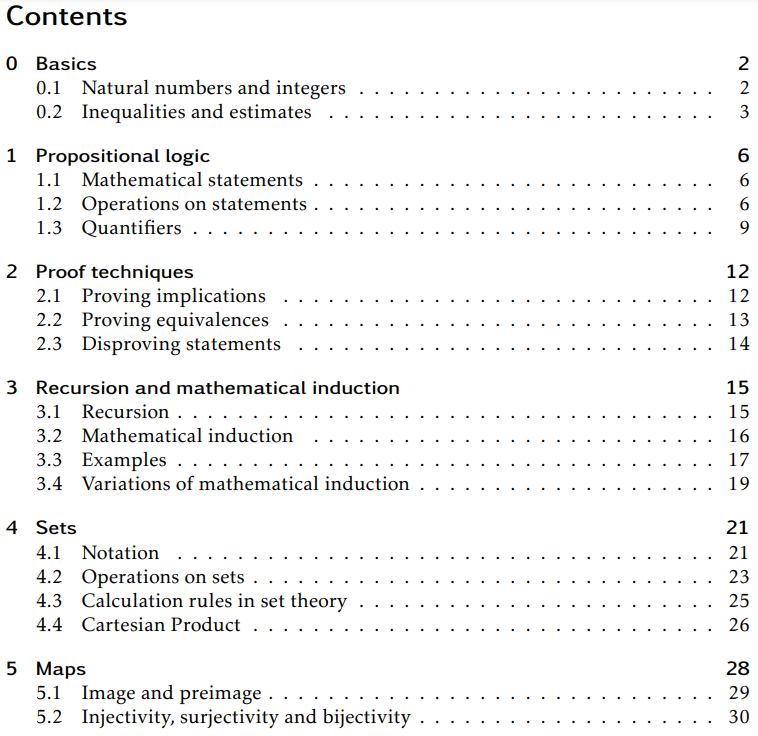
There isn't a single thing in there that's useless, if that's what you're thinking
There's no wasted value in understanding it all
https://i.imgur.com/fgLkeFo.png
 delicate orchid
the fuckin temptation to link sheafification is unreal
prisma ibex
my mother teaches Russian language, usually at the first and second year level. The students are usually able to read short, simple texts. Every so often she will have a student who attempts to read Crime and Punishment in Russian by reading about 1 page a day and looking up all of the words in the dictionary as they go through.
For whatever reason, no student has been successful in doing this in her almost 30 years of teaching. Why do you think this is?
solar inlet
delicate orchid
the fuckin temptation to link sheafification is unreal
Don't you dare
left estuary
This is also the same method I used to learn programming
coral shale
Yes doesn't work great with math.
Programming you can go lookup the docs or se on how to do something.
left estuary
prisma ibex
my mother teaches Russian language, usually at the first and second year level. ...
Vocab is one thing but understanding how words change for the context is what really allows you to do that
delicate orchid
also with programming you know you're doing something wrong because it breaks
 woven obsidian
Just do all your math in Lean
left estuary
delicate orchid
also with programming you know you're doing something wrong because it breaks
You can always double check your work
prisma ibex
left estuary
You can always double check your work
if you're doing things that can be checked numerically sure, but if you're doing proofs then "checking" is not so clear, this requires more mathematical maturity
coral shale
At a higher of math level, its less about 'double checking your work', and about understanding the stuff.
delicate orchid
gave up with the second e could not be asked
elder wave
remove wew
prisma ibex
But yeah I would worry about essentially handicapping yourself by using the method you are using. There is a chance this will work for you, but probably a much larger chance that you're going to waste a year or two of your life studying things with extreme inefficiency before recalibrating a bit
left estuary
Ok then I’ll try it your way after I read the proofs what would be the next step
If I want to build from the group up then I need to know what the building blocks are and how to find them
delicate orchid
honestly following a university syllabus for guidance wouldn't be a bad idea
proofs -> basic group theory would be possible but shoving lin alg in between wouldn't hurt
coral shale
Introduction to group theory and see how you feel, I'd say.
left estuary
I did that last night I understand it but obviously haven’t fully learned all of its ins and outs
formal ermine
you learnt group theory in one night?!
chilly ocean
delicate orchid
proofs -> basic group theory would be possible but shoving lin alg in between wo...
Artin's book starts with both lin alg and group theory
left estuary
formal ermine
you learnt group theory in one night?!
The basics like all the rules and requirements
formal ermine
wut
delicate orchid
they mean the group axioms
coral shale
I don't think so. If you can't show product of 2 units make a unit in a ring, I doubt you can show identities and inverses are unique
formal ermine
proof by my textbook saying so
left estuary
delicate orchid
they mean the group axioms
Yeah that
coral shale
Thats not the basics. Far far from it.
formal ermine
@left estuary do you know what a normal subgroup is
left estuary
formal ermine
<@301151228669198338> do you know what a normal subgroup is
A_n?
coral shale
coral shale
I don't think so. If you can't show product of 2 units make a unit in a ring, I ...
^ these are literally the 1st 2 results proven in any intro to group
Also. You either know something or don't. What's the point in guessing.
left estuary
Because I don’t know anything I’m not an expert in anything nor do I have a degree at any given point anything and everything I say could be wrong
solar inlet
you should really know linear algebra before any actual algebra
coral shale
That's not how it works. If you're learning properly, you should be confident in what the things you've learnt are
solar inlet
as well as probably some sort of understanding of like elementary discrete stuff like sets and equivalence classes
coral shale
Even better - you should have some confidence in explaining the subject to someone else
solar inlet
no
formal ermine
vector spaces, linear maps, all that sort of stuff
solar inlet
well technically yes but not in the way you mean
left estuary
So basically just stuff like this?
 coral shale
no what............... nowhere close.
left estuary
Basic equations learning how to isolate variables and stuff like that?
coral shale
Desmos is very limited in visualising stuff - you're not going to be able to go higher than 2 dimensions (ok maybe 3 with some projection but not more)
delicate orchid
you could've posted a carly rae jepsen youtube music video and been closer to the mark
formal ermine
left estuary
Basic equations learning how to isolate variables and stuff like that?
vector spaces, linear maps, all that sort of stuff
 uneven folio
left estuary
Basic equations learning how to isolate variables and stuff like that?
uneven folio
left estuary
Basic equations learning how to isolate variables and stuff like that?
This channel has nothing to do with what you're talking about. Please stop flooding it with random stuff or your advanced access will be revoked.
coral shale
#math-discussion would be more appropriate
formal ermine
uneven folio
This channel has nothing to do with what you're talking about. Please stop floo...
I feel like you're (kind of) missing context ryc
solar inlet
no ryc is right
delicate orchid
yes free up chat for me to ask my doubts yes good...
solar inlet
this is not the place to pretend you know what you're talking about
uneven folio
I don't care, this isn't the place for this. It's interrupting the flow of the channel. Have this conversation in #math-discussion or something if someone is talking here while having no idea what the channel is for.
chilly ocean
i was wondering about what would be the coequalizer of the endomorphisms of $Z$ given by multiplying by 4 and by 2 respectively. I think it will be $C_2$. For given an $f:\mathbb Z \to X$ such that $f(2n)=f(4n)$ it follows that the kernel of f contains $2 \mathbb Z$. So for a morphism from $C_2$ to $X$ that makes stuff commute we are forced to send 1 to $f(1)$ and this shoould be an homomorphism because image of f is isomorphic to either $C_2$ or $C_1$. Is this correct?
 cloud walrusBOT
Obviously A Catgirl
 next obsidian
In an abelian category, the coequalizer of two maps A -> B is the cokernel of the difference of the two maps
next obsidian

chilly ocean
so its not an abelian cat
 chilly ocean
i think it should still here work cuz image of abelian group is abelian
next obsidian
Yeah I think this works
The only thing of note is that f(2n) = f(4n) just says that f(1) has order 1 or 2
I’m trying to see if there’s a general categorical thing like if the forgetful functor Ab -> Grp preserves (finite) colimits but I don’t see a way to get this for free
Tfw wrong side of an adjoint
chilly ocean
well it already doesn't preserve coproducts doesn'tn't it
maybe it preserves coequalizers tho?
chilly ocean
would be nice to have a reference saying that it preserves coequalizers tho, cuz i don't trust my own proofs ;-,
 spice whale
currently struggling trying to find an element in PSL(2,7) with an order 21 conjugacy class
next obsidian
Bruh
 solar glacier
Question is 3+3i reduciduble or irreducible in Z[3i]
I put that it’s irreducible since it’s norm is 18 which is either 3 times 6 but no Element of Z[3i] has norm 3 or 6 or it’s 9 times 2 but the norm of no element is 2 forcing one to be 18 and one to be 1
next obsidian
Yes
Now you have to show anything of norm 1 in Z[3i] is a unit
And you’d be done
 gray junco
Can someone help me understand how to do this? I think I know some abelian groups of order 24, but how do I know which of them are isomorphic?

idk what maximal order means
 rotund aurora
Lol I was gonna give the same hint its given in the exercise before reading it
The maximal order is the largest integer n such that there exists an element of your group of order n
gray junco
Ok that makes sense. But how does that relate to ismorphic groups?
rotund aurora
Think about it
The first question you would ask: what would happen if two groups had different maximal orders?
gray junco
I'd assume they'd have different orders? Because the only possible orders of elements are the integers that divide the order of the group
rotund aurora
No...
That neednt be the case
Idk what to say to not simply tell the solution
Suppose G and H are two groups such that G has an element g of order n but H has no element of order n
Can they be isomorphic?
So if you have two groups with different maximal orders, you have a situation similar to that one
rotund aurora
rotund aurora
Can they be isomorphic?
||Try contradiction: look at the hypothetical image of g in H||
rotund aurora
rotund aurora
That neednt be the case
This is a big spoiler: || example: Z/2Z x Z/2Z and Z/4Z ||
gray junco
rotund aurora
||Try contradiction: look at the hypothetical image of g in H||
what do you mean by hypothetical image?
rotund aurora
Way of talking
So assume you have an isomorphism begween G and H, call it f
Now look at f(g)
rotund aurora
rotund aurora
Now look at f(g)
|| Look at its order ||
 knotty frigate
gray junco
Can someone help me understand how to do this? I think I know some abelian group...
knotty frigate
gray junco
Can someone help me understand how to do this? I think I know some abelian group...
||S_4 instantly comes to mind
Oh and Z_24 and then D_12||
Just my guess
knotty frigate
rotund aurora
The maximal order is the largest integer n such that there exists an element of ...
Oh
gray junco
I thought permutation groups weren't abelian?
knotty frigate
gray junco
Can someone help me understand how to do this? I think I know some abelian group...
Z_2xZ_12
Would that be another one?
Sorry if I'm being stupid I've just started AA
rotund aurora
Trivially, Z_24 right
knotty frigate
Wdym?
gray junco
Is U(35) another one?
knotty frigate
That's of order 35 no?
rotund aurora
gray junco
Is U(35) another one?
What is the maximal order of that?
Im sleepy lol
Isnt that cyclic?
gray junco
yeah
knotty frigate
rotund aurora
Its order phi(35) I think, which is 24
Oh ok
rotund aurora
Wait no I think no?
rotund aurora
gray junco
Is U(35) another one?
Ok thats Z_4 x Z_6, so I think that works
You should justify it
knotty frigate
rotund aurora
Ok thats Z_4 x Z_6, so I think that works
Oh
rotund aurora
Forgot Chinese Remainder Theorem existed

Mathematics Stack Exchange
Let $U_n$ denote the group of units in $\mathbb{Z}_n$ with multiplication modulo $n$. It is easy to show that this is a group. My question is how to characterize the $n$ for which it is cyclic. Sin...
But idk why you looked at that group, you would just use the product of groups to give an example
rotund aurora
Yes but that seems more complicated
gray junco
so the direct product of groups are non-isomorphic?
rotund aurora
Just look at the divisors of 24, it has many
The point is, product of groups is a very simple construction and will provide many examples
And the orders multiply
rotund aurora
rotund aurora
https://math.stackexchange.com/questions/373708/when-is-the-group-of-units-in-ma...
Thats the result in elementary NT that characterizes for which integers n there are primitive roots modulo n. Idk why I didnt relate it to that. It is not trivial tho
 viscid pewter
gray junco
so the direct product of groups are non-isomorphic?
viscid pewter
gray junco
so the direct product of groups are non-isomorphic?
it varies
specifically if you have Z2xZ2 and Z4 they will not be isomorphic
but if they have distinct factors, then they are isomorphic
Z2xZ3 is isomorphic to Z6
rotund aurora
Perhaps try solve the following: let n and m be integers. When id Z_n x Z_m cyclic? || it is cyclic when gcd(n,m)=1 ||
viscid pewter
and like you have Z2xZ2xZ2 and Z2xZ4 and Z8 all distinct
chilly ocean
Is there a name for an element a of a ring such that a^n = a for some n>1? Ik that if you require n=2 it's called idempotent, but what about for any n>1?
 hollow mica
Suppose that V is a vector space of dimension 2n over C, and B: V x V -> C is a non-degnerate, skew-symmetric bilinear form.
If L is a subspace that is killed by B (B(v, w) = 0 for all v, w \in L), then L is contained in a bigger subspace R of dimension n that is also killed by B
this is in similar vain to this problem
oops sorry for the ping
last time we were able to prove that there exists a k-dimensional subspace that is killed for each k <= n
hollow mica
hollow mica
Suppose that `V` is a vector space of dimension `2n` over `C`, and `B: V x V -> ...
oh yeah and the statement is sound because one can prove that all subspaces that are killed are of dimension <= n
wait do you get this for free by rank-nullity
because for the form f_v = B(-, v), by rank-nullity we have dim(ker(f_v)) = 2n - dim(im(f_v)) = 2n - 1 (B is non-degenerate).
so if {w_1, w_2, ..., w_k} is a basis for W, we just need to show that the intersection of ker(f_{w_i}) over all i (1 <= i <= k) has dimension of at least n
wait I know that the dimension of the intersection two distinct subspaces of dimension 2n - 1 is 2n - 2
but is it true that the intersection of three distinct subspaces of dimension 2n - 1 is 2n - 3
or r distinct subspaces of dimension 2n - 1 intersect to a subspace of dimension 2n - r ?
viscid pewter
hollow mica
but is it true that the intersection of three distinct subspaces of dimension `2...
no
take three planes through a common line in R^3
or three lines through a common point in R^2
hollow mica
oh I thought maybe over C it would be different
viscid pewter
nnno
next obsidian
Same exact thing holds
hollow mica
sad life
next obsidian
Let V be generated by x,y,z be 3-dim
viscid pewter
life would be nonsensically easy
next obsidian
next obsidian
Let V be generated by x,y,z be 3-dim
<x,y>, <x,z>,<x,y+z>
They intersect at <x>
Doesn’t matter what field
Hell, this works for modules too
 tribal moss
It's true for three "generic" distinct subspaces (in a sense that can be made precise).
next obsidian
Lmfao I mean
hollow mica
oh yeah one of my conditions was pairwise non-intersecting (besides identity ofc)
next obsidian
One definition is exactly that they don’t share subspace of the wrong dimension
next obsidian
hollow mica
oh yeah one of my conditions was pairwise non-intersecting (besides identity ofc...
This is impossible
Like, based on just numbers
next obsidian
Your subspaces have too high of a dimension
hollow mica
well can I say anything
about the intersection of r subspaces of dimension 2n - 1 in a v.s. of dimension 2n
viscid pewter
the intersection has dimension between 0 and 2n-1
next obsidian
It follows by rank nullity
Take V a VS and L,K subspaces of codimension n,m
Look at the map L (+) K -> V sending (l,k) to l-k
next obsidian
The kernel of this is the pairs (l,k) where l = k
Which you can see is isomorphic to L\cap K
By sending x to (x,x)
Then applying rank nullity you see that the codimension of L\cap K is at most n+m
I haven’t actually ran the numbers, but this should work
Probably
Codimension is just dim V - dim L
It’s how small it is relative to the ambient space
hollow mica
let f: L + K -> V be your map
dim ker(f) + dim im(f) = dim(L + K)
above you showed that ker(f) is isomorphic to L \cap K
dim im(f) is probably at most a + b (where dim L = a and dim K = b)
next obsidian
Let dim V = n, dim L = n-l, dim K = n-k
from rank nullity, we have that
(n - l) + (n - k) = dim im(f) + dim(L\cap K)
dim im(f) <= n so we see that
dim(L\cap K) >= 2n - l - k - n = n - l - k
so that codim L\cap K <= l + k
hollow mica
why is dim(L + K) = (n - l) + (n - k)
next obsidian
Direct sum
hollow mica
that's only true when they are disjoint
next obsidian
you're doing that abstractly
not as the sum inside of V
hence why I wrote (+)
your map isn't well-defined if you do the sum of subspaces
I think, idk
actually I guess it is
but this doesn't give you what you want
next obsidian
would it be better if I wrote x?
it's the direct sum
direct product
they're the same
hollow mica
oh
next obsidian
it's literally pairs
hollow mica
and the basis is (v_i, 0), (0, w_i) where v_i is a basis for L and w_i is a basis for K
next obsidian
sure
hollow mica
next obsidian
you're doing that abstractly
oh now I see what you mean here
well kind of
next obsidian
yes, it makes no reference to them as subspaces of V
hollow mica
someone explained to me the connection between direct sums and products here once
I think it was you
next obsidian
idk
hollow mica
most of it went over my head
next obsidian
maybe
hollow mica
but like
next obsidian
my point is I'm pretending they aren't embedded into V
so you just take pairs of them
so that the dimensions just add up
so it's good?
hollow mica
next obsidian
my point is I'm pretending they aren't embedded into V
even if they were
we can still take the direct sum right
it's dimension is just smaller
hollow mica
ohhhhhhhhhhhhhhhhhhhhhhhhhhhhhhhhhhhhhh
hollow mica
yea makes sense
hollow mica
hollow mica
Suppose that `V` is a vector space of dimension `2n` over `C`, and `B: V x V -> ...
Under the same conditions, let M be a subspace of dimension n that is killed by B. Then I want to prove that there exists another subspace N killed by B such that M + N = V
so the dimension of N must also be n
I was thinking
let {v_1, ..., v_n} be a basis for M
now extend this to a basis for V: {v_1, ..., v_{2n}}
I want to show that the subspace <v_{n + 1}, ..., v_{2n}> is killed by B
formal ermine
ok so I wanna show that $x^3 + 3x - \frac{8}{3}$ is irreducible over $\bQ[x]$. I already tried the following things: \
- use eisenstein on it, this doesn't work as we're in $\bQ$ \
- use reduction modulo $\frac{8}{3}$ to get $x^3 + \frac{1}{3}x - 1$ over $\bQ/(\frac{8}{3})[x]$. I don't think this gets me anywhere \
- use gauß's lemma to obtain $3x^3 + 3x - 8$ over $\bZ[x]$. can't use eisenstein nor rmp on this though
cloud walrusBOT
an illuwuminator3
 woven obsidian
(8/3) is just all of Q
woven obsidian
No, Q is a field so ideals are either trivial or all of Q
It's not hard to prove that $f(x) = a_nx^n+...+a_0$ is irreducible iff $x^nf(1/x) = a_0x^n +...+a_n$ is.
cloud walrusBOT
AoiKunie
 woven obsidian
Multiply your polynomial by $3$ to get $3x^3+9x-8$
cloud walrusBOT
AoiKunie
 woven obsidian
The inverted polynomial is then $-8x^3+9x^2+3$, which is irreducible by Eisenstein
cloud walrusBOT
AoiKunie
 formal ermine
so can we do rm 1/3
formal ermine
formal ermine
so can we do rm 1/3
I don't understand why this is wrong tho
woven obsidian
reduction modulo 1/3?
formal ermine
yes
woven obsidian
That's the same as reduction modulo all of Q so you're just left with 0
formal ermine
cloud walrus
**AoiKunie**
would you prove this by contradiction?
hollow mica
why does the character table of the dihedral group not contain any imaginary entries
is there some sort of geometric reason behind this
woven obsidian
Ah no directly is bad. I'd do a proof by contraposition
hollow mica
If ρ: G -> GL(V) is a finite-dimensional representation whose character is χ, how do I show that
ker(ρ) = {g \in G : χ(g) = χ(e)}
apparently the solution has to do with the only way k roots of unity sum to k is for them to all be 1
though I don't see how roots of unity are relevant here
I guess I'm asking why the kernel of a representation is the same as the kernel of its respective character
woven obsidian
$\rho(g)$ is the identity iff all eigenvalues equal $1$, as it is always diagonalizable
cloud walrusBOT
AoiKunie
 woven obsidian
On the other hand $g$ is in the kernel of $\chi$ precisely when the sum of all eigenvalues is equal to the dimension of $V$
cloud walrusBOT
AoiKunie
 woven obsidian
Your remark about roots of unity finishes the argument, as all eigenvalues are roots of unity
hollow mica
woven obsidian
Your remark about roots of unity finishes the argument, as all eigenvalues are r...
how do we know this?
woven obsidian
If $n$ is the order of the group, then $\rho(g)^n = \rho(g^n) = id$
cloud walrusBOT
AoiKunie
 hollow mica
this just says that $\rho(g)$ is nilpotent?
cloud walrusBOT
mrean
 woven obsidian
Well, if $v$ is an eigenvector with eigenvalue $\lambda$ then that calculations shows $\rho(g)^n v= \lambda^n v = v$
cloud walrusBOT
AoiKunie
 hollow mica
oh so we must have $\lambda^n = 1$ I see
cloud walrusBOT
mrean
 hollow mica
If $N$ is a normal subgroup of $G$, then there exists a finite collection of irreducible representations $\rho_i: G \to GL(V_i)$ such that $N = \bigcap \text{ ker}(\rho_i)$
cloud walrusBOT
mrean
 hollow mica
apparently to solve this we can consider the trivial representation of N
(the action of G on the set of cosets G/N)
woven obsidian
Yeah, and use the fact that the only group element that can be in the kernel of all character is the identity
Then apply this to the group G/N
hollow mica
woven obsidian
Then apply this to the group G/N
I don't see how you extract the \rho_i just from this though
woven obsidian
All representations of G/N correspond to representations of G whose kernel contains N
hollow mica
well yeah because N is the identity in G/N and representations take the identity of a group to the identity map
what does that say though
oh I see what you're saying
but how do we know there exists representations that are irreducible
hollow mica
woven obsidian
All representations of G/N correspond to representations of G whose kernel conta...
and how do we know that the intersection doesn't contain other stuff too
woven obsidian
woven obsidian
Yeah, and use the fact that the only group element that can be in the kernel of ...
Just use this and you get the identity in G/N i.e. N
hollow mica
oh
woven obsidian
If you intersect the kernels of all irreps in G/N
hollow mica
wait so does this imply all irreps are injective
woven obsidian
Not sure what you mean
hollow mica
oh wait i'm not sure either lol
I guess "intersection of kernel of irreps is trivial" and "the kernels of the individual irreps are trivial" are two drastically different things
I thought there would be a connection there
 simple mulch
$\big\langle x,y | x^p=y^2=1, yxy^{-1} = x\big\rangle.$
cloud walrusBOT
mns
 simple mulch
So I have this presentation
Notice the last relactor tell us that the group is abelian
I want to somehow get the cyclic group of order 2p from this
chilly ocean
Is p coprime with 2?
simple mulch
yes
I think I can just use the fundamental theorem of finite abelian groups
the group is abelian and finite thus is the product of two cyclic groups of order 2 and p
chilly ocean
yeah if 2 is coprime with p then xy should generate the group
next obsidian
I almost let the intrusive thoughts win and got myself banned
simple mulch
indeed
chilly ocean
what?
next obsidian
Idk
I almost sent a message that would’ve been inappropriate for literally no reason
But I stopped myself becuz chmonkey’s have willpower
chilly ocean
Uh congratulations then
 coral spindle
👏 proud of u monke
formal ermine
next obsidian
But I stopped myself becuz chmonkey’s have willpower
howonorable
elder wave

chilly ocean
do NOT try to abbreviate finite abelian group 
next obsidian
Finabgrp
 barren sierra
GFA (Group that's Finite that happens to be Abelian)
 rustic crown


 formal ermine
woven obsidian
It's not hard to prove that $f(x) = a_nx^n+...+a_0$ is irreducible iff $x^nf(1/x...
formal ermine
woven obsidian
It's not hard to prove that $f(x) = a_nx^n+...+a_0$ is irreducible iff $x^nf(1/x...
is this really an iff?
 delicate bloom
formal ermine
is this really an iff?
delicate bloom
formal ermine
is this really an iff?
it has to be, because it's an involution
formal ermine
delicate bloom
it has to be, because it's an involution
what's an involution
I thought like
let f' = x^n f(1/x) as notation
delicate bloom
yeah I'm being opaque, specifically the operation you use to go from f to f' is the same as the operation to go from f' to f
formal ermine
let g(x) be an irreducible polynomial with nonzero constant term
then f(x) = xg(x) is reducible
but f(x)' is irreducible
no?
delicate bloom
formal ermine
then f(x) = xg(x) is reducible
how are you getting that?
n is the degree of f, right?
formal ermine
yes
formal ermine
delicate bloom
how are you getting that?
because we define it as xg(x)
doesn't that immediately mean that it's reducible?
delicate bloom
formal ermine
let g(x) be an irreducible polynomial with nonzero constant term
ok back up, why did you introduce g(x) here when your next two lines don't use it?
woven obsidian
Ah yeah, you will need to add a condition that a_0 is not 0
delicate bloom
formal ermine
but f(x)' is irreducible
show me an example
woven obsidian
But then reducibility is trivial anyway
formal ermine
delicate bloom
ok back up, why did you introduce g(x) here when your next two lines don't use i...
oh I confused h and g 
sorry
delicate bloom
woven obsidian
Ah yeah, you will need to add a condition that a_0 is not 0
if a_0 is 0, it's reducible, so you don't have to add the condition yeah
woven obsidian
E.g. x^2+x maps to x+1
But it will be an involution for nonzero a_0, so theb you have iff
woven obsidian
Yeah the proof doesn't use any property of the ring
woven obsidian
Np
delicate bloom
iff means f(x) irreducible implies g(x)=x^nf(1/x) is irreducible and g(x) irreducible implies f(x) is irreducible
delicate bloom
right, because x^2+x is not irreducible
we don't need to make the claim that a_0 is nonzero
woven obsidian
delicate bloom
right, because x^2+x is not irreducible
But x+1 is irreducible
So there's no equivalence
delicate bloom
yeah you're right, I'm thinking about it backwards as if evaluating an entire truth table for "iff" which comes up to be false
 foggy merlin
We know that every symmetric quadratic form is "diagonalizable" i.e. the matrix corresponding to that quadratic form has a spectral decomposition. I was wondering if this also holds for higher order forms, if there is some type of spectral decomposition for symmetric tensors.
formal ermine
let p,q be two polynomials. let f(p) = x^(deg p) p(1/x). this is a multiplicative function because it's the product of two multiplicative functions, namely p(x) -> 1/x and p(x) -> x^(deg p)
how does this show that for a polynomial f with deg > 1 and a_0 \neq 0 that f is irreducible iff x^(deg f) f(1/x) is irreducible
 junior stump
Think of the function as reversing the coefficients of a polynomial with non-zero constant term. Then g is an involution so it suffices to show that if g(f) is irreducible then f is irreducible. If f = pq then since a_0!=0, p(0)!=0 and q(0)!=0. g(f) = g(p)g(q), so wlog g(p) is constant and so of degree 0, since reversing coefficents preserves degree p is also of degree 0 so constant, so a unit and f is irreducible
junior stump
Key idea is degree is preserved, and degree characterizes units with polynomials
 stoic rose
Why is $\alpha^{\vee}$ uniquely determined by $\Phi$ and $\alpha$?
 cloud walrusBOT
Antoine Labelle
 stoic rose
(There is a typo, $s_\alpha$ should be $x \mapsto x - \langle x, \alpha^{\vee}\rangle \alpha$)
cloud walrusBOT
Antoine Labelle
 next obsidian
Phi spans V should be why
like, alpha^ should be determined by how it acts under the pairing <x,alpha^> for x in V
but this is determined just by what happens to <beta,alpha^> for beta in Phi
stoic rose
Hmm I agree that the reflection is determined by how it acts on Phi but how do we know exactly how it acts on Phi?
next obsidian
I was assuming that part of "Phi" meant how alpha^ acts on Phi
but maybe it's from the reflection part
stoic rose
Hmm the way I interpret that is that there is a unique alpha^v satisfying the properties given before.
It's not clear to me why these properties determine the action on Phi
stoic rose
Found the proof

 lethal lava
Could anyone help me with exercise 18.2.15 in Dummit and Foote?

the hints are quite a scavenger hunt but I'll try to get all of them


pretty sure exercise 18 gives the forward direction immediately, but I don't know where to start with the backwards direction
 slender hamlet
Hello
chilly ocean
say i have a polynomial in Z[x] of which i find a root p/q in Q, does my polynomial necessarily factor with the linear term qx-p in Z[x]?
i feel like it should but i guess there isnt guarenteed polynomial division in Z[x] by non-monic polynomials
 glacial narwhal
how to solve 7.32 ?
I want ask a question.
the algebra is finite dimensional , so it has a finite basic ,say $b_1,b_2,\cdots , b_n$ .Any element of the algebra can be written as a linear combination of these basic elements?
IT is right? if no. please tell me how solve 7.32.
 cloud walrusBOT
傅佳灿

 tribal niche
Let $n$ be an integer. Show that there is a Galois extension containing $\mathbb{Q}(\sqrt{n})$ with Galois group $C_4$, if we have $n=a^2+b^2$ for some $a,b.$
cloud walrusBOT
monkeman

 lavish gull
tribal niche
Let $n$ be an integer. Show that there is a Galois extension containing $\mathbb...
lavish gull
tribal niche
Let $n$ be an integer. Show that there is a Galois extension containing $\mathbb...
$\alpha = \sqrt{n} \implies \alpha^2 - n = 0$
cloud walrusBOT
coderizer
 lavish gull
so the minimal polynomial is quadratic for the case of a square root. the galois group has order equal to the degree of the minimal polynomial
how could it have a subgroup C_4?
lavish gull
tribal niche
Let $n$ be an integer. Show that there is a Galois extension containing $\mathbb...
do you mean any extension of Q containing sqrt(n), not necessarily the smallest?
glacial narwhal
my teacher write this, that is say: every nonzero commutative ring have maximal ideal ? it is right?

By the way, this proved by Zorn's lemma.
elder wave
Are you asking if the statement is true?
 south patrol
That isn't quite what the statement is saying
It is saying smth stronger
Though it follows from what u said
left estuary
Still trying to learn ring theory lol
left estuary
Number 2 seemed easier so I tried that and I think I got it
left estuary
Alr well because it’s a cyclic group of integers with the modular 20 it means that every multiple of 20 would be 0 and 0^n=0 {n≠0} so all the multiples of 20 would be a nilpotent element
Now the only thing I’m confused on is the range
Is it [0,19] or infinite?
elder wave
every multiple of 20 is already zero in Z_20
left estuary
Ye
elder wave
what you just said is that 0 is nilpotent
left estuary
Yeah is there something wrong with that
formal ermine
it's not the only one
left estuary
20 is nilpotent
elder wave
0 is always trivially nilpotent
formal ermine
20 = 0
elder wave
left estuary
20 is nilpotent
20 is equivalent to 0 in Z_20
left estuary
Yeah cause the mod
Trying to figure out what else I’m missing
0^0 is 1 I thought when defined in the domain of ℝ
Alr
So what am I missing cause I don’t see how the other numbers could be 0
elder wave
have you worked out how the operations on Z_nZ work
left estuary
Ye
formal ermine
then see when they are a multiple of 20 i.e. go to 0
elder wave
shush stop spoiling illum
 shell agate
that's 0 again
left estuary
Yeah so 1 is included
shell agate
how so?
left estuary
formal ermine
then see when they are a multiple of 20 i.e. go to 0
Going off of this
left estuary
Yes
Ah ok
That multiple
Had a feeling that was a possibility for error
Ok i get it
formal ermine
(once you're done with this, try expressing the general solution to the nilpotent elements of Z/nZ in set builder notation)
left estuary
Alright I’ll give it a shot
shell agate
(maybe try to understand 20 before generalizing)
left estuary
10
left estuary
10^2 = 100 which under mod 20 goes to 0
shell agate
exactly
left estuary
10 and 2 are also factors of 20 which I find interesting maybe that means something
left estuary
formal ermine
(once you're done with this, try expressing the general solution to the nilpoten...
So this would be under multiplication so x^1 x^2…
shell agate
they did find 10 already
left estuary
So this is ℤ/20ℤ that would list the remainders for x mod 20
shell agate
yes
formal ermine
fwiw x is nilpotent in Z/abcZ for a,b,c primes iff it's nilpotent in Z/aZ, Z/bZ, and Z/cZ
south patrol
Chinese remainder moment
formal ermine
formal ermine
fwiw x is nilpotent in Z/abcZ for a,b,c primes iff it's nilpotent in Z/aZ, Z/bZ,...
in this case a = 2, b = 2, c = 5
(btw this is true for any amount of primes, I'm just on mowobile and cba writing latex)
left estuary
wait how do you get a b and c?
formal ermine
prime factorization of 20
left estuary
Well yeah but if you write it out in the form of a set you can get a better understanding
At least for me
left estuary
formal ermine
requires some ring theory
I have a request
If it’s not too much effort
formal ermine
what request
left estuary
Could you give me a list of beginner friendly questions for ring theory
If I start with basic questions I can work my way up
left estuary
Alright
formal ermine
do that first
left estuary
Well then I’ll need to find a list of group theory questions
left estuary
I do better with questions
formal ermine
books contain exercises and questions at the end of each section/chapter
either read a book or you'll no longer receive help from me
left estuary
Where can I find the books
formal ermine
left estuary
Where can I find the books
left estuary
I’ll look into it in a bit
formal ermine
thank you and good luck!
left estuary
formal ermine
thank you and good luck!
Would these be some good problems to start off with https://www2.math.upenn.edu/~qze/math314s18/algebraex.pdf I am doing some research on group theory books and practice problems and I found this
formal ermine
those are problems that you would find on the first homework sheet of an aa course
left estuary
https://www.jmilne.org/math/CourseNotes/GT.pdf this is a document I found for group theory
left estuary
formal ermine
those are problems that you would find on the first homework sheet of an aa cour...
Well then I think I’ll start there after I do bit of reading on this doc I found ^
formal ermine
yes that seems okay
left estuary
Alr cool I’ll do that now then since I have today off
 cunning dust
You should probably read a book about proofs before doing any advanced math
left estuary
I have
left estuary
coral shale
i pointed you to the pdf
https://discord.com/channels/268882317391429632/3282085...
I read this one
cunning dust
Hmm you may want to familiarize yourself more with basic set theory, but that may be enough
left estuary
cunning dust
Hmm you may want to familiarize yourself more with basic set theory, but that ma...
We will see how the group theory problems go if I still feel uncomfortable with them I’ll go do more basic proofs
tribal niche
lavish gull
do you mean any extension of Q containing sqrt(n), not necessarily the smallest?
Yeah so any extension where Q(sqrt(n)) is a subfield.
 unique valve
fourth root of n
tribal niche
Extension is forced to be degree 4 anyway so it's also a degree 2 extension of Q(sqrt(n))
Well it has to have galois group C_4.
Fourth root of n could potentially have galois group Klein 4
unique valve
Doesn’t fourth root always have C4
tribal niche
No, just check n=3
It has Klein 4 I'm pretty sure
I know that the condition fails for n=3
And n=-1
unique valve
n=a^2+b^2
 hot lake
An extension of Q(sqrt n) with galois group C4 over Q would be a quadratic extension of Q(sqrt n) so you could look at what possible galois groups those or their galois closure can have and when
tribal niche
I thought that all degree 2 extensions had to have extension Z/2Z because there is only one order 2 group up to isomorphism
hot lake
Over Q(sqrt n) yeah
tribal niche
The issue with n=3 is that there are 2 degree 2 elements in the galois group which send sqrt(3) to -sqrt(3) and fourth root of 3 to its negative @unique valve
I think that the extension has to be adjoining some complex z and some conjugate stuff because you notice modulus of z squared is a^2+b^2
hot lake
q(4th root of 3) isn't a Galois extension of Q
tribal niche
Oh
Wait yeah
Good point
Because it isn't the splitting field of any polynomial in Q
We can also take an arbitrary degree 4 extension Q(sqrt(a+bsqrt(n))) and proceed from there?
Also what does L* mean or Q* what is the star for fields? I know for groups it is referring to the multiplicative group but I'm not sure what it means for fields.
hot lake
it's also their multiplicative group
tribal niche
hot lake
it's also their multiplicative group
https://math.stackexchange.com/questions/2037782/how-do-i-shows-the-galois-group-of-a-field-extension-is-a-cyclic-group-of-order I found this but I don't really understand it what do they mean when they take Q*^2 and stuff
Mathematics Stack Exchange
Find under what conditions on $a, b, c \in {\mathbb Z}$ the Galois group of the field extension ${\mathbb Q} \subset {\mathbb Q}(\sqrt{a+b\sqrt{c}})$ is a cyclic group of order $4$.
I know that $...
hot lake
K*² is the subgroup of the squares of elements of K*
coral shale
left estuary
I read this one
i dont have recommendations myself, but you might wanna try asking for some problem sets to test yourself on it
maybe ask in #math-discussion or #proofs-and-logic or #book-recommendations
left estuary
Preferably something like questions with the answers and work shown at the bottom of the pdf that way if I get confused or don’t understand how to solve a problem then I can go look and see how it works
coral shale
well if there are no answers you can try asking here sometimes
better to ask for a hint than check the answers if ur stuck anyways
left estuary
I’m more interested in the work than the answer itself
coral shale
ik - but theres a lot to be gained from figuring it out yourself
even with some hints
left estuary
Yeah I agree
But I also think having work shown in its entirety is important because I can see every little step and fill in the gaps in my head kinda like peices to a puzzle yknow
Just requires some self control to actually try and understand the work and not just copy and paste the answer which I believe I am capable of
Though both are good methods
So I’ll try both and see which works best for me
chilly ocean
left estuary
Would these be some good problems to start off with https://www2.math.upenn.edu/...
READ A BOOK
coral shale
left estuary
But I also think having work shown in its entirety is important because I can se...
this only gets you so far. depends on context
Like depends on teaching style
Sometimes in a 'methods' kinda class - u get shown the methods
Like u say, and u apply those to the problems
But generally for the purer subjects this is less the case
And you would benefit a lot from getting used to figuring things out for yourself from some hints
left estuary
You can also apply the same things to books
coral shale
Otherwise down the line ur still gonna be unable to do questions because you can't think of new ideas
Like - there's constantly new ideas / innovations in abstract algebra. To me at least
There's no 'set of methods' to learn how to solve stuff. Learning the defns are one thing, but getting 'better' at solving problems is also importnat
left estuary
Since your reading someone else’s understanding of a subject however to truly understand something you need to be able to define it in your own terms
That’s why I like doing problems it allows me to do that
coral shale
left estuary
Since your reading someone else’s understanding of a subject however to truly un...
yeah sure
thats the reading part
in the book. Read and make notes is a good way
But I'm referring to solving problems - you want to throw yourself in the deep end for those
left estuary
Yes same here
Let’s give your hint system a go rn I already read a bit of that document and question 1 looks simple enough to try out on that set of problems
If you have the time that is
 untold basin
Hello,
I have to determine all the subfields of Q(zeta_12)/Q
I know that its Galois group is isomorphic to (Z/2Z)². Do I need to determine explicitly all the subgroups of (Z/2Z)² and then apply correspondance of Galois ?
coral shale
remindme what zeta_12 is. 12th root of unity?
untold basin
Yes it is e^{2 . pi . i/ 12}
coral shale
(thinking it through, but no guarantee I'll be able to help)
woven obsidian
There's not a lot of subgroups of a group of order 4
coral shale
i feel like theres 4 . Counting trivial and non-proper
unique valve
Counting those theres 5
coral shale
oh yh
untold basin
There is the group itself, {neutral element} and the others are, by Lagrange, of order 2
unique valve
I can think of two of the three relevant subfields
untold basin
But my question was, do I need to find them explicitly
coral shale
Yes if it asks you to 'determine'
woven obsidian
I mean you really only need to find how many there are
And then find that amount of subfields
But probably easier to find them explicitly and then look at fixed fields
untold basin
Actually, the prof told us
Show that this "treillis" (like the tree of subfields) is actually the right one
unique valve
Adjoining i gives you one, also a third root of unity
untold basin
woven obsidian
But probably easier to find them explicitly and then look at fixed fields
That's what I want to do
unique valve
Or a 6th root of unity
woven obsidian
Looks like the fields have been found
untold basin
Okay but it doesn't prove anything
Maybe there is one missing
I need the fact that there is only 4 subgroups
woven obsidian
5
untold basin
How did we find them
woven obsidian
Just find the elements of order 2 in (Z/2Z)^2 and you're done
There's as many nontrivial subgroups as there are such elts
untold basin
woven obsidian
There's as many nontrivial subgroups as there are such elts
Does it prove that there is exactly 5 subgroups ? I thought that this gives at least 5
woven obsidian
Any nontrivial subgroup have order 2
untold basin
Yes
woven obsidian
So they're cyclic and thus generated by an elt of order 2
woven obsidian
Yeah the worst prime of them all lol
untold basin
XD
woven obsidian
Actually the field where you adjoin the third root of unity is the same as the field where you adjoin a sixth root of unity
 wooden ember
Chmonkey is shocked
woven obsidian
If $\omega$ is a cube root, $-\omega$ is a sixth root
cloud walrusBOT
AoiKunie
 lavish gull
woven obsidian
If $\omega$ is a cube root, $-\omega$ is a sixth root
lavish gull
woven obsidian
If $\omega$ is a cube root, $-\omega$ is a sixth root
root of unity?
wooden ember
Yeh
woven obsidian
yes
next obsidian
woven obsidian
$\phi(2) = 1$ goes brrrr
cloud walrusBOT
AoiKunie
 lavish gull
cloud walrus
**AoiKunie**
lavish gull
cloud walrus
**AoiKunie**
what is the proof?
if $\omega^3 = 1$, then also $(\omega^3)^2 = 1^2 = 1$
so $\omega$ is a root of $x^6$ too
since $(\omega^3)^2 = (\omega^2)^3$, substituting $\omega$ with $-\omega$ is also true since
$\omega^2 = (-\omega)^2$
cloud walrusBOT
coderizer
 lavish gull
is this correct or obvious?
is it too much detail if it is obvious?
woven obsidian
You need to show it's not 2nd or 3rd root of unity also
lavish gull
woven obsidian
You need to show it's not 2nd or 3rd root of unity also
ok, well you didn't say that
coral shale
i mean thats not hard to show (or visualize)
lavish gull
coral shale
i mean thats not hard to show (or visualize)
can you do it without using the particular roots of 2 or 3?
woven obsidian
Obviously I'm talking about primitive roots of unity
lavish gull
woven obsidian
Obviously I'm talking about primitive roots of unity
are you now making a distinction between primitive and non-primitive roots of unity?
woven obsidian
$(-\omega)^2 = \omega^2 \neq 1$ is $\omega$ is a primitive third root of unity
cloud walrusBOT
AoiKunie
 woven obsidian
And $(-\omega)^3 = -\omega = -1$
cloud walrusBOT
AoiKunie
 lavish gull
thanks, i understand. so you are excluding 1?
lavish gull
woven obsidian
Yeah, there's no point in considering non-primitive roots
except that extra terminology for "primitive" is needed
primitive already has a lot of meanings
you could instead ask for the roots of $\frac{x^n - 1}{x - 1}$
cloud walrusBOT
coderizer
 coral shale
cloud walrus
**coderizer**
coral shale
cloud walrus
**coderizer**
this also includes non-primitive roots??
primitive roots; ie. roots of the cyclotomic polynomial
lavish gull
coral shale
primitive roots; ie. roots of the cyclotomic polynomial
how are you using primitive now? i thought @woven obsidian used it to mean roots, except for x=1
coral shale
coral shale
primitive roots; ie. roots of the cyclotomic polynomial
no this is the definition
usual one afaik
woven obsidian
lavish gull
primitive already has a lot of meanings
Yeah for example its meaning in "pimitive roots of unity"
woven obsidian
lavish gull
how are you using primitive now? i thought <@148161062024249344> used it to mean...
No I did not
A number r is an nth root of unity if r^n=1 and a primitive nth root of unity if, in addition, n is the smallest integer of k=1, ..., n for which r^k=1.
I said that the primitive third roots of unity was the third roots of unity that were not 1
lavish gull
ok, now i understand. it is the generating element of the cyclic group
but there is only one primitive root for every n
woven obsidian
no
There are phi(n) primitive nth roots of unity, where phi is the euler phi function
lavish gull
woven obsidian
There are phi(n) primitive nth roots of unity, where phi is the euler phi functi...
yes you are right. my mistake.
woven obsidian
In C they all have the form $e^{2\pi k /n} $ for some $k$ coprime to $n$
cloud walrusBOT
AoiKunie
 lavish gull
woven obsidian
You need to show it's not 2nd or 3rd root of unity also
lavish gull
woven obsidian
You need to show it's not 2nd or 3rd root of unity also
why is this needed?
is it a problem with my answer or is it part of your question??
woven obsidian
I had no question
lavish gull
ok, i read the message history and see that you were answering another question
woven obsidian
Yeah
lavish gull
i wish it was easy to factor over Q. it makes it hard to study field extensions because of this.
formal ermine
Let $f(x) \in \bZ[x]$ and $f(\frac{a}{b}) = 0$ for $a,b \in \bQ$ and $\gcd(a,b) = 1$. Show that $a \mid a_0$ and $b \mid a_n$.
cloud walrusBOT
rectangle cube
 lavish gull
cloud walrus
**rectangle cube**
lavish gull
cloud walrus
**rectangle cube**
this is saying that a/b is a fraction in it's lowest common form. is that obvious?
formal ermine
yes
lavish gull
what isn't obvious to me is the meaning of $a_0$ and $a_n$
cloud walrusBOT
coderizer
 formal ermine
$f(x) = a_nx^n + \ldots + a_1x + a_0$
cloud walrusBOT
rectangle cube
 lavish gull
i think this is the rational root theorem?
next obsidian
Isn’t this literally the rational root test?
elder wave
I think this might be the rational root theorem
formal ermine
the what?
next obsidian
I think you can get this from vieta’s formulas too
formal ermine
what's vieta's formula
coral shale
formal ermine
what's vieta's formula
computing coefficients in terms of roots
cloud walrusBOT
rectangle cube
 woven obsidian
They're at least isomorphic
formal ermine
oki
woven obsidian
Equality depends on how you precisely define polynomial rings I guess
next obsidian
The right is defined as the left in most books
formal ermine
interesting
why do we include the algebraic closure of the base field in the definition of the galois set
does it have a category theory background? I'd assume so
coral shale
never heard of a galois set 👀
formal ermine
coral shale
never heard of a galois set 👀
could be an error in my translation
formal ermine
Let L/K be an algebraic extension. We call ... the galois set of L/K and [L : K]_s = ... the separability degree of L/K.

menge = set in german
next obsidian
Oh this is the same as the separable degree
formal ermine
coral shale
is it Hom_k(...)?
yes
next obsidian
For an alg extension L/K
formal ermine
coral shale
in this defn
yes
coral shale
oh ok thats a group isnt it
next obsidian
The number of K-embedding of L into the alg closure
formal ermine
idk
coral shale
yet to be proven i suppose
formal ermine
yeah
next obsidian
This is the same as the separable degree of L/K
So it’s equal to the degree iff the extension is separable
Which is half of being Galois
formal ermine
why do we write Hom_K(L, K bar) though
does this have something to do with cat theory
tribal niche
Galois group is the automorphisms of the extension that's essentially what the Hom is saying
next obsidian
…
You’re just asking how many ways you can embed L into the alg closure of K
Which fix K
coral shale
Hom is all the homomorphisms from L to K bar
tribal niche
Yeah automorphisms which fix K, my bad
formal ermine
ah ok thanks
tribal niche
 coral shale
which might shed some more light