#geometry-and-trigonometry
1 messages · Page 381 of 1
 stone bramble
 lapis moon
in your identity, k = 0,1,..., n - 1. that means we would choose the left endpoints of each subinterval x₀, x₁, ..., xₙ₋₁
relate the varaibles in your identity into this problem:
α ← a, β ← Δx, n ← n
Δx = (b-a)/n
Δx is the width of each subinterval
we would stick to the 2nd image
with left endpoints.
apply your identity to get
,, \sum_{k=0}^{n-1} \sin (a+kΔx) = \frac{\sin\left[a+(n-1)\frac{\Delta x}2\right] \sin\left[n\frac{\Delta x}2\right]}{\sin{\frac{\Delta x}2}}
 somber coyoteBOT
vin100
\begin{gather*}
\sum_{k=0}^{n-1} \sin (a+kΔx) = \frac{\sin\left[a+(n-1)\frac{\Delta x}2\right] \sin\left[n\frac{\Delta x}2\right]}{\sin{\frac{\Delta x}2}}
\end{gather*}
 lapis moon
oh no it should be the step preceding this in the derivation
,, \sum_{k=0}^{n-1} \sin (a+k\Delta x)=-\frac{\cos\left[a+\left(n-\frac12\right)\Delta x\right] - \cos\left[a-\left(\frac12\right)\Delta x\right]}{2\sin{\frac{\Delta x}2}}
somber coyoteBOT
vin100
 lapis moon
,, \sum_{k=0}^{n-1} \sin (a+k\Delta x)=-\frac{\cos\left[a+\left(n-\frac12\right)\Delta x\right] - \cos\left[a-\left(\frac12\right)\Delta x\right]}{2\sin{\frac{\Delta x}2}}
somber coyoteBOT
vin100
 lapis moon
multiply both side by $\Delta x$ as we're going to find the left-handed Riemann sum
somber coyoteBOT
vin100
 lapis moon
,, \sum_{k=0}^{n-1} \sin (a+k\Delta x) \Delta x=\atop -\left{\cos\left(b-\frac{\Delta x}2\right) - \cos\left(a-\frac{\Delta x}2\right)\right}\frac{\frac{\Delta x}2}{\sin{\frac{\Delta x}2}}
somber coyoteBOT
vin100
 lapis moon
stone bramble
can someone explain this
lapis moon
stone bramble
can someone explain this
explain what?
i changed $a+\left(n-\frac12\right)\Delta x$ to $b-\frac{\Delta x}2$ because in our construction, the strip width is the length of interval $b-a$ divided by the number of subintervals $n$, i.e. $\Delta x = (b-a)/n$.
somber coyoteBOT
vin100
 lapis moon
as the number of subintervals $n$ goes up, the subinterval width $\Delta x$ goes down. it's intuitive to see that the shape of these strips resemble more the curve
 somber coyoteBOT
vin100
 lapis moon

Geogebra activity used: https://www.geogebra.org/m/RCVce5W4

GeoGebra
This applet is to help you visualize Riemann sums. You can change the function, move the sliders to change from left to right Riemann Sums, and incre…
so it's intuitive to expect that total area of these strips $$\sum_{k=0}^{n-1} \sin (a+k\Delta x) \Delta x$$ get close to a particular number
somber coyoteBOT
vin100
 lapis moon
the RHS of the above equality
$$-\left{\cos\left(b-\frac{\Delta x}2\right) - \cos\left(a-\frac{\Delta x}2\right)\right}\frac{\frac{\Delta x}2}{\sin{\frac{\Delta x}2}}$$
suggests the approximation $-(\cos(b) - \cos(a))$.
somber coyoteBOT
vin100

 lapis moon
sorry $-(\cos(b) - \cos(a))$ isn't an approximation. it shld be the left-handed Riemann instead. how close are these two numbers? to simplify writing, let $h = \frac{\Delta x}{2}$. as $h$ is getting smaller and smaller, it's easy to see that $\sin h$ and $\cos h$ are getting closer and closer to 0 and 1 respectively, but how close?
this Riemann sum approximation has two factors. we'd express the approximation error for each factor in terms of $h$, before we consider the error when these two factors multiplied.
start with a simple observation
somber coyoteBOT
vin100

 somber coyoteBOT
vin100
 lapis moon
from the Pythagorean identity, we expect $\cos h$ to be close to 1.
somber coyoteBOT
vin100

 fierce glacier
Is this for me ?
lapis moon
fierce glacier
Is this for me ?
i'm explaining the real meaning of the identity that DV Game posted: #geometry-and-trigonometry message
fierce glacier
Oh ok
lapis moon
that is, the left Riemann sum of the sine function, from which we define its area under the graph.
,, 1 - \cos h = 1 - \sqrt{1 - \sin^2 h} = \frac{\sin^2 h}{1 + \sqrt{1 - \sin^2 h}}
somber coyoteBOT
vin100
 lapis moon
,, \frac{\sin^2 h}{\underbrace{1 + \sqrt{1 - \sin^2 h}}_{\ge 1}} \le h^2
somber coyoteBOT
vin100
 lapis moon
,,\therefore 1 - h^2 \le \cos h \le 1
somber coyoteBOT
vin100
 somber coyoteBOT
vin100
 lapis moon
,, 1 \le \frac{h}{\sin h} \le \frac{1}{\cos h}
somber coyoteBOT
vin100
 lapis moon
,, \le \frac{1}{1-h^2} \le 1 + 2h^2
somber coyoteBOT
vin100
 lapis moon
when $h^2 \le \frac12$. in fact, $h$ would be much small than that.
 neat moth
I saw a mathematically provable claim in my field of study (not math.)
I translated the claim into the following mathematical model:
Let there be five three dimensional unit vectors a, b, c, d, and e
These vectors have two properties. One property is that the total sum of the five vectors is zero. And the other property is that adjacent pairs of vectors (a and b, b and c, … e and a) all have the same angle between them.
The claim is that given the above two statements, all five vectors must be coplanar.
I tried to go about proving or disproving this but I didn’t get very far
somber coyoteBOT
vin100
 lapis moon
,,1 \le (1+2x)(1-x) = 1 + (1-2x)x \iff 0 \le 1 - 2x \iff x \le \frac12
somber coyoteBOT
vin100
 lapis moon
the approximation error of the second vector is done
,, \frac{h}{\sin h} - 1 \le 2h^2
somber coyoteBOT
vin100
 lapis moon
when $h^2 \le \frac12$
somber coyoteBOT
vin100
 lapis moon
for the first factor, we'll first compare $\cos(b+h)$ with $\cos b$.
somber coyoteBOT
vin100
 lapis moon
,, |\cos(b+h) - \cos(b)| \le |\cos b (\cos h - 1)| + |\sin h| \le h^2 + h
somber coyoteBOT
vin100

 upper karma
is this correct? im not really sure
 lapis moon
upper karma
is this correct? im not really sure
lapis moon
upper karma
is this correct? im not really sure
in each figure, you are asked to find two trigo quantities. there're two figures, so there should be four figures. you've only done half of the work
the above inequality is due to compound angle formula, $|cos x|, |sin x| \le 1$ and $|a+b| \le |a|+|b|$
somber coyoteBOT
vin100
 lapis moon
so we expect that the first factor to have an approximation error of $2h + 2h^2$
somber coyoteBOT
vin100
 lapis moon
$h^2$ would be much smaller when compared to $h$. say $h = 0.01$, then $h^2 = 0.0001$.
somber coyoteBOT
vin100
 lapis moon
now proceed to the approximation error of the product of these two factors
upper karma
Hmm, I'm sure my teacher didn't teach us that yet because we're still on introduction to trigonometry.
lapis moon
instead of directly writing them it would be much more meaningful to use some simpler symbols to illustrate a much more general observation
lapis moon
upper karma
Hmm, I'm sure my teacher didn't teach us that yet because we're still on introdu...
wdym? you're asked to find $\tan J$ and $\tan K$ in each figure. there're two figures, so you have to find four numbers in total. in your screenshot, there're only two found.
somber coyoteBOT
vin100
 lapis moon
,, \begin{aligned}
& |fg - L_1 L_2|\
&= | {\color{blue}{f(g - L_2)}} + {\color{red}{L_2(f - L_1)}}| \
&\le |f| |g-L_2| + |L_2| |f - L_1|
\end{aligned}
 upper karma
lapis moon
wdym? you're asked to find $\tan J$ and $\tan K$ in each figure. there're two ...
upper karma
lapis moon
wdym? you're asked to find $\tan J$ and $\tan K$ in each figure. there're two ...
for question 1
tan j = 24/32
tan k = 32/24
for question 2
tan j = 8/15
tan k = 15/8
is this correct now?
somber coyoteBOT
vin100
 lapis moon
so when $f$ and $g$ are close to $L_1$ and $L_2$ respectively, their product $fg$ is close to $L_1 L_2$.
somber coyoteBOT
vin100
 lapis moon
\begin{alignat*}{2}
f&=-[\cos(b-h)-\cos(a-h)] &\qquad g&=\frac{h}{\sin h} \
L_1&=-(\cos b - \cos a) & L_2&=1
\end{alignat*}
somber coyoteBOT
vin100
 lapis moon
It's easy to see that $|f| \le 2$, so
somber coyoteBOT
vin100
 somber coyoteBOT
vin100
 lapis moon
the coefficients '2' and '6' are never an accurate estimate of the actual approximation error. they just give a simple range of it, much larger than the actual range, because I've given simplified arguments at several places, say $1+\sqrt{1-\sin^2 h} \ge 1$ while estimating $\cos h$.
somber coyoteBOT
vin100
 lapis moon
Hence we see that
,, \left|\sum_{k=0}^{n-1} \sin (a+k\Delta x) \Delta x - [-(\cos(b) - \cos(a))]\right| \le \Delta x + \frac32 (\Delta x)^2.
somber coyoteBOT
vin100
 lapis moon
|left Riemann sum - theoretical value| <= Δx + negligible terms
as Δx gets smaller and smaller, the left Riemann sum would get nearer to the theoretical value
a more rigorous way to say this is that for all 0 < Δx < 1 (any reasonable small number, not so important), we have the above inequality
by changing $\sum$ to $\int$, and $\Delta x$ to $\dd{x}$, we denote
somber coyoteBOT
vin100

 patent valley
I thought I was going to look at trigonometry
lapis moon
,,\int_a^b \sin x ,\dd{x} = -(\cos(b) - \cos(a))
somber coyoteBOT
vin100
 lapis moon
The story starts from a trigo identity previous posted about the sum of sines: #geometry-and-trigonometry message
 pliant roost
nice
I will work both the sum and the errors by hand to get a better understanding
I already knew about Riemann sums
pliant roost
patent valley
what
I asked about an interesting trig problem
lapis moon
actually we've just proved the definite integral of sine without using differentiation
pliant roost
And it turned out to be that cool
pliant roost
lapis moon
actually we've just proved the definite integral of sine without using different...
Haha! Yes!
lapis moon
in fact, integration was historically a subject separate from differentiation
pliant roost
And then you can get the indefinite integral
pliant roost
well me neither
pliant roost
lapis moon
in fact, integration was historically a subject separate from differentiation
well there can be some reasons
just because of the integral and derivative meanings are area and speed respectively, even though they're inverse of each other
patent valley
See you know what these terms mean
I don't even know where to begin
God I have a lot to learn
pliant roost
me too...
I don't understand why are positive-definite matrices are cool for example
pliant roost
lapis moon
the most tricky part is to give bounds to trigo fct using polynomials
fct is factorization right?
pliant roost
lapis moon
what is alpha there
pliant roost
oh
lapis moon
pliant roost
what is alpha there
it's the digit '2' 🙂
pliant roost
lapis moon
Actually the first triangle is a right triangle with the right angle being at the bottom
basically that's geometry rather than algebra
it's important to be able to mix alg and geom when doing trig
lapis moon
pliant roost
I don't understand why are positive-definite matrices are cool for example
sorry i've forgotten the details of linear algebra. i've just wiki a bit. one of the equiv cond. of P(S)D mat. is sym/herm + +ve eig val
sym/herm mat allows two nice prop: 1. diag 2. ortho
diagonalizability allows simple decomposition
pliant roost
lapis moon
sorry i've forgotten the details of linear algebra. i've just wiki a bit. one ...
yeah I remember, it is symmetric and it is doing some z*Mz > 0 for any vector (with corresponding size of course) where * is the complex conjugate of a vector
lapis moon
orthongonal column vector basis allows simple orthogonal projection
pliant roost
lapis moon
sym/herm mat allows two nice prop: 1. diag 2. ortho
well symmetric is cool because A=A^T
and orthogonal is A^T = A^-1
pliant roost
lapis moon
orthongonal column vector basis allows simple orthogonal projection
yeah, in 2d it can be seen very nicely
ok I read wiki
positive eigenval is good
also there is decomposition A = B*B
Cholesky decomposition iirc
lapis moon
fierce glacier
sorry for delayed response i'm very excited about explaining deep stuff. observe that $P$ lies on the unit circle, so $P=(\cos \theta, \sin \theta)$ for some $0 \le \theta \le 2\pi$.
(a) use the Pythagorean Identity to find $k$
(b) use symmetry of the unit circle
(c) that should be clear when you've the diagram in (b)
somber coyoteBOT
vin100
 pliant roost
anyways thank you, vin100, very much for explaining everything, didn't think I'd get that!
now I just gotta go
I will observe the stuff you found a bit later
lapis moon
u r welcome have a gd day

 summer nebula
@upper karma i see that you wrote sin instead of cosine for the second part
be careful not to mix up the two
you're on the right track
summer nebula
the idea is correct, just a minor error
upper karma
alright tnx
summer nebula
[redacted]
[redacted]
OH WAIT
i see what you did there
nvm
you're correct
im just going too fast
upper karma
idk i just followed the formula of my teacher
summer nebula
yes its correct
im just use to doing it super fast
just fix the sine cosine part
you'll be fine
lapis moon
upper karma
<@701077747887243354> can i ask?
sorry i felt asleep after typing math for hours
nice try
I would rather write
\begin{align*}\sin 32^\circ &= \frac{x}{18} \ x &= 18\sin 32^\circ \ &= 9.5 :\text{ (cor. to 1 d.p.)} \ \cos 32^\circ &= \frac{y}{18} \ y &= 18\cos 32^\circ \ &= 15.3 :\text{ (cor. to 1 d.p.)} \end{align*}
somber coyoteBOT
vin100
 lapis moon
p.s. when i was in secondary school, i would even skip the two lines containing fractions to save time
 upper karma
somber coyote
**vin100**
upper karma
somber coyote
**vin100**
yes i forgot to change sine to cosine
upper karma
The acute angle between the terminal arm of an angle in standard position and the x-axis when the terminal lies in quadrant 2,3, or 4 is called the related acute angle
Guys is this true?
 green elm
- The point P (-15, -8) is on the terminal side of the angle ϴ in normal position. Determine the
value of trigonometric ratios for ϴ
 narrow wyvern
Yo I’ve been having trouble with these, I’m not that smart when it comes to math so I need help lol


Even with trying to look up the answers I could literally only get one right if that explains how not good at math I am
 atomic agate
Bruh moment
 runic beacon
thats a lot of different types of questions
you should familiarize yourself with all area formulas
upper karma
anyone
mind helping me?
Write the equation in standard form for the ellipse with center at the origin, vertex (0,11), and co-vertex (
–
8,0).
 magic lichen
guys in trignometry can you get expressions like $sin^3 (theta)$
somber coyoteBOT
Alpha | Sync

 dark sparrow
sure you can
 astral summit
The coordinates of a point lies on the x-axis and at a distance of 9 units from the y-axis is -

 sudden anchor
cause it's 105 degrees not 90
 sudden anchor
 craggy maple
can anyone guide me in this?
craggy maple
can anyone guide me in this?
what do you need to do
craggy maple
pliant roost
Show that M and N are midpoints?
Show that BMN is equilateral
craggy maple
sudden anchor
what do you need to do
Show that BMN is equilateral
 wanton edge
What does that mean?
D, E are on the same side of line AB
sudden anchor
It means that that like they are not on the opposite side, like if you connect them it won't intersect AB

I created a digram
but not sure how to prove it
wanton edge
Thanks for showing the diagram. Now I can understand the question
sudden anchor
Just the point G is the point N
craggy maple
sudden anchor
hey is DAB congruent to MBN?
wanton edge
Hey so I just proved that ABE is congruent to DBC
 craggy maple
wanton edge
Hey so I just proved that ABE is congruent to DBC
craggy maple
wanton edge
Hey so I just proved that ABE is congruent to DBC
hey yeah wait
imma take the problem from there
thank you
sudden anchor
yess
wanton edge
You're welcome but we're not done yet
sudden anchor
they are congurent I checked
craggy maple
too many triangles get confusing sometimes 💀
sudden anchor
Nice observation
craggy maple
wanton edge
You're welcome but we're not done yet
yes i know
i wanna work on the further stuff on my own
sudden anchor
can you dm me
wanton edge
Who are you talking about?
sudden anchor
to you I want to see a soulution
pliant roost
craggy maple
hey is DAB congruent to MBN?
Wait, shouldn't it be?
looks like it is
because I solved it that way 😅
sudden anchor
well looks like it but it isn't cause you can also choose point C to be wherever you like on the line AB
sudden anchor
ok but you are proving something which isn't true lol
pliant roost
wait I'll either spot a mistake or prove it somehow
though no
they are just similar
aaand I needed similarity
pliant roost
then I'll just solve
wanton edge
You only have to find 3 pairs of congruent triangles and then doing some stuff with length and angles and you're done
And that's what I did
pliant roost
I mean I got MB = MN and angle NBC = angle MBE, and I need to prove that angle EBN = angle DBM and I am done
pliant roost
bruh I forgot about another pair (ΔAMB and ΔDBN) and the angles ABM and DBN share the same angle, and the rest is 60 degrees
I am actually stupid
yeah, it is congruent to ΔDBN
wanton edge
AME is a straight line
wanton edge
No problem
upper karma
do you guy know about Euclid's line and Euclid's circle?
 unreal relic
why does cos 0°=1
runic beacon
look at the unit circle
sudden anchor
well you can also say cos 0 is 1 cause cos = base/hypotenuse and when cos 0 then base and hypotenuse are the same like they're the same line so it's 1
you can read this https://socratic.org/questions/why-is-cos-0-1

Socratic.org
In terms of the right triangles used to define trigonometric functions, cos(x) = frac{"adjacent side"}{"hypotenuse"}. When x=0, "adjacent side length" = "hypotenuse length". Therefore, cos(0) = 1. Consider a series of triangles with the base angle gradually approaching the value 0.
unreal relic
Thx
lapis moon
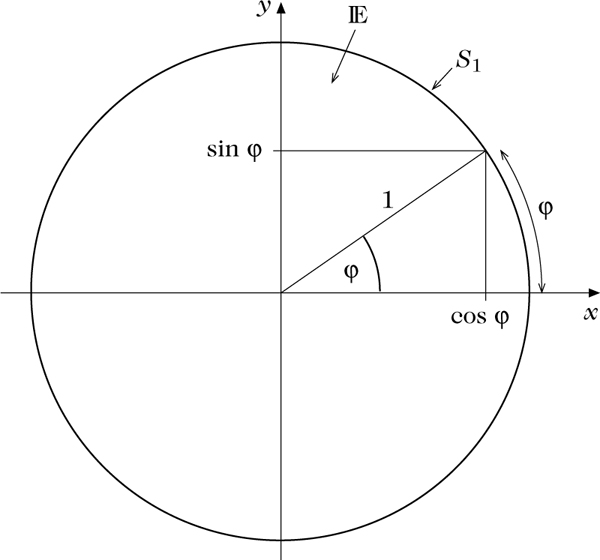
ratios of sides of a right-angle triangle can define sin, cos & tan for acute and right angles (with the exception of tan 90°, of course). using the unit circle can define these trig funct of any angle.
 upper karma
Have been struggling with this question lately, and would really appreciate it if someone could help confirm my answers or help find a better solution. What also confuses me a lot is the last statement From lighthouse B, lighthouse A has a bearing of 45°


 hushed bridge
lapis moon
ratios of sides of a right-angle triangle can define sin, cos & tan for acute an...
hushed bridge
lapis moon
ratios of sides of a right-angle triangle can define sin, cos & tan for acute an...
fax this made trig so much easier
 grave pond
upper karma
Have been struggling with this question lately, and would really appreciate it i...
grave pond
upper karma
Have been struggling with this question lately, and would really appreciate it i...
The 45° information means that lighthouse A is directly northeast of lighthouse B.
So the angle you've marked 45° on your sketch is wrong.
The direction from B to the boat is 237°-180° = 57°, so angle B in the triangle is 57°-45° = 12°.
(Which makes the triangle pretty obtuse, so it looks like for question (b) one needs to assume that the shore is a straight line extending northeast past lighthouse A).
upper karma
grave pond
The 45° information means that lighthouse A is _directly northeast_ of lighthous...
Wait wouldn't also change the bearing placement for lighthouse A as well tho?
grave pond
What does "bearing placement" mean there?
grave pond
Yah the angle at A will just be 180° minus the agles at B and the boat.
upper karma
I trying to draw this out
grave pond
The relevant background fact here is that "bearing" always mean a direction measured relative to due north_.
upper karma
grave pond
The 45° information means that lighthouse A is _directly northeast_ of lighthous...
I'm still trying to understand and visualize your solution. But may I ask why did you subtract 57° by 45° to find angle B? Also my concern from before was that when you said that 45° meant that lighthouse A would be NE of lighthouse B, wouldn't that change the 285° bearing of lighthouse A from the boat?
 grave pond
How would that change the sailor's direct measurement that the problem explicitly gives us?
The lighthouse is where it is. The sailor saw it in the direction he saw it, and wrote down what that direction was.
But may I ask why did you subtract 57° by 45° to find angle B?
The boat sees lighthouse B i direction 237. Someone standing at that lighthouse can look back along that line and see the boat in direction 57. Since the lighthouse sees the boat in direction 57 and the other lighthouse in direction 45, the angle of the triangle at the corner is the difference between those two bearings.
upper karma
grave pond
> But may I ask why did you subtract 57° by 45° to find angle B?
The boat sees l...
I understand the part where lighthouse B sees the boat in direction of 57°, however when you say the lighthouse B sees lighthouse A in direction of 45° is what confuses me, because where would that be? Is it angle A? Or B?
 grave pond
45 is the angle between due north and the direction the lighthouse keeper at B sees the light from A in.
It is not one of the angles in the boat-A-B triangle.
upper karma
Wait wait

 grave pond
Right.
upper karma
From I how I see this now is that
Lighthouse B was had an alternative angle, and to get angle 12°, I had to subtract 45° (caused by the NE shift of Lighthouse A) from the direction of Lighthouse B to the Boat which as 57°
The angle of the boat was difference of 285° and 237° which as 48°
And now to find angle A, I have to subtract 180° by 48° by 12° = 120° is that correct @grave pond?
I know my diagram of angle A looks acute, but I understand the correct value
grave pond
Yes.
upper karma
Okay then, I think I have the peices now to find out the distances of the lighthouses for the boat. Using sine law.
Thank you so much for the needed support, @grave pond, I really appreciate you.
grave pond
yw
 thin sable
anyone plz tell this ques
 grave pond
That sounds bizarre. First is looks like ABC is an arbitrary triangle, but then immediately it redefines C to mean the midpoint of AB, and the rest of the exercise looks like it makes sense with this new definition.
It would make so much more sense if we cross out the words "of ΔABC".
lapis moon
draw some auxiliary lines passing through A and B perpendicular to CZ, then observe some similar right triangles.
magic lichen
guys wuts cos 45
 nocturne remnant
Google it
 lilac whale
magic lichen
how do u draw tan on a unit circle
lilac whale
magic lichen
how do u draw tan on a unit circle
sin/cos
lilac whale
magic lichen
guys wuts cos 45
$\frac{\sqrt{2}}{2}$
somber coyoteBOT
D00M_Re1ated
 magic lichen
lilac whale
sin/cos
magic lichen
lilac whale
sin/cos
how do u draw it on a unit circle
magic lichen
i didnt want the formula
lilac whale
do you have to do that?
magic lichen
no i just wanted to know
lilac whale
im not really sure if you can
magic lichen
the proof of how u draw a tan on unit circle
u can draw it but
like
how does it work
so basically u draw a tangent on point P where point P is where ur terminating ray touches the circumference
lilac whale
oh
lilac whale
huh
magic lichen
distance of point P till where tangent touches y axis is cotan theta
lilac whale
interesting
 magic lichen
YE YE
lilac whale
oh
magic lichen
how do u proove that that is tangent
nocturne remnant
Proof: similar triangles
sin x / cos x = tan x / 1
nocturne remnant
OPE and OFP are similar
lilac whale
you can try an example with a specific point
like use a certain angle on the unit circle
and try it yourself
magic lichen
nocturne remnant
OPE and OFP are similar
they are congruent
nocturne remnant
???
magic lichen
yes...
magic lichen
sin theta in ope is
lilac whale
there is only one triangle
nocturne remnant
Also the angle is not given to be 45 degrees so you would have no idea
magic lichen
angles gonna be same dud
cuz tangent of a circle is perpendicular to point P
right?
magic lichen
so if angle ope is x then angle fpe = 90-x
then ur other angle in both the triangles will be the same
and u have 90 degree angles so they are congruent
nocturne remnant
No bruh
nocturne remnant
nocturne remnant
OPE and OFP are similar
I already said it
magic lichen
nocturne remnant
I already said it
they congruent
nocturne remnant
No obviously one triangle is much bigger duh???
magic lichen
how
nocturne remnant
Can you read carefully
magic lichen
wait lemme think
yeah ok so how do u use similar triangles to prove that the length PF = sine/cosine
 magic lichen
 urban whale
not a trianlge
urban whale
magic lichen
not a trianlge
 magic lichen
urban whale
magic lichen
urban whale
o ok
urban whale
 magic lichen
so u want to know hypotenuse
urban whale
yes
magic lichen
no u cant use tan
urban whale
ah
somber coyoteBOT
Alpha | Sync
 urban whale
all good
somber coyoteBOT
Ann
 urban whale
thanks
nocturne remnant
magic lichen
yeah ok so how do u use similar triangles to prove that the length PF = sine/cos...
FP/OP=PE/OE
magic lichen
nocturne remnant
FP/OP=PE/OE
oh so sin/ cos = slope = tan
somber coyoteBOT
Alpha | Sync
 nocturne remnant
OF is irrelevant
nocturne remnant
Yes but we’re not looking at hyp
nocturne remnant
I already gave you what sides you should look at
magic lichen
but what u are giving is
fp/op
=
pe/oe
oh ur looking at the slope of both triangles?
nocturne remnant
I guess you could say that
magic lichen
then how does tangent relate to sin/cos
nocturne remnant
I used op as the shorter side of the big triangle, not the hyp of the smaller one
nocturne remnant
nocturne remnant
FP/OP=PE/OE
Just substitute the known values into this
nocturne remnant
Yep
nocturne remnant
Yea
magic lichen
same thing for finding cotan right?
nocturne remnant
I think it’s similar
 steel ibex
What is k in this identities?
 dark sparrow
you should not ping people out of the blue like that 🤨 
runic beacon
try relating b to other angles then
why not?
see the
point at which angle b forms for example?
can you see it now?
theres a lot of ways (you can also consider that fact that line 3 is parallel to line 2)
corresponding angles will be equal
well
theres a lot of ways
but if you consider the fact the sum of angles on a straight line is 180 degrees
and look carefully at the figure
unknown angle has a relation with c
isnt it?
no?
runic beacon
runic beacon
unknown angle has a relation with c
??
you know what that small symbol means in c and the unknown angles?
Yes
so?
what equation do you get?
x?
or c?
yes
so, solve for c
Ok
can you find the other angles now?
give it a try
what do you get?
yes
yes
which one?
yes
so the triangle with b as its exterior angle is isosceles
yes
they are related?
also you have the third angle as 2c
vertically opposite
wdym by thats?
yes
you can
you can use anything
that works
did you get it?
 terse breach
how do I find the values of the angles x y z using trigonometry?

 serene dove

 neon crystal
terse breach
neon crystal
terse breach
solved it
 vestal siren

 trim breach
What is your question? All of question 7? @vestal siren
vestal siren
yeah
trim breach
Starting with 7a, you are asking what percentage [of all students] surf. So you will need the grand total first.
Are you able to find the grand total?
vestal siren
for what
trim breach
Yes. So the percentage of students that surf should be all students that answered “Yes” to surfing, divided by the grand total, multiplied by 100.
vestal siren
so 100/77?
trim breach
Not quite.
vestal siren
is it flipped
vestal siren
77
trim breach
That is for skateboarders, not surfers.
trim breach
That is for surfers that also skateboard.
You want to look at the marginal total, meaning everyone that surfs and skateboards and everyone that surfs but does not skateboard.
You already wrote it down in the margin.
vestal siren
i’m confused now
trim breach
If I tell you that the number of surfers is 97, do you know how I got it?
trim breach
You divide by the grand total first, which you said was 166 earlier.
Then, multiply by 100.
trim breach
For 7b, no. That would be the proportion of students that don’t surf. You want the ones that don’t skateboard.
The 166 part is correct though.
Just need a different numerator.
vestal siren
so 24
trim breach
More than just those 24 answered no to skateboarding.
You want the entire “no” column for skateboarding.
vestal siren
45 or add more
trim breach
Underneath the “Skateboarding” label, there is “Yes” and “No”. Anyone in the “No” column cannot skateboard.
vestal siren
89
vestal siren
okay i got it
 pseudo crystal
How do you find the third point in a triangle if you know the coordinates of the first and second point?
A(0, 1, 0) and B( 0, -1, 0)
 static jolt
i think need more info
pseudo crystal
Well I guess you could assume that the triangle is equilateral
grave pond
You'll probably need to show more context if you want an answer that's not just "half of the square of S times the sine of theta".
 lofty tangle
i was asking a sub for help on a problem in geometry and he handed me a sticky note for finding the area of an equilateral triangle
grave pond
Hmm, it is indeed the area of an isosceles triangle if S is the length of the two equal legs and theta is the angle between them.
Apparently you're supposed to substitute theta=60° yourself?
lofty tangle
yeah
but does it still find the area of an equilateral triangle if you substitute s for side length and theta for 60?
grave pond
Yes, an equilateral triangle is a special case of an isosceles one.
You can view it as an instance of the general area of a triangle: area = ½ab·sin(C).
steel ibex
 dark sparrow
check whether the inequality -π/2 ≤ -π/3 ≤ π/2 is true
steel ibex
dark sparrow
check whether the inequality -π/2 ≤ -π/3 ≤ π/2 is true
Is there any alternative methods?
dark sparrow
what alternative do you need to the definition of an interval?
i mean for this one in particular if you're so averse to what i just said you could instead verify that |-π/3| ≤ π/2 or something...
honestly. why do you need alternative methods for verifying whether a point lies in an interval
dark sparrow
the study of the relationship between lengths and angles, to put it broadly.
often in relation to triangles specifically, whence comes the name.
 royal portal
Hello i got a geometry problem and id really need an idea to solve it out

AC distributes the trapeze in 2 similar trianglea
Triangles
Some ideas?
<@&286206848099549185>
dark sparrow
@royal portal do you still need help with this?
royal portal
@dark sparrow yes please
dark sparrow
i would begin by noting that angles BCA and CAD are equal
this should help pin down what pairs of sides correspond to each other
upper karma
I need pink area
 upper karma
a Circumference of two circles have a difference of 30cm.Find how much their radius differ(of the 2 circles)

I need all area
 strange umbra
upper karma
I need pink area
strange umbra
upper karma
I need pink area
try using pick's theorem
||A = 8 + 4/2 - 1 = 9||
 tawdry bane
can anyone send me some good practice problems
lapis moon
tawdry bane
can anyone send me some good practice problems
in geometry? i recommend the 400 propositions in chapter 6 of 📖 Machine Proofs in Geometry downloadable at http://www.mmrc.iss.ac.cn/~xgao/publ.html
 lapis moon
upper karma
lapis moon
upper karma
this is another textbook problem that can be solved using the area method

source: Machine Proofs in Geometry
for secondary school students, just treat the areas as positive.
together with Zhang's Elimination Point method (消點法)

source: see bottom line of the above screenshot
free points: A,B
constructed points:
- C,D: ABCD is a square; F: AF = (2/5) * AB
- E = AD ∩ CF; K = BD ∩ CF
your desired ratio is |FK:EF|. we apply the Co-Side Theorem to eliminate E and K from this ratio. (sorry i made a careless mistake in the second ratio: the denominator shld be ADC minus ADF.)
\begin{align*}
\frac{FK}{CF} &= \frac{FK}{FK + KC} = \frac{\triangle BDF}{\triangle BDF + \triangle BDC} \
\frac{EF}{CF} &= \frac{EF}{CE - EF} = \frac{\triangle ADF}{\triangle ADC - \triangle ADF}
\end{align*}
somber coyoteBOT
vin100
 lapis moon
here i'm too lazy to type $S_{\triangle ABC}$ for the area of $\triangle ABC$. I just write $\triangle ABC$ to represent its area instead.
somber coyoteBOT
vin100
 lapis moon
apply the definition of $F$ to further simplify the expressions
somber coyoteBOT
vin100
 lapis moon
\begin{align*}
\triangle BDF &= \frac12 \left(1 - \frac25 \right) , AB^2 = \frac{3}{10} AB^2 \
\triangle ADC &= \triangle BDC = \frac12 AB^2 \
\triangle ADF &= \frac12 \cdot \frac25 AB^2 = \frac15 AB^2
\end{align*}
somber coyoteBOT
vin100
 lapis moon
divide the first ratio by the second ratio, and the answer will come out.
i omit AB² to save time
,, \frac{FK}{EF} = \frac{\frac{\frac{3}{10}}{\frac{3}{10}+\frac12}}{\frac{\frac15}{\frac15+\frac12}} = \frac{\frac38}{\frac27} = \frac{21}{16}
somber coyoteBOT
vin100
 lapis moon
,, \frac{FK}{EF} = \frac{\frac{\frac{3}{10}}{\frac{3}{10}+\frac12}}{\frac{\frac15}{\frac12-\frac15}} = \frac{\frac38}{\frac23} = \frac{9}{16}
somber coyoteBOT
vin100
 lapis moon
i made a mistake at the first time. the second one is right.
 willow lynx
i need help with this i can show you what i have so far but i doubt it’s right
 lapis moon
the so-called "mapping notation" isn't the one used for elements.
,tex \verb|\mapsto| gives $\mapsto$ in \LaTeX
somber coyoteBOT
vin100

 nocturne remnant

In geometry, the spiral of Theodorus (also called square root spiral, Einstein spiral, Pythagorean spiral, or Pythagoras's snail) is a spiral composed of right triangles, placed edge-to-edge. It was named after Theodorus of Cyrene.
 teal kayak
That's cool
I am still cool for randomly discovering this spiral by playing around on geogebra
upper karma

Intro to trig with a lurking mystery about cos(x)^2
Full playlist: https://www.youtube.com/playlist?list=PLZHQObOWTQDP5CVelJJ1bNDouqrAhVPev
Home page: https://www.3blue1brown.com
Brought to you by you: https://3b1b.co/ldm-thanks
Contents:
Introduction - 0:00
Q1 Graph of (cos θ)² - 2:14
Q2 Translations of cos θ to (cos θ)² ...
How the fuck is trigonometry linked to frequency wave looking graphs
God
Math never fails to confuse the fuck out of me
 fallen sleet
what is the standard way to find the number of triangles given SSA?
I managed to make this unholy formula as a discriminant (negative means zero triangles, zero means one triangle, positive means two triangles)(trig functions in degrees): $(\frac{sin(90-\angle A)}{sin(\angle A)})^2(4a^2-4c^2)+4a^2$
somber coyoteBOT
alshfik

 ember timber
Hi, anyone to help me check my answer? I got 7.5, but the reference answer is 17.5 ! I don't know where I made a mistake.

 ember timber
oh, I has found the mistake! I should use the perp not the proj~
strange umbra
ABC is an acute triangle, furthermore there are two X and Y such that ACX and CBY are isosceles right-angled triangles (with the right angles at X and Y). M is the midpoint of AB. How can I prove that XMY is also a isosceles right triangle?
 dark sparrow
@strange umbra are you allowed to use complex numbers? i have a feeling there might be some very aethetically pleasing proof of this if you are
strange umbra
sure
dark sparrow
interpret the coordinate system you've plotted this on as the complex plane, so that A is at 0, M is at some real point a, B is at 2a, and C is at some point z in the first quadrant
i claim that, after some algebra and observing some 90- and 45-degree angles in the picture, you can get $X = \frac{1+i}{2} z$ and $Y = (1+i)a + \frac{1-i}{2} z$
somber coyoteBOT
Ann
 dark sparrow
and then (identifying complex numbers with vectors) we get $\overrightarrow{MX} = -a + \frac{1+i}{2}z$ and $\overrightarrow{MY} = ia + \frac{1-i}{2}z$, and so $\overrightarrow{MX} = i\overrightarrow{MY}$ just as we want.
somber coyoteBOT
Ann
 dark sparrow
though i do freely admit that i am skipping over a lot of details here.
upper karma
I think it's easier if you let M be the origin
Let A be a complex number a, C is at c, et cetera
The info that AXB is an isoceles right triangle is equivalent to
(c-x)*i=a-x
Similarly for BYC
Just make sure you get orientation right since multiplication by i is a 90 degree rotation counterclockwise
We wanna prove YMX is isoceles right
It helps to place the origin at M
This way we just need to prove that y*i=x
Also since M, the origin, is the midpoint of AC we have a+c=0
strange umbra
thx a lot guys 👍
upper karma
What is 1/3 plus 9/9 ?
upper karma
upper karma
Also since M, the origin, is the midpoint of AC we have a+c=0
Whoops should be a+b=0
dark sparrow
upper karma
What is 1/3 plus 9/9 ?
do you know how to add fractions?
 opaque gull
Anybody familiar with normal distribution?
 loud shard
can someone please help me with this problem?

 sly venture
its find the area of a n-sided polygon with a perimeter of 242 and an apothem spanning 18 units
cans omeone help
 white matrix
@velvet flicker are you able to use CAS?
if the angles are 28 and 49
the last angle would be 103

i find mf using the sine theorem
and then use the cosine theorem to find AF

since the length can't be negative, AF would be 15.49 and M would be 7.46 if im not mistaken with the angles
since the way that you write the angles are different from mine
@loud shard
 velvet flicker
white matrix
velvet flicker
white matrix
my fault brodie 🤣🤣
 tall python

 undone path
 oak sandal
Yo, having trouble going from 2/tan theta to -2csc(theta)
Anyone has a clue they can toss?
Went to 2cos(theta)/sin(theta but not sure what to do from there

 lunar grail
 woeful tangle
So you're trying to find the coordinates of the new square
Do you have an idea of what C' might be?
woeful tangle
sorry i dont you think we can get in a call and i screen share bc i really need to get a 80 so i can boost my grade so i can pass
let me know if not its fine
@lunar grail
lunar grail
woeful tangle
sorry i dont you think we can get in a call and i screen share bc i really need ...
uh no call plz
woeful tangle
we cant get in a call and i screen record the ixl?
you dont have to talk
@lunar grail
lunar grail
woeful tangle
we cant get in a call and i screen record the ixl?
no thanks, we can just type here
 lunar grail
count 2 units to the right, and 8 units up from C
woeful tangle
-4,-5 and -4, 3?
lunar grail
-4, 3 would be C'
woeful tangle
oh
lunar grail
so then find the other points using that same method
and then tell me your full answer and I'll see if you missed it
woeful tangle
i got it right yay
 lunar grail
woeful tangle
these ones always get me
lunar grail
woeful tangle
these ones always get me
this one is easier! Because instead of going to the right you only need to count 10 units down
so try counting from R down
woeful tangle
-7,-9?
lunar grail
woeful tangle
-7,-9?
Yes
woeful tangle
would U be -7,0
lunar grail
woeful tangle
would U be -7,0
yes, U' would be
woeful tangle
would T be 2,0
and would u actullay be 2, -9
sorry got it mixed up
would S be -7,0
lunar grail
woeful tangle
would T be 2,0
yes
 lunar grail
woeful tangle
would S be -7,0
lunar grail
woeful tangle
would S be -7,0
no this was wrong sorry I was in another chat
 lunar grail
woeful tangle
heres my new problem
lunar grail
woeful tangle
heres my new problem
So use the same methods as before
lunar grail
woeful tangle
i got it right
nice, going to bed, have a good night!
 vagrant ore
I need some help with this problem
 dark sparrow
angles ABE and EBC are two equal halves of angle B
use this to write down an equation in x, solve it for x, then find the measure of angle ABE
 unreal shuttle
(english is not my primary language, i hope all my english math terms are correct)
Hello
I want to find a point P(x(t),y(t),z(t)) where the point is always on the intersection of a sphere and a plane.
Let's say the sphere is: x²+y²+z²=2²
ex 1: the plane is: z=0
For this example it's pretty easy, I found P(2cos(t), 2sin(t), 0)
ex 2: the plane is x-z=0
For this I found P(√(2)cos(t), 2sin(t), √(2)cos(t))
Ex 3: the plane is x- 0.2y - 0.4z = 0
For this I did not find a solution and is why i am here.
This is how i tried it.
z = (x-0.2y)/0.4
x²+y²+((x-0.2y)/0.4)² = 4
x²+y²+6.25x²-2.5xy+0.25y² = 4
7.25x²+1.25y²-2.5xy = 4
In the previous example i did not have the xy term so I could easily make an ellipse out of this and convert it to cos and sin. Then I'd have x(t) and y(t) and could find z(t) with the equation of the plane. I think this example is also an ellipse but not aligned properly around the x and y axis. So i think this wil get me something of the form P(a*cos(t), b*cos(t-c), d*cos(t-e)) I am not sure of this.
 steel ibex
Does LHS=RHS?
 steel ibex
static jolt
Yes
steel ibex
static jolt
Yes
How 4 goes at the numerator?
static jolt
(1/3) ÷ (1/4)
@steel ibex I was wrong sorry they arnt equal
They called "complex fractions"
1/3/4 = 1/12 not 4/3
steel ibex
static jolt
<@892032970733523035> I was wrong sorry they arnt equal
Thank you, for your clarification 👍
 upper breach
 static jolt
The formula to calculate the area of a regular polygon is, Area = (number of sides × length of one side × apothem)/2, where the value of apothem can be calculated using the formula, Apothem = [(length of one side)/{2 ×(tan(180/number of sides))}].
 torpid mountain

helppppppppppppppppppppppppppppppppppppppppppppppppppp
math is so math
or im just dumb
im probably just dyumb
dumb
opaque gull
I don't understand the "English" in it like I'm not sure if away is the hypotenuse distance or whatevs

i think its like this
then use pyth theorem
pliant roost
steel ibex
Does **LHS=RHS**?
It does because the 1 / 3 / 4, not 1 / 3 / 4, since the equality sign is on the first division. So the LHS and RHS are indeed equal
pliant roost
yes...
vagrant ore
I need help with this

 azure crown
vagrant ore
I need help with this
azure crown
vagrant ore
I need help with this
make a right triangle with an altitude from <x then use trig
vagrant ore
How?
lapis moon
use the law of cosines
 summer salmon
I have this question on an assignment of mine, super confused as to where to begin, I have a unit circle and a diagram I drew of it but idk where to go from there


 astral hull
in the figure, cd is a line segment of the diameter, and bc is perpendicular to cd, prove that abcd is concyclic. Can someone give me some hints to deal with it?
 wanton edge
How I do it
Step 1. Prove that ∠BAD = 90°
Hint: this picture
 wanton edge
How I do it
Step 1. Prove that ∠BAD = 90°
Hint: this picture
wanton edge
wanton edge
How I do it
Step 1. Prove that ∠BAD = 90°
Hint: this picture
@astral hull From the above picture, draw the line segment AD. You can see that ∆OAD is isosceles
magic lichen
guys i didnt understand equations for sinusoidal graphs
and how u use them for finding amplitude, period and range
summer salmon
amplitude is just half the difference between the highest point of the graph and the lowest point of the graph
(max-min)/2
upper karma
$\sin(\pi/2 - x ) = \cos x$. right if i change sin into $\sin^2 $ and cos into $\cos^2$. will the eq be alright??
somber coyoteBOT
moltres109
 astral hull
wanton edge
<@769741203586416650> From the above picture, draw the line segment AD. You can ...
astral hull
wanton edge
<@769741203586416650> From the above picture, draw the line segment AD. You can ...
thanks for giving me a new perspective. Is APO always collinear?
wanton edge
astral hull
thanks for giving me a new perspective. Is APO always collinear?
Yes. Because those two circles have the same tangent point
astral hull
wanton edge
Yes. Because those two circles have the same tangent point
Oh i see it the common tangent point. Thanks a lot
wanton edge
astral hull
Oh i see it the common tangent point. Thanks a lot
No problem
magic lichen
summer salmon
amplitude is just half the difference between the highest point of the graph and...
no im talking about the equations
like $ \frac -1/2 \cos 3x $
uh...
$y=-1/2 \cos 3x$
ok
wh
what does the equation mean
somber coyoteBOT
Alpha | Sync
 vagrant ore
Is the answer just 6?
 vagrant ore
Nah it was 6
somber coyoteBOT
Alpha | Sync
 magic lichen
what value does c change
like a changes amplitude, 2pie/mag b changes period, and midline changes d
what does c change
magic lichen
dark sparrow
c is the phase shift
ye i got it
what i meant was
how do u calculae if theres a phase shift or not
magic lichen
bruh
ok u didnt get the quesiton
i was asking how u calculate phase shift if ur given only 1 graph
dark sparrow
look at where the sinusoid crosses its midline
i don't have the energy to describe this in full or with any sense of formality right now
magic lichen
ye i got it
its basically the offset of the first up going point on the x xis where y=0
rigt?
right*?
vagrant ore
Would the answer be 3 sqrt(3)?
 dark sparrow
no
vagrant ore
Oh. How would I figure out the answer?
nocturne remnant
Easiest way would be to use Pythagorean theorem on all 3 right triangles to obtain 3 equations
And then solve for z
Well no actually
I think
By similar triangles 3/z = z/30
And then solve for z directly
nocturne remnant
nocturne remnant
By similar triangles 3/z = z/30
And then solve for z directly
This is much faster
vagrant ore
Would you cross multiply?
nocturne remnant
Yeah you can do that
vagrant ore
So 45 is the answer?
 nocturne remnant
Yeah
upper karma
@vagrant ore I think it's 9
vagrant ore
Nope
dark sparrow
vagrant ore
3 sqrt(10) should be right
yes
 fallen patio

 ember oasis
dark sparrow
tan(pi/6) does
ember oasis
dark sparrow
tan(pi/6) does
ah yeah but how'd it get to sqrt3/3?
dark sparrow
draw a 30°-60°-90° triangle
and observe that the side opposite 30° (a.k.a. pi/6) is 1 and the side adjacent to it is sqrt(3)
steel ibex
ember oasis
One way to think about it is that if you take a right triangle with one angle being pi/6, then the side opposite of the pi/6 angle will be 1, the side adjacent to the pi/6 angle will be sqrt(3), and the hypotenuse will be 2. So, another way to think about pi/6 is that it is the angle that gives a right triangle with sides of 1, sqrt(3), and 2.
ember oasis
gotcha thanks!
why is sin(3.45098) = 0.060... on a calculator while sin(3.45098) on symbolab is -0.30447...
steel ibex
ember oasis
why is sin(3.45098) = 0.060... on a calculator while sin(3.45098) on symbolab is...
The two values are actually the same; it's just that your calculator is in radian mode while Symbolab is in degree mode. To convert from radian to degree, multiply by 180/π. Therefore, sin(3.45098) in radian is actually sin(3.45098 * 180/π), which is equal to -0.3044737347536959.
ember oasis
OH THANK YOU
ember oasis
steel ibex
The two values are actually the same; it's just that your calculator is in radia...
what about inverse signs?
dark sparrow
steel ibex
The two values are actually the same; it's just that your calculator is in radia...
other way around, the calculator is doing it in degree mode while symbolab is in radian mode
ember oasis
what do they mean when they say "find the measure" ?


is it the angle of the acute central angle?
dark sparrow
"the angle of the angle" is kind of weird
but yes you're asked to find the size of the angle
ie how many degrees it has
ember oasis
dark sparrow
"the angle of the angle" is kind of weird
quite lost on this one, are the given values enough?
because from my previous examples, it would normally have pi on the arc length
dark sparrow
yes, your angle will be 34/39 radians
ember oasis
dark sparrow
yes, your angle will be 34/39 radians
ohh and then convert that to degrees?
dark sparrow
yes
ember oasis
gotcha ty !
 robust tinsel
Yes, this is for a test. No, I don’t want the answer directly. I need someone to define some of these

I need definitions for Congruent and perpendicular.
wanton edge
Congruent* is basically another way to say "identical". Perpendicular is when two lines meet at right angle (90°)
(*In geometry)
robust tinsel
That’s… actually more simple and helpful than anything I’ve seen on Google. Thanks!
wanton edge
You're welcome

 sleek star
(1;-3)
robust tinsel
You’re fine, im kinda stupid and don’t know half of math lol
And I graduate in 2 weeks…
sleek star
robust tinsel
How do I dilate a figure?
how many units dilate
vagrant ore
I need help

 errant salmon
vagrant ore
I need help
errant salmon
vagrant ore
I need help

this should help
memorizing the trig ratios will help a lot in the future
 near trail
I have a question or two. How can I calculate the green line length if I know the placements of two points (A and B) on the circle boundaries? What is this problem called (so I can research it more)?
 vagrant ore
errant salmon
memorizing the trig ratios will help a lot in the future
vagrant ore
errant salmon
memorizing the trig ratios will help a lot in the future
What if the angle is 35 instead of 30?
grave pond
Then the result cannot written exactly using root signs; you have to resort to trig tables or a calculator anyway.
vagrant ore
So for this problem would I do 15sin(35)?



 errant salmon
vagrant ore
So for this problem would I do 15sin(35)?
errant salmon
vagrant ore
So for this problem would I do 15sin(35)?
i’m not sure i follow
grave pond
vagrant ore
So for this problem would I do 15sin(35)?
Yes.
errant salmon
but to find x u can use SOHCAHTOA i think
grave pond
 chilly raven
I really need help on this one
chilly raven
I really need help on this one
A whole bunch of angles in the diagram are the same, and the length of each of HE and GE becomes the side length of the square, divided by the sine of one of the identical angles.
chilly raven
I don't understand
vagrant ore
How do I do this?
 static jolt
find area of the circle so 3.14*6^2
vagrant ore
static jolt
find area of the circle so 3.14*6^2
So 113.1
static jolt
the portion of the shaded region plus the triangle is: 113.1*(5/12)
5/12 is the 150/360
vagrant ore
So the answer should be 47.125 then
static jolt
now have to find the area of the triangle and subtract it from 47.125
vagrant ore
What would the height be?
static jolt
yea but to find the height will have to split the triangle into 2 triangles
vagrant ore
Ok
static jolt
so then will have 2 right triangles
vagrant ore
Yes
static jolt
so each triangle angle is 90 + 75 + 15
errant salmon
just find the area of the sector
then find area of triangle
and do area of sector minus area of triangle
vagrant ore
errant salmon
just find the area of the sector
How would I do those?
vagrant ore
Oh ok
errant salmon
fax
vagrant ore
So area of a triangle
vagrant ore
errant salmon
1/2ab sinC
Huh?
errant salmon
sorry
$0.5 \cdot a \cdot b \cdot \sinC$
that’s the equation for area of triangle
vagrant ore
But for my problem what would the variables be
errant salmon
ok
so
label the sides on ur triangle
btw calculator is allowed right
but yea so you can technically make any side a and b
in this case you’d want them to be sides that you know the length of
vagrant ore
errant salmon
btw calculator is allowed right
Yes
errant salmon
and you’d want sinC to be an angle that you know right
so you have all the information needed
vagrant ore
Yes
errant salmon
what do u think a and b will be
vagrant ore
So like this?
 vagrant ore
Ok
vagrant ore
errant salmon
that’ll work
So now what?
errant salmon
vagrant ore
So now what?
what’s the area of the triangle
vagrant ore
I don't know
vagrant ore
How? It's only variables
errant salmon
?
i don’t get what u mean
you have
the variables
a and b are equal to 6
you labeled it correctly
sinC = sin(105)
make sure your calculator is in degrees
vagrant ore
errant salmon
sinC = sin(105)
Sin(105) is 0.9659
errant salmon
vagrant ore
Sin(105) is 0.9659
g
calculate the area of the triangle using the formula i gave
vagrant ore
Which one?
errant salmon
$0.5 \cdot a \cdot b \cdot sinC$