#geometry-and-trigonometry
1 messages · Page 291 of 1
 silent plank
 surreal vector
oh yeah after rewriting the new plane
surreal vector
ohh Ay is 7 because its on the y = 7 line
silent plank
$x_A$ and $y_A$ are better than $A_x$ and $A_y$
 somber coyoteBOT
ramonov:
surreal vector
ok
silent plank
no, you're finding the coordinates of A such that
|AB| = |AC|
surreal vector
okay, if I compare them I end up with an equation with both x and y, so that can't be right
surreal vector
so B is 0,7?
silent plank
the y coordinate of any point on the line y=7 will be 7
silent plank
oh crap, can't believe i missed your earlier mistake with the distance formula
should be **+**s in between
and you can simplify the 7-3 before squaring
@surreal vector
surreal vector
Waait what lol my teacher taught me it's with a minus
silent plank
well its not, its +
surreal vector
Oh wait
silent plank
it's essentially pythagoras
surreal vector
You're right
silent plank
should've spotted it earlier
 surreal flume
A shoe store charges $39 for a certain type of sneaker. This price is 30% more than the amount it costs the shoe store to buy one pair of these sneakers. At the end-of-the-year sale, sales associates can purchase any remaining sneakers at 20% off the shoe store's cost. How much would it cost an employee to purchase a pair of sneakers of this type during the sale (including sales tax)?
surreal vector
Thank you ramonov I got a call I need to attend, much appreciated!
@surreal flume how much is 30% of 39?
silent plank
did you figure the rest out?
surreal vector
@silent plank got an urgent call I had to leave the computer, I'll be there again in 20
surreal vector
@silent plank AB = AC = 5?
surreal vector
oh right, i need to get used to it.
 inner imp
 upper karma
uhhh yah
find the hypotenuse first
then look up sohcahtoa
next
soh cah toa

Khan Academy
Learn the basics of trigonometry: What are sine, cosine, and tangent? How can we use them to solve for unknown sides and angles in right triangles?
upper karma
go away
 dark sparrow
<@&268886789983436800> we got a spammer over here
 copper valve
wot
dark sparrow
jasom here posted the same thing across multiple channels
copper valve
Ok
upper karma
he also dm'ed me saying 'you need help'
copper valve
they are gone now
surreal vector
Stuck on a new problem:
Find on the positive part of the Y axis a point that it's distance from the point (5,1) is equal to it's distance from the X axis.
the question itself is really hard to understand for me, is this what they mean?
 plucky marlin
i think they mean the perpendicular distance to the X axis
surreal vector
what point?
plucky marlin
perp distance from the point y to the x axis
that has to equal the distance between y and (1, 5)
surreal vector
I mistyped
I corrected the question - Find on the positive part of the Y axis a point that it's distance from the point (5,1) is equal to it's distance from the X axis.
upper karma
how did u calculate them?
 desert vortex
sinA/a = sinB/b
silent plank
,calc 2sqrt(2)
somber coyoteBOT
Result:
2.8284271247462
i put 2.83 kek
silent plank
which should be fine
desert vortex
but it's not lol
i have one more shot to get it right and idk what i did wrong lmao
upper karma
i got 5.46 for c
desert vortex
oh
upper karma
maybe type 2.82 for a ?
desert vortex
why would you round down lo
desert vortex
idk maybe c was the wrong one yolo
o
it was 5.46
not 5.56 lol
whoops
thank you
upper karma
np 🙂
desert vortex
oops some contextmight help
okay so am i just tryna find the height of the yellow triangle?
or was the beginning pyramid the yellow triangle wat lol
silent plank
current
the info is just backstory
and can serve as an indication of whether the value you reached makes sense
 urban egret
@desert vortex are you still here?
urban egret
@desert vortex hey man they want you to find the height so you will first find an equation for one of the triangles given
So in order to find the the height we will use angles that encompasses the opposite of the triangle. So we will only look at sine and tangent. Upon further analysis we will realize we don’t have any information for the hypotenuse so we will go ahead and just use tangent.
First equation we will look at the 50ft that is 48 degrees and the shaded area next to it which is aligned on the left side of the height they want us to measure.
So for that triangle we get tan(48.02) = h/(50+x)
X represents the distance to the right of 50 ft which is under the first shaded area. We will ignore the second half the shaded area cause it is not needed.
The second equation will look at the 41 degree angle. So that equation is tan(41.3) = h/(100+x). Now that you have 2 equations you can solve for the height. So plug in for x for either equation you will have the variable h left over. Factor out the h and solve for it then your done hopefully this helps. @desert vortex
 inner void
I have done this question. I dont know if the answer is correct
upper karma
can we see your work?
upper karma
@inner void Mr. Trump
inner void
Yes
With the tangents, I then solved it and tried to find the height of the helicopter
upper karma
i still love the avatar
upper karma
why do u think its wrong
inner void
People got 271m
upper karma
how many people
i just realized that you know all 3 angles, so find the height based on that
somber coyoteBOT
 Requested by ramonov#0921
upper karma
Requested by ramonov#0921
upper karma
@inner void welp, at least you got a great avatar
silent plank
yeh, helicopter less than 1 meter from the ground is definitely suss
upper karma
lmaoooooooooooo
silent plank
~271m sounds about right. i'll see if i can spot the mistake
upper karma
what would the angle of elevation be if the helicopter was 0.676 m off the ground?
inner void
Lmaoo I had a better picture of spongebob on my other account but I forgot the password
Ohh
How do I change it on a google calculator
silent plank
tan(66 rad) ~ 0.0266
tan(66deg)~ 2.246
inner void
inner void
Oh I found it
silent plank
also get a proper scientific calculator
inner void
so basically with these new tangents I do the same formula to find the height right? and I did have a scientific calculator. All my stuff is in my school locker I am going to get them back in a week
silent plank
same trig ratios, just evaluate them properly
inner void
Okk thank you so much
inner void
Which ones the paper one?
silent plank
the original question
inner void
ohh he found it online
my teacher
We have to do all these questions and I have only done 2 of them right now
upper karma
damn he found it online? shoulda searched it up tbh
upper karma
lol the apprentice
inner void
yess
upper karma
i watched one of the season back in gr.11 marketing
inner void
ohh
inner void
oh
upper karma
it what i do
inner void
can we send links here
upper karma
damn
inner void
If anyone has free time to help me with this, please let me know i am dying from the inside
inner void
Lmaoooo
inner void
yoo I showed it to my teacher and he said to do it in the sine law method not the tangent one
Bro istg im gonna start crying this is unfair
silent plank
tell them if they wanted you to use sine law, they should've specified that in the question
otherwise you're allowed to use w/e valid method you know
if its mathematically valid, they can't really penalise you
inner void
@upper karma yes it was this one I finally found it
upper karma
looks p thugg life to me
inner void
and yes i finally convinced him
upper karma
bless
inner void
Wheww

 solemn warren
Is there a nice general way of solving these kind of triangles?
WIthout using trig functions?
upper karma
yes
solemn warren
So I think the angle is: 3/2
solemn warren
Idk, just a guess.
I was imagining if 2 was 1, and if it was a unit circle, the degree might be 3/2 radians?
upper karma
i don't thnk thats right tbh
 umbral snow
The angle is 3/2 radians, yes. Assuming that's a circle section and each 2 is a radius
Then the unknown side is 2sin(3/2)
,calc 2sin(3/2 rad)
somber coyoteBOT
Result:
1.9949899732081
,calc 3.1415/4 - 3/2
somber coyoteBOT
Result:
-0.714625
lmaooo
umbral snow
Dafuq is going on here
somber coyoteBOT
The following error occured while calculating:
Error: Undefined symbol $pi
umbral snow
,w 2sin(3/2)
somber coyoteBOT
 Requested by Kaynex#7520
umbral snow
Requested by Kaynex#7520
umbral snow
That seems really close to 2
upper karma
lmao
umbral snow
Like too close, since 3/2 isn't really a quarter circle
Nvm, looking at a thing, 3/2 is actually very close to a quarter circle
,calc 3/2 - pi/2
somber coyoteBOT
Result:
-0.070796326794897
That's the reason right there oop
solemn warren
Is the only other way by approximation?
I imagine it might be possible if you derive half angle formula, and begin halving approximations, eventually getting you closer to the answer.
But idk, other than that and trig, I'm guessing there are no nice ways of solving these kind of triangles.
 graceful grail
dark sparrow
graceful grail
dark sparrow
that'll work
 robust nexus
Could someone help me on this?
I need to find the error and explain it but this is the only unit I couldnt attend to
dark sparrow
Surface area 1 = 2πrl + πr^2
this formula includes something that it shouldn't
@robust nexus
robust nexus
My bad for multi posting everyone
dark sparrow
wdym
your question is asking for volume
also @robust nexus thank you for choosing not to acknowledge my reply /s
robust nexus
no no my bad, I was seeing if there was any other error in the formula
dark sparrow
and how was i meant to know that you acknowledged the thing i pointed out when you gave no indication of doing so?
 ocean berry
is anyone able to help with some really simple Maths for finding the radius of a sector?
i havent yet learned the formula and so im kind of stuck
 eternal crag
dark sparrow
eternal crag
dark sparrow
@ocean berry 15 cm is 21/360 of the circumference of a full circle with your radius
upper karma
use the formula for the circumference of the circle
(if you don't know it by heart, google it)
it's written as upper-case "C = ..."
so then you can write: (21/360) * C = 15
then solve for "r"
dark sparrow
if you don't know the circumference formula by heart you don't know what pi is
ocean berry
It’s fine, I got it:)
ocean berry
Can’t remember but it was correct
silent plank
do you know all the definitions in that list?
 arctic vortex
i think its consecutrive
but idk the seocnd blak @silent plank
what is this one
same blanks
silent plank
do you know theorems relating to parallel lines?
arctic vortex
this is the first unit
for geoemtry
its a summer course
wait
nvm
i got that right
silent plank
(the theorems should've been given to you /taught before these questions)
silent plank
consider theorem(s) that can be applied here
silent plank
theorems relating to parallel lines
1 and 2 are alternate angles
they are also on parallel lines which means that they are: ___ ?
silent plank
theorems relating to parallel lines
also you seem to be able to get these without my assistance
 silver fable
Sorry if this problem seems abit too basic but considering that all of the angles of this shape is 90° is this a convex polygon or concave?
 fallow edge
Intuitively, convexity means that you can pick any two points in the polygon, and the line drawn between them will remain inside the polygon
Is that the case here?
silver fable
I guess not now it makes sense to me thanks
fallow edge
Np
 neon heart
Can someone help me with this?
Do I just need to find Radius here ?
and find circumference?
 dapper elk
@neon heart You will need to break it up into 2 separate circles
actually idk
that's a tough one maybe
cause the rope is reduced as he reaches each corner
so think of it as 4 circles
but you must account for overlap
 drifting sorrel
I am going through MML's help tool, but it takes this huge leap on the last step and I do not understand how they got from cosx(1+cscx) over = cot^2x to -tanx sinx - tanx
I feel like I'm missing something obvious.
I'm assuming the denominator would be - (cosx / sinx), but I'm pretty lost after that.
Sorry, both cosx & sinx would be ^2 as well since it's cot^2. Typing problems like this on discord is a nightmare lol
urban egret
@drifting sorrel
drifting sorrel
Alright, so I just suck at simplifying. Thank you so much! Let me try a different one with less suck this time. 🙂
upper karma
trig identities are funnnnn
 dry phoenix
Not sure if this is right place to ask, but here it goes : If i have 13 points in a plane, and 6 of them are colinear, how many lines can i construct from those points?
I m not sure if i translated this ok
 supple onyx
Are only 6 of them colinear?
upper karma
6 coliniar points = straight line
but you also need to account for the points between that line
6 points = 5 lines
then, each of the 6 colinear points form a line with the rest of the points (doesn't matter where they are)
but then the rest of the points need to form a line with the 6 colinear points
taking into account the lines that were already drawn
basically, you should take a piece of paper and draw it out
separate colors
or, you know, use a computer
 pallid patrol
I need help!
 cosmic pebbleBOT
From
Rule 1
The help channels are solely for help with math, so feel free to post your question. Asking whether you can ask a question or if anyone knows about some specific topic is unnecessary, so please try to avoid questions of that nature.
dark sparrow
,rccw
somber coyoteBOT
dark sparrow
no, i'd rather not
upper karma
I'd love to
BE bisects ABD, so ABE = EBD. BD bisects EBC, so EBD = DBC. EBD = ABE = DBC
for the transitive property
and definition of angle bisector
RSU + USV = RSV (angle addition postulate), same thing for the other one (USV + VST = UST). RSU = RSV - USV, VST = UST - USV. But we know RSU = VST, using substitution we get RSV - USV = UST - USV, adding USV on both sides we finally get RSV = UST.
I hope I was useful
I'm sorry I dont know how to use latex
upper karma
use dollar signs at the beginning and end of your statements to activate latex
thanks but angles and symboles of congruence are a thing
$\cong$
somber coyoteBOT
Al𝟛dium:
upper karma
thanks
 humble pebble
i need help with probability
upper karma
@humble pebble 1. Not the appropiate channel
2. 
somber coyoteBOT
ace8792:
 quasi geyser
can someone pls explain to me why it takes congruent AND corresponding sides to prove a quadrilateral congruent?
while a triangle only needs either congruent or corresponding sides
upper karma
It is what it is. 🤷♂️
quasi geyser
br'
upper karma
someone name a worse but still widely used way to teach mathematical deductive reasoning than two column geometry proofs
upper karma
no
 ocean axle
Hint for: \
$cosΘ - \sqrt{3}sinΘ = 1$
somber coyoteBOT
Niko:
 devout harbor
dark sparrow
devout harbor
dark sparrow
okay, here's a hint: angle sum formula for cos, in reverse
halve both sides, so that you get $$\frac{1}{2} \cos(\theta) - \frac{\sqrt{3}}{2} \sin(\theta) = \frac12$$
somber coyoteBOT
Ann:
dark sparrow
recognize 1/2 and sqrt(3)/2 as the cos and sin respectively of an angle
@ocean axle
 ancient spire
Point A lies outside of plane H, how many lines can be drawn parallel to plane H that pass through point A?
it is infinite, right?
dark sparrow
yes
ancient spire
ok, thanks
 elder shuttle
Help!
upper karma
MW * MN = ML * MK
 warm flame
Sum of interior angles of a pentagon add to 540
 low drum
Thank you @warm flame @upper karma I appreciate it
upper karma
@low drum 180(n-2) where n is the amount of sides. You can use that to find the sum of all in the interior angles in any polygon
||Subtract 60 from 180(5-2) then divide by 4.||
, rotate
somber coyoteBOT
upper karma
you could also think of it like this:
basically using a hexagon
the math checks out for the triangle in the upper left corner
because all angles from a triangle need to add up to 180
and they do
silent plank
sin(60°) isn't y/16
apply the proper trig ratios
30° and 60° are also special angles, so you should know the values of trig functions at those angles.
upper karma
,rotate -90
somber coyoteBOT
upper karma
soh cah toa
Khan Academy
Learn the basics of trigonometry: What are sine, cosine, and tangent? How can we use them to solve for unknown sides and angles in right triangles?
 leaden bridge
I want to practise verifying trig identities, but if I just look it up on Google I keep running over the same exercises.
If anyone knows about a book with a good few hundred exercises it would be much appreciated
eternal crag
i never looked into it but have you tried lang's basic mathematics?
 night snow
somber coyoteBOT
night snow
somber coyoteBOT
EnfantsDeLaPatrie:
night snow
Please @ me
dark sparrow
what is that long line meant to be? @night snow
eternal crag
probably a vector from origin to that
dark sparrow
i want to hear it from them.
eternal crag
that's not going to happen 
dark sparrow
yes it does
night snow
What im trying to do is draw two lines on a larger line in Java to make an arrow
dark sparrow
it's gonna depend on the direction of the arrow lol
dark sparrow
???
dark sparrow
what is "a_1 is +/-" supposed to mean
night snow
By direction of the arrow
You essentially mean
what quadrant the red point is in
right?
night snow
(origin is usually 0,0 btw)
dark sparrow
i mean like... the angle that the arrow body makes with the horizontal
okay so your arrow has its tail at the origin?
night snow
Ok
dark sparrow
and that long line connects the tail to its tip?
dark sparrow
you didn't answer my question
dark sparrow
sigh ok fine
night snow
let me change the diagram up a bit
dark sparrow
this is gonna be ugly.
somber coyoteBOT
EnfantsDeLaPatrie:
night snow
$0 \leq C < 360$
somber coyoteBOT
EnfantsDeLaPatrie:
dark sparrow
ok
$(x_2, y_2) = (x_1 - s \cos(C+\theta), y_1 - s \sin(C+\theta)) \ (x_3, y_3) = (x_1 - s \cos(C-\theta), y_1 - s \sin(C-\theta))$
somber coyoteBOT
Ann:
night snow
like
dark sparrow
it can be computed as $\mathrm{atan2}(y_1 - y_0, x_1 - x_0)$
somber coyoteBOT
Ann:
night snow
that is equal to what
eternal crag
i wrote it out in desmos and it appears that there are cases? where 0<C<180 and 180<C<360 and the answer you provided seemed to work only with the latter, am i doing something wrong?https://www.desmos.com/calculator/43ogsviklc
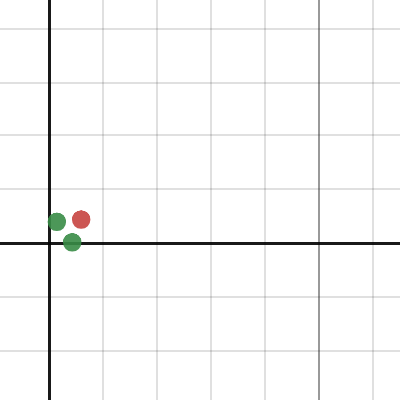
Desmos
dark sparrow
$\mathrm{atan2}(y,x) = \begin{cases} \arctan(y/x) & x, y > 0 \ \arctan(y/x) + 180\dg & x < 0 \ 90\dg & x = 0, y > 0 \ 270\dg & x = 0, y < 0 \ \arctan(y/x) + 360\dg & x > 0, y < 0 \end{cases}$
somber coyoteBOT
Ann:
dark sparrow
since you seem to want degrees and [0,360°)
night snow
but for which point
dark sparrow
??
night snow
uh
nvm
ill just use sin and cos above
too hard to implement
in java
but
will i still have the issues he found?
dark sparrow
lemme see
@eternal crag you used plain arctan instead of atan2
so im gonna need to copswing you


 dark sparrow

can you show me your code?
and also are you sure you aren't like... working in the wrong angle unit
night snow
can we go to dms then?
eternal crag
aww look at those beautiful little arrows
night snow
so its not off topic
leaden bridge
@eternal crag Alright I'll have a look
I also found this book named Trig or Treat which has a good 300 pages of exercises and resolutions, but is also quite pricey so I'll see if there's anyone recommends it first
 pallid cloud
Does somebody know any books about geometry in the plane and the space, the axiomatic way, not the linear algebra way?
Could be a book of problems in plane and space geometry or a course
Ping me when you answer, thanks
upper karma
Online shopping for Distance learning supplies: Featured Stores at Amazon.com
pallid cloud
@upper karma what's the name of the book(s) you suggested here?
upper karma
Cassius Jackson Keyser
The Plane Geometry of the Point in Point-Space of Four Dimensions
Melvin Hausner and 1 more
A Vector Space Approach to Geometry (Dover Books on Mathematics)
Projective geometry Creative Polarities in space and time
pallid cloud
Thanks
upper karma
give special angle relationships along transversal g if u wanna prove c and d are parallel
upper karma
Hmmmm
@arctic vortex Corresponding angles, consecutive interior/exterior angles, alternate interior/exterior angles, vertical angles
@graceful anchor Yep
Ik
silent plank
apply formula for area of a parallelogram
ignore all irrelevant information in the diagram
upper karma
@civic bane You got it! 👍 I believe in you! 👌
@civic bane you can also think of it like this:
Hmmmm
 civic bane
oh ok
 pine oar
https://i.imgur.com/frUCLKx.png is there an easy way to solve questions like this
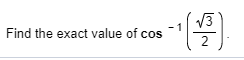 pine oar
does it not matter that it's inverse cos?
upper karma
Umm
I mean
The unit circle provides you a nice and neat solution
Unless your teacher wants you to get an ugly number
Yes
maybe go through these exercises if you don't understand it well enough:
https://www.khanacademy.org/math/trigonometry/trig-equations-and-identities
Khan Academy
Learn how to solve trigonometric equations and how to use trigonometric identities to solve various problems.
pine oar
ok ty
upper karma
Yes
 loud geyser
is there a good way to get the volume of the intersection between two n-dimensional spheres?
assume we know radius and center
upper karma
Prolly
loud geyser
upper karma
👍
 knotty merlin

 amber raven
smh
loud geyser
back after a bit, Idid end up finding both https://math.stackexchange.com/questions/162250/how-to-compute-the-volume-of-intersection-between-two-hyperspheres and http://docsdrive.com/pdfs/ansinet/ajms/2011/66-70.pdf
however, I can't find the variable (a) in the SE post, and I can't find the formula (that is cited as coming from the paper) in the paper itself 🤔
hm, this probably belongs in a different channel
if anyone has any ideas i threw it in the higher-level geometry channel #point-set-topology
upper karma
can you easily determine if 2 points are collinear in a plane?
2 points in a plane are always collinear
alright thanks
makes sense lol
 winged zinc
@upper karma Just so you know, collinear is for a line where are coplanar is for a plane. Haha
upper karma

winged zinc
Haha. Didn't mean to come off rude, just wanted to give you some more vocabulary so you are less likely to confuse people - despite colinear being fine.
upper karma
Nono, I wasn't offended or something, thanks 😄
upper karma
is there a way to mathmatically describe a conic section as like a plane intersecting a cone?
a circle for example
a equation that uses a slope of the plane and the shape of the cone
because the standard form of a circle doesnt mention anything about it being related to a cone
civic bane
how do you graph y = (3x^2+7x)/2
somber coyoteBOT
 Requested by Al𝟛dium#4084
upper karma
Requested by Al𝟛dium#4084
upper karma
This is how it'll look like
First, i would separate it a little bit for accomodation
$y=\frac{3}{2}x²+\frac{7}{2}x$
somber coyoteBOT
Al𝟛dium:
upper karma
@civic bane r u here?
civic bane
ya
civic bane
nu i just strated this and teacher thinks i know them..
upper karma
y-intercept: when the function intercepts with the y-axis
X-intercept: when the function intercepts with the x-axis
And little bit of logic must be used to get them
When will the function intercept with the y-axis? When x=0
When will the function intercept with the x-axis? When y=0
@civic bane can you try to continue to get both intercepts from what i said above?
civic bane
um i will try !
upper karma
@Gladys well, i gtg sleep in a min or so, i will give ya some instructions after you found both intercepts. Next to find is the vertex, the point of the graph which makes both sides of the function symmetrical, you can check it on the graph above. How to get it? There is a formula $$x_{vertex}=\frac{-b}{2a}$$ where b is the coefficient of x and "a" is the coefficient of x². Be careful, here is an example: $$x_{vertex}=\frac{-b}{2a}$$ and we want to find the vertex of the function $f(x)=\frac{1}{2}x²-7x$. So by the formula $$x_{vertex}=\frac{-b}{2a}$$ applied what i said before: $$x_{vertex}=\frac{-(\frac{1}{2})}{2(-7)}$$ and = (whatever result). To get the y coordinate of the vertex you really just gotta plug the value of x you got on the formula of the vortex above TO YOUR FUNCTION. Imagine that by doing the vertex formula above, we got $x_{vertex}=2$ so to get the y coordinate of the point of the vertex, really just plug x=2 onto the function, can be expressed also as f(2). With 3 points now, the vertex point, the point of the y-intercept and x-intercept, you could run a sketch to graph it and you are done. Ask anybody else if you have any doubts about it
@civic bane
somber coyoteBOT
Al𝟛dium:
civic bane
@upper karma https://cdn.discordapp.com/attachments/688978665220210716/722223970082095175/unknown.png

Like this?
 upper karma
What graph is this supposed to be
civic bane
oh i think i got it @upper karma
can you help me with this @upper karma while al3 is sleep?
upper karma
Yah
@civic bane
Now locate the y intercept
Then plug in a point on the graph in to the equation y = a(x-3)(x+1) + b
 brittle steppe
hey yall
A bicycle tire at rest is marked by paint at the top. It has a radius of 0.25 m. After the tire has traveled 5.25 meters, where is the paint?
how do u do this
 tawny oracle
Maziar, calculate the circumference of the wheel. Then calculate how many circumference lengths the wheel has travelled.
Jiggy, the definition of acos means that whatever value you'll get is restricted to 0 ≤ y ≤ π
You'll need to manually account for the quadrant and apply offsets, or use another method altogether.
 proud sleet
I need some help with triangles
urban egret
@proud sleet don’t ask just post
upper karma
Help understanding Ceva's theorem proof using similarities? Why is the "obvious statement" in the proof equal to 1?
 versed river
@upper karma It seems the fractions cancel-CS/CS=1,AB/AB=1, CR/CR=1 which makes it 1*1 *1=1. If that doesnt make sense, combine it into one fraction, and youll have CR *AB *CS on both the numerator and the denominator(just in different orders), which is obviously just 1
upper karma
bc 1 is the standard number
 timber dagger
can anyone here help me with my math assignment
ill insert the questions here
Convert to radians the angle 75°. Leave your answer as an exact value in terms of 𝜋.
Without using a calculator, determine the exact surd value of sin4𝜋/3
Without using a calculator, determine the smallest value of 𝑥 (measured in radians) for
which cos 𝑥 =1/√2
Without using a calculator, find all values of 𝑥 that are solutions to the trigonometric equation
tan 𝑥 = √3 for the domain 0 ≤ 𝑥 ≤ 2𝜋.
Without using a calculator, determine all solutions in the domain 0 ≤ 𝑥 ≤ 2𝜋 for the
trigonometric equation 8 sin 3𝑥 = −4√3.
upper karma
For 1) multiply 75 with pi then divide 180
timber dagger
For 1) multiply 75 with pi then divide 180
@upper karma i have question 1 and 2 and i think they are correct
upper karma
Lemme see
upper karma
U have to use inverse functions
timber dagger
and for question 2 i got -sqaure root 3/2
upper karma
Like for 3 u have to use cos inverse to find the value of pi
timber dagger
how do you make it into a inverse fraction
upper karma
Not inverse fraction, inverse function
timber dagger
how would you make it into a inverse function
upper karma
There's a button on your calculator that looks like cos ^ - 1
timber dagger
is this for question 3?
upper karma
Yah
timber dagger
how would i do question 4 and 5, they look hard
upper karma
You do the same thing as u do in 3 then add pi
 vivid trench
i want to clear up something about solving trig equations
if you do 2sin(2x)=1 for (0,2pi), the domain for the solutions becomes (0,4pi) so you have 4 anwers, 2 in the first cycle and 2 in the second cycle
is this process any different for tan(nx)
urban egret
@vivid trench I would think so but if they are looking for a specified answer in the domain it should work the same
Usually they give you a question like you posted and they want to know the coterminal for that same angle I’m thinking
vivid trench
yeah
i am confused because in my textbook there are two questions:
tan(2x)=1 for (0,2pi) --- this has 4 answers
and
tan(2x)=-1 for (-pi,pi) --- this also has 4 answers
urban egret
Yes so they are saying the specific solutions they are looking for will be with if the respective intervals
If you want we can do one of those problems first then start on the second and compare/contrast
vivid trench
oh then could we start on the second
ive done the first
the domain of solutions would be between (-2pi,2pi) right
urban egret
I though you wrote -pi,pi
urban egret
Ok so what is the correct interval?
vivid trench
(-2pi,2pi)
urban egret
So we have tan(2x)=-1
So that means 2 solutions we have is 3pi/8 and 7pi/8
Does that make sense
vivid trench
yeah im just thinking about the steps u skipped
for the last two, do i just minus 2pi from each
urban egret
Yes
Because then that would be the coterminal of those angles so you should get -pi/4 and -5pi/4
So all the solutions you should get is -5pi/4, -pi/4, 3pi/4, and 7pi/4
Notice this is between the interval of -2pi and 2pi
vivid trench
so now do you divide these by 2
urban egret
No because you already solve for the solutions using the tangent earlier remember? You just subtract 2pi from from the positive angles
Basically those 4 answers are the answers that I listed above
What did you get for x when you solved tan2x=-1
Oh shoot your right I did forget to divide the 2 I apologize
vivid trench
i was gonna say u did it for the first two then reversed it
urban egret
No I forgot to divide it by to when I solve for tangent now my angles would’ve been correct if it was just tan(x)=-1
But no we were asked for tan(2x)=-1
vivid trench
ye
urban egret
So that means we would get 3pi/8, 7pi/8,-13pi/8 and -9pi/8
@vivid trench did it make sense
 dapper nimbus
can someone help me do some work in dms
 golden mantle
@dapper nimbus
 inland canyon
hello, does anyone know the formula of how to find the third side length of a triangle given: 2 side lengths and the angle between them. Etc: AB = 2, AC = 3 ∠BAC = 25°, what is BC?
silent plank
look up the cosine rule
inland canyon
@silent plank thanks, it's c2 = a2 + b2 − 2ab cos(C)
dark sparrow
you need some of these: ^ ^ ^ ^ ^
upper karma
"law of cosines"

The law of sines helped us solve for all the sides and angles in SAA, ASA, and SSA triangles, but now we have to learn the law of cosines if we want to solve for SAS and SSS triangles. This one is kind of like the pythagorean theorem, just for oblique triangles instead of righ...
upper karma
here so
i have a midtern
midterm*
for the first semester of geometry in texas
tomorrow
and i need help with studying
oh nvm
?
 wooden current
?
upper karma
?
 open quail
?
 zenith dew
In that situation only the values where the y coordinate is below 0 and the x coordinate is positive are the suitable ones
@civic bane
Because the rope only extends to those points, beyond them it doesn’t extist
civic bane
oh ok
upper karma
I found this difficult and the way it is is not in the examples, I think this is a closed box. But the solution I found is something I am confused on how it happen.
I was confused on how does the length become $\frac {(45-3x)}{2}$ and the width become $15-2x$, where does this $3x/2$ and $2x$ come from? I know it is the height but is it the dotted line or the solid one? and how about the $\frac {3x}{2}$? Where does that 2 come from?
somber coyoteBOT
Enielle:
upper karma
@upper karma can you figure out how much x is?
@upper karma can you figure out how much
xis?
@upper karma Nope, because we are finding x yet.
maybe this helps:
x is a key component of finding the volume
or maybe if I rotate it like this:
let's start with (45-3x)/2
the "3x" is because:
you can also write this fraction like this:
do you agree?
replace "x" with any number, you get the same thing on both sides of the "=" sign
but where does the "2" come from, right?
well, check this out:
these edges are duplicated when the box is closed
the two red edges represent the "2" from "(45-3x)/2"
and the two blue edges represent the "2" from "15-2x"
Thank you very much for explaining 🙂
so you understand what I mean, then?
some of the edges overlap when you close the box and should be factored out from the equation (hence dividing by 2)
somber coyoteBOT
Wass:
 earnest sphinx
I have points A, B, p and p', where A=[1:0:0:0], B=[0:1:0:0], p=[a/(1-a):1:0:0] and I don't know what's p'
But I know (A, B, p, p') = -1
where (A, B, p, p') is the crossratio
somber coyoteBOT
Wass:
 prime marsh
is this correct if you add ° at Sin63.1 and 36.5 making it 200sin63.1° over sin 36.5° = 299.85 ?
my first time using online calculator cause i cant find my sci calcu
silent plank
sounds about right
prime marsh
aight thanks @silent plank 🙂
upper karma
@upper karma It seems the fractions cancel-CS/CS=1,AB/AB=1, CR/CR=1 which makes it 1*1 *1=1. If that doesnt make sense, combine it into one fraction, and youll have CR *AB *CS on both the numerator and the denominator(just in different orders), which is obviously just 1
@versed river Oh, I didn't notice that. Thanks for the response. Sorry for the late follow up!
prime marsh
how do i find the angle if theres no matching angle/side using law of sines?
like 2 sides and 1 angle but theres no matching points
how do you start on that?
silent plank
@prime marsh as in you have 2 sides and the angle between them?
then you should apply the law of cosines
prime marsh
already finished it, i used SAS
prime marsh
how do you find the outside angle using law of sines ?
do i use Angle,Side,Angle ? (BcA) ?
upper karma
use sine law to find angle BAC, then subtract 180 from it
umbral snow
What's the 55.6 there?
upper karma
probably degrees
 hollow tinsel
Anyone wanna help me out with my exit ticket
Either help with the problems or a good website for identities
hollow tinsel
I only know the basic identities
Just the different ratios of the different functions
upper karma
$\cot(\beta)=\frac{\cos(\beta)}{\sin(\beta)}$
somber coyoteBOT
Al𝟛dium:
upper karma
Do you know this and csc?
hollow tinsel
I didn’t watch this weeks lessons so I don’t know that the b thing means
hollow tinsel
Oh okay
Like theta
I just need to simplify both sides of the equation then show that this simplified values aren’t intereses?
upper karma
$\cot(\beta)=\frac{\cos(\beta)}{\sin(\beta)} \ \csc(\beta)=\frac{1}{\sin(\beta)} \ \sec(\beta)=\frac{1}{\cos(\beta)}$
somber coyoteBOT
Al𝟛dium:
upper karma
You should know these
hollow tinsel
I think I’m gonna work my way through it the comeback
upper karma
You need to prove that one side is equivalent to the other one
So take one side, and "transform" it through manipulations until it is equal to the other side
(Not happy with that last def but oh well)
hollow tinsel
I only have to do three of the them
 nova sonnet
I have a question: what is the purpose of having BOTH degrees and radians as two types of measurements?
 dusky surge
For reference maybe?
upper karma
Degrees are simpler to understand but radians are just better
upper karma
@nova sonnet there's also gradians
360 degrees = 400 gradians
meaning every 90 deg = 100 gradians
that's the same question as "what is the purpose of having both inches and centimeters?"
why would anyone work with "feet" instead of meters?
do you know what a "fathom" is?
it's was used for measuring the depth of water, on ships
dark sparrow
@Yuck#1674 each unit has its own contexts where it is applicable
degrees are convenient for geographical purposes like expressing latitude and longitude
wait they left lmao
upper karma
yea
@upper karma You can count on me like 1 2 3
that's the same question as "what is the purpose of having both inches and centimeters?"
why using imperial when you can use SI
yes
 wraith drum
Guys I have a question
upper karma
Go for it
cosmic pebbleBOT
From
Rule 1
The help channels are solely for help with math, so feel free to post your question. Asking whether you can ask a question or if anyone knows about some specific topic is unnecessary, so please try to avoid questions of that nature.
wraith drum
If f(x)=(a_1 x^2+ b_1 x +c_1)/(a_2 x^2+b_2x+c_2)
and A=(a1,a2)
B=(b1,b2)
And C=(c1,c2)
upper karma
I'm not sure this is geometry
dark sparrow
what's the question
upper karma
oh yeah im dumb
dark sparrow
what's the question
wraith drum
right angled at A
dark sparrow
can't you post the entire question at once instead of spreading it out into 1000 messages
wraith drum
okay give me a min
If f(x)=(a1 x^2+b1 x+c1)/(a2 x^2+b2 x+c2), A=(a1,a2),B=(b1,b2), C=(c1,c2), and A,B,C form a right angle isosceles triangle, right angled at at A, and the distance between B and C is sqrt(5), and point A is a distance of sqrt(5) from the origin, and point B is distance sqrt(10) from the origin. If a1+b1+c1=3, and a2+b2+c2=4, then f(x) is not defined at what value of x?
btw "insufficent data is an option"
dark sparrow
ok this is a lot
wraith drum
ye
upper karma
Epic
dark sparrow
so BC = sqrt(5), OA = sqrt(5), OB = sqrt(10) and BC^2 = AB^2 + AC^2
wraith drum
ye
dark sparrow
and AB = AC
dark sparrow
ok i would need some paper to do this
wraith drum
co-ordinate plane
dark sparrow
which i don't have rn
upper karma
Hey
wooden current
If A is the right angle of the isosceles triange ABC, then BC is the hypotenuse and AC and AB are the catheti ( and they are equal ). So AC = AB = sqrt(5)/sqrt(2) = sqrt(10)/2
I think you could express the distances between the three points using the distance formula and get some sort of a system of equations and solve for a1,b1,c1,a2,b2 and c2. But I haven't got that far. @wraith drum
wooden current
😳
wraith drum
im sorry
 chilly verge
Give this exam question about vectors a try, if you get stuck check out my video solutions https://youtu.be/n79OEVFMxXc

Use vectors to solve problems around this 3D shape
Image of the question can be found here
If link does not open all CIE exams can be found at
https://pastpapers.co/cie/?dir=A-Level%2FMathematics-9709
For more questions go to my playlist
https:/...
hollow tinsel
@upper karma I got it thanks for the help
upper karma
Aight np
 whole saddle
so basically im an idiot
and
i need help
a lot of hel
p
so
please someone help me 🍉
whole saddle
i dont even know how to ask the question i just dont understand this at all
i have several questions i dont understand i need help 😦
silent plank
wtf is wrong with that diagram?
are we supposed to assume that those lines are intended to be straight?
 graceful narwhal
😦
whole saddle
i have no clue its a class i have to do because i suck at geometry
and i failed a semester lmao
i just need to get it over with ill never use geometry again
graceful narwhal
ah its punishment
graceful narwhal
looking at the picture id pick punishment
whole saddle
i have 29 more punishments if you'd be interested in seeing them l
silent plank
the diagram indicates the <QTS and <QST are equal
what does that tell you about triangle TQS?
whole saddle
i think its b but once again im awful at geometry
you can explain it perfectly but i promise i wont understand
whole saddle
its marked parallel
i think
so if those are equal
tsq and rqs have to be equal aswell
so itd be b
silent plank
there are no markings indicating that anything is parallel
silent plank
the diagram indicates the <QTS and <QST are equal
what does that tell you about triangle TQS?
whole saddle
i literally havent got a clue im not trying to be difficult i just dont know
silent plank
what is the term used to describe triangles with (at least ) 2 equal angles?
whole saddle
equilateral?
silent plank
no
whole saddle
im ass at geometry man algebra is where im better
i went through an entire year not understanding a thing
i just cant understand it at all
silent plank
it starts with "i"
silent plank
and do you know the properties of such triangles?
(specifically something about their sides)
silent plank
specifically the lengths of the sides opposite the equal angles are equal
whole saddle
im not sure what youre asking
silent plank
which in this case means that
|TQ| = |QS|
whole saddle
ill take your word for that because i dont undersand how you got that
silent plank
look up properties of isosceles triangles
whole saddle
ok
what am i looking for?
i mean i have a lot more to do with completely different type of problems
i dont get any of it
i appreciate you trtying to teach me but i think its a deadend i wont understand
upper karma
lmaoooooooo
whole saddle
im
a
dumbass
i appreciate your help lmao i wont get it no matter what i read i cant apply it to a problem
silent plank
TQ is opposite angle QST
QS is opposite angle QTS
and since angles QST and QTS are equal, the lengths of TQ and QS are also equal
whole saddle
so its d lmao
whole saddle
i dont know lmao i dont understand this
whole saddle
i mean thats easy to say but i have 29 other problems to do and i dont understand any
i understand what isosceles means
thats about all i understand from that
silent plank
if you know the definition you should understand what's going on
whole saddle
im just going to guess c i have a lot of problems to do and this 1 has taken almost an hour lmao
im just really bad at geometry
silent plank
don't guess.
whole saddle
im going to confidently choose c then
silent plank
I mean there's not much point doing the rest of your just gonna give up on understanding here
silent plank
this will definitely come up and be useful later
what exactly is your issue with the property being presented that's leading to
|TQ| = |QS|
whole saddle
i appreciate your help
but i dont think it will
i understand the words you are saying have meaning
but it all seems like nonsense
what you say has no difference i literally cant begin to understand what youre telling me
i just want to pass this and never worry about geometry again
i could care less about being able to apply it later in life
ill figure it out now and ill figure out later if i need it🍉
but if you felt like giving me the answers i wouldnt be opposed
silent plank
that's not how things work here
 split geyser
@whole saddle if you go in with the attitude "I don't want to get this, I won't understand it, you won't be able to help, I won't get this" then of course you won't get it. Ramonov is a spectacular helper. If there's a part that seems like nonsense to you, it is ok to ask. People aren't here to judge you - we've all been in the position of not understanding something
but if you ask for help, you need to be ready to accept help
whole saddle
i think its the fact that i have so much more to do and not much time to finish it thats the kicker
i dont care really to learn an entire concept when i have to turn around and learn a new that ill use on one problem
id much rather spend the time looking for the answer than i would take a day to learn something
and i believe that hes a good helper but i wasnt able to understand anything of what he was trying to say im very not good at math lmao
split geyser
right, and when you don't understand, you say "I don't understand [xyz]"
whole saddle
ideally i would have this 40 question thing done by the end of the day i think i can do that but id like to bypass the frustration of spending an hour to not understand something
 cinder portal
if you just want answers, go pay someone to do it for you, we aren't here to give out free answers, we're here to HELP, guide you so you can figure out what to do. It might seem frustrating at first, but once you get the hang of it, you'll be able to do the rest by thinking on your own
upper karma
i love your awatar
cinder portal
<3
Funny thing, if you actually went through a couple problems with Ramanov, you should probably be done in the next hour or so
 gray mason
You don't understand geometry because you don't spend time on it. There's absolutely zero shortcut to success, and geometry is at that very extreme. If you don't spend hours after hours learning, you will not pass geometry.
If you can take algebra 2 without passing geometry, you might want to consider alg 1, alg 2 and precalc as your 3 maths credits or whatever you need to graduate.
 nova prawn
I started from Euclid-s Element's Book.
I started to understand and i was thinking i would never understand geometry
can somebody check if this is a legit proof?
upper karma
Why is BE parallel to CH?
nova prawn
They start with the same lenght distance and finish with the same lenght distance ( BC , EH)
upper karma
I think that's not enough
nova prawn
Let me think another one, it is a good question. I have never thought about that.
upper karma
If you prove that EBCH is a trapezoid or at least a parallelogram then you are done
nova prawn
ABCD and EFGH ar e parallelogram's that's my assuming but I should have also prooven that ABCD = EFGH = EBCH
If you'r geometry is good, can you check Euclid's Elements Book 1. Propositon 36
He uses a different way
upper karma
Who said it should have been a parallelogram
nova prawn
Euclid says that
nova prawn
I tried to do same as euclid. So no.
upper karma
Euclid starts from AH // BG
nova prawn
I want to prove this.
Euclid starts from AH // BG
@upper karma Yes, but is it enough for paralleolgram.
nova prawn
You need to say it in the proof
@upper karma Thanks for this.