#geometry-and-trigonometry
1 messages · Page 232 of 1
 olive solar
yeah i got x=15 as well
so since youve found the measure of that angle to be 79
you can find y and z
take the angle measured as 3y+2
and see how you can form a 180 degree angle from that
olive solar

close, somewhat
don't rush through it like that
so you have 180 = 3y + 2 + 79
which goes into 180 = 3y + 81
which goes to 99 = 3y
 wind heart
ohhhhhhhh
olive solar
i'm assuming you accidentally got 111 for 180-79 instead
anyways, i think you'll be fine with finding y from this
and finding z should be of a similar difficulty level
olive solar

 mossy plinth
 heady shuttle
Anyone willing to do tutoring for 30 or less minutes in Trig? I happen to get stuck a lot when trying to utilize my identities.
And we would utilize the mathematics voice channel?
heady shuttle
<@&286206848099549185>
 terse sage
Just ask your questions and I'm sure someone will help you
heady shuttle
Yeah, though I just feel like I am missing something, and like to have a bit of guidance on exactly what I am misunderstanding.
 upper karma

 maiden rain
Guys I know that the function sin(x) is symmetric at the origin.. because it's an odd function.. But I don't understand this question.. what is f(x) = x - sin x ??
"x - sin x " <<< what is that
maiden rain
I know if it's odd by looking at the graph
 umbral snow
The graph helps, definitely. However, there's an algebraic way to check as well, in case you don't have a graph
maiden rain
I remember something that has to do with f(x) = -f(x) or something
umbral snow
An odd function is a function that satisfies
f(-x) = -f(x)
That is, it's a function that you can pull a negative out of
maiden rain
And how would this help me with the question?
umbral snow
Does f(x) = x - sin(x) satisfy the definition of an odd function?
Try computing f(-x), it should be interesting
maiden rain
f(x) = x - sin(x) < Can you tell me what's that 2nd x ?
umbral snow
Same as the first, they're both x
 tawny tendon
you can make nice little right triangles and use inverse trig functions
 drowsy walrus
How do I approach this?
 somber coyoteBOT
xItzDia:
 rapid nexus
im pretty sure this isn't the chat for logic stuff
for this question do I solve for sin or cos?
nvm
 quiet mason
ya but this is english ?
 white cradle
what even
 dark sparrow
the handwriting is hard to read
white cradle
and its not even math
dark sparrow
@keen scaffold what is this
 worthy root
dark sparrow
worthy root
dark sparrow
honestly the "more formal" statement may be easier to grasp
 sudden locust
In this video I show Why the angle sum of a triangle is 180 https://youtu.be/nPYRo4oG7N8 Hope you all have a great tuesday! 🥰👍

The Angle Sum of a Triangle is 180 degrees. In this video, we will be taking a look at WHY the interior angle sum of a triangle has 180 degrees. 🕛 TIMESTAMPS...
quiet mason
stephen hawking lmao
 sly marlin
and you use 5 minutes 18 seconds to show that
 silent plank
did you prove that alternate angles on || lines are equal?
dark sparrow
it's for pEoPlE wHo ArEnT eXpErTs @quiet mason
quiet mason
lol
sudden locust
@silent plank No, not sure how to prove it. Tried to explain the reason behind it using intuition
 crude hornet
why is trigonometry so hard
dark sparrow
what exactly are you finding hard about it
crude hornet
 mint sandal
what is Z class?
sly marlin
oh are you finding alpha?
dark sparrow
well it's hard to tell what this even is bc you haven't given the problem statement, only a fragment of its solution
sly marlin
it seems more calculus than trig
crude hornet
okay il take a screenshot of the question
crude hornet
tawny tendon
this is calculus
dark sparrow
i see you've rewritten the equation of line AB as y = -2x + 6
you may notice that A and B are its x-intercept and y-intercept, respectively.
 keen scaffold
upper karma
keen scaffold
upper karma
;-;
 calm lintel
i’m so confused 🥺
sly marlin
which of these answers make sense?
are there perpendicular lines here?
@calm lintel
calm lintel
oh i figured it out 🙏
 coral sapphire
Think this was answered in a question channel before?
calm lintel
loll
 flint mango
yeah :p
calm lintel
thank you though i was just frustrated and posted it in 2 cause i didn’t know which one
sly marlin
just post in 1 channel please
calm lintel
got itt
 coral solar
upper karma
coral solar
upper karma
I'm currently taking algebra 1 and really want to learn geometry/algebra 2 so that I can skip it in HS. It seems that most people take geometry after algebra 1 and then algebra 2. Would it be fine taking geometry even though I'm not finished with algebra 1?
upper karma
just one
I really doubt I could learn both
gotta make a 90+ on a test that is assigned to those with a high enough grade in math. with a 90+ you don't have to take the course in HS and it counts as if you already took it
upper karma
yeah
 unkempt jay
you could self learn geometry
unkempt jay
you know where to start or how to do it?
unkempt jay
oh i see
upper karma
seems to line up pretty well with what we're leaning in algebra 1
unkempt jay
sounds good
 vagrant steeple
can somebody explain how i'd simplify this in terms of sine and cosine
 weary drift
do you know how tan and cot relate to sin and cos?
weary drift
show your work on paper
weary drift
get some paper and do it on that, then show me
vagrant steeple
if you're not going to help then just move on and i'll wait for someone else.
if anybody wants to help with that problem please dm or @ me
weary drift
You put zero effort into solving this problem, so you're right, I won't help you
vagrant steeple
i have already typed out what i could given the extent of my knowledge. i am lost on that problem and there is nothing else i can do. if you can't understand that then please stop responding
unkempt jay
@weary drift what did you expect him to put on his paper
im just curious idk what else he would write down
weary drift
I expected him to at least cooperate and show out his thought process on paper. If he doesn't want to do that, then you can take it from here
vagrant steeple
i have already typed out what i could given the extent of my knowledge. i am lost on that problem and there is nothing else i can do. if you can't understand that then please stop responding
unkempt jay
but his thought process was convert it to sin and cos
then he was lost from there
eh doesn't matter, i got it @vagrant steeple
unkempt jay
so you said sin/cos + cos/sin = 1/x
weary drift
He did nothing but type out a single line of text. Have fun with this one, galileo
vagrant steeple
1/x
unkempt jay
ignore the 1/x side
lets just manipulate sin/cos +cos/sin
any idea how we could find common denominators here?
vagrant steeple
cross multiply?
unkempt jay
try it
vagrant steeple
sin^2/ cos^2 ?
unkempt jay
send what you find
almost
what does cross multiply mean
what would multiply the whole thing by?
vagrant steeple
sin^2cos + cos^2sin
unkempt jay
what about the bottom
vagrant steeple
sincos
vagrant steeple
squared?
unkempt jay
uh
you might wanna write that out so you can actually see it
wait
so you got
sin^2cos + cos^2sin
vagrant steeple
i did
unkempt jay
no
vagrant steeple
just the sincos
unkempt jay
mhm
oh
i se
the way i said to do it takes to much time
lets restart with
cos/sin + sin/cos
what happens if you multiply
(cos/sin) times (1/1)
just a build up into the explanation, its not a trick question 🙂
vagrant steeple
it stays the same?
vagrant steeple
yeah
unkempt jay
you were right, cos/cos = 1
so, we can multiply (cos/sin) times (cos/cos)
because we are techinically multiplying it by 1
if we multiply cos/sin by cos/cos, what do we get?
vagrant steeple
cos^2/sin
vagrant steeple
sincos on the bottom
vagrant steeple
sin^2/sincos
vagrant steeple
sin/sin
unkempt jay
and thats just equal to 1
so its ok
now we can add the two because they're the same value as they were before
but now they have common denominators
vagrant steeple
sin^2 + cos^2 = 1
unkempt jay
so what do we get when we add sin^2/sincos + cos^2/sincos?
vagrant steeple
1/sincos ?
unkempt jay
close, this
$\frac{sin^2}{sincos} + \frac{cos^2}{sincos}$
somber coyoteBOT
Meir:
unkempt jay
cool
vagrant steeple
so the answer would be 1/sincos
unkempt jay
ooh
you simplified alreayd
nice!
do you think you could relay all the steps to me now?
this might be on a test
you could look back at our convo
unkempt jay
no problem man
good luck, you can ping me if anything looks at all fuzzy
ill be better about now lol
vagrant steeple
alright. i'll come back if i get stuck on another problem
unkempt jay
dont be shy to 😄
 frail cobalt
Can anyone help me with trigonometry? I have a problem I'm stuck on
weary drift
frail cobalt
An isosceles triangle has an area of 24 square centimeters and the angle between the two equal sides is (5pi)/6. What is the length of the two equal sides?
frail cobalt
Anyone?
silent plank
what formulas do you know for finding the area of a triangle?
 sudden mica
silent plank
sudden mica
silent plank
what are they asking you to do?
frail cobalt
Isosceles triangle: 2 sides are congruent and the base isnt.
The angle in where the 2 sides meet is 5pi/6 (150 degrees)
Find the length of the 2 sides.
silent plank
what formulas do you know for finding the area of a triangle?
frail cobalt
Area : 24 cm^2
A : 1/2 * b * h
silent plank
any other formulas (that involve trig)?
frail cobalt
My teacher is garbage. I cant find any in my notes and I wrote down everything.
You go to his office for help and he acts like you're a dunce no matter what.
silent plank
are you familiar with
Area = 1/2 ab sin(C)
frail cobalt
I've heard of it but I dont remember how to use it. Learned in highschool.
 long sapphire
$\frac{1}{2}ab\sin(C)$ is just an application of the original $\frac{1}{2}bh$ formula
somber coyoteBOT
Jiramide:
silent plank
lowercase letters represent sides, capital letters represent the angle opposite those sodes
frail cobalt
But I dont have any side lengths.
frail cobalt
2 are congruent. Meaning it would be (1/2)x^2sin(C)?
silent plank
yeh. Can you simplify that radical?
 ocean junco
Hi, I know it’s late but could someone explain this to me? I have a quiz on arcs and chords tomorrow and I have no clue on what to do.
silent plank
constructing a few lines to the centre may help
ocean junco
alright. How should I go about it then?
silent plank
whats the relation between mAngle BOE and mAngle BDE
ocean junco
They share common points?
silent plank
yes, more specifically they are subtended by the same arc
where are those angles formed?
silent plank
where is angleBOE
ocean junco
the center?
ocean junco
the arc?
silent plank
wdym by arc
ocean junco
In that case, do angle BOE and angle BDE follow the first row and thus are the same?
ocean junco
O is the center and D is on the arc or the edge of the circle
silent plank
so which theorem should you be using?
ocean junco
Is it the second row in the chart? Because it runs through the center and the circumference?
I’m sorry for giving you guys a hard time with my dense-ness . Thank you for explaining all this.
silent plank
wdym by
Because it runs through the center and the circumference?
ocean junco
I guess I said that because the second row in the chart is a theorem that connects both the center and the circumference
silent plank
the 2nd row specifically involves the diameter
which of those theorems involve
an angle at the center AND
an angle at the circumference?
ocean junco
The third one?
silent plank
yes
ocean junco
Does that make mBDE 50 degrees?
silent plank
yes
ocean junco
oh, nice! thank you so much for your help!
dark sparrow
this is a right triangle
you might consider recalling the definitional mnemonic known as SOH CAH TOA
 odd notch
opp/adj?
odd notch
opp/hyp
dark sparrow
yes, sin(A) = a/c
odd notch
then to solve for B it would be 90-A right?
dark sparrow
sure, you can do that.
odd notch
how about to find b?
odd notch
so i did c^2-a^2 then sqrt the answer
dark sparrow
you used the Pythagorean theorem, great
so why did you need to ask me
when you were able to do it
odd notch
for confirmation i guess after you explained i was overthinking it.
dark sparrow
make a picture
maiden rain
Is the range of the function CSC(x) = (−∞,−1]∪[1,∞) ? or we don't include -1 and 1 ?
 olive pulsar
can someone explain to me why cos x - sin x = 0 can lead to tan x = 1?
my guess is that
cos x - sin x = 0
cos x = sin x
0 = sin x / cos x
im asking bc this appeared in a marking scheme and i dont understand why
silent plank
what do you get when you divide cos(x) by cos(x)?
silent plank
what do you mean this is cos(x)/sin(x)?
olive pulsar
i mean in terms of trig identities
0 = sin x / cos x
therefore sin x / cos x = tan x
and tan x = 1
** sorry i meant sin x / cos x
dark sparrow
how did you go from cos(x)=sin(x) to 0=sin(x)/cos(x)
silent plank
^
dark sparrow
@maiden rain why would we not include -1 and 1 when csc actually returns those values for x=±π/2?
olive pulsar
im just speculating here bc i dont understand the reasoning
this appeared in the official markscheme and i dont know why
dark sparrow
at no point does "0 = sin(x)/cos(x)" actually appear in that paper...
maiden rain
Oh right, I got 1 out of csc(90) , Thanks Ann
olive pulsar
yes thats why i said it was /my guess/
i dont understand how cos x - sin x = 0 leads to tan x = 1
whats the reasoning
olive pulsar
cos x = sin x
olive pulsar
sin x / cos x
dark sparrow
no
olive pulsar
which equals tan x
dark sparrow
no
olive pulsar
cos x / cos x = sin x / cos x
dark sparrow
yes.
dark sparrow
well there you have it
olive pulsar
ah ty
 plucky jay
Hi, I have a question regarding sequences.
dark sparrow
no it's not
what you said both includes pi/2 (which it shouldn't) and doesn't include pi (which it should)
dark sparrow
no, it should not
maiden rain
Sorry I meant cos(x)
dark sparrow
ok so when does cos(x) equal zero
maiden rain
When it's at pi/2
dark sparrow
pi/2 is by far not the only point
maiden rain
or 3pi/2
dark sparrow
there are infinitely many points
maiden rain
Yeah
But I don't understand the answers here
It's definitely one of the 2 at the bottom
dark sparrow
the notation in the answer options is somewhat dodgy but yes
 wary turtle
The 3rd one. Like Ann said, "R - nπ" doesn't include π in the domain, but includes π/2, which shouldn't happen since tan(π/2 or 3π/2) = ∄. @maiden rain
maiden rain
@wary turtle What's " ∄ " ?
dark sparrow
tan(π/2 or 3π/2) = ∄.
bad notation
he meant "doesn't exist"
or rather "is undefined"
maiden rain
I wanna cry 😦 , I didn't realise what " n " meant until now 😦
I totally understand it now. I feel so bad.. I wanna get better I'm frustrated 😢
 honest bay
dark sparrow
honest bay
dark sparrow
,rotate -90
somber coyoteBOT
wary turtle
Sorry. I was quite in a hurry when replying, but yeah, it meant "doesn't exist".

 crisp grove
@proud valve that's too small
crisp grove
np
 proud valve
thanks tho
silent plank
what have you tried?
 ebon plume
i tried to add the angles together but them realized that wouldn't work. I'm honestly just confused with this. My entire homework is just problems like this one.
silent plank
what would the sum of those angles be equal to?
ebon plume
22x + 4 ?
long sapphire
you should have a sum that doesn't depend on a variable
silent plank
yes but also what is the angle sum of supplementary angles
ebon plume
supplementary is two angles that equal 180 degrees
silent plank
not quite
ebon plume
what else is there?
silent plank
what you typed implied that they are both 180 degress
ebon plume
i guess. I'll be honest I'm very confused by this
silent plank
the angle sum of supplementary angles is 180 degrees
and you are told that angles 14x and 8x + 4 are supplementary
are you able to form an equation with this information?
ebon plume
yes, wouldn't it be 14x + 8x + 4?
silent plank
but what numerical value is it equal to
long sapphire
what does 14x + 8x + 4 equal to?
ebon plume
since 14 and 8 are like terms could you add them?
silent plank
numerical value
the angle sum of supplementary angles is 180 degrees
ebon plume
i understand that the angles sum will be 180 degrees but I don't understand how I am supposed to get the numbers to it
silent plank
using an equation
convert
the sum of (14x) and (8x + 4) is 180 degrees
into a mathematical equation
ebon plume
would 14x + 8x = 4 be a proper equation?
silent plank
no
well it would be an equation since it has an = sign,but not the correct one for this equation
seriously...
what numerical value to you get when you add your two angles?
 dapper escarp
do you know what 14x + (8x + 4) would be
 median crown

silent plank
i understand that the angles sum will be 180 degrees
...
dapper escarp

median crown
dapper escarp
@ebon plume
median crown
ebon plume
I thought that if I did 22x + 4 that's wrong
silent plank
not an equation
dapper escarp
how would that be wrong
silent plank
but what numerical value is that equal to
i understand that the angles sum will be 180 degrees
ebon plume
I'm just very confused man. I don't know what numerical value it'll add up too. That's about what my problem is at this point
silent plank
i understand that the angles sum will be 180 degrees
i understand that the angles sum will be 180 degrees
i understand that the angles sum will be 180 degrees
median crown
i understand that the angles sum will be 180 degrees
i understand that the angles sum will be 180 degrees
i understand that the angles sum will be 180 degrees
median crown
Literally read it
median crown
Yes
dapper escarp
oh ok thanks
median crown
You guys got it now?
median crown
i understand that the angles sum will be 180 degrees
dapper escarp
@redd#4951
he left
damn
he left the server

i have a heavy feeling that was a troll tho
white cradle
lmao
median crown
You bots
dapper escarp
indeed
median crown
You literally told yourself the answer
silent plank
the guiding questions aren't hard
if they really needed the help, they probs wouldn't leave
 trim gyro
All you needed to tell him was 22x + 4 = 180
It honestly felt like you were the troll here.
Probably left cause he realized there's no point asking for help here 😛
 flint sentinel
he contradicted himself so many times lmaooo
trim gyro
What did he contradict exactly?
He obviously had no idea about what he had to do.
If I had to guess, he was probably in 6th grade.
All I see here is bunch of retards ganging up on a kid
dark sparrow
sounds like he didn't know what the word "sum" means
trim gyro
"i understand that the angles sum will be 180 degrees but I don't understand how I am supposed to get the numbers to it"
He didn't know how to make the equation. That's it.
Congrats, you proved you have a slight longer dick than a prepubescent child
sudden locust
In this video, I go in depth on Midpoints. Hope some of you find it valuable and that you enjoy your Thursday! 🥰👍https://youtu.be/9Yt6iW8OipA
Enjoy the videos and music you love, upload original content, and share it all with friends, family, and the world on YouTube.
dark sparrow
what kind of depth is even possible on that
sudden locust
I managed to make 5mins about it 😉
quiet mason
"😉"
sly marlin
actually, I'm inclined to disagree, but you didn't really go into depth yet
For example:
The midpoint of the hypothenuse of a right triangle is the circumcentre
Parallelogram diagonals intersect at their midpoint
The midpoint of one diagonal of a kite lies on the other diagonal
If I connect the midpoints of two sides of a triangle, I get a line parallel to the third side.
If I draw the circle passing through the midpoints of the sides of a triangle, they also pass through the base of the altitudes, the midpoint of AH, for vertex A and orthocentre H, and the circle is tangent to the incircle and 3 excircles
@sudden locust Consider this depth
not deep enough
still can go on
If you take the altitude of a triangle (orthocentre H, base of altitude M) and extend it to the circumcircle intersecting at X, then M is the midpoint of HX
The nine point centre is the midpoint of the line connecting the orthocentre and the circumcentre
If you connect each vertex of a triangle with the midpoint of the other side, you get three lines that are concurrent, intersecting at the centroid
silent plank
i would actually watch the video if it included all that
quiet mason
and the video starts with pictures of stephen hawking,benedict cumberbatch,elon musk
sly marlin
nah, we don't need that
dark sparrow
btw
dark sparrow
can someone give me a TL;DW of the vid
 eager pendant
the midpoint of a and b is (a+b)/2
quiet mason
lmao
eager pendant
the midpoint of a and b is (1/2, 1/2, 0)
eager pendant
and the midpoint of an arc is like -vw when the other coords are v^2 and w^2 but that's kinda boring
sly marlin
6:05 to 6:51
Drop a like, subscribe, notifications, and long outro
sudden locust
@crisp grove Haha! Great pic 😅
Was pretty much me, just woke up from a nap so you are pretty much spot on!
@sly marlin Eyy, thanks for you insight. Appreciete it buddy 🥰👍
quiet mason
uhh
sudden locust
What up? 😉
quiet mason
funny
sudden locust
What is funy? The picture from @crisp grove ? If so I agree 😅 👍
 vague pagoda
hm
 deft sleet
Hey guys i need some help in solving a task i cant wrap my head around
dark sparrow

silent plank
is that 61°?
deft sleet
yes
silent plank
do you know what type of triangle you have?
deft sleet
according to my teacher it is not a right triangle
silent plank
do you think that it is?
deft sleet
well all the other tasks that have right triangles are marked with 90° and are not in a circle
even if it looks like the hypotenuse goes through the diameter
I do know the answer but i do not know how to get to it
the answer should be 11.8 but i don't know how to get there
silent plank
that didn't answer my question about whether you think its a right triangle
deft sleet
Well I do think it is but my teacher said its not
silent plank
what was your justification?
deft sleet
the hypotenuse looks like it goes through the center as a diameter
silent plank
bad way to explain it
angle at the circumference subtended by the diameter is 90°
deft sleet
okay
silent plank
so yes, it is indeed a right triangle. no idea why your teacher is saying it isn't
deft sleet
i didnt completely understand that but i get the gist of it
(not native english speaker)
silent plank
and you can find the diameter using trig
deft sleet
okay but, how?
silent plank
do you know your trig ratios?
silent plank
sin, cos, tan
silent plank
(tan would be sin/cos)
deft sleet
alright
silent plank
which trig ratio do you think you should use here?
deft sleet
cos?
silent plank
nope
where is the 10.3 relative to the 61° angle
silent plank
yes
deft sleet
okay what step is next?
silent plank
sin(61°) = opp/hyp = ?
deft sleet
alright let me try
THANK YOU!
Thank you so much for taking your time to help me ramonov
silent plank
np
silent plank
good luck
remember to justify things properly with theorems/identities you should've been taught

 dark sparrow
what have you tried so far
 celest swift
well i got really confused so i`ve been trying to solve this thing for a hour or so
dark sparrow
yes but WHAT have you tried?
(also, an hour? this is definitely at least 4 times as long as the problem merits)
celest swift
i guess i havent tried anything, well ive tried but i got it all wrong i have no idea of how to solve it now
dark sparrow
can you show me your failed attempt
maybe you were going in the right direction and messed up the arithmetic or sth
celest swift
i tried Pythagoras but i 5 is the whole ab so, i`m lost rn
dark sparrow
ok
well
alright
i can give you a hint
consider the area of this triangle
and to be more specific, this area can be calculated in two ways, one of which involves the height
celest swift
two ways so there is another way
celest swift
o
dark sparrow
to divulge more details would spoil the entire solution
 undone shuttle
There is an equation for that
somber coyoteBOT
Digicat195:
Compile Error! Click the  reaction for details. (You may edit your message)
undone shuttle
with that, you can calculate the h

 novel flax
@celest swift
area of a triangle is bh/2
3 could be the base and 4 could be the height
a=34/2
a=6
5 could be the base and h could be the height:
a = bh/2
6=5h/2
12=5h
12/5=h


 buoyant spruce
 glad timber
Can somebody proof check my geometry proof
If you need help reading the hand writing @ me
glad timber
If you add congruent segments to congruent segments the sums are congruent @thorn linden
 crimson olive
can someone help me solve for x, q and r are parallel btw
silent plank
did you mean corresponding angles
 thorn linden
yes
 marble parcel
silent plank
marble parcel
silent plank
what was the reason for 10 @glad timber
silent plank
yeh
glad timber
@silent plank never mind the proof is wrong
silent plank
from what i glanced, you would need to involve congruent triangles
glad timber
Yeah I was rushing through it, totally forgot to set the triangles congruent
silent plank
yeh. restart the whole thing.
would you be able to prove that triangle a ABR and ARK are congruent?
you can't just assume #3
marble parcel
um they r congruent by sas right
silent plank
no
you can't assume they're right angles ie they are already perpendicular
you would need to use a different congruency test
what information are you able to get from AE bisects BK at R?
marble parcel
Honestly not sure. Could i use vertical angles to solve the proof?
silent plank
what does bisect mean?
marble parcel
splitting it into 2 parts
silent plank
what's the relation between those two parts
marble parcel
they are congruent
silent plank
so which segments would be equal from that information?
silent plank
br and bk aren't equal.
br is a part of bk
marble parcel
rk sorry
silent plank
is that enough information to prove congruency?
marble parcel
wouldnt it be SSS?
silent plank
yes
you'd still need 3-4 more steps to prove that they're perpendicular
actually, you could do something tricky
marble parcel
wdym?
silent plank
nvm about that last comment
marble parcel
ok haha
silent plank
what would be your steps after proving congruency?
marble parcel
oh I usually use cpctc after
isnt there some posulate that when 2 lines are perpendicular they form 4 right angles
silent plank
you would only need to show that one of them is right
cpctc?
marble parcel
corresponding parts of congruent triangles are congruent
silent plank
that isn't sufficient to show that its 90°
marble parcel
im not really sure then
silent plank
its intuitive why they're 90° but in these proofs you need to explicitly write why.
marble parcel
if 2 angles are both congruent and supplementary they form right angles
that would right?
that would work right*
silent plank
needs a justification of why they're supplementary
marble parcel
well because they r on a line and angles on a line add up to 180
my geo teacher doesnt make us do this in class haha this is way more detailed
silent plank
yeh its stupid but you do have to write it
angles on a straight line are supplementary
marble parcel
really wowza
okay after that i can say congruent and supplementary angles form right angles
and then vertical angles?
silent plank
don't need vertical angles.
you only need to show that one of them is 90° and the lines are perpendicular
silent plank
when one is 90°, the other(s) will also be 90°
marble parcel
makes sense
silent plank
if you only had AR and BK,
there are only 2 90° angles and they are still perpendicular
marble parcel
do i also need to state that angle arb and angle ark are perpendicular or is stating that they are just right angles okay
silent plank
angles aren't perpendicular. perpendicular describes the relationship between lines.
the conclusion would be AE perp BK.
the reasoning would be something like angleARB = angleARK = 90°
or definition of perpendicular lines
marble parcel
one more quick question im trying to prove that angle P is congruent to angle S. angle p and s are just the straight lines right?
@silent plank
silent plank
it isn't very clear what angle P and S actually are.
they aren't part of any shapes and seem to be just points
silent plank
ah. construct lines PR and SQ
marble parcel
ohhh
marble parcel
R and Q??
silent plank
uh angles PRS and PQS
marble parcel
they should look like that right
silent plank
PR perp RS, means the right angle should be at PRS
similar with the other triangle
don't make RS and PQ vert/horizontal
however, even if the diagram is not to scale, you should still be able to complete the problem
marble parcel
Oh okay
silent plank
it is implied that angle P and angle S refer to the minor angles
ie angle RPQ and angle RSQ
silent plank
no. you don't know whether PT = TS
hint: ||you don't even need to know that RT = TQ||
marble parcel
would vertical angles work for this problem?
silent plank
yes
marble parcel
oh.
silent plank
did you get it?
marble parcel
i think so? angle rpt and qst are vertical angles
then u use vertical angle theorem to say that they r congruent
silent plank
no, RPT and QST are not vertical angles
but there are vertical angles elsewhere in your diagram
marble parcel
im so confused
silent plank
what's the definition of vertical angles,
and which angles on that diagram are vertical angles?
marble parcel
opposite angles of 2 intersecting lines
silent plank
which angles of your triangles fit that description
marble parcel
did i write it wrong or smt? does it need to be ptr and stq instead
marble parcel
jesus i was overthinking that so hard lmaooo
so now i can say the 2 angles are congruent
silent plank
you'd have to justify that your triangles are either similar or congruent first
upper karma
how can i find sine/cosine from hypotenuse length and angle?
upper karma
or is that impossible
silent plank
did you mean find the unknown sides?
silent plank
do you know your trig ratios?
upper karma
nope
silent plank
(soh cah toa)
upper karma
i dont need a lesson in trig
i just need to know this for something im making
to clarify,
i know the hypotenuse's length
i do not know the adjacent/opposite
i know what theta is
silent plank
yes, that would be sufficient
upper karma
what are the operations?
silent plank
it sounds like if you're doing something like this
that relies on trig rations,
you should learn them
upper karma
i know
im a month or two away from being taught in school
it is fine if this requires the inverse operations, btw
silent plank
i mean you can literally just google trig,
and come back with stuff you don't understand
dark sparrow
ratios*
silent plank
lol don't know why, comes out as "rations" when i write it as well
upper karma
alright
i used this to make an incredibly convoluted and unnecessarily complicated way to compute rotations of yaw and pitch
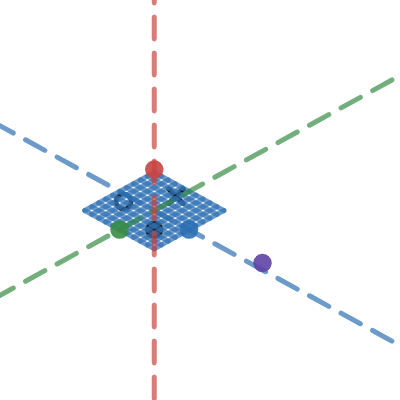
Desmos Graphing Calculator
deft sleet
Hey guys
I had a test today and it seems that one of the questions are wrong
Could anyone take a look at it and see if the get the sum of 181 degrees
I know a triangle is supposed to be 180 degrees so thats why im worried
 mighty narwhal
,calc sqrt(4.3^2+11.5^2)
somber coyoteBOT
The following error occured while calculating:
Error: Value expected (char 17)
somber coyoteBOT
Result:
12.277621919574
You get 181 because of rounding error
mighty narwhal
We calculated that the hyp is 12.277... with Pythagorean theorem
deft sleet
ah okay
mighty narwhal
But it says 12.2 on the picture
So when you calculate angles with that, the angles will be off slightly
deft sleet
oh okay
but idk if i did it correctly still or not
even if the answer is wrong
some people got 69.5 degrees on the biggest angle
Meanwhile i got 70.5 degrees
What would be "correct" If it was 12.2
deft sleet
So 70.5 degrees would be the correct answer?
like i did my calculations right but the 12.2 was wrong?
quiet mason
no
the sum is wrong
yes they should give yall marks
or show the calculation that hyp was 12.3
deft sleet
That i understand but did i do my calculations right
quiet mason
to teacher
silent plank
we're all 3 sides given to you?
deft sleet
yes
mighty narwhal
They did a rounding when presenting lenghts of the 3 sides, so they have to accept the answer if it is off because of the rounding
deft sleet
As seen in the picture if you scroll a bit up
silent plank
as long as youre using legitimate ratios you should be fine
silent plank
since with those side lengths, it isn't actually a right triangle
deft sleet
its not?
mighty narwhal
y'all stop confusing him even more :c
silent plank
its very close to one
mighty narwhal
Your answer is good, and the 1 degree difference is only because the problem had the lenghts rounded.
thats all
silent plank
depending on which sides you use your trig ratios on, you'll get slightly different angles
deft sleet
Alright thank you DarK
Ramonov to my understanding the hypotenuse is wrong and therefore it is not a right triangle due to a rounding error
silent plank
yeh. but for the question you would treat it as one
silent plank
,w arctan(11.5/4.3) in degrees
somber coyoteBOT
 Requested by ramonov#0921
silent plank
Requested by ramonov#0921
silent plank
,w arcsin(11.5/12.2) in degrees
somber coyoteBOT
Requested by ramonov#0921
silent plank
,w arccos(4.3/12.2) in degrees
somber coyoteBOT
Requested by ramonov#0921
deft sleet
I used sin-1 (11.5/12.2)
silent plank
yeh that's fine
quiet mason
calculators allowedd?
deft sleet
Okay so i did correctly
yes calculators were allowed
the test is over now but i wanted to make sure i didnt mess up so i could learn from my mistakes
silent plank
it doesn't necessarily mean that the hypotenuse is wrong, just that (at least 1 length is wrong)
silent plank
yes
deft sleet
What should i say?
silent plank
use exact values. or leave finding an unknow side to the student
deft sleet
Alright but what do i tell him is wrong with the question?
silent plank
pythag doesn't work,
hence it's not a right triangle.
it wasn't even rounded properly,
for calculations, it is assumed that it is (a right triangle) and will return different angle values depending on the trig function being used
Chuck them that.
silent plank
worded it a bit better
quiet mason
lol be kind tho
deft sleet
And the last thing
What are these marks you guys are talking about?
like points on a test?
silent plank
yeh
quiet mason
yah
deft sleet
Okay
silent plank
finding an angle like this is worth 1 point? (2 max)
if they offer more, consider getting a new teacher
deft sleet
bahahha
It is our first time with trig like i told you yesterday
2 points is max yes
He is a pretty good teacher but he is "out there"
silent plank
dw ur doing fine
deft sleet
he went on a trip to himalaya this summer to meditate for a month
Yeah thanks for helping me man
deft sleet
I think he teaches 1st and 2nd but i am not sure
norway has a different school system
He isnt bad by any means
He is not the type of teacher to just give us the answer, he wants us to work it out ourselves
¯_(ツ)_/¯
Alright i sent it to my teacher
undone shuttle
@celest swift you're welcome
celest swift

dark sparrow
two of these are given
actually, no
all three of these are given
so to answer your question, you get these by reading the problem.
@rapid nexus
rapid nexus
so oa = 6, whats the column vector for it
dark sparrow
what do you think it is
it's parallel to i
and is six times as long
give it a little thought
rapid nexus
just 6i
sly marlin
which of a, p, q can you figure out?
btw this is #geometry-and-trigonometry
probably not a good idea here @tribal spire
dark sparrow
...
let's take this to #help-0, the only channel in which i didn't delete your copy of the q
 gentle dome
Is there another name for Euclidean Geometry?
Would it be Plane & Solid Geometry instead?
thorn linden
yes
 full ruin
help
which ones harder
geometry or trigonometry
or algebra II
and also
what’s the hardest type of math
dark sparrow
there is no objective answer to either of these questions
weary drift
nice save
full ruin
i’m too childish to be in this
there is literally a chat called “advanced math” @dark sparrow so there is clearly some type of math considered the hardest .
dark sparrow
not really
i mean like let me put it this way: at university level, you very often can pick two people, and each will be good at one thing and find the other's thing hard
full ruin
ohh
that makes sense
but it we are being HONEST
geometry is harder than any algebras
wary turtle
Also, for someone without any prior knowledge that leads up to it, of course it can look like the hardest - even though it still can be hard, but it's more subjective.
full ruin
all the “metrys” are harder than the “gebras”
shapes are harder than anything else
and circles are THE devil
dark sparrow
meh
geo was alright to me but 2-col proofs are so bad even the devil would not take credit
upper karma
2-col? @dark sparrow
sly marlin
yeah, math statement on the left, reasons on the right
I just let my reasons flow anytime I need them
 hard gale
an example of [REDACTED]
 novel olive
If I have a wave function that's being "dampened" over time, but the peaks go down at a different rate to the troughs goings up, what would explain that?
By that I mean this (roughly, as I only have a few points at evenly spaced intervals, not the whole curve)
The different rates I'm refering to are the red vs the purple in this image
The red line (being the closest point I had to the maximum point of the cycle for every cycle) goes down at a steeper rate than the purple line (being the same as red but for the minimum) goes up
And as a note, everything before the beggining of that purple line is kind of unreliable data, so it can be disregarded
upper karma
how to do dis