#internals-and-peps
1 messages · Page 117 of 1
 flat gazelle
 magic python
the weight sums aren't looked up no
 halcyon trail
if you don't do lookups on them, then why are they keys in a dict
flat gazelle
are you sure you don't just want a sequence of tuples?
flat gazelle
sometimes the keys are floats not ints
why?
halcyon trail
Mapping[ Tuple[Union[float, int], Union[float, int]], int]
 grave jolt
flat gazelle
also, why are we not using `{int: int}` and `[int]` for type hints? It seems a b...
grave jolt
flat gazelle
also, why are we not using `{int: int}` and `[int]` for type hints? It seems a b...
For the same reason we don't use (int, str) for tuple types, I guess. They don't have magic reflection stuff Tuple/tuple has. It would also not alow | and such
halcyon trail
Here, the key of the dict is Tuple[Union[float, int], Union[float, int]]
so you could have e.g. a pair of floats as a key into a dict
flat gazelle
makes sense
magic python
because sometimes they are - this is what's received, this is metadata which relates to the values that are stored in the data though, if there are Nans in the data then maybe sometimes that makes the column into float rather than int 🤔
It might be possible to enforce that the tuples have ints instead of floats or ints, but it seems odd still
@flat gazelle re your question 👆
flat gazelle
I see
halcyon trail
why not List[Tuple[Union[float, int], Union[float, int], int]]
flat gazelle
well, if you want union typed keys, you can't use non union typed keys before
halcyon trail
it's the exact same data
magic python
flat gazelle
well, if you want union typed keys, you can't use non union typed keys before
seems to not be a very intuitive interpretation of Union?
halcyon trail
The only difference between the two is that the Mapping/Dict approach gives you fast lookups on the key, but you can't do those correctly anyway on a floating point number, and it's not clear if you are doing that
magic python
halcyon trail
why not `List[Tuple[Union[float, int], Union[float, int], int]]`
the int here is the thing that would be the weighted sum, and this is only representing teh nested dict, not the outer key
halcyon trail
it's the key in the nested dict...
no matter how you slice it, with the type that you have, floating point numbers can end up as keys into a dict
magic python
{1.0 : 'something'} works tho
halcyon trail
it works but there's no guarantee that x = { (0.3 + 0.7): 'something'}; x[0.7+0.3] will work
magic python
I'm not doing addition on it
halcyon trail
Diego Assencio is a software engineer, physicist,
mathematician and technology enthusiast.
if you're just copying the number around to look up later, and not doing anything else with it, then it should be easy to use something else as the key 🙂
magic python
it should be easy to type hint something with a fixed structure too 🙃
halcyon trail
it is easy, we already explained how to do it
it's just awkward because it's an awkward structure
magic python
i ended up with loads more errors and just used any, but sure, easy
halcyon trail
I literally copy pasted the annotation from the function to the variable:
y:  Mapping[ Tuple[str, str], Mapping[ Tuple[Union[float, int], Union[float, int]], int] ] = { ('a', 'b') :  {(1, 1): 2, (2, 3): 1} }
def g( k : Mapping[ Tuple[str, str], Mapping[ Tuple[Union[float, int], Union[float, int]], int] ] ):
    print(k)


g(y)
so yeah, seems pretty easy
magic python
@halcyon trail it then triggers loads of errors elsewhere, it's pretty annoying to have you try and insist everything i'm doing is wrong, have a long thread with back and forth with people who are well informed, for you to then sum it as easy
if it was then it would have been done from the start, but it wasn't, unless you're using some stupid academic interpretation of the word easy where a load of work is done then the result is "obvious"
halcyon trail
I don't know anything about the errors you're getting elsewhere, I can't diagnose code I haven't seen
Like I said, I wrote "annotate y explicitly" very near the start of this conversation 🤷♂️
it solves the problem you posted
 steel lagoon
where do i ask about amateur questions lol
 mild flax
steel lagoon
where do i ask about amateur questions lol
mild flax
steel lagoon
where do i ask about amateur questions lol
in any fitting topical channel, #python-discussion, or by claiming a help channel from #❓|how-to-get-help
 fast warren

 static bluff
Cool, trying this again
XD
I remember in another project, I had a class that was used everywhere and every time I started from a blank slate I'd rewrite it or at least give it a once over
I eventually came down from 200 lines to about 30
 fallen slateBOT
Hey @unkempt rock!
It looks like you tried to attach a Python file - please use a code-pasting service such as https://paste.pythondiscord.com
 unkempt rock
lmao
high performance fizzbuzz
if you want to get higher performance fizzbuzz you need cython
or I'm stupid
which is correct
Can bool(type(some_object)) ever return False (without renaming built-ins) 
!e Never mind, it can thanks to @native flame ```py
class Meta(type):
def bool(self):
return False
class A(metaclass=Meta):
pass
print(bool(type(A())))```
fallen slateBOT
@unkempt rock :white_check_mark: Your eval job has completed with return code 0.
False
Can u help me with this question
WAP to calculate simple interest where R, T and P are entered by the user
 visual shadow
This is not the correct room, please see #❓|how-to-get-help
 dusk prism
hey so does anyone know how to make a python file execute another python file (not just open the text editor of the file) ```
def run(filename):
os.startfile(filename)
run("file.py") ```
magic python
dusk prism
hey so does anyone know how to make a python file execute another python file (n...
importing a file will run the code of that file
 devout locust
WHICH is best code editor Sublime text or Vs code
I use Sublime text for 3 years can I still continue with it or move to vscode:heart_eyes
dusk prism
magic python
importing a file will run the code of that file
but i wanted it to open into a new console window not in the current one tho
 safe hedge
You want a subprocess maybe? But this is really a question for a help thread, not this discussion page #❓|how-to-get-help
 verbal escarp
just wondering, why is it considered "best practice" to return None if a function modifies something in place instead of returning the changed object, even if you could easily document that behaviour?
halcyon trail
Because that way functions do one thing or the other, create a new object they return, or mutate in place, not both
 tawdry ruin
dusk prism
hey so does anyone know how to make a python file execute another python file (n...
tawdry ruin
dusk prism
hey so does anyone know how to make a python file execute another python file (n...
os.system("python file.py")
or import file
halcyon trail
And from the usage you can see which it is
tawdry ruin
will run the code
verbal escarp
@tawdry ruin eh?
halcyon trail
And there aren't, "surprise mutations", e.g. when you do y = foo(x), you don't want x getting mutated usually
tawdry ruin
nothing sry
verbal escarp
@halcyon trail but if you return the changed thing, you could have a conveyor belt style code..
which would integrate better with other code
safe hedge
What do you mean by that?
Do you mean a more functional style programming with pipes?
verbal escarp
something like that, yes
safe hedge
I'm not sure how:
mylist.alter()
mylist = mylist.alter()
Make much difference to that
verbal escarp
although i'm aware that functional style relies on immutable objects
is there some theoretical background for this restriction or is that just to enforce convention?
 charred pilot
maybe he's talking about a fluent api type thing, like chaining methods
verbal escarp
@charred pilot yeah, something like that
safe hedge
And I think some libraries do do what he is stating
I think maybe pandas?
Certainly I'm sure I've come across this. But @halcyon trail is right that by having a "mutating" method return None rather than the object there is less ambiguity about what is happening
And it fits with the Zen of Python - "There should be one-- and preferably only one --obvious way to do it."
So that's probably a big part of stdlib things not being like that
verbal escarp
"there should be one and preferably only one obvious way" is one of the zens that are least honored in python 😉
safe hedge
But the point is that this adheres to that in a way
So it's kind of unsurprising to me
verbal escarp
i see what you're getting at, so it's about avoiding surprises
safe hedge
If I have an assignment like so:
newlist = oldlist.append(x)
Someone who isn't up to speed might assume that oldlist is unchanged
verbal escarp
coming from a functional style language, possibly, yes
safe hedge
Admittedly under your system you don't have to reassign, but it just creates unnecessary trip-ups
halcyon trail
@verbal escarp that's fine, if you want chaining don't mutate the argument?
Btw
The "theoretical" background
grave jolt
isn't using x++/++x as expressions basically breaking CQS?
 gleaming rover
e.g.
egg..crack()
   ..fry()
   ..plate()
   ..serve()
is the same as
egg.crack()
egg.fry()
egg.plate()
egg.serve()
Cqs isn't a hard rule
And python doesn't have ++
A few python collections have pop though
Which violates cqs
verbal escarp
hm.. food for thought 🙂
halcyon trail
Also if you like left to right chaining, python is sadly pretty deficient in this area
verbal escarp
i really enjoy method-chaining though in many cases
charred pilot
especially for iterators, like with linq in c# or streams in java
halcyon trail
Yeah, I mean enjoy it too, python just doesn't have great tools for it
You should check out Kotlin though, it has some amazingly slick tools in that regard
charred pilot
rust too
verbal escarp
can you give an example of what is possible there that isn't in python?
unkempt rock
How do i design my own desktop environment in Debian and arch linux?
halcyon trail
Kotlin has extension functions, so you can define fun tions from outside the class that follow member syntax
Which allows chaining
You can also just change arbitrary functions using a scope function
foo.let { bar(it, 5) }.let { baz(7, it) }
You can also repeat mutators without repeating the object name
In python you'd do
foo.mutate()
foo.mutate2()
foo.mutate3()
In Kotlin you can do:
foo.run {
   mutate()
   mutate2()
   mutate3()
}
hm.. but foo.mutate().mutate2().mutate3() would be even cleaner
or maybe pipe semantics?
i've played with https://pypi.org/project/pipe/ a while ago

but that's not mutating an object really by default i guess
difficult..
halcyon trail
Well, that .let is pipeline semantics basically
halcyon trail
Well worth it to not have to introduce special syntax/operator
Most things that are obvious candidates for this sort of thing are already written as extensions, keep in mind
verbal escarp
thanks for the feedback 🙂
halcyon trail
Np
The main time the python situation bugs me is when I want to chain iterators
Just feels so clumsy
verbal escarp
yeah, i can see that
flat gazelle
yeah, the cleanest option python really has are generator functions
flat gazelle
yup
though few have generator coroutines (which admittedly arent super useful in these cases)
halcyon trail
Now that I think of it, it's one of the few ideas that python can really claim to have popularized that has been widely stolen
visual shadow
Was unpacking prevalent before python?
flat gazelle
decorators are also somewhat prevalent now
unpacking is weaker patma
which really starts with prolog/SML/math
visual shadow
I wouldn't call unpacking as just patma, since it's so narrow in focus that makes it super accessible
halcyon trail
Decorators aren't that prevalent
visual shadow
Like a precision screwdriver as opposed to the entire toolkit
halcyon trail
The @ that some languages have isn't much like decorators
flat gazelle
ye, IG it is just typescript from the important languages
flat gazelle
actually, LISP has had unpacking for a very long time with destructuring-bind
halcyon trail
Early
Yeah was thinking about lisp but lisp was never popular
I mean python didn't invent generators either
visual shadow
I don't know what's the current state of looping in other languages. Is it popular to only provide "for each" style of for loops in languages today?
flat gazelle
python may have actually popularized range iterators
visual shadow
That was something that I thought was rather unique coming into python. Not just the fact that there was a for each loop, but specifically forgoing an index based loop in favour of just "for each"
flat gazelle
I think most languages still keep the 3 form for loop in some form, but range iterators are definitely quite prevalent
but also, functional languages, apl etc did it first
visual shadow
Aye. Ultimately python was an amalgamation of great ideas before it.
grave jolt
JavaScript has 3 types of for, and the for-in is pretty much never useful
for-in iterates over the keys of an object, and for-of iterates over the elements of an iterable
visual shadow
Sounds like then "for of" is essentially what python loop would be like in that context.
grave jolt
yes
visual shadow
Okay. What about things like tracing? Though I suspect this probably didn't catch on since I assume (am I mistaken) that tracing is not really a thing in compiled languages?
halcyon trail
Tracing?
visual shadow
I mean stuff like settrace, where you're able to inject code on each line execution to do additional stuff
halcyon trail
Not sure this is really in the same vein as previous examples
This is a metatool for writing tooling like code coverage, etc and not much else afaik
flat gazelle
it is an interesting question if python introduced any new category of tooling
I am willing to guess static external type checker are a novel thing, though similar tools do exist for C
halcyon trail
I'm not sure you can call it a novelty for being.bolted on
flat gazelle
python is far from the first language to have linters which are far stricter than the language itself, but I think it is the first to have a whole type system in this way
that is mostly an implementation detail
flat gazelle
Gradual typing is a very old thing, yes. The interesting idea of python is that the type checker is independent of the language
halcyon trail
i really don't view it as an interesting thing, tbh. It's more of an evolution in an existing language, trying to keep everyone happy
rather than a good feature to design into a new language
which is a reasonable characterization of things like generators, destructuring, ranged for
flat gazelle
@unkempt rockplease avoid posting memes without any context
halcyon trail
In python pathlib, .exists() for a symlink checks if the target exists
how does one check if the symlink itself exists?
in os.path I think this woudl have been lexists
 prime estuary
You could just use the os.path function with the path, which seems reasonable enough for such a rare operation.
 finite sparrow
halcyon trail
in `os.path` I think this woudl have been lexists
finite sparrow
halcyon trail
in `os.path` I think this woudl have been lexists
according to the os.path - pathlib correspondence table http://img.laundmo.com/u/sSqY3b.png

i think in this case the explicit way would be best: path.readlink().exists() to check whether a symlink destination exists
halcyon trail
@prime estuary yeah that's what I did
@finite sparrow Path.exists is the same as path.readlink().exists(), I think
in both cases you're checking whether the symlink's target exists
I guess readlink might throw an exception if you try it on a non-existent symlink
finite sparrow
oh guess i didnt notice the note for path.exists
halcyon trail
yeah, it's a bit silly IMHO, for exactly this reason
unkempt rock
!e Is there rationale for this giving a TypeError rather than a ValueError? py float(1.0, 2.0)
fallen slateBOT
@unkempt rock :x: Your eval job has completed with return code 1.
001 | Traceback (most recent call last):
002 |   File "<string>", line 1, in <module>
003 | TypeError: float expected at most 1 argument, got 2
Seems like either could make sense 
grave jolt
unkempt rock
Seems like either could make sense <:pithink:652247559909277706>
When you call a function (or initialize a class) with the wrong number of arguments, you get a TypeError.
!e
def f(x, y, z):
    ...

f(1, 2)
@grave jolt :x: Your eval job has completed with return code 1.
001 | Traceback (most recent call last):
002 |   File "<string>", line 4, in <module>
003 | TypeError: f() missing 1 required positional argument: 'z'
I know. But why is TypeError more fitting than ValueError?
 bitter scroll
Does anyone know if it is possible to limit RAM usage to an application made in python (not compiled, i.e. from the interpreter)?
 raven ridge
unkempt rock
I know. But why is TypeError more fitting than ValueError?
raven ridge
unkempt rock
I know. But why is TypeError more fitting than ValueError?
backwards compatibility, at this point, but I imagine the original logic was something like "this is a callable accepting one argument, but the user expected it to be a callable accepting two arguments, and therefore it's the wrong type"
grave jolt
unkempt rock
I know. But why is TypeError more fitting than ValueError?
ValueError is for when something has the correct type, but the wrong value.
maybe there should've been a special WrongArgumentCount exception or something like that
raven ridge
would it subclass TypeError or ValueError? 🙂
grave jolt
why?
raven ridge
oh, you're imaging greenfield, not proposing a future direction. I see.
grave jolt
yeah
I suppose the logic is that in a statically typed language, you'd get a compile error if you called a function with the wrong number of arguments
raven ridge
usually a TypeError indicates that an argument was the wrong type for a callable, but in this case it indicates that a callable was the wrong type (arity, really) for an argument
it's backwards from normal, but still makes reasonable sense if you squint.
raven ridge
the logic may have just been "it's a bit strange, but it's not worth creating a new exception type for it" 😄
grave jolt
I guess it makes sense in the sense that TypeError is raised when some operation isn't supported, like + or <
...and when it's the programmer's fault
 fallen slateBOT
@raven ridge :x: Your eval job has completed with return code 1.
001 |   File "<string>", line 1
002 |     5 <
003 |        ^
004 | SyntaxError: invalid syntax
lol
grave jolt
raven ridge
not if you call `<` with the wrong number of arguments! <:brainmon:4395161887714...
!e
print(2 .__lt__(3, 4, 5))
@grave jolt :x: Your eval job has completed with return code 1.
001 | Traceback (most recent call last):
002 |   File "<string>", line 1, in <module>
003 | TypeError: expected 1 argument, got 3
actually, you get a TypeError as well!
that space before . is very important.
although I think it's a bug in the parser
unkempt rock
Need a PEP to change it to ArityError and break loads of stuff 
Woah, I didn't know you could space like that. I've been doing (2).thing
!e py print(3j .conjugate())
fallen slateBOT
@unkempt rock :white_check_mark: Your eval job has completed with return code 0.
-3j
 faint quail
in a function, should you raise an error if the user puts bad arguments in, or should you let the errors crop up when something naturally goes wrong because of it?
raven ridge
there's valid arguments for either approach, though letting the errors crop up naturally tends to both be less work and have better performance
I usually only try to catch the mistake and warn early when a) it's a mistake that I expect, and b) the error that they get if they make it won't be easy to understand
grave jolt
let the errors crop up when something naturally goes wrong because of it?
This approach also has a potential of the error never ocurring in your code, instead giving out some garbage value
All those "Fresh apples for the low price of $NaN.undefined" moments
faint quail
okay, yeah, makes sense
raven ridge
there are also certain errors that can only be detected after the fact
grave jolt
Yeah, for example, a binary search function might expect a sorted list.
But if it checked if the list was sorted, it would be very silly
raven ridge
Or, the first argument to os.remove() must be a path to a file that exists on disk. Checking that in advance isn't useful, because the file could just be removed by someone else after you check and before you try to remove it.
dusk prism
i finally figured out how to run a program in a new command window and not the text editor or appending it to another program etc.
subprocess.call('start /wait python filename.py', shell=True)
subprocess.call('start /wait python bb.py', shell=True)``` ocean ravine
How can i run functions in parallel?
I use ‘requests’ to GET 30 requests every 3 seconds. For a thought i wondered if it was possible to run 15 in a thread and the other 15 in another thread?
As mutlithreading is new to me. I’d love to hear your advice.
 merry trench
ocean ravine
How can i run functions in parallel?
I use ‘requests’ to GET 30 requests every...
merry trench
ocean ravine
How can i run functions in parallel?
I use ‘requests’ to GET 30 requests every...
you can use concurrent.futures for parallel multitasking. please check this might help with your task: https://docs.python.org/3/library/concurrent.futures.html
 radiant fulcrum
Concurrency ! = parallel
Threading in python is concurrent same with asyncio
Multiprocessing is parallel becauses its multiple instances of the python process running
In this case it doesnt matter much because waiting for IO can be done concurrently to make better use of resources but it wont be parallel in the literal term
 paper echo
@ocean ravine questions like this are best asked in #async-and-concurrency
gleaming rover
grave jolt
All those "Fresh apples for the low price of $NaN.undefined" moments
when sites force me to give feedback I enter “[object Object]”
grave jolt
gleaming rover
when sites force me to give feedback I enter “[object Object]”
that's so evil...
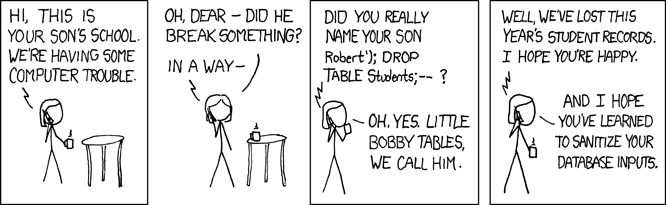 unkempt rock
does iter = PyObject_GetIter(iterable) consume the iterable if it's a generator?
 peak spoke
I think that'll just return self
paper echo
is PyObject_GetIter() the same as iter()?
peak spoke
!d PyObject_GetIter yes
fallen slateBOT
PyObject* PyObject_GetIter(PyObject *o)```
*Return value: New reference.*This is equivalent to the Python expression `iter(o)`. It returns a new iterator for the object argument, or the object itself if the object is already an iterator. Raises [`TypeError`](https://docs.python.org/3/library/exceptions.html#TypeError "TypeError") and returns `NULL` if the object cannot be iterated.Does the __str__ dunder really need to exist? (Except out of convenience and backwards compatibility) It seems like it could always call format with no format_spec (aka empty string format_spec)
Like is there a drawback to having py def __str__(self): return format(self) assuming your __format__ exists and is written sanely
 spark magnet
unkempt rock
Does the `__str__` dunder really need to exist? (Except out of convenience and b...
spark magnet
unkempt rock
Does the `__str__` dunder really need to exist? (Except out of convenience and b...
defining __str__ would be more convenient than defining __format__, and people often need str, and rarely define format.
unkempt rock
Yeah
I guess I'm wishing __str__ would default to format if you didn't define it
!e but it doesn't 
py class C: def __format__(self, format_spec: str) -> str: print("formatting") return "FLOOF" c = C() print(c, str(c), format(c))
fallen slateBOT
@unkempt rock :white_check_mark: Your eval job has completed with return code 0.
001 | formatting
002 | <__main__.C object at 0x7fc4227b7ee0> <__main__.C object at 0x7fc4227b7ee0> FLOOF
Import subprocess an run them as threads
spark magnet
dusk prism
Import subprocess an run them as threads
subprocess doesn't make threads, it makes processes.
raven ridge
unkempt rock
I guess I'm wishing `__str__` would default to format if you didn't define it
That would be backwards compatible, and is a sane thing that you could propose.
The only basis I can think of for rejecting that is that it would make str a bit slower for types that neither define __str__ nor __format__ but instead inherit them from their parent class.
unkempt rock
How does one go about proposing something like that?  Seems such a tiny change for a whole PEP.
 deft pagoda
python-ideas maybe
but you might define a __format__ where an empty spec errors or something
prime estuary
Yeah, usually you propose it there, if other people like it, you might be directed to open an issue and get it patched there.
Python 3.10 is in beta now, so no more features are added - so it'd be 3.11 at earliest if liked.
You definitely want to check if there's any backwards compatibility issues - say, what if a parent class does define format but not str, performance issues, and also if you're able to do the work to implement it that's a big plus.
 sand python
__format__ defaults to using __str__ though, so I don't think it is possible to change without breaking things?
!e ```py
class A:
def str(self):
return "this is A"
print(format(A()))
@sand python :white_check_mark: Your eval job has completed with return code 0.
this is A
That can be resolved by object.__str__ checking if obj.__format__ is object.__format__ or something.
unkempt rock
is there any alternative to pyarmor?
merry trench
one simple question please help. what happens if I don't write __init__(): manually inside a class? does it call default constructor by itself?
raven ridge
The class inherits the __init__ of the next class in its MRO
merry trench
i am sorry but didn't understand this part: "next class in its MRO"
can you please elaborate little bit?
prime estuary
If you don't define it, the superclass's method is called.
The "Method Resolution Order" refers to the specific order superclasses is checked in, which can get complicated if something inherits from multiple things, or say the parent inherits from a grandparent, etc.
prime estuary
merry trench
i am sorry but didn't understand this part: "next class in its MRO"
Is your question though what happens if you override __init__, but don't call super().__init__()? In that case no it's not automatically called, so any attributes probably aren't set and stuff will break.
visual shadow
No i think they're asking what happens if they don't write an init in a class at all. To put it simply, yes it's fine nothing bad happens as such because it does use the default init of its parent. (hence the mro). All classes implicitly have a parent called Object so that init is used
merry trench
oh. i get it now. so if i need to pass some attributes to set while creating an object only then I need to define init otherwise not actually necessary right?
visual shadow
Yes. Though classes without an init sound rather pointless for the most part.
merry trench
yeah. just confirming the workflow of init. thank you guys a lot.
raven ridge
visual shadow
Yes. Though classes without an init sound rather pointless for the most part.
It's the normal way of defining custom exceptions
They often have completely empty class bodies.
fallen slateBOT
Lib/asyncio/exceptions.py lines 9 to 18
class CancelledError(BaseException):
    """The Future or Task was cancelled."""


class TimeoutError(Exception):
    """The operation exceeded the given deadline."""


class InvalidStateError(Exception):
"""The operation is not allowed in this state."""```Those inherit from an Exception class though. I suppose I was taking the shorthand by not explicitly stating it. (ie, thinking of only normal classes without an init, no inheritance)
prime estuary
Well they still inherit, just from object which has an entirely blank init.
spark magnet
posting this in multiple channels is starting to seem like spam
magic python
How come an import statement is in a function here:
https://github.com/dropbox/pyannotate/blob/master/example/example_conftest.py#L19-L23
is this not deemed bad practice?
fallen slateBOT
example/example_conftest.py lines 19 to 23
def collect_types_fixture():
    from pyannotate_runtime import collect_types
    collect_types.start()
    yield
collect_types.stop()```example/example_conftest.py lines 10 to 12
Explicitly delay importing `collect_types` until all tests have
been collected. This gives gevent a chance to monkey patch the
world before importing pyannotate.``` sacred tinsel
the same reasoning probably applies to all the funcs
magic python
sacred tinsel
it's explained in the docstring above
🤦 ah sorry lol
https://github.com/iterative/dvc/blob/master/fastentrypoints.py#L92-L98
it's there too, i guess this is why it's done then
fallen slateBOT
fastentrypoints.py lines 92 to 98
def main():
    import os
    import shutil
    import sys

    dests = sys.argv[1:] or ["."]
filename = re.sub(r"\.pyc$", ".py", __file__)```idk why you'd delay importing os, shutil, sys though
 spice pecan
perhaps they just don't want them to be available in the module, for whatever reason
magic python
spice pecan
perhaps they just don't want them to be available in the module, for whatever re...
yeah i don't really understand why that would be i guess - i just thought - imports go at the top, and that was it
 true ridge
Perhaps not for modules like os, sys etc. (since %99 of time, the python startup uses them through site) but if you are importing complicated modules (e.g aiobotocore, which takes about 0.4-0.5 seconds on my computer just to import), or if you have some complicated logic in the top-level code (e.g creating a dictionary with bunch of items to be used as cache) then it makes sense to conditionally import those modules under the functions which actually use them so you'd defer the cost from startup time to actual usage. This is a very important practice for the short-running commands (e.g cli applications)
grave jolt
which takes about 0.4-0.5 seconds on my computer just to import
👀 why
flat gazelle
probably just a lot of code, dataclasses are also famously guilty of this
magic python
true ridge
Perhaps not for modules like os, sys etc. (since %99 of time, the python startup...
Interesting, isort has always told me off,so maybe I should consider this kinda thing more, thanks
unkempt rock
result =  c**3 + d**3
append (c, d)  to  list at  value map[result]
how would u do this in Python?
is this a defaultdict(list) situation?
raven ridge
unkempt rock
```py
result = c**3 + d**3
append (c, d) to list at value map[result]
```
...
you could do it that way, or you could do
map.setdefault(result, []).append((c, d))
what's the easy way to do this?
raven ridge
I'm not sure what you're asking. Both using defaultdict and using dict.setdefault seem easy enough to me.
unkempt rock
what's the defaultdict way?
I'm a bit confused, the defaultdict(list), list is the value not the key?
raven ridge
from collections import defaultdict
map = defaultdict(list)
map[result].append((c, d))
the key is the same thing either way - result
unkempt rock
the key is result?
raven ridge
yeah - you said you wanted to store it into a list at map[result], so result is the key and the list is the value
sacred tinsel
unkempt rock
I'm a bit confused, the defaultdict(list), list is the value not the key?
the arg passed to defaultdict is a callable that returns the default value
in that case list the built in
it's the same as defaultdict(lambda: [])
raven ridge
right, list is the default value for the default dict, because calling list() returns a new, empty list to use as the starting value for missing keys
raven ridge
map.get(result) is like map[result], except if map has no result key, then it returns None
 signal tide
dict.get(key, default) dict[key] if key in dict else default
signal tide
raven ridge
`map.get(result)` is like `map[result]`, except if `map` has no `result` key, th...
to add on, by default it's None but it can be whatever
unkempt rock
interesting, Python has a lot of stuff I didnt know
what's
append (c,d) to list at value map[result] in Python?
dict[result].append((c,d))?
nvm I think it's same
"to list at value" part confused me
signal tide
does .get() call __getitem__ or does it go through something else?
raven ridge
signal tide
does `.get()` call `__getitem__` or does it go through something else?
For what type? dict in particular?
signal tide
what other types support it?
raven ridge
all mappings
The collections.abc.Mapping abstract base class implements it in terms of __getitem__ though. https://github.com/python/cpython/blob/3.9/Lib/_collections_abc.py#L759-L764
fallen slateBOT
Lib/_collections_abc.py lines 759 to 764
def get(self, key, default=None):
    'D.get(k[,d]) -> D[k] if k in D, else d.  d defaults to None.'
    try:
        return self[key]
    except KeyError:
return default```idk how but I completely forgot about collections
signal tide
fallen slate
`Lib/_collections_abc.py` lines 759 to 764
```py
def get(self, key, default=None...
is that somewhat how it's implemented for dict?
raven ridge
not directly, no. It doesn't call __getitem__, but both get and __getitem__ call _Py_dict_lookup internally. https://github.com/python/cpython/blob/e117c0283705943189e6b1aef668a1f68f3f00a4/Objects/dictobject.c#L2880 and https://github.com/python/cpython/blob/e117c0283705943189e6b1aef668a1f68f3f00a4/Objects/dictobject.c#L2065
fallen slateBOT
Objects/dictobject.c line 2880
ix = _Py_dict_lookup(self, key, hash, &val);```
`Objects/dictobject.c` line 2065
```c
ix = _Py_dict_lookup(mp, key, hash, &value);```huh neat the lookup's a lot more complex than I thought it'd be
unkempt rock
how would u write that second part in Python?

I just wish the book was written in Python ;\
>>> for key, val in dicti:
... for pair1 in val:
... for pair2 in val:
... print(pair1, pair2)
``` but this is wrong round kiln
dicti.items()
unkempt rock
thx
raven ridge
it would just be:
for key, val in dicti:
    for pair in val:
        print(pair)
  File "<stdin>", line 1, in <module>
TypeError: cannot unpack non-iterable int object
.items()?
round kiln
iterating over a dictionary without specifying .items() just returns the keys, not the values
raven ridge
ah, oops, yeah
for key, val in dicti.items():
    for pair in val:
        print(pair)
or
for val in dicti.values():
    for pair in val:
        print(pair)
if those don't work, it's because you've appended something other than a pair of values to the list.
unkempt rock
in my original code isn't pair1 and pair2 wrong anyway?
they need to be val[0] and val[1] ?
my complete code:
>>> n = 5
>>> for c in range(1, n):
...     for d in range(1, n):
...             result = c**3 + d**3
...             dicti[result].append((c,d))
>>> for key, val in dicti.items():
...     for pair in val:
...         print(pair)
but it seems to not be doing the correct thing.
unkempt rock
the point of the problem is "Print all positive integer solutions to the equation a**3 + b**3 = c**3 + d**3 where a, b, c and d are integers between 1 and 5."
raven ridge
you need n+1 instead of n in the range call, then.
round kiln
uninitialized keys. so either (1) check if the key exists and add if it does not. or (2) initialize dicti using collections.defaultdict(list)
raven ridge
!e ```py
from collections import defaultdict
dicti = defaultdict(list)
n = 6
for c in range(1, n):
for d in range(1, n):
result = c3 + d3
dicti[result].append((c,d))
for result, list_of_pairs in dicti.items():
for pair in list_of_pairs:
print(result, pair)
@raven ridge :white_check_mark: Your eval job has completed with return code 0.
001 | 2 (1, 1)
002 | 9 (1, 2)
003 | 9 (2, 1)
004 | 28 (1, 3)
005 | 28 (3, 1)
006 | 65 (1, 4)
007 | 65 (4, 1)
008 | 126 (1, 5)
009 | 126 (5, 1)
010 | 16 (2, 2)
011 | 35 (2, 3)
... (truncated - too many lines)
Full output: https://paste.pythondiscord.com/icironapug.txt?noredirect
unkempt rock
I see that makes sense
if I wanted to print all ints a, b, c, d that satisfied a^3 + b^3 = c^3 + d^3
would it still be the same as above?
I mean are the pairs on both sides identical?
or I guess they dont have to be
I guess it's either it or its mirror version like (1,2) and (1,2) or (1,2) and (2,1)
 marsh carbon
Please, someone could help me?
I need to map the mouse click and movement to the 'mapping' in this model:
https://github.com/eleow/Gesture-Recognition-and-Control
The keyboard is ok, but I can't do the same with the mouse... Please, someone know how to do this?

GitHub
Control your desktop applications with a simple webcam and gesture recognition with the power of AI - eleow/Gesture-Recognition-and-Control
 summer hedge
Can someone ELI5 when to use WSGI vs ASGI webservers? For instance I'm building a discord bot that would have direct access to a database. So it'll probably be some custom DAL using asyncio. It'd be great to split that DAL into a package and use it on a web front end as well that acts more than just for a discord bot. But then I would need ASGI server? Are there disadvantages to a community website using purely ASGI?
finite sparrow
generally ASGI is the newer protocol, the A stands for asynchronous. That means generally ASGI will be easier to integrate directly into a discord bot, since both are async. There really isn't much of a advantage WSGI has over ASGI, other than the frameworks are way more mature and stable (less breaking updates, generally less bugs, easier to maintain) and somewhat easier to use (in my experience) at the cost of lower performance. I would say it doesn't really matter which you choose, your choice of framework is much more important. Do you want to make a API backend for a JS frontend? probably FastAPI (ASGI). Is your project gonna be big and backend-rendered? Django (WSGI). Would you rather go microframework which means less setup and easier to learn if less powerfull? Flask (WSGI)
(the framework usecases and recommendations are of course my personal opinion)
summer hedge
Any opinions on Tornado vs Fast API?
Not really planning a rest api... although one layer could have it
it'll probably be more server rendered for SEO
finite sparrow
Tornado is old, and not something that you should make a new project in, imo.
summer hedge
Thanks. Looking at FastAPI
grave jolt
If you want to learn how ASGI works, I'd recommend looking at Starlette
FastAPI is based on Starlette, but it itself is a fully capable framework
verbal escarp
sigh. anyone care to give any useful input? i've posted in three different channels now with no answer
i'm working on the auto-install feature of https://github.com/amogorkon/justuse, where you would use("package", auto_install=True) and it would return a useful exception with some info about the package you are trying to install. now my question is what info i should give the user for them to decide whether or not the package may be malicious or not
i was thinking of download count, but that's all i came up with
true ridge
It is nearly impossible to 'figure out' whether a package is malicious or not in the exact sense, but there have been various scoring systems which you could use as some sort of threshold to whether ask for confirmation or not. An example is the Snyk's health score metric, which is composed from various factors (how many contributors you have, install count etc.). See an example here: https://snyk.io/advisor/python/fsspec
verbal escarp
@true ridge finally some sensible input, thank you
magic python
is the guide here: https://packaging.python.org/guides/tool-recommendations/?highlight=poetry #application-dependency-management considered out of date? I ask because it seems as though they're recommending pipenv, but from what i bump into most people have moved away from this now?
peak spoke
poetry may be more fitting, but pipenv still works mostly fine and is managed by the PyPA
magic python
peak spoke
poetry may be more fitting, but pipenv still works mostly fine and is managed by...
fair - with pyproject.toml would we expect to see poetry become standard?
 undone hare
They both have their strengths and weaknesses tbh
I don't think one will become more standard than the other
magic python
undone hare
I don't think one will become more standard than the other
this goes against the whole There should be one-- and preferably only one --obvious way to do it. thing tho doesn't it
undone hare
I don't think it applies to tools and libraries - diversity in both is important
unkempt rock
1 + 1 = 10
unkempt rock
Hey
i m looking dor a modelisation of vaccination effect in SIR MODEL
but with the determinist model
with no markov chn etc
peak spoke
Is there any reason why None implements the bool dunder when IsTrue checks against it directly? https://github.com/python/cpython/blob/main/Objects/object.c#L1435-L1443
fallen slateBOT
Objects/object.c lines 1435 to 1443
PyObject_IsTrue(PyObject *v)
{
    Py_ssize_t res;
    if (v == Py_True)
        return 1;
    if (v == Py_False)
        return 0;
    if (v == Py_None)
return 0;```If it didn't, bool(None) would be False but type(None).__bool__(None) would be True
that doesn't seem desirable
peak spoke
type(None).__bool__ wouldn't this be an invalid lookup?
peak spoke
!e object.__bool__
fallen slateBOT
@peak spoke :x: Your eval job has completed with return code 1.
001 | Traceback (most recent call last):
002 |   File "<string>", line 1, in <module>
003 | AttributeError: type object 'object' has no attribute '__bool__'
huh. I did not know that...
 boreal umbra
General question: do you feel that Python is a good first language for those who aspire to be career programmers? Even though I'm a proponent of dynamic typing, I feel like a lot of beginners end up struggling with questions that come from not understanding types and their implications.
spark magnet
i would say if it matters in a python program, you can learn about it in Python
raven ridge
I think every programmer should learn a statically typed language at some point, but I don't think there's any reason it should be their first language.
paper echo
boreal umbra
General question: do you feel that Python is a good first language for those who...
Yes, if only for lack of alternatives. Types can and should be taught early, even without static typing in the language.
Python isn't perfect as a beginner language, but others are all worse that I can think of, for some reason or other.
 halcyon galleon
I do feel the road-bump that a lack of awareness around types can cause. But I don't think it's a large enough road-bump to matter long-term. When we're first learning, it's messy and clumsy. Quite often with no particular goal in mind yet.
Python's lack of static typing is, in my opinion, forgiving to that early stage of free-form development. It helps keeps interest for some longer than alternative languages.
 spiral willow
boreal umbra
General question: do you feel that Python is a good first language for those who...
spiral willow
boreal umbra
General question: do you feel that Python is a good first language for those who...
No, I think typing is important enough that having a language that will punish you severely for it as your first language is important enough. That and most Typed languages are very classed based which is important. However, my learning/teaching style is hardship up front makes you better in long run even if you want to quit in first 10 days.
so I understand those who are like, let's hook people on something that won't blow off their leg so they don't throw up their hands and quit
spark magnet
I don't understand why people think Python won't make you learn about types. Even without declarations, all values have a type, and the type matters.
spiral willow
spark magnet
I don't understand why people think Python won't make you learn about types. Eve...
because it hides it, it's not uncommon to see people on this server who have typing errors and completely clueless about it, the fact that many people want static typing and strict type hinting indicates it's a problem


JetBrains: Developer Tools for Professionals and Teams
Official Python Developers Survey 2020 Results by Python Software Foundation and JetBrains: more than 28k responses from more than 150 countries.
spark magnet
spiral willow
because it hides it, it's not uncommon to see people on this server who have typ...
Then using type hinting will be a good way for beginners to learn about types.
spiral willow
spark magnet
Then using type hinting will be a good way for beginners to learn about types.
even with type hinting, they don't realize that maybe the type was returned improperly
spark magnet
spiral willow
even with type hinting, they don't realize that maybe the type was returned impr...
How will a static-typed language do a better job than mypy will do in teaching them that?
spiral willow
mypy won't always catch everything and it's not a feature of language vs something like C# which will error out
PS C:\Users\rabbi> [int32]$a = 'Hello Nedbat'
Cannot convert value "Hello Nedbat" to type "System.Int32". Error: "Input string was not in a correct format."```beginners' programs tend to be simple, and every line of the program is executed every time they run the program. There's not much of a difference between type errors happening at run time instead of at compile time for those users.
 swift imp
I don't think C is a good first language
I don't even think C++ is
Maybe if the individual is bright in STEM
I think python lets an individual learn computer science concepts without being side lined by all the gotchas those languages have
Writing largish projects in C is fucking rough
 molten fulcrum
hahahaha
try writing Assembly code 🤣 you will think C is a HIGH level launguage after using Assembly code
visual shadow
spiral willow
https://www.jetbrains.com/lp/python-developers-survey-2020/
This is exactly the wrong kind of audience for saying for what is good for beginners. I think developers who have made it through "the gauntlet" so to speak think it's a great idea to put beginners through it because they did so. It's the ultimate survivor bias at its finest. There's so many beginners who start with C or C++ and quit programming forever because they get frustrated at not really making much progress.
It's a real shame no one gets to hear their side of the story. I think your first language should be easy, and python is a great candidate for that. Learning python as a first language doesn't mean you'll be crippled forever, as if once you learn python you can't learn anything else? For what it's worth, I used to believe in the gauntlet once. Not anymore.
gleaming rover
visual shadow
It's a real shame no one gets to hear their side of the story. I think your firs...
I think Python first is fine
IF the teaching process is good
I’ve taught it and I do really see
gleaming rover
spiral willow
because it hides it, it's not uncommon to see people on this server who have typ...
this happening
raven ridge
People learning Python as their first language certainly do get confused by types, but I don't think that's in any way unique to Python. Without some experience teaching a statically typed language to people as their first language, I'm not convinced that type errors emitted by the compiler would be any more understandable to the newbies than Python TypeError or AttributeError are
flat gazelle
the main merit of python as a first language is how incredibly easy it is to make cool things in it. You can get pygame and make a simple game much sooner than in C/java/C#, hell tkinter, for all its bad appearance is easy to use, allowing you to make simple GUIs. Javascript is even better there, so that is also a solid option for beginners
 distant canopy
Anyone here learnt vba?
I have a problem which is when i was recording a macro , the first line of code in vba is always activecell.Offset
Can anyone tell me why
grave jolt
@distant canopy If you have a question unrelated to Python, you can ask in one of the off-topic channels
!ot
fallen slateBOT
Off-topic channels
There are three off-topic channels:
• #ot0-psvm’s-eternal-disapproval
• #ot1-perplexing-regexing
• #ot2-never-nester’s-nightmare
Their names change randomly every 24 hours, but you can always find them under the OFF-TOPIC/GENERAL category in the channel list.
Please read our off-topic etiquette before participating in conversations.
 ancient saddle
visual shadow
It's a real shame no one gets to hear their side of the story. I think your firs...
ancient saddle
visual shadow
It's a real shame no one gets to hear their side of the story. I think your firs...
Definitely this. I took 2 C classes in college, with a terrible teacher to boot, as part of engineering and really ended up hating programming. About 10 years later I started looking around for something other than Excel for something I was doing and came across Python. Seeing incremental gains in skill on Python really gives you the confidence you need - for me, enough such that something I absolutely hated turned into something I really think about doing as a full time job.
halcyon trail
It really depends on the context, IMHO, for "first language"
halcyon trail
there's the first language of people in high school, who are 15. There's the first language for people who are at college perhaps studying psychology or something less technical. And then there's the first language for people who are say, undergrads in CS at MIT
A lot of the criticism regarding python as a first language that I've seen, and that I myself would level, is for groups like that last one.
 potent hinge

halcyon trail
I don't think it's just about types per se, either. The MIT change made headlines not because they were switching from a statically typed language (they weren't), they were switching from Scheme. The advantage of lisps from a pedagogical point of view, when you're talking about trying to teach the fundamentals of CS to a very strong audience, are significant. I don't think python has almost any benefit in terms of a fundamental learning about CS aspect; the benefit of python is just that it's a nice language with a lot of libraries so maybe people can pull together a small, real project more easily (MIT has admitted as such). So I think this is the (justified) source of comments on "watering down"
So, I think you can't talk about "python as a first language" without first specifying "first language for who" (and whether it is really likely to be their first language, or just their first language in a particular setting, like college). Otherwise, it's likely that different people discussing just have different people in mind.
flat gazelle
yeah, python is great for younger people and self learners who need motivation beyond "I need to pass this course". If you have to bear with it, pretty much any language will do fine, and there are very good arguments for using things other than python.
halcyon trail
Agree, python is a fantastic choice for many people, I would have loved to have python as my very first language in high school, instead of VB or Java.
But I feel like I would have lost a lot if I'd used python instead of C++ for my algorithms and data structures course. I don't really understand how you can teach data structures without it being fuzzy, without using something like C or C++, tbh.
charred pilot
with dsa, there's always the feel that you're reinventing something, since python's builtin structures are so nice
flat gazelle
well, there are data structures the mathematical concept, and there are data structures the "how to arrange memory to be fast" concept
paper echo
@spiral willow that survey indicates to me that people are using Python in situations when they shouldn't be using Python, not that Python is bad for a newbie language.
halcyon trail
Memory layout, and the usage of pointers, are so incredibly intrinsic to data structures, if those things are not explicit in the language, then you need to constantly backtrack and say things like "well, in python since everything is a pointer, this is a linked list..." etc
flat gazelle
the former you can teach in anything, the latter you do want something in the category of C
halcyon trail
@flat gazelle no, something like an array vs a linked list, the "mathematical concept" is defined by memory layout
paper echo
halcyon trail
Memory layout, and the usage of pointers, are so incredibly intrinsic to data st...
How many Python programs really hinge on memory layout? With respect to python names and pass-by-whatever semantics, you can hand-wave over the idea of a "reference" and talk about variable names as "labels attached to pieces of data".
flat gazelle
probably C, since some data structures are impossible in rust or modern C++.
halcyon trail
there are cases where the memory layout is a mere optimization on some mathematical algorithm, yes, but there are also cases where it's not so
paper echo
Knowing that a dict is a hash table and blah blah blah is intermediate, not beginner stuff
halcyon trail
@flat gazelle what data structure is impossible in Rust or modern C++? that's news to me.
charred pilot
i was under the impression that unsafe rust was basically C
halcyon trail
@paper echo it's not about beginner vs advanced in the sense you're thinking of it. And you're talking about software engienering, not computer science.
flat gazelle
double linked lists afaik do not work, since there are two owners of each node
now yes, you can use unsafe
halcyon trail
Data structures and algorithms, and learning about arrays vs linked lists vs BST's, is usually a very early course in CS programs
paper echo
halcyon trail
<@!389497659087650836> it's not about beginner vs advanced in the sense you're t...
Fair enough, but I think that a lot more people are interested in SWE than CS, and only care about the latter insofar as it facilitates the former.
halcyon trail
Then maybe there should be more programs that cater to that. But a CS program is still a CS program, and needs to educate people about CS.
80% of the courses offered in CS are largely irrelevant for SWE
flat gazelle
but yeah, teaching DSA in python is inevitably going to skip over some concepts
paper echo
That's fair. We need more serious SWE vocational programs, something more serious than a boot camp but less involved than a CS 4-year degree.
halcyon trail
Yeah. There are places where CS and software engineering are separate programs
E.g. University of Waterloo in Canada.
paper echo
I like that. Imagine conflating physics and mechanical engineering!
Or conflating biology with biomedical engineering with biostats with medicine...
halcyon trail
Well, biomedical engineering programs are extremely new
in the grand scheme of things
probably in the past most people doing biomedical engienering, were not people who studied biology in undergrad at all, but people who studied engineering and then filled in the biology later
paper echo
Interestingly, less new than SWE programs (as far as I know)
But I went to a school that had a very strong BME program, including an undergrad BS degree
halcyon trail
yes, it's definitely caught on more
Actualy, here's a pretty cool grpahic, i fyou're interested

So, this is where I did my undergrad, University of Toronto, it's a top 30 or so engineering program in the world, Engineering Science (which used to be called Engienering Physics) is their sort of "elite" program, the idea is that you're probably studying things that are going to lead to research as opposed to working on the current standard industry stuff
paper echo
Very interesting graphic, thanks
halcyon trail
the first 2 years are general, and then the last two you pick an "option", one of which when I went to school, was biomedical
can see how the options have evolved over time
biomedical starts in 1993, which makes sense to me
it's always tricky though I guess, just how much "rigor" to include in any given program. E.g. I mentioned the waterloo software engienering program but it's probably not at all what you were suggesting, it's waaaay more rigorous than that, you have to take a lot of electrical engineering for that.
I guess you want something where people learn at least basic CS reasonably (like, basic algorithms and datastructures, what a DAG is and some of the basics on that), but also a lot of applied software engineering stuff (version control, reproducbility, software design principles), and some programming languages
I don't actually know many programs that fit that bill
(or any, really)
paper echo
Yeah, that would be great IMO
And I think what be most directly beneficial to most people who want to get into programming as a career
halcyon trail
For many people, yes, I agree.
finite sparrow
i think you have a very CS centred view of things. the thing is though, that due to high level languages being a thing, a lot of programmers dont have to worry about large parts of CS. in fact, most of the concepts you mentioned i would have to look up, and i think im doing just fine writing python at my job.
not everyone needs to know CS, and thats okay. python is a language well suited for people that dont want to learn CS, and thats okay too.
halcyon trail
I agree python is well suited for those people, and that not everybody needs to know CS. I said pretty up front, that discussing python as a first language, you have to say "for who"
Without a doubt for people who have no plan to be professional software engineers or computer scientists, python is a great first language
 austere moon
Programming languages are the tool, CS is the blueprint. Anyone can swing a hammer. An architect will know where to swing it and why you should use the hammer in the first place.
finite sparrow
an architect rarely swings a hammer.
anyone with a bit of common sense can tell when a hammer isn't supposed to be used.
austere moon
It's not an airtight analogy.
finite sparrow
not even remotely. thanks to high level languages, python being one, the CS knowledge is not really needed to create even large projects.
halcyon trail
I don't really agree. It's not about high level languages so much, it's more like, if other people have already solved the theoretically most difficult problems and offered the solutions to you as packages
dependency resolution for example is a major concern of all large problems, and it's an NP-complete (or NP hard?) problem
*all large projects
finite sparrow
the fact of the matter is that a lot of people can be effective developers with little CS knowledge
halcyon trail
similarly with git, because you don't have to solve version control on your own, your developers can get away with memorizing half a dozen git commands, and not worry about the mechanics of the underlying git DAGa nd hashes
austere moon
Levels of abstraction. You don't "need" computer science to do anything anymore.
finite sparrow
does that mean CS is pointless? of course not. but its simple not relevant to many.
halcyon trail
Yeah, but like anything, there are jobs that demand more, and jobs that demand less
in any particular category of knowledge
austere moon
But your efficacy as an engineer will be much better if you do have some cs knowledge (with or without a degree)
halcyon trail
At any rate that line of thinking that all that people need to know to be effective programmers is to know Django and basic git, or whatever, has already been heavily explored, the result is boot camps
and while boot camps aren't a total failure, most people I know don't think of them as an unqualified success either
finite sparrow
are bootcamps the only alternative to a CS degree?
halcyon trail
I think that's why salt was suggesting something more in between a CS degree and a boot camp, which isn't really available, and I agree with him that it would be very good for many people (and companies)
well, I'm sure alternatives exist, I can't claim to know everything that's available. Just talking about what exists at scale.
austere moon
finite sparrow
are bootcamps the only alternative to a CS degree?
Absolutely not. Anyone with enough fire under their ass can learn to be an engineer.
It has to be one rager of a fire though. >_<
halcyon trail
sure, self education is an alternative, doesn't work for everyone though
Eh, I dunno, I don't have a CS degree
austere moon
I don't either. Just a large hot fire under the rump.
halcyon trail
i took a few CS courses
finite sparrow
interesting question: is there any application of CS needed when writing SQL?
austere moon
I have always had a passion though. I think that is the main difference for self-taught. If you don't have the passion, the only way to do it is with more formal education.
austere moon
finite sparrow
interesting question: is there any application of CS needed when writing SQL?
I mean, is SQL even turing complete?
halcyon trail
I don't do much with databases, but there are whole courses on databases at most CS programs. I guess it's like everything else, to do basic stuff you don't need a degree, for more advanced things, it will help
most people aren't doing advanced things
finite sparrow
austere moon
I mean, is SQL even turing complete?
yes and no. SQL can be turing complete, but its definitely not the main way its used.
sacred tinsel
wouldnt relational algebra fall under CS? you will be using some regardless of whether you're aware of it or no
finite sparrow
it depends on the exact dialect of SQL
halcyon trail
The thing is though that companies that can pay well generally still prefer people with degrees, if not in CS then at least in some technical field. There's value in signalling there, and beyond that I think it's not so much about whether or not a specific set of courses is valuable. It's more that you know that when there is a problem that does require more advanced knowledge, they're less likely to be put off acquiring the knowledge they need to.
austere moon
finite sparrow
yes and no. SQL can be turing complete, but its definitely not the main way its ...
I would say, no. Then. When writing SQL, you don't really need any CS. But architecting a database, and getting the most from it, I think you absolutely do.
mild flax
i think CS extends a bit beyond turing-complete systems, despite the name
halcyon trail
why "despite the name" - CS doesn't imply turing complete even in name
austere moon
mild flax
i think CS extends a bit beyond turing-complete systems, despite the name
And carpentry is a bit more than cabinets.
safe hedge
halcyon trail
The thing is though that companies that can pay well generally still prefer peop...
I think this is a key thing. I work almost exclusively with python/perl and have large elements of software dev/engineering in my job but my actual technical background is in the field our software applies to
halcyon trail
turing-complete is just one category of computational machines, there are others both more powerful and less. Turing-complete is just the most popular.
austere moon
safe hedge
I think this is a key thing. I work almost exclusively with python/perl and have...
perl You have my sympathies.
halcyon trail
@safe hedge indeed, I'm around that a lot, i was actually originally hired to be a person like that 🙂 I was hired for my math skills, not my programming skills.
mild flax
halcyon trail
turing-complete is just one category of computational machines, there are others...
wait more powerful?
safe hedge
I think the reality is that it is often easier to bring a technical person up to a working level of programming than a CS person up to a working level of physics/maths/bio/whatever else
halcyon trail
Sure, even out of my very limited knowledge, you have things like quantum computers
they are more powerful than turing machines in some ways
mild flax
I was just talking about computation in the Church-Turing sense
safe hedge
Although my experience is the best teams have a balance of both
halcyon trail
since they can solve certain categories of problems faster
mild flax
usually the notion of "powerful" in terms of computational systems is the set of functions they can compute
austere moon
 halcyon trail
Well, the "working level" in the domain, is usually much higher than the "working level" in programming. THe code doesn't have to be beautiful, it just has to work. But if you're working in a domain, then the work in the domain needs to be top tier.
mild flax
and I don't think quantum machines can do more than classical, just some functions faster
halcyon trail
Okay, fair enough, I guess it depends on how you consider "power"
I was using it more in a practical sense than theoretical one
If you really want to go deep into the theory it seems like there's an infinite hierarchy of turing machien power levels, though we don't know how to build any of them 😛
https://en.wikipedia.org/wiki/Arithmetical_hierarchy#Relation_to_Turing_machines
 clever quail
i'm creating an application but i don't understand why this code doesn't work, a button should come out with hello kivy world
KV = """
Screen:
MDRectangleFlatButton:
   text: "Hello kivy world!"
   pos_hint: {"center_x": 0.5 "center_y": 0.5}
"""
mild flax
clever quail
i'm creating an application but i don't understand why this code doesn't work, a...
This isn't the right channel for that, try #python-discussion, #❓|how-to-get-help, or #user-interfaces
magic python
these lines: https://github.com/dropbox/pyannotate/blob/master/example/example_conftest.py#L7-L15
Cause some of my tests to fail, specifically reading in a pandas dataframe, I don't really understand why this is happening though?
I've not got a MWE at the moment, but as Im not really that familiar with pytest and fixtures i thought perhaps there was an obvious reason why these lines would cause failure in other tests (tests which are writing / reading files specifically)
fallen slateBOT
example/example_conftest.py lines 7 to 15
def pytest_collection_finish(session):
"""Handle the pytest collection finish hook: configure pyannotate.
Explicitly delay importing `collect_types` until all tests have
been collected. This gives gevent a chance to monkey patch the
world before importing pyannotate.
"""
from pyannotate_runtime import collect_types
collect_types.init_types_collection()```With PEP 657, do you think it would be a good idea to encourage beginners to use 3.11 when it comes out?
!pep 657
fallen slateBOT

**PEP 657 - Include Fine Grained Error Locations in Tracebacks**
Status
Accepted
Python-Version
3.11
Created
08-May-2021
Type
Standards Track
charred pilot
i don't think so, this issue only really comes up in more complex code
i guess it depends on your definition of "beginner"
 rich cradle
I personally think yes. With the better errors in both 3.10 and 3.11, it'll allow beginners to see where they're going wrong a bit easier, even without consulting someone.
mild flax
would there be a downside to them using 3.11?
visual shadow
Good question. Library support when it's new is the only thing I can think of.
And there's perhaps an argument for saying that beginners won't really be affected by it
I think this won't solve the problem of beginners choosing not to read error messages though, that will still stay same.
But yeah, that aside, good error messages? Easy +1
Looking at the pep, I'm getting rust* vibes with the ^^^^ style indicators. Is that something popular in other languages as well?
gleaming rover
visual shadow
Good question. Library support when it's new is the only thing I can think of.
this is a big thing IMO
halcyon trail
I mean I think it's always beneficial to upgrade in python, the breaks in upgrades are pretty rare so library support isn't that likely to be a real issue, mostly (until that one time it is)
but there's usually work associated with upgrading, at most companies
flat gazelle
it always takes about a month for packages to catch up to python versions
gleaming rover
IIRC discord.py did not support 3.9 on launch? and people were asking why
gleaming rover
gleaming rover
IIRC discord.py did not support 3.9 on launch? and people were asking why
and Discord bots seem rather popular as first projects
visual shadow
flat gazelle
it always takes about a month for packages to catch up to python versions
Depends on domain I think, machine learning is terrible for lagging behind. (specifically tensor flow. It's been miserable in the past)
flat gazelle
yeah, things that need to rebuild themselves have a hard time
clever quail
lol
halcyon trail
that's a fair point I guess, the way that C works on Linux at least everything needs to be 100% consistent.
I guess that this could be mitigated if there was some, at least partial notion of ABI compatibility, probably a lot of the python projects with C components are using the same bits and pieces
flat gazelle
cpython afaik has a stable minimal ABI now, but not all things use it and some things can't use it, and so you have to rebuild for every version due to possible ABI changes
raven ridge
The things that can use it don't need to rebuild, but not everything can use the stable ABI (some important things, like the buffer protocol, aren't exposed through it) and some things choose not to use it (Cython notoriously pokes around at implementation details of CPython for the sake of performance)
halcyon trail
cython I can understand, it seems surprising for things like numpy though that they would need to be rebuilding all the time
static bluff
If I have a machine (class/object) that can be configured with arbitrary callbacks, running on a loop and executing some callback based on some condition each step
What is the best, I should say, most pure/pythonic way store state between iterations
The easiest way would be to attach state as attributes to the machine. One iteration, callback X sets state attribute Y, and then another iteration, callback Z checks state Y and uses that within its logic
But I've been advised that I should be storing state as local variables within thee function containing the loop. That kinda screws with the whole callback methodology in total tbh because it means pumping in, an returning, a large amount of information to these callbacks- which are functions/methods defined elsewhere
Additionally, as with callbacks, the state attributes the machine is a matter of configuration, with that configuration happening in another, largely unrelated step
halcyon trail
Is this the same code that we discussed?
static bluff
yeah
 valid rose
shouldn't libraries made in 3.10 automatically be usable in 3.11? its not like 3.11 brought sone breaking changes right?
static bluff
I've made a bunch of changes and I'm pleased with it, but I'm still struggling wrapping my mind around- well- not only what you were saying about local variables/state but also just an effective way to handle it. An object, with state variables that are configured by a separate (non-trivial) other process, which persist across multiple iterations of a loop and must also be exported to, altered by, and returned from methods defined elsewhere
Sorry, mouthful. But I wanted to summarize my problem properly
halcyon trail
if you mean "pure" in the usual sense, then simply a generator is the purest solution
it's a one way flow of state
state that doesn'tneed to be messed with cannot be
then you wouldn't use callbacks, but just yield everything that needed to be, and process it in a for loop
as for the callbacks, basically what you seem to be saying is that my functions have too many arguments? They need as much state as they need. If you feel like there's too many arguments, you can always create a dataclass or something and pass it in that way
that's basically what you were doing before, the difference is that you basically had a bit of a (demi?) god class; the class carried all the state around, it was the customization point, it handled parsing, etc
deft pagoda
you can also store local state in a generator --- send callbacks into the generator to be executed on every step if you want
though i have no idea what you're building
static bluff
The way it stands now, callbacks need access to: the name of the input file as well as the full text of the source code, the start and end positions of the current token, any flags that might be in play, the matched literal and tokentype, and I think one other thing but I don't have the code right in front of me
halcyon trail
yeah, you can do that as well, though it's a bit more obscure at that point, practically speaking. However, in this case, something is being parsed, so sending data back in shouldn't be necessary
the obvious first question is, why do callbacks need the name of the input file, and the full source code text
static bluff
Throwing an error
halcyon trail
or the start and end positions of the current token
if that's the only reason they need it, then you're generating the error from the wrong place
have the function that's doing the tokenizing catch exceptions from the callbacks, and rethrow with that information
but this is a good example of why I simply prefer yielding everything to using callbacks, in python
if you yield things, then the top level would have access to that information as local variables, in the for loop, and you could just include it when you throw
either way though
static bluff
All of the 'decision making' about whether or not a matched token should or should not be generated is done by callbacks, defined outside the parser class. This is specifically so that I don't have to hand code that logic into the loop itself
halcyon trail
my preferred way would prob be something like this:
@dataclass
class TokenKindOne:
    ...

@dataclass
class TokenKindTwo:
    ...

filename = ...
with open(filename) as buffer:
    for index, token in tokenize(buffer):
        # replace with pattern matching in newer python
        if isinstance(token, TokenKindOne):
            ...
        if isinstance(token, TokenKindTwo):
            ...
etc
static bluff
By definition, if the logic is being performed elsewhere, than information about state- even as simple as where in the source document the parser is currently looking- must be piped to that function
halcyon trail
I don't really follow I'm afraid
static bluff
Also, and really I'm curious, what is the difference between attaching state directly to the parser, and attaching state to an arbitrary 'states' data class and piping that through, as you offhanded mentioned (offhandedly)
Its all just a namespace
halcyon trail
you said they only need it for throwing an error; the way you'd handle that with callbacks is something like:
def tokenize(buffer, callbacker):
    while ...:
        try:
            callbacker.callback1(....)
        except RuntimeError as e:
            throw RuntimeError(f"Exception originally thrown from callback1; in buffer {buffer}, index {index}")
etc
static bluff
The way I see it, if I have a machine whose purpose is to traverse input, making choices based on what it sees, in order to produce from that input- it seems totally logical that that machine's state be attached to the machine
halcyon trail
that way you don't need to pass the buffer into the callbacker
well, sorry 🙂 I think we already went in detail over the issues with the design
static bluff
Just, I've been pondering your perspective since we last spoke and I just can't see what you were trying to communicate
halcyon trail
🤷♂️
static bluff
XD Trying to
halcyon trail
I mean, what's the difference between just shoving everything into one giant class, vs having a bunch of smaller ones that encapsulate smaller details?
seems pretty clear there's a difference, right?
I think if you read about the fragile base problem (did you?), the single responsibility principle, etc, then maybe it will help make it clear
static bluff
brain
🧠
Maybe if I explain where I'm coming from, I could get some discourse on refining my approach. When I was reimplementing the tokenize.py tokenizer, I found that it performed 5 main functions (excluding a bunch of string logic, which I handle in a different way)
It uses a single, massive expression broken into groups to recognize which literal, if any, is next (in the buffer, which is source[characterindex:]. Based which group(s) are matched, it produces token X, Y, or Z. I accomplish this by instead checking each individual pattern, generating the corresponding token
Sometimes, additional logic is needed. Whitespace, for example, may be omitted depending on a boolean sent into the .lex() method. This logic is coded in place as part of the loop in the tokenize.py lexer. I accomplish this by using a callback attached to the tokentype which checks the setting and if needed, returns a PREVENTDEFAULT flag
halcyon trail
You're kinda jumping straight into the weeds. But handling whether or not whitespace can be omitted via callback already sounds stramge
static bluff
The four processes are:
keeping track of parentheses via a stack, popping open parens on and then popping them back off when the mate is found, and issuing an error in the case of a mismatch.
Keeping track of the indentation level, issuing errors as needed
Keeping a look out for 'continued' newline, to override the default indentation behaviour
Performing a termination procedure when the end of the file is encountered
static bluff
halcyon trail
You're kinda jumping straight into the weeds. But handling whether or not whites...
Now, I can understand how it might seem like a lot of work using a callback system for checks like this, which can be written directly into the loop. But another parser might handle whitespace in a different way. Might handle numbers or single literals differently
halcyon trail
Pass it as an argument to the parser function?
static bluff
By using a 'plug-and-play' (or build-a-bear, as I prefer) type approach I can implement all of this behaviour without having to rewrite the whole parser each time. And while the argument can be made that its no huge amount of work to rewrite the loop for each type of parser, its no more work in the long run to build a parser that accepts behaviour on a configuration basis
static bluff
halcyon trail
Pass it as an argument to the parser function?
Sure. I add in a state. Now all parsers inheriting from the have a base vestigial state they may or may not use. And when I find myself in another, similar situation for the next parser, add another check to the loop
Eventually, my parser class that was supposed to be 'plug and play' is accepting a huge number of arguments and checking a huge number of states to juggle various concerns of all its descendants- to the point where its easier just to split them into separate classes
And I could, I could split them in separate classes
halcyon trail
I don't find it sharp... Honestly though, I think maybe you need to learn these things for yourself
static bluff
but each parser is doing nearly identical but slightly different logic. Seems logical to me to build a standardized system for assembling a parser easy
Anyway, I thought if I explained where I was coming from it might help
halcyon trail
It's accepting the same number of arguments, either way, not sure if you understand that
You seem to be getting a bit hung up on maybe the lengths of argument lists, or maybe not liking having a couple more classes, even if it better follows SRP
At this point I'd probably just tell you to go ahead with how you want to do it and learn
static bluff
😛
So I digress
My original question, about storing the parser's states in a way that they can persist over multiple iterations of the loop and be piped to and back from callbacks- but still be 'local' within the loop
Dataclass? Or even just a dict?
halcyon trail
Well, I suggested how to do that with dataclasses above
raven ridge
static bluff
Dataclass? Or even just a dict?
There's no conceptual/modelling difference between those two. Either way, you're storing the state by key in some single object.
static bluff
My point exactly
halcyon trail
Dataclasses give you the benefit of easily checking which kind it is with us instance,.which will eventually be much nicer with pattern matching
And of course trivially enforces a bunch of correctness
static bluff
True
Though in this case, because what the actual value of a state is is impossible know ahead of time, enforcing any kind of typing adds a whole new layer of complexity which even I'm not stubborn enough to implement
Its 39 degrees here XD Which is about ten degrees hotter than it normally gets even in the summer
I am baked, literally. My brain is souflette XD
halcyon trail
I don't really understand what you mean
The schemas of the dataclasses are the same as the signatures of the callbacks, basically
static bluff
It is entirely too hot here in the west coast
I'm a tidbit north myself, I can only imagine how california is down right now
signal tide
is it possible to customize the (re)allocation size of containers?
 vestal ibex
Is it possible to create a discord bot that can get in without admin permit?
finite sparrow
this channel is for discussion of advanced python topics in a more general sense. please claim help channels or ask in the appropriate topical channels
@undone oyster topical channel: #web-development
@vestal ibex topical channel: #discord-bots
charred pilot
signal tide
is it possible to customize the (re)allocation size of containers?
afaik, the only way would be to edit cpython and recompile it
finite sparrow
if its a very dumb or awful idea you might be able to get vco to add it to yeethon
signal tide
charred pilot
afaik, the only way would be to edit cpython and recompile it
Is there anything in the std that can do it?
signal tide
No reason I was just curious + thinking about the growth patterns used
The closest thing I can think of would be a queue but that’s more modifying + locking the size of the container rather than the mem
visual shadow
Ah. Well if you wanted you could "pretend" arrays are lists, and try to implement the o(1) append using arrays as a fun exercise.
Might get you the benefits of seeing the growth for yourself without the downsides of having to butcher python for it
fallen slateBOT
Objects/listobject.c line 67
* The growth pattern is: 0, 4, 8, 16, 24, 32, 40, 52, 64, 76, ...```True, I think for the most part I understand it pretty well (altho my c is hella rusty so I could be misinterpreting something), my thought process was if I have 65 (obviously wouldn't matter at this scale but I cba to do the math) objects, the container would have to allocate an extra 12 buffers (?) to compensate for the 1 extra
halcyon trail
yeah
when you append to a list of size 64, its memory is already full (assuming it's been growing by repeated appends)
so it allocates a new chunk of memory with room for 76 objects, copies the first 64 objects into the new memory, and then appends the new one
so when you hit 65, it allocates 76, deallocates 64
signal tide
signal tide
is it possible to customize the (re)allocation size of containers?
ya I got that, which brought me to this to see if there was a way around that
halcyon trail
what's the issue that you want to work around?
signal tide
it's not an issue I have, just a theoretical, but to be able to say allocate 65/68 slots instead of 76
peak spoke
Not that the memory that consumes should be an issue, but how are your list created? It won't preallocate when it knows the length
halcyon trail
that's what I was wondering, whether python sticks with the growth patterns when it's creating a specific size list
i've seen implementations of some things that do, and those that don't
FWIW, python isn't really about offering that level of fine grained control
and it doesn't offer much benefit in a language like python either
in say, C++, the list equivalent, std::vector, lets you control its capacity more directly
(and view the current capacity, as distinct from size)
peak spoke
In [60]: sys.getsizeof(list(range(65)))
Out[60]: 576

In [61]: sys.getsizeof(list(iter(range(65))))
Out[61]: 600

In [62]: sys.getsizeof([i for i in range(65)])
Out[62]: 664
hmm why are there 3 different answers, that makes no sense 🙂
peak spoke
I'm not really sure on the iter but it's probably because it can't get its length but is still static and can be done in one step unlike the append which list comps use
halcyon trail
list comprehensions using append when the iterable is of a known size and there's no filtering is pretty inefficient
quite surprising, that's as low of low hanging fruit as you can get
peak spoke
!e
import dis
dis.dis(compile("[i for i in iterable]", "", "eval").co_consts[0])
list comps are fairly simple, I think they just accept the value you're going over as an arg and handle everything in the same way
fallen slateBOT
@peak spoke :white_check_mark: Your eval job has completed with return code 0.
001 |   1           0 BUILD_LIST               0
002 |               2 LOAD_FAST                0 (.0)
003 |         >>    4 FOR_ITER                 8 (to 14)
004 |               6 STORE_FAST               1 (i)
005 |               8 LOAD_FAST                1 (i)
006 |              10 LIST_APPEND              2
007 |              12 JUMP_ABSOLUTE            4
008 |         >>   14 RETURN_VALUE
I assume that's because listcomps actually evaluate an expression and don't just unpack an iterable, it's just that in this case the expression is left unchanged
halcyon trail
even if they're evaluating an expression, if the iterable is one of known size and there's no filtering, you automatically know the size of the final list
halcyon trail
they're doing quite a lot of extra work, not only many allocations instead of one, but also many memcpy's
spice pecan
!e ```py
import sys
print(sys.getsizeof([*range(65)]))
@spice pecan :white_check_mark: Your eval job has completed with return code 0.
600
Same as iter, to be expected I guess?
halcyon trail
i don't have much expectations right now given that I can't explain why there are 3 different sizes yes
8yet
*yet
signal tide
spice pecan
!e ```py
import sys
print(sys.getsizeof([*range(65)]))
```
isnt that just a call to __iter__?
halcyon trail
it's just strange IMHO because this is such an easy optimization to do, during bytecode emission, and it's used a great deal, it seems like it would be worthwhile
spice pecan
signal tide
isnt that just a call to `__iter__`?
Probably, yeah, that's why it was kind of expected
Perhaps the list constructor uses extend under the hood, which could have some additional optimizations over a series of appends
I could also be wrong
star-unpacking definitely uses extend under the hood, so my current explanation for the 3 results is:
- Passing an iterable with known length to the list constructor pre-allocates the memory, best case scenario
- Calling
iteron the iterable drops the length info, so the constructor goes for anextendcall instead (same for unpacking, which also usesextend) - A listcomp does a series of
appends over anextend, and doesn't pre-allocate even when no filtering or nested loops are involved and the size is known, which (for some reason?) performs worse in terms of memory
Interesting, extend seems to just call append repeatedly
raven ridge
halcyon trail
it's just strange IMHO because this is such an easy optimization to do, during b...
There's definitely no way to optimize this when bytecode is emitted. There's no way to know at that point that the iterable is of fixed size. Or even that it's iterable.
Names are looked up dynamically, at compile time there's no way to know what range is.
raven ridge
I shouldn't say "no way", I guess, but it's not as simple as you imagined.
halcyon trail
I think no way to guarantee it, the best you can do is to have a branch to check if the range is the "standard" range
and then optimize that branch
raven ridge
Right.
halcyon trail
it's kind of a crazy state of affairs, making a language that dynamic. It has its uses for REPL applications but outside of that I think the benefits of being that dynamic definitely are not worth the costs
spice pecan
Technically, you could check for comps that return the same expression without altering it, and then replace them with an extend/iter call (depending on what kind of comp it is), but then I'd much rather show a SyntaxWarning of sorts, tbh
halcyon trail
Outside the REPL, you're basically throwing a huge amount of optimizations in the toilet, in exchange for the ability to monkey patch, or mock test, badly written code. I can't even remember the last time I replaced something at global scope like that.
visual shadow
Well, there are implementations that get rid of some of that stuff if you're interested in that
Pyston comes to mind.
halcyon trail
I don't think that pyston can do that optimization, since it claims to be fully compatible with python
the best you can do, as mentioned, is have a branch to check if range is the range, and then optimize in that branch
spice pecan
What I can't explain is why a series of appends allocates more memory than an extend, which just calls append until the iterable is exhausted
halcyon trail
well, extend doesn't have to be implemented exactly that way
if I were implementing extend, I'd first to do an isinstance check for a sequence-like type
i.e. something with a known size
spice pecan
Feeding it an iterable without size info still provides the same results
spice pecan
And the source code does just call append
halcyon trail
kind of funny to provide that function then
halcyon trail
🙂
spice pecan
That explains it, nevermind
It doesn't give len, but does give __length_hint__, and extend checks against that
halcyon trail
makes sense
length hint doesn't need to be as precise as len
as the name implies, even a hint can be useful
spice pecan
Yeah, it makes sense, and since range can give you the exact length as the hint, extend works the same on both range and its iterator
It probably falls apart if wrapped into a gencomp
halcyon trail
yeah, i was thinking that
but I still don't see how we have 3 different cases
there should still be either known size, unknown size, that's it
spice pecan
- Create new list with known length, allocate exactly that, no pre-allocation
- Create new list, extend with known hint and a single overallocation
- Create new list, append repeatedly with overallocations
Actually, let me check the constructor
Yeah, extend does resize, which provides overallocation, and the constructor for known-length iterables seems to use preallocate_exact instead
You could shove a check for an empty list into extend I guess, that would be a slight optimization
halcyon trail
that doesn't really clarify to me though what's going on
extend with hint can still only really do two things, you would expect
grow to the exact size of the hint, or grow to the first entry in the size progression larger than the hint
I guess there is a third option, which I guess is wha thappens
use the hint as the "just filled" size and calculate the over allocation using it as a basis
spice pecan
The difference is the hint route calls "list_resize" which, depending on the current capacity, either doesn't reallocate at all, or allocates enough to fit the specified length + overallocation
While the constructor calls "list_preallocate_exact", which just gives you that length with no overalloc room
extending usually implies you're actively resizing the list, so additional room would be needed to amortize for future appends, while prealloc is only used when creating new lists, which might or might not have new appends later
At least that's how it seems to me
halcyon trail
yeah, what you're saying makes sense
over-allocating in any case isn't a big deal. the real question is whether the initial capacity gets set correctly
that saves you a bunch of reallocations and memcpy's and it's fairly substantial
spice pecan
That is true
halcyon trail
especially since the python growth factor is only 9/8
what's 1 + 8/9 + (8/9)^2 + ...
it's 9
so, that means that when you use append repeatedly to get to size N, you've done 9N worth of memcopying
quite a bit
compare to the 2x growth factor that people often use, where you only do 2N worth of copying. Or, a 3/2 growth factor, where you do 3N worth of copying.
sorry I guess I shouldn't include the leading 1
It's actually 8N vs N vs 2N
spice pecan
Mhm, that's quite a lot, and I'm glad length-hints and sequence checks are there to soften that
grave jolt
It's a bit strange that map doesn't get a length hint if the iterator from the iterable it wraps has one
 halcyon trail
just another way of Guido telling you not to use map 😛
spice pecan
It is inconvenient, yeah
It'd be nice to have the ability to return NotImplemented or None to indicate that there is no length-hint



 spice pecan
What if there's no length?
grave jolt
spice pecan
What if there's no length?

also, it doesn't handle the case with multiple iterables
spice pecan
Unfortunate
grave jolt
the ultimate hack

 red comet
[EXPERT OPINION NEEDED] I have a big project in which I will create [OUTPUT] pdf file (report file) from [INPUT] excel data (either file or make our own in python), plots (matplotlib), word data (either file or make our own config data) or any other config [editing, customizing] data will be available using GUI for our client... Which I will maintain as well later.. Please someone guide me about right tool or right path.. Actually I know Python as Intermediate, know tkinter as well (but old fashioned and client will not like) and I want to achieve this goal in python. I am confused with Kivy, Tkinter or any other GUI based library or framework... I also thought about flask or django (know basics of these) and think that It may have capability to convert to some GUI (cool or fancy).. Other options are also welcome with easy path.. Other programming language can be applied but will take time for me to learn. Thanks
paper echo
@red comet if you are asking about gui frameworks, i recommend asking in #user-interfaces . otherwise maybe you want to ask in #software-architecture about how to structure an application like this. #internals-and-peps is for discussion of the python language itself, e.g. its syntax and its internals
red comet
OK.. I have asked in #software-architecture already but no response till now..
 grizzled karma
grave jolt
the ultimate hack
grizzled karma
grave jolt
the ultimate hack
which theme are you using ? it is so beautiful 😆
grave jolt
grizzled karma
which theme are you using ? it is so beautiful 😆
it's IPython
 wheat ginkgo
I was gonna make a proxy with a raspberry pi so I can go on blocked sites at school, is that a good idea?
I know it's do-able
faint quail
probably against school policy ¯_(ツ)_/¯
 charred wagon
No one said that. Don't make assumptions based on silence. If you have database questions, head over to #databases
 tidal marten
Hello, guys. I noticed that there is no mention of how operator precedence and associativity are handled in Guido's write up about the new PEG parser. Are those not handled in the parsing stage?
prime estuary
tidal marten
Hello, guys. I noticed that there is no mention of how operator precedence and a...
They are yes, by controlling what operands are permitted for each value type. If you have a look at the grammar, each precedence level only permits lower levels to be part of it when nesting, so higher levels get grouped outside of that.
https://docs.python.org/3/reference/grammar.html
tidal marten
So I guess the recursions are limited such that you won't have to worry about precedence and associativity?
That's pretty neat
magic python
is there a style guide on how to name functions? I don't mean the case like this https://www.python.org/dev/peps/pep-0008/#id45 , i mean whether to use something like def get_list_of_names(... or def name_list or whatever
Python.org
The official home of the Python Programming Language
i guess the grammar 🤔
 jovial flame
magic python
i guess the grammar 🤔
jovial flame
magic python
i guess the grammar 🤔
Whichever is the most readable and descriptive
e.g.
def get_user_names()
vs
def list_names()
magic python
jovial flame
Whichever is the most readable and descriptive
e.g.
def get_user_names()
vs
def ...
sure - i was asking whether there were any general conventions used for grammar here, i've not seen any
visual shadow
I believe it's personal preference.
One general convention that does seem to happen almost subconsciously is that functions should be "actions"
magic python
visual shadow
One general convention that does seem to happen almost subconsciously is that fu...
yeah, i was wondering whether there was some sort of <verb>_<thing>_<blah> or whatever, all good
visual shadow
I think there's some conventions in other languages, where stuff like <noun>_<verb> is common. I've however seen a healthy mix with this flipped as well, and both seem to be just as fine for readability.
So stuff like file_read() and read_file() seem interchangeable to me. Fwiw I personally tend to write verb first, but I'm ambivalent to it
magic python
visual shadow
So stuff like `file_read()` and `read_file()` seem interchangeable to me. Fwiw I...
makes sense, just realised i hadn't seen it in style guides which made me wonder. Something that's natural to write is def get_ , but i often feel that get_ is kinda useless in a name
visual shadow
Think of it in terms of how the calling statement would look, not the definition.
So would you rather have countries = get_valid_countries(foo, bar) or countries = valid_countries(foo, bar)? To me, I prefer the former
When I read a name that has a verb, I'm ready to expect a function. When I read a name that doesn't have a verb, the brackets make me pause and reevaluate, because valid_countries seems like some data to me by itself, not a function.
So I don't think the get is redundant.
(but this is just my opinion. Not sure if there's a convention for this)
 livid dove
i usually try to make the name as descriptive as possible without adding unnecessary details
also idk how i'd describe it but i add the filename to the name as well so for example in a logging module i dont name the function setup_logging but rather just setup
static bluff
I'd like you guys' input on building a very simple type enforcement system (via decorator, I'd assume)
I'm building an API for use in building applications and games. As such, I'm not the end user and I can't trust that my end user is reading the docs or using any kind of linter
I'd prefer that users of my program see an unambiguous 'could not execute <function>, arg <whatever> must be of type <type>' style error. The alternative is: a) I manually assert types coming in b) whatever error the bad input results in bubbles to the top and the user wades through the stack/internals to deduce what the problem is themselves
I'm open to discussing the purity of type assertion in this context. Beyond that, what would be the best approach implementation wise to automatically asserting types via decorator
halcyon trail
what exactly do you mean by best approach? I think you pretty well summed it up, you'd want to use a decorator
beyond that, you'd create a new function that reads the annotations, does isinstance checks, if any fail, throw, and then call the original function
just keep in mind that when you try to "combine" python's static and dynamic type system, there's a lot of edge cases
An obvious example being generics; it's not really reasonable to iterate over x: List[int] and verify that every element of x is really an int
static bluff
halcyon trail
just keep in mind that when you try to "combine" python's static and dynamic typ...
Wise as always Quick. I've dipped my toe in type enforcement before and I know its a rabbit hole. Thankfully, my needs are very basic. Is it a string? Is it a bool? etc.
deft pagoda
there's a beazley talk where he implements this exact thing --- he calls them contracts
static bluff
The only reason I'm not doing it by hand is that I'm expecting a few hundred arguments will need to be checked, so it might be faster to automate than assert by hand
deft pagoda
Invited Keynote Talk from PyCon Israel, June 12, 2017. I cause trouble and build a framework using all sorts of new Python 3.6+ features.
This video can be discussed at https://forum.dabeaz.com/t/the-fun-of-reinvention-pycon-israel-june-12-2017/204/1
David Beazley teaches intense in-person Python Programming and Computer Science courses in Ch...
static bluff
deft pagoda
https://www.youtube.com/watch?v=js_0wjzuMfc
Excellenttttttttt
halcyon trail
You may want to have a global flag that controls whether the decorator actually does the checking
or I guess just have the decorator use assert instead of raise, since there is a global way to disable asserts
Beazley's characterization of this as a contract precondition makes sense, and assert is how you enforce such things
wheat ginkgo
faint quail
probably against school policy ¯\_(ツ)_/¯
If no one's done it before, it's not YET and they don't need to know ¯_(ツ)_/¯
halcyon trail
It's just atypical in python to actually have a narrow contract
unkempt rock
question: so can you run programs from ur idle ex(pycharm) in an idle shell?
tidal marten
I was reading up on the grammar (https://docs.python.org/3/reference/grammar.html) and it seems that some operations are written in left recursive manner while others are not.
What difference does left recursive vs non recursive make?
# not left recursive
disjunction:
    | conjunction ('or' conjunction )+
    | conjunction
# left recursive
sum:
    | sum '+' term
    | sum '-' term
    | term
 quasi hound
@static bluff you're the guy making a custom python implementation right
with actual type definitions and stuff?
ok good you are
i got a good idea for you
change modules to the way C++ has them
where you only export certain functions and vars and shit
so you don't have to add _ at the start of each "private" method/class
and just make them actually private
assuming you're also adding private instance methods/vars which you are iirc
also you're doing it in C right
static bluff
quasi hound
<@!404546189372162058> you're the guy making a custom python implementation righ...
Way ahead of you Buggz! I'm going to be implementing this in Cython. Only reason I havnt already is that I need the developer version of Pycharm to get Cython syntax highlighting, so I'm just going to write the whole project first and then port it over later
Still though, all public facing functions need to would have their arguments validated
quasi hound
Nice
rich cradle
static bluff
Way ahead of you Buggz! I'm going to be implementing this in Cython. Only reason...
I'm sure there are syntax highlighting plugins for Cython
 hexed maple
Or you can always make you own it's not that hard
magic python
def f(p : str):
    p = pathlib.Path(p)
it seems that mypy will complain about this, as there's Incompatible types in assignment (expression has type "Path", variable has type "str"), but this seems like a pretty common thing to do, what's the recommended approach?
halcyon trail
create a new variable name
def f(ps: str): p = pathlib.Path(ps)
another option, not sure if mypy is clever enough for this or not, but given you're converting to a path anyway it would probably make sense to accept a path as well as a str
so you could do
def f(p : Union[str, Path]):
    if isinstance(p, str):
        p = Path(p)
the question is whether mypy is clever enough to understand that p's type is exactly Path going forward in that function
peak spoke
It should be
quasi hound
I doubt it
peak spoke
https://mypy-play.net/?mypy=latest&python=3.9&gist=c30df85818238a09ce1a9f5998fcab46 it does narrow the type, you can see that it only complains about Path when ran instead of Union[str, Path]
halcyon trail
indeed, looks like it is
magic python
halcyon trail
create a new variable name
yeah that's exactly what i was avoiding though, i know that would work. Will try union tomorrow
halcyon trail
you want to avoid creating a new variable name?
magic python
yes
halcyon trail
why?
maybe union is the right choice, maybe not, but it shouldn't be on the basis of not wanting to create a new variable name
magic python
because sometimes there are situations where something along the lines of :
a = ...
a = ...
a = ...
is done, and it's not much sense to make a new name for each step
seeing as we don't have pipes or whatever i guess
halcyon trail
it's a pretty trivial thing, and you can always factor out a function
magic python
what's trivial?
halcyon trail
in most cases, different types carry different content, path/str happens to be a case where you have two types that carry identical content (when you want to regard the string as a path), and strings are over-used as paths for historical reasons
it's trivial to give them different names
peak spoke
most probably will help you prevent mistakes too
magic python
it's pointless and doesn't help readability in the case of several steps
halcyon trail
it doesn't really hurt it either
magic python
it does - this is a pointless convo tho
halcyon trail
that's true. but honestly, every time you ask for help with static type annotations, it feels fairly pointless - you ask for help, and everything that people tell you is a good idea wrt type annotations in python, you explain why it's bad
they're optional, so maybe just, opt out?
magic python
probably gone too far now lol - these kind of patterns are very common when applying several operations to something though, and renaming the var at each step would often be kinda pointless.
there are some things which have been annoying which i think long term might be useful though, like being more careful to use a single datatype in a list - never really thought / cared about that before, but maybe it's a better idea in general 🤔
halcyon trail
probably, or at least, that's realistically the consensus in industry (or if you prefer, the direction in which consensus is moving)
magic python
i wish things like monkeytype were better as it'd save me a bunch of time
i guess monkeytype wishes my tests were better tho
i need to A/B monkeytype with pyannotate, i think the latter worked a bit better, but needed some fixtures put into the conftest file or something
halcyon trail
you can try this flag
if you really like this style
I think it will allow you to keep reassigning to the same variable
with different types
magic python
i'm trying to get part of the project to pass with --strict atm... but idk if that's asking a bit much, i'll have a look at that flag tho 👍
static bluff
Anyone working on anything fascinating?
jovial flame
How often do people use logging in their scripts / projects? I started to use it to help debug and troubleshoot and now I use it for almost every script
quasi hound
the logging module?
or what
i used logging once for a discord bot
but it got annoying
jovial flame
Yeah the logging module, it helps me with avoiding print statements to track what was happening behind the scenes
halcyon galleon
Logging is one of those things that I'm always happy to see in an application, always wishing it showed a little bit more, and usually wishing it wasn't as verbose. 
Difficult to "get right" but worth the effort. Saves so much work when you need it.
 copper tree
Hi, I'm a long time python user and recently wanted to take 4 apps (that share lots of code) and move them into a Monorepo.
The structure would be something like this:
my-monorepo/projects/app1
my-monorepo/projects/app2
my-monorepo/projects/app3
my-monorepo/projects/app4

my-monorepo/libs/shared-library1
my-monorepo/libs/shared-library2
In this example, each of the projects would one or both of the shared libraries. Lastly, they're all independent micro-services with their own Dockerfile(s).
Requirements:
- Imports resolve correctly
- Can Dockerize (docker composable for local testing would be nice!)
- Simple CI/CD to get into GCP Container Registry / Cloud Run
So far, I've looked into Bazel, Pants, Please, and Poetry but they all either have too little documentation, or seem to fall short on one/more of the requirements. Am I crazy? Is there a way to do this?
Is there a clean way to structure such a repo? Which technologies would help achieve this goal?
static bluff
halcyon galleon
Logging is one of those things that I'm always happy to see in an application, a...
This
tidal marten
tidal marten
What difference does left recursive vs non recursive make?
```peg
# not left rec...
I'm still curious about the recursion vs non-recursion thing. I assume you can rewrite the sum rule as:
sum_op:
    | '+'
    | '-'
sum:
    | term (term_op term)+
    | term
Is this a case of normalisation, where you should have two non-terminals?
 brave badger
copper tree
Hi, I'm a long time python user and recently wanted to take 4 apps (that share l...
brave badger
copper tree
Hi, I'm a long time python user and recently wanted to take 4 apps (that share l...
I found this example repository if you're interested https://github.com/dermidgen/python-monorepo/:
tl;dr each app and library lives as their own poetry project, and that any dependency to a library from an app is specified using a relative path
static bluff
Hey @brave badger , your name suggests you might be the right person to ask this
Why would a person choose functional programming over OOP?
brave badger
FP offers different approaches to abstractions and have some sensible degree of null-safety, not to mention powerful type systems in some languages
static bluff
So its just the tool for the job in some cases,
brave badger
As is for most approaches to software development
static bluff
Lots of cases, I assume
Now, and I know its hard to see one's own predispositions as predispositions; could if be simply a matter of taste that you prefer FP over OOP?
Is FP 'better' than OOP?
 eager trail
jovial flame
How often do people use logging in their scripts / projects? I started to use it...
eager trail
jovial flame
How often do people use logging in their scripts / projects? I started to use it...
can't live without it now
I kinda wish there was a 6th level, between info and debug... like a less severe debug
 torpid plinth
hey guys, what would be prerequisites for emulating a CPU in cpp. apart from cpp, what would be some of the prerequisites you would recommend for a newbie.
grave jolt
eager trail
I kinda wish there was a 6th level, between info and debug... like a less severe...
(INFO + DEBUG) // 2 🙂
 molten kayak
torpid plinth
hey guys, what would be prerequisites for emulating a CPU in cpp. apart from cpp...
molten kayak
torpid plinth
hey guys, what would be prerequisites for emulating a CPU in cpp. apart from cpp...
Not really python but okay
eager trail
grave jolt
`(INFO + DEBUG) // 2` 🙂
haha I know I mean officially defined level
torpid plinth
molten kayak
Not really python but okay
What? If you aren't going to be helpful why would you respond
visual shadow
torpid plinth
hey guys, what would be prerequisites for emulating a CPU in cpp. apart from cpp...
!ot Try off topic for your question. This room is for discussion about the python language itself.
fallen slateBOT
Off-topic channels
There are three off-topic channels:
• #ot0-psvm’s-eternal-disapproval
• #ot1-perplexing-regexing
• #ot2-never-nester’s-nightmare
Their names change randomly every 24 hours, but you can always find them under the OFF-TOPIC/GENERAL category in the channel list.
Please read our off-topic etiquette before participating in conversations.
 terse orchid
x-12 = y-12+7 with this kind of linear equations, how can I convert it to ax + by = c form and get a, b and c?
I have heard of sympy but it's too complex (and too cool) that I couldn't find where should I look.
undone hare
terse orchid
`x-12 = y-12+7` with this kind of linear equations, how can I convert it to `ax ...
I'd parse each operand, use ast.literal_eval to compute constants, and reorganise it by flipping sides
Could you open an help channel and we talk about it in more details? 😄
terse orchid
undone hare
I'd parse each operand, use `ast.literal_eval` to compute constants, and reorgan...
Thank you very much. I think I have managed to do it. I can share my solution if you want of course
undone hare
Sure, I'd curious to see
terse orchid
undone hare
Sure, I'd curious to see
from sympy import symbols, simplify, oo
from sympy.solvers.solveset import linear_coeffs
from functools import reduce

# t = 'x-12 = y-12+7'
t = 'x+21=2*(y+21)'

x, y = symbols('x y')

solved_eqs = []

for eq in t.split('='):
    simp = simplify(eq, ratio=oo)
    solved_eqs.append(linear_coeffs(simp, x, y))

print(solved_eqs)
reduce(np.subtract, solved_eqs)
I did it like this. One bad thing is it won't work without * in 'x+21=2*(y+21)'
undone hare
That's cool, I never really messed around with sympy too much
terse orchid
terse orchid
```py
from sympy import symbols, simplify, oo
from sympy.solvers.solveset import...
I tried the ratio=oo for it but didn't helped
terse orchid
undone hare
That's cool, I never really messed around with sympy too much
Yea it seems like really complex and cool package, readlly liked it
 fresh plover
hahaha im also doing a math solver
with AI though
i had a problem with string splitting somehow can i get a sanity check?
how do i do a code block
terse orchid
fresh plover
hahaha im also doing a math solver
Aha yea, I have developed an AI that converts math word problems to equations. I needed this for the last step 🙂
By enclosing text with triple back quotes
fresh plover
terse orchid
Aha yea, I have developed an AI that converts math word problems to equations. I...
actually, i have code blocks that finds say the midpoint, or distance of coordinates
(basic example)
and then the AI would understand that it needs to use those code blocks with certain coordinates or equations
and if it learns to combo the functions in the correct order
full automation
firstCords = "A(10,5)"
secondCords = "B(1,2)"

firstCords = re.sub("\)|\(|\,", " ", firstCords)
firstCords.split(" ")
secondCords = re.sub("\)|\(|\,", " ", secondCords)

print(firstCords, secondCords)```: 0
yes so im trying to handle the input
why doesn't .split() work exactly?
for example firstCords[0] should be A firstCords[1] = 10 firstCords[2] = 5
welp got it anyways
terse orchid
fresh plover
welp got it anyways
Sorry I was busy 🙂
 naive adder
will b fun making bython (python running directly bytecode)
charred pilot
doesn't cpython do that
magic python
are there any sort of conventions around typing (typehinting) wrt having something as simple as possible? I appreciate that simple strictures are easier to type, but if there's something such as
def f(x : pd.Index) -> int:
    return sum(x)
this would work if x was passed f( x = list(pd.Index)), this makes the function a little clunkier to use (user has to convert to list), but maybe simpler / better overall? I don't have much intuition
charred pilot
imo that would lead to a lot of confusion, they should reflect what type you actually want
spark magnet
magic python
are there any sort of conventions around typing (typehinting) wrt having somethi...
why hint it as pd.Index if you want to pass other things? Perhaps you want to use Iterable[int]?