#internals-and-peps
1 messages · Page 108 of 1
 grave jolt
 halcyon trail
it is mostly the same as + though
the result is the same, it just mutates in place
grave jolt
yes, it's subtly different
halcyon trail
realistically, if you have a list, and you give someone else a reference to that list
you should not be hoping that they don't mutate it
it's a mutable type
so, to look at x += y and say that can mutate someone else's copy, I think is very definitely fixing the problem here at the wrong location
grave jolt
I'm not saying that it's bad because it's mutating someone else's copy
halcyon trail
but that's the only difference, no?
aside from those really weird cases where the assignment fails
but the mutation has already occurred
grave jolt
halcyon trail
but that's the only difference, no?
Yes, sorry, I thought you meant providing an API to someone. The unexpectedness is when you mutate a reference used in some other place if that's what you meant
I can't provide specific cases, but newcomers are already pretty confused about mutating an object vs reassignment
halcyon trail
I found it very confusing, but in the other direction
C++ and C don't have notions reassignment
grave jolt
yeah, they have different semantics altogether
halcyon trail
well, their "reassignment" is a mutation (although, in C it's hard to observe the difference)
So stuff like x = y, and then mutating y changing x, was mind blowing
it was an actual moment of "oh, this is what those FP immutable people are always complaining about... I can actually respect that"
grave jolt
in FP language, there's usually reassignment but no mutation
halcyon trail
I've never been burned by x += y specifically. But I've been burned many times by just this general web of mutable state.
Yeah, if it's actually pure, which most aren't, they tend to default to immutable data structures
though
But yeah, it is unfortunate that it hasn't caught on more IMHO
at least, immutable by default, is pretty easy to work with still, whip out an immutable structure that one time you need it
*a mutable structure
grave jolt
I don't program in Clojure, but I like the way Rich Hickey describes it: there are 'values' and 'places'. A value:
- is immutable
- doesn't have identity
- contains data
And a place: - is mutable
- has identity
- stores a value (which is immutable)
halcyon trail
I guess I'd have to watch the talk
grave jolt
Basically, he suggests to use immutable values, and to use reassignment (not mutaiton) if you have to.
halcyon trail
I agree that should be the default
there are cases where that's just difficult though
but, definitely the right default
grave jolt
yeah
halcyon trail
definitely the mutability situation in python is IMHO pretty bad even for a mainstream language and it's one of my bigger beefs with it I think
grave jolt
it's also made more difficult by the fact that Python has no built-in persistent data structures
halcyon trail
yes
and even if there were nobody would use them
because the comprehensions are first class magic
and always return, and probably always will, the mutable data structures
this is actually what convinced me that comprehensions are just a bad idea in general
grave jolt
actually, maybe you're right. += mutating is not that bad, given it's consistent across list, deque and dict & set (with |)
halcyon trail
There are persistent data structure libraries for python but it's pretty awful because now you can't use [x for x in ...]
everything has to be wrapped with the name of the persistent data structure
and if you have a team of people programming python for a while remembering that on every single line you write is just a pain and almost impossible really
 swift imp
what is a persistent data structure?
halcyon trail
More or less another word for an immutable data structure
grave jolt
halcyon trail
There are persistent data structure libraries for python but it's pretty awful b...
well, I'm used to javascript (typescript), where you have to do (new Fraction(x)).add(1).mul(new Fraction(3, 2)) 😛
halcyon trail
although, persistent data structures usually fake mutation in a specific way
you can "mutate", but it doesn't really mutate, it gives you a new "copy" of the data structure, but the new copy reuses bits of the old version
grave jolt
swift imp
what is a persistent data structure?
It's an immutable data structure that avoids copying data. For example, you can make a linked list like this:
x = (5, (4, (3, (2, (1, None)))))
y = (6, (7, x))
here you've made two different linked lists, but they share most of the data in memory
swift imp
I understand, thanks.
halcyon trail
the problem tends to be is that real immutable data structures tend to get pretty complicated and have to make more performance trade-offs
a mutable array for example is insanely simple, fast, and useful data structure
comparatively, IIRC there is no persistent list with O(1) random access
 dawn arch
"discussing"
 static bluff
Ahh yes
halcyon trail
lol why is it in quotes? Felt like a discussion to me 🤷♂️
grave jolt
halcyon trail
the problem tends to be is that real immutable data structures tend to get prett...
yeah, our CPUs still execute nasty imperative stuff
with GOTOs and such
dawn arch
i was just teasing
dawn arch
there are help channels
static bluff
I was wondering if I could ask you guys an OSX related question. I've tried asking on the off topic but its pretty obscure
static bluff
 radiant fulcrum
you could try <#491523972836360192> <@!404546189372162058>
radiant fulcrum
you could try <#491523972836360192> <@!404546189372162058>
Ahh! Thank you!
 peak spoke
It would break all the existing code if you did a rename.
I'm not sure why snake case aliases weren't added to some of the modules with outdated naming but it would still be something that'd need to be discussed beforehand
 charred wagon
It's a backwards incompatible change
They wouldn't accept it
Sounds more reasonable. You still should propose it rather than jumping the gun with a PR
I believe you just open an issue in their tracker. Or you could discuss it on discuss.python.org
 rich cradle
I believe it's bugs.python.org or discuss.python.org
Ah, Mark got it
https://discuss.python.org/c/ideas/6 Maybe this is what you want

Discussions on Python.org
Would you like to change something in Python? This might be your feedback forum.
peak spoke
I'm sure something like this was already discussed before on either the tracker or mailing lists
There are some other problems if you just bind an another name to the methods when you take subclasses into account
if the subclass overrides the method, the other name won't be updated to the new reference
 visual shadow
possibly, though i'd argue that snake_case is the obvious way to do things in python-speak
ofcourse, i use pytest and call it good. This isn't a hill worth dying on.
peak spoke
iirc pyside6 includes snake case names as one of its new features, could look at how that was done as I think it was done through an import but the source was not very accessible last time I checked
halcyon trail
I think the value is just very low relative to the effort
it's a guarantee that it's been discussed before, and almost a guarantee that someone has offered to do the work. programmers like painting the bikeshed.
 blissful comet
There is now a pull request for making a pyO3 based rust extension from statically typed python3. People typically use cython for this.

GitHub
When I transpile Python code to say C or Rust, I would like to be able to use the transpiled code from Python. It would be very nice if there was an option (at least for some language that are amen...
halcyon trail
I still can't really wrap my mind around the premise here. Like, the idea of using this to generate some C++, and then what?
If you never look at the C++, then just use some other language that compiles to naive
If you want to maintain the C++ and modify it later, you'll need to know C++, and you'll need to think about many things that this thing cannot magically get right
I actually am really curious to pump in certain python code and see what C++ comes out but I'm too lazy to install it
 raven ridge
That's a bad idea for a function - it means you redefine the inner function once per call to the outer function, which is wasted effort if the inner function isn't a closure. But with a class inside a class, it's an even worse idea - because you're defining a new inner class each time the outer class is constructed, those inner class instances will all be of different types.
Given your example, if you do
c1 = C()
c2 = C()
assert type(c1.x) == type(c2.x)
``` that'll print `False`, because each call to `C` created a new, different class.yeah.... I've seen patterns like this before, in fact someone gave an example of how to decorators that involved creating nested classes
and the nested class even captured state
so, instead of just writing a class, that explicitly maintains some state used for the decorated function, and defines call
he wrote a function that basically spit out a class that was really a singleton, no instance fields but just captured global state
raven ridge
For decorators, where your goal is to create a distinct class each time the thing is called, that's fine. But if creating distinct classes is an unintended side effect, that's a bad idea
halcyon trail
it was very very strange. And this person was giving a talk.
 magic python
raven ridge
That's a bad idea for a function - it means you redefine the inner function once...
magic python
raven ridge
That's a bad idea for a function - it means you redefine the inner function once...
Hmm, I thought it was ok if it was only used within that function?
halcyon trail
No, I mean, this was a decorator for a function
magic python
I mean, if it's a few lines and passed to an apply call in pandas it seems fine, and the readability makes up for it? Maybe but 🤔
raven ridge
magic python
Hmm, I thought it was ok if it was only used within that function?
It's OK in the sense that it doesn't violate users' expectations or result in a weird contract, it's just unnecessarily slower than it could be
But in the case of an inner class, that changes the contract, and is likely to violate user expectations
Like "if I create two instances of this class, their attributes have the same type"
magic python
Interesting, I really need to go through some of the examples people are referring to here re types and stuff, as I haven't considered it before
Probably doesn't help that I'm currently using classes as data storage 🤔
halcyon trail
I'd also suggest steering clear of nested classes. Nested functions are ok, they can help with readability. But classes are more complex creatures to start with, you'r edefining types now in a weird way which may confuse type checkers, and now you have both explicit state of the class and possible implicit captures
a nested function only has the implicit capture, a normal class has only the explicit state. A nested class potentially has both.
blissful comet
halcyon trail
I still can't really wrap my mind around the premise here. Like, the idea of usi...
Pip3 install py2many
Easy to try.
You'll need compiler + code formatter also installed
Clang-format or rustfmt
halcyon trail
So, clang + clang-format?
gotcha
I'll give it a go. I have the following python in mind, I want to see how it translates it to C++:
def getOrDefault(d: Dict[str, str], key: str, default: str) -> str:
    if str in d:
        return d[key]
    return default
My guess is that it will just take the easy way and return by value
blissful comet
A python programmer would probably write
d.get(key, default)
halcyon trail
Sure, I would just write this explicitly to force it to generate it
blissful comet
There is a quick map of how to translate such idioms to target language. Not sure if I added this one.
blissful comet
halcyon trail
Sure, I would just write this explicitly to force it to generate it
Will probably return by value. Also try rust just to compare. I have an issue open to pass by ref for c++
halcyon trail
the thing is that C++ programmers when they try to write a function like that, will return by reference, which actually is a bug
the actual C++ answer is you just don't have a function like that because there's no way to write it that's both safe and efficient
blissful comet
Yeah the type inference code can be taught about life times
halcyon trail
yeah, you just can't get around the fact that different approaches are idiomatic in different languages, things don't translate, etc
raven ridge
C++ doesn't even have a standard library type analogous to Python's str type.
halcyon trail
i don't think anything like that has ever caught on, the closest I guess is something like protobuf where you have a very limited DSL for data exchange that pumps out code in multiple languages
well, depends I guess on how tightly you define "analogous"
blissful comet
halcyon trail
I'll give it a go. I have the following python in mind, I want to see how it tra...
The return types are messed up
raven ridge
There's no standard library type in C++ that is a sequence of Unicode codepoints.
halcyon trail
std::string is definitely the analogous types
visual shadow
more like C-- am i right? 😛 (i'll see myself out of here)
raven ridge
halcyon trail
std::string is definitely the analogous types
That's analogous to bytes, not to str
halcyon trail
std::wstring then, I suppose
halcyon trail
analogous is not identical to identical 🙂
halcyon trail
is analogous analogous to identical.... 🤔
raven ridge
halcyon trail
analogous is not identical to identical 🙂
If it can't even support the same behavior as s[0] or len(s) gives in Python, I think it's fair to say it is not analogous. The behavior is very different for codepoints outside the BMP.
grave jolt
visual shadow
more like C-- am i right? 😛 (i'll see myself out of here)
you mean, the low-level language Haskell compiles into?
visual shadow
oh my word..that's a thing?
halcyon trail
I don't really agree, but that's ok
blissful comet
Would std::u8string be a better option? Don't mind requiring C++20
visual shadow
and this is why we have so many encoding standards. get it together people!
raven ridge
blissful comet
Would std::u8string be a better option? Don't mind requiring C++20
No.
A Python str is a dynamic array of Unicode codepoints, which are 21 bit integers.
blissful comet
I don't aim for binary compatibility with that. Only source level compat.
raven ridge
blissful comet
I don't aim for binary compatibility with that. Only source level compat.
Right, but you can't give it, because you can't support basic operations like len(s) and s[0]
 flat gazelle
honestly, if unicode didn't assume they could fit everything neatly into 65k codepoints, things would be a lot better with regards to this
grave jolt
visual shadow
oh my word..that's a thing?
C-- (pronounced see minus minus) is a C-like programming language. Its creators, functional programming researchers Simon Peyton Jones and Norman Ramsey, designed it to be generated mainly by compilers for very high-level languages rather than written by human programmers. Unlike many other intermediate languages, its representation is plain ASC...
raven ridge
flat gazelle
honestly, if unicode didn't assume they could fit everything neatly into 65k cod...
They don't, and haven't in decades...
Those 64k are the basic multilingual plane. We're well past that. Have been for longer than emojis have existed, since I believe all emojis are outside the BMP
flat gazelle
they initially did and C# and java and windows and to an extent C and C++ went with UTF-16 as a result. But turns out it isn't enough and now you have wchar_t which is 16 bits
blissful comet
raven ridge
Right, but you can't give it, because you can't support basic operations like `l...
So there are ways of getting the number of code points. So I can transpile len(s) to something equivalent.
This sounds like a justification for why people should code in a subset of python 🙂
raven ridge
flat gazelle
they initially did and C# and java and windows and to an extent C and C++ went w...
Yeah. That's true. That's exactly why wchar_t is basically useless.
halcyon trail
I am pretty thankful on a regular basis that my job requires me to literally know nothing about unicode
raven ridge
blissful comet
So there are ways of getting the number of code points. So I can transpile len(s...
The closest analog in C++ to Python's str would be a std::u32string really.
That's not perfect, but at least analogous.
halcyon trail
it really depends in what sense you are defining "closest". If in terms of functionality, sure. If in terms of idiomatic usage, there's realistically a mountain of C++ code there that uses std::string, as, well, a string
note as bytes
raven ridge
Sure. And you could use UTF-8 byte strings because of that. But then you can't support constant time subscripting.
halcyon trail
Sure, my point is just that it depends in what sense you consider the word "analogous"
raven ridge
Yeah. I meant "supporting the same features"
halcyon trail
in many (most?) of the domains where C++ is used, if you wrote teh same program in python and C++, you would substitute std::string for str
(or, particularly on windows, perhaps wstring)
blissful comet
halcyon trail
that to me is "analog". The same way that the analog of say, a list in python, is Vector in scala
But Vector is an immutable list that doesn't really provide O(1) access. But, i fyou were translating python code, that's how you would be encouraged to do it.
What's important is more if they are used in similar situations rather than having identical capabilities. But, I guess it's all the semantics at this point
raven ridge
halcyon trail
in many (most?) of the domains where C++ is used, if you wrote teh same program ...
I agree, and what you're saying is true, but that's not enough for something that wants to translate code in one language to equivalent code in another language. If you translate str blindly to std::string, then the behavior will not be equivalent unless the characters are all ASCII. The fact that this isn't much of a problem for C++ programmers doesn't mean it's not a problem for a program generating C++ code.
At least, it is if you want it to work
halcyon trail
Sure, that's a fair point in a code generation context
I can't imagine this actually working anyway on that level though, tbh
I initially thought it was purely for pedagogical purposes
raven ridge
That would make sense. The point I was driving at was that, if you take idiomatic Python code and try to generate C++ code from it, the C++ code will either not be equivalent, or will be very far from idiomatic, needing to go as far as creating its own string type
visual shadow
re Vector vs list, i wouldn't call Vector analogous for the very same reasons you mentioned
to me, they're too different.
If a language doesn't have classes for example, and you could achieve the same "work" in a different language with just functions.. well you wouldn't be calling that language X's classes as analogous to language Y's functions would you
raven ridge
raven ridge
That would make sense. The point I was driving at was that, if you take idiomati...
str was just one example, int would be another. Most of the time in C++ you just use int, but if you translate every occurrence of Python int to C++ int, the behavior will be different for large numbers.
visual shadow
visual shadow
If a language doesn't have classes for example, and you could achieve the same "...
even though, in this scenario, going from language X to language Y, you'd be encouraged to write functions for it
halcyon trail
"just use int" hah, you can get a 45 minute convo going in the cpp slack
by saying that
I default to int64_t for example
@visual shadow I would say they are analogous because they are both the default choice, ordered, random access supporting, containers, for their respective language
list is going to be your default sequential container in python and Vector is goign to be your default sequential container in Scala
their API's look a big different and their big O is a bit different, but they are used for the same set of purposes most of the time, and they are both the most used choice in that role
to me analogous means if i was translating python into Scala, then typically, each varaible that was a list in python would become a Vector in scala
peak spoke
https://www.python.org/dev/peps/pep-0659/ looks interesting

Python.org
The official home of the Python Programming Language
flat gazelle
oh, that is a very cool idea
there are some really smart people writing these peps, huh
dawn arch
hopefully lol
blissful comet
raven ridge
str was just one example, int would be another. Most of the time in C++ you just...
That and fixed width integers such as c_int8 which don't work very well in python, but map nicely to statically typed languages.
This is kinda a first order use case for py2many. To avoid typically programming errors due to integer overflows and underflows.
We do some type widening (see infer_ops.py and generated code in the repo), but more work needs to be done.
blissful comet
@halcyon trail needed to make some fixes for your test case
 halcyon trail
neat
 sacred yew
@blissful comet I haven't had the chance to try it yet, but how does your transposer deal with "python-specific" features like dunders?
blissful comet
sacred yew
<@770149434775437342> I haven't had the chance to try it yet, but how does your ...
@sacred yew thinking about not supporting them
GitHub
Something similar to: https://mys-lang.org/language-reference.html
 iron perch
I think I should ask this here...
where can I find in-depth resources for python? Like how Python works how it stores variables in lower level
 spark magnet
@iron perch there's a book: https://realpython.com/products/cpython-internals-book/
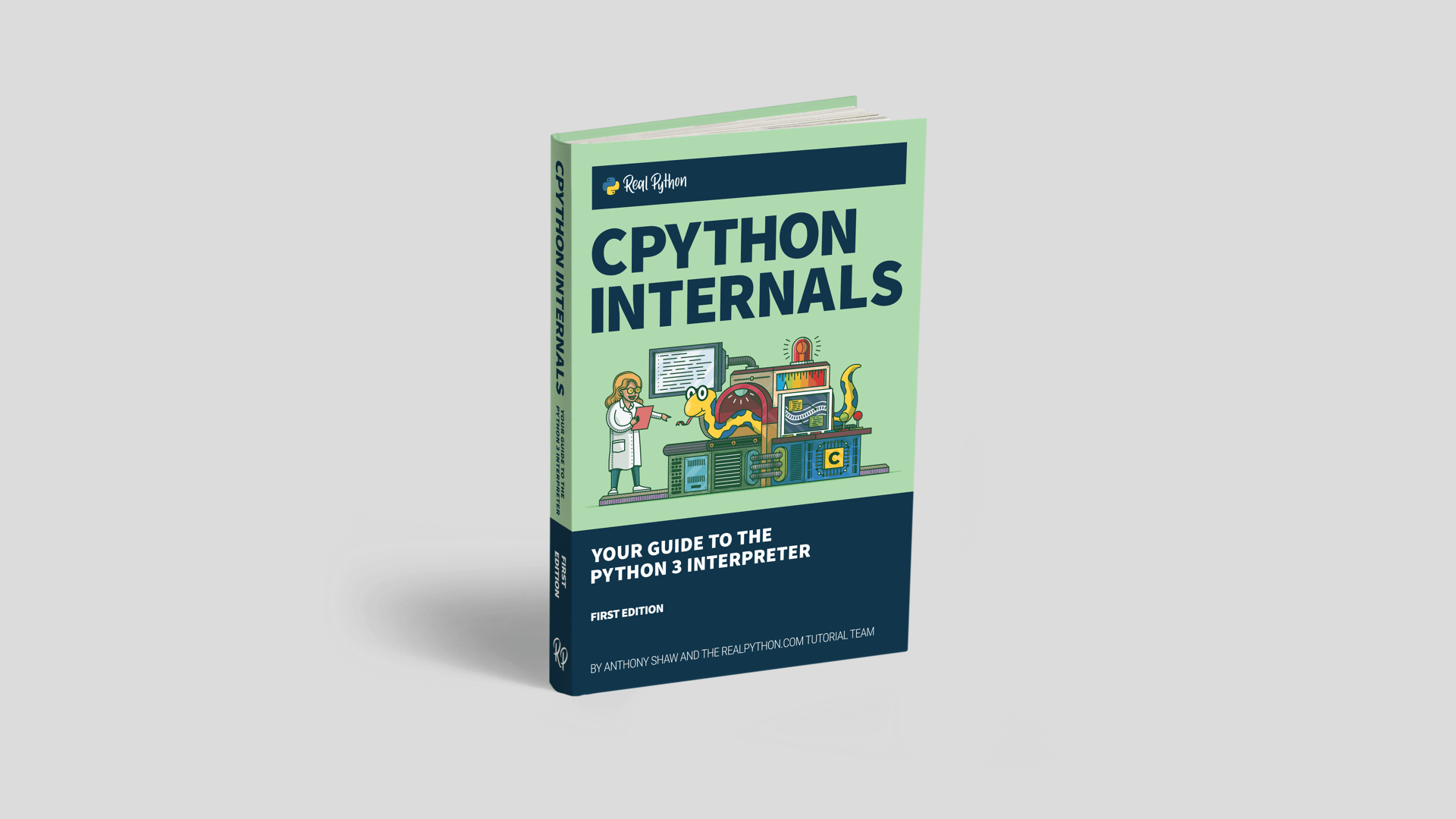
Unlock the inner workings of the Python language, compile the Python interpreter from source code, and participate in the development of CPython. The "CPython Internals" book shows you exactly how.
@iron perch there are lots of blog posts and pycon talks, etc, about it also
grave jolt
I wish there were more open-source books 
 boreal umbra
Is a function (an instance of types.FunctionType, to say nothing of other callables for the moment) mutable? Does the concept of mutability even apply?
spark magnet
boreal umbra
Is a function (an instance of `types.FunctionType`, to say nothing of other call...
Functions are mutable (you can change their attributes), but code objects are not.
grave jolt
boreal umbra
Is a function (an instance of `types.FunctionType`, to say nothing of other call...
!e
sure
def f():
    pass
print(f)
f.__name__ = f.__qualname__ = "totallyNotF"
print(f)
f.sound = 'quack'
print(f.sound)
 fallen slateBOT
@grave jolt :white_check_mark: Your eval job has completed with return code 0.
001 | <function f at 0x7f57ac106040>
002 | <function totallyNotF at 0x7f57ac106040>
003 | quack
 gleaming rover
did I see camel case in my Python there
gleaming rover
did I see camel case in my Python there
yesYouDid
boreal umbra
gleaming rover
did I see camel case in my Python there
glad to see someone else as triggered by camel case as I am.
gleaming rover
boreal umbra
Is a function (an instance of `types.FunctionType`, to say nothing of other call...
on occasion I use function attributes for a kind of memoisation
 finite sparrow
spark magnet
Functions are mutable (you can change their attributes), but code objects are no...
finite sparrow
spark magnet
Functions are mutable (you can change their attributes), but code objects are no...
(at least not directly, can always recompile the codeobject and overwrite it)
spark magnet
finite sparrow
(at least not directly, can always recompile the codeobject and overwrite it)
making a new thing is not the same as mutating the thing.
grave jolt
the code objects themselves are immutable, like tuples
gleaming rover
that wouldn’t be mutation
how fast would a Python interpreter written for CPython be
I would guess still usable for small things?
spark magnet
gleaming rover
how fast would a Python interpreter written for CPython be
Like PyPy?
gleaming rover
spark magnet
Like PyPy?
no
spark magnet
gleaming rover
no
why not?
finite sparrow
i should have said that the actual __code__ is writeable. sorry.
gleaming rover
a Python interpreter run fully as a Python program on CPython
spark magnet
finite sparrow
i should have said that the actual `__code__` is writeable. sorry.
right, because the function is mutable
grave jolt
boreal umbra
glad to see someone else as triggered by camel case as I am.
🐫🐫🐫🐫
🪜📘 🪜
🐫🐫🐫🐫
🪜📕 🌵🪜
🐫🐫🐫🐫
🪜 🪜
🐫🐫🐫🐫.
gleaming rover
grave jolt
smh
🤝
finite sparrow
is there a way to make it seem towards static analyser tools like linters and type checkers as if a function has the exact same arguments as another function, even if it takes *args, **kwargs (which is only passed on to the other function)?
grave jolt
finite sparrow
is there a way to make it seem towards static analyser tools like linters and ty...
C = TypeVar("C", bound=Callable)

def wrapper(fn: C) -> C:
    ...
ah, i c what you mean
halcyon trail
yeah I don't think that's what he wants
you probably have some kind of wrapper function for another specific function and you're trying to just avoid rewriting out the entire signature
it is really repetitive and annoying
and I don't know a way to avoid it, offhand
finite sparrow
i was hoping for maybe something like this
def onefunc(a: int, b:int) -> int:
    ...

def other(*args: argsof[onefunc], **kwargs: kwargsof[onefunc]) -> returnof[onefunc]:
    ...
@finite sparrow If they have the same return type, you can trick the linter with a trick like that 
If they have different return types, you'll need ParamSpec from Python 3.10.
If you don't want to repeat yourself, instead of passing kwargs you could pass a "parameter object"/"options object".
grave jolt
ParamSpec makes it possible
finite sparrow
lets assume the simplest case, it entirely matches the other function in all types
grave jolt
finite sparrow
i was hoping for maybe something like this
```py
def onefunc(a: int, b:int) -> i...
C = TypeVar("C", bound=Callable)

def assert_same_as(original: C) -> Callable[[Any], C]:
    return lambda f: f

def onefunc(a: int, b:int) -> int:
    ...

@assert_same_as(onefunc)
def other(*args, **kwargs):
    ...
but it doesn't actually check anything, so it's your responsibility to make sure it's right
halcyon trail
i don't follow, is mypy going to statically call out other("hello", "there")
based on the code above
grave jolt
yes
finite sparrow
hm, and i assume this is mypy specific, wont work with other linters and intellisense tools?
grave jolt
finite sparrow
lets assume the simplest case, it entirely matches the other function in all typ...
...if you want more complicated stuff, see https://www.python.org/dev/peps/pep-0612/
grave jolt
finite sparrow
hm, and i assume this is mypy specific, wont work with other linters and intelli...
will, why not?
well, you can never know, there's no specification anywhere
finite sparrow
i mean, the dream would be that intellisense picks up on it and shows me the arguments for onefunc
alas,

wait no, my bad i forgot to import Any
it does work
huh, thats nice
 finite sparrow
pylance after fixing the forgotten import

i mean, its only a few lines. may be hacky but at least its conscise
 finite sparrow
is there a term for a callable having the exact same signature and the same return for the same arguments than another
grave jolt
...or maybe you just have a common interface, like
TimingFunction = Callable[[float], float]
I don't follow, the example with assert_same_as doesn't use paramspec
grave jolt
it doesn't
finite sparrow
in my case i can actually make it a decorator which is called manually in the init of my class
grave jolt
grave jolt
it doesn't
but it does what laundmo wants, and it works before 3.10 (which is only in beta)
what are you even doing @finite sparrow?
I though you were making an ebook converter, suddenly metaprogramming
finite sparrow
lol no, this isn't for the ebook converter
grave jolt
ah
finite sparrow
i mainly asked out of curiosity, the actual usecase is really better solved with a decorator
i just forgot for a second decorators dont need to assign to the same name and dont need to use the @ syntax
lol
im basically trying to expose the same API as a underlying class but with slight modifications before and after the underlying method is called
in my case this ended up being way easier
class A:
    def __init__(self):
        self.underlying_instance = UnderlyingClass()
        self.other: UnderlyingClass.somefunc  = self.mydecorator(self.underlying_instance.somefunc)
and now the word underlying feels wrong, great
halcyon trail
pretty fascinating bit of code
the assert_same_as I mean
the use case I've hit for this is for example, writing a wrapper for things like subprocess.run
which has a million arguments
having to repeat them all is fairly awful
but if you just do *args, **kwargs you throw away type safety, IDE help
finite sparrow
one sec lemme test sth
halcyon trail
yeah, so mypy is smart enough to understand assert_same_as but pycharm is not
finite sparrow
interesting, pylance understood it
nice

i dont use mypy, would be curious to see whether it takes that
grave jolt
halcyon trail
but if you just do *args, **kwargs you throw away type safety, IDE help
discord.py: hehe *args **kwargs go brr
discord.py seems to not have any actual type annotations
as in, they're in the docstrings
finite sparrow
halcyon trail
yeah, so mypy is smart enough to understand assert_same_as but pycharm is not
does my typehint solution work in pycharm?
 signal tide
are there any plans to integrate in any more typing implementations?
 covert cape
grave jolt
discord.py seems to not have any actual type annotations
covert cape
grave jolt
discord.py seems to not have any actual type annotations
I think they're adding them in the 2.0 release
Saw some discussion about typing being a pain in their server
flat gazelle
I think functools.wraps should also at least help
static bluff
So I decided to stop thinking of my language as an extension of Python, and work on it as my own language
And its really nice having a blueprint of what I want more or less but also the freedom to make judgement calls or go different directions if I want
I'm considering making all strings fstrings by default, unless they are raw
 lament sinew
so like ruby
lament sinew
it's just japanese python
static bluff
Actually?
flat gazelle
ruby has very different priorities from python
it was designed specifically to make programmers writing it happy
it is heavily inspired by perl, and as such often has multiple ways to do one thing and the programmer can pick which is more convenient
static bluff
flat gazelle
it is heavily inspired by perl, and as such often has multiple ways to do one th...
I really like this philosophy
flat gazelle
it is a very neat idea, but it can often lead to really annoying outcomes and programmers getting trapped in an endless cycle of what works best. Any given program in ruby or raku or perl can be nearly infinitely iterated upon, when the more sensible thing to do would be to just move on and write more code.
But it does help quite often, as it lets you keep code very close to how you imagined it
@wanton boltconsider asking in a help channel (read #❓|how-to-get-help to see how to get one) or in #algos-and-data-structs
visual shadow
flat gazelle
it is heavily inspired by perl, and as such often has multiple ways to do one th...
Sounds like one of those "great on paper" ideas, that cause terrible pains later.
flat gazelle
for anything small to medium, it is really nice. But I wouldn't want it for a codebase too large to comprehend entirely
but I am more familiar with the idea in raku than in ruby. Last I used ruby was a few years ago
 paper echo
flat gazelle
it is heavily inspired by perl, and as such often has multiple ways to do one th...
paper echo
flat gazelle
it is heavily inspired by perl, and as such often has multiple ways to do one th...
And smalltalk!!
flat gazelle
yup, that too
paper echo
I agree, I think I would rather write a big application in python than ruby
Ruby syntax is a bit "loose" , and documentation is harder to search through
However I do quite like Crystal
flat gazelle
common lisp is a very extreme example of this, learning all of the common lisp standard is reasonable, but you have to learn the specific way in which a given codebase decided to apply those features, from macros to APIs (i.e. learning a new language per codebase you want to use understand). In python, there is a lot more in common even between 2 wildly different codebases. Ruby may not be as extreme, but from the very little I saw of ruby, it was something of an issue
paper echo
fwiw common lisp has a lot of dark corners of the hyperspec that you don't need to know in order to be productive at a basic level
and common lisp programmers tend to be unusually disciplined and use similar idioms, and most lisp programs aren't that hard to read. although most lisp libraries are severely underdocumented and it tends to be a lot harder to read the library source code to figure out how to use it compared to a python library
i have heard that complaint about ruby as well
and seen it first hand with perl
flat gazelle
most libraries are documented through their tests. And yeah, lisp programmers actually update when new things come around. quicklisp actually has good adoption, even for libraries that are older than it.
paper echo
quicklisp is also satan spawn
but true re: tests
i dont think its a good replacement for docs
swift imp
Anyone think type annotations will become more common place and introduce new mechanics, similar to how pydantic is using them?
peak spoke
It is now compatible with type hinting through Annotated so I'd expect a few more uses for the cases where that was the deterrent
paper echo
imo the whole point of type annotations is that you can statically verify the types, eliminating the need for runtime validation
i don't believe pydantic allows you to "turn off" runtime validation, or does it?
one reason why i prefer attrs+marshmallow+desert is that i actually understand how it works...
 winged minnow
no
swift imp
I mean even like
peak spoke
I haven't used pydantic but I think there are some nice use cases for it like discordpy's converters if Annotated is used so typing can be used properly along with it.
I recall needing something like it for a config class where I went with assigning values instead of the annotation holding the value as I wanted the typing to work
swift imp
So the dispatching modules use annotations to dispatch
Based on type
I've played around with doing value based dispatching
Using type annotations of Literal
flat gazelle
the issue is a lot of existing type annotations cannot be checked at runtime
flat gazelle
well, no, there are just things that you can't check at runtime
does a function return a specific type is entirely non-deterministic
swift imp
Ok but for example they block isinstance on List
And it's like
Whyyyy
It's like, well we can't do it for everything, so we are blocking for everything
peak spoke
I think doing it yourself is the better alternative compared to it possibly taking unexpectedly long
flat gazelle
In [2]: isinstance([], List)
Out[2]: True
``` works fine. I would not want an instance check to be potentially infiniteIf the list is parametrized you can't
flat gazelle
or at least unreasonably long
flat gazelle
I can make a sparse list that is 10million items long with minimal memory footprint and make this new fancy isinstance take an hour
swift imp
Ok, I'm not saying verify content
But if I type annotate for List[int] then I can't do isinstance([], List[int])
flat gazelle
the only time that check makes sense is for empty lists
you can't return a correct result for a full list in reasonable time
halcyon trail
what else can it check?
swift imp
I'm saying if I annotate an argument as a list containing ints, I then can't use the annotations to check that the argument is at least a list
halcyon trail
gotcha
swift imp
It just blocks it completely bc List is now paramterized
halcyon trail
There's quite a bit of funkiness around this stuff in python, IME, compared to a real statically typed language
what you could do potentially is use get_origin which gives you List from List[int]
It is very strange in a way that you even can do isinstance([], List) if you think about it
flat gazelle
so you want isinstance(['a'], List[int]) to be True?
halcyon trail
If you think about traditional generics that question doesn't even make sense
In a traditional generics system, List just isn't a type
So you can't ask if something is an instance of List
swift imp
flat gazelle
so you want `isinstance(['a'], List[int])` to be True?
It's better than the operation being blocked all together
flat gazelle
an error is better than a wrong result
halcyon trail
yeah, I'd agree with that
it's definitely better to error
the problem with using isinstance with things like List is that it's basically the intersection of the static and dynamic type systems
And things pretty much stop being sensible all around
flat gazelle
java does also implicitly fill Object in places where you omit a generic
but java also only somewhat has generics and you cannot check at runtime at all
sacred yew
impling java generics are good
halcyon trail
Sure, I was about to add an adendum that in type erased generics systems it's a bit different
but in C++, Haskell, etc, something like List isn't a type, it's effectively a function mapping types to type, e.g. int to List<int>
so, you can't ask questions like "is x an instance of List", it just makes no sense
flat gazelle
C++ doesn't have generics, but IG it does work anyway
halcyon trail
You can ask "is x an instance of List<T> for some T"
idk templates are pretty much unconstrained generics, I'm not sure what distinction you're drawing
flat gazelle
generic blocks are typechecked at definition, block templates at instantiation. (block being class, function, etc)
swift imp
Matlab has run time validation
But they also lack data structures
So I guess they win there
And is how they can justify it
You can validate size, shape, type and content
flat gazelle
does matlab support heterogenous arrays at all?
halcyon trail
you can actually just pull in Java data structures into matlab
whenever you want to
I remember doing this a few times. since the matlab IDE is all written in Java
it's kind of weird and obscure but it works
swift imp
halcyon trail
I remember doing this a few times. since the matlab IDE is all written in Java
That's going bye bye, got an inside scoop
halcyon trail
oh? what do you mean
flat gazelle
as far as I can tell, cell arrays do not support runtime type checks across all of the contents
swift imp
flat gazelle
as far as I can tell, cell arrays do not support runtime type checks across all ...
R u looking at argument blocks?
U can specify any arbitrary validation function
paper echo
peak spoke
I haven't used pydantic but I think there are some nice use cases for it like di...
the issue imo is that the python type system is not dependently typed, so i think there can and should remain a clear distinction between type-level validation and runtime validation
sometimes you need to do the latter as a "guard" in order to achieve the former... but i want control over that process as the programmer
i don't like excessive magic
(that said, i am hoping that python and mypy can iterate towards 1) proper refinement types, and 2) static analysis on "regex literals", which would be a real achievement imo)
 mild flax
paper echo
(that said, i am hoping that python and mypy can iterate towards 1) proper refin...
mild flax
paper echo
(that said, i am hoping that python and mypy can iterate towards 1) proper refin...
Why static analysis on regex literals?
paper echo
being able to statically determine the number and names of match groups
its not that important, just a wishlist item 😄
halcyon trail
C++ actually has this as of the last few years
flat gazelle
there is also a haskell library that does this
paper echo
refinement types would be way more interesting anyway
def f(x: float, y: float) -> PositiveFloat:
    return x - y
           ^^^^^

main.py:2: error: Incompatible return value type (got "float", expected "PositiveFloat")
Wait is that exception pep already in place
paper echo
which one?
"mom, can we get haskell?"
"no, we have haskell at home"
haskell at home: https://mypy-play.net/?mypy=latest&python=3.9&gist=b387eeceee6d7ffa6d35e3133700c5ed
unfortunately without refinement types, the Neg will "leak" out of g, and you won't know that you made a mistake until you try to use the return value from g
swift imp
There's a pep for more detailed exception responses
paper echo
im not actually sure how this actually works in haskell, i should probably read their docs
swift imp
And that snippet you posted,looks like it
Python.org
The official home of the Python Programming Language
paper echo
oh cool, i had no idea
i would love this
would be great for other frameworks like pytest to report interesting stuff
blissful comet
I have a dict that's keyed by type classes as in {str : 42, ...} and I need to look it by type strings such as "str". Looking to avoid eval(). What's the recommended practice here?
 unkempt rock
blissful comet
I have a dict that's keyed by type classes as in {str : 42, ...} and I need to l...
unkempt rock
blissful comet
I have a dict that's keyed by type classes as in {str : 42, ...} and I need to l...
You should consider asking in #❓|how-to-get-help for help questions like these, but one way to do it is getattr(builtins, 'str')
blissful comet
Needs to handle datetime.date also, which is not a builtin.
The strings are coming by parsing annotation nodes in the AST.
halcyon trail
You don't need eval, but you do need getattr
or maybe, globals()
If you're handling datetime.date, does that mean the plce where you hadnle it is going to have from datetime import date
or import datetime
or neither?
blissful comet
Context: I'm trying to generate a rust python extension module automatically from annotated python code. The table is here:
PyO3 user guide
https://www.python.org/dev/peps/pep-0563/ Looks interesting
Python.org
The official home of the Python Programming Language
It's similar to resolving ForwardRef
halcyon trail
sure, but my point is that if you want to get to types from strings without building an explicit dict then you need to have rules for doing so
I'm not even sure what the rules are
If all the types you need are going to be in scope, then you can look them up in globals
I guess, globals + builtins
Otherwise you could just have an explicit dictionary
{"str": str, "date": datetime.date}
etc
blissful comet
That's what I do for normal python -> rust type mapping.
Looked at what typing.get_type_hints() does. It uses eval() behind the scenes:
https://github.com/python/typing/blob/master/src/typing.py#L238-L250
fallen slateBOT
src/typing.py lines 238 to 250
def _eval_type(self, globalns, localns):
    if not self.__forward_evaluated__ or localns is not globalns:
        if globalns is None and localns is None:
            globalns = localns = {}
        elif globalns is None:
            globalns = localns
        elif localns is None:
            localns = globalns
        self.__forward_value__ = _type_check(
            eval(self.__forward_code__, globalns, localns),
            "Forward references must evaluate to types.")
        self.__forward_evaluated__ = True
return self.__forward_value__```I don't really understand why you'd need eval to convert a string into a type
blissful comet
because if you write:
import datetime

today: datetime.date = ...
and you parse the code, you get a string, not a type class. Then I need to map the string to the corresponding rust type.
halcyon trail
I mean, I guess it's a nice shortcut if you need to deal with the strings also having "." in them, which you didn't really make clear if you did
Right, so like I said, it's a shortcut, IMHO the proper way to do it is to split the string by .
blissful comet
Or in the general case, eval().
halcyon trail
And now you go hunting in globals/locals/builtin
blissful comet
The problem with strings is that if someone does import as "foobar", it breaks
blissful comet
I hear you - if we look at builtins/globals etc - it works.
But that's eval() imo
halcyon trail
what do you mean "that's eval"
you're feeding globals/locals into it either way
All I'm really saying is that you can do this with getattr/dictionary lookup, afaics
blissful comet
I think I got my answer - I was concerned about using some type of an expression evaluation, but since typing is doing it, I'm not that concerned.
paper echo
blissful comet
@paper echo this is similar in spirit to
GitHub
I think it would be useful to utilise https://github.com/ilevkivskyi/typing_inspect , or similar to offload some of the type inference/analysis work.
I think the idea behind APIs like this is to discourage people from using AST and doing their own (potentially broken) type annotation
AST also tends to be unstable. There were backward incompatible changes between 3.8 and 3.9
But for a transpiler, dealing with AST is kinda inevitable
paper echo
interesting that there's no mention of nuitka and only 1 passing mention of shedskin in the repo
blissful comet
Yes - the stuff I'm building is similar to cython and nutika
paper echo
blissful comet
AST also tends to be unstable. There were backward incompatible changes between ...
fair, but breaking the ast representation is necessary to add syntax, which they have been doing
blissful comet
*nuitka
But the implementation strategy is different. Python -> rust instead of python -> C
paper echo
interesting idea
whats the point of doing that vs just using a different language? so you can use existing libraries?
and i guess distributing standalone binaries
i always found it interesting how scheme and lisp implementations can be super fast while python isn't
halcyon trail
idk about super, but lisps do seem impressively fast relative to a) being dynamic and b) the number of man hours that have gone into their implementations (relatively low)
paper echo
im not sure about (b), but all the man hours were put in 20 years ago
and some were developed for commercial purposes and only open sourced later, such as chez
halcyon trail
I'm only saying compared to insane heavyweights like the JVM, gcc, clang, MSVC
which very obviously have far, far, far more man hours than any lisp implementation has had, probably by orders of magnitude
paper echo
ah yeah
halcyon trail
.net
paper echo
ive heard good things about the jvm for server applications
halcyon trail
Basically, the entire tier of fastest languages is built on those technologies though
paper echo
ive been really wanting to try out clojure and kotlin
https://www.notamonadtutorial.com/rebuilding-the-racket-compiler-with-chez-scheme/
Chez Scheme’s biggest claim to fame is its performance. It has always been among the best-performing Scheme implementations. Its object-tagging and allocation regime, its hybrid stack–heap implementations of continuations, and its compiler structure all remain state-of-the-art, even in 2020.
idk if this means anything to you
halcyon trail
racket is a gradually typed lisp isn't it
paper echo
its dynamic but there's a gradually typed version of it called typed racket
halcyon trail
When I google it the description of racket on the main page says:
Racket is the first language to support higher-order software contracts and safe gradual typing. Programmers can easily deploy these tools to harden their software ...
halcyon trail
I see what you mean
The macro system in Racket has been used to construct entire language dialects. This includes Typed Racket, which is a gradually typed dialect of Racket that eases the migration from untyped to typed code,[49] Lazy Racket—a dialect with lazy evaluation,[50] and Hackett, which combines Haskell and Racket.[51]
and.... this is why nobody uses lisps 🙂
As amazing as they are
blissful comet
paper echo
whats the point of doing that vs just using a different language? so you can use...
Yeah - I find python is easier to program in, stdlibs are already memorized vs learning a new language. Guessing there is a market for it, but right now it's just a fun project.
paper echo
racket is a teaching and research language
blissful comet
The thing closest to this haxe - but it's an entirely new language.
paper echo
the fact that it also is a highly usable app development language is secondary and also somewhat accidental
in some respects racket is a better common lisp than common lisp, in that it has lots of batteries included versus the minimalism of scheme
halcyon trail
the thing is that in a weird way, the huge advantage of lisp, has sort of ended up being a disadvantage in practice, the language doesn't need to be so opinionated and join in the rat race for features because programmers/libraries can simply add those things themselves
but then the language being unopinionated tends to lead to fragmentation, lack of consensus, which seem to be ultimately more harmful than the damage of constantly standardizing new features, the limitations of those features, etc
I do think a real world targeted, gradually/optionally typed lisp would be a pretty amazing thing. It's also rather hard for lisps to gain traction nowadays because everything is really shifting towards static typing, IMHO
paper echo
as a hobbyist lisp developer, imo the #1 impediment to adoption is lack of tooling. you need something like parinfer to not go crazy writing lisp. you also need what every other language needs: docs, test suite, package manager, text editor integration, a standard web framework, etc.
racket has all that except the good text editor plugins.
other lisps which are even more lacking in tooling (e.g. dependent on slime which doesnt really support anything but emacs, and vim as a second class citizen) basically only attract archetypal wizard people, which leads to an ecosystem of esoteric underdocumented libraries rather than things that normal people can pick up and use, which exacerbates the cycle of no-tooling, no-docs, etc. and being generally unfriendly for non-wizards.
halcyon trail
hasn't clojure made progress on a lot of these things
also the ability to quite easily wrap a java library in a pinch
halcyon trail
it's just been such a long time since a dynamic language really gained major traction
paper echo
frankly i dont think any "true" (((lisp))) will ever get as popular as python
halcyon trail
i remember a year or two ago a blog post argued that it just won't happen again, I think it made pretty good points
paper echo
its like haskell, it will always have its niche and its niche will probably keep growing, but people will learn python first
thats an interesting idea. there is definitely a pendulum swing towards static
halcyon trail
the closest thing to a dynamic language gaining major traction is julia, and I wouldn't really call it a general purpose language
paper echo
i like it. less shit to test, tooling can provide more assistance (e.g. refactoring)
fwiw theres no reason julia can't or shouldn't be general purpose
halcyon trail
Yeah. I mean, dynamic is a harder sell in the age of much better IDE's, much better type inference (so static languages have waaaaaay less boilerplate than they used to)
paper echo
im not sure what its concurrency story is though. so not sure julia is a good language to write a web server in
halcyon trail
I mean Julia is targetting something specific, it's spending a lot of language design real estate on that specific thing
nobody is going to use it for writing a random server that doesn't involve math, or unless that's the main language they know. Not know, and probably, not ever.
Any more than people have written random servers in matlab
paper echo
thats true, but the more i use julia the less i feel like it needs to be that way
the syntax is pretty generic lua/ruby-flavored with some haskell-ish elements
jit startup time is irrelevant in a long-running webserver
what ends up in a language ecosystem seems to be more about culture (in many cases driven by the core devs) than about technical merit
halcyon trail
idk, even if Julia is a nice language, jus tthe fact that it's a) dynamic, b) relatively obscure, means it' sprobably almost always going to be a bad pick for random stuff
for doing math, it has the big selling point of super nice syntax for math, which almost no languages have, and better performance than its competitors
paper echo
sure, but like i said theres nothing inherent in the language that makes it bad for other purposes. it's just not what the community is focused on.
like attracts like and rejects unlike
halcyon trail
Well, language design real estate is finite, or rather, it has cost, and when it's all spent targeting things you don't care about it mostly guarantees it won't be a great choice for your domain
Just having "decent syntax" is a really weak selling point these days. You can get decent syntax from almost any language. And Ruby, Python, Kotlin, Java, Go, will all give you far more libraries, and depending which one of those you choose it will give you other benefits as well
paper echo
sure. i guess my point is that theres nothing in the julia language feature set that makes it especially bad for web stuff, and in fact it has some really good features (like great unicode support)
swift imp
Julia is trying to compete with Matlab simulink, which is probably never going to happen
halcyon trail
you're saying, that's all that julia is, or that julia is trying to do that in addition to other things
i've never really gotten that impression, simulink is a specific tool within matlab, the julia I've seen looks to pretty much be starting out by trying to compete head on with "normal" matlab
swift imp
No one buys matlab for matlab, they buy it for simulink
halcyon trail
said like someone who's trying to sound really knowledgeable
universities buy tons of copies of matlab, for all kinds of purposes
many of the people who use matlab are not using simulink
source: I have a PhD in physics, all my papers were done with lots of work in matlab for data analysis, fitting, visualization purposes, and I've never used simulink
swift imp
Academia doesn't count
Most universities get the whole thing with all but like 3 toolboxes which are purely production related, for free
Then you have large engineering entities that use it for modeling in Simulink, those are the people that Julia show cases against, they even have videos of it
gleaming rover
paper echo
ive been really wanting to try out clojure and kotlin
Kotlin is a more practical and worse Scala
...or a better Java
halcyon trail
it can only be more practical and worse if your idea of "good" is something other than a practical programming language
@swift imp where did you hear it's free?
Learn about MATLAB licensing for campus-wide use.
I googled, I don't find any direct numbers but I did find this link "request a quote"
gleaming rover
halcyon trail
it can only be more practical and worse if your idea of "good" is something othe...
more practical in the sense that it is easier to pick up, worse in the sense that it sacrifices power for that
usability by the masses is not the only thing a language should have
halcyon trail
it's not about usability by the masses. that's a narrative that was big 30 years ago in PG essays about lisp that most people don't take seriously any more
Even smart people make more mistakes of understanding with complex tools than with simple tools, you have to judge whether that's a good trade-off for the mistakes that the abstractions save you.
 hollow hill
I saw many people recommend
Introduction to Algorithms, 3rd Edition (The MIT Press)
To learn algorithm and data structure so should i get it ?
spark magnet
hollow hill
I saw many people recommend
Introduction to Algorithms, 3rd Edition (The MIT...
It's a good book, but i think people over-study those materials.
 feral cedar
it's incredibly rigorous
hollow hill
Thank you
iron perch
If variables points to an address then where does points get saved
I think there is some kind of paradox here
iron perch
🏓
grave jolt
what do you mean by "points"?
iron perch
Pointer
grave jolt
iron perch
Pointer
- if it's a global variable, the pointer is stored in a dictionary for global names (which you can access with
globals()) - if it's a local variable, the pointer is stored in a frame. A frame is a structure that lives for the duration of the function call.
So when you call a function, a frame is created. It makes some space for local variables (including arguments). Each variable stores a pointer to an object.
iron perch
Another question
Where did you learn that
iron perch
I'm trying make a dictionary using only lists with 0(1) lookup
raven ridge
All variables are stored in memory. A pointer is just a variable whose value is the address of another value.
static bluff
So I wanna ask you guys which language I should learn next- but not in the beginner kind of way. Which language do you guys think would be most fascinating? (though not so different from python that it's huge overhead to learn)
visual shadow
do you have a sense of how lower level languages work? if not, i'd say C is a good candidate. do you simply want to be amazed? if so, i'd say Rust might be a good candidate. Different paradigms? they might be a bit different from python though, though really good for opening your mind
theres ofcourse so many more languages out there, but i dont know what else to suggest.
static bluff
I know I've got to get to C eventually- but honestly I just don't feel like it right now
But I'm teaching myself compiler design, so, I'm wanting to broaden my horizons
flat gazelle
raku may be interesting. Unlike python, it is very eager to add new features, is gradually typed and is really useful for writing parsers. However, learning resources are few.
static bluff
I just heard the name Raku just today!
visual shadow
i'd say if you wanna pick up compiler design, start with something extremely barebones to implement. Semi serious perhaps implement a brainf*ck compiler
you'd probably finish that in half an hour tops, and it would be fun to do
well..compiler/interpreter or perhaps go the whole 9 yards, lexer etc
static bluff
My lexer is almost done actually
I get the impression the parser is going to much more of a pain
visual shadow
as long as you take it one step at a time, you'll be fine 🙂
static bluff
What are you working on these days?
 placid coral
i have a question about python
visual shadow
placid coral
i have a question about python
try our help channels, this is not a help channel. see #❓|how-to-get-help
visual shadow
static bluff
What are you working on these days?
me personally? i dont do anything as such. QQ i just keep adding to the list of things i want to do, then look at that list, and cry.
static bluff
😢
I get that though. One project just keeps leading me further down the rabbit hole to the next
 acoustic crater
static bluff
So I wanna ask you guys which language I should learn next- but not in the begin...
acoustic crater
static bluff
So I wanna ask you guys which language I should learn next- but not in the begin...
haskell lol
halcyon trail
If you are interested in compiler design and want to learn a new language, learn lisp
 nimble dome
Is there a way to search for the values in a http.cookiejar object?
halcyon trail
You can write a list interpreter in like 100 lines of python
boreal umbra
nimble dome
Is there a way to search for the values in a http.cookiejar object?
this question isn't on-topic for this channel. See #❓|how-to-get-help
static bluff
Morning all! I know this isn't a social channel and all but nontheless, g'day!
unkempt rock
Hi guys. I don't know how relevant this is for Python but I am using Python to do this so I might as well just ask it here. My plan is to use images of a well-known object (a painting in a museum for example) and then use those to query some online database to retrieve the correct name for that painting.
I know this will involve AI but I was hoping someone here can point me in the right direction. Is there already some Python library to do this?
that online database could be a wikidatabase
visual shadow
This is not a help channel, please try #python-discussion or #❓|how-to-get-help. For your question you may also try #data-science-and-ml
static bluff
So about type annotation: its not the prettiest thing in the world. It know that is a bit of a neccessary evil, but if you could implement a whole new syntax for it, how'd you do it?
Here's what I've got:
@annotate( line=str, value=str, line=str )
@annotate( start=tuple[ int, int, int ] )
@annotate( end=tuple[ int, int, int ] )
def __init__( self, tokentype, start, end, value, line, *positional, **encyclopedic ):
 deft pagoda
i think i'd just repeat the current syntax, mostly because it looks similar to other languages and so should be more familiar
static bluff
    """The 'Regex' class is a utility class designed to make less hideous the process of writing
    (and reading) a large and multifaceted regular expression.

    The structure of the expression, namely its various capture groups, is defined within the class'
    'expression' property, while all of the actual patterns are stored and documented as
    individual properties unto themselves.

    The sole function of the Regex class, aside from the expression itself, is to compare the
    lexer's source buffer against the expression, throw an error if no matches are found,
    and to return each match group (mapped to its name) as a dictionary"""
Too wordy?
 brave badger
Seems standard
static bluff
And it makes sense, more or less?
swift imp
Are the microsoft council members going to be able to speed up python ny 3.11?
Seems really optimistic
 quaint willow
Do you guys prefer to work on pc or laptop ?
raven ridge
swift imp
Are the microsoft council members going to be able to speed up python ny 3.11?
They've got a concrete plan about how to accomplish it - it may take longer than the 1 year they're targetting for it, but I don't see a reason to doubt they'll accomplish it.
static bluff
Can someone explain to me how a language can be coded in itself?
acoustic crater
if it's interpreted it can't rly but PyPy uses R with Python syntax
if it's compiled you compile a compiler for the language written in itself with a different compiler
raven ridge
A turing complete programming language can run any program, and an interpreter for a programming language is a program, therefore an interpreter for a language can be written in that language.
radiant fulcrum
You write the first compiler in a existing language which compiles the basic subset of the language, then you write the main compiler in the language
acoustic crater
but that interpreter needs to continue to be interpreted by the initial interpreter
raven ridge
right.
radiant fulcrum
yeah, interpreters are a bit harder to bootstrap
acoustic crater
so it can't rly cuz the base interpreter is still in whatever the original language was
raven ridge
that's still a Python interpreter written in Python, even if it's run in a Python interpreter that's written in C.
acoustic crater
I'd say at root it's still coded in C in that case though
raven ridge
Why C? Why not assembly, or machine code?
acoustic crater
because the C is what was compiled and the base of any running process
raven ridge
seems rather arbitrary to discount that the code that the user wrote for their interpreter was written in Python, consider that the code some other interpreter author wrote was written in C, and discount that the C was compiled to machine code via assembly.
 cedar glen
static bluff
Can someone explain to me how a language can be coded in itself?
cedar glen
static bluff
Can someone explain to me how a language can be coded in itself?
like others said, it's trivial for a compiled language, you just use an existing compiler
raven ridge
you've picked a random hop along the chain to call the "true" language.
acoustic crater
okay so the name "CPython" is arbitrary as well?
raven ridge
yep.
acoustic crater
lol so there's no reason to try to make a judgement on this from your perspective
cedar glen
it's not in c after you compiled it
raven ridge
right.
acoustic crater
but it was "coded" in C
raven ridge
sure. And in my hypothetical, there would be an interpreter coded in Python, which you could then run with CPython.
cedar glen
something needs to go seriously wrong if after compilation your code is still in C
static bluff
He's totally right, Spoony. It doesn't matter what language is processing another. So long as the input can be properly understood, the data properly managed and dispatched, you can run anything in anything
MTG is, apparently, turing-complete
acoustic crater
I still think an interpreter chain is "coded" in the base language
raven ridge
that's completely arbitrary and not based in any reality.
acoustic crater
so is writing a pointless self-interpreter
raven ridge
the reality is that there would be an interpreter written in Python, which could be run using any other Python interpreter - including CPython, but also including pypy, or whatever.
that interpreter was coded in Python, regardless of how you run it.
static bluff
I suppose you could even run C in python if you wanted XD
That would be fascinating experiment
raven ridge
there are C interpreters, and even C++ interpreters, that exist.
static bluff
So lemme just make sure I understand
I'd compile my first compiler in pure python. Then I'd rewrite the compiler in my new language and compile that, using the previous one. Once that is done, I can distribute my compiler compiled in itself
static bluff
🤯
raven ridge
The earliest C compilers weren't written in C, but all modern C compilers are written in C or C++. For instance.
at some point along the chain, someone used a C compiler written in B or in assembly or something to compile a C compiler written in C. And from then on, they kept writing the new compilers in C.
raven ridge
raven ridge
raven ridge
at some point along the chain, someone used a C compiler written in B or in asse...
and I should say, today the normal practice is that compilers for a new architecture are bootstrapped on an existing architecture. The first x86_64 compiler was compiled on an x86 machine, for instance.
sacred yew
acoustic crater
if it's interpreted it can't rly but PyPy uses R with Python syntax
wait wut
rpython is not R?
raven ridge
no...
acoustic crater
it's R with python syntax
raven ridge
right.
radiant fulcrum
RPython is a restricted subset of the Python language. It is used for implementing dynamic language interpreters within the PyPy toolchain. The restrictions ensure that type inference (and so, ultimately, translation to other languages) of RPython programs is possible.```pypy is written in rpython, which is compiled to c iirc
its not an "interpreter chain"
there's only 1 interpreter, which is written in (r)python, used to interpret python
 terse marten
How long since first line of code is average if constant study to get an entry job
In Canada
static bluff
Two years
Assuming you have some sort of certificate
Or rather, you earn some sort of certificate within those two years
Web development, web design (similar, but different from the former) are hugely in demand, as are C/C#/C++
Python is a great skill to have, but most employers think of it as an auxiliary skill. The real work for application design is done in the C languages, and the native mobile languages of iOS and android
Web development is, of course, written in Javascript with SQL and possibly python for the back end
Javascript is something of a microcosm though, as you'll be expected to know at least jQuery and React, possibly Angular as well
That said - it's theoretically possible to just code your ass off- learn the ropes and build a few neat projects just to show that you can code and then coldcall the hell out of the software companies in your area
Or else network and make a few friends in the industry. When you feel you're ready, you can just start applying for jobs
rich cradle
static bluff
Javascript is something of a microcosm though, as you'll be expected to know at ...
jQuery isn't really required as much recently, since frameworks like React and Vue encompass that.
static bluff
I suppose, yeah
radiant fulcrum
still the most used framework in modern web apps
static bluff
So I think I mostly understand this bootstrapping idea for compiled languages
But I gather it can't be done or is atleast much trickier with interpreted ones
 fringe cargo
I hope one day I’ll be able to understand the stuff you guys are talking about
static bluff
And its exactly that hope that makes me sure you'll get there one day
spark magnet
static bluff
But I gather it can't be done or is atleast much trickier with interpreted ones
- "interpreted" vs "compiled" is not a stark divide. 2) why would it be harder for those languages?
grave jolt
every new version will get gradually slower, because you're running a VM on top of a VM on top of a VM, right?
(assuming "interpreted" means "running in a VM")
spark magnet
Perhaps we need to distinguish not between languages but between implementations. "Python is an interpreted language" doesn't mean much when you consider PyPy.
static bluff
Fix's question seems important
But beyond that, if Python is not slow because its interpreted, why is it slow? Duck typing?
spark magnet
static bluff
But beyond that, if Python is not slow because its interpreted, why is it slow? ...
Are you familiar with PyPy?
static bluff
Vaguely
spark magnet
It's Python, fast.
static bluff
I can't say I understand it
spark magnet
I don;t entirely understand it either.
the point is, languages aren't fast or slow. Implementations of languages can be.
static bluff
This lexer is really coming along
grave jolt
spark magnet
Perhaps we need to distinguish not between languages but between implementations...
Yeah, I meant an interpreted implementation.
spark magnet
static bluff
This lexer is really coming along
do you have a link to the code?
static bluff
!paste
fallen slateBOT
Pasting large amounts of code
If your code is too long to fit in a codeblock in discord, you can paste your code here:
https://paste.pydis.com/
After pasting your code, save it by clicking the floppy disk icon in the top right, or by typing ctrl + S. After doing that, the URL should change. Copy the URL and post it here so others can see it.
static bluff
I've written the most of the actual token generation logic in previous versions, but I'm just chugging along working on the comments, and readability
OH!
And before you dive in
I've tried to keep my otherwise abhorrent coding style to a minimum, but there might be a few idiosyncrasies that raise your eyebrows. Before you say anything- I knowwwwwwwwwww
grave jolt
ah yes, REDACTED++
static bluff
That why I'm building my own language to start with XD
spark magnet
won't say anything about the indentation and white space.....
static bluff
Mostly what I'd love to get your opinions on are the comments, and any opportunities for optimization
spark magnet
to tell you the truth, i find it hard to read this, so it's hard to comment.
grave jolt
spark magnet
to tell you the truth, i find it hard to read this, so ...
I
TAB could    not    agree
TAB TAB more
SorryguysIhavetroublereadingyourcodetoo
spark magnet
@static bluff why do you have all those imports at the top? Many are unused.
static bluff
Just a (bad) habit I've developed. Same as including *args, **kwargs in every method
spark magnet
ok, don't do that 🙂
 quiet crane
Yeha I was just going to ask about *args/**kwargs 😛
grave jolt
the code is... how I feel at a social event 😰 too many things seem to be going on
spark magnet
static bluff
Just a (bad) habit I've developed. Same as including *args, **kwargs in every me...
and you don't call them args/kwargs... *positional, **encyclopedic is odd.
grave jolt
encyclopedic?
static bluff
Before you guys get too carried away, I find most normal python completely incomprehensible. I tried for years to bridge the gap but gave it up as a bad job
quiet crane
dictionary is encyclopedic, right? 😉
grave jolt
quiet crane
dictionary is encyclopedic, right? 😉
👉  👈
👈
static bluff
I think my code is flat, clean, and efficient
quiet crane
Never seen foxtools, is that just a way to keep the type annotation, but shove it away into some "hidden" place (decorator)?
static bluff
quiet crane
Never seen foxtools, is that just a way to keep the type annotation, but shove i...
Yeah, it's just a toolbox containing a bunch of functionality that I need to have in place before I can even start writing the any of what makes the project itself tick
rich cradle
static bluff
*I* think my code is flat, clean, and efficient
But it's unreadable, to anyone besides you (or at least, most people)
grave jolt
does the lexer work?
static bluff
Well that's a you problem, isn't it
quiet crane
The type of the source parameter and source attribute is different. I would define that type somehwere, and then use it inline with the foxtools stuff.
grave jolt
maybe you can show an example of how to use it?
static bluff
😄
rich cradle
It's not a me problem if most people can't read it, is it?
static bluff
Sorry, lemme rephrase, that sounds like a problem for everyone who isn't me
(I say this, mostly tongue in cheek :P)
spark magnet
@static bluff it limits opportunities for collaboration
static bluff
I know 😦
spark magnet
you might be fine with that
grave jolt
!e
well, there are different styles of formatting, it's very personal
for i in range       (
    1                ,
    101              ):
    b                =\
    ""
    if               (
      i              %
      3              ==
      0              ):
      b              +=\
      "Fizz"
    if               (
      i              %
      5              ==
      0              ):
      b              +=\
      "Buzz"
    print            (
    b or i           ,
    sep              =
    " "              )
But as I've said, I find most python completely incomprehensible. Its hard to put my foot on specifics
grave jolt
What languages' idiomatic styles do you like?
spark magnet
@static bluff importing things you don't need, and having parameters you don't need: those are good habits to break
This is like a YouTube how-to video where the first shot is of a tool bench covered in tools, and the video on;y uses a few of them
The imports and the signatures help people understand what's coming next.
static bluff
grave jolt
What languages' idiomatic styles do you like?
If you'd asked me that a year ago I could have listed off a bunch of stuff. But my mind is positively swimming with new information right now, so I can't really say for sure
grave jolt
what was it a year ago?
static bluff
I like my code flat. Longer lines that do more, list comprehension/maps versus indentation
spark magnet
But this code doesn't seem flat.
static bluff
I usually break every major component into multiple smaller classes, all in their own modules
spark magnet
for example, your regex uses lots of pieces from elsewhere
static bluff
You know guys
grave jolt
I think this is way too many comments:
    def compute( self, lexer: 'Lexer', *positional, **encyclopedic ):
        """Match the regular expression against the lexer's source buffer. If a match found,
        map each capture group within the match to its name and return the mapping as
        a dictionary to the lexer.

        If a match is *NOT* found, a syntax error is raised."""

        # A slightly more readable implementation of a try-except block.
        with contextlib.suppress( AttributeError ):

            # Perform a standard regex match of the expression against the lexer's source buffer
            match = regex.match( self.expression, lexer.sourcebuffer );

            # Map each of the match's capture groups to the group's name, and return the result
            return dict( zip( *self, match.groups() ) );

        # Not match was found: the only reason for this is the detection of an
        # unrecognized character. A syntax error must be raised.
        raise SyntaxError( 'unrecognized character', lexer.context );
This looks just as well:
    def compute( self, lexer: 'Lexer', *positional, **encyclopedic ):
        """Match the regular expression against the lexer's source buffer. If a match found,
        map each capture group within the match to its name and return the mapping as
        a dictionary to the lexer.

        If a match is *NOT* found, a syntax error is raised."""
        with contextlib.suppress( AttributeError ):
            match = regex.match( self.expression, lexer.sourcebuffer )
            return dict( zip( *self, match.groups() ) )
        raise SyntaxError( 'unrecognized character', lexer.context )
You also didn't explain why AttributeError would ever be raised, which is very surprising to use for control flow.
static bluff
I didn't post it so that I could get ripped to shreds over it
I like my coding style, I've thought long and hard about everything you guys are saying, I've decided to say fuck it
So I guess that's the last time I post my projects
spark magnet
@static bluff sorry, I didn't mean to rip you to shreds.
quiet crane
@static bluff Keep posting, interesting to see other's projects! 🙂
static bluff
quiet crane
<@!404546189372162058> Keep posting, interesting to see other's projects! 🙂
Not to be over salty, but no. I was actually feeling super shy about posting it begin with but you all are great to talk with
I'm just gonna make my own way. Thanks though
unkempt rock
@static bluff theres no reason to feel bad about what has been said. your code is very different from most python code which is out there. A standard exists for a reason: it usually lays the ground for good code and going against it usually isn't a good idea. people only gave their inputs on what would be good things to change about it: feel free to take it with a grain of salt if you want to
rich cradle
@static bluff May I ask, what languages's syntax do you like?
static bluff
There's probably a language out there that will speak to me more, but so far Python is the only language I've ever really enjoyed
I don't really think it's a matter of syntax so much as dialect. The alphabet and the words are the same, but how it's spoken is different. I very much understand the importance writing code in a way that other people understand, but writing code the way most people write their code makes my skin crawl
visual shadow
Hm.. Weird. So you understand the importance of communication, but then don't want to participate anyways because reasons?
spark magnet
@visual shadow there's a tradeoff between what feel right to yourself, and what works for other people
static bluff
_> I personally find my code very clean. I'm looking over it now and I don't see anything that shouldn't make sense, even to a beginner
Odd, sure, but not confusing
spark magnet
@static bluff i'm curious what you think about our comments about *positional, **encyclopedic
visual shadow
spark magnet
<@!107790568251236352> there's a tradeoff between what feel right to yourself, a...
Absolutely. And learning which battles to fight and which ones to concede form the basis of all communication
unkempt rock
static bluff
>_> I personally find my code very clean. I'm looking over it now and I don't se...
thats the problem, youre thinking about beginners too much. you dont need to document that contexlib.supres is a nicer way to write a try/except statement, your code readers can do the work themselves
visual shadow
static bluff
Odd, sure, but not confusing
Okay, so then you don't quite grasp communication yet. Because it's not about just you. Well.. I suppose it can be if you're never planning to share.
static bluff
spark magnet
<@!404546189372162058> i'm curious what you think about our comments about `*pos...
On that point, I'll concede. It was a habit I developed a few years ago and stuck with because I just like the way it looks, and its ultimately harmless
Heres the rub though my friends
visual shadow
But you keep posting here, then rejecting any comments that would naturally follow, which then throws me off.
static bluff
visual shadow
But you keep posting here, then rejecting any comments that would naturally foll...
If you're talking about actual code that I've actually posted- I've only posted this once. If you're talking about general understand, well, I'm a thorough learner. I ask hard hitting questions
visual shadow
I absolutely love your questions
I absolutely detest your reaction to others opinion of it.
It's as if you've decided you're above the answers.
spark magnet
@visual shadow you are coming on kind of strong
static bluff
Noted. Though, getting a bit salty is what happens when a pack of wild coders descend on you like wolves
Esspecially if you preface your code with: I know perfectly well its odd, can we focus on the function
visual shadow
Apologies. I'll go cool off. Also, hope you realise we're not a pack of wild coders waiting to descend on people like wolves here.
That again, is so dismissive.
static bluff
That, my friend, is perspective
visual shadow
Aye. I hope you start valuing perspective of others.
static bluff
_>
<_<
Anyway, the whole reason I'm writing this language is because I'm tired of trying to make my coding style agree with everyone elses. I'd quite honestly just use my own scripting language
visual shadow
That's actually not a bad idea at all btw.
spark magnet
@static bluff why not just use Python the way you like? A whole new language is a really long way to go
static bluff
To paraphrase Bender, I'll just write my own programming language! With hookers! And flapjacks!
static bluff
spark magnet
<@!404546189372162058> why not just use Python the way you like? A whole new la...
🙂 nedbat, I appreciate this comment a lot
The reason is, it's endlessly fascinating
spark magnet
oh, that I understand 🙂
static bluff
I don't think I've ever had so much fun as diving head first into this project
I think language design might be my calling
grave jolt
well, many languages came about as a result of people not liking some other language
even Python, as I understand, came out as a reaction to Perl and other scripting languages
static bluff
Code is just something that I get. I think my style is the result of experimenting with abuse of Python's syntax so extensively, and without input from others, that I eventually developed my own accent/dialect
🙂 My hope would be that a single really good idea comes from this language and maybe gets coopted into the language ecosystem at large. I don't expect anyone else to ever use mine though- its really just for me
Sorry for the saltiness though guys. Programmers should have thicker skin
How about all of you? How goes the fight?
spark magnet
I'm spending way too long writing code to make custom git branching diagrams for a blog post 🙂
feral cedar
what are you using for it? i've always wanted to make one of those too
spark magnet
@static bluff blogging is.... work but fun work?
@feral cedar here's the draft blog post: https://nedbatchelder.com/blog/202105/cherrypicking_a_pull_request.html
At work, our pull requests get merged to the main branch, but a few need to also get cherry-picked onto our twice-yearly community release branches. Git has three different ways to finish up a pull request, which complicates the process of figuring out what to cherry-pick.
static bluff
How long have you been coding nedbat?
spark magnet
It depends what you mean, but maybe 45 years? 🙂
grave jolt
at this point I usually insert a number base joke, but here I can't (I'd have to code for at least 29 years)
also @static bluff sorry if my comments seemed aggressive
static bluff
grave jolt
also <@!404546189372162058> sorry if my comments seemed aggressive
It's okay fix. It comes with the territory- programmers love to debate. I'm no exception, its important that be able to handle, rebute it courteously and of course, accept it with dignity
I was just feeling a bit overwhelmed
grave jolt
yeah I understand you 🙂
static bluff
One thing I'll say though- I wish you guys would try to have some fun with me on this
I know building my own language is a fools errand and total overkill, but its fun
Its not every day you can throw caution to the wind and suggest whatever syntax/functionality at all 😛
 undone hare
I wouldn't call that a fools errand honestly, there is a lot of stuff from language design and programming you can apply elsewhere
spark magnet
@static bluff i enjoy making languages, etc, and wanted to see your approach. i honestly had a hard time seeing it.
static bluff
Seeing which? The code itself? I guess the whitespace might be a bit much if you're not used to it
spark magnet
"seeing it" meaning, "understanding your approach by reading your code"
static bluff
My understanding is that this lexer is no different from the standard regex based lexer
The docstring for the Lexer class and for its 'populate' method sums it up though
Functionally speaking, I'd be happy to know your thoughts
Here is the one I'm basing mine off btw:
https://github.com/m-labs/pythonparser/blob/master/pythonparser/lexer.py

GitHub
Contribute to m-labs/pythonparser development by creating an account on GitHub.
quiet crane
@static bluff some constructive feedback (I hope). The regexp you have is a monster, meaning it's really big and hard to grasp. It also has a numbering system such that if you ever have to add something earlier inte the regexp you would have to update all the numbers.
Idea 1: use named capture groups.
Idea 2: use some shorter intermediate representation that you then translate into the actual regexp.
static bluff
quiet crane
<@404546189372162058> some constructive feedback (I hope). The regexp you have i...
What sort 'intermediate representation' is there?
quiet crane
@static bluff whatever you come up with I think. I don't know if there is anything existing suitable.
gleaming rover
static bluff
One thing I'll say though- I wish you guys would try to have some fun with me on...
I think a few people have NEOS trauma here
🥴
spark magnet
gleaming rover
I think a few people have NEOS trauma here
he seems to be rabble-rousing in comp.lang.python again
swift imp
I am trying to dispatch based on state of an instance and it's not working. Its like my registered methods aren't being recognized as methods, and no self is being passed.
class ValueDispatch:
    def __init__(self, method, doc=None):
        self.dispatch_table = {}
        self.method = method
        if doc is None:
            doc = method.__doc__
        self.__doc__ = doc

    def __get__(self, obj, objtype=None):
        if obj is None:
            return self
        else:
            try:
                return self.dispatch_table[(obj.foo, obj.bar)]
            except KeyError:
                return self.method

    def register(self, foo, bar):
        def register_closure(func):
            self.dispatch_table[(foo, bar)] = func
            return func
        return register_closure

class Blah:
    def __init__(self, foo, bar):
        self.foo = foo
        self.bar = bar
    @ValueDispatch
    def method(self, a, b):
        print('default method')
    @method.register(1,2)
    def special_method(self, a,b,c):
        print('registered method')
In [48]: test = Blah(1,2)

In [49]: test.method
Out[49]: <function __main__.Blah.special_method(self, a, b, c)>

In [50]: test.method(1,2,3)
---------------------------------------------------------------------------
TypeError                                 Traceback (most recent call last)
<ipython-input-50-06bb6e68a079> in <module>
----> 1 test.method(1,2,3)

TypeError: special_method() missing 1 required positional argument: 'c'
I mean its apparent that I am doing the registration incorrectly, I just don't know why its wrong
dude what the heck is __get__ on a function...thats the issue
def __get__(self, instance, owner):
        if instance is None:
            return self

        method = self.registry[getattr(instance, self._state_attr)]
        return method.__get__(instance, owner)
like what
static bluff
NEOS?
raven ridge
swift imp
dude what the heck is `__get__` on a function...thats the issue
__get__ is part of the descriptor protocol
swift imp
but what do I have to do __get__ from within my descriptor to make the registered function be a bound method?

Stack Overflow
I building SPA on Django and I have one huge function with many if statement for checking state name of my object field. Like this:
if self.state == 'new':
do some logic
if self.state == '
boggles my god dang mind
I mine it just seems like thats how it is but man was that freaking weird
raven ridge
the way that methods bind to self in the first place is through the descriptor protocol - you may need to reimplement part of what MethodType does, though I've never tried anything like this myself.
swift imp
yeah by all account it seems like I do have. I suppose I can blame no one but myself for not doing my research well enough. That's what I get for yolo'ing
static bluff
So about tokenizing/parsing fstrings- I'm a bit confused. The docs say that python tokenizes fstrings completely normally and any fstring magic that happens is done in the parsing stage. I'm only just starting to move from lexing but my understanding is that to recognize the contents of an fstring replacement field as being a valid expression, a token stream representing the string and its contents needs to be compared against the grammer.
The only thing I can think of is that fstrings are lexed in some sort of post-processing step either just after the document at large is lexed, or else 'just in time'
I know that fstrings are parsed as 'JoinStr' nodes and contain string literals and replacement fields- I don't think the python syntax analyzer breaks what's inside the replacement fields into its components though
I think I'm going take a different route, and create a new lexer instance to parse the internals of the fstring each time one is encountered
raven ridge
static bluff
So about tokenizing/parsing fstrings- I'm a bit confused. The docs say that pyth...
the f-string is lexed as just a regular string, and the inside of the f-string is then parsed using its own mini-grammar.
spark magnet
@static bluff i thought this was for your own language? Why take on all of Python?
static bluff
I don't have the context to build these tools without a roadmap. For the lexer and parser at least I'm starting by building ones that can do python code, and then I'll have the infrastructure I need to branch out however I like
spark magnet
static bluff
I don't have the context to build these tools without a roadmap. For the lexer a...
but if your language doesn't need f-strings...
static bluff
But fstrings are great!
My language is going to start out as syntactically quite similar to python. A lot of the same keywords and operators, whitespace based codeblocks. Its the implementation that will differ- access modifiers, method overloading, stuff like that
I mean, I love python ❤️ There are a few things that drive me mental about it but I'm not ashamed to be using it as a roadmap
spark magnet
@static bluff I would recommend doing a smaller subset all the way through rather than lexing everything first.
static bluff
I'm told I need to get better at taking peoples advice. What I want to say is that the path I'm on feels very right- but I also understand you're the expert. If I start having trouble I'll do as you say and minimize
raven ridge
the trick to f-strings is that they're parsed in two phases - from the lexer's point of view they're a single string, the parser re-lexes them into a stream of tokens and re-parses them using its own mini-grammar for the inside of the string.
static bluff
raven ridge
the trick to f-strings is that they're parsed in two phases - from the lexer's p...
AHHHH! I knew it!
static bluff
raven ridge
the trick to f-strings is that they're parsed in two phases - from the lexer's p...
Any reason I couldn't just do the relexing in the lexer itself?
raven ridge
There's no reason why you couldn't, I suppose - I suspect it's just more complex to do it that way, which is why they don't.
static bluff
 def lexstring(**matchedpatterns):

   if matchedpatterns[ 'string' ]:

      if matchedpatterns['prefix'] is None:
          createToken( 'STRING', *otherdata )
      if 'u' in matchedpatterns['prefix'] or 'U' in matchedpatterns['prefix']:
          createToken( 'UNICODE-STRING', *otherdata )
      if 'f' in matchedpatterns['prefix'] or 'F' in matchedpatterns['prefix']:

          flexer = Lexer(matchedpatterns[ 'string' ])
          tokens.extend( flexer.tokens )
Something like that
raven ridge
you've gotta deal with string escapes as well.
raven ridge
until you're able to match \" or \' you don't even know where the string ends.
static bluff
The whole prefix mixing thing is gonna be a bit of a mess, but not the worst I don't think
I think actually I've got that covered
raven ridge
when there's an "r" prefix you don't have to check for \" or \'
so raw strings need to be handled differently anyway
static bluff
The regex I've got catches escaped characters between quotes
raven ridge
then it's wrong for raw strings, right? 😄
static bluff
Probably XD
raven ridge
assuming you're matching both with the same regex, anyway.
static bluff
Good catch, I wouldn't have thought of that
raven ridge
raw strings, f strings, unicode strings, and byte strings all have different internal grammars - the things allowed inside them all are different.
static bluff
Oh, so, actual entirely different grammar specs?
raven ridge
inside a raw string, \" is two characters, inside a regular Unicode string it's one.
Inside a Unicode string you can have a \u1234 escape, inside of a byte string you can't.
Inside of an f string, you can have expressions inside {...}
etc
static bluff
Of course
raven ridge
so yeah - the actual tokens allowed in each of them are different.
static bluff
I'll have to take a look at tokenize.py again- I know it does a bit of processing on strings before the tokens are created- replacing escaped characters with unescaped equivalents in non-raw strings, etc
Thanks for the help
paper echo
gleaming rover
Kotlin is a more practical and worse Scala
i remember hearing a lot of bad/scary stuff about scala years ago, mostly related to the build tools and compiler
gleaming rover
paper echo
i remember hearing a lot of bad/scary stuff about scala years ago, mostly relate...
ye
paper echo
i tried for a little bit with apache spark stuff, seemed like a decent "modern" programming language but nothing was or is compelling me to try it for server app dev. maybe i should give it another look though now that scala 3 is out
paper echo
ive heard even worse things about gradle 😆
gleaming rover
Scala has some REALLY nice features though
paper echo
i remember i couldnt for the life of me wrap my head around implicits
paper echo
maybe because i hadnt written enough scala and hadnt encountered the use case yet
gleaming rover
typeclasses are one big one
paper echo
also i found it interesting/weird that case classes were not classes, and that they were called "case classes" as opposed to "struct" or something
gleaming rover
why do you say they’re not classes
paper echo
i thought they weren't interoperable with other classes
gleaming rover
case class is a weird name though
paper echo
they're basically python dataclasses right?
gleaming rover
paper echo
i thought they weren't interoperable with other classes
they’re just classes with certain things automatically generated
paper echo
gleaming rover
I suppose the idea is pattern matching *cases*
i believe this was the explanation given in the docs, unconvincing imo but whatever
paper echo
gleaming rover
they’re just classes with certain things automatically generated
that... makes a lot more sense
paper echo
maybe things were different years ago? but if that's all it is then it makes more sense
gleaming rover
as far as I know (2.5 years back or so) they’ve always been this way
there are certain restrictions on inheritance
because of said autogeneration
paper echo
makes sense
scala syntax does seem pretty nice
nice flow, not too verbose
i guess interop with java stuff is cool
 wary briar
Hello Guys, I have an interest in Data Science and I want to find out if anyone is currently learning data science with python? I would love to have a partner in my journey.
visual shadow
lament sinew
It's not a necessary nor sufficient condition.
boreal umbra
@unkempt rock Hello! This is strictly a discussion channel. Try chatting in #python-discussion.
static bluff
unkempt rock
am i advanced if i have created an api
Do you feel advanced?
unkempt rock
idk
ive been learning py for 3 years
so i believe an API is pretty much feasible at this level
anyone here has experience with pytest?
rich cradle
See below, but #python-discussion is probably better for that question.
fallen slateBOT
Resources
The Resources page on our website contains a list of hand-selected learning resources that we regularly recommend to both beginners and experts.
https://pythondiscord.com/pages/resources
 eager trail
unkempt rock
anyone here has experience with pytest?
eager trail
unkempt rock
anyone here has experience with pytest?
Yes, what about it?
unkempt rock
yea
im making an api
and i wanna add tests
but
i need to stop the websockets
and whenever i try it throws a ConnectionClosedError
tldr how to use pytest with async functions
sacred yew
this is not a general help channel
@unkempt rock
it would also help them if you provided code
 tacit hawk
@unkempt rock checkout https://github.com/pytest-dev/pytest-asyncio
GitHub
Pytest support for asyncio. Contribute to pytest-dev/pytest-asyncio development by creating an account on GitHub.
 vale nebula
I was playing with recursion and run into RecursionError: maximum recursion depth exceeded. So i just set a higher value but python now just dies silently, eg:
import sys

if len(sys.argv) > 1:
    sys.setrecursionlimit(int(sys.argv[1]))
print(f"{sys.getrecursionlimit()=}")

def recursion():
    return recursion()

recursion()```

```bash
$ python -VV
Python 3.9.5 (tags/v3.9.5:0a7dcbd, May  3 2021, 17:27:52) [MSC v.1928 64 bit (AMD64)]

$ python recursion.py
sys.getrecursionlimit()=1000
Traceback (most recent call last):
  File "D:\OpenSource\python-discord\recursion.py", line 10, in <module>
    recursion()
  File "D:\OpenSource\python-discord\recursion.py", line 8, in recursion
    return recursion()
  File "D:\OpenSource\python-discord\recursion.py", line 8, in recursion
    return recursion()
  File "D:\OpenSource\python-discord\recursion.py", line 8, in recursion
    return recursion()
  [Previous line repeated 996 more times]
RecursionError: maximum recursion depth exceeded

$ python recursion.py 3000
sys.getrecursionlimit()=3000

$ ```
No exception. no nothing. Is this known? I search a bit but found nothing.@vale nebula Works for me, not sure what's up.

Maybe on windows it doesn't show when you have a segmentation violation?
Try this:
import ctypes
ctypes.string_at(0)
OSError: exception: access violation reading 0x0000000000000000
grave jolt
well, you shouldn't change the recursion limit in real code 😛
vale nebula
I guess it's like the segmentation fault for windows but the limit is very low, it's 2565 for me.
Not that I need it.
vale nebula
I'm on win10 64bit (20H2).
vale nebula
It starts with 3.8. Version 3.6.8 and 3.7.6 don't seems to behave the same way.
 whole grail
mmm advanced
spark magnet
vale nebula
It starts with 3.8. Version 3.6.8 and 3.7.6 don't seems to behave the same way.
You are becoming an expert at why you shouldn't change the recursion limit 🙂
paper echo
does pypy have tail call elimination?
that'd be pretty cool
actually i wonder if hy does... should be easy to check
aw nope
(defn foo [x]
  (yield x)
  (foo (+ 1 x)))

(foo 3)
compiles to
def foo(x):
    yield x
    return foo(1 + x)


foo(3)
that is a tail call, right?
raven ridge
Hm, it's not really a recursive call at all, really... The "tail call" is just constructing a generator object
halcyon trail
python doesn't have guaranteed TCO, not sure if it has TCO at all
TCO is pretty overrated tbh, I remember seeing some threads at various points where people complained about python's lack of TCO
grave jolt
halcyon trail
python doesn't have guaranteed TCO, not sure if it has TCO at all
It doesn't
halcyon trail
maybe overrated is the wrong word because most people realize it's not that critical. Some people value the idea a lot
TCO is primarily important in situations where you are using recursion the way that most languages would use looping
grave jolt
ye
halcyon trail
if you have a super duper pure language that doesn't want to mutate local variables, but call a new function instead. or a very simple language that wants to minimize primitives (like scheme)
grave jolt
I think lisps use a special construct instead of having TCO TCO
halcyon trail
the average language which has plenty of mutation and a built in for loop has no, no need for TCO
that'sclojure
static bluff
So, pattern matching looks helluh cool