#algos-and-data-structs
1 messages · Page 48 of 1
 cinder maple
 haughty mountain
cinder maple
is the reason why statements inside while loop is t_{i-1} because the case when ...
haughty mountain
cinder maple
is the reason why statements inside while loop is t_{i-1} because the case when ...
it's not t_{i-1} 
it's t_i - 1
the loop header runs once more than the body yes
cinder maple
haughty mountain
it's not t_{i-1} <:pithink:652247559909277706>
aren’t both same?
i wrote it more of TeX way
ahh mb
yes it’s t_{i} -1
haughty mountain
cinder maple
i wrote it more of TeX way
{} groups, yeah
cinder maple
@haughty mountain similarly reasoning goes for why # line 1 is executed n times?
2 to n there exactly n-1 numbers
haughty mountain
cinder maple
<@133944101929222144> similarly reasoning goes for why # line 1 is executed n ti...
that's not how loops are implemented
haughty mountain
not that I would usually care about this tiny difference
haughty mountain
cinder maple
Can you explain? I’m not really aware
same exact thing as the while
cinder maple
haughty mountain
that's not how loops are implemented
^
I didn’t catch it
That’s not ?
haughty mountain
think of for loops as just while loops in disguise
you still have the failing check before exiting the loop
cinder maple
so really when i goes from 0 to n we still check the edge case when i=n to terminate from the loop
cinder maple
haughty mountain
that's not how loops are implemented
what do you mean by that’s not how it’s implemented?
I didn’t really catch what you mean by this.
haughty mountain
cinder maple
what do you mean by that’s not how it’s implemented?
I meant that for loops work much like while loops, it will have a failing check before it exits
so it runs one time more than the body
cinder maple
when do we analysis of algorithms we assume each primitive operations take constant time right?
not that it takes equal amount of time
 fiery cosmos
not sure if i am in the right place, but np.random.seed() what does it matter which number i put in the function
 agile sundial
cinder maple
when do we analysis of algorithms we assume each primitive operations take const...
agile sundial
cinder maple
when do we analysis of algorithms we assume each primitive operations take const...
yes
theoretically, you pick some "model of computation" where certain operations take O(1) time
 vocal gorge
sometimes you even define more than one kind of primitive operation, so that you can calculate the complexity in terms of both and be able to make tradeoffs (e.g. computation vs memory access).
 narrow mica
fiery cosmos
not sure if i am in the right place, but np.random.seed() what does it matter wh...
narrow mica
fiery cosmos
not sure if i am in the right place, but np.random.seed() what does it matter wh...
If you put the same seeds into it, you'll get the same numbers back. E.g.
np.random.seed(42)
f = np.random.random()
g = np.random.random()
h = np.random.random()
```The values of `f, g, h` will be the same every time you run this
If you don't specify a seed, then np randomizes it each time you run iirc

Also, newer np recommends using [Generators](https://numpy.org/doc/stable/reference/random/generator.html) instead of theseso it doesnt matter if i put 1,32,42 or 5100?
I am trying compute a way to heads and tails "program"
vocal gorge
i don't see why you need to manually seed it at all, if so
fiery cosmos
i just dont know why the seeds matters if it even does
can i just write np.random.seed()
narrow mica
fiery cosmos
so it doesnt matter if i put 1,32,42 or 5100?
For practical purposes, I don't think so... anything you put in there will give you a sequence that's relatively random (unless the rng algo is bad)
narrow mica
fiery cosmos
can i just write np.random.seed()
I'm pretty sure you can just not have that line and numpy will randomise it on every run
vocal gorge
if you don't see what seeding are for, probably you don't need it at all.
vocal gorge
usually people use it in examples, to make sure that despite using randomly generated data the results are exactly reproducable.
fiery cosmos

what do i need to do to get it runnng
print("Result of the coin toss:", toss_of_coins())?
oh nice it worked
anyways thanks all
 quasi oracle
In case this is still relevant, how I would solve it in O(n) time:
||Initialize a list of 0s of length n. Let's call it b.
Loop over the input sequence a: for every number in a, in order, we get the i-th person and person in front of them x. So we go to the x-th element in b and change it to i. A nice way of getting both i and x in your loop is with the enumerate function, but you don't have to.
When you encounter -1 in the sequence, save the appropriate i in a separate variable.
Once you're done with the loop, you have the order: Start with the first person in line (you saved their position in the separate variable). Go to the appropriate position in b. Now b tells you the next person in line. Keep moving according to what b tells you until you reach 0, and you're done.
I essentially inverted the sequence: instead of a list that tells me who's in front of me, I made a list from it that tells me who's behind me, which is what I needed.||
 surreal grove
def coin_toss():
answer = r.randint(0,2)
return 'Head' if answer == 0 else 'Tails'
print('resultat of coin toss',coin_toss())
does anyone know how i make this a loop, so i can print more than just one value of this
Right now, it only prints one value at a time, what if i would like it to do i 1000 times
and write it as a list of [HHH,TT,HHHHH,T] etc
 orchid pebble
surreal grove
def coin_toss():
answer = r.randint(0,2)
return 'Head' if answer == 0 el...
orchid pebble
surreal grove
def coin_toss():
answer = r.randint(0,2)
return 'Head' if answer == 0 el...
import numpy.random as nr


def coin_toss(n: int) -> list[str]:
    random_list: list = []

    for _ in range(n):
        answer = nr.randint(0, 2)
        word = 'Head' if answer == 0 else 'Tails'
        random_list.append(word)

    return random_list


if __name__ == '__main__':
    n = 1000

    result = coin_toss(n)
    print(f"Result: {result}")
is this a bot replying?
orchid pebble
surreal grove
is this a bot replying?
No, I'm a real human 😆
surreal grove
oh ok just seems a bit robotic with no explanation
but thank you
can i ask question to it?
(n: int) -> list[str]: what is this?
 stray onyx
Hi, I have a question about ADT in Python. List and dict are both adt (first one implemented by ArrayList and the second one by HashMap). But what about tuple and set, what are they and how are they implemented? Python doesn’t have algebraic data types, so python’s tuple can’t be that one.
stray onyx
surreal grove
(n: int) -> list[str]: what is this?
type annotations, they doesn’t change anything, its just a hinting system to support IDE (so it can suggest you a proper methods for string or list)
 outer rain
stray onyx
Hi, I have a question about ADT in Python. List and dict are both adt (first one...
outer rain
stray onyx
Hi, I have a question about ADT in Python. List and dict are both adt (first one...
List and dict are not ADTs (abstract data types). Those are very concrete implementations of list and dictionary ADT in python. ADTs are "abstract" for a reason. You use them in your reasoning, not in your programs.
That said, tuple is not even a data structure. It's simply multiple values bundled together. Think that it is implemented the same way list is, just without allowing modification. Set is implemented using hash table, the same way dict is.
Algebraic data types (also ADTs 😩) are types produced with addition, multiplication and exponentiation operators on atoms or other basic types, and are unrelated to ADTs.
 stiff quartz
Hi, I'm looking for advice for a Segment Tree question in the latest codeforces competition (https://codeforces.com/contest/1927/problem/D). My code is that one:
if __name__ == "__main__":
    n_tests: int = get_int()

    for _ in range(n_tests):
        n: int = get_int()
        a: list[int] = line_integers()
        q: int = get_int()
        l: list[int] = []
        r: list[int] = []
        for _ in range(q):
            l_, r_ = line_integers()
            l.append(l_-1)
            r.append(r_-1)

        segment_tree_max = SegmentTreeMax(a)
        segment_tree_min = SegmentTreeMin(a)

        for i in range(q):
            max_, max_i = segment_tree_max.get_max(l[i], r[i])
            min_, min_i = segment_tree_min.get_min(l[i], r[i])
            if max_ == min_:
                print("-1 -1")
            else:
                print(min_i + 1, max_i + 1)

        print("")
The implementations of SegmentTreeMax and SegmentTreeMin (https://pastebin.com/GsP1Ga4Z for the SegmentTreeMin I use) are the "standard recursive ones". And it lasts more than 5 seconds on codeforces servers.
However the same code in c++ (https://pastebin.com/EYEd66ii) only runs within 300 ms.
The only difference between the two codes is that I affected the size of the array representing the segment tree using 4* the size of the initial array in c++ and I was "more precise" in the python code by looking the smallest power of 2 bigger or equal than the size of the array and initialized the size of the array representing the segment tree using 2*power-1. I don't think this would take more than 4seconds.
I think I might be something notably wrong for there to be such a difference. I tried PyPy and I had the same Time problem. Did I make something particularly different that may explain that difference?
You can find my actual submissions here (https://codeforces.com/contest/1927/submission/245199915 PyPy) and here (https://codeforces.com/contest/1927/submission/245200532 C++)
outer rain
honestly it possible that it's just python being slow...
if c++ solution runs 300ms it's very very possible python is just >20 times slower
stiff quartz
Usually when that's the case, pypy is okay ish
but i'm still a newbie in CP so idk
so maybe there's just no way to solve the problem with Python?
outer rain
I not expert on pypy, but sometimes pypy is just unable to optimize code well and even ends up slower than original python. But I will need to investigate more here to be sure about that
You can try rewriting the segment tree implementation to a bottom-up one. Those are usually significantly faster.
stiff quartz
Yeah that's the problem
the only approach I know is that one
If I remember correctly pajenegod said he only used an iterative one
outer rain
yeah, and that's basically why
stiff quartz
mmh
I'll look into it
Also, I'm having two segment trees, one to get the max, one to get the min
basically the exercise asks if there are two different indices in a given range
so I use two segment trees
could I use "only" one?
outer rain
stiff quartz
I'll look into it
It's not too difficult to understand btw, I would say if you only query it's actually way easier than top-down
stiff quartz
I feel like I could (by storing tuples of size 4 (max, max_idx, min, min_idx) but I'm not sure it would speed up anything
outer rain
(I also only use bottom up even though I usually write in rust and performance is not an issue)
outer rain
stiff quartz
I feel like I could (by storing tuples of size 4 (max, max_idx, min, min_idx) bu...
It may, or it may not. It depends a lot. If it was a compiled language I would confidently say that it's unlikely the two trees are going to be any slower than just one, but in python it may as well depend on some other factors. I still bet the one tree instead of two will be faster.
stiff quartz
Because I start at the top when I do my queries? and then I explore the binary tree by looking at the children?
outer rain
you use top-down yeah
haughty mountain
stiff quartz
Hi, I'm looking for advice for a Segment Tree question in the latest codeforces ...
redefining a helper function on every call is probably detrimental to performance
outer rain
outer rain
It may, or it may not. It depends a lot. If it was a compiled language I would c...
now that I think about... of course it will be faster 🤔
stiff quartz
haughty mountain
redefining a helper function on every call is probably detrimental to performanc...
oh yeah I should make a static method
outside
stiff quartz
@outer rain you know what, bottom-up actually makes sense
i almost like it better
well i only did the construction part right now but it's I guess quite intuitive
stray onyx
outer rain
List and dict are not ADTs (**abstract** data types). Those are very concrete im...
I was talking about lists and dicts in general, they are common abstract data types implented in python by ArrayList and HashMap data structure. I know tuple is not a data structure, I’m asking what it is in general in terms in Python. I guess python’s tuple is implemented by ArrayList DS also, but bow should I call it as a concept? Tuple abstract data type? If so, it should gabe defines common and abstract operations and I couldn’t find any
outer rain
stiff quartz
i almost like it better
yeah to me bottom up is also nicer. And it's even shorter, lol
stiff quartz
outer rain
yeah to me bottom up is also nicer. And it's even shorter, lol
I actually got confused with the indices
😬
class NumArray:
    def __init__(self, nums: List[int]):
        # Let's build the tree
        self.nums = nums
        # find smallest power of 2 >= len(nums)
        n = len(nums)
        power = 1
        while power < n:
            power *= 2
        self.size = 2 * power - 1
        self.segment_tree: list[int] = [0 for _ in range(2 * power - 1)]

        # Populate the leaves of the segment tree
        for i in range(self.n):
            self.segment_tree[self.size // 2 + 1 + i] = nums[i]

        # Build the tree by calculating parents' sum
        for i in range(self.size // 2, -1, -1):
            self.segment_tree[i] = self.segment_tree[2 * i] + self.segment_tree[2 * i + 1]
does that look correct for the implementation?
of the building part
outer rain
stray onyx
I was talking about lists and dicts in general, they are common abstract data ty...
Just call it a tuple, whatever. Noone says ArrayList either, that's just a java name for vector. Tuple is not an abstract data type. Not everything has to be. Like, you wouldn't call a float-float pair a "2D Point abstract data type". That's just a pair.
outer rain
stiff quartz
```py
class NumArray:
def __init__(self, nums: List[int]):
# Let's b...
looks fine, probably...
I would use 1-indexing btw, those -1 and +1 everywhere are a bit confusing...
!e
import numpy as np
class NumArray:
    def __init__(self, nums):
        # Let's build the tree
        self.nums = nums
        # find smallest power of 2 >= len(nums)
        n = len(nums)
        power = 1
        while power < n:
            power *= 2
        self.size = 2 * power - 1
        self.segment_tree = [0 for _ in range(2 * power - 1)]

        # Populate the leaves of the segment tree
        for i in range(n):
            self.segment_tree[self.size // 2 + i] = nums[i]

        # Build the tree by calculating parents' sum
        for i in range(self.size // 2 - 1, -1, -1):
            self.segment_tree[i] = self.segment_tree[2 * i + 1] + self.segment_tree[2 * i + 2]

nums = (np.random.random((7,)) * 100).astype(int).tolist()
a = NumArray(nums)
print(nums)
print(a.segment_tree)
 halcyon plankBOT
@outer rain :x: Your 3.12 eval job has completed with return code 1.
001 | Traceback (most recent call last):
002 |   File "/home/main.py", line 23, in <module>
003 |     a = NumArray(nums)
004 |         ^^^^^^^^^^^^^^
005 |   File "/home/main.py", line 20, in __init__
006 |     self.segment_tree[i] = self.segment_tree[2 * i] + self.segment_tree[2 * i + 1]
007 |                                                       ~~~~~~~~~~~~~~~~~^^^^^^^^^^^
008 | IndexError: list index out of range
yeah
doesn't work
I think the padding is not put at the right place
somehow
So apparently you need to do the whole power thing
for a bottom-up approach
outer rain
yeah
stiff quartz
you just make an array of size 2n, with the n last elements the leaves
and the n first elements the internal node
the first element being not used if you use 1-indexing
outer rain
n - 1
stiff quartz
i don't get it, how can you need like twice as less space
in the top down it's like 4n
or 2*m-1 with m the smallest power of 2 greater than n
outer rain
!e
import numpy as np
class NumArray:
    def __init__(self, nums):
        # Let's build the tree
        self.nums = nums
        # find smallest power of 2 >= len(nums)
        n = len(nums)
        power = 1
        while power < n:
            power *= 2
        self.size = 2 * power - 1
        self.segment_tree = [0 for _ in range(2 * power - 1)]

        # Populate the leaves of the segment tree
        for i in range(n):
            self.segment_tree[self.size // 2 + i] = nums[i]

        # Build the tree by calculating parents' sum
        for i in range(self.size // 2 - 1, -1, -1):
            self.segment_tree[i] = self.segment_tree[2 * i + 1] + self.segment_tree[2 * i + 2]

nums = (np.random.random((7,)) * 7 + 1).astype(int).tolist()
a = NumArray(nums)
print(nums)
print(a.segment_tree)
@outer rain :white_check_mark: Your 3.12 eval job has completed with return code 0.
001 | [4, 2, 7, 5, 3, 7, 4]
002 | [32, 18, 14, 6, 12, 10, 4, 4, 2, 7, 5, 3, 7, 4, 0]
you can get away with less space (exactly 2n - 1) in top down, but in bottom up you need to round up to the next power of 2, so you can end up with 4n space
outer rain
yes
outer rain
unless you build bottom-up, but query like in top-down
stiff quartz
ok fair i'm gonna stick to the basics first
!e
import numpy as np
class NumArray:
    def __init__(self, nums):
        # Let's build the tree
        self.nums = nums
        # find smallest power of 2 >= len(nums)
        n = len(nums)
        power = 1
        while power < n:
            power *= 2
        self.size = 2 * power - 1
        self.segment_tree = [0 for _ in range(2 * power - 1)]

        # Populate the leaves of the segment tree
        for i in range(n):
            self.segment_tree[self.size // 2 + i] = nums[i]

        # Build the tree by calculating parents' sum
        for i in range(self.size // 2 - 1, -1, -1):
            self.segment_tree[i] = self.segment_tree[2 * i + 1] + self.segment_tree[2 * i + 2]

nums = [-1, 3, 4, 0, 2, 1]
a = NumArray(nums)
print(nums)
print(a.segment_tree)
@stiff quartz :white_check_mark: Your 3.12 eval job has completed with return code 0.
001 | [-1, 3, 4, 0, 2, 1]
002 | [9, 6, 3, 2, 4, 3, 0, -1, 3, 4, 0, 2, 1, 0, 0]
no, I left it your way
stiff quartz
okok
outer rain
I like 1-index, but 0 is also an option ofc
stiff quartz
yeah yeah fair
!e
import numpy as np
class NumArray:
    def __init__(self, nums):
        # Let's build the tree
        self.nums = nums
        # find smallest power of 2 >= len(nums)
        n = len(nums)
        power = 1
        while power < n:
            power *= 2
        self.size = 2 * power - 1
        self.segment_tree = [0 for _ in range(2 * power - 1)]

        # Populate the leaves of the segment tree
        for i in range(n):
            self.segment_tree[self.size // 2 + i] = nums[i]

        # Build the tree by calculating parents' sum
        for i in range(self.size // 2 - 1, -1, -1):
            self.segment_tree[i] = self.segment_tree[2 * i + 1] + self.segment_tree[2 * i + 2]

nums = [-1, 3, 4, 0, 2, 1]
a = NumArray(nums)
print(nums)
print(a.segment_tree)
print(list(range(15)))
@stiff quartz :white_check_mark: Your 3.12 eval job has completed with return code 0.
001 | [-1, 3, 4, 0, 2, 1]
002 | [9, 6, 3, 2, 4, 3, 0, -1, 3, 4, 0, 2, 1, 0, 0]
003 | [0, 1, 2, 3, 4, 5, 6, 7, 8, 9, 10, 11, 12, 13, 14]
But it’s not just a pair of numbers, it has its own methods
ArrayList comes from Java, but its common name for dynamic array DS
 mint jewel
@stray onyxThe key thing to understand is that python not java - the python list is not an ADT, list is a concrete implementation of the MutableSequence ADT. Tuple would be a Sequence, a set a MutableSet, and a dict a MutableMapping.
stiff quartz
@outer rain I FINALLY managed to do it
and on a random leetcode for sum query bottom up is actually almost twice as fast
so that might help my initial codeforces problem
narrow mica
stiff quartz
for a bottom-up approach
Alternatively known as the iterative segment tree, or the zkw segment tree (named after the guy who supposedly made it popular), maybe looking those terms up will give you more results
stiff quartz
damn
every day there's a new concept
brain is gonna grow too big
I guess I also need to learn how to update in log(n) for both approaches even though that's not helpful for my initial question
narrow mica
Also it doesn't look like you need to update, so here a sparse table can be used instead
narrow mica
stiff quartz
and on a random leetcode for sum query bottom up is actually almost twice as fas...
Btw python recursion in general is just abysmally slow (for CP purposes anyway), so you'll have to try hard avoiding it (e.g. you've just experienced it thru segtrees)
stiff quartz
narrow mica
Btw python recursion in general is just abysmally slow (for CP purposes anyway),...
Aren’t queues and stacks even worse?
I’ve heard that for dfs the append method was that long that recursion was better
Since we use lists for stacks
Although we don’t need a stack for segtrees so yeah for sure
narrow mica
stiff quartz
Aren’t queues and stacks even worse?
Uh... I don't think so? Where did you get that?
narrow mica
stiff quartz
I’ve heard that for dfs the append method was that long that recursion was bette...
If you mean implementation difficulty, then sure
stiff quartz
narrow mica
Uh... I don't think so? Where did you get that?
I think it was for a longest path algorithm dfs
But I had to keep, in the stack, different versions of the set of visited nodes
And with the recursion I could only have one hashmap
So it was for another reason
That recursion had an advantage
 lean walrus
narrow mica
Btw python recursion in general is just abysmally slow (for CP purposes anyway),...
lean walrus
narrow mica
Btw python recursion in general is just abysmally slow (for CP purposes anyway),...
if it is slow - you have skill issue
function call in python takes approximately the same amount of time as one or two other operations (like list[i] or list.append(x)), so there is no reason to implement calls stack by hand, because it will be slower than a native python call
narrow mica
lean walrus
if it is slow - you have skill issue
function call in python takes approximately...
Even recursion? At least in my experience python solutions that use recursion often are much slower than if you just did it iteratively
narrow mica
I remember reading about python not doing tail call elimination, so the recursion is comparatively slower
lean walrus
yes, it is just a function call, without unnecessary features
narrow mica
lean walrus
yes, it is just a function call, without unnecessary features
So still slower?
I mean the context is competitive programming, and recursive dp's or data structures like segtrees still time out in a lot of cases I feel
lean walrus
again, if you do it correctly, it might be faster than iterative approach where you implemented call stack by hand
 brave widget
hello! Could someone help me in coding? It's just basic stuff
lean walrus
dont ask to ask
narrow mica
lean walrus
again, if you do it correctly, it might be faster than iterative approach where ...
Interesting... I guess I just haven't poked around enough to see this happen
narrow mica
brave widget
hello! Could someone help me in coding? It's just basic stuff
Just ask what your question is, then someone scrolling by can directly answer instead of asking you what the actual question is
brave widget
okay, this is basically the question:
Develop a program that reads a four-digit integer from the user and displays the sum of
the digits in the number.
Hint: Use a string method to retrieve the individual digits of the input integer.
[ INT]: 4-digit integer : 3141
[ OUT]: Sum: 9
[ IN]: 4-digit integer : 9999
[ OUT]: Sum: 36
narrow mica
brave widget
okay, this is basically the question:
Develop a program that reads a four-digit...
Well the idea is, since you don't actually care about the value of the integer input, but what each digit is, don't read it as an int, keep it as a str
lean walrus
@narrow mica i implemented DFS using iterative and recursive approaches: ```py
import random
(to get reproducible results)
random.seed(0)
type of nodes
T = int
number of nodes
n = 500
make random graph
G = {i: random.choices(range(n), k=n // 2) for i in range(n)}
where we start doing stuff
root = 0
approximation of number of iterations, doesnt have to be precise
graph_size = sum(map(len, G.values()))
def dfs_iterative(G: dict[T, list[T]], node: T) -> None:
visited = {node}
stack = [node]
while stack:
node = stack.pop()
# do stuff:
# print(node, end=' ')
for node in G[node]:
if node not in visited:
visited.add(node)
stack.append(node)
def _dfs_recursive(G: dict[T, list[T]], node: T, _visited: set[T]) -> None:
_visited.add(node)
# do stuff:
# print(node, end=' ')
for neighbour in G[node]:
if neighbour not in _visited:
_dfs_recursive(G, neighbour, _visited)
def dfs_recursive(G: dict[T, list[T]], node: T) -> None:
_dfs_recursive(G, node, {node})
import timeit
N = 1_000
warm the bytecode before measurements:
timeit.timeit('dfs(G, root)', number=100, globals=dict(dfs=dfs_iterative, G=G, root=root))
t1 = timeit.timeit('dfs(G, root)', number=N, globals=dict(dfs=dfs_iterative, G=G, root=root)) / N / graph_size
timeit.timeit('dfs(G, root)', number=100, globals=dict(dfs=dfs_recursive, G=G, root=root))
t2 = timeit.timeit('dfs(G, root)', number=N, globals=dict(dfs=dfs_recursive, G=G, root=root)) / N / graph_size
print(f'iterative: {t1 * 109:.4} ns per node')
print(f'recursive: {t2 * 109:.4} ns per node')
results on my machine on CPython3.12: ||py
iterative: 33.16 ns per node
recursive: 33.38 ns per node
iterative: 33.09 ns per node
recursive: 33.42 ns per node
so there is literally no difference|| solemn moss
What about bigger n?
And also a "bamboo" (edges u->u+1)
solemn moss
Bamboo on n=15_000:
iterative: 380.6 ns per node
recursive: 1.052e+03 ns per node
well the segment tree does end up being twice as fast
iteratively
but that may be due to the bottom-up being better than top-down
although i'm not sure why mathematically bottom-up would take less paths in the binary tree
so only explanation here is that recursion is worse because it creates a stack and in the bottom-up approach you don't even need a stack
lean walrus
solemn moss
Bamboo on n=15_000:
```py
iterative: 380.6 ns per node
recursive: 1.052e+03 ns p...
cant reproduce: ```py
iterative: 177.1 ns per node
recursive: 216.3 ns per node
my bamboo setup: ```py
import sys
T = int
n = 15_000
sys.setrecursionlimit(n + 10)
G = {i: [i + 1] for i in range(n)}
G[n] = []
root = 0
graph_size = n
``` didnt touch any other codeHow did you fix the stackoverflow?
I get such results with this code:
def main():
    # (to get reproducible results)
    random.seed(0)
    # type of nodes
    T = int
    n = 15_000
    G = {i: [i + 1] for i in range(n)}
    G[n] = []
    root = 0
    graph_size = n
    .....

sys.setrecursionlimit(15_000 + 10)
import threading
threading.stack_size(2**26)
threading.Thread(target=main).start()
first answer on SO that i found to increase stack size
solemn moss
lean walrus
i just did `sys.setrecursionlimit(n + 10)`
Giving
Process finished with exit code -1073741571 (0xC00000FD)
for me
lean walrus
buy more ram lol idk, probably your pythons issue
you are still doing it in your code: sys.setrecursionlimit(15_000 + 10)
solemn moss
yes
lean walrus
what line crashes the process?
solemn moss
That's the whole output
Though it looks like something with pycharm
Through terminal works fine
And produces output like yours
Funny
iterative: 425.6 ns per node
recursive: 541.3 ns per node
with threading: ```py
iterative: 191.2 ns per node
recursive: 233.6 ns per node
still cant reproduce
ig pycharm attached some sort of stupid debugger which is the reason your code runs so slowly
solemn moss
Actually it was not pycharm, but the python version
# py -3.10 .\main.py
iterative: 392.4 ns per node
recursive: 1.009e+03 ns per node

# py -3.11 .\main.py
iterative: 406.1 ns per node
recursive: 559.9 ns per node
And on 3.11 it works fine without threading, but on 3.10 exits without output at all (with code -1073741571)
vocal gorge
lean walrus
still cant reproduce
are you on linux?
vitness uses windows based on the command, and default stack size on windows is a lot lower than on linux
lean walrus
windows10
64 bits
cpython3.12
aktually for CP everybody uses PyPy if possible, so all these results doesnt matter
pypy simply crashes, i cant fix it
solemn moss
lean walrus
pypy simply crashes, i cant fix it
I guess this https://doc.pypy.org/en/latest/stackless.html#recursion-depth-limit
Though i can't get it to work still
lean walrus
for pypy3.10, bamboo with n=5000: ```py
iterative: 51.09 ns per node
recursive: 203.5 ns per node
for random graph with n=500: ```py
iterative: 7.985 ns per node
recursive: 9.55 ns per node
ah, i understand
the reason why i am getting weird results for random graph is that it is too dense, so recursive approach is kinda bambooing, walking through whole graph pretty early
interesting ```py
n = 5000
make binary tree
G = {i: [2 * i + 1, 2 * i + 2] for i in range(n)}
G = {i: [c for c in c if c in G] for i, c in G.items()}
results: ```py
# cpython3.12 n=5000 tree
iterative: 204.9 ns per node
recursive: 179.1 ns per node
``` in this care recursive is faster by 10%

but on pypy iterative is still faster: ```py
# pypy3.10 n=5000 tree
iterative: 73.25 ns per node
recursive: 130.9 ns per node
graph: bamboo (50000 nodes)  node_type: <class 'int'>
number of iterations: 100 (100 warmup iterations)
system: Windows-10-10.0.19045-SP0 AMD64 Intel64 Family 6 Model 142 Stepping 12, GenuineIntel
python: CPython 3.12.0
total time for benchmark: 4.566 s

dfs_iterative: 202.28 ns per node
dfs_recursive: 238.39 ns per node
##################################################

graph: bamboo (500 nodes)  node_type: <class 'int'>
number of iterations: 10000 (200 warmup iterations)
system: Windows-10-10.0.19045-SP0 AMD64 Intel64 Family 6 Model 142 Stepping 12, GenuineIntel
python: CPython 3.12.0
total time for benchmark: 1.782 s

dfs_iterative: 161.49 ns per node
dfs_recursive: 186.81 ns per node
##################################################

graph: bamboo (500 nodes)  node_type: <class 'int'>
number of iterations: 10000 (200 warmup iterations)
system: Windows-10-10.0.19045-SP0 AMD64 Intel64 Family 6 Model 142 Stepping 12, GenuineIntel
python: PyPy 3.10.12
total time for benchmark: 0.7306 s

dfs_iterative: 35.495 ns per node
dfs_recursive: 104.37 ns per node
##################################################
graph: tree (50000 nodes)  node_type: <class 'int'>
number of iterations: 100 (100 warmup iterations)
system: Windows-10-10.0.19045-SP0 AMD64 Intel64 Family 6 Model 142 Stepping 12, GenuineIntel
python: CPython 3.12.0
total time for benchmark: 3.778 s

dfs_iterative: 196.05 ns per node
dfs_recursive: 180.4 ns per node

##################################################
graph: tree (50000 nodes)  node_type: <class 'int'>
number of iterations: 100 (100 warmup iterations)
system: Windows-10-10.0.19045-SP0 AMD64 Intel64 Family 6 Model 142 Stepping 12, GenuineIntel
python: PyPy 3.10.12
total time for benchmark: 3.277 s

dfs_iterative: 122.23 ns per node
dfs_recursive: 196.63 ns per node
n = 50000
niter = 100

T = int
root = 0

# uncomment necessary section:

g_type = 'tree'
G = {i: [2 * i + 1, 2 * i + 2] for i in range(n)}
G = {i: [c for c in c if c in G] for i, c in G.items()}

# import sys
# sys.setrecursionlimit(n + 10)
# g_type = 'bamboo'
# G = {i: [i + 1] for i in range(n)}
# G[n] = []

# import random
# random.seed(0)
# g_type = 'random_mess'
# G = {i: random.choices(range(n), k=n // 2) for i in range(n)}

def dfs_iterative(G: dict[T, list[T]], node: T) -> None:
    visited = {node}
    stack = [node]
    while stack:
        node = stack.pop()
        # do stuff...
        for node in G[node]:
            if node not in visited:
                visited.add(node)
                stack.append(node)


def _dfs_recursive(G: dict[T, list[T]], node: T, _visited: set[T]) -> None:
    _visited.add(node)
    # do stuff...
    for neighbour in G[node]:
        if neighbour not in _visited:
            _dfs_recursive(G, neighbour, _visited)


def dfs_recursive(G: dict[T, list[T]], node: T) -> None:
    _dfs_recursive(G, node, {node})


import timeit
import platform
import time

niter_warmup = min(200, niter)

_t1 = time.perf_counter()
res = []
for f in (
    dfs_iterative,
    dfs_recursive,
):
    # give it a chance to optimize/jit the code:
    timeit.timeit('dfs(G, root)', number=niter_warmup, globals=dict(dfs=f, G=G, root=root))
    t = timeit.timeit('dfs(G, root)', number=niter, globals=dict(dfs=f, G=G, root=root)) / niter / len(G)
    res.append((f, t))
_t2 = time.perf_counter()

print(f'graph: {g_type} ({n} nodes)  node_type: {T}')
print(f'number of iterations: {niter} ({niter_warmup} warmup iterations)')
print(f'system: {platform.platform()} {platform.machine()} {platform.processor()}')
print(f'python: {platform.python_implementation()} {platform.python_version()} ')
print(f'total time for benchmark: {_t2 - _t1:.4} s')
print()
for f, t in res:
    print(f'{f.__name__}: {t * 10**9:.5} ns per node')

``` barely fits into discord message lii'll just leave it here
mint jewel
As I learned recently, python 3.11/12 optimized recursion by having an explicit call stack for python code calling python code, instead of the previous using C call stack for everything
It's supposed to be +50-60% on recursive microbenchmarks
lean walrus
no, it is other way around
previously python frames were always allocated on the heap as python objects
now frame info is located at the C stack, and frame objects are created only when requested
 floral dew
hi everyone, i'd like help with a graph theory problem.
problem description: https://dmoj.ca/problem/ccc17s4
editorial: https://dmoj.ca/problem/ccc17s4/editorial
reference solution: https://github.com/sriharivishnu/My-CCC-Solutions/blob/master/2017/ccc2017s4.cpp
i learned disjoint-set structures and kruskal's algorithm for this problem, and applied it textbook to obtain the first 11 points. for a few days i've been trying to understand the full solution, to no avail. imho the editorial is a little poorly written with ambiguous wording all around, and i can't crack the reference solution either.
can y'all help me out and explain to me how considering D was efficiently implemented? and why does this algorithm guarantee the final minimum spanning tree (or rather, the number of days to acheive this MST)? thank you very much!
oh and, if the extra info helps, here's my naive solution https://paste.pythondiscord.com/V5PQ
 vocal dawn
Hi. I think it belongs here, please correct me if I should post it in a different channel
I'm having trouble with calculating distance from accelerometer values I'm reading constantly - yes I know it sucks, and drifts over time, but I'm getting no good values at any point in time. The sensor itself is not the problem though, I'm having a trouble in calculating something and I just don't know what yet
t=0.01
while True:
  a1 = acc_data
  v1 = v0+a1*t
  meanv = (v1+v0)/2
  pos1 = pos0 + meanv * t
  print(f"{pos1}")
  time.sleep(t)
  v0 = v1
  pos0 = pos1
all values except constantly changing acc_data and t (time) start as 0
lean walrus
pos0!=poz0
vocal dawn
forgive my typo, its pos0, renamed from poz to make more sense in english, as in position
 modern gulch
vocal dawn
forgive my typo, its pos0, renamed from poz to make more sense in english, as in...
modern gulch
vocal dawn
forgive my typo, its pos0, renamed from poz to make more sense in english, as in...
I'd suggest starting with writing a test case.. something you can use to verify that your algorithm is correct.
modern gulch
vocal dawn
Hi. I think it belongs here, please correct me if I should post it in a differen...
Also, you seem to be assuming that acceleration is constant during t?
vocal dawn
Yeah, pretty much. I understand the bigger value of time is, the more drift it will give me over time but I think checking something 100 times a second is enough
lean walrus
you probably would want to use kalman filter to get rid of noise
 keen hearth
vocal dawn
Hi. I think it belongs here, please correct me if I should post it in a differen...
keen hearth
vocal dawn
Hi. I think it belongs here, please correct me if I should post it in a differen...
You sleep for t seconds, but do you take into account the additional time spent reading the sensor and performing the calculations?
vocal dawn
Not really, should it be that significant? But that is a good tip, thanks
keen hearth
vocal dawn
Not really, should it be that significant? But that is a good tip, thanks
I don't know, it might be. Just a suggestion.
pos = 0.0
vel = 0.0
last_t = time.time()
while True:
    t = time.time()
    dt = t - last_t
    acc = get_acc()
    vel += acc * dt
    pos += vel * dt
    print(pos)
    time.sleep(0.01)
    last_t = t
Try it out and see if it makes a difference.
Dead reckoning is always going to be fairly inaccurate.
 azure flame
can someone explain how merge sort worst case takes more comparisons than merge sort best case?
Wouldn't they all take the same amount regardless?
vocal dawn
keen hearth
Try it out and see if it makes a difference.
time difference between loops is more or less like this:
0.015595
0.015461
0.015695
0.016380
0.016874
0.016377
Pretty okay for a loop that registers values of 3-axis gyro and accelerometer, subtracting its offset and constantly measuring current angle on a raspberry pi 4
still an error is an error, basically 50% of time drifting
outer rain
azure flame
can someone explain how merge sort worst case takes more comparisons than merge ...
The merge fucntion can do anywhere from n/2 to n - 1 comparisons. Consider merge([1, 2, 3, 4, 5], [6, 7, 8, 9, 10]) vs merge([1, 3, 5, 7, 9], [2, 4, 6, 8, 10]). In first case it can short circuit after 5 pushes, because it exhausted first array, but in second it won't happen.
azure flame
But for the final result, wouldn't it have to compare every pair?
Like it wouldn't know to stop comparing if the lists are sorted already, right?
keen hearth
Hello. If I understand correctly, you have a tuple of tuples of objects, and you would like to group those objects by the value of some attribute?
Is the attribute orderable? E.g. a string, number, etc.
Oh ok. In that case I would flatten the tuple of tuples, sort the objects by the value of the attribute, then group on the value of the attribute.
Let me demonstrate. One second.
!e ```py
from operator import itemgetter
from itertools import groupby
data = (
({'value': 1}, {'value': 2}, {'value': 3}),
({'value': 1}, {'value': 3}, {'value': 6}),
({'value': 2}, {'value': 3}, {'value': 5})
)
flattened = [
obj
for tup in data
for obj in tup
]
sorted_by_value = sorted(flattened, key=itemgetter('value'))
grouped = [
tuple(group)
for key, group in groupby(
sorted_by_value,
key=itemgetter('value'),
)
]
for group in grouped:
print(group)
@keen hearth :white_check_mark: Your 3.12 eval job has completed with return code 0.
001 | ({'value': 1}, {'value': 1})
002 | ({'value': 2}, {'value': 2})
003 | ({'value': 3}, {'value': 3}, {'value': 3})
004 | ({'value': 5},)
005 | ({'value': 6},)
You'd use operator.attrgetter rather than operator.itemgetter if they're objects rather than dicts.
No worries!
 covert sphinx
Hello i have a problem i want to take a specified line for a .txt file and another one later how can i do that i'm new and i search but didn't found
find
keen hearth
covert sphinx
Hello i have a problem i want to take a specified line for a .txt file and anoth...
Hello. I suggest making a post in #1035199133436354600 as this is more of a general python question than an algorithms question.
Make sure to include details, and ideally a small example, of what you would like to achieve.
covert sphinx
keen hearth
Make sure to include details, and ideally a small example, of what you would lik...
I already did it
 somber mango
hi guys quick question
how would you represent tree structures in Python?
I know of course that it depends of the concrete application
and that you might for example code a class Node with all attributes relevant to your problem
but I'm looking for a general framework to base my modelling on
for eg: would you use a queue to store the nodes ?
that type of questions
vocal gorge
well, for a general tree something like
@dataclass
class Node:
    # data it stores, etc
    children: list[Node]
Ok, the class object for the nodes seem to be widely used, then how to store each node and conduct the exploration ?
oh, could you elaborate on that:
children: list[Node]
It's a list of nodes - the children of this node. Not sure exactly what you're asking - if you mean the : list[Node], that's just a typehint for this instance variable.
somber mango
My second question is how to explore the tree structure ?
Base framework, store items in a queue and extract each item ?
vocal gorge
Not sure what you mean by "explore". You can visit all nodes by recursively looking at a node's children - depending on how exactly you do it you will get the nodes is various orders (e.g. you can do it depthfirst or breadth-first by storing the currently-being-handled ones in a queue)
simplest way, say:
def visit(node: Node):
    # do something to it
    for child in node.children:
        visit(child)
yeah that is what i'm looking for, a visit framework depending on the way I explore the tree
vocal gorge
that depth-first snippet will give you... I believe that's called pre-order traversal.
Whereas if you wanted a BFS, you'd do it like:
def visit_bfs(root: Node):
    cur_level = [root]
    while cur_level:
        next_level = []
        for node in cur_level:
            # do something to it
            next_level.extend(node.children)
        cur_level = next_level
yep, thank you for the insights, I'll dig into it, if you have any interesting website to recommend me I'd happily take it
 elder briar
who know how to decompile a pyc file
halcyon plankBOT
:incoming_envelope: :ok_hand: applied timeout to @karmic sierra until <t:1707504593:f> (10 minutes) (reason: duplicates spam - sent 4 duplicate messages).
The <@&831776746206265384> have been alerted for review.
 orchid garnet
@halcyon plank I am starting backend developer carrier
where to start and anyone provide resources to learn
modern gulch
orchid garnet
<@409107086526644234> I am starting backend developer carrier
where to start an...
Better question for #career-advice
 pure dragon
I have this 'map' (see img).
x = wall or obstacle
'# = starting location (1,1)
. = empty tile
@ = coin
I am trying to build an agent that collects (as efficiently as possible) all coins. The agent only has limited vision (all adjacent tiles). The agent can only move left, right, up and down. Does anyone have a good suggestion for an algo or approach to solving this problem in python?
 lean walrus
as efficiently as possible
limited information
now define "efficiently"
keen hearth
pure dragon
I have this 'map' (see img).
x = wall or obstacle
'# = starting location (1,1)
...
Hey 👋 Efficient as in least number of moves made by the agent?
This is a partially observable environment, so your agent needs some kind of model of the environment. It could keep track of where it has visited and where the walls/coins it has seen are. Then, because it's going to have to explore the whole environment anyway, it could simply pick the nearest unexplored location to visit next, until there is nowhere left to explore (and pick up coins as soon as it sees them for the first time).
 shadow glen
okay guys, how do i filter TOKENS from trees?
i need to use only the tokens to my transformator works
!paste
halcyon plankBOT
Pasting large amounts of code
If your code is too long to fit in a codeblock in Discord, you can paste your code here:
https://paste.pythondiscord.com/
After pasting your code, save it by clicking the Paste! button in the bottom left, or by pressing CTRL + S. After doing that, you will be navigated to the new paste's page. Copy the URL and post it here so others can see it.
shadow glen
shadow glen
i need to use only the tokens to my transformator works
as you can see here i'm having problem to parse only the tokens and not the trees
shadow glen
[Tree('content2', [Tree('args', [Token('EXPRESSIONS', '1d20')])])]
As you can see here my roll part of transformer gets the tree conent and another tree
but i want to filter it
to only gather the token
transforming this into this
[Token('EXPRESSION', '1d20')]
 toxic hare
https://paste.pythondiscord.com/SMIQ
pastebin for my sorting algorithm if anyone wants to check it out
stiff quartz
Hi for those who did the last codeforces contest (https://codeforces.com/contest/1928/problem/C)
My solution is the following:
https://pastebin.com/DMks9b2s
And is almost equivalent to the editorial. However to filter out the candidates, I did a lot more work (they only discarded the candidates for which k > x) and it turned out that their filtering is enough. I don't understand mathematically why though. When we add the divisors of n-x we don't know if they're all in the "ascending part" right? Similarly when we add one divisor we add its complementary and we don't know if it will be a good solution?
 lethal merlin
Can anyone here answer a big o question?
I have to use big theta to represent F(n) = N^4 - n log n + n^3
There is constants but it’s besides the point
Wouldn’t the lower bound be n log n
And the upper bound n^4
toxic hare
lethal merlin
And the upper bound n^4
upper bound seems correct
not sure on the lower bound though, because idk how the subtracting works with the n log n
what are you doing that requires n^4 though?
keen hearth
lethal merlin
I have to use big theta to represent F(n) = N^4 - n log n + n^3
The upper and lower bound are both n^4. Think about what happens as n gets very big: the terms n log n and n^3 both become insignificant compared with n^4.
toxic hare
a big O notation graph i made in desmos
 narrow mica
toxic hare
a big O notation graph i made in desmos
narrow mica
toxic hare
a big O notation graph i made in desmos
Isn't log x^2 just 2 log x
Or did you mean (log x)^2
toxic hare
narrow mica
Isn't log x^2 just 2 log x
Or did you mean (log x)^2
oh oops messed up the brackets lmao
 shadow glen
so leo
 edgy spire
guys i got some questions about the speed of the queue and lists anyone can help me?
keen hearth
edgy spire
guys i got some questions about the speed of the queue and lists anyone can hel...
Hey 👋 Go ahead and post your question. You'll be more likely to get responses that way.
edgy spire
https://www.spoj.com/problems/QUEUEEZ/en/ for this problem

import queue
q = queue.Queue()
input1 = int(input())
for i in range(input1):
a = map(int, input().split())
value1 = next(a)
if value1 == 1:
b = next(a)
q.put(b)
elif value1 == 2:
if not q.empty():
q.get()
else:
if not q.empty():
print(q.queue[0])
else:print("Empty!")
i used this code but it always tells me time limit exceed
from collections import deque
parse queries
num_queries = int(input())
queries = [list(map(int, input().split())) for _ in range(num_queries)]
queue = deque()
output = []
for query in queries:
query_type = query[0]
if query_type == 1:
queue.append(query[1])
elif query_type == 2:
if queue:
queue.popleft()
elif query_type == 3:
output.append(queue[0] if queue else 'Empty!')
print('\n'.join(map(str, output)))
this one as well gives time limit exceed so i wounder if i can fix that
edgy spire
keen hearth
Hey 👋 Go ahead and post your question. You'll be more likely to get responses ...
can you have a look at that :D
solemn moss
I wonder if it can be solved with python with such limits
something like this should be better.. but it doesn't pass too
import sys

input = sys.stdin.readline
print = sys.stdout.write

n = int(input())
data = [0] * (n + 1)
sz = 0
pos = 0

for _ in range(n):
    query = tuple(map(int, input().split()))
    query_type = query[0]
    if query_type == 1:
        data[sz] = query[1]
        sz += 1
    elif query_type == 2:
        if pos < sz:
            pos += 1
    elif query_type == 3:
        print(data[pos] if pos < sz else 'Empty!')
        print("\n")
This isn't a practical programming problem you might encounter on a job, despite the problem statement describing something your "boss" is telling you to do. This is a puzzle and the solution should focus on doing the least amount of work to solve it, considering T can be huge and you have a time constraint.
I didn't try solving it, but my first instinct is that you don't actually need to create the list of all numbers in the queue. If you have x amount of dequeues, then you at most need the first x elements
Additionally, nothing matters after the last print query
edgy spire
solemn moss
I wonder if it can be solved with python with such limits
gonna give it a try
i feel like its not ment for python
but there are ppl that did it with python
i wounder what did they do
edgy spire
solemn moss
something like this should be better.. but it doesn't pass too
```py
import sys
...
i can not run the code lol
edgy spire
quasi oracle
This isn't a practical programming problem you might encounter on a job, despite...
yeah i know just problem solving stuff might encounter in an interview
sucks to see how slow python is :/
solemn moss
import __pypy__
import io
import os

input = io.BytesIO(os.read(0, os.fstat(0).st_size)).readline
out = __pypy__.builders.StringBuilder()

n = int(input())
data = [0] * (n + 1)
sz = 0
pos = 0

for _ in range(n):
    query = tuple(map(int, input().split()))
    query_type = query[0]
    if query_type == 1:
        data[sz] = query[1]
        sz += 1
    elif query_type == 2:
        if pos < sz:
            pos += 1
    elif query_type == 3:
        out.append(str(data[pos]) if pos < sz else 'Empty!')
        out.append("\n")

os.write(1, out.build().encode())
Passes with pypy2
 fiery cosmos
question about the complexity of this function that finds the height of a binary tree:
def how_high(node):
  if node is None:
    return -1
  if node.right is None and node.left is None:
    return 0
  left_height = 1 + _how_high(node.left)
  right_height = 1 + _how_high(node.right)
  if right_height > left_height:
    return right_height
  elif left_height > right_height:
    return left_height
  else:
    return right_height


def _how_high(node):
  if node is None:
    return 0
  print(node.val)
  if node.right is None and node.left is None:
    return 0
  elif node.right or node.left:
    return 1 + _how_high(node.right) + _how_high(node.left)
would this be in O(n) time? would the space also be in O(n)? or would it be better time and space complexity to do this solution I saw in the website I'm using that gives me these problems:
def how_high(node):
  if node is None:
    return -1

  left_height = how_high(node.left)
  right_height = how_high(node.right)
  return 1 + max(left_height, right_height)
The first way I wrote it out (using the _how_high helper function) was good for breaking the problem down in my brain
edgy spire
solemn moss
```py
import __pypy__
import io
import os
input = io.BytesIO(os.read(0, os.fsta...
is pypy 2 faster than normal python?
lean walrus
depends, but usually yes
edgy spire
how to install the py?
 solemn moss
edgy spire
how to install the __py__?
solemn moss
edgy spire
how to install the __py__?
I guess __pypy__ comes just together with pypy itself
PyPy
We provide pre-compiled binaries for many platforms and OSes. There are also
pre-compiled binaries available on conda-forge. We have found conda-forge
a convenient and cooperative community for distri
toxic hare
https://paste.pythondiscord.com/T5HQ
updated sorting algorithm
 primal moat
where do I ask questions about python imports?
lean walrus
primal moat
where do I ask questions about python imports?
#python-discussion , #❓|how-to-get-help (or #esoteric-python if other didn't help)
 night iris
So, I have a certain problem that I'm trying to tackle and I am looking for some suggestions. Basically I'm writing a tool (well, more like a script for now) for most efficient solution of an aspect in certain game. The gist of it is that there are sequences of symbols that activate certain abilities and you can "layer" them, so as long as there is a sequence that contains sequences for abilities, all of them will activate, so for example if there is a sequence OAANN and AANNOO, you can "layer" them into OAANNOO and both will activate. On top of that you can also merge 2 sequences at certain point, so for example if we have NONAOA and AANOA you can have both of them merging into one on the second last symbol (so there are sequences NONA and AAN both connecting to the sequence OA) and they will both be active. For now I have a brute force kind of script that goes through all of permutations of orders of "layering" on those sequences on each other and generating the shortest sequence with them in, so, you can probably tell that the amount of time to solve it gets extremely long, extremely quick, not to mention the lack of merging them (which if I decided to implement in similar fashion would probably make the script running for literal hours).
Also, sorry for the wall of text
 stable pecan
longest common string has its own wiki https://en.wikipedia.org/wiki/Longest_common_substring
In computer science, a longest common substring of two or more strings is a longest string that is a substring of all of them. There may be more than one longest common substring. Applications include data deduplication and plagiarism detection.
i don't fully understand t he second part merging
narrow mica
night iris
So, I have a certain problem that I'm trying to tackle and I am looking for some...
So what would be the ultimate solution? Given a list of abilities [s1, s2, s3, ...], is it, for example, the shortest single string S that contains all the abilities s1, s2, s3, ...?
night iris
narrow mica
So what would be the ultimate solution? Given a list of abilities `[s1, s2, s3, ...
Well, it would be either the shortest string that contain all the abilities or several of them that do merge into one later on (depending on which one would use less symbols in total)
 summer valley
Does any one know the name of this color scheme or a similar one for a blank black background
 night iris
stable pecan
i don't fully understand t he second part merging
night iris
stable pecan
i don't fully understand t he second part merging
it would be something like this:
NONA ↘
OA
AAN ↗
narrow mica
night iris
Well, it would be either the shortest string that contain all the abilities or s...
Let's first just assume that the second way of merging doesn't exist (so no NONAOA & AANOA -> [NONA | AAN]OA)
Even in this simpler scenario, what you have is the shortest common superstring problem, which is NP-hard according to the wiki
In computer science, the shortest common supersequence of two sequences X and Y is the shortest sequence which has X and Y as subsequences. This is a problem closely related to the longest common subsequence problem. Given two sequences X = < x1,...,xm > and Y = < y1,...,yn >, a sequence U = < u1,...,uk > is a common supersequence of X and Y if ...
So the running time is gonna suck no matter what, unless you use a heuristic
night iris
Yea, the algorithm you posted does look like it might be only a "little" bit faster than what I did
 old rover
Insertion
Inserting at the end of the array
Since we can always access the last index of the array, inserting an element at the end of an array is  O(1) time. Below is the code demonstrating the concept.

# Insert n into arr at the next open position.
# Length is the number of 'real' values in arr, and capacity
# is the size (aka memory allocated for the fixed size array).
def insertEnd(arr, n, length, capacity):
    if length < capacity:
        arr[length] = n
length is the number of elements inside the array whereas capacity refers to the maximum number of elements the array can hold.
def insertEnd(arr, n, length, capacity):
    if length < capacity:
        arr[length] = n
    return arr

print(insertEnd([1,2,3], 99, 3, 4))
Traceback (most recent call last):
  File "/home/runner/Static-Arrays/main.py", line 40, in <module>
    print(insertEnd([1,2,3], 99, 3, 4))
  File "/home/runner/Static-Arrays/main.py", line 37, in insertEnd
    arr[length] = n
IndexError: list assignment index out of range
i don't quite understand
 tight cedar
you are assignment to index 3 but [1, 2, 3] has length 3 (only up to index 2)
old rover
tight cedar
you are assignment to index 3 but [1, 2, 3] has length 3 (only up to index 2)
huh
sorry i don't get it
 jagged iris
I have tried to create a function which I could use a lot it mentioned to make answer=true if answer="y" and in other cases. Should I use for it self or how I should do sth like this I dont have a clue how to do this
You know what I want to do bcs I dont know did I explain it in the proper way
jagged iris
Guys what do you think
modern gulch
jagged iris
Guys what do you think
!code
halcyon plankBOT
night iris
old rover
sorry i don't get it
what exactly were you trying to do? adding a new element to the end of the list? or assign a new value to the last element of it? Also, what is that example snippet for? It doesn't look like it's for standard python lists
old rover
night iris
what exactly were you trying to do? adding a new element to the end of the list?...
add a new element to the end
trying to use static lists
instead of dynamic ones
night iris
umm... you want to create and then expand a static list? am i getting that right?
old rover
night iris
umm... you want to create and then expand a static list? am i getting that right...
yep!
tight cedar
but there isn't a static list
old rover
right
night iris
let's start with a fact that python lists are dynamic, so there's your problem number 1
night iris
If you need to use static arrays you can probably just use NumPy library
night iris
well, if it's for a course than we're gonna need some more context
Is your task to implement a static array class?
old rover
no
night iris
then what is it?
old rover
it’s to imagine i’m working with a static list and add an element at the end
old rover
night iris
then what is it?
without using append ig
night iris
hmm... if it's just pretending, then I guess you could simulate it by creating a list filled with None values and then work with that
lean walrus
dynamic array is static if you dont change the size :-)
old rover
lean walrus
dynamic array is static if you dont change the size :-)
but if you don’t change the size. how do you insert the new element?
it doesn’t make sense
lean walrus
replace empty stuff with useful stuff
lean walrus
night iris
hmm... if it's just pretending, then I guess you could simulate it by creating a...

fiery cosmos

does anyone know of a smart method to solve this problem
i mean, instead of showing me all the values, i'd like it to just show me: K:512, P:512
shadow glen
okay so, in a hashed dict how do i get the only hash i'm searching for
for example
dic = {
     "detox": {
     "name": "Natan",
     "number": 123
      },
     "toxin": {
     "name": "Raid"
     "number": 456
     }
}
here i want to select detox for example
by grabbing it from hash
 sterile zenith
hii i cant figure out computing this part.
so i got distributions like this and have to calculate error.
i have the upper values fixed so im free to hardcode it, but lower intervals are generated by an algorithm.
i need to add p1/len when its 0, and (1-p1)/len when its 1 in the lower p2 thingy. i have p2 values in terms of exclusive sorted intervals as list of 2 sized tuples.
is there any way to do this?

 supple lotus
fiery cosmos
supple lotus
fiery cosmos
resultater = ''
p_time = 0
k_time = 0
for i in range(1024):
    i_resultat = np.random.random()
    if i_resultat < 0.50:
        resultater += 'P'
        p_time += 1
    if i_resultat > 0.50:
        resultater += 'K'
        k_time += 1

print("P: " + str(p_time)+ "\n" +"K: " + str(k_time))
dic = {
     "detox": {
     "name": "Natan",
     "number": 123
      },
     "toxin": {
     "name": "Raid",
     "number": 456
     }
}

print(dic["detox"])
you had a missing comma at Raid which may be causing issues for you but here's how you print the dictionary for detox
supple lotus
old rover
```python
Insertion
Inserting at the end of the array
Since we can always access...
I'm not sure what exactly you're trying to do, you can do something like this to learn about amortized O(1) time complexity with arrays
arr = [1,2,3]

for i in range(99):
    arr.append(3 + i)


print(arr)
If you just want to change the value of the last index, you can do this:
def insertEnd(arr, n, length, capacity):
    if length < capacity:
        arr[length - 1] = n
        length += 1
    return arr

print(insertEnd([1,2,3], 99, 3, 4))
I did length - 1 because the index was out of range, index starts from 0 so [1,2,3] has an index of 2 so you couldn't reach it with the length 3
shadow glen
okay so, how do i rename a hash name?
vocal gorge
supple lotus
If you just want to change the value of the last index, you can do this:
```
de...
if this is python rather than pseudocode, length += 1 is useless here
old rover
vocal gorge
if this is python rather than pseudocode, `length += 1` is useless here

this is all that's written on the course i'm looking at
old rover
ik what i did wrong
shadow glen
uhmm guys
is there already a built in macros function in python?
cus when i typed macros it colored in green
vocal gorge
can you show an example?
shadow glen
vocal gorge
can you show an example?
wait now i can see why
it's because i named my macros file by macros.py
so it probably detecting it as an imported thing
toxic hare
https://paste.pythondiscord.com/PR4Q
if anyone has any ideas or can help make this code faster im open to feedback
modern gulch
toxic hare
https://paste.pythondiscord.com/PR4Q
if anyone has any ideas or can help make t...
Have you profiled it? If not, perhaps https://github.com/pyutils/line_profiler
 worthy wadi
Apparently the quickest time complexity for a sort is O(n logn) best case and O(n^2) worst best.
I thought about it and came up with this working sorting algorithm
def linear_sort(data: list[int]) -> list[int]:
    container = {}
    largest = float("-inf")
    smallest = float("inf")

    for number in data:
        if number not in container:
            container[number] = 0
        container[number] += 1
        largest = max(largest, number)
        smallest = min(smallest, number)

    sorted_list = []
    for number in range(smallest, largest + 1):
        if number in container:
            sorted_list.extend([number] * container[number])
    return sorted_list
To me it looks like the time complexity is one loop + one loop which is O(2n) which is simplified to O(n)? Either I'm a genius or I've calculated the complexity wrong (probably the latter)
ps the space complexity would probably be a bit high
(i also just made up the name linear sort because it felt right)
narrow mica
worthy wadi
Apparently the quickest time complexity for a sort is `O(n logn)` best case and ...
the quickest time complexity for a sort is
O(n log n)best case
The best time complexity for a comparison sort isO(n log n)
Your sorting algorithm is fast, but it comes at a cost. For example, what happens if you try to sort alist[float]using your algorithm?
vocal gorge
worthy wadi
Apparently the quickest time complexity for a sort is `O(n logn)` best case and ...
Nah, you've successfully invented counting sort which is O(n). It's just that it only works when the list has a finite number of kinds of objects.
worthy wadi
Ahhh thats the kicker
agile sundial
this naive impl also just dies for [1, 10**100]
narrow mica
narrow mica
> the quickest time complexity for a sort is `O(n log n)` best case
The best ti...
Also, calling your current algo O(n) is slightly misleading. It should be O(n + M), where M is the difference between largest and smallest
worthy wadi
Cool thanks guys
agile sundial
@toxic hare was cooking up some optimized counting sort
worthy wadi
Can I see?
narrow mica
There's also radix sort which is pretty cool and related to counting sort
In computer science, radix sort is a non-comparative sorting algorithm. It avoids comparison by creating and distributing elements into buckets according to their radix. For elements with more than one significant digit, this bucketing process is repeated for each digit, while preserving the ordering of the prior step, until all digits have been...
agile sundial
#algos-and-data-structs message seems this is the latest version?
worthy wadi
what are the chances I send that sort when the algo right above it is more optimised
agile sundial
4
 split echo
Hey I am trying to learn how to use breadth-first search so I can compete in programming contests.
I think its the algorithm I need to learn because it can help me find all possible paths, find shortest path, determine if goal is accessible, which can all be possible problems in a programming contest.
Here's an example of what I've learned about it: With a 3x3 grid, start from the top-right and end at the bottom-left.
grid = [
  [0, 0, 0],
  [0, 0, 0],
  [0, 0, 0]
]
# coordinates are represented by row num, and column for example, grid[0][2] would get you the start position.
start = [0, 2] # start in the top-right corner
goal = [2, 0] # end in the bottom-left corner
# since it is a 3x3 grid (X representing the row, Y representing column)
X = 3
Y = 3
queue = [start]
while len(queue) > 0:
  coord = queue.pop(0) # take first element of queue
  if coord[0] == goal[0] and coord[1] == goal[1]
    print("Reached end")
    break

  # add all possible moves to the queue (depending where the coord is, for example, at [0, 2] you cannot move to the next column, as you're already at the last column)
  if coord[1] != Y-1:
    queue.append([coord[0], coord[1] + 1])
  if coord[1] != 0:
    queue.append([coord[0], coord[1] - 1])
  if coord[0] != X-1:
    queue.append([coord[0] + 1, coord[1]])
  if coord[0] != 0:
    queue.append([coord[0]-1, coord[1]])
But I have a few questions:
- Is my implementation correct?
- How can I edit this code to find all possible paths?
- How can I edit this code to find the shortest path?
vocal gorge
split echo
Hey I am trying to learn how to use breadth-first search so I can compete in pro...
- It looks correct, in that it'd consider all paths indeed.
- You should remember which cells you've visited and not revisit them, otherwise this visit cells multiple times (since when handling any cell, you add at least 2 cells to the queue). For example, it considers the cell [0,0] once at the start, twice again at path length 2, and many more times.
- Consider using an actual queue, like
collections.deque, instead of using a list as one - it's slow (O(n)) to pop an element from the start of a list, whereas for a deque it's O(1).
To get shortest paths, consider storing for every cell where you visited it from (as a dict). That way, when you visit the final cell, you can "retrace your steps" to generate the path - take the final cell, its predecessor, the predecessor of that predecessor, and so on until you end up back and the start - and that's your path in reversed order.
Getting all paths via BFS... for that, I believe the only way would be to store entire paths in the queue, rather than current cells. So you take a path ending up in a certain cell from the queue, and extend it by the neighbour cells, resulting in several paths of bigger-by-1 length, that you all push into the queue.
agile sundial
getting all paths with BFS sounds really annoying ngl
vocal gorge
yeah, it's pretty unusual
there's infinity possible paths (when you can visit cells multiple times), and BFS visits them all in order of length, so most of these paths are useless
agile sundial
your approach seems reasonable. instead of single nodes, store paths
split echo
ah okay this all makes much more sense. thanks
 lilac cradle
is there a name for this sort of algorithm that takes an area and tries to split it up into rectangles/squares to minimize the amount of 'tiles'? i imagine there's several
 modern gulch
lilac cradle
is there a name for this sort of algorithm that takes an area and tries to split...
modern gulch
lilac cradle
is there a name for this sort of algorithm that takes an area and tries to split...
Not precisely, I guess
shadow glen
is there a way that i can make a custom traceback?
like, i need to know how to force a custom error
cus i need to check if the macro is protected or public if they are a server macro
to check if i can execute them
otherwise force a traeback error with a custom traceback
keen hearth
split echo
Hey I am trying to learn how to use breadth-first search so I can compete in pro...
I really recommend checking out this article: https://www.redblobgames.com/pathfinding/a-star/introduction.html
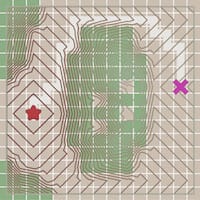
Interactive tutorial for A*, Dijkstra's Algorithm, and other pathfinding algorithms
outer rain
lilac cradle
is there a name for this sort of algorithm that takes an area and tries to split...
I have actually looked into that a while back for my own project, this paper has a pretty simple O(n^2.5) algorithm (n is the number of polygon vertices here), as well as the more efficient O(n^3/2 log n), but I have not looked into that at all. n^2 sqrt(n) was good enough for me.
https://arxiv.org/pdf/0908.3916.pdf
"Partition into rectangles" seems to be a good enough name
lilac cradle
kk
also i implemented bitwise operations into floats again, this time it's much more readable imo
import operator
def bitop_on_float(op,a,b,precision=3):
    p = 10**precision
    a_int,a_float = divmod(a,1)
    b_int,b_float = divmod(b,1)
    a_int,b_int = int(a_int),int(b_int)
    a_float,b_float = int(a_float*p),int(b_float*p)
    return op(a_int,b_int) + op(a_float,b_float)/p
its actually very useful to me to have this since i can use it for fractal drawing
 true dew
This is mildly related to this channel but I'd like to know what people's classes for this are structured like. I'm a freshman, just barely learned a bit of how to code in python last semester and am new to data structures and algos. But I have a class rn that just really makes me mad. Basically, its an hour forty class where the professor tells us ab a basic data structure concept, for example we did linked lists this week and last week. Then they makes us work individually for like 90% of the class. None of our work is graded, they only makes us submit 1 point reflections. Technically zero hw and we grade ourselves at the end.
Is this normal?
Some of this stuff seems really interesting and I feel a guest doctor who had zero experience teaching explained big O better than my actual professor did
It's legitimately giving me a headache. Some people try doing stuff during class, others just play video games and im somewhere in between. We don't even have a decent book to read from
This class, we play a kahoot for like 10 minutes, then the professor talks ab stuff to keep our retention, then goes on to tell us to go and ai generate a bunch of stuff for a "to do list" data structure for the rest of the class
agile sundial
that is not great. i would at least expect homework problems where you're meant to implement data structures and solve problems with them
true dew
The closest thing we get is a check list of stuff to watch
Or we take home a jupyter notebook we aren't graded on and that we don't get feedback on
I reallt want to complete learning ab linked lists for My sanity but at the same time I don't want to be doing this in a way that is against the point.
Like, ik it should be my fault for not practicing Jupyter notebooks as much at home, but I have other classes and I can only dedicate so much time for self study. If I wanted to spend all this time self studying instead of practicing then I wouldn't be in that class
agile sundial
maybe ask around to see if other profs are the same
true dew
Pretty sure they're the only data structures professor
agile sundial
transfer schools 😔
true dew
Dude I wish. Tuition is crazy
The one option I wanted to transfer to would be significantly cheaper but i feel like it'd be a bad idea to transfer since 1. Would be far away from all of my family 2. Would be a significantly bigger uni
Plus housing would probably be hell
keen hearth
true dew
This is mildly related to this channel but I'd like to know what people's classe...
Is there a summative assessment at the end of the course?
true dew
There's a portfolio thing?
I think
I'm probably gonna try going to an office hours next week
Just to vent my frustrations with the class. Of course I don't want to be brutally graded and struggling but I feel like I'm not really gaining anything by sitting in a class and trying to figure out how to write a specific structure when we don't get how solutions should be looking like
toxic hare
agile sundial
<@847392618564026368> was cooking up some optimized counting sort
 hehe yeee
toxic hare
modern gulch
Have you profiled it? If not, perhaps <https://github.com/pyutils/line_profiler>
also yeah i did a memory and a time profiler
the slowest portions of the code are
outliers0,arr = list1[key]-mini,list1[~key]
-
bt[y] = np.bincount(outliers[y])
-
arr = np.repeat(np.arange(np.size(bt[y]))+miy,arr)
https://github.com/Pigizoid/pigicount
i made a github for the code
old rover
true dew
Just to vent my frustrations with the class. Of course I don't want to be brutal...
i’m sorry man that doesn’t sound good to me
lilac cradle
does numpy have a way of computing a function with x,y (or more, i.e x,y,z...) coordinates in mind?
i like making fragment shaders but the way i'm currently doing it is very much not optimal
essentially i'd like to be able to use a numpy 2d array and run a function on it for every coordinate on it, and then get the results from it in something like a list or an array
here's an example i just made of approximately how i do it now
it works fine for single images but when i extend it to rendering gifs, it can get pretty prohibitively slow
import math
from PIL import Image
#== config ==#
size = (512,512)

scale = 1
output_filename = "shader_output.png"
#============#

width,height = size
im = Image.new("RGB",size)
image_data = []

def color_from_trig(h,offset=(math.pi/4)):
    n = h * math.pi
    r = int(255 * abs(math.sin(n-offset)))
    g = int(255 * abs(math.sin(n)))
    b = int(255 * abs(math.sin(n+offset)))
    return r,g,b

def shader_func(x,y):
    n = math.sin(x * y)
    return color_from_trig(n)

for y in range(height):
    if y % (height//100) == 0:
        print(f"{y/height:.0%} Complete...  ",end="\r")
    for x in range(width):
        x_scaled = (x/width) * scale
        y_scaled = (y/width) * scale
        color = shader_func(x_scaled,y_scaled)
        image_data.append(color)

im.putdata(image_data)
im.save(output_filename)
i just iterate through each coordinate, run the function, and put that into a list which is put onto the image and saved
toxic hare
im porting my sorting algorithm to pip so yall can enjoy the sorting speed go brrrr
narrow mica
lilac cradle
essentially i'd like to be able to use a numpy 2d array and run a function on it...
Sure? A lot of np functions take an optional axis argument, and basically every function can operate on ndarrays
>>> import numpy as np
>>> coords = np.array([[1, 2], [3, 4], [5, 6]])
>>> p = np.prod(coords, axis=1)  # <--
>>> p
array([ 2, 12, 30]) # <-- [ 1*2, 3*4, 5*6]
>>> n = np.sin(p)
>>> n
array([ 0.90929743, -0.53657292, -0.98803162])
>>> h = n * np.pi
>>> h
array([ 2.85664212, -1.68569354, -3.10399289])
>>>
how would i run an arbitrary function on it? like say one that takes two values as input
narrow mica
lilac cradle
how would i run an arbitrary function on it? like say one that takes two values ...
You don't, you strictly use np functions to achieve what you want
While you technically can (through np.vectorize), it's just a convenience wrapper around a python loop, so you won't see a speed up if you do that
lilac cradle
kk
lilac cradle
toxic hare
im porting my sorting algorithm to pip so yall can enjoy the sorting speed go br...
best sorting algorithm is radiation, let the bit flips do the work for you 💪
 prime berry
lilac cradle
best sorting algorithm is radiation, let the bit flips do the work for you 💪
prime berry
lilac cradle
best sorting algorithm is radiation, let the bit flips do the work for you 💪
what is radiation?
i just now merge sort
ah and quick sort
lilac cradle

In physics, radiation is the emission or transmission of energy in the form of waves or particles through space or a material medium. This includes:
electromagnetic radiation consists of photons, such as radio waves, microwaves, infrared, visible light, ultraviolet, x-rays, and gamma radiation (γ)
particle radiation consists of particles of non...
i was making a joke about how radiation can flip bits in computer memory
lilac cradle
yeah
it's infamous for doing stuff like changing a mario 64 speedrun by letting mario jump a bit higher
but i was just doing a joke
theoretically though, just by random cosmic rays and such, you could have data sort itself, though the medium would probably break down ages before that :p
prime berry
lilac cradle
it's infamous for doing stuff like changing a mario 64 speedrun by letting mario...
ah yes i saw it
prime berry
lilac cradle
theoretically though, just by random cosmic rays and such, you could have data s...
ok haha
 whole flicker
toxic hare
lilac cradle
essentially i'd like to be able to use a numpy 2d array and run a function on it...
whole flicker
toxic hare
lilac cradle
essentially i'd like to be able to use a numpy 2d array and run a function on it...
you can do that to any homogenous 2D array using apply alogn axis or any numbe rof methods
but if a list contains arrays that arent the same size then you cant do that due to the way the math works
toxic hare
lilac cradle
best sorting algorithm is radiation, let the bit flips do the work for you 💪
nawhh not miracle sort XD
stiff quartz
hey do you know why your magic function doesn't work on this recursive dfs function (https://codeforces.com/contest/1929/submission/246588499) ?
I get:
Traceback (most recent call last):
  File "C:\Users\lhott\Desktop\mdf\main_codeforces.py", line 74, in <module>
    dfs(0, -1)
  File "C:\Users\lhott\Desktop\mdf\main_codeforces.py", line 11, in wrappedfunc
    to = f(*args, **kwargs)
         ^^^^^^^^^^^^^^^^^^
  File "C:\Users\lhott\Desktop\mdf\main_codeforces.py", line 62, in dfs
    dfs(child, node)
  File "C:\Users\lhott\Desktop\mdf\main_codeforces.py", line 11, in wrappedfunc
    to = f(*args, **kwargs)
         ^^^^^^^^^^^^^^^^^^
  File "C:\Users\lhott\Desktop\mdf\main_codeforces.py", line 62, in dfs
    dfs(child, node)
  File "C:\Users\lhott\Desktop\mdf\main_codeforces.py", line 17, in wrappedfunc
    stack.pop()
IndexError: pop from empty list
(and runtime error on codeforces https://codeforces.com/contest/1929/submission/246642572).
 regal spoke
stiff quartz
hey do you know why your magic function doesn't work on this recursive dfs funct...
regal spoke
stiff quartz
hey do you know why your magic function doesn't work on this recursive dfs funct...
You are using the bootstrap incorrectly https://codeforces.com/contest/1929/submission/246642754

Codeforces
Btw I'm really confused by your code
mul1 = mul1 + 1 * 1 ** len(graph[node]) # add when root is dangerous and all children are not
It also looks like mul1 can become a really big integer
 stray fractal
regal spoke
Btw I'm really confused by your code
```py
mul1 = mul1 + 1 * 1 ** len(gr...
stray fractal
regal spoke
Btw I'm really confused by your code
```py
mul1 = mul1 + 1 * 1 ** len(gr...
this is just mul1 += 1 but complicated
regal spoke
stray fractal
this is just `mul1 += 1` but complicated
Yes, and then the next line is mul1 -= 1
stiff quartz
regal spoke
It also looks like mul1 can become a really big integer
it's just +1
but i made it hard so that i'd understand my reasoning
and then the next is -1
it's useless but it made sense to me when i was writing down my formulas
for my tree dp
sorry
regal spoke
https://codeforces.com/contest/1929/submission/246643427 After some modifications (making sure to mod after every calculation, and using sys.stdin.readline instead of input), it gets AC

Codeforces
stiff quartz
regal spoke
You are using the bootstrap incorrectly https://codeforces.com/contest/1929/subm...
oh ok you should yield None when the dfs doesn't return anything
regal spoke
stiff quartz
oh ok you should yield None when the dfs doesn't return anything
yes, and you also need to yield the recursive call
stiff quartz
regal spoke
yes, and you also need to yield the recursive call
oh ok my bad
stiff quartz
regal spoke
https://codeforces.com/contest/1929/submission/246643427 After some modification...
i though the modulus was long so i was only doing it at the end
but i assume doing operation son big number is even worse?
stiff quartz
regal spoke
https://codeforces.com/contest/1929/submission/246643427 After some modification...
thanks btw!
regal spoke
For speed, it is super important to not use big integers.
You always should avoid going >= 2^63
regal spoke
stiff quartz
i though the modulus was long so i was only doing it at the end
Wdym by "was long"?
stiff quartz
was an operation that takes a long time
but it seems that going >= 2^63 ends up being way worse
regal spoke
It is true that mod runs much slower than + or *. But in Python you'll barely notice that.
tight cedar
I usually do an if check to mod, I wonder how that compares to modding every time
# do sth to num
if num >= MOD:
    num %= MOD
might be better to just do -= instead of %= if so
tight cedar
right
stray fractal
%= probably works better if the threshold is like multiple times more than MOD
quasi oracle
tight cedar
I usually do an if check to mod, I wonder how that compares to modding every ti...
In terms of running time? it seems negligible to me, I'd just mod every time
stiff quartz
Yeah modding every time 100% works
the only problem was the recursion depth and handling very large integers
keen hearth
I wouldn't necessarily assume that the if-check version is faster overall. You'd really need to time the two approaches on realistic input.
outer rain
In compiled languages on modern x86, if-check is faster, about 1.5 times (about x5 if you count just cycles on a simulated CPU in perfect conditions, but it's very complicated and can't be implemented: 1.5 is the result in the practical application). I measured it some time ago. In python, if is unlikely to be any faster because it's just more interpreter commanđs.
regal spoke
tight cedar
I usually do an if check to mod, I wonder how that compares to modding every ti...
In Python I would not bother with if statment modding
In fact, I would would guess that using if statements is significantly slower
shadow glen
why it didn't executed variable function first before the use_var function?
https://pastes.dev/BWF9zzpKum

A paste containing 700 lines of python.
like, it's obvious that it's out of range, but don't it was suppose to store first with variable function
capture it with use_var later?
Lark what the actual fuck?
haughty mountain
outer rain
In compiled languages on modern x86, if-check is faster, about 1.5 times (about ...
I guess there is some ratio where if you mod X% of the time things become equivalent
(of course, there is speculative execution making things more complicated...)
 rich crest
yo
i have to make a project using data structures
any ideas??
give me some unique problem that can be solved using data structures
narrow mica
rich crest
any ideas??
give me some unique problem that can be solved using data structures
I mean just go on sites like leetcode, codeforces, etc.?
rich crest
narrow mica
I mean just go on sites like leetcode, codeforces, etc.?
but the thing is, everyone from my class will go and search there.
so id like to see if there are any obscure or lesser known stuff from other sources
narrow mica
rich crest
but the thing is, everyone from my class will go and search there.
so id like to...
Not sure what you mean... sites like these thrive with problems that are meant to be solved using obscure DSA
rich crest
narrow mica
Not sure what you mean... sites like these thrive with problems that are meant t...
iseeee
narrow mica
rich crest
iseeee
For codeforces, you can find people explaining stuff you've probably never even heard of
E.g. Mobius inversion, Mo's Algorithm, Convex hull tricks


And a lot of these you'll probably never use outside of these problems, or when you do you copy someone else's implementation
rich crest
narrow mica
For codeforces, you can find people explaining stuff you've probably never even ...
hehe boi, thats great
thankyou! ill check em out
narrow mica
rich crest
hehe boi, thats great
thankyou! ill check em out
Those probably aren't great if you're just getting into DSA though, too specific and too confusing
rich crest
narrow mica
Those probably aren't great if you're just getting into DSA though, too specific...
yeah, i figured.
but there will be newbie friendly stuff also right?
narrow mica
Sure, but those 3 definitely aren't newcomer friendly
rich crest
tell me how hard this problem is for a beginner:
this is some railroad yard problem which asks to use lisp lists and arrange the cars to the engine in a given map of rail yard
rich crest
narrow mica
Sure, but those 3 definitely aren't newcomer friendly
hahah ok
rich crest
rich crest
tell me how hard this problem is for a beginner:
this is some railroad yard prob...
the cars are labled as characters and have to be arranged accordingly, and there are some legal and illegal moves that are possible as usual
narrow mica
rich crest
yeah, i figured.
but there will be newbie friendly stuff also right?
Starting out, it's probably better to follow some course/guide on what you should learn first
rich crest
narrow mica
Starting out, it's probably better to follow some course/guide on what you shoul...
your right.
i have done the usual linked list, stack, queue, DLL,CDLL, priority queue etc
would like to look for a problem thats just a few points more difficult
narrow mica
rich crest
your right.
i have done the usual linked list, stack, queue, DLL,CDLL, priority ...
There's this roadmap that's nice I think
A better way to prepare for coding interviews.
a few problems in there are locked behind premium but most aren't
rich crest
alright thanks
will look into it
rich crest
narrow mica
There's [this](https://neetcode.io/roadmap) roadmap that's nice I think
sir, this is more of a collection of problems related to ds. which is not exactly what i am looking for.(is great for my self development for later tho)
my project requires implementation of ds in a useful manner, like a working system of sorts
i think Nqueens is the only viable option from that website which fits my need
but its a very well known problem
ik i didnt properly explain my needs earlier
narrow mica
Ah, so you specifically need to make a project, and the requirement is to use ds in some way?
narrow mica
rich crest
sir, this is more of a collection of problems related to ds. which is not exactl...
What about a huffman encoder?
Like a program that attempts to compress the input using huffman coding
Maybe even reason about why this algorithm (and all lossless compression techniques) will fail to compress some inputs
rich crest
narrow mica
What about a huffman encoder?
under what topic is it?
rich crest
narrow mica
Maybe even reason about why this algorithm (and all lossless compression techniq...
interestingg ill put it on my list
narrow mica
rich crest
under what topic is it?
You can use it to losslessly compress data, and you'll use dsa for the process
rich crest
when i went to check for huffmanencoder i found lru cache
rich crest
narrow mica
You can use it to losslessly compress data, and you'll use dsa for the process
i meant on the roadmap, but yea i got it
haughty mountain
rich crest
under what topic is it?
compression, coding theory, information theory
rich crest
haughty mountain
compression, coding theory, information theory
❤️
jump game also looks nice but might not be interesting enough for my teacher lol
Looks like Huffman coding is a pretty complex topic by itself
How much time will I need to learn that first and then implement it for the encoding?
rich crest
tomscott has a video on it, nice
 tough knot
Greetings guys
Hope all are well. Anyone here who is familiar with iTensor library in Julia?
Kindly let me know.
shadow glen
okay so, anyone here knows Lark library?
i'm having a problem with it where use_var is being used first before variable from my Transformer
"!echo [Sucess {&0}\nDamage: {!roll 1d12+5,2}] !if $!roll 1d20+2 >12 !else !echo [Failure]"
this is my input
0
[]
Traceback (most recent call last):
  File "C:\Users\User\Documents\GitHub\RP-Utilities\.venv\Lib\site-packages\lark\visitors.py", line 124, in _call_userfunc
    return f(children)
           ^^^^^^^^^^^
  File "c:\Users\User\Documents\GitHub\RP-Utilities\rp_utilities\macros.py", line 560, in use_var
    use_var = variables[var_pos]
              ~~~~~~~~~^^^^^^^^^
IndexError: list index out of range
A paste containing 700 lines of python.
haughty mountain
shadow glen
okay so, anyone here knows Lark library?
not the right channel for this, why not try in #python-discussion
 dusk flower
!rule 4
halcyon plankBOT
4. Use English to the best of your ability. Be polite if someone speaks English imperfectly.
split echo
Any good links/sources for learning to use Kruskals algorithim in python?
 boreal hawk
does anyone know a list of leetcode topic/questions that covers almost all problem solving patterns ?like we have 2 pointer approach and sliding window etc i only know these two yet and idk how many are there so i'm thinking to learn about more patterns to solve
 warm crane
GUYS
 haughty token
what?
!mute 1044763608493600850 this is absolutely not appropriate, do not troll here. It'll be a ban if you continue to do so once your mute is up.
halcyon plankBOT
:incoming_envelope: :ok_hand: applied timeout to @warm crane until <t:1708324861:f> (1 hour).
 idle pasture
Can Anyone tell me how to be a shark in algortihms
Can anyone tell me how to be a shark in algorithms?
Some good sites where i can test myself or understand in easy. I feel like my teacher is bad at formulate things so i try to Think about homestudy for that class.
 glossy lintel
i have a class implementation for linked lists
there is the node class which is a data class that has a data value and a pointer and only 2 methods modified
@dataclass
class SinglyNode():
    data: Any
    point: 'SinglyNode' = None

    def __post_init__(self) -> None:
        if isinstance(self.data, type(self)):
            raise ValueError("Data Value Cannot Contain A SinglyNode")

    def __repr__(self) -> str:
        if self.point is None: return f"{self.data}"
        return f"{self.data} >> {self.point}"
and well if i have like 1 million of these binded toggether. It will cost me like 48 mega bytes
which is too much
especially given the fact that the data value is litterally a integer(for this testing)
 calm flicker
does anyone know what's the logic behind it
 glossy lintel
there is the node class which is a data class that has a data value and a pointe...
glossy lintel
glossy lintel
there is the node class which is a data class that has a data value and a pointe...
im thinking instead of referencing the instance of the pointer
what if i reference something like their memory address(or ig their ID)
and then look that up on runtime
problem tho
for i in gc.get_objects():
  if point == id(i): return i
this is a loop, and it will be completed in O(n)
gc.get_objects has 10146 objects tho
what if i have a more complicated program?
well the time to retrieve will enlarge
(was busy at the moment, srry for late response but pls ping me if u wanna share a way to reduce the size of linked list implementation)
haughty mountain
calm flicker
does anyone know what's the logic behind it
this is just bubble sort, no?
haughty mountain
glossy lintel
and well if i have like 1 million of these binded toggether. It will cost me lik...
an int in python is already 24 bytes at least, so storing a million python ints won't get better than ~24MB
glossy lintel
so no solution sadly?
haughty mountain
Depends on how desperate you are
glossy lintel
since im implementing a data structrue for a library im working on(again data structure related, mostly proof of concept and showcase). I am desperate to find that performance boost
haughty mountain
Having two parallel numpy arrays with fixed size ints could get sizes down, but they will be more annoying to work with
What are you actually trying to accomplish?
(linked lists are rarely the best data structure)
glossy lintel
haughty mountain
Having two parallel numpy arrays with fixed size ints could get sizes down, but ...
i see
glossy lintel
haughty mountain
What are you actually trying to accomplish?
making a linked list that has data(which the data can be in any form. For example list, int, string, another object... etc)
haughty mountain
why does it need to be a linked list?
glossy lintel
bc well i wanna implement common data structures on my library
so other people can use
(not really in production, since i already said its for showcase and proof of concept. But still be somewhat easier to use then having to implement your own)
100% there are libraries that already do something similar
but idc that much
haughty mountain
regardless of how you store things you need as least store all the values, so for python int that's already 28 bytes per element
lists are close to optimal here, they have some constant overhead, but then it's just whatever the total sum of sizes is
for linked lists it's worse since you need to store info about the links
In practice the usefulness of linked lists is...rare. Using it to implement a queue might be sensible, or for some niche uses where you want to make use of O(1) operations in the middle of the list
(and I suspect you wouldn't end up exposing an api for that last thing)
haughty mountain
idk what there is to solve
if you need to store the values you need to store the values
that'll be the lower bound for the size of any container
 urban dove
The collatz conjecture would be classified as a linear complexity, correct?
haughty mountain
urban dove
The collatz conjecture would be classified as a linear complexity, correct?
huh?
urban dove
haughty mountain
huh?
The collatz conjecture
haughty mountain
I know what it is
but wdym by linear complexity? we don't know if things even terminate
urban dove
haughty mountain
but wdym by linear complexity? we don't know if things even terminate
Good point
haughty mountain
that's the whole conjecture
 west meteor
I have following code
class AuthUser(BaseModel):
    id: int = Field(alias='ID')
    first_name: str = Field(alias='FIRST_NAME')
    last_name: str = Field(alias='LAST_NAME')
    user_email: str = Field(alias='EMAIL')

    class Config:
        orm_mode = True

class User(Base):
    __tablename__ = "user"

    ID: Mapped[int] = mapped_column(primary_key=True, nullable=False, index=True)
    USERNAME: Mapped[str] = mapped_column(nullable=False)
    FIRST_NAME: Mapped[str] = mapped_column(nullable=False)
    LAST_NAME: Mapped[str] = mapped_column(nullable=False)
    EMAIL: Mapped[str] = mapped_column(nullable=False)
    PASSWORD_HASH: Mapped[str] = mapped_column(nullable=False)

    address: Mapped[List["Address"]] = relationship(back_populates="user", lazy=True)

user_from_db: Type['User'] = User.get_user_by_email(db=db, email=user_email)
return AuthUser().from_orm(user_from_db)
When I do the return statement, i get following message : ID
Field required [type=missing, input_value={}, input_type=dict]
(Also for the other attributes from the BaseModel), but I get all needed data from my db call?
Does anyone know whats wrong ?
keen hearth
haughty mountain
that's the whole conjecture
Assuming it's true, what can we say about the complexity of the sequence length with respect to the starting point? 😄
haughty mountain
keen hearth
Assuming it's true, what can we say about the complexity of the sequence length ...
iirc we can say a lot about most starting numbers
but overall I have no clue what implication just knowing the conjecture is true would be
jagged iris
I would ask about argparse in Python bcs I cant understand this
for what it is used
and generally how to learn all this stuff with this
cause I dont think I should to learn it by heart
jagged iris
if anyone would like to explain for me this topic I will be pleased
modern gulch
jagged iris
if anyone would like to explain for me this topic I will be pleased
Maybe ask in #python-discussion , argparse is just a general Python topic
shadow glen
next is, how do i get the hash values without knowing the name of the hash?
like, how do i acess a hash without knowing it's name?
agile sundial
what do you mean, "name"
shadow glen
like
{
   "name" : {
       "key1": "item1",
       "key2": "item2"
   }
}
in this case i don't know that the hash is "name"
so i want to acess it even not having it's thing
agile sundial
oh you mean ruby's hashes
well if you have a dict you can just loop over the values
agile sundial
have you tried just looping over the values of the outer dict
shadow glen
i got a better way to solve the problem
placing the .values() that i forgot in database
agile sundial
i don't really understand the problem, but 👍
 limpid mirage
Hello my friends,
Is prefixing python file with the directory name considered a bad practice?
Thank you
 vocal gorge
Why'd you do this?
limpid mirage
Ask my friend 💀 he told me it was common
narrow mica
limpid mirage
Ask my friend 💀 he told me it was common
I mean, consider you have this
my_app.py
ROSU/
|  - ROSU_menu
```In your `my_app.py`, the import would look something like
```py
# my_app.py
import ROSU.ROSU_menu
from ROSU import ROSU_menu
```Which contains redundant info, because... well the `menu` I import from `ROSU` is obviously the ROSU menu
Whereas if you didn't prefix it with the dirname it'd be nicer:
```py
# my_app.py
import ROSU.menu
from ROSU import menu
 harsh mason
its like I know data strucutres and alogrithms but when I do leetcode I am able to solve but not with the most efficient solution
modern gulch
harsh mason
its like I know data strucutres and alogrithms but when I do leetcode I am able ...
The good thing is: in real world, ‘most efficient’ is rarely the goal. Acceptable is. 🙂
harsh mason
modern gulch
The good thing is: in real world, ‘most efficient’ is rarely the goal. Acceptabl...
but them indian coding interviewers will not accept this
and why the f doesnt leetcode have autocomplete
modern gulch
harsh mason
but them indian coding interviewers will not accept this
You can code in another ide and copy to leetcode. Also; if you want to get better, do some reading/studying in top of practicing. Sometimes hard to break the next skill ceiling simply by grinding.
narrow mica
harsh mason
and why the f doesnt leetcode have autocomplete
Well it does... it's locked behind premium though, so just code in a separate IDE
narrow mica
harsh mason
its like I know data strucutres and alogrithms but when I do leetcode I am able ...
Just practice more problems, and eventually you'll start to recognize patterns more easily, e.g. "I see that I need to do X-task, which can be done using Y-datastruct/algo"
Though it's in cpp, you can take a look at this. Each page has links to practice problems at the bottom
outer rain
ALWAYS code in a separate IDE/text editor
it is likely to be faster, closer to the environment you are going to work most of the time, you are free to test your code however you want, and generally have a lot more control over it
it's just a significatly better experience
glossy lintel
i have an algorithm in mind for searching efficiently linked lists
and on first its simple. If you wanna find based a node based on index
you iterate over until you get there. But when you get that node, you save it as a sort of "checkpoint"
before running again the code, the algorithm will ask 2 question(on itself)
- Is there any prerecorded position that equals to the position im asking for?
- What is the closest prerecorded position that is not ahead of the position im looking for?
now the question is. Is this a efficient algorithm?
or can it be more refined
glossy lintel
vocal gorge
kind of like a [skip list](https://en.wikipedia.org/wiki/Skip_list), then?
ig
btw i ran a test on a linked list with 5 million elements and got these results
Without Checkpoints

< 3000000 >
0.3016791343688965
< 4500000 >
0.4416670799255371
With Checkpoints

< 3000000 >
0.29016876220703125
< 4500000 >
0.14542198181152344
jesus. Average time with non-checkpoints vs checkpoints on 100 iterations(with 2 distinct random values each iteration). With 2 lists of same length and content
0.2500529036521912 // Non-Checkpoint Average Time List
0.0026582655906677247 // Checkpoint Average Time List
yeah a skip list is basically this idea but it precomputes the "checkpoints", and they're evenly spread
haughty mountain
Yes. This is basically a skip list. But if you really want to access stuff by index a lot you probably just want a list
tbh I wouldn't bother trying to optimize this for a linked list
any change you make to the list in between queries risks shifting all of your checkpoints, rendering them incorrect
I think if you as a user decide to use a linked list you should expect the O(n) operations for accessing elements
glossy lintel
haughty mountain
I think if you as a user decide to use a linked list you should expect the O(n) ...
tbh the more you use it, the more it "improves" (if the positions are diverse)
haughty mountain
but on the other hand you're using more and more storage
and eventually you have a linked list and a dict/whatever
and keeping them in sync under modification gets more expensive
jagged iris
elif event.key==ord('F11'):
TypeError: ord() expected a character, but string of length 3 found
anyone could help me with this
any ideas
haughty mountain
jagged iris
elif event.key==ord('F11'):
TypeError: ord() expected a character, but string of...
that's not how ord works
also wrong channel
jagged iris
ok thanks I will try to make it work
 fierce shoal
that feeling when you get an indent expected error
 unborn trellis
hello, im stuck in this exercise and there is 10 minutes left

thats the result i get

nah nvm times up
outer rain
!rule 8
halcyon plankBOT
8. Do not help with ongoing exams. When helping with homework, help people learn how to do the assignment without doing it for them.
outer rain
That's a neat little programming language btw, no idea how it works
unborn trellis
outer rain
!rule 8
i just asked for help, not the answer, but yeah i agree with u
glossy lintel
haughty mountain
and eventually you have a linked list and a dict/whatever
true
for that reason i have 2 sort of "mitigations" to this problem
the first is adding a bandwidth. When the bandwidth is 0, the checkpoint algorithm is disabled. If its -1 it can go to whatever number you like
but when on a positive number. It will have maximum that number of checkpoints
the other one is basically resetting the checkpoint list when a change on the linked list happens
haughty mountain
glossy lintel
the other one is basically resetting the checkpoint list when a change on the li...
so alternating inserts/querying will ruin any performance gains
glossy lintel
kinda
the algorithm is optional
if u traverse too much on the same list, then enable it
haughty mountain
I guess I'm not a big fan of just stacking stuff on top of the data structure as a library
just provide the data structure, let the user stack stuff on top
unless maybe it has to make use of the internals to work
glossy lintel
haughty mountain
unless maybe it has to make use of the internals to work
tbh i could implement a "version" system or smth
to keep some checkpoints intact
but that sounds complicated
haughty mountain
basically, if the lookup performance starts mattering (i.e. a lot of lookups) using a linked list was probably a mistake
glossy lintel
true
regal spoke
glossy lintel
true
Why not just switch to some data structure where all operations take guaranteed log(n) time?
glossy lintel
regal spoke
Why not just switch to some data structure where all operations take guaranteed ...
tbh managing multiple data structures is too much
glossy lintel
haughty mountain
basically, if the lookup performance starts mattering (i.e. a lot of lookups) us...
it matters when u do a lot of lookups
but i kinda wanna make it still a little more viable
so yeh
glossy lintel
glossy lintel
it matters when u do a lot of lookups
the non-checkpoint version would take ~33 minutes to complete all 10k iterations
whereas the checkpoint version takes about 2-4 seconds to complete all 10k iterations
regal spoke
glossy lintel
tbh managing multiple data structures is too much
Just pick a good one and stick with it. There are for example data structures that share the same interface as lists, but where operations take log(n) time
Then you could do about 1e6 inserts/lookups per second
glossy lintel
mhm
also 1 question
does a bidirectional hashmap sound useful? This means both key and values are unique and you can look up a key by value and vice versa
modern gulch
glossy lintel
does a bidirectional hashmap sound useful? This means both key and values are un...
halcyon plankBOT
:incoming_envelope: :ok_hand: applied timeout to @regal spoke until <t:1708536063:f> (10 minutes) (reason: newlines spam - sent 102 newlines).
The <@&831776746206265384> have been alerted for review.
keen hearth
!unmute 475657117509091329
halcyon plankBOT
:incoming_envelope: :ok_hand: pardoned infraction timeout for @regal spoke.
keen hearth
Sorry about that. Use the pastebin to avoid tripping the spam filter: https://paste.pythondiscord.com
regal spoke
ok thanks
@glossy lintel Try comparing what you have to this https://paste.pythondiscord.com/L3ZQ
It is a list like data structure that support fast inserts that I made a while ago
My guess is that it is a lot more efficient than what you currently have
glossy lintel
the linkedlist supports more data types and other data structures
so its not really numbers only
none of the less. I might include some of these toggle on/off optimisations for specific scenarios
regal spoke
glossy lintel
the linkedlist supports more data types and other data structures
The thing I posted support the same things as a normal list in Python.
It supports far more things than just numbers
glossy lintel
mhm
tbh the thing im trying to do is midigate some of the loses you would get from a linked list
agile sundial
just don't use a linked list. solves pretty much all your problems
 hot echo
Anyone here able to help with hadoop mapreduce in Python?
Need to create a KNN hadoop mapreduce program from scratch (no scikitlearn). Given two datasets that live in hdfs in input folder.
Both datasets contain the same structure: label feature1 feature2 feature3 … feature 300. Each record has 300 features and one label.
Need to somehow list predictions and accuracy in output. Must have a mapper.py and reducer.py
Need help with all of it, but specifically how to use stdin to have both files when the hadoop command execution would look like this:
hadoop jar /usr/local/hadoop-x.x.x/share/hadoop/tools/lib/hadoop-streaming-x.x.x.jar -mapper “python3 /home/name/mapper.py” -reducer “python3 /home/name/reducer.py” -input /user/name/input -output /user/name/output
glossy lintel
agile sundial
just don't use a linked list. solves pretty much all your problems
._.
glossy lintel
im making a datastructure library
haughty mountain
I say just provide a plain linked list to the user then
agile sundial
or maybe a kind of skip list
haughty mountain
sure, but that's separate from a linked list
 pulsar narwhal
Where can I find details about time & space complexity of Python standard functionalities?
Is there a reference for that?
For example, in C++, I use this website:
https://cplusplus.com/
https://cplusplus.com/reference/algorithm/sort/
Is there something similar for Python?
agile sundial
 umbral flicker
hey - curious if someone could help set me straight on whether my current approach for dynamically creating models that may have relationships from is bad form/dumb/okay.
I'm working with an API that returns a schema similar to JSON Schema but not exact, so I'm working on a custom encoder/decoder to create the python objects. Each record in the response contains a schema which may have a relationship with another not yet processed record in the response. I thought it'd be simpler to store each model and relationship in a class variable for tracking and lookup in case the object and/or relationship already exists. But, I'm not sure how pythonic this approach is and if it'd be better to process the API response and construct the schema first, sort the instances outside the class and then discover relationships.
Simplified version of what I've done: https://paste.pythondiscord.com/EGZQ
 clear light
agile sundial
https://wiki.python.org/moin/TimeComplexity
clear light
agile sundial
https://wiki.python.org/moin/TimeComplexity
what's the difference between O(n) and O(k)?
keen hearth
clear light
what's the difference between O(n) and O(k)?
It's not stated explicitly, but reading between the lines, for the list table I think:
nalways refers to the length of the listkrefers to some other number, such as the length of the slice, the length of the iterable you're extending the list with, or the magnitude of the number you're multiplying the list by
clear light
👌 tyvm
solemn moss
It's actually stated there btw
Generally, 'n' is the number of elements currently in the container. 'k' is either the value of a parameter or the number of elements in the parameter.
 young totem
can step count and operation count analysis of an algorithm yield different results?
lean walrus
wdym by different? are you counting exact number of steps/operations? if so, then yes, but it doesn't matter because exact number doesn't make sense
young totem
lean walrus
wdym by different? are you counting exact number of steps/operations? if so, the...
like on a code with a few for loops and some comparisons i got a different time complexity on step count (slightly lower) than i did on operation count as for why i need the exact number is just that its a descriptive question i had, i am aware overall impact between different analysis on final execution is minimal
i can share the code here if u would be interested
lean walrus
as i said, exact number doesnt make sense, only biggest term matters
young totem
thats true but we are marked based on the solution we arrive to otherwise i could always write the complexity generally just judging the code ;-;
glossy lintel
glossy lintel
the non-checkpoint version would take ~33 minutes to complete all 10k iterations
i have a solution to the problem actually
and this might solve another problem
but it requires changing the algorithm
and finding the right balance
so instead of recording a checkpoint on the searched spot. What if instead i calculate predefined checkpoints that are stradegically placed, like for example if i have a 1 million node linked list, maybe the checkpoints would be spread by 250k
for insertion instead of immediately changing the checkpoints, what if i lazily evaluate them
meaning after the linked list change. On the first first to ever be done on the new linked list. Thats when the refining happens
would this be a better stradegy to boost the algorithm's performance?
since the more the checkpoints are placed thoughtfully, the less memory it uses(although would be just a tiny bit slower. But that would be some milliseconds)
keen hearth
solemn moss
> Generally, 'n' is the number of elements currently in the container. 'k' is ei...
Oh, thanks. I somehow completely missed that 😄
haughty mountain
young totem
thats true but we are marked based on the solution we arrive to otherwise i coul...
it's not always obvious just looking at code
young totem
yeah true
haughty mountain
young totem
yeah true
e.g. what's the complexity of this?
def f(n):
  for i in range(1, n):
    for j in range(i, n, i):
      # some O(1) work
actually, starting at i doesn't matter
maybe simpler
def f(n):
  for i in range(1, n):
    for j in range(0, n, i):
      # some O(1) work
outer loop is n - 1, inner loop goes from n to n / 2 then n / 3 till 1 ig?
haughty mountain
so what's the overall complexity?
young totem
need some maths and a paper
haughty mountain
spoiler: it's ||Θ(n log n)||
young totem
haughty mountain
spoiler: it's ||Θ(n log n)||
i see
haughty mountain
harmonic series
n + n/2 + n/3 + ... is Θ(n log n)
1 + 1/2 + 1/3 + ... is Θ(log n)
haughty mountain
haughty mountain
e.g. what's the complexity of this?
```py
def f(n):
for i in range(1, n):
...
this comes up when analysing the sieve of eratosthenes
though there it's an even more intricate because primes, and you end up with n log log n
agile sundial
number theorists drowning 😔
young totem
hmm
haughty mountain
so it's not always as easy as one loop = O(n)
another simpler example
i = 0
while i**2 < n:
  i += 1
i mean i did say generally 😔 or atleast the ones in my course those are pretty popular algos.
glossy lintel
glossy lintel
since the more the checkpoints are placed thoughtfully, the less memory it uses(...
and the question is
is it worth implementing instead of leaving it there?
an example i have is this one

blue circles mean that these nodes are always known no matter the length of the list and anything
red circles mean checkpointed nodes
is there also a formula that i could use to calculate the most efficient interval of checkpoints
haughty mountain
young totem
i mean i did say generally 😔 or atleast the ones in my course those are pretty ...
not related, but "generally" is one of my favorite words to hate 🥴
 agile sundial
generally, you hate the word
haughty mountain
haughty mountain
meaning 2 and 4 contradict each other
haughty mountain
agile sundial
generally, you hate the word
usually and always
agile sundial
without reference to specific details, even
glossy lintel
glossy lintel
is there also a formula that i could use to calculate the most efficient interva...
turns out i tried batching searches toggether into 1. And it kind of worked, so there was no need for the checkpoint algorithm
like you take the nodes u want to search. You put them in a set and then in 1 second you got your answer
whereas the checkpoint algorithm took 5 seconds
so im gonna adopt it more
 agile sundial
kosaraju
 lunar jacinth
hey guys, quick question. what happens when it hits the return node_map[node]

like it returns and gets out of the dfs function?
im trying to figure out how the dfs function is working here and the 2 returns are confusing me

 willow vapor
improved 👍

 slender echo

28K Followers, 39 Following, 23 Posts - See Instagram photos and videos from David Jiang (@the_david_jiang)
This guy kinda 🐐ed or nah
 bright summit
yo
anyone know how classes and shit works?
ya boi be struggling
need to expand my hacker knowledge know what i mean
class = "token"
print("hacked account" + token)
 midnight cloak
hi guys , i tried a lot to understand what the level order traversal of a binary tree but i can't understand it and i can use in , pre , post order traversal but level order can't , so is there any one can help me
keen hearth
midnight cloak
hi guys , i tried a lot to understand what the level order traversal of a binary...
A level order traversal means visiting all the nodes at depth zero, then all the nodes at depth 1, then all the nodes at depth 2, etc. where 'depth' means the number of edges between that node and the root node.
It's the same kind of order you would visit the nodes in a 'breadth-first search'.
You could implement it using a FIFO queue: ```py
from collections import deque
def level_order(root_node):
if root_node is None:
return
queue = deque([root_node])
while queue:
node = queue.popleft()
yield node
for child in node.left, node.right:
if child is not None:
queue.append(child)
The next node to be yielded is always the one that was added to the queue at the earliest time.
midnight cloak
ok bro thanks so much for that
keen hearth
This is how I ususally do it: ```py
def level_order(root):
if root is None:
return
level = [root]
while level:
yield from level
level = [
child
for node in level
for child in (node.left, node.right)
if child is not None
]
Essentially just going level-by-level.
midnight cloak
keen hearth
This is how I ususally do it: ```py
def level_order(root):
if root is None:
...
muchas gracias
narrow mica
midnight cloak
hi guys , i tried a lot to understand what the level order traversal of a binary...
pre/in/post order refers to when you traverse the current node M.
E.g. (L R refers to the left/right subtree respectively
preorder:M L Rinorder:L M Rpostorder:L R M
 cobalt parcel
I'm trying to resolve this steiner with a cost constraint problem
We are given a Floyd-Warshall shortest path algo and Krukal's, utilizing these two algos with a graph of 1000 2D points with the cost of and edge equaling the distance between the two points, we could approximate a steiner tree that covers all the required terminal points. Now, we add a root node P and a total cost constraint, how do I approximate a steiner tree that must inlcude P while staying under the constraint?
glossy lintel
glossy lintel
whereas the checkpoint algorithm took 5 seconds
actually batching mainly depends on the iterations to be the most optimal(how many searches have to be done) whereas checkpoints i think depends on the size of the linked list & frequent uses
 inland cargo
Hi everyone! I am building a simple project in Python to practice my skills (I am beginner), but I am having a bit of an issue. I want to make a simple online bookstore, but I don't know how to add books with the name, price, etc.
modern gulch
inland cargo
Hi everyone! I am building a simple project in Python to practice my skills (I a...
I’d suggest opening a help thread, sharing your problem and what (if any) code you have so far. #❓|how-to-get-help
inland cargo
modern gulch
I’d suggest opening a help thread, sharing your problem and what (if any) code y...
Thank you so much
 blazing quest
midnight cloak
hi guys , i tried a lot to understand what the level order traversal of a binary...
blazing quest
midnight cloak
hi guys , i tried a lot to understand what the level order traversal of a binary...
The easiest way to think about it is using a queue. Start at the root. Queue all the children. Go to next in queue. It’s just a layer by layer view of the tree
midnight cloak
blazing quest
The easiest way to think about it is using a queue. Start at the root. Queue all...
thanks so much
fiery cosmos
Hello guyys
 urban delta
does anyone here know the bowyer watson algorithm and could help me implementing it, i nearly got it, but i get overlapping edges and unused points sometimes
these are some outputs i get, here my algorithm:
def calc_bowyer_w(pts_arr, w, h):
    super_triangle = create_super_triangle(w,h)
    triangulation = [super_triangle]
    for point in pts_arr:
        bad_triangles = []
        for triangle in triangulation:
            if triangle.check_if_point_is_inside(point):
                bad_triangles.append(triangle)
        polygon = set()

        for triangle in bad_triangles:
            for edge in triangle.edges:
                if all(edge not in other_triangle.edges for other_triangle in bad_triangles if other_triangle is not triangle):
                    polygon.add(edge)

        for triangle in bad_triangles:
            if triangle in triangulation:
                triangulation.remove(triangle)

        for edge in polygon:
            pts_lst = list(edge.points)
            new_triangle = Triangle(pts_lst[0], pts_lst[1], point)
            triangulation.append(new_triangle)

    for triangle in list(triangulation):
        if triangle.contains_vertex(super_triangle):
            triangulation.remove(triangle)
    if super_triangle in triangulation:
        triangulation.remove(super_triangle)
    return triangulation```

classes:py class Point: def __init__(self,x , y): self.x = x self.y = y class Edge: def __init__(self, point1, point2): self.points = {point1, point2} def __eq__(self, other): return self.points == other.points def __hash__(self): return hash(tuple(sorted(self.points, key=lambda point: (point.x, point.y)))) class Triangle: def __init__(self, p1,p2,p3): self.points = [p1,p2,p3] self.center, self.squared_r = self.calc_circumcircle() self.edges = {Edge(p1, p2), Edge(p2, p3), Edge(p3, p1)} self.neighbors = set() def get_neighbors(self, triangles): for triangle in triangles: if len(self.is_shared_edge(triangle)) == 2 and triangle is not self: self.neighbors.add(triangle) def calc_circumcircle(self): p1 = self.points[0] p2 = self.points[1] p3 = self.points[2] epsilon = 1e-10 denominator = 2 * (p1.x * (p2.y - p3.y) - p1.y * (p2.x - p3.x) + p2.x * p3.y - p3.x * p2.y) + epsilon x = ((p1.x**2 + p1.y**2) * (p2.y - p3.y) + (p2.x**2 + p2.y**2) * (p3.y - p1.y) + (p3.x**2 + p3.y**2) * (p1.y - p2.y)) / denominator y = ((p1.x**2 + p1.y**2) * (p3.x - p2.x) + (p2.x**2 + p2.y**2) * (p1.x - p3.x) + (p3.x**2 + p3.y**2) * (p2.x - p1.x)) / denominator squared_r = (x - p1.x) ** 2 + (y - p1.y) ** 2 return Point(x,y), squared_r def check_if_point_is_inside(self, p): d = (self.center.x - p.x)**2 + (self.center.y - p.y)**2 tolerance = 1e-10 radius_squared = self.squared_r + tolerance return d <= radius_squared def is_shared_edge(self, triangle): common_pts = set(self.points) & set(triangle.points) return common_pts def contains_vertex(self, triangle): for point in triangle.points: for self_point in self.points: if self_point == point: return True return False
glossy lintel
what is wrong with my "batch insertion"
    def batch_insert(self, entries: dict[int, SinglyNode]) -> None:
        index = -1
        positions = list(entries.keys())
        minPos = min(positions)
        maxPos = max(positions)
        if minPos < -1: raise ValueError("Position Pair Argument Can't Be Less Than -1")
        elif maxPos >= len(self): raise ValueError("Position Pair Argument Can't Exceed More Than The Linked List Length")

        self.__nodes_length += len(positions)
        if -1 in positions or self.__nodes_length - 1 in positions:
            node = entries.get(-1) or entries.get(self.__nodes_length - 1)
            self.ending_node.point = node
        if 0 in positions:
            node = entries[0]
            prevStartNode = self.starting_node
            self.starting_node = node
            node.point = prevStartNode

        target = self.starting_node.point
        while target:
            index += 1
            if index == self.__nodes_length: break
            elif index + 1 in positions:
                node = entries[index + 1]
                node.point = target.point
                target.point = node
            target = target.point
for 1 element, its all fine but when more, thats when there is a problem
i have a list of example 6 nodes
("0th Node", "1st Node", "2nd Node", "3rd Node", "4th Node", "5th Node")
and i wanna insert first a node on the second index a.k.a "2nd Node"
it works fine
but if i wanna insert a other node, since i'm modifying the linked list thus the length
the third index will be next to the second index
but i don't wanna copy the linked list or do expensive operations on it
the desired list should be for the batches
{
  2: "1"
  3: "4"
}
("0th Node", "1st Node", "2nd Node", "1", "3rd Node", "4", "4th Node", "5th Node")
 honest yarrow
Given the Codecademy code provided:
My first question is why did the linked list print out the output in this reversed order from what I was expecting.
Output-only Terminal
90 5675 70 5
https://discuss.codecademy.com/t/data-structures-printing-out-values/810796

Codecademy
Codecademy is the easiest way to learn how to code. It's interactive, fun, and you can do it with your friends.

Codecademy Forums
Given the Codecademy code provided: Exercise Link: https://www.codecademy.com/courses/learn-data-structures-and-algorithms-with-python/lessons/learn-linked-lists-python/exercises/linked-lists-python-list-ii My first question is why did the linked list print out the output in this reversed order from what I was expecting. output Output-only...
 exotic bolt
in principle, can any piece of python code be divided into atomic operations?
mint jewel
what do you mean by atomic?
exotic bolt
mint jewel
what do you mean by atomic?
atomic wrt. concurrency: there is no way for the operation to fail if it occurs, i.e., it cannot be half-finished
mint jewel
exotic bolt
atomic wrt. concurrency: there is no way for the operation to fail if it occurs,...
in that sense, probably yes, but not in a useful way most of the time.
keen hearth
exotic bolt
in principle, can any piece of python code be divided into atomic operations?
In CPython, bytecode instructions are atomic because of the global interpreter lock: https://docs.python.org/3/faq/library.html#what-kinds-of-global-value-mutation-are-thread-safe

Python documentation
Which means, as the FAQ points out, many basic operations like changing an element in a list are atomic.
But to what extent you can rely on this in practice, I'm not sure.
 fiery forge
quasi oracle
In case this is still relevant, how I would solve it in O(n) time:
||Initialize...
fiery forge
quasi oracle
In case this is still relevant, how I would solve it in O(n) time:
||Initialize...
Thank you so much
exotic bolt
computational complexity is introduced in a data structures and algorithms class right?
or what cs class is it introduced in?
agile sundial
yes, generally
 smoky widget
Can anybody help me figure out why I am getting an unsimplified sum for my "scaled_sum" in this code?:
def add_scale_2(L, M, L_scale, M_scale);
N = min(len(L), len(M))
L_scaled = L * L_scale
M_scaled = M * M_scale
scaled_sum = [L_scaled + M_scaled]
return scaled_sum
this is ipython btw
 barren skiff
exotic bolt
computational complexity is introduced in a data structures and algorithms class...
barren skiff
exotic bolt
computational complexity is introduced in a data structures and algorithms class...
Definitely
U simply cannot go about dsa without complexity
exotic bolt
thanks to both!
glossy lintel
something is wrong with my delete implementation on a linked list and idk what exactly is
def delete(self, position: int = -1) -> None:
        """Deletes a node on a given position. If the position is
        either at the beggining or end, it will perform in O(1) otherwise if in between
        nodes, it will perform in a average case O(n)
        """
        index = 0
        if position < -1: raise ValueError("Position Argument Can't Be Less Than -1")
        elif position >= len(self): raise ValueError("Position Argument Can't Exceed More Than The Linked List Length")

        self.__nodes_length -= 1

        if position == -1 or position == self.__nodes_length + 1:
            self.pre_end_node.point = None
            return
        elif position == self.__startingIndex:
            self.starting_node = self.starting_node.point
            self.__startingIndex += 1
            return

        target = self.starting_node.point
        while target:
            index += 1
            if index >= self.__nodes_length - 1: return
            elif index == position - 1:
                target.point = target.point.point
                break
            target = target.point
the above is the normal version
and this is the batched version
    def batch_delete(self, position: set[int]) -> None:
        """Deletes node(s) given position(s). If a position is either
        at the beggining or end, it will perform in O(1) otherwise for the rest of the
        positions that are in between the start or end, it will perform in a
        average case O(n) time. This is the batch version of delete
        """
        index = 0
        minPos = min(position)
        expectedSequence = set(range(minPos, minPos + len(position)))
        if max(position) < -1: raise ValueError("Position Argument Can't Be Less Than -1")
        elif min(position) >= len(self): raise ValueError("Position Argument Can't Exceed More Than The Linked List Length")

        self.__nodes_length -= len(position)
        diff = position.symmetric_difference(expectedSequence)
        if diff == set():
            for i in range(len(position)): self.starting_node = self.starting_node.point
            return
        target = self.starting_node

        while target:
            if index in position:
                target.point = target.point.point
                index += 1
                continue
            index += 1
            target = target.point
If you need the __init__ method, here u go
def __init__(self, *args) -> None:
        self.__startingIndex = 0

        if len(args) == 0:
            self.starting_node: SinglyNode = SinglyNode(None)
            self.__current_node: SinglyNode = self.starting_node
            self.__nodes_length: int = 1
            self.ending_node: SinglyNode = self.starting_node
            self.pre_end_node: SinglyNode = self.starting_node
            return

        target = SinglyNode(args[0])
        self.starting_node: SinglyNode = target
        self.__current_node: SinglyNode = self.starting_node
        self.__nodes_length: int = len(args)
        if len(args) == 1:
            self.ending_node = self.starting_node
            self.pre_end_node = self.starting_node

        for index, i in enumerate(args[1:]):
            node = SinglyNode(i)
            target.point = node
            if index == len(args) - 2:
                self.pre_end_node: SinglyNode = target
            target = target.point
            self.ending_node: SinglyNode = target
for SinglyNode it consists of the data value and a point value
pls ping me if u have found the cause and how to fix it
glossy lintel
i think delete is the one being wrong
 pearl radish
Hello, I am trying to build an application to manage JustEat orders. I would like to match orders based on some given criteria, such as distance or time to reach it from the bar. Like, two orders with silimilar scheduled time and position to the map could be made with one only trip.
I managed to get the orders data (location and time).
Now I have to build the algorithm to match the orders. Before I start doing that, does anyone know any alhorithm that I could or should use?
 wheat leaf
 modern gulch
You're talking about a filesystem / disk partition or volume? if so, this is certainly the wrong place. Ask in one of the off-topic channels, plz
 fossil rampart
modern gulch
You're talking about a filesystem / disk partition or volume? if so, this is cer...
fossil rampart
modern gulch
You're talking about a filesystem / disk partition or volume? if so, this is cer...
Thank you, will do!
 unreal root
Traders ? 📊📊
 fossil pagoda
Can anyone suggest an algorithm to solve a sudoku
 summer fossil

 proven moat
Howdy, I'm working with queries and using sqlfluff to parse items in select clauses and from clauses. SQLfluff returns a nested json/list structure and I'm having some issues manipulating it. I'm just looking for suggestions on what I could use to manipulate/search nested trees. So far DFS looks good and I'm able return the parts of the json that I want. That said, whenever I try to modify the json using recursion I can't seem to get it to work? Any suggestions for algorithms for working with json?
keen hearth
fossil pagoda
Can anyone suggest an algorithm to solve a sudoku
Take a look at this: https://github.com/norvig/pytudes/blob/main/ipynb/Sudoku.ipynb
GitHub
Python programs, usually short, of considerable difficulty, to perfect particular skills. - norvig/pytudes
keen hearth
unreal root
Traders ? 📊📊
Wrong kind of algorithm. You probably want #data-science-and-ml
modern gulch
keen hearth
Take a look at this: https://github.com/norvig/pytudes/blob/main/ipynb/Sudoku.ip...
Oh, that's a wonderful repo. He even has the AOC's up there.
fossil pagoda
keen hearth
Take a look at this: https://github.com/norvig/pytudes/blob/main/ipynb/Sudoku.ip...
Thank you
jagged iris
Anyone have any advices about learning QGis
I am just starting and it feels so hard to learn
glossy lintel
i don't quite get what is a bit array
i mean i get that its basically a binary sequence
but tf is this?
    def set_bit(self, index):
        if index < 0 or index >= self.size:
            raise ValueError("Index out of bounds")
        chunk_index, bit_offset = divmod(index, 32)
        self.bits[chunk_index] |= 1 << bit_offset
mhm, also one question
instead of a array why not represent the bit array as a string
it consumes way less memory(i've seen about 36KB difference in a 50k bit arrays)
so there must be a drawback?
shadow glen
guys, how do i remove Tree ws in my Lark list?
result = [['```\n1#3d6(5)(3)(5)[13]<[13]>\n2#3d6(1)(5)(4)[10]<[10]>\n3#3d6(3)(2)(5)[10]<[10]>\n4#3d6(4)(2)(2)[8]<[8]>\n5#3d6(6)(3)(4)[13]<[13]>\n6#3d6(1)(5)(2)[8]<[8]>\n\n```\n🎲 **__Total__** = 62'], Tree(Token('RULE', 'ws'), [Token('WS', ' ')]), [['```\n5d10(6)(9)(3)(4)(6)[28]* 10[10]\n```\n🎲 **__Total__** = 280', 280]]]
A paste containing 702 lines of python.
like, i want to remove WS from my thing
oh wait, i have an idea
glossy lintel
mhm
haughty mountain
glossy lintel
but tf is this?
```py
def set_bit(self, index):
if index < 0 or inde...
this is a silly thing if you're working with python ints
if the underlying thing is something like a numpy array of uint32 then you will actually be memory efficient
storing 8 bits per byte
glossy lintel
mhm
haughty mountain
should be ~8x more memory efficient than a string
glossy lintel
haughty mountain
if the underlying thing is something like a numpy array of uint32 then you will ...
tbh this is a bit array, i mean like we are storing bits
so why uint32 when we can do further down
haughty mountain
you gave an example with 32 bits, no?
glossy lintel
yes
but like
this is a array of bits
[0, 1, 0, 1, 1, 1] example
or for the string representation it would be
"010111"
(srry if i kinda suck at data structures & algorithms)
haughty mountain
glossy lintel
this is a array of bits
the point is that you can pack bits tightly into integers
using larger int types like 32 or 64 isn't necessary but could make some operations more efficient
a string like the one you showed would use something like 1 byte to represent 1 bit
if you had instead used an uint8 (which is 1 byte) and done this kind of shifting from before, you can store 8 bits in the same space
glossy lintel
haughty mountain
if you had instead used an uint8 (which is 1 byte) and done this kind of shiftin...
so in essence, representing it with string is not necessary
haughty mountain
glossy lintel
"010111"
e.g. this could be fit into a single byte with room to spare, 1+2+4+16 = 23 = 0b010111
haughty mountain
glossy lintel
so in essence, representing it with string is not necessary
representing it as a regular string is even wasteful
glossy lintel
can i get some example code?
haughty mountain
of what exactly?
glossy lintel
for the uint8 thingy
haughty mountain
glossy lintel
but tf is this?
```py
def set_bit(self, index):
if index < 0 or inde...
you have the relevant code for 32 bits already, switching to 8 is trivial
the one thing need to make things memory efficient is to let the underlying storage be whatever fixed size int you choose, be it 8 or 32 bits
!e here is a simple bitset
import numpy as np

class Bitset:
    def __init__(self, n):
        self.n = n
        self.data = np.zeros((n+7)//8, dtype=np.uint8)

    def set(self, i):
        self.data[i//8] |= 1 << (i%8)

    def get(self, i):
        return (self.data[i//8] >> (i%8)) & 1

    def __repr__(self):
        return ''.join(str(self.get(i)) for i in range(self.n))

bs = Bitset(13)
bs.set(0)
bs.set(1)
bs.set(2)
bs.set(4)
bs.set(11)

print(bs)
@haughty mountain :white_check_mark: Your 3.12 eval job has completed with return code 0.
1110100000010
!e or equivalently to store in uint32
import numpy as np

class Bitset:
    def __init__(self, n):
        self.n = n
        self.data = np.zeros((n+31)//32, dtype=np.uint32)

    def set(self, i):
        self.data[i//32] |= 1 << (i%32)

    def get(self, i):
        return (self.data[i//32] >> (i%32)) & 1

    def __repr__(self):
        return ''.join(str(self.get(i)) for i in range(self.n))

bs = Bitset(13)
bs.set(0)
bs.set(1)
bs.set(2)
bs.set(4)
bs.set(11)

print(bs)
@haughty mountain :white_check_mark: Your 3.12 eval job has completed with return code 0.
1110100000010
am i limited to only 8, 32... etc or can i do uint9 or uint11... etc?
also when i put n = 100, for the data. When i do sys.getsizeof i see that the numpy array consumes more memory
than a normal list
!e
import numpy, sys
l1 = numpy.zeros(131//32, dtype=numpy.uint32)
l2 = [0] * (131 // 32)
print(f"Numpy Array: {sys.getsizeof(l1)}")
print(f"Normal List: {sys.getsizeof(l2)}")
@glossy lintel :white_check_mark: Your 3.12 eval job has completed with return code 0.
001 | Numpy Array: 128
002 | Normal List: 88