#tools-and-devops
1 messages · Page 79 of 1
 wet dune
Yeah. Tht machine will have skme rev shells n privilege escelation stuff. The double base64 is just to annoy em tbh lmao. Imagine the code obfuscated. They will have to figure how to decrypt the rsa key. I tried to make it as simple as possible
May i ask wdym
 rapid sparrow
wet dune
May i ask wdym
rapid sparrow
wet dune
May i ask wdym
ergh. The code just has too many times repeated base64 encoding decoding. 9 times. It should happen only two times in the code.
too much of repeated open file/read code as well.
And most importantly the code in part two is just terrific student level interface, Could u use normal tool to make CLI interface? Like inbuilt argparse, or preferably click which provides the best CLI interface experience, with automated most comfortable... standards similar to other CLI tools in Linux, and inbuilt help support to navigate which commands exist and which parameters they take
Then usage of program will be up to Linux CLI comfortable standards, which will make the code really easy automatable for any tool
Like program.py key generate
wet dune
rapid sparrow
ergh. The code just has too many times repeated base64 encoding decoding. 9 time...
Ofc i could do tht.
That code is meant to be for ppl with almost 0 exp
Thts why there are so many file opennings and calls to those base64 methods
To not make the user jump back n forth
Now, applying argparse or any cli lib isnt hard so i can do tht
rapid sparrow
click is the best, but requires third party library to install, really easy to eye due to decorators usage, quite pleasant code in result
argparse is default inbuilt one, not requiring any library, that's the advantage it has.
wet dune
Ik used argparse lots of times before
wet dune
Never used it. Remember using another kne but idk its name
rapid sparrow
click is part of flask package, i think
wet dune
Got it installed for an example iss tracker project
I will remakecit using 2 methods. Encrypt / decrypt
Functions*
 brazen forge
rapid sparrow
`click` is part of `flask` package, i think
brazen forge
rapid sparrow
`click` is part of `flask` package, i think
it's an indepedent package. flask uses it for its cli
 arctic bridge
Anyone know where I could ask some docker/jupyter questions?
 tawny temple
Here
arctic bridge
I am setting up a docker container with the JupyterLabs and trying to set up an accessible drive, using windows 11 & WSL
I can’t seem to get anything to work and suspects it’s because I am a moron
tawny temple
By accessible drive, do you mean that you want to set up a mount/volume for the container?
arctic bridge
Yeah and that be accessible from the desktop
I can navigate to the WSL volume but no data related to my container there either
tawny temple
In other words, a directory that can be accessed both on your host machine (Windows) and inside the container?
arctic bridge
Yes
tawny temple
Then what you need is a bind mount. You can use the --mount option with docker run to specify the mount. Is that what you've been trying?
Or --volume, either way. Just different syntax
arctic bridge
Ok I don’t think that’s what I was doing, I will look into that
 arctic bridge
Thanks mark
 olive pine
does anyone know how to use the tweepy v2 api streaming class?
 wise cave
hi guys. how do i change the package install to a custom enviroment on mac os? So that everytime I !pip install package it goes to the custom enviro
 left girder
I like to use pyenv to manage environments on my mac
but there's other options too, and people seem to be opinionated about it 🙂
there was a recent talk at pycon on pyenv https://www.youtube.com/watch?v=-YEUFGFHWgQ Talk - Calvin Hendryx-Parker: Bootstrapping Your Local Python Environment @wise cave
 uneven python
Hi everyone!
I was just offered a promotion from Support into a DevOps engineer role. Anyone have any solid resources for getting started? I'd like to have an edge once I begin my training for the new role.
 heavy knot
Does anyone know any online sprite cutting tools like Alfred’s sprite sheet unpacker?
heavy knot
invalid syntax error help me ?

 thorny shell
@heavy knot ask in a help channel, not here #❓|how-to-get-help
heavy knot
shut and up ?
 graceful light
Is there an existing tool to look at older Python files (like ones for 3.4) and find what they need to have changed in them to work on newer Python versions like 3.9?
Not looking specifically for those version stuff, but a tool that tells you what you need to fix when going from version 3.x to 3.y
brazen forge
graceful light
Is there an existing tool to look at older Python files (like ones for 3.4) and ...
!pypi pyupgrade
 rancid schoonerBOT

A tool to automatically upgrade syntax for newer versions.
 past onyx
hi all, i have a question regarding Github. On my page, it shows that I have 16 repos but I actually only have 7, where did the rest of them come from?
 open forge
Is there an issue with pip rn? I'm getting
WARNING: There was an error checking the latest version of pip.
In my terminal, but that's all I'm getting. I have an internet connection and I can install packages just fine, and pip is already up to date, so I can't think of what else would be causing this?
I'm on windows on py3.10.4 if that helps
brazen forge
open forge
Is there an issue with pip rn? I'm getting
```
WARNING: There was an error check...
how are you running pip? py -m pip?
brazen forge
past onyx
hi all, i have a question regarding Github. On my page, it shows that I have 16 ...
I only see 7
open forge
pip and py -m pip 🤷
rancid schoonerBOT
Hey @open forge!
You either uploaded a .txt file or entered a message that was too long. Please use our paste bin instead.
open forge
https://paste.pythondiscord.com/ikohawayes this is pip debug if its worth anything
past onyx
brazen forge
I only see 7
on your side? It's 16 on mine...
brazen forge
open forge
https://paste.pythondiscord.com/ikohawayes this is `pip debug` if its worth anyt...
debug output looks fine. you could try increasing the verbosity of pip install to see if that gives anything meaningful
open forge
alright, one sec
brazen forge
past onyx
on your side? It's 16 on mine...
could be private repos?
open forge
When I increased the verbosity it managed to upgrade pip what the hell
one sec let me see if the issue is still there
past onyx
brazen forge
could be private repos?
no i dont have private repos
open forge
oh I'm a dumbass I forgot to include -U when I did py -m pip install -U pip but I did include it when running pip install -U pip
My bad 🙏
brazen forge
past onyx
no i dont have private repos
have you contributed to any repos?
other than yours I mean
open forge
also since when did pip use and vendor rich?
past onyx
brazen forge
have you contributed to any repos?
contributing to repos counts as 1 repository towards my page?
brazen forge
past onyx
contributing to repos counts as 1 repository towards my page?
apparently. mine shows 14 but I've only got 7
brazen forge
open forge
also since when did pip use and vendor rich?

GitHub
This will enable building upon these libraries, to improve the
presentation style and output.
open forge
brazen forge
https://github.com/pypa/pip/commit/7510fb04b6d12487a7de2d49cad8cb29366a6ae2
ah sweet
past onyx
brazen forge
apparently. mine shows 14 but I've only got 7
so...it's not a glitch or?
brazen forge
past onyx
so...it's not a glitch or?
a cursory search on the webs indicates it's a bug? not sure though
past onyx
brazen forge
a cursory search on the webs indicates it's a bug? not sure though
hmmm...alright well as long as everything's there, it should be fine, though I'll try to find out about it still
Thanks so much for the help too 😄
wet dune
heavy knot
shut and up ?
lmfao bro you dont know basic python syntax and you ask help for that?
 topaz aspen
Is it possible to use pre-commit in a nox session without installing the tooling separately ?
Looking at this for example : https://github.com/cjolowicz/cookiecutter-hypermodern-python/blob/main/{{cookiecutter.project_name}}/noxfile.py#L113-L134
the linters etc used in pre-commit are installed with session.install - but this is typically something that pre-commit does itself if it's not been setup, so I'm wondering why this is necessary, seems as though it's duplicating what's already in the pre-commit config.
ping me if you respond please
ah maybe it's because this is set to local only https://github.com/cjolowicz/cookiecutter-hypermodern-python/blob/main/{{cookiecutter.project_name}}/.pre-commit-config.yaml#L2 , hrm, tho i'm not sure why that would be done
rancid schoonerBOT
%7B%7Bcookiecutter.project_name%7D%7D/.pre-commit-config.yaml line 2
- repo: local```Indeed if it's local then pre-commit won't use its own venv for that hook. The only reasons that come to mind are:
- They prefer to manage dependencies here. Maybe consolidating them into a single location.
- The Python version may affect the versions that get installed. Not sure how flexible pre-commit config is regarding dynamically specifying a Python version.
Number 2 indeed seems to be the explanation. I skimmed through the article that repo is based on
There is a problem though: The sample configuration pins Black to a specific version, and so does Poetry’s lock file. This setup requires you to keep the versions aligned manually, and may result in failed checks when the environments managed by pre-commit, Poetry, and Nox drift apart.
rancid schoonerBOT
.pre-commit-config.yaml lines 1 to 2
default_language_version:
python: python3.10```But that's not dynamic
 dull kiln
I'm usijng pyinstaller with a .spec file
and i got these hiddenimports
a = Analysis(['entry.pyw'],
             pathex=['C:\\Users\\ME\\PycharmProjects\\pythonProject\\projectFolder'],
             binaries=[],
             datas=[],
             hiddenimports=["mss", "numpy", "win32gui", "cv2", "win32con", "win32ui", "winsound", "tkinter", "requests"],
but i'm getting ModuleNotFoundError: No module named 'requests'
and i did pyinstaller --clean entry.spec
what am i missing?
graceful light
So while using black, isort, and flake8 with a project containing Cython *.pyx files with Cython syntax for some commands, black and isort will seemingly work fine, but flake8 will throw false positives since it's not built for handling Cython code
Is there a flake8 alternative I should be using for checking Cython code?
And on a similar note, is there anything I can use with VS Code for handling Cython? I found this VS Code plugin called Language-Cython found on the Visual Studio marketplace, but it makes me apply the language to the file every time I open a *.pyx file
graceful light
dull kiln
I'm usijng pyinstaller with a .spec file
and i got these hiddenimports
```pytho...
That sounds more like an issue with your global or virtual environment not having the requests library installed
dull kiln
it turned out that requests just doesnt work with pyisntaller
i changed it to urllib and it worked fine
 long raft
Wait
So with RubyGems
Bundler and Gems will manage package versions AND the dependencies for the package version seemlessly
unlike with venv, if I downgrade a package in my gemfile.lock in Ruby
all the dependencies all the way up the graph are downgraded by Bundler/RubyGem
seemlessly
but my global Ruby Version will have the latest dependency
is that right?
Is it just me or is that much better than Python?
tawny temple
long raft
Is it just me or is that much better than Python?
Not necessarily. In Python, I believe pip gives an error if constraints cannot be resolved. For example, your program depends on a feature in library A>=2.0, and A depends on B>=2.0. If you downgrade B to 1.0, then A>=2.0 would no longer be satisfied. If A were to be downgraded to work with B==1.0, then your app would break because it relied on a feature in A>=2.0.
 dry vale
Hey guys, I'm in a selective process for a company, and in the test instructions they say Use of Docker is NOT required but *greatly appreciated*.. The project is mostly a jupyter notebook using pandas. What do they mean by this?
Like, have a container for the app? How would that even work?
I get it if it was supposed to be made in Django or Flask or whatever, but this makes me confused
tawny temple
I am not familiar with jupyter but doesn't it host a local webpage that you can access? Maybe they mean that you should set up a container to host that. https://jupyter-docker-stacks.readthedocs.io/en/latest/index.html
dry vale
tawny temple
I am not familiar with jupyter but doesn't it host a local webpage that you can ...
But what reason is there to do that?
thorny shell
to prove you know Docker? 😕
or more seriously, to prevent jupyter from modifying your host machine's existing stuff?
tawny temple
Maybe it's easier for them to run what you worked on if it's containerised (less work for them to set up a suitable environment with dependencies)
dry vale
Maybe
I think I'll just upload the .ipynb file to Google Collab after I'm done 😆
Much easier, same result
But thanks guys 😄
topaz aspen
tawny temple
Indeed if it's `local` then pre-commit won't use its own venv for that hook. The...
thanks for this btw... I'm not sure how i feel about what they've done there I guess, re using nox in that way. I've not seen it done so much - perhaps it's fine.
dry vale
dry vale
I think I'll just upload the .ipynb file to Google Collab after I'm done 😆
Colab can't handle Tkinter unfortunately
https://towardsdatascience.com/how-to-create-a-docker-image-with-jupyter-notebook-kotlin-2e8bbf212f81 anyone know how to convert this from Kotlin to Python?
tawny temple
dry vale
https://towardsdatascience.com/how-to-create-a-docker-image-with-jupyter-noteboo...
Have you tried reading through the link I sent? Here it is again https://jupyter-docker-stacks.readthedocs.io/en/latest/index.html
dry vale
tawny temple
Have you tried reading through the link I sent? Here it is again https://jupyter...
Yes, couldn't find an example Dockerfile 
tawny temple
I don't think you necessarily need to write your own image. Do you have additional dependencies that the base images don't supply?
tawny temple
I'm not sure either.
It seems to use conda to install Python
I suggest you test if the provided images come with tkinter before going through the effort of writing your own.
The article you linked for Kotlin doesn't state whether tkinter is supported by that setup.
tawny temple
Yes because it won't work
venvs are not designed to be relocated to different directories let alone different machines
Best practice is to include a requirements.txt with all the dependencies or equivalent if you use a tool like Poetry.
I don't know how conda users deal with it though.
If that's what you're using instead of pip
dry vale
I use pip actually, I was gonna include requirements.txt anyway but since they specifically mentioned Docker I don't know
Anyway, thanks 😄
dry vale
tawny temple
Best practice is to include a requirements.txt with all the dependencies or equi...
Since I'm using jupyter, should I install all required libs with !pip install [...] on the first cell instead of doing this?
tawny temple
I have never used jupyter so I don't know what the best practices are for dealing with dependencies.
In general though, first a venv is created, then activated, then pip install -r requirements.txt. Once all that is done, the actual program can be started
dry vale
No worries, thanks!
Can anyone explain what the ~= does in a requirements.txt? If I'm planning on the code being usable for both Python 3.8 and 3.9, should I use that operator or <=?
tawny temple
dry vale
Can anyone explain what the `~=` does in a `requirements.txt`? If I'm planning o...
Upper version constraints for dependencies are a contentious topic. Here is one lengthy discussion if you want to dive into the rabbit hole https://iscinumpy.dev/post/bound-version-constraints/
It's more of a problem for libraries than for applications though.
dry vale
Thing is, technically it should've been written in Python 3.8
But I'm on 3.9, since there's virtually no reason for me to be in 3.8
So my generated dependencies are for 3.9, therefore I don't know what to do
tawny temple
What do you mean by "generated" dependencies?
You mean what you get when you pip install a package without a version specifier?
dry vale
pip freeze on my venv
tawny temple
Oh
Yeah locking dependencies with an approach like pip freeze doesn't necessarily work out if you want to support multiple Python versions
You'd need a separate pip freeze output for each python version you want to support
dry vale
Hm
tawny temple
Though you may pick the lowest version and it will probably work fine on later versions
dry vale
If I leave just the libs on requirements.txt, will it install the most recent compatible version?
tawny temple
If you put the package names without any version constraints then yes, it will install the latest (or use the existing version if the venv already has it)
dry vale
Great, thank you! 😄
tawny temple
But using the latest version isn't guaranteed to always work. A newer version may introduce a breaking change
So some people set upper constraints to prevent that. But then that causes other issues. So, it's a complicated topic that the post I linked goes into.
dry vale
That's rough
dry vale
tawny temple
So some people set upper constraints to prevent that. But then that causes other...
In your personal opinion should I set upper constraints or no then?
tawny temple
What I've been doing for applications is essentially a pip-freeze that's generated from some initial constraints (that typically only contain lower bounds)
I haven't had to deal with supporting multiple Python versions recently so I'm not sure how I'd handle that.
tawny temple
You're welcome.
Sorry I cannot offer more concrete advice on version constraints. It's a daunting subject.
dry vale
No worries 😄
dry vale
Hey guys, not sure if this is the correct channel, but is there a way to check which of my 3.9 libraries have been ported to 3.10 and "auto install" them?
 gentle solstice
You can use pip list -o to list outdated packages
 hybrid rampart
im trying to make a ig tool.can any1 help me..
 slate sable
Im getting this 405 response, i want to be posting to port 5000, is it not doing that?

 left grove
Guys I need to use another library in my public project. My project is licensed under Apache 2.0 and the third party library is under the GNU General Public License v3.0. From what I read they are compatible.
I do not want to add this library to the project dependencies, but simply add the folder with the module to my project (so as not to depend on it on pypi, suddenly HE will remove the package).
My question is: what should I do so that I can do everything as described above? I saw some people call such folders "vendor" and add a license to it, is that enough?
 latent canyon
How to choose a cloud provider for an edtech startup ?
 low trench
in jupyter lab, can i attach a console to the currently running notebook kernel?
low trench
low trench
in jupyter lab, can i attach a console to the currently running notebook kernel?
nm, found my issue. .. was starting a new 'terminal', .. i should've started a new 'console' and attached it to the currently running kernel
 wooden ibex
latent canyon
How to choose a cloud provider for an edtech startup ?
wooden ibex
latent canyon
How to choose a cloud provider for an edtech startup ?
You pick one.
latent canyon
wooden ibex
You pick one.
There's a lot to choose from. Digitalocean , Linode , heroku , google cloud platform , azure , aws.
latent canyon
wooden ibex
You pick one.
I've narrowed down to aws , azure and gcp ? Any personal recommendations on these 3.
wooden ibex
latent canyon
I've narrowed down to aws , azure and gcp ? Any personal recommendations on thes...
AWS has first mover advantage, Azure is good but bit enterprisey, GCP is cheapest generally but A) It's Google and B) Has least features.
Pick one, whatever decision you make will be wrong
 flat path
left grove
Guys I need to use another library in my public project. My project is licensed ...
flat path
left grove
Guys I need to use another library in my public project. My project is licensed ...
You can't. Vendoring that code means your project must also be licensed under GNU GPL v3.
It's debatable whether GNU GPL v3's viral nature also applies if you're using it as a standard dependency, but vendoring is 100% going to cause you to run into the copyleft clause
 dry monolith
I need to deploy (zip files) AWS Lambda functions written in Python to an S3 bucket. Does anyone have a great open source tool to make that easy? I am familiar with Docker and Gitlab CI (in fact we already have Django build and deployments, but I'd need retrofitting and some changes).
 urban bay
Hi everyone! Can anyone recommend any decent courses/workshops for furure SDETs? CI/CD, performance testing(jmeter/gatling), any additional stuff expected from ex QA moving towards SDET career? :)
 old lion
https://python-poetry.org/ anyone used this and know how i can utilise it with pycharm?
Python dependency management and packaging made easy
left grove
flat path
You can't. Vendoring that code means your project must also be licensed under GN...
thank you!
brazen forge
old lion
https://python-poetry.org/ anyone used this and know how i can utilise it with p...
you can configure PyCharm to use Poetry using Settings → SDKs → Poetry environment
old lion
neat, thanks!
 warped latch
Ive built my docker project having two entirely different configs for prod and dev, and i realize now that this is not the way to do it. It makes prod and dev too different.
the django-cookiecutter config is too divided between prod and local for no reason.
rapid sparrow
warped latch
Ive built my docker project having two entirely different configs for prod and d...
Add third config: staging/preprod
And it should be having almost everything similar to prod
Including deployed to cloud
 waxen gull
warped latch
the django-cookiecutter config is too divided between prod and local for no reas...
waxen gull
warped latch
the django-cookiecutter config is too divided between prod and local for no reas...
It complies with the 12 factor development approach https://12factor.net. This helps to test what works in local will also work in production. And whatever is in development in local will not affect production until it's ready.
 lusty sigil
can someone help me with parallelism in python i'm stuck. I've a project and i need multiple instances running at the same time bot i don't know how to do that can someone explain it to me please ?
waxen gull
lusty sigil
can someone help me with parallelism in python i'm stuck. I've a project and i n...
You mean like multiprocessing or threading?
waxen gull
lusty sigil
but for variables lengh of process
idk what that means but if you just want parallel processing, just use either threading or multiprocessing.
waxen gull
lusty sigil
but for variables lengh of process
I like how this guy explains it https://youtu.be/ecKWiaHCEKs

Let's just clear up all the threading vs multiprocessing confusion, shall we? Let's jump in!
Hope you enjoyed the video!
Check out this code here:
https://github.com/ebrian/engineerman/tree/master/036
Join my Discord server to chat with me:
https://discord.gg/k5VcqDP
Check out some code on my GitHub:
https://github.com/ebrian/engineerman
Tw...
lusty sigil
yup but once i start my loop it didn't start the other process
lusty sigil
waxen gull
I like how this guy explains it https://youtu.be/ecKWiaHCEKs
thx
i'm looking it
heavy knot
hey
I wanna make a tool which will take values from a few live graphs
and depending on the values execute action 🎬
how much time will it take me tto complete the project
give your answer in hours
thorny shell
45 minutes, plus or minus 10 minutes
heavy knot
thank you
thorny shell
any time
disclaimer: that was 100% sarcastic; I haven't the slightest idea how long it'll take; I don't even understand what you're trying to do.
Other than that, however, I stand by my answer.
heavy knot
thorny shell
disclaimer: that was 100% sarcastic; I haven't the slightest idea how long it'll...
lol I too was sarcastic
warped latch
rapid sparrow
Add third config: staging/preprod
And it should be having almost everything simi...
this is what i was thinking
warped latch
waxen gull
It complies with the 12 factor development approach https://12factor.net. This h...
isnt the 12 factor approach to make prod and deveopment environments as close to the same as possible so that you can make many pushes rather than few?
waxen gull
warped latch
isnt the 12 factor approach to make prod and deveopment environments as close to...
yes and no
warped latch
its number 10 lol
waxen gull
warped latch
isnt the 12 factor approach to make prod and deveopment environments as close to...
yes that its supposed to be as close as possible so you can replicate what you have at prod to local and vice versa
But its also set as a way to decouple local and prod so whatever you are working on local and not sure to push to prod yet, don't put in the prod configs until its bug free
warped latch
its definitely possible the blame isnt on the config or structure but on my implementation of it... not focusing on treating development like staging by default
and to be honest it has local/prod files for too many things.
waxen gull
One clear example is the debug value for local. You wouldn't want debug enabled in prod
warped latch
right i get that but in the grand scheme, these should be deploying the app to a container on docker that is treated like a production environment. the dev step should use all the same steps as prod except a few things.
waxen gull
exactly
warped latch
you should just start building for production in development i thnk instead of working on a dev config that you cant use
waxen gull
warped latch
you should just start building for production in development i thnk instead of w...
What do you mean by "can't use"?
Why would it be in dev config if I can't use it?
warped latch
im just saying, spending all this time getting things to work in a dev environment is a waste of time. You dont need twenty billion files to first build the dev app, then build the prod app, almost a completely different app in some ways.
Instead, just build the production app. In the dev environment, flip a few switches, change this to that. But you shouldnt configure an entire series of "For the development version" files from requirements to django settings to different evn files to to different dockerfiles to different compose files.
its excessive
how they do it in that cookiecutter structure
waxen gull
warped latch
im just saying, spending all this time getting things to work in a dev environme...
So you would have to remember to always flip the switches back before deploying to prod, right?
The cookiecutter structure was supposed to not have the switches flipped or be reminded to flip between prod and dev since the configs are separated out from the beginning
warped latch
Im just saying, some of the templates ive seen are not in their perfected forms is all.
and thats probably true of every docker config ive looked at...
it just took me going ove rthem to learn this
waxen gull
Not saying you have to follow the 12 factor approach.
warped latch
yeah.
waxen gull
But it is one of the approach
Especially working in teams
Where everyone has the same development env set up
But working solo, we can do whatever we want
warped latch
but even in 12f
A methodology for building modern, scalable, maintainable software-as-a-service apps.
the configs are tied to the env and everything else falls into place. There is no need for... look at this


why not all this in... less files?
i like the overide yaml system
waxen gull
Not sure what the problem is. It's just extra files.
waxen gull
I guess we're different. When I open a linux CLI, I don't see files until I ls them. Otherwise, it's just another blank black screen to me.
As long as I know where local and production files are, that's good enough
And whatever is supposed to be in production is supposed to be there, is there. local files should stay in dev.
warped latch
hm. I mean this is just my first time doing this and the way i did it wasnt perfect.
thats really all it is]
and i learned some things from it
waxen gull
Well worry less about it
warped latch
yeah. i just need a break haha
warped latch
i been at this for like 24 hours lol
warped latch
well nah i think the cookie cutter is a great idea, i just think i might consider some better organizational skills than i did this time
waxen gull
Then you'll find the reason behind 12factor approach
warped latch
really i think the fault is with me, not the structure
waxen gull
it was to solve that struggle
warped latch
well the one thing that is making the most sense to me at this point is number ten
whcih i definitely did not follow
at all
waxen gull
but it made sense to you?
warped latch
it does make sense to me but I wish i had prepared for production configs sooner and wasted less time working only on the dev environemtn.
waxen gull
Well that's what the cookiecutter did. It made the prod configs and the dev configs. So its easier and faster to deploy
warped latch
yes but as I built the app, I neglected to work on prod and worked on development configs. In the end, I have to rewrite the app. It was a waste of time. In the future, my dev config will be ....as per number ten of your 12 factors.... essentially a prod config but staged to a stage server/container
that is otherwise a prod config
and that is where i will develop
it wasnt a waste of time...
there is no way i would havel learned all the things i learned if i didnt try doing it
waxen gull
Cool
 pine fern
has anyone tried sagemaker serverless? how is it compared to traditional lambda + API gateway architecture?

 hearty finch
heavy knot
hearty finch
heavy knot
Hello, im trying to get priority speaker in discord group chats , or to make me louder in discord Group chat ( just a way to lower people and be louder ) Can anyone help me ?
heavy knot
How do I merge my master branch to main branch?
I'm a beginner and pushed my project onto github.
rapid sparrow
heavy knot
How do I merge my master branch to main branch?
I'm a beginner and pushed my pr...
It sounds confusing. Let's have master branch as main one
Delete .git, git unit it locally, dump everything into initial commit, and force push to remote
Or tinker in github settings online, if they still allow choosing master as master, and just delete main
heavy knot
Yeah I mean people use only one branch either main/master but just wanted to know how can I merge my master into main
rapid sparrow
heavy knot
Yeah I mean people use only one branch either main/master but just wanted to kno...
git checkout main
git merge master
brazen forge
you just want to rename the branch, right?
or do you have both branches simultaneously?
@heavy knot
heavy knot
brazen forge
or do you have both branches simultaneously?
It's more like I wanted to try make a pull request but then I wasn't able to.
Though then I changed my default branch to master and deleted the main branch as @rapid sparrow suggested.
brazen forge
okay. you can just rename your branch though
heavy knot
rapid sparrow
`git checkout main`
`git merge master`
I tried that too but changes were not made on main branch on GitHub.
brazen forge
git branch -m master main
git push --set-upstream origin main
uh, git checkout master -> git pull master -> git checkout main -> git merge master then
heavy knot
Aight okay
heavy knot
Is there a way, by chance, to make the On branch whatever when you do git status show up in all caps or a different color or something? I'm always looking for that tiny line of what branch I'm on but it gets lost in the other output 
thorny shell
maybe just type "git branch" instead
brazen forge
and check for *
thorny shell
or use some sort of UI -- many shells have git status stuff built in (ohmyzsh and/or powerlevel10k e.g.)
e.g.
 brazen forge
homedir on git 
heavy knot
thorny shell
or use some sort of UI -- many shells have git status stuff built in (ohmyzsh an...
can those themes be applied to powershell perchance 👀
thorny shell
heh
but I think powershell has plenty of customization too. I put a timestamp into my powershell prompt, but never bothered with git status since I don't git much on winders
thorny shell
"oh my posh"? Heh
heavy knot
thorny shell
https://git-scm.com/book/en/v2/Appendix-A%3A-Git-in-Other-Environments-Git-in-Po...
posh-git works and was easy to set up  thanks offby
thorny shell
💐
latent canyon
hey , I have this django project deployed on a local server running on docker containers
I'm using nginx to serve media files. It works on my machine , but when deploying to the local server the mediafiles are not loading. Any Solutions ?
 mystic void
latent canyon
hey , I have this django project deployed on a local server running on docker co...
mystic void
latent canyon
hey , I have this django project deployed on a local server running on docker co...
- have you verified these files are accessible?
- have you verified the URLs you generate are valid?
latent canyon
mystic void
* have you verified these files are accessible?
* have you verified the URLs you...
The things that surprises me is that , it works on my machine and not on the local server.
The folder and the files exist in the docker container.
mystic void
latent canyon
The things that surprises me is that , it works on my machine and not on the lo...
then the obvious answer is to dive into the differences
all else being equals, it should work
latent canyon
How do i set django's STATIC_FILES and MEDIA_FILES location as a directory in another docker container ?To be precise i want to set the STATIC_FILES and MEDIA_FILES location to be a folder in the nginx container ?
 tawny temple
I think your only option is to scrape it
brazen forge
perhaps https://docs.github.com/en/rest/activity/events#list-events-for-the-authenticated-user ? though that contains a lot of events
 subtle quarry
I've read and seen examples that the past data can be written to show usage (or not)
 narrow slate
Is anyone aware of a marketplace AMI which embed a CMS and allow to use a remote postgresql backend using tags or whatever which avoid to do anything from within the instance ?
 eternal flicker
 shadow crow
Is it possible to download the activity data from github as numbers?
shadow crow
Is it possible to download the activity data from github as numbers?
the v4 api has that information
https://docs.github.com/en/graphql/overview/explorer
query {
  user(login: "kosayoda") {
    contributionsCollection {
      contributionCalendar {
        totalContributions
        weeks {
          contributionDays {
            contributionCount
            weekday
            date
          }
        }
      }
    }
  }
}
 south marsh
How would I resolve this issue when running pip install -e .? ```
Obtaining file:///home/mart/git/kaudio-python
Preparing metadata (setup.py) ... done
Installing collected packages: kaudio
Running setup.py develop for kaudio
error: subprocess-exited-with-error
× python setup.py develop did not run successfully.
│ exit code: 1
╰─> [79 lines of output]
    <...>
    running develop
    /home/mart/.local/lib/python3.10/site-packages/setuptools/command/easy_install.py:144: EasyInstallDeprecationWarning: easy_install command is deprecated. Use build and pip and other standards-based tools.
      warnings.warn(
    /home/mart/.local/lib/python3.10/site-packages/setuptools/command/install.py:34: SetuptoolsDeprecationWarning: setup.py install is deprecated. Use build and pip and other standards-based tools.
      warnings.warn(
    error: ("Can't get a consistent path to setup script from installation directory", '/', '/home/mart/git/kaudio-python')
    [end of output]

note: This error originates from a subprocess, and is likely not a problem with pip.
error: subprocess-exited-with-error
× python setup.py develop did not run successfully.
│ exit code: 1
╰─> [79 lines of output]
running develop
<...>
/home/mart/.local/lib/python3.10/site-packages/setuptools/command/easy_install.py:144: EasyInstallDeprecationWarning: easy_install command is deprecated. Use build and pip and other standards-based tools.
warnings.warn(
/home/mart/.local/lib/python3.10/site-packages/setuptools/command/install.py:34: SetuptoolsDeprecationWarning: setup.py install is deprecated. Use build and pip and other standards-based tools.
warnings.warn(
error: ("Can't get a consistent path to setup script from installation directory", '/', '/home/mart/git/kaudio-python')
[end of output]
note: This error originates from a subprocess, and is likely not a problem with pip.
Here's my setup.py: https://pastebin.com/HHYhvrZu
Pastebin
Pastebin.com is the number one paste tool since 2002. Pastebin is a website where you can store text online for a set period of time.
shadow crow
eternal flicker
<https://docs.github.com/en/graphql/overview/explorer>
```
query {
user(login:...
🤔 is there a way to not let it do stuff to Pydis?

or does is not change anything?
thanks, I'll take a look at it
I have no idea what GraphQL is so I'll need to do some digging
rapid sparrow
shadow crow
🤔 is there a way to not let it do stuff to Pydis?
GraphQL is just an alternative view to REST API
instead of having multiple endpoints, they are merged into one that can be queried with graphql language to get different outputs
rapid sparrow
as a pros of this approach, client can query precisely info which is needed. no less, no more
and theoretically more stuff can be queried in parallel in one request
rapid sparrow
shadow crow
so I can use the REST API?
if they provide rest api endpoints, why not 🤷
or if u wish to provide rest api in your app
also small benefit of graphql, that it can potentially decrease amount of endpoints 🤔 i mean it would be just one endpoint with less duplicated logic perhaps
 copper basalt
Hello. 👋
I have a slight case of dependency hell which has led me to ask the following question, to which I have not been able to find a suitable answer:
How do you deal with a situation where your dependencies have conflicting dependencies in the same project?
The information I've found for dealing with dependency issues was all about separating into different projects, virtual environments, etc. - but what do you do when you need these things in the same place?
shadow crow
you mean, two versions of the same library?
I don't think there's a good solution
well, you can always run two separate Python processes
rapid sparrow
copper basalt
Hello. 👋
I have a slight case of dependency hell which has led me to ask the fo...
So far I was just resolving those conflicts. And that's it
with having requirements.txt only with core deps, and all secondary deps in constraints.txt, it makes easy to resolve conflicts
as an option there is also to use pipenv, which sorts of helps with this too, but I still struggle how to solve problems in a nice way in it xD
Sometimes i have situation when library is not updated and just can't be used in newer versions
in this case I just take this library out of deps and put into my source code folder
and update the necessary stuff in it
optionally I could have deployed a fixed version to pip though
copper basalt
Yeah, I've been doing that, but it's a painful process and I find myself thinking there must be a better way.
I had to update a certain package, which forced me to update another, which forced me to update another, ...
Each one I upgrade breaks some other package dependency, and I don't even want to update the other things that use them - if X and Y were using v1 of Z and now I upgraded Y which makes it need v2 of Z, I still want X to use v1 of Z.
Is there no way to accomplish that?
rapid sparrow
copper basalt
Yeah, I've been doing that, but it's a painful process and I find myself thinkin...
- just try to add less packages to your project. xD
u will have less problem then
- split the service into mciroservices, each one will be having need for less packages to use
- optionally clean architecture can be used in order to contain implementation details in certain places for easier changes
shadow crow
Introducing microservices or any other IPC sounds like a lot of extra complexity if you just need two versions of a package
copper basalt
Good advice, but doesn't help with a project that's been around for years already. 😅
I'll be working on reducing the dependencies there, but my question is more general and not specific to my project.
Is there a way to make a package use a specific version of some dependency it has while another package uses a different one, all in the same virtual environment?
shadow crow
copper basalt
Good advice, but doesn't help with a project that's been around for years alread...
Is there a way to make a package use a specific version of some dependency it has while another package uses a different one, all in the same virtual environment?
No, that is not possible in the general case.
I guess if the library uses relative imports (like from .bar import baz instead of from foo.bar import baz) you can rename one of the packages into foo2 and still have it work. But it's a hack, and it won't work if it's a transitive dependency
Maybe justuse can help in some way? https://pypi.org/project/justuse/
its README claims it can have two versions of the same library in the same venv, somehow
copper basalt
shadow crow
Maybe `justuse` can help in some way? <https://pypi.org/project/justuse/>
its RE...
Thanks for the suggestion. I checked it out just now and found this:
np = use("numpy", version="1.21.0rc2", hashes={"3c90b0bb77615bda5e007cfa4c53eb6097ecc82e247726e0eb138fcda769b45d"}, modes=use.auto_install)inline installation of packages and importing the same package with different versions in parallel in the same code - most people wouldn't even dream of that!
This is quite interesting and potentially promising (assuming it actually works).
Now, if there was a way to take a module and redirect itsimportstatements to use a similar mechanism to take the right version, that'd be great.
One thought I had was to map the dependencies in some file, then wrap imports in code which temporarily places you in an environment where the expected packages have the right versions installed.
That is, continuing my example from above, you'd have both v1 and v2 of package Z installed somewhere, and you replace import X with X = myimport("X"), which would then point the module search so that importing Z would lead to your installation of v1, just for the duration of performing the import, in order for the loading to get the right thing.
And similarly it would point it to v2 when doing myimport("Y").
But that would only work on the top level, as I can't go and replace import statements in external packages.
brazen forge
you could ask the authors, which are regulars here. @greyblue92 and @amogorkon
rapid sparrow
copper basalt
Good advice, but doesn't help with a project that's been around for years alread...
Is there a way to make a package use a specific version of some dependency it has while another package uses a different one, all in the same virtual environment?
@shadow crow it is possible actually
just copy the package into your source code folder
and rename it being a different one
woala. U have two packages of same thing that can be even different versions
A bit of a WET solution, but if we will explicitely forbid changing code in this package, I think it is sort of a solution
although technically it is not WET, since both packages will still not be containing any of your code 🤔
it will be just a different way to install package
slightly dangerous due to possibility for you introduce changes into it, that will be hard to track if you decide to upgrade the package
brazen forge
rapid sparrow
woala. U have two packages of same thing that can be even different versions
did you mean voila
thorny shell
rapid sparrow
slightly dangerous due to possibility for you introduce changes into it, that wi...
I think what you're describing is called "vendoring"
rapid sparrow
brazen forge
_did you mean **voila**_
 rapid sparrow
thorny shell
I think what you're describing is called "vendoring"
rapid sparrow
thorny shell
I think what you're describing is called "vendoring"
yeah
copper basalt
brazen forge
you could ask the authors, which are regulars here. `@greyblue92` and `@amogorko...
I was planning on doing just that; didn't know they were regulars here, so that's a time saver. Thank you. 🙂
copper basalt
rapid sparrow
and rename it being a different one
That would work for having multiple versions, yes, but it wouldn't solve the issue of your dependencies needing to use said versions, as they only have "import whatever" rather than whatever name you gave them.
But that's the basis of what I said, sort of. Having multiple versions available, then redirecting the imports to the right ones.
It doesn't need to be in your project though, just some folder you create when you do your setup and install your dependencies.
rapid sparrow
copper basalt
That would work for having multiple versions, yes, but it wouldn't solve the iss...
Oh yeah, it would mean u would have to copy not just deps
but also the parent dep
copper basalt
Yeah, it gets complicated when you take multiple levels into account. =\
rapid sparrow
copper basalt
Yeah, it gets complicated when you take multiple levels into account. =\
Anyway. Your situation starts to sound similar to this funny interview https://www.youtube.com/watch?v=Uo3cL4nrGOk

Javascript programming language
Interview with a Javascript developer in 2022 with Jack Borrough - aired on © 2022 The Javascript.
https://imgur.com/a/PnaZq1F
Find more Javascript opinions under:
https://hackernoon.com/how-it-feels-to-learn-javascript-in-2016-d3a717dd577f
Programmer humor
Javascript humor
Programming jokes
Programming memes
Ja...
rapid sparrow
copper basalt
Yeah, it gets complicated when you take multiple levels into account. =\
"My job is to keep our code running while other packages are changing theirs." (quote from video)
https://jjquery.io/ bwhaha. Someone had a humor and created web site in honor of the video above
You tried CoffeeScript, rewrote it in TypeScript, then went back to vanilla JS. Now it's time for JJQuery, the new de facto Javascript standard for the web.
shadow crow
rapid sparrow
woala. U have two packages of same thing that can be even different versions
won't work if the package uses absolute imports
copper basalt
rapid sparrow
https://jjquery.io/ bwhaha. Someone had a humor and created web site in honor of...
Love people with good humor. 😄
 sonic elk
Hey guys I have a question about GIT and VSC :
I just installed Windows. git is also installed. i am cloning a repo then making a change. nothings come up here :

It was not like this before my windows formatting
narrow slate
Does someone retrieve secrets from AWS secretsmanager through ansible ? I have a hard time achieving to do it, the lookup plugin don't find it even if I force all envs while I can retrieve it with the cli 😦
in fact the lookup return not found if the secret exists but is empty 👌
gentle solstice
sonic elk
Hey guys I have a question about GIT and VSC :
I just installed Windows. git is ...
Did you click the refresh button? Does running git status manually in the terminal yield anything?
 ivory bobcat
Is this for like libraries and ide extensions we make
Cuz like I’m not terribly great at making stuff but I’m pretty good at making stuff to make stuff with
sonic elk
gentle solstice
Did you click the refresh button? Does running `git status` manually in the term...
here:
and yes i tried to click refresh
 gentle solstice
reloaded the window? (Ctrl+P, "reload window")
sonic elk
gentle solstice
reloaded the window? (Ctrl+P, "reload window")
I tried. nothing changed
gentle solstice
Could it be that the "publish to github" prompt is blocking any git operations?
press esc until it goes away
 misty sorrel
so I deployed a flask application on nginx (ubuntu vps) and connected a mysql database to it
its up and running but every other functionality except login is working
I used flask login for saving the user session
everything works properly on my local server
but here the session is not being saved
rapid sparrow
Why people use pipenv?!
it is not showing dependency errors in detail! This tool suggests me only to install stuff with --skip-lock and checking manually what the hell went wrong in pipenv graph
in regular requirements.txt+constraints.txt it is much easier to handle
rapid sparrow
thorny shell
what is "constraints.txt"?
when you have everything installed, you throw it to constaints: pip freeze > constraints.txt
it locks secondary dependencies but will not install them
you point stuff necessary to install in requirements.txt without secondary deps
you can even point requirements.txt without versions at all xD they are locked in secondary deps anyway
makes relatively easy to handle deps i think.
we just regulate requirements.txt file, while having a free reign in constraints
it is technically really similar to how pipenv works
we just use pip default functionality
thorny shell
I started using pipenv because it's from Kenneth Reitz, who made requests, so I figured it'd be equally awesome. It isn't. 😐
waxen gull
Is a Github Token the same as Personal Access Token?
brazen forge
GitHub does use PATs. or do you mean a deploy token?
 thorny dome
In Mac OS 12 terminal, python commend cannot be recognized, but python3 can be recognized, anyone know how to fix this?
thorny shell
get used to typing python3 instead of python is probably the best way
it's not broken; why do you want it "fixed"?
brazen forge
well, you could also symlink or alias python to python3
or install python from homebrew, which uses python and you can put it ahead in the path
thorny dome
Thanks~
waxen gull
brazen forge
GitHub does use PATs. or do you mean a deploy token?
Kinda. I basically wanna use it for GitHub Actions but not sure of which token is which and where.
brazen forge
waxen gull
Kinda. I basically wanna use it for GitHub Actions but not sure of which token i...
apparently it's just a special token

DEV Community
Today I'm gonna tell you everything about the GITHUB_TOKEN in GitHub Actions. You will learn what it...

 finite fulcrum
heavy knot
can someone help me with this after i convert it into exe ?
finite fulcrum
heavy knot
can someone help me with this after i convert it into exe ?
you need a terminal window if you're using input
finite fulcrum
don't pass the flag that disables it
heavy knot
ai need something put
 finite fulcrum
It's from the line you used to build th app, not in the app iteslf
 finite fulcrum
don't do the -w
heavy knot
how can i add more script into one exe ?
bcs it open onlY one script after that when it will go to menu list it will close
i send it friend and he only got opened login
 prime grail
So I am trying to build a Dockerfile and I get this error...
Here is my Dockerfile
FROM python:3:10-slim-buster

WORKDIR /api

RUN pip install poetry

COPY pyproject.toml /api
COPY poetry.lock /api

RUN poetry install

COPY . /api

CMD ["sh", "launcher.sh"]
This is the traceback
Sending build context to Docker daemon  23.38kB
Step 1/8 : FROM python:3:10
1 error occurred:
        * Status: invalid reference format, Code: 1
3.10, not 3:10
prime grail
ah tysm
 steel sundial
Question: In Sphinx, where is the builder_name added to the build directory?
Eg: buildir /docs becomes /docs/html when building with the html-builder.
————————
Using the recommended make-mode aka -M.
I have combed through the source code without finding it where it actually modifies the outdir.
The reason is I am building for Github-Pages and the trick with the redirect inside an extra index.html seems to be breaking some stuff (mostly css for some reason).
I wrote a little sphinx wrapper because I also am doing other things not possible with base sphinx. This currently builds to an temp dir and then copies it to the docs folder directly with no html subfolder.
It works but if I could just fix that by sub-classing/custom-builder/extension/… I would rather do that, as the current solutions is quite duct tapey and also makes sphinx console output non-sensical (your files are in <temp-dir>/htm/ for example)
Anyone has some knowledge about sphinx internals, and can help me?
feel free to ping/@ me when answering!
 fickle bough
reddit
0 votes and 0 comments so far on Reddit
Umm if links are prohibited, I'll copy paste the whole post over here
 spice pulsar
I am creating a python library. I have put detailed docstrings with examples in all functions. Which tool can I use to generate documentation from these docstrings
I want this documentation to be available/readable on Github
So I guess it needs to export it to .md files? I'm not really sure about this part
 loud bear
spice pulsar
So I guess it needs to export it to .md files? I'm not really sure about this pa...
loud bear
spice pulsar
So I guess it needs to export it to .md files? I'm not really sure about this pa...
Not at all use mkdocs
With mkdocstrings
Very ease and simple
Make sure you adhere to a doc style like google or numpy or whatever else there are
spice pulsar
Thanks. I'll check it out.
brazen forge
that's something you should ask in an off-topic channel
 warm hinge
 pure narwhal
Hello, guys!
Can anybody recommend some solutions for monitoring cron jobs?
I saw some paid options but prices were too high.
Looking for free self-hosted or cloud solutions with moderate price for small amount of jobs (up to 100 cron jobs/up to 1000 runs daily)
From my perspective, there is a free self-hosted option of grafana + timeseries db, when every job contain formatted output with result of job result (datetime, duration, name of process, high level exec result, low level exec result, etc) and this output will be redirected to our timeseries db. after that we put this data to grafana. We getting dashboards for cron jobs + option of alerting on unsuccecful runs or too long runs.
What do you think about that? What do you use?
Appreciate any advice or thoughts 🙏
rapid sparrow
pure narwhal
Hello, guys!
Can anybody recommend some solutions for monitoring cron jobs?
I s...
My first thought would be to recommend migrating from Cron jobs to Celery Beat, and just getting its monitoring system Flower
pure narwhal
rapid sparrow
My first thought would be to recommend migrating from Cron jobs to Celery Beat, ...
will check this option in details, looks promising. Thanks!
 stuck citrus
what is the best way to use all the linux commands in the windows terminal?
thorny shell
WSL
for some value of "in the windows terminal"
with WSL, you can run "bash" exactly the same way you'd run "cmd" or "powershell", and it's either 100% pure Ubuntu Unix, or else so close that I haven't noticed the difference
[not that I've spent a lot of time with it, but it's pretty impressive]
 red locust
sudo chown myuser /usr/local/var/postgres/ is this location for mac?
i saw this on stacksoverlfow, and unable to resolve issue

this is the error
i am using ubuntu on windows
i have to urgently install an application, as asked by my professor
thorny shell
red locust
``sudo chown myuser /usr/local/var/postgres/`` is this location for mac?
could be, or it could be for any of a number of Linux distros
you have to figure out which package includes postgresql-setup, install it, and figure out the directory into which that file goes
I just tried apt-file search postgresql-setup and it returned nothing which suggests there's no Ubuntu package that includes a program of that name 😦
I think the instructions you're reading are
- for Fedora, not ubuntu; and
- pretty sloppy
red locust
basically as a someone who just downloaded ubnutu, i am ...., right
thorny shell
https://www.prisma.io/dataguide/postgresql/setting-up-a-local-postgresql-database says
Once the MySQL package is installed, initialize the database by typing:
sudo postgresql-setup initdb

Prisma's Data Guide
Learn how to set up a PostgreSQL database on Windows, macOS, and Linux by following the step-by-step instructions in this practical guide.
so you can tell this is not super-professional documentation
red locust
i am following this to reinstall:

Cherry Servers
Learn how to install, setup and start using PostgreSQL server - a fully-featured database management system (DBMS) - on Ubuntu 20.04
is it ok?
thorny shell
how would I know?
if you are following their instructions and you've got a working postgres setup, then they're OK; if not, not.
I glanced at it and it looks reasonable; that's all I can say
red locust
according to professor instruction:

is this cosistent with alternate aproach to installation
thorny shell
🤷
red locust
?
thorny shell
ask your professor then
red locust
😢
thorny shell
the postgresql12 package contains a file named /usr/lib/postgresql/12/bin/initdb. That probably does what postgresql-setup initdb does. Try it and see.
if that advice turns out to be useful, the lesson is: Ubuntu's "apt-file" program is super-handy; ask me for details.
red locust
ok trying
red locust
thorny shell
the `postgresql12` package contains a file named `/usr/lib/postgresql/12/bin/ini...

what to choose?
shows installed in 14.4 version of postgresql
thorny shell
I haven't the slightest idea
I don't use postgresql. and I don't know what your instruyctor had in mind
red locust

GitHub
This is a repo to share to public community Digital Pathology (DP) web application - GitHub - jkonglab/DigitalPathology: This is a repo to share to public community Digital Pathology (DP) web appli...
if i ask the professor, he might be dissappointed
thorny shell
well no offense but I don't want to study that repo in order to answer your question
red locust
my pc+my brain is going hay wire
thorny shell
well, your brain will cure itself if you take a rest. Your PC, though, I can't help with
red locust
havent cried in years, seems like record gonna break
tawny temple
postgresql-setup seems to be specific to the way rhel/centos/fedora packages postgres. Since you're using Ubuntu, you won't have that. initdb should be sufficient. https://www.postgresql.org/docs/14/app-initdb.html

PostgreSQL Documentation
initdb initdb — create a new PostgreSQL database cluster Synopsis initdb [option...] [ --pgdata | -D ] directory Description initdb …
thorny shell
yeah we've been through that
tawny temple
Sorry, I suppose I don't understand what the current problem is then
thorny shell
OP got initdb to work, but it's interactive and they don't know what to click on
tawny temple
Weird. I guess Ubuntu does things differently too
Normally it's a CLI command and you just need to give it a directory. https://www.postgresql.org/docs/current/creating-cluster.html Seems like Ubuntu has pg_createcluster so maybe try that https://manpages.ubuntu.com/manpages/trusty/man8/pg_createcluster.8.html
PostgreSQL Documentation
19.2. Creating a Database Cluster 19.2.1. Use of Secondary File Systems 19.2.2. File Systems Before you can do anything, you must …
red locust
ok please tell me one thing

what type of location is that
is it mac?
how does it translate
i have located initdb
 thorny shell
can't tell for sure
 tiny jungle
red locust
tiny jungle
red locust
sudo and the /usr/ path format are unix/posix-based only, so mac and linux
though it appears for you that postgres follows similar paths in windows
 brisk kettle
fwiw on my mac my ~ is /Home/username
red locust
So do i need to enter from c: uptill bin for windows?
tiny jungle
red locust
So do i need to enter from ``c:`` uptill ``bin`` for windows?
that would make sense, yes. to make that job easier, note that you can right click the address (the This PC > Windows (C:) > blah blah blah) and press Copy address instead of typing it all in manually
red locust
Ok thank you,
 velvet spire
I'm trying to connect to a python language server from python, are there any lsp clients written in python?
also how can i run a language server independently 😅
thorny shell
sounds like something google could answer
velvet spire
sounds like i asked here intentionally since someone might have an answer
(i already googled it and spent quite a while but didn't find a result)
thorny shell
best to say that up front, to head off smartasses like myself 🙂
how to run it independently: the one that I use is just a python module, which you just run from the command line, and iirc it just sits there either listening on an IP port, or else reading from stdin
I bet pylance works similarly
velvet spire
which one do you use?
thorny shell
I actually have to check! Hold on
python3 -m pip install 'python-lsp-server[all]'
my notes also say Beware: there's also a "python-language-server" but it's flaky and abandoned
velvet spire
ah and which editor do you use to interface with that?
thorny shell
Emacs
not recommended for normal humans
pretty sure pylance is what you want; it's the default for visual studio code, and I've never encountered, nor heard of, any problems with it
velvet spire
what i'm doing is making an api that interfaces with a language server
this is not for an editor :P
thorny shell
when you say you "didn't find a result", did you mean you didn't find anything that actually worked, or ... ?
because
 velvet spire
thorny shell
when you say you "didn't find a result", did you mean you didn't find anything t...
velvet spire
thorny shell
when you say you "didn't find a result", did you mean you didn't find anything t...
I couldn't find a client
that was maintained*
velvet spire
might have to roll my own
thorny shell
I assume 99% of the interest in LSP is for editors, and I assume 0.0001% of editors are written in Python
velvet spire
my goal is an api which can return introspection on provided code and other tools
it won't be a public api, I'll be using it with another project
embracing lsp means I don't have to worry about the hard parts and can switch it out as well
i found this so post

Stack Overflow
I have a personal Editor that implements its own "protocol" for Code completion and would like to switch to Language server protocol to relieve myself from some development burden. However I have not
 jaunty wren

Medium
Make an application to recognize and transcribe human speech (often called speech-to-text).
warped latch
Lets say ive been working on the same project in two repos.. and im now tired of switching back and forth. I would like to add one repo into a dir called old and merge that into that old one. But im having trouble getting it to "merge two unrelated histories"
Advice/guides on how to go about this?
or some other way i could slowly go over both in the same project and keep the best of both. keep in mind, these projects have entirely different structures despite solving the same problems
brazen forge
ideally the old and new should have been separate branches instead of repos
git does have a way to merge unrelated histories IIRC
 misty ice
Guys anyone familiar with configuration management in DevOps, having a hard time getting my head around what it does for the process?…also do we use tools for this too? Since we want everything to be automated?
thorny shell
awfully broad question
that's like asking "Hey anyone here a doctor? How do you do brain surgery?"
misty ice
thorny shell
that's like asking "Hey anyone here a doctor? How do you do brain surgery?"
😭😭😭😭
thorny shell
just ask a more specific question
misty ice
You’re hilarious man
I’m trying dude 🤣
CI/CD is hard enough
Then IaC - this stuff never ends 😂
thorny shell
"what does it do for the process"? Automates it, obviously. That's good because it reduces the risk of accidents caused by humans typing the wrong thing.
"DO we use tools for it"? Of course. Ansible, Azure Dev Ops, Github actions, AWS surely has something, &c &c
misty ice
Thanks man 🙏
thorny shell
I don't do all devops every day, but sometimes it feels like it (spoiler alert: I much prefer regular coding)
misty ice
Trying to get my head around the term ‘pipeline’ as I’ve been reading it a lot. I hear it in many things. Like DevOps pipeline and CI/CD which is also apart of the micro services architecture too. I read just under this page with the title ‘CI/CD pipeline’
The first sentence is
thorny shell
yeah it's pretty vague
misty ice
‘Your pipeline is the path your code travels from development to production.’
Is this the case for all pipelines?
Like when I read the word, pipeline, is this what I should be visualising ?
thorny shell
I'm familiar with Azure Dev Ops pipelines, which is basically a super-complex process whose point usually is to take code you've checked into a git repo, and get it running on a machine, or machines, "in production", often with intermediate stops on "development" and "integration" machines
yeah that's roughly how I use the word pipeline too. But I bet you'll find people using it to mean slightly other things as well; it's a relatively new concept (I don't recall people talking about pipelines 20 years ago e.g.) and the definition hasn't quite settled down yet
misty ice
Thanks for your help man. Really helpful good answers
thorny shell
I think the best way to learn about a tool like this is to not use it, and suffer; eventually you'll say "geez I wish there were a way to automate all this crap". At that point you'll be receptive to the idea 🤣
... and if you never find yourself complaining like that, then pipelines probably aren't for you
I'm 100% serious here
misty ice
Alright Thanks man 🤞
thorny shell
if it helps any -- if you're good at this you can get paid a lot of money
misty ice
thorny shell
if it helps any -- if you're good at this you can get paid a *lot* of money
👌✍️😆
thorny shell
that's another way of saying it's hard --
If it were easy, everybody'd be doing it
- A. Berg
red locust

so, finally was able to start initdb by sudo service postgresql start
but what do i do about systemctl
a little search indicate it require extensive hacking for working on windows?
are there alternative to systemtcl steps
thorny shell
if you have "service", that's roughly equal to systemctl
red locust
wininit i have heard, and wwould scm
would it suffice? also the second step is done right ? if it says:

i think i have installed 2 version and it start both
right?
 strong dew
how would you ban a specific string (TODO in this case) using pre-commit? It seems the fail language can only ban commits with filenames that don't match rules?
I think I will try a local hook with the 'pygrep' language
 wheat furnace

GitHub
If you are like me, and your terminal is your home, this CLI will make your life better, I hope 😄 - GitHub - guedesfelipe/pls-cli: If you are like me, and your terminal is your home, this CLI will ...
brisk kettle
wheat furnace
https://github.com/guedesfelipe/pls-cli
hi there, please read our #rules 🙂
is this a self-promotional post?
is this a tool that fits in the scope of this channel for #tools-and-devops ?
 leaden lotus
i use pips and imports so i don’t have to copy paste raw package code
subtle quarry
That's smart!
brazen forge
you should open a help channel. this doesn't seem relevant to this channel
 civic grove
is there a tool for jupyter note book to play a sound when running a code cell finishes
dont wanna waste my time having to keep checking on it
 indigo zenith
civic grove
*dont wanna waste my time having to keep checking on it*
indigo zenith
civic grove
*dont wanna waste my time having to keep checking on it*
Have you seen this? https://stackoverflow.com/questions/17323336/automatically-play-sound-in-ipython-notebook
Stack Overflow
I often run long-running cells in my IPython notebook. I'd like the notebook to automatically beep or play a sound when the cell is finished executing. Is there some way to do this in iPython noteb...
civic grove
indigo zenith
Have you seen this? https://stackoverflow.com/questions/17323336/automatically-p...
that looks like what im looking for at first glance. thanks!
 thorny shell
have you tried adding the exception like it says?
disclaimer: I never use phusion; I'm just reading the error message
latent canyon
How to mount directories in docker-compose file ?
latent canyon
What does this mean in docker-compose.yml file : - ./static:/etc/nginx/static ??? 🤔
 full bronze
Looks like it does something from ./static and applies that to /etc/nginx/static. Probably a copy or perhaps mounting a directory
brazen forge
yes, that does a bind mount by default
 tender current
I'm running conda 4.12 on WSL2-Ubuntu20.4 and trying conda env export > environment.yml, which fails with InvalidVersionSpec: Invalid version '1.12.0<2': invalid character(s)
This seems to be a popular solution, but I don't have a nb_black at that location https://github.com/conda/conda/issues/9624#issuecomment-737107961
And this one provides a workaround for not having nb_black, but it's for windows 😕
https://github.com/conda/conda/issues/9624#issuecomment-777160270
Does this command work for you? Please ping me if you reply
 steady wraith
hey can anyone help me on which Plugs should i use in neovim for python development
brazen forge
steady wraith
hey can anyone help me on which Plugs should i use in neovim for python developm...
that question's better suited for #editors-ides I think
subtle quarry
steady wraith
hey can anyone help me on which Plugs should i use in neovim for python developm...
Check Lunarvim or Lunarvim docs for plugins
 sterile oracle
stuck citrus
sterile oracle
stuck citrus
can someone help me with pyautogui
latent canyon
Any ideas on solving this error :
Refused to apply style from '<URL>' because its MIME type ('text/html') is not a supported stylesheet MIME type, and strict MIME checking is enabled.
Tech stack :
web server (reverse proxy) : nginx , application : django , application server : gunicorn & Docker.
 abstract cape
Does anyone here have a working docker setup that can run GUI applications? I'm on Ubuntu 22.04 and none of the SO answers/blog posts that seem to have worked in the past work for me. Can't get tkinter to find my X server even after stripping away all security layers.
rapid sparrow
abstract cape
Does anyone here have a working docker setup that can run GUI applications? I'm ...
Docker can run only CLI, TUI, and web UIs
the most close to GUI is obviously web UI at localhost somewhere available
abstract cape
rapid sparrow
Docker can run only CLI, TUI, and web UIs
It's been done in the past. You can share your display server socket with docker. If you don't believe me: https://www.youtube.com/watch?v=cMsIT2otEjA
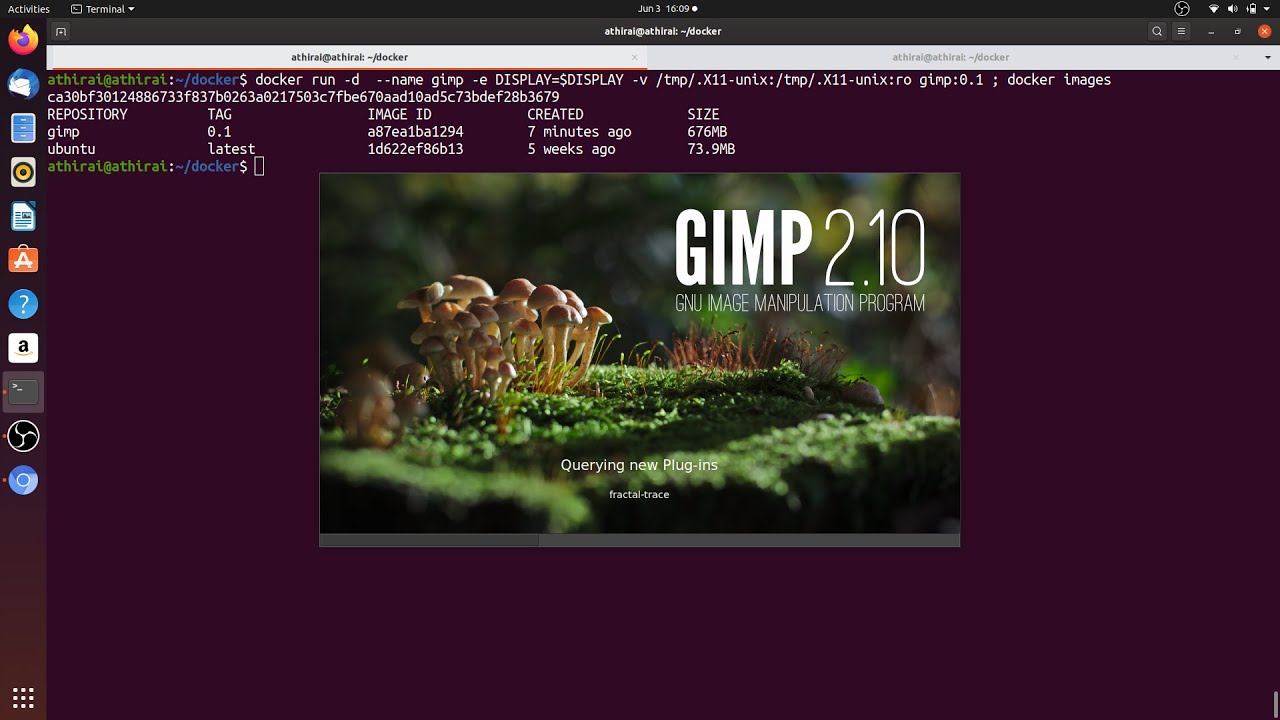
In this video, we will see how to create a GUI app image and run it in a container using X display of host machine. It will not work on Windows.
Please email dotslashrun.sh@gmail.com, if you need training on docker.
rapid sparrow
abstract cape
It's been done in the past. You can share your display server socket with docker...
wow. That's some dark magic
heavy knot
Hey! I'm currently using Pyautogui to automate a program. I'm running my script on a vps, but when I close the connection to my vps it stops working. I'm using .write(), .moveTo(), etc.
heavy knot
heavy knot
Hey! I'm currently using Pyautogui to automate a program. I'm running my script ...
I've seen some post saying I should use some vnc stuff, but I didn't quite understand howto
subtle quarry
heavy knot
I've seen some post saying I should use some vnc stuff, but I didn't quite under...
Could you start your script in tmux?
heavy knot
subtle quarry
Could you start your script in tmux?
Maybe, but what difference would it have?
thorny shell
tmux prevents your program from stopping when you close your VPS connection
now, if it's a gui program I'm not sure it'll work
is the "connection to your VPS" a web page, or some program you run at the command line, or what?
subtle quarry
heavy knot
Maybe, but what difference would it have?
It will not stop when you disconnect
heavy knot
My script doesn't stop when I disconnect from my VPS, but Pyautogui doesn't work because there is no active connection or something like that.
heavy knot
thorny shell
is the "connection to your VPS" a web page, or some program you run at the comma...
I'm using the .rdp file I downloaded from Vultr, but I can also connect using a web page
thorny shell
ah gotcha
well ...
I don't know why your program stops when your RDP connection drops
heavy knot
Pywinauto's docs explains everything and a solution, I just don't understand the solution
https://pywinauto.readthedocs.io/en/latest/remote_execution.html
 past hound
can anyone tell me if my understanding of docker is correct
so ive been trying to learn docker for a while now and I get the basics of docker and docker-compose
so if I containerized my app using docker and want to deploy these are generally the steps I would have to follow
- create a docker image that would contain my application
- push the docker image to some docker repository
- on my cloud service (digitalocean, aws, gc, whatever...) I would pull the docker image from wherever I pushed my docker image to and simply just start the docker container?
tawny temple
Yes
past hound
would I have to do any additoinal config relating to networking side?
also would it be better if I developed my application first and then dockerized the app or should I just dockerize the app from the start?
tawny temple
Depends on how exactly you deploy it I suppose. Like, if you deployed it just to a VPS then you would likely need to configure the firewall, among other things. But a VPS is typically not the most cost-efficient way to deploy containers anyway.
past hound
which process is better?
whats the best way to deploy a docker app? I should use something like AWS?
I see lots of people recommending DigitalOcean
tawny temple
Cloud providers typically have services that let you deploy an image directly
past hound
I just want to build a dead simple app, dockerize it and deploy it just to understand the basics
cloud providers you mean like AWS, Azure, GC etc...?
if I deployed to AWS, would I still need to configure firewall and additional other security measure?
tawny temple
Again, depends on how you deploy it. There are multiple ways to do it.
For example, AWS has Elastic Beanstalk which can be used to deploy containers. They also have AWS App Runner, which is a simplified version of Beanstalk. These approaches require less configuration than if you were to just use EC2.
past hound
is EC2 a VPS just like having DigitalOCean server?
tawny temple
Yes
past hound
I remember using AWS a while ago but it was confusing as hell
even to do something very basic
tawny temple
AWS is just an example. Other providers have similar offerings
I'm just more familiar with AWS so I used it as an example.
past hound
would I have to push my docker image to the AWS docker registry or can I push my docker image anywhere?
tawny temple
IIRC for AWS App Runner it only supported automated deployments for images on ECR, their container registry.
Not sure about Beanstalk. You'd have to check their docs.
past hound
ok no owrries. appreciate the info. much love
tawny temple
In any case I believe ECR is free if you push the image to the public repo. The cost is when you want it to be private.
Well, free as in up to a certain limit
past hound
if I push my docker image to ECR and make it public then I can host the dockker image for free on EC2?
tawny temple
nope
ECR and EC2 have separate billing
And if you use EC2 directly you don't necessarily need to use ECR
past hound
oh so you're saying its free to deploy my docker image to ECR for free if i make it public but I still have to pay for EC2?
oh right that makes sense
that means I can just deploy to dockerhub or wherrever and use EC2 separately?
tawny temple
past hound
that means I can just deploy to dockerhub or wherrever and use EC2 separately?
Yes.
Beanstalk and App Runner have more integrations for automated deployment and at least for App Runner I am sure only ECR was supported.
past hound
My only concern with AWS is unexpected high costs... I read some horror stories where some users are racking hundreds of dollars unexpected bills
tawny temple
I suppose that can happen with any cloud provider.
past hound
like if you dont know what you're doing you can be hit with some gnarly usage fees
tawny temple
In AWS you can set alerts and limits for your billing
past hound
thats what scares me to be honest
I dont think DigitalOcean has that issue. at least I dont' thiink so
tawny temple
Well AWS only charges you for what you use, so if you unexpectedly use a lot, then you will be charged a lot.
It's not like a flat rate
past hound
well I wouldn't expect my app to receive high traffic but once you share it publicly to users, there will be someone who will try to exploit your application
which is what happened to someone
someone ran an infinite loop which was constantly hitting their api which racked up some hefty costs
tawny temple
That's why one should implement rate limits for their API
past hound
yea but for someone who might not be too experienced this could be a very costly mistake
😬
past hound
im trying to open my app at localhost:8000 but keep getting Unable to connect to localhost:8000
CONTAINER ID   IMAGE                        COMMAND              CREATED         STATUS         PORTS                                                 NAMES
f8ed60d8a39b   prakhar1989/foodtrucks-web   "python3 ./app.py"   6 seconds ago   Up 4 seconds   5000/tcp, 0.0.0.0:8000->8000/tcp, :::8000->8000/tcp   foodtrucks
but should be the correct port? what am I doing wrong
heavy knot
my process memory scanner


 dusky mantle
there are a lot of values with "5" :P
heavy knot
ye
 serene notch
hey guys, wonder if anyone can help me maybe guiding me or providing me some inputs on this. My end goal is to implement a pipeline in Azure DevOps that executes usual python steps (code validation, tests, etc) and deploy or make the updated version available to be deployed to my server. As my environment is still based on servers, not containers, I am wondering how I can accomplish this.
What´s still not clear to me is the actual "code deployment" to the server. That´s what I have in my mind for the pipeline:
code quality validation (flake8, black, isort), tests, etc
once this all passes, it would either move the code to artifactory and then deployed to the server ( it´s not container )
Should I have something on the server itself being triggered to download the latest version of the artifactory?
Appreciate any tips, articles or recommendations.
Thanks in advance
tawny temple
serene notch
hey guys, wonder if anyone can help me maybe guiding me or providing me some inp...
How about simply SSHing into the server and then using git to pull changes?
serene notch
tawny temple
How about simply SSHing into the server and then using git to pull changes?
the issue in this case might be that my server is not in the cloud. I think my azure devops environment wouldn´t be able to reach it. Should I have something on the server end looking for code updates and then trying to pull it from my repository or artifactory?
not sure if this is an unusual setup. This is a new environment to me, so tyring to see how I can make this a good solution considering devops good practices
tawny temple
Is the server connected to the internet? If so, then you can set it up to run sshd and connect to it over ssh via Azure Pipelines.
serene notch
tawny temple
Is the server connected to the internet? If so, then you can set it up to run ss...
I will check it out. I´ve heard ansible might be a good option for it?
tawny temple
Yes. In fact, Ansible ultimately operates using SSH. If you simply need to move some files then Ansible is overkill. But if you have a lot of other things you need to provision on the server, then check it out.
serene notch
tawny temple
Yes. In fact, Ansible ultimately operates using SSH. If you simply need to move ...
cool. I will check more into it and will post here what I was able to test. appreciate your time and answers @tawny temple
 finite crest
hey guys i have a lot of python files which writes to a log files
and these python files mostly talk to a elasticsearch db
i was wondering about what would be the best approach to monitoring these logs
like getting an email or sms when i get a error or debug log level
I checkout out the logstash
but grafana does sound like a good option as well
or maybe a self hosted sentry
any ideas please?
mystic void
finite crest
hey guys i have a lot of python files which writes to a log files
and these pyt...
In general, I don't use logs for alerting if I can help it. This means:
- Metric/events for any quantifiable information such as golden metrics
- Logs/Traces for insight and debugging
Regardless, you can use some services like New Relic or Datadog, which have some free tiers and provide everything you need.
heavy knot
`print("1. Tool Help")
print("2. Tools List")
import keyboard
keyboard.on_press_key("1", lambda _: print("Test"), suppress=False)
while True:
pass`
I want that u only can type the "1" one time
to open the "Tool Help"
 carmine dirge
Hi, given project structure (name-spacing):
root/
    sub1/
        namespace/
            __init__.py
        pyproject.toml
    pyproject.toml
Can I specify in the root/pyproject.toml somehow the local sub1/pyproject.toml as dependency?
(Couldn't find anywhere in documents. If someone can point out doc that says that, I'm all ears)
Additional question: Can I specify somehow sub*/pyproject.toml as dependency?
Essentially, what I want is to be able to do is pip install -e . in the root folder
 hallow gull
Does anyone know how to cross compile a Python executable? I want to cross compile for aarch64-pi while on an amd64
past hound
➜  server sudo docker-compose up
WARNING: The PWD variable is not set. Defaulting to a blank string.
Removing server_caddy_1
Recreating e18c48c71aed_server_caddy_1 ... error

ERROR: for e18c48c71aed_server_caddy_1  Cannot start service caddy: failed to create shim task: OCI runtime create failed: runc create failed: unable to start container process: error during container init: error mounting "/Caddyfile" to rootfs at "/etc/caddy/Caddyfile": mount /Caddyfile:/etc/caddy/Caddyfile (via /proc/self/fd/6), flags: 0x5000: not a directory: unknown: Are you trying to mount a directory onto a file (or vice-versa)? Check if the specified host path exists and is the expected type

ERROR: for caddy  Cannot start service caddy: failed to create shim task: OCI runtime create failed: runc create failed: unable to start container process: error during container init: error mounting "/Caddyfile" to rootfs at "/etc/caddy/Caddyfile": mount /Caddyfile:/etc/caddy/Caddyfile (via /proc/self/fd/6), flags: 0x5000: not a directory: unknown: Are you trying to mount a directory onto a file (or vice-versa)? Check if the specified host path exists and is the expected type
ERROR: Encountered errors while bringing up the project.
version: "3.7"

services:
    caddy:
        image: caddy:latest
        restart: unless-stopped
        ports:
            - "80:80"
            - "443:443"
        volumes:
            - $PWD/Caddyfile:/etc/caddy/Caddyfile
            - $PWD/site:/srv
            - caddy_data:/data
            - caddy_config:/config

volumes:
    caddy_data:
        external: true
    caddy_config:
have you tried ./Caddyfile:/etc/caddy/Caddyfile?
brazen forge
because from the error message it seems like Docker Compose doesn't recognize $PWD
past hound
Caddy 2 is a powerful, enterprise-ready, open source web server with automatic HTTPS written in Go.
im following the exact steps in the docs
if i remove the volumes in docker-compose file then everything works
brazen forge
what OS? what shell?
past hound
if i change $PWD to just a .
then the WARNING: The PWD variable is not set. Defaulting to a blank string. goes away
but container still doesnt start
im using linux
brazen forge
hmm. $PWD should be set automatically by the shell
brazen forge
past hound
but container still doesnt start
does it still throw the same error?
brazen forge
echo $SHELL
past hound
im using zsh
brazen forge
hmm. straaange
past hound
/usr/bin/zsh
brazen forge
can you run
echo $PWD
this is like the 10th time im trying to learn docker
and its stuff like this that meakes me want to giveup
ok
$PWD => /home/rickyjw/odinproject/test-app/server
brazen forge
hmm
past hound
yes hmm
brazen forge
could you try
PWD=$(pwd) sudo docker-compose up
k one sec
same error
i dont think its a $PWD issue
cause even if i replace $PWD with a . its the same error
some it must be something with the way im creating the volumes
you know what im trying to say
brazen forge
with the ., what exact error do you get?
past hound
but like i said im just following the docs
the error that I pasted above
➜  server PWD=$(pwd) sudo docker-compose up
[sudo] password for rickyjw:
Removing server_caddy_1
Recreating e18c48c71aed_server_caddy_1 ... error

ERROR: for e18c48c71aed_server_caddy_1  Cannot start service caddy: failed to create shim task: OCI runtime create failed: runc create failed: unable to start container process: error during container init: error mounting "/home/rickyjw/odinproject/test-app/server/Caddyfile" to rootfs at "/etc/caddy/Caddyfile": mount /home/rickyjw/odinproject/test-app/server/Caddyfile:/etc/caddy/Caddyfile (via /proc/self/fd/6), flags: 0x5000: not a directory: unknown: Are you trying to mount a directory onto a file (or vice-versa)? Check if the specified host path exists and is the expected type

ERROR: for caddy  Cannot start service caddy: failed to create shim task: OCI runtime create failed: runc create failed: unable to start container process: error during container init: error mounting "/home/rickyjw/odinproject/test-app/server/Caddyfile" to rootfs at "/etc/caddy/Caddyfile": mount /home/rickyjw/odinproject/test-app/server/Caddyfile:/etc/caddy/Caddyfile (via /proc/self/fd/6), flags: 0x5000: not a directory: unknown: Are you trying to mount a directory onto a file (or vice-versa)? Check if the specified host path exists and is the expected type
ERROR: Encountered errors while bringing up the project.
What is Caddyfile?
Note
are you trying to mount a directory onto a file (or vice-versa)?
The mount paths must both be directories, not files.
past hound
they are directories
past hound
I can cd into it
brazen forge

past hound
so doesnt that mean its a directory?
brazen forge
what are the contents of Caddyfile?
tawny temple
I believe the error is stating that the destination (i.e. within the container) is not a directory.
past hound
- ./Caddyfile:/etc/caddy/Caddyfile
brazen forge
Caddyfile is supposed to be a file AFAIK
past hound
so how would I fix that line
brazen forge
brazen forge
what are the contents of Caddyfile?
could you answer this?
brazen forge
uhh
tawny temple
Sorry I misspoke. They can be files but they have to both be files. Or they have to both be directories.
For caddy I think it should be a file
brazen forge
yea
make Caddyfile a file
GitHub
Resources for packaging and distributing Caddy. Contribute to caddyserver/dist development by creating an account on GitHub.
past hound
➜  server ls -l
total 44
drwxr-xr-x. 1 rickyjw rickyjw     0 Jul  6 15:31 caddy_config
drwxr-xr-x. 1 root    root        0 Jul  6 14:59 Caddyfile
-rw-r--r--. 1 rickyjw rickyjw   381 Jul  6 15:40 docker-compose.yml
-rw-r--r--. 1 rickyjw rickyjw     0 Jul  6 14:47 Dockerfile
-rw-r--r--. 1 rickyjw rickyjw    12 Jul  6 14:54 index.html
-rw-r--r--. 1 rickyjw rickyjw   268 Jul  5 17:52 index.js
drwxr-xr-x. 1 rickyjw rickyjw  1646 Jul  5 17:51 node_modules
-rw-r--r--. 1 rickyjw rickyjw   347 Jul  5 17:51 package.json
-rw-r--r--. 1 rickyjw rickyjw 27956 Jul  5 17:51 package-lock.json
drwxr-xr-x. 1 root    root        0 Jul  6 14:59 site
First, do you need or want to override the default Caddyfile? The mount is optional. So if you don't need it, don't do it. If you do need it, then for -v $PWD/Caddyfile:/etc/caddy/Caddyfile, $PWD/Caddyfile should point to a file on the host.
brazen forge
basically, delete the Caddyfile directory and make a file named Caddyfile
past hound
@tawny temple I just want to follow the official caddy docs
to get something working
im not trying to do anything advanced here
tawny temple
Well on Dockerhub they imply that overriding the Caddyfile is optional. But I know nothing about Caddy.
past hound
@brazen forge ok give me a sec
brazen forge
well, mounting a custom Caddyfile would be the advanced thing to do here
past hound
ok so something interesting happened
so i deleted the Caddyfile folder and created a new Caddyfile file
and now I get this
➜  server PWD=$(pwd) sudo docker-compose up
[sudo] password for rickyjw:
Removing server_caddy_1
Recreating e18c48c71aed_server_caddy_1 ... done
Attaching to server_caddy_1
caddy_1  | {"level":"info","ts":1657137329.5013137,"msg":"using provided configuration","config_file":"/etc/caddy/Caddyfile","config_adapter":"caddyfile"}
caddy_1  | run: adapting config using caddyfile: EOF
does that mean its working?
brazen forge
probably yea
but like Mark said, you probably don't need to mount a custom Caddyfile for basic usage
tawny temple
I kind of suspect it isn't working properly if you created a file without putting anything inside it
past hound
its not working
cause when i got to localhost, it gives me the page not found
normally it would bring up the default caddy page
past hound
you told me to create a Caddyfile?
tawny temple
That instruction was likely given in the context of you wanting to override the config. But as I suggested, you don't have to do it; it's an optional step.
past hound
i dont want to override anything
i jsut want to get it to work
if there is anyone in here that knows anything about docker please just send me a DM. thanks
past hound
dude im just followingg what i was being told
he said to delete the directory and to create a Caddyfile
thats what i did
i dont know if it overrides some other file
im obviously new to all of this
tawny temple
That was said to you before it became evident that you didn't want to override the config. It was (perhaps mistakenly) taken for granted that you understood that it was an optional step, so they were following with that assumption and just giving you instructions on how to correctly overwrite the Caddyfile. After that was given, I put into doubt whether you actually need to overwrite it, and evidently you don't; you didn't realise it was optional. It was a miscommunication but I hope that clears it up.
tawny temple
This option creates a bind-mount which overwrites the image's Caddyfile with the file on your host -v $PWD/Caddyfile:/etc/caddy/Caddyfile. Just remove that and it will revert to using the default Caddyfile in the image.
past hound
so i delete the Caddyfile?
tawny temple
On your host, you can delete it for the sake of tidiness but it doesn't matter really. The important part is that it's not mounted i.e. that the option I just mentioned is not used.
past hound
yea but i really want to just follow along with the docs says to do
version: "3.7"

services:
  caddy:
    image: caddy:<version>
    restart: unless-stopped
    ports:
      - "80:80"
      - "443:443"
    volumes:
      - $PWD/Caddyfile:/etc/caddy/Caddyfile
      - $PWD/site:/srv
      - caddy_data:/data
      - caddy_config:/config

volumes:
  caddy_data:
    external: true
  caddy_config:
This is all the docs have to say on the matter in the "Basic Usage" section
To override the default Caddyfile, you can mount a new one at /etc/caddy/Caddyfile: ...
past hound
yea sure I can delete the volumes to make things work
but id like to understand also how to get it to work using volumes as well
tawny temple
That instruction is basically saying that if you have a reason to override the Caddyfile, here is how you do it. It's not saying you should unconditionally do it. In your case, you just want the basic set up so there's no reason to overwrite it. Just remove this line - $PWD/Caddyfile:/etc/caddy/Caddyfile.
If you did want to override it, then you basically had the mounting part figured out. The only problem was that your Caddyfile was empty. You'd have to read their instructions to know what to put inside. But as you said, you're not trying to do anything advanced so why make this harder for yourself?
past hound
ok let me make sure im understanding this corectly
i only specify that line if I plan to overwrite the original Caddyfile?
tawny temple
Correct
past hound
if not then I simply just dont include that line?
tawny temple
Correct
past hound
ok one other thing
i was following this tutorial
s

❤️Host your applications and get 💰$100 credit (referral): https://m.do.co/c/1b74cb8c56f4
By watching this video you will learn how to deploy your Node.js application in minutes with Docker, docker-compose & Caddy Server with full HTTPS support.
GitHub Repository: https://github.com/TomDoesTech/caddy-nodejs-docker-tutorial
Article: https://to...
at 4:54 you can see that includes that - $PWD/Caddyfile:/etc/caddy/Caddyfile`
in his docker-compose file
is that because is overwriting the Caddyfile?
because late ron in the video he creates a Caddyfile
to do some reverse proxy stuff
tawny temple
Yeah, if you want to follow this tutorial you will end up overwriting the Caddyfile. So you'll want to keep that line.
And it also shows what to put inside the Caddyfile, so that solves the problem of having an empty one
past hound
ok makes sense now
the docs was confusing me but it was probably just my lack of knowledge
anyway thakns dude. i really appreciate your help
i dont know where the other dude went but thank you too
tawny temple
You're welcome
finite crest
mystic void
In general, I don't use logs for alerting if I can help it. This means:
* Metric...
Oooh, I'll take a look at those
Thanks man
dry vale
What is the best way to create a simple API with Python and publish it?
I already have the "base" for it
The base being this code: https://github.com/gtkacz/nba-headshot-api/blob/main/source_code/crawler.py, that will crawl the NBA.com website for every player in the league and store their ID, and therefore can generate an URL for the official headshot for every player using their ID
 buoyant quarry
Can someone help me, I succesfully made a list generate a random text. But it only regenerates it when I start my script, I want it to do it every second or so. Does anyone know how I can get this?
These are some parts of my code:
random_rose = random.choice(random_rose_list)```
```    client.set_sounds({
"rose": random_rose,```Has anyone was able in vscode to point as a python venv to be inside docker container? 🤔 (docker-compose)
UPD: Nevermind; Attached. It is possible and quite good. I think better than dealing with venv ;b
 velvet elk
 thorny shell
!kindling
rancid schoonerBOT
Kindling Projects
The Kindling projects page on Ned Batchelder's website contains a list of projects and ideas programmers can tackle to build their skills and knowledge.
wooden ibex
rapid sparrow
Has anyone was able in vscode to point as a python venv to be inside docker cont...
Why would you?
just install everything into the docker container
rapid sparrow
wooden ibex
just install everything into the docker container
oh, i mean to say, how to point for vscode to use python environment from docker container xD
so that vscode would apply syntax recognition from installed libraries and etc
nevermind, it all works
 woeful goblet
can someone pls code a youtube downloader in Py for me?
brazen forge
woeful goblet
can someone pls code a youtube downloader in Py for me?
nope because 1) that's against YT's ToS 2) we don't just write some code for people here
woeful goblet
okay but thx for the reply
rapid sparrow
woeful goblet
can someone pls code a youtube downloader in Py for me?
also there is already youtube downloader https://youtube-dl.org/, it is already even having python integration
hail FOSS
 olive path
Any tips on enforcing unspoken and perhaps somewhat weird style rules? I have a project of mine I want to make sure upholds a set of guidelines I try to follow, but I am not sure I can easily find a linter which does this.
Essentially, I am wondering what would be the easiest way to define very custom styling rules. Is making my own linter very difficult?
thorny shell
I'd expect so 😐
olive path
😔 To give an example... I want to ensure that the order of __all__ is the same as the definition of the names inside of it
thorny shell
that, by itself, should be easy; at least for function definitions
each function has some attribute that tells you the file and line number.
olive path
Right, this will only really be for functions and classes
 iron basalt
I'd probably look at what it would entail to write a flake8/pylint plugin - I imagine it will do most of the work for you and you just hook in your checks at some point, but it's something I've never dabbled in
rapid sparrow
olive path
Essentially, I am wondering what would be the easiest way to define very custom ...
Considering that python gives away a lot of information in Dunder methods.
And that we need just throw away single scripts for one thing only
I would expect it should be easy to write your own single time linting scripts
Most of desired linting should be within the grasp of some regex
thorny shell
🤣
finite fulcrum
is there some pure python line profiler?
 clear sorrel
Any python developer here knows how to use autodocs in sphinx?
https://stackoverflow.com/questions/72909680/how-to-use-autodoc-in-sphinx-to-show-docstrings
Stack Overflow
How to configure project so it will use Sphinx autodoc to get DocString from python code and show it on html?
Its is not clear from the documentation what to add where to make autodoc get all my
brazen forge
finite fulcrum
is there some pure python line profiler?
!pypi pprofile
rancid schoonerBOT
Line-granularity, thread-aware deterministic and statistic pure-python profiler
wet dune
clear sorrel
Any python developer here knows how to use autodocs in sphinx?
https://stackove...
I made docs in sphinx so yeh
 pearl goblet

Medium
If you are looking for a low-cost and simple solution for automated web scraping, this post is actually for you.
 umbral jay
anyone used pycharm community ver for Django? Is it good enough? Pycharm pro version has special support for Django. Is it worth going for it, in your experience?
 neon swan
Anyone familiar with Poetry? I've gone from poetry just working without manually activating environment's and being able to call one project from another to Poetry stropping all the time and having to delete, recreate and reinstall environments. I'd like to go back to seamless usage. Any tips?
 tardy island
hey any recommended advanced git tutorial?
Like for people who have comfortably clone/pull/commit/push/merge for years and now want to learn about more messy stuff like branching, rebase etc?
brazen forge
by branching, do you mean branching strategies?
brazen forge
tardy island
hey any recommended advanced git tutorial?
also, have you been through the Pro Git book? https://git-scm.com/book/en/v2
tardy island
Nope
This looks good
So basically I know stuff up to chapter 2
I'll start reading from chapter 3 i guess
thx
brazen forge
I think the more advanced stuff is in Ch. 7
rapid sparrow
tardy island
Like for people who have comfortably clone/pull/commit/push/merge for years and ...
go through https://learngitbranching.js.org/?locale=en_US interative tutorial and it gives visual understanding what happens under the hood
Fun and fast, and highly useful
An interactive Git visualization tool to educate and challenge!
thorny shell
tardy island
hey any recommended advanced git tutorial?
It's neither "advanced" nor a tutorial, but I found https://eagain.net/articles/git-for-computer-scientists/ super useful at first
rapid sparrow
I am trying to run script `python3 src/scrappy/manage.py
https://github.com/darklab8/darklab_darkbot/blob/master/src/scrappy/manage.py
But i get this error
darklab_darkbot$ python3 src/scrappy/manage.py
Traceback (most recent call last):
  File "/home/naa/repos/pet_projects/darklab_darkbot/src/scrappy/manage.py", line 1, in <module>
    from .database import engine
ImportError: attempted relative import with no known parent package
how to how to resolve those importing problems? xD
file has code like
from .database import engine
from .players.models import Base

Base.metadata.create_all(bind=engine)
I hoped relative import will work
i altredy tried absolute importing too
how can I debug it even?
Well. I was able to solve it no idea how 🤔
import database as database
import players.models as models

models.database.Base.metadata.create_all(bind=database.engine)
changing imports to this apperently solved issue
i wonder if i can use somehow imports starting from folder src
full bronze
You might be able to run it as a module with the -m flag
heavy knot
I constantly forget to pull after I've pushed to one of my own repos with a github action that commits changes to the repo
Is there a tool that maybe reminds me to pull or pulls for me
It makes merge commits after I forget with isnt great
thorny shell
not that I know of
you can tell git to prohibit merge commits, though, iirc
so you'll get an error rather than a merge commit
heavy knot
That could work ill look into that
thorny shell
put this in ~/.gitconfig
[merge]
        ff = only
I have written (in python!) a tool that fetches from all my repos more or less at once, and I run that a few times per day
nice and fast
 rapid sparrow
when I try launching program from root level of folder src/scrappy with uvicorn main:app.py
i get error with relative import ImportError: attempted relative import with no known parent package
how to resolve it?
that's how stuff is there
so far as solution i was only able to launch the folder from parent one. But I wish to try launching it from the root of this scrappy folder
tawny temple
That does not seem appropriate
scrappy is a package since it has __init__.py so really it should be scrappy.main:app. And in main.py you should be doing from scrappy.players import views as player_views
It doesn't make sense to launch from within scrappy because it's a package
Also I don't think src should have __init__.py
And definitely not the root of your repository
You would have to launch with src as the cwd. But typically the intent behind using the "src" directory structure is that you plan to install your scrappy package. If you do install it, then you'd be able to run from the project root, or from anywhere really.
rapid sparrow
tawny temple
It doesn't make sense to launch from within `scrappy` because it's a package
That's helpful
this explained everything
I just deleted __init__.py file from scrappy folder
and it started to work under different importing rules
which resolved everything correctly now
tawny temple
That is not the appropriate solution
scrappy should be a package
so it should have __init__.py
rapid sparrow
why? Scrappy is a microservice, it is not a package
it makes sense for it to be not a package
Scrappy is a fully fledged application
with its own dockerfile
launched as uvicorn main:app
tawny temple
It's a package in the sense of the Python import system not in the sense of publishing something to pypi
rapid sparrow
tawny temple
You would have to launch with `src` as the cwd. But typically the intent behind ...
urgh. my intent for usage of src was to be having absolute imports along the project, which are less messy than this situation xD
tawny temple
Well I don't quite follow your intent or directory structure
rapid sparrow
I mean...
tawny temple
It looks strange to me
rapid sparrow
picture in architecture folder explains
it shows future plan of infrastructure
src is having 4 different microservice parts
which are going to be in the project
tawny temple
Usually all your Python files are within a package (i.e. a folder that has an __init__.py) and everything else like dockerfile, requirements.txt, etc are outside in the project root
This is quite standard regardless of whether it's a library or an application
rapid sparrow
erm. The confusion is because, technically each folder of src should be having its own repository
I simplified situation and made them all in one repo
each src folder, would be having (potentially) its own dockerfile
as they are all different apps to pack
therefore they have their own requirements/constraints files
tawny temple
I'm not familiar with all the files (like what manage.py and databases.py) are for, but I would structure it like this
src
    scrappy
        scrappy
            alembic
            bases
            core
            forum_records
            players
            __init__.py
            main.py
        tests
            __init__.py
            conftest.py
            test_whatever.py
        .dockerignore
        alembic.ini
        dockerfile
        requirements.txt
If you have some python files that are more like scripts for development/deployment rather than a core part of the app then those can live in a "src/scrappy/scripts" or "src/scrappy/utils" directory
rapid sparrow
tawny temple
```
src
scrappy
scrappy
alembic
bases
...
Oh yeah, I tried already to do that but encountered doubled initialization of ORM model that lead to error
Hopefully now since it is not a package, I will be able to structure it
rapid sparrow
tawny temple
```
src
scrappy
scrappy
alembic
bases
...
I kind of half agree with your location of test files though
tawny temple
I'm not familiar with sqlalchemy so I don't know why that would happen for you
rapid sparrow
I think relevant test code should be in same sub package where it belongs
rapid sparrow
kind of nice that I encounter such problems. Good that I finally went to FastAPI
in Django i remained blissfully ignorant to such problems xD
everything worked out of the box
tawny temple
Yeah it generates a project structure for you. You could deviate from it but most stick to defaults