#data-science-and-ml
1 messages · Page 184 of 1
 iron basalt
 primal hemlock
Could liquid cooling work?
iron basalt
(Even if you are doing ML research btw, see LeCun right now for example, you start small and scale up later, make sure the idea works first in small)
iron basalt
primal hemlock
Could liquid cooling work?
Where does the heat go?
Out of the PC, so it keeps running, but it needs to go somewhere.
Think about it as moving around the heat.
Ideally out of your house.
primal hemlock
iron basalt
Where does the heat go?
Ice bucket lol
Strip down an old fridge and use it
iron basalt
Keep replacing the bucket and that can work, if you are up for that 24/7.
But yeah, datacenters have this big problem, so they act like one giant PC that is the size of the whole building, and pump out the heat.
Liquid cooling.
(Locals hate it)
You can convert your home into a mini datacenter, if you really don't mind price.
primal hemlock
Heat pipe to the neighbors home, problem solved
iron basalt
Open their window, pipe from your window, they surely won't notice /s.
primal hemlock
Paint it camo
“This is not a heat pipe”
Bootlegged magnetocaloric effect fridge
primal hemlock
Where would you suggest I start with the beginner stuff?
 versed pilot
For a total ML beginner start with sklearn. Linear regression etc. Maybe XGBoost once you hit the limits of what you can do with sklearn?
 grim storm
Hello guys anyone worked with anomaly detection on Agriculture sensors ?
 warm dune
grim storm
Hello guys anyone worked with anomaly detection on Agriculture sensors ?
warm dune
grim storm
Hello guys anyone worked with anomaly detection on Agriculture sensors ?
could you explain more? I was genuinely curious
 serene scaffold
grim storm
Hello guys anyone worked with anomaly detection on Agriculture sensors ?
serene scaffold
grim storm
Hello guys anyone worked with anomaly detection on Agriculture sensors ?
that's really niche. chances are that no one has, but you can probably still get help if you ask your actual question.
warm dune
serene scaffold
that's really niche. chances are that no one has, but you can probably still get...
wassup bro
serene scaffold
I'm just fabulous. what do you think about data science and ML?
warm dune
serene scaffold
I'm just fabulous. what do you think about data science and ML?
remember we were talking about NLP a few days late?
serene scaffold
sure, what about it?
warm dune
serene scaffold
sure, what about it?
I took some time to study and I think I finally understood embedding and the architecture of transformers
like i genuinely could explain to my mother and and she understood
now i will to check a little RAG and LangChain
just to see what is it
 half pulsar
grim storm
Hello guys anyone worked with anomaly detection on Agriculture sensors ?
half pulsar
grim storm
Hello guys anyone worked with anomaly detection on Agriculture sensors ?
Hydroponics related or something?
half pulsar
warm dune
just to see what is it
Good place to be looking
warm dune
half pulsar
Good place to be looking
i've heard of RAG, is it too important for ml?
langchain i have no ideia for what is it
half pulsar
warm dune
langchain i have no ideia for what is it
LangChain is a good example of the direction that AI is starting to head in simply so it'd be good for you to learn about, Its just Agentic AI
warm dune
half pulsar
LangChain is a good example of the direction that AI is starting to head in simp...
so, no math here
thank god
serene scaffold
warm dune
i've heard of RAG, is it too important for ml?
When you do RAG, all the machine learning has already been done
The same is true when you do agentic development
That's why #agents-and-llms is a separate channel
warm dune
serene scaffold
When you do RAG, all the machine learning has already been done
just a question
serene scaffold
What question?
warm dune
transformers will learn the model how to read
and RAG will give the context
its like that?
serene scaffold
The reason we do RAG is because we can't trust LLMs to function as knowledge stores. They tend to form coherent sentences that make sense but are just false.
RAG is just the idea of looking up potentially relevant text from a knowledge store, and then putting that text after the user's question, and then letting the LLM generate text from there.
warm dune
serene scaffold
The reason we do RAG is because we can't trust LLMs to function as knowledge sto...
yes, that's cuz we can have specific contexts, like some game released 1 week late and if the model receives all the data it can from all contexts it would take years to train then we make the model learn to read and write Oh, the rag goes there and gives the context, rules and specific situations, right?
i think I understand
serene scaffold
warm dune
yes, that's cuz we can have specific contexts, like some game released 1 week la...
You can't really train an LLM to understand specific facts, because they just get lost in the sea of all the other text they were trained on.
But you can trust them to synthesize information that's immediately available to them
warm dune
serene scaffold
But you can trust them to synthesize information that's immediately available to...
got it, i'll see more later
thks pope
serene scaffold
I absolve thee
 dull flicker
@versed pilot @grim storm my dms are open!
 livid oasis
i am just curious as a beginner, the libraries like numpy and pandas, how they're used in later on stages of machine learning !!
or the 80/20 rule applies here?
 jaunty helm
livid oasis
i am just curious as a beginner, the libraries like numpy and pandas, how they'r...
jaunty helm
livid oasis
i am just curious as a beginner, the libraries like numpy and pandas, how they'r...
to do data processing
most of the time you spend in ml is the data processing while 'fancy modeling' takes surprisingly little
livid oasis
jaunty helm
to do data processing
most of the time you spend in ml is the data processing wh...
ohh okayy
like data cleaning and pre-processing
warm dune
Guys, just a review question, neural networks are feature extractors
That is, the weights of neurons are, in part, vectors that simulate characteristics (after training, with the weights adjusted)
And through the dot product, we can see the similarity of the neuron (which carries a feature) and our input vector (the data) so if that vector has the features our dot product will send an 'intensity' to the next layer
That the next layer will do the same feature simulation, and now it will be kind of a 'feature of the feature', until it reaches the exit layer
And with each layer pass, the result of the 'intensity' that will be passed as an input vector, so we can extract the 'characteristic from the characteristic' and also modify the space, since this intensity ends up becoming the coordinates for a new space, so to speak
serene scaffold
warm dune
Guys, just a review question, neural networks are feature extractors
That is, t...
this sounds essentially correct to me.
though it's not really as simple as "this layer identifies one of the features". the feature extraction is something that emerges from the whole network.
warm dune
serene scaffold
though it's not really as simple as "this layer identifies one of the features"....
sure, thk
 stuck swallow

 mild dirge
stuck swallow
mild dirge
stuck swallow
almost
 unreal condor
stuck swallow
unreal condor
stuck swallow
When I tweaked a random hyper-parameter in my model:
warm dune
guys in the context of transformers, whats the main difference between heads and blocks?
unreal condor
warm dune
guys in the context of transformers, whats the main difference between heads and...
blocks are just a bunch of layers grouped together, they are not unique to transformers.
Head is a special block computed with 3 special matrices Key, Query, Value (divided into 3 from the result of the previous layer) I think these 3 are inspired by the concept of information retrieval. And if you compute this block multiple times in parallel you have multi-head attentions
Also, I have given up ML long ago so pls fact check : )
warm dune
unreal condor
Also, I have given up ML long ago so pls fact check : )
sure, i'll
 tawdry heart
@warm dune there's a 3b1b vid on transformers which is pr good if u haven't seen it
warm dune
tawdry heart
<@980601465645199430> there's a 3b1b vid on transformers which is pr good if u h...
going to watch
 frigid niche
I am currently working on a Language Model that runs on the TI 84 Plus CE. It is 200k parameters! It uses syllables as a tokenization system. I have it running on the actual hardware, but did testing with an emulator first. I should have all of the documentation ready in a few days or so, but I was really excited to share a sneak peek!
 iron basalt
primal hemlock
Where would you suggest I start with the beginner stuff?
iron basalt
primal hemlock
Where would you suggest I start with the beginner stuff?

MIT 6.0002 Introduction to Computational Thinking and Data Science, Fall 2016
View the complete course: http://ocw.mit.edu/6-0002F16
Instructor: John Guttag
Prof. Guttag provides an overview of the course and discusses how we use computational models to understand the world in which we live, in particular he discusses the knapsack problem and g...

Machine Learning is one of those things that is chock full of hype and confusion terminology. In this StatQuest, we cut through all of that to get at the most basic ideas that make a foundation for the whole thing. These ideas are simple and easy to understand. After watching this StatQuest, you'll be ready to learn all kinds of new and exciting...
After which I would find some resource on deep learning, and after that, pick some topic, such as computer vision. But it's really important to get these foundations covered from resources like that MIT course I linked. Without them you won't really know what it's all based on, and how to correctly evaluate various methods (and how not to do statistics (many ways to mess it up)).
Small note on the MIT course, they use outdated Python libraries, specifically PyLab, use matplotlib.pyplot to plot things instead and other replacements for things they do.
warm dune
Guys, in the context of fine tuning the model (LLM), such as specializing in a subject, transforming it into a chatbot and more, have a place where I can explore that?
a video, article or anything
serene scaffold
warm dune
Guys, in the context of fine tuning the model (LLM), such as specializing in a s...
you can look into how it's done conceptually, but fine-tuning also requires a lot of data and VRAM, so it might still not be feasible.
this tutorial looks about right to me: https://huggingface.co/blog/dvgodoy/fine-tuning-llm-hugging-face
it's over a year old, but the consensus in the AI community is that fine-tuning LLMs is a waste of time.
warm dune
serene scaffold
you can look into how it's done conceptually, but fine-tuning also requires a lo...
I saw a video of a guy saying that
- Models like GPT and more, are trained with text corns (pre-training)
And in this context, he doesn't know how to respond like an assistant, he would just complete the sentences. Then Fine Tuning would emerge
- The Fine Tunnig in the video, the person explained that we would 'train' the model, but only some weights, and gave an example of LORA, who would then make the model respond like an assistant
I was trying to talk about it, I don't know if I used the wrong terms
 agile cobalt
warm dune
I saw a video of a guy saying that
1. Models like GPT and more, are trained wit...
agile cobalt
warm dune
I saw a video of a guy saying that
1. Models like GPT and more, are trained wit...
both things are called fine tuning,
- going from a pre-trained model into a instruct tuned chat model
- further tuning an already instruct-tuned chat model to follow some specific formatting/guidelines
but are entirely different beasts, the format requiring orders of magnitude more data and compute than the later
all major chatbot models like chatgpt, gemini, deepseek, qwen etc. go through some pre-training and fine-tuning, but there is relatively little to gain from further fine tuning models afterwards unless you have some very specific use case
warm dune
agile cobalt
both things are called fine tuning,
- going from a pre-trained model into a inst...
I was watching Kaparthy's video where he creates NanoGPT, and the predictions were based on the text itself. Then I started thinking: "If I use a dataset like Shakespeare's, it won't respond like a chatbot." So I looked into it and discovered fine-tuning LLMs. That I can take a ready-made model like GPT2 and transform it into whatever I want. Since it's already trained to recognize context and more. I saw a comment on Twitter saying that this was the industry standard.
They train the model to learn context from the entire internet -> They do fine-tuning so it acts like a chatbot.
But you said there's little gain, so how would it work to have a greater gain?
like to transform a model to a chatbot
agile cobalt
warm dune
I was watching Kaparthy's video where he creates NanoGPT, and the predictions we...
the open source models labs publish on huggingface and such already do everything we know of that leads to a greater gain
there is little (if anything) to improve that would lead to better general purpose usage, most fine tunes are either trying to remove censorship, improve the performance for niche scenarios at the cost of general performance, or aim for some ultra specific task
warm dune
agile cobalt
the open source models labs publish on huggingface and such already do everythin...
i search a little more and discover
fine tunning (stf) and alignment (rlfh)
which one its used for transform a model like LLAMA into a chatbot?
agile cobalt
both
see the description of https://huggingface.co/meta-llama/Llama-3.1-8B-Instruct for example, preferably also look into the actual papers and technical reports
Model Architecture: Llama 3.1 is an auto-regressive language model that uses an optimized transformer architecture. The tuned versions use supervised fine-tuning (SFT) and reinforcement learning with human feedback (RLHF) to align with human preferences for helpfulness and safety.
(in that release series,-Instructis the chatbot, https://huggingface.co/meta-llama/Llama-3.1-8B is the base model ; some others invert it by adding a-Basesuffix to the base model and no suffix to the instruct model)
frigid niche
Hello there everyone! I have recently completed a syllable-level autoregressive language model that runs entirely on a TI-84 Plus CE calculator! It generates original English prose and poetry from a seed phrase, doing all inference on-device with no external hardware! The architecture is something I am really proud of. Rather than working at the word or character level, the model tokenizes language into its phonetic syllable components, onset, nucleus, coda, stress, and word boundary, and predicts each one through six separate factored output heads. The hidden layer is 198 neurons split into two 99-neuron chunks to fit the TI-84's matrix constraints, with 21-dimensional embeddings per component and a context window of 10 syllables. There is also a 16-dimensional discourse state and an 8-dimensional word state that carry meaning across the generation, giving it a sense of narrative continuity! The full input dimension ends up at 874. The biggest challenge was getting inference to run at all on 154KB of RAM. I precompute the token-context H1 contributions ahead of time so the calculator only has to add vectors instead of multiplying full matrices at runtime, and the output weights are repacked in column-major order for a further speedup. Even with all of that, a full generation run takes about 2.5 to 3 hours on the calculator. You also have to keep an eye on it and confirm garbage collection prompts periodically, which I find adds a certain charm to the experience!
I hope that others will find joy, intrigue, or inspiration from this project. If anyone checks it out, please let me know what you think!
GitHub
Syllable-level autoregressive language model that runs on a TI-84 Plus CE calculator. Full pipeline: corpus generation, training, PC inference, and export to native TI variable files. Generates poe...
frigid niche
The constraint does not limit the work. It becomes the work.
 wintry brook
Is there any docs to study ds & ml from ?
 grand minnow
wintry brook
Is there any docs to study ds & ml from ?
grand minnow
wintry brook
Is there any docs to study ds & ml from ?
Lots in the pinned messages.
wintry brook
grand minnow
Lots in the pinned messages.
Ohh thanks
 limpid zenith
frigid niche
Hello there everyone! I have recently completed a syllable-level autoregressive ...
limpid zenith
frigid niche
Hello there everyone! I have recently completed a syllable-level autoregressive ...
you could share in #1468524576479641744
half pulsar
frigid niche
Hello there everyone! I have recently completed a syllable-level autoregressive ...
Nice project man
grand minnow
 devout osprey
more of a practical way to learn ?
devout osprey
more of a practical way to learn ?
Here's a short one https://www.kaggle.com/learn/pandas

Solve short hands-on challenges to perfect your data manipulation skills.
devout osprey
grand minnow
Here's a short one https://www.kaggle.com/learn/pandas
Thanks
 oak veldt
devout osprey
any resource for pandas aside docs?
oak veldt
devout osprey
any resource for pandas aside docs?
"Python for Data Analysis" by Wes Mckinney. Really good book for Pandas.

 serene scaffold
I don't see where x_2 is ever defined? am I blind, @gloomy fractal?
 gloomy fractal
you could see the 2nd image
gloomy fractal
serene scaffold
I don't see where x_2 is ever defined? am I blind, <@1194198498451656745>?
but hey, i learned the other way solution
of last step
warm dune
guys, is there any lib for RAG, or something like that? what is the standard of the industry?
 trim dock
https://discord.com/channels/267624335836053506/1502347032940118016
trim dock
trim dock
https://discord.com/channels/267624335836053506/1502347032940118016
Any help?
unreal condor
trim dock
Any help?
it's locked, also maybe you dataset is imbalance I think
you probably have more animal_migration instances in your dataset
trim dock
unreal condor
you probably have more `animal_migration` instances in your dataset
All are 5000 images
I checked mutiple times
unreal condor
trim dock
All are 5000 images
have you tried other metrics when training ?
apart from acc, like Precision, Recall, F1?
trim dock
unreal condor
have you tried other metrics when training ?
Uhm... no i just know the very basics of this and am just a hobbiysts, but i would try the ones that you have mentioned also i will re-re-check the image distribution you mentioned
Will see these when i receive the free credit things on colab
And i have re-opened the thread
Replies could be late as i am studying!
unreal condor
Accuracy is probably the least trustworthy metric tbh
trim dock
unreal condor
Accuracy is probably the least trustworthy metric tbh
Okay that kinda made sense to me so i went with it
Can i ping you here or in threads when i work on it again on colab?
unreal condor
whatever works tbh
also disclaimer, my ML knowledge is kinda rusty since I have given up ML for a while
also, did you test your model with custom inputs?
trim dock
unreal condor
also disclaimer, my ML knowledge is kinda rusty since I have given up ML for a w...
Would still be infinitely better than mine xD
trim dock
unreal condor
also, did you test your model with custom inputs?
Yeah, I actually did that its mentioned in the description
It was working whenever i gave it a photo from test set but its fails miserably when i doodle myself it 99% misclasifies it as animal_migration no matter what i doodle
unreal condor
trim dock
Yeah, I actually did that its mentioned in the description
from what I saw, the animal_migration class doesn't have any clear patterns
trim dock
Was saying this animal migration 😂
 trim dock
unreal condor
from what I saw, the `animal_migration` class doesn't have any clear patterns
trim dock
unreal condor
from what I saw, the `animal_migration` class doesn't have any clear patterns
Yeah, its just random vertical line birds you draw in a group
unreal condor
unreal condor
from what I saw, the `animal_migration` class doesn't have any clear patterns
so random stuffs could be it
unreal condor
trim dock
Was saying this animal migration 😂
have you re-processed this?
trim dock
unreal condor
so random stuffs could be it
That clock and many others i doodled were actually pretty good
trim dock
unreal condor
have you re-processed this?
Yeah i pass it the processed image this is the original
unreal condor
trim dock
Yeah i pass it the processed image this is the original
can I see the result?
trim dock
unreal condor
can I see the result?
Yeah, it definitely aint supposed to look like this xD
This was an ant
 unreal condor
trim dock
Yeah, it definitely aint supposed to look like this xD
This was an ant
unreal condor
trim dock
Yeah, it definitely aint supposed to look like this xD
This was an ant
ye now you probably know why it's a animal_migration lol
trim dock
I do now understand why it says it is animal_migration
trim dock
unreal condor
ye now you probably know why it's a `animal_migration` lol
How do i fix this?
Like i made digit_recognizer once its processed image (28x28) didnt looked like this they still preserved info
unreal condor
I think your input is also kinda wrong
the object should be white and the background black
unreal condor
trim dock
Yeah, it definitely aint supposed to look like this xD
This was an ant
this isn't the same as your data
your data instances are more pixelated too
unreal condor
trim dock
Like i made digit_recognizer once its processed image (28x28) didnt looked like ...
I have no idea?
trim dock
unreal condor
your data instances are more pixelated too
Yeah, that i meant too
unreal condor
This is one of the toy datasets that has like no application in the real world tbh so your custom inputs will have a hard time to fit in the model :/
trim dock
See this is a preproccsed image from my the digit recigniset
 trim dock
unreal condor
This is one of the toy datasets that has like no application in the real world t...
trim dock
unreal condor
This is one of the toy datasets that has like no application in the real world t...
I am trying to make something from this please i dont wanna tell that to anyone
unreal condor
could opencv2 do your thing?
trim dock
trim dock
See this is a preproccsed image from my the digit recigniset
See it retains the info
unreal condor
trim dock
See this is a preproccsed image from my the digit recigniset
how did you do this?
trim dock
unreal condor
could opencv2 do your thing?
Probably no it doesnt work natively on android phone
unreal condor
trim dock
Probably no it doesnt work natively on android phone
wait, you use ur phone to reprocess the images?
trim dock
unreal condor
how did you do this?
I used the PIL module in the later one right now i am using tf.keras.utils module i think i should use the PIL
trim dock
unreal condor
wait, you use ur phone to reprocess the images?
Yeah, i program using my phone thats why i have to wait till colab allows me to use their gpu for free xD
unreal condor
no? all of this preproccess stuffs don't need GPU?
trim dock
unreal condor
no? all of this preproccess stuffs don't need GPU?
Yeah it doesnt but training the model sure does
unreal condor
use it to preprocess data then
trim dock
Tho i trained the digit_recogniser on phone since it was small but not this sht
unreal condor
there is also kaggle for free GPU
trim dock
unreal condor
use it to preprocess data then
I use it to pre-process data when use it doodle using pygame
trim dock
unreal condor
there is also kaggle for free GPU
Thats nice but i dont wanna go and like double the code base that i gotta handle
unreal condor
trim dock
Thats nice but i dont wanna go and like double the code base that i gotta handle
use github ?
idk, I haven't tried preproccess images like this before
but Opencv2 is literally for working with images so you should check it out if can
trim dock
unreal condor
but Opencv2 is literally for working with images so you should check it out if c...
Hm.... yeah that wont work on android for some reason
Thank you for pointing this out tho as i had forgotten about this i will go re-write the preprocess code using PIL since it worked last time
trim dock
@unreal condor using PIL to pre-process data worked like a charm its atleast classifying correctly however when it doesnt it throws it in animal_migration category which tbh is frustating but hey one step closer.
Thank you greg!


 dense kite
I have a Query?
When humans see something, we immediately build mental stories and simulate possible futures. Current AI models generate predictions based on patterns in data, but do not seem to have internal simulation or understanding.
Do you think large neural networks are developing a form of internal world-model or imagination-like process, where they can simulate future outcomes beyond pattern completion? Or is this still fundamentally different from human cognition?
serene scaffold
dense kite
I have a Query?
When humans see something, we immediately build mental stories ...
you're right that current models don't emulate consciousness. Neural networks by themselves can't spontaneously start emulating consciousness, but you could use them in a system that does.
whether this is different from human cognition is a philosophical question that I'm not sure will ever be answered.
 abstract wasp
Hi do u guys use cursor ide and uv for building ai agents? I’m new to agents, is it better than just using vscode?
serene scaffold
abstract wasp
Hi do u guys use cursor ide and uv for building ai agents? I’m new to agents, is...
you're looking for #agents-and-llms
iron basalt
dense kite
I have a Query?
When humans see something, we immediately build mental stories ...
World models are a thing in ML, they do already exist, but it's about how to do that well. It's part of the whole. Humans have many different subsystems for specific things, a general system wrapped around all of that (literally), and a meta system (which may or may not be called "consciousness" depending on who you ask / how you define that). What we have with a lot of things right now in AI/ML is basically taking one part of one of those systems, making a very crude approximation or just loosely inspired by it and scaling that up really big. But another big thing is just the high level design goals of these things. Humans for example will do things without being prompted, they will say "IDK" instead of always giving an answer with confidence, they are aligned (to varying degrees) with other humans in terms of goals and "taste," they don't need to be trained all ahead of time on a massive dataset (they learn "online"), they have a meta algorithm applied to the whole population (evolution), etc. A lot of things in AI/ML just don't even have these design goals, they are meant to do some specific job or set of jobs. Very different from a thing that just exists/survives and does stuff on its own (lots of interacting parts / goals). Human cognition involves this dance of all these systems interacting (this is not including the rest of the body which is also part of it all (and also social, etc)).
iron basalt
dense kite
I have a Query?
When humans see something, we immediately build mental stories ...
https://arxiv.org/pdf/1803.10122 Might interest you.
warm dune
someone knows a good article for model monitoring?
limpid zenith
dense kite
I have a Query?
When humans see something, we immediately build mental stories ...
there is a huge body of evidence that suggests that there is no world model in LLMs, they're the Myhill-Nerode theorem and similar results show case this

arXiv.org
Recent work suggests that large language models may implicitly learn world models. How should we assess this possibility? We formalize this question for the case where the underlying reality is governed by a deterministic finite automaton. This includes problems as diverse as simple logical reasoning, geographic navigation, game-playing, and che...
devout osprey
hey i have done with python , numpy and pandas , might look into matplotlib and seaborn later ,
can anyone tell me good resources to go learning ml/dl , and mathmatics required for ml/dl.
??
grand minnow
devout osprey
hey i have done with python , numpy and pandas , might look into matplotlib and ...
There are short ones on http://kaggle.com/learn

Practical data skills you can apply immediately: that's what you'll learn in these no-cost courses. They're the fastest (and most fun) way to become a data scientist or improve your current skills.
devout osprey
grand minnow
There are short ones on http://kaggle.com/learn
thanks, anything other than this , what about maths?
grand minnow
devout osprey
thanks, anything other than this , what about maths?
Check the pinned messages
devout osprey
grand minnow
Check the pinned messages
okay , thanks
gloomy fractal
anyone active?
serene scaffold
gloomy fractal
anyone active?
Just ask your question and people can look at it when they visit the channel.
gloomy fractal
hi @serene scaffold
can i create all linalg concepts from scratch
is it a good idea?
gloomy fractal
gloomy fractal
can i create all linalg concepts from scratch
by writing in python
as codes
serene scaffold
don't ping people to say hi before you say the thing that you actually want them to read and respond to. that's like calling someone on the phone and then immediately putting them on hold, and is rude
you can implement linalg algorithms in python, yes. you'll get worse performance than if you had used numpy.
gloomy fractal
oh....mb
gloomy fractal
serene scaffold
you can implement linalg algorithms in python, yes. you'll get worse performance...
you'll get worse performance than if you had used numpy.
wizard — 21:09
?
serene scaffold
what about that statement do you find confusing?
gloomy fractal
numpy is better for linalg? and doing the other way is worse?
serene scaffold
numpy is implemented in C and can do atomic operations in parallel using CPU magic, so it scales much better than pure python.
gloomy fractal
i want to build to learn..revision is boring, maybe building helps
serene scaffold
but writing something from scratch is a great way to learn, so go ahead and do it in pure python if you think that will help.
gloomy fractal
okay
serene scaffold
 foggy jay
I want to build ML projects any suggestions?
foggy jay
I want to build ML projects any suggestions?
explore some tabular/CSV data and traing a basic classifier on it. you can use pandas to read and manipulate the data, and train a model from sklearn.
I don't expect you to know what all of that means, but you'll be able to figure it out.
 grand tulip
I have a research project involving the use of camera object detection and Id like to gain a solid understanding of OpenCV before (tool in research might not be OpenCV but at the end of the day they’re all similar) .What are the best ressources ?
 left tartan
grand tulip
I have a research project involving the use of camera object detection and Id li...
left tartan
grand tulip
I have a research project involving the use of camera object detection and Id li...
Opencv has a good tutorial, I'd start there
 mellow spruce
 serene scaffold
mellow spruce
serene scaffold
mellow spruce
care to elaborate?
half pulsar
mellow spruce
I checked your Github and I’m not seeing AGI here. I’m seeing heavily branded LLM/tooling projects with AI-generated imagery and inflated claims.
If there’s real substance, explain it plainly. Otherwise call it an agent framework, not AGI.
serene scaffold
gloomy fractal
how often OOP is used in ML
depends on what you think OOP is
you need to understand how classes work in Python to be able to do ML in Python
gloomy fractal
serene scaffold
depends on what you think OOP is
you need to understand how classes work in Pyth...
do i need to go deep?
i mean my educator is teaching the OOP in depth
serene scaffold
what are they teaching you about OOP that you feel is depthful?
gloomy fractal
most of the dunder methods..,callables, using specific libs, descriptors, enumeration and many more....i covered only classes part in one month
serene scaffold
a lot of ML libraries use dunder methods, so it's good to understand them
gloomy fractal
so is it good?
serene scaffold
yeah
warm dune
gloomy fractal
how often OOP is used in ML
https://github.com/karpathy/nanoGPT/blob/master/model.py the repo of NanoGPT by kaparthy, maybe help you to see how works

GitHub
The simplest, fastest repository for training/finetuning medium-sized GPTs. - karpathy/nanoGPT
I don't think it gets much more than that about OOP
 pseudo sundial
Hi,I have 5 years in game industry as an animator is it possible to switch careers to the data field (data engineer or data analyst) at age 27?
half pulsar
pseudo sundial
Hi,I have 5 years in game industry as an animator is it possible to switch caree...
It is never too late! You can switch anytime you feel like it, just as long as you're happy pursue it!
pseudo sundial
half pulsar
It is never too late! You can switch anytime you feel like it, just as long as y...
Ayyy thankyouu for your answer 👋👋😄
Yeahh I really want to change career into the data fields. So far I join online course @half pulsar hopefully works well 😄😄
half pulsar
pseudo sundial
Yeahh I really want to change career into the data fields. So far I join online ...
I hope it works out well for you too, Good luck!
 ashen echo
looking to use PandasAI to do some data analysis, any suggestion for which underlying LLM i should use outside of openAI. I am mostly doing some transforming and analysis of excel files?
 true pollen
pseudo sundial
Hi,I have 5 years in game industry as an animator is it possible to switch caree...
true pollen
pseudo sundial
Hi,I have 5 years in game industry as an animator is it possible to switch caree...
it seems like we're in a same boat, except I'm looking to transition from QA automation engineering
 fading wigeon
ashen echo
looking to use PandasAI to do some data analysis, any suggestion for which under...
fading wigeon
ashen echo
looking to use PandasAI to do some data analysis, any suggestion for which under...
Why are you using an LLM for data analysis?
 royal raven
anyone here tried doing a sentiment analysis for book reviews?
ashen echo
fading wigeon
Why are you using an LLM for data analysis?
Pandas, is the defacto, but I feel like automating some of my weekly analysis on certain excels I pull down from out crm system, could have certain conclusions automatically, and get a second angle to look at my data sometimes. I think the Pandas AI could help with that. Unless you have another suggestion?
 mossy blaze
I've made progress on my neuro-symbolic hybrid AI project. My latest work is available here: https://github.com/Julien-Livet/aicpp/tree/dsl_engine

GitHub
Artificial intelligence with a network of connected neurons - Julien-Livet/aicpp
half pulsar
mossy blaze
I've made progress on my neuro-symbolic hybrid AI project. My latest work is ava...
I really like how clean and grounded this work is. I especially respect that it reports concrete benchmark results and openly states current limitations instead of overselling the system. The eval results are still limited, but that honesty makes the project feel more credible. The architecture is understandable, testable, and built around a clean separation between LLM-guided proposal and deterministic symbolic verification. Very nice work overall consider me impressed!
fading wigeon
ashen echo
Pandas, is the defacto, but I feel like automating some of my weekly analysis on...
I guess if you're looking for surface insights maybe it's fine, although imo the hallucination rate is too high for comfort and maybe the pandas AI has reached a point where it will run those analyses for you as opposed to just returning an answer.
 brisk lantern
what would be a good free platform for building a chatbot for a uni assignment?
we are planning to build an expert system that basically functions as a sorta knowledge base that allows users to ask basic questions and learn more about a specific topic. Overall it is not going to be a very complex system.
warm dune
royal raven
anyone here tried doing a sentiment analysis for book reviews?
for this specifically no, but I could help maybe
warm dune
does anyone know of a good, up-to-date article about model monitoring?
jaunty helm
brisk lantern
what would be a good free platform for building a chatbot for a uni assignment?
...
"expert system" as in this which has a very specific definition?
or just rag
brisk lantern
yep it matches that definition of an expert system
jaunty helm
brisk lantern
yep it matches that definition of an expert system
streamlit can probably work to quickly build the ui
jaunty helm
- you can deploy it to a website for free p easily
 sharp apex
im fresh out of high school and i want to get into data science
is there a roadmap for this field?
ive seen people saying python-> SQL -> apache airflow for data science
i know some other PLs so learning python shouldnt be hard, ive learned a thing or two about SQL as well but idk anything abt apache airflow
sorry if this is the wrong channel to ask questions
 heavy crow
I have a question on object detection transformer architectures. Standard softmax attention artificially dilutes attention across multiple objects and forces unnatural focus onto empty backgrounds. E.g if the image doesnt contain any objects it still has to attend somewhere! And if there are many objects or one object is made up of two patches that are far away from each other, it has to split its attention across them. Wouldn't an independent, per-token sigmoid activation fix this by allowing the model to flexibly attend to multiple targets simultaneously or completely ignore the background?
heavy crow
Here a plot to visualize, with what i belive happens with softmax on the left and what i would think would happen with sigmoid on the right

it might still attend a bit to the first token because its a bit different than the other background tokens but less than the softmax.
unreal condor
heavy crow
I have a question on object detection transformer architectures. Standard softma...
Wouldn't an independent, per-token sigmoid activation fix this by allowing the model to flexibly attend to multiple targets simultaneously or completely ignore the background?
wdym by this?
 pulsar crow
Whate are some Examples of Quantitative Data Analysis Methods?
mean, median, mode, standard deviation...
 orchid lance
I'm looking for guidance to break into tier 1, buy-side quantitative hedge funds. I'm already a quant, but at a lower level (in risk & control side). My resume is probably good enough to get interviews with although I lack the pedigree. It would be nice if anyone can help me understand this industry because I don't really have connections in the space.
I'm currently studying the "Green Book" (A Practical Guide to Quantitative Finance Interviews) and doing NeetCode top 300 problems. I don't know if this is enough. I was thinking about also setting up an algorithmic trading bot and building out several machine learning projects to bolster my resume.
heavy crow
unreal condor
> Wouldn't an independent, per-token sigmoid activation fix this by allowing the...
In normal attention, we use softmax. This normalizes in such a way that the sum is equal to 1. But that means that it always has to equal one. it has to spend attention somewhere. it cant just ignore everything if it belives nothing is there
unreal condor
heavy crow
In normal attention, we use softmax. This normalizes in such a way that the sum ...
Are you talking about the output of the attention block or the final output of the final layer
heavy crow
just from the scaled dot-product attention. so softmax(Q*K/sqrt(d_k))*V
orchid lance
pulsar crow
Whate are some Examples of Quantitative Data Analysis Methods?
In risk & control side, it doesn't go much farther than that plus a few more concepts. There's also outlier shooting algos, decision trees, RF, ATT/BTT analysis, confusion matrices for testing/validation, LASSO/Ridge regression, rule-based modeling. Time series for these models is almost always on monthly/quarterly/yearly basis, or rolling windows of 3/6/12 months; often, these windows are compared to the same window of the preceding year. All of that is for alert generation for a given model and there tends to be another layer that manages alerts across all models and can alter weights of the feeder models. If you say all of that, you'll 100% break into this field easily haha. That's the cheat sheet.
Being a quant in risk and control is like data scientist lite tbh. What I've just mentioned is pretty bottom of the barrel in terms of what other data scientists can do.
I was just really hoping someone here knew the process of becoming a quant trader/researcher/strategist at a tier 1 firm. I'm not sure how to differentiate myself and be taken seriously by the interviewers. I'm not even really sure about the interview topics.
unreal condor
heavy crow
In normal attention, we use softmax. This normalizes in such a way that the sum ...
I can't see how "it's always has to equal one" since the chance of equal one is astronomically low after the input has been passed through so many layers. And "it has to spend its attention somewhere" doesn't sound right because the attention block isn't the final block. And also the phrase "the model can pay attention using the attention mechanism" is kinda overly romanticized. Truth is deep within the layers of a neural net, things work like a blackbox so you shouldn't think of "attention" too literally
heavy crow
I can't see how "it's always has to equal one" since the chance of equal one is astronomically low after the input has been passed through so many layers.
Why? softmax ensures this.
unreal condor
heavy crow
just from the scaled dot-product attention. so softmax(Q\*K/sqrt(d_k))\*V
You mean the sum of all output equal to 1? Also, the output is between 0 and 1 not 1, hence, the word "soft". If the output is strictly rounded to either 0 or 1 it would be called "hardmax"
heavy crow
Yes, i mean it sums to 1. That means it cant output zero across the board.
unreal condor
why do you want 0?
Like I said, it would be hardmax and iirc Andrew Ng explained why softmax is preferred
heavy crow
im working with object detection and am noticing that for scenes with no objects the model has a hard time predicting a low background confidence
thats why i thought it might be because of the softmax
unreal condor
is background a class that need to be classified in your dataset?
heavy crow
this is pointcloud data so the model predicts a confidence and a position vote, dataset is about 1:3 balanced for bg vs fg
heavy crow
right. So single class segmentation with regression
unreal condor
oh, so segmentation
I thought you meant object detection like drawing bounding boxes around the objects
heavy crow
well it is detection, each token casts a vote for the centroid of the object and its bb
but it does this for all points (or a subset) in the scene, which makes the confidence score more of a segmentation task
unreal condor
object segmentation and object detection are two different problems tho
heavy crow
Here the model does both.
unreal condor
Is it a new problem or sth? Combining both detection and segmentation? I quit ML like a long time ago so I don't update myself anymore
heavy crow
its similar to this: https://arxiv.org/pdf/1904.09664
unreal condor
heavy crow
this is pointcloud data so the model predicts a confidence and a position vote, ...
but anyway, I just had a quick lookup. Seems like your dataset is 3d and I had no experience working with this before. But I do think the principle still stands. The best is you just experiment with your method and the result will speak for itself
 obtuse acorn
anybody able to help me do something more effiently?
basically ive got a pandas dataframe that i got from reading json, and its got a column with a list in it
and im wanting to compare the lists of each row and store the overlapping data
currently im doing this but it doesnt seem very efficent

im 99.99% sure theres a better method
but my brain isnt coming up with it
serene scaffold
@obtuse acorn remember to always share code as text. Not as a screenshot.
I think your code would be faster if you skipped pandas entirely and used sets.
obtuse acorn
newData = []
for card in ids:
  for card2 in ids:
    card3 = pd.Series(card)
    card4 = pd.Series(card2)


    compared = card3[card4.isin(card3)]
    if (compared.count() > 0):
      newData.append(compared)
What type is ids?
serene scaffold
@obtuse acorn I'm busy (at pycon no less) but look into sets and set intersection in python. It's designed to solve this exact problem
 viscid wigeon
Hey guys, I am a beginner in ML and data science, I want to know what are the concepts that I have to know. For instance, I am a jr web developer and I want to implement a model that predicts disasters, in an weather app
obtuse acorn
serene scaffold
<@307928742167314433> I'm busy (at pycon no less) but look into sets and set int...
this is still gonna take a while isnt it, theres a lot of sets to compare
serene scaffold
obtuse acorn
this is still gonna take a while isnt it, theres a lot of sets to compare
It will probably be faster than what you're doing.
You could probably use multiprocessing
obtuse acorn
i figured out why it was going so slow
i had exported it wrong and it had turned each character of the strings in the list into a set
primal hemlock
I just realized how much money this turing pi thing really costs.
Damn near a thousand. Is there anything else I could use to learn ML?
turingpi.com for reference
iron basalt
primal hemlock
Damn near a thousand. Is there anything else I could use to learn ML?
A laptop is sufficient. ML has existed since the 50s (with that name, it existed prior to this term being coined).
primal hemlock
Alright then
 mellow vector
primal hemlock
I just realized how much money this turing pi thing really costs.
mellow vector
primal hemlock
I just realized how much money this turing pi thing really costs.
google colab has free gpus you can use, they're throttled by demand but if you plan to go over feed forward or convolution networks (LLM predecessors) it's great and free
primal hemlock
mellow vector
google colab has free gpus you can use, they're throttled by demand but if you p...
Oh neat, thanks.
 crude hedge
mellow vector
google colab has free gpus you can use, they're throttled by demand but if you p...
crude hedge
mellow vector
google colab has free gpus you can use, they're throttled by demand but if you p...
i heard kaggle too
versed pilot
yes, both kaggle and colab offer GPU and TPU acceleration options
But talking of learning ML, you don't have to go straight for GPU, learn the basics first, do some linear regression, look at SK learn etc.
 gritty void
There are cheaper GPU rent options like lightning.ai or vast.ai, but moving forward with free tier of Kaggle and Collab Pro+ should be first steps.
In the long term, buying a GPU with at least 32GB VRAM might me cheapest option tho.
gritty void
obtuse acorn
just marry someone with a powerful gpu
a 5090 will cost less than a wedding, hehe.
obtuse acorn
prices of weddings vary widely
 fallow coyote
Apologies for being off topic (i.e. not talking about python), but how would you lot use Go for DS and ML?
serene scaffold
fallow coyote
Apologies for being off topic (i.e. not talking about python), but how would yo...
Why do you ask?
fallow coyote
Im thinking about learning another programming language along with python so I want to see how. Just want to increase my skillset and see how I can use Go for data science and ML purposes.
serene scaffold
fallow coyote
Im thinking about learning another programming language along with python so I w...
If you want to learn another language, I wouldn't try to force it to be about data science and ML. Learning another language might help you make more kinds of things in general.
fallow coyote
I might do that then. Tbf I was thinking about using Go for more network based projects. Could be useful if I need to quickly setup a network application
versed pilot
It's not a language that is often mentioned for DS. Julia, R etc. yes.
serene scaffold
versed pilot
It's not a language that is often mentioned for DS. Julia, R etc. yes.
What would learning Julia and R afford someone who already knows "fluent python"?
 tiny mauve
hey I was just wondering if anyone here is a data scientist, if possible I can dm someone for advice on a roadmap, I’ve done my research online but I don’t know anyone with actual expertise in my life n wanted some personal help, if possible I’d appreciate havin a more in depth conversation in dms, I’m 23, restarting my life as a returning student at community college n plan in to transfer to uci after, any words would be greatly appreciated
serene scaffold
tiny mauve
hey I was just wondering if anyone here is a data scientist, if possible I can d...
I will answer questions as I'm able, but only in the server.
What does UCI stand for? There's too many universities for people to know all the acronyms.
tiny mauve
university of Cali, irvine
serene scaffold
Did you get a bachelor's in something else previously?
tiny mauve
I took a big gap(3 years) and before I wasn’t really focused on school, I was pursuing a side hustle which ended up falling off
I’m coming back with a 2.23 gpa, n am trying to figure out a strategy to bring it up to an admissible grade for uc transfer (3.5)
serene scaffold
So a few things you should know:
Tech hiring is way down. It might improve by the time you finish a degree. You should look at how much debt you're looking at and what your risk tolerance is.
"Data scientist" has never had a widely agreed upon or consistently applied meaning. You should look at current job listings for various titles and see what skills are being asked for.
tiny mauve
I haven’t done too much extensive research yet on job listings for the field, I just figured it would work if I was passionate in business and analytics of the sort, coming back after the gap I figured I sort of had passions for understanding data n stuff along the lines of that
serene scaffold
Then I would include "analyst" in the list of job titles that you look for listings for
versed pilot
serene scaffold
What would learning Julia and R afford someone who already knows "fluent python"...
I've barely used R and I have never used Julia so I can't tell you. I was simply stating that those languages get used for DS, whereas I was not aware of Go being used for DS
 cursive cosmos
versed pilot
I've barely used R and I have never used Julia so I can't tell you. I was simply...
cursive cosmos
versed pilot
I've barely used R and I have never used Julia so I can't tell you. I was simply...
Go is commonly used in enterprise backend for distributed systems where models are deployed
speaking from experience of working at large ecom w/ 50m+ MAU
 drowsy pollen
gritty void
There are cheaper GPU rent options like lightning.ai or vast.ai, but moving forw...
drowsy pollen
gritty void
There are cheaper GPU rent options like lightning.ai or vast.ai, but moving forw...
whoever ts thanks
im really new w ML
obtuse acorn
im trying to think what would be the best way to store overlaps between data
like the easy way is to just store copies of the overlapping parts
but you could instead do something like storing the index of the overlapping parts and just read the data from the array when you need it
 vale badge
Hey peeps, I've got this graph, (Hue mean average over time) and it's showing some very strange oscillations. If I do a Fourier transform on the data set will that smooth out the whole graph? Also, if I want to find the frequency of the oscillation, and what might be causing it, how would I go about it?
Thanks in advance,
cursive cosmos
vale badge
Hey peeps, I've got this graph, (Hue mean average over time) and it's showing so...
its very hard to say for certain without knowing origin of the data, but oscillations are natural e.g. in physical systems.
yeah, fourier can help you out cut frequencies under some threshold and "dampen" the signal, you'll have to inspect the data to make sure that it didn't get wrong frequencies either though.
you can also do exponential moving average (EMA), which could be more versatile, since you can more easily iterate over weights. This feels much safer than frequency threshold.
Btw I have implementation of EMA for Adam optimizer in this notebook (there's also a link to the blog post that does an overview of EMA and where exactly it is in Adam): https://github.com/sutskelis/sutskelis_explains_stuff/blob/main/optimizers.ipynb
GitHub
Dragon gives interview-friendly prespective on Machine Learning - sutskelis/sutskelis_explains_stuff
 wooden sail
vale badge
Hey peeps, I've got this graph, (Hue mean average over time) and it's showing so...
wooden sail
vale badge
Hey peeps, I've got this graph, (Hue mean average over time) and it's showing so...
what are you trying to do? inspecting images/video over time?
the fourier transform doesn't do any smoothing, it only gives you an alternative representation of the data. it should be able to tell you something about the nature of the oscillations
versed pilot
vale badge
Hey peeps, I've got this graph, (Hue mean average over time) and it's showing so...
If the data is in a Pandas dataframe then you can do an autocorrelation plot
which should pick up the periodicity, if there is any
and you can do rolling mean or rolling median etc. for smoothing
This is an autocorrelation plot from a project I'm working on
 vale badge
wooden sail
the fourier transform doesn't do any smoothing, it only gives you an alternative...
vale badge
wooden sail
the fourier transform doesn't do any smoothing, it only gives you an alternative...
Yeah, taking the average hue of video frames over time. And that's what I want actually, since the plot shows a clear curve, but also seems to show something which I think is a secondary frequency on top of it, and I'd like to know what that secondary effect is (See image).
 wooden sail
so the suggestion of lowpass filtering will probably work there. without knowing anything else about the topic, stuff like lighting changes introduces very sharp transitions
versed pilot
That looks like you occasionally have outliers that skew the distribution?
Not really periodic, they start very frequent and become more sparse over time
wooden sail
maybe a fourier transform can show you if there is a clear chunk of the spectrum that is nice, and other stuff that is noiselike
versed pilot
so I wouldn't do either fourier or autocorrelation, I would go back to the raw data before the average
wooden sail
but also maybe not. you can try to lowpass and also plot the magnitude spectrum and see if you learn something
what you can do is pick out a few of the frames, going by the timestamp, where these spikes occur
versed pilot
maby take a small window around 300s and plot all points, or do box and whiskers for selected times etc.
wooden sail
see if there is anything explainable causing the variations and whether they need to be addressed
vale badge
wooden sail
so the suggestion of lowpass filtering will probably work there. without knowing...
My working theory is that it's lighting related. The video I'm recording and analysing is from a webcam, with the lighting being provided from an LED, and I think the wedcam is picking up the flicker, but I've used this same LED under different conditions and not had this effect at all before.
But to summarise what you're all saying:
Go back to the original data and look for trends.
Maybe Lowpass filtering,
And analyse specific frames with notable peaks
Thanks guys
 sudden canyon
!rule 6 9 @jagged dew We do not allow looking for developers on this server.
 arctic wedgeBOT
6. Do not post unapproved advertising.
9. Do not offer or ask for paid work of any kind.
 round crystal
Open source models are lowk scary like why do I have to download 7600 zigabytes of parameters
 fading sedge
round crystal
Open source models are lowk scary like why do I have to download 7600 zigabytes ...
fading sedge
round crystal
Open source models are lowk scary like why do I have to download 7600 zigabytes ...
U just lucky that u don't have to download dataset, only weights.
 ionic zealot
Hi everyone, I’m starting from zero and my goal is to learn programming first, then move into AI and machine learning. I prefer a desktop PC. What build would you recommend for this path if I want something reliable, upgradeable, and good for the long term?
unreal condor
unless you have some serious budget, a normal setup is more than good enough for daily tasks. Just use cloud computing when you have enough knowledge and want to build some large models
vale badge
So I looked in depth at the RGB averages the webcam is picking up, and it turns out the pattern matches some small variations in the blue channel that are then just being amplified when expressed as the Hue.
 desert laurel
Hello everyone 👋
I’m currently a BCA student and I want to build my career in Data Science / AI-ML.
I’m a beginner right now and I’m a bit confused about the roadmap.Could anyone please guide me:
What should I start learning first?
Which skills are most important for beginners?
How should I plan my daily study routine?
And what is the best way to practice and build projects?
 hard nest
In Google cloud, I have a project billed by slot time, the version is Standard and I have max 400 slots with auto scale. I want to estimate the cost of automatize some queries depending of the frecueny (every hour, every 4 hours...). How do you do it?
versed pilot
Not sure about estimating slots, but if you do a dry run of the queries you get the Gibigbytes they process, I thought those kind of convert to $
you are not paying flat rate so many $/month for your 400 slots, right?
this in cloudshell or any shell with the SDK installed
bq query
--use_legacy_sql=false
--dry_run
'SELECT
COUNTRY,
AIRPORT,
IATA
FROM
project_id.dataset.airports
LIMIT
1000'
Or just paste the sql in the console query editor and it should validate it and show the data that will be processed
 glass jetty
@prime holly I've deleted your message. If you know it's off-topic, don't post it.
glass jetty
 prime holly
<@88336074710982656> then where can i post it
prime holly
<@88336074710982656> then where can i post it
!ot we have off-topic channels, but really I think nobody can help you with this
arctic wedgeBOT
Off-topic channel
Please read our off-topic etiquette before participating in conversations.
prime holly
glass jetty
!ot we have off-topic channels, but really I think nobody can help you with this
ok
 solemn depot
Hey everyone. I’ve been practicing strict data cleaning and just finished a project matching exact crypto news publication times to 1-minute market data (Kaggle link: https://www.kaggle.com/datasets/yevheniipylypchuk/bitcoin-news-vs-1m-btc-price-action-2025-26).
The hardest part was standardizing the UTC timestamps and handling the exact T0/T+15m delta calculation. If anyone here has experience building backtesting pipelines or scraping financial news, I’d love a quick roast of the methodology in my notebook. Did I miss any obvious edge cases?
viscid wigeon
Does someone know a good course for practical computer vision?
iron basalt
viscid wigeon
Does someone know a good course for practical computer vision?

The Ancient Secrets of Computer Vision
https://pjreddie.com/courses/computer-vision/
An introductory course on computer vision originally held Spring 2018 at the University of Washington.
viscid wigeon
iron basalt
https://www.youtube.com/watch?v=8jXIAWg_yHU&list=PLjMXczUzEYcHvw5YYSU92WrY8IwhTu...
Thanks
jaunty helm
solemn depot
Hey everyone. I’ve been practicing strict data cleaning and just finished a proj...
my notebook
where
warm dune
rn I'm studying ML Engineering, but I wanted to expand my knowledge to MLOPs, does anyone have a good course?
serene scaffold
warm dune
rn I'm studying ML Engineering, but I wanted to expand my knowledge to MLOPs, do...
I don't know of one, but the MLops skills I use the most are almost all related to docker/containers
warm dune
serene scaffold
I don't know of one, but the MLops skills I use the most are almost all related ...
like, after studying the structures and more (I still have to study a lot) I reached a barrier which is the computational power, I understand transformers, but it is impossible to make a GPT2 alone with my pc, so using already ready models is uam solution, I wanted something like that, to use already ready models and just change some things, I don't know if this would go into MLOps a lot
serene scaffold
warm dune
like, after studying the structures and more (I still have to study a lot) I rea...
This message does not seem to have anything to do with MLops.
warm dune
serene scaffold
This message does not seem to have anything to do with MLops.
Can you explain to me briefly what it is?
serene scaffold
warm dune
Can you explain to me briefly what it is?
When you actually run a model in an application and take care of everything related to that.
If you're still training the model you plan to use in an application, you're probably not doing anything related to MLops
 hushed light
I'm about to jump in to the waters of Machine Learning!!! I have no idea where to start. 🙂 I'm reading the beginner's guide for "Gymnasium" at the moment. I already have a game I've written in C that I want to use for the training. I.e., I want a ML agent to "learn" how to play this game. Presumably the output of this process is some file(s) with data that I can then use to write some kind of AI bot that can play my game, using this generated ML data? Is that the general flow?
serene scaffold
hushed light
I'm about to jump in to the waters of Machine Learning!!! I have no idea where t...
It depends on what technique you want to use. You don't want to use anything that even closely resembles what "agent" is currently understood to mean
The most popular way to make a beginner chess playing bot is to use a heuristic to calculate how favorable one board arrangement is to a given player. Then you consider different possibilities up to n turns ahead and decide how you can get to a better board in the fewest possible turns
But this isn't machine learning.
I don't recommend making a chess bot as your first ML project.
Hmm, why did I think you mentioned chess?
Is this a turn based game that you wrote? What I said is still applicable to turn based games with fully exposed state.
hushed light
It’s a text-based (console) adventure game. It has 40 rooms with ability to navigate between them. There are treasures to find and use and monsters to fight and kill with different strategies. The goal is to escape to the “victory” room and maximize your score along the way.
serene scaffold
hushed light
It’s a text-based (console) adventure game. It has 40 rooms with ability to navi...
Interesting idea. I would first try to do this without using an LLM and instead produce all the player's inputs formulaicly.
You want to come up with a way to express game state and the player's decisions in some pure form, so that you can have a sequence of turns to train a model on.
hushed light
Yea, I’ve refactored the code into a format that is (presumably) compatible with ML training. I have a reset() function to restore the initial game state.I have perform_action() as the method called by the ML during the training loop, etc. I have a defined GameState struct but I have been learning about Observational Space so I will be populating a struct for that, that is passed from the agent to the game engine. Which the game will update based on the agent’s actions.
The possible commands are very simple to start with, represented by single characters. I have commands to go in a direction NSEWUD, to Pick up an item, Fight monster or Retreat, etc.
hushed light
So what exactly is Gymnasium? Is it just a tool for RL or is it for general purpose ML? What are its outputs? And once you have the outputs, what do you do with them?
iron basalt
hushed light
So what exactly is Gymnasium? Is it just a tool for RL or is it for general purp...
It's for RL, to have a set of common tasks to compare methods on.

Originally OpenAI, but it was abandonware and a mess. Lots of old papers use it and so to have those still be reproducible it was taken over by the Farama Foundation (forked). It has been heavily improved since then, effectively a full rewrite.
hushed light
And what about the outputs and how to use them?
iron basalt
hushed light
And what about the outputs and how to use them?
import gymnasium as gym

# Initialise the environment
env = gym.make("LunarLander-v3", render_mode="human")

# Reset the environment to generate the first observation
observation, info = env.reset(seed=42)
for _ in range(1000):
    # this is where you would insert your policy
    action = env.action_space.sample()

    # step (transition) through the environment with the action
    # receiving the next observation, reward and if the episode has terminated or truncated
    observation, reward, terminated, truncated, info = env.step(action)

    # If the episode has ended then we can reset to start a new episode
    if terminated or truncated:
        observation, info = env.reset()

env.close()
As I stated, I am going through these tutorials right now. My question is about the end goal of this process. Does Gymnasium create some kind of "model" as its output? And then how would I use this "model" to control the thing I was training it for? Say I train it on how to land the lunar module. And now in my game the human user controls one lander and I want the other lander to be controlled by AI, presumably using the "model" I just trained. How do I use that model in my game?
iron basalt
hushed light
As I stated, I am going through these tutorials right now. My question is about ...
The model is separate, you bring your own. It only gives you something to train/test on.
It does what that code snippet does and nothing else.
It runs a virtual environment.
"How do I use that model in my game?" You give it observations, and it takes actions.
hushed light
How do I "bring my own model" when my whole goal is to create a model I don't have yet? If I want to say, create a model that can land the lunar lander successfully. That doesn't exist at first.
hushed light
I guess the first thing I need to know is the precise definitions of "model" and "agent."
iron basalt
hushed light
How do I "bring my own model" when my whole goal is to create a model I don't ha...
You create a model using training data which is extracted from the gymnasium environment.
 warped salmon
random rant: I see how useful AI is in fields like robotics but then I see how all the big companies are using it for the dumbest, most wasteful shit
like...
 gilded depot
hushed light
As I stated, I am going through these tutorials right now. My question is about ...
gilded depot
hushed light
As I stated, I am going through these tutorials right now. My question is about ...
you create an untrained model with random weights, maybe gymnasium does that for you though but you can probably pass your own model if you want to use a different architecture. When you run gymnasium, it trains the weights of the model
hushed light
Ok, I think the word I am looking for is "Policy." Gymnasium trains to develop a Policy. How do I extract this policy from Gymnasium after I train it? How do I use this Policy in a different application that I write myself?
iron basalt
hushed light
Ok, I think the word I am looking for is "Policy." Gymnasium trains to develop a...
You need to learn about RL. You can read Reinforcement Learning: An Introduction by Sutton and Barto. It's the standard resource to learn RL.
You should already know some calculus and statistics prior to getting into this. Although it's still readable without knowing much of these subjects.
https://www.youtube.com/watch?v=C1lhuz6pZC0&list=PLUl4u3cNGP619EG1wp0kT-7rDE_Az5TNd&index=2 For general data science and ML starting knowledge.
MIT 6.0002 Introduction to Computational Thinking and Data Science, Fall 2016
View the complete course: http://ocw.mit.edu/6-0002F16
Instructor: John Guttag
Prof. Guttag provides an overview of the course and discusses how we use computational models to understand the world in which we live, in particular he discusses the knapsack problem and g...
iron basalt
hushed light
Ok, I think the word I am looking for is "Policy." Gymnasium trains to develop a...
When you play a game, you use a learned policy to make decisions (hence the term "policy"). You are also using what you experienced while playing to update your policy such that it results in better decisions. The game knows nothing of your policy, or that you are a human playing it, it's just a game. So the game won't give you a policy/agent/model/AI/etc. You bring your own to play the game (which could be yourself, a person). Gymnasium is the game. It's just designed to simulate some game, and provide observations and rewards to the user.
hushed light
I understand this. I am making the game. I have structured it such that it is trainiable via ML/RL. E.g., I have a reset(), perform_action(), check_game_over(), etc. I have modeled the data in such a way that I have an ObservationSpace struct that I update every game turn. I want to use Gymnasium to "train" on my game. Then I want to capture the Policy created by Gymnasium. I want to export this Policy, however this works. It's a black box to me at the moment. Then I want to implement an agent as part of my own game code that can play the game I wrote and just trained on. From a software perspective I know how to do all this. I just don't know what a Policy export is or what code I need to write in my own app to use it. Presumably it's very similar to the training code in Gymnasium where I start with the initial ObservationState after the first reset(). Then using the Policy data I extracted from Gymnasium, I determine the next action based on the current ObservationSpace. Rinse and repeat.... right?
iron basalt
hushed light
I understand this. I am making the game. I have structured it such that it is tr...
An example of a policy (not a learned one), is to randomly take some action from the action space each frame. That is a simple policy (env.action_space.sample()). A less simple policy would be taking some action based on what was observed. "Policy created by Gymnasium" - Gymansium does not to create policies. You create policies. If you boot up Tetris it does not spit out a policy, that's not its function. But when playing it, you receive information/data that you could use to craft a policy.
 fickle shale
how to perform good at datascience casestudies?
sometimes i am not able to think like i have an alzheimer!!
gilded depot
hushed light
I understand this. I am making the game. I have structured it such that it is tr...
the policy is in the weights of the model so you just need to save it
import gymnasium as gym
from stable_baselines3 import PPO

env = gym.make("CartPole-v1")
model = PPO("MlpPolicy", env, verbose=1)
model.learn(total_timesteps=10000)

model.save("ppo_cartpole_model")

# To load it later:
model = PPO.load("ppo_cartpole_model", env=env)
 celest sandal
hi
 hearty hazel
Hi o/
 south quest
Hõla
 pearl valve
Hey there
south quest
Hõla
 small sun
how good has OCR gotten? i found a decently big data set i'd like to train a net on, but i need to extract the text from about ten hundred images of text on a generally mostly flat background
hearty hazel
OCR is still tricky
I've worked with Tesseract in Python but it really is a bit hit and miss still
A lot of tools are deliberately not colour aware, including that one
And will convert images to black and white before trying to read them
So you need to be careful with light colours in your text
Some processing may be required beforehand
 hollow kernel
hello there
could anyone help me with processing some images?
basically i'm given a set of hundreds of images
and i want to convert each of them to a matrix
and then to a vector
hearty hazel
You need to perform sone kind of OCR?
 naive swallow
Can't you use scipy for that sort of thing?
scipy.misc.imread()```
^ returns a numpy arrayYou can also use numpy, apparently:
>>> import Image, numpy
>>> numpy.asarray(Image.open('1.jpg').convert('L'))
i'm unsure what OCR is, i'm very very new to machine learning, and python
hearty hazel
Text recognition from images
hollow kernel
ah, yes that's what i'm trying to do
but i don' t necessarilly need help with that portion at the moment
it's the preprocessing of a different testing set that i'm working on
that's an example of an image
there's 150 '9's, 150 8s, etc down to 0
so my goal is to convert that image to a 28x28 image, then to a 28x28 matrix, then to a 784 (28*28) length vector
where i can test using my current model
hearty hazel
so, you're trying to join these images together into a grid?
hollow kernel
that i'm a bit unsure about
i understood it more as each image individually
this is what i have implemented atm
TensorFlow
hearty hazel
well I mean, you already can't really crop it to 28x28
anyway, if you need to construct or modify images
you want pillow
hollow kernel
and i'd like to use that model to test it
hollow kernel
if you're still around to help and i could point you towards this link

I would like to use a neural network for image classification. I'll start with pre-trained CaffeNet and train it for my application.
How should I prepare the input images?
In this case, all the
that is effectively what i'm aiming to do, to process all the images and try to center the important parts
hearty hazel
Machine learning is honestly not my area
we're kind of lacking on that department here to be honest
 elder otter
So I can help with this @hollow kernel
elder otter
When they mean flatten, they just mean arranging the 28x28 image in a vector/array form
elder otter
you can use any way you'd like to compress it into the array/vector form
as long as it's constant for all images
the network itself will identify relevant weights for the image
hollow kernel
so it's the compressing into an array/vector form that's giving me trouble right now
like i said i'm new to python
but i have a folder full of images ranging from test_0001 to test_1500
so what i'd like to end up with is a 1500x784 array
elder otter
the simplest way to do it is just join the rows of the 28x28 grid - this would work
hollow kernel
i think
hollow kernel
yes
elder otter
    compression = []
    for row in len(img):
        compression.extend(row)
return compression```or idk, probably not called compression
but something simple like this is enough
it's just that if you're using a basic neural net, especially one that operates on a by pixel basis and doesn't require convolution, it's much simpler to format the inputs in the form of a vector
hollow kernel
that's effectively what i'm doing i think...
if each 28x28 matrix gets flattened into a 784 length vector
so pillow has one called resize
so if i were working with that
    compression = []
    for row in len(img):
        resize.extend(row)
return compression```?
or is that way off?
elder otter
hmmm i've never worked with pillow before, but http://pillow.readthedocs.io/en/3.1.x/reference/Image.html is what i see?
elder otter
seems like it might be more like this ```
from PIL import Image
def compress("filepath"):
compression = []
img = Image.open("test1.jgp")
img = Image.resize( (28,28))
for row in Image.getdata(): # not sure about this
compression.extend....
tbh i think the best way is just to try it out bc you're working with an Image object, but you want the compression to return as a simple array/vector
bc it's all 1s and 0s, and there are no RGB values involved
elder otter
noo not complicated at all
just preprocessing data aha
i've never worked with the pillow module, but as long as you can figure out how to resize the image, transform it into a vector you should be good to go to input into the neural net
hollow kernel
so that should work
but i'm unsure how to do it for the entire data set
and i think that's where you put the # not sure about this lol
from PIL import Image
import os, sys

path = "/home/joe/Desktop/CSE474/proj3/Test/"
dirs = os.listdir( path )

def resize():
    for item in dirs:
        if os.path.isfile(path+item):
            im = Image.open(path+item)
            f, e = os.path.splitext(path+item)
            imResize = im.resize((28,28), Image.ANTIALIAS)
            imResize.save(f + ' resized.png', 'PNG', quality=90)

resize()
that's sort of working
elder otter
Just for loop across all files
For entire dataset
The function compress is meant to work for a single image
Loop over all images calling compress on each
The not sure is bc idk how the pillow image object works
this is actually less of a machine learning problem, and more of a how to use python modules problem
 ionic summit
hello, are you aware of any python library that centralize and ease the download and load of machine learning dataset?
 lapis sequoia

✨ Level Up!! ✨
Wolfgang just got to Level 1 - Beginner
ionic summit
I mean, when you use sklearn, you have access to the "dataset" module for this purpose but for example with mnist, the function only load few examples of the total dataset
 modern vapor
Hello Everyone, does anybody have a link where i can find weather sensitive product dataset or something similar.
hearty hazel
You'll have to explain what you mean by that I think
 eternal falcon
so i'm just starting out with machine learning and i'm having trouble finding a place to begin so my question is, where do i begin?
i have absolutely no education in calculus, my highschool was a joke. i've found that to be a hurdle from what i can tell.
 rose quarry

Machine Learning Mastery
Do you want to do machine learning using Python, but you’re having trouble getting started? In this post, you will complete your first machine learning project using Python. In this step-by-step tutorial you will: Download and install Python SciPy and get the most useful package for machine learning in Python. Load a dataset and understand …
Im not a master in machine learning, in fact I know literally nothing, but this was a pretty cool intro to it

GitHub
Today, machine learning—the study of algorithms that make data-based predictions—has found a new audience and a new set of possibilities.
theres also this
 foggy moss
calculus is helpful
but you really just need to understand the ideas of calculus
you dont need to learn how to solve a bunch of differential systems
 placid river
Hey there
 undone jackal
i dont really believe you need calculus for it, but it certainly helps
 charred kite
i found these videos helpful for learning calculus: https://www.youtube.com/playlist?list=PLZHQObOWTQDMsr9K-rj53DwVRMYO3t5Yr

YouTube
The goal here is to make calculus feel like something that you yourself could have discovered.
i havent finished them yet but so far theyre very informative
usually when it comes to maths 3Blue1Brown is my go to
undone jackal
they and numberphile are the best math/number related channels ive seen
carykh is pretty great too even though its not pure math
 spark nimbus
It should
 tight dove
Hi. Good morning
I'm about to download Anaconda for Data Analytics
There are two versions available
for 2.7 and 3.6 versions of Python
Please I need advise for which version I should install
naive swallow
3.6
naive swallow
no contest :^)
hearty hazel
We look forward to having you \o/
 quick willow
tensorflow is harder than I imagined 
 dim beacon
@quick willow you may want to use a higher-level abstraction such as TFLearn or Keras, which simplify working with NNs/DNNs using Tensorflow (or even other backends like Theano or Torch)
quick willow
I'll check it out
spark nimbus
Does anyone have any good references for Natural Language Processing?
 wild oasis
@spark nimbus I'm also trying to get into NLP but specifically into language classification. If that's what you're interested in then I have found some papers
I will probably be doing the language identification with N-grams since that seems like the best approach. I'm currently trying to decide on which Python library to be using for this. TensorFlow / TFLearn? NLTK? TextBlob? Something else?Does anybody know which library is the best?
spark nimbus
I have never actively worked with machine learning so I wouldn't know
quick willow
TFLearn is simply a wrapper for Tensorflow
wild oasis
I was researching this for the past 2 hours and it seems that NLTK is the best thing to use for this. Tensorflow etc. is overkill
 novel hornet
Does anyone have any experience using convolutional nets to read bar graph data?
Or know of any papers aroudn the idea?
 odd basin
why there is a high demand for ML programmers?
hearty hazel
A lot of companies think it's the Next Big Thing
in a way, they're not wrong, but I don't think it's as universally useful as they do
 lean ledge
It definitely is the next big thing for large companies with lots of data
hearty hazel
Yeah, but that isn't everyone :P
lean ledge
Could definitely apply to everyone though. And definitely could revolutionise not just tech and CS industry, but lots of scientific industries and lots of businesses
odd basin
ok
so to do machine learning I found in coursera you have to understand statistics how far i should learn that subject?
at least the fundamentals?
lean ledge
machine learning isnt about programming
its more like a field of maths
need knowledge of linear algebra, statistics and some calculus
be comfortable with those three
odd basin
oh
lean ledge
Heres a sneak peek https://www.youtube.com/watch?v=aircAruvnKk

Subscribe to stay notified about new videos: http://3b1b.co/subscribe Support more videos like this on Patreon: https://www.patreon.com/3blue1brown Special t...
and https://www.youtube.com/watch?v=IHZwWFHWa-w and https://www.youtube.com/watch?v=Ilg3gGewQ5U&t=700s and https://www.youtube.com/watch?v=tIeHLnjs5U8&t=533s

Subscribe for more (part 3 will be on backpropagation): http://3b1b.co/subscribe Thanks to everybody supporting on Patreon. https://www.patreon.com/3blue1bro...

What's actually happening to a neural network as it learns? Training data generation + T-shirt at http://3b1b.co/crowdflower Crowdflower does some cool work ...
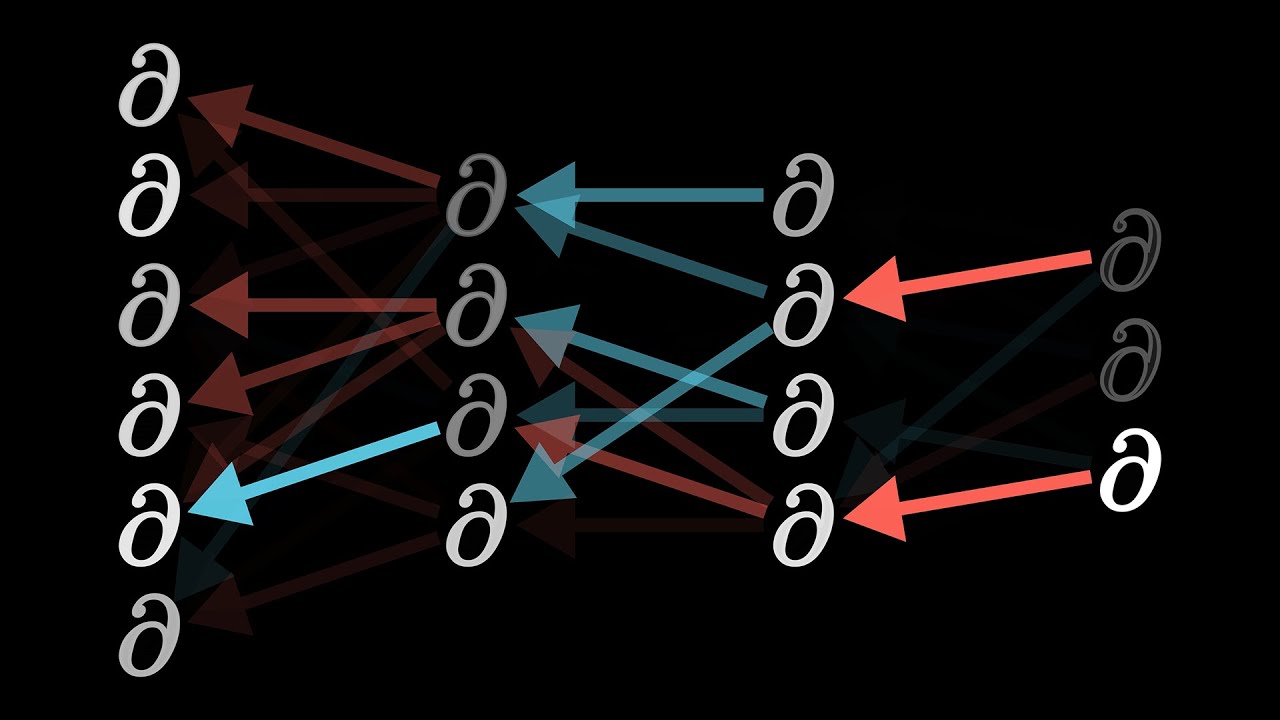
This one is a bit more symbol heavy, and that's actually the point. The goal here is to represent in somewhat more formal terms the intuition for how backpro...
You pretty much need a PhD in ML to be considered for a job/research
lean ledge
(thats simply because almost all research fields require a PhD to be taken seriously anyway and most positions for ML happen to be at big companies who have the resources and need of ML want the best people)
Same
I'm not even an adult yet, I cant imagine spending years more at uni in what feels like a super specific field
lean ledge
almost no technical field in STEM makes money fast. finance or something is what you want to be looking at
most things that make lots of money require years of commitment or moving into something that isnt the field (like engineering management rather than engineering)
odd basin
iam commitment to put years but i never was a good student
yeah to make money and get something we have to pur a lot of dedication
put*
lapis sequoia
New to machine learning. How do I start? Are there any good tutorials? Appreciate the help. Thank you!
 earnest prawn
mainly google and docs of the lib you use
novel hornet
Read o’reilly’s data science from scratch with python
And/or machine learning with scikit learn and tensorflow
I think both might be available online
 quiet gyro
TensorFlow has a great tutorial series
Two versions, one for people new to ML, another for people who know the fundamentals of ML already
lapis sequoia
Thank you guys!
lean ledge
Is anyone else annoyed about the number of people trying to "do ML" by watching tutorials and videos that walk them through basic things, leaving them with no mathematical understanding of what they're doing
Everyone's trying to do ML without realising the nature of the field because it sounds cool and is the new hot thing
charred kite
i mean id get annoyed at myself for not knowing it, but not others
my general view is 'you do you'
i quite like learning maths behind these concepts tho, and as such have pursued learning calculus before even touching any form of learning
lean ledge
It just annoys me when people try to just jump into super quantitative and large fields without literally any background or research. Got a bunch of people asking how to get into quantum mechanics with high school level maths on the physics server I admined
I think part of it is that even if they do learn something basic, it often leads to them pretending they know what they're doing and being overconfident
charred kite
i do know what you mean there
i sometimes get the opposite effect, other people thinking im a master of some things i do (when i am very much not), which i guess can cause people to do that if it happens to them
 ripe vessel
Personally, I'd rather jump into something without knowing what I'm doing in order to learn more about what I'm trying to do, and the solution to my "problem". I know it's not the same for everyone, but I can personally see why people without any backing or prior knowledge would try to jump into a topic like maching learning.
lean ledge
Intro ML doesn't even have the same requirements as does something like intro QM so it's probably still easier to get into ML. But the fact that people don't even research what it involves and just ask for basic tutorials or YouTube videos on it?? It's a large academic field like any scientific field.
charred kite
do you mean like people who are only doing it to make something that looks cool (as a sort of boastful act maybe), rather than to learn about it and get better at it?
like those who are looking for the easy way, rather than the proper way
lean ledge
Sort. People that are so ignorant and arrogant enough that they have no clue what the field they want to study involves and have no idea how little they know already
lapis sequoia
Yes agreed @lean ledge. I asked because I work for a health research. we are starting a new project soon where we are going to use machine learning.
lapis sequoia
hey guys
I have trouble printing results from my classifiers.. I have the code up and running.. I have good accuracy but I'm not sure how to do the confusion matrix
and not sure how to print results
can someone help?
earnest prawn
kinda hard to help people without knowing their code
lapis sequoia
ahh yeah
hold on
here's my code

Pastebin
i have the accuracy.. there's no train test split from what I can observe of it.. I basically tried to fork another code and modify it for my purpose.. the accuracy is good but I need to print the results of the models..and stuff
i don't know how
earnest prawn
uuh never worked with keras dont think i can help you. my only advice would be looking up the docs and maybe do some dir() if you don´t find anything in the docs sry
lapis sequoia
oki
Philosophical question, do you think data science vs web development has bigger potential to benefit humanity in the long run and why? :x
depends on how we use them..
as with anything else..
 dusky agate
it's a very broad question.
lapis sequoia
so is the data science hype going to fade or explode out of proportions?
it's not a hype.. it'll be a way of life
it's not replacing web development..
earnest prawn
the hype wont fade its just ... like tron says actually
foggy moss
h u h
thats a weird question
data science is still in infancy
and yet is already critical to so many things
in a few years your LG refrigerator will have more data science in it than all the data science in the DoD today
i recommend the first couple chapters of the Undoing Project by Michael Lewis
and someday
i hope in my lifetime
ML can give birth to "auto brightness" on a phone
that actually works

 austere slate
+1 @foggy moss hahahaha sooo true
 weak kiln
he said he didn't want to learn R :D
naive swallow
...
There's a good edX course for it
you can audit the course for free

edX
Using Python, learn statistical and probabilistic approaches to understand and gain insights from data.
lapis sequoia
tight dove
@lapis sequoia thanks man
 hasty maple
@lean ledge "Sort. People that are so ignorant and arrogant enough that they have no clue what the field they want to study involves and have no idea how little they know already" Why do you think knowing the math is all so important for using a model of ML? I know what gradient descent does, take partial derivative(gives positive slope) and use that directional information to head to the minimum of the cost function. Even if I can't do the actual partial derivative I am satisfied with this understanding. I do similar abstractions of the concepts and understand them, piece them and apply the algorithms to my problem statements. Is this also considered ignorant/arrogant in your view?
 loud crypt
whats machine learning?
hearty hazel

Machine learning is a field of computer science that gives computers the ability to learn without being explicitly programmed.
The name Machine learning was coined in 1959 by Arthur Samuel. Evolved from the study of pattern recognition and comput...
 tepid pagoda
Math at Morning @..@
 young blaze
Hi, guys! Does anybody know a good machine learning course?
@earnest prawn are you Dutch by chance? 😄
earnest prawn
German
young blaze
Do you know any machine learning?
earnest prawn
Barely
Fun story
I actually listened to a two hour presentation of a Dutch professor about machine learning, he was speaking """"""German""""""""
young blaze
They're almost the same anyway XD
tepid pagoda
i know a little bit but only in german xD
earnest prawn
Dutch is raped German
young blaze
it's actually more the other way around
young blaze
German sounds like an angry Dutchman
earnest prawn
I looked that up during a discussion with another Dutch guy
German was there before Dutch so Dutch is raped German
young blaze
goddamit
anyway, do you know some good resources?
I'm having a hard time finding them
What's even worse is that all resources are in English.
earnest prawn
Personally not but I am quite sure if you go to search and enter sth like
in: #data-science-and-ml has: link
You will find stuff
young blaze
okay, thanks!
hasty maple
@young blaze You could try andrew ng's basic ML course to get started in ML
young blaze

Coursera
Machine Learning from Stanford University. Machine learning is the science of getting computers to act without being explicitly programmed. In the past decade, machine learning has given us self-driving cars, practical speech recognition, ...
this one?
hasty maple
Yes
 vast oasis
I have some ML course material for python from my uni
Maybe I can share that
If anyone would be interested.
hearty hazel
I'm sure some people would, we're sorely lacking on ML resources here
hasty maple
https://jgreenemi.github.io/MLPleaseHelp/ It's a resource that holds resources that jgreenemi started on a ML server I am on. Hopefully this can be used as a place to look for some ML resources 😄
hearty hazel
hasty maple
https://www.youtube.com/watch?v=yDLKJtOVx5c&list=PLD0F06AA0D2E8FFBA 15.1, 15.2 in this playlist helped me understand 2nd order optimizers. I didn't have time for seeing other videos but based on personal experience of 15.1 and 15.2 I assume the rest would be good as well.

Attempt at a definition, and some applications of machine learning. A playlist of these Machine Learning videos is available here: http://www.youtube.com/my_...
Well there are dedicated ML discord servers so I presume most discord ML conversations go there and lesser people visit python server for ML specifics. It's usually those that are reasonably good with basic python coding that jump into ML so seems normal they don't visit python server for ML and hence the resources for ML on python server is kinda less. If that makes sense 😅
vast oasis
As soon as I'm doing studying I will put all the stuff on my git.
Is there a way to set a reminder for myself here?
vast oasis
Can I set a reminder to remind me to build a remind feature for the bot?
earnest prawn
u could open an issue on github
arctic wedgeBOT
class Bot:
bot.info() # Get information about the bot
class NoCategory:
bot.help # Shows this message.
# Type self.help() command for more info on a command.
# You can also type self.help() category for more info on a category.
this one
arctic wedgeBOT

A utility bot designed just for the Python server! Try bot.help() for more info.
Total Users
1727
Git SHA
47136cf
earnest prawn
oh go to github search for discord-python
vast oasis
👍
naive swallow
bot.help()
arctic wedgeBOT
class Bot:
bot.info() # Get information about the bot
class Deployment:
bot.deploy_site() # Trigger website deployment on the server - will only ...
bot.redeploy() # Trigger bot deployment on the server - will only rede...
bot.uptimes() # Check the various deployment uptimes for each service
class NoCategory:
bot.help # Shows this message.
# Type bot.help() command for more info on a command.
# You can also type bot.help() category for more info on a category.
pls
earnest prawn
its the user owning the bot
naive swallow
bot.help > self.help
arctic wedgeBOT
No command called ">" found.
 void depot
shouldn't bot.help be bot.help() if it's a function
earnest prawn
zis one
void depot
bot.help
arctic wedgeBOT
class Bot:
bot.info() # Get information about the bot
class NoCategory:
bot.help # Shows this message.
# Type bot.help command for more info on a command.
# You can also type bot.help category for more info on a category.
 naive swallow
bot.help()
arctic wedgeBOT
class Bot:
bot.info() # Get information about the bot
class Deployment:
bot.deploy_site() # Trigger website deployment on the server - will only ...
bot.redeploy() # Trigger bot deployment on the server - will only rede...
bot.uptimes() # Check the various deployment uptimes for each service
class NoCategory:
bot.help # Shows this message.
# Type bot.help() command for more info on a command.
# You can also type bot.help() category for more info on a category.
you can do both
earnest prawn
nooo
vast oasis
Yeah, got it.
void depot
those are two different commands
earnest prawn
no bot commands
void depot
they do two different things
naive swallow
now that's weird 
vast oasis
Nobody said no bot commands
naive swallow
#bot-commands
vast oasis
Yeah, I was just kidding. "Niemand" translates to "Nobody" in german...
hearty hazel
@void depot They're the same command.
earnest prawn
yesss
hearty hazel
Aperture just has access to more stuff than you
void depot
ohh ok
earnest prawn
finally someone noticing its german and not saying its dutch
woop
thanks @vast oasis
earnest prawn
no
vast oasis
Haha
hearty hazel
Haha
vast oasis
trolled
earnest prawn
does f*** u gude count as swearing?
naive swallow
hasty maple
inb4 ml is spam land 😂
 spring flicker
ok so i have some questions. if anyone can give me a hand...< noob
when i download a github repository. i can never seen to figure out what's what , as in: which file is the ai? also when would i have use for a trainer file? wouldn't i use the ai itself during training?
i can't seem to find any tutorials that walk you through navigating a large project.
lean ledge
Look at the file you're supposed to run. Read it
spring flicker
they don't specify which file that would be.
dusky agate
is there a readme.md?
lean ledge
Well, look for a file with the same name as the project, or something along the lines of "main" or something
spring flicker
i go through them one by one reading, and for the most part i can say ok this is building a database or this is specifying the parameters of a training environment
yeah
so i think cool watch the video. but the video if him writing script that isn't in the repository, and makes no mention of it.
i'm not asking hey what is this guy talking about.
charred kite
the layout may have been guidelines set out by the creators of whatever training/ai module thing he used
spring flicker
i'm asking is there a resource for learning how this stuff works
charred kite
i'd suggest taking a look at those
spring flicker
this is what i was talking about with siraj's videos. @south quest
earnest prawn
you will (sadly) rarely find help about ml here
lapis sequoia
oh okay
earnest prawn
and no need to delete stuff
south quest
there are various modules for markov chain generation
south quest
I use this one https://github.com/jsvine/markovify
 lapis sequoia
thanks
loud crypt
Theoretically how would a machine learn?
lapis sequoia
pattern recognition is one example @loud crypt
dim beacon
@loud crypt cost function minimization, reinforcement methods, backpropagation, clustering, etc.
For instance, neural network mathematical models are theoretically based on real biological neural networks, which means that, to some extent, artificial NNs learn the same way as we do
loud crypt
so you would need to study how the brain functions to make a model of it @dim beacon
dim beacon
@loud crypt we know how neurons work, for decades
loud crypt
i mean like learn from books
dim beacon
You do not need to know about biological details to understand how neural networks work, simple artificial NNs models are mathematically very explicit about it
However if biology interests you, do not keep yourself from reading about it anyway 👍
hasty maple
optimize a cost function, that's how they work
dim beacon
@hasty maple indeed, but this is true for every ML model, what I wanted to tell when talking about "how NNs work" is how this cost function is optimized, which is using backpropagation (with sometimes some more specific details)
hasty maple
Ah, I was just giving a simpler shorter answer.
It wasn't in relation to your example.
 thick siren
I'm wondering how to make a tensorflow neural network with two inputs, two hidden layers and one output
using relu as the activation function
dusky agate
have you read the TF docs?
hasty maple
It's coursera's andrew ng's course tensorflow basics code, maybe go through this to understand how to use tf
 deft harbor
Enjoying that link, thanks
 spare arch
hello
spark nimbus
So I was working on a neural net I probably took from somewhere
and I'm having issues setting it up
if someone's able to help me out, contact me either here or in DM
 stone oasis
@spark nimbus what api? tensowflow? what o/s? using cuda?
spark nimbus
none of that
just own implementation
nothing too big
just some numpy size issues
earnest prawn
this stuff looks cool
lapis sequoia
how do i implement machine learning in my program
earnest prawn
machine learning can have dozens of usage cases
and there are dozens of libs
and no im not
lapis sequoia
oh ok
earnest prawn
there is (not sure) no one on this server who is
lapis sequoia
like whats the first project you'd assign me
earnest prawn
but i guess you can ask stuff anyways
lapis sequoia
that involves machine learning
lapis sequoia
what does it do?
lapis sequoia
i see
earnest prawn
well you do start by choosing a lib
there are.... a LOT
pytorch
tensorflow
scikit learn
and and and
but those are the most popular
earnest prawn
oh
i dunno
i heard tf is more diy scikit is more highlevel and nothing about pytorch
tf is by google and now open source
pytorch by facebook and now opensource
and scikit learn well free software from the first day
i couldnt tell you much more without doing some research tbh
earnest prawn
but most popular ai stuff you hear about is tf
earnest prawn
and two things
no i cant thats not the point of helping
there is a tutorial on their website
earnest prawn
earnest prawn
but?
lapis sequoia
yet a musician
lapis sequoia
awww yeeee
problem is
im shit at being an artist
and i never made music b4
well i made this small melody on fl studio but thats it lol
like this is the best i could do
lol
earnest prawn
better than i could ever do
but for example there is an ai which can make a van gogh out of a picture
or
make a bach out of bach examples
earnest prawn
the scikit thingy?
lapis sequoia
the link u sent me
earnest prawn
well
that is the high level stuff
the real machine learning and science stuff is in the functions which get called there
earnest prawn
tensorflow
lapis sequoia
ok
hasty maple
@spark nimbus The shapes of a and y are not same, numpy broadcasting is the issue, reshape y to y =y.reshape(y.shape[0],1) before delta = a-y and should work I think
spark nimbus
It worked fine previously though
@hasty maple only after repurposing it did it break
hasty maple
repurposing?
hasty maple
and what is it now?
spark nimbus
Emotional recognition in sentences
Maybe I just screwed up the data format
Hold on
fml now I have to un-gzip un-pickle my data
hasty maple
Well I don't think there is an easy way to re purposing an image classifier for sentiment analysis
spark nimbus
You wanna help reimplementing it?
hasty maple
I haven't done any NLP work before. so I don't think I wouldn't be of much help I think 😅
How big is the data set? if it's small enough I'll download it and when I eventually get to NLP we could compare our implementations :)
spark nimbus
It's not too big
If empty, use "none"
Max input size should be changeable
And the amount of neurons should be [input_size, 3/4 input_size, 1/2 input_size, output_size (7)]
hasty maple
most is empty though, how would the training go when you don't have enough labels 🤔
spark nimbus
this is all the data the project lead gave me
spark nimbus
once this works we'll add more data
 narrow flare
can someone give me a brief outline on what machine learning algorithms are?
dusky agate
There's a bajillion youtube videos about this that can explain better than most people on this server
 narrow flare
Magikarp ur right x) im just being a poo head as usual
 serene pier
does anyone have any experience with online learning?
basically retraining models with new data constantly or periodically
thick siren

In this series, I build a "doodle classifier" using the Google "Quick, Draw!" dataset and my JavaScript neural network library. 🎥 Next Video: https://youtu.b...
spark nimbus
This is fine
Iike how despite all weights being random, they all still look the same in each row
hasty maple
They just show the fully connected layers, not the actual weights
spark nimbus
Yeah I know they don't show the weights
But the value of each neuron in each layer has such a low diff
lapis sequoia
any of you guys happen to know good algorithms for image upscaling, preferably i want to get something like this
not sure how this was generated though
hearty hazel
Have you looked at waifu2x? It's an interesting image upscaler
spark nimbus
why is backpropagation so hard aaaa
lapis sequoia
i have, it's quite decent but it's not good at upscaling real-to-life images @hearty hazel
this looks like some sort of texture remapping
i forget what they call it specifically
@spark nimbus it's just math™
thick siren
@spark nimbus feels bad man
hasty maple
@spark nimbus http://bigtheta.io/2016/02/27/the-math-behind-backpropagation.html maybe you could go through this to understand backprop, there is one mistake in it though, let's see if you will find out if you go through it :P
hasty maple
oh
hasty maple
why not just use an opensource library?
that only requires forward propagation,it will do the back prop for you
spark nimbus
I don't understand shit about the terms they use
spark nimbus
@hasty maple for $delta_{n+1}, should I take the sum of all the weight deltas for this neuron or the average, or what?
hasty maple
You first canculate delta_N the final layer delta given by ( yN - t )* derivative of activation function for that layer
@spark nimbus
spark nimbus
@hasty maple can you look into my code for a bit?
thick siren

The paper "Building Blocks of Interpretability" is available here: https://distill.pub/2018/building-blocks/ Our Patreon page: https://www.patreon.com/TwoMin...
thick siren
Is there any gui tool you can use to make functional neural networks?
I can't figure out tensorflow
hasty maple
@thick siren maybe try keras
It's not gui but at a higher abstraction level than tensorflow
thick siren
ahhh it's so hard
 tawdry dock
hello