Hastebin is a free web-based pastebin service for storing and sharing text and code snippets with anyone. Get started now.
#data-science-and-ml
1 messages · Page 148 of 1
 final cobalt
My algorithm for sorting all pokemon cards by frame XD
I'll need to do some manual sorting, particularly with respect to splitting standard and full-art cards
But this does most of the leg work
 rich moth
It ran for 5 epochs but I got some crazy tkinter error, but I'm not even using it lol

 final cobalt
Maybe tkinter is used by whatever tool you're using to build the image files after reconstruction?
I doubt any of the ML/NN frameworks use it
rich moth
ya, your probably right. I think I fixed it once before enabling tkinter. The sorting algo looking nice
final cobalt
@rich moth It's a KNITTED ZUBAT!!!!!!

 lapis sequoia
Helu can anyone provide the resource for nlp?
lapis sequoia
final cobalt
That depends what BELUGA needs XD
Do u know who beluga is
Go and search on yt
Btw i am 10000000th copy of beluga
final cobalt
No matter what anyone else tells you, ChatGTP is a fantastic resource for learning technical skills. It'll answer any question, never lose patience, and it'll be as simple or detailed as you need it to be
Just remember that it can hallucinate
lapis sequoia
final cobalt
https://chatgpt.com/
No matter what anyone else tells you, ChatGTP is a *fantas...
Whatt but i have not premium
final cobalt
Get it
lapis sequoia
final cobalt
Get it
I have no money
final cobalt
It's only 20 bucks a month, and it's 20 bucks well spent I assure you
lapis sequoia
final cobalt
It's only 20 bucks a month, and it's 20 bucks well spent I assure you
I have 0
final cobalt
 lapis sequoia
I want to earn money due to that i am learning skill but nowadays everything is premium
final cobalt
Well, the sad news
Is that if you're here asking for advice about learning NLP/ML
Then you're at least a year if not two from being able to monetize your skills
If you want quick money, try data entry
Or data annotation
 quaint mulch
I think doing it 5 times is a good baseline to try
Is this like a learning / hobby project so you are purposedly not using existing pre-trained models? or fine-tuning those?
This is more towards ML than data science: https://www.microsoft.com/en-us/research/uploads/prod/2006/01/Bishop-Pattern-Recognition-and-Machine-Learning-2006.pdf
GitHub
Deep learning for dummies. All the practical details and useful utilities that go into working with real models. - EleutherAI/cookbook
 grand breach
any point in imputing a categorical variable that has 47% of values as -1 ? will i lose critical information on dropping it ?
 jaunty helm
grand breach
any point in imputing a categorical variable that has 47% of values as -1 ? will...
jaunty helm
grand breach
any point in imputing a categorical variable that has 47% of values as -1 ? will...
depends
what's the variable about? how much is missing? etc
jaunty helm
 narrow finch
Can anyone guide me
narrow finch
Can anyone guide me
see pinned
narrow finch
jaunty helm
see pinned
What
jaunty helm
narrow finch
What
see the pinned messages in this channel
grand breach
jaunty helm
depends
what's the variable about? how much is missing? etc
well it's an anonymized variable (business reasons), it's not missing but anamoly or outlier values, having 47% of -1's
jaunty helm
grand breach
well it's an anonymized variable (business reasons), it's not missing but anamol...
so 47% is -1, 53% are others?
imo that's still pretty informative so keep it
grand breach
yeah even i think the same, how should i impute it ? replace with mode ?
it has many classes maybe some 250
quaint mulch
maybe just don't impute it then?
jaunty helm
grand breach
yeah even i think the same, how should i impute it ? replace with mode ?
"imputing" would imply that you have missing data
you just said you don't have missing data
grand breach
jaunty helm
"imputing" would imply that you have missing data
you just said you don't have m...
sorry my bad
grand breach
quaint mulch
maybe just don't impute it then?
but those outliers would cause a problem then ?
jaunty helm
grand breach
sorry my bad
you don't have to apologize
you just said conflicting things (you don't have missing data & are imputing) so I'm confused on how to help you
grand breach
then what to do ?
quaint mulch
grand breach
but those outliers would cause a problem then ?
missing data might cause a problem.
But if your dataset is large and IID enough, the worst case scenario is that the feature will get ignored
But I generally think that, a bad imputation could cause an even bigger problem.
 neat siren
hello
grand breach
quaint mulch
missing data might cause a problem.
But if your dataset is large and IID enough,...
there's a correction, it's not missing data it is filled with -1 (an invalid) which might add noise to the model, should I replace them with mode or there is any other technique to replace with some synthetic data
quaint mulch
this feature is a categorical feature and you are doing 1 hot right?
you can make a new category called invalid ?
neat siren
@storm valve see in print data the output doesn't include movie names cz it has embedded link , how to get the names then


 storm valve
neat siren
<@998437135814238238> see in print data the output doesn't include movie names ...
storm valve
neat siren
<@998437135814238238> see in print data the output doesn't include movie names ...
 onyx frigate
Hey guys do you know about ai agents.
So should we learn how to make them using code or just by the no code platforms.
What's the difference between these 2 approach
grand breach
quaint mulch
this feature is a categorical feature and you are doing 1 hot right?
you can mak...
not one hot but label encoding as there are too many groups
onyx frigate
Have any one of you made an ai agent?
quaint mulch
onyx frigate
Hey guys do you know about ai agents.
So should we learn how to make them using...
depends on what you want to achieve.
onyx frigate
quaint mulch
depends on what you want to achieve.
Like let's say I'll start by creating an ai bot to manage my LinkedIn dms.
But later on I'll create big projects
quaint mulch
grand breach
not one hot but label encoding as there are too many groups
same idea, just make a new category?
quaint mulch
onyx frigate
Have any one of you made an ai agent?
what counts as an AI agent?
quaint mulch
onyx frigate
Like let's say I'll start by creating an ai bot to manage my LinkedIn dms.
But...
generally, always start with no code, see if it is good enough.
generally, always start from the easiest, cheapest, and fastest, and see if it is good enough
onyx frigate
I think you're right
grand breach
I don't know what's wrong with Kaggle, My session just crashes when I try to run pearson correlation on my data set, I have even tried sampling my data set but that didn't work.
onyx frigate
Also i wanted to train and mess around with flux lora model but I don't have a gpu are there any free online alternatives
quaint mulch
onyx frigate
Also i wanted to train and mess around with flux lora model but I don't have a g...
google colab
final cobalt
quaint mulch
Is this like a learning / hobby project so you are purposedly not using existing...
Yes, and, I have a strict ethical critera
This is all building towards a proper diffusion model which is trained on public domain, creative commons, commercial, and synthetic data only
quaint mulch
yea, I'm actually equally curious. How come chatGPT generate image of any resolution/aspect ratio?
 inner creek
quaint mulch
yea, I'm actually equally curious. How come chatGPT generate image of any resolu...
inner creek
quaint mulch
yea, I'm actually equally curious. How come chatGPT generate image of any resolu...
Even though it's not efficient and resourceful. What if they just generate a full img but then cut them to ratio
Certainly easier to train that way
final cobalt
inner creek
Even though it's not efficient and resourceful. What if they just generate a ful...
There's also tiled diffusion and adaptive layers to handle resizing
The latter being a rather yucky approach
 unkempt wigeon
But that begs the question is there a way of detecting if a neural network is a deep learning or just a regular neural network
 charred egret
unkempt wigeon
But that begs the question is there a way of detecting if a neural network is a ...
charred egret
unkempt wigeon
But that begs the question is there a way of detecting if a neural network is a ...
Neural network is the underlying idea that is used in deep learning so i’m confused about what you’re asking. neural network with 1 hidden layer (shallow) and another with 1 billion hidden layers (deep) both use the idea of neural networks
unkempt wigeon
I know but, if somebody can make a virus that can differentiate between a a regular neural network in a deep learning model and insert poison data and it retrains the network
unkempt wigeon
charred egret
Neural network is the underlying idea that is used in deep learning so i’m confu...
But is there a way for a computer virus or a program to figure out how many layers there are in a neural network sorry
charred egret
unkempt wigeon
But is there a way for a computer virus or a program to figure out how many laye...
it depends on the virus and what it can do and what vulnerabilities it can exploit. if the whole system is compromised, the attacker can do anything. but in that scenario the vulnerability still won’t be in the neural network.
honestly look up how neural networks learn. it’s just mathematics, you can’t make it suddenly replicate virus and spread it just because there are some wrong data in the training set or even if you manually tweaked its neurons. at the end of the day it’s just doing a bunch of matrix multiplications to put it very very simply.
unkempt wigeon
Could deep neural network learn to be like a person just by using data let's say if I took some data video on somebody that I knew and the network kind of training could it act like the person their mannerisms etc by accident if you don't even program it in sorry
 serene scaffold
unkempt wigeon
Could deep neural network learn to be like a person just by using data let's say...
serene scaffold
unkempt wigeon
Could deep neural network learn to be like a person just by using data let's say...
No.
unkempt wigeon
serene scaffold
No.
How so
If you think about it a neural network and a human brain are just complex math figures although one is biological one is mathematical but in essence they're just a computer that can crunch Mass so if you give certain mannerisms or videos of I account information you can make a network that can act like the person but not have everything there like how normal human would act sorry
serene scaffold
unkempt wigeon
How so
The way that you talk about neural networks (not just right now, but in general) indicates to me that you don't understand what they are or how their training relates to the task that they perform.
If you want to learn more about AI, I suggest you start by learning concepts that are more approachable to beginners and work your way up. Your thought experiments really don't make any sense.
serene scaffold
unkempt wigeon
If you think about it a neural network and a human brain are just complex math f...
A neural network is a set of numbers and an associated computation graph. What would the output of a neural network be that would be an emulation of a person's mannerisms?
Would it be text that a person might say, given some amount of hypothetical text said by others in a conversation?
Would it be a deep fake video of that person?
I sounds to me--and I might be misunderstanding you--that you expect to somehow produce an entire behavioral model (whatever that might mean) of a person given video footage of that person.
unkempt wigeon
Why mean is a neural network that has a video of a person acting out their normal day from the person's perspective with a microphone that it looked into a mirror would be hard to see if neural network takes all this data crunches it it could make a personality when you have to take most of the personality from the person that it's being trained off of
 final cobalt
unkempt wigeon
Why mean is a neural network that has a video of a person acting out their norma...
final cobalt
unkempt wigeon
Why mean is a neural network that has a video of a person acting out their norma...
Have you ever tried not speaking in run on sentences?
 serene scaffold
final cobalt
Have you ever tried not speaking in run on sentences?
serene scaffold
final cobalt
Have you ever tried not speaking in run on sentences?
!rule 4
 arctic wedgeBOT
4. Use English to the best of your ability. Be polite if someone speaks English imperfectly.
serene scaffold
final cobalt
XD Sorry - not meaning to be rude
what you said actually sounds very rude. please be more thoughtful in the future.
unkempt wigeon
serene scaffold
what you said actually sounds *very* rude. please be more thoughtful in the futu...
No it's ok if someone hit me square on my head with a wooden base ball bat I would not care sorry
serene scaffold
@unkempt wigeon have you considered following along with a book about neural networks?
unkempt wigeon
Yes
unkempt wigeon
final cobalt
XD Sorry - not meaning to be rude
It's okay you can be rude to me all you like. I don't mind
serene scaffold
unkempt wigeon
It's okay you can be rude to me all you like. I don't mind
it's nice that you're forgiving, but you can't grant people permission to break the #rules as they pertain to you.
unkempt wigeon
serene scaffold
it's nice that you're forgiving, but you can't grant people permission to break ...
What I mean is I don't mind Now if it was someone else then yes but me you can be be ruder than anything and you could punch and scream at me I wouldn't care
My apologies
serene scaffold
@unkempt wigeon what neural network book are you following?
final cobalt
unkempt wigeon
What I mean is I don't **mind** Now if it was someone else then yes but me you c...
Honestly - I wasn't trying to be rude. Mostly, I just wanted an excuse to post that GIF from Pulp Fiction because it's funny
serene scaffold
I believe you weren't trying to be rude.
let's move on from this.
unkempt wigeon
serene scaffold
<@868137138091343925> what neural network book are you following?
I I know this isn't concerned a book but I do because it's electronic I can access it from anywhere and if a computer goes down
And or a hard drive or if I misplace the book it's not like I'm wasting any money sorry:
https://www.w3schools.com/python/python_ml_getting_started.asp
@final cobalt I believe you weren't being rude

W3Schools offers free online tutorials, references and exercises in all the major languages of the web. Covering popular subjects like HTML, CSS, JavaScript, Python, SQL, Java, and many, many more.
unkempt wigeon
serene scaffold
<@868137138091343925> what neural network book are you following?
I know it's not concerned a book but it is very detailed from when I can read sorry
serene scaffold
unkempt wigeon
I know it's not concerned a book but it is very detailed from when I can read so...
it doesn't need to be a "book" as long as it's "feature length".
unkempt wigeon
Feature len?
serene scaffold
unkempt wigeon
Feature len?
if you go to a movie theater, they'll show you a few previews that are a few minutes each, and then a movie that's about two hours. and the movie is the "feature".
final cobalt
Personally, I do the majority of my learning through ChatGTP
Which I know, I know, everyone says is stupid
But it has more than enough juice to get you conversant in a subject. You just need to take everything it says with a grain of salt, and use it solely as a rubber ducky / readings-collator
serene scaffold
I do the majority of my learning through ChatGPT
and
[I] use it soley as a rubber ducky/readings-collator
these statements appear to be in conflict? @final cobalt
final cobalt
As a readings collator, it can gather information for disparate sources and demonstrate them to you whilst being interactive
It goes and finds the readings for you, and you can ask it follow up questions. You just have to remember that it's a people pleaser and it's also dumb as a twig
So don't ask it to interpret, just ask it straightforward questions
unkempt wigeon
serene scaffold
if you go to a movie theater, they'll show you a few previews that are a few min...
So that's the training time?
 mystic peak
would it be possible to make a machine learning program for fighting games
unkempt wigeon
mystic peak
would it be possible to make a machine learning program for fighting games
I want type of network were you thinking genetic or basic convolution because if it's a threening game you would have to use an open AI background but if you make it yourself then you can calculate what might go on plus 2D physics are easier to handle on a computer dependent on your GPU or CPUs usage
rich moth
mystic peak
would it be possible to make a machine learning program for fighting games
absolutely. maybe you can get some ideas from https://farama.org/projects
a good start is maybe find a nintendo old school game like kung-fu
 rich moth
absolutely. maybe you can get some ideas from https://farama.org/projects
a go...
rich moth
rich moth
absolutely. maybe you can get some ideas from https://farama.org/projects
a go...
Im not sure if you mean something like street fighter or tekken style.
unkempt wigeon
rich moth
Im not sure if you mean something like street fighter or tekken style.
How did you make your capture the flag did you make the network an import?
rich moth
unkempt wigeon
How did you make your capture the flag did you make the network an import?
I used this ```
class QNetwork(nn.Module):
def init(self, input_dim, output_dim):
super(QNetwork, self).init()
self.fc1 = nn.Linear(input_dim, 128)
self.fc2 = nn.Linear(128, 128)
self.fc3 = nn.Linear(128, output_dim)
def forward(self, x):
    x = F.relu(self.fc1(x))
    x = F.relu(self.fc2(x))
    return self.fc3(x)```
and some RL learning
attention too.
unkempt wigeon
Well really was trying to mean is did you come to game environment yourself sorry
rich moth
unkempt wigeon
Well really was trying to mean is did you come to game environment yourself sorr...
Oh, the idea of CTF?
I think I understand. I designed it myself. I made it with just these imports import pygame import random import numpy as np import torch import torch.nn as nn import torch.nn.functional as F
unkempt wigeon
CTF?
rich moth
Capture the flag.
unkempt wigeon
Sorry is the neural network plugged into the game itself or could you just import it and everything gets saved on the import sorry and I see you've used the class for you now Network sorry
rich moth
unkempt wigeon
Sorry is the neural network plugged into the game itself or could you just impor...
The Qnet is intergrated into the game enviorment. The players have a q network for decison making and it trains while the game runns. I have the player parameters saved so it loads and uses the network.
 mystic peak
would you count the newest street fighter game as 2d or 3d because it has 3d models but it plays in a 2d plane
unkempt wigeon
rich moth
The Qnet is intergrated into the game enviorment. The players have a q network ...
Why was hoping someone I make my own network is make it where I can export it or import it into a game it would learn then make changes to the main python file although it probably would be a good idea in just to import it not change the network on the original already I've never done this and I'm trying my best to learn
rich moth
mystic peak
would you count the newest street fighter game as 2d or 3d because it has 3d mod...
never thought about it lol
So a generic qnet model that you can swap between different games that automatically adapts and updates the internal code?
unkempt wigeon
rich moth
So a generic qnet model that you can swap between different games that automatic...
?
unkempt wigeon
Do I need to have a class or anything for a girl Network well unless it's playing for games but anything else sorry
 desert oar
unkempt wigeon
Do I need to have a class or anything for a girl Network well unless it's playin...
desert oar
unkempt wigeon
Do I need to have a class or anything for a girl Network well unless it's playin...
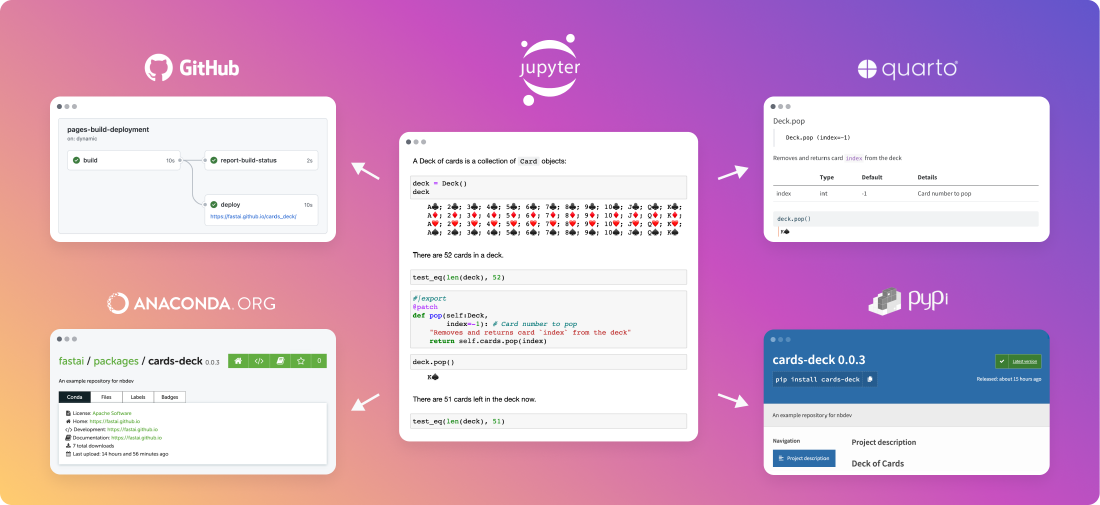
you might want to work through some actual material about deep learning
examples: https://d2l.ai/ or https://www.fast.ai/
 rich moth
desert oar
you might want to work through some actual material about deep learning
rich moth
desert oar
you might want to work through some actual material about deep learning
There's some cool stuff on there @desert oar I found this on there too. https://www.answer.ai/ The WebGPU was a cool read.
 remote stream
anyone knows how to annotate video or a free software to reduce my stress
pls reply someone
grand breach
should i drop highly correlated features for training with linear models or keep them for training and later apply regularization techniques ?
quaint mulch
grand breach
should i drop highly correlated features for training with linear models or keep...
You can do PCA, or other similar things like that.
grand breach
i've read that RF or DT are immune to multicollinearity or redundancy
quaint mulch
grand breach
i've read that RF or DT are immune to multicollinearity or redundancy
Well yea, it also kinda depends on what model do you use.
unkempt wigeon
Which is the best type of network sorry
charred egret
unkempt wigeon
Which is the best type of network sorry
There’s no such thing. Different networks are suited for different types of problems. It’d actually even be wise to consider if you even NEED to do deep learning
unkempt wigeon
I want to do deep learning because if you kind of do the hard stuff first the easiest stuff is beyond easy and is there a way of combining two networks
serene scaffold
unkempt wigeon
I want to do deep learning because if you kind of do the hard stuff first the ea...
You should not start with deep learning.
unkempt wigeon
How so?
serene scaffold
unkempt wigeon
How so?
If you start with the hardest thing, you won't understand what you're doing and will give up before you accomplish or learn anything.
charred egret
unkempt wigeon
How so?
It can be counterproductive if you don’t have the prerequisites. You’ll encounter too many roadblocks that can be discouraging because you don’t know what’s happening. You’ll end up spending most of your time on the non-deep learning things because otherwise you wouldn’t understand what you’re doing.
unkempt wigeon
I know about numerical values and I know how to turn images into a raise of numb I can crunch therefore giving it some sort of vision my apologies
 pearl parrot
Finished Python OOP, jumped into the book Python Data Science Handbook by Sebastian Raschka. Will I be fine? I’m nervous
 fallow coyote
unkempt wigeon
I know about numerical values and I know how to turn images into a raise of numb...
fallow coyote
unkempt wigeon
I know about numerical values and I know how to turn images into a raise of numb...
I learnt this the hard way. If you want to get into the whole machine learning AI space, you must have a good grasp on the mathematics behind it. If you don't you wont be able to fully utilise all the ML libraries available. Atm, Im building my programming skills around ML (e.g. databases and data analysis). Im at university where in the first year well be going over the general mathematics. Honestly, this area of computing requires you to go to uni to learn this stuff as its a whole other level of complexity
unkempt wigeon
How many neurons are I a shallow Net?
!e
import numpy as np

X = np.array([[1,2,3,4,5],
])

W = np.array([[1,2,3,4,5],
])

B = np.array([[1,2,3,4,5],
])

Output = np.dot(X,W) + B

Print (Output)
:x: Your 3.12 eval job has completed with return code 1.
001 | Traceback (most recent call last):
002 |   File "/home/main.py", line 12, in <module>
003 |     Output = np.dot(X,W) + B
004 |              ^^^^^^^^^^^
005 | ValueError: shapes (1,5) and (1,5) not aligned: 5 (dim 1) != 1 (dim 0)
What counts as a shower Network or a deep Network sorry
fallow coyote
unkempt wigeon
What counts as a shower Network or a deep Network sorry
no idea. apologies. make a help thread on the python-help channel. should get a quick response
 hybrid acorn
:Error during chat completion generation: '<=' not supported between instances of 'method' and 'int'
BUT I DON'T use <= in that context QQQQQQQQ
unkempt wigeon
fallow coyote
no idea. apologies. make a help thread on the python-help channel. should get a ...
done
unkempt wigeon
fallow coyote
no idea. apologies. make a help thread on the python-help channel. should get a ...
im sorry im just starting
fallow coyote
Dont worry. We all are. Maybe in 2 years Ill be able to help you XD
Otherwise, ask the others who are multitudes smarter than me on this discord
unkempt wigeon
To become a master at an r you have to do it multiple times so if you do three neural networks per day you can become a master maybe half a year maybe sorry I'm trying to do the math because some people who make noodles if you make noodles more than a couple times a day you learn faster sorry
serene scaffold
unkempt wigeon
To become a master at an r you have to do it multiple times so if you do three n...
You don't "do three neural networks a day".
If you're serious about machine learning, please follow along closely with a specific resource like a book or course. The approach you are trying to take is not going to work
hybrid acorn
oh, I found it, named args helped
desert oar
unkempt wigeon
To become a master at an r you have to do it multiple times so if you do three n...
I already suggested some structured learning material you can use. yes daily practice will help, but you really ought to start working through some actual structured learning materials at this point
 tulip wyvern
If my KNN outperformed my LightGBM model substancially (33% - 5%), is it likely that i made a mistake in my code or does KNN just outperform gradient boosting models on some tasks?
desert oar
tulip wyvern
If my KNN outperformed my LightGBM model substancially (33% - 5%), is it likely ...
what task? what kinds of features? how much data?
how did you evaluate?
it's always possible
tulip wyvern
desert oar
what task? what kinds of features? how much data?
are these rhetorical questions
tulip wyvern
desert oar
it's always possible
okok ic ty
just didnt know the difference could be that big
cuz i had the (incorrection) notion that lightgbm performs well on all tasks
desert oar
tulip wyvern
are these rhetorical questions
No, they are real questions
I don't have any specific scenario in mind, but you have to consider all of those things when you are thinking about model performance and what works well
There might be something unusual and specific about your task where nearest neighbors is actually better than global curve fitting
That or your code or training pipeline is bad somehow
But it's never about generalities, it always comes down to the specifics of your problem and the way you set it up
tulip wyvern
desert oar
No, they are real questions
o i see
im trying to predict the leading pokemon of a user in pokemon showdown given both side's full team (so each feature is a categorical variable representing the name of a pokemon) and i have like 50k entries
tulip wyvern
desert oar
That or your code or training pipeline is bad somehow
yeah im worried that my training pipeline is broken
hybrid acorn
can you run multiple models with llama_cpp? any pitfalls or should I use something other langchain processing
rich moth
hybrid acorn
can you run multiple models with llama_cpp? any pitfalls or should I use somethi...
you can run multiple models, but llama models are pretty resource heavy. try it out.
it gonna boil down to your system and the requirments of the model.
 finite thicket
[rank0]: Traceback (most recent call last):
[rank0]:   File "/mnt/d/Projects/sync/get-dissed/get-dissed-prototyping/pixtral_test.py", line 17, in <module>
[rank0]:     llm = LLM(model = model_name, tokenizer_mode="mistral", trust_remote_code=True)
[rank0]:           ^^^^^^^^^^^^^^^^^^^^^^^^^^^^^^^^^^^^^^^^^^^^^^^^^^^^^^^^^^^^^^^^^^^^^^^^^
[rank0]:   File "/home/zghan/.local/lib/python3.12/site-packages/vllm/entrypoints/llm.py", line 214, in __init__
[rank0]:     self.llm_engine = LLMEngine.from_engine_args(
[rank0]:                       ^^^^^^^^^^^^^^^^^^^^^^^^^^^
[rank0]:   File "/home/zghan/.local/lib/python3.12/site-packages/vllm/engine/llm_engine.py", line 564, in from_engine_args
[rank0]:     engine = cls(
[rank0]:              ^^^^
[rank0]:   File "/home/zghan/.local/lib/python3.12/site-packages/vllm/engine/llm_engine.py", line 325, in __init__
[rank0]:     self.model_executor = executor_class(
[rank0]:                           ^^^^^^^^^^^^^^^
[rank0]:   File "/home/zghan/.local/lib/python3.12/site-packages/vllm/executor/executor_base.py", line 47, in __init__
[rank0]:     self._init_executor()
[rank0]:   File "/home/zghan/.local/lib/python3.12/site-packages/vllm/executor/gpu_executor.py", line 40, in _init_executor
[rank0]:     self.driver_worker.load_model()
[rank0]:   File "/home/zghan/.local/lib/python3.12/site-packages/vllm/worker/worker.py", line 183, in load_model
[rank0]:     self.model_runner.load_model()
[rank0]:   File "/home/zghan/.local/lib/python3.12/site-packages/vllm/worker/model_runner.py", line 1016, in load_model
[rank0]:     self.model = get_model(model_config=self.model_config,
[rank0]:                  ^^^^^^^^^^^^^^^^^^^^^^^^^^^^^^^^^^^^^^^^^
[rank0]:   File "/home/zghan/.local/lib/python3.12/site-packages/vllm/model_executor/model_loader/__init__.py", line 19, in get_model
[rank0]:     return loader.load_model(model_config=model_config,
[rank0]:            ^^^^^^^^^^^^^^^^^^^^^^^^^^^^^^^^^^^^^^^^^^^^
[rank0]:   File "/home/zghan/.local/lib/python3.12/site-packages/vllm/model_executor/model_loader/loader.py", line 403, in load_model
[rank0]:     model.load_weights(self._get_all_weights(model_config, model))
[rank0]:   File "/home/zghan/.local/lib/python3.12/site-packages/vllm/model_executor/models/pixtral.py", line 259, in load_weights
[rank0]:     self.language_model.load_weights(llm_weights)
[rank0]:   File "/home/zghan/.local/lib/python3.12/site-packages/vllm/model_executor/models/llama.py", line 493, in load_weights
[rank0]:     for name, loaded_weight in weights:
[rank0]:                                ^^^^^^^
[rank0]:   File "/home/zghan/.local/lib/python3.12/site-packages/vllm/model_executor/model_loader/loader.py", line 378, in _get_all_weights
[rank0]:     yield from self._get_weights_iterator(primary_weights)
[rank0]:   File "/home/zghan/.local/lib/python3.12/site-packages/vllm/model_executor/model_loader/loader.py", line 364, in <genexpr>
[rank0]:     for (name, tensor) in weights_iterator)
[rank0]:                           ^^^^^^^^^^^^^^^^
[rank0]:   File "/home/zghan/.local/lib/python3.12/site-packages/vllm/model_executor/model_loader/weight_utils.py", line 406, in safetensors_weights_iterator
[rank0]:     with safe_open(st_file, framework="pt") as f:
[rank0]:          ^^^^^^^^^^^^^^^^^^^^^^^^^^^^^^^^^^
[rank0]: RuntimeError: unable to mmap 25365548952 bytes from file </home/zghan/.cache/huggingface/hub/models--mistralai--Pixtral-12B-2409/snapshots/df119bf36c0cedc6ffdc9ca6c58ebf51f9771ef7/consolidated.safetensors>: Cannot allocate memory (12)
from vllm import LLM
from vllm.sampling_params import SamplingParams
from huggingface_hub import login, whoami

# Authenticate with Hugging Face only if not already logged in
try:
    whoami()
except Exception:
    print("Not logged in. Please enter your Hugging Face token.")
    login()

# https://huggingface.co/mistralai/Pixtral-12B-2409
model_name = "mistralai/Pixtral-12B-2409"

sampling_params = SamplingParams(max_tokens=8192)

llm = LLM(model = model_name, tokenizer_mode="mistral", trust_remote_code=True)
anyone know whats going on here?
 verbal venture
let's say I want to make certain decisions that are connected to one another, where each decision has a path of its own (that leads to other decisions), and each comes with a reward but also a consequence. I am trying to determine the least negative decision to choose. which algo is best for that?
 untold fable
i got a free corse on corsera for free
 unkempt apex
verbal venture
let's say I want to make certain decisions that are connected to one another, wh...
unkempt apex
verbal venture
let's say I want to make certain decisions that are connected to one another, wh...
minimax ? or decision tree ?
both would work I guess
rich moth
finite thicket
```
[rank0]: Traceback (most recent call last):
[rank0]: File "/mnt/d/Projects...
Looks might its too big for your system memory requirments. Try the 7B model see if that works.
finite thicket
rich moth
Looks might its too big for your system memory requirments. Try the 7B model se...
im pretty sure i do
i have 32gb of ram
finite thicket
ill try
Traceback (most recent call last):
  File "/mnt/d/Projects/sync/get-dissed/get-dissed-prototyping/pixtral_test.py", line 17, in <module>
    llm = LLM(model = model_name, tokenizer_mode="mistral", trust_remote_code=True)
          ^^^^^^^^^^^^^^^^^^^^^^^^^^^^^^^^^^^^^^^^^^^^^^^^^^^^^^^^^^^^^^^^^^^^^^^^^
  File "/home/zghan/.local/lib/python3.12/site-packages/vllm/entrypoints/llm.py", line 214, in __init__
    self.llm_engine = LLMEngine.from_engine_args(
                      ^^^^^^^^^^^^^^^^^^^^^^^^^^^
  File "/home/zghan/.local/lib/python3.12/site-packages/vllm/engine/llm_engine.py", line 561, in from_engine_args
    engine_config = engine_args.create_engine_config()
                    ^^^^^^^^^^^^^^^^^^^^^^^^^^^^^^^^^^
  File "/home/zghan/.local/lib/python3.12/site-packages/vllm/engine/arg_utils.py", line 874, in create_engine_config
    model_config = self.create_model_config()
                   ^^^^^^^^^^^^^^^^^^^^^^^^^^
  File "/home/zghan/.local/lib/python3.12/site-packages/vllm/engine/arg_utils.py", line 811, in create_model_config
    return ModelConfig(
           ^^^^^^^^^^^^
  File "/home/zghan/.local/lib/python3.12/site-packages/vllm/config.py", line 183, in __init__
    self.hf_config = get_config(self.model, trust_remote_code, revision,
                     ^^^^^^^^^^^^^^^^^^^^^^^^^^^^^^^^^^^^^^^^^^^^^^^^^^^
  File "/home/zghan/.local/lib/python3.12/site-packages/vllm/transformers_utils/config.py", line 141, in get_config
    raise ValueError(f"No supported config format found in {model}")
ValueError: No supported config format found in mistralai/Pixtral-7B-2409
not sure what this means
finite thicket
rich moth
humor me, see if the 7B works 🙂
whats the difference between 12 and 7b anyways
rich moth
well its 7billion parameters compared to 12billion so testing to see if it is indeed memory related. But its a size difference , im just guessing you cant fit a 12B model. You need like 25gigs to load it but we have to consider your overhead. Are you in windows?
let me see
finite thicket
rich moth
well its 7billion parameters compared to 12billion so testing to see if it is in...
yes, using wsl
rich moth
here ill just try your code
ok its loading

INFO 10-06 22:54:48 model_runner.py:1025] Loading model weights took 23.6552 GB
There ya go 🙂
rich moth
well i have a lot of stuff going but my wsl env is 33gigs
finite thicket
is this exclusive to wsl? would it be less on smthn like a mac
rich moth
on straight linux it might work
rich moth
finite thicket
im getting an error on my mac
ok i rebooted to get some fresh readouts. Before I started it my overhead was 31gigs, its leveled out at 76 gigs for ram, it seems. So 45 gigs to loaded it all up?
im not sure about your mac.
finite thicket
rich moth
ok i rebooted to get some fresh readouts. Before I started it my overhead was 3...
ah got it
im new to all this stuff, didnt know it takes up that much resources
rich moth
dont worry bout it, we all start somewhere. it just seemed like a memory issue from past expereince.
final cobalt
Anyone have any advice for creating consistent characters using Stable Diffusion?
I've got a few OCs I'd like to train LoRA for, and I can get pretty close using the tag "character sheet" and the characterturner embedding
But not quite close enough that it's the same character every time. I've developed a workflow for getting really really close, but it's painstaking
rich moth
finite thicket
ah got it
I've been playing around with it. Try this llm = LLM( model="mistralai/Pixtral-12B-2409", tokenizer_mode="mistral", trust_remote_code=True, gpu_memory_utilization=0.9, swap_space=4, # GB cpu_offload_gb=4, # Offload 4GB to CPU max_seq_len_to_capture=4096, # Smaller sequence length to save memory dtype="float16" # Use mixed precision to save memory )
only requires 19.5 gigs for the weights
finite thicket
i'll give it a go
finite thicket
rich moth
I've been playing around with it. Try this ```llm = LLM(
model="mistralai/P...
RuntimeError: unable to mmap 25365548952 bytes from file </home/zghan/.cache/huggingface/hub/models--mistralai--Pixtral-12B-2409/snapshots/df119bf36c0cedc6ffdc9ca6c58ebf51f9771ef7/consolidated.safetensors>: Cannot allocate memory (12)
i think i just need a better system lmao
my cpu isn't exactly the strongest, its an i5-12400F
jaunty helm
finite thicket
i have 32gb of ram
as a rough estimate, a full precision model probably uses bf16 to store its weights, so 2 bytes per parameter
so a full precision 12b model would take ~24gb of memory to store its weights, + some more to store the context
however the library might be trying to fit all of that onto your gpu, that'd mean you need 24gb VRAM and not system ram
to use your sys ram instead you'd need to offload to cpu
Plunder seems to have alr showed how above, though in that code it's only offloading 4gb to sys ram, considering the full 12b model then you still need 20gb vram; that's still a rtx 4090 for reference (4090 has 24gb vram, 4080 has 16gb)
lapis sequoia
hello guys, I recently completed my Bachelor's degree in Computer Science and I'm gonna take admission in MS DATA SCIENCE. I'm a Python programmer but a beginner. So, can you guys give me road map or is here any at the same level so we can learn together?
onyx frigate
lapis sequoia
hello guys, I recently completed my Bachelor's degree in Computer Science and I'...
Start with the basics like take a look at those python in 12hrs videos and try to do as many mini projects as possible.
Also you should be clear what's your objective that you're learning python for.
Do a research on what are the most crucial topics for what ever you want to do try to focus more on that topic.
Don't try to perfect everything just skim through because no one can learn complete python just focus more on imp topics.
finite thicket
jaunty helm
as a rough estimate, a full precision model probably uses bf16 to store its weig...
Ah that makes sense, ty
unkempt apex
rich moth
humor me, see if the 7B works 🙂
bro we have now 1B also
for llama
but not for mixtral
 tawdry monolith
Does 3 blue 1 brown playlist essence of linear algebra,calcus covers what I need for ml?
jaunty helm
unkempt apex
bro we have now 1B also
Qwen2.5 0.5b:
tbf it's borderline unusable
final cobalt
My school's comp sci club is having a t-shirt contest and so last night in the wee hours of the morning I broke out the old Stable Diffusion to see what I could see. Our unofficial mascot is a rabbit, so I thought I'd run with it.


 unkempt apex
jaunty helm
Qwen2.5 0.5b:
tbf it's borderline unusable
unkempt apex
jaunty helm
Qwen2.5 0.5b:
tbf it's borderline unusable
yeah I used qwen actually 1B one, it needs to be fine-tunned first
 fierce plank
can you recommend some good and FOSS tts models?
 idle swift
Chat how hard is gym open ai for someone in grade 12?
fierce plank
depends on your experience but if you've got some with ai it shouldn't be that hard
unkempt wigeon
Doesn't anyone know if there's a YouTube compendium for everything that you need to know for neural networks the mathematics etc sorry
serene scaffold
unkempt wigeon
Doesn't anyone know if there's a YouTube compendium for everything that you need...
Start with 3blue1brown's video series
 left tartan
final cobalt
My school's comp sci club is having a t-shirt contest and so last night in the w...
left tartan
final cobalt
My school's comp sci club is having a t-shirt contest and so last night in the w...
I hope it's a glow in the dark shirt.
unkempt wigeon
serene scaffold
Start with 3blue1brown's video series
Thank you
final cobalt
left tartan
I hope it's a glow in the dark shirt.
I got shot down flat
No one was interested in letting AI be included
That said, I might get one or two of these on a hoodie just for myself
The first and last ones, probably
rich moth
final cobalt
I got shot down flat
I wanted to get this hoodie made lol

Tell me that ain't dope! I dare someone!
final cobalt
Tis quite dope
 hybrid tangle
any library recommendations for data vis outside of seaborn that anyone recommends?
unkempt wigeon
serene scaffold
Start with 3blue1brown's video series
Which videos should I use?
desert oar
hybrid tangle
any library recommendations for data vis outside of seaborn that anyone recommen...
i prefer plain matplotlib over seaborn most of the time. if you want to try something completely different you can try holoviz, but nothing is nearly as polished or well documented as mpl
onyx frigate
final cobalt
My school's comp sci club is having a t-shirt contest and so last night in the w...
This is sick
 midnight nacelle
unkempt wigeon
Which videos should I use?
midnight nacelle
unkempt wigeon
Which videos should I use?
Neural Network algorithms
He has videos on it
unkempt wigeon
Thank you
midnight nacelle
Talks about backpropagation, and i think different learning algorithms
final cobalt
So lemme run a problem past you all
arctic wedgeBOT
:incoming_envelope: :ok_hand: applied timeout to @final cobalt until <t:1728353332:f> (10 minutes) (reason: attachments spam - sent 10 attachments).
The <@&831776746206265384> have been alerted for review.
arctic wedgeBOT
:incoming_envelope: :ok_hand: pardoned infraction timeout for @final cobalt.
final cobalt
XD Sorry, was NOT spamming. Not trying to anyway. Was gonna show y'all some of the pokemon cards I'm trying to build a network to process
For context. Sent too many though (10)
serene scaffold
final cobalt
XD Sorry, was NOT spamming. Not trying to anyway. Was gonna show y'all some of t...
in what way will it process them?
final cobalt
Sorry, was having a bath
 eager verge
How do you recommend someone to learn the whole ai, machine learning, llm and whatever there is to have a simple broader picture of it all? Just enough to make dialogue with someone experienced!
final cobalt
I'd like to build a network to automatically learn and apply segmentation masks to pokemon cards. I've separated them all by frame configuration (since the shape of cards has changed many times over the years) and I figure I can use contrastive learning to force a convolutional network to focus on what's consistent across images
In theory, the frame's stay the same but the image changes. Simple
Except the text on the card also changes. Makes things much harder.
I guess I just wanted to ask
What would be the standard approach to having an NN learn on it's own to separate card frames from card images?
serene scaffold
eager verge
How do you recommend someone to learn the whole ai, machine learning, llm and wh...
expect this process to take years.
start small and work your way up. be humble about what you know, and stay curious.
and you'll never learn the whole. there isn't enough time.
unkempt wigeon
midnight nacelle
Neural Network algorithms
Is this the right one?
https://youtube.com/playlist?list=PLZHQObOWTQDNU6R1_67000Dx_ZCJB-3pi&si=vWmCk1AeUmchdlk4
YouTube
Learn the basics of neural networks and backpropagation, one of the most important algorithms for the modern world.

 serene scaffold
unkempt wigeon
Is this the right one?
https://youtube.com/playlist?list=PLZHQObOWTQDNU6R1_67000...
serene scaffold
unkempt wigeon
Is this the right one?
https://youtube.com/playlist?list=PLZHQObOWTQDNU6R1_67000...
yes
midnight nacelle
unkempt wigeon
Is this the right one?
https://youtube.com/playlist?list=PLZHQObOWTQDNU6R1_67000...
Yes
serene scaffold
yEs
midnight nacelle
yeS
final cobalt
My linear algebra teacher had a very, very thick Ukrainean accent
midnight nacelle
unkempt wigeon
Should I listen to the linear algebra section too?
Yes
final cobalt
And spoke in broken English
Not that there's anything wrong with that, but it definitely made things a little harder than it might have otherwise been XD
midnight nacelle
final cobalt
And spoke in broken English
nvm
final cobalt
Very, very much so
serene scaffold
a fundamental flaw in the university system is that subject matter experts are not necessarily the best at disseminating their knowledge.
final cobalt
To make matters worse, there was a girl in the class who was very, very autistic. Nearly the can't-make-eyecontact kind. Again - not that there is anything wrong this this. In fact, I found her kinda inspiring, but
When she was nervous or frustrated, she was incapable of keeping herself from talking
So one the one hand there was a teacher who already had difficulty explaining a very complex subject. On the other, a classmate who couldn't keep herself from talking at all times even when the teacher was teaching or we were doing an exam
Twas a difficult class
serene scaffold
one would expect that she'd get an accomodation whereby she did not attend lectures
final cobalt
I had her in another class and she was fine the rest of the time
But yeah, she might have considered that
 iron basalt
unkempt wigeon
Should I listen to the linear algebra section too?
iron basalt
unkempt wigeon
Should I listen to the linear algebra section too?
While you are watching 3b1b, you can go over their essence of linear algebra and essence of calculus series.
final cobalt
If you're looking to learn Calculus
And maybe LA too, because I think he was working on it
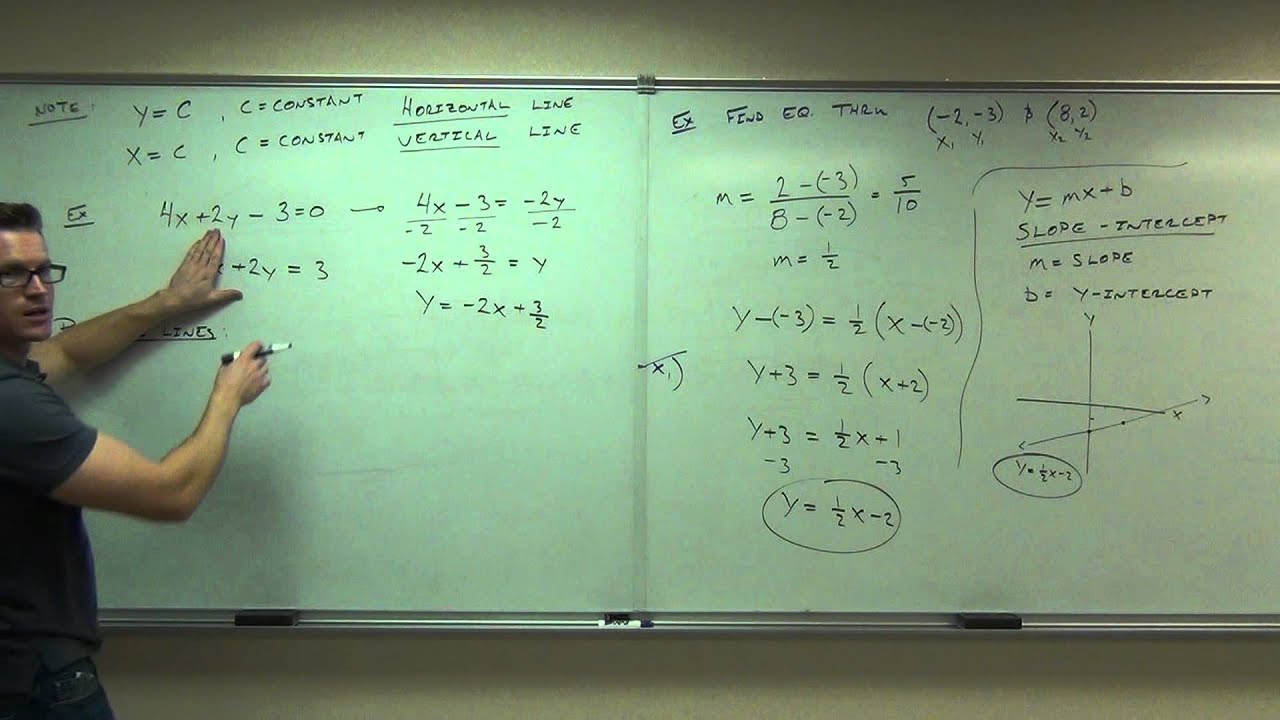
https://www.patreon.com/ProfessorLeonard
Calculus 1 Lecture 0.1: Lines, Angle of Inclination, and the Distance Formula
This guy is the bomb. I learned all my Calc from him
unkempt wigeon
So if I'm getting this right from the current video that I'm learning on current knowledge vectors are just for graphing basically (X,Y)?
final cobalt
unkempt wigeon
So if I'm getting this right from the current video that I'm learning on current...
Vectors are a fundamental concept in many domains of mathematics
It its simplest, a vector is a value that has both a magnitude and a direction, and both of the qualities are essential to it's nature. From a linear algebra perspective, a vector is a list of numbers where each number represents some value along an axis of freedom - it is closely related to the notion of dimensionality
There are "linearly independent" aka "mutually exclusive" vectors, which mean that there's no combinations of vectors X and Y which can produce the vector Z, the same way there's no way you can move along the X axis or the Y axis in space to change your position along the Z axis
From a calculus perspective, vectors function a bit more like pointers. A vector says "from your current position, go in this direction for this long"
 wooden sail
final cobalt
There are "linearly independent" aka "mutually exclusive" vectors, which mean th...
wooden sail
final cobalt
There are "linearly independent" aka "mutually exclusive" vectors, which mean th...
you're thinking "orthogonal" here, which is stronger than lin indep
final cobalt
True - I'm simplifying
unkempt wigeon
How can I make it so when there's a 3D array? Like for .stl and.obj front neural network to generate 3D objects after I figure out using a tutorial how to make a 1D array to the ETC
 delicate elk
im trying to do a stochastic gradient descent, and having some trouble with calculating the linear regression derivatives, mean square loss derivatives, and the ridge obj derivatives, anyone familiar with stuff like that?
i cant distribute code, so i guess im looking mostly for guidance
 small wedge
for the linear regression derivatives, what part are you struggling with?
delicate elk
im honestly not sure which are correct and which are incorrect, i think my mean square loss ones are wrong but im not sure how
after talking with some people their rmse for a specific sample is much different than what i got
small wedge
can you post your implementation of the MSE derivative? or your math that you used to calculate it?
small wedge
so a mean is a sum / len, I see you dividing by the len but not applying a sum
need to see more of your implementation to comment though ig
why can't you post your code?
delicate elk
its for a course and in the instructions were not allowed to distribute anything
i knowi could, but i dont wanna risk it
delicate elk
np.mean(square_loss(x, y, th, th0), axis = 1, keepdims = True)
this is what we have for mean square loss
we have to find the derivative wrt th and th0
(y - lin_reg(x, th, th0))**2
square loss
np.dot(th.T, x) + th0
lin reg
wooden sail
th0 a scalar and th a vector? or the more general case with th0 a vector and th a matrix?
delicate elk
th0 is a scalar th is a vector iirc
wooden sail
that makes things simpler. how did you approach this? did you expand the square into a matrix-vector product?
wooden sail
.latex the standard approach is to note that [
(y - \bm{\theta}^T \bm{x} - \theta_0)^2 = (y - \bm{\theta}^T \bm{x} - \theta_0)(y - \bm{\theta}^T \bm{x} - \theta_0)^T,
]
since the transpose of a scalar is the same scalar. so multiplying those two scalars, we get the square we want for the squared loss. now you expand the product and again note that the transposes can be flipped judiciously (since the results are scalar) and find that
[
(y - \bm{\theta}^T \bm{x} - \theta_0)^2 = y^2 - 2y \bm{\theta}^T \bm{x} - 2y \theta_0 + 2 \theta_0 \bm{\theta}^T \bm{x} + \bm{\theta}^T \bm{xx}^T \bm{\theta} + \theta_0^2.
]
you can then use your standard matrix calculus here because you have scalars differentiated w.r.t. scalars, and scalars differentiated w.r.t. vectors (depending on whether you differentiate w.r.t. $\theta_0$ or $\bm{\theta}$).
 strange elbowBOT
 wooden sail
@delicate elk so here differentiating w.r.t theta and theta_0 is a lot simpler
 strong ibex
Hey
Does anyone here have idea about implementation of opencv or YOLO
serene scaffold
Anyone at the NVIDIA conference in DC? If so hmu 
 river cape
Any idea as to why it isnt reading the images?
 serene scaffold
river cape
Any idea as to why it isnt reading the images?
serene scaffold
river cape
Any idea as to why it isnt reading the images?
Did you confirm that either subdirectory contains files and that those files have the expected extension?
river cape
serene scaffold
Did you confirm that either subdirectory contains files and that those files hav...
I did check them
They do have the files
I tried to do for a new notebook and then coded it again
the same result

 serene scaffold
river cape
<@253696366952316929> is it a problem with the path?
serene scaffold
river cape
<@253696366952316929> is it a problem with the path?
Are you sure /content is right?
 serene scaffold
river cape
Yea how else would you access it
serene scaffold
river cape
Yea how else would you access it
I haven't used colab in a long time, so I don't know if that's the name of the user directory
I guess it is
river cape
serene scaffold
I guess it is
yea it is
serene scaffold
Look at the docs for the flow from directory method
Maybe there's a caveat like all the files have to be in the directory root (not a subdirectory)
river cape
serene scaffold
Look at the docs for the flow from directory method
I did refer a video and it showed me the same way of exceuting it
serene scaffold
river cape
I did refer a video and it showed me the same way of exceuting it
They might be using a different version.
Check what version you have and look at the docs for that version.
river cape
serene scaffold
They might be using a different version.
Check what version you have and look at...

Over here , the folder architecture is explained but as per my code , it shoudl work right
serene scaffold
I can't help more at the moment.
river cape
serene scaffold
I can't help more at the moment.
Hmm its alright . thanks
 main fox
river cape
Hmm its alright . thanks
main fox
river cape
Hmm its alright . thanks
Try without /content
and add a slash at the end of train and test
unkempt wigeon
May I ask a question
rich moth
river cape
Maybe its a permissions thing. Create some debugging to print out directory paths or verify the existence of the file with 'os'
 main fox
unkempt wigeon
May I ask a question
main fox
unkempt wigeon
May I ask a question
I give you permission
rich moth
main fox
I give you permission
hold on, im not sure i concur
 spring field
unkempt wigeon
May I ask a question
spring field
unkempt wigeon
May I ask a question
You have been in this server for a while, you know how this works, you just ask the question
Also stop apologizing for everything
main fox
Matiiss has given their wisdom
rich moth
main fox
and add a slash at the end of train and test
i think you're on to something, have to see the root directory
main fox
If pwd gave "/content", they are inside content directory, so no need to specify the path as "/content"
Otherwise it's looking for /content/content/train
spring field
main fox
If pwd gave "/content", they are inside content directory, so no need to specify...
a leading slash at the start of the path is an absolute path starting from the current drive/root
unkempt wigeon
How can I specifically make a convolutional neural network because that seems like it would be the easiest to do I'm trying to make a neural network that can recognize any type of image live action or otherwise my apology
rich moth
river cape
Hmm its alright . thanks
remove /content/train try 'train' and 'test' it looks like you're in the content directory
am I crazy here?
spring field
spring field
a leading slash at the start of the path is an absolute path starting from the c...
^
desert oar
unkempt wigeon
How can I specifically make a convolutional neural network because that seems li...
fast.ai and d2l have all the answers 😉
main fox
spring field
a leading slash at the start of the path is an absolute path starting from the c...
Yes, however the absolute path seems to not be working. What would you suggest to OP?
unkempt wigeon
desert oar
fast.ai and d2l have all the answers 😉
How so?
desert oar
unkempt wigeon
How so?
Because they are educational resources that teach you to do exactly what you have been asking about how to do for weeks
main fox
desert oar
Because they are educational resources that teach you to do exactly what you hav...
I see fast.ai mostly uses their own library
Would you recommend this library or does it eventually pivot to PyTorch for beginners?
charred egret
unkempt wigeon
How can I specifically make a convolutional neural network because that seems li...
You should pick up a structured resource/tutorial such as the ones people here have been suggesting. Do you remember when you said you want to start on the hard parts? That will only work if you’re following good resources.
charred egret
main fox
I see fast.ai mostly uses their own library
Would you recommend this library or...
Library doesn’t really matter in the grand scheme of things. If you’re learning the concepts properly and gaining the understanding of what it’s about. The concepts are transferrable. Ofc it depends on what your goals are. Do you want to learn pytorch (the library) or do you want to learn deep learning?
main fox
charred egret
Library doesn’t really matter in the grand scheme of things. If you’re learning ...
Once you learn the concepts you need production ready tools to apply them
e.g. how Tensorflow keeps track of shapes for you in CNNs
PyTorch is picky about the data types of your tensors, e.g. loss functions
Callbacks, early stopping, initializations, etc are all things you need to learn how to do in the library you choose
charred egret
Tools are usually the easy part. That’s why people say solve the problem before you even start coding
main fox
If you're gonna learn the concepts, might as well learn them using the right tools
Just seems inefficient to learn a concept separately from the tool you need to implement it in
 dry raft
hey guys! 👋 i’m looking for some good image denoising techniques using neural networks. any cool methods or models you’ve come across? would love to hear your thoughts or any resources you recommend. thanks!
main fox
 cloud relic
hi, so I recently uninstalled anaconda on my macbook and now I can't even run python. Does anyone know why?
serene scaffold
cloud relic
hi, so I recently uninstalled anaconda on my macbook and now I can't even run py...
Because you let go of something that was weighting you down to make way for something even better
You probably need to download and install python from python.org
cloud relic
serene scaffold
You probably need to download and install python from python.org
i have python installed, but commands like "python" and "pip" dont work in my terminal
serene scaffold
cloud relic
i have python installed, but commands like "python" and "pip" dont work in my te...
What happens if you do python3 --version
Also I'm going to sleep
But I believe in you
Deleting conda was an amazing decision
cloud relic
serene scaffold
Deleting conda was an amazing decision
thanks
serene scaffold
Things might be difficult right now. But soon you'll be tired of winning.
cloud relic
serene scaffold
What happens if you do python3 --version
"zsh: command not found: python"
cloud relic
yay
serene scaffold
Because soon you'll be tired of winning
And you'll remember this as the last time that winning felt good
 quartz lotus
anyone know if the opencv annotating program is in the latest version of opencv?
rich moth
quartz lotus
anyone know if the opencv annotating program is in the latest version of opencv?
SuperAnnotate?
quartz lotus
this one

 twin relic
Hi , please suggest me good youtube courses and resources to get started with Machine learning
 scarlet anchor
Any of u here, good at Big data technologies like Kafka Hadoop?
 plucky condor
Hi! I have a question regarding the TimesNet model, specifically the Time-Series-Library implementation of it (https://github.com/thuml/Time-Series-Library/blob/main/models/TimesNet.py). I was looking into the long term forecast and noticed the function took the following parameters self, x_enc, x_mark_enc, x_dec, x_mark_dec.
I found that x_enc represents the data from which a prediction is made, and that the x_mark_enc represents the time series features of this data (for example a timestamp)
(If I'm wrong about any of this please correct me)
My main question is about the x_dec and x_mark_dec. To me it looks like the x_dec represents the data that needs to be predicted (often respresented of y), and the x_mark_dec the time series features of this need to be predicted data. What I don't understand is that the forecast method does absolutely noting with x_dec and x_mark_dec. I understand that x_dec is not used since it is the thing you want to predict. However I would assume that x_mark_dec should be used since the model would just be trying to guess when the next data point is. So:
Why does the TimesNet model(or specifically this implementation) not use the x_mark_dec?
spring field
main fox
Yes, however the absolute path seems to not be working. What would you suggest t...
It seems to be an issue with the resource loader to an extent
Clearly it can find the path given, it just doesn't load anything from it (unless it silently fails or some stuff)
river cape
@rich moth @main fox I tried using non-augmented way of sending images in batches, turns out it reads those images

Guys I got my error
its class_mode = 'binary'
and classes would be the list of class folders like , classes = ['cats','dogs']\
grand breach
how can I increase recall score of my model for logistic regression trained on a dataset having high cardinality and high class imbalance, I've tried keeping few highly correlated features to prevent loss of any important information
are there any ways to tune my model ?
 vestal spruce
Is anyone familiar with algo-trading? I just posted a question on #1035199133436354600, please check it out if anyone is willing
btw here's the post
https://discord.com/channels/267624335836053506/1293523804739473478
vestal spruce
grand breach
how can I increase recall score of my model for logistic regression trained on a...
I'm not familiar wit hhigh cardinality data, but for class imbalance you could resample the data, which could go two way, either oversample the minority class or undersampling the majority class, another method would be giving a class weighting on those class giving it more impact to the model, and remember to split the data not just randomly but also in ratio with the class ratio so that you have accurate representation of the data when training and testing.
grand breach
vestal spruce
I'm not familiar wit hhigh cardinality data, but for class imbalance you could r...
Yes i split using stratified k fold, i don't like doing oversampling because it puts a lot of artificial samples thus adding more noise
vestal spruce
grand breach
Yes i split using stratified k fold, i don't like doing oversampling because it ...
then your option would be 2, which is undersampling or using class_weight then, also I'm curious if you're building the model using TF or SciKitLearn?
grand breach
using sklearn
vestal spruce
both does have class weighting so you might want to look into their documentation about it.
jaunty helm
grand breach
how can I increase recall score of my model for logistic regression trained on a...
sklearn's LogisticRegression (and many others) has a class_weight param you can set to 'balanced'
grand breach
yeah, i was reading about weighted LR this morning, should give it a try
ok that's increasing the recall to a decent value 0.62; earlier it was 0.01 but precision has decreased maybe because I've used refit=recall
vestal spruce
grand breach
ok that's increasing the recall to a decent value 0.62; earlier it was 0.01 but ...
Hmm not sure, I don't really get the big picture of what you've made so far, might want to post your code as a thread on the #1035199133436354600 forum, so we can see and discuss about it?
If you have already made a post there just give me the link to it so I can start helping you out
grand breach
vestal spruce
Hmm not sure, I don't really get the big picture of what you've made so far, mig...
oh, ok let me try first if it persists I would create a post, thank you !
vestal spruce
grand breach
oh, ok let me try first if it persists I would create a post, thank you !
Sure thing, just ping me if you need help with it.
grand breach
generally asking would using L2 or L1 regularization help here to tune LR ?
vestal spruce
grand breach
generally asking would using L2 or L1 regularization help here to tune LR ?
Hmm since you're data is still underfitting rather than overfitting (recall and precision), I think using regularization can be excluded from the training and testing process for the time being.
grand breach
Makes sense
vestal spruce
IIRC regularization is used for overfitting
grand breach
Now i'm just thinking if my dataset really doesn't have a lot of linear patterns, maybe that's one reason why LR isn't performing or highly correlated features (multicolinearity) has just stagnated the performance
vestal spruce
grand breach
Now i'm just thinking if my dataset really doesn't have a lot of linear patterns...
If you don't mind sharing what dataset are you using for this LR model anyway?
grand breach
Yeah, it's on kaggle called Avazu CTR prediction
Predict whether a mobile ad will be clicked
vestal spruce
still looking into the dataset
vestal spruce
grand breach
some 4000k rows
Ok so from my understand and past experience, I suggest other model for this kind of dataset, since a lot of the features/columns usually have a non-linear relationships with the target/label, but also due to the imbalance nature of the dataset right (typically there are more non-clicks than clicks) So a better approach would be something like random forest, or whatever model used on a science article/journal about CTR, you might want to read about them first since half of the work is actually reading result from other people's works and experiment while also experimenting yourself, sometime you find new idea from it.
Like my final thesis was about Development of dialogue transcription of podcast audio using speaker diarization, and for the reference I read from Quan Wang's Speaker Diarization with LSTM.
and I gotten the idea to just combine pre-existing audio transcription model which was OpenAI's Whisper model with a clustering algorithm, and that works well
I'd love my paper but it's written on my native language, might want to translate it myself soon lol
grand breach
vestal spruce
Ok so from my understand and past experience, I suggest other model for this kin...
thanks for suggestion, one question how did you confirm that data has lot of non linear patterns ?
my approach was to run log reg and assess it's performance to confirm data is non linear
vestal spruce
grand breach
thanks for suggestion, one question how did you confirm that data has lot of non...
To answer your question, is a list of rule set and logical understand already taught to me in my college days.
those rule sets where translated by my tutors as a deep understand of the dataset at hand, it was in his nature to fully grasp the nature of also every dataset he analize
Me personally still learning how to have his sense of intuition
grand breach
I saw some of research papers using MLPs or some special NNs, i'm using ML algorithms as i chose to do this as a ML project
vestal spruce
grand breach
thanks for suggestion, one question how did you confirm that data has lot of non...
oh but for this case specifically a lot of the feature were categoricals so it was already in my check list that using different method like classification model would be best
vestal spruce
grand breach
I saw some of research papers using MLPs or some special NNs, i'm using ML algor...
So you might want to try classification method that works with categorical data.
jaunty helm
grand breach
ok that's increasing the recall to a decent value 0.62; earlier it was 0.01 but ...
that's pretty normal
better recall means your model got more of the total targets than before (i.e. if you had 100 fish, you went from catching 1 of them to 62 of them)
but that also means your model is a lot more lenient on what it might think is a target, thus precision falls (continuing from fish, it's like you're casting a wider net than before; more fish, but also more other things like pebbles or seaweed)
so it's usually a tradeoff, if you try to optimize recall, precision will likely drop as a result, and vice versa
if you want to improve one without the other falling, you'll have to come up with a better solution
i.e. use a more sophisticated model, good feature engineering, gathering more data, etc
desert oar
main fox
I see fast.ai mostly uses their own library
Would you recommend this library or...
iirc it's built on pytorch, so i think you should be able to pivot on your own? but don't quote me on that
desert oar
grand breach
how can I increase recall score of my model for logistic regression trained on a...
what kinds of features? how many do you have?
you need to think practically about this. your model is trying to learn a relationship between your features and label. so if the model is performing poorly, you need to ask: is there actually a strong relationship here? if so, what is the nature of that relationship, and why isn't my model capturing it?
 glass pier
is it reasonable to want to implement a gpt without automatic differentiation? i've only got a (trainable) embedding layer so far and differentiating that already took me a fair bit of figuring out (skill issues)
any advice for computing gradients of the other parts of the transformer? seems pretty daunting just looking at some 'blueprints' and how many parameters there are
grand breach
desert oar
what kinds of features? how many do you have?
you need to think practically abo...
most of them are categorical even thogh other people have seperated some of them as numerical
grand breach
desert oar
what kinds of features? how many do you have?
you need to think practically abo...
the question i'd in my mind was if i had not tuned it optimally to the fullest because (i know this is cheating) i saw other people getting decent metrics when using LR so i doubted myself and thought if i've not tuned it properly so i was stressing hard
jaunty helm
grand breach
most of them are categorical even thogh other people have seperated some of them...
did you one hot encode the categorical variables? though you might get the curse of dimensionality
maybe use a tree-based model?
grand breach
oh my gosh, OHE would result in a really huge & sparse dataframe, i think already there are some 24 columns
i don't think it is a scalable option
jaunty helm
grand breach
oh my gosh, OHE would result in a really huge & sparse dataframe, i think alread...
that would certainly be a problem
try a tree based model? those should handle categoricals natively
your LR might be doing worse due to how you're representing the categories (e.g. encoding dog=0, cat=1, bird=2 is not great)
grand breach
ok i used hash encoding and it is known to have collision problem
like two values might have same hash value
i read target encoding would be cheating as it has probablistic values
and might overfit on data
ok i'll try running decision tree or random forest to see and rule out if it is the encoding technique causing the problem
jaunty helm
grand breach
i read target encoding would be cheating as it has probablistic values
why would 'having probabilistic values' be cheating?
there's also others like frequency encoding ig
grand breach
ok i was reading an article on medium that said that hash encoding is really a good technique
vestal spruce
grand breach
ok i was reading an article on medium that said that hash encoding is really a g...
Oh also If you'd like there are some cheat sheets for data science just to streamline the learning process
iirc a github user with complete cheat sheet for data science is abhat222, might want to check it out
grand breach
vestal spruce
Oh also If you'd like there are some cheat sheets for data science just to strea...
Exactly! i was going through cheatsheets for last couple of hours, will check out, thanks a lot !
also i used gridsearch to tune space dimension and found it was 64, i've categorical columns having 1000s of unique values
grand breach
rationale:

 scarlet anchor
how do i upload a kaggle project to github 💀
is there some oss alt to n8n its only a 14 day free trial afaik
I want to automate workflow, not just copy paste code into pynb and push
 quaint rivet
What loss function should i use in building detection? i am just doing basic level detection. I have tried binary cross entropy. It is not giving the desired result
 unkempt apex
quaint rivet
What loss function should i use in building detection? i am just doing basic lev...
unkempt apex
quaint rivet
What loss function should i use in building detection? i am just doing basic lev...
ahh, something interesting, you should provide more info
about your model first
and also what u wanna achieve
 fallow frost
I have a bit of a challenge, I'm creating a script that does regular clean from a postgres db.
basically it moves all the rows that the PK dosent match (to get rid of the old ones).
I can use sqlalchemy which supports paramterized query with a tuple (WHERE pk IN :values), but then I'm loading all the data in memory, and I would need to dump it as a parquet or some other format.
I would love to use duckdb but they dont support parametrized query with a tuple (which is outrageous if you ask me), which would be great, cuz it would use basically no memory, anc I can use the COPY command to copy the results to a parquet direcly.
then I would probably save the parqeut on S3 like this: f'{table}/backup_timestamp={datetime.datetime.now()}.parquet'
what do you guys think?
left tartan
fallow frost
I have a bit of a challenge, I'm creating a script that does regular clean from ...
Uh, I've posted how to do this a few times. Ask me over in duckdb land and I'll link the post.
fallow frost
left tartan
Uh, I've posted how to do this a few times. Ask me over in duckdb land and I'll ...
can you link a reply please
left tartan
fallow frost
can you link a reply please
done
fallow frost
left tartan
done
thanks man!
fallow coyote
to the experienced persons here, how did you get into the ML/AI space and how did you begin to develop your skills in this space?
Even though I'm in uni, I wont acutally be getting into the ML stuff, or any coding in general, until next year (doing a foundation year; look it up if youre not famililar). Just feel like Im reaching a bottleneck again
serene scaffold
fallow coyote
to the experienced persons here, how did you get into the ML/AI space and how di...
I switched majors from linguistics to computer science, and the computer science department's language technology specialist took me as one of her disciples.
fallow coyote
serene scaffold
I switched majors from linguistics to computer science, and the computer science...
What was the learning process at the beginning when you first started in ML development (in terms of the prerequisite knowledge you had coming in, the beginning resources you used to get you started and the resources that brought your skills further)?
serene scaffold
fallow coyote
What was the learning process at the beginning when you first started in ML deve...
It was a clusterfuck for the first several months
fallow coyote
serene scaffold
It was a clusterfuck for the first several months
I've been going through that clusterfuck for about a year now and I'm still not out yet. What resources though did you find the most useful (idgaf if theyre not beginner friendly, jsut want to understand your learning process)?
 narrow merlin
its "something" hahaha, important is to really stick to the basic understanding, i think that helped me
like a lot of the things are just fuzzy details that you never will touch if you are not actual implementing something for real that you can "measure". But I think the biggest problem is still the propaganda and misunderstandings that are flowing around. I do an AI meetup on a freelancer platform and there was a guy 50 years< IT experience, 77 years old total crack, he loved the possibilities on ChatGPT and everything, and he really "understood" what he saw and he really realized the potential, but he never actually understood that he can literally run all that with a local model on his own hardware and he doesnt need a datacenter
and he used chatgpt for MONTHS
Luckily here on python codern this is less of a problem 😄 There we just have the langchain syndrome hehe
dry raft
why do people use StandardScaler for ML projects a lot? is it for easy standardization of data, or it is to enhance the data in some way?
serene scaffold
dry raft
why do people use StandardScaler for ML projects a lot? is it for easy standardi...
normalization. it doesn't "enhance" the data.
dry raft
serene scaffold
normalization. it doesn't "enhance" the data.
ok, thanks very much! i used to see this a lot on kaggle when i was a beginner, now i get it, so thanks! this will be very useful for my reg-ression projects!
 fading wigeon
Is there any sort of standard for determining convergence during training?
Like a change of less than 0.01% or something
main fox
fading wigeon
Is there any sort of standard for determining convergence during training?
You could set a threshold to meet for the metric you're tracking or set early stopping, where if you don't see improvements in your test loss for X amount of epochs, you stop and save the weights of the model with the lowest test loss
serene scaffold
fading wigeon
Is there any sort of standard for determining convergence during training?
When the rate of change for the loss starts to flatline
fading wigeon
Yeah, I'm just.... let me rephrase.
Theoretically I'm familiar with the concepts. I just don't know what thresholds to code in practice.
I did consider like... when the changes start oscilating about the zero point
main fox
Your test loss may not reach a zero point
You should instead see if any improvement happened over the previous epoch(s)
fading wigeon
Fair
unkempt wigeon
May I ask a question
serene scaffold
unkempt wigeon
May I ask a question
Remember to never ask to ask. No one will commit to answering a question before they know what it is.
But you should probably focus on following along with one of the many resources we've suggested you use over the past several weeks.
unkempt wigeon
serene scaffold
Remember to never ask to ask. No one will commit to answering a question before ...
Is there a theoretical limit to how many neurons can be home at work
serene scaffold
unkempt wigeon
Is there a theoretical limit to how many neurons can be home at work
Be home at work?
unkempt wigeon
Sorry darn auto correct can there be a theoretical limit of how many neurons can be in a network?
unkempt wigeon
Well it would depend on the system and how many graphics units and RAM it has and helping the files are and how much time it needs to crunch so in theory there is nothing theoretical in it but there is depending on the system
serene scaffold
You are correct
There is no theoretical limit. Only practical ones imposed by hardware and our ability to wait for competitions to complete
unkempt wigeon
How many gpus would it take with the same amount of neurons in a human brain which is 86 million
I'm trying to judge this because I don't know if I might continue working on the same network but doing improvements like if I make a convolutional neural network then being able to have it also process audio and use it
serene scaffold
You're not at a stage where you can speculate about making a neural network that models human cognition
Neural networks are inspired by what was known about neurology at the time
But that's it. There's no guaranteed similarities
They don't necessarily "learn like a human does". That's just marketing.
iron basalt
unkempt wigeon
How many gpus would it take with the same amount of neurons in a human brain whi...
Real neurons are something entirely different. For reference it takes about one convolutional neural network with about 5-8 hidden layers (IDR the exact specs.) to simulate the responses of a real neuron decently (to mimic it). This is actually an improvement over previous attempts using differential equations directly.
Also for reference, a single real neuron can solve XOR, can do complicated predictions on its own, and also there are many types of neurons.
(Also they don't really have a single weight vector, it's more like a set of weight vectors (it can do clustering (in a messy, very approximate, biological way)))
(The list keeps growing as we find out more)
unkempt wigeon
I know I'm wondering how big on your own network couldn't get in what's the ratio for gpus and RAM sticks to increase the capability of the network so it only takes a couple of minutes of training hours or years on a slow computer
iron basalt
unkempt wigeon
I know I'm wondering how big on your own network couldn't get in what's the rati...
The long training times is due to the way deep learning fundamentally works, it's not one/few-shot online learning, which is what biological systems do. Doing this as well as those biological systems would require a change in hardware architecture. There is some work being done on this, the largest (in terms of funding) efforts by Intel and IBM.
A single GPU already uses too much energy compared to a brain.
GPUs were designed for dense parallel linear algebra work (updating a lot of pixels on the screen).
Current algorithms (deep learning) are designed around this.
They also come more from a very math (statistics) background, which also affects the type of algorithms found. Since statistics is designed for stuff like science, where you collect a bunch of data upfront, and then run through all of it in post (offline).
Biology does not have time to collect a bunch of data upfront (nor a place to store it all and retrieve it super fast), you need to learn now to make decisions now, or not survive (the context is not science, but rather survival via stuff like reinforcement learning (agents)).
iron basalt
iron basalt
They also come more from a very math (statistics) background, which also affects...
(This gives better, less biased results, but can only be done if you can afford it)
unkempt wigeon
I'm sorry if I'm prodding with these questions
iron basalt
iron basalt
Biology does not have time to collect a bunch of data upfront (nor a place to st...
(Humans have found (evolved) a hack around this limitation, by communication with others (speaking/language) (they store more data that you can retrieve), and writing (augmentation of human memory (gives permanent memory that can even go across generations well)))
unkempt wigeon
Is it possible to make a 3D convolutional neural network
unkempt wigeon
iron basalt
(Humans have found (evolved) a hack around this limitation, by communication wit...
Since the human brain can stitch what to the brain is 2D into a 3D object is it possible for a neural network 10 do the same or even generate 3D files sorry
iron basalt
unkempt wigeon
Since the human brain can stitch what to the brain is 2D into a 3D object is it ...
You probably are thinking of SLAM: https://en.wikipedia.org/wiki/Simultaneous_localization_and_mapping

Simultaneous localization and mapping (SLAM) is the computational problem of constructing or updating a map of an unknown environment while simultaneously keeping track of an agent's location within it. While this initially appears to be a chicken or the egg problem, there are several algorithms known to solve it in, at least approximately, trac...
Yes, there many artificial (and more biologically plausible) neural network based solutions.
iron basalt
unkempt wigeon
Since the human brain can stitch what to the brain is 2D into a 3D object is it ...
Or you do mean generating 3D models (polygonal)? That is also a thing.
unkempt wigeon
I teach it how to generate 3D models of things with keywords so I can use it to generate 3D printing files based off of data if I need to quickly redesign a new robot I can just have the general Network sign one for any type of purpose multipurpose singular purpose I don't mind
rich moth
unkempt wigeon
I teach it how to generate 3D models of things with keywords so I can use it to ...
that sounds fun
iron basalt
unkempt wigeon
I teach it how to generate 3D models of things with keywords so I can use it to ...
Yes, that can be done and there are some projects / products for it.
unkempt wigeon
But right now I'm trying to do image recognition and I'm trying to use pillow library to grab the images from a training file for that into Data so I can do handwritten digits then go on to letters and then grammar then so on so forth
Does anyone know where I can download the handwritten digits where should I submit my own write them on regular paper with a pencil and then photocopy in and put them into Photoshop or whatever I can use make the image its own separate cell and then went through the network sorry
quaint rivet
unkempt apex
about your model first
Ok i am using unet model.
I am using a U-Net model to extract buildings from images. I understand that the model may not achieve perfect accuracy, but I aim for a detection rate of 60-80%. At the very least, I expect the generated masks to demonstrate some indication of the model's ability to identify buildings.
I have constructed a dataset using the Massachusetts building dataset. I am employing binary cross-entropy loss as my loss function. Currently, the generated masks are relatively small, as illustrated in the image.
model.compile(optimizer='adam', loss='binary_crossentropy', metrics=['accuracy'])


callbacks=[
    EarlyStopping(monitor='val_loss', patience
                  =5, restore_best_weights=True),
]


history = model.fit(train_xx, train_yy, validation_data=(val_xx, val_yy), epochs = 10, batch_size=10, callbacks=callbacks)
One thing worth noting is that (as I understand it) more neurons is usually the worse option
The gradients which arise from certain problems have certain natures in and of themselves, and they only need so many neurons to properly approximate the function
A better network trumps a bigger network is what I'm saying, I suppose. But don't take my word on that because I'm still learning myself
unkempt wigeon
Does anyone know where I can find the library for hand written digits?
unkempt wigeon
yes
final cobalt
import torch
from torchvision import datasets, transforms

# Define a transform to convert the images to tensors
transform = transforms.ToTensor()

# Download and load the training and test datasets
train_dataset = datasets.MNIST(root='./data', train=True, download=True, transform=transform)
test_dataset = datasets.MNIST(root='./data', train=False, download=True, transform=transform)

# Create data loaders for batching the data
train_loader = torch.utils.data.DataLoader(dataset=train_dataset, batch_size=64, shuffle=True)
test_loader = torch.utils.data.DataLoader(dataset=test_dataset, batch_size=64, shuffle=False)

# Checking the shape of the data
for images, labels in train_loader:
    print(f'Batch of images shape: {images.shape}')
    print(f'Batch of labels shape: {labels.shape}')
    break
Might be an error or two. I'm too tired to search for the code I wrote to do it, so I just had ChatGTP pull this up for me
But this should be the gist of it
The GNIST of it XD /pun
unkempt wigeon
#===[imports]===#
import matplotlib as mpl
from PIL import Image
import numpy as np
#================#

image = Image.open('empty')

array = np.array(image)

X = array

W = np.array([])

B = np.array([])


outputs = np.dot(X,W) + B
This is the way that I'm doing it I'm using just some pie in a few other imports one for graphing and one for getting the image turn into it already to be put in through the neurons
Is this ok?
unkempt wigeon
final cobalt
The GNIST of it XD /pun
That was funny
onyx frigate
Hey guys so I finished python fundamentals all the way to oop and also did json what's the next step i need to take in order to create and fine tune llm using langchain and hugging face ?!
 agile cobalt
onyx frigate
Hey guys so I finished python fundamentals all the way to oop and also did json ...
agile cobalt
onyx frigate
Hey guys so I finished python fundamentals all the way to oop and also did json ...
hugging face is used almost exclusively for inference, not training nor fine tuning
idk if langchain has some fine-tuning support somewhere, but I don't think so, and even if it does, its focus is on creating pipelines that let connect LLMs to multiple forms of inputs and outputs (specially RAG, Tools, Agents - all high level concepts that are only used during inference, again, nothing related to training)
I recommend learning (in order):
- Numpy and PyTorch basics (working with arrays/tensors, indexing, broadcasting)
- Linear Regression, Loss & Gradient Descent
- how Neural Networks work
- how LLMs work (from how the input is encoded to which layers they use to how their output is sampled)
- how to fine tune Llama models
But you can just skip everything and throw "fine tune llama" or "fine tune gemma" in YouTube, the code is relatively simple if you ignore all the theory behind why it works and how to debug it if things work poorly
onyx frigate
So I actually want to create ai agents with langchain so they can access different tools also then I will fine tune the model for you know making it more efficient for the task I want to do with it.
agile cobalt
in practice are you'll never want to create a llm from scratch yourself though - training something like Llama requires millions of dollars worth of compute
you can create something comparable to GPT-2 with a reasonable budget, but anything beyond that gets pretty expensive
also fine tuning llms is not extremely common from what I've seen, now that you can just use prompt engineering instead (if you want to teach the model some information, use RAG instead - if you want some response format, use few-shot prompting with a few examples instead etc.)
agile cobalt
onyx frigate
So I actually want to create ai agents with langchain so they can access differe...
I would not worry about fine tuning until you have a working system in place
fine-tuning takes a bit of effort and kinda locks you to one specific model
prompting techniques can be applied to nearly any model, so you could easily swap from one provider to another or update to the newest SOTA model without having to re-fine-tune
onyx frigate
agile cobalt
in practice are you'll never want to _create_ a llm from scratch yourself though...
I think you're right making it from scratch is like refusing bricks and cement to build a house also RAG is a better option
agile cobalt
I think that the most common use case of fine-tuning right now is model distillation / generating a lot of example responses using a huge model, then training a smaller model on those responses to lower costs
(e.g. use Llama 3.1 70B or 405B to create 10000 example responses, then fine tune Llama 3.2 3B on those)
onyx frigate
agile cobalt
I think that the most common use case of fine-tuning right now is model distilla...
Man this is like ai training ai 🤯
lapis sequoia
Hello there!! I've been wondering if there's a good entry point into AI & ML as a self-taught guy, I can't enroll in university courses so looking for just a widely accepted book that I could perhaps read!! (I am fairly good with Python imo)
agile cobalt
lapis sequoia
Hello there!! I've been wondering if there's a good entry point into AI & ML as ...
check the pins
lapis sequoia
tysm!! (somehow, it didn't ping?)
 peak thorn
can anyone please tell me how can i load image dataset? it my first working with image dataset
 agile owl
https://paste.pythondiscord.com/2RUQ
Can anyone help me figure out why these two implementations of what I intend to be the same architecture for an autoencoder have vastly different loss profiles on torch vs keras
 ionic temple
Was generating ragas metrics for mistral and ran into
AttributeError: 'Mistral' object has no attribute 'set_run_config'
anyone has any suggestion or solution for the same. langchain_ollama doesnt work and I dont have enough credits for using the default OpenAI option. Have listed the issue here https://github.com/explodinggradients/ragas/issues/1466
Had to resolve this urgently.
GitHub
from langchain_community.chat_models import ChatOllama from langchain_community.embeddings import OllamaEmbeddings from ragas import evaluate from ragas.metrics import answer_relevancy from dataset...
serene scaffold
ionic temple
Was generating ragas metrics for mistral and ran into
``AttributeError: 'Mistra...
the code you showed does not contain set_run_config. please remember to always show the entire error message, starting from Traceback.
ionic temple
Sure my apologies for that
AttributeError                            Traceback (most recent call last)
<ipython-input-155-30d7c30fba2f> in <cell line: 34>()
     32
     33 # Step 3: Run the evaluation
---> 34 results = evaluate(
     35     dataset=dataset,  # Use the Hugging Face Dataset object
     36     metrics=[answer_relevancy],

2 frames
/usr/local/lib/python3.10/dist-packages/ragas/_analytics.py in wrapper(*args, **kwargs)
    127     def wrapper(*args: P.args, **kwargs: P.kwargs) -> t.Any:
    128         track(IsCompleteEvent(event_type=func.__name__, is_completed=False))
--> 129         result = func(*args, **kwargs)
    130         track(IsCompleteEvent(event_type=func.__name__, is_completed=True))
    131

/usr/local/lib/python3.10/dist-packages/ragas/evaluation.py in evaluate(dataset, metrics, llm, embeddings, callbacks, in_ci, run_config, token_usage_parser, raise_exceptions, column_map)
    204
    205         # init all the models
--> 206         metric.init(run_config)
    207
    208     executor = Executor(

/usr/local/lib/python3.10/dist-packages/ragas/metrics/base.py in init(self, run_config)
    151                 f"Metric '{self.name}' has no valid LLM provided (self.llm is None). Please initantiate a the metric with an LLM to run."  # noqa
    152             )
--> 153         self.llm.set_run_config(run_config)
    154
    155

AttributeError: 'Mistral' object has no attribute 'set_run_config'
this was the error message @serene scaffold
unkempt apex
quaint rivet
I have constructed a dataset using the Massachusetts building dataset. I am empl...
looks good though
unkempt wigeon
what sould i use for a kernnal?
main fox
unkempt wigeon
what sould i use for a kernnal?
Assuming you're talking about CNN, and you're referring to size, stride and padding
unkempt wigeon
main fox
Assuming you're talking about CNN, and you're referring to size, stride and padd...
Yes I figured out what I might need for getting the size which would be the amount of input neurons I need to know how big to make the kernel so that I can get all the data to detect the curve and then add by a bias it's the output that goes into another layer until it gets to the final neuron
main fox
unkempt wigeon
Yes I figured out what I might need for getting the size which would be the amou...
Well, there is no magic number. You have to try out different parameters and see what works for your task.
To get an idea of what parameters might work, you'll need to understand what happens to your input at each convolution (hint: the images get downsampled), and I'd recommend you look at popular CNN architectures. Check out the TinyVGG and see if you can replicate that. Assuming you're doing MNIST which are grayscale images, you'll also have to keep in mind you don't have RGB images, just grayscale. This means that your input is one "channel", not three.
unkempt wigeon
Do you know where I could find that library sorry
#===[imports]===#
import matplotlib as mpl
from PIL import Image
import numpy as np
#================#

image = Image.open('')

array = np.array(image)

X = array

W = np.array([])

B = np.array([])


outputs = np.dot(X,W) + B
what i have so far
main fox
unkempt wigeon
Do you know where I could find that library sorry
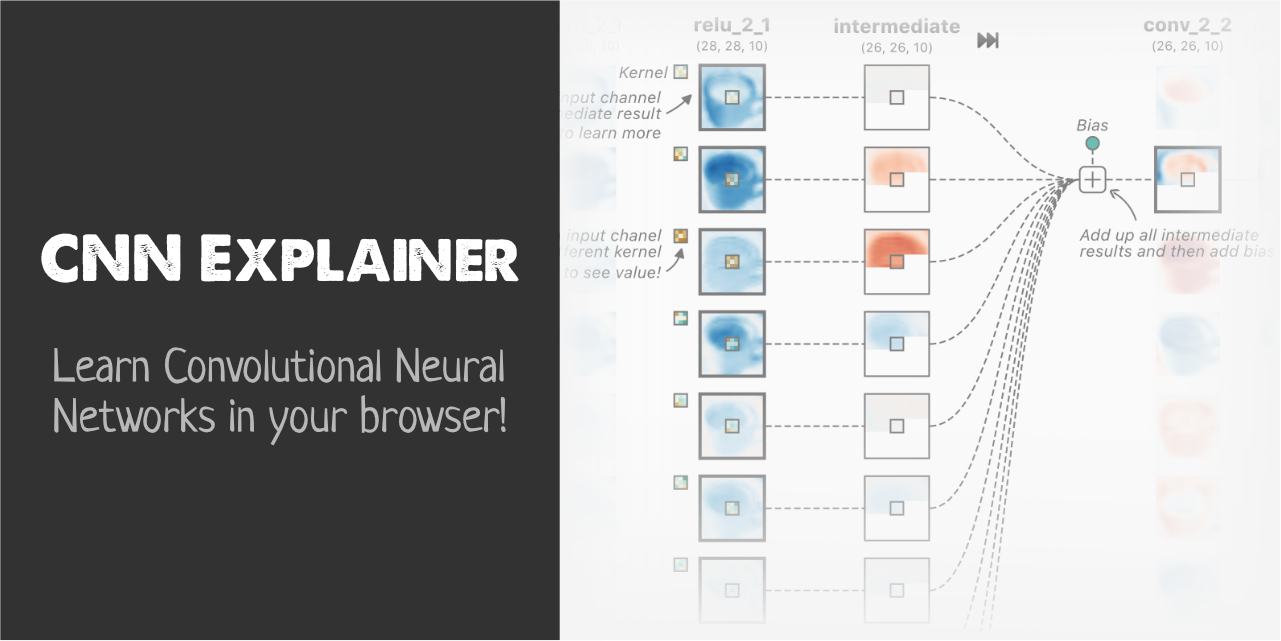
An interactive visualization system designed to help non-experts learn about Convolutional Neural Networks (CNNs).
spring field
unkempt wigeon
```py
#===[imports]===#
import matplotlib as mpl
from PIL import Image
import nu...
have you made a simple feed-forward network from scratch in numpy yet?
also known as a fully-connected network
also known as a dense network
also known as an affine transform (network?)
also known as an MLP (hate that term)
small wedge
I hate the term ANN
as if we ever need the context that we're working with artificial nn's as opposed to natural ones
spring field
spring field
also known as a fully-connected network
also known as a dense network
also known...
or rather, known as those layers not networks, but multiple of those layers make a network in the end (if you don't forget your non-linear layers too)
storm valve
I’m looking for an existing NLP corpus that focuses on Python-related vocabulary, including terms frequently used in Python programming. Currently, I’m extracting words directly from source code, such as imports, function names, and assignments, along with a small collection of common programming terms. However, I’d like to expand this corpus with more general Python-related terms to enhance its comprehensiveness. Any suggestions or resources for obtaining a richer Python-specific vocabulary corpus would be greatly appreciated. Thank you!
https://discuss.python.org/t/seeking-a-comprehensive-nlp-corpus-for-python-related-vocabulary/66515
spring field
storm valve
> I’m looking for an existing NLP corpus that focuses on Python-related vocabula...
does the glossary contain anything of interest to you?
storm valve
spring field
does the glossary contain anything of interest to you?
i tried my hand at parsing the glossary and incorporating it to my existing corpus but it was very messy, i'll have to try again soon
spring field
also collections.abc might be a neat source for terms
unkempt wigeon
#===[imports]===#
import matplotlib as mpl
from PIL import Image
import numpy as np
#================#

X0 = np.array([1,3,4,6.9])

W0 = np.array([9,4,3,0])

B0 = np.array([1,4,2,3])

output = np.dot(X0,W0) + B0

def sigmoid(X):
    return 1/(1 + np.exp(-X))

output1 = sigmoid(X0)

print(output1)
like this?
 serene wedge
 faint quail
https://youtu.be/15d-3FqNH-g
Built my own Machine Learning library from scratch using cupy, numpy and tensorflow functions occasionally

Need to optimize iou values more and potentially change the architecture to accept larger images, because the boxes are tight when using zoomed in scopes but poor when using a 1x or being too far, this is due to their being fewer pixels.
main fox
unkempt wigeon
```py
#===[imports]===#
import matplotlib as mpl
from PIL import Image
import nu...
What tutorial are you following?
main fox
unkempt wigeon
```py
#===[imports]===#
import matplotlib as mpl
from PIL import Image
import nu...
Your X0 is an array that contains both integers and one float (6.9)
You called sigmoid on X0, not output
You're trying to do all this in numpy. Is your expectation to build a CNN in pure numpy?
unkempt wigeon
main fox
Your X0 is an array that contains both integers and one float (6.9)
You called s...
I'm trying to build it all in numpy without any tensorflow or anything else because if something happens to those apis because you never know what might happen I don't know if it got directly goes to the site plugs in the data that wants to be trained so might as well get comfy on using numpy because it's a universal basic for anything really in Python that you need a lot of mathematics for sorry
main fox
unkempt wigeon
I'm trying to build it all in numpy without any tensorflow or anything else beca...
You can "freeze" whatever version of a package you use, so if there are breaking updates, you use whatever stable version you used to build your model.
Also, the package won't send data back anywhere. But even if it did, I doubt they'd need more data on how to train a CNN for MNIST.
unkempt wigeon
What about a new AI model type
main fox
unkempt wigeon
What about a new AI model type
These libraries are open source, you can see they don't send data anywhere.
Also, if you manage to build a CNN in numpy, you'll realize why people don't do deep learning in pure numpy. Back propagation would be terribly slow.
unkempt wigeon
Why would it be slow?
main fox
unkempt wigeon
Why would it be slow?
Several reasons
numpy doesn't have built in automatic differentiation (efficient computation of gradients), it cannot leverage GPUs like PyTorch and Tensorflow, it does not have a JIT compiler
storm valve
spring field
also collections.abc might be a neat source for terms
huh, how so>
final cobalt
Not sure if this helps anyone
40000 mtg cards (20000 unique ones) with abilities sorted into activated, triggered, passive/automatic, and keyword. ChatGTP was used to parse and sort the cards
faint quail
we dont have access
 regal light
can anyone recommend a llm model for code optimization which gives response time in less than 10 to 20 seconds. Also it should be less in size
jaunty helm
regal light
can anyone recommend a llm model for code optimization which gives response time...
that depends on your hardware? a model that runs in ~10 secs on a 4090 will probably take longer if you have a 4060 instead
and 'less in size' in comparison to what?
regal light
I'm mentioning about the download size of it. Regardless of the hardware is there any lightweight LLM which is used for coding related tasks
jaunty helm
regal light
I'm mentioning about the download size of it. Regardless of the hardware is ther...
again, that's not saying much; what filesize are you looking for specifically?
regal light
jaunty helm
again, that's not saying much; what filesize are you looking for specifically?
10 to 20gb
 jaunty helm
regal light
10 to 20gb
jaunty helm
regal light
10 to 20gb
then you're looking at a full unquantized 7-8b model, or an 8bit quantized 10-20b model, or a 4-bit quantized 20-40b model
maybe check out the Qwen2.5 series
regal light
okay tha nk you
quaint rivet
unkempt apex
looks good though
I didn't get
onyx frigate
Is there any compatibility issue with the latest version on pandas and numpy ?!
jaunty helm
onyx frigate
Is there any compatibility issue with the latest version on pandas and numpy ?!
not unlikely
a couple of months ago numpy 2.0 was released (that included breaking changes)
 wicked torrent
Multi-Agent Reasoning Problem Solver library in Python!
I just published a Multi-Agent Reasoning Problem Solver library in Python!
Check it out here: https://github.com/hg0428/Mar-PS
All feedback, suggestions, and critiques are welcome.
If you build something cool with it, please show me.
GitHub
A Multi-Agent Reasoning Problem Solver. You build teams and they work together to solve the problems you give them. - hg0428/Mar-PS
peak thorn
can anyone please tell me how can i load image dataset? it my first working with image dataset
serene scaffold
peak thorn
can anyone please tell me how can i load image dataset? it my first working with...
There isn't one universal way to load datasets. Is there a particular library you're trying to use to do it?
 west phoenix
I hope this is okay to ask here but I am taking a class in college for Data Aanalysis and finding it extremely difficult to follow along with my professor. Does anyone have any advice or practice suggestions to help me better understand the basics?
grand breach
has anyone ever used tomek links to undersample, it's been 50+ mins ever since i ran it and is still running
there are some 47k samples to undersample
is this normal behavior ?
 muted dock
Anyone available to help me in a vocal chat to restructure my codebase into multiple packages but in a monorepo I have tons of questions
 thorny salmon
Is it correct that there is no way to sample in a way that preserves exceedingly low groups and yets ensure relative balance at the end? Using Pands >= 2.0. I have a dataset of 7M records that I need to form subgroups/buckets that I need to evenly sample from. These are the specific categories that I already have applied in the dataset:
medium_type(digital, traditional, fetch_all)content_rating(g, s, e, q)normalised_score(<0.2 is VLS, <0.4 is LS, <0.6 is MS <0.8 is HS else VHS)focus_category(ff, other and interest, 'interest' has strings of interest that I also want to make a best effort of sampling)color_bucket(19 different color types including 'full_color', combos for color dont apply to the "interest" focus bucket as that is very limit)
There should be even distribution at each level if I was to go in and analyse it. This means roughly 50% for each medium, 25% each for rating, 20% each for score_bucket, 33% for focus and 5.2% for each color_type.
This is for a aesthetic scorer to be used on a finetune that we plan to freely release. I dont want a particular art type to not be represented. Else we will fall into the trap of super contrasty images are highly rated but we cant rate 7M records. So I need to sample at most 70k records.
Spent about 4 days attempting different implementations to no avail
unkempt wigeon
main fox
Several reasons
numpy doesn't have built in automatic differentiation (efficient...
But why does it not have a built_in automatic differention?
jaunty helm
thorny salmon
Is it correct that there is no way to sample in a way that preserves exceedingly...
dumb suggestion, but why not just df.groupby(['medium_type', 'content_rating', 'normalized_score', 'focus_category', 'color_bucket']).sample()
thorny salmon

So my thinking was focus_category has a particular type (called interest) that is quite low in population but was important I sample @jaunty helm again to avoid the 'it can only rate contrasty pics and pics with feminine traits'
Some examples of this is, it contains vehicles, landscapes, cityscapes, mechas, concept art etc.
I want this scorer focus on composition and the quality of the work, not the contents of it. This I assume means relatively even distribution of the attributes above
jaunty helm
thorny salmon
I want this scorer focus on composition and the quality of the work, not the con...
then what's wrong with the groupby().sample() method above?
if you do .sample(10) for example, you should get 10 samples for each unique combination of the 5 columns
thorny salmon
Sec, going to rerun it and spit out the results to sanity check
I recall getting poor results doing this
Running now.
main fox
unkempt wigeon
But why does it not have a built_in automatic differention?
It wasn't built for deep learning
thorny salmon
jaunty helm
then what's wrong with the `groupby().sample()` method above?
if you do `.sample...
Well forcing me to sanity check made me compromise and make some of my groups a bit more general, results seem promising but waiting to see result of 60k output instead of 10k.
(I really wanted to ensure I had some of every color_type but ... I think I am going to send myself mad)
Also, how did the bot know that was a batman gif and react to that?
jaunty helm
thorny salmon
(I really wanted to ensure I had some of every color_type but ... I think I am g...
is the data processing taking long or
thorny salmon
No me making decisions did.
I was uhmming and ahhing about whether to compromise on the color type bucket, took it from 19 to 4
jaunty helm
thorny salmon
Also, how did the bot know that was a batman gif and react to that?
if your message contains bat in anyway sir lancebot's gonna do that im pretty sure
thorny salmon
 jaunty helm
thorny salmon
I was uhmming and ahhing about whether to compromise on the color type bucket, t...
jaunty helm
thorny salmon
I was uhmming and ahhing about whether to compromise on the color type bucket, t...
does your focus_category actually only have 2 types other and interest, or does it actually store other and Vehicle and Landscape, etc
grand breach
grand breach
has anyone ever used tomek links to undersample, it's been 50+ mins ever since i...
ok it makes sense now, tomek link is a computationally expensive algorithm with O(n^2) complexity that calculated euclidean distance for every sample of n samples... waste of time for me, i think my data has very few majority class samples closer to minority class samples as I could see no difference... my dissappointment is immeasurable
thorny salmon
Just 3 types: ff, male/other and interest
jaunty helm
thorny salmon
Just 3 types: `ff`, `male/other` and `interest`
hm
but still, it could be that there's just no interesting type with the color bucket 7 for example
thorny salmon
Yeah... its tricky. I wanted these underepresented buckets with things like vehicle and landscape to be rated by us too
jaunty helm
don't think you can do much about that other than get more data lol
ig you can try oversampling? (the few times I tried working with them didn't work out so well tho)
thorny salmon
jaunty helm
don't think you can do much about that other than `get more data lol`
ig you can...
70k records is about the limit of what we can humanly do here unfortunately. We are elo rating them with glicko2 + pre-seeding their starting elo
Which means at best 15 battles per record
and that means...
70,000 * 15 (clicks) * 5 (seconds to make a judgement) = a month of work in hours 💀
unkempt apex
quaint rivet
I didn't get
the all functions which you are using are right!
so just check your epochs or other parameters
 pulsar crow
Hello
quaint rivet
unkempt apex
the all functions which you are using are right!
so just check your epochs or ot...
issue fixed
unkempt apex
quaint rivet
issue fixed
how?
thorny salmon
jaunty helm
then what's wrong with the `groupby().sample()` method above?
if you do `.sample...
Thank you btw
Oh, does python discord not have points? If it does how do assign a “thank you, you helped solve it”
serene scaffold
thorny salmon
Oh, does python discord not have points? If it does how do assign a “thank you, ...
we don't--we don't want to gamify the system
thorny salmon
Icic
unkempt wigeon
main fox
It wasn't built for deep learning
Is it possible to make it speed up?
serene scaffold
unkempt wigeon
Is it possible to make it speed up?
No.
Just use pytorch.
Or you can use JAX.
unkempt wigeon
I never went to academia for such knowledge and you can only access pi torch if you have a certificate in a field as far as I'm aware
 worldly dawn
unkempt wigeon
I never went to academia for such knowledge and you can only access pi torch if ...
worldly dawn
unkempt wigeon
I never went to academia for such knowledge and you can only access pi torch if ...
Just for completeness, check out https://pytorch.org/ and follow the big button "Get Started"
 urban canopy
Anyone know of open source AI initiatives?
Where the training data is also open source.
worldly dawn
urban canopy
Anyone know of open source AI initiatives?
Where the training data is also ope...
AI is a field, so it's orthogonal to being OSS
do you mean a LLM?
urban canopy
worldly dawn
AI is a field, so it's orthogonal to being OSS
Yes. Blender is to Maya as ??? Is to ChatGPT
worldly dawn
urban canopy
Yes. Blender is to Maya as ??? Is to ChatGPT
Right. So you are asking for OSS alternatives of ChatGPT, not OSS alternatives of AI
urban canopy
worldly dawn
Right. So you are asking for OSS alternatives of ChatGPT, not OSS alternatives o...
I am also interested in AI art but let's focus on GPT for now.
worldly dawn
urban canopy
I am also interested in AI art but let's focus on GPT for now.
on my todo list to dive deeper, but https://www.together.ai/blog/redpajama might be of interest
main fox
unkempt wigeon
I never went to academia for such knowledge and you can only access pi torch if ...
Neither did I, you don't need a degree to learn these things. You've asked several questions here and many people have linked you to great resources to get started. You should follow the advice given and try to go through one of them.
lapis sequoia
Hello! Everyone.. I'm a Bachelor Of Sciences in Data Sciences, I just joined the python discord server after a half month. I recently applied for BS Data Science and hopefully to learn more in this field with your help and with my own learning.
final cobalt
lapis sequoia
Hello! Everyone.. I'm a Bachelor Of Sciences in Data Sciences, I just joined the...
Welcome!
I hope you enjoy assaulting your own brain with knowledge humans weren't meant, biologically speaking, to comprehend on a regular basis
As well as torturing yourself with meticulous dataset collection and annotation, and the debugging of ephemeral and ill defined gradients in systems that themselves are also ill defined XD
fallow coyote
unkempt wigeon
I never went to academia for such knowledge and you can only access pi torch if ...
Word of advice: there is no shame starting at the basics. Remove your ego and listen to those who have more knowledge and experience. Thats what I do. Your foundations must be strong before you build anything on top or else, everything will collapse
left tartan
I had other plans for today, but: https://youtu.be/rbu7Zu5X1zI?feature=shared

A behind-the-scenes look at how I animate videos.
Code for all the videos: https://github.com/3b1b/videos
Manim: https://github.com/3b1b/manim
Community edition: https://github.com/ManimCommunity/manim/
I added some more details about the workflow shown in this video to the readme of the videos repo: https://github.com/3b1b/videos?tab=readme-ov...
spring field
serene scaffold
No.
well, there's cupy
but at that point, what are you even doing not going a step further with a lib that has auto diff as well...
serene scaffold
spring field
well, there's `cupy`
but at that point, what are you even doing not going a step...
The use case for cupy is even more limited now that there's JAX
spring field
yep, but it would be an almost numpy equivalent, but faster 😁
 valid otter
Budget laptops for AI/ML (less than $1000)
serene scaffold
valid otter
**Budget laptops for AI/ML (less than $1000)**
Don't buy an ML laptop. You'll be overpaying for the amount of compute power you get, and it also won't be enough.
Just get a conventional laptop and rent cloud compute as needed.
 lilac saddle
Guess all AI/ ML laptops aren't worth the price. Cause all the features work semi well
 merry ridge
I am surprised that this is even a product. Does it just have a marginally better CPU and more VRAM than a gaming laptop?
serene scaffold
merry ridge
I am surprised that this is even a product. Does it just have a marginally bette...
I've never heard of a laptop being marketed for AI
Gaming laptops are already pretty bulky and a worse value for compute ability than desktops
lapis sequoia
final cobalt
I hope you enjoy assaulting your own brain with knowledge humans weren't meant, ...
Your reply sounds like a bot, also thanks for encouragement.
unkempt apex
any specific ways to run .pth files ( trained model files ) on 512 MB ram?
the model accepts image ( grayscale ) and returns transformed image ( RGB )
model size is 6M param
which is nearly 150 mb
final cobalt
lapis sequoia
Your reply sounds like a bot, also thanks for encouragement.
XD
Sorry. I was feeling bit a peaky last night, I suppose
ionic temple
Hey guys urgently needed a way around or a fix for this any suggestions or solutions will be highly appreiciated - https://github.com/explodinggradients/ragas/issues/1478#issuecomment-2407928155
SideNote - Have to go with ChatOllama as I dont have enough credits for using ChatOpenAI
lapis sequoia
final cobalt
XD
Hey, In university we started learning programming fundamentals with C++.
But I was excited that they will teach us programming fundamentals with python programming.
What is your opinion?
Is it correct to start with C++.
agile cobalt
ionic temple
Hey guys urgently needed a way around or a fix for this any suggestions or solut...
why are you using __setattr__?
agile cobalt
ionic temple
Hey guys urgently needed a way around or a fix for this any suggestions or solut...
try asking in their discord server, they link one in the github readme
ionic temple
agile cobalt
try asking in their discord server, they link one in the github readme
Tried it but got no replies from there side:(
ionic temple
agile cobalt
why are you using `__setattr__`?
Additonal check on default removal of openai
agile cobalt
use x.y = ... normally, you should pretty much never call dunder methods directly
final cobalt
lapis sequoia
Hey, In university we started learning programming fundamentals with C++.
But I ...
In my opinion, the best approach is to start with Python and use it to get comfortable with the basic of programming - functions, objects, procedural thinking
But don't get too comfortable. Once you start settling in, switch to C(++). In my personal taste, C is less useful than C++. A good C++ compiler tends to write C code that's at least as optimized as human written C code, and it has features like classes and exceptions. Others might have other opinions
You'll want these languages because they are, generally speaking, the foundation of all the other languages you'll probably be using. In the least, they encompass the core concepts. You'll also need to be able to write fast code from time to time.
Once you've got that down, specialize as you need. Certain languages are better for certain tasks. Personally, I've developed a taste for Cython
It's a very happy medium between C(++) and Python. You'll probably also want to learn Javascript - but beware: Javascript is a friendly, well documented, universal dumpster fire of a language
Also, I (personally) don't think we'll be hand coding websites much longer. Web development is mostly a solved problem, and there are some very robust WYSIWYG tools like Webflow which cut the time to small/medium site development by 90%
lapis sequoia
final cobalt
It's a very happy medium between C(++) and Python. You'll probably also want to ...
Yeah, I Know that. I surface touched JavaScript while learning web development.
iron basalt
lapis sequoia
Hey, In university we started learning programming fundamentals with C++.
But I ...
It does not really matter which language you start with, programming is a skill that is not tied to a language. Whichever you start with, I recommend at some point learning at least 2 entirely different languages (e.g. Python -> C++ -> Haskell).
(Also at some point learning how these languages can interoperate (try making some Python bindings for a C library that you made at some point))
iron basalt
iron basalt
It does not really matter which language you start with, programming is a skill ...
Whichever language makes you want to program more is probably the best starting language for you.
 muted prairie
how can i make my python run green like this

 tidal bough
final cobalt
But don't get too comfortable. Once you start settling in, switch to C(++). In m...
tidal bough
final cobalt
But don't get too comfortable. Once you start settling in, switch to C(++). In m...
A good C++ compiler tends to write C code that's
(C++ compilers generally don't compile to C at any stage of the compilation process. (I went down a small rabbit hole making sure this is true because I found out thatclangused to be able to do that, but LLVM removed the feature allowing the translation of LLVM IR to C back in 2012).)
muted prairie
😡
unkempt apex
muted prairie
how can i make my python run green like this
GREEN = "\033[92m"
this is green ANSI code
print(f"{GREEN}hello")
and this is how u can use it
 stoic hollow
Thoughts on the Gemini api vs chatgpt one? Considering trying geminis free tier but not sure how reliable it is in comparison to chatgpt
left tartan
stoic hollow
Thoughts on the Gemini api vs chatgpt one? Considering trying geminis free tier ...
The short answer is that 'reliability' isn't a good measure here. They're all unreliable, and their utility depends on what you're trying to do and your expectations.
stoic hollow
left tartan
The short answer is that 'reliability' isn't a good measure here. They're all un...
Looking at integrating it with a job application project someone recommended me after having no luck since may with over 800 applications sent off
So basically wanting to know if it’ll actually work or if it’s going to run into issues
I usually run ollama for other projects but cloud is becoming more convenient atm but havnt played around with either or there apis
So basically trying to workout which will show most consistent results or if both are feasible
final cobalt
stoic hollow
Thoughts on the Gemini api vs chatgpt one? Considering trying geminis free tier ...
I call my ChatGTP Winston
stoic hollow
final cobalt
I call my ChatGTP Winston
Nice you tried the Gemini one? Only considering it cause has a free tier
final cobalt
Nah
I pay my $20 a month for Winston
And I'm happy
It's a reasonable price considering how much use I get out of it
stoic hollow
final cobalt
I pay my $20 a month for Winston
Oh you don’t use the api? Or do they have a fixed price?
final cobalt
Oh! The API
stoic hollow
I wasn’t sure how often api calls are referred to as a request
Yeah I don’t mind paying a fixed price but was iffy about pricing
final cobalt
I mostly use the interactive version. It's a great teacher. I've used the API as well
The interactive version is fixed. The API is by token. They stretch pretty far, but it depends how much work you need done and how complex the task is
stoic hollow
Like I’ve used aws stuff as well but just like to ask around before I throw myself into something that has per use pricing
final cobalt
I had it parse the text of 20000 magic cards for about $20 of api credits
I thought that was very reasonable
stoic hollow
final cobalt
I had it parse the text of 20000 magic cards for about $20 of api credits
Ohhhh that’s not to bad at all so what does it count as a token tho?
Is it a request or per word
stoic hollow
Ah gotcha thanks appreciate it
I’ll try Gemini first then since it has a free tier and gpt if that doesn’t work out
jaunty helm
stoic hollow
Ohhhh that’s not to bad at all so what does it count as a token tho?
depends on the model
https://huggingface.co/spaces/Xenova/the-tokenizer-playground

The Gemma series is also by Google so maybe it's an OK estimate
stoic hollow
jaunty helm
The Gemma series is also by Google so maybe it's an OK estimate
Think I need to host on ollama for Gemma tho right?
jaunty helm
stoic hollow
Think I need to host on ollama for Gemma tho right?
or through some other service like OpenRouter
I was trying to say that what a token is differs from model to model, and using Gemma might be a decent estimate of how Gemini tokenizes things
stoic hollow
jaunty helm
or through some other service like OpenRouter
I was trying to say that what a t...
makes sense thanks
untold fable
Any stanford or mit or harvard student here
serene scaffold
untold fable
Any stanford or mit or harvard student here
What question would you ask them
untold fable
how to get there
serene scaffold
I have cousins who teach at Stanford and MIT. I'll let you know if they have more specific advice than "have good grades and do a lot of impressive things"
But I suspect that they don't.
Both universities get a lot of applications. There's a point at which it's a crap shoot.
 shut yoke
untold fable
how to get there
shut yoke
untold fable
how to get there
Get incredibly good grades, be talented at something, do extracurricular activities and contribute to your community somehow. Besides the tuition fees you pay them, they need to benefit off of you
Your application has to be as perfect as it can get, so let's not forget an outstanding essay
Something original, something that stands out
Be different from everyone else, oh and use your victim card. I wouldn't mind lying if that would make me look better
Oh and don't forget the 💰
Don't expect to study there if you can't afford it
Maybe you'll manage to get a scholarship but it's still not cheap
 vale parcel
I notice a lot of people struggle to get into AI, especially RL, so I created a simple GUI for making your own RL agents in seconds. I'd love to hear feedback from you guys 🙂

GitHub
DQNSuite is a revolutionary tool that brings the power of Reinforcement Learning models into the palm of the user's hand. - GitHub - DQN-Labs/DQNSuite: DQNSuite is a revolutionary tool tha...
small wedge
that's a fun project, good job
 stone patrol
Hi, any AI dev who can help me to navigate threw process of becoming an AI dev using python
worldly dawn
stone patrol
Hi, any AI dev who can help me to navigate threw process of becoming an AI dev u...
In terms of career, a degree will be the path of least resistance and with the most opportunities and compensation
stone patrol
worldly dawn
In terms of career, a degree will be the path of least resistance and with the m...
if i understood you correctly: if i will go to university and finish it, after i will get more opportunitites than without a degree?
worldly dawn
stone patrol
if i understood you correctly: if i will go to university and finish it, after i...
indeed
stone patrol
worldly dawn
indeed
Answer dm pls, i want to know more
worldly dawn
stone patrol
Answer dm pls, i want to know more
I don't do DMs, just ask here
 frigid jewel
 stone patrol
worldly dawn
I don't do DMs, just ask here
stone patrol
worldly dawn
I don't do DMs, just ask here
Which degree do i need?
stone patrol
worldly dawn
I don't do DMs, just ask here
And are you an AI dev??
ionic temple
ionic temple
Hey guys urgently needed a way around or a fix for this any suggestions or solut...
Anyone on this please!
Hey guys urgently needed a way around or a fix for this any suggestions or solutions will be highly appreiciated - https://github.com/explodinggradients/ragas/issues/1478#issuecomment-2407928155
SideNote - Have to go with ChatOllama as I dont have enough credits for using ChatOpenAI
GitHub
For this code section using ChatMistralAI and MistralAIEmbeddings from langchain_ollama.chat_models import ChatOllama from langchain_ollama.embeddings import OllamaEmbeddings import ragas from raga...
left tartan
stone patrol
Which degree do i need?
Sorry to pass you around to different channels, but this is why it's best to ask your question directly. Sounds like you want to know about AI as a career. #career-advice is the best place to ask that. If you want to discuss AI concepts, this channel is good.
muted prairie
unkempt apex
```GREEN = "\033[92m"```
this is green ANSI code
```print(f"{GREEN}hello")```
a...
thank you bro
vale parcel
small wedge
that's a fun project, good job
Thanks!
 noble axle
guys I did lasso,ridge, and linear regression on the same dataset and the results (mse, mae, r^2) are all essentially the same. what in my data could cause this?
quaint mulch
do they also make the exact same predictions?
maybe the regularisation coefficient/strength is too weak?
is the error zero? the problem is solved?
maybe there is just no linear correlations in the data in the first place?
noble axle
no linera correlation would cuase this? i do have linear correlations between some features and the target
chat gpt said the opposite they said if a model does have a lot of linear correlation it will mean that lasso and ridge will perform basicalyl the same as linear
charred egret
How big is the dataset?
quaint mulch
noble axle
is that too small to do regressions?
not too small imo
quaint mulch
noble axle
chat gpt said the opposite they said if a model does have a lot of linear correl...
have you manually check the 14 coefficients from the 3 differnet models?
noble axle
yeah theyer ebasically the same give or take 1 or 2
quaint mulch
any there anything suspicous about the those coefficeints?
like some are super big, or some are very close to zero or one?
quaint mulch
noble axle
chat gpt said the opposite they said if a model does have a lot of linear correl...
btw, I just realized, this is the same like what I said. I said that it could he that the problem i solved, the errors are closed to zero
noble axle
quaint mulch
any there anything suspicous about the those coefficeints?
like some are super b...
i dont think so

 quaint mulch
noble axle
quaint mulch
noble axle
this is test set performance?
quaint mulch
I think it make sense to me.
It seems that feature 1 and 2 (counting from zero) are the most important features that predominate everything else. The coeffcients are wayyyy bigger than everything else.
I'm surprised that ridge is performing very similarly to everything else, given that the coefficient are very different.
Did you use standard scaling and PCA?
noble axle
ok thx let me ask you one more thing which of the 3 regressions is most useful or most used in the industry
quaint mulch
idk, i'm not in industry lol
quaint mulch
noble axle
ok thx let me ask you one more thing which of the 3 regressions is most useful o...
I think what's useful is doing 3 things like you did, and try to understand what's going on, like what you are doing
quaint mulch
noble axle
yeah what do u think about it
for instance, I guess there's no distribution shifts between train and test, so I don't think the models overfit on train and that .82 r^2 is a pretty reliable number i guess
twin relic
Hi, what are the prerequisites for the book Hands on machine learning with sckit learn , keras and tensorflow ?
 rough sigil
Hey, I’m kinda new to python and I learned the basics but I’d like to get into data science. I know it’s unlikely that anyone here has the time for this but if anyone does, I’d really appreciate the help if you can get me started on it. I haven’t been able to understand the things I saw online but I think having someone show me what I need and what to do would help. Thank you!
left tartan
rough sigil
Hey, I’m kinda new to python and I learned the basics but I’d like to get into d...
Don't worry about data science right now, just focus on learning Python and getting good at it. Ask for help/guidance in #python-discussion . It takes a fair amount of work to get through the first phase of learning programming, and worrying about specialization now is too early.
left tartan
rough sigil
Hey, I’m kinda new to python and I learned the basics but I’d like to get into d...
Once you're through the beginning, you can look at resources like kaggle.com/learn to learn some data-related skills.
Separately, there's many Data Science topics you could learn... from various math topics to theoretical concepts to applied.
unkempt apex
vale parcel
I notice a lot of people struggle to get into AI, especially RL, so I created a ...
sick man!
any plans to add progress of training also??
like showing loss functions and average reward throughout the episodes?
I would love to do that, because when I made my Pong RL game I have struggled a lot for this stuff
shut yoke
stone patrol
Which degree do i need?
Computer Science or Data Science
 feral smelt
Btw anyone wanna be study buddy can dm me...i like maths mainly linear algebra probability statistics and ai
shut yoke
feral smelt
Btw anyone wanna be study buddy can dm me...i like maths mainly linear algebra p...
which year u in
shut yoke
dude Im 1st year 😭
shut yoke
feral smelt
I m a mechanical engineer graduate as of now but I will shift
computer science
shut yoke
feral smelt
No ds and ai
yeah but those are in optional courses I can take on the 3rd and 4th years
AI
shut yoke
Morocco I study in Canada
feral smelt
Ohk
rough sigil
left tartan
Once you're through the beginning, you can look at resources like kaggle.com/lea...
Is that a good place to get started on it? I think I know just about everything I need to branch off into something specific (game dev, web dev, data science, etc, but just python)
left tartan
rough sigil
Is that a good place to get started on it? I think I know just about everything ...
That's a good place to get started on the coding part of the data journey. Theres plenty of other places for the theory part.
rough sigil
left tartan
That's a good place to get started on the coding part of the data journey. There...
Wdym
left tartan
rough sigil
Wdym
Data Science has a lot of science. Theory. Concepts. Math. Etc.
That's separate from learning how to do data stuff with Python
rough sigil
left tartan
Data Science has a lot of science. Theory. Concepts. Math. Etc.
Could you explain some of it in dms?
Or is that a bit much
left tartan
Not really, but check out this channel: https://youtube.com/playlist?list=PLZHQObOWTQDNU6R1_67000Dx_ZCJB-3pi&feature=shared
YouTube
Learn the basics of neural networks and backpropagation, one of the most important algorithms for the modern world.

 quaint mulch
rough sigil
Hey, I’m kinda new to python and I learned the basics but I’d like to get into d...
quaint mulch
rough sigil
Hey, I’m kinda new to python and I learned the basics but I’d like to get into d...
I haven’t been able to understand the things I saw online
Start with something something specific you saw online, and tell us what you understood and what you don't.
quaint mulch
quaint mulch
> I haven’t been able to understand the things I saw online
Start with something...
also, pinned messages
quartz lotus
can someone tell me how to make positive samples in open cv. I'm following along the docs and it says to use the opecv_createsamples application but I don't see it in the open cv download
unkempt wigeon
Do I have to use tensorflow if I was going to do a machine learning I have everything for plotting the data taking the image and then converting the image into an array to be able to have it learn sorry
unkempt apex
ahh, there is a cheatsheet for this

www.google.com
Found on Google from eepower.com
you wanna remember how this color code works?
small wedge
you mean like computer vision?
unkempt apex
ohhh shit you want to detect it
small wedge
4 color masks
unkempt apex
lol
small wedge
get the average position of the white after masking for each
that tells you where each color is in relation to the others
unkempt apex
all images have green bg?
small wedge
where are these pictures coming from, can you standardize what they will look like?
unkempt apex
you got dataset or what? for this all?
share
if it's on kaggle

Resistor pictures in JPG format.
I only know this one
bruh what?? u deleting all msg?
unkempt apex
lol
remote stream
anyone knows data annotation software like ai based if its paid its fine
river cape
Hey guys , is it possible to build an ai model which reads the 2d floor plan and gives a 3d model of the building?
vale parcel
unkempt apex
any plans to add progress of training also??
like showing loss functions and av...
Thanks! Glad you like it. I did have plans of adding matplotlib and showing live stats as the training happens. It's currently not being worked on, but if you would like to contribute to the repo by making that feature (or any other feature you would liek being added), feel free! I'll take looks at PRs as soon as possible.
untold fable
A very big accident happened today 5 PPL died in a car accident and four are computer science student of my college 1st year,4th year and two were 3rd year
quaint mulch
unkempt wigeon
Do I have to use tensorflow if I was going to do a machine learning I have every...
you don't have to use tensorflow, you can use other things
quaint mulch
remote stream
anyone knows data annotation software like ai based if its paid its fine
depending on your use, you can try using something like chatGPT
quaint mulch
river cape
Hey guys , is it possible to build an ai model which reads the 2d floor plan and...
Is it possible? Yes. Will it be good? That's a completely different question.
scarlet anchor
is there any good LLM for answering IoT related questions?
quaint mulch
scarlet anchor
is there any good LLM for answering IoT related questions?
What do you mean by IoT related questions?
unkempt wigeon
quaint mulch
you don't have to use tensorflow, you can use other things
What other options my apologies
scarlet anchor
quaint mulch
What do you mean by IoT related questions?
something related to embedded and internet of things
scarlet anchor
@quaint mulch
river cape
quaint mulch
Is it possible? Yes. Will it be good? That's a completely different question.
How do you start?
 uncut plaza
Hey everyone, I have a problem and was wondering if there's an algorithm or machine learning model that can extract specific information from a bunch of text files. I have several resumes saved as separate .txt files, and I want to automatically pull out details like name, phone number, education, and other relevant information into an Excel or CSV file. Since each resume has a different format, I can't do this manually or with Excel, so I'm looking to use machine learning for the task.
serene scaffold
uncut plaza
Hey everyone, I have a problem and was wondering if there's an algorithm or mach...
this is actually a really common problem. if you just look up "resume parsing with AI", you'll get a lot of options.
untold fable
It hurts when your batch mates lost there life's in a car accident
tulip wyvern
Does anyone know why I'm getting different accuracies when it should be equal?
rf_model = RandomForestClassifier(
    n_estimators=50,
    min_samples_split=10,
    min_samples_leaf=1,
    max_leaf_nodes=None,
    max_features='sqrt',
    max_depth=None,
    bootstrap=True,
    random_state=42
)

rf_model.fit(X_train, y_train)

rf_probs = rf_model.predict_proba(X_test)
y_pred = rf_model.predict(X_test)

correct = 0
for i in range(len(y_test)):
    if y_pred[i] == y_test[i]:
        correct += 1

correct_prob = 0
for i in range(len(y_test)):
    if np.argmax(rf_probs[i]) == y_test[i]:
        correct_prob += 1

print(correct / len(y_test)) => 0.48223401060954857
print(correct_prob / len(y_test)) => 0.007606846161545391```because shouldnt np.argmax(rf_probs[i]) be the same as y_pred[i]
tidal bough
maybe rf_model.classes_ is in the wrong order compared to the dataset
tulip wyvern
tidal bough
maybe `rf_model.classes_` is in the wrong order compared to the dataset
oh jeez do you know how i would fix that
because my y_encoded array is just integers from 0-365 inclusive and my rf_model.classes is also just integers 0-365 inclusive
i dont think the rf_model.classes ordering is just a translation of y_encoded array because I ran this:
for n in range(-365, 366):
    for i in range(len(y_test)):
        if np.argmax(rf_probs[i]) + n == y_test[i]:
            correct_prob += 1
    prob = correct_prob / len(y_test)
    if prob > 0.3:
        print(correct_prob / len(y_test)) => never printed
        print(n)
    correct_prob = 0

print(correct / len(y_test)) => 0.4839723041415566
and the prob was never over 0.3 so i think the order is messed up in some crazy way
Edit:
NEVERMIND I GOT IT!!
final cobalt
Anyone here ever have any real luck training LoRA?
I understand the theory and most of the mechanics in theory
But no matter what I do, I can't get a decent result
unkempt wigeon
quaint mulch
you don't have to use tensorflow, you can use other things
What else could I use?
serene scaffold
unkempt wigeon
What else could I use?
pytorch or JAX.
 fresh bay
is there something wrong with this training call when I am looking at my gradients it really doesnt look like anything is flowing back?
for epoch in range(num_epoch+1):
    criterion = torch.nn.CrossEntropyLoss(reduction='none', weight = class_weight)

    for m in model_dict:
        model_dict[m].train()

    num_view = 1

    optim_dict["C{:}".format(i+1)].zero_grad()

    ci_loss = 0

    ci = model_dict["C{:}".format(i+1)](model_dict["E{:}".format(i+1)](data_tr_list[i],adj_tr_list[i]))

    c1_l0_norm = np.linalg.norm(model_dict["C1"].clf[0].weight.clone().detach().numpy().flatten(), 0)

    gc1_l0_norm = np.linalg.norm(model_dict["E1"].gc1.weight.clone().detach().numpy().flatten(), 0)

    gc2_l0_norm = np.linalg.norm(model_dict["E1"].gc2.weight.clone().detach().numpy().flatten(), 0)

    regularization_term = gc2_l0_norm + gc1_l0_norm + c1_l0_norm

    ci_loss = torch.mean(criterion(ci, labels_tr_tensor.squeeze())) + reg_penalty * regularization_term

    ci_loss.backward()

    optim_dict["C{:}".format(i+1)].step()

    loss_dict["C{:}".format(i+1)] = ci_loss.detach().cpu().numpy().item()

That change just looks to small in the loss given how large it is tbh
unkempt wigeon
serene scaffold
pytorch or JAX.
What are the differences between the two because I want to get the best use across the board
serene scaffold
unkempt wigeon
What are the differences between the two because I want to get the best use acro...
Just use pytorch
serene scaffold
lapis sequoia
What does a data scientist do?
There's no rule that companies have to follow about which of their employees get to be called "data scientists". And the diversity of job responsibilities reflects that.
If you like statistics, then it's as good a job as any.
lapis sequoia
I think I made a bad decision by taking the Data Science Program.
serene scaffold
lapis sequoia
I think I made a bad decision by taking the Data Science Program.
Is this at a university or what
lapis sequoia
serene scaffold
Is this at a university or what
University.
left tartan
lapis sequoia
University.
Many Uni students change majors, at least in the US.
lapis sequoia
left tartan
Many Uni students change majors, at least in the US.
It's easy to change majors/program but the thing is that our parents will think that our child don't want to study.
The big problem.
faint quail
is there anything wrong with this backpropagation through a Concatenation layer? I'm passing the "node_values" (gradient w.r.t the output) to the layer before it by adding the two "node_values" together before passing them, but I'm concerned this isn't correct. Please help I'm self taught
return _node_values + residual_node_values, [gradients, residual_gradients]
 umbral lotus
lapis sequoia
I think I made a bad decision by taking the Data Science Program.
umbral lotus
lapis sequoia
I think I made a bad decision by taking the Data Science Program.
oh why say so?
I'm considering pursuing a master's degree of DS after undergrad
rich moth
lapis sequoia
It's easy to change majors/program but the thing is that our parents will think ...
Who is going to school you or your parents?
quaint mulch
scarlet anchor
something related to embedded and internet of things
That really depends on what kind of questions are you asking.
quaint mulch
river cape
How do you start?
SurfelNeRF: Neural Surfel Radiance Fields for Online Photorealistic Reconstruction of Indoor Scenes.
and then you can combine it using something like marching cube: https://www.matthewtancik.com/nerf
A method for synthesizing novel views of complex scenes by optimizing an underlying continuous volumetric scene function using a sparse set of input views.
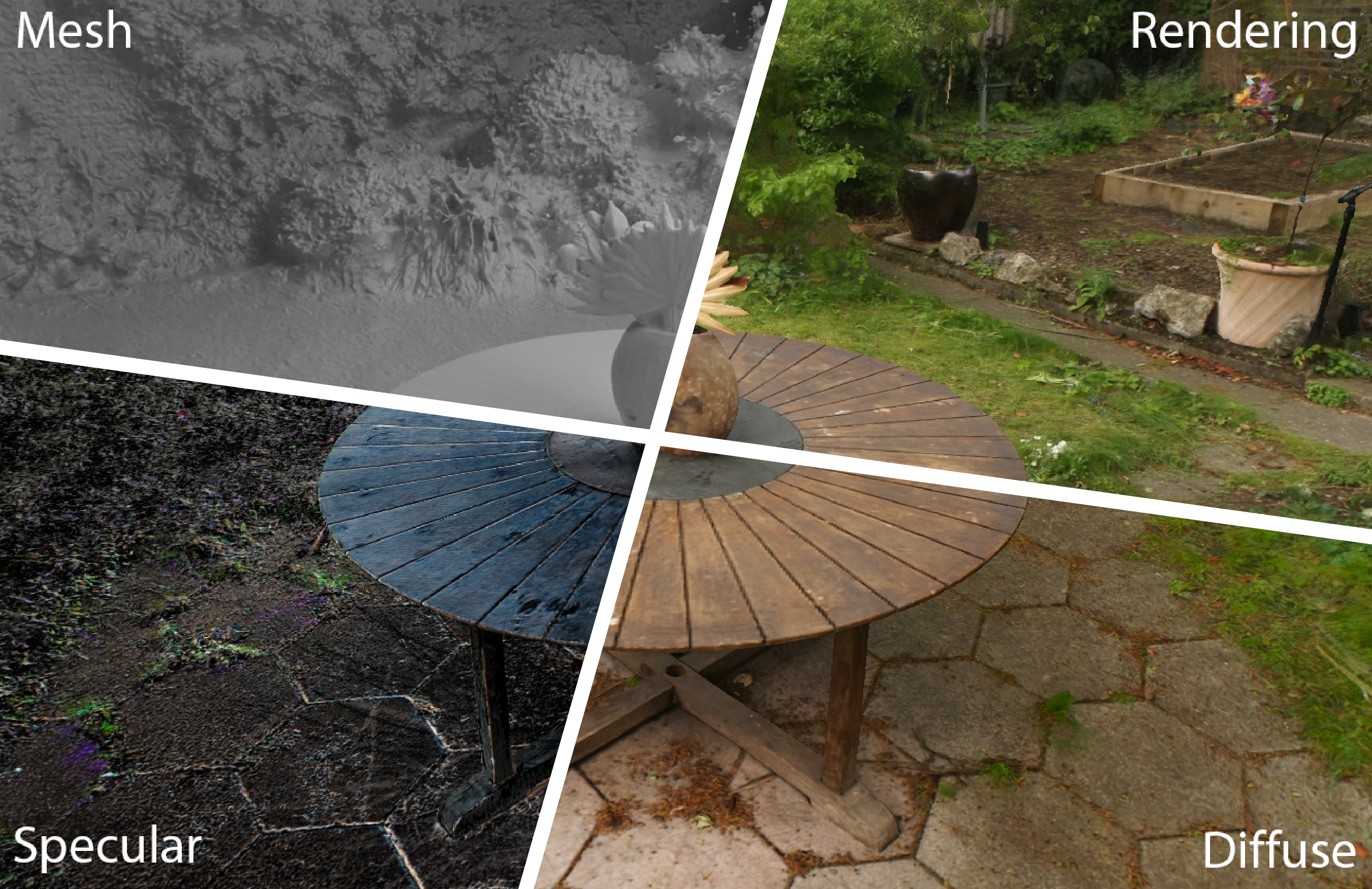
Project page for BakedSDF: Meshing Neural SDFs for Real-Time View Synthesis.
scarlet anchor
quaint mulch
That really depends on what kind of questions are you asking.
Umm , all i want is a LLM 💀
agile cobalt
scarlet anchor
Umm , all i want is a LLM 💀
I wouldn't consider any LLM good at all, but you can try chatgpt or llama, just remember that you must double check pretty much everything any llm outputs
quaint mulch
scarlet anchor
Umm , all i want is a LLM 💀
Like, if you want to connect a timeseries data stream from IoT sensor to an LLM and you can ask question about it interactively, maybe something like NextGPT can do that, but only if that IoT happens to be IMU or audio, and not if it is like, ECG. In that case, you might need start your own research project.
If you have some text questions, and you want some text answers, like "what does iot stands for", then yea, use chatgpt.
like idk what you want
NExT-GPT: Any-to-Any Multimodal Large Language Model
 sour parrot
Could you please help me for this question

Stack Overflow
This is the document page. I want to segment the 10 handwritten lines perfectly and then crop it to save it to train my model.
What methods can I use??
I don't want to make my own model to segment ...
quaint mulch
I'm going to assume that's Arabic, so maybe find some arabic ocr?
serene scaffold
quaint mulch
I'm going to assume that's Arabic, so maybe find some arabic ocr?
They only want bounding boxes around each line. They're not trying to transcribe it.
 dusky abyss
looking for a mask segmentation model which I can use to automatically select background, head, body of a human etc given an portrait image
prompt based SAM has issues using the prompt, if I say background it will select the entire image, if I say body below neck it will ignore parts of the body like the hands, shirt below the suit etc
it isnt generalizing well
 tacit plinth
Hello
Can anyone know to how preprocess NxN excel file to generate text before embedding and vectorization for LLM?
 mint plume
Hello everyone! I've been in this Discord for a long time but I'm going to try to be more active here.
 thorny geode
hi, im a high school students trying to self learn statistics and programming, is there any projects that is suitable for a high school
mint plume
For the record, I recent graduated from uni and I'm used to doing everything in R.
 broken eagle
https://www.youtube.com/watch?v=AzRz6CEizJ4
Anyone familiar with replicating these kind of audio source separation models?

Presented by Jonathan Le Roux (MERL) on December 9, 2022.
Abstract:
With the advent of deep-learning-based methods, audio source separation has seen a resurgence of interest and success. I will give an overview of techniques developed at MERL towards the goal of robustly and flexibly decomposing and analyzing an acoustic scene. In particular, ...
river cape
Hi guys how long deos it take to train a cnn model?
charred egret
river cape
Hi guys how long deos it take to train a cnn model?
It depends on what you’re doing. Too many factors to consider
river cape
charred egret
It depends on what you’re doing. Too many factors to consider
model = Sequential()
model.add(InputLayer(input_shape=(224,224,3)))
model.add(Conv2D(32,kernel_size=(3,3),padding='same',activation='relu'))
model.add(Conv2D(32,kernel_size=(3,3),padding='same',activation='relu'))
model.add(MaxPooling2D(pool_size = (2,2),padding='same'))
model.add(Conv2D(64,kernel_size=(3,3),padding='same',activation='relu'))
model.add(Conv2D(64,kernel_size=(3,3),padding='same',activation='relu'))
model.add(MaxPooling2D(pool_size = (2,2),padding='same'))
model.add(Conv2D(128,kernel_size=(3,3),padding='same',activation='relu'))
model.add(MaxPooling2D(pool_size = (2,2),padding='same'))
model.add(Flatten())
model.add(Dense(512,activation='relu'))
model.add(Dense(256,activation='relu'))
model.add(Dense(200,activation='softmax'))
I am trying to do a bird classification model
charred egret
Still doesn’t tell you anything. Depends on the hardware, library you’re using, hyper parameters, what you consider as “done training”, and many more. Best way to find out is to just run it
river cape
charred egret
Still doesn’t tell you anything. Depends on the hardware, library you’re using, ...
Like I want to know the amount of time
I am using google colab
t4 gpu
charred egret
river cape
Like I want to know the amount of time
The only way to know is to run it
river cape
charred egret
The only way to know is to run it
OH okay is it normal to have accuracy of 0.0074 in the intital epochs?
charred egret
you can guesstimate, run it in X number of epochs and time that and you can find out the time taken for 1 epoch. It’s going to be kinda close