#databases
1 messages · Page 23 of 1
 paper flower
 glacial current
oh i see. that is not what i think of naked queries. Naked to me is direct query strings. But i see now why the distinction that Core is a hybrid object of direct communication (what i call naked) and full ORM.
paper flower
glacial current
oh i see. that is not what i think of naked queries. Naked to me is direct que...
It's not naked/raw sql, but eventually it would have to be translated to raw sql
 sturdy lily
i have this data in mongodb
const user = {
  // ...other info,
  email: "user1@gmail.com",
  userInfo: null,
  userDetails: [
    {
      docType: 'some-type',
      dob: 'dob',
      joinDate: 'some date',
    },
    {
      address: 'address',
      street: 'some street',
      pin: 'pin',
    },
  ],
};
so now i want to update this user and want to take the value of usersDetails[0] element and want to put in userInfo. can someone help with this query?
users.updateOne({ email: "user1@gmail.com" }, { $set: { userInfo: userDetails[0} } )
 queen rose
I'm not sure what is ORM vs Core, but what I hate the most is this kind of queries:
    query = (
        db.query(User)
        .filter(
            User.user_id == user_id,
        )
        .update(update_model, synchronize_session=False)
    )
    db.commit()
I prefer using conn.execute() with either plain text, or select(Table.col).where(table.col == ...) (using the with statement which handles any exceptions and does a rollback if necessary)
if I recall correctly, there is also a way that by modifying tihe column of an instance of a table class it will modify the DB directly, i.e.: Table(...).col = 32, but I despise that.
I like making it really clear when I'm modifying the DB, which records I'm modifying, and which columns.
 delicate fieldBOT
:incoming_envelope: :ok_hand: applied timeout to @inland junco until <t:1697619726:f> (10 minutes) (reason: duplicates spam - sent 4 duplicate messages).
The <@&831776746206265384> have been alerted for review.
 fringe sundial
guys is this sql create correct for this sqlalchemy column?
id: Mapped[UUID] = mapped_column(UUID(as_uuid=True), primary_key=True, default=uuid4)
CREATE TABLE IF NOT EXISTS users(
    id UUID PRIMARY KEY NOT NULL
)
 graceful widget
what is this and how do i fix it =.=

this is pgadmin btw
just created a server group discord bot and trying to add a server VIKINGGGGG for my viking discord bot
graceful widget
 obtuse magnet
check ure using the correct port
obtuse magnet
check ure using the correct port
wait what
shouldnt i be defining them here?
obtuse magnet
try a diff one then, something else may be using that port already
graceful widget
obtuse magnet
try a diff one then, something else may be using that port already
ok
ok thanks its working
graceful widget
obtuse magnet
try a diff one then, something else may be using that port already
the spiking of database sessions means its connected right?
 obtuse magnet
ye shud be
obtuse magnet
right click -> query tool iirc
i wud use dbeaver instead of pgadmin
just better in general
graceful widget
obtuse magnet
right click -> query tool iirc
there is so many datatypes 😭

i want string or varchar
but there is only cstring (which is for c ig?)
obtuse magnet
there shud be varchar
graceful widget
character varying is varchar right?
obtuse magnet
shud be
i suggest writing DDL instead

Quick and simple free tool to help you draw your database relationship diagrams and flow quickly using just keyboard
this tool can generate sql for u too
graceful widget
obtuse magnet
i suggest writing DDL instead
but why
i can just fill in the table
 obtuse magnet
repeatability
obtuse magnet
u can do that, or write/generate the DDL and run it
 normal bronze
graceful widget
but why
normal bronze
graceful widget
but why
Also, the habit of planning these out prior to implementing will save a ton of minor mistakes and things down the line.
It also helps keep the idea separate to the implementation, which is a good practice for planning both large and small projects.
graceful widget
normal bronze
Also, the habit of planning these out prior to implementing will save a ton of m...
thanks for the tips!
but how do i do the SQL in code tho
like put values into the table
import discord, asyncio, random, os, asyncpg, psycopg2
from discord.ext import commands
import discord.ext.commands
from dotenv import load_dotenv

intents = discord.Intents.all()
intents.members = True
prefixxx = ['v.', 'V.']
bot = commands.Bot(command_prefix=prefixxx, case_insensitive=True, activity=discord.Game(name="m.help"), intents=intents)
load_dotenv()

###########################################################################################################
################################################MAIN_CODE##################################################
###########################################################################################################

# Connect to your PostgreSQL database
conn = psycopg2.connect(
    database=os.getenv("db_database"),
    user=os.getenv("db_user"),
    password=os.getenv("db_password"),
    host=os.getenv("db_host"),
    port=os.getenv("db_port")
)

@bot.event
async def on_ready():
    print('We have logged in as {0.user}'.format(bot))

bot.remove_command('help')

######################################################
#######################COMMANDS#######################
######################################################

async def main():
    async with bot:
        [await bot.load_extension(f"commando.{file[:-3]}") for file in os.listdir("commando/") if file.endswith(".py")]
        await bot.start(os.getenv('TOKEN'))

asyncio.run(main())
how do i do something like this
discord.utils.setup_logging()
@bot.event
async def setup_hook() -> None:
    bot.db: asyncpg.Pool = await asyncpg.create_pool(os.getenv('DATABASE_URL'))
    bot.database_handler = Database(bot)
i used this when im on railway
 floral surge
does 'validation' refer to a determinate well known concept? is it what we refer to when e.g., entries in a column are string, and we need them to be strings of a specific format otherwise they constitute inadequate column entries?
 languid dew
graceful widget
how do i do something like this
```py
discord.utils.setup_logging()
@bot.event
...
languid dew
graceful widget
how do i do something like this
```py
discord.utils.setup_logging()
@bot.event
...
this isn’t how you use setup hook
it’s not an event it’s an internal method that dpy is supposed to call for you when you subclass a Bot class
 spiral lichen
what is a database??
 supple comet
languid dew
it’s not an event it’s an internal method that dpy is supposed to call for you w...
supple comet
languid dew
it’s not an event it’s an internal method that dpy is supposed to call for you w...
the "event" decorator justs sets an attribute internally https://github.com/Rapptz/discord.py/blob/master/discord/client.py#L1990
delicate fieldBOT
discord/client.py line 1990
setattr(self, coro.__name__, coro)```are you using psycopg2 or asyncpg?
 scarlet arch
~~```sql
CREATE TABLE IF NOT EXISTS todo (
todo_id INT PRIMARY KEY,
relative_todo_id INT NOT NULL,
todo_time INT NULL,
description INT NULL,
by_user_id INT NOT NULL
);
I am using SQLite. If I have a table like this, and want to give the users some friendliness by giving them IDs that start from 1 then increments by 1 for each todo inserted that belongs to `by_user_id` ; what can I do in the database such that I can index these only-unique-per-user numbers to do stuff like delete or update the todo row/record? I don't even know how to handle the IDs to be honest. Any advise?~~
achieved it with create trigger (i think) thanks! faint jewel
!code
delicate fieldBOT
paper flower
scarlet arch
~~```sql
CREATE TABLE IF NOT EXISTS todo (
todo_id INT PRIMARY KEY,
rela...
scarlet arch
paper flower
https://www.sqlite.org/autoinc.html
I don't think that would've quite worked for my case, relative_user_id has to be started from 1 for each user, that one can auto increment on each insert on the table itself
paper flower
scarlet arch
I don't think that would've quite worked for my case, relative_user_id has to be...
That's completely normal for a primary key though
scarlet arch
nono, the primary key is different
paper flower
I think firstly I'd make sure you even need a todo number, but yeah, in this case you can either use a trigger or do that in your application logic
scarlet arch
todo_id is the primary key, relative_todo_id won't be unique
paper flower
I see
scarlet arch
paper flower
I think firstly I'd make sure you even need a todo number, but yeah, in this cas...
if I do it in the application logic, it won't be persistent, I'd have to fiddle around a lot
paper flower
scarlet arch
if I do it in the application logic, it won't be persistent, I'd have to fiddle ...
Not really
You still can persist it in db and it's not that complicated to do
I usually prefer to put things like that into application to not put any logic into db, though it would be more performant
It wont' really matter though
scarlet arch
paper flower
You still can persist it in db and it's not that complicated to do
well yeah, I'm not worried about the db part, I'm worried about keeping the relative ids reference the same primary key persistently
paper flower
scarlet arch
well yeah, I'm not worried about the db part, I'm worried about keeping the rela...
And why do you think you can't persist them?
When adding a new todo just fetch the current max id for that user and do whatever you want with it
scarlet arch
so like, in the db relative ID defaults to 0, then whenever I add a todo record, I increment current max relative id then put it in the new record?
paper flower
scarlet arch
so like, in the db relative ID defaults to 0, then whenever I add a todo record,...
Yes
scarlet arch
it's basically what my triggers are doing, https://github.com/eeriemyxi/todo-bot/blob/b6bc054c3e1f53328e76a56b28c131e19b4b9527/bot/ext/db/scripts/setup.sql#L20-L50
and I think that's much cleaner and faster than doing the same thing with Python, so I'd rather keep it this way
 torn sphinx
hey guys, im new to python and i need to make a server can someone help?
torn sphinx
create database trial;
use trial;
create table Student(
rollno INT,
Name varchar(100) NOT NULL);
insert into Student values(1, "Rohan");
insert into Student values(2, "Jaya");
insert into Student values(3, "Teena");
insert into Student values(4, "Diksha");

create table Fees(
rollno INT,
Fee INT);

insert into Fees values(4, 4500);
insert into Fees values(2, 5500);
insert into Fees values(3, 5000);

select A.rollno, A.Name, B.Fee from Student A, Fees B where A.rollno = B.rollno;
Can someone explain me how join works
I've been struggling real bad
obtuse magnet

W3Schools offers free online tutorials, references and exercises in all the major languages of the web. Covering popular subjects like HTML, CSS, JavaScript, Python, SQL, Java, and many, many more.
scarlet arch
torn sphinx
hey guys, im new to python and i need to make a server can someone help?
people will have when you have a specific question
maybe see https://stackoverflow.com/help/how-to-ask and welcome to the Python ecosystem.
 fading patrol
torn sphinx
hey guys, im new to python and i need to make a server can someone help?
graceful widget
supple comet
are you using psycopg2 or asyncpg?
fading patrol
torn sphinx
hey guys, im new to python and i need to make a server can someone help?
graceful widget
supple comet
are you using psycopg2 or asyncpg?
psychopg2
 pure mortar
obtuse magnet
https://dbdiagram.io/
pure mortar
obtuse magnet
https://dbdiagram.io/
oh hey i use this site
 tiny hearth
Help with subqueries...
I have two log tables that hold similar data but are for different purposes and a comments table with several support tables. My current goal is to display the latest comment (if there is one) with its appropriate log entry. The comments table uses foreign keys for IDs for both log tables to keep them separated.
This code just produces a query for the latest comment for each unique ID for the ccslog table.
ccslog_last_comment_subquery = ccslog_last_comment_query.subquery()
This code uses the previous query to retrieve all relevant data from the same table. I realize that they could probably be combined to accomplish the same thin in one query, but I separated it so I could hopefully work it out properly
    comments.entry_id, comments.comment_id, comments.comment_date, comments.operator, comments.comment, comments.reference
    ).where(comments.comment_date == ccslog_last_comment_subquery.c.last_comment_date
    )
  ccslog_comments_subquery = ccslog_comments_query.subquery()
My thought, and I am willing to admit it may be wrong, is that I would like to add the previous query to the following query that is used to populate the page.
    ccs_log.entry_id, ccs_log.entry_date, ccs_log.operator, ccs_log.status, ccs_log.status_date, buildings.building_name, rooms.room, systems.system, equipment.equipment, alarms.alarm, contacts.contact_name, ccs_log.work_order
    ).join(buildings, ccs_log.building_id == buildings.building_id
    ).join(rooms, ccs_log.room_id == rooms.room_id
    ).join(systems, ccs_log.system_id == systems.system_id
    ).join(equipment, ccs_log.equipment_id == equipment.equipment_id
    ).join(alarms, ccs_log.alarm_id == alarms.alarm_id
    ).join(contacts, ccs_log.contact_id == contacts.contact_id
).order_by(desc(ccs_log.entry_date))```I have been working with a copy of the last query to work out the proper way to merge the two queries, but nothing I have come up with works.
To be completely transparent, I had to step away from the code for a bit due to other priorites so I don't remember what I tried and what I haven't.
tiny hearth
nevermind, happy accident, I just figured it out...apparently I just needed to talk it through. 😄
my only problem now is that only entries with comments show up. I don't want to assume that every entry has a comment. And I want them to show up together
For those curious, here is my working query...
ccs_log.entry_id, ccs_log.entry_date, ccs_log.operator, ccs_log.status, ccs_log.status_date, buildings.building_name, rooms.room, systems.system, equipment.equipment, alarms.alarm, contacts.contact_name, ccs_log.work_order, ccslog_comments_subquery.c.entry_id, ccslog_comments_subquery.c.comment_id, ccslog_comments_subquery.c.comment_date, ccslog_comments_subquery.c.operator, ccslog_comments_subquery.c.comment, ccslog_comments_subquery.c.reference
).join(buildings, ccs_log.building_id == buildings.building_id
).join(rooms, ccs_log.room_id == rooms.room_id
).join(systems, ccs_log.system_id == systems.system_id
).join(equipment, ccs_log.equipment_id == equipment.equipment_id
).join(alarms, ccs_log.alarm_id == alarms.alarm_id
).join(contacts, ccs_log.contact_id == contacts.contact_id
).join(ccslog_comments_subquery, ccs_log.entry_id == ccslog_comments_subquery.c.entry_id
).order_by(desc(ccs_log.entry_date))``` coral wasp
tiny hearth
For those curious, here is my working query...
``` ccslog_entries_query = db.s...
coral wasp
tiny hearth
For those curious, here is my working query...
``` ccslog_entries_query = db.s...
Glad you figured that out... yah, someone tell me why we use ORMs again?
pure mortar
coral wasp
Glad you figured that out... yah, someone tell me why we use ORMs again?
software devs are allergic to SQL?
jk

in all seriousness, they do do a lot for us. but idk about in this case...
paper flower
tiny hearth
For those curious, here is my working query...
``` ccslog_entries_query = db.s...
Maybe select models directly? 🤔
tiny hearth
To be fair, I am no expert in sql or flask webapp, but I get by 😄 This is my first full blown application...oh, btw, I am a Linux Admin by trade but I haven't slept at a holiday inn recently 😄
paper flower
Also I would update flask-sqlalchemy: https://flask-sqlalchemy.palletsprojects.com/en/3.1.x/queries/#select
You should be able to select all fields on a certain model
e.g. select(User)
tiny hearth
paper flower
You should be able to select all fields on a certain model
I believe my problem is a little more complicated then that, but I will let you be the judge. the ccs_log table has over 100 records in it and the original query will retrieve them all and send them to the template as intended. once I "solved" my problem, another popped up in that only the 14 or so records that have comments attached to them are now being sent to the template. The intended action is that all ~100 records are sent to the template and the ~14 or so that have associated comments show the last comment, instead of just the ~14 or so.
paper flower
tiny hearth
I believe my problem is a little more complicated then that, but I will let you ...
Could you explain your db schema to me and tell what you want to do? 🤔
tiny hearth
I have two log tables that hold similar data but are for different purposes and a comments table with several support tables. My current goal is to display the latest comment (if there is one) with its appropriate log entry eventtually for both log tables. The comments table uses foreign keys for IDs for both log tables to keep them separated.
paper flower
You seem to have a lot more tables than that
tiny hearth
yes, I have the two log tables: ccs_log and work_board, a comments table, and several smaller support tables mostly for lookups within the ccs_log and work_board tables
the comments table uses foreign keys that point to the log entry IDs in both tables to associate the comment with the entry. Ultimately, I want to list all valid log entries with their latest comment.
Currently, I am only recieving log entries that have comments associated with them...not all log entries
paper flower
Can you share your models or db schema?
It's still somewhat hard to undertand how to query that data
tiny hearth
  __tablename__ = 'ccs_log'
  entry_id = db.Column(db.Integer, primary_key=True)
  entry_date = db.Column(db.DateTime)
  operator = db.Column(db.String(30))
  building_id = db.Column(db.Integer, db.ForeignKey('buildings.building_id'))
  room_id = db.Column(db.Integer, db.ForeignKey('rooms.room_id'))
  system_id = db.Column(db.Integer, db.ForeignKey('systems.system_id'))
  equipment_id = db.Column(db.Integer, db.ForeignKey('equipment.equipment_id'))
  contact_id = db.Column(db.Integer, db.ForeignKey('contacts.contact_id'))
  status_date = db.Column(db.DateTime)
  status = db.Column(db.Integer)
  alarm_id = db.Column(db.Integer, db.ForeignKey('alarms.alarm_id'))
  work_order = db.Column(db.String(10))

class work_board(db.Model):
  __tablename__ = 'work_board'
  job_id = db.Column(db.Integer, primary_key=True)
  job_date = db.Column(db.DateTime)
  operator = db.Column(db.String(30))
  building_id = db.Column(db.Integer, db.ForeignKey('buildings.building_id'))
  room_id = db.Column(db.Integer, db.ForeignKey('rooms.room_id'))
  system_id = db.Column(db.Integer, db.ForeignKey('systems.system_id'))
  equipment_id = db.Column(db.Integer, db.ForeignKey('equipment.equipment_id'))
  contact_id = db.Column(db.Integer, db.ForeignKey('contacts.contact_id'))
  archive_date = db.Column(db.DateTime)
  archived = db.Column(db.Boolean)
  issue = db.Column(db.Text)
  work_order = db.Column(db.String(10))

class comments(db.Model):
  __tablename__ = 'comments'
  comment_id = db.Column(db.Integer, primary_key=True)
  job_id = db.Column(db.Integer, db.ForeignKey('work_board.job_id'))
  entry_id = db.Column(db.Integer, db.ForeignKey('ccs_log.entry_id'))
  comment_date = db.Column(db.DateTime)
  operator = db.Column(db.String(30))
  comment = db.Column(db.Text)
  reference = db.Column(db.Text)
there are the two log tables and the comments table
paper flower
tiny hearth
```class ccs_log(db.Model):
__tablename__ = 'ccs_log'
entry_id = db.Column(d...
What db are you using?
tiny hearth
flask and postgresql
paper flower
@tiny hearth Do you need your work_board in that template?
tiny hearth
no there is a separate work_board template that will do the same thing. right now I am just concentrating on getting ALL of the data and associated comments to show up in the ccs_log template.
paper flower
So you just need to fetch latest comment for each log?
tiny hearth
yes?
This is the query code that is used as a subquery for the main ccs_log query. that I have pulling last comments with their associated log entry_id.
    comments.entry_id, comments.comment_id, comments.comment_date, comments.operator, comments.comment, comments.reference
    ).where(comments.comment_date == ccslog_last_comment_subquery.c.last_comment_date
    )
ccslog_comments_subquery = ccslog_comments_query.subquery()```from __future__ import annotations
import os
from datetime import date, datetime, timedelta
import dotenv
from sqlalchemy import create_engine, ForeignKey, select
from sqlalchemy.orm import sessionmaker, DeclarativeBase, Mapped, mapped_column, \
relationship, aliased
dotenv.load_dotenv()
engine = create_engine(os.environ["DATABASE_DSN"], echo=True)
session_factory = sessionmaker(bind=engine)
class Base(DeclarativeBase):
...
class CCSLog(Base):
__tablename__ = "ccs_log"
id: Mapped[int] = mapped_column(primary_key=True)
date_: Mapped[date]
comments: Mapped[list[Comment]] = relationship(back_populates="log")
class Comment(Base):
__tablename__ = "comments"
id: Mapped[int] = mapped_column(primary_key=True)
ccs_log_id: Mapped[int] = mapped_column(ForeignKey("ccs_log.id"))
created_at: Mapped[datetime]
text: Mapped[str]
log: Mapped[CCSLog] = relationship(back_populates="comments")
def main() -> None:
Base.metadata.drop_all(bind=engine)
Base.metadata.create_all(bind=engine)
with session_factory.begin() as session:
session.add_all(
[
CCSLog(
date_=date.today(),
comments=[
Comment(
created_at=datetime.now() - timedelta(days=i),
text=f"{i=} {log_number=}"
) for i in range(10)
]
)
for log_number in range(10)
]
)
    cte = (
        select(Comment)
        .distinct(Comment.ccs_log_id)
        .order_by(Comment.ccs_log_id, Comment.created_at.desc())
        .cte()
    )
comment_cls = aliased(Comment, cte)
stmt = select(CCSLog, comment_cls).join(cte, comment_cls.ccs_log_id == CCSLog.id)
with session_factory() as session:
for log, comment in session.execute(stmt):
print(f"{log.id=}", comment.id, comment.text)
main()
You can use CTE to select latest record, this is a pretty common problem
I guess it's a similar/same problem https://stackoverflow.com/questions/3800551/select-first-row-in-each-group-by-group

Stack Overflow
I'd like to select the first row of each set of rows grouped with a GROUP BY.
Specifically, if I've got a purchases table that looks like this:
SELECT * FROM purchases;
My Output:
id
customer
tot...
@tiny hearth
tiny hearth
wow, you whipped that up fast...
sorry alsy tackling a postgres admin issue as well 😄
okay, brain is melting, I am not sure I understand what is happening in your code
paper flower
Basically we select latest comment per ccs_log_id:
cte = (
select(Comment)
.distinct(Comment.ccs_log_id)
.order_by(Comment.ccs_log_id, Comment.created_at.desc())
.cte()
)
And then join to that
tiny hearth
what is cte?
paper flower
Other code is just creating tables, seeding data, etc
paper flower
tiny hearth
what is cte?
Common table expresson, google is your friend here 🙂
tiny hearth
right gotcha...sorry...late on friday night working postgres issues from both sides 😄
paper flower
(It's already saturday)
tiny hearth
I got 30 min yet, but close enough
okay, I believe I understand what the cte code is doing
definitely something to look into. i would think this would be fairly simple problem to solve, but as python dev is more of a hobby/additional duty I obviously am not super experieinced...just doing what I can
coral wasp
paper flower
Basically we select latest comment per `ccs_log_id`:
```py
cte = (
s...
I don't do ORMs (I'm a SQL guy) but I can't see how that'd translate to the right SQL.
paper flower
coral wasp
I don't do ORMs (I'm a SQL guy) but I can't see how that'd translate to the righ...
Because it's almost the same 😃
I only use raw sql for ad hoc queries, and practically never in code
You can use something like a db driver directly + pydantic for example but it doesn't provide any big performance improvements and is just more code overall
 indigo scroll
db.add(new_alley)
db.commit()
db.refresh(new_alley)
sql = select(Alley).where(Alley.path == new_alley.path)
return db.scalars(sql).one_or_none()
``` Can I somehow get the created object when committing without the need for the select?new_alley would already be that object
And you shouldn't need the refresh
indigo scroll
paper flower
`new_alley` would already be that object
Tried that at first but got some error, let me check again
new_alley is of type AlleyCreate which is not the Alley (ORM) object though
And now it works, no clue what was the problem earlier then 🙂 thank again!
paper flower
indigo scroll
new_alley is of type AlleyCreate which is not the Alley (ORM) object though
That doesn't seem like a sqlalchemy thing
indigo scroll
"AlleyCreate" is incompatible with "AlleyGet"PylancereportGeneralTypeIssues``` that is the sqiuggly error I have on the return statement if I make the function -> AlleyGetseems to work anyway
AlleyCreate only has 4 properties, those needed to create a new "Alley". AlleyGet has all the database columns which is what I would want to return
def db_create_alley(db: Session, new_alley: AlleyCreate):
    new_alley.new_sync = True

    if new_alley.brunswick_country:
        new_alley.brunswick_customer = True
        new_alley.viking = False
        new_alley.path_waitlist = f"{new_alley.path}-waitinglist"
        new_alley.monitor_sync_status_english = True
        new_alley.login_token = uuid.uuid4()
        new_alley.dashboard_url = new_alley.path
    else:
        new_alley.brunswick_customer = False
        new_alley.viking = True
        new_alley.sync_password = secrets.token_urlsafe(10)

    db.add(new_alley)
    db.commit()
    return new_alley
@router.post("/", status_code=status.HTTP_201_CREATED)
def create_alley(alley: AlleyCreate, db: Session = Depends(get_db)) -> AlleyGet:
    new_alley = Alley(**alley.model_dump())
    db_alley = db_get_alley_by_path(db, new_alley)
    if db_alley:
        raise HTTPException(
            status_code=status.HTTP_409_CONFLICT,
            detail=f"Alley with path {new_alley.path} already exists",
        )
    return db_create_alley(db, new_alley) <-- red squiggle on this one
new_alley is Alley, not AlleyCreate
indigo scroll
Ah nice catch"!
 plush quartz
i want make a command that the database will store the user’s friend code , and if user signed again, delete the old one and store new one
@client.tree.context_menu(name='Save NNID')
async def save_nnid(interaction: discord.Interaction, message: discord.Message):
  user = message.author.id
  key = {'ussr': user}
  data = {
      "NNID": message.content,
      "user": message.author.id,
  }
  user_file = {f'nnid_id.{secrets.token_hex(6)}': data}
  db.nnid_log.update_one(key, {'$set': user_file}, True)
  await interaction.response.send_message("NNID saved!")
@client.tree.context_menu(name='Find NNID')
async def find_nnid(interaction: discord.Interaction, message: discord.Message):
    user = message.author.id
    key = {'user': user}
    mes = ''”
    for m in db.nnid_log.find(key):
        mes = mes + "\n" + m["NNID"]
        print(m['NNID'])
    await interaction.response.send_message(f"NNID found\n{mes}")```
there’s no error but it isnt working(mongodb)
torn sphinx
what does the last question mean
 fading patrol
torn sphinx
what does the last question mean
fading patrol
torn sphinx
what does the last question mean
For SB-1, you would display '24'
For Sb-3, 04, etc.
At least that's my guess for what a "month day" is
fading patrol
torn sphinx
How'd we do that anyways?
 hearty siren
is there a way i can easily delete all tables from database(this is just to make testing easy)
i am using postgresql and psql
i can write something in sqlalchemy so on everytime fastapi shutsdown it deletes tables but then i am using --reload so any chanegs made to code will delete the table
 wise goblet
hearty siren
is there a way i can easily delete all tables from database(this is just to make...
wise goblet
hearty siren
is there a way i can easily delete all tables from database(this is just to make...
easy peasy way to drop everything.
DROP DATABASE and create database again
postgres is not just physical db
it has multiple logical databases inside
which you can create and drop as you wish
fringe sundial
Guys which database should I use for learning SQL , I don't prefer sqlite, can anyone recommend from postgres or MySQL or cockroachdb
 simple barn
fringe sundial
Guys which database should I use for learning SQL , I don't prefer sqlite, can a...
simple barn
fringe sundial
Guys which database should I use for learning SQL , I don't prefer sqlite, can a...
Why not SQLite?
fringe sundial
simple barn
Why not SQLite?
My choice
 storm mauve
sqlite is a pretty good choice since it does not requires any setting up, but I guess that Postgres
it is pretty good and often recommended as the 'default' to pick if you don't know which database might be more suited for a certain task
paper flower
fringe sundial
Guys which database should I use for learning SQL , I don't prefer sqlite, can a...
+1 for postgres
 boreal ridge
fringe sundial
Guys which database should I use for learning SQL , I don't prefer sqlite, can a...
boreal ridge
fringe sundial
Guys which database should I use for learning SQL , I don't prefer sqlite, can a...
Of course posgres prefer https://www.postgresqltutorial.com/ and for training https://pgexercises.com/
 gentle zinc
Could someone explain the group by function to me like im 5
coral wasp
gentle zinc
Could someone explain the group by function to me like im 5
Imagine you're having a party and invited everyone in your entire school over. You're trying to plan your activities, and wanted to find out the favorite activity for everyone in each grade. Group By allows you to divide all the students by grade and then favorite activity, so you can figure out how many people in each grade like which activity.
coral wasp
ie: select grade, activity, count(*) num_students from student_favorite_activity_survey group by grade, activity
gentle zinc
Interesting
coral wasp
If you want to learn more, https://selectstarsql.com/longtail.html dives right into group bys
gentle zinc
thanks mate
coral wasp
select grade, age, count(*) from students group by grade, age is a simpler example
gentle zinc
so the data retrieved by the group by clause is being applied onto the aggregate function?
coral wasp
think of it as: the aggregate function is calculated separately for each "group"
select grade, count(*), avg(height) from students group by grade gives you the number of students in each grade (count) and the average height per grade.
gentle zinc
so the group function takes the identical records from all the rows and adds them?
OH
coral wasp
group just divides into groups. Nothing more. The aggregate function decides what to do with the group.
Another example is: imagine you had a box of marbles. group by just divides the marbles into smaller containers. Then, the aggregate function is applied to the smaller containers.
gentle zinc
I think i have a peanut brain i just dont understand the concept of groups ugh its so frustrating its like the only part of sql im having trouble understanding
gentle zinc
coral wasp
Another example is: imagine you had a box of marbles. group by just divides the ...
ah okay
coral wasp
gentle zinc
I think i have a peanut brain i just dont understand the concept of groups ugh i...
SQL is weird at first, because it's unlike other programming languages or how we usually think. We tend to think procedurally, not declaratively.
Let's go back to a simple example: select grade, avg(height) from students group by grade
gentle zinc
mhm
so my question here is what is group by doing to the grade column
like what do you mean by group?
the examples in my textbook dont really delve into that
it says it "combines" all the identical records
of that column
coral wasp
gentle zinc
so my question here is what is group by doing to the grade column
"group by grade" says: Separate all the students into a separate "group" for each grade.
So, imagine a bunch of marbles on the floor... and I said: "group by color"
That means, put all the red marbles together, and the blue marbles together and so on.
gentle zinc
mhm
coral wasp
I haven't done anything with the marbles yet... I've just reorganized them
then let's say I wanted to know how many marbles there were... or the average diameter of the marble
select color, count(*), avg(diameter) from marbles group by color
note that: I always repeat the "group" columns in the select clause
coral wasp
gentle zinc
how would that work out
Give me an example?
gentle zinc
So here i've got a table I would like to retrieve the number of tracks which have their album id as 3 and composer as AC/DC

how would i do that?
do i even need a group by function to accomplish that?
coral wasp
What do you think? Think it out for a sec, I'll help, I just think you might be able to reason this through now
gentle zinc
I'll be back in a few minutes mate gotta take my dinner and btw i really appreciate you guiding me through this 😄
coral wasp
Just tag me when you're back, I might miss
gentle zinc
sure
 vapid fog
I want to learning database.
coral wasp
vapid fog
I want to learning database.
https://selectstarsql.com/ is an excellent place to start
vapid fog
oh thanks.
gentle zinc
coral wasp
What do you think? Think it out for a sec, I'll help, I just think you might be ...
I'm back
so
gentle zinc
@coral wasp select AlbumId , Composer , count(*) from Track t group by AlbumId , Composer
having AlbumId=3 AND Composer='AC/DC';
returns nothing
:/
i mean it seems to be correct
im confused but i've figured out how grouping works finally

@coral wasp got it mate
turns out the table didnt have any records with my condition

this worked out though
i gotta thank ya mate for not spoon feeding it to me and letting me figure it out by myself
so the column specified in the aggregate function doesnt matter?
coral wasp
gentle zinc
turns out the table didnt have any records with my condition
In this particular case, since you're looking for an exact count of a single group, you don't need a group by or having.
select count(*) from trace t where composer = 'AC/DC' and albumId=4 is all you needed.
But, for practice purposes, what you're doing is fine.
coral wasp
gentle zinc
so the column specified in the aggregate function doesnt matter?
In the aggregate, it does matter what column you use. Generally, if you're counting rows, it's just count(*). But, avg(height) or avg(weight) obviously will give you diff results.
gentle zinc
coral wasp
`select count(*) from trace t where composer = 'AC/DC' and albumId=4` is all you...
yeah thought so just wanted to try the group function out
coral wasp
count(*) counts the number of rows in the result. But, count(height) tells you how many rows have a height (since some might be null)
gentle zinc
coral wasp
In the aggregate, it does matter what column you use. Generally, if you're count...
ah
coral wasp
You can even do: count(distinct color) to get the number of different colors in a table.
gentle zinc
👍
coral wasp
To get fancy, you can even nest the groups: sql select composer, avg(num_tracks), min(num_tracks), max(num_tracks) from ( select composer, albumid, count(*) as num_tracks from track group by composer, albumid ) t_num group by composer
The inside query counts the number of tracks per album per composer. Then, the outer query tells you how many tracks each composer has (avg, min and max)
gentle zinc
coral wasp
To get fancy, you can even nest the groups: ```sql
select composer, avg(num_trac...
ooh that's the last concept of my chapter then I've finished mysql (for my curriculum)
quick question is SQL_lite and mysql the same thing?
using dbeaver for the first time
 brazen charm
SQLite is a different DB
gentle zinc
as i found mysql workbench's light theme to be harrowing
gentle zinc
brazen charm
SQLite is a different DB
I mean i havent really run into any issues so far
brazen charm
they use the same core language, but there a differences in deployments and drives, and also subtle differences in the query syntax
gentle zinc
no variance in the syntax
gentle zinc
brazen charm
they use the same core language, but there a differences in deployments and driv...
ah
brazen charm
yes, for the most part the syntax is identical
gentle zinc
then i probably ought to switch to mysql to be on the safer side
brazen charm
But things like placeholders are different between DBs (although both MySQL and Sqlite use ?) things like Postgres use $n and they have some differences like i believe MySQL's limit and offset syntax is different
gentle zinc
I mean as long as the basic syntax remains the same like select create insert alter i should be fine right
i'm only taking 12th grade mysql
gentle zinc
👍
gentle zinc
@coral wasp sorry to bother you again
but could you explain the cartesian product of two tables
to me
coral wasp
gentle zinc
but could you explain the cartesian product of two tables
Imagine you had 3 pairs of pants and 3 shirts, how many outfits could you make?
wise goblet
coral wasp
SQL is weird at first, because it's unlike other programming languages or how we...
Ergh? it is very procedural to me 😅
- (Plugging SQL query problems with CTE)
- (Using transactions)
A single query is a bit more declarative though
gentle zinc
wise goblet
Ergh? it is very procedural to me 😅
- (*Plugging SQL query problems with CTE*)
...
ooh i see that you've got a penguin on your bio what distro do you use
wise goblet
gentle zinc
ooh i see that you've got a penguin on your bio what distro do you use
Kubuntu 22.04 LTS 😉
- Because it is stable
- easy to install everything
- same as servers i use
- and has nice defaults for everything.
- Adequate start bar at the bottom
- multi window terminal out of the box
- and even ability to put links to desktop 😅

i like it.
 gentle zinc
wise goblet
Kubuntu 22.04 LTS 😉
- Because it is stable
- easy to install everything
- same ...
gentle zinc
wise goblet
Kubuntu 22.04 LTS 😉
- Because it is stable
- easy to install everything
- same ...
solid and cute wallpaper
id give it a 7/10
Just works ™️
gentle zinc
wise goblet
Kubuntu 22.04 LTS 😉
- Because it is stable
- easy to install everything
- same ...
wayland or x11?
wise goblet
gentle zinc
wayland or x11?
default x11
wise goblet
gentle zinc
could i get ur neofetch
 gentle zinc
ooh intel graphics
coral wasp
gentle zinc
i mean 9 yeah
So, that’s a Cartesian product; every shirt with every pant.
coral wasp
wise goblet
Ergh? it is very procedural to me 😅
- (*Plugging SQL query problems with CTE*)
...
Yah, I also mentally translate sql to procedural equivalents, but sql is often critiqued as having been written backwards. Some sql variants include ‘from’ first (from table select columns), or things like prql https://prql-lang.org
Prql is intriguing to me, I think it’s indeed a better syntax.
 potent spire
this MySQL
why it is show this when I use WHERE?
0    23    12:54:14    UPDATE bank SET have_t = 'true' WHERE id = 559723820978536449    Error Code: 1175. You are using safe update mode and you tried to update a table without a WHERE that uses a KEY column.
 To disable safe mode, toggle the option in Preferences -> SQL Editor and reconnect.    0.000 sec
Have you tried reading the error? 😅
i would assume it asks you using Primary Key in Where condition
unless you disable Safe mode in your Graphical Interface u use to connect db
Safe guards against dummies provided by your GUI Client i would assume 🤷♂️
made to ensure you will not drop tables by accidents
potent spire
wise goblet
i would assume it asks you using Primary Key in Where condition
unless you disab...
Im using
anyway, why in python show this error when I already have id-field
  File "C:\Users\Hadi\PycharmProjects\Balance system\venv\Lib\site-packages\mysql\connector\connection_cext.py", line 633, in cmd_query
    self._cmysql.query(
_mysql_connector.MySQLInterfaceError: Unknown column 'true' in 'field list'

The above exception was the direct cause of the following exception:

Traceback (most recent call last):
  File "C:\Users\Hadi\PycharmProjects\Balance system\venv\Lib\site-packages\discord\ui\view.py", line 427, in _scheduled_task
    await item.callback(interaction)
  File "C:\Users\Hadi\PycharmProjects\Balance system\main.py", line 146, in buy_members
    cursor.execute("UPDATE bank SET have_t = `true` WHERE id = %s", [interaction.user.id])
  File "C:\Users\Hadi\PycharmProjects\Balance system\venv\Lib\site-packages\mysql\connector\cursor_cext.py", line 330, in execute
    result = self._cnx.cmd_query(
             ^^^^^^^^^^^^^^^^^^^^
  File "C:\Users\Hadi\PycharmProjects\Balance system\venv\Lib\site-packages\mysql\connector\opentelemetry\context_propagation.py", line 77, in wrapper
    return method(cnx, *args, **kwargs)
           ^^^^^^^^^^^^^^^^^^^^^^^^^^^^
  File "C:\Users\Hadi\PycharmProjects\Balance system\venv\Lib\site-packages\mysql\connector\connection_cext.py", line 641, in cmd_query
    raise get_mysql_exception(
mysql.connector.errors.ProgrammingError: 1054 (42S22): Unknown column 'true' in 'field list'``` wise goblet
potent spire
```
File "C:\Users\Hadi\PycharmProjects\Balance system\venv\Lib\site-packages\...
wise goblet
potent spire
```
File "C:\Users\Hadi\PycharmProjects\Balance system\venv\Lib\site-packages\...
i am not sure you are allowed using `true` in SQL.
Perhaps 'true' is allowed i think
Check quotation symbol
 slender atlas
Why aren't have_t and have_ts of type INTEGER? That would be more memory efficient. In any case, you meant to do 'true' in the query string (or better yet, pass it as a query parameter if you aren't sure how to use SQL strings)
potent spire
slender atlas
Why aren't `have_t` and `have_ts` of type INTEGER? That would be more memory eff...
its VARCHAR
potent spire
wise goblet
i am not sure you are allowed using \`true\` in SQL.
Perhaps 'true' is allowed ...
😅
``
''
slender atlas
Passing these things as query parameters would also make sure this developer error wouldn't reoccur
coral wasp
Yah, so this is a quoting thing that bites Python programmers where single and double quotes are interchangeable
slender atlas
They used backticks for quotation marks
slender atlas
Ye
wise goblet
coral wasp
Yah, so this is a quoting thing that bites Python programmers where single and d...
@potent spire `` is especially dangerous quotation mark btw.
in shell language it is equvalient to $(another nested shell command)
Executes any sub commands in those ``. Like echo `echo "your subcommand"`
used in some nasty scripts 😅 to obfuscate some nasty command that does bad things (through hiding stuff in base64 format in it)
coral wasp
Backticks are valid in MySQL tho, they behave like double quotes, for escaping column and table names
potent spire
wise goblet
<@559723820978536449> \`\` is especially dangerous quotation mark btw.
in shell ...
I know it was just a weird mistake
coral wasp
(Iirc)
slender atlas
wise goblet
<@559723820978536449> \`\` is especially dangerous quotation mark btw.
in shell ...
And... Unfortunately PowerShell treats "" differently than what would be a regular string like with '', and C/C++/C# and potentially other languages use only "" for strings and '' for single characters
coral wasp
See identifier quote mark here: https://dev.mysql.com/doc/refman/8.0/en/identifiers.html
floral surge
book recommendations about python and databases?
 keen minnow
floral surge
book recommendations about python and databases?
keen minnow
floral surge
book recommendations about python and databases?
DIA book and the database internals are pretty good
if that's what you are looking for
 lucid flower
are there any workarounds to create a unique constraint in a mysql table with more than 16 columns?
Error Code: 1070. Too many key parts specified; max 16 parts allowed
paper flower
lucid flower
are there any workarounds to create a unique constraint in a mysql table with mo...
Why do you need an unique constraint on 16 columns?
lucid flower
paper flower
Why do you need an unique constraint on 16 columns?
i request data from an api every couple min, and i don't want to have duplicate records if nothing changed
ADD CONSTRAINT no_changes_constraint UNIQUE (
    characterUuid, username, level, xp, wars, playtime,
    mobsKilled, chestsFound, logins, detahs, discoveries,
    alchemism, cooking, jeweling, scribing, tailoring,
    weaponsmithing, woodworking, mining, woodcutting,
    farming, fishing
);
Don't they have an id or other unique identifier?
Character uuid in your case 🙂
lucid flower
charcteruuid is an identifier for each character of a player, so it wont work. also, i don't want to have duplicate records of afk players since their playtime also goes up
paper flower
lucid flower
charcteruuid is an identifier for each character of a player, so it wont work. a...
Why won't it work?
Maybe explain what you want to achieve first
lucid flower
paper flower
Maybe explain what you want to achieve first
I want to store player data from an api every couple min, and store it into a database along with their timestamp
i might just cache the latest data and do the unique constraint there instead
paper flower
lucid flower
I want to store player data from an api every couple min, and store it into a da...
Do you need historic data or only the latest one?
lucid flower
historic
paper flower
Just stringify all the values and compute a hash
Make a unique different constraint on it
lucid flower
ic, gonna look into that ty
 distant meteor
First time using firebase,
how can I hook cloud firestore database to auth users?
rules_version = '2';

service cloud.firestore {
  match /databases/{database}/documents {
    // Allow read and write access to the user's own data
    match /users/{userId} {
      allow read, write: if request.auth.uid == userId;
    }
  }
}
made rules json
idk how to make it all work
 forest kernel
Hello, I have a Database with a table, in this table there is a column name "number". I have a PyQt5 GUI where are buttons.
Create button: Creates a new row, if first row it starts by 0, when its not the first row it looks which number is the last row and number will be +1.
The Create button works perfectly the problem comes when pressing the delete button.
Delete button: When clicked on one row in the GUI it gets selected and the right row_number is getting back with this row_rumber I can delete the row with mycursor.execute(f"delete from table where number='{row_number}'")
and after this I will get all the other rows and make every number -1, but this doesnt work with -1 when deleting.... I will put the code for that under this. I would love if someone knows how to do this. I didn't thought It would that big of a deal but I cant fix this problem.
def delete_row(number):
    mycursor.execute(f"delete from table where nummer='{row_number}'")
    mydb.commit()

    mycursor.execute("select number from table")
    for current_number in mycursor:
        print(f"current_number = {current_number[0]}")
        new_number = current_number[0] - 1
        print(f"new_number = {new_number}")
        mycursor.execute("UPDATE table SET number = %s WHERE number = %s", (new_number, current_number[0]))

    mydb.commit()
 brittle lava
hey
somebody here work with amazon aws?
and how do you work?
How long does it take to get a job?
floral surge
keen minnow
DIA book and the database internals are pretty good
Thanks for the answer, what's the DIA book?
gentle zinc
guys isnt the syntax for the modify clause
alter table <tablename>
modify <column_name> <new_definition>;

why isnt this working? :/
glacial current
forest kernel
Hello, I have a Database with a table, in this table there is a column name "num...
I don't do much with cursors but you are iterating though a sequence of numbers with a cursor select and updating with the same cursor. You need a reader and writer sessions if you want to do that.
coral wasp
gentle zinc
Your definition isn't valid. "number(50)" is not valid for mysql. See https://dev.mysql.com/doc/refman/8.0/en/numeric-types.html for the valid types.
gentle zinc
coral wasp
Your definition isn't valid. "number(50)" is not valid for mysql. See https://de...
still aint getting the answer if i replace it with int
fading patrol
brittle lava
How long does it take to get a job?
That's for #career-advice but nobody can really answer that for you without a lot more information about where you are starting from, where you are trying to get to, and how you plan to get there.
coral wasp
gentle zinc
still aint getting the answer if i replace it with int
Show the exact command and response plz
gentle zinc
nvm works now
dumb mistake on my part
its just sad how my textbook is riddled with mistakes and my teacher doesnt even give a shit
the alter command is depicted with brackets around the arguments in my book but that's the incorrect syntax
they've given 4 examples 2 of which they use brackets and the other two where they dont
tf
coral wasp
gentle zinc
tf
Yah, that's pretty normal. Just remember to always go first to the vendor docs, like https://dev.mysql.com/doc/refman/8.0/en/alter-table.html. It'll save you time in the long run.
gentle zinc
👍
keen minnow
floral surge
Thanks for the answer, what's the DIA book?
"designing data intensive applications"
floral surge
keen minnow
"designing data intensive applications"
thanks a lot!
and by database internals you meant "Database Internals: A Deep Dive into How Distributed Data Systems Work" right? @keen minnow
coral wasp
https://selectstarsql.com/ for learning SQL from basics
floral surge
thanks to you both for the resources!
sqlalchemy.exc.OperationalError: (sqlite3.OperationalError) foreign key mismatch - "pomodoros" referencing "timer_entries"
[SQL: INSERT INTO pomodoros (dt_start, dt_end, duration, time_since_last_pom) VALUES (?, ?, ?, ?)]
Getting a foreign key mismatch when trying to insert into an sqlite3 db with sqlalchemy but can't find where since the parameters returned by the error statement is a huge list of all entries I'm trying to commit, any way to get more info on which values it failed to insert?
ended up commiting after adding each individual entry to figure out which one was causing the issue, is this the way to go?
floral surge
cerberus, pydantic, voluptuous, which one do you prefer for data validation?
wise goblet
floral surge
cerberus, pydantic, voluptuous, which one do you prefer for data validation?
- pydantic for the win ✅
- voluptuous is not mantained.
- cerberus is not type hint compatible solution (The horror. A lot of dictionaries for everything)
floral surge
wise goblet
- pydantic for the win ✅
- voluptuous is not mantained.
- cerberus is not type ...
i see, thanks for the comment!
wise goblet
floral surge
i see, thanks for the comment!
usually when people compare choices like that, they select between pydantic and marshmallow btw.
don't get yourself complicated, go for pydantic though 😅
floral surge
wise goblet
usually when people compare choices like that, they select between pydantic and ...
didn't know about marshmallow! thanks for the reference
 kind path
let's say i am making a music player.
and i want to store user history in a database.
Histroies can be on listening history, logging history, song added etc
(not python specfic)
are there any best practices here, or should i just create a table for each type of history and shove a row of user_id, song_id, time_stamp
paper flower
kind path
are there any best practices here, or should i just create a table for each type...
If they can have different data in them - yes, if data would be the same - no
 lavish moon
indigo scroll
lavish moon
indigo scroll
I have a question on how to correctly map 3 tables in an existing database using SQL Alchemy so thought I would ask all you amazing people in here.
The 3 tables:
- Alley - this is a physical location and there can only be one (I have mapped this one with full CRUD functionality)
- Webuser - this is a user who has access to the system (I have mapped this one with full CRUD functionality)
- WebuserAlley - this is a table that connects the first two tables:
id
alley_id
webuser_id
A Webuser can have access to multiple Alley`s
If someone calls the endpoint to delete an Alley it should then also remove any WebuserAlley entries for that Alley
How should I setup the WebuserAlley table? Which relationsships do I define and in which models?
 barren marsh
What is the best file format to use for creating a lookup table to be constantly referenced by python?
i was thinking .txt but i wanted to know if there was a better file type
for context, im trying to write 3n+1 (collatz conjecture) and i have the basic functionality down, but i wanna make the program run faster by referencing a lookup table generated from previous executions of the program to speed up the execution (since it already calculated those values in another execution)
fading patrol
barren marsh
for context, im trying to write 3n+1 (collatz conjecture) and i have the basic f...
If this is just a simple dictionary and not too large, I'd probably use a JSON file. If that's not adequate, maybe SQLite
barren marsh
ive never worked with JSON files and i dont even know what SQLite is lmao
fading patrol
barren marsh
ive never worked with JSON files and i dont even know what SQLite is lmao
If you can work with txt you can work with JSON. Just look it up and I'm sure you'll be fine
barren marsh
oh is it the same? just f=open(path, type) and then f.write("blablabla")?
fading patrol
barren marsh
oh is it the same? just f=open(path, type) and then f.write("blablabla")?
There's a standard JSON library but it works similar to that
barren marsh
what is it called?
fading patrol
barren marsh
what is it called?
In this tutorial, you will learn to parse, read and write JSON in Python with the help of examples. Also, you will learn to convert JSON to dict and pretty print it.
barren marsh
alright thanks
 edgy yarrow
hey all can i get help about import psycopg2 i already asked on python help
forest kernel
glacial current
I don't do much with cursors but you are iterating though a sequence of numbers ...
Thank you I will google for that
 shut tiger
edgy yarrow
hey all can i get help about import psycopg2 i already asked on python help
shut tiger
edgy yarrow
hey all can i get help about import psycopg2 i already asked on python help
just ask
edgy yarrow
shut tiger
just ask
Hey thank you its fixed i downgrade the version of python from 3.12 to 3.11
torn sphinx
can someone plz tell me simply, if i wanted to scrape real-time numbers that change every few seconds, and pull that into a graph, what would be the steps i need to take?? anyone want to help thank you
keen minnow
torn sphinx
can someone plz tell me simply, if i wanted to scrape real-time numbers that cha...
What's the blocker?
torn sphinx
keen minnow
What's the blocker?
what do you mean blocker
 ivory relic
anyone here good at mysql queries?
having trouble adding a where condition to an insert on duplicate update query
keen minnow
torn sphinx
what do you mean blocker
what's stopping you from doing it?
 white stirrup
has anyone worked with pymongo here? I am new to using MongoDB with Python, and am coming from Mongoose where we used to define the schema in the code itself with all the constraints we needed.
But its different in Pymongo where we dont have a concept of a Schema as such and directly call mongodb functions wrapped in python, my main question is if I want to create something like an Unique Index, will MongoDB create duplicate indexes with the same field if the function is run repeatedly?
use case being, I am running a script and storing the results in MongoDB, and since I cant define the collection schema anywhere, I have to call db.collection.createIndex everytime in pymongo to make sure that the index is present,
my main concern is whether this will keep creating indexes with each run and since indexing is an expensive operation I dont want any duplicates, I know I can get around it by listing all indexes and then checking if an index exists with the contrainsts I need
but I was hoping for a better solution than this, from what I am seeing, it looks like I am going about PyMongo the wrong way, I tried asking around in the unofficial MongoDB discord but coudn't find any help there and the documentaion doesnt mention anything like this anywhere
shut tiger
white stirrup
has anyone worked with pymongo here? I am new to using MongoDB with Python, and ...
Friends don't let friends run mongo. If you want a schema, you should use a db that has schemas, namely relational databases.
white stirrup
shut tiger
Friends don't let friends run mongo. If you want a schema, you should use a db t...
yeah agreed, mongo is serving as a data dump for us, we are building pipelines on top of it which will process and store the data in relational form, schema in mongoose was just to give structure to the data you are inserting and making sure its atleast in some semi coherent form, its like js vs ts, you can have all the flexibility of JS but have some control over it using TS
same concept
schema is just at mongoose level to ensure some kind of typing etc
anyways, I dived in the documentation and it seems like index wont be recreated if its already there, it'll instead be a no-op
so that should suffice for my usecase
paper flower
@white stirrup I didn't work with mongo, but if you can - maybe give sql a go for the same usecase? 🤔 Since your data is structured it seems like a good usecase for it, also migrations are easy to make/run
white stirrup
paper flower
<@393773250229829632> I didn't work with mongo, but if you can - maybe give sql ...
yeah I would have went with Postgres but the data is not actually structured, it's mostly json which we need to store with fields either being arrays or strings or sometimes both, only thing structured is the id and that's why I wanted indexing on it, so that future inserts and updates can be faster
paper flower
But fields are known?
white stirrup
yeah, kind of
lucid flower
can I have two different python processes, one doing read and write, the other just doing reads with the same mysql table?
paper flower
lucid flower
can I have two different python processes, one doing read and write, the other j...
Yes
 vocal hare
Not sure if this is the place to ask but how should I set up a database that interacts with a website and a local app? Me and my group in this cs class are creating a website and local app (made in python) and we are putting the database on my VPS. how should i secure connections to the database? We are using postgres on Fedora linux
paper flower
vocal hare
Not sure if this is the place to ask but how should I set up a database that int...
What's a local app? Like a desktop app?
paper flower
vocal hare
Not sure if this is the place to ask but how should I set up a database that int...
So, you don't expose database to a web or desktop application directly
Usually you create an API, which in most cases uses http and json
And your clients (web and desktop app) use it instead
vocal hare
ahh thats a good idea
indigo scroll
Post the error?
 peak lion
I lost my mind
  File "C:\Users\domin\AppData\Local\Programs\Python\Python310\lib\site-packages\uvicorn\protocols\http\h11_impl.py", line 408, in run_asgi
    result = await app(  # type: ignore[func-returns-value]
  File "C:\Users\domin\AppData\Local\Programs\Python\Python310\lib\site-packages\uvicorn\middleware\proxy_headers.py", line 84, in __call__
    return await self.app(scope, receive, send)
  File "C:\Users\domin\AppData\Local\Programs\Python\Python310\lib\site-packages\fastapi\applications.py", line 1115, in __call__
    await super().__call__(scope, receive, send)
  File "C:\Users\domin\AppData\Local\Programs\Python\Python310\lib\site-packages\starlette\applications.py", line 122, in __call__
    await self.middleware_stack(scope, receive, send)
  File "C:\Users\domin\AppData\Local\Programs\Python\Python310\lib\site-packages\starlette\middleware\errors.py", line 184, in __call__
    raise exc
  File "C:\Users\domin\AppData\Local\Programs\Python\Python310\lib\site-packages\starlette\middleware\errors.py", line 162, in __call__
    await self.app(scope, receive, _send)
  File "C:\Users\domin\AppData\Local\Programs\Python\Python310\lib\site-packages\starlette\middleware\exceptions.py", line 79, in __call__
    raise exc
  File "C:\Users\domin\AppData\Local\Programs\Python\Python310\lib\site-packages\starlette\middleware\exceptions.py", line 68, in __call__
    await self.app(scope, receive, sender)
  File "C:\Users\domin\AppData\Local\Programs\Python\Python310\lib\site-packages\fastapi\middleware\asyncexitstack.py", line 20, in __call__
    raise e
  File "C:\Users\domin\AppData\Local\Programs\Python\Python310\lib\site-packages\fastapi\middleware\asyncexitstack.py", line 17, in __call__
    await self.app(scope, receive, send)
  File "C:\Users\domin\AppData\Local\Programs\Python\Python310\lib\site-packages\starlette\routing.py", line 718, in __call__
    await route.handle(scope, receive, send)
  File "C:\Users\domin\AppData\Local\Programs\Python\Python310\lib\site-packages\starlette\routing.py", line 276, in handle
    await self.app(scope, receive, send)
  File "C:\Users\domin\AppData\Local\Programs\Python\Python310\lib\site-packages\starlette\routing.py", line 66, in app
    response = await func(request)
  File "C:\Users\domin\AppData\Local\Programs\Python\Python310\lib\site-packages\fastapi\routing.py", line 274, in app
    raw_response = await run_endpoint_function(
  File "C:\Users\domin\AppData\Local\Programs\Python\Python310\lib\site-packages\fastapi\routing.py", line 191, in run_endpoint_function
    return await dependant.call(**values)
  File "C:\Discord\Maja Projekt\Maja-Beta\main.py", line 80, in guilds
    token, refresh_token, token_expires_at = session
ValueError: too many values to unpack (expected 3)```Too many values to unpack. We can assume session has more than 3 values.
if u would have utilized logging... u would have noticed it easier 😉
or even good old putting breakpoint() before this moment is good too
running code and just checking print(session)
it is called pdb debugger (cli debugger)
edgy yarrow
hey all i hope u doing well,
i have an issue with db connect and idk why that happens
i tried psql -U your_username -d onepick -h localhost -p 5432 on cmd and all working well
but on my fastapi app i got that error sqlalchemy.exc.OperationalError: (psycopg2.OperationalError) connection to server at "localhost" (::1), port 5432 failed: FATAL: database "/onepick" does not exist
glacial current
Usually small p for password upper P for port. So upper -P
glacial current
edgy yarrow
hey all i hope u doing well,
i have an issue with db connect and idk why that h...
Usually upper P
edgy yarrow
glacial current
Usually upper P
the issue is only on fastapi app
i use the cmd just to check if db exist on local host and its exist
glacial current
But p is pass the cmd line is probably connecting to the default port which is not 5432?
Use -P 5432 to make the cmd line attach
 glacial current
Ah sorry my bad
 glacial current
The sqlalchemy.url in the alembic.ini. it's set to a quoted string or not?
Needs to be unquoted
 glacial current
That needs to be filled out to meet the connection with user pass and driver is going to be a postgrez driver
Sad as it may be I have never used posgres
edgy yarrow
its oki thank you mate
glacial current
Cheers 🍻
 foggy stag
I get this when checking my connection to mongo:
``` This is one of my few times using mongo, so im not experienced enough to figure this out.Can you post the code causing that error
foggy stag
torn sphinx
Can you post the code causing that error
Yes
torn sphinx
if you're using one of MongoDB's python drivers such as PyMongo you might have to pip install certifi and pass tlsCAFile=certifi.where() in your client's constructor
foggy stag
Ahhh okay, let me try this
Ill come back once i got some results
Same error
try:
    client.admin.command('ping')
    print("Pinged your deployment. You successfully connected to MongoDB!")
except Exception as e:
    print(e)
``` I get this error when trying to ping the deployment.

Although when i print my db, it prints fine.Can you post your client definition
foggy stag
client = MongoClient(uri, tlsCAFile=certifi.where())
torn sphinx
Strange, not sure what's caused it nor how to fix it in that case, sorry
foggy stag
No problem, thanks for your efforts!
 crimson atlas
foggy stag
No problem, thanks for your efforts!
crimson atlas
foggy stag
No problem, thanks for your efforts!
Still need help?
foggy stag
crimson atlas
Still need help?
No, i resolved my issue now.
crimson atlas
Good good.
 deft ridge
transaction rollback not working for sequence while using peewee , the row doesnt get created but the BigAutoField sequence value increases, is this an orm level problem or db
wise goblet
!rule 6 , please delete. 🙈 Unapproved advertisement.
wise goblet
<@&831776746206265384> can we remove adds?
||for not relational databases recommendations 🫣||
 lusty igloo
!warn 793191669306359849 we do not allow unapproved advertisements. We are not an ad board.
delicate fieldBOT
:incoming_envelope: :ok_hand: applied warning to @celest pebble.
glacial current
I'm confused by the sqlalchemy documentation on lazy loading vs Eagar loading. If I have a one to many table defined how do I form the conn.query(MyTable).all() query so that it does the Eagar loading?
 craggy gust
So I have a question. Can I get a relation from another table to fill a field automagically with sqlalchemy. As in table 1 has a field a, the table two has a relationship to table 1 and then table 3 has a relation to table 2 and a 'a' field again. Is there a way to populate the table 3 a field with table 1's a field if nothing was given to table 3's a field. ( by field I mean column )
glacial current
Sounds similar to my question
craggy gust
I guess. I haven't gotten to eager and other forms of loading yet. I just see lazy load errors when I forget to refresh 😄
glacial current
Yeh the child table has not populated rows. So i think we are asking the same thing. How do we make a query that populates child relationships? It's spelled out in the relationship loading techniques. But it seems so complex that I am lost.
potent spire
I have a json file that haves too many keys in diffrent dicts has the same names
can I change all of them ? (names)
or I need to change one by one?
floral surge
i need to analyze some logs on a weekly basis, does it make sense to stop using text files for logging and log everything in some database instead? the most important column would be datetime
paper flower
glacial current
I'm confused by the sqlalchemy documentation on lazy loading vs Eagar loading. I...
query method is deprecated
paper flower
craggy gust
So I have a question. Can I get a relation from another table to fill a field au...
Can you share your models? 🤔
craggy gust
paper flower
Can you share your models? 🤔
Not at the moment, they are on my work laptop at work. The basic gist of it was
class TableOne(DBBase):
    my_field:str = Column(String)
    table_two: Mapped["TableTwo"] = relationship("TableTwo", backpopulates="table_two.my_relation", uselist=false)
    table_three: Mapped["TableThree"] = relationship("TableThree", backpopulates="table_three.my_relation", uselist=false)

class TableTwo(DBBase):
    table_one_id:UUID = Column(ForeingKey("table_one.id")
    my_relation:Mapped["TableOne"] = relationship("TableOne", backpopulates"table_one.table_two")

class TableThree(DBBase):
    table_two_id:Mapped[UUID] = Column(ForeingKey("table_two.id"))
    table_two:Mapped["TableTwo"] = relationship("TableTwo", backpopulates="table_two.table_three")

    t2_my_relation:Mapped["TableOne"] = relationship()
Basically that t2_my_relation is what I want to "automagically" fill when adding for example
t1 = TableOne(my_field="cool value")
t2 = TableTwo(my_relation=t1)
# t3.t2_my_relation gets it's value from t2.my_relation.my_field
t3 = TableThree(table_two=t2)
they all are as far as I recall one to one relation.
paper flower
How is table 3 and table 1 related?
craggy gust
wait now
paper flower
Through table 2?
craggy gust
oh cool I'll check it out.
thanks
btw, what did you mean when you said that query method is deprecated?
paper flower
craggy gust
btw, what did you mean when you said that `query` method is deprecated?
Session.query is literally deprecated 
Deprecated/Legacy
Use unified select instead + various session methods
execute, scalars, scalar
craggy gust
ok neat. I guess I'll have to rewrite that logic then I guess. I thought it was the other way around that it was the select statements that were obsolete now. Welp. I just understood it backwards.
paper flower
They're pretty similar
craggy gust
Yeah looks like it
paper flower
Also sqlalchemy core uses select too
floral surge
To properly insert a data entry in my database, I have to reach one of the endpoints of the following diagram. A box represents either a flag or a data structure required to fully determine a single entry.

- what is the name of this type of diagram
- how do I implement this
fading patrol
floral surge
i need to analyze some logs on a weekly basis, does it make sense to stop using ...
Sure but don't reinvent the wheel, there are many tools already, here are a few open source ones: https://search.library.berkeley.edu/discovery/fulldisplay?docid=alma991086125843406532
paper flower
fading patrol
Sure but don't reinvent the wheel, there are many tools already, here are a few ...
Sure what?
paper flower
floral surge
To properly insert a data entry in my database, I have to reach one of the endpo...
Honestly this is super confusing to look at, maybe you need some "protocol" to describe your data?
e.g. python classes/pydantic models or something similar to openapi
But I'm sure there are other solutions
floral surge
paper flower
Honestly this is super confusing to look at, maybe you need some "protocol" to d...
it's confusing but it's the only way to fully determine a data entry :/ without knowing the actual Python implementation. I'll look into pydantic and openapi, thanks!
floral surge
fading patrol
Sure but don't reinvent the wheel, there are many tools already, here are a few ...
nice! thanks for the reference
 brave bridge
Question about PostgreSQL: https://stackoverflow.com/a/66458412
This answer says that losing up to 32 values of the sequence is no big deal. How so?
brave bridge
brave bridge
Question about PostgreSQL: <https://stackoverflow.com/a/66458412>
This answer sa...
Right now I'm trying to understand how a sequence for an autoincrementing ID could get out of sync with the actual IDs...
The next sequence number for a table is 1068, but the maximum ID of a record in the table is 1095
So when I insert a new record, I get a unique constraint violation because I'm trying to create a new record with ID 1069
glacial current
paper flower
`query` method is deprecated
I see. I think i got that from the orm examples section which do query . https://docs.sqlalchemy.org/en/20/orm/examples.html. thanks for pointing that out i will probably will start playing with select soon
 frosty sinew
in this query, i'm trying to change duplicate values. but there are no duplicates at the row level.
for example:
one customer id could have three records like such
customer id: 10000, ship_to_id: 20001, flag: N
customer id: 10000, ship_to_id: 20002, flag: N```
i need to change the second to flags to `y` and keep the first one `n`

using sqlSequence would be 32 greater than max id, not vice-versa, no?
floral surge
how do i decide what parts of data validation i do in sql and what parts i do in python?
e.g., should I use SQL CHECK or do that sort of thing in Python?
paper flower
floral surge
e.g., should I use SQL CHECK or do that sort of thing in Python?
Depends on the check
 grim vault
frosty sinew
in this query, i'm trying to change duplicate values. but there are no duplicate...
grim vault
frosty sinew
in this query, i'm trying to change duplicate values. but there are no duplicate...
Just add the ship_to_id column to your where clause.
frosty sinew
grim vault
Just add the `ship_to_id` column to your where clause.
Tis a good thought. I might be able to do something in excel
Theres way too many ship tos to manually do it.
I have about 4000 records to sort through
glacial current
Ive played a little bit with the current method of updating with SQLA but no object i get back from select is updateable unless i actually use update which might be the wrong direction for SQLA ORM? The query method which is what ActiveRecord and Django type ORM, seems more likeable than the select update method. Going to be more code to do the same thing. Is there much pushback on ditching the query style ORM?
paper flower
glacial current
Ive played a little bit with the current method of updating with SQLA but no obj...
Yes, query is legacy
What's the problem with select?
glacial current
When I get an obj from select it has immutable attributes. So the pattern of doing obj.fiels1 = "foo" then doing conn.commit() at some point to persist is not possible anymore? (Appolojies in my phone doing this)
paper flower
glacial current
When I get an obj from select it has immutable attributes. So the pattern of doi...
How are you getting it?
If you're selecting individual fields then it's not an orm object and sqlalchemy wouldn't manage it for you 
You have to select an acutal orm model for that
glacial current
Obj =Select(MYTable).where(...).first()
I'm getting the full object though
I'll have anoter try when I get info the office
wise goblet
glacial current
When I get an obj from select it has immutable attributes. So the pattern of doi...
How about actually using Update query, filtered by object pk?
Directly updating necessary field without extra operations
Going to be more simple straightforward operation
glacial current
ah what im doing is this
row = session.execute( select(DBTable).where(DBTable.state =='dumping') ).first()
if i try to assign row.state = 'waiting' then i get the error cant set attribute
glacial current
wise goblet
How about actually using Update query, filtered by object pk?
Directly updating ...
Yeh that was my question. if selects and updates must be written to do a task that used to be just an attribute assignment on a seleced obj would this be more like a translator than a traditional ActiveRecord or Django style ORM ?
wise goblet
glacial current
Yeh that was my question. if selects and updates must be written to do a task t...
Having hard time following your explanation.
May u still formulate your thought what u wish to achieve at a raw SQL?
Or will write what u wish to achieve in a plain English without technical details?
Then if u specify desired ORM/lib used for interactions, we will be able to translate correctly to end desired code?
I usually follow thought train, translating raw SQL ideas into ORM syntax
paper flower
glacial current
ah what im doing is this
row = session.execute( select(DBTable).where(DBTable.s...
DBTable is an orm model?
paper flower
glacial current
Ive played a little bit with the current method of updating with SQLA but no obj...
sqlalchemy never worked like an active record orm btw
wise goblet
glacial current
ah what im doing is this
row = session.execute( select(DBTable).where(DBTable.s...
Oh, yeah I got your problem. U think SqlAlchemy is heavy abstraction one like Django ORM in this logic
SqlAlchemy has orm module, but I am unsure if it supports such operations
Need to dig through it
row = session.execute( select(DBTable).where(DBTable.state =='dumping') ).first()
update to new value(state=waiting).where(pk=obj.pk)
stuff like that is presumed to be used default
paper flower
wise goblet
stuff like that is presumed to be used default
It's not really used with orm
wise goblet
paper flower
It's not really used with orm
ergh, really? i thought sqlalchemy core 2.0 with embedded ORM into Core lib is the way to go like that now
where ORM objects are just used to agument regular SQL query building syntax (to parse or input stuff easier)
paper flower
wise goblet
ergh, really? i thought sqlalchemy core 2.0 with embedded ORM into Core lib is t...
You rarely use update with orm objects
glacial current
paper flower
DBTable is an orm model?
Yes it is a model and has standard definition but selecting those objects are immutable. So the easy method of 'row.state = whatever' is not possible anymore?
That I what I mean by active record django style like orms
paper flower
glacial current
Yes it is a model and has standard definition but selecting those objects are im...
It is possible... Just share your model
I don't understand what you mean by immutable, sqlalchemy models aren't immutable by default
paper flower
import uuid

from sqlalchemy import create_engine, select
from sqlalchemy.orm import sessionmaker, DeclarativeBase, Mapped, mapped_column

engine = create_engine("sqlite:///db.sqlite3", echo=True)
session_factory = sessionmaker(bind=engine)

class Base(DeclarativeBase):
    pass


class Book(Base):
    __tablename__ = "book"

    id: Mapped[int] = mapped_column(primary_key=True)
    title: Mapped[str]

def main() -> None:
    with engine.begin() as conn:
        # This should only be used for demo purposes :)
        Base.metadata.drop_all(conn)
        Base.metadata.create_all(conn)

    with session_factory.begin() as session:
        session.add(Book(title="A Byte of Python"))

    with session_factory.begin() as session:
        book = session.scalars(select(Book)).one()
        print(book.title)
        book.title = str(uuid.uuid4())

    with session_factory() as session:
        book = session.scalars(select(Book)).one()
        print(book.title)

if __name__ == "__main__":
    main()
I'm creating session multiple times here but usually you use one session per operation (e.g. an http request to your api)
All models added to sqlalchemy session are updated on next flush
commit implicitly calls flush
And it should be updated in db too
 glacial current
sure this was my simple test
class MyTable(Base):
    __tablename__ = 'db_table'
    id = Column(Integer, primary_key=True)
    state = Column(String(60))
    tablename = Column(String(60))
    dbname = Column(String(60))
and here is the use case that would be applied .
     with Session() as session:
        row = session.query(MyTable).filter(MyTable.state=='dumping').first()
        row.state = 'waiting'
        session.commit()

        row = session.execute( select(MyTable).where(MyTable.state=='dumping') ).first()
        row.state = 'waiting'
so is thre any way to make the 2nd use case work like query used to work?
glacial current
that is because it throws an error saying it cant set attribute at the last line
paper flower
Also are you sure there's only one row that has state = "dumping"?
What version of sqlalchemy are you using?
glacial current
2,.0
paper flower
Use mapped_column instaed of Column
(Btw it should still work) 😅
What error are you getting?
glacial current
AttributeError: cant set attribute
paper flower
Copy the whole stacktrace
glacial current
ok one min im behind a firewall 🙂
class 'sqlalchemy.engine.row.Row'>
Traceback (most recent call last):
  File "./dumper.py", line 1559, in <module>
    main()
  File "/home/oper/.test/lib64/python3.8/site-packages/click/core.py", line 1157, in __call__
    return self.main(*args, **kwargs)
  File "/home/oper/.test/lib64/python3.8/site-packages/click/core.py", line 1078, in main
    rv = self.invoke(ctx)
  File "/home/oper/.test/lib64/python3.8/site-packages/click/core.py", line 1688, in invoke
    return _process_result(sub_ctx.command.invoke(sub_ctx))
  File "/home/oper/.test/lib64/python3.8/site-packages/click/core.py", line 1434, in invoke
    return ctx.invoke(self.callback, **ctx.params)
  File "/home/oper/.test/lib64/python3.8/site-packages/click/core.py", line 783, in invoke
    return __callback(*args, **kwargs)
  File "./aws_dumper.py", line 1386, in test
    row.state = 'waiting'
  File "/home/oper/.test/lib64/python3.8/site-packages/sqlalchemy/engine/row.py", line 81, in __setattr__
    raise AttributeError("can't set attribute")
AttributeError: can't set attribute
like 1300 👀
Is on first assignment or on the second one?
Ah, wait
You're not querying it correctly, I think
execute returns rows
paper flower
row = session.scalars(select(MyTable).where(MyTable.state=='dumping')).one()
ok thanks will try that
 fallen vault
How easy is it to migrate from SQLite to a cloud Postgres database?
Found out it only cost 15 bucks a month for a Postgres database through vultr and want to switch to that.
frosty sinew
update ship_to
SET delete_flag='Y'
FROM (SELECT ship_to.customer_id as current_customer_id, LAG(ship_to.customer_id) over (ORDER BY ship_to.customer_id) AS prev_customer_id, ship_to.delete_flag, CASE WHEN SHIP_TO.customer_id=LAG(ship_to.customer_id) over (ORDER BY ship_to.customer_id) THEN 1 ELSE 0 END as test from ship_to
    JOIN address on
    ship_to.ship_to_id=address.id
    JOIN customer ON
    ship_to.customer_id=customer.customer_id where (address.name LIKE '%will%call%' or address.name LIKE '%will%advise%' or address.phys_address1 LIKE '%will%call%' or address.phys_address1 like '%will%advise%') and ship_to.customer_id != 10088)
    as innerQuery
WHERE current_customer_id = prev_customer_id``` why isn't my where clause being picked up at alloh the where clause has to compare something from the original table (ship_to) to the inner table, but hte problem is idk what any of the values are from the original table (ship_to). so if i change the where clause to ```sql
where ship_to_ip /from original ship to table/= prev_customer_id
it'll pick it up but it doesn't work how i want it to
deft ridge
i am using peewee
with db.atomic():
create_reports() i am running this in parallel
def create_reports():
with db.atomic():
'''do stuff''
this behaves weirdly when one of the report creation breaks , how do we manage something like this
fading patrol
fallen vault
How easy is it to migrate from SQLite to a cloud Postgres database?
It's doable. Many different approaches. https://stackoverflow.com/questions/4581727/how-to-convert-sqlite-sql-dump-file-to-postgresql
Stack Overflow
For development I'm using SQLite database with production in PostgreSQL. I updated my local database with data and need to transfer a specific table to the production database.
Running sqlite datab...
fallen vault
Thank you.
 native valve
anyone got a mocking tutorial? I spent the last 8 hours trying to do that in tens if not hundreds of ways, and I failed each and every time. I'm getting beat over here. I'm reaching that point where I'm thinking maybe not testing is just a requirement for things to start happening again in my codebase. This sucks. pls send help
I want to test, and have that good coverage. But my god every time I try to do that in a new language things are brought to a total halt.
maybe it just isnt meant to be that way
imma get back to just writing low quality code that I can fix, f that
native valve
nevermind i got it yay imma take a walk
deft ridge
deft ridge
i am using peewee
with db.atomic():
create_reports() i am running this in ...
anyone ?
paper flower
deft ridge
anyone ?
How are you running it in parallel?
 kind ibex
am currently working on the Python Django Microservices Project and I continue to get this error on MySQL:
"Error during module session creation: Shell.open_session: SSL connection error: error:0A000102:SSL routines::unsupported protocol"
I had written:
database: admin
user: root
port number: 33066 as instructed on the video but I still get the above error

 red lance
Do I need to run con.commit()
after running cur.execute("VACUUM;" )
paper flower
red lance
Do I need to run con.commit()
after running cur.execute("VACUUM;" )
Why are you manually running vacuum?
red lance
paper flower
Why are you manually running vacuum?
Does sqlite3 do it automatically for me?
paper flower
How large is your db?
red lance
Almost 2000 rows, but recently sqlite3 deleted all those rows i couldn't figure out why, the rows basically contain integer and i delete some rows and add new ones, i am trying to fix that
I am sure there is storage being wasted
paper flower
Honestly don't use vacuum if you have such a small db
red lance
Storage is getting wasted because i delete and add new stuff all the time
paper flower
I'm not sure but I think vacuum may be transactional, you should commit
red lance
Just wondering, do i have to commit the connection, after using vacuum
paper flower
red lance
Storage is getting wasted because i delete and add new stuff all the time
How much storage?
red lance
paper flower
How much storage?
It's like 30k right now, used to go like 50mb but those are wasted storage
It could even go over 500 mb
paper flower
red lance
It's like 30k right now, used to go like 50mb but those are wasted storage
Ok, try running vacuum on it
But I don't think you should do it from python, generally
It's quite an expensive operation for sqlite from what I'm reading
red lance
It's easy to automate with Python so i use Python's built in one, i have sqlite command line installed aswell
red lance
paper flower
Ok, try running vacuum on it
Should i commit the connection after that?
paper flower
I just told you
red lance
Ok
paper flower
I don't work with sqlite so I can't really be sure
red lance
I just tested my fragmented database when i used python's sqlite3 and executed vacuum. It worked without commit
24kb turned into 8kb
paper flower
16 kb 😅
deft ridge
paper flower
How are you running it in parallel?
using concurrent futures -> threadpoolprocesser
 subtle bough
pls help mysql not opening
heplll
it opens for like a millisecond and then closes
plses
fading patrol
subtle bough
heplll
This is not the place for general tech support but you can try #❓|how-to-get-help
 stable summit
does anyone know how I can get the least 5 repteated rows in a column in polars? I got the number of each repeated thing in the row but I need to to find the least repeated
groupby = df.groupby('JobTitle').count()
this is my code but idd polars so idk where to go from here
fading patrol
stable summit
does anyone know how I can get the least 5 repteated rows in a column in polars?...
Sort, then limit
stable summit
fading patrol
Sort, then limit
Thanks!
hearty siren
what is the difference between sqlalchemy's BIGINT and BigInteger?
 foggy tartan
need help with a code rn
def checkCard():
cr.execute(f'select cardnum from card where username = {input_username}')
data = cr.fetchone()
print(data)
if data != ('{}',):
existsCard = True
useexistcard = input('Do you wish to use your exisiting card (Yes/No): ')
if useexistcard.title() == 'Yes':
cardnum = data[0]
usecard = True
if useexistcard.title() == 'No':
cardPayment()
else:
print('Incorrect option please enter (Yes/No)')
return
This is for my Car rental high school project
pay = int(input("How would you like to pay?\n1.Cash on delivery\n2.Card Payment\nEnter your choice (1/2): "))
if pay == 1:
print(f'Thank you for using CruiseWave, your car will be arriving {start_date} at estimated time {formatted}')
cr.execute('insert into previousordcar values("%s","%s","%s","%s")'%(input_username,choosecar,start_date,end_date))
print('The delivery driver will call you if required')
time.sleep(5)
os.system('cls')
print('Now you will be returning to the Menu Screen')
time.sleep(2)
elif pay == 2:
checkCard()
This is where i execute my payment for card
in handle_unread_result
raise InternalError("Unread result found")
mysql.connector.errors.InternalError: Unread result found
PS C:\Users\
this error keeps popping whenever I execute card payment
foggy tartan
subtle bough
it opens for like a millisecond and then closes
prolly incorrect password or u havent started the server
glacial current
foggy tartan
in handle_unread_result
raise InternalError("Unread result found")
mysql.con...
I think its saying that the cursor still has values in it and have to be flushed or read before you can use the same cursor for the insert.
foggy tartan
glacial current
I think its saying that the cursor still has values in it and have to be flushed...
mhm so any solution to flush old value or should I use different variable other than data?
glacial current
foggy tartan
mhm so any solution to flush old value or should I use different variable other ...
I use context managers instead of cursors but i would think that if a cursor goes out of scope then results on it will be destroyed. how are you making the cursor obj ?
foggy tartan
cr = con.cursor()?
glacial current
then cr = None would trash that cursor if you no longer need results
foggy tartan
mhm
foggy tartan
glacial current
then cr = None would trash that cursor if you no longer need results
but im using cr throughout my entire 200 lines of code
glacial current
foggy tartan
but im using cr throughout my entire 200 lines of code
does the con obj have an execute method ?
 glacial current
is this using sqlalchemy or mysql directly ?
foggy tartan
python mysql interfacing
glacial current
foggy tartan
python mysql interfacing
well if you dont want to consume all values from the cursor and instead you want to loop though the cursor, you have to open a 2nd cursor to write the values.
because one will be busy reading values while you are inserting with the other
just open a write cursor same as you did the read cursor
you can also do this
https://www.w3schools.com/python/python_mysql_select.asp
W3Schools offers free online tutorials, references and exercises in all the major languages of the web. Covering popular subjects like HTML, CSS, JavaScript, Python, SQL, Java, and many, many more.
unless you have a million results it wont matter that you fetchall()
foggy tartan
hmmm ok thanks
 potent halo
ive been recently running through learning MySQL; currently i am using MySQL Workbench for the exercises but id be looking to implement this into my python project later.
What im wanting to know, is there a standard when it comes to using backticks (`) when writing in MySQL? I've spent quite a while googling but ive come across people who say its good practice to use them for all table and column identifiers, and some who strongly advise against it.
i understand the reason for using em (to avoid ending up with keywords in your queries), but i can also see the other side that you should really be avoiding the keywords in the first place
 grave eagle
i'm having issues with some foreign key stuffs
i have 2 tables, one with an UUID, and the child one saving multiple rows with the same UUID, but when i delete the uuid from the parent table, even if i set the ON DELETE CASCADE, it doesnt delete from the child table
i don't know much about sql so i may be doing something wrong
fading patrol
grave eagle
i have 2 tables, one with an UUID, and the child one saving multiple rows with t...
grave eagle
#"🌴|Topical Chat/Help"
coral wasp
potent halo
ive been recently running through learning MySQL; currently i am using MySQL Wor...
I rarely use backticks to quote identifiers; because I rarely use identifiers that require quoting. I think it's bad practice to use identifiers that need quoting, therefore backticks / doublequotes.
coral wasp
potent halo
ive been recently running through learning MySQL; currently i am using MySQL Wor...
And I've never seen anyone (nor recommend myself) recommend quoting identifiers everywhere. Curious where you read that.
the rare case where I use quotes is when I'm dealing with CSV/XLSX inputs (with often terrible column names) or pivoting.
 open tundra
Is there a name for table columns where all values are unique?
storm mauve
just "unique"?
formally a column with an unique constraint I guess
open tundra
I guess that's fine? If a method is named get_unique_columns and returns indices of columns where all values are unique, then does it get the point across?
 quick star
hey guys need some help with my code anyone up
paper flower
quick star
hey guys need some help with my code anyone up
Don't ask to ask
quick star
ummm
ok im quiet new
didnt get what u said
but i needed some help with database stuff
thought this would be the right place to be
ill go with the doubt wait
paper flower
Instead of asking if someone could help you just ask your question directly
quick star
ohh okay
wait ill post ti
so im trying to figure out how i can search something up in a database
like using user input
ill share a screenshot
paper flower
Better share code/text
quick star


not complete code
im trying to figure out the next portion
what i wanna do is
take user input as restaurant
or whatever place_type
and then display all the data that is linked to that place_type
the code might look basic af but its cus its my first time dealing with database
and its for a school assignment
paper flower
Can you share it as text instead?
quick star
okay wait
paper flower
Also what's the problem with the code?
quick star
code is okay
i want to know how to search a certain type of data
as in lets say i wanna search restaurant(place_type) then it will show all the restaurant
delicate fieldBOT
SQL & f-strings
Don't use f-strings (f"") or other forms of "string interpolation" (%, +, .format) to inject data into a SQL query. It is an endless source of bugs and syntax errors. Additionally, in user-facing applications, it presents a major security risk via SQL injection.
Your database library should support "query parameters". A query parameter is a placeholder that you put in the SQL query. When the query is executed, you provide data to the database library, and the library inserts the data into the query for you, safely.
For example, the sqlite3 package supports using ? as a placeholder:
query = "SELECT * FROM stocks WHERE symbol = ?;"
params = ("RHAT",)
db.execute(query, params)
Note: Different database libraries support different placeholder styles, e.g. %s and $1. Consult your library's documentation for details.
See Also
• Python sqlite3 docs - How to use placeholders to bind values in SQL queries
• PEP-249 - A specification of how database libraries in Python should work
quick star
paper flower
Also don't use format to parametrize your queries
and then when i search hospitalthis is what is being thought to us rn
cant defy the teacher or she will deduct marks
paper flower
quick star
as in lets say i wanna search restaurant(place_type) then it will show all the r...
If you want to search by exact string then you can write a query like this:
select * from locations
where name = ?;
What do you want me to explain?
quick star
like will this query work with text
wait
u said string
mb
and how do i take user input
(sorry if i sound a bit dumb iv been awake too long and i gotta submit this in the morning)
paper flower
It's more important to sleep than do an assignment, imo
You can take user input as you want, probably use input()?
quick star
paper flower
It's more important to sleep than do an assignment, imo
ahh i already have a backlog
cant take this one
ill fail college
its a mini project
the plan was to use google places api to search for nearby places but i couldnt get my debit card to work for international purchases
to activate my api key
so i gotta create my own database and create a seperate file that can access the database
thats the best i could think of
now the database is created
the problem just lies with accessing specific datatypes
or string values ig
quick star
paper flower
You can take user input as you want, probably use `input()`?
ohh nah that i know using input()
but like should i declare objects first
or is there any like sql function for that
hearty siren
in psql if i use i have a table named user
select * from user; i am connected to the db i want by dooing \c <db name>
it shows me 1 row with postgres name which i think is just the owner? of this db??
but if i do select * from public.user it giives me correct table info
 unkempt prism
hearty siren
in psql if i use i have a table named user
select * from user; i am connected to...
unkempt prism
hearty siren
in psql if i use i have a table named user
select * from user; i am connected to...
Expect issues if you use any reserved words in https://www.postgresql.org/docs/current/sql-keywords-appendix.html

PostgreSQL Documentation
Appendix C. SQL Key Words Table C.1 lists all tokens that are key words in the SQL standard and in PostgreSQL 16.0. Background …
red lance
How often should I commit in sqlite3, Should I commit after every insert? My current implementation have insert in a while loop.
It kinda looks like this
for i in iterable:
    If some_condition is True:
        cur.execute("INSERT INTO dbname VALUES (?);",the_data)
should I do it like this way, like commit after every insert in the loop
for i in iterable:
    If some_condition is True:
        cur.execute("INSERT INTO dbname VALUES (?);",the_data)
        con.commit()
Or store the changes in a list then insert in a single ```
cur.executemany("INSERT INTO optins VALUES (?);", the_data_modified_for_this_way)
In my limited experience u can do any but bulk commit is way faster so last one is better then others
quick star
@paper flower thnx man for helping me figure that thingy out I passed my subject
 dark oxide
Is this just an error with my type checker or??

fastapi users is installed
the imports are autocompleted so the import is recognized i my environment
fallen vault
Im wanting to make my code reusable. Is there a way to have a limit cluase that doesn't affect the query? Like would limit -1 select all data?
fading patrol
fallen vault
Im wanting to make my code reusable. Is there a way to have a limit cluase that ...
There's probably a better way to do whatever you're trying to do, but you should show the code #❓|how-to-get-help
fallen vault
Legally, i dont think im allowed to show the code unfortunately.
I guess i could share my sql query though.
select color, sum(tone_time)
from toning
where date between '2023-01-01' and '2023-12-31'
group by color
order by sum(tone_time) DESC
limit 10```@fading patrol Im basically swapping the color for other items like people and rollers. For people, i dont want to limit it to just 10, i want all the people within the database.
fading patrol
fallen vault
<@382671972829495298> Im basically swapping the color for other items like peopl...
So query what you want to query then, what is the problem?
fallen vault
fading patrol
So query what you want to query then, what is the problem?
So say I replace color with operator. I want to get all 12 operators without changing the format of the query. Is there a way to substitute the 10 with something to grab all records? I’m already passing the two dates and the limit value through a tuple so if I could pass a 0 or none or something so it returns all records, that would be perfect.
fading patrol
fallen vault
So say I replace color with operator. I want to get all 12 operators without cha...
You could check the documentation for whatever DB you are using to see if LIMIT has some trick like that, but why? it should be easy enough to leave LIMIT out when you don't want it
fallen vault
I need it for other reports. I’m trying to have one file generate the 15 or so reports I need rather than 15 files with 98 percent of the same code.
fading patrol
fallen vault
I need it for other reports. I’m trying to have one file generate the 15 or so r...
Why would you need 15 files?
fallen vault
fading patrol
Why would you need 15 files?
So the file containers a PDF class to inset the header and footer into the pdf for fpdf. I have a SQL class to pull the information from sqlite3. Then there’s a chart class that creates the bar plot using mat plot. And lastly theres a report class that compiles the information into the pdf and saves it.
fading patrol
fallen vault
So the file containers a PDF class to inset the header and footer into the pdf f...
So your report class can do whatever you need it to do with conditional logic?
fallen vault
Exactly. The goal is to have the final sql statement be sql select ?, sum(tone_time) from toning where date between ? and ? group by ? order by sum(tone_time) DESC limit ?
fallen vault
fading patrol
So your report class can do whatever you need it to do with conditional logic?
And then I’ll just pass the 5 values through the function as arguments.
 oak flax
Hi, I don't know if this the right place for this question but I am having trouble understanding parts of the solution in leetcode problem NO. 450 which is about delete a node in BST
NVM I think I got the answer I want
thanks
fading patrol
fallen vault
Exactly. The goal is to have the final sql statement be ```sql
select ?, sum(ton...
Right... So I'm saying add conditional logic (a simple if statement) that calls the same query but without the limit when that's what you want
fallen vault
fading patrol
Right... So I'm saying add conditional logic (a simple if statement) that calls ...
Gotcha. Sorry, i forgot to mention I dont know the limit for techs and operators. Each facility has a different number of techs. Should i default to 100 and say it is what it is? lol
glacial current
On an SQLAlchemy query what method should be used to timeout an execute or scalars statment? All I can find is pool timeout.
paper flower
glacial current
On an SQLAlchemy query what method should be used to timeout an execute or scala...
sync or async?
glacial current
paper flower
sync or async?
Sync.
paper flower
Honestly I don't know if sqlalchemy provides that API
glacial current
I suppose you could raise sigalarm and catch that signal on the try catch
But a bit nasty
paper flower
Maybe turn it into a context manager if you can
glacial current
paper flower
Maybe turn it into a context manager if you can
You mean make a thread ctx manager and cancel the thread at timeout? Not a bad idea
paper flower
glacial current
You mean make a thread ctx manager and cancel the thread at timeout? Not a bad ...
Yeah, I'd rather use async instead 👀
But you probably have a lot of code, so that's not worth it
 frosty mirage
This is why dynamically-generated query strings can be a good thing. Don’t let your thinking be limited by the constraints of an ORM.
paper flower
frosty mirage
This is why dynamically-generated query strings can be a good thing. Don’t let y...
What? 😅
 drowsy plaza
https://paste.pythondiscord.com/XQ4Q
C:\Users\junej\AppData\Local\Programs\Python\Python310\python.exe C:\Users\junej\dev\NorthwindAuction\Main.py
C:\Users\junej\dev\NorthwindAuction\Main.py:4: DeprecationWarning: Using `command_prefix=None` is deprecated and will result in an error in future versions. If you don't need any prefix functionality, consider using InteractionBot.
  Client = commands.Bot(
Bot is online
Traceback (most recent call last):
  File "C:\Users\junej\AppData\Local\Programs\Python\Python310\lib\site-packages\disnake\ui\modal.py", line 208, in _scheduled_task
    await self.callback(interaction)
  File "C:\Users\junej\dev\NorthwindAuction\Extensions\Auction.py", line 34, in callback
    if self.AuctionManager.PlaceBid(self.AuctionObject, Interaction.author, BidAmount):
  File "C:\Users\junej\dev\NorthwindAuction\Modules\Database.py", line 101, in PlaceBid
    self.Session.add(bid)
  File "C:\Users\junej\AppData\Local\Programs\Python\Python310\lib\site-packages\sqlalchemy\orm\session.py", line 2626, in add
    self._save_or_update_state(state)
  File "C:\Users\junej\AppData\Local\Programs\Python\Python310\lib\site-packages\sqlalchemy\orm\session.py", line 2639, in _save_or_update_state
    self._save_or_update_impl(state)
  File "C:\Users\junej\AppData\Local\Programs\Python\Python310\lib\site-packages\sqlalchemy\orm\session.py", line 3224, in _save_or_update_impl
    self._save_impl(state)
  File "C:\Users\junej\AppData\Local\Programs\Python\Python310\lib\site-packages\sqlalchemy\orm\session.py", line 3177, in _save_impl
    to_attach = self._before_attach(state, obj)
  File "C:\Users\junej\AppData\Local\Programs\Python\Python310\lib\site-packages\sqlalchemy\orm\session.py", line 3303, in _before_attach
    raise sa_exc.InvalidRequestError(
sqlalchemy.exc.InvalidRequestError: Object '<Bid at 0x20c56473040>' is already attached to session '1' (this is '2')
why is this happening
database is sqlite through sqlalchemy
im using it in combination with a discord bot
paper flower
drowsy plaza
https://paste.pythondiscord.com/XQ4Q
```py
C:\Users\junej\AppData\Local\Program...
You're trying to add object that belongs to one session to another
drowsy plaza
paper flower
You're trying to add object that belongs to one session to another
i have declared a common sesssion
self.Session = sqlalchemy.orm.sessionmaker(bind = Engine)()
paper flower
Apparently not
drowsy plaza
how??
drowsy plaza
to manage the db
paper flower
Didn't see the pastebin 🙂
Hm, I don't know what may be wrong
How do you create AuctionBidValue instance?
I think because you pass Auction object into Bid it may be automatically associated with Auction's session
Also you usually just create a new session for each interaction/request with your application
And also you're calling sync code from async, this may make your bot slow, if that matters
drowsy plaza
paper flower
And also you're calling sync code from async, this may make your bot slow, if th...
not really
if it becomes an issue ill fix it
rn its important i need something working
drowsy plaza
paper flower
Also you usually just create a new session for each interaction/request with you...
so i just make a new session for the bid function
dude int isnt working
drowsy plaza
paper flower
Also you usually just create a new session for each interaction/request with you...
    def PlaceBid(self, AuctionObject: Auction, Bidder: disnake.User, BidAmount: int) -> bool:
        Session = sqlalchemy.orm.sessionmaker(bind = Engine)()


        if (not AuctionObject.Bids and (BidAmount >= AuctionObject.MinimumBid)) or (
                AuctionObject.Bids and AuctionObject.Bids[0].BidAmount < BidAmount):
            Serial = f'{AuctionObject.Serial}-{Session.query(Bid).filter(Bid.Auction == AuctionObject).count()}'

            Session.add(Bid(
                Serial=Serial,
                BidderId=Bidder.id,
                BidAmount=BidAmount,
                BidPlacedTime=datetime.now(),
                Auction=AuctionObject
            ))
            Session.commit()  # Commit the changes to the database

            return True
        else:
            return False
i made a new session
glacial current
drowsy plaza
https://paste.pythondiscord.com/XQ4Q
```py
C:\Users\junej\AppData\Local\Program...
That is interesting that you make Engine as a class. then i tested to see if it was a class and it is
<class 'sqlalchemy.engine.base.Engine'>
most examples tend to have the lowercase and i always assumed it was an instance. thanks for pointing that out (inderectly)
I think it makes a difference to know its a class.
drowsy plaza
glacial current
That is interesting that you make Engine as a class. then i tested to see if it ...
how do i fix it tho
glacial current
drowsy plaza
how do i fix it tho
Oh though you fixed it. Let me read up on what's going on
Do you know if the table has the same schema as your model?
drowsy plaza
glacial current
Do you know if the table has the same schema as your model?
hold on ill get the schema
 glacial current
drowsy plaza
hold on ill get the schema
glacial current
drowsy plaza
hold on ill get the schema
Dude I'm not chat gpt 🙂 I'm asking if you made changes to your model after your db was created
Just to rule out that the model is not fitting db
drowsy plaza
ye but i always change it by running the code
like
i init the class
so the schema updates
then i run the code
if __name__ == '__main__':
    Manager = AuctionManager() # Update Database Metadata
Can I recomend that you try alembic to do migrations. It's easy to use and when you change models you just run elembic upgrade heads to go to current. However if the table is created no updates will happen from the create. You would have to drop the db
drowsy plaza
glacial current
Can I recomend that you try alembic to do migrations. It's easy to use and when ...
ok i can try that
but how does that fix my problem because its a session issue not a schema issue
glacial current
But just try move your db and restart
glacial current
drowsy plaza
but how does that fix my problem because its a session issue not a schema issue
Ok looking further
 hexed magnet
print("Hello World")
end
glacial current
Look at Session.add. that is wrong I think. It should be with Session() as session
Then later session.add(blah)
Apologies on phone so can't make code block
drowsy plaza
glacial current
Look at Session.add. that is wrong I think. It should be with Session() as sess...
i can add other classes fine
glacial current
drowsy plaza
i can add other classes fine
In the same block of code?
drowsy plaza
glacial current
In the same block of code?
yes!
well not the same
actually
lemme check
glacial current
Session maker made a class obj I think from docs
So you have to call it to make a session
glacial current
drowsy plaza
yes!
finally : at a computer with a mouse ! to me your problem stems from the class var and how you named it. because its confusing to other people (like me) who read it.
self.Session = sqlalchemy.orm.sessionmaker(bind = Engine)()
i would instead write that as
self.Session = sqlalchemy.orm.sessionmaker(bind = Engine)
or even
self.engine = create_engine(blah....)
because self.Session implies that you have a class. but instead you have an instance. so when i read Session.add() i think its the problem but its elsewhere
onward....to the problem i think... the whole class has one session because you did sessionmaker(bind = Engine)() instead of sessionmaker(bind = Engine) so all instances have one instance and that is what the error is saying.
drowsy plaza
glacial current
finally : at a computer with a mouse ! to me your problem stems from the class...
intriguing info... works normally without discord
im gonna look into this
glacial current
drowsy plaza
im gonna look into this
just change the code and see ... change line to
class AuctionManager:
   Session = sqlalchemy.orm.sessionmaker(bind = Engine)
then change every line with Session to
with self.Session() as session:
      session.add(this)
 pale perch
hi everyone I want some basic suggestion on creating a pydantic schema to validate a difficulty column in my database it has only three valid option 'easy', 'medium' and 'hard' so it has to be enum but which one should i use IntEnum or Enum.
glacial current
pale perch
hi everyone I want some basic suggestion on creating a pydantic schema to valida...
I have not use it myself ( but i always want to ) but have you read https://github.com/pydantic/pydantic ?
there is an example there that seems like your question
pale perch
could you share the example link. I am just worried that while entering the data the user has to put numbers in intenum but intenum has the pro that i can compare the difficulty by using integer and do queries on the data.
glacial current
if you search for enum in the doc (which is very good doc BTW) enum stuff is here https://docs.pydantic.dev/latest/api/standard_library_types/#enumintenum
pale perch
thanks for the help i am going to stick with enum for now and test intenum on side if that is right for it or not.
glacial current
pale perch
thanks for the help i am going to stick with enum for now and test intenum on si...
Oh now i read the enum stuff on it i understand your question. So i think that ints are faster to lookup and index in a database. But you need to be talking about a lot of rows for this to make a real difference. Perhaps space is a concern so int will be smaller. so all in all int is better. except if you want to read the enum because select will be string
pale perch
glacial current
Oh now i read the enum stuff on it i understand your question. So i think that ...
yes thats what i am also concerned so i am using it with fastapi and when it sends the response the user may be able to see what the intenum is but while entering the data is it possible or not just may be i can map the numbers to some value and return to user or any other way.
glacial current
pale perch
yes thats what i am also concerned so i am using it with fastapi and when it sen...
Yah that makes sense. you know adding an entry is probably much less frequent an operation. So you can do anything there. even have a select from lookup on the enum.... but i think as with most things like this... just code it so it works and if its slow. make it faster.. by then you will know the problem better and might have a better way to index or to do a lookup table type thing.
1st pass is always messy imo. its an exploration.
pale perch
glacial current
1st pass is always messy imo. its an exploration.
yes and thank you.
if i encounter any problem i will ask again.
 cerulean ledge
guys, ive got a question: i am coding a discord bot and there should be a list in sql where the inventory stands, although i dont know what to use, or how to use it: I have got type "Array" in my sql table now but i dont know how to insert stuff into it, as it says for example "type 'list' is not supported"
or if anyone could give me tips what to use instead would also be appreciated
drowsy plaza
glacial current
just change the code and see ... change line to
```
class AuctionManager:
...
Sounds good 👍🏾
fallen vault
cerulean ledge
guys, ive got a question: i am coding a discord bot and there should be a list i...
If you’re doing inventory, why not make a table with three columns: User, item and amount. When you query the table you can select item, amount where user = ? To get a list of tuples and convert it to a dict.
Originally asked in python discussion but realized it would be better to ask here so i deleted my first post
Does anyone have experince with online database services like vultr or digital ocean? Specifically postgres if that matters.?
fading patrol
fallen vault
Originally asked in python discussion but realized it would be better to ask her...
Of course many people do, what is your actual question?
fallen vault
I have a managed database and im wanting to figure out the best way to set it up for multiple locations across the states. Should i have all the data loaded into a single database with a column specifying the location or should i create separate database for each location as I have the option to create new databases.
This is mostly a proof of concept. If this project progresses, I'm sure my job will take over creating the database while I focus on the desktop application.
drowsy plaza
glacial current
just change the code and see ... change line to
```
class AuctionManager:
...
made it worse
sqlalchemy.orm.exc.DetachedInstanceError: Parent instance <Auction at 0x1b0d81018d0> is not bound to a Session; lazy load operation of attribute 'Bids' cannot proceed (Background on this error at: https://sqlalche.me/e/14/bhk3)
 solar cairn
Hello everyone I'm trying to download Oracle 11G in my computer as I have started to learn Database management system..... So can you all tell me which 11G version should I use? The XE(EXPRESS EDITION),11G 2ND RELEASE,OR THE 1ST RELEASE
 atomic lion
Hi everyone. Can someone helps with joins: I mean sources or explain briefly,
plush quartz
@client.tree.context_menu(name='Save NNID')
async def save_nnid(interaction: discord.Interaction, message: discord.Message):


  user = {"user": message.author.id}
  nnid_insert = {"NNID": message.content}
  nnid_update = {"$inc": {"NNID": message.content}}
  check = db.nnid_log.find_one(user)

  if check is None:
      insert = (
          user, nnid_insert
          )
      cursor = db.nnid_log.insert_one(insert)
      await interaction.response.send_message("NNID saved")
  else:
      update = (user, nnid_update)
      cursor = db.nnid_log.update_one({'user': message.author.id}, {'$inc': {'NNID': message.content}}, {"upsert": True})
      await interaction.response.send_message("NNID updated")```
Anyone please helped me fix this error 
fading patrol
atomic lion
Hi everyone. Can someone helps with joins: I mean sources or explain briefly,
They probably won't make sense until you use them a few times but this looks like a good start: https://www.sqlitetutorial.net/sqlite-join/
If you prefer to work on Postgres, DataCamp has a similar tutorial for that
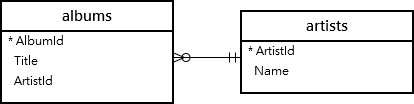
In this tutorial, you will learn about various kinds of SQLite joins to query data from two or more tables.
fallen vault
Im trying to run this query sql select ?, sum(tone_time) *? from toning where date between ? and ? group by lower(?) order by sum(tone_time) ASC limit ? But when i insert the value set: ('issue', 100, '2023-01-01', '2023-12-31', 'issue', '100') I get the following: [('issue', 970900.0)] Can i not pass variables for the select statement?
paper flower
fallen vault
Im trying to run this query ```sql
select ?, sum(tone_time) *?
from toning
where...
Yep, you can't parametrize that part of the query
keywords, fields, etc
fallen vault
Well fudge. Alright. This is gonna be a long function with a lot of if statements lol
paper flower
You could use string interpolation here as long as that specific input doesn't come from the user
Or use a query builder
fallen vault
I guess i could replace the keyword (becuase sum needs to be changed to count for some queries) and the select and lower since that comes from a dict and not the user.
hearty siren
class Users(Base):
    __tablename__ = "users"

    id: Mapped[int] = mapped_column(primary_key=True)
    tg_id  = mapped_column(BIGINT,nullable=False, index=True, unique=True)
    settings = relationship(
        "UserSettings", backref="user", uselist=False, cascade="all, delete-orphan" #is backref correct or should i use user(s)?
    )```
```py
class UserSettings(Base):
    __tablename__ = "user_settings"

    id: Mapped[int] = mapped_column(primary_key=True)
    is_premium: Mapped[bool] = mapped_column(Boolean, default=False)
    is_banned: Mapped[bool] = mapped_column(Boolean, default=False)
    enable_notifications: Mapped[bool] = mapped_column(Boolean, default=True)

    user_id = Column(Integer, ForeignKey("users.id"),unique=True)
    )```
are these models configured properly ? if so how can i access the settings of a user? by using sql on psql terminalYou could simplify some stuff here, also you're mixing mapped_column and Column, Column since 2.0 is only used with Table objects
And I would use back_populates instead of backref
class Users(Base):
    __tablename__ = "users"

    id: Mapped[int] = mapped_column(primary_key=True)
    tg_id: Mapped[int]  = mapped_column(BIGINT, index=True, unique=True) # I think uniuqe columns are already indexed
    settings: Mapped[UserSettings] = relationship(
         back_populates="user", uselist=False, cascade="all, delete-orphan" #is backref correct or should i use user(s)?
    )
class UserSettings(Base):
    __tablename__ = "user_settings"

    id: Mapped[int] = mapped_column(primary_key=True)
    is_premium: Mapped[bool] = mapped_column(default=False)
    is_banned: Mapped[bool] = mapped_column(default=False)
    enable_notifications: Mapped[bool] = mapped_column(default=True)

    user_id: Mapped[int] = mapped_column(ForeignKey("users.id"), unique=True))
    user: Mapped[User] = relationship(back_populates="settings")
Maybe like this?
You don't have to specify nullable since sqlalchemy can get that info from annotation inside of Mapped
if it's | None then it's nullable
fallen vault
paper flower
You *could* use string interpolation here as long as that specific input doesn't...
Using format worked. Thank you.
hearty siren
ohh i had this
tg_id: Mapped[int] = mapped_column(BIGINT,
i was using Mapped[int] but my lsp kept complaning that i can't use both! so i deleted it
is this somehow better?
paper flower
hearty siren
ohh i had this
`tg_id: Mapped[int] = mapped_column(BIGINT,`
i was using Mapped[...
Bad lsp
This should be correct, really
I guess you could register a custom type in sqlalchemy's registry
int64 = Annotated[int, 64]

class Base(DeclarativeBase):
    metadata = meta

    registry = registry(
        type_annotation_map={
            int64: BigInteger,
        },
    )
Or maybe you could use NewType here
hearty siren
paper flower
```py
class Users(Base):
__tablename__ = "users"
id: Mapped[int] = mapp...
and doesn't backref do the same thing as back populates? we just have to use back_ref in one of the models?
paper flower
annotated with a random argument looks kind of ugly
paper flower
hearty siren
and doesn't backref do the same thing as back populates? we just have to use bac...
It does, but back_populates is more clear, imo
It's explicit
hearty siren
back_populates="user"
is user correct ? since table name is users
i changed it to users
it was working fine before
paper flower
You use property name and not a table name here
It gets model as first argument, or in our case - from the annotation
hearty siren
select users.* from users join settings..
but when i do this psql says settings relationship doesn't exist
paper flower
Did you create a table/run the migrations?
paper flower
No, it's not created automatically
Either run Base.metadata.create_all(bind=engine) or use alembic
First option isn't good if you're going to migrate your db
hearty siren
user_settings = await s.execute(select(Users).options(joinedload(Users.settings)).filter(Users.tg_id == tg_id))
this works in sqlalchemy
hearty siren
paper flower
Either run `Base.metadata.create_all(bind=engine)` or use `alembic`
oh yes i am doing this
i can see all the tables are being created alright
and all columns exisst just can't see the relationship columns
paper flower
Then it should work
hearty siren
or maybe it is this one
public | user_settings_id_seq | sequence | postgres
is this the relationship one?
bcz it is created automatically
hearty siren
1 sec
relation "usersettings" does not exist
what it worked for this
SELECT *
FROM users
JOIN user_settings ON users.id = user_settings.user_id
WHERE users.id = user_id;```user_id at end what is that???
shouldn't it be settins.user_id
paper flower
hearty siren
user_id at end what is that???
If the name isn't ambiguous there's no need to specify the table
I think
Ah, wait
What query did you write?
It looks a bit weird 😅
hearty siren
everything i write is working now lol
paper flower
That where condition looks completely redundant
hearty siren
before no wuery was working
paper flower
SELECT *
FROM users
JOIN user_settings ON users.id = user_settings.user_id
Should work
hearty siren
paper flower
That where condition looks completely redundant
yeah i was just trying everything since nothing was working befoe but something happeend
maybe i saved the file!?
and it reloaded the server?
deft ridge
is there a support for polymorphic association in peewee like rails? I cant find any proper material online
drowsy plaza
https://paste.pythondiscord.com/XQ4Q
sqlalchemy.orm.exc.DetachedInstanceError: Parent instance <Auction at 0x1b0d81018d0> is not bound to a Session; lazy load operation of attribute 'Bids' cannot proceed (Background on this error at: https://sqlalche.me/e/14/bhk3)
Need help with this code is in link
glacial current
drowsy plaza
https://paste.pythondiscord.com/XQ4Q
```py
sqlalchemy.orm.exc.DetachedInstanceE...
Which line of the pastebin code is throwing the error?
drowsy plaza
glacial current
Which line of the pastebin code is throwing the error?
hold on i made a discovery
its erroring with disnake
i did the same damn code in a seperate file
from Modules import Database

Manager = Database.AuctionManager()
MyAuction = Manager.CreateAuction(
    9,
    'milton rifle',
    15,
    'pounds',
    1000,
    200
)
Manager.PlaceBid(MyAuction, 1, 1000)
it works fine w/ the old code
drowsy plaza
fixed the issue!
i created two auciton managers in two seperate classes
i noticed it and just made it so 1 common auction manager class gets passed around
frosty mirage
fallen vault
Well fudge. Alright. This is gonna be a long function with a lot of if statement...
You can substitute operators etc into a query string based on user input. The safe way to do it is to ensure the substituted string comes from a fixed list, e.g. an enum.
fallen vault
frosty mirage
You can substitute operators etc into a query string based on user input. The sa...
I ended up using format. The operator wasn’t user input dependent. A third of the reports needed sum(time) and another third needed count(*) so I just made two files and used a dictionary to fill in the rest since those are parameters I can pass normally.
frosty mirage
fallen vault
I ended up using format. The operator wasn’t user input dependent. A third of th...
Dynamically generating query strings isn’t so scary, is it?
fallen vault
frosty mirage
Dynamically generating query strings isn’t so scary, is it?
It was Moreso an issue of not thinking how I’ve been thinking for the past 2 days lol. I’ve had something working and was trying to stick to my guns.
Well minus the fact I had 15-18 files before and now I have 3-4.
glacial current
Cool glad you worked it out. @merry field Can I make a suggestion? The normal pattern in python is that classes have capital laters but variables functions and instances are lower case with underscore. It is pretty difficult for people to read code that uses a different pattern than that.
paper flower
frosty mirage
You can substitute operators etc into a query string based on user input. The sa...
Or you can just use an orm 😛
fallen vault
I’m come back through and do it a better look way with the flask version lmao
cerulean ledge
fallen vault
If you’re doing inventory, why not make a table with three columns: User, item a...
that sounds good, thanks man
frosty mirage
paper flower
Or you can just use an orm 😛
That was where this discussion started.
wise goblet
frosty mirage
That was where this discussion started.
U could use lightweight query wrapper like Bun lib btw provides if to be more precise
wise goblet
fallen vault
Im trying to run this query ```sql
select ?, sum(tone_time) *?
from toning
where...
Link
frosty mirage
wise goblet
U could use lightweight query wrapper like Bun lib btw provides if to be more pr...
This is all just adding extra layers of complexity to avoid something very simple.
paper flower
Honestly I would rather use a dedicated query builder rather than string manipulation
It exactly avoids complexity
wise goblet
paper flower
Honestly I would rather use a dedicated query builder rather than string manipul...
More type safe solution, with easier to maintain
frosty mirage
Put this in your ORM/query builder and smoke it:
    condition = " and ".join \
        (
            list
                ( # free-text fields
                    "%(name)s like %(value)s"
                %
                    {
                        "name" : field[0],
                        "value" :
                            sql_string("%" + escape_sql_wild(params.getvalue(field[1])) + "%"),
                    }
                for field in
                    (
                        ("make", "search_make"),
                        ("model", "search_model"),
                        ("details", "search_details"),
                        ...
                    )
                if params.getvalue(field[1]) != ""
            )
        +
            list
                ( # exact-match fields
                    "%(name)s = %(value)s"
                %
                    {
                        "name" : field[0],
                        "value" : sql_string(params.getvalue(field[1])),
                    }
                for field in
                    (
                        ("class_name", "search_class"),
                        ("allocation", "search_allocated"),
                        ("location_name", "search_location"),
                    )
                if params.getvalue(field[1]) != ""
                )
        )
Honestly this looks pretty much unreadable/unmaintainable
frosty mirage
paper flower
Honestly this looks pretty much unreadable/unmaintainable
Feel free to show us how you could make it easier to read/maintain.
paper flower
Could you explain what it does?
frosty mirage
It does lookups on all the fields that the user has entered data for.
fallen vault
wise goblet
Link
I figured it out. Thanks.
paper flower
@dataclasses.dataclass
class BookFilter:
    title: str | None = None
    title_search: str | None = None

def create_stmt(filter_: BookFilter) -> Select[tuple[Book]]:
    stmt = select(Book)
    if filter_.title is not None:
        stmt = stmt.where(Book.title == filter_.title)
    if filter_.title_search is not None:
        stmt = stmt.where(Book.title.ilike(filter_.title_search))
    ...
    return stmt
Wrong server (recommended by accident lib from another lang). Replace sugestion with SQLAlchemy since it is Python server 😅
 cyan bay
Where would you want/expect to look for a data dictionary for a gnarly old database? Not smart person here trying to comb the monster. Have been told "there's just not a data dictionary/here's my tribal knowledge on XYZ table" and since this may be many years in the making, I will need to make use of it.
frosty mirage
See, that’s another problem: there is no such thing as a language-independent ORM/query builder.
paper flower
frosty mirage
See, that’s another problem: there is no such thing as a language-independent OR...
Honestly I don't think this brings any value to developers if the code is not readable/maintainable
fallen vault
paper flower
Honestly I would rather use a dedicated query builder rather than string manipul...
No ones looking at the back end. Once I get official approval I plan on rewriting it for Postgres. This is mostly a proof of concept.
frosty mirage
paper flower
Honestly I don't think this brings any value to developers if the code is not re...
Fine. Show us how you could do it better.
wise goblet
frosty mirage
See, that’s another problem: there is no such thing as a language-independent OR...
how it is a problem? 🤔 the role of ORM to be language depended solution making it type/function building friendly for specific language
it is feature by design
paper flower
frosty mirage
Fine. Show us how you could do it better.
I just did?
paper flower
paper flower
```py
@dataclasses.dataclass
class BookFilter:
title: str | None = None
...

fallen vault
wise goblet
More type safe solution, with easier to maintain
User isn’t passing anything. But it’s just a proof of concept. I plan on doing it different later with Postgres.
frosty mirage
Note also the use of “like” clauses to do partial matches on free-text fields. Query builders don’t seem to provide automatic escaping of wildcards.
paper flower
frosty mirage
Note also the use of “like” clauses to do partial matches on free-text fields. Q...
We already went over this
wise goblet
fallen vault
User isn’t passing anything. But it’s just a proof of concept. I plan on doing i...
as long as u don't use Engine-Dialect specific stuff, your SQLAlchemy is universal for any db engine
frosty mirage
paper flower
We already went over this
Precisely.
paper flower
frosty mirage
Precisely.
And because of that building queries yourself is better?
frosty mirage
paper flower
And because of that building queries yourself is better?
In this case, obviously yes.