#questions-2
1 messages · Page 147 of 1
 short cove
 undone verge
and sounds suspiciously close to Holzbretter 👀
short cove
ah forrest conservation
 fervent kernel
Maybe "Umweltschützer" this means he protects nature generally
 delicate tiger
Waldi der Waldschrat ^^
fervent kernel
@delicate tigerHast du dich dem Server schon akklimatisiert ?
ich hoffe du wirst hier nicht stigmatisiert nur weil du neu bist
delicate tiger
bin so ziemlich genau das Gegenteil von neu hier...
 long whale
fervent kernel
<@272832445529718785>Hast du dich dem Server schon akklimatisiert ?
long whale
fervent kernel
<@272832445529718785>Hast du dich dem Server schon akklimatisiert ?
Where did you get this interesting construction from? Because to my knowledge, the verb doesn't work with Dativ. 🤔
fervent kernel
delicate tiger
bin so ziemlich genau das Gegenteil von neu hier...
achso mein fehler
fervent kernel
long whale
Where did you get this interesting construction from? Because to my knowledge, t...

well i just randomly used it that way
but guess it should be used with Akkusativ
an den Server
Konntest du dich schon an den Server akklimatisieren.
long whale
I've never seen it used with either. https://www.dwds.de/wb/akklimatisieren
I've only ever seen it used the way it's used here, as in "Wie gefällt es dir hier in X/auf dem Server? Hast du dich schon akklimatisiert?" for example.
fervent kernel
long whale
I've only ever seen it used the way it's used here, as in "Wie gefällt es dir hi...
Ah ok 🤔
Die neue Umgebung macht mir zu schaffen. Ich konnte mich noch nicht richtig akklimatisieren
long whale
Yes. Like that. 🤷
 sick jacinth
do you guys think it would be more helpful to focus on 1 thing at a time? like vocab for 1 week or something, then grammar for another week, and so on?
 naive linden
sick jacinth
do you guys think it would be more helpful to focus on 1 thing at a time? like v...
naive linden
sick jacinth
do you guys think it would be more helpful to focus on 1 thing at a time? like v...
This is just my opinion, but usually I'd try learning both at once, or at one hour each at most. e.g. you practice 1 hour vocabular and afterwards try to practice the new grammar by building sentences from the words in the vocabulary or something similar. It sticks better in your mind.
sick jacinth
ooh yeah i guess that makes sense
that way you can incorporate the vocab to the grammar
thank you!
naive linden
no worries, hope it works for you!
 rugged swift
sick jacinth
do you guys think it would be more helpful to focus on 1 thing at a time? like v...
rugged swift
sick jacinth
do you guys think it would be more helpful to focus on 1 thing at a time? like v...
A really good way to learn is talking in the Communities with the language you wanna speak
Also watching YouTube/twitch etc
sick jacinth
okie! thanks!
 lime crater
Good evening is Guten abend right?
 lyric gull
hey, does anyone have any tips on how to learn to speak german more fluently, ive been learning it slowly for 5 years in school but im just having a hard time forming sentences when they aren't on paper and i cant figure out the gender of some words T_T
rugged swift
Talk/interact with German communities
Watch videos/streams/movies in german
Also maybe join some German communities and talk to ppl
fervent kernel
lyric gull
hey, does anyone have any tips on how to learn to speak german more fluently, iv...
You may search a German friend. Doesn't matter if it's a irl or online friend. For me, it's very motivating like this
rugged swift
Yeah this too
lyric gull
hmm the problem with the communities and friends is that most of them that are native speakers speak with more slang/complicated words so i only understand a small part of what they are saying yk what i mean?
rugged swift
Yeah
But tbh the slang is kinda what you need I guess (if you wanna move to Germany or so)
fervent kernel
lyric gull
hmm the problem with the communities and friends is that most of them that are n...
Yeah, I get what you mean. I think it could be a good option to ask them what it means or you can ask them to speak "easier"
lyric gull
tbh i just want to do good in school and thats why im learning it and maybe to use it sometime:/
fervent kernel
I've got some English online friends. I always ask what it means. I think it seems harder than it is.
fervent kernel
lyric gull
tbh i just want to do good in school and thats why im learning it and maybe to u...
I see. I also like to surf on French and English speaking sites on the internet. Like, memes could be also a funny way to learn the slangs and culture better :D
 German memes?
fervent kernel
German memes?
fervent kernel
What language do you speak regularely, if I may ask
lyric gull
me?
fervent kernel
rugged swift
<:was:937507177290162276> German memes?
Hahah, many are bad, I agree. But I think that some German "text-based" are kinda good. Ich_iel is a (un)funny place imo
fervent kernel
lyric gull
me?
Yes
lyric gull
macedonian(native) and english
fervent kernel
lyric gull
macedonian(native) and english
Ah, I see. Yeah, Macedonian isn't really related to German. How old are you ? Like, in which school year did you begin learning German ?
rugged swift
The earlier the better
lyric gull
im 16, year 10 and i started learning in year 6, but most teachers here can't really teach german so its pretty bad, some of my friends have been learning since 1st grade and speak worse than me 😦
its not like i cant speak german, I can but not that good
lol
fervent kernel
lyric gull
im 16, year 10 and i started learning in year 6, but most teachers here can't re...
Hmm, I see. Hey, I'm years old, so we have a similar age. If you'd like to have an online friend, feel free to send me a message. I always get help by English and French people, now I'd like to help other people with learning German
fervent kernel
lyric gull
its not like i cant speak german, I can but not that good
Yeah, kinda the same with French for me. I'm kinda limited
lyric gull
ahhh thankk u, are u a native german speaker or have you been learning since a young age?
fervent kernel
lyric gull
ahhh thankk u, are u a native german speaker or have you been learning since a y...
Well, I learned it when I was young . I learned it since I was 5. I was born in Romania and I moved to Germany when I was 6. Of all the languages I speak, I can speak German the best. I'm even better at writing essays than my German class mates hahaha
lyric gull
fervent kernel
Well, I learned it when I was young . I learned it since I was 5. I was born in ...
hahaha that must be cool :)))
fervent kernel
lyric gull
hahaha that must be cool :)))
Thank you :))))
Well, I need to finsish doing some hw or I will mess up tomorrow hahaha. You can think about it :)
If you'd like to, as I said, just send me a message
Goodbye!
lyric gull
thankk you, tschuss:))
fervent kernel
You are welcome, tschüss :)))
 celest pollen
Wir erhalten das Geld von unseren Eltern
vs
Das Geld bekommen wir von unseren Eltern
any diffrence?✅ ❌
 night dagger
Not really.
 night dagger
Bekommen is the general word for receiving something / getting something - erhalten sounds a bit more professional in this case, especially good maybe during an exam. @celest pollen
 carmine sapphire
Anybody know of some good anki decks?
night dagger
carmine sapphire
Anybody know of some good anki decks?
Personally I find it prudent to make my own as I go but there are some word lists online from Goethe, additionally you could google A-whatever ANKI deck and something should turn up.
carmine sapphire
night dagger
Personally I find it prudent to make my own as I go but there are some word list...
Danke schön
celest pollen
Sei so lieb und rausbring mal der Müll✅ ❌ ?
 rare jetty
celest pollen
Sei so lieb und rausbring mal der Müll✅ ❌ ?
rare jetty
celest pollen
Sei so lieb und rausbring mal der Müll✅ ❌ ?
Sei so lieb und bring (mal) den Müll raus*
celest pollen
but **__und __**ist Nebengeordnete Konjunktionen
aaa ok
im stupid
rausbringen ist trennbare verb not conjunction 
 last bolt
How can I use umlauts on a windows 10 PC
 viral jolt
there probably is some hidden alt +ctrl +numloc combination, but there are two better options imo
first is to change your kb layout to german and learn the placements
or (this is what i do), create your own kb layout using microsoft keyboard builder; not sure if this is the exact name, but it's a software built into windows 10 by default
i have umlauts mapped to simply alt+letter. like ä is alt+a, and Ä is shift+alt+a
 tiny thunder
You can change the keyboard language ig
I do it with mine.
But you gotta remember which key represents the Umlaut
last bolt
Vielendank
 narrow pier
hi I want to combine these two sentences with the right word , but I dont know it nor in English neither in German ( I am the only child. there is only me that could take care of her " my mother" ) I wrote this ( Ich bin das Einzelkind, denn nur mich kann ihr helfen ) , but the denn does not really make sense here
if its in english you would say ( since I am the only child ) but that would not work in german
undone verge
weil ich ein Einzelkind bin, kann nur ich ihr helfen. You just have the 'since/because' on the wrong part of the sentence
 nimble viper
Ich bin das Einzelkind und deshalb der Einzige, der ihr helfen kann
hierchen has it better
long whale
das [ein] Einzelkind
long whale
nimble viper
das Einzelkind der Mutter < dachte ich so
I see what you mean, but - no. 🤷 "ich bin das einzige Kind meiner Mutter" would work, though. :)
nimble viper
Oh ok
Also V ZHYAKO I would go with .... , kann nur ich für sie sorgen but its a matter of preference
undone verge
it isn't so much about which word for because you choose but rather where you put it!
I am an only child because I am the only one who can help my mother<-- doesn't make any sense
long whale
narrow pier
hi I want to combine these two sentences with the right word , but I dont know i...
You could go for "Da ich ein Einzelkind bin, kann nur ich..."
undone verge
Because I am an only child, I am the only one who can help my mother <-- makes sense
 storm cairn
Ich bin Einzelkind works as well, and is usually preferred (however it's unformal)
nimble viper
Anbetracts der Tatsache, dass ich Einzelkind bin...
narrow pier
long whale
You could go for "Da ich ein Einzelkind bin, kann nur ich..."
that sound better , cause I had used weil a sentene before that, thank you
long whale
nimble viper
Anbetracts der Tatsache, dass ich Einzelkind bin...
*in Anbetracht der Tatsache - please. :)
(you were thinking of "angesichts", I guess)
narrow pier
If my writing is like 70 words, can I post it here, because I cant put it in writing channel
undone verge
should be fine
nimble viper
long whale
*in Anbetracht der Tatsache - please. :)
Anbetrachts* is also a genetiv prep, no? I've seen it used
narrow pier
undone verge
weil ich ein Einzelkind bin, kann nur ich ihr helfen. You just have the 'since/b...
danke
nimble viper
'Anbetrachts dieser Bräuche wurde hier auch ein Museum errichtet'
undone verge
also, because apparently I didn't read the rapidly posted and deleted message quickly enough: wouldn't worry all too much about repeating words, especially in A and B level. It is better to repeat a construction correctly than to flop around trying to be unique and mess it up (as a general tip)
long whale
nimble viper
Anbetrachts* is also a genetiv prep, no? I've seen it used
Anbetrachts does not exist. :)
nimble viper
lol
storm cairn
long whale
~~Anbetrachts~~ does not exist. :)
I don't like that fact
undone verge
the entry for anbetrachts on duden gives me a 502 error lmfao
long whale
Surprise! :D
narrow pier
undone verge
also, because apparently I didn't read the rapidly posted and deleted message qu...
I should not complicate it for myself that much I do not know much vocabularly or rules for writing , but before that sentence , I used " weil " so I did not know if it is normal to use again , it was this : ( Heute kann ich leider nicht zum Kurs kommen, weil meine Mutter zu Hause krank ist. Weil ich ein Einzelkind bin, nur mich kan ihr helfen )
 upbeat thicket
undone verge
the entry for anbetrachts on duden gives me a 502 error lmfao
upbeat thicket
undone verge
the entry for anbetrachts on duden gives me a 502 error lmfao
Yes, same. Seems to be a general problem rn
storm cairn
ye
narrow pier
undone verge
also, because apparently I didn't read the rapidly posted and deleted message qu...
this calms me actually, cause I am trying to just reach b1,
undone verge
narrow pier
I should not complicate it for myself that much I do not know much vocabularly o...
nothing wrong with the 'weil's, but the sentence is still incorrect 🙂
narrow pier
undone verge
nothing wrong with the 'weil's, but the sentence is still incorrect 🙂
i will use the (da)
that was a previous message
undone verge
da is also a beautiful word 🙂
narrow pier
so its not wrong
undone verge
is it 'denn' that isn't often used to start a sentence? I always forget there's one word for because which isn't usually at the beginning
long whale
narrow pier
so its not wrong
There is still a grammar error in your sentence...
nimble viper
Statt weil es mir gut geht
long whale
undone verge
is it 'denn' that isn't often used to start a sentence? I always forget there's ...
Correct, yes. :)
undone verge
but I also feel like I read it at the beginning of a lot of sentences in old philosophy texts 🤔
nimble viper
undone verge
but I also feel like I read it at the beginning of a lot of sentences in old phi...
Also translated as 'for', maybe that's why
narrow pier
long whale
There is still a grammar error in your sentence...
can I post the email in this channel ??
undone verge
nimble viper
Also translated as 'for', maybe that's why
originally german, naturally
yeah like my first search for 'denn' in phenomenology is right at the beginning.
 long whale
undone verge
but I also feel like I read it at the beginning of a lot of sentences in old phi...
long whale
undone verge
but I also feel like I read it at the beginning of a lot of sentences in old phi...
Yup. I was going to say: if you've got a pretty long sentence, e.g. pointing out various things you can't do, you may decide to end the sentence with a full stop, and then start another one with "denn", giving the reason for your inability to do all those things. Not really what I'd recommend to anyone below your level, though. ;)
undone verge
long whale
Yup. I was going to say: if you've got a pretty long sentence, e.g. pointing out...
yeah, makes sense. I will avoid it too. Though I have to admit I never use denn in writing or speaking because I always mess up the word order lol
undone verge
narrow pier
can I post the email in this channel ??
and yes, as said before, you can post a short email here.
nimble viper
Nicht jeder muss klug sein. Denn ich bin beispielsweise nicht klug, habe aber gute Ideen. - I would think it translated as 'for' in a sentence like this
long whale
nimble viper
Nicht jeder muss klug sein. Denn ich bin beispielsweise nicht klug, habe aber gu...
Yes. :)
narrow pier
hi, so this email, you have to tell your boss , I can't make it to work, you have to make things up ( Hallo Herr Schneider,
Heute kann ich leider nicht zum Kurs kommen, weil meine Mutter zu Hause krank ist. Da ich das Einzelkind bin, nur mich kann ihr helfen.
Ich möchte auch Ihnen informieren, dass ich muss, vielleicht für zwei oder drei Tage sie aufpassen. Habe ich auch am Freitag einen Arzt Termin, und ich brauche ein paar Tage wegen der Chirurgie. Außerdem ich kann die nächste Woche am Montag wieder zu Arbeit kommen. Danke für Ihr Verständnis.
Mit Freundlichen Grüßen
Zhyako Baqi )
and the first version that I wrote was this, ( Herr Schneider, Heute Kann ich leider nicht zum Kurs kommen, weil meine Mutter zu Hause krank ist. ich bin das Einzelkind, denn nur mich kann ihr helfen. Ich bis zum Mittwoch ihr um zu kümmern. Außerdem ich kann wieder am Donnerstag zu Arbeit kommen. Lieber Grüße Zhyako ) I wrote this in class , some of the sentences or all are wrong, but I wrote this quickly, so my question is the above version or below version is better if they have no mistakes?
if anyone corrected it, just check the first one
this email is for B1 , so I think the word count ( 71 ) is not enough , but I could not go further
night dagger
narrow pier
hi, so this email, you have to tell your boss , I can't make it to work, you hav...
You can use DeepL to verify what you need to correct, but right away I see some problems:
- normally you want to use „Sehr geehrte(r) Herr/Frau…“ instead of „Hallo“ for a boss, especially if you’re siezen later in the email: Sie, danke für Ihr…
- you don’t need to capitalize the first sentence after the address: „Sehr geehrter Herr Kessel,
hoffentlich geht es Ihnen sehr gut.“
The sentence structure of some of your sentences is incorrect as well. Overall a very good attempt, just use DeepL to show you which mistakes you made.
narrow pier
night dagger
You can use DeepL to verify what you need to correct, but right away I see some ...
I only have seen duden offer correction. to my information deepl doesn't do correction, but they dont fix grammer i think
narrow pier
night dagger
You can use DeepL to verify what you need to correct, but right away I see some ...
do I have to use the desktop version of deepl for that feature?
night dagger
narrow pier
I only have seen duden offer correction. to my information deepl doesn't do corr...
Duden is a dictionary. I‘m talking about DeepL.com - the translator.
Give it a shot and find out.
narrow pier
night dagger
Duden is a dictionary. I‘m talking about DeepL.com - the translator.
i know , when I type it in , the correction are done by ( microsoft editor )
long whale
narrow pier
i know , when I type it in , the correction are done by ( microsoft editor )
If I were you, I'd use google translate Arabic -> German. Then show us the result. :)
narrow pier
why Arabic -> German ?
narrow pier
its Kurdish, and sadly its recently have been added to dictioneries , and its not that accurate
@long whale
long whale
I see. Yes, that's a problem, of course.
 daring pollen
Hi. Wo kann ich wichtigen Quellen finden auf diesem Discord so wie Synonymwörterbüchern oder so?
long whale
daring pollen
Hi. Wo kann ich wichtigen Quellen finden auf diesem Discord so wie Synonymwörter...
#resources Also, DWDS will help with that: https://www.dwds.de/wb/aufbrechen
daring pollen
Danke 🙂
 snow bloom
Hi,
Was sind: "in und out"-Listen Does it ring a bell for anyone?
long whale
snow bloom
Hi,
Was sind: "in und out"-Listen Does it ring a bell for anyone?
I guess "in" stands for "trendy, trending, en vogue", and "out" is the opposite.
narrow pier
hello, ( haben Sie Griechischen Joghurt ) is the Griechischen like a adj?? asking abot the ( en) at the end of it
long whale
narrow pier
hello, ( haben Sie Griechischen Joghurt ) is the Griechischen like a adj?? askin...
Yes, it is.
fervent kernel
Is There a German Idiom for "respectfully"?
upbeat thicket
fervent kernel
Is There a German Idiom for "respectfully"?
probably hochachtungsvoll in e-mails
could you provide more context?
otherwise there is respektvoll which is a literal translation
fervent kernel
upbeat thicket
probably *hochachtungsvoll* in e-mails
could you provide more context?
for example a girl posts a pic on instagram and some guys would type" i am looking respectfully" or "disrespectfully"
upbeat thicket
fervent kernel
for example a girl posts a pic on instagram and some guys would type" i am looki...
I can't think of a German idiom with the same meaning honestly.
 steel patrol
How would one state their language abilities on a CV/résumé? Would it be something like:
Sprachkenntnisse (nach CEFR-Niveau) - and then there's a list - or perhaps something else? Also, should it be nach or als? I'm not sure.
P.S. I'm neither writing a CV in German nor am I applying for jobs anywhere, it's just something I'm wondering about.
undone verge
I would just say Sprachkenntnisse and then list the language + CEFR-Niveau.
even better, list the Zertifikate you actually have
 hardy zinc
Hallo. Ich habe verstehen versucht, aber konnte nicht. Was heißt "halten über"?
upbeat thicket
hardy zinc
Hallo. Ich habe verstehen versucht, aber konnte nicht. Was heißt "halten über"?
In which context?
hardy zinc
upbeat thicket
In which context?
It'd be nice to have some overview of possible contexts. I tried using dictionaries, but the examples weren't so self-explanatory
upbeat thicket
Literally it would be „holding smth above smth“
hardy zinc
well yeah, but it doesn't help XD
Alright here's one example: "Ich halte das für keine gute Idee"
According to dicts it means "I don't think it's a good idea"
But... why
upbeat thicket
but thats „etwas für etw. halten“ not „halten über“
undone verge
etw. für etw. halten = to think of something as something
etw. von etw. halten is similar, often used in a question like 'what's your opinion on X'
upbeat thicket
same with „halten von“: Hey, was hältst du von dieser Idee?
hardy zinc
upbeat thicket
but thats „etwas für etw. halten“ not „halten über“
:loading:
oh nvm sorry
my bad
lol
I meant "für"
What does "halten über" mean
hardy zinc
undone verge
etw. für etw. halten = to think of something as something
etw. von etw. halten ...
aha...
steel patrol
undone verge
even better, list the Zertifikate you actually have
Yes, I added the (nach CEFR-Niveau) bit with the assumption that the person writing it already has certificates for all their language abilities. I was just wondering how that would look on the document? I know that some people also just assume their level, so would it then essentially be lying?
upbeat thicket
hardy zinc
What does "halten über" mean
see my message above
undone verge
steel patrol
Yes, I added the (nach CEFR-Niveau) bit with the assumption that the person writ...
no, if you don't say certificate then they can either take your word for it or not believe you 🤷 I mainly wanted to say that writing nach CEFR Niveau is not necessary, and if you need to qualify it, I would connect it directly to the listed level (i.e. Deutsch CEFR-C1)
hardy zinc
upbeat thicket
see my message above
I didn't get to the "von" one yet 😅
But honestly, about to
steel patrol
undone verge
no, if you don't say certificate then they can either take your word for it or n...
All right, thank you. 👍
hardy zinc
Alright so "halten" means "think"/"find" when used with these prepositions
okay, thanks
upbeat thicket
hardy zinc
Alright so "halten" means "think"/"find" when used with these prepositions
halten von is only used in question
halten für in answers
 hardy zinc
danke
upbeat thicket
Gerne!
hardy zinc
Is there a good website where I could get the initial form of a verb?
Given, you know, some its form, like Partizip or Präteritum
upbeat thicket
hardy zinc
Is there a good website where I could get the initial form of a verb?
Duden.de or wiktionary
 mint pewter
Wie kann ich jene jenes und jener verwenden? Und was bedeutet es?
steel patrol
(Loosely related to my previous question) is it true that in Germany CEFR is referred to as GER (gemeinsame europäische Referenzrahmen für Sprachen)? I'm reading an article on the subject now and that's how it's listed there.
night dagger
steel patrol
(Loosely related to my previous question) is it true that in Germany CEFR is ref...
jup
gemeinsamer europäischer*
steel patrol
Thanks!
snow bloom
long whale
I guess "in" stands for "trendy, trending, en vogue", and "out" is the opposite.
Is that something kids at school do in Germany? I'm not familiar at all with the concept
For context, it's from a movie where the teacher tells the parents that their kids are not paying attention in class and writing these "in and out" lists
 void rapids
Hiii I have a quick question. So for the sentence “Das sind die Leute, denen wir unser Haus verkauft haben” I don’t understand why it’s denen bc I thought it would be genativ. Like the sentence Cafe Bistro ist das europaäsche Cafe dessen Kaffeesorten so lecker sind
Like I don’t understand why one is genativ and the other isn’t since it’s talking about the people they’re getting the house from right 🤔
Idk I’m bad LOL
 ancient pulsar
to whom - denen (dative plural)
die Leute - plural
die Leute is the indirect object of the sentence
void rapids
Wait so to whom is technically dativ and then genativ would be more like possessive?
Like the restaurant obviously wouldn’t be to whom but it would be like what
ancient pulsar
exactly
void rapids
ancient pulsar
die Leute is the indirect object of the sentence
Oh I see 🤔 and haus is the direct object?
ancient pulsar
void rapids
Hiii I have a quick question. So for the sentence “Das sind die Leute, denen wir...
Cafe Bistro..., whose coffees are delicious
those coffees belong to Cafe Bistro
so it is possessive - genitive
ancient pulsar
void rapids
Oh I see 🤔 and haus is the direct object?
yes
 mellow nova
ancient pulsar
Lies Sie den Text.
mellow nova
ancient pulsar
Lies Sie den Text.
this is wrong
ancient pulsar
void rapids
OOH U R A GENIUS
lol i wish i were
mellow nova
void rapids
Hiii I have a quick question. So for the sentence “Das sind die Leute, denen wir...
this is also wrong, should be deren not denen
ancient pulsar
mellow nova
wait no I read that very wrong
bruh
void rapids
Oh ok yes back to genius status 😎
 void rapids
Material girl vibes
nimble viper
mellow nova
this is also wrong, should be de***r***en not denen
When on earth would you be using deren like that?
mellow nova
Like I said, I misread it 🤷♂️
nimble viper
No, it's okay I know 🙂 Just wondering when a second clause would start with deren ....
mellow nova
that's the genitive relative pronoun for feminine and plural
nimble viper
I didn't know it was genetive for plural, that's why I was confused. Have just seen it now
mellow nova
i.e
Das sind die Leute, deren Haus wir gekauft haben
void rapids
Oh no your name is giving me PTSD and flashbacks to when I was trying to explain hätte vs wäre vs würde like um I just told her wãre is more like to be and wurde is generally to become but rip if I’m wrong
nimble viper
Sure, makes sense
void rapids
Native speakers are lucky duckies
nimble viper
void rapids
Oh no your name is giving me PTSD and flashbacks to when I was trying to explain...
wurde - became, wäre - would be, würde - would (all these for ich / er conj.)
mellow nova
void rapids
Oh no your name is giving me PTSD and flashbacks to when I was trying to explain...
wäre = würde sein
hätte = würde haben
würde + Infinitiv = Konjunktiv II von diesem Infinitiv
nimble viper
Delli I found a cool fixed expression whereby K2 follows,
mellow nova
do tell
void rapids
Yeah I understand the formation of the sentences but it’s the context that I couldn’t explain to my friend 🤔 like whenever the sentence has something like Urlaub it would use hatte so I’m assuming that goes along with what you guys were saying because you “would like to have a vacation” and you can’t be a vacation unless you’re super cool and not a human
mellow nova
it's not about formation
I was explaining wären is a form of sein
they are the same verb in different tenses
void rapids
Ohhhh
nimble viper
Man sollte meinen, dass + K2 (zB Man sollte meinen, dass es mehr Arbeitsmöglichkeiten gäbe, für die er sich bewerben könnte.)
nimble viper
void rapids
Yeah I understand the formation of the sentences but it’s the context that I cou...
You are right here, K2 can be used to express wishes as such
mellow nova
nice 
void rapids
Oki thank you guys so much
nimble viper
zB wenn ich im Urlaub wäre oder wenn ich Ferien hätte...
würde ich den Strand besuchen
nimble viper
void rapids
Wait
There is also beispielsweise, meaning for instance / als Beispiel
void rapids
So you can be im Urlaub 🤔 it’s not an Urlaub or is that just like on vacation
void rapids
nimble viper
There is also beispielsweise, meaning for instance / als Beispiel
That’s so cool actually
Bc I thought like
nimble viper
I am not sure that it can be equivocated to bzw. meaning respectively (beziehungsweise)
mellow nova
they are not related no and I hate that translation of bzw
nimble viper
How do you translate it Delli?
mellow nova
I prefer the simple german definition "oder besser gesagt" -> or better said
void rapids
Something like “Wenn ich hãtte ein Urlaub, würde icu ins Kino gehen” or something
Like you can have a vacation right
mellow nova
the original meaning was respectively, which is obvious from the word itself: 'beziehung' denoting relation and 'weise' being an adverbial suffix, but the colloquial usage no longer uses this definition
mellow nova
void rapids
Something like “Wenn ich hãtte ein Urlaub, würde icu ins Kino gehen” or somethin...
'Wenn ich Urlaub hätte, würde ich ins Kino (gehen)'
nimble viper
void rapids
Something like “Wenn ich hãtte ein Urlaub, würde icu ins Kino gehen” or somethin...
Wenn pushes verbs to the end , so ^
mellow nova
to research the topic -> Subjunktionen, Nebensätze
nimble viper
void rapids
You would never know I’ve been “learning” German for 2 ish years
Don't worry about 2 years into german I was probably worse than you, not to be mean or anything. I've made most of my progress in the last 4 months (nearly been learning for 4 years). If you're already dealing with genetive you're far beyond where I was
void rapids
nimble viper
Don't worry about 2 years into german I was probably worse than you, not to be m...
LOLLLL NOT TO BE MEAN. Yeah I’m pretty bad like not super duper but kinda. Thank you tho and that’s cool bc it shows it’s really just the time you put into it or what you make of your time
 river bridge
When would I use "entschuldigung" vs "entschuldigen Sie"?
 swift bough
river bridge
When would I use "entschuldigung" vs "entschuldigen Sie"?
swift bough
river bridge
When would I use "entschuldigung" vs "entschuldigen Sie"?
actually they are interchangeable tbh
except for when you shouldn't be using Sie with someone, then just Entschuldigung or Entschuldige
 shut briar
https://youtu.be/qed640Xm0AU I can't understand the word they used here at 5:58. From context i know it's an article or something but don't get the exact word. To me it sounds like kompania but that's not a word
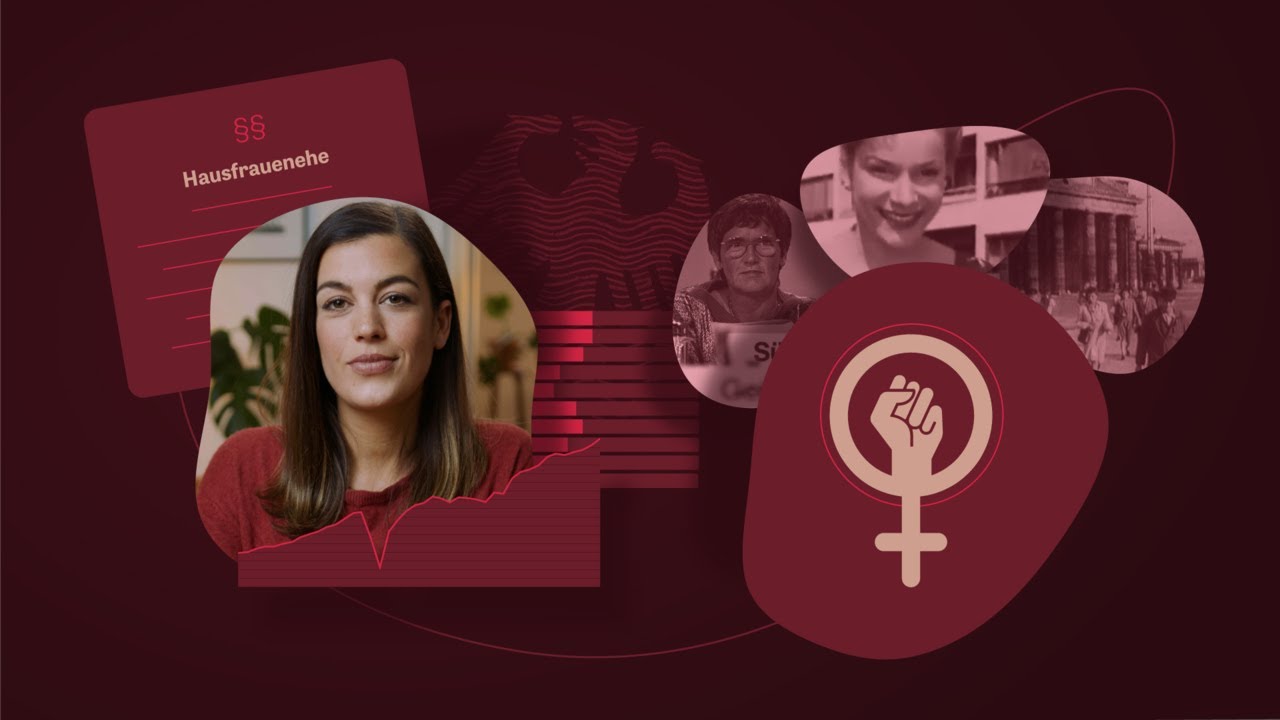
Im Grundgesetz sind die Geschlechter seit über 70 Jahren gleichberechtigt. Gleichgestellt sind #Frauen aber immer noch nicht. Nach wie vor sind sie in den meisten Lebensbereichen benachteiligt. Offensichtlich reichen Gesetze also nicht für echte #Gleichstellung. Trotzdem ist die einst so starke #Frauenrechtsbewegung des 20. Jahrhunderts heute ei...
river bridge
swift bough
actually they are interchangeable tbh
except for when you shouldn't be using Si...
When would you not use "Sie" with someone?
swift bough
river bridge
When would you not use "Sie" with someone?
"Sie" is strictly a very, very formal pronoun. With your friends or family members for example, you address them with non-formal pronouns.
river bridge
Ah, vielen dank!
upbeat thicket
river bridge
When would you not use "Sie" with someone?
For your boss, elderly people and teachers/professors, shop staff, officials, etc.
rare jetty
shut briar
https://youtu.be/qed640Xm0AU I can't understand the word they used here at 5:58...
They say "eine Kampagne"
nimble viper
Ich kämpfe ab und zu darum, das Sinn im Leben zu finden. - Richtiger Satz?
undone verge
Sinn is masculine, right?
nimble viper
undone verge
Sinn is masculine, right?
Oh tis
mellow nova
damit* glaube ich und ja der* Sinn, also einen* Sinn
nimble viper
mellow nova
damit* glaube ich und ja der* Sinn, also einen* Sinn
Cheers. I do think it is darum, but the einen Sinn sounds more natural now that I think about it
mellow nova
look at dwds, um and mit mean different things
mit: intensiv versuchen, einen inneren Zwiespalt zu überwinden, mit sich, mit etw. ringen
nimble viper
Okey, thanks
shut briar
rare jetty
They say "eine Kampagne"
Ach so, Vielen Dank
mellow nova
is it for flash cards? use Anki
 latent wadi
a bit similar not quite
mellow nova
oh then idk unfortunately
nimble viper
I got a bit sick of Memrise after being recommended it by a friend
There lacks a rhyme or rhythm to the app, in my opinion
undone verge
nimble viper
I got a bit sick of Memrise after being recommended it by a friend
you must really hate that friend 
fervent kernel
K cool
shut briar
shut briar
https://youtu.be/qed640Xm0AU I can't understand the word they used here at 5:58...
Another word that i can't make out is at 8:07. First women minister is given a position but i can't tell what the verb they are saying it. Sounds like beruf but can't be it.
undone verge
vor diesem Hintergrund modernisiert die CDU ihre Frauenpolitik und beruft 1986 die erste Frauenministerin ins Amt und 1988 dann beschließt die SPD eine Frauenquote
undone verge
was also confused by beschließ...would it not be beschloß? It almost sounds like she was speaking in present tense
mellow nova
oh yeah that too
 raw radish
she actually says “beruft” and “beschließt”
undone verge
modernisiert, beruft, and beschließt
raw radish
yeah :)
mellow nova
why is it present tense 
raw radish
it is just a type of style to talk about past things. To make it sound more exciting lol
raw radish
“literary present tense”
raw radish
it’s mostly used when talking about literature, but I think that is pretty much it lol
shut briar
The video is about a timeline, we're going through each year and seeing what happened, it makes sense to use present
mellow nova
now that I think about it, historical documentaries and stuff do that in English too
shut briar
Do you guys think it's the first women minister ever elected
Or first minister of women who happened to be a women
mellow nova
there's a minister of women 
mellow nova
well since it says 'Frauenministerin' i would say it's the first female minister of women's affairs
idk i guess it could go either way, maybe you could find the history of this position on google?
shut briar
It checks out
First female minister for women
It's just a bit weird cause it makes more sense for minister for women to be a woman
mellow nova
Yeah well politics regarding the control of women hasn't ever made much sense I'm afraid
undone verge
I assumed that it was the first person holding this office (i.e. that it was a new office, frauenminister*in)
nimble viper
Does this make good sense?
Ich finde es auch sinnvoll, dass ich mein Leben nicht führen sollte, als ob mein ganzer Wert an meinem Selbstbild festhängen würde, da meine Selbsteinschätzung zu polarisiert wäre.
undone verge
"Im Juni 1986 wurde das Bundesministerium um die neue Abteilung Frauenpolitik erweitert, Rita Süssmuth war jetzt Bundesministerin für Jugend, Familie, Frauen und Gesundheit und damit die erste Frauenministerin der Bundesrepublik Deutschland." seems to have been a new office .
raw radish
nimble viper
Does this make good sense?
Ich finde es auch sinnvoll, dass ich mein Leben nich...
Es ist verständlich, aber etwas holprig. Ich musste es zweimal lesen
shut briar
undone verge
"Im Juni 1986 wurde das Bundesministerium um die neue Abteilung Frauenpolitik er...
It does. I translated the last text but it must be wrong
nimble viper
raw radish
Es ist verständlich, aber etwas holprig. Ich musste es zweimal lesen
Hmm ich will es nicht, dass es holprig wäre, da ich sowas im mündlichen Gespräch sagen möchte (als ob man denke, dass ich es geistesabwesend sagte)
Wäres besser, es so zu formulieren? Mein Wert sollte ja nicht an meinem Selbstbild festhängen, da meine Selbsteinschätzung zu polarisiert und hart wäre.
raw radish
besser 
nimble viper
I would like to make it impersonal, let me swap around a few of the mein-s
raw radish
da sounds pretty formal as well, you could use weil instead :)
nimble viper
Ich glaube, der Wert eines Menschen sollte ja nicht an seinem Selbstbild festhängen, da die Selbsteinschätzung berühmt hyperpolarisiert und hart sein kann. < all g?
Ich soll wahrscheinlich nix derartiges im wirklichen Leben sagen, bilde einfach ein paar Sätze, aus denen ich schnell gutes Vokabular finden kann, wenn ich müsste
 fresh yoke
Was meinst du genau mit 'hyper-polarisieren'?@nimble viper
nimble viper
fresh yoke
Was meinst du genau mit 'hyper-polarisieren'?<@912894357156298764>
Ich würde erwarten, dass es weder ein gebräuchliches Verb noch ein Hilfreiches wäre. Aber das Polarisieren ist sozusagen wenn nur einige Informationen durchkommen, und die theoretische Antwort oder das Ding, mit wem man sich am Ende befindet, stellt gar nicht das ursprüngliche Bild dar. Auf dieser Weise kann das Verb was ähnliches außerhalb der Naturwissenschaft bedeuten, zB wenn eine Meinung eines Themas nicht das völlige Thema berücksichtigt... und 'hyper-polarisiert' würde es nur ausdrücken, dass die Entscheidung so ist, dass sie ziemlich einseitig wäre
fresh yoke
Ich kann daher glauben, dass du vielleicht eher 'verdrehen' oder 'verfälschen' sagen möchtest. <Polarisieren> bedeutet auch in Bezug auf wissenschaftliche Bereiche etwas anderes im Vergleich dazu, was du definiert hast.
Oder... ich habe einfach die Idee nicht ganz erfasst. Keine Ahnung was du genau Ausdrücken willst.
nimble viper
fresh yoke
Ich kann daher glauben, dass du vielleicht eher 'verdrehen' oder 'verfälschen' s...
Du hättest Recht, glaub ich. Ich werde nach einem anderen Wort suchen
long whale
nimble viper
Du hättest Recht, glaub ich. Ich werde nach einem anderen Wort suchen
*hättest hast ;)
nimble viper
long whale
*~~hättest~~ hast ;)
? Verwirrt. Wieso darf ich nicht hätten verwenden?
long whale
(I'm starting to feel you're either trying to practice Konjunktiv II and conditionals, or there is some misunderstanding there...? :) )
long whale
nimble viper
? Verwirrt. Wieso darf ich nicht hätten verwenden?
Hmm... Why would you want to?
long whale
You'd use "vielleicht" to say you aren't sure. - No, you cant. Because "hättest" means it isn't so. "Du hättest Recht, wenn es sich hier nicht um eine Ausnahme handeln würde" = You would be right, except this is an exception (-> you are NOT right)
nimble viper
Sure, thanks for the clarification
To say that me NOT being right is the exception is also generous xD
shut briar
Eine Frau muss sich Sorgen machen, was andere denken werden
I read that without da wörter the sentence feels sort of empty, even though understandable
shut briar
shut briar
Eine Frau muss sich Sorgen machen, was andere denken werden
But here there is no darum
long whale
shut briar
But here there is no darum
Mm. A tiny bit sloppy, I'd say. ;) If you put in darum/darüber, it's fine, perhaps even preferable. :)
shut briar
long whale
Mm. A tiny bit sloppy, I'd say. ;) If you put in darum/darüber, it's fine, perha...
would it come before Sorgen?
long whale
shut briar
would it come before Sorgen?
Yes. And come to think of it, it would sound a bit more natural to me if you used "Gedanken" instead of "Sorgen" :)
("Sorgen" are quite heavy, really depressing things, like someone being ill, no money/food in the house, that kind of thing. :) )
shut briar
long whale
Yes. And come to think of it, it would sound a bit more natural to me if you use...
Thank you! I was wondering if I should use that instead
daring pollen
Hi. Eine Frage: ''Der Kurs hat viel dazu beigetragen, meine Allgemeinbildung/Allgemeinwissen zu vergrößern.'' Klingt in diesem Satz ''vergrößern'' gut oder habe ich eine bessere Alternative? Oder soll ich einfach ''verbessern'' sagen?
 plush anvil
bei Allgemeinbildung würde ich verbessern und bei Allgemeinwissen vergrößern schreiben
wenn der Satz so bleiben soll also mit "Allgemeinbildung/Allgemeinwissen" dann würde ich erweitern nehmen.
 still stone
Gruezi ! Ich arbeite am Passiv und bin bei einigen Sätzen unsicher. Ist es möglich, zu überprüfen, ob ich mich nicht vertan habe?
Z.b :
"Diese Tiere können noch gerettet werden."
"Man sollte das nicht fotografiert worden sein" -> bin hier wirklich nicht sicher
"Es wurde nur in sehr seltenen Fällen geschehen"
"Ist ihm vorgeworfen worden können?"
Danke 
undone verge
Es ist nur ...geschehen (I don't think this is passive but rather past tense...)
"Man sollte das nicht fotografiert worden sein" here I have very little idea what you want to say. Man sollte nicht fotografiert werden? Oder das sollte nicht fotografiert werden?
also with the last sentence I am not sure what you want to say.
hat das ihm vorgeworfen werden können?
to me this seems somewhat contrived and not like something that is likely to be said in real life
still stone
undone verge
to me this seems somewhat contrived and not like something that is likely to be ...
That's the point of grammar exercises :/
undone verge
I guess above all, the takeaway is that one forms the passive in past tense with modalverbs:
haben + p.II + werden + modalverb (infinitiv)
still stone
undone verge
Es ist nur ...geschehen (I don't think this is passive but rather past tense...)...
I want to say "Das hatte man nicht fotografieren sollen" but in passive form
undone verge
das hätte man nicht fotografieren sollen? Or hatte
still stone
first one, sorry I don't have the umlaut
undone verge
all good (in this case ae will work, too)
still stone
yep
undone verge
das hätte nicht fotografiert werden sollen <-- I think this is how you would do it
still stone
alright
undone verge
2 shots of verbs (sandra lee voice)
still stone
undone verge
to me this seems somewhat contrived and not like something that is likely to be ...
I want to say "Kann man ihm etwas vorwerfen?"
We've learned that you muss delete the "Es" when it's a interrogative
but it's weird
like "Ist getantzt worden?"
undone verge
I haven't heard of deleting the es in those cases, only in cases where the first position is otherwise occupied.
z.B. da wird getanzt. Heute wird gegrillt. etc etc.
still stone
I've got 3 cases : relatives, first position occupied and interrogative
apparently
I'm losing my mind this is so foggy
mellow nova
it should be the same little formula as the other sentence
still stone
undone verge
I guess above all, the takeaway is that one forms the passive in past tense with...
I'll use that thanks
undone verge
sometimes the interrogative doesn't have a subject, that is true....but in this case, I think it would stay.
kann ihm das vorgeworfen werden (present)
hat ihm das vorgeworfen werden können (past) <-- is how I would do it
again, a rather difficult sentence for anyone 🙏
still stone
To be honest, I have problem with german grammar I learn in school. I lived in a german place for a year or so
so some things I hear really feel like old german or formulas that are never used
Thanks for the help !
 rough furnace
Can I write so ?
**Es ist normalerweise wärmer als in England und daher können Sie vieler schwimmen und sich sonnen. **
steel patrol
rough furnace
Can I write so ?
> **Es ist normalerweise wärmer als in England und daher könn...
I think if you replace "vieler" with "mehr" then it's fine, but you might wanna wait for someone to tell you for sure.
void rapids
I have a quick question. For the sentence “Die Gastfamilie, bei
“die” sie wohnt, spricht
nur Deutsch.” Is this in nominativ? The die that I have in quotations is like the fill in the blank part that we had to answer but I’m a little confused as to why the relative pronoun is die here
steel patrol
"Bei" is a Dative preposition.
 fallen radish
why no maiden?
void rapids
That’s what I thought too but the teacher said the pronoun would be die
But that’s not a dativ option
void rapids
I thought it would be der but it’s not
long whale
void rapids
I thought it would be der but it’s not
It is. "bei der sie wohnt" is the only correct option. 🤷
rough furnace
So, are there anymore mistakes?
long whale
Looks okay, if you changed the "vieler" (I'd change it to "viel") :)
 kindred idol
swift bough
kindred idol
swift bough
that works
fervent kernel
what is the difference between "present" and "present subjunctive"
 balmy olive
Sometimes, we say "deutsch" and also "deutsche".
when and where does this difference come?
plush anvil
balmy olive
Sometimes, we say "deutsch" and also "deutsche".
when and where does this differ...
you mean deutsch/deutsche as an adjective right?
balmy olive
I am not much into grammar stuff as of now,
for eg: deutsche welle,
deutsche bank.
but other places ,"deutsch"
plush anvil
deutsch is for male nouns and deutsche is for female nouns
plush anvil
deutsche Bank, yes.
nouns are capitalized at the start, even when not at the start of a sentence
balmy olive
So its all about nouns?
plush anvil
the gender of the noun yes!
balmy olive
plush anvil
the gender of the noun yes!
vielen danke,
plush anvil
Bitte schön c:
celest pollen
Wir müssen noch unsere Freunden fragen, ob sie uns helfen können✅ ❌
rare jetty
celest pollen
Wir müssen noch unsere Freunde~~n~~ fragen, ob sie uns helfen können✅ ❌
❌
unsere Freunde
celest pollen
rare jetty
❌
Just theoretically, if I simply said as I wrote with an incorrect -en during the conversation. Would it make a BIG difference?
shut briar
celest pollen
Just theoretically, if I simply said as I wrote with an incorrect **__-en__** du...
I think so. Cause Freunden is dative, it might confuse the native person for a second, they might expect a dative verb to follow, breaks the flow of the conversation.
rare jetty
celest pollen
Just theoretically, if I simply said as I wrote with an incorrect **__-en__** du...
The whole other sentence was correct so its just a minor mistake and its not "sinnverändernd" so no, wouldnt be too bad
celest pollen
Speaking fluently and remembering all those endings -en etc . That's a minimum of 2 years of sharp learning for me hard asf
 Aber Ich gib nicht auf
 thorn zodiac
"wir haben niemand was getan" Why is "was" used here? to me it makes more sense without it. Could it be that after the "was" some stuff like ",was wir nicht getan hatten" was omitted?
shut briar
thorn zodiac
"wir haben niemand was getan" Why is "was" used here? to me it makes more sense ...
Was here is a contraction for etwas
I hope it makes sense now
Although it should be niemandem
thorn zodiac
shut briar
I hope it makes sense now
 Lol Danke. Havent seen it done before
shut briar
Ein Individualist ist ein Provokateur und ein solcher kann niemals ein ||Glied|| unserer, mit Mühe geschaffenen Kette sein.
Als Frau hast du erst recht keinen Anspruch, ein ||Glied|| in einer Kette zu sein
shut briar
shut briar
Ein Individualist ist ein Provokateur und ein solcher kann niemals ein ||Glied||...
Was ist hier genau 'Glied'? Ist es gleich wie Mitglied
delicate tiger
thorn zodiac
"Klappen wird's mit keiner, jeder kriegt, was er verdient"
(from a rap song).
Why is Klappen used? I believe it means mouth in some circumstances but here im not sure
 modest plover
"klappen" in this context is used as something is working out.
The term for mouth you are thinking of is "Klappe"
delicate tiger
basically "it won't work out with any woman"
thorn zodiac
So did the song essentially turn a verb into a noun?
It seems to fit if I see it like that
modest plover
No,
Klappen is a verb
thorn zodiac
but its capitalised and "wird" comes after so how that be?
delicate tiger
"Es wird mit keiner klappen" you can reorder most elements in German
thorn zodiac
delicate tiger
"Es wird mit keiner klappen" you can reorder most elements in German
This is easier to understand, maybe im just not used to the other format
shut briar
delicate tiger
<https://duckduckgo.com/?q=kettenglied&iax=images&ia=images>
Ah, it's literally the chain
delicate tiger
shut briar
Ah, it's literally the chain
the links of the chain
rough furnace
How about this?
Diesen Sommer werde ich nach England fliegen. Dort werde ich mit meinen Eltern und meinen Brüdern fliegen. Das letzte Mal, als wir vor vier Jahren dort waren. In England werden wir uns hauptsächlich treffen und Zeit mit unserer Verwandten verbringen. Unsere Verwandte wohnen in den Städten Cardiff und London. In Cardiff gibt es ein sehr berühmtes Schloss und London ist die Hauptstadt von England.
delicate tiger
rough furnace
How about this?
> **Diesen Sommer werde ich nach England fliegen. Dort werde ic...
Diesen Sommer werde ich mit meiner Familie nach England fliegen. Das letzte Mal waren wir vor vier Jahren dort. In England werden wir hauptsächlich unsere Verwandten treffen und Zeit mit ihnen verbringen. Unsere Verwandten wohnen in Cardiff und London. In Cardiff gibt es ein sehr berühmtes Schloss und London ist die Hauptstadt von England.
 midnight flume
Hi.
if i have 2 names, then in "Vorname" i have to put both of them?
and in "Nachname" my 2 lastnames?
 upbeat thicket
midnight flume
Hi.
if i have 2 names, then in "Vorname" i have to put both of them?
and in "Nac...
upbeat thicket
midnight flume
Hi.
if i have 2 names, then in "Vorname" i have to put both of them?
and in "Nac...
Vorname is your full first name
Nachname is your full last name
midnight flume
so i dont put anything int Namenszusatz and Geburtsname?
 wise pendant
midnight flume
so i dont put anything int Namenszusatz and Geburtsname?
wise pendant
midnight flume
so i dont put anything int Namenszusatz and Geburtsname?
Namenszusatz would probably be Dr. or so
Geburtsname, the one you don't have anymore due to marriage, but were born with
upbeat thicket
midnight flume
so i dont put anything int Namenszusatz and Geburtsname?
no these are for official and academic titles and mandate abbreviations
midnight flume
thanks : )
wise pendant
I think you are right DEOG. When you got several firstnames put them all in the Vorname and the same for the last name
midnight flume
and here?
 delicate tiger
only if your name isn't on the door bell
midnight flume
is not
celest pollen
The second verb in the prateritum is as an infinitive or normally conjugated
undone verge
celest pollen
The second verb in the prateritum is as an infinitive or normally conjugated
what do you mean?
celest pollen
undone verge
what do you mean?
Ich war mich immer Perfekt zur Arbeit ✅🔴vorbereiten/🔴✅vorbereite
celest pollen
undone verge
what do you mean?
Ich hatte den Garten verschönen / verschöne ✍🏻✅🔴
wise pendant
verschönert
undone verge
celest pollen
Ich war mich immer Perfekt zur Arbeit ✅🔴vorbereiten/🔴✅vorbereite
neither of these are präteritum
and they are also not correct
the trick is: präteritum: you're going to be using one verb (naturally excepting modalverbs or similar situations)
perfekt: helping verb (present) + partizip II
plusquamperfekt: helping verb (präteritum) + partizip II
ich bereitete mich immer perfekt auf meine Arbeit vor. <-- something more like that, though to the idiomatic-ness of this sentence in general I will not speak.
wise pendant
celest pollen
Ich hatte den Garten verschönen / verschöne ✍🏻✅🔴
Btw am I the only one that can't stop thinking to themselves everytime I see your profile pic, that you please put some clothes on.
celest pollen
wise pendant
Btw am I the only one that can't stop thinking to themselves everytime I see you...
Es ist zu heiß draußen 🌞
wise pendant
celest pollen
Es ist zu heiß draußen 🌞
Du sitzt aber ganz offensichtlich drinnen 😄
undone verge
es gibt in Deutschland kaum Klimaanlagen. Warum sollte's denn überraschend sein, dass man auch drinnen nackt rumsitzen muss. 
celest pollen
wise pendant
verschönert
Hatte + verb in perfect at the end ? That is possible ?
Aa so that is Plusquamperfekt, but it dont fit me Here / Plasquam - „something happened before another activity in the past” / Ich hatte den Garten verschönert
undone verge
ja genau
you are more likely to see it in constructions with bevor or nachdem.
Bevor ich gefrühstückt habe, hatte ich den Garten verschönert.
celest pollen
undone verge
the trick is: präteritum: you're going to be using **one** verb (naturally excep...
Ich verschönerte den Garten während meines Praktikum ✅❌
wise pendant
celest pollen
Ich verschönerte den Garten während meines Praktikum ✅❌
*Praktikums
 stone delta
What does ‚Ein‘ signify in: „Ein Leben ohne Klimaanlagen wurde unerträglich.“?
wise pendant
stone delta
What does ‚Ein‘ signify in: „Ein Leben ohne Klimaanlagen wurde unerträglich.“?
First of that sentence doesn't work. It needs to be "wäre" instead of "wurde".
Secondly, ein is just an indefinite article of the following noun.
upbeat thicket
wise pendant
First of that sentence doesn't work. It needs to be "wäre" instead of "wurde".
S...
Why is it wrong? I can be considered a fully correct sentence in past tense.
wise pendant
It is correct?
Syntactically, maybe.
Semantically, not really
wise pendant
upbeat thicket
Why is it wrong? I can be considered a fully correct sentence in past tense.
The sentence just sounds as if he wanted to say something else, than what it would theoretically mean
upbeat thicket
wise pendant
The sentence just sounds as if he wanted to say something else, than what it wou...
That is true. Although the context really is lacking.
stone delta

DW.COM
Das Verbrennen von Kohle, Öl und Gas verursacht immer mehr tödliche Hitzewellen in Indien und Pakistan. Studien belegen den Zusammenhang.
nimble viper
Lmao! Ein Leben ohne Klimaanlagen wurde unerträglich
Would hear this in an advertisement for a new AC
wise pendant
nimble viper
Would hear this in an advertisement for a new AC
No you wouldn't
nimble viper
wise pendant
No you wouldn't
Oh. Sorry that probably sounded insensitive, I forgot the context of this article
wise pendant
nimble viper
Oh. Sorry that probably sounded insensitive, I forgot the context of this articl...
It's just not semantically suited for anything commercially. Not meaning to sound harsh 😅
wise pendant
last bolt
How do i say
I dropped a person off at a place
absetzen is a word you could use
last bolt
Danke
 lucid temple
Hallo Leute, ich bereite mich auf die B1 Prüfung vor und suche nach einem Partner oder einer Partnerin sodass können wir uns zusammen darauf vorbereiten (vor allem der Sprechen Teil). Schick mir eine Nachricht, falls ihr daran Interesse habt. Danke
 peak turret
Hi, what is the german word for backyard?
and what are the artikels for words Kunst, Bibliothek and Ecke?
upbeat thicket
peak turret
and what are the artikels for words Kunst, Bibliothek and Ecke?
They‘re all feminine
peak turret
danke
upbeat thicket
peak turret
Hi, what is the german word for backyard?
Hinterhof / Garten hinter dem Haus
delicate tiger
peak turret
Hi, what is the german word for backyard?
Dictionaries exist and have articles for words (https://dict.leo.org/englisch-deutsch/ and many others)
peak turret
danke
thorn zodiac
What’s does „Ich sag mal so“ mean?
Also why is mal used? I didn’t think it’s used in this way but I’m still learning modal participles so could be wrong
swift bough
modal particles*
because mal can not be literally translated it's hard to explain what it really means, it just conveys a certain mood or tone
I know what it means in my head but idk how to explain it in this context because it's just something you sort of feel
thorn zodiac
swift bough
because mal can not be literally translated it's hard to explain what it really ...
Doesn’t ‚mal‘ add a casual feeling to a sentence but an urgent sense to a command?
swift bough
thorn zodiac
Doesn’t ‚mal‘ add a casual feeling to a sentence but an urgent sense to a comman...
I mean yes it definitely makes it sound more casual I would agree with that
to a command it actually also makes it more casual or at least brings it down to "polite"
it makes it like more of a suggestion and less of a command, or maybe just an urgent command
I guess mal is basically used to make you sound less uptight in a lot of situations
thorn zodiac
swift bough
I guess mal is basically used to make you sound less uptight in a lot of situati...
Does mal usually come after the verb? (When it’s being used as a modal)
swift bough
I doubt there are 0 exceptions to the rule but yes that does happen quite often at least
night dagger
mal sehen
 wet cedar
Auf der wand hängt eine (shelf). how do i say it , please help
naive linden
thorn zodiac
Does mal usually come after the verb? (When it’s being used as a modal)
You can also say "sagen wir es mal so", sometimes the subject is omitted, definitely more for casual use, yes.
Translated it would be something like "Let's say it like this:" or more like "Let's try to explain it this way"
thorn zodiac
naive linden
You can also say "sagen wir **es** mal so", sometimes the subject is omitted, de...
Danke, I think the modals are something I will just have to keep seeing to get used to
naive linden
thorn zodiac
Danke, I think the modals are something I will just have to keep seeing to get u...
Yes, I'm sorry, I can't explain when to use "mal". Trying to figure out examples right now.
"Kann ich (mir) mal deinen Stift ausleihen"
long whale
night dagger
mal sehen
Yes, except that's an ellipsis.
delicate tiger
wet cedar
Auf der wand hängt eine (shelf). how do i say it , please help
"An der Wand hängt ein Regal"
 lilac hornet
Wie heißt "industry contact" auf Deutsch? Also jemand, der schon in einem bestimmten Wirtschaftsbereich etabliert ist und bereit ist, dir in diesem Bereich zu helfen
At the University of ABC we will introduce you to many industry contacts, who...
 umbral galleon
lilac hornet
Wie heißt "industry contact" auf Deutsch? Also jemand, der schon in einem bestim...
umbral galleon
lilac hornet
Wie heißt "industry contact" auf Deutsch? Also jemand, der schon in einem bestim...
Branchenkontakt
 final marlin
umbral galleon
Branchenkontakt
final marlin
umbral galleon
Branchenkontakt
Zu spät. Er hat schon auf dich geduldig so viel gewartet. Aber du kamst nie. Dein Gehalt wird um die Hälfte gekürzt. 
 umbral galleon
final marlin
Zu spät. Er hat schon auf dich geduldig so viel gewartet. Aber du kamst nie. Dei...
umbral galleon
final marlin
Zu spät. Er hat schon auf dich geduldig so viel gewartet. Aber du kamst nie. Dei...
hm ... was passiert nochmal wenn man durch 0 teilt? 😄
 cunning rover
would you say this is polite enough?
Sagen Sie mir bitte Bescheid, falls Sie andere Dokumente benötigen.
I'm talking to my landlady
long whale
cunning rover
would you say this is polite enough?
`Sagen Sie mir bitte Bescheid, falls Sie an...
That's fine. :)
cunning rover
thanks!
viral jolt
benutzt man normalerweise ob oder falls?
storm cairn
viral jolt
benutzt man normalerweise ob oder falls?
falls du dich fragst ob man diese Wörter nutzt: Ja tut man
viral jolt
ich meinte was häufiger ist
viral jolt
cunning rover
would you say this is polite enough?
`Sagen Sie mir bitte Bescheid, falls Sie an...
z.B in diesem Satz würde ich sagen: ob Sie andere Dokumente benötigen. ich war der Meinung dass Menschen verwenden "ob" mehr als "falls"
storm cairn
Ach so
"Falls" bedeutet "im Falle" und bedeutet in diesem Fall du kannst jetzt und in der Zukunft bescheid sagen
"Ob" ist hingegen eine Momentanfrage
viral jolt
schöne Erklärung, danke!
storm cairn
viral jolt
schöne Erklärung, danke!
Also im Grunde:
Ob = Ereigniss in diesem Moment
Falls = Ereigniss Jemals/Irgendwann demnächst
viral jolt
jup verstanden
hardy zinc
Hallo. Ich versuchte es eigentlich verstehen, aber noch verstehe nicht.
Was heißt "sich beziehen auf"?
wise pendant
hardy zinc
Hallo. Ich versuchte es eigentlich verstehen, aber noch verstehe nicht.
Was heiß...
Depends on the context. But usually to reference something I'd say is the most common translation
hardy zinc
wise pendant
Depends on the context. But usually to reference something I'd say is the most c...
I see. Here are a few contexts:
Meine Frage bezieht sich auf Ihr Angebot.
Ich beziehe mich bei meiner Untersuchung auf die Vorarbeiten von Dr. Klein.
Der Himmel bezieht sich.
Like, "to address"? But what does the last example mean then?
wise pendant
In the last example the beziehen is related to "Wolken ziehen auf" -> it's getting cloudy
hardy zinc
Okay... I see, thanks
I hear "alles klar" quite often. Is it a German equivalent for "alright"?
fervent kernel
hardy zinc
I hear "alles klar" quite often. Is it a German equivalent for "alright"?
Yes. You also say it if you understood something. Like, when people (regularly people with whom you speak informally) explain something to you and you understand, you can replay with "Alles klar". I think that's all you need to know
hardy zinc
fervent kernel
Yes. You also say it if you understood something. Like, when people (regularly p...
Yeah, I see. Yeah I know that its literal meaning is "everything is clear". But "alright" is used as a word-filler, and it feels like "alles klar" is used in the same contexts, so I wanted to ensure. Danke
fervent kernel
hardy zinc
Yeah, I see. Yeah I know that its literal meaning is "everything is clear". But ...
Bitteschön :)
hardy zinc
Ist das korrekt: "Unsere Reise kommt darauf an, ob die das Wetter gut wird"?
fixed
now?
danke
 icy flax
*das Wetter, oder?
hardy zinc
So it's translated as "our trip comes down to whether the weather will be good"?
mellow nova
hardy zinc
So it's translated as "our trip comes down to whether the weather will be good"?
Our trips depends on whether the weather turns/will be good
 proven sphinx
hardy zinc
Ist das korrekt: "Unsere Reise kommt darauf an, ob ~~die~~ das Wetter gut wird"?
proven sphinx
hardy zinc
Ist das korrekt: "Unsere Reise kommt darauf an, ob ~~die~~ das Wetter gut wird"?
Well, you could even shorten it to "Unsere Reise kommt auf das/aufs Wetter an", really.
hardy zinc
proven sphinx
Well, you could even shorten it to "Unsere Reise kommt auf das/aufs Wetter an", ...
Oh indeed
fervent kernel
what's the difference between wem and wen?
proven sphinx
fervent kernel
what's the difference between wem and wen?
"wem" is dative, "wen" is accusative
Wem habe ich das gegeben? Ich habe es ihm gegeben.
Wen habe ich gesehen? Ich habe ihn gesehen.
fervent kernel
oh gotcha,thank you ❤️
hardy zinc
Ist das korrekt: "Ich entschied mich dafür, dass ich in der Universität lernen werde"?
Und wie ist das: "Ich entschied much für, in der Universität zu lernen"
undone verge
the last one doesn't work
the first one...the first part is alright, but the second part seems off because of the tense-mismatch (first part in präteritum, second part in future).
hardy zinc
undone verge
the last one doesn't work
how should I change it to make it work?
mellow nova
I don't agree
hardy zinc
undone verge
the first one...the first part is alright, but the second part seems off because...
actually same question 😅
Which tense should I do there?
mellow nova
you can decide on something in the past to do something in the future
undone verge
the other option is that you are making a 'promise' or vow to learn in the university building.
proven sphinx
hardy zinc
Und wie ist das: "Ich entschied much für, in der Universität zu lernen"
Ich entschied mich dafür, an der Universität zu studieren? Das willst du wohl sagen.
studieren =/= lernen
undone verge
@proven sphinx while you're fixing german....
if you wanted to make a decision in the past about what you do in the future, is that how you'd formulate it?
slightly confused because in english we have like 'I decided I would do X' (not I decided I will do X)
mellow nova
? I've decided I will x is perfectly fine english
hardy zinc
proven sphinx
Ich entschied mich dafür, an der Universität zu studieren? Das willst du wohl sa...
Looks like a mix of my two sentences, haha. Thanks
undone verge
I have decided I will sounds fine
but in a book where someone decided something and it's written in the past, you usually wouldn't see 'they decided they will' (rather: they decided they would)
hardy zinc
what would you use btw? "würde" thingy?
undone verge
idk if that makes the difference clear at all, but it's like two different situations. Neither is incorrect, but they're said at different times
hardy zinc
"Ich entschied mich ... ich würde etwas machen"?
proven sphinx
hardy zinc
"Ich entschied mich ... ich würde etwas machen"?
I do think the way I phrased it is more idiomatic with the infinitive construction.
hardy zinc
Oh yeah ik
I just see the dialog of hallö and Delli and was curious about these tense combinations too
undone verge
as usual, the german question has revealed to me something about my own language that I don't really know the rule for.
mellow nova
undone verge
I have decided I will sounds fine
but in a book where someone decided something ...
well yes because you are describing here what was once the future but no longer remains as such
would is acting as a pseudo preterite for will
undone verge
yeah, but in german how would you do this. Or would you at all
mellow nova
imo decided they would - Präteritum + Infinitiv
decided they will - Präteritum+ werden
fervent kernel
doesn't "i've decided to study universty" make it clear
proven sphinx
undone verge
yeah, but in german how would you do this. Or would you at all
I think you'd avoid that construction entirely.
 wheat quail
Can someone help me with some hw?
undone verge
proven sphinx
I think you'd avoid that construction entirely.
makes sense, thanks for the answer
mellow nova
faq homeworo
 stoic mauveBOT
How to ask a question
If you want something corrected, you can put it in a Google Doc and share a link with permission level »can suggest« in #writing .
Don't ask us to translate something for you outright: that takes professional time and effort and we're not here for that. You can try your luck with deepl.com.
For single words, use dict.cc or another dictionary, it'll be quicker.
If you want to know if/how a word can be used, provide some context to help us understand the situation.
Don't ask us to do your homework or exams for you! Show us your best attempt at something and try to pinpoint what exactly you don't understand.
hardy zinc
proven sphinx
I think you'd avoid that construction entirely.
wb conditionals? If I did something ... I would something.
mellow nova
fervent kernel
doesn't "i've decided to study universty" make it clear
at University, yes
proven sphinx
hardy zinc
wb conditionals? If I did something ... I would something.
That works. You just use "würde" in both clauses.
hardy zinc
In both?
proven sphinx
Well, it depends on the verb, I guess.
hardy zinc
Like in both the condition and the consequence?
undone verge
then you'll want konjunktiv II
Wenn ich reich geworden wäre, hätte ich mehr Äpfel gekauft.
proven sphinx
Modal verbs can be used in the K2 form, but everything else sounds awkward.
proven sphinx
"Wenn ich mehr äße, wäre ich nicht so dünn" --> technically correct, but very awkward
"Wenn ich mehr essen würde, wäre ich nicht so dünn" --> much better
Most K2 forms are used very rarely.
hardy zinc
"äße" looks scary
proven sphinx
hardy zinc
"äße" looks scary
Yeah, but don't worry. Most native speakers wouldn't ever use that form.
hardy zinc
I see. Well anyway I'm gonna learn it eventually
 charred fog
'Kocht eure Köpfe doch im eigenen Saft, ihr beiden'
what?
fervent kernel
proven sphinx
"Wenn ich mehr äße, wäre ich nicht so dünn" --> technically correct, but very aw...
why did you use subjunctve form here,i'm trying to understand what is subjunctive,where to use it,each tense has subjunctive form
proven sphinx
fervent kernel
why did you use subjunctve form here,i'm trying to understand what is subjunctiv...
You use it for the same reason you'd use it in English. It refers to a hypothetical situation.
 daring bobcat
whats the difference between der, die and das?
I'm confused which one is supposed to be use and whatnot
undone verge
der- masculine
die - feminine
das - neutral
they are nominative articles
each noun has a gender.
 small sundial
"Of course, you are more than welcome to use the photos for promotional purposes, let me know if we can set something up!"
"Natürlich dürfen Sie die Fotos gerne für Werbezwecke verwenden, bitte geben Sie mir Bescheid, wenn wir etwas einrichten können!"
set smth up - einrichten? ist das korrekt?
 lament ingot
daring bobcat
I'm confused which one is supposed to be use and whatnot
lament ingot
daring bobcat
I'm confused which one is supposed to be use and whatnot
Each noun has a gender. Even my native language Urdu has genders. Im not sure if English has it or not.
lament ingot
I know English has gender for people but for any random noun, nope.
Lets say "Happiness"
What is its gender?
mellow nova
English does not have grammatical gender which is very rare in non Finno-Ugric European languages
we used to a long time ago but ya not anymore
mellow nova
lament ingot
I know English has gender for people but for any random noun, nope.
we also don't really have a gender for many people-based words (like people/person for example).
Sometimes machines and things like cars/boats are referred to as she. Some people associate dogs with male and cats with female (perhaps a holdover from when english did have gender, as dogs were masculine and cats feminine) It's very random
thorn zodiac
mellow nova
we also don't really have a gender for many people-based words (like people/pers...
I always thought they did these things because the object/machine is precious to them so they kinda humanise it
mellow nova
thorn zodiac
I always thought they did these things because the object/machine is precious to...
I would say thats pretty accurate ya
 still orchid
Guys, I‘ve got my oral German exam in like 2-3 weeks but I can‘t speak for shit
What do I do
I‘m decent at the written stuff we did which is basically nothing but I want my teacher to be surprised when she hears me
mellow nova
try practicing every day here in the voice channels
speaking practice is the only way to improve
 half arch
pretend u are ill
- works for me
(jk)
mellow nova
in speaking specifically I mean
 cold urchin
Nur Deutsch bitte 🙂
Was wäre der Unterschied zwischen Wuchs, Aufwuchs und Auswuchs?
wise pendant
cold urchin
Nur Deutsch bitte 🙂
Was wäre der Unterschied zwischen Wuchs, Aufwuchs und Auswu...
Die Wörter scheinen mir doch schon recht selten. Aber im Grunde ist es so:
Wuchs - etwas das wächst
Auf... - ... auf etwas drauf
Aus... - ... aus etwas heraus
cold urchin
wise pendant
Die Wörter scheinen mir doch schon recht selten. Aber im Grunde ist es so:
Wuchs...
Danke dir! Ich hab tatsächlich am Montag eine OP machen lassen wegen so etwas in meiner Nase. Jetzt kann ich es besser auf Deutsch umschreiben 😄
viral jolt
lament ingot
Each noun has a gender. Even my native language Urdu has genders. Im not sure if...
wow i did not know that and i speak a little bit of Hindi/Urdu. how do the genders work in your language?
daring bobcat
undone verge
der- masculine
die - feminine
das - neutral
Danke
fervent kernel
I do german for an hour daily
Nicos weg 40 mins
And Duolingo 20 mins
Am I doing it right ?
How much time will it take
To b1 level ?

 sly ferry
No it's not
ihr wart is correct
swift bough
lol some native speaker
 slow pebble
lmfao
undone verge
fervent kernel
To b1 level ?
no one will really be able to answer this. There are too many external and individual factors to generalise.
1 hour a day, assuming you keep it up and your learning is very effective and efficient (I would drop duolingo entirely, but if it helps you keep at it)...you might take 4-7 months?
If you're not on a time crunch then I would recommend not worrying too much about how fast you'll hit B1 and instead focus on finding learning methods that are sustainable and effective for you.
fervent kernel
undone verge
1 hour a day, assuming you keep it up and your learning is very effective and ef...
Im trying
 untold field
How can I say "anyway" in german?
long whale
untold field
How can I say "anyway" in german?
Please don't ask the same question in more than one channel. People may not realize it has been answered/discussed elsewhere -> waste of time/effort :)
lament ingot
fervent kernel
To b1 level ?
Honestly I taught my sister from A1 to B1 german in just 1. 5 month. I used Netzwerk books to know what is grammatically required. People think that it should take atleast 6 months but there isnt much in A1/A2 its pretty basic. At B1 you learn the important grammatical stuff. Best strategy, even though at times it can be pretty dull, is that you read articles from such book and add words, whose meaning you dont know, in Anki. Remember to add the word, its plural form and the example sentences to give the context at how the word is used. Now my sister and I had whole day as we are on a break. The more time you spend learning german, the quicker you will learn it imo
Plus there are really good videos explaining grammar for beginners on youtube like "Learn German" and "Easy German" etc
What you said about Nicos weg and Duolingo. Im not sure how long it will take, perhaps someone here can tell you that.
 cyan tusk
lament ingot
Honestly I taught my sister from A1 to B1 german in just 1. 5 month. I used Netz...
cyan tusk
lament ingot
Honestly I taught my sister from A1 to B1 german in just 1. 5 month. I used Netz...
Well, for B1 you must know at least all of the Goethe Wortliste for this and previous levels. This is approx. 3000 words. If she really learned German to B1 only in 45 days, she would have to learn 66 words per day, which is very unrealistic...
lament ingot
cyan tusk
Well, for B1 you must know at least all of the Goethe Wortliste for this and pre...
Incorrect
When I passed my Goethe B1 prüfung
I knew not 3000 words
But you do need able to understand stuff
3000 words in active vocab, I didnt have it at that time
cyan tusk
Well, I see many people pass C1 Prüfung without almost any vocabulary, but it doesn't mean that they have this level
lament ingot
cyan tusk
Well, I see many people pass C1 Prüfung without almost any vocabulary, but it do...
For B2 and C1 you do need sufficient vocab
You cant compare these level to B1
cyan tusk
It depends on a person, who is taking your test.
lament ingot
Bro
These test have criterias
If they are met you pass
There is no subjectiveness
undone verge
writing and speaking sections are, however, graded by human beings. And it can have degrees of subjectivity. That said, 3000 words for B1 may be the literal standrad. As Trevix mentioned: the standard doesn't always correspond to the test (passing the test is usually easier than being the level irl). BUT by C1 you need to be able to pull some vocab out of your ass 😂 you wouldn't pass with no vocabulary, unfortunately.
lament ingot
undone verge
writing and speaking sections are, however, graded by human beings. And it can h...
I agree
cyan tusk
undone verge
writing and speaking sections are, however, graded by human beings. And it can h...
Agree
lament ingot
But even in writing and speaking there are points that you need to talk about. The examiner will see how you have presented your info
And if all the points are covered sufficiently
Before grading you
So there is a degree of subjectivity
Albeit its not significant
And yes
The exam does not tell of you have actually mastered or reached that specific level
But you cant be far off
undone verge
lament ingot
Honestly I taught my sister from A1 to B1 german in just 1. 5 month. I used Netz...
it's honestly been so long since I started, it's easy to forget what you even learn at what point. 1,5 months seems a bit optimistic for your average learner, but maybe possible 🤷 the gradation from a1-b1 is difficult to pinpoint. Basically all of them are different degrees of not really being able to form a thought in german T_T
which means you can sorta pass through them just by memorising the necessary phrases and grammar rules. B2 and C1 are, therefore, a comparably huge jump. Where you're beyond rule-learning and into building an actual working vocabulary. Speedrunning a textbook falls out of the question
lament ingot
undone verge
which means you can sorta pass through them just by memorising the necessary phr...
I agree
B2/C1 there are a lot of things that are judged. TestDAF criterias explain them in a detail manner
I can upload em here. But I think they even apply to Goethe B2/C1


 fervent hollow
Would the sentence be right? "ein Teil von mir dachte, dass das ein bisschen merkwürdig zu sein schien."
long whale
fervent hollow
Would the sentence be right? "ein Teil von mir dachte, dass das ein bisschen mer...
Almost. Always comma before "dass". Since you used Präteritum in the main clause, using Präsens in the subordinate clause isn't really possible. :)
(In case you're interested, there is a verb for this in German: jemandem vorkommen -> X seems a little strange to me -> X kommt mir ein bisschen merkwürdig vor. With this construction, you'd drop the I think/thought/Ich denke/dachte)
long whale
fervent hollow
What about now?
Good. :)
fervent hollow
Yay
fervent hollow
long whale
(In case you're interested, there is a verb for this in German: jemandem vorkomm...
Oh nice, thanks for the tip
long whale
If you just need a quick translation, I recommend deepl.com :)
(You could also try to piece the meaning together from my comment in brackets ;) )
fervent kernel
it says part of me thought and i thought it translated wrong,i haven't heard this structure tho
fervent kernel
i was confused with the first part,now gotcha,thank you
hardy zinc
Ist das korrekt: "Ich schreibe an einem Buch"?
long whale
hardy zinc
Ist das korrekt: "Ich schreibe an einem Buch"?
Yes.
(For "I'm writing a book")
hardy zinc
Yeah. Is it equivalent to "Ich schreibe ein Buch"?
long whale
Yes.
long whale
hardy zinc
Yeah. Is it equivalent to "Ich schreibe ein Buch"?
Maybe (!) the 1st one emphasizes the ongoing process a little more. 🤔 But if anything, we're talking fine nuances here.
hardy zinc
I see
lament ingot
Hat jemand hier PDF für TestDAF-Vorbereitungsbücher MIT dem Audio?
Audios des folgenden Buches:
- TestDAF 20.15
- Mit Erfolg zum TestDAF
- Fit für den TestDAF
- Prüfungtraining TestDAF
night dagger
lament ingot
Hat jemand hier PDF für TestDAF-Vorbereitungsbücher MIT dem Audio?
die Audios sind vielleicht auf YouTube verfügbar.
lament ingot
night dagger
die Audios sind vielleicht auf YouTube verfügbar.
Von den oben genannten Büchern? Ich konnte keine Audios finden. Aber ich habe die PDF-Form der obigen Bücher.
Es gibt Audios, aber nicht von den oben genannten Büchern.
thorn zodiac
What is the grammar topic/name for using 3 verbs? I know its like an exception with word order but idk the name
fervent kernel
thorn zodiac
What is the grammar topic/name for using 3 verbs? I know its like an exception w...
I googled and didn't find a name but it's about Modalverben so maybe you can use that as a key word
long whale
thorn zodiac
What is the grammar topic/name for using 3 verbs? I know its like an exception w...
doppelter Infinitiv mit Modalverben - double infinitive with modal verbs
thorn zodiac
Danke
final marlin
lament ingot
Audios des folgenden Buches:
1) TestDAF 20.15
2) Mit Erfolg zum TestDAF
3) Fit...
Bist du da ?? Hast du jemals Telegram benutzt?
lament ingot
final marlin
Bist du da ?? Hast du jemals Telegram benutzt?
Nein
Ja, ich bin hier
Aber ich kann es herunterladen
final marlin
lament ingot
Aber ich kann es herunterladen
Ja, mach das jetzt und ping mich wenn du das erledigt hast.
Vielleicht besser, DM mich.
snow bloom
Schön, Sie kennenzulernen.
Es freut mich, Sie kennenzulernen.
Freut mich, Ihre Bekanntschaft zu machen.
Which one is more formal out of the versions above? Without sounding too "stiff", which one would be appropriate for a formal email?
celest pollen
Smth don't fit me here
I feel like smth must be between der Kaiserin Touristen
"die" or smth
 mellow nova
nope
delicate tiger
"Statt der Kaiserin | gehen | dort | heute | Touristen aus aller Welt | ein und aus" better?
celest pollen
It looks nicer somehow, because side by side "empress, tourists" looked weird. I know. I can't translate a language 1:1 into my native language.
hardy zinc
dict.cc is a bit overwhelming

is there a way to look up simple words like this one without having to choose from loads of words?
The most common one
long whale
hardy zinc
dict.cc is a bit overwhelming
Yes. Have a look: https://de.pons.com/übersetzung/englisch-deutsch/everywhere ;)
hardy zinc
alright... seems like there's no direct translation, I guess?
"auf dieser Welt" is "all around the world", right?
or idk
long whale
hardy zinc
alright... seems like there's no direct translation, I guess?
"direction"?
hardy zinc
I guess I'll go for "überall"
hardy zinc
alright...
 autumn marsh
hardy zinc
dict.cc is a bit overwhelming
autumn marsh
hardy zinc
dict.cc is a bit overwhelming
i mean, you conveniently left out one important feature dict.cc has 😅
see the numbers on the right? it indicates how frequent that word is. granted, sometimes there are several translations which have a close-to-equal number, but that can mean...
a) it has different meanings, often indicated by those comments in the square brackets
b) that word has several translations, which are equally valid
dict.cc isn't really all that helpful for total beginners, but once you're at least intermediate, it should provide you enough of information to at least get an idea of what direction you have to head in in case you need additional information.
you can also check for example this https://www.wordreference.com/ende/everywhere which often offers translations, example sentences etc.
i only use it for french+spanish so i can't tell about the english/german quality, but i can vouch for the quality of dict.cc, even if it can be overwhelming, but has a really good quality when it comes to EN-DE specifically.
 hardy zinc
autumn marsh
i mean, you conveniently left out one important feature dict.cc has 😅
see th...
hardy zinc
autumn marsh
i mean, you conveniently left out one important feature dict.cc has 😅
see th...
see the numbers on the right? it indicates how frequent that word is. granted, sometimes there are several translations which have a close-to-equal number, but that can mean...
Oh! Lol, that's nice, thanks. Didn't know that XD
alright... yet another dictionary
why there's no ultimate dict which covers all needs 
autumn marsh
well 😅
your ultimate dictionaries are those which are in the language of the language you're trying to learn
 hardy zinc
Yeah I use dwds too sometimes... I don't remember what troubles I had with it XD
autumn marsh
it's the same for english on that matter, the oxford dict is really good
autumn marsh
hardy zinc
Yeah I use dwds too sometimes... I don't remember what troubles I had with it XD
well i'd say nowadays we do have some really good resources to learn ... deepL, tons of dictionaries, youtube, lingQ, podcasts, series, chats to connect with people all over the world, so much material
hardy zinc
absolutely!
autumn marsh
learning the language partially is finding your way around in said language 🤷
hardy zinc
even too much material I'd say 😛
autumn marsh
haha arguably, yea :>
depends on the language
if you want to learn czech, there's rather too little than too much
but for the big, prominent languages there's a vast abundance of stuff so it can be challenging to find your way around, yes ...
autumn marsh
i think that's because it's well maintained and therefore everything and everyone rallies onto it
for other languages, which should arguably have the same or even a lot more learners, there aren't such big, active servers around 🤷
hardy zinc
autumn marsh
for other languages, which should arguably have the same or even a lot more lear...
such as which? I think German is one of the most learned langs isn't it?
autumn marsh
well at least i couldn't find a similar server for french
there are servers but they're far less popular/crowded/active
hardy zinc
I see
well the first one I'm coming across is 40k, but yeah idk how active it is
to be fair this one isn't proportionally active either. I'm on a 10k server which is more active.
autumn marsh
there's a spanish learning server, but it's also dedicated for spanish speaking people who're learning english 😄 which makes up 2/3 of the whole population
hardy zinc
lol
autumn marsh
dutch+swedish servers, naturally, are far less big
autumn marsh
no i mean, dutch server and swedish server
hardy zinc
ah
autumn marsh
for dutchlearners / swedishlearners
hardy zinc
German is also easier for English speakers, I guess? So, not-so-high-hanging-fruit
autumn marsh
hardy zinc
to be fair this one isn't proportionally active either. I'm on a 10k server whic...
well idk, from the language learning servers i know, this one certainly is one of the more active ones
hardy zinc
I see
autumn marsh
maybe even the most active one, although the spanish/english server also is very active
hardy zinc
There's a "Language Cafe" server which is still big but orders of magnitude less active per language (though unlike this one there are a lot of langs there)
autumn marsh
oh yea multi-language servers are bigger and also very active, true
forgot to mention that i was talking about "single language learning server" 😅
hardy zinc
yeah but that one is actually less active
per language
idk how active it is in total, but who learns all langs simultaneously
autumn marsh
haha jep
hardy zinc
When you use words like "eventuell" in the beginning, do you put the verb like this:
"Eventuell mache ich etwas"
or like this
"Eventuell ich mache etwas"?
fervent kernel
verb comes second in this case so "Eventuell mache ich etwas."
hardy zinc
Gotcha, thanks
 severe zephyr
what’s the difference between the verbs: “mögen” und “möchten”
long whale
severe zephyr
what’s the difference between the verbs: “mögen” und “möchten”
Please don't post the same question in more than one channel. People may not realize the question has been answered/discussed elsewhere -> waste of time and effort. :)
 half bloom
how do i say "track progress" in german?
long whale
half bloom
how do i say "track progress" in german?
Context? deepl.com - ?
 onyx rain
If I want to say "That's enough for me"
Welches ist besser?
"Das reicht für mich"
"Das ist genug für mich"
Und sind sie richtig?
undone verge
onyx rain
If I want to say "That's enough for me"
Welches ist besser?
"Das reicht für mic...
I feel like I hear reicht more commonly. Like...if you're getting cut a piece of cake or poured a drink? "das reicht schon"
fervent kernel
lament ingot
Honestly I taught my sister from A1 to B1 german in just 1. 5 month. I used Netz...
What's anki
☠️
long whale
fervent kernel
What's anki
faq Anki
stoic mauveBOT
Anki
What is Anki?
Anki is a free and very versatile flashcard program that is often used for learning new vocabulary. You can import spreadsheets to quickly create your own flashcards, and you can add your own images and audio for highly custom flashcard decks. You can also access and use a wide range of community created and shared flashcard decks all for free*.
Note: Anki uses a method of learning called spaced repetition. Flashcards and spaced repetition are one of many techniques used for language learning. However, we all learn differently and while these methods work for many people, they may not necessarily work for you. Give it a try, but don’t be disheartened if these methods aren’t right for you. Even if flashcards and spaced repetition work for you, don’t forget to incorporate other forms of practice. E.g. try using your new vocabulary to write your own practice sentences.
Where To Get It
It is available here on PC, Mac, Linux, iPhone, and Android. You can also find the browser AnkiWeb version here.
Manually adding basic cards is quite simple, but making custom templates is a bit more complex. Basementality has put together this handy guide for making custom card types and decks. You can also find Anki’s documentation / instruction guide here.
*The iPhone app AnkiMobile costs $24.99 USD on the iTunes store. The Android app and all other platforms are completely free. The mobile browser version of AnkiWeb is still available for free on iPhones.
See the next page for some helpful tips on creating your flashcards.
Page 1/2
hardy zinc
ist das richtig? "Unsere Reise hängt vom Wetter ab"
 deep latch
yes
hardy zinc
wb "Ich fange mit deinem Buch an"?
In the meaning of "I'm starting reading your book"
Or, also, wb "Ich fange mit meiner Arbeit an"
 light phoenix
hardy zinc
In the meaning of "I'm starting reading your book"
light phoenix
hardy zinc
In the meaning of "I'm starting reading your book"
correct!
hardy zinc
Danke!
light phoenix
hardy zinc
Or, also, wb "Ich fange mit meiner Arbeit an"
the sentence is gramatically correct and 'legitimate' if you get me :D
hardy zinc
Ist dieses korrekt? "Ich höre mit meiner Arbeit auf"
Und "Ich lüge dich über meine Arbeit an"
 gusty wind
Yes, its correct
 graceful goblet
I have a question
What does untereinander mean specifically here, and does it mean the same in every instance of using it here?
EN - Eigennamen

The second Abschnitt
graceful goblet
graceful goblet
I have a question
What does untereinander mean specifically here, and does it me...
It messes with my brain for some reason
delicate tiger
 bronze urchin
Hallo
graceful goblet
Yeah that's what confusing me
Eh anyway
bronze urchin
I wanna ask a question regarding the verb lassen.
One of my friends told that it takes two akkusativ objects, but I read it acts like a modal verb
So what happens when its a modal verb to a dativ verb
Like if I want to say : I let him help you. Should I write “ Ich lasse ihn dich helfen” or “Ich lasse ihn dir helfen”
And I have a second question if its used like a modal verb so does it take reflexive verb like modal verbs? If I have to write: I let him imagine. So would it be ‘Ich lasse mich ihn vorstellen’ or ‘Ich lasse sich ihn vorstellen’?
Because he the reflexive verb is actually done by object.
icy flax
bronze urchin
One of my friends told that it takes two akkusativ objects, but I read it acts l...
I don't see how
mellow nova
icy flax
I don't see how
Lass mich den Kuchen essen
icy flax
But is "lassen" asking two Akk or is "lassen" needing one accusative and the verb "essen" requiring the second?
icy flax
mellow nova
Lass mich den Kuchen essen
Lass mich dir helfen
 plain sage
Quiero a aprender german, dondo hacer comienzo?
rare jetty
plain sage
Quiero a aprender german, dondo hacer comienzo?
English or German please
plain sage
rare jetty
English or German please
Where do i start learning german?
 old rover
plain sage
Where do i start learning german?
old rover
plain sage
Where do i start learning german?
Duolingo is a good website to start learning german
wise pendant
old rover
Duolingo is a good website to start learning german
faq duolingo
stoic mauveBOT
Duolingo
Duolingo is a decent resource to start with if you're a complete beginner, but it's neither efficient nor comprehensive!
What Duolingo will teach you about grammar is very limited, and none of the systems they use will help you practise much of it.
You can learn some vocabulary with it, but their method (based on the concept of spaced repetition) doesn't work for everybody, and the way Duolingo teaches is not very effective compared to the amount of time it requires from you.
So, if you find it useful, by all means keep using it, but remember not to fall for its gamification of language learning, and move past it when it stops being beneficial. Ignore the streaks.
In any case, keep in mind that Duolingo is not enough to learn a language, ever.
If you're looking for guidance or alternatives, check out >faq beginner in our #botchannel .
wise pendant
plain sage
Where do i start learning german?
faq beginner
stoic mauveBOT
How to get started
The simplest way to learn German is to find topics you don’t understand yet and search for explanations of them. This list provides you with a guide for which topics to learn if you are completely new to German. Type the topic into Google (or YouTube) and start learning!
Introduction
1: Alphabet (especially ä, ü, ö and ß)
2: Basic greetings (hello, goodbye, etc.)
Part 1 - Simple Sentence
1: Noun gender & plurals
2: Nominative case (What are cases?)
3: Nominative pronouns (I, you, he, she, etc.)
4: Verbs in present tense
5: Definite/indefinite articles
6: Accusative case (for nouns)
7: Accusative pronouns
8: Word order of simple sentences
9: How to ask questions
See Part 2 on the next page.
Tips
- Always learn the gender of a noun when you learn a new noun
- Learn to use a translation dictionary (e.g. dict.cc, leo.org)
- Use
>faq resourcesto see our list of German learning resources - For listening and pronunciation practice, try watching movies or videos (incl. YouTube)
- You can listen to pronunciation for words on websites like dict.cc, forvo.com, and others
- Practice writing sentences every day (and asking people to correct them)
- Ask as many questions as possible
- Don’t be scared to make mistakes!!!! If you don’t let yourself make mistakes, you will never be able to learn German
Page 1/2
final marlin
FAQ Andre's YouTube Channel Recommendation list
 spark geode
Can someone help please?
What is the difference of useage between "zu" and "nach"? In dativ-
Same question for "bei" and "mit"
 brittle vector
Oh for bei and mit
Bei is used for person but mit is used for objects!
However I sadly don't know the difference between zu and nach- I'm sorry for that
wise pendant
final marlin
>FAQ Andre's YouTube Channel Recommendation list
I actually recently added some YouTuber:
- Targeted at German learners
Easy German
Deutsch lernen mit der DW
Natürlich German
Natürlich Deutsch
Deutsch mit Rieke
DeutschLera
- Targeted at german kids
Willi wills wissen
Wissen macht Ah! Channel
Bibliothek der Sachgeschichten
Die Biene Maja
Woozle Goozle
Checker Tobi
Checker Chan
Checker Julian
Die Maus
_Gaming:
Behaind (Comedy)
Battle Bros
HandOfBlood (Comedy)
Gronkh
Sgt Rumpel
Sarazar
Zombey
Altf4Games (Reviews)
gametwo (Comedy)
Fire Bro (Comedy)
Rahmschnitzel
Sturmwaffel
Paluten
byStegi
BastiGHG
Maudado
Maxify
MrMoreGame
Pietsmiet (Gameshows)
Senioren Zocken (Old people play games)
Hart aber Halbtrocken (formerly: Gameomat) (German Game Sins adaption) [Berlin dialect]
_Comedy/Sketches:
Varion
IBlali
YTitty (Permanently inactive)
Coldmirror
DerDrogg
Alexi Bexi
Browser Ballett
Space Frogs
RobBubble
Phil Laude
Der Heider
_German/Austrian TV broadcasting:
ZDF heute Show (Satirical news show)
NDR Doku (Various documentaries, slice of life)
NDR-Ratgeber (Miscellaneous)
TerraX Lesch und Co (Science)
TerraX Natur und Geschichte (Science documentary)
DW Deutsch (News)
ZDF Comedy
Extra 3 (Satirical news show)
Gute Nacht Österreich mit Peter Klien [Vienna dialect]
ARTEde
_Edutainment:
Cosmic Cortex (Podcast)
Wallulis
Dorfuchs (Math)
Doktor Whatson
MrWissen2Go (Politics, History)
techtastisch (DIY)
MaiLab
MalGli
Dr. Allwissend (Comedy)
Simplicissimus (Video essays)
TapaKapa Erklärt (Animation) [Austrian dialect]
Breaking Lab
Kurzgesagt - Dinge erklärt (Animated short videos)
Dr. Whatson
_Cooking:
Pommes Män
BBQ aus Rheinhessen
Hensslers Schnelle Nummer
CALLEkocht - Grandma's Recipes
kein Stress kochen
AhmetKocht
Rosins Restaurants (Similar to Gordon Ramsay Hells Kitchen)
_Vlogs:
3thedward
KELLY //missesvlog
Malwanne
Rezo (Music)
- Renzo (Commentary)
Mirellativegal (TV Show commentary)
Joseph (formerly: DeChangeman)
AnniDieEnte
Marti Fischer (Music)
_Miscellaneous:
SinansWoche (Weekly show with Sinan)
Mythos of Gaming (Retro Gaming, Popculture videos)
Tamara Wernli (Social commentary)
Doktorant (Social commentary)
Peter Frahm (Personality coaching, Social Commentary)
Simplicissimus (Video Essays)
- 2 bored guys (Video essays)
Der dunkle Parabelritter (Video essays)
Ultralativ (Video Essays)
Open Mind (Drug based comedy)
Held der Steine (Lego brick commentary, Set review)
Der Held (Commentary, Talk)
GreenRabbit (Psychology, philosophy)
Marmeladenoma (Vlogs, Read alouds (eg. German fairy tales))
World Wide Wohnzimmer (Talk Shows)
Wilde Beuger & Solmecke (Attorney, Justice)
Anwalt Jun (Attorney Justice)
HYPERBOLE (Interviews)
Massengeschmack TV (Talks on media)
Leeroy wills wissen (Interviews)
Die Ravennas Deutschrap (Music Analysis / Commentary)
Glücksdetektiv (Self-Improvement, positivity coaching)
Ehrenpflaume (Famous tv show host interviews youtubers)
WildMics (Open Talks, Science communication, Podcasts)
Sprechstunde mit Dr.Hegedüs (Medicine, Social, Education)
Best of Bundestag (Compilations from the german parliaments)
Whiskey.de (Whiskey centered content)
Fritz Meineke (Outdoor Survival)
Daniel Jung (Math education)
Suggestions for additional YouTuber are as always welcome!
wise pendant
viral jolt
i was actually searching for it the other day
There you go
celest pollen
Gearbeitet haben die Menschen früher oft viel härter und länger.
Why gearbeitet is first in this sentence
undone verge
it doesn't happen that often, but it is possible to put the p. II in position I
you can put any satzteil (of a Hauptsatz) there except the conjugated verb.
I guess I didn't fully answer the question 'why.' It can add emphasis. And change the 'rhythm' of a sentence if that makes any sense.
celest pollen

fervent kernel
was ist der unterschied zwischen "es gab" und "es lag" ?
raw radish
es sind verschiedene Wörter  was ist der Kontext?
fervent kernel
so don't they have the "there was" meaning?
raw radish
“es gab” usually means “there was”. “Es lag” seems more like “something lay (somewhere)”
Es gab eine Party (there was a party). Es lag ein Hund auf dem Boden (a dog was laying on the floor).
fervent kernel
it translates "es lag sehr viel Schnee" as "there was a lot of snow"
raw radish
this “lag” comes from “liegen”. In German we say “snow lies outside” (draußen liegt Schnee)
fervent kernel
can i say it with gab
raw radish
“Es gab viel Schnee” is perfectly correct as well
just the meaning changes a tiny bit, depending on the context again
fervent kernel
so if there is a contact between floor and item,i can use "liegen" to mean there is
thank you
raw radish
i, uh, i guess? but context is the most important thing as always
wise pendant
fervent kernel
was ist der unterschied zwischen "es gab" und "es lag" ?
"es gibt" is the equivalent to "there are" as the statement of general existence
liegen is "to lie"
fervent kernel
liegen isn't directly equivalent to "there is",gotcha
final marlin
undone verge
I guess I didn't fully answer the question 'why.' It can add emphasis. And chang...
Ich möchte mehr Notizen machen.
undone verge
final marlin
Ich möchte mehr Notizen machen. <:hmmnote:952693277495279678>
gerne, du kannst mein Buch ghostschreiben 😛
mellow nova
fervent kernel
liegen isn't directly equivalent to "there is",gotcha
it's not always 1 to 1 but 'es lag' is also in english, both languages use this verb for things like "The blame lies with her => Die Schuld liegt bei ihr", if that helps
rare jetty
 torn aspen
kann mir jemand in mathe helfen?
torn aspen
kann mir jemand in mathe helfen?
Ask in #science I reveive my maths help from there too
rare jetty
 trim summit
I want make a private room me and my friend
trim summit
I want make a private room me and my friend
There are rooms where only 2 can join
Study Group 1 for example
spark geode
brittle vector
Oh for bei and mit
Bei is used for person but mit is used for objects!
Howeve...
Thanks
spark geode
spark geode
What is the difference of useage between "zu" and "nach"? In dativ-
What about this, anyone?
trim summit
rare jetty
There are rooms where only 2 can join
Okey tnx bro
brittle vector
spark geode
Thanks
Anytime!
fervent kernel
spark geode
What about this, anyone?
Ich fahre nach Polen
Ich gehe zur Schule
Just listen To your heart. It knows best which one to use
spark geode
It actually doesnt and i keep making questions containing those wrong that is why i was asking if there is an apparent way
 unreal verge
zu wem sagst du etwas? = to who do you say something?; nach wem sagst du etwas? = (for example: in the order of the speakers of a lecture or sth) after who do you say something? (i may be wrong tho)
fervent kernel
unreal verge
zu wem sagst du etwas? = to who do you say something?; nach wem sagst du etwas? ...
No this is not correct 
unreal verge
oh noo, what's right then?
fervent kernel
Zu and nach in terms of their function as preposition to give direction
That‘s what life meant with his question
<faq zu
unreal verge
what about the Dativ part tho
fervent kernel
faq zu
stoic mauveBOT
FAQ not found. I found the following similar entry: um zu (1)
Select one of the values in the brackets to directly open the suggested FAQ.
fervent kernel
unreal verge
what about the Dativ part tho
They are dative prepositions
Well the easiest way to differentiate them is, that you use nach in regards to countries, cities
And nach hause
And nach oben unten
You can use zu for most of the time other than in the 3 cases above @spark geode
There are surely many other exceptions that i havent mentioned yet. In that case just listen to your gut feeling
lilac hornet
Räumt man das Badezimmer oder im Badezimmer auf?
long whale
lilac hornet
Räumt man das Badezimmer oder im Badezimmer auf?
Both/either. 1st one suggests to me putting everything in the bathroom to rights, while the 2nd one might just be getting rid of some mess, but this may be a very personal idea of mine. :)
On a more general note, we usually say "das Badezimmer putzen", since in the normal course of events, there is rarely that much to do in the way of "aufräumen" in a bathroom. :)
(Assuming you're aware that "aufräumen" is "to make things look neat and tidy", "to put everything [back] where it belongs", while "putzen" is to clean, usually involving scrubbing/wiping/polishing.)
celest pollen
Wenn ich endlich bei die Schule ankomme.
Ich suche einen Parkplatz und lasse mein Auto auf dem Parkplatz stehen.
long whale
celest pollen
Wenn ich endlich bei die Schule ankomme.
Ich suche einen Parkplatz und lasse mei...
1st is a) not a complete sentence, b) not correct. 2nd is fine. :)
celest pollen
long whale
1st is a) not a complete sentence, b) not correct. 2nd is fine. :)
Korrektur meine Sätze bitte
 long whale
If you want to make 1 sentence out of those 2, you cannot use different tenses. So - which one? Past? In that case, you can't use "wenn" + you need to change the tenses in the 2nd. Present? "wenn" is fine, but you need to change the tense in the 1st. Also, you cannot use "ankommen" with "zu/r", you'd have to use "bei". Now, you can correct things yourself. :)
hardy zinc
Sind diese korrekt?
a. Wer noch nie hier war, für dem ist die Umstellung ziemlich schwierig
b. Wem es dort gefällt, der kann seinen Aufenthalt verlängern
c. Wem es zu kalt ist, die sollten sich einen Mantel anziehen
long whale
hardy zinc
Sind diese korrekt?
a. Wer noch nie hier war, für dem ist die Umstellung ziemlic...
a. Which case does "für" require? b. correct c. wer/wem is singular, nor plural :)
hardy zinc
Danke,
a. Wer noch nie hier war, für den ist die Umstellung ziemlich schwierig
b. Wem es dort gefällt, der kann seinen Aufenthalt verlängern
c. Wem es zu kalt ist, der sollte sich einen Mantel anziehen
 left crown
👍
modest plover
yes it is
fervent kernel
when is it more appropriate or what is the difference between the two
modest plover
verstehen is acutally german and should be used in official documents and such.
checken is umgangssprache
fervent kernel
but are they totally interchangable
can i say " ich checke dich nicht"
das habe ich nicht gecheckt
modest plover
fervent kernel
can i say " ich checke dich nicht"
in what context?
fervent kernel
in the context of ich verstehe dich nicht
long whale
fervent kernel
but are they totally interchangable
That sounds a bit unusual to me. 🤔
modest plover
fervent kernel
in the context of ich verstehe dich nicht
no not like that.
verstehen can either mean to understand someting like a principle or to understand someone /someting as language. checken can only be used for the former.
modest plover
yes
fervent kernel
so checkst du mich is wrong
modest plover
yes it is
fervent kernel
but checkst du das is correct?
modest plover
yes
fervent kernel
ich mag es nicht wenn es regnet, checkst du das?
is it like "do you feel me?" in english?
modest plover
no i would not use it like that. as stated previously it is not an actual german word so it has wierd properties. verstehen would make sense in that context but not checken.
fervent kernel
then how would you use it
long whale
I think I've mostly heard it in the negative: Der checkt das nicht. Ich check das nicht. 🤔
modest plover
yeah i was thinking the same
long whale
Perhaps like "a bit dense [in that respect]"?
modest plover
I'd say you use it for like "i get something" / "I don't get something"
nimble viper
I happened to look for 'quince jelly', it's Quittengeele and when I asked the translator how to pronounce it, I was shocked when it didn't pronounce the 'g' sound. Is the g actually silent here?
undone verge
nimble viper
I happened to look for 'quince jelly', it's Quittengeele and when I asked the tr...
it should be pronounced like a zh I think 🤔 not silent
long whale
nimble viper
I happened to look for 'quince jelly', it's Quittengeele and when I asked the tr...
It's pronounced the French way: https://upload.wikimedia.org/wikipedia/commons/6/63/De-Gelee.ogg ;)
 final pond